Category: Education

  • Pennsylvania’s state universities will consider offering three-year bachelor’s degrees

    Pennsylvania’s state universities will consider offering three-year bachelor’s degrees

    Pennsylvania’s 10 state universities, facing declining enrollment, will consider offering some three-year bachelor’s degrees as a way to make college more affordable and allow students to get into the workforce more quickly.

    The Pennsylvania State System of Higher Education would join a growing number of colleges nationally launching accelerated bachelor’s degrees that reduce the required credits for graduation from the standard 120 to between 90 and 100.

    The development comes as colleges continue to face criticism over costs and some schools try to stem declining enrollments. PASSHE has lost 30% of its enrollment since 2010, though it recorded an increase last fall for the first time in 15 years.

    For a long time, the four-year bachelor’s degree has been the norm. Some students certainly have completed their degrees more quickly, but only by taking all the required credits at an accelerated rate.

    The new approach, which PASSHE’s board of governors plans to discuss in October, would reduce the number of credits needed.

    “This initiative would provide more options,” said system Chancellor Christopher Fiorentino. “A three-year degree focuses on essential competencies while preserving the liberal arts core. We can reach more students who don’t fit into the traditional path.”

    Three-year degrees emphasize what students should know and be able to do by the time they finish, said Madeleine F. Green, executive director of the College-in-3 Exchange, which is pushing for three-year degrees to become “a widely accepted path” to a bachelor’s.

    “The benefits are reduced cost and time to degree and equal or better learning outcomes than those resulting from a four-year degree,” Green said. “… It is widely accepted in higher education that time does not equate to learning.”

    But the movement already has garnered detractors. The American Association of University Professors and American Federation of Teachers have blasted the idea as more states, including Ohio, Massachusetts, Indiana, and Virginia, explore, plan for — and in some cases even mandate — three-year degrees.

    The three-year degree movement “threatens academic integrity by substituting for a comprehensive education a stripped-down curriculum that prioritizes speed over essential intellectual development,” the two groups said in a joint statement in response to new accelerated degree programs at Suffolk and Merrimack Universities in Massachusetts.

    “Compressing or reducing the curriculum threatens to narrow students’ education at precisely the moment when society needs graduates with stronger critical thinking, communication skills, scientific literacy, and civic understanding,” they said.

    There is no comprehensive inventory of colleges nationally that offer three-year degree programs, Green said. A June study by the Rand Corporation cited 119 programs that had been “publicly announced” as of May 2026, she said. Those programs are in fields such as business, cybersecurity, criminal justice, health administration, public health, and design, the report said.

    The Higher Learning Commission, the nation’s largest college accrediting body, had approved 58 reduced-credit bachelor’s degree programs at 26 institutions, none of them in Pennsylvania or New Jersey, said Laura Janota, a spokesperson for the commission.

    The Middle States Commission on Higher Education, which accredits colleges in the Pennsylvania and New Jersey, does not require special approval for three-year degrees.

    But PASSHE likely would have to get approval from the state. Green, of College-in-3, said both Pennsylvania and New Jersey have regulations that state a bachelor’s degree is 120 credits.

    “We are reviewing all regulatory questions as part of this effort and will share what we learn with the board in October,” said Kevin Hensil, PASSHE spokesperson.
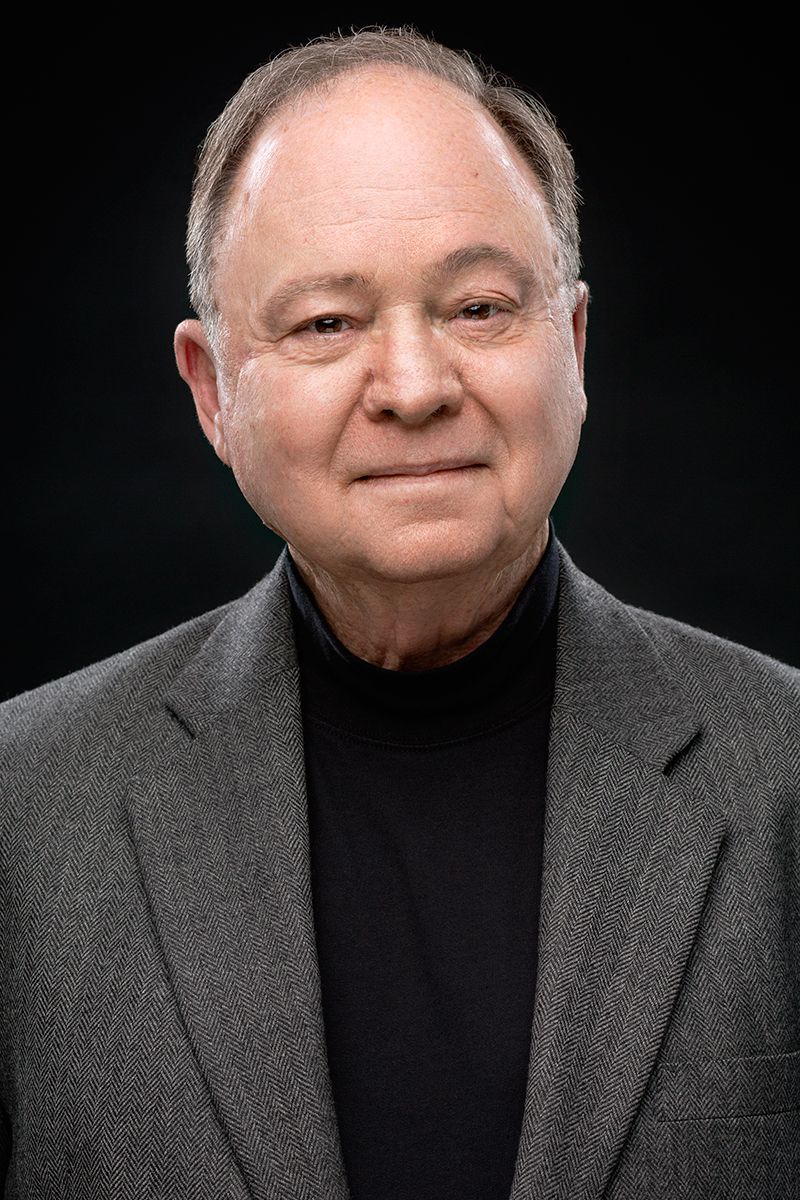
    Robert M. ZemskyCourtesy of the University of Pennsylvania

    ‘Product rejection’

    Robert M. Zemsky, an emeritus professor at the University of Pennsylvania’s Graduate School of Education who co-started College-in-3, said he’s aware of more than 90 colleges planning to or considering offering reduced-credit bachelor’s degrees. The idea attracted quite a bit of attention in 2009 when he first floated the idea — even a cover story in Newsweek — he said, but accrediting bodies were not on board at that time.

    But now, he said, colleges are beginning to realize that their product is being rejected by students who drop out or transfer after their first year or fail to enroll at all.

    “What’s different is the key people in higher education are beginning to figure out that it really is product rejection,” he said, “and they’re going to have to redesign what they do top to bottom.”

    He estimated by 2027 that there would be 200 colleges offering three-year degrees and 500 by December 2028.

    “After you get to 500, it will be everywhere,” he said.
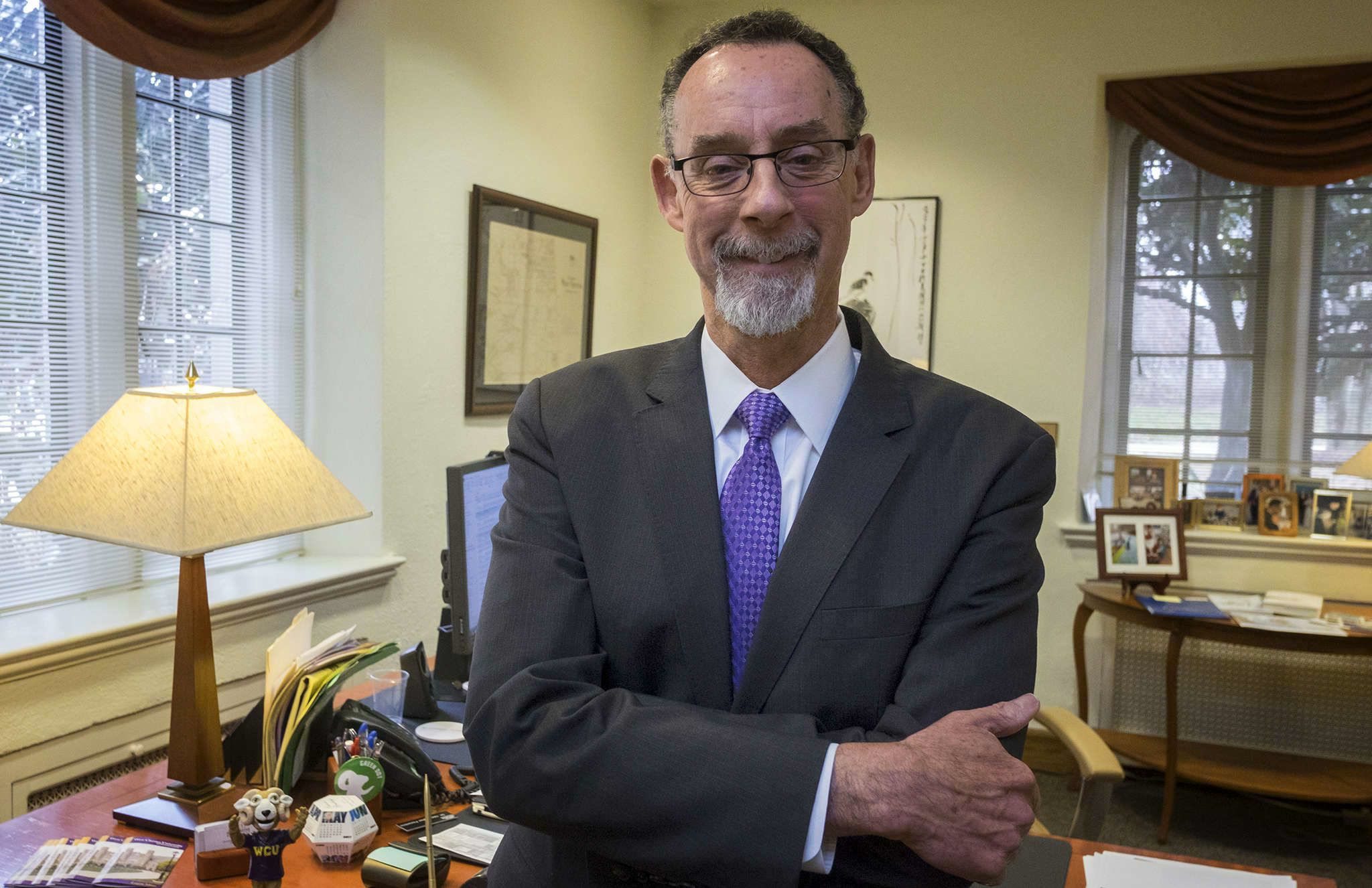
    Christopher Fiorentino, PASSHE chancellor.ED HILLE / MCT

    Fiorentino, the PASSHE chancellor, said he planned in the coming months to propose ways PASSHE could begin to offer a limited number of three-year degrees. PASSHE’s 10 universities are West Chester, Cheyney, Commonwealth, Indiana, Penn West, Shippensburg, Slippery Rock, Kutztown, East Stroudsburg, and Millersville.

    He said adults with some college credits and no degree may be interested, or partnerships in which students attend community college for two years and then finish their bachelor’s in one-year at PASSHE.

    Four-year degrees would remain the norm, he said.

    ‘Less-than degrees’
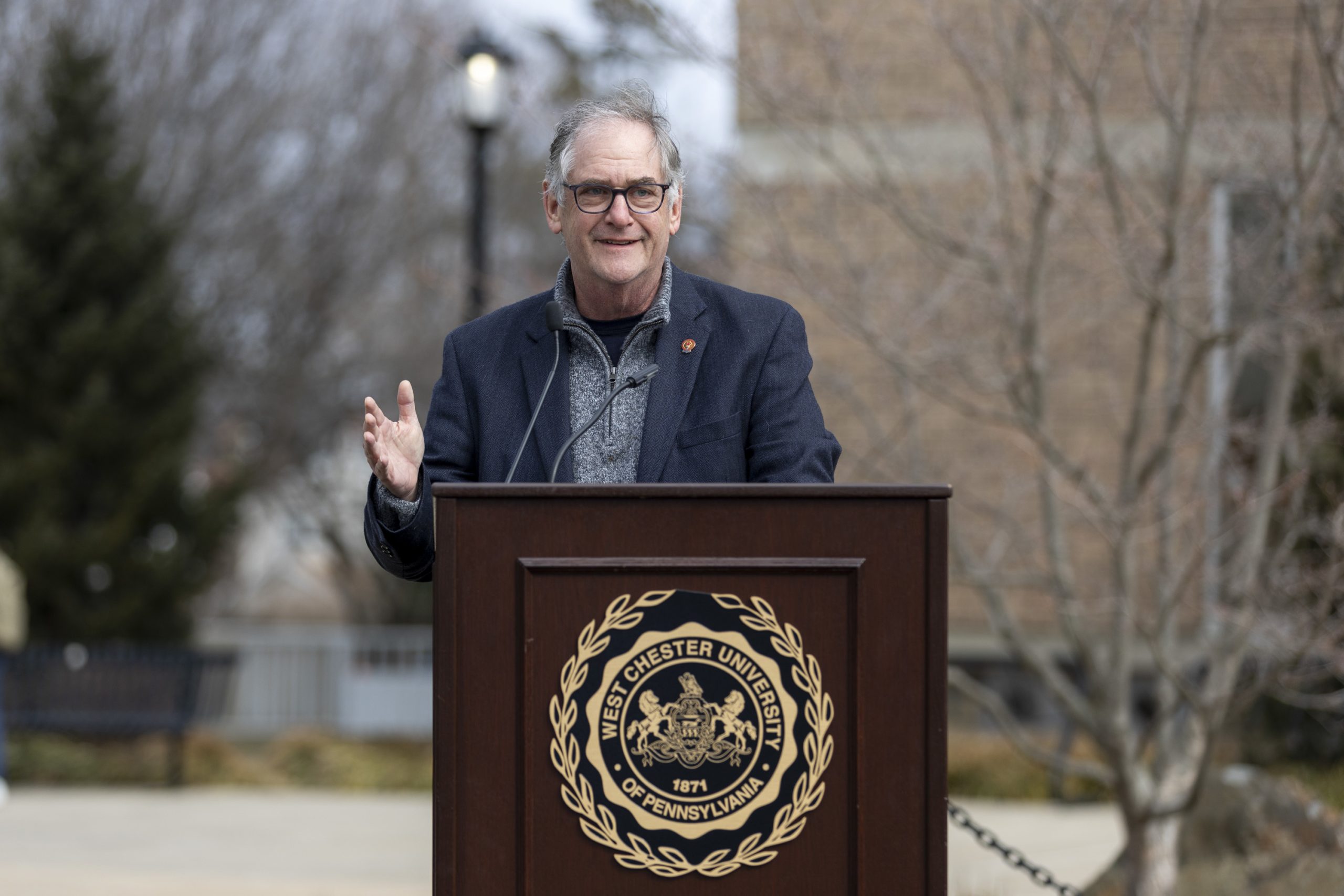
    Kenneth M. Mash, president of the Association of Pennsylvania State College and University Faculties.Tyger Williams / Staff Photographer

    The move was harshly criticized by faculty union head Kenneth M. Mash, as providing substandard education.

    “Too many students that we are admitting are underprepared for the college experience,” Mash, president of the Association of Pennsylvania State College and University Faculties, said at the board of governors meeting earlier this month. “Well, if they’re underprepared coming in, and we’re telling them you only have to be here for three years, how are they ever going to be ultimately prepared for their future?”

    He said the nation’s elite universities and top research universities aren’t the ones promoting three-year degrees, but rather those that serve large numbers of first-generation students and students of color.

    “I can’t help but wonder why it’s OK to offer these less-than degrees to these students,” he said.

    Federal and state aid programs should be expanded to make college more affordable, according to faculty union groups.
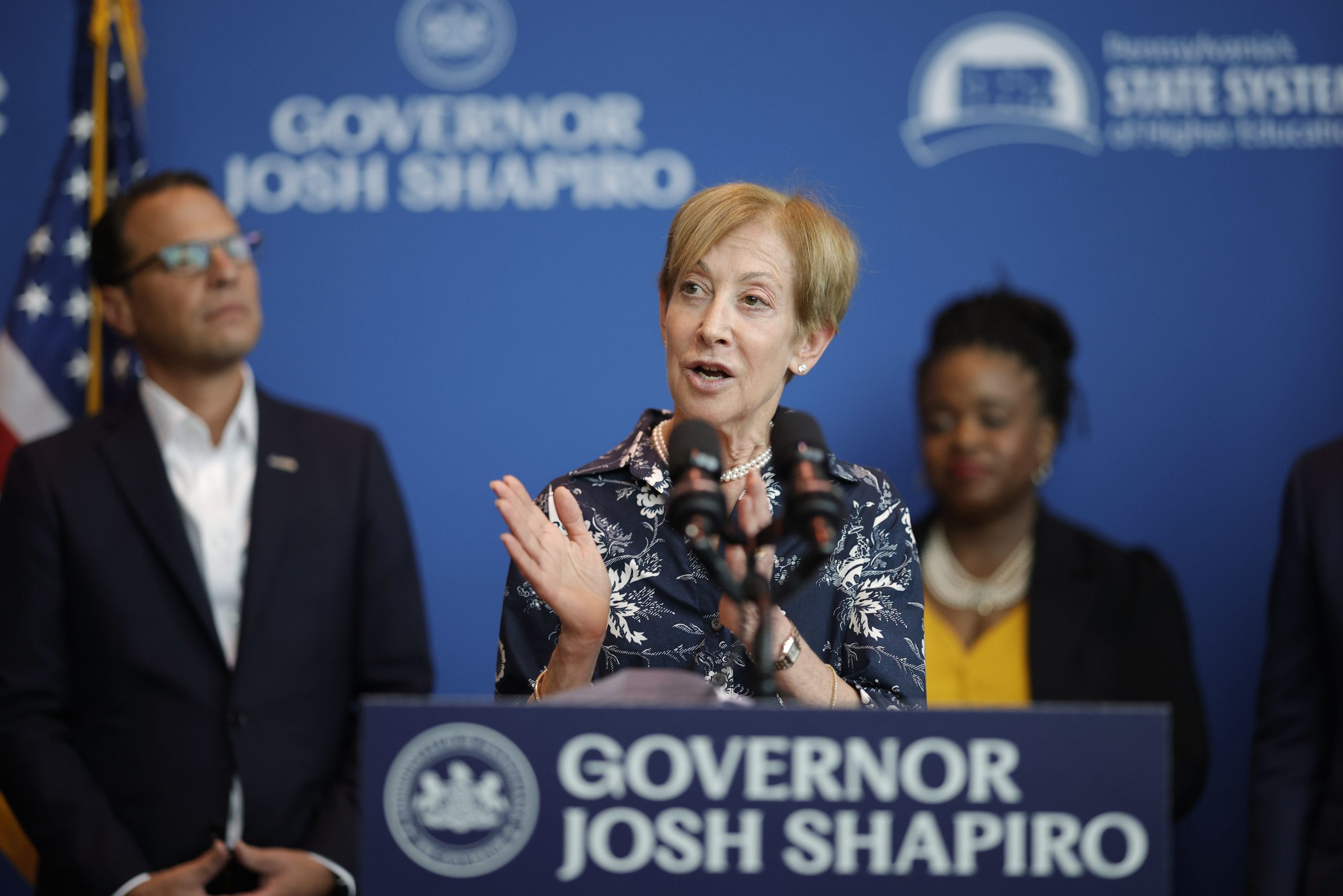
    Cynthia Shapira, chair of the Pennsylvania State System of Higher Education board of governors. Courtesy of the Pennsylvania State System of Higher Education

    But Cynthia Shapira, PASSHE’s board chair, said some states already are home to institutions offering or considering three-year degrees and PASSHE has an obligation to consider doing the same.

    “The idea to not even consider [it] … would be to put our heads in the sand,” she said.

    Eliminate some general education courses and electives

    Fiorentino said the same kind of criticism was leveled at online programs and community colleges when they first started. Pennsylvania was slow to embrace online programs and now lots of Pennsylvania residents are enrolled in programs out of state, he said. He said he doesn’t want PASSHE to be left behind again.

    “We owe it to our students,” he said. “We owe it to the commonwealth, and we owe it to our institutions to at least take a hard look at these three-year degree opportunities.”

    In an interview earlier this year, Fiorentino said that eliminating 30 credits from the four-year degree would be the equivalent of removing 10 courses. Schools would have to explore what to eliminate, he said. They could choose to get rid of some general education courses, general elective courses, and electives in the major, he said.

    The system, he said, will look at “how do you make adjustments to get students out more quickly and still have them prepared to perform effectively in the world.”

    Zemsky, the Penn professor, said general education courses, which have been criticized by some students as a waste of time and money, could be scaled back.

    Eventually, he said he thinks more students will opt for three-year degrees as opposed to four-year degrees.

    How employers will react is uncertain. Three-year degree programs are too new for data on how graduates will fare in the job market or graduate school admissions.

    “We’re looking at 2028, 2029 before there’s going to be any real graduation of three-year degree people,” Zemsky said.

    Green said most colleges pursuing three-year degrees have had conversations with employers.

    “Employers are more interested in students’ skills than in the number of credits they earned in obtaining the degree,” she said.

    Moving to three-year degrees will affect university budgets, and colleges will have to adapt, Zemsky said.

    “Right now, we spend a lot of money on things that the customer doesn’t want,” he said.

  • Pope Leo XIV will present inaugural Villanova University sustainability award created in his name

    Pope Leo XIV will present a new Villanova University-created award in his name that recognizes outstanding leadership in sustainability at a conference in Italy in October, another sign of the school’s close ties to the pontiff.

    It will be several weeks before Villanova and Notre Dame officially open their basketball seasons in Rome with a men’s and women’s doubleheader on Nov. 1.

    While Villanova has had a longstanding relationship with the Vatican, including an internship program that sends students there every year, both events signify the Catholic university’s deepening relationship with the Vatican and Italy since Pope Leo, a Villanova graduate, became pope last year.

    In 1977, Pope Leo, then known as Robert Prevost, earned a bachelor’s degree in mathematics from Villanova and in 2014 received an honorary doctorate from the university.

    The medal winner — an international honor — will be announced in September and then presented in October at the university’s International Sustainability Conference, Responding to the Cries of the Earth and the Poor, in Castel Gandolfo near Rome, the school said. The conference, which is expected to draw 300 participants including academics, church representatives, and leaders from the public and private sectors, will be held Oct. 12 to 15.

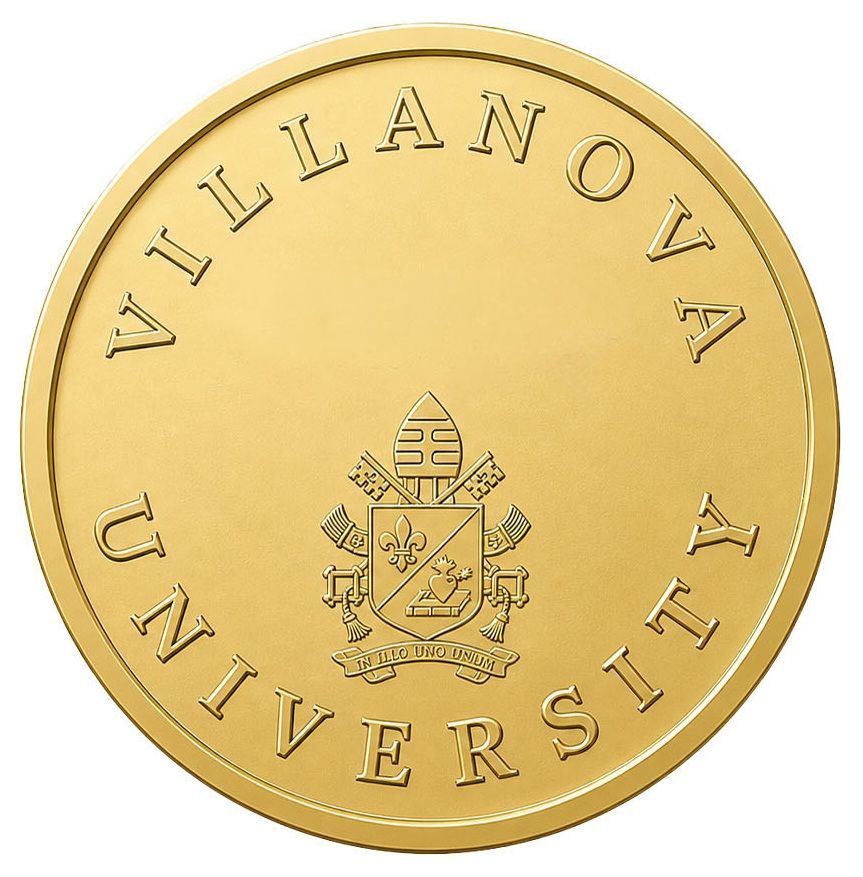
    The front side of a new international medal recognizing leadership in sustainability that Villanova University will award in Italy in OctoberCourtesy of Villanova University

    It is the university’s second sustainability conference, the first to be held in Italy. Its first conference in 2024 was on Villanova’s campus.

    “The Pope Leo XIV Sustainability Medal reflects a deeply held belief at Villanova University: that care for our common home and care for one another are inseparable,” the Rev. Peter M. Donohue, Villanova University’s president, said in a statement. “By recognizing leaders whose work advances both environmental stewardship and the common good, we hope to inspire meaningful and lasting impact in communities around the world.”

    The back of the new international medal that Villanova University will award for the first time in Italy in OctoberCourtesy of Villanova University

    The award, which will be a biennial honor, will recognize those who have advanced “sustainability, ecological responsibility and integral human development,” the school said. It specifically will highlight those who excel at “integrating care for the environment, social justice, concern for vulnerable populations, and responsible stewardship of economic and natural resources.”

    The winner can come from any field or discipline and will be selected by a committee of members of the university’s Sustainability Leadership Council. The award includes a monetary component, but details are still being determined, a university spokesperson said.

    The medal will feature Pope Leo on one side and Villanova University’s name on the other and is meant to highlight the pope’s commitment to sustainability, the school said.

  • Access to high school sports in Pa. depends on where you live, a new report finds. Here’s a breakdown.

    Access to high school sports in Pa. depends on where you live, a new report finds. Here’s a breakdown.

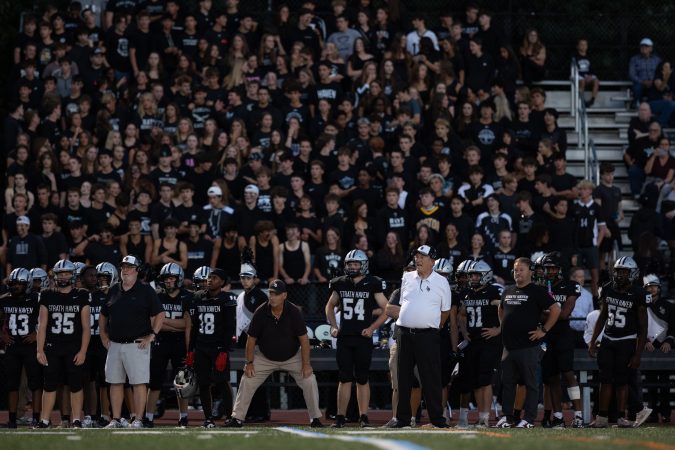
    More than 30% of high school students in the affluent Radnor and Wallingford-Swarthmore districts played sports in the 2024-25 school year.

    In the Philadelphia school district, less than 10% of high school students did.

    The disparities are part of a pattern, with fewer students playing sports in lesser-resourced urban schools, according to Research for Action, a Philadelphia-based educational research organization that released a report Thursday analyzing high school sports participation rates across Pennsylvania.

    The report, which looked at sports as another barometer of opportunities available to students, found participation varies widely — as does school spending on sports programs.

    It also found a link between funding and sports participation, with more students on average playing in higher-spending districts.

    “The degree to which a student may have access to school athletics really depends on what district they’re in,” said Maja Pehrson, the report’s lead author.

    Here’s what the report found — and what questions it raises about access to high school sports in Pennsylvania.

    There are big differences in sports participation rates

    Participation in school sports “hasn’t really been looked at very much,” Pehrson said. Research for Action analyzed data that school districts and charter schools are required to report to the Pennsylvania Department of Education on athletic opportunities.

    The report found participation rates in the 2024-25 school year ranging from 5% in some school districts, to a handful of districts with rates above 40%.

    Topping the list locally were Jenkintown School District, at 35%, and Springfield Township School District in Montgomery County at 34%; followed by Radnor and New Hope school districts, at 31%; Wallingford-Swarthmore, at 30%; West Chester, at 28%; and Upper Dublin, at 27% — all majority white, relatively affluent districts.

    Below the Philadelphia school district’s 9.6% rate were Upper Darby, at 9%; William Penn and Norristown, at 8%; and Chester-Upland, at 6% — all districts that are majority non-white and high-poverty.

    Overall, large, urban districts tended to have the lowest participation rates, meaning “almost half of Pennsylvania high school students are enrolled in districts where the likelihood of participating in a school athletics team is relatively low,” the report said.

    Those “very low” participation districts — with 5% to 17% of students participating — also offered fewer sports per 1,000 students than high-participation districts, the report found.

    Naima DeBrest, a spokesperson for the Philadelphia district, said the district had expanded athletic opportunities in recent years “by introducing new sports such as girls wrestling and girls flag football” and creating intramural programs at the elementary and middle school levels.

    Despite “common challenges” faced by urban districts, “the district remains committed to expanding access to high-quality athletic opportunities and ensuring students have meaningful opportunities to participate in sports that support their academic success, well-being, and overall development,” DeBrest said, noting that the district’s rate is comparable to other urban districts.

    <iframe title="Sports Participation and Athletics Spending Among Local School Districts" aria-label="Table" id="datawrapper-chart-dyc1W" src="https://datawrapper.dwcdn.net/dyc1W/1/" scrolling="no" frameborder="0" style="width: 0; min-width: 100% !important; border: none;" height="971" data-external="1"></iframe><script type="text/javascript">(function(){function e(){window.addEventListener(`message`,function(e){if(e.data[`datawrapper-height`]!==void 0){var t=document.querySelectorAll(`iframe`);for(var n in e.data[`datawrapper-height`])for(var r=0,i;i=t[r];r++)if(i.contentWindow===e.source){var a=e.data[`datawrapper-height`][n]+`px`;i.style.height=a}}})}e()})();</script>

    There are also big gaps in spending

    The report found a relationship between money and sports participation rates. Among the 10% of school districts deemed most underfunded by a state formula calculating what schools need to adequately educate students, more than half had “very low” sports participation rates, while more than two-thirds had “very low” or “low” participation, according to the report.

    And looking at what districts spend on athletics, it varied widely, the report found. Districts with “very low” participation reported spending an average of $409 per high school student on athletics, while “very high” participation districts — with 28.2% to 61.6% of students participation — spent an average of $939 per student.

    Locally, the Jenkintown, West Chester, Phoenixville, and Colonial school districts reported spending more than $1,100 per high school student on athletics, compared with $145 per high school student in Philadelphia.

    The report noted that those figures don’t fully reflect spending on school sports. Many districts didn’t report any spending on athletic facilities, for instance; Pehrson said it was likely hard for schools to calculate how much of their overall facilities spending was tied to athletics.

    The data also don’t reflect any activities fees paid by students.

    Charters have lower participation rates — but in line with Philly

    Statewide, brick-and-mortar charter schools, which are publicly funded but independently run, reported lower rates of sports participation. On average, 8.4% of charter high school students participated in sports, compared with 18.1% in district schools. (Cyber charter schools reported no participation; charter students who participate in district programs are counted by districts.)

    Rather than a difference between the charter and district sectors, however, the gap could largely be a product of school district conditions, the report said. Half the state’s charter high schools are located in Philadelphia, where the charter sports participation rates largely mirror the district’s, the report said.

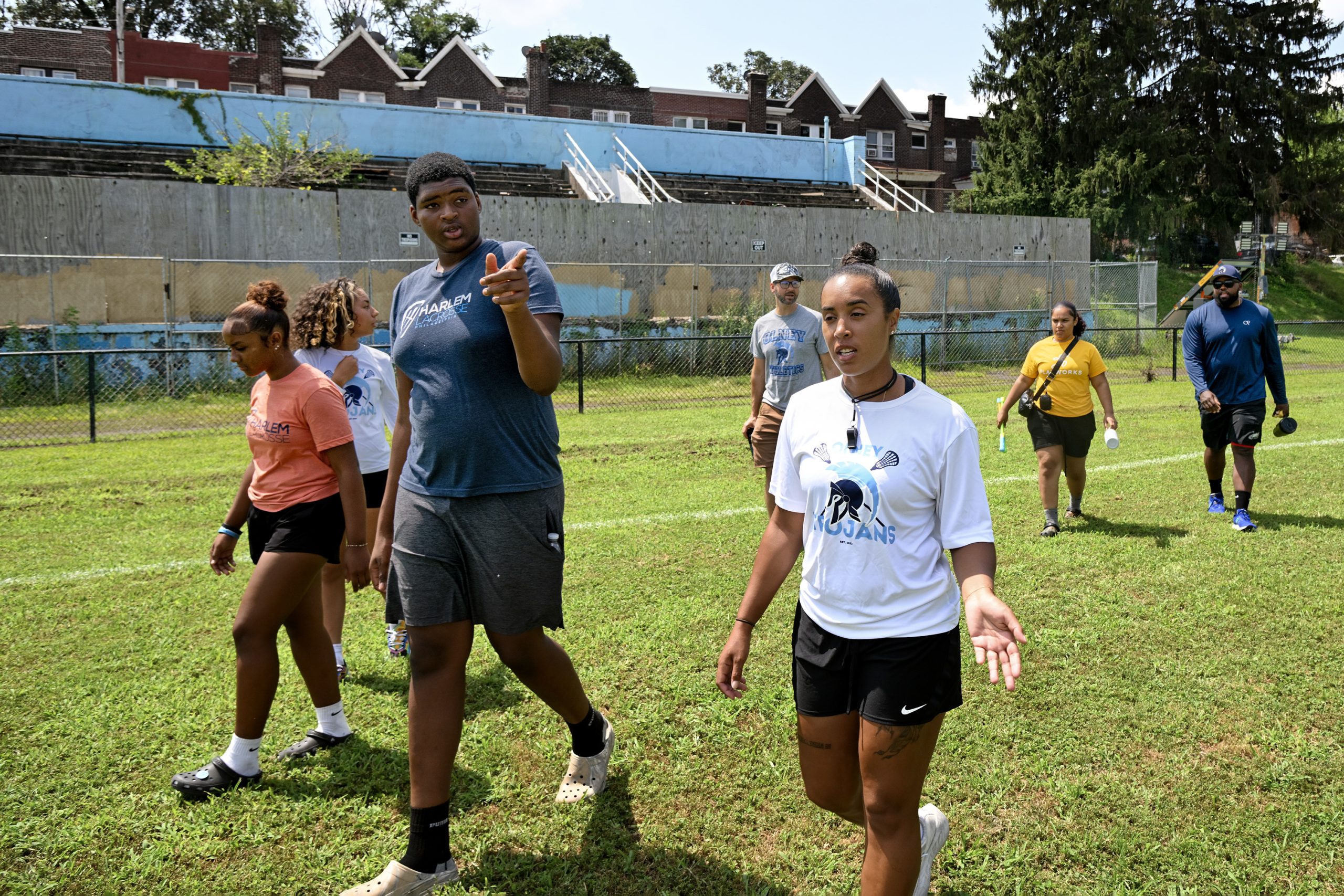
    In front of their boarded up dilapidated stadium, Olney High School athletes Cindi Lizardo (from left), Emma Blanco, Sidi Traore; and principal Michael Roth, coach Siena Childs, recent graduate Ysis Rivera, and athletic director Jorge Gonzalez point out the deplorable condition the sports facilities are in July 24, 2025. Olney High School, which spent a decade under charter management, was turned back over to the Philadelphia school district in 2022.Tom Gralish / Staff Photographer

    Gender gaps persist

    Boys participated in sports in 2024-25 at a higher rate than girls — at an average rate of 20.3% compared with 15.8%, the report found.

    And those gaps persisted across different types of school districts, the report found. For instance, in districts with “very low” overall sports participation, 14% of boys participated, compared with 10% of girls. In districts with “moderate” participation, 24% of boys participated, compared with 19% of girls. And in “very high” participation districts, 35% of boys participated, compared with 30% of girls.

    What’s driving the disparities?

    The report found that access to high school sports in Pennsylvania “is not evenly distributed and is strongly shaped by structural conditions.”

    “Districts with fewer athletic opportunities are more likely to be urban districts with large high schools and more students of color, and they tend to offer a narrower range of teams and spend less per student on athletics, limiting the extent to which students can engage,” the report said.

    But district funding alone isn’t responsible for disparities, the report noted. The gender gap, for instance, is found in well-funded and poorly funded districts.

    The pattern of higher-spending districts seeing more participation “doesn’t line up neatly for every district,” Pehrson said, noting that the data can’t fully answer questions about what’s driving differences in participation.

    Other possible factors could include transportation and sports outside of schools, Pehrson said.

    DeBrest, the Philadelphia spokesperson, noted that urban districts may also have limited athletic facilities, and practice space “and the need for some students to balance academics, work, or family responsibilities.”

    Pehrson hopes the findings prompt more investigation into the availability of school sports, which “are a key part of students’ educational opportunities,” Pehrson said — from boosting physical and mental health, to promoting social-emotional skills and building community.

    “There are clear disparities in terms of sports opportunities students are having,” Pehrson said. “Why is that, and how can we move forward and try to figure out these differences?”

    Editor’s note: This story has been updated to reflect that Jenkintown and Springfield Township were the local districts with the highest sports participation rates.

  • Shrinking student populations cause spike in public school closures across U.S.

    Shrinking student populations cause spike in public school closures across U.S.

    School closures have spiked 35 percent across the country over the past four years, propelled by a shrinking youth population and the end of covid-19 relief funds that had propped up education funding in some places.

    For the fourth year in a row, the number of school closures rose nationally last year, according to data from the National Center for Education Statistics released last week. Districts closed more than 1,000 schools in 2025-26, compared with 755 in 2021-22. And more closures are planned, including districts in Houston, Philadelphia, Pittsburgh and Broward County in Florida.

    “We call it the big shrink,” said Marguerite Roza, who tracks school funding as director of Georgetown University’s Edunomics Lab. “Enrollment at public schools is declining, partly because there are fewer kids in the U.S.”

    Public school closures temporarily slowed during the pandemic as administrators focused on dealing with the fallout from covid and tapped relief funds to balance their budgets. But now that the funds have run out, experts say administrators often must close schools to deal with reduced enrollment, which in turn reduces the amount of money they receive from states.

    Nationally, federal projections indicate public school enrollment has already started to decline from its peak in 2019 and will continue to do so in coming years. From 2019 to 2031, schools were projected to lose nearly 4 million students. And those estimates were made before the Trump administration made changes to sharply curb immigration, further reducing the number of kids at some schools.

    Some districts are also coping with population shifts, as families move to the suburbs or other parts of the country.

    In addition, Roza noted that families in some parts of the country, such as Florida, have enrolled their children in private schools, taking advantage of taxpayer-funded vouchers and scholarship programs offered in a growing number of states, or charter schools, which are publicly funded but generally operate with some degree of autonomy.

    All that means more closures, sometimes year after year. School administrators acknowledge that the moves can be hard on students, families and neighborhoods.

    “It’s very difficult,” said Philadelphia Superintendent Tony B. Watlington Sr. “Public schools have always been anchors of communities.”

    The Philadelphia district said schools have 70,000 more seats than are needed because of enrollment declines, and many of its aging school buildings need repairs.

    In May, Philadelphia’s school board voted to close 17 schools, rejecting a recommendation to cut even more. Students, teachers and others rallied before the meeting to try to stop the closures.

    To ease the burden on families, Watlington said Philadelphia decided to gradually close campuses over the next decade to give students time to graduate from their current schools. The district also created a transition office to help families affected by the changes.

    “We know how hard and how difficult this is for our families,” he said.

    Watlington said the district hopes to attract more students from other local schools by improving its academic performance and modernizing 169 remaining buildings.

    In Florida, Broward County Public Schools, north of Miami, closed one elementary school last year. The school district voted in January to close six more ahead of the 2026-27 school year and plans to identify additional schools to close or repurpose in the future. In May, the superintendent said he didn’t want to scare the public but thought the district might have to close more than 10 additional schools in 2027-28. The school district said it considered factors including declining enrollment and the operating costs for the buildings when deciding which facilities to shutter.

    The Houston Independent School District’s board of managers decided in February to move forward with a plan to close a dozen schools, despite protests from parents and community members. And Pittsburgh Public Schools voted in May to close 12 schools.

    Researchers said they expect more school closures in coming years because of declining enrollment.

    Sofoklis Goulas, an economist who has studied declining school enrollment and school closures, said it is hard to make precise predictions because of changing immigration patterns and other issues.

    One notable factor, he said, is that some students appear to have disappeared from school data in recent years, perhaps due to increases in home schooling or private microschools that are not fully tracked by the government.

    “The unaccounted-for student is the most worrisome,” said Goulas, a senior researcher at Foundry10, an education research organization based in Seattle. “We know little about them.”

    Meanwhile, many teachers and others have expressed frustration with the closures.

    “There is just an overall lack of funding in our public education system,” said Mary Kusler of the National Education Association, the nation’s largest union, representing 3 million educators.

    Kusler said efforts to cut taxes in many states have reduced the money available for local schools and made it hard to keep up with inflation.

    She also pointed to efforts to expand vouchers and scholarship programs, which help families pay for private schools. Supporters contend those programs create needed competition and provide more options for parents, especially in areas where public schools have struggled. But Kusler argued it also ultimately reduces the pool of money for traditional public schools, which still serve most students.

    “There is only so much money to go around,” she said.

  • I attended segregated schools. Trump’s assault on the Education Department should terrify us all.

    I attended segregated schools. Trump’s assault on the Education Department should terrify us all.

    Having attended segregated schools in Birmingham. Ala., from 1959 to 1970, I know what a poorly funded public education system looks like. But I didn’t know my schools were being shortchanged until a federal court desegregation order closed all-Black Ullman High School in 1970, and I was reassigned to Ramsay High, which for most of its 60-year existence had been all-white.

    Only a trickle of Black students began attending Ramsay in 1963, when Richard Walker became the first African American student there. But after Ullman closed, Ramsay abruptly went from being nearly 5% to about 50% Black. Both Black and white students experienced some serious culture shock as a result, but I don’t recall any major racial incidents during my one year on that campus.

    What I do recall is that Ramsay’s books weren’t worn-out, hand-me-downs, that its science classes had enough working lab equipment for every student, and that its smaller student-teacher ratio made it easier for academically struggling children to get the attention they needed. In fact, to this day, I applaud all of my Ramsay teachers, including several reassigned there from Ullman.

    My reminiscing about poorly funded schools was sparked by the Trump administration’s efforts to shut down the federal Department of Education, which has played a crucial role over the years not only in lessening the impact of past racism in America’s schools but otherwise ensuring adequate educational opportunities exist for all children, including those with financial or health disadvantages.

    More Americans should be raising hell about what’s happening to the Education Department. But it’s hard to keep track of what to be upset about with this president. Every day, Americans are flooded by often inane news out of Washington that diverts their attention. So what if President Donald Trump has botched the repairs of the Lincoln Memorial Reflecting Pool? He messes up almost everything he touches.

    The amount of news coverage given to that story was not only undeserved but a disservice. It also plays into the hands of Trump, who most likely would prefer to have people talking about algae in the Reflecting Pool instead of how much his ill-conceived war with Iran has cost in dollars and lives. The Iran war reminds me of a satirical movie released in 1997, Wag the Dog, in which a fictional U.S. president, after being caught trying to seduce an underage girl inside the Oval Office, fabricated a war in Albania to distract the American public from the sex scandal.

    There’s nothing fake about our war with Iran. More than 3,600 Iranians and 4,000 people in Lebanon are believed to have been killed as a result of military attacks by our country and Israel. Thirteen U.S. service members and at least 39 Israelis have also died since the fighting began on Feb. 28. That’s why it’s so disheartening but necessary to question the war’s true intent.

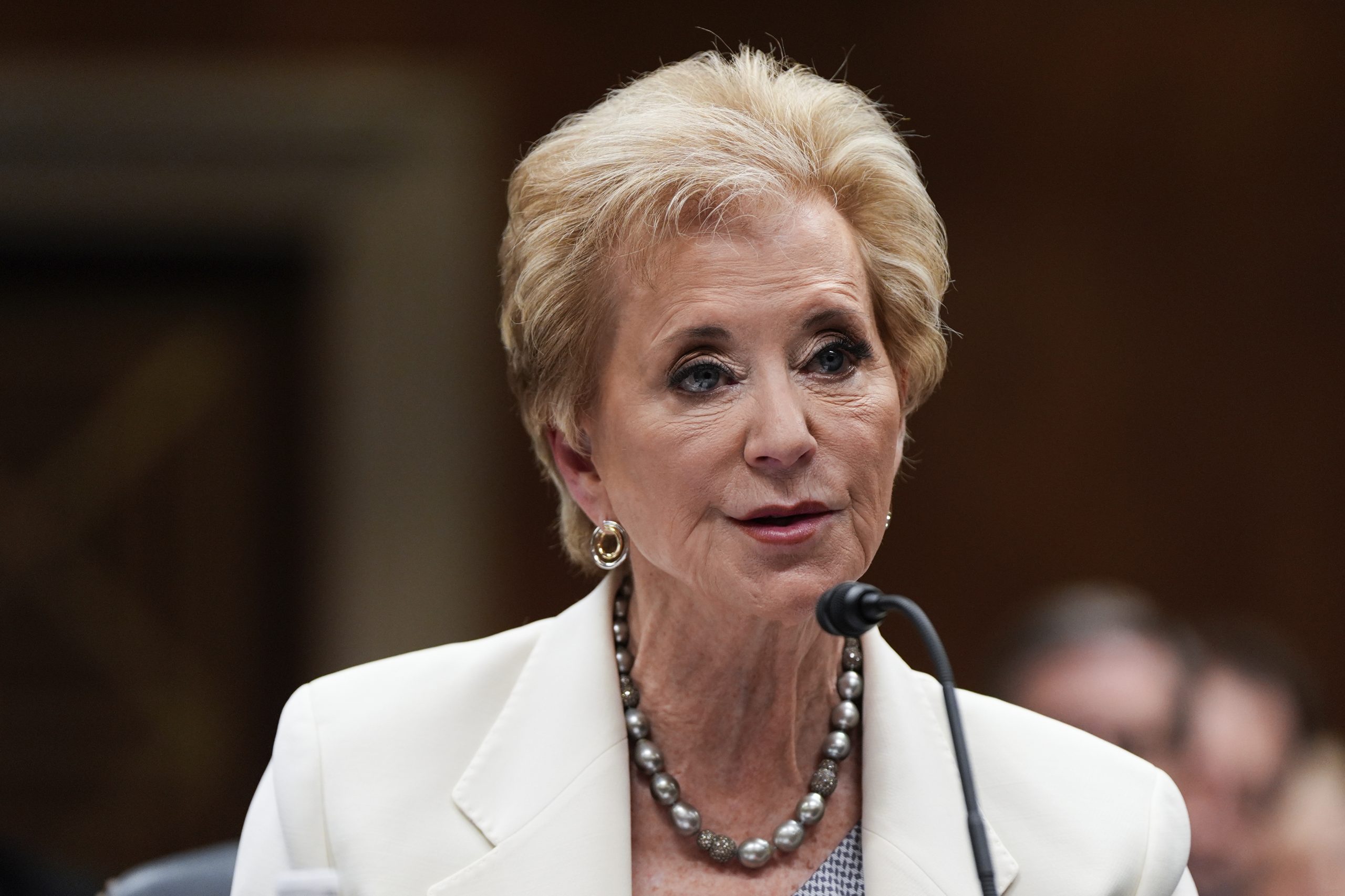
    Harold Jackson writes that Education Secretary Linda McMahon is just as ill-equipped for the job as her predecessor, Betsy DeVos.Julia Demaree Nikhinson

    “If we didn’t do what we’re doing right now, you would have had a nuclear war, and they would have taken out many countries,” Trump said while meeting with German Chancellor Friedrich Merz on March 3. Our president would have us believe he started the war because Iran, which wasn’t close to having nuclear attack capability, was a greater threat to America than Russia or China, which already have advanced nuclear weapons. Or North Korea, which is way closer than Iran to achieving that status.

    I pray Trump isn’t employing a horrific Wag the Dog ploy to divert attention from a war that has cost thousands of real lives and billions of dollars. But whether it was his intent or not, the American public’s understandable focus on the Iran war and its ancillary impact on consumer costs such as the price of gasoline and food has allowed Trump to push forward some dubious goals that more Americans might otherwise have vehemently rejected.

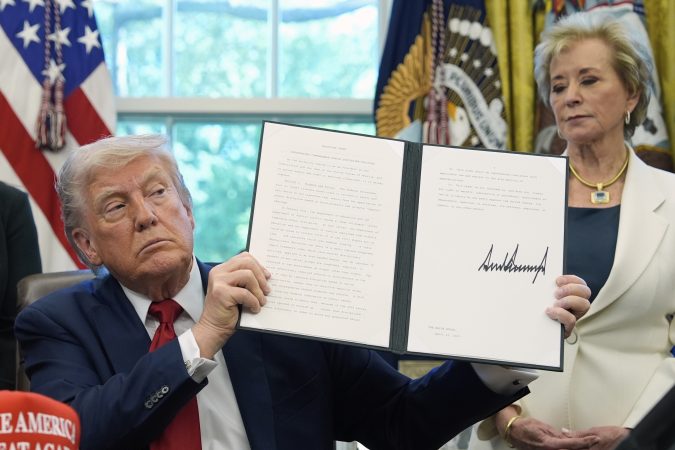
    That includes Trump’s ongoing dismantlement of the Department of Education, which he tried but failed to do during his first term. Trump appointed billionaire Betsy DeVos, who had no background in education, to be his education secretary in 2016 so she could cripple the department. His current education secretary, billionaire Linda McMahon, is just as ill-equipped for the job as DeVos, but she, too, seems hell-bent on finishing what her predecessor started.

    McMahon announced last month that her department will no longer enforce rules meant to protect civil rights in education and will discontinue oversight of special-education programs. Those functions are being transferred, respectively, to the U.S. Department of Justice and the U.S. Department of Health and Human Services. There was no mention of personnel being transferred to those departments to perform those additional duties.

    McMahon earlier announced plans to transfer two of her department’s largest units, the Office of Elementary and Secondary Education and the Office of Postsecondary Education, to the U.S. Department of Labor, move the Office of Indian Education to the U.S. Department of the Interior, transfer responsibility for childcare access and a foreign medical program to the U.S. Department of Health and Human Services, and shift a foreign language education program to the U.S. Department of State.

    Trump has never fully explained his zest to kill the Education Department, but it fits the states-rights attitude of some of his supporters, especially down South, who have long resented federal intrusion into how they run their public schools. Such resistance to federal involvement was about segregation when I was a child; today it’s more about encouraging vouchers and other programs that drain tax dollars and students from traditional public schools.

    It’s not wrong to reassess the role the federal government plays in running local schools, but educating Americans’ children should remain a national priority — one that requires significant input from Washington to ensure some uniformity in educational opportunities and outcomes no matter where a family lives.

    Congress passed the 1965 Elementary and Secondary Education Act with that in mind. Known as Title I, the law provides additional federal funding to schools with large numbers of students living in poverty. Changing Title I to a block grant program — without federal oversight — risks that the money won’t be spent where it is most needed. Misuse of taxpayer money led the Department of Health and Human Services to freeze access to more than $10 billion in block grants for California, Colorado, Illinois, Minnesota, and New York earlier this year.

    The National Education Association warns that handing out block grants without clear restrictions would allow states to divert tax money to voucher programs — and essentially turn the clock back 60 years on education policy and progress. “While one would like to think that we can trust every state to do the right thing on behalf of all students, history tells us differently,” the NEA said. “States would not have to answer to anyone about whether or how they are following the law.”

    As a product of the public schools in New Bern, N.C., population 34,000, McMahon should know better than to participate in any effort to divert taxpayer money from neighborhood schools. Public schools whose funding is based on enrollment lose money they can’t afford to lose when students using vouchers leave them. With less funding, public schools don’t get better. And children in families who, even with vouchers, can’t manage the logistics of getting a child to a supposedly better school outside of their neighborhood will be hurt.

    Harold Jackson, who served as editorial page editor for The Inquirer from 2007 to 2017, was awarded the Pulitzer Prize for editorial writing in 1991 and retired from the Houston Chronicle in 2020. His memoir, “Under the Sun: A Black Journalist’s Journey,” was published by the University of Alabama Press.

  • Penn State board awards president top performance bonus

    Penn State board awards president top performance bonus

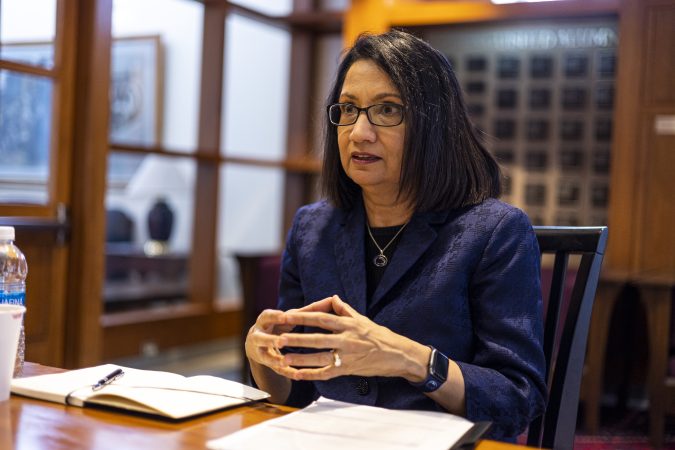
    The Pennsylvania State University board of trustees on Friday unanimously approved a 15% performance bonus for president Neeli Bendapudi for the 2025-26 academic year — the top amount available under her new contract approved last September.

    Under the resolution, the percentage is on her base salary, which was $1.4 million. That would make her bonus $210,000.

    Board chair David M. Kleppinger praised Bendapudi’s leadership, noting the second consecutive year of a balanced budget, a $1.44 billion research enterprise, the integration of the health system and College of Medicine, and efforts to improve the Commonwealth campus system — seven campuses are set to close at the end of the next academic year.

    “Throughout all this, Neeli, you’ve led with optimism, with purpose, and an unwavering commitment to Penn State’s mission,” Kleppinger said at the meeting. “You’ve challenged the university to think boldly, and we’ve tried … We’re proud of what we’ve done under your leadership and we’re excited about what lies ahead.”

    Bendapudi oversees two dozen campuses across Pennsylvania including a health system and the Hershey Medical Center and a major research enterprise. The state flagship university enrolls 86,500 students.

    She is one of the highest paid public college presidents in the country. In 2024, she ranked seventh in total compensation among public university presidents, according to The Chronicle of Higher Education. Schools with presidents who earned more included the University of Houston, Ohio State University, and University of Kentucky.

    The board last September voted to give Bendapudi, who has led Penn State since 2022, a $1 million increase in compensation and extend her contract to 2032. That increased her total compensation for 2025-26 to $2.8 million, up from $1.8 million. The performance-based incentive, which allows the board to award Bendapudi up to 15% of her base salary if she meets mutually agreed upon goals, was part of the new contract.

    In supporting the vote, board member Jay Paterno noted the short tenure of presidents in the Big Ten Conference.

    “Retention of presidents is vital,” he said. “It’s important that we understand the marketplace that we are in and why these things are meaningful and important to do … We’re fortunate that we have a president who’s been here for four years already because that’s not the norm.”

    Kleppinger agreed.

    “It’s clear that stability in leadership is very important right now in a higher education space, which is changing rapidly, and we’re fortunate to have a president that’s committed to being with us for the long term,” he said.

    The board also voted to accept Bendapudi’s performance goals for the coming year, but those were not made public.

    Also at the meeting, the board approved tuition and room and board increases for 2027-28. The finance committee approved the rates on Thursday and recommended them to the full board. Penn State sets its rates a year in advance.

    Among the rates approved was a 2.5% tuition and room and board increase for undergraduates on the University Park campus.

    Under the plan, undergraduate freshmen and sophomores at University Park would pay $21,400 in annual tuition for 2027-28, up $522 over last year. Room and board would rise 2.5% to $15,896 annually.

    During remarks, Bendapudi said the university raised $662.7 million in 2025-26, more than the average annual amount of $360 million raised in the last fundraising campaign.

    “That I would say is a wonderful commitment,” Bendapudi told the board.

    Penn State had been planning to publicly launch a multibillion-dollar fundraising campaign in April, its largest ever and first under Bendapudi. But the school decided to delay that public launch amid a change in leadership in its development office.

    No new date has been given for the launch.

  • Temple University says a record number of first-year students submitted deposits for fall

    Temple University says a record number of first-year students submitted deposits for fall

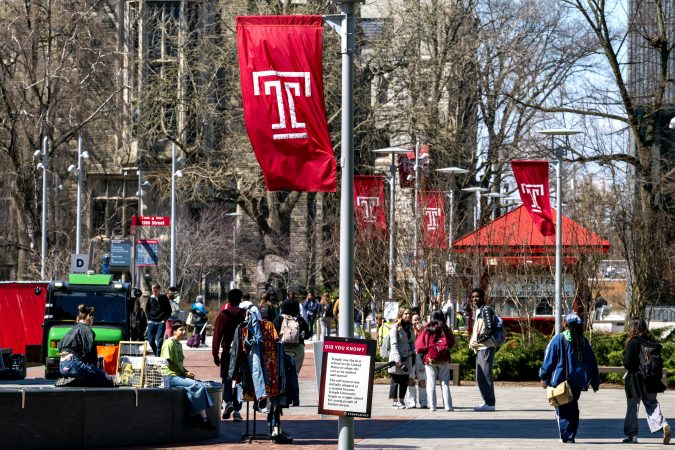
    Temple University officials say the school has seen more first-year students commit to attending in August than it has seen in recent past summers — a promising signal after several years of enrollment decline.

    The university received 6,682 deposits from first-year undergraduate students as of last Monday, up 4.7% over the same time last year and a university record, the school said. Students pay a deposit of $200.

    And more than 3,700 students of those students — more than half — already have registered for classes. That’s up 7.8% over the same time last year, the school said.

    Of first-year students who have submitted deposits, 57.8% are from Pennsylvania, including 23.5% from Philadelphia, the school said. Deposits from out-of-state students are up 3.8%, the school said.

    “While the start of the fall semester is still several weeks away, this is a tremendous accomplishment and an indication that we will once again be positioned to welcome a strong class of highly qualified, talented first-year students this fall,” Temple president John Fry said in a statement.

    The North Philadelphia-based university has struggled with enrollment loss in recent years. The school enrolled 29,503 students last academic year, excluding its international campuses. That’s down 27% from less than a decade ago when the university enrolled more than 40,000 students. The school lost an average of $200 million annually during that period, according to an internal Temple report obtained by The Inquirer in April.

    Its freshman to sophomore retention rate also has slid from 90% to 82% last fall, and the internal report showed there is concern the percentage will slip below 80% this fall.

    The school last year brought in a record number of first-year students and had been predicting it would experience an overall enrollment increase for the first time since 2017. The school also showed a record number of deposits last July.

    But that projection fell short by about 700 students and the school’s overall enrollment declined by about 500 students.

    The university acknowledged that some students will likely fall away this year too, known as “summer melt.”

    “The challenge for us is to keep up the momentum,” Fry said. “A number of institutions — I’d say the majority probably — are worried and struggling with deposits, and we’ve worked so hard to produce what I think … is an incredibly good year.”

    Temple officials earlier this month said student retention would be a focus this academic year, with new programming for the first-year student experience and other efforts. The university plans more coordinated orientation, advising, communication, and student support.

  • Penn State board committee votes to raise tuition, room and board 2.5% for in-state University Park students in 2027-28

    Penn State board committee votes to raise tuition, room and board 2.5% for in-state University Park students in 2027-28

    A Pennsylvania State University board of trustees committee on Thursday voted to recommend a 2.5% tuition and room and board increase for undergraduates on the University Park campus in 2027-28.

    That’s a larger increase than the 2% tuition hike already approved for 2026-27. Penn State sets its costs a year ahead of time; rates for 2026-27 were set last year.

    Meanwhile, in-state undergraduates at the Commonwealth campuses would see no tuition increase for the fifth consecutive year and smaller increases for room and board than those at University Park.

    The full board will vote on the proposed rates on Friday.

    Under the plan, undergraduate freshmen and sophomores at University Park would pay $21,400 in annual tuition for 2027-28, up $522 over last year.

    For those out-of-state, the annual tuition rate would rise 4% to $46,356, up $1,782.

    Room and board for both would rise 2.5% to $15,896 annually, which the university said was its lowest increase in the last nine years.

    The proposed tuition increases will raise $59 million in additional revenue, said Sara Thorndike, senior vice president for finance and business.

    While the proposal was passed unanimously by the committee, several board members raised questions.

    “I’m going to reluctantly support the tuition increase,” said board member Brandon Short. “We’re dealing with an existential crisis, and it’s not unique to Penn State that the cost of education is increasing at a … faster rate than what people think the value of a college diploma is … We all hold our noses and vote for the increase, but at some point, it’s not an easy answer, but we’ve got to come together and figure it out.”

    The university needs to make tough decisions and engage in “outside-the-box” thinking, he said.

    “Doing the same thing over and over again and expecting different results is the definition of insanity,” he said.

    Thorndike said the university has been cutting costs and continues to look for more efficiencies as it maintains a balanced budget.

    “We’re doing individual unit budget cuts,” she said. “We’re doing budget cuts associated with inflation, finding new revenues, and then asking for a modest tuition increase, so it’s a combination of all of those things to get to this point.”

    New board member Joseph S. DeRenzo questioned if in-state tuition increases could be kept lower at the expense of larger hikes for out-of-state students, or if larger increases could be charged for high-demand degrees in business and engineering.

    “Our out-of-state rates are actually very similar or high compared to our peers, and we’re already seeing an impact again on how much they’re discounting compared to what we’re discounting and how that’s affecting enrollments,” Thorndike said. “If we start to see a decline in out-of-state enrollments, that will not help us be able to keep our in-state rates low. It will actually have the opposite effect.”

    Thorndike also said that tuition revenue is projected to be $37 million under budget this year because of lower enrollment at the Commonwealth campuses, as well as international and graduate enrollments.

    Other local colleges also are raising tuition. The Pennsylvania State System of Higher Education, which oversees 10 universities including West Chester and Cheyney, last week raised tuition 4.3% — the largest percentage increase in a decade. Also last week, Rutgers University increased tuition 3% for in-state and out-of-state students, which the school touted as its lowest increase in four years. Meals and housing on average were increased 4%.

    And Temple University voted to raise tuition an average 3.4% for both in-state and out-of-state students.

    Earlier this year, the University of Pennsylvania increased its total costs by 3.8% for 2026-27.

    The 2027-28 budget includes a 3% pool for merit-based salary increases for employees and 4% for graduate assistant stipends, the university said.

    Undergraduate tuition for students from out of state would increase by 4% at University Park and 1% at the Commonwealth campuses.

    As for graduate students, those in-state at Commonwealth campuses would pay a 1% increase in tuition and 2% for those out of state. At University Park, in-state students will see a 2% hike and out-of-state students 4%.

  • Haddonfield high school junior wins prestigious, all-expenses-paid Coolidge Scholarship, only a few awarded in country

    Haddonfield high school junior wins prestigious, all-expenses-paid Coolidge Scholarship, only a few awarded in country

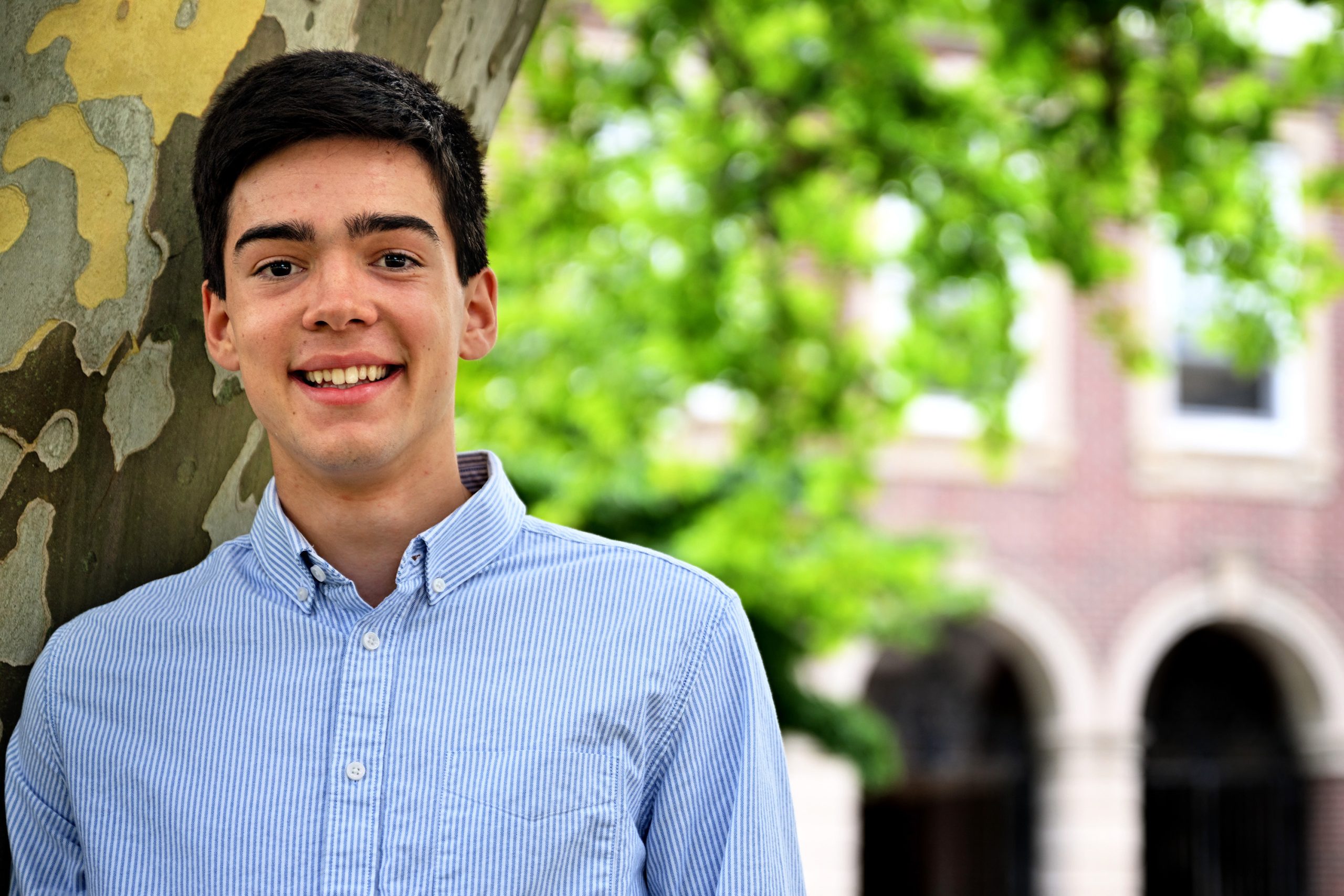
    As he prepares for his senior year at Haddonfield Memorial High School, Luke Patterson has a big decision to make: What college to attend? He has a blank check to go anywhere.

    Patterson, 17, was awarded an all-expenses-paid merit scholarship from the Calvin Coolidge Presidential Foundation. The four-year award will cover tuition, room and board, and related expenses for him to attend any college in the United States.

    He was among five students nationwide selected from among 4,200 applicants, said Matthew Denhart, the foundation’s president. He is the first recipient from South Jersey since the foundation began awarding the scholarships in 2016, he said.

    “It doesn’t matter to us where they go,” Denhart said in an interview. “The sky is the limit.”

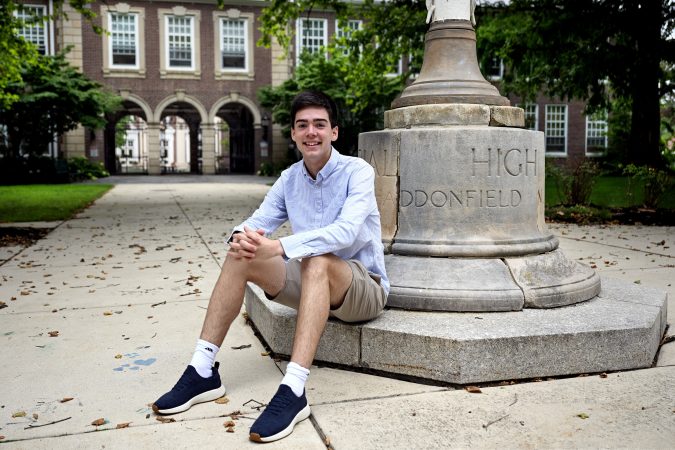
    Haddonfield Memorial High School rising senior Luke Patterson poses at the school Tuesday, July 7, 2026. He has been awarded a Coolidge Scholarship, a prestigious, highly competitive full-ride merit award that pays for four years of tuition, room, board, and expenses at any accredited U.S. college or university.Tom Gralish / Staff Photographer

    Patterson learned about the scholarship last year when he noticed a track teammate reading Coolidge’s autobiography. The teammate was reading the book to apply for the scholarship.

    In order to apply, Patterson was also required to read Coolidge’s autobiography and study policies during his administration, write several essays and get recommendation letters. Applicants must demonstrate humility and a commitment to public service, qualities endeared by Coolidge.

    He then traveled to Plymouth Notch, Vermont, Coolidge’s birthplace and where the foundation is located, for a final interview. He fielded questions from a panel chaired by the state’s former governor, James H. Douglas.

    “I expected to be nervous, but I actually felt pretty comfortable,” he said. The foundation requests that recipients do not disclose details about the interview process.

    Said Denhart: “Luke was just a real star.”

    At Haddonfield High, which enrolls about 870 students in grades 9 through 12, Patterson is an honors student, participates on the track and cross country teams, and writes for the school newspaper, covering school board meetings.

    Patterson also is a member of the Anti-Bias Club and serves as historian of the Student Council, and has been tapped to help spearhead a project this school year to create a timeline for the school’s 100th anniversary, Principal Tammy McHale said.

    “Where good things are happening, Luke is around it,” McHale said.

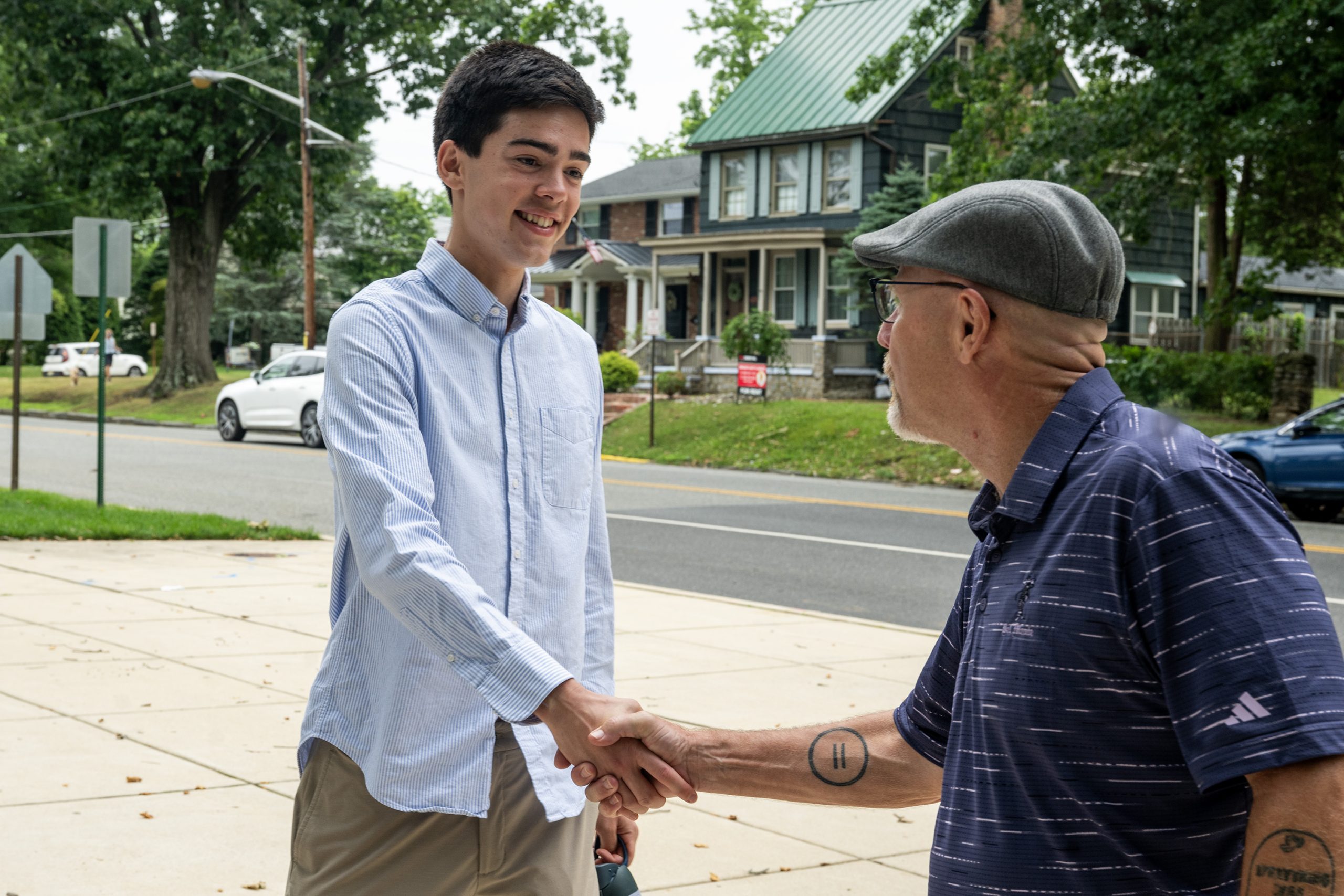
    Haddonfield Superintendent of Schools Chuck Klaus (right) happens to pass by as Haddonfield Memorial High School rising senior Luke Patterson is at the school Tuesday, July 7, 2026. Patterson has been awarded a Coolidge Scholarship, a prestigious, highly competitive full-ride merit award that pays for four years of tuition, room, board, and expenses at any accredited U.S. college or university.Tom Gralish / Staff Photographer

    Patterson also is a cadet with the Civil Air Patrol, a youth auxiliary of the U.S. Air Force, and an active member of Grace Episcopal Church in Haddonfield.

    English teacher David Scorsolini noted in a recommendation letter that Luke had demonstrated humility in his world literature class, one of the scholarship’s requirements. Patterson showed respect for his classmates and their perspectives, he said.

    “It takes a great deal of humility to read, and more importantly, to listen. Luke listens,” Scorsolini wrote in an email.

    Patterson credits his teachers for preparing him to apply for the scholarship. He was surprised when he got a call that he had been selected.

    “I was completely shocked,” he said. “Over the next days, I realized how many doors this opens.”

    It will ease the financial burden on his parents, who also have a younger daughter, Clara, he said.

    “I’m just really proud of all that he has done,” said his mother, Ellen Patterson. “Obviously, the scholarship is amazing.”

    The foundation launched the scholarship program to better educate young people about Coolidge, considered one of the least-known presidents, Denhart said.

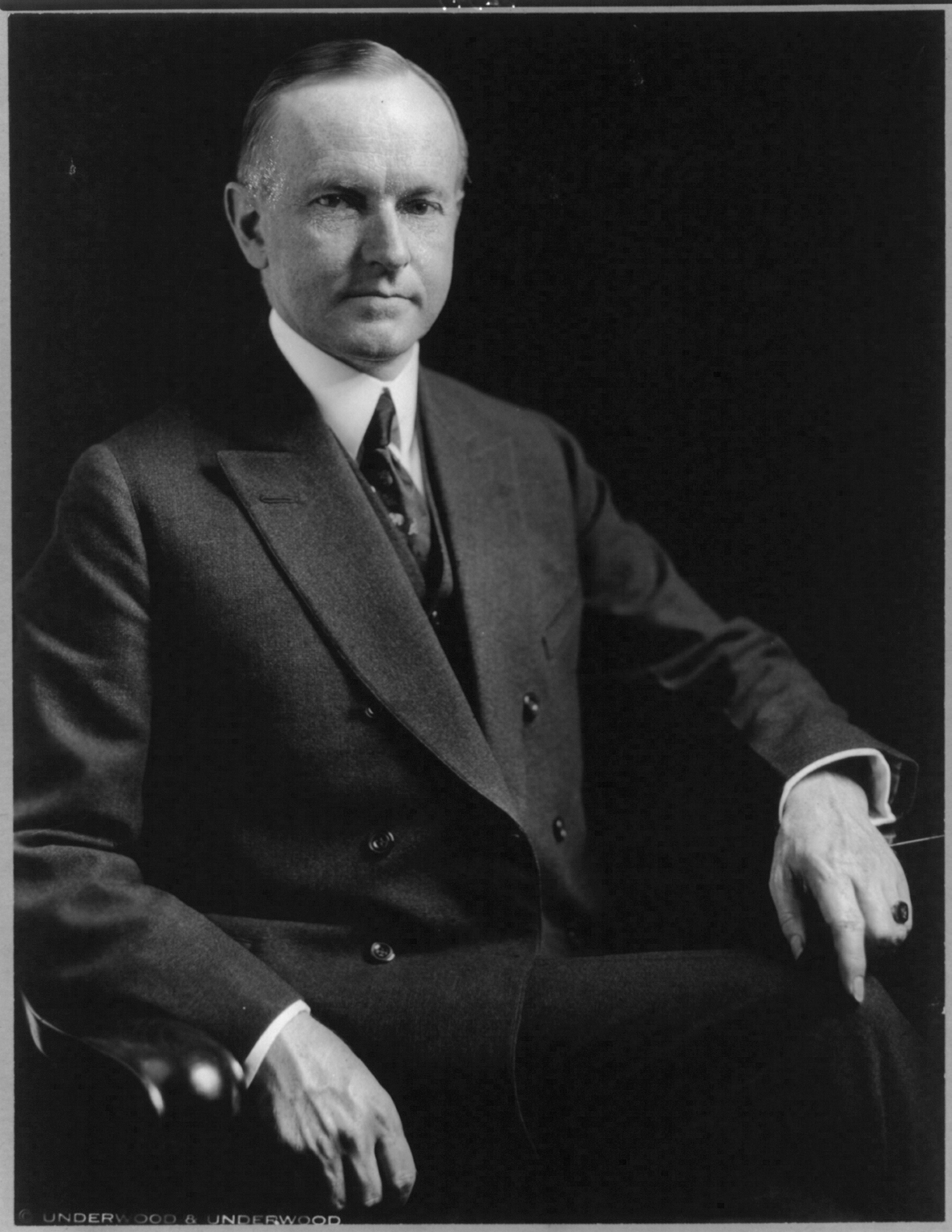
    Calvin Coolidge’s seated portrait, June 6, 1924.Library of Congress

    The program seeks students who embody the principles and ideas that defined Coolidge’s term as the 30th U.S. President. Coolidge was known for his humility as well as his support for political bipartisanship, public education, and local self-government.

    This is the 11th class of scholars sponsored by the foundation, Denhart said, and since 2016, nearly 50 students have passed through the program. The foundation also awards smaller scholarships to its top 100 finalists.

    The scholars are not expected to follow the politics of Coolidge, a Republican who had a reputation as a small-government conservative, Denhart said. They study his history and public policies and debate at an annual seminar, he said.

    Patterson said he plans to spend the summer finalizing his college choices and writing essays. He is undecided about a possible major.

    “The really cool thing about the scholarship is that it opens up all kinds of possibilities,” Patterson said.

    He is considering joining an ROTC program and possibly becoming a U.S. Air Force pilot.

    Patterson wants to encourage underclassmen to consider applying for the scholarship. His advice:

    “Don’t be afraid to put yourself out there. You never know what might happen,” he said.

  • Kathy M. Winter, lifelong artist, teacher, and former parish council president, has died at 91

    Kathy M. Winter, lifelong artist, teacher, and former parish council president, has died at 91

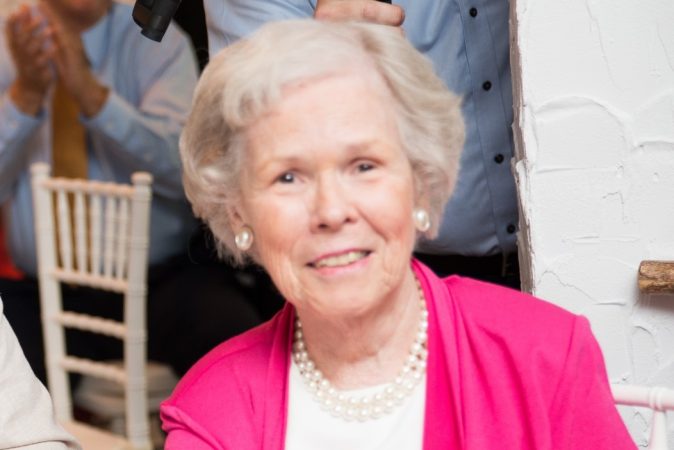
    Kathy M. Winter, 91, formerly of Philadelphia, lifelong artist, art and grade school teacher, author, and former council president at Our Mother of Consolation Parish in Chestnut Hill, died Tuesday, June 9, of complications from pneumonia at Forbes Hospital in Monroeville, Pa.

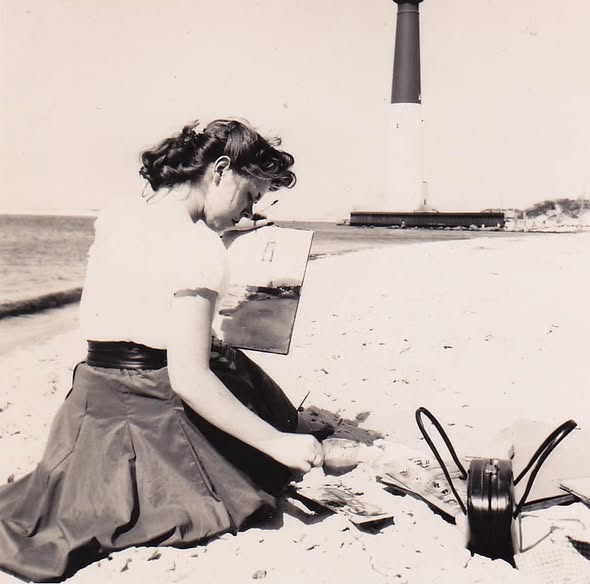
    Born in Philadelphia, Mrs. Winter studied art at the Pennsylvania Academy of the Fine Arts and earned a bachelor’s degree in fine arts at the University of Pennsylvania. She specialized in portraits, still life, and landscapes, and worked mostly in watercolors, pastels, oils, and acrylics.

    She painted portraits of celebrated naval chaplain John F. Laboon and Chinatown icon T.T. Chang, and contributed to a collection called “Lost Dreams on Canvas” that featured portraits of innocent victims of violent crime in Philadelphia. “You get into a portrait like that,” Mrs. Winter told the Chestnut Hill Local in 2012, “and you’re into the person.”

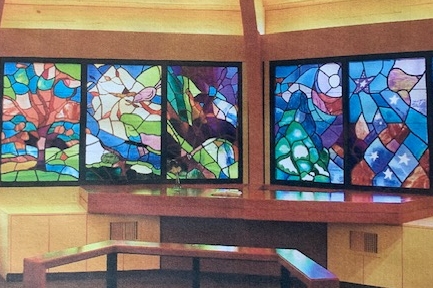
    She painted the statue of St. Gianna Beretta Molla for the Shrine of the Nativity of Our Lord in Warminster, and her painting of a restored statue of St. Gabriel for a church in New Orleans was featured in The Inquirer in 2007. She also designed stained glass windows for St. Bede the Venerable Church in Holland, Bucks County, and the chapel at Shore Memorial Hospital in Somers Point, N.J.

    “The best thing,” Mrs. Winter told the Chestnut Hill Local in 2012, “is that you don’t have to retire from making art.” Courtesy of the family

    Mrs. Winter studied Chinese brush painting with artist Phoebe Shih in Flourtown and showed her work at the Woodmere Art Gallery, the Conshohocken Art League, Daylesford Abbey, the Lutheran Theological Seminary, the Knickerbocker Exhibition in New York, and elsewhere. She also taught art classes at the Abington and Main Line Art Centers, the Conshohocken Art League, Our Mother of Consolation School, and elsewhere.

    “The best thing,” she told the Local in 2012, “is that you don’t have to retire from making art.”

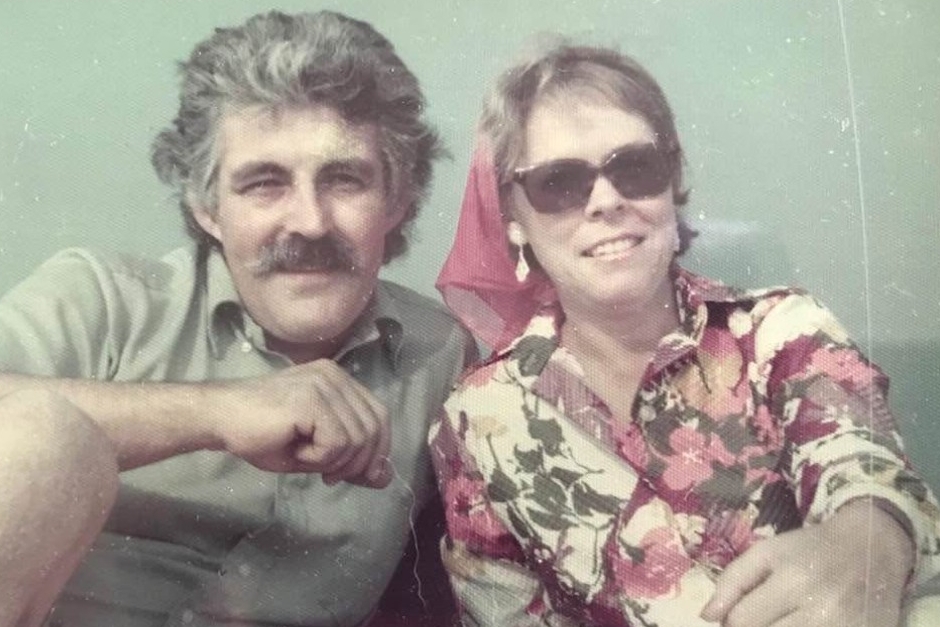
    She met her husband, sculptor Joseph Winter, at the Pennsylvania Academy of the Fine Arts in 1953, and they opened Winter Art Studio in their Chestnut Hill home in 1983. For several commissions, he created the sculpture, and she painted it.

    “Since Joe was a sculptor and I’m a painter, we complemented each other very well,” Mrs. Winter told the Chestnut Hill Local in 2021. “If we had both been painters or both been sculptors, it would not have worked out so well. There would have been too much competition.”

    Mrs. Winter painted fruit and flowers.Courtesy of the family

    In 2021, she self-published a 48-page children’s book called How the Bears Got to the Park. It features illustrations by her husband, and the plot she wrote is based on his award-winning 1966 sculpture Family of Bears that is displayed at Three Bears Park at Third and Delancey Streets in Society Hill.

    Mrs. Winter was a longtime member and onetime council president at Our Mother of Consolation Parish. She and her husband moved to Chestnut Hill from Southwest Philadelphia in 1962 so their children could attend the parish school, and she taught all subjects to third and fourth graders for a few years.

    Parish members scheduled Mass intentions to honor her on June 28, July 5, and July 10. “She was very determined,” her daughter Genienne Navarro said. “She never let anything stand in her way and would move mountains to get something done.”

    Kathleen Marie McKenna was born April 21, 1935. Her family moved to Virginia when she was young and returned to Philadelphia a few years later, and she graduated from West Philadelphia Catholic High School for Girls.

    Mrs. Winter and her husband, Joe, married in 1956. Courtesy of the family

    A perceptive nun recognized her artistic skills in high school and arranged for an admission interview with officials at the Pennsylvania Academy of the Fine Arts. She received a full scholarship, met her husband there, and they married in 1956 and had daughters Kathy and Genienne and a son, Joseph.

    Her husband died in 2020, and she moved to the Pittsburgh area a few years ago to be close to family. Mrs. Winter kept in touch with former classmates at the Pennsylvania Academy of the Fine Arts for years and took additional art classes later at Temple University and Chestnut Hill College.

    She played piano, doted on her family, and survived cancer in the 1970s. A longtime friend called her a “true, loving, nourishing, protective, guiding, steadfast Blessed Mother to me.”

    Her family said in a tribute: “She will be remembered for her friendship, spiritual support, listening ear, humor, deep caring, generosity, and undaunted optimism.”

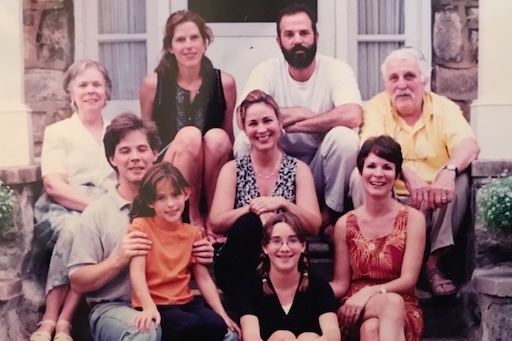
    Mrs. Winter (rear left) enjoyed time with her family.Courtesy of the family

    Her daughter Genienne said: “Her favorite saying was, ‘Nothing is impossible with God.’”

    In addition to her children, Mrs. Winter is survived by six grandchildren, three great-grandchildren, and other relatives. A sister died earlier.

    A memorial service is to be at 11 a.m. Saturday, Sept. 19, at Our Mother of Consolation Church, 9 E. Chestnut Hill Ave., Philadelphia, Pa. 19118.

    Donations in her name may be made to Our Mother of Consolation Church and School, 9 E. Chestnut Hill Ave., Philadelphia, Pa. 19118.

    Mrs. Winter and her husband, Joe, pose in their Chestnut Hill home studio. Courtesy of the family
    Mrs. Winter was an expert in designing stained glass. Courtesy of the family