School faded as a priority when Simone Smith was a senior at Lincoln High, after her beloved grandmother died.
“I didn’t have no one telling me to get up, go to class, so I missed a lot of school,” said Smith, 18.
Her grades slipped, and she narrowly missed graduating with her class in June. But that near-miss galvanized her.
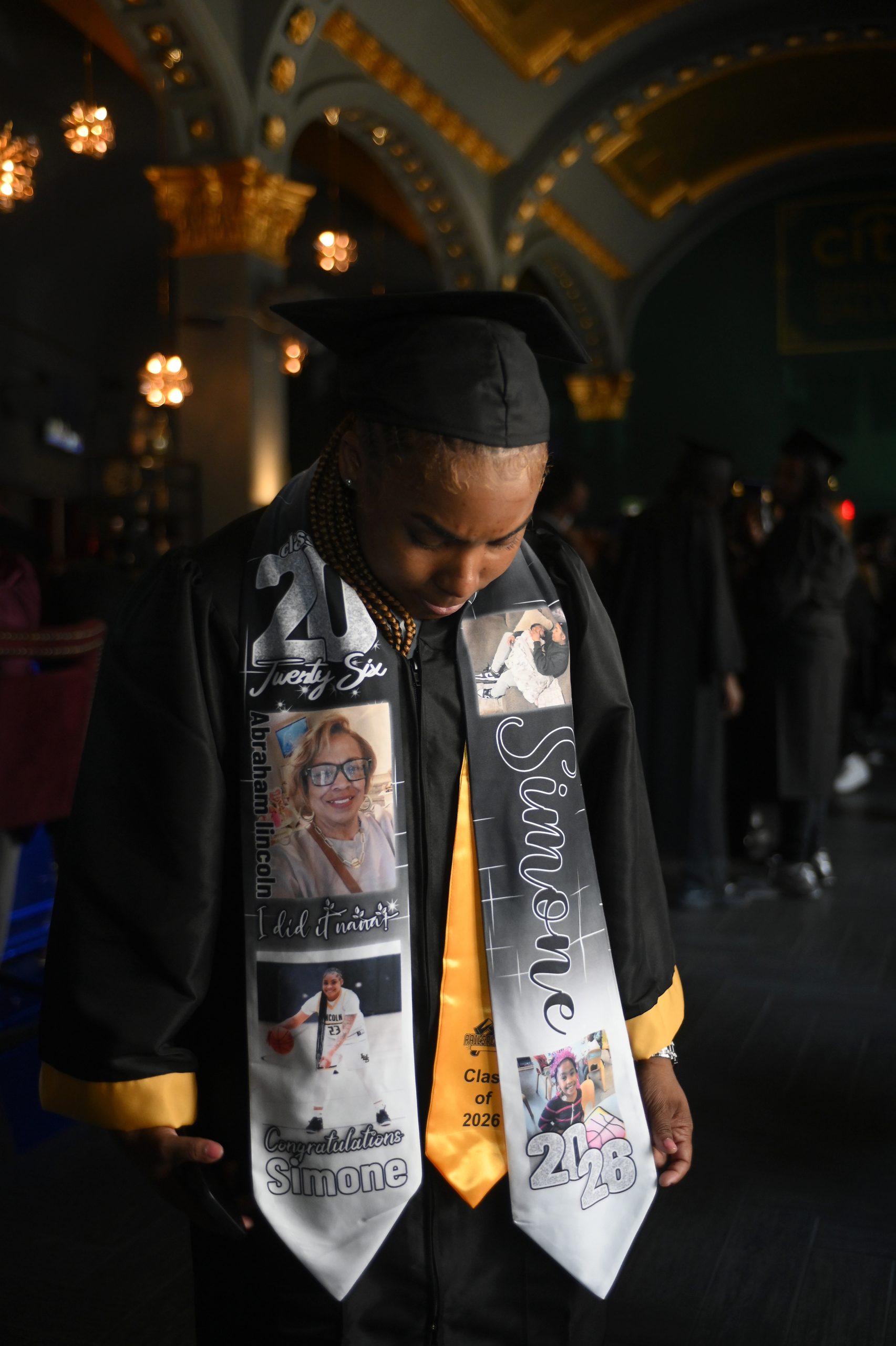
Soon to be graduate Simeone Smith remembers her late grandmother Elodee, in the green room lounge ahead of the 2026 Summer Graduation Ceremony at the Met, on Thursday.Bastiaan Slabbers / For The Inquirer
Summer school “was easy” once she buckled down, Smith said — she completed social science and English requirements, and on Thursday, she collected her hard-won diploma, one of nearly 400 Philadelphia School District students who crossed the stage at summer graduation after earning a handful of credits in summer school.
“This graduation was delayed, but not denied,” author, actor, and poet Jaylene Clark Owens told a packed auditorium at the Met on North Broad Street.
Smith, who wore a custom-made stole honoring her grandmother and will now enroll andplay Division I basketball at Georgia Southern University, was thrilled.
“It just feels great to be able to do this,” she said. “Me and my sister are the only ones that got our high school diplomas — my family has a lot of dropouts. But I wanted to do it for my Nana.”
Soon to be graduates listen to the rendering of the National Anthem and Black National Anthem during the 2026 Summer Graduation Ceremony at the Met, on Thursday.Bastiaan Slabbers / For The Inquirer
The graduation was a boisterous scene of joy and celebration: young people in an array of caps and gowns representing schools from all over the district, some in T-shirts and shorts under their robes, some in party dresses. Families wept, cheered, shouted: “You did that!” There was a steady drumbeat of applause, a sea of flowers and camera flashes, the arms of bursting-with-pride-parents reaching out to touch passinggraduates.
A beaming school board president Reginald Streater said Thursday’s graduation was no less significant or important than the ceremonies that happened in June.
Family members and friends react as graduates celebrates receiving their diploma during the Philadelphia School District’s summer graduation ceremony at The Met on Thursday.Bastiaan Slabbers / For The Inquirer
“You took ownership of your future,” Streater said. “There is never just one path to success. We believe in you, and we can’t wait to see all that you accomplish.”
School Board President Reginald Streater and Superintendent Tony Watlington shake hands with graduates during the 2026 Summer Graduation Ceremony at the Met, on Thursday.Bastiaan Slabbers / For The Inquirer
John Alviti, 76, of Flourtown, Montgomery County, retired innovative senior curator at the Franklin Institute, former executive director at the Atwater Kent Museum, adjunct professor of urban studies, and “Mr. Philadelphia History” to family and friends, died Saturday, June 20, of complications from heart and kidney disease at Jefferson Abington Hospital.
Born in Chicago and devoted to history and his South Side White Sox baseball team, Mr. Alviti came to Philadelphia in the 1970s to pursue a doctorate in history and urban studies at Temple University. He never got that doctorate.
But he fell in love with Philadelphia’s history and architecture, got married, settled down in Flourtown, and, for 34 years, was one of the region’s most influential museum curators and historians. Affable, creative, and energetic, by all accounts, Mr. Alviti became a groundbreaking executive director at the now-closed Atwater Kent Museum in 1982 and celebrated curator at the Franklin Institute in 1994.
Even after he retired in 2018, he was known around town as “Mr. Philadelphia History.”
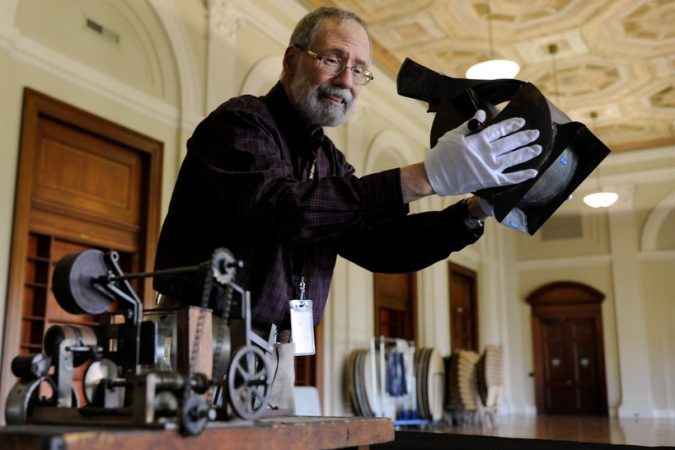
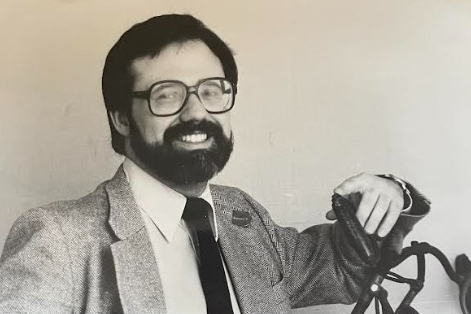
Mr. Alviti displayed this 5-foot-long fragment of a lightning rod designed by Benjamin Franklin at the Franklin Institute in 2010. Michael S. Wirtz / Staff Photographer
At the Atwater Kent, Mr. Alviti updated exhibits on William Penn, the history of Philadelphia, the old Enchanted Colonial Village display, and local cemeteries. He added maritime and archaeology galleries.
At a gala to celebrate the museum in 1984, A. Atwater Kent Jr., son of the museum founder, said Mr. Alviti “has done a great job of creating interesting exhibits and improving the museum.”
At the Franklin Institute, he reorganized its huge inventory, redecorated the galleries, digitalized many artifacts, and created popular exhibits regarding the Wright Brothers, Benjamin Franklin, antique machines, X-rays, and dozens of other scientific subjects.
“He loved objects,” said his wife, Maryellen. “He loved the history of objects and telling their story.”
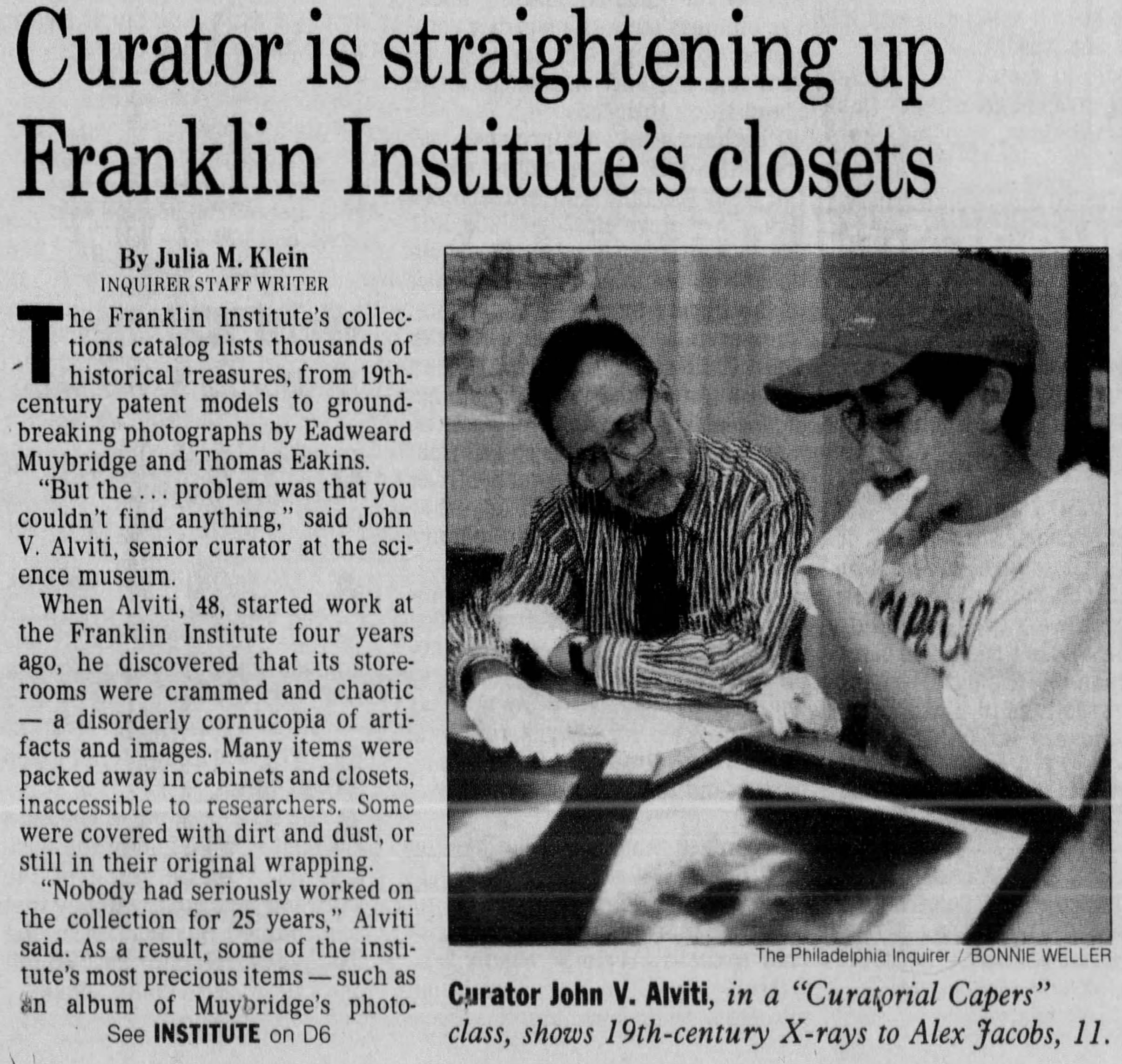
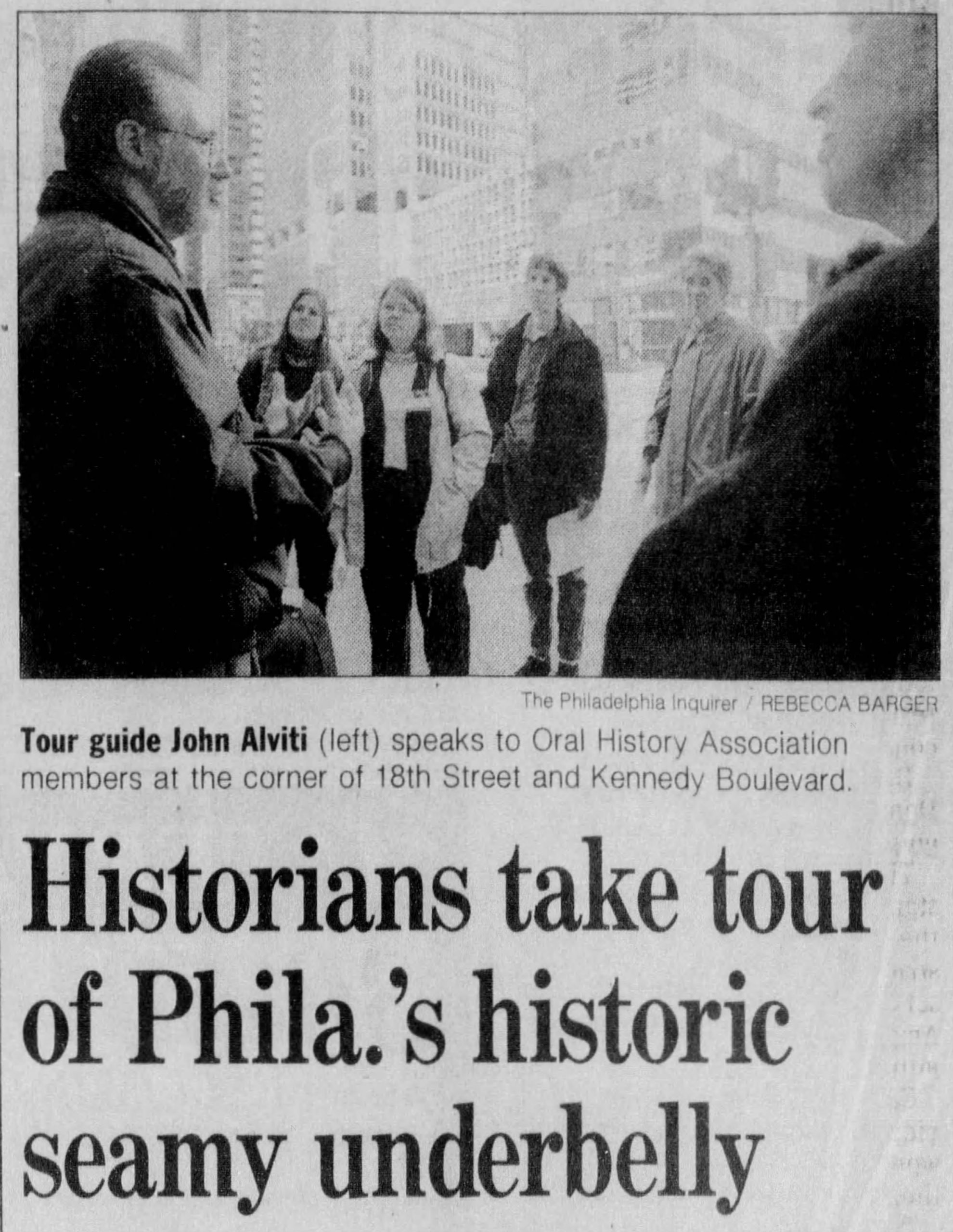
This story and photo of Mr. Alviti (left) was published in The Inquirer in 1998.Newspapers.com
In 1998, Mr. Alviti told The Inquirer: “Besides the curator of stuff, I’m also the curator of institutional memory. And institutional memory is more than just simply the facts about what happened in the past. It’s about the legacy of an institution … and how it informs our thinking and decision-making.”
He was also adept at merging his collections with educational programs, and he helped organize the city’s National History Day competition for students, the Phil-A-Kid hands-on history workshop for fourth and fifth graders, the Peopling of Philadelphia research project, and the Curatorial Capers summer day camp program. Often, in a nod to the ever-present protective gloves he wore to handle the artifacts, he introduced himself as “Johnny Whitegloves.”
“There are some curators who think I’m crazy,” he told The Inquirer. But a public presentation, he said, “really demonstrates the power of an object.”
Mr. Alviti also led walking tours of the city for visiting colleagues from the Oral History Association, the Organization of American Historians, and other groups. He admired and worked closely with amateur historians, and led the successful effort in 1981 to save the historic Lit Bros. building complex on Market Street from demolition.
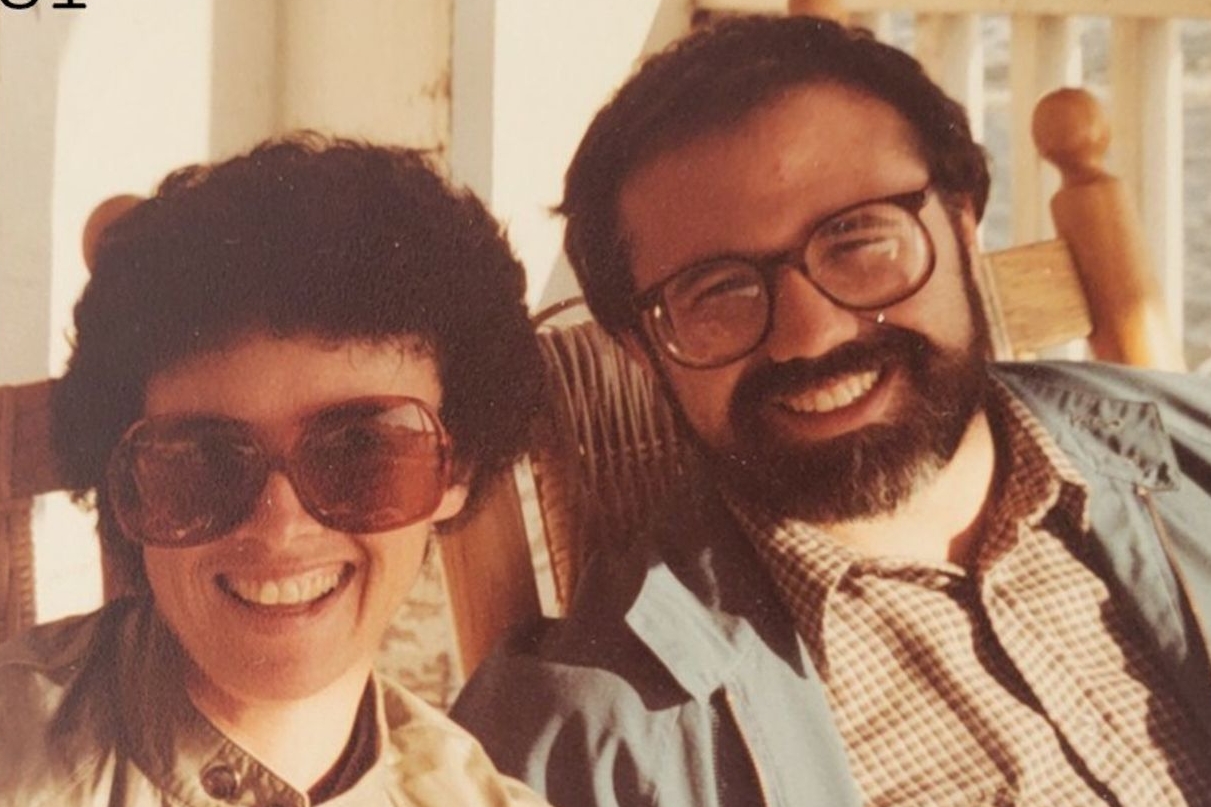
Mr. Alviti and his wife, Maryellen, married in 1983.Courtesy of the family
Between the Atwater Kent and the Franklin Institute, Mr. Alviti spent two years as director of the Historical Society of Washington, D.C. He was an expert on public transportation and taught urban studies, American history, and museum training at Temple and Stockton Universities, Rutgers University-Camden, and elsewhere.
He was onetime curator of historic Fort Mifflin and president of what is now the Museum Council of Greater Philadelphia. He was on the advisory board of the old Philadelphia Alliance for Teaching Humanities in the Schools and active with the American Association of Museums and other groups.
“He had a gift for making friends for life,” longtime friend Margaret Marsh said, “and he had a legendary generosity of spirit.” Longtime friend Howard Gillette said: “He never met a stranger.”
John Vincent Alviti was born Sept. 22, 1949. A lifelong avid reader, he earned a bachelor’s degree in urban studies and history at Lewis University in Illinois in 1971 and a master’s degree in history at the University of Wisconsin-Milwaukee in 1975.
The photo and a story about Mr. Alviti and his city walking tours appeared in The Inquirer in 1996.Newspapers.com
He played piano and clarinet, and sang in choirs in high school and college. “He left Chicago when he was 25 or 26,” said his younger sister, Rosemarie Alviti Babic, “but never stopped loving the city.”
He met Maryellen Coonahan when she took an urban studies class he was teaching at Temple, and they married in 1983 and lived in Philadelphia, Washington, and Flourtown. Together, they traveled the world and visited museums in London, Rome, Athens, Madrid, and elsewhere.
Mr. Alviti enjoyed puzzles, games, and conversation. He lived with a heart condition for most of his life and was the lovable “Uncle Johnny” to his nieces and nephews. “He is missed beyond words,” said his niece Lindsay Hogan.
He was fascinated by urban architecture and city life around the world, and he routinely bought food and drink for people without homes, picked up litter, and offered correct directions to those who looked lost.
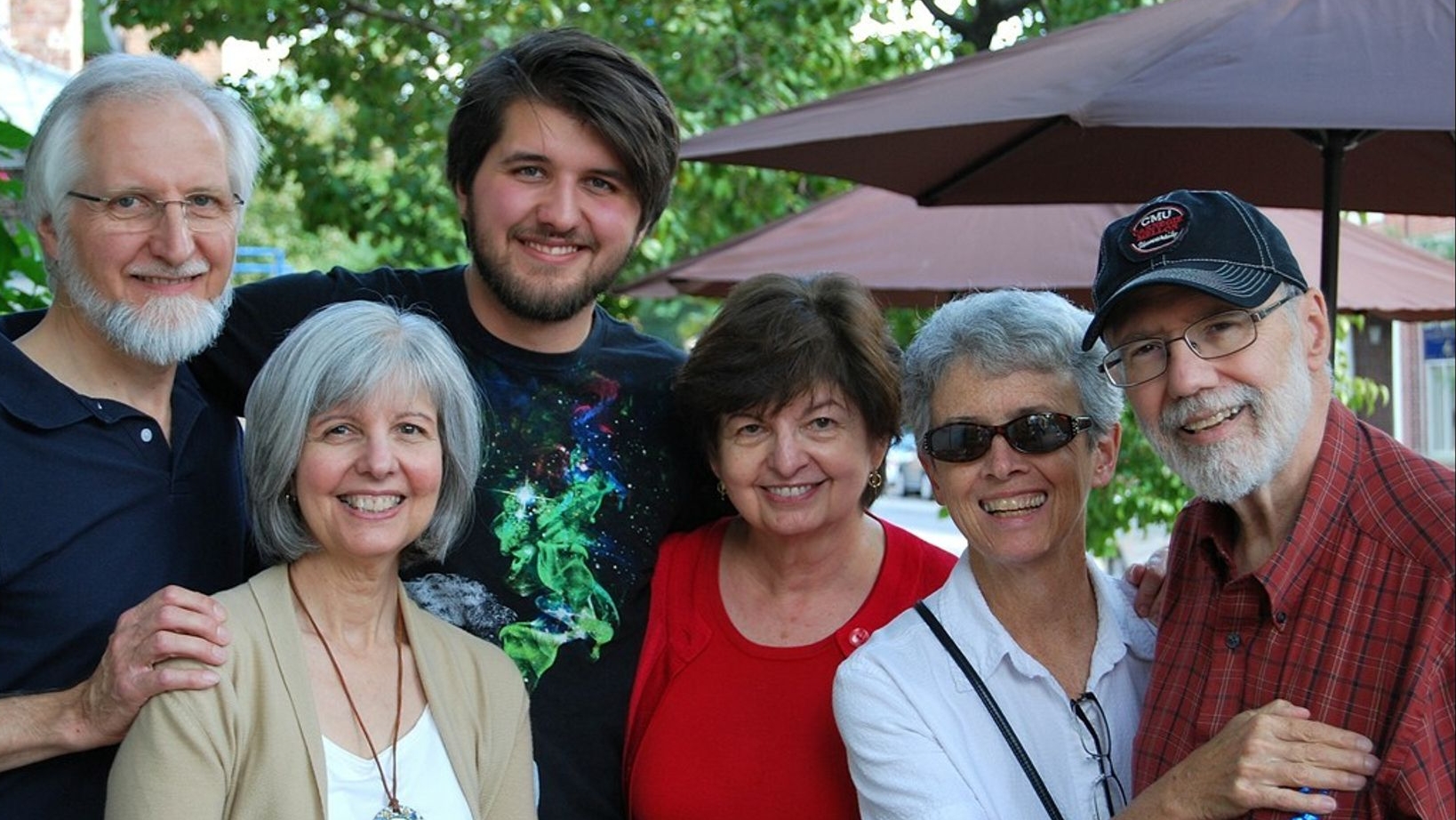
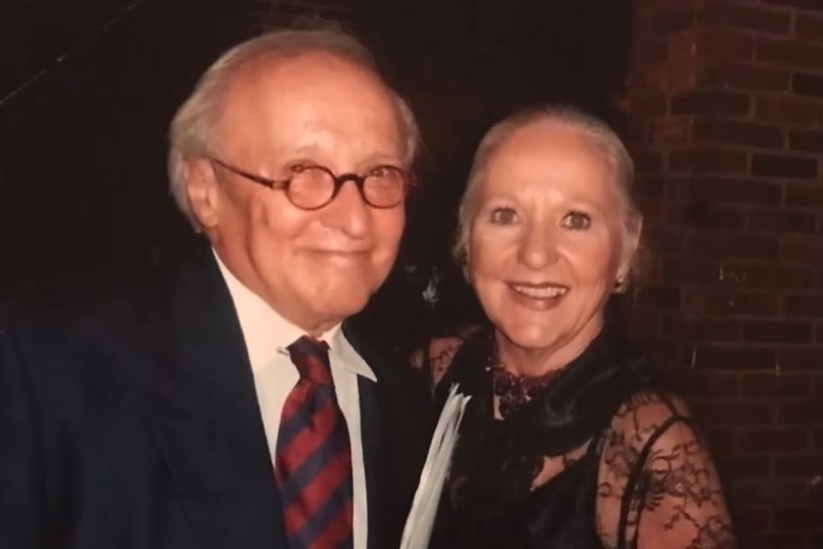
Mr. Alviti (right) enjoyed time with family and friends.Courtesy of the family
“He was a curious fellow,” his wife said, “who loved to help people.”
In addition to his wife, sister, and niece, Mr. Alviti is survived by a sister, Rita Jo Alviti Coyne, a brother, James, and other relatives.
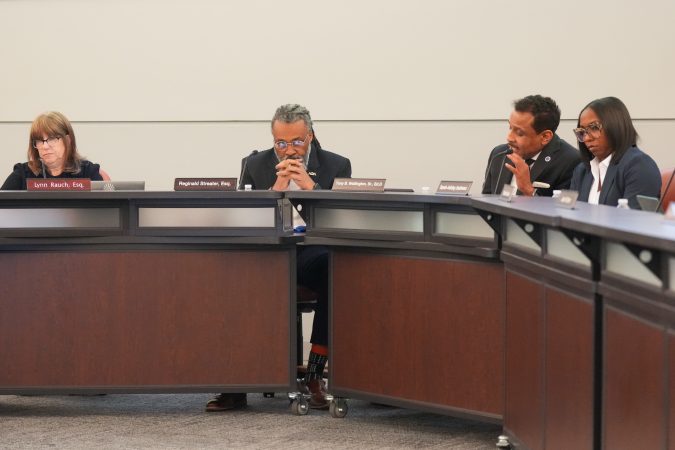
The Philadelphia school board on Thursday voted to nonrenew a city charter school — despite multiple ongoing lawsuits to attempt to halt the action.
The board voted 7-2 to nonrenew Philadelphia Montessori Charter School, the first step on a long road that could ultimately lead to closing the K-4 school in Southwest Philadelphia.
Sarah-Ashley Andrews, school board vice president, said the school’s students “have shown consistently low academic performance in math and English language arts. Its third and fourth graders have consistently lagged behind their peers in demographically similar schools, school district schools, and other Philadelphia charter schools serving the same grade levels. And student academic growth has not kept pace with state expectations.”
Philadelphia Montessori has had five different leaders since 2020. In 2024-25, the last school for which data are available, 18% of students met state standards in reading and 12% in math.
School leaders say the school is improving and serves an important role as the only public Montessori school in the city. They have objected to what they say are shifting and arbitrary standards for charter schools.
Board members Crystal Cubbage and Whitney Jones opposed the vote to begin the nonrenewal process. Cubbage, who said she had “mixed feelings” and initially was in favor of the nonrenewal, said she wanted more clarity on the school’s struggles.
Philadelphia Montessori has been aggressively attempting to block such action in court. State and federal lawsuits are pending, with school lawyers asking judges this week to block the board’s vote.
Amanda Wilson, the school’s executive director, asked the board to hold off on the nonrenewal.
“There is no emergency,” Wilson told the board. “There is no deadline requiring a vote before the courts have had the opportunity to weigh in on the significant legal issues surrounding this charter renewal process. Those issues are now pending in both state and federal court, and they deserve to be resolved before any action is taken. If this board proceeds today and the courts later determine that the school district’s process was unlawful, everyone loses.”
Lynn Rauch, the district’s general counsel, said “both the state and the federal court issued rulings that do allow us to proceed with the vote today.”
School board president Reginald Streater said it was appropriate to move forward with the Philadelphia Montessori matter, “exercising our responsibility and duty to ensure that schools throughout our district are meeting their responsibilities to children, families, and taxpayers by demonstrating a high-quality academic experience for our students.”
The school, which educates 228 students in an Island Avenue building, will continue to operate during the nonrenewal process — the appointment of a hearing officer, a formal hearing with witnesses and evidence, a report from the hearing officer, and, finally, another school board vote on how to move forward.
The Philadelphia school board on Thursday moved to borrow $600 million to pay employees and keep the lights on over the next several months.
The temporary borrowing, authorized at a special school board meeting, comes in two tranches — $200 million this month, and $400 million in September.
Borrowing to pay bills is a rite of summer for the district, the only school system in Pennsylvania unable to raise its own funds. The school board has had to issue tax and revenue anticipation notes for 43 of the past 45 years, officials said. Last year, the district authorized borrowing up to $1.5 billion because the state budget had not yet been passed.
“Simply put, it helps ensure our schools have the cash flow needed to open on time, pay employees and vendors, and continue serving students without interruption,” school board president Reginald Streater said at the meeting, which was held virtually.
Rates are not locked in, but chief financial officer Michael Herbstman said if the transactions happened now, the first borrowing, which is set to happen Tuesday through Bank of America, would come at a rate of 3.4%, and the September public borrowing would have a rate of 2.85%.
The move, then, will mean millions in borrowing costs for the school system.
Philadelphia, the nation’s ninth-largest school system, has about 114,000 students in 216 traditional public schools, and about 65,000 more in 83 charter schools. The district has a budget of about $4.6 billion.
For the first time, Pennsylvania will inventory the thousands of public school facilities throughoutthe state to better assess the extent of aging and unsafe buildings.
Educators have long raised concerns that deteriorating school conditions threaten student safety and impede learning — but understanding the scope of the problem has been difficult.
Included in this year’s $50.8 billion budget deal, and effective in 2027, the Pennsylvania Department of Education will be required to collect information about school facilities, including the age and renovation history of buildings as well as their capacity and square footage.
Democratic State Rep. Elizabeth Fiedler, who represents South Philadelphia and was the initial sponsor of the bill, said the legislation will allow state funding for facilities repairs to be used more efficiently.
Some school districts already track this information, Fiedler said, but not all do. Having that information in a centralized location, she said, will allow for a “better understanding big picture of what we’re facing and figure out where we should be allotting our very limited school facilities dollars.”
The state has allocated $200 million in funding for public school facilities improvements in recent budget cycles.
While her initial bill also called for the creation of a public school facility advisory committee, Fiedler said the inventory requirement represents an important first step.
“The people who spend Monday through Friday all day long in those same schools, they know what the problems are,” Fiedler said. “They’re tired of having to find work-arounds and deal with them. We need to invest more money. I think that part is plain and simple.”
Students attending school in Philadelphia have faced leaking roofs, mold, asbestos, and inadequate cooling systems.
The Philadelphia school board voted in April to approve a controversial $3 billion facilities plan that would close 17 schools and renovate nearly 200 others over the next decade. The average age of a school building in the Philadelphia district is 75.
That problem is not unique to Philadelphia.
In Pittsburgh — where the average building is nearly 90 years old — the school board similarly approved a facilities plan this spring that would close 12 schools in a move district leaders hope will help address the older school buildings.
Statewide, the first round of school facility information will be collected by the education department through an online form by the end of 2027, and then every five years after that. Public school districts as well as cyber charter, charter, and career and technical schools will be required to submit information.
“This information will enable lawmakers and the administration to evaluate the condition of public school facilities, identify collective needs of our public schools, and further support the investments needed to ensure healthy and safe learning environments,” a spokesperson for the state education department said.
Aaron Chapin, president of the Pennsylvania State Education Association, said the state’s largest teachers union was proud to work alongside lawmakers in creating the inventory system.
“We encourage school districts to partner with the Department of Education to provide the information needed so that the commonwealth can address school facility equity in a fair and timely way,” he said in a statement.
Ethan Young is an intern with the Pennsylvania Legislative Correspondents’ Association. He can be reached at ethanmyoung@gmail.com.
A judge this week signed off on a $650,000 payout to three families, marking the end of a legal challenge to the Philadelphia School District’s special-admissions policy.
The families, backed by lawyers from America First, an organization formed by Stephen Miller, a top aide to President Donald Trump, alleged that the school system had shifted to a “blatantly unconstitutional, race-based” system.
The settlement pays $120,000 each to parents Sherice Sargent, Joshua Meyer and Michelle Sheridan, each of whom had children who were not selected in the lotteries for the Philadelphia magnet schools of their choice in 2022, despite qualifying academically for spots in the schools.
Philadelphia in 2021 dramatically overhauled how it admits students to 37criteria-based schools in an effort to correct a demographic mismatch — some magnet schools had higher percentages of white, Asian and children who do not come from economically-disadvantaged families than the city as a whole.
The district moved to a centralized, computer-based lottery system to determine admission to magnet schools, with automatic admission for those who met academic criteria and lived in certain under-represented zip codes. In the past, principals had some discretion over who got into the schools.
When the changes were made, officials said they “made a commitment to being an antiracist organization” after an “equity lens review” of admissions practices.
“As a matter of practice, the School District of Philadelphia does not comment on pending litigation or settlement agreements,” school district spokesperson Monique Braxton said in a statement. “Our focus is on ensuring every student and family has access to a high-quality school that is the right fit for their needs. As we prepare to welcome students back for the new school year, we are excited for families to begin their educational journey and take advantage of the many outstanding school options available across the District.”
The settlement brings no changes to the district’s current admissions policy, which has gone through several changes since first introduced by former Superintendent William R. Hite Jr., including losing a computer-scored writing test, having students rank their schools of choice, and guaranteeing high school admissions to students who get accepted to schools with both middle and high schools, as long as their grades meet standards.
Zip code preference remains in place. Last fall, students in zip codes 19121, 19132, 19133, 19135, 19136, and 19140 got preference for Academy at Palumbo, George Washington Carver High School of Engineering and Science, Central High, and Masterman.
Gene Hamilton, president of America First, said the district had unfairly used zip codes as a proxy for race.
“This settlement sends a clear message to every school district in America: if you replace merit with racial engineering, America First Legalwill find you, we will sue you, and we will hold you accountable,” Hamilton said in a statement. “The era of disguising racial quotas behind the language of ‘equity’ is over.”
Wally Zimolong, a Villanova-based lawyer who worked on the case with the America First team, said the 2021 policy “was discrimination, plain and simple. It was unconstitutional, and worse, it hurt students.”
Zimolong said the policy “affected the families greatly,” and the settlement compensated families for out-of-pocket expenses they incurred, plus emotional distress.
The settlement also specifies $290,000 be paid in lawyers’ fees.
The president of Philadelphia Montessori Charter School, two parents, and two students sued the Philadelphia School District in federal court Tuesday, alleging civil rights violations over what they say is an “unlawful and fundamentally unfair charter renewal process.”
Separately, the Southwest Philadelphia school also asked Commonwealth Court judges this week to bar the school board from taking a nonrenewal vote against it. That vote is now scheduled for a special meeting on Thursday.
The federal suit was filed in Philadelphia against the district, the school board, and Peng Chao, the district’s chief of charter schools.
The federal suit was filed by Christopher Smith, the president of Philadelphia Montessori’s board of trustees, parents Donnaye Noland and Maria C. Rios, and their children, students at the school. The parties also asked a federal judge for an emergency order stopping the board from taking any action around nonrenewal until the case is heard.
“This case is not about educational policy or the wisdom of charter schools,” the suit reads. “It is about whether a public school district may employ an arbitrary, internally developed, and concededly flawed evaluation process to recommend the closure of a public charter school serving predominantly Black or African American students and a significant population of students with disabilities, notwithstanding its own acknowledgment that the process lacks transparency, consistency and objective standards.”
Wanda Motley Odom, a spokesperson for the school board, said that the board does not comment on pending litigation, but that the filing “does not change our agenda for Thursday’s action meeting, or the board’s responsibility to carry out its statutory duty to consider matters properly before it. The board is reviewing the filing, and will continue to act in accordance with applicable law.”
U.S. District Judge Joshua D. Wolson has scheduled a Wednesday conference call on Philadelphia Montessori’s application for the federal emergency order.
A Commonwealth Court judge will also hear arguments on the application for an injunction Wednesday.
A charter nonrenewal vote does not mean a school closes, but it triggers a lengthy, formal nonrenewal hearing, and eventually a second board vote on nonrenewal.
Schools remain open during the nonrenewal hearing process and can appeal nonrenewal decisions.
Harm that can’t be undone
Philadelphia Montessori, the only public Montessori school in the city, serves 250 students on its Island Avenue campus.
At the board’s May meeting, officials flagged long-standing concerns about the school, including itsunderperforming both a similiar-schools group and the district as a whole in academics.
They also cited personnel problems at the school.
But Smith, Noland, and Rios say that students have “enrolled and remained at PMCS because traditional district placements were unsuccessful,” and that the methodology the district uses to evaluate charter schools “disproportionately disadvantages charter schools serving predominately Black or African American student populations by relying on metrics and comparator methodologies that produce racially disparate outcomes.”
The suit not only seeks to halt the district from implementing the nonrenewal but also asks for compensatory damages for the student plaintiffs.
Mark Seiberling, a lawyer for Philadelphia Montessori and the plaintiffs in the federal suit, said the school is not seeking special treatment, but equal treatment.
“Once the school district initiates the nonrenewal process, the resulting harm to students, families, and the school community cannot be fully undone,” Seiberling said in a statement. “We look forward to presenting the evidence in court. Our clients simply seek a fair, transparent, and lawful renewal process that complies with the Constitution and federal civil rights laws.”
The Philadelphia School District’s negligence proved fatal for a woman who died when a Roxborough High School utility pole fell and crushed her while she was walking at the school’s athletic complex, a new lawsuit alleges.
Paula Budin, a retired teacher, was walking on the Roxborough High track on the morning of Dec. 5, 2024, when a 45-foot wooden pole snapped at its base, striking her.
A passerby found her, bleeding and unresponsive on the ground, and called emergency services, but paramedics could not revive Budin, who died of blunt force trauma injuries from the accident.
Lawyers for Budin’s family accuse the district — and the Parsons Corp., which was hired by the school system to complete a facilities assessment of all its properties — of negligence. Officials failed to flag rotting at the base of the pole or properly maintain or inspect the pole, the suit said.
“The School District of Philadelphia knew or should have known of the dangerous condition of the subject pole as there were visible signs of its decay as far back as 2014,” the suit, filed this week in Philadelphia Common Pleas Court, reads. “Despite this actual and/or constructive knowledge and their appreciation of that risk of catastrophic harm, the district did not take corrective action nor did it warn students or members of the community of the risk of catastrophic harm.”
Budin’s family is seeking financial damages.
The school district does not comment on pending litigation, spokesperson Naima DeBrest said. Parsons spokesperson Bryce McDevitt said the same.
Philadelphia’s underfunded school system has a massive footprint — more than 300 buildings and athletic complexes. It has, in some cases, struggled to adequatelymaintain its facilities.
Budin, who was 73 when she died, had enjoyed an active lifestyle, her family said. She had taught at Germantown Academy and the Community Partnership School in North Philadelphia before her retirement and was close to her family — two sisters, two nephews, and a niece.
On the morning of her accident, Budin was walking near her home on Roxborough’s track on Pechin Street, which is generally open to the public. Four poles typically used to hold lighting or security cameras were positioned around the athletic complex.
Sometime after the accident, the district removed the three remaining poles from the property, the suit said. A subsequent inspection by Budin’s and the district’s lawyers and experts revealed the poles had no inspection tags, indicating they had not been inspectedprior to the accident, the suit says.
Budin’s lawyers say that the pole in question was buried in grass near a storm drain, on a slope near the track. The drain was filled with debris, and because of the condition of the area, no standing water could drain — leading to “lengthy periods of water exposure to the base of the pole at ground level that caused the pole to deteriorate and rot to the point of severe and dangerous decay,” the suit says.
The other poles were not situated near storm drains, and had no water damage or decay, the suit says.
Budin’s estate alleges that Parsons, which was hired by the district in 2015 to complete facilities condition assessments of all of its buildings and athletic complexes, is also culpable.
Parsons inspected the Roxborough fields more than once, issuing multiple reports about the fields, but did not inspect the poles, Budin’s lawyers say.
“The Parsons defendants knew or should have known they should inspect the utility poles located on the Roxborough athletic track and field yet failed to do so,” the suit reads. “At the time of December 2024 incident, the pole at issue had discoloration at the base and other visible signs of rot which must have been present for a significant period of time.”
Emil DeJohn, 88, of Ambler, celebrated clothing designer, longtime college department chair and professor of fashion, lecturer, volunteer, and mentor to generations of designers, tailors, dressers, models, and students, died Wednesday, June 24, of a heart attack at his home.
Born in Philadelphia, Professor DeJohn worked for 37 years with Bill Blass and other notable clothing designers on Seventh Avenue in New York, and for 21 years as chair of the fashion department at Moore College of Art and Design, director of fashion career development at Drexel University, and professor of fashion at the now-closed Art Institute of Philadelphia.
He designed clothing of all kinds for men, women, and children for Jones New York, OshKosh B’Gosh, and other international labels from 1960 to 1997. He established his own label, Alex DeJohn by Emil, in the 1980s, and his creations appeared on the covers of Vogue, Harper’s Bazaar, and other magazines.
Several of his gowns were offered to singer Barbra Streisand in the 1960s, and he received design compliments from, among others, film star Elizabeth Taylor and Andre Leon Talley, former editor-at-large at Vogue. In the 1980s, he was chosen by then-first lady Nancy Reagan to design a colorful clothing collection promoting her “Just Say No” antidrug campaign.
In New York, Professor DeJohn showed designs at Bergdorf Goodman, Saks Fifth Avenue, Neiman Marcus, and Macy’s. In Philadelphia, he showed at Bonwit Teller and other top shops.
He also showed in London, Paris, Milan, Hong Kong, and elsewhere around the world. He lectured about fashion at other universities, represented the industry at high school career fairs, and mentored many young designers.
At fashion shows, they always gave him a front-row seat. “It’s an incredible profession,” he told The Inquirer in 2001. “Lots of ups and just as many downs. I wouldn’t trade one day.”
In 1997, looking to engage less with consumers and more with emerging designers, Professor DeJohn left the workshops and showrooms in New York for classrooms in Philadelphia. He spent six years as chair of the fashion design department at Moore, several years as director of fashion career development at Drexel, and finally retired in 2018 as a professor of fashion at the Art Institute.
At Moore, Professor DeJohn recruited Bob Mackie, Betsey Johnson, and other renowned designers to meet his students and provide internships and jobs. At Drexel, he oversaw the Crystal Star Award for design program and taught a class called Aspects of Fashion and Merchandising.
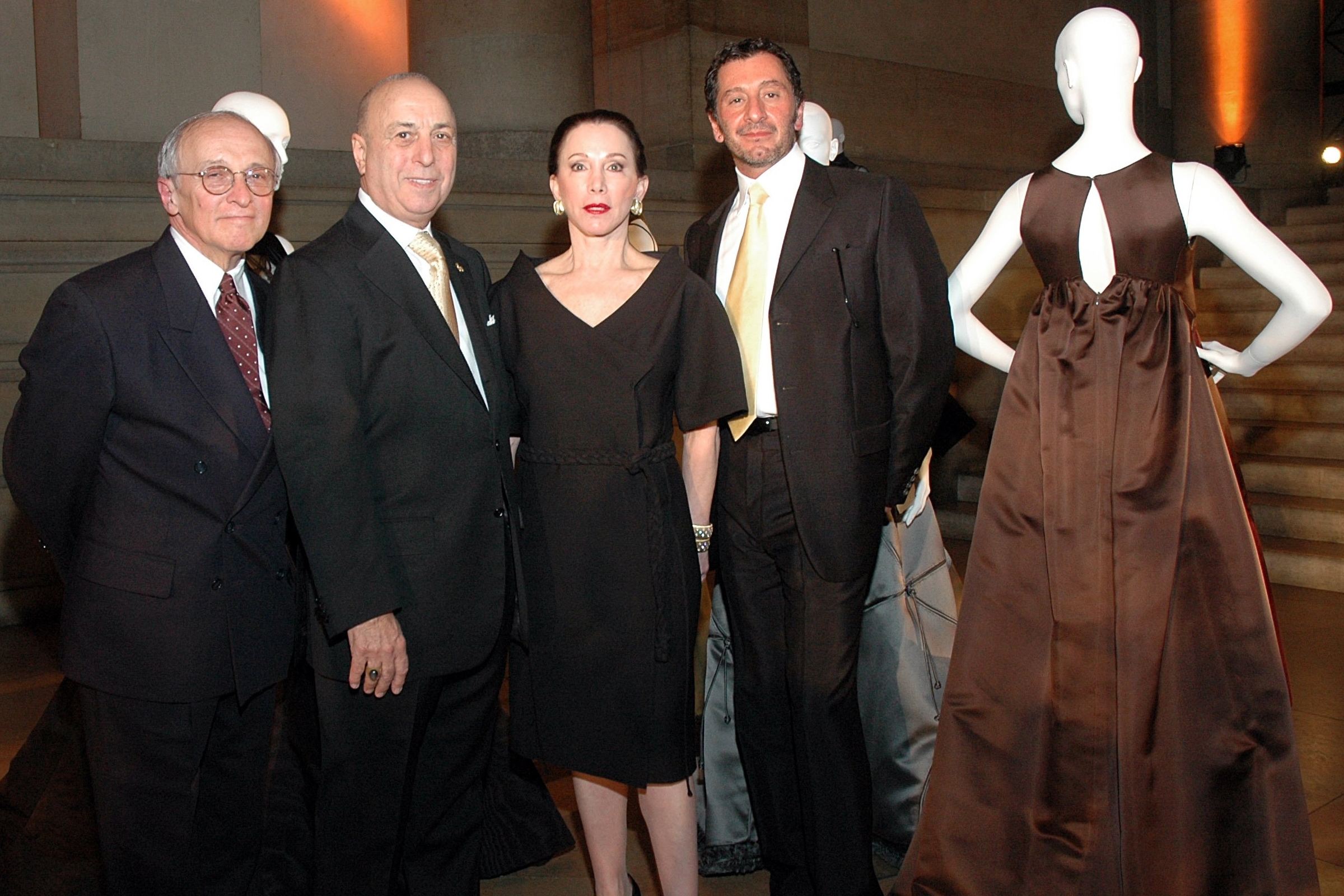
Professor DeJohn (left) attended many galas as director of the Crystal Award for design at Drexel. Emil DeJohn
He hosted a fashion club at the Art Institute and was named the school’s 2017 Teacher of the Year. “He was always happy to answer our questions and tell us about the industry,” a former student said in a tribute. Another said: “He inspired all of us to dream big.”
Professor DeJohn won the city’s Phashion Phest Philadelphia Award for design in 2001 and told The Inquirer: “Teaching the students has been a gift to me. I never envisioned anything I could enjoy more than designing. But this has become an amazing part of my life. I actually love coming to work.”
He earned other awards for design and his volunteer work at the Rowan House, the Ronald McDonald House, and other nonprofits. “He stood as a beacon of hope,” said his granddaughter Alexandra, “always making everyone feel like he believed in them, always bringing out what made them special.”
His granddaughter Isabella said: “His legacy continues to inspire me every day.”
Professor DeJohn met Bette Anne DeChiaro at a dance at the Shore when he was 17, and they married in 1963. Courtesy of the family
Emil Joseph DeJohn was born Dec. 20, 1937, in his mother’s bedroom in South Philadelphia. The youngest of three children, he discovered art in grade school, took art classes at Fleisher Art Memorial, and graduated from John Bartram High School.
He earned a bachelor’s degree in fine arts at the old Pennsylvania Museum and School of Industrial Art in 1959. He won the school’s design citation as a senior and worked at first as an illustrator for the Bulletin’s fashion pages.
He met Bette Anne DeChiaro at a dance at the Shore when he was 17, and they married in 1963. They had a daughter, Leisa, and a son, Christian, and lived in Center City, Wyncote, and Ambler.
Professor DeJohn liked antiques, flowers, and anything blue and white. He supported the old Carmelites monastery in Philadelphia and belonged to St. Luke the Evangelist Church in Glenside.
Professor DeJohn first became interested in art and fashion in grade school. Courtesy of the family
He made friends on his daily two-hour train rides to New York and said he never considered leaving Wyncote. “I loved leaving all that and coming home to cut the grass,” he told The Inquirer in 2001. “My neighbors didn’t even know what I did for a living.”
He designed his daughter’s wedding dress, took his granddaughters to mesmerizing fashion events, and made memorable trips to Ocean City, N.J., Longwood Gardens, New Hope, New Mexico, and Florida. He especially enjoyed decorating his home and Christmas tree with ornaments and live flowers.
“He made us all feel seen and special,” his daughter said. “He did that for everyone he met.”
In addition to his wife and children, Professor DeJohn is survived by four grandchildren, one great-granddaughter, and other relatives. A sister, a brother, and a son-in-law died earlier.
Professor DeJohn (right) said he would never leave Wyncote for New York. Courtesy of the family
Services were held earlier.
Donations in his name may be made to the Carmel of Jesus Crucified Monastery, Attn: Mother Pia, Box 308, Muenster, Texas 76252.
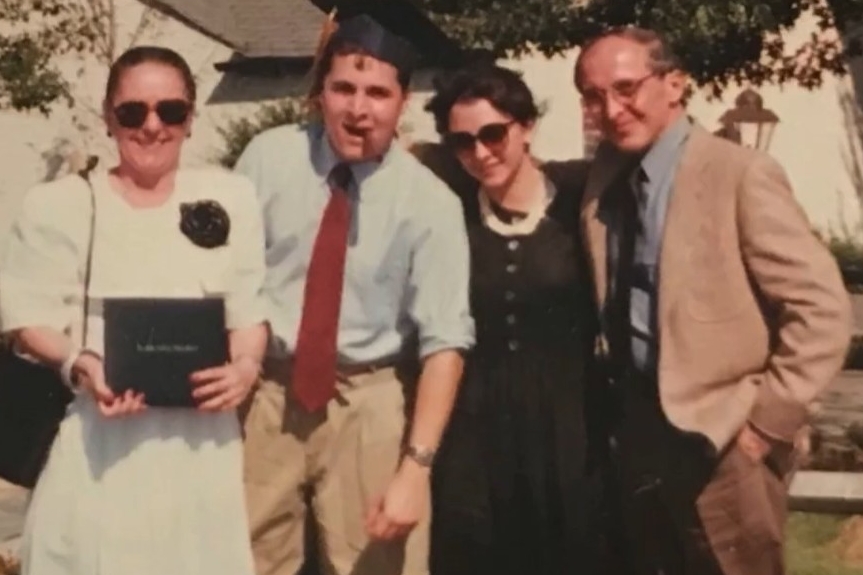
Professor DeJohn (second from right) enjoyed time with his family.Courtesy of the family
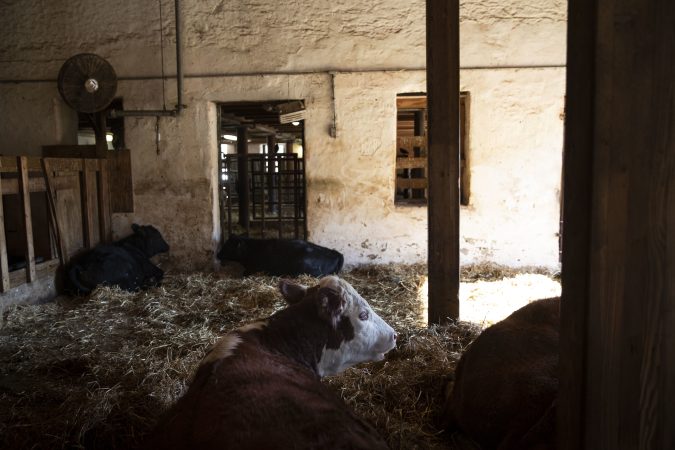
A volunteer group at Fox Chase Farm has dissolved after more than 30 years. The group says dwindling volunteers plus new fees and restrictions from the Philadelphia School District made their work at the city-owned farm too difficult to continue.
“We finally folded,” said Karen Eble, former president of the group, Friends of Fox Chase Farm. “The farm is administered by the Philadelphia School District and they were, I guess, not very open to us being there.”
Friends of Fox Chase Farm formed in 1990 to support the 112-acre property that straddles Philadelphia and Abington Township and is owned by the city.
At its peak, the group drew over 400 local families, who grew thousands of pounds of produce for food banks annually and functioned as a parent-teacher association of sorts for a 4-H program, which some members’ children participated in. The group bought equipment, lent the program money, and attended farm shows with the kids.
The Fox Chase 4-H allowed more than a dozen youth, including many who live in Philly, to raise animals on the city farm — rare for a program that typically attracts kids whose families own agricultural land.
“We’d compete with the kids that grew up on farms,” said Jim Kates, a longtime leader of Friends of Fox Chase Farm.
The farm’s 4-H was suspended in 2022 after the school district began charging fees for services it used to provide the program for free, such as housing the animals.
4-H had long covered food and veterinary care for the animals and split feeding duties with the resident farmer, members said, but the school district used to board the animals for free.
“It would’ve cost us $15,000 to have these kids keep their animals there,” Kates said.
The district said at the time that the 4-H was not complying with new policies and procedures.
“Fox Chase Farm is an educational facility operated by the School District of Philadelphia and is not in the business of boarding privately owned animals,” a spokesperson said this week.
Officials did not directly respond to the volunteers’ assertion that they were made unwelcome by the school district, but the spokesperson said this week the farm saw 10,000 “community visitors” in the last year.
The district spokesperson said there is an active 4-H program on the farm but did not immediately respond to questions about how much access the participants have to the livestock.
The volunteers also held two fundraisers per year that raised thousands of dollars for the farm, group members said.
The Philadelphia School District rents the farm for $1 from the city. The district is currently renegotiating that 30-year lease, said Mandy Fellouzis, who runs the district’s programs there.
In recent years, the Friends group shrank as volunteers aged and the school district placed new restrictions on their activities, members said. By this past March, there were only a handful of active members, Kates said, and they decided to fold.
One of the issues the school district raised about the group’s events, Kates said, was liability: A volunteer group at Pennypack Park disbanded in 2020 after being named in lawsuits that someconsidered frivolous.
“We still had an insurance policy,” Kates said, but with the group dwindling anyway, “we decided it wasn’t worth it.”
This suburban content is produced with support from the Leslie Miller and Richard Worley Foundation and The Lenfest Institute for Journalism. Editorial content is created independently of the project donors. Gifts to support The Inquirer’s high-impact journalism can be made at inquirer.com/donate. A list of Lenfest Institute donors can be found at lenfestinstitute.org/supporters.