Category: Education

  • For months, Cheltenham football families ‘pleaded’ with administrators not to hire the coach charged in hazing scandal

    For months, Cheltenham football families ‘pleaded’ with administrators not to hire the coach charged in hazing scandal

    Cheltenham High School varsity football families repeatedly warned district officials about allegations that former head coach Terence Tolbert allowed bullying to fester in his previous coaching position at Abington Senior High School, parents say.

    Tolbert, along with three other Cheltenham coaches, was charged last week with endangering the welfare of a child and conspiracy after a 15-year-old player was allegedly assaulted in the football team’s locker room by teammates twice last year. Six players were also charged. The assaults have led to the cancellation of two football seasons.

    Both the district and a Montgomery County grand jury found that inadequate supervision played a role in the assaults. The district also found coaching staff displayed “a failure to prioritize student safety.”

    Tolbert and the other coaches are no longer with the district. Tolbert has declined to comment on the matter, and he and his lawyer did not respond to requests for comment on this story.

    ‘We protested and pleaded’

    In the two months leading up to Tolbert’s hiring in June 2025, Cheltenham football families urged district officials to reconsider Tolbert’s hiring in numerous private conversations and public meetings, parents said in interviews this week.

    “We protested and pleaded,” said Naim Ferguson, father of Cheltenham quarterback Kendall Jackson during Cheltenham’s last season. “We didn’t think the people they were putting in place were adequate to handle the kids.”

    Parents went to the principal, Benjamin Hammond, and vice principal Samuel Sheridan, who is also the athletic director, emails between the officials and football parents show.

    A then-junior on the varsity team started a petition against hiring Tolbert.

    “We … do not want this position to be arbitrary given to the district’s so-called qualified candidate,” the petition reads.
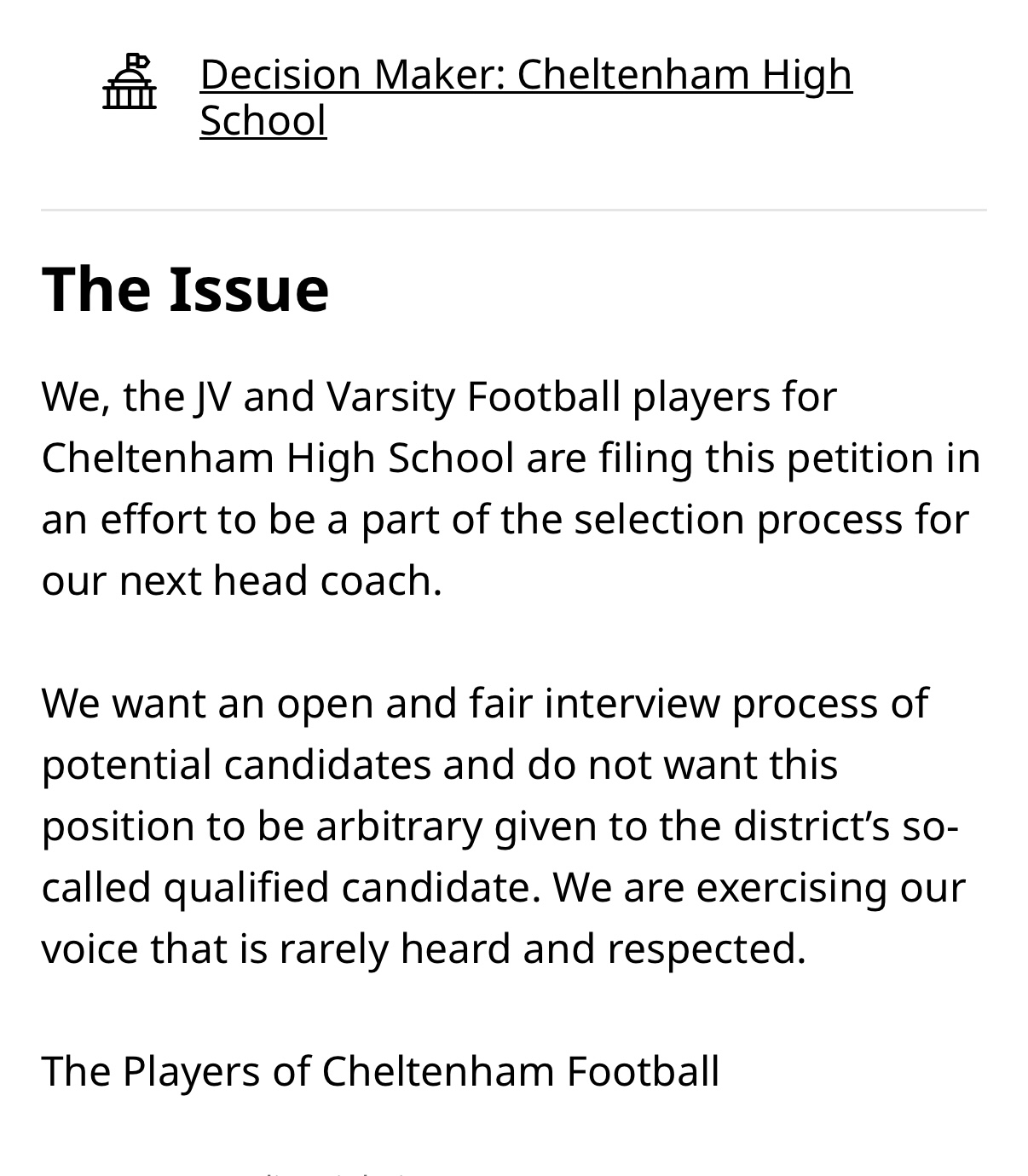
    A petition started by a Cheltenham varsity football player against the hiring of Terence Tolbert as head coach.Change.org

    Taryn Knox, then the vice president of the football parent board, shared her concerns about Tolbert’s hiring process and his record at Abington at school board meetings and in meetings between administrators and football parents until the district formally made Tolbert the coach in June.

    At a May board meeting, Knox said Tolbert had been “let go” from Abington, calling him “not appropriate or qualified” for the head coach job.

    She was not the only parent who spoke out at that meeting.

    “We asked for our children to have a solid leadership,” said Dana Burnley, whose son was on the team. Burnley said that her son had interest from seven Division I schools but that the coaching switch had disrupted the recruitment process.

    Burnley’s husband, Ralph, a volunteer coach, was among those charged alongside Tolbert last week and faces the same charges of endangering the welfare of a child and conspiracy. Ralph Burnley has not responded to calls seeking comment.

    Multiple upperclassmen also met with Hammond and Sheridan in April to voice their concerns, according to a list that Knox emailed to the principal. Included in the list of concerned players were at least two who were charged last week in connection with the assaults.

    “Every plea that we tried was ignored,” Knox said — including one at an April 22 meeting with parents where Knox asked Tolbert to voluntarily resign to reopen the hiring process. Hammond rushed to take the microphone from Tolbert before he could respond, she said.

    Cheltenham did not answer any questions this week about parent concerns ahead of Tolbert’s hiring.

    Tolbert applied for the open Cheltenham position after a brief stint at Abington that he had left an offensive coordinator role at Cheltenham to pursue. The 2023 move to Abington was a promotion to head coach, but his tenure there was short-lived.

    The Abington team won only one game that season, and Tolbert’s employment expired. Abington has acknowledged that the district opted not to renew the one-season appointment but declined to give further details.

    Parents from both schools said they believed it was a failure to address bullying and a toxic team culture that led to his departure.

    “There were kids being bullied in the locker room, the language, cussing out coaches,” Knox said this week.

    After charges against Tolbert went public last week, an Abington parent shared with The Inquirer the text of a 2023 email he said was sent to Abington officials outlining similar allegations he had heard at the time, including that Tolbert failed to intervene in persistent bullying on the team and crude language from other coaches.

    Before a Sept. 8, 2023, game, a coach used the f-slur to refer to the opposing team in a pep talk in front of Tolbert, who did not intervene, the email alleges. The complaint also describes instances when Tolbert failed to break up fights or react appropriately when he saw bullying, including a player who verbally berated a teammate with disabilities.

    “It wasn’t a secret,” said the Abington parent, who requested anonymity for fear of retaliation against his child, who still attends the school. “Many parents knew why he was removed. I’m shocked that he was able to get another job.”

    Union contract gave Tolbert leg up for coach

    Knox and Ferguson said the district hired Tolbert without an interview.

    “The [same] buildup that happened here, happened at Abington,” Knox said. “It just didn’t lead to an assault.”

    Before Tolbert’s hiring, Cheltenham parents were already upset about former coach Troy Gore’s removal during an important recruitment period, Knox and Ferguson said, because it left players who anticipated scholarships from Division I schools without an advocate.

    “These are students who are trying to achieve higher education while also playing a sport that they love, and for some of them, this is their only option,” Knox said at the May 2025 school board meeting.

    But when parents questioned what they viewed as an abbreviated hiring process for Gore’s replacement, administrators pointed to a clause in the teachers union contract that gives qualified staff first pick of coaching jobs ahead of external candidates, Knox and Ferguson said.

    Tolbert briefly taught business at Cheltenham until he resigned in October 2023, board documents show. He then took a job at Abington as a long-term substitute for business education in addition to coaching.

    Cheltenham rehired Tolbert as a business teacher before announcing his 2025 appointment as head coach.

    ‘Be accountable’

    Knox returned for the June 2025 board meeting and said she had been promised a call from the superintendent after the May meeting, but did not receive one.

    “Be accountable,” Knox said at the June meeting. “If you say you’re going to follow up, please follow up.”

    Superintendent Brian Scriven replied that there was a meeting planned with football players.

    “I did say I was going to call you. I opted not to. I will own that,” the superintendent said, adding that Knox had his number and could call him.

    The board officially appointed Tolbert as coach at the meeting.

    Knox’s son did not trust Tolbert as a teacher or a coach, she said.

    “He had been a part of the team for two years prior to that and didn’t have the relationship with the boys,” Knox said.

    ‘The administration failed these kids’

    The administration erred again, Ferguson said, by not suspending students who were involved in the locker room assault recorded on video.

    Nearly 20 members of the team witnessed the locker room assault, according to the district’s investigation, and the video was widely circulated. Ferguson said his son and most of the team did not witness the attack.

    Jackson always stayed on the field after practice running extra drills, his dad said, and Ferguson would bring his younger son to hang out on the grounds while they waited for him to finish.

    By January, the superintendent had publicly acknowledged the district was aware of “several” perpetrators.

    But the lack of disciplinary action left the entire team in limbo all year — isolating Jackson from teachers and other students, who were not sure which players were involved, Ferguson said: “People can’t fathom the fact that he’s the starting quarterback and he didn’t know about it.”

    Now Jackson, who broke the school’s sophomore quarterback passing record in 2024, is struggling to find a transfer school.

    “The administration failed these kids,” Ferguson said.

    Knox transferred her son to a Philadelphia school before the incidents. He is set to play football at East Stroudsburg University, a Division II school.

    “Thank God I pulled him out,” Knox said. “Every school said, ‘We know you came from Cheltenham; we’re glad you transferred.’”

    Staff writer Maddie Hanna contributed to this article.

    This suburban content is produced with support from the Leslie Miller and Richard Worley Foundation and The Lenfest Institute for Journalism. Editorial content is created independently of the project donors. Gifts to support The Inquirer’s high-impact journalism can be made at inquirer.com/donate. A list of Lenfest Institute donors can be found at lenfestinstitute.org/supporters.
  • Lower Merion shut down a school board meeting amid shouts from parents angry about tech use

    Lower Merion shut down a school board meeting amid shouts from parents angry about tech use

    A Lower Merion school board committee on Monday advanced new rules on when screens should be used in classrooms, while facing anger from parents who want more limits on technology.

    The policy committee, which has been hammering out a technology policy after parental backlash to excessive screen time, went into recess and later shut down its meeting in the district’s administrative offices in response to shouts from people in the crowd.

    “When you are disrupting a public meeting, you are actually breaking the law,” school board president Kerry Sautner said, as a parent in the crowd, David Smyth, called on the committee, which had stopped public comment after 45 minutes, to allow more people to speak.

    Sautner — who said earlier that 45 minutes was typical for the committee’s public comment period — told Smyth he could leave, or stay and listen. When he answered that he wanted more public comment, the committee ended the in-person meeting and switched to Zoom to vote to advance the policy.

    The policy now goes before the full school board for a vote on Aug. 17. It sets new guidelines for how technology is to be used in Lower Merion, one of the Philadelphia area’s most affluent districts, amid a national debate over whether excessive technology use is impairing kids’ educations.

    Lower Merion’s proposed policy scales back on screens for the youngest students — specifying that kids in kindergarten and first and second grades will not be issued individual devices. Previously, kindergartners and first graders were given iPads, while second graders received Chromebooks.

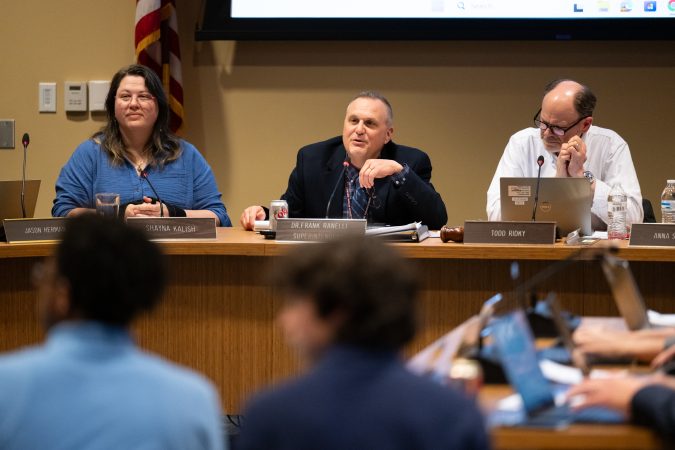
    “Many of you came and said, ‘I don’t think my kindergartener needs a one-to-one device.’ I don’t disagree with you,” Superintendent Frank Ranelli said at Monday’s meeting.

    Under the proposed policy, any technology use for K-2 students “shall be minimal, highly structured, and limited to specific educational purposes.”

    Students in third and fourth grades will not have personal devices, but will have “an assigned log-in” that they can use to access computers on classroom carts, according to a district spokesperson, Amy Buckman.

    In grades five and six, students will be assigned devices but will not bring them home unless their parents want them to, Ranelli said.

    While bringing computers home becomes the default by seventh and eighth grade, Ranelli said, students who choose not to do so will not be penalized.

    But, the superintendent said, families “cannot decline technology” in the new policy — a bitter point of contention throughout school board debates earlier this year, as families demanded to opt out of devices.

    The board voted in June to scrap its former policy, which contained language requiring the district to serve families who did not consent to being issued a computer. While more than 800 parents signed a petition supporting the right to opt out, Ranelli said doing so was not possible.

    Parents have continued to organize under a Pencils Over Pixels group.

    At Monday’s meeting, Matthew Posey, a district parent, read from an April 9 email obtained through a Right-to-Know request, indicating that Ranelli had “instructed” Sautner to repeal the policy, according to Posey.

    “We also want to make sure … that the board sees the vision in not allowing parents to totally ‘opt out’ of getting a device and having to use it for part of our curriculum,” Ranelli wrote, describing the district’s response to parental concerns.

    Replying the next day, Sautner told Ranelli: “Got it.”

    “We do not pay premium local taxes to have this insulting, rubber-stamp school board governance,” Posey said. He accused the board of treating months of public meetings over technology use as “an inconvenience to be managed,” rather than a genuine consideration of parental concerns.

    Sautner said that she would have to review the email Posey mentioned, but that she sometimes responds “got it” to indicate she has received a message.

    “We hold the superintendent accountable,” she said. “It is literally our job as the board.”

    Parents pressed the committee for answers Monday on how the policy would work in practice. Ranelli said the district had been training principals in a “default to off” philosophy, to instruct their teachers to tell students that if they are not actively using their computers for an activity, “we want your screens to be down. Or we don’t want them at their desks.”

    While rules accompanying the policy include some guidelines for how much screen time kids should be getting each day — from 30-45 minutes in third and fourth grades to up to 90 minutes in fifth through eighth grades — there are no parameters for high school.

    School officials said that was too difficult, given how many classes high school students have in a given day.

    “I want to make sure we’re not handcuffing the teachers,” Ranelli said.

    Ranelli also said the district had stepped up efforts to block inappropriate websites, including all Google sites, which kids had used to play games, he said. It has also blocked all streaming services and AI summaries, Ranelli said.

    He said the district — and parents — would be able to better monitor kids’ online activity through a new Securly program, which allows teachers to monitor what kids are looking at in class. Parents, meanwhile, can block more categories of websites and set schedules for their kids’ devices out of school hours, Ranelli said.

    Smyth, the parent whose interruptions led the board to end the meeting, said in an interview that parents feel like board members are “checking a box and not really interested” in their comments.

    “In our mind, the big sin is really one-to-one devices,” said Smyth, who has children in seventh and eighth grade. He had planned to ask if the district will be tracking time spent by students on various computer programs — to set metrics for “what would have them reconsider” the amount of technology use in classrooms.

  • Trump admin asks colleges to agree to reforms. Penn is a member of the group that helped draft them.

    Trump admin asks colleges to agree to reforms. Penn is a member of the group that helped draft them.

    The University of Pennsylvania, Rutgers University, Pennsylvania State University, and Princeton University belong to a national university group whose leaders helped the U.S. Department of Education develop a new list of reforms it would like all colleges to adopt by the end of the year.

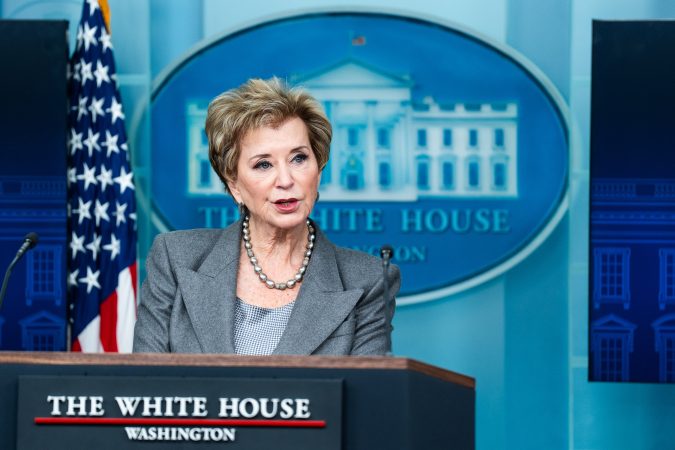
    U.S. Secretary of Education Linda McMahon on Monday sent a letter to colleges asking them to agree in public statements on their websites to wide-ranging reforms that include cracking down on protests, hiring more conservative faculty, combating grade inflation, taking steps to ensure there aren’t “covert” attempts to use race-conscious admissions practices, and containing tuition costs, among other changes.

    There is no plan to sanction schools that don’t sign on, but those that do could be in line to get more research funding, according to Bloomberg, the first to report on the letter, citing a White House official.

    The latest effort by President Donald Trump’s administration to reshape higher education at least initially appears to be getting a warmer response than the list of demands made in its controversial compact that was rejected by most universities, including the University of Pennsylvania, last year.

    The reforms were developed with the help of four university presidents from the Association of American Universities, including the group’s board chair and vice chair, according to Bloomberg.

    “We’d much rather be a partner than play the guessing game as we have been,” Douglas Girod, president of the University of Kansas and board chair, told Bloomberg.

    AAU president Barbara Snyder told Bloomberg she planned to call on her member colleges to support the plan.

    Penn is one of 71 research universities nationally and in Canada that belong to the group. The university did not respond to a request for comment on whether it planned to participate.

    Penn last October rejected the White House’s university compact, which would have given the school preferential consideration for federal funding in exchange for agreeing to operational demands. Many groups on campus had spoken out against the compact, and Penn president J. Larry Jameson in a letter to the federal government at that time said he outlined areas where Penn found “existing alignment” with the compact and where the school had “substantive concerns.”

    “For the good of the nation, university leadership must seize this occasion to drive essential reforms — a process some began by adopting positions of institutional neutrality and improving policies related to campus protests,” McMahon wrote in her letter Monday. She called on all colleges to “describe to the American public your commitments to rigorous teaching, pathbreaking research, and national service — commitments that make our universities a bedrock institution of the American republic.”

    She acknowledged that not every college’s response would be the same, but presented schools with a series of questions that they should address. Among them are:

    “How will your institution ensure admissions decisions are based on merit, achievement, and your university’s educational purpose?”

    “How will you guarantee that unruly and violent protesters do not harass students or disrupt classes, research, public lectures, and campus operations?”

    “How will your faculty hiring and evaluation practices support academic vitality and ensure that all relevant perspectives are taken seriously?”

    “What can your school do to contain costs, improve pricing transparency, and ensure that every academic program equips students to repay their loans?”

    “How will your school protect academic programs from foreign influence and safeguard the integrity of the research enterprise?”

    McMahon also warned against allowing academic disciplines to foster political and social goals.

    “When disciplines skew toward one side of the ideological spectrum, the truth-seeking function of the university suffers and public trust declines,” McMahon wrote.

    Penn State said its leadership team had received the letter and is reviewing it.

    Rutgers said it also had received the letter and “welcomes constructive dialogue with federal and state policymakers and remains focused on providing an excellent, accessible education that advances research to serve New Jersey and the nation.”

    Princeton did not immediately respond to a request for comment.

    “We look forward to learning more from the Department of Education about this effort and collaborating to advance shared goals,” Waded Cruzado, president of the Association of Public & Land Grant Universities, said in a statement. Penn State, Rutgers, Temple University, and the University of Delaware are part of that group.

    The other three AAU presidents involved in drafting the new reforms include Andrew Martin at Washington University in St. Louis, Michael M. Crow at Arizona State University, and Ron Daniels at Johns Hopkins University.

    Temple is not a part of AAU, but Temple president John Fry has worked closely with Crow, whose university sponsors the University Innovation Alliance that Temple joined last year. The alliance is a national organization of public universities aimed at finding innovations to improve learning and increase college attendance, retention, and graduation rates ― especially for low-income students ― then scaling those innovations across campuses. It was founded by 11 presidents including Crow.

    Fry at the time described Crow as a mentor and said that he had known him for more than 30 years. They started presidencies simultaneously in 2002, Fry at Franklin and Marshall College in Lancaster, and Crow at Arizona State.

    In a statement, Temple said it was “carefully reviewing” the letter from McMahon.

    “Upon initial review, much of what is outlined in the letter is consistent with core tenets of what we do as a university,” the school said. “Our approach will continue to be guided by our mission and our strategic plan.”

    Martin, of Washington University, told Bloomberg that he planned to respond to the McMahon letter.

    “My expectation is this letter will have some things in it not everybody will agree with, but that universities will consider it,” he told Bloomberg. “Certainly compared to the compact, I think this is a step in the right direction.”

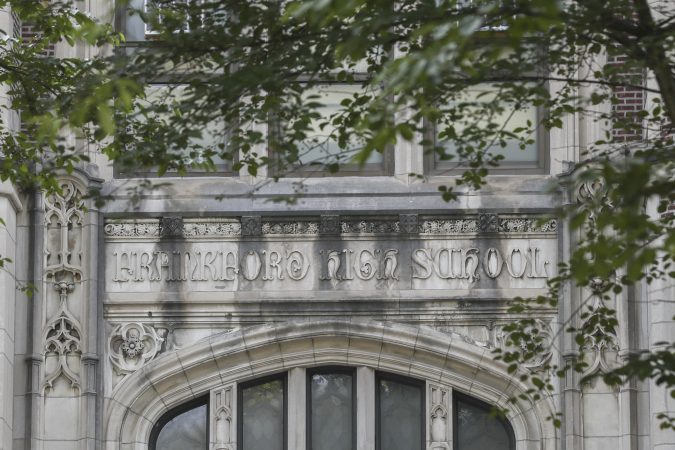
  • After allegations of a ‘toxic climate’ at Frankford High, the school will have a new principal for the first time in a decade

    After allegations of a ‘toxic climate’ at Frankford High, the school will have a new principal for the first time in a decade

    For the first time in more than a decade, Frankford High is getting a new principal.

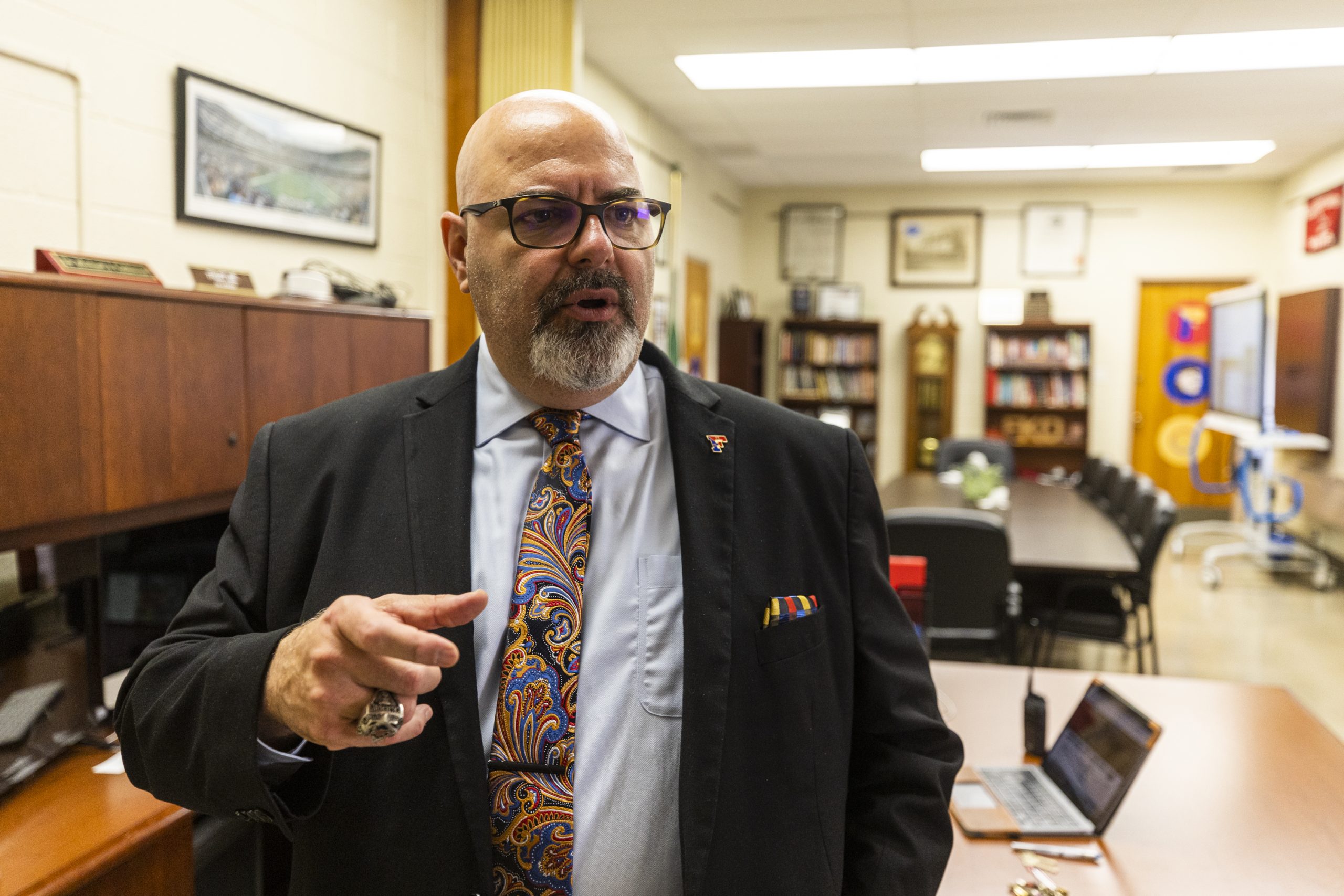
    Michael Calderone, who has served as Frankford’s principal since 2015, told the staff on Friday that he’s leaving to become the interim principal of Dobson Elementary in Manayunk.

    Calderone’s move comes after the district conducted an audit of what some staff said was a “toxic” climate at the school and serious allegations about Calderone, including that he struck a student and retaliated against teachers who spoke out against him.

    District officials did not comment on the results of the climate audit, but typically do not discuss personnel matters.

    Calderone said, in a letter sent to Frankford staff and obtained by The Inquirer, that the move to Dobson “holds tremendous personal and professional significance for me” because he began his career there, as teacher and dean.

    “Returning to lead the school where I first developed my passion for educational leadership feels very much like a homecoming and has always been a dream of mine,” Calderone wrote.

    Noah Tennant, the interim associate superintendent for secondary schools, said in an email to Frankford staff that Calderone “is a school leader with a proven track record of improving student outcomes, leading school transformation, and building collaborative systems. His leadership and contributions to the Frankford High community will leave an indelible impact on all he served.”

    Mary Jackson, a retired Philadelphia principal who’s served as Frankford’s interim leader in the past, will be “guest principal” while the district searches for a replacement for Calderone, Tennant said in the letter.

    “In the coming months, the district will initiate a process to identify the next permanent principal who will continue the important work underway and ensure every student and staff member is supported,” Tennant wrote.

    A Frankford climate audit

    The first public hint of controversy happened in early 2026, when Frankford’s budget, like spending plans across the school system, was shrunk because of district-wide cuts. Calderone ordered a number of teachers’ jobs cut out of seniority order, a move that was protested by the Philadelphia Federation of Teachers, and ultimately overturned.

    The PFT and teachers say the targeted educators — whom Calderone said he moved to advance academic goals — were ones who had spoken out against him, they told The Inquirer.

    At the same time, a number of current and former Frankford staff raised allegations about significant culture issues at the school, and the district conducted the audit.

    Michael Calderone is shown in his office at Frankford High in this 2023 file photo.Tyger Williams / Staff Photographer

    According statements from multiple staffers made to the district and PFT and obtained by The Inquirer, Calderone, who earned citywide recognition for his work at the comprehensive high school, was a volatile leader who forced out many capable staffers.

    Some staff said the principal screamed at adults and students on multiple occasions. They also said he made improper requests, including asking teachers to provide grades for students in classes they did not teach.

    Others said he spoke openly about intentions to get rid of staff members who were not allies, to force out staff who he believed were opposed to him.

    Two staffers also told the district that Calderone punched a student who had assaulted multiple Frankford staffers. The staff did not report the assault when it happened because they were afraid for their jobs, they said.

    Other Frankford staffers agreed that there was widespread discord at the school, but say those who opposed Calderone contributed to the toxicity.

    Arthur Steinberg, PFT president, who had previously said that he did not believe Calderone was fit to run Frankford “or any school at all,” in a statement Monday commended the Frankford staff who brought concerns to the administration.

    “Thanks to their bravery and persistence, Frankford will be a healthier, more positive place to learn and work for all,” Steinberg said. “It is our hope that whoever is assigned to replace Dr. Calderone is able to reset the working environment for staff, so that Frankford is once again the warm, welcoming school community it was before he arrived.”

    ‘Thank you for your trust’

    Calderone, in his letter to Frankford staff, said he was particularly grateful for the community’s resilience during a tough time — the hulking main Frankford building was shut for multiple years because of asbestos issues, with students scattered between multiple buildings. He said he was also proud of Frankford’s aviation and hospitality programs, launched during his tenure at the school.

    “Thank you for your trust, your partnership, and the memories we have shared,” Calderone wrote. “I have every confidence that Frankford High School will continue to thrive and achieve great things. I wish you all the absolute best. Frankford will always be the ‘Home of Champions’. But never forget: every champion was once just a contender who refused to give up. I ask you to carry that relentless, unbroken spirit with you into every new day. Thank you for letting me walk this path alongside you.”

    Calderone will be moving to a very different school than the one he’s led for 11 years.

    Frankford educates about 900 students in its massive Oxford Avenue building. Dobson, a K-8 on Umbria Street, educates about 250, though both have large populations of students with disabilities.

    Dobson’s former principal, Khloe Williams-Lawani, accepted another job in the school system.

  • Philly school district promotes some administrators, changes principals elsewhere. Here’s a rundown.

    Philly school district promotes some administrators, changes principals elsewhere. Here’s a rundown.

    Superintendent Tony B. Watlington Sr. has announced a flurry of Philadelphia School District shifts in recent weeks, from promotions and principal changes to additional responsibilities for some of his senior officials.

    Changes are common at this point in the school calendar, but this year is particularly busy. The district’s 113,000 students return to school August 24.

    The changes include:

    A new human resources chief

    Kristy Baldwin was named chief talent officer. Baldwin had previously held the position on an interim basis. The district has cycled through a number of talent executives during the Watlington administration.

    Baldwin is the former longtime human resources executive in Prince George’s County, Maryland, where she was credited with lowering teacher vacancies and recruiting a more diverse educator workforce.

    Watlington, in a release, said Baldwin was “battle-tested” and collaborative.

    “Dr. Baldwin brings a wealth of experience and knowledge to the district, as well as a demonstrated track record of effectively staffing schools with high-qualified teachers, increasing the number of Black and Latine educators, and working with union leaders,” Watlington said.

    Baldwin officially in her new role on July 27, and will be paid $235,000.

    Changes in assistant superintendents, salaries announced

    Also announced last week was a new role for Kahlia Johnson, who had worked as deputy chief of talent management and recruitment selection. Johnson, the former principal of Overbrook High, is moving to become interim assistant superintendent for a network of district high schools. Johnson will be paid $197,302.

    Johnson replaces Noah Tennant, who was previously announced as associate superintendent for secondary schools. Tomás Hanna, who was associate superintendent for secondary schools, moved over to become associate superintendent for student life and school operations. Hanna will be paid $221,658 per year, and Tennant’s salary will be $215,202.

    In other recent changes that the district identified in recent weeks, Brenda Elliott was named deputy superintendent of academic services. Her salary is $285,488.

    Michael Farrell, chief academic officer, is paid $221,658. Nathalie Nérée, chief of special education, diverse learners and wellness, has a salary of $221,658. Nyshawana Francis-Thompson, senior adviser for strategic initiatives and innovation, is paid $208,627.

    Jamina Clay, assistant superintendent of school management and organization, makes $197,302. Kelly Espinosa, assistant superintendent for Learning Network 4, makes $197,302.

    Interim assistant superintendents Wilfredo Ortiz and Lucy Feria, who will run Learning Networks 8 and 9, respectively, will also be paid $197,302 annually.

    Additional responsibilities for Watlington deputies

    Two of Watlington’s top deputies are also taking on additional responsibilities.

    Alexandra Coppadge Wright is now supervising the operations, external and community affairs departments. Coppadge Wright, the chief of communications and customer service, was already supervising the Office of Communications, Office of Customer Service, and the Family and Community Engagement Office.

    Sarah Galbally, Watlington’s chief of staff, will add the School Transitions Office to her portfolio. Galbally also handles Board Relations, Government Relations, Grants Development, Strategic Partnerships, and Strategic Planning.

    Both Coppadge Wright and Galbally are paid $225,096 annually.

    Naima DeBrest, a spokesperson for the district, said in a statement that the changes were necessary as the district remains “focused on balancing the budget while recruiting and appointing talented individuals who have a demonstrated track record of improving student outcomes, as we continue to drive towards becoming the fastest-improving, large urban school district in the nation.”

    Principal changes

    A number of district schools have new principals. They are:

    Adaire Elementary, Amanda Strain. Strain had been principal of Waring Elementary.

    Bridesburg Elementary, Louis Depa. Depa had been assistant principal at Pennell Elementary.

    Clemente Middle School, Regina Barr. Barr had been assistant principal at Bluford Elementary.

    Edison High, Albert Sniezevage. Sniezevage had been assistant principal at the school.

    Benjamin Franklin Elementary School, Ryan Sullivan. Sullivan had been assistant principal at Penrose Elementary.

    Heston Elementary, Kamia Smith. Smith had been assistant principal at Heston.

    Lawton Elementary, Michelle Todd-Coleman. Todd-Coleman had been assistant principal at Forrest Elementary.

    Memphis Street Academy, Wayne Diggs. Diggs had been assistant principal at Mastbaum; Memphis Street Academy is reverting back to district control after being a charter school for years.

    Northeast High, Andrew Lukov. Lukov had been principal of Southwark Elementary, he also has experience as a Northeast assistant principal.

    Southwark Elementary, Mason Luksch Wilson. Luksch Wilson had been assistant principal at Elkin Elementary.

    Bayard Taylor Elementary, Claire Charles. Charles had been assistant principal at the school.

    Tilden Middle School, Jessica Culp. Culp had been assistant principal at Comegys Elementary.

    Waring Elementary School, Cathryn Anderson. Anderson had been assistant principal at Bache-Martin Elementary.

    Philadelphia principals are typically paid between $153,296 and $172,636 annually, with salaries set by union contract. Principals are represented by the Commonwealth Association of School Administrators, Teamsters Local 502.

  • Philly parents will be able to track some school buses in real time — for the first time ever

    Philly parents will be able to track some school buses in real time — for the first time ever

    Coming soon to some Philadelphia school bus stops: technology that allows parents and schools to track their kids — and their buses — via an app, in real time.

    That represents a sea change for families on up to 200 yellow bus routes throughout the city.

    Most Philadelphia school buses are decidedly analog — some companies still provide written turn-by-turn directions for drivers, rather than equip buses with GPS. Families generally have no information on when their buses might show up.

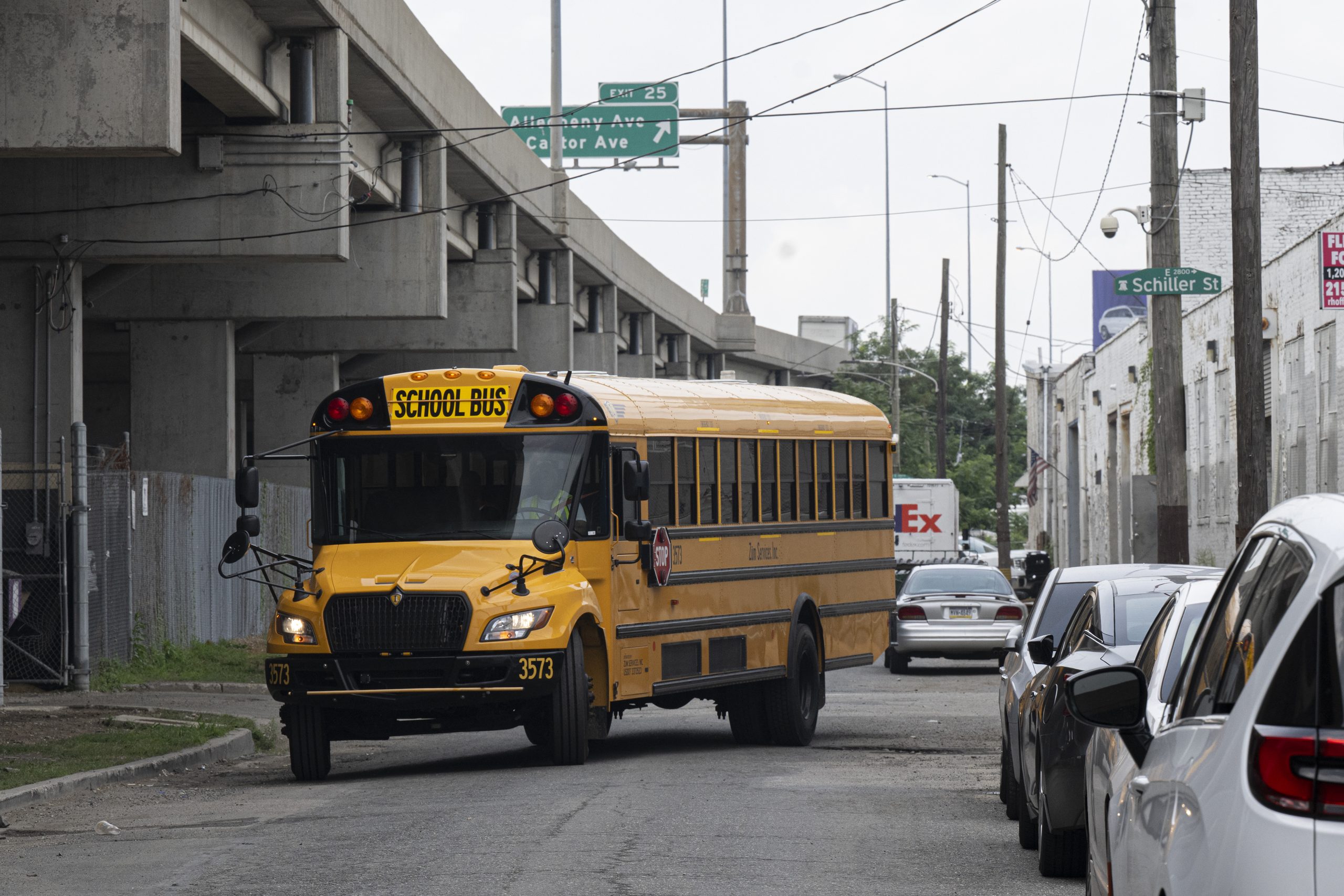
    A school bus driven by Aaliya Horn is reflected in the rearview mirror during a training session aboard one of the Philadelphia School District’s new school buses in Philadelphia on Tuesday, July 28, 2026. The district’s new bus vendor is introducing high-tech buses equipped with air conditioning, onboard cameras and GPS technology that allows parents to track their children’s buses in real time.Jose F. Moreno / Staff Photographer

    But the district recently selected Zum Inc., a Silicon Valley-based tech-and-transportation company, as one of its vendors, awarding it part of a massive $483 million contract for yellow bus services through 2031. Zum, which runs routes in 18 states and 6,500 districts nationwide, including Los Angeles Unified, Kansas City, Mo., Howard County, Md., and Boston, will operate at least 200 Philadelphia routes, though exact figures and contract totals have not yet been settled.

    With its new, five-year contracts, awarded in April, the district dropped Durham School Services, a longtime vendor that had experienced some service and other issues amid a national bus-driver shortage.

    Students who live more than 1.5 miles from their assigned school are eligible for free transportation from the district.

    The school system transports only a fraction of its own elementary school students via district-owned yellow buses; the rest of the routes are serviced by providers that now include Zum.

    Philadelphia students in grades seven through 12 who are eligible for transportation to school are issued SEPTA passes.

    Zum, which has hired a number of former Durham drivers, is hoping to attract workers with competitive pay — drivers’ hourly rate starts at $30 per hour, and bus monitor pay at $20 per hour — and benefits.

    Route assignments have not yet been announced, so it is not clear which yellow bus routes will have Zum buses.

    What’s different about Zum?

    Zum officials promise a different experience before students even step onto a bus, said Missy Lash, the company’s senior location manager for Pennsylvania.

    “It’s comfort — but it’s also technology,” Lash said.

    Families whose children are assigned to Zum routes will be encouraged to download a free app that gives them real-time notifications and information about their child’s bus — who the driver is, when the bus will arrive, when their child is dropped off at school and arrives at the bus stop in the afternoon.

    Bus driver Aaliyah Horn drives her bus during a training session aboard one of the Philadelphia School District’s new school buses in Philadelphia on Tuesday, July 28, 2026. The district’s new bus vendor is introducing high-tech buses equipped with air conditioning, onboard cameras and GPS technology that allows parents to track their children’s buses in real time.Jose F. Moreno / Staff Photographer

    The tablet computer mounted at the driver’s fingertips provides directions, but also the location of each individual student’s pickup point and, if families choose to share them, student photos that help drivers identify whom they are picking up.

    When they step onto the bus, children either scan Zum-provided IDs or provide their names, which the driver types in. Once they do, parents receive a notification — your child has been picked up.

    “They’ll also get a notification when my child gets dropped off at school,” or if there’s traffic and the time of pickup or arrival is adjusted, Lash said.

    On the comfort piece, all Zum buses are air-conditioned — not a given system-wide. Only buses that transport students with disabilities must have guaranteed air-conditioning.

    That is a big upgrade for drivers and students, said Nicole Dukes, who worked as a driver and trainer with another bus company in Philadelphia for six years before switching over to Zum, where she will train drivers.

    “Just the buses themselves make you want to come to work,” said Dukes, who lives in North Philadelphia. “I never had air-conditioning on a bus.”

    The technology is also a plus, Dukes said — “it’s great to have that for the parents to keep an eye on their children,” and having tablets providing directions is a serious improvement over her old system.

    “We had turn-by-turn sheets, and if you had to go a different way, you had to call dispatch, who had a map,” Dukes said.

    School district officials say that while no district yellow buses have had tracking capability for parents, Everdriven, which provides some alternative district transportation services, like vans, does allow families to track their vehicles.

  • A Bucks County Quaker school’s abrupt closure has left families wondering where their money went

    A Bucks County Quaker school’s abrupt closure has left families wondering where their money went

    On June 1, Kent Groff wrote two $2,400 checks toward his grandchildren’s tuition this fall at United Friends School, a small Quaker early childhood and elementary school in Quakertown.

    The checks were cashed on June 4, Groff said. He was shocked when a little more than a month later, United Friends announced it would be closing — in five days.

    In a July 10 letter to families, the school’s board of trustees said it could not open for the fall school year because not enough students were enrolled.

    “Unfortunately, with slow enrollment activity in early summer and unexpected late attrition, it became clear that there was no sustainable path forward,” the board said in the letter, noting that the school had built a “conservative” budget on 80 students, but only 50 had committed to attend.

    The news stunned families, who said they were given no warning that the school, which had been open for 42 years, was on the brink of closure.

    “I was like, there’s no way this can be true. There has to be something that can be done,” said Kelly Kringe, Groff’s daughter, who had just picked her children up from a camp at United Friends when she got the email announcing the closure.

    Kringe, whose two children had attended United Friends last year and who also paid tuition for the coming fall, said there was “never any plea for help” from the school: “Nobody really knew anything.”

    The board — which did not list individual trustee names in the July 10 letter — said it was preparing answers to questions including “how prepaid tuition will be addressed during the wind-down process.”

    On Friday, the board said it had followed steps prescribed by the National Association of Independent Schools for closing. It directed families to contact a lawyer, Alex Moretsky, with “questions about tuition reimbursement, compensation or billing.”

    Kringe said she called Moretsky but got a message that he was out of the office. Moretsky did not immediately respond to a request for comment Friday.

    Before Friday, some families said they had not gotten any answers from the board to their questions.

    Groff, for instance, said he got no response to an email he sent the board that read in part: “I’m inquiring on how to get refunded for next year’s tuition that I already paid. … Thanks again for providing 42 years of excellence.”

    The board did not respond to a list of questions sent by The Inquirer. United Friends’ head of school, Daena Berdougo Remondelli, did not respond to a request for comment.

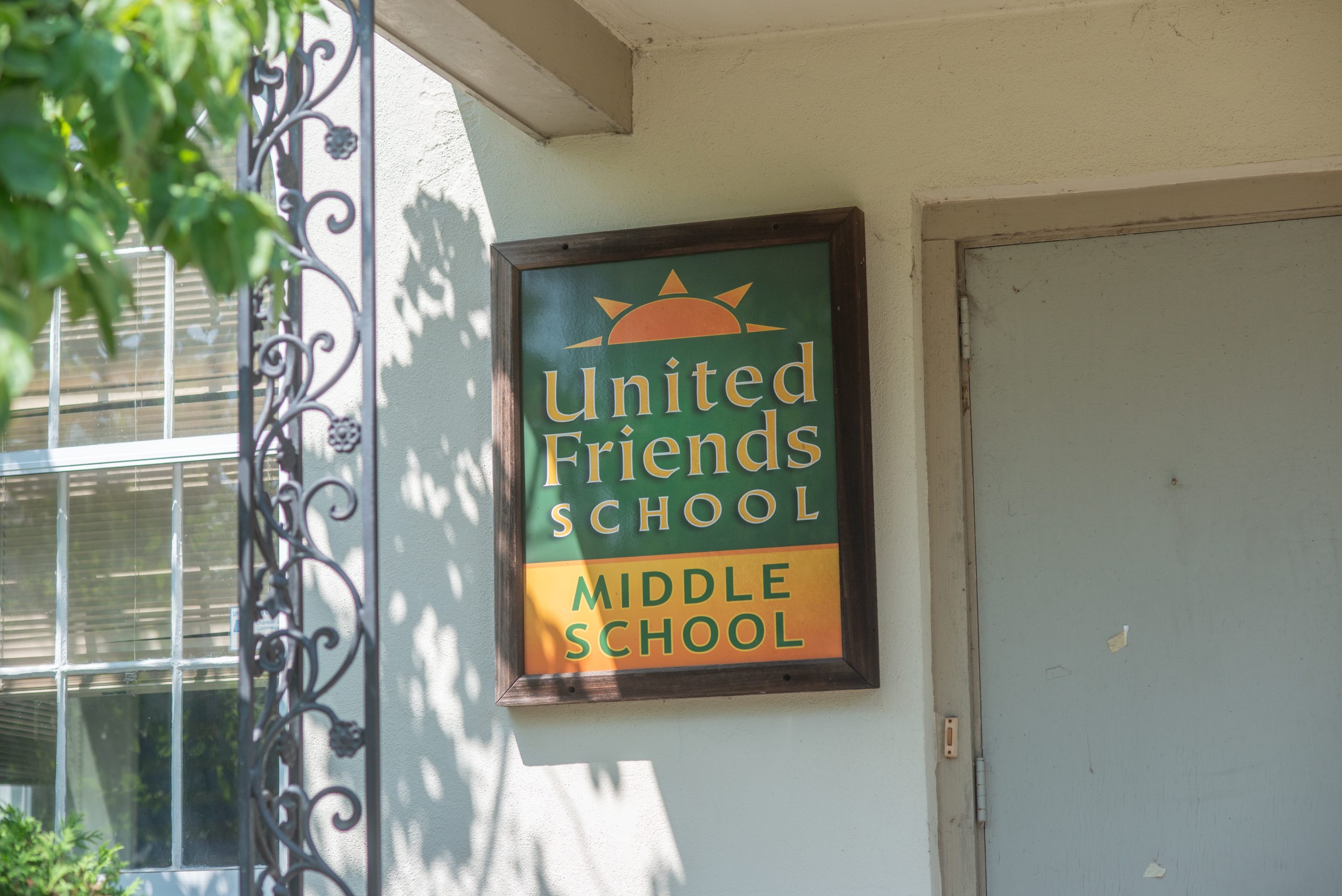
    A sign at United Friends School in Quakertown.William Thomas Cain / For The Inquirer

    The names of the school’s board members are not listed online. One board member, Bob Wirtschafter, said in a brief phone interview last Monday that he could not comment on what would happen with prepaid tuition.

    “We know we owe them,” Wirtschafter said, adding that “I can’t say anything.”

    Wirtschafter, who said he had been on the board for 32 years, said he had “seen all kinds of rumors” about the school’s closure, including that there was financial wrongdoing.

    “I can tell you, it was all about tuition,” Wirtschafter said. There were 60 students enrolled for the coming year in April, but by May, “we lost five families because of the economy,” he said. The school charged $20,000 a year in tuition.

    Wirtschafter said the school had been “struggling for years.” It closed its middle school and sold its building last year, he said, which “kept us alive for another year.”

    County records show United Friends sold several properties for $800,000 in May 2025 to AA Property Holdings LLC.

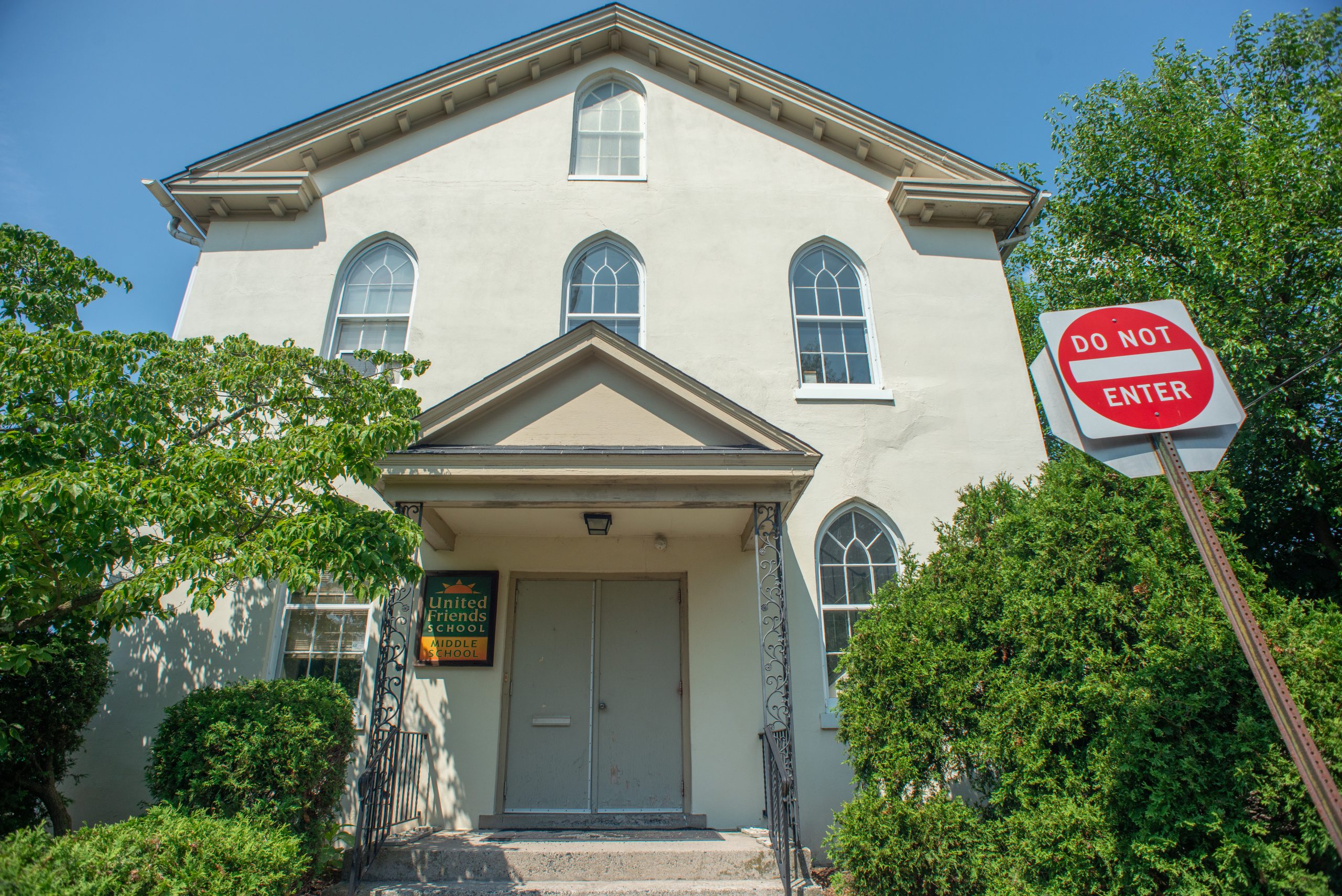
    One of the original school buildings at United Friends School in Quakertown.William Thomas Cain / For The Inquirer

    The LLC is registered to a Sellersville address owned by Mateen Afzal, whose family founded a manufacturing company in Bucks County and who is listed as director of the Afzal Family Foundation. A message sent through the foundation’s website was not returned this week.

    With the drop in enrollment headed into the fall, “we just couldn’t make it work,” Wirtschafter said. “We decided we had to close.”

    He said United Friends was not alone among small Quaker schools facing similar troubles, citing Cambridge Friends School in Massachusetts.

    Cambridge Friends announced in May that it would be closing after the end of the 2026-27 school year.

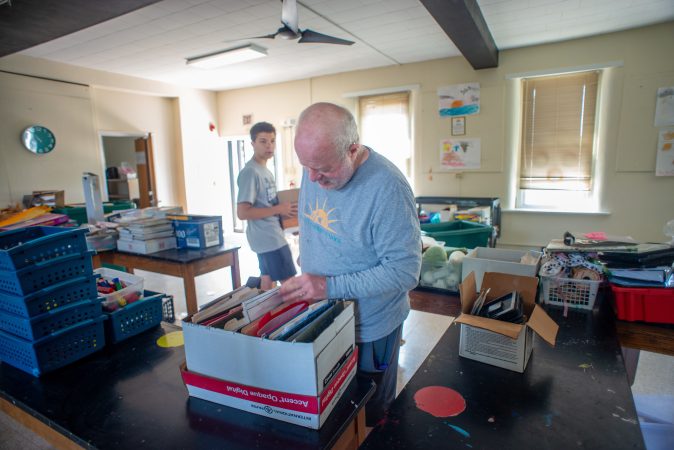
    A week after announcing its closure, United Friends sent another message to families, inviting them to a “voluntary two-day work effort” to clean out the school on July 24 and 25.

    “Community members who are unable to participate in person are welcome to support these efforts by making a voluntary contribution to help offset the costs associated with the cleanup,” the board said in the message.

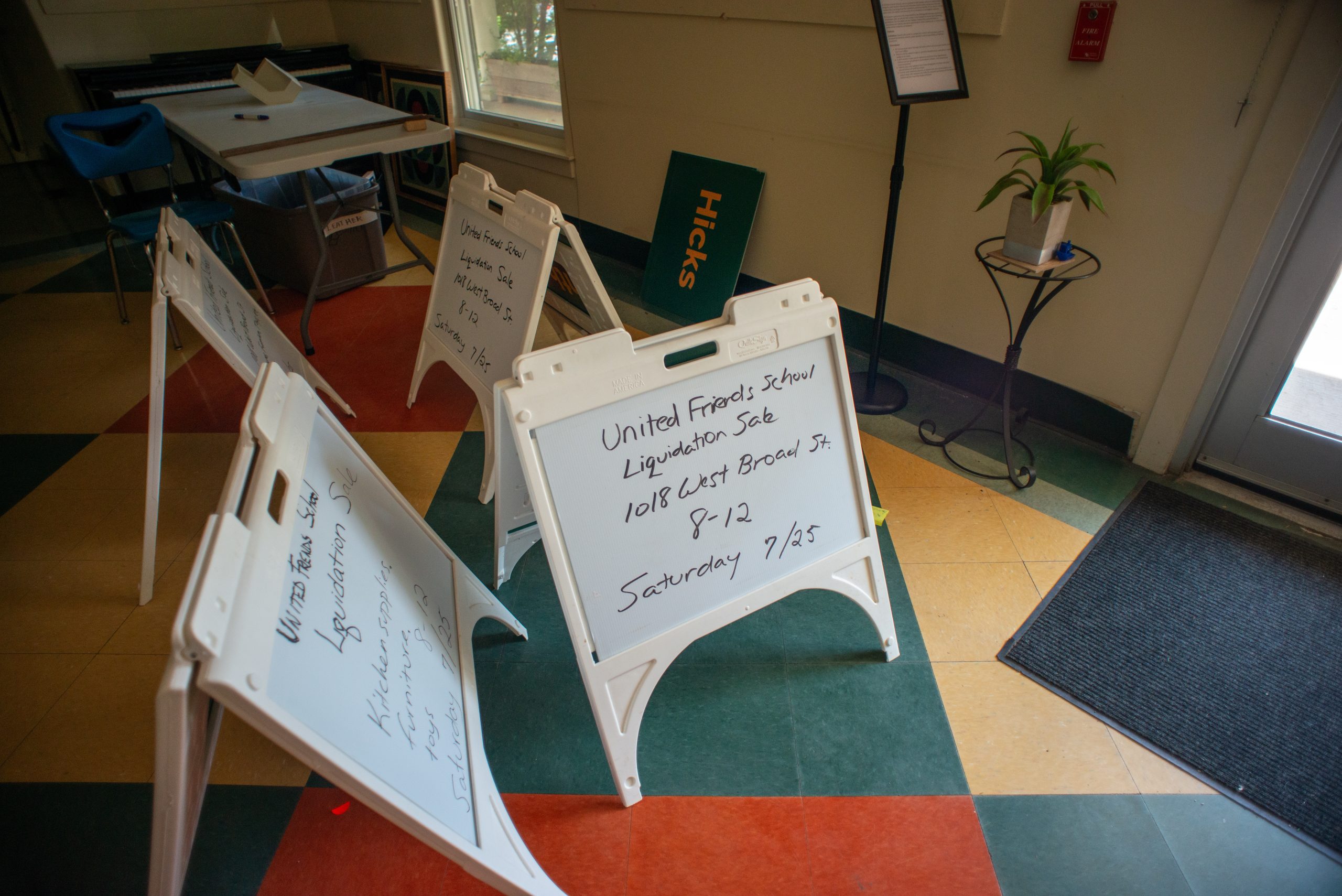
    A sign announcing a “liquidation sale” at United Friends on July 25.William Thomas Cain / For The Inquirer

    “Can you imagine the sheer anger that hit the teachers and the parents? We just closed your school, we took all your money, can you help us clean up and donate more money?” Groff said.

    In his efforts to reclaim his tuition payments, Groff went to his bank and the bank where United Friends had deposited the checks, with no success. He said he also contacted the Quakertown police and the Bucks County District Attorney’s Office.

    Manuel Gamiz, a spokesperson for the district attorney’s office, said the county’s consumer protection division was taking complaints from families and “attempting to mediate these matters.” Anyone affected can call 215-348-6060 or, toll-free, 1-800-942-2669, Gamiz said.

    Groff went to small claims court, but a clerk told him it would be difficult to file a claim because “you won’t be able to serve their papers,” he said. “There’s nothing that exists,” given that the school already closed. Groff said he does not know if the board of trustees has an address.

    Groff, who has another daughter who attended United Friends, said the schools and teachers were “absolutely wonderful.”

    “That’s why this is just so devastating and shocking,” he said.

  • Barbara Gillette Price, prolific painter, fine arts teacher, and former president of Moore College of Art and Design, has died at 87

    Barbara Gillette Price, prolific painter, fine arts teacher, and former president of Moore College of Art and Design, has died at 87

    Barbara Gillette Price, 87, formerly of Philadelphia, celebrated painter and designer, former president of Moore College of Art and Design, former dean of Cranbrook Academy of Art in Michigan, former vice president for academic affairs at the Maryland Institute College of Art in Baltimore, fine arts teacher, mentor, and role model, died Friday, April 24, of age-associated decline at a hospital in Granada, Spain.

    A lifelong artist and longtime educator, Ms. Gillette Price liked to skip her high school classes in the 1950s and wander around the galleries at the Philadelphia Museum of Art. In sixth grade, she told The Inquirer in 1994, her artistic talent drew attention from the teacher when her drawing of a female form was all too accurate.

    She took Saturday classes at Temple University’s Tyler School of Art and the Fleisher Art Memorial when she was young, and earned a scholarship to the old Philadelphia Museum School of Art. She married artist Melville Price in 1957, moved to Tuscaloosa, Ala., in 1958, and earned bachelor’s and master’s degrees in fine arts at the University of Alabama.

    She joined Cranbrook Academy of Art in 1978, the Maryland Institute College of Art in 1982, and Moore in 1994. At each stop, she renovated nearby old buildings into studios and galleries, expanded curriculum, and invigorated students with international and innovative programs.

    At Moore, she increased enrollment, established a career center, and personally refurbished her three-story studio on North Second Street into a gallery where students exhibited their work and handled logistics and publicity. She also forged working relationships with the Philadelphia School District and other art institutions, supervised an advertising campaign for female artists, and served as a role model for working artists in academia.

    “That’s why I think my presence at Moore is a good thing,” she told The Inquirer in 1994.

    In 1998, Rochelle Levy, then chair of Moore’s board of trustees, said: “Barbara has really been our ambassador out there. She has set an incredible role model for the students as a woman artist.”

    Ms. Gillette Price left Moore in 1998, moved to Spain in 2000, taught art to primary school students, and continued to create and show her work. “Her commitment to arts education helped shape generations of creative thinkers,” former colleagues at Moore said in a tribute. “Her legacy lives on through the institutions she helped strengthen, the students she inspired, and the vibrant body of artistic work she leaves behind.”

    Ms. Gillette Price was featured in The Inquirer when she joined Moore in 1994.Newspapers.com

    As an artist, Ms. Gillette Price was a colorist and inspired by what she called her “labyrinth of imagination.” She expressed herself often in themes and collages, and was adept at abstract and figurative works on canvas, paper, wood, silk, and other textiles.

    One critic said her work “is of an inherent elegance that emerges from excellent craftsmanship and an intelligent narrative.”

    She showed in dozens of solo and group exhibitions in Spain, Philadelphia, Maryland, Michigan, Washington, and elsewhere, and liked to work in the gallery as well as her studio. She painted about nature, light, woman’s perspectives, isolation and fear during the COVID-19 pandemic, and other topics.

    “I seek to make the ordinary extraordinary,” she said on her website, barbaragilletteprice.com. “I am inspired by images I accumulate as I travel and view the world about me. This takes the form of remembered landscapes, figurative compositions, and subtle political statements.”

    She was active in the Civil Rights Movement in Alabama in the 1960s, worked with the Woman’s Caucus for Art in Washington in the 1970s, and taught ceramics, painting, and drawing at the old Corcoran School of Art and Design in Washington and elsewhere. She belonged to the College Art Association and was on boards at the National Association of Schools of Art and Design, the Philadelphia Art Commission, and other organizations.

    She earned grants for her painting and wrote essays and white papers about art. In one paper, she said: “The arts are the humanizing element in the education of the citizens of the 21st century.”

    Barbara Amelia Gillette was born June 26, 1938, in Philadelphia. She and her family spent many summers in Atlantic City, and she graduated from Philadelphia High School for Girls.

    She took piano lessons, attended Saturday concerts at the Philadelphia Orchestra for years, and hung out with high school boyfriend Edward Cutler and others at jazz clubs and the Gilded Cage coffee shop.

    Melville Price died in 1970, and she reconnected with Edward Cutler. They married, had a daughter, Michelle, and lived in Washington. They divorced later, and he died earlier.

    “I consider my mother’s greatest achievement to be the way she showed up as a parent,” her daughter said. “Her artistic legacy can be found in her paintings, drawings, textiles, and exhibitions. Her personal legacy lives on in the people she inspired, mentored, encouraged, and welcomed into her life.”

    Ms. Gillette Price created in the galleries as well as her studio.Barbara Gillette Price

    In addition to her daughter, Ms. Gillette Price is survived by a son-in-law, Eric Maroldo, and other relatives. A sister died earlier.

    Services were held earlier.

    Donations in her name may be made to Alhama Street Animal Protection in Granada, Spain.

    Ms. Gillette Price (right) and her daughter, Michelle, were close. Courtesy of the family
  • Cheltenham School District faulted by prosecutors in locker-room assaults: ‘It put every young man … at risk’

    Cheltenham School District faulted by prosecutors in locker-room assaults: ‘It put every young man … at risk’

    When prosecutors unveiled charges this week against Cheltenham football coaches and players in connection with two violent locker-room attacks on a teammate involving a broomstick, they did not reserve blame only for the criminal defendants.

    The Cheltenham School District’s “level of incompetence didn’t just fail one child — it put every young man on the football team at risk,” the Montgomery County grand jury that recommended the charges against four coaches and six players said in a report released Wednesday.

    The August and September 2025 assaults threw the football program into turmoil, with the district canceling last year’s season in October and announcing this spring that the forthcoming fall season would also be scrapped. While district officials shared little about what happened in the locker room, videos were widely circulated within the school community depicting one of the attacks, the grand jury found.

    Yet the district did not punish any players; a Title IX investigation that could result in discipline is still underway. The two players charged as adults, Isaiah Simpson and Josiah Peeler, both graduated from Cheltenham High School this year, district officials said. While the district parted ways with all of its football coaches, at least one charged this week had been hired by another local school: Neumann Goretti tapped Benjamin Johnson as head football coach in January, but on Wednesday the school announced he no longer had the job.

    Released nearly a year after the student reported his injuries to his mother and she told a school official, the grand jury report offers a window into a district response that the grand jury described as mishandled from the start.

    When the mother of the 15-year-old who was attacked reported to the high school administration that her son had been jumped by his Panther football teammates in the locker room last September, injuring his genitals, an employee who texted two other employees about the allegation said the student had “a chip on his shoulder” from not making the varsity team, the grand jury report said.

    District employees took the team’s then-head coach, Terence Tolbert, at his word and included him in “every step” of their investigation, according to the report. Tolbert, whose lawyer did not return a request for comment Thursday, was charged Wednesday with endangering the welfare of a child and conspiracy.

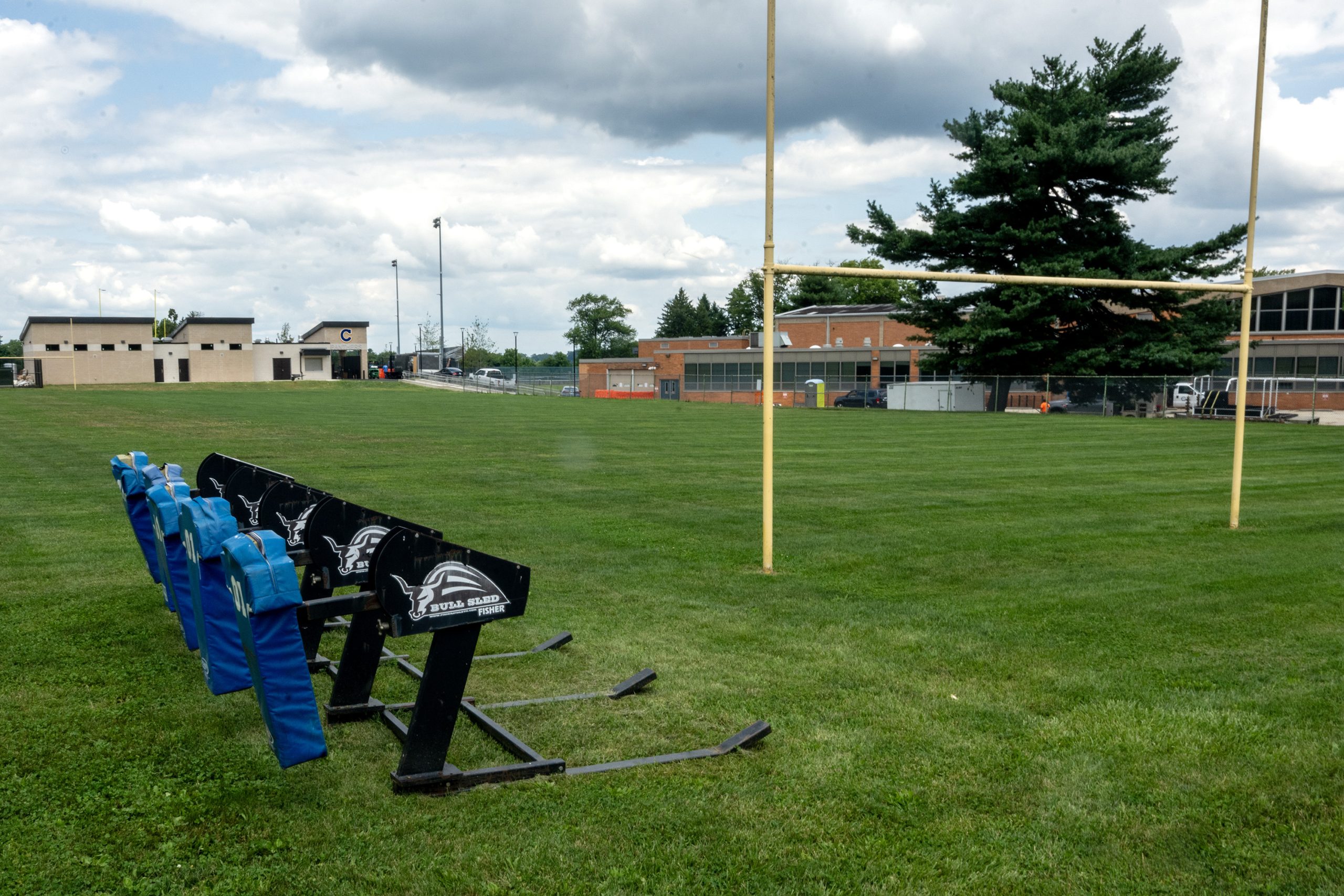
    The football practice field and stadium at Cheltenham High School in Wyncote, Montgomery County, Wednesday, July 29, 2026.Tom Gralish / Staff Photographer

    Employees were also confused about their requirements to report child abuse allegations to law enforcement, the report said.

    And the district’s three investigations were “so flawed they failed to even identify that two separate instances of hazing took place in the locker room,” the report said. The district in January released a summary of findings to the public of an investigation that said it had confirmed “a student-on-student assault” took place Sept. 3, witnessed by nearly 20 students.

    Cheltenham Superintendent Brian Scriven said in a statement Wednesday that “every report brought to the district’s attention was addressed based on the information available at the time.” He also noted that “individuals did not cooperate with the investigative process.”

    On Thursday, Scriven addressed some additional questions about the district’s response. “At no point in time was Coach Tolbert involved in planning or executing any investigation,” he said in a written response to questions.

    He also said the Montgomery County District Attorney’s Office had directed the district to pause its Title IX investigation into the allegations while it was investigating.

    Now that charges are filed, the Title IX investigation “has resumed and will be concluded promptly,” Scriven said, with possible “school-based” discipline.

    ‘Backed her off coming to the building’

    In addition to issuing findings supporting criminal charges, the grand jury released a separate report focused on the school district that included recommendations for new legal requirements for schools to report hazing allegations to law enforcement.

    The report described the actions of three employees at the high school, identified only as Employee #1, Employee #2, and Employee #3.

    The mother of the student who was attacked told The Inquirer earlier this month that she had texted Mark Hoff, then the assistant vice principal at the high school, on Sept. 7 after learning that her son had been jumped in the locker room. Hoff was named vice principal at Wyncote Elementary School in the district on July 20. Hoff could not be reached for comment Thursday.

    The high school’s principal, Benjamin Hammond, referred a reporter to the district’s spokesperson Thursday.

    The person identified as Employee #1 in the grand jury report, who texted two other employees about the student having a “chip on his shoulder,” also suggested in the text exchange that the administration was trying to keep the mother from the school.

    “I THINK I backed her off coming to the building in the AM,” Employee #1 texted, according to the report.

    Employee #2 called Tolbert that same day, and texted the other two employees that the coach denied that anyone told the student not to tell his mom.

    “At this point in the conversation, all three employees vouched for Tolbert’s credibility,” the report said.

    Employee #2 began his investigation by interviewing Tolbert, who said he did not know anything, according to the report.

    He also spoke to other coaches and took them at their word because he “thought that they would be forthcoming, mature adults and do the right thing and not lie to him,” the report said.

    Scriven did not address a question Thursday about employees’ response to the mother. But he said they appropriately went to Tolbert to ask “what he knew of the situation.”

    “At the time, there was no reason to believe Coach Tolbert was being untruthful,” he said.

    Tolbert had previously served as head coach of the varsity team at Abington Senior High School for the 2023-2024 season. An Abington spokesperson said on Thursday that the district had opted not to renew his appointment after one year.

    Insufficient supervision

    The grand jury also found fault with Cheltenham’s supervision of the football program.

    While there was an office for coaches in the football locker room, “they rarely used it,” the report said. (Tolbert had become the head coach in June 2025; coaches had used the office the season before, according to the grand jury.)

    Employee #2 testified to the grand jury that he did not do anything to ensure that football players were supervised, the report said.

    The grand jury also found that “at least” five paid Cheltenham football coaches were not up to date on Act 126 clearances. The Pennsylvania law requires schools to provide employees who have direct contact with children with at least three hours of child abuse recognition and reporting training, every five years.

    In releasing findings from its investigation in January, the district acknowledged “insufficient student supervision in the locker room by the coaching staff” and “a failure to prioritize student safety by the coaching staff” and volunteers.

    Montgomery County District Attorney Kevin Steele announces at press conference Wednesday, July 29, 2026 multiple charges in connection with two assaults in Cheltenham Township High School locker room that injured a 15-year-old player and led to the cancellation of the 2026-2027 football season.Tom Gralish / Staff Photographer

    Circulating video footage

    There were two videos taken of the Aug. 15 assault, prosecutors said. The grand jury findings characterized the footage — which it said depicted a student moving a broomstick toward the bottom of the student’s shorts while at least one player chanted “broomstick him” — as circulating widely within the school community.

    One witness told the grand jury there was a TikTok video “going around where two boys were making fun of the juvenile victim with a Meek Mill video playing in the background.”

    The victim testified that he believed many people had seen a video, because “random people” approached him about it in the cafeteria and hallway. Another student, who was not on the football team, told the grand jury she had been shown a video at school of the victim being kicked by multiple people.

    While the district had been aware only of an incident on Sept. 3, questioning of one of the players by the grand jury in January led to the discovery that the video footage depicted an Aug. 15 assault.

    Players told the grand jury that an administrator, identified only as “Administrator #2″ in the grand jury findings, met with the team after the Sept. 3 incident.

    One player reported that “days” later, the administrator “addressed the team about ‘stuff’ and warned the players if there’s ‘another one,’ the season would be canceled,” according to the grand jury findings.

    Another told the grand jury that the administrator met with the team while coaches were present, and told players not to fight with one another and that there would be consequences “if anything else occurred.”

    That player said neither the coaches nor the administrator “encouraged anyone with information about the incident to come forward,” according to the grand jury findings.

    ‘Consistent confusion’ about reporting requirements

    Prosecutors said the district contacted Cheltenham police after an anonymous Sept. 18 tip through the state’s Safe2Say hotline. The mother previously told The Inquirer that the tip was how she learned a broomstick was involved.

    The grand jury report said district employees were unclear on their requirements as mandatory reporters.

    “There was consistent confusion about what type of assault allegation would prompt an immediate report to ChildLine and the police,” the report said. It said the unidentified Employee #3 displayed “especially concerning judgment” by concluding that coaches never told the student not to tell his parents “simply because a coach said it never happened.”

    Mandatory reporting laws currently do not require that allegations of hazing, committed by a child on another child, be reported as suspected child abuse — unless sexual assault is alleged, the grand jury report said.

    Acts of hazing that “fall short of a completed sexual assault, touching or exposure, such as the threatened sexual assault in this case,” do not meet the mandatory reporting threshold, the report said.

    It recommended that hazing be incorporated into mandatory reporting requirements. If it had been, the report said, “the Cheltenham High School administration would not have had the opportunity to mishandle the juvenile victim’s disclosure and the ensuing investigation as poorly as they did.”

    In his statement Wednesday, Scriven said the district would welcome additions to the mandatory reporting laws. But he said hazing would not necessarily be immediately identifiable to school staff, noting that the law defines the offense as “for the purpose of initiating, admitting or affiliating a minor or student into or with an organization.”

    Scriven did not address questions Thursday about employees’ understanding of reporting requirements.

    Asked why the district did not contact police after the mother’s Sept. 7 report of an assault, Scriven said Thursday that it was “not reported as a sexual assault.”

    “A ChildLine report was properly made when the district learned that a reportable offense may have been committed,” Scriven said.

    In testimony, the player who was attacked described being stomped in the head and groin with cleats during the September assault, and being “tucked up” on the floor as teammates tried to poke him in his butt with a broomstick, according to the grand jury findings.

    “He said that he feared for his life and did not want to go back to school or play football for the team anymore,” the findings said.

    Staff writers Jess Rohan and Vinny Vella contributed to this article.

  • Temple raised a record $214 million in the last fiscal year. Some of the money will support students during a budget crunch

    Temple raised a record $214 million in the last fiscal year. Some of the money will support students during a budget crunch

    Temple University, which faces a budget deficit and challenging financial headwinds, received a record amount of donations in the last fiscal year, putting the institution ahead of its fundraising goals in the first full year under the leadership of a new president.

    The North Philadelphia school received $214 million in donations in fiscal year 2026, more than 60% greater than the prior year’s annual fundraising total and well ahead of its goal of $160 million.

    Included in that total and achieved during president John Fry’s tenure are major donations, including the single largest gift the school has received, $55 million from university trustee Christopher Barnett to rename the College of Public Health, and a substantial but undisclosed amount from Jane Creamer Sullivan to establish a new honors college, which will enroll students beginning in fall 2027.

    They were among 38 donors who gave $1 million or more to the university, up from 24 the year before.

    Fry in an interview credited a new fundraising chief, a strategic plan with clear fundraising goals, and the involvement of deans and other senior leaders in the fundraising process at Temple, which enrolls 33,000 students across its U.S. and international campuses.

    “The difference from where we were in late ’24 to today is kind of night and day,“ Fry said. ”Our priorities as an institution are clearer. … We have a lot of engagement from our deans and senior leadership and trustees, and I think we’re developing a much more disciplined approach to donor relationships.”

    The increased fundraising comes at a pivotal time for Temple, allowing it to invest in academics and student supports while also coping with a budget crunch. The university laid off about 40 employees earlier this month as part of an effort to close what now stands as a $25.5 million deficit in the 2026-27 budget.

    Fry noted that the school cannot use donor funds to plug the deficit because they are restricted, but said the money allows the school to continue to invest.

    “The philanthropy that we’re able to to garner right now allows us to address priorities that we wouldn’t be able to address otherwise,” Fry said.

    The Barnett gift, for example, has helped create an “essential needs hub” to help support students who are struggling with financial and other needs.

    Next for the university is the public launch of what is likely to be a $1.5 billion fundraising campaign kicking off in the next two years and concluding in 2034, when the school celebrates its 150th anniversary. Temple already has raised $340 million during the quiet phase of that campaign, including the $214 million raised in the last fiscal year.

    “This is no declaration of victory,” Fry said. “I think it’s a declaration of progress. … It’s a good, strong start.”

    A renewed focus on alumni giving

    Fry identified fundraising as an area for reform at Temple almost as soon as he arrived, saying that a school of Temple’s stature with more than 380,000 living alumni — more than half of whom live and work in the region — should be raising more than it was.

    He said at the time there was no reason that Temple should not be in the same league as schools such as the University of Delaware, which had announced a gift in excess of $71 million. Pennsylvania State University, which has more than twice the enrollment of Temple, announced earlier this month that it had raised $662.7 million in 2025-26.

    The university’s previous fundraising record was $133 million in fiscal year 2025, and prior to Fry’s arrival in November 2024, Temple raised about $95 million annually on average from 2014 to 2024, the school said.

    Fry hired Al Checcio, who previously led fundraising at the University of Southern California and Fordham University, to assess the university’s fundraising operation. Checcio had previously assisted Fry with fundraising at Drexel when Fry led that university, and he had worked at Temple in the 1990s under the late president Peter Liacouras.

    Impressed with Checcio’s assessment, Fry appointed him as interim fundraising leader in March 2025 and in September named him senior vice president for institutional advancement.

    “I’ve always felt that the Temple alumni base was so untapped,” Checcio said. “They have a lot of pride in the institution, but maybe not as much pride in how the university has interacted with them.”

    To bolster success, Checcio said, fundraising had to become a university-wide priority, with deans, healthcare leaders, and other university leaders all playing a role. It takes vision, leadership, and relationship-building, he said.

    That is all happening, including visits by Fry to donors around the world, and donors are reacting positively, Checcio said in an interview.

    “We’re communicating clearly what our vision for the university is, and we’re doing a lot of work tying institutional priorities into donor interests,“ he said. ”We’re very pleased with our early progress. We think it’s a real sign of things to come.”

    He said the university has the potential to continue raising more than $200 million annually or even more.

    “We think we have a really, really high ceiling,” he said.

    Among other large gifts from alumni in 2025-26 were $5 million from Richard and Amy Oller to the law school and $3 million from investment adviser and author Joslyn G. Ewart to endow the dean’s post for the Center for the Performing and Cinematic Arts.

    Fry said both gifts met several goals in the strategic plan.

    The Oller gift “promotes student success because it has scholarships and fellowships and experiential learning opportunities embedded in it,” he said. “It also strengthens faculty excellence by supporting an endowed chair and monies for bringing distinguished scholars to campus.”