Category: Education

  • Lower Merion is advancing a policy to eliminate iPads and laptops for K-2 students

    The Lower Merion school board plans to stop assigning personal laptops and iPads to kindergartners, first graders, and second graders after facing intense pushback from parents who say kids are getting too much screen time in school.

    Members of the school board’s policy committee announced the plan during a meeting Monday, along with other proposed limits on technology use. Under policy changes going before the full school board for review next week, third and fourth graders would use electronic devices stored on carts in classrooms, while fifth and sixth graders would be permitted, but not required, to bring devices home.

    “This is a huge movement forward,” said the board’s president, Kerry Sautner, describing revisions made to the proposed technology policy in response to community feedback.

    But parents who have accused the district of overusing educational technology said the proposed changes did not go far enough — leaving too much room for interpretation around when technology should be used, and failing to adequately restrict kids’ access to inappropriate websites.

    Some parents also expressed anger that the board is moving forward with repealing the current technology policy, which contains language accommodating families who opt out of district-issued devices.

    “You are removing the escape hatch,” said David Smyth, a parent from Merion Station, who said the district had produced no data supporting its use of technology. “You know that ed tech is failing, it’s suboptimal, and you don’t want to be embarrassed.”

    Here is what to know about the tech debate in Lower Merion, the board’s latest policy proposal, and what happens next:

    Lower Merion at the center of ed tech backlash

    As backlash to technology in schools has spread across the region and nationally, Lower Merion has become an epicenter of parental opposition.

    At meetings this spring, dozens of parents have voiced concerns about weakened attention spans and classroom distractions, and expressed fear that the quality of their kids’ education is declining as a result.

    More than 800 parents have signed a petition asking for the right to opt out of one-to-one devices, according to parent organizers in Pencils Over Pixels. The group, which started a GoFundMe campaign, has distributed lawn signs and enlisted a public relations firm as part of its advocacy efforts.

    But district officials have repeatedly said that the technology policy’s language is dated, stemming from when Lower Merion first introduced one-to-one devices, and that it is not possible for families to opt out.

    Instead, the board has been reworking the technology policy to address when and how devices should be used in classrooms.

    A revised policy after meetings with parents

    The latest policy proposal outlines guidelines for technology use at different grade levels, rolling back one-to-one devices for Lower Merion’s youngest students.

    “Technology shall not be used for routine classroom instruction in these grades,” the policy says. “Any use shall be minimal, highly structured, and limited to specific educational purposes such as diagnostic testing or for teacher-directed, whole-class demonstration, visual display, or state testing preparation.” (Pennsylvania’s standardized tests, which start in grade 3, are required to be administered on computers.)

    In grades 3-4, the policy says, students “shall have supervised, teacher-directed access to technology resources” that stay in classrooms, while in grades 5-6, students will be permitted to bring their devices home, but not allowed to use them between classes or at lunch.

    The policy describes students in grades 7-8 and 9-12 as having increased responsibility for independent technology use, but says devices should be used only for school-related work.

    The policy changes are “meaningful responses” to community feedback, said Anna Shurak, the chair of the board’s policy committee, who said board members had met with concerned families.

    But some parents said the policy — which says teachers should use technology “only when doing so serves a clear educational purpose” — would not adequately limit an overreliance on screens in classrooms.

    “The verbiage of this policy is very carefully crafted to say nothing,” said Eleanor Stanford, a parent and a writing professor at Bryn Mawr College, who also questioned why the district was still “dragging its feet” on imposing a bell-to-bell ban on cell phones in its high schools, even as legislation advances in Harrisburg to do so. (Shurak said the district would fully ban cell phones in 2027-28.)

    Parent Matthew Posey quoted the policy’s language that technology belongs in the classroom when it “genuinely amplifies human curiosity.”

    “Did Albert Einstein need Kahoot or iReady?” Posey said, referring to two educational technology programs. “Is this a public policy document, or a corporate marketing brochure?”

    Some parents also questioned proposed administrative regulations that include suggested time ranges for technology use by grade level. In grades K-4, the guidelines are less than 30 minutes a day; by high school, they increase to less than 120 minutes a day.

    Calculating the high school upper limit as about 40% of daily instructional time, “to me, that’s way, way too high,” said Sam Handlin, a parent and a professor at Swarthmore College. He said the only way teachers would approach that time limit was either by using technology “as a babysitting device” or letting students take notes on computers, “which is just a recipe for distraction.”

    Shurak did not comment on the time frames specifically but told Handlin the administrative regulations still need to be revised.

    When will changes take effect?

    The committee endorsed sending the revised technology policy to the full board for review next week, along with a recommendation to repeal the current technology policy.

    While the board may repeal the current policy at next week’s meeting, the new policy would need to be considered a second time to before it could go into effect.

    The goal is to have the new policy in place in August, Shurak said. She said the board would be directing administrators to implement changes in time for the coming school year.

    Board member Jason Herman, a member of the policy committee, said some of the new policy’s language should be revised to limit “ambiguity and subjectiveness.” He also questioned why the district could not move to a content filtering model where only certain websites were permitted for students to access, rather than restricting sites after problems are reported.

    Officials did not address questions around content filtering Monday, or calls from the Pencils Over Pixels group for the release of district contracts with educational technology companies and a technology advisory board that would include parents.

    Sautner said the board had more work to do, including around technology questions related to the district’s curriculum.

    But “we cannot micromanage” administrators through policy language, she said.

    Some expressed concern that the board could overreact in response to anti-tech opposition.

    “Banning technology isn’t going to be the way to ensure that our kids critically think,” said Emma Benn, who urged the board to “take a step back” before passing a new policy. “This world is a technology-driven world, and we need to make sure our children can function within it.”
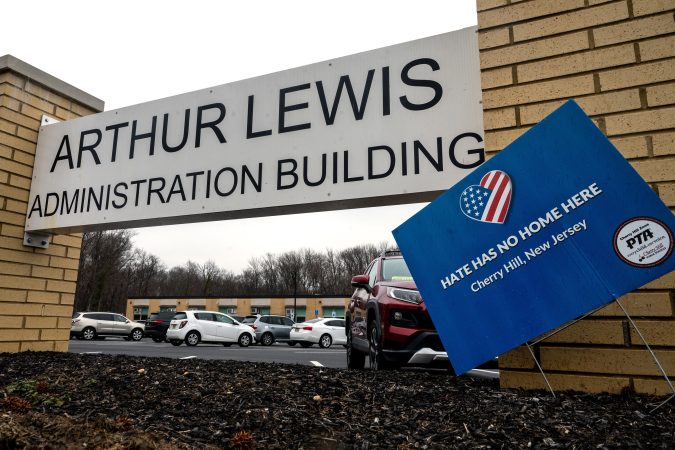
  • Cherry Hill school board gets pushback on suggestion to drop African American history mandate

    Cherry Hill school board gets pushback on suggestion to drop African American history mandate

    The Cherry Hill school board made national headlines when it became the first New Jersey school system to require students to take a course on African American history to graduate.

    Five years later, the board debated whether the course should be dropped as a requirement in light of budget problems in South Jersey’s largest school system.

    And while officials have assured the community that the course will remain part of the curriculum, the debate highlights the difficult choices that districts are facing during a tough budget year. In Cherry Hill, the board approved a budget that will cut 70 positions, increase class sizes, and raise property taxes to eliminate a $29 million deficit.

    As that budget process played out this spring, board member Renee Cherfane suggested the district could reconsider African American history if future budget cuts are necessary. The idea drew pushback from students as well as community and civil rights leaders, who pledged to fight any attempt to roll back the requirement.

    “Black history is an essential part of American history,” said Ma’isha Aziz, president of the Camden County East branch of the NAACP. “Teaching it helps ensure students gain a fuller understanding of the nation’s past and present.”

    Cherry Hill High School East senior Skylar Adams, a member of the African American Cultural Club, said changing the course would send the wrong message. Black students make up about 10% of the district’s 11,000 students.

    “In the world we live in today where the rights and voices of African Americans are constantly being challenged and minimized, now is not the time to make our history seem less important,” Adams told the board. “Making this course an elective instead of a requirement sends a message that learning about Black history is optional and not important enough for every student.”

    Superintendent Kwame Morton, the district’s first Black schools chief, praised students who made passionate appeals to the board to keep the course. He reassured them that the course was not in jeopardy.

    “The board is not at this point taking action on any recommendation to eliminate that course. That’s not what’s happening,” Morton said.

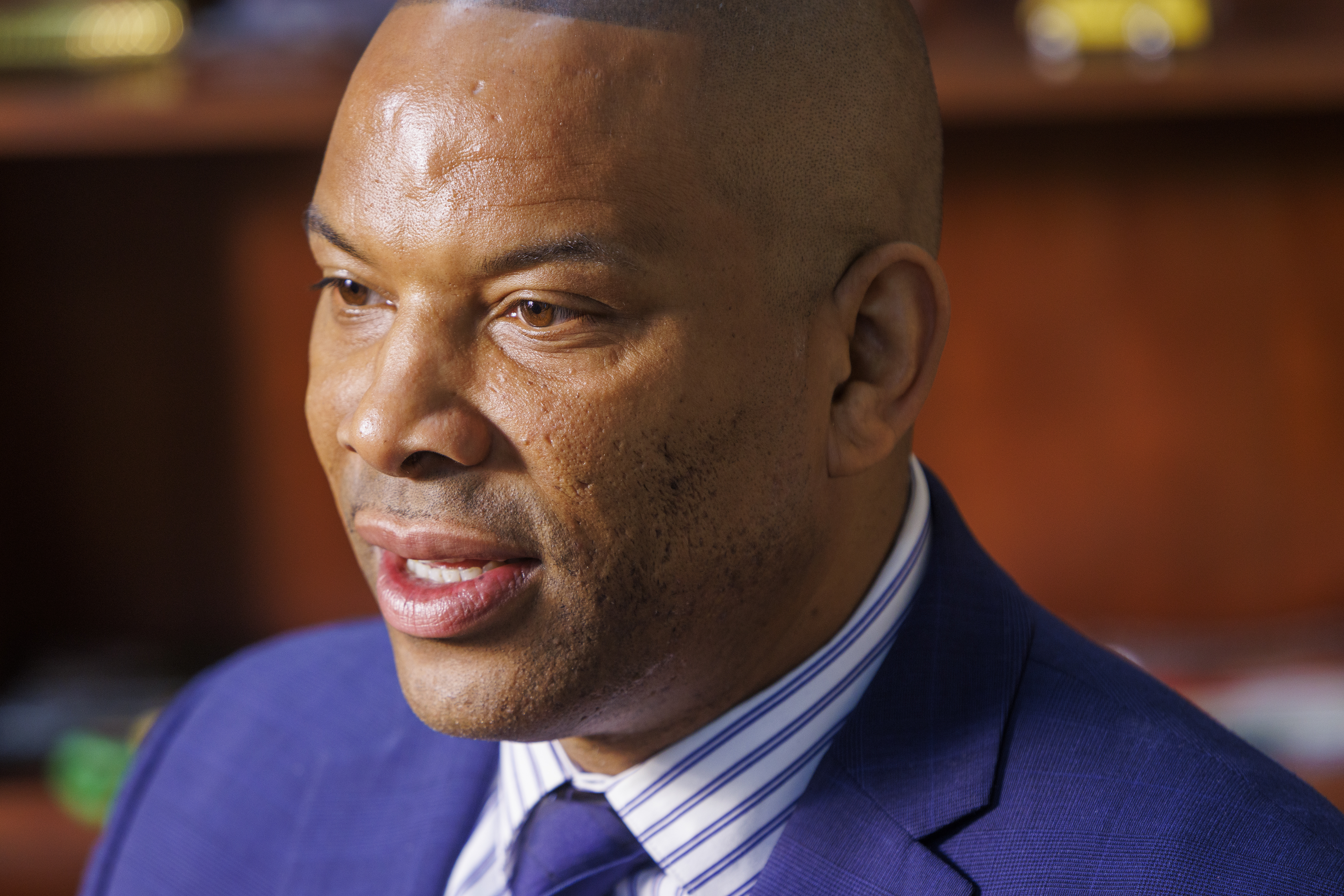
    Cherry Hill Superintendent Kwame Morton.Alejandro A. Alvarez / Staff Photographer

    Here is what to know about the debate around the course:

    How the issue unfolded

    Cherfane sparked a heated discussion during a board meeting last month when she suggested making African American studies an elective instead of a required course. She cited the district’s $29 million deficit, which prompted layoffs and cuts.

    In the event the board has to cut additional teaching positions in the future, having that class as a mandate limits options, she said. About 800 students are required to take the course every year, she said.

    “It’s not about offering the class. It’s about requiring it,” Cherfane said. ”We wouldn’t be getting rid of it entirely.”

    Other board members asked Cherfane to explain why she targeted that class. The district offers other electives, such as multivariable calculus, a high-level math course that few students take, that are not required by the state as a graduation requirement, said board member Miriam Stern.

    Board president Gina Winters said any review examining potential cost savings should not be specific to one class. The African American history class was pitched by students and supported by the community, she said.

    “I understand that it’s a tight budget, but we also have a responsibility as a board to educate our children on the things that our community thinks are important,” Winters said.

    Cherfane did not respond to messages seeking comment.

    How did the class get started?

    By an 8-0 vote, the board approved the course as a graduation requirement in February 2021. Students who organized Black Lives Matter protests sparked by the killing of George Floyd in 2020 in Minneapolis by a white police officer asked for the class. They said Black history was mostly taught only in February.

    Cherry Hill became the first district in the state with the requirement, according to the New Jersey Department of Education. New Jersey and Pennsylvania require history to be taught, but districts decide the content of their courses. Philadelphia and Camden schools also mandate a course in African American history to graduate.

    The district developed a curriculum for a semester course and began offering it for the 2021-22 school year for freshmen and sophomores at its two comprehensive high schools. The district hired two teachers.

    Teacher Jennifer LaShure said the course tackles topics that previously received little attention in U.S. history classes. She has included units on early African culture, arts, systemic oppression of today, anti-racism, and activism.

    “I worry about the message that it sends to the students that something as important as history can be taken away,” LaShure told the board. “We see it all over, but it’s scary to see it happening right here.”

    Community pushback

    Former board member Corrien Elmore-Stratton, who was the only Black member of the board that approved the course as a requirement, said the need for it remains.

    “… We are already having spaces and places where our students are being erased, torn down, no longer heard, misunderstood, and DEI has become a dirty word,” she said, referencing President Donald Trump’s attacks on diversity, equity, and inclusion. “It really is disheartening to hear that anyone on this board of education to think of to do.”

    Carole Roskoph, a retired educator and former Cherry Hill council member, said she was “perplexed” by the discussion.

    “It doesn’t make sense to me,” she said.

    Motion withdrawn

    Following the discussion, Cherfane made a motion to refer the issue to the policy committee to review possibly adjusting the graduation requirement for African American history. She withdrew the motion midway through voting, after a board member expressed unreadiness, and the discussion abruptly ended.

    Cherfane did not reintroduce the motion at the May 26 meeting and it was unclear if the matter would be addressed again.

    Other cuts, however, are moving forward in Cherry Hill and will take effect next school year.

  • City Hall failed the school district. Now Philly’s kids will pay for it. | Editorial

    City Hall failed the school district. Now Philly’s kids will pay for it. | Editorial

    Mayor Cherelle L. Parker and members of City Council could not agree on how to bridge the Philadelphia School District’s structural budget deficit. Now, students and staff will bear the brunt of a political failure.

    In some ways, the scope of the deficit seemed to catch policymakers off guard. The mayor’s initial budget proposal included a 20-cent per-trip tax on rideshare services, which then ballooned to $1 per ride. Neither figure came close to filling the $300 million hole in the district’s financial plan.

    While both the mayor and City Council have strong oversight powers when it comes to school spending, neither seemed to anticipate the size of that gap — even though Superintendent Tony B. Watlington Sr. had warned of a looming fiscal crisis during the last budget season.

    The ripple effects of the deficit are already clear. Principals and teachers have described this hiring season as chaotic. Some district employees whose positions are slated for elimination have begun looking for jobs in suburban school systems, many of which are facing their own budget issues.

    The cuts to Philadelphia’s schools come at a time when students are making progress, although pandemic-era declines have yet to be fully reversed. According to the Education Scorecard, the school district’s “learning rate” outpaces other big cities. That could be undermined by shedding hundreds of staff positions and shuffling teachers around to fill the gaps.

    Magnifying the impact of the staffing cuts is the scheduled closure of 17 schools across the city. The closure plan — which was finalized in April after a long and contentious process marked by City Council’s opposition — eroded support for the district with both residents and lawmakers. Council members did little to hide their fury over the inclusion of Paul Robeson and Lankenau High Schools on the district’s closure list, despite their efforts to preserve them.

    It did not help matters that some of the mayor’s plans seemed somewhat haphazard. Closing the gap between internet retailers and their brick-and-mortar competitors through online taxes makes a lot of sense, as does taxing delivery services in order to fix potholes. But many of Parker’s other proposals were unconventional.

    For example, most cities that tax rideshare services use the funds to support public transportation. That use of the revenue may feel more intuitive to taxpayers: If improved transit access allows current rideshare users to take more trips on SEPTA, they’ll save money overall. Instead, the proposal was to send money from the rideshare tax to the school district, and at a level that was still significantly below its needs.

    Whatever the details, the proposed tax did not pass. In a news conference last week, Parker said there were just three votes for the plan from the 17-member council. Instead, Council members approved a one-time payment of $50 million in an attempt to forestall the district’s job cuts.

    Despite the windfall, Watlington announced that the planned cuts would go through. He has spent weeks citing the need for a recurring source of revenue for the district, and the school system found itself facing the reality that a one-time payment of $50 million simply isn’t enough to stem a $300 million annual shortfall.

    This episode has lessons for everyone involved.

    For Parker, it is a sign that she must find a more effective way to work with Council. Mayors in Philadelphia tend to lose momentum over time, but she is still in her first term. If she’s already failing to “get to yes” with City Council over such relatively straightforward proposals, it may not bode well for the balance of her tenure.

    For Council, there must be a recognition that there is more to governing than just saying no. At some point, inaction is itself a choice. Philadelphia’s students cannot afford another year of this.

  • A 50-year-old partnership allows Haverford and Bryn Mawr students to take classes or even pick a major on the other campus

    A 50-year-old partnership allows Haverford and Bryn Mawr students to take classes or even pick a major on the other campus

    Caitlin Cowan chose Haverford College because she liked its Quaker roots and honor code and that it was a small campus near a big city.

    But when it came time to choose a major, she selected anthropology at nearby Bryn Mawr College.

    And that was no problem at all.

    For decades, the two colleges, just a five-minute shuttle ride apart, have allowed students to take classes, participate in clubs and programs, and eat in dining halls on each other’s campus for no additional charge. Students have even been able to live on the other campus, though college officials say few do.

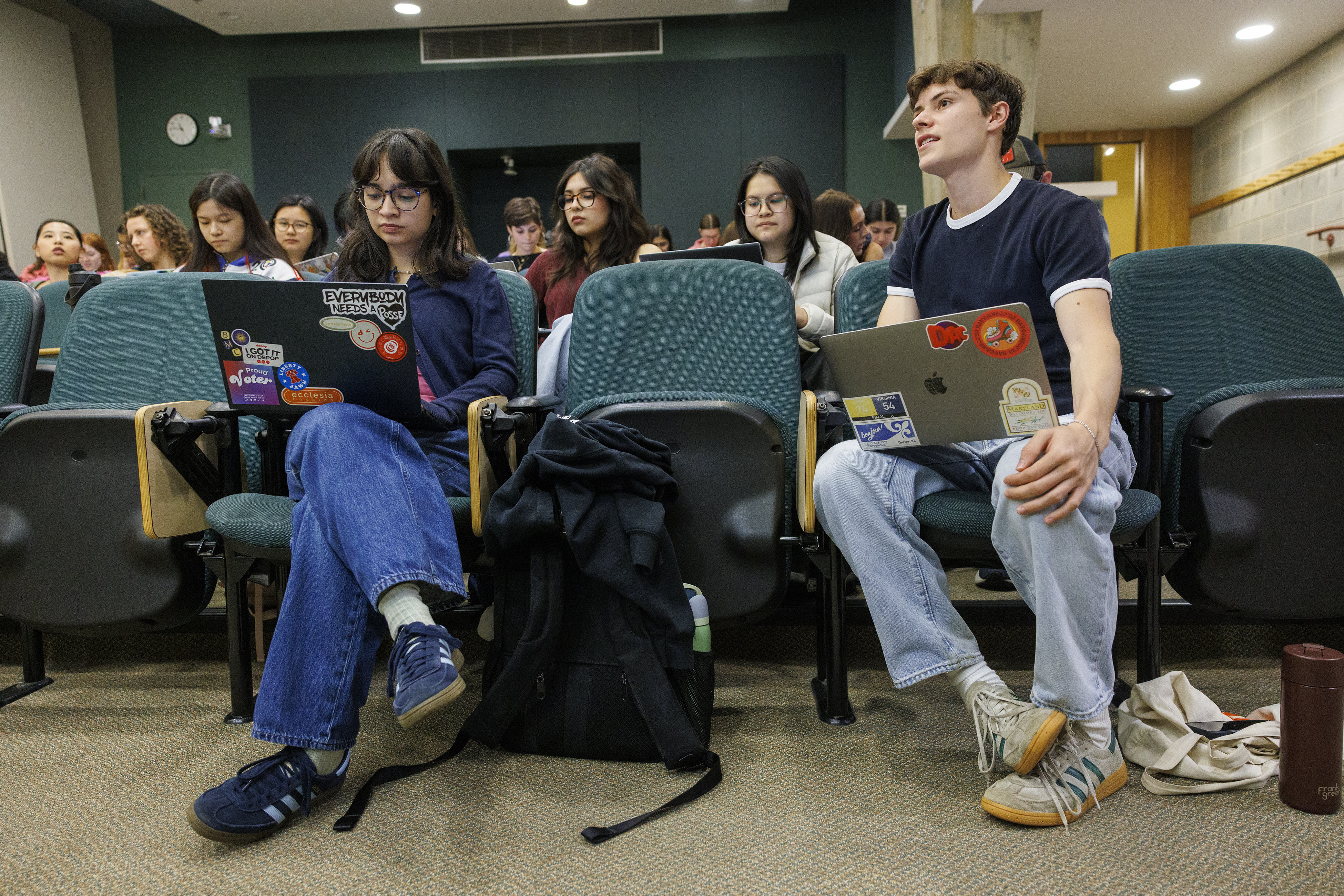
    At left is Anastacia Dulany a student at Bryn Mawr taking a Growth and Structure of Cities class along side Marco Calia a student from Haverford. The class was held at Bryn Mawr College where the Growth and Structure of Cities program is based. Alejandro A. Alvarez / Staff Photographer

    Many take advantage: During the fall 2025 semester, 40% of Bryn Mawr students took courses at Haverford and 42% of Haverford students did the same at Bryn Mawr. In total, there were more than 1,700 course registrations on the non-home campuses in fall 2025. (Haverford and Bryn Mawr students also can take classes at Swarthmore College and the University of Pennsylvania and select a major at Swarthmore.)

    The relationship between Haverford and Bryn Mawr — which together enroll about 2,800 students — opens many more options to students, allows faculty to collaborate, and saves money, college officials said. Both are highly selective liberal arts colleges; Bryn Mawr is a women’s college.

    “The academic offerings that we provide are exponentially larger than they would be without the partnership,” said Bryn Mawr president Wendy Cadge.

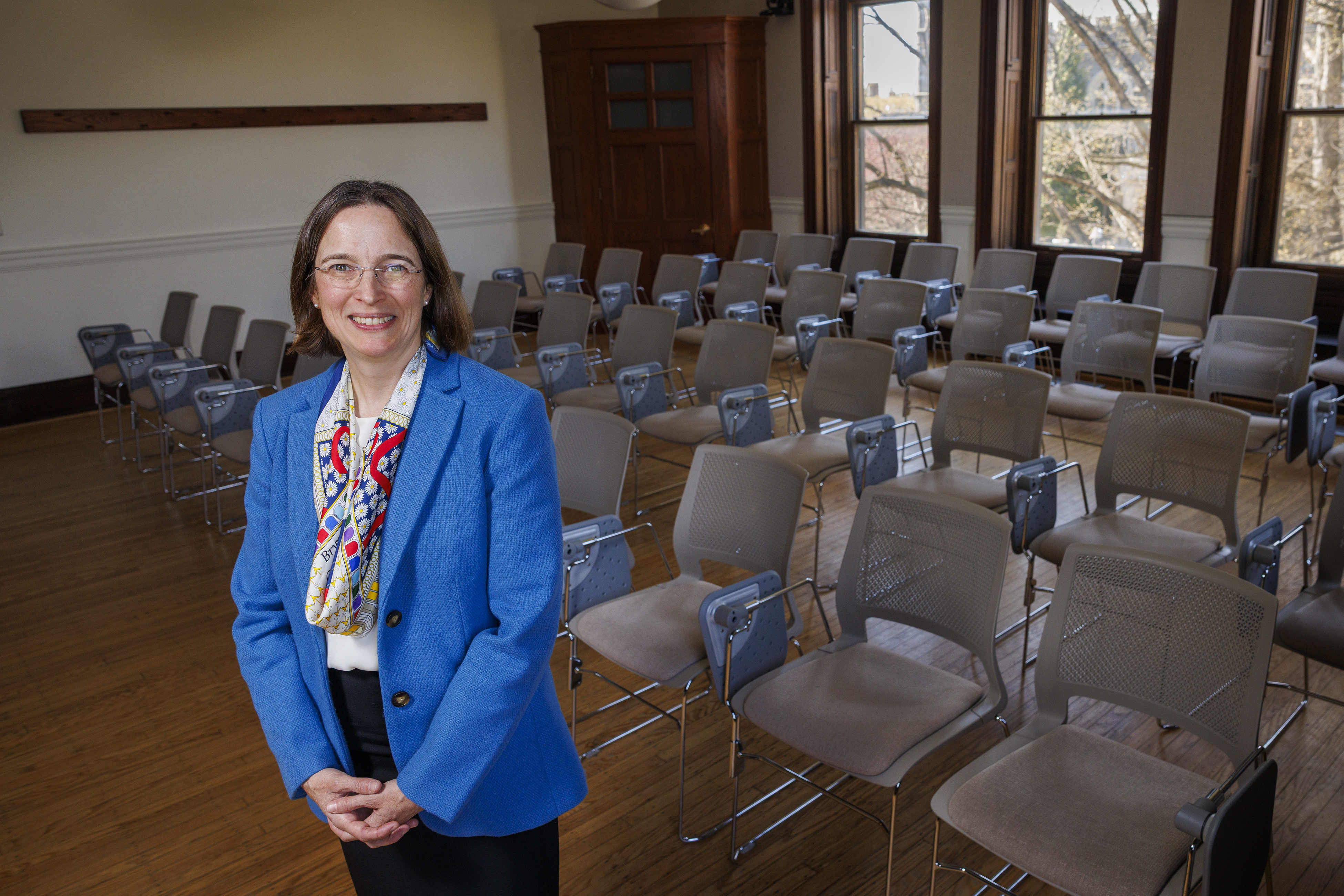
    Wendy Cadge, president of Bryn Mawr CollegeAlejandro A. Alvarez / Staff Photographer

    It was 1997 when Cowan, now an elementary school reading teacher in Minneapolis, got her degree from Haverford while majoring at Bryn Mawr. Now her daughter, Tabitha, 21, is enrolled at Bryn Mawr and is enjoying the benefits of both campuses, too.

    “It just broadens your world,” Tabitha Cowan said.

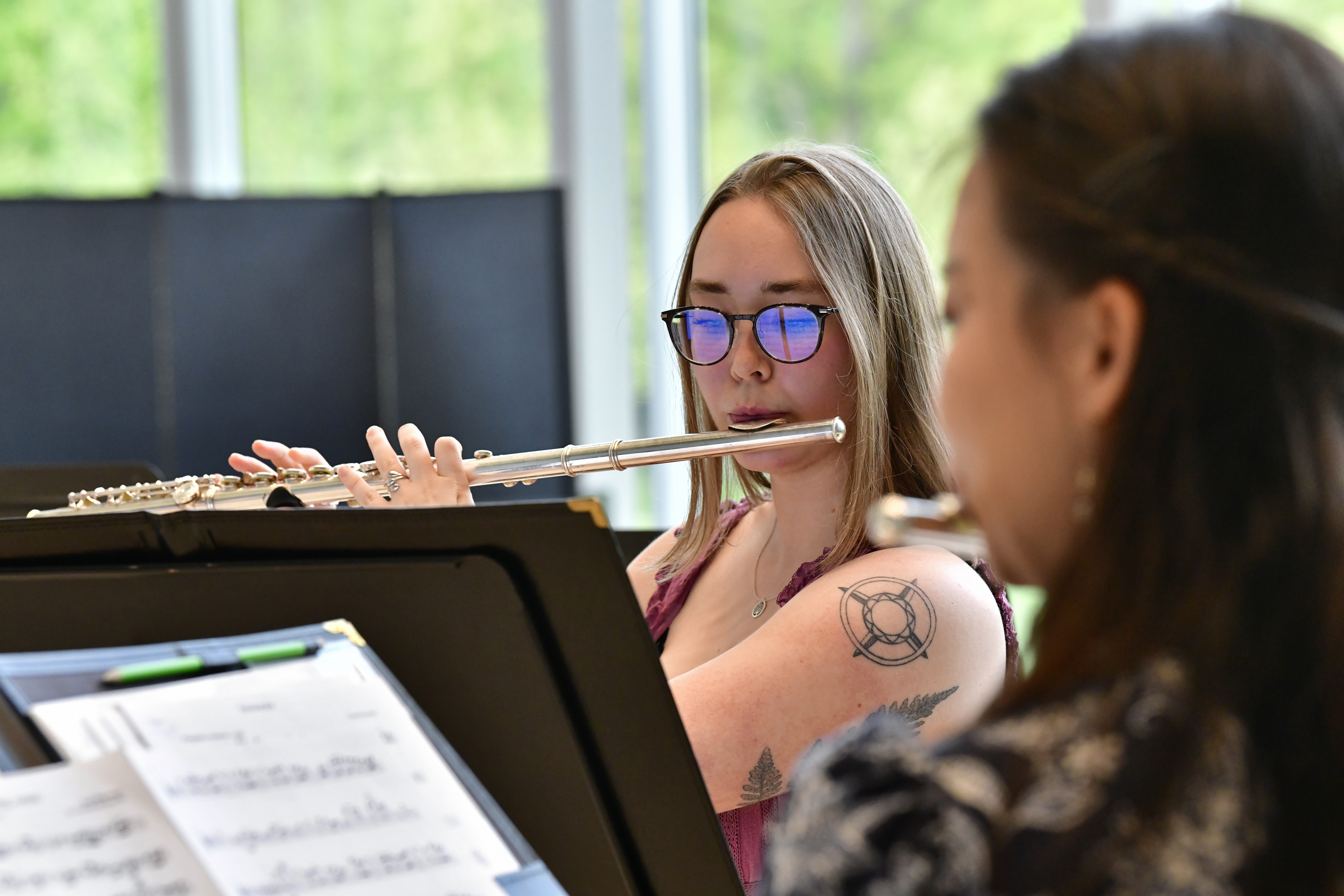
    Majoring in architecture studies and Spanish, she participates in the Bi-College flute choir, made up of two Haverford students and 11 Bryn Mawr students.

    Tabitha Cowan, a Bryn Mawr College student, plays the flute for the Bi-College Flute Choir.Courtesy of Bryn Mawr College

    “We have access to Haverford’s performance spaces because we do not have a music program here at Bryn Mawr,” she said.

    They practice twice a week, once at Haverford and once at Bryn Mawr.

    Joint majors and projects

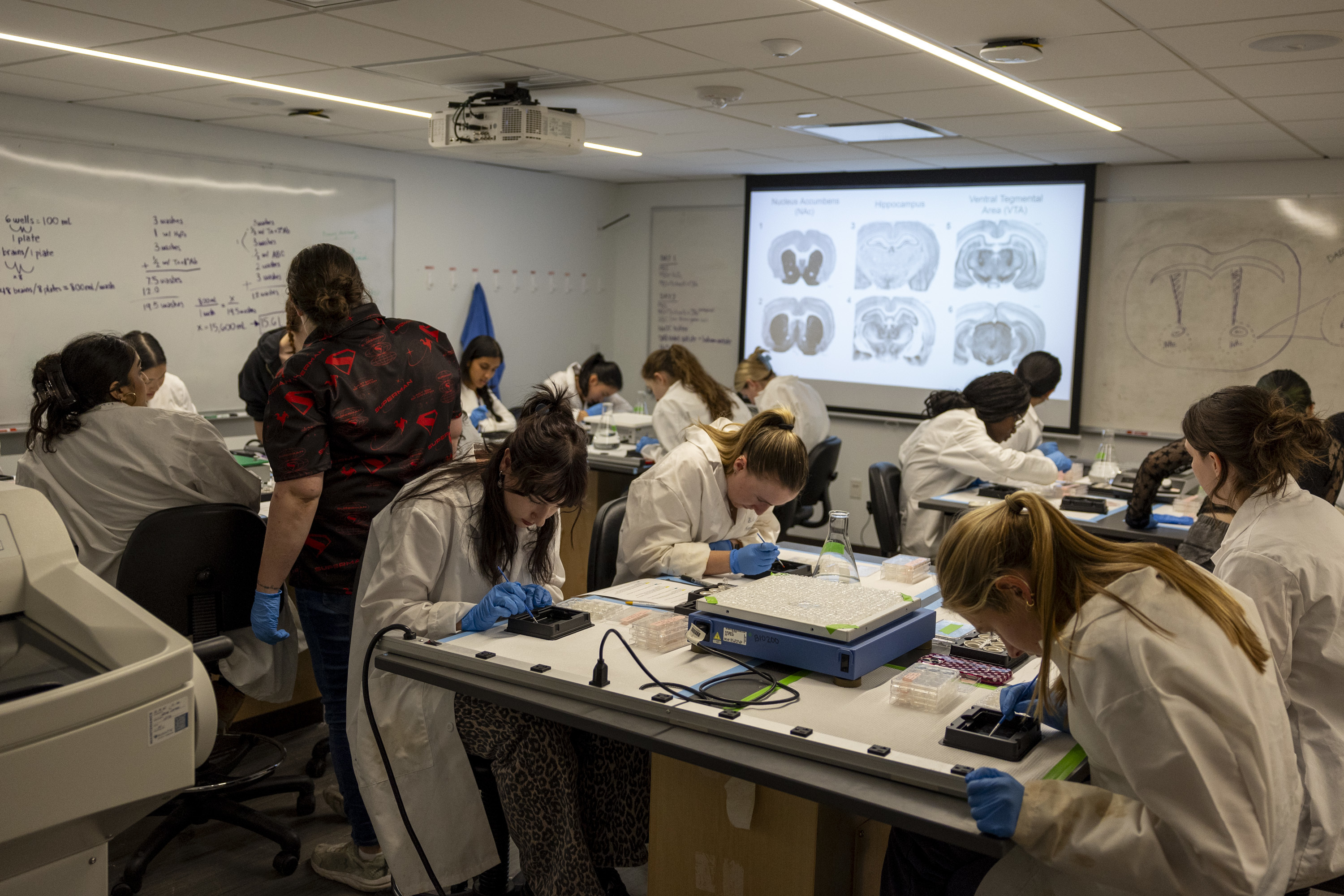
    The colleges have been able to launch joint majors in technology-intensive, interdisciplinary fields like neuroscience — which has become the most popular major on Haverford’s campus — that would have been harder to support individually. It also means the schools share expanded instructional technology and library services.

    Students from both Bryn Mawr and Haverford take a neuroscience class at Haverford College. Tyger Williams / Staff Photographer

    Faculty from both schools are working on joint projects that received institutional pilot grants, encouraging closer collaboration. One project that launched last semester is focused on developing a Jewish studies program, while another aims to reinvigorate Black studies. Others involve interdisciplinary training, chemistry, and narrative across languages and cultures.

    “We really do try to make it as seamless as possible,” said Bryn Mawr provost Dee Matthews.

    Students get one transcript, and colleges share non-salary operating costs, such as administrative overhead, for some of the offerings shared by the campuses, she said.

    “It’s a way in which we can have a large academic community while still preserving the scale of our individual institutions,” said Haverford provost Helen White.

    The two schools earlier this year re-upped a memorandum of understanding on the partnership, which started 50 years ago. The schools will explore new ways to make the most of the partnership and elevate its visibility for students.

    “We affirm that ‘each college is a better version of itself because of the richness of ideas, community, and organization made possible by the Bi-College connection,’” the memo states.

    There are about 75 such consortia nationally, with differences in how they collaborate, said Sarah Pfatteicher, executive director of the Five College Consortium in western Massachusetts. The two oldest were formed about a century ago, one in California and one in Georgia. More may start, given the political and financial pressures on higher education and the influence of artificial intelligence, said Pfatteicher, who has written a book about college consortia.

    “Any time there is pressure on higher education, particularly financial pressures, there is incentive to say, ‘What could we gain by working with our colleagues instead of trying to go this alone?’” she said.

    Complementary offerings

    The partnership between Haverford and Bryn Mawr — both of which have substantial endowments — has not been driven by finances.

    Each school brings unique features to the table. Bryn Mawr has a pool, Haverford a track. Bryn Mawr has art history and Haverford the fine arts. Haverford has music; Bryn Mawr has theater.

    The food is better at Bryn Mawr and the parties at Haverford, students say.

    “Certain sports teams at Haverford watch our menus and then come here because they think our food is better,” Cadge said. “It’s all the same food, but don’t tell.”

    Haverford student Gabriel Bernstein may differ. He said he and his track teammates often board the bus to eat at Bryn Mawr.

    “Bryn din,” he called it.

    In Bryn Mawr’s Class of 2025, 2% were enrolled in a major exclusive to Haverford, while 2.8% took a Haverford major with a Bryn Mawr component and 12.8% had a major shared by the colleges. For Haverford, 4.1% were enrolled in a major exclusive to Bryn Mawr, while 7.2% took a Bryn Mawr major with a Haverford counterpart and 11.1% had a shared major.

    Jet Li, a Haverford College student, arrives at Bryn Mawr College to take a class. Alejandro A. Alvarez / Staff Photographer

    ‘Deeply invested in the liberal arts’

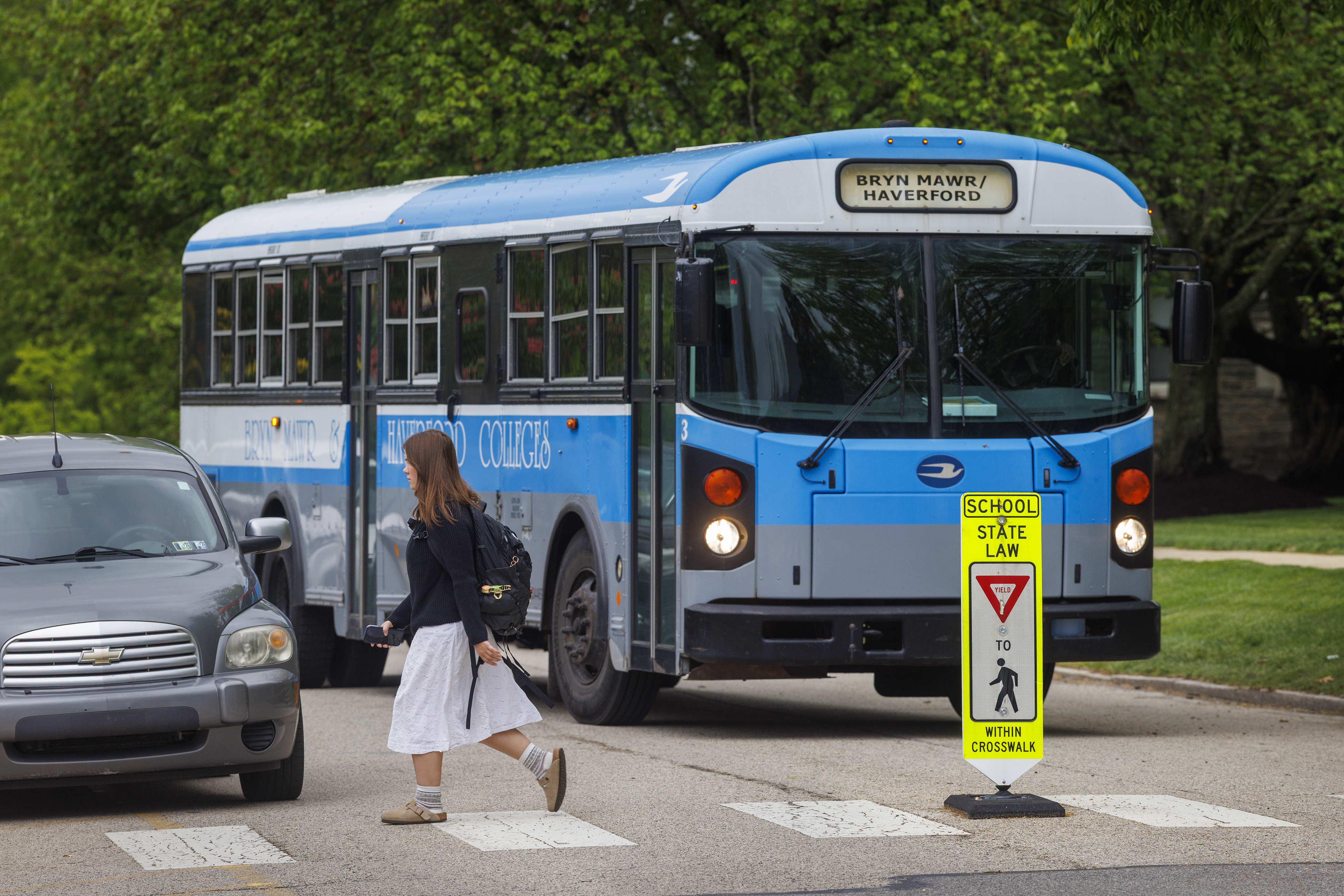
    One day during the spring semester, a group of Haverford students got off the Blue Bus, which shuttles students back and forth between the campuses about every 20 minutes, They had arrived at Bryn Mawr to take a Chinese class not offered at Haverford.

    Meanwhile, Corry Varney-Irlam, 21, a Bryn Mawr student, boarded the bus to head to Haverford for a political science class.

    “It worked better with my schedule,” Varney-Irlam said.

    Matt Ruben teaches in the Growth and Structure of Cities program at Bryn Mawr College. In his class of about 50 students, 12 are Haverford students. Alejandro A. Alvarez / Staff Photographer

    Bryn Mawr professor Matt Ruben teaches classes in the growth and structure of cities program, a major based at Bryn Mawr. In a recent class of 50 students, 12 were from Haverford. Typically, 40% to 50% of the program’s majors are Haverford students, he said.

    Students from the two schools have a lot in common, he said.

    “They’re all really highly skilled,” he said. “They’re highly engaged. They’re all highly motivated. And they’re all deeply invested in the liberal arts experience.”

    Some Haverford students were men — the partnership means males take classes at Bryn Mawr, a women’s college.

    Students said the gender mix in classes really didn’t matter.

    “I don’t mind it,” Varney-Irlam said. “There’s definitely a benefit to having predominantly women in Bryn Mawr classes. But I think that it’s nice to have a change of environment and more people around to socialize with.”

    Cowan said she enjoyed taking classes at Bryn Mawr in the 1990s because it seemed women had more space to talk and there was more support.

    “Sometimes men can take up a lot of space in the room,” she said.

    That is not as much of a factor now, said Ruben, the professor, because there is more gender fluidity, and different levels of consciousness about gender-related issues.

    “It makes a difference and it’s always going to make a difference, but it makes less of a difference than it did like 10 years ago,” he said.

    Madeline Dosen, left, a student at Haverford College, stands with her twin sister Daniela Dosen, (right) a student at Bryn Mawr College. They both played soccer for their respective schools.Courtesy of Daniela Dosen

    The Dosen family has seen the partnership from both sides. Daniela Dosen, 22, was a physics major at Bryn Mawr, while her twin sister, Madeline, majored in biology at Haverford. Both women played varsity soccer for their schools and graduated May 16. The colleges even coordinate commencements — one was in the morning, the other in the afternoon.

    First semester freshman year they had an 8 a.m. Spanish class together at Bryn Mawr. Daniela had a short walk, while her sister had to board the bus.

    “Sometimes we showed up in the same beach sweatshirt,” she said.

  • Radnor school district is looking to enlist outside experts to prepare for future deepfake incidents

    Radnor school district is looking to enlist outside experts to prepare for future deepfake incidents

    The Radnor Township School District is preparing for a possible repeat of a so-called deepfake incident last year that targeted freshman girls, looking to enlist outside help on how to better support victims.

    At a school board policy committee meeting Tuesday, administrators presented updated regulations around bullying and harassment, including that using artificial intelligence to create or share “sexualized, indecent, demeaning or intimate content involving another person” was prohibited.

    The new rules — which follow policy changes passed last month — also say the district will consider who should be present while interviewing students, in light of a student’s age, sex, and background and the issues being investigated. Parents had complained about many aspects of the district’s handling of last year’s incident, including that girls victimized by deepfakes were interviewed alone by male administrators.

    But more changes are possible, administrators said Tuesday. Scott Hand, the district’s director of technology innovation and instructional design, said Radnor “will be engaging outside professionals beginning this summer into fall” to review its policies and practices.

    Some board members also suggested the district retain outside help to be ready for another incident.

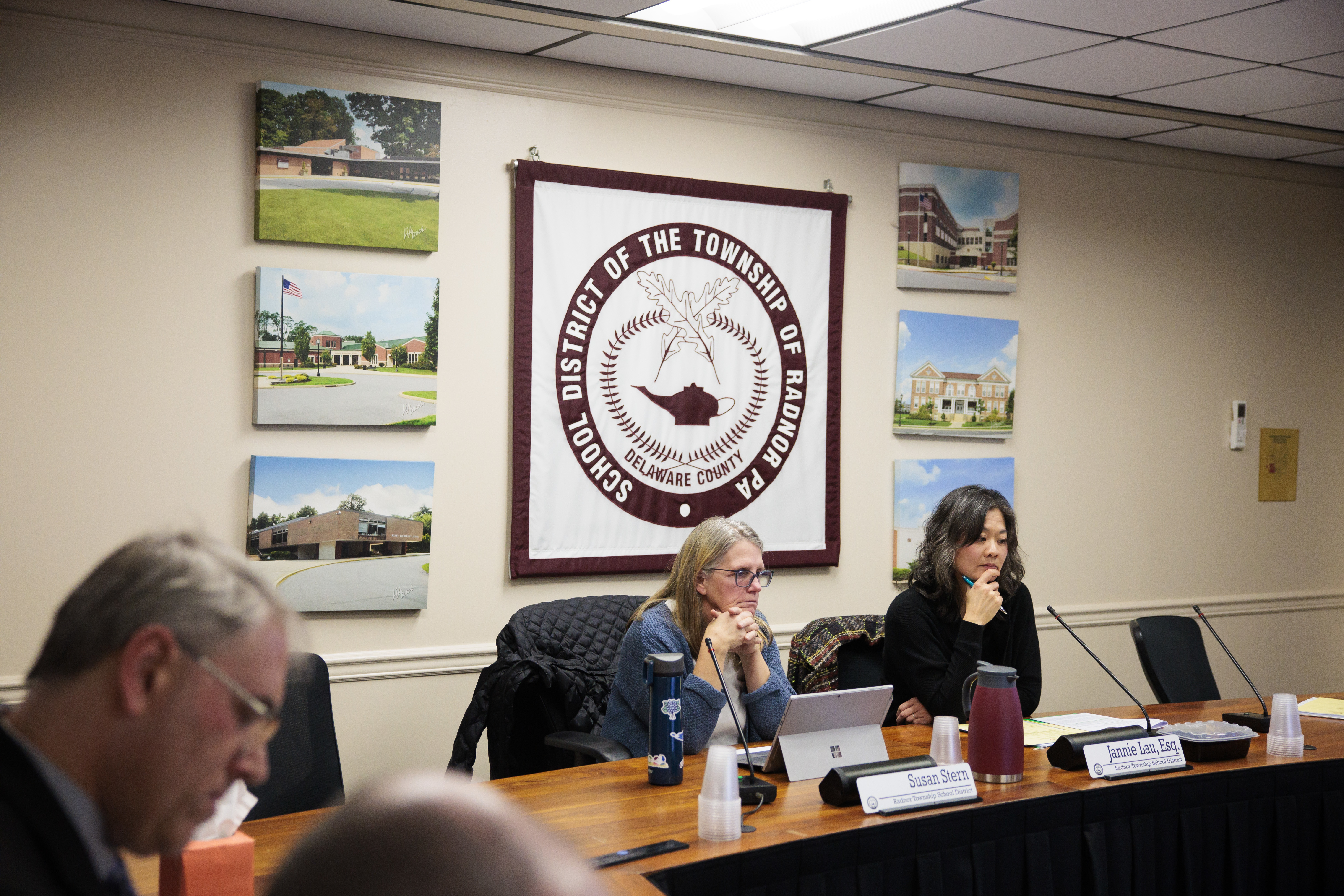
    “The statistics say, something like this will happen again,” said Susan Stern, who asked administrators to consider hiring “a resource we could have on hand.”

    “We’re going to work really hard to educate our kids that it doesn’t happen here in Radnor, but our best response is to be prepared,” Stern said.

    Schools have increasingly been forced to grapple with deepfakes as students use generative AI to manipulate photos of their peers — sometimes with tools that can convert clothed photos into naked ones. Pennsylvania has criminalized explicit AI-generated images as child sexual abuse material, and another measure advancing in Harrisburg would require schools to immediately notify law enforcement about AI incidents.

    Radnor drew intense criticism from some victims’ parents for its handling of the deepfakes, which came to light in December and resulted in a student being charged with harassment.

    District officials said no images were ever discovered. But parents said the district had failed to adequately investigate boys’ reports of pornographic videos and downplayed the incident in community messages, further harming victims.

    Parents also accused the district of failing to initiate a Title IX harassment investigation, arguing it was wrong to characterize the incident as “off-campus.”

    Radnor parents are organizing a panel discussion Thursday in King of Prussia, with deepfake victims from Radnor and Lancaster Country Day School, advocates, and state officials, including Attorney General Dave Sunday, describing risks and how schools can better respond.

    The rules presented to Radnor’s policy committee Tuesday specify that the district has authority over off-campus behavior when it “materially and substantially disrupts the operations of the school” — a common legal standard.

    Jannie Lau, the committee’s chair, said that given how online kids are, any online harassment would seem to meet that threshold.

    “That’s my takeaway — it would be extremely rare for this conduct to happen, and for us to come to the conclusion it doesn’t impact our operations,” Lau said.

    Lau said the district should consider hiring an outside law firm to conduct future Title IX investigations, to ensure more impartiality.

    “It’s just human nature — you don’t want to bite the hand that feeds you,” Lau said, noting that a district solicitor might have an interest in siding with the district, to avoid jeopardizing that relationship.

    In comments Tuesday, Audrey Greenberg, a parent of one of the victims, said she appreciated the rule changes, but that they didn’t go far enough. If a student reports AI-generated sexual content, she said, the district’s Title IX coordinator and central administrators should be notified immediately.

    She also said the description of “off-campus” behavior was too vague — saying deepfakes harm students’ attendance, friendships, and mental health — and argued that the rules wouldn’t prevent a poor administrative response.

    “It was so painful to get those emails calling the event rumors and speculation, when a crime occurred,” Greenberg said, referring to messages from Superintendent Ken Batchelor, including one that described the deepfakes as images made “to move and dance.”

    “For crying out loud, this is pornographic material,” Greenberg said.

    Stern, the board member, said earlier in the meeting that Radnor would be dealing with the fallout for a long time.

    “I don’t think that there’s anyone in this district who will ever hear the words ‘generative AI’ again, and not feel a little tug,” she said. “We had children who were harmed.”

  • This week in Philly history: Girard College quietly admits first Black students

    This week in Philly history: Girard College quietly admits first Black students

    By the afternoon of Sept. 11, 1968, the hostility had faded.

    Neither the Rev. Dr. Martin Luther King Jr. nor Cecil B. Moore was making rousing speeches outside Girard College’s wrought-iron front gates.

    No human barricade of police officers blocked the entrance, and no civil rights groups marched through North Philadelphia.

    After a brutal fight to desegregate the private boarding school, which started with an intense seven-month demonstration and then spent years tied up in the court system, the color barrier was pierced without protest.

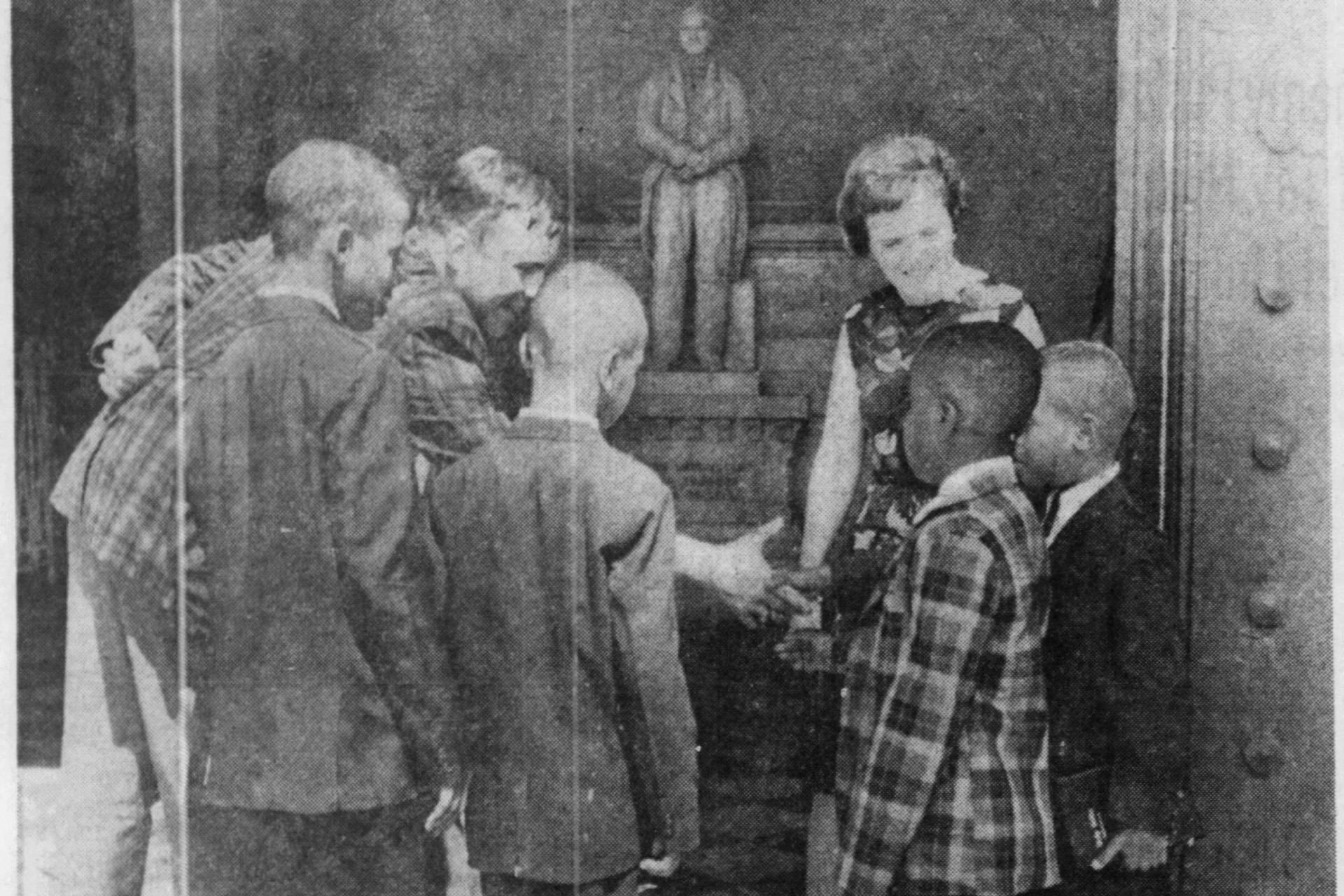
    Four little boys, dressed in suits and ties and carrying their favorite board games, walked to the front door of marble-faced Founder’s Hall at 21st Street and College Avenue, and reported for their first day of second grade.

    Mothers and grandmothers and siblings accompanied each child, and a gaggle of photographers and reporters attempting to capture the otherwise-calm moment circled each family.

    “Nice place,” 11-year-old William Lenzy Dade told The Inquirer, “I didn’t expect it.”

    The school was the brainchild of French merchant Stephen Girard, a childless entrepreneur who amassed an immense wealth in Philadelphia in the aftermath of the American Revolution. Upon his death in 1831, he set aside a then-fortune of $2 million to start a boarding school for “poor, white, male orphans.” The school opened in 1848, and offered a premium education at no cost to select students whose families had a single guardian.

    By the 1960s, the campus’ imposing stone walls became a metaphorical obstacle to the enclosed white-columned buildings. Moore, then the Philadelphia NAACP president, led the charge and a lawsuit to force Girard to desegregate. In 1965, the animosity escalated into sometimes-violent confrontations with police. But demonstrators continued undaunted, singing and chanting and marching so those four boys could be the first Black students admitted to the private school.

    Owen Gowans III was 7 when he walked through those gates in his bright, green-and-brown plaid jacket, the last of the four to arrive.

    “Are you nervous?” a reporter asked.

    He just shook his head.

    In 2015, as part of an anniversary celebration of the school’s integration, Gowans found the words.

    “I’m just humbled by what transpired,” he told The Inquirer. “I’m appreciative to the people who put up with beatings and bad words so people like me could go to school here.”