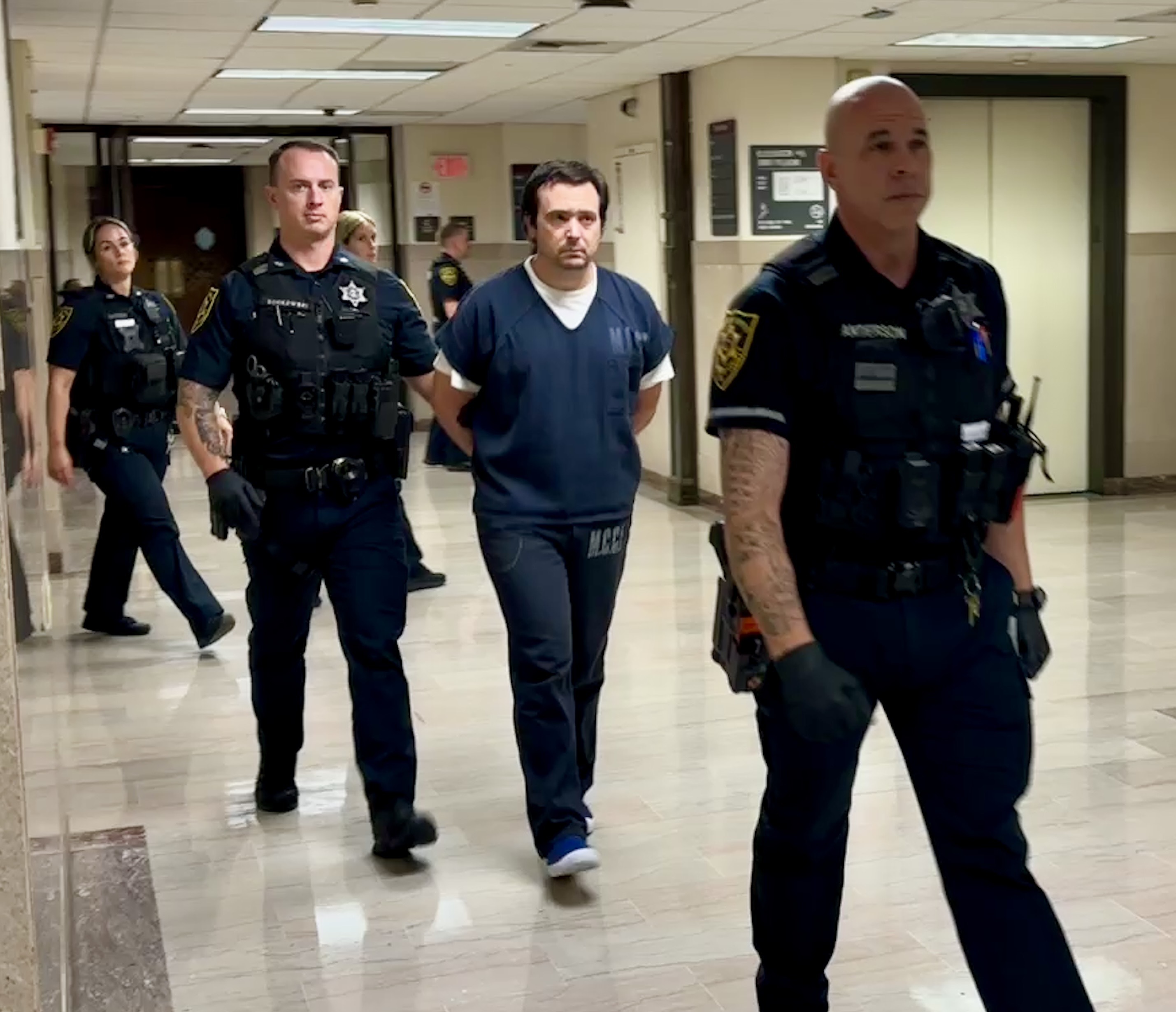
A Baltimore public school teacher regularly traveled to Parkesburg for the better part of two years to sexually assault a teenage boy he met online, Chester County prosecutors said Friday.
Rogie Legaspi, 56, sometimes took the boy out of school to assault him, unbeknownst to his parents, and also forced him to have sex with another man in what District Attorney Chris de Barrena-Sarobe described as “the pinnacle definition of child sex trafficking.”
“Teachers have a special place in our society. We trust them not only to watch our children when we send them to school, but to mold them,” de Barrena-Sarobe said at a news conference Friday. “To teach them life lessons, not just math problems. And this defendant, this man, shattered that trust.”
Legaspi has been charged with child trafficking, involuntary deviate sexual intercourse, statutory sexual assault, and related crimes.
He remained in custody in lieu of $5 million bail. He is being represented by the county Public Defender’s Office, which declined to comment on his case.
Legaspi has been employed by the Baltimore the Baltimore City Public School District since 2008, and most recently taught seventh grade science at Hamilton Elementary/Middle School in Baltimore.
In a letter sent to parents last week, Hamilton principal Natasha Pouncey said Legaspi has been placed on administrative leave, and that there were no allegations that his criminal conduct involved a student in the district.
Days before Legaspi’s arrest on Sept. 18, several concerned parents asked the district why he had not shown up to school, unaware that he had been taken into custody two states away.
Investigators in Chester County learned of the alleged abuse in June after a report was filed on behalf of the 15-year-old victim through the state Department of Human Services’ ChildLine system.
In an interview with county detectives, the boy said he befriended Legaspi through social media, and they exchanged cellphone numbers, according to the affidavit of probable cause for the teacher’s arrest.
Legaspi began driving up to Chester County twice a month starting in 2024, when the boy was 13.
During those visits, the affidavit said, Legaspi would fondle the boy and force him to have sex.
Legaspi paid the boy $50 or $100 to “act like he enjoyed it,” the document said, and he often filmed the sexual encounters and send the footage to the boy.
Authorities said the sexual assaults took place in Legaspi’s car, as well as various hotels in Chester and Lancaster Counties.
During one of those assaults, in December, Legaspi coerced the boy to have sex with another man at the Comfort Inn in Gap, and filmed the encounter, the affidavit said. He also pressured the boy to have sex with other men, according to the affidavit.
In announcing the charges Friday, de Barrena-Sarobe underscored the importance for parents to monitor their children’s social media usage.
“You are giving the world access to your child when you give them a phone or you let them have a social media profile,” he said. “And so, you need to restrict the world’s access to your children, and you need to make sure that you are instilling that value in your child from an early age.”
Legaspi is scheduled to appear before a district judge for a preliminary hearing Oct. 19.
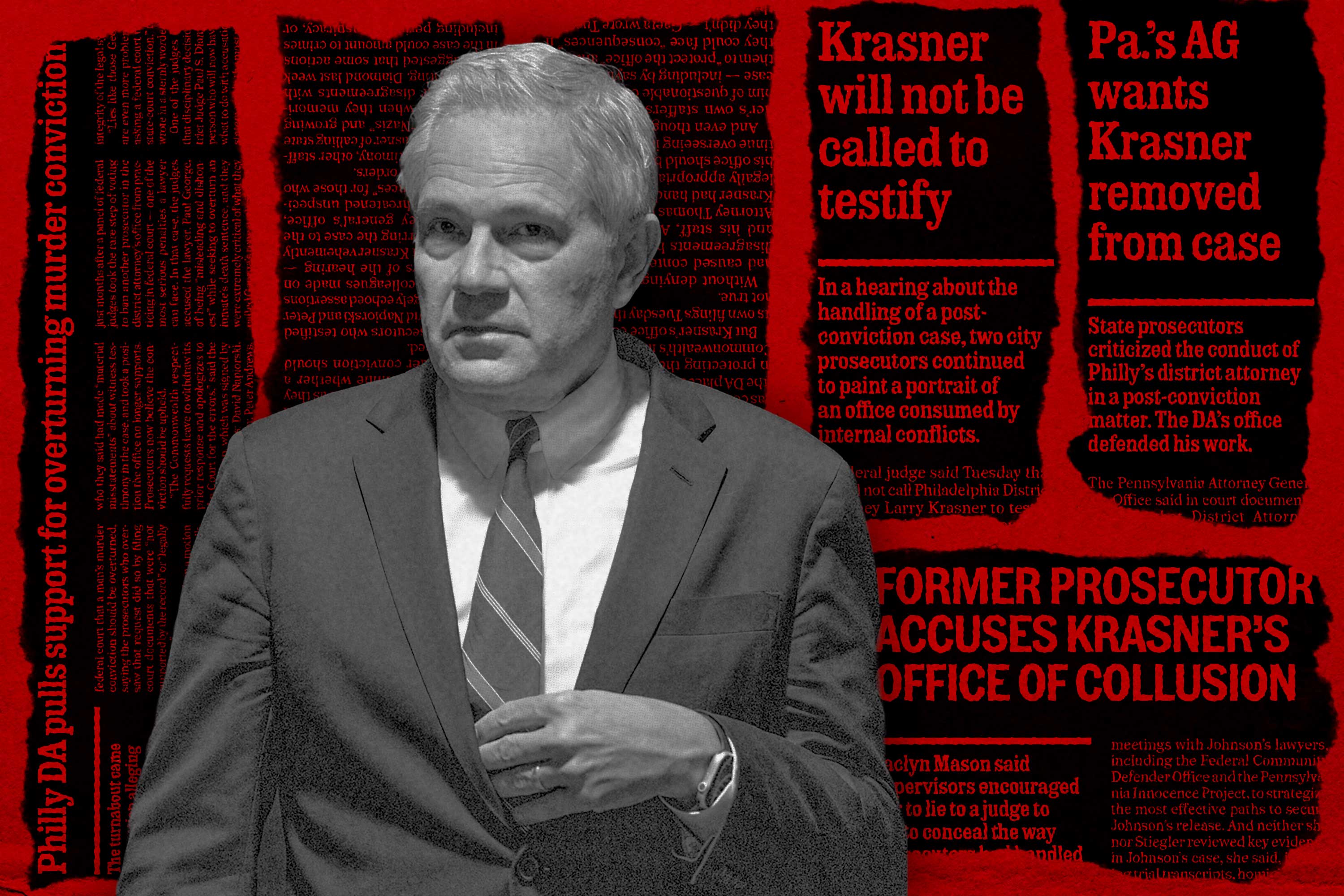
Philadelphia District Attorney Larry Krasner’s office has been roiled by controversy in recent months after a federal judge said Krasner and one of his supervisors may have committed crimes while overseeing a post-conviction case.
It could be months — or longer — before it’s clear if federal prosecutors agree that Krasner should face charges including conspiracy and obstruction of justice.
story continues after advertisement
But the events that led to that striking conclusion from U.S. District Judge Paul S. Diamond were laid out in testimony that unfolded in his courtroom this summer, as well as in a 40-page memorandum he filed in the case in September.
Krasner has disputed Diamond’s findings, and said he plans to file an appeal of the judge’s ruling, which also barred Krasner and one of his supervisors, Matthew Stiegler, from participating in the underlying case.
Here’s a recap of how the situation evolved from a routine legal matter into a contentious saga that could lead to consequences for the city’s top prosecutor.
In 2009, Dennis Johnson was convicted of second-degree murder after a jury found that he fatally shot Kenyatta Smith two years earlier during a robbery outside a North Philadelphia convenience store.
The case was largely built on the testimony of eyewitnesses, whose credibility Johnson sought to dispute at trial. Even after being sentenced to life in prison, Johnson maintained he did not commit the crime.
He filed several unsuccessful appeals in Pennsylvania courts. Then, in 2015, he filed a petition seeking to overturn his conviction in federal court. The case landed in front of Diamond.
story continues after advertisement
2022
The case is assigned to Jaclyn Mason
Prosecutors opposed Johnson’s petition for years. But in 2022, they changed course when it was assigned to a new assistant district attorney: Jaclyn Mason.
Mason had only joined Krasner’s office a few months earlier, and Johnson’s case was her first in her new role in the federal litigation unit. Although she had extensive experience as a lawyer — working primarily on patent and trademark cases — she’d never before worked as a criminal litigator, and she said she received almost no training in the DA’s office before being asked to handle cases.
Her boss was Stiegler, who had a controversial history working for Krasner. Over the course of a few years, he’d joined and left the office twice. And in one of those stints, nearly everyone under his supervision requested a transfer. One prosecutor later told Diamond that Stiegler did “not have the best reputation” among his colleagues.
When it came time to decide how to handle Johnson’s petition, Mason said, Stiegler had already made up his mind. Although he’d done nothing to independently review Johnson’s claims, Mason said, Stiegler had conferred with Johnson’s attorneys — including the Pennsylvania Innocence Project and federal defenders — and decided his conviction should be reversed.
“Matt told me: ‘If it’s good enough for the Innocence Project, it’s good enough for me,’” Mason said later. “The decision to concede had been made, and then I was his pawn.”
Mason also acknowledged that she reviewed almost nothing before submitting and signing off on her brief recommending Johnson’s conviction be thrown out. But at that point, she said, she believed she had to follow her boss’ orders.
“I didn’t know anything enough to push back,” she later testified. “I’d been at the office for four months — I’d never done this kind of work before.”
Once Mason did actually draft the brief, she said, Stiegler offered edits, and all of them made it into the final document. Another supervisor, Nancy Winkelman, the onetime head of the Law Division, also made suggestions that were included in the final brief, Mason said.
Mason’s name, however, was the only one that ended up on the document.
May 2026
Discovery of errors
A federal magistrate, Judge Lynne A. Sitarski, eventually agreed that Johnson’s conviction should be overturned, based in part on the findings in Mason’s brief.
But Sitarski’s decision was not binding — the final call would fall to Diamond. And in May, rather than accepting Mason’s conclusions, he decided to schedule an evidentiary hearing to hear testimony and weigh the pieces of evidence before issuing a ruling.
As the hearing approached, Mason reached out to a group of supervisors in the law division to prepare: Katherine Ernst, Steven Wildberger, David Napiorski, and Peter Andrews. And Ernst said when she reviewed Mason’s brief, she discovered it contained “significant errors” — issues that, in her view, contradicted the notion that Johnson’s conviction should be overturned.
Asking a judge to do so — and admitting a document was filled with mistakes — is a significant step for a lawyer to take.
But Ernst said the office had no choice: Lawyers are duty-bound to be honest with courts, and there was no ethical way to proceed with a document containing such errors.
The supervisors first decided to break the news to Mason. And in a meeting, they said, they asked her to sign on to the withdrawal with them.
But Mason declined. She told the supervisors the situation was Stiegler’s fault — and that his downfall was “a long time coming.” The supervisors later said she didn’t offer more specifics, and that at that point, none of them knew the extent of Stiegler’s role in the brief’s preparation.
Mason, however, felt the supervisors were setting her up to take the fall. She decided to resign, and said in her resignation letter that Stiegler had “used me to further his personal agenda” — and that he should be forced to “submit and swear in an affidavit that he erred and that he was responsible for what was filed in this case.”
She said she was prepared to stay until the end of June to wrap up any outstanding obligations, but that Krasner’s chief of staff, Jennifer Lin, told her that wouldn’t be necessary. Mason’s email was cut off, she said, and her badge granting her access to the office was disabled.
story continues after advertisement
Early June 2026
Mason resigns, and Stiegler tries to assign blame to her
After Mason resigned, her former supervisors began drafting the motion to withdraw her brief.
Stiegler, meanwhile, took on a different assignment: Seeking to blame Mason for the errors.
According to Ernst, in the days after Mason quit, Stiegler told colleagues she must have “purposefully inserted false facts” into her brief, and that it was “100% her fault and 0% his fault.”
And he came up with a plan to try to support that narrative, proposing that her colleagues review all of her work to find other cases with errors, so that the office could file a brief with Diamond casting Mason as “an ADA who went rogue, basically.”
The supervisors said no. Beyond viewing the proposal as inappropriate, Ernst said, she also pointed out to Stiegler that it would not help his reputation to show the court that one of his employees made consistent mistakes.
But Stiegler persisted — and even proposed the idea to Krasner.
And during a meeting on June 5, during which the supervisors were seeking Krasner’s approval on the motion to withdraw Mason’s brief, the DA repeated Stiegler’s proposal, describing it as “a really good idea.”
The supervisors again said no. Wildberger told Diamond he found the notion “tremendously inappropriate.”
Diamond, in his September memorandum, said it was more serious than that.
“In urging that others lie to me,” he wrote, “Stiegler might be liable for obstruction of justice.”
He also said Stiegler’s testimony about the episode contained enough omissions and “falsehoods” that it “may well amount to perjury.”
And he said Krasner’s attempt to work with Stiegler and urge others to present a false narrative to Diamond “might amount to criminal conspiracy.”
In the same June 5 meeting, meanwhile, Krasner did approve the supervisors’ motion to withdraw Mason’s brief, which they filed that afternoon.
But another dispute emerged — one that would linger well beyond that meeting.
Late June 2026
A potential conflict of interest
In Ernst’s view, the internal turmoil over the case — particularly the attempts to assign blame about what happened — had compromised the office’s ability to handle Johnson’s petition appropriately.
The internal discussions had become consumed by the office’s inner-workings, Ernst said, and not the merits of Johnson’s appeal, creating, in her view, a conflict of interest.
As a result, Ernst said, she told Krasner the case should be referred to the state attorney general’s office, the typical process if the DA’s Office has a conflict.
But Krasner disagreed.
In the supervisors’ telling, Krasner was consistently and sometimes angrily opposed to sending the case to state prosecutors. During meetings over the next several weeks, the supervisors said, Krasner repeatedly expressed disdain for the people who worked there, describing them as “Nazis” and saying he “hated” them.
The views are not new; Krasner, during his first week in office in 2018, fired 31 prosecutors, some of whom went on to join the attorney general’s office. And in 2019, Krasner said some people in his office had jokingly come to describe the AG’s Office as “Paraguay,” a South American country where Nazis took refuge after World War II.
Beyond the war criminal reference, however, the supervisors said Krasner expressed other reasons for opposing the referral.
One was that he wanted his staff to “protect the office,” the supervisors said. And according to Ernst, Krasner said: “We need somebody in the room so that [we] can control the proceedings.”
Ernst said she pushed back, telling Krasner: “A person can’t both protect the office and competently handle this case.”
But Krasner was insistent, they said. And he told them he was consulting with legal ethics experts — whom he did not name — to ensure there was no issue with keeping the case in-house.
Over the next several weeks, the supervisors said, they began putting their thoughts in writing. That practice led to additional disputes on June 24.
That day, according to Napiorski, he emailed Krasner a draft memorandum outlining the various issues the supervisors believed created a conflict. Napiorski said he emailed it to Krasner’s personal and work e-mail addresses because Krasner rarely responds to messages from his government account.
Two hours later, the supervisors said, an email response came from Lin, Krasner’s chief of staff. But the message opened by saying that Krasner had written it, and that he took issue with many of the assertions in the group’s memo.
In a meeting that afternoon, the supervisors said, Krasner also said he was angry that the supervisors had sent the memo by email because doing so created a record that could be discoverable in potential litigation.
The next day, Napiorski said, he spoke with his own ethics expert, who agreed that the case should be referred to another office. As a result, he said, he and Wildberger brought Krasner another new piece of writing: A draft of a letter that would refer the case to state prosecutors.
Krasner was “apoplectic,” Wildberger said. And he went on to threaten “consequences” for anyone who told Diamond about the conflict discussions — a reference that both Wildberger and Napiorski took to mean losing their jobs.
The two men called Ernst, who said the threat made it clear: They needed to recuse themselves from the case.
Ernst and Wildberger filed a memo before Diamond withdrawing their appearances that day. Napiorski and Andrews followed suit a day later.
Diamond, meanwhile, said in his September memo that Krasner’s threat to fire people who were seeking to tell the truth in court “could amount to obstruction of justice.”
July 2026
Examining attorney conduct
On July 17, Diamond held an evidentiary hearing in the case — which he decided to limit to issues concerning attorney conduct, rather than the merits of Johnson’s petition. He said he would address that later.
Mason took the stand first, describing what she viewed as an attempt to scapegoat her on Stiegler’s behalf. She also accused the law division supervisors of urging her to lie to Diamond — something the supervisors would later deny.
Stiegler also testified, saying he believed Mason had — and should have — conducted a full investigation into Johnson’s claims before filing her brief.
Behind the scenes, meanwhile, turmoil was continuing in the office.
On July 20, Wildberger stepped down from his supervisory role in the law division, later saying he did so because he had “lost faith in the administration of the Philadelphia District Attorney’s Office.”
And after Mason accused the supervisors of wrongdoing from the stand, Ernst and Wildberger filed a more detailed memo with Diamond about why they had stepped off the case, including by saying that Krasner had asked them to “protect the office” and potentially violate their ethical oaths.
Three days later, Krasner responded with a filing of his own, saying Ernst and Wildberger’s assertions were both unauthorized and “ill-informed.”
And although he did not — and has not — denied saying he wanted to “protect the office,” he said in a later filing that he “plainly did not appreciate [his subordinates’] repeated, unsolicited, and wavering advice” to refer the case to state prosecutors, and that their recommendation was “inexpert and legally unsupported.”
He also said he’d hired an expert who agreed with him — Bruce Green, a professor at Fordham Law School — and later attached a memo written by Green to one of his filings. Diamond would go on to call Green’s memo “a disorganized mess and largely useless.”
In addition, Krasner said, as a measure of extreme caution and to ward off any suggestion of a potential conflict, he hired an outside attorney to handle the case on his office’s behalf: Jean Peters-Baker, a longtime prosecutor from Missouri who previously led the prosecutor’s office in the county that includes Kansas City.
Diamond later disqualified her, saying that because Krasner had been hampered by the conflict issues months before he reached out to Peters-Baker, his decision to bring her aboard was invalid.
story continues after advertisement
September 2026
‘Often contradictory, evasive, or outright dishonest.’
All of the law division supervisors went on to testify before Diamond, and he said in his Sept. 16 memorandum that he found their testimony, as well as Mason’s, “compelling and corroborated by contemporaneous documents.”
Although Mason had accused her supervisors of encouraging her to lie in court, Diamond found that they hadn’t done so, saying they’d sought to truthfully tell him about the issues in her brief, and that her “understandable dismay caused her to misunderstand” their intentions.
The judge took a dimmer view of Stiegler, calling his testimony “often contradictory, evasive, or outright dishonest.”
And although Diamond did not call Krasner to testify about the saga, he nonetheless criticized the DA in his memorandum for not taking the stand, saying Krasner “chose” not to testify, and noting he didn’t submit an affidavit to offer his version of events.
Diamond’s decision to alert federal prosecutors about the case, and say they should investigate potential crimes by Krasner and Stiegler, was practically unheard of, legal experts said. The U.S. Attorney’s Office has declined to comment, and any investigation it might pursue would likely take months.
Johnson’s petition, meanwhile, remains in limbo. Diamond said the district attorney’s office could continue to litigate it — but with Krasner, Stiegler, and the law divisions’ supervisors removed from the case, it was not clear who might do so.
Federal authorities on Thursday announced charges in a drug-and-gun-trafficking ring operating in Philadelphia and Luzerne Counties, with one of the defendants identified as a Philadelphia man who received a commutation from former President Joe Biden for a prior prison sentence.
Michael Rinaldi, 49, and Jason Lozada, 51, both of Philadelphia, were among eight people indicted by a grand jury, the U.S. Bureau of Alcohol, Tobacco, Firearms and Explosives Philadelphia Field Division said in a news release Thursday.
Prosecutors allege that the eight people conspired to distribute methamphetamine from August 2025 through September 2026, and also distributed fentanyl in addition to trafficking guns.
In the days before Biden left office, he granted clemency to nearly 2,500 individuals for what was described as non-violent drug offenses, and Rinaldi was one of the recipients.
Since taking office in January 2025, President Donald Trump has granted clemency to more than 1,700 people, including the roughly 1,500 people convicted for their involvement or who had charges pending for their alleged involvement in the Jan. 6, 2021, attack on the U.S. Capitol.
Marson Weh, 39, was also convicted of possession of an instrument of crime in the April 2023 death of Michael Garr, a sophomore at Upper Darby High School.
Weh will be sentenced in November to life in prison for stabbing Gar 11 times, including once in the throat, according to District Attorney Tanner Rouse.
The two were strangers, Rouse said, and had “no earthly connection.” The DA said Weh offered no motive for the stabbing.
Michael Garr was killed in April 2023 as he walked to his home in Upper Darby.Handout
The prosecutor said the case would make the “worst episode of Dateline,” one without any twists and leaves no room for alternate theories or interpretation.
No one else was near Garr that night, he said, as Weh was seen “hunting, stalking” the teenager for more than a mile.
When Weh was arrested, he was still wearing parts of his “kill suit,” nondescript clothing that included thermal underwear stained with Garr’s blood, Rouse said. And he was still carrying the murder weapon, a folding knife that matched the dimensions of Garr’s fatal wounds and still had his dried blood caked in its handle.
“See this for what it is,” Rouse said. “Because when you only consider the blood on his pants, the blood on his knife, that alone proves he is guilty. There is no other explanation, no reasonable doubt.”
After the killing, investigators quickly identified Weh through surveillance footage, which recorded him following Garr for more than a mile. Gradually, prosecutors said, he closed the distance between them, and attacked Garr as they approached Brunswick Avenue near Bridge Street in Drexel Hill.
Weh’s attorney, Ian McCurdy, conceded in his closing arguments that it would “strain credulity” to say there wasn’t evidence to prove that Weh killed Garr.
Still, he urged jurors to consider that prosecutors had failed to explain his intent in doing so.
“As horrible as this situation is, the death of a young man killed way too early his life, this boils down to did the Commonwealth prove the case beyond a reasonable doubt,” he said
McCurdy supported his contention by citing a two-minute window of time where neither Garr nor Weh were recorded on surveillance video.
“The point is we just don’t know what happened in that small bit of time,” he said. “And that’s why I suggest to you the Commonwealth hasn’t proven that Marson Weh killed Michael Garr with malice.”
In responding to McCurdy’s theory of the case, Rouse, the district attorney, did not mince words: The evidence that Weh intentionally killed Garr, a crime that constitutes first-degree murder, he said, is overwhelming.
Beyond that, he said, Weh confessed to killing Garr during an interview with detectives. And he showed what Rouse described as a consciousness of guilt by soaking the hoodie and he gloves he wore on the night of the attack in ammonia — detectives found the items in that condition when they searched his home days later.
Rouse urged the jurors to convict Weh of first-degree murder, likening doing so to parents protecting their children from the evils of the world.
“There is simply no getting around the evidence,” he said. “You cannot stab someone in the throat and not mean it.
A Philadelphia judge on Wednesday ordered a temporary halt on the destruction of court records related to Raymond Horsch’s 2009 conviction for attempting to lure a 9-year-old girl into his car in Kensington.
The ruling comes in response to an emergency motion The Inquirer filed seeking to preserve records of the child endangerment case that Horsch had expunged from his record in 2015.
The news organization argued that preserving the records is a matter of public interest because of the ongoing criminal investigation into the violent pornographer, whom police have now linked to seven missing women.
Horsch was arrested in March 2009 after approaching 9-year-old Ashley Rivera on East Ontario Street and attempting to lure her into his green Jeep Wrangler.
“Come here, in my car, sexy girl,” Horsch said to Rivera, according to an arrest report.
Horsch, who died last year, spent decades prowling Kensington seeking sex workers to film or photograph nude. Until the incident with Rivera, he had not been publicly accused of targeting children.
Rivera ran home, and her parents called the police, according to the arrest report. Officers found Horsch driving in the area hours later in the green Jeep, the report said. They searched his vehicle and recovered a pair of high-powered binoculars, a camera with a telephoto lens, and a condom, according to a news report at the time.
Horsch was charged with two misdemeanor counts of attempting to lure a child into a vehicle and corrupting the morals of a minor. At a bench trial, Rivera gave a tearful statement about the incident as Horsch glared at her from across the courtroom.
He was found guilty and sentenced to 2 ½ to 5 years in prison, and was required to register as a sex offender under Megan’s Law. However, Horsch’s lawyers sought a new trial in the Common Pleas Court and the case collapsed after Rivera was too afraid to testify a second time.
“I was so scared, and he just kept staring at me. I just broke down crying,” Rivera said this week, recounting her testimony at the first trial. “I felt like I was looking at a killer.”
The Inquirer reported on the 2015 expungement and the existence of the court records on Tuesday, after reporter Ellie Rushing learned the documents remained on file at the Criminal Justice Center. When Rushing sought to review them, a clerk denied the request, saying the records should have been destroyed after the expungement.
Rushing, on behalf of The Inquirer, wrote a letter to administrative judges on Monday requesting that the records be preserved.
Horsch is now dead, she wrote, and the records may “hold pieces of information that are irreplaceable and important to the public and the criminal investigation.”
Kaitlin M. Gurney, an attorney for The Inquirer, filed an emergency motion reiterating those points and seeking an order allowing the news organization “access to inspect and copy all filings.” (Gurney’s husband, Patrick Kerkstra, is a managing editor at The Inquirer.)
State expungement laws, Gurney wrote, extend only to criminal histories — such as arrest records — and not to judicial records.
“Allowing court records to be expunged and permanently destroyed — not just sealed — would create significant tension with the press and public’s constitutional and common-law rights,” the motion said.
Newspapers have a constitutional right to inspect court records, except in the “most extraordinary cases,” Gurney wrote.
“These rights to access do not disappear simply because a record has been deemed expunged,” she said, adding that in this case, Horsch’s subsequent actions and suspected involvement in the deaths of multiple women had effectively invalidated the expungement.
“Given the unusual circumstances of this case, and the strong public interest in Horsch’s activities, any expungement order should be vacated,” she wrote.
On Wednesday, Common Pleas Court Judge Rose Marie DeFino-Nastasi, the supervising judge in the criminal division, ordered the Office of Judicial Records to cease “destroying or deleting any records” related to the case until further notice.
A hearing in the case is scheduled for Monday.
David Rudovsky, a prominent civil rights attorney, said that even with a deceased defendant and significant public interest, the case represents uncharted legal territory. A ruling to overturn the expungement could have far-reaching consequences, he said.
“It’s an extraordinary case,” Rudovsky said. “But I don’t know of any precedent in which an expungement can be reopened, even after the death of a defendant.”
A former Skippack Township supervisor had been expected to plead guilty Wednesday to molesting a boy in his care, admitting to nearly a decade of abuse.
But at the last moment, Nicholas Fountain rejected the offer extended to him by prosecutors and chose instead to take the case to trial.
Fountain, 39, is charged with 10 counts of involuntary deviate sexual intercourse, as well as indecent assault and related crimes. The deal he negotiated with prosecutors would have allowed him to plead guilty to four counts of involuntary deviate sexual intercourse in exchange for a maximum sentence of 20 to 50 years in state prison.
Instead, Fountain opted to proceed to trial on all charges, including 10 counts that each carry a mandatory minimum of 10 years in prison upon conviction.
Fountain, who owns two daycare centers — Magnolia Enrichment Center in Skippack and Magnolia Children’s Academy in Gilbertsville — resigned from the board shortly after his arrest last year.
His attorneys, Matthew Brittenburg and Andrew Levin, declined to comment after Wednesday’s hearing.
The victim, now an adult, told police Fountain sexually abused him beginning when he was 9 years old and continuing until he was 16, according to the affidavit of probable cause for his arrest.
The abuse began in 2016, he said, and started when he and Fountain were wrestling and Fountain asked him to take off his shirt and, eventually, all of his clothing.
During subsequent assaults, he said, Fountain groped him, showed him pornography, and performed a sex act on him. Fountain later attempted to initiate other sexual contact, he said, but he refused.
Prosecutors learned of the abuse last year in an unrelated investigation by law enforcement in Maryland.
Authorities there charged Fountain with sexual solicitation of a minor and child pornography after they said he solicited nude photos from an undercover officer posing as a teenage boy on Reddit, and sent nude photos of himself in return.
In their conversations, Fountain identified himself to the undercover officer as a married man, and provided a picture of himself.
Fountain also sent the officer graphic descriptions of sex acts he wanted to engage in with someone he believed to be a teenage boy, the documents said.
The officer reviewed Fountain’s history of posting on Reddit, and wrote that the “posts all encompassed sexual content and all revolved around sex acts or looking for sex acts between older men/daddies and younger boys.”
That case is ongoing and will be prosecuted after his case in Montgomery County concludes, according to a spokesperson from the Harford County State’s Attorney’s Office.
During the course of the Maryland investigation, Pennsylvania State Police troopers interviewed people close to Fountain because of the daycare centers he owns.
No allegations of wrongdoing connected to the daycare centers emerged from that inquiry, investigators said, but through those interviews, they identified the victim in the Montgomery County case.
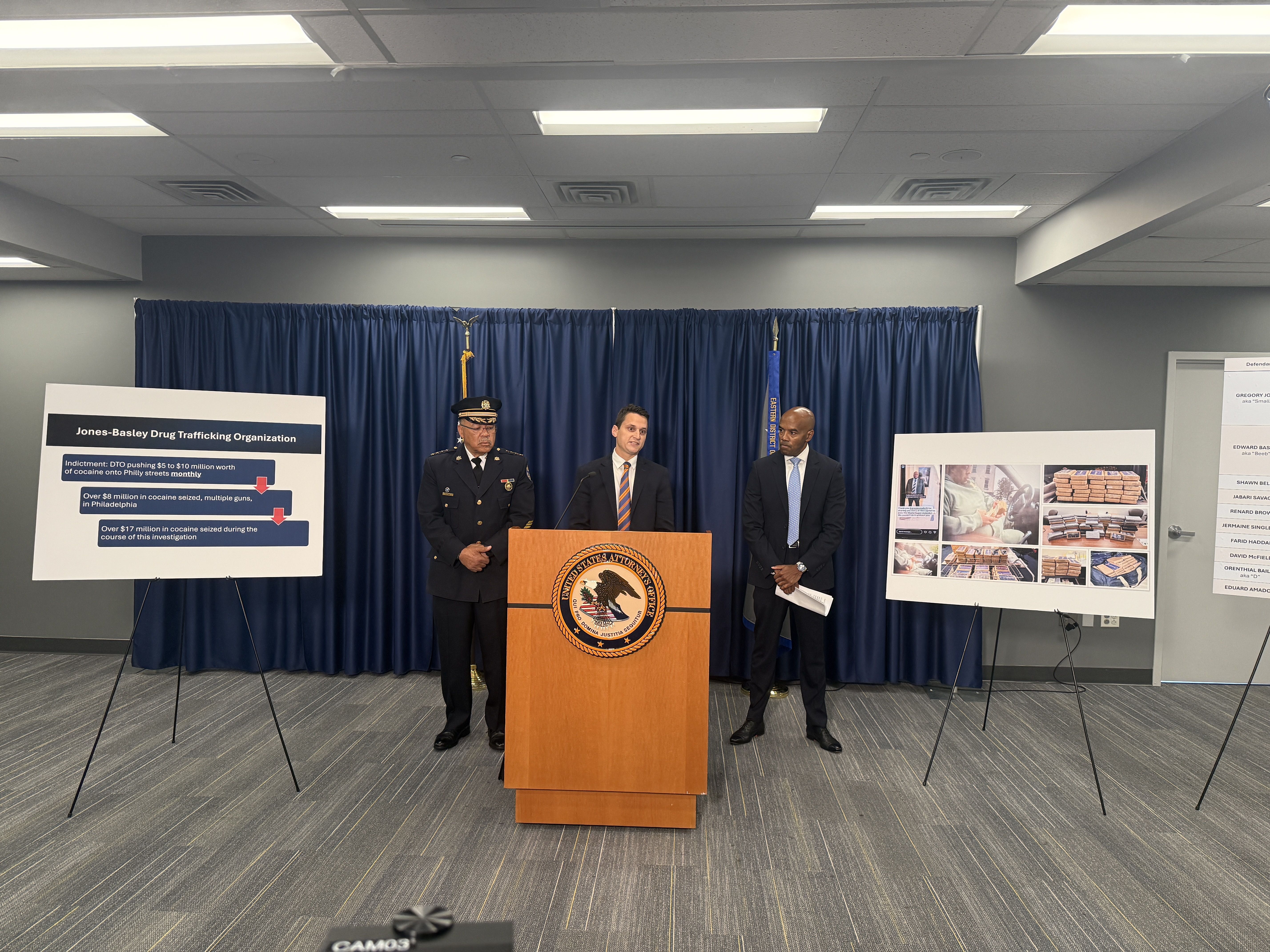
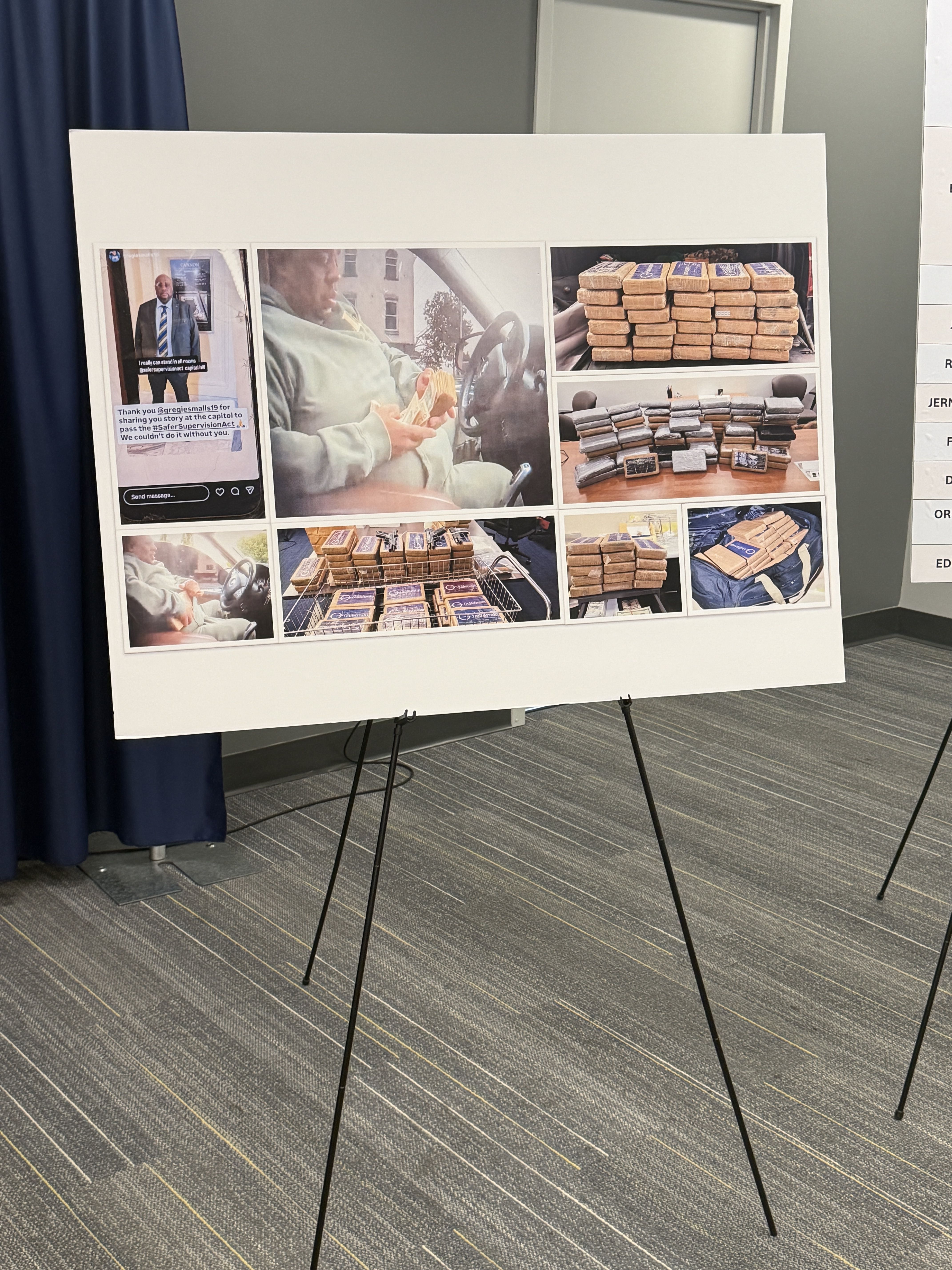
Ten alleged drug traffickers, including the organization’s two reputed leaders, have been charged following a yearslong investigation into an operation that sent millions of dollars of cocaine into Philadelphia.
The operation originated at the U.S.-Mexico border and ended on the streets of Philadelphia and was responsible for distributing $5 to $10 million worth of cocaine to the streets of Philly every month, said David Metcalf, U.S. attorney for the Eastern District of Pennsylvania.
“Every prosecution that our office initiates aims to make our country and our community safer, but few have this magnitude of impact,” he said. “These are apex suppliers.”
The alleged traffickers were with charged with conspiracy to distribute five kilograms or more of cocaine and possession with intent to distribute, among other charges.
Five of the defendants were arrested Tuesday by the FBI and the other five were already in state or federal custody. If convicted, all face maximum sentences of life in prison.
Almost all the defendants involved had previously been prosecuted by the U.S. Attorney’s Office for similar offenses, Metcalf said, including alleged leaders Gregory “Smallz” Jones, 48, in 2009 and Edward “Beeb” Basley, 47, in 2007.
“This prosecution is not just of a drug trafficking network, it is the decapitation of a conspiracy to inject poison into our streets,” Metcalf said.
Photos from press conference on a recent takedown of an alleged drug operation in Philadelphia.Dana Munro
Jones allegedly served as the primary leader of the organization and procured the drugs from a supplier in Mexico, who delivered bulk shipments via tractor trailer to the Philadelphia area.
In May, one truck bound for Philadelphia containing 89 kilograms, or nearly 200 pounds, of cocaine was stopped in Knoxville by the Tennessee Highway Patrol, Metcalf said. The driver was Orenthial “D” Bailey, 50, one of the defendants, he said.
For the trucks that made it undetected to Philadelphia, Metcalf said, Jones met with the drivers in parking lots in and around the city to pay for and collect the cocaine. He would then meet up with his partner to deliver his share, after which both would distribute the drugs to customers and sub-dealers, according to Metcalf.
Cases like these are a top priority for the U.S. Attorney’s Office, Metcalf said, because the people at the top of drugoperations are generally the hardest ones to replace.
“It is not simply easy to have a relationship with a Mexican cartel member or a source of supply internationally,” Metcalf said. “That takes a great degree of trust, it takes a great degree of confidence. Those types of relationships and that type of infrastructure is difficult to replicate.”
A former Philadelphia correctional officer was sentenced Tuesday to 42 months in federal prison for repeatedly pepper-spraying inmates and falsifying records about the incidents, U.S. Attorney David Metcalf said Tuesday.
Christopher Knight, 48, of Philadelphia, pleaded guilty in March to five counts of depriving individuals of their civil rights under color of law and two counts of falsifying records, Metcalf said.
U.S. District Judge Paul S. Diamond also sentenced Knight to one year of supervised release after he serves his prison term.
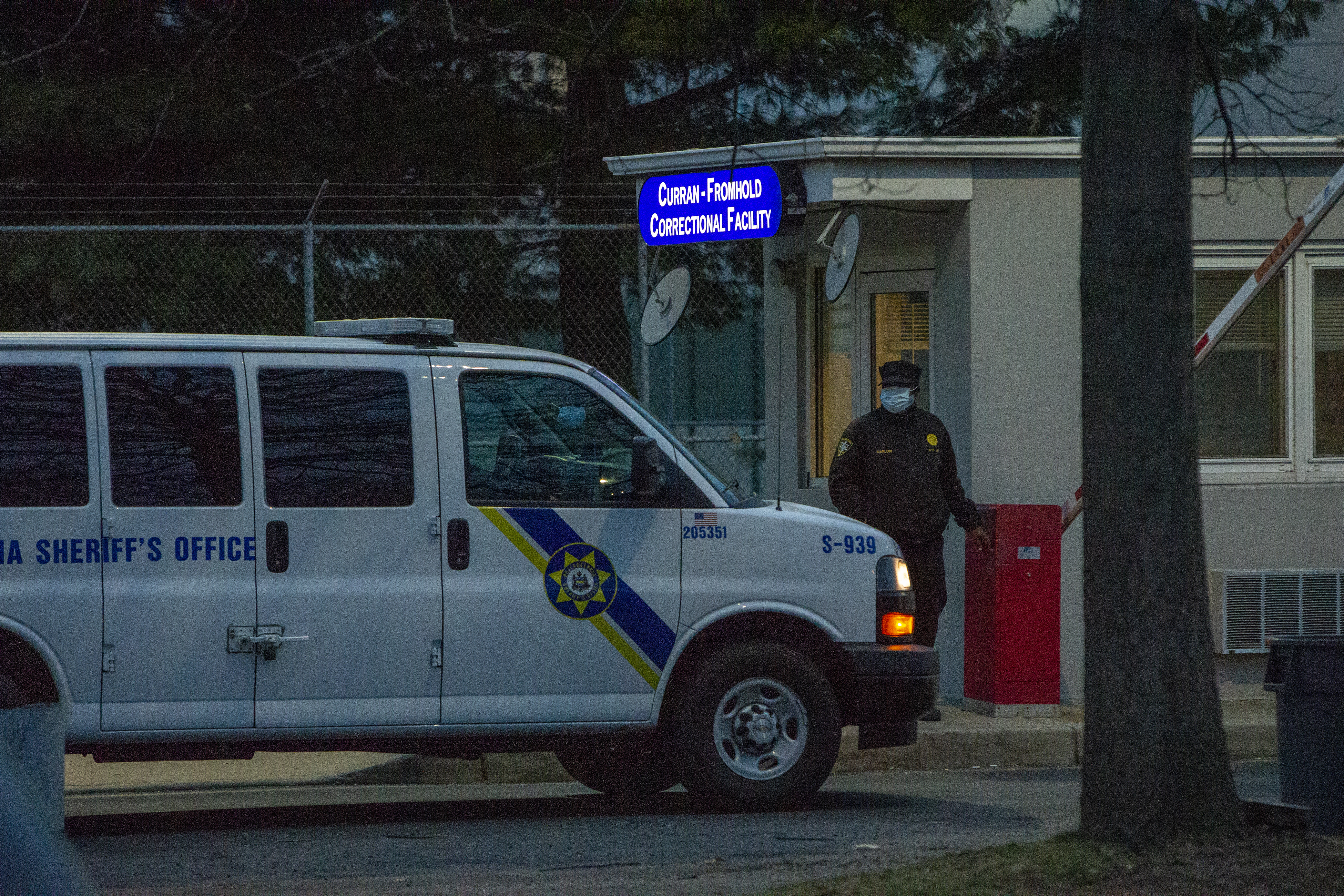
While a sergeant at the Curran-Fromhold Correctional Facility, Knight pepper-sprayed five subdued victims, prosecutors said.
Knight admitted that he sprayed his first victim in January 2023 while the inmate was lying face down on the ground with his hands behind his back, prosecutors said. Knight also struck the inmate during and after the inmate was being handcuffed.
Two days later, Knight sprayed two more inmates in separate incidents.
He sprayed a fourth inmate in March 2023 while the inmate was writing on a piece of paper and not posing a threat, prosecutors said. Knight continued to spray the inmate while he was lying on the ground and in pain.
Later that month, Knight attacked a fifth inmate, spraying the victim while he was lying on the ground face down, prosecutors said.
Knight falsified multiple use-of-force reports and knowingly omitted key details about his own actions, prosecutors said.
“Correctional officers have significant authority over the inmates in their charge and it’s their duty to wield that power responsibly,” Metcalf said in a statement.
“If they fail to meet this standard, and violate prisoners’ civil rights, as Christopher Knight did, they will be prosecuted and held accountable.”
A woman was killed when she tried to enter a neighbor’s apartment and was shot through the door by a woman inside the unit early Tuesday in North Philadelphia, police said.
Around 3:10 a.m., the woman, described only as in her 50s or 60s, was trying to enter a key code to an apartment in a complex on the 1500 block of West Girard Avenue when she was shot at least one time in the chest, said Chief Inspector Scott Small.
The shot was fired through a door that did not have a peep hole or other way to see outside, Small said.
Police had been called to the scene initially for a report of a break-in, Small said. An officer arriving to the apartment complex heard at least one gunshot and found the victim unresponsive in the hallway.
Police transported the victim to Temple University Hospital, where she was pronounced dead at 3:30 a.m., Small said.
The alleged shooter, described as 56 years old, remained at the scene and was taken for questioning by homicide detectives, Small said.
“She did cooperate with police,” Small said, adding that a gun inside her apartment was taken as evidence.
A security guard told police he saw the woman trying to enter a code for the door and questioned her, then proceeded with his duties elsewhere, Small said.
It was not immediately known if the two women knew each other or had any type of prior interaction, Small said.
The victim’s unit was across the hallway from where she was shot, Small said.
Masked thieves stole half a pallet of Black Angus beef ribs from a tractor-trailer overnight in the Food Distribution Center area of South Philadelphia, police said.
The heist occurred around 1 a.m. Tuesday when four men approached a 2026 Freightliner on the 3300 block of South Third Street and cut the hinges from the rear door of the unattended trailer, police said.
The thieves then loaded the beef ribs into the rear of a dark-colored Ford F-150 and fled south on Third Street in the Ford, which was accompanied by an unknown make and model of Jeep, police said.
No arrests were reported.
In recent years, large cargo thefts have increased in frequency around the Philadelphia region.
Reddy pleaded guilty to cargo thefts in 2023 that had a total estimated value of more than $1.5 million.
He admitted to participating in heists that made off with hundreds of thousands of dollars’ worth of frozen crab legs and more than $360,000 worth of Samsung TVs.
He also admitted to his involvement in a widely reported theft of more than $230,000 in dimes.
Philadelphia police are investigating an overnight meat heist after responding to a call outside Ritter Foods on South 3rd Street. Officers arrived around 1 a.m. on Tuesday, Sept. 22, to find the rear doors of a meat-hauling tractor-trailer wide open. This incident follows a pattern of similar cargo thefts reported across Philadelphia and the surrounding suburbs over the past few years.