A Bristol Township man oversaw a wide network of drug and gun distribution, police said Tuesday, pushing methamphetamine throughout Bucks County.
Charles Vandenberg, 51, was arrested Nov. 4 and charged with a litany of felony drug and gun crimes, according to Bensalem Public Safety Director William McVey.
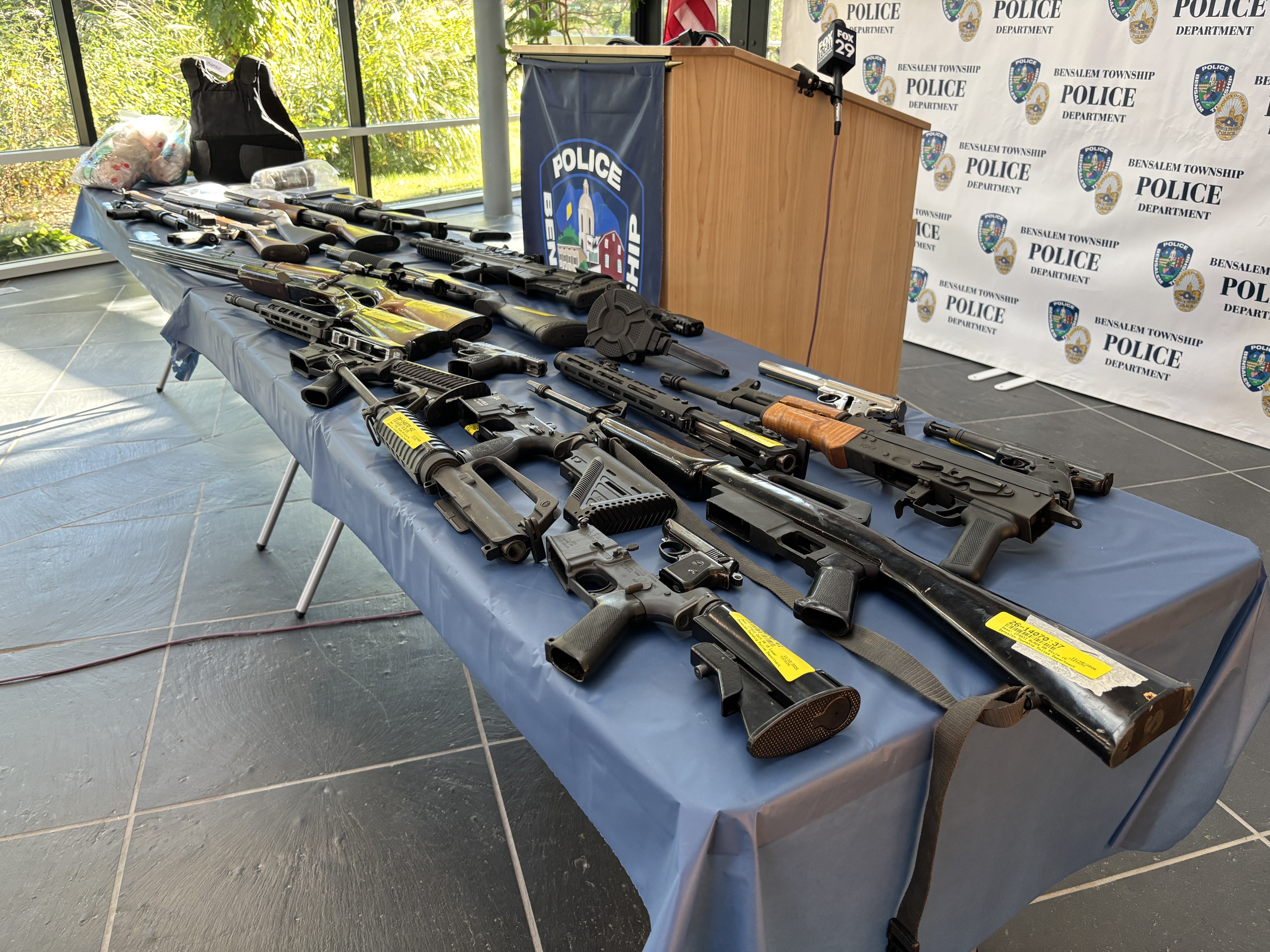
Investigators recovered 20 guns from Vandenberg’s home on Maryland Avenue in Croydon, including a handgun with an obliterated serial number, McVey said. Officers also allegedly found a pound of methamphetamine and body armor in the home.
“They truly made Bucks County safer,” he said. “Twenty weapons will never be on the street, and they saved lives by their actions.”
Vandenberg was not able to legally possess guns due to convictions for drug possession, court records show.
He already was under scrutiny by law enforcement: Last summer, he was charged with arson, conspiracy, and related crimes for allegedly recruiting another person to set fire to a van as part of a plot to rob the vehicle’s owners.
The investigation into Vandenberg’s drug distribution began in July, when, during a street-level drug arrest, Bensalem police learned that Vandenberg was distributing methamphetamine in the area, McVey said.
While serving a search warrant on Vandenberg’s home last week, detectives discovered the guns, drugs, and materials used to package them, according to the affidavit of probable cause for his arrest.
In an interview with detectives, Vandenberg admitted that the items were his, the affidavit said.
Vandenberg remained in custody Tuesday, denied bail. There was no indication he had hired an attorney.
Bucks County District Attorney Joe Khan said his office had pushed a district judge to withhold Vandenberg’s bail as part of a new policy for suspects deemed dangerous to the public.
“It really ought to be the case that if you’re a danger to the community, that you shouldn’t be able to buy your way out of trouble,” Khan said. “Defendants such as Mr. Vandenberg, who are too dangerous to be trusted out in our community, will not be able to make bail no matter how much money they’re able to come up with.”
Before his arrest, Vandenberg was free after posting 10% of $350,000 bail in the August 2025 arson case.
In that incident, police say, Vandenberg recruited another man, Gavin Montoya, to rob someone of drugs and set a van on fire outside the victim’s home on Cedar Avenue in Croydon.
However, the blaze, which Montoya set with a road flare, spread to the home, police said.
Three firefighters who responded were injured while putting it out. Another firefighter, Capt. Ed Margavich of the Third District Volunteer Fire Company, later died of complications from an injury — he fell at the station while putting equipment away, breaking his leg.
Vandenberg, Montoya, and an alleged accomplice, Thomas Parker, were not charged in connection with Margavich’s death, investigators said.
A man and two juveniles were shot Monday evening in Burlington City, the Burlington County Prosecutor’s Office said.
The shooting happened just before 7 p.m. on the 100 block of Federal Street, said Joel Bewley, spokesperson for Burlington County Prosecutor LaChia L. Bradshaw.
“An adult male was transported by ambulance to Virtua Willingboro Hospital and two juvenile males were airlifted to Cooper University Medical Center in Camden. There are no condition updates to be reported at this time,” Bewley said in a statement.
“A large amount of people gathered near the incident following the shootings, leading to mutual assistance being requested from multiple local police departments. No arrests have been made,” Bewley said.
The Burlington City Police Department said in a post on Facebook: “Residents are advised to avoid the New Yorkshire area, particularly the intersection of York and East Federal Streets, due to an active police investigation.”
Burlington City schools were opened with a two-hour delay on Tuesday following the shooting.
Anyone with information for the investigation can provide an anonymous tip to https://burlpros.org/tips or https://burlingtonpolicenj.com/tip-line.
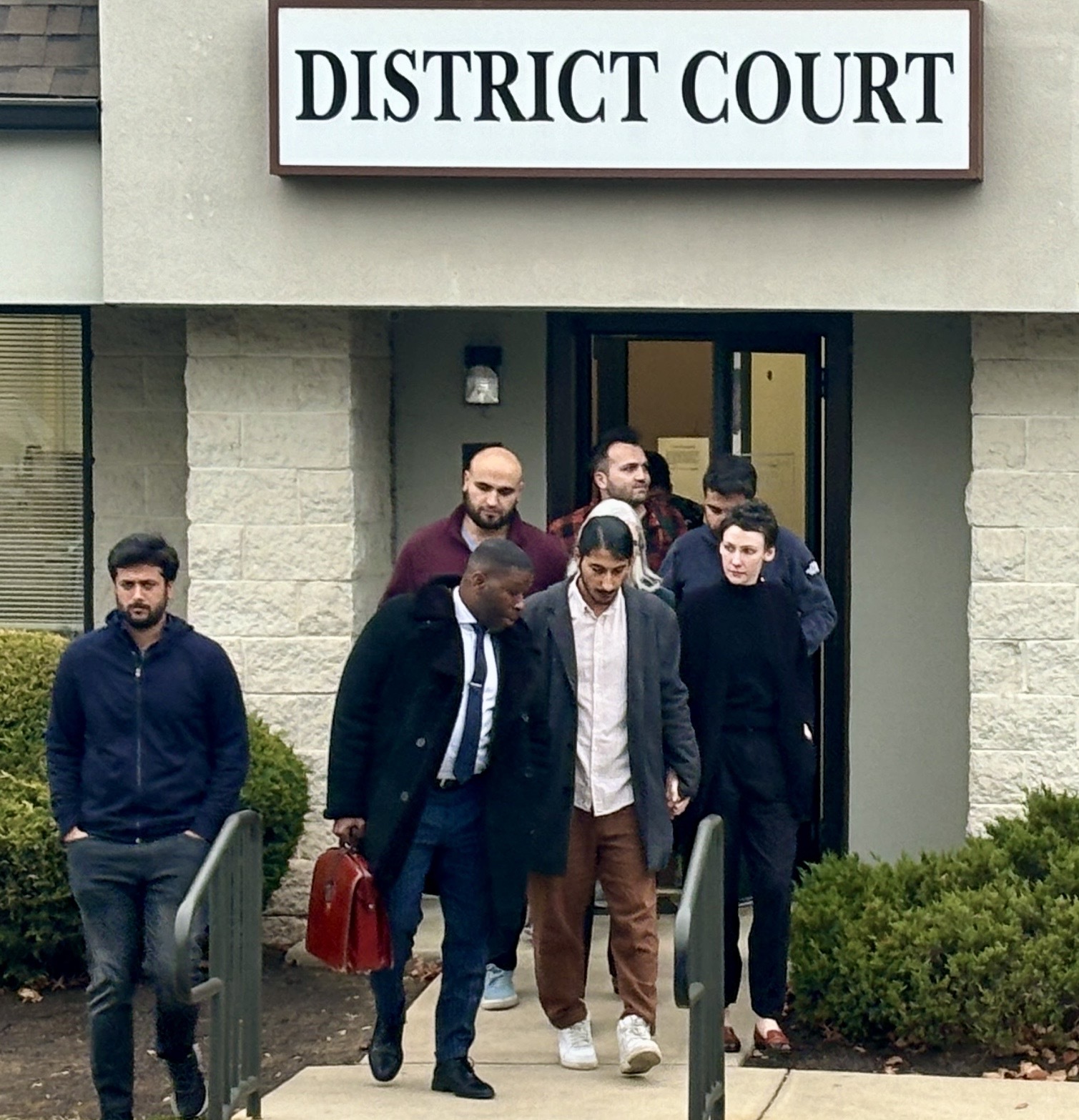
Bucks County District Attorney Joe Khan on Monday announced charges against a shuttle-bus driver who fatally struck an 83-year-old man and then fled, and confirmed an investigation into a second fatal hit by a driver working for the same nonprofit transportation service.
Separately, Khan said an investigation was opened into Bucks County Transport, the nonprofit that operated both buses.
Blair R. Vanacore, 69, of Jamison, is accused of fatally striking Ronald James Davenport on Aug. 12 in the parking lot of Grundy Hall, a retirement complex in Doylestown Township where Davenport lived.
Vanacore was charged with causing an accident involving death, a second-degree felony with a minimum three-year sentence in state prison. Vanacore also was charged with failing to give information or render aid, and careless driving involving unintentional death.
At a news conference Monday, Khan said Davenport “was a beloved husband, father, grandfather, and great-grandfather. He was a graduate of Neshaminy High School who built a successful career in sales before retiring.”
Davenport “remained active in his church, enjoying his retirement and enjoying his family. He is survived by his wife, his four adult children, and their families,” Khan said.
On Aug. shortly before 9 p.m., Davenport was crossing a roadway within the Grundy Hall complex when he was hit by a 2024 Ford E450 Super Duty Bucks County Transport bus operated by Vanacore, Khan said.
Vanacore allegedly called 911 and reported that “someone fell in the parking lot,” the district attorney’s office said.
The driver’s-side tire of the shuttle bus hit Davenport, causing the bus to “lurch up in the air and come to a stop for a couple of seconds,” the district attorney’s office said. The rear driver’s-side tire then ran over Davenport, whose body was dragged several feet, Khan said.
Vanacore allegedly got out of the shuttle bus and briefly spoke to Davenport, Khan said. Vanacore allegedly then placed the 911 call, gathered Davenport’s belongings and placed them next to the man, then fled.
Doylestown Township police quickly learned that night that Davenport had been hit by a bus and called Vanacore back on his phone, asking him to return to the scene, Khan said.
“He stated that he believed he had run over a shoe, and also stated that the reason that he left rather than stay on the scene was that he believed he would get in trouble with the company if he did not return the bus to the depot by 10 o’clock that evening,” Khan said.
Vanacore agreed to a blood test when he was questioned by police and the testing showed no presence of alcohol or any controlled substances, Khan said.
The second fatal crash under investigation involving a Bucks County Transport vehicle happened on Nov. 2 when Katherine “Kitty” Semisch, 67, was fatally struck by a DART bus outside the Bucks County Free Library in Doylestown Borough.
The district attorney’s office said that Bucks County Transport, which operates the DART system in Central Bucks County, does not currently require prior commercial driving experience or a commercial driver’s license.
Khan added: “During her retirement, she spent her time traveling and camping with her husband, spending time with her kids and her grandkids, and notably being active in her community, fighting for a better future for Bucks County children, even after she retired from teaching, as was memorialized in the recent PBS documentary series Bucks County, USA.”
A spokesperson for Bucks County Transport could not be reached for comment.
“Our thoughts are with the family and loved ones of the victim during this difficult time. Any loss of life is tragic, and we recognize the stress this incident has caused our passengers and community,” Raymond said.
“The safety of our passengers, employees and the communities we serve remains BCT’s priority. We remain committed to providing safe, dependable transportation and maintaining the trust of those who rely on our services every day. As part of that commitment, BCT is reviewing safety policies and procedures to identify opportunities to further strengthen its operations and make traveling with BCT even safer,” Raymond said.
“Out of respect for the ongoing investigation, we will not be commenting any further at this time,” Raymond said.
Khan said his office is investigating the nonprofit “to figure out exactly what was going on with this company at the time of these deaths, what policies were in place that need to be reviewed,” and to make sure “we have done everything that the people of Bucks County deserve to have somebody doing to ensuring that we’re not up here again” talking about another death.
An Uber driver who raped a drunk Villanova University student in September 2024 after driving her back to her dorm was sentenced Monday to three to six years in state prison.
Mirvan Dinler must also register as a sex offender for the rest of his life, and he faces deportation to his native Turkey as a result of his conviction. Delaware County Court Judge Mary Alice Brennan barred him from working for rideshare services and from visiting Villanova’s campus.
Dinler, 28, of Trappe, pleaded no contest to rape of an unconscious person in June for the incident, which Assistant District Attorney Danielle Gallaher said Monday demonstrated extreme callousness and lack of respect for human life.
Gallaher said Dinler has not shown remorse and told prosecutors that the woman had initiated their sexual encounter, which she said is patently false.
“This is inherently antisocial risk-taking behavior: He was in a position of trust, and he decided to rape a stranger,” she said. “He saw a woman in a vulnerable state, and rather than help her, he decided to become every woman’s worst nightmare.”
Dinler’s attorney, Shaka Johnson, asked the judge for leniency, saying his client was deeply sorry for the events of that evening in 2024. The incident, Johnson said, was the result of “a series of bad decisions, back to back.”
Dinler, according to Johnson, had been molested as a child, and was in the United States on a student visa, pursuing a degree in computer science at West Chester University.
By entering the no-contest plea, Dinler did not admit guilt but did not dispute the prosecution’s statement of the facts in the case.
The woman, who was a senior at Villanova at the time, testified Monday that she woke up, disoriented, as Dinler was raping her. She said she was too terrified to fight back or call out for help — her only concern, she said, was to survive the assault.
She told Dinler he had acted like a monster, and in turn had treated her “like a discarded tissue.”
“You decided your desperation for satisfaction, for power, whatever your motivation, was more important than my life,” she said.
Earlier that evening, she said, she had been drinking with friends on campus before the group headed to Warehouse on Watts, a bar in North Philadelphia, to celebrate a friend’s birthday.
The woman said she did not drink regularly, but on that night had three glasses of wine and two shots of liquor. After arriving at the bar in the city, she said, she felt dizzy and ill, and decided to return home.
The woman ordered an Uber, and Dinler arrived in his Toyota Prius to pick her up, she said.
Surveillance footage from Villanova’s Commons residence hall complex showed Dinler escorting her inside, arm-in-arm, because she was too intoxicated to walk on her own
Prosecutors said Dinler’s DNA was a match to semen found on a towel and comforter taken from the woman’s dorm room.
In a tearful statement, Dinler apologized to the woman, saying he “shut down” after entering the woman’s dorm room and did not know what to do.
“I know the decisions I made were horrible as I look at it today,” he said. “I wanted to leave the room. I didn’t and I regret it.”
The woman said her life was completely derailed by that night. Her plans for her career, and her active social life on Villanova’s campus, were placed on hold.
Struggling with complications from the preventive, antiviral medication she was prescribed after the rape, as well as bouts of serious depression, the woman said, she moved into her childhood bedroom to finish her senior year.
Through her tears, she told Brennan, the judge, that those four walls became her prison cell, while Dinler remained free. Even now, two years later, she struggles with spending time among strangers, she said, and has worked hard to overcome an aversion to physical touch.
“I survived. I regained control,” she said. “I proved I’m a real person, not a piece of meat for slimy low-lives.”
Upland Borough Police Chief Michael Irey collected more than $50,000 in fraudulent overtime payments, prosecutors said Monday, and during some of the hours he said he was working he was actually dining and drinking at local bars.
Irey, 55, was charged with multiple counts of theft, tampering with evidence, obstruction of justice, forgery, and related crimes in connection with the scheme, which authorities said began in 2025 and continued until early this year.
Irey frequently logged overtime using his access to the police department’s scheduling system, saying he was directing traffic outside a local charter school or pursuing aggressive and intoxicated drivers on borough roads, prosecutors said.
Instead, they said, he was visiting bars and restaurants in Media, Middletown, and Newtown Square, while assigning other officers to cover the work he was being paid for.
Detectives with the Delaware County District Attorney’s Office began investigating Irey in December after receiving information about the alleged misconduct. Eight of Upland Borough’s nine police officers submitted anonymous tips to borough officials about Irey, prosecutors said.
He was placed on leave in February and later resigned, borough officials said.
The officers said they had seen Irey at bars like DiFabio’s Market & Tap, Old State Tavern, La Porta, and LaScala’s Fire during afternoon hours when he was supposed to be directing traffic outside the Chester Community Charter School or serving as roving DUI enforcement as part of a Pennsylvania Department of Transportation grant program.
Investigators built their case by studying Irey’s digital time sheet, reviewing his bank statements, and tracking his vehicles’ movements using automatic license plate readers and finding several instances in which the chief was not where he was supposed to be.
At one of those locations, DiFabio’s in Media, staff told investigators Irey and another person were frequent visitors and often came in the early afternoon. Staff at La Porta said Irey was a regular, coming in “every Thursday” in 2025.
The overtime payments amounted to more than $56,600 over the course of the year, prosecutors said.
Irey was arrested in New Jersey last week on a separate gun possession charge and is awaiting extradition back to Delaware County.
In announcing the charges against Irey, Delaware County District Attorney Tanner Rouse commended the Upland police officers who reported their boss to authorities, saying they had demonstrated “willingness to do what is right, even when it is difficult.”
“The badge carries a responsibility that does not end when the shift is over,” the prosecutor said. “Public trust should never be treated as a personal paycheck.”
Staff writer Vinny Vella contributed to this article.
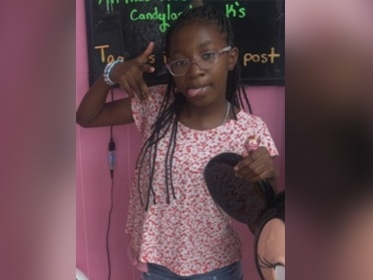
In the days after 10-year-old Malayshia Allford was reported missing, her foster mother went to great lengths to misdirect investigators: texting herself affectionate notes from the girl’s phone, responding throughout the day to feign concern, and later claiming the child had fallen down some steps, according to a police report.
All the while, police say, Malayshia was already dead — her body hidden in the trunk of a car in South Jersey.
Witnesses who spent time inside the West Philadelphia home of Carprice Williams, the foster mother charged with killing Malayshia, also described chronic and horrific abuses: withholding food from the child for as long as a week, beating her with a phone cord, and throwing her down stairs, according to the report obtained by The Inquirer.
The report, which details interviews with unnamed witnesses, provides a grim account of what happened inside Williams’ home. It also raises questions about what supervision city-contracted social workers provided, and how Williams was able to continue in her role as a teacher in the Philadelphia School District.
The Defender Association of Philadelphia, which represents Williams, did not immediately respond to a request for comment.
Malayshia Allford, 10, was missing for more than a week before her remains were found inside the trunk of a car in South Jersey.Courtesy of Philadelphia police
Since early 2025, Williams taught fifth grade at Lewis C. Cassidy Academics Plus School, a kindergarten-through-eighth-grade school in Overbrook. She had also worked at Mifflin Elementary in East Falls for a time, at Young Scholars Charter School in Northern Liberties, and at a Montgomery County preschool.
School district officials said they could not answer questions about Williams’ tenure, but her $114,041 salary is at the “senior career teacher” pay rate, indicating she had at least 10 years of teaching experience plus a master’s degree and further postgraduate education. Williams’ LinkedIn profile said she holds a master’s and doctorate from Drexel University. Asked to verify that, a Drexel spokesperson confirmed only the master’s degree.
Arthur Steinberg, president of the Philadelphia Federation of Teachers, said Malayshia’s death was “a horror” and “a tragedy.” Steinberg called for an investigation into the foster care system but said the matter “had nothing to do with her role as a teacher.”
“To have something like this happen, it’s just unspeakable,” he said.
The Philadelphia School District has declined to answer questions about the case. A city spokesperson did not respond to a request for comment Monday afternoon.
Williams had been a foster parent since at least 2020.
That is when she took in two young siblings — one of whom ended up in the hospital the next year with a traumatic brain injury, severe malnutrition, and marks indicative of being struck with an object, according to a lawsuit.
A doctor at Children’s Hospital of Philadelphia certified that 2021 event as a “near fatality,” triggering a review that found the foster mother had committed abuse and recommended that she never be allowed to foster again, the lawsuit said.
However, a Pennsylvania Department of Human Services spokesperson said, Williams successfully appealed the child-abuse finding and her record was expunged.
The Bureau of Hearings and Appeals, an administrative review board within the state human services agency, overturns roughly 90% of cases brought on appeal, according to a 2021 report by Pennsylvania’s auditor general that found the system was failing child victims.
Nadeem Bezar, a lawyer representing Malayshia’s estate, said that even if Williams was not in the child-abuse registry, the information about the 2021 incident would have been retained in an internal database and should have been used to bar her from future foster placements.
In that 2021 case, Williams told officials that she heard a loud noise and then found the child unresponsive with labored breathing. Later, the children in that case alleged that Williams had grabbed the child’s braids and slammed her head to the floor.
Last month she tried to cover up the circumstances of Malayshia’s death over the nearly two weeks the child was missing, the police report said. Williams provided relatives and law enforcement with conflicting accounts about when she had last seen the girl, and crafted a phony text exchange to support her story that the child’s biological parents had kidnapped her, according to the report.
Investigators concluded that Williams used Malayshia’s phone to text herself: “Mommy I know you are waiting for me to come home but my family they don’t want me to be adopted. … I love you.”
The report lays out allegations by witnesses it does not identify who told police that Williams bent a child’s fingers backward until they were injured, made another stand in a corner all night, directed her 4-year-old son to hit another child with a sword, and forced Malayshia to walk up and down stairs wearing a heavy weighted vest. Williams had the inside of the home under video surveillance, according to the report, and required Malayshia to ask permission to use the bathroom.
Williams contradicted the witnesses’ accounts, saying she had never hit Malayshia, though she told police the child had recently fallen down a few steps. She said Malayshia sometimes wore a weighted vest to calm her during tantrums but had not worn it in about six months.
A medical examiner determined that Malayshia died of blunt force trauma, according to the police report. She had a fractured rib, bruises on her head, torso, and buttocks, and whiplike marks across her legs, the report said.
Surveillance video recorded shortly before 2 a.m. on Oct. 26 shows a man dragging a large bag, with what appeared to be a strand of braided hair sticking out, from the alley behind Williams’ block and loading it into a vehicle, the police report said.
The man, a relative who initially denied his involvement, later told police that Williams said the little girl “didn’t wake up,” and when he urged her to call police she told him it was too late, according to the report.
Authorities have not said whether the relative is expected to be charged.
Family and friends gather on Sunday to remember Malayshia Allford.Tom Gralish / Staff Photographer
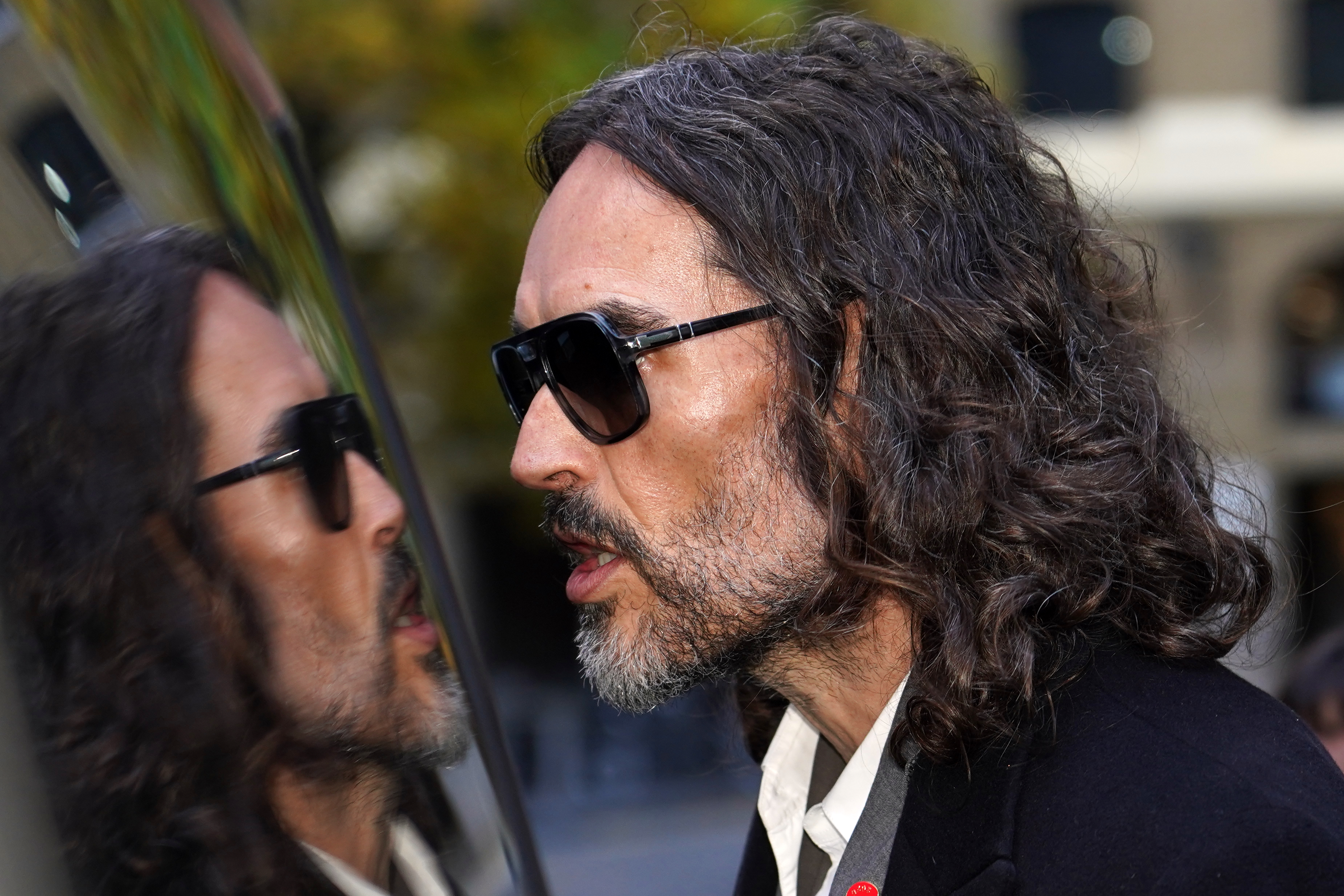
LONDON — Russell Brand was sentenced Monday to 10½ years in prison for raping one woman and sexually assaulting three others at a time when his bawdy behavior was indulged and celebrated during his rise to stardom.
Judge Joel Bennathan denounced Brand’s “casual and arrogant disregard” for any woman who said no to him, and castigated him for the series of lies he told in testimony denying assaults that dated back to 2004.
“About 20 years ago, Russell Brand, you were becoming famous,” Bennathan said. “You were clever — and in many people’s eyes, funny and charismatic. You had also become a sexual predator.”
Brand showed little emotion during the stinging rebuke. He turned to mouth the words “We’ll be OK” to his wife after he stood up and was led away by court officers after the hearing.
The 51-year-old actor-comedian, known for outrageous stand-up routines and provocative behavior on television and radio broadcasts, as well as battles with drugs and alcohol, had maintained his innocence and testified that all his encounters were consensual.
But a jury of eight men and four women found him guilty of attacking four of six accusers. He was cleared of two counts of rape and one count of attempted indecent assault.
Prosecutor: Brand used fame to carry out crimes
The convictions — years after the #MeToo movement turned a spotlight on sexual abuse by the powerful and famous — raised questions about how Brand’s behavior was tolerated by TV and radio stations he worked for, including the BBC, and those around him.
“Mr. Brand abused the influence and power that came with his fame,” prosecutor Riel Karmy-Jones said. “He used it to facilitate access to women without which the offending could not have taken place. It also fed his own view that he could commit such offenses with impunity.”
Brand was supported by his wife, father and fans outside court
Brand wore a gray suit and an open collar shirt with a loose white tie. His long, graying hair was pulled back and knotted in a man bun atop his head. He clenched a crucifix in his right hand.
Defense lawyer Ian Winter urged the judge to consider Brand’s good character, saying his only previous conviction was for marijuana possession in 1995 and that he had performed charitable work and helped others overcome drug and alcohol abuse. He also asked the judge to consider the impact of the sentence on Brand’s family, particularly his three young children.
Brand was supported in Southwark Crown Court by his wife, Laura, and his father, Ron Brand. Laura entered the courthouse without Brand, who had been in since custody Thursday’s verdict.
A couple of Brand’s supporters, reflecting his recent conversion to Christianity, held a banner bearing crosses with the words: “Russell Brand we stand with you. Christ was crucified for telling the truth. Russell is the truth.”
Victims tell court it was difficult to see Brand celebrated
One of the women he was convicted of abusing spoke in court about the trauma the crime caused. The others provided statements read by the prosecutor.
A woman whom Brand groped during a birthday party at a London bar in 2004 said that the assault left her in shock and turmoil and made her feel like “damaged goods.”
“It was impossible to escape seeing him all over the media, being celebrated for his disgusting behavior against women like it was all a joke,” she said.
Brand stared straight ahead as she spoke from behind a curtain that shielded her from public view to preserve her identity.
Bennathan said Brand’s entourage may have written off the sexual assault as “laddish,” the boorish and obnoxious behavior for which Brand was known and with which he thought he could get away.
“It was outrageous and possibly laddish, but also a criminal sexual offense, and as it turns out you haven’t got away with it,” the judge said.
Rape victim felt ‘powerless’
A former fan he was convicted of anally raping at his home after meeting her backstage at one of his comedy shows in 2009 said that she was left feeling anxious and humiliated and had difficulty eating and sleeping, and went through periods of heavy drinking.
She said she spent months fearing that she might have contracted HIV and that it took years for her to speak up. She only came forward after police opened an investigation following the documentary.
“I felt that if I reported him, I would not be believed,” she said in the statement read by Karmy-Jones. “His fame, wealth and influence created a power imbalance which made me feel powerless.”
Winter, the defense lawyer, argued that Brand should be “regarded as a man who went too far and overrode consent that had been given” following consensual sex.
The judge noted how disrespectfully Brand had treated the woman, including putting her in his phone contacts under “T” for “tart.”
A woman he was convicted of kissing and groping at a London radio station in 2004 or 2005 said it had a lasting impact on her life.
“Since the sexual assault … Russell Brand has managed to move on and even forget,” she said. “Over the years, hearing his voice on television, on social media, or seeing his image made me jump.”
A woman says she was silenced by ‘culture at the time’
The final conviction was for sexually assaulting a woman who said the comedian demanded a massage and pressed his face into her groin during the recording of an advertisement in 2009.
“Immediately after the incident I spoke up, and sadly it was brushed under the carpet by senior management,” she said. “There was a culture at the time which meant I felt I had to just carry on and not talk about it anymore, which meant I did not give myself time to lament on it, boxed it up, and pushed it aside.”
Brand was acquitted of raping another woman in a hotel room during the Labour Party’s annual conference in the seaside town of Bournemouth in 1999, and of attempting to indecently assault a woman by dragging her into the men’s bathroom at the London office of music channel MTV.
The Associated Press doesn’t name victims of alleged sexual violence, and British law protects their identities from the media for life.
Brand, who was known for edgy stand-up routines and battles with drugs and alcohol, rose to prominence in the early 2000s hosting television programs and his own BBC radio show. He appeared in Hollywood films including Forgetting Sarah Marshall and Get Him to the Greek and was briefly married to pop star Katy Perry.
In recent years he has moved away from mainstream media, relocated to Florida, and built a large online following with videos mixing wellness, conspiracy theories, and discussions of his religious devotion.
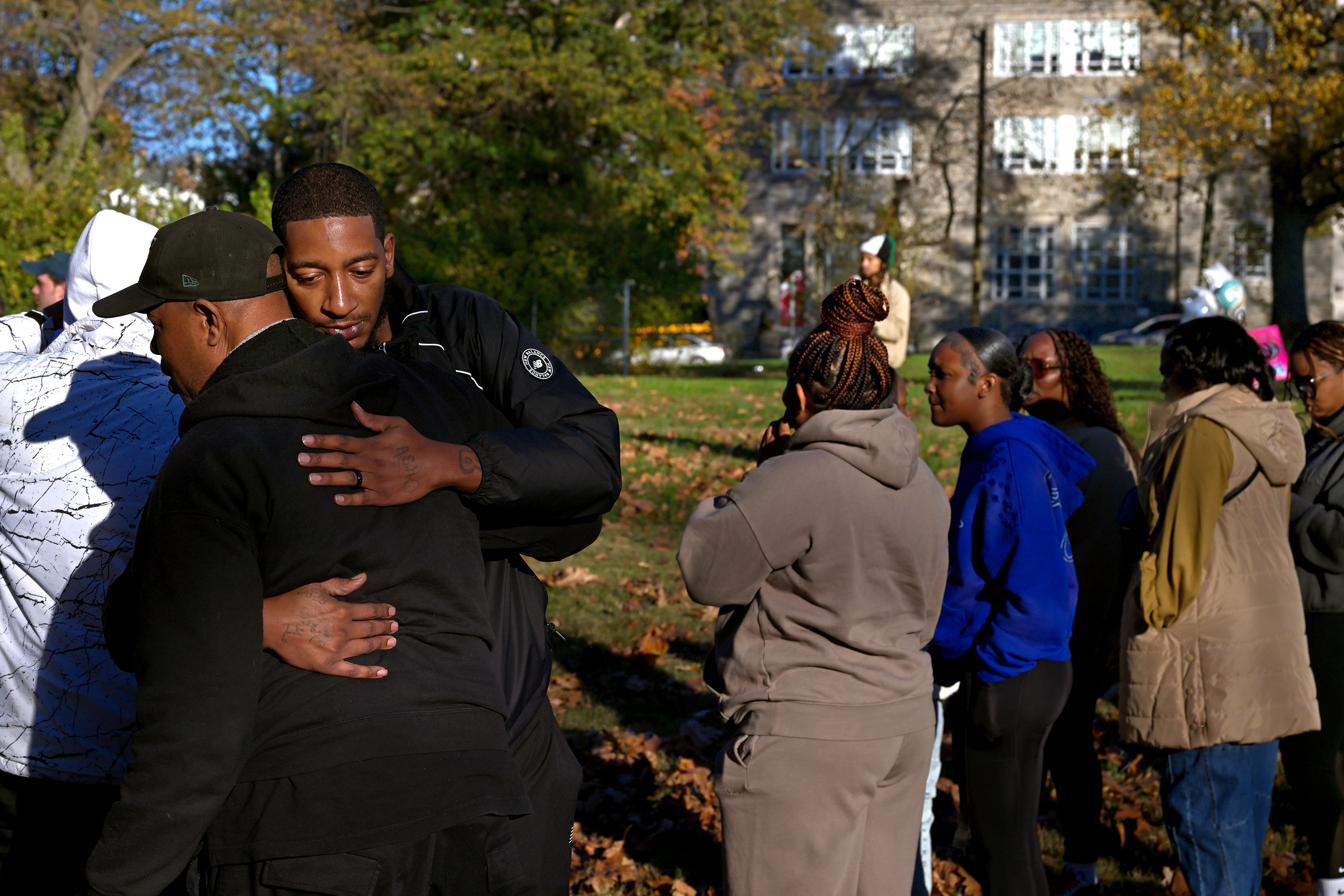
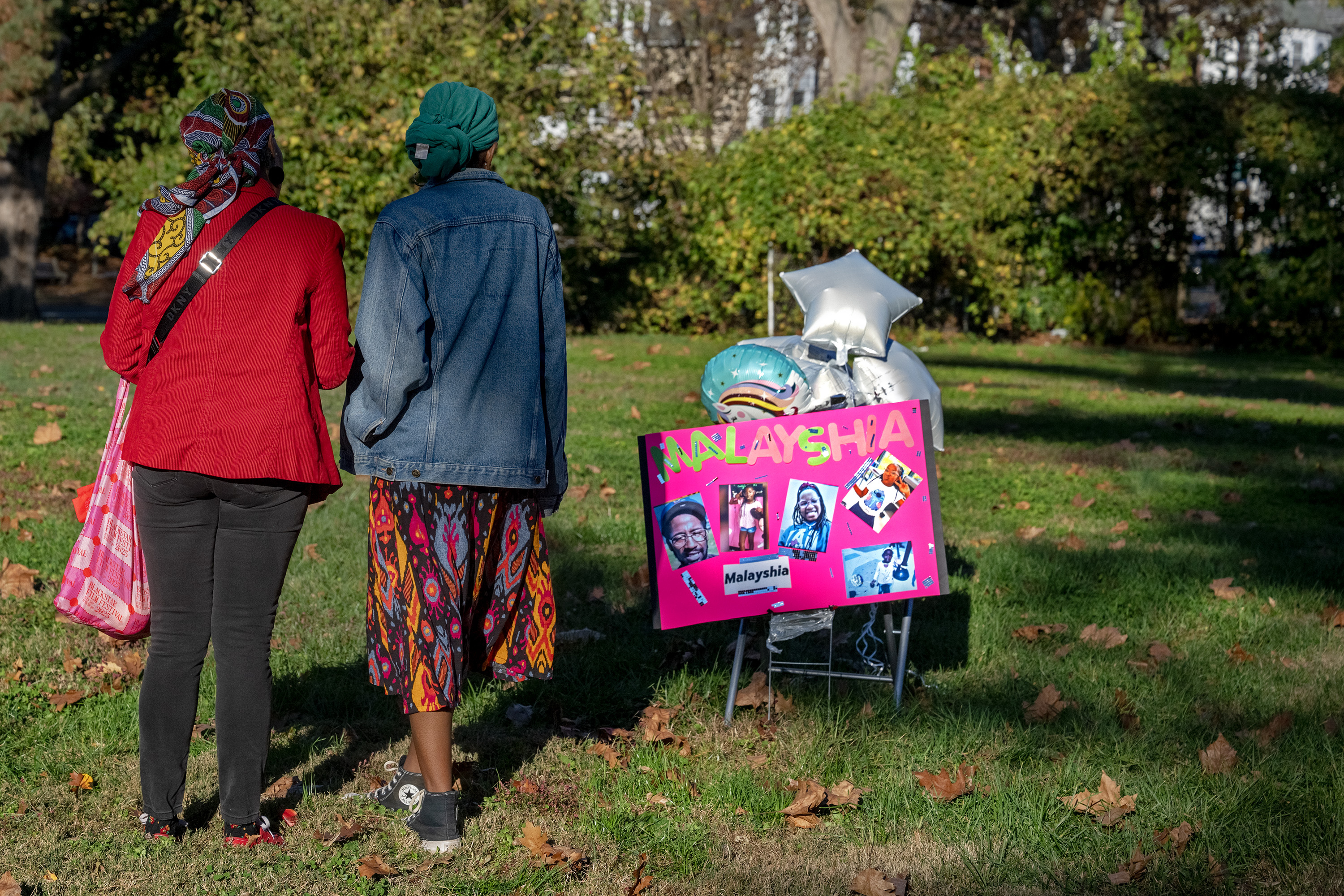
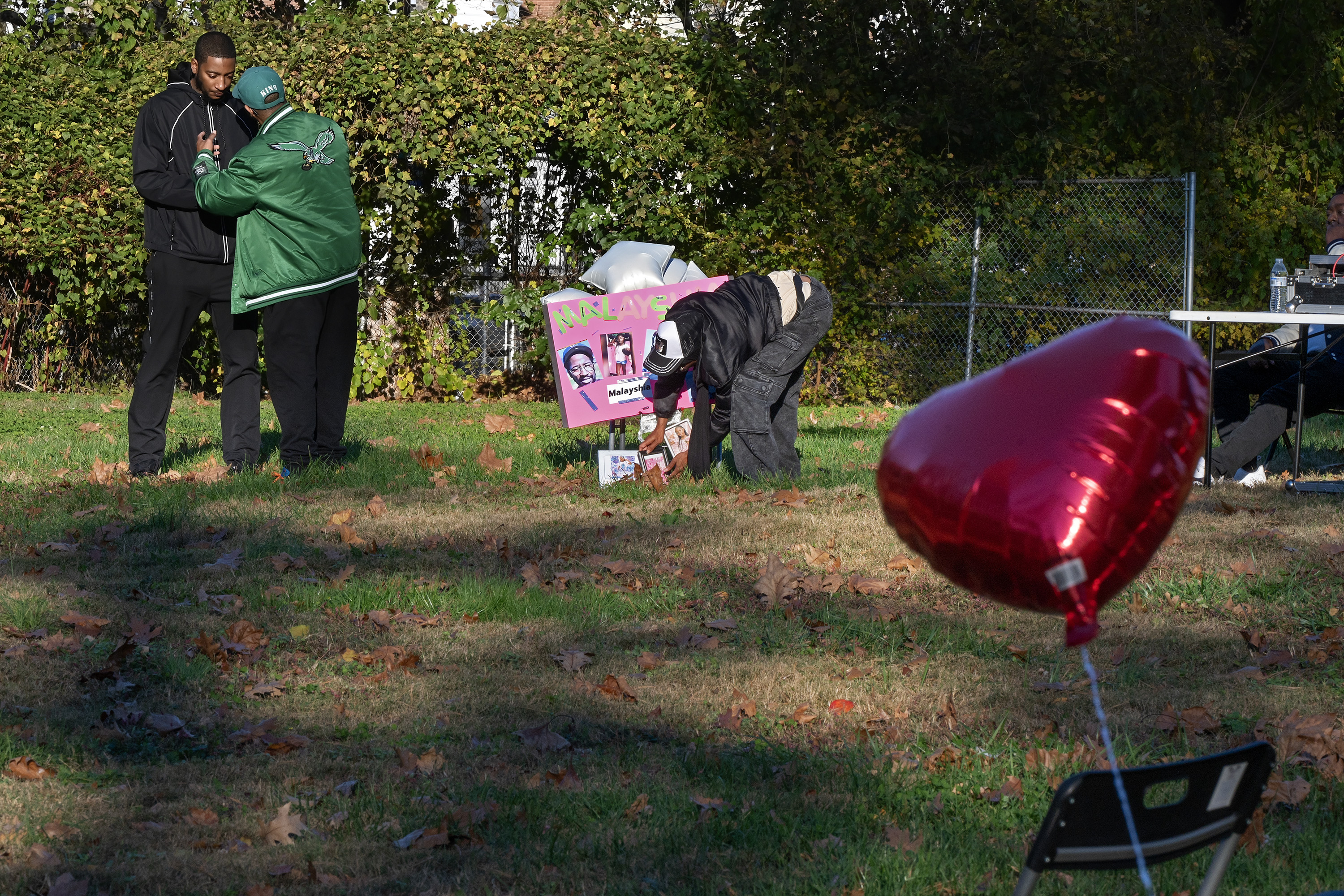
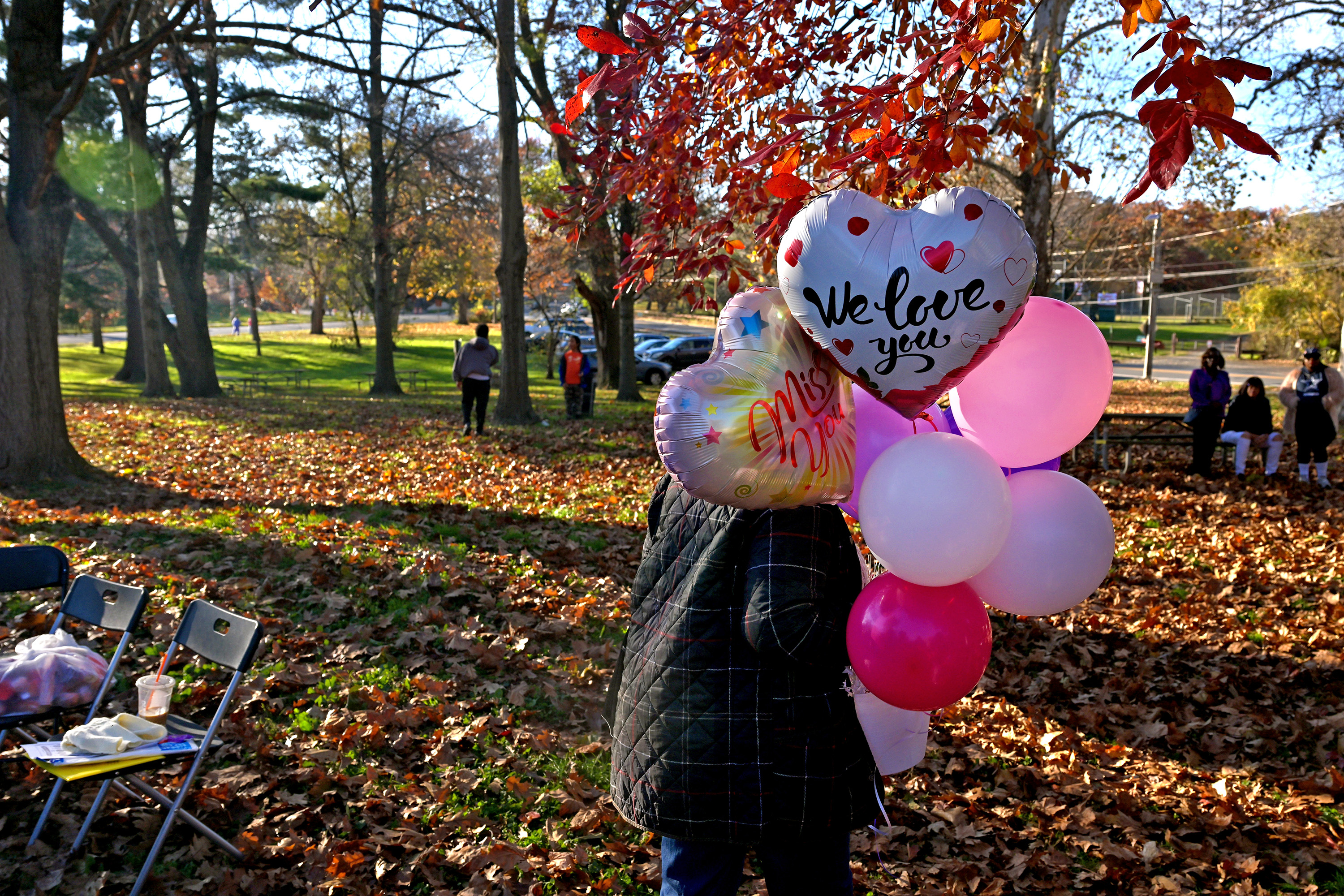
More than 200 people gathered at a field near Morris Park in Overbrook on Sunday to honor the memory of Malayshia Allford. The 10-year-old girl was found dead in a car trunk last week, and her foster mother was charged with her murder.
Malayshia’s paternal uncle, Nafis Horne, 37, said the last time he saw Malayshia she was about 4 years old, but he remembered her as a sweet and positive child despite all the instability she experienced throughout her short life.
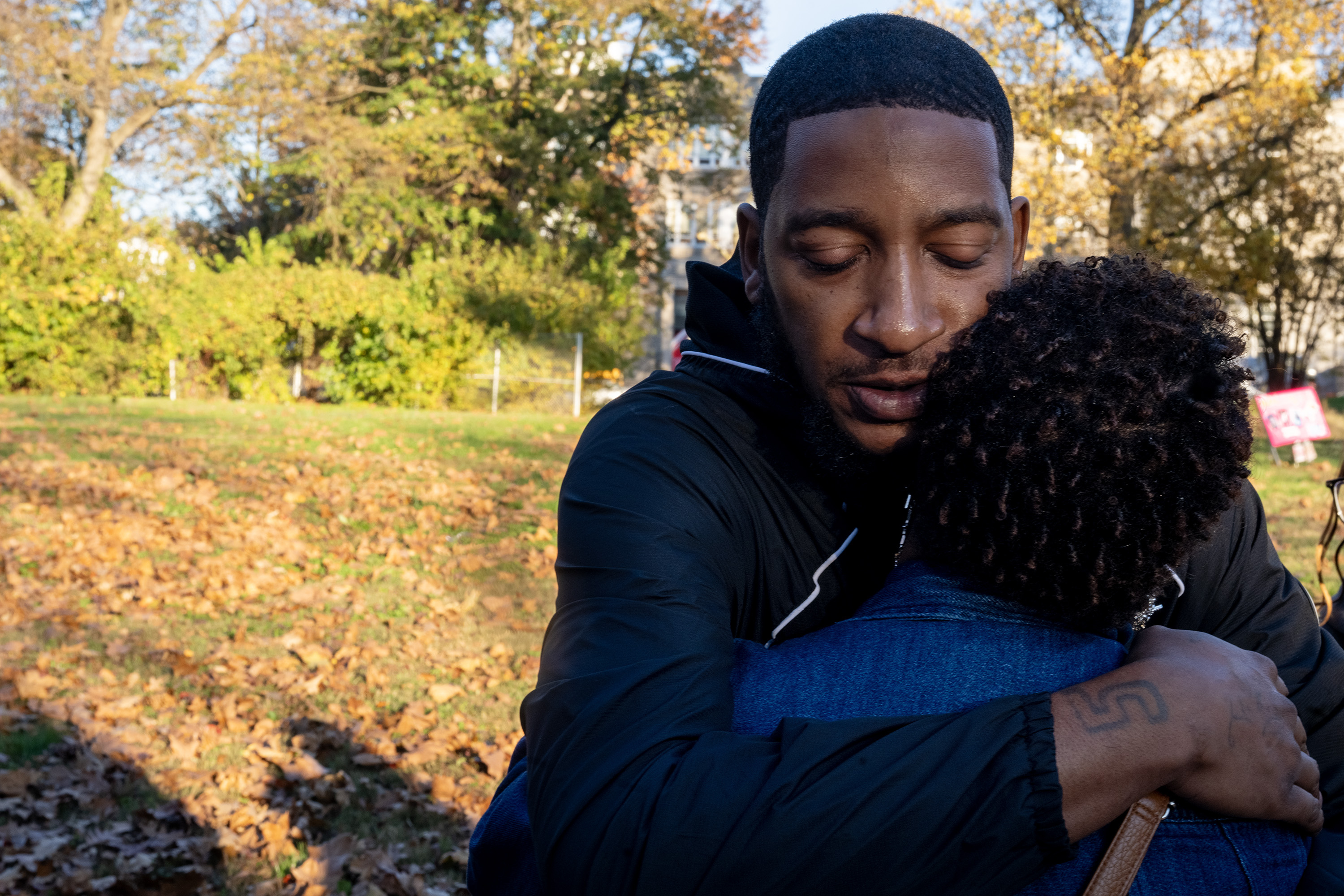
Nafis Horne (left), the uncle of Malayshia Allford, is with Julian Dixon on Sunday as family and friends gathered in Morris Park in Overbrook to remember the young girl. Dixon is a deacon with the African First Baptist Church.Tom Gralish / Staff Photographer
“She loved Minnie Mouse,” Horne said, noting she preferred Minnie to Mickey. “Among everything, she always had a smile on her face.”
As the investigation into her death continues, Horne said he hoped to learn why he wasn’t contacted about becoming her guardian. If he’d known about the abuse she allegedly faced in foster care, he would have intervened, Horne said.
Family and friends of Malayshia Allford gather Sunday, Nov. 8, 2026 in Morris Park in Overbrook to remember the young girl.Tom Gralish / Staff Photographer
“I never knew she was in prior abuse situations,” Horne said. “I would have taken my niece in and none of this would have happened. I would have stepped in and helped my brother.”
Nafis Horne, the uncle of Malayshia Allford, is with family and friends as they gather Sunday, Nov. 8, 2026 in Morris Park in Overbrook to remember the young girl.Tom Gralish / Staff PhotographerFamily and friends of Malayshia Allford gather Sunday, Nov. 8, 2026 in Morris Park in Overbrook to remember the young girl.Tom Gralish / Staff PhotographerNafis Horne, the uncle of Malayshia Allford, is with family and friends as they gather Sunday, Nov. 8, 2026 in Morris Park in Overbrook to remember the young girl.Tom Gralish / Staff Photographer
One morning in July 2025, I was the lone spectator in Judge Frank Palumbo’s courtroom in Philadelphia, watching prosecutors and public defenders haggle over the fates of defendants.
Palumbo paused the proceedings to talk to a lawyer he’d appointed to help a prisoner who had ineptly challenged his conviction. The lawyer profusely thanked the judge for the job. Then, Palumbo offered a bit of guidance: “I think I know where this is going to go. I don’t want to make it overly complicated. It’s real simple.”
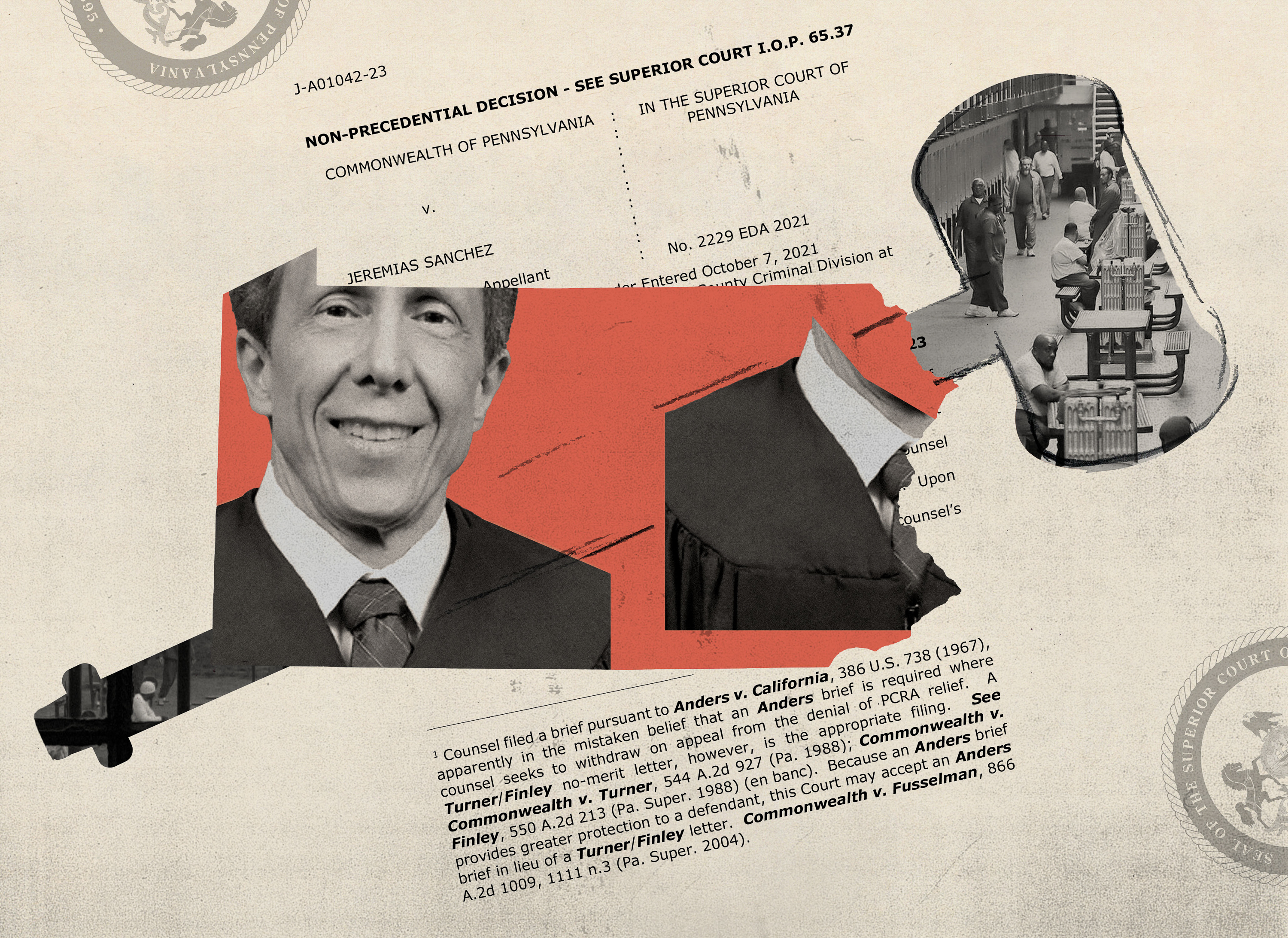
The judge said he’d pass along a brief that a different lawyer had filed, arguing that there was no merit to the man’s claims in a related case. “I’m not saying plagiarize,” the judge said.
The attorney told the judge he got the message. “So it’s called a Finley letter,” he said, using the common legal term for that no-merit brief, in which an attorney can argue against the client’s claims and ask to withdraw from the case.
“It’s looking like it’s going to be a Finley dismissal,” the judge agreed after a bit more discussion, “but every option is open.”
I’ve spent years covering criminal justice in Pennsylvania, including the post-conviction system that allows people to argue that their lawyer had mishandled their case, or to raise newly discovered evidence. That day, I left the courtroom wondering how what I’d observed squared with the state’s promise of effective legal representation in cases like this.
That question sent me on a yearlong reporting odyssey, during which I read hundreds of Finley letters, tracked down court financial records from all 67 Pennsylvania counties, interviewed dozens of lawyers, and analyzed thousands of court dockets. What I wanted to know was: Why has it become the norm for Pennsylvania’s lawyers to argue against their own clients? And whom is this system serving?
I found that lax rules, low pay, and heavy caseloads have compromised legal representation under the state’s Post Conviction Relief Act (PCRA). Over the last year, I’ve reported on how lawyers, working under fee structures banned in other states, fell years behind on their cases. I spoke with prisoners who’d waited nearly a decade for their lawyers to file anything, and others whose lawyers filed Finley letters despite compelling evidence of innocence. I also looked at three years’ worth of invoices and found that, three-quarters of the time, Philly lawyers who wrote Finley letters had never spoken with their clients, contacted the trial lawyer, or obtained available police files before deciding their claims had no merit.
None of those seemingly basic steps, I was surprised to learn, are required under the law. In fact, dozens of lawyers I spoke to expressed sharply divided opinions about the extent of their obligations to these clients.
But court-appointed lawyers are not working unsupervised. Judges are largely in charge of appointing them to cases, and those same judges are supposed to make sure they’re doing a timely and diligent job.
I noticed that judges continued to assign lawyers more cases even after appeals courts flagged serious issues with their work. And when it came to Finley letters, judges accepted almost all of them over the three years of cases I reviewed, despite the lawyers’ minimal investigative efforts. Some of the letters they approved contained obvious factual errors or even named the wrong client.
Last fall, after Palumbo gave the lawyer a copy of a Finley letter, the lawyer followed the template. His no-merit brief said his client’s claim could not be considered because he’d missed his filing deadline. The bulk of the document was, in fact, identical to the other lawyer’s brief.
Palumbo, who didn’t respond to my requests for comment, accepted the Finley letter anyway, let the lawyer drop the client, and dismissed the claim.
Who judges judges?
I thought a fair way to evaluate judges would be to look at the rulings of Pennsylvania’s Superior Court, the state’s appeals court that hears hundreds of challenges to judges’ rulings on post-conviction matters each year.
And boy, did the Superior Court have thoughts on how judges are handling post-conviction cases.
In one withering opinion, a judge bemoaned an “embarrassing saga” of deficient lawyering that a Berks County judge had tolerated. Another derided a Philly judge and the five attorneys she’d appointed who all missed appeals deadlines, writing, “As Hall of Fame manager Casey Stengel said of the hapless 1962 New York Mets, ‘Can’t anybody here play this game?’”
After logging hundreds of rebukes laid out in Superior Court opinions by hand, I asked some colleagues with data skills to help identify as many of these cases as possible across the last 14 years, the time frame for which opinions were reliably posted online.
We found that the appeals court flagged more than 250 cases in which judges didn’t intervene as lawyers provided what the court labeled ineffective representation: “sandbagging” a client at a hearing, stonewalling a petitioner who’d mailed two dozen letters to the lawyer’s office, or filing boilerplate appeals so vague that they doomed their clients’ cases. In hundreds more cases, judges failed to appoint a lawyer at all, held hearings where petitioners went unrepresented, or allowed a lawyer to drop a case, leaving the client stranded on appeal. More than 200 times, they oversaw lawyers who abandoned clients, tanking their appeals or stalling their cases for years.
“Judges are in a terrific position to be able to prevent these kinds of injustices,” said Marissa Boyers Bluestine, a longtime post-conviction lawyer who now works at the University of Pennsylvania Carey Law School.
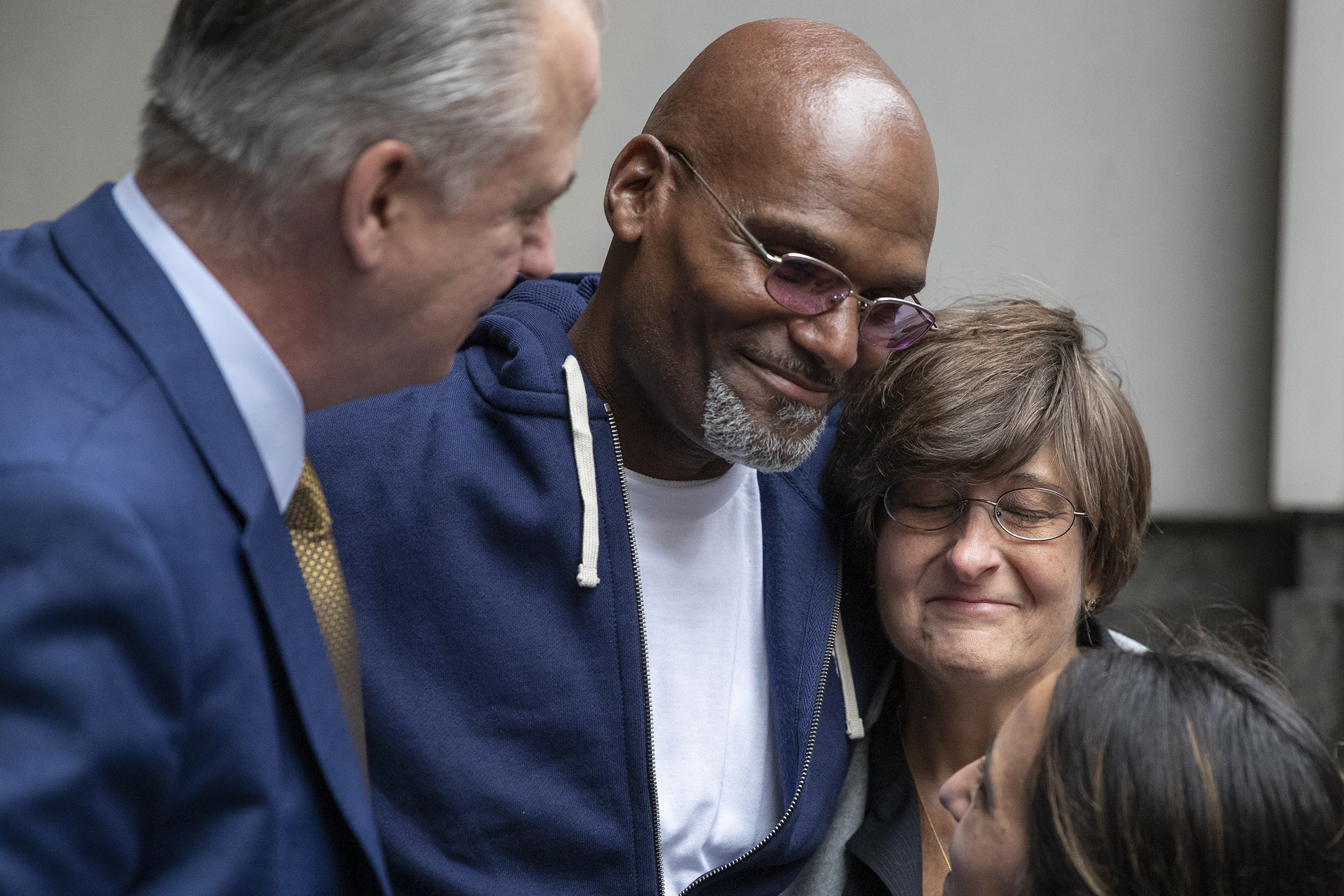
Marissa Boyers Bluestine leaves court with her newly exonerated client, Willie Veasy (center), in 2019. At the time, she was working for the Pennsylvania Innocence Project. She said judges have a duty to report unethical lawyering.HEATHER KHALIFA / Staff Photographer
The scathing reversals aside, the Superior Court affirms about 80% of lower-court rulings. That’s expected given the strict deadlines and complicated rules about how appeals must be filed. The appeals court is also required to defer to the lower court’s factual decisions. And when it reverses due to an error, the recourse is generally limited to ordering a do-over or, on rare occasions, instructing the lower court to explore sanctions. In one opinion, the court resorted to using boldface to call out an egregious failure: “The PCRA court did nothing in this case for 20 years.” Then, it told the lower court to try again.
Judges do have the authority — and, in fact, an obligation under state rules — to make disciplinary referrals. Because complaints are confidential, there is no way to know how often they do so. But only six lawyers in the last decade have been publicly sanctioned for work on court-appointed post-conviction cases.
Judicial discipline is even rarer. No lower-court judge in at least a decade has been publicly disciplined for mishandling a posttrial matter. Judges who, according to the Superior Court, exhibited biases, imposed vindictive sentences, or improperly denied recusal requests remained on the bench.
Even after the Superior Court raised alarms, more than 100 cases ricocheted between the appeals court and county judges two, three, four, or more times, as judges repeated errors or reappointed lawyers to cases they’d already mishandled.
One such case played out after Jefferson County’s only judge, John H. Foradora, sentenced a woman to up to 22 years in prison for passing two narcotics pills in prison. Her lawyer failed to object to or appeal the lengthy sentence. After she filed a PCRA, the Superior Court found that her lawyers’ inaction enabled the “unduly harsh and clearly unreasonable” punishment to stand. But each time the Superior Court reversed, Foradora again imposed a lengthy term. After three such reversals, the woman wound up serving more than eight years. Foradora said through a court spokesperson that he was unable to comment.
Shannon McDonald, an attorney in the Philly suburbs, said that “some judges don’t consider PCRA a priority.”
She described waiting as a petition languished on a Delaware County judge’s desk for two years, until her client had finished his sentence and been released from prison. Then, the judge finally ruled, dismissing the claim.
Rob Perkins, an attorney and founder of Allegheny Lawyers Initiative for Justice, says some court-appointed lawyers fear that litigating post-conviction cases aggressively would be bad for business. Justin Merriman / For the Inquirer
The Finley problem
Like lawyers, judges I’ve spoken with seem to be divided on their obligations, especially when it comes to the no-merit letters known as Finley letters. The state Supreme Court says that when a lawyer submits a Finley letter, the judge needs to conduct a review of the merits of the case.
Attorney Rob Perkins, who leads the nonprofit Allegheny Lawyers Initiative for Justice, told me that while he’s encountered some judges who take post-conviction matters seriously, others seem to view them as a nuisance. He said several lawyers told him they were afraid that if they litigated cases too aggressively, judges would withhold future assignments. The no-merit letter becomes the simplest path forward. “When a judge is handed a no-merit letter that sounds good, I think their inclination is to accept that the attorney did their job.”
Superior Court opinions reflect this pattern, as well. In my review, I found hundreds of cases overruling lower-court judges who accepted flawed Finley letters. The appeals court noted that lawyers claimed, incorrectly, that their clients had missed filing deadlines, rejected legitimate claims as meritless, or failed to notice that their clients were serving illegal sentences.
In dozens of cases, judges approved defective Finley letters that did not fulfill basic rules, such as including a notification to the client or addressing all the claims the client wanted to raise.
Several judges told me Finley letters serve an important purpose in shutting down frivolous challenges that waste resources.
“Not all [claims] have merit,” Judge John J. Mead of Erie said. “A lot of them initially you could look at and make a determination [as to] whether or not it’s going to require a hearing.”
I’ve noticed that the system makes accepting Finley letters the simplest choice for judges. A judge who rejects a Finley letter must either find a new lawyer willing to take the case or force the same lawyer to pursue a matter they previously deemed meritless.
Judges who take that path risk pitting a lawyer against his own client, the Superior Court wrote in one recent case, finding the judge’s actions resulted in the denial of a man’s right to counsel. His lawyer, forced to handle a hearing after writing a Finley letter, treated it “more like a cross-examination of a witness that [he] does not believe than a direct examination of his client.”
Jon J. Auritt, who retired after more than 50 years as a lawyer in Delaware County, said that these failures stem from a common cause: Instead of working independently, lawyers are beholden to the local judges who appoint them.
Even if judges are not as explicit as Palumbo was with their instructions, Auritt said, their message is often clear: “The judges are never incentivized to appoint a lawyer who might earnestly find a reason to overturn the conviction.”
An allegedly armed person was “struck by gunfire” during an encounter with two Gloucester Township police officers Friday afternoon, the Camden County Prosecutor’s Office said.
The nonfatal shooting happened on the 700 block of College Drive in Gloucester Township, the prosecutor’s office said.
Helicopter video from 6abc showed a large police presence at the CVS store located on the block.
“An armed suspect was reported to be struck by gunfire during an incident involving two officers from the Gloucester Township Police Department,” the prosecutor’s office said.
The injured man was taken to Cooper University Hospital for treatment, the prosecutor’s office said. No one else was hurt.
As of Saturday, the man was stable and remained hospitalized, a spokesperson said.
“This is an active and ongoing investigation. To protect the integrity of the investigation, we are unable to provide specific details at this time. We will provide an update later when it is appropriate to release information regarding this matter,” the prosecutor’s office said.
Staff writer Maggie Prosser contributed to this article.