The Abington Township Police Department launched an investigation after antisemitic and racist graffiti was found spray-painted throughout the Weldon playgroundin Glenside.
“There is no place for hate in our community,” the statement said. “We stand united with our Jewish and Black communities, who were targeted by these acts.”
It’s unclear when the park was defaced, and no additional information about the incident was immediately available.
In a Facebook post, Abington School Board President Melissa Mowry called the act “craven, cowardly, and despicable.”
According to Mowry, the school district owns the playground and partners with civic groups to maintain it as “a public resource where everyone is welcome to smile and laugh together.”
“There is ‘No place for Hate’ of any kind in this community, but especially where all children are invited to play,” she wrote.
Dozens of community members on Saturday worked to remove the hateful messages, NBC10 reported.
Police are asking anyone with information to contact the department at 267-536-1100.
Fatima Jones had already buried two of her sons when she sat in a courtroom and heard prosecutors accuse a third son of killing them.
Amir Jones, 33, was among several men who opened fire when a brawl broke out at a West Philadelphia block party on July 21, 2024, prosecutors said. They charged him with murder in the deaths of his brothers, Akil, 33, and Rashie, 29, and a friend, Sekayi Robinson, 23, and with aggravated assault and other crimes for wounding four others on North Alden Street.
Last week, that case fell apart.
On the morning Jones’ trial was set to begin, prosecutors dropped the murder and aggravated assault charges, saying he had acted in defense of his brothers. And by the end of the trial, a judge had acquitted him of everything else.
The reversal lets Fatima Jones finally grieve alongside her surviving son, she said in an interview. But it leaves open a question authorities have been unable to answer: If Amir Jones didn’t kill his brothers, who did?
When Jones was arrested, his mother said, ”I felt like I lost three sons. Amir was alive, but incarcerated and accused of killing his two brothers — something I knew he would never do.”
Now, she said, “I want the men who killed my sons held accountable. Like, where are they at?”
The only person convicted in the shooting is Jones’ codefendant, Tahir Shoatz, 30. Before she acquitted Jones, Common Pleas Court Judge Roxanne Covington found Shoatz guilty of third-degree murder in Robinson’s death, along with attempted murder and other offenses, but acquitted him of killing the Jones brothers.
Chaos on a crowded block
The shooting turned the block party into a sprawling, chaotic crime scene, video footage played at the trial showed.
Officers who arrived five minutes after the first gunshot found wounded victims scattered across the block, people shouting, and cars still passing down the road.
They found Akil Jones dead in the street, his torso pierced by a bullet.
Seconds later, after a woman screamed, “He’s not dead!” officers discovered Rashie Jones bleeding and crawling in an alleyway, a 9mm handgun in his hand. Shot once in the torso, at close range, he was pronounced dead soon after at a hospital.
Inside a North Alden Street house, officers followed a trail of blood to Shoatz, who had been shot in the abdomen, right shoulder, and right knee. Four other victims — a 26-year-old woman and three men ages 26 to 29 — were also shot, but survived.
Neither Jones, who was struck by two bullets on his left side, nor Robinson, who had been shot in his leg and chest, was at the scene when officers arrived. Both had already been taken to a hospital, where Robinson later died.
Surveillance video captured how the shooting began, Assistant District Attorney Cydney Pope said at trial. Shoatz reached for a gun during an argument with Akil Jones, and the two wrestled over it, tumbling to the ground.
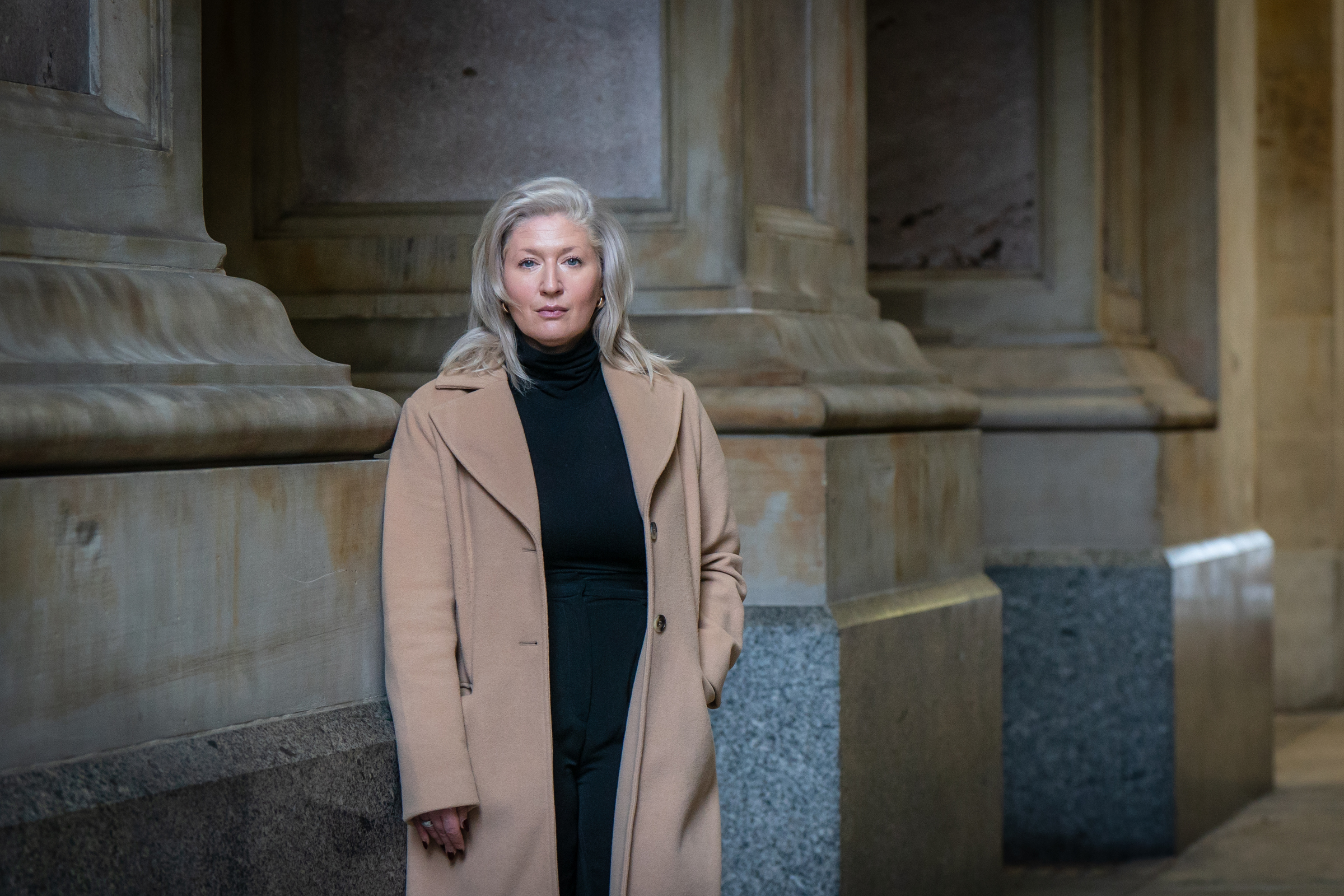
Assistant District Attorney Cydney Pope outside City Hall in Philadelphia.Jessica Griffin / Staff Photographer
Amir Jones jumped in, Pope said, and came out of the scrum holding a gun.
Gunfire came from several directions, from at least six shooters, including Jones and Shoatz, firearms experts testified. Some, however, have not been identified.
One gunman, taking cover behind a van across the street, fired repeatedly toward the men on the ground. As the judge delivered her verdict last week, she said it was clear that this gunman killed Akil Jones. Covington also found that one of the other shooters — not Jones or Shoatz — killed Rashie Jones.
It was the verdict Loretta Jones, grandmother to all three brothers, said she had prayed for.
As she sat in the courtroom awaiting it, she said, she made one request: “I said, ‘God, don’t nobody know the story but you. You was the only one there to see the whole thing. So please, let the judge see the same thing you saw and let my grandson go.’ And God made the judge see what He saw: that Amir had nothing to do with it.”
Attempts to reach Jones were unsuccessful.
What the videos showed
Prosecutors built their case largely on videos. But the footage could not answer everything, and little else could fill the gaps.
Police recovered 41 casings and bullet fragments and three guns, but none of the weapons could be linked to the killings.
More than 100 people were at the party, and some may have disturbed evidence before police secured the scene, Pope acknowledged at trial. None of the partygoers — including the four other people who were shot — testified as witnesses.
“We always knew there were people we could identify, and people we couldn’t,” Pope said in an interview. The shooter who fired from behind the van, “never gets close enough to the camera for us to be able to identify him,” she said.
Jones’ attorney, David Nenner, raised the issue of the unidentified gunmen from the start, asking a judge to dismiss the case at a preliminary hearing — a request the judge rejected.
Pope contended that Jones was responsible even if he didn’t fire the fatal shots.
“This is a tragedy, there’s no question,” she said at the time. “But … the number of people who were ultimately killed would not have been what it was had it not been for the conduct of the defendant.”
Pope said the decision to drop the murder and aggravated assault charges against Jones last week followed a “very intensive review of the videos” and a firearms examiner’s findings. Jones was “acting in defense of others,” she said, until after his brothers were hit.
After that, cameras showed Jones firing several shots up North Alden Street, which Pope said she believes were aimed at Shoatz. Because of that, she said, prosecutors did not dismiss reckless endangerment and other charges against Jones.
‘An incredibly sad’ case
Nenner, Jones’ lawyer, called the case “an incredibly sad situation” and said Jones had struggled with the weight of being accused of killing his brothers. Jones spent 14 months behind bars after he was arrested by U.S. marshals in July 2025, nearly a year after the shooting.
Before acquitting Jones, Covington told him, “I am very sorry for your loss.” She said she believed he had acted to defend his brothers, and more than a dozen relatives applauded.
Jones wiped tears away with a tissue. Then, as soon as he could, he rose from the defense table and walked quickly toward a holding cell, never turning to face his family.
Amir, his mother said, was “always the quiet one.”
Akil Jones had an entrepreneurial streak and owned a West Philadelphia daycare, his family said. Rashie was a free spirit who loved to rap, his mother said.
Robinson owned a West Philadelphia water ice and ice cream shop and had played basketball in high school and college. He would do anything for anyone, his father, Vernon Robinson, said.
“He was the glue to this family,” he said.
Although Shoatz was convicted of Robinson’s murder, Robinson’s father said he doesn’t believe Shoatz fired the shot that killed his son. Citing the video evidence and the angle of the wound, he said he believed Shoatz hit his son in the leg and another gunman shot him in the chest.
Like Fatima Jones, Vernon Robinson said he wants prosecutors to keep pursuing the other shooters.
“I want my son back. But I need answers,” he said. “And I want justice.”
Pope said investigators are still working to identify the other gunmen, and she urged anyone with information to contact police or prosecutors. The police department’s homicide unit can be reached at 215-686-3334 or 215-686-3335, and tips can be submitted anonymously to 215-686-TIPS.
“We don’t believe that any case is closed until all suspects are identified,” she said.
A 54-year-old Philadelphia man was convicted of leading a human trafficking ring out of his home in the city’s Lawndale section, state Attorney General Dave Sunday said Friday.
Following a one-day trial in Philadelphia, Terrance L. Jones, 54, was convicted Thursday by a judge of eight charges, Sunday said. Jones will be sentenced on Dec. 11.
Sunday said the trafficking operation generated hundreds of thousands of dollars a year and Jones employed drivers to transport the female victims to “dates.” Jones also posed as a woman to recruit sex workers, Sunday said.
Sunday said Jones ran the operation from his residence from 2012 through February 2023, luring vulnerable young women into working for the trafficking ring, then giving them drugs and forcing them to have sex with men across the region.
Multiple other people charged in the trafficking case also have been convicted, Sunday said.
“Human trafficking convictions are very challenging, and there was a long road to get to this point. I commend our partners with the Pennsylvania State Police for collaborating on a complex investigation that brought this long-running criminal enterprise to an end,” Sunday said in a statement.
Jones advertised his business, called “GFE” or “the Girlfriend Experience,” online and connected with young women in their 20s, investigators said.
Authorities learned about the ring in 2021 after a confidential informant contacted police and said they feared a friend was being trafficked.
After meeting with woman, authorities launched a three-year investigation.
A man who allegedly was trying to break into houses and may have been armed with a knife was fatally shot by police Friday afternoon during a physical confrontation in the Mayfair section of Philadelphia, police said.
Just before 2:30 p.m., police received a 911 call reporting that a man on the 4100 block of Tyson Avenue was trying to enter houses, Deputy Commissioner Frank Vanore said.
Officers responding to the call were flagged down by someone who pointed out the man on the 7000 block of Frankford Avenue, Vanore said.
The officers attempted to stop the man but he allegedly fled with the police in pursuit, Vanore said.
The chase ended in front of a store, where the man allegedly got into a physical confrontation with the officers before the video ends.
“At some point during that confrontation, both officers discharged a firearm,” Vanore said.
Medics pronounced the man dead at the scene. His identity was not released.
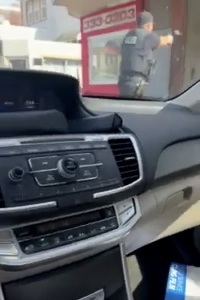
In a 12-second video obtained by The Inquirer, recorded by someone inside a car parked just feet away from the deadly shooting, one of the officers and the unidentified man can be seen struggling with each other.
The officer appears to be trying to hold the man’s hands or arms, then falls to the ground as the man breaks free.
A second officer then appears in the video. As the man steps away from that officer and into an open area of the building, the second officer fires multiple shots and the man falls.
The first officer is seen falling backward away from the man and a second gun can be heard firing before the video ends.
Vanore said the officers had their body cameras activated, and police were checking video from nearby cameras.
“We know there’s a knife on location here, right by the individual that’s shot,” Vanore said.
Under department policy, the shooting is under internal investigation and the officers who fired their weapons will be reassigned to administrative duty while the investigation is ongoing.
A Philadelphia judge has ordered a new trial for a former city police officer who was convicted of perjury, finding that one of the jurors on the case failed to disclose ties to a law firm representing the district attorney’s office — an association she said deprived the officer of a fair trial.
Daniel Levitt, 52, was found guilty of perjury in June for lying under oath about how he recovered a gun during a 2021 traffic stop. But on Thursday, Common Pleas Court Judge Natasha Taylor-Smith vacated the conviction and ordered that Levitt be retried.
Her ruling centered on the jury foreman, a personal injury lawyer who did not disclose that his law firm was representing the Philadelphia District Attorney’s Office in ongoing civil litigation against opioid manufacturers and distributors.
The foreman’s relationship to the law firm became public moments after the jury returned its verdict. Taylor-Smith questioned the jurors and concluded that the foreman’s affiliation had not affected the verdict.
In a letter to the court earlier this month, Levitt’s attorney, Coley Reynolds said he would have exercised a peremptory challenge to strike the juror had he known about the firm’s work for the district attorney’s office.
On Thursday, Taylor-Smith reversed her earlier decision and granted Levitt a new trial.
Reynolds welcomed the ruling, saying, “We believe he did not get a fair trial.”
District Attorney Larry Krasner said Friday that his office would appeal the ruling and if necessary, retry the case.
Prosecutors said Levitt found an illegal firearm inside a bag that he did not have probable cause or a warrant to search during an April 2021 traffic stop. Then, they said, he lied about how he found it during the prosecution of the man he arrested.
Levitt, a 12-year veteran of the force, was the first officer charged after a department review raised concerns that some officers had conducted unlawful searches of people and vehicles before recovering guns. He was fired following his arrest.
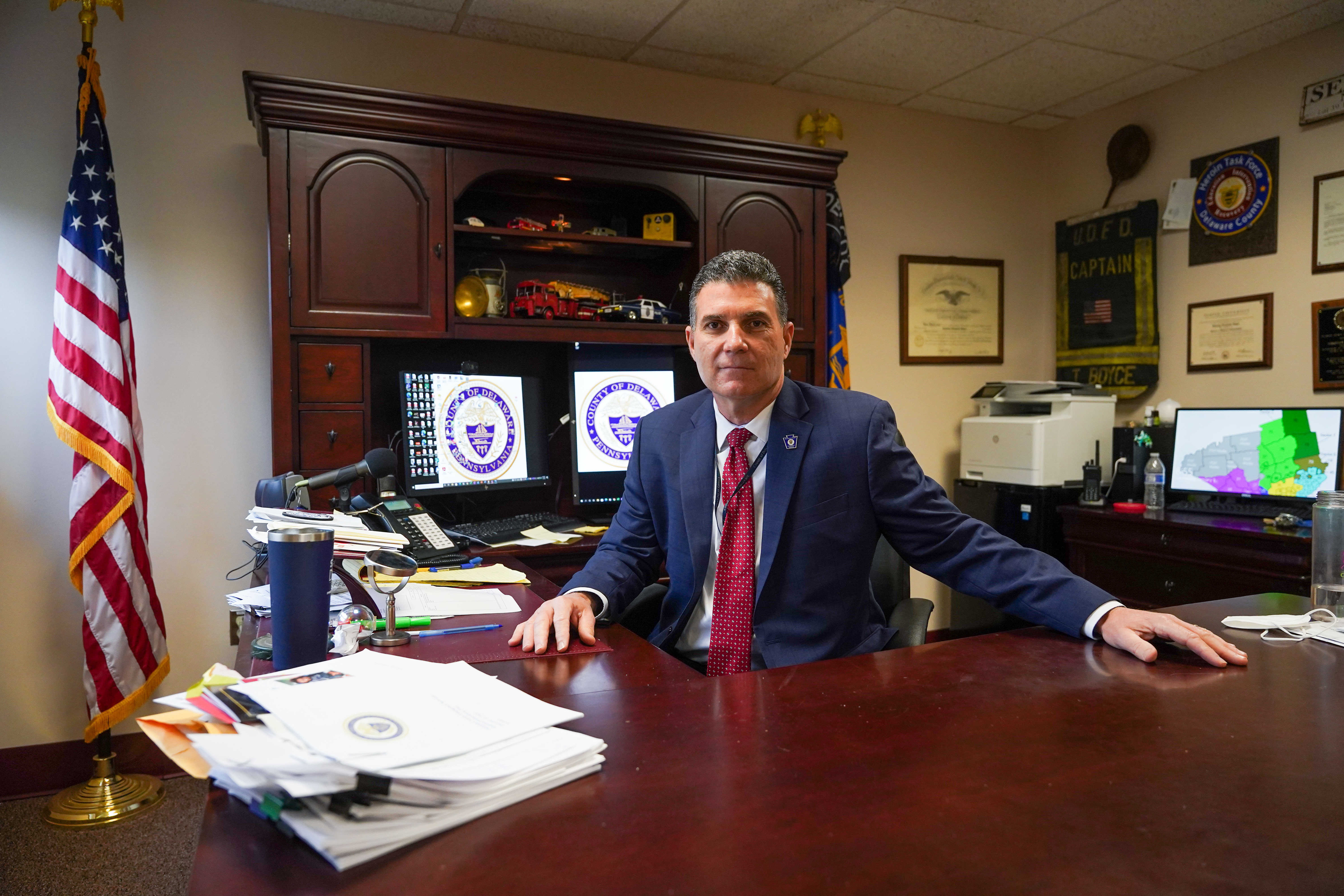
Tim Boyce, the former director of Emergency Services for Delaware County, was convicted Friday of assaulting and harassing two of his female employees.
Weeks later, a second set of charges was filed when another woman Boyce hired and worked with for years, said he showed her pictures of his penis, lifted up her skirt to look at her genitals and once muted a Zoom call she was part of to ask her graphic questions about sexual positions she preferred.
After about nine hours of deliberation, jurors convicted Boyce of all but one count, the simple assault charge.
Boyce was taken into custody after the verdict was read and the judge set his bail at 10% of $50,000. He will be sentenced in December.
His attorney, Andrew Edelberg, said afterward that he was disappointed with the verdict, but respected the jury‘s decision.
County officials fired Boyce shortly before the criminal charges were filed, after the first woman filed a complaint with the Equal Employment Opportunity Commission.
In his closing arguments, Edelberg told jurors that the case against his client was “botched, bungled, fumbled, messed up” by investigators who failed to find evidence corroborating the women’s allegations.
He accused prosecutors of attempting to play on jurors’ emotions with the testimony of the two women, who he said offered unreliable testimony.
“The Commonwealth wants so badly to convict Mr. Boyce, they’re desperately clinging to this story,” he said.
The women’s true intention was money, he said, referring to potential settlements from lawsuits they both have filed against the county.
But Deputy Attorney General Madelyn Abry, in her closing arguments, warned jurors not to be distracted by what she described as “filibustering by the defense.”
“Mr. Boyce is upset, he’s sad, he was devastated because he was caught, because his actions have finally caught up with him,” she said. “And they did so because of these two brave women.”
Abry told the jurors Boyce chose his victims intentionally: Both women were single mothers at the time, desperate for better-paying jobs that would provide health benefits for their families.
“I’m not making excuses because I have nothing to excuse myself for,” he said, calling the second woman’s assertions “absolutely a lie.”
He became emotional under questioning by Edelberg, saying that he checked into a rehab facility in Arizona for treatment of suicidal ideation, and later sought treatment from a second facility in Pennsylvania.
Edelberg, in his closing arguments, described Boyce as a hero who helped recover bodies from Ground Zero during the Sept. 11 attacks, and who once saved three children from a burning building as an Upper Darby firefighter.
He noted that the second woman remained friendly with Boyce after the first alleged assault, which was in 2018. And she later invited him to her wedding, he said.
“Why would you include a man who tells you these horrible, dirty jokes … and not tell anybody?” he asked jurors. “It’s the same theme, ladies and gentlemen: excuse after excuse.”
During her testimony, the woman said she waited to report the first assault, and endured the subsequent ones, because of Boyce’s authority.
“I’m nobody,” she said. “He’s the director in charge of all 911.”
The first woman testified that she sent Boyce a text message after the assault, telling him he had degraded her and made her feel like a piece of meat.
Boyce responded to that text, saying he was “sorry and not making excuses,” according to a copy of that text exchange displayed in court.
When pressed by Abry about that text, Boyce, while denying the assault, said he apologized because he believed the woman was drunk while she was texting him and attempting to “set him up.”
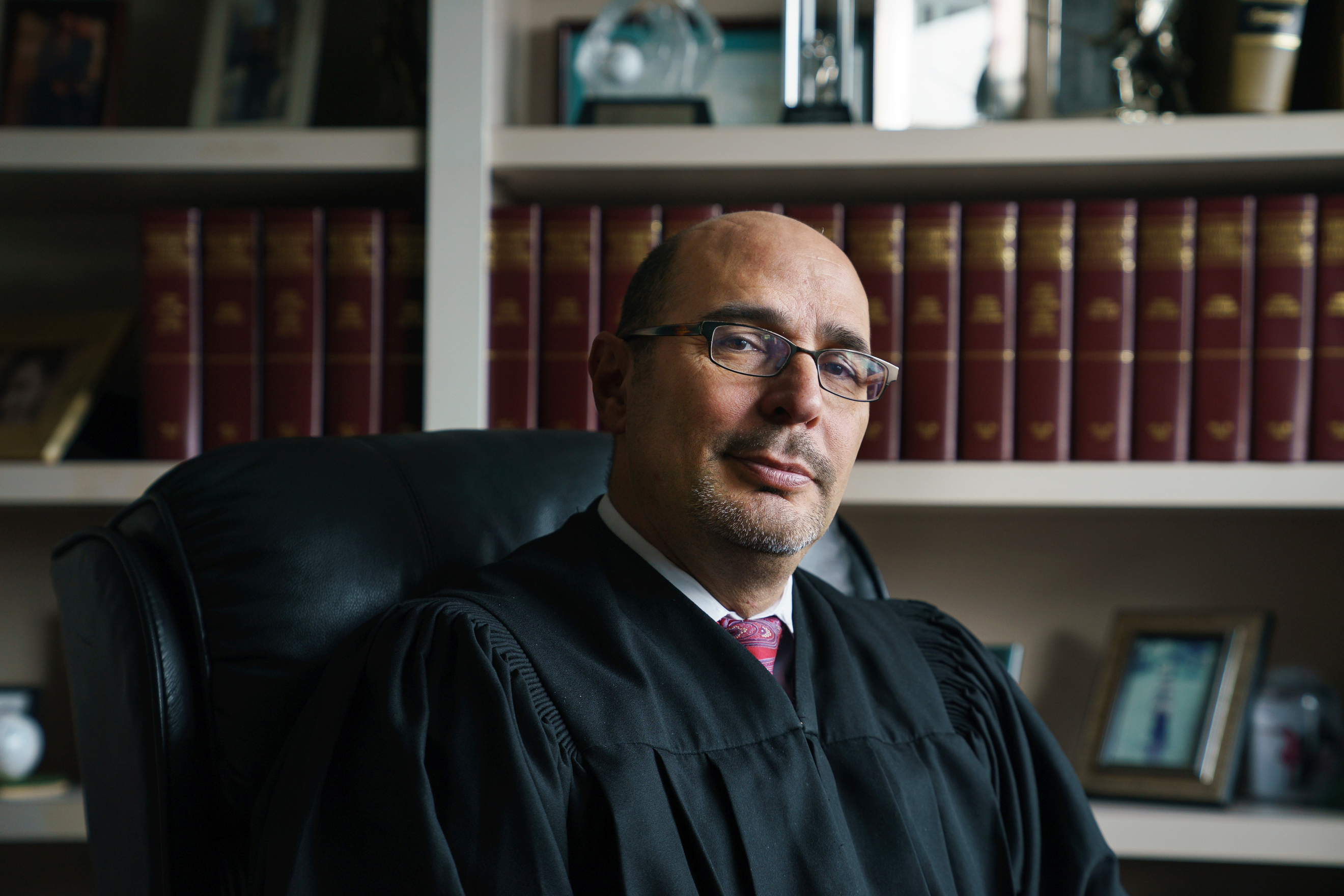
HARRISBURG ― Pennsylvania’s Judicial Conduct Board on Thursday urged a judicial disciplinary court to permanently remove a Philadelphia judge from the bench, saying he had displayed a pattern of unethical and “boorish” behavior that culminated in an effort to influence a colleague’s decision in a criminal case last year.
Common Pleas Court Judge Scott DiClaudio showed “little respect for the court and little respect for the rules of the court,” said Elizabeth Hoffheins, deputy counsel for the Judicial Conduct Board.
DiClaudio had a history of disciplinary issues, she said, and he had not taken adequate responsibility for his actions.
“Anything less than removal would fall short of restoring the public’s trust,” Hoffheins said.
The board’s request came after two days of testimony before the Court of Judicial Discipline, which is expected to determine DiClaudio’s fate as a judge in the coming months.
DiClaudio acknowledged Thursday that his remarks to fellow Common Pleas Court Judge Zachary Shaffer were improper, but insisted it was a complete misunderstanding and was never meant to tilt the scale of justice.
“I wish I never said it. I regret ever saying it,” DiClaudio said of the comments to Shaffer. “I wasn’t thinking.”
Shaffer testified that he was on the bench in his courtroom on June 12, 2025, when DiClaudio’s personal assistant, Gary Silver, walked in and said DiClaudio wanted to see him.
Shaffer said he and his clerk, Nicole Vernaccio, had been in touch with DiClaudio that week about buying T-shirts from the cheesesteak shop owned by DiClaudio’s wife. They assumed the request was to go pick them up.
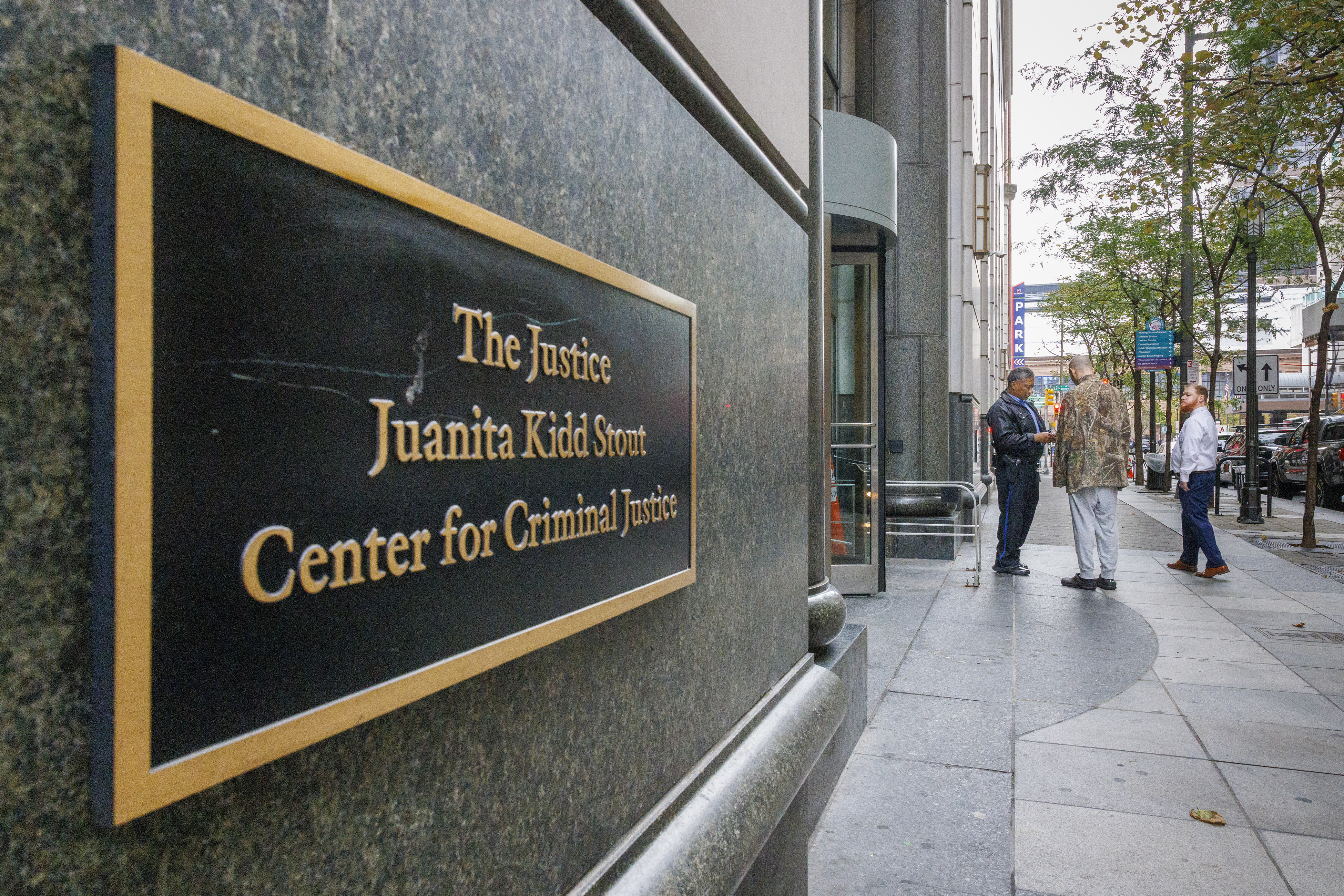
The exchange occurred in the robing room of DiClaudio’s former courtroom inside the city’s criminal courthouse. Alejandro A. Alvarez / Staff Photographer
The two walked to DiClaudio’s courtroom, then gathered in his robing room. They spoke for several minutes about various topics, he said, before DiClaudio asked Vernaccio to leave. Vernaccio also testified that she was asked to step out.
Shaffer said DiClaudio then pulled out a piece of lined paper with “Dwayne Jones, courtroom 905, and Monday’s date” written on it.
DiClaudio held it out at his side, he said, then looked at him and said, “OK?”
Shaffer said he was confused, and hesitantly said, “OK.”
He said DiClaudio ripped up the paper and threw it away.
As Shaffer started to leave, he said, DiClaudio told him: “‘You probably would have done the right thing anyway.’”
Shaffer said he was shocked and believed DiClaudio was suggesting he should give a favorable sentence to Jones, who was scheduled to appear before him in the coming days on charges of illegal gun possession connected to a fatal shooting.
Shaffer reported the conversation to his supervisors the next morning, and they referred the matter to the Judicial Conduct Board. He recused himself from Jones’ case.
The board charged DiClaudio with multiple ethical violations last September. He was later suspended without pay.
All of this came to be, DiClaudio said, after he attended the Roots Picnic in June 2025 — where he said he hung out backstage with Philadelphia rapper Meek Mill. In the common area, he said, Jones approached him and said he had a forthcoming sentencing before Shaffer.
DiClaudio said he didn’t know Jones, and told him only that his colleague was “a good judge who would do the right thing.” When Jones handed him his business card, he said, he put it in his wallet, not wanting to be rude.
DiClaudio denied that he later summoned Shaffer to his courtroom, despite an audio recording that showed that shortly before his assistant went to retrieve Shaffer, DiClaudio asked: “Is Judge Shaffer on the bench right now? Can you call down there and see if he’s still on the bench please?”
DiClaudio said he only asked about Shaffer because he had just addressed a case where a defense attorney Shaffer is dating did not appear in court. He said he wanted to ask Shaffer why she didn’t show. (The courtroom audio confirmed that DiClaudio addressed the woman’s case just before inquiring about Shaffer.)
He said he did not instruct Silver to visit Shaffer, and was surprised when the judge walked in.
Once inside the robing room, DiClaudio said, he, Shaffer, and the clerk discussed various topics. It was only as Shaffer went to leave, he said, that he picked up his phone and wallet holding Jones’ business card, and remembered the concert exchange.
He said he took out the card and told Shaffer: “I saw this guy at a concert. I told him you’re a good judge and you’d do the right thing.”
Then, he said, he tossed it into the trash.
“It was improper and wrong. There was no good reason to say that even though it wasn’t my intention to influence the case,” he said Thursday, adding: “I never wanted him to do anything with that statement other than to say thank you.”
The board had initially said that DiClaudio sought to sway the case because Jones was a friend of Meek Mill. Jones, in an interview last year, also said he was a friend of the artist’s.
DiClaudio, too, is close to Mill.
But Hoffheins did not introduce evidence of that during Thursday’s hearing. She said this week that the board still believed that to be true, but did not need to prove a motive in its case.
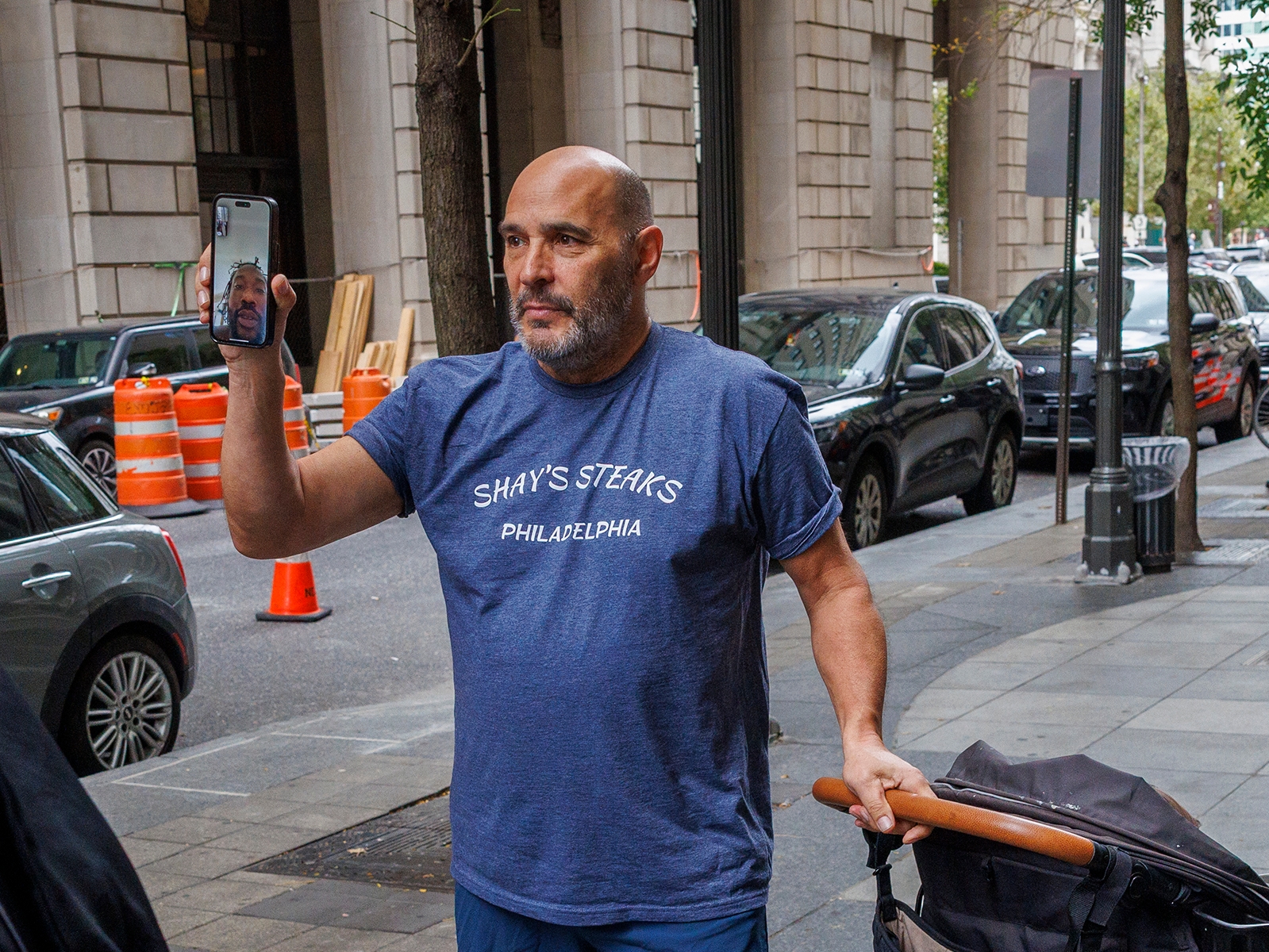
Common Pleas Court Judge Scott DiClaudio speaks with rapper Meek Mill on Facetime outside the Philadelphia courthouse on Sept. 16, 2025. DiClaudio, while on the call, approached the family of Tyree Musier, whose murder conviction was overturned, and said he thought they would appreciate Mill saying hello.Alejandro A. Alvarez / Staff Photographer
“This remark was not simply a compliment, not simply an off-the-cuff remark,” she said. “It was calculated to occur three days prior to this man’s sentencing.”
DiClaudio was elected to Common Pleas Court in November 2015, and took the bench in January 2016. Before his suspension last year, he mostly heard cases filed by people seeking to have their murder convictions overturned.
He presided over many high-profile exonerations and wrongful-conviction cases, and approved the release or resentencing of dozens of people who had been serving life in prison.
DiClaudio was known for working long hours, moving cases efficiently, and thoroughly explaining his decisions to the families of victims and the defendants. But he was also unconventional in his at times brash communication style on the bench.
That was on display again Thursday. He often rambled in a stream of consciousness from the stand, breathlessly veering between accepting responsibility, disputing Shaffer’s testimony, and even relaying his colleague’s dating history. His attorneys, Samuel Stretton and George Bochetto, struggled to reel him in.
“Just stop,” Stretton interjected several times.
Hoffheins pointed to the display, as well as DiClaudio’s previous disciplinary record, as proof of a pattern of misconduct.
Before becoming a judge, DiClaudio was censured by the Pennsylvania Supreme Court for “serial misconduct,” including violating legal ethics rules. Shortly after he took the bench in 2016, Hoffheins said, the Judicial Conduct Board sent him a private disciplinary letter for engaging in “boorish behavior” toward his court staff.
Then, in 2020, the Court of Judicial Discipline determined that he violated the code of conduct for judges when he failed to report debts on annual financial disclosure forms and repeatedly defied a judge’sorders to pay thousands of dollars in overdue bills to a Bala Cynwyd fitness club. He was suspended for two weeks, and placed on probation through 2026.
And last April, the Judicial Conduct Board accused him of using his position as a judge to promote his wife’s cheesesteak shop, eroding public trust in the judiciary, and abusing the prestige of the office for personal gain. DiClaudio has denied the allegations, and the case remains ongoing.
“What I am hearing, what I am feeling, is a persistent theme of your doing things and saying things … that are not wise,” said Judge Charles L. Becker, of the disciplinary panel.
Judge Carolyn Nichols called it “a painful trail of incidents.”
In a final plea, DiClaudio, 63, said if he returned to the bench, he would only work the few weeks necessary to secure his pension and lifetime health insurance to support his wife and two young children. Then he would retire, he said.
He teared up as he spoke of his children and defended his integrity and career.
“I talk a lot, but it’s my greatest strength and my greatest weakness,” he said. While he might be a “crazier judge,” he said, he’s “a judge who makes the right decisions.”
“That may be an explanation,” Becker said, “but, frankly, I’m not sure that’s a defense.”
Stretton, in his closing remarks, asked the panel for mercy.
“Yes he did something bad. And some of his conduct here can get a little rambunctious,” he said. “… But I see a great, decent judge. He’s done a lot of good in the community and on the bench. He’s well-respected.”
The tribunal will now weigh the matter, a process that could take months.
A 13-year-old boy was charged with murder and related crimes after fatally shooting a 16-year-old boy in a Norristown home, authorities said Thursday.
The shooting happened the morning of Sept. 22 at a residence on the 700 block of Arch Street, where prosecutors said Daniel Hawkins-Boyce fatally shot the victim, William Boyd.
Hawkins-Boyce came into possession of a Ruger .380 handgun a week before the shooting, according to the affidavit of probable cause for his arrest. It was not clear how he did so. He told police he “found” it, the document said.
Hawkins-Boyce and Boyd were hanging out in the home’s basement and had recently smoked marijuana when he accidentally discharged the firearm, striking Boyd in the face, the affidavit said.
Hawkins-Boyce called 911, and detectives arrived to find him on the front porch with his mother, where he told them he was responsible for the shooting.
Hawkins-Boyce did not live at the home where the shooting occurred, authorities said. He told investigators that he’d taken the gun to meet Boyd, and that he’d checked to make sure it wasn’t loaded.
In the basement, he told police, he left the gun unattended when he went to the use the bathroom for 10 or 15 minutes.
When he returned, he said, he noticed the gun was in a different position than where he left it.
Hawkins-Boyce told police he began scrolling the social media app TikTok and tapping the gun’s trigger with his index finger, and the gun went off.
After the shooting, he ran home and awakened his mother to tell her what happened, the affidavit said.
Montgomery County District Attorney Kevin Steele said in a statement Thursday that evidence showed the teen had “recklessly fired the firearm at the victim.”
The firearm was reported stolen in Philadelphia in June, according to the affidavit.
Steele said Hawkins-Boyce was charged as an adult in accordance with state law, but he said the case would likely move to juvenile court after a review from a judge.
The teen was arraigned on Sept. 30 and is being held at the Montgomery County Juvenile Detention Center on a $200,000 bail.
He is expected to appear in court for a preliminary hearing on Oct. 14.
All seven justices rejected District Attorney Larry Krasner’s argument that the law unconstitutionally strips the authority of an elected district attorney by granting jurisdictions to crime “within” SEPTA to a special prosecutor appointed by the Pennsylvania attorney general. But they did not unanimously agree on the reason.
The special prosecutor can investigate crimes in all counties in which SEPTA operates, but can take over cases unilaterally only in Philadelphia.
Chief Justice Debra Todd wrote in the majority opinion that the part of the special prosecutor law specific to Philadelphia serves a “legitimate state interest: promoting public safety through the protection of SEPTA employees and riders by supporting the prosecution of crimes within SEPTA, and specifically, SEPTA-related crimes in Philadelphia.”
The law responds to “public safety concerns regarding increased SEPTA-related crime in Philadelphia, and the belief that such crimes were not being sufficiently prosecuted,” Todd wrote.
State Attorney General Dave Sunday, who is authorized to appoint the special prosecutor, said the law “has paid great dividends in holding violent offenders accountable” for crimes on SEPTA.
“Our mass transit prosecutor will continue to prosecute criminals who have killed and assaulted other individuals, perpetrated acts of gun violence, and stolen SEPTA property,” Sunday said in a statement.
A spokesperson for the district attorney’s office did not return a request for comment.
The special prosecutor’s office has become more active in the last year after a slow start. The office initially hired a sole attorney and did not prosecute a case until 2025, two years after its creation. The office has since taken on a portfolio of around two dozen cases, a spokesperson for the attorney general said. Serious crime on SEPTA has trended downward, according to the agency, falling around 20% in mid-2026 compared with the same period the previous year.
Earlier this year, the special prosecutor,Michael Untermeyer, took on an assault case involving a woman accused of pepper-spraying and punching a conservative influencer during a viral confrontation on a SEPTA bus. And a representative for Sunday’soffice said the prosecutor was preparing for a homicide trial in November, and the office was recently referred a case involving an assault on a SEPTA bus driver.
The ruling is the latest in which the Supreme Court has shown willingness to take away from Krasner functions that county prosecutors traditionally havehad sole discretion over. The justices in June found that Philadelphia prosecutors had engaged in a pattern of misleading judges when seeking to overturn murder convictions, and instructed judges to notify the state attorney general’s office so it can review cases when Krasner’s office makes such requests going forward.
But the ruling on the SEPTA special prosecutor might be short-lived.
Krasner’s lawsuit called the law an “unconstitutional, radical, and unprecedented measure” amounting to a “shocking usurpation of power.”
In June, Commonwealth Court issued a 4-3 decision against Krasner, finding the law constitutional. In the majority opinion, Judge Anne E. Covey said the act “does not clearly, palpably, and plainly violate the Pennsylvania Constitution.”
In a Thursday concurring opinion, Justice David Wecht emphasized the ways the special prosecutor law was tailored to Krasner specifically.
The law disqualifies anyone who worked at the Philadelphia district attorney’s office as of roughly the beginning of Krasner’s tenure from serving as special prosecutor, the justice noted. And the measure was set to expire a year after Krasner’s second term ended (he has since won a third, which began in January).
The special prosecutor law is “tailored to hamstring Philadelphia’s thrice-elected and sitting District Attorney’s customary prerogatives relative to crime within the jurisdiction that office serves,” Wecht wrote.
“But none of that matters,” he said, because since 1951 the Pennsylvania Constitution has allowed for laws ”regulating the affairs of the City of Philadelphia.”
Nearly a dozen Philadelphia-area small-business owners stole almost $1 million in public funds by defrauding a program designed to support low-income mothers and their children, authorities said Thursday.
The businesses accused of fraud are small groceries or corner stores located throughout the city, according to the state attorney general’s office, which announced Thursday that it had charged 11 people with theft by deception, forgery, and related crimes.
Prosecutors said the business owners submitted false claims for funds through the federal food assistance program WIC, the Special Supplemental Nutrition Program for Women, Infants, and Children. The program and funds are administered by Pennsylvania’s health department.
Participating businesses are reimbursed through the state for purchasing food and infant formula, which is provided to recipients in stores using a benefits card. Prosecutors said the businesses abused their role as providers, submitting fraudulent claims for purchases — nearly 10,000 in all, they said.
Investigators reviewed thousands of receipts and audited paperwork submitted by the businesses between 2021 and 2025, finding they were “forged and fabricated,” they said.
Attorney General, Dave Sunday on March 13, 2025 in Philadelphia.Jose F. Moreno / Staff Photographer
The fraudulent claims in several cases exceeded $100,000, and almost all amounted to tens of thousands of dollars. Most of the claims were fulfilled, prosecutors said, resulting in the loss of $985,000 in public money.
The largest sum was paid to Felix Sosa, 35, of El Paisano Express Food in South Philadelphia, according to prosecutors. Sosa was reimbursed a total of $342,183 for such claims, they said, and was charged with theft and related crimes.
He was arrested Wednesday and was being held on $25,000 bail. No attorney for him was listed in court records.
Musa Barry, of Uncle Musa Grocery in Southwest Philadelphia, was charged with submitting fraudulent claims totaling $226,557. He was arrested Wednesday and has not hired an attorney.
Nearly all of the remaining business owners are accused of stealing sums in the tens of thousands.
Attorney General Dave Sunday decried the crimes in a statement Thursday, saying the business owners had “intentionally defrauded” state government for years.
Nine of the merchants have been taken into custody, Sunday said.
“This type of criminal activity doesn’t just victimize taxpayers by defrauding the government, it hurts the women and children who rely on the services programs like WIC provide,” he said.
Officials estimate about 175,000 Pennsylvanians are enrolled in the WIC program, about 36,000 of them in Philadelphia. It is available for low-income women who are pregnant or have given birth within six months (if breastfeeding, up to 12 months), as well as children under 5.
The announcement of the criminal charges comes at a challenging time for the Pennsylvania Bureau of Women, Infants, and Children.
The bureau’s director, Sally Zubairu-Cofield, resigned last week, citing “significant and ongoing workplace challenges” and barriers to leadership. She had led the office since 2022 and was appointed during the administration of former Gov. Tom Wolf.
She declined to comment Thursday.
Zubairu-Cofield wrote in her resignation letter that she had faced “multiple allegations and investigations that I understood were subsequently determined to be unfounded” during her tenure, according to Spotlight PA.
She did not elaborate on the nature of those allegations, according to the outlet.