Category: Crime & Justice

  • A former Philly woman who voted twice in the 2024 election was sentenced to three years of probation

    A former Philly woman who voted twice in the 2024 election was sentenced to three years of probation

    A former Philadelphia woman who voted twice in the 2024 presidential election was sentenced Thursday to three years of probation.

    Miya Pack, 40, who now lives in Georgia, pleaded guilty earlier this year to voting more than once in a federal election after prosecutors said she cast ballots in 2024 in Bergen County, N.J. — where she grew up — and in Philadelphia.

    Pack was not affiliated with any political party at the time, according to Pennsylvania voter records. And prosecutors did not specify which candidate she voted for.

    Pack also did not name her preferred candidate Thursday while addressing U.S. District Judge Joshua D. Wolson. Instead, she simply said she was “nervous” about the election’s outcome, but recognizes now that that was no excuse for voting twice.

    “I was wrong,” she said. “I’m very, very sorry.”

    Pack voted in-person in North Jersey on Oct. 26, 2024, court documents said, and then cast another ballot in-person in Philadelphia 10 days later, on Election Day.

    Assistant U.S. Attorney Nancy Potts said Pack’s crime “violates the trust that we have in one another to abide by the basic rules of society.”

    And Wolson, the judge, said Pack’s offense “strikes at the heart of democracy in many respects.”

    “There’s a degree of honor code in voting, and breaches of that undermine the public confidence in elections,” he said. “And our elections function in no small part because they rely on a public perception of confidence.”

    Pack said she understood. And both she and her attorney said Pack has been left “mortified” and “embarrassed” by the case, which has been covered by a variety of news outlets, making her name and background easy to find online.

    President Donald Trump has repeatedly made questionable or false statements about the prevalence of voter fraud, particularly in places like Philadelphia, where Democrats heavily outnumber Republicans.

    Election officials and other experts generally agree that voter fraud has not historically occurred on a large scale, or at rates that might undermine electoral results — particularly in national elections, such as presidential contests.

    Pack’s indictment was announced last year alongside the indictment of another man, Matthew Laiss, who voted twice for Trump in 2020. Laiss was sentenced earlier this year to six months of house arrest and three years of probation.

  • Nearly 50 Montgomery County businesses face drug charges for selling illegal THC products, DA says

    Nearly 50 Montgomery County businesses face drug charges for selling illegal THC products, DA says

    Montgomery County prosecutors announced felony drug charges Wednesday against nearly 50 businesses that they say illegally sold powerful THC products, the latest effort in an ongoing crackdown against smoke shops selling unregulated drugs.

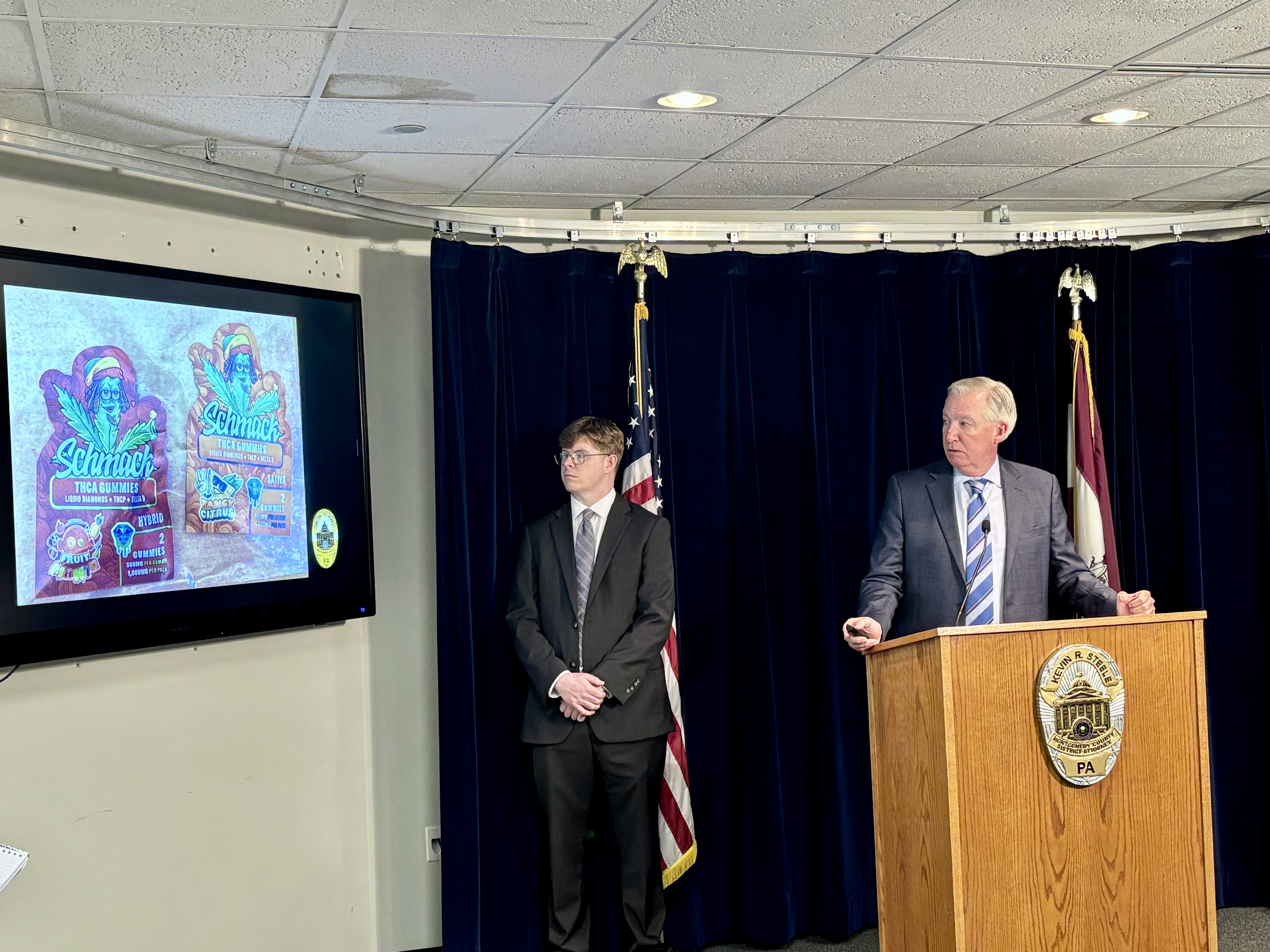
    District Attorney Kevin Steele said 46 retailers — including shops, gas stations, and corner stores throughout the county in towns including Haverford, Pottstown, and Narberth — ignored warnings from his office that some of the products on their shelves were illegal to sell in Pennsylvania outside of a medical marijuana dispensary.

    “I think folks thought we were blowing smoke, for lack of a better way to say this, about the things that were coming if they didn’t abide,” Steele said. “They haven’t abided, and so … they are facing felony possession with intent to deliver charges.”

    The crackdown comes about a year after Steele’s office issued a scathing grand jury report on the proliferation of smoke shops selling illegal THC products. The 107-page report was influenced in part by an Inquirer investigation that found some over-the-counter products were not legal at all — and often rife with harmful contaminants.

    The Inquirer began testing over-the-counter THC products in the spring of 2025, at a time when Pennsylvania law enforcement showed little interest in examining the products sold openly at smoke shops.

    But enforcement has risen steadily as storefronts multiply across the region — outnumbering schools in Montgomery County, according to Steele. The shops also peddle an array of other potentially dangerous products, from ultra-addictive 7-OH kratom pills masquerading as health supplements to unregulated psychedelic drugs baked into chocolate bars.

    Shops attempt to sell these supposedly legal THC products through a legal loophole set by the 2018 U.S. Farm Bill, which allows hemp-derived products to be sold if they contain minuscule amounts of Delta-9 THC.

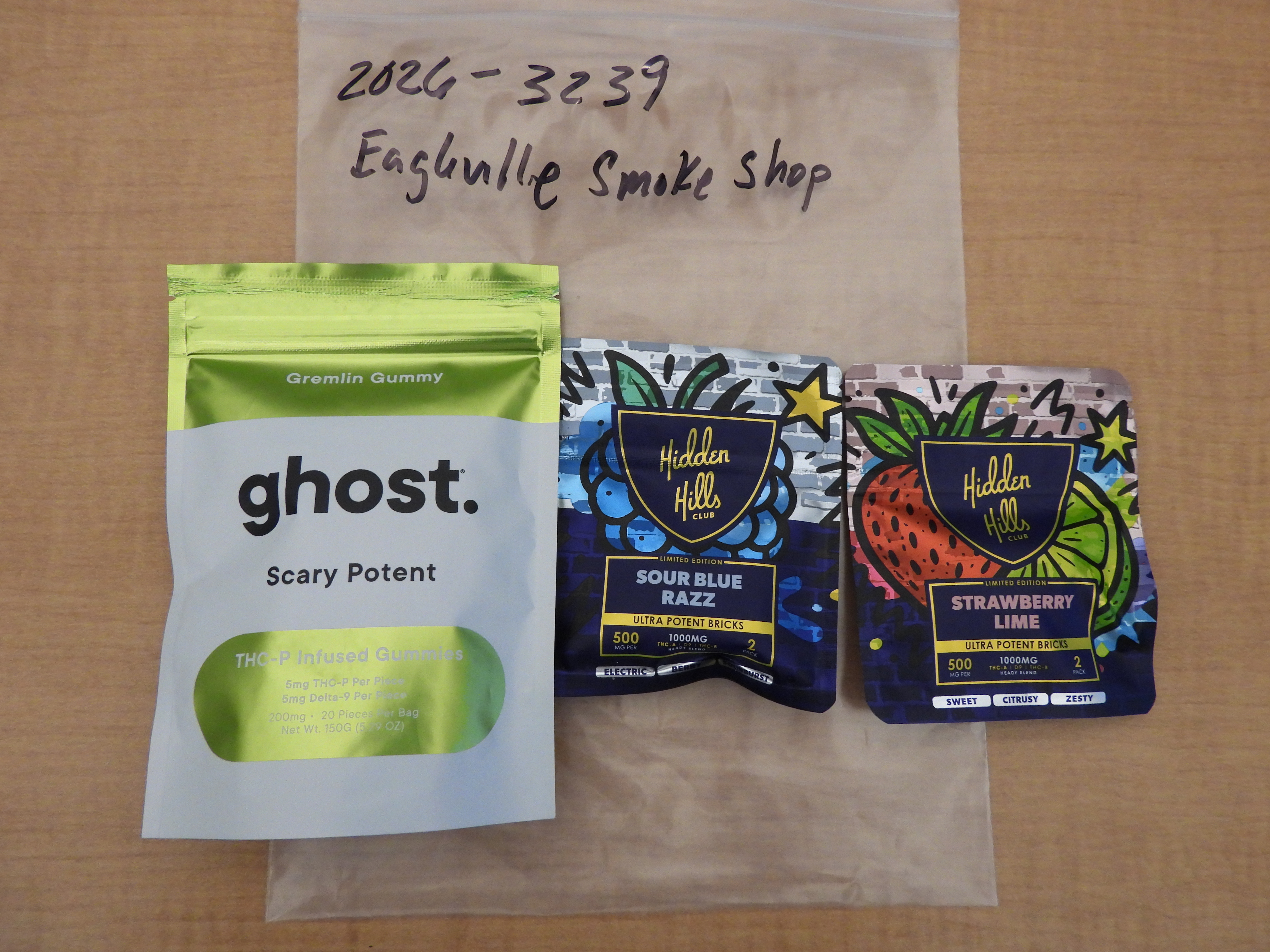
    However, the vapes, gummies, and other items sold in the shops investigated by his office were potent, and had enough THC in them to be intoxicating, according to the prosecutor. Some, he said, contained as much as 2,000 mg of THC and were sold in colorful packaging that seemed to target children.

    These gummies, which contain an amount of THC illegal to sell outside of a medical marijuana dispensary, were allegedly sold at Eagleville Smoke Shop, according to Montgomery County prosecutors.Montgomery County District Attorney's Office

    The charges were not filed against individual owners, but against the businesses themselves, Steele said. Penalties can range from fines to the revocation of business licenses.

    If necessary, Steele added, his office could file more serious charges, including racketeering, against individual owners.

    He stressed, however, that his efforts are not “anti-business.”

    “What we’re trying to do here today is to get businesses operating in Montgomery County to comply with the law, because we care about kids and public safety in our community,” he said.

    Steele’s office sent warning letters to vape shops across the county in December after releasing the grand jury report.

    The letters warned the shops’ owners that the sale of high-THC products was illegal, and asked them to check their inventory and remove any offending products from their shelves.

    Follow-up checks by investigators in subsequent months found that 46 of them were still selling the products, triggering the criminal charges.

    “I had hoped when we did the grand jury report and put people on notice that would be enough,” Steele said. “It was not.”

    Last year’s grand jury report was the product of a joint investigation with prosecutors in Bucks and Chester Counties. It found many stores used “misleading packaging and fraudulent lab reports” to openly sell banned substances across all three counties, and called for greater enforcement of store operators who “knowingly violate the law.”

    Nearly 300 stores selling hemp operate in Montgomery County, outnumbering schools, according to the report, a reality it described as “a public health crisis unfolding in plain sight.”

    The report’s findings referenced the 2025 Inquirer investigation that found samples of these products purchased from different stores in the Philadelphia region exceeded the 0.3% Delta-9 THC potency level cited in the Farm Bill, making them illegal to sell in Pennsylvania.

    Those items contained Delta-9 THC at levels from 200% to more than 2,400% over the federal limit. Six samples, strengthened by other hemp-derived THC variants, were as potent as most dispensary-grade marijuana.

    The Inquirer also found that some companies deceived consumers about what was in their products by digitally altering lab results to remove evidence of contamination. Seven of the samples tested by The Inquirer contained a potentially harmful fungus. Three contained pesticides, including one illegal chemical.

    Owners of some of the stores investigated by Montgomery County in 2025 told detectives they removed illegal products from their shelves after The Inquirer’s investigation was published that July, according to the grand jury report.

    “We are trying to address this for the sake of the children in our community, for the sake of the public who is misinformed about what these items are, and to deface myths that are out there that if a store is selling something like that, it must not be harmful,” Steele said. “That is not the case.”

    Staff writer Max Marin contributed to this article.

  • 83-year-old woman wounded by stray gunfire in North Philly

    83-year-old woman wounded by stray gunfire in North Philly

    An 83-year-old woman sitting on the steps in front of her house was wounded by stray gunfire from what police believe was a shootout early Wednesday evening in North Philadelphia, police said.

    The woman was struck twice in the torso from two bullets around 5:15 p.m. on the 2300 block of North Gratz Street, Chief Inspector Scott Small said.

    She was taken to Temple University Hospital, where she was listed in stable condition.

    Police found more than 40 spent shell casings at the scene fired from two different-caliber firearms, Small said.

    Nearby on Gratz Street, police found an empty sedan crashed into a light pole with its engine still running and a handgun inside, Small said.

    Video showed a blue Honda Accord heading east on Dauphin Street. It stops and someone gets out and starts shooting, Small said.

    It was not clear whom that person was shooting at, Small said.

  • A woman shot and killed a man breaking into her apartment. She later found out she knew him.

    A woman shot and killed a man breaking into her apartment. She later found out she knew him.

    A woman shot and killed a man who police say she knew after he broke into her Crescentville apartment on Wednesday.

    The woman shot the man in her second-floor apartment on the 4600 block of Castor Avenue around 5 a.m., Philadelphia Police Chief Inspector Scott Small told reporters on the scene. Neither person has been identified.

    First responders found a masked man, 29, in the bedroom, where he was unresponsive with a gunshot wound to the head. The man was pronounced dead at the scene around 5:30 a.m., Small said.

    When first responders removed the man’s mask to render medical aid, the woman, who police believe to be in her 20s, said she recognized the man and knew him.

    The woman is cooperating with investigators, who said they believe the man was shot after breaking into the woman’s apartment.

    “She heard someone breaking windows to the apartment, and then she encountered this male inside of the property,” Small said. “He was wearing a mask covering his face, and she fired one or two shots, striking this male in the head.”

  • Police in Bucks County investigating swastika vandalism at golf course near Jewish school

    Police in Bucks County investigating swastika vandalism at golf course near Jewish school

    Police in Bucks County are asking for the public’s help in identifying the perpetrator who vandalized a golf course with swastikas and an antisemitic slur near a Jewish school.

    The Yardley Borough Police Department on Monday said the vandalism occurred between Friday at 8 p.m. and Saturday at 7 a.m.

    “During this time, portions of the golf course greens were intentionally damaged with racial slurs and swastika symbols carved into the turf,” police said.

    “This type of behavior is not only a criminal act, but it is also hateful, offensive, and has no place in our community. The Yardley Borough Police Department is committed to thoroughly investigating this incident and holding those responsible accountable,” the police said.

    Anyone with information about what happened can contact the Yardley police at 215-493-2782 and ask for Officer Alex P. Bires at Ext. 411.

    <iframe src="https://www.facebook.com/plugins/post.php?href=https%3A%2F%2Fwww.facebook.com%2Fpermalink.php%3Fstory_fbid%3Dpfbid036TEzEio8BxWnbrCLsUkm2KXG7pVmfd8MbEXGLFGhKh6SHrSRnEXARUHKcx8V8Kval%26id%3D100087590190153&show_text=true&width=500" width="500" height="628" style="border:none;overflow:hidden" scrolling="no" frameborder="0" allowfullscreen="true" allow="autoplay; clipboard-write; encrypted-media; picture-in-picture; web-share"></iframe>

    “Despicable behavior!” Yardley Councilmember David Appelbaum wrote on Facebook as he shared the Yardley police post about the vandalism.

    The incident happened near the Abrams Hebrew Academy.

    Rabbi Ira Budow said police came to the school on Monday to review surveillance video, but the school’s cameras had not recorded the perpetrator.

    Budow said he has been director for 46 years and the school has never experienced antisemitism from the Yardley community.

    Nonetheless, Budow said, the academy has spent $150,000 a year on beefed-up security since the Oct. 7, 2023, Hamas attack on Israel that sparked the brutal conflict in Gaza.

    John Shapcott, director of golf and club operations at the Yardley Country Club, on Wednesday said members were told in a notice about the vandalism.

    “Two swastikas were scratched into the 10th green, and a racial slur was written in the greenside bunker on the 4th hole,” the country club told members.

    The club immediately contacted police, notified Abrams Hebrew Academy, and promptly repaired the damage, the statement to members said.

    “Yardley Country Club unequivocally condemns hate speech, fascism, antisemitism, and all forms of hateful conduct. Such acts are reprehensible, have no place at the Club or in our community, and will not be tolerated. The Club will continue to cooperate fully with local authorities as they investigate the incident and work to prevent similar acts,” the statement said.

    Adrienne King, president of the NAACP Bucks County Branch 2253B, said in an emailed statement Tuesday night that her organization “was deeply disturbed to learn of the racist and antisemitic vandalism discovered at the Yardley Country Club. Swastikas and racial slurs are not simply acts of vandalism. They carry a painful history and send a message of hate and intimidation that can impact an entire community.”

    King said the incident was “especially troubling given other recent incidents here in Bucks County. Just last week, our Branch spoke out following alleged threats containing racist and anti-Muslim language directed toward a historically Black church in our county.”

    She added: “We cannot become numb to expressions of hate simply because there is so much happening around us. Each time they occur, we have a responsibility to name them, condemn them and stand with the communities affected.”

    The Pennsylvania Human Relations Commission said it was offering its “unwavering support” to Abrams Hebrew Academy.

    The commission “is also grateful to the Yardley Borough Police for their swift action to investigate this incident as a potential hate crime and their request for community assistance are encouraging steps toward accountability. We urge anyone with information to come forward, as public cooperation is critical to identifying those responsible and ensuring justice is served.”

    The American Jewish Committee Philadelphia/Southern N.J. said in a statement on Wednesday that the antisemitic vandalism was “deeply disturbing and unacceptable.”

    The organization continued: “As the Jewish community prepares to mark the third anniversary of the October 7 terrorist attacks, many Jews are already grappling with an increasingly hostile environment and are feeling especially vulnerable and concerned for their safety.”

    The committee added: “This is a moment for people of good conscience to stand together in rejecting hate in all its forms. We all have a responsibility to ensure that our communities remain safe, welcoming, and inclusive.”

  • Philly DA Larry Krasner said the federal judge who accused him of crimes should be removed from the case

    Philly DA Larry Krasner said the federal judge who accused him of crimes should be removed from the case

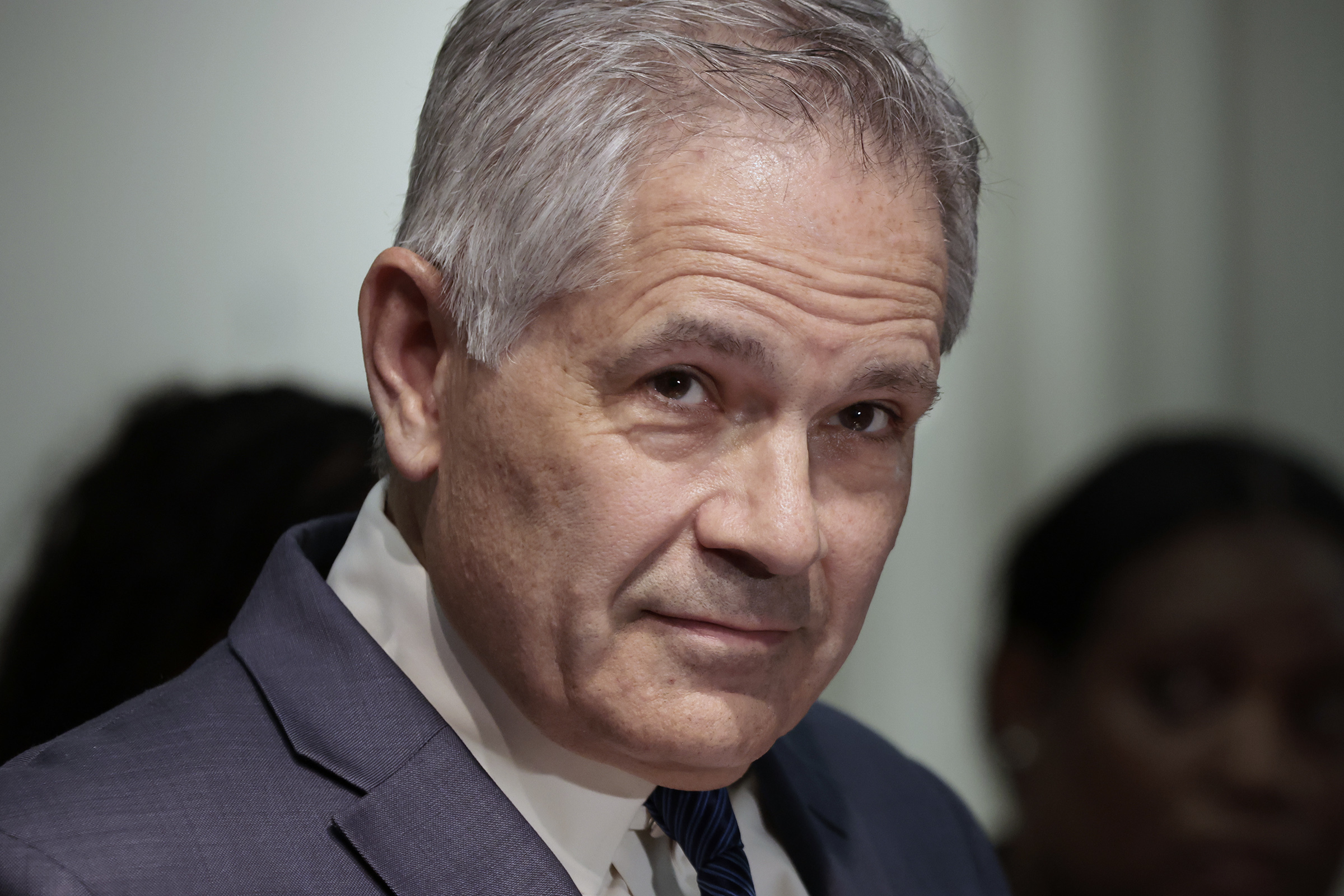
    Philadelphia District Attorney Larry Krasner said Wednesday that the federal judge who accused him of potentially breaking the law while overseeing a post-conviction case had reached “baseless,” illogical, and legally unsupported conclusions — and that the judge should be removed from the case because he had acted more like “an advocate against DA Krasner” than an impartial arbiter.

    In a series of documents filed in federal court overnight, Krasner took the unusual step of openly criticizing U.S. District Judge Paul S. Diamond — sometimes using strikingly pointed language.

    In one brief, signed by Krasner and a subordinate, the district attorney said Diamond’s suggestion that Krasner might be guilty of criminal conspiracy relied on allegations “more closely resembling fever-dream conspiracy theories than evidence.”

    Other suggestions of criminality by Diamond — which revolved around actions Krasner took while overseeing the case and his staff — were equally wrong, Krasner wrote.

    “When it comes to all of these nominally-serious-but-actually-wafty accusations of criminal conduct, tempered by ‘coulds’ and ‘mights’ and ‘may haves,’ [Diamond’s] analysis rests on nothing of substance,” he wrote.

    Then, in a separate nine-page letter signed only by Krasner, the city’s top prosecutor said Diamond’s “factual findings and accusatory legal conclusions twist the truth to the point of breaking in ways that defy logic and employ Orwellian language.”

    And if Diamond’s assertions had been made in a setting other than a court case, Krasner said, “these accusations could be litigated as civil claims of defamation, slander, or libel.”

    Finally, in a third document, Krasner and Assistant District Attorney Thomas Gaeta wrote that Diamond’s actions had been so out of line that he should no longer oversee the case. At one point, they said the proceedings had become a “circus,” with Diamond the “ringmaster.”

    And they said Diamond — who was appointed by President George W. Bush, a Republican — had displayed his biases against Krasner, a Democrat, in a number of ways, including by asking improper questions of witnesses, reaching inconsistent conclusions about which witnesses were credible, and improperly blaming and discrediting Krasner for not testifying — even though Diamond had never asked him to.

    Diamond’s conduct, they wrote, “provides a clear and obvious view into the type of unfair and improper proceedings and decisions [Diamond] deigned to make.”

    The filings served as the latest chapter in a saga that has been marked by a series of explosive developments about Krasner’s office in recent months. The episode has also raised legal and political questions about Krasner’s future.

    Most recently, in mid-September, Diamond filed a stunning memorandum in which he said Krasner and one of his top supervisors, Matthew Stiegler, may have committed crimes including conspiracy, obstruction of justice, or perjury while participating in the underlying case. Diamond also said he had referred the matter to the U.S. Attorney’s Office for potential investigation. Federal prosecutors have declined to comment.

    Krasner has consistently disputed the notion that his actions were improper and appealed Diamond’s ruling, which also disqualified him and Stiegler from participating in the case moving forward.

    The underlying matter is centered on Dennis Johnson’s attempts to have his 2009 murder conviction overturned; Krasner’s office had once supported that effort, but reversed course earlier this year after some of his staff discovered that a previous prosecutor had made mistakes in her handling of the appeal.

    Wednesday’s filings served as Krasner’s most extensive response yet to accusations that he had committed misconduct while his staff tried to rectify those errors in court.

    In Krasner’s view, the fact that his office was seeking to correct its own mistakes in open court was just one example of how Diamond’s conclusions — including that Krasner may have conspired to concoct a false cover story about the episode — “cannot logically be reconciled with each other.”

    “I know many of the facts found by [Diamond] and conclusions inferred by [Diamond] are not correct from personal knowledge,” Krasner wrote. “I lived it.”

    Dispute over ‘false narrative”

    The roots of the controversy date to 2022, when then-Assistant District Attorney Jaclyn Mason filed a brief supporting Johnson’s bid to have his conviction overturned.

    Krasner was unaware of the case at that time, he said in his new filings. But he became involved this spring, when some of Mason’s supervisors in the law division concluded that she had made significant errors in her brief, and that they needed to try to withdraw it.

    Krasner approved a document alerting Diamond to the mistakes and apologizing for Mason’s errors.

    Mason, meanwhile, resigned and said Stiegler — her former boss — was most at fault.

    Diamond, in his Sept. 15 memorandum, said that in the aftermath of Mason’s resignation, staff in Krasner’s office discussed how the errors occurred. And in those discussions, he said, Krasner and Stiegler worked to create a “false narrative” to blame Mason, including by considering a Stiegler proposal: to review all of Mason’s old cases and find additional errors they could use to cast Mason as a “rogue” prosecutor.

    Diamond said such an effort could amount to criminal conspiracy.

    But Krasner, in his filings, called that conclusion “baseless,” saying Stiegler’s proposal was to review Mason’s old cases to see if there were additional errors — not to manufacture problems they could improperly attribute to her.

    “Nothing in the record supports the Court’s determination that providing a broader account of their competence would have advanced a ‘false narrative,’” Krasner wrote. “They either had or had not made errors in other cases, and there was absolutely no testimony indicating that DA Krasner (or Stiegler, for that matter) suggested submitting false allegations of error.”

    In addition, he said, Stiegler’s proposal was never actually pursued once other law division supervisors voiced opposition to it — further diluting any notion that Krasner was seeking to force his staff into lying to Diamond.

    “Stiegler proposed a strategy that DA Krasner considered, but DA Krasner also considered and accepted the Law Division supervisors’ advice that it was inadvisable,” Krasner wrote. “This is not misconduct.”

    ‘Reasonable’ consequences?

    Diamond, in his Sept. 15 memorandum, also took issue with Krasner threatening “consequences” for prosecutors who told the judge about another issue roiling the district attorney’s office: whether to refer Johnson’s case to the state attorney general’s office.

    The law division supervisors handling the case after Mason’s resignation — Katherine Ernst, Steven Wildberger, David Napiorski, and Peter Andrews — generally agreed that was the appropriate course of action because of the inner-office drama consuming the matter. And they repeatedly urged Krasner to refer the case to avoid what they viewed as a conflict of interest.

    But Krasner disagreed. And in his filings, he said that as the referral discussions took place over several weeks, he had consulted with several ethics experts who generally agreed there was no conflict necessitating a referral.

    As for the threat of consequences, he said, he was not seeking to prevent his staff from telling Diamond the truth about their deliberations — which the judge later said could amount to obstruction of justice. Instead, Krasner said, he was seeking to prevent them from submitting court documents without his approval.

    “That is particularly so where, as here, those pleadings are premature, legally incorrect, and unnecessary,” Krasner wrote. “It is reasonable to expect consequences for filing a pleading the District Attorney disapproves of while he is still examining the issue and determining the correct course of action.”

    Seeking the judge’s recusal

    In addition to disputing Diamond’s conclusions about his actions — and whether they constituted crimes — Krasner went on to say the judge should no longer oversee the case, which remains pending.

    He said Diamond’s “apparent bias is evident from a number of remarkable circumstances,” all of which should lead to his removal, according to the district attorney.

    One example, Krasner said, was that as Diamond questioned witnesses in his courtroom this summer about what happened in the case — including asking questions of lawyers who still work in Krasner’s office — the judge “departed from [his] role as a neutral arbiter and undertook an active inquisitorial and advocacy role.”

    “The Court’s questions and assertions reflected the Court’s apparently preconceived view that the DAO’s conduct in all cases is inherently suspect,” Krasner wrote.

    Diamond also made “selective credibility determinations” about which witnesses he believed and which ones he discredited, the DA wrote. And he took particular issue with what he cast as Diamond’s reluctance to criticize Mason: Krasner, in his filing, said there were “many additional reasons to question the honesty of Mason’s testimony, all of which were ignored by the Court.”

    Then there was the issue of Krasner’s failing to testify.

    Diamond, in his memorandum, blamed Krasner for not taking the stand. But Krasner, in his filing, said Diamond — who scheduled the hearings and set the witness list — “appears to have taken pains to avoid having DA Krasner testify.”

    In any case, he said, it was improper for Diamond to assume that Krasner’s lack of testimony was somehow “concession by silence.”

    Overall, Krasner said in his motion, the judge “served as a prosecutor for DA Krasner and his office,” thereby requiring his recusal from the matter.

    In his nine-page letter, Krasner went even further, saying he believes Diamond should be recused “from this matter and every other matter involving the Philadelphia District Attorney’s Office for the foreseeable future.”

    It was not immediately clear how Diamond might respond to such a request. On Wednesday, he said any additional paperwork on that issue must be filed within a week.
  • Black Panther-style group members arrested in Chester, as mayor decries their presence

    Black Panther-style group members arrested in Chester, as mayor decries their presence

    The leader of a Philadelphia offshoot of the Black Panther Party for Self-Defense was charged with a firearms crime for carrying a concealed gun without a permit in the city of Chester — and the group’s growing visibility in the Delaware County community is sparking a clash with the city’s mayor.

    Paul Birdsong, who founded Philly’s Panther group, was arrested this summer during what the group says was an armed community patrol of Chester’s streets.

    Birdsong had been carrying two holstered handguns, one of which police said was partially obstructed by his waistband and constituted carrying a concealed weapon, according to the affidavit of probable cause for his arrest.

    Birdsong, 40, is out on bail and appeared earlier this month in Magisterial District Court, where a judge ruled he should stand trial for that crime.

    The judge dismissed two counts of disorderly conduct and one count of resisting arrest stemming from the July 11 incident, court records show.

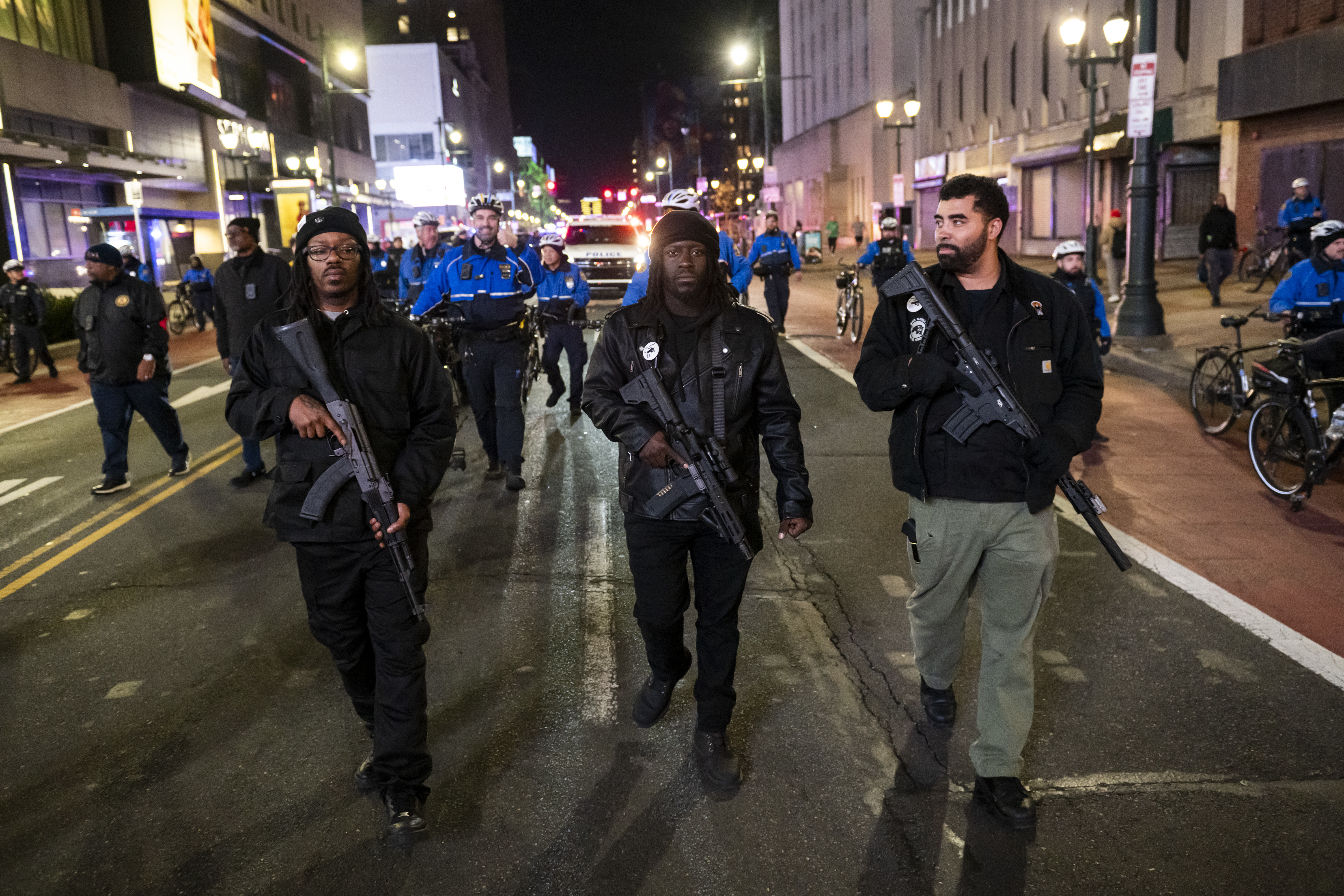
    Birdsong’s arrest, as well as the arrest of another Panthers member in Chester in August, marked the latest run-in between police and the armed citizens group, which is styled after the 1960s political and militant organization. The Panthers first made headlines this winter during anti-ICE protests during which they carried assault-style weapons in Center City.

    Panthers members say they are Second Amendment advocates and regularly conduct patrols in the name of public safety. They say the guns are not meant to intimidate, but to deter crime and encourage responsible firearms ownership. The group also holds weekly giveaways of food and essential supplies for those in need.

    But Chester Mayor Stefan Roots has decried the group’s foray in the city, saying its presence has created “horrible optics” as officials try to reduce gun violence, especially among young people.

    To address the Panthers’ presence, Roots and members of Chester City Council met with Birdsong and other members in a closed-door meeting on Tuesday.

    Councilmembers appeared to have left the meeting with supportive views of the group. But tensions flared when Roots grew frustrated during talks and abruptly left the gathering early, according to Birdsong.

    Roots declined to comment Tuesday, saying only that he had not been aware of the Panther members’ arrests. He did not immediately respond to an additional request for comment Wednesday.

    Birdsong made headlines in May when Philadelphia police revoked his city-issued gun license along with those of four other Panthers.

    The following month, in an unusual show of federal oversight, the Department of Justice’s Civil Rights Division opened an investigation into whether the police department violated the Second Amendment by revoking gun licenses without proper cause. The filing did not name Birdsong or other Panthers in the inquiry.

    A spokesperson for DOJ did not return a request for comment on the status of the investigation. A police spokesperson referred The Inquirer to the city’s law department, which declined to comment.

    After the restrictions in Philadelphia, Panthers became active in Chester, where members have patrolled in the past.

    In July, Birdsong was armed when he was stopped by a police officer near Barclay and West 5th Streets, according to the affidavit of probable cause for his arrest.

    The officer said that he recognized Birdsong from a past encounter in Chester, and that he stopped him after seeing one of his handguns holstered “inside his right pants pocket with the majority of the firearm being concealed from view,” the document said.

    Birdsong questioned why he was stopped and began to record the interaction, the affidavit said. He began to “curse and yell” when additional officers arrived, and he was detained, the document said.

    In an interview this week, Birdsong disputed the officer’s account. He said that the gun was clearly visible and that he believes the enforcement was racially motivated.

    “They’re arresting us as an effort on their part to bully us, to scare us,” he said.

    Carrying a firearm in the open without a license is legal in Pennsylvania — but not in Philadelphia, where a license is required to carry either open or concealed.

    Birdsong’s lawyer, Lyandra Retacco, said the matter would be resolved in court.

    The July incident was not the only time Panthers have clashed with Chester police.

    On Aug. 28, member William Ozah was charged with disorderly conduct and evading arrest after police said he ran from an officer who attempted to stop him for having a knife protruding from his pants pocket, according to the affidavit of probable cause for his arrest.

    The officer used a Taser to subdue Ozah, the document said. During the chase, the officer said, Ozah tried to reach into a satchel, which he believed concealed a firearm.

    After detaining Ozah, officers recovered a knife and a Bryna SD pepper-ball pistol — a less-lethal firearm that uses compressed gas to shoot projectiles filled with a chemical irritant.

    He was held for court on both charges, court records show.

    Meanwhile, Panthers have continued their Chester presence.

    In addition to armed patrols, the group is handing out informational pamphlets to those curious about the group’s mission: to “protect and defend ourselves and our beautiful Black people,” it said.

    The group had arrived, the pamphlet said, because “people reached out to us for help.”

    This article has been updated to reflect comments made by Birdsong’s attorney.

  • The Philly man charged with stabbing another driver during a road-rage dispute in Lower Merion will face a county judge

    The Philly man charged with stabbing another driver during a road-rage dispute in Lower Merion will face a county judge

    After being boxed in by two cars, rear-ended by a U-Haul truck, and punched in the face through his car’s open window, a man driving to Philadelphia on I-76 said he heard Samuel Marquez say a few words that filled him with dread.

    “Go get my knife.”

    The man testified Tuesday at Marquez’s preliminary hearing that, fearing for his life, he crawled out the window of his damaged Mercedes-Benz and called 911 from a median on the Blue Route in Lower Merion after taking the exit from I-76.

    And while trying to read the license plate of one of the vehicles involved in the four-car crash Sept. 6, the man said, he felt a blow to his side. At first, he said, he thought Marquez had punched him. Then he saw the blood.

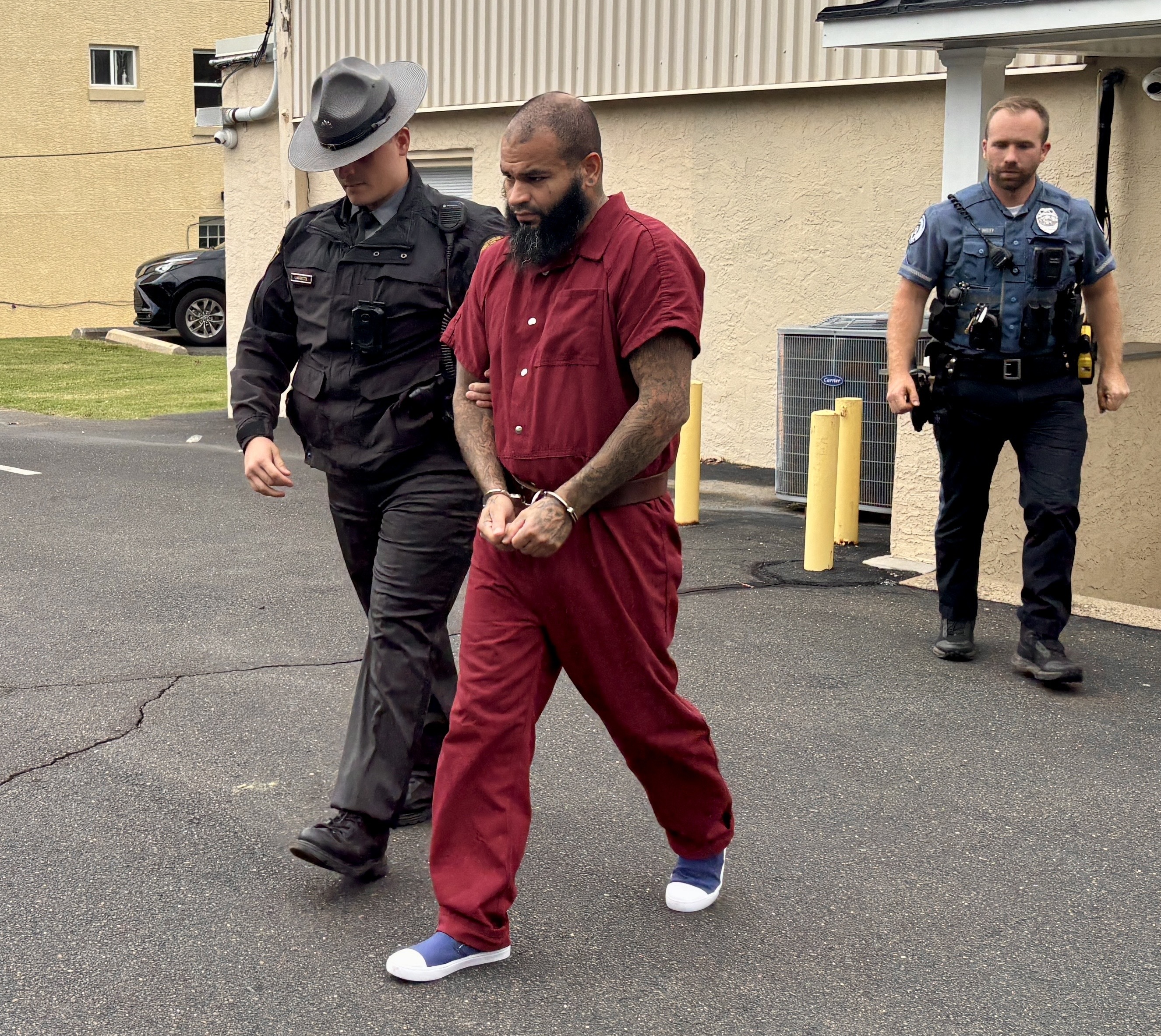
    Marquez, 40, of Kensington, was held for trial on charges of aggravated assault and related crimes in the alleged road-rage stabbing, which left the victim with a 2-inch wound to his lower abdomen, as well as a shallow slash to his left arm.

    Marquez’s attorney, Andrew Levin, said afterward that, given the chaotic nature of the fight on the highway, it was unclear who held the knife that stabbed the victim: The melee involved Marquez, as well as his nephew, his girlfriend, and another male relative.

    “You have multiple vehicles involved, and what I believe is a mutual physical altercation,” Levin said. “It’s clear that the complaining witness got stabbed. I don’t think it’s clear by who.”

    Assistant District Attorney Robert George said the evidence was clear that Marquez was the one holding the knife, which investigators later recovered, still covered in the victim’s blood, from behind a Sunoco where he parked the U-Haul.

    That truck was part of a caravan of vehicles, including a Toyota Sienna minivan and an Acura SUV, whose drivers were heading to Philadelphia to help Marquez move to the city from Reading, according to the affidavit of probable cause for his arrest.

    During the trip, a minivan driven by Marquez’s girlfriend had engine trouble, and the group pulled onto the highway’s shoulder to fix it, the affidavit said.

    When they merged back onto the road, they cut closely in front of a Mercedes-Benz, the driver of which told police he honked his horn and drove around the group.

    The man testified Tuesday that Marquez was driving aggressively, veering into his lane and gesturing at him as he drove. The other vehicles connected to Marquez tried to pass him, he said, but he did not allow them to do so. He also brake-checked the U-Haul to get it off his tail.

    “Wouldn’t you, if you thought something bad was going to happen?” the man testified.

    Eventually, the man took the exit onto a ramp connecting I-76 with I-476, known as the Blue Route. As he did so, the U-Haul intentionally rammed his vehicle, while the minivan and SUV drove past and stopped in front of him, he said.

    The fight, and eventual stabbing, broke out afterward, and Marquez fled in the U-Haul.

    He was later arrested at Memorial Park in Bryn Mawr. The knife police believe he used in the stabbing was found nearby.

    At the time of the highway stabbing, Marquez had an active arrest warrant out of Delaware County in connection with the gunpoint robbery of a Royal Farms gas station in Upper Chichester in November 2022.

    In that case, Marquez plotted the robbery with Elizabeth Serrano, his girlfriend, who worked at the store as a cashier, according to the affidavit of probable cause for his arrest.

    Serrano pleaded guilty to conspiracy to commit robbery and a related crime in 2024, and served a year in county jail, court records show.

    Marquez remained in custody in the road-rage case with bail set at $1 million. He will be arraigned in Montgomery County Court in November.

  • Pa. Supreme Court to decide whether ban on mandatory life terms for second-degree murder is retroactive

    Pa. Supreme Court to decide whether ban on mandatory life terms for second-degree murder is retroactive

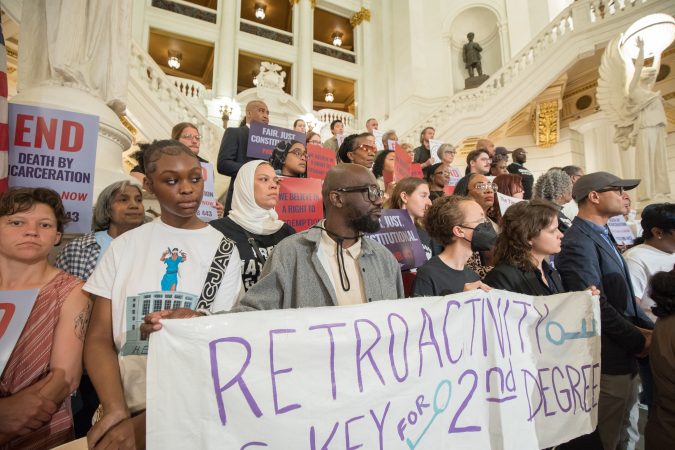
    The Pennsylvania Supreme Court agreed Tuesday to decide whether its March ruling striking down automatic sentences of life without parole for second-degree murder applies to the people already serving them.

    The high court will rule in the case of Jerome Coffey, a Philadelphia man convicted in a 1992 killing in which prosecutors said a group of men posing as law enforcement officers boxed in a man’s car and shot him.

    The court’s decision will reach well beyond Coffey. It will settle whether roughly 1,100 people — including more than 500 convicted in Philadelphia — can ask judges for new sentences, or will remain bound by a punishment the state’s highest court has ruled unconstitutional.

    In a unanimous decision in March, the justices said Pennsylvania’s mandatory life sentence for second-degree murder violates the state constitution’s ban on cruel punishments.

    Second-degree murder covers killings committed during another felony — even when the defendant did not kill anyone. The high court held that judges must weigh a person’s individual role before imposing a punishment that lasts a lifetime.

    But the high court did not say whether its ruling applied to people who had already been sentenced. Instead, it put the decision on hold for 120 days so the General Assembly could write a new sentencing law and, if lawmakers chose, decide the question of retroactivity themselves.

    The legislature did neither, as measures introduced in both the Republican-controlled Senate and Democratic-controlled House failed to advance.

    Tuesday’s order in Coffey’s case comes weeks after four other people serving life sentences asked the court to take up the same question.

    Coffey was convicted in 1994 in the death of Johnny Moss two years earlier. According to court records, three men got out of two cars that had pinned Moss’ vehicle near 24th and Thompson Streets in North Philadelphia. One man shouted “task force” and pulled Moss from his car.

    Moss was shot in the head. His brother, who was standing beside the car, was shot in the arm.

    At trial, prosecutors said Coffey was the man who shouted “task force,” while Coffey’s mother and sister testified that he was at home that night. The jury convicted him of second-degree murder, conspiracy, and related crimes. It acquitted his codefendant, Lee Smith, of all charges.

    No physical evidence tied Coffey to the killing, his lawyers have said, and a key prosecution witness recanted before trial. The lawyers also said prosecutors withheld evidence that could have helped Coffey, but the state Superior Court rejected those contentions.

    And on Tuesday, the state Supreme Court declined to review them, limiting the scope of his appeal to the sentencing question alone.

    Even so, Bret Grote, the legal director of the Abolitionist Law Center, which represents Coffey, praised the court’s decision to hear the case.

    “This is what those who have been serving this sentence have been waiting for,” said Grote, who also represented Derek Lee, the Pittsburgh man whose appeal of his life sentence for his second-degree murder conviction led to the court’s decision in March.

    Grote said Coffey, who founded the grassroots Human Rights Coalition from prison, will be “well able to demonstrate” why the decision “should apply to people like him who need to be home with us out here in our communities.”

    Because Coffey’s case began in Philadelphia, the district attorney’s office will argue for the state in his appeal. In an interview Tuesday, District Attorney Larry Krasner reiterated his support for retroactivity, saying, “We cannot have a legal system where people sit in jail for the rest of their lives for an unconstitutional sentence.”

    He added that “this office, consistent with its obligation to seek justice and uphold the Constitution, will support retroactivity” in Coffey’s case.

    Prosecutors elsewhere have signaled resistance, however. In August, the Pennsylvania District Attorneys Association’s communications chair, Berks County District Attorney John Adams, said prosecutors would not concede that the high court’s ruling applies retroactively without a new sentencing law.

    Coffey’s case is unlikely to be resolved quickly. And in the meantime, lawmakers could still act.

    Some stakeholders have predicted that legislative agreement on how to handle such cases is more likely after the Nov. 3 elections. A law that applies to people already serving the sentence could make the court’s answer moot.

    But the outcome was always likely to land back with the high court without action by lawmakers, said Ben Lerner, a former Philadelphia Common Pleas Court judge and former chief defender.

    “I’m not surprised,” Lerner said Tuesday. The high court, he said, was going to give the legislature “the first crack” at reforming the system. But if it failed, “the court was always going to have to step in and do what needs to be done.”

    “It’s too important an issue,” he added. “Too basic a right.”

  • Neighbors question what they really knew about their Olney block amid ‘House of Horrors’ probe

    Neighbors question what they really knew about their Olney block amid ‘House of Horrors’ probe

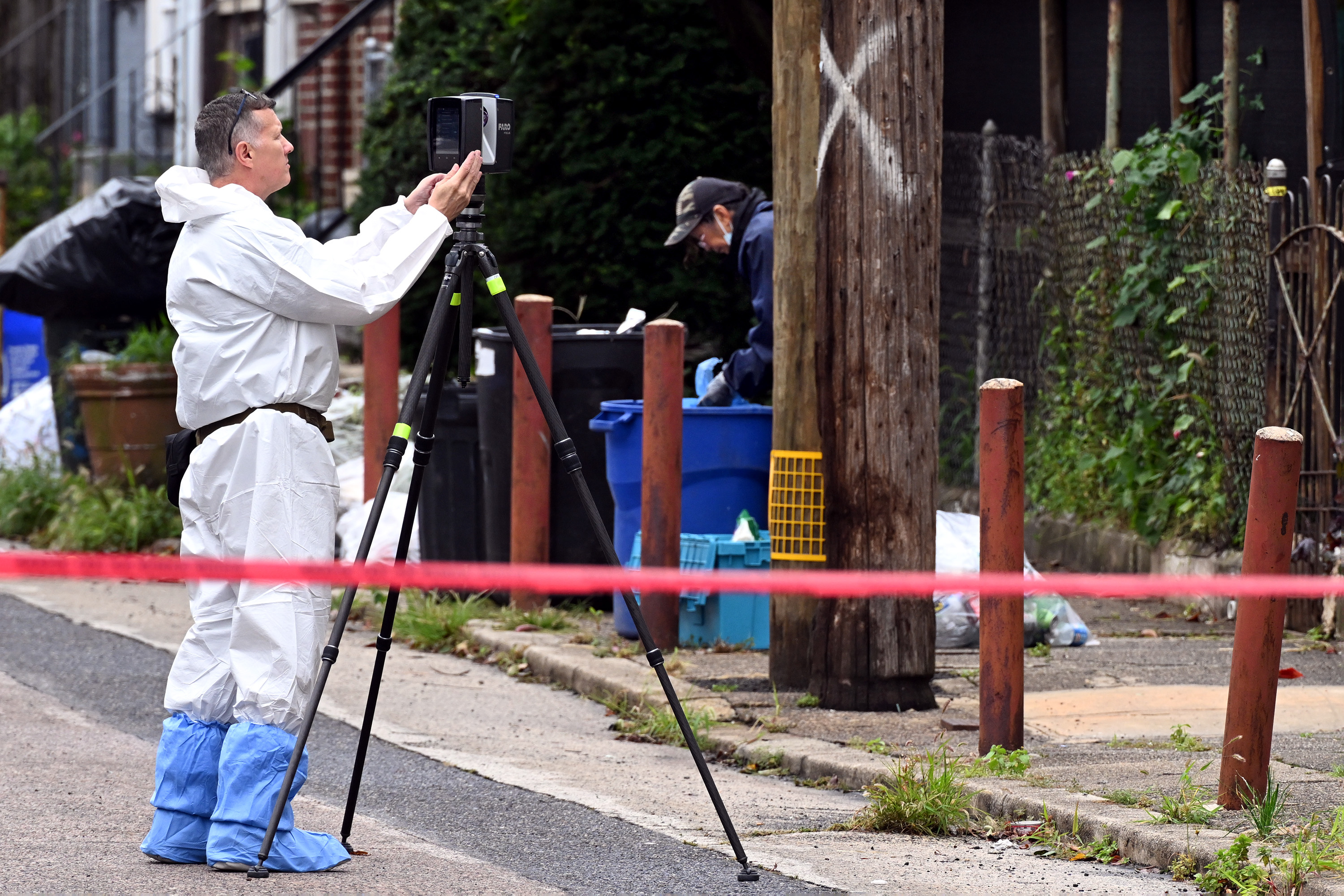
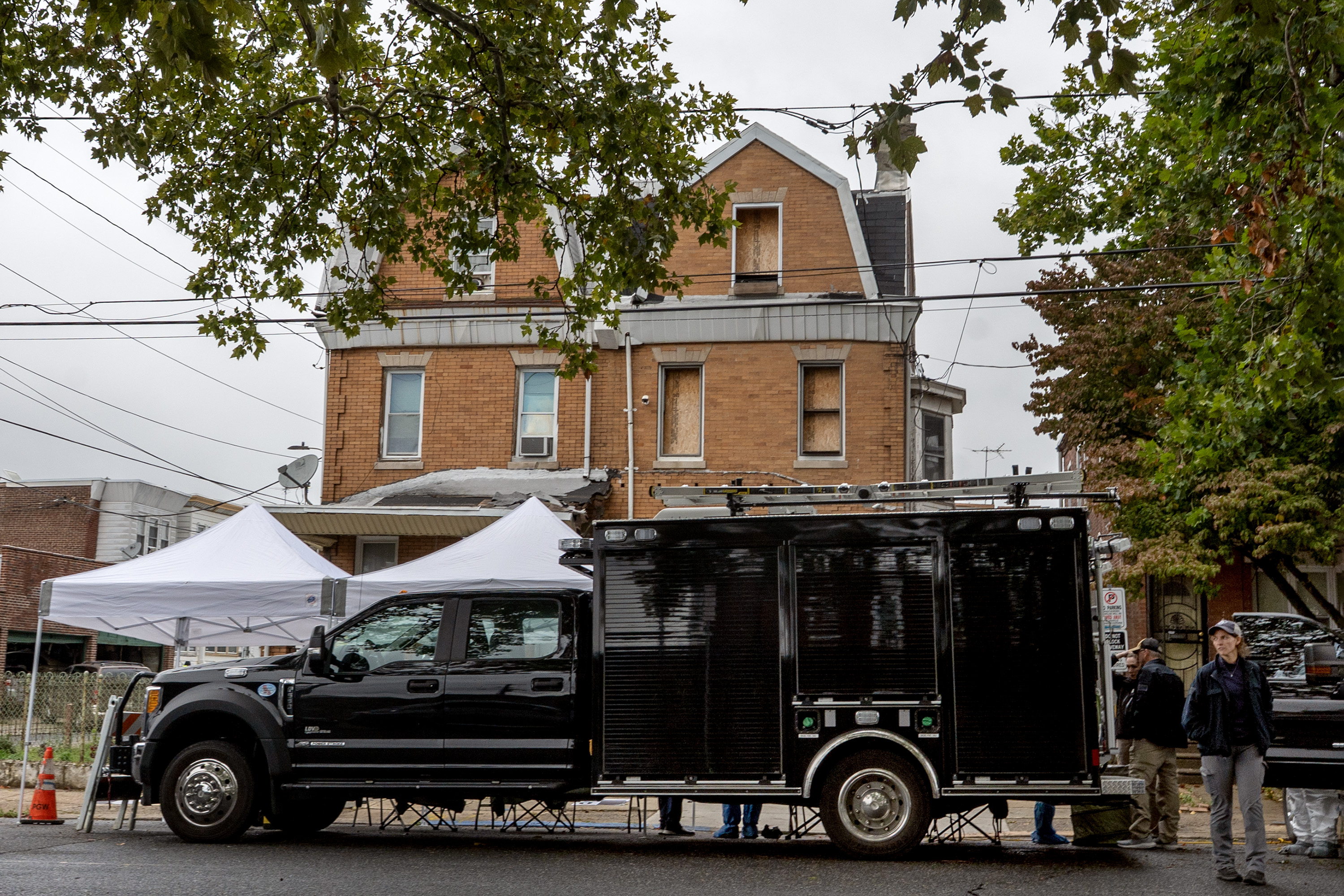
    On Monday morning, a gray speckled cat stretched two long paws up the steps of the sepia-toned three-story home at 417 West Chew Ave. Moments later, a man dressed in a white suit gently kicked a blue-bootied foot in its direction.

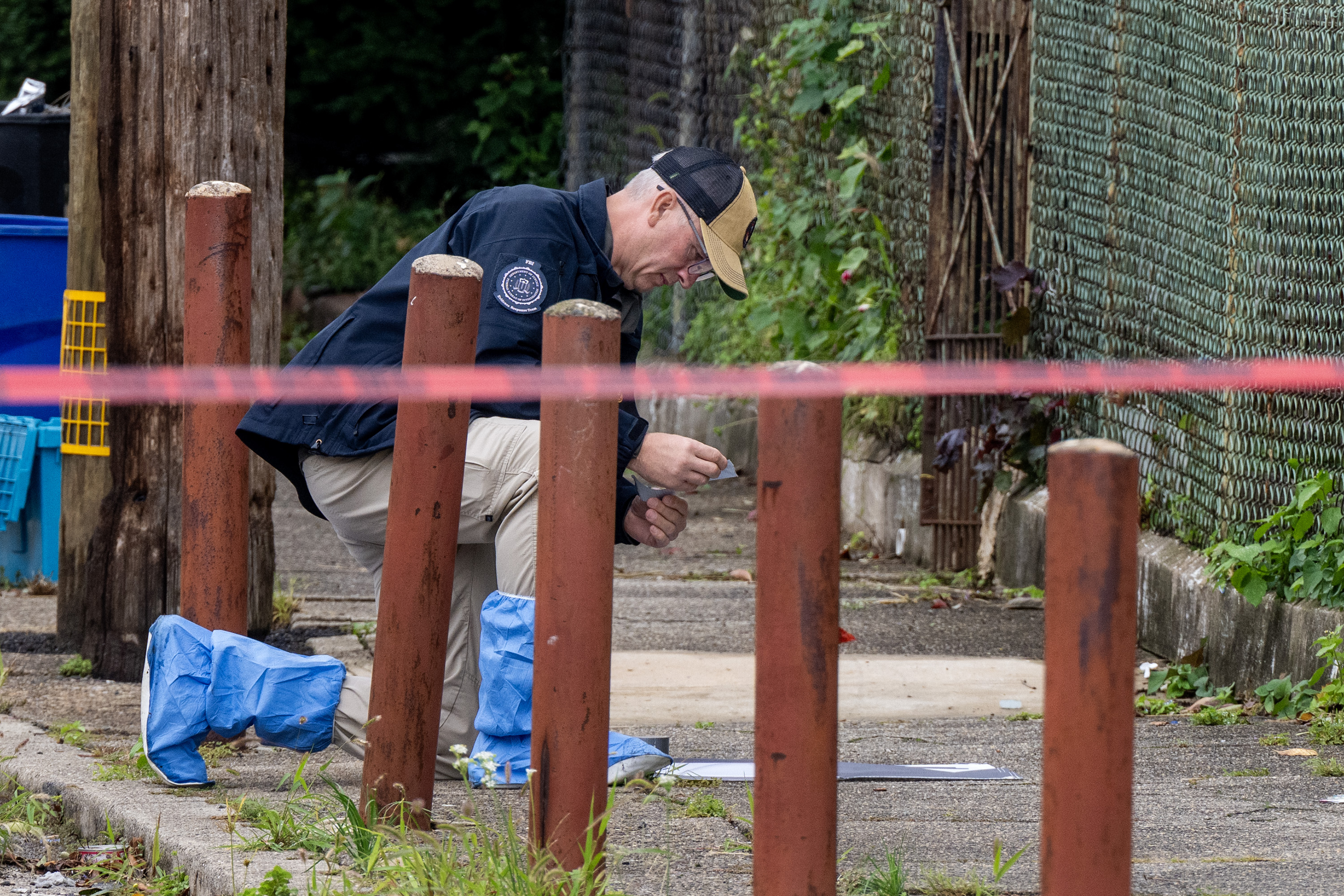
    No unauthorized personnel would be entering the Olney “House of Horrors” anytime soon — feline or otherwise — not on the watch of the FBI and Philadelphia police.

    Monday marked the beginning of a fresh week of investigative work inside the home that became known for the drug, sex, and porn enterprise Raymond “R.C.” Horsch ran inside the brick walls. Horsch, who died last year at 82, is now linked to at least seven missing women, and left behind a trove of photos and videos investigators believe show real and staged violence and, possibly, murders.

    Police declined to discuss what investigators are looking for, only revealing that law enforcement would be in the area until around mid-October.

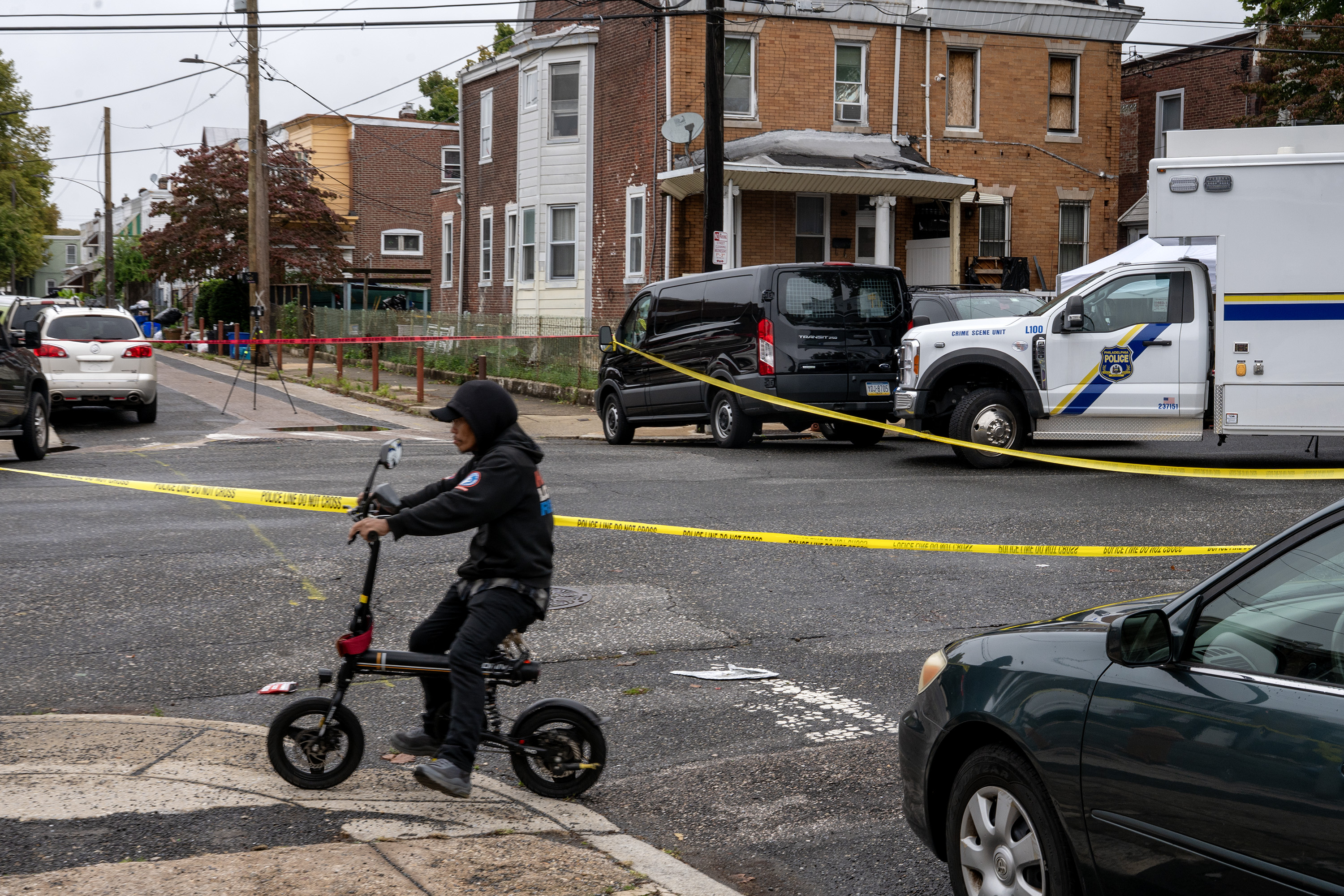
    However, yellow and red crime tape and police cars around the perimeter wouldn’t curb the curiosity of pedestrians, workmen, food delivery drivers, students, children, and former neighborhood residents who passed by the scene Monday.

    The scene outside the former home of Raymond “R.C.” Horsch on Chew Avenue. Tom Gralish / Staff Photographer

    Throughout the morning, residents ducked under crime tape only to be chastised by police. Cars slowed to a stop as they drove perpendicular to West Chew and caught a glimpse of the law enforcement vehicles clustered around the home. When a toddler wearing a backward baseball cap and plaid shirt pointed at the home, his guardian turned their walk around.

    Around noon, 31-year-old Fernanda Gabriela Armijos Nugra parked her car around the block and got out wearing white sweatpants, a scrunchie in her hair, and turquoise bands in her braces. She lives seven houses away from Horsch’s, she said.

    Knowing what went on so close to her and her girls, ages 5, 8, and 15, has transformed her attitude about the neighborhood, she said.

    “I walk around here with my daughters, and we really are afraid about what happened in that house,” she said in Spanish.

    Though she never suspected the home could be linked to violence or murders, she said she had a bad feeling about the men who lived there, Horsch and his son, Eugene. Eugene Horsch is now in prison on federal charges from a June car stop near Independence Hall in which authorities recovered the fake ID of a missing woman.

    “I used to see the son sitting on the steps of that house all the time and I’d tell my husband, ‘There goes a man with a really mean look on his face,’” she said. “When I saw the news, I was in shock.”

    She’s only lived in the area two years and is now contemplating moving. The same is the case for Imani Hardy, 30.

    “I don’t want to be here,” Hardy said from her parked car as she watched investigators come and go. “I just want to provide a different life for my kids.”

    She and her sons didn’t encounter Horsch, as far as she knows, but the knowledge that his operation was so close is haunting, she said.

    It’s chilled the atmosphere in the neighborhood. And something about that change feels permanent, she said.

    “We still have to live our normal lives, but being as though we were in a neighborhood where someone was doing horrific things to people … It makes people be more alert,” Hardy said.

    A member of the FBI Evidence Response Team outside on Monday during the beginning of a fresh week of investigative work inside the homeTom Gralish / Staff Photographer

    Officers and reporters lifted police tape to help people on the cordoned-off block get out in their cars. Police kept watchful eyes over everyone who came and left, whether it be a neighbor on a bike or two workmen rolling boxes on a dolly up to the front door of a home beside Horsch’s. A squirrel darted toward the Horsch home on a telephone wire and turned back once the whirring of a drone grew louder.

    Alexis Velez, a befreckled 18-year-old with Shirley Temple-esque corkscrew curls, lives about five minutes from the Horsch house. It’s smack between her and her grandmother’s home. She used to walk by the Horsch house daily to catch the bus to get to high school. She thinks about what could have been if she’d been in the wrong place at the wrong time.

    “It’s terrifying, just thinking about it. I could have been one of those victims. I’m in the vicinity,” she said.

    She’s now a freshman at La Salle University studying psychology, she said. Maybe one day she’ll come to learn what possesses the human mind to pursue violence. But, for now, it’s hard to wrap her head around it.

    “I just think it’s insane,” she said.

    The neighborhood had felt like a safe place where people looked out for one another, Velez said.

    As she headed home, she struck up a conversation with two women. Sisters Theresa Yantz, 64, and Diane Matynka, 68, grew up in the Olney neighborhood but both now live in Lebanon, near Hershey. The two wanted to show Yantz’s daughter, Cara, 35, where they grew up and just how near it was to the Horsch house.

    “We wanted to drive by and show her, how close that we hung out,” Yantz said after she and her sister whipped out their phones and started taking photos. “That’s why we’re here being so nosy.”

    Yantz, Matynka, and Velez chatted about how the neighborhood changed since the sisters were children. Both sisters lived in Olney in the mid-1960s to late 1970s, and Yantz did another stint there in the early 1980s.

    When Yantz and Matynka were young girls, they’d play on their bikes outside until the street lights came on. Decades later in the same neighborhood, Velez has had to persuade her protective father that he doesn’t need to chaperone her to class each day anymore.

    Lately, though, she’s had a change of heart.

    “After this, I might have him walk me a couple times,” she said.

    The scene outside the former home of Raymond “R.C.” Horsch on Chew Ave. on Monday.Tom Gralish / Staff Photographer