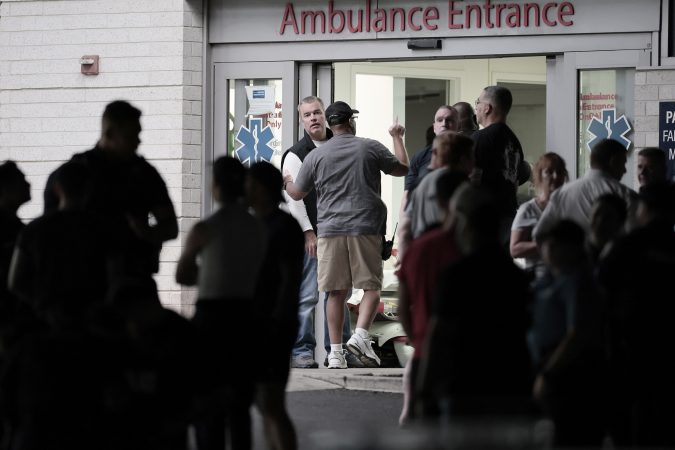
A suspect was taken into custody Tuesday night in Philadelphia after one person was killed and another wounded in an afternoon shooting inside Wilmington Hospital in Delaware, police said.
Wilmington police announced Tuesday night that the suspect is a 23-year-old man and that investigators believe the shooting was a “targeted, isolated incident.”
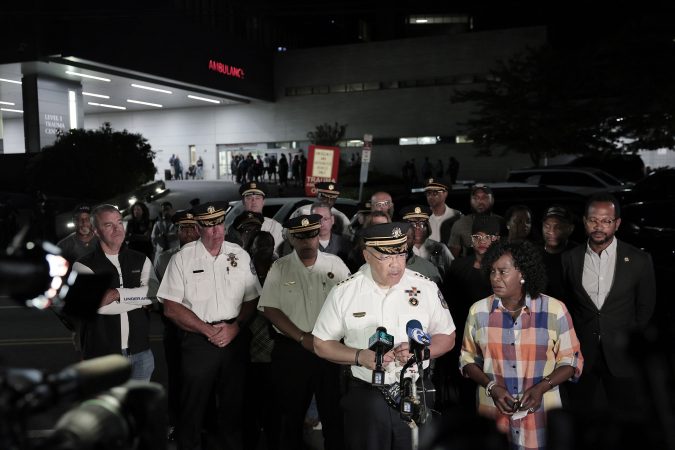
Around 3:30 p.m., police in Wilmington responded to a reported shooting at the hospital, at 501 W. 14th St., Police Chief Wilfredo Campos said at an evening news briefing.
Two victims were discovered and one later died, Campos said.
A lockdown at the hospital, which is run by ChristianaCare, was lifted after police cleared the building, Campos said.
Campos said multiple agencies were involved in the initial response and the ongoing investigation, including the FBI and the ATF.
Wilmington Mayor John Carney, the former governor of Delaware, said that this “has been a terrible day for our city and especially for the hospital workers who are subjected to this terror.”
Carney said it was “hard to imagine” what the people in the hospital faced as they were barricaded in rooms as law enforcement cleared each floor.
Gov. Matt Meyer said the tragedy “hits especially close to home for our family” because his wife is a doctor who works for ChristianaCare.
In an updated statement Tuesday night, ChristianaCare said that the hospital campus “is now open, safe and secure with no ongoing threat to patients, caregivers or visitors.”
Jennifer Schwartz, incoming president and CEO of ChristianaCare, added in a statement: “We are deeply grateful for the heroism of our caregivers. They showed incredible strength today. We will continue to stand beside them and support our community in the days ahead.”
U.S. Rep. Sarah McBride (D., Del.) said she was monitoring the situation.
“As we await more information, I’m praying for the patients and providers who were on site,” McBride posted on social media.
U.S. Sen. Chris Coons (D., Del.) also said he was following the developments and asked people to follow updates from local officials.
“I’m praying for everyone’s safety, including patients, healthcare workers, first responders, and law enforcement officers,” Coons posted on X.
I’m closely monitoring reports of a shooting at Wilmington Hospital.
I’m praying for everyone’s safety, including patients, health care workers, first responders, and law enforcement officers. Please continue to follow updates from local officials. https://t.co/ZFO80gDQgy
In a forceful and scolding opinion, the Pennsylvania Supreme Court ruled Tuesday that District Attorney Larry Krasner’s office misled the courts, “violated its duty of candor,” and submitted false statements when asking a judge to vacate a 2004 murder conviction.
In the opinion released Tuesday, Justice Kevin Dougherty wrote that prosecutors’ pattern of misleading judges in seeking to overturn murder convictions is so troubling and recurrent that, going forward, before Krasner’s office seeks such relief, judges must notify the state attorney general’s office and allow it to review the case.
The decision amounted to one of the most scathing rebukes yet of Krasner’s efforts to revisit decades-old convictions, and arrives amid intensifying scrutiny of the office’s Conviction Integrity Unit and appeals division, whose handling of post-conviction cases has drawn criticism from judges in both state and federal court.
Just last week, Krasner’s office reversed course in a separate murder case, writing in a federal court filing that one of its prosecutors had made “material misstatements” and submitted “legally erroneous” statements when seeking to overturn a man’s murder conviction. The office sought to withdraw its recommendation to grant the defendant a new trial.
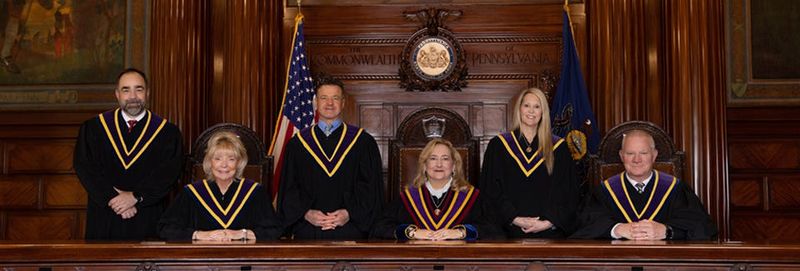
Supreme Court of Pennsylvania Justices Kevin Brobson, Christine Donohue, David Wecht, Debra Todd, Sallie Updyke Mundy and Kevin Dougherty in 2023.Provided by Administrative Offic
By giving the state attorney general authority to intervene when Philadelphia prosecutors decline to defend a conviction, the high court added a new layer of oversight to the state’s largest prosecutor’s office — a rare step that reshapes who controls post-conviction litigation in Pennsylvania.
Krasner, in a video statement shared late Tuesday, said the high court’s ruling “undermines the value of a vote in Philadelphia as compared to every other county.”
In the video, which featured images of the Rev. Dr. Martin Luther King Jr. and Rosa Parks, Krasner compared the pushback to his criminal justice reform efforts to those of other social justice movements.
“First they ignore you — we’re past it. Then they laugh at you — we’re past that. Then they fight you — and we have been fighting for 8½ years,” he said.
While four justices — Dougherty, Sallie Updyke Mundy, P. Kevin Brobson, and Daniel McCaffery — agreed there are systemic concerns about the district attorney’s office, three — Debra Todd, Christine Donohue, and David Wecht — supported neither that narrative nor the court’s remedy.
Wecht cast the lone full dissent, arguing that the case did not warrant the Supreme Court’s intervention and that the lower courts already have the tools necessary to prevent improper concessions by prosecutors.
The case at the center of the court’s ruling was that of Lavar Brown, who was sentenced to life in prison without the possibility of parole after a jury convicted him of second-degree murder in the robbery and shooting death of Michael Richardson, a North Philadelphia Rite Aid worker, in 2003.
Brown was later convicted of shooting and killing a second man, Robert Crawford, in 2005, and was sentenced to death — in part because of the first conviction.
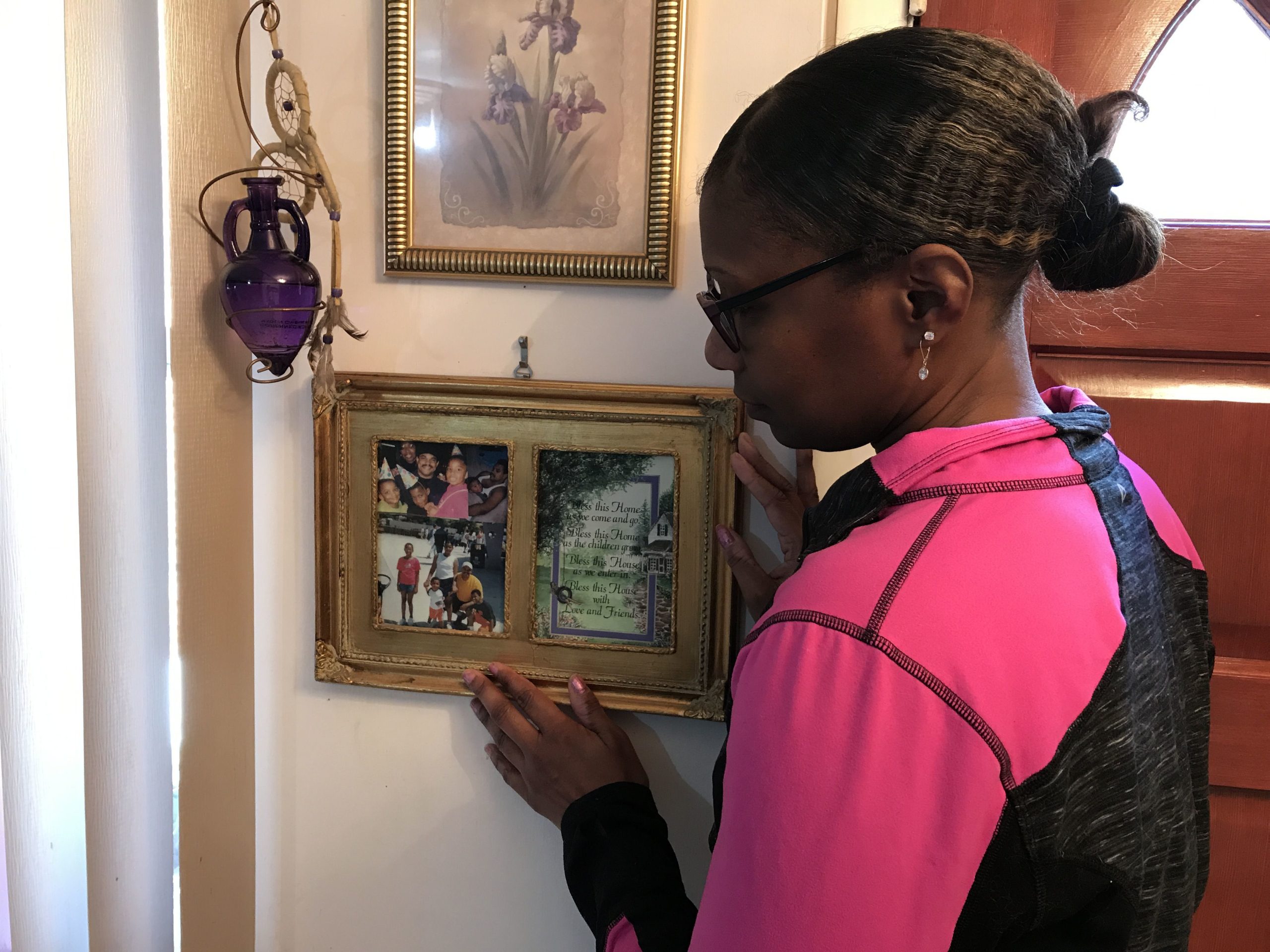
In this 2019 photo, Kristi Richardson looks at photos of her husband, Michael Richardson, who was shot and killed during a robbery at the Rite Aid where he worked in 2003.JULIE SHAW / Staff
In post-conviction court filings, Brown’s attorneys said the prosecution’s case in Richardson’s killing largely relied on the testimony of two witnesses — including one who, in a statement to police, implicated a teenage girl who was incarcerated at the time of the murder. The witness’ earlier statements were never provided to his trial lawyers, the attorneys said, which violated his right to a fair trial.
When a Common Pleas Court judge later granted Brown a new trial, the families of Richardson and Crawford took the unusual step of asking Pennsylvania’s highest court to intervene.
The families said Krasner had a conflict of interest because two of his former law partners had previously been involved in Brown’s case. They also argued the district attorney’s office was trying to “circumvent” the courts by conceding relief in the Rite Aid killing, which had served as an aggravating factor for his death sentence.
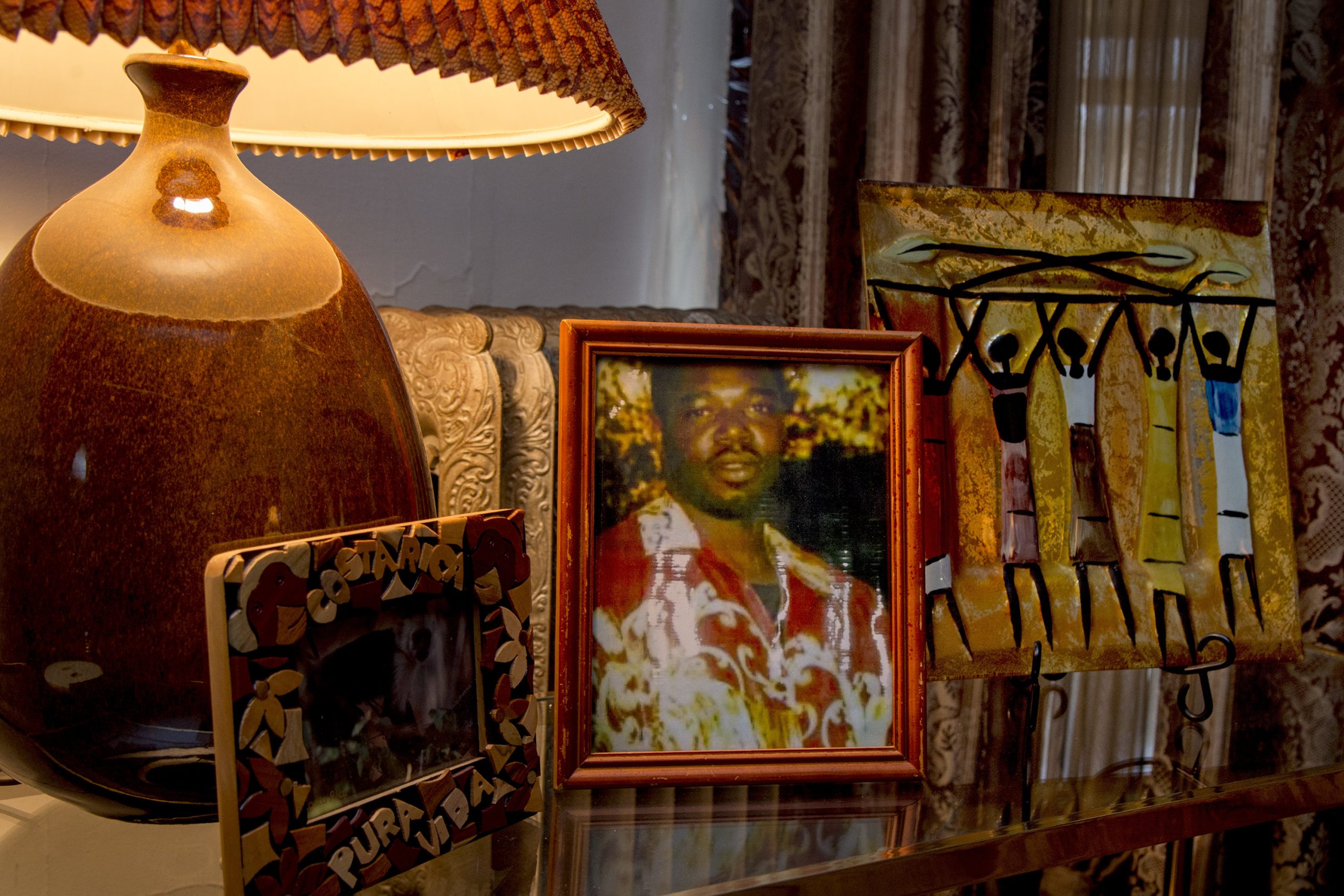
A photo of Robert Crawford in the home of his sister Suzette Crawford March 27, 2019. Robert was shot to death in Philadelphia in December 2003. His killer, Lavar Brown, is on death row.TOM GRALISH / Staff Photographer
The Supreme Court agreed to hear arguments in March 2025. And on Tuesday, six justices agreed that Brown’s conviction should not have been overturned and ordered a new hearing in the case.
Dougherty, in writing the majority opinion, was scathing in his assessments of prosecutors’ conduct.
In a case involving a murder conviction and death sentence, he wrote, the district attorney’s office’s “fidelity to its duty of candor should have been at its zenith. Regrettably, it was anything but.”
The opinion said prosecutors did not disclose a memorandum in which a key witness, Ronald Vann, identified Brown as being involved with the murder, even as they asked Common Pleas Court Judge Glenn Bronson to vacate the conviction.
Instead, the court said, they asserted that the document was irrelevant to Brown’s claims.
Krasner’s office also tried to keep the victim’s families from accessing it.
But the memorandum was “unquestionably relevant” to the case and showed a consistency over time of Vann’s statements, the opinion said. That Krasner’s office would say otherwise “rings hollow and smacks of post hoc rationalization,” the court said.
“The memorandum would have poured salt on the ‘fertile ground’ for impeachment envisioned by the DAO,” the ruling said, adding that withholding the document was a “breach of its duty of candor” to the court.
The high court also said prosecutors filed a joint stipulation with Brown’s attorneys that “was false in multiple respects,” including mischaracterizations of the timeline of witness statements to police.
The justices said prosecutors had not interviewed a single witness or investigator who had handled the case, and rejected their claims that it had conducted a “thorough, independent review of the records in this case.” Krasner’s office, the court said, “cut corners and shirked its duties in conducting its post-conviction ‘investigation.’”
The court reversed Bronson’s order granting Brown a new trial.
To “promote just outcomes” moving forward, the opinion said, the courts handling appeals must notify the attorney general’s office of any case in which Krasner’s office plans to seek relief, and give state prosecutors the opportunity to review it and weigh in on whether the decision is appropriate.
A lawyer for Brown could not be reached for comment. The Pennsylvania Innocence Project, which had filed a brief supporting Brown and the district attorney’s office alongside dozens of other prosecutors’ offices, former judges, and defense attorneys, declined to comment.
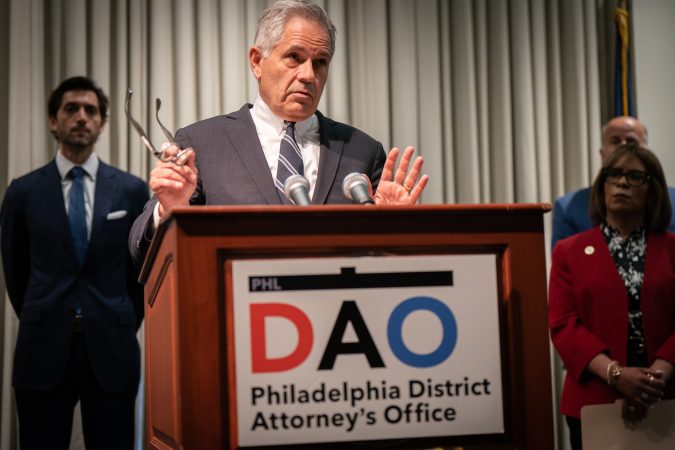
Da Larry Krasner speaks during a May 2026 press conference. Jessica Griffin / Staff Photographer
Chris Lynett, the lawyer who represented the families of Richardson and Crawford, said the high court’s opinion supported their belief that Brown’s case — like others — had not been scrutinized closely enough by prosecutors.
“We can’t just say that if we feel uncomfortable with a conviction that we are going to overturn it,” he said. “You need a full record, you need honesty, and you need an evaluation.”
Lynett, who worked as an assistant district attorney in Philadelphia for five years before leaving the office in 2020, said its leadership needs to “think about what they’re doing and what they’re encouraging their line prosecutors to do in court.”
The attorney general’s office had filed an amicus brief in support of the families, arguing that, since 2018, Krasner’s office agreed to overturn convictions in 115 cases with little to no meaningful opposition to defendants’ claims.
Attorney General David Sunday, a Republican, said in a statement Tuesday that his office is grateful to serve “as a check on this process for the citizens of Philadelphia and ensure that the interests of victims’ families are represented.”
When an investigation shows that a defendant was wrongfully convicted, his office said, prosecutors have a duty to remedy the situation — through the established court processes.
“As the Court noted,” his office said, “this case is about the failure of the process in Philadelphia, both as to this defendant and many others.”
Krasner, for his part, stood by his office’s policies. Philadelphia is on track to record the fewest homicides in recent memory, he said in the video, and correcting past mistakes builds trust in the criminal justice system.
Acting as an adversary in overturning wrongful convictions, he said, “doesn’t help safety, it doesn’t help democracy, it doesn’t help freedom, but that’s OK. Because we know where we are in the fight, and once we get past the fight, we all win.”
The New Jersey Attorney General’s Office has released a lengthy report detailing major disciplinary actions against law enforcement officers in the state, including a Burlington County correctional officer fired in connection with an inmate’s death.
The 560-page report, made public on Friday, covers hundreds of disciplinary actions taken in 2025.
“Maintaining faith in government and trust in law enforcement requires that residents know the State holds law enforcement to the highest professional standards,” Attorney General Jennifer Davenport said in a statement. “Transparency and accountability are key to maintaining public confidence in our officers.”
The report said Nicholas Morton was fired from the Burlington County Jail after an investigation sustained charges against him for failing to conduct the required security walk-throughs when 74-year-old Kenneth Bulle of Mount Holly allegedly was strangled by his cellmate, Rondale Holloman, in November 2024.
Morton also was accused of failing to immediately notify his supervisors that both inmates made requests to be housed apart from each other, the report said.
Two supervisors were suspended for 15 days in connection with Bulle’s death.
Sgt. Terrance Benson was found to have “neglected to conduct a full and complete security tour of the facility,” the report said.
Lt. Jonathan Carroll was found to have been negligent regarding Bulle’s death.
“His failure to take immediate corrective action delayed the custody and medical staff from responding to the scene with the proper equipment. He neglected to make immediate corrective action on several entries in logbook that were made by his supervisors and officers on duty. As a shift commander he is responsible for his conduct and his subordinates[’] conduct,” the report said.
At the Juvenile Female Secure Care and Intake Facility in Bordentown Township, two correctional officers were fired. Gary Nieves and William Young were criminally charged with sexual assault of residents, the report said.
At the Camden County Correctional Facility, two officers were fired after they were found to have used excessive force on inmates, the report said.
Tee Lormia was fired after he was allegedly found to have performed a roundhouse kick to the head of an inmate, the report said.
Nicholas Taylor was fired after an investigation determined that he lifted an inmate from behind and slammed him to the ground, the report said.
Yamalis Diaz, another Camden County correctional officer, was fired after she pleaded guilty to a charge related to shoplifting, the report said.
A 17-year-old is in critical condition after being stabbed Monday evening outside a party in the Logan section of Philadelphia, authorities said.
The crime happened around 11:30 p.m. on the 4500 block of North Carlisle Street, according to police.
Police said the teen, whom they did not identify, had been approached on the street by a group of men he had argued with earlier in the day.
Someone in that group pulled a knife and another person drew a gun, police said.
As the teen fled, he realized he had been stabbed and called police, authorities said.
First responders found that he had been stabbed three times in the back and once in the left thigh. He was taken to Jefferson Einstein Philadelphia Hospital, where he remained in critical condition as of Tuesday afternoon, according to police.
Officers have not identified any suspects or recovered any weapons as they continue to investigate, police said.
Three Philadelphia-area athletes were recently arrested in connection with an April assault in Old City that left the victim with a concussion, a broken nose, and two chipped teeth, among other injuries.
Charles W. Foulke and Masiia Acrey, both 18, have been charged with aggravated assault, conspiracy, simple assault, recklessly endangering another person, and harassment.
Jalen Millevoix, 19, was charged with criminal mischief and conspiracy.
Foulke is a former starting quarterback for St. Joseph’s Prep who transferred to Glassboro High School in the last schoolyear. Acrey is currently a cornerback at St. Joe’s. Millevoix played football at Eastern Regional High School in New Jersey and graduated in 2025, according to his social media.
As first reported by Syracuse.com, Foulke and Acrey are Syracuse University football recruits. The university’s athletics department did not immediately respond to a request for comment, but a source familiar with the football program’s thinking told Syracuse.com the school still considers Foulke and Acrey part of the 2027 football class.
The incident started with a “noogie” just before 2:30 a.m.on April 12, according to Philadelphia police.
The group of athletes encountered a man and woman outside waiting for their rideshare when one of the football players proceeded to rub his knuckles against the man’s head. The interaction appeared to have ended after the man told the group to knock it off.
But as the rideshare arrived, one athlete gave the man another noogie. The man lunged in response, took a swing, and the group began to attack him.
Police said the victim was taken to Thomas Jefferson University Hospital with abrasions to the left side of his face and body, requiring stitching for his nose, which was also broken. The rideshare car was also damaged in the scuffle.
Millevoix was arrested May 23 and released without bail, with his preliminary hearing scheduled for June 22. His attorney, Gregory Joseph Pagano, could not immediately be reached for comment.
Foulke was arrested May 26 with his unsecured bail set at $200,000 and his preliminary hearing scheduled for July 10. His attorney, Joseph Kelly, declined to comment.
Acrey was arrested June 3 with unsecured bail set at $50,000 and a preliminary hearing scheduled for June 22. His attorney, Fortunato Perri Jr., could not immediately be reached for comment.
One of three Philadelphia police officers wounded in an exchange of gunfire that left a retired firefighter dead in West Philadelphia late Saturday was released from the hospital Monday, as authorities continued to investigate the shooting.
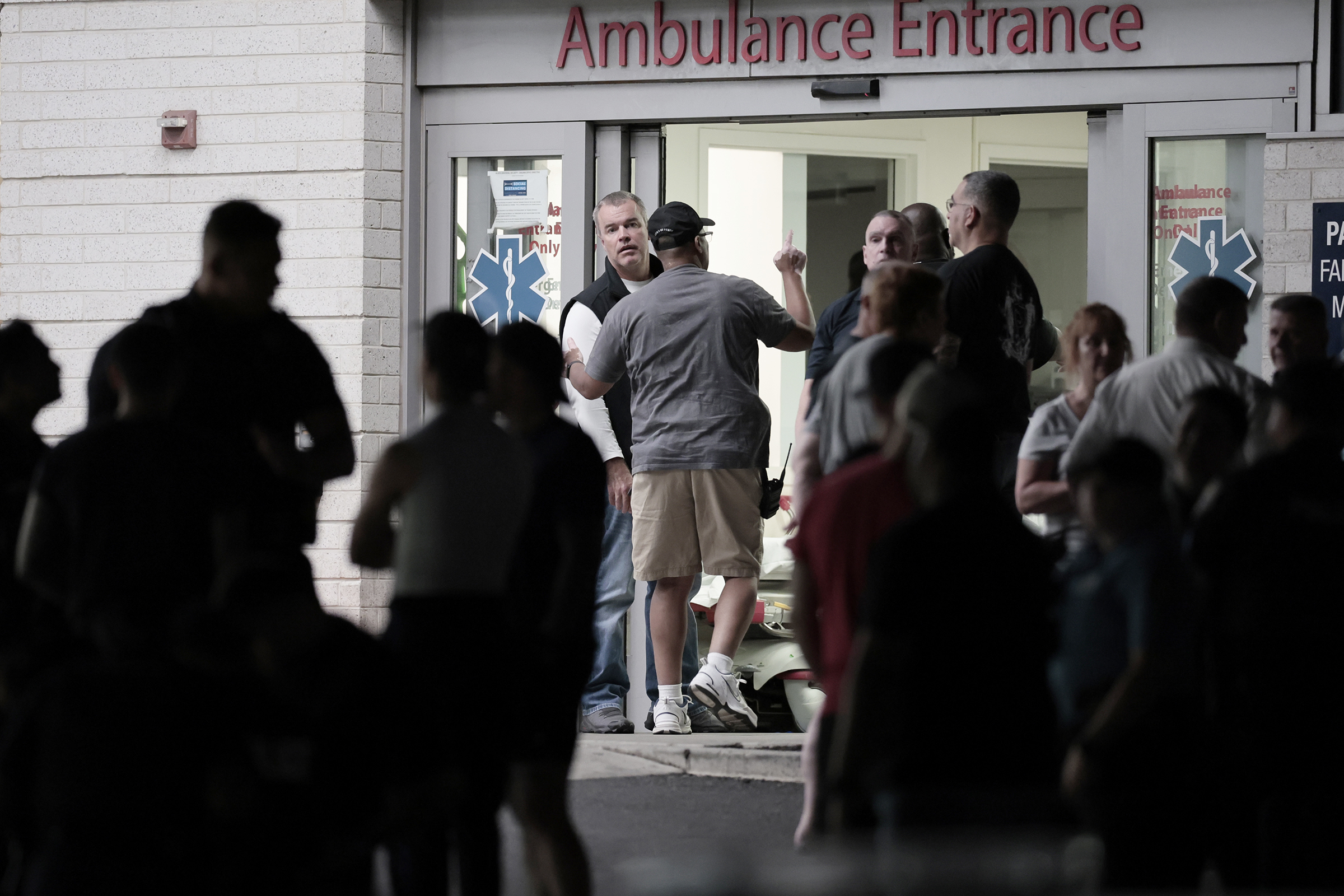
The officer, whom police did not identify, left Penn Presbyterian Medical Center shortly after 1 p.m. Monday, 6abc reported. Dozens of uniformed officers lined the emergency department entrance and saluted as their colleague was pushed outside in a wheelchair and helped into a silver SUV. The crowd erupted in applause as the vehicle pulled away.
His release came nearly two days after authorities say Eric Franks, 57, opened fire on officers who were investigating an unrelated report of a vehicle struck by gunfire near 54th and Arlington Streets in Wynnefield around 10:30 p.m.
As the investigation entered its second day, both law enforcement officials and Franks’ family struggled to understand what could have led him to shoot at police. The police department declined to provide additional details about the confrontation, but a source familiar with the case said footage from the officers’ body worn cameras offered little explanation for such a reaction.
According to the source, who spoke on the condition of anonymity to discuss an ongoing investigation, as officers investigated the vehicle that had been struck by bullets, Franks approached and began complaining about crime and policing in the area.
He appeared frustrated, the source said, that officers had not yet cordoned off the area around the vehicle with crime scene tape, and became increasingly agitated as officers repeatedly asked him to step back so they could do their jobs.
Video obtained by The Inquirer appears to show Franks yelling at officers, then pushing one, before stepping back and pulling a gun from his waistband.
Franks then fired multiple shots at the officers, according to the video and police accounts, and four officers returned fire. Three officers — including a sergeant — were struck by gunfire. Franks was shot in the chest and leg and later died at Thomas Jefferson University Hospital.
Police said Franks had a license to carry a firearm. Commissioner Kevin Bethel said investigators are trying to determine why Franks confronted the officers.
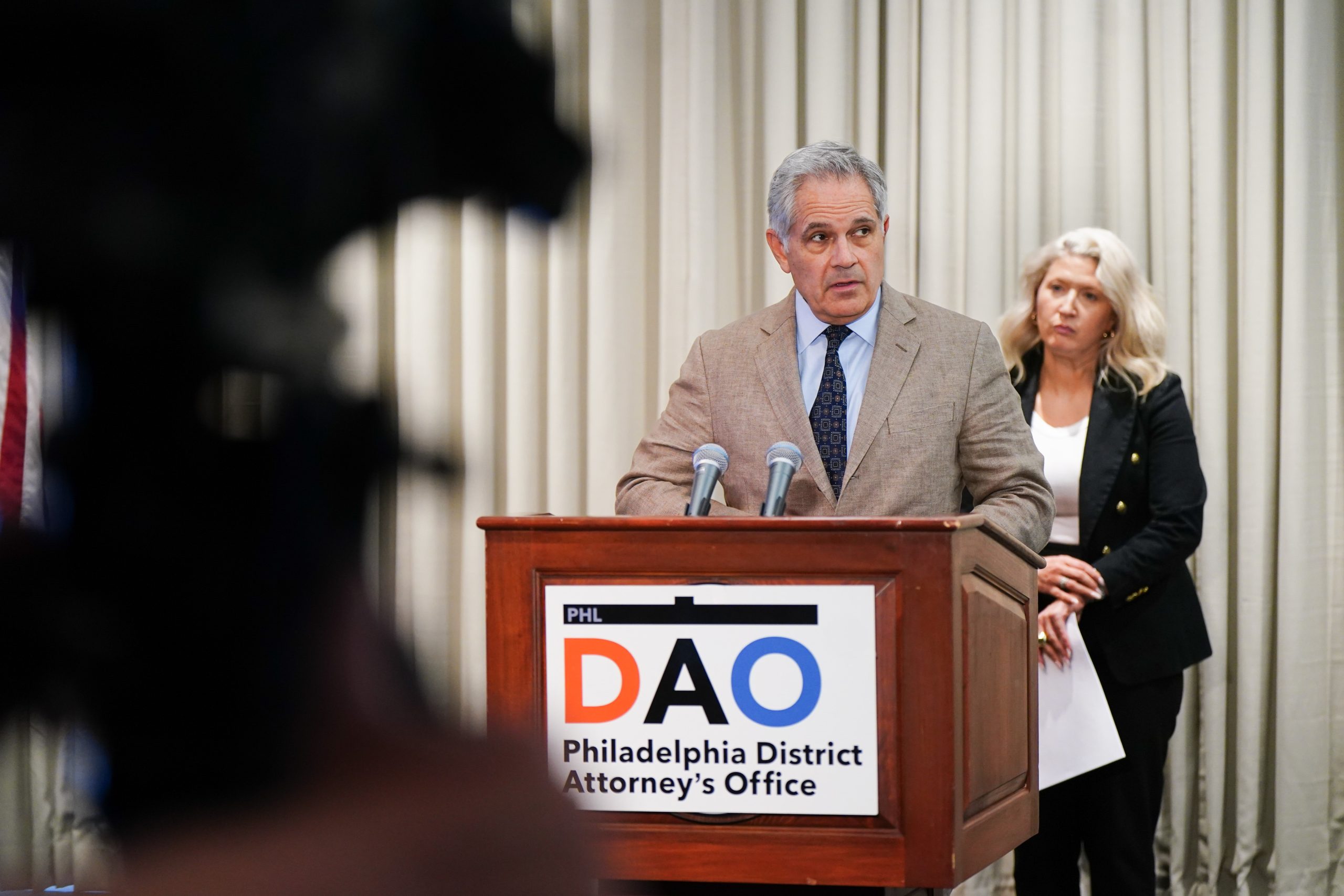
District Attorney Larry Krasner said at a news conference Monday that his office is investigating. He said representatives of his office had spoken with Franks’ family, and had visited the scene and begun reviewing evidence, including video footage that captured the events leading up to the fatal encounter.
Krasner declined to provide additional details, describing the investigation as “very active” and saying he could not divulge further information in order to “preserve the integrity of the investigation.”
The district attorney said his “thoughts are with all the people who have been affected and harmed,” but added that his office — like Franks’ family and members of the community — has questions about what transpired.
He joined Mayor Cherelle L. Parker in a promise to “make sure officers receive the support they need as they heal and process the trauma connected to the shooting.” At the same time, he said, “We also stand in solidarity with all Philadelphians who want to make sure we get the truth, and that we apply the law appropriately.”
He encouraged anyone with information about the shooting — including police officers — to contact his office and speak with investigators.
Franks’ wife, Michele, described her husband as a longtime Wynnefield resident, business owner, and former Marine who spent nearly two decades with the Philadelphia Fire Department before retiring last year.
“He cared very much about community, and about Wynnefield,” she said.
The retired firefighter was also a community activist, an attorney representing Franks’ family said, adding that Franks had met with City Councilmember Curtis Jones Jr. about an uptick in drug-related crimes in the neighborhood.
In a letter posted Sunday on Facebook that did not mention Franks by name, Jones wrote that he was “deeply saddened and heartbroken” by the shooting, and called for a continued commitment to “building a safer, and more peaceful Wynnefield for all.”
Bucks County prosecutors on Monday said they had resolved the case of the last teenager arrested during an anti-ICE protest in Quakertown that turned violent.
The 16-year-old girl was scheduled to stand trial Monday on misdemeanor charges of resisting arrest and disorderly conduct, as well as a summary offense of obstructing traffic, according to her lawyer. Instead, prosecutors said, she agreed to enter into a diversion program in exchange for the dismissal and expungement of the charges.
The girl’s lawyer, Ed Angelo, said the agreement includes 20 hours of community service, among other things, to be completed over a 90-day period. “She is a wonderful young lady who, I think, exercised great courage,” both during the protest and throughout her criminal case, he said.
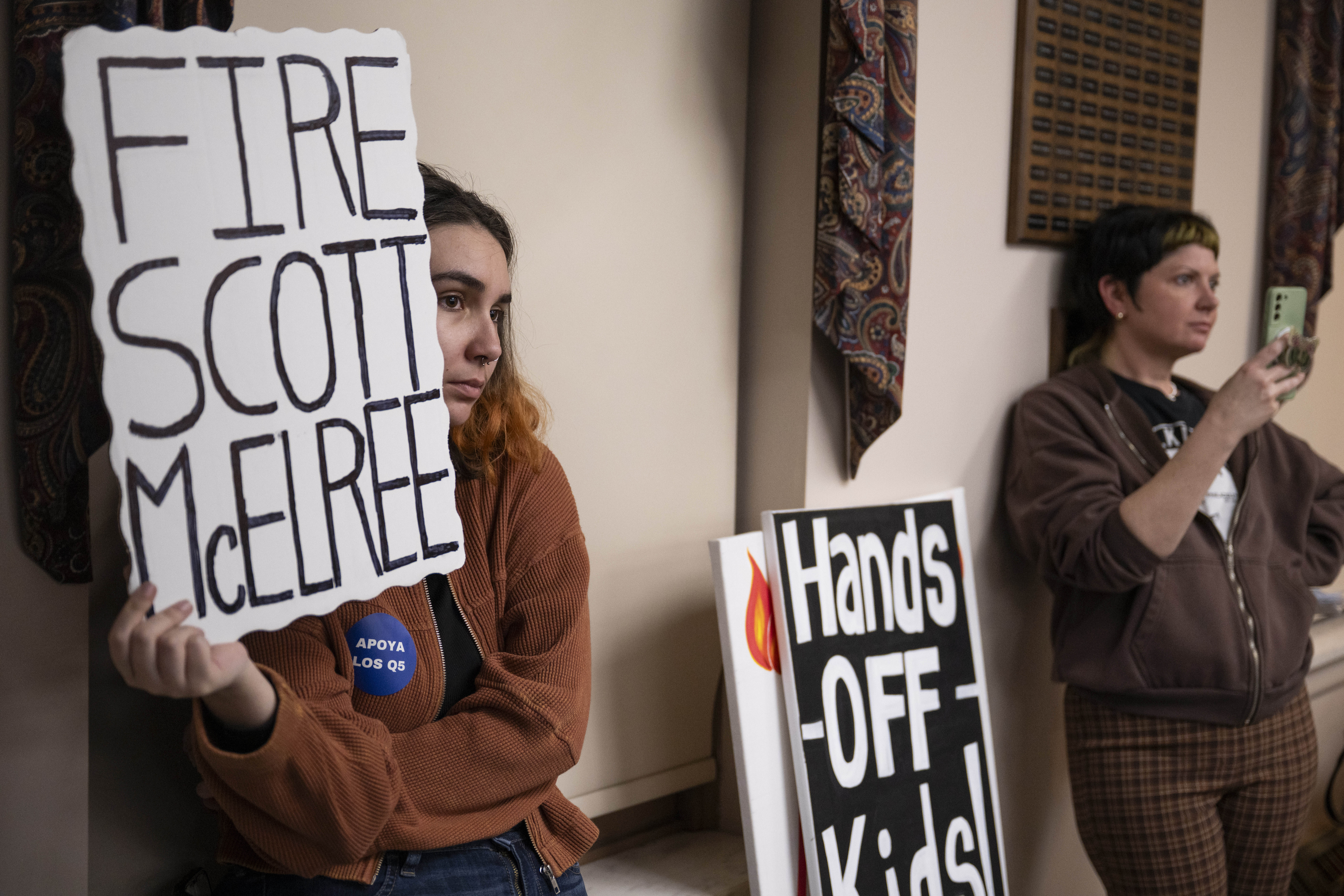
The agreement closes the last outstanding case among five Quakertown Community High School students arrested after a February demonstration against ICE escalated into a physical confrontation with the borough’s police chief and manager, Scott McElree.
The teens’ arrests sparked months of public debate over the melee, which was captured on camera by onlookers whose videos circulated widely online. One video showed McElree, who was dressed in plain clothes, grappling with a boy on the sidewalk. Another captured 72-year-old McElree placing a girl in a chokehold.
Following the confrontation, Bucks County officials said McElree had sought medical care for injuries that included fractured ribs. He also took worker’s compensation leave for several weeks before returning to work in May. And a panel of area police chiefs later cleared McElree of wrongdoing following a review of the case.
The teens were each initially charged with aggravated assault as well as misdemeanor offenses. But on Monday, the Bucks County District Attorney’s Office said in a statement that after reviewing evidence in the case — including “video footage obtained after the initial filing of the charges” — prosecutors had dismissed the aggravated assault charges because they “were unsupported by the evidence as a whole.”
Over the last few months, prosecutors have struck diversion-program deals with the other teens that are “designed to meet the needs of each juvenile,” according to their statement.
The 16-year-old girl, who was 15 at the time of her arrest, had been the only teen whose case remained unresolved.
“She should never have been charged,” Angelo, her lawyer, said.
Angelo had previously sought to have the case dismissed outright, arguing that the allegations relied heavily on secondhand accounts and that his client had done nothing wrong.
The district attorney’s office also said Monday that it continues to investigate the conduct of Quakertown police during the protest.
That investigation began a day after the demonstration, when prosecutors were tasked with independently reviewing the department’s response. In its statement, the office said county detectives had spent the last four months gathering evidence, including video footage submitted by members of the public.
Now that all five of the teens’ cases have been resolved, prosecutors said investigators are working with defense lawyers to secure voluntary interviews with the teenagers so they can provide their accounts of what occurred.
The office did not provide a timeline for completing the investigation but said it intends to move “expeditiously” toward its conclusion.
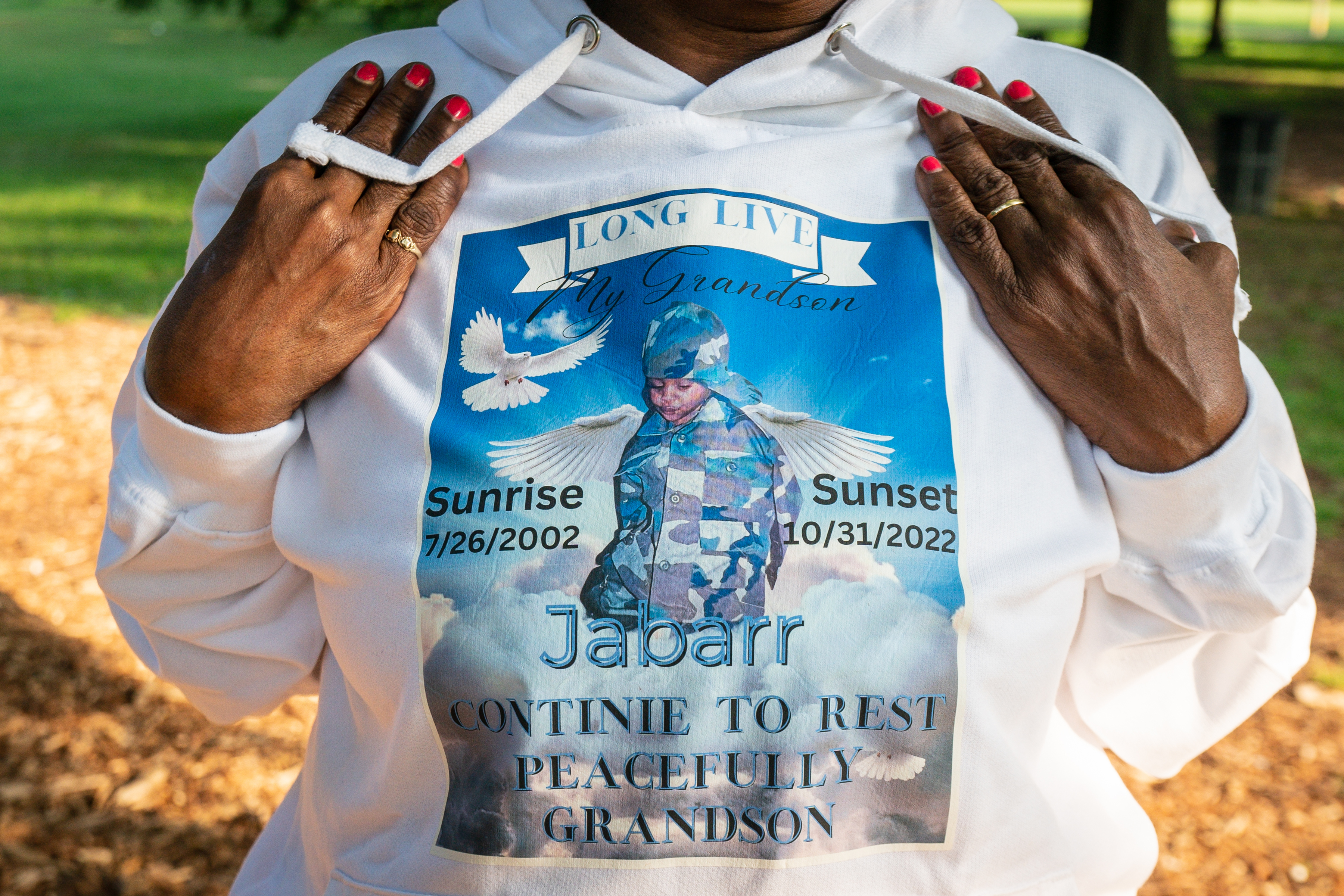
Tanya Clark’s knees bounced as she sat in the courtroom, her eyes darting toward the doors. For nearly four years, she’d waited for this moment — for the person who killed the nephew she’d raised like a son to admit to what he’d done.
But as Aaron Coles, 21, took a seat next to his lawyer and prepared to plead guilty to killing Jabarr Richards, 20, in Southwest Philadelphia in 2022, Clark had to leave the room.
How, she said she thought, could this be the person that ruined my life?
“I went in with anger and hatred,” she said. “And then you see this child.”
Coles on Monday pleaded guilty to third-degree murder, conspiracy, and gun crimes, admitting that when he was 17, he and two others shot Richards nine times at 53rd Street and Greenway Avenue on Halloween night.
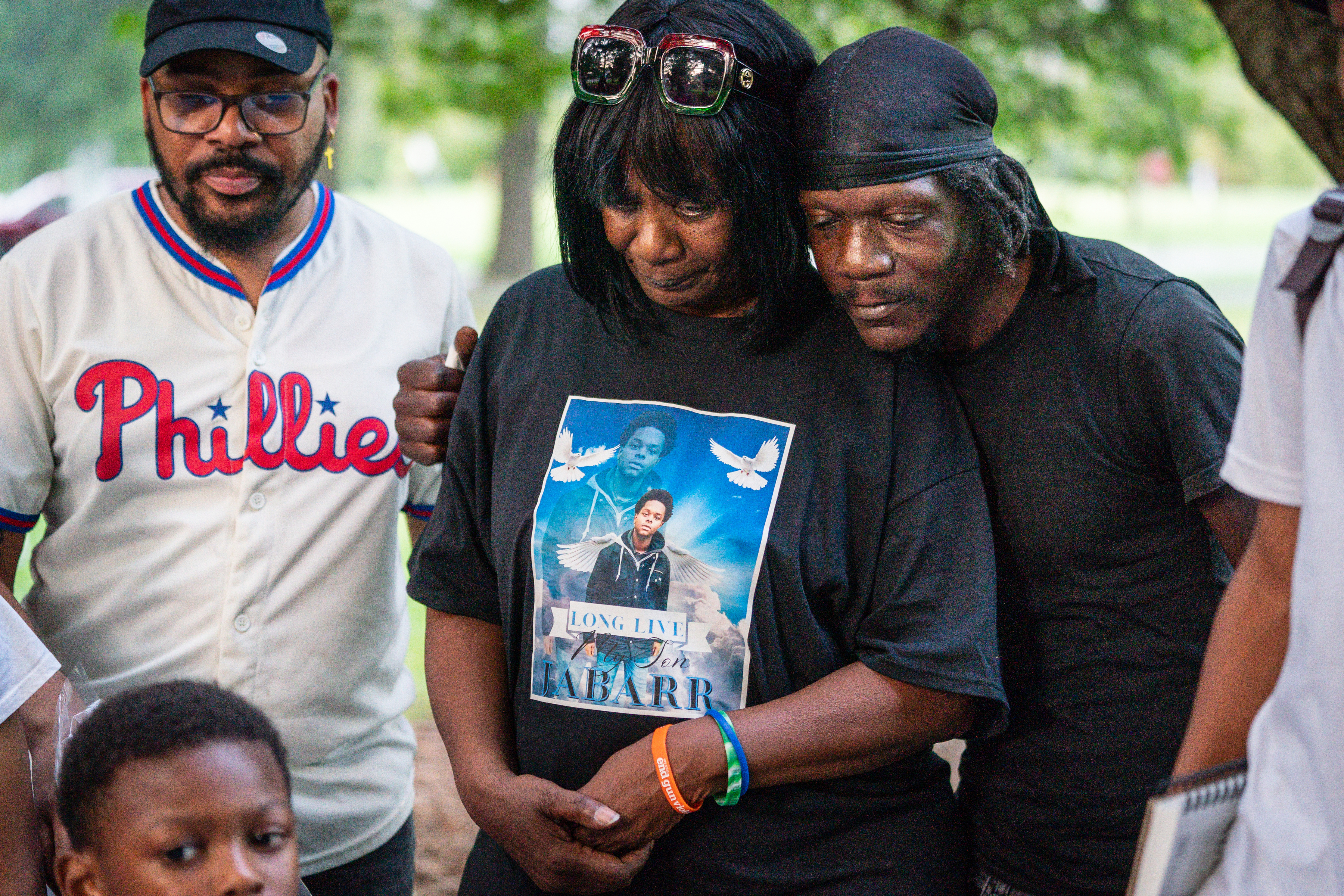
Tanya Clark (center) gathers with family to celebrate and mourn on what would have been Jabarr Richards’ 21st birthday in July 2023. Jessica Griffin / Staff Photographer
For nearly 18 months, Richards’ killing — one of more than 500 homicides in 2022 amid an unprecedented spike in violence — went unsolved. Clark and her family agonized over the possibility of becoming one of the hundreds of families in the city who might never get to face their loved one’s killer in court.
But Assistant District Attorney Anthony Voci said Homicide Detective Joseph Cremen had persistently worked the case, amassing evidence that ultimately showed Coles was involved.
Voci said Coles’ cousin had been killed several months earlier, and that his crew from the Bartram Village projects blamed young men from 53rd and Greenway. The lawyer said there’s no evidence to suggest that Richards was involved with that earlier homicide, and believes he was targeted simply because he was from the area.
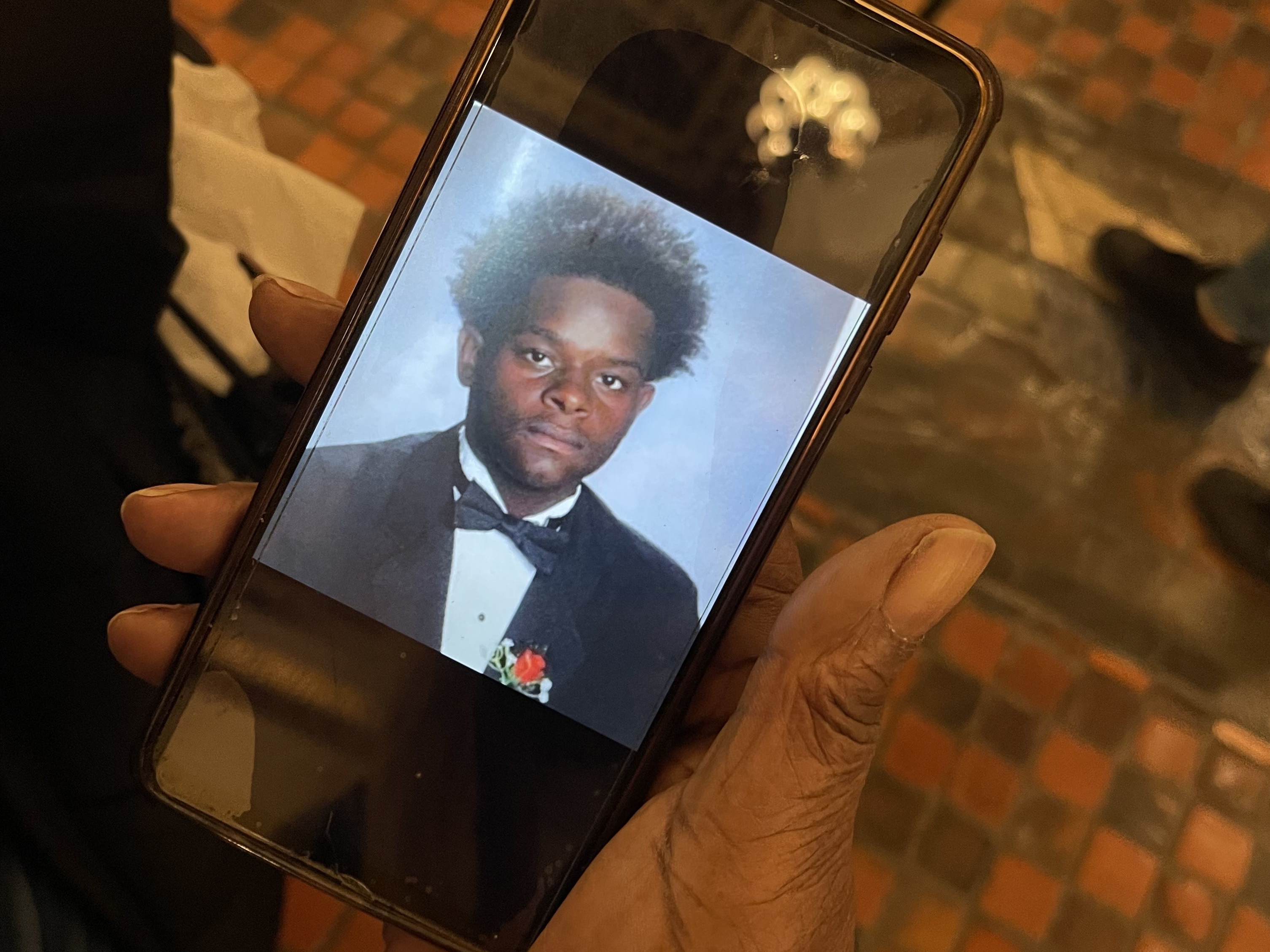
Tanya Clark holds a photo of her nephew Jabarr Richards, who was fatally shot in Southwest Philadelphia in October. He was 20 years old, and she had raised him like a son.Ellie Rushing
At the time of the shooting, he said, Coles was wearing a GPS ankle monitor for an earlier illegal gun possession arrest, and had placed aluminum foil around the monitor to try to obscure his location.
But even through the foil, Voci said, the monitor communicates with cellphone towers, which showed Coles near 53rd and Greenway at the time of the shooting. Coles’ Instagram messages also referenced the shooting, he said, and included a photo of a firearm that appeared to resemble one of the Smith and Wesson guns used to kill Richards.
Coles was arrested and charged in June 2024.
In the courtroom on Monday, Coles’ mother bounced her knee anxiously and wiped away tears as her son repeated that he was guilty.
He’s scheduled to be sentenced in August.
In the hallway, Clark, alongside her daughter and Richards’ older brother, David, tried to find some comfort in the fact that they wouldn’t have to sit through a lengthy trial.
“One step over the hill, toward healing,” Clark said.
Tanya Clark raised her nephew Jabarr Richards as if he was her son. Jessica Griffin / Staff Photographer
She thanked Cremen, the detective, who told her he was still working to identify the two other gunmen.
Clark nodded and believed him.
Back at her West Philadelphia home that afternoon, Clark sat with the morning’s hearing still running through her mind. She just kept thinking about Coles.
“This boy was lost and caught up in a world that was too fast for him,” she said. “What hurt so bad that you had to take my child? Why my child?”
Her child — the goofy one who’d survived his own painful childhood with absent parents, who played basketball and pestered his older siblings but would have done anything for them.
Her voice cracked and faded as she repeated: “I just wanna know. I just wanna know. I just wanna know.”
In the summer of 1929, Moorestown was rocked by the tragic shooting deaths of two young socialites in what officially was ruled a murder-suicide. The saga resulted in a scandal rife with money, alleged corruption, and death, and it captured sensational headlines for years.
“It’s crazy I never heard of it, growing up in Moorestown and doing what I do,” said McCormick, who left 6abc in December after 13 years at the station. “I started looking into it and got hooked. I thought, ‘How many legs does this case have?’”
Many, it would turn out. And they range from bootlegging and political corruption to the unspoken truths of high society in South Jersey and the desperation of Depression-era America. Even Ellis Parker, the famed Burlington County detective once known as “America’s Sherlock Holmes,” plays a role.
The deaths of Ruth Wilson and Horace Roberts Jr.
At its core, McCormick’s Restless Ghosts has its roots in a case that dates back to June 1929. Early one morning that month, Wilson and Roberts — wealthy, twenty-something socialites from two of South Jersey’s most prominent families who until recently had been engaged to be married — were found dead in Wilson’s bedroom in her family’s Moorestown home.
Wilson’s father, John Wilson, a prominent attorney and real estate developer, found the pair, nude and apparently suffering from gunshot wounds to their heads. Both died a short time later, with an investigation led by Parker later finding that the fatal shots came from a .22-caliber handgun discovered at the scene.
Ruth Wilson, investigators found, had been shot in the head twice. Roberts, meanwhile, had at least three gunshot wounds to his head — and officials quickly ruled that the situation was a murder-suicide that occurred in the wake of Wilson calling off the engagement. According to official reports, Roberts shot Wilson in the head before firing multiple shots into his own while distraught over the state of their relationship.
No autopsies were initially conducted. In the days and weeks that followed, rumors and speculations about the pair’s deaths cropped up in news coverage, with some reports insinuating that the situation was a double murder — one that involved Wilson’s father, though no such claims were ever substantiated.
Article from Jun 3, 1929 The Philadelphia Inquirer (Philadelphia, Pennsylvania) <!— –>
A coroner’s inquest
While McCormick runs down the tragic history of the deaths in Restless Ghosts, she is careful to not take a particular side on what may have happened back then. Instead, the circumstances are thoughtfully, meticulously recounted from multiple perspectives, leaving the readers to decide. Still, some inconsistencies and details, McCormick said, give her pause.
“It doesn’t make sense that someone could fire into their head multiple times,” McCormick said. “But at the same time, who else was there?”
In 1929, officials and members of the public had similar questions — so much so that a coroner’s inquest was launched that resulted in the exhumation of Wilson‘s and Roberts’ bodies weeks after their deaths. But even after the extensive questioning of investigators, relatives, and friends and the coroner’s discovery that Roberts had four bullet wounds to his head, the original conclusion was upheld.
And so, it seemed Wilson‘s and Roberts’ ghosts were left to rest for eternity, victims of a tragic murder-suicide over unrequited love. At least, until the death of Bradway Brown, a similarly high-profile socialite who died from gunshot wounds he suffered at his home in nearby Cinnaminson in 1933.
Article from Jan 17, 1933 The Philadelphia Inquirer (Philadelphia, Pennsylvania) <!— –>
The death of Bradway Brown
Brown, a childhood friend of the victims and a former suitor of Wilson’s, was found dead in his home with multiple gunshots. Parker also headed up the investigation in this case, and initially told the press it was a suicide — a tactic McCormick reports was a method to throw the media off and prevent Brown’s actual killer from becoming too alarmed.
Brown’s death stoked the fires of conspiracy, with rumors abounding that he had confessed to acquaintances that he had known who Wilson’s and Roberts’ true killer was. The rumor mill even said Brown had likely been behind anonymous phone calls to Wilson’s father accusing him of being the perpetrator.
Again, though, none of these allegations were officially substantiated. And despite Brown’s death resulting in another investigation into Wilson and Roberts’ deaths, this time a grand jury probe, the original conclusion was again upheld: Roberts killed Wilson, and then himself.
Parker, meanwhile, ultimately died of a brain tumor in federal prison after having been convicted of masterminding the abduction of an attorney in order to coerce a confession in the 1932 kidnapping and murder of Charles Augustus Lindbergh Jr., otherwise known as the Lindbergh baby.
Article from Apr 15, 1934 The Philadelphia Inquirer (Philadelphia, Pennsylvania) <!— –>
No one left to ask
In 2026, meanwhile, McCormick’s Restless Ghosts has the benefit of hindsight, and faithfully recreates the case largely from archival newspaper accounts. McCormick remains surprised that she had never learned of the case until starting work on the book, noting that the families involved had a lasting impact on Moorestown. The homes where the murders occurred, she said, remain in pristine condition.
“These were all places I know and have driven by a million times,” she said.
Still, while she didn’t necessarily set out to solve the case once and for all, its mystery remains intriguing for the author. After all, with the crime so far in the rearview mirror of history, virtually all of the people directly impacted are long gone. As a journalist, McCormick is particularly perturbed by that aspect of the project.
“The most frustrating part is that I can’t ask anyone,” she said. “I have questions, and I don’t have anyone I can follow up with. I wonder if this was a present-day case if there would be more finality.”
Three Philadelphia police officers were wounded in a shooting late Saturday after an argument with a retired city firefighter escalated, and the man opened fire on them in the street, law enforcement sources and city officials said.
The gunman was killed by officers in response, officials said.
Police responded to reports of gunfire at a car near North 54th and Arlington Streets in the Wynnefield section of West Philadelphia around 10:30 p.m., Commissioner Kevin Bethel said at a news conference early Sunday.
A 57-year-old man — identified by police late Sunday as Eric Franks — then confronted four officers on the block and began arguing with them, according to video of the encounter obtained by The Inquirer.
Officials said police were trying to explain to Franks that they needed to establish a crime scene, according to a news release Sunday evening.
The video appeared to show an animated Franks yelling at officers while another man attempted to hold him back. Franks, according to the video, then pushed a sergeant.
City Managing Director Adam K. Thiel (center, facing forward) at the emergency entrance of Penn Presbyterian Medical Center, where three Philadelphia police officers were taken after being shot.Elizabeth Robertson / Staff Photographer
Bethel said the officers repeatedly told him to “stand down” before attempting to arrest him about 10:45 p.m.
As the officers tried to detain Franks, the video showed him break free, then pull a gun from his waistband, and begin shooting at the officers in the street. In the statement released Sunday, police said Franks had a license to carry a firearm. It stated that the officers repeatedly told him not to draw the weapon.
In the video, officers and several civilians could be seen diving behind cars and scattering for their lives.
Four officers shot back at Franks, Bethel said. Three, including a sergeant, were struck by gunfire and taken to Penn Presbyterian Medical Center. One officer was shot in the face, one in the hip, and another in the leg, according to Mayor Cherelle L. Parker. The officers’ names have not been released by officials.
All were reportedly stable Sunday and expected to recover.
The video shows Franks stumbling down the sidewalk before collapsing. He was shot in the chest and leg. He died at Thomas Jefferson University Hospital at 11 p.m., Bethel said.
Bethel said Franks was not involved in the initial incident for which police were called.
“Why he elected to come into that scene and engage the officers — whether this was premeditated — we will walk through that process to see,” Bethel said. “But you don’t come to a situation like that … to engage the officer. We all can start to think of what potentially his intended purpose was.”
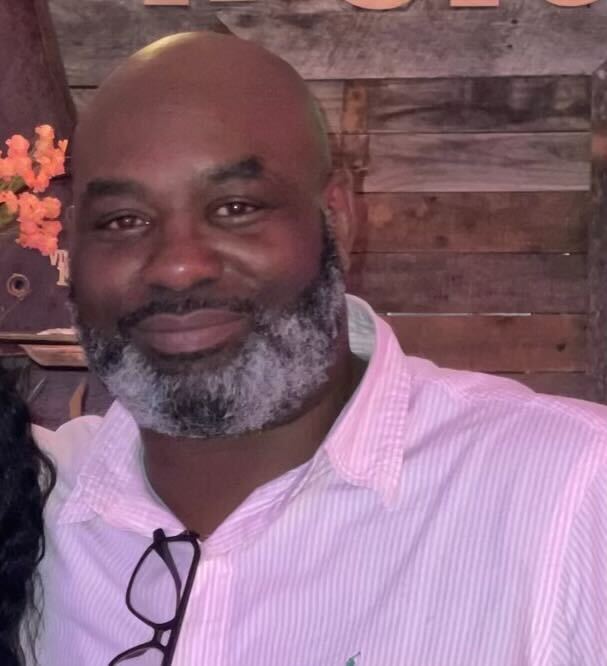
Eric Franks, 57, a retired firefighter, was shot by Philadelphia police officers on Saturday night.Courtesy of the Frank family attorney
Franks’ family attorney James Funt said Bethel should not have “insinuated” that Franks may have planned the shooting.
“That’s just not true,” Funt said. “I don’t know where he got that information.”
Funt said Franks was a community activist who had met with Philadelphia City Councilmember Curtis Jones Jr. and police to address an increase in drug crimes in the neighborhood.
On Saturday night, Franks was managing a 16-year-old’s birthday party at his event space business at the other end of the block when his son called him to tell him that someone had shot a car, Funt said. Franks ran to the corner to see if he could help, he said.
“He is not someone who would try to be an initial aggressor,” Funt said.
Funt said he doesn’t know what led up to the confrontation captured on video, but it warrants a full investigation and the review of any additional video recordings to get the full picture.
An investigation by the police department’s officer-involved shooting investigation unit and internal affairs bureau, and the Philadelphia District Attorney’s Office, is ongoing.
“All we want is for the facts to come out,” Funt said.
City payroll records show Franks retired from the Philadelphia Fire Department in September 2025 after nearly 20 years on the job.
Mike Bresnan, president of the International Association of Firefighters Local 22, declined to comment Sunday. A city spokesperson for the fire department referred questions to the police.
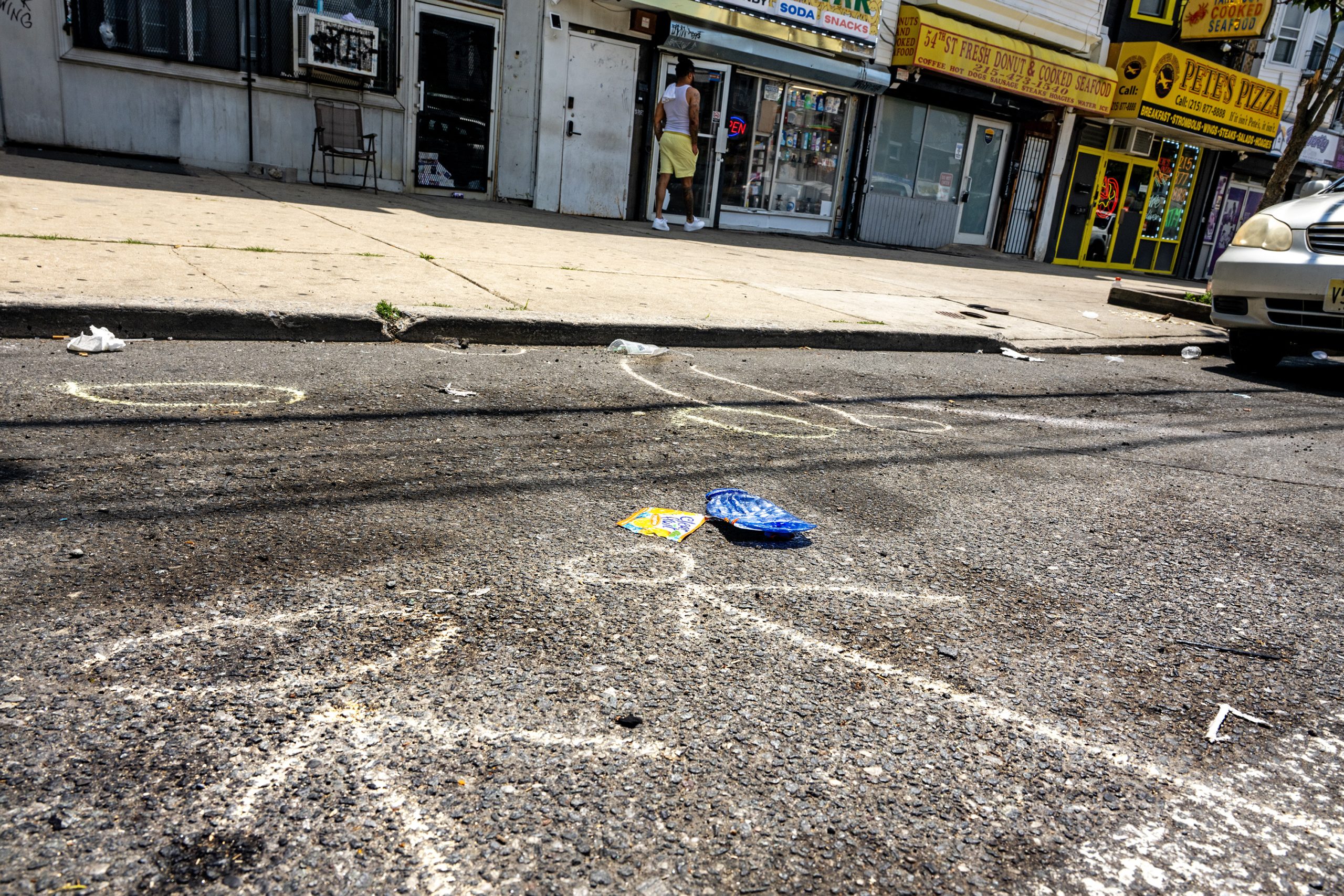
Police evidence marks are along 54th Street in the Wynnefield section of West Philadelphia Sunday June 14, 2026, the morning after three Philadelphia police officers were wounded in a shooting late Saturday after a verbal altercation with a retired city firefighter.Tom Gralish / Staff Photographer
The officers, ages 43 and 30, have worked as Philadelphia police for two and seven years, respectively. The sergeant, 39, has been with Philadelphia police for eight years.
“These men and women give their lives for this work,” Bethel said. The mayor also commended the officers’ resiliency and resolve. “We’re just grateful that tonight, they will survive their injuries,” Bethel added.
On Sunday, officers with the police department’s crime scene unit continued to comb the block — a street of porch-lined rowhouses and small businesses — for evidence and witnesses. Police pulled several fired shell casings, caked in mud, from a sewer drain.
Across the street, a group of people who identified themselves as Franks’ relatives gathered outside the event space called Mingle, that the family owns.
Franks’ wife, Michele, referred questions about the shooting to Funt.
But in a brief phone interview, she tearfully described how they’d been together ever since they went to their senior prom at Overbrook High School in 1986.
“He’s a husband, father, a man of the community,” she said.
Editor Joe Berkery contributed to this article. The article has been updated to include PPD’s statement on the shooting, released Sunday evening.

 –>
–>  –>
–>  –>
–>