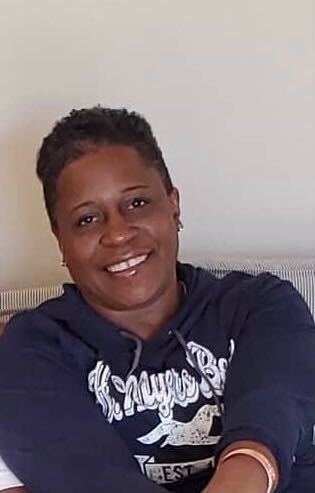
Dawaun Lewis, 30, has been charged with murder, robbery, and related crimes in the death of 45-year-old Keisha Furlow, police said. He was taken into custody Thursday after being arrested by Highway Patrol officers near his home on West Girard Avenue.
First responders discovered Furlow, a mother of four, in an alley near her North Opal Street home in North Philadelphia early Sunday morning, according to police.
Her face had been badly injured, and investigators believe two bloodied bricks found near her body had been used in her slaying hours before, around 2 a.m.
Furlow was pronounced dead at the scene, and medical examiners determined she died from blunt force trauma.
Investigators said they reviewed surveillance footage showing a person kicking Furlow and beating her head with a brick. That person and another individual fled with Furlow’s purse before ditching it nearby, they said.
There was no word if police have any information about the second attacker. The investigation is continuing.
Two years after a Chester man stormed into his workplace with a gun and opened fire in a shooting that left two people dead, he is on trial for murder before a Delaware County judge.
Wilbert Rosado-Ruiz screamed he was “tired of people f— with” him as he fired shots at nearly 50 of his coworkers at Delaware County Linen, injuring five of them, according to the affidavit of probable cause for his arrest.
Rosado-Ruiz, 63, is charged with two counts of murder for killing brothers Leovanny Peña Peña, 30, and Giguenson Peña Peña, 26, after reporting for his early-morning shift at the industrial-laundry business.
Three other people were shot during what prosecutors described as a rampage.
Rosado-Ruiz’s attorney, Kevin O’Neill, has said his client fired the shots after feeling threatened during a confrontation with a group of his coworkers. His actions that day, O’Neill said, did not constitute murder.
Polites rested her case Thursday, but the trial is not over: O’Neill will present his defense in July. The delay, he said Thursday, was to accommodate members of Rosado-Ruiz’s family, who need to travel to Delaware County from Puerto Rico to testify on his behalf.
Prosecutors have said Rosado-Ruiz intended to kill more people on the day of the shooting, and would have done so had the 9mm Remington R51 handgun he was carrying not jammed. Investigators recovered the weapon and traced it to Rosado-Ruiz after his DNA was found on it, according to testimony this week.
Rosado-Ruiz’s coworkers told investigators he had a history of abusive, bullying behavior, including threatening people with his gun, in the 10 years he worked at Delaware County Linen before the shooting, according to court filings.
Chester Police search for evidence after a shooting Delaware County Linen on May 22, 2024. Five people were shot in the incident, two of them fatally, according to prosecutors. Alejandro A. Alvarez / Staff Photographer
On the day of the shooting, Rosado-Ruiz got into a verbal dispute with a coworker, Nilamarie Valdivieso.
Valdivieso testified that Rosado-Ruiz “looked very mad” when he arrived at work, and exploded at her when she asked him what was bothering him.
Later, after Valdivieso returned with two supervisors, along with Leovanny Peña Peña, she said, the conversation escalated, and Rosado-Ruiz pulled the 9mm handgun from his waistband.
He shot Valdivieso once in the chest before chasing down and firing at the other victims as they ran and dived for cover, she said. The Peña Peña brothers were both shot multiple times trying to flee Rosado Ruiz, and were pronounced dead at the scene by medics.
Another victim, Charles Doyle, testified that he was fixing an industrial washing machine when he heard several shots ring out in quick succession.
He said he saw Rosado-Ruiz pull a second magazine from his pocket and reload his handgun. Doyle said he yelled out to distract the gunman so that his father, who also worked there, had time to flee.
When Doyle turned to leave, he said, Rosado-Ruiz shot him three times in the back, shattering his right arm and causing severe internal damage to his organs.
Doyle said he is unable to work because of nerve damage in his arms — he said moving his hands feels similar to trying to wiggle his ears.
He testified that he did not see or hear anyone threatening Rosado-Ruiz before the gunfire rang out.
Rosado-Ruiz fled after the shooting, which led police from surrounding departments to lock down streets around the business.
He was taken into custody by an officer from Trainer, pulled over on the edge of Chester as he attempted to drive home. Inside the car, investigators found a backpack with a smaller bag containing additional 9mm bullets, authorities said.
Two men living in the Republic of Georgia have been charged by federal authorities in Philadelphia with running an international money laundering scheme that tried to use cryptocurrency exchanges to mask the source of nearly $400 million, prosecutors said Thursday — including at least $20 million that came directly from accounts associated with illicit actors on the dark web.
Igorevich Tkachuk, 37, of Ukraine, and Alexander Vladimirovich Ledenev, 25, of Russia, were arrested Wednesday in Georgia, where both live in the coastal city of Batumi, according to U.S. Attorney David Metcalf. Prosecutors will seek to extradite them to Philadelphia to face money laundering charges.
Metcalf said the two men were part of an organization that dubbed itself “AudiA6.” The group had two primary functions, prosecutors said: managing a cybercrime forum known as Dark2Web, where users could strike deals to commit crimes against targets for money, and running a cryptocurrency-based money laundering service, through which users could have their virtual currency “mixed” into different streams that would make the origins harder for authorities to trace.
Prosecutors said Dark2Web was an online forum that allowed users to discuss deals about committing crimes.Court filings, U.S. Attorney's Office
Over the last five years, prosecutors said in a criminal complaint, AudiA6 received $389 million from customers to launder, which the group would “mix” in exchange for a commission fee.
About $20 million of those deposits came from accounts prosecutors said were known for committing illicit activity, including groups that perpetuated ransomware attacks or people who were known to have received stolen funds online. Millions more appeared tied to similarly suspicious groups through indirect transactions, they said.
Over the course of the scheme, prosecutors said, AudiA6 received at least $10 million in profit. The group would often charge higher commission fees for smaller transactions.
According to the complaint, federal authorities conducted six undercover transactions with AudiA6 between December 2022 and May 2026. In each, the document said, agents said in messages — typically in Russian — that they wanted to exchange “dirty” digital currency, such as Bitcoin, and AudiA6 took the funds, “mixed” them, and returned the washed proceeds, minus a commission.
In one case this April, an agent in Philadelphia sent a message to the AudiA6 exchange saying: “is [Bitcoin] from scam OK? Stolen bitcoin…”
According to the complaint, the person running the exchange replied: “don’t care.”
AudiA6 then mixed about $5,000, the complaint said, keeping a fee of about $300.
A few weeks later, the document said, an agent in Philadelphia reached out to the exchange again and asked about laundering proceeds from selling cocaine online.
“Is it ok or are the risks too high?” the agent asked, according to the complaint.
“Everything like that needs to go through a mixer,” the operator wrote back, before laundering about $5,100 worth of bitcoin and keeping $400 as a fee.
Despite AudiA6’s promises to customers that the mixed transactions would make funds untraceable, investigators said, the group “was not actually sending and receiving from distinct, unconnected sources.”
“Instead,” they said, “transactions could be directly traced through exchange records.”
Neither Tkachuk nor Ledenev had attorneys listed in court records Thursday.
Each could face up to 20 years in prison if convicted, prosecutors said.
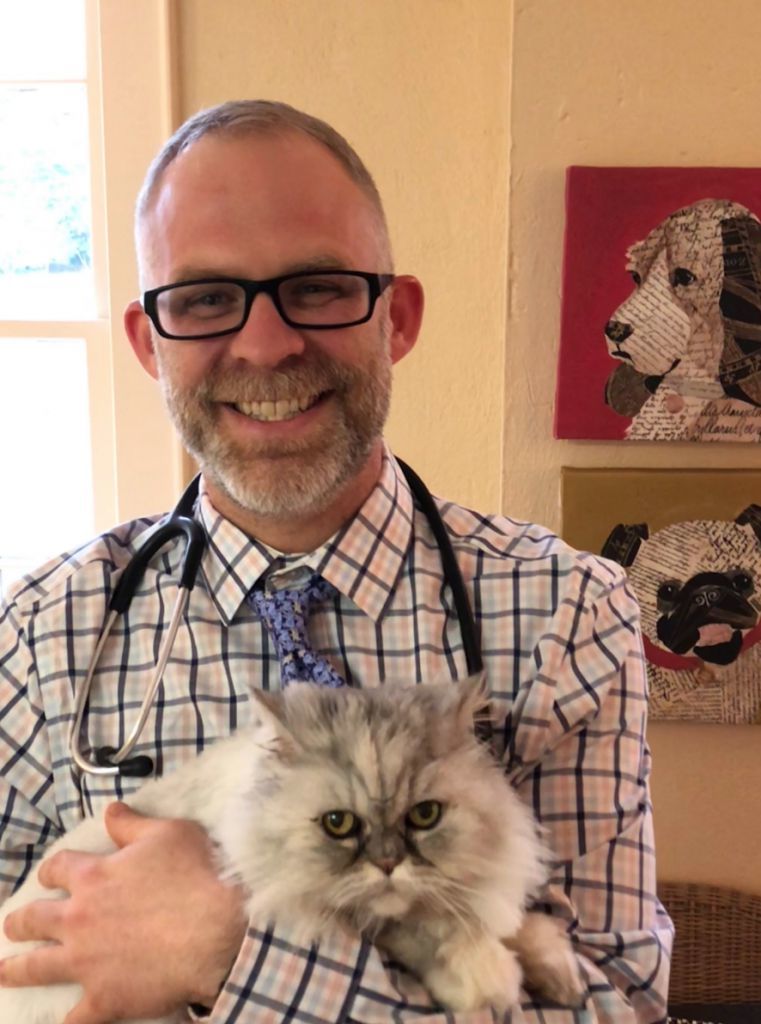
Cristian Custodio-Aquino, 28, of Portland, was charged in the stabbing death of Michael Anthony, a well-liked South Jersey veterinarian.
The body of Anthony, 45, was discovered on the front lawn of his home on Sharrowvale Road early on a December morning, prosecutors said.
Anthony had been stabbed in the body, neck, and head. Detectives soon linked the killing to Custodio-Aquino using DNA from a pair of prescription eyeglasses he had left at the scene and by tracking his vehicle entering and leaving the neighborhood.
He was arrested in California and has since been incarcerated in a New Jersey correctional facility.
With his guilty plea, Custodio-Aquino is expected to be sentenced to 30 years in state prison without the possibility of parole, according to the Camden County Prosecutor’s Office.
Grace C. MacAulay, the county prosecutor, called Anthony’s death tragic, saying it had deeply affected the Camden County community.
“This guilty plea represents a significant step toward justice and ensures the defendant will be held accountable for his actions,” she said in a statement.
Custodio-Aquino’s defense lawyer had said there was little evidence tying him to the crime, but prosecutors pieced together what they said was a compelling case.
In addition to the eyeglasses investigators linked to the Peru native, prosecutors were able to identify Custodio-Aquino’s black Nissan Altima entering Anthony’s neighborhood on the morning of the Dec. 10 killing, and later leaving the scene.
After Anthony’s murder, prosecutors said, Custodio-Aquino drove to Fresno, Calif., where he stayed with a friend. He also wiped his phone and attempted to sell his vehicle. Investigators later recovered samples of Anthony’s blood from inside the car.
Michael Anthony, 45, a South Jersey veterinarian, was found dead outside his home in Cherry Hill.Courtesy of Haddon Vet
All the while, prosecutors said, Custodio-Aquino searched the internet for news stories that mentioned Anthony’s killing and his memorial service.
Investigators eventually learned that Custodio-Aquino had a previous relationship with Anthony’s partner, Kyle Bartsch, and killed Anthony out of jealousy. Custodio-Aquino and Bartsch had lived together in Haddon Township but separated in 2021 after a domestic dispute, prosecutors said.
Not long before Anthony’s murder, he and Bartsch had communicated with Custodio-Aquino and knew that he was returning to the East Coast, according to prosecutors.
The death of Anthony, a divorced father of two, rattled neighbors in the Barclay Farm section of Cherry Hill.
His body was discovered facedown on the front lawn by his 16-year-old son, who had gone to look for his father after he did not return from an early morning walk, prosecutors said.
Relatives described Anthony as devoted to his family and two sons, and after his death, tributes poured in from friends, neighbors, and people whose pets he treated at his Haddon Heights veterinary clinic.
Bartsch said in an interview last year that he was devastated by the “sudden and senseless” loss of his partner. He described Anthony, his partner of three years, as “an exceptional person, universally loved by those who knew him.”
The Philadelphia District Attorney’s Office is attempting to withdraw a recommendation it made in federal court that a man’s murder conviction should be overturned, saying the prosecutors who oversaw that request did so by filing court documents that were “not supported by the record” or “legally erroneous.”
The about-face, made in a motion filed last week, represents a striking reversal of a posture that could have led a judge to wipe out a guilty verdict in a deadly shooting.
The filing was all the more unusual because the prosecutors who signed it named the colleagues who they said had made “material misstatements” about witness testimony in the case, and took a position the office no longer supports. Prosecutors now believe the conviction should be upheld.
“The Commonwealth respectfully requests leave to withdraw its prior response and apologizes to the Court for the errors,” said the new motion, which was signed by four prosecutors: David Napiorski, Steven Wildberger, Peter Andrews, and Katherine Ernst.
The filing was submitted Friday, just months after a panel of federal judges took the rare step of voting to ban another prosecutor in the district attorney’s office from practicing in federal court — one of the most serious penalties a lawyer can face. In that case, the judges accused the lawyer, Paul George, of being “misleading and dishonest” while seeking to overturn an inmate’s death sentence, and they were extremely critical of what they called George’s repeated misrepresentations on behalf of his office, saying the conduct threatened the integrity of the legal system.
“Lies like those George told … are even more problematic when asking a federal court to disturb a state-court conviction,” the judges wrote in a sternly worded opinion.
One of the judges involved in that disciplinary decision, U.S. District Judge Paul S. Diamond, is the person who will now have to decide what to do with accusations of misstatements in the most recent case. An evidentiary hearing is scheduled for next month.
Diamond had initially ordered that hearing to learn more about the strength of the evidence against Dennis Johnson, who was convicted of second-degree murder in the 2007 killing of Kenyatta Smith outside a corner store in North Philadelphia.
It was not clear whether Diamond would follow through with his plan to hear witness testimony about Johnson’s role in the crime — or if he might use the hearing to instead ask prosecutors how and why their office had urged him and a federal magistrate judge to undo a conviction based on assertions they now say were wrong.
The assistant district attorney who signed that original request, Jaclyn Mason, resigned on June 2, according to court documents. She declined to comment.
Her supervisor in 2022, when she filed the request, was Matthew Stiegler, who has since become the chief of the office’s Conviction Integrity Unit. He did not respond to a request for comment.
A spokesperson for District Attorney Larry Krasner did not respond to questions about the situation or the office’s change of heart.
A flawed conviction?
The crime for which Johnson was convicted occurred on Aug. 17, 2007, when Smith was fatally shot while being robbed outside a convenience store near 30th Street and Lehigh Avenue, court documents say.
Several witnesses identified Johnson as the shooter, and he was convicted of second-degree murder and sentenced to life in prison.
Johnson appealed his conviction and said his lawyer had been ineffective for failing to object to a detective’s testimony that a witness who did not testify, and who could not be cross-examined, had also identified Johnson as the shooter.
In 2022, Mason — then assigned to the district attorney’s Federal Litigation Unit — agreed, writing in court documents that the detective’s testimony was improper and had “tipped the scales” toward a conviction.
She also said the office had discovered problems or inconsistencies with testimony from other key witnesses, and asked a federal magistrate judge to recommend that the conviction be thrown out.
“The case against Johnson was not overwhelming from the outset and his counsel was constitutionally ineffective,” Mason wrote. “The post-trial investigation unearthed additional factors that highlight weaknesses in the prosecution and confirm a low level of confidence in the outcome of Johnson’s trial.”
The magistrate, Judge Lynne A. Sitarski, agreed with Mason and recommended that Johnson’s conviction be overturned. Still, her decision was not binding.
Diamond, the district court judge, was the one with the power to reverse Johnson’s conviction. And he did not seem inclined to accept the assertions made in Mason’s briefing.
‘Material misstatements’ in court documents
Last month, Diamond scheduled an evidentiary hearing at which he ordered all of the witnesses who testified against Johnson to take the stand in his courtroom and testify again.
Prosecutors from the district attorney’s Law Division said they then began working with Mason to prepare for the proceeding. But as they did, they said in their motion, they discovered that Mason’s filings “contained material misstatements” about the case.
Most of the issues concerned ways in which they said Mason characterized witness testimony at trial. In one example, prosecutors said, Mason wrote that a key eyewitness “did not visually identify Johnson” as the shooter while on the witness stand.
But the trial transcript shows that the witness did so “repeatedly,” prosecutors said, and the witness also said he had “known Johnson for at least five or six years.”
That issue and several others led the Law Division staffers to conclude that the office’s earlier filing seeking to undo the conviction was flawed — and they also concluded that the case against Johnson was stronger than Mason contended, and that “relief on Johnson’s claim was not warranted.”
It remains unclear what Diamond might do in the case, or how it might affect any of the lawyers involved.
Johnson’s fate is also unclear. One of his lawyers, Nilam Sanghvi of the Pennsylvania Innocence Project, said she and her colleagues will continue advocating for his freedom.
“We believe in Dennis Johnson’s innocence, and that Magistrate Judge Sitarski’s recommendation that Dennis receive habeas relief based on the violation of his constitutional rights is thorough and well-reasoned,” Sanghvi said.
The evidentiary hearing currently remains scheduled to take place in July.
Philadelphia’s chief public defender warned this week that the city’s indigent defense system will begin scaling back services next month unless City Council approves additional funding for the Defender Association of Philadelphia.
In an email sent Tuesday to judges, City Council members, and Mayor Cherelle L. Parker, Chief Defender Keisha Hudson said the agency would reduce or withdraw from several programs beginning July 1 if lawmakers on Thursday adopt the mayor’s proposed budget as is.
The planned changes include ending representation at expungement hearings and reducing participation in specialty courts and programs, including Neighborhood Wellness Court and the Accelerated Misdemeanor Program, according to the email.
Hudson said the Defender Association would also stop staffing emergency bail hearings, a practice she credited with helping to significantly reduce the city’s jail population.
The warning escalates a monthslong dispute over funding for the Defender Association, which has argued that its expenses and responsibilities have expanded without a corresponding increase in city support.
Despite that growth, Hudson said in an interview, the Defender Association is the only major criminal justice stakeholder that would receive no additional money under Parker’s proposed budget. That decision “felt very much personal and political,” she said.
A spokesperson for Parker did not respond to a request for comment Wednesday.
Parker’s proposed budget allocates $69 million to the Defender Association for the coming fiscal year, unchanged from its current funding level. Hudson had sought about $5 million more, saying the bulk of the money was needed to cover rising labor costs — including contractual obligations to unionized attorneys and staff — and higher rent, insurance, and technology expenses.
The disparity had left the agency facing “difficult decisions” about what services it can continue to provide, Hudson said. “There are human and financial costs to us not being in certain spaces,” she said.
Hudson wrote in the email that additional reductions could follow in the coming months, including in Veterans Court, Treatment Court, and other tasks that are not constitutionally required — such as representing people at preliminary arraignments.
A spokesperson for the courts did not respond to a request for comment on the cutbacks’ potential impact.
A written statement by UAW Local 5502, which represents public defenders, immigration attorneys, and child advocates at the Defender Association, said this was the third year in a row that funding for the agency had remained flat — which it called “a funding decrease when accounting for record-high inflation.”
The announcement came as other criminal justice agencies also made final appeals for funding before City Council’s scheduled vote on the budget Thursday.
On Monday, District Attorney Larry Krasner publicly urged Parker to provide additional funding for his office, delivering a letter to the mayor requesting $5.6 million beyond the amount included in the proposed budget. Krasner said the money would support shooting investigations, domestic violence prosecutions, victim services, and other public safety initiatives.
Parker has allocated $62.4 million to the district attorney’s office — about $3 million more than last year.
Parker’s proposed budget would spend roughly $7 billion next fiscal year, with major investments in housing, public safety, and other priorities. City officials have cited financial constraints and uncertainty about future revenue as they weigh competing requests for additional funding.
Vincent Thompson, a spokesperson for City Council President Kenyatta Johnson, said that Council members had advocated for the Defender Association’s funding priorities during budget negotiations but that “any additional funding increases must be agreed upon through the budget negotiation process.”
Last Thursday, after City Council rejected a series of tax increases the mayor had proposed, Parker told a reporter that the association’s request was among several funding priorities her administration weighed with Council members “to do the best we could with what we had.”
A 45-year-old mother of four was beaten to death with a brick in North Philadelphia on Sunday, according to police.
Keisha Furlow was found in a rear alley on North Opal Street around 6:15 a.m. that morning by first responders, who pronounced her dead at the scene.
Furlow had suffered severe lacerations to her face, police said. Officers found two bloodied bricks on the ground near the woman’s body and believe they were used in the attack,which occurred around 2 a.m.
Investigators are searching for two people they believe are responsible for the attack, according to a law enforcement source who was not authorized to speak publicly given the ongoing nature of the investigation.
One of the attackers, captured on surveillance footage, appears to kick Furlow and beat her repeatedly with a brick, according to the source.
Investigators believe both assailants fled with Furlow’s purse after the attack. The department released an image of one of the suspects, a man, on Wednesday afternoon.
Furlow is a resident of the 2700 block of North Opal Street, according to police.
No arrests have been made, and homicide detectives continue to investigate.
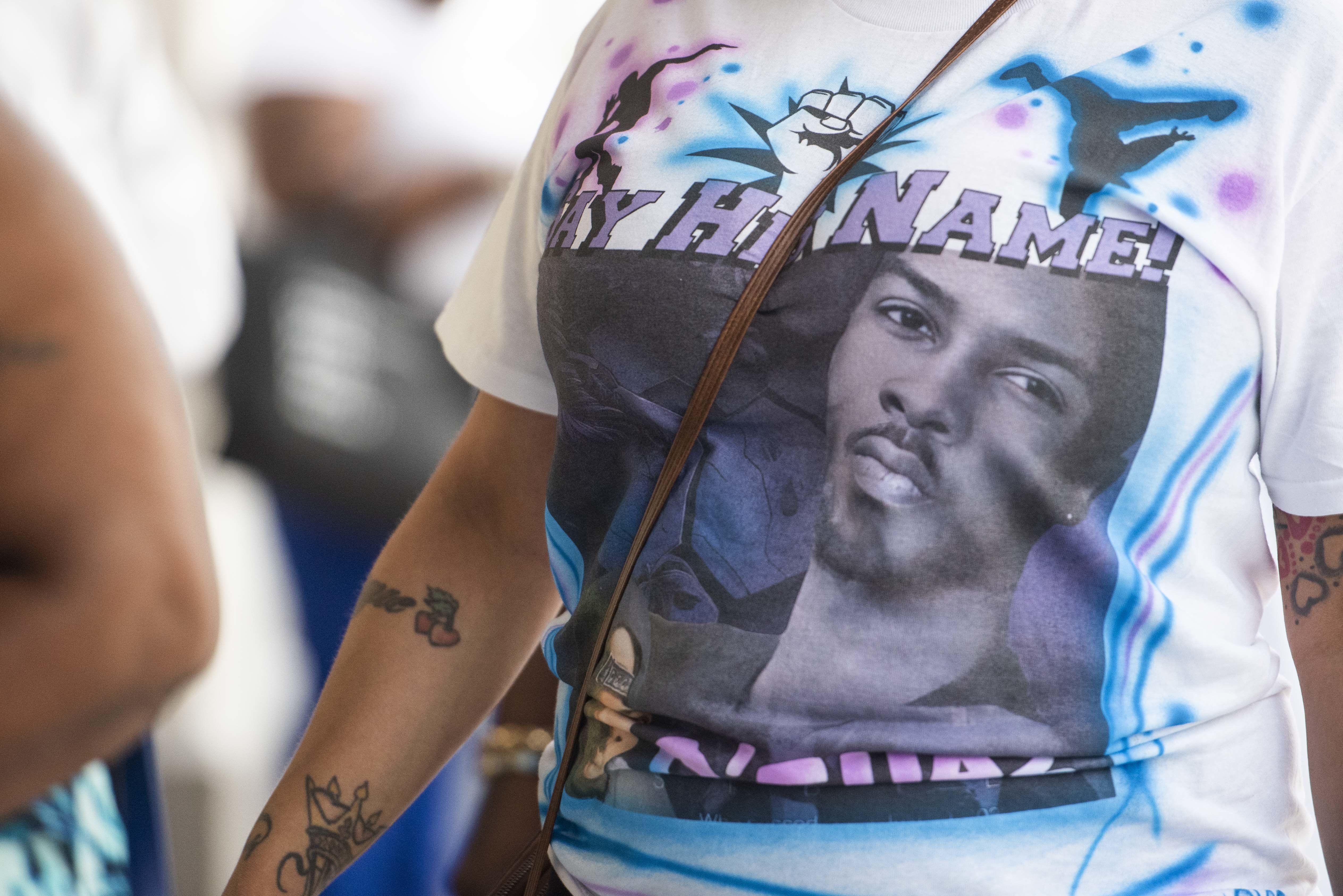
A Brooklyn man has been convicted in the killing of beloved Philadelphia dancer O’Shae Sibley, who was stabbed to death at a New York City gas station in 2023.
Dmitriy Popov, 20, was convicted of manslaughter as a hate crime and other charges related to “taunting, stabbing, and killing” Sibley, which included “hurling homophobic and anti-Black slurs,” Brooklyn District Attorney Eric Gonzalez said in a statement.
Sibley, 28, was a gay Black man, while Popov, who was 17 at the time of the killing, is white. Popov, who was tried as an adult, faces up to 25 years in prison. Sentencing is scheduled for June 30.
O’Shae Sibley at the Ailey Extension dance school in Manhattan.Courtesy Whitney Brown & Alvin Aliey
While filling up their car with gas on a Saturday night in July 2023 after a trip to the beach, Sibley and four of his friends blasted music by Beyoncé and started dancing, according to Joan Myers Brown, founder of the Philadelphia Dance Company and Sibley’s former teacher.
Popov and two associates approached the car and threatened the group with racist and homophobic slurs, telling them they did not want to see gay men dancing in their neighborhood, Gonzalez said.
His associates left the gas station, but Popov remained and continued to taunt the group of dancing friends. Ultimately, he stabbed Sibley on the side of his chest with a knife, puncturing his heart, Gonzalez said. Sibley was pronounced dead a short time later at a nearby Brooklyn hospital.
“O’Shae Sibley moved to New York to pursue his dream of being a dancer and choreographer, and his life was cut short when he was killed by this defendant, who couldn’t stand the sight of O’Shae and his friends just being themselves and living their lives openly as Black gay men,” Gonzalez said, offering his hope that the verdict would “bring O’Shae’s family, his friends, and the larger community some measure of solace.”
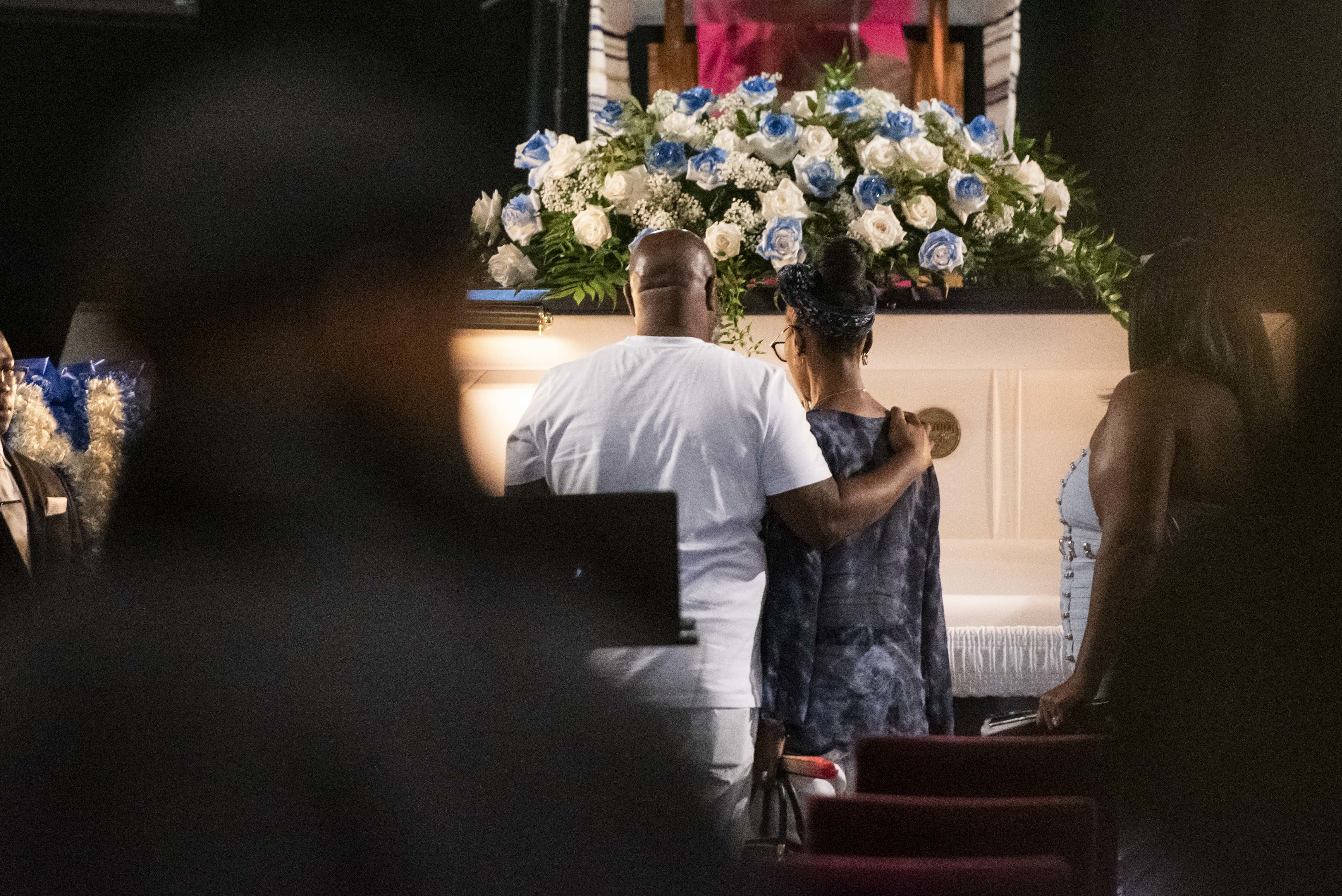
O’Shae Sibley’s parents Jake Kelly (left) and Onetha Sibley visit their son’s casket at The Met in Philadelphia on Tuesday, Aug. 8, 2023.Allie Ippolito / Staff Photographer
A North Philadelphia native, Sibley moved to New York before the COVID-19 pandemic in 2020 and landed a job as a dancer and choreographer with the Alvin Ailey American Dance Theater’s Ailey Extension. He danced in several music videos and performed at the Lincoln Center for the Performing Arts in New York.
“O’Shae was a beacon of light for a lot of us in our community that was engulfed in darkness,” Pena said then. “But O’Shae rejoiced. O’Shae was O’Shae.”
He called himself “the Beast,” and he killed six people in six months.
Several of his victims were retail store workers who gave up cash or goods during robberies, and he decided to shoot them anyway. One of the victims was his mother — he shot her at her office because he wanted the payout from her life insurance policy.
On Tuesday, Keith Gibson, 44, was delivered a measure of accountability for his killing spree — one of the worst in recent city history — when a jury convicted him of four counts of first-degree murder and related crimes for the killings he committed in the city in 2021.
He was immediately ordered to serve four consecutive life sentences in prison. That’s on top of the seven life sentences he had already been handed for two murders and a string of robberies he committed in Delaware.
The case attracted attention when the crimes happened five years ago, in part because some of Gibson’s targets were compliant and effectively defenseless when he shot them. In one murder, at a Dunkin’ store in Fairhill, surveillance video showed an employee speaking with Gibson for several minutes and handing him cash before he shot her in the head and left her for dead.
Surveillance video showed Keith Gibson inside the Dunkin’ before he shot and killed Christine Lugo in June 2021. Courtesy of Philadelphia police
Assistant District Attorneys Jeffrey Hojnowski and Katie Wood called Gibson’s crimes despicable.
“These were regular, ordinary people, fellow Philadelphians going about their business, trying to work, and they were gunned down callously, needlessly,” Hojnowski said. “This was never about the money. This is about control. This is about dominance.”
The case also stood out because of questions about why Gibson had been free to kill in the first place. In April 2021, he was jailed in Delaware for a probation violation, and a probation officer told a judge that police considered Gibson a suspect in his mother’s killing. But the judge ordered Gibson released, and in the weeks after, he went on to kill three more people.
The weeklong trial that led to his conviction in Philadelphia relied heavily on surveillance video and ballistics evidence. Testing showed that Gibson had used the same revolver in every crime, and officers in Wilmington found the gun as they arrested him for robbing a Rite Aid store.
A former friend, Amanda Masteller, took the stand and testified that Gibson, who she said referred to himself as “the Beast,” carried that revolver everywhere — including into her house and around her children when she let him stay in a spare room from time to time.
She wanted to tell him to stop coming over, she said, but the gun and his aggressive demeanor left her afraid of what might happen if she did so.
“I was petrified of this man,” she said.
Gibson’s crimes
Gibson’s killing spree began Jan. 28, 2021, at Al-Madinah Traders store in Germantown. There, he rummaged through the shop and stole several watches. He forced employees Roy Caban and Eric Flores into a back room, where he shot Flores in the head and Caban in the back as he tried to flee.
The following week, Gibson set out after his own mother.
Christine Gibson, 54, was shot and killed by her son, Keith Gibson, in February 2021. She worked as the director of a mental health program at a community center in East Falls.Courtesy of David Thornton
Christine Gibson, 54, told family members she was afraid of her son and wanted him to move out of her North Philadelphia home. And, prosecutors said, she had made plans to remove him as the beneficiary of her life insurance policy.
On the morning of Feb. 8, Keith Gibson accompanied her to the United Peers Community Center in East Falls, where she worked as the director of a mental health counseling program. Once inside, he took her to a small office room in the rear of the building and shot her in the back of the head. Her body was found two days later.
Soon after, probation officials in Delaware sought to have Gibson held in jail, filing paperwork saying he was a suspect in his mother’s killing and that violated the terms of his probation from a 2010 manslaughter conviction.
But Superior Court Judge Vivian L. Medinilla declined to extend Gibson’s time in custody. He was released in late April.
A few weeks later, in late May, Gibson robbed an AT&T store in Elsmere, Del., of cash and phones, and shot and killed the store attendant before stealing her car.
And in early June, his crimes continued in Philadelphia.
Surveillance video played at trial showed Gibson wandering the city on foot before dawn on June 5. After leaving his house on the 2700 block of North Croskey Street at 4:25 a.m., evidence showed, Gibson walked about a mile and a half to the Dunkin’ at Fifth Street and Lehigh Avenue.
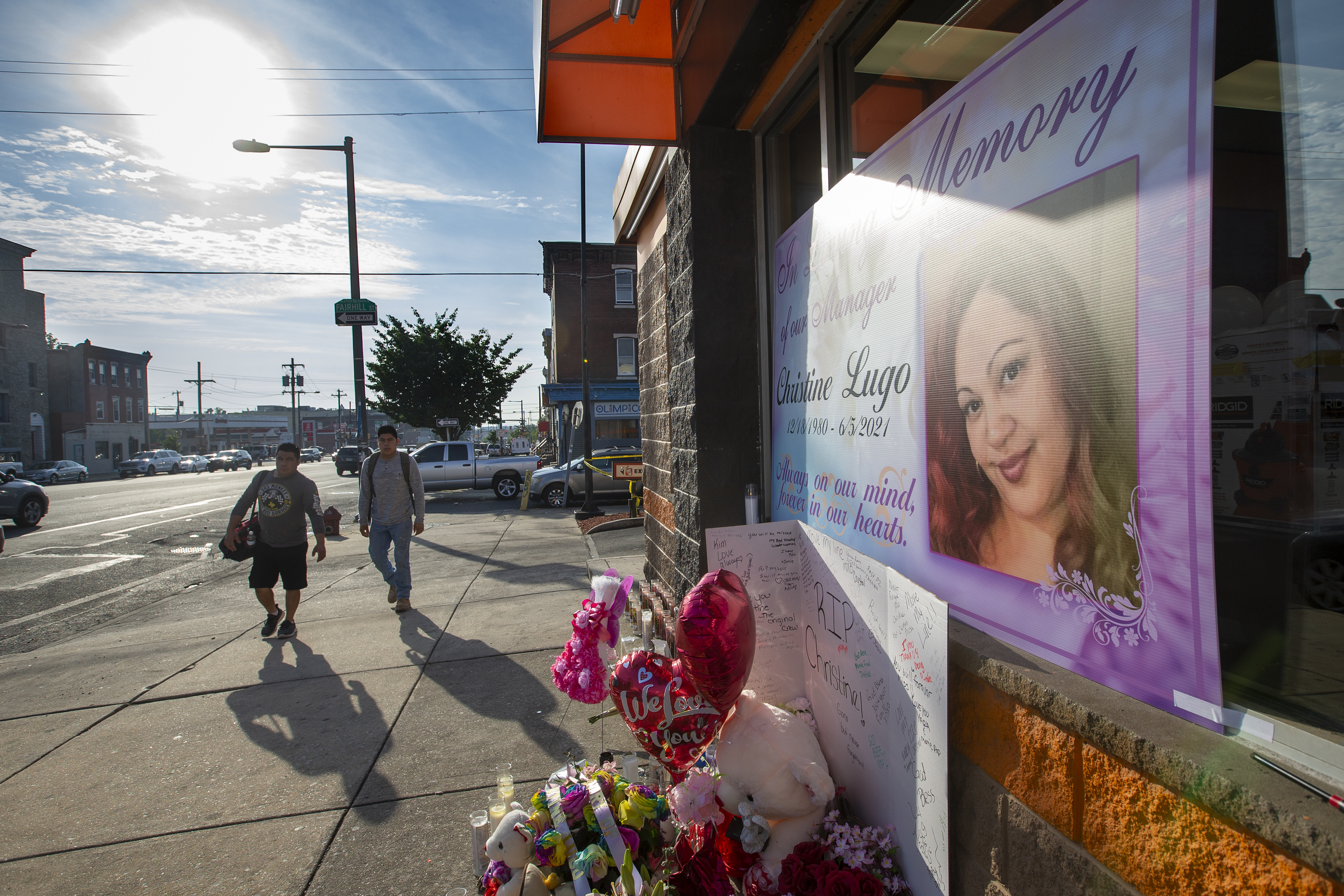
Christine Lugo was unlocking the store to start her shift when Gibson walked over to her with his gun and shoved her inside.
Christine Lugo was killed during a robbery at the Dunkin at 532 W Lehigh Ave. on June 5, 2021.
Cameras from inside the store captured the lengthy encounter. Lugo did not appear to panic, and was not aggressive toward Gibson. Instead, she could be seen shrugging at times and showing Gibson her wallet, as if to suggest she didn’t have anything for him to take.
Eventually, she sat down on a chair in a closet-size office and gave Gibson about $300 from the cash register trays.
Gibson then glanced at his watch, shot Lugo in the head, and walked out.
Later that day, he went to Wilmington, where he shot and killed Ronald Wright, 42, during a robbery.
His string of crimes began to unravel there three days later, when he robbed a Wilmington Rite Aid and stole a bag of cash — with a tracking device inside. Police quickly arrested him with a revolver behind a rowhouse. Ballistics tests later showed the same gun had been used at Al-Madinah Traders and in the killings of Gibson and Lugo.
Tips from the public identifying him in surveillance footage then bolstered the investigation. After Lugo was killed, police released some footage from the incident to try to identify a suspect. Masteller — his former friend from Delaware — said she saw it and called to tell police the man in the video was Gibson.
Gibson’s attorneys, Jonathan Strange and Brian Johnson of the Defender Association, said homicide detectives rushed to tie Gibson to other crimes as a means of closing old, unsolved cases. They failed to collect or test certain evidence, Johnson said, including surveillance video and DNA in some of the cases.
“The police had to take the easy way out,” he said.
Following his convictions, Gibson, in a lengthy ramble, said he was not happy with his legal representation and intended to appeal his convictions. He was not guilty, he said. And he only briefly addressed his victims’ families, saying: “I’m extremely sorry for your loss.”
It brought no comfort to the loved ones of his victims who had filled the courtroom throughout the trial.
Lugo’s children, Frances Rodriguez and Christian Lugo, said the disturbing video of their mother’s death will remain etched in their memories. Still, as prosecutors played it several times, they stayed to watch.
Left to right: Frances Rodriguez, Christine Lugo, Christian Lugo, and another family member celebrate Christmas.Courtesy of Frances
“I didn’t want my mom to be alone,” said Rodriguez, 27. “She already had to experience it alone already.”
Lugo, originally from Massachusetts, had a vibrant laugh and believed fiercely in giving people second chances, they said. She had two children and three grandchildren.
Also in the courtroom Tuesday were members of Gibson’s family, who had spent years praying he would be held accountable for killing his mother.
David Thornton, 68, said his nephew stole the golden years of his sister’s life.
Christine Gibson overcame years of addiction, he said, and went on to earn a master’s in sociology from Widener, bought a house in Philly, and was working a job she loved. She was strong, outgoing, and full of joy.
She had told Thornton she was afraid of her son, he said, but did not want to call the police.
“She’d say, ‘That’s my son,’” Thornton said. “That was her only child.”
They never imagined it would come to this.
“Some things,” he said, “are not meant to be understood.”
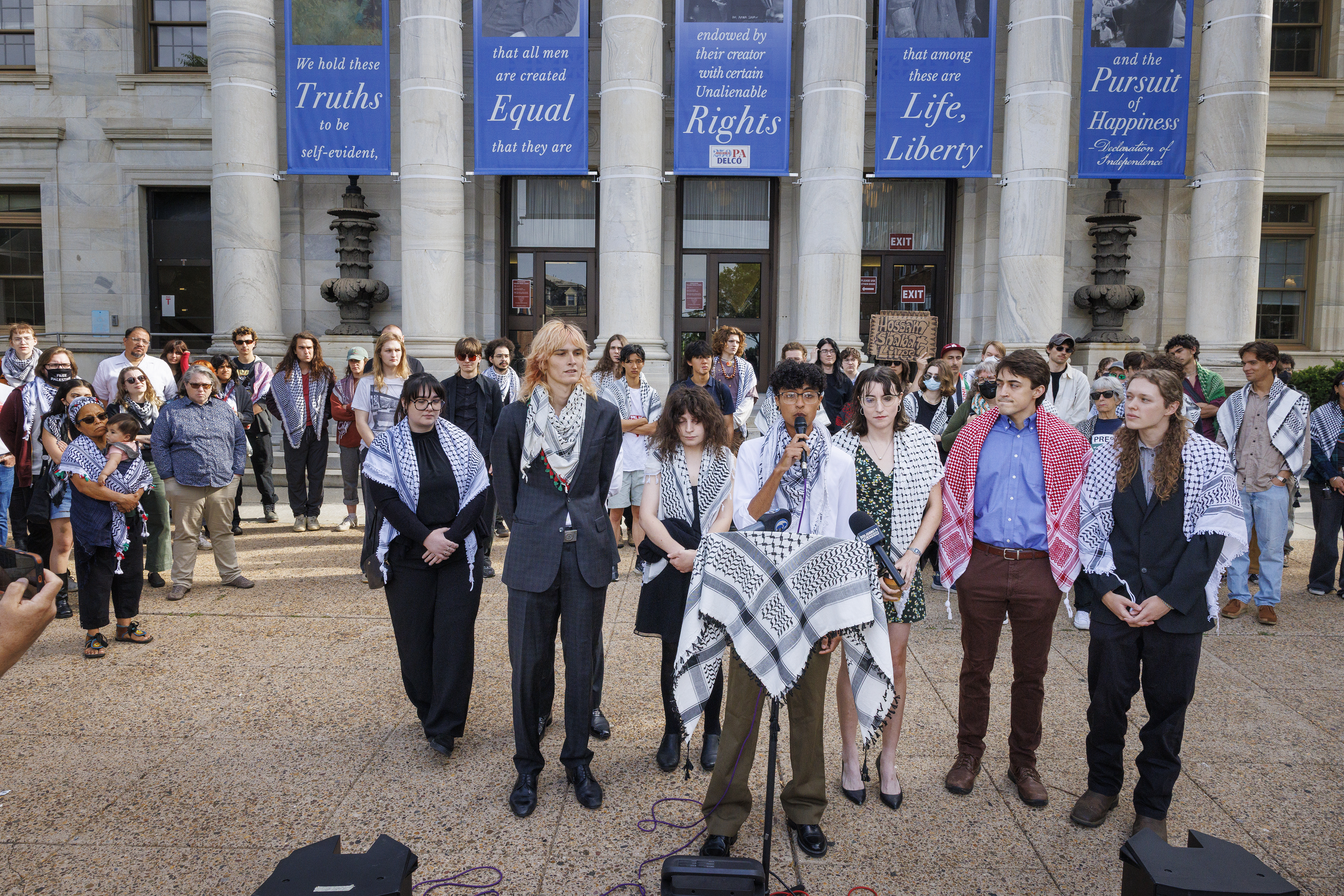
Nine protesters arrested last year at a pro-Palestinian encampment at Swarthmore College said Tuesday that they had done nothing wrong and have no intention of pleading guilty to the trespassing charges they face.
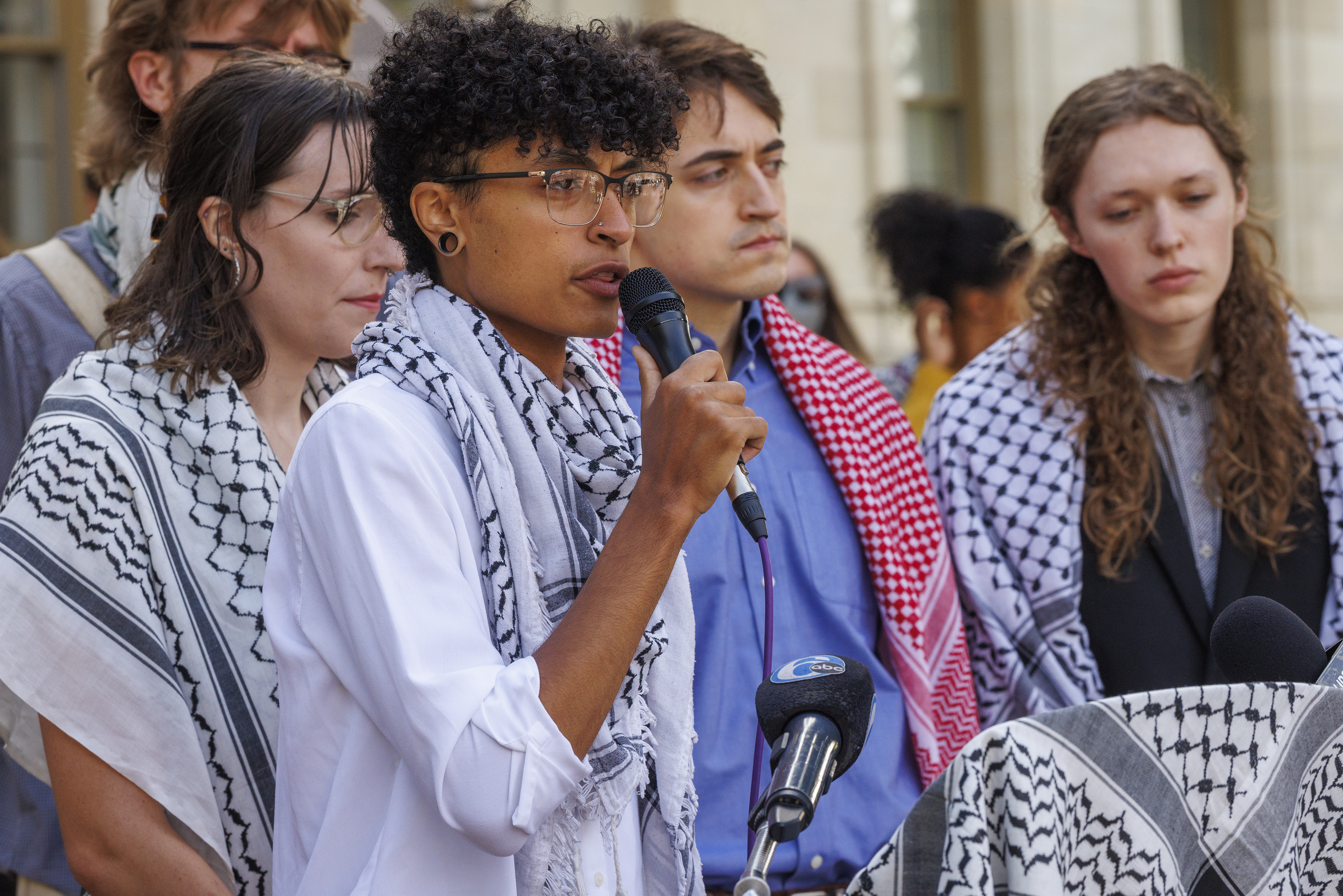
“We affirm that we are guilty of nothing because it is always right to rebel against genocide,” Jace Boland, a junior at the college, said at a news conference on the steps of the Delaware County Courthouse.
Boland was joined by his eight codefendants and a small crowd of supporters in urging prosecutors to drop what they described as “absurd criminal charges.”
The so-called Swarthmore 9 were arrested and briefly detained on the college’s campus in May 2025 when officers from surrounding police departments dismantled their encampment protesting the war in Gaza and Swarthmore’s contract with a company that does business with the Israeli government.
Of the nine people arrested, only Boland is a student at the college. Another, Brendan Cook, is a former student who was suspended for participating in an earlier protest in 2024, but the rest are not affiliated with Swarthmore, according to school officials.
Members of the group — Boland, Cook, Jonathan Britt, Mara Helen Cahill, Daria C. Dressler, Thomas Falcone, Colin Buckley Malcarney, Riley J. McManus, and Andrew Thomas — have all been charged with trespassing, a third-degree misdemeanor.
Their attorney, Marni Jo Snyder, has filed a motion to dismiss the case that will be argued before Delaware County Court Judge Dominic Pileggi on June 22, a week before the group’s scheduled trial.
District Attorney Tanner Rouse said Tuesday that prosecutors had offered the group the chance to plead to a lesser, summary offense, which Rouse described as “akin to an ‘open container’ or noise violation ticket.”
“That they want to proceed to trial as charged is absolutely their right, but so is it the commonwealth’s right to protect the interests of private citizens and institutions that do not have to abide every random person who has an issue parking on their front lawn,” Rouse said. “Private property owners have a right to say ‘please leave’ when the time comes.
“If their concern is a criminal charge or exposure to judicial punishment, there is and always has been an easy off-ramp available to them,” he added. “They have chosen not to take it.”
Jace Boland said Tuesday that he and his co-defendants “are guilty of nothing because it is always right to rebel against genocide.”Alejandro A. Alvarez / Staff Photographer
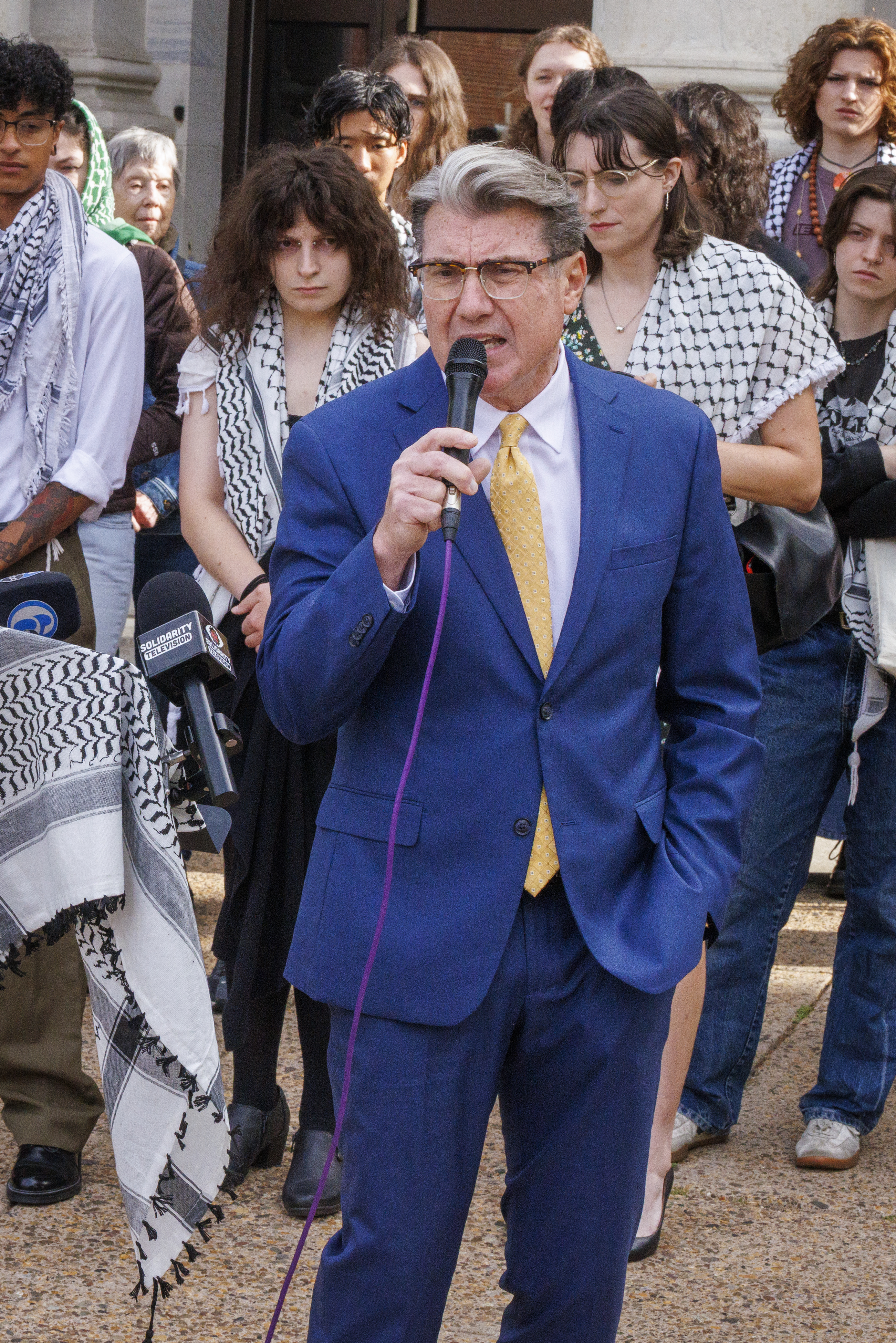
At Tuesday’s news conference, Swarthmore professor Mark Wallace said he supports the protesters and believes the college betrayed the ideals on which it was founded by having them arrested.
“How can students who live and work on a campus be charged with trespassing there while applying what they’re learning in the real world?” he asked. “Colleges should be places where large, uncomfortable questions are asked and struggled over.”
A spokesperson for Swarthmore did not immediately respond to a request for comment Tuesday.
Previously, the college, in a statement, echoed what Rouse said Tuesday — that county prosecutors had offered to reduce the charges in the case to a summary offense if the defendants pleaded guilty, but they declined.
Boland said he and the others charged would not plead guilty, fearful that doing so would discourage future activism.
“If the college can deploy state violence to protect its interests without consequence, there is no telling what levels of repression future generations of student activists will face,” Boland said. “Swarthmore College cannot continue to benefit from its reputation as a liberal arts institution that encourages activism while simultaneously crushing dissent.”
Swarthmore Borough police arrested the group in May 2025 after issuing multiple warnings to members of an encampment that had formed outside Swarthmore’s Trotter Hall.
The encampment, which protesters referred to as the Hossam Shabat Liberation Zone in honor of a journalist killed in an Israeli drone strike, was formed to demanded that Swarthmore end its IT support contract with Cisco, which also holds contracts with the Israeli government.
Swarthmore College professor Mark Wallace spoke at Tuesday’s news conference in support of the nine protesters arrested at the school last year.Alejandro A. Alvarez / Staff Photographer
Swarthmore College president Valerie Smith wrote in a letter last year that members of the Liberation Zone created their enclosure using campus property and had vandalized other parts of campus with incendiary graffiti.
Smith wrote that she “unequivocally condemn[ed]” the group’s actions and said that law enforcement officials, including the FBI, told her to dismantle the encampment as soon as possible.
“I urge these protesters to pursue a less divisive approach to expressing their views — one that aligns with not just the College’s policies, but with the mutual respect, compassion, and care that all in our community deserve,” Smith wrote in the letter.
Days before the protesters were arrested, campus police forcibly took back some of the items they had taken to build the encampment, and issued disbandment orders to people they found within it.
On the day police came to clear out the encampment, they gave protesters a 10-minute warning to vacate the property.
The protesters refused to leave, sitting with their arms interlocked, according to video of the arrests posted by the Swarthmore chapter of Students for Justice in Palestine.
All nine of the protesters charged in the case were detained briefly and released on unsecured bail.