Category: Crime & Justice

  • ‘I knew she was gone’: Police say at least two missing women likely killed inside Olney home linked to violent pornography

    ‘I knew she was gone’: Police say at least two missing women likely killed inside Olney home linked to violent pornography

    Philadelphia police now believe at least two women were killed inside the decrepit Olney home at the center of a sprawling missing persons investigation, officials said Wednesday — a stunning breakthrough in a probe that began nearly two months ago after a chance encounter near Independence Mall.

    Inspector Raymond Evers said homicide detectives had recovered photos and videos on hard drives inside the home that appeared to show the deaths of two women who had been reported missing — neither of whom had been previously linked to the case.

    Evers identified the women as Maribel Fresses, who was 27 when she was reported missing in February 2018, and Gabrielle Amarando, who went missing in September 2012 at the age of 22.

    The announcement at a Wednesday news conference was the latest and most striking development in a case that has drawn national attention since police launched an investigation in June into the disappearances of two other women last seen at the home of Eugene Albert Horsch, 44, and his late father, Raymond “R.C.” Horsch.
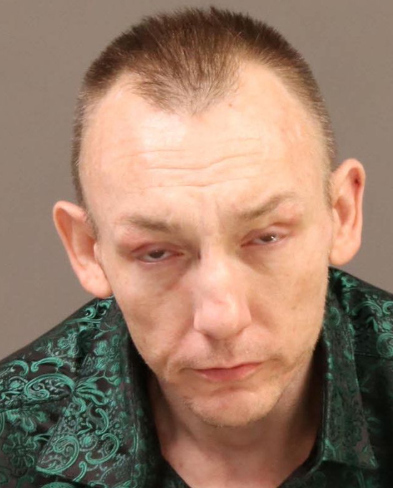
    Eugene Albert Horsch, 44, of Philadelphia.Courtesy of Philadelphia police

    Evers said the two-month search of the home, on the 400 block of West Chew Avenue, involved over 95 search warrants and surfaced an “astonishing” array of evidence: five urns of cremated remains, more than 20 containers full of unknown chemicals and oily substances, and 50 hard drives and other electronic devices holding more than 600,000 images, 70,000 videos, and 10,000 pages of writings and drawings.

    Inside one of those hard drives, Evers said, detectives found images and videos that appeared to show Fresses and Amarando alive inside the house — followed by “graphic and dark” depictions of what appeared to be their dead bodies.

    But the investigation is complicated, he said, because police have not recovered any human remains inside the home. And forensic tests of the substances in the basement, and of what initially appeared to be blood inside the house, did not test positive for human blood or DNA, law enforcement sources have said.

    Without the bodies, he said, the Philadelphia Office of the Medical Examiner cannot officially declare the women dead. He said the case would likely have to go through Orphans’ Court.
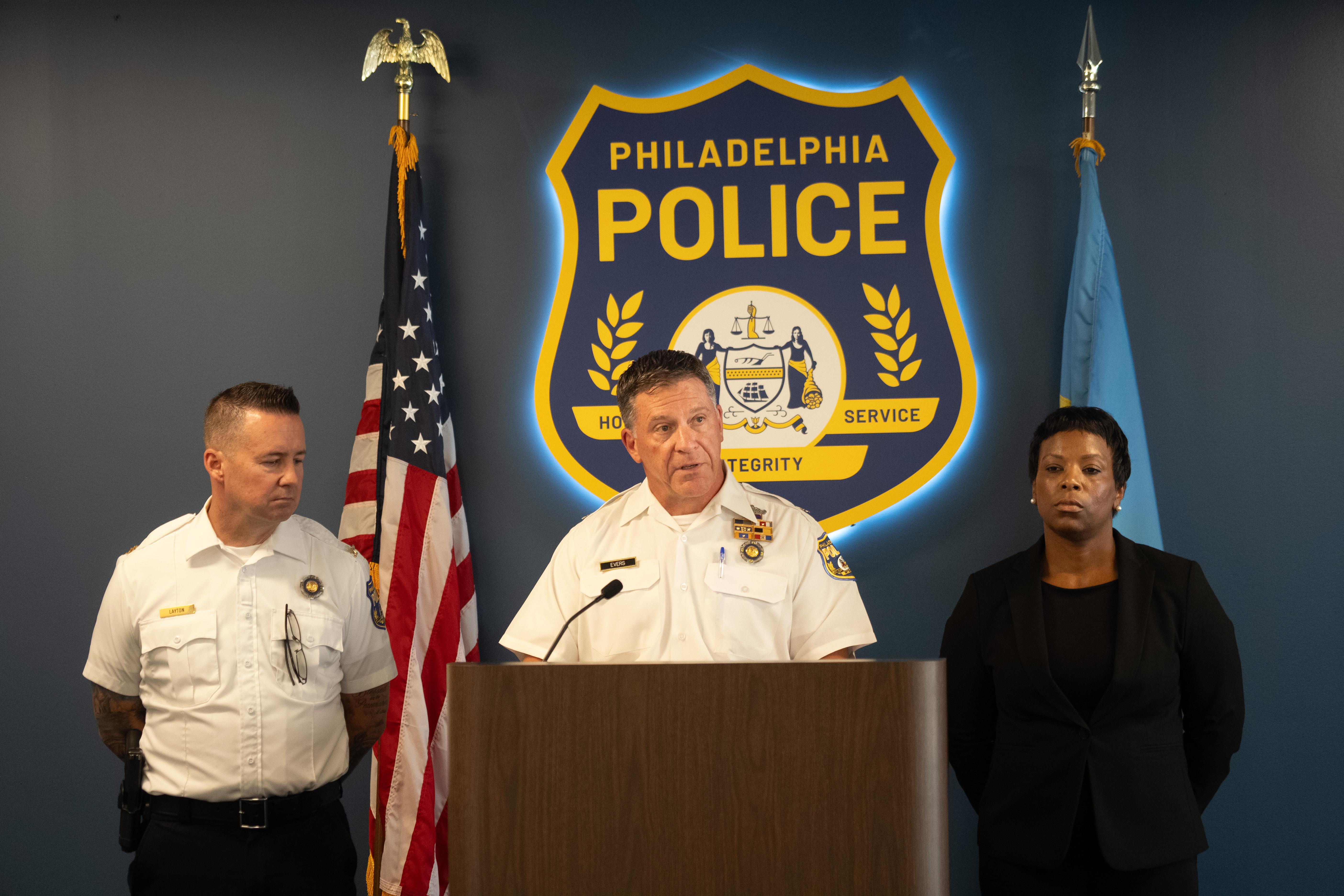
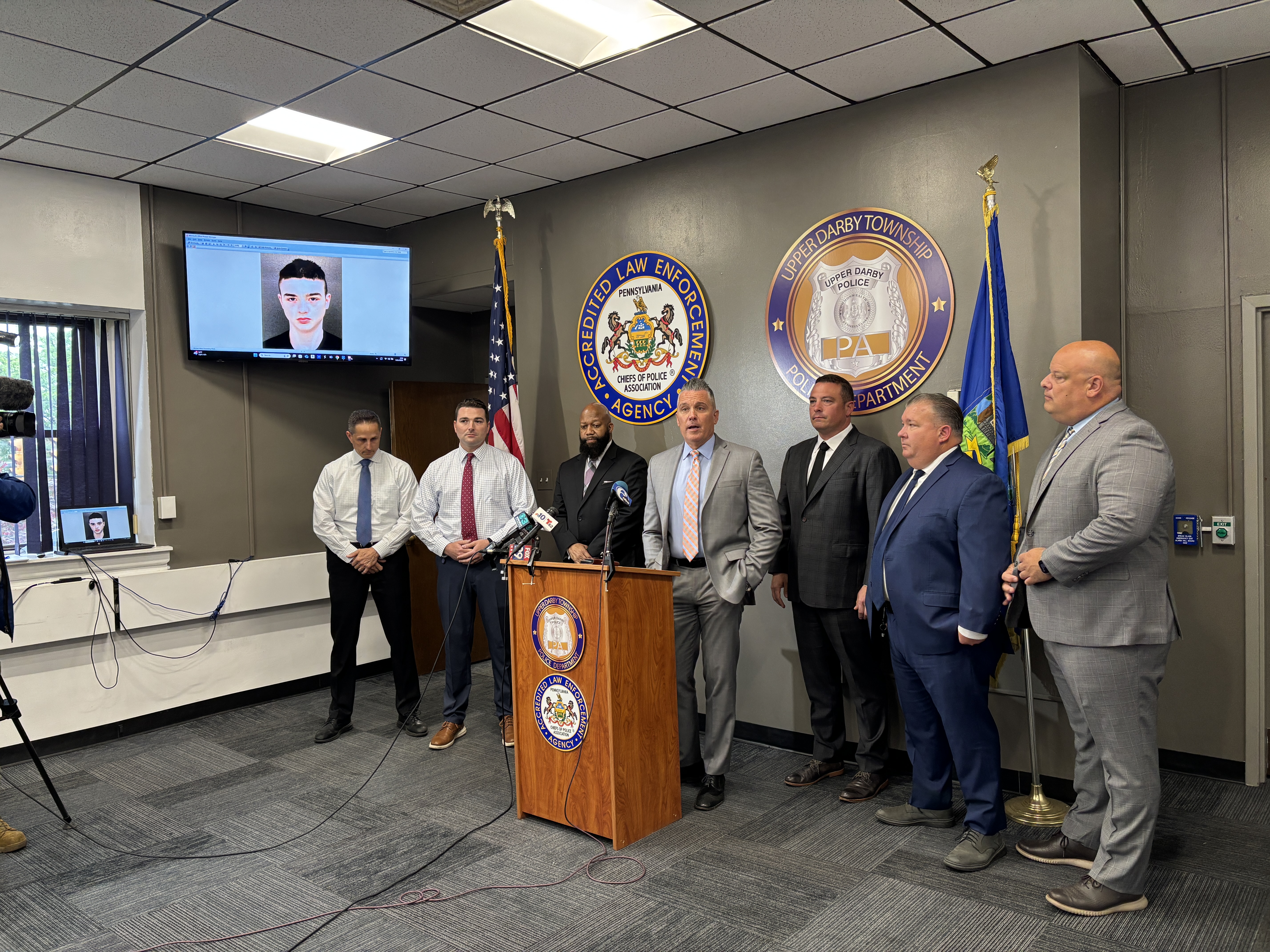
    Philadelphia Police Inspector Raymond Evers gives an update on the investigation into the house on Chew Avenue.Jessica Griffin / Staff Photographer

    Still, he said, the medical examiner’s office said that “if the images and the video are real and not altered in any way,” the women are dead.

    Police are still working to determine when the women died.

    Eugene Horsch has not been charged with any crimes connected to the women’s deaths or disappearances. Evers declined to say whether investigators believed he — or his father, a creator of erotic and pornographic art — may have been involved.

    “Eugene lived there. He lived there for a long time. His dad lived there for a long time,” Evers said when asked about their possible connection to the deaths.

    He said investigators had reviewed only about 5% of the digital materials so far and had hundreds of thousands more to go through.

    A lawyer for Eugene Horsch did not immediately respond to a request for comment Wednesday.

    The missing women

    Police said they notified the families of Fresses and Amarando on Wednesday morning.

    Ricardo Fresses, 61, said that, in his gut, he had known his daughter, Maribel, or “Bella,” was dead.

    “She called me every day. Absolutely every day she called me, and one day she stopped calling me,” he said. “And as the years went by I knew she was gone.“

    His daughter grew up in Holland, Bucks County, he said, and started using drugs in high school.

    “She was a beautiful girl, a loving girl, always daddy’s girl,” he said, even as she slipped into opioid addiction.

    He last saw her on June 19, 2018. They met for a slice of pizza in Kensington, and he gave her $50. He never heard from her again. He reported her missing shortly after.

    “It’s a horrible situation that my family has to go through,” he said about what police found inside the hard drive.

    Amarando’s family said the news followed 14 years of hope that she might finally turn up.

    ”I’m just so devastated. This brings some closure, but it still hurts,” said Lora Timmons, Amarando’s stepmother. “She was a sweet little girl. She was always just such fun to be with. She and her father were best friends.”

    Timmons said Amarando, who grew up in Doylestown, had been interested in modeling from a young age but “always found the wrong crowd.” She had struggled with addiction since she was a teen, her stepmother said.

    Amarando would often come to visit Timmons, who lives in North Carolina, and her sisters, but they lost contact in September 2012.

    ”She just went away,“ she said. “We searched here and there but we never found her. … We always thought she was just off doing her drug thing, living her life.”

    Timmons had not heard of the Horsches until Wednesday.

    ”I always hoped I’d see her again,” she said. “I didn’t want to think the worst.”

    Police declined to say how the women might have known Raymond or Eugene Horsch.

    For decades before his death, Raymond Horsch offered drugs, cash, and shelter to women struggling with addiction, in exchange for nude photo and video shoots. Horsch’s visual works featured graphic violence — and sometimes death scenes. He also penned semi-autobiographical novels featuring serial killers who preyed on women in addiction.
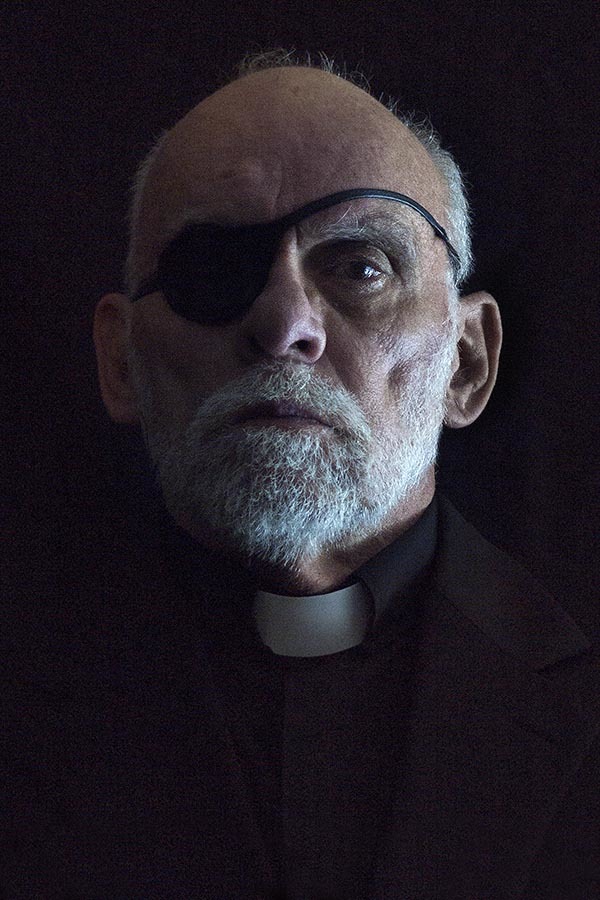
    Raymond “R.C.” Horsch in character for a film role, 2014.S. E. Stokowski / Wikimedia

    How the case began

    Wednesday’s developments came nearly two months after police began combing through the Horsch home in connection with at least two other missing women, following a chance encounter near Independence Mall.

    On June 19, a U.S. park ranger saw Eugene Horsch and a woman acting suspiciously inside his parked BMW. After searching the car, the officer found drugs, guns, and various other weapons, along with a counterfeit U.S. Drug Enforcement Administration badge.

    The woman with Horsch was also found with a fake ID in the name of Blair Tonzelli, a woman who was reported missing in 2023 and last seen at Horsch’s Olney home.

    That also renewed suspicions about Horsch’s father, who died in May 2025. Raymond Horsch’s ex-wife, Amy McHale, was reported missing in 2016 and last heard from at the Chew Avenue house.

    A witness later told police that Tonzelli was a home healthcare aide who had worked for Horsch’s father, and that she believed Tonzelli and Eugene Horsch had a disagreement over money, according to law enforcement sources.

    Investigators interviewed people who knew Horsch and were told that, in the past, he had bragged about killing people and melting their bodies with chemicals in his basement, said the sources, who spoke on the condition of anonymity to discuss an ongoing investigation. Horsch, they said, said he could make a body so small it “could be flushed down a toilet.”
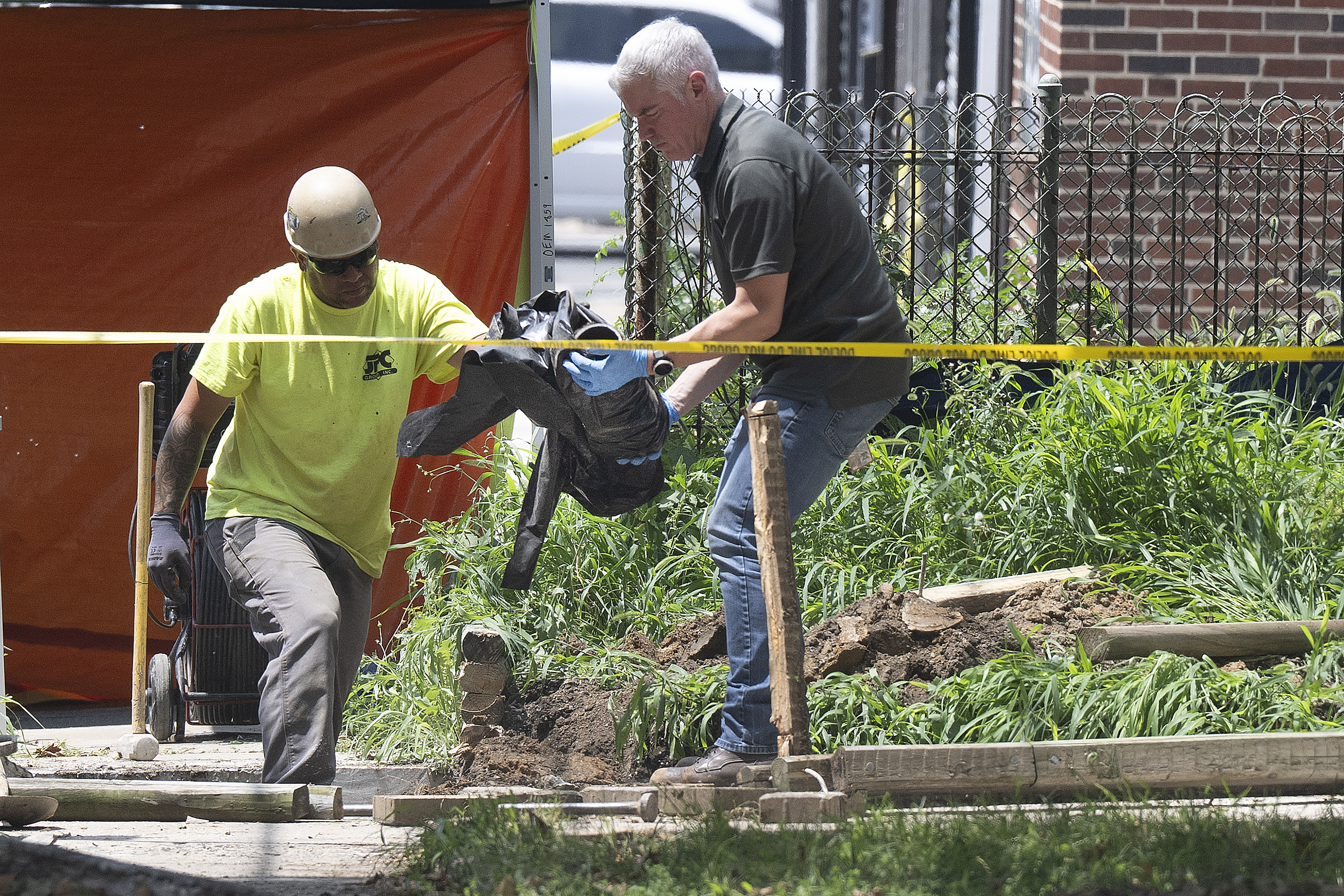
    Workers and police investigators remove pipes and debris at the entrance to the home of Eugene Albert Horsch on West Chew Avenue in the Olney section of Philadelphia as investigators search for possible evidence on July 22.Jose F. Moreno / Staff Photographer

    Since the June arrest, Horsch has remained in federal custody on charges related to illegal gun possession. Police continued to search the Olney home in hopes of learning the whereabouts of Tonzelli and McHale.

    They went so far as to excavate the home’s yard and remove a pipe to test for DNA.

    FBI agents, meanwhile, continued examining hundreds of pages of text messages, handwritten and typed documents, CDs, and videos — including many of Raymond Horsch’s artistic works.

    It was in there, police said, that there was evidence of Fresses’ and Amarando’s deaths.

    Fresses’ father said the discovery confirmed his worst fears. For months, years even, he said, he would wake up in the middle of the night and drive through Kensington. He would look into the faces of the women on the streets, hoping he would see his Bella.

    “But I was just hurting myself because I knew she was gone,” he said. “I knew in my heart that my daughter was not around anymore.“

  • Police searching for man accused of shooting a Philadelphia couple over the weekend

    Police searching for man accused of shooting a Philadelphia couple over the weekend

    Philadelphia police are searching for a man they say walked up to a couple sitting on a porch and opened fire late Sunday night, killing the woman and injuring the man before fleeing.

    Shariff Perry, 35, is charged in an arrest warrant with murder, possession of an illegal firearm, and related crimes in the killing of Michelle Wilson, 61, and the shooting of her 67-year-old husband.

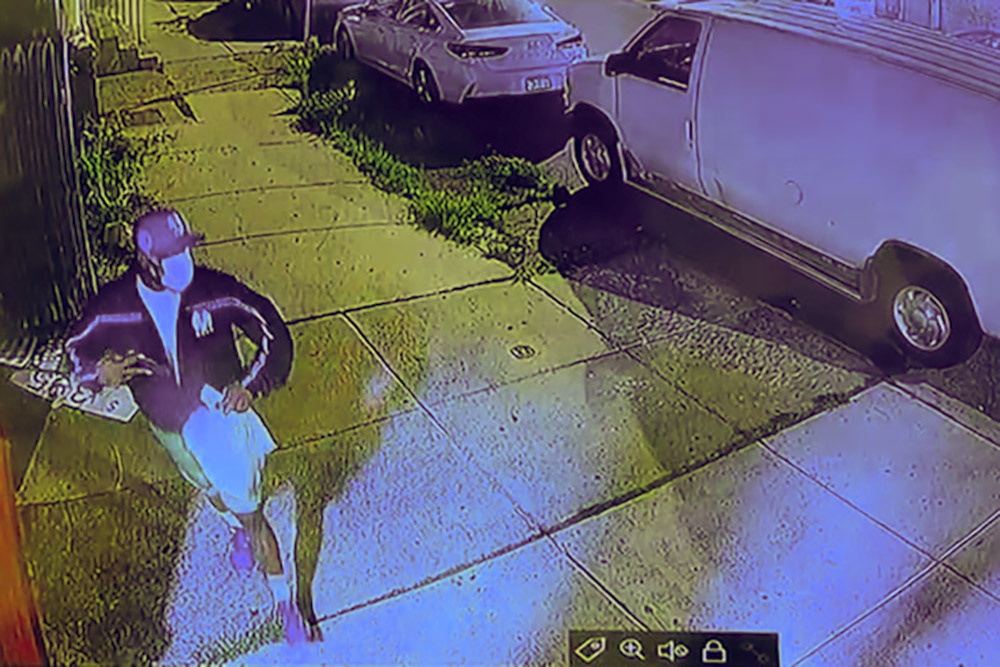
    Surveillance video from a business on Sunday captured a man wearing a hat and surgical mask — who police now say is Perry — walking to Wilson’s home in the 2800 block of North 24th Street in North Philadelphia. There, the video showed, the man pulled out a gun and fired repeatedly.

    Wilson was pronounced dead at Temple University Hospital shortly after the 11:49 p.m. shooting. Her husband was also taken to the hospital, where, police said, he was stable.

    Police described Perry as a male, 5 feet, 8 inches tall, and weighing 170 pounds. Anyone with information about Perry or the killing is asked to contact the department’s homicide unit at 215-686-3334 or its tip line at 215-686-TIPS (8477). A $20,000 reward is being offered for information that leads to Perry’s arrest and conviction, police said.

    Staff writer Ellie Rushing contributed to this article.

  • Half the 26 people charged in an NCAA gambling scandal have now pleaded guilty or admitted wrongdoing

    Half the 26 people charged in an NCAA gambling scandal have now pleaded guilty or admitted wrongdoing

    Two people charged with participating in an international scheme to rig basketball games for professional gamblers pleaded guilty in Philadelphia’s federal court Wednesday — the latest development in a scandal that shook the sports world when prosecutors unveiled a sprawling set of indictments earlier this year.

    The pleas entered by Bradley Ezewiro and Alberto Laureano mean that half the 26 people charged with participating in the scheme have admitted their crimes in court or have signaled in paperwork that they intend to do so before trial.

    None of the defendants has been sentenced, and cases remain pending against some of those charged with taking more active roles in the conspiracy — including Shane Hennen, a former Philadelphia resident and prolific sports bettor whom prosecutors have described as a key organizer.

    Still, Wednesday’s guilty pleas — which proceeded with little fanfare — served as a notable moment in a case that has attracted widespread attention as federal authorities across the country in recent years have increasingly been unveiling charges in sports gambling-related prosecutions.

    The U.S. Attorney’s Office announced the charges in January, saying it had arrested 26 people, including 20 basketball players, for participating in a multiyear scheme to fix games in the NCAA and the Chinese professional league.

    The scam was relatively straightforward, prosecutors said: Professional gamblers and some basketball trainers bribed players to underperform in games, and bettors then wagered against the players’ teams at various sportsbooks. The conspiracy involved dozens of games and millions of dollars in fraudulent bets, prosecutors said.

    Some of the bets were placed by Hennen or others in Philadelphia, prosecutors said, including a six-figure wager on a Chinese basketball game at Rivers Casino’s sportsbook in Fishtown.

    And some of the NCAA players charged with participating in the scheme spent time in the Philadelphia area, although none was accused of accepting bribes while playing for a local university.

    Ezewiro and Laureano each pleaded guilty Wednesday to bribery-related charges. Both were accused in court documents of playing supporting roles in the scheme.

    Laureano served as a “fixer” who recruited players into the conspiracy and sometimes delivered them bribe money, prosecutors said.

    Ezewiro joined the operation in 2024 while playing for St. Louis University, and also worked with another fixer to identify other players to bribe, prosecutors said.

    Their pleas came several days after other accused coconspirators also pleaded guilty.

    Over the last week, two former players at the University of New Orleans — Cedquavious Hunter and Dyquavion “Jah” Short — admitted accepting bribes while they played on that team.

    And last week, Shawn Fulcher pleaded guilty to taking bribes while playing at two schools, prosecutors said: the State University of New York at Buffalo and Alabama State University.

    U.S. District Judge Nitza I. Quiñones Alejandro has scheduled sentencing hearings in the coming months for the people who have pleaded guilty.

    A trial for the remaining defendants, meanwhile, is currently scheduled to take place early next year.

  • Former Lumberton mayor in trouble again with new criminal case

    Former Lumberton mayor in trouble again with new criminal case

    Gina LaPlaca, the former mayor of Lumberton Township who pleaded guilty earlier this year to driving drunk with her toddler in the car, has been charged with faking signatures on a nominating petition to run for township committee, the Burlington County Prosecutor’s Office said.

    LaPlaca, 47, and her husband, Jason Carty, 49, were both charged by summons with third-degree knowingly filing a false petition, two counts of third-degree tampering with public records or information, and fourth-degree falsifying or tampering with records.

    LaPlaca also was charged with fourth-degree making a false statement under oath.

    According to the prosecutor’s office, multiple people whose names and purported signatures appeared on LaPlaca’s nominating petition indicated that they had neither signed the petition nor authorized anyone to do so on their behalf.

    The petition was submitted by Carty to the Lumberton Township municipal clerk and contained an affidavit signed by LaPlaca that she “personally circulated the petition [and] that such petition was signed by each of the signers thereof in his/her own handwriting,” the prosecutor’s office said.

    Carty also allegedly collected signatures for the petition.

    Without the allegedly fake signatures, the prosecutor’s office said, LaPlaca’s petition would have lacked the needed number of signatures required to qualify for the primary.

    Both LaPlaca and Carty are scheduled to appear in Superior Court in Mount Holly on Sept. 21.

    In March, LaPlaca, who served as mayor until December and is still a member of the township committee, pleaded guilty before Burlington County Superior Court Judge Craig Ambrose to driving under the influence and child endangerment.

    Under a deal with prosecutors, LaPlaca entered a three-year diversionary program for first-time offenders. She also agreed to attend regular Alcoholics Anonymous meetings and install an ignition interlock device in her vehicle. LaPlaca told the judge she had installed an interlock device last October. And she had already completed inpatient and outpatient treatment, prosecutors said.

    Prosecutors said cell-phone video showed LaPlaca driving a blue 2019 BMW erratically on Route 38, swerving across the center line and nearly striking a utility pole. After the motorist who recorded the video alerted police, officers located LaPlaca and found an open container of alcohol in her vehicle, authorities said.

    LaPlaca told police she had been drinking before picking up her 2-year-old son from daycare, prosecutors said. At the time, her blood-alcohol concentration measured 0.30% — more than three times New Jersey’s legal threshold for intoxication.

    Despite calls from state lawmakers to step down, she declined to resign as mayor and remained in office until her term ended in December.

    In a text message Tuesday, LaPlaca said: “I’m still in process of retaining counsel so there’s not much I can say other than these charges are absolutely baseless.”

    Carty could not be reached for comment Tuesday. A lawyer for Carty also could not be reached.

    In a separate case, Carty was arrested in late May and charged with aggravated assault and harassment, court records show.

    The New Jersey Globe news outlet reported last month that LaPlaca had alleged that Carty tried to strangle her. But then she allegedly wrote a letter to the Burlington County Prosecutor’s Office saying that her husband did not assault her and that she wished for the charges to be dropped, the New Jersey Globe reported.

    A spokesperson for the Burlington County Prosecutor’s Office declined to comment on the alleged letter, but did say that the case had been transferred to the Mercer County Prosecutor’s Office.

    A spokesperson for the Mercer County’s Prosecutor’s Office could not be reached for comment.

  • Teen sought in Penn State student’s killing in South Philly surrenders to police

    Teen sought in Penn State student’s killing in South Philly surrenders to police

    A teen sought in connection with the killing of a Pennsylvania State University student in South Philadelphia surrendered to police on Tuesday, the U.S. Marshals Service said.

    Kadafi Fleming, 19, is also a suspect in the theft of a Philadelphia police officer’s car during a Monday morning robbery that ended in a shootout, according to the U.S. Marshals Service.

    Fleming surrendered around 6 p.m. Tuesday at the Philadelphia Police Department’s headquarters at 400 N. Broad St., the U.S. Marshals Service said.

    Authorities previously charged Azzubair Outen-Fleming, 16, and Kaiseem Smith, 16, with murder, robbery, and related crimes in the killing of 22-year-old William “Billy” Schmidt, who was robbed of his cell phone and shot on June 6 on the 1900 block of Durfor Street. This week, the marshals announced that they were seeking Fleming on a robbery charge in connection with the killing.

    Fleming is Outen-Fleming’s older brother, authorities said.

    The announcement of the marshals’ manhunt for Fleming came after another crime in South Philadelphia: About 3:15 a.m. Monday on the 6900 block of Grosbeak Place, authorities said, thieves stole a green Dodge Charger belonging to an off-duty police officer.

    Supervisory Deputy U.S. Marshal Robert Clark said the officer found the thieves a few blocks from where his car had been stolen and exchanged gunfire with them before they fled.

    Fleming has been named a person of interest in that theft, Clark said.

    It was unclear Tuesday whether anyone had been injured in the shootout. Philadelphia police did not respond to requests for information about the incident.

    .

    Clark added that he did not expect the search to last long, noting that marshals had captured Fleming’s brother in June more than 1,700 miles away at a home in Colorado Springs, Colo.

    Smith, who is accused of being the triggerman in Schmidt’s killing, turned himself in to authorities shortly after Outen-Fleming’s arrest. Outen-Fleming’s stepfather, Donte Abdulmalik, 35, has also been arrested and charged with helping his stepson evade the authorities.

  • Philadelphia paid $2.3 million to victims of a retired police officer who is behind bars for sexual assault

    Philadelphia paid $2.3 million to victims of a retired police officer who is behind bars for sexual assault

    Patrick Heron is in prison, but Philadelphia’s taxpayers continue to pay for the former police officer’s heinous crimes.

    The city paid $2.3 million last month to settle a lawsuit brought by two women who were sexually abused by Heron when they were children a decade ago.

    A lawsuit by another victim is ongoing in Common Pleas Court.

    Heron, who retired from the Philadelphia Police Department in 2019, was sentenced in 2023 to 15 to 40 years in state prison after pleading guilty to avoid a trial on more than 200 counts of child sexual assault, pornography, kidnapping, and related offenses.

    The 56-year-old was arrested in 2022 and accused of using his position for years to lure girls, often targeting victims who had run away, been arrested, or struggled with addiction.

    The women’s lawsuit accused the city of “reckless disregard for the safety of the public” by allowing a “morally corrupt sexual predator” to remain on the force and victimize at least 48 women and girls, despite years of sustained complaints of misconduct against him starting shortly after he joined the department in 1995.

    The department even began the process to terminate Heron in 2008, the complaint says, following sustained allegations that included “associating with known criminals,” “little to no regard for his position as a police officer,” and having been detained by police officers for soliciting a sex worker in Kensington.

    But Heron maintained his badge and went on to assault the two girls, among other victims.

    “Instead of just firing him, they were moving him around different districts,” said Joshua Van Naarden of VSCP Law, the firm representing the two plaintiffs.

    Heron eventually resigned in 2019 following an internal affairs investigation into an allegation that a uniformed Heron was caught by a CVS surveillance camera attempting to steal a phone charger.

    Heron assaulted one of the two women in 2016 when she was 9 years old. He held her captive in his bedroom, took 22 illicit photographs while she was unconscious, and sexually assaulted her, according to the complaint.

    The former officer sent her a Facebook message in 2021, when the victim was 15, and solicited photos from her as well as sex for money, the suit says.

    And when the teen accused him of acting inappropriately, Heron threatened to have her arrested.

    Heron assaulted the second women in 2016 while on duty. He picked her up from Temple University Hospital’s emergency department when she was 11 years old, after responding to a report that she had run away from home.

    After she was discharged from the hospital to Heron while he was on duty, with instructions to take her home, Heron gave her a laced drink and took photos of the unconscious child.

    Two days later, Heron picked up the 11-year-old from her house and again took illicit photographs of her.

    Both women were involved in Heron’s prosecution, the complaint says, and he pleaded guilty to counts resulting from his crimes against them.

    The woman who was victimized as an 11-year-old did not know about the abuse, which took place while she was unconscious, until law enforcement found photos of her on Heron’s devices, Van Naarden said.

    “There are tons of other victims out there that may not even be aware that they were victimized by him,” Van Naarden said.

    The city deserves credit for settling the lawsuit, which was filed in December 2024, relatively quickly to prevent the women from having to relive their trauma through depositions, testimony, and court hearings, the attorney said.

    The lawsuit was settled in April and the city paid $1.3 million on July 31 to the woman Heron assaulted when she was 9 and $1 million to the woman assaulted when she was 11, a spokesperson for the city’s law department said. There were no other conditions as part of the agreement.

    The city declined to comment further on the settlement or on the ongoing lawsuit.

    A second lawsuit from an alleged victim of Heron was filed in April in the Philadelphia court and tells of similarly harrowing abuse.

    The victim was a 16-year-old mother of a newborn when she met Heron in a courthouse in 2014, the suit says.

    “She was, by every measure, among the most vulnerable individuals Defendant Heron could have encountered in his capacity as a uniformed Philadelphia Police Officer,” the complaint says.

    Heron groomed her, the suit says, and starting in 2015 assaulted at least once a month for a period of four years, often drugging her “to prevent her from accurately recounting or reporting what had been done to her.” The assault included rape, according to the complaint.

    The lawsuit says Heron threatened the girl to secure her silence.

    “He repeatedly reminded her of his status as a police officer and his ability to weaponize that status against her, her child, and her incarcerated family member,” the lawsuit says.

    Ashley Garland, an Anapol Weiss attorney representing the unnamed victim, said her client deserves the same accountability as the two victims who received payment.

    “We are continuing to pursue justice on her behalf,” Garland said in a statement, “and we hope the city changes how it handles officers with sustained misconduct records, preventing them from harming the residents they are supposed to protect and serve.”

  • An Upper Darby teen who killed his high school classmate is heading to state prison

    An Upper Darby teen who killed his high school classmate is heading to state prison

    When Michael Nixon pulled the trigger on the handgun he was carrying last May, he robbed Khalief Webster Jr. of his future, Webster’s family of a loving son, and the community of any semblance of safety, Webster’s mother said Tuesday in a crowded Delaware County courtroom.

    “Khalief was not just the headlines, not just the crime scene tape that haunts me through the night, not just a victim,” Talaya Shaw said of her 17-year-old son. “Khalief was a young boy growing into a young man with a heart bigger than this world could handle.”

    And Nixon, she told Judge Deborah Krull, “had no God-given right to decide when and how he left this world.”

    For killing Webster, Nixon, 18, of Upper Darby, was sentenced to 18 to 36 years in state prison. Nixon pleaded guilty to third-degree murder earlier this year for the fatal shooting, which unfolded in May 2025 as the two teens, classmates at Upper Darby High School, crossed paths on Long Lane near Pine Street.

    Emotions and tempers flared during Nixon’s hours-long sentencing, which the judge had to pause multiple times to rein in outbursts from those who filled the standing-room-only courtroom. Webster’s friends and relatives screamed to be heard, calling Nixon a coward, among other insults, and demanding justice.

    Sheriff’s deputies barred more people from entering the hearing, and had to respond to a scuffle that erupted outside the courthouse after Nixon’s sentence was handed down.

    In May 2025, Upper Darby Police Superintendent Tim Bernhardt (center) announced the arrest of Michael Nixon for the murder of Khalief Webster.Vinny Vella / Staff

    On the day of the shooting, Webster was riding a miniature dirt bike when he encountered Nixon, who had walked 25 minutes from his own neighborhood to the area, according to investigators.

    What happened next was the subject of debate during Tuesday’s hearing.

    Nixon’s attorney, Pete Manaras, said Webster asked his client if he was the “young boul” he had seen “the other day,” and got off the bike to confront him.

    The two teens, he said, knew each other and had gotten into disputes before. Nixon, fearing for his safety, shot Webster in the abdomen, Manaras said.

    But Senior Deputy Attorney General Christopher Phillips, who prosecuted the case, said Nixon was the aggressor. He was out looking for Webster, Phillips said, armed and lying in wait in an area where he knew he would encounter the other teen.

    “The public needs to be protected from people that would do such a thing on a sunny afternoon, on a beautiful May day, to a young man who didn’t see it coming,” Phillips said.

    After the shooting, Nixon fled and was recorded on a surveillance camera telling someone on a phone call that he had shot somebody in the chest, according to the affidavit of probable cause for his arrest. Nixon’s mother then picked him up and drove him away.

    Nixon addressed Webster’s family Tuesday to apologize, saying he wished he could take back what had occurred.

    “I didn’t want to kill him. I never wanted to hurt him,” Nixon said. “I was just scared and my body reacted before my mind.”

    Nixon said he encountered Webster by chance. He was carrying the gun because of previous run-ins with him, he said, and needed it for protection as he walked to a friend’s house.

    Webster grabbed at his waistband as he confronted him, Nixon said. He believed Webster was reaching for a gun and reacted.

    Nixon said he had grown up in an abusive household and that made him “perceive everything as a threat” and grow anxious when people get too close to him.

    “I’m not saying this as an excuse for my actions, because I know I deserve to be locked up for what I did,” he said. “But that doesn’t mean I don’t want to turn my life around, because I do.”

    Webster’s relatives, including his grandmother, Charlotte Webster, said that while they have not yet forgiven Nixon, they know that will come in time through their faith.

    Still, she said, the pain Nixon caused their family was devastating.

    “I believe this was a deliberate, heinous crime he committed,” she said. “He didn’t care about anything or anyone.”

  • Bucks County farm owner who fled to Belize to dodge animal abuse charges pleads guilty

    Bucks County farm owner who fled to Belize to dodge animal abuse charges pleads guilty

    A Bucks County woman who presided over squalid conditions on a Wrightstown farm and mistreated more than 100 animals in one of the worst neglect cases in county history has pleaded guilty.

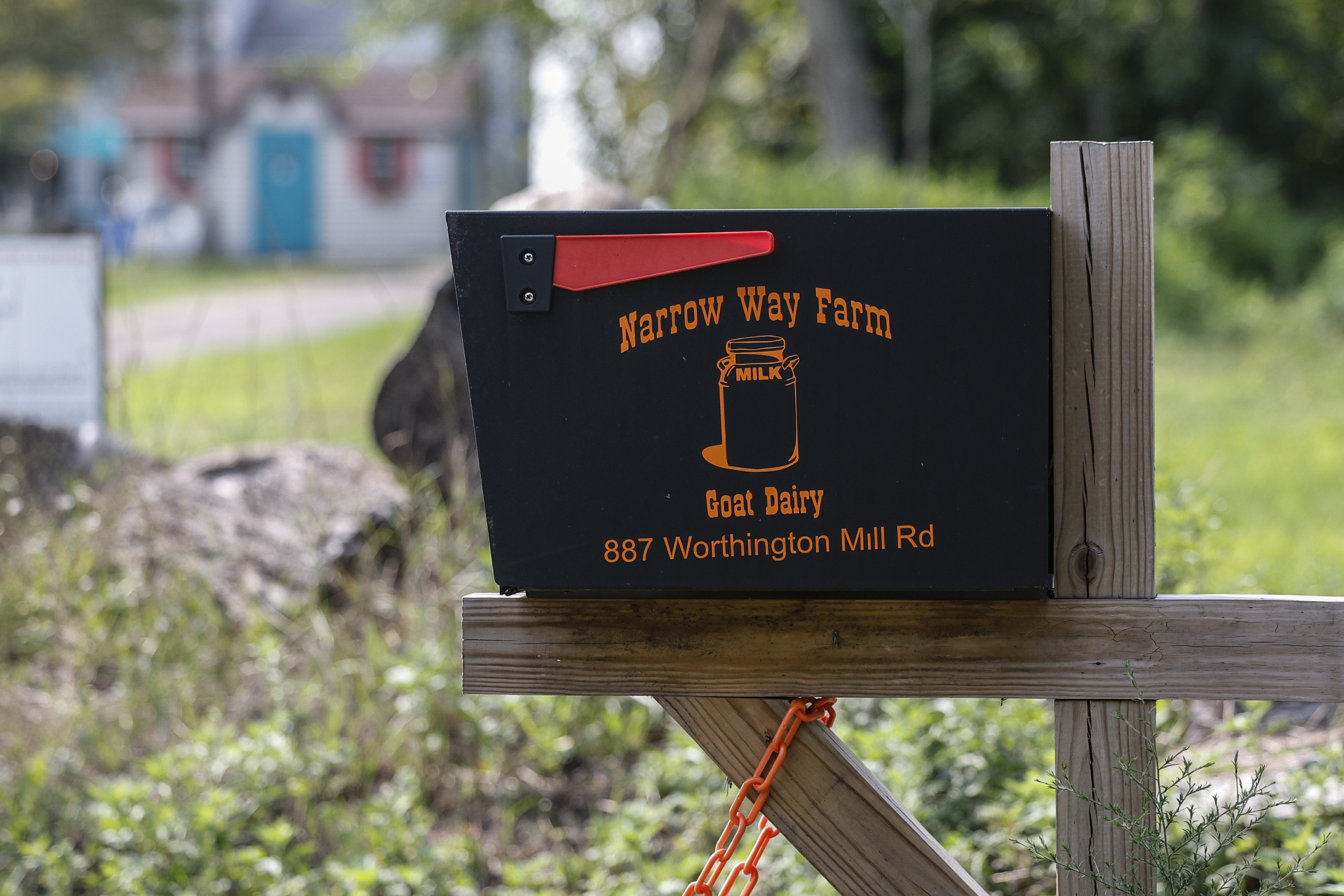
    Abigail Tuttle O’Keeffe, 55, the former owner of Narrow Way Farm, entered guilty pleas to aggravated cruelty to animals, neglect of animals, and related crimes late last month. She was spared from prison by entering a diversionary program, prosecutors said Monday. O’Keeffe must attend substance-abuse and mental-health counseling, and is barred from owning animals.

    Her attorney, Josh Buchanan, declined to comment Monday.

    In August 2024, the Bucks County SPCA served a search warrant on O’Keeffe’s property after a farm manager notified the agency that a sheep had been found dead, according to the affidavit of probable cause for her arrest.

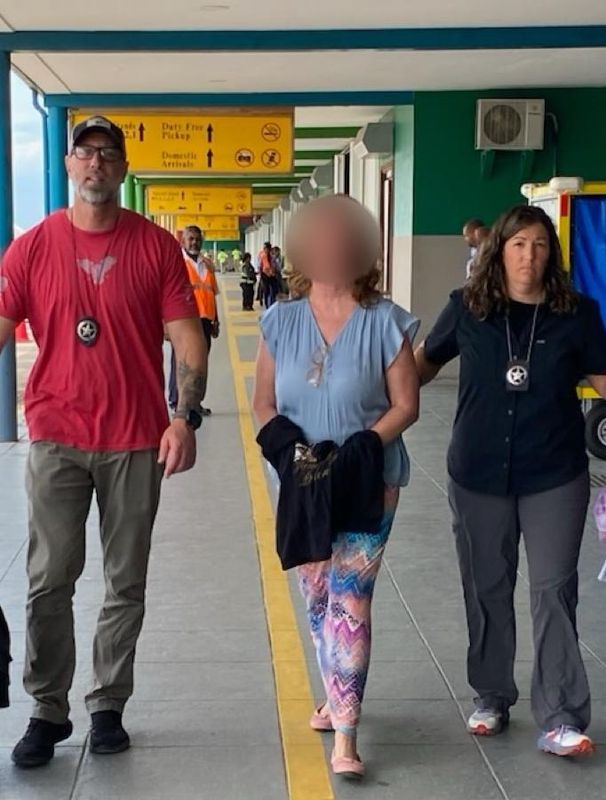
    Abigail Tuttle O’Keeffe was extradited to Bucks County in September 2025 by the U.S. Marshals Fugitive Task Force. In this photo provided by the U.S. Marshals Service, her face was obscured.U.S. Marshals Service

    Officers rescued more than 100 pigs, goats, and sheep, many suffering from infections, parasites, and other chronic medical conditions. One severely emaciated goat died while investigators were searching the property. Another one was so malnourished and riddled with parasites that it had to be euthanized after weeks of intensive care, the affidavit said.

    Volunteers at Narrow Way who spoke with The Inquirer in 2024 said O’Keeffe, who holds a doctorate in developmental psychology, did not have the skills to match her ambitions of running a working farm.

    Most of O’Keeffe’s workforce also had little to no farm experience, and the 36-acre property was in disarray, to the detriment of the livestock she kept there, according to some of those volunteers.

    In one incident, workers botched the dehorning of a calf, leaving the animal with permanent nerve damage.

    Word of the conditions at Narrow Way spread quickly: The owner of a nearby farm said O’Keeffe was not “a real, active farmer,” shied away from the work that required of her, and ran the operation like a cult, comparing her farmhands to “disciples.”

    But when local investigators came to the farm, O’Keeffe was thousands of miles away. Prosecutors said she moved to Belize, where she was arrested in April 2025 on gun charges.

    U.S. Marshals extradited her to Bucks County months later.

    Staff Writer Jesse Bunch contributed to this article.

  • A Philly entrepreneur allegedly scammed NFL athletes, everyday investors out of more than $5 million

    A Philly entrepreneur allegedly scammed NFL athletes, everyday investors out of more than $5 million

    Hours before Mohamed Coulibaly was found dead in his Gloucester County home, one of his alleged victims said, the 23-year-old entrepreneur had been desperately seeking a $75,000 loan.

    A recent Barron’s investigation alleged Coulibaly defrauded three former NFL players out of $1 million in an e-commerce scheme involving fake Shopify stores. Now others who invested in the venture or lent Coulibaly money were blowing up his phone. They wanted to know if Jalen Carter and several former members of the Eagles, including Nakobe Dean and Terrell Edmunds, were even real clients, a claim Coulibaly made on promotional materials.

    Above all, these people wanted their money back.

    The morning of his death, July 31, Coulibaly solicited money from a New York man, who agreed to speak with The Inquirer on the condition of anonymity to protect his family’s privacy. He is one of at least 10 people, including the three former NFL players, alleging Coulibaly scammed them out of more than $5 million through phony investments over the last year.

    Coulibaly, who lived in Mullica Hill, a section of Harrison Township, promised to send a Lamborghini, two gold Rolexes, and a signed Lionel Messi cleat as collateral for what was to be a weeklong loan.

    Coulibaly still owed the man $1 million for a bridge loan due in March. Yet he insisted the additional loan somehow would make it possible to return the initial money owed. His alleged victim said he figured he could only gain from the arrangement — if the collateral proved to be real.

    But a driver — not in a Lamborghini — arrived at his doorstep with two fake watches, an unauthenticated signed cleat, along with an insurance card and a bill of sale for the promised luxe car, according to the man.

    The man called off the loan.

    “[Coulibaly] then started to cry hysterical on the phone,” the victim said. “He said, ‘I’ve lost it all, please help me here, please help me here.’”

    Coulibaly was found dead later that day.

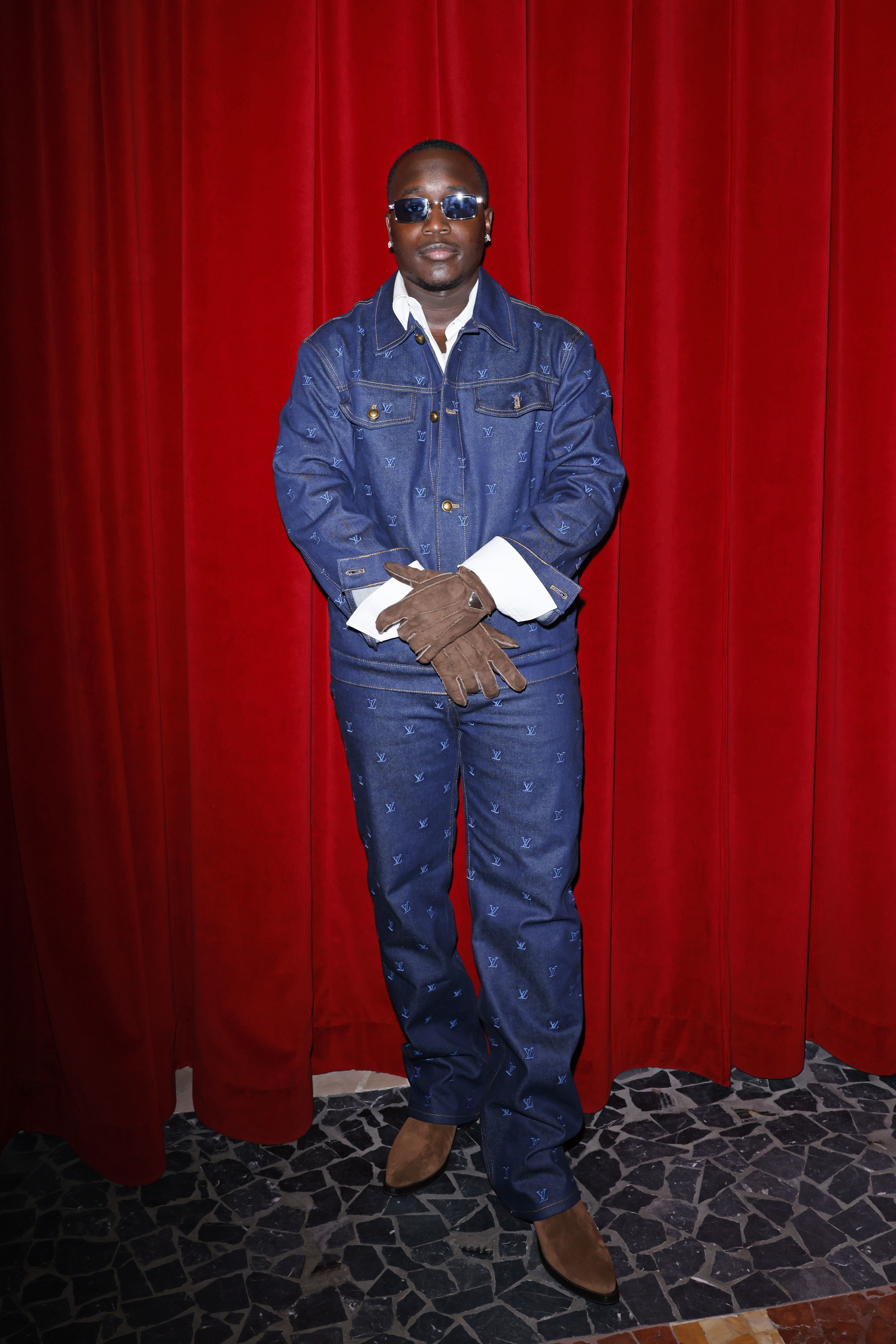
    Mohamed Coulibaly attends Milan Fashion Week on Jan. 19 in Milan, Italy.Dave Benett/Getty Images

    The Gloucester County Prosecutor’s Office is leading the investigation into Coulibaly’s death and declined to comment. No charges have been filed in connection to the alleged scams Coulibaly is accused of spearheading.

    Coulibaly’s death has only added a layer of uncertainty for his allegedly defrauded clients, who now believe they were unwitting participants in a Ponzi scheme. New so-called investments went toward paying off other clients. But the chain could not be sustained.

    “In terms of his death, it sounds rather brash or harsh, but the only reason I’m upset for his passing is that he’s not able to go to jail and suffer,” the bridge loan investor said.

    The Inquirer spoke with four victims, all but one of whom asked to remain anonymous citing lingering shame, privacy concerns, and, in one case, safety considerations. They provided alleged contracts Coulibaly gave them, text messages, screenshots of their purported Shopify store sales, and a whistleblower report sent to federal and Pennsylvania financial regulators.

    In hindsight, the business always seemed too good to be true. The young entrepreneur convinced them they could rake in millions each month selling vacuums, printers, desktop humidifiers, and silicone trays on Shopify, an e-commerce platform similar to Amazon.

    At first, investors said they had no reason to question Vent Motion LLC, also known as Motion Venture. Shopify alerted the victims to a steady stream of sales through their phone apps.

    But at least two Shopify stores victims bought into were fake, full of transactions a Barron’s analysis suggests are also a sham. Shopify did not respond to requests for comment.

    The alleged victims say Coulibaly lured them in by highlighting purported investor relationships with wealthy and connected people. His pitch deck listed several former members of the Eagles and the NBA as clients. Representatives for the current and former Eagles declined to comment or could not be reached.

    “A selling point [Coulibaly] gave me was, ‘Hey, we only have about 90 to 100 people in this,’ insinuating you can make it behind the velvet rope because everybody involved is celebrities or athletes, and this is just a venture they do,” said another of the defrauded investors, requesting anonymity because family and friends do not know about the scam.

    Yet as more victims have found one another in the wake of Coulibaly’s death, it has become clearer the scheme was not limited to targeting NFL players.

    It involved everyday investors from Arizona, Pennsylvania, and New York who now want to know if any of it was real.

    A ‘magnetic’ man with the digital footprint of a business phenom

    Coulibaly knew how to sell the image of a successful entrepreneur.

    He was a guest on numerous podcasts and featured in publications such as Disrupt Magazine, Business Insider Africa, and the Source in recent years; some of the pieces have no author byline, making it unclear if they were paid content.

    His story always hit the same beats: Coulibaly was a professional soccer player. He made $4 million reselling rare sneakers before he turned 21. His success was largely attributed to “building connections” with athletes and influencers. Grinding was the key to success.

    But much of that was embellished.

    A database for American high school sports coverage noted Coulibaly played soccer for Roxborough High School.

    Coulibaly said he began his professional career with the New York Red Bulls soccer team, but a spokesperson said Coulibaly never had a contract.

    A friend from Coulibaly’s days at Temple University said the sneaker venture Heatkickcity was also a scam that swindled students out of thousands. He asked not to be named out of safety concerns, saying Coulibaly often touted relationships with gang-affiliated people.

    While Coulibaly told publications he was born in Mali, West Africa, and immigrated to the United States at a young age, while in college, he often intimated that he was a trust fund child and that his parents worked for the French government, the Temple friend said.

    He added that may have helped induce so many of their peers to pay a $1,200 membership for monthly access to rare sneakers that ultimately never came.

    “He’d be like, ‘It’s stuck in shipping,’ or ‘my assistant forgot to order them,’ or ‘my assistant’s slacking,’ and then he would just keep on extending it, extending it,” said the friend. “If you questioned him in any way, shape, or form about the product that you paid for, then he would switch to angry mode.”

    The friend eventually got his money back after pressuring him for weeks but said Coulibaly continued his self-proclaimed pursuit of becoming a billionaire.

    “He scammed his best friends,” the friend said. “Nobody was off-limits.”

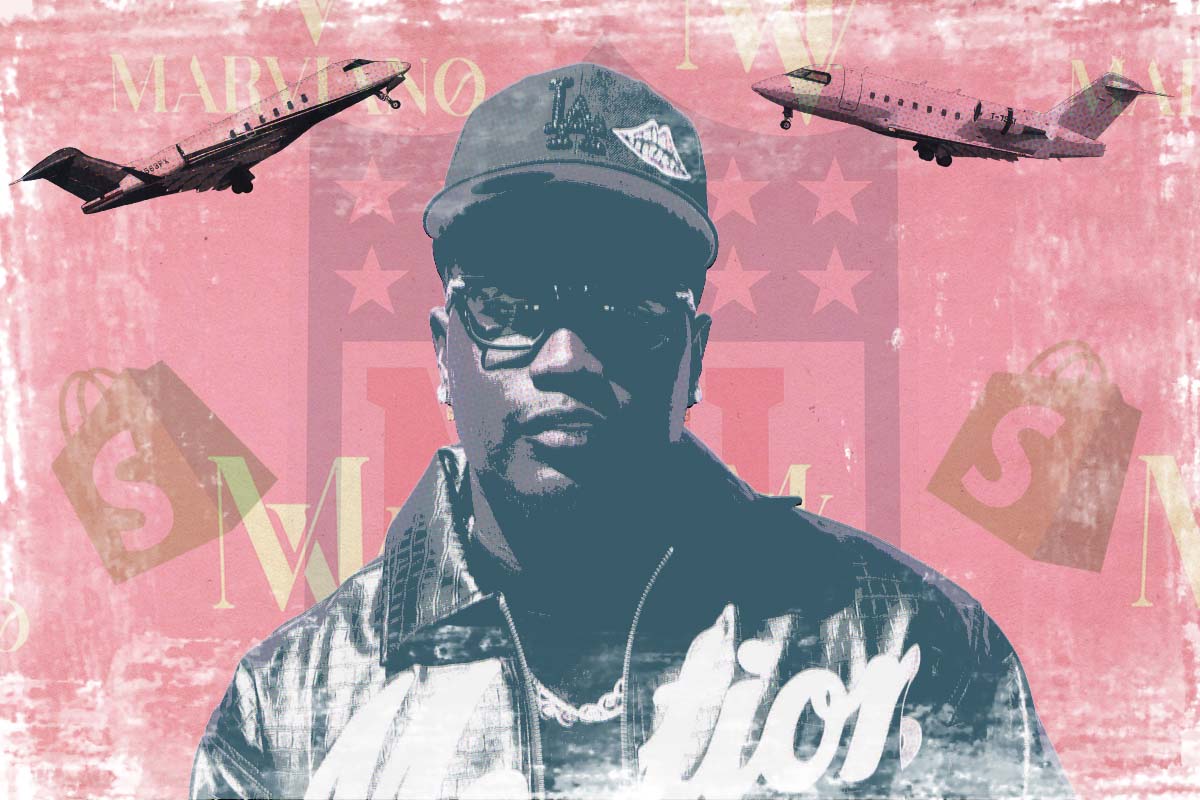
    Coulibaly’s next venture was fashion line Motion Apparelz. It was profiled in Forbes last year, where the author describes Coulibaly’s energy as “magnetic.” In the piece, Coulibaly name-drops artist friends, including rapper YG, who was later listed as an investor in Motion Venture promotional materials.

    Rapper YG performs at the Coachella Music & Arts Festival in 2019.Amy Harris

    YG’s agent could not be reached for comment.

    Outside of the glowing profiles, a now-defunct Instagram account also detailed a lavish lifestyle full of run-ins with celebrities, boat jaunts on luxury yachts with city skylines in the background, and snapshots of Coulibaly in or in front of private planes. Often, Coulibaly could be seen wearing gold watches, what appear to be Van Cleef & Arpels bracelets, and diamond-studded chains.

    Coulibaly’s digital footprint set the stage for an even bigger business pitch.

    A business promising exorbitant returns

    When it came to Vent Motion LLC, Coulibaly told clients he operated “factories in China and India with a combined team of 125 full-time employees,” according to a pitch deck he showed investors that was obtained by The Inquirer.

    This allowed stores to operate without keeping any inventory and reducing overhead — a model known as drop-shipping.

    The savings from eliminating the middlemen, he said, could then be reinvested into artificial intelligence-driven ads and “influencer amplification” to drum up more customers. Coulibaly’s company would set up and manage the Shopify stores on behalf of investors, pushing out additional advertising or swapping out products if sales slowed.

    Clients would be charged a 20% to 25% service fee for that work, and even so, Coulibaly dangled extraordinary returns for those who joined the venture.

    One Shopify store that began with a $550,000 investment in January 2024 had allegedly generated $2 million in revenue in April and a whopping $23 million in July of that year. By August, this particular store had generated a total of $84 million in revenue, according to the company’s unsubstantiated pitch deck.

    Further sweetening the deal was an initial investment “protection” guarantee if their store did not generate profit within six months.

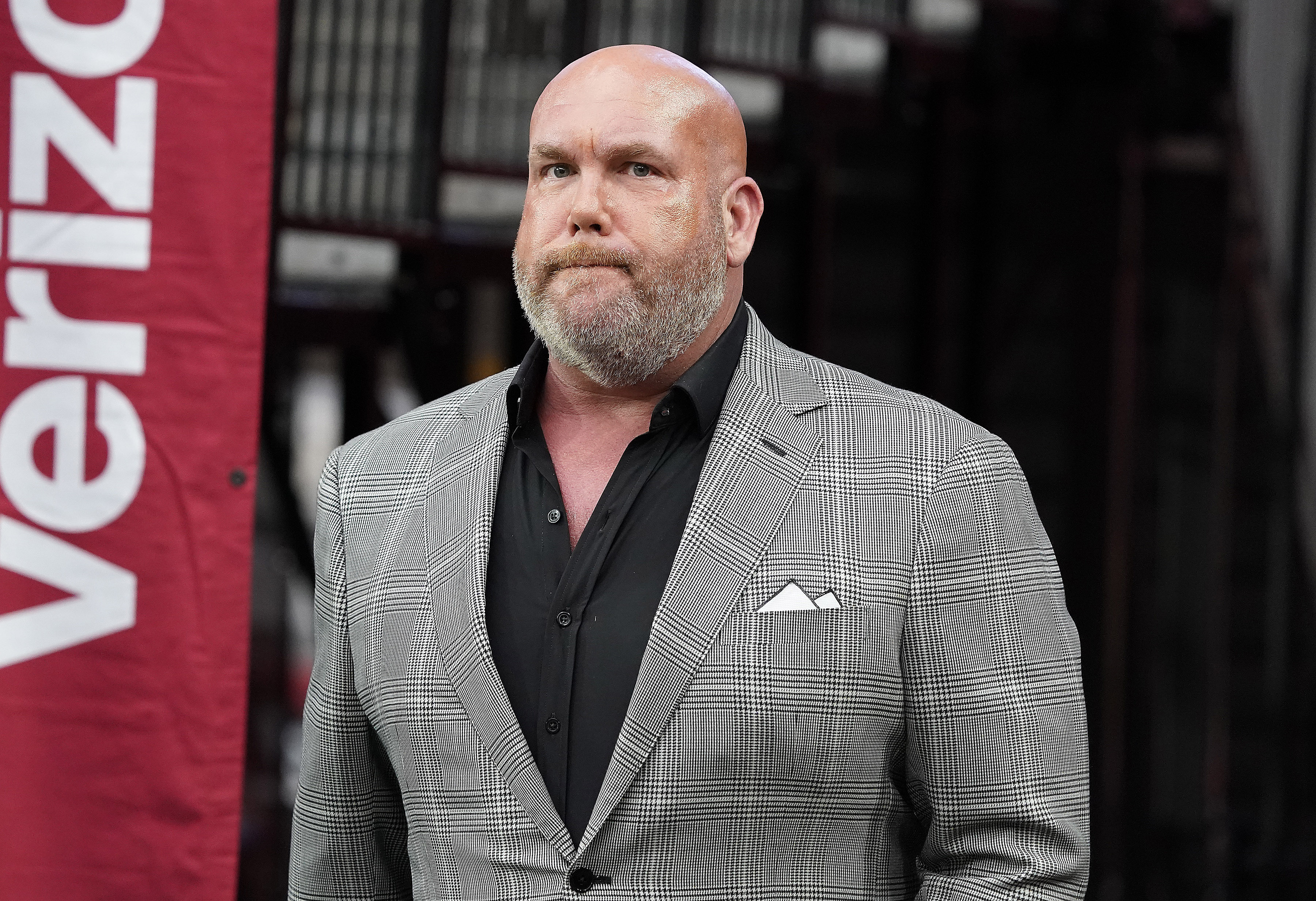
    Former Arizona Cardinals General Manager Steve Keim says he was just as much of victim of Mohammed Coulibaly’s alleged scam.Darryl Webb

    It’s what got Steve Keim, former general manager of the Arizona Cardinals, into the business.

    Keim said he met Coulibaly through mutual Eagles acquaintances and by August 2025 he had bought his first Shopify store, which was recording sales at a pace that had him on track to triple his investment over six months. Keim bought into six more stores the following month, he said. His son and ex-wife would also buy into the business for at least a $1 million investment between all three.

    Keim said he was soon offered the role of chief operating officer/chief growth officer, which he now sees as a way for Coulibaly to “legitimize his business.”

    “I introduced him to people to sell stores to and that sort of thing,” said Keim, who describes fulfilling a figurehead role with no decision-making power. “He called me the COO but he also made promises to give me health insurance and to have some kind of bonus structure.”

    The health insurance, bonuses, and exorbitant returns never materialized. Keim said he never had access to bank records and was never made aware of how many people gave money to Motion Venture. But by the start of the year, Keim claims, a flood of disgruntled investors were asking him for help getting their money back. Around this time, Keim said, he asked Coulibaly to stop using his name in promotional materials and told him he no longer wanted to be COO.

    Keim contended he was as much of a victim as anyone else, holding onto hope that he could recover his money until Coulibaly’s death.

    “This went downhill fast,” he said. “Not only did I get my name drug through the mud, I lost a lot of money since I was an investor.”

    A Dubai deal

    As more investors were demanding access to their Shopify funds in the fall, Coulibaly was telling them that the Dubai firm Middle East Venture Partners was interested in buying the operation for $215 million.

    All they had to do was reach 175 online stores and meet other benchmarks by Aug. 1.

    To back his claim Coulibaly produced a letter of intent dated Aug. 14, 2024.

    Troubling for investors: The letter was dated more than a month before the company was registered in Pennsylvania.

    The discrepancy was the biggest red flag for Barry Minkow, a convicted fraudster who now investigates scams on behalf of fraud victims. He started poking around the company at the start of the year for an investor who had put up $150,000.

    “So here you are looking at a private equity company saying they’re going to buy up this company that doesn’t even exist for $200 million?” Minkow said in disbelief.

    Middle East Venture Partners did not respond to an email to asking if a relationship existed with Coulibaly’s Vent Motion LLC.

    With the permission of three of the alleged victims, Minkow submitted a 23-page whistleblower report to the U.S. Securities and Exchange Commission, FBI, and Pennsylvania Department of Banking and Securities. The report laid out victim accounts and flagged glaring issues with Motion Venture’s business model.

    Minkow warned regulators in February that intervention was essential to “halt ongoing solicitations, trace misallocated funds,” and stressed the importance of doing so “before the scheme inflicts further, irreparable harm.”

    Minkow would prove to be right. Motion Venture was still actively recruiting new investors that month.

    Picking up the pieces

    Coulibaly’s college friend thinks he might have been one of the first victims of the Shopify sometime about three years ago. It involved less paperwork back then, more of a handshake deal. The friend put in $5,000 in a store with an investment protection promise in place, he said. Unlike that time in college, however, the friend only got half his money back.

    The friendship with Coulibaly cooled after that.

    “People just keep on saying he scammed NFL players,” said Coulibaly’s college friend. “No, anybody with money could be scammed, no matter how small.”

    Coulibaly would insist money issues were the Dubai firm’s fault until his death, according to his alleged victims who shared screenshots and voice memos of conversations.

    He ricocheted from distraught, lamenting the financial ruin that awaited him if he did not acquire more investors, to defiant, celebrating the Philadelphia 76ers’ LeBron James trade on X as he dodged investors.

    When Keim and another investor flew into Philadelphia to meet with Coulibaly in late July, they spent a day and a half trying to figure out how much money was left, to no avail.

    It was around that time that Coulibaly was soliciting the New York man for the $75,000 loan.

    Coulibaly’s last post on X was a reshare a day before his death. “Trying to be everyone’s friend is a foolish behavior,” it read.

    Whether any investor money remains is unclear. A now-defunct GoFundMe page put together by a man claiming to be Coulibaly’s brother raised more than $12,000 for the body’s “international transportation arrangements.”

    Investors are also trying to figure out what legal recourse they might have, if any.

    Coulibaly’s death has shattered any last remaining hope some victims had that a Dubai firm was to blame for cash-flow issues, and they are now seeking legal help.

    It also left them feeling cheated one last time.

    Staff writer Ryan W. Briggs contributed to this article.

  • Philly parents are charged with aggravated assault on a 7-week-old girl, police say

    The parents of a 7-week-old girl were charged with aggravated assault and related offenses after an examination at Children’s Hospital of Philadelphia revealed the infant had been seriously injured, police said Monday.

    Secret McCleve-Sar, 21, and Tyrone Jones, 22, both of the 2500 block of North Front Street, were arrested on Sunday and also charged with kidnapping, criminal conspiracy, endangering the welfare of a child, simple assault, recklessly endangering another person, and obstructing justice, police said.

    Bail for each was set at 10% of $1 million and both were still in custody on Monday, court records show.

    A court-appointed lawyer for McCleve-Sar declined to comment on the case. The Defender Association of Philadelphia, which is representing Jones, also could not be reached for comment.

    On Saturday shortly after 6:30 a.m. police responded to CHOP for a report of a prior assault involving the infant girl.

    The girl had initially been taken to Thomas Jefferson University Hospital by her parents and then was transferred to CHOP, police said. The parents allegedly left the hospital with their infant prior to receiving the results of the medical evaluation.

    The investigation remains ongoing by the Special Victims Unit.