Category: Crime & Justice

  • Forceful Pa. Supreme Court ruling constrains one of DA Larry Krasner’s signature initiatives

    Forceful Pa. Supreme Court ruling constrains one of DA Larry Krasner’s signature initiatives

    The Pennsylvania Supreme Court’s decision to limit Philadelphia prosecutors’ ability to seek to overturn old convictions not only took aim at one of District Attorney Larry Krasner’s defining initiatives — it altered the work of an office he will one day leave behind.

    The high court’s ruling adds an extraordinary new layer of oversight to an issue that helped make Krasner one of the nation’s most prominent progressive prosecutors: correcting what he has described as injustices of decades past.

    But the newly established changes to the appellate processes in Philadelphia will outlive Krasner’s tenure and reshape the way the office reviews post-conviction cases for years to come. It could not only apply to high-profile exonerations in murder convictions, but also extend to cases that even Krasner’s more conservative predecessors were eager to undo, like drug and gun convictions linked to corrupt cops.

    It also deepens a yearslong conflict between Krasner and his critics in the justice system. Several justices, in dissenting opinions, raised concerns that the change could inject politics into a high-stakes legal process.

    Since taking office in 2018, Krasner has made post-conviction review a centerpiece of his reform agenda. His office said it has overturned the wrongful convictions of 59 people — almost all of them Black men. It has also struck deals that allowed defendants to plead guilty to lesser charges in dozens of other cases in which prosecutors did not say those charged were innocent, but agreed their original trials were unfair, often because of prosecutorial or police misconduct.

    But the high court, in a forceful majority opinion written by Justice Kevin Dougherty, said Krasner’s prosecutors had misled judges in several of those cases, that the prosecutors were not acting as the necessary adversaries to test the cases’ merit, and that the courts could no longer trust his prosecutors’ word when deciding whether to overturn a conviction.
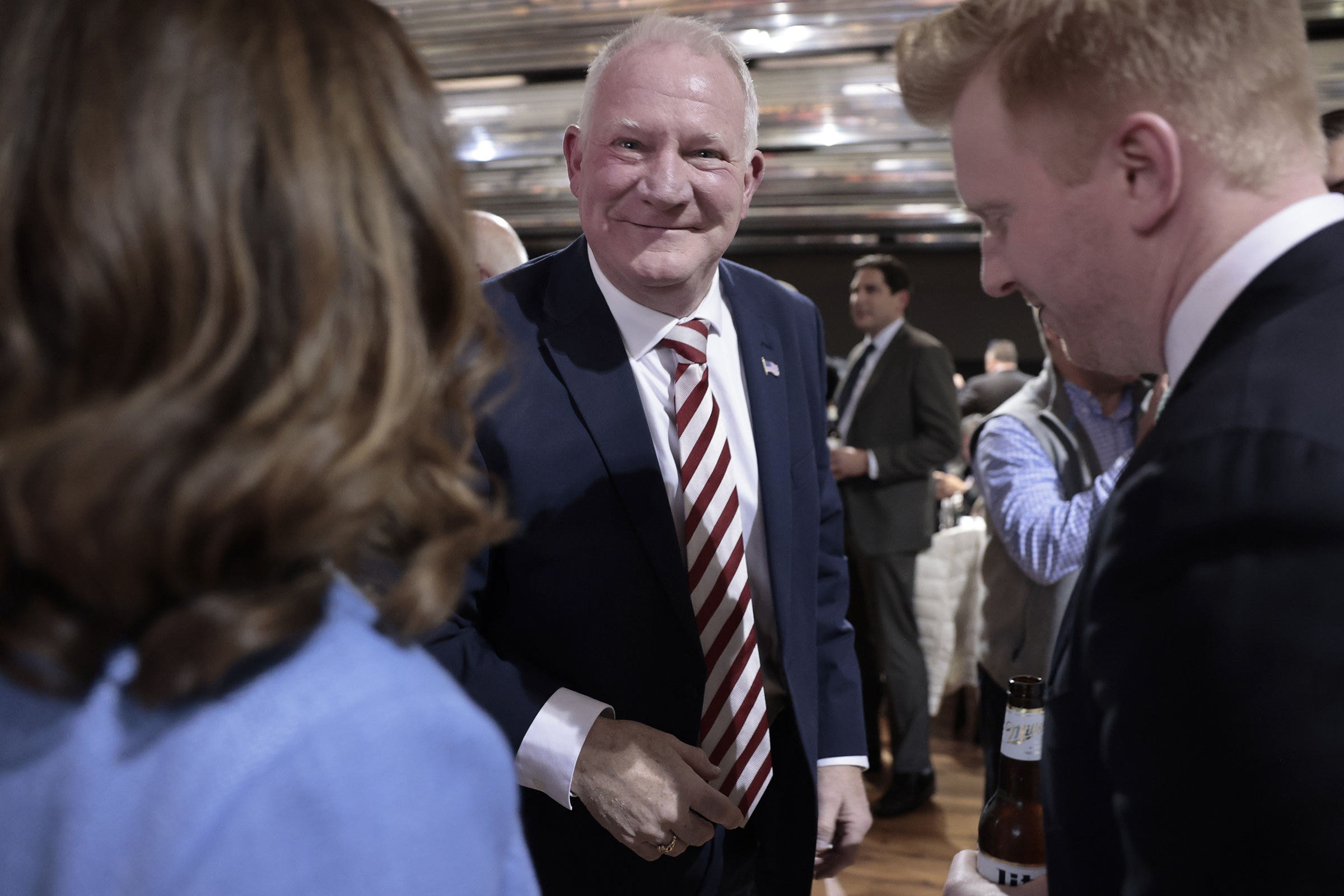
    Pennsylvania Supreme Court Justice Kevin Dougherty greets supporters during an election night party in November 2025.Elizabeth Robertson / Staff Photographer

    Moving forward, the justices ruled, if the district attorney’s office agrees to alter a sentence or overturn a past conviction, judges must ask the state attorney general’s office to review the case before proceeding. The ruling applies only to Philadelphia; prosecutors in every other Pennsylvania county can continue to evaluate cases on their own.

    Krasner declined to comment this week. While it was not immediately clear whether he had a legal path to challenge the ruling, he said in a video statement last week that it “undermines the value of a vote in Philadelphia.”

    He compared criticism of his post-conviction review efforts to attacks that have been leveled against other social and racial justice movements.

    “We know where we are in the fight,” he said, “and once we get past the fight, we all win.”

    But the Supreme Court’s ruling sharply curtails part of that effort, and it is expected to significantly reshape — and likely slow — one of the most consequential parts of Krasner’s agenda.

    It was “an extraordinary remedy for something the court thought was an extraordinary problem,” said Aaron Marcus, chief of the appeals division at the Defender Association of Philadelphia.

    But, he added, “the remedy might go beyond what was necessary in the court’s mind to address the problem in front of it.”

    While the decision gives the attorney general broader authority to intervene when city prosecutors support post-conviction relief, it remains unclear how often — or when in the process — it will weigh in.

    Brett Hambright, a spokesperson for the office of Attorney General Dave Sunday, a Republican, said in a statement this week that officials were still evaluating the order and its potential impact. Because of the many unknowns, he said, “it may be difficult to fully assess … until the process truly begins.”

    Still, on Wednesday, Sunday’s office filed a notice of intervention in a murder case that Philadelphia prosecutors helped overturn just last month — setting up a potential test case for the new legal landscape around the issue.

    Marcus, of the Defender Association, said the ruling could cause confusion — and delays — in cases that the conviction integrity unit does not typically handle, such as weapons and drug-possession cases, as well as more routine matters, like correcting prison sentences that had been miscalculated.

    “There’s already too few attorneys with too little time and insufficient resources,” he said.

    Marissa Boyers Bluestine, assistant director of the Quattrone Center for the Fair Administration of Justice at the University of Pennsylvania’s law school, said that because the courts did not set a timeline for how quickly the attorney general’s office must review each case, the added oversight could draw out an already yearslong appellate process filled with delays. And, she said, it could create “confusion on who exactly is representing the state.”

    “Now you have two entities who are potentially in opposition to each other,” she said. “It raises confusion and diminishes the real trust in the criminal legal system.”
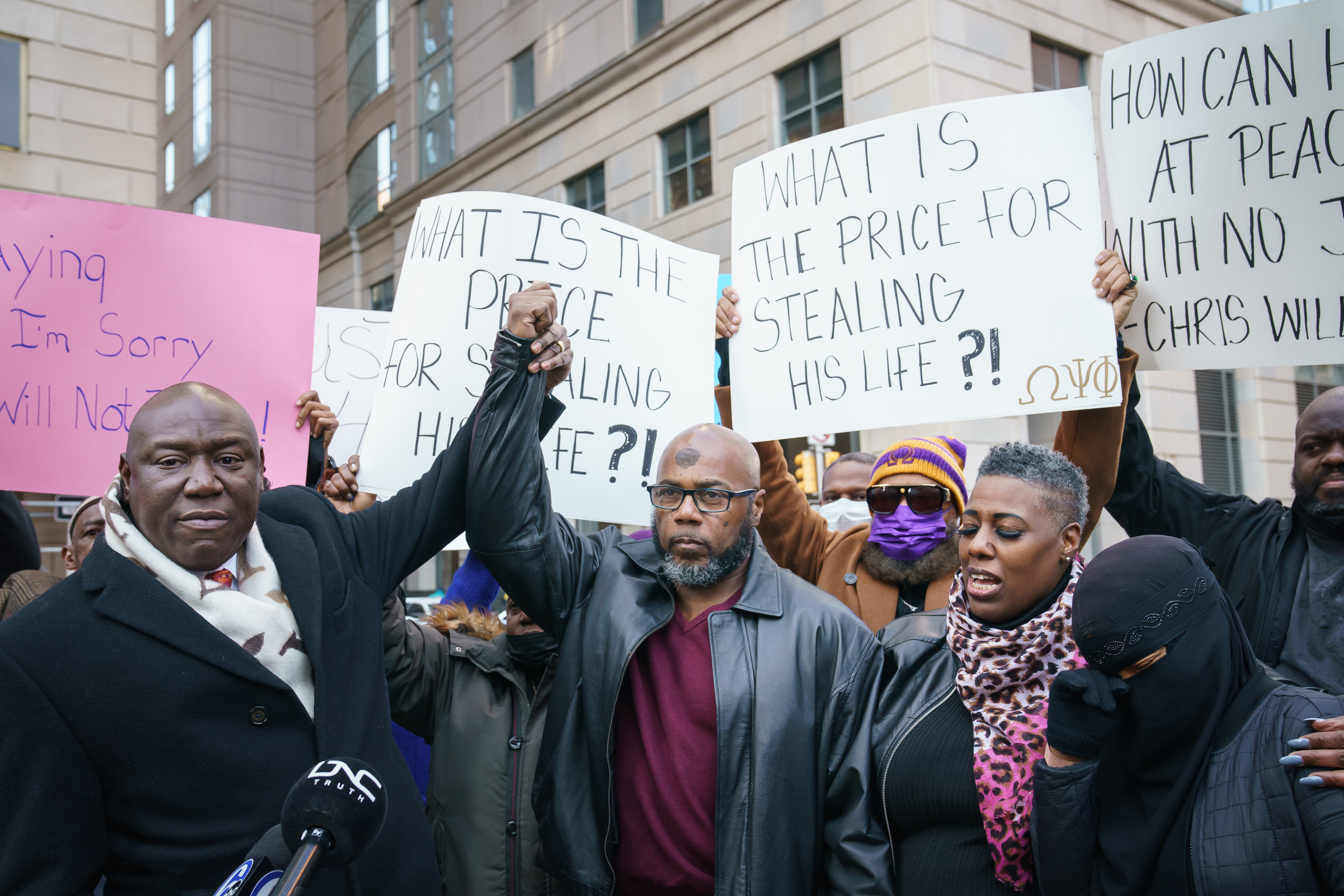
    Dozens of people have been released from prison in Philadelphia after prosecutors agreed their trials were unfair. In this 2021 photo, Christopher Williams, center, gathered outside the Criminal Justice Center to announce a lawsuit against the city of Philadelphia, police and prosecutors. Williams was exonerated and released from prison in February 2021 after more than 25 years on death row.JESSICA GRIFFIN / Staff Photographer

    Several defense lawyers who handle post-conviction cases were similarly concerned about the unknowns of the ruling — and said the majority opinion did not address the decades of problematic police and prosecutorial behavior that led to this moment.

    Michael Wiseman said Krasner’s office has opposed most of his clients’ petitions over the years. Like other district attorneys before him, Krasner is not perfect, Wiseman said, but the high court “is vexing in its willingness to ignore all the times when Krasner’s office got it right.”

    At the same time, he said, “It is similarly vexing for not recognizing the imperfections of past administrations, who, unlike Krasner, defended every conviction without regard to innocence or unconstitutional convictions.”

    Adding to the complexity of the issue, some justices believed the majority’s decision could threaten to reignite long-running feuds between Krasner and prosecutors he has clashed with in the past.

    In one of his first actions after taking office in 2018, Krasner fired dozens of veteran prosecutors, effectively describing them as unfit to serve in a reform-oriented administration. Some who were ousted then went on to work in the state attorney general’s office, and Krasner, in a remark that was widely criticized, jokingly referred to that office as “Paraguay,” a South American country where Nazis fled after World War II.

    Justice Christine Donohue warned in a dissenting opinion that the majority’s ruling could threaten to inject personal disputes between rival lawyers into a process that is supposed to be unbiased. In addition, she said, giving the attorney general’s office authority in those cases could give some state prosecutors a role in defending convictions they helped obtain when they worked for the city.

    “This is in stark contrast to acting as a friend of the court,” she said.

    Ben Lerner, a former Philadelphia Common Pleas Court judge and former chief defender, said Krasner deserves credit for creating a meaningful system to revisit convictions — something he said previous administrations largely failed to do.

    But state and federal courts have repeatedly raised concerns about the office’s methods, he said, including allegations that prosecutors excluded investigating officers and former trial attorneys from parts of the review process, and focused disproportionate attention on cases tied to prosecutors Krasner had clashed with during his years as a defense lawyer.

    “In my view, it’s a shame,” he said, “because this was basically a very important thing that he was doing that previous district attorneys had had no interest in doing.”
  • Abington schools are reviewing security after a man charged with trying to rape a girl repeatedly entered the high school

    The Abington School District is reviewing security procedures after police charged a 25-year-old man with trying to rape a student who repeatedly let him into Abington Senior High School.

    Police charged Raeem Grange-Allen of Philadelphia on Friday with attempted rape by force and attempted statutory sexual assault, among other charges. The student, a 14-year-old girl, told police she had met Grange-Allen at the high school.

    Grange-Allen initially identified himself as a student and began communicating with the girl through text messages and social media, according to a police affidavit.

    Grange-Allen later asked the girl to let him into the school “and requested she perform oral sex on him behind a stairwell,” according to the affidavit. The girl told police she “saw him or let him into the school approximately three to four times.”

    In a message to families Tuesday, Abington Superintendent Jeffrey Fecher said the girl let Grange-Allen into the high school on two occasions in March, opening a back door during the school day.

    “Video footage shows he was wearing a hoodie and was able to briefly blend in as a student while moving in the hallways,” Fecher said.

    On March 27, Grange-Allen came to the girl’s home in Abington Township, where he held her down and attempted to rape her, according to the police affidavit. The girl screamed, and her mother caught Grange-Allen, according to the affidavit. The girl went to the police the next day.

    Fecher said there were “numerous unresolved questions about this man’s presence in the high school, as well as, where and when he initially encountered the victim.”

    The district is “launching a third-party internal investigation” and reviewing security protocols, Fecher said. While exterior doors are locked throughout the school day, “building occupants always have the ability to open them from the inside for evacuation purposes, as required by law,” he said.

    Fecher said the district would be working with the Montgomery County Department of School Safety “to determine whether additional security measures can be put in place.”

    “We share in the concern and shock that this information causes, and we are committed to addressing it effectively,” Fecher said.

    As of Wednesday, Grange-Allen was being held at the Montgomery County Correctional Facility on $250,000 cash bail.

  • Man fatally shot while driving in Northeast Philly

    Man fatally shot while driving in Northeast Philly

    A man was fatally shot while driving a car Tuesday afternoon in Northeast Philadelphia, police said.

    Just after 3:50 p.m., police responded to reports of gunfire on the 9000 block of Frankford Avenue and found the victim in a Honda Accord crashed outside an AutoZone store at Frankford and Academy Road.

    The man, who had been shot in the face and shoulder, was transported by medics to Jefferson Torresdale Hospital, where he was pronounced dead at 4:22 p.m.

    The shots were fired from a tan-colored SUV that fled on Interstate 95.

    Police found spent shell casings on Frankford Avenue in front of a 7-Eleven across the street from the AutoZone.

    No other information was released.

  • Pa. State Police investigating death of dialysis patient in Chester County

    Pa. State Police investigating death of dialysis patient in Chester County

    The Pennsylvania State Police are investigating the death last week of a person in Chester County whose connection to a dialysis machine apparently had been “cut.”

    On June 16, troopers from the Embreevile Station were called to the 400 block of Glen Run Drive in Atglen Borough, where paramedics responded to a hemorraging incident but was unable to save the person’s life, the state police said Tuesday.

    The preliminary investigation “determined the hemorrhaging was the result of a dialysis port being cut,” the state police said.

    The state police are investigating in coordination with the Chester County District Attorney’s Office.

    No other information about the deceased person were released.

  • Two Philadelphia pastors charged with sexual exploitation, corruption of minors

    Two Philadelphia pastors charged with sexual exploitation, corruption of minors

    Two Philadelphia pastors groomed and sexually exploited two teenage boys, authorities say, paying them for explicit videos and sharing the images with each other in a scheme that stretched across years and may involve additional victims.

    Isaiah Banks, 30, and Bryan Jackson, 42, are charged with sexual abuse of children, sexual exploitation of children, conspiracy, corruption of minors, and related crimes, District Attorney Larry Krasner said Tuesday.

    Banks served as pastor of Second Pilgrim Baptist Church in Francisville, while Jackson served as a pastor at Garden of Prayer World’s Prayer Center in Strawberry Mansion, Krasner said.

    Both men were arrested, arraigned, and released from jail after posting bail — $600,000 for Banks, and $100,000 for Jackson. Prosecutors said they had sought higher bail, but their request was denied.

    Efforts to reach Banks’ attorney, Richard Kravets, were unsuccessful. No attorney for Jackson was listed in court records.

    The investigation into the men began in April after police received a report that a teen had been solicited by Banks through text messages and social media to send sexually explicit videos in exchange for money or food, authorities said. The messages, they said, came to light after a witness checked the boy’s phone.

    Prosecutors said Banks shared images he received with Jackson, who they said had also posed online as a female to solicit additional images and videos from the victim.

    As investigators dug deeper, authorities said, they found evidence suggesting that Banks and Jackson had received sexually explicit images and videos from other victims, dating back to February 2024.

    “A position of trust, when it is abused, has its criminal consequences,” Krasner said during a news conference to announce the charges.

    He declined to provide additional details about the case, including the victims’ ages and genders. He said that the investigation is continuing and that releasing additional information could discourage other victims or witnesses from coming forward.

    Court records, however, offer a more detailed portrait of the alleged crimes.

    The victims, both boys, were 15 and 16 years old when investigators began their inquiry, according to the affidavit of probable cause for Jackson’s arrest. None of the crimes is alleged to have occurred on church grounds.

    In the document, police described what they said was a yearslong pattern of communications, photographs, and videos showing Banks and Jackson cultivated transactional relationships with the boys.

    Messages recovered from the men’s phones were also “littered with images and videos of nude men,” and photographs “from a barbershop and church events,” according to the affidavit.

    By May, as the police investigation was underway, the tone of the messages between the two men had shifted, police said: In one message, Banks warned that one of the boys was rattled by the involvement of authorities.

    During an interview with detectives, Banks acknowledged knowing the boys for more than a decade, and said Jackson was a friend, according to the affidavit. He told detectives he typically paid $50 for videos that the boys sent, the document said.

    Efforts to reach officials at the church and prayer center where the two men worked were unsuccessful Tuesday.

    According to Second Pilgrim Baptist Church’s website, Banks was elected senior pastor in 2017. The website describes him as a leader who is “loved genuinely by our congregation because of his passion to see our church thrive and because of his genuine care and love for all those who are a part of our church.”

    Garden of Prayer World’s Prayer Center does not appear to have a website. An Instagram account appearing to belong to the church features photographs of Jackson promoting its events.

    Krasner asked that anyone with additional information contact the district attorney’s office victim and witness services unit at 215-686-5709; the police department’s special victims unit at 215-685-3251; or the Philadelphia Center Against Sexual Violence hotline at 215-985-3333.

  • A South Philly woman shot and killed her sister and granddaughter in murder-suicide, authorities say

    A South Philly woman shot and killed her sister and granddaughter in murder-suicide, authorities say

    A South Philadelphia woman shot and killed her sister and granddaughter before turning the gun on herself Monday in what police described as a double murder and suicide.

    The women, identified Tuesday as Janice Picano, 67, Denise Grottini, 55, and Angelina Picano, 18, were found dead inside a home on the 2800 block of South 10th Street, according to police.

    Police responded to the residence around 5:30 p.m. and found the women with single gunshot wounds to their heads.

    They were pronounced dead at the scene by medics at 5:38 p.m., police said.

    Janice Picano, who investigators say fired the fatal shots, was Grottini’s sister and Angelina Picano’s grandmother, according to a law enforcement source.

    A gun was found at the home and was taken into evidence.

    The homicide unit continues to investigate.

  • A police-involved shooting in North Coventry Township is under investigation

    A police-involved shooting in North Coventry Township is under investigation

    The Chester County District Attorney’s Office is investigating an officer-involved shooting that occurred on Monday evening in North Coventry Township.

    The office said it was assisting the North Coventry Township Police Department with investigating this case.

    Authorities did not provide any details on the circumstances of the shooting, how many officers or others were involved, or whether anyone was injured.

    “This remains an active and ongoing investigation, and additional information will be released as it becomes available,” a spokesperson for the office said in a statement on social media. The prosecutor’s office could not be reached for additional details on the investigation.

    Local news was on the scene at Lindberg and Kline Avenue in South Pottstown to find police activity on the street Monday night.

  • A Delco judge denied a motion to dismiss trespassing charges in Swarthmore protest case

    A Delco judge denied a motion to dismiss trespassing charges in Swarthmore protest case

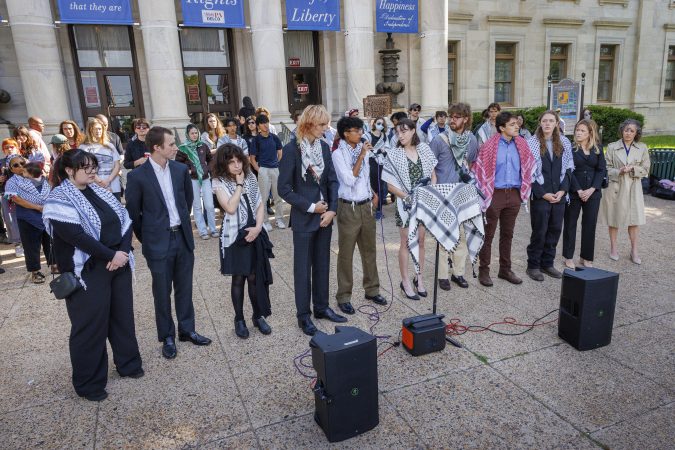
    A Delaware County judge on Monday denied a motion to dismiss criminal charges filed against nine people for refusing to leave a pro-Palestinian encampment on Swarthmore College’s campus last spring, setting the stage for a trial next week.

    Judge Dominic Pileggi ruled that prosecutors had presented sufficient evidence for the case to proceed to trial and allow a jury to decide whether the so-called Swarthmore 9 had trespassed.

    The group was arrested and briefly detained outside the college’s Trotter Hall in May 2025 when officers from surrounding police departments dismantled their encampment protesting the war in Gaza and Swarthmore’s IT contract with Cisco, a company that does business with the Israeli government.

    Of the nine people arrested, only one, Jace Boland, is a student at the college. Another, Brendan Cook, is a former student who was suspended for participating in an earlier protest in 2024, but the rest are not affiliated with Swarthmore, according to school officials.

    Members of the group — Boland, Cook, Jonathan Britt, Mara Helen Cahill, Daria C. Dressler, Thomas Falcone, Colin Buckley Malcarney, Riley J. McManus, and Andrew Thomas — have all been charged with trespassing, a third-degree misdemeanor.

    District Attorney Tanner Rouse has said his office offered each member of the group a plea deal that would see those charges reduced to summary offenses, similar to traffic citations, that could be resolved by paying a fine.

    The group has refused, saying pleading guilty would set a precedent on how colleges across the country could curtail students’ protest rights.

    During Monday’s hearing, the group’s attorney, Marni Jo Snyder, argued that Swarthmore and county prosecutors violated the protestors’ constitutional rights by arresting them.

    She noted that Swarthmore changed its policy allowing protests on its campus to explicitly outlaw encampments after a similar, monthlong demonstration in the same location in 2024.

    Policing a specific type of expressive speech, she said, is illegal.

    “The policy is wrong, the repeated orders to leave are wrong,” she said. “These are improper responses to constitutionally protected speech.”

    Snyder said that, though Swarthmore’s campus is private property, administrators have allowed previous demonstrations to be held there, as well as other quasi-private events. The arrests in this case, she said, showed that prosecutors were specifically targeting demonstrators protesting the war in Gaza.

    Samantha Door, who represented the district attorney’s office at the hearing, disputed that, saying the protestors’ conduct, and not the purpose of the encampment, was the reason criminal charges were filed.

    Swarthmore issued multiple warnings to the group to disperse over the course of three days, Door said, including one final warning 10 minutes before the encampment was dismantled.

    Other protestors who left the encampment and continued to chant and hold protest signs were not arrested, she said.

    Also, Door said administrators raised concerns about public safety, since many of the protestors wore masks and refused to identify themselves, vandalized campus property with graffiti, and used pallets and other materials to create barricades around the encampment.

    The trial in the case is scheduled to begin with jury selection on June 30.

  • ‘Snuffed her life out’: Man accused of randomly shooting CHOP nurse in Tredyffrin Township appears in court

    ‘Snuffed her life out’: Man accused of randomly shooting CHOP nurse in Tredyffrin Township appears in court

    Hours before Steve Jahn shot Megan Nieberle to death on a March evening this year, prosecutors said, he drove around Tredyffrin Township for hours with a gun in his hand.

    In dashcam videos played in a Chester County courtroom Monday, Jahn is seen gripping a semiautomatic handgun in his Chevy Silverado truck, muttering to himself and glancing back and forth erratically as cars pass by.

    Those utterances, prosecutors said, offer a view into the mindset of a man about to commit murder.

    “Get out of the [expletive] way,” Jahn says an one point, one hand on the wheel, another on his firearm. “You don’t belong here.”

    “Ya’ll [expletive] are dead,” the 44-year-old says in another clip.

    Though it would be hours before Jahn, who police said was homeless, encountered Nieberle, a 53-year-old mother of three and a nurse at Children’s Hospital of Philadelphia, prosecutors used the videos from Jahn’s dashcam to bolster their contention that he had been prepared to harm someone that Saturday.

    Jahn, a Berwyn native, was arrested a day after the March 7 shooting and charged with first- and third-degree murder, aggravated assault, and reckless endangerment.

    The hearing marked the first time Jahn appeared in a case that shocked the Chester County community and kick-started a conversation about mental illness and firearms.

    Some residents questioned why police did not act more forcefully to ensure that Jahn, who had been in a mental health crisis that day, was checked into a nearby psychiatric unit.

    Jahn, wearing a red prison jumpsuit and sporting a beard, showed little emotion during the hearing, as Nieberle’s loved ones looked on, some in tears.

    Assistant District Attorney Kathleen Wright said prosecutors had linked Jahn to the crime scene using GPS data from his vehicle, gunshot residue recovered from his hands and clothing, and remarks he made while in police custody.

    Though the footage of Jahn was illuminating, Wright said, the shooting itself was not captured on the dashcam because Jahn had removed the device shortly before the shooting.

    Wright called Tredyffrin police officers and county detectives to the stand to testify about the scene they had encountered near the intersection of Old State Road and Contention Lane, where Nieberle was found in the driver’s seat of her silver Acura SUV around 10:47 p.m. with a gunshot wound to the head.

    She was bleeding heavily, the officers said, and was taken to a nearby hospital, where she died the next morning.

    Chester County Det. Matthew Shumway of Chester County said data recovered from Jahn’s truck allowed investigators to identify him driving down the dimly lit residential street that night.

    Approaching Nieberle’s vehicle, Jahn slowed his truck to 6 mph, Shumway testified. He fired once through her driver’s side window, the detective said, a shot captured on a neighbor’s doorbell camera.

    Played in court, the short video showed Jahn’s headlights cut through the darkness and illuminate an approaching vehicle. Within seconds, a loud bang rang out.

    Jahn’s attorney, Brian McCarthy, did not contest many of prosecutors’ assertions about how events unfolded that night, but he argued that first-degree murder was not appropriate because Jahn had not shown premeditation and intent to kill, conditions required to meet the threshold for that crime.

    “What we did see does not establish murder in the first degree,” McCarthy said of the dashcam footage. The person in that video, he said, was a “troubled man looking back and forth, not a cold-blooded killer.”

    Wright, the prosecutor, countered that Jahn’s actions were premeditated. She said Jahn had rolled down his window, aimed his weapon, and would have “had to have known” that there was someone inside an oncoming vehicle.

    Of Nieberle, Wright said, Jahn “snuffed her life out and left her there to die.”

    District Judge Patricia A. Zaffarano ruled that prosecutors had presented sufficient evidence for the case to proceed to trial on all charges.

    Jahn will be formally arraigned on July 2. He remains in custody in the Chester County Correctional Facility after being denied bail in March.

  • A Philly woman pleaded guilty to voting twice in the 2024 presidential election

    A Philly woman pleaded guilty to voting twice in the 2024 presidential election

    A Philadelphia woman pleaded guilty Monday to voting twice in the 2024 election — first in northern New Jersey, then in the city.

    Miya Pack, 40, said little beyond responding to routine legal questions as she pleaded guilty to a charge of voter fraud before U.S. District Judge Joshua D. Wolson.

    Pack has been registered to vote since 2004 in Bergen County, N.J., prosecutors said in court documents, and she’s also been registered to vote in Philadelphia since 2016. She is not affiliated with any political party, voter records show.

    On Oct. 26, 2024, prosecutors said, Pack cast a ballot in that year’s presidential election in Bergen County. Then, 10 days later, prosecutors said, she cast a ballot in the same contest in Philadelphia on Election Day.

    They did not say whom she voted for, and she declined to comment as she left the courtroom Monday.

    President Donald Trump has repeatedly made questionable or false statements about the prevalence of voter fraud, particularly in places like Philadelphia, where Democrats heavily outnumber Republicans. Election officials and experts who study the issue generally agree that voter fraud has not historically occurred at widespread rates.

    Pack was charged by federal prosecutors last September. Prosecutors announced her indictment alongside the indictment of another man, Matthew Laiss, who was separately charged with voting twice in the 2020 election.

    Laiss later said in court documents that he voted twice for Trump, and unsuccessfully sought to claim that his actions were covered by pardons Trump extended to people who tried to help him overturn the results of the 2020 election.

    Laiss was convicted of voter fraud earlier this year at trial and is awaiting sentencing.

    Pack is scheduled to be sentenced in October. She faces the possibility of prison time, although prosecutors said in court that federal guidelines suggest a term of no jail time to six months.