Fourteen people have been charged in a cocaine trafficking case at Pennsylvania State University, the state attorney general’s office announced Monday.
The drug ring involved students’ purchasing large quantities of cocaine from Philadelphia and New York, cutting and packaging it at two fraternity houses, and distributing it to their classmates, prosecutors said.
The alleged ring was active from 2023 to 2024, when all but one of the defendants were students at Penn State. The other defendant is the father of one student, and he was charged with evidence tampering and hindering law enforcement’s investigation. At least four of those charged are still students at Penn State.
“This was a coordinated and highly profitable drug-trafficking crew revolving around two senior members of the fraternities, other fraternity brothers, and pledges,” said Attorney General Dave Sunday in a statement. “According to the evidence uncovered, cutting and packaging cocaine was, for some pledges, an indoctrination into the fraternities,”
The State College Police Department began investigating in September 2024, and used informants to purchase drugs on several occasions, according to a criminal complaint.
The two key suppliers for the group, Agostino Abbatiello, 24, and Thomas Robinson, 23, allegedly made regular trips to Philly and New York to acquire large quantities of cocaine. After Robinson was arrested, he told State College police he purchased cocaine from Abbatiello, including as much as one kilogram for $22,000 at a time, according to the complaint. Abbatiello eventually became known as the main dealer for cocaine on campus, it said.
The cocaine was packaged for distribution primarily at the off-campus Delta Upsilon and Sigma Chi fraternity houses, according to the complaint. Penn State has placed Delta Upsilon on interim suspension while the university’s Office of Student Accountability and Conflict Response investigates. Sigma Chi is not a registered student organization and receives no support from Penn State, the university said in a statement.
“We are horrified by these serious allegations against current and former students,” said Andrea Dowhower,Penn State’s vice president for student affairs. “Criminal activity, including hazing, such as this has no place at our institution, and we will cooperate with law enforcement in any way we can. We will continue to enhance our efforts around health and safety and hazing educational efforts for all our organizations.”
Abbatiello, Robinson, and threeother defendants are charged with felony conspiracy, possession with intention to manufacture or deliver a controlled substance, and other related charges. Eight defendants are charged with misdemeanor drug possession. Lawyers for Abbatiello and Robinson were not listed in court records.
Over the past decade, Penn State’s fraternities and their hazing rituals have been a source of campus misconduct and serious legal violations. In 2024, two fraternity leaders were sentenced to two to four months in prison for their role in the 2017 death of Timothy Piazza, a 19-year old Penn State student who died following a hazing incident while pledging Beta Theta Pi.
Piazza’s parents helped push for the successful passage of the federal “Stop Campus Hazing Act,” which requires institutions of higher education participating in federal student aid programs to report hazing incidents.
More recently, in April, Penn State suspended one fraternity for at least four years after it investigated reports of hazing. Since 2017, the university has fully suspended five fraternities, while four others are technically suspended by the university, but continue to operate with the support of their parent organizations.
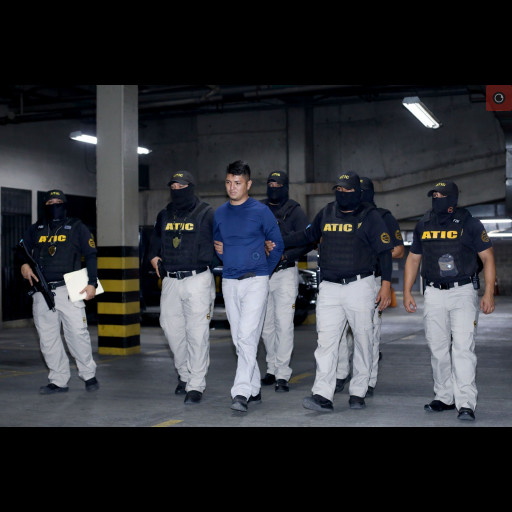
Darwin David Espinal del Cid, 27, was taken into custody during the weekend by officials in his native Honduras in the March 7 death of Maria Popol, Bucks County District Attorney Joe Khan said Monday.
Khan, in announcing the arrest, described Popol as a loving daughter and sister who cared deeply about her family. Espinal del Cid, he said, ended her life in a heartless, violent manner and then furthered her family’s suffering by stealing her cellphone and pretending to be her, in text messages he sent them.
Maria Popol was found dead in March by police in Telford.Courtesy of Maria Popol's family
It was an attempt, Khan said, to throw investigators off his trail as he fled the country.
But investigators were able to track Espinal del Cid’s movements, in part through his cellphone, according to Khan.
“This was a place where he thought he would be safe, that he could outrun the law, that the Bucks County DA’s office and the authorities wouldn’t catch up to him,” Khan said. “And at a certain point he may have believed that he was successful, but he was wrong.”
He remains in custody in Honduras, and is awaiting extradition to Bucks County.
Popol’s body was found on March 15 inside a second-floor apartment on North Main Street in Telford where she previously lived with Espinal del Cid. Her parents had filed a missing person’s report two days earlier, on what would have been her 23rd birthday, Khan said.
A neighbor, helping the family search for Popol, entered her apartment and found her.
Her family, in a statement to The Inquirer, said she was in the process of moving to a new apartment nearby, fleeing what they described as an abusive relationship with Espinal del Cid.
Khan said Espinal del Cid stabbing Popol in the neck with a sharp object and hid her body in a closet as she bled to death.
Popol’s family told The Inquirer they last heard from her on March 6, after she rode in an Uber with Espinal del Cid. The two were arguing, prosecutors said, about Popol’s decision to end their relationship.
She texted her mother and told her she was looking for a new apartment, according to the affidavit of probable cause for Epsinal del Cid’s arrest.
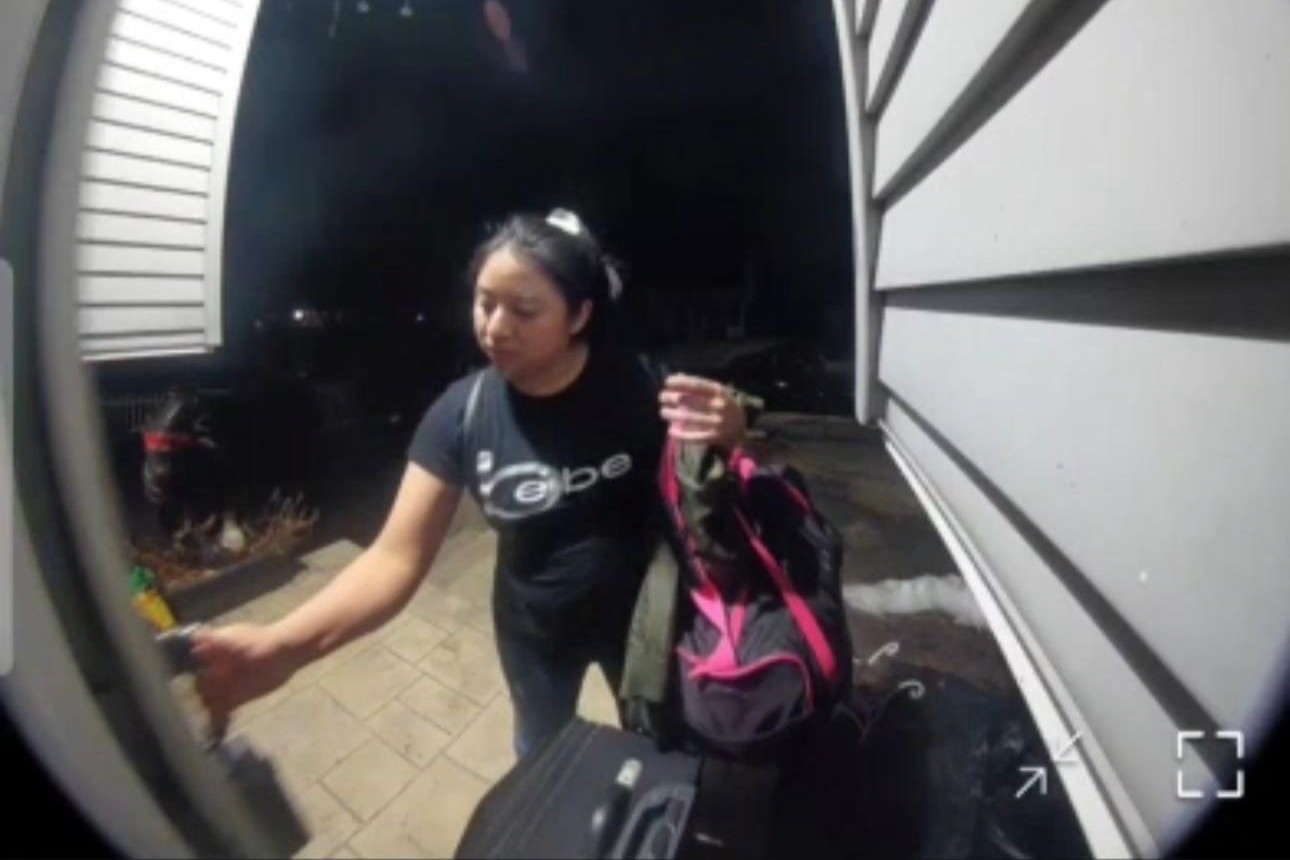
Her brother, Ronaldo, said she was seen hours later in a video from a doorbell security camera carrying luggage while she was moving into her new apartment.
The last time Maria Popol was seen by her family was in a doorbell camera video from March 7 at her new residence. She was found dead March 15 at her old apartment she had shared with a man, her brother said.Rolando Popol
A witness told police that, while picking up Popol to take her to her new apartment, Espinal del Cid forced himself into the car, crying and acting hysterical, saying that he “couldn’t afford to lose her,” the affidavit said.
When Popol returned to the apartment where she lived with Espinal del Cid, the two got into another heated argument, loud enough for neighbors to overhear, according to the affidavit.
In the days that followed, Espinal del Cid continued to act erratically, asking his former boss for money to buy a plane ticket to Honduras, weeping openly in public and saying, “God forgive me.”
A friend of Espinal del Cid who drove him to the airport noted he was carrying three cellphones, one of which appeared to be Popol’s, the affidavit said.
On March 9, Espinal del Cid boarded a plane heading to Honduras by way of Florida at Philadelphia International Airport.
The entire time, investigators said, Epsinal del Cid texted Popol’s friends and employer, asking for money in messages that they agreed were not written in her usual style of talking.
Popol moved to Bucks County from her native Guatemala in 2023 to support her parents, who are in declining health, according to her family. She worked as a waitress at Don Leo, a Latin American restaurant not far from her apartment.
“She had come to this country hoping for a better life,” Ronaldo Popol said, describing his sister as “very affectionate, kind, and patient.”
Khan said Popol’s death is the latest example of fatal domestic violence in Bucks County. Since he took office in January, nearly all of the murders his office has investigated have been committed by one of the victim’s loved ones.
“It’s the reason that we are showing this picture of [Espinal del Cid], not to glorify him, but to ask for the public’s help, because while he thought he was smarter than everyone else, the law was catching up to him and we want the public’s help,” Khan said.
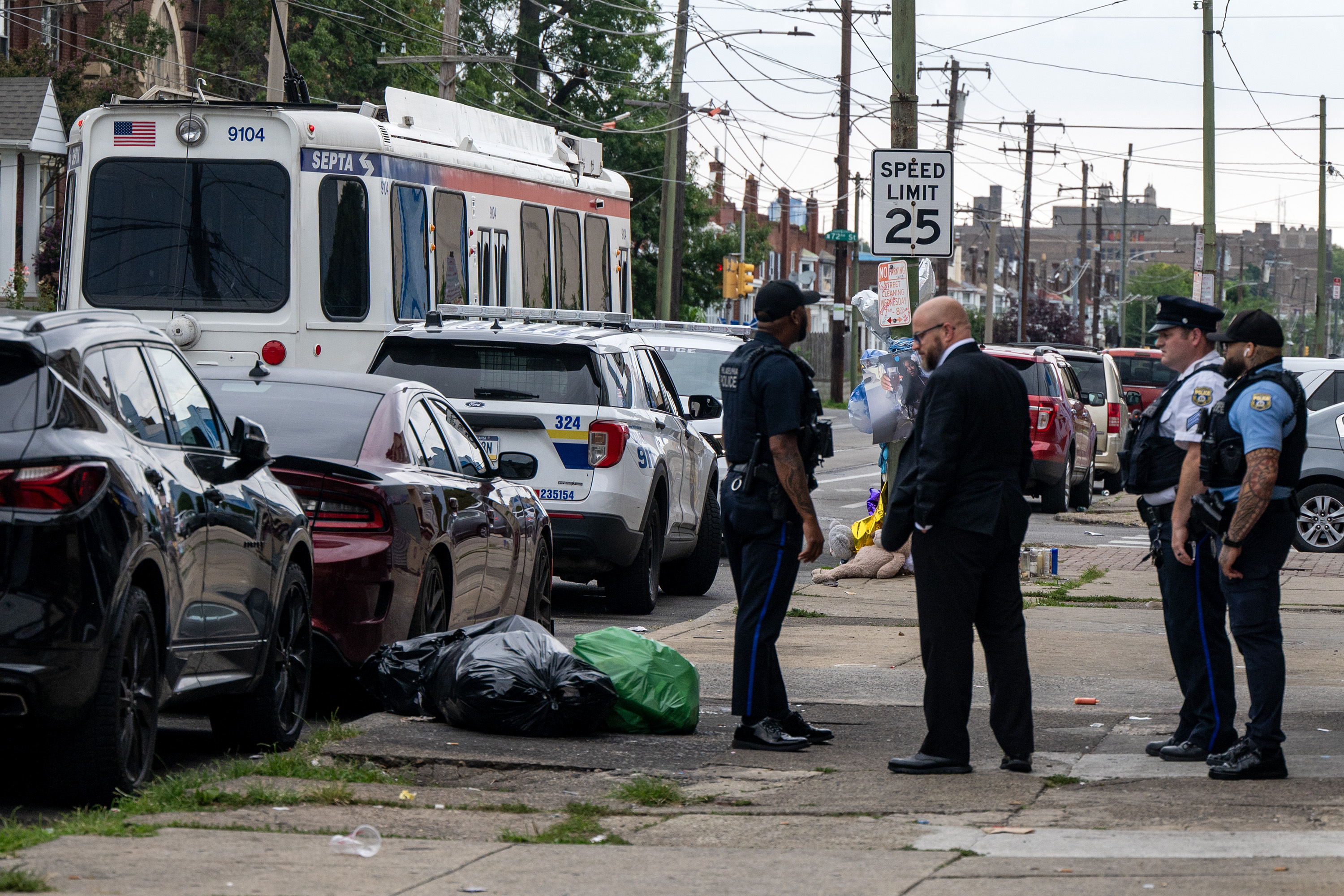
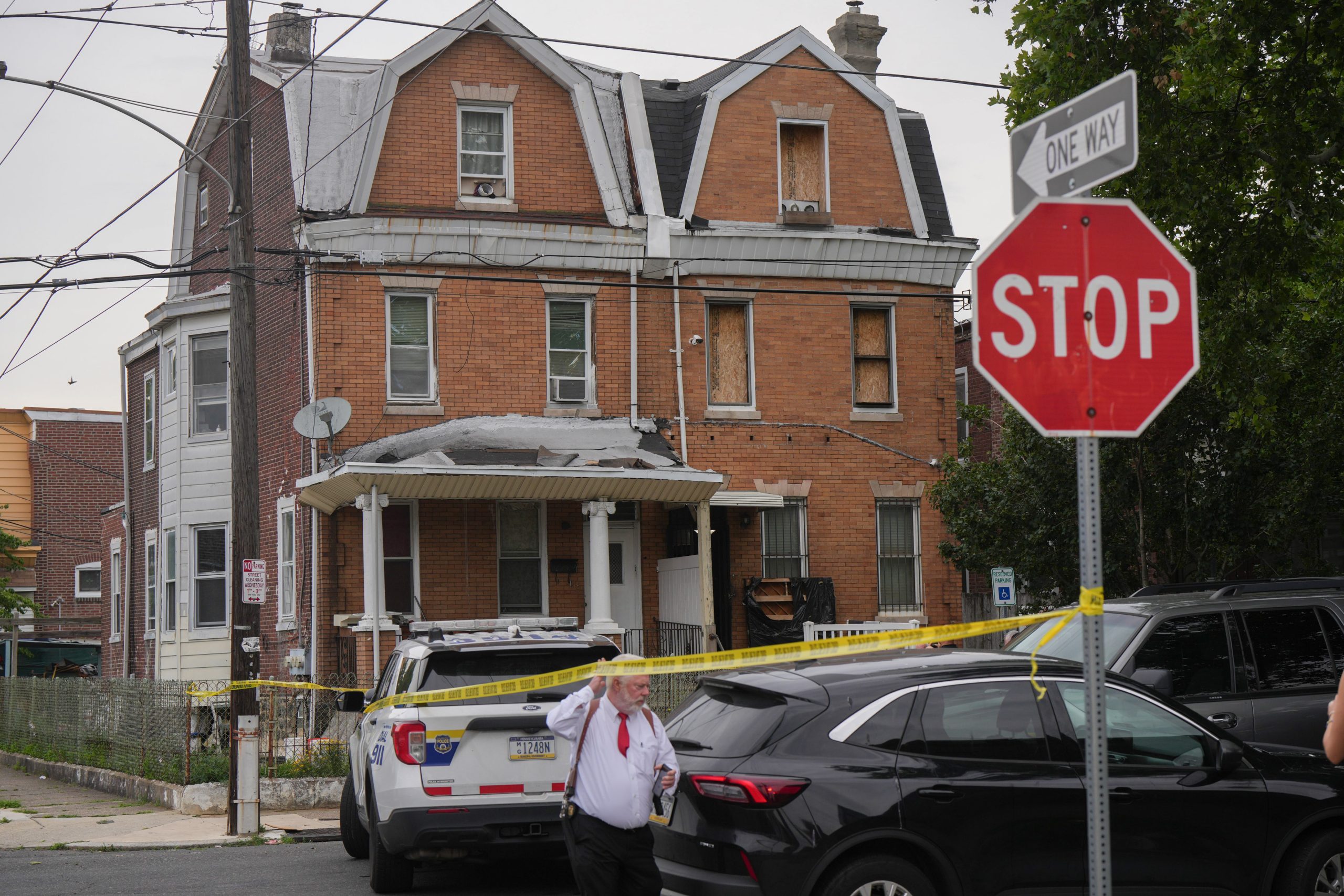
The man, whom police did not identify, was seen on 73rd Street near Buist Avenue, about a block away from the shooting in which 29-year-old Officer Alhassane Barry was killed and another man was critically injured.
Surveillance images released by the department Monday show the suspect wearing a black hoodie and a blue face mask.
Deputy Commissioner Frank Vanore urged the public to come forward with any video or images that may depict the suspect or others who were outside what a social media account linked to the address called “Nipsey’s Hookah Lounge,”an unlicensed nightclub that city inspectors have repeatedly cited and some neighbors described asa nuisance.
Gunfire erupted outside the property on the 7200 block of Elmwood Avenue around 4 a.m., sending bystanders running.
Investigators have not identified a motive for the shooting, and the suspect remains at large.
“We need answers right now,” Vanore said during a news conference in which he sought the public’s help locating the suspect. “We need to solve this case.”
Police said the suspect was last seen fleeing south on 73rd Street.
Investigators recovered a firearm and eight spent 9mm shell casings from the scene, though they said they had yet to determine to whom the gun belongs.
Barry and the other victim, a 35-year-old man whom police did not identify, were rushed to Penn Presbyterian Medical Center, where the officer was pronounced dead at 8 a.m. Sunday.
The second victim, who was struck multiple times, and placed in critical condition, remained in the hospital as of Monday morning. No update on his condition was available.
During a service for Barry held earlier in the day, a procession of mourners shut down traffic outside a mosque in a bustling Southwest Philadelphia neighborhood, where more than a hundred people gathered at the Fouta Islamic Center.
More than a dozen uniformed police officers stood in formation as a hearse carrying Barry’s body departed the mosque, located just blocks from the site of the shooting.
“He was a bright young fellow,” said attendee Amina Sheriff-Comteh, adding that in keeping with Islamic tradition, the burial was being held shortly after the death.
In honor of Barry, Sheriff-Comteh said, she and other attendees prayed for blessings, forgiveness, and peace.
“He was an amazing guy,” said a young man outside the service, who declined to offer his name given that police were still searching for Barry’s killer.
Those who knew Barry spoke proudly of his two-year career with the Philadelphia Police Department, where he was assigned to the 12th District in Southwest Philadelphia, as well as his lengthier tenure in the military.
Barry enlisted in the Pennsylvania National Guard as a cavalry scout in 2015 and spent a decade in service, said Heather J. Hagan, a U.S. Army spokesperson.
He spent two years deployed to Egypt’s Sinai Peninsula and left the Army as a sergeant, according to Hagan.
He was awarded multiple medals and ribbons throughout his service, she added.
Vanore, the deputy commissioner, said police would work tirelessly to locate the suspect.
He said questions about the business practices of the after-hours loungewould have to wait as police take on the more pressing job of arresting Barry’s killer.
Property records for the lounge shows a history of failed licenses and inspections investigations going back to 2021, with the most recent inspection filed in January.
In2023, L&I inspectors wrote that Nipsey’s owners had not obtained a permit to operate the building as an after-hours lounge.
They also wrote additional violations for improper use of extension cords, unsecured compressed gas cylinders, and storing materials that were a fire risk in the rear yard.
Kandyce Stukes, a spokesperson for the Quality of Life division in the city’s Department of Licenses and Inspections, said inspectors issued orders to the building’s owner in 2023 and 2024 to cease operations.
The owner appealed and said they were unaware of the tenant’s conduct.
The case was sent to the Court of Common Pleas, and the L&I has since been navigating the legal process, Stukes said.
The cease-operations order remains in effect and any business operating there is doing so illegally, Stukes added.
A 24-year-old Portuguese man was sentenced Monday to seven years in federal prison for stealing more than $1 million in cryptocurrency from unwitting victims, including a resident of Montgomery County — crimes prosecutors said the man committed while he was associated with an international cybercrime network.
Ruben Filipe Gabriel Martins pleaded guilty last year to wire fraud and identity-theft charges for using sophisticated phishing tactics to obtain victims’ cryptocurrency account information, then stealing their investments.
Prosecutors said Martins committed his fraud while he was part of a group called “the Com,” a global network of people who use technology to commit a variety of crimes across the world, including extortion, theft, and even incitements of violence.
Martins, meanwhile, was associated with a subset known as “CryptoChameleon,” a group that uses a variety of deceptive tactics to obtain account information from cryptocurrency holders. In Martin’s case, prosecutors said, he pretended to be a customer support representative for Coinbase, a cryptocurrency exchange, and told his victims he could offer support for their compromised accounts — tactics he used to get into the accounts and steal the victims’ funds.
Martins then went on to transfer the proceeds into other cryptocurrencies, prosecutors said, and ultimately spent his ill-gotten gains on luxury goods, traveling, and gambling.
His scheme began to unravel in 2024, when prosecutors said a man from Towamencin Township told police that more than $60,000 had been stolen out of his cryptocurrency account after he’d replied to text messages and calls about its security. Authorities were ultimately able to link that activity to Martins, who was born in Portugal and went on to live in Scotland.
Martins’ lawyer said in court documents that Martins had never intended to become “a career criminal.” But after being raised in modest circumstances — including by working in a fish factory as a teenager — Martins was introduced to a host of wealthy benefactors due to his skill in online gaming, his lawyer said, and some of those people then flew him to Paris and recruited him to participate in their digital exploitation operation.
In court Monday, Martins apologized for his actions, saying he was in debt when he committed his crimes and viewed the scheme as a way to make “really easy money.”
“I made a mistake when I was really down,” he said, “and I’d just like to have another chance at life.”
But U.S. District Judge Gerald J. Pappert said it was a significant understatement to describe the crimes as a “mistake ” — saying Martins had used his computer skills and desire for money to turn himself into a “dangerous” person who stopped only when he got caught.
“Not one thing you did in two years was a mistake,” Pappert said. “You needed money. You saw what for you was an easy way to get a lot of money. … And I don’t know to what extent, if at all, you ever felt bad about it, because these people were all behind a computer, and you never had to look them in the eye.”
One of Martins’ victims has seven children, Pappert noted, and others were intelligent people who lost significant portions of their life’s savings.
Martins is expected to be deported to Portugal once he finishes his prison sentence. But Pappert said his victims may never get over the shame and financial hardship he caused them.
“These were horrible crimes,” Pappert said. “None of these people deserved this.”
An athletic director at a Mercer County school district has been charged with loitering and prowling after he leered into the bedroom window of his neighbor’s underage daughter, Plumstead Township Police say.
Winfield “Tripp” Becker, 48, was caught on a surveillance camera Aug. 6 looking into the window, according to the affidavit of probable cause for his arrest. The victim’s mother installed that camera after an unidentified man spent months knocking on the window at night and then “fleeing the area,” the document said.
Neither Becker nor his attorney, Thomas Logan, responded to requests for comment.
Becker lives one street over from the victim in Pipersville, according to court records, and is known to the girl and her family. He was charged via summons, and has a preliminary hearing scheduled for next month.
Becker is the athletic director at Hopewell Valley Regional School District, a district north of Trenton that serves about 3,400 students. In a letter sent to parents, Superintendent Rosetta Treece, without naming Becker, said a district employee was the subject of a criminal investigation, and had been suspended until the conclusion of that investigation.
Treece said the district was working to secure temporary staffing to fill the position.
For decades, a second-degree murder conviction in Pennsylvania meant an automatic sentence of life in prison — even for people who did not kill anyone.
But in March, the Pennsylvania Supreme Court ruled that punishment unconstitutional in the case of Derek Lee, a Pittsburgh man who argued the mandatory nature of the sentence violated constitutional prohibitions against cruel punishment.
The high court gave the state legislature 120 days to devise an alternative and decide whether to apply it to those already serving the sentence.
That deadline passed without a resolution on July 24. And in early August, the high court rejected a bid by several district attorneys to give lawmakers more time.
So what happens now? Here’s what to know.
What was the maximum sentence for second-degree murder — and what is it now?
Before the ruling, the punishment was life without parole. Now there is no clear answer.
Setting criminal penalties is the legislature’s job, and lawmakers have not put in place a replacement.
The high court’s ruling did not abolish life without parole for felony murder; it only barred making the punishment automatic. A judge may still impose such a sentence, but only after weighing a defendant’s role in the crime.
The justices declined to say whether the ruling applies retroactively to people already serving those sentences, leaving that question to lawmakers, too.
How will judges sentence second-degree murder now that there’s no mandatory penalty?
With no law to guide them, judges are left to their own decisions. And without statewide guidelines, similar cases could end differently depending on the county in which a defendant is tried and on the judge who hears the case.
Philadelphia District Attorney Larry Krasner has expressed little concern about the lack of guidelines.
In an interview this week, Krasner, a Democrat who has forged a path as a progressive prosecutor, said “there’s nothing unusual” about asking judges to weigh the facts and use their discretion. “I’ve always believed that mandatory sentencing is problematic at best, usually a terrible idea, and that individual justice is what the system is supposed to be about,” he said.
But at a joint GOP policy committee meeting in Hazleton last week, several Republican prosecutors and lawmakers voiced concern about the lack of uniformity across the state.
Luzerne County District Attorney Sam Sanguedolce pointed to a case in which a defendant recently asked to plead guilty to second-degree murder.
“I can’t properly advise the defendant what the consequence might be,” Sanguedolce said. “Second [-degree murder] sounds like it’s better than first, but is it? We don’t even know.”
What happens to the people already serving life in prison?
For the nearly 1,100 people serving life for second-degree murder, nothing changes automatically.
The ruling made only one person eligible for resentencing: Lee. And even he could again receive life without parole, if a judge finds his role warrants it.
Others who wish to have their life sentences reconsidered have to go to court and ask to be resentenced. Bret Grote, a lawyer with the Abolitionist Law Center who represented Lee, said such petitions are likely to be denied by trial courts until retroactivity is settled.
Hundreds are expected to try anyway.
That flood could overwhelm courts and public defenders. Statewide, handling the cases could cost more than $34 million, the Public Defender Association of Pennsylvania estimates. In Philadelphia — home to more than 500 people currently serving such sentences — Chief Defender Keisha Hudson puts her office’s share at $40,000 per defendant, or $24 million total.
“We are going to need substantial funding,” she said last week, adding that she hopes to meet soon with city officials about how to pay for it.
Legal experts expect the question of retroactivity to reach the state Supreme Court again, either through an appeal of a lower court’s denial or a so-called King’s Bench petition asking the justices to take up the issue directly.
Lawmakers could also provide a quicker alternative by writing legislation that allows people serving second-degree murder sentences to seek parole, rather than requiring individual resentencing.
Can lawmakers still pass a fix, and what might that look like?
Lawmakers say negotiations will resume when they return in September. Each chamber has passed its own bill, but the two are far apart, with no compromise in sight.
The bill in the Republican-controlled Senate would set a 35-year mandatory minimum for most second-degree murder convictions, while keeping life without parole as an option. Current lifers would become eligible for parole after 35 years — or 20 years, if they are at least 70.
The measure in the Democratic-led House sets no mandatory minimum, instead directing the Pennsylvania Commission on Sentencing to write guidelines while keeping life without parole available. It would make current lifers parole-eligible after 30 years and add a medical parole option for the terminally ill.
Sen. Lisa Baker (R., Luzerne), who wrote the Senate proposal, said she is still hopeful that her caucus and House Democrats will reach a deal. But the parties remain far apart, she said.
“It’s difficult when you’ve got people whose priorities are no mandatory minimums for any crime,” she said. “I understand that we want to keep nonviolent first-time offenders [out of prison], give people second chances. But there needs to be accountability for these crimes.”
Few expect action before November’s midterm elections. “We can’t, unfortunately, make Harrisburg move any more quickly than they already are,” said Hudson, of the Defender Association. “And in the meantime, there are a lot of questions.”
What does all this mean for victims’ families?
Victims’ families are caught in a limbo of their own, said Melany Nelson, executive director of Northwest Victim Services, a Philadelphia nonprofit that assists crime victims.
Those whose loved ones’ killers have not been sentenced are now waiting to learn what punishment will come, and whether it will feel like justice. Those whose cases closed long ago face now the prospect of being summoned back — to a courtroom or a parole hearing — to confront the killer again and potentially watch them set free.
Nelson urged families to contact prosecutors’ offices and victim-advocate services now, rather than be caught off guard, and to weigh in with their state lawmakers.
“We do not want them to be blindsided by anything,” she said.
Correction: A previous version of this article incorrectly described what could happen to people who wish to appeal their sentences. Bret Grote, a lawyer with the Abolitionist Law Center, said such petitions are likely to be denied by trial courts until the question of whether a recent Pennsylvania Supreme Court ruling applies retroactively is settled.
NOTE: This article covers sensitive topics, including drug use and violence against women. Some people spoke with reporters on condition of anonymity to discuss illegal activity or out of fear of reputational harm. Quotes attributed to Raymond Horsch are drawn from a 2013 interview on the Rialto Report, a podcast about the adult film industry; a Q&A in 2014 during his art exhibit at the Papermill in Philadelphia; and undated profiles that were published on his now-defunct erotic website.
Fentanyl and crack cocaine held Krista Killen hostage, and she did whatever she could to stave off withdrawal. Sometimes that required satisfying the whims of dangerous men prowling Kensington Avenue, who looked to take advantage of women like her in the heart of Philadelphia’s notorious open-air drug market.
Raymond “R.C.” Horsch seemed different. He had a three-story brick twin in Olney, a working-class neighborhood about three miles north of Kensington. There, he gave Killen a roof over her head. A sense of stability. And drugs.
In exchange, she agreed to pose nude for Raymond’s erotic photos and videos, some simulating brutality or death. Raymond had made similar arrangements with dozens of other women in his decades-long career as an artistic provocateur.
For Killen, who was estranged from her family, the Olney house was a sanctuary from the buckled sidewalks under Kensington’s rumbling El. Yes, Raymond was exploiting her addiction. But she told friends that he was never violent and that she cared deeply about him. She viewed him as her protector.
Krista Killen and BabyCat, her beloved tabby, in an image she posted to her Facebook page.Krista Killen's Facebook pages
His son, Eugene, was a different story.
Eugene scared her.
She told friends he was prone to drug-fueled bouts of rage, and he carried around knives and guns.
One night, about two years ago, she was asleep in the dark, dank basement of the Olney home. Beside her slept her beloved tabby, BabyCat.
She awoke to an earsplitting crash as Eugene shattered the lock on her door. He burst into the room, armed with a gun, screaming that he was going to kill her, according to two of Killen’s friends. Raymond, then feeble and 80 years old, had to pull his son away.
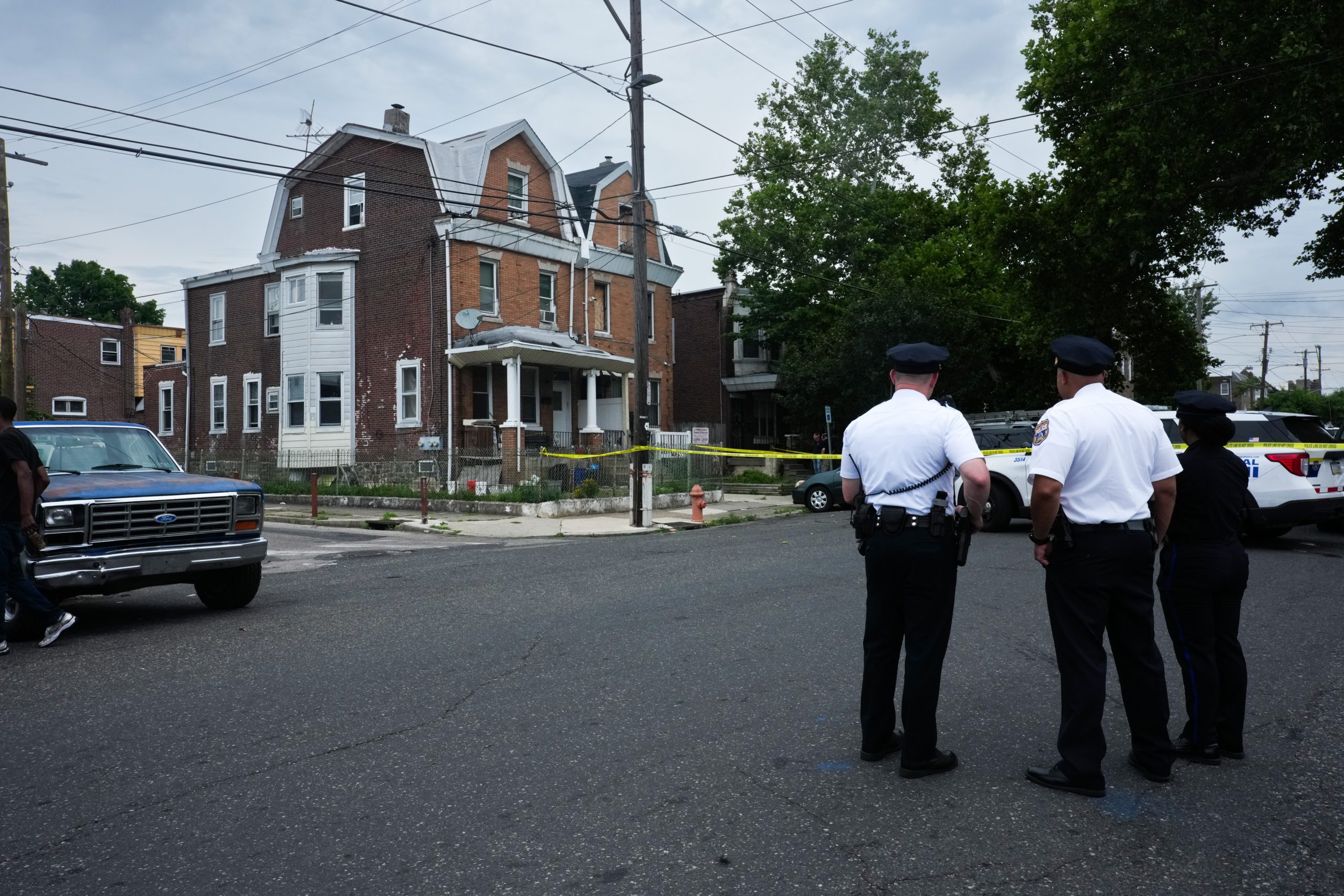
The scene of the ongoing investigation at Eugene Albert Horsch’s home at 417 W Chew Ave, in Philadelphia’s Olney neighborhood, on June 26, 2026. The home has been linked to the disappearance of two women.Jessica Griffin / Staff Photographer
The Horsch home had long been a curious spectacle on West Chew Avenue. A steady stream of women came and went, sometimes in the company of an elderly man wearing an eye patch. The house had caught fire, leaving a hole in the roof and boarded-up windows on the top two floors. Police had raided the place for drugs.
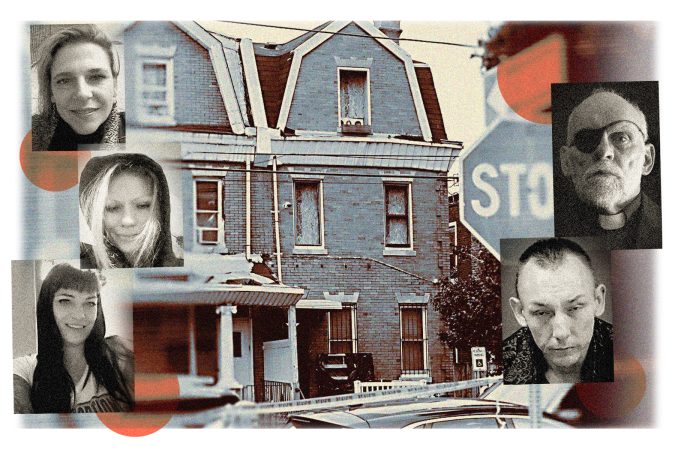
Now, the three-story property has become the center of a sprawling, macabre investigation into the disappearance of at least two women.
The quiet residential street in Olney has been cordoned off, as hazmat teams and excavation crews scour the house and dig up the property for clues. Federal and local investigators are interviewing people who knew the missing women and delving into their dealings with Raymond and Eugene Horsch.
The investigation began in June, after Eugene was arrested near Independence Hall in a black BMW containing weapons, drugs, and a phony drug enforcement officer badge. With him was a frightened, seemingly drug-addled woman flashing an ID in the name of Blair Tonzelli.
Police discovered that it was a fake. The real Tonzelli had been missing for three years and was reportedly last seen at the Horsch home in Olney. The revelation renewed old questions about Raymond’s ex-wife, Amy McHale, who was reported missing in 2016 and was also last seen at the same address.
Eugene remains in jail on illegal gun and drug charges. He has not been accused of any violent crimes connected to the missing women and had been incarcerated at the time of McHale’s disappearance. Raymond died from a lung condition last year at the age of 82.
Detectives initially said they might have found a “significant amount” of blood inside the Olney house. But forensic tests determined it was not blood, and neither Tonzelli’s nor McHale’s DNA was found on the items tested, according to law enforcement sources who spoke on the condition of anonymity to discuss an ongoing probe.
But other developments have raised concern about the fates of the missing women.
An early search of the house uncovered a handwritten note that describes hurting people and makes references to serial killer Ted Bundy. And one woman told investigators that Eugene claimed to know how to dispose of human bodies with chemicals.
Raymond’s body of work as a shock-seeking pornographer has clouded the significance of those findings.
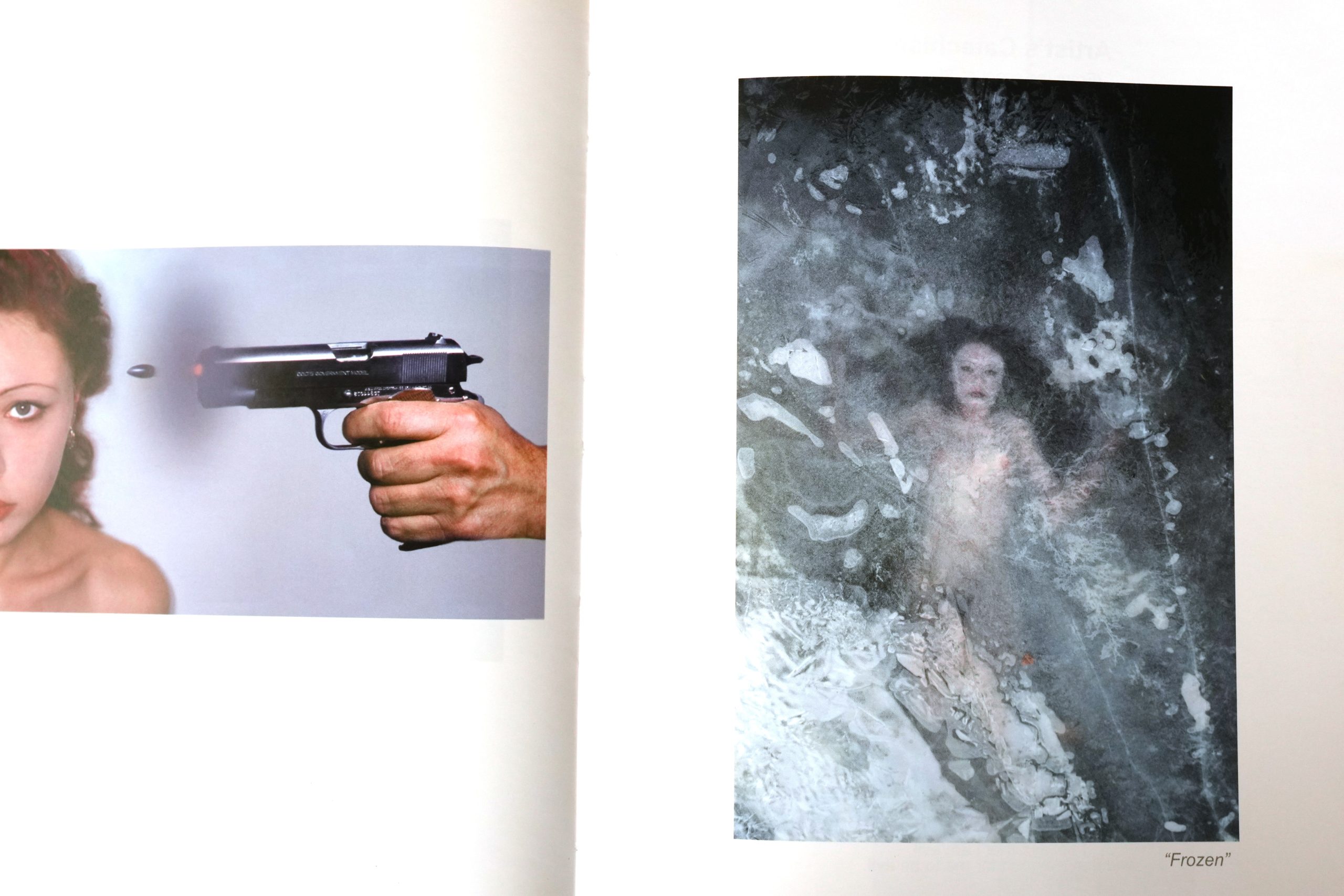
Pages from Raymond Horsch’s 2003 two-volume photobook “Eroto~ To The Prurient Interest” showing an unidentified woman, whom Raymond Horsch introduced as his “wife” Anna, depicted in multiple staged “deaths.”Obtained by The Inquirer
In a dozen films, novels, and photo books, Raymond used women suffering from addiction as props for his violent fantasies, subjecting them to simulated strangulation and drowning. He adopted the persona of an “empathetic” serial killer who murdered addicts to end their pain. And he claimed his writings were autobiographical, yet laced with threads of fiction — toying with his audiences by leaving them to discern what was real.
Meanwhile, Raymond’s sensationalistic art is overshadowed by his almost implausible life story.
An Inquirer review of hundreds of pages of police and court records, newspaper clippings, Raymond’s artistic portfolio, and interviews with more than 30 people has uncovered the saga of a thrill-seeking criminal artist and his troubled son.
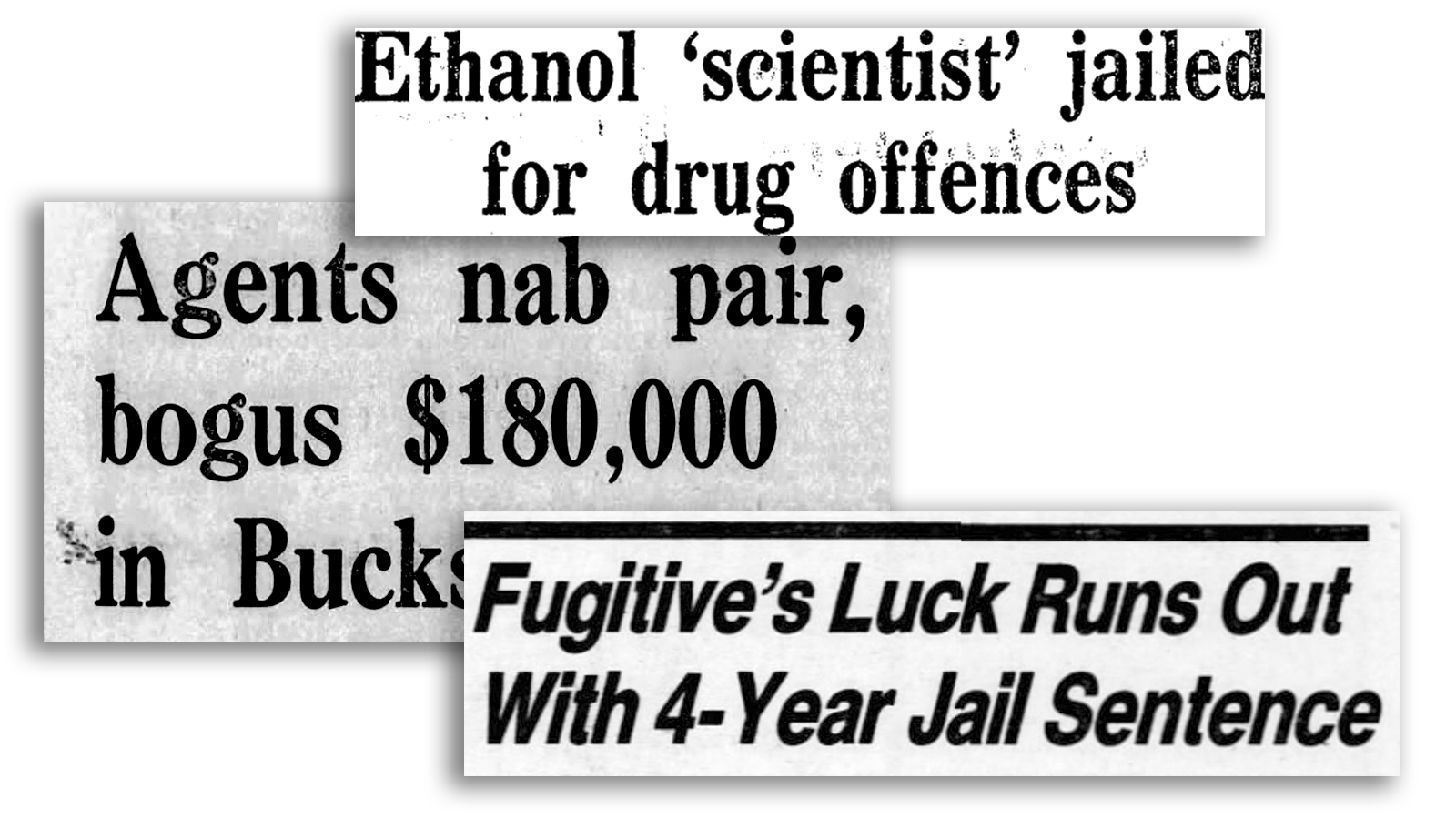
Various newspapers chronicled Raymond Horsch’s exploits, including (top) the Press of Christchurch, New Zealand, in 1985 about Horsch’s arrest in the U.S. after he was revealed to be an imposter; (middle) the Allentown Morning Call from December 1974 about the bust of his Doylestown-based counterfeiting operation; and Daily News in 1985 about Horsch’s sentencing on drug manufacturing charges.Obtained by The Inquirer
Raymond’s humble beginnings in rural Pennsylvania gave way to a career as a drug manufacturer, an identity thief, and an international fugitive in seaside New Zealand. He returned to Pennsylvania to raise Eugene and continue pursuing his dreams as a pornographic artist, luring heroin-addicted sex workers off the streets of Kensington.
At least five women connected to Raymond ultimately died of accidental drug overdoses. Among them is Killen, who overdosed last year at the age of 47, according to the city medical examiner. Eugene would later tell people close to Killen that she had died just outside his Olney house, or shortly after he took her to the hospital.
Those close to McHale and Tonzelli remain tormented by the lack of any such closure. McHale’s mom, Gloria McHale, said she always suspected that Raymond was somehow involved.
“A long time ago, before she even married him, she told me if anything ever happens to her, that he was the one,” McHale said.
Raymond Horsch was born in 1943, the son of a World War II glider pilot, and grew up on a farm in East Stroudsburg, Pa. His parents relocated to Chalfont, in Bucks County, where he graduated in 1961 from Central Bucks High School as editor of a school magazine and a National Merit Scholar.
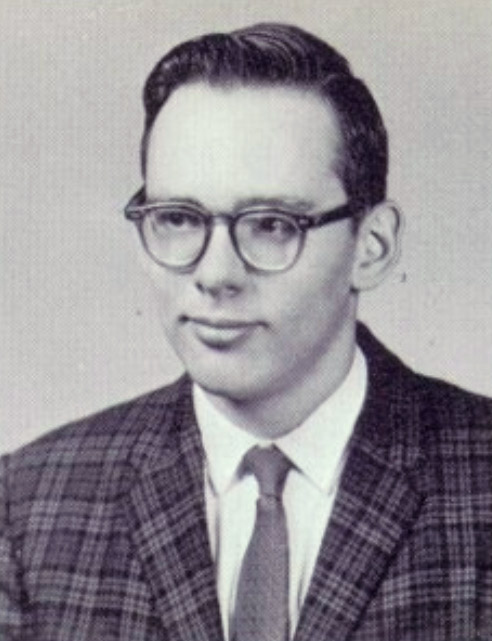
In yearbook photos, his dark hair is cut short, and he wears a tie and glasses with a thick black frame. He would later call his younger self a “totally asexual nerd.”
He married his 19-year-old high school sweetheart in 1964, and the couple moved to Rittenhouse Square in Philadelphia. Raymond worked commercial film and photo jobs while his wife taught public school.
Raymond C. Horsch in his 1961 Central Bucks High School yearbook.Obtained by The Inquirer
He was ill-suited for domestic life, someone who, when he watched Westerns as a kid, did not identify with heroes in white hats.
“I came out of the theater wanting to be the villain,” he said. “I certainly became a villain later in life.”
As the 1960s counterculture movement swept the city, Raymond ran the avant-garde Underground Cinema 16 — later the Roxy — on Sansom Street, then a beatnik mecca. He joined the Pennsylvania National Guard but deserted after he was moved toward active service in Vietnam. Instead of going to war, he traveled to New York City to work in film and showcase his own hyper-sexualized photography in Greenwich Village, alongside contemporaries like Robert Mapplethorpe.
His wife left him in 1970 after finding a women’s nightgown on their bed. In an interview with The Inquirer, in which she agreed to be quoted on the condition of anonymity, she said Raymond was never violent but was an “emotionally abusive” philanderer with an oppressive ego.
“Raymond really thought he was smarter than anybody,” said the 81-year-old Pennsylvania resident. “And he thought that he could get away with anything.”
During the so-called Golden Age of Porn in the early 1970s, when movies like Deep Throat crossed into the mainstream, Raymond worked odd jobs as a crewman on porn shoots. But he dreamed of making his own erotic movies.
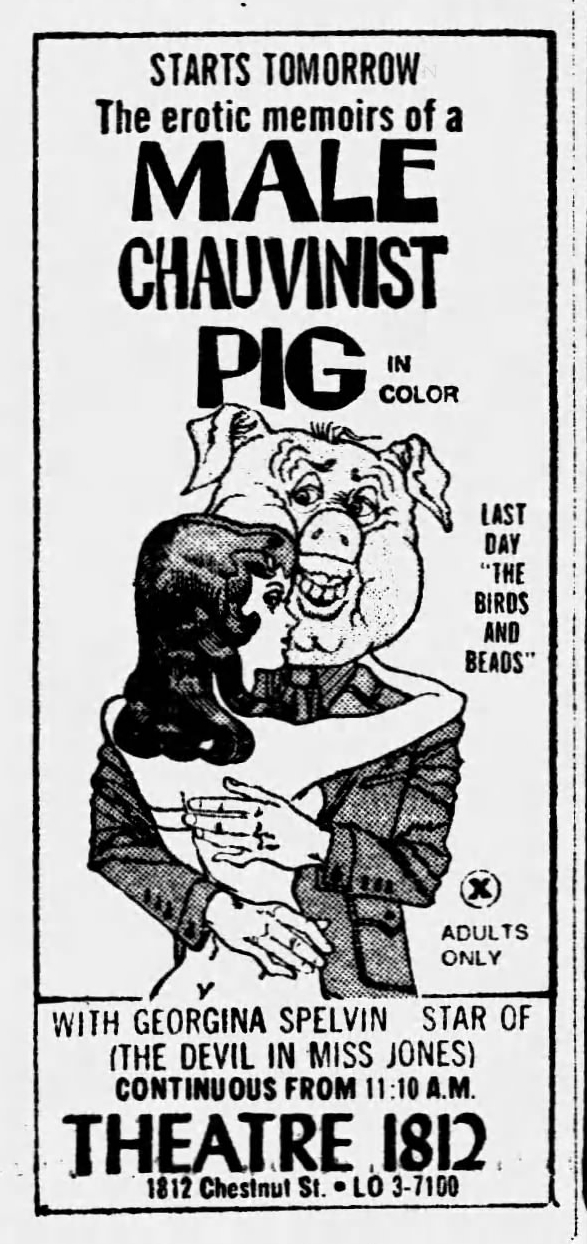
An advertisement in a 1974 edition of the Inquirer for a screening of Horsch’s cinematic debut, “The Erotic Memoirs of a Male Chauvinist Pig.”The Philadelphia Inquirer archives
He got his chance after befriending the Philly tavern owner and mob associate Salvatore “Sam the Barber” La Russa at his long-gone Bag of Nails bar at 13th and Locust. La Russa, who died of a heart attack in 1996, helped Raymond produce The Erotic Memoirs of a Male Chauvinist Pig, which featured Georgina Spelvin, the star of the well-known erotic film The Devil in Miss Jones.
Raymond’s film premiered in 1973 at the 1812 Theater on Chestnut Street. It was a low-budget effort that depicted rape, bondage, underage sex, and the titular character’s violent relationship with a drug-addicted woman — a “sweet comedy,” Raymond later joked.
Raymond’s movie did not experience the same cultural, critical, and financial success of the better-known erotic films of that era. But his mob-backed dream of becoming an auteur was soon interrupted by his other passion: crime.
In 1974, the U.S. Secret Service busted the homegrown counterfeiting operation Raymond ran in Doylestown, seizing the equivalent of over $1 million in phony $10 bills. He served two years in prison.
After he got out, authorities busted him again in 1977 for operating a methamphetamine lab in Philadelphia.
Facing more prison time, Raymond skipped bail and went on the run.
Raymond fled to the West Coast with his longtime girlfriend, Myroslawa Anna Ferkuniak, whom he met sometime after she was arrested in an LSD raid at a house near Temple University. He assumed the identity of Dr. Stanley Eugene Stokowski, a real-life chemist in California with a doctorate from Stanford University.
In 1980, Raymond married Ferkuniak in Nevada using the Stokowski alias. They boarded a plane for New Zealand to evade federal investigators.
They settled in the sleepy port city of Timaru. Raymond, whose years as an illicit drug maker had made him a skilled chemist, boasted that he had a doctorate and got a job with an alternative fuels company with a fraudulent academic transcript under Stokowski’s name. He launched a facility that converted whey into ethanol fuel.
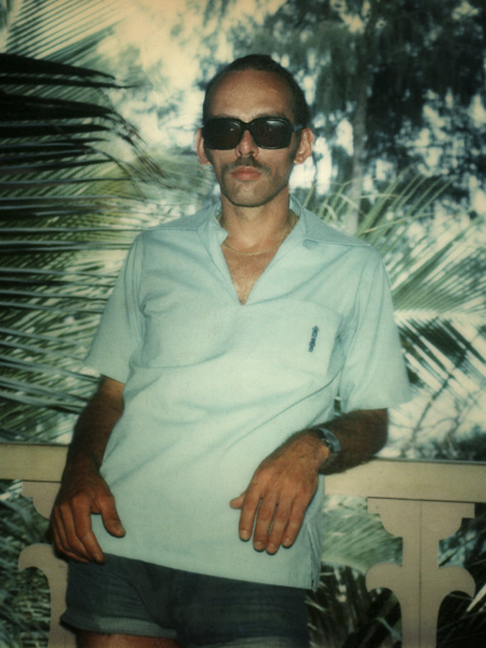
Horsch at an unspecified location in the 1980s.Obtained by The Inquirer
In 1981, Eugene was born, entering the world against the backdrop of his father’s deceit.
Raymond traveled back to the United States multiple times using different aliases. But in 1984, he was caught reentering New Zealand with five fake passports, according to news reports. The incident sparked national inquiries in New Zealand into how a fugitive impostor had managed to get work as a prominent chemist.
Raymond did not stick around for more questioning. He allegedly broke into a house, stole another passport, and fled to America before he could be charged. He left Anna and Eugene behind, and they returned to America later.
The FBI caught up with him in Orlando and extradited him to Philadelphia in 1985. A psychologist, in a court-ordered exam, noted that Raymond had an IQ of 140 but suffered from “deep-rooted emotional problems.”
A federal judge sentenced him to four years. Raymond expressed no regrets.
“I loved being a fugitive,” he would later say. “It was always exciting, always thinking, ‘Who am I going to be today?’”
After an early release from prison in 1987, Raymond moved his family to Northeast Philadelphia and got a job as an IT director. His wife, Anna, found work cleaning houses.
Although Raymond claimed he never took drugs, he watched Anna fall into addiction.
She died in 1989, at the age of 39. She was sitting in their living room and accidentally overdosed on glutethimide and codeine, a dangerous heroin alternative prone to abuse when combined. Eugene, then just 7 years old, was in the room at the time.
Raymond, in a later interview, expressed resentment about his wife “killing herself.”
“All the while things were bad, she held it together,” he said. “Then when things were good, she fell apart. My basic reaction was anger, because she bailed out and left me with a kid to raise.”
Raymond and Eugene moved to a three-bedroom home in Chalfont, close to family. He opened a barbecue restaurant with a colleague from the adult film industry, pursued his art, and raised Eugene as a single father.
In 1994, he directed and starred in Lovers, which was produced by Femme Distribution Co., a feminist porn studio. One reviewer described it as a moody feature that intercut scenes of rape and bondage with “thought-provoking dialogue.”
But Raymond was facing the reality that his attempt to blend pornography and cinema was a commercial failure.
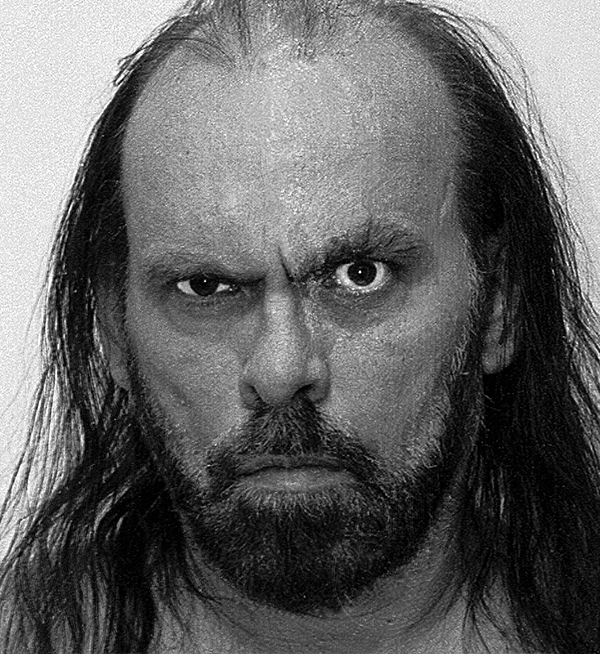
Raymond “R.C.” Horsch in 1999.S. E. Stokowski / Wikimedia
Now well into his 50s, he wallowed in an artistic gutter. He performed in at least eight pornographic films, primarily low-budget exhibitionist features called Streets of New York that were shot in the dumpster-packed alleys of Manhattan.
He also began photographing sex workers, using Kensington Avenue as his casting room. He would shoot photos of women working corners, often without permission, and earned a reputation under the El tracks as a lurker who offered cash or drugs in exchange for nude film shoots.
He launched a now-defunct personal website, Eroto.com, in the late ’90s. Paid subscribers could access his photos and videos depicting sexual violence and women who appeared to be shooting heroin.
Raymond saw himself as a feminist and critic of modern society, but he was unapologetic about exploiting drug-addicted women. He likened himself to the snake in a parable about a woman who cares for a serpent, only to be bitten once it reaches maturity.
“The woman asks, ‘Why?’ And the snake says, ‘Because it’s my nature.’”
Although he had a young son, Raymond didn’t let that stop him from bringing his work home.
In the early ’90s, Raymond placed an ad for a housekeeper and hired a teenage girl, 33 years younger than he was and addicted to heroin. She “looked like a child,” her mother, Charlotte Ring, said. “I think he just wanted to use her for porn.”
They applied for a marriage license in June 1999 but never tied the knot. Ring said she could not persuade her daughter to return to their nearby home in Chalfont until she eventually went into rehab.
Eugene, meanwhile, was a straight-A student, just like his dad had been, at Central Bucks West High School. But his father’s career was a source of embarrassment, according to Eugene’s former classmates, who found Raymond “creepy.”
It was no secret that Eugene’s dad worked in porn. Hanging on a wall of their home was a huge photograph of Raymond — with thinning hair and a ponytail — receiving oral sex from a woman while she held a knife to his head.
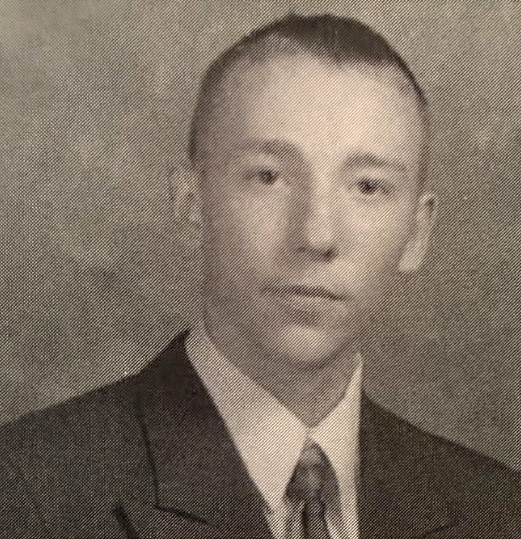
Eugene Horsch’s graduation photo in the 1999 Central Bucks West High School yearbook.Obtained by The Inquirer
Yet friends said Eugene shared many of his father’s other interests: chemistry, forgery, and eluding capture. He once swiped a lawnmower from Home Depot and wheeled it home. When his dad gave him money to go buy groceries at Giant, Eugene preferred to steal them.
“It was like a thrill for him,” one friend recalled.
Eugene’s friends called him “Gizza,” after the Wu-Tang Clan rapper “GZA.” In a trailer in Eugene’s backyard, they smoked weed lifted from Raymond’s grow operation, listened to Wu-Tang, and skateboarded on a halfpipe. According to two former classmates, Eugene sometimes smoked crack cocaine and “wet” — marijuana laced with PCP.
He had an older cousin who was a role model and one of his best friends. But when Eugene was in high school, his cousin, at age 19, crashed a convertible and died.
The loss devastated Eugene.
“When his mother died and his cousin died, he had no moral anchor,” said one relative, who asked not to be identified out of privacy concerns. Eugene “didn’t stand a chance.”
Despite their conflicted relationship, Eugene acknowledged the role his father had played in his life. In a 1999 yearbook graduation photo, Eugene eulogized his cousin and ended with a note to his father: “Thank you Dad, for all you have done for me.”
Eugene never officially graduated from Central Bucks West, according to school administrators. A friend said he forged his diploma, showing off the fake document in his bedroom. It is not clear if he completed his high school education elsewhere, but Drexel University confirmed Eugene enrolled there between 1999 and 2003.
His academic career ended in 2003, following a night of drinking at a Northeast Philly bar. Eugene blew a red light and T-boned another car. The driver suffered a catastrophic brain injury and spent 16 years in a vegetative state before dying.
In 2004, Eugene pleaded guilty to driving under the influence and aggravated assault. He was sentenced to two to four years in prison.
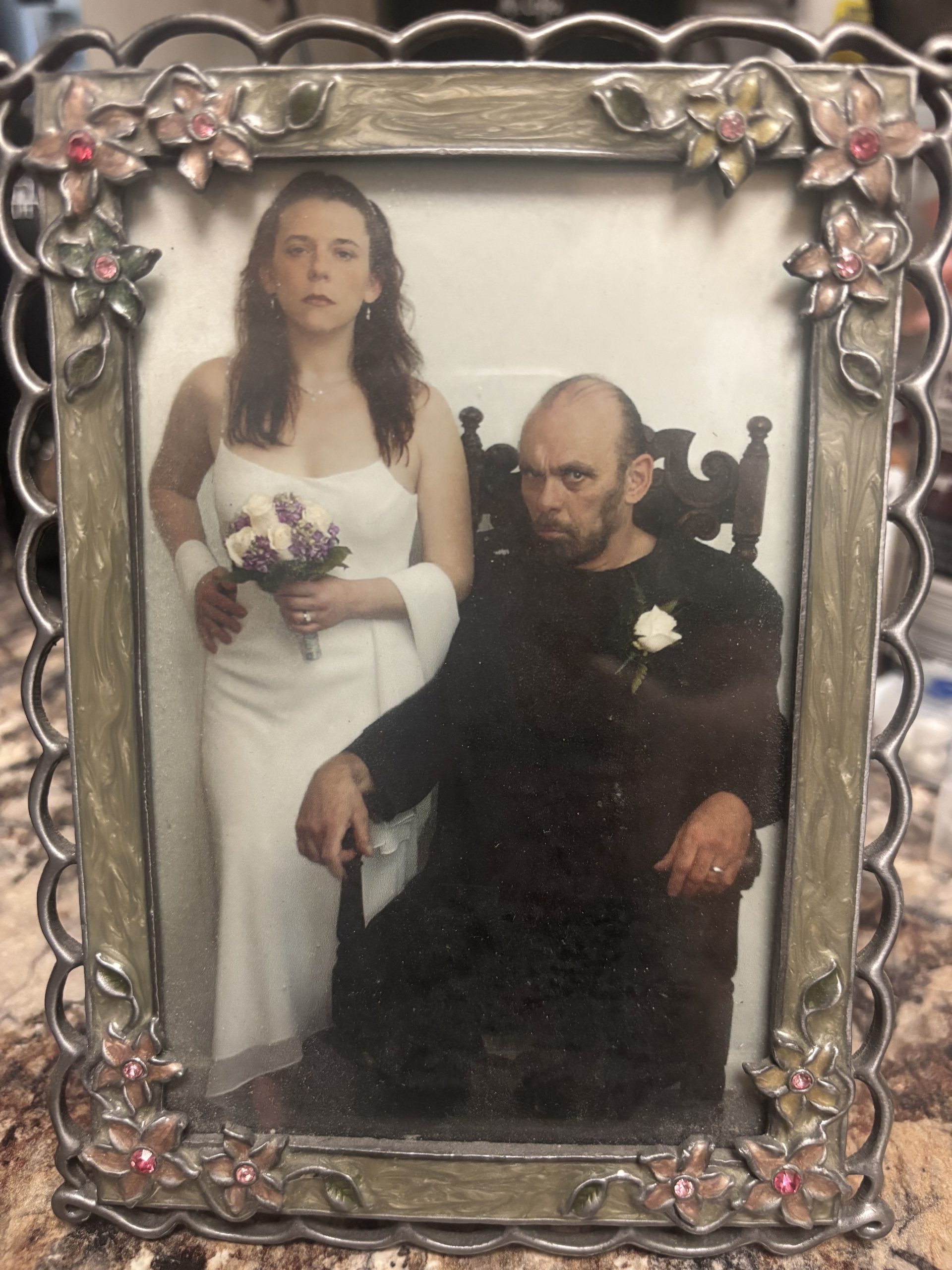
A wedding photo of Amy McHale and Raymond Horsch in 2004, taken during a small ceremony at his residence in Chalfont. The couple divorced a few years later. McHale was last seen at Horsch’s Olney home in 2016.Courtesy of the family of Amy McHale
Raymond was always looking for new women — particularly those who resembled his deceased wife, Anna.
He once asked one of Eugene’s high school friends, who was working at a car wash, if she wanted to star in his films. Another woman heard about him from a cellmate when she was locked up in a Bucks County jail on a drug charge. She later agreed to be photographed nude at his studio for money and drugs. He said she reminded him of Anna and asked her to star in Slaves, a 2003 film he was producing.
Raymond met Amy McHale in Kensington. She was struggling with mental health issues and drug and alcohol addiction, and she came to view Raymond as her savior after he got her off the streets. She costarred with him in a pornographic film.
McHale, 30 years Raymond’s junior, later married him beside a greenhouse in the backyard of his Chalfont home in September 2004, not long after Eugene pleaded guilty to DUI.
That same year, Raymond inherited the Olney house from his aunt. In two self-published photo books — featuring women recruited from Kensington in sexual bondage — a few pictures appear to be staged there.
Eugene got out of prison in 2006. Raymond remained in Chalfont, and he transferred the Olney property into his son’s name.
Three years later, a “highly intoxicated” 21-year-old woman called 911 to report a burglar in Raymond’s Chalfont residence. Responding officers found no evidence of an intruder, but they did find 455 marijuana plants in the basement and two shotguns.
The feds seized the Chalfont home.
After pleading guilty to three felonies and receiving a 54-month sentence, Raymond spent his time in prison writing a series of novels about serial killers and sexual deviants that he later self-published.
In 2013, when he was released from prison at the age of 70, Raymond and Eugene were together again in Olney, living in the aging family home-turned-porn studio.
Raymond described himself as a frustrated, aging porn star.
“I walk down the street seeing all these beautiful, breathtaking women who are now totally inaccessible to me. Totally off-limits now,” he said. “If I stay away from mirrors, I can still convince myself that I’m 18 years old.”
Raymond “R.C.” Horsch in character for a film role, 2014.S. E. Stokowski / Wikimedia
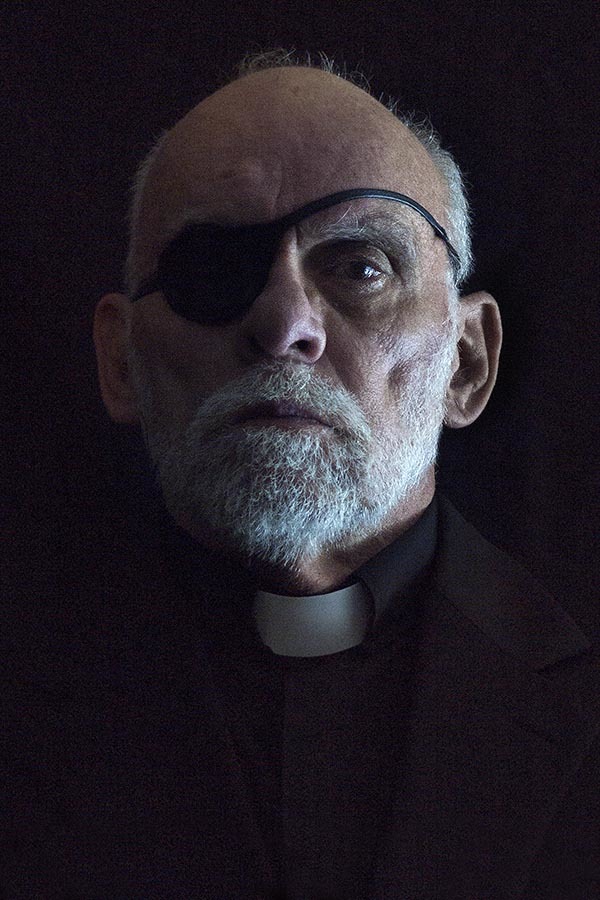
Raymond started wearing an eye patch, although friends were unsure if it was for medical reasons or simply to bolster his villainous persona. His art found a few admirers, including in Europe, and some of his photos appeared in an anthology of erotic art in New York City, prefaced by the prominent critic Camille Paglia.
But Raymond seemed resigned to obscurity, noting that few galleries wanted photographs of “wasted emaciated heroin junkies.”
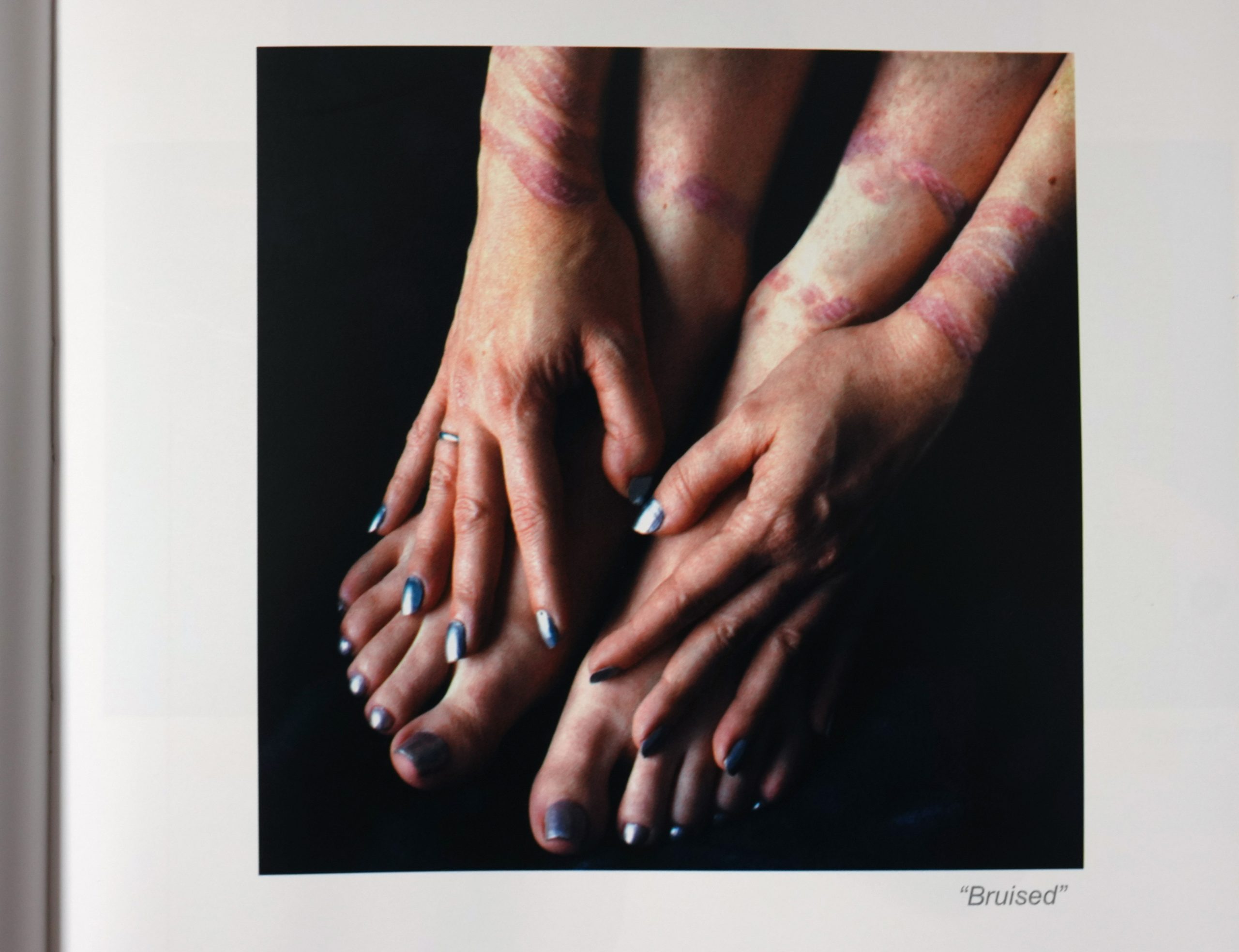
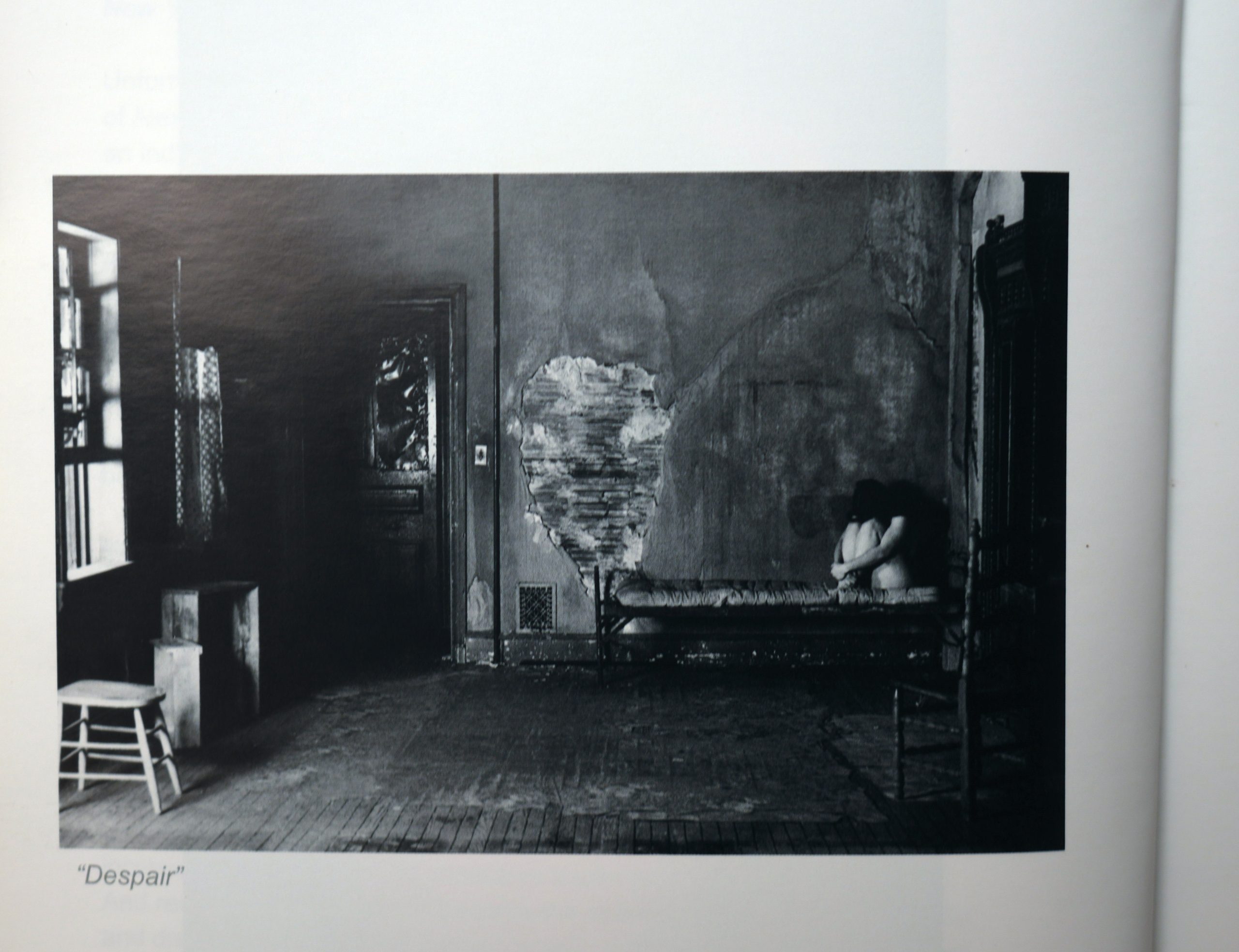
From Raymond Horsch’s photobook “Eroto~ To The Prurient Interest”: Ligature marks on the arms and legs of an unidentified woman, and an unidentified woman in what appears to be Horsch’s Olney bedroom.Obtained by The Inquirer
He landed a 2014 show at the Papermill artist studios in Kensington. Raymond set up a slideshow photo gallery in a warehouse surrounded by needle-littered railroad tracks. The series began with photos of naked women, who became more gaunt and sickly as heroin took its toll. Several shots showed syringes dangling from arms pocked with bruises and sores.
As a finale, Raymond played a video showing the body of a naked woman. Raymond claimed she had died of a drug overdose after he had paid her for sex. The video shows her body being loaded into an oven and cremated.
Some of the attendees were shocked and disgusted. One of them, local audio-visual technician Justin Roman, recalled that Raymond was “totally shameless” when confronted.
“He was doing it all because he wants to have sex with women who are addicted to heroin,” Roman said. “And he seemed very self-aware that he could not stop this compulsion.”
Amy McHale, who married and divorced Raymond, was last seen at the Olney house and reported missing in 2016.Courtesy of the family of Amy McHale
McHale and Raymond divorced in 2008, but she kept returning to visit after he moved to Olney.
She was at the Chew Avenue home on June 13, 2016, when she called her mom to tell her she was coming home. She sounded drunk, so her mother told her to stay.
Early the next morning, McHale — a strawberry blond 44-year-old grandmother of three — left a voicemail with her daughter saying she was OK.
She was never heard from again.
McHale would sometimes be gone for a couple of days, but never much longer. Her daughter, Amanda Stofer, said McHale had been looking forward to Stofer’s forthcoming wedding.
“My mom had her struggles with addiction,” said Stofer, 38. “But my mom would not want to disappear in my life.”
Raymond told police and the McHale family the same story: She was drinking vodka and he went to bed. When he woke up, she was gone.
Eugene Horsch, in a June 5, 2017 photo. He was still in prison at the time of McHale’s disappearance.Pennsylvania Department of Corrections
At the time, Eugene was back in prison for drugs and would not be released until a month after McHale’s reported disappearance.
Detectives were suspicious of Raymond, McHale and Stofer said, but they did not have probable cause to obtain a search warrant. Eventually, Raymond stopped reaching out to her family.
“When she would disappear before, Raymond would always keep calling me,” McHale said. “After this, I never heard from him.”
Years later, Raymond, now in his late 70s, frequented a onetime crackhouse on Wensley Street in Kensington.
He would come there to “pick up [drugs] and grab the girls” for video shoots, said Anna Marie Reveron, 58, who was something akin to a grandmother for the drug-addicted women who lived there.
One of the women Raymond picked up was Blair Tonzelli. She was estranged from her family in Northeast Philadelphia and had been in and out of prison. Friends recalled her as loyal, someone who would “literally give you her last $2.”
Blair Tonzelli, in a photo she posted on Facebook.
It was not unusual for Tonzelli to stay for long stretches at the house in Olney, where Raymond claimed she worked as his home health aide.
David McCarty, 72, said he stopped hearing from Tonzelli entirely in August 2022. The last time she posted on her Facebook account was Aug. 17 of that year.
Fearing the worst, two of Tonzelli’s friends reported her missing in February 2023. One told police she was last seen at Raymond’s house on Chew Avenue.
Another woman who spent time at the home described overdose deaths as a grim reality — but not mysterious cases where bodies vanish.
“I’ve lost probably six to seven friends who overdosed — on the street, in abandoned houses, in cars,” said the woman, a 37 year-old friend of Krista Killen’s who lived at the Olney house last year. “And their bodies are always found. Always.”
Krista Killen under the El tracks, as featured in Raymond Horsch’s 2017 documentary “Whore!”Obtained by The Inquirer
While an array of different women cycled through the Olney property, often for brief stretches, Killen was an old-timer.
She first appeared in Raymond’s 2003 movie Slaves and watched him eat a raw steak and drink prop blood out of a wine glass for one scene.
Years later, in Raymond’s 2017 documentary, Whore!, hefilmed Killen using drugs and describing her own behavior as “slow suicide.” Killen reflected back on her scene with Raymond in Slaves and said she had wondered: “Is he gonna f— kill me?”
“This is a movie,” he reassured her. “I don’t want you to be scared.”
Killen lived off and on in the Olney house while continuing to perform risky sex work. She ran errands for Raymond when his eyesight deteriorated, driving him around in an aging Chrysler luxury sedan.
He would get upset when she left. He once posted on Facebook a photo of Killen in withdrawal, doubled over on a toilet — just to “get back” at her, according to a friend.
Killen never feared Raymond would harm her. But she worried about what might happen if she was left alone in the house with Eugene.
“Krista was always fearful that if something happened to Ray or he passed away, Eugene would not know what to do and not know how to control himself,” said Danielle Wynne, 46, a longtime friend of Killen’s.
Krista Killen lived at the Horsch home off and on since 2016 until her death last year.Krista Killen's Facebook pages
In late 2024, after a yearslong infection in Killen’s leg, doctors had to amputate it above the knee. A month later, BabyCat died of a brain tumor. Raymond’s health was also in decline, and after he died in May 2025, Killen was suddenly alone in the house with Eugene.
Three days after Raymond’s death, a lit cigarette sparked a fire in Killen’s second-floor bedroom, where she had moved after losing part of her leg. The blaze destroyed most of her belongings, leaving charred bricks and boarded-up windows.
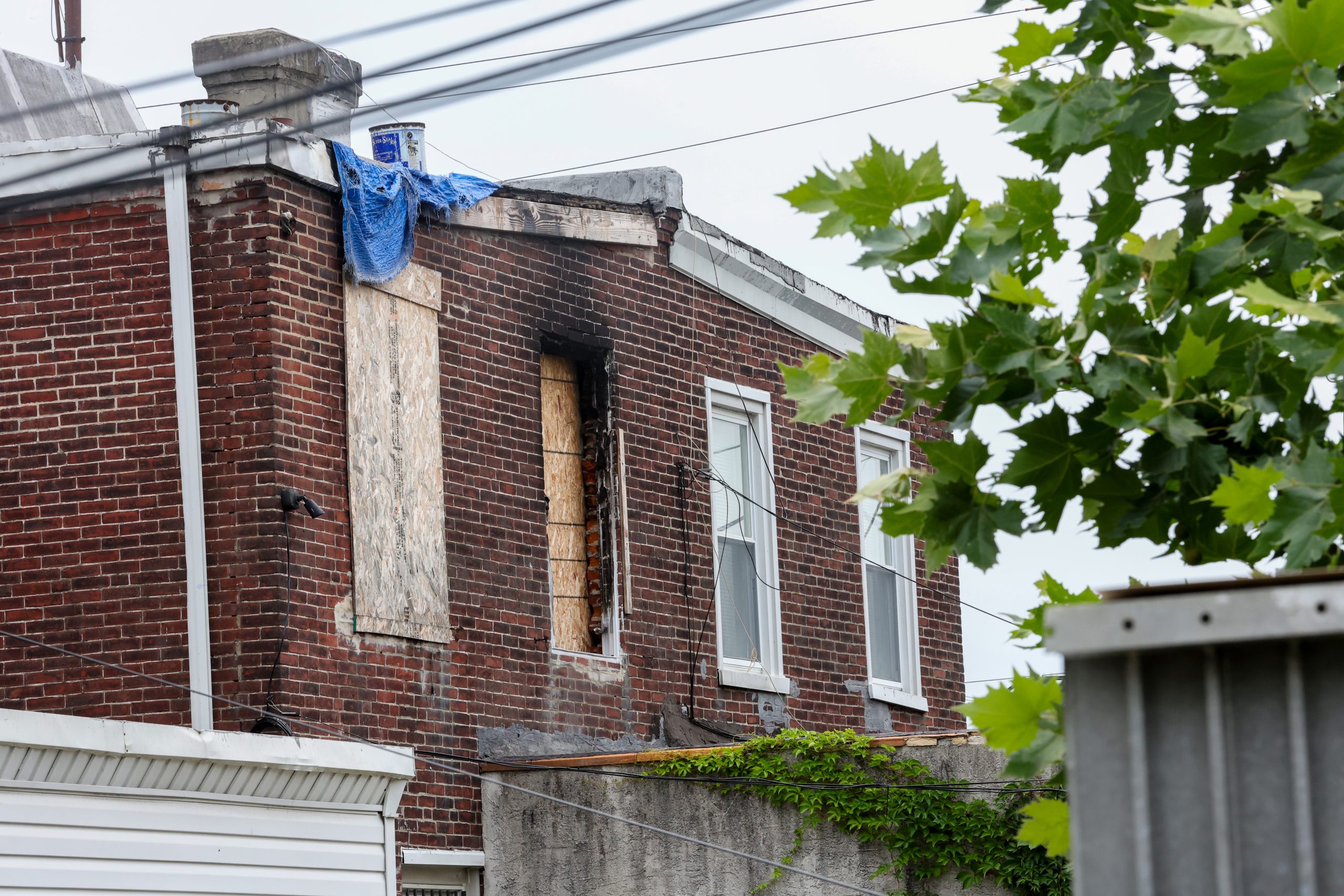
The back of Horsch’s Olney home on June 27, 2026, showing damage from a fire that occurred last summer and led investigators to a weed growing operation and a cache of illegal weapons.Aidan T. Gallo / Staff Photographer
The fire led to police finding guns and a marijuana grow operation inside the property. Eugene was jailed again.
The fire had torn a gash in the roof, and rain pelted into the kitchen, the dining room, and Killen’s bedroom. On Aug. 16, 2025, three months after Raymond passed, she died of a drug overdose.
Eugene announced Killen’s death on her own Facebook page.
“Please let everyone know we were in love and we were going to get married,” Eugene wrote.
Her friends said neither of those things was true.
Eugene’s life continued to unravel in the wake of his father’s death.
Neighbors said they saw him outside, quiet and jittery, often obsessively washing his black BMW. He would be dressed in a nice shirt, as if he were heading to an office, although his only means of income appeared to be selling drugs.
He was arrested again this year in March after he stabbed a man in the stomach during an apparent dispute over a woman at Eighth and Market Streets. The case was withdrawn when the victim failed to appear in court, and Eugene was released from jail in May.
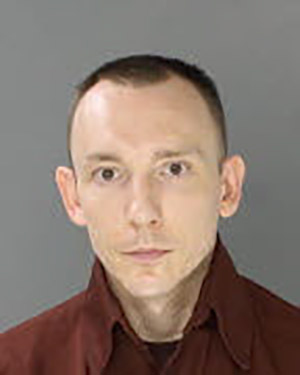
Eugene Albert Horsch, 44, of Philadelphia.Courtesy of Philadelphia police
Just a few weeks later, on the morning of June 19, a U.S. Park Police ranger approached Eugene’s BMW parked near Sixth and Market. A woman inside sounded distraught.
As the ranger got closer, the woman in the back seat said to Eugene, “You’re going to hurt me.”
Inside the car, officers found narcotics, two firearms with obliterated serial numbers, and other weapons — along with a fake U.S. Drug Enforcement badge with Eugene’s photograph under the name “Eugene Frederick Steiner.”
Police called real DEA agents to the scene, who turned their attention to the woman in the car.
The 39-year-old woman told police her name was Blair Tonzelli. She showed officers an ID card bearing her photo, but with Tonzelli’s name. It did not take long to determine she was lying.
She told investigators that she did not know Tonzelli and was not aware that she was missing.
“But I think something bad may have happened to her,” she said.
She said she was afraid to enter the basement of the Olney house because Eugene told her he had hurt people there. He had never been violent toward her, she said, but he was obsessive and would sometimes sit for 24 hours outside her house. She said he had told her he knew which chemicals are needed to reduce a human body so it could be flushed down a toilet.
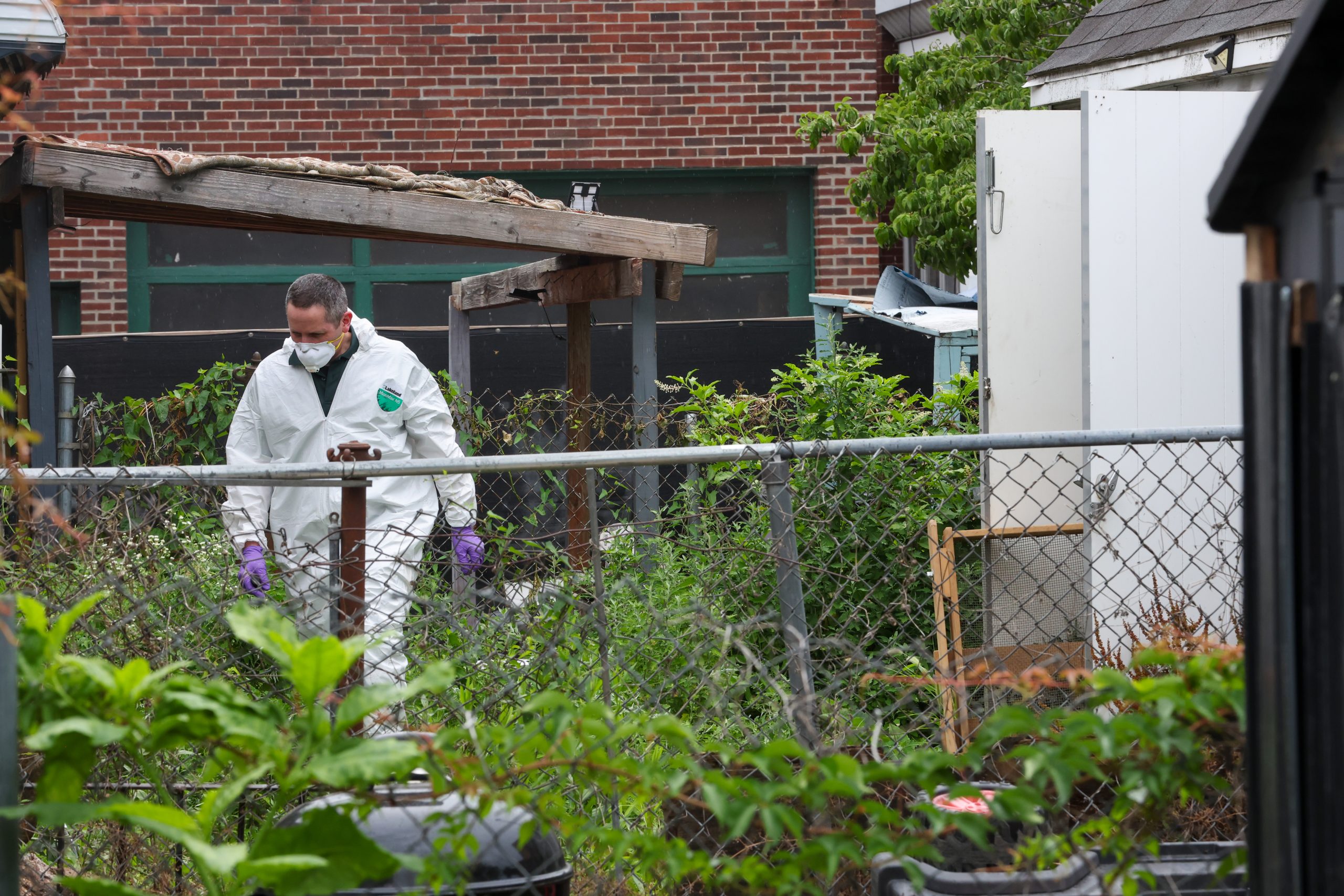
An investigator searches the backyard of Horsch’s home in Philadelphia, on June 27, 2026.Aidan T. Gallo / Staff Photographer
Authorities, including FBI forensic experts in hazmat suits, searched Eugene’s home. They found bank cards in Tonzelli’s name, Killen’s death certificate, and five urns containing plastic bags of unidentifiable cremains. One bore the name Raymond Charles Horsch.
Other findings only deepened the mystery of what had been happening at the house: hidden compartments, including one in a hollowed-out stair; vats filled with chemicals; and a 55-gallon drum with connections to water lines leading into a hole in the ground.
The note mentioning Ted Bundy included confessions for acts of violence, such as having “a 2ft zip tie in my pocket and a drum set up.”
“I had been ready and waiting and I damn sure showed no hesitation,” the note states. “And it was fun.”
Investigators are reviewing Raymond’s films and reading his novels for clues — giving his work the attention in death that he always hoped to achieve in life.
His books describe ways to murder women. One scene depicts a body being dissolved with chemicals in a bathtub.
That same book includes tales of Raymond’s bizarre life story, interspersed with passages that he concedes are complete fiction.
But he leaves the reader guessing.
“Would it surprise you,” he wrote, “to learn that I’m lying?”
Staff writer Michelle Myers contributed to this article.
A detective at the crime scene on Horsch’s property in Philadelphia on June 26, 2026.Jessica Griffin / Staff Photographer
Service is accused of breaking into and stealing cash from 26 stores in South and Northeast Philadelphia. According to police, he allegedly burglarized the businesses early in the morning and took the money from offices, safes, or cash boxes.
Police had been the investigating a slew of commercial burglaries since early 2025.
“This arrest stops a serial burglar from continuing to victimize Philadelphia businesses and brings his repeated criminal activity to an end,” Supervisory Deputy Robert Clark said in a statement.
The Philadelphia Police Department did not immediately respond to an email Sunday seeking additional information.
Service was also wanted in connection withother crimes in Montgomery County as well as Georgia and New Jersey, the U.S. Marshals said.
He is currently being held in a Florida jail, where he awaits extradition back to Pennsylvania, the agency said.
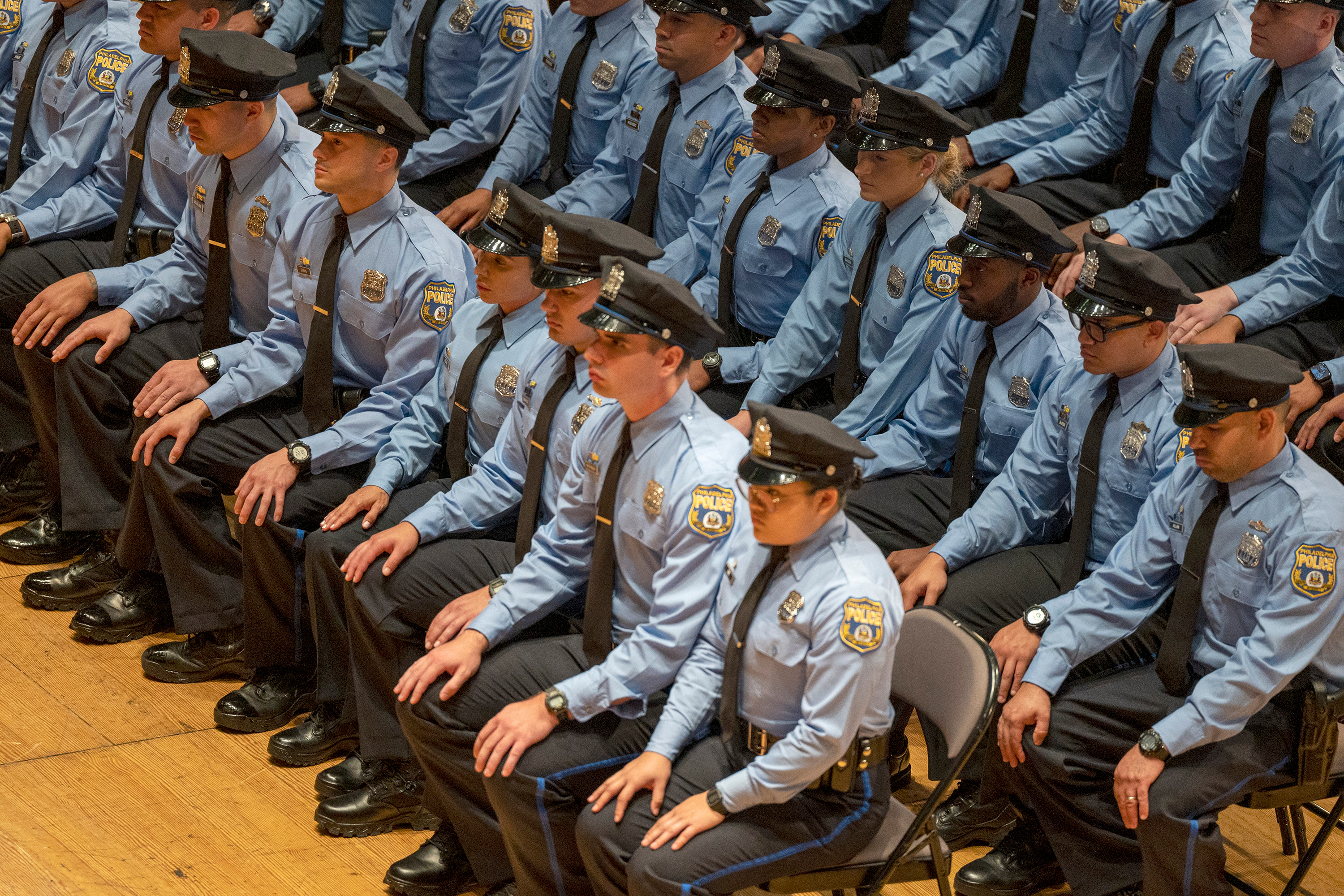
When Capt. John Walker joined the Philadelphia police force decades ago, prospective officers rarely applied to more than one department, let alone four or five.
Today, job candidates may apply to up to half a dozen departments before choosing where to begin their careers. And competition to hire them is fierce.
After years of the department vying for recruits amid staffing shortages and waves of officer departures, its ranks are rebounding. And Walker, who oversees the police academy’s recruiting efforts, credits that in part to a faster and more efficient method of getting potential officers through the door.
The department has scrapped its long-standing tradition of paper applications and is instead using software that speeds up what was once a monthslong hiring process.
Before, getting an applicant from an introduction with hiring managers to the first day of police training could take up to seven or eight months — or sometimes a year, Walker said.
“The process to get hired here was cumbersome,” he said. “It took almost 118 days after you applied for us to even make contact with you. That was a big problem.”
After rolling out the software, called Guardian, the department says it is ushering recruits into the academy in as little as 54 business days — and it hopes to reduce that span even further.
While Guardian is not solely responsible for the increase in applicants, Walker said, it has nudged the department closer to record recruitment numbers.
In 2025, the department enrolled 468 officers in training at the police academy, the second-highest number in the 21st century.
Captain John Walker of the Philadelphia Police Department’s recruitment and background investigations unit.John Walker
Walker is adamant that there has been no drop in the quality of applicants. The California-based company whose software the department is relying on maintains high standards, he said, and is used by more than a thousand law enforcement agencies across the country.
The new system has helped reverse a hiring dearth that began after the widespread protests over police brutality and racial justice in 2020 and continued through the COVID-19 pandemic and beyond.
A year before the protests, the department was at 99% of full staffing, according to Walker. But the numbers soon began to dwindle as diminished interest in policing combined with an uptick in officers leaving the force.
In 2021 alone, 581 of the department’s more than 5,000 officers hung up their uniforms. Officials attributed the drop to retirements, a COVID-era closure of the police academy, and strict local residency rules for prospective officers.
While the department now stands at around 83% of full staffing, Walker said, officials are beginning to see something of a reversal.
Recruitment drives have increased in frequency to more than several times a year, yielding between 1,000 and 2,000 applications each round.
That is a notable step up from 2022, when the department received just 942 applications overall.
Changing technology
Gone are the paper applications of old.
In their place is Guardian’s hiring portal, where prospective recruits can upload copies of their IDs, lists of references, and other documents via computer or on their phones. And the lengthy personal history questionnaires that are standard in the law enforcement industry are now available online, as opposed to requiring a trip to a local police station for paper copies to fill out by hand.
Police recruiters, in turn, use the software to review documents, conduct video interviews, and keep track of a recruit’s medical, physical, psychological, and polygraph exams.
The Guardian software debuted in the city in late 2023, and since then, the time it takes for prospective recruits to go from application to training at the police academy has fallen sharply, to fewer than 60 business days.
Department officials hope to speed things up even more, to about 35 days, Walker said, but it is difficult to schedule the required medical tests and interviews quickly enough to accommodate that time frame. The department plans to hire more doctors to meet demand.
Justin Biedinger, who founded Guardian Alliance Technologies in 2016, said that the company contracts with around 1,300 of the nation’s roughly 18,000 police departments, and that Philadelphia is one of its largest clients.
Biedinger, a former Stockton, Calif., police officer, said the service not only has quickened hiring timelines, but also has increased scrutiny of officers who might not be cut out for a career in law enforcement.
The software allows recruiters to see whether an applicant has been reported for misconduct by another department. And the company uses artificial intelligence to scan social media accounts for red flags such as inappropriate content, guns, or drug use.
“With Guardian,” he said, “these applicants can’t lie.”
To Walker, the biggest benefit of the new system has been the ability to move quickly and hire people who otherwise might have accepted jobs in other departments while they awaited word on applications to work on the Philadelphia force.
“In today’s world, people are not going to wait a year and a half to join this profession, as I did,” he said.
Another benefit of the automated process, he said, is making it easier for out-of-state applicants to apply, drawing candidates as far away as California, Colorado, and Missouri.
And even if the department does not reach its goal of a 35-day timeline, Walker said, the current 55 days “is one of the best in the country. If not, close to it.”
Cheltenham’s new police chief is a longtime crisis negotiator who led one of the township’s most famous criminal investigations.
Richard Schaffer will be sworn in as Cheltenham’s new police chief next week to replace John Slavin, who is retiring after 37 years with the department. The salary range for the new chief was listed as $180,000 to $195,000 in the township’s job posting.
Schaffer has led a variety of community policing efforts in his 26 years at Cheltenham, spending more than two decades as a crisis negotiator and heading the township’s gun violence task force.
In 2024, he embedded a county mental health worker into the police department to assist in cases with behavioral health concerns.
Schaffer, who holds a master’s degree in criminal justice from St. Joseph’s University, made the case for community policing in a speech at a school board meeting this week.
The new chief takes the reins at a tumultuous time for Cheltenham School District, which has faced a range of safety concerns in recent years — most notably two alleged assaults in a high school locker room last year that led to criminal charges for four football coaches and six players.
“We have not lived up to our shared ideals. We must acknowledge the victims from recent cases, and we must promise to do things better not only for them but for future students,” Schaffer said.
“I would urge parents and the board to commit to a greater partnership with the police department.”
Some Cheltenham residents have advocated for removing a physical police presence from schools in recent years.
Schaffer pledged at the meeting to “push back on some of those who sought to drive the police from the schools.”
“Police interacting with students, faculty, and staff is a good thing,” Schaffer said. “We want to be proactive by leveraging information and our relationships to get ahead of problems.”
District spokesperson Kevin Kaufman did not answer questions Friday about the current status of security programs at Cheltenham schools.
Schaffer also led the 2005 investigation into allegations that Bill Cosby drugged and assaulted Andrea Constand at his Cheltenham home.
Although the Montgomery County district attorney declined to press charges at the time, the case was reopened in 2015, and Schaffer was eventually called to testify.
He testified in 2018 that he had believed Constand’s allegations at the time, and still did.
Cosby’s conviction was overturned in 2021 on procedural grounds.
This suburban content is produced with support from the Leslie Miller and Richard Worley Foundation and The Lenfest Institute for Journalism. Editorial content is created independently of the project donors. Gifts to support The Inquirer’s high-impact journalism can be made at inquirer.com/donate. A list of Lenfest Institute donors can be found at lenfestinstitute.org/supporters.