Category: Crime & Justice

  • DA Larry Krasner’s office asks court to throw out AG’s Office appeal of overturned convictions

    DA Larry Krasner’s office asks court to throw out AG’s Office appeal of overturned convictions

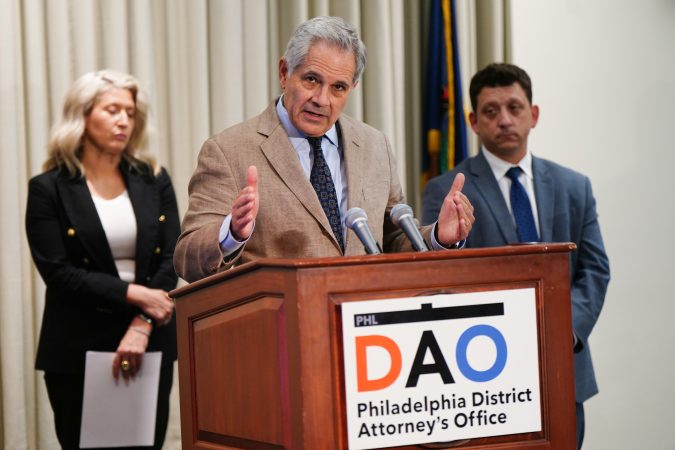
    The Philadelphia District Attorney’s Office has asked a state appeals court to block the Pennsylvania Attorney General’s Office from reopening a case that freed three men who spent nearly 30 years in prison for murder, saying state officials are overstepping their authority.

    The request is the latest chapter in a legal fight over the scope of the attorney general’s newly expanded power in Philadelphia post-conviction cases. The dispute could determine whether the office can step in only before a judge acts — or whether it can challenge closed cases that are still within the window for appeal.

    Common Pleas Court Judge Jennifer Schultz vacated the convictions of Marc Brittingham, Jermal Shuler, and Rasheed Turner in the 1997 killing of Essie Mae Thomas in May, after Philadelphia prosecutors and defense attorneys presented newly uncovered evidence that she said undermined confidence in the jury’s verdict.

    The district attorney’s office declined to retry the men, and they were released from prison after 28 years.

    Weeks later, after the Pennsylvania Supreme Court issued a landmark decision expanding the attorney general’s role in Philadelphia post-conviction cases, state prosecutors sought to intervene and appeal Schultz’s ruling.

    In a motion filed Friday, the district attorney’s office said state prosecutors are twisting the high court’s decision and trying to bypass longstanding rules.

    The decision gives the attorney general’s office the chance to weigh in before a judge grants a request supported by prosecutors to change a past conviction or sentence.

    But Schultz issued her ruling in the men’s case weeks before the high court’s decision, and the window for state intervention had already closed, prosecutors Matthew Stiegler and Rebecca McDonald wrote in Friday’s filing.

    The district attorney’s office argued that Pennsylvania Attorney General Dave Sunday knew this to be true, because he had said so an interview with The Inquirer.

    In that interview, Sunday said that cases in which people have already been released from prison “are done.”

    Attorneys for Brittingham, Shuler, and Turner made similar arguments in separate filings. They have also argued that reopening the case would unfairly upend the lives the men have begun rebuilding since their release.

    The men were convicted of murder in 1998, a year after Thomas, 73, was found stabbed to death in her North Philadelphia home. But the testimony of the lone witness who placed them at the scene was discredited after new evidence upended Thomas’ time of death.

    A spokesperson for the attorney general’s office did not immediately respond to a request for comment Friday.

    In earlier court filings, the attorney general’s office has taken a different view, writing that the high court’s decision gave state prosecutors the right to independently review Philadelphia cases — even if a judge ruled before the office had an opportunity to participate.

    And in his interview with the Inquirer, Sunday also said his office would “have to take a look” at “cases that are still going through the appellate process.”

    Philadelphia prosecutors contend that the Supreme Court has already rejected that reasoning, citing past decisions in which justices said that a case is closed with a judge’s final order — regardless of whether the deadline to appeal has expired.

    The attorney general’s office has not challenged the newly discovered evidence that prompted the district attorney’s office to support vacating the convictions.

    That evidence included information about the disciplinary history of Bennett Preston, a former assistant medical examiner whose trial testimony about Thomas’ time of death helped to corroborate the account of the only witness who linked the men to the killing. Two independent forensic pathologists later concluded Preston had incorrectly estimated when Thomas died. The experts said Thomas was likely killed as many as two days later than Preston had said.

    State prosecutors, however, said they found “troubling inconsistencies” between the findings of Preston and the other pathologists, and believe the case warrants review.

  • Men who posed as cops during botched highway robbery will face trial in Chester County

    Men who posed as cops during botched highway robbery will face trial in Chester County

    In a matter of seconds, a highway traffic stop in Tredyffrin Township sent Joel Perez Rodriguez from confusion, to panic, to fear.

    When he saw red-and-blue emergency lights in his rearview mirror, he did what any law-abiding citizen would do, Chester County prosecutors said Thursday: He pulled onto the shoulder of the Pennsylvania Turnpike.

    But Assistant District Attorney Monica Szyszkiewicz said the men who approached Perez Rodriguez’s vehicle on March 28 were not police officers — they were criminals, in league with his sister’s uncle, hired to rob Perez Rodriguez of $49,000 his sister had given him an hour earlier at her home in Germantown.

    The botched robbery ended with Perez Rodriguez shot in the chest, as other bullets narrowly missed his wife and 4-year-old son.

    Two of those men, Roberto Morel, 51, and Tuften Green, 31, were held for trial Thursday evening on charges of attempted murder, aggravated assault, attempted theft, and related crimes after an hours-long preliminary hearing before District Judge Lauren Holt. Holt dismissed kidnapping charges the men faced, arguing there was a lack of evidence to support them.

    The third suspect, Terrell Adams, 38, waived his hearing, and will also be held for trial.

    Lawyers for Morel and Green told Judge Holt that Szyszkiewicz and Pennsylvania State Police investigators had built their case entirely on circumstantial evidence.

    Morel’s attorney, Timothy Tarpey, said his client did not spend time with Perez Rodriguez during the three days he and his family visited his sister, and asserted he had no knowledge of the money being exchanged.

    But Szyszkiewicz said investigators, using a litany of surveillance footage and cell phone data, had been able to reconstruct the entire plot, which began with the three men meeting up hours before the shooting at a gas station in Germantown. Video from that location, played in court, showed Morel and Green arriving at the same time, in separate vehicles, and discussing their plan, according to Trooper Adam McLaughlin.

    “They conspired to pull the victim over for what other reason than to get the money they had received an hour before,” she said, arguing it was no coincidence that Morel had a clear connection to Perez Rodriguez. “Why else would they do that?”

    Green’s attorney, Brian McCarthy, said despite the voluminous text messages prosecutors had pored over between his client and Morel, neither man made specific mention of a robbery, nor was there any attempt during the car stop to take the money from the car’s backseat.

    Holt was not swayed.

    Another video, taken from a Ring surveillance camera near where Perez Rodriguez’s sister lives showed the three men began following his car moments after he pulled out of her driveway, en route to his home in North Carolina.

    And data pulled from Green’s smartphone showed he was on the phone with Morel throughout the entire chase and subsequent shooting. The call ended, Szyszkiewicz said, when Perez Rodriguez fled the scene.

    His sister owns a bodega in Germantown and had given him the $49,000 to invest in his tobacco business back in North Carolina.

    As the family was driving westbound on the Pennsylvania Turnpike, they were being tailed by a Chevrolet Suburban being driven by Adams, investigators said Thursday, as well as a Honda CRV driven by Morel.

    Text messages revealed Green and Morel had discussed adding emergency lights to the SUV, exchanging pictures of them both before and after they had been attached to the vehicle’s dashboard, according to testimony Thursday.

    Once those lights were activated, Perez Rodriguez pulled over. He assumed, he said Thursday, that the occupants of the car behind him were undercover officers.

    Green and Adams approached his car. Both were dressed in all black, with Adams wearing a hat with “police” sewn into it.

    Right away, Perez Rodriguez said he knew something was wrong with the so-called officers. The way they spoke and carried themselves made him suspicious.

    His suspicions were confirmed when Green, seeing Perez Rodriguez’s wife was trying to dial 911, stuck a handgun into her ribs and tried to grab the phone from her.

    Perez Rodriguez sped away, and Green, according to prosecutors, fired the handgun five times.

    An Army reservist, coincidentally driving by in the aftermath of the shooting, saw Perez Rodriguez had pulled again onto the shoulder, and stopped to help, prosecutors said. She helped stabilize his gunshot wound until medics arrived to take him to Paoli Hospital.

    All three defendants will be arraigned in county court in West Chester later this month.

  • Mayfair man charged in arson attack against Northeast Philly mosque

    Mayfair man charged in arson attack against Northeast Philly mosque

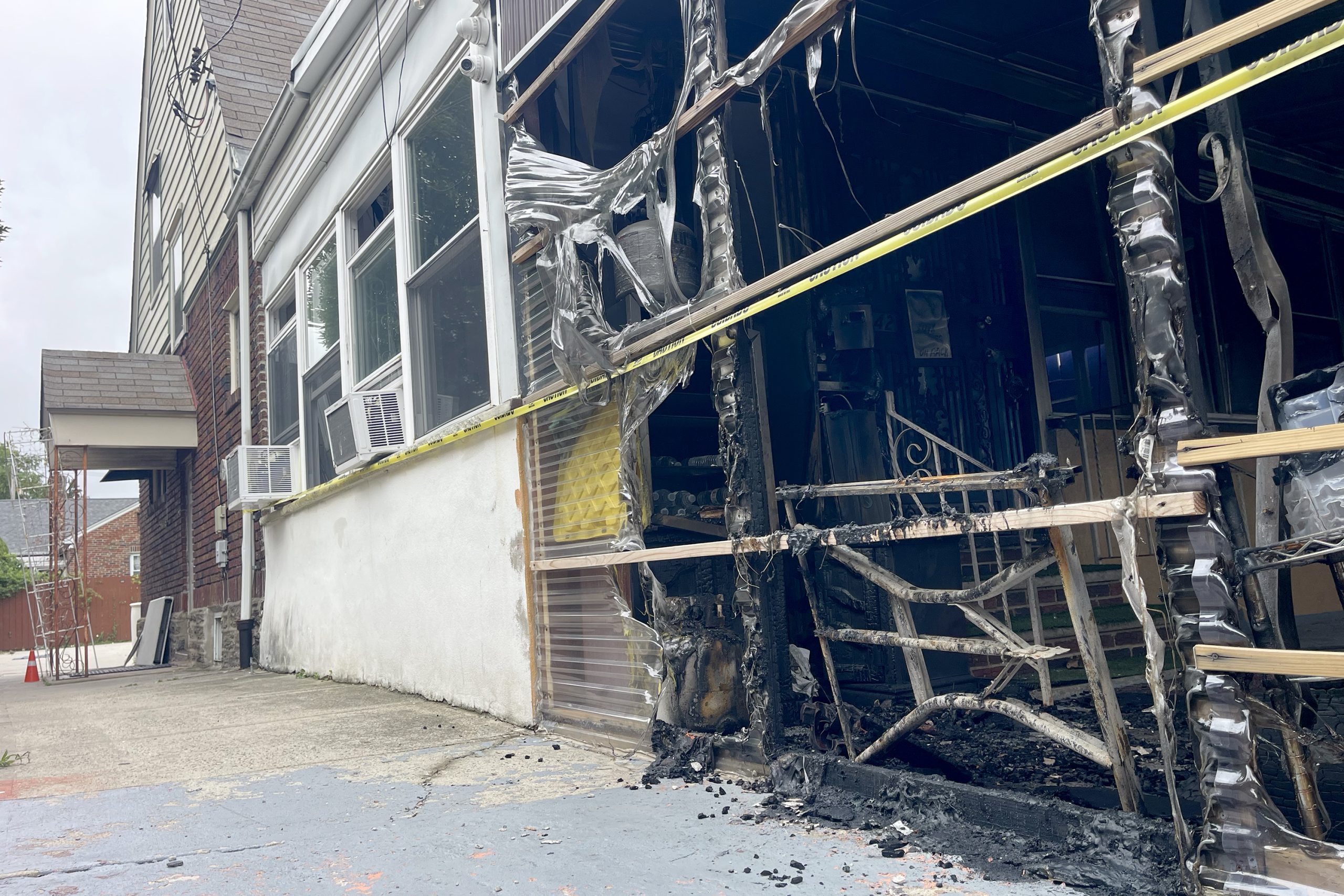
    A 60-year-old Mayfair man was arrested Thursday and charged in connection with the arson fire last week at a Northeast Philadelphia mosque, U.S. Attorney David Metcalf said Thursday.

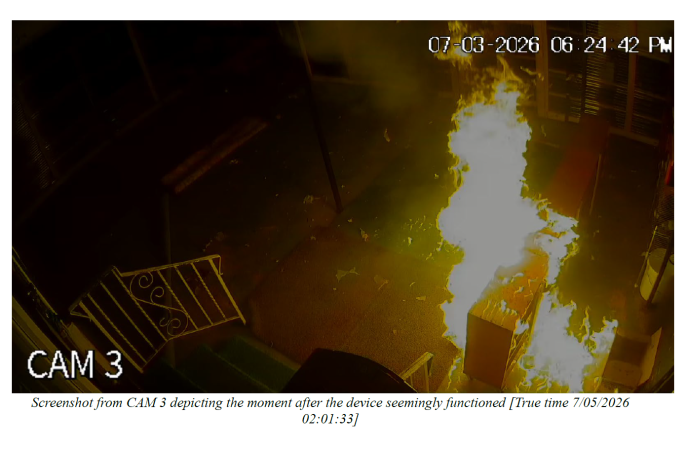
    On July 5 around 2 a.m., Vincent Lang allegedly threw an incendiary device into the entrance of the Northeast Philadelphia Islamic Center on the 1400 block of Tyson Avenue. The mosque was unoccupied and no injuries were reported.

    Two days later, investigators received a tip that Lang allegedly was the perpetrator.

    Federal investigators conducted surveillance at Lang’s home and observed his black 2009 Hyundai Santa Fe had handwritten messages on the rear and passenger side windows that included “White Pride” and “F- Islam,” the criminal complaint said.

    The aftermath of a July 5 arson attack at the Northeast Philadelphia Islamic Center.CAIR

    Stickers on the back of Lang’s vehicle included one that appeared to say “Federal Terrorist Hunting License,” the complaint said.

    Investigators found what they believed was a Facebook account allegedly used by Lang. On July 10, a post was created on the account that included anti-Islamic comments and also a comment using racial slurs about the rape of a young girl.

    Lang also allegedly commented on posts about the arson investigation: “How can it be a hate crime they might have done it out of love,” the comment said with a red heart emoji.

    Lang was charged with one count of maliciously damaging or destroying by means of fire any building or property used in interstate commerce, or attempting to do so.

    If convicted, Lang faces a maximum possible sentence of 20 years in prison, with a mandatory minimum of five years’ imprisonment, Metcalf said.

    After the attack, Masukul Islam Khan, the mosque’s president said: “Our mosque is more than a place of worship. It is a welcoming community center that has served families, neighbors, and people of all backgrounds for many years.”

    He added: “Any act of violence or hatred directed at a house of worship is an attack on the values of safety, religious freedom, and unity that our city cherishes.”

    Metcalf said the case was investigated by the Bureau of Alcohol, Tobacco, Firearms and Explosives, Arson and Explosives Task Force, with assistance from the FBI, Philadelphia Fire Department Fire Marshal’s Office Special Investigations Unit, Philadelphia Police Department, and the Pennsylvania Office of Attorney General.

    The case is being prosecuted by Assistant United States Attorneys Amanda R. Reinitz and J. Jeanette Kang, with the assistance of the Department of Justice Civil Rights Division, Metcalf said.

  • Guilty pleas, sentences in large Philly region fraud conspiracy involving checks stolen from mail, prosecutors announce

    Guilty pleas, sentences in large Philly region fraud conspiracy involving checks stolen from mail, prosecutors announce

    Federal prosecutors in New Jersey on Thursday announced guilty pleas and prison sentences for five people connected to fraud schemes involving large checks stolen from the mail, including from a postal annex in Camden.

    Juawan Reed, 30, of Sharon Hill, a former postal worker, pleaded guilty on July 15 to charges of conspiring to commit bank fraud, aggravated identity theft, theft of public money, theft of U.S. mail, money laundering, and filing a false income-tax return, U.S. Attorney Robert Frazier said.

    Reed stole checks from the mail while he worked at the U.S. Postal Service Camden Carrier Annex, prosecutors said.

    Reed sold checks or provided them to two other conspirators who advertised some of the stolen checks on social media or resold them to others, prosecutors said.

    In one 2022 example, Reed stole a $686,541.88 U.S. Treasury check payable to a business in Pennsauken, New Jersey. Reed then provided the check to a conspirator, Christopher Hayman, 30, of Philadelphia, who then posed as the CEO of the business to open a bank account. Hayman then withdrew a substantial portion of the money before the bank was able to detect the fraud and closed the account, prosecutors said.

    Hayman pleaded guilty on July 14 conspiring to commit bank fraud, Frazier said.

    Reed admitted that he created and used a stolen identity to open financial accounts, which he used to launder some of the fraud proceeds, prosecutors said. He also admitted that he failed to report on his tax returns “hundreds of thousands of dollars that he earned from his crimes,” the U.S. Attorney’s Office said.

    Reed admitted that the bank fraud conspiracy caused more than $2.4 million in actual losses and was intended to fraudulently obtain more than $20 million, prosecutors said.

    Also as part of the fraud scheme, checks were stolen from blue mail collection boxes, and counterfeit version of stolen checks were created, and stolen checks were altered to increase their value, prosecutors said.

    In a separate part of the conspiracy, fraudulent debit cards were created that led to more than $400,000 in actual losses for victims and intended losses exceeding $1.5 million.

    On June 22, Tyree Holmes, 34, of Philadelphia, pleaded guilty to conspiring to commit bank fraud.

    Kharon Parson-Wright, 28, of Marlton, was sentenced on June 22 to 57 months imprisonment, after previously pleading guilty to conspiring to commit bank fraud and aggravated identity theft.

    Yasmene Johnson, 29, of Marlton, was sentenced on May 12 to 57 months imprisonment after previously pleading guilty to conspiring to commit bank fraud and aggravated identity theft.

    Reed is scheduled to be sentenced on Nov. 17. Hayman is scheduled to be sentenced on Nov. 16, and Holmes on Oct. 27.

  • Police officer ‘legally justified’ in shooting of Pottstown man, Chester County DA says

    Police officer ‘legally justified’ in shooting of Pottstown man, Chester County DA says

    A police officer in Chester County was “legally justified under Pennsylvania law” when he shot a 40-year-old man who allegedly stole his police vehicle and attempted to hit the officer with it last month, the District Attorney’s Office said Thursday.

    Joshua McFadden, who was shot in the shoulder by the East Coventry Township officer, was charged Thursday with aggravated assault, robbery of a motor vehicle, burglary, possession of methamphetamine, and related offenses.

    Court records did not show a lawyer representing McFadden, who is listed as a Pottstown resident. The officer who shot him was not identified.

    “Following a comprehensive review of the evidence, investigators determined that the officer’s use of force was legally justified under Pennsylvania law,” the Chester County District Attorney’s Office said.

    On the afternoon of June 22, North Coventry Township police went to a Lowe’s Home Improvement store to investigate a prior retail theft. They saw a suspect, later identified as McFadden, exiting the store, according to an investigative report released by District Attorney Christopher L. de Barrena-Sarobe.

    McFadden entered his vehicle, a Silver Infiniti QX30, and was approached by a detective for questioning, the report said. “Am I going to jail?” McFadden allegedly asked before starting his car and fleeing the parking lot.

    The North Coventry police did not pursue McFadden, the report said.

    McFadden allegedly crashed into another vehicle on Pennsylvania Route 724 and ran into the woods on foot.

    A uniformed North Coventry officer responding to the crash tried to catch McFadden and allegedly heard McFadden threaten to shoot the officer, the report said. The officer lost sight of McFadden in the woods.

    Police later learned McFadden allegedly entered the home on the 200 block of Pearl Street and demanded a glass of water and the use of the homeowner’s phone to call his wife, investigators said. He left when a family member arrived and told him to leave.

    <iframe src="https://www.facebook.com/plugins/post.php?href=https%3A%2F%2Fwww.facebook.com%2FChesCoDA%2Fposts%2Fpfbid0JMQiRkC8Ea9kKEDiRZPzCpRJQMZYuXZJK8tBC9mHxiUNKXdmhGX5qchTUdZ88WMjl&show_text=true&width=500" width="500" height="730" style="border:none;overflow:hidden" scrolling="no" frameborder="0" allowfullscreen="true" allow="autoplay; clipboard-write; encrypted-media; picture-in-picture; web-share"></iframe>

    That evening, an East Coventry Township police officer saw McFadden in the area of Kline and Lindberg Avenues and exited his vehicle to stop him.

    After a short pursuit in the neighborhood, McFadden allegedly made his way back to the police officer’s patrol vehicle and attempted to steal it, the report said.

    The officer returned to his vehicle from the front and McFadden allegedly “hit the gas” and “revved the engine.” The patrol vehicle moved forward and the officer fired one shot, the report said.

    “Pennsylvania law makes clear that police may use deadly force to protect themselves and others from death or serious bodily injury,” the report said

    During the immediate search and investigation that day, police learned that McFadden had active warrants.

    McFadden allegedly told police later that he had used methamphetamines about two hours before he first encountered the police, according to the affidavit of probable cause.

  • DA withdraws all charges against Family Court judge accused of attacking his wife and daughter

    DA withdraws all charges against Family Court judge accused of attacking his wife and daughter

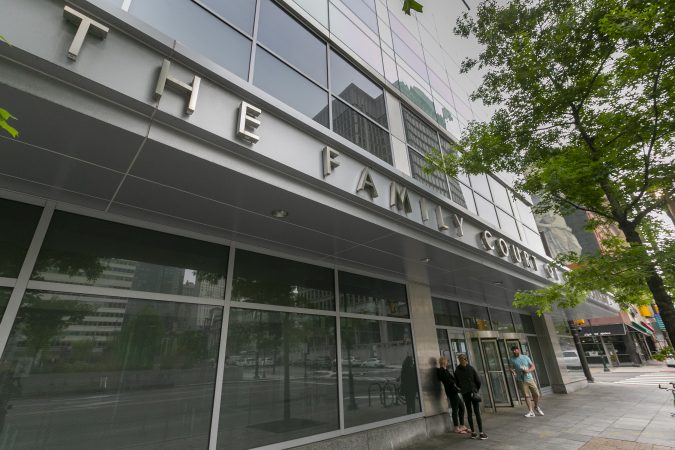
    Prosecutors on Thursday withdrew all charges against a Philadelphia Family Court judge accused of assaulting his wife and daughter earlier this year, saying that the women did not wish to proceed with the case and that the judge had shown proof of “extensive mitigation” in the months since the incident.

    Michael Fanning was charged with aggravated assault, strangulation, and related crimes in March after prosecutors said he repeatedly punched his wife in the face, choked her, and dragged his 30-year-old daughter to the ground by her hair, causing her to cut her face, during a fight at their East Torresdale home.

    But Assistant District Attorney Brian Collins said Wednesday that the two women were evaluated by medics and did not suffer injuries. They did not want to move forward with prosecuting Fanning, he said.

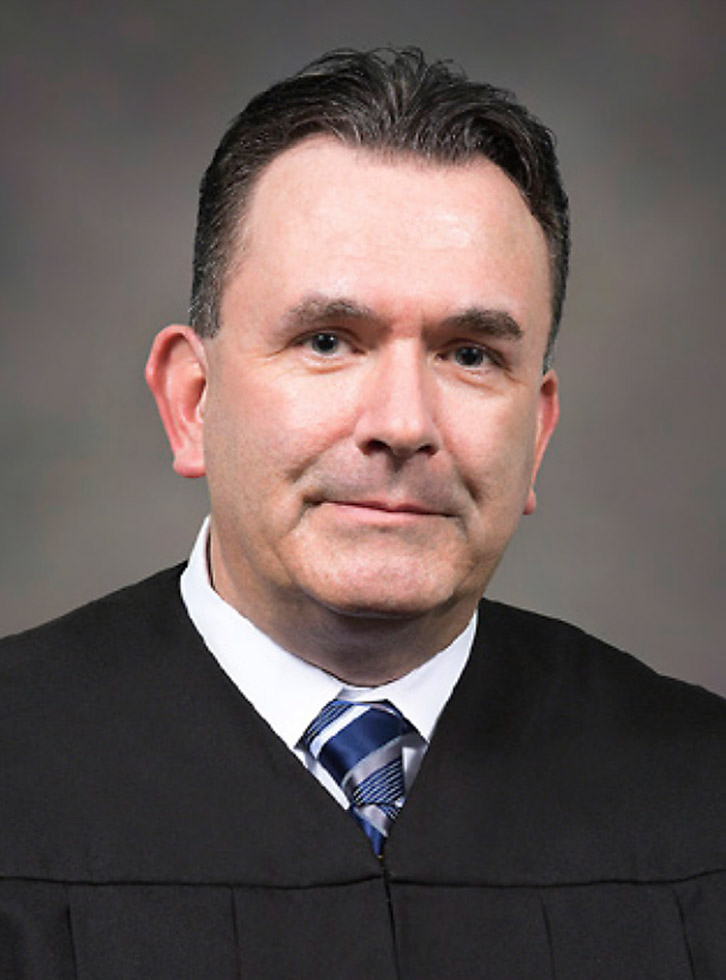
    Common Pleas Court Judge Michael Fanning.Courtesy of Philadelphia Courts

    That, combined with the “extensive mitigation” records Fanning provided to prosecutors and the court, led the district attorney’s office to withdraw the charges, he said.

    Collins did not detail the forms of mitigation Fanning presented, and Berks County Court Judge Jeffrey Sprecher, who presided over the case to avoid any conflict of interest with Fanning’s peers, did not ask during the brief hearing.

    But at a hearing in March, Fanning’s wife said he had voluntarily entered a 30-day inpatient recovery program to treat his alcoholism, an issue the family had worked to address in the past.

    Fanning did not testify during Wednesday’s hearing. He thanked Sprecher for his time before leaving the courtroom.

    He declined to comment through his attorney, Fortunato Perri Jr.

    Collins also declined to comment on the decision.

    Fanning was appointed to the Common Pleas Court bench in 2014 by then-Gov. Tom Corbett. He won a 10-year term in the 2015 election, and was retained for another term in November. He has been serving as a Family Court judge throughout his tenure.

    Within days of his arrest, the Pennsylvania Court of Judicial Discipline, which adjudicates complaints against judges, suspended him without pay.

    It was not immediately clear Wednesday how that judicial discipline case would proceed after the outcome of the case, or whether Fanning would be allowed to return to the bench.

  • Pa. budget restores funding for prison bus program that had been at risk of closing

    Pa. budget restores funding for prison bus program that had been at risk of closing

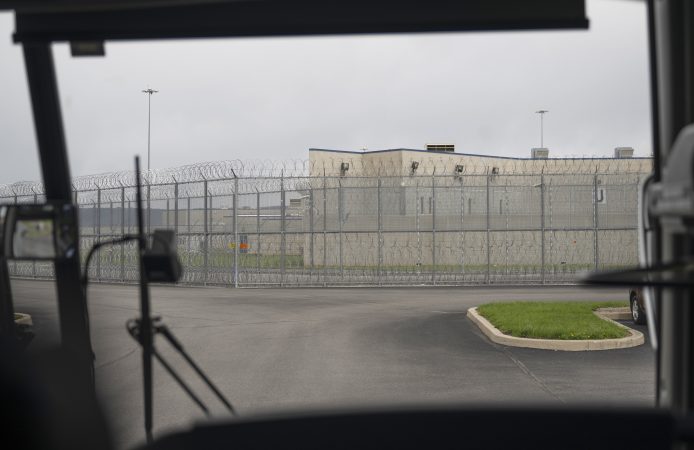
    A bus program that shuttles families to Pennsylvania’s far-flung state prisons will soon resume a full schedule of trips after lawmakers approved $600,000 for the service in the state budget, restoring a level of operation the program had not seen since before the pandemic.

    The funding followed months of behind-the-scenes lobbying by the Pennsylvania Prison Society, the nonprofit that runs the program. The organization said the money will allow buses to travel to every state prison every other month, a substantial expansion from the patchwork of limited pilot routes it has operated in recent years with short-term funding. The money will also allow the society to add departures from Pittsburgh for the first time, beginning next year.

    The organization had warned that without the funding, the program could disappear.

    For nearly two decades, the buses have carried thousands of relatives to prisons scattered across rural Pennsylvania, many of them hours away and virtually impossible to reach without a car. Advocates say restoring the service will preserve those family connections while expanding access to people in Western Pennsylvania.

    “Keeping your family whole is really challenged by incarceration,” said Claire Shubik-Richards, the prison society’s executive director. “This program keeps families connected.”

    Still, the funding covers only one year, meaning advocates will likely have to fight for it again next budget season. “This is a victory for today,” Shubik-Richards said, “but we always need to be working to ensure that it can go forward into the future.”

    The program had operated continuously with funding from the Pennsylvania Department of Corrections. But during the pandemic, the prison system suspended in-person visits and stopped paying for the bus program. When visits resumed, the money for the buses did not.

    For Yvonne Newkirk, 72, the service had become a lifeline. She began riding the buses about a dozen years ago to visit her daughter, Stacey, at the state prison in Muncy, three hours from her West Philadelphia home. Stacey Newkirk, 55, is serving a life sentence for third-degree murder, and her mother said she took the bus to visit her six times a year — every route offered to that prison.

    When the service was suspended, Newkirk said, she relied on relatives to drive her. The trips required them to take time off work, and Newkirk paid for gas, tolls, and their lost wages — far more than the bus fare she had once paid.

    Newkirk said she was overjoyed to learn the service had been funded for another year. She has not told her daughter yet. Instead, she said, she plans to share the news in person later this month on one of the program’s trips. “I know she’s just going to be really ecstatic,” she said.

    Her daughter, she said, often tells her not to visit so frequently because of the long journey.

    “But at my age, I told her, ‘I’m going to come as much as I can because there’s going to be one point in time where I will not be able to make it up there,’” Newkirk said.

    Four trips from Philadelphia to prisons are scheduled for the fall. Shubik-Richards said service will expand gradually, with the first Pittsburgh routes expected in early 2027.

    Families take a three-and-a-half-hour bus ride to visit their love ones at SCI Benner in Bellefonte, Pennsylvania. Jose F. Moreno / Staff Photographer

    Even with funding secured, the expansion poses logistical hurdles. The society must find a coach company willing to operate the Pittsburgh routes, a task its staffers say has become difficult as the number of bus operators has shrunk and costs have risen.

    The bus trips also create challenges inside the prisons. On bus-visit days, visitation resources are largely devoted to the program’s families — dozens of visitors at once.

    Kirstin Cornnell, the prison society’s family and community support director, said she is working with prison officials to schedule trips on days with lighter visitation and determine the most “responsible way to scale up.”

    While the prison system has faced staffing shortages, its spokesperson, Maria Bivens, said Thursday that “existing resources” would be used to make the program work.

    Pennsylvania prisons facilitated more than 1 million visits last year — most of them virtual, she said. “While research has shown that video visits provide the same recidivism-reducing benefits as in-person visitation,” she said, ”this program eliminates a barrier to in-person visitation for families who lack the resources, reliable transportation, or ability to travel long distances to correctional facilities.”

    Lawmakers carved the $600,000 from a larger appropriation to the Pennsylvania Commission on Crime and Delinquency. Advocates called it a hard-fought win during a budget season marked by intense scrutiny of state spending.

    Two of the program’s strongest supporters, State Reps. Jordan Harris (D., Philadelphia) and Emily Kinkead (D., Pittsburgh), said in interviews that they backed the funding because maintaining family ties improves public safety. Research has found that incarcerated people with strong family connections are less likely to commit violence in prison or return after release, they said.

    Harris, the House Appropriations Committee chairman, said the consequences of incarceration extend beyond the person convicted.

    “It also affects their family,” he said.

    He added that the program helps preserve relationships and gives people returning home the support they need to successfully reenter their communities.

    “While I make no apologies for a crime that may have been committed, that doesn’t mean that we dehumanize that person,” he said. “It doesn’t mean that person’s family doesn’t still feel the brunt of that pain. And it doesn’t mean that we still shouldn’t allow children to have relationships with their parents who may be behind bars.”

  • A Delco man who killed two of his coworkers told a judge that he acted in self-defense

    A Delco man who killed two of his coworkers told a judge that he acted in self-defense

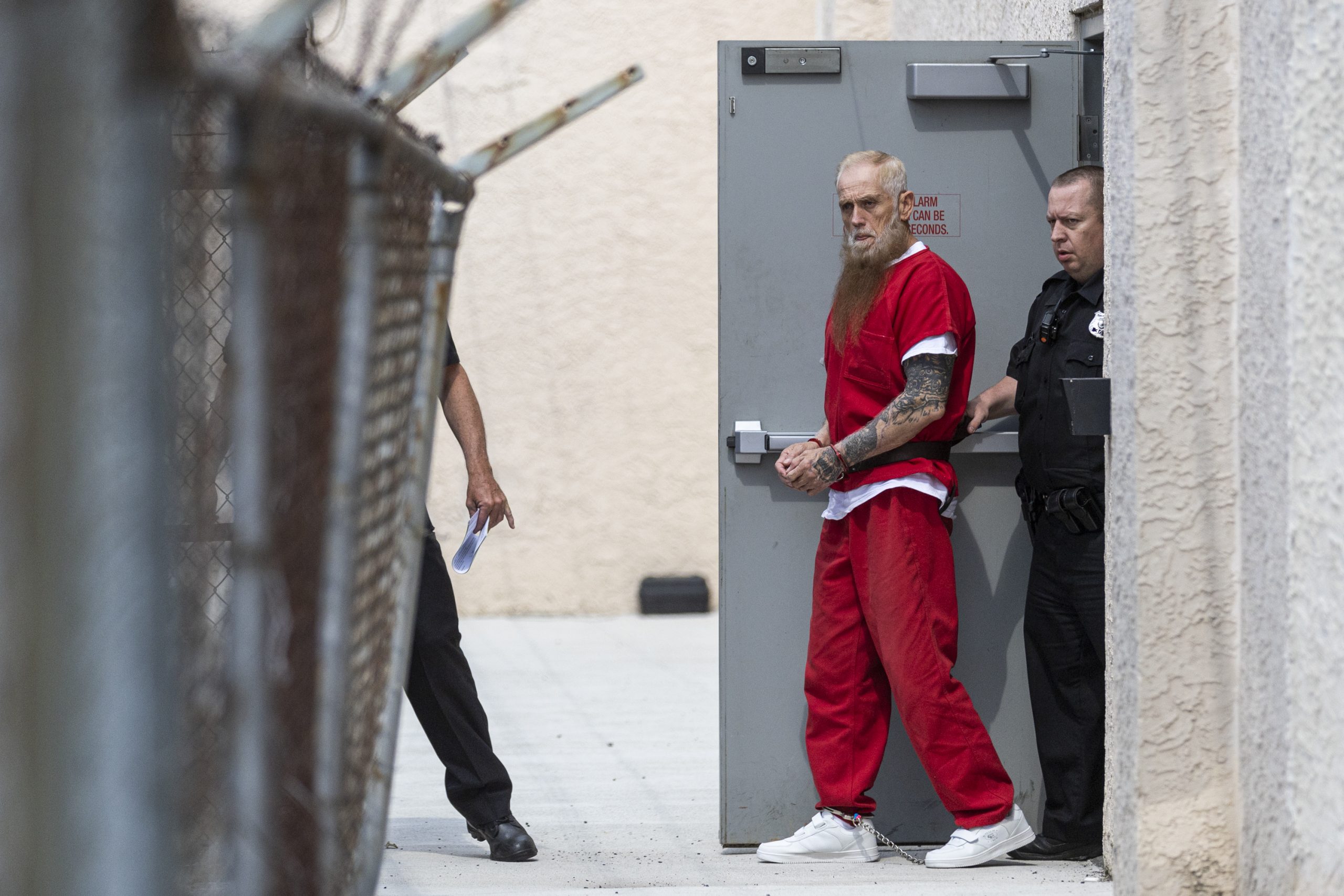
    Wilbert Rosado-Ruiz’s fate was placed Wednesday in the hands of a Delaware County judge, who, in the coming week, will determine whether the shooting he committed where he worked, killing two people and wounding three others, was justified or an act of murder.

    At the close of his bench trial on charges of murder, attempted murder, and related crimes for the May 2024 shooting, Rosado-Ruiz, 63, testified that he felt his life was in danger and acted in self-defense. A group of his coworkers at Delaware County Linen had ganged up on him, he said, cornering him in the industrial laundry facility and threatening to kill him and his family.

    He had to shoot his way to safety, he said, because he knew at least two of them were armed with knives he had caught glimpses of.

    “I’m a person who would never try to hurt anyone,” he said. “Anyone who is inoffensive to me, anyone who would not try to hurt me, I would not try to hurt.

    “Now, if someone does try to make a move on my life, yes, I am someone who is armed, and I would defend myself.”

    Wilbert Rosado Ruiz, seen here in June 2024, told a judge that his coworkers had threatened to kill him, and that he shot at them in self-defense.Tyger Williams / Staff Photographer

    Rosado-Ruiz’s attorney, Kevin O’Neill, urged Judge Kevin Kelly to acquit his client of all charges, saying he had reacted to what he believed to be credible threats to his life and the lives of his loved ones.

    Assistant District Attorney Sophia Polites balked at that explanation during her closing arguments Wednesday. None of the victims were armed, and surveillance footage from the Chester business showed them running for their lives as Rosado-Ruiz chased them from room to room.

    Rosado-Ruiz, she said, shot at his fleeing coworkers because he wanted to, not because he needed to. He believed, she said, they had disrespected him.

    “This was not a decision made out of fear. This was about his ego,” Polites said. “One by one, the people he perceived to have disrespected him, they became his targets.”

    Brothers Leovanny Peña Peña, 30, and Giguenson Peña Peña, 26, were killed by Rosado-Ruiz after he clocked in for his early-morning shift.

    Testimony during the trial showed that Rosado-Ruiz had gotten into an altercation with another coworker, Nilamarie Valdivieso, while on a video call with his wife and daughter. Valdivieso testified that she approached Rosado-Ruiz to ask him why he was angry, and he responded explosively, screaming that he was “tired of all these people,” before pulling out his 9mm handgun and shooting Valdivieso in the shoulder.

    But Rosado-Ruiz offered a different version of that initial encounter. He testified that Valdivieso had hurled insults at him before threatening to cut his head off.

    The Peña Peña brothers, as well as other coworkers, joined Valdivieso, Rosado-Ruiz said, and formed a crowd to block him from leaving the room. He said he saw that the two brothers were carrying knives, and moved toward him in a threatening manner.

    That is when, he said, he opened fire.

    “I waited, and I really thought nothing would happen,” he said. “I didn’t want to hurt anyone.”

    Rosado-Ruiz remained on the video call with his family throughout the initial encounter and eventual shooting, but his wife and daughter testified that they could not see or hear the shooting as it took place.

    But Polites, the prosecutor, said evidence in the case, including surveillance footage of the encounter, showed that the people around Rosado-Ruiz scattered at the sight of his gun.

    After shooting Valdivieso, he shot Leovanny Peña Peña three times before chasing the other people who fled. Rosado-Ruiz caught up with Giguenson Peña Peña after he had exited the building, and shot him as he ran away from him, according to prosecutors.

    None of the victims were armed, despite what Rosado-Ruiz said he saw, Polites said.

    Judge Kelly said he will deliver his verdict on July 22.

  • Man killed in Roxborough was a member of ‘Traveling Conmen’ fraud group and in country illegally, DHS says

    Man killed in Roxborough was a member of ‘Traveling Conmen’ fraud group and in country illegally, DHS says

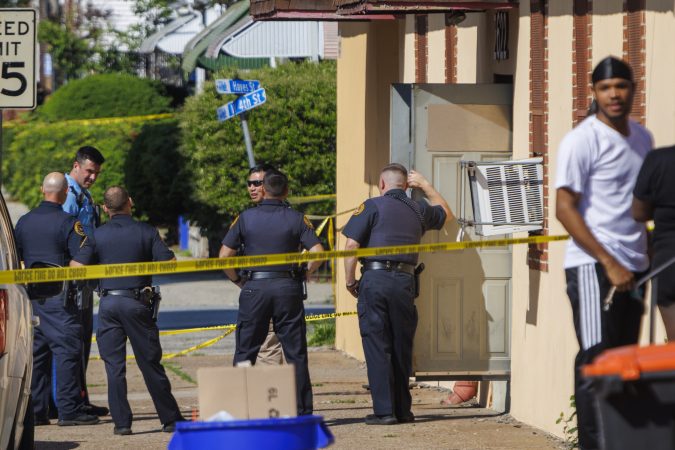
    A United Kingdom man who was shot and killed while doing contracting work in Roxborough last week was a member of the so-called Traveling Conmen criminal organization and was not authorized to be in the country, officials with the Department of Homeland Security said Tuesday.

    The man, 20-year-old Salis Hanrahan, was killed July 8 when George Barr, 75, fatally shot him at his home, according to police. Hanrahan and a group of men were at Barr’s home on the 400 block of Ripka Street that afternoon to work on the property, officials said.

    According to the FBI, the Traveling Conmen, also known as Conmen Travelers, are a loosely affiliated group of men from the U.K. and Ireland known to overstay pleasure or tourist visas in the United States, where they travel between cities soliciting contracting work and defrauding property owners.

    Police received an emergency call around 2:20 p.m. and arrived to find Hanrahan collapsed on the sidewalk with a gunshot wound to the chest. He was pronounced dead at a nearby hospital shortly after arriving.

    On Friday, police announced that Barr had been charged with murder and related crimes. They gave no motive for the slaying.

    A spokesperson for DHS said Hanrahan was not authorized to be in the country, though officials were unaware how long he had been here.

    Hanrahan was previously denied an electronic travel authorization after officials determined he was a member of the Conmen Travelers, a group recognized by the FBI as a transnational criminal organization, according to the spokesperson.

    Members of the group have been accused of demanding large payments from customers that had not been initially agreed upon and convincing homeowners that their properties are in need of costly and unnecessary repairs.

    In 2025, a Rhode Island woman was goaded into paying members $850,000 for unnecessary repairs, leading two men to be federally charged with fraud and money laundering.

    And members of the group allegedly threatened the children of a New York woman that year when they demanded a $200,000 loan after failing to complete a bricklaying job at her home.

    Within days, the members began showing off expensive jewelry, including a 10-carat diamond, on social media, according to a BBC News investigation.

    Traveling Conmen often do not have authorized work permits and have been accused of leaving homes damaged or with incomplete work, according to the FBI.

    It was unclear how Homeland Security came to conclude that Hanrahan is affiliated with the group.

    Social media posts described him as a young father who shared an infant with his wife, Roseann.

    ”God look over [his] wife & family at this time,” a mourner wrote last week.

  • A Main Line man who brought guns to a ‘No Kings’ protest was sentenced to more than 3 years in prison for having bombs at his house

    A Main Line man who brought guns to a ‘No Kings’ protest was sentenced to more than 3 years in prison for having bombs at his house

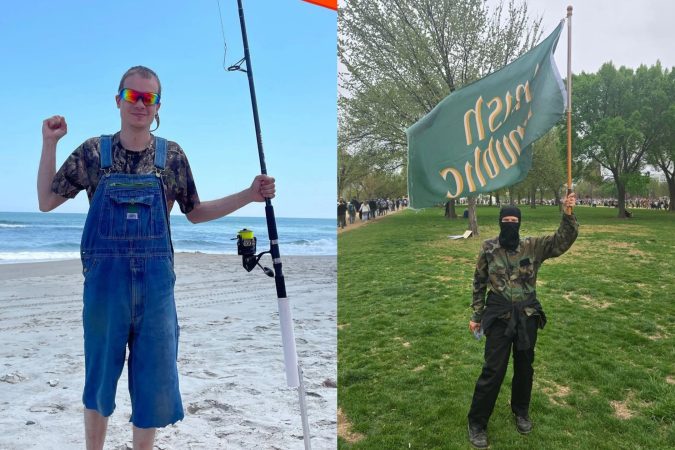
    A Malvern man was sentenced Tuesday to more than three years in prison for having a collection of homemade bombs at his house — a discovery police made after he was arrested for bringing guns to a “No Kings” protest in West Chester last year.

    Kevin Krebs, 32, apologized for his actions, saying he had let his family down and adding: “I really screwed up, and I regret everything that I did.”

    His family said in court that Krebs — who was adopted from a Lithuanian orphanage as a toddler — had suffered from lifelong developmental disabilities, including autism. And they believed his interest in bombs and firearms was part of an obsessive nature that he also displayed in other, non-threatening technical areas, such as electrical work, which he performed professionally.

    Krebs told U.S. District Judge Mary Kay Costello that he had built the bombs only to blow up pumpkins in the Poconos, calling his pursuit “purely recreational.”

    Costello said she was not sure that was true. And in any case, she said, his possession and interest in building such devices was a threat to himself and others.

    “Just having these bombs in your home posed a grave danger to other people,” Costello said.

    In addition to imposing a 37-month prison sentence, Costello ordered Krebs to serve three years of supervised release. He had pleaded guilty in December to a charge of possessing unregistered devices.

    A firearms case remains pending in Chester County, with a trial scheduled to begin next week, according to court records.

    The events that led to Krebs’ arrest began last June, when attendees at a “No Kings” protest in West Chester told officers they thought Krebs had been carrying a gun.

    Police who stopped Krebs found him carrying a loaded handgun, extra rounds of ammunition, and other weapons including a knife and bayonet, prosecutors said. He also had an AR-15 rifle in his car.

    He did not have a concealed carry permit, and Chester County prosecutors charged him with illegal gun possession.

    Two days later, police searched his home on Conestoga Road and found 13 homemade pipe bombs, prosecutors said, some of which contained nails or screws, which can make the devices more violent when they detonate. Investigators also found components used to make detonators and tactical vests, which prosecutors said demonstrated that he was not simply experimenting with explosives — he was building an “arsenal” of dangerous weapons.

    County prosecutors charged Krebs with new crimes including possessing weapons of mass destruction and causing a catastrophe, and federal prosecutors went on to adopt the portions of the case that related to explosives.

    Krebs’ case attracted attention in part due to its connection to the No Kings demonstration, one in a series of recurring events at which protesters across the country rally against President Donald Trump. But prosecutors said Krebs’ beliefs and potential motives were not particularly clear.

    Krebs was a registered Democrat but had previously been registered as a Republican and said online that he had voted for Trump. Writing online, Krebs later said he came to regret that vote, and before the No Kings event, he had been posting violent rhetoric about Trump and police.

    Krebs said in court Tuesday that he attended the protest “in support of the rally” but did not elaborate.

    Krebs’ parents told Costello, the judge, that they harbored deep remorse and shame for failing to recognize their son’s drift toward dangerous habits.

    But Costello said they had done everything they could to provide their son a better life — welcoming him into a safe home, providing him structure and support, and seeking to connect him with therapy and medications throughout his life.

    “This is not your fault,” Costello said. “This was Mr. Krebs’ doing, and he’s going to have to face the consequences of that.”