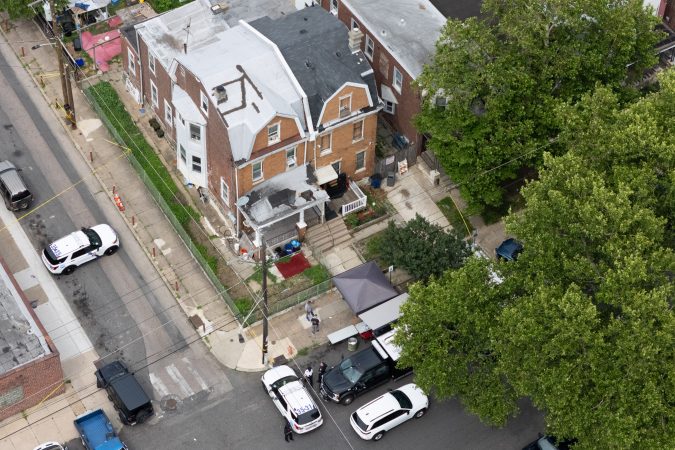
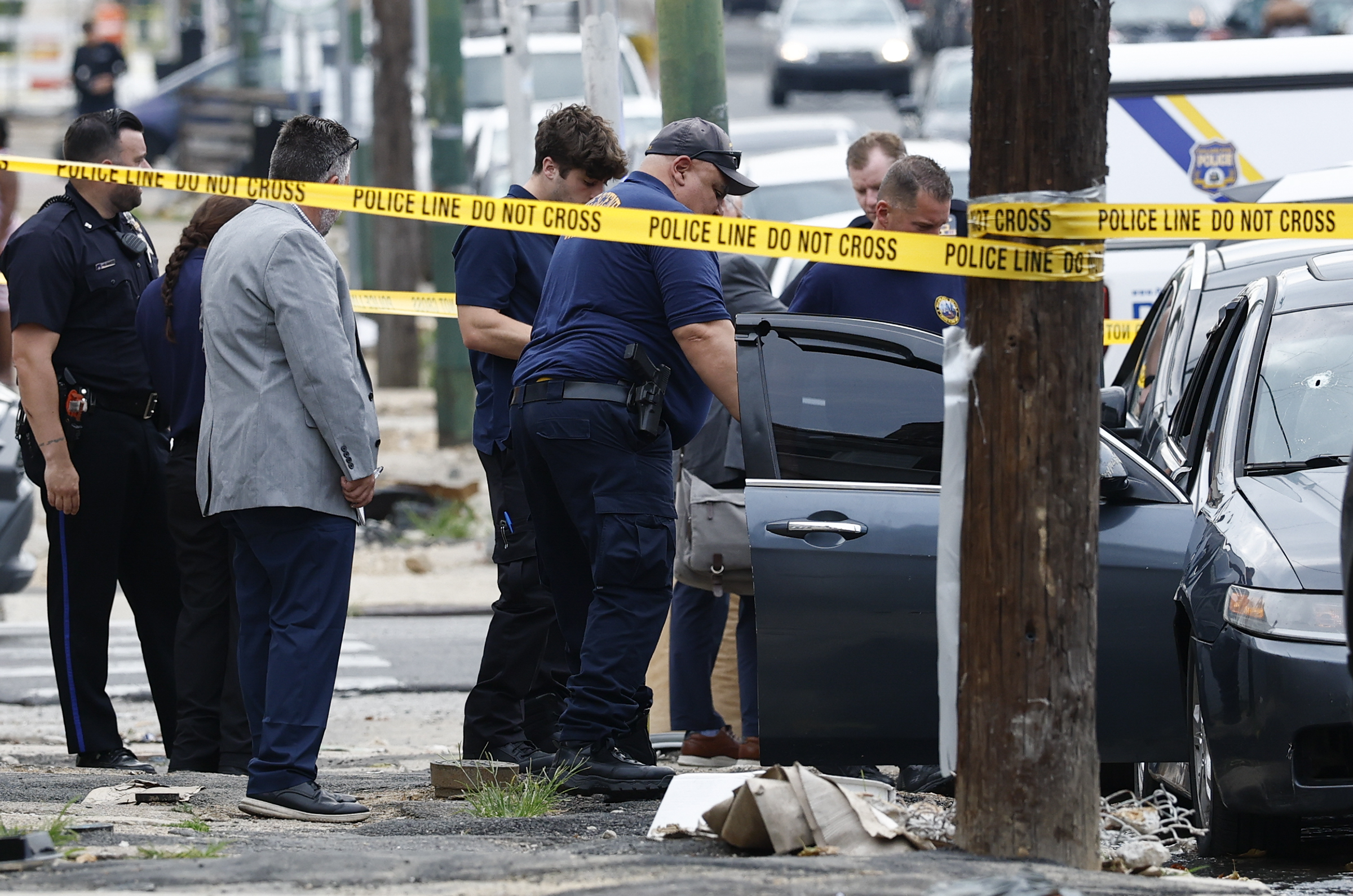
A 75-year-old man was charged with murder and related crimes in the fatal shooting of a 20-year-old contractor at his Roxborough home this week, authorities said.
George Barr of Philadelphia was arraigned early Friday morning and was being held in custody without bail.
In addition to murder, Barr was charged with possessing an instrument of a crime and reckless endangerment in connection with the Wednesday incident.
Police said that is when Barr, of the 400 block of Ripka Street, shot and killed Salis Hanrahan as the young man and a group of workers were doing construction work at Barr’s home.
Officers responded to an emergency call there around 2:20 p.m. and found Hanrahan collapsed on the sidewalk with a gunshot wound to the chest, police said.
He was taken to Jefferson Einstein Philadelphia Hospital and pronounced dead at 2:45 p.m.
Police have not identified a motive in the shooting and continue to investigate.
Barr is being represented by a public defender and is expected to appear in court for a preliminary hearing on July 27.
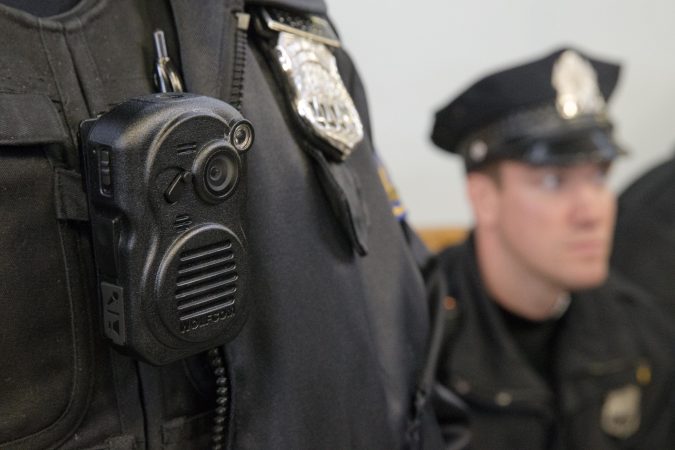
Police officers in one of Philadelphia’s largest districts frequently failed to activate their body-worn cameras during encounters that department policy required them to record, according to a new audit by the Citizens Police Oversight Commission.
The commission’s review of a random sample of 125 police incidents in North Philadelphia’s 22nd District found that officers recorded only 23 of 83 encounters that required camera footage.
The findings, released Wednesday, mark the final report in a series of audits examining body-worn camera compliance in four police districts across Philadelphia. Of the districts reviewed, the 22nd had the lowest rate of required recordings, raising concerns about whether one of the department’s primary accountability tools is being used consistently in the field, the commission said.
Janine Zajac, the commission’s director of auditing, policy, and research, said body-worn cameras are intended to provide accountability for both officers and the public. “It feels concerning when a really important tool for accountability isn’t being used,” she said.
The 22nd District, which spans neighborhoods includingYorktown, Strawberry Mansion, and Brewerytown, was selected alongside the 24th, 18th, and 15th Districts as part of an audit series designed to examine camera use across different parts of the city. The districts were chosen for their geographic diversity, activity levels, and the volume of complaints the commission receives from residents, Zajac said.
The audits looked at several measures of compliance with the department’s policy, including whether officers activated cameras when required, whether all officers on a scene recorded, and whether footage captured the full encounter.
Performance varied across the districts, said Michael Tooley Jr., a senior analyst for the commission. But the 22nd District stood out, he said: Officers recorded only 28% of incidents requiring footage, compared with 62% in the 18th District and 73% in the 15th District, and 88% of vehicle stops in the 24th District.
The commission reviewed incidents from April and June 2025 in the 22nd District, while the other audits examined a single month. Tooley said the commission expanded its review in the 22nd District because so few camera recordings were available from the first month requested.
The missed recordings occurred most often during investigations of premises — a category that includes domestic incidents, minor disturbances, and weapons-related calls — the review found, while vehicle stops and safety checks made up the second-largest share of incidents with absent videos.
The audit found that once officers turned their cameras on, they generally followed department procedures. Of the recordings reviewed, 91% captured the full duration of the encounter, 88% showed proper activation from standby mode, and 97% were correctly labeled and categorized.
Sgt. Eric Gripp said, a police spokesperson, the department takes the findings seriously. “Any instance in which an officer fails to activate a body-worn camera when required is inconsistent with department policy and our expectations,” he said.
Gripp noted that the 22nd District is one of the city’s busiest police districts, generating tens of thousands of body-worn camera recordings each year as officers respond to a high volume of calls and other interactions. While “that workload does not lessen our expectations for policy compliance,” he said, “it does highlight the scale of the body-worn camera program” and the demands placed on officers in the district.
City Councilmember Jeffrey Young, whose district includes much of the area served by the 22nd District, said the audit’s findings underscore the importance of adhering to body-worn camera policies, which “exist to protect everyone involved.”
He added: “I have confidence in [the department’s] ability to address these findings with transparency and professionalism.”
The audits of other districts revealed different weaknesses. In the 24th District, the commission found that nearly four in 10 videos failed to capture the entire traffic stop and that backup officers frequently did not record. In the 15th District, auditors found that officers often powered cameras completely off instead of leaving them in standby mode.
The 18th District in West Philadelphia posted some of the strongest results, with 98% standby-mode compliance and no video-labeling errors.
Joseph Giacalone, an adjunct professor at John Jay College of Criminal Justice and a retired sergeant with the New York City Police Department, said officers often arrive at chaotic scenes where remembering to activate a body-worn camera might not be their first instinct.
“It’s just not a natural thing,” he said.
But he also said departments must find ways to make camera activation routine because the footage can benefit both officers and the public. “Those videos provide better insight into what the police actually do — and most of the time, they’re right when they’re doing it,” he said.
Paula Sen, who coleads the Defender Association of Philadelphia’s police accountability unit and has conducted reviews of officers’ body-worn camera usage, said the footage is equally important for defendants and defense attorneys.
“Every attorney in this office watches hundreds to thousands of body-worn cameras each year,” Sen said. The recordings provide objective evidence that can contradict an officer’s account of an incident, she said, and help defense attorneys successfully challenge evidence in court.
Zajac said police department officials were receptive when the commission shared its findings and recommendations in May, with district leaders expressing interest in better understanding what might be preventing officers from properly using the cameras.
Gripp said the department continues to reinforce its body-worn camera policy through roll-call reminders, additional training, and supervisory oversight. Supervisors are expected to review footage, reinforce compliance, and address deficiencies when they are identified, he said.
Since launching its body-worn cameras more than a decade ago, Gripp said, the department has recorded millions of interactions. “Like any large-scale accountability program, our responsibility is to continually evaluate performance, identify opportunities for improvement, and strengthen compliance,” he said.
Clarification: A quote about the number of body-worn cameras viewed by the Defender Association of Philadelphia has been updated.
PROVO, Utah — The defendant in Charlie Kirk’s killing told his roommate “he wishes he hadn’t done it” the day after Kirk was shot in the neck while speaking to a crowd at Utah Valley University, according to a recording played in a Utah court Thursday.
Lance Twiggs, who was also defendant Tyler Robinson’s romantic partner, described the interaction with Robinson during a recorded interview with a prosecutor on April 20.
Defense attorneys had fought against the public release of the statements from Twiggs, saying prosecutors would characterize the statements as a confession, undermining Robinson’s right to a fair trial if the statements are broadcast by the media.
Robinson is charged with aggravated murder and has not entered a plea. He turned himself in a day after the fatal shooting of Kirk, a close ally of President Donald Trump credited with helping galvanize young voters for the Republican in the 2024 election.
Prosecutors allege Robinson confessed in a note left for Twiggs that read: “I had the opportunity to take out Charlie Kirk and I’m going to take it.” Robinson also allegedly sent a text to Twiggs saying he targeted Kirk because he “had enough of his hatred.”
Twiggs spoke to authorities on Sept. 12 — two days after Kirk was assassinated while speaking to a crowd of thousands at Utah Valley University — and again on April 20. He was given immunity for the statements, meaning what Twiggs said cannot be used against him in a potential criminal case.
State District Judge Tony Graf will decide at the conclusion of this week’s preliminary hearing if prosecutors have enough evidence to bring Robinson to trial.
Robinson’s attorneys have not commented on his guilt or innocence but have sought to get the death penalty taken off the table, so far unsuccessfully.
Attorneys for the media and for Kirk’s widow, Erika, who has attended this week’s hearing, had urged the judge to make Twiggs’ statements and other evidence public.
“To not be transparent, to not be open and let the world see what happened will create doubt and distrust in the judicial system,” Kirk family lawyer Jeffrey Neiman told Graf Wednesday.
Neiman filed a request late Wednesday for all evidence against Robinson to be displayed openly and in real time during this week’s hearing. Neiman wrote that Erika Kirk and Kirk’s parents had waited 10 months for the hearing but at times have been denied the chance “to meaningfully observe” it.
The judge said in response that not all evidence would be openly displayed and he needs to protect the rights of both victims and the defendant.
Investigators say Robinson went to a rooftop near where Kirk was speaking and shot him once through the neck as the activist was taking questions from a crowd of several thousand people. Kirk was pronounced dead after being taken to a hospital.
Investigators found the suspected murder weapon — a bolt-action rifle with one spent round — wrapped in a towel in a wooded area near where Kirk was shot.
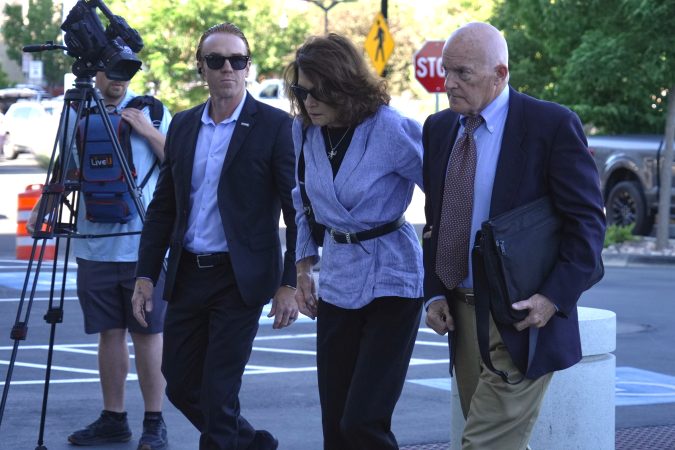
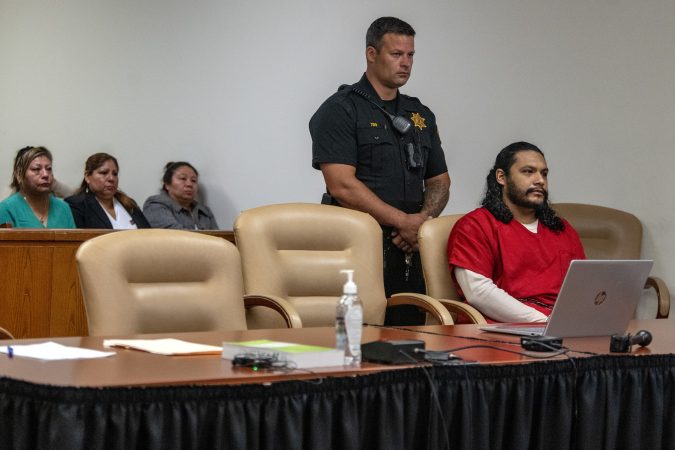
Robinson has sat quietly through the hearing. On Thursday, he was dressed in a jacket and tie with one arm shackled to his waist. He appeared to be taking notes with his free hand.
Robinson’s parents and two of his brothers sat behind him, in the front row of the courtroom gallery. Charlie’s Kirk parents and Erika Kirk sat a few rows back. Sen. Mike Lee, a Utah Republican, also was in attendance.
Robinson’s lawyers earlier this week questioned the reliability of DNA testing used to link the defendant to the towel and gun.
A member of Tyler Robinson’s defense team interrogated a DNA analyst from the FBI about the techniques she used to connect Robinson to the evidence. Defense lawyer Michael Burt cast doubt on the analyst’s conclusions.
“She can’t match Mr. Robinson to the questioned samples,” Burt argued.
But forensics expert Lawrence Quarino said law enforcement agencies use “extremely reliable” tests to determine the probability that a person matches with DNA found at a crime scene.
DNA testing “is the gold standard in forensic science,” said Quarino, a professor and director of the forensic science program at Cedar Crest College in Pennsylvania.
An Oregon man on Thursday was ordered to spend 30 years in prison for fatally stabbing a beloved South Jersey veterinarian at the vet’s Cherry Hill home.
During Custodio-Aquino’s sentencing before Camden County Superior Court Judge Judith Charny, Anthony’s family members spoke tearfully of late veterinarian, who they described as kind, wickedly funny, and a devoted father to his sons.
Above all, they grappled for answers as to why Custodio-Aquino murdered Anthony that morning on his front lawn.
“You took all of the future moments that should have belong to him,” said Patricia Anthony Gershefski, one of Anthony’s sisters.
Anthony Gershefski said her brother was warm and sensitive, even moving his veterinarian practice just to be closer to his children.
The brutal nature of the crime confounds the family to this day.
In her career as a professional psychologist, Anthony Gershefski said, she has found “no diagnostic category for the deliberate destruction of another person’s life in this savage and grotesque manner.”
Kyle Bartsch, Anthony’s partner, said in a statement read by prosecutors that Anthony had filled their home on Sharrowvale Road with love and laughter.
His death, Bartsch said, leaves “a permanent void in the lives of those who knew him.”
While Custodio-Aquino’s attorneys had previously suggested that prosecutors did not have enough evidence to convict their client of murder, they were mum throughout the proceeding.
In addition to the eyeglasses investigators linked to the Peru native, license plate readers captured Custodio-Aquino’s car entering and exiting Anthony’s neighborhood that morning, and forensic experts later recovered a sample of the veterinarian’s blood from the vehicle.
Prosecutors believe Custodio-Aquino traversed the country in a fit of jealousy that fall before killing Anthony.
He had previously dated Anthony’s partner, Bartsch, and once lived with the man in Haddon Township before the couple separated in 2021 after a domestic dispute, according to prosecutors.
Custodio-Aquino, given the opportunity to address the court, spoke so softly that Charny asked that he repeat himself.
Raising his voice, he said: “I do agree that the world is less than without Michael Anthony.”
He was sentenced to 30 years in a state correctional facility without parole. Charny offered few words on the ruling beyond wishing Custodio-Aquino good luck.
It was Henry Anthony, Anthony’s teenage son, who saved some of the most biting remarks for his father’s killer.
“Your life is officially over,” Anthony said, turning to look at Custodio-Aquino. “I honestly wonder what your reason for living will be for the next 30 years.”
Federal prosecutors on Thursday formally indicted Eugene Albert Horsch, the Olney man at the center of a widening investigation into the disappearance of at least two women, on charges that he illegally possessed firearms and fake federal law enforcement credentials.
The two-count indictment accuses Horsch, 44, of possessing two loaded firearms despite having been convicted of a prior felony, which bars him from having guns. It also alleges that he had “fraudulent identification documents” that appeared to have been issued by the Drug Enforcement Administration and the Federal Bureau of Investigation, but that neither agency had produced.
The indictment stems from Horsch’s arrest on June 19. On that day, U.S. Park Police officers recovered two loaded firearms — a .38 Special revolver with an obliterated serial number and a Taurus .40-caliber semiautomatic pistol — from beneath a front seat of his black BMW, which was parked in a restricted area near Independence Hall in Center City, according to court records.
Officers said they also recovered counterfeit DEA credentials from the vehicle. And later, during a search of Horsch’s home in the 400 block of West Chew Avenue, federal and local authorities uncovered fraudulent FBI credentials and a desktop computer that may have been “used to facilitate” the fake documents, according to the indictment.
Horsch has remained in federal custody since his initial appearance in U.S. District Court last month, after a magistrate judge ordered him detained pending a trial.
Horsch’s attorney, Jerome Brown, said this week: “We believe Mr Horsch is innocent.”
The federal case has unfolded alongside a broader investigation that began after Horsch’s arrest. Authorities searching his deteriorating twin home found another firearm, equipment used to grow marijuana, barrels of chemicals, ashes of least one relative, documents connected to two women who have been missing for years, and an unsigned, handwritten letter describing violence and referencing serial killer Ted Bundy, officials have said.
Investigators have said they have not found human remains at the property, but found a “significant” amount of blood. They have continued examining evidence recovered from the home as they search for any possible links between Horsch and the disappearances of Blair Tonzelli, who was reported missing in 2023, and Amy McHale, his father’s former wife, who was last heard from at the Olney property in 2016.
Brown previously said he did not believe his client had harmed either woman.
“I’d be shocked if [police] found any harm related to those missing persons at that location,” Brown said after Horsch’s detention hearing.
Staff writer Ryan W. Briggs contributed to this article.
A Colwyn woman and her boyfriend took on the responsibility of caring for the woman’s 20-year-old cousin after her previous caregiver died, Delaware County prosecutors said Thursday.
But instead of providing the woman, who has Down syndrome, with a safe environment, they fed her table scraps, beat her whenever she attempted to sate her hunger, and ultimately kicked her out of their home, into freezing April rain, for eating their Goldfish crackers.
Yahnae Clegg-Brown taunted the woman, whom police did not name in court filings, as she stood, rain-soaked, begging to be let back inside, according to the affidavit of probable cause for her arrest. Naiyr Sanders, Clegg-Brown’s boyfriend, demanded that she leave the property, according to the affidavit, then punched her in the head and pushed her down the house’s front steps.
A concerned neighbor called 911 after seeing the woman shivering and calling for help after a night spent outside, the affidavit said. When officers took the woman to Mercy Fitzgerald Hospital for treatment, she weighed just 80 pounds.
Clegg-Brown, 35, and Sanders, 31, have been charged with neglect of a care-dependent person, abuse of a care-dependent person, and related crimes. They remained in custody with bail set at 10% of $250,000. There was no indication they had hired attorneys.
District Attorney Tanner Rouse, in announcing the charges, said the case was heartbreaking and beyond comprehension.
“Those entrusted with another person’s care have a responsibility to protect them,” he said. “My office will continue to stand up for victims who cannot always stand up for themselves and will work tirelessly to hold those responsible accountable.”
Investigators said the woman began living with Clegg-Brown in November 2023 after the death of Clegg-Brown’s father, who had been caring for her.
The woman’s living conditions at Clegg-Brown’s home on Ellis Avenue were spartan, according to police: She was sleeping in an upstairs bedroom on a “deteriorating mattress” with no bed linens, the affidavit said.
Clegg-Brown had placed a surveillance camera on top of the refrigerator in the home’s kitchen, which she later told police was used to make sure her cousin was not “stealing” her food. Investigators noted in the affidavit that the woman was receiving regular government-assistance benefits, and that the money was supposed to be spent on her living expenses.
Clegg-Brown never took her cousin to her scheduled doctor’s appointments, and did not enroll her in school, the affidavit said. During meal time, she forced her cousin to sit on the floor and fed her leftovers or ramen noodles and oatmeal. As a result, the woman developed type 2 diabetes from malnutrition, according to the affidavit.
Clegg-Brown told investigators the “final straw” came on April 25, when she found her cousin hiding in her bedroom, eating a package of Goldfish crackers.
She and Sanders forced the woman outside, placed her clothes and bedding in trash bags that were too heavy for the woman to carry, and locked the door behind her, the affidavit said.
Clegg-Brown told the woman she was tired of dealing with her, and told her to find somewhere else to live, according to the affidavit.
Since her hospitalization, the woman has been placed in a new home with a different caregiver, police said, recovered to a healthy weight, and is now attending school.
The first week of July has typically been one of Philadelphia’s most violent, with recent Independence Day weekends marked by mass shootings, police officers shot, and bursts of violence that left a dozen dead.
But this year, amid a dramatic decline in violence and a flood of visitors to the city, the holiday weekend was noticeably calmer than in years past, offering another encouraging sign that the dramatic decline in shootings held through one of its toughest tests.
Twenty-three people were shot from July 1 through July 7 — a slightly higher total than most weeks in 2026, but nearly half the average number of shooting victims during the same period over the last decade, according to city data. In 2021, at the height of the city’s gun violence crisis, more than 70 people were shot in that week alone.
If the current pace continues, Philadelphia is on track to record fewer than 200 homicides for the first time since the 1960s, a remarkable turnaround from just five years ago, when nearly three times as many people were killed.
(function(){function e(){window.addEventListener(`message`,function(e){if(e.data[`datawrapper-height`]!==void 0){var t=document.querySelectorAll(`iframe`);for(var n in e.data[`datawrapper-height`])for(var r=0,i;i=t[r];r++)if(i.contentWindow===e.source){var a=e.data[`datawrapper-height`][n]+`px`;i.style.height=a}}})}e()})();
Philadelphia Police Commissioner Kevin Bethel said in an interview that the July Fourth weekend is historically one of the most challenging for urban police departments.
Bethel said he and other city, state, and federal law enforcement officials spent about two years planning for this holiday weekend, preparing for potential crises that never came.
Anticipating hundreds of thousands of visitors for FIFA Club World Cup events and the nation’s 250th birthday celebrations, the department canceled many officers’ vacation requests over the last month and, on the Fourth, deployed more than 2,000 members of local and state law enforcement across the city, he said.
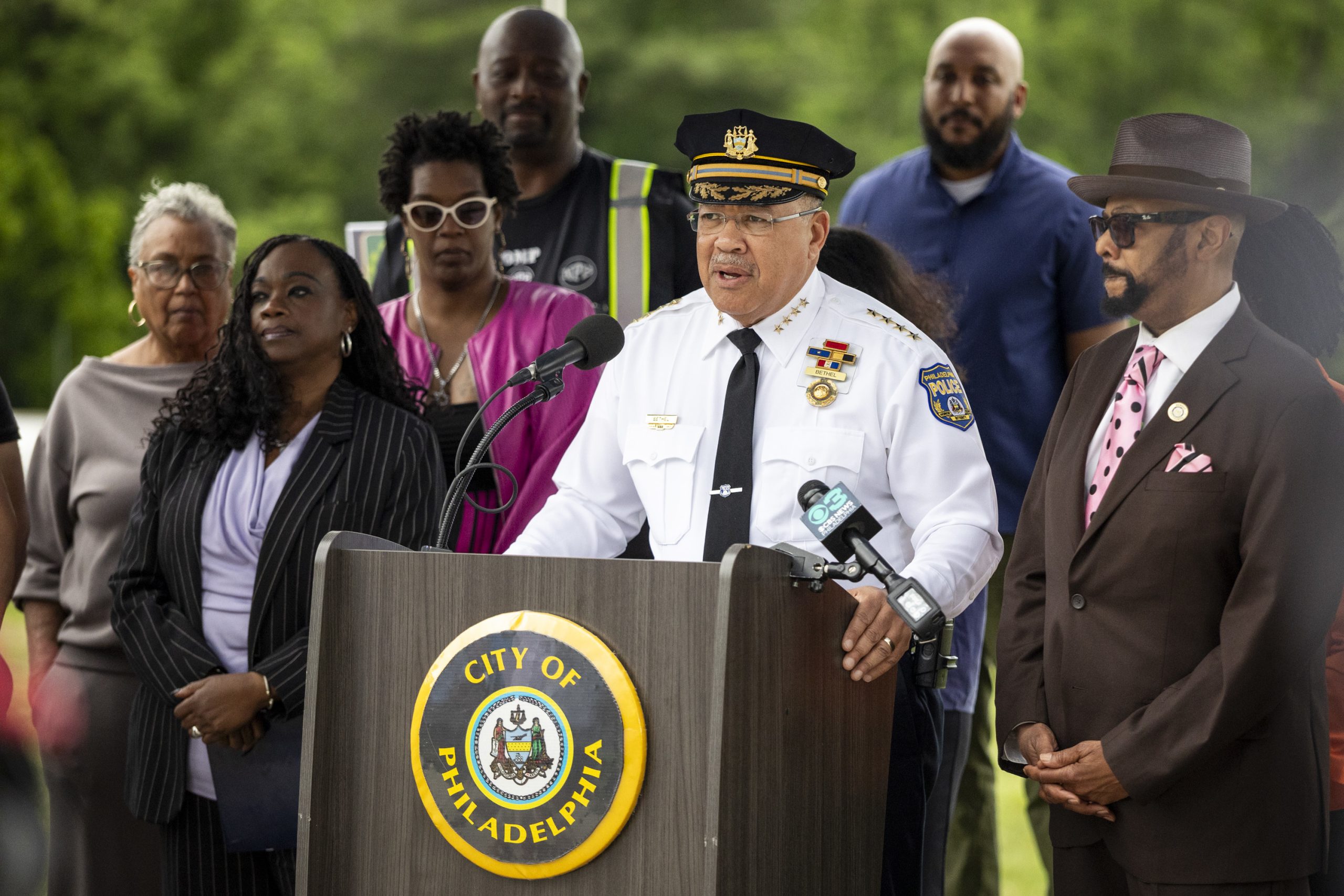
Philadelphia Police Commissioner Kevin J. Bethel, speaks at a press conference on the details for the Roots Picnic in May 2026.Tyger Williams / Staff Photographer
Reinforcements from the Pennsylvania State Police and neighboring municipalities helped the city maintain staffing levels in neighborhoods that have historically seen more violence, Bethel said. Officers worked in the record-breaking heat, he said, with some starting their shifts at 7 a.m. and clocking out only after the concert on the Parkway ended at 3 a.m.
The FBI took the lead on monitoring the skies, Bethel said, intercepting several drones that were flying illegally. (None of the drones, he said, was flying with “nefarious” intent.)
He called the weekend a validation of the city’s planning and broader work that has contributed to the decline in gun violence.
“I can’t tell you how many people grabbed me and said they felt welcomed and felt safe,” he said of the events over the last month. “Let’s own the win. Let’s not hide from it.”
Bethel also said there had been no acts of violence around the approximately two dozen bars that were approved to stay open until 4 a.m. from June 11 to July 19 to accommodate crowds attending the FIFA, July Fourth, and MLB All-Star celebrations.
“We’re seeing zero issues,” he said.
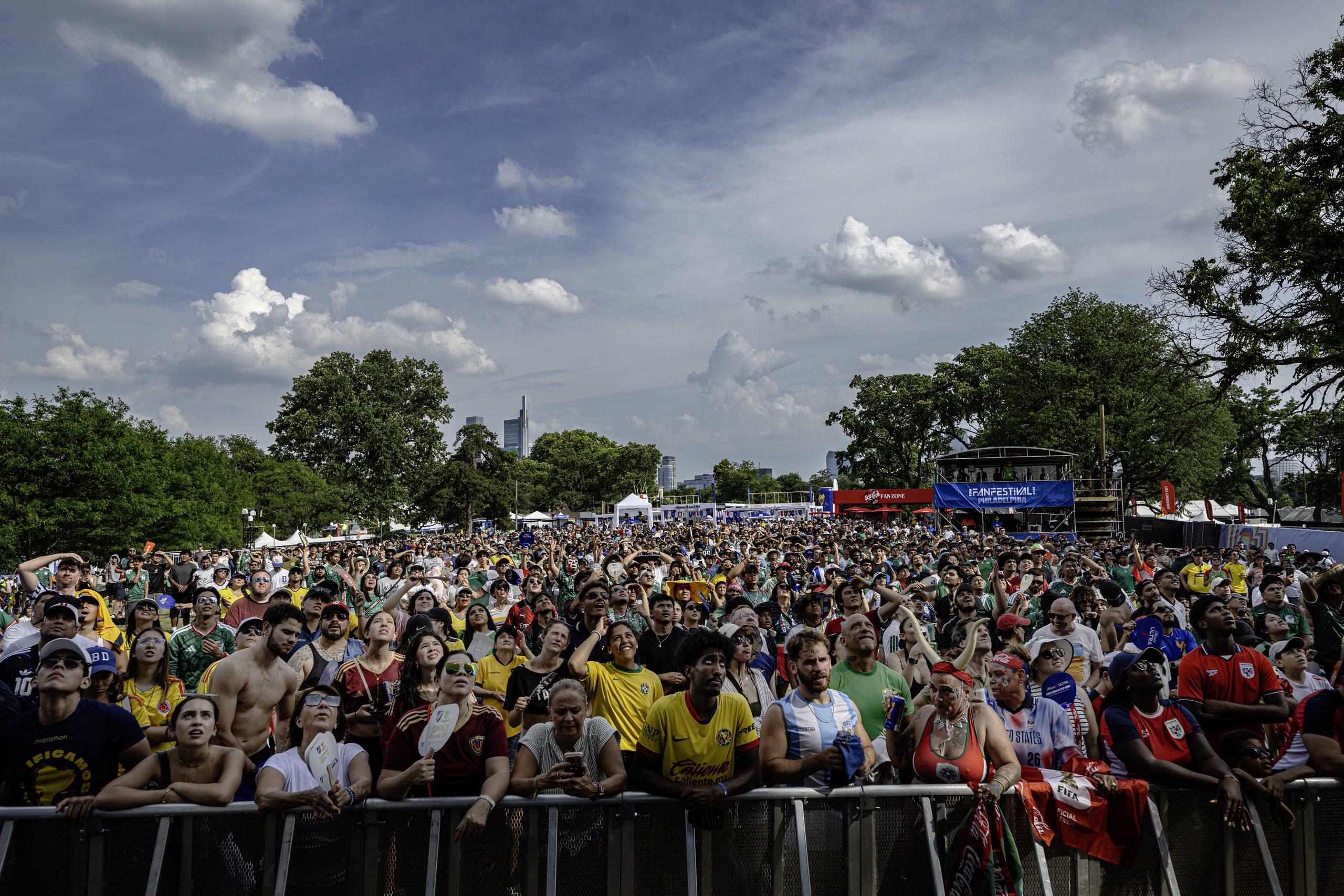
Soccer fans gather to watch Mexico play South Africa on a giant screen during the opening day of the FIFA Fan Festival at Lemon Hill on Thursday, June 11, 2026, in Philadelphia.Jose F. Moreno / Staff Photographer
The reduction in violence over the holiday weekend fits a broader pattern. Shootings and homicides in the city began to decline in 2023, mirroring a national trend, and have continued to fall. So far this year, 90 people have been killed in homicides — less than a third of the number recorded at the same time three years ago, according to police data.
Just as there was no clear explanation for the spike in crime that began in 2019, criminologists and law enforcement officials say, it is similarly difficult to pinpoint the reasons for its decline. But there are theories: an overall return to normal life after the pandemic, expanded community-based violence prevention programs, more arrests in shootings and homicides, and targeted prosecutions of some of the city’s most violent gangs.
One measurable change has been the police department’s improved clearance rates, which researchers have long viewed as a potential deterrent to future violence.
The homicide clearance rate — the share of killings solved, including arrests made this year in both new and older cases — has climbed to nearly 99%, up from about 47% in 2022. The clearance rate for nonfatal shootings has risen to about 41%, roughly double what it was in 2021.
Bethel said those arrests take would-be shooters and victims off the streets and interrupt cycles of violence.
“We’re impacting retaliation, we’re impacting somebody being shot again, we’re impacting someone who may shoot and kill somebody,” he said.
Jeff Asher, a New Orleans-based national crime analyst, said because the decline is likely driven by many programs and societal changes, it is hard to know what will sustain the progress.
“I keep expecting [the crime rate] to stop falling, and it’s just not,” he said in an interview. “So, maybe this is the new normal. We just can’t say with a ton of confidence.”
Still, the quieter weekend was not wholly peaceful.
Three men were killed between Friday and Monday morning, leaving families and neighbors to mourn loved ones even as the city showed signs of sustained progress.
On Monday morning, Shawn Caddell, 32, was killed during a robbery inside a Logan beer deli, police said. And on Sunday, two men were slain in areas that have long been hot spots for shootings: Emanuel Aguirre, 27, was fatally shot in the Hunting Park section of North Philadelphia, and Donald McPhaul, 51, was gunned down on Salford Street in West Philadelphia.
A 16-year-old in South Philadelphia was among more than a dozen people who were shot and survived.
Philadelphia police examine a car with a bullet hole after a man was fatally shot along the 500 block of East Wyoming Avenue on July 5, 2026.Yong Kim / Staff Photographer
Bethel said the pockets of the city that have long experienced higher rates of violence — and that continue to see shootings, albeit fewer, today — remain a priority.
“We are never going to give up in those communities,” he said. “We are going to keep working in those areas.”
Recent polls have found that a majority of Philadelphians have noticed the decline and feel safer. But for residents on blocks where shootings remain a recurring threat, a citywide trend line can feel distant from daily life.
Chantay Love, president of the victim-advocacy organization EMIR Healing Center, said the communitiesseeing recurring violence are still grappling with “the trauma and collateral damage that is left behind” from the last six years.
Linda Days, 72, who lives in the area, said the shooting that killed McPhaul was another reminder of the violence she has come to expect since moving there seven years ago from Olney.
Standing in her doorway on Tuesday, Days said it feels as if gunfire has become part of the soundtrack outside her home. But during the Fourth of July weekend, she said, she is especially careful to stay inside.
“I don’t even come out to watch the fireworks,” she said.
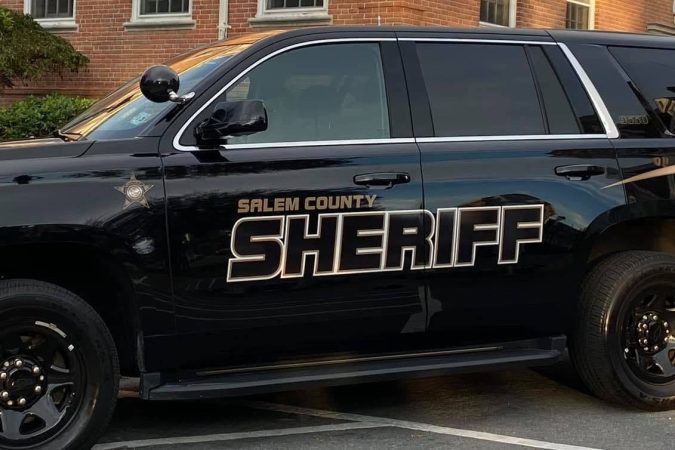
A sergeant with the Salem County Sheriff’s Office has been charged in connection with the deaths of two K-9 dogs who were left for seven hours in an unattended hot patrol vehicle, prosecutors said Wednesday.
Cody Henderson, 41, was charged Tuesday with two counts of recklessly causing bodily injury to a living animal, and related offenses, including unnecessary cruelty to animals, Salem County Prosecutor Kristin J. Telsey said.
According to the complaint filed against Henderson, surveillance video showed the K-9 handler arriving to work on May 29 shortly before 8:30 a.m. in his county issued 2023 Chevrolet Tahoe with Rip, a 4-year-old Belgian Malinois, and Boomer, a 6-year-old springer spaniel.
Henderson did not return to the vehicle until just after 3:30 p.m. and found both dogs dead in his patrol vehicle, prosecutors said.
He then transported the two dogs to an animal hospital in Delaware, prosecutors said.
Later that evening, the sheriff’s office notified the Salem County Prosecutor’s Office about the K-9 deaths.
Necropsies conducted on both dogs determined that they likely died from heat stroke with no evidence of other causes, prosecutors said.
There was no evidence that a K-9 heat alarm “Hot-N-Pop” device in the vehicle malfunctioned, and that it was “presumably turned off on the above date,” the complaint said.
The “Hot-N-Pop” device lowers windows and triggers sirens and flashing lights if the interior of a vehicle is too hot.
Henderson could be reached for comment.
In a statement posted on social media, Salem County Sheriff Charles M. Miller wrote that Henderson had been charged in connection with the “deaths of his assigned canine partners.”
Rip and Boomer “exemplified the highest standards of service, loyalty, and dedication. Their contributions to public safety and their commitment to duty will not be forgotten. The loss of these loyal partners has had a profound impact on our agency, our law enforcement community, and the citizens they faithfully served,” Miller said.
“We continue to honor the memory and service of Rip and Boomer and extend our thoughts to all those affected by this tragic loss,” Miller said.
Police on Wednesday were investigating the death of a man who suffered puncture wounds to his chest Wednesday afternoon in the city’s Roxborough section, police said.
Around 2 p.m., police responded to the 400 block of Ripka Street for a report of an injury. The victim was transported by medics to Jefferson Einstein Philadelphia Hospital, where he was pronounced dead at 2:45 p.m.
Homicides detectives were investigating the case and a man was being questioned, police said.
Bryce Wolfe was “so full of life and enthusiasm and intellect and promise,” and it was apparent even as a high schooler when he joined a mountain bike team based in Danville, Pa., said David Decoteau, one of his coaches for the Central Susquehanna Hammers.
“All I can really say about Bryce is that he was one of those rare young people that you meet and walk away from the conversation thinking, ‘I’m not worried about the future. We are going to be fine with guys like this involved,’” Decoteau, 63, said in an interview.
“He was one of those people that made you want to be a better person,” Decoteau said.
On Saturday, Decoteau will be attending the 20-year-old’s funeral.
His body became lodged under the SUV and he was dragged for more than a mile, police said. He died at the hospital the next day.
The driver of the SUV fled and remains at large.
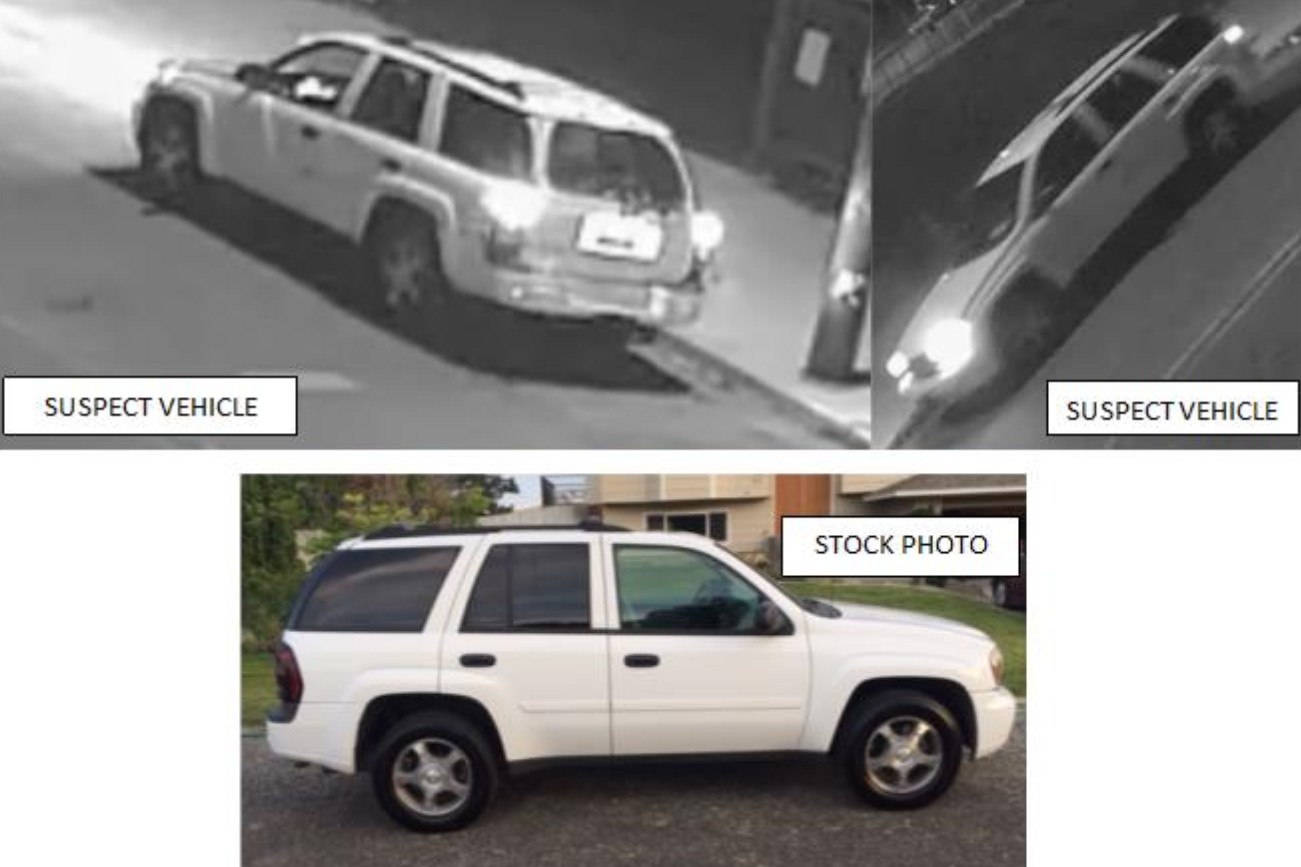
Police on July 7, 2026, released images of the suspected SUV, believed to be a white 2001-08 Chevrolet Trailblazer, that fatally struck 20-year-old Bryce Wolfe, a Temple University student, on June 24.Philadelphia Police Department
Police on Tuesday released surveillance images of the SUV suspected in Wolfe’s death. Investigators believe the SUV is a 2001-08 Chevrolet Trailblazer, possibly with damage on the driver’s side, with possible red paint transfer, a broken rear windshield, and a discolored passenger-side front wheel.
A memorial service for Wolfe is scheduled for 7 p.m. Saturday at Krapf & Hughes Funeral Home, 530 West Butler Dr., Drums, Luzerne County. A visitation period will be held from 5 p.m. until the time of the service.
In an obituary written by his parents, Lori Wolfe and Clarence Wolfe III, Bryce Wolfe was described as having lived his life “with a fearless spirit of adventure and a genuine love for the outdoors.”
He “found joy in seeking new challenges and embraced every opportunity to experience the world to its fullest. Whether carving down snow-covered slopes while skiing, exploring miles of trails on his bicycle, or riding motorcycles through rugged dirt tracks and open roads, he felt most alive when he was in motion,” his parents wrote.
Bryce Wolfe, who was from Conyngham, a borough in Luzerne County, had recently started a summer internship and wanted something he could ride around while he stayed in Philadelphia, his mother said in an interview.
“It was the first motorcycle he bought and insured all by himself,” Lori Wolfe said about her son’s Triumph.
Temple University president John Fry said last week that Bryce Wolfe, an actuarial science major in the Fox School of Business, had recently started an underwriting internship with United States Liability Insurance Group.
In a statement, the company said Wolfe “was a quick learner who approached every opportunity with enthusiasm and curiosity, always asking for additional responsibilities and eager to take on new challenges.”
USLI added: “In the short time we were fortunate to know him, Bryce left a lasting impression through his kindness, initiative, and the relationships he built with those around him. He will be deeply missed by his teammates and all who had the privilege of knowing him.”
Wolfe was also a member of the student professional organization Gamma Iota Sigma, the professional fraternity for risk management, insurance, and actuarial science.
He “had quickly established a reputation as both an excellent student and engaged member of the Temple community,” maintaining a high grade-point average while being enrolled in both the Temple and Fox Honors programs, Fry said.
Bryce Wolfe, 20, of Luzerne County, had just completed his sophomore year at Temple University when he was killed by a hit-and-run driver on Kelly Drive.Wolfe family
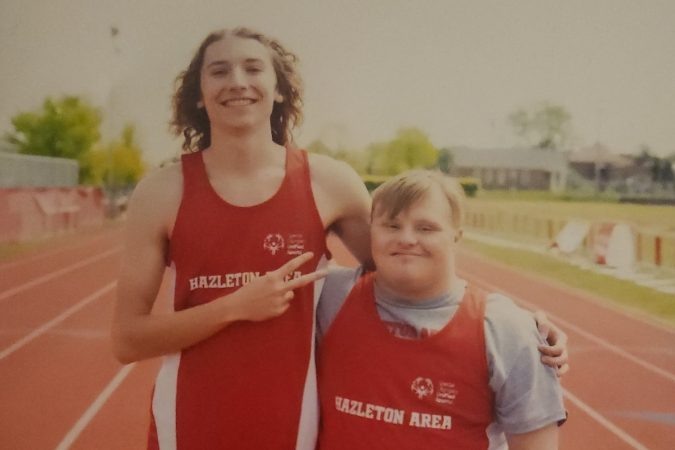
Bryce Wolfe was the middle sibling of two brothers, 18-year-old Brayden and 22-year-old Tyler. Lori Wolfe said Bryce was particularly close to his older brother, who has Down syndrome.
Bryce and Tyler Wolfe were able to participate in track and field together because of an inclusive “Unified” sports program at Hazleton Area High School that was recognized in late 2023 by the Special Olympics.
In a speech to the high school during the recognition ceremony in January 2024, Bryce Wolfe explained that he and his brother had difficulty finding clubs and activities they could do together.
Thanks to the school district’s Unified sports program, “dozens of students just like my brother and I are able to compete together as equals, marking a truly revolutionary moment in Hazleton area’s history,” he said in his senior-year speech, which was posted on YouTube.
“Some of you may not know it, but every one of you has contributed to the culture and atmosphere here in Hazleton, which the Special Olympics has honored us for today,” Wolfe said.
“This banner, proudly displayed in our gymnasium, will serve as a powerful symbol of Hazleton’s commitment to inclusivity for all visiting fans and athletes to see,” he said.
Decoteau, Wolfe’s mountain-bike coach, said the Hammers team plans to rename a trail where they rode together as a team in Wolfe’s memory.
The team also is working to establish a scholarship to help Wolfe’s “dream of helping kids be involved in mountain biking become a reality,” Decoteau said.
“It’s a terrible loss and tragedy. I will miss him,” Decoteau said.