Two Philadelphia prosecutors have accused District Attorney Larry Krasner of instructing them to litigate a controversial appellate case in a manner that would “protect the office” — a highly unusual assertion that effectively accuses the city’s top law enforcement official of telling his staff to act in a way they now say was “incompatible with their ethical obligations and the interests of the Commonwealth.”
In a court document filed late Monday, Assistant District Attorneys Katherine Ernst and Steven J. Wildberger wrote that Krasner’s directive came after they had been seeking to persuade him to allow the state attorney general’s office to take over the appeal of Dennis Johnson, who is seeking to have his murder conviction overturned.
That case — which the district attorney’s office has been handling — has become a flash point in an ongoing debate about whether Krasner’s office has behaved improperly in its efforts to overturn flawed convictions.
And it received renewed attention last week, when a former prosecutor who was once assigned to Johnson’s appeal, and who had recommended that the conviction be overturned, said she had done so only at the direction of her boss. She also said she was encouraged to lie about aspects of the case in court to try to minimize scrutiny on the way the office handled it.
According to Ernst and Wildberger, they experienced similar pressures from Krasner.
As the office was weighing how to handle aspects of Johnson’s appeal this spring, they wrote, they tried to persuade Krasner to refer the case to the state attorney general’s office because of issues that had arisen internally over its handling.
One example, they said, was that a supervisor who was initially involved with the appeal — and who they believed had made mistakes while overseeing it — was still offering legal advice about it from a different role in the office, which Ernst and Wildberger viewed as self-interested and “inappropriate.”
But the district attorney’s office kept the case. And during the deliberations about how to move forward, Ernst and Wildberger wrote, they “received instruction from DA Krasner to litigate the case in a manner to ‘protect the office.’”
Then, in late June, Ernst and Wildberger wrote, they again asked Krasner to refer the case to state prosecutors, but “DA Krasner stated that there would be ‘consequences’ for anyone who notified the court of the conflict issues.”
Ernst and Wildberger nonetheless filed a notice in federal court saying they believed their office was beset by conflicts and should no longer handle Johnson’s appeal. Their filing Monday expanded on their reasons.
The accusations they lodged against Krasner represent a striking display of discord between line prosecutors and the city’s district attorney. And they come at a moment in which Krasner is under court scrutiny over his office’s actions in cases involving post-conviction review.
Krasner said in an interview Monday that although he had “a lot to say” about the latest filing, he was largely unable to comment because the case remains pending in federal court. A hearing at which many of the issues were being aired was cut short last week, and U.S. District Judge Paul Diamond has not yet scheduled the next portion of the proceeding.
“The DA’s office will be responding to the recent filing in the ethically appropriate way — on the record, because it is generally viewed as inappropriate and possibly unethical to comment during a pending hearing,” Krasner said.
The case on which the saga is centered is Johnson’s conviction for second-degree murder. A jury found him guilty in 2009 of having fatally shot Kenyatta Smith during a robbery outside a North Philadelphia convenience store two years earlier, and he was sentenced to life in prison.
Johnson appealed his conviction, in part because he said his trial attorney was ineffective. And in 2022, then-Assistant District Attorney Jaclyn Mason filed court documents agreeing with that assertion and saying Johnson’s conviction should be overturned.
But earlier this spring, Ernst and Wildberger signed on to a brief that tried to walk that recommendation back. They said that Mason’s filing had been filled with “material misstatements” and that they could no longer support it.
And according to Ernst and Wildberger’s latest brief, as they were having internal discussions in recent weeks about how to proceed with the case, the supervisor who had approved Mason’s work, Matthew Stiegler, was continuing to offer his thoughts on what to do. That included speaking to Krasner — which Ernst and Wildberger viewed as a clear conflict of interest because of his potential interest in seeking to clear his name rather than evaluate the case on its merits.
That development and others led the pair to “repeatedly” implore Krasner to refer the case to the attorney general’s office, Ernst and Wildberger wrote, which he did not do.
Krasner’s subsequent instructions to “protect the office” only deepened the degree of their office’s conflicts, they wrote, because such statements could lead to questions about whether prosecutors were acting primarily out of self-interest.
It was not immediately clear how or if Monday’s filing might affect Johnson’s appeal. Ernst and Wildberger said they were prepared to testify before Diamond about the situation, and they are expected to take the stand as the case proceeds.
Diamond has not yet set a timetable for when that testimony might occur.
A federal jury in New Jersey late last week convicted a Burlington County man in connection with illicit 2024 conversations he had while serving as an Air Force captain with a person he believed was a 14-year-old girl, U.S. Attorney Robert Frazier said Monday.
Gabriel Perez, 31, of Eastampton Township, faces a mandatory minimum 10 years in prison and a maximum sentence of life after having been found guilty on Friday of attempted enticement and coercion of a minor, Frazier said. Perez also faces up to 10 years in prison for attempted transfer of obscene material to a minor.
Perez, who was indicted in early April, is scheduled to be sentenced on Dec. 9. The trial lasted five days before U.S. District Judge Christine P. O’Hearn in Camden federal court.
An attorney representing Perez could not be reached for comment. The Air Force also could not be reached for comment on his status.
In August 2024, Perez, then a 29-year-old Air Force captain, communicated on a social media platform with a law enforcement officer posing as a 14-year-old girl, investigators said.
Within around a day of learning the purported girl’s age, Perez expressed interest in sexual contact with the young teen, investigators said.
On Aug. 28, 2024, Perez sent an obscene photograph of himself to the purported girl and arranged to meet her the next day for sexual contact, investigators said.
Perez drove to the prearranged meeting location with condoms in his pocket and was arrested, investigators said.
A handyman who worked in homes across southeastern Pennsylvania raped and sexually assaulted children and unconscious women, and produced a vast collection of photographs and videos documenting his crimes, Chester County prosecutors said Monday.
David Vincent Rosa, 54, faces more than 300 charges, including rape of a child, aggravated indecent assault of a child, and hundreds of counts tied to creating and disseminating child pornography, according to the affidavit of probable cause for his arrest.
Rosa, a transient handyman and housepainter whose last known address was in Chester County, used his work to gain entry into homes and prey on the people inside them, investigators said.
He recorded the attacks, they said, amassing a digital trail of evidence that spans a period of several years.
“It is one of the most terrifying sexual assault cases that we have come across in some time,” Chester County District Attorney Christopher de Barrena-Sarobe said in a news conference Monday.
Chester County District Attorney Christopher de Barrena-Sarobe holds a news conference on Monday to announce charges against David Vincent Rosa.Steven M. Falk / For The Inquirer
The charges stem largely from two videos investigators discovered on a phone they said belongs to Rosa. In one, a man investigators identified as Rosa filmed himself touching a young girl. A second clip, also of Rosa, they said, depicts the rape of a child.
But the case has widened beyond those recordings: Stored on Rosa’s devices and in his accounts, de Barrena-Sarobe said, investigators also found videos of him sexually assaulting additional children and women.
The women “appear to be unconscious” in the videos, de Barrena-Sarobe said, and “they may not know that they have been victimized.”
The children in the videos appear to be younger than 10 years old, he said. De Barrena-Sarobe declined to say exactly how many victims appear in the recordings, saying only that they showed “multiple” women and children. The videos and images are dated from 2017 to 2024, he said.
Investigators traced recent logins to a Comcast account in West Whiteland Township, where records indicated Rosa lived, according to the affidavit. They also identified Rosa as the man seen in multiple images, the document said.
Chester County and West Whitefield Township authorities began investigating Rosa in March, after receiving three dozen cybertips that child sexual abuse materials had been uploaded to Google accounts. The tips — reported by Google and routed through a regional Internet Crimes Against Children task force — involved six email accounts containing hundreds of images and videos depicting the sexual abuse of girls as young as 2, investigators said.
In April, authorities searched Rosa’s home, where they found a cell phone with a video matching the materials reported in the cybertips, according to the affidavit.
Rosa was arrested April 2 and charged with 100 counts of child pornography, court records show.
He has been held in Chester County Prison since then, unable to post bail, de Barrena-Sarobe said.
Prosecutors filed hundreds of additional charges last week, after investigators extracted files from Rosa’s phone and interviewed witnesses who identified one of the children.
More than 1,000 still images captured from the videos were recovered from Rosa’s phone, investigators said, and records provided by Google showed the videos were shared more than 50 times on the company’s chat app.
Investigators also said in the affidavit that they recognized Rosa’s voice in both videos after speaking with him during his arrest and in a recorded interview.
Detectives identified the first child victim in early June, after interviewing a woman who identified Rosa and the child from still images, according to the affidavit. The woman told investigators that Rosa had stayed for about a week at a Wind Gap home where she and the child lived in 2022. He was doing painting work at the house, she said.
She described two incidents that had alarmed the household: Rosa was once discovered in a basement crawl space with the child, she told investigators, and another time, the girl was found in bed with him under a blanket. It was unclear whether anyone had reported either incident to authorities at the time.
That account matches the pattern investigators now fear extends further. Rosa lived throughout the region and has previous arrests in Philadelphia, Allentown, Malvern, and Saylorsburg, de Barrena-Sarobe said.
Investigators are asking anyone who hired him — or knows someone who did — over the last 10 years to come forward.
David Vincent Rosa is pictured in photos shared by Chester County prosecutors on Monday.Steven M. Falk / For The Inquirer
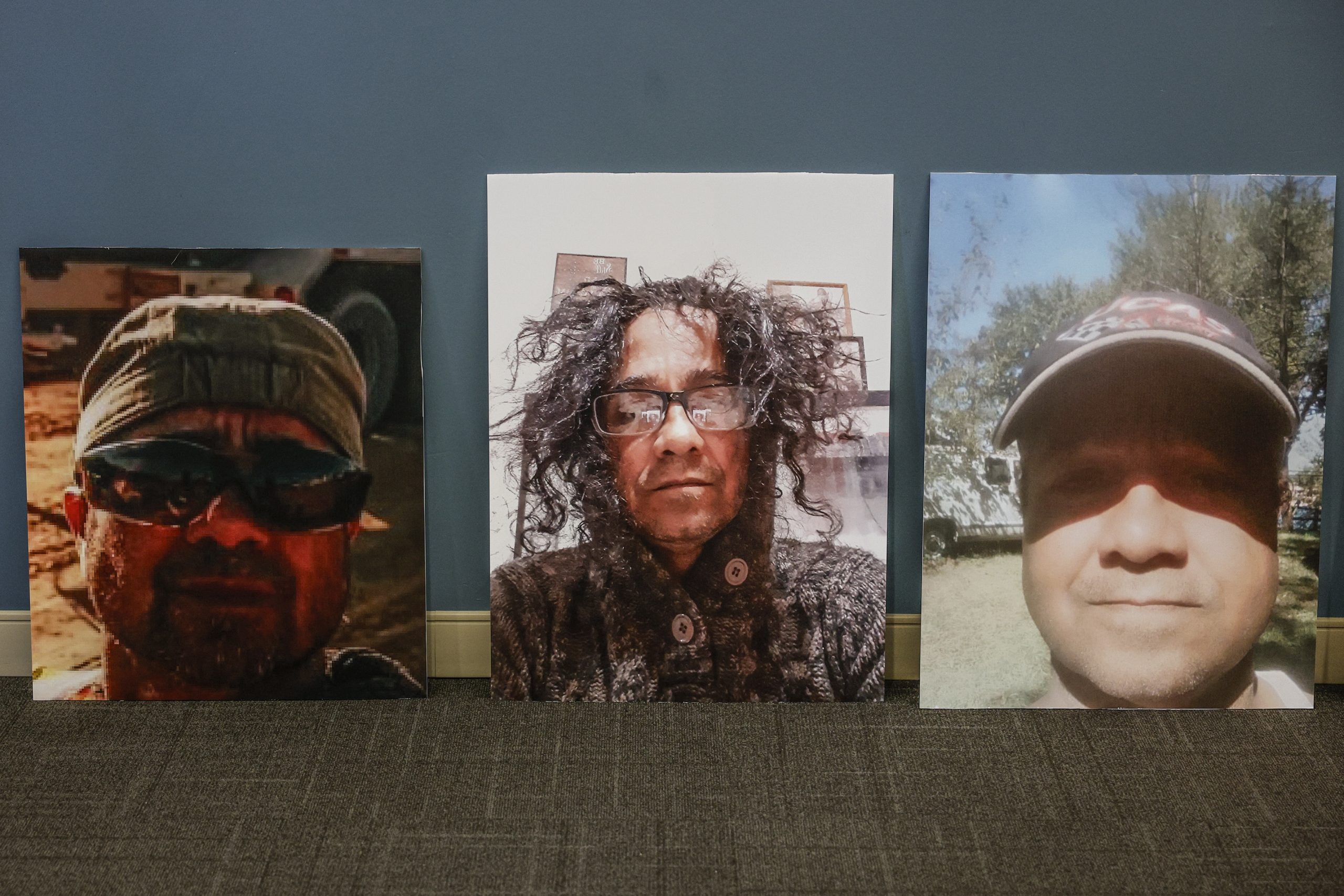
Prosecutors released a series of photographs showing Rosa’s changing appearance over the years, along with an image of a room they are trying to locate: what appears to be an unfinished basement with a bed covered in rust-colored bed linens, where investigators say some of Rosa’s crimes were committed.
Authorities described Rosa as 5-foot-4 and weighing about 150 pounds.
Although de Barrena-Sarobe said Rosa is presumed innocent until proven otherwise, he added that “we strongly feel like this was a predator that was out in our region creating and destroying lives.”
Rosa’s attorney did not return a phone call Monday afternoon.
Anyone with information is asked to contact the Chester County Detectives at 610-344-6866.
Delaware County detectives are investigating a racist, threatening voicemail left for county Sheriff Siddiq Kamara, officials said Monday.
The caller, whom police are working to identify, used a racial slur to refer to Kamara, who is Black, and called for “death to Islam.” Kamara is a Muslim whose family came to Delaware County from their native Liberia.
The caller also told Kamara he was going to hunt, attack, and torture him when Kamara least expects it, according to a recording of the voicemail that was reviewed by The Inquirer.
“I will find you. I know where you are,” the male caller said. “You are an amateur.”
Kamara, in a statement, said despite the caller’s attempts to intimidate him, the incident has strengthened his resolve.
“Let me be clear: There is a fundamental difference between criticism and criminal conduct. Public officials should expect scrutiny, disagreement, and accountability — that is part of our democracy,” he said. “But threats of violence, intimidation, and hate cross the line and will be treated accordingly.”
Kamara, 31, was elected sheriff in November. He is the youngest person in county history to hold the position.
A career police officer, Kamara said he was motivated to run for office after a personal tragedy: His cousin, Fanta Bility, was struck and killed by a stray bullet fired by Sharon Hill police officers in 2021.
In a statement Monday, the Delaware County Council said it “unequivocally condemns these threats in the strongest possible terms” and stands with Kamara.
Members of the Philadelphia chapter of the Council on American-Islamic Relations called the incident “the latest example of the growing climate of intolerance that seeks to intimidate public servants based on their race, religion, or national origin.
“No public official should be subjected to racist intimidation for simply serving their community,” Ahmet Tekelioglu, executive director of CAIR-Philadelphia, said. “Attacks like these are not only directed at one individual They are intended to send a message of fear to entire minority groups — particularly the Black, immigrant, and American Muslim communities.”
A Bucks County sheriff’s deputy used his personal cell phone to take naked pictures of two people he encountered as part of his job, including a mentally ill man at whose home he was serving an arrest warrant, prosecutors said Monday.
Ryan Gaffney, 46, has been charged with official oppression for taking the photos, as well as unsworn falsification to authorities for lying about the photos and attempting to dissuade investigators by sending them doctored screenshots of his phone’s photo library.
Gaffney, of Feasterville, shared the photos to get “his kicks” with civilian employees at the Bucks County Justice Center, Bucks County District Attorney Joe Khan said at a news conference Monday.
“Mr. Gaffney’s conduct is a disgrace. It’s an abuse of the trust given to him by the sheriff’s office and by taxpayers,” Khan said. “When a deputy sheriff breaks the law, and lies about it, he erodes the public trust that our law enforcement officers work every day to build.”
Gaffney was charged via summons, and has not yet been arraigned on the charges, court records show. He was fired from his position with the county sheriff’s office in June, officials said Monday.
Ryan Gaffney was sworn in as a Bucks County sheriff’s deputy in 2023.Courtesy Bucks County Commissioners
Gaffney’s attorney, Paul Lang, said Monday that he will “address this case in court, not through one-sided social media posts or press conferences.”
“Ryan Gaffney deserves due process, not trial by publicity,” Lang said. “These are allegations, not facts, and we look forward to answering them where they belong, in a courtroom.”
The photo of the first victim was taken Jan. 30, when Gaffney and four other sheriff’s deputies served a warrant at the man’s home in Middletown Township, according to the affidavit of probable cause for his arrest.
When the deputies arrived, the document said, the man was naked from the waist down, and asked deputies to allow him to put pants on. Before he could do so, Gaffney used his personal cell phone to take a photo of the man’s genitals, according to the affidavit.
A review of Gaffney’s body-worn camera footage showed that he placed his hand over the camera while taking the surreptitious photo. Other deputies at the scene said they were unaware that Gaffney had taken the photo until later.
One of those deputies saw Gaffney sharing the photo with female civilian employees at the courthouse, and reported his conduct, the affidavit said. Investigators later learned he had also texted the photo to other contacts in his cell phone.
Bucks County Sheriff Danny Ceisler said Monday that he reported Gaffney’s conduct to Khan’s office immediately after learning about it.
The former deputy’s behavior, Ceisler said, “was beyond unacceptable and not in any way representative of the highly professional deputies who serve this county with integrity every day.”
While investigating the case, county detectives found that Gaffney had taken a photo of another person during a separate arrest in December 2024.
A photo of that person’s buttocks, taken while he was handcuffed, was shared with 12 people, including other members of the sheriff’s office’s warrant division, the document said.
While being questioned by investigators, Gaffney denied taking the photographs and signed a sworn affidavit affirming that. Through his attorney, he also provided screenshots of his phone’s photo library that showed the photos were not on the device.
However, investigators downloaded the contents of Gaffney’s phone, and were able to recover both images, which had been deleted.
Gaffney was sworn in as a sheriff’s deputy in June 2023.
Before joining the office, Gaffney served in Iraq with the Air Force in 2005, and as a part-time officer with Penndel Police, according to Bucks County Commissioners.
Gaffney also works as a part-time officer with Hulmeville Borough Police, one of three members of the police force in the small municipality, and was sworn in there in late 2022, according to a borough newsletter published in January 2023.
Hulmeville Police Chief John Baran did not respond to a request for comment Monday.
A man was critically injured and a dog was killed when someone opened fire in Kensington on Sunday evening, authorities said.
The incident happened just after 10:45 p.m. in a lot on the 2400 block of Kensington Avenue, according to police.
Police arrived to find the man shot multiple times in the legs and abdomen, and officers transported him to Temple University Hospital, where he was placed in critical condition.
A dog was found dead in the lot, and officers determined the animal had been shot.
Police have not identified a suspect or a motive in the shooting, and they continue to investigate.
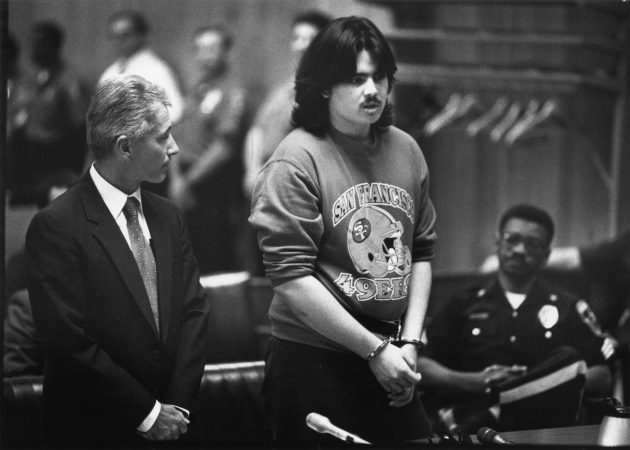
Nearly four decades after a 14-year-old boy killed his 12-year-old neighbor by stabbing her 95 times in one of South Jersey’s most infamous crimes, the killer spoke extensivelyfor the first time about that day, according to a newly released recording.
“I am truly sorry,” Kenneth Houseknecht, now 53, said of the events in April 1988, when he attacked Kim Marie Anderson as she was getting ready for school in her family’s home in Deptford.
“Years ago, when I first got incarcerated, I didn’t take responsibility at all for what had happened. I was going back and forth between no, it didn’t happen, this is a dream. It couldn’t have happened. It wasn’t me. All I can say is that I am sorry, not only to the Andersons, but to my family.”
Houseknecht’s comments came during an unusual May 28 hearing in Gloucester County Superior Court.
After serving 38 years, Houseknecht was seeking a reprieve from a life sentence under a 2022 New Jersey Supreme Court decision that declared mandatory minimum 30-year prison sentences without parole unconstitutional for juvenile offenders.
The ruling allows juveniles serving lengthy prison sentences to seek a review after 20 years of incarceration. Describing it as “the most gruesome homicide of my time,” Superior Court Judge Kevin T. Smith ultimately affirmed the original sentence, stating that Houseknecht continues to be a danger to the community.
No media was present during the nearly two-hour hearing. A succinct news release issued by the Gloucester County Prosecutor’s Office confirmed Smith’s ruling.
However, an audio recording of the proceeding, obtained through an open public records request, offers a compelling window into Houseknecht’s imprisonment since he was a student in junior high school, his family’s pledge of support for his potential release, and the continued anguish and anger of Anderson’s parents, Stephen and Esther.
In 1991, Houseknecht was sentenced to life in prison, meaning he would have to serve a minimum of 30 years before becoming eligible for parole.
If Smith ruled in Houseknecht’s favor, he could be released without relying on the discretion and supervision of a parole board.
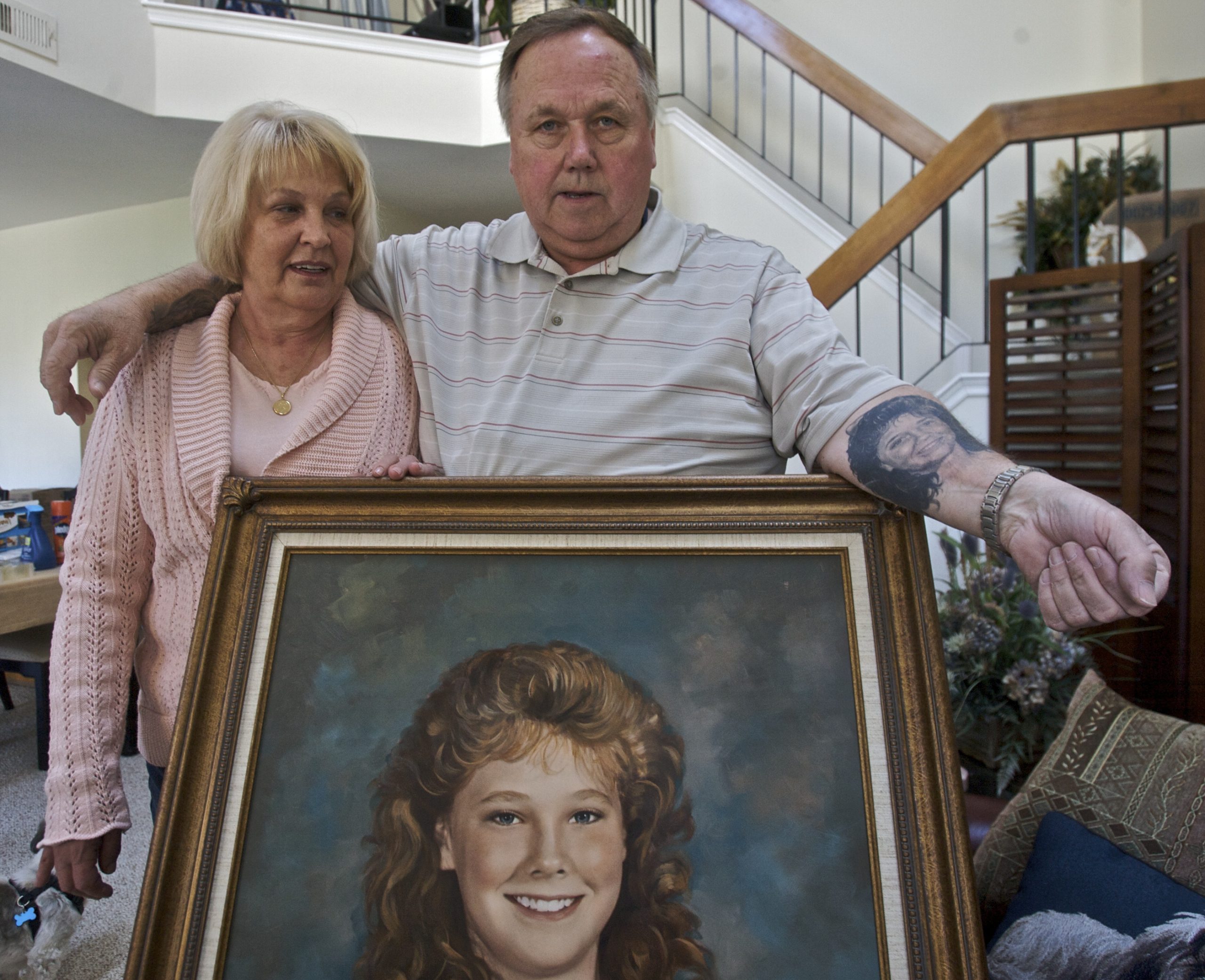
Twelve-year-old Kim Anderson, seen in a painting in 2009.John Costello / Staff Photographer
The crime
In the early morning of April 19, 1988, Kim and another girl were expected for breakfast at a friend’s house across the street before all three girls boarded their bus for school. Esther Anderson would normally be home to see Kim and her brother, Stephen Jr., off to school, but because of an issue at the family’s catering business, she was already at work, assisting her husband.
Houseknecht was a friend of Stephen Jr., who left the house before his sister because his bus came earlier. Other than the family’s boxer, Bo, Kim was home alone.
It was supposed to be a simple robbery. Houseknecht owed money to an older friend for pornographic magazines. He didn’t expect anyone to be inside the Anderson home. He had with him a small knife he had stolen from the Ames department store.
Confronted by Kim, Houseknecht, who was 6 feet tall and weighed 200 pounds, attacked the 5-foot-3, 120-pound seventh grader. He stabbed her nearly 100 times. The ferocity of the assault was so intense that the tip of the knife broke twice, leaving pieces in her head. Houseknecht also beat her repeatedly with a French-style telephone.
One of Kim’s friends discovered her battered body lying on the floor just inside her bedroom, next to a blood-soaked Cabbage Patch doll.
Investigators immediately focused on Houseknecht as a suspect. While they were scouring the neighborhood for clues shortly after the murder, he approached them and made a bizarre revelation.
“You know my fingerprints are all over the house, even in Kim’s room,” he told them, according to sworn statements at the time.
Investigators also discovered a note on Houseknecht’s bed to the Andersons featuring sexually explicit drawings.
“This is your daughter’s killer. I hope you know I used gloves. The next one to get it is Mrs. Anderson,” the note read.
When a judge ordered Houseknecht tried as an adult, Houseknecht pounded furiously on the table, shouting, “Kill me, kill me,” and “I didn’t kill that girl purposely.”
A jury convicted him of murder following an emotionally charged trial that was moved from Gloucester County to Salem County because of extensive pretrial publicity.
Over the years, attorneys with the state’s Office of the Public Defender have exhausted most appeals to have his sentence reduced, contending, among other things, that Houseknecht’s lawyers provided ineffective counsel.
The May hearing before Smith appeared to be the best chance for Houseknecht to be released, barring any potential future parole board decision.
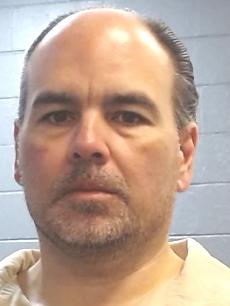
Kenneth HouseknechtState of New Jersey Department of Corrections
Houseknecht’s courtroom appearance
Dressed in an orange prison jumpsuit, Houseknecht stood for most of the 17 minutes he addressed the court, trying to convince the judge that after being in prison since he was a teenager, he was ready to reenter society. At one point, he became emotional and told Smith he would be more comfortable sitting down.
“It was a robbery that turned tragic,” Houseknecht read from notes. “I had forgotten about somebody being there. I hated that. I hate it today. I fully understand the pain that I caused the Andersons, especially Kim. I know their family can’t be whole.”
He said he regretted writing the note threatening Esther Anderson, describing it as a “stupid attempt to avert attention” from what he had done.
He noted that he had since earned his GED certificate, taken college-level courses, and was a model prisoner who helped tutor other inmates.
“I’ll just end it here with this,” Houseknecht said. “What you see, what you read about me, all that I’ve learned is genuine. I do want to give you my word that I will continue to be the same way on the streets.”
Houseknecht’s sister, Katrina Andreen, testified on her brother’s behalf via Zoom. An actress who goes by the name Katrina Law, she appears on the show NCIS.
“It took many years for him and us to figure out why he did what he did, and then even more years to address it properly, which Ken has done,” she read from a statement. At the time of the murder, she was 11 years old and went by the name Joyce Houseknecht.
A former Miss New Jersey Teen USA pageant winner, Andreen said, “Ken does not shy away from taking full responsibility for his past mistakes and actions. Ken has had almost four decades in prison to think about and reflect on what he did as a troubled 14-year-old, and now, as a grown man, he takes full responsibility and is truly sorry.”
She said her family was prepared to help her brother transition to a life beyond prison.
“Our family will be there for Ken every step of the way, offering moral support, encouragement and most importantly, love,” she said. “I look forward to our family being whole again. I ask that we please believe in forgiveness. I ask that we please believe in rehabilitation. I ask that we please believe in second chances, and I ask that we believe in my brother.”
The Andersons respond ‘it’s just not fair’
Stephen and Esther Anderson, in 2009, in their Mount Laurel home as they prepare to move. Portraits of their slain 12-year-old daughter, Kim who was murdered 21 years ago hang on the walls of the dinning room and den.John Costello / Staff Photographer
Over the decades, Stephen Anderson, now 76, has attended numerous court proceedings in support of justice for his daughter. When it was his turn to speak, he chose not to read from a statement. Instead, he spoke extemporaneously about how his family’s life was forever upended on that April morning in 1988.
He described Houseknecht as a monster who is “not even human to do what he did.” He explained that his wife was not with him in court because she remains fearful of Houseknecht because of the threatening note found on his bed after he killed Kim.
He was extremely skeptical of Houseknecht’s profession of remorse, calling it a lie.
“It took him all these years to become remorse, the doctor said he wasn’t, and now all of a sudden he has it because his lawyers are telling him to say it,” Anderson said.
He said not only is his family fearful of Houseknecht’s release, but the community who remembers the crime is also frightened of the possibility.
“It’s just not fair that not just my family has to live in fear,” he said. “There are a lot of people still living in Gloucester County, and they are going to be fearful of what they have to face when he gets out.”
He asked the judge to “see it the right way” and keep Houseknecht behind bars.
“We’re not gun people, but we’re going to apply for gun permits because we’re scared,” he said.
Assistant County Prosecutor Michael Mellon argued that the original sentence remains intact. He cited expert opinions that found Houseknecht had failed to accept the reality of what occurred and his role in it.
He also reminded the court that Kim Anderson never got to experience high school, college, relationships, or a career.
“Regardless of the outcome here today, no one that can hear my voice should forget Kim Anderson,” he said. “No one in this room, no one that reads this transcript, because Kim matters today, she matters tomorrow, and she matters always.”
The judge’s ruling: ‘The deep-down demon that brought about this crime’
Before sharing his opinion, Smith pointed out that while the hearing focused on Houseknecht’s future, Kim would be 51 today if not for that fateful encounter with her neighbor when both were young.
“We don’t know whether she would be the first woman president,” Smith said. “We don’t know whether she would give birth to the next man on the moon. We don’t know what 12-year-old Kim would have to offer, as 20-year-old Kim, 35-year-old Kim, or 50-year-old Kim. We don’t know that, so we can’t lose sight of the absence of this particular person in this equation.”
He acknowledged Houseknecht’s positive experiences while in prison and his efforts to better himself, saying he has not “gotten into the unproductive behavior of many of his fellow inmates of just playing cards all day.”
But he sided with prosecution experts who believe Houseknecht still poses a risk of violence. Smith also noted that an expert had suggested there was a sexual component to the crime, though that was never addressed at trial.
In affirming the original sentence, Smith said to reduce it and allow Houseknecht to be freed with no supervision, would be derelict on his part.
Despite having spent decades in prison and his efforts to improve himself, Houseknecht, Smith said, has never addressed the fundamental issues and “the deep-down demon that brought about this crime.”
Houseknecht remains in custody at the South Woods State Prison in Bridgeton. When he first became eligible for parole in 2018, he refused to cooperate with the hearing process and a hearing was not scheduled.
Nicole Swiderski, a spokesperson for the New Jersey State Parole Board, said in an email that Houseknecht’s status has not changed.
Eagles running back Saquon Barkley’s home was burglarized early Saturday morning, Tredyffrin Township police said.
Officers were called to the Malvern home about 5:10 a.m. to reports of a burglary in progress, according to a police account. At least one person made it inside the home, Tredyffrin Township Police Capt. Tyler Moyer told The Inquirer. By the time police arrived, the burglars had fled.
Barkley and his family were unharmed, according to police and a statement from Chester County District Attorney Christopher de Barrena-Sarobe. No arrests have been announced.
“We are incredibly grateful that the Barkley family was not injured during this incident,” de Barrena-Sarobe said.
A spokesperson for the Eagles could not immediately be reached for comment late Saturday.
No additional information about the break-in or possible suspects wereimmediately available, but police were investigating a white SUV that may be connected to the crime.
Authorities are also asking the public for home security footage or reports of suspicious activity. Moyer said there is believed to be no ongoing threat to the community and no other break-ins were reported.
Anyone with information should contact Detective Sgt. Stephanie Bills at sbills@tredyffrin.org.
A former Philadelphia prosecutor who recommended that a man’s murder conviction be overturned said she did so at the direction of her boss — who she said had done no meaningful review of the evidence and instead was “colluding” with defense attorneys to find the most effective way to have the case thrown out.
While testifying at a unique hearing Friday in federal court, former Assistant District Attorney Jaclyn Mason said supervisors in the district attorney’s office had effectively abandoned their responsibility to independently investigate Dennis Johnson’s appeal and determine if he should be freed from prison.
Instead, Mason said, her supervisor, Matthew Stiegler, held routine meetings with Johnson’s lawyers, including the Federal Community Defender Office and the Pennsylvania Innocence Project, to strategize the most effective paths to secure Johnson’s release. And neither she nor Stiegler reviewed key evidence in Johnson’s case, she said, including trial transcripts, homicide files, or witness interviews.
“Matt told me: ‘If it’s good enough for the Innocence Project, it’s good enough for me,’” Mason said.
Just as strikingly, she said, earlier this spring, when it became clear that that process might be exposed in court, another set of supervisors asked her to lie to a federal judge.
As Mason recalled, the supervisors were worried that if the judge found out the full extent of the office’s actions in the case, it would exacerbate the already intense public scrutiny the office was under for the way it had acted in other murder appeals.
According to Mason, the supervisors suggested she simply tell the judge that any mistakes in the case were hers, and hope that that would be enough to avoid a more thorough inquiry.
Mason said she declined and resigned.
“I said, ‘I’m not going to go to court to lie to protect the district attorney’s office,” Mason said. “How come telling the truth isn’t an option?”
The extraordinary testimony came as part of Johnson’s appeal, which has taken an unusual path through the courts and remains pending before U.S. District Judge Paul S. Diamond.
It also served as the latest chapter in a series of developments that have raised questions about one of District Attorney Larry Krasner’s key policy initiatives: his office’s willingness to review old convictions and seek to overturn those that prosecutors believe were marred by legal problems.
Just last month, the Pennsylvania Supreme Court ruled that Krasner’s office had misled judges so consistently and flagrantly in appellate matters that moving forward, any time his office recommends that a conviction be overturned, the state attorney general must be brought in to review the matter as well.
Diamond was also involved in disciplining two top supervisors in Krasner’s office in recent months, finding that they had been “misleading and dishonest” while seeking to overturn an inmate’s death sentence.
Krasner has made post-conviction review a central part of his reform-oriented agenda, touting the fact that his office has helped free 59 people — mostly Black men — from what he’s called wrongful convictions.
But judges in both state and federal court have raised pointed questions in recent months about whether Krasner’s office has been sloppy or even intentionally misleading while seeking to advance that agenda.
And during Friday’s hearing, Diamond expressed occasional bewilderment at some of Stiegler’s admissions on the stand — including that while he led the office’s Federal Litigation Unit, his staff generally did not reinterview witnesses or speak to previous prosecutors before deciding whether to recommend that a conviction be overturned.
“It’s a smorgasbord of error — and we’re just gonna pick one?” Diamond asked.
A ‘pawn’ in a preordained process
The case around which Friday’s hearing was nominally centered was Johnson’s conviction for second-degree murder.
In 2009, a jury found him guilty of fatally shooting Kenyatta Smith during a robbery outside a North Philadelphia convenience store two years earlier. He was sentenced to life in prison.
Johnson appealed, in part because he said his trial lawyer was ineffective.
And in 2022, Mason filed court documents agreeing with that assertion — and saying the error was so pronounced that his conviction should be thrown out.
“The case against Johnson was not overwhelming from the outset and his counsel was constitutionally ineffective,” Mason wrote. “The post-trial investigation unearthed additional factors that highlight weaknesses in the prosecution and confirm a low level of confidence in the outcome of Johnson’s trial.”
In court Friday, however, Mason said she was effectively doing Stiegler’s bidding when she filed that brief.
She’d only been in the office for about four months when Stiegler assigned her Johnson’s case, she said. And she’d never before worked as a prosecutor or handled similar federal appeals.
The office also gave her close to no training, she said. And from the moment she was assigned Johnson’s case, she said, she got the impression that Stiegler knew how he wanted the matter to go.
“The decision to concede had been made, and then I was his pawn,” she said. “I was his scribe.”
In the months that followed, Mason said, she and Stiegler did almost no independent examination of the evidence in Johnson’s case. But they did have meetings with Johnson’s attorneys, she said, at which the two sides sometimes collaborated on legal strategies for how to ensure his petition would succeed.
When Mason did actually draft the brief supporting the appeal, she said, Stiegler offered edits — all of which made it into the document. Another supervisor, Nancy Winkelman, the onetime head of the Law Division, also made suggestions that were included in the final brief, Mason said.
Stiegler testified Friday as well, and said he believed that when Mason was assigned the case, she would review it and provide her best assessment to him. That review, he said, was expected to include an examination of key evidence, including trial testimony or witness statements.
But under questioning by Diamond, he acknowledged that his unit at that time did not regularly reinvestigate cases, either by re-interviewing witnesses or reexamining primary evidence — an admission that seemed to baffle the judge.
“You did no investigation on your own?” he asked at one point.
“No,” Stiegler replied.
As for the decision to agree that Johnson’s conviction should be overturned, Stiegler said: “My recollection is it was a collaborative decision between Ms. Mason and me.”
But Mason said that wasn’t true.
“He met and conferred with the Federal Defender and the Innocence Project to decide how it was going to go before it was assigned to me,” she said.
A sudden resignation
Still, none of that discord surfaced until this spring, when Diamond — who will ultimately decide whether to overturn Johnson’s conviction — scheduled an evidentiary hearing. At the time, he said he wanted to hear from several key witnesses to evaluate the strength of the evidence against Johnson.
He also asked the attorney general’s office to review the case, apparently wary that the district attorney’s office was simply agreeing with Johnson’s lawyers.
At that point, Mason said, a set of different supervisors in the Law Division “started to panic.”
And after she told them the “collusive” manner in which the appeal had been handled, she said she was told, in essence, to fall on her sword.
As Mason recalled it, the supervisors told her to tell Diamond that any mistakes in the office’s brief were hers, “and if we do that, the court might get angry, but it won’t find out how this concession got put together — which is what we really want to avoid.”
“The whole goal [was] that the process by which that concession came to be not be revealed,” Mason said.
Within days, Mason said, she resigned.
A few days after that, the supervisors in the Law Division — David Napiorski, Steven Wildberger, Peter Andrews, and Katherine Ernst — filed a motion with Diamond seeking to undo the position that Mason and Stiegler had once recommended, saying the pair’s brief had been based on “material misstatements.”
Mason said she was “blindsided” by that filing, and that she believed she was being used as a scapegoat to protect the office and its actions in the case.
“The whole scheme was designed to cover up how that brief was put together,” she said.
Friday’s hearing ended before the supervisors she accused of wrongdoing had time to testify or respond to her assertions. Diamond said he would schedule another hearing to hear from them.
Johnson’s fate also remains undecided with the legal issues unresolved.
Stiegler, meanwhile, denied that he’d pushed Mason to take a specific position in the case, or that he’d had improper interactions with Johnson’s defense lawyers as the office worked on the appeal.
Mason was definitive in her view of Stiegler’s testimony.
“Nothing Matt said was true,” Mason said. “Nothing he said was true.”
A man was critically wounded in a stabbing on a SEPTA bus Friday afternoon in North Philadelphia, police said.
Around 3:30 p.m., a fight escalated into the stabbing on a Route 54 bus near the intersection of Germantown and Lehigh Avenues, said SEPTA spokesperson Andrew Busch.
The victim, who was stabbed in the neck and torso, ran to a nearby apartment, police said. He was reported in critical condition at Temple University Hospital, police said.
The victim said he did not know his attacker, police said.
The suspect, who was wearing a Snoop Dogg shirt, was last seen running from the scene on Germantown Avenue, police said.