Category: Crime & Justice

  • ‘Consumed by anger’: Inside the 1985 psych profile of Raymond Horsch

    ‘Consumed by anger’: Inside the 1985 psych profile of Raymond Horsch

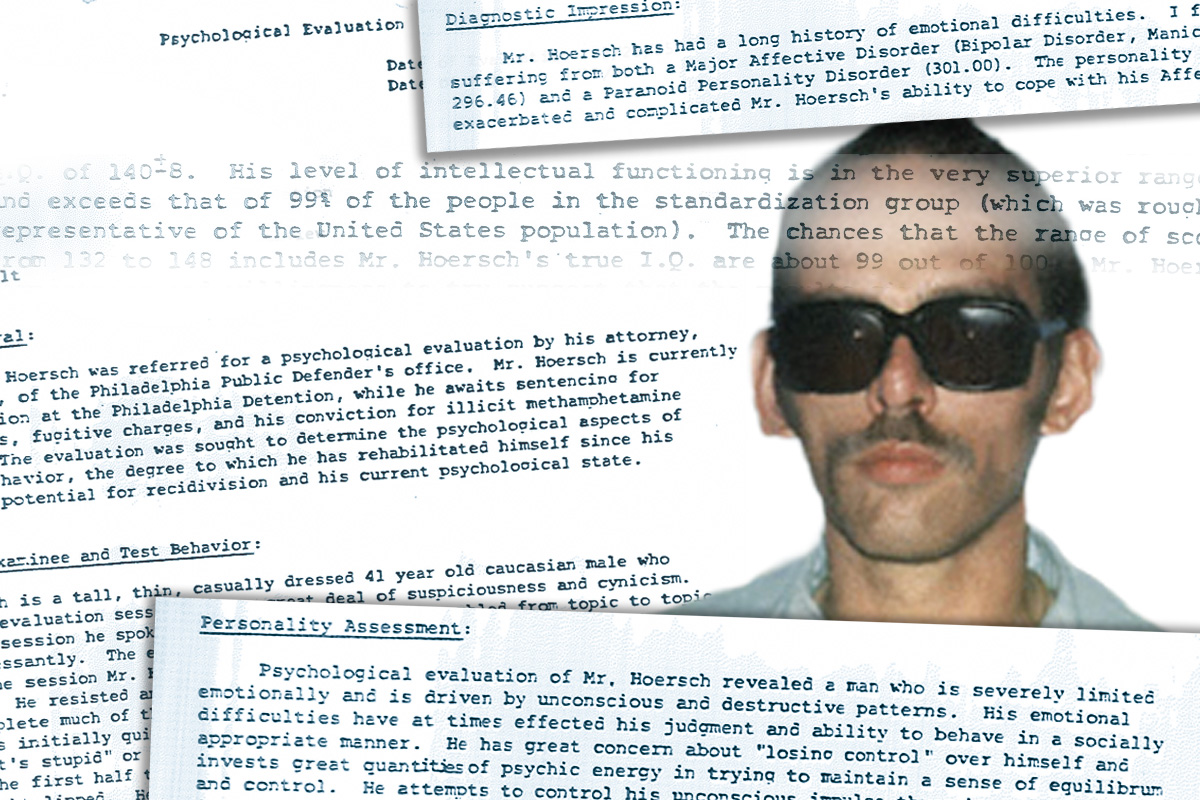
    Federal authorities learned four decades ago that Raymond “R.C.” Horsch — a man whose Olney home is now linked to five dead or missing women — was a manipulative criminal who was “consumed by anger,” according to a psychological profile obtained by The Inquirer.

    “He is grandiose, mistrustful, suspicious, and excessively controlling,” the psychologist, Don Seraydarian, wrote in 1985 as part of a federal drug manufacturing case.

    At the time of the exam, a wiry, 41-year-old Horsch had just been captured after spending several years on the run in New Zealand to escape criminal charges. Prior to absconding, he had spent the previous decade producing a mobster-backed pornographic film, counterfeiting cash, and running a meth lab.

    Ahead of his sentencing on the drug charges in Philadelphia, Horsch’s defense team commissioned the four-hour clinical assessment that concluded he likely suffered from bipolar and paranoid personality disorders. The report was filed along with a motion seeking lenient sentencing, with Seraydarian writing that prison time for Horsch would likely “increase his hostility and sense of alienation.”

    “He feels this unfocused rage was the source of his criminal behavior,” Seraydarian wrote.

    The full report, obtained by The Inquirer through a federal records request and not previously reported, is a window into the mind and early childhood of the criminal pornographer at the center of an expanding investigation into a series of missing women.

    The Inquirer reported last week that police believe a video recovered from Horsch’s Olney property shows him strangling a woman to death on camera, according to law enforcement sources. Police also said they recovered photos on Horsch’s hard drives that appeared to show two other women who went missing in the 2010s alive — and then dead — inside his Chew Avenue home.

    While Horsch was an established pornographer with a criminal record by 1985, he had never been charged with any violent offenses before he died in May 2025, at the age of 82. Still, the psychological report showing insight into Horsch’s unstable mental state was presented to law enforcement decades before he was linked to any disappearances.

    Court records show federal prosecutors reviewed the 1985 case file again during Horsch’s 2009 indictment in a separate drug manufacturing case. Seven years later, his ex-wife, Amy McHale, went missing after being last heard from at his Chew Avenue home. Another woman was reportedly last seen at the property in 2022.

    It is unclear whether police reviewed Horsch’s psychological profile as part of their ongoing investigation, or in these prior missing persons cases.

    Michael Yoder, a retired FBI special agent who spent nearly a decade as a criminal profiler in the Behavioral Analysis Unit, reviewed the exam notes at The Inquirer’s request. He said that it was unusual for such an exam to be conducted for a drug case, but that he saw overwhelming hallmarks of psychopathy in the description of Horsch, and said the report would have been a red flag for criminal profilers.

    “If you were to give me this report and I knew nothing about this person, and knew nothing about the crimes he committed, I would say you have a potential serial killer on your hands,” Yoder said.
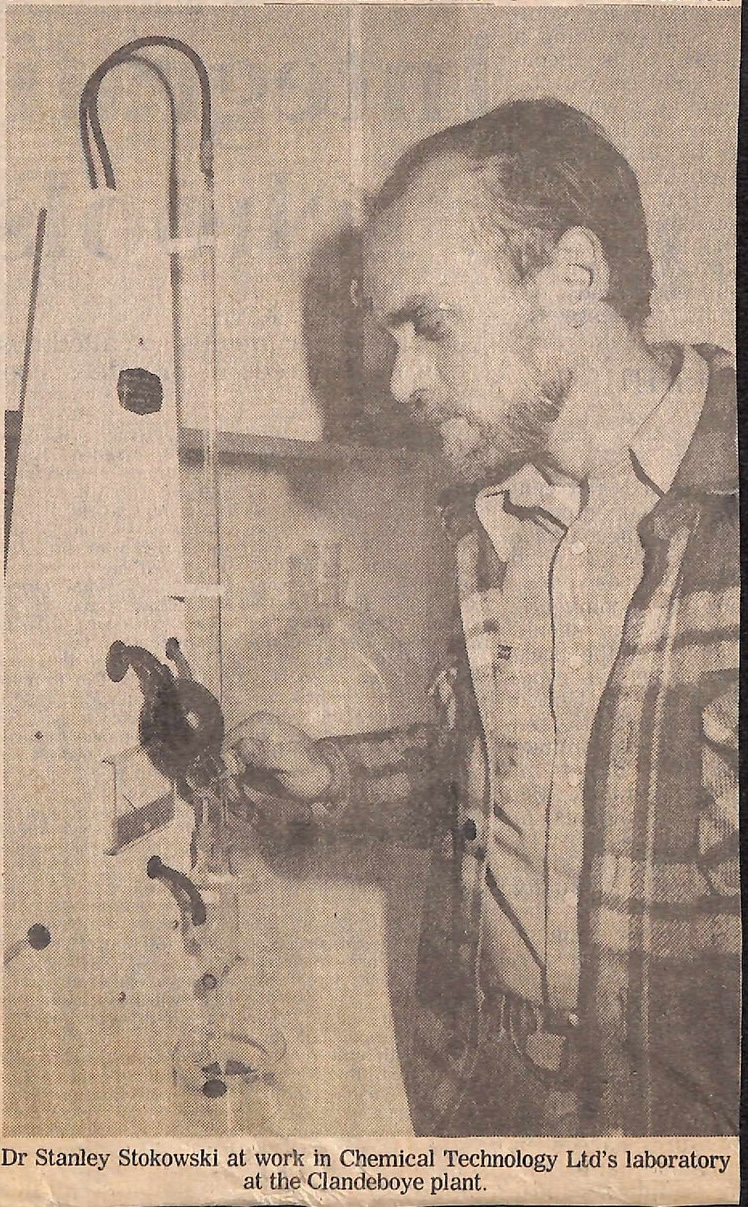
    A clipping from a 1982 news article in New Zealand, where Horsch found work at an ethanol plant under the stolen identity of “Stanley Stokowski.”Custom

    The report notes that during the interview, Horsch chain-smoked, dodged questions, and downplayed his crimes. He referred to himself in the third person when discussing his illegal activities, as if they were “events from someone else’s life.”

    He ultimately opened up to Seraydarian about his insecurities and resentments, describing himself as a social misfit. Money was not Horsch’s motivation for committing crimes, the psychologist determined.

    “He has great concern about ‘losing control’ over himself and invests great quantities of psychic energy in trying to maintain a sense of equilibrium and control,” Seraydarian wrote.

    Seraydarian, in an interview this week, confirmed he had written the notes but could recall only that Horsch was “very bright.”

    The report also offered insights into Horsch’s childhood.

    He described a pleasant early life — raised on a farm in Bucks County by a father he called “strict but fair” and a mother who was a “salt of the earth type.” But when he was 12 or 13, he said, he had a “philosophical split with his family” that affected their relationship. He then began to rebel in high school and was later expelled from two colleges.

    The report states that Horsch was an “extremely bright man” with a 140 IQ, and that he was a hard worker who could be rehabilitated as a productive member of society. It detailed an “erratic but prolific” life across the U.S. and New Zealand while he worked as a chemist, computer analyst, and photographer.

    “I go from job to job because once I learn something, I want to go to something else,” Horsch explained.

    And yet, the report noted, Horsch “has not been able to attain any financial success.”

    Horsch told the psychologist that he had never abused drugs or alcohol, in part because “I can’t stand being out of control.” He said he had no fears or phobias, but sometimes stayed awake for several days at a time.

    Seraydarian said Horsch was “very protective” of his wife and then-4-year-old son, Eugene. They were the “most important things in his life.” Horsch said he would never commit another crime because “now I’m hurting them as well as myself.”

    But his crimes continued.

    In the years that followed, Horsch was unabashed about his prolific career as a law breaker and a shock-seeking pornographer. He later sought to use the psychological report to cultivate his desired public image as a highly intelligent villain and psychopath, constructing a mythology around himself that blurred the line between his art and his life.

    In 2014, a Wikipedia user named “S.E. Stokowski” — which was Horsch’s alias while on the lam in New Zealand — created a page for the pornographer and made more than 150 edits over the years, according to the page’s public revision history. One entry referenced Horsch’s psychological exam as testament to his supposed intellect and sociopathic tendencies.

    As Horsch aged, he cast himself as an empathetic serial killer in his films and writings.
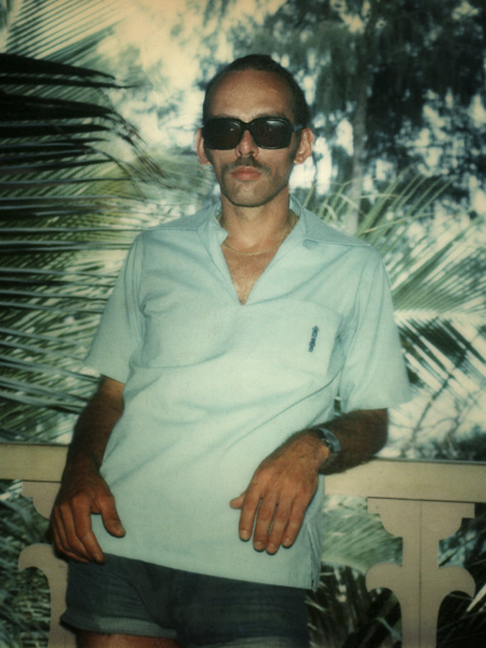
    Horsch at an unspecified location in the 1980s.Obtained by The Inquirer

    The 1985 psychological profile noted that Horsch’s only real friend or support system at that time was his then-wife, Anna Ferkuniak, who had a “therapeutic and rehabilitative effect” on him. He said his main wishes were to spend time with his family, live in a rural or isolated area so he could “deal with society as little as possible,” and have a better understanding of quantum physics.

    Ferkuniak died of a drug overdose in 1989, less than two years after Horsch was released from federal prison.

    Horsch later told an interviewer he was full of anger over her death, saying his wife “bailed out and left me with a kid to raise.” Following her death, he moved to the suburbs in Bucks County, co-opened a barbecue restaurant, and raised Eugene as a single father.

    There, Horsch pursued a pornographic career that mainly featured sexual violence toward women in addiction. In his photos, films, and self-published novels, he used these women as models for his psychosexual fantasies, often depicting their deaths by drowning, hanging, or strangulation.

    Federal and local law enforcement agencies are again assessing Horsch’s life after a June 19 car stop near Independence Hall involving his son, Eugene, turned up a fake ID in the name of a missing woman and led police on an extensive search of the Horsch home in Olney. Eugene Horsch is in federal custody, charged with possessing a gun, which is usually illegal for someone convicted of a felony.

    Police continue to sort through the hundreds of thousands of images, videos, and pages of writing on the hard drives recovered from the dilapidated and boarded-up twin where the father and son lived together.

    Investigators have so far recovered at least one video that appears to show Raymond Horsch killing a woman inside the property, sources said, as well as “dark and graphic” images of two other missing women — Maribel Fresses and Gabrielle Amarando — alive inside the home, and then dead. Law enforcement sources say the number of missing women connected to the home could grow as the investigation continues.

    Police have not publicly confirmed that either Raymond or Eugene Horsch is believed to have killed anyone, and they have not recovered any bodies.

    Raymond Horsch long maintained that the often gruesome violence in his films and photographs was staged. As an older man, however, he also professed that he was running out of boundaries to push.

    “The problem,” he said in a 2013 interview, ”is I have no fantasies left.”

    Inquirer reporters Max Marin and Ryan Briggs will host a Reddit AMA in the r/Philadelphia subreddit on Friday at 1 p.m. You can ask them questions there about the Olney investigation and the life of Raymond Horsch.


  • Man charged with attempted burglary at Saquon Barkley’s home in Chester County

    Man charged with attempted burglary at Saquon Barkley’s home in Chester County

    A 24-year-old man was charged with attempting to burglarize the Chester County home of Eagles running back Saquon Barkley and stealing jewelry worth nearly $800,000 from two other homes, authorities said Wednesday.

    Jabir Parker, of Philadelphia, was charged with multiple felonies related to the alleged crime spree through Chester and Montgomery Counties. Parker was being held at the Montgomery County Correctional Facility in lieu of $1 million cash bail until his next court appearance, scheduled for Sept. 10.

    In July, Tredyffrin Township police said an attempted burglary occurred at Barkley’s home, with at least one person getting inside. By the time police arrived, the burglars had fled. Barkley and his family were unharmed, police said.

    The forced-entry burglaries happened in the overnight hours between June 22 and July 18, Montgomery County District Attorney Kevin R. Steele said Wednesday.

    Steele did not name Barkley as one of the victims, but police already had confirmed the case in July.

    A spokesperson for the Eagles could not be reached for comment.

    Two of the burglaries happened in Lower Merion Township, Steele said. The residents were not at home when they occurred.

    In the first burglary, investigators found that 12 pieces of jewelry, with an estimated value of $106,700, were taken.

    In the second burglary, 28 items of jewelry worth an estimated $687,292 were stolen. A safe also was taken from the home.

    The attempted burglary at Barkley’s home happened on July 18.

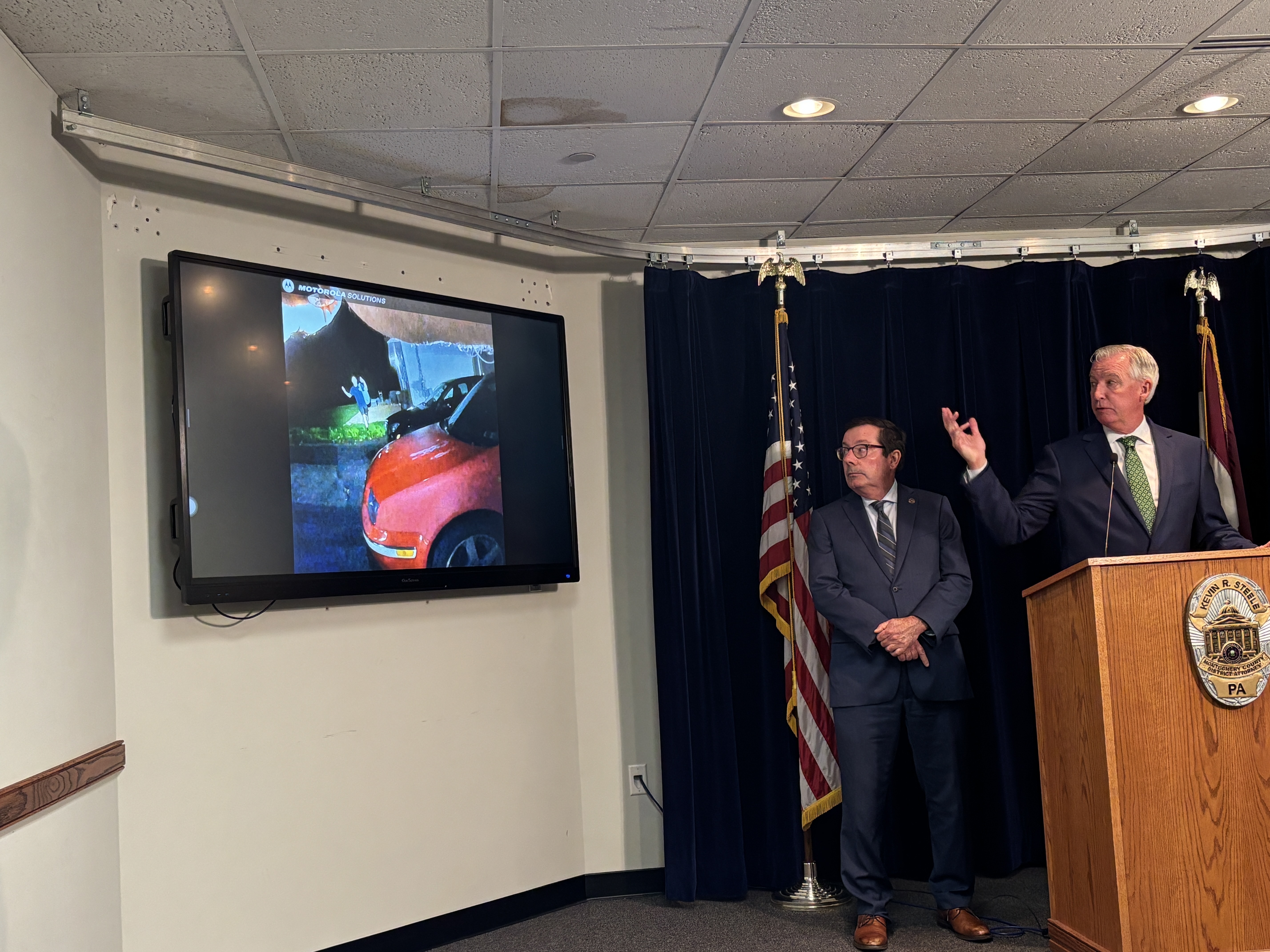
    During the second burglary, Parker allegedly was captured by a nanny cam talking, presumably on his cell phone, Steele said.

    Parker allegedly used his cell phone to communicate with a getaway driver during the two burglaries and one attempted burglary.

    Parker allegedly used his cell phone and his Gmail accounts to Google phrases such as “gold presidential rolex,” “briony raymond new york,” asking how much a 1.5 carat diamond was worth, and other searches related to the stolen jewelry items, Steele said.

    Parker allegedly rented a white GMC Yukon Denali from a rental location in Philadelphia on July 16 and returned it on July 18 at 6:43 a.m., less than two hours after the attempted burglary at Barkley’s home.

    In July, Tredyffrin Township police released an image of a white SUV in connection with the attempted burglary.

  • Bucks DA files suit saying vape shop illegally sold tobacco and THC products to minors

    Bucks DA files suit saying vape shop illegally sold tobacco and THC products to minors

    Bucks County District Attorney Joe Khan filed a lawsuit Wednesday against the owners of a Buckingham Township vape shop, seeking to close the business, which he said sold potent THC products, as well as tobacco and kratom, to minors.

    Khan announced the suit, filed in the Bucks County Court of Common Pleas, outside of Zaza Cigar & Vape after what he described as months of investigating complaints about the business from parents in the Central Bucks School District.

    “This store is selling marijuana cigarettes under the guise that they’re selling products that are legal and perfectly safe for people to own and to use, but that’s not the truth,” Khan said. “Thanks to the work of our detectives, we have uncovered the fact that this is a store that is really running an illicit drug operation under the cover and guise of a legitimate business operation.”

    In the suit, Khan said the business was the only one of the county’s 580 licensed tobacco shops that sold tobacco to undercover minors 100% of the time during routine enforcement checks.

    During at least five documented sales this year, he said, clerks at the store did not even do “the bare minimum to comply with Pennsylvania state law,” and, in one instance, sold kratom, which was listed as a Schedule 1 drug last week by the federal government, to a minor.

    Khan is seeking an emergency court order to close the store, located in a shopping center on Durham Road, and said he has launched a parallel, criminal investigation into its owners and their business practices.

    The lawsuit did not name the owners of the business, and no one answered the phone at the store on Wednesday. Court records did not list a lawyer for the business.

    “This is a store that does not care in the slightest about the welfare of our children, but we do, and that’s why we’re here to stand up for them,” Khan said.

    Court records show Zaza Cigar & Vape was fined twice this year for selling tobacco to minors. Khan said the vape store viewed these fines as “simply the cost of doing business.”

    The larger concern, he said, is the access the business is providing to THC products.

    The items are legal to sell through a provision in the 2018 U.S. Farm Bill, which legalized hemp products that contain a minuscule amount of Delta-9 tetrahydrocannabinol (THC), the psychoactive compound in marijuana.

    But Khan said the products sold at Zaza Vape & Cigar contained an illegal, more potent amount of Delta-9 and were offered for purchase by minors.

    A 2025 Inquirer investigation found samples of these products purchased from different stores in the Philadelphia region exceeded the 0.3% Delta-9 THC potency level cited in the Farm Bill, making them illegal to sell in Pennsylvania.

    Those items contained Delta-9 THC at levels 200% to more than 2,400% over the federal limit. Six samples, strengthened by other hemp-derived THC variants, were as potent as most dispensary-grade marijuana.

    “We are not going to wait to take action,” Khan said. “That’s why we went to court today to put a stop to this behavior, so that the kids who go to Central Bucks East, the kids who go to Buckingham Elementary, which is less than a mile away from where I stand, are not going to be exploited by a business like that.”

    Khan’s lawsuit is the latest example of his application of the civil-enforcement powers afforded to his office in pursuing cases that present ongoing harm to the public.

    Earlier this year, he filed suit against the company that operates Roblox, an online video game, for what he described as lax security features that allow child predators to contact underage players.

    Khan filed another lawsuit against the owners of a boarding house in Dublin that he described as squalid and dangerous.

    Both cases are ongoing.

  • Illegal speakeasy near where Philly cop was fatally shot must shut down, judge rules

    Illegal speakeasy near where Philly cop was fatally shot must shut down, judge rules

    The illegal speakeasy and hookah lounge near where a Philadelphia police officer was fatally shot last month must shut down, a city judge ordered Wednesday.

    On Aug. 16, the sidewalk outside the after-hours nightclub that was advertised as “Nipsey’s” on social media became the scene of the killing of 29-year-old Officer Alhassane Barry.

    Barry and another man had been arguing inside the Elmwood Avenue property in Southwest Philadelphia before the confrontation spilled outside, where the man opened fire on Barry, killing him and injuring another man, according to investigators.

    Immediately after the officer’s death, questions arose over Nipsey’s business practices. The property was not licensed to operate as a nightclub, city records show, and its owner had been handed a series of L&I violations in recent years.

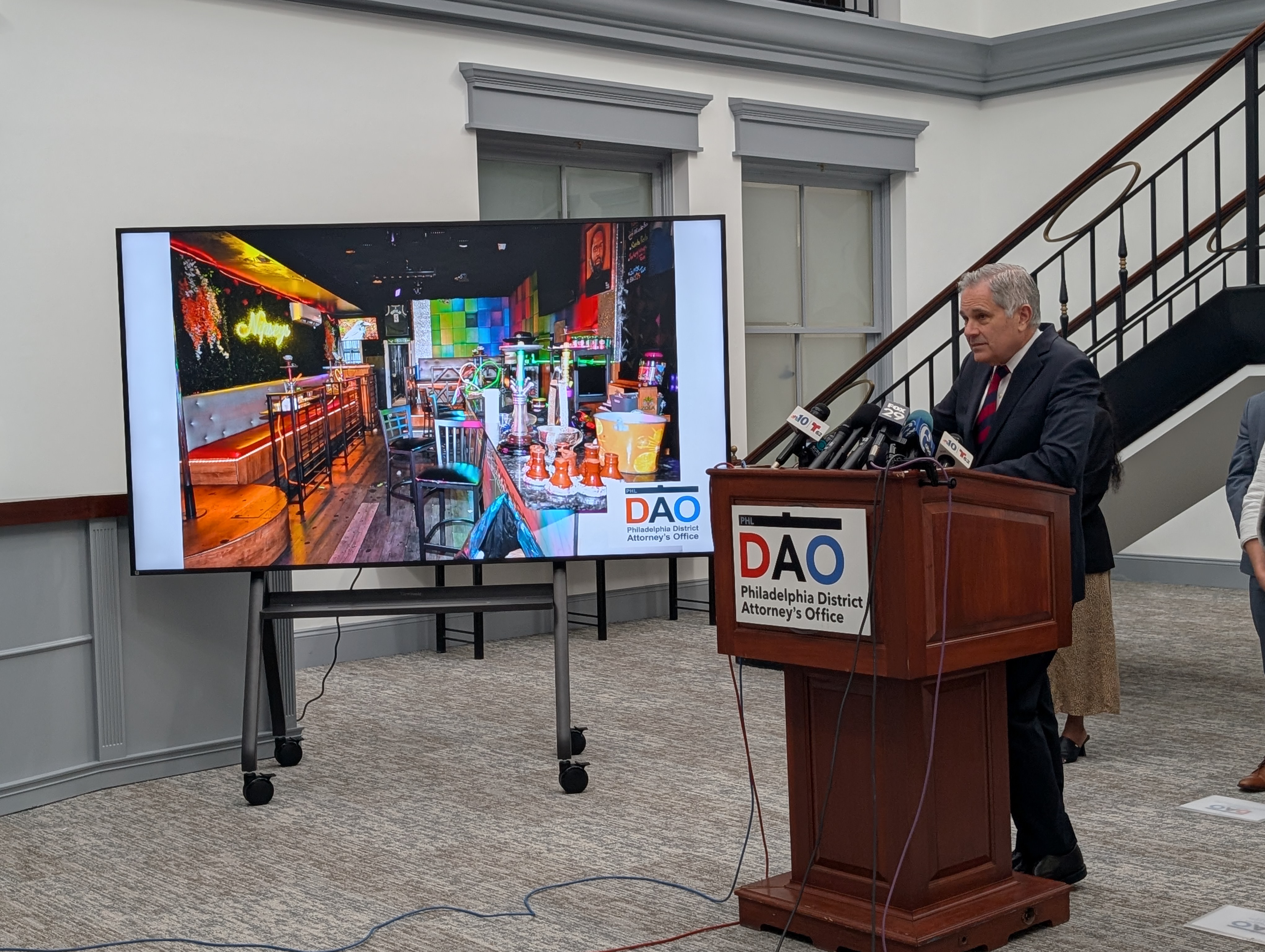
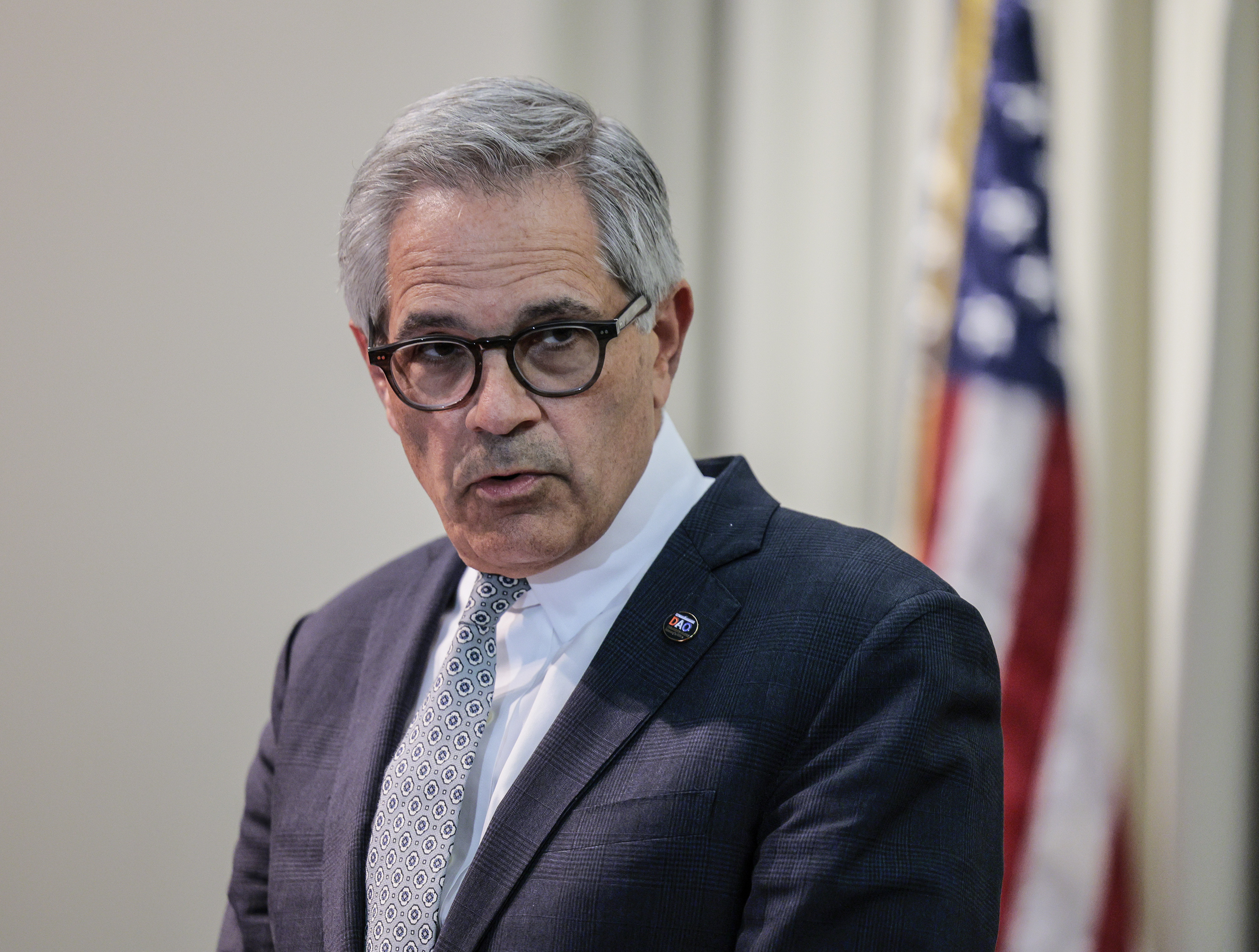
    District Attorney Larry Krasner, speaking after Barry’s killing, vowed to shutter what he called a “nuisance business,” adding that investigators believe activity at Nipsey’s may have been connected to another death this summer.

    District Attorney Larry Krasner presents images taken inside Nipsey’s Hookah Lounge, an illegal speakeasy where, outside the club, a Philadelphia police officer was killed.Jesse Bunch

    The matter was settled Wednesday in Common Pleas Court, when Judge Christopher R. Hall issued an injunction barring the property’s owner, Tran Yen, from conducting any commercial business there for one year. That includes any activity related to selling or offering alcohol, according to the ruling, which is enforceable by the Sheriff’s Office and city police.

    A spokesperson for the district attorney’s office, Solomon Leach, said the decision “effectively shuts down this illegal speakeasy.”

    “[W]hat we do know is that this establishment — and others like it — operated outside the law and was a problem waiting to happen,” the spokesperson said after the ruling.

    Thomas Kenney, a lawyer for the property’s owner, Tran Yen, of Newark, Del., said his client was “shocked as anyone else” about Barry’s killing.

    “We are cooperating with the Commonwealth to make sure there are no further nuisances,” he said. He declined to comment on the nature of the connection between Tran and those who operated Nipsey’s.

    Tran could not be reached for comment.

    In 2021 and 2024, Tran was issued violation notices from the city Department of Licenses and Inspections, violations that were filed anew after Barry’s death, city records show.

    In addition to being cited for operating as a nightclub without proper permitting, the property was cited for using extension cords rather than permanent electrical wiring, storing unsecured gas containers, and having combustible materials in a rear lot.

    Images investigators recovered from inside the lounge show patrons packed into the space amid brightly colored decorations and neon lights.

    Image from inside Nipsey’s Hookah Lounge presented by the Philadelphia District Attorney’s Office.Jesse Bunch

    The violations carried $3,200 in fines.

    Still, Krasner vowed to close Nipsey’s through court action.

    Wednesday’s order to do that came as the DA’s office continues to investigate the circumstances surrounding Barry’s death — including the possibility that the shooting was in self-defense.

    Investigators released images of the suspected shooter and prosecutors are having ongoing conversations with the man and his lawyer and are in possession of a firearm they believe he used to shoot Barry.

    They are also interviewing witnesses and analyzing footage from multiple surveillance camera angles that show portions of the shooting.

  • Woman charged with forging checks to steal from a Delco Little League team

    Woman charged with forging checks to steal from a Delco Little League team

    A woman is facing multiple charges, including forgery, after authorities said she stole more than $7,000 from a Little League team in Delaware County.

    Robin Massing, 57, was charged Tuesday, following an investigation into fraudulent checks.

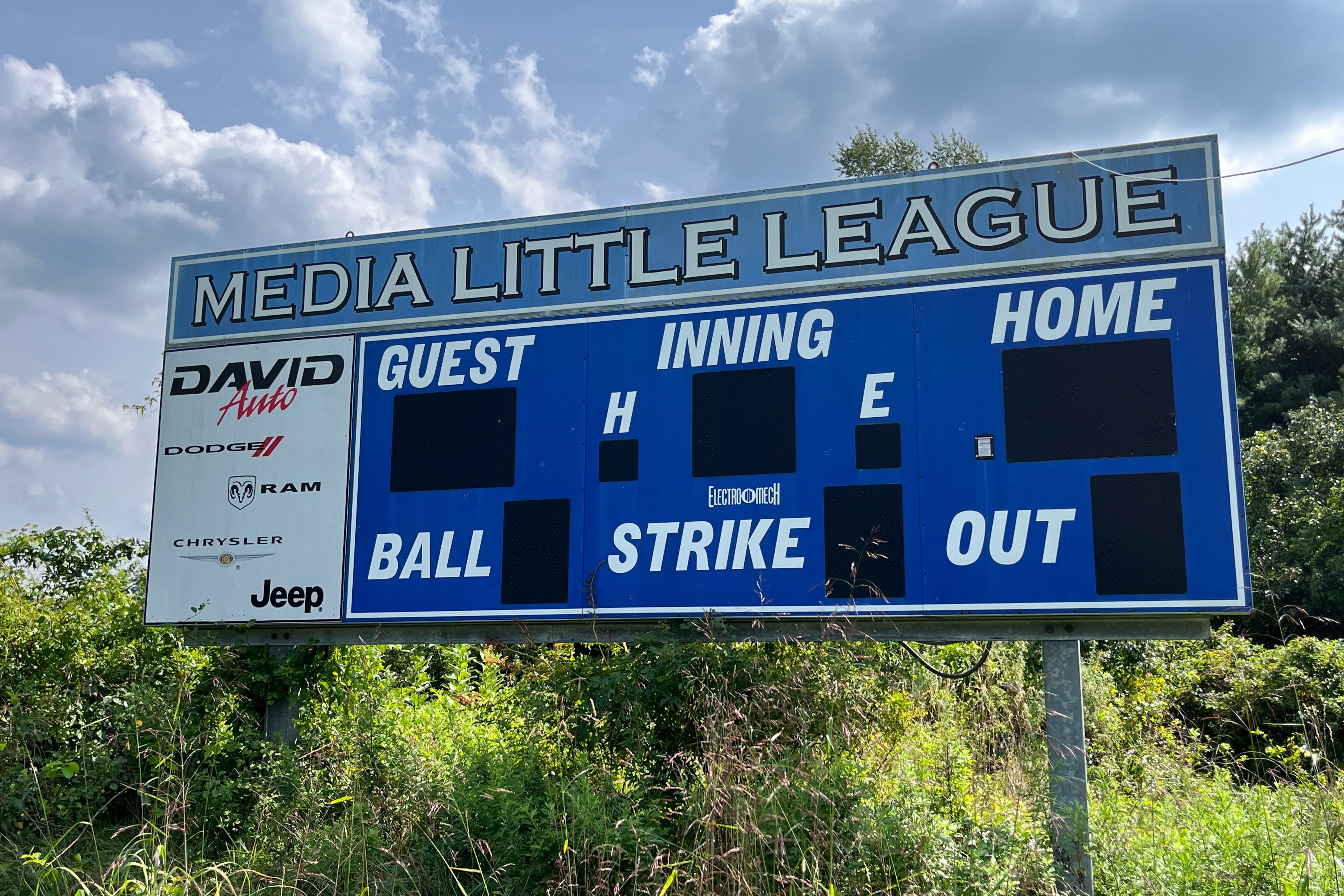
    Media Little League upper management contacted the Delaware County District Attorney’s Office to report check fraud, telling authorities three checks were mailed on behalf of the organization and sent through a mailbox in Upper Providence Township, in May 2025.

    In February, the Little League got word that one of the checks was deposited via mobile to Philadelphia Federal Credit Union for $7,200. But the amount, endorsement, and signature had been changed.

    A month later, a Fulton Bank in Southampton contacted the Little League management to verify a payment they found suspicious, the District Attorney’s Office said.

    Like the February check, the name and amount had also been changed, but the check number was the same as the February one, leading the bank to open its own investigation.

    According to the District Attorney’s Office, the bank retrieved footage that identified Massing as the person behind the theft.

    No lawyer is listed in court records for Massing, who was described in the affidavit as homeless.

    In June 2025, Massing was detained in Chester County for producing and forging a check at TD Bank, the District Attorney’s Office said.

    Now, Massing faces one count of forgery, bad checks, theft by unlawful taking, and receiving stolen property.

    The Media Little League has been organizing and teaching baseball to the community since 1952. In 2023, they made it all the way to Little League Baseball World Series in Williamsport.

    “It is hard to imagine a more disappointing target for personal greed than an organization raising money for kids,” said District Attorney Tanner Rouse in a Wednesday statement.

    The money was meant to go to uniforms, equipment, fields, and other resources for the kids, Rouse said.

    “To steal those funds and use forged checks to divert money for personal benefit is not just a financial crime; it is a profound betrayal of the entire community,” Rouse said.

  • A former confidant to Mayor Cherelle L. Parker tried to bilk campaign for rent money, court document shows

    A former confidant to Mayor Cherelle L. Parker tried to bilk campaign for rent money, court document shows

    William F. Dunbar Sr., a former confidant to Mayor Cherelle L. Parker who pleaded guilty this week to federal tax fraud charges, also sought to bilk a political campaign out of rent payments he was not entitled to, according to a court document filed Tuesday.

    The document does not name the campaign, but it appears to be Parker’s.

    Dunbar, 42, never actually received any ill-gotten funds related to the lease with the campaign, prosecutors said, and he was not charged in connection with the matter.

    But prosecutors said in court documents that he’s agreed to let a judge consider the episode and two other incidents of “additional misconduct” as she weighs his sentence for tax fraud.

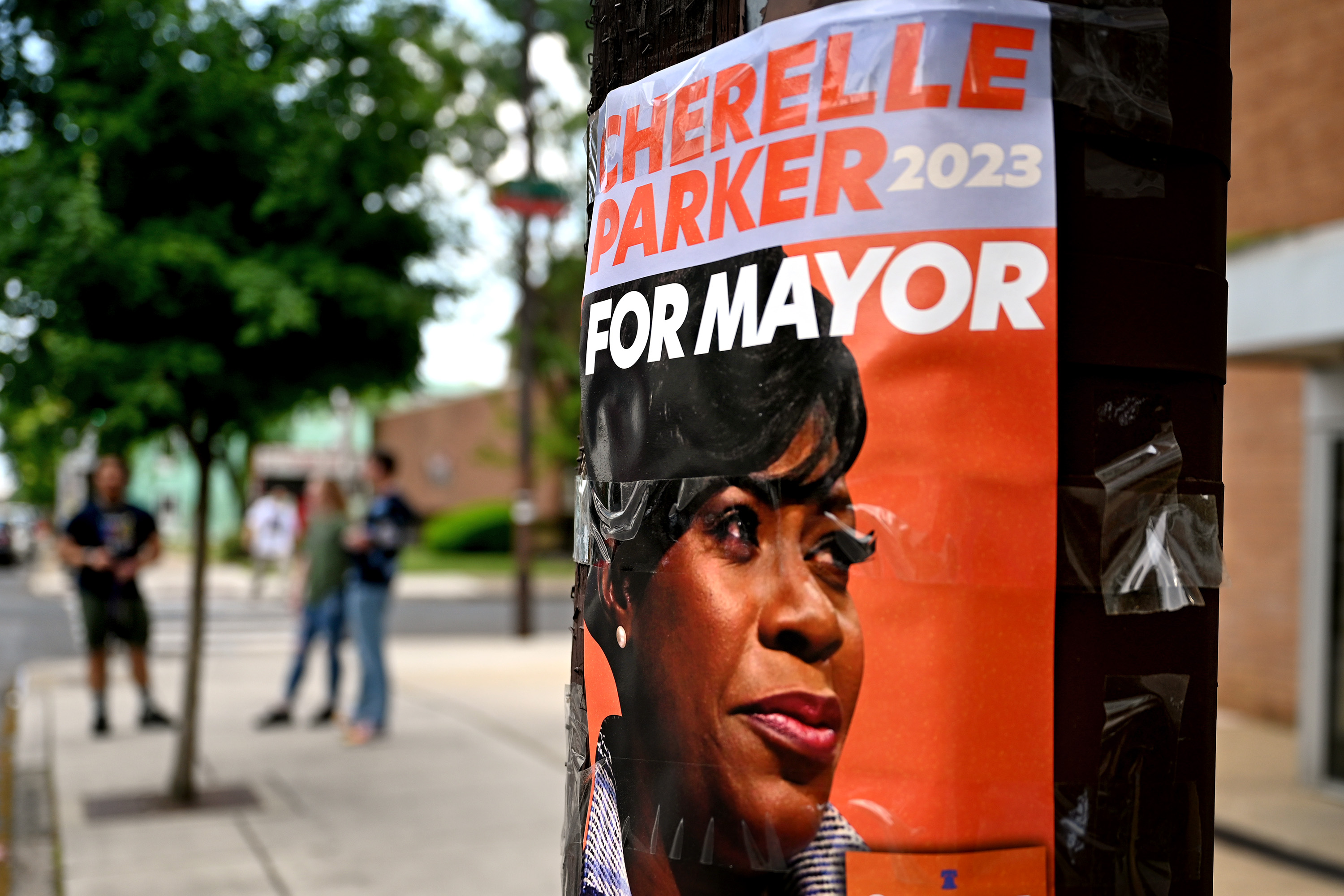
    Dunbar, a Philadelphia lobbyist, was an unpaid but important adviser to Parker during her winning campaign for mayor in 2023. He officially joined her campaign, People for Parker, around the time she took office in January 2024.

    The mayor let Dunbar go from her campaign in July 2024 in a move that Dunbar at the time described as Parker’s decision.

    The campaign made a series of rent payments totaling $22,850 to his lobbying firm, Dunbar Public Affairs & Associates, between March 2024 and November 2024, according to campaign finance records. The address listed for the rent payments was an office in the Penn Center complex near Philadelphia City Hall.

    According to Dunbar’s plea agreement, in February 2025 he “falsified certain terms of a lease agreement for office space that [he] had entered as the lessor with a Philadelphia political campaign.”

    The city’s online database of campaign finance records shows People for Parker as the only campaign that has made rent payments to Dunbar’s firm.

    “The facts speak for themselves,” said Aren Platt, executive director of People for Parker, declining to comment further on Tuesday.

    Dunbar declined to comment.

    William F. Dunbar Sr., a lobbyist and a former informal adviser to Mayor Cherelle L. Parker.Courtesy of William F. Dunbar Sr.

    The plea agreement, which was signed by Dunbar and his attorney, said he “falsely modified the terms of the lease agreement” to increase the notice the campaign was required to give him to terminate the lease.

    Had the campaign not discovered the change, the agreement said, Dunbar would have received money he was not owed. “The defendant’s efforts in this regard did not result in his obtaining any funds, and he ceased making any efforts to obtain these funds before learning of the federal criminal investigation resulting in the charges in this case,” the agreement said.

    Dunbar on Monday pleaded guilty to filing false tax returns for himself and his wife between 2020 and 2025 and claiming substantial refunds when, in reality, they owed money. Prosecutors said in court papers that the tax loss related to the fraud was between $350,000 and $750,000. The charges carry a maximum sentence of 16 years in prison, plus supervised release and fines.

    Dunbar’s attorney, Brian McMonagle, said in a statement Tuesday that the plea agreement “reflects Mr. Dunbar’s acceptance of responsibility for his own conduct.”

    McMonagle said that the agreement “does not include any cooperation obligations” and that Dunbar is “not required under the agreement to provide information or testimony regarding any other individual.”

    The four charges to which Dunbar pleaded guilty are unrelated to his firm’s lease with the Parker campaign and the two other incidents of “additional misconduct” that Dunbar stipulated in the agreement. The other incidents involve falsifying a document for a mortgage application and submitting false financial information to receive additional financial aid at a private school.

    Although those episodes did not lead to criminal charges against Dunbar, U.S. District Court Judge Kelley B. Hodge will be able to consider them when determining his sentence. A sentencing hearing is scheduled for January.

    Staff writer Chris Palmer contributed to this article.

  • Montgomery County cop charged with manslaughter for killing a college student who accidentally knocked on the door of the wrong house

    Montgomery County cop charged with manslaughter for killing a college student who accidentally knocked on the door of the wrong house

    An Upper Pottsgrove police officer was charged with manslaughter Tuesday in the fatal shooting of a college student that prosecutors said was unjustified.

    Cpl. Sean Farrell, 58, shot Glenwood Pysher IV on Aug. 23 after Pysher accidentally knocked on the door of the wrong house after a night out drinking with friends. The residents, thinking Pysher was trying to break in, called police, authorities said.

    Montgomery County District Attorney Kevin Steele said that Pysher was not a threat, and that Farrell’s use of force was criminal.

    “At the time the fatal shots were fired, Mr. Pysher had his hands up, he had no weapon, he did not charge the officer or act aggressively in any way,” Steele said. “This was not a legal use of force under Pennsylvania law.”

    Montgomery County District Attorney Kevin Steele shows a still image taken from the body-worn camera of Cpl. Sean Farrell. Steele said Farrell was not justified in using lethal force against Glenwood Pysher IV.Vinny Vella / Staff

    Body-camera footage recorded the entire encounter, which Steele said lasted “seconds, not minutes.”

    After the shooting, the DA said, Farrell told a colleague that Pysher acted aggressively, “charged” him, and ignored his commands.

    Steele said the footage contradicts Farrell’s account, and shows Pysher calmly listening to the officer.

    Even if Pysher had been aggressive, Steele said, Farrell could have used the nonlethal weapons he was carrying that night, including a Taser and a baton, rather than reaching for his gun.

    Pysher, 22, affectionately known as “Bubba,” was days away from returning to St. Elizabeth University in North Jersey for his senior year. He had a made a wrong turn while walking to a friend’s house, and didn’t realize he was at a stranger’s door, said his mother, Erin.

    Minutes later, Farrell responded to a 911 call reporting an attempted break-in. After arriving at the home, Farrell identified himself as a police officer and told Pysher to show him his hands and drop to the ground, according to the affidavit of probable cause for his arrest.

    Pysher raised his hands and walked toward Farrell, who again told him to drop to the ground, the affidavit said. Farrell then yelled “stop or I’ll …” and fired his gun twice before finishing his warning.

    Pysher, who was no more than 20 feet away from Farrell, was struck in his chest and collapsed.

    The Montgomery County Coroner’s Office ruled the death a homicide.

    Farrell, who has served as an officer in Upper Pottsgrove since 2005, has been placed on administrative leave. He is a third-generation police officer, according to an interview he did with the Reading Eagle.

    During an arraignment Tuesday afternoon, District Judge Cathleen Kelly Rebar initially set Farrell’s bail at 10% of $75,000, but decided to keep Farrell in custody until he can surrender his personal firearms.

    His attorney, Michael Gottlieb, told the judge Farrell is “a decorated police officer” who “was out there doing his duty.”

    “He did not have any ill will” toward Pysher, the lawyer said. “He didn’t go there with intent to injure this young gentleman.”

    A lawyer the Pysher family, Ken Fulginiti, meanwhile, said Tuesday they are “grateful for the work of the Montgomery County District Attorney’s office and they are looking forward to justice in this horribly tragic, preventable and reckless conduct that took the life of their son.”

    In the days after the shooting, Pysher’s family expressed sadness and outrage and said they wondered why the officer didn’t take steps to de-escalate the situation.

    “It was a senseless loss, and it shouldn’t have happened,” Erin Pysher said in an interview. “I don’t know what the officer was thinking or doing that his first response was to shoot an unarmed kid.

    “This was all a huge mistake, and they killed him.”

  • Police identify the victim of the Times Square fatal stabbing as a 32-year-old Penn grad

    Police identify the victim of the Times Square fatal stabbing as a 32-year-old Penn grad

    Police have identified the victim killed in a knife-wielding spree in Times Square as a 32-year-old from Chester, N.J.

    Erin Piacenti was a vice president of business at Bank of America based out of Manhattan with a background in law, according to her LinkedIn profile. But before that, she was a singer at Penn.

    As a young girl, Piacenti, whose given name was Guiltinan, attended the private Catholic girls’ school in Morristown, N.J., Villa Walsh Academy. She went on to enroll in the University of Pennsylvania, graduating in 2016, and, later, Fordham University for law school in 2021.

    She had deep roots in New Jersey and made lifelong friends through her involvement in the New Jersey Youth Chorus and later, Penn’s Dischord A Cappella group. A spokesperson for the New Jersey Youth Chorus confirmed Piacenti’s involvement but declined to comment further, citing sensitivity and privacy.

    In Dischord, Piacenti was a frequent soloist with an explosive alto range, taking on renditions of big pop and R&B divas, from Ariana Grande to Tina Turner with confidence. Even when she wasn’t soloing, Piacenti often worked on Dischord’s song arrangements, according to credits from past performances.

    Piacenti recently celebrated her second wedding anniversary. The couple — who both attended Fordham law school — married in Manahawkin, N.J., in 2024. Piacenti’s husband could not immediately be reached for comment.

    “We are shocked and deeply saddened by the tragic loss of our colleague,” Bank of America told The Inquirer in an emailed statement. “She was ​a valued teammate who will ​be greatly missed. Our hearts go out ⁠to her family and all of ​her loved ones.”

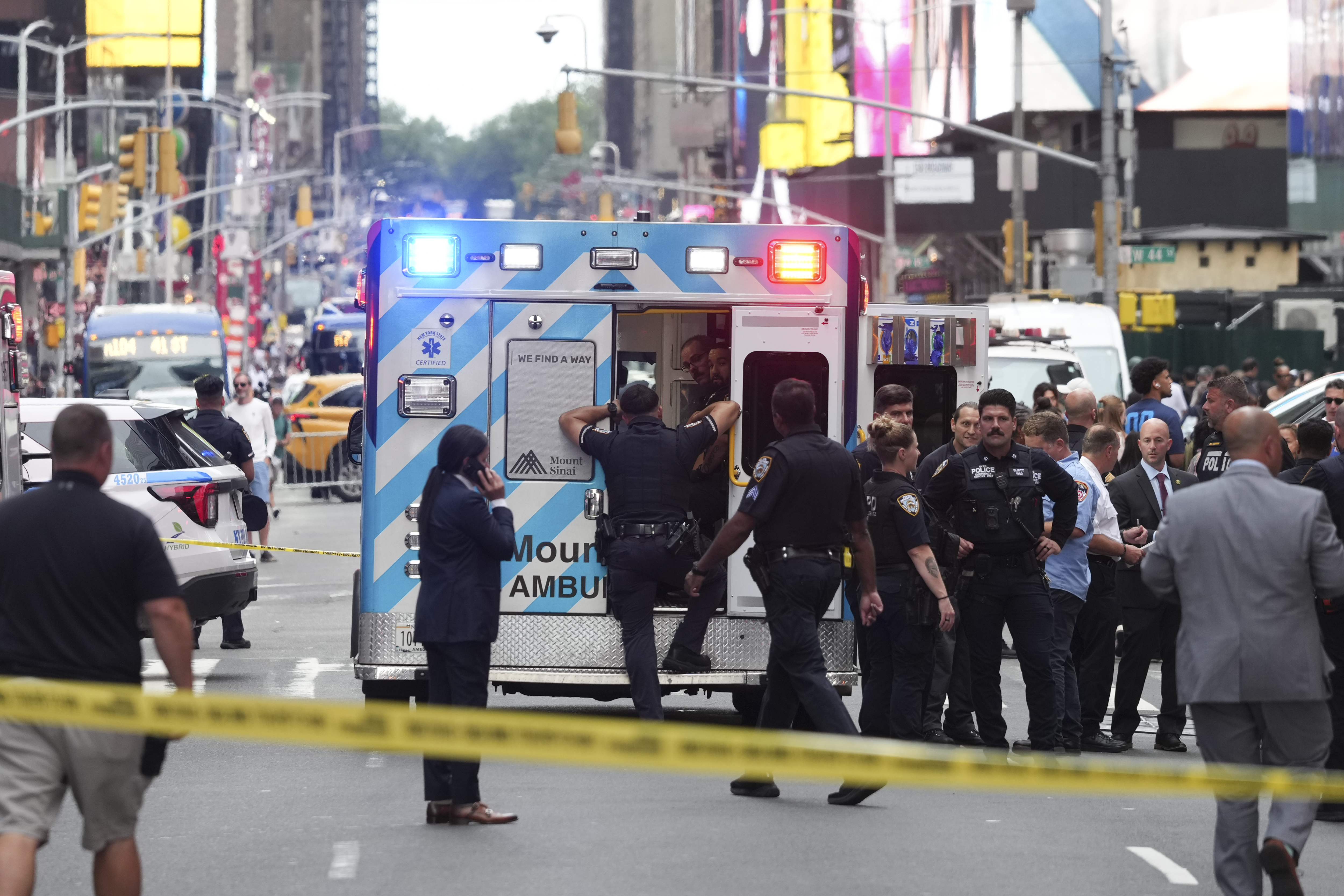
    Piacenti was fatally stabbed by Pamela Cisneros of Queens, who reportedly had a documented history of mental health concerns, but no criminal history, NYPD Commissioner Jessica Tisch said at a news conference.

    Cisneros, 49, was caught on a string of now-viral videos waving around two large knives. Police fatally shot her Monday in the middle of Times Square after they said she injured two people at random: a 68-year-old man exiting the subway and, about 20 seconds later, Piacenti.

    Piacenti was rushed to the hospital with a puncture to her abdomen and was pronounced dead, according to Tisch. The male victim, who has not been publicly named, was separately hospitalized and is recovering, according to police.

    Tisch said that police attempted to negotiate with Cisneros, who held the knives toward officers for “four minutes,” but that she remained hostile and threatened to kill them instead. Responding officers deployed Tasers, but she advanced anyway, police said. Two officers opened fire at Cisneros, who was taken to the hospital where she died.

    Tom Harris, the president of the Times Square Alliance, which represents the area’s businesses, said the stabbings were a “tragedy.”

    “Our hearts go out to the victims and their families at this time,” Harris told the New York Times. “We are thankful that once again the NYPD was swift to act and put themselves in harm’s way to stop the perpetrator before more were injured.”

  • Man and woman charged with murder in shooting on I-95 that killed a 21-year-old bystander

    Man and woman charged with murder in shooting on I-95 that killed a 21-year-old bystander

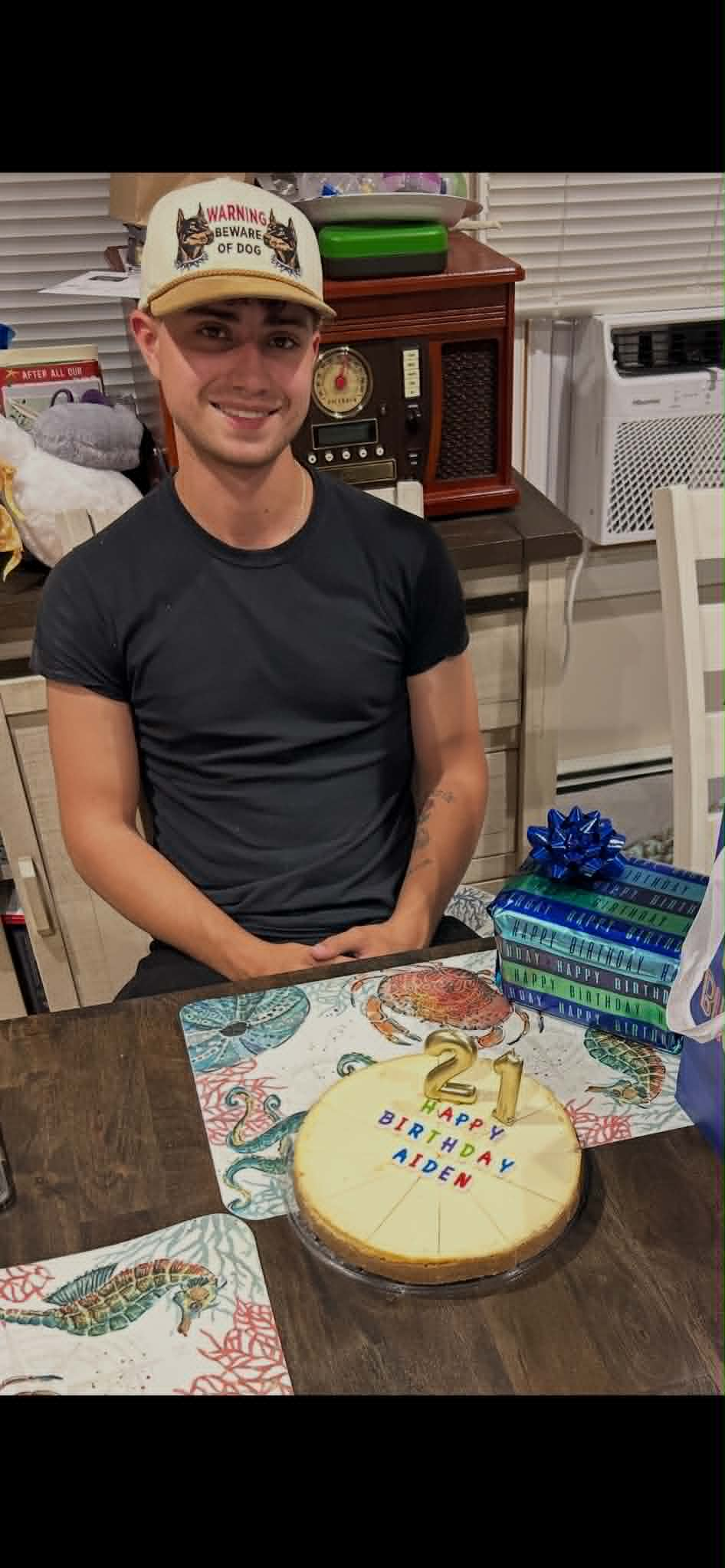
    Aiden Zeallor was only trying to get home the night he was struck and killed by gunfire while driving on I-95 near Port Richmond last year.

    Zeallor, 21, was a bystander, in the wrong place at the wrong time when at least 50 rounds were fired at a nearby vehicle in what investigators said was an attempted targeted killing of another person.

    Now, nearly 18 months after the Levittown native’s death, police have arrested a man and woman they say are responsible.

    Alondra M. Lopez, 28, and Joseph G. Toledo-Gonzalez, 27, face charges of murder, attempted murder, and related crimes in connection with the 2025 shooting.

    Lopez is being held in the Philadelphia Industrial Correctional Center and Toledo-Gonzalez is being held in the Curran-Fromhold Correctional Facility. Both were denied bail.

    Zeallor’s mother, Denise Donahue, said the arrests have given her some semblance of closure, even if no development in the case will bring back her son.

    “He was a loving boy that should still be here,” Donahue said. “His life was stolen from him.”

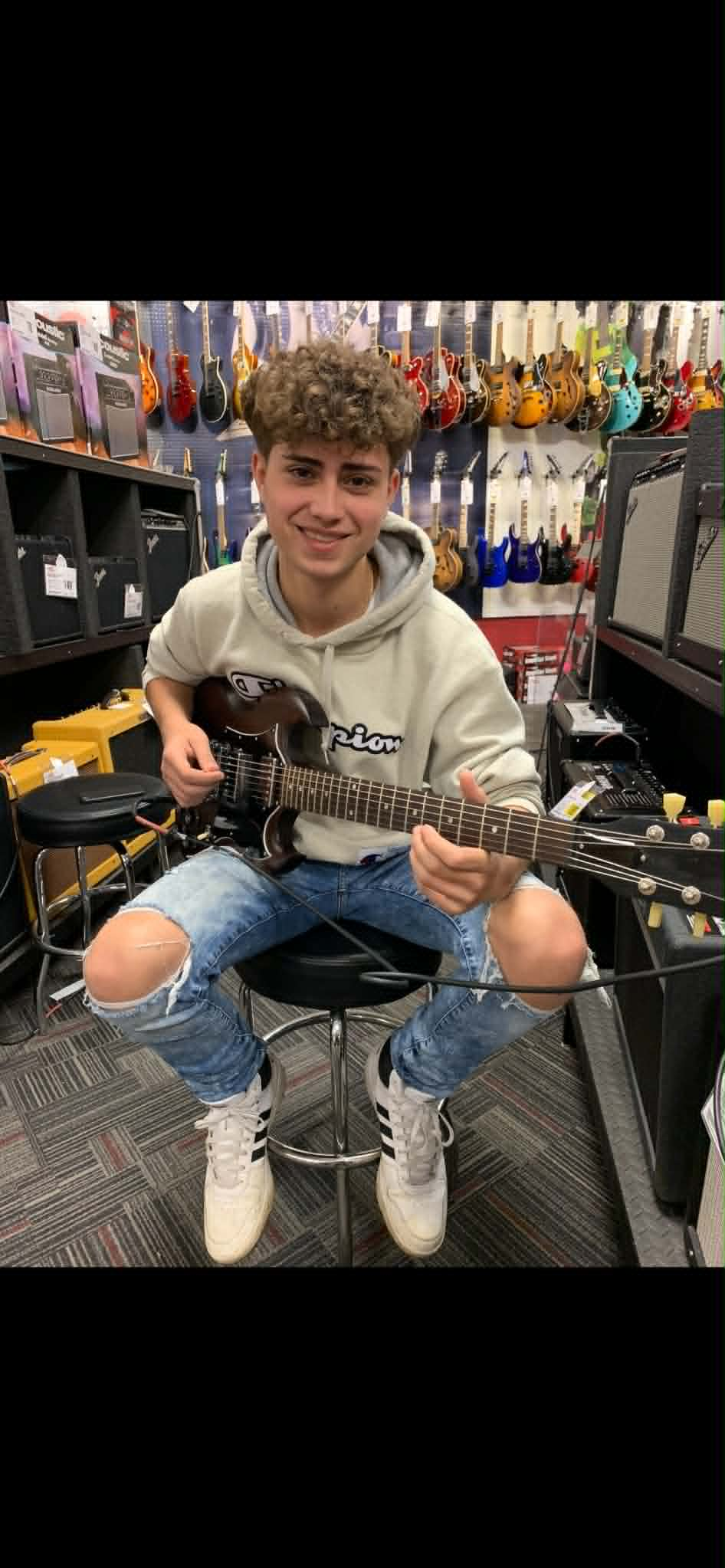
    The curly-haired young man was an avid fisherman and outdoor enthusiast who worked as a technician for his family’s HVAC company and was always surrounded by friends, Donahue said.

    He was also devoted to his family, she said. Not long before Zeallor’s death, he had moved into his grandmother’s house in Northeast Philadelphia to take care of her and so she did not have to live alone.

    Donahue, meanwhile, continues to grieve the loss of her son. She had already experienced the death of Zeallor’s father, in 2009.

    Her life was again forever altered the evening of March 29, 2025, when she learned her son had been shot in the head and torso and was put on life support.

    A photo of Aiden Zeallor.Denise Donahue

    She rushed to the hospital from her home in Wildwood. Zeallor was declared brain-dead and died later that morning.

    Donahue said her son had been out dancing with a friend that evening at a nightclub in Philadelphia.

    The two were heading back to Zeallor’s grandmother’s house and were in the northbound lane of I-95 around 2:30 a.m. in Zeallor’s Ford Mustang when bullets fired from a semiautomatic rifle riddled a nearby Acura, the intended target of the shooting.

    Two stray bullets pierced Zeallor’s windshield as he drove, striking his right eye and under his right arm.

    The driver of the Acura was shot in the leg and was treated at a nearby hospital.

    Court documents offered few details about Lopez and Toledo-Gonzalez’s role in the shooting and do not describe the motive.

    A spokesperson for the Pennsylvania State Police, which is handling the investigation, did not immediately return a request for comment.

    A preliminary hearing for both defendants is scheduled for Sept. 14 in Municipal Court.

    Donahue said she and relatives plan to attend every court proceeding as they seek justice for Zeallor.

    They are also urging lawmakers to pass “Aiden’s Law,” which would require the installation of surveillance cameras on certain Pennsylvania highways to help investigators identify suspects in violent crimes.

    Meanwhile, the family is comforted knowing that Zeallor helped save four lives through organ donation.

    “We changed other people’s lives that day,” Donahue said. “That makes me proud, as Aiden’s mom.”

  • DA Larry Krasner will not be called to testify about a case that has roiled his office

    DA Larry Krasner will not be called to testify about a case that has roiled his office

    A federal judge said Tuesday that he will not call Philadelphia District Attorney Larry Krasner to testify about his actions in a controversial post-conviction case — despite the fact that some of Krasner’s own staffers have accused him of overseeing the matter in ways they viewed as inappropriate.

    The decision by U.S. District Judge Paul S. Diamond came at the end of a multiday hearing at which two of Krasner’s prosecutors testified about the discord that emerged among lawyers in the office as they worked to determine whether a man’s murder conviction should be overturned.

    Both prosecutors who testified Tuesday, David Napiorski and Peter Andrews, largely echoed assertions two of their colleagues made on previous days of the hearing — including that Krasner vehemently opposed referring the case to the state attorney general’s office, and that he threatened unspecified “consequences” for those who didn’t follow his orders.

    In earlier testimony, other staffers accused Krasner of calling state prosecutors “Nazis” and growing “apoplectic” when they memorialized their disagreements with him in writing. Diamond last week also suggested that some actions in the case could amount to crimes including perjury, conspiracy, or obstruction of justice.

    Napiorski and Andrews continued to paint a portrait of an office consumed by internal conflicts over its actions in the matter. And they accused Krasner of sometimes amplifying the drama.

    Despite that, Diamond said at the conclusion of the hearing that he did not intend to hear from any other witnesses, including Krasner. Instead, Diamond said, his next step would be to determine whether Krasner’s office should be allowed to continue participating in the case moving forward. He did not specify how quickly that ruling might come.

    Krasner declined to comment Tuesday. He has previously declined to talk about the matter, saying it would violate ethical rules to do so while it remains pending.

    The underlying case is the conviction of Dennis Johnson, who was found guilty of second-degree murder in 2009 for fatally shooting Kenyatta Smith outside a North Philadelphia convenience store.

    Johnson appealed his conviction, in part because he said his trial attorney was ineffective. And in 2022, a newly hired prosecutor in Krasner’s law division, Jaclyn Mason, filed court documents agreeing with him and saying his conviction should be overturned.

    But this spring, some of Mason’s colleagues began reviewing the case and took the opposite view — in part because they said she’d made clear and important mistakes in her brief supporting Johnson’s position.

    That set off a sequence of events that has gone on to roil Krasner’s office.

    First, Mason’s supervisors said they had to withdraw her brief and apologize to Diamond for her mistakes — an unusual step for lawyers to take in court.

    And although they said they offered Mason a chance to join that effort, she resigned instead, saying she’d only filed her brief because her boss, Matthew Stiegler, had pressured her to do so, and that she didn’t want to be used as a scapegoat for the office.

    In the weeks that followed, prosecutors testified, Krasner became involved in a series of disputes with those who remained on the case, including Napiorski, Andrews, and two of their colleagues: Katherine Ernst and Steven Wildberger.

    All four went on to testify that they believed their office should recuse itself from handling Johnson’s case because their internal discussions had veered into areas of self-preservation rather than the merits of Johnson’s claims.

    But Krasner disagreed, they said, at times angrily. He said he would not refer the case to the attorney general’s office because he viewed their staffers as “Nazis,” according to Ernst and Wildberger. And they and Napiorski said Krasner also wanted to keep the case in-house to “protect the office.”

    By mid-July — about six weeks after Mason resigned — Ernst, Wildberger, Napiorski, and Andrews filed documents with Diamond saying they could no longer participate in the case due to the behind-the-scenes drama.

    Krasner, in a court document of his own, called their assertions unauthorized and “ill-informed.”

    As Diamond weighs how to sort out the turmoil, Roy Clark, Johnson’s father, said he’s become demoralized by how attention has shifted away from whether or not his son should be released from prison.

    “With all the in-house fighting and stuff for the DA’s Office, it takes the human component out of the case,” he said outside the courthouse Tuesday. “We’re trying to get my boy home.”

    Staff writer Jesse Bunch contributed to this article.