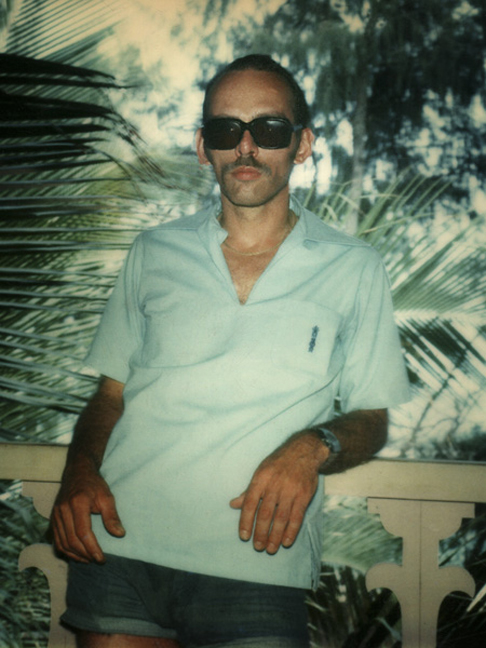
Dylan Drake Williams knew the girl he had befriended on Snapchat was 15. But that didn’t stop him, federal prosecutors said Friday, from asking her how badly she wanted to be kidnapped, and whether she would be his “sex slave.”
And Williams, an airman stationed at Dover Air Force Base, eventually followed through, according to court filings. He drove to the girl’s Falls Township home Aug. 20, instructed her to leave her phone behind and delete some of the incriminating text messages, and took her to his home, where, the girl told police, he raped her.
Williams, 27, has been charged in U.S. District Court in Delaware with coercion and enticement, transportation with intent to engage in criminal sexual activity, and travel with intent to engage in illicit sexual conduct. Prosecutors in Bucks County have filed a parallel case, in which he faces similar charges, including unlawful contact with a minor and corruption of minors.
He also faces a third, separate investigation in Kent County, Delaware, where he is charged with rape.
Williams will remain in federal custody ahead of a detention hearing later this month, according to court records. Neither his federal attorney, Conor Wilson, nor the attorney representing him in Bucks County, Ellis Klein, returned calls for comment.
The girl told police she began messaging Williams in April, according to the affidavit of probable cause for his arrest. He knew she was underage, she said, but asked her to send him explicit photos of herself, which he returned in kind.
Eventually, Williams arranged to meet the girl in Bucks County, and drove to a basketball court not far from her home, the affidavit said. There, Williams coerced the girl to perform a sex act in his car.
Afterward, the two continued to exchange sexually charged messages. In early August, Williams asked the girl if he could see her again, telling her he wanted “to take ownership” of her and was planning to drive to her home to pick her up in the middle of the night.
As they planned the meeting, the girl, fearful, asked Williams if he was going to kill her, but he reassured her, telling her he genuinely liked her, and that she “was brave for doing this.”
Before dawn on Aug. 20, the girl left her home through her bedroom window and walked to Williams’ nearby car. Per his instructions, she had left her cell phone behind.
Her parents, finding her phone and reading some of the text messages the two had exchanged, called Falls Township Police. Detectives there were able to identify Williams through his Snapchat account, and find that he was enlisted at the Dover base.
Meanwhile, Williams drove the girl more than 100 miles back to Delaware, where he hid her in the basement apartment he was renting. The girl later told police he forced her to have sex, ignoring her complaints that she was in pain.
When police arrived at the base, Williams admitted that the girl was at his home, and that he had sex with her.
He said he knew that getting caught would ruin his life, and said he preferred the death penalty, because he “was too much of a coward to take his life,” the affidavit said.
Samuel C. Stretton, the high-profile Chester County lawyer, said he’s been hearing from women about Lindsay Clancy, the Massachusetts mother facing murder charges for killing her three young children.
“You know, Sam, she’s innocent,” he recalled one woman telling him at a supermarket.
Stretton knows the Clancy case has struck a nerve. He knows because he defended a woman in a similar case 37 years ago.
He represented Tanya Dacri, a Northeast Philadelphia woman who pleaded guilty in 1989 to drowning her infant son Zacharry and dismembering his body.
She was sentenced to life in prison.
“I don’t think there’s any question now, in hindsight, that she suffered from [the] postpartum diagnosis. Problem was, it wasn’t understood back then, like it is now,” Stretton said in a phone interview Tuesday night.
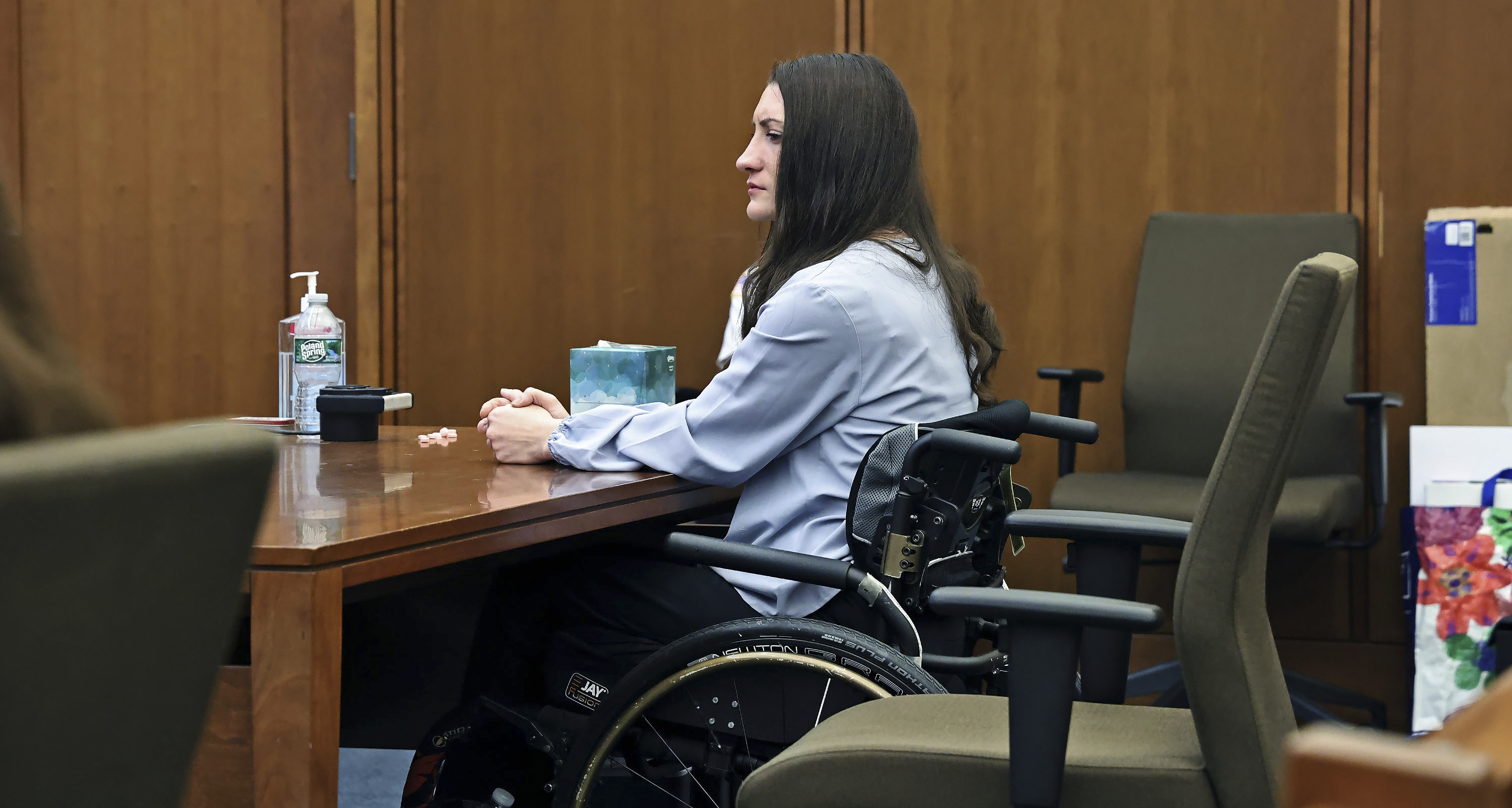
Lindsay Clancy sits at the defense table as Kevin Reddington asks the jury to find her not guilty during her murder trial at Plymouth Superior Court in Plymouth, Mass., on Aug. 27. Greg Derr
The jury in the Clancy case began deliberating last week. Unable to reach a verdict, Judge William Sullivan declared a mistrial Friday afternoon. A status hearing to decide where the case goes from here was scheduled for Sept. 29.
Clancy, a former labor and delivery nurse, admits she strangled her children, but her legal defense is that postpartum psychosis led to her actions. Clancy, 36, has pleaded not guilty by reason of lack of criminal responsibility. Prosecutors say she knew what she was doing.
In Pennsylvania, Dacri, now 58, is serving her sentence at the State Correctional Institution at Muncy, the state prison for women.
Stretton believes “it’s the right time” for Dacri to seek a pardon or commutation. That would require a unanimous decision from the state Board of Pardons, and then the approval of the governor.
“She and I have been talking about it for about 10 years, but I told her to wait a little longer. I thought that would enhance her chances, and now I think it’s the right time,” Stretton said.
The last time Stretton communicated with Dacri was by letter several years ago. Stretton said he would move forward with a clemency application “if she still wants to do it.”
Dacri has been behind bars since she was arrested in 1989.
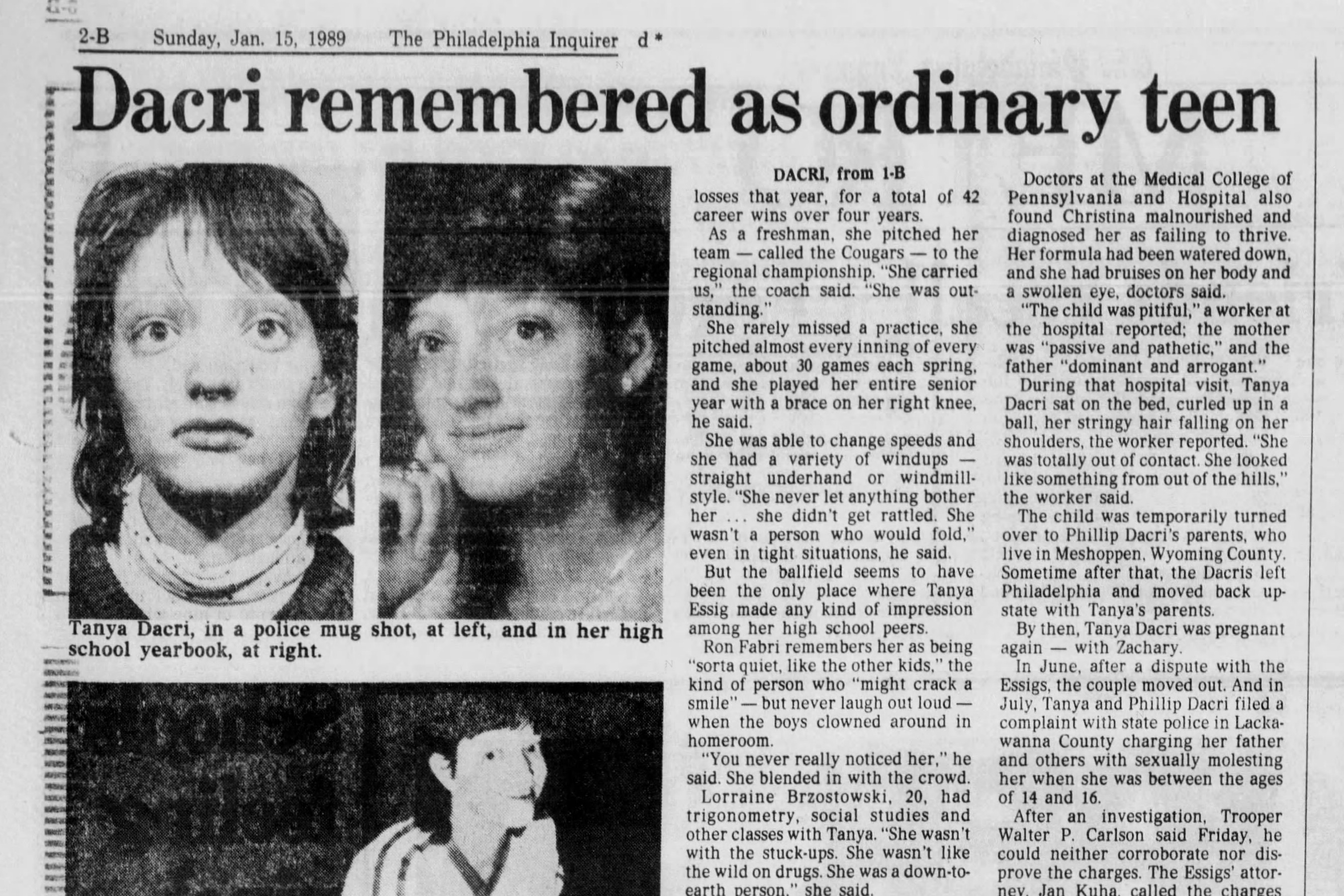
In 1989, Tanya Dacri pleaded guilty to drowning her 2-month-old son Zacharry in a Northeast Philadelphia apartment and dismembering his body.Philadelphia Inquirer
“She’s done well in prison. She’s adjusted. She’s attended all the programs. She’s sorry. She’s regretful,” Stretton said.
Dacri “has been adequately punished, and therefore we’re asking them to allow a sentence to be commuted or a pardon be granted, so she can get out and have some of her life left,” Stretton said.
“Postpartum psychosis” as a legal defense was unusual but not unknown before Dacri’s case, according to a paper published in the spring 1991 Dickinson Law Review.
Wide-ranging sentences
While Dacri was sentenced to life in prison, mothers with similar Pennsylvania cases were given wildly different sentences.
For example, the paper’s author, Amy L. Nelson, cited the case of Sharon Weisensale, who was found guilty but mentally ill in Bucks County of third-degree murder for the 1984 drowning death of her 2-month-old daughter.
“She was given a five-year suspended prison sentence and was required to undergo psychiatric treatment,” Nelson wrote.
In another case, Sharon Comitz, of Osceola Mills, Pa., pleaded guilty but mentally ill to third-degree drowning in the 1985 death of her month-old son, Nelson wrote.
According to testimony, Comitz was treated for severe postpartum depression at the time of the murder, Nelson said. Comitz received a prison sentence of eight to 20 years.
In another Pennsylvania case, Chanda Smith was convicted of third-degree murder in the drowning death of her three-week-old daughter, Nelson said. Smith was sentence to five to 10 years in prison.
“Experts testified that Smith, like Weisensale and Comitz, murdered her child while suffering from severe postpartum psychosis,” Nelson wrote.
A false story falls apart
On the morning of Jan. 12, 1989, the Dacri story hit the front page of The Inquirer under the headline, “Police: Mother drowned baby.”
Tanya Dacri, who was 20 years old at the time, initially told police that Zacharry had been taken by purse-snatching Black men — a detail that drew accusations of racism from some media commentators.
However, investigators were immediately suspicious. Dacri’s fake story quickly fell apart that same day and she told police she killed her son because he was always crying, The Inquirer reported.
She told police she dismembered his body and put the pieces in weighted plastic bags. She and her husband, Phillip Dacri, then disposed of the bags in the Neshaminy Creek in Bucks County and a creek in Carbon County.
Phillip Dacri pleaded guilty to helping his wife dispose of the remains and served 10 months in prison.
In court, During court proceedings, a psychologist for the defense and a psychiatrist for the prosecution agreed Dacri had a mental disorder that might have deteriorated to psychosis on the day she killed her infant son, The Inquirer reported.
But they disagreed on whether Dacri specifically intended to kill her Zacharry.
“I am convinced beyond a reasonable doubt that, when you placed your son in that bathtub and when you turned on the water and put the plug in the tub, that it was your intention to kill him,” Common Pleas Court Judge Michael Stiles told Dacri during her sentencing.
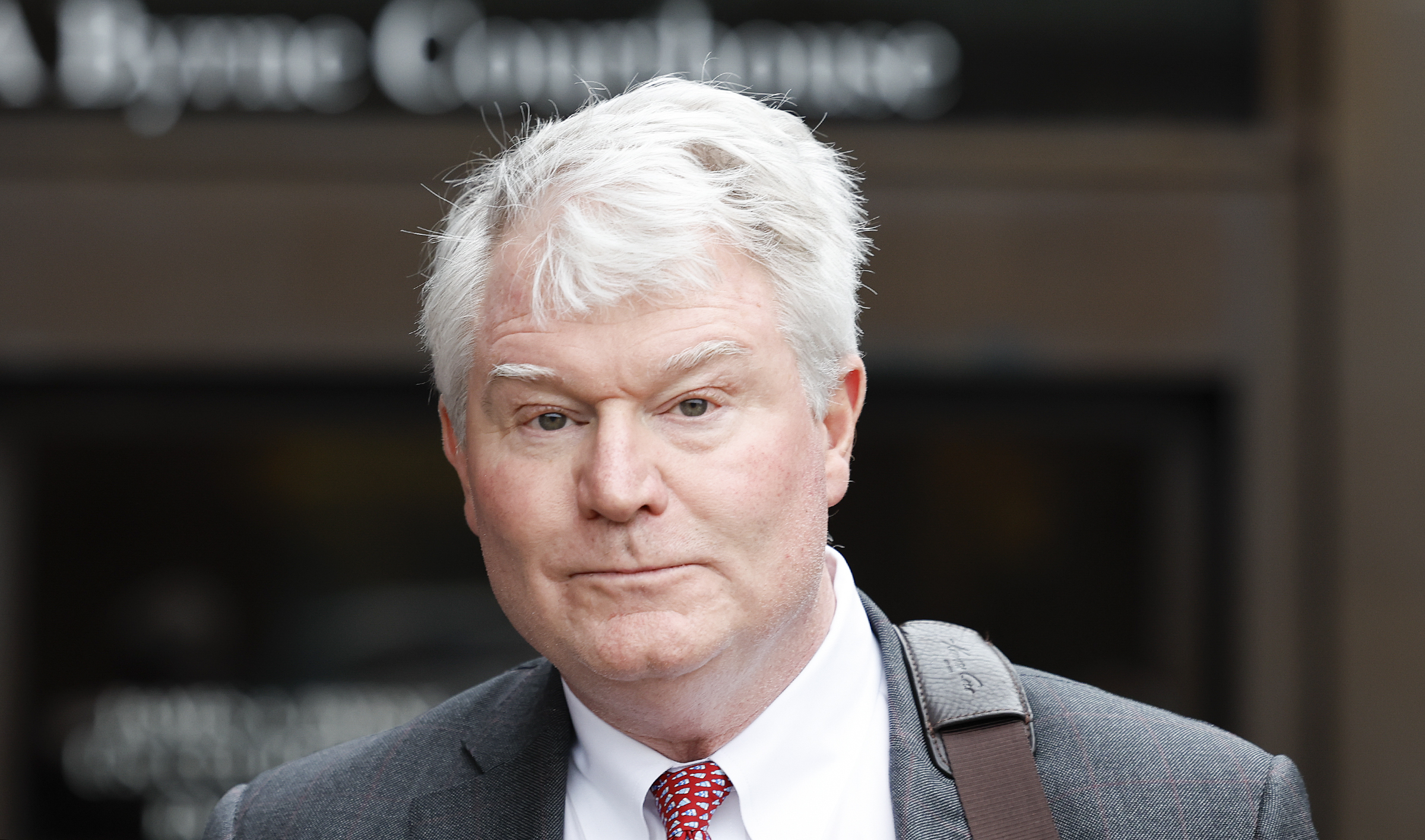
Convicted former Philadelphia labor leader John Dougherty will have his six-year prison term cut short after President Donald Trump agreed to sign a commutation ending the rest of Dougherty’s sentence, according to Dougherty’s lawyer.
George Bochetto said in an interview Thursday night he’s hopeful that Dougherty, the former city power broker known as Johnny Doc, could be freed from a federal penitentiary in Lewisburg as soon as Friday.
Bochetto called Trump’s decision “a magnificent gesture of compassion.” He said Trump had signed the commutation Thursday afternoon.
Records on the Office of Pardon Attorney’s website did not yet reflect a commutation approval as of Thursday night. And the White House press office did not immediately respond to a request for comment.
Trump had denied Dougherty’s bid for a commutation earlier this year, according to that agency’s website. It was not immediately clear why circumstances changed this week.
For months, Dougherty had been petitioning U.S. District Judge Jeffrey L. Schmehl to be released on house arrest to provide care for his gravely ill wife. But Schmehl had repeatedly denied those efforts, saying in part that Dougherty had failed to demonstrate he was the only person who could serve as an adequate caretaker.
Prosecutors had opposed Dougherty’s request for similar reasons, and said the two years he spent behind bars of his six-year sentence was not enough time to merit release. A spokesperson for the U.S. Attorney’s Office did not immediately respond to a request for comment Thursday night.
A commutation will keep Dougherty’s conviction intact, but allow him to return home to his wife, Cecilia, who Bochetto said was in “a desperate situation.” Bochetto said the act of clemency would also relieve Dougherty of having to pay about $1.6 million in restitution, and that Dougherty would not be subject to any monitoring or house arrest, saying Dougherty, upon release, would be “a free man.”
Presidents have broad authority to issue pardons and commutations in federal cases, and Trump has shown a willingness to grant them to political allies during his second term in office. But Bochetto said Trump, a Republican, was being particularly gracious in this instance by commuting the sentence of Dougherty, a longtime Democratic stalwart.
“Our criminal justice system needs to have some compassion,” Bochetto said. “There’s absolutely no reason to keep John Dougherty housed in a country club environment facility in Lewisburg when his wife so desperately needs him.”
Bochetto said he’d been in regular communication with White House staff members in seeking to free Dougherty, and that his arguments focused on the same issues he used in the bid to receive compassionate release from Schmehl: That Dougherty’s wife, who has long suffered from a debilitating brain injury, has seen her condition worsen significantly since her husband was imprisoned, and that he is the only person equipped to provide the care she needs.
Dougherty’s prosecution was one of the more significant local criminal cases in recent memory. For years, Dougherty had served as the head of his politically powerful union, Local 98 of the International Brotherhood of Electrical Workers. And from that perch, he was a certified political kingmaker — an organized labor leader with connections in City Hall and Harrisburg, and a man with the ability to raise funds or impart influence on a variety of issues across the state.
Earlier this year, while testifying before Schmehl, Dougherty revealed just how far away he was in prison from his life as a political power player: He told the judge that nearly all of his time now revolved around his wife, including sending her dozens of letters, using all of his allotted monthly phone minutes to call her, and singing her lullabies over the phone.
Ryan Boyer, who replaced Dougherty as chair of the Philadelphia Building and Construction Trades Council, said he was happy for Dougherty.
“I don’t think that John should have been arrested for what he did,” Boyer said in an interview Thursday night. “It’s correcting an injustice, and he’ll be welcomed home by a lot of people in the Philadelphia building trades, as well as Philadelphia in general.”
Boyer said he expects Dougherty will be prohibited under the terms of his release from jumping back into labor and politics right away.
“With him having a commutation, I think there will be some prohibitions with him getting back involved with labor,” Boyer said.
But, he added, he doesn’t expect Dougherty to stay away forever.
“John has a sharp mind,” Boyer said. “If I know John the way I know John, he’s not going to sit on his hands.”
City Councilmember Jimmy Harrity said in an interview Thursday night he was happy Dougherty would be able to return home to take care of his wife.
“I’m just happy that he’s going to be able to take care of Celia. I’m just happy for his family,” Harrity said. “I never want to see anybody go to jail, but the bottom line is everybody must pay their dues back. He got in trouble, he went to jail, he did some time.”
As for whether Dougherty’s release would have an influence on Philly politics going forward, Harrity declined to say.
“Oh, I don’t even want to speculate on that,” he said. “I have no idea.”
While some labor leaders cheered the news of Dougherty’s release, one was notably less enthusiastic: Mark Lynch Jr., who succeeded Dougherty as business manager of the International Brotherhood of Electrical Workers Local 98.
“We don’t spend our time focused on that,” Lynch said in a statement Thursday night, referring to Dougherty’s commutation. “Our focus is on the future of IBEW Local 98 and delivering results for our members.”
While Lynch often appears at news conferences and Local 98 is still politically influential, he has taken a more under-the-radar approach than his predecessor.
“Today, our members are working at essentially full employment,” Lynch said in his statement. “We have secured better health, dental and vision benefits while lowering costs to our members. We have negotiated some of the strongest wage increases in the country.”
Another change: Lynch has lowered the amount that electricians pay into the union’s political committee. Dougherty, on the other hand, was able to build Local 98 into a political powerhouse in no small part by convincing his members to increase their contributions.
“We are proud of the direction of the organization, and we intend to keep moving forward,” Lynch said.
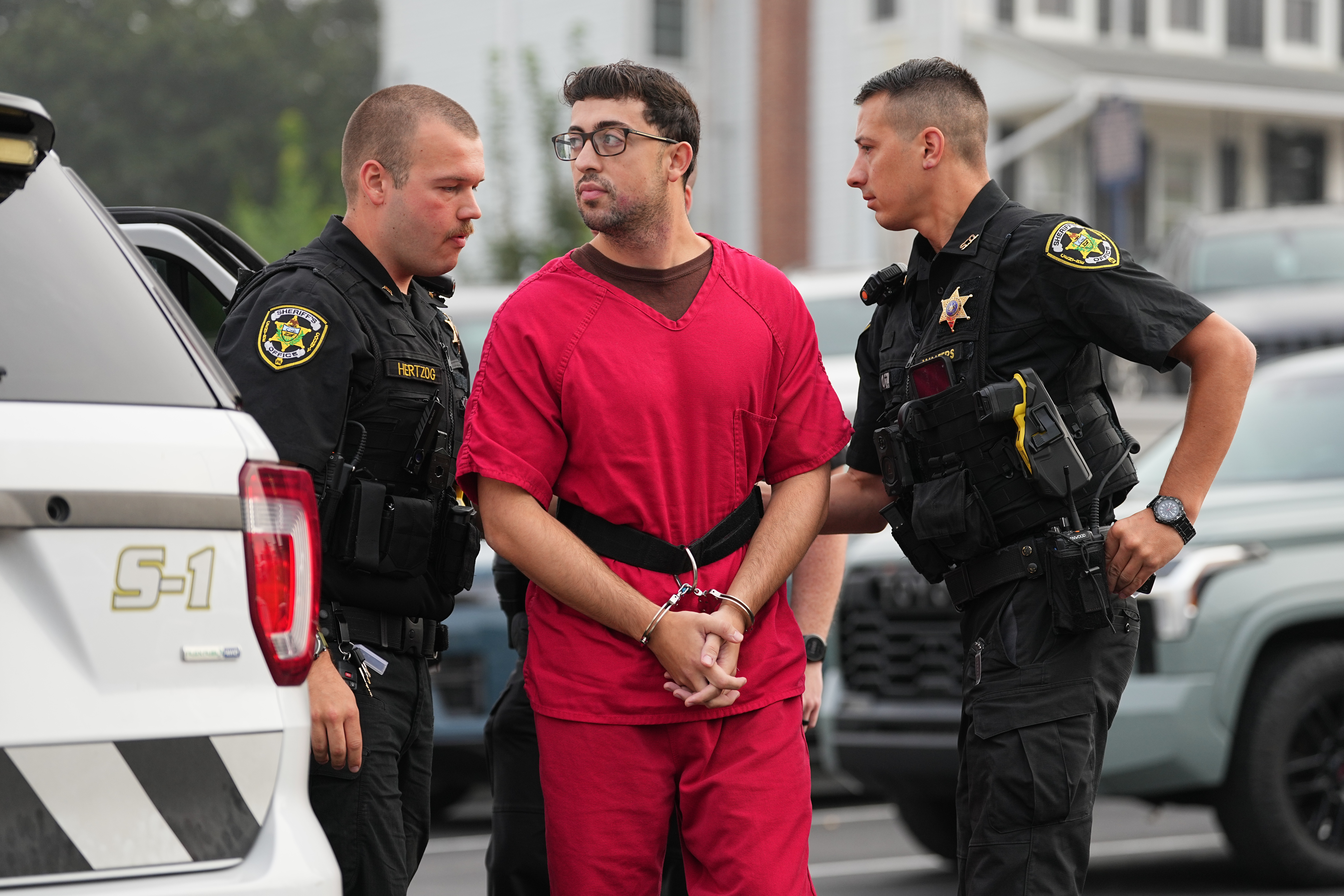
The former Pennsylvania State University student accused of orchestrating a cocaine-trafficking ring has been released on bail, after a preliminary hearing Wednesday where three of his co-defendants testified against him.
Agostino Abbatiello, 24, eventually came to be known as the main cocaine supplier on campus, according to a criminal complaint. He and other co-defendants allegedly made regular trips to New York City and Philadelphia to acquire large quantities of cocaine, and distributed the drugs out of the Delta Upsilon and Sigma Chi fraternity houses from 2023 to 2024, prosecutors say.
A judge ordered Abbatiello be held for trial on all charges, which include felony counts of possession with intent to deliver cocaine, conspiracy, and other related offenses. Fourteen people have been charged, and all but one are current or former Penn State students.
At Wednesday’s hearing, State College Police Department Detective Donald Paul said after Thomas Robinson, 23, was arrested in 2024, he began cooperating with investigators and pegged Abbatiello as the head of the operation, as reported by the Centre Daily Times.
Robinson testified about the roughly 10 cocaine purchases he made from Abbatiello, which grew in size and price to as much as a kilogram of cocaine for $22,000, the news outlet reported. According to Robinson, the cocaine was typically ground down and repackaged in half-gram bags that were sold for about $80 apiece.
Two other co-defendants provided more details in their testimonies. One said some fraternity pledges were directed to package the cocaine for sale, while another testified that Abbatiello flaunted the money he was making, and was gambling thousands of it at a time, the Centre Daily Times reported. Senior deputy attorney general Megan McGoron said Abbatiello was making hundreds of thousands of dollars.
Abbatiello, of Long Island, N.Y., was denied bail when he was arraigned last month, and spent about two weeks in jail. At Wednesday’s hearing, prosecutors requested a $5 million bail, but Abbatiello’s attorneys successfully argued for his bail to be set at $250,000. Abbatiello posted bail and is now home with his family, his lawyer Philip M. Masorti said in a statement.
Agostino Abbatiello, who is facing charges including possession with intent to deliver and conspiracy, arrives to an appearance at Centre County Courthouse in Bellefonte, Pa., on Wednesday.AP Photo/Matt Rourke
“We have maintained that holding Agostino without bail was neither necessary nor justified. He is not accused of committing an act of violence. He did not flee. When he learned of the charges, he left his job in Florida, traveled to Pennsylvania, and surrendered himself to authorities,” he said.
Robinson and three other defendants also charged with felonies waivedtheir preliminary hearings. The case against Robinson’s father, who alsofaces felony charges for concealing and tampering with evidence, will move forward, a judge ruled.
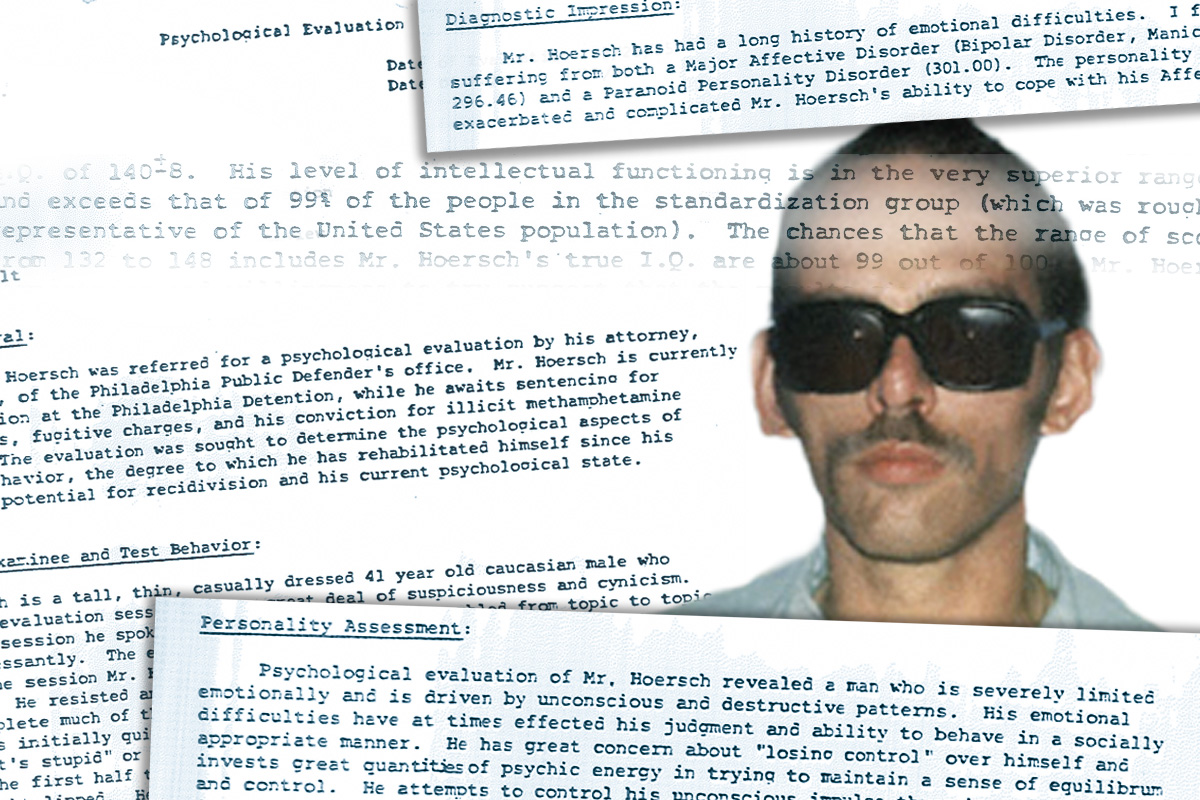
Federal authorities learned four decades ago that Raymond “R.C.” Horsch — a man whose Olney home is now linked to five dead or missing women — was a manipulative criminal who was “consumed by anger,” according to a psychological profile obtained by The Inquirer.
“He is grandiose, mistrustful, suspicious, and excessively controlling,” the psychologist, Don Seraydarian, wrote in 1985 as part of a federal drug manufacturing case.
At the time of the exam, a wiry, 41-year-old Horsch had just been captured after spending several years on the run in New Zealand to escape criminal charges. Prior to absconding, he had spent the previous decade producing a mobster-backed pornographic film, counterfeiting cash, and running a meth lab.
Ahead of his sentencing on the drug charges in Philadelphia, Horsch’s defense team commissioned the four-hour clinical assessment that concluded he likely suffered from bipolar and paranoid personality disorders. The report was filed along with a motion seeking lenient sentencing, with Seraydarian writing that prison time for Horsch would likely “increase his hostility and sense of alienation.”
“He feels this unfocused rage was the source of his criminal behavior,” Seraydarian wrote.
The full report, obtained by The Inquirer through a federal records request and not previously reported, is a window into the mind and early childhood of the criminal pornographer at the center of an expanding investigation into a series of missing women.
The Inquirer reported last week that police believe a video recovered from Horsch’s Olney property shows him strangling a woman to death on camera, according to law enforcement sources. Police also said they recovered photos on Horsch’s hard drives that appeared to show two other women who went missing in the 2010s alive — and then dead — inside his Chew Avenue home.
While Horsch was an established pornographer with a criminal record by 1985, he had never been charged with any violent offenses before he died in May 2025, at the age of 82. Still, the psychological report showing insight into Horsch’s unstable mental state was presented to law enforcement decades before he was linked to any disappearances.
Court records show federal prosecutors reviewed the 1985 case file again during Horsch’s 2009 indictment in a separate drug manufacturing case. Seven years later, his ex-wife, Amy McHale, went missing after being last heard from at his Chew Avenue home. Another woman was reportedly last seen at the property in 2022.
It is unclear whether police reviewed Horsch’s psychological profile as part of their ongoing investigation, or in these prior missing persons cases.
Michael Yoder, a retired FBI special agent who spent nearly a decade as a criminal profiler in the Behavioral Analysis Unit, reviewed the exam notes at The Inquirer’s request. He said that it was unusual for such an exam to be conducted for a drug case, but that he saw overwhelming hallmarks of psychopathy in the description of Horsch, and said the report would have been a red flag for criminal profilers.
“If you were to give me this report and I knew nothing about this person, and knew nothing about the crimes he committed, I would say you have a potential serial killer on your hands,” Yoder said.
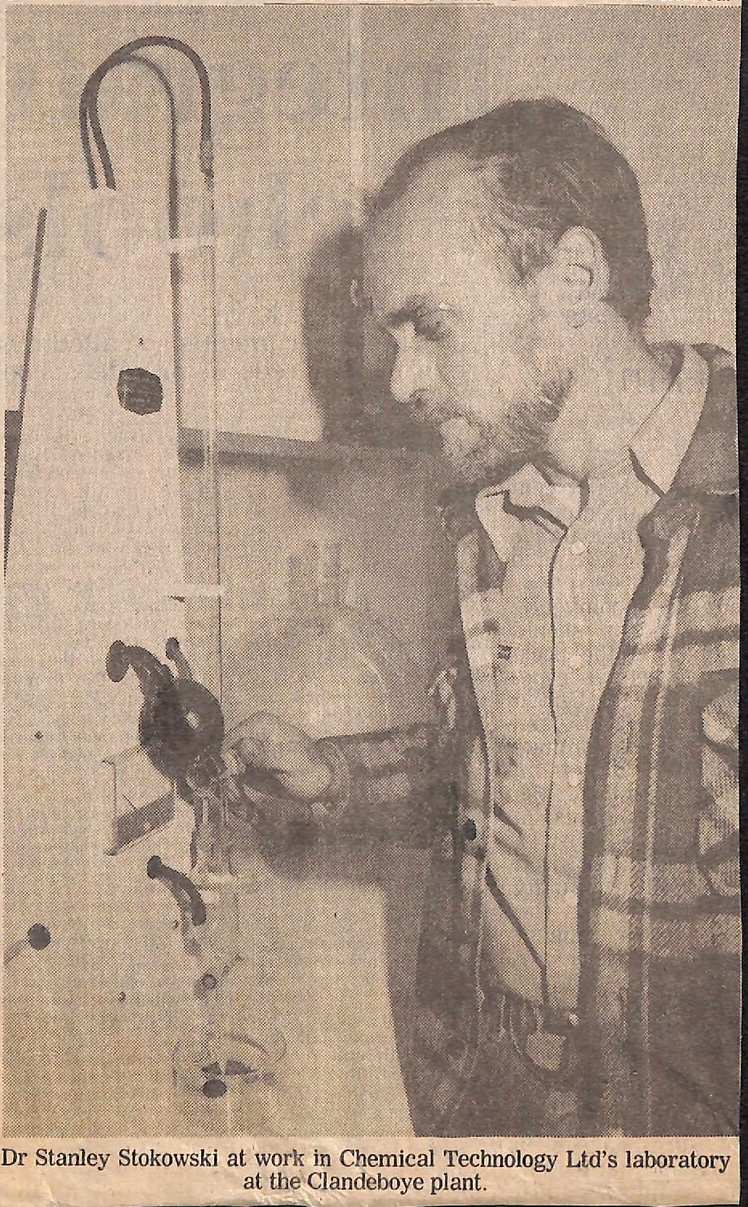
A clipping from a 1982 news article in New Zealand, where Horsch found work at an ethanol plant under the stolen identity of “Stanley Stokowski.”Custom
The report notes that during the interview, Horsch chain-smoked, dodged questions, and downplayed his crimes. He referred to himself in the third person when discussing his illegal activities, as if they were “events from someone else’s life.”
He ultimately opened up to Seraydarian about his insecurities and resentments, describing himself as a social misfit. Money was not Horsch’s motivation for committing crimes, the psychologist determined.
“He has great concern about ‘losing control’ over himself and invests great quantities of psychic energy in trying to maintain a sense of equilibrium and control,” Seraydarian wrote.
Seraydarian, in an interview this week, confirmed he had written the notes but could recall only that Horsch was “very bright.”
The report also offered insights into Horsch’s childhood.
He described a pleasant early life — raised on a farm in Bucks County by a father he called “strict but fair” and a mother who was a “salt of the earth type.” But when he was 12 or 13, he said, he had a “philosophical split with his family” that affected their relationship. He then began to rebel in high school and was later expelled from two colleges.
The report states that Horsch was an “extremely bright man” with a 140 IQ, and that he was a hard worker who could be rehabilitated as a productive member of society. It detailed an “erratic but prolific” life across the U.S. and New Zealand while he worked as a chemist, computer analyst, and photographer.
“I go from job to job because once I learn something, I want to go to something else,” Horsch explained.
And yet, the report noted, Horsch “has not been able to attain any financial success.”
Horsch told the psychologist that he had never abused drugs or alcohol, in part because “I can’t stand being out of control.” He said he had no fears or phobias, but sometimes stayed awake for several days at a time.
Seraydarian said Horsch was “very protective” of his wife and then-4-year-old son, Eugene. They were the “most important things in his life.” Horsch said he would never commit another crime because “now I’m hurting them as well as myself.”
But his crimes continued.
In the years that followed, Horsch was unabashed about his prolific career as a law breaker and a shock-seeking pornographer. He later sought to use the psychological report to cultivate his desired public image as a highly intelligent villain and psychopath, constructing a mythology around himself that blurred the line between his art and his life.
In 2014, a Wikipedia user named “S.E. Stokowski” — which was Horsch’s alias while on the lam in New Zealand — created a page for the pornographer and made more than 150 edits over the years, according to the page’s public revision history. One entry referenced Horsch’s psychological exam as testament to his supposed intellect and sociopathic tendencies.
As Horsch aged, he cast himself as an empathetic serial killer in his films and writings.
Horsch at an unspecified location in the 1980s.Obtained by The Inquirer
The 1985 psychological profile noted that Horsch’s only real friend or support system at that time was his then-wife, Anna Ferkuniak, who had a “therapeutic and rehabilitative effect” on him. He said his main wishes were to spend time with his family, live in a rural or isolated area so he could “deal with society as little as possible,” and have a better understanding of quantum physics.
Ferkuniak died of a drug overdose in 1989, less than two years after Horsch was released from federal prison.
Horsch later told an interviewer he was full of anger over her death, saying his wife “bailed out and left me with a kid to raise.” Following her death, he moved to the suburbs in Bucks County, co-opened a barbecue restaurant, and raised Eugene as a single father.
There, Horsch pursued a pornographic career that mainly featured sexual violence toward women in addiction. In his photos, films, and self-published novels, he used these women as models for his psychosexual fantasies, often depicting their deaths by drowning, hanging, or strangulation.
Federal and local law enforcement agencies are again assessing Horsch’s life after a June 19 car stop near Independence Hall involving his son, Eugene, turned up a fake ID in the name of a missing woman and led police on an extensive search of the Horsch home in Olney. Eugene Horsch is in federal custody, charged with possessing a gun, which is usually illegal for someone convicted of a felony.
Police continue to sort through the hundreds of thousands of images, videos, and pages of writing on the hard drives recovered from the dilapidated and boarded-up twin where the father and son lived together.
Investigators have so far recovered at least one video that appears to show Raymond Horsch killing a woman inside the property, sources said, as well as “dark and graphic” images of two other missing women — Maribel Fresses and Gabrielle Amarando — alive inside the home, and then dead. Law enforcement sources say the number of missing women connected to the home could grow as the investigation continues.
Police have not publicly confirmed that either Raymond or Eugene Horsch is believed to have killed anyone, and they have not recovered any bodies.
Raymond Horsch long maintained that the often gruesome violence in his films and photographs was staged. As an older man, however, he also professed that he was running out of boundaries to push.
“The problem,” he said in a 2013 interview, ”is I have no fantasies left.”
Inquirer reporters Max Marin and Ryan Briggs will host a Reddit AMA in the r/Philadelphia subreddit on Friday at 1 p.m. You can ask them questions there about the Olney investigation and the life of Raymond Horsch.
A 24-year-old man was charged with attempting to burglarize the Chester County home of Eagles running back Saquon Barkley and stealing jewelry worth nearly $800,000 from two other homes, authorities said Wednesday.
Jabir Parker, of Philadelphia, was charged with multiple felonies related to the alleged crime spree through Chester and Montgomery Counties. Parker was being held at the Montgomery County Correctional Facility in lieu of $1 million cash bail until his next court appearance, scheduled for Sept. 10.
In July, Tredyffrin Township police said an attempted burglary occurred at Barkley’s home, with at least one person getting inside. By the time police arrived, the burglars had fled. Barkley and his family were unharmed, police said.
The forced-entry burglaries happened in the overnight hours between June 22 and July 18, Montgomery County District Attorney Kevin R. Steele said Wednesday.
Steele did not name Barkley as one of the victims, but police already had confirmed the case in July.
A spokesperson for the Eagles could not be reached for comment.
Two of the burglaries happened in Lower Merion Township, Steele said. The residents were not at home when they occurred.
In the first burglary, investigators found that 12 pieces of jewelry, with an estimated value of $106,700, were taken.
In the second burglary, 28 items of jewelry worth an estimated $687,292 were stolen. A safe also was taken from the home.
The attempted burglary at Barkley’s home happened on July 18.
During the second burglary, Parker allegedly was captured by a nanny cam talking, presumably on his cell phone, Steele said.
Parker allegedly used his cell phone to communicate with a getaway driver during the two burglaries and one attempted burglary.
Parker allegedly used his cell phone and his Gmail accounts to Google phrases such as “gold presidential rolex,” “briony raymond new york,” asking how much a 1.5 carat diamond was worth, and other searches related to the stolen jewelry items, Steele said.
Parker allegedly rented a white GMC Yukon Denali from a rental location in Philadelphia on July 16 and returned it on July 18 at 6:43 a.m., less than two hours after the attempted burglary at Barkley’s home.
In July, Tredyffrin Township police released an image of a white SUV in connection with the attempted burglary.
Bucks County District Attorney Joe Khan filed a lawsuit Wednesday against the owners of a Buckingham Township vape shop, seeking to close the business, which he said sold potent THC products, as well as tobacco and kratom, to minors.
Khan announced the suit, filed in the Bucks County Court of Common Pleas, outside of Zaza Cigar & Vape after what he described as months of investigating complaints about the business from parents in the Central Bucks School District.
“This store is selling marijuana cigarettes under the guise that they’re selling products that are legal and perfectly safe for people to own and to use, but that’s not the truth,” Khan said. “Thanks to the work of our detectives, we have uncovered the fact that this is a store that is really running an illicit drug operation under the cover and guise of a legitimate business operation.”
In the suit, Khan said the business was the only one of the county’s 580 licensed tobacco shops that sold tobacco to undercover minors 100% of the time during routine enforcement checks.
During at least five documented sales this year, he said, clerks at the store did not even do “the bare minimum to comply with Pennsylvania state law,” and, in one instance, sold kratom, which was listed as a Schedule 1 drug last week by the federal government, to a minor.
Khan is seeking an emergency court order to close the store, located in a shopping center on Durham Road, and said he has launched a parallel, criminal investigation into its owners and their business practices.
The lawsuit did not name the owners of the business, and no one answered the phone at the store on Wednesday. Court records did not list a lawyer for the business.
“This is a store that does not care in the slightest about the welfare of our children, but we do, and that’s why we’re here to stand up for them,” Khan said.
Court records show Zaza Cigar & Vape was fined twice this year for selling tobacco to minors. Khan said the vape store viewed these fines as “simply the cost of doing business.”
The larger concern, he said, is the access the business is providing to THC products.
The items are legal to sell through a provision in the 2018 U.S. Farm Bill, which legalized hemp products that contain a minuscule amount of Delta-9 tetrahydrocannabinol (THC), the psychoactive compound in marijuana.
But Khan said the products sold at Zaza Vape & Cigar contained an illegal, more potent amount of Delta-9 and were offered for purchase by minors.
A 2025 Inquirer investigation found samples of these products purchased from different stores in the Philadelphia region exceeded the 0.3% Delta-9 THC potency level cited in the Farm Bill, making them illegal to sell in Pennsylvania.
Those items contained Delta-9 THC at levels 200% to more than 2,400% over the federal limit. Six samples, strengthened by other hemp-derived THC variants, were as potent as most dispensary-grade marijuana.
“We are not going to wait to take action,” Khan said. “That’s why we went to court today to put a stop to this behavior, so that the kids who go to Central Bucks East, the kids who go to Buckingham Elementary, which is less than a mile away from where I stand, are not going to be exploited by a business like that.”
Khan’s lawsuit is the latest example of his application of the civil-enforcement powers afforded to his office in pursuing cases that present ongoing harm to the public.
Earlier this year, he filed suit against the company that operates Roblox, an online video game, for what he described as lax security features that allow child predators to contact underage players.
On Aug. 16, the sidewalk outside the after-hours nightclub that was advertised as “Nipsey’s” on social media became the scene of the killing of 29-year-old Officer Alhassane Barry.
Barry and another man had been arguing inside the Elmwood Avenue property in Southwest Philadelphia before the confrontation spilled outside, where the man opened fire on Barry, killing him and injuring another man, according to investigators.
Immediately after the officer’s death, questions arose over Nipsey’s business practices. The property was not licensed to operate as a nightclub, city records show, and its owner had been handed a series of L&I violations in recent years.
District Attorney Larry Krasner, speaking after Barry’s killing, vowed to shutter what he called a “nuisance business,” adding that investigators believe activity at Nipsey’s may have been connected to another death this summer.
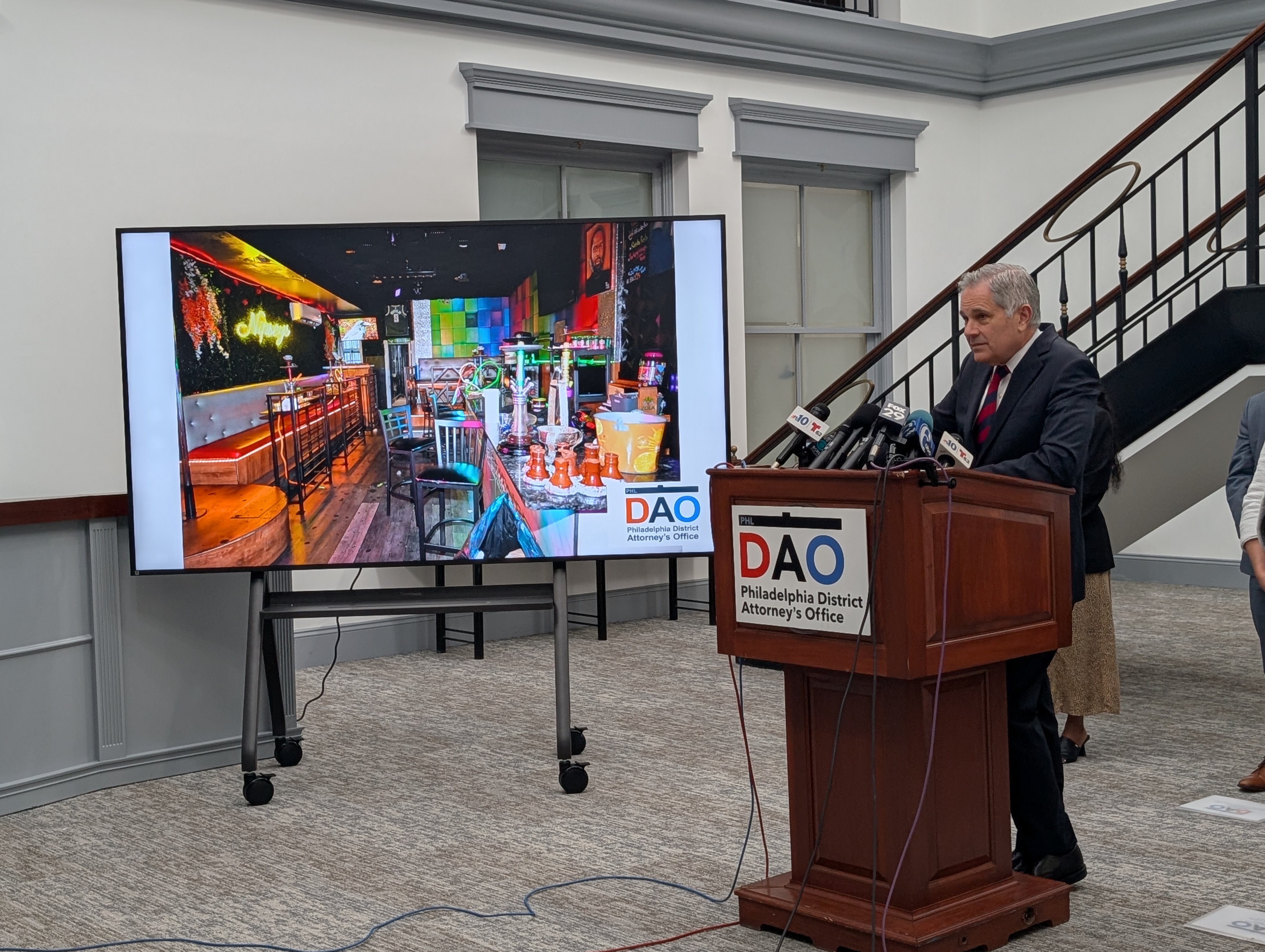
District Attorney Larry Krasner presents images taken inside Nipsey’s Hookah Lounge, an illegal speakeasy where, outside the club, a Philadelphia police officer was killed.Jesse Bunch
The matter was settled Wednesday in Common Pleas Court, when Judge Christopher R. Hall issued an injunction barring the property’s owner, Tran Yen, from conducting any commercial business there for one year. That includes any activity related to selling or offering alcohol, according to the ruling, which is enforceable by the Sheriff’s Office and city police.
A spokesperson for the district attorney’s office, Solomon Leach, said the decision “effectively shuts down this illegal speakeasy.”
“[W]hat we do know is that this establishment — and others like it — operated outside the law and was a problem waiting to happen,” the spokesperson said after the ruling.
Thomas Kenney, a lawyer for the property’s owner, Tran Yen, of Newark, Del., said his client was “shocked as anyone else” about Barry’s killing.
“We are cooperating with the Commonwealth to make sure there are no further nuisances,” he said. He declined to comment on the nature of the connection between Tran and those who operated Nipsey’s.
Tran could not be reached for comment.
In 2021 and 2024, Tran was issued violation notices from the city Department of Licenses and Inspections, violations that were filed anew after Barry’s death, city records show.
In addition to being cited for operating as a nightclub without proper permitting, the property was cited for using extension cords rather than permanent electrical wiring, storing unsecured gas containers, and having combustible materials in a rear lot.
Images investigators recovered from inside the lounge show patrons packed into the space amid brightly colored decorations and neon lights.
Image from inside Nipsey’s Hookah Lounge presented by the Philadelphia District Attorney’s Office.Jesse Bunch
The violations carried $3,200 in fines.
Still, Krasner vowed to close Nipsey’s through court action.
Wednesday’s order to do that came as the DA’s office continues to investigate the circumstances surrounding Barry’s death — including the possibility that the shooting was in self-defense.
A woman is facing multiple charges, including forgery, after authorities said she stole more than $7,000 from a Little League team in Delaware County.
Robin Massing, 57, was charged Tuesday, following an investigation into fraudulent checks.
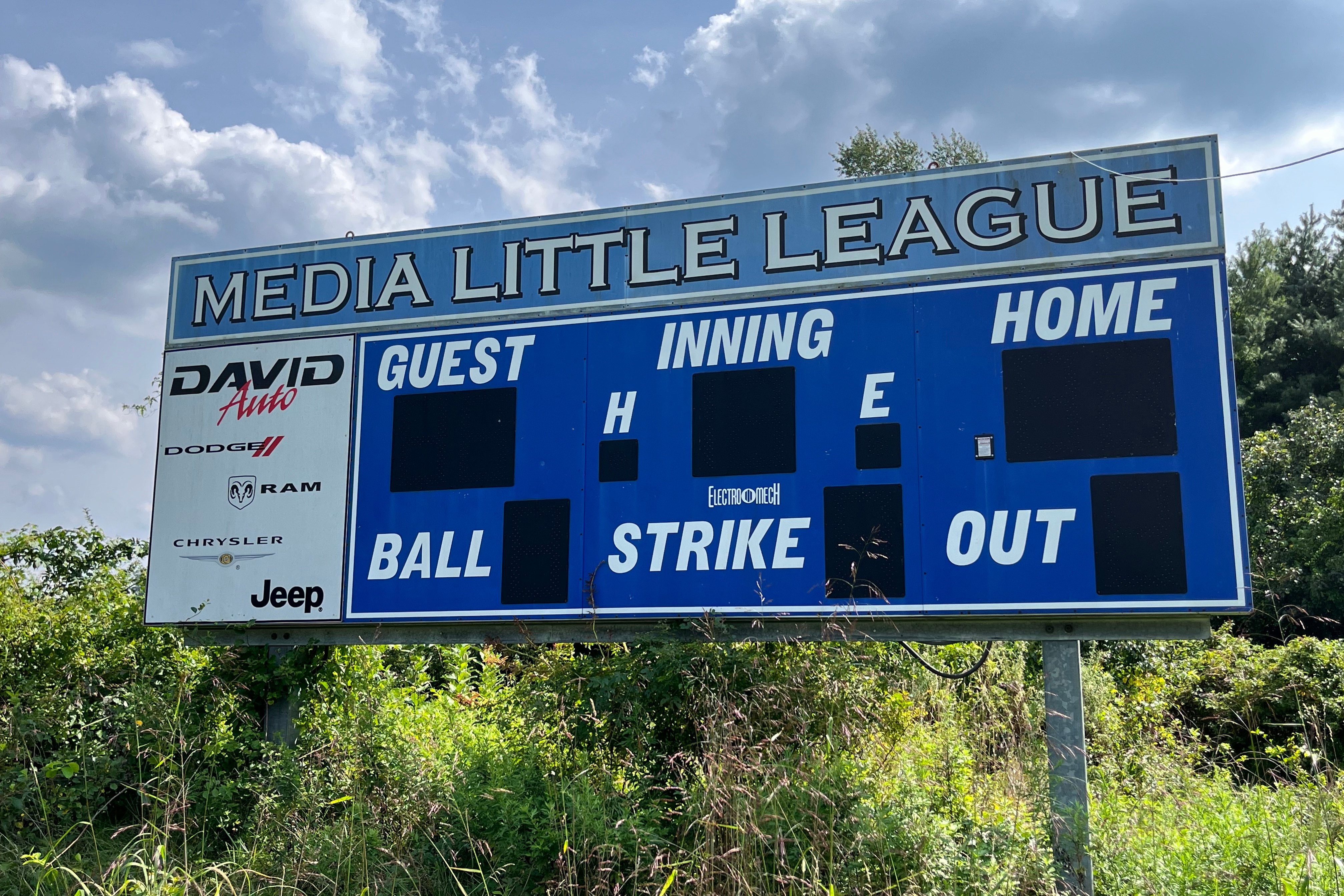
Media Little League upper management contacted the Delaware County District Attorney’s Office to report check fraud, telling authorities three checks were mailed on behalf of the organization and sent through a mailbox in Upper Providence Township, in May 2025.
In February, the Little League got word that one of the checks was deposited via mobile to Philadelphia Federal Credit Union for $7,200. But the amount, endorsement, and signature had been changed.
A month later, a Fulton Bank in Southampton contacted the Little League management to verify a payment they found suspicious, the District Attorney’s Office said.
Like the February check, the name and amount had also been changed, but the check number was the same as the February one, leading the bank to open its own investigation.
According to the District Attorney’s Office, the bank retrieved footage that identified Massing as the person behind the theft.
No lawyer is listed in court records for Massing, who was described in the affidavit as homeless.
In June 2025, Massing was detained in Chester County for producing and forging a check at TD Bank, the District Attorney’s Office said.
Now, Massing faces one count of forgery, bad checks, theft by unlawful taking, and receiving stolen property.
The Media Little League has been organizing and teaching baseball to the community since 1952. In 2023,they made it all the way to Little League Baseball World Series in Williamsport.
“It is hard to imagine a more disappointing target for personal greed than an organization raising money for kids,” said District Attorney Tanner Rouse in a Wednesday statement.
The money was meant to go to uniforms, equipment, fields, and other resources for the kids, Rouse said.
“To steal those funds and use forged checks to divert money for personal benefit is not just a financial crime; it is a profound betrayal of the entire community,” Rouse said.
William F. Dunbar Sr., a former confidant to Mayor Cherelle L. Parker who pleaded guilty this week to federal tax fraud charges, also sought to bilk a political campaign out of rent payments he was not entitled to, according to a court document filed Tuesday.
The document does not name the campaign, but it appears to be Parker’s.
Dunbar, 42, never actually received any ill-gotten funds related to the lease with the campaign, prosecutors said, and he was not charged in connection with the matter.
But prosecutors said in court documents that he’s agreed to let a judge consider the episode and two other incidents of “additional misconduct” as she weighs his sentence for tax fraud.
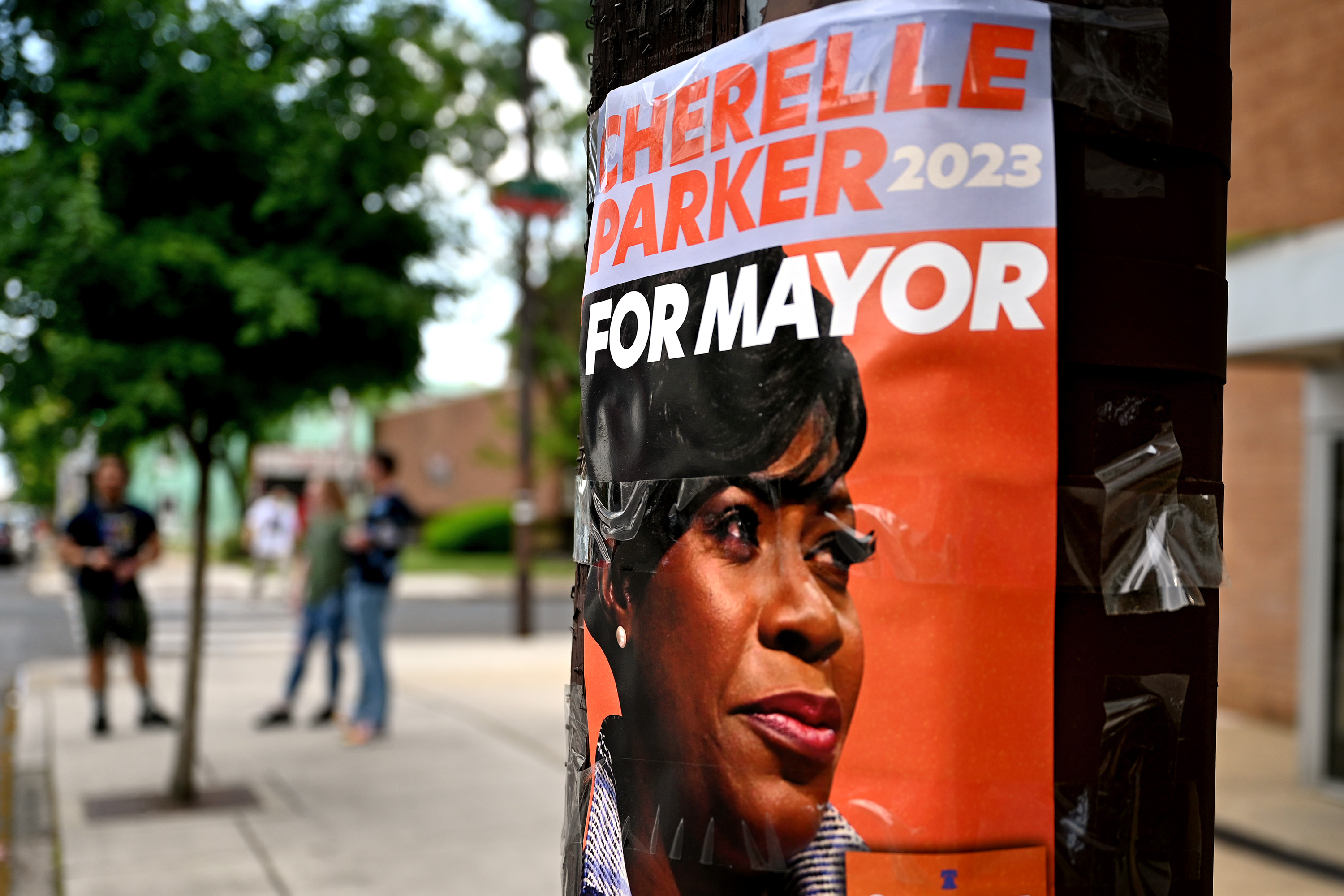
Dunbar, a Philadelphia lobbyist, was an unpaid but important adviser to Parker during her winning campaign for mayor in 2023. He officially joined her campaign, People for Parker, around the time she took office in January 2024.
The mayor let Dunbar go from her campaign in July 2024 in a move that Dunbar at the time described as Parker’s decision.
The campaign made a series of rent paymentstotaling $22,850 to his lobbying firm, Dunbar Public Affairs & Associates, between March 2024 and November 2024, according to campaign finance records. The address listed for the rent payments was an office in the Penn Center complex near Philadelphia City Hall.
According to Dunbar’s plea agreement, in February 2025 he “falsified certain terms of a lease agreement for office space that [he] had entered as the lessor with a Philadelphia political campaign.”
The city’s online database of campaign finance records shows People for Parker as the only campaign that has made rent payments to Dunbar’s firm.
“The facts speak for themselves,” said Aren Platt, executive director of People for Parker, declining to comment further on Tuesday.
Dunbar declined to comment.
William F. Dunbar Sr., a lobbyist and a former informal adviser to Mayor Cherelle L. Parker.Courtesy of William F. Dunbar Sr.
The plea agreement, which was signed by Dunbar and his attorney, said he “falsely modified the terms of the lease agreement” to increase the notice the campaign was required to give him to terminate the lease.
Had the campaign not discovered the change, the agreement said, Dunbar would have received money he was not owed. “The defendant’s efforts in this regard did not result in his obtaining any funds, and he ceased making any efforts to obtain these funds before learning of the federal criminal investigation resulting in the charges in this case,” the agreement said.
Dunbar on Monday pleaded guilty to filing false tax returns for himself and his wife between 2020 and 2025 and claiming substantial refunds when, in reality, they owed money. Prosecutors said in court papers that the tax loss related to the fraud was between $350,000 and $750,000. The charges carry a maximum sentence of 16 years in prison, plus supervised release and fines.
Dunbar’s attorney, Brian McMonagle, said in a statement Tuesday that the plea agreement “reflects Mr. Dunbar’s acceptance of responsibility for his own conduct.”
McMonagle said that the agreement “does not include any cooperation obligations” and that Dunbar is “not required under the agreement to provide information or testimony regarding any other individual.”
The four charges to which Dunbar pleaded guilty are unrelated to his firm’s lease with the Parker campaign and the two other incidents of “additional misconduct” that Dunbar stipulated in the agreement. The other incidents involve falsifying a document for a mortgage application and submitting false financial information to receive additional financial aid at a private school.
Although those episodes did not lead to criminal charges against Dunbar, U.S. District Court Judge Kelley B. Hodge will be able to consider them when determining his sentence. A sentencing hearing is scheduled for January.
Staff writer Chris Palmer contributed to this article.