Category: Crime & Justice

  • Police believe a new video shows violent pornographer Raymond ‘R.C.’ Horsch killing a woman on camera, sources say

    Police believe a new video shows violent pornographer Raymond ‘R.C.’ Horsch killing a woman on camera, sources say

    Philadelphia police have recovered video footage that they believe shows the late pornographer Raymond “R.C.” Horsch killing a woman on camera, law enforcement sources said.

    The footage, discovered on a hard drive inside Horsch’s house in Olney, appeared to show him strangling the woman at his home, said the sources, who spoke on the condition of anonymity to discuss an ongoing investigation.

    Police have not disclosed the woman’s identity, but have notified a relative, the sources said. It was not immediately clear when the footage was taken, and the sources said police have not found her body.

    Deputy Police Commissioner Frank Vanore declined to comment Friday. The department has said it is working with forensic experts to discern the authenticity of the materials on the 50 hard drives found in the house, a process that could take months.

    The discovery is the most significant breakthrough yet in the sprawling investigation, and means that at least five missing women are now linked to the Chew Avenue property where Horsch lived for decades with his son, Eugene.

    Police have digital evidence that they believe indicates at least three of those women are dead, according to the sources. Earlier this month, police said they recovered images that showed two women who had been reported missing were inside the home and were later photographed dead there. The new footage adds a third victim.
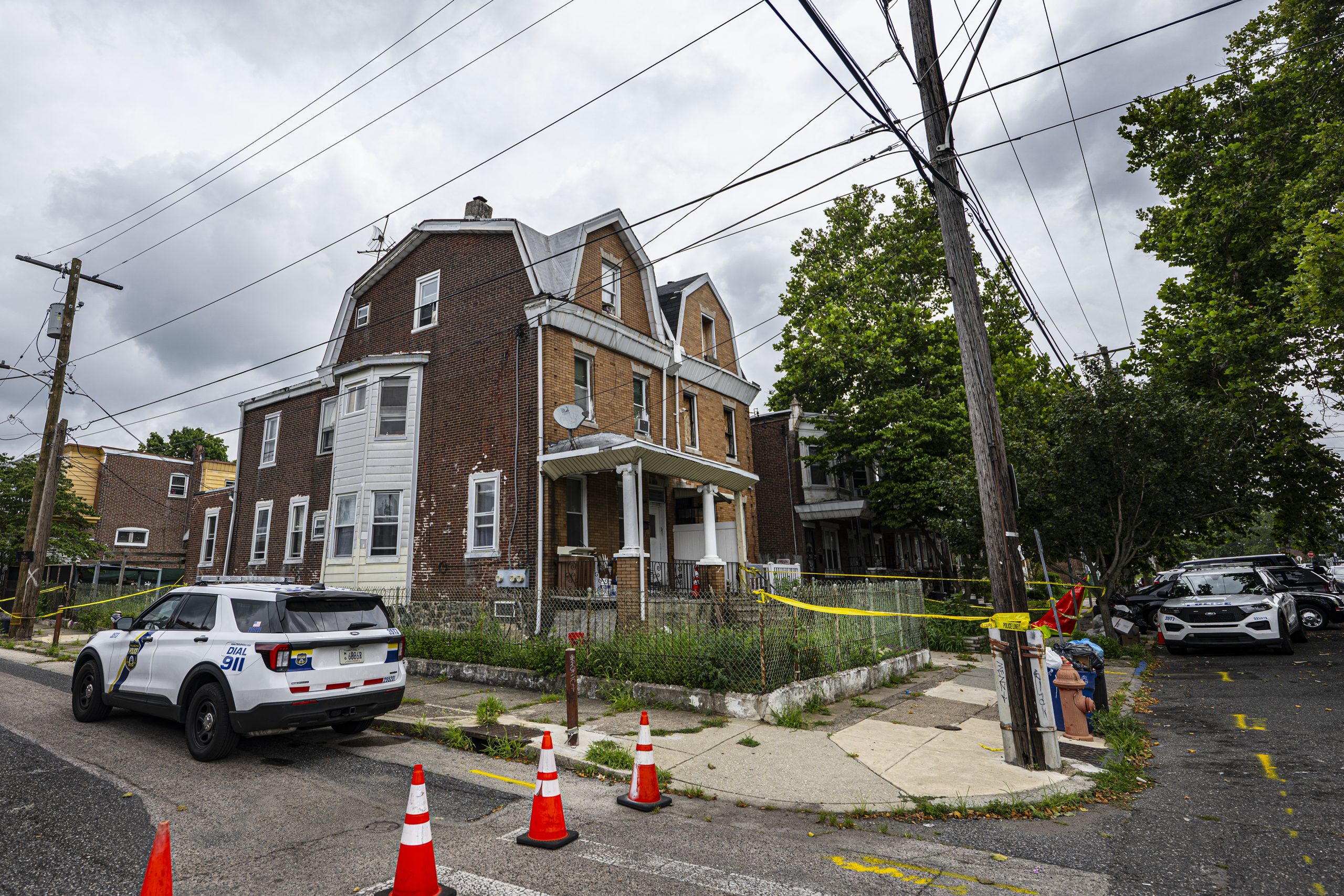
    Police block the entrance to 417 W. Chew Ave. during an investigation in June. Jose F. Moreno / Staff Photographer

    Sources said police expect the number of missing women connected to the home to grow as investigators sort through the hundreds of thousands of videos, photos, and pages of writings recovered on the hard drives at Horsch’s house.

    The development also means police may have to confront the possibility that the property and hard drives hold evidence of killings that went undetected for years — and at the hands of a man who spoke and wrote publicly about his fantasies of killing women for decades with little scrutiny.

    Police have not found any human remains in the house.

    Horsch died in May 2025, at the age of 82, from lung issues.

    Horsch built a career luring women in addiction in Kensington to his home with drugs and cash. He photographed and featured them in pornographic films that often depicted graphic violence — including hangings, stranglings, and drownings. He adopted the persona of an “empathetic” serial killer who murdered addicts to end their pain, and he claimed his writings were autobiographical, yet laced with threads of fiction that often left his audience wondering what was real.

    Two weeks ago, police said they had recovered “dark and graphic” images on the hard drives that indicated Maribel Fresses, missing since 2018 at the age of 27, and Gabrielle Amarando, who was 22 when she was reported missing in 2012, were dead.

    Gabrielle Amarando, (left) missing since 2012 and Maribel Fresses, 27, reported missing in 2018. Police believe they were killed inside the Olney home.Obtained by The Inquirer

    Police said they had not recovered footage of the women being killed, but instead had images of both women alive inside the house — and then dead. Officials have not determined what happened to their bodies.

    But sources say police have since discovered additional footage that is far more disturbing.

    The investigation began this summer after a chance encounter near Independence Hall.

    On June 19, police said, a U.S. park ranger came upon Eugene Horsch near Sixth and Market Streets acting suspiciously inside his black BMW. When officers searched the car, they found drugs, two illegal guns, a cattle prod, and a fake drug enforcement badge. What’s more, the woman who was with him presented a license in the name of Blair Tonzelli, who had been reported missing in 2023.

    Documents show that police interviewed people connected to Eugene Horsch who said he had bragged about knowing how to mix chemicals that could melt human remains and make a body so small “it could be flushed down a toilet.”

    Records show that Tonzelli was reportedly last seen at the Horsch house in 2022, and Raymond Horsch posted at least one nude photograph of her — with a black eye and bloody lip — on his website. Her friends reported her missing in February 2023.

    Raymond Horsch’s ex-wife, Amy McHale, who went missing in 2016, was also last seen at the Chew Avenue house. Investigators have since renewed the inquiry into her disappearance.

    Amy McHale.Courtesy of the family of Amy McHale

    Local and federal law enforcement searched the Horsch home in the weeks that followed the car stop and said they found an “astonishing” amount of evidence: five urns of cremated remains, more than 20 containers full of unknown chemicals and oily substances, and 50 hard drives and other electronic devices holding more than 600,000 images, 70,000 videos, and 10,000 pages of writings and drawings.

    Police also found additional guns and drugs. And in the weeks that followed, investigators excavated the yard of the Chew Avenue home and recovered a piece of a pipe for additional forensic testing.

    Police continue to investigate the whereabouts of Tonzelli and McHale.

    Eugene Horsch, 44, remains in federal custody, charged with illegal gun possession. Police have declined to say whether they believe he played a role in his father’s business. He has not been charged with any crimes connected to the women’s deaths or disappearances.

    His attorney has declined to comment.
  • Postpartum mental illness has a 19th century history

    Postpartum mental illness has a 19th century history

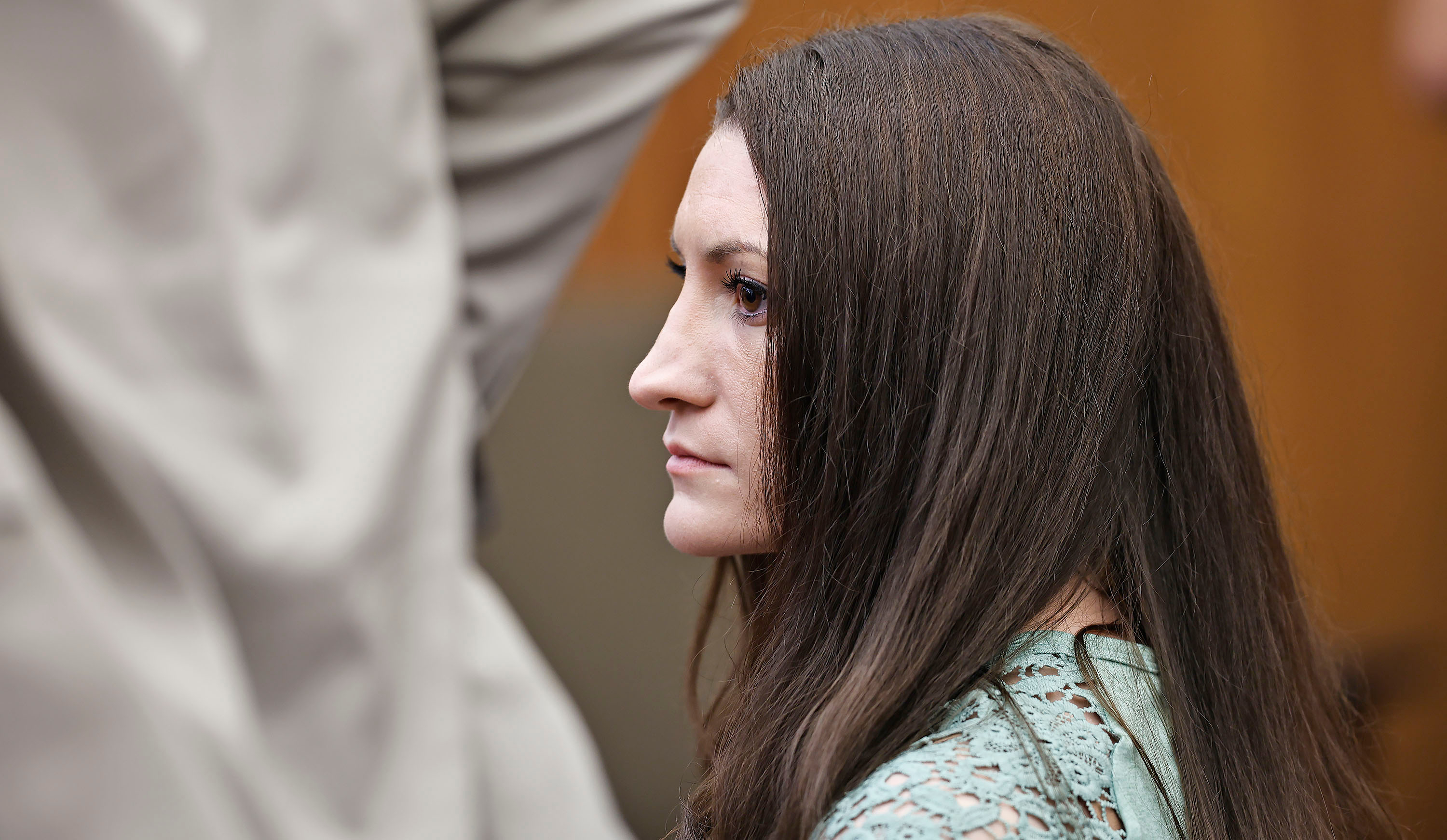
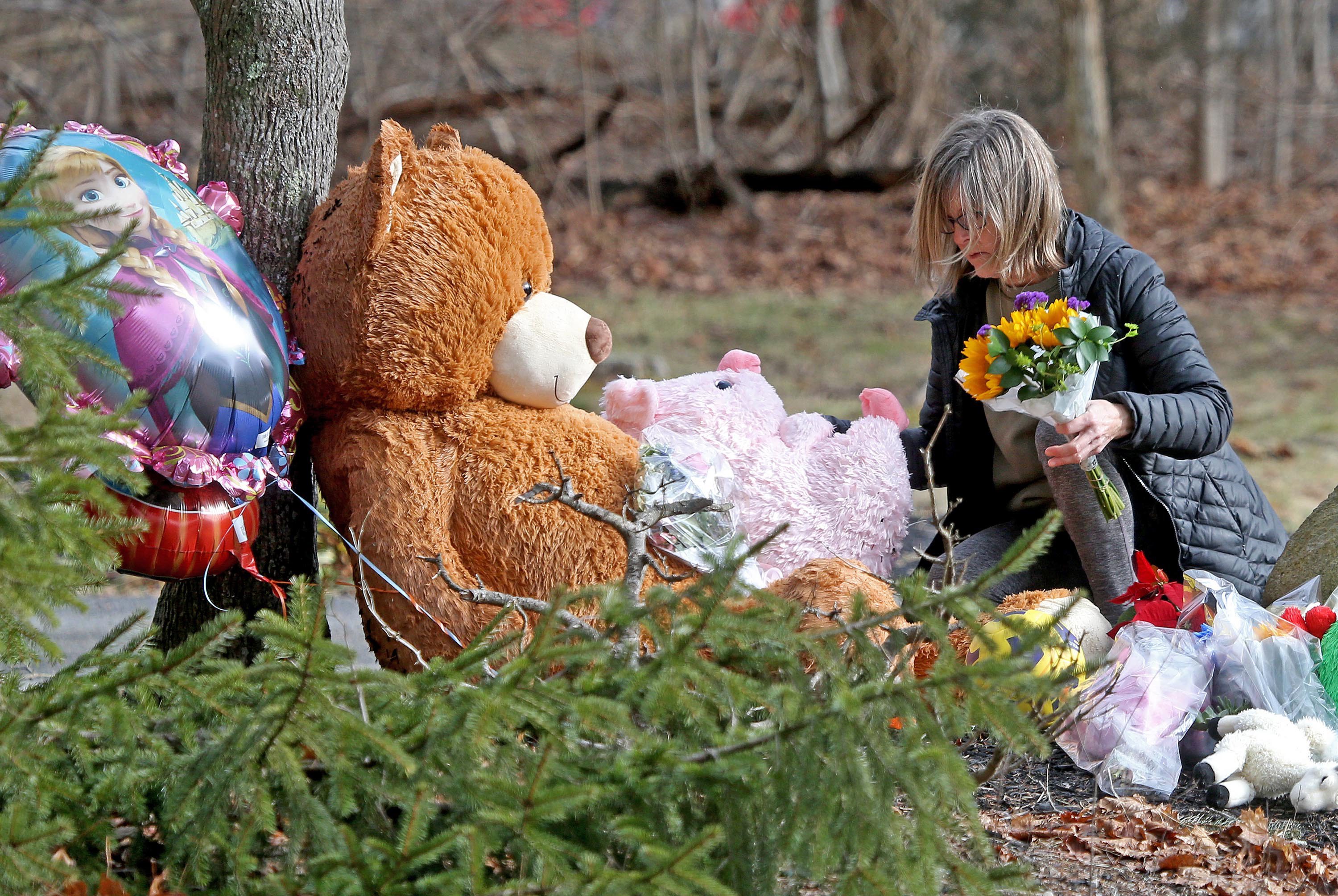
    The murder of three young children by their own mother lies at the center of an ongoing trial that has gripped the nation. Lindsay Clancy, a white, 36-year-old former labor and delivery nurse from Duxbury, Mass., stands accused of first-degree murder for strangling her 5-year-old daughter, Cora, and sons, 3-year-old Dawson and 8-month-old Callan, at their home on Jan. 24, 2023.

    Following the deaths, Clancy attempted suicide by jumping from a second-story window, an act that has left her paralyzed from the waist down. The prosecution argues that Clancy’s actions were premeditated. Her defense team says that a months-long struggle with severe postpartum mental illness culminated in Clancy’s violent, psychotic break.

    The gravity of these allegations has garnered widespread attention and shocked the public. Significantly, the case has also reignited a familiar public debate: Can postpartum mental illness explain an act that many find unimaginable?

    The Clancy case is hardly the first to provoke this question. Twenty-five years ago, Andrea Yates infamously drowned her five children in the bathtub of her Houston home, prompting many commentators to draw comparisons between the two cases. Initially found guilty of capital murder, Yates successfully appealed the verdict on the grounds of insanity after her defense argued that she had experienced severe postpartum depression and psychosis.

    But the roots of this debate about postpartum mental illness and its role in mitigating or eliminating criminal responsibility go back even further. Beginning in the 19th century, when postpartum mental illness was explicitly linked to white motherhood, race shaped which mothers were afforded psychiatric explanations for acts of maternal violence.

    Lindsay Clancy watches jurors as they enter the courtroom to start their second day of deliberations in her murder trial at Plymouth Superior Court on Aug. 28 in Plymouth Mass.Greg Derr/The Patriot Ledger

    In the early 19th century, French psychiatrist Jean-Étienne Dominique Esquirol and English obstetrician Robert Gooch independently helped establish the diagnosis of puerperal insanity, a term used to describe psychiatric disturbances associated with pregnancy, childbirth, and the postpartum period. Physicians’ descriptions of the disorder sound remarkably familiar today.

    Women diagnosed with puerperal insanity were described as experiencing persistent sadness, anxiety, hopelessness, confusion, hallucinations, delusions, or dramatic behavioral changes. In severe cases, they also documented women who neglected, harmed, or even killed their children.

    Despite being categorized as a disorder of childbearing, puerperal insanity was not believed to threaten all childbearing women. Rather, American physicians saw mental illness through a racial lens. Puerperal insanity was framed as a disorder of “civilization,” reflecting physicians’ belief that modern society weakened white, middle- and upper-class women’s reproductive systems and increased their vulnerability to mental illness.

    The diagnosis allowed physicians to reconcile anti-maternal behaviors such as neglect and violence with one of the 19th century’s most deeply held assumptions: that white, middle- and upper-class mothers were naturally nurturing, domestically oriented, and morally respectable.

    While this racial construction of puerperal insanity was widely accepted within the medical sphere, it posed a challenge in the courtroom.

    During the 1840s and 1850s, the M’Naghten Rule — which held defendants not criminally responsible if mental illness prevented them from understanding either the nature of their actions or that those actions were wrong — became the dominant legal standard in the United States. But the line between ordinary psychological changes associated with pregnancy and legally recognizable insanity was often far less clear than the courts required. For example, in 1847, physician James MacDonald aptly observed that “during pregnancy, women without being considered insane, are often in that state of mind which precedes, if it do[es] not in fact constitute, the first stage of mental derangement.”

    Sympathetic physicians and legal reformers argued that puerperal insanity rendered otherwise respectable white women temporarily incapable of exercising moral judgment.

    Patrick Clancy reacts as images of himself and his children on vacation a month before they were killed is shown in the courtroom at Plymouth Superior Court in Plymouth, Mass., July 27.Greg Derr

    In her widely circulated 1887 article “Forensic Relations of the Puerperal State,” physician Harriet C.B. Alexander condemned that “the mental state of the puerperal female has not received the attention its forensic importance merits” and contended that it was “obvious” that pregnant women were “subject to influences that weaken her will, engender emotional mobility, render apathetic natural affection, and give rise to […] perverted sensations and propensities” that legally predisposed them to commit murder and infanticide.

    In other words, white women’s violence was recast as the temporary consequence of a psychiatric illness.

    For instance, in 1893, Lena Brown stood trial in Bordentown, N.J., for strangling her own son and her neighbor’s two children. Although she admitted to committing the deed, she was unable to explain why and was ultimately found not guilty by reason of insanity. The defense successfully argued that she was suffering from puerperal insanity and had been “in a delicate condition at the time” of the killings. When Brown gave birth to another child in prison and “treated [the infant] with the utmost tenderness,” her behavior was offered as further evidence that her violence was temporary and that she was a good mother.

    The same could not be said for women whom physicians considered racially inferior. Black women, in particular, were often characterized as habitual criminals, rather than patients, who frequently committed infanticide because they were naturally violent and had no regard for the sanctity of children.

    In 1905, for example, Lottie Hawkins was imprisoned for allegedly throwing her two-week-old child into the Anacostia River. Records documented that she had been admitted to and treated at St. Elizabeth’s Hospital, a psychiatric asylum in Washington, D.C., two days after giving birth and released the day before the killing. Yet no one suggested that she might have been suffering from puerperal insanity. Instead, prosecutors emphasized that she “wanted to get rid of the baby” because she neither wanted to provide care or financial support and that she consumed large amounts of cocaine and whiskey on the day of the killing to take away her senses.

    Made By History sponsors. FOR USE ON MADE BY HISTORY STORIES ONLY.Inquirer Staff

    In short, debates over maternal mental illness have never been simply about diagnosis or criminal responsibility. They have also been shaped by enduring assumptions about race, class, motherhood, and which women are recognized as deserving of medical explanation, public sympathy, and legal recognition.

    Just four years ago, Latarsha Sanders, a Black mother from Brockton, Mass., was convicted of first-degree murder and sentenced to life without parole for the deaths of her two sons, Edson, 8, and La’Son, 5. Earlier this year, the Massachusetts Supreme Judicial Court ruled that Sanders had been denied a fair trial after evidence documenting her history of mental illness was excluded from the proceedings.

    The Clancy trial’s visibility reflects the enduring political and cultural significance of motherhood in the United States. That significance also helps explain why some cases of maternal violence become national spectacles that generate public debate over the role of postpartum mental illness, while others — like Sanders — are met with comparatively little public attention or a far stronger presumption of guilt.

    Udodiri R. Okwandu is an assistant professor of Women’s, Gender, and Sexuality Studies at Rutgers University–New Brunswick and a historian of medicine whose current work examines how racialized medical knowledge about maternal mental illness has shaped ideas about acceptable motherhood in the United States since the 19th century.

    Made by History takes readers beyond the headlines with articles written and edited by professional historians. Opinions expressed do not necessarily reflect the views of The Inquirer.

  • Shooting death of man by police in Montgomery County ruled a homicide

    Shooting death of man by police in Montgomery County ruled a homicide

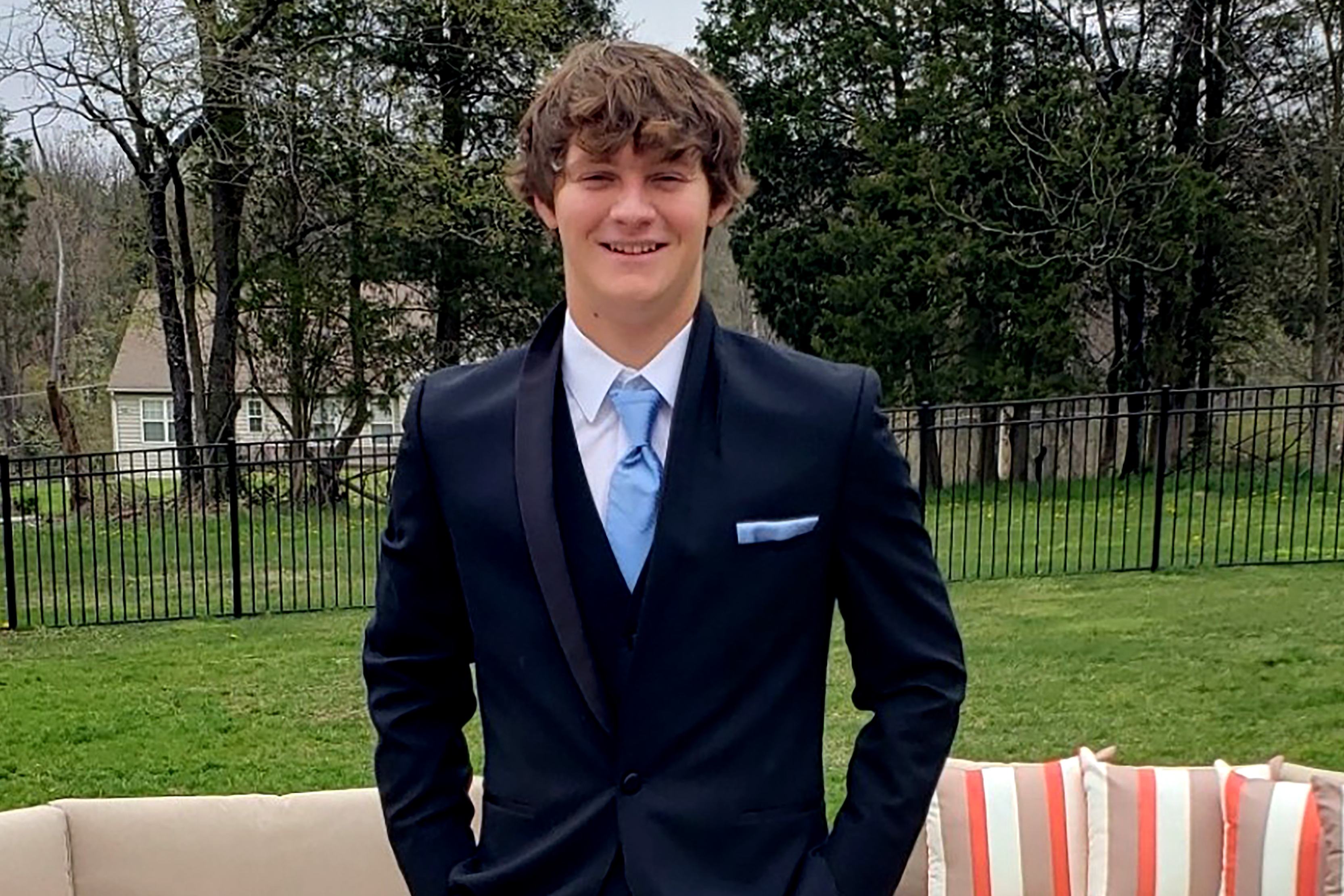
    The Montgomery County Coroner’s Office said Thursday that the death of a 22-year-old man shot by a police officer was a homicide caused by two gunshot wounds to the chest.

    The determination confirms that Glenwood Pysher IV was killed by another person, but not whether the fatal use of force was legally justified.

    Around 12:30 a.m. on Aug. 23, the Upper Pottsgrove Police Department received a 911 call reporting an active burglary at a residence, the coroner’s office said. Officers responded to the scene and Pysher was fatally shot. The officer who fired has not been identified.

    “Consistent with Pennsylvania law and Coroner’s Office policy, the classification of homicide is a medical determination for death certification purposes and does not indicate criminal intent or assign legal responsibility,” the coroner’s office said.

    The case remains under investigation by the Montgomery County Detective Bureau.

    The Montgomery County District Attorney’s Office said that police arrived to find Pysher “in the rear of the the residence. An encounter ensued and police fired at Pysher, fatally striking him.”

    Pysher’s mother, Erin, told the Inquirer that her son had been out celebrating a friend’s 21st birthday and was heading to another friend’s place to spend the night when accidentally ended up at a stranger’s home.

    Pysher was about to begin his senior year at St. Elizabeth University in North Jersey, his mother said.

    “This was all a huge mistake, and they killed him,” she said.

    <iframe src="https://www.facebook.com/plugins/post.php?href=https%3A%2F%2Fwww.facebook.com%2Fmontcocoroner%2Fposts%2Fpfbid0qSGr8ZBJmmXMTUnNnrJyLTRm66Frp8vG2QNYqeDmfDLA22JgCGUjTVv2ie8GNSisl&show_text=true&width=500" width="500" height="608" style="border:none;overflow:hidden" scrolling="no" frameborder="0" allowfullscreen="true" allow="autoplay; clipboard-write; encrypted-media; picture-in-picture; web-share"></iframe>
  • Elementary school teacher in North Penn district charged with making child pornography

    Elementary school teacher in North Penn district charged with making child pornography

    A suburban elementary school teacher was arrested Thursday and charged with making and attempting to make child pornography, U.S. Attorney David Metcalf said.

    Eric Sanville, 39, of Norwood Borough, Delaware County, is a teacher at Gwynedd Square Elementary School in the North Penn School District, which is mainly located in Montgomery County, officials said.

    Sanville made his first appearance Thursday afternoon in federal court in Philadelphia and was being held pending further court proceedings, Metcalf said.

    Prosecutors allege that Sanville used the Snapchat social media app to separately entice two 8-year-old girls, including one living in Sweden, to engage in sexually explicit conduct to create images of those acts.

    If convicted, Sanville faces a maximum sentence of 30 years in prison, Metcalf said.

    The North Penn School District issued a statement saying Sanville was “immediately placed on leave, prohibited from being present on District property, and directed not to have any contact with students.”

    The district said it was notified Thursday by the FBI that Sanville was arrested at his home and charged with production of child pornography.

    “The authorities shared that, based on the information they currently have, there is no evidence to suggest that any students in the North Penn School District or the surrounding area were involved. They also shared that they do not believe that district technology was involved in the alleged activity,” the district said.

    “We recognize that news of this nature is deeply concerning to our families, staff, and community. The safety and well-being of our students remain our highest priority. North Penn School District is cooperating fully with law enforcement and will continue to review any information provided to us,” the district said.

  • A federal judge suggested actions by DA Larry Krasner’s office in a controversial case could amount to crimes

    A federal judge suggested actions by DA Larry Krasner’s office in a controversial case could amount to crimes

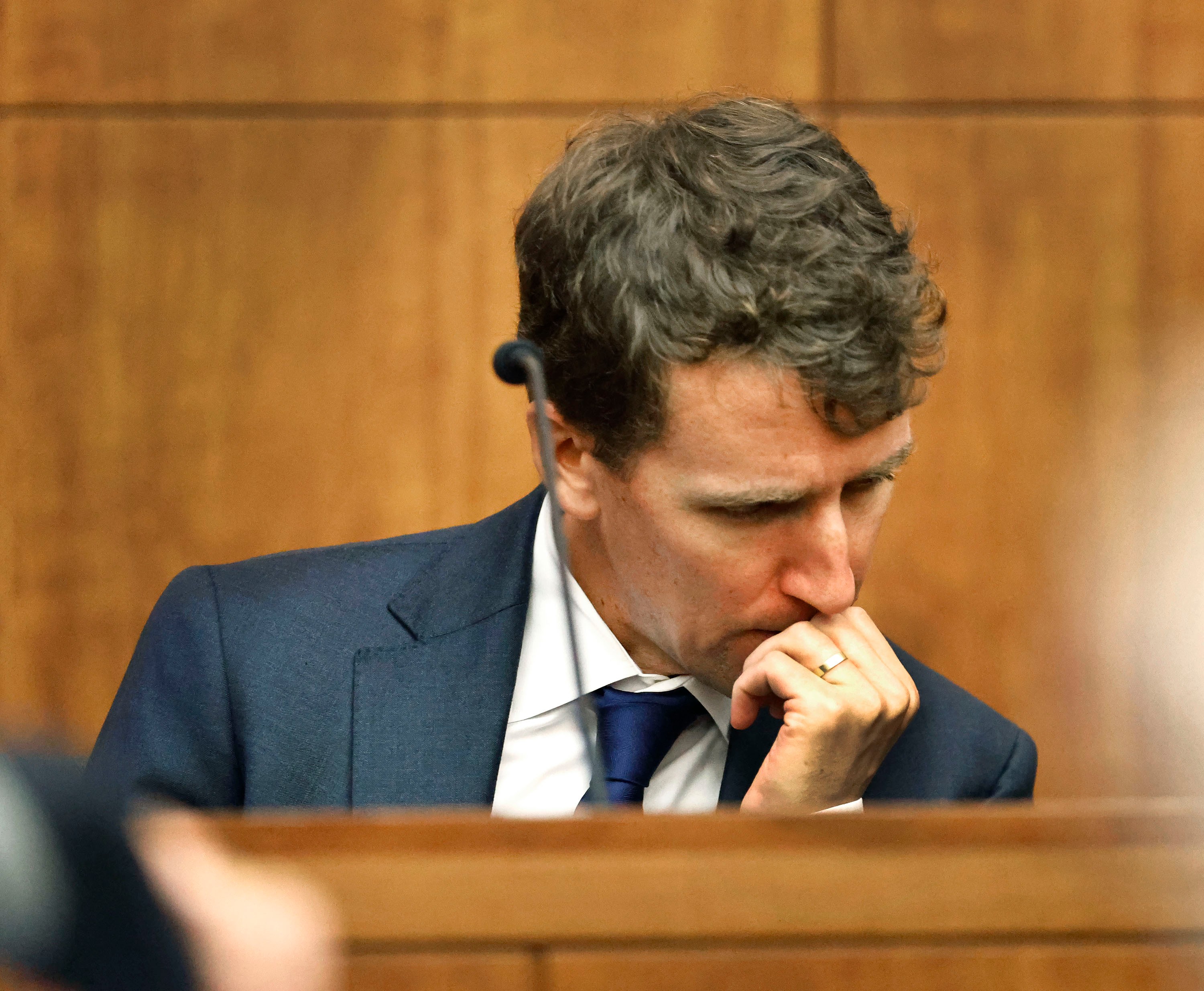
    A federal judge on Thursday said actions city prosecutors took in a controversial post-conviction case could ultimately amount to perjury, conspiracy, or obstruction of justice — a stunning suggestion that inserted the threat of potential criminal consequences into a matter that has already roiled District Attorney Larry Krasner’s office.

    U.S. District Judge Paul S. Diamond did not say whom he was referring to when he made that remark during an unusual hearing in his courtroom. But he raised the issue while an assistant district attorney was testifying about conversations she had with Krasner about the case, in which she said Krasner told her to “protect the office” and, by extension, violate her ethical obligations as a lawyer.

    “If what they say is true,” Diamond said, “potential wrongdoing abounds.”

    Diamond, as a judge, does not have the ability to file criminal charges himself. But his remarks from the bench were another new development in the case, which had already featured a host of explosive accusations about how prosecutors have behaved while determining whether a man’s murder conviction should be overturned.

    And it was not the only notable moment during Thursday’s hearing.

    During a full day of testimony, three prosecutors made a series of striking statements about the interoffice drama behind the case. And some of their assertions directly accused Krasner of questionable conduct.

    Assistant District Attorney Katherine Ernst said Krasner repeatedly told her and others to protect the office and avoid additional scrutiny from the courts. She and colleague Steven Wildberger also said Krasner threatened “consequences” — which they believed to be potential firings — for those who resisted his preferred method of handling it.

    Krasner also rejected their advice to ask the state attorney general’s office to take the lead on the matter, they said, because, according to Ernst, Krasner “hated” everyone in that office and said “everybody in that [office] is Nazis.”

    And all three prosecutors said Krasner and another supervisor, Matthew Stiegler, tried to persuade them to effectively find a way to protect Stiegler’s reputation at the expense of a prosecutor he supervised, Jaclyn Mason.

    As Ernst recalled it, Stiegler said he wanted to make it seem as if any mistakes in the case were “100% [Mason’s] fault and 0% his fault.”

    In Ernst’s view, the events demonstrated that Krasner cared “more about the reputation of the office than competently handling this case.”

    Wildberger said he was so disillusioned that he stepped down as a leader of the law division to move to a different unit because “I have lost faith in the administration of the Philadelphia District Attorney’s Office.”

    The testimony from Ernst, Wildberger, and their colleague David Napiorski served as an extended rebuke of the office where all three still work. Ernst at one point acknowledged that some of her relationships in the office have become “icy.”

    Ernst and Wildberger accused Krasner in court documents last month of some of the conduct they testified about Thursday.

    Krasner’s office responded by saying their filings were unauthorized and “ill-informed.” He also said that he had taken steps to alleviate their concerns with how the case was being handled, and that they were in no position to comment on behalf of his office.

    The prosecution at issue is the conviction of Dennis Johnson for second-degree murder. In 2009, a jury found Johnson guilty of fatally shooting Kenyatta Smith during a robbery outside a North Philadelphia convenience store two years earlier. He was sentenced to life in prison.

    Johnson appealed, in part because he said his trial attorney was ineffective. And in 2022, Mason filed court documents agreeing with one of his post-conviction petitions and saying Johnson’s conviction should be overturned.

    But this spring, Ernst and some of her colleagues reviewed the case and took the opposite view, saying they had discovered clear and important errors in Mason’s brief. They then took the unusual step of filing another brief to ask that Mason’s recommendation be withdrawn.

    In the days after that development, Mason resigned, a decision she later said was an attempt to protect herself from what she viewed as a plot to turn her into a scapegoat.

    Ernst and her colleagues denied that they were seeking to blame Mason. And in the weeks after Mason’s resignation, Ernst said, she and other supervisors got into an extended series of arguments with Krasner over how to handle the situation — which is what formed the basis of much of their testimony Thursday.

    Most of the disputes concerned whether the office should recuse itself from handling Johnson’s case at all. Ernst said she repeatedly tried to get Krasner to let the attorney general’s office take over the case because the internal discussions had veered into areas of self-interest rather than the merits of the case.

    Krasner consistently refused, she said. And Wildberger said Krasner once grew “apoplectic” when they attempted to memorialize their concerns in writing, because that would make their memos and emails potentially discoverable in future litigation.

    Wildberger said Krasner threatened “consequences” if they continued to resist his preferred method of proceeding, which was to hire an outside lawyer to handle the matter on the office’s behalf.

    But neither Wildberger nor Ernst saw that path as appropriate, and last month both signed on to a brief before Diamond saying they could no longer participate in the case because of their ongoing debates with Krasner.

    Diamond paused Thursday’s hearing in the middle of Napiorski’s testimony. He plans to continue the proceedings next week.

    He has not ordered Krasner to testify.

    Krasner said it would violate ethical rules to comment while the hearing remains ongoing.

    “As much as I would like to speak right now,” he said, “my comments will have to come at a later time.”

  • 2 Philly men charged in Chester County road-rage shooting

    2 Philly men charged in Chester County road-rage shooting

    Two Philadelphia men were charged with attempted murder for a shooting that occurred during an alleged road-rage incident in May, Chester County District Attorney Christopher L. de Barrena-Sarobe said Thursday.

    Sophay Yem, 35, and Intanon Chay, 36, who also were charged with terroristic threats and related offenses, surrendered to police, de Barrena-Sarobe said.

    Yem was being held in lieu of $500,000 cash bail, and Chay was being held on $350,000 cash bail. Both men did not post bail and remained in custody at the Chester County Prison, court records show.

    Thomas Kenny, Yem’s attorney, said he intended to “vigorously defend” his client against the charges.

    “I am fighting this case,” Kenny said.

    Patrick T. Doherty, Chay’s lawyer, said his client “denies any involvement in these crimes,” and looks forward to his day in court.

    On May 12, the victim, who was not identified, contacted Tredyffrin Township police to report that his vehicle had been shot in the driver’s side door, de Barrena-Sarobe said.

    The victim said he unintentionally cut off another driver on Route 202 near the Route 30 Bypass, and then the other driver followed him aggressively, attempting to force the victim’s vehicle off the road, de Barrena-Sarobe said.

    The passenger in the other vehicle allegedly threw objects onto the road toward the victim’s vehicle. When the victim exited onto Route 252, he heard glass shatter and later found a bullet hole in his door, de Barrena-Sarobe said.

    The driver was identified as Yem and the passenger was Chay, de Barrena-Sarobe said.

    “Just because someone cuts you off does not mean you get to shoot at them. This was absurd criminal conduct that put the lives of everyone on the road that day in danger,” de Barrena-Sarobe said in a statement.

  • South Jersey man charged with first-degree murder in strangling of 40-year-old daughter

    South Jersey man charged with first-degree murder in strangling of 40-year-old daughter

    A 71-year-old South Jersey man was indicted Wednesday on a first-degree murder charge for allegedly strangling his 40-year-old daughter in June, the Gloucester County Prosecutor’s Office said.

    Dennis J. Hall of Franklin Township faces a maximum of life in prison if he is convicted.

    On June 11 around 6:15 a.m., Franklin Township police responded to a home on East Avenue after Hall allegedly called 911 to report that his daughter, Devin Hall, was not breathing and that he had strangled her, the prosecutor’s office said.

    Dennis Hall was arrested at the scene. A public defender representing Hall could not be reached for comment.

    Police attempted lifesaving measures on the 40-year-old woman, who was then transported to a hospital. She was removed from life support the next day and pronounced dead.

    The Gloucester/Salem/Cumberland Regional Medical Examiner’s Office performed an autopsy and determined that cause of death was asphyxiation, and the manner of death was homicide.

    Devin Hall’s online obituary described her as “a special daughter who endured many challenges and struggles during her life on this earth. She was an inspiration to others, and she touched many with her beauty, gentle kindness, and innocent presence.”

    The obituary said she had traveled to 32 states and loved music, especially Toby Keith. Besides many family members, Devin Hall left behind one dog and four cats, the obituary said.

    Her mother, Jan Hall, told 6abc that she was born with multiple disabilities, used a wheelchair, and did not speak.

    Jan Hall said Dennis Hall, her husband, awakened her and allegedly said he had strangled their daughter.

    In June, the prosecutor’s office said that a witness, who was not identified, was awakened by Dennis Hall, who told the witness that he had strangled his daughter.

  • Prosecutors have gun tied to off-duty police officer killing, but investigation could take months, DA says

    Prosecutors have gun tied to off-duty police officer killing, but investigation could take months, DA says

    Investigators are in possession of a gun they believe was used in the killing of an off-duty Philadelphia police officer in Southwest Philadelphia and are interviewing the man accused of firing the fatal shots, authorities said.

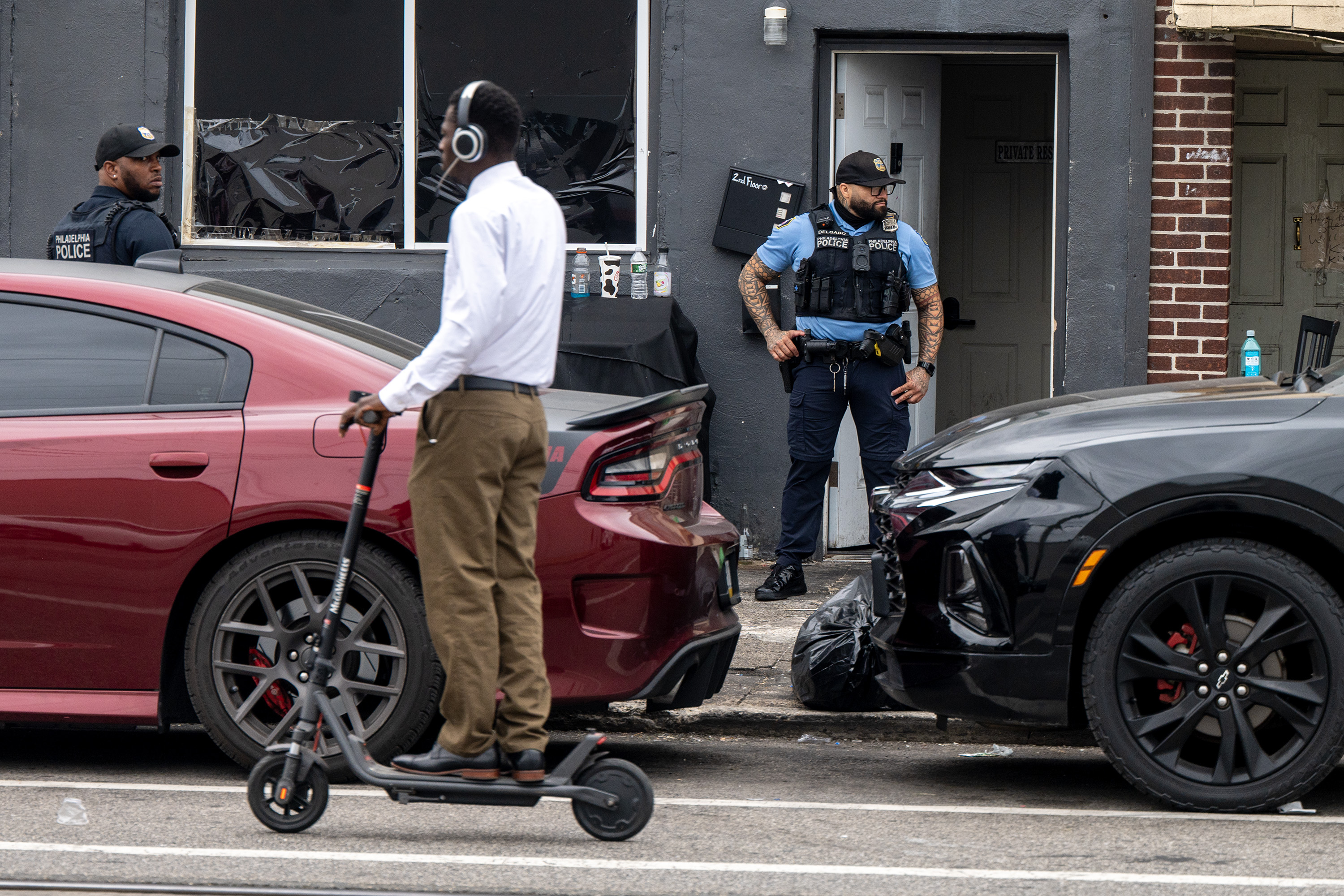
    District Attorney Larry Krasner offered those details Thursday as he gave updates on the investigation into the death of the officer, 29-year-old Alhassane Barry, outside an unlicensed speakeasy in the early morning hours of Aug. 16.

    Surveillance video shows Barry, a two-year veteran of the force, and the shooting suspect exchanging words outside the after-hours hookah bar just before 4 a.m. before a third man punches the suspect.

    The altercation then spills off-camera, resuming when Barry staggers back into the frame bleeding from gunshot wounds to his abdomen. Another person, a 35-year-old man, was also injured in the gunfire and is recovering in the hospital.

    Krasner said during a news conference that investigators have identified the shooting suspect and that prosecutors are speaking with the man and his attorney to learn more about the nature of his role in the deadly encounter.

    But police have yet to recommend charges to prosecutors, and Krasner said it could take up to two months for investigators to complete their review and determine what charges would be necessary.

    Part of that process includes medical testing and further interviews with witnesses, Krasner said. Investigators also recovered footage of the shooting from multiple camera angles, though a sign blocks a camera angle depicting the moments immediately before shots were fired, complicating the review, according to the district attorney.

    The updates came after two law enforcement sources told The Inquirer that self-defense had become part of the discussion about whether charges would be appropriate.

    Asked whether the gunman told investigators he had acted in self-defense, Krasner declined to comment. But he said self-defense is “one of the issues under consideration” by investigators.

    The shooter “does not dispute that he had a gun” or “that he fired,” Krasner said.

    Rather, the man’s version of events “requires additional investigation,” he said.

    Prosecutors are also working with police to authenticate whether a firearm handed over by the shooting suspect during discussions was the gun used to kill Barry, according to Krasner.

    Meanwhile, the district attorney vowed to fight to shut down the unlicensed club where the incident began, saying that Nipsey’s Hookah Lounge was a nuisance to neighbors and that it may be connected to at least one other death.

    In July, a 29-year-old woman getting out of a rideshare was struck and killed in a hit-and-run crash on the same block of Elmwood Avenue as Nipsey’s around 3:30 a.m.

    The property has a history of violations with the city’s licenses and inspections office and was not permitted to operate as an after-hours club, The Inquirer learned.

    In the wake of Barry’s killing, the district attorney’s office has filed a motion to shut down the business, Krasner said. A court hearing on the matter is expected early next month.

  • DA Larry Krasner asks victims of Chucky-style mask incidents to come forward

    DA Larry Krasner asks victims of Chucky-style mask incidents to come forward

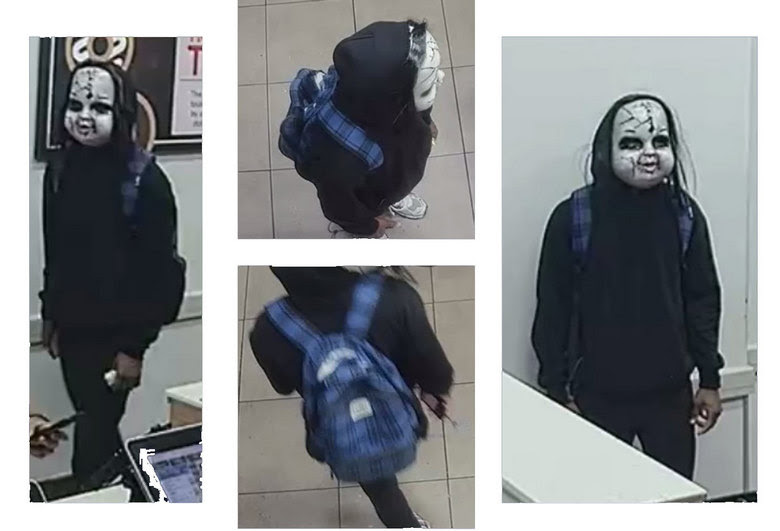
    A day after U.S. marshals captured the man accused of menacing pedestrians in Center City while wearing a Chucky-style mask, Philadelphia District Attorney Larry Krasner urged victims to come forward, saying prosecutors are eager to pursue additional charges against the man whose antics terrorized people and went viral.

    Zymire Hughes, 22, was taken into custody on Tuesday night in Las Vegas by marshals who tracked him across the country. Authorities said Hughes wore a frightening mask to harass and scare more than a dozen people, including a woman he approached while she was jogging near City Hall earlier this month and asked, “Are you ready to die?”

    As the 40-year-old woman ran from him, Krasner said, she fell and suffered injuries that required hospitalization and weeks of recuperation.

    Hughes faces aggravated assault and other charges in connection with that incident, the district attorney said, and prosecutors are reviewing as many as 15 other reported incidents involving the masked man that same morning.

    “If more victims are identified,” Krasner said, “we look forward to prosecuting him in other cases as well.”

    He added: “Who’s scared now?”

    Authorities have not identified most of the people who appear to have been confronted or frightened by the masked man. But in a widely publicized incident, Jameka Wilson, a 25-year-old actress, told several news outlets that a man wearing a similar mask approached her on her way to an exercise class near City Hall and that she kicked him in the chest.

    Philadelphia police said that Hughes did not display a weapon during the incidents and that the woman who fell was the only person known to have been injured. Investigators have said they believe he may have been frightening people to create social media content.

    On Wednesday, Krasner dismissed the idea that Hughes could characterize the crimes as online entertainment.

    “You can’t just say, ‘I’m an influencer,’ and commit crimes,” he said. “You can’t just terrorize people, terrorize a community, because the reaction of someone who believes she might die at any second, you find funny.”

    Hughes remained in custody Wednesday in the Clark County Detention Center in Las Vegas, court records show, and was scheduled for a court hearing Thursday.

    After Hughes is extradited to Philadelphia, prosecutors will seek “very high bail” in an effort to keep him in custody while the case proceeds through court, Krasner said.

    “One of the questions that bail answers is: Will this person run?” Krasner said. “I mean, yes. Obviously, he already has. … Running away is the ultimate way to high bail.”

    Hughes’ extradition could take as little as a week or stretch into months, depending largely on whether he contests his return, Krasner said.

    Hughes’ flight from Philadelphia took him from New Jersey to Florida and then Nevada, authorities said.

    He left the Philadelphia area Aug. 19 from Trenton-Mercer Airport in Ewing, N.J., according to the U.S. Marshals Service. He flew to Orlando and then to Las Vegas.

    Philadelphia and Las Vegas deputy marshals began working together Friday, said Robert Clark, a supervisory deputy U.S. marshal, and spent the weekend trying to locate him.

    Investigators eventually tracked Hughes to an apartment complex in southeast Las Vegas, where they believe he had been staying for about five days, Clark said.

    Marshals arrested Hughes about 8 p.m. Tuesday. Clark said Hughes tried to pull away from his handcuffs and had to be subdued by deputy marshals.

    Hughes’ arrest followed a week of intense public attention after Philadelphia police released images of him and asked residents for help in finding him. The case had already gone viral because of photographs and videos showing a man wearing a cracked, baby-faced mask resembling the horror character Chucky from the movie Child’s Play.

    Prosecutors are continuing to review evidence, Krasner said, and “will be pursuing all charges that apply.”

    Anyone who was approached or menaced by the masked man can contact the district attorney’s office at 215-686-8000.

  • A Rutgers University dean of research was charged with invasion of privacy

    A Rutgers University dean of research was charged with invasion of privacy

    A Rutgers University dean of research has been charged with invasion of privacy, the New Jersey attorney general announced Wednesday.

    Joshua Kohut, 51, who serves as the dean of research at the School of Environmental and Biological Sciences, is accused of using his mobile phone to record “upskirt” videos of people without their knowledge while working at the university, Attorney General Jennifer Davenport said. Davenport did not say how many victims there were, or whether they were students or coworkers.

    “An invasion of privacy like this is not just disturbing, it is also a criminal act. We will prosecute accordingly,” Davenport said.

    The attorney general’s office received a complaint regarding Kohut on June 14. He was observed on multiple occasions using his cell phone to record a person’s intimate parts underneath “her skirt,” according to the Office of Attorney General.

    A search warrant was executed Monday, and authorities seized five of Kohut’s devices. During a forensic review, one of the seized devices was found to contain “upskirt” videos of another person’s undergarments and “intimate parts,” according to the attorney general. Prosecutors did not disclose where the warrant was executed, how many videos were discovered, or over what time period they filmed.

    A Rutgers spokesperson said Kohut was banned from campus pending the outcome of the investigation, and the university placed him on administrative leave “after being informed of the extremely disturbing charges.”

    Kohut is facing a charge of fourth-degree invasion of privacy, which carries a prison sentence of up to 18 months and a fine of up to $10,000.