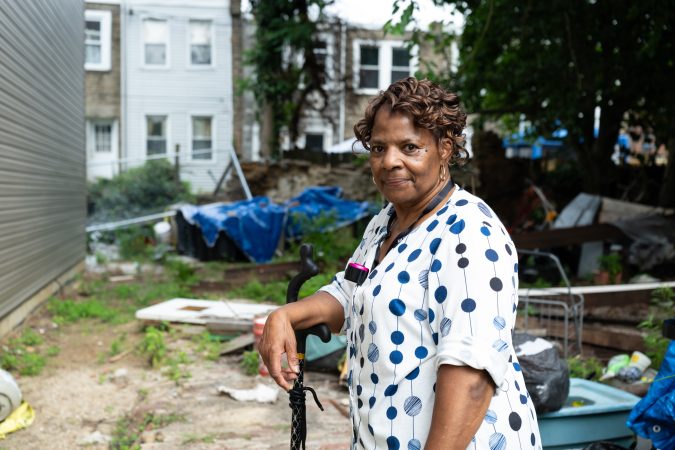
Most days during the summers — sometimes well into the evening — Delores Lawrence is outside her home in Germantown weeding, watering, and otherwise tending her garden.
Her small front yard is where she grows tomatoes, blackberries, purple daisies, and orange and yellow lilies, all planted closely together. There’s also a narrow strip on the side where Lawrence cares for a mix of potted calla lilies, peonies, and other vegetation.
The land around her home is her peace.
It’s her little slice of the American dream.
But instead of being able to enjoy another summer growing season, Lawrence is livid about how the construction of a new apartment building next door has disrupted life on the block where she has lived for more than 30 years.
Her garage is no longer standing, her brick driveway damaged, and the construction noise at times was absolutely unbearable.
Lawrence, who worked in nursing before being injured, doesn’t know what to do. “I want my garage built back up. I want my driveway reconstructed,” she told me recently over the phone. “It makes me angry. It makes me upset. I even went to the doctor. I can’t even sleep.”
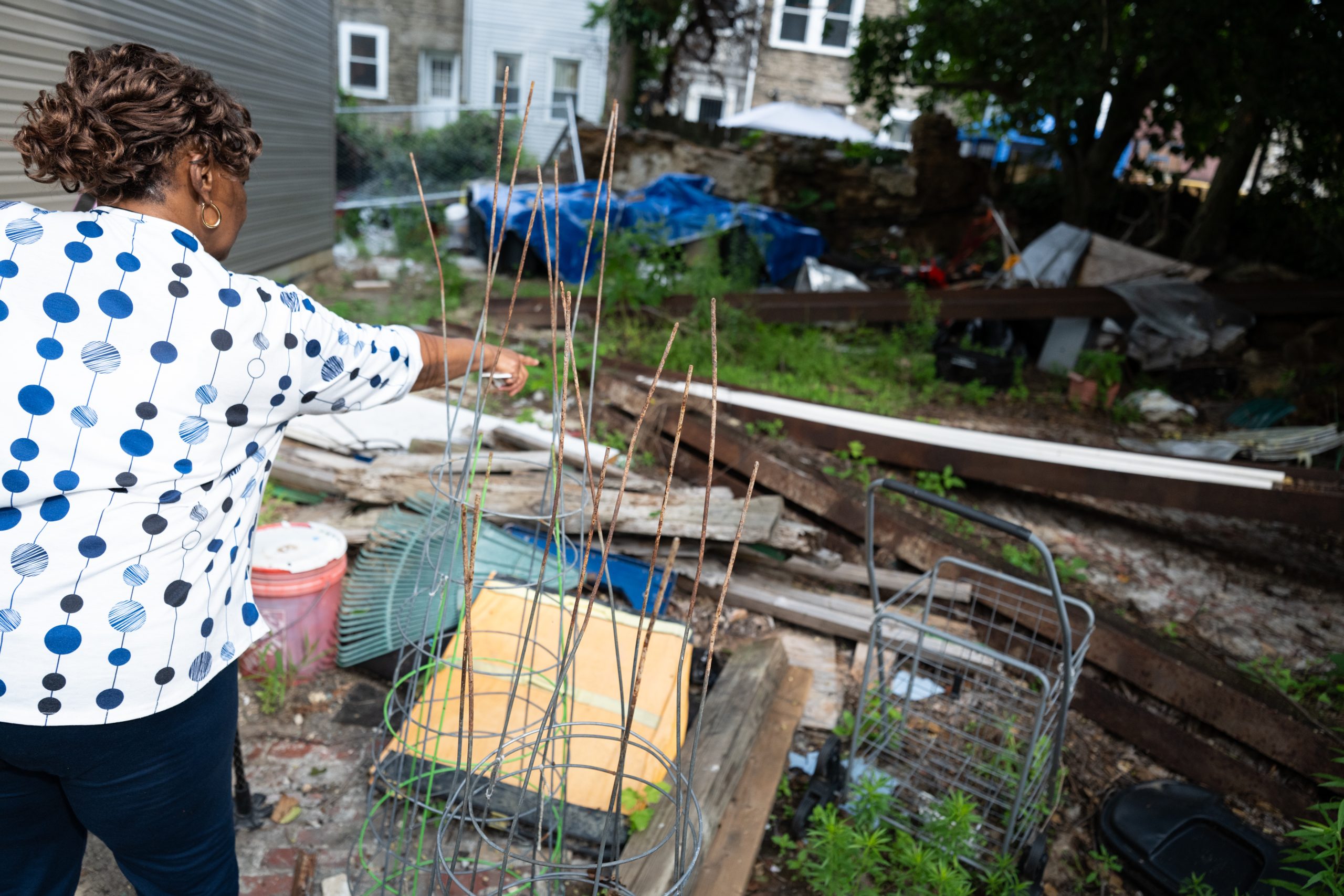
I recently paid a visit to the 200 block of East Bringhurst Street and walked with Lawrence as she pointed out the shambles the construction had made of her beloved yard.
There was a stack of old bricks that had been removed from her driveway. The remnants of an old stone garage where she would do arts and crafts projects. “These are iron beams that they took off the roof,” she said. “It was a building back here.”
There was more — a tree trunk lying on its side with its roots exposed, what looked like electrical cables in the rear, and containers of paint that she said belonged to the builders working next door.
Delores Lawrence points to the remains of a garage where she used to do arts and crafts projects amid the detritus of a construction project next door. The project — a 15-unit apartment building — has been underway since 2024.Erin Blewett / For The Inquirer
Taking in the scene, I thought to myself that this is a whole situation — and I saw how it has turned into a court fight that is shaping up to be as messy as Lawrence’s backyard.
On one side, there’s Lawrence, a 70-year-old homeowner who has filed a lawsuit demanding compensation for damage to her property caused by the construction of a new four-story, 15-unit building immediately adjacent to her driveway.
On the other side is Danilo A. Burgos, the cofounder of Burg Properties and the 29-year-old son of State Rep. Danilo Burgos, a Democrat who was first elected in 2018 and who serves the North Philly neighborhoods of Kensington, Hunting Park, and Feltonville. The four-story, 15-unit building is under the charge of the younger Burgos and has been in the works since 2024.
Given everything going on in Philly right now, it would be easy to ignore the situation between a politically connected developer creating much-needed affordable housing and a senior citizen upset about its impact on her property. But I can’t help but feel for Lawrence.
Besides, hers isn’t an isolated situation. What’s happening to her in Germantown is actually emblematic of similar struggles playing out between residents and developers in neighborhoods around the city.
Residents of Chinatown successfully pushed back against a proposal to build a new Sixers arena along Market Street. In Northern Liberties, several neighbors on Brown Street are suing a developer, claiming their homes were damaged by the construction of a nearby apartment building. In 2024, my colleagues at The Inquirer produced an entire series called Crumbling City about how housing redevelopment created construction issues among some rowhouses.
Whatsets the situation in Germantown apart is the reality that the developer is the son of a state legislator.
“This is about entitlement and privilege,” Kevin L. Valentine, Lawrence’s attorney, told mein an email.
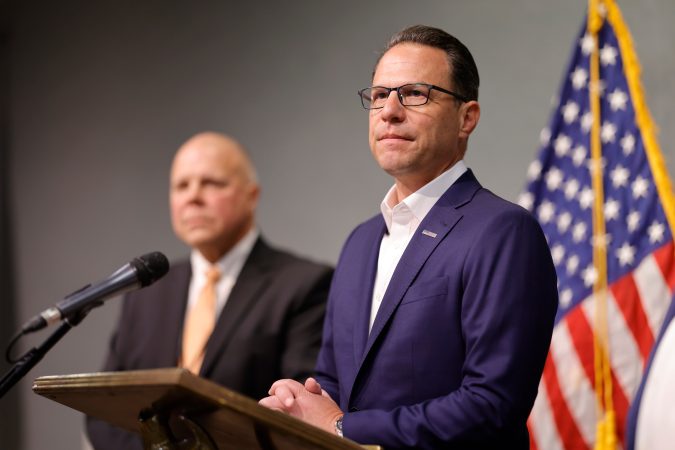
Property owner Danilo A. Burgos speaks to the press outside his affordable housing project under construction in the Germantown section of Philadelphia on Thursday, July 9.Erin Blewett / For The Inquirer
I reached out to Burgos, the state representative, who said: “My son has not done anything wrong. The lady, she’s suing him, and they’re in court. That’s it.” He added, “They have everything documented, and when the court case comes, everything will be squared away, God willing.”
As for the son, he says he’s doing good for the community by providing affordable housing. Philly is in the midst of a “severe housing crisis,” which is why Mayor Cherelle L. Parker has made building and restoring roughly 30,000 homes a cornerstone of her legislative agenda.
But developers still need to respect neighbors in the communities where they build. Christopher Edwards, a block captain and president of the Baynton Hill Neighbors Association, is deeply concerned about the impact the new Bringhurst Street apartment building will have on the narrow street with limited parking.
“We can see where this thing is going to become very unpleasant, especially for those of us who have lived there for years,” he told me.
After meeting with residents who aired their concerns, Burgos, a Temple University graduate, said he purchased a nearby lot that he intends to convert into a parking lot for his tenants’ use. Neighborhood residents, he said, will have priority when it comes to renting units.
As far as the garage in the rear of Lawrence’s home that had been negatively impacted, Burgos said that “it wasn’t a structure. It wasn’t a garage. It was like freestanding walls scattered [around]. Because some were up. Some weren’t.”
He said his workers knocked down a party wall the properties shared. “We notified her of the wall that we were going to knock down,” Burgos told me as we stood with his attorney in front of his new apartments. “Everything we did, we didn’t do it behind her back; we did it with her knowing what we were going to do.”
Attorney Saury A. Mejia and property owner Danilo A. Burgos (left) speak to the press outside Burgos’ affordable housing project under construction as neighbor Delores Lawrence (right) tends to her garden in the Germantown section of Philadelphia on July 9. Lawrence says construction of Burgos’ low-income housing project next door damaged her property.Erin Blewett / For The Inquirer
I liked hearing him say he was prepared to fix any of the property damaged by his workers. But Burgos said he is awaiting permission from Lawrence to do it.
“We’re willing to put it back to its prior condition,” Burgos said, adding that he’s willing to negotiate. “We’ve been open to dialogue the entire time.”
It sounds to me as if a meeting with all parties involved needs to happen quickly.
“I want him to sit down with my client and for him to make her whole,” Valentine said. “I’m just trying to get some justice for this woman.”
Councilmember Cindy Bass is willing to convene such a gathering. “If we can get all parties together, we’re certainly willing to do that and to do it soon,” she said.
Meanwhile, the proverbial clock continues to tick. Time is money. That’s not something Lawrence, who worked at Shriners Hospital for Children, has much of.
The more I think about what Lawrence is going through, the angrier I get. I’ve never been in her situation personally, but who would want workers coming onto their property and damaging it? People work hard for what they have. Your home is supposed to be your sanctuary. You may not have a say in what goes on around you, but you’re the custodian of what goes on inside your proverbial picket fence.
“I’m here minding my business. I’m not bothering nobody,” Lawrence told me. Her voice broke into sobs as she added, “How long do I have to put up with this?”
In 1992, I started teaching at West Chester University. My students were mostly working-class kids from the collar counties who saw higher education as a way to move up in the world. But they often struggled in subjects like history — my own field — which they saw as irrelevant to their future employment.
So let’s make college shorter, shall we? We can save a year by paring away the dull “general education” classes — in English, history, and so on — that the students hate anyway. They can focus on their majors, graduate in three years, join the workforce, and save a quarter of their tuition costs.
I think that’s a bad idea, but I don’t blame people for wanting it. Instead, I blame us.
I’m looking at you, my fellow professors. Put simply, we didn’t do a good enough job with what we have.
College is expensive. Families are strapped. And a lot of general education courses are — as the students correctly perceive — a waste of time and money.
The only way to make the case for them is to make them better. But you won’t hear that from our educational establishment, which pretends we were delivering on the promise of college before the three-year proposal raised its ugly head.
Witness the joint statement from the American Association of University Professors and the American Federation of Teachers condemning Massachusetts’ approval of three-year degrees at two state colleges. “Compressing or reducing the curriculum threatens to narrow students’ education at precisely the moment when society needs graduates with stronger critical thinking, communication skills, scientific literacy, and civic understanding,” they declared.
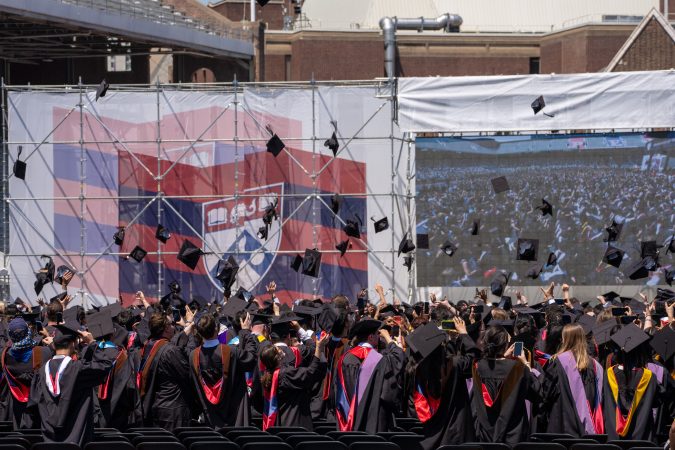
Award-winning presidential historian and best-selling author Michael Beschloss speaks at the University of Pennsylvania’s graduation ceremony in May.Jessica Griffin / Staff Photographer
Kenneth M. Mash, president of the PSSHE faculty union, said almost exactly the same thing. “At a time when there are calls for critical thinking, calls for knowledge about civics, what we’re doing is reducing the amount of time that students have to get that in,” Mash warned.
But here’s what these spokespeople won’t tell you: We’re not teaching those skills now. Even with four years of college, our students remain woefully undereducated.
According to a survey administered earlier this year by the American Council of Alumni and Trustees, only 39% of college students know that U.S. senators serve for six years and representatives for two. And just 37% can correctly identify the branch of government that has the power to declare war. (Answer: legislative.)
So much for civics. What about critical thinking? Cornell University has instituted an online module to teach it to students, precisely because their coursework often didn’t. “Many of us include it in our learning objectives,” one faculty leader admitted, “but when you look at courses, it’s often not taught explicitly.”
That’s especially alarming in the face of artificial intelligence, which threatens to envelop our students in mindless slop. Unless they learn to use their own brains, they won’t be able to critically evaluate what AI spits out.
And we’ve never taught critical thinking well. In 2010, when generative AI was still science fiction, sociologists Richard Arum and Josipa Roksa found that nearly half of all college students showed no improvement in critical thinking skills during their first two years on campus.
There’s no evidence that things have picked up since then. Instead, a growing body of research suggests that AI is eroding students’ capacity to think. The bots have made it easier to cheat your way to a BA while pretending you know what you’re talking about. So why not reduce the degree to three years? Or two, or one? Heck, why not just give it to anyone who will pay?
Because we’re not simply selling credentials, that’s why. I don’t get out of bed in the morning and say, “I’m going to help people affix letters next to their names today!” My goal is to help them learn. And if you think we’re doing that well, you just haven’t been listening.
I know our students need jobs, too. But when you survey employers, it turns out they want precisely the critical thinking skills we’re not teaching. Those irrelevant gen ed classes could have a real market value if we played our cards right.
Last week, I had dinner with a beloved student from my days at West Chester. She succeeded wildly there, but many of her peers failed. They didn’t need a shorter college experience. They needed a better one.
Jonathan Zimmerman teaches history and education at the University of Pennsylvania. His next book, “Schooling Citizens: How Education Can Save Democracy,” will be published next spring by the American Philosophical Society Press.
With City Hall taking their summer break and Harrisburg finally passing a budget, this week’s edition of Shackamaxon looks at what’s going on in the courts.
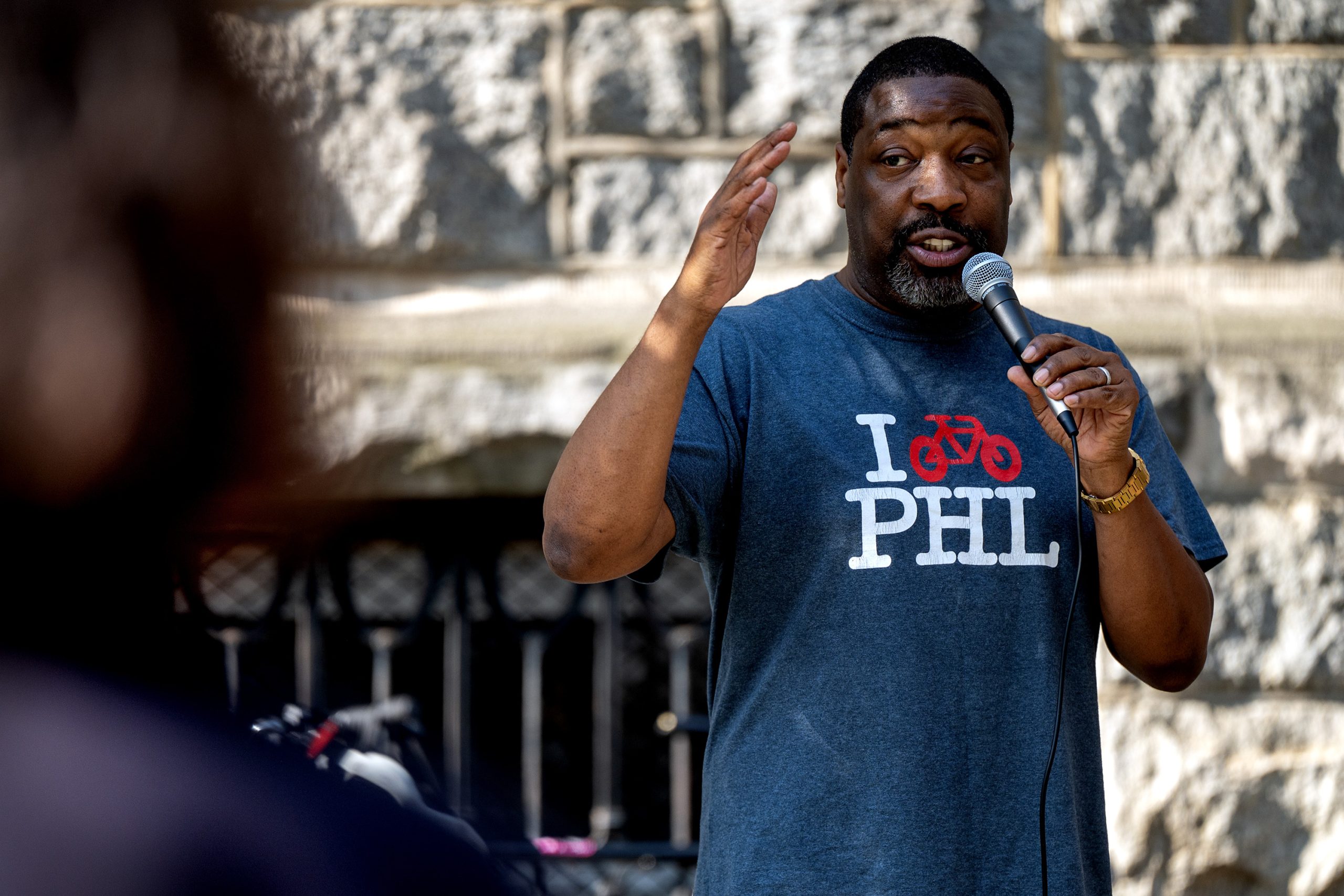
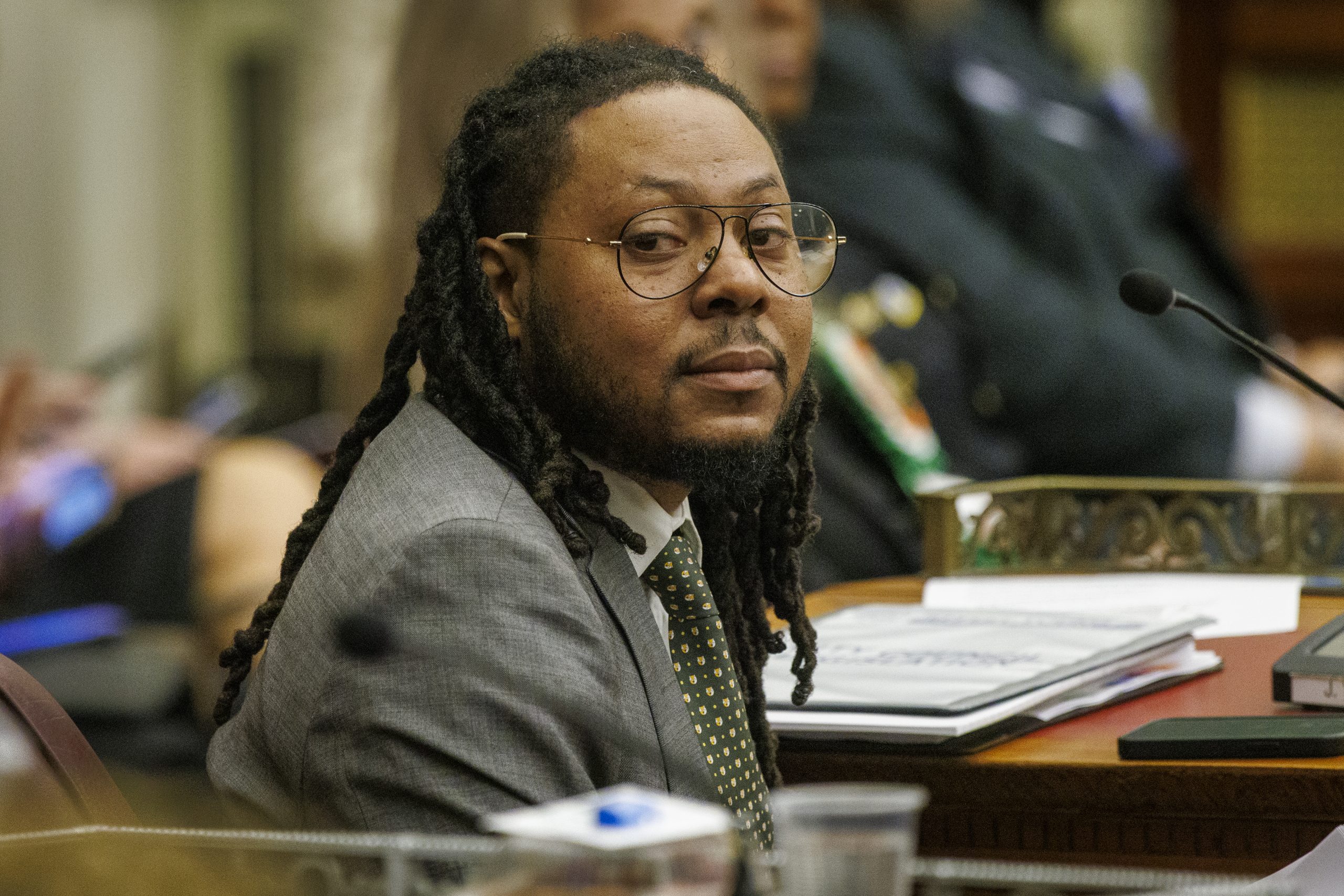
City Council President Kenyatta Johnson speaks as friends, family, and Philly Bike Action members gather at a memorial for Barbara Friedes at 18th and Spruce streets on Sunday.Tom Gralish / Staff Photographer
Street fight
It has been two years since Barbara Friedes, 30, a physician specializing in children’s cancer, was killed riding her bicycle in Rittenhouse Square. The man who struck her, Michael Vahey, was driving at 50 mph, twice the speed limit, and his blood alcohol level was measured at .16, double the limit for intoxication.
According to a prosecutor, Vahey, 69, could have easily chosen to walk home from the bar that night. Instead, he was impaired when he impatiently veered into the bike lane. Vahey was convicted last year and is now serving a six- to 20-year sentence.
But the story did not end with Vahey’s imprisonment. For once, city officials took decisive action.
City Council, led by Council President Kenyatta Johnson, passed the “no stopping in the bike lane bill.” Mayor Cherelle L. Parker pledged to add protection to the route, which could have prevented the kind of reckless maneuver that led to Friedes’ death. Yet, two years later, nothing has happened.
The blame for the holdup, however, does not lie with City Hall. In fact, Johnson made an appearance at a vigil for Friedes hosted by her loved ones and Philly Bike Action this week.
Instead, it has been the courts that have stymied the proposal. After a group called Friends of Pine and Spruce sued to stop the plan, a Common Pleas Court judge issued an injunction requiring the city to pass legislation codifying the administration’s right to install loading zones. City Council passed the legislation, only for another Common Pleas Court judge to decline to lift the injunction while the case proceeds.
Frankly, things should never have gotten this far. Issuing loading zones is the exact kind of decision the Streets Department exists for, and having City Council pass a law for every loading zone in the city is a fool’s errand.
It is certainly understandable that some neighbors would prefer to keep the status quo. The right venue to advocate for this position, however, is not the courts, but City Council. If the Court of Common Pleas fails to return control of city streets to city officials, the ruling must be appealed to the Commonwealth Court. Streets belong to everyone, not just the people who live alongside them.
If residents want to stop bike lanes, they can do what cyclists have done. They can form advocacy groups, lobby elected officials, build a coalition, and pass legislation.
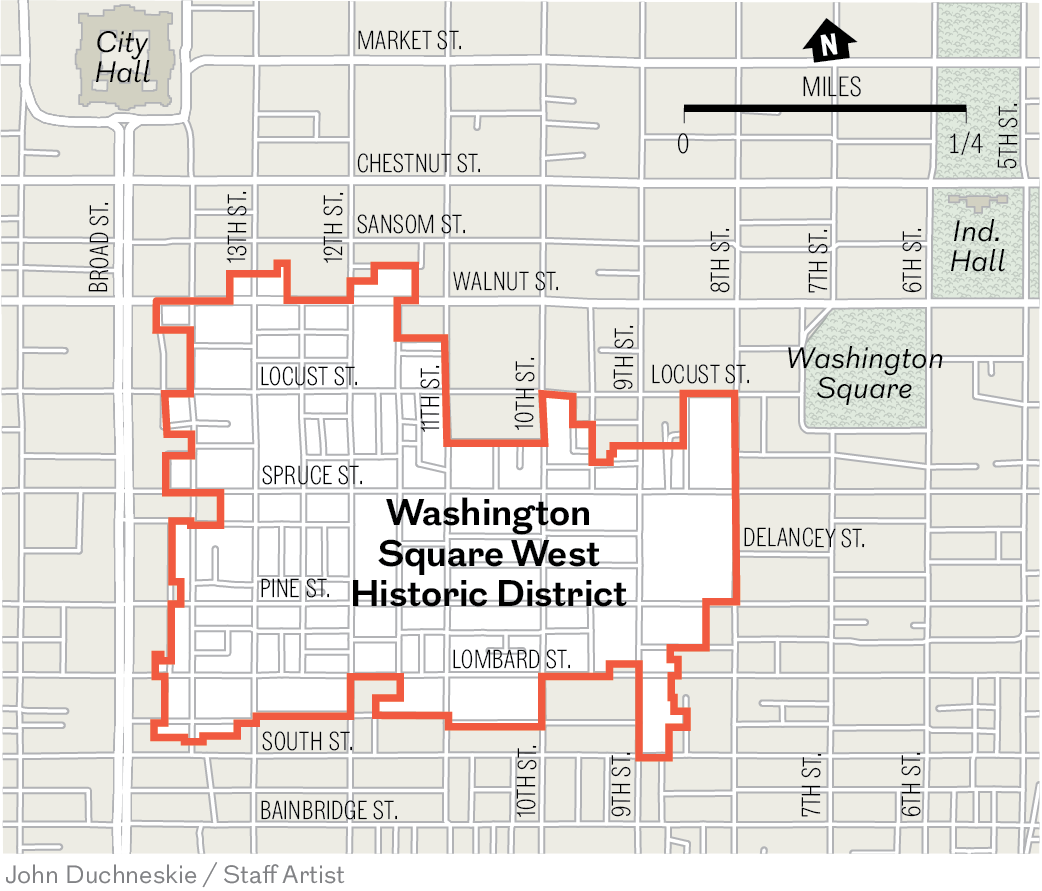
Map of the Washington Square West Historic District. Some property owners are working to eliminate or curtail the district.John Duchneskie / Staff
Historic challenge
For some Center City residents, the Spruce and Pine saga contains a bitter irony. While some of their neighbors are suing to stop the city from designing public streets, they are suing to maintain the right to design their own homes.
No one questions that the Washington Square West Historic District contains some of the city’s best architecture and links the present day to the city’s past. What’s been contentious throughout this process is how broad and restrictive the plan has been. While most districts cover a relatively small area, and typically pay homage to a specific era, style, or even architect, this district covers nearly all of Philadelphia’s history, from colonial times to the postwar era. More than 1,400 properties are listed as contributing, many of them fairly unremarkable.
As a result, property owners like Jonathan Hessney have been working to eliminate or curtail the district. Most submissions to the Philadelphia Historical Commission were in opposition to the plan, with many citing both the personal financial burden and the fact that many of the most significant properties already have individual protections.
Hessney also pointed out that Emily Cooperman, who is a member of the commission, helped draft the proposal. To some, this made the whole process feel like a foregone conclusion.
Hessney and his neighbors sued. They won an early victory when Common Pleas Court Judge Christopher Hall overturned the designation. This was appealed by the city, keeping the district in place pending an appeal. The Preservation Alliance has filed its own brief in support of the district.
Of course, the city could make everything easier by declining to pursue this suit further.
Councilmember Jeffery “Jay” Young Jr. listens during the mayors budget address at City Hall in March.Alejandro A. Alvarez / Staff Photographer
Senseless prerogative
In another legal case concerning City Hall, the Commonwealth Court has ruled against Councilmember Jeffery “Jay” Young’s efforts to block a series of housing projects in North Philadelphia. Going forward, Young and his colleagues will have to secure the mayor’s signature before granting themselves standing to oppose zoning decisions.
Young is one of Council’s most prolific users of what’s known as councilmanic prerogative, a tradition that gives district Council members final say on transportation and land-use decisions within their districts. While Council often defends this tradition as a way to ensure communities have a say, Young’s tactics usually attract the ire of his constituents, rather than representing their input.
I talked to Ruth Birchett, a lifelong resident of North Philadelphia. Birchett has worked with both of Young’s immediate predecessors, supporting them at times and holding them accountable when needed. As the founder of Heritage Community Development Corp., she’s helped build affordable housing and fought against Temple’s efforts to build a football stadium. She told me that the way Young does business is very different. He does not seek input from her or other community leaders. He goes it alone.
In particular, Birchett is upset over Young’s decision to block an affordable senior housing proposal. She took him to task in person. This situation is similar to Young’s opposition to renovations at the Cecil B. Moore Library branch. He came in at the very last minute to scuttle a shovel-ready project that had taken years of work to put together, and which had already secured funding.
Birchett told me that the development was a “no-brainer.” Many seniors, herself included, live in homes that are much larger than their current needs. Philadelphia has a shortage of affordable senior housing. If seniors like Birchett can move into new housing in their own neighborhoods, this also helps younger residents access the city’s stock of sizable homes. That’s the housing circle of life.
Instead of continuing to waste city resources by reauthorizing the appeal, Young should just let the project move forward.
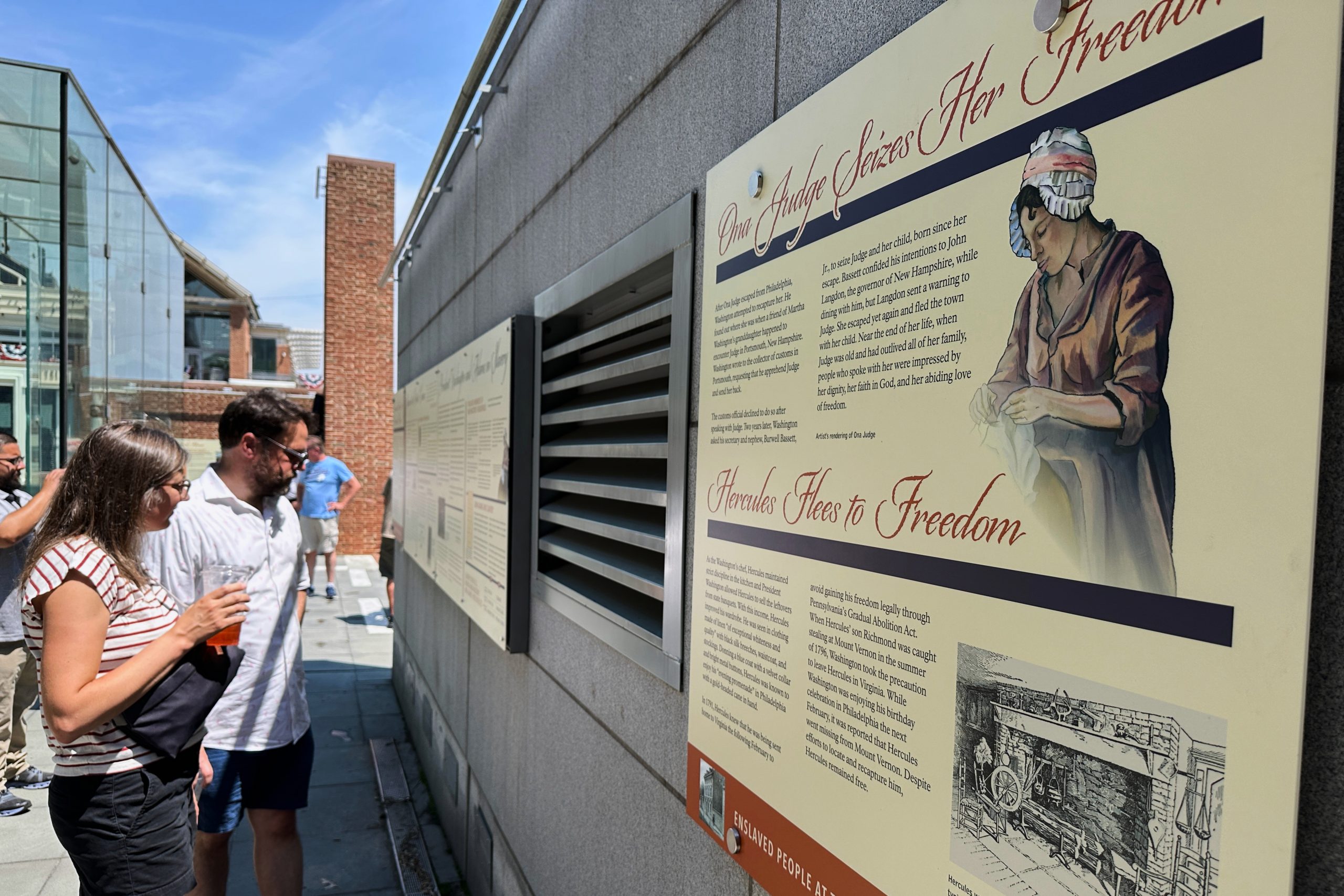
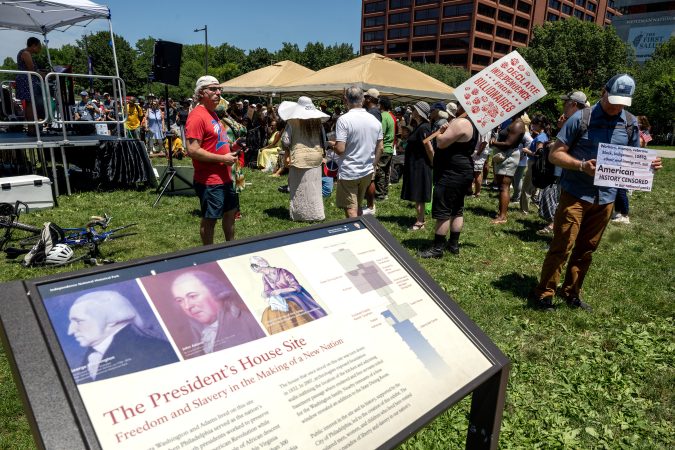
Visitors view the recently reinstalled educational panels about slavery at the site of President George Washington’s home in Philadelphia.Tassanee Vejpongsa
Washington whitewash
For now, it seems the Trump administration has won the battle for the President’s House at Independence National Historical Park. After initial victories for the city, federal courts have affirmed the White House’s right to remove panels that were first installed roughly 20 years ago and replace them with new versions that advocates say minimize George Washington’s participation in America’s original sin of slavery. Mayor Parker has vowed to restore the originals.
While some Founding Fathers, like Philadelphia’s Benjamin Franklin, realized the hypocrisy of calling for liberty while enslaving human beings, Washington showed he had no similar qualms. While living in Philadelphia, he acted with intent to evade Pennsylvania law, which stated that any enslaved person brought into the commonwealth would be emancipated after six months of continuous residence.
The former panels ensured the stories of all Americans are heard, including those who were not given the rights of liberty during their own time. They also serve as a reminder that even the greatest heroes are still human.
Washington deserves immense credit for helping secure America’s independence, and his decision to forgo the crown many assumed he’d take when he left office peacefully after two presidential terms — a precedent all but one of his successors (so far) has held to. He also deserves to be known as a man who failed to live up to the ideals he fought for.
Seven years ago, the walls were closing in on Wu Shaoping in his native China.
Like a firefighter who rushes into a burning building, attorney Wu had watched China’s repressive Communist Party arrest scores of human rights lawyers under a crackdown that began in 2015, and responded by joining their dangerous cause, representing practitioners of Christianity or the Falun Gong sect.
“It is simply a duty of my profession, part of my responsibility, to uphold the legal right of every person,” Wu said in a 2023 video urging his fellow Chinese to quit the Communist Party, or CCP. “It’s one of the things we should do as lawyers.”
In late 2019, China’s totalitarian government began arresting human rights advocates who’d attended a secretive conference in the southern city of Xiamen and charging them with subversion of state power. Wu was at that confab, and — fearing he’d be next — he fled with his wife and young daughter to a place that had offered a safe haven to so many Chinese dissidents: the United States.
Wu’s family traveled to New York on a tourist visa, and before that expired, the attorney applied for political asylum. As his case lagged in the clogged U.S. immigration courts, Wu built a life in his new country.
In 2023, the family moved to a more affordable town just outside Lancaster and joined a local Chinese Christian church, while Wu’s daughter enrolled in Hempfield High School. Wu supported them by driving for Uber, delivering packages for Amazon, and trying his hand at construction work. But he also built up his connections with the diaspora of Chinese dissidents while using his newfound free speech to speak out against the CCP.
It took just one traffic stop in Donald Trump’s America to turn everything upside down.
On July 15, Wu was making Amazon deliveries in Cumberland County, Pa., when a local police officer pulled him over and later placed him in the custody of U.S. Immigration and Customs Enforcement. Despite having a work permit and an active application for asylum — which should have shielded him from deportation — Wu was quickly sent to ICE’s notorious Moshannon Valley Processing Center in Northwestern Pennsylvania, which has been criticized for squalid conditions.
Wu’s arrest and detention have stunned and demoralized the close community of Chinese political refugees on U.S. soil, who for years have faced harassment here from agents and allies of Xi Jinping’s dictatorship. Now they find themselves fighting on a second front as the reality sets in that the U.S. government they saw as their protector is no longer a reliable ally.
“The CCP is the ultimate source of fear, whereas the threat of being detained by ICE like this is more kind of imminent, immediate,” Zhou Fengsuo, who’d been jailed as a student leader of the 1989 Tiananmen Square uprising and gained asylum and U.S. citizenship after fleeing here in 1995, told me on Wednesday.
But Wu’s arrest is also a powerful symbol of an inhumane mass deportation policy that has become a mindless and lawless machine of evil banality. It is sweeping up all kinds of refugees to fill its gulag detention quota, without any thought to why its victims have come to America or preserving the U.S. legacy as a safe place for the world’s stateless dissidents, which is getting permanently destroyed by this meat grinder.
How can anyone possibly make sense of the twisted logic of the Trump regime, which in arresting Wu has targeted an outspoken critic of communism and the Chinese government — the same government the president has just accused (with no evidence) of attacking our elections.
But locking up an asylum-seeking Chinese dissident is no less illogical than the Minnesota ICE raids against the Hmong people who came here after aiding the CIA in Laos in the 1960s and ‘70s, or the detention of Afghan nationals who worked with U.S. troops after 2001, or so many others who thought America offered them safety. Instead, there is terror — not just for the detained and their families, but for those who fear they could be next.
“I came here not only for my freedom, but for the freedom of other Chinese people,” Wu said this week in a conference call from the Moshannon Valley lockup that was translated into English by a dissident friend and reported by Lancaster Online. He added that he shouldn’t have been arrested because “America is a country built on the rule of the law.”
Well, it was supposed to be.
Wu’s passion for fighting injustice has burned since he was a teenager and took a year off from his studies in 1997 to leave his rural home and earn some money by working in bustling Shanghai. The cramped, filthy back alleys where factory workers lived looked nothing like the thriving communist state he’d learned about in school. He started tracking down banned books, where he learned the truth of the 1989 Tiananmen Square massacre that the government had lied about when he was in third grade.
“It was upside down,” Wu said, as translated in the 2023 video. “They lied to the world and praised themselves, making the butcher the sweetest person in the world.” He said his dissatisfaction with China’s regime only grew after he became an attorney and witnessed rampant bribery, or saw residents whose homes were getting demolished for new projects get beaten by police when they tried to complain.
The turning point was a date that’s little known to most Americans but holds great significance in the Chinese dissident community: July 9, 2015. More than 300 human rights lawyers and activists were detained in a government crackdown that launched that day, while others lost their law license and have been subjected to harassment.
That’s also when Wu stepped up his legal representation of clients targeted by the regime — especially those facing persecution for their religious beliefs in the officially atheist nation. That’s how he came to be one of roughly 20 pro-democracy activists who attended the private December 2019 meeting in Xiamen, and why he fled when two prominent attendees were arrested, and others felt they were in the crosshairs.
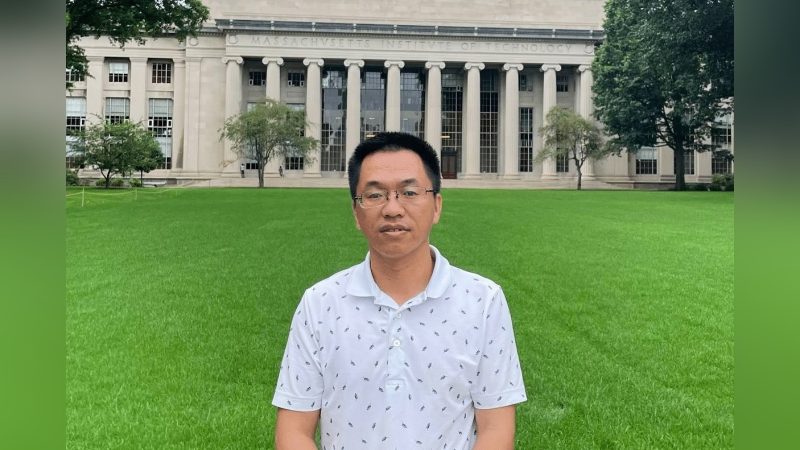
Wu Shaoping (right), his wife Li Caoliu, and their daughter after their 2022 baptism in Texas. Handout art
Wu’s life in America with his wife, Li Caoliu, and their daughter, now 17 and entering her senior year at the Lancaster County high school, has been divided between his quest for a normal family life and his tireless political activism. He helped found the Overseas Chinese Human Rights Lawyer Alliance — refugee attorneys who continue to advocate for the rule of law in their homeland.
The family converted to Christianity in 2022, and joined the Chinese Bible Church of Lancaster after moving to Pennsylvania. The pastor there, the Rev. Daniel Luo, described his congregant Wu as a busy man who nonetheless would drop everything to drive cancer-stricken Chinese children from New York City airports to a hospital in Hershey.
“He was so inspired by these persecuted Christians that he represented, and he felt a conviction to follow Christ,” said Wu’s close friend, the Rev. Bob Fu, the leader of the Christian diaspora group China Aid, who baptized the entire family during a 2022 retreat.
Big changes were happening for Wu — except for his asylum case, which stalled as the surge at the southern border in the early 2020s slowed immigration courts to a crawl.
The details of what happened when Wu was stopped by police earlier this month remain somewhat murky. Wu’s attorney in Montgomery County, John C. Visher, didn’t return calls or emails, but he’d previously told the New York Times that Wu was pulled over by police in Mount Holly Springs, Pa., while making his Amazon deliveries, and informed the officer of his work permit and his pending asylum application. But the officer called in ICE, whose agents detained Woo and eventually shipped him to Moshannon Valley.
An ICE spokesperson claimed last weekend that Wu lacks legal status and had overstayed his visa by six years. Advocates find the arrest baffling and are hopeful the case can be resolved in Wu’s favor in a scheduled hearing before an immigration judge on Monday.
His plight has gained support from two members of Congress — Republican Chris Smith of New Jersey and Democrat James McGovern of Massachusetts, who said in a letter to Homeland Security Secretary Markwayne Mullin and Secretary of State Marco Rubio that Wu “would face a severe risk of persecution — including detention and harsh punishment — if returned to China.”
Fu said that on this week’s call from Moshannon Valley, his friend was grateful for the support, but “he’s very, very nervous, very concerned about the possible deportation.” His friends and allies agree that returning Wu to China would ensure the arrest he thought he’d avoided when seeking asylum in the United States.
But he’s already been arrested, in a nation where the beacon of democracy has nearly died out.
This man who has done absolutely nothing wrong is behind barbed wire walls in his adopted homeland, in a detention center where others have complained of rotten food and medical neglect. The irony is painful: Trump’s increasingly senseless human rights nightmare has totally lost the plot.
Terry Thompson’s spiral into gambling addiction offers a window into the human destruction Pennsylvania lawmakers unleashed when they legalized online betting.
Before sports gambling was legal, the Montgomery County resident placed occasional bets through bookies. But in 2020, shortly after Harrisburg legalized sports betting, Thompson created an account with FanDuel Sportsbook to bet on the Eagles.
He began placing numerous microbets through FanDuel and DraftKings, the two main gambling apps, and soon became addicted. Within five years, he wagered more than $22 million between the two companies, and lost more than $1.8 million.
To feed his gambling addiction, Thompson sold his company and took out additional mortgages on his home. He hit rock bottom in February, gambling away his last dollar and planning to take his own life, according to a lawsuit filed in the Common Pleas Court of Philadelphia against FanDuel and DraftKings, and detailed by Inquirer investigative reporter David Gambacorta.
Thompson’s story lines up with many others who get hooked on gambling. But it included a new wrinkle that adds to the insidious way gambling companies entice people to keep betting.
In November 2024, Thompson received a personalized video message from Phillies superstar Bryce Harper.
In the video, Harper references Thompson by name, mentions his young son, and thanks him for his support. Harper adds that he was reaching out on behalf of the VIP manager at FanDuel who wanted to make sure Thompson had an “extra special Thanksgiving.”
In a personalized video that was sent to a problem gambler, Phillies slugger Bryce Harper said he was reaching out on behalf of an official at FanDuel.Obtained by The Inquirer
A few days after Gambacorta’s story was published, Harper issued a statement claiming he was not aware of FanDuel’s involvement even though he mentions the company’s VIP manager by name.
Harper said he joined the messaging site Cameo to engage with fans by providing paid video messages. Indeed, there is no evidence Harper was paid by FanDuel or aware of Thompson’s addiction.
Strategic ignorance aside, it seems pathetic for a star athlete paid roughly $25 million a year to work a side hustle shilling videos to strangers. Talk about not elite.
Clearly, everyone is finding a way to make money off gamblers, including state lawmakers, sports leagues, gambling apps, and former and current players.
It’s all about the fans, right?
More disturbing is how the apps entice gamblers.
In Thompson’s case, FanDuel rewarded him with perks, including champagne, hotel stays, and Super Bowl tickets. His VIP manager texted him about the Eagles as well as personal exchanges about family and travel plans.
FanDuel said its VIP managers do not work on commission. The company has a number of systems in place to help gamblers bet responsibly, including a dashboard so customers can track spending, real-time check-ins if players deviate from usual habits, and devices that let gamblers set limits on losses or time spent on the app, as well as cooldown periods or formal self-exclusions.
That’s well and good, but gamblers find workarounds, and the VIP perks sure seemed designed to keep high rollers gambling. Expecting gamblers in the throes of addiction to police themselves is not a serious solution.
One recovering gambling addict not involved in this case told me how FanDuel and DraftKings would send him numerous incentives a day to keep betting.
Indeed, the gambling business model depends on a small percentage of gamblers making frequent bets. One study found 5% of sports gamblers generate 86% of the industry’s revenue.
The ease of online gambling has turned everyone’s mobile phone into a casino. Nearly 40% of men and 20% of women gamble online daily, according to the American Psychiatric Association.
Online betting has enabled companies to attract younger gamblers. Two-thirds of 18- to 22-year-old men surveyed by the NCAA had bet on sports. Many teens and adolescent children have become hooked on gambling, including some as young as 11.
In a statement, FanDuel said it “is committed to fostering a culture of responsible gaming and protecting our customers” and that “employees are trained to recognize and flag signs of problem gambling.”
Thompson’s experience, as alleged in his lawsuit, indicates otherwise.
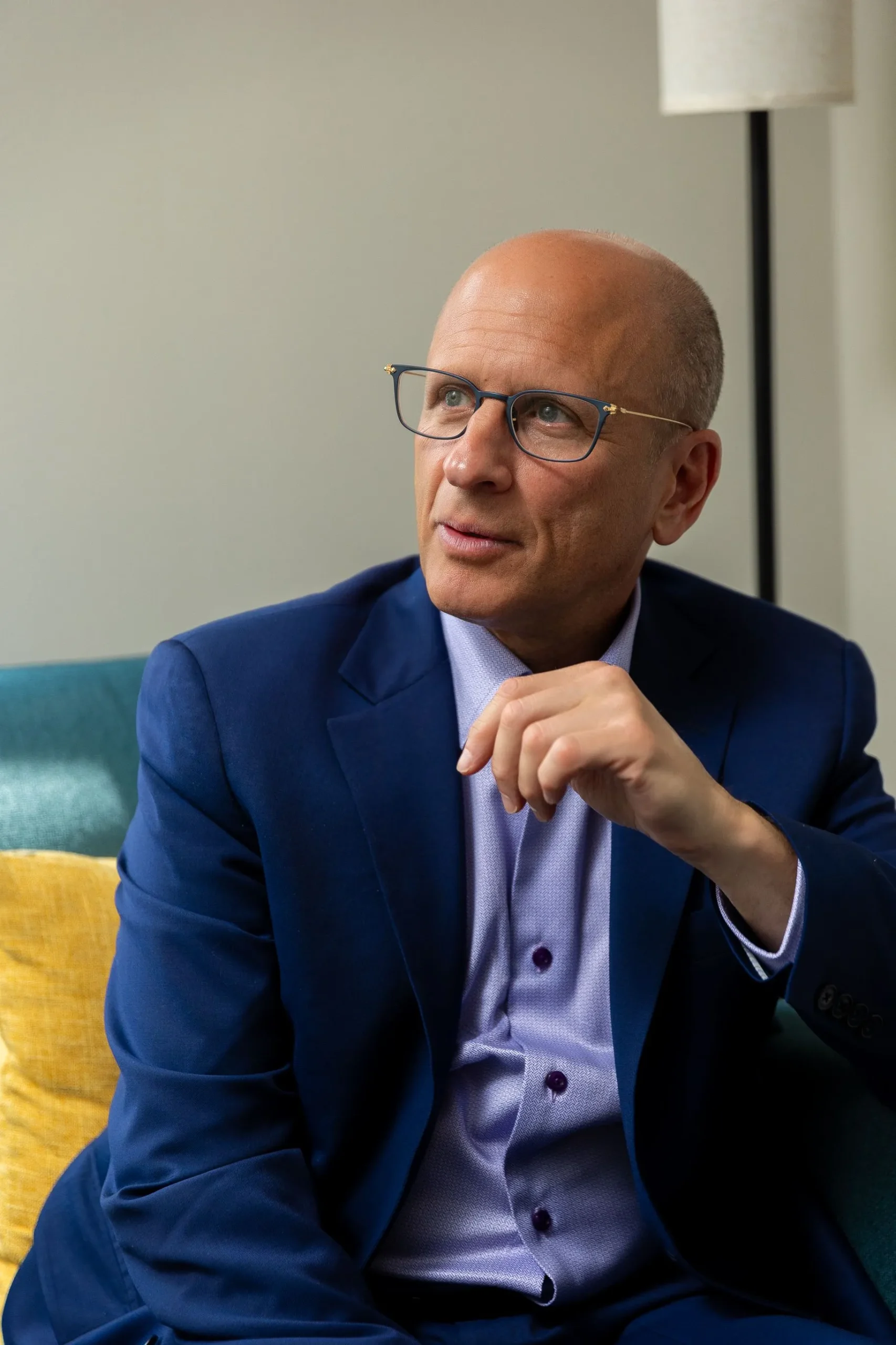
“There are millions of Terry Thompsons out there,” Harry Levant, a former Philadelphia attorney who is now the director of gambling policy for Public Health Advocacy Institute, told me.
Levant, an addiction recovery coach, said he gets frequent calls from spouses, parents, and children seeking help for loved ones addicted to gambling. He said he has clients who gamble in the shower or before they get out of bed in the morning.
Harry Levant, an addiction recovery coach, said he has clients who gamble in the shower or while they’re lying in bed in the morning.Courtesy Harry Levant
Levant said the surge in online sports gambling has been fueled by a partnership between professional sports leagues and sports betting companies that provide a nonstop stream of in-game betting opportunities on everything from the next pitch to the next home run.
Microbets — such as betting on the outcome of the next pitch or play — and same-game parlays — where gamblers make a single bet that requires multiple events to happen — keep bettors engaged throughout a game. When the game is over, there is always another game somewhere in the country or across the world.
Levant said microbetting is designed to be addictive. “We are dealing with a fundamentally different form of gambling,” he told me. “It’s machine vs. humans, and no way can humans keep pace.”
Levant has called on Congress to pass the Safe Bet Act, which would require operators to conduct “affordability checks” on customers before accepting wagers; prohibit microbetting and the use of AI to track individual gambling habits and offer individualized promotions; and prohibit sportsbooks from marketing during live sporting events.
Even for us non-bettors, prohibiting sports gambling ads — the same way tobacco ads are not allowed — would be a welcome relief. The incessant ads from casinos and sportsbooks, as well as the in-game promotions, are beyond annoying.
The problem is the sports leagues, the TV networks, and the gambling companies are essentially in business together. The state lawmakers who are sworn to protect the public enjoy campaign donations from the gambling lobby and hefty taxes for state coffers.
But it is up to the 39 states and Washington, D.C., that have legalized sports betting to implement real safeguards to protect citizens from a system designed to keep people gambling. The states ignore the reality that all of their betting-related tax revenue comes from the pockets of gamblers.
Last year, Americans bet more than $166 billion on sports — and billions more at casinos and state lotteries. Before the U.S. Supreme Court cleared the way in 2018 for states to legalize sports betting, sports betting amounted to $4.9 billion.
Now, up to 30% of Pennsylvania adults engaged in some form of online gambling in the past year, researchers at Penn State University found.
The Philadelphia-area market leads the country in online gambling. The rapid growth has resulted in a doubling of calls to a problem gambling hotline.
Anthropologist Natasha Schull wrote a book years ago that explained how slot machines were designed to addict gamblers. The industry jargon was to get gamblers to “play to extinction.”
Now, online gambling saves a trip to the casino, but the endgame remains the same.
If the summer of 2026 came with an Official Cliché™, it would have to be “glass half empty, half full.” Things could be better. Things could be worse. It’s people — many of whom are quite wonderful — doing our best in a world run by institutions that are rotten to the core. You’ll find no greater example than the World Cup that wrapped up Sunday with a well-deserved trophy for Spain. Will we remember the gross commercialism and rank corruption perpetuated by FIFA and its political twin, Donald Trump? Or the many remarkable moments on the pitch, and the joyous sense of internationalism in the stands and beyond? How do we get to a place where elite greed is crushed while mere mortals like us thrive?
U.S politics becomes a farcical unreality show. How worried should we be?
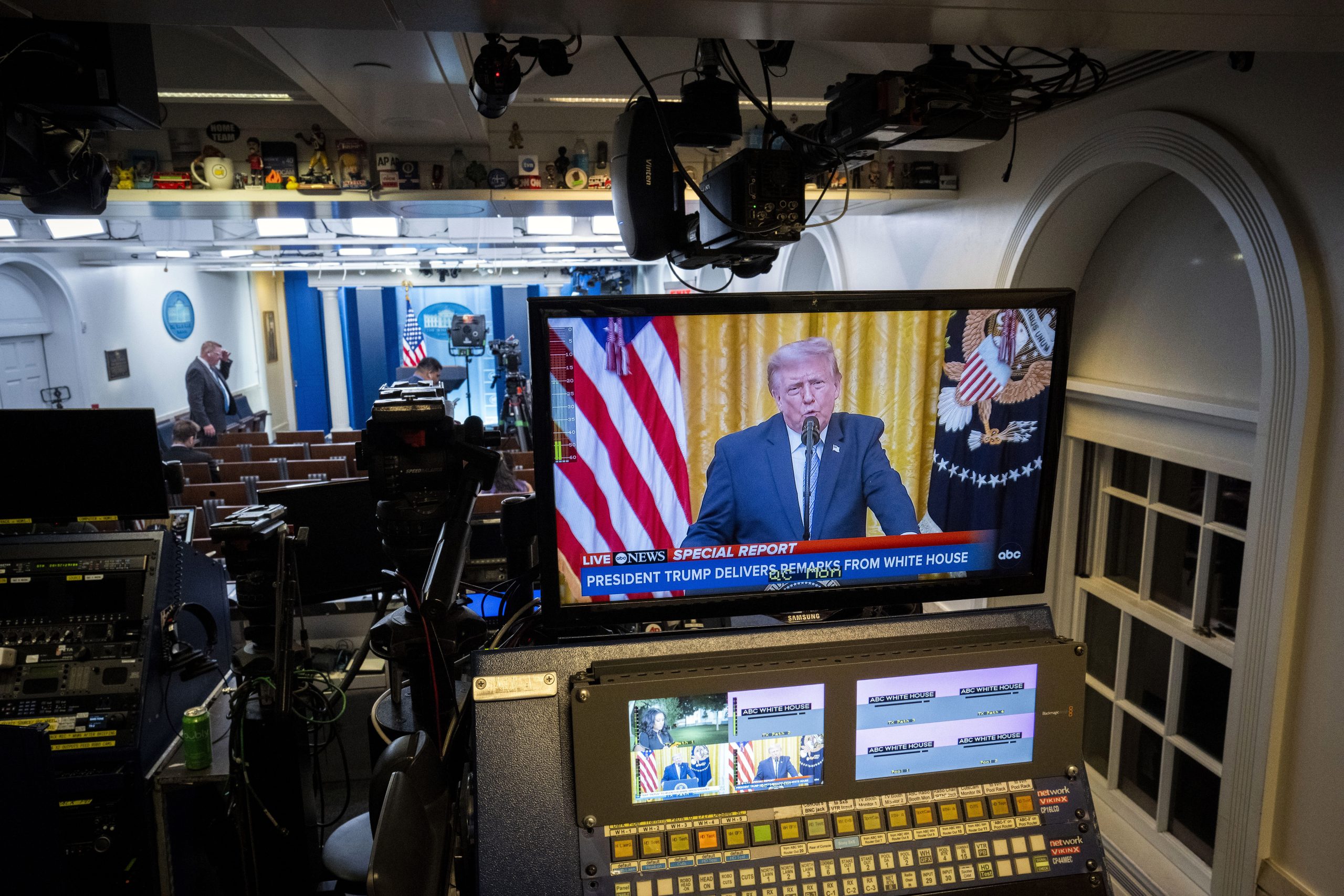
Video monitors in the White House briefing room in Washington carry a live feed of President Donald Trump as he addresses the nation on July, 16.DOUG MILLS
If you live inor near a big city and use mass transit to get around, you know this experience. You hop on a subway or a bus, focused only on getting from point A to point B, but there’s a man just a few feet away who demands your attention. He is talking loudly, repeating the same gibberish phrase over and over, seemingly arguing with someone until you realize he’s not even holding a phone. It’s just him. You feel a mix of emotions — sorry for the guy because clearly he’s going through something, yet mainly praying he will just stop yelling and give you some peace.
Trump commandeered 26 minutes of invaluable TV prime time (CBS and MS Now ran all or most of it; NBC, ABC, and even CNN declined) for a speech that arguably may be remembered as one of the most consequential ever delivered from the White House — but only for the Big Lie constructed on a foundation of half-truths.
Despite days of hype, which was sensibly ignored by most folks who know better after a decade of Trump’s political dishonesty, there was zero new evidence that China or any other foreign power consequentially interfered in the 2020 presidential election Trump lost fairly and squarely to Joe Biden. POTUS instead offered gross exaggerations around old reports that would have made the late red-baiter Joe McCarthy blush, with bizarre allegations about the CIA and other intel agencies while he was in charge of them in 2020.
There was a huge problem, however, with the president’s scare tactics: No one was scared. It’s not just that many among the 61% or so of Americans who disapprove of Trump’s job performance had expected the Thursday night monologue would include even worse lies or fabrications, or stronger threats — instead of a leader who was not just incoherent but weak.
But even the Republican politicians and right-wing opinion makers who were a main target of the White House address looked the other way in the immediate aftermath. We were all the mortified passengers on the same subway car, hoping the noise would just end.
Fox News host Sean Hannity, Trump’s longtime friend, was on the air when the speech ended and fairly quickly changed the topic, so eager to avoid the stench. Even worse, the president’s favorite show, Fox & Friends, which aired early the next morning, did not mention the address once in the three hours it was on.
I’ve lived through the 1980 men’s hockey gold medal and Watergate, the Iraq War and the legalization of gay marriage — so I know how it feels to be proud to be an American, and to be furious with our government. But I’ve never felt the sense of utter embarrassment that was the national mood at 9:30 p.m. last Thursday. The president gave a prime-time address that was complete fiction. Who will ever again take the United States seriously on a world stage?
But there was also a dangerous flip side to America’s week of magical thinking. In delivering a speech about election integrity problems that don’t exist, there was also a pack of wild dogs that did not bark Thursday night. For one thing, Trump barely mentioned his unilateral decision to resume and escalate the war in Iran, even as three more U.S. troops would be dead by week’s end, and everyday Americans once again felt the pain of gas prices over $4 a gallon.
But Trump and his GOP allies were determined to ignore, deflect, or flat-out lie about the crisis that was literally right in their faces: the smoke from northern wildfires, mostly in rural, remote Canada, that shrouded huge swaths of the Midwest and Northeast in thick, wood-smelling smoke and led to orders for people to remain indoors.
Wildfires may be as old as the trees, but there’s only one reason why smoke from Canada has caused two major health emergencies in the United States since 2023, and that reason is climate change. Consistently warmer summers — even more extreme in northern Canada than elsewhere — have led to drought conditions that fuel these blazes. “The best way to solve it is to just stop burning fossil fuels,“ Jonathan Overpeck, a climate scientist and dean at the University of Michigan, told the CBC.
But suffocating smoke from the northlands is a jolly big problem, which nobody can deny. And so a president who’s been utterly skewered by South Park decided to rap, “Blame Canada.” The world’s climate-denier-in-chief was shocked, shocked,that “the United States is being unnecessarily invaded by filthy, polluted, and unhealthy air, the quality of which is dangerous, and totally unacceptable!”
Filmmaker Jim Pattiz called this — wait for it — America’s “latest global embarrassment.” He wrote, “The whole planet is watching an American president shake his fist at the sky and order a sovereign country to get its clouds under control.”
There’s two ways to look at all of this. For now, Trump’s lame efforts to frame the looming midterm election as rigged are coming off as sad and pathetic, a lot more Charlie Chaplin in The Great Dictator than an actual führer. He lacks both evidence and judges who will rule in his favor, while his political base is shrinking every day.
For now, Trump will not be ignored, like Glenn Close flipping the lamp switch on and off in Fatal Attraction. Neither the mortification of Thursday’s speech nor the death of three soldiers in his Iran war of choice could keep the president from bullying his way onto the main stage at Sunday’s World Cup final in New Jersey, ignoring the boos to shoehorn his way into Spain’s victory photos as if he had assisted on the winning goal.
Can a world superpower die from embarrassment? We are finding out in real time.
Yo, do this!
Blame — or thank — the Major League Baseball schedulers who seem determined to stop the Phillies from playing on Friday nights, but the baseball blackout forced me to go on Netflix and realize it has added an awesome documentary that came out in 2019 but is needed now more than ever: Raise Hell: The Life and Times of Molly Ivins. The film shows how the outspoken and relentlessly funny Texas journalist rebelled as a student in the 1960s against the hypocrisies of her privileged upbringing and never looked back until she was taken from us, way too young, in 2007. Every up-and-coming young journalist needs to watch this and discover a role model for life.
After that commercial that ran incessantly during the World Cup, the lyrical phrase “What the world needs now …” has been stuck in my head for weeks. Well, what the world needs now, with rising authoritarianism and ruthless capitalism, isn’t only love, sweet love, but also courage. What remarkable timing for Julia Angwin and Ami Fields-Meyer’s new book, On Courage: How to Be a Dissident in an Age of Fear. The authors tell the story of more than 100 dissidents all over the globe, from Hong Kong to Venezuela, to learn how everyday folks can find the gumption to resist oppression. It’s a must-read for Donald Trump’s America, and it is next on my list.
Ask me anything
Question: Why is [Donald Trump] being allowed to randomly declare tariffs on Canada again if the Supreme Court said that it was illegal? Do we have to have the same argument over and over again? — Stephanie King (@stephstephking.bsky.social) via Bluesky
Answer: Apparently we do. Section 338 of the 1930 Trade Act — known, notoriously, to history geeks as the Smoot-Hawley Act that only exacerbated the Great Depression — gives the president fairly broad powers to impose retaliatory tariffs if his administration concludes that a foreign country is discriminating against U.S. products. Thanks to the international trade war that Trump himself initiated, the president is now claiming Canada is punishing American autos, alcohol, and dairy products. It feels like the proposed 50% levy on many Canadian products is less about sound economics and more about a) answering GOP calls to blame Canada for the wildfires that are actually the result of climate change, and b) trying to change the subject from a disastrous week. They don’t take effect for 30 days, plenty of time for the next TACO (Trump Always Chickens Out) Tuesday.
What you’re saying about …
Last week’s question about how to respond to Trump’s Big Lie about election fraud that we all knew was coming in Thursday’s speech was probably, in hindsight, too wonky to generate much response. Those who did write agreed that a heavy burden falls on the news media to do everything to debunk — or, as longtime reader Rosalind Holtzman put it, “pre-bunk” — the president’s many falsehoods. She added: “Americans have the attention span of mayflies and need review and repetition. Revisit the events of the 2020 elections and how Trump’s claims all failed in court.” I couldn’t agree more.
📮 This week’s question: Optimists are already starting to ponder a world where Donald Trump is no longer president. But where would a Democratic successor even start to undo the damage caused by the many destructive policies of the Trump regime? What should be the Day One measures to start rebuilding U.S. democracy? Please email me your answer and put the exact phrase “Dems Day One agenda” in the subject line.
Backstory on Trump’s campaign cash and ‘explosive diarrhea’
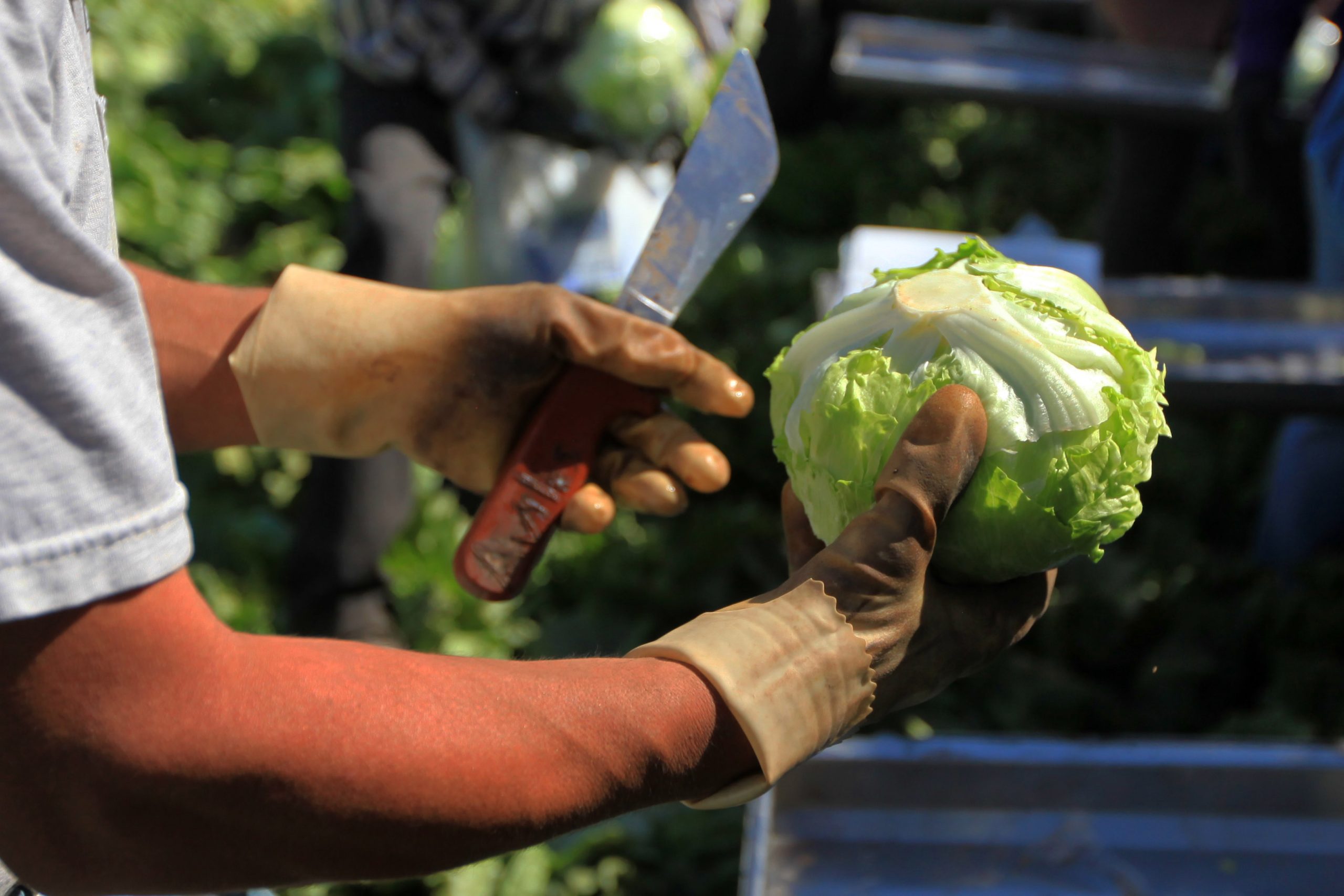
Federal health officials have linked a large cyclosporiasis outbreak to shredded lettuce served at Taco Bell. Is lettuce from grocery stores and restaurants OK to eat?NICOLE BENGIVENO
Before last week, most Americans had never heard of Taylor Farms, a California-based produce firm, and, for a company that supplies lettuce to large U.S. restaurant chains, anonymity was arguably good for business. There are no two words in the English language that can raise awareness of a brand — and destroy it — faster than “explosive diarrhea.” That’s the most alarming symptom from a foodborne illness linked to the parasite cyclospora that’s laid low thousands of Americans in multiple states. Since the early days of the outbreak, suspicion has focused on Taylor Farms after Taco Bell stores stopped using the iceberg lettuce it procures from the company. But the Food and Drug Administration (FDA) probe into the cause has so far been a mess — much of that the result of steep cuts to food safety by the Trump regime. But there are also ethical concerns.
Follow the money.
Regular folks might not have heard of Taylor Farms, but the world’s largest salad processor has made itself known in the corridors of the Trump regime since March 2025. That was right around the time the FDA surprised industry observers by postponing its Food Traceability Rule — drafted under the Biden administration to better track and remove contaminated products — for 30 months. Just six days after the industry-friendly move, Trump’s main political action committee, MAGA Inc., received a whopping $1 million donation from Taylor Farms.
What’s more, money buys access in Trump World. The Daily Beast has reported that last Thursday — despite the company’s nationwide lettuce recall — Taylor Farms executives met with White House and FDA officials and complained about the way the government has been investigating the outbreak. That meeting was followed by a bizarre weekend in which the FDA initially announced that testing of Taylor Farms produce from central Mexico had tested positive for cyclospora, then told the company one day later the result had been a “false positive.” The chaos means ongoing confusion about why so many Americans are getting sick, and whether it’s safe to eat lettuce. And that raises troubling questions about whether political cash has compromised food safety.
This was hardly the first time donations to Trump’s massive empire of political wealth — money raised for a man who is constitutionally barred from running for the presidency again — have overlapped with key policy decisions. For example, the New York Times reported this spring that tobacco company Reynolds American donated $5 million to MAGA Inc. just one week before an industry-friendly FDA ruling on e-cigarettes.
MAGA Inc. — just one of several ways billionaires and corporations can funnel money to Trump World, along with projects like his presidential library — had more than $400 million in the bank at the end of June, an astronomical sum. Its donors have included not only a who’s who of American industry, but also crypto dudes — whose industry has been largely deregulated under Trump — and wealthy pardon seekers. Some of those dollars will go to GOP candidates in November’s midterms, but what happens to most of this cash is a mystery. Trump may be leaving office on Jan. 20, 2029, but we’ll still be following the money for years to come.
What I wrote on this date in 2019
Trump’s second term has been so dangerous for democracy that we tend to forget the horrors of his first four years in the White House. On this date seven years ago, I joined a lot of other folks in shock and dismay over the raw racism of the 45th president’s campaign-style rally in South Carolina, where a diatribe against Rep. Ilhan Omar, a Somali refugee who became a U.S. citizen and represents a Minnesota district, sparked a frenzied chant: “Send her back!” I wrote about the tween girl in the crowd directly behind Trump, who looked around and joined the adults. “In front of national TV cameras, with the 45th president of the United States as maestro, we are witnessing the exact moment that the raging rabble of a Donald Trump rally has taught a child how to hate.”
No columns from me this past week as I spent time with family up and down the Eastern Seaboard, but my Inquirer colleagues have been hard at work. It turns out that the Philadelphia metro area has been ground zero for the latest bizarre business scheme that’s hopelessly intertwined with the Trump regime: a pop-up scheme of at least 25 gas stations rebranded as Trump-aligned Freedom Fuel that — at least for a week or two — were selling gasoline at much lower prices than their nearby rivals. The Inquirer has been all over this weird local story with national implications, and with more questions than answers. Where does this cheap gas come from? Who’s really behind the Freedom Fuel stations? On Tuesday, The Inquirer’s Ximena Conde and Rob Tornoe started to unravel the somewhat dubious past (surprise, surprise) of some of the folks connected to the gas stations, and how suddenly prices at Freedom Fuel aren’t as cheap as they used to be. I suspect the final chapters of this saga are going to be a doozy. The only way to stay on top of local news and support the in-depth journalism we do here is to become an Inquirer subscriber. Join us. It’s a gas.
By submitting your written, visual, and/or audio contributions, you agree to The Inquirer’s Terms of Use, including the grant of rights in Section 10.
Pennsylvania State Trooper Michael E. Pahira Jr., 44, would still be alive if Michael Bon had not come here from Haiti. That is what the Trump administration wants people to focus on.
It was devastating enough that the veteran of nearly two decades with the state police was fatally struck on July 1 by a tractor-trailer the authorities say was driven by Bon.
But the administration, which since last year has consistently targeted immigrants with both bullets and blame, didn’t stop there.
Playing out the string on the White House’s misguided way of thinking would lead us to believe that this calamity would not have occurred if the law didn’t allow Bon to work while his immigration application made its way through the system.
Or if the Massachusetts Registry of Motor Vehicles had taken away Bon’s commercial driver’s license once his application for Temporary Protected Status was denied.
Or if the situation in Haiti, one of the poorest nations in the world thanks to colonialism and rampant exploitation by Spain, France, and the U.S., had not forced Bon and his family to look for a better life elsewhere.
If you want, you can even throw in the logistics industry, or our consumer culture that sees commercial trucks travel roughly more than 300 billion miles every year, resulting in 5,832 fatal crashes in 2022, according to the latest numbers from the U.S. Department of Transportation.
The question becomes: At which point in this list do we stop when assigning blame?
For the U.S. Department of Homeland Security, you send out a news release that stops at, “This illegal alien was granted a commercial driver’s license by the sanctuary state of Massachusetts.”
This thought exercise is hardly meant to diminish the passing of Pahira, who was, by all accounts, as Gov. Josh Shapiro noted, “one of our very finest.”
On the contrary: Pahira’s life and work would seem to deserve a richer memorial than being turned into one more talking point on the political right for how immigrants are dangerous. How the stand-up guy who had, as Fox News accurately described, “moved home to care for mom with cancer” must also play political pawn to the first half of that headline: “Illegal immigrant truck driver charged in death of trooper.”
No one disputes that Bon, 33, was in the country without authorization at the time of the incident, but that fact has nothing to do with the crash that killed Pahira.
Bon had applied for immigration relief and was denied, so by the time he applied for renewal of his Massachusetts commercial driver’s license, the Systematic Alien Verification for Entitlements, or SAVE, system should have flagged him as ineligible — but it didn’t, according to officials with the Massachusetts Department of Transportation. (That this same federal database is the one the Trump administration wants to use to check if people can vote is another problem for another time.)
Do immigrants commit crime? Of course, they are human beings who can make bad decisions. That they are less likely to do so than the U.S.-born is statistically proven.
It’s also cold comfort to victims when it does happen. However, our lives often progress in unpredictable — and, yes, painful — ways.
Whether you believe in a higher power or an indifferent universe, fate or random chance, Bon and Pahira fatally crossed paths along a stretch of Interstate 81 in Schuylkill County regardless of immigration status.
There is nothing wrong with calling for tighter commercial driver’s license laws — as a bipartisan group of Pennsylvania legislators in the U.S. House did last week — or implementing additional safety measures for those driving a fully loaded 40-ton vehicle. It is even fair to ask for restrictions on people who may only be in the country temporarily.
But fearmongering and casting all immigrants as threats is reckless.
Bon is being held on a $700,000 bond. Among other charges, he is accused of homicide by vehicle. He will be held accountable, evidence will be presented, and hopefully justice will be served. Whatever consequences come his way, he will face them as an individual.
Using Pahira’s death to further demonize immigrants debases a brave trooper’s memory — and is an insult to everyone else’s intelligence.
This week’s column looks at next year’s races for City Council, self-driving cars, and Philadelphia’s success as a host city for major events like the MLB All-Star Game.
Council challenge
State Rep. Chris Rabb’s success in the 3rd Congressional District’s Democratic primary has galvanized local progressives. According to Inquirer reporting, which aligns with the chatter I’ve heard, the plan is to challenge for more seats on City Council. Specifically, those of 8th District Councilmember Cindy Bass and 1st District Councilmember Mark Squilla. Jeffery “Jay” Young, who represents the 5th District, is also likely to be challenged, although none of those candidates are explicitly aligned with the city’s progressive movement.
As someone who closely follows City Council, I have mixed feelings about this news.
I’ve strongly criticized Bass for her handling of land use in her district, which is often perplexing. Many iconic buildings have been left vacant under her watch, and her determination to serve as the decision-maker has frustrated community groups and constituents who have their own ideas for their neighborhoods. However, her likely progressive opponent did not impress me at all during the last election. At candidate forums, on questionnaires, and in his endorsement meeting with my colleagues on the Editorial Board, Seth Anderson-Oberman had admirable passion, but nowhere near Bass’ deep understanding of city government.
Young has not served his constituents well in his first term. From senior housing in Strawberry Mansion to the renovation of the Cecil B. Moore Library, he’s consistently made baffling decisions. The only thing that could possibly save his reelection is if the vote is diluted by the number of challengers he’s expected to face — Jalon Alexander, Curtis Wilkerson (who ran but failed to secure enough signatures in 2023), Dustin Dove, and Max Tuttleman are all rumored candidates. Perhaps the petition process will shrink the field.
In the 1st District, why change? I don’t always agree with Squilla, but I can say that he shows up consistently. He answers emails himself, usually promptly. He tries to balance everyone’s input and find a fair way forward. He asks reasonable questions at hearings and doesn’t scapegoat city staff to score easy points.
Another issue with any progressive takeover is the lack of vision.
It is good to see the local establishment Democrats forced to campaign and defend their records, but what do progressives plan to do with their power once they get it? Some of the ideas progressives frequently campaign on, like a wealth tax or rent control, are unlikely to pass constitutional muster in Pennsylvania’s courts. Policy ideas that have been implemented, like inclusionary zoning, have failed to deliver.
It is easy to decry the state of Philadelphia’s schools and services, but where would a progressive Council majority find revenue to invest in them? How would they grow our anemic business sector?
When progressives have won upset victories, it has been because they have something tangible to offer. Larry Krasner became district attorney because he really could prosecute police officers for misconduct, overturn wrongful convictions, and change the department’s culture if elected. New York’s Zohran Mamdani might not be able to convince the MTA that free buses are a good idea, but he is making them faster, and he has implemented the promised freeze for the city’s rent-stabilized apartments.
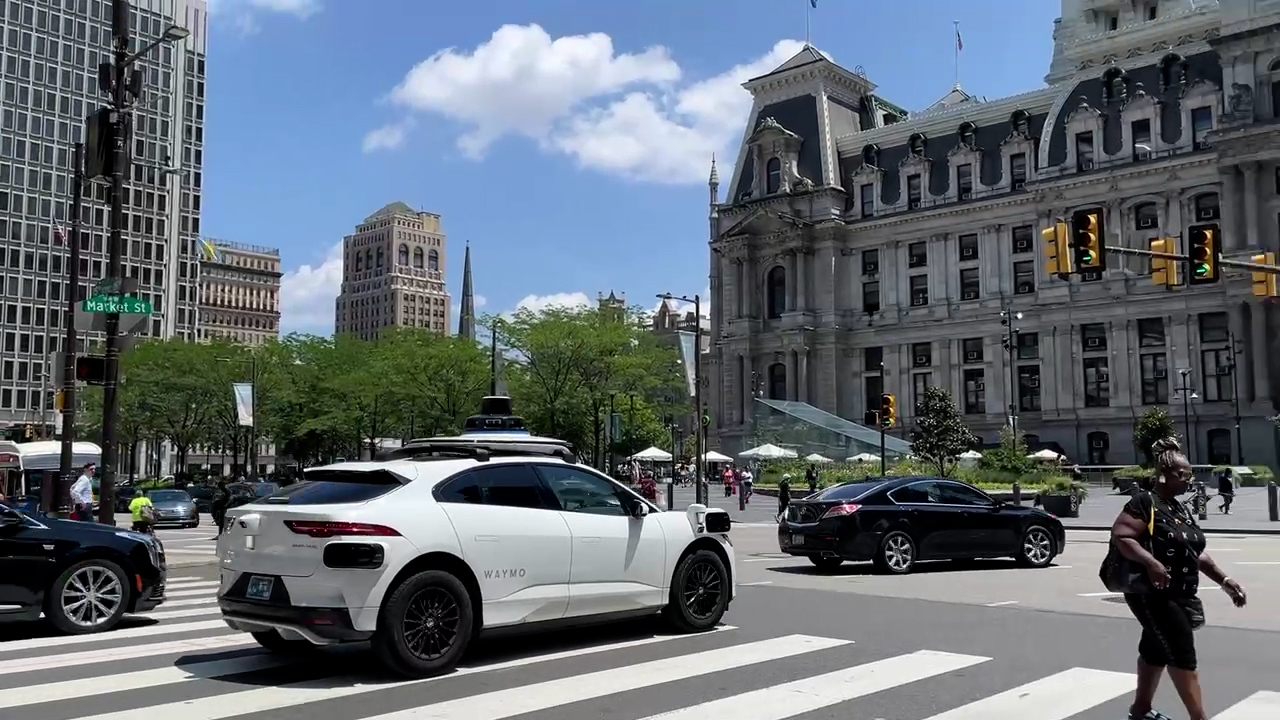
A Waymo car drives down Market Street.Alejandro A. Alvarez / Staff Photographer
Driver’s seat
It seems like every week I see more Waymo vehicles around the city. The autonomous cars are regulated by Harrisburg, not City Hall. At a March City Council hearing, lawmakers were told explicitly: Philadelphia is entirely preempted on this issue.
At the time, I talked to some opponents of the new technology. They are pushing for a yearslong delay. At a rally before the hearing, speakers referenced both safety concerns and worries about job losses.
While a couple of speakers referred to admittedly jarring incidents, it does seem like the computers do a better job of driving safely overall. A study done by Swiss Re, an insurance company, found that Waymos are less likely to damage both people and property. Looking at 25 million miles of operations, the Waymo cars recorded nine cases of property damage and two cases of bodily injury. The typical result for human drivers over a stretch like this would be 78 cases of property damage and 26 bodily injury claims. This is a serious and positive shift when it comes to road safety for all users.
I certainly can understand worrying about losing your job to new technology. At the same time, human drivers have not disappeared from the cities where Waymo already operates, even as rideshare apps keep more and more of the fare for themselves.
Another argument is that Waymos represent more cars at a time when cities are moving away from auto-oriented policymaking. It is no secret that I am a strong supporter of this shift, but cars aren’t going away anytime soon. Just one in 10 Americans rarely or never drive a car. In much of the country, getting around without a vehicle is arduous, if not outright impossible.
If Waymo can provide safer and cheaper access to mobility for people who can’t drive themselves, it may be a net positive.
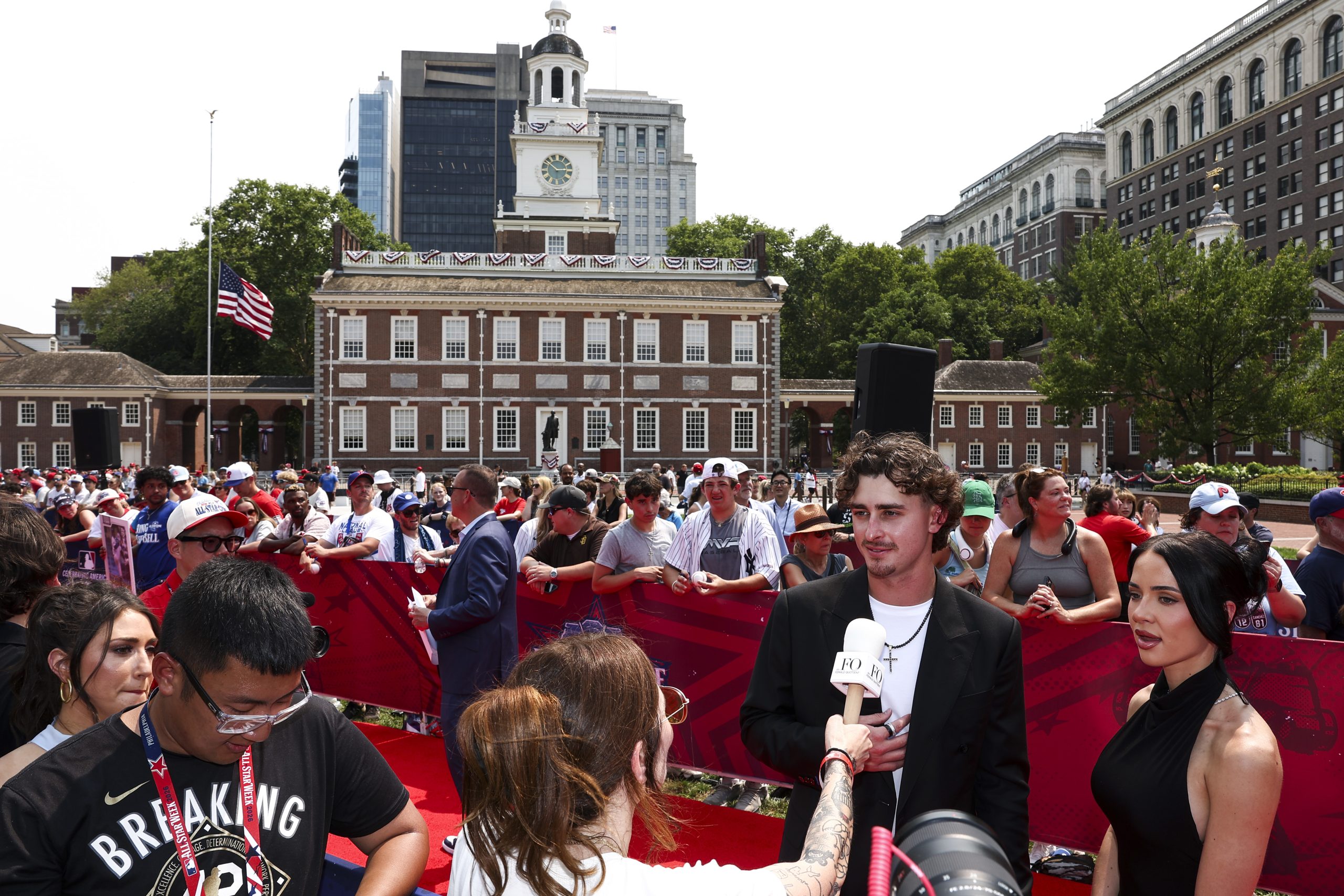
All-Star players and their families walk the MLB All-Star Game Red Carpet at Independence National Historical Park on Tuesday.Monica Herndon / Staff Photographer
Hopping host
The biggest festivities of America’s 250th birthday may be over, but Philadelphia continues to shine as a host. Baseball fans and commentators mostly praised the city’s efforts, and Independence Mall might have been the most historic setting ever for the All-Star Game’s red carpet show. MLB’s tribute to The Sandlot took us to city neighborhoods, the Home Run Derby was enlivened by the antics of our fans, and the fourth annual Swingman Classic gave HBCU athletes the opportunity to play in a big-league ballpark.
I finally got up to the FIFA Fan Festival in Fairmount Park, which also showcased the city’s strengths as a host. It was genuinely impressive to see the range of options for food and activities, and how short the lines typically were despite the thousands of people who came to visit every day.
While changing a city’s perception takes time, there are undoubtedly many visitors who are going back home and telling folks that Philadelphia is so much nicer than they expected.
I taught high school history in Vermont in the 1980s, during the waning years of the Cold War. When we got to Hiroshima and Nagasaki, I dug up the translation of a Soviet textbook and made copies of the pages that described America’s atomic attacks on Japan.
I gave the pages to my students and asked them to compare the Soviet account to the one in their textbook, which said the U.S. dropped the bombs because Japan wouldn’t surrender. By contrast, the Soviet book claimed that our real aim was to demonstrate our technological prowess and block the global spread of communism.
Many years later, I got an email from a former student who said that exercise opened her mind to the way different people think about the world. And it made her realize that history isn’t simply a record of names, dates, and events. It’s a debate about their meaning and significance.
We have a great opportunity to teach that lesson right now. And we don’t have to look abroad to find material for it.
The debate over history is here. It’s happening all around us. The only question is whether we can muster the will — and the courage — to expose our young people to it.
Consider the controversy over slavery exhibits at the President’s House here in Philadelphia. Back in January, the Trump administration ordered the removal of panels about the nine African Americans whom George Washington enslaved. And last month, a federal appeals court upheld the right of the White House to replace those panels with, yes, a different interpretation.
The administration’s new panels — which you can read online — acknowledge that Washington and other Founding Fathers practiced slavery. But the panels remove earlier language, highlighting its brutality. Instead, we are told, enslaved people living in the President’s House “experienced a greater modicum of autonomy than elsewhere.”
On July 4, protesters converged upon the site and taped printed copies of the original panels to the walls. “I know they’ll get torn down,” one demonstrator said, “but hopefully there’s enough people here today for the holiday that they’ll be seen, and maybe it’ll inspire someone else to do the same.”
Here’s who I hope will be inspired: America’s history teachers. They should give the text of the original panels — and also of the new ones — to their students, just as I shared American and Soviet interpretations of the atomic bombings.
And they should ask their students about the differences. Why did one of the earlier panels highlight “The Dirty Business of Slavery” — especially the buying and selling of human beings — and why did the Trump administration omit that? Why did it also leave out most of the details about Ona Judge, Martha Washington’s personal maid, who escaped to freedom in 1796?
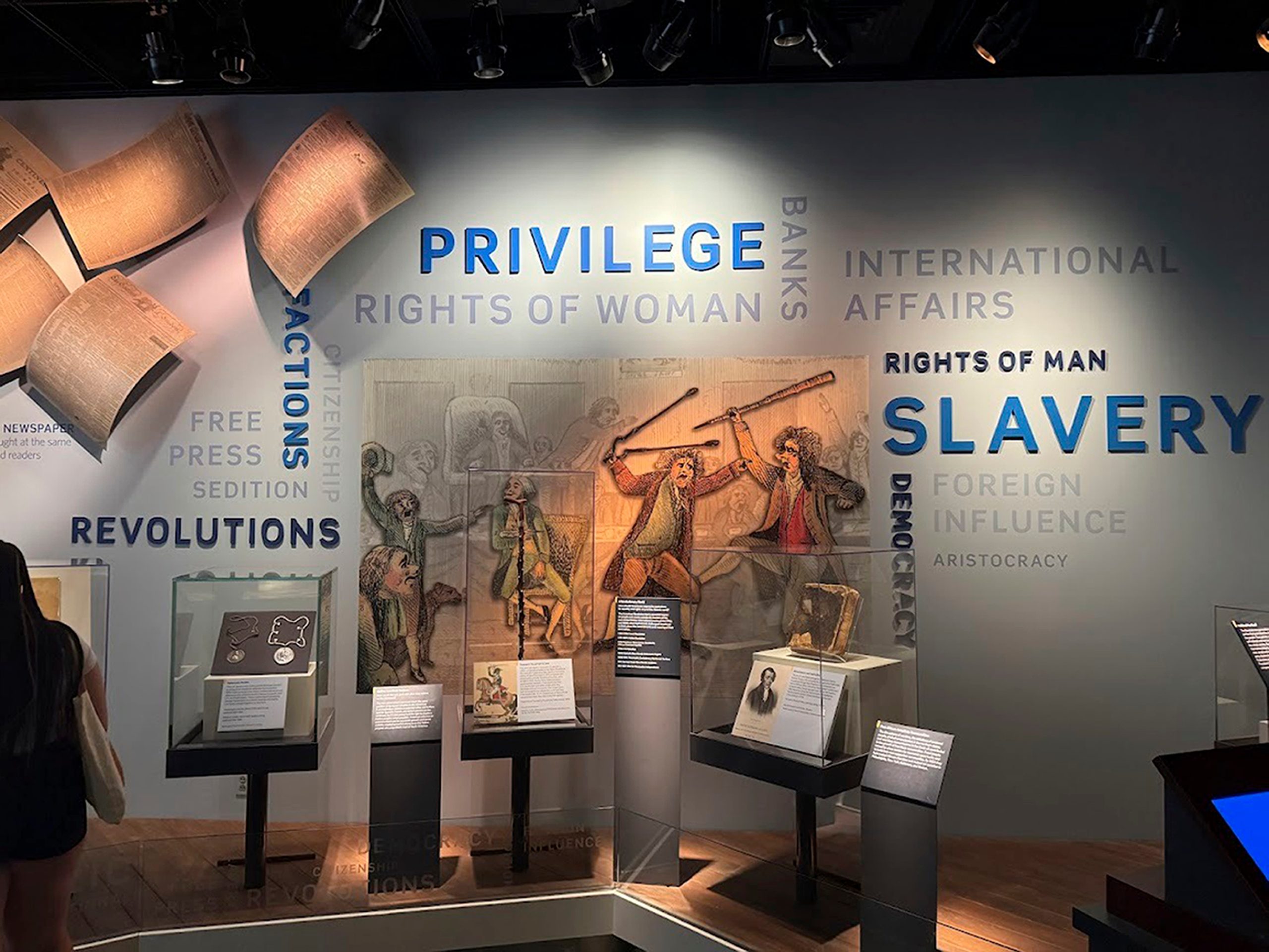
Teachers should also share the Trump administration’s recent report attacking the Smithsonian’s National Museum of American History. There’s too much at the museum about racism and oppression, the White House says, and not enough about progress and freedom.
A display in the “Great Debate” section of a democracy exhibit at the Smithsonian’s National Museum of American History, seen in August 2025.Calvin Woodward
Again, is that right? Schools that are close enough to Washington, D.C., should take students to the museum and let them decide for themselves. Everyone else should assign the Trump administration report and rejoinders to it by historians and others.
Teachers have been doing lessons like that for a long time. In the 1980s, Oregon history instructor Bill Patterson had his students compare their state-approved textbook with A People’s History of the United States by radical scholar Howard Zinn.
And if you think this was all just an exercise in left-wing propaganda, think again. Patterson’s students wrote letters to Zinn and took issue with his interpretations, including his claim that the bombings of Hiroshima and Nagasaki were unnecessary.
I can’t remember what my own students decided about America’s use of atomic weapons in Japan. But I’m glad I didn’t give them a single interpretation of it. That’s not education; it’s indoctrination.
A few days after he returned to the presidency in January 2025, Donald Trump issued an executive order “ending radical indoctrination in K-12 schooling.” But in its first sentence, the order calls on schools to “instill a patriotic admiration for our incredible nation.”
That’s indoctrination, too. I know the White House doesn’t want the kind of debate I’m advocating here. But neither do some people on the left, who will inevitably dismiss my approach as “bothsidesism.”
Please. Our students need to come to their own conclusions about the President’s House, the Smithsonian, and everything else. If you only want them to hear your side, you’re in the same league as Trump and his disciples.
News flash: We disagree about our nation. On its 250th birthday, the best way to celebrate it would be to present our differences to our students openly and honestly. It’s not our job to tell them what to think. It’s their job to figure it out.
Jonathan Zimmerman teaches history and education at the University of Pennsylvania. His next book, “Schooling Citizens: How Education Can Save Democracy,” will be published in the spring by the American Philosophical Society Press.
Editor’s Note: An earlier version of this column incorrectly noted that the story of Ona Judge, a woman enslaved by George Washington, was not part of a new display at Independence Mall. She is, in fact, featured in the exhibit.
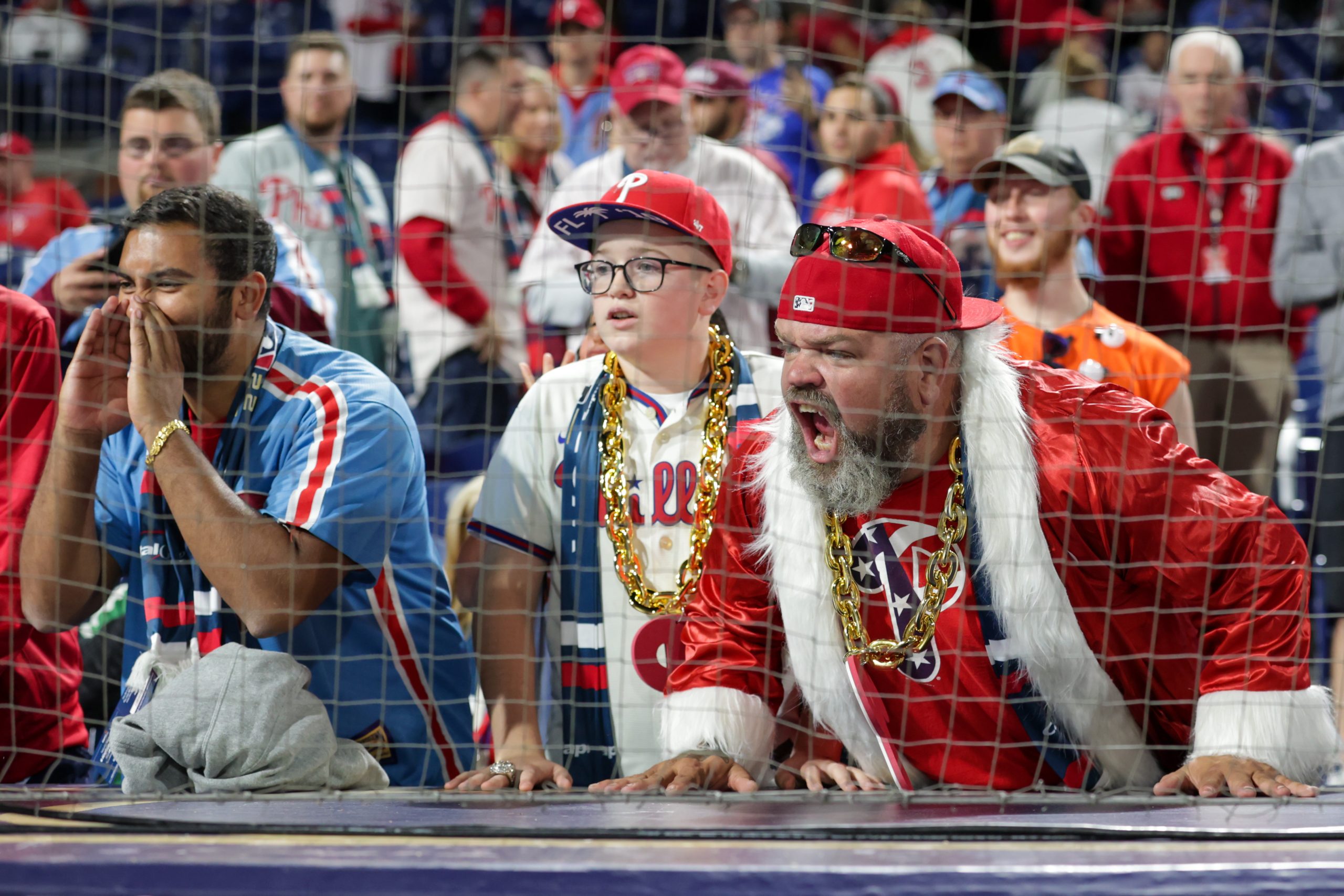
I understand some folks on social media are very upset with Phillies fans for booing every baseball player but their own during the Home Run Derby at Citizens Bank Park on Monday night.
To those whom we’ve offended, may I humbly say: BOOOOO!!! There’s no crying in baseball, you whiny babies.
I wasn’t there in person so sadly I can’t claim to have been a part of the cacophonous crowd that joyfully jeered player after player as they walked onto the field (except, of course, for Kyle Schwarber and Bryce Harper, who received thunderous applause), but I did laugh like hell while watching the incessant booing on TV.
Philly literally booed these guys just for daring to show up and be introduced at our ballpark. We are so unserious.
Our humor is just as brutal as our honesty and while it may not seem like it on the surface, both come from a place of respect. Sure, we could be fake and feign applause for players from other teams, or we could be “polite” and not say anything at all, but we’d rather be engaged and enjoy a good time and a good ribbing.
Heck, Monday night Phillies fans booed one of the kids picking up baseballs in the outfield because he didn’t catch a fly ball, so yeah, puppies and sunshine should be on high alert.
Over on Threads, users posted: “How totally classless!” and “The Philly crowd booing every single player is really gross” and those people were rightfully and immediately ratioed. Philadelphians responded with brilliant retorts like: “If you don’t get booed in Philly, you’re not an All-Star” and “If those players didn’t want to be booed, they should play for the Phillies.”
You know who didn’t seem to have a problem with the boos? The players who actually got booed! They appeared to get it and have fun with it. Every story that’s really a home run needs a good antagonist and a dramatic arc. For that night, they were our Moriartys and we were theirs.
Phillies Bryce Harper climbs the ropes of the boxing ring during his introduction at the MLB Home Run Derby in Philadelphia on Monday.Yong Kim / Staff Photographer
If you can’t stomach some theatrics when the Home Run Derby is broadcast on Netflix — there was a boxing ring on the field and Will Ferrell was providing unhinged commentary — then you probably should’ve watched the Little House on the Prairie remake instead, Laura Ingalls Wilder.
Listen, I understand being surprised by the boos if you’re not familiar with Philadelphia’s dark and dystopian joie de vivre. Before I moved here, I don’t think I’d ever booed anything in my life or had ever been booed, and I couldn’t imagine a scenario in which either would happen (outside of my nightmares and Renaissance fairs, that is).
But after 19 years in Philly, I can now proudly say I’ve been booed in person, over the phone, via email, and on social media by Philadelphians, and I have participated in many communal and individual booing sessions. I didn’t realize how cathartic it could be or how much I’d been suppressing my medieval side, but I know now and have vowed to boo better.
Philadelphia Phillies fans boo the Houston Astros after batting practice ahead of baseball’s World Series Game 5 in 2022. We boo people at batting practice and you’re surprised we booed players at the Home Run Derby? Charles Fox / Staff Photographer
Most recently, I booed a tourist I was interviewing on July 2 when she told me she was visiting Philly through the 3rd and then heading to Boston to celebrate Independence Day on July 4. I did give her a pass when she later said her son and grandson lived in Boston, but I did not apologize. We can’t be getting soft around here.
I mean this is a city where our mascots throw popcorn at babies, harass opposing coaches, and eat people while at work — and they’re the ultimate Philly fans, so expecting us to treat baseball like the ballet is totally bananas (and I’m not talking about the Savannahs).
For those who remain offended, I suggest looking in a mirror and asking: When is the last time I booed something? If the answer is “never” or “not in a while,” give it a go — you may not realize how much you’ve been holding back.
And if you don’t want to boo yourself, turn on a Phillies game and boo us. We’ll take the compliment, because we can take a joke.