Category: Columnists

  • The other Graham Platner crisis for Dems | Will Bunch Newsletter

    The other Graham Platner crisis for Dems | Will Bunch Newsletter

    A journalistic mentor of mine back in the 1980s told me that Harry Truman, pressed for a comment on the passing of a political enemy, finally said, “It’s a damn shame when anybody dies.” Of course, like most perfect quotes, HST probably never actually said this, yet I find occasion to think of these words often. On Saturday night, South Carolina GOP Sen. Lindsey Graham — whose moral compass went haywire in the 2010s when a brief moment of truth–telling about Donald Trump melted into embarrassing capitulation — died suddenly from heart problems. He was just 71. It’s a damn shame.

    If someone forwarded you this email, sign up for free here.

    Dems need to give up on fake blue-collar campaigns like Platner’s

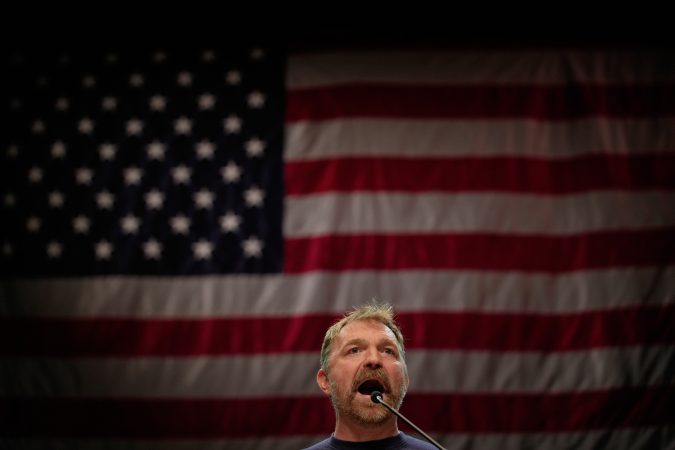
    Supporters cheer for Graham Platner in Blue Hill, Maine, after he won the Democratic Senate primary on June 9. Platner’s bid for the Senate inspired progressive Democrats. But the campaign, which he suspended July 8, was messy, disorganized and ultimately doomed by a steady drip of scandal. SOPHIE PARK

    Graham Platner, the failed Maine Democratic Senate candidate, was introduced to most of us outside of the Pine Tree State less as a human being than as a fully formed narrative.

    The rugged redhead with angry eyes was an ex-Marine from the Iraq and Afghanistan wars who became an oyster farmer and then a political outsider with all the right words for an electorate that’s mad as hell and isn’t going to take it anymore.

    We now know that Platner’s origin story — compelling, but larded with omissions and sprinkled with lies — belonged on the fiction shelf. But even after the Democrats’ scandal-scarred June primary winner accepted the inevitable and ended his candidacy on Friday, he lives on as an avatar upon which everyone with a stake in a badly broken Democratic party can project their distrust and rage toward others — folks who ought to be their allies in an all-out war against fascism.

    Days later, the Platner discourse is almost as toxic as the candidate himself. People who voice their opinions, even in 280 characters on social media, get called everything from sexist Bernie-bro rape apologists to Quislings who want big corporations to keep running the Democrats into the ground, and all the rest in between. Don’t even mention Israel. In fact, don’t @ me after this is posted.

    Having said all that, there is a conversation that must be had by the Democrats, and probably a wider circle. And the disappearance of Platner himself from the picture makes that easier, because I think we can all stipulate that as a human being he was clearly not worthy to be a U.S. senator, even in the Senate’s current morally diminished state.

    There is another Graham Platner somewhere on Earth 2 who also suffered PTSD and developed a drinking problem fighting in pointless wars, and who also got a Nazi tattoo and posted wretched stuff on Reddit, but turned his life around in a glorious redemption song. But that’s not the Platner we got on here on Earth 1. Instead of an apology, he was weirdly defensive about his past, because — we now know — he was hiding stuff that was even worse than that.

    Although Platner has denied the most serious charge of a sexual assault, there should be zero tolerance in the Democratic Party for the type of sexual misconduct that’s been confirmed, let alone what’s been additionally alleged. That’s not just the only proper moral stance, but it sets Dems apart from a twisted GOP that nominated Trump three times. Platner’s disappearance is a blessing to everyone.

    But even with that matter resolved, we still haven’t answered the bigger question that I posed the only other time I wrote about Platner back in the spring: Why did a majority of Maine Democrats — roughly 150,000 voters — ignore the party establishment to back this guy?

    The selection of Platner’s replacement over the next few weeks will show whether top Democrats understand that base voters want candidates who are younger, who support things like Medicare-for-all or Palestinian rights that many corporate donors do not, and who look like they will fight fascism, not bend the knee.

    But first Democrats — and just about everyone, frankly — need to do a better job understanding not just the “why” of Platner supporters, but the “who.” Baked into the Platner myth was this notion that in running a gruff-sounding ex-Marine and oyster farmer, Democrats had found a key to regaining the long-lost white working class.

    Two huge problems with this. First — and this will sound familiar here in Pennsylvania where shorts-and-hoodie-wearing Sen. John Fetterman grew up upper middle class before donning a blue collar — Platner comes from a fairly privileged background. He’s the son of a lawyer and upscale restaurant owner and grandson of a famous architect; he started high school at the super-elite Hotchkiss School.

    Which brings us to the crux of the problem: the notion that Platner’s pre-implosion success was his ability to win back working-class voters in an overwhelmingly white state. Polls exposed this all as a lie. A late June survey from the New York Times/Portland Press Herald/Siena showed Platner losing white, non-college educated voters by a whopping 21% to the GOP incumbent Sen. Susan Collins. So what gave him a shot at winning? A massive 37% edge among college degree holders.

    Look, we all know that it’s been the obsessive mantra of the political pundit class that Democrats will never fully win back America without restoring the working-class coalition that elected Franklin Roosevelt four times during the New Deal era. I hate to be a contrarian here, but what if that’s not true?

    A society that over a half-century has once again made higher education an elite sport and now has a right-wing media and demagogues like Trump to heighten working-class grievances and blame the wrong people has created voters who — at least for now (hold this thought) — arguably aren’t worth chasing after.

    The frayed alliance of progressives and liberals who comprise the core of the Democratic base do some dumb stuff — opposing new units that could lower housing costs, or “nice white parents” leading to de facto school segregation — that should stop.

    But the core values of the college-educated voter — that education makes a better person and not just a better worker, that the rights of every human including the trans community should be cherished, or that students should learn about America’s mistakes like slavery — are moral and good. They shouldn’t be mocked, and they shouldn’t be compromised by chasing votes that don’t exist.

    An America that’s not inclusive and that isn’t fair when it comes to gross income inequality, not to mention who gets to see a doctor or send their kid to college, isn’t a cause worth fighting for. And there’s already a healthy number of working-class people — not the majority, not yet — who would agree with this.

    Platner was a bad guy but he appealed to voters who wanted good things. Let’s not bemoan the fact that his movement was based on educated people. Let’s build on that. Instead of lowering our values to win elections, let’s play the long game to lift more people up to a better place.

    That means elevating education to the top of the agenda — including much more access to low-cost or even free college or trade school, plus an emphasis on critical thinking that ditches AI, while raising up civics and the humanities. Push a universal gap year of national service for high school grads — to work on projects that will remind young Americans what we have in common, not what divides us. Build a United States with available healthcare and affordable housing that will fuel ambition, not anger.

    It’s way past time for college-educated progressives and our allies to stop apologizing for the things we believe in. The current push to find a candidate who can replace Platner and fight for all the right stuff — without the personal baggage of their predecessor — is a great place to start. Maybe it’s even time to revive the old cliché: As Maine goes, so goes the nation.

    Yo, do this!

    • Tuesday is the folk-music legend Woody Guthrie’s 114th birthday. I use the present tense because it very much feels like the singer who influenced living icons from Bob Dylan to Bruce Springsteen is still with us. Now, a friend, the pioneering rock journalist Greg Mitchell, has directed a new documentary about the musician, his political activism in the mid-20th century, and his lasting influence: Woody Guthrie and the Ghost of Tom Joad. It’s now streaming on PBS.org and will also be popping up on PBS stations this summer. You can — and should! — stream it here.
    • Monday night I read a remarkable piece of journalism that I feel compelled to share. Last week, a lot of America was talking about a photo from July 4 that showed a young Black woman on a D.C. Metro train surrounded by masked members of the white supremacist Patriot Front. There was so much commentary about what this woman must be feeling and thinking, and almost all of it — as shown by some remarkable reporting by former Inquirer journalist Ellie Silverman, writing for NOTUS — was wrong. The truth is heartbreaking.

    Ask me anything

    Question: Why do we not know what’s going on with (ailing Kentucky Sen. Mitch) McConnell? What is the Republican endgame? What’s the benefit to prolonging the process of determining a replacement? What is that process (seems to be in dispute)?

    Answer: We know a little more now than we did when I addressed this issue last week. His staff on Sunday released a brief statement and what is being called a “proof of life photo” — with that morning’s Washington Post sports page visible in the shot — seeking to explain McConnell’s month-long hospitalization and hoped-for return to the Senate. There were, of course, immediate conspiracy theories that the photo was artificial intelligence, but there’s no compelling evidence of that. The biggest mystery is, why doesn’t the 84-year-old McConnell just quit, with only about six months left until he leaves office in January? Kentucky has changed its Senate replacement law a couple of times, mainly because GOP lawmakers don’t want Democratic Gov. Andy Beshear making the pick. The new law requires a special election, but there probably will not be one if McConnell stays in office through Aug. 3. Republicans seem desperate to avoid the special election, and I’m not sure why, since McConnell surely isn’t helping advance the Trump agenda from his hospital bed.

    What you’re saying about…

    You really didn’t think I could go a whole newsletter without mentioning soccer, did you? Last week’s question about Trump’s FIFA intervention and the reversal of the American Folarin Balogun’s red-card suspension drew a unanimous response: The president was wrong to get involved, and he seemed to create a negative vibe around the U.S. team before it got blown out of the World Cup by Belgium, 4-1. “To me, it appeared to be the wrong call, but the ref called it.” wrote ex-soccer mom Suzanne Urban Ryan. “We had to live with it. Trump getting involved was just really poor judgement based on his need to win a game that he is not even a player.” Added Jordan Lang: “I’m sure his corrupted meddling negatively affected the psychology of the U.S players.” Yup.

    📮 This week’s question: Trump plans to address the nation in prime time Thursday with ginned-up information about his bogus and debunked claim that the 2020 election was stolen from him. He is laying the groundwork for November, and election interference on a scale to rival the Jim Crow South. How can Congress, the courts, the media, and everyday citizens respond to this dire threat before it spirals out of control? Please email me your answer and put the exact phrase “Trump election meddling” in the subject line.

    Backstory on why ICE is killing immigrants, again

    A vehicle with a damaged window is transported away from the scene of a shooting involving U.S. Immigration and Customs Enforcement, Monday in Biddeford, Maine. Robert F. Bukaty

    The fight against police brutality against African Americans in the late 2010s found its rallying cry when New York City police choked and killed a street peddler named Eric Garner, whose last words were. “I can’t breathe!” Now, Monday’s latest fatal shooting by U.S. Immigration and Customs Enforcement agents that shattered the morning calm of Biddeford, Maine has produced a new mantra. As 26-year-old Joan Sebastian Guerrero lay dying on the pavement — shot in the head, then dragged from his car and handcuffed — a bystander heard him say in anguish: “I tried to stop.”

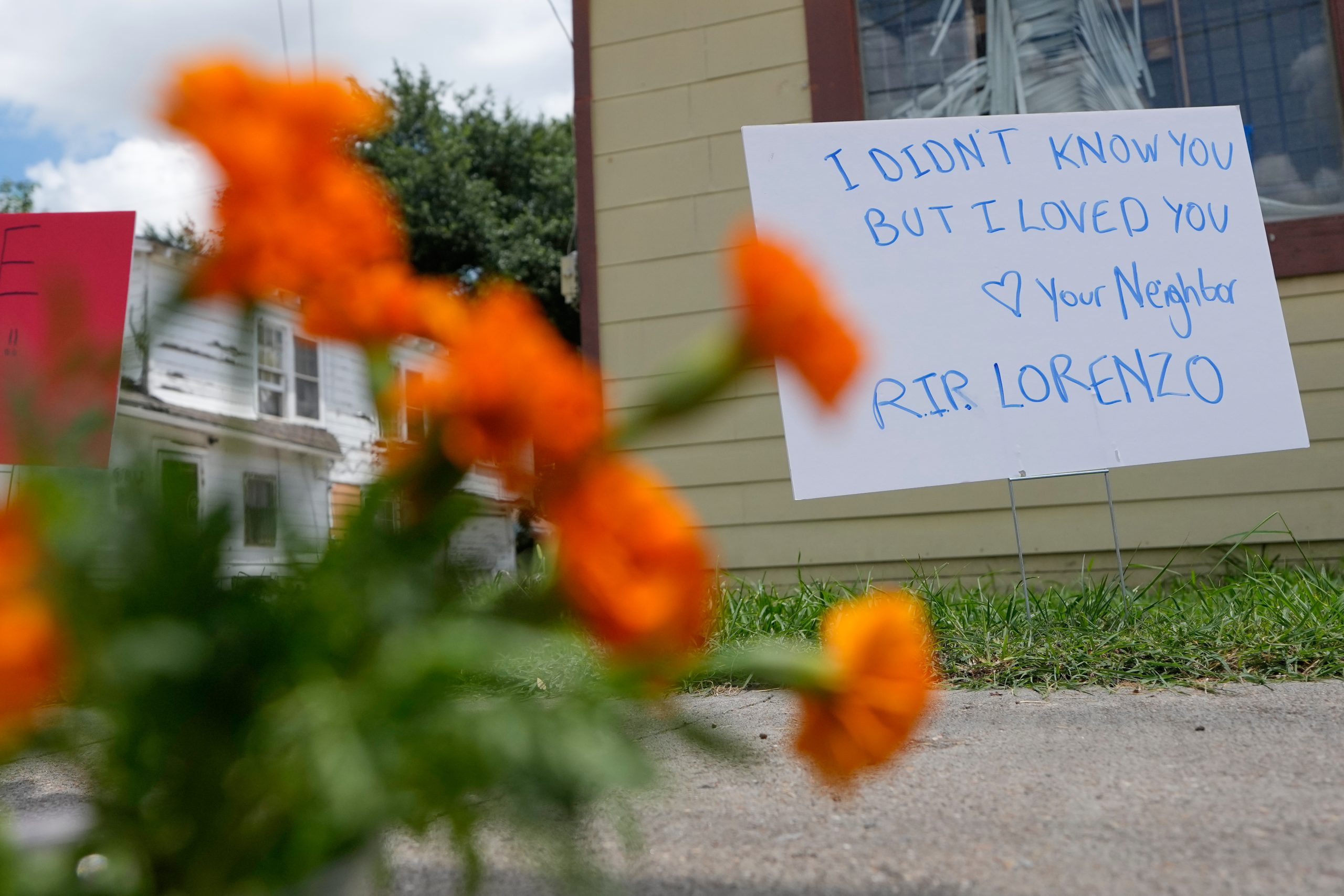
    Moments earlier, the man, reported to be a Colombian national with a U.S. work permit, had left his home, possibly with his daughter, in a white Kia sedan, which was hemmed in by ICE agents in their vehicles. Although the Department of Homeland Security changed the wording of its statements over the course of the day, it ultimately reported that an ICE agent shot Guerrero because the driver attempted to flee and the officer was “fearing for public safety.” But ICE and DHS, whose officers have now shot and killed at least 11 people since Donald Trump returned to office, have repeatedly seen their versions unravel as more video and witnesses emerged. The two most recent attacks — Monday’s assault on Guerrero and last week’s Houston shooting of 52-year-old Mexican national Lorenzo Salgado Araujo — happened on working-class residential streets without clear videos of the shootings, and with ICE agents not wearing body cams.

    Still, a pattern is starting to emerge as DHS and its new leader, the former Oklahoma senator Markwayne Mullin, put a flood of new, barely trained ICE recruits on the streets in attempt to make mass arrests of immigrants without the same level of hoopla and backlash that happened in cities like Minneapolis and Chicago under Mullin’s predecessor, Kristi Noem. In both the Houston and Biddeford shootings, ICE began the morning in what it claimed was a targeted operation seeking a specific immigrant with a removal order, only to try to arrest and ultimately kill men, in Salgado and Guerrero, who were not the supposed targets.

    It’s quickly becoming clear that ICE’s new strategy is a recipe for disaster. Both Salgado and Guerrero, according to what we know from witness accounts, didn’t seem to know what exactly to do when their vehicles were surrounded by unmarked vans and yelling men. In both cases, ICE agents interpreted the predictable panic and chaos as aggression, and made a split-second decision to end a human life forever. It increasingly looks as if the federal agents — facing an impossibly ambitious goal from the Trump regime of arresting and deporting 1 million people a year — insist they have a name on a sheet of paper, when in reality they are racially profiling brown-skinned men driving to blue-collar jobs.

    Like so many projects of our current government, the new ICE scheme is not only inhumane but also dumb and counterproductive. Mullin’s apparent new strategy was to meet the high arrest quotas sought by Trump and his immigration guru Stephen Miller without generating the kind of public protest and backlash that all but drove DHS out of Minnesota this winter. It’s not working. Even before Guerrero’s name was released, angry demonstrators took to the streets in Biddeford and stormed the office of the state’s GOP Sen. Susan Collins, who recently voted for a $70 billion cash infusion for immigration raids.

    The tactics may have changed slightly, but the repulsive devaluation of human life has not. Mass deportation is a failure — strategically, politically, and morally.

    What I wrote on this date in 2019

    Some days my past writings read like Nostradamus, but more often than not they reveal how fleeting our political moments can be. On this date seven years ago, this columnist joined a lot of progressive voters in swooning over the early-stage presidential ambitions of Massachusetts Democratic Sen. Elizabeth Warren, who had just spoken at the left-wing convention Netroots Nation here in Philadelphia. “With her slam-dunk performance Saturday,” I wrote, “Elizabeth Warren became president … of the American progressive movement, anyway.” But Sen. Bernie Sanders had other ideas about that, and then Joe Biden and South Carolina voters came along with different ideas about Warren, Sanders, and control of the Democratic Party. Read the rest: “Netroots Nation was the day Elizabeth Warren became president of the American left.”

    Recommended Inquirer reading

    • It was a full week for me, and for American outrage. First, I tackled the Houston ICE killing of 52-year-old Mexican national Lorenzo Salgado Araujo and the return of ambitious immigration raids to American cities. I noted that the new ICE strategy aimed to ramp up arrests without generating public outcry, and I urged readers not to go to sleep on mass deportation. Over the weekend, I wrote about the similarities between the Trump regime and the disastrous ancient reign of the Roman emperor Caligula. I detailed how Trump’s growing paranoia that he will be assassinated in office is causing new bloodshed in the Persian Gulf and inspiring fresh efforts to quash civil liberties here at home.
    • Kenesaw Mountain Landis must be spinning in his grave. He was the former federal judge who tried Chicago’s notorious “Black Sox” for throwing the 1919 World Series at the behest of New York gamblers, then became baseball commissioner to clean up the national pastime. For decades, Major League Baseball shunned even the slightest whiff of gambling connections that might taint the sport — but times have changed. My Inquirer colleague David Gambacorta — one of the best investigative reporters in the business — last week broke a remarkable story about how the lucrative betting site FanDuel egged on a local addicted gambler to keep playing until he lost some $1.5 million. Plot twist: FanDuel’s effort included having Phillies slugger Bryce Harper send a personalized video to please the local bettor. It’s disturbing that a) Harper, with a 13-year $330 million contract, also feels the need to peddle $899 videos on Cameo and b) he has a relationship with people at a gambling website. But FanDuel is now “the official sports betting partner” of MLB — an appalling relationship that only encourages morally dubious behavior like the Harper video. The rank corruption of modern American society, including sports, is why we need investigative reporters like Gambacorta. You can read the next installments in this saga, and support his work, when you subscribe to The Inquirer.

    By submitting your written, visual, and/or audio contributions, you agree to The Inquirer’s Terms of Use, including the grant of rights in Section 10.
  • Getting ‘legal status’ in America is harder than most people think. Lorenzo Salgado Araujo was killed by ICE before he could.

    Getting ‘legal status’ in America is harder than most people think. Lorenzo Salgado Araujo was killed by ICE before he could.

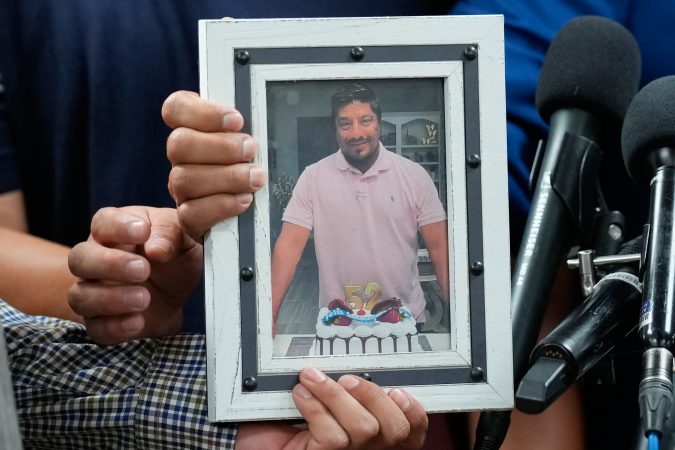
    Lorenzo Salgado Araujo was killed by U.S. Immigration and Customs Enforcement agents Tuesday in Houston. He arrived in the U.S. from Mexico 35 years ago, built a construction business, and became one of five people killed by federal agents carrying out President Donald Trump’s plan of mass deportation.

    As I read and listened to commentary from sources outraged by the killing, I kept bumping into their description of Salgado Araujo. Not that he was a hardworking father and loving husband who had sent his three U.S. citizen children to college, but that he was “on his way to obtaining legal status,” or was “applying for proper authorization.”

    I know enough about immigration law to ask: What did that even mean? How could a man who had been in the U.S. for more than three decades as an undocumented immigrant be working to adjust his legal status?

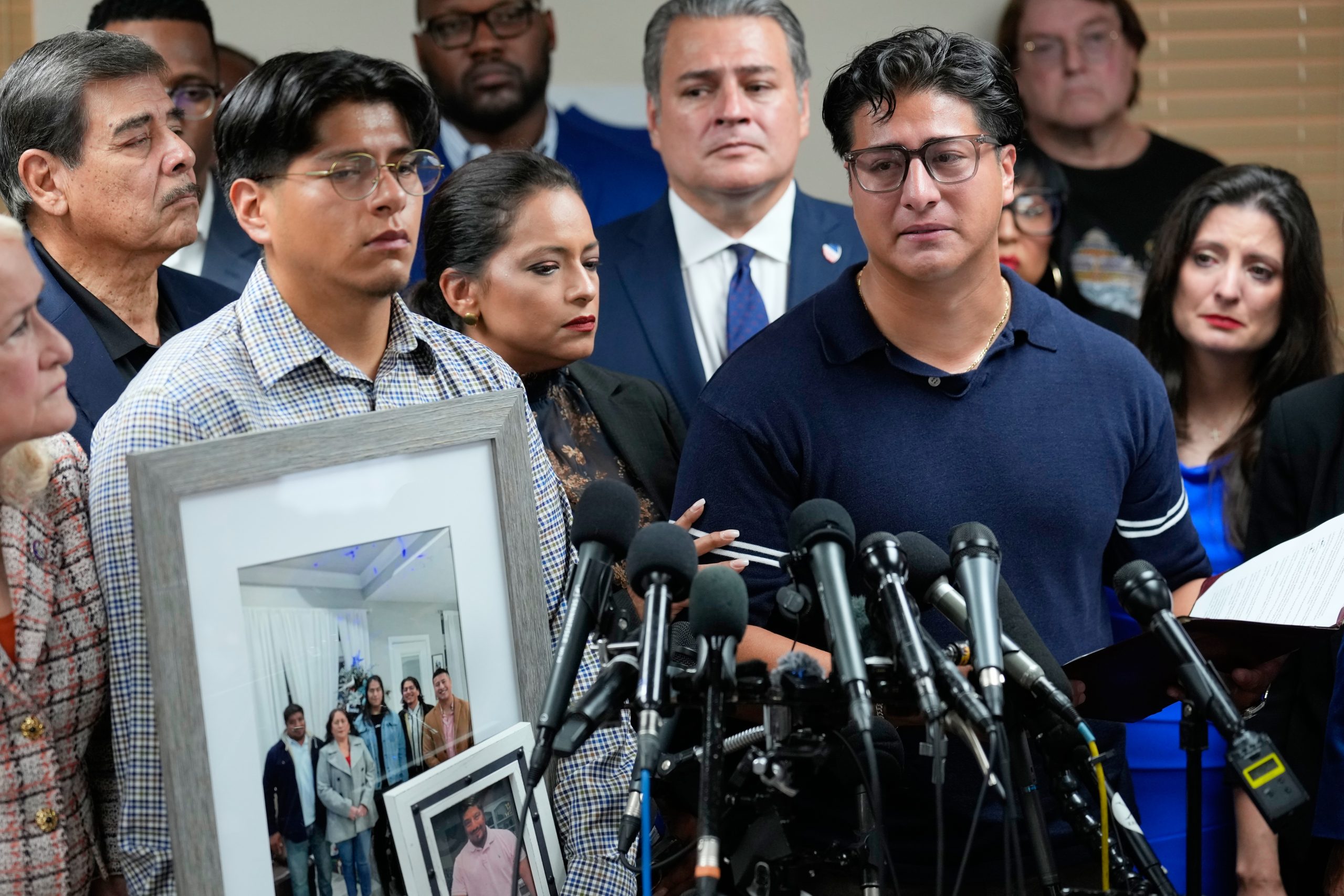
    During a news conference Wednesday, Ronaldo Salgado spoke eloquently about his father, heartbroken that the man who “wanted nothing else in life but to provide for his wife and see his sons become great people” did not deserve to be reduced to a headline. But Salgado also said this:

    “After nearly 35 years of working to give us the American dream, he made the choice to begin the process of obtaining his American dream through a work permit. We dotted every ‘i,’ crossed every ‘t,’ filled every document, attended every appointment. He was close to obtaining his legal status.”

    You may think this matters little. Salgado Araujo is dead, killed by a government that, in its misguided zeal for immigration enforcement, has already taken the lives of three U.S. citizens — Ruben Ray Martinez, Renee Nicole Good, and Alex Pretti — so clearly, legal status is meaningless.

    Ronaldo Salgado (right), son of Lorenzo Salgado Araujo, speaks as his brother, Lorenzo Jr., holds family photographs during a news conference Wednesday in Houston.David J. Phillip

    Yet, in the fight to rein in the government’s abuse of power and fix America’s broken immigration system, public opinion is important. Confusion around immigration is already rampant; muddling the debate further only makes things harder.

    Even a cursory look at the social media chatter around what happened in Houston finds people debating with incomplete or just plain wrong information. There are comments about how Salgado Araujo should have come here “the right way,” or how he should have tried to “become legal” sooner, or even how, until an immigrant is a citizen, they’re “considered illegal.”

    Of course, there are people who will reflexively blame the Trump administration for everything, just as there are those who will unquestionably toe the MAGA line. But too many Americans are simply uninformed about how the system works, and may be skeptical of the media painting the portrait of another saintly immigrant dying at the hands of ICE.

    These people may reasonably ask: If Salgado Araujo was close to obtaining legal status, why hadn’t he done so before? The answer is that he most likely couldn’t.

    For someone like Salgado Araujo, with blue-collar roots in Mexico and no connection to the United States other than the drive to look for the American dream, it is virtually impossible to come here permanently.

    Follow me into the weeds a bit.

    Yes, the U.S. has a Diversity Visa program, in which a potential immigrant could apply and, through a lottery system, be given permanent legal residence, but Mexico does not qualify since the program is designed for countries with low rates of migration to the U.S.

    If Salgado Araujo had an immediate family member (spouse or parent) who was either a legal permanent resident or a U.S. citizen, they could petition for him to immigrate. If he had a sibling, they could also petition for him to come, but there is a wait time of at least 10 years because of annual visa caps. Perhaps when people refer to immigrants getting “in line,” they mean that decade-plus-long queue.

    Regardless, once Salgado Araujo was in the U.S., that “line” disappeared completely.

    Attendees light candles during a vigil for Lorenzo Salgado Araujo, a Mexican national fatally shot by a federal immigration agent in Houston.Mark Felix

    Let’s say Salgado Araujo had married a U.S. citizen. Since he entered illegally, he could not adjust his status inside the country. He would have to leave the U.S. and effectively risk being banned from reentry for up to 10 years. You can petition for what’s known as a hardship waiver, but they are difficult to obtain.

    He could have also waited for one of his children to reach adulthood and petition for him to immigrate, but the potential to be barred for a decade remains.

    Salgado Araujo’s son said his father was going to obtain a work permit, which is far from legal status. I spoke with immigration law experts who said one possibility could be to apply for asylum, which would grant a work permit while the case is adjudicated, or there are work permits available for someone who receives humanitarian parole.

    To be clear, I do not know what happened in Salgado Araujo’s case. I was unable to reach the family before this column went to press. But it’s clear they were going through a fraught immigration process — one that, given the existing state of the law, would likely have been unsuccessful.

    That is why it’s important that people understand the immigration system better.

    People like Salgado Araujo — who have built their lives here and just want to go about their business and contribute to their communities — are exactly the kind of immigrants most Americans want to allow to stay.

    It was the government under Trump that killed Salgado Araujo. But it’s America’s immigration system that made sure he never had a chance.

  • American Caligula: Trump’s assassination paranoia threatens us all

    American Caligula: Trump’s assassination paranoia threatens us all

    America’s current plight was nailed recently in an analysis by the Harvard Kennedy School’s Jeffrey Frankel, who dedicated an entire paragraph to the notorious despot who was bankrupting the world’s greatest superpower, “building luxurious villas and hosting huge parties.”

    Frankel described how this strongman “blamed his troubles on his predecessor … He reveled in gold coins. He insisted that people worship him as god. He grafted busts of his head onto statues of gods. He humiliated senators by making them kiss his feet.” The mad king declared war over a narrow body of water, and also had an unseemly sex life.

    Of course, you all know the Harvard scholar was writing here about the Roman emperor Caligula, who ruled the ancient regime during the tumultuous four years from 37 A.D. to 41 A.D., and whose obsessions with large public works, humiliating his political enemies, self-deification, and perversion have sparked two millennia of speculation about his cognitive state.

    Why, yes, this does all sound very familiar. Donald Trump has never pushed his favorite horse for a top government position — as Caligula is said to have done with his trusted steed Incitatus — but he did send Pete Hegseth to the Pentagon, which is close enough. Professor Frankel’s riff on the notorious Roman is found in a February essay about Trump, “Caligula Reincarnated,” in which he argues that Trump’s “bizarre words and actions” are reaching the same depths of irrationality.

    I agree, and it’s important to note that in the five months since that essay, there’s a new parallel between Caligula’s doomed and dangerous reign and the 47th American president, and it’s becoming a huge danger to civil liberties here at home and to peace abroad: fear of assassination and the paranoia that flows from that.

    The last months of Caligula’s reign were marked by his mental deterioration and his panic that the many enemies he’d made in a short time on the throne — the once-allied lawmakers he’d publicly humiliated, or the political enemies that he’d prosecuted — would attempt to murder him. The emperor accelerated the most repressive aspects of his regime, even as he schemed to move the seat of power to Alexandria for his own safety.

    In recent days, Trump has begun wobbling down this same bumpy, ancient Appian Way. It’s been reported that a Trump murder threat by Iran, which has seen a top general and its supreme leader killed on orders from the American president or his allies, was relayed to the White House by Israeli intelligence. That prompted a remarkable public moment in which the U.S. leader mused about his own death.

    “I speak about it a lot because the life of a president is very dangerous,” Trump told reporters during a NATO summit in Ankara, Turkey. “I don’t really care, because I’m doing my job … I like being No. 1 on TikTok better. But I’m No. 1 on the list for killing,” which sounds, oddly, like a boast from a TV reality star still obsessed with his ratings.

    There are several things to unpack here. First, you probably know this truism: Just because you’re paranoid doesn’t mean there’s not someone who’s out to get you. Famously, Caligula was assassinated (as were his wife and young daughter) just before his planned move to Alexandria by his own trusted guards.

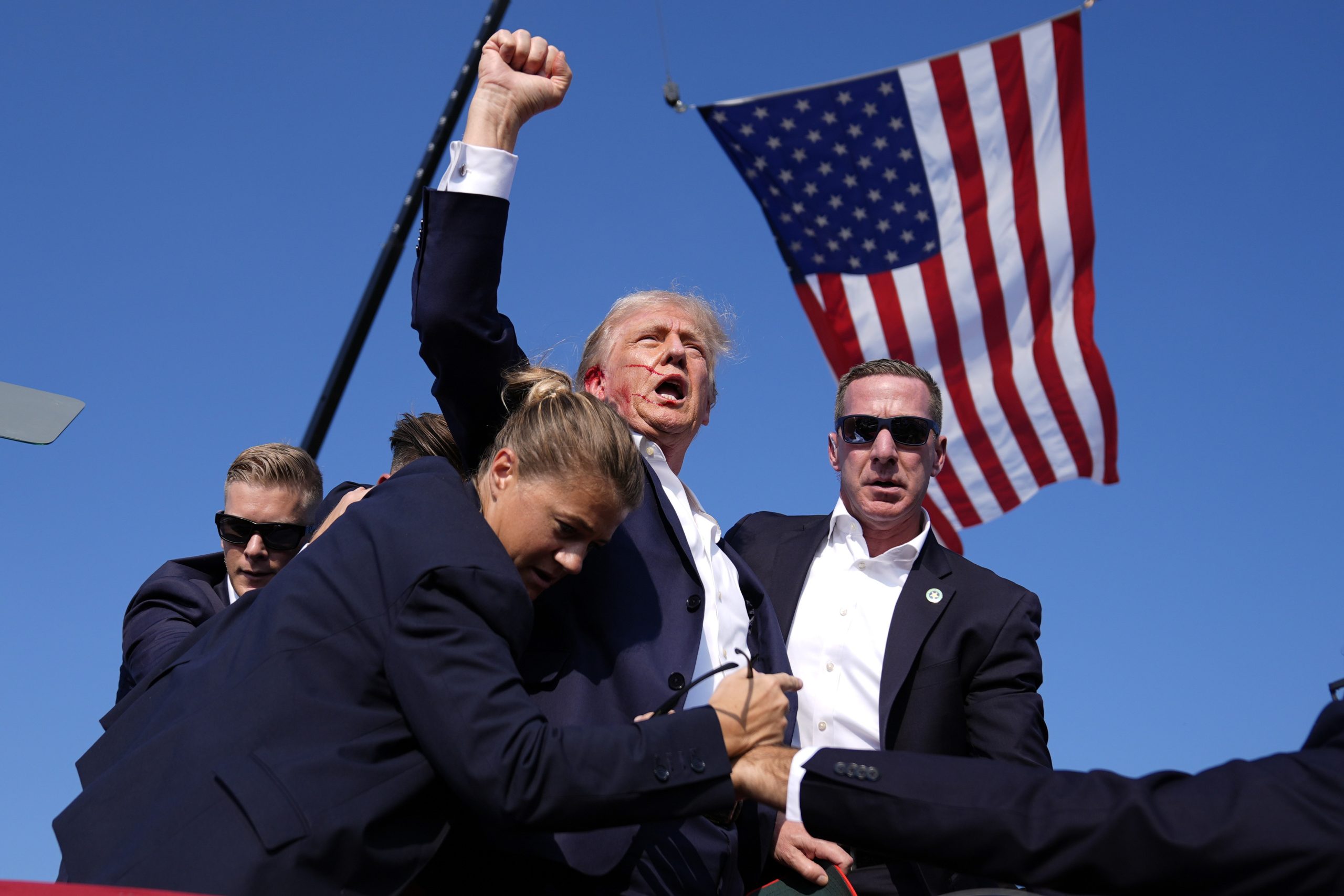
    Similarly, Trump has been the subject of at least four assassination attempts, including one at a 2024 Butler, Pa., campaign rally in which shots apparently grazed his ear and killed an attendee. This unfortunate situation has felt inevitable as Trump’s toxic, divisive, and often hateful rhetoric lights a spark under a nation where violence was already as American as cherry pie.

    But political violence is morally abhorrent and never solves anything. The healing of America from the bad place we’re in right now depends on Trump’s continued health, so he can someday be brought to justice for his corruption and his crimes against humanity. A Trump assassination wouldn’t be just wrong, but it would trigger a wave of repression under JD Vance that would also drive the final nail in the coffin of U.S. democracy.

    Then-presidential candidate Donald Trump is surrounded by U.S. Secret Service agents after an assassination attempt at a campaign rally in Butler, Pa., on July 13, 2024.Evan Vucci

    Still, the actual danger to Trump’s life — which the Secret Service learned of through a tip from some of the same Israeli intelligence officials who worked to goad the U.S. into this botched Iran war in the first place — remains hypothetical. The threat to the liberty of all Americans from the president’s spiraling paranoia is real and already underway.

    To begin with, Trump has already used the assassination tip as an excuse to ratchet up tensions in the Persian Gulf, where the fragile ceasefire between the United States and Iran’s new hard-line rulers had already imploded — bringing new death and destruction while dragging down the world economy. The president, who sounded blasé about his own mortality on Wednesday, has changed his tune.

    Trump wrote Saturday in a Truth Social post that “1,000 missiles are locked and loaded” if he is killed by Iranian agents, adding, “Orders have already been given, and the US Military is ready, willing, and able, for a one-year period of time, subject to extension, to completely decimate and destroy all areas of Iran.” There are many reasons here to worry — not only over the escalation of a war that was pointless from Day One, but also over the likelihood that Iran will be blamed if anything happens to Trump, regardless of who is actually responsible.

    But the assassination paranoia is coming out in other, insidious ways. Alarm bells went off this week when Trump flew to the summit in Turkey in his new Air Force One — the $400 million “gift” airliner from Qatar that U.S. taxpayers spent hundreds of millions of dollars to upgrade, even as Trump plans to keep it for his presidential foundation in 2029 — but ditched it to fly home in an older Air Force model.

    The New York Times put five top reporters on this story because Americans deserve an explanation of how and why our tax dollars were spent on this project — exactly the kind of free-press accountability the founders envisioned when drafting the First Amendment. Their sources told them that despite the massive expenditures, on top of the initial corruption, the former Qatari jet lacked key defensive features like advanced anti-missile capabilities — which explains why Trump switched planes after the Iranian assassination tip was delivered.

    Staff lay a carpet on the tarmac before President Donald Trump exits Air Force One upon arriving for the NATO summit in Ankara, Turkey, on Tuesday.Alex Brandon

    The White House was livid at the article, which it seemed to interpret not as accountability journalism but as a breach of security. Embattled FBI Director Kash Patel was yanked off an airport tarmac where he was flying to Chicago to mainly watch his girlfriend in a country music festival and was summoned for urgent meetings.

    Late Friday, federal agents banged on the doors of several Times reporters and delivered subpoenas demanding that they testify before a grand jury on Wednesday, in what appears to be a pivot point for America’s already shrinking freedom of the press under a Trump regime.

    “The appearance of federal law enforcement agents on the doorstep of news reporters should shock the conscience of any American who believes in the Constitution and the press freedom it protects,” David McCraw, the Times’ lead attorney, said.

    Let’s be clear: Trump is using these assassination fears — real or perceived — to drastically increase his assault on the civil liberties of American citizens, and this is likely to only get worse in the coming days.

    While the FBI was out badgering journalists, workers back at the White House were erecting scaffolding on the North Portico of the presidential residence, part of an apparent security upgrade that is supposed to last for months. This is in addition to the failed push for $1 billion in taxpayer money to build a massive underground bunker beneath his new ballroom, meant to replace the already demolished East Wing.

    Somewhere underneath all of that, Caligula is surely looking up from his fiery final repose with a knowing smile of recognition.

    Scaffolding is visible under a covering with an image of the North Portico over the space as it is renovated at the White House in Washington on Thursday.

    The madness has been a slow train coming, but it’s starting to accelerate and may soon run off the rails. The assassination paranoia is a new layer on top of the president’s late-life obsessions with imposing his physical legacy on the nation’s capital and with clinging to absolute power — and thus forestalling the inevitable probes into his rank criminality — by any means necessary.

    The increasingly unpopular Trump’s determination to prevent a free and fair midterm election — such as firing the entire Election Assistance Commission, while making extortionary threats for a new law that would make it harder for millions to vote — is not unrelated to his assassination-driven threats to Iran or the New York Times.

    It is all moving in the same direction: building the foundation to declare a national emergency, the last refuge of every dictator from Caligula to Adolf Hitler to the strutting strongmen of the 21st century. If, heaven forbid, there is a fifth major assassination attempt against this president, it will surely reignite any smoldering embers of the Nazi’s 1933 Reichstag fire — a justification for the end of civil liberties.

    Let’s not sing along to the age of paranoia. The lynchpin of American democracy remains the same as it ever was: the peaceful transfer of power. In the present crisis, that can’t come soon enough.

  • At Ankara summit, tantrums aside, Trump finally awakens to Ukraine’s tech brilliance

    At Ankara summit, tantrums aside, Trump finally awakens to Ukraine’s tech brilliance

    When dealing with President Donald Trump at a NATO summit, the European allies resemble desperate adults hovering around an unruly child who is clutching fireworks and matches.

    So it was a relief that, despite his usual juvenile tantrums and threats at this week’s Ankara, Turkey, gathering — and his erratic behavior toward Iran — the president mostly kept his powder dry.

    Indeed, POTUS had an unprecedented adult moment with Ukraine’s President Volodymyr Zelensky. Trump finally recognized Kyiv’s stunning technological prowess in the production of drones that can now reach deep into Russia (some adviser must finally have convinced him that Ukraine had winning cards the United States lacked).

    Trump actually heaped praise on Zelensky, in stark contrast to his shameful efforts in the past to humiliate the Ukrainian leader, saying he was “courageous” and had done “an amazing job” on the battlefield.

    The president finally granted Zelensky’s years-old request to let Kyiv produce American Patriot missiles — the only available Western weapons capable of stopping the ballistic missiles Russia is using against Ukraine.

    However, that’s the end of the good news.

    The U.S. president’s ill-informed, incompetent, and, frankly, juvenile behavior on foreign policy, combined with his visible aging, presents a clear and growing danger to U.S. security. With his garbled and error-filled speech, his omnipresent ego, and his constantly shifting positions, he has become a global embarrassment.

    Trump’s ineptitude helps our adversaries, from Tehran to Moscow to Beijing to Pyongyang.

    Nothing shows this more clearly than Trump’s belated shift on Ukraine. Mind you, I offer two cheers for the dawning light, but how can anyone count on follow-through when the president changes his positions like he changes shirts?

    Even if Trump keeps his word on the licensing of Patriot technology, setting up the complex production process is a lengthy operation that would probably take at least a couple of years (he hasn’t even bothered yet to notify the U.S. producers of Patriot interceptors, RTX and Lockheed Martin).

    Similar licensing of Patriot missiles was only granted before to Germany and Japan, and it has taken them each years to scale up. I am confident that savvy Ukrainian techies can do so faster. But they need those interceptors right now, when Vladimir Putin is raining down ballistic missiles on Ukrainian cities because he knows they have no defense.

    European allies, who need their own Patriots to defend against Russia, are willing to risk giving Kyiv more if the United States will pledge to backfill their needs quickly. Trump has made no such pledge, claiming they are in short supply in the U.S.

    That is true, but do you know why? The U.S. and Gulf allies have wasted years’ worth of U.S. production of Patriot interceptors during the Iran war. They used hundreds, possibly thousands, of Patriots that cost $2 million to $4 million each to shoot down $30,000 Iranian drones.

    Trump keeps hinting that the U.S. is interested in Ukrainian drone technology, but has still not taken up Zelensky’s offer to trade Ukrainian drone skills and wider joint production in return for Patriots.

    POTUS claimed in Ankara that U.S. drone producers are building new factories for interceptors that will be up and running quickly “in the not-too-distant future.”

    Bluster, bluster, bluster.

    Lockheed, which produces the most advanced interceptor, the PAC3, has publicly announced its goal of producing 2,000 of these marvels a year … by 2030. That is a tiny fraction of what is needed.

    Yet, this week, still short of drones and drone interceptors for the U.S. military, Trump announced at the Ankara summit that the ceasefire with Iran is ending. He appears to be plunging into a renewal of the Iran war. He is stuck in a trap of his own making because he relied only on his gut before entering the conflict.

    POTUS never imagined that Tehran would respond to his attack alongside Israel by closing the Strait of Hormuz, even though he was warned by his military and civilian advisers. Then he claimed, totally contrary to the facts, that he had concluded a “peace deal” and started paying off the ayatollahs with billions in advance by letting them sell oil again. Now he is threatening a new war, which he clearly doesn’t want and for which he doesn’t have the proper weapons.

    Trump knows he cannot win from the air. And, unless he is ready to invade Iran or occupy parts of that country indefinitely — which would be a disaster — he has trapped America into accepting some form of Iranian control over the strait.

    That is why, in Ankara, with the rage of a spoiled child, Trump cursed the Iranians (whom he had praised only weeks ago) and pouted: “I’m not sure I want to make a deal. Let’s just finish the job.” This is not the language of a leader. This is the insincere threat of a 6-year-old throwing food at the wall to see if it sticks.

    What is so terrifying about Trump is not his threats, which our allies and adversaries alike now tend to ignore, but his total incapacity to think in strategic terms. He talks big — “Iran cannot have a nuclear weapon” — but has no strategy on how to achieve this.

    And even when recognizing Ukraine’s achievements, he insisted that “President ​Putin wants [this war] to end. I will tell you that very strongly.” If he really believes this, at this late date, he definitely lives in an infantile fantasy world.

    As a result, there is a huge risk that he will drag America into an uglier quagmire in Iran.

    And he will throw away the chance that he, himself, helped create by pushing Europe to rearm: the opportunity to work with a stronger Europe and bolster NATO’s role positively to counter Russia, China, and Iran.

    Lost in fantasy, he drives America’s allies away.

    Ukraine will try to stay on his good side, but will proceed to revolutionize unmanned warfare in cooperation with Europe, and possibly, eventually, with Washington.

    And U.S. adversaries like Iran will choose whether to take advantage of Trump’s childishness or try to assassinate him in revenge, helped by his own fecklessness. Fear of that latter possibility was what made the Secret Service insist Trump fly back from Ankara on the original Air Force One, rather than use one of his vanity projects, the upgraded luxury gift plane from Qatar, which had not been secured sufficiently to protect against possible attack.

    Trump had insisted at first on luxury over security. Even when it came to his own safety, the child in him could not be curbed.

  • Nobody likes property tax hikes, but the city already protects lower-income homeowners | Shackamaxon

    Nobody likes property tax hikes, but the city already protects lower-income homeowners | Shackamaxon

    This week’s Shackamaxon covers property tax assessments, state budget negotiations, and Pennsylvania’s gambling dependence.

    Assessment anger

    Philadelphia property owners have by now received one of the least anticipated pieces of snail mail of the year: our assessment notifications. My own home’s value went up by around $30,000, meaning my family will have to fork over another $400 a year to the city and school district.

    Ever since Mayor Michael A. Nutter instituted the Actual Value Initiative in 2013, property taxes in Philadelphia have become an increasingly contentious issue. In the past, valuations stuck around for years — whether or not they matched the overall economic climate.

    This meant some property owners were stuck paying more than they should, while others were getting a significant break. By switching to AVI, Nutter hoped to create a system that would be fairer. It also ensured city coffers would benefit from investments in neighborhoods.

    This being Philadelphia, however, nothing is so simple.

    While many of the underassessed properties were owned by people of significant means, like landlords or vacant-land speculators, the city also has one of the largest concentrations of low-income homeowners in the country. While no one wants to pay an additional $400 a year, this kind of increase is much harder to manage for the nearly 100,000 Philadelphia homeowners who earn less than $50,000.

    That is why City Council often feels pressure to provide relief. Sometimes, however, the conversation on this topic would lead one to believe the city currently does nothing for longtime, low-income residents who are struggling with higher bills. Fortunately, this is not the case.

    The biggest program on offer is the Homestead Exemption, which allows resident homeowners to deduct roughly $1,400 from their property tax bill. For those whose home is worth less than $200,000, they are getting more than half of their bill eliminated. There’s also the Longtime Owner Occupants Program and the senior tax freeze.

    City Hall is also helping homeowners keep up with the costs of repairs. Mayor Cherelle L. Parker’s H.O.M.E. Initiative offers $10,000 to help fix problems like leaky roofs, and the Adaptive Modifications Program ensures residents can age in place or adapt to unexpected physical limitations.

    Between those programs, the city is spending hundreds of millions of dollars each year on protecting homeowners. That’s more than the combined receipts for the proposed rideshare tax, the soda tax, and the liquor-by-the-drink tax. Renters, who tend to be poorer and more cost-burdened than homeowners, get comparably little support from City Hall.

    When City Council returns this fall and considers how to react to rising assessments, the conversation must reflect how much Philadelphia already does to help struggling homeowners.

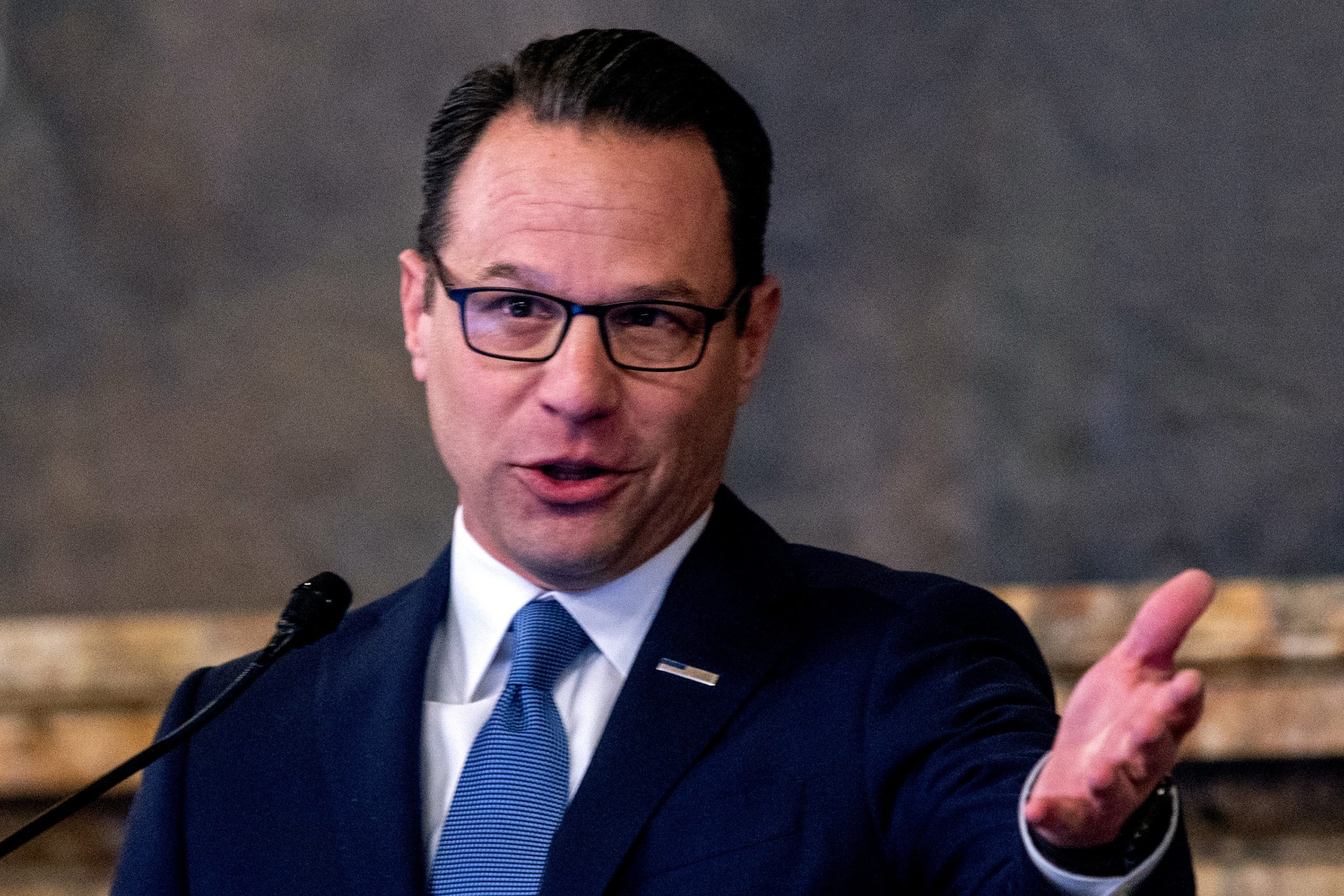
    Gov. Josh Shapiro delivers his third budget address to a joint session of the state House and Senate at the state Capitol in 2025.Tom Gralish / Staff Photographer

    Budget funding

    Even though state senators have been called back for budget votes, there’s still no official word on what will be in the document.

    Last year, the commonwealth spent just over $50 billion, while bringing in just under $49 billion in revenue. This meant using money from the state’s reserves — although the Rainy Day Fund, which has around $8 billion, was not touched. Instead, state leaders cannibalized other sources, like the Public Transportation Trust Fund, to pay for services without raising taxes.

    The plan Gov. Josh Shapiro unveiled in February proposed around $53 billion in spending. Absent new sources of revenue, this would require tapping into the Rainy Day Fund. It remains to be seen whether Harrisburg will finally act on so-called games of skill. Taxing the machines could bring in around $1 billion per year, which would significantly close the gap between projected revenue and the governor’s proposal.

    Still, no one expects the Republican-controlled Senate to approve the full proposal. In the past, they’ve objected to any increase in funding for public transit agencies, for which Shapiro has proposed an additional $300 million. There’s also another $565 million in funding for schools, meant to address a structural imbalance that the courts have ordered rectified. Given the emphasis from Mayor Parker, Council President Kenyatta Johnson, and the city’s legislative delegation on education funding, it’d be a surprise if the final deal did not include a significant increase in support for schools.

    Philadelphia Phillies first baseman and star hitter Bryce Harper appears in a custom-made video for the betting site FanDual.Obtained by The Inquirer

    Aiding in betting

    The biggest reason not to tax skill games is that Pennsylvania is already too dependent on gambling to pay the bills.

    Between brick-and-mortar casinos and online betting outlets, the commonwealth generated more than $270 million in revenue in just May of this year. The sports betting platform FanDuel even subsidized SEPTA service for the Eagles’ playoff run. While this money does help avoid unpopular service cuts and tax increases, it comes with its own costs. Research says that problem gambling is on the rise, with the ease of betting on your phone a key component.

    While gambling has long been a part of human society, the legal online gambling platforms that dominate the scene today are unprecedented. Inquirer reporter David Gambacorta managed to locate one local man who wagered $18.5 million on sports. Along the way, he was offered multiple perks to keep him in the game. Casinos have long sought to keep big spenders happy through meal vouchers, free drinks, and comped accommodations. FanDuel went a step further: It secured a personalized video from Phillies star Bryce Harper.

    Part of the justification for legalizing gambling was to clean things up. Legitimate businesses don’t break kneecaps or organize “bust outs.” They had to operate with the kind of regulatory guardrails that simply didn’t apply to illegal bookies who dominated the trade not so long ago.

    Stories like these complicate that logic. The more lawmakers in the Keystone State rely on gambling to pay our bills, the more complicit we are in the industry’s misdeeds.

  • ICE killed Lorenzo Salgado Araujo. They want you to be apathetic. Don’t be.

    ICE killed Lorenzo Salgado Araujo. They want you to be apathetic. Don’t be.

    Lorenzo Salgado Araujo woke up at 5 a.m. Tuesday and started his day like almost every other one for the last 35 years since he came to Houston from Mexico and built his own American dream brick by brick — sending his three sons to top universities on the foundation he’d constructed through years of backbreaking labor.

    His wife also got up to make him a hearty meal before he put on his work boots, fired up his van, and picked up three coworkers in Houston’s heavily Latino East End to build new homes on the city’s outskirts. But it proved to be Salgado’s last drive.

    Just a short time later, the 52-year-old Salgado was lying face down outside of his van on a city sidewalk, surrounded by agents from U.S. Immigration and Customs Enforcement as blood poured from a bullet wound on the right side of his stomach. He was recorded screaming in pain: “Help me! They shot me! … ¡Me están matando!”

    Translation: “They are killing me!”

    He died a short time later in a nearby hospital. ICE said the fatal shooting occurred after officers tried to arrest Salgado in what it called “a targeted enforcement operation” — even though Salgado apparently had no criminal record and for more than a year had been steadily making progress toward securing a work permit that would resolve his immigration status.

    “We dotted every ‘i,’ crossed every ‘t,’ filled every document, attended every appointment,” his tearful son, 29-year-old teacher Ronaldo Salgado, said in a news conference on Wednesday. Afterward, the younger Salgado told the Bulwark: “I love our dad; he worked hard. He always told us that we needed to do well in school so we don’t end up like him in the sun.”

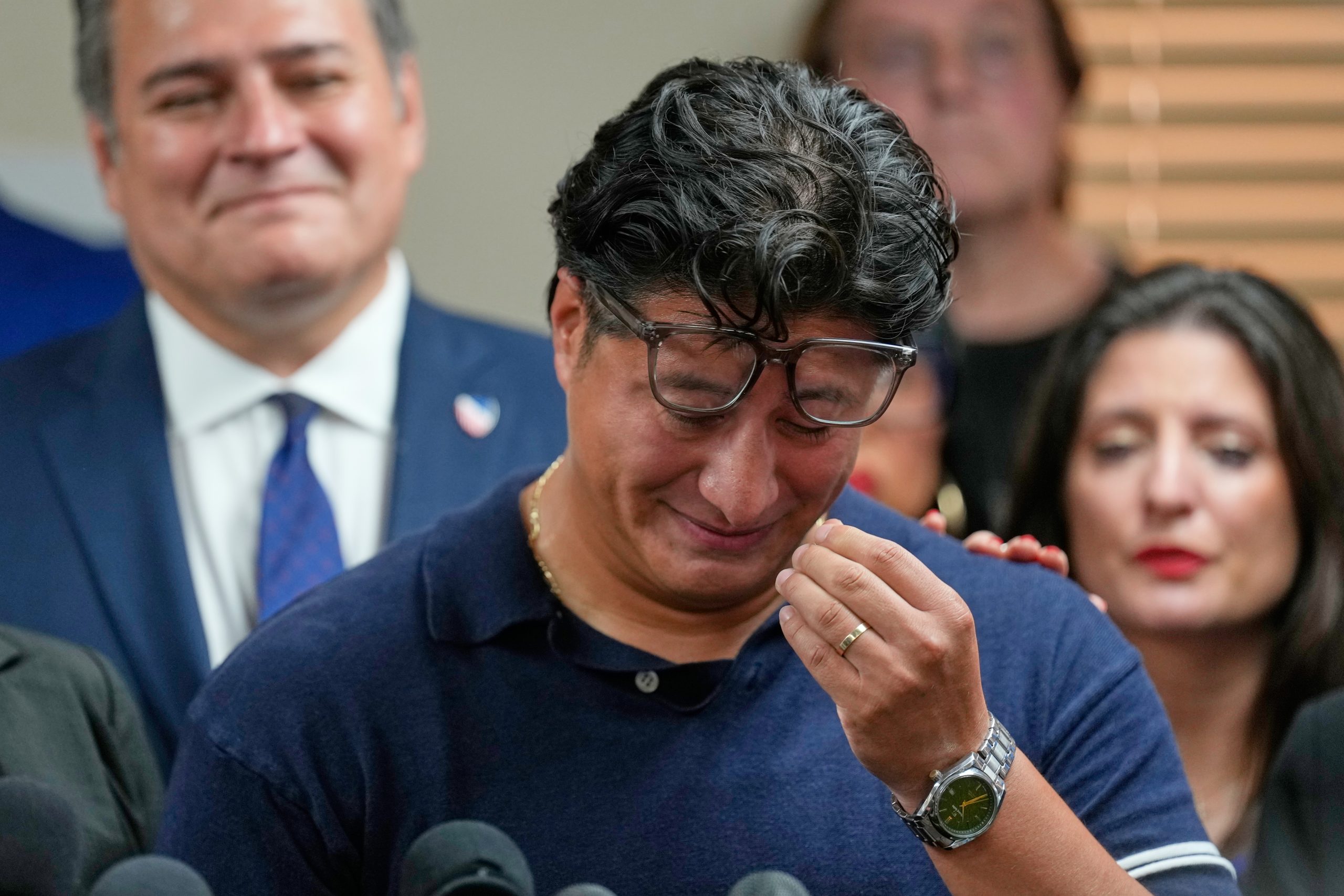
    Ronaldo Salgado, son of Lorenzo Salgado Araujo, wipes away tears while speaking during a news conference Wednesday in Houston. David J. Phillip

    The killing of Salgado — family man, essential worker, and American dreamer who was doing everything the right way after joining the 1990s mass migration of undocumented Mexicans — is a crime against humanity that makes anyone who still has a functioning moral compass want to scream in outrage.

    Still, what happened after Salgado was gunned down is deeply troubling in a different way. America seemed to mostly shrug at a killing no less senseless than this winter’s Minneapolis ICE fatal shootings of Renee Good and Alex Pretti, let alone other law enforcement murders like George Floyd in 2020, which sparked days of nationwide protest.

    The implosion of now ex-Maine Democratic Senate candidate Graham Platner or Donald Trump’s inane prattle at a NATO summit took up most of the hour on cable-TV news, with reporting on yet another ICE killing squeezed in at the end. A fascist regime cutting down our law-abiding neighbors in the streets is becoming background noise.

    Just how they want it.

    To be sure, there are differences between what happened Tuesday in Texas and the Minneapolis killings that grabbed so much attention six months ago. A large activist community in the Twin Cities was out in the streets at the time of the Good and Pretti shootings, with whistles and cell phones, producing a flood of video evidence that exposed ICE’s lies and inspired massive demonstrations.

    In contrast, Salgado was killed in a low-income neighborhood, and while there is video of the wounded laborer on the ground, there’s not yet been definitive footage revealing how or why he was shot. That doesn’t alleviate the nagging concern that the media and some corners of the public and the body politic care more when the victims are white U.S. citizens — which, if true, is morally unconscionable.

    A makeshift memorial for Lorenzo Salgado Araujo, who was shot and killed by an ICE officer Tuesday, is shown Wednesday in Houston. David J. Phillip

    Americans should be alarmed at the bigger picture that’s slowly unfolding before us. After briefly pressing the pause button in the furor over the Good and Pretti killings — pulling back from its federal assault on Minnesota, firing the flamboyant and infuriating Greg Bovino and Kristi Noem, and drastically scaling back its plan for warehouse concentration camps — ICE is back, and more dangerous than ever.

    After an era of waving a red flag before an activated, engaged, and angry citizenry it didn’t see coming, by naming operations like the “Catahoula Crunch” or “Charlotte’s Web,” and with Bovino mugging for the TV cameras, ICE has resumed working toward its inhumane target of one million deportations per year, but with a much lower profile.

    There are thousands of new immigration agents on the streets, fueled by Congress giving two massive funding infusions totaling about $240 billion, and with Homeland Security and ICE under new management, they are hoping to terrorize immigrant communities without generating headlines or protests. “ICE is making record arrests right now,” Trump’s immigration czar, Tom Homan, told Fox News. “We turned the heat up …”

    The New York Times reported last week that with no press releases or hoopla, daily immigration arrests had doubled over a five-day period to a total of roughly 10,000, or 2,000 per day, with immigrants arrested during required government check-ins, but also during traffic stops like the one in which Salgado was killed.

    This is a human rights nightmare in the making. The stepped-up arrests are all but certain to lead to more dangerous and potentially fatal encounters like the one that occurred on Houston’s Canal Street, but the other impacts are equally pernicious.

    Fear levels in big-city neighborhoods with large immigrant communities are spiking yet again — keeping countless kids home from school and essential workers off the job, crimping an already strained economy. The Trump regime’s squalid gulag archipelago of immigration detention centers — whose crisis of overcrowding had eased slightly with the spring enforcement slowdown — is seeing a surge again, and that will also lead to catastrophe.

    Detention deaths are soaring to record levels — more than 50 since Trump returned to office in January 2025. We are learning troubling details, for example, about the March death of an Afghan national who came to the United States after working with U.S. Special Forces and who died after just one day in ICE custody. Relatives of Mohammad Nazeer Paktiawal, 41, said he was not allowed to bring his asthma inhaler into detention; officials say he died of an “adverse drug reaction” that brought on an attack.

    In Houston, there’s no evidence to support ICE’s initial claim that Salgado was resisting arrest, but — given what we are learning about the horrors of detention — it’s not surprising that immigrants facing an arrest are terrified at what might happen next. Meanwhile, ICE and other agencies are going to extreme lengths to avoid accountability.

    In California, ICE — overflowing with our tax dollars — is spending an astronomical $1.5 billion to buy two large privately run immigration prisons from the corporation CoreCivic, for the purpose of preventing state and local inspectors from monitoring what happens there. WIRED recently reported that ICE’s internal watchdog agency is focusing its attention not on agent misconduct but on tracking down outside critics.

    What are they trying to hide?

    In the killing of Salgado, we don’t know the answer — yet. ICE claims Salgado, whom it dehumanized as an “illegal alien,” “weaponized his vehicle” and tried to run over the agent who was arresting him, and that the agent then fired the fatal bullet.

    We don’t know if there’s any truth here. But what we do know is that in every similar situation during the Trump regime — including Good and Pretti and others like Chicago nonfatal shooting victim Marimar Martinez — the initial ICE version of what happened proved to be a lie, and often a brazen one. It takes a willing moral blindness to automatically accept ICE’s story about what happened to Salgado.

    And yet, we are seeing that not only from the local FBI — which is not investigating the officer’s action, but the alleged crime of resisting arrest — but also from Houston Mayor John Whitmire, who said he trusts the federal government to do a thorough investigation, as if he’d been living in a cave these last 15 months.

    In their anguished news conference on Wednesday, family members and local Democratic officials called for the release of any ICE body-cam footage and an independent investigation into what really went down in Houston’s Magnolia Park section.

    They need our help, though. ICE’s new summer assault on immigrant communities, and its ability to get away with its many crimes, is counting on an exhausted or apathetic American public to not demand action as so many of us did with Pretti or Good or Floyd.

    Please say his name — Lorenzo Salgado Araujo — and take to the streets and demand justice. His death is just as deserving of our time and our moral outrage, if not more so.

    On Wednesday night, about 1,000 Houstonians came out to keep that flickering flame alive.

    “This is the exact spot that Lorenzo took his final breath,” Cesar Espinosa, executive director of the immigrant rights group FIEL Houston, told the protest marchers. “And in the spirit of solidarity, I don’t know about you, but I say, if they come for one of us, they come for all of us.”

  • Graham Platner and the Democrats’ war on expertise

    Graham Platner and the Democrats’ war on expertise

    Let’s suppose you’re the kind of Democrat who — like me — derides Republicans for declaring war on expertise. From vaccines and climate change to tariffs and foreign aid, we say, the GOP has discarded professional knowledge in its quest for power.

    Why, then, do we support candidates who lack expertise — and experience — themselves?

    That’s the question we should be asking about Graham Platner, whose campaign for the Senate is on the ropes following a former girlfriend’s claim that he had sexually assaulted her. Platner has never held elected office; his only political experience was a stint on his town planning board.

    How can we be OK with that? If we value expertise in government, we should want leaders who have demonstrated it. But Democratic voters seem to be moving in the opposite direction.

    In the recent New York primary, they chose Darializa Avila Chevalier to replace five-term, 71-year-old Rep. Adriano Espaillat. The first Dominican American — and the first formerly undocumented immigrant — to be elected to Congress, Espaillat helped win measures protecting delivery drivers and home-based childcare providers. But he lost to a 32-year-old graduate student who has zero political experience.

    Darializa Avila Chevalier (center), alongside New York Mayor Zohran Mamdani (left), greets supporters after winning the Democratic nomination for New York’s 13th Congressional District.LEXI PARRA

    Neither does Melat Kiros, 29, who unseated 15-term Rep. Diana DeGette, 68, in the Democratic primary in Colorado. She has worked as a lawyer and — more recently — as a barista. But when it comes to politics, she is a complete novice.

    Then there’s Platner. A combat veteran and oyster farmer, he ran as an aw-shucks common man. That meant eschewing what he called “the establishment,” including experienced political consultants and pollsters.

    But guess what? It turns out experience matters. The young Democratic operative who recruited Platner to run for Senate bypassed the standard background check, which usually takes a few weeks. He opted instead for a three-day “investigation” by a firm that didn’t even bother to interview Platner or solicit a questionnaire from him.

    To its credit, the firm flagged some of Platner’s controversial Reddit posts. But a more thorough — and, yes, professional — background check would surely have uncovered his “unsettling” behavior around women, which former girlfriend Jenny Racicot described to reporters last month.

    And earlier this week, Racicot said Platner had shown up drunk at her house — after she asked him to stay away — and forcibly had sex with her. Platner denied the charge, but he said he was “mindful of the political reality it would inflict” and that he was taking time to “reflect” on how to proceed.

    Leading Democrats — including Sens. Elizabeth Warren and Bernie Sanders — called on Platner to quit the race, and I agree with them. But I also think the party should reflect on why we continue to elevate candidates who lack any real political experience.

    To defenders of these outsiders, their inexperience is a selling point. If you want to challenge the establishment, the argument goes, you need people who aren’t tainted by it — which was a major sentiment behind then-29-year-old Alexandria Ocasio-Cortez’s upset in New York’s 14th Congressional District in 2018. Ever since, some have argued, that’s the only way to get progressives into power.

    Nonsense. Here in Philadelphia, Chris Rabb scored a stunning victory in the May primary race to replace Rep. Dwight Evans. Like Chevalier and Kiros, Rabb calls himself a democratic socialist. But he also has significant experience in government.

    Jonathan Zimmerman wonders how voters can be OK with supporting Graham Platner, a Senate candidate who has never held elected office.JORDAN GALE

    Rabb served for five terms in the Pennsylvania House of Representatives, where he sponsored bills to repeal the death penalty and to promote restorative justice in criminal sentencing. He knows his way around Washington, too. Earlier in his career, he worked as an aide to Carol Moseley Braun, the first African American woman in the U.S. Senate.

    Whatever you think of Rabb’s politics, he is qualified for the job. And we should care about that. Just like we shouldn’t make a housing official the director of national intelligence, we shouldn’t make an oysterman a member of Congress. To serve effectively in government — like any other professional role — you need knowledge and experience.

    And if you think otherwise, just look at the guy in the White House. America elected 44 presidents before Donald Trump. Forty-one of them had held prior political office; the other three (Zachary Taylor, Ulysses S. Grant, and Dwight D. Eisenhower) were victorious U.S. war generals.

    By contrast, Trump was a failed real estate baron and a successful reality TV figure. His two presidencies have been monuments to incompetence because he doesn’t believe in expertise. Or in anything, really, except himself. Remember “I alone can fix it”? He didn’t, and he won’t.

    Experts don’t know everything, of course, and they can be wrong (see: COVID-19 lockdowns). But they do know more than the rest of us about what they do. In choosing candidates like Graham Platner, Democrats turned their backs on that principle. Let’s hope they rediscover it before it’s too late.

    Jonathan Zimmerman teaches education and history at the University of Pennsylvania. He is the author of “Schooling Citizens: How Education Can Save Democracy,” which will be published next spring by American Philosophical Society Press.

  • Holiday lessons about ‘patriotic values’ from Folarin Balogun, Pope Leo XIV, and JD Vance

    I never thought I’d be writing a column that led off with an analysis of soccer.

    I’d planned to write about the lessons our nation’s 250th birthday party provided for Americans about the real meaning of “patriotic values.” But as it turns out, an examination of the scandal that ensued after President Donald Trump’s shameful World Cup intervention provides the perfect example of what those values are and what they are not.

    Before getting to the game, it’s important to revisit what Thomas Jefferson meant in 1776 when he wrote in the Declaration of Independence that the Creator had endowed all men equally with “the right to life, liberty and the pursuit of happiness.” Although honored in the breach when it came to slavery and women’s rights, these ideals have been the goal toward which America has gradually, but consistently, aspired — until now.

    Many probably assume that “pursuit of happiness” means material success or personal pleasure. But for the Founding Fathers, educated in the philosophy of ancient Greece and Rome, the phrase reflected the classical emphasis on civic duty and character development. In other words, the concept of patriotism was tied to the pursuit of an honorable and civic-minded life.

    Now back to soccer.

    Until the July Fourth weekend, the World Cup matches had provided a brilliant exhibition of the best of America, with cities across the land and fans in every stadium effusively welcoming teams of every race and color. In an incredible burst of U.S. soft power, the global image of Trump’s America as overtly racist, corrupt, and violent gave way before the warmth of ordinary Americans.

    But Trump could not refrain from popping that wonderful bubble. After America’s star striker, Folarin Balogun, received a red penalty card during the team’s 2-0 win over Bosnia and Herzegovina — which would force him to sit out a critical match against Belgium — POTUS phoned FIFA’s president, Gianni Infantino.

    A Trump sycophant who had previously awarded him FIFA’s first medal of peace, Infantino gave the president what he wanted: a reversal of a red card ban during a World Cup game (for the first time since 1962).

    In one move — based on his philosophy that only winners count — Trump cast a pall over the World Cup. He reversed all the goodwill the matches had generated for America at a time when his erratic behavior had sunk global attitudes toward the U.S. to astonishing new lows.

    Yes, Balogun’s violation was accidental, and the red card undeserved, but how many times have we all witnessed wrong calls by referees or umpires that drove us insane? However, under FIFA rules, there is no appeal after a game is over. Imagine if every world leader copied Trump’s utter disdain for rules in sports as well as domestic and international laws, a disdain which is already causing global chaos.

    On Monday, the U.S. team lost 4-1 to Belgium. But Trump’s interference made that defeat more painful by precipitating a wave of global scorn that poured down on an undeserving team. Nor has Trump had one word of praise for this terrific team after their loss.

    However, the lesson from Trump’s soccer debacle is not all negative. Americans should take pride in the achievements of the U.S. team and be inspired by the overall atmosphere of the games before Trump’s ugly intervention.

    And the country should unite in praise for the patriotic virtue displayed by Balogun.

    A day after receiving his red card, the star striker told an interviewer: “It’s been surreal, to be honest. But for me, I think it was just important to stay calm. I never want to react out of anger and out of emotion.

    “There’s still lots of people we’re inspiring, little kids, boys and girls who are watching, and we have to show them the correct way to handle things, even when you think it’s unjust.”

    What a hero! And what an example of patriotic virtue by someone who, under Trump’s attack on birthright citizenship, wouldn’t even qualify to play for Team USA, being born in Brooklyn to Nigerian parents visiting from London.

    Furthermore, the president’s negative example over the holiday — turning the Semiquincentennial into a celebration of himself, even as news broke of the incredible billions POTUS and his family have raked in off his presidency, and even as he upped his efforts to rig the midterm elections — should goad us all to revisit the meaning of “pursuit of happiness” in civic terms.

    Two critiques of Trump over the weekend — one indirect, one powerfully direct — can serve as further inspiration.

    The first comes from Pope Leo XIV, in his powerful livestreamed speech on July 3 at Philadelphia’s National Constitution Center while accepting the prestigious Liberty Medal. “The principles that inspired America’s founders,” he said, “brought them together in … a common dream. Unity lent strength to that dream … E pluribus unum — out of many, one. In order for a nation to flourish, it must be truly united, not by goals bound to momentary endeavors, but by ideals that do not fade with the passing of time.”

    These words need to be taken to heart, to my thinking, especially by progressive Democrats. Their anger is understandable, but in the final instance, they must work together with all those who appreciate the need to curb Trump’s desecration of the founders’ values. That includes all Democrats as well as independents and moderate Republicans who appreciate the need for checks and balances on presidential power.

    As Benjamin Franklin famously said at the signing of the declaration, “We must all hang together, or assuredly we will all hang separately.”

    And finally, some inspiring words from Vice President JD Vance, written in 2016 for the Atlantic before he turned against the values of the founders, and republished by the site on July 4.

    The title of the essay: “Opioid of the Masses.”

    “What Trump offers is an easy escape from the pain,” he wrote. “To every complex problem, he promises a simple solution. He never offers details for how these plans will work, because he can’t. Trump’s promises are the needle in America’s collective vein.

    “The great tragedy is that many of the problems Trump identifies are real … Yet so long as people rely on that quick high … the nation delays a necessary reckoning. There is no self-reflection in the midst of a false euphoria.

    “Trump is cultural heroin. He makes some feel better for a bit. But he cannot fix what ails them, and one day they’ll realize it. And then, perhaps the nation will trade the quick high of ‘Make America Great Again’ for real medicine.”

    In memory of the Founding Fathers, who pursued their principles when the struggle seemed impossible, let us hope such a realization starts this fall.

  • Climate denial is what history will remember about July 4, 2026 | Will Bunch Newsletter

    Over the last decade, I’ve grown used to waking up before dawn and writing about a soul-crushing defeat from the night before. Usually it’s on a Wednesday, but somehow Donald Trump is always involved. Monday’s 4-1 demolition of the U.S. men’s national soccer team by Belgium pretty much confirmed that I won’t live to see Americans win the World Cup in my lifetime, so it’s time for acceptance. But these last three weeks have been a blast, and the party isn’t over. Sometimes the tritest words are also the truest: Maybe the real World Cup was the friends we made along the way.

    If someone forwarded you this email, sign up for free here.

    Future generations will remember America’s 250th for its state of denial

    The long-awaited arrival of the 250th birthday of the United States inspired a lot of talk about everything that’s changed since July 4, 1776, especially as “the man on a hobby horse” sinks to the founders’ worst fears about democracy and demagoguery.

    But historians of the future may dwell on another huge difference between the day the ink started drying on the American Declaration of Independence and July 4, 2026.

    The thermometer.

    Thomas Jefferson — his work as chief author of the nation’s founding document wrapped up — bought a new thermometer that morning and recorded the temperature in Philadelphia three times in his diaries that day, including a temperate 1 p.m. reading of 76 degrees.

    Jefferson’s thermometer might not have been up to the task of keeping up with Philadelphia’s climate 250 years later. On Saturday’s Semiquincentennial, temperatures maxed out at 101 degrees — the third straight day that the mercury reached that mark, which had never happened since records began in 1870. But with the fetid, humid air, it felt more like 110 degrees for anyone brave enough to celebrate America’s birthday outside.

    Philly should have seen this train coming. I mean, literally. Two days earlier, officials just outside of Reading, nearly two hours northwest of America’s founding city, plowed ahead with a welcoming party for Union Pacific’s Big Boy No. 4014, the world’s largest operating steam locomotive — even as the railway relic ran an hour late, with some thermometers posting 106 degrees.

    The result was what local officials called “a mass casualty event” — no one died, but rescue teams were summoned from neighboring counties to help revive more than 100 people suffering from heat exhaustion, in desperate need of water or an IV. Some 35 of the would-be train spotters were rushed to the hospital.

    “It was a little bit chaotic,” an EMS director told the local TV station in Reading. “I don’t think anyone anticipated the weather or the volume of crowds.”

    But they should have seen it coming. The Big Boy heat fiasco was almost too spot on as a metaphor for the slow train wreck of climate change, as the locomotive would spur on the Industrial Revolution that then triggered the rise of greenhouse gas pollution. To the extent that anyone out there still listens to scientists, they were quick to say this weekend: We warned you.

    The scientific group World Weather Attribution, which tracks the impact of human-made global warming, said last week’s heat dome over the Eastern Seaboard was indeed a rare event, yet — without the contribution of burning fossil fuels to a warming planet — it “would have been so extreme as to be virtually impossible.”

    Heat waves aren’t new. I was just 7 but still remember the July Fourth week of 1966 — exactly six decades ago — when it also topped 100 degrees. It’s one of the few things I remember from that grade-school time because it was so incredibly rare. Today, “once-in-a-century” heat waves are routine all over the planet. In June and looming again this week, Western Europe — where few homes are air-conditioned — has sweltered under temperatures that climate scientists weren’t expecting until around 2050.

    This suffocating July Fourth could have been — to steal a phrase from the multiplex marquee — America’s “disclosure day,” exposing the truth of a threat to humankind that’s been hiding in plain sight. Instead, it was our “denial day,” led by our planet’s denier-in-chief, Donald Trump, whose 250th birthday card to America only read: “Don’t look up.”

    The denial was immediate, as the president insisted — ignoring the experts who warned that the triple-digit temperatures and intense, gathering thunderstorms might spark a much bigger “mass casualty event” in Washington, D.C. — on going ahead with his bombastic and self-serving speech and a fireworks show that lasted well into the early morning hours of July 5.

    Our modern-day seersucker-wearing mayor of Jaws might as well have told the broiled holiday weekend throng, “But, as you see, it’s a beautiful day, the beaches are open, and people are having a wonderful time” — as ominous John Williams music swelled in the background.

    The denial was also metaphorical to the max — and not just when those predicted storms arrived and panicked MAGA Trump supporters were forced to take refuge at the National Museum of African American History and Culture, the history and culture their movement is so eager to erase.

    In New York Harbor, U.S. Coast Guard vessels forced the storied environmental sloop Clearwater — which took part in the historic Bicentennial tall ships parade back in 1976 — to leave the July 4 Parade of Ships because of two anodyne political banners taped to its sails: “Save the Clean Water Act” and “Indigenous Rights, Racial Justice, Climate Solutions.” Don’t look up, not even at a tall ship.

    Hours later, during the fireworks show, the Brooklyn Bridge caught fire, which had nothing to do with climate change, yet felt like a coded message from the overheated planet nonetheless.

    But maybe we shouldn’t wade too deeply into the metaphors when the worst denial is the all-too-real policy stuff. Every day, some nightmare headline about killer floods or disappearing glaciers is met with some nonsensical action from the U.S. government based on Earth 2, where none of this is happening.

    As the climate-change-intensified heat dome settled in over the Eastern United States, Trump issued pardons for nine people — and you really can’t make this stuff up — who’d been convicted of felony violations of the Clean Air Act by selling or installing devices for diesel trucks that defeated their emissions controls, because polluting our spacious skies is no longer a crime in Trump’s America.

    It cuts much deeper than this. Trump actually chose the July 4 peak of the heat wave to announce a massive cut in federal subsidies for wind and solar projects, a move that was expected under legislation passed last year. This was just one more layer to a sweeping agenda that has massively relaxed pollution regulations and even wasted taxpayer dollars to make sure clean energy projects aren’t built.

    America continues to get a whopping 82% of its energy from polluting fossil fuels, and that’s unlikely to drop over the next 30 months, regardless of how many Trump voters can cheat death on looming “mass casualty events.” But POTUS 47 warned voters he planned to set the world on fire if he returned to the White House.

    What’s harder to understand, frankly, is why the people who should be fighting Trump on climate change are running away from the front lines. Yes, I’m talking about Democratic Party leaders who’ve tossed climate action down the memory hole in the 2026 campaign — either terrified that any mention of climate will undercut their single-minded focus on affordability, or distract from fighting Trump’s brand of autocracy.

    And ditto for newsroom leaders who seem to have decided that environmental journalists are the first people to lay off, not to mention the other world chieftains who ought to be challenging Trump’s destructive policies, but are meeting the moment with a shrug. Even Canada’s center-left prime minister, Mark Carney, is now backing away from the aggressive climate action he once supported, claiming, “It’s too expensive.”

    That’s a lot of malarkey, as the president who just four years ago passed the largest climate action bill in U.S. history might say. Clean energy continues to rise elsewhere in the world because the alternatives, like wind and solar, are ultimately cheaper and also a source of desperately needed job creation. The fossil-fuel-boosted heat wave of July 4, 2026, proved that inaction is a threat not only to our lives and our liberty but also to the pursuit of happiness. It’s hard to celebrate 250 years of American democracy when climate denial is exposing that system as so badly broken.

    Yo, do this!

    • Did I mention the World Cup isn’t over? If you are a true fan of the Beautiful Game, you’ll brush off the quadrennial disappointment of the U.S. men’s team and get excited to watch one of the greatest generations of international soccer superstars we’ve ever seen. One of the more intriguing of the four quarterfinal matchups this weekend will occur when Harry Kane and his English squad face Erling Haaland and his Norwegian upstarts in the Miami heat. The match kicks off at 5 p.m. Saturday on Fox.
    • The new movie scene for the July Fourth holiday was a disappointment, so the heat wave was a perfect opportunity for revisiting the classics of the 1970s and ’80s with the generation that had not been born yet. We went back to the late Rob Reiner’s first great serious film, the coming-of-age saga Stand By Me. It’s hard not to feel nostalgia today for a time when 12-year-olds had to entertain themselves without iPhones and could disappear into the woods overnight, which felt less strange in 1986 when the movie was first released. It felt truly like a faint signal from a lost planet.

    Ask me anything

    Question: Talk about Mitch McConnell’s demise. — Wendy (@wensilver.bsky.social) via Bluesky

    Answer: Well, Wendy, that’s not exactly a question, and while the New York Times is reporting that the Kentucky senator and former majority leader was unconscious and in cardiac arrest when paramedics found him on June 14, his staff insists McConnell is still alive. That hasn’t stopped conspiracy theories that McConnell is on life support until August, when his replacement, named by GOP lawmakers, could avoid a messy November election. I don’t know about that, and I agree that it’s very poor form to speak ill of the dead. So the fact that he’s still alive is an ideal moment to remind everyone that his hijacking of the U.S. Supreme Court and his cowardice during Donald Trump’s second impeachment both started America on the path toward tyranny. So get well soon, senator. You still have a lot to answer for.

    What you’re saying about …

    Last week’s question about whether you are happy or concerned about progressive Democrats doing well in the 2026 primaries brought a mix of interesting responses that aren’t easy to categorize. Most of you want Dems who will fight harder than the current crew. “I have been voting since 1968, always for Democrats, but seldom with enthusiasm,” wrote Stephen Boone. “Finally, in my old age, there are a few decent politicians. I want more AOCs! More Zohran Mamdanis! …” Others felt more cautious. Wrote Thomas Desmond: “I think the progressive candidates are fine in deep blue seats, but may not be a great idea in purple or light-red seats that could prove winnable this year.”

    📮 This week’s question: It may be water under the bridge next week, but Donald Trump’s personal role in overturning the arguably wrongly given red card to U.S. star Folarin Balogun has sparked a heated debate. Was the red card an injustice to be reversed by any means necessary? Or did Trump’s involvement ruin the World Cup? Please email me your answer and put the exact phrase “Trump Balogun” in the subject line.

    Backstory on Trump ruining the World Cup like everything else

    If the big-screen tragedy of the U.S. men’s soccer team’s same-as-it-ever-was Round of 16 exit from the 2026 World Cup on Monday night had a theme song, it should have been John Lennon’s “Instant Karma.” For its first four (mostly) exhilarating matches, the USMNT gave a nation that was desperate for both an escape from relentless bad news — but also a connection to a wider world — the good vibes it desired. It truly felt like the Americans could go further than ever before (in modern times) in the planet’s greatest sporting event. TV ratings soared. Watch parties were packed. A broken land was coming together.

    Then Donald Trump showed up.

    To longtime soccer fans, the red card handed out last Wednesday to the U.S.’s top goal scorer, Folarin Balogun, for stepping (seemingly unintentionally) on the ankle of a Bosnian player during a 2-0 victory — a harsh punishment that meant not only his ejection from the pitch but a suspension for the upcoming Belgium match — was the essence of our love/hate relationship with soccer. It may be a beautiful game, but it’s the ugly calls that we debate for decades. For a non-soccer fan and malignant narcissist like Trump, for whom anything that goes against his desired outcome is proof of the world’s unfairness toward him, the looming loss of America’s star striker was an opportunity to act like the strutting strongman of a personalist dictatorship.

    The Trump White House called in the lawyers, treating soccer like it was a bad story about the president in the New York Times, or like trying to reverse the 2020 election. And POTUS got on the phone and called up a fellow dictator, Gianni Infantino, the president of the notoriously corrupt FIFA — a man who even invented a FIFA Peace Prize and gave it to Trump as protection so that his $13 billion soccer tournament wouldn’t get hurt. By Sunday, FIFA announced — without any effort at justification — that Balogun’s suspension was lifted and he was cleared to play. This had not happened during a World Cup since 1962. The raw power play cemented the world’s bitter opinion about today’s United States: a nation that refuses to play by the rules, whether it’s blowing up fishing boats or fixing a soccer tournament.

    There were too many ironies to bear — especially the fact that Trump had just gone all the way to the U.S. Supreme Court to fight to strip U.S. citizenship from people like Balogun, who was born to British-Nigerian parents in 2001 during an American visit, and millions of other immigrants who aren’t as talented with their feet. But the other irony was that — like so many corrupt schemes, whether from the mafia or the Trump White House — the president’s soccer coup failed. It felt like Trump had attacked the positive zeitgeist around U.S. men’s soccer with a neutron bomb. Balogun rarely even touched the ball. We’ll never know how much of Belgium’s 4-1 rout of the mistake-prone U.S. was simply a European powerhouse outclassing the Americans, as has happened so many times before, and how much was Trump destroying the juju.

    It did seem fitting that this sordid affair played out over the weekend of America’s 250th birthday, as it was more confirmation that Trump, in spite of what the hat says, actually has no clue what makes America great. If any one principle stood out from the founders’ 1776 and 1787 experiments, it is that the United States was to be based on fairness and following the rules, with no king imposing his will. The single greatest thing about America’s presidential elections was not who won, but the fact that the loser accepted the results, and there was a peaceful transfer of power — until Jan. 6, 2021. Likewise, nothing could ruin the often unbridled joy of the World Cup faster than a rigged competition.

    I’m still looking forward to the next 12 days, to watching the pinpoint passing of Argentina’s Lionel Messi or the raw power of Norway’s Erling Haaland, and to seeing who can actually win the World Cup on the pitch, and not in a back room. We already know the tournament’s biggest loser: Donald Trump.

    What I wrote on this date in 2014

    Looking back on this Attytood blog post from 12 years ago today is a reminder of how debates can evolve over time. My short piece on July 7, 2014, was a riff on an op-ed that called newspapers’ online comment sections in those early internet years “a hate crime” that should be cordoned off because of the vitriol spewed at immigrants or others outside the traditional American hierarchies. Back then, I disagreed, taking the side of free speech absolutism. “These are people who shouldn’t be censored … just set straight,” I argued. “The one true powerful weapon against offensive free speech … is your free speech, and mine.” Time proved me wrong: The Inquirer now avoids comments on most articles, including my columns. It turned out that “the wisdom of the crowd” that newsroom reformers once hailed was fatally infected with racism, sexism, and other forms of hate.

    Read the rest: “‘Newspaper Comment Sections Become Cordoned-Off Hate Crime Scenes.’”

    Recommended Inquirer reading

    • Only one column last week, as I enjoyed the July Fourth holiday by spending time with family and watching countless hours of soccer. In that piece, I wrote about an American 250th birthday that should have been a meditation on what makes our nation great, and where we so desperately need to improve — but which Donald Trump used as an excuse to rob the cash register when no one was looking. The president’s staggering $2.2 billion-plus payday during his first full year back in office — accomplished with a mix of crypto flimflammery, informed stock trading, and dealings with foreign dictators — is a five-alarm fire for the rule of law.
    • One final thought about the 250th birthday of the United States as the moment recedes into the rearview mirror. It’s true that 2026 has been a lousy year, economically, for newsrooms, but you would never know that from reading The Inquirer’s remarkable coverage of such an eventful time. I’ve already praised our world-class World Cup coverage, but our overworked staff also went out and covered a July Fourth party that happened despite killer heat, biblical storms, and a plague of locusts (not really, but it felt that way). This included some real accountability journalism, such as the Trump regime’s efforts to twist the truth around George Washington and slavery, as well as questioning the cost of the big day for city taxpayers. It was also a reminder that Philadelphia has been a hotbed for journalism and the rugged practice of bringing the First Amendment to life since the early days of the republic. Help keep it going another 250 years by subscribing to The Inquirer.

    By submitting your written, visual, and/or audio contributions, you agree to The Inquirer’s Terms of Use, including the grant of rights in Section 10.
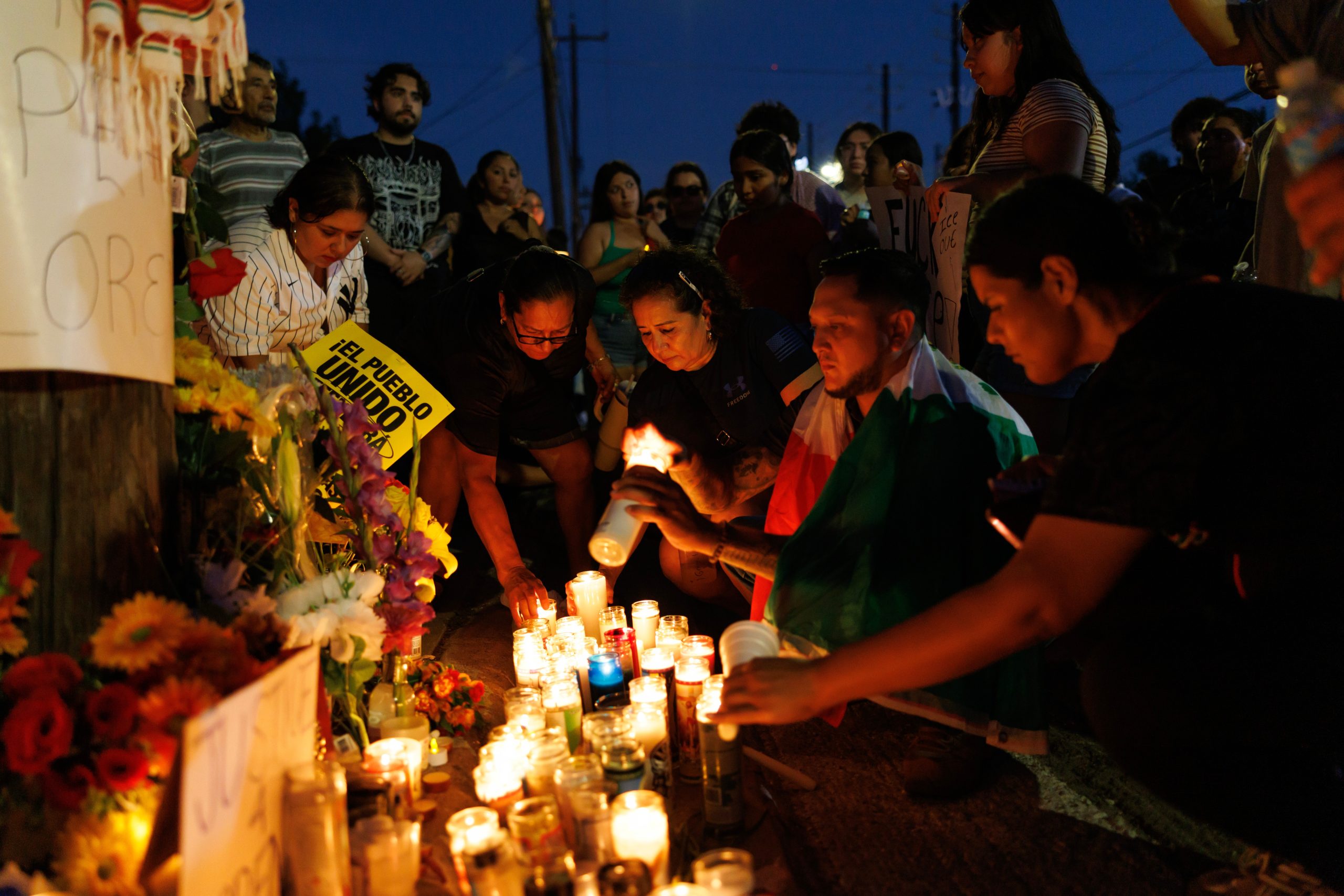
  • I visited the Great American State Fair on the National Mall in D.C. It wasn’t great.

    WASHINGTON — It was blisteringly hot when I showed up at President Donald Trump’s much-ballyhooed Great American State Fair on the National Mall in honor of the nation’s 250th birthday.

    As I headed off to check in as a member of the media, a friend who’d accompanied me decided to wait at a lemonade stand.

    At first, I was a little concerned, wondering how I was ever going to find her. A lemonade stand on the National Mall in Washington, D.C., was bound to be mobbed on a scorcher of a day like the one we had on Monday.

    I needn’t have worried. It wasn’t that kind of party. Crowds were so thin that I quickly spotted her standing alone and eating a snow cone that cost a whopping $8. “Even on a hot day, there was no line at the lemonade stand,” pointed out my friend, Pamela Thomas of Pathfinders Travel, who had taken the train from Philadelphia with me.

    That should give you a pretty good idea of how it was at the so-called Great American State Fair, brought to us by Freedom 250, an organization created by President Donald Trump.

    Low crowds.

    High food prices.

    Lots of walking.

    The Great American State Fair was downright boring.

    Oh, there was an 110-foot Ferris wheel borrowed from the Smithsonian Institution. I watched people stand unsheltered under the blazing sun as they waited for their turn. But that’s the only carnival ride I saw.

    This wasn’t like any state fair I’d ever attended. Where was the merry-go-round? Where was the roller coaster? The cotton candy? The local beauty queens? The fair could use a quilting demonstration and band performances. I saw only one cornhole game.

    The so-called Great American State Fair needs a whole lot more fun and a whole lot less Trump.

    There wasn’t much for children to do besides have souvenir replicas of their new Trump passports stamped.

    I managed to find some shade while sitting on a folding chair inside an area called David’s Tent. As I cooled off, I listened to a woman onstage sing religious songs. Behind me was an aboveground swimming pool set up, ostensibly, for on-the-spot baptisms. In the spirit of inclusivity, there was also a candle-filled menorah positioned in the front of the tent.

    At one point, we made our way over to the Hawaii booth. Inside, all we saw was a large mural of the Aloha State that included a picture of former President Barack Obama that someone had defaced.

    A smiling woman offered to stamp our “passports.” There was nothing else going on in that booth. Not a flowered lei or macadamia nut in sight. No hula dance demonstration. No ukulele performance.

    Same thing with the neighboring Alaska booth.

    I made a point of checking out the North Carolina booth, which had been criticized for having images of Confederate flags on display on TV monitors. This one was a bit more inviting, with its colorful NASCAR displays. I didn’t see anything resembling a rebel flag — but I did see a bale of cotton just sitting on the floor, which can be seen as offensive because of its slavery connotations. The setup had been organized by private donors. One company, Mt. Olive Pickles, has since pulled out of the fair.

    The D.C. booth had some upbeat music playing, a fake cherry blossom tree, and a giant map of the mall that attendees stuck pins into to represent where they lived. “No go-go music?” I asked an attendant, who assured me that some was in the playlist.

    Pennsylvania’s pavilion showcases state history and memorabilia at the Great American State Fair on June 30 in Washington, D.C.Sam Janesch / Staff

    Pennsylvania had initially opted out of participating, but its booth opened the day after I was there, funded by private sponsors and pulled together by U.S. Sens. Dave McCormick (R., Pa.) and John Fetterman (D., Pa.) after Gov. Josh Shapiro passed on participating.

    Cape May County, a Republican stronghold, sponsored the New Jersey booth and brought in an impressive-looking eight-foot sand castle. But I noticed one small red plastic bucket of saltwater taffy that a kid was rummaging through. For an area as rich and diverse as the Garden State, the display felt incomplete.

    Soon, I had had enough.

    We stopped by the media table again on our way out and asked about what was on the schedule for later. The answer? A rodeo demonstration at 7 p.m. That was it.

    I was stunned. America deserved more and better for its 250th birthday celebration.

    So, if you decide to go experience the Great American State Fair before it is dismantled on July 10, don’t say I didn’t warn you.