But I wasn’t surprised. And you shouldn’t be, either.
Put simply, hazing is as American as apple pie. When an incident like this happens, everybody expresses shock and dismay. Legal charges are filed, coaches are fired, and games are canceled. And then we go back to hazing again.
Most Americans probably associate hazing with college and — especially — with fraternities. But in a 2009 survey of over 11,000 university students, 47% reported they had experienced hazing in high school. All told, an estimated 1.5 million high school students are hazed each year.
That means it’s people you know, in the communities where you live.
In 2004, a grand jury reported that three Long Island football players attending a summer camp in Wayne County, Pa., had inserted pine cones and golf balls into teammates’ anuses. The assaults were part of a long history of hazing at the camp, where coaches “displayed a lack of common sense and accountability,” the report said.
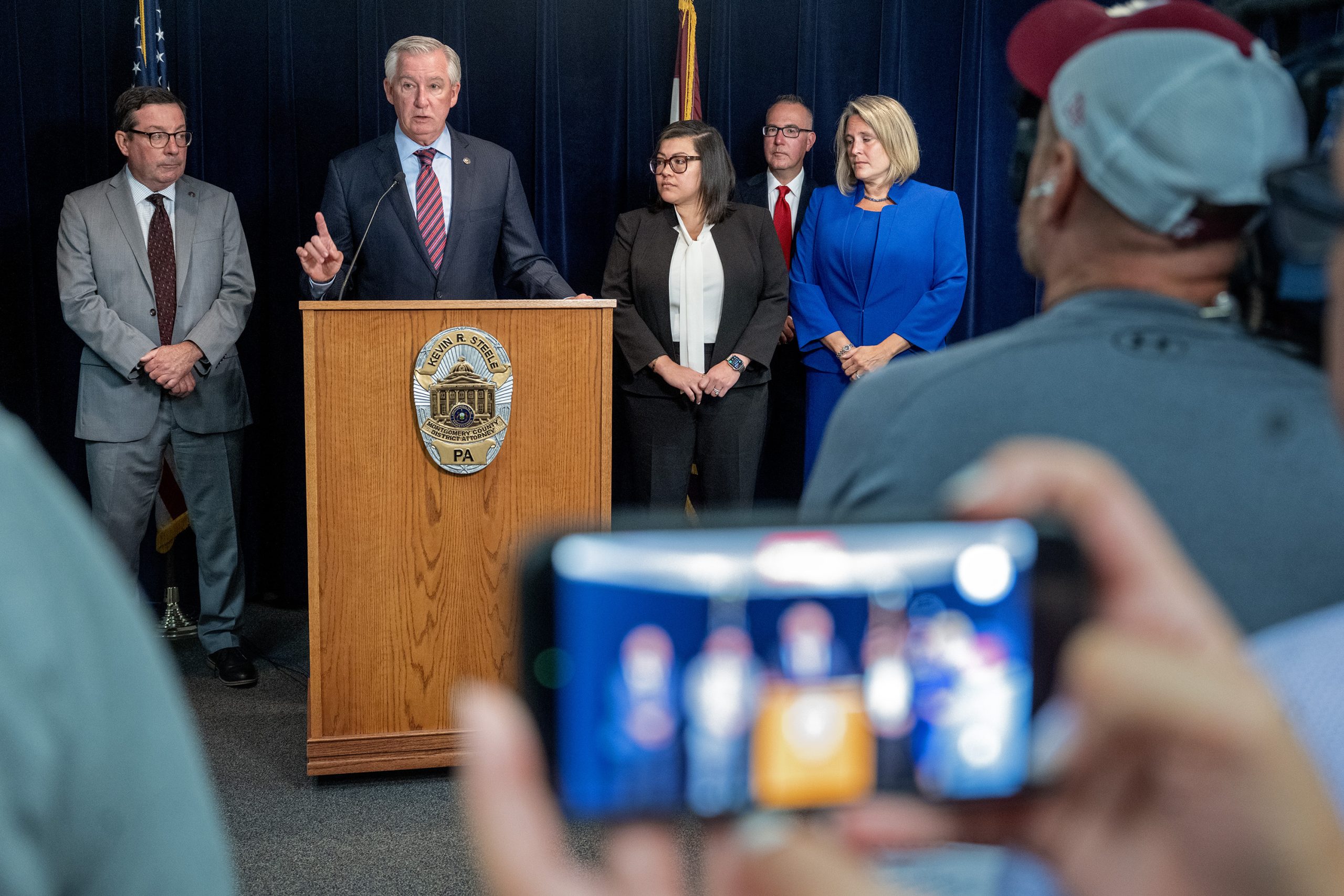
At a July 29 news conference, Montgomery County District Attorney Kevin Steele announces multiple charges in connection with two assaults in the Cheltenham High School locker room that injured a 15-year-old football player.Tom Gralish / Staff Photographer
In 2014, Central Bucks West High School in Doylestown acknowledged that rookie football players had been forced to grab other players’ genitals. They were also led into the shower with towels over their heads, which the players called “waterboarding.”
In 2015, seven football players at Sayreville High School in Middlesex County, N.J., were charged with grabbing teammates’ buttocks and digitally penetrating one of them.
In 2016, prosecutors said football players at Conestoga High School in Berwyn had penetrated a freshman player with a broomstick as part of a hazing ritual called “No Gay Thursdays.” And in 2022, football players at Wall Township High School in Monmouth County, N.J., were caught on video holding a student’s legs apart and, yes, assaulting him with a broomstick.
Are we seeing a pattern here? Most high school hazing involves verbal — not physical — abuse. But the most violent episodes happen on sports teams, which also have the highest rate of hazing.
And they’re also the most likely to generate criminal charges. In Cheltenham, six players have been charged in connection with the assaults on their teammate. And four coaches face charges of endangering the welfare of a child and conspiracy for allegedly trying to cover up the incident.
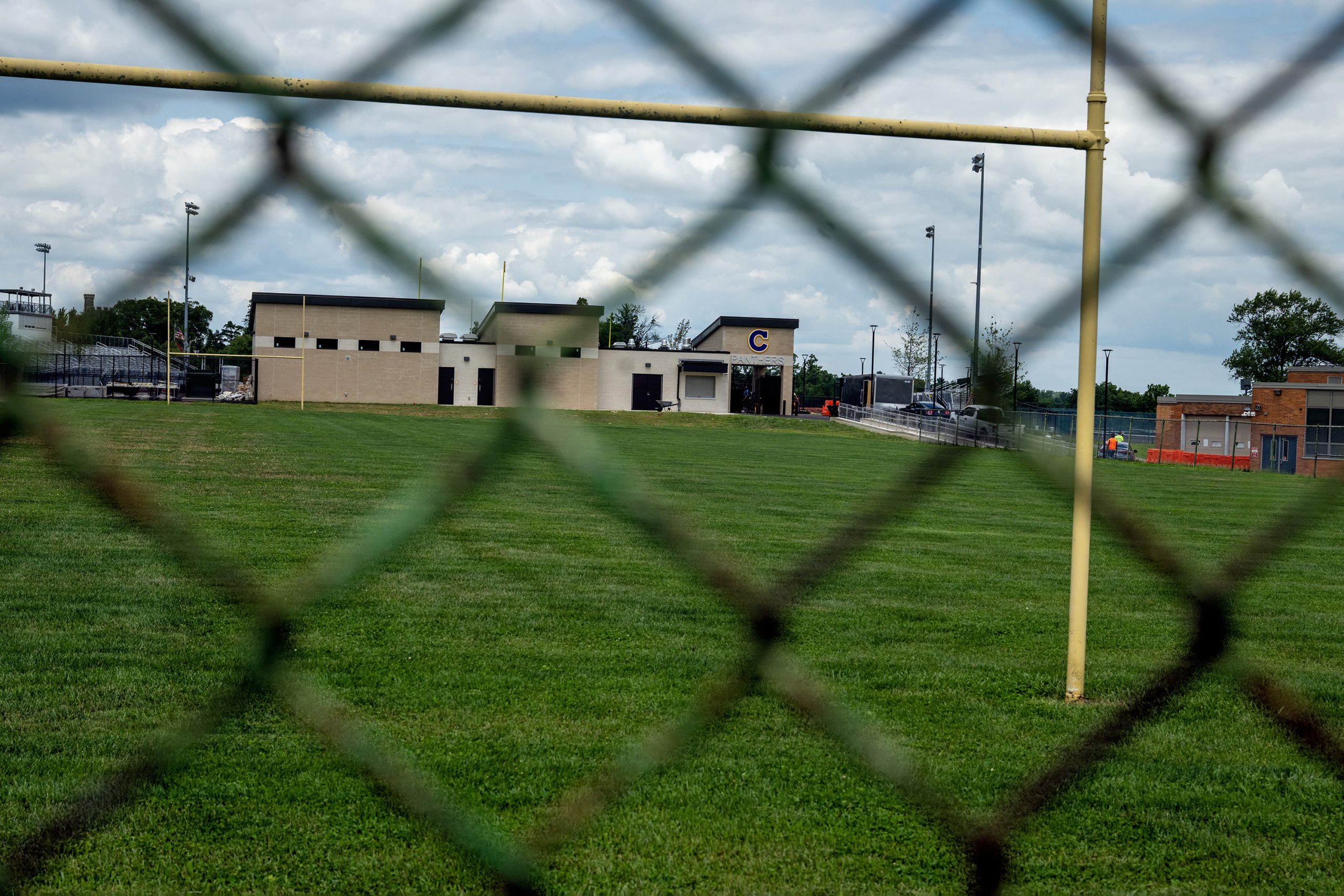
The football practice field and stadium at Cheltenham High School.Tom Gralish / Staff Photographer
Ditto for our educational efforts. When reports of hazing surface, school officials pledge to conduct anti-hazing training for coaches and students. And they release statements declaring that hazing will not be tolerated, in any form.
But their message is falling on deaf ears. So it’s time to change the messenger to someone whom kids will really hear: the hazers themselves. If you haze somebody, you should be required to speak to other students about it.
It’s happened before. After a Virginia Commonwealth University student died of alcohol poisoning in a fraternity initiation in 2021, six students who pleaded guilty to hazing him agreed to travel to universities around the country to discuss the tragedy and the role they had played in it.
We could — and should — demand the same thing from high school hazers. Plea agreements in hazing episodes often require guilty parties to perform community service. What could be a better service than speaking at student assemblies and other public events about the problem of hazing?
In the Cheltenham incident, two 18-year-old football players were charged as adults — one with assault and conspiracy, the other with false swearing for being untruthful to police. The four other players were under 18 and were charged as juveniles.
I don’t know what penalties they should receive. But here’s what I do know: The rest of the school would discover a lot more about hazing if the six students were required to speak about it. And maybe, just maybe, we could start to shift the culture around this destructive behavior.
When hazing is reported at a high school, local officials condemn the incident and inevitably declare that “this is not who we are.” In fact, it’s exactly who we are. We haze. So let’s hear from the people who do it, about why they haze and what they have learned. We can all learn something from them.
Jonathan Zimmerman teaches history and education at the University of Pennsylvania. He is the author of “Schooling Citizens: How Education Can Save Democracy,” which will be published next spring by the American Philosophical Society Press.
I like to consider myself a reasonable person open to all reasonable points of view. Politically, my favorite people are those who will fight for what they think is right but can understand and respect those they disagree with because they’re standing up for their own beliefs.
Of course, beliefs can be mistaken.
Take my belief that the rules were being followed regarding people presenting themselves at the southern border during the Biden administration. My left-leaning bias led me to assume that officials were following the law for those seeking asylum to be allowed into the country while their case was being processed.
Doing some reporting last year, it turns out the administration was — at least during the early days — processing people regardless of any legal claims, under the assumption they would be seeking asylum.
As a reasonable person, my objection to this is twofold. One, you may be acting humanely in allowing someone who risked their life to come to the U.S. to enter the country, but you are not following the law. Two, you are giving all these immigrants false hope they can stay, when asylum, even under the best of times, is not widely granted — especially if an immigrant has no legal representation.
What happened under Biden wasn’t illegal, per se; the White House has huge discretion regarding immigration policy. But much like what President Donald Trump is doing on immigration today, it’s just not right.
I was thinking of how things are never black and white when reader Mark Fenstermaker asked that I write about “the growing number of U.S. citizens who have been killed by illegal immigrants” along with U.S. Immigration and Customs Enforcement efforts to “remove thousands of known criminals who had the potential to add to that number.”
Data wise it’s difficult to offer a conclusive answer to that specific allegation, since law enforcement agencies rarely collect immigration or citizenship status (for victims or offenders). Fortunately, the great state of Texas once again comes through.
Analyses of Texas data, which include immigration status, find that the crime rate of undocumented immigrants in general is lower than that of the U.S.-born population, which is generally understood to be the case.
Regarding homicide, from 2013 to 2022 the conviction rate in Texas for illegal immigrants was 2.2 per 100,000 people, compared with 3.0 per 100,000 for native-born Americans, according to the libertarian Cato Institute. There are a couple of caveats that may push the conviction rate for illegal immigrants higher, but regardless, the rate is hardly zero.
Some immigrants in the country illegally kill, that is a fact. Another fact is that in the U.S., random killings are statistically rare. Yet the right-wing fearmongers will not tell you that broadly speaking, you are more likely to be hit by lightning than you are to be killed by a stranger, let alone a stranger who’s in the country illegally.
Even then, whether that immigrant came here under Biden or under Trump, the ultimate responsibility falls on the person who committed the crime.
Now, the impression that there is a “growing number” of people killed by immigrants is not helped by the Trump administration’s propaganda efforts. I do not begrudge the Department of Homeland Security regularly trumpeting that ICE has detained some of the “worst of the worst” — as immigration enforcement should. But claiming that crime rates have “plummeted” under Trump’s leadership because they’ve removed “criminal illegal aliens” is overblown to say the least.
Crime rates spiked during the pandemic, at a time when Trump closed the border to asylum seekers using the threat of COVID-19 as an excuse. The number of violent crimes committed has been steadily dropping since 2023. Using the administration’s logic, if anything, those six million or so immigrants who Biden let in are making America safer.
None of what I’m saying should be understood as minimizing the death of anyone at the hands of an immigrant who’s in the country illegally. As I’ve said before, there is no comfort for a victim’s loved ones to hear that immigrants commit fewer crimes than the U.S.-born. It would be ridiculous and heartless to answer someone’s pain with such a meaningless fact.
The best we can do is to demand that our media and our leaders do better. That they tell the real story and not whatever fits into their ideological narrative.
To the concerns of my conservative readers like Mr. Fenstermaker, there is often a knee-jerk reaction from many in the mainstream media to downplay crime by undocumented immigrants. Even when telling stories related to immigration, there is a penchant to focus on the unimpeachable “perfect immigrant” when the truth is that people are complicated and reality is messy. But there is also an undeniable push on the right to demonize and scare that should be unacceptable.
What’s much worse is that this is how too many of our leaders operate. You have Democrats who will romanticize immigrants and their experience to the point that people become a symbol and bad policy decisions are made. Then you have Republicans under Trump who push hate and division, and whose policies lead to suffering and harm.
I will choose the Democrats’ mistakes on this over the Trump administration’s anti-immigrant rampage any day of the week, but one cannot exist without the other. If we keep casting things in black and white, we will never be able to reasonably move forward.
The United States government might wash its hands of any responsibility for the more than 700,000 human beings who’ve been deported since Donald Trump returned to the White House some 18 months ago, but it doesn’t take Sherlock Holmes to determine who’s to blame for the blood stains that have been left behind.
Last month, police outside the city of Retalhuleu in southwestern Guatemala found Nixon Giovanni Pérez Paz, 43, and his wife, Glendy Marisol González de la Cruz, dead in a sugar cane field. They’d been bound, gagged, and then executed by gunshots, with their 14-month-old daughter crying next to her mother’s lifeless body.
When Trump took office in January 2025, the couple was living in a suburb of St. Louis — working essential jobs and raising their three daughters while seeking to become legal residents of a country that had offered refuge from rampant crime and poverty back home in Guatemala.
The dream turned into a nightmare with one traffic stop in April 2025, as Pérez Paz was driving to work. Although a subsequent NPR investigation found just one permanent mark on his record — a paid $200 fine for driving without a license — Pérez Paz was swiftly deported by U.S. Immigration and Customs Enforcement (ICE). González de la Cruz had an active asylum application, but after struggling to support her kids while working two jobs, she decided to return home voluntarily.
The couple was murdered only weeks after they reunited in Guatemala.
“If immigration hadn’t picked up my brother, my sister-in-law would still be alive, and the children wouldn’t be going through this sorrow,” the dead man’s brother, Ronaldo Pérez Paz, told People magazine. “Unfortunately, immigration — the [U.S.] government — doesn’t see that. It makes no difference to them.”
No, it doesn’t. Nor did anyone with that government see the humanity of Daphy Michel, a 31-year-old Haitian asylum-seeker with a history of mental health struggles. Sheended up in immigration custody after an arrest and was dumped by ICE agents at a Pittsburgh bus stop wearing summer clothes during a brutal February cold snap. She was found dead three days later, and a medical examiner has ruled that Michel’s death was a homicide.
“I believe that we need to observe all our brothers and sisters as neighbors,” Jaime Martinez of the Pittsburgh immigrant rights group Frontline Dignity told the Guardian, invoking the golden rule that was shattered by Trump’s cruelty-is-the-point regime.
The smell of death permeates the so-called brain trust of American militarism that decided back in February — for reasons still unfathomable — to bomb Iran back into the Stone Ages, in an on-again, off-again campaign in which it seems the collateral damage is the point.
An undated photo of Daphy Michel, an asylum-seeker from Haiti who died March 2 in Pittsburgh, in the wake of her release from federal custody.Michel Family via AP
Last week, according to a deep analysis by the New York Times, U.S. forces dropped a massive, 2,000-pound bomb in the middle of a dense residential neighborhood on Iran’s Qeshm Island along the contested Strait of Hormuz, pulverizing a family’s home.
The 3:40 a.m. blast killed Zahra Jafari, her husband, Qeysar Jafari, a taxi driver, and their son Sina, according to Iranian news agencies, who said two other children were rescued alive from the rubble.
Less than halfway through Trump’s second presidency, his strongman rule is increasingly becoming a death cult. The stench of immoral indifference to the humanity of anyone not part of the MAGA movement is spreading as fast as the COVID-19 virus that helped bring an end to Trump’s disastrous first presidency.
I realize I’ve probably overused my lifetime quota for invoking one of the greatest four minutes of filmmaking I’ve ever seen, but yet again I am reminded of Martin Scorsese’s brilliant montage in Goodfellas as dead bodies pile up in parked Cadillacs or on freezer-truck meat hooks in the wake of a huge armored-car heist. It’s a testament to the greed, brutality, and senseless violence of the mob life.
Today, I can’t help but hear the mournful piano coda from “Layla” as I watch the corpses of Trump’s recklessly lethal rule wash up on Caribbean beaches near the driftwood of their obliterated fishing boats, or inside the bombed sanctuary of an Iranian girls’ school, or from medical neglect inside ICE’s growing gulag archipelago.
The nattering nabobs who scoff at the notion that the United States — whose president on Saturday posted an AI photo of himkissing Jesus on a golden cross wrapped in the American flag — has sunk into fascism because there are no Auschwitz-style death camps just don’t get it.
Whether it’s ICE agents firing bullets into an immigrant’s car, or deportation flights that dump their passengers back into the gang violence they thought they’d escaped, or ending the programs that saved millions of kids in Africa from malaria, the Trump body count is already into the thousands, and it grows every day of his warped presidency.
The statistics matter, but you can’t put a number on the rank immorality of an utter disregard for whether people who don’t look like you live or die. Whatever the Trump death toll turns out to be, this stain on the American soul is never coming out.
But there’s also an outer band of gross neglect or indifference to human life that has led to scores of additional deaths, including the more than 50 people — some who’d complained of medical conditions that were ignored — who’ve died in ICE custody since Trump returned to office, or the unknown number who’d faced murder or poor medical care after deportation to the trouble-laden nations they’d tried to escape.
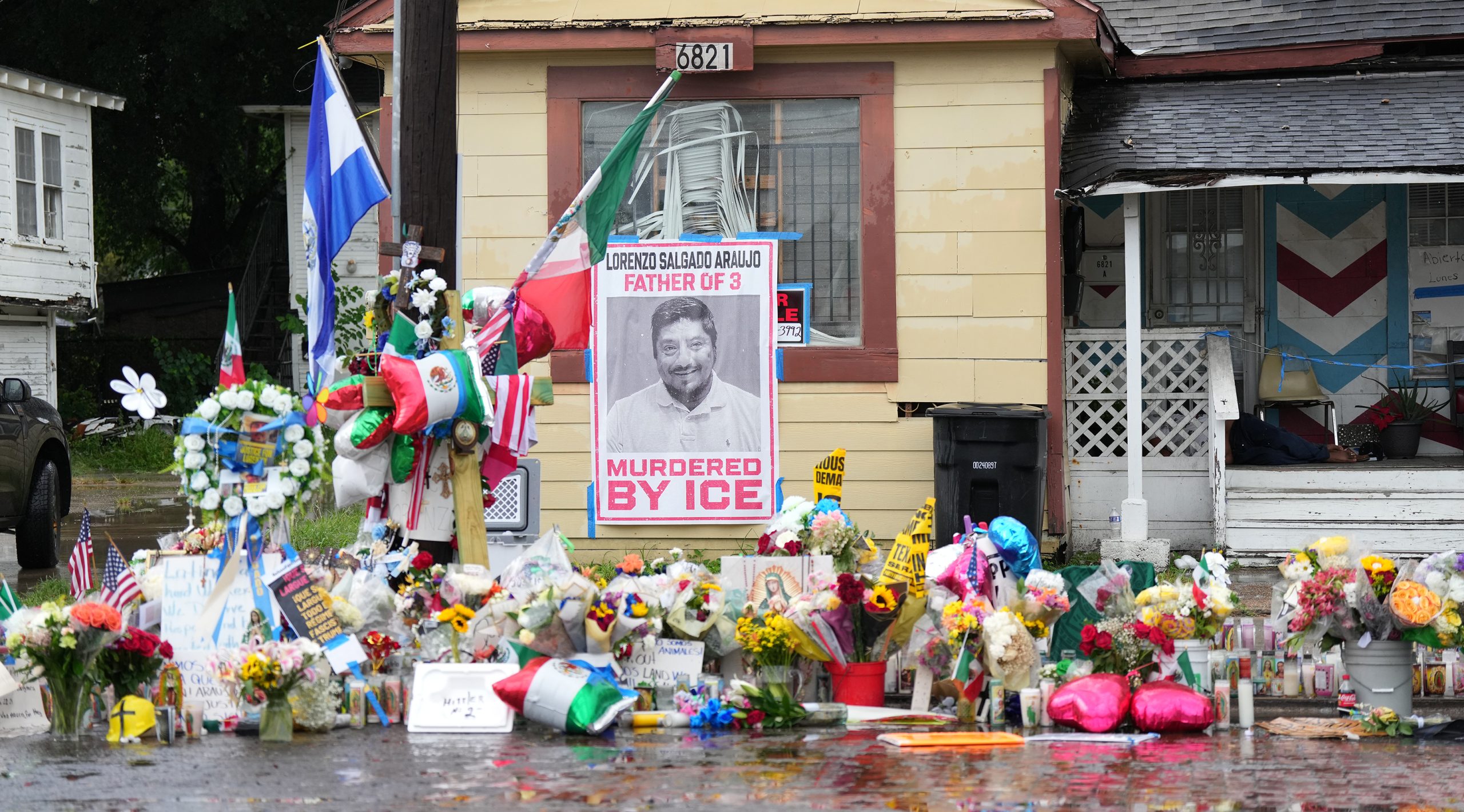
A memorial at the site where Lorenzo Salgado Araujo was fatally shot by ICE agents in Houston last month is seen July 13.Karen Warren
Then there’s the biggest — and most abstract — ring of all. It’s difficult to agree on an exact count, let alone bring accountability, for what researchers say is a wave of death — 600,000 people, mostly children, according to one Boston University study — that has resulted from the decimation of the U.S. Agency for International Development (USAID). And what will become of the domestic surge of preventable diseases such as measles under a government whose top health official is a notorious critic of vaccines? At what point does bad policy become depraved indifference?
Death is contagious. In Ecuador, prosecutor Alexandra Bravo was investigating the U.S. drone strikes that destroyed three of her homeland’s fishing boats when a gunman on a motorcycle assassinated her and her sister. There’s no evidence that the United States has any direct responsibility for her death, but there’s every reason to believe she’d still be alive if this Trumpian death cult had not destabilized the planet.
The MAGA movement thrives on a brand of white supremacy that pumps up its adherents by dehumanizing everyone around them. And when people are stripped of their humanity, the Ten Commandments seem to no longer apply to their tormentors. It’s hard to reach Trump’s promised goal of one million deportations every year unless the deportees are just a number — not a mom, or a dad, or a cherished neighbor.
A bad president can be replaced every four years. A killing spree screams out for immediate action. We need to take whatever steps are possible right now to stop this rogue government before tomorrow’s headline about the next Nixon Giovanni Pérez Paz or Daphy Michel.
The stench of death has already become unbearable.
When I heard that roughly 6,600 people who were not American citizens were registered to vote in New Jersey ahead of the 2024 election because of a software glitch, I felt a familiar sense of dread.
It wasn’t just because having ineligible voters on the rolls is concerning and never should have happened. It’s because despite what President Donald Trump would have you believe — with his unfounded claims of mass voter fraud — there is absolutely no evidence that these kinds of irregularities are the result of any organized effort to influence our election results.
For Trump, this was not a coding error. It was evidence that America’s elections have been corrupted and the only way forward is to pass the SAVE America Act, a measure that would make it more difficult for many people to vote and which would represent the biggest ever federal intrusion into state control over elections.
“These are just the ones that got caught,” the president wrote — again, without any evidence — in a social media post urging passage of the measure. “The real numbers will prove to be many times this amount.”
That kind of rhetoric is the exact opposite of what our electoral system needs. Election fraud, administrative mistakes, and other voting irregularities deserve careful investigation, not fearmongering. I know this firsthand.
Before joining The Inquirer, I worked at the Philadelphia City Commissioners where I investigated and identified real examples of voter fraud.
What I saw when I worked in the system — and what my reporting has shown in the years since I’ve left it — is that electoral fraud is exceedingly rare; that the public officials I worked with didn’t hide or ignore any problems; and that when mistakes are made, they are found, fixed, and handled transparently.
That last is exactly what New Jersey Gov. Mikie Sherrill did on July 21 when she explained that because of an error at the state’s Motor Vehicle Commission, a computer system erroneously registered people who were not eligible. Officials said that the 400 or so people from that pool who voted lived throughout the state, were registered in both political parties, and there was no evidence that any election results were swayed by their participation.
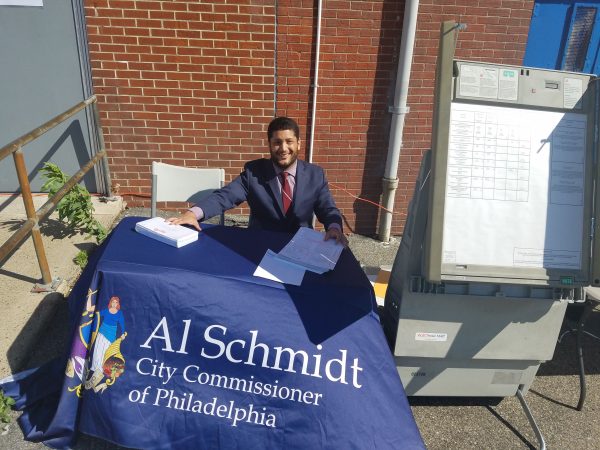
Daniel Pearson and then-City Commissioner Al Schmidt in 2015.Courtesy of Daniel Pearson
For those who diligently follow election administration news here in Philadelphia, this story might have felt like a distant echo. That’s because nine years ago, something similar occurred here.
In 2017, Al Schmidt, who now leads voting statewide, was a Republican city commissioner in charge of voting in Philadelphia when he announced that an investigation had uncovered 220 people who were not American citizens on the city’s voting rolls.
As with the situation recently in New Jersey, the source of the problems back then was also traced to a computer glitch connected to the driver’s license process. Even though they were ineligible, the system still asked the affected people whether they wanted to register to vote.
Schmidt publicly stated what had happened without inflaming the situation, and pledged to protect people whose immigration status was now threatened by mistakes made by others. (He went as far as attending immigration hearings on behalf of some of those affected.)
That style of leadership — clear, non-alarmist, focused on solutions — mirrors what Sherrill is doing in New Jersey now.
It’s also worth noting that the Garden State is hardly alone in owning up to its errors. Earlier this year, Republican Auditor General Tim DeFoor released an audit of Pennsylvania’s system. Out of the 210,000 records his office examined, just one included an ineligible voter — a lapse blamed on human error, rather than any broader issue.
In Pennsylvania, the system worked. A mistake was found, identified, and corrected. Sherrill seems on the path to doing the same.
Unfortunately, the president wants to try to use New Jersey’s stumble for his own political gain — a cynical approach that makes it harder to be taken seriously when actual irregularities and malfeasance are discovered.
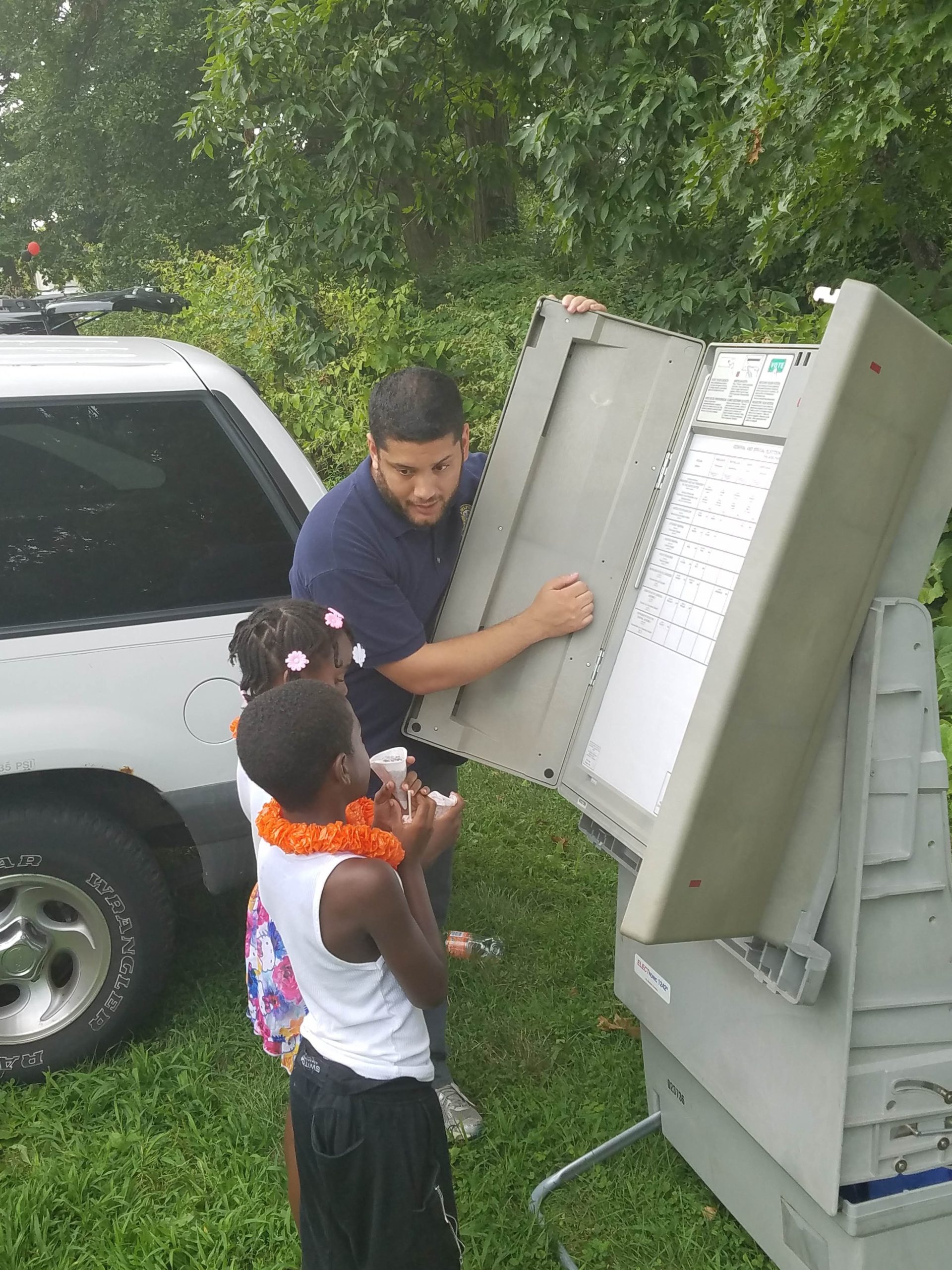
Daniel Pearson explains how a voting machine works as part of a voter information event at Fisher Park in 2016.Courtesy of Daniel Pearson
Disorganized crime
After he was released from federal prison in 1985, convicted over bribery charges stemming from the Abscam investigation, former U.S. Rep. Michael “Ozzie” Myers became a political consultant and adviser. Over the years, business began to flag, so Myers and his allies came up with a scheme in the mid-2010s.
Once the polls closed, poll workers would go into the booth and vote again, and again and again and again. Typically, these votes were for candidates running for positions at the very end of the ballot, like judges.
Schmidt became my boss in 2014 when I joined the City Commissioners Office. Initially, my job was preparing street lists (names and addresses of registered electors) and voter files for campaigns. I attended community events and meetings on behalf of the office, and compiled data and information for voter guides.
In retrospect, it would have been impossible to predict just how much interest people would soon have in elections. Back then, I could barely give away the guides.
In time, I began helping with investigations into voting irregularities. When my colleagues and I started investigating the source of the overvotes, it pointed to one man, Dom DeMuro, a South Philadelphia poll worker.
We compiled the evidence and referred the case to law enforcement. The FBI confronted DeMuro, who turned on Myers. Eventually, Myers, DeMuro, and another poll worker pleaded guilty to federal charges.
Found, identified, and corrected.
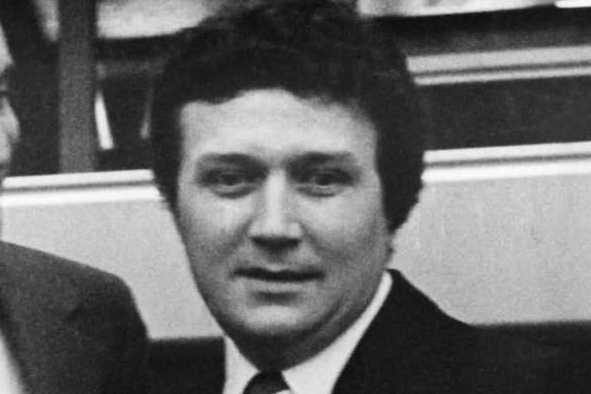
Michael “Ozzie” Myers in 1976.MICHAEL MERCANTI / Staff file photo
Small-time ruses like Myers’ are the face of “organized” voter fraud in this country, a few people trying to make an easy buck. There’s absolutely nothing in the SAVE America Act that could have stopped them.
Looking back, I shudder to think of what 2020 may have been like without the groundwork Schmidt laid over a decade. How Philadelphia could have melted under the spotlight as Trump hurled accusations of fraud and the eyes of the world turned to vote counters inside the Pennsylvania Convention Center.
For me, it was an unforgettable lesson in the grind that goes into making democracy work and also how difficult — and how rewarding — making positive change really is.
To ensure election security and that voting remains easy and accessible, our country needs more leaders like Schmidt and Sherrill — and fewer bomb throwers.
We don’t need any more false data points and baseless conspiracy theories. And we certainly don’t need the SAVE America Act, which would only increase the burden on ordinary voters — and wouldn’t fix a thing.
This week, a couple of big names leave City Hall, Philadelphia’s Vision Zero struggles, SEPTA’s biggest woe, and LeBron James comes to town.
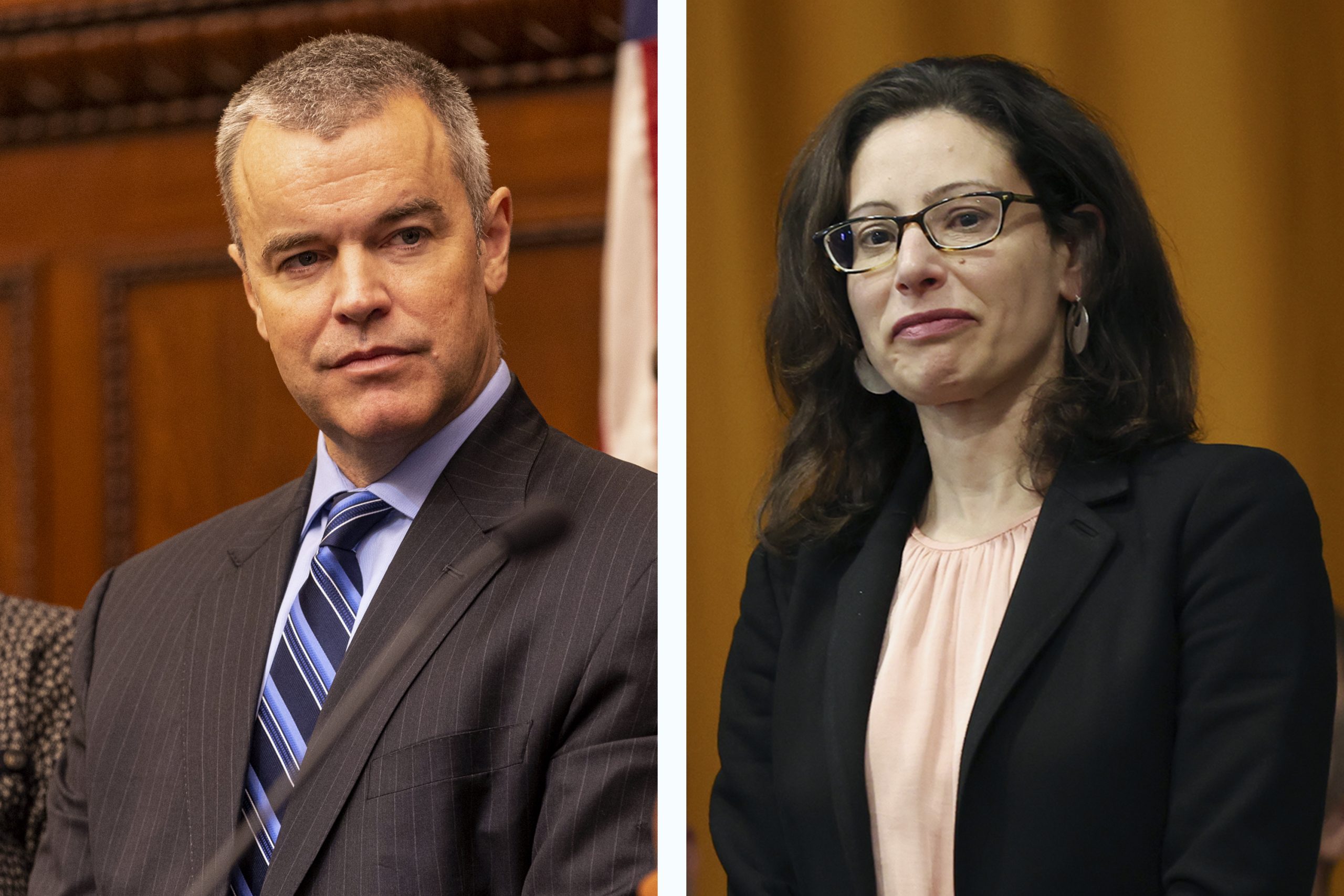
Managing Director Adam Thiel and City Solicitor Renee Garcia are leaving.Tyger Williams/Heather Khalifa
Topline turnover
Philadelphia Mayor Cherelle L. Parker has experienced some turnover during her first term, but this week saw the biggest personnel changes yet. Managing Director Adam Thiel and City Solicitor Renee Garcia are both leaving city government. They’ll be replaced by Carlton Williams and Monique Galloway.
While Thiel hasn’t answered questions about his departure, it also isn’t very surprising.
As Inquirer reporters have thoroughly documented, Thiel’s attention has been pulled in multiple directions. In addition to his job with the city, he also serves in the Army Reserve and works as a consultant. In fact, he made more money working outside of city government than he did in it.
Thiel always claimed that his extra jobs did not create a conflict with city work, but this was harder to believe as time went on. He missed five months of work last year because of his Army duties alone. His absence during events like the month of snowcrete was conspicuous. Indeed, it was Williams who seemed to step into the role of coordinator.
Garcia’s departure is a little more surprising, especially given her central role in defending the administration’s toughest calls.
When Parker endorsed the proposed and then canceled Sixers arena on Market Street, Garcia spent hours testifying about the deal at City Council. It also fell to Garcia to defend Parker’s cautious approach to the Trump administration, including the choice to allow some of Council’s “ICE Out” agenda to become law without the mayor’s signature. She’s absorbed a lot of political arrows on Parker’s behalf.
A sign of how important these roles are to Parker’s success? Both were replaced immediately. Meanwhile, the city still lacks a permanent commerce director over a year after Alba Martinez left the role.
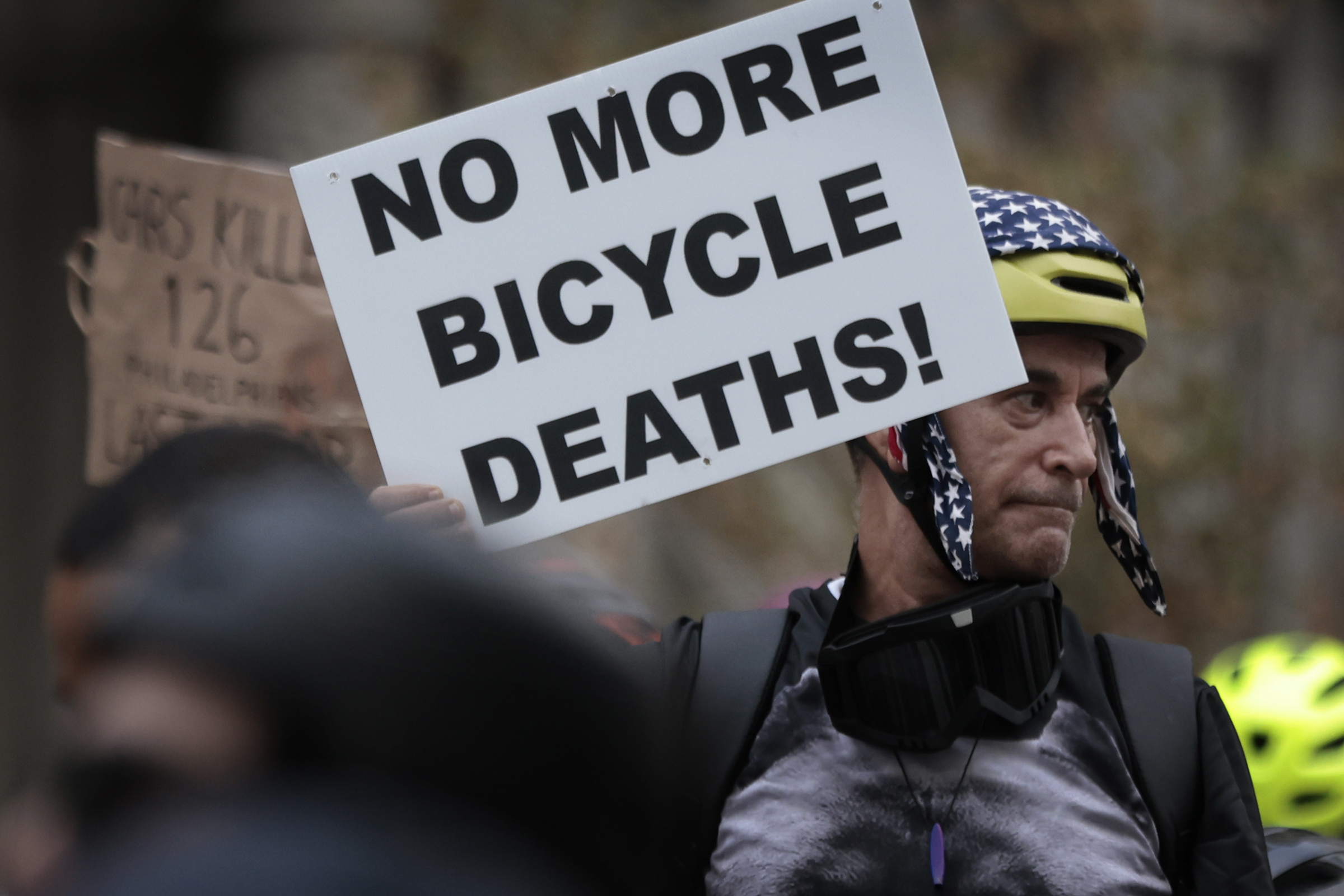
Robert Tomas of Philadelphia was part of a group that biked from the Art Museum to City Hall to protest what they see as a lack of commitment to traffic safety from the mayor in 2024.Elizabeth Robertson / Staff Photographer
Blurred vision
Philadelphia’s roadways remain overly dangerous. In fact, according to a report compiled by City Controller Christy Brady, the city’s fatalities outpace our peers.
Our traffic fatality rate of 9.04 deaths per 100,000 residents is triple New York’s 2.86 and roughly double Washington’s 4.73. The next closest city, Chicago, came in at 7.15. This means that Philadelphia’s streets are significantly more dangerous than comparable communities.
To be clear, City Hall is trying to bring these numbers down. Alongside the Philadelphia Parking Authority, city officials have blanketed the roads with speed cameras, which have successfully reduced crashes and fatalities along corridors like Roosevelt Boulevard.
The city is also working to lower speed limits. While 25 mph may feel slow behind the wheel of a car, research quantifies just how much danger pedestrians face because of a vehicle’s speed. At 20 mph, pedestrians have a 10% chance of death and a 25% chance of serious injury. At 30 mph, this jumps up to a roughly 25% chance of death and a 50% chance of severe injury. At 40 mph-plus, there’s a 50% chance of death, and severe injury is nearly a guarantee.
This explains why speed limits on roads like Broad Street are set to 25 mph. Given the cameras only give out tickets once a driver is 11 mph over, setting them higher would leave pedestrians exposed to dangerous conditions.
It is easy for opponents of speed cameras, street redesigns, or concrete protections for cyclists to complain about the supposedly all-powerful and nefarious “bike lobby,” but the data are quite clear. Philadelphia needs to do much more to protect its most vulnerable road users.
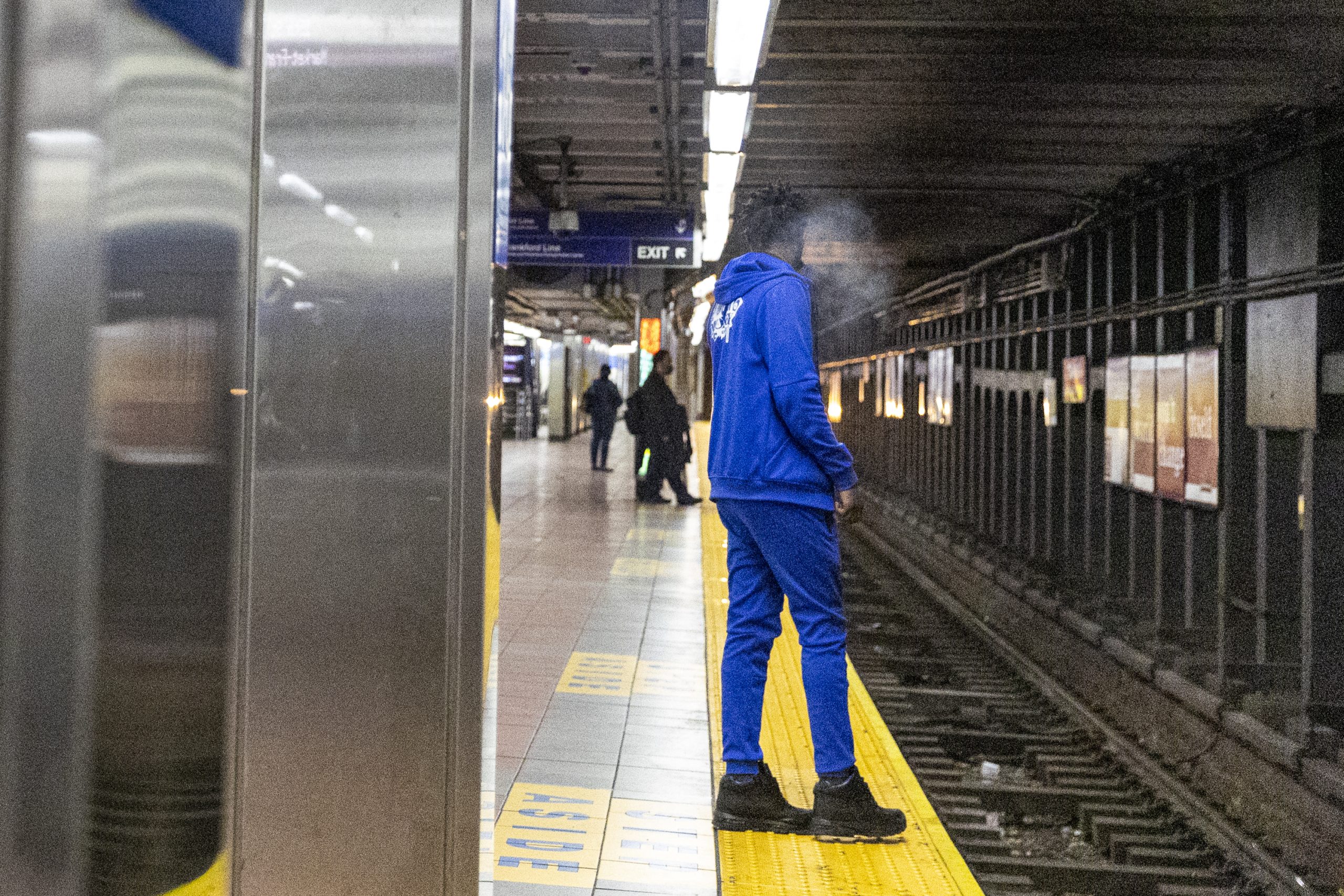
A person smoking at the inside one of the SEPTA stops in Philadelphia.Tyger Williams / Staff Photographer
Up in smoke
After yet another year without a funding deal from Harrisburg, mass transit advocates and their supporters decided to raise awareness by embarking on a 24-hour public transportation marathon. They were joined, at least for part of the journey, by a plethora of elected officials.
Raising awareness is important because SEPTA won’t survive without sustainable funding from the General Assembly. Still, a trip down to Washington this week reminded me of a problem that can’t be blamed on Harrisburg: the behavior of some of SEPTA’s riders.
To be clear, the Washington Metropolitan Area Transit Authority system struggles with behavioral issues as well. Fare evasion, especially on bus routes, is out of control. Smoking on the metro, however, seems to be far less common.
On SEPTA, however, it is ubiquitous.
More than one person I’ve confronted over it has claimed, “I didn’t know you weren’t allowed to smoke down here.”
It would be unfair to compound the frustration of riders who already deal with this phenomenon by failing to fund adequate service. At the same time, the constant smell of cigarettes and marijuana must be addressed. Even if SEPTA secures sustainable funding in next year’s budget, it won’t fulfill its potential until quality of ridership issues like smoking have been addressed.
There’s no question in my mind that this behavior keeps people from riding the system. Beyond the discomfort of secondhand smoke, it also sends a message that the stations and vehicles are out of control. This makes them feel dangerous, even if SEPTA has posted record declines in serious crime.
Every rider who doesn’t take the subway because of the dive bar atmosphere costs the system money. Some people have even resorted to taking buses, which are slower (and are more expensive for SEPTA to operate), just to avoid showing up at work smelling like a music festival.
I’ve spent plenty of time in bars that allow smoking and I support the legalization of recreational marijuana. But it is one thing to engage in these behaviors in your own home or at a place of business where it is welcomed. It should never happen on public transit.
Everyone’s excited about the King coming to town.Courtesy of Giphy.com
The King’s landing
When Philadelphia was first mooted as a potential landing spot for LeBron James’ swan song, I was a bit skeptical. After all, how often do good things happen for the Sixers?
That changed when I heard about a conversation between Gov. Josh Shapiro and the Akron, Ohio native. It isn’t that Shapiro has superpowers when it comes to persuasion. In fact, my guess was that LeBron was most of the way toward choosing Philadelphia when that interaction happened. If the discussion hadn’t gone well, I doubt Shapiro would have ever mentioned it.
After all, if Shapiro had publicly lobbied LeBron, only for the legend to land elsewhere, he’d have looked inept and desperate. Now, he looks savvy.
Although there are reports that James may live in New York City while playing for the Sixers, his decision to take his talents to South Philadelphia is another corrective to the old and tired narratives about our city.
Like a lot of Philadelphians, I can’t wait for the Xfinity Mobile Arena to become the court of King James.
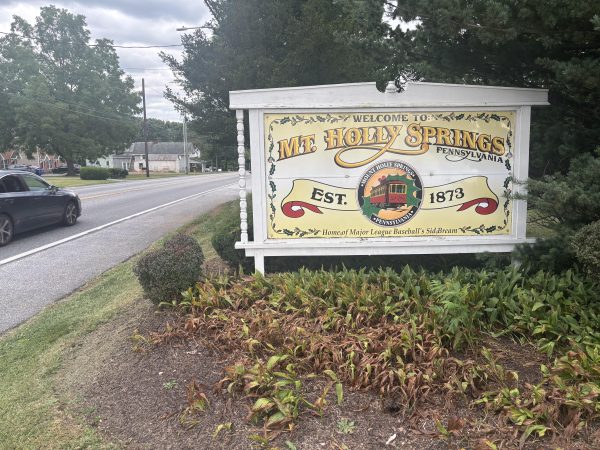
MOUNT HOLLY SPRINGS, Pa. — Still hailed for its trout fishing, this bucolic Central Pennsylvania borough in the shadow of South Mountain was a big draw for tourists at the turn of the 20th century who flocked here to cool off in its mineral-spring waters.
In 2026, this tiny municipality about 25 miles southwest of Harrisburg is developing a much less welcoming reputation. The new notoriety began with an agreement between borough police and U.S. Immigration and Customs Enforcement that has turned Mount Holly Springs into a kind of “speed trap” for unsuspecting immigrants — one with life-altering consequences.
What had been a simmering small-town controversy since the start of the year boiled over into an international incident on July 15 when a prominent Chinese dissident and U.S. asylum seeker named Wu Shaoping was pulled over by a borough officer who claimed Wu had blown through a stop sign. The Amazon delivery driver was then taken into custody by ICE agents who had been running an operation just down the road.
But the outcry over the arrest and detention of Wu — taken to ICE’s Moshannon Valley Processing Center and crammed into a room with 60 other detainees for 10 days before winning his release on bail — also exposed an even darker story.
In March, Mount Holly Springs became the only municipality in Cumberland County and one of a handful across Pennsylvania to execute a formal cooperation agreement with ICE under a controversial program known as 287(g). The program gives local cops expanded powers to arrest suspected undocumented immigrants, while offering training and financial incentives in return.
In just four months, the borough’s four police officers have pulled over and checked the status of dozens of motorists — mainly commercial truck drivers — and turned over 32 arrestees to ICE, the Mount Holly Springs Police Chief Tom Day told me on Wednesday.
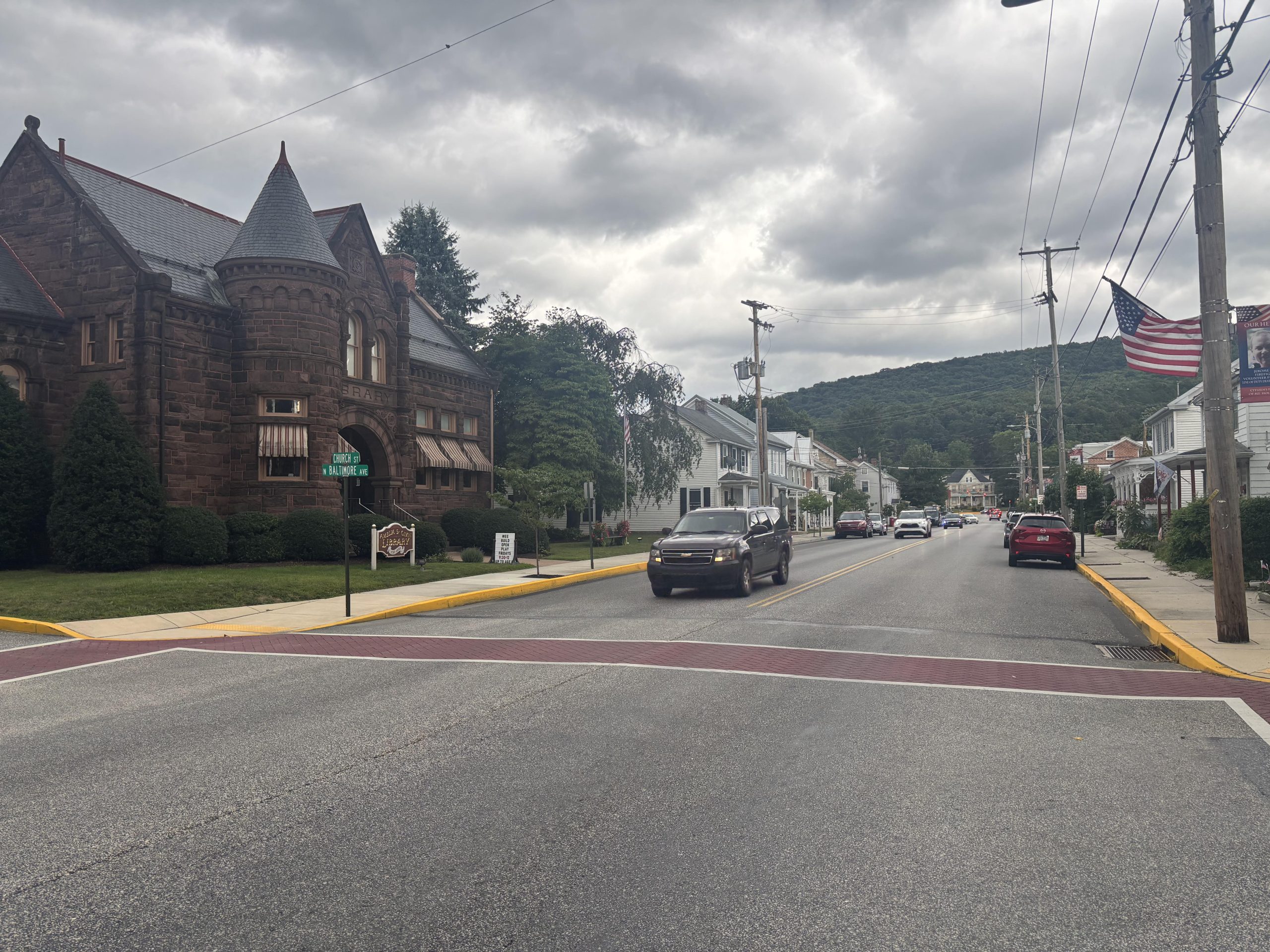
The main drag in Mount Holly Springs, a small borough in Cumberland County, Pa., on Wednesday. The community has seen controversy over local police cooperation with federal immigration authorities.Will Bunch
Day, a gruff ex-Marine in a Nittany Lions cap and blue jeans who doubles as borough manager, insisted to me that the traffic stops and ICE cooperation have nothing to do with racial profiling and everything to do with road safety in a borough with aging bridges and narrow streets.
“There’s no racial profiling of or ethnic profiling of drivers,” the police chief maintained. “We have no clue until we step up on the side of that truck who we’re even dealing with.” Day also said “it’s not that we don’t have a heart” — that he believes in the American dream and understands why refugees want to come here, but when immigrants show up without permission “actions have consequences, you know.”
Minutes later, I met with a gaggle of local residents and business owners who told a very different story — that the wave of immigrant arrests has created a climate of fear that permeates Mount Holly Springs. The growing uproar has riven their once-placid borough into a distrustful cauldron of angry Facebook comments, muttered asides, and occasional threats — a kind of modern civil war just 25 miles north of Gettysburg.
“What I’m hearing from my customers, our people are afraid,” saidRachel Bear, the co-owner of a popular local boutique. “Immigrants are afraid. It’s out there.” She said she’s decided to speak out against the borough’s relationship with ICE because some neighbors are intimidated. “I think they’re just scared.”
Andrew Dapkins, the owner of The “Bird Guy” Tours of local wildlife, told me he’s stopped bringing his excursions into Mount Holly Springs since the deal with ICE was signed. “If I was to bring someone of color, or they were not heterosexual male, I would feel like I was bringing them into a potential hostile environment,” he explained. “So I can’t do that.”
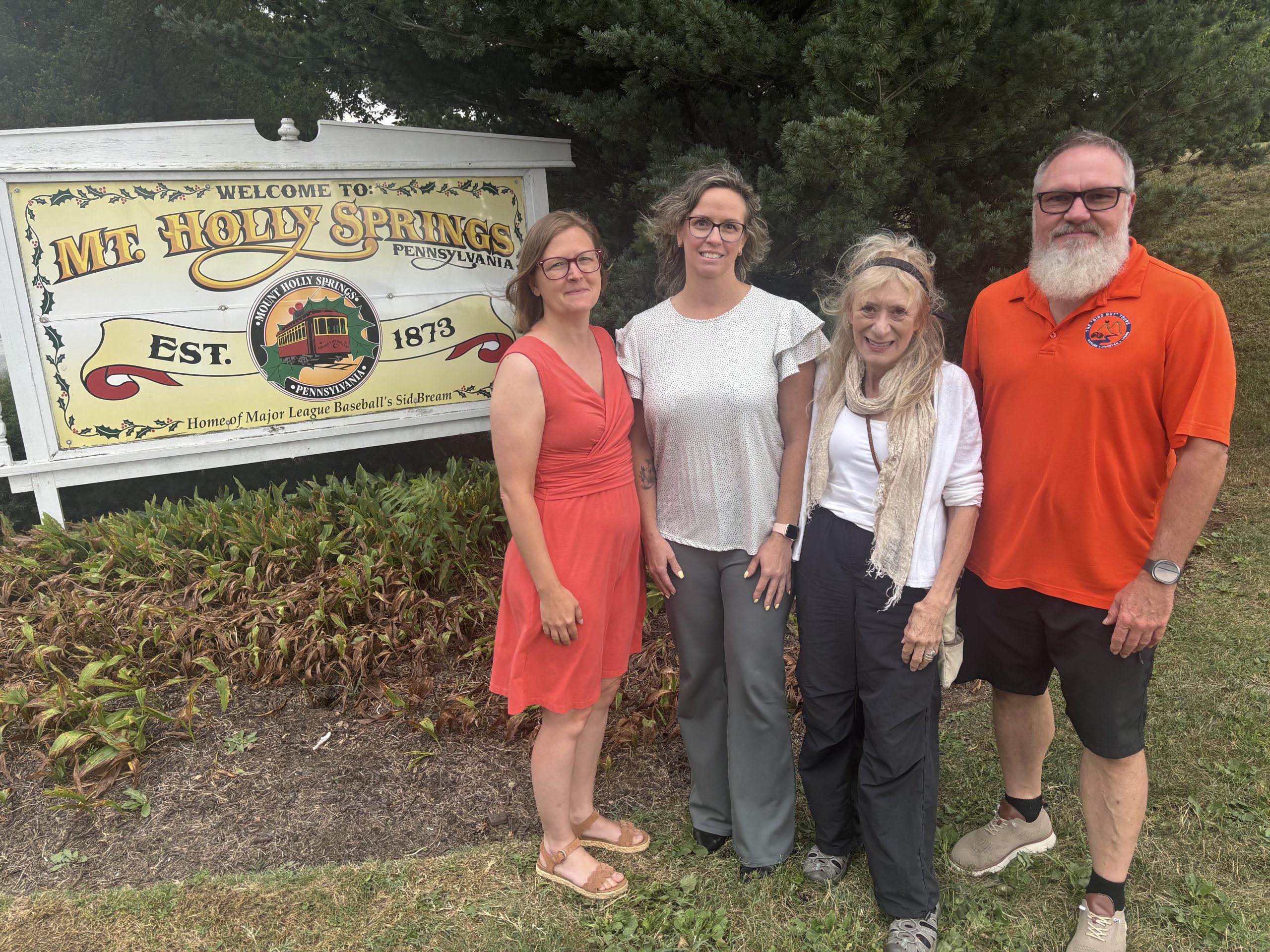
Some local residents who oppose Mount Holly Springs’ police federal immigration arrests include (left to right) Democratic legislative candidate Jessica St. Clair, precinct leader Mandy Taylor, borough council member Pamela Still, and business owner Andrew Dapkin.Will Bunch
What’s happened in Mount Holly Springs since the ICE program began this winter feels in many ways like a microcosm of Donald Trump’s America. It’s the rage, distrust, and paranoia that only metastasizes as the demagogue’s fiery campaign tirades get translated into harsh reality at a small-town stop sign.
But it’s also exactly the chaos that some immigration policy experts warned about when the Trump regime dramatically expanded the 287(g) program, named for a section of 1996 federal immigration law that grants broader immigration enforcement powers to trained state or local police.
Despite warnings about the potential for racial profiling and seeding distrust in immigrant communities, the number of 287(g) agreements has exploded from a few dozen when Trump first became president in 2017 to more than 2,000 today, with at least 88 on the books now across Pennsylvania.
Still, the immigration arrest total in tiny Mount Holly Springs, which covers just 1.4 square miles and has a population of fewer than 2,500 residents, seems staggering. As recently as February, there were only 67 monthly immigration arrests by local police across the entire state. But now this one borough is on a pace for nearly 100 arrests in just one year.
“This is an agenda that’s being driven by numbers for numbers’ sake,” Nayna Gupta, policy director at the American Immigration Council, told me Thursday. “There is an arrest quota that the White House is pushing, and they’re leaning on local police departments to do that work for them” — even as that work paralyzes local immigrants when they learn of increased traffic stops.
“Communities become afraid to go to the grocery store, to go to work every day, to use public transit, even,” Gupta said.
There have been festering recriminations in Mount Holly Springs since January, when residents first learned that Day — seen as a local power broker because of his dual role and his close allies on borough council — had signed the paperwork with ICE to become a 287(g) department. A handful of angry residents denounced the plan — revealed at the same time as two ICE-related killings in Minneapolis sparked national outrage. But the lone Democrat on the seven-member board, Pamela Still, failed to get a second on her push to rescind the deal.
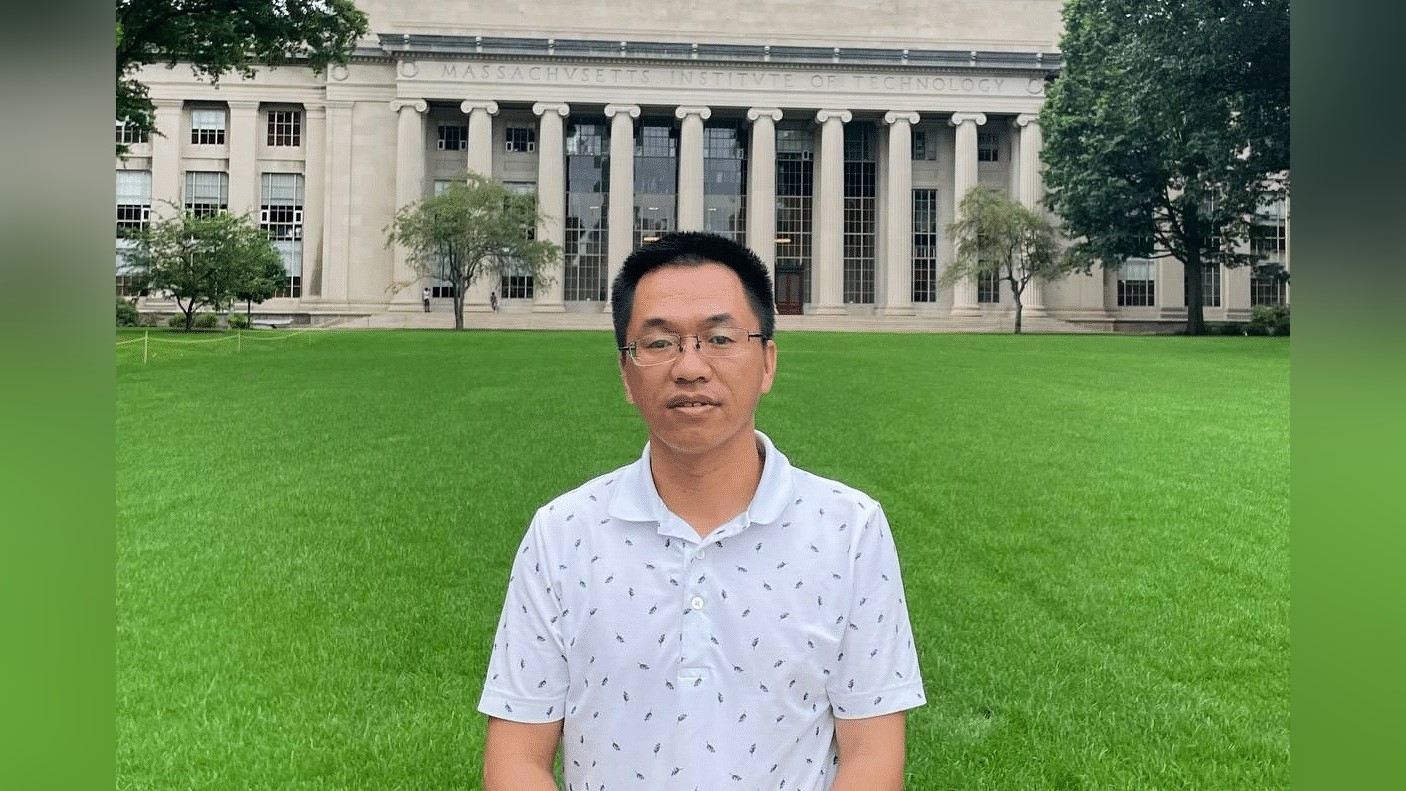
Human rights attorney Wu Shaoping, on the campus of the Massachusetts Institute of Technology in Cambridge, Mass., in an undated photo, was arrested on July 15 and taken into custody by U.S. Immigration and Customs Enforcement.Handout art
Trump received just over 62% of the vote in Mount Holly Springs in the 2024 election, although local residents said there are now growing numbers of Latinos and refugees from Nepal who’ve flocked to Central Pennsylvania living in the borough that census data had reported as more than 95% white.
There is clearly considerable local support — often voiced in angry Facebook comments about “illegals” — for Day and his department’s work with ICE. “You guys are doing the right thing; don’t listen to the childless cat ladies,” borough resident Derek Scheuren told a contentious council meeting in February, as reported by PennLive. He also called undocumented truck drivers “illegal invaders” and offered to buy a beer for any officer responsible for detaining one.
That would be nearly a half-dozen six-packs, based on Day’s updated tally. We don’t know if Scheuren has made good on that, but then there’s a lot that local officials and residents don’t know. There’s been little to no information about the multiple arrests since March, and while ICE is bringing the detainees about two hours north to Moshannon Valley, next to nothing is known about their fates.
Locals like council critic Still have also pressed for answers on the carrot of federal dollars that state and local supporters of these 287(g) programs cite as a key benefit. Day only volunteered to me that in addition to federal training of all four borough officers, he has so far put in for just $1,100 in reimbursement for officers’ time on 287(g) stops. But in an email he also sent to local leaders Wednesday, which was shared with me, Day further acknowledged that Mount Holly Springs has received some $130,000 for vehicles and equipment.
The July 15 arrest of Wu, which drew the attention of the New York Times, the Guardian, and other outlets, has so far brought more questions than answers about what’s really happening with immigration arrests in Mount Holly Springs.
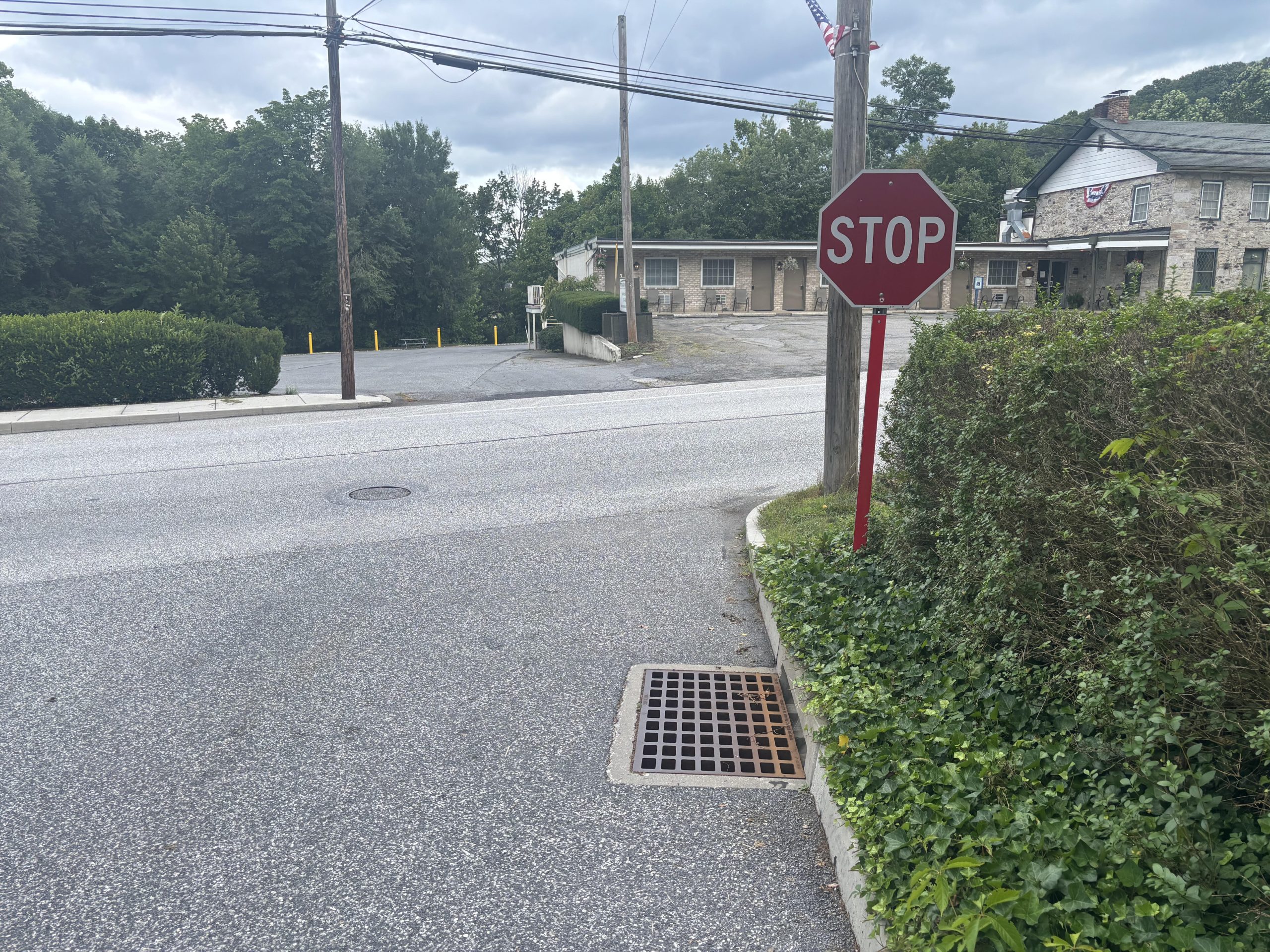
The stop sign at Hill Street and State Route 34 in Mount Holly Springs, Pa., where Chinese dissident and asylum seeker Wu Shaoping was stopped by a local police officer on July 15. Wu’s arrest sparked controversy over the borough’s relationship with federal immigration.Will Bunch
Day insists that Wu, making Amazon deliveries in his Toyota Camry, ran the stop sign at the bottom of steep Hill Street and nearly collided with his officer who happened to be patrolling the main drag, State Route34. The chief said Wu exacerbated the situation by refusing to roll down the window and instead calling his lawyer — causing a commotion that attracted attention from ICE agents who happened to be in Mount Holly Springs doing truck inspections almost right across the street.
Wu disputed that account to Lancaster Online, insisting that he did stop at the intersection, then rolled a bit forward because of its poor visibility. ICE later said Wu was sent to Moshannon Valley because he’s overstayed his 2020 tourist visa, even though he has an active asylum application and a work permit. He was released on bail after two members of Congress formally complained about his detention.
Still, Wu’s arrest — along with the high number of other detentions in Mount Holly Springs — has only fueled suspicion among the program’s critics that cops are racially profiling drivers. Day has repeatedly insisted in past comments and in the Wednesday interview that undocumented truck drivers who can’t read English and don’t follow signs about restricted streets and bridges are a danger to the community.
“I don’t want to sound mean over it, you know, or that I’m not sympathetic,” Day told me. “But they can’t be driving 18,000-pound vehicles and not understand our roadway signs.”
But local critics say cops working so closely with ICE isn’t making Mount Holly Springs safer — not when immigrants are afraid to shop, landscaping crews that largely employ Latinos have seemed to vanish, and a quaint rural town that seeks outside tourists for trout fishing or bird watching starts getting a bad reputation.
“A lot of times, it is this overweight thing — going over the bridge on the Pine Street extension or something is what they get pulled over for, and you know it’s like don’t ruin somebody’s life because their truck was packed or because their GPS didn’t tell them,” said longtime local resident Jen Dieter.
The arrest surge in Mount Holly Springs seems to confirm the fears of immigration experts who’ve found in earlier iterations of the program that immigrants were less likely to call 911 for emergencies or report other crimes. Critics also believe that cops will ignore their public-safety duties to focus instead on immigration arrests, especially as the carrot of federal dollars is dangled before small departments.
“There’s plenty of evidence and data to show that 287(g) agreements undermine trust in the communities where these agreements exist and are used extensively, because the community becomes less likely to report crimes, or to report instances of domestic violence, out of fear that doing so could translate to detention and deportation,” Gupta said.
Experts also say what’s happening in Mount Holly Springs may be the future of mass deportation under the Trump regime. While high-profile, publicity-seeking operations like the ones that targeted Minnesota or Chicago are out, ICE is increasingly relying on its 287(g) partners to make arrests without attracting as much public outcry. The wave of arrests in the Pennsylvania borough came as ICE is nationally reporting as many as 1,400 immigration arrests in a day, an all-time record.
Some longtime residents of Mount Holly Springs are worried that things will never be the same.
Bear, the shop owner, spoke about moving here 25 years ago and slowly building a community around her business. “This is a small community,” she said. “We all know each other. You know these people that we’re talking about, [that] I’ve done business with. You know, hopefully we’ll do it again. But who knows?”
“But more than it being about business, it’s about community. And I think this isn’t how I would treat my neighbors.”
Say what you want about Tuskegee University’s new ban on hair bonnets, bedroom slippers, and do-rags in classrooms and the dining hall. But the historically Black college’s iconic first president, Booker T. Washington, would be all for it.
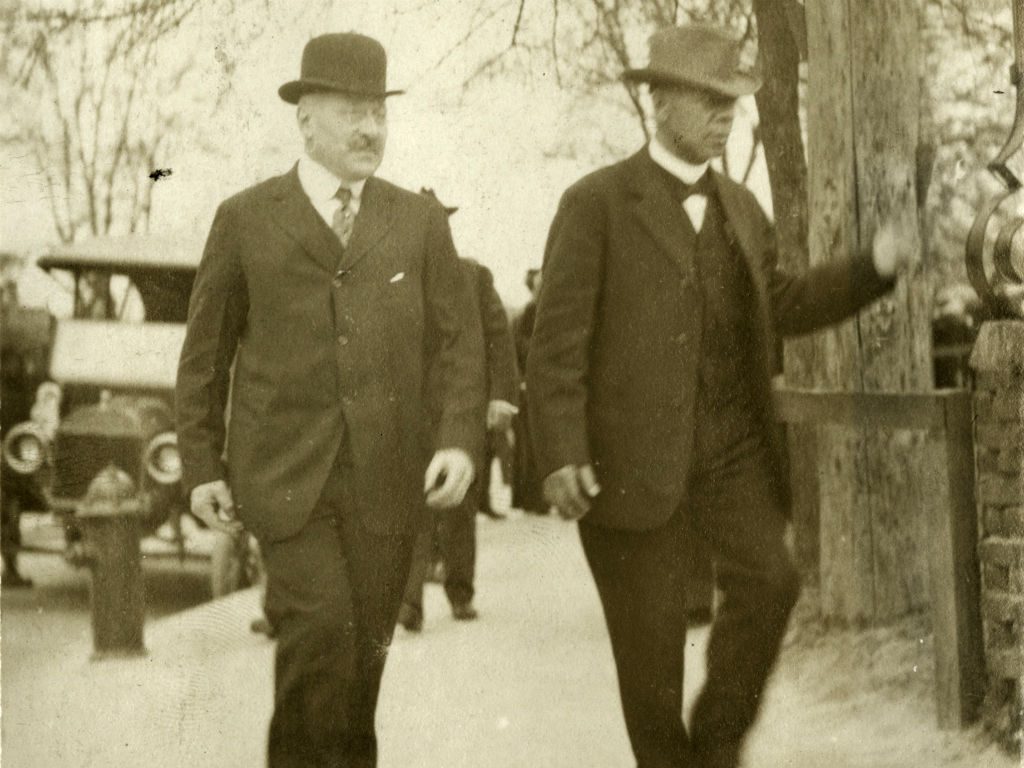
Born into slavery and educated at what is now Hampton University, Washington was nothing if not pragmatic. He was hired as the first principal at the school in central Alabama in 1881. Given the economic subordination of African Americans inthe post-Reconstruction era, he believed that Black people needed to do whatever they could to survive.
Sears founder Julius Rosenwald (left) with Booker T. Washington at the Tuskegee Institute in 1915. The Institute became Tuskegee University in 1985.
Students dressed in uniforms and learned skillssuch as shoemaking, dressmaking, carpentry, and other practical trades. The renowned educator recalled in his autobiography Up From Slavery that ”when the students march out of chapel in the evening and their dress is inspected, as it is every night, not one button is to be found missing.”
Newly emancipated Black Americans had few rights and were often forced to work as sharecroppers. Critics might not think of Washington as having been woke, as they say, but he was convinced that, “No white American ever thinks that any other race is wholly civilized until he wears the white man’s clothes, eats the white man’s food, speaks the white man’s language, and professes the white man’s religion.”
Fast forward to today where at Washington’s beloved HBCU in rural Alabama so much has changed but other things haven’t.
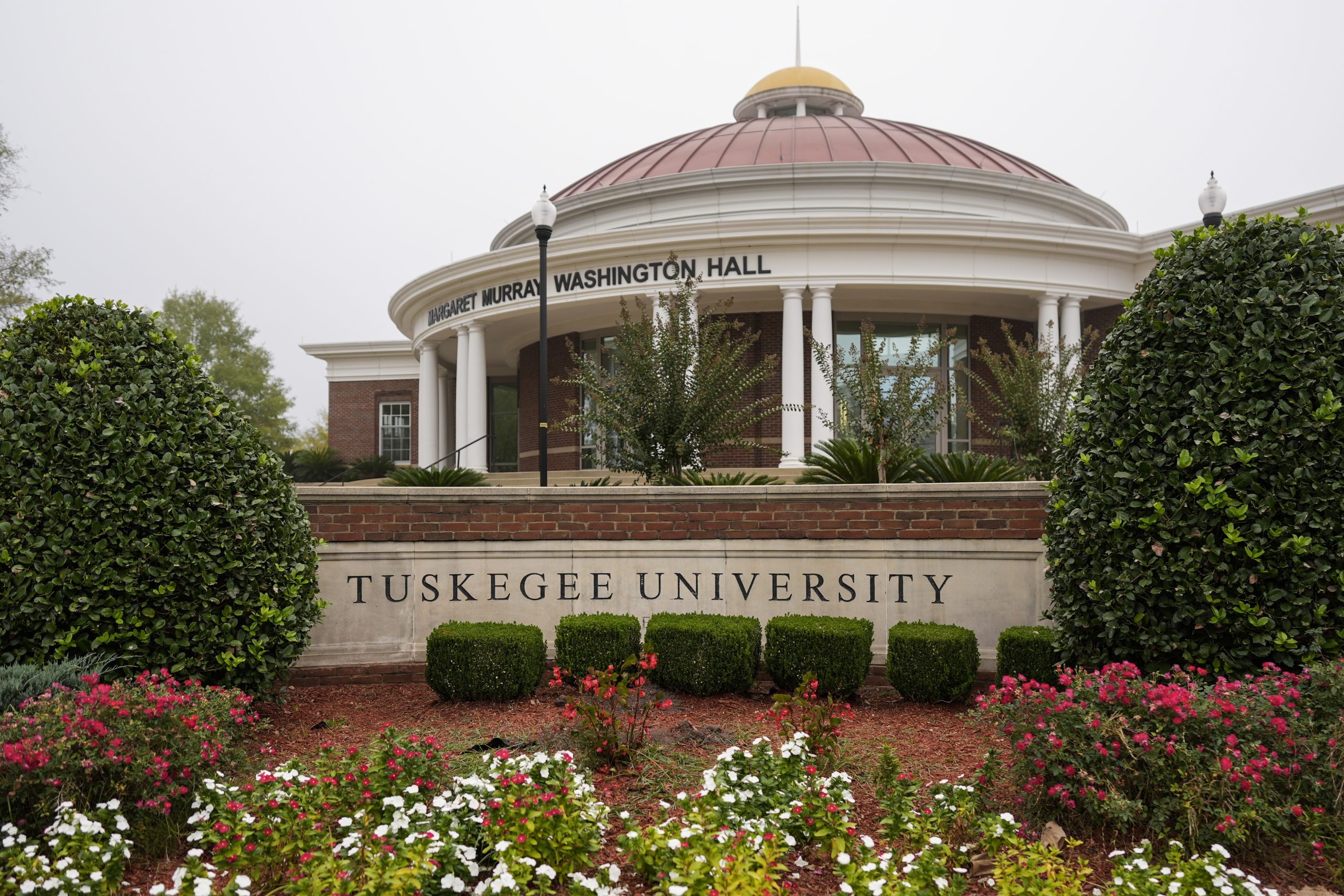
The entrance to Tuskegee University in Tuskegee, Ala., in a photo from 2024.Mike Stewart
Mark A. Brown, Tuskegee’s current president, recently addressed the issue of proper attire on the school’s sprawling 5,000-acre campus. In a letter to students Brown wrote that the goal is to prepare them for the workforce, adding, “Employers are less forgiving and too often presentation may overrule stellar preparation.”
Many take exception to the ban on hair bonnets and do-rags, which customarily are worn to protect Black hairstyles while people sleep. In recent years, it has become much more common for people to also wear them on airplanes, at the mall, and in classrooms.
As for me, I’m old school when it comes to this sort of thing. I don’t wear hair bonnets outside. I hate to admit it, but I low-key judge others when they do. So, even though it smacks of respectability politics — which refers to the adjustments people make to fit in with mainstream culture to shield themselves from racism — I am not mad at Tuskegee’s new dress code.
It’s about having standards and encouraging young adults to take pride in their appearance. During my days at Howard University, we tried to look as good as we could whenever we stepped onto The Yard. It’s part of the HBCU mystique. Whenever I see old photos of my parents at their alma mater, North Carolina Central University, they were dressed in what today we’d consider business casual clothes — slacks, pencil skirts, collared shirts.
Ever since the news broke about Tuskegee’s new policy, commenters have been buzzing on social media about the topic. Many see their ability to wear what they want — when they want and absolutely wherever they want — as an issue of personal freedom.
“I can guarantee you that none of these people are walking into meetings and boardrooms in their do-rags and hair bonnets,” pointed out Danyl Patterson, an attorney from West Philly. “This is no different from code-switching. We know when and how to do it.”
She brought up the issue of comfort. “When you’re a student, you drag yourself,” Patterson recalled. “You might be tired and you’re telling me this is the only food I have access to and I need to get fully dressed to go get cereal?”
She presents a great argument.
But I still cringe at the idea of people showing up for class in what I consider nightwear. It’s not too much to require college students to present themselves a little better. Tuskegee students also are now prohibited from wearing revealing clothing to class, the cafeteria, and convocation.
Isis Rodriguez, whose son is a senior at Tuskegee majoring in veterinary science, agrees with the changes. “After COVID, it seems as if people slid into a state of complacency and comfortability. We all were in bonnets and pajamas.”
That was then, she added: “But at some point, we had to get out of that rut and this is the time —because we need to send our young people into the professional world wearing real clothes.”
African Americans fare much better than when Washington presided over Tuskegee,but we continue to face widespread systemic disadvantages in the workplace. President Donald Trump and members of his administration are doing all that they can to end DEI, which helps level the playing field for Black people, women, people with disabilities, and so many others.
Newly minted graduates need to be ready to compete on day one. Preparation for that starts with them showing up to their classes regularly sans bedroom slippers, hair bonnets, and do-rags.
Besides, as Iyatunde Garrett, a registered nurse who lives in Southwest Philly, said to me: “What professor wants to sit in a classroom with a bunch of students who look like they literally just got out of bed?”
It’s terrible what’s going on with Haitians and Syrians who have been living under a special designation known as Temporary Protected Status (TPS).
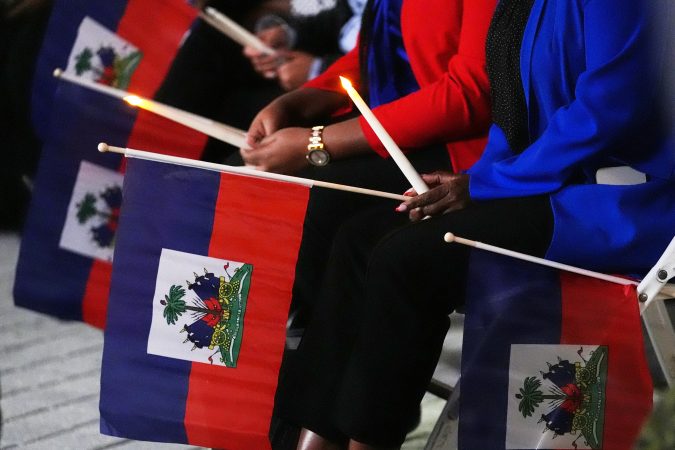
They’ve literally been in panic mode since last month’s U.S. Supreme Court 6-3 ruling cleared the way for the Trump administration to strip away their ability to legally work and be protected from deportation. Roughly 350,000 Haitians and 6,000 Syrians are scrambling to figure out what their next moves will be.
Will they relocate to Canada? South America? Somewhere else? Or even go underground? Pause for a moment and imagine having to find a whole other country that will take you in.
Many fled Haiti’s 2010 earthquake and have lived in the United States for more than 15 years. We’re not talking about illegal aliens. These people are here legally. They are our neighbors. They own homes. Some have children who are U.S. citizens. They pay taxes. They hold jobs. Many work in hospitals, nursing homes, and retail establishments. Some are entrepreneurs. What are they supposed to do? Where do they go? Do they take their American-born children with them?
MAGA dismisses them, saying, “Go back to Haiti.” But it’s not that simple. The tiny Caribbean nation is on the U.S. Department of State’s Do Not Travel list. It’s not safe there. Not for Americans. Not for native-born Haitians, either.
The Trump administration has dramatically restricted the number of refugees allowed in this year to just 7,500, but makes exceptions for white South Africans.
As an African American, it galls me to have to sit back and watch this kind of racial preference play out. Granted, disparate treatment like this is nothing new. America has always been racially divided — but what’s happening now reaches a new depth of inequality.
It starts at the top.
President Donald Trump’s disdain for Haitians is deep and well documented, having falsely accused those living in Springfield, Ohio, of eating their neighbors’ pets and “destroying their way of life.” He has a long history of racial animus directed at Black people, famously referring to Haiti as being a “shithole country” and claiming many of its immigrants “probably have AIDS.”
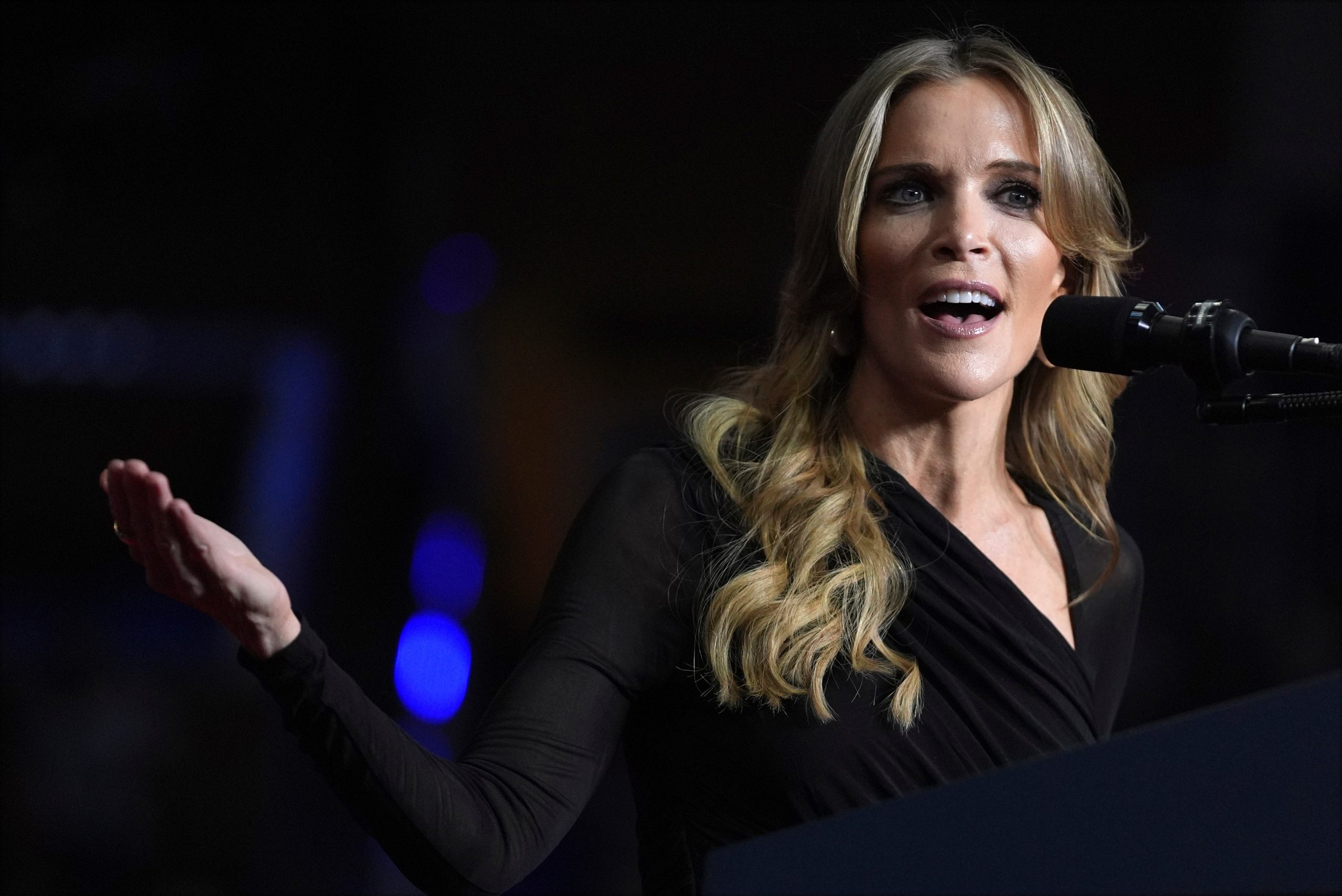
Former Fox News host Megyn Kelly may be feuding with Trump, but it certainly sounded as if she were speaking for his administration last month when she said this about Haitians: “We don’t want you. We don’t care if you’re offended.”
Bigot Barbie wasn’t done, adding: “Get out. Go home,” before using an expletive to tell immigrants to go back to Haiti. Kelly delivered her vile commentary shortly after the Supreme Court’s conservative majority ruled that government officials could end Temporary Protected Status for those who had cometo America to escape violence and natural disasters.
Megyn Kelly speaks at a Donald Trump campaign rally at PPG Paints Arena in Pittsburgh in advance of his election in 2024.Evan Vucci
Now that the protections Haitians and Syrians have been living under have effectively ended, Trump can extend his campaign pledge and include those until now legally residing here in his mass deportation efforts.
This is scary.
And potentially life-threatening.
Yet, it’s not on a lot of people’s radar.
I reached out to the Rev. Jennifer Joseph, the lead pastor at Zion Community Church in Yeadon, where many Haitians worship. She told me people need to know that “folks on TPS are not illegal, and they are not criminals.”
Joseph added, “Those who are not well versed about immigration law just assume that these people shouldn’t have come [and that] they should have known better.”
It’s great that the U.S. allows immigrants to reside here when their homelands are in turmoil. But once people arrive and become long-term, law-abiding residents, they need more pathways to permanent legal status.
They also need to be protected from the political whims of people like Trump or Homeland Security Secretary Markwayne Mullin.
Occasionally, I get to share good news in this space. Wu Shaoping — the Chinese dissident who fled to America but was detained by U.S. Immigration and Customs Enforcement after a Central Pennsylvania traffic stop — was freed from ICE’s Moshannon Valley Processing Center Friday night, not long after my column dropped and a couple ofmembers of Congress pressed for his release. His asylum case is still pending. I’ve learned there’s actually a lot more to this story — stay tuned.
The Trump regime is shifting billions from college into AI. That’s no accident.
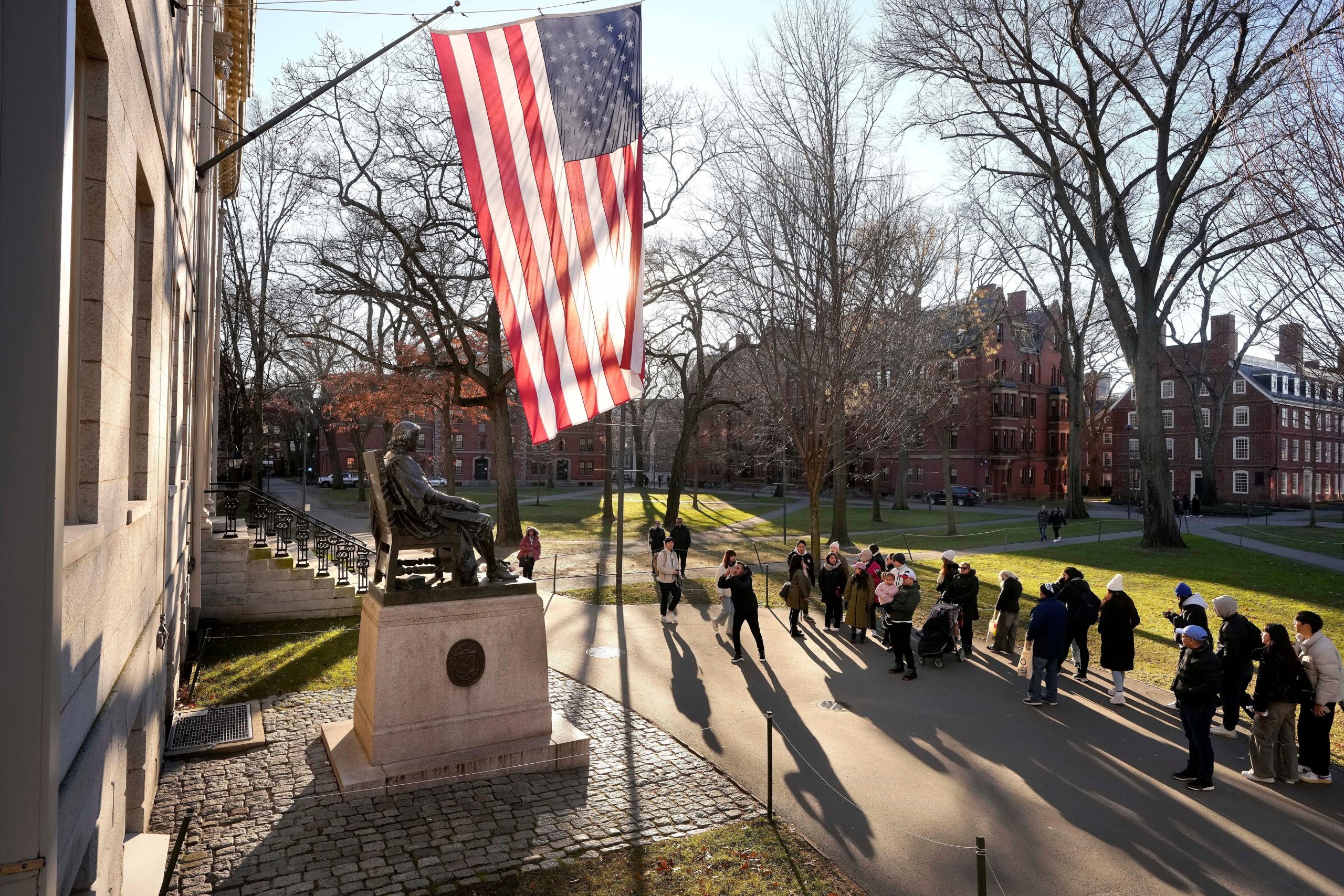
People take photos near a John Harvard statue on the Harvard University campus in 2024 in Cambridge, Mass.Steven Senne
The U.S. government has become pretty stingy when it comes to finding money for human beings — just ask any struggling single mother in Mississippi needing food stamps, or a physician in Africa waiting on vaccines that no longer arrive through American foreign aid programs.
But Washington always seems to have an open wallet for computers.
In fact, the very first one — ENIAC (Electronic Numerical Integrator and Computer), constructed right here in Philadelphia on the University of Pennsylvania campus as World War II came to an end — was funded by the U.S. Army Ordnance Corps at a cost of about $7 million in today’s dollars. Over the years, billions of dollars in federal funding would fuel key moments in the Computer Age, including the creation of the internet, which was also a Pentagon project.
Still, there was something chilling about last week’s report from the White House Office of Science and Technology Policy that called for a surge in research aid in one area: computers and robots using artificial intelligence, or AI. The nuts-and-bolts of the paper — “Science: A New Golden Age” — highlighted a new, more-than-$5 billion commitment for an AI-in-science program called the Genesis Mission.
But the White House paper also called for a radical shift in the way the federal government pays for science, with a massive move of $200 billion away from funding research and basic science at top universities — the system that has thrived since the time of ENIAC — and toward individuals and more directly applied AI projects, including those at private tech companies.
Goodbye, John Harvard. Hello, Claude.
“This plan raises profound concerns about the future of publicly funded science,” the top union leaders for educators — Todd Wolfson of the American Association of University Professors (AAUP) and Randi Weingarten of the American Federation of Teachers (AFT) — said in a joint statement last week. “It does nothing to make anyone healthier or safer, and it isn’t what Americans want.”
Wolfson, Weingarten, and other critics of the new science scheme from the Trump regime say it unravels long-standing protections for academic freedom and transparency on campuses in favor of a process that’s ripe for political interference. “This is a defining moment for American science,” the educators wrote.
Indeed, while the federal funding gains for AI are still mostly theoretical, the cuts for research projects on college campuses across the United States have been underway since Donald Trump took office in January 2025, and the impact has already been dramatic.
The playing field is complex, but a recent deep analysis by the Brennan Center for Justice found that the Trump administration successfully froze about $3 billion in previously approved grants for scientific research, is imposing a scheme to slash an additional $4 billion, and issued a budget proposal calling for a whopping $44 billion additional reduction.
The analysis noted that “these midstream freezes and cancelations have ripple effects far beyond the nominal dollars involved, prompting layoffs, interrupting careers, and destabilizing the budgets of research universities.”
But now it feels like the White House is stating the quiet part out loud: The bigger goal is simply to build smarter computers, even if that means humans get dumber. Intelligent robots still don’t vote in elections, after all, but poorly educated people do.
Ironically, the regime’s rationale for spending our tax dollars on making AI more powerful regurgitates a Cold War mentality that, on the surface, sounds like the reasons behind decades of massive college research funding and programs like the space race of the 1960s or the nuclear arms buildup: to stay one step ahead of the communists — this time in China.
The difference between then and now is that after World War II, Washington made a conscious effort to fund basic science and free inquiry as a way to distinguish the United States from the rigid planned economy of our then-biggest adversary, the Soviet Union. Now, the White House seeks to copy Beijing’s centralized planning. Can we truly promote science without lifting up the actual scientists?
Trump’s “Golden Future of Science” feels more like an extremely narrow wind tunnel. The irony is that many of today’s politicians in both parties see higher education as mainly workforce development, even as corporate recruiters say what they really want are more broadly educated critical thinkers. In other words, the AI era actually screams out for a boost for the humanities like literature or philosophy — the types of majors that are getting crushed in the Trump era.
An epic battle is looming between those obsessed with a new nuclear arms race around AI — especially the Silicon Valley billionaires who stand to gain and who, not coincidentally, have heavily funded the second coming of Trump — and a public that doesn’t want our communities ruined by noisy, energy-guzzling data centers that aim to take away our jobs while making reading a lost art.
A government scheme to build better computers while rendering humans obsolete used to be the stuff of dystopian science fiction. Maybe we can keep it that way before it’s too late.
Yo, do this!
About once a year or so, I write, “Yo, actually maybe don’t do this.” Last weekend, I ventured out of my underground lair to join every other American in devoting three hours to Christopher Nolan’s The Odyssey. To say I was underwhelmed would be, well, an understatement. The movie was a funeral for the now totally lost art of movie dialogue, amid a plot that meandered from gouge-your-one-eye-out boring to bursts of incomprehensible violence. It was a metaphor — Troy was My Lai, apparently — that got terribly lost at sea. But I do feel there’s something happening here. First the World Cup, now this mediocre whale of a motion picture: Americans are desperate to bea part of something, anything, that is bigger than our politics.
Regular readers know I’m a huge fan of the CNN modern history documentaries they now call the Decades Series, but the original format of politics, TV, and music did have gaping holes. A few years ago, they backfilled with a series on The Movies of our post-World War II world. Now, finally, Decades in Sports arrives on CNN with back-to-back episodes (presumably the 1960s and ‘70s) on Sunday night at 9 p.m. I can’t wait. Spoiler alert: Havlicek stole the ball.
Another thing you may have noticed is that Rep. Ro Khanna, who meandered west after Council Rock High School in Bucks County and became the congressman from Silicon Valley, is something of a friend of the newsletter. He’s back in our area frequently, and he’ll be at Philadelphia’s Parkway Central Library on Tuesday at 6 p.m. to deliver a special speech: “America at a Crossroads: A Vision for the Future on our 250th Anniversary.” He’ll talk about his background growing up here as the son of immigrants and the need for economic freedom that ends gross corruption and inequality — go check it out.
Ask me anything
Question: Who should be DNC [Democratic National Committee] chair? And does it matter? — Martha (@marthagrant.bsky.social) via Bluesky
Answer: It does matter. Despite everything else that’s happening in the world right now, one of the more revealing stories of the last week was the New York Times article about Democrats in disarray, focusing on embattled DNC chair Ken Martin, who before the 2024 election was the state leader in Minnesota. Under Martin, the party is sliding deeper in debt, and there are complaints about an abrasive personal style, the botched “autopsy” of the 2024 election, and the Democrats’ muddled message. A change should be made as soon as possible. Hopefully, party leaders could rectify the mistake of not picking Wisconsin’s more skilled ex-party chief, Ben Wikler. The problem is that, under the constant assault of GOP fascism, Dems need to fix this plane while it is flying at 37,000 feet.
What you’re saying about …
There was an excellent response to last week’s question about what a future Democratic president should do on Day One to erase the stench from two Donald Trump presidencies. I wish I could reprint all the suggestions, but recurring themes included a rapid purge of any Trump holdovers, abolishing ICE and related immigration raiders, and a speedy effort to prosecute the many wrongdoers. The two most frequent suggestions included major reform of the judiciary, from fixing the mangled immigration courts to ethics reform, and definitely an expansion of the U.S. Supreme Court. Mark Cohen suggested two more federal appeals courts and then “assign a Supreme Court justice to each one, bringing a total of 13 justices to the Court for fixed term of 18 years.” Another theme was erasing Trump’s various renovations to the District of Columbia. The ex-congressman Joe Hoeffel wrote, “Strip all the cheesy gold out of the Oval Office.”
📮 This week’s question: Speaking of Democrats, some top party officials like House Minority Leader Hakeem Jeffries seem to think the November election is primarily about “affordability.” That seems to miss the bigger moment, but I’m curious: What pithy message would you like to see Dems run on this fall? Please email me your answer and put the exact phrase “Democratic message” in the subject line.
Backstory on the Gen Z revolution rocking India
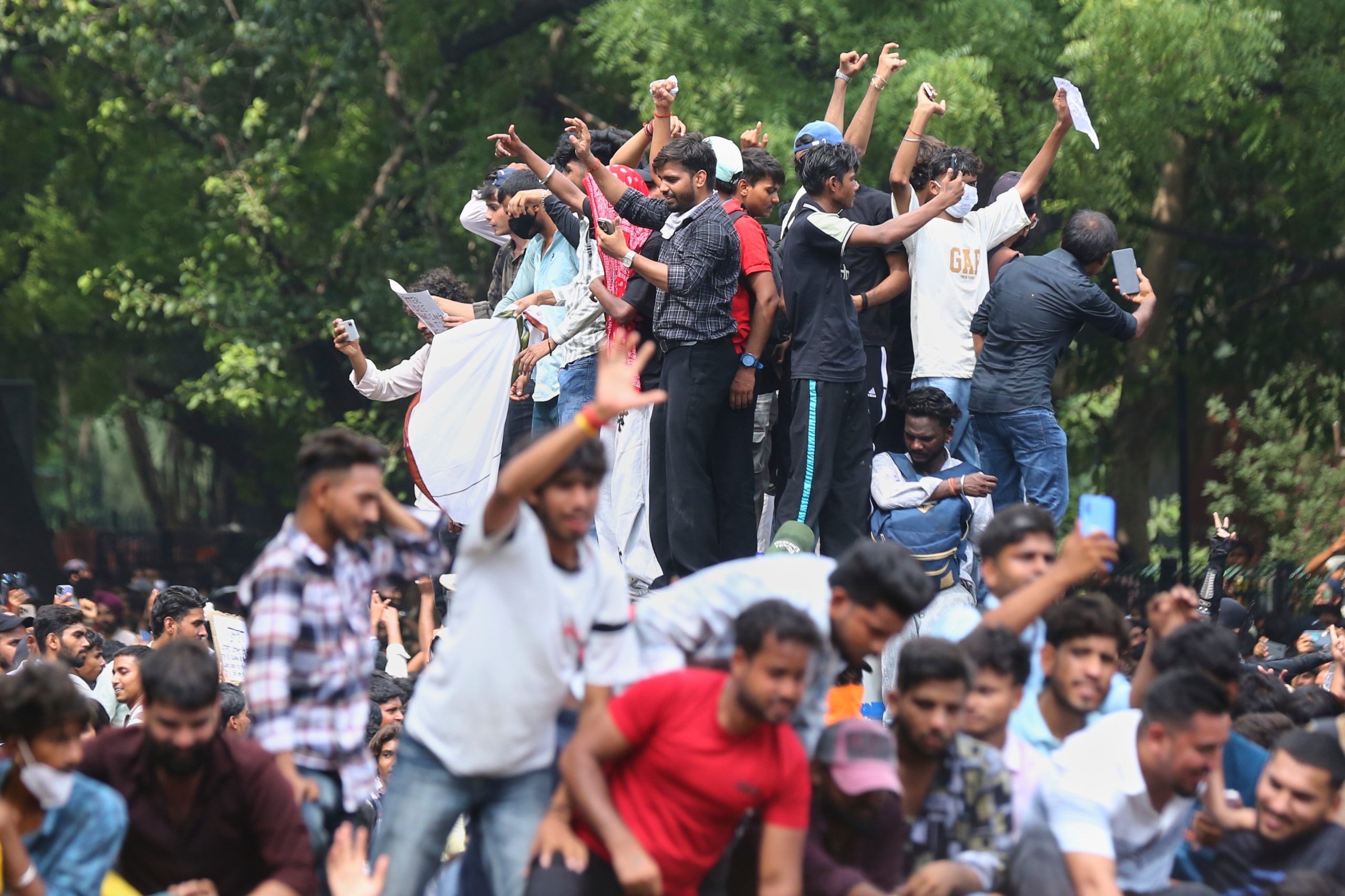
Protesters participate in a demonstration demanding educational reforms as part of the Cockroach Janta Party’s ongoing protest movement in New Delhi on July 25.Vipin
Last October, I wrote a column, with great interest and enthusiasm, about a growing revolution of Gen Z 20-somethings that was taking place across the global south — from Madagascar to Peru to Nepal, and elsewhere — who were fed up with the political corruption of grown-ups and threatening to topple governments. I wondered if this very online youth activism might spread to the United States or other more developed nations, but over the coming months, the momentum for these protesters and their Japanese anime pirate flags seemed to fade. The so-called Gen Z revolution looked like a historical footnote.
But it turns out that the embers of youth unrest were still smoldering, and this summer they have reignited in a big way in the world’s largest — if deeply flawed — democracy: India. And as is so often thecase, the spark was something nobody saw coming: a nationwide exam for entrance to medical school taken by roughly two million students, which the government moved to scrap after allegations that some of the questions had leaked. Some young people who’d studied for months for the exam took tothe streets in protest, and — as so often happens — a repressive police response only caused these demonstrations to get bigger. So did a comment from India’s chief justice, who described young, unemployed Indians as “cockroaches.”
That gave the protests a name when Abhijeet Dipke, a 30-year-old graduate of Boston University, posted on the social media platform X that he was starting the “Cockroach Janta Party” — a wordplay on the Indian authoritarian-minded leader Narendra Modi’s Bharatiya Janata Party. Incredibly, this “CJP” has seen its protests — calling successfully for the resignation of the education secretary and for other deeper reforms, using tactics such as sit-ins and hunger strikes — spread to some 30 cities while clogging the streets of the capital, New Delhi. The movement has become arguably the biggest threat to Modi’s strongman rule since the leader’s ascension in 2014.
All of which raises the same question I posed last fall: Could it happen here? In one sense, it already has. On Friday, about 500 Indian students and other members of the U.S.-based diaspora gathered under a statue of Mahatma Gandhi in Manhattan’s Union Square to express support for the “cockroaches” of their native country. Meanwhile, the kind of pressures that caused India’s youth to erupt — government meddling in higher education, diminished job prospects in a time of rising AI, to name two — are also found in the United States. Young people almost never protest over the same stuff that riles up their parents, as shown by the gray hairs that have populated the No Kings rallies against Donald Trump. When lightning strikes, it will probably be something as unexpected as a college entry exam. But thunderstorms are definitely in the forecast.
What I wrote on this date in 2019
A culture of death permeates the Donald Trump regime, from the doomed fishing boats of the Caribbean to an Iranian girls’ school to the scores now dying in immigration detention cells. But this is not exactly new. The seeds were planted in the first Trump presidency, when his attorney general, William Barr, led a push to revive the death penalty for federal prisoners in a big way. On July 28, 2019, I asked: “What took the American Caligula so long to bring back the spectacle of executions to electrify the masses (but not the prisoners … they’d be lethally injected) and juice his 2020 reelection campaign? Indeed, the five executions are scheduled around the Christmas holiday, presumably to remind us of its pagan roots.”
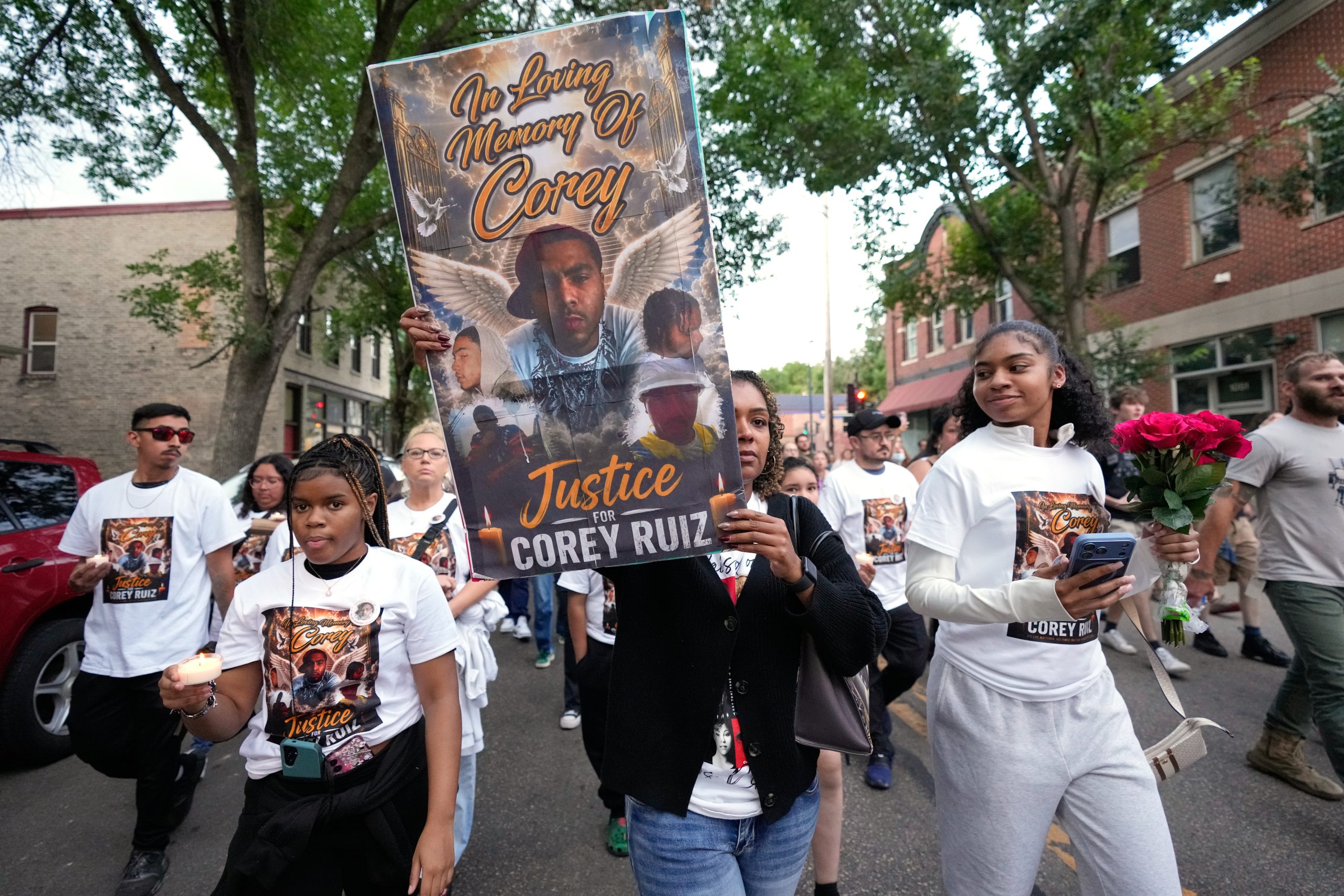
In 2026, I’ve been very focused on the individuals whose world has been turned upside down — or, in some cases, ended prematurely — by the horrors of life in these authoritarian United States. Last week, I took a deep dive into the story of Wu Shaoping, a Chinese dissident who fled his likely detainment by Xi Jinping’s regime and made it to Pennsylvania with his wife and teen daughter, only to get arrested at a traffic stop, turned over to U.S. Immigration and Customs Enforcement, and detained. The outcry may have had something to do with ICE’s release of Wu shortly after the column ran. Over the weekend, I wrote about the police killing of Corey Ruiz in Madison, Wisc. — noting that the shootings of civilians by cops have only increased since the massive George Floyd protest marches of 2020. I urged an end to the new numbness about police violence in America.
You didn’t really think I could make it all the way through the newsletter without mentioning the face that launched 1,000 hot takes: basketball king LeBron James. He stunned not just the sports world but America’s founding city by announcing Friday that he is taking his aging but still considerable talents to South Philadelphia, hoping to grab one last title with a completely revamped 76ers. Has there been any other story since then? The Inquirer has told you about the first time James played at the Palestra, his new uniform (No. 23), the speculation over how he will (or won’t) gel with the rest of the Sixers, the speculation over where he might live, hisrelationship with Tyrese Maxey and Joel Embiid, and on and on and on. Just wait until he actually takes the court this fall! Actually, don’t wait. Subscribe to The Inquirer today, slam dunk the paywall, and read every story from now until the hoped-for parade down Broad Street.
By submitting your written, visual, and/or audio contributions, you agree to The Inquirer’s Terms of Use, including the grant of rights in Section 10.
Late Thursday afternoon, news began to spread on social media that a Black man had been gunned down by police officers at a street corner in Madison, Wis. Over the next couple of hours, we learned that the shooting victim had died, and that a neighborhood bystander had captured much of the encounter, including the three fatal gunshots, on video.
The video shows the man — chased by Madison police officers after a report of someone checking door handles on parked cars — had fallen off his bicycle and was on the ground when four officers surrounded him. There is a struggle. Analysts say the suspect appeared to have a knife, and police would later say an officer was injured. The man is Tasered before one officer fires the deadly shots into the suspect while he’s lying on his side.
The dead man was identified as 38-year-old Corey Ruiz, and as the video of his killing spread, experts on policing raised serious questions. “What’s particularly egregious to me is that this person seems to have been going into compliance at the time he was shot in the head,” Ion Meyn, an associate professor of law at the University of Wisconsin-Madison, told the Capital Times.
The Ruiz case adds one more name to the ever-growing list of victims of American police violence, preceded by the likes of Eric Garner, killed in a New York Police Department choke hold after selling loose cigarettes; Tamir Rice, the 12-year-old killed with a toy gun on a Cleveland playground; and George Floyd, whose 2020 police murder in Minneapolis sparked the largest mass protests in U.S. history.
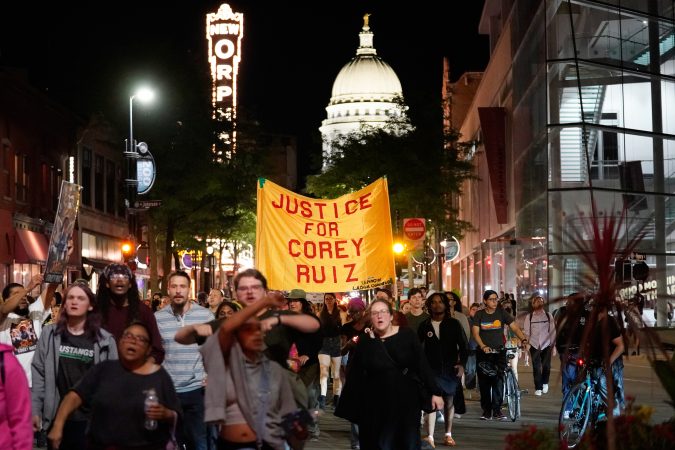
Yet, the brutal shooting of Ruiz also felt very different in one important way. Although the public outrage was real — hundreds have marched through the streets of the Wisconsin state capital each night since the incident, chanting for justice — it also felt quarantined, a virus of anger contained largely to Madison before it could spread nationally like the Black Lives Matter marches of six years ago.
On social media last week, while many posts did express dismay and anger over the actions of the Madison cops, the prevailing vibe was warning people to turn off autoplay functions, that they might want to avoid the gory footage of the man’s death. “Huge warning,“ one Bluesky poster wrote, echoing many others. ”The Madison police shooting is horrific. Careful watching news with kids around.”
No one shut down the expressways in New York City or Chicago, as we saw in the contentious era from 2014 to 2020 after the killings of Floyd, Ferguson, Mo.’s Mike Brown, and too many others. There was a nationwide day of marches and vigils on Saturday against violence by law enforcement, but it was all about recent killings by the immigration cops of U.S. Immigration and Customs Enforcement (ICE). These tragedies have seized the political attention that once focused on rank-and-file police.
How else to explain the similarly muted reaction to June’s police killing of a 1-year-old baby, Kohen Wiley, in Senatobia, Miss., who was inside a car with his mother; employees of a Walmart store had accused herof shoplifting diapers. An independent autopsy suggested the infant was shot from the side of the vehicle, raising questions about the official police version of events. Yet, Kohen — innocent victim of police violence — has also not become a household name like Floyd, Brown, or Rice.
Sure, part of the problem is that in the second year of Donald Trump’s second presidency, we have become as overloaded as the Texas power grid in an ice storm. I woke up this Sunday morning with potential columns about killer heat waves from Des Moines, Iowa, to Bordeaux, France, the idiocy of Trump’s Iran war and the administration’s efforts to pretend four U.S. deaths didn’t happen, the utter embarrassment of Trump’s speech to the White House Correspondents’ Association dinner and the assembled journalists who enabled it, or the Trump family’s latest, planet-threatening get-rich-quick scheme.
But I elected to write about this because it is alarming how numb the U.S. body politic has become to violence, especially the kind perpetrated by our warrior cops, in the years since the last echoes of the Floyd protests faded out.
Demonstrators in Madison, Wis., staged a protest Thursday after a police officer shot and killed Corey Ruiz the day before.Kayla Wolf
It’s not just that very little came about despite the massive nature of the protests — a few good municipal ideas here and there, a handful of state laws, but nothing along the lines of radical police reform that millions clamored for in 2020. It’s that police violence has actually gotten worse in the years since Minneapolis cop Derek Chauvin held his knee on George Floyd’s neck for nine minutes and 29 seconds.
The statistics tell the story. So far in 2026, with the year barely half over, police have already killed 703 people, on pace with the worst years on record, according to the tracking site Mapping Police Violence. It has only recorded seven days this year when there was not a police-involved fatality. What’s more, victims are 2.8 times more likely to be Black, like Ruiz and Kohen, than white.
Here’s the part that demands our attention: This sustained level of police violence — on a scale that is simply unfathomable in other developed nations around the world — is happening despite the fact that murder rates and other crime stats are plummeting.
“In the decade [prior] to 2024, the number of Americans killed by police jumped by about a third,” wrote the U.K.’s Economist, covering a topic the American news media has largely ignored. “Police killings dipped last year but this year have risen again. Perversely, the rise comes as national murder rates are falling. A growing share of Americans who are killed — one in ten — are dying at the hands of police.”
The problem isn’t crime. It’s the zeitgeist. While bloodshed has always been a problem in a nation with a Wild West mentality, awash with guns, violence from an Iranian girls’ school to fishing boats in the Caribbean to the icy streets of Minneapolis has become utterly pervasive. The omnipresence of state-sanctioned murder is arguably why so many elected not to even watch the Ruiz video.
This undated photo provided by Veronica Roberson shows her grandson, Kohen Wiley, of Senatobia, Miss.Veronica Roberson
And rather than tackle police violence as a social problem, Trump and his regime have encouraged it —in word(“Please don’t be too nice,” the president famously told a cop convention in 2017) and in deed, such as ending consent agreements with big-city police departments known for unwarranted brutality.
Meanwhile, those George Floyd marchers in 2020 arguably spiked the football way too soon — thinking they’d made their point when, within weeks, cowardly politicians in both parties would start running away from any notion of police reforms. Much of the worst police violence takes place in overwhelmingly Democratic cities run by ostensibly progressive mayors — places like Madison, a university town and a hotbed of left-wing activism and protest since the 1960s.
The shooting of Ruiz was the third contentious police killing in the same Madison neighborhood since 2012, when 30-year-old Paul Heenan, who was white, was fatally shot by an officer who claimed Heenan was trying to grab his gun. In 2015, a Madison cop shot and killed an unarmed 19-year-old biracial man, Tony Robinson. No officers were charged, even as the city paid out some $5.65 million to settle lawsuits.
So much about the Madison police echoes the broader problems of American policing. Federal data show nearly half of the department’s use-of-force incidents were against African Americans, even though the city’s population is just 7% Black. And despite Madison’s reputation for liberalism, major police reforms have been slow in coming.
None of the officers who apprehended Ruiz were wearing a body camera. Both activists and many public officials have been urging body cams for Madison officers since Robinson’s 2015 killing, yet the city has never come up with the money to fund them. Such footage would have provided the cops’ view of why they felt it necessary to shoot Ruiz in the scuffle.
Experts say Ruiz’s possession of the knife and the allegation that it was used to wound an officer all but guarantee no one will be criminally charged, noting the grounds of self-defense. No one is denying that police have a right to defend themselves — and that they oftenface tough decisions in the heat of the moment.
But that shouldn’t obscure the bigger debates over whether police have the training to prevent these encounters from needlessly reaching that point. The two most controversial police killings of 2026 began with allegations of shoplifting diapers and fiddling with locked car doors — not exactly capital offenses.
“He was a lyricist,” Marjorie Aliomar — Ruiz’s partner and mother of his 13-year-old daughter — told a tear-laden news conference this weekend. “He was a poet. He was an artist. He was very kind, and he was extremely funny.”
Yet, his story is already fading from our headlines. It doesn’t have to be this way. Ruiz’s killing could have been our wake-up call to fight for all the causes — the end of qualified immunity for officers, universal use of body cams, the death of occupation-style warrior cop policing, and the return of a U.S. Department of Justice that again treats brutality as a crime — that have been tossed down the memory hole since 2020.
If you can emotionally handle it, don’t avoid the Ruiz video — or the problem. Many of youreading this column marched for Floyd. Now’s a good time to look in the mirror and ask yourself: What have I done lately to oppose the violence of an American police state? In other words, have I become comfortably numb?