Category: Columnists

  • Corey Ruiz police killing reveals an America numb to violence

    Corey Ruiz police killing reveals an America numb to violence

    It all felt familiar, painfully so.

    Late Thursday afternoon, news began to spread on social media that a Black man had been gunned down by police officers at a street corner in Madison, Wis. Over the next couple of hours, we learned that the shooting victim had died, and that a neighborhood bystander had captured much of the encounter, including the three fatal gunshots, on video.

    The video shows the man — chased by Madison police officers after a report of someone checking door handles on parked cars — had fallen off his bicycle and was on the ground when four officers surrounded him. There is a struggle. Analysts say the suspect appeared to have a knife, and police would later say an officer was injured. The man is Tasered before one officer fires the deadly shots into the suspect while he’s lying on his side.

    The dead man was identified as 38-year-old Corey Ruiz, and as the video of his killing spread, experts on policing raised serious questions. “What’s particularly egregious to me is that this person seems to have been going into compliance at the time he was shot in the head,” Ion Meyn, an associate professor of law at the University of Wisconsin-Madison, told the Capital Times.

    The Ruiz case adds one more name to the ever-growing list of victims of American police violence, preceded by the likes of Eric Garner, killed in a New York Police Department choke hold after selling loose cigarettes; Tamir Rice, the 12-year-old killed with a toy gun on a Cleveland playground; and George Floyd, whose 2020 police murder in Minneapolis sparked the largest mass protests in U.S. history.

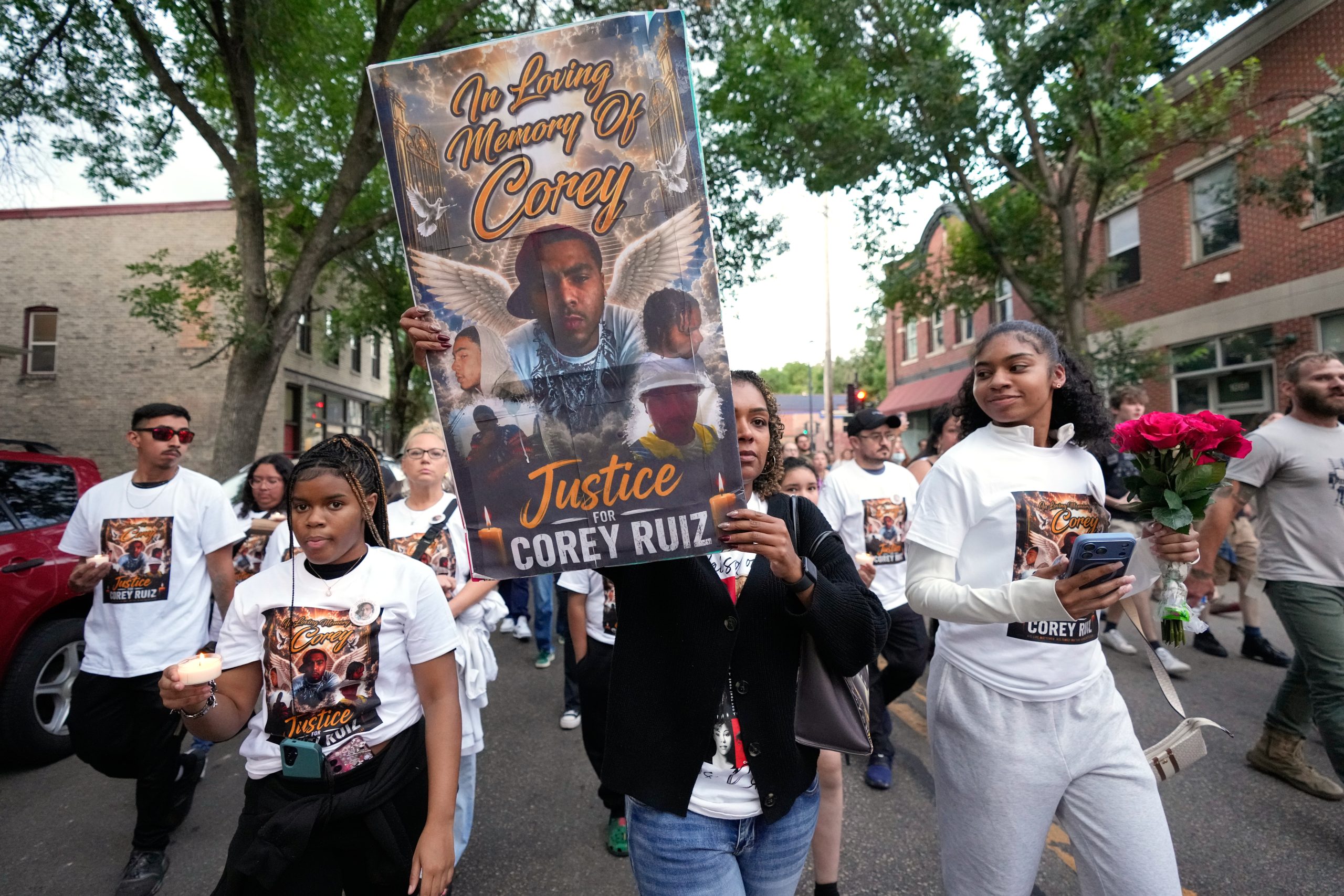
    Yet, the brutal shooting of Ruiz also felt very different in one important way. Although the public outrage was real — hundreds have marched through the streets of the Wisconsin state capital each night since the incident, chanting for justice — it also felt quarantined, a virus of anger contained largely to Madison before it could spread nationally like the Black Lives Matter marches of six years ago.

    On social media last week, while many posts did express dismay and anger over the actions of the Madison cops, the prevailing vibe was warning people to turn off autoplay functions, that they might want to avoid the gory footage of the man’s death. “Huge warning,“ one Bluesky poster wrote, echoing many others. ”The Madison police shooting is horrific. Careful watching news with kids around.”

    No one shut down the expressways in New York City or Chicago, as we saw in the contentious era from 2014 to 2020 after the killings of Floyd, Ferguson, Mo.’s Mike Brown, and too many others. There was a nationwide day of marches and vigils on Saturday against violence by law enforcement, but it was all about recent killings by the immigration cops of U.S. Immigration and Customs Enforcement (ICE). These tragedies have seized the political attention that once focused on rank-and-file police.

    How else to explain the similarly muted reaction to June’s police killing of a 1-year-old baby, Kohen Wiley, in Senatobia, Miss., who was inside a car with his mother; employees of a Walmart store had accused her of shoplifting diapers. An independent autopsy suggested the infant was shot from the side of the vehicle, raising questions about the official police version of events. Yet, Kohen — innocent victim of police violence — has also not become a household name like Floyd, Brown, or Rice.

    Sure, part of the problem is that in the second year of Donald Trump’s second presidency, we have become as overloaded as the Texas power grid in an ice storm. I woke up this Sunday morning with potential columns about killer heat waves from Des Moines, Iowa, to Bordeaux, France, the idiocy of Trump’s Iran war and the administration’s efforts to pretend four U.S. deaths didn’t happen, the utter embarrassment of Trump’s speech to the White House Correspondents’ Association dinner and the assembled journalists who enabled it, or the Trump family’s latest, planet-threatening get-rich-quick scheme.

    But I elected to write about this because it is alarming how numb the U.S. body politic has become to violence, especially the kind perpetrated by our warrior cops, in the years since the last echoes of the Floyd protests faded out.
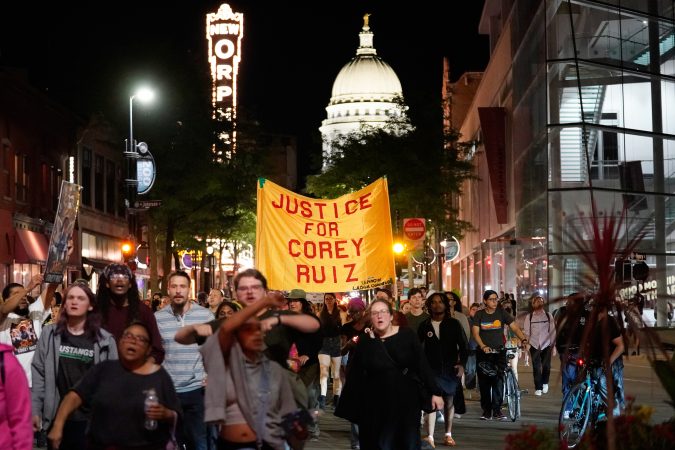
    Demonstrators in Madison, Wis., staged a protest Thursday after a police officer shot and killed Corey Ruiz the day before.Kayla Wolf

    It’s not just that very little came about despite the massive nature of the protests — a few good municipal ideas here and there, a handful of state laws, but nothing along the lines of radical police reform that millions clamored for in 2020. It’s that police violence has actually gotten worse in the years since Minneapolis cop Derek Chauvin held his knee on George Floyd’s neck for nine minutes and 29 seconds.

    The statistics tell the story. So far in 2026, with the year barely half over, police have already killed 703 people, on pace with the worst years on record, according to the tracking site Mapping Police Violence. It has only recorded seven days this year when there was not a police-involved fatality. What’s more, victims are 2.8 times more likely to be Black, like Ruiz and Kohen, than white.

    Here’s the part that demands our attention: This sustained level of police violence — on a scale that is simply unfathomable in other developed nations around the world — is happening despite the fact that murder rates and other crime stats are plummeting.

    “In the decade [prior] to 2024, the number of Americans killed by police jumped by about a third,” wrote the U.K.’s Economist, covering a topic the American news media has largely ignored. “Police killings dipped last year but this year have risen again. Perversely, the rise comes as national murder rates are falling. A growing share of Americans who are killed — one in ten — are dying at the hands of police.”

    The problem isn’t crime. It’s the zeitgeist. While bloodshed has always been a problem in a nation with a Wild West mentality, awash with guns, violence from an Iranian girls’ school to fishing boats in the Caribbean to the icy streets of Minneapolis has become utterly pervasive. The omnipresence of state-sanctioned murder is arguably why so many elected not to even watch the Ruiz video.

    This undated photo provided by Veronica Roberson shows her grandson, Kohen Wiley, of Senatobia, Miss.Veronica Roberson

    And rather than tackle police violence as a social problem, Trump and his regime have encouraged it — in word (“Please don’t be too nice,” the president famously told a cop convention in 2017) and in deed, such as ending consent agreements with big-city police departments known for unwarranted brutality.

    Meanwhile, those George Floyd marchers in 2020 arguably spiked the football way too soon — thinking they’d made their point when, within weeks, cowardly politicians in both parties would start running away from any notion of police reforms. Much of the worst police violence takes place in overwhelmingly Democratic cities run by ostensibly progressive mayors — places like Madison, a university town and a hotbed of left-wing activism and protest since the 1960s.

    The shooting of Ruiz was the third contentious police killing in the same Madison neighborhood since 2012, when 30-year-old Paul Heenan, who was white, was fatally shot by an officer who claimed Heenan was trying to grab his gun. In 2015, a Madison cop shot and killed an unarmed 19-year-old biracial man, Tony Robinson. No officers were charged, even as the city paid out some $5.65 million to settle lawsuits.

    So much about the Madison police echoes the broader problems of American policing. Federal data show nearly half of the department’s use-of-force incidents were against African Americans, even though the city’s population is just 7% Black. And despite Madison’s reputation for liberalism, major police reforms have been slow in coming.

    None of the officers who apprehended Ruiz were wearing a body camera. Both activists and many public officials have been urging body cams for Madison officers since Robinson’s 2015 killing, yet the city has never come up with the money to fund them. Such footage would have provided the cops’ view of why they felt it necessary to shoot Ruiz in the scuffle.

    Experts say Ruiz’s possession of the knife and the allegation that it was used to wound an officer all but guarantee no one will be criminally charged, noting the grounds of self-defense. No one is denying that police have a right to defend themselves — and that they often face tough decisions in the heat of the moment.

    But that shouldn’t obscure the bigger debates over whether police have the training to prevent these encounters from needlessly reaching that point. The two most controversial police killings of 2026 began with allegations of shoplifting diapers and fiddling with locked car doors — not exactly capital offenses.

    “He was a lyricist,” Marjorie Aliomar — Ruiz’s partner and mother of his 13-year-old daughter — told a tear-laden news conference this weekend. “He was a poet. He was an artist. He was very kind, and he was extremely funny.”

    Yet, his story is already fading from our headlines. It doesn’t have to be this way. Ruiz’s killing could have been our wake-up call to fight for all the causes — the end of qualified immunity for officers, universal use of body cams, the death of occupation-style warrior cop policing, and the return of a U.S. Department of Justice that again treats brutality as a crime — that have been tossed down the memory hole since 2020.

    If you can emotionally handle it, don’t avoid the Ruiz video — or the problem. Many of you reading this column marched for Floyd. Now’s a good time to look in the mirror and ask yourself: What have I done lately to oppose the violence of an American police state? In other words, have I become comfortably numb?
  • New construction can be a good thing — but developers need to respect existing homes

    New construction can be a good thing — but developers need to respect existing homes

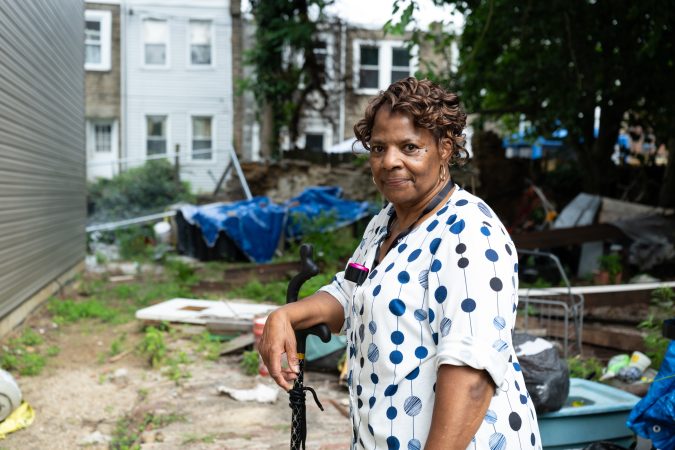
    Most days during the summers — sometimes well into the evening — Delores Lawrence is outside her home in Germantown weeding, watering, and otherwise tending her garden.

    Her small front yard is where she grows tomatoes, blackberries, purple daisies, and orange and yellow lilies, all planted closely together. There’s also a narrow strip on the side where Lawrence cares for a mix of potted calla lilies, peonies, and other vegetation.

    The land around her home is her peace.

    It’s her little slice of the American dream.

    But instead of being able to enjoy another summer growing season, Lawrence is livid about how the construction of a new apartment building next door has disrupted life on the block where she has lived for more than 30 years.

    Her garage is no longer standing, her brick driveway damaged, and the construction noise at times was absolutely unbearable.

    Lawrence, who worked in nursing before being injured, doesn’t know what to do. “I want my garage built back up. I want my driveway reconstructed,” she told me recently over the phone. “It makes me angry. It makes me upset. I even went to the doctor. I can’t even sleep.”

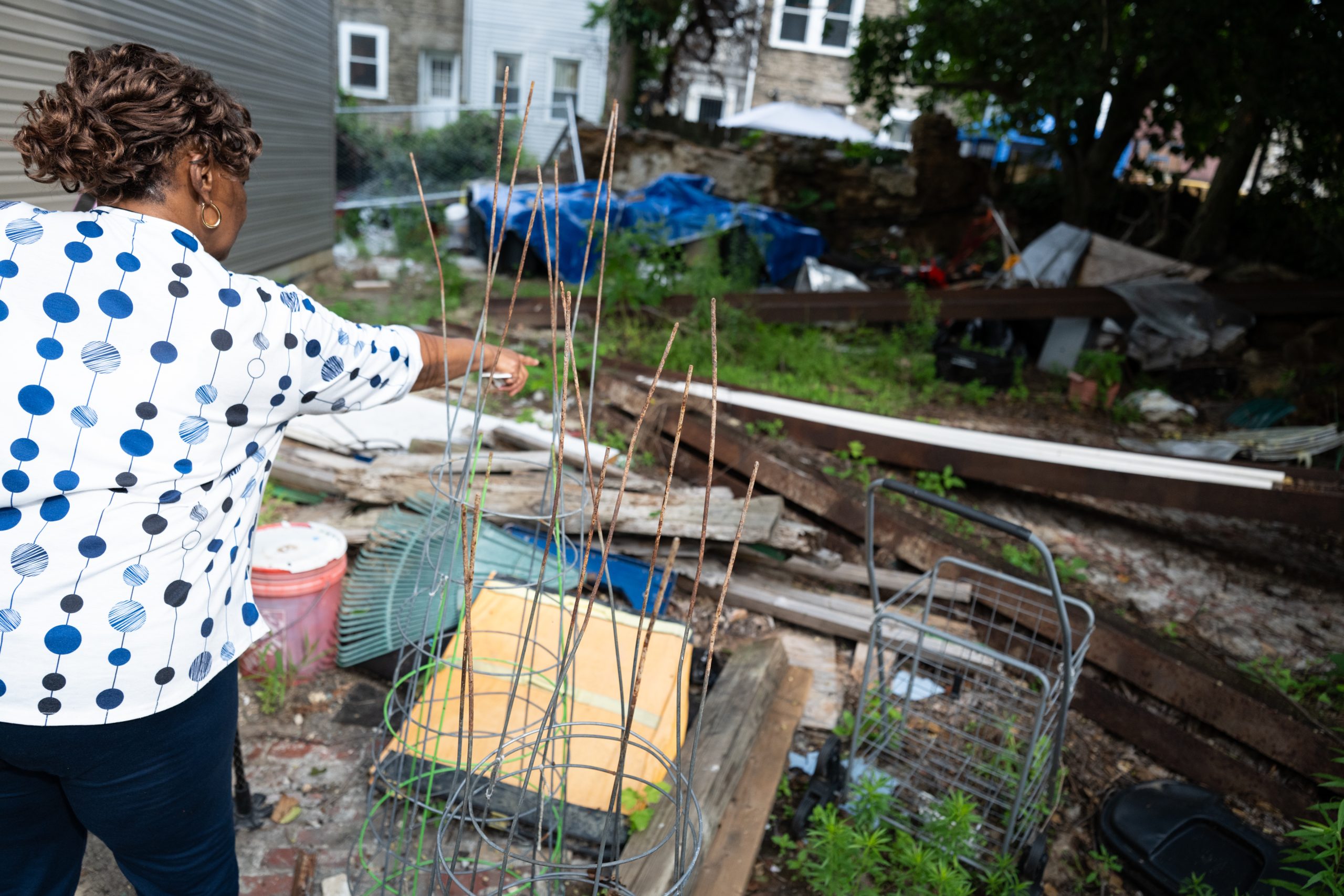
    I recently paid a visit to the 200 block of East Bringhurst Street and walked with Lawrence as she pointed out the shambles the construction had made of her beloved yard.

    There was a stack of old bricks that had been removed from her driveway. The remnants of an old stone garage where she would do arts and crafts projects. “These are iron beams that they took off the roof,” she said. “It was a building back here.”

    There was more — a tree trunk lying on its side with its roots exposed, what looked like electrical cables in the rear, and containers of paint that she said belonged to the builders working next door.

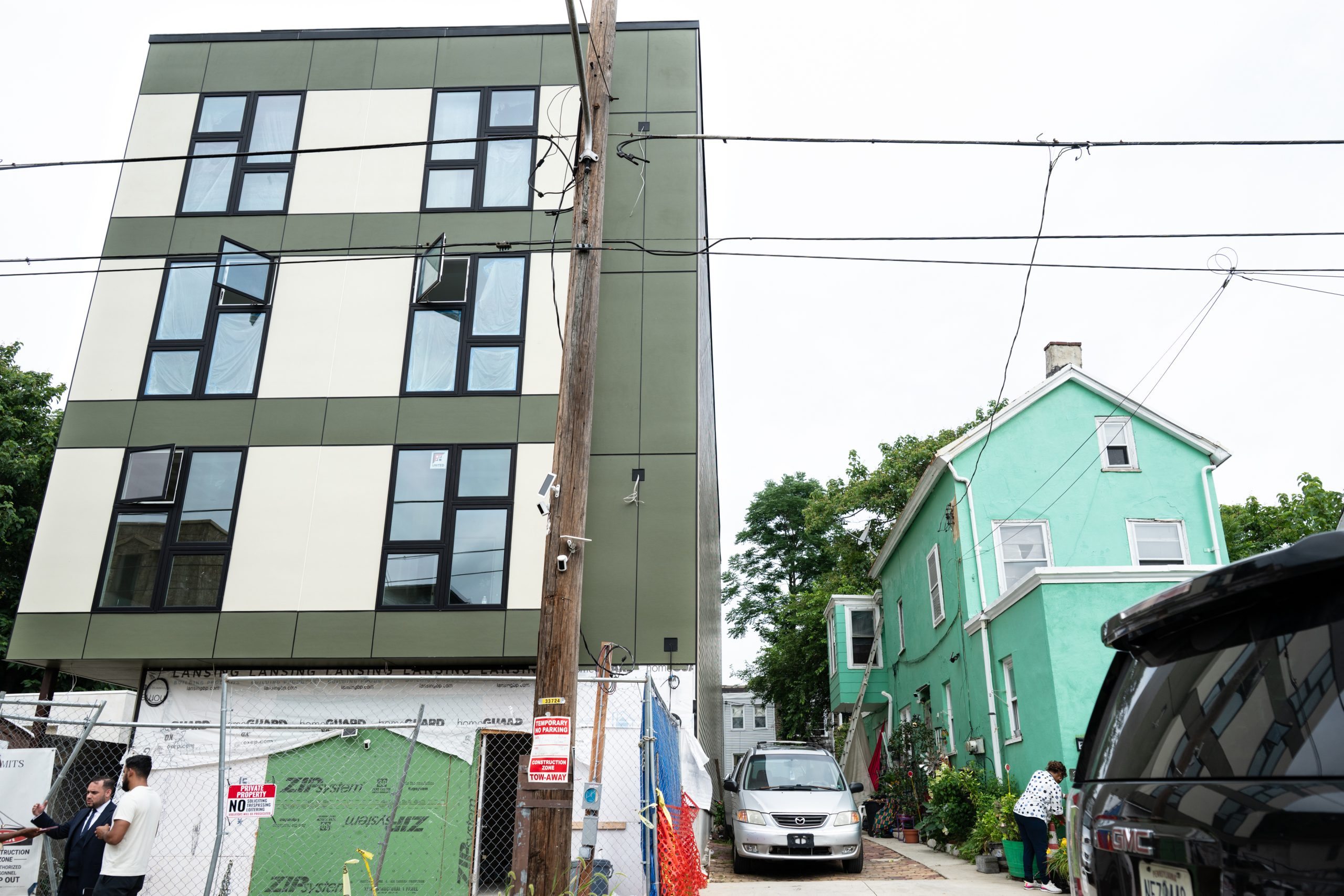
    Delores Lawrence points to the remains of a garage where she used to do arts and crafts projects amid the detritus of a construction project next door. The project — a 15-unit apartment building — has been underway since 2024.Erin Blewett / For The Inquirer

    Taking in the scene, I thought to myself that this is a whole situation — and I saw how it has turned into a court fight that is shaping up to be as messy as Lawrence’s backyard.

    On one side, there’s Lawrence, a 70-year-old homeowner who has filed a lawsuit demanding compensation for damage to her property caused by the construction of a new four-story, 15-unit building immediately adjacent to her driveway.

    On the other side is Danilo A. Burgos, the cofounder of Burg Properties and the 29-year-old son of State Rep. Danilo Burgos, a Democrat who was first elected in 2018 and who serves the North Philly neighborhoods of Kensington, Hunting Park, and Feltonville. The four-story, 15-unit building is under the charge of the younger Burgos and has been in the works since 2024.

    Given everything going on in Philly right now, it would be easy to ignore the situation between a politically connected developer creating much-needed affordable housing and a senior citizen upset about its impact on her property. But I can’t help but feel for Lawrence.

    Besides, hers isn’t an isolated situation. What’s happening to her in Germantown is actually emblematic of similar struggles playing out between residents and developers in neighborhoods around the city.

    Residents of Chinatown successfully pushed back against a proposal to build a new Sixers arena along Market Street. In Northern Liberties, several neighbors on Brown Street are suing a developer, claiming their homes were damaged by the construction of a nearby apartment building. In 2024, my colleagues at The Inquirer produced an entire series called Crumbling City about how housing redevelopment created construction issues among some rowhouses.

    What sets the situation in Germantown apart is the reality that the developer is the son of a state legislator.

    “This is about entitlement and privilege,” Kevin L. Valentine, Lawrence’s attorney, told me in an email.

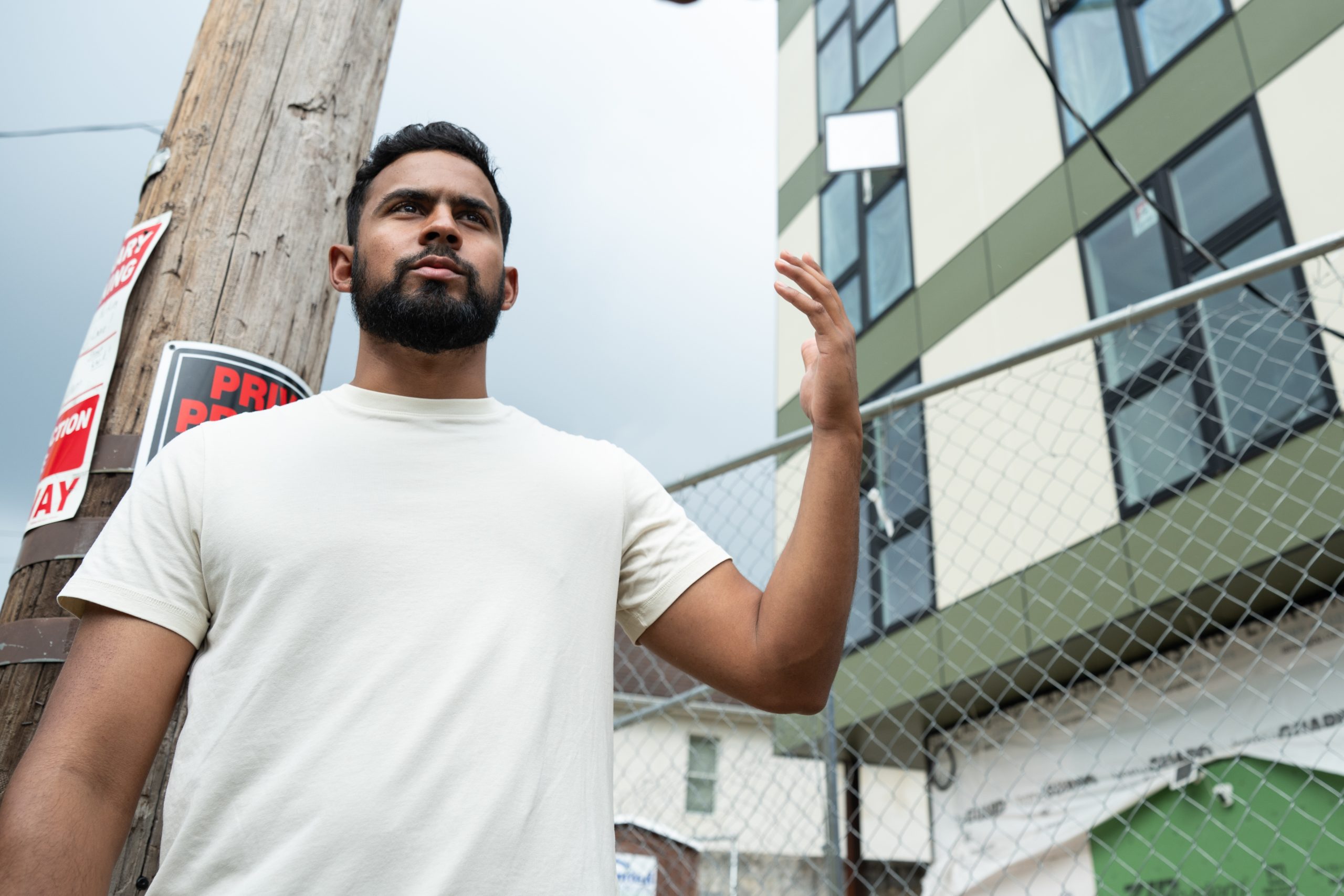
    Property owner Danilo A. Burgos speaks to the press outside his affordable housing project under construction in the Germantown section of Philadelphia on Thursday, July 9.Erin Blewett / For The Inquirer

    I reached out to Burgos, the state representative, who said: “My son has not done anything wrong. The lady, she’s suing him, and they’re in court. That’s it.” He added, “They have everything documented, and when the court case comes, everything will be squared away, God willing.”

    As for the son, he says he’s doing good for the community by providing affordable housing. Philly is in the midst of a “severe housing crisis,” which is why Mayor Cherelle L. Parker has made building and restoring roughly 30,000 homes a cornerstone of her legislative agenda.

    But developers still need to respect neighbors in the communities where they build. Christopher Edwards, a block captain and president of the Baynton Hill Neighbors Association, is deeply concerned about the impact the new Bringhurst Street apartment building will have on the narrow street with limited parking.

    “We can see where this thing is going to become very unpleasant, especially for those of us who have lived there for years,” he told me.

    After meeting with residents who aired their concerns, Burgos, a Temple University graduate, said he purchased a nearby lot that he intends to convert into a parking lot for his tenants’ use. Neighborhood residents, he said, will have priority when it comes to renting units.

    As far as the garage in the rear of Lawrence’s home that had been negatively impacted, Burgos said that “it wasn’t a structure. It wasn’t a garage. It was like freestanding walls scattered [around]. Because some were up. Some weren’t.”

    He said his workers knocked down a party wall the properties shared. “We notified her of the wall that we were going to knock down,” Burgos told me as we stood with his attorney in front of his new apartments. “Everything we did, we didn’t do it behind her back; we did it with her knowing what we were going to do.”

    Attorney Saury A. Mejia and property owner Danilo A. Burgos (left) speak to the press outside Burgos’ affordable housing project under construction as neighbor Delores Lawrence (right) tends to her garden in the Germantown section of Philadelphia on July 9. Lawrence says construction of Burgos’ low-income housing project next door damaged her property.Erin Blewett / For The Inquirer

    I liked hearing him say he was prepared to fix any of the property damaged by his workers. But Burgos said he is awaiting permission from Lawrence to do it.

    “We’re willing to put it back to its prior condition,” Burgos said, adding that he’s willing to negotiate. “We’ve been open to dialogue the entire time.”

    It sounds to me as if a meeting with all parties involved needs to happen quickly.

    “I want him to sit down with my client and for him to make her whole,” Valentine said. “I’m just trying to get some justice for this woman.”

    Councilmember Cindy Bass is willing to convene such a gathering. “If we can get all parties together, we’re certainly willing to do that and to do it soon,” she said.

    Meanwhile, the proverbial clock continues to tick. Time is money. That’s not something Lawrence, who worked at Shriners Hospital for Children, has much of.

    The more I think about what Lawrence is going through, the angrier I get. I’ve never been in her situation personally, but who would want workers coming onto their property and damaging it? People work hard for what they have. Your home is supposed to be your sanctuary. You may not have a say in what goes on around you, but you’re the custodian of what goes on inside your proverbial picket fence.

    “I’m here minding my business. I’m not bothering nobody,” Lawrence told me. Her voice broke into sobs as she added, “How long do I have to put up with this?”

  • Trump administration wants to give Afghans who helped U.S. forces a choice between death and disaster

    Trump administration wants to give Afghans who helped U.S. forces a choice between death and disaster

    Just when you think the White House policy toward refugees can’t get any uglier, it sinks to new depths that should infuriate Americans of all political persuasions.

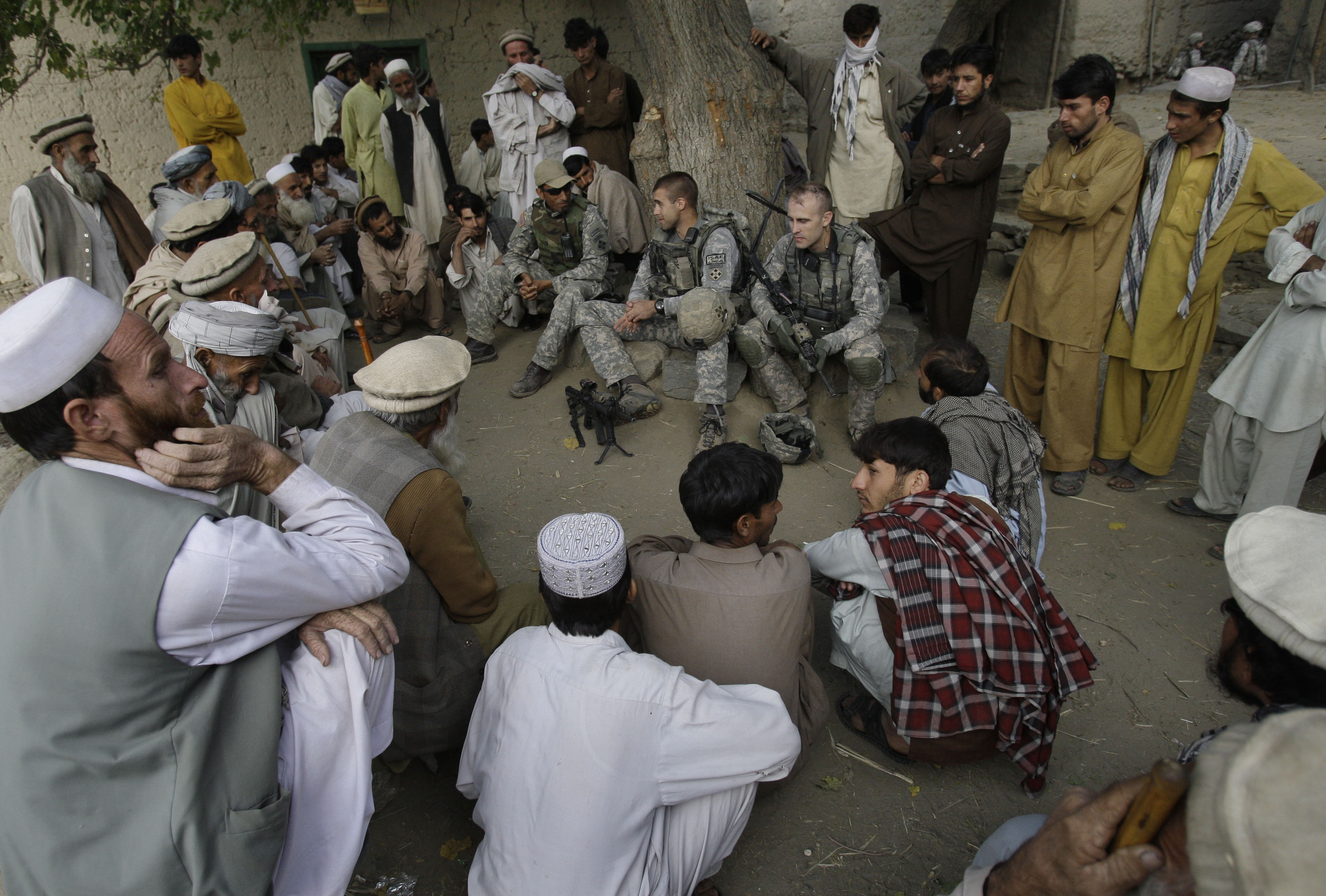
    After the suspension in November of a resettlement program for Afghans who helped U.S. soldiers and civilians, the Trump administration is now trying to send up to 1,100 of such Afghan refugees to the Democratic Republic of Congo. These include former interpreters for the U.S. military, former members of the Afghan Special Operations forces who worked alongside their U.S. counterparts, and families of U.S. service members — including about 400 children.

    These Afghans are trapped in limbo at a former U.S. military base in the Gulf emirate of Qatar (amidst the U.S.-Iran war), where they were taken in late 2024 for a short stay while they completed the resettlement process.

    Now, the U.S. Department of State wants to rid itself of the problem, and these refugees may soon be given a brutal choice between death and disaster.

    One option will be to return to Afghanistan, where many are on the Taliban death list for aiding Americans. The other choice would be the Democratic Republic of Congo (also known as the DRC), a country in central Africa enmeshed in bloody civil wars that have killed and displaced millions.

    Why would U.S. officials choose the DRC? A State Department spokesperson told the New York Times the focus is on “voluntary resettlement.” Refugee organizations beg to differ.

    “They have been trying to wash their hands of these Afghans,” I was told by Shawn Van Diver, president of the aid group AfghanEvac. “The DRC may be the only ones who will play ball with them. So the DRC is rising to the top.”

    Other refugee aid groups are equally horrified, as we all should be.

    “It is horrific and absurd to think of it as a viable option to send persecuted people to a country in the midst of active conflict and listed as Do Not Travel by the State Department,” said Jennifer Patota, deputy director of U.S. legal services at the International Refugee Assistance Program.

    “This is a complete betrayal of our promise to Afghans who stood by us. Any future partners will be watching,” she said.

    But concepts like honor and loyalty or even simple human decency don’t move the White House officials who devise U.S. refugee policy. They should, however, move every citizen and U.S. legislator who cares about the future safety of our military, and the immorality of U.S. leaders eager to sell out allies.

    This latest disgrace sent my mind racing back to President Joe Biden’s shameful and botched withdrawal from Afghanistan (following on Trump’s equally shameful first-term pullout accord with the Taliban). After many trips to Afghanistan, I tried, as did so many U.S. journalists, former U.S. military, and U.S. officials who had served there, to get friends and comrades out.

    One of those, whom I wrote about, was a judge who had worked with U.S. officials and had stellar recommendations for the special immigrant visa, known as an SIV, for those who helped Americans. After harrowing months hiding outside Kabul with the Taliban on his heels, and then waiting a year in Pakistan for an SIV, he finally had to return to with his ill wife to Afghanistan when their Pakistani visas expired. I can’t use the judge’s name because he is in hiding.

    Although he had completed essential parts of the application process, the Trumpers froze the program at the end of 2025. The supposed reason was a murder in Washington, D.C., by an Afghan refugee (not an SIV holder). Absolutely no excuse for rejecting Afghans who risked their lives to help U.S. personnel.

    I spoke about this latest Afghan tragedy to Najib Bakhshinda, a former journalist, who, with his human rights lawyer wife, now heads a nongovernmental organization (NGO) in Canada called GCARR-CANADA that works to help refugees facing danger. Along with their four sons, they made it from Kabul to Ottowa.

    I asked Bakhshinda what would happen if the Afghans in Doha returned to Afghanistan.

    “They will simply get killed,” he replied. “The Taliban have an official office in Doha, Qatar, and they know who is in Camp As Saylihah [where the Afghans are held]. They even visited the camp and tried to ask about the residents, but people don’t trust them.”

    So let me repeat: The White House wants our Afghan allies trapped in Doha to choose between terrible danger and likely death.

    What makes this story even darker is the Kafkaesque process that doomed many of these refugees after they reached Doha. “There had been pre-vetting before they reached the camp,” I was told by Andrew Sullivan, a military veteran who served in both Iraq and Afghanistan, and now heads No One Left Behind, an organization that helps Afghans resettle here.

    But many of the 1,100 couldn’t qualify for SIVs because of arcane regulations, so they had to apply as refugees.

    For example, Afghan Special Forces operators who fought side-by-side with and supported U.S. troops were disqualified if the Afghan government paid them rather than the U.S. military. Yet, the Taliban wants them dead just the same.

    There are cases where a child of an SIV applicant aged out at 21 while the family waited years for their visa, and thus was no longer eligible. Or interpreters for U.S. units — prime targets of the Taliban — who didn’t work the required 365 days.

    “Absolutely, exceptions should be made if they pass final security clearance,” insisted Sullivan, whose organization helped resettle 3,300 Afghan and Iraqi SIV holders. And, if the U.S. is still unwilling, said Sullivan, then officials should ensure they are going to a safe country where they can survive.

    Once upon a time, a bipartisan movement of veterans in Congress promoted laws to enable Afghans who helped us to get visas. But as time passed, and foreign policy crises multiplied, the issue faded from view.

    “There is still strong bipartisan support, but the issue has fallen out of sight,” Sullivan said. “Congress needs to act. It can change the law any time.” Or, I’d add, it can press to revive the SIV program the White House froze. Pressure can also be brought on the State Department to drop the two despicable options it is trying to impose on the Afghans in Doha.

    This is a refugee issue that all Americans should be able to unite behind.

  • White House rejection of Ukraine’s help to fight Iranian drones may cost U.S. military lives

    White House rejection of Ukraine’s help to fight Iranian drones may cost U.S. military lives

    Nothing so perfectly demonstrates Donald Trump’s reckless approach to waging war on Iran than his rebuff of Ukraine’s offer to share drone technology that could save U.S. military lives.

    Clearly, the president had little idea what he was getting into when he joined Israel in bombing Iran and killing its top leadership. This was a war of choice — the ugly Iranian regime posed no immediate threat to the U.S. — but Trump thought the effort would be easy.

    As his tsunami of Truth Social verbiage and endless stream of comments to reporters show, he expected a quick victory — either a popular uprising leading to regime change, or a Venezuela-type win in which the ouster of a dictator (or ayatollah) let him dominate the country and its oil.

    How any president could be so willfully blind is a question for psychiatrists, but Tehran ain’t Caracas. POTUS failed to foresee the obvious: that Iran would likely retaliate by closing the Strait of Hormuz to oil exports from the Persian Gulf for the very first time.

    Voila! U.S. gas is at over $4 a gallon, and the entire world economy is threatened if the strait isn’t reopened. Now, Trump faces only bad options in a war he clearly doesn’t understand.

    Despite his claims, indirect U.S. contacts with Tehran via Pakistan are likely going nowhere since the president is demanding total surrender, and Israel keeps wiping out potential Iranian negotiators.

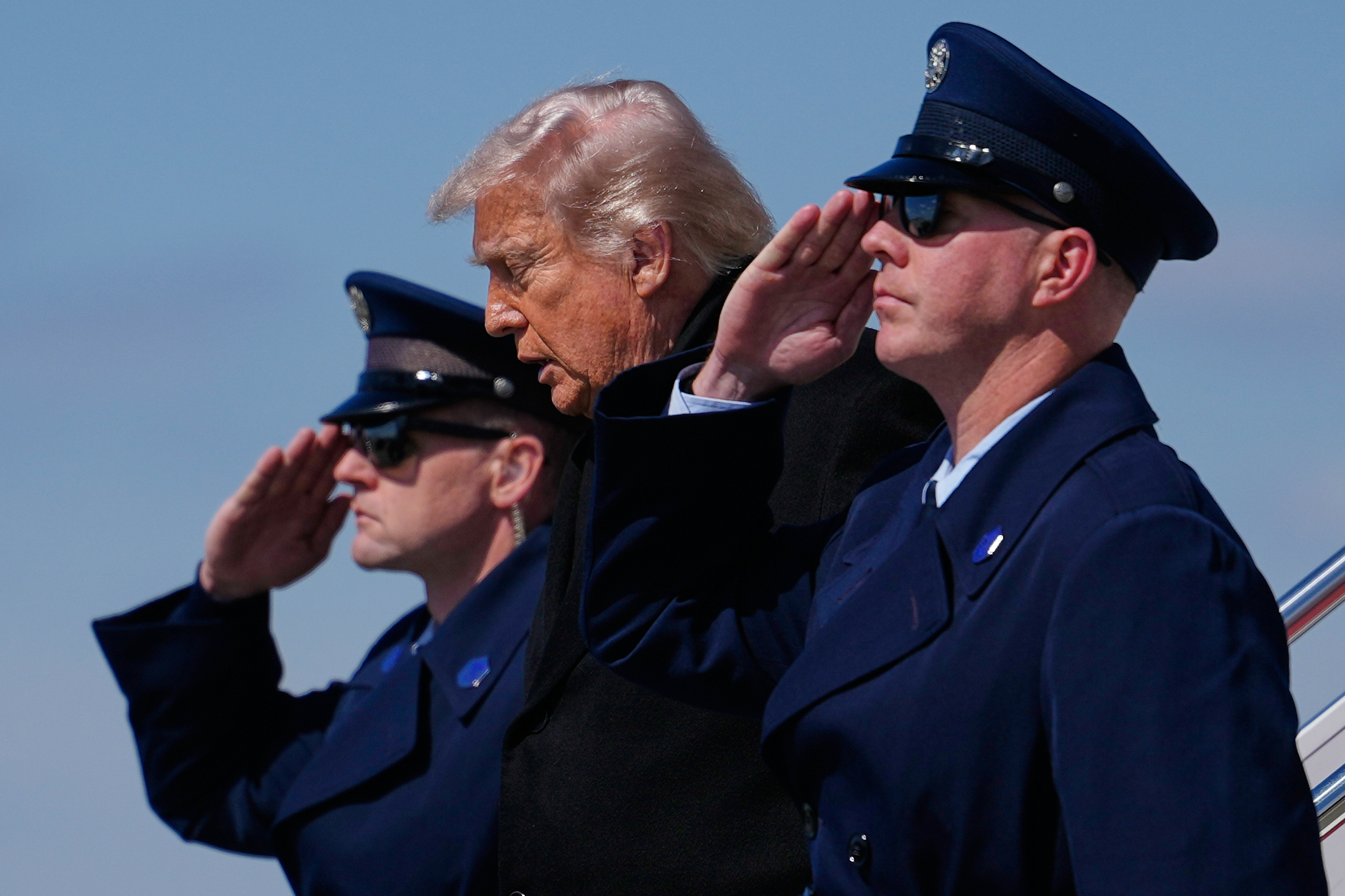
    President Donald Trump arrives on Air Force One at Dover Air Force Base, Del., on March 18 to attend the casualty return for the six crew members of an Air Force refueling aircraft who died when their plane crashed in western Iraq while supporting operations against Iran.Julia Demaree Nikhinson

    Most scary, as POTUS keeps dispatching more troops to the Mideast, he seems oblivious to the nature of the war in which he has enmeshed our conventional forces. For the first time, the United States is facing the new style of hybrid warfare that Ukraine has been waging for four years against Russia.

    Neither the White House nor the Pentagon is ready. Yet, Trump keeps rejecting President Volodymyr Zelensky’s offers of vital help.

    The Iran war has exposed how unprepared the United States still is for modern conflicts in which large numbers of inexpensive unmanned drones and smaller, cheaper missiles can be used asymmetrically against pricey U.S. conventional weapons.

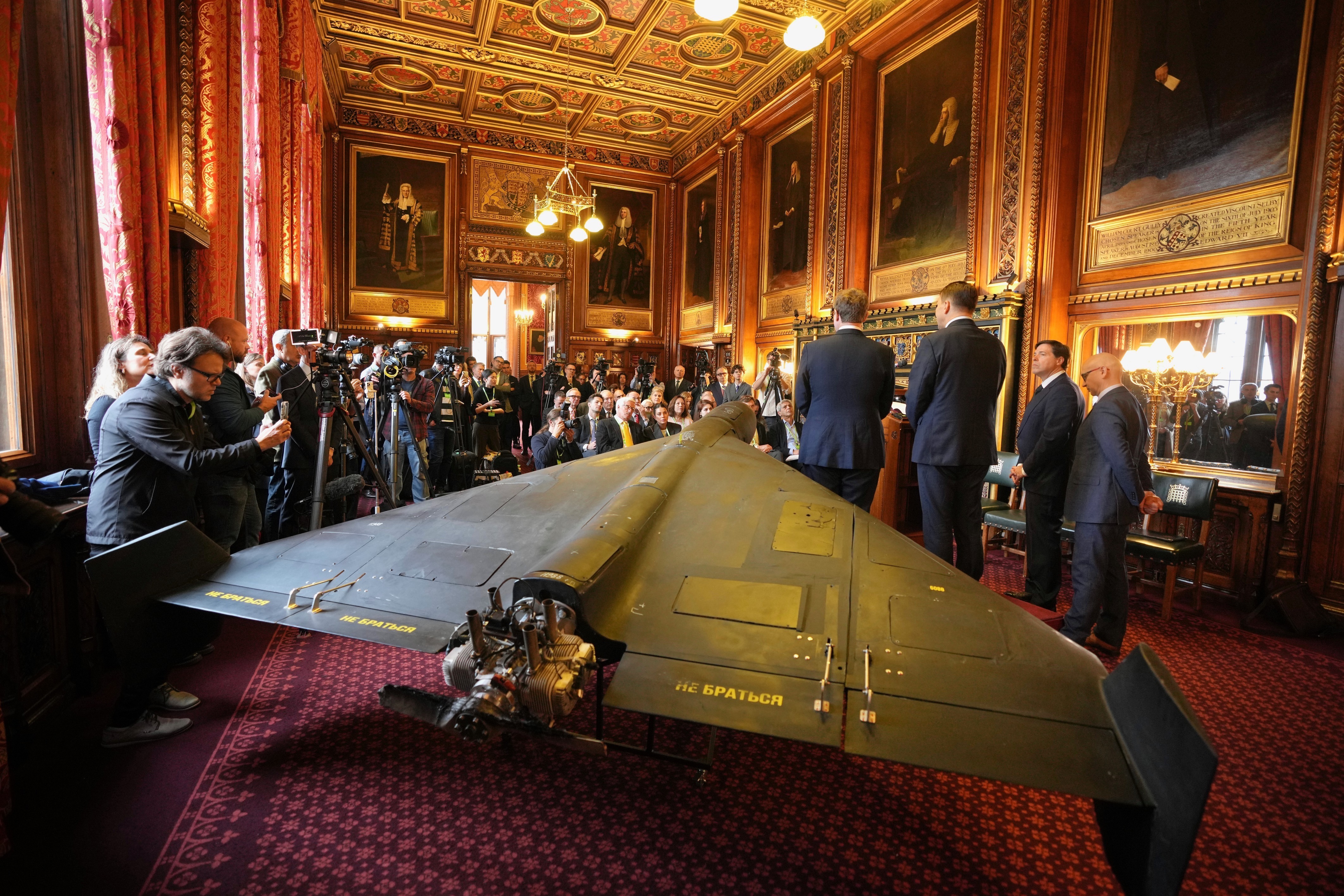
    Over the past four weeks, Gulf allies and U.S. forces have been downing Iranian Shaheds, drones that cost $20,000 to $50,000, with Patriot interceptors and other multimillion-dollar systems meant for targeting ballistic or cruise missiles.

    The U.S.-made Patriots are in increasingly short supply, as the demand for them mounts in Europe, including Ukraine, and Asia — as well as among Gulf allies whose infrastructure is now being attacked by Tehran.

    In the first four days of the Iran war, according to figures published by Philadelphia’s Foreign Policy Research Institute, the Gulf allies used up 618 Patriot PAC3 missiles, the equivalent of a whole year’s production by Lockheed Martin.

    In those first four days, the Pentagon likely fired about $5.7 billion worth of interceptors to shoot down Iranian ballistic missiles — and drones.

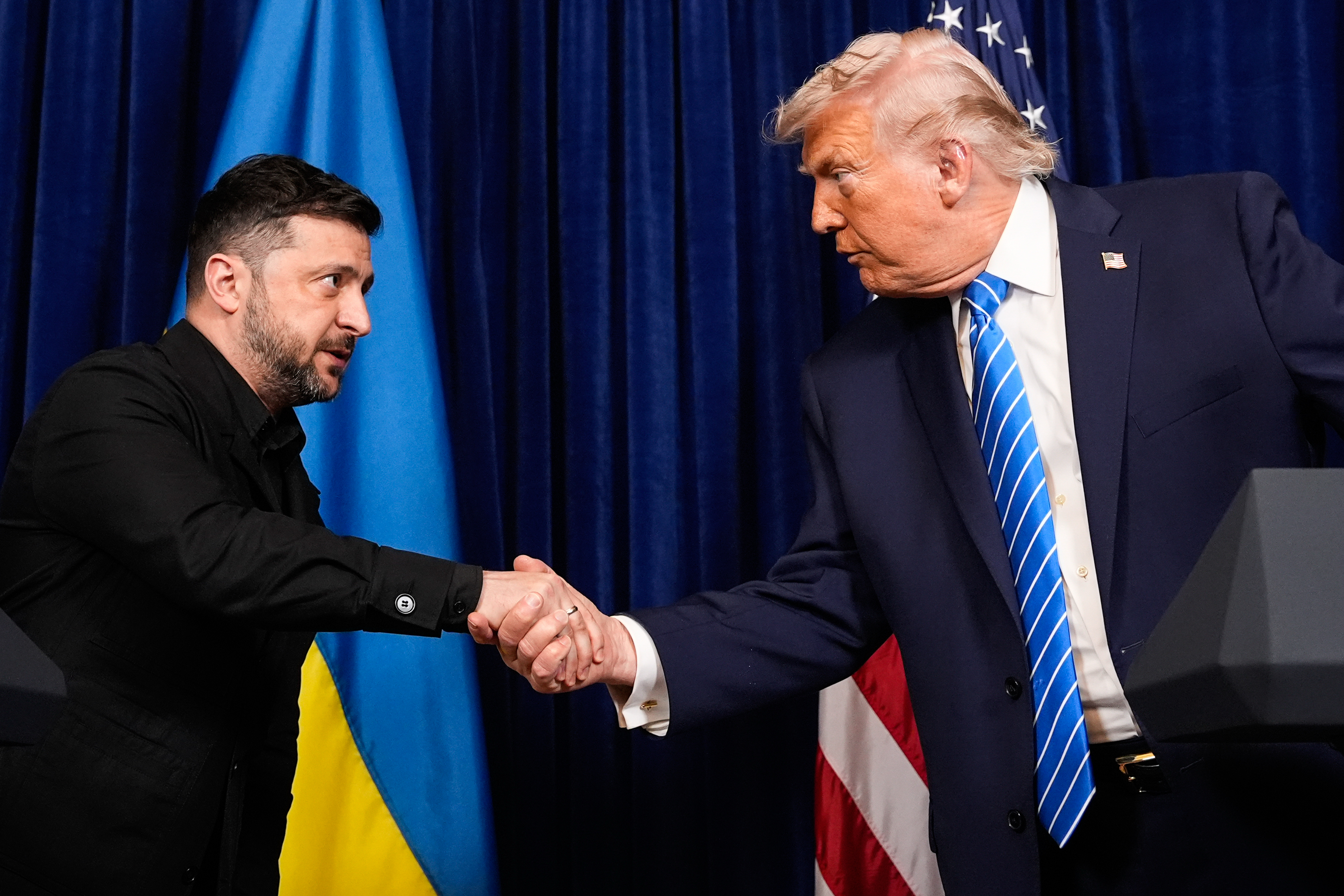
    President Donald Trump and Ukraine’s President Volodymyr Zelensky shake hands at the start of a joint news conference following a meeting at Trump’s Mar-a-Lago club in December.

    It is infuriating, then, that Trump keeps rejecting help from the country that knows better than any other how to counter drone attacks, especially Iranian Shaheds.

    It was Iran that first sent Russia the Shahed drones Moscow has used relentlessly to attack Ukrainian soldiers and cities. Vladimir Putin, in turn, has upgraded those drones and is transferring drone technology and satellite intelligence to Tehran to help target U.S. soldiers in the region. (Yet, Trump still insists on giving Russia a pass.)

    Zelensky offered nearly a year ago to share Ukraine’s experience and technology, and to send drones and interceptors that have been tested and constantly updated on Ukraine’s front lines. In return, he requested U.S. air defense missiles that Europe would pay for.

    “Today, Ukraine has more experience than anywhere in the world to defend against drones,” I heard the Ukrainian president tell European leaders at the Munich Security Conference in February. “Iranian Shaheds are killing our people. Our world of drones is your world of drones. Our ability to stop this sabotage is yours.”

    But POTUS keeps turning the Ukrainian leader away.

    Sneering at Kyiv’s offer, Trump insisted in March that the U.S. military didn’t need Ukrainian expertise. “No, we don’t need their help. We know more about drones than anybody,” the president boasted in a Fox News interview. That simply isn’t true.

    If U.S. Marines and soldiers try to take Iran’s key oil depot on Kharg Island, or attempt an extremely risky effort to unearth buried stores of enriched uranium at Isfahan, they will provide rich targets for drone warfare. The island is only around 21 miles from the Iranian mainland, within easy reach of waves of Shaheds.

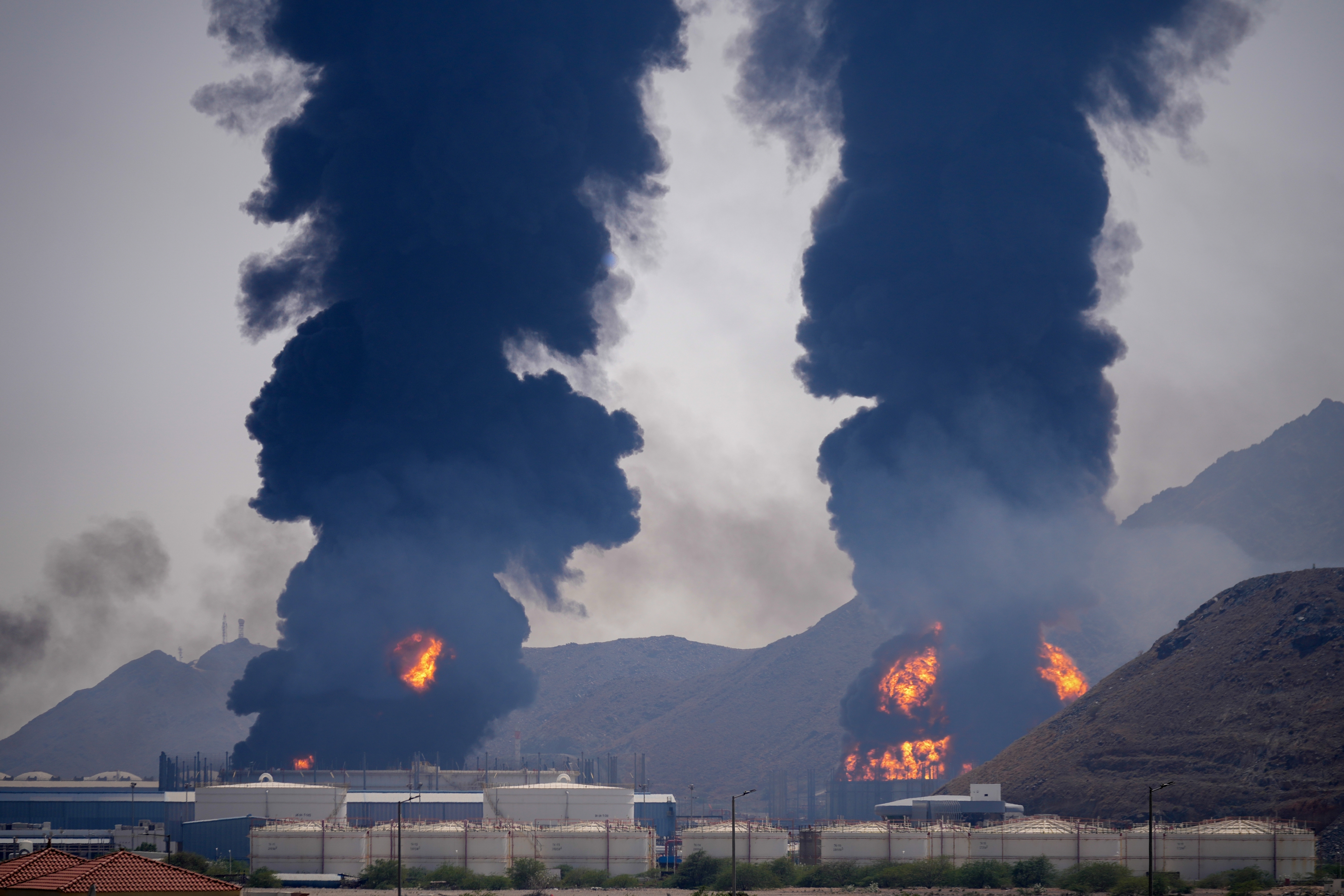
    Plumes of smoke and fire rise after debris from an intercepted Iranian drone struck an oil facility, according to authorities, in Fujairah, United Arab Emirates, March 14.Altaf Qadri

    Landing craft and vehicles make easy targets. And even though the U.S. has sunk Iran’s navy, its small boats can launch drones at American ships. Recall that Ukraine drove Russia’s Black Sea fleet out of its waters and back to home ports using unmanned sea drones, some of which could fire missiles.

    Iranian drones are now also targeting the infrastructure of Arab allies and U.S. bases in those countries. More than two dozen U.S. troops were injured by an Iranian missile and drone strikes at the Prince Sultan Air Base in Saudi Arabia on March 24, proving their reach. And the six U.S. Army Reserve soldiers who were killed in Kuwait on March 1 were victims of a drone attack.

    That is why those Gulf states, unlike Trump, have been eagerly courting help from Ukrainian drone experts. In mid-March, according to Zelensky, 201 drone defense specialists had been deployed to Qatar, the United Arab Emirates, Saudi Arabia, and Jordan, where the Ukrainians are setting up anti-Shahed defenses for a U.S. military base.

    It gives me chills to think of Trump sending U.S. troops to launch a ground war in Iran when he is so blinkered about his goals or the necessary means to achieve them. He enjoys using force, but wants easy wins, and is clearly uneasy with complex challenges. He is hinting he may quit this war without Iran regime change, or removing enriched uranium, or reopening the Strait of Hormuz, leaving the whole region in chaos and the global economy in peril as energy prices continue to soar.

    Honestly, I don’t know which would be worse: sending ground troops to Kharg or to the Iranian mainland, with a high likelihood of disaster and/or a quagmire, or the president pulling a TACO (Trump always chickens out) and leaving ill-equipped Arab and European allies to cope with a global economic mess.

    I do know that it is criminal to reject the help of Ukrainians who stand ready to aid U.S. troops against the asymmetrical warfare that a weakened Iran can still muster. If more U.S. troops die from Iranian drone strikes that Kyiv could have helped counter, then their blood will be on Trump’s hands.

  • Trump’s Iran quagmire distracts from Chinese threat to Taiwan

    Trump’s Iran quagmire distracts from Chinese threat to Taiwan

    KINMEN, Taiwan — From this tiny outer island of Taiwan, which lies less than two miles from the Chinese mainland, one can view the high-rise towers of the Chinese port city of Xiamen.

    Looking out over an extensive beach and through the mist at China, I realize Xiamen could probably be reached from where I stand by a good swimmer. From this vantage point, it’s easy to imagine Chinese leader Xi Jinping pursuing his obsession to “reunify” with the self-governing island democracy of Taiwan — whether by so-called peaceful means, by blockade of the Taiwan Strait, or using more direct force.

    I traveled to Taiwan because President Donald Trump was supposed to meet Xi in Beijing this week. POTUS had previously signaled he might weaken long-standing U.S. support for Taiwan out of his desire to cozy up to the Chinese leader and sign an advantageous trade deal. Moreover, the White House has frozen a deal Trump had already endorsed for Taiwan to purchase around $11 billion to $13 billion worth of U.S. defensive weapons, so as not to upset Xi before the visit.

    But Trump’s poorly planned war on Iran (he apparently never considered how Tehran would retaliate) has caused a postponement of the long-awaited trip until mid-May. As the erratic POTUS sinks into a potential Iran quagmire, lacking any cohesive strategy to thwart Tehran’s partial closure of the Strait of Hormuz, he is even less likely to focus strategically on the Taiwan issue.

    Yet, any potential Chinese blockade of the Taiwan Strait in the next few years could present an equal or even greater security threat to the United States than Iran’s blockage of the Strait of Hormuz, through which about 20% of the world’s oil trade flows.

    To understand why, it helps to know a bit about Kinmen’s history.

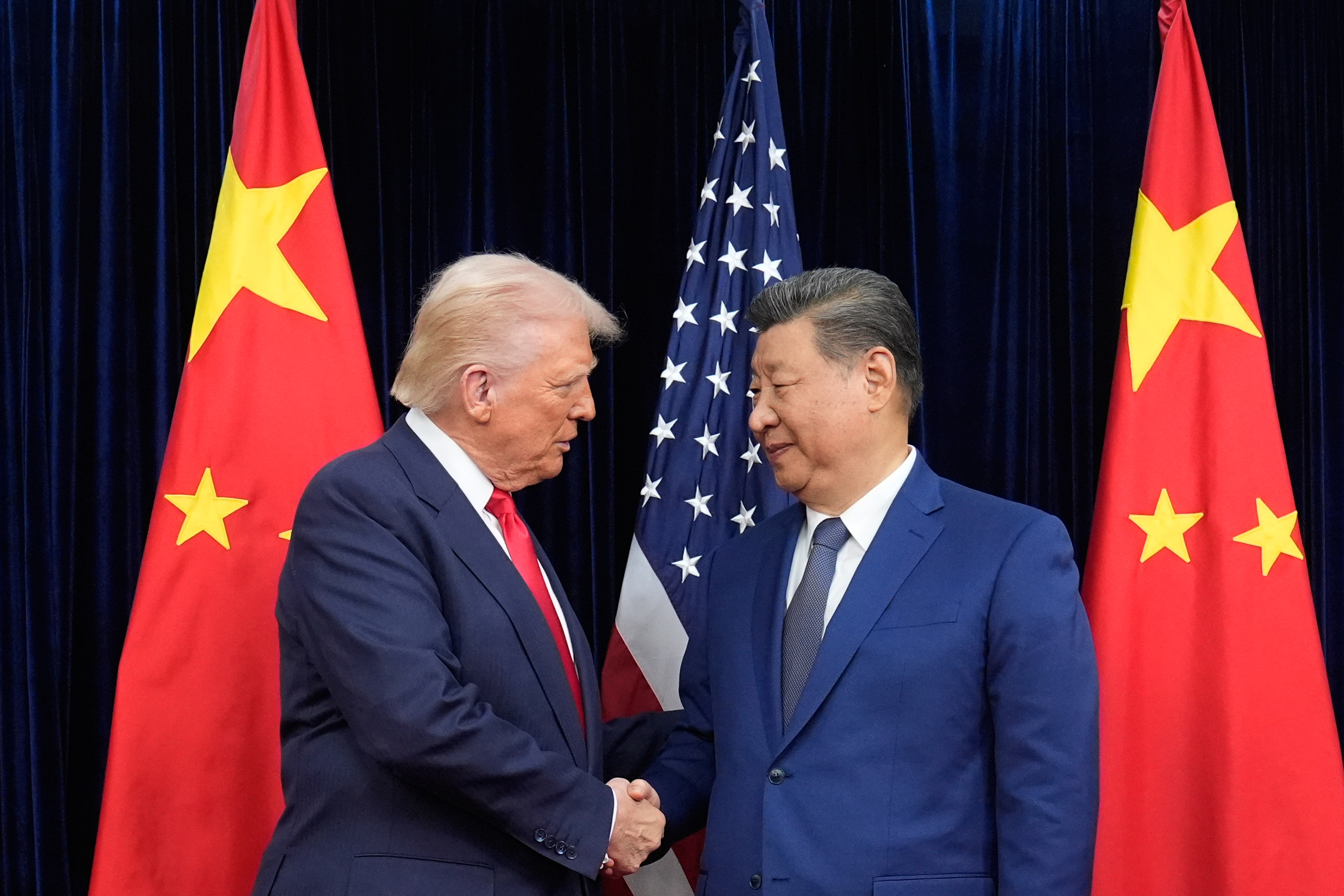
    President Donald Trump and Chinese President Xi Jinping shake hands before their meeting at Gimhae International Airport in Busan, South Korea, in October.Mark Schiefelbein

    Until 1993, Kinmen was off-limits to visitors because it was a closed military zone, and locals lived under martial law from 1956 to 1992. Most of the 120,000 Taiwanese troops have been withdrawn, although a small garrison remains.

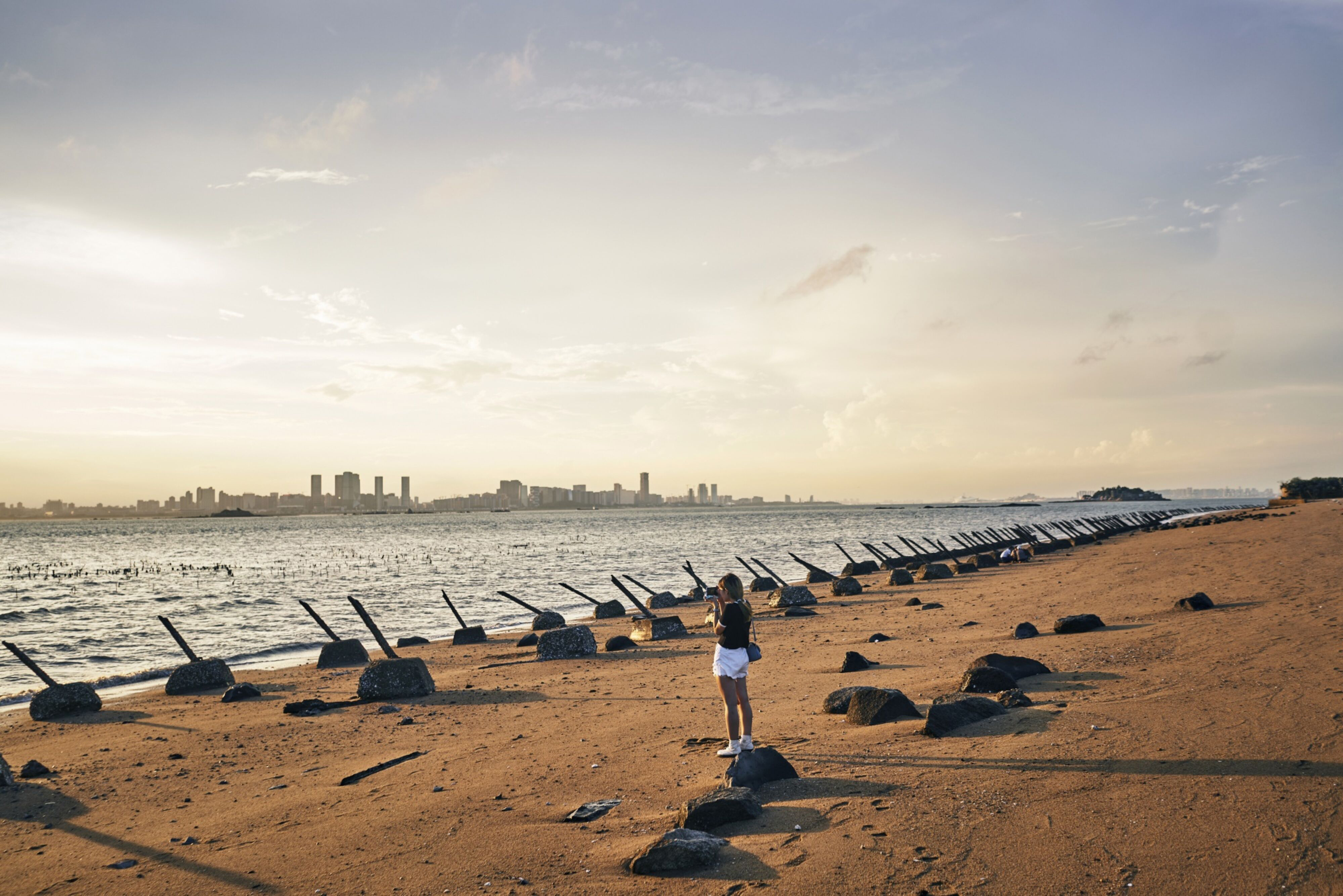
    Yet, an endless row of rusty anti-landing spikes along the beach line stand as a reminder of the 1949 civil war Battle of Guningtou between the Communist People’s Liberation Army (PLA) and Chiang Kai-shek’s Nationalists, who were defeated on the mainland and had retreated to Taiwan. With U.S. backing, the Nationalists set up the Republic of China (ROC) government on Taiwan’s main island, roughly 110 miles from Kinmen, and held off the PLA.

    Those Americans who are old enough may recall the 1958 battle of Quemoy, as Kinmen was formerly known. During that battle, massive PLA shelling along with a Chinese blockade of the Taiwan Strait tested U.S. support for the ROC government. But President Dwight D. Eisenhower sent ships to break the blockade and repel the missiles. A local war museum displays huge photos of U.S. troops arriving on Kinmen.

    Since the U.S. formally recognized the Beijing government in 1979, and cut diplomatic ties with Taipei, Taiwan has existed in a diplomatic grey zone. China treats it as a renegade province and only a handful of countries recognize it as an independent country.

    But the U.S. insists that differences between Beijing and Taipei be settled peacefully, and is committed to providing Taiwan with defensive weapons. Moreover, U.S.-Taiwan relations are close: few Americans realize that Taiwan is America’s fourth largest trading partner, due to its technological prowess.

    As for Kinmen, these days China tempts its youth with the glitzy shopping malls of Xiamen, reachable by a 30-minute ferry ride, while a massive new international airport, built on a man-made island, cuts the sea distance between China and Kinmen to roughly one mile.

    Kinmen has become a tourist destination, with its beaches, war museums, and preservation of historic Qing dynasty homes. Mainland Chinese visitors pour into Kinmen, and the Beijing government heavily promotes the purported advantages of “reunification” to the Kinmen public — including jobs and entertainment sites — as part of its effort to win Taiwan citizens to its side.

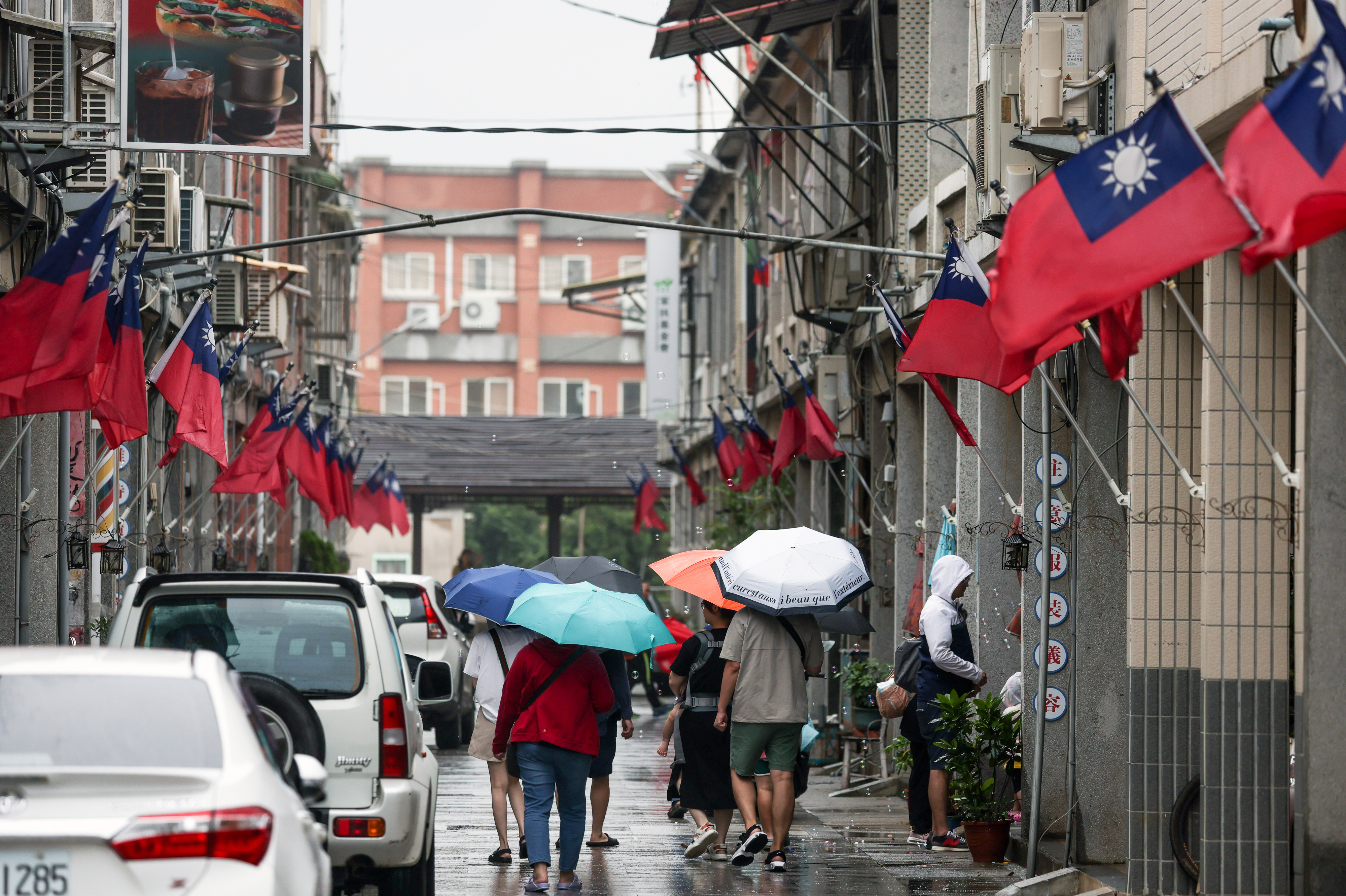
    Taiwanese flags in Kinmen, Taiwan, in 2024.I-Hwa Cheng

    So it’s not surprising that the Taiwanese government has blocked construction of a bridge that would connect the airport directly to Kinmen, presumably to prevent both the escalation of propaganda and the security threat of a direct link.

    “Kinmen is at the front line of geopolitical conflict,” said youthful local Councilor Tung Sen-pao, as he greeted visitors in a curio shop. “We are a small lens through which you can view a much larger conflict between the U.S. and China and Taiwan and China.” As he spoke, the sound of military target practice reverberated outside.

    Indeed, in recent months, China has been conducting the largest-ever live military fire drills all around Taiwan, and simulating a total blockade of its largest and smaller islands. An aggressive Xi refuses to rule out using force for “reunification.” Locals speculate what he might do by 2027, when he has ordered the PLA to be ready to invade (without making a commitment to do so).

    This month, the U.S. intelligence community’s 2026 Annual Threat Assessment report determined that China does not plan to invade Taiwan in 2027 (although the report is published by the Office of the Director of National Intelligence, Tulsi Gabbard, whose gutting of the intel community raises the question of whether its reports can be trusted).

    That trust factor becomes critical, as does American preparedness to respond if Xi does try to limit traffic or impose a full blockade of the Taiwan Strait, given its centrality to international trade.

    Taiwanese Councilor Tung Sen-pao.Courtesy of Mark F. Nelson

    An estimated 20% of global maritime trade passes through the Taiwan Strait, and it is the main maritime route for technology and consumer goods from South Korea, Japan, and Taiwan to U.S. consumers.

    The United States has no treaty commitment to defend Taiwan, only a strategic necessity to prevent its forcible seizure by China. Little Taiwan, with 23 million people, produces 90% of the world’s most sophisticated semiconductor chips. If cut off, it could be disastrous for U.S. civilian and military needs.

    Moreover, if Taiwan falls, the security of U.S. allies in Seoul, Tokyo, and Manila, with whom America does have military commitments, would be at deep risk.

    Equally troubling, Trump’s Mideast war has drained missile interceptor stockpiles, including Patriot missile batteries and other weapons that are vital to dissuade Xi from taking rash steps. It is hard to believe a president who has acted so fecklessly on Iran strategy has any adequate plan for handling a meeting with China’s leader, except possibly to cave on supporting Taiwan.

    Meantime, Councilor Tung admits that Kinmen will have little say over its future. “We are a tiny island,” he said with a wry smile. “There is now no way for us to counter an attack if China tries to invade Kinmen.”

    However, he also believes “a direct attack on Taiwan in a conflict is more likely than targeting offshore islands such as Kinmen.”

    The 50,000 or so permanent residents of Kinmen just hope the status quo can endure for a few more years.