Category: Columnists

  • Fighting AI and Flock, today’s Luddites are the revolutionaries we need

    Fighting AI and Flock, today’s Luddites are the revolutionaries we need

    It’s a good bet that a suburban Cincinnati man named Cody Morelock probably never heard of “Ned Ludd,” the mythical English weaver of the early 1800s who became the avatar of a movement to save society from the destructive force of a new technology.

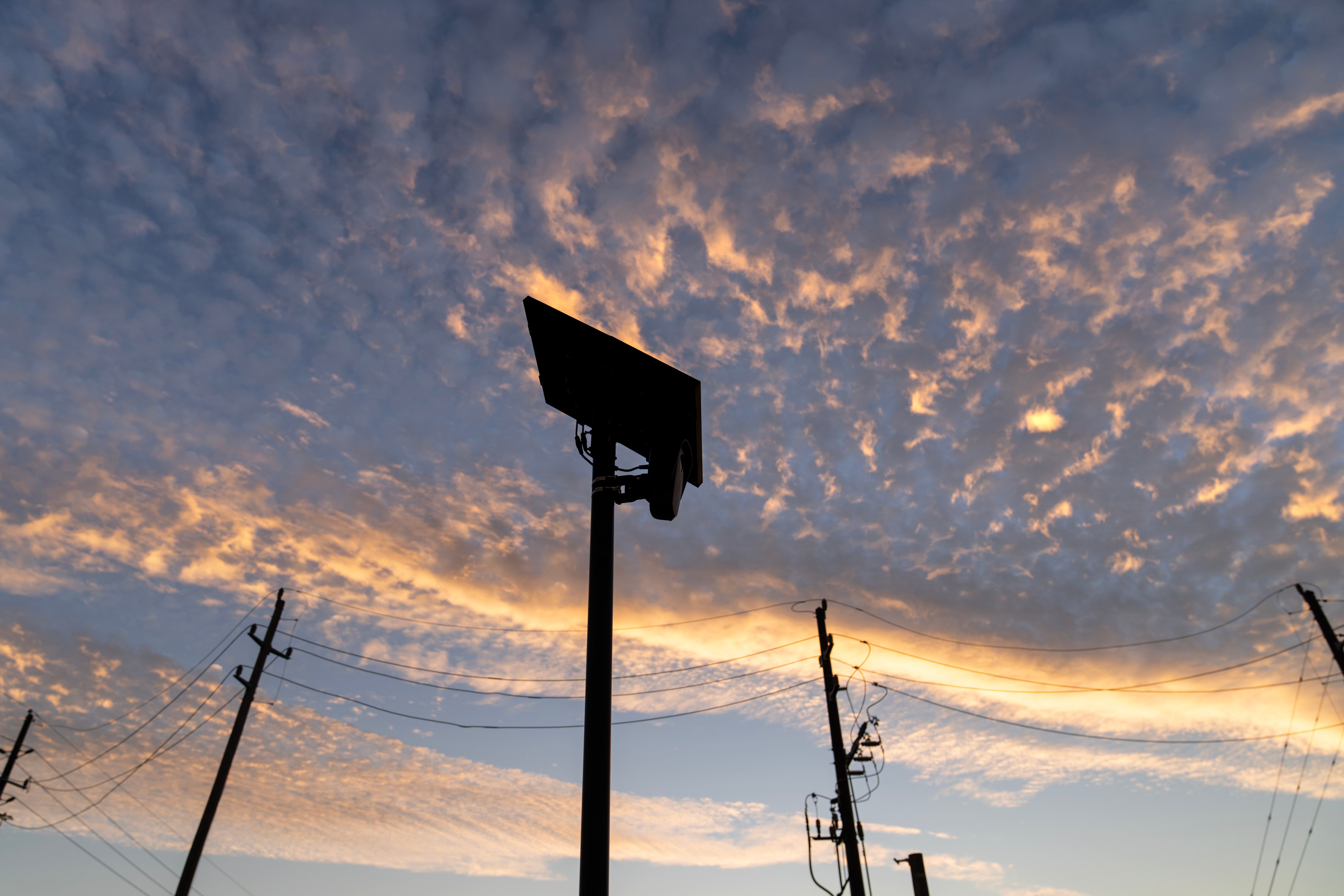
    But Morelock was absolutely channeling the spirit of history’s Luddites, who smashed up the newfangled machines of the nascent Industrial Revolution, when he was allegedly captured on video toppling a Flock automatic license plate reader near his home and obliterating the high-tech device and the solar panel powering it.

    Morelock was arrested after the June incident, and then prosecutors in Clermont County, Ohio took what looked like an open-and-shut case — with surveillance tapes, credit card receipts, and other hard evidence connecting the 35-year-old man to the alleged crime — before a grand jury of his peers.

    But Morelock’s peers apparently didn’t see a crime in the wanton destruction of a Flock camera spying on their community. The grand jury refused to indict him — another victory for the 21st-century Luddites who’ve turned U.S. politics upside down with their rage against the machines.

    Public anger over the dystopia of omnipresent cameras tracking their every movement has caused more than 50 municipalities from coast to coast to cancel or reject contracts between local law enforcement and Georgia-based Flock Safety, the leading firm.

    But that’s just the tip of a political iceberg: What’s becoming a mass movement against Big Tech’s intrusiveness in our everyday lives has also seen activists in scores of communities beat back proposed data centers that power artificial intelligence, or AI. Suddenly, politicians in both parties are tripping over each other to oppose the advanced technology they were backing just months earlier.

    This weekend, I watched an online ad from a former Democratic state representative in Massachusetts running for the Bay State’s open congressional seat. The ad channels voter anger over Flock cameras, citing two local cases of police using them to stalk unsuspecting citizens. She slams an opponent for raising money from Big Tech sources.

    With a wicked Boston accent, Jamie Belsito says, “Flock cameras feed our movements into a massive searchable network that we know can be tapped into by ICE, and now — in our own backyards — we see how that power can be abused.”

    The uprising against Flock and government mass surveillance is merging with the already explosive movement against new data centers, which now sees a whopping 75% of Americans opposed to building one in their hometown — a kind of unity that in today’s bitterly divided nation you wouldn’t even see for cuddly puppies or ice cream sundaes.

    Here in Pennsylvania, which has become an epicenter of proposed data centers, a recent analysis by Spotlight PA found at least 20 state legislative races in November in which these facilities have become a pivotal issue.

    A governor’s race that started with both candidates seen as data center advocates now has the GOP’s Stacy Garrity calling for a moratorium as Democratic Gov. Josh Shapiro — who in 2025 posed in front of earth movers to hail AI complexes as the Keystone State’s bright economic future — issued stringent new regulations while calling data centers “secretive … predators” and “bullies.”

    Did I mention that Shapiro is seriously considering running for president in 2028? Did I need to?

    Even right-wing and zealously pro-business red-state Republican governors like Texas’ Greg Abbott and Florida’s Ron DeSantis have turned sharply against data centers this year.

    It seems like the only U.S. politician with anything nice to say about these energy-sucking, polluting behemoths is Donald Trump, who told reporters last week, “If I were the mayor of a town or the governor of a state, and I had a chance to get a big plant in, an AI plant or a data center, I would absolutely want it because the jobs are enormous and the money paid, the taxes paid, are just enormous.”

    You don’t need Kalshi to bet that dozens of Democrats will feature Trump’s toxic words in their fall campaign ads.

    In the 21st century, the most exciting moments are the ones the TV pundits — who have more in common with their political drinking buddies or the cartoon villains of Silicon Valley than heartland voters — never saw coming. That list includes the progressive upheavals of 2011’s Occupy Wall Street, arguably a reaction not just to the Great Recession but Barack Obama’s tepid response, or 2017’s #MeToo movement after a man with multiple sexual misconduct allegations was elected president.

    But then Trump’s two terms, including his popular vote plurality in 2024, were also arguably the result of public fury at elites, even if a big chunk of that anger was against the ones calling out racism or sexism or homophobia. It’s worth noting, of course, that the progressive revolts, especially 2020’s Black Lives Matter marches, sparked intense backlash, yet Trump’s MAGA movement now seems in full meltdown.

    In one sense, the ability of billionaires and their endless money and their reactionary political allies to put down 21st-century unrest feels like a callback to the Luddites, whose revolution against the new machines changing the landscape of northern England in the early 19th century was also crushed, often violently, by the powers that be.

    But Fred Hampton famously said, “You can jail a revolutionary, but you can’t jail the revolution,” and the radical spirit of the Luddites continued to fuel pro-worker and pro-human rights movements for two centuries. On the whole, the Industrial Revolution won, but in 2026, revulsion over the way Silicon Valley — and especially AI — is changing our daily lives so quickly feels as if things could turn out differently.

    This moment was captured in a recent cartoon that roughly depicted George Jetson — whose world of flying cars was the future my generation of boomers was promised in the 1960s — doing the drudge work of vacuuming while Rosie the robot paints at an easel. Robots were supposed to free us to create beautiful music or write the great American novel in our leisure time, not do those things, as well.

    Charolette Baierl (left), the Ohio River Valley regional organizer for Climate Reality Project, and Sally Simpson, a Ford City organizer, protest a planned data center near the Rachel Carson Riverfront Park in Cheswick, Pa., in June.Stephanie Strasburg

    To live in America in 2026 is to experience the constant anxiety of being watched by the government or big corporations — whether that’s on our phone or on the streets — and wondering when people stopped reading books, or whether that song was by a real person, or whether that video you just watched of the president (or from the president) is even real.

    This weekend came news of an actual event in China called the World Humanoid Robot Games in which one of the robots shattered Usain Bolt’s world record for the 100-meter dash. Who wants this? … other than a handful of billionaires who are also rapidly building their own remote high-tech cities to save themselves from the looming torches and pitchforks.

    They are going to need them. It was one thing when the Luddites trashed automated textile looms, when the meaning of work was up for grabs. That same threat is also posed by AI, which is starting to drag down the job market, but when robots take over track and field or pop music, people see that our fundamental humanity is under attack. That realization seems to have really kicked in this summer, and the future of our revolution is both exhilarating and somewhat scary.

    Acts of vandalism — like the Ohio attack on the Flock camera — or worse are becoming somewhat more commonplace. Acts of violence — like the gunshots fired into the home of an Indianapolis city council member who supported data centers — are reprehensible and not helpful to the larger cause. In the present moment, there is rising hope that AI can be reined in the right way: at the ballot box.

    When it comes to this issue, the ground beneath our feet may continue to keep shifting between now and Election Day. An article in Sunday’s New York Times described how the politics of data centers has scrambled a midterm election that was supposed to hinge on high gas prices and the growing threats to democracy. The piece noted that in Wisconsin and Florida — as well as Pennsylvania — the gubernatorial candidates from both major parties are now attacking the high-tech facilities.

    Yet, it’s hard to jibe the politicians’ embrace of populism with news that the AI industry and its related political action committees will spend as much as $200 million on the November elections. What will happen in 2027 and beyond if, and likely when, the American body politic doesn’t have the strength to slow down these sprinting robots? Will Morelock’s alleged destruction of one Flock camera seem like child’s play?

    The story of America in the 21st century has been a tale of widespread consensus that a grossly unequal and unfair nation is on the wrong track, yet bitter disagreement over whom to blame. Until now. The fight that no one saw coming — pitting everyday folks against billionaires and their robots, who can already outrun us — is about much more than an election for U.S. Congress. Today’s Luddites may be our best hope.

  • Democrat’s special election win in Western Pa. paints a dire midterm picture for GOP candidates | Shackamaxon

    This week’s edition of Shackamaxon covers SEPTA’s New Bus Network, an upset victory in Western Pennsylvania, and Center City’s creepy clown.

    A sign with a “Frequent Red” designation is posted at a South Philadelphia bus stop on Thursday. Some SEPTA bus routes are changing Aug. 23 with the launch of the New Bus Network program.Tom Gralish / Staff Photographer

    Quiet revolution

    Philadelphia has changed over the years, yet the city’s bus lines have mostly remained the same. Some of them are even based on routes that were once traversed by horse-drawn streetcars.

    The dated nature of these routes has started to take a toll. In the 2010s, bus ridership in Philadelphia declined. In fall 2014, Philadelphians took an average of 505,004 bus trips each weekday. By fall 2019, before any pandemic-induced declines, that number had fallen to 436,109. This made providing bus service less financially viable.

    In 2016, each bus trip cost SEPTA $3.44. With fares set at $2.25, riders paid most of the costs of service. Today, the fare is $2.90, but each bus trip costs SEPTA $6.90 — which is an improvement over the last few years, when costs have ranged from $7.19 to $11.32. Still, each ride is now largely subsidized by taxpayers. Given political realities and SEPTA’s deep capital needs, that’s not sustainable.

    This meant that it was time for some changes — never an easy task for Philadelphians.

    Because SEPTA’s fiscal sponsors were unwilling to invest more money in bus service, SEPTA was tasked with finding more riders without increasing the number of buses, bus operators, or bus depots. This meant cuts needed to be made to facilitate investments elsewhere while ensuring there were no disparate impacts on lower-income communities.

    On Monday, those changes will begin to take effect. The new Routes 72 and 76 will debut, providing crucial crosstown service. The 35, 47M, 62, 78, 89, and 106 will be discontinued.

    Although I sympathize with anyone who is losing their preferred bus route, these choices were not made without justification. In the case of the 47M and 89, some at SEPTA have been seeking their cancellation for ages.

    The 47M exists to distinguish the route from the regular 47, which travels down Seventh and Eighth Streets rather than Ninth. While the Ninth Street Market is an important destination, double-parked trucks making deliveries, double-parked customers picking up orders, and food stalls crowding the streetscape all make staying on time a difficult proposition. As for the 89 — which loops around parts of Juniata, Port Richmond, South Kensington, and Harrowgate — it takes nearly an hour to complete a route that takes 12 minutes on the El.

    These changes, to many riders, feel like cuts. This is an understandable response. In fact, SEPTA seems to have dropped the more ambitious-sounding Bus Revolution moniker in favor of the blander New Bus Network in response.

    But unlike last fall’s reductions over budget concerns, there won’t be fewer buses overall. The resources formerly used by the canceled routes will shift elsewhere. Importantly, frequency will increase across many routes. Including the regular 47. More and more transit experts are advising agencies to prioritize frequency and reliability in order to grow ridership.

    There will undoubtedly be some hiccups, despite SEPTA’s extensive attempts at communicating these changes. But whatever name you use, when it comes to the long-term health of the system, change is a step in the right direction.

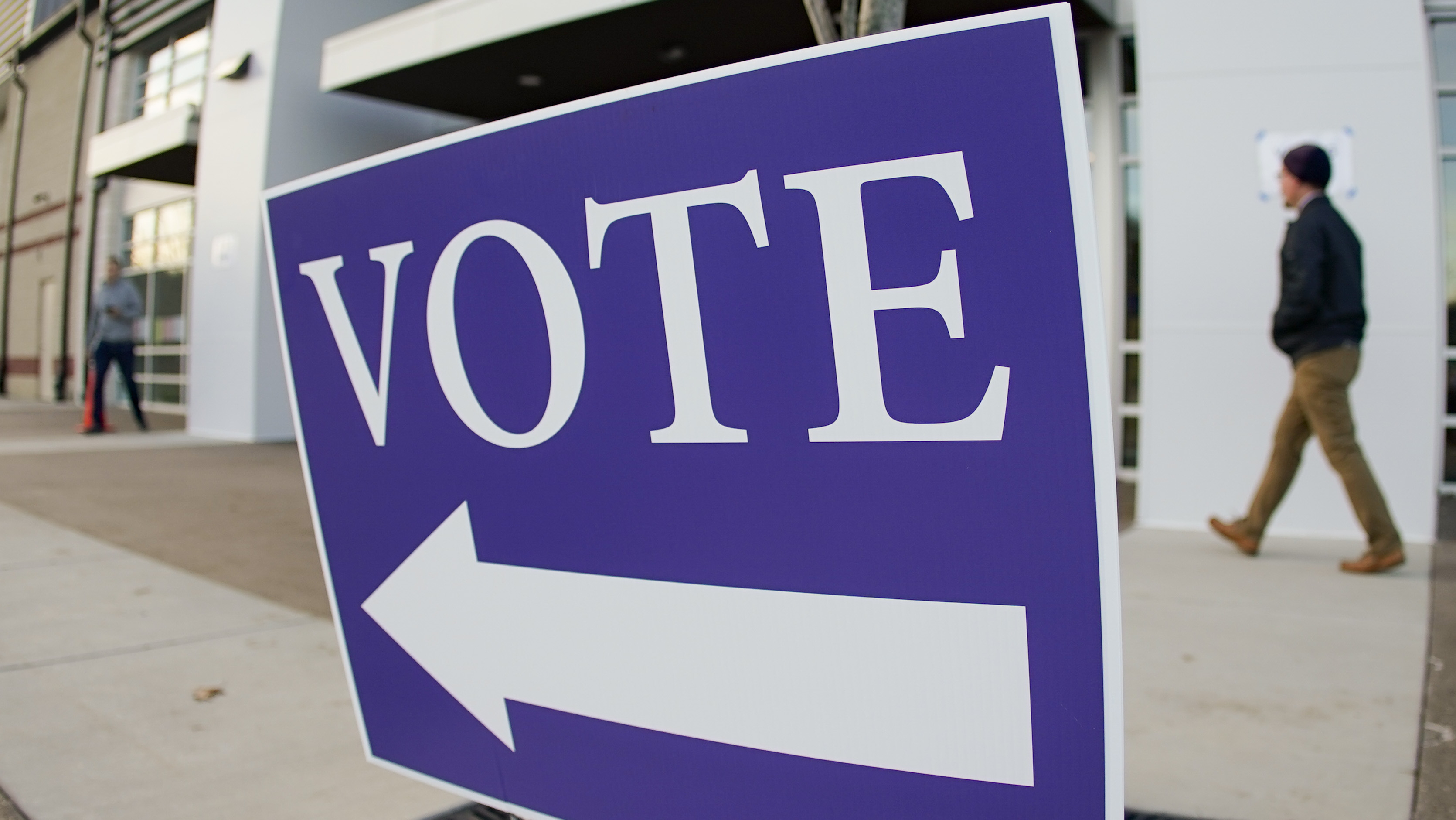
    Voters walk past a sign pointing them to the polling location in Cranberry Township, Pa. Democrat Brandon Dukes won Tuesday’s special election in a district Donald Trump won by 18 points in 2024.Keith Srakocic

    Blue Cranberry

    Pennsylvania’s 12th Legislative District, which includes Cranberry Township, used to be represented by Daryl Metcalfe. The commonwealth’s most infamous right-wing lawmaker once invited a white supremacist to testify at a legislative hearing, made bizarre homophobic remarks to a fellow lawmaker, and blocked dozens of bills for no reason other than their sponsor.

    After this week’s special election, it appears the Butler County district, which voted for Donald Trump by 18 points, will now be represented by a Democrat.

    While provisional ballots have yet to be counted, Democratic candidate Brandon Dukes currently holds an 88-vote lead over Republican Scott Timko. The two will face off again in November.

    For House Democrats, this win represents some desperately needed breathing room. While a small cohort of Republicans, many of them representing Southeastern Pennsylvania, have occasionally voted with the Democrats, the one-vote majority they’ve held for most of the last four years makes any defection costly.

    For Republicans, it should be taken as a warning sign. Right now, four congressional races are expected to be competitive, along with five races in the Pennsylvania Senate. If Democrats are overcoming 18-point margins, then Republicans may be vulnerable in more districts than anyone expected.

    Police are searching for a man in a “Chucky” style horror mask who is harassing Center City pedestrians.Philadelphia Police Department

    Clown time is over

    No matter how Philadelphia changes, the city seems unable to shake its tradition of men behaving bizarrely in public. From the “Swiss cheese” guy to Pukemon, and now a masked clown creeper.

    This time around, however, the city has found a champion who faced the danger and won.

    Jameka Wilson was on her way to SoulCycle early Wednesday morning near City Hall when she noticed a man wearing a Chucky doll-style horror mask stalking another woman, whom she tried to warn. As she told Good Day Philadelphia, when the man later approached her, laughing menacingly, Wilson stood her ground.

    She said she remained calm, turned around to face the man, squared up, and then landed a high kick directly to his chest. She even demonstrated her technique on Fox29 anchor Mike Jerrick, who volunteered for the task. Wilson advised other people who are concerned about the figure to avoid headphones and stay alert as they walk around.

    Wilson’s actions, and wise advice, have made her a genuine civic hero. Hopefully the Phillies and Sixers will soon come calling so she can throw out the first pitch, ring the bell, and get some love from grateful Philadelphians.

  • NABJ’s Thumbs Down Award should be a wake-up call for ESPN’s Stephen A. Smith

    NABJ’s Thumbs Down Award should be a wake-up call for ESPN’s Stephen A. Smith

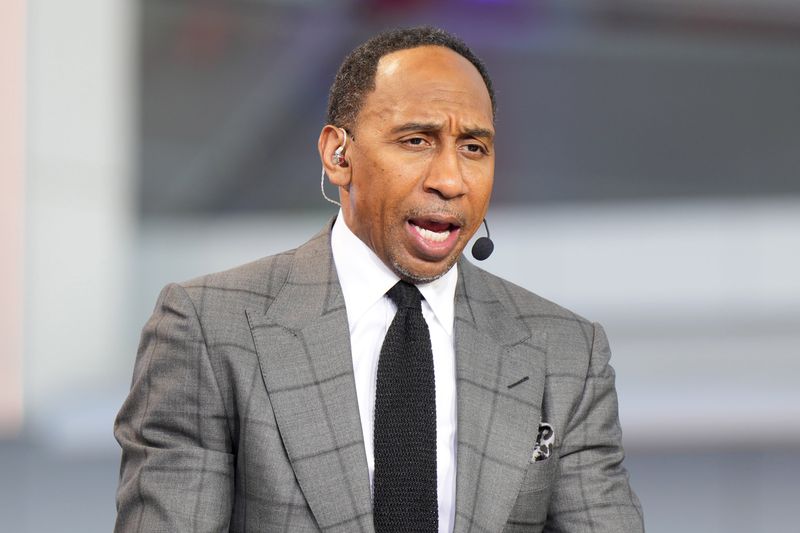
    I was in the ballroom of the Marriott Marquis hotel in Atlanta Saturday night when sports talk show host and political commentator Stephen A. Smith was named a recipient of the National Association of Black Journalists’ 2026 Thumbs Down Award.

    Talk about a fork-drop moment.

    People gasped. Others groaned. There were cheers and boos as the realization of what had just happened registered. Smith — whose smiling face was plastered up on a giant screen — had gotten an award nobody ever wants to get. A voice-over announcer explained that he had been selected because of his “recurring public pattern of disparaging commentary directed at prominent Black women across politics, sports, and media.”

    Smith, the star and executive producer of ESPN’s First Take, was not in attendance. But he promised a bold response, posting ominously on X that Christmas had arrived early. He wrote: “I’ve shut my mouth for years. Now y’all started something.”

    Fox News host Sean Hannity wasted no time in getting Smith on his conservative talk show, and asked if the award had to do with Smith’s criticisms of so-called radical people on the left. Hannity also brought up U.S. Rep. Jasmine Crockett (D., Texas) and former MSNBC host Joy Reid, and accused them both of saying “nutty things.” That was rich coming from him.

    Smith should have let him have it for that. But instead of defending these smart, accomplished Black women, Smith made it all about himself. He brought up how he had been raised by a Black woman and has four older sisters, 10 nieces, and two daughters, and called NABJ’s indictment a “flat-out lie.”

    “I don’t know what the hell they are talking about,” Smith said about NABJ.

    U.S. Rep. Jasmine Crockett (D., Texas) speaks during a primary election watch party in March in Dallas. Tony Gutierrez

    Oh, I think he does.

    Smith, a registered independent, publicly apologized last year after catching major heat for criticizing Crockett, saying she used “rhetoric for the streets” and questioning how it served her constituents. Smith has been similarly critical of tennis legend Serena Williams, former Vice President Kamala Harris, as well as Reid.

    We know this game. Black women make easy targets for provocateurs like Smith who cater to a largely white male audience. Greater energy should go into going after politicians like President Donald Trump, who thinks Smith is “low IQ” and “dumb as a rock.”

    In a video released Tuesday, Smith asked: “Where are your facts? You don’t have facts. You have feelings. Everything that I am. Everything that I’ve achieved, that has uplifted me in my life, has been associated with Black women. Black women have been my strength, my source of inspiration, and so much more my entire life.”

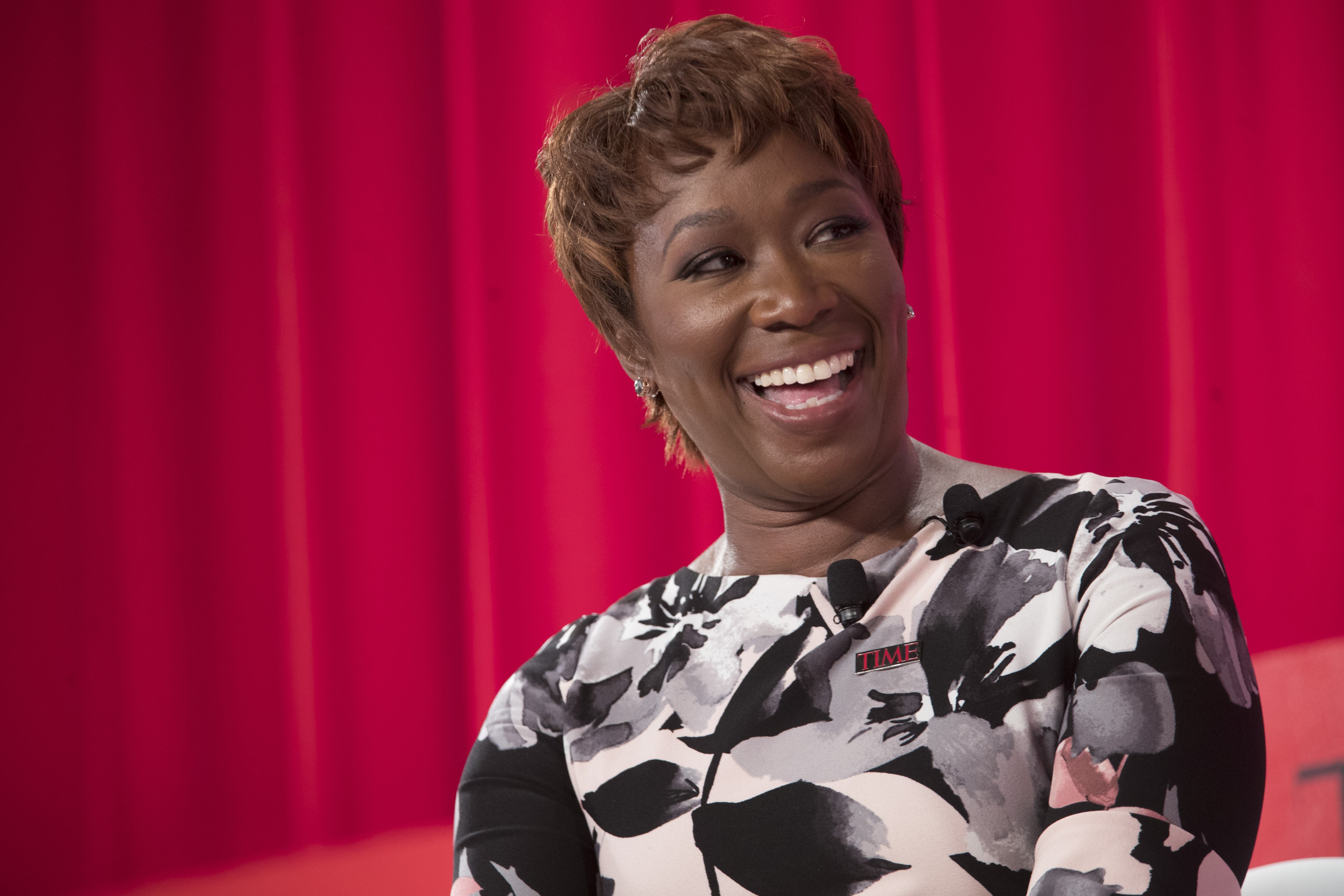
    Joy Reid photographed during the TIME 100 Summit in 2025 in New York. Mary Altaffer

    Other recipients of this year’s Thumbs Down Award include Federal Communications Commission Chair Brendan Carr, DuJuan McCoy, the owner of Circle City Broadcasting, CBS, and the Washington Post.

    This isn’t new. NABJ has been calling out individuals and institutions since its founding in 1975.

    The late Daily News columnist Chuck Stone planted the first seeds for the Thumbs Down Award a half century ago when he went after Agriculture Secretary Earl L. Butz, who made a racist remark about Black voters, according to former NABJ president DeWayne Wickham during an interview on #RolandMartinUnfiltered. During NABJ’s very first convention in 1976, Stone, who was president, organized a news conference demanding Butz’s ouster.

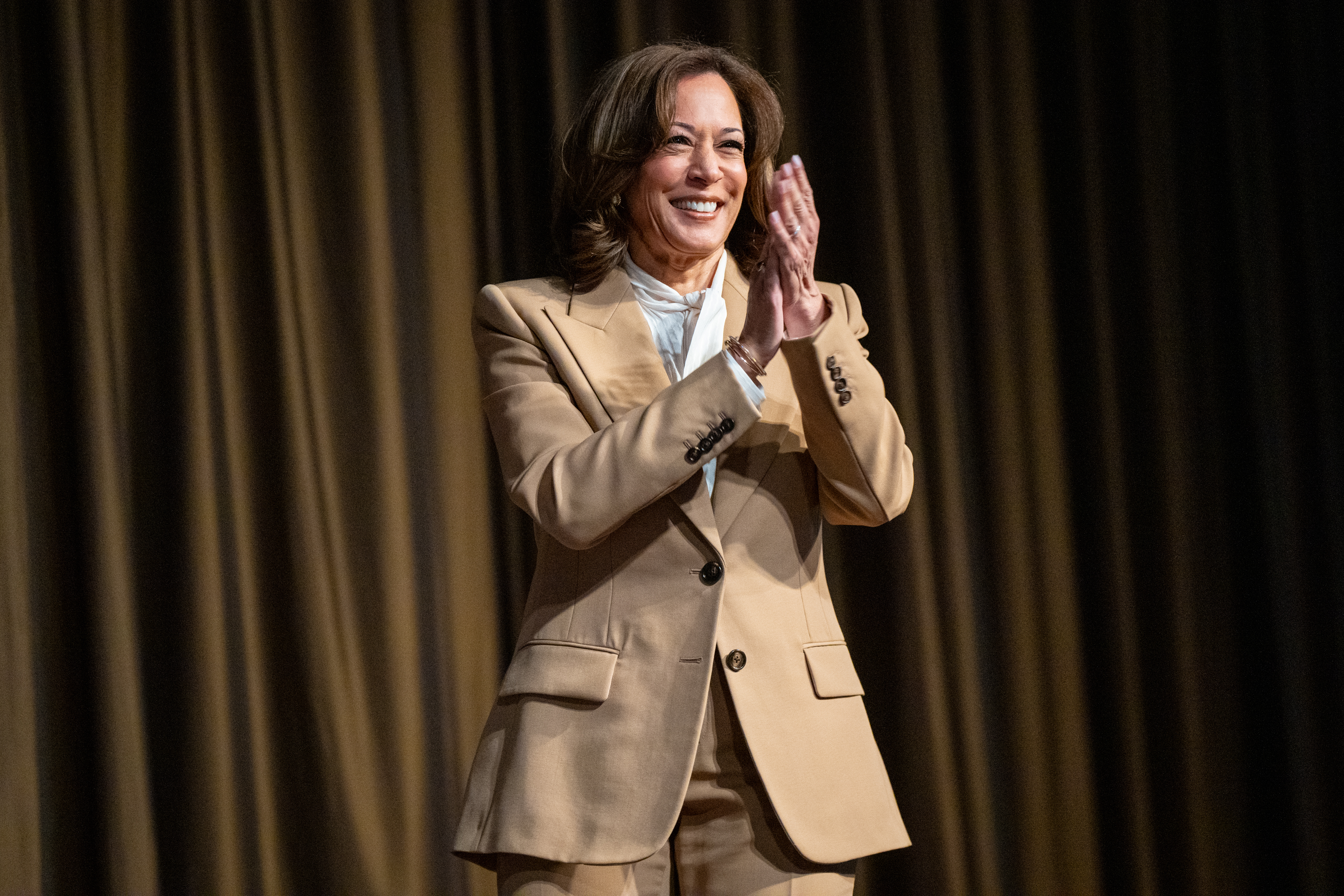
    Kamala Harris, former vice president and 2024 presidential candidate, at the National Action Network Convention in New York in April.Angelina Katsanis

    I met Smith years ago when we were both still early in our careers. He worked for The Inquirer; I was at the Daily News.

    Like me, he credits NABJ for helping jump-start his journalism career. Last year, he aired his show, First Take, from the convention in Cleveland. He’s also mentored young journalists and recruited at the career fair. Smith refers to members of NABJ’s sports task force as his “brothers.”

    His ESPN contract is reportedly worth $100 million for five years. Next month, he’ll be inducted into the Broadcasting and Cable Hall of Fame, which has recognized Oprah Winfrey, Dan Rather, and Barbara Walters, among others.

    There’s no telling what’s next for him. TV and film projects? A run for the presidency?

    I don’t rule anything out.

    I just hope that instead of being defensive, Smith reflects. He should think about whether his words have uplifted the community of Black women he says have played such a big role in his achievements. He has to ask himself if some of his own rhetoric has been “for the streets.” And he needs to take NABJ president Errin Haines’ advice and view the Thumbs Down Award as a “call to do better.” The door is open. The opportunity for change is there.

    But Smith has to want it.

  • Trump ignores joint efforts by his favorite dictators to undermine U.S. security

    Trump ignores joint efforts by his favorite dictators to undermine U.S. security

    He’s become world famous for embracing America’s enemies and backstabbing our allies. Yet, Donald Trump outdid himself Sunday — on the eve of joint military exercises with South Korea — when he announced the U.S. was scaling back participation to avoid offending his great friend, the nuclear-armed North Korean dictator Kim Jong Un.

    Perhaps this was just a frantic attempt to shift attention from the quagmire in Iran. Having failed to end Tehran’s nuclear program, the president is offering nuclear talks “without preconditions” to Kim. You will recall the two “fell in love” after Kim wrote Trump “beautiful letters” in 2018, and he responded in kind.

    The military exercises, Trump said, would be “inappropriate and hostile” to a country that “has been unthreatening and respectful” during his presidency.

    Unthreatening? Respectful? Anything but.

    Kim humiliated Trump after meetings in 2018 and 2019 by rejecting nuclear talks and massively increasing his stock of nuclear weapons and missiles. He’s made clear he wants U.S. recognition as a nuclear power, one that threatens South Korea, Japan, the Philippines, as well as U.S. bases and territory.

    Yet, Trump’s selective memory — remembering Kim’s love letters, but ignoring his rebuffs and insults — lays bare a terrible truth about our aging, raging president: his unshakeable belief that his “great” relations with Kim (and with Russia’s Vladimir Putin and China’s Xi Jinping) will ultimately convince them to do his bidding.

    The president’s megalomaniacal belief in his own brilliance blinds him to his repeated failures with all three dictators. He refuses to recognize that far from friendship, Kim, Putin, and Xi are bound together in an axis of adversaries who are helping a fourth member — Iran — stand up to the United States.

    Trump’s superman delusions aid all these adversaries, even as he dismisses allies who could help keep them in check.

    “To treat Kim Jong Un as a partner of some kind is absolutely illogical and counterproductive,” I was told by retired Rear Adm. Mark Montgomery, who served for more than three decades in the U.S. Navy, including in the Pacific.

    Montgomery, who is a recognized expert on cyber and technology policy, is now a senior fellow at the Foundation for Defense of Democracies, where he has coauthored an important book, Axis of Aggressors: Countering the Cooperation of China, Russia, Iran, and North Korea.

    Canceling the South Korea exercises, which Trump said he would have done if it wasn’t too late, decreases U.S. readiness, Montgomery told me, and puts U.S. troops at risk. About 28,500 are based in South Korea.

    “Kim is not going to give up his nuclear weapon nor is he going to make some kind of deal that will win a Nobel Prize,” he said.

    In fact, Montgomery added, Trump’s touted first term tête-à-têtes with Kim “made no impact whatsoever.” Kim increased his nuclear weapons yearly during Trump’s first and second term, and is now estimated to have around 50 to 60 nuclear warheads ready for use.

    Moreover, North Korea is the perfect example of the close ties and fraternal help that the axis powers provide to each other. “Russia has helped North Korea build more accurate intercontinental missiles which can reach much of U.S. territory,” Montgomery said. “This already puts us under threat.”

    Russia has also aided Pyongyang with advanced technology to improve its nuclear and missile programs, which decreases Kim’s willingness to negotiate.

    For his part, the North Korean leader has repaid Russia by sending artillery shells, missiles, and tens of thousands of troops to help Putin attack Ukraine. They also work in Russian drone factories, freeing up Russian soldiers to go to the front.

    Thus, the man Trump so admires contributes daily to Moscow’s slaughter of civilians in hospitals, schools, and apartment buildings in Ukraine.

    Moreover, Putin, the president’s other self-professed buddy, joins axis members in helping the Iranian regime survive and continue to threaten American troops. Iran initially provided Russia with deadly Shahed drones, which Moscow now manufactures and upgrades. Those now-upgraded Iranian drones have killed U.S. troops in Kuwait. Putin also shared intelligence with Tehran that helped the regime target U.S. bases.

    All this hasn’t even touched on the intensified partnership between Moscow and Beijing in which the two primary axis members share technology and intel to jointly undermine U.S. interests.

    “The axis has helped Iran. The conflict with Iran ties up the U.S. military and makes us less ready for China, and the Russian attack on Ukraine distracts Europe. And Trump doesn’t see that the threats from North Korea make us less able to defend Taiwan,” Montgomery said.

    Trump is incapable of connecting the dots. Like a sun god at the center of the world, he looks at each adversary through the lens of their relationship to him. He is blind to the links that bind them together.

    The president thinks his personal diplomacy and that of close friends, like fellow real estate tycoon Steve Witkoff and son-in-law Jared Kushner, are superior to normal diplomatic engagement. No expertise is necessary, Montgomery told me.

    “His first term didn’t prove that to be true. It hasn’t moved any of the four axis powers, and it hasn’t moved the Iranian Revolutionary Guards,” he noted. “It is an integrated task to fight the axis of aggressors. Especially if the president doesn’t recognize who the bad guys are.”

    And, I would add, if those who do recognize the bad guys — like Secretary of State Marco Rubio and many GOP senators — are more interested in pacifying POTUS than in the security of the United States.

  • Is Trump-touted Freedom Fuel from Venezuela? | Will Bunch Newsletter

    What a difference three words can make. For weeks, the American body politic has watched the strange relationship between Donald Trump and his ever-present 35-year-old aide Natalie Harp in a state of puzzled silence. Then, Georgia Democratic Sen. Jon Ossoff spoke at a weekend rally and said that Trump “doesn’t want to do the job” and would rather “build his ballroom and travel with Natalie on their apparently defenseless flying palace.” The floodgates opened — on social media and sites like the Drudge Report and in angry retorts from the White House that only threw gasoline on the controversy. It goes to show what Democrats can accomplish when they’re not afraid to speak the truth.

    If someone forwarded you this email, sign up for free here.

    An expert raises questions about Freedom Fuel and Venezuelan oil

    The Freedom Fuel Network gas station at 1400 Dreshertown Rd. in Dresher last month.Monica Herndon / Staff Photographer

    For a government that seems to be in your face 24 hours a day, the Trump regime has managed to produce more mysteries than Sir Arthur Conan Doyle. Where’s Melania? Why was the president’s butt sticking way out at his last event? But here in Philadelphia, one Donald Trump-linked mystery has confounded motorists for weeks.

    Why is Trump-promoted Freedom Fuel, a web of 29 service stations that popped up out of nowhere this summer, able to continue to sell gas cheaper than its rivals down the street?

    The mostly suburban stations in Southeastern Pennsylvania and South Jersey burst onto the scene with prices at $3.47 a gallon — lower than anything since Trump’s disastrous war of choice against Iran launched in late February — and continue to undercut their competitors by about 10-20 cents per gallon. Experts have said that’s not sustainable, unless the stations are somehow getting their gasoline on the cheap.

    Now a former high-level State Department official in the Barack Obama administration is trying to connect the dots between the Freedom Fuel conundrum and the ongoing questions about millions of barrels of crude oil Trump has bragged that the United States has taken out of Venezuela.

    Jonathan Winer, who recently wrote about Freedom Fuel and Venezuela for the Washington Spectator and discussed his findings on the Court of History podcast, doesn’t connect all the dots, but his research is a reminder of how little the American public knows about the aftermath of the Trump regime’s January assault on Venezuela that captured strongman Nicolás Maduro and installed a friendlier head of state.

    The Inquirer and other outlets have reported extensively on Freedom Fuel stations in Greater Philadelphia, including its ties to pro-Trump Republican ex-mayor of Evesham Township, N.J., Randy Brown, who signed Freedom Fuel’s certificate of formation. Former commodities trader Yoni Gontownik — a major donor to GOP causes and a New Jersey-based pro-Israel political action committee — also signed those papers.

    Trump promoted the launch of Freedom Fuel on his Truth Social feed, but the White House has denied direct involvement in the flag-themed gas stations, and so has the company itself. “Freedom Fuel Network is a privately owned and proudly patriotic company — along with its convenience store operators, haulers, sign companies, and operational partners — that answered President Trump’s call to action to lower prices at the pump,” it proclaims on its website.

    Veterans in tracking the complicated oil market remain baffled. “People can’t mysteriously get fuel at a lower price and continue to offer that,” Winer said on the podcast. “You could, of course, do a very short promotion, but you basically can’t [sustain] it.”

    It may be a total coincidence, but the giant enigma that is Freedom Fuel and its cheap gasoline surfaced at exactly the same time the president boasted about the cheap oil the United States is supposedly getting from the resource-rich South American nation his troops invaded.

    “We’re taking their oil,” Trump proclaimed about Venezuela while in Las Vegas earlier this month. “To the victor belong the spoils.” He added that what America has taken has paid for the brief January war “many, many, many times.” But analysts know next to nothing about what is actually happening to as much as one million barrels of oil that Venezuela produces every day.

    Winer pointed to a couple of common bonds between the efforts to market low-cost gasoline here in Philly and White House efforts to control the flow of Venezuelan oil.

    The first is the role of Jarrod Agen, executive director of the National Energy Dominance Council inside the White House, who posted two photos of himself giving a thumbs-up at a new Freedom Fuel station in Philadelphia when it opened on the July 4 weekend. Both Agen and the president himself insisted that the new gas retailer is proof of what the Trump regime is doing to lower prices at the pump.

    Winer noted that Agen was also a key member of an American team that traveled to Caracas in April, met with the Trump-backed new president, Delcy Rodríguez, and came home bragging of new commodities deals, including in the oil sector.

    The second overlap that Winer points to involves a Texas-based global commodities firm, Mercuria, which announced on May 1 that it had reached a major deal with Venezuela under what it called a “White House-supported initiative.” The announcement featured a photo of a top Mercuria official posing with Agen.

    Mercuria told the Washington Post, which has also investigated Freedom Fuel, that it has no involvement with Freedom Fuel. Yet Gontownik, the trader listed as a backer of Freedom Fuel, was also listed as recently as March in campaign finance reports as an executive with Mercuria. But he also insists that he no longer works for the Texas firm — which has been linked to other Trump-regime commodities initiatives. (The ex-Philly journalist Maureen Tkacik, investigations editor at American Prospect, also raises a lot of questions about the role of Mercuria, Gontownik, and the firm Blue Owl Capital, which Trump invested in earlier this year.)

    It must be stressed again that all of these connections are circumstantial. At the same time, this much cannot be disputed: The American people have not been given the most basic information about the extent of U.S. involvement in the Venezuelan oil trade, how much money is involved, or where all that money is going at a time when the price of crude oil has skyrocketed.

    I could not agree more with Winer’s plea that Congress go after the U.S. Treasury, State, and Energy Departments that are sitting on undisclosed records of U.S.-linked oil transactions — even though realistically that might have to wait until Democrats gain a foothold on Capitol Hill next year. He also called on the media to dig deeper, which is why I wanted to amplify Winer’s early-stage reporting.

    Look, we all want to pay less for gas, which is why motorists have been lining up at Freedom Fuel pumps since the stations opened last month. But most of us don’t want to live in a dying empire where a strongman’s tin soldiers steal a sovereign nation’s buried treasure so that favored insiders can profit. We still have no idea what’s been done in Venezuela in our name, and we need to find out.

    Yo, do this!

    • It’s great that people — especially younger people — are returning to brick-and-mortar movie theaters in the long, hot summer of 2026, but the quality of the releases hasn’t really matched the boffo box-office numbers. That may change starting this weekend with the release of Tony, a movie that could have been titled “Becoming Anthony Bourdain.” The film stars Dominic Sessa playing the future chef, author, and beloved TV traveler as a lanky, awkward 19-year-old, spending a summer on Cape Cod and learning to embrace his love for the kitchen — and humanity. I’m really looking forward to this one.
    • There are two must-read articles out this week from Adam Bonica, a Stanford University professor who specializes in money and politics. The first is his lengthy investigation into dodgy fundraising practices by top Democratic Party committees and leaders, in which endless spam fundraising emails have hit home with susceptible elderly donors, some of whom have drained their life savings. The second is the story behind the story of how both the New York Times and the “Never Trumper” website the Bulwark both chickened out on publishing Bonica’s essential journalism. The cowardice of the elite media in America’s authoritarian moment is beyond disheartening.

    Ask me anything

    Question: Why aren’t more Democrats supporting and campaigning on the 32 hour work week? It seems like a policy that would appeal to working people across the political spectrum. — brown cloud (@milehighdsa.bsky.social) via Bluesky

    Answer: Good question. One political leader, Vermont Sen. Bernie Sanders, has aggressively pushed the 32-hour workweek without a reduction in pay, noting that this would pass the productivity gains of the computer era back to the workers who are being more productive. So, yeah, what’s not to like? It’s certainly true that a lot of Democrats, especially centrists, are heavily dependent on campaign contributions from corporate types who don’t like the idea of a shorter workweek. But I think ultimately, Democratic cowardice on these pro-worker issues goes all the way back to the Ronald Reagan era, and a fear that they’ll be branded by the GOP as the party of “free stuff.” But this isn’t free stuff. We’ve earned it.

    What you’re saying about …

    Last week’s question about how Democrats should view the primary success of leftists such as Michigan Senate hopeful Abdul El-Sayed drew a response that was both robust (despite the summer doldrums) and fairly unanimous. Proposals from the progressive movement like Medicare-for-All and taxing the wealthy, you agreed, are long overdue. Tom Lees noted that the GOP is trying to find the most extreme democratic socialists, but that “the [Rep. Alexandria Ocasio-Cortez] branch which supports ideas similar to European Social Democrats is the group that is getting people excited.” Craig Strimel added that leftist candidates have failed in the past, but “I also believe that we are so far deep in the current fiasco, and so damned close to total collapse of democracy, that we really are in an all-or-nothing situation right now.”

    📮 This week’s question: Georgia Democratic Sen. Jon Ossoff has caused something of a political earthquake with his blunt criticisms of Donald Trump, including a reference to his ever-present young aide Natalie Harp. Has Ossoff crossed a line of incivility that’s a bad look for Dems, or are his criticisms a breath of fresh air? Please email me your answer and put the exact phrase “Ossoff comments” in the subject line.

    Backstory on Jason Arday, casualty in the ‘war on woke’

    Torchbearer Jason Arday carries the Olympic flame on the torch relay leg between Sutton and Merton in London in July 2012.Joe Giddens

    There are two kinds of people in this world. There are normal folks who maybe get a slight whiff of news from the TV or when they boot up their computer, and never heard of a man named Jason Arday. Then there are people who (like me) spend far too much of their day on social media, and now know all about the charismatic Cambridge professor — the youngest Black man to reach those heights in the university’s long history — who came under fire for alleged plagiarism and biographical exaggerations.

    The allegations apparently simmered from the day of Arday’s 2023 appointment, but boiled over in recent weeks. He acknowledged some citation errors in his 2015 doctoral thesis — mistakes that Liverpool John Moores University called “honest and reasonable” — but the allegations kept coming. They were fueled by a Cambridge colleague and self-proclaimed “race realist” who went on British national TV to lambaste Arday as “not smart” and label him as merely a diversity hire.

    The famously not-laid-back British press went wild on the controversy, with literally hundreds of articles about Arday — not just the Fleet Street tabloids, but even the august Times of London, which ran 60 stories. The media frenzy over the young, dreadlocked sociology of education professor didn’t stop when Arday resigned his Cambridge post, saying that “the relentless accusations, speculation and public commentary have taken a profound toll on me and on those I love.” The media frenzy didn’t even stop when Arday was found dead in his home last Friday. He was 41.

    Just one day after Arday’s body was found, Julia Hartley-Brewer, a host on a Rupert Murdoch-owned U.K. TV network, told her audience that Arday “was a liar and a fraud who was rightly exposed for what he really was by academics and journalists who were simply doing their job.”

    I’m sorry, but as a lifelong journalist, I never realized that hounding a professor who wasn’t perfect but was loved by his students to his early death is part of the job. To the contrary, I think that good journalism might involve noting that scores of white professors and authors who’ve been caught and admitted to plagiarism or similar issues have been allowed to apologize and go on with their careers. And that bad journalism might be implying that Arday’s middling issues are some kind of commentary on any and every academic with darker skin — as opposed to researching the systemic racism that leaves a supposedly enlightened school like Cambridge with 0.4% Black professors, in an England that’s 4.2% Black.

    The ghouls who hounded Arday to his death didn’t work in a vacuum. They tapped into a disgusting narrative that way too many journalists and self-appointed public intellectuals are spreading not just in the U.K. and the rest of Europe, but here in the United States. They think the righteous COVID-19-era outcry against police brutality and a grossly unequal society was some kind of mania they’ve branded “Woke 1.0.” Never mind that the police were never defunded in 2020, not even close. The nattering nabobs of anti-wokeness won’t rest until every college classroom or airplane cockpit is made safe for white privilege.

    Let me do my job as an opinion writer and tell you what I think about these mostly aging, mostly white, mostly male pundits who have so little to say about right-wing fascism that’s in power in America and on the rise in Britain and instead desperately cling to their status from the perceived threat of a few Black intellectuals. With key elections approaching on both sides of the pond, they opportunistically saw Arday as their latest chance to stir up white voters and preserve the status quo, even if that means tolerating an authoritarian police state. Now, a once-promising Black professor is a casualty in their glorious “war on woke.” Have they no shame?

    What I wrote on this date in 2020

    As I noted in this space a couple of weeks ago, there’s so much about the peak year of the COVID-19 pandemic that we’ve successfully tried to forget. That includes much about the consequential yet somehow anemic showdown between Donald Trump and Joe Biden, which included their virtual, prepackaged summer conventions. On this date six years ago, I grumpily covered the Democratic National Convention from my couch in Delco and — stop me if this sounds familiar — complained that the party was ducking progressive issues. “If viewers didn’t notice what the Democrats left out in their tightly scripted telethon so focused on Trump’s coronavirus failings and his paranoid style — such as climate change, gun violence, and the other things that young people across America have been marching for — the history books might.”

    Please read the rest: “The future is a no-show at telethon-style DNC.”

    Recommended Inquirer reading

    • I’ve cut back on column writing this month, mainly because I’m working on a long-term investigation that I’m really excited about. In my one piece published this weekend, I took a deeper dive into the stunning reports that winter drone attacks on fishing boats off the coast of Ecuador — with eight sailors missing and presumed dead — were a covert operation by Donald Trump’s CIA. This callous disregard for innocent human life is the latest example of a White House death cult that must be held to account by a new Congress, and eventually by prosecutors.
    • It’s truly remarkable the extent to which public opposition to the data centers that support artificial intelligence, or AI, has gone from near zero to 60 mph (or maybe 80) in a matter of months — especially here in Pennsylvania. With public unrest over these behemoths around their air and noise pollution and impact on electric bills, as well as growing discomfort with AI itself, becoming a key issue in the fall election, The Inquirer has been all over this story. On Tuesday, veteran business columnist Joseph M. DiStefano looked at how major contractors are hoping that demand for new data centers will get them through an otherwise sluggish economy. That might be a pipe dream if municipalities respond to voters by rejecting these proposals, as happened last week with a massive facility planned for suburban King of Prussia. You’re going to want to read The Inquirer’s in-depth coverage of this debate before you vote in November, which means it’s time to finally subscribe. What have you been waiting for?

    By submitting your written, visual, and/or audio contributions, you agree to The Inquirer’s Terms of Use, including the grant of rights in Section 10.

  • Michigan’s pass-fail grading won’t cure student angst

    Let’s suppose you’re the kind of citizen who puts a “Science is Real” sign on your lawn. You’re outraged by the Trump administration’s baseless attacks on vaccines and its brazen denials of human-made climate change. You think data — not ideology — should determine our social policies.

    How can you also be OK with a college lowering its academic expectations for students?

    I’m talking about the University of Michigan, which announced last week that first-semester students in its college of arts and sciences would receive pass-fail grades rather than traditional letter marks. The aim, Michigan said, was to “curb the mental health crisis unfolding among college-aged individuals.”

    That’s an admirable goal, of course. But there’s no evidence that easing up on students will help them feel better.

    To the contrary, psychologists have been reminding us for years that the best way to improve mental health is to address our fears and challenges head-on. Avoiding them might bring momentary relief, but it will make us feel worse in the long run.

    Put simply, Michigan is engaging in a huge collective experiment in avoidance. The first term of college is indeed a challenging time for students. But we don’t do them any favors by letting them coast in class.

    And make no mistake: That’s what they’ll do. I’ve been teaching college for 35 years, and I can assure you that all but a handful of students would do less work if I wasn’t grading them.

    Think about yourself at 18. Would you have devoted yourself fully to your studies if you could get the same grade without putting in the effort?

    Gamely, Michigan officials said that eliminating grades in the first term would “allow intrinsic motivations to guide personally meaningful academic journeys.” Instead of just working for a grade, the argument goes, students will explore ideas that truly interest them.

    That would be wonderful, but it won’t happen. Of course, I want students to develop a love for learning. But most of them won’t do that unless we grade them, too. Remember, they’ve been graded for a decade or more before they arrive at our doors. It’s what they know.

    And the more we expect of them, the more they’ll learn. In a now-classic 1965 experiment, psychologists Robert Rosenthal and Lenore Jacobson administered IQ tests to elementary students, and then told their teachers that certain randomly selected members of the class were “bloomers” who would likely improve. Regardless of their initial scores, those students showed more gains than their classmates when the test was administered again at the end of the school year.

    Rosenthal and Jacobson called that the Pygmalion effect, after the artist in Greek mythology who falls in love with a statue he built and asks the gods to bring it to life. Teachers can breathe life into their students, too, but only if the teachers believe the students can succeed.

    And if we lower expectations for them, we communicate the opposite: You’re too weak and fragile to get the job done. How can that be good for their development as human beings?

    Even at elite schools, let’s remember, a rising number of people arrive without the skills and knowledge that first-year students formerly possessed. Letting them skate by won’t solve that problem; instead, we will reinforce it.

    The only way to help them succeed — and to feel better about themselves — is to ask more of them. Over the past five decades, college students have done progressively less homework even as their grades have gone up.

    We need to reverse that trend. Rather than eliminating first-semester grades, we should raise the requirements for earning the top one.

    That might mean some students are disappointed with the marks they get. But that, too, can be good for them.

    “College should be one of the places where young people learn that evaluation isn’t always pleasant,” psychotherapist Jonathan Alpert said last week, criticizing the new Michigan plan. “These experiences can hurt, but learning that you can tolerate them and move forward prepares you for adulthood.”

    I’m not saying we should curve grades to limit the number of A’s, like Harvard did earlier this year. Instead, we should raise the bar and encourage everyone to meet it.

    That won’t be popular with our students, of course. At Michigan, the student body president praised the elimination of first-semester grades on, yes, mental health grounds. “You’re just figuring out how to be an adult and live on your own,” he said. “It gets extremely stressful having to balance that with also wanting to be a straight-A student.”

    I’m sure it does. But that’s why students need to confront the stress, not shrink from it. The science on that is real. The only question is whether we’ll shrink from it, too.

    Jonathan Zimmerman teaches history and education at the University of Pennsylvania. He is the author of “Schooling Citizens: How Education Can Save Democracy,” which will be published next spring by the American Philosophical Society Press.

  • The problem is not that we disagree; it’s how we disagree

    The problem is not that we disagree; it’s how we disagree

    I love hearing from readers. From those who agree and those who disagree. Unless I mess up, I try to respond to everyone who invested their time in what I had to say and then cared enough to write in. The only kind of feedback I abhor is the one that accuses me of bias, because duh.

    Whether you’re reading this in print (bless you) or online (thank you), it should be clear we are in the Opinion section, and bias, in the sense of a bent or an outlook, is how we do. However, I do not consider my side of the story to be the end of it. Regardless of whether someone is moved to drop me a line or not, I am here for the conversation.

    This is what happens in real life, at least ideally. I say something, and you say something back, and if we disagree, we at least respect each other’s right to do so.

    Unfortunately, the hardening of political positions seems to be doing away with even that. I know liberals who feel it’s a waste of time to try and talk to someone who thinks differently on trans rights, for example, just like I know conservatives who believe there’s nothing they care to learn from some socialist “Dumocrat.”

    Perhaps that’s why — even with the decade or two (or three) age gap between the participants and me — there was a feeling of kinship for me at the 2026 BridgeUSA National Summit held recently in Philadelphia. The group, which has 130 chapters on college campuses across the country, wants to ensure we don’t stop talking (and listening) to each other — especially if we disagree.

    And no, this isn’t some equivocating, middle-of-the-road, fine-people-on-both-sides kind of thing, Manu Meel, BridgeUSA cofounder and CEO, said. The organization’s goal isn’t to find common ground or change the way people think, but to urge and teach students to use their strong opinions to engage respectfully and constructively with those who have different beliefs.

    To hear the 27-year-old Meel tell it, Americans have always had differing opinions, and that disagreement is the engine of democracy. What our young nation would look like, in fact, was forged in disagreement. The problem today isn’t that there are disparate points of view, he said.

    “The real divide is between the open-minded MAGA people, the open-minded liberals, the curious conservatives, and the close-minded ideologues,” Meel noted. “The real divide is between the builders and the breakers.”

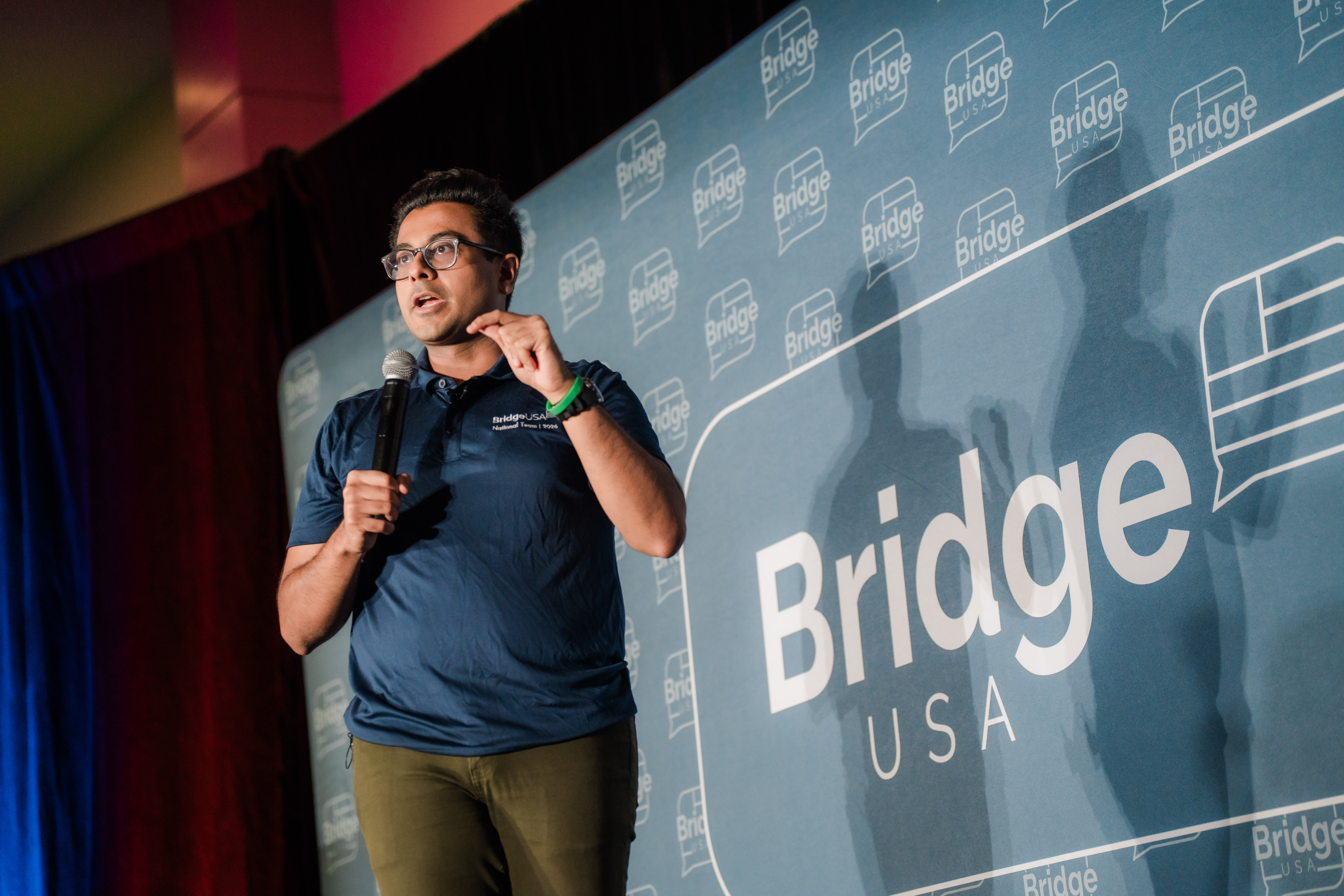
    Manu Meel, cofounder and CEO of BridgeUSA, speaks during his keynote speech at the group’s annual summit in Philadelphia on Aug. 8.Courtesy Clay Goswick/BridgeUSA

    The breakers in this case are the extremists on both sides of the political spectrum, those who make up for what they lack in numbers with the volume of their voices and rigidity of their views. The ones who stoke the outrage machine and scare the majority into silence.

    Sahar Toshtzar, a 21-year-old political science student at Drexel, told me she feels that fear often keeps people from engaging.

    “Sometimes it can be a little bit isolating having a mission of wanting to bridge the political divide,” she said. “Nobody really wants to talk about politics; nobody feels safe enough to talk.”

    For Toshtzar, her first BridgeUSA events on campus about a year ago proved revelatory.

    “I went to the discussions that we had, and it was, ‘Wow, people are talking like normal,’” she said. “I’m laughing with a conservative and relating to something completely outside of politics with them.”

    The experience didn’t alter her beliefs, but it changed her opinion about those she disagreed with politically, she said, and she hoped that perhaps they shifted their opinion, as well.

    I think that’s the biggest lesson to learn from engaging with people we disagree with. Our differences aren’t the issue. Deciding we can’t talk about them is — and that decision is just a choice we dress up as a fact. If we can start to acknowledge that, it will become much harder for those who fearmonger and demonize to control the public discourse, to degrade our politics until it is all a zero-sum game meant to humiliate the losing side.

    Of course, there are a few people who you absolutely cannot reach, and some you may not even want to be in the same room with, but, again, they are in the minority. Speaking from experience, even someone who may seem initially hostile can turn out to be willing to engage in conversation. So, to paraphrase Hillary Clinton, don’t put all your deplorables in one basket.

    Better still, we can learn from young people like Meel and Toshtzar.

    “At the end of the day, it’s a basic social skill to be able to sit down and talk to somebody. To stay calm, hear them out, and have them hear you out. Maybe even change your opinion on something,” Toshtzar said. “If you can’t do that, the basics of politics don’t exist.”

    We could certainly do far worse than sticking to the basics.

  • We need to care about Trump’s CIA murdering fishermen on the high seas

    We need to care about Trump’s CIA murdering fishermen on the high seas

    One of the worst things about Donald Trump’s America in the 2020s — I know, I know, it’s hard to pick — is the return of all the horrible stuff you foolishly thought our flawed nation was done with after the reckonings of the 1970s.

    The American quagmire in Iran makes Vietnam look practically wise in comparison. Then it came out last week that the government was spying in Minnesota on what should be constitutionally protected protest activity by labor unions or environmental groups, in a callback to the notorious illegal FBI op known as COINTELPRO.

    Oh, and the CIA is murdering* people in Latin America again.

    The asterisk is for “allegedly,” based on a report last week in the Washington Post that confirmed growing suspicions about mysterious drone attacks last winter by “gringos” that struck at least three fishing boats that had sailed deep into Pacific Ocean waters from an impoverished coastal village in Ecuador.

    One of the fishing vessels remains missing, its eight crew members presumed dead. The survivors of the other attacks remain traumatized from their injuries and their subsequent interrogation by men who wore no military uniforms — but had U.S. flag patches and spoke with American accents.

    In March, the crew of the Negra Francisca Duarte II was returning to its Ecuadorian port in Manta with a fresh catch of seafood and, its sailors insist, no illegal drugs when it noticed a blue ship was trailing it on the horizon. Moments later, drones flew over the fishing craft and began dropping explosives.

    Soldiers guard the port of Manta, Ecuador, in February.Cesar Munoz

    “The boys were there, hurt and scared. Some got a fire extinguisher to try to put out the fire, but there were too many flames,” the captain of the Negra Francisca, Hernán Flores, told the New York Times, which published the first U.S. media account of the mysterious attack. Flores said injured sailors jumped into the ocean or scrambled onto lifeboats, and all were at first relieved when the blue boat arrived to rescue them.

    Instead, according to the Times and other accounts, their ordeal was only beginning. The survivors were bound, hooded, and interrogated by the strange English speakers, who offered no medical treatment for their wounds. The boat headed north and transferred the crew members into custody in El Salvador, where officials soon released them — not charged with any crime, after the attack that nearly killed them.

    The initial Times article did not confirm whom the men were working for, but it noted extensive data showing how each of the three attacked fishing boats had been tracked by a maritime patrol plane that was registered to a UPS mailbox in Richmond, Va., and flew from Tennessee to a military airstrip in El Salvador in November.

    After the Times wrote about the three mystery boat attacks, the Post followed up with a report that the attacks were a special covert operation conducted by the CIA. These secret strikes have amplified a series of publicly acknowledged boat attacks in both the Pacific and the Caribbean by the U.S. military that have now killed more than 220 people since Trump returned to the White House 19 months ago.

    Last week’s news reports built upon research and more than 100 interviews by the group Human Rights Watch, which is troubled by the lack of both legality and morality in a partnership forged between the United States and Ecuador. This includes not only the three boat attacks but a land assault against a farm near the border with Colombia, which also found no drugs, but in which farmers said they were tortured by the Ecuadorian military.

    “The two countries’ security relationship is deepening at a moment when both governments have engaged in serious human rights violations fueled by their insistence on framing their confrontations with organized crime groups as a kind of war,” the rights group wrote.

    It’s no secret that drug cartels have enlisted some fishing boats — sometimes through desperation to boost their meager income, but often through extortion — to aid their smuggling operations out of South and Central America.

    But these alleged CIA drone strikes raise stark questions about the Trump regime’s strategy that is literally shoot first, ask questions later. Why are some sailors executed at sea when there’s not even evidence to charge the survivors with a crime? Even if some of these boats are tied to narcotics trafficking, what’s the legal and moral justification for a death sentence for low-level drug offenses?

    There’s also this: What are these extrajudicial killings even accomplishing, beyond cementing the image around the world that Trump is running a violent criminal enterprise? The Drug Enforcement Agency (DEA) has assessed that — some 230 or so lost human lives later — these U.S. boat attacks have had zero impact on reducing the flow of cocaine into the United States. That’s in part because most drugs that come into the United States by sea pass through larger commercial ports, not small fishing villages.

    Instead, the biggest impact from the military drone strikes has been the series of so-called snuff videos that either Trump or Pete Hegseth’s Pentagon has posted to social media platforms showing boats in gentle tropical waters getting blown to smithereens, in shock and awe tribute to their regime’s power to kill with impunity. But the secret, allegedly CIA attacks are not even that.

    What is even the point of this cruelty?

    I’m writing this column to honor the on-the-ground courage of Human Rights Watch and amplify the excellent journalism of Times and Post reporters — and because I’m furious that this story has drawn so little attention, and even less outrage.

    Deep into the second year of Trump’s strongman second presidency, the news media is overwhelmed by the Caligula-like craziness of his regime and its fights over matters as small as a ballroom and as big as the Strait of Hormuz, not to mention the frequent weather disasters made worse by the climate crisis the president believes is a hoax. Some maimed or missing fishermen in a tiny village on the bottom side of the planet aren’t making the cut.

    Which is probably exactly what the regime is going for. Trump and his MAGA minions would like nothing more than to numb you, me, and the rest of us to their growing archipelago of death, a bloodstained map that stretches from the icy streets of Minneapolis to a dingy detention site in Newark, N.J., and from a bomb-blasted island off Iran to the sickbeds in an African refugee camp. They want us to feel numb as their authoritarian death cult expands, and we cannot allow that to happen.

    The truth is that the United States will remain a global pariah — a pitiful, helpless giant — as long as there is no accountability for these war crimes, including, or perhaps especially, the terror perpetrated by mystery men with American flag patches on the high seas. That means public hearings, trials, prison sentences, and the kind of truth and reconciliation this nation has not seen before.

    Certainly the fishermen of Manta, Ecuador, will never forget the horrors that rained down upon them from a clear Pacific sky.

    Simon Villacreses, a 52-year-old crew member of the Negra Francisca Duarte II, told Reuters that he suffered a head injury in the assault, and remains traumatized months later. “They started pointing guns at us. They took us aboard, put hoods over our heads and tied ​our hands behind our backs,” he said of the “gringos.”

    The rattled Villacreses has not been back to sea since, telling the reporter, “Maybe I’ve given up fishing for good.” His livelihood has been destroyed by the criminal enterprise run out of 1600 Pennsylvania Avenue. Our outrage is not enough. We need to be relentless in the pursuit of justice.

  • The tale of Trump’s food cart escape in Ankara explains why he is losing in Iran

    The tale of Trump’s food cart escape in Ankara explains why he is losing in Iran

    The jokes about Donald Trump’s secret escape from Turkey last month via an airport catering truck are still flooding the internet. Typical mockery included AI-generated images of the president hunched inside the truck gorging himself on bags of McDonald’s fries, while making his furtive getaway.

    The jests about Trump’s transfer from Air Force One to a smaller plane via the truck — after Israeli intelligence warned a dubious CIA of a possible shoulder-fired missile attack by Iranians — may be funny. But Trump’s clandestine feint, even if it was more Maxwell Smart than James Bond, should be taken seriously.

    It serves as a chilling metaphor for why Trump’s misbegotten Iran war has gone so wrong.

    “If you’re hiding in a catering truck when you control the most powerful military in the world, you aren’t winning,” posted Ron Filipkowski, editor-in-chief of the progressive MeidasTouch Network, who wasn’t above making fun of Trump before nailing the bitter truth.

    It is mind-boggling that an American president, who flies in one of the most highly protected planes in the world, had to be smuggled onto a different aircraft because the U.S. military couldn’t guarantee his safety. It’s all the more astonishing since the old Air Force One, on which POTUS was originally departing Ankara, had a defensive system designed to defeat such heat-seeking missiles (which Trump’s preferred luxury plane gifted to him by Qatar still doesn’t).

    You may recall that it was ragged, barefoot Afghans who drove the then-mighty Soviet military out of Afghanistan in the 1980s by using shoulder-fired missiles — known as MANPADS — to take down powerful Russian attack helicopters. That’s called asymmetrical warfare, in which the weaker party uses unconventional means to offset the conventional might of the opponent.

    Ukraine is waging a complex version of asymmetrical war against Moscow, having pioneered a staggering array of drones that can destroy tanks, ships, air defenses, and military infrastructure deep inside Russia.

    Yet, Trump refuses to grasp how radically the nature of warfare has changed, enabling weaker countries to hold off stronger ones using robots, long-range air drones, and sea drones — or even updated shoulder-fired missiles.

    Trump and his secretary of defense, Pete Hegseth, seem to envision war either as a throwback to World War II, or through the blurred lens of the U.S. kidnapping of Venezuelan President Nicolás Maduro. Either you crush the enemy with massive air power, ships, and male troops brimming with testosterone, or you do a quick, one-off beheading of the enemy, bringing them under your heel.

    Neither model applies to the war on Iran.

    Trump’s original goal was supposedly to halt Iran’s nuclear program. In the 12-day Israel-U.S. war on Tehran in June 2025, Iran’s nuclear sites were hit heavily. After that, the U.S. could have tracked any rebuilding of those sites by satellite and taken necessary action while negotiating a nuclear deal. The Strait of Hormuz, then wide open to global shipping, was not an issue.

    Instead, the president abandoned promising nuclear negotiations to join a cockamamie regime change scheme proposed by Israeli Prime Minister Benjamin Netanyahu in February. Jerusalem assassinated Iran’s grand ayatollah and planned to swiftly replace him with a former Iranian president who had constantly called for the destruction of Israel.

    I once had the stamina-draining opportunity to listen up close in a small room as said former leader, Mahmoud Ahmadinejad, ranted for two hours. I can tell you that anyone who knew anything about Iran, or who listened to advisers who did, knew this plan was deeply delusional.

    Catering trucks are parked at Air Force One on the tarmac as the motorcade carrying U.S. President Donald Trump arrives to depart following the NATO summit at Ankara International Airport in Ankara, Turkey, on July 8.Alex Brandon

    Trump was clearly suffering from Maduro Derangement Syndrome, mistaking Iran for Venezuela. As Gen. Dan Caine, chairman of the Joint Chiefs of Staff, warned at the time, a prolonged Iran war risked swallowing the bulk of America’s long-range missile arsenal. Indeed, these weapons, which cost millions of dollars each, were wasted chasing cheap Iranian drones.

    Most dangerously, Russia, China, and North Korea have now seen that Trump’s manly U.S. Army is woefully unprepared for the wars of the future. His staggering request to Congress for a $1.5 trillion budget, an increase of 42% over the past year, doesn’t even include tens of billions in additional funding that he wants for the endless Iran war.

    Yet, that budget is clogged with massive funding of legacy items and vanity projects unsuited for future warfare but protected by members of Congress, defense companies, and Trump cronies who benefit from the projects.

    Prime among them is the 15-ship, Trump-class nuclear-powered battleship program, costing $275 billion over a 30-year span. Not only is Trump’s extravagance not needed by the Navy, but his “golden fleet” will be easy targets for the constantly evolving armada of unmanned anti-ship drones.

    You might think the painful Iran experience would have awakened Trump to the urgent need to prepare the army for drone warfare. He and his showman secretary of war talk a big game, but neither he nor the Pentagon has yet grasped the lessons of the Iran — or Ukraine — wars.

    Trump still rejects Kyiv’s offer to share drones and technology and to jointly produce the scarce Patriot interceptors. Private U.S. companies simply can’t gear up fast enough to meet the immediate need. Private U.S. investors are rushing to Ukraine to check out their innovations, but the Pentagon’s budget is still stuck in the past.

    The result is clear: As the Wall Street Journal just reported, in military exercises in Germany, Ukrainian drone units once more defeated U.S. troops and armored vehicles.

    The U.S. military knows about its continued vulnerability to drones, and how essential they are to modern warfare — and understands the value of pairing with Ukraine, the world’s leader in the technology. “You can’t get training like this in the United States,” NATO’s top military leader, Air Force Gen. Alexus Grynkewich, told the Journal.

    But Trump is still fixated on traditional military might as the road to quick victories — unlike U.S. adversaries in Tehran, Moscow, Beijing, and North Korea. Sharing technology with each other, they are advancing in the use of unmanned and unconventional weapons, leaving the U.S. behind.

    Even as he absconded in a food cart, Trump was still declaring victory in Iran, and claiming Wednesday that he has “total control over the Strait of Hormuz.” Wrong. Iran now controls that vital waterway via drone and missile attacks.

    Trump’s current “strategy” is to wait Iran out while blockading its ships, or those loading up at Iranian ports, from exiting Hormuz. Never mind the cost to the global economy or to U.S. military readiness or to American consumers at the pump.

    POTUS has few options. Lacking munitions, the U.S. can’t launch a ground war against Tehran (thank goodness). And renewed bombing will only cause Iran to bomb energy production sites in Arab Gulf states, which will drive oil prices to new heights.

    What a president with a coherent mind and any rational strategy would do is squeeze the Pentagon to reorient U.S. military production. That, however, would involve a new defense secretary and a full-court press to reorient spending toward the future. Most of all, it would require making the most of all the hard-won drone wisdom Ukraine is so willing to share.

    For that, the U.S. would need a very different person than the man in the White House. It would also require a Congress willing to challenge the president if he refused.

    And so, pending midterm elections, I believe that all the food cart jokes ricocheting around the world convey the sad reality. My favorite was one that asked, “What was the name of the operation that lured Trump into the catering truck?” The answer: “Operation Orange Chicken.”

    That’s a good punch line, but here’s the grim reality: Trump is unwilling to face the truth of his failures and incapable of devising a strategy that will keep Americans safe.

  • Data centers are good business but bad politics. Josh Shapiro tries to thread the needle. | Shackamaxon

    In this week’s Shackamaxon, the race for City Council kicks off, SEPTA police officers step in front of the cameras, and a Big Tech reckoning comes for the Ambitious Abingtonian.

    Councilmember Jeffery “Jay” Young Jr. during the Barber’s Hall community legacy celebration on Aug. 1.Yong Kim / Staff Photographer

    Contrarian challenge

    In political circles, the legislative lineage of Philadelphia’s 5th Council District is one of the city’s most esteemed and iconic. The first person to represent the residents of the 5th in City Council was Raymond Pace Alexander, the civil rights leader who was later appointed as the first African American judge on the Court of Common Pleas. The seat has also been held by Cecil B. Moore, Ethel Allen, and John Street. Few other districts can boast such an impressive list of luminaries.

    Today, its occupant is someone very different, Council’s quarrelsome contrarian, Jeffery “Jay” Young Jr.

    Of course, there’s nothing wrong with “good trouble” or sticking out from the crowd. Moore himself was famously pugnacious, with the former Marine once quoted as saying that “The imported Gandhi philosophy of nonviolence that still exists in the South will not be accepted in Philadelphia, where we believe in self-help and self-defense.” Allen was also a maverick, styling herself as a “B.F.R. — a Black, female Republican, an entity as rare as a Black elephant and just as smart.”

    Moore and Allen, however, were quarrelsome on behalf of the people they represented, and contrarians at a time when Black Philadelphians were mostly excluded from the halls of power.

    Moore successfully desegregated Girard College, paving the way for Young himself to attend decades later.

    Allen broke barriers, too, becoming the first Black woman to hold a seat on City Council, and served the community directly as a physician.

    Young, however, starts fights that help nobody. Worse, no one seems to understand why he’s fighting in the first place.

    From delaying repairs at the Cecil B. Moore Library to blocking popular housing proposals, Young’s actions frequently bring him in conflict, rather than concert, with the community he was elected to represent.

    It is unsurprising, then, to see that he’s already attracted a declared challenger for his seat, months before election season kicks off in earnest.

    Jalon Alexander has a big advantage over the opponents Young (almost) faced in the past: He’s managed to successfully get onto the ballot before, during the 2023 City Council at-large election.

    While he brings his own ideas to the table, Alexander is also clearly running in opposition to Young’s choices. The cybersecurity attorney grew up in Strawberry Mansion, and still lives there, but is running a campaign built to find support across the district’s geographic and political spectrum.

    Kellan White, at this point a potential candidate, presents another strong alternative. White managed Rebecca Rhynhart’s 2023 mayoral campaign, which was successful across much of the 5th District. He has a deep knowledge of city politics and policy, and a Rolodex of contacts that any political journalist would be jealous of. Unlike Young, both Alexander and White are willing to answer the phone to talk to reporters, community leaders, and their constituents.

    At this point, even if a dozen candidates run against him and split the opposition vote, Young may still face an uphill battle.

    When I’ve criticized other Council members, I always get calls or emails from constituents who defend their choices. In nearly three years writing about Young, not a single person has offered a defense.

    A SEPTA Route 38 bus at 15th and Market Streets in May.Alejandro A. Alvarez / Staff Photographer

    Spotlight on SEPTA

    A few readers have asked me about film crews they’ve seen following SEPTA police around stations and transit vehicles recently. Media Relations Director Andrew Busch confirmed that the A&E Network is filming a docuseries, which will be broadcast next year.

    Personally, I’m looking forward to watching it. SEPTA’s roughly 250-strong police force is charged with patrolling more than 285 train and trolley stations, and nearly 3,000 vehicles. They are also in the midst of substantial declines in serious crime, which occurred alongside a crackdown on fare evasion and a surge in enforcement for quality-of-life issues. That’s a story worth showing.

    Less worthwhile would be a series focused on Kensington and the city’s drug epidemic. That’s a real part of SEPTA’s policing duties, but is often exploitative when told by outsiders.

    Gov. Josh Shapiro announces a $20 billion investment by Amazon in Pennsylvania data centers in Salem and Falls Townships in 2025.Commonwealth Media Services

    Data-driven

    Ever since the creation of the first computer, there have been concerns about its role in the future. It doesn’t help matters that many tech CEOs, like OpenAI’s Sam Altman, regularly express a kind of contemptuous attitude toward humanity and human needs. At one point, Altman said that artificial intelligence would “lead to the end of the world.” How inspiring!

    This has put public officials in a tough position over their support of data centers.

    For generations, states and cities have competed to attract investment. But these days, cash is flowing into an industry opposed by 74% of voters. Seeing an opportunity, challengers from across the political spectrum are using data centers in their political attack ads, while incumbents are scrambling to explain themselves.

    This isn’t run-of-the-mill NIMBYism, either. According to one report, only 8% of data center opponents live near one.

    Gov. Josh Shapiro, the Ambitious Abingtonian, exemplifies this conundrum. He was an early advocate for embracing data centers, but with polls tightening for his reelection efforts, he’s been forced to adapt.

    Of course, there’s a certain opportunism to state Treasurer Stacy Garrity’s embrace of the techlash.

    Her own party has been quite supportive of data centers. President Donald Trump has called them “tremendous.” Pennsylvania state Senate Majority Leader Joe Pittman has long advocated for the centers, which represent a particular opportunity for his own community, which has, in his words, “a long and storied history when it comes to the production of electricity.” U.S. Sen. Dave McCormick, the highest-ranking Republican in Pennsylvania, is married to Meta executive Dina Powell McCormick. Meta is one of the four companies investing a total of $1.5 trillion in new data centers.

    Pennsylvania Senate Republicans declined to pursue Shapiro’s proposed “GRID” initiative, which would have required the centers to produce their own electricity, conform to environmental standards, and make community benefits agreements in exchange for permitting assistance.

    Many of the current pitchfork-wielding politicos may themselves be forced to pivot when in office. Voters may hate data centers, but they also hate tax increases and service cuts.

    Loudoun County, Va., which is known as data center alley, has averted both. Local authorities have cut property tax rates by nearly 30% over the last decade, and the centers pay roughly half of the county’s property tax revenue. Given the increasing share of Pennsylvania’s budget that is paid through the extractive gambling industry, the need to invest more in schools and transportation, and the continuing structural deficit, it is no surprise politicians initially saw the AI boom as an opportunity.

    Now, state leaders will have to pick their poison.

    If they pursue data centers, they’ll face voter backlash. If they continue to embrace gambling, they’ll contribute to the impoverishment of their own constituents. If they stop investing in education or allow transit agencies to fail, they’ll weaken the commonwealth’s economy going forward. If they raise taxes, they’ll take the blame for that, too.

    While the data center surge may seem sudden to many, it is also a response to demand. Both businesses and individuals are increasingly using AI in daily life.

    Ironically, many social media posts about data centers include AI-generated text and images. It is a bit like if the Women’s Christian Temperance Union had fundraised with a booze cruise.