A growing number of colleges are offering three-year bachelor’s degree programs, providing students a faster and less expensive path toward graduation, but worrying critics who say the trend could devalue college education.
Instead of the typical 120 credits earned in four years, some programs now require students to complete around 90 credits. Proponents say that helps students get into — or back into — the workforce more quickly and with less debt. But some question whether the shortened degrees will be fully accepted by graduate schools, employers, and accreditors.
At least 70 U.S. schools are either already offering three-year degrees or are actively considering them, according to a report this year by the American Association of Collegiate Registrars and Admissions Officers, and multiple states have required or encouraged public universities to add them.
On Wednesday, Texas Gov. Greg Abbott (R.) took steps to join that group, directing the Texas Higher Education Coordinating Board to create a statewide framework for three-year-degree pathways.
“Every semester adds tuition, fees, housing, food, transportation, and other living expenses and delays students’ ability to begin their careers,” Abbott said in a news release. “Texas students deserve the option to receive a degree in a high-demand, high-wage field in less time.”
The trend is spreading in both red and blue states, as well as across many types of institutions, public and private, large and small. This summer, the Massachusetts Board of Higher Education approved applications from two schools to pilot three-year-degree programs.
In June, Grambling State University and Southern University Law Center, historically Black schools in Louisiana, announced a partnership that would allow students to accelerate their way to a law degree, with three years of undergraduate work and three years of law school.
Todd Wolfson, president of the American Association of University Professors, said the three-year degree is the wrong answer to a real crisis. He said decades of public disinvestment have shifted the cost of higher education onto students and families, and schools should not respond by shrinking the degree and asking students to make do with less.
“We need to address the problem at its root,” he said. “Reinvest massively in higher education and build a free public higher-education system that gives every student access to a full, high-quality college education without taking on crushing debt.”
Robert Zemsky, professor emeritus at the University of Pennsylvania’s Graduate School of Education who has been advocating for three-year degrees for more than 15 years, said many state agencies have now encouraged their public universities to explore the idea. Zemsky said he supports that approach.
“Don’t bet the whole bundle on an instant change from three-year degrees. Start a few experimental programs,” he said, and “see what happens.”
President Donald Trump says he’s holding Canada accountable for “ripping off” the United States through unfair trade practices.
But by imposing new tariffs on Canadian goods and prompting retaliation from one of America’s largest trading partners, U.S. businesses and consumers could face higher costs, analysts said — including in key electoral battlegrounds like Pennsylvania.
Pennsylvania sold $13.4 billion in goods last year to Canada — its largest export market.
About $2 billion worth of those goods, or 16%, will be subject to higher tariffs — some as high as 50% — starting Sept. 8 after Canada this week announced new levies, according to an Inquirer analysis of trade data. Some of the state’s top exports facing new tariffs include raw aluminum, lumber, and passenger vehicles.
(function(){function e(){window.addEventListener(`message`,function(e){if(e.data[`datawrapper-height`]!==void 0){var t=document.querySelectorAll(`iframe`);for(var n in e.data[`datawrapper-height`])for(var r=0,i;i=t[r];r++)if(i.contentWindow===e.source){var a=e.data[`datawrapper-height`][n]+`px`;i.style.height=a}}})}e()})();
Canadian officials said the tariffs on hundreds of U.S. goods worth a total of $20 billion are meant to protect its workers in response to increased U.S. levies on the same amount of Canadian imports. That affects a relatively small share of trade between the two countries, but analysts said the situation is still evolving.
“There’s so many things that go back and forth, some of it multiple times. The effect and the amplification of these tariffs, we’ll definitely feel,” said Lauren Swartz, CEO of the nonprofit World Affairs Council of Philadelphia. “When we think about what that means for Pennsylvania, it’s going to be loud.”
“My sense is the rhetoric that we’re hearing, and the fact that it’s already being labeled a trade war, is that both countries are reserving the right to escalate the level, the percentage of tariffs, as well as the scope of goods that will fall under the new trade war,” she said. “So it will expand.”
Steel, dairy, electronics impacted
The new tariffs came after talks between the U.S. and Canada over a trade deal fell apart last weekend. Trump imposed 50% tariffs on goods such as hockey sticks, national flags, and building materials.
“Canada has been ripping off the United States for decades — and President Donald J. Trump is done letting them get away with it,” the White House said on Tuesday. It said the U.S. had offered Canada “the most preferential market access of any country on Earth” but that the country chose “unreasonable demands, walk-backs, and flat-out rejection.”
Canadian officials said the country’s counter tariffs would protect the country’s workers and businesses. They said the levies on U.S. goods targeted sectors such as appliances, steel, dairy, and electronics.
(function(){function e(){window.addEventListener(`message`,function(e){if(e.data[`datawrapper-height`]!==void 0){var t=document.querySelectorAll(`iframe`);for(var n in e.data[`datawrapper-height`])for(var r=0,i;i=t[r];r++)if(i.contentWindow===e.source){var a=e.data[`datawrapper-height`][n]+`px`;i.style.height=a}}})}e()})();
Influence on midterms?
The trade dispute could inject new uncertainty into the economy less than three months before the U.S. midterm elections decide control of Congress and statehouses around the country. Republicans are seeking to retain control of the U.S. House and Senate. Pennsylvania has several competitive House races in which Republican incumbents are seen as vulnerable.
Pennsylvania Gov. Josh Shapiro, a Democrat who is running for reelection against Republican state Treasurer Stacy Garrity, has repeatedly criticized Trump’s tariffs.
“Donald Trump’s reckless tariffs are a tax on Pennsylvanians — and Gov. Shapiro has been fighting back against them from day one,” said campaign spokesperson Manuel Bonder.
“This President has raised costs for families, screwed over our farmers, and shut down markets for businesses — all with Stacy Garrity’s 100% support,” Bonder said in a statement.
Garrity’s campaign didn’t respond to requests for comment. She has in the past said Trump’s tariffs could result in some “short-term pain” but would ultimately bring jobs to America. “It’s going to be fantastic,” she said in a clip that Shapiro’s campaign has highlighted. More recently, Garrity told reporters in July she would “do the tariffs a little bit differently.”
Canadian officials appeared to target some goods that are important in electoral battlegrounds, such as seafood in Maine, the Wall Street Journal reported.
Analysts said Pennsylvania didn’t appear to be a principal target. “But unfortunately, it’s one of the states that does a lot of goods transfer with Canada, and unfortunately, they’re hit in the crossfire,” said Kyle Peacock, a trade expert and founder of Peacock Tariff Consulting.
Peacock said that after previous rounds of tariffs, many businesses were able to absorb the costs.
But now that some products face 50% levies, that will likely change, he said. “Not a lot of industries or products have 50% margin that you can just eat,” he said. “So I think you’re going to see that this time, unfortunately, that’s going to be passed on to the consumer.”
Sen. Cory Booker said the United States needs a “food revolution,”blaming sugary and processed food for contributing to the nation’s health woes during a South Jersey visit Thursday.
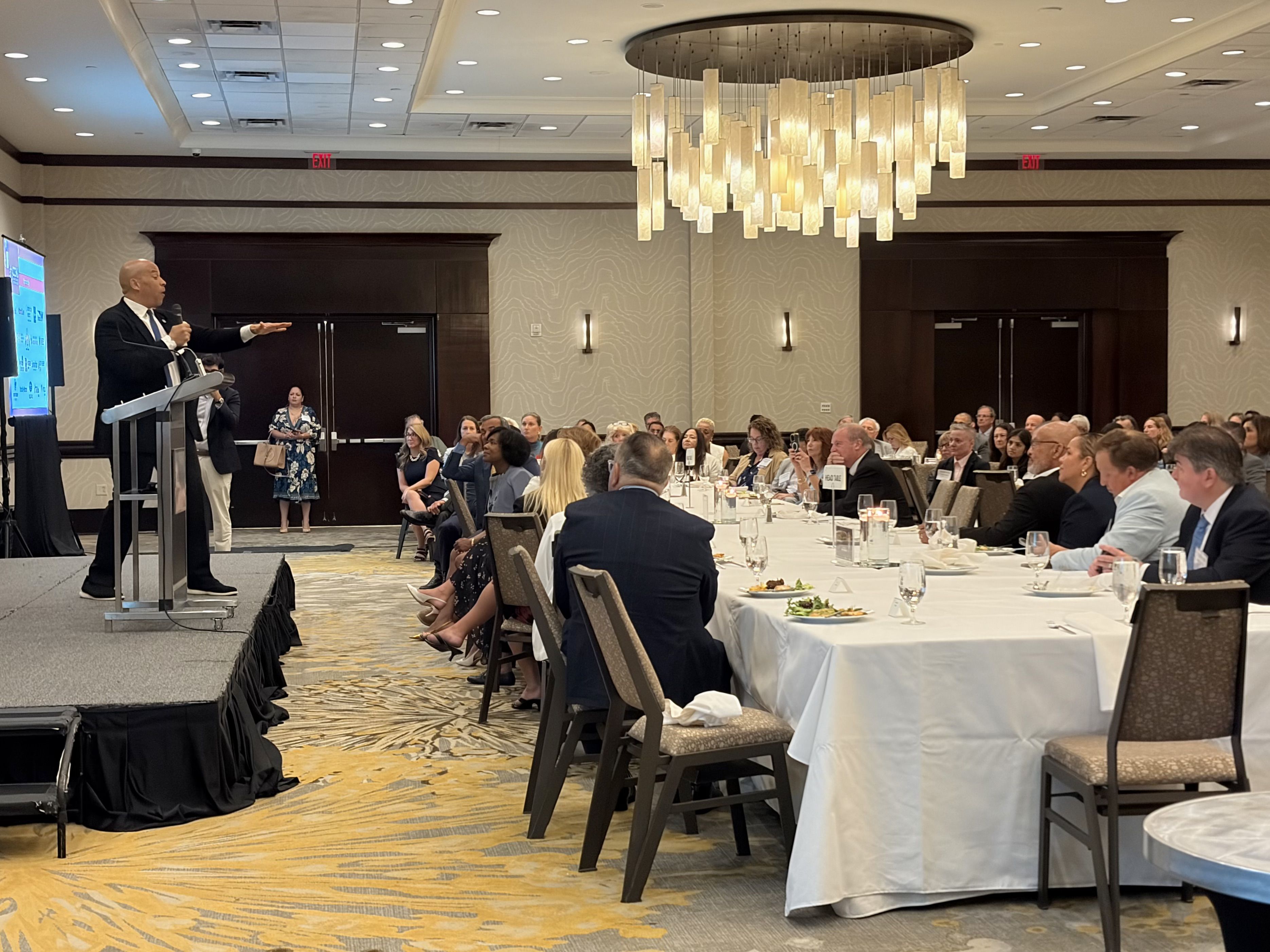
“What’s stupid is that we’re sitting here talking about the cost of healthcare and how to pay for it, but not why we need so much healthcare in the first place,” Booker said during an almost hour-long speech to the Chamber of Commerce Southern New Jersey at the Westin Mount Laurel.
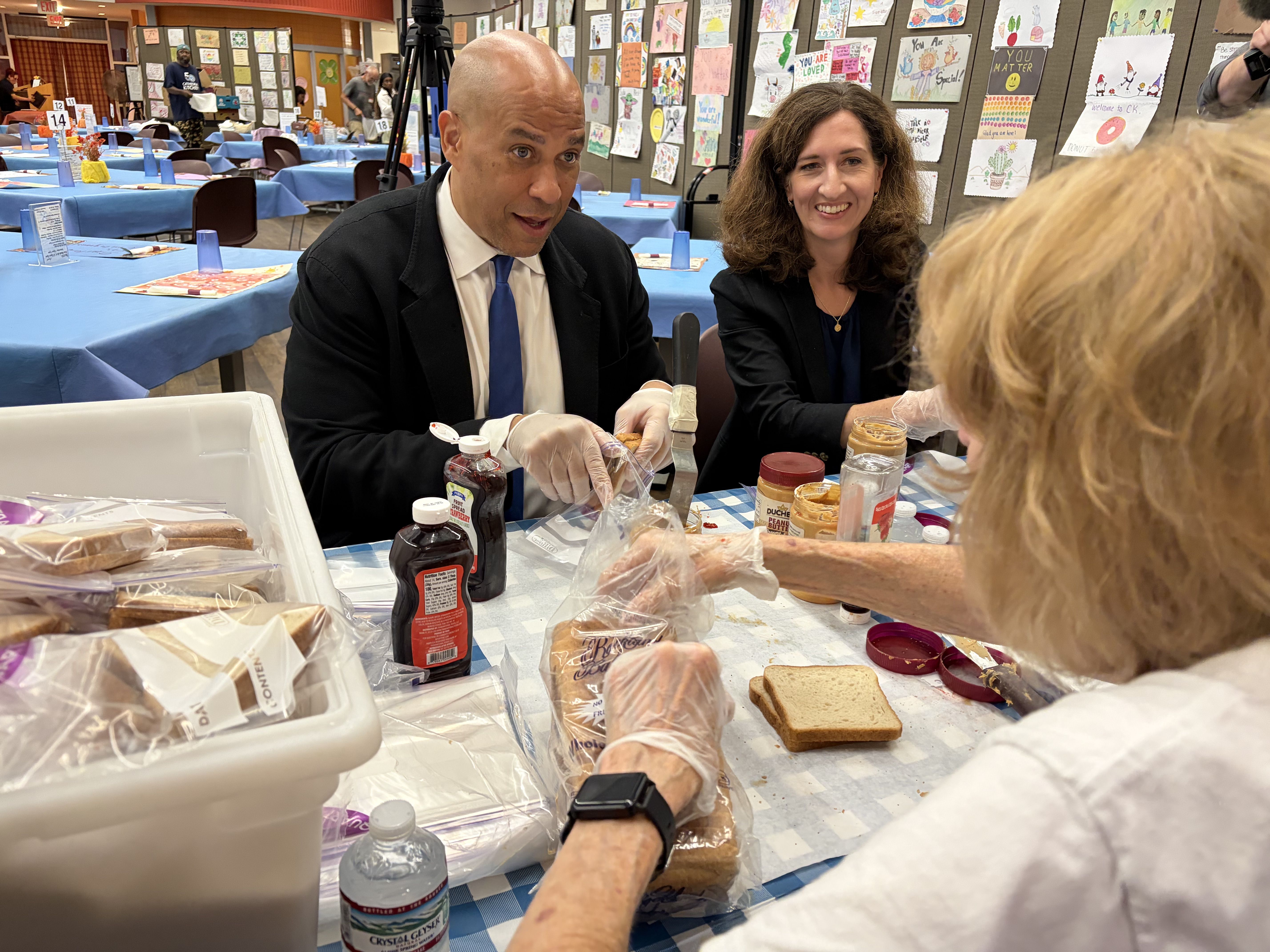
The speech was one of four stops Booker made in South Jersey Thursday. The Newark Democrat also packed sandwiches at the Cathedral Kitchen community kitchen in Camden,one of the nonprofits shouldering a greater demand amid rising grocery costs and cuts to the Supplemental Nutrition Assistance Program enacted by President Donald Trump. Booker said he would try to steer federal resources to the group, and that he hopes at least one chamber of Congress will flip so Democrats can push to restore money for Medicaid and Affordable Care Act subsidies.
Butduring his speech to the chamber, Booker signaled support for one piece of Trump’s health agenda by criticizing the use of SNAP for soda. Booker, a vegan, aligns with some of Health and Human Services Secretary Robert F. Kennedy Jr.’s policies on nutrition though he vehemently opposes Kennedy’s push to scale back recommended vaccines for children.
“Sugar water companies literally, annually, make billions of dollars from SNAP payments,” Booker said after joking about Coke and Pepsi not being members of the chamber. “You all know what SNAP stands for: Supplemental Nutritional Assistance Program. Yet we allow SNAP payments to be used for that, but make it really hard for them to be used for the kind of food we want people to have abundant access [to].”
The U.S. Department of Agriculture gave the green light to nearly two dozen states — mostly Republican — to restrict people from using food stamps for sugary drinks, the New York Times reported, though just eight were actually implemented as others are in the process or have been blocked by a court ruling.
New Jersey and Pennsylvania are not among those states.
Sen. Cory Booker speaks to members of the Chamber of Commerce Southern New Jersey at the Mt. Laurel Westin.Aliya Schneider / Staff
Booker said the country should support small farmers more, and decried that the vast majority of agricultural subsidies go to “massive commodity crops” such as corn and soybeans that are used for ultra-processed foods instead of “specialty crops” like fruits and vegetables.
The ballroom podium was unnecessary for Booker, who paced on stage and juggled a microphone between whatever hand he wasn’t reaching, pointing, or otherwise speaking with.
“Think about this: A kid in Camden goes into a bodega and gets a Twinkie product cheaper than an apple because we subsidize everything in the Twinkie product and nothing in the apple,” he said.
“Or hear this: You go to a fast food restaurant and you get a $1 meal, and if you want to get a bucket of salad, it costs you $15. How can we be a system that sustains such high levels of illness?”
He told a story about meeting with a LasVegas-based business owner whose healthcare costs decreased after replacing deep fried food options for his staff with healthier choices, and shared an anecdote about a woman whose health improved after an urban farm was established in Newark, where Booker was mayor.
In an interview after his speech, Booker said he’s pushing for the restoration of programs that connect crops from small farms with people in need of food.
“New Jersey farmers are suffering with tighter and tighter margins,” he said.
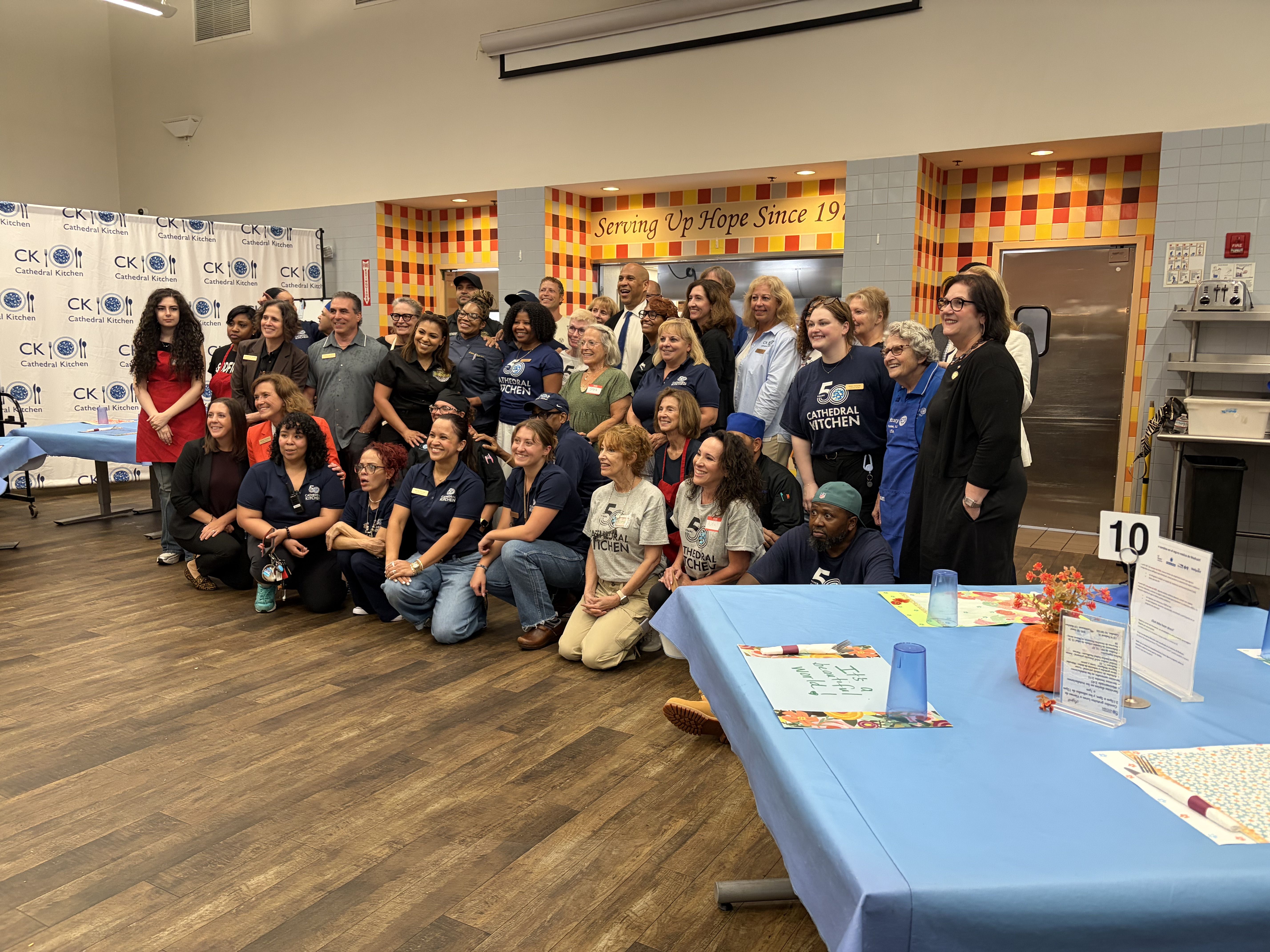
Sen. Cory Booker smiles for a photo with volunteers and staff at Cathedral Kitchen in Camden.Aliya Schneider / Staff
Booker got tips on making a good peanut butter and jelly sandwich and placed ham and cheese on bread alongside volunteers at Cathedral Kitchen. He said nearby workers cracking eggs were “doing some egg-celent work” and that at first he didn’t know “what the shell” they were doing. In line with his dad jokes, he chatted about how he wants to have kids soon with his wife Alexis Lewis, whom he married last year.
Carrie Kitchen-Santiago, the president and CEO of the Camden-based organization, said 2022 set a record for demand for meals, groceries, and hygiene products, and it’s grown each year since. She said the organization mostly relies on donations and revenue from a catering program but expects the need to increase when benefits cuts are implemented later this year.
She said roughly 2% of the organization’s budget is from government funds but that it does not have any federal funding.
Kitchen-Santiago said providing nutritious meals is a balancing act.
“You want to make sure people are healthy, but also give them something they’ll eat and be culturally appropriate,” she said. “Like, we’re not going to be able to give a stuffed acorn squash. Nobody’s going to eat that. On the other hand, we might be able to do a stew that has vegetables and meat in it.”
The speech and visit to the kitchen were part of a larger swing through South Jersey by Booker while the Senate is on recess.Booker also presented a $2 million check to Inspira Medical Center in Mullica Hill to expand technologies and telehealth services — a congressional allocation from Fiscal Year 26 — and visited Salem Community College’s Glass Education Center.
His schedule on Friday includes presenting $1 million to AtlantiCare Health System and a visit to Atlantic City’s Orange Loop, a neighborhood that was designated an Opportunity Zone under a law he co-authored. He was also slated to visit the Cape May–Lewes Ferry Terminal in North Cape May and a Cumberland County farm.
Women in sun hats and men in baseball caps lugged suitcases and scurried up a ramp to board a hulking Norwegian Cruise Line Jewel ship Thursday afternoon. Moments later, thunder cracked, rain drizzled, and lightning lit up the Delaware River.
The passengers on Norwegian’s inaugural voyage out of its new permanent terminal at PhilaPort likely could not get out of the Philly region soon enough. They were headed to sunny Bermuda.
The opening of the $66 million terminal in Tinicum Township, Delaware County, followed Norwegian Cruise Line’s return to the Philadelphia area earlier this year, making it the first cruise line to sail from the region in more than 15 years and marking the return of the industry to the region.
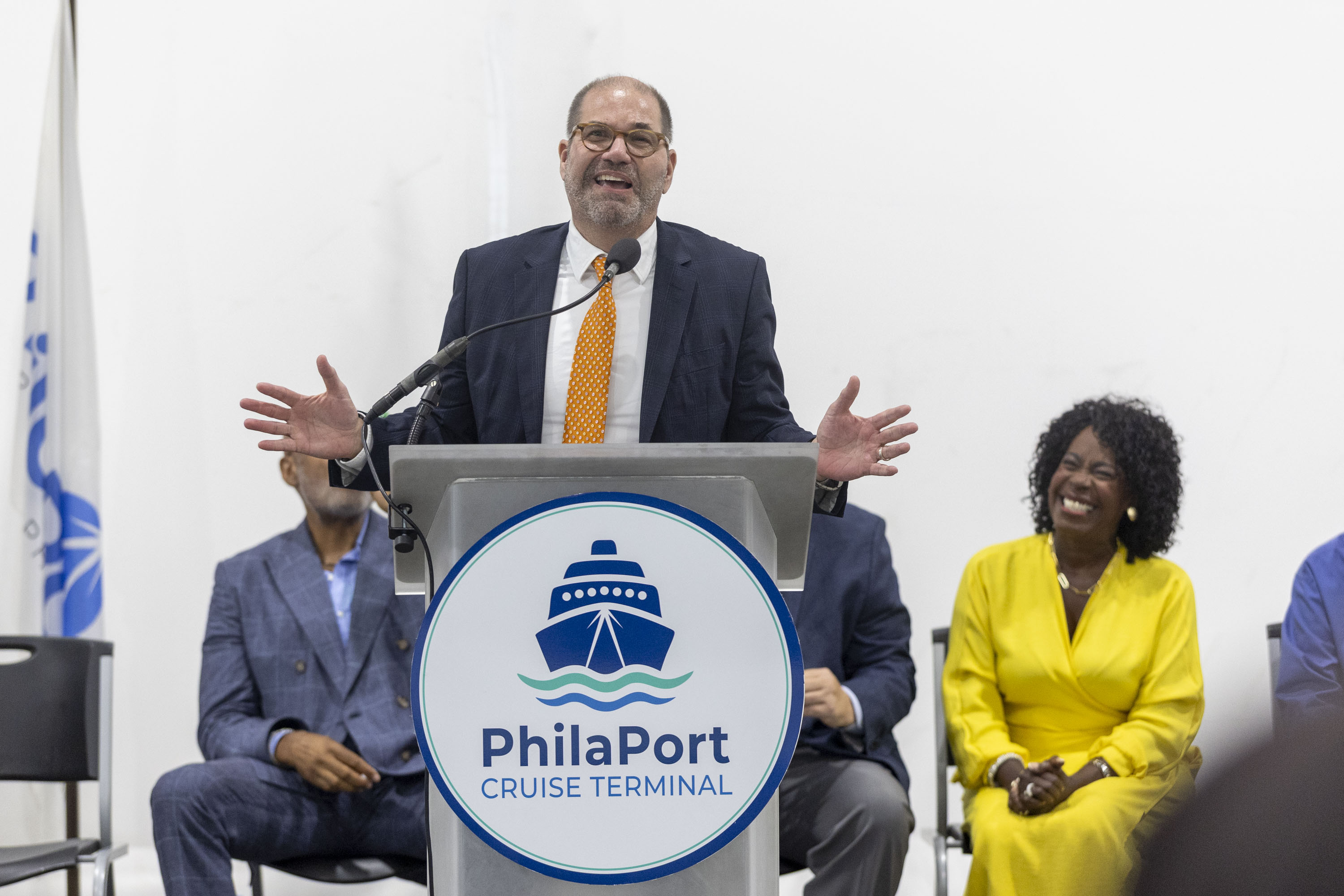
Dan Farkas, EVP & General Counsel with Norwegian Cruise Line Holdings, speaks on the opening of a new terminal for PhilaPort Cruise Terminal on Thursday, Aug. 27, 2026, in Philadelphia.Tyger Williams / Staff Photographer
The seven-year partnership between PhilaPort and Norwegian will avail residents to journeys to various cruise destinations without having to travel to New York, Boston, or Miami, where Norwegian’s other East Coast ports are based.
The Jewel will make voyages to Bermuda until Sept. 26, and the Pearl will arrive in November, offering five-day to 14-day trips to Bermuda, the Caribbean, Bahamas, Canada, and New England through April 2028. In summer 2028, Norwegian will offer seven-day Bermuda and Atlantic Coast voyages aboard its Gem ship.
The return of the cruise industry to the area is anticipated to contribute around 2,200 new jobs and generate about $300 million in local economic activity annually, said Dan Farkas, executive vice president of Norwegian Cruise Line Holdings.
“It benefits all. It’s benefiting the local hotels, the restaurants, the transportation providers, as well as the many vendors that provision the ships,” Farkas said at Thursday’s new terminal unveiling, before marking the celebration by enjoying a tiny cheesesteak hors d’oeuvre.
The Norwegian Jewel Cruise ship at the new PhilaPort Cruise Terminal on Thursday, Aug. 27, 2026, in Philadelphia.Tyger Williams / Staff Photographer
The cruise industry evacuated the Philly region about 15 years ago as the ships companies were running outgrew the Navy Yard port, said PhilaPort spokesperson Sean Mahoney. About four years ago, Norwegian approached the port about sailing out of the region again, Mahoney said, but a series of obstacles related to siting, land ownership, and permits cropped up.
“There were times when it did not seem possible,” Pearson said. “But the PhilaPort board and staff pushed against the naysayers and the frozen river and, with the help of our partners, we got this thing done.”
At Thursday’s celebration, Norwegian presented a $20,000 check to Tinicum Township’s fire department and a $30,000 check to the Boys and Girls Clubs to benefit three local branches. The donations were part of the company’s Sail and Sustain program, aimed to benefit the communities where it runs services.
As the final stragglers boarded the ship to Bermuda, they enjoyed a quintessentially Philly send-off — being serenaded by a Mummers band in an unpredictable and muggy rainstorm.
Artificial-intelligence companies OpenAI and Anthropic, along with more than 100 other tech and financial services organizations, warned that businesses and governments must do more to prepare for and defend against AI-enabled hacks.
In an open letter Thursday, the AI start-ups, along with Alphabet Inc.’s Google, Microsoft Corp., and others, called for organizations, governments, and technology and AI companies to focus on making cyber defense “an immediate leadership priority” and to fix existing weaknesses in their own software.
The letter also asks cybersecurity companies to help defend against “AI-enabled attacks” and says governments should coordinate communication between themselves and industry channels to respond to potential threats. It also urges leading AI companies to give AI access, as well as financial support and training, to those that defend critical infrastructure.
The letter comes after several recent cybersecurity breaches involving advanced AI models, including an incident in July in which models from OpenAI inadvertently hacked Hugging Face Inc. The breaches have ignited concerns about AI agents running amok, and prompted some technology and government leaders to renew calls for curbs on the technology. On Wednesday, OpenAI said in a report that it could have reacted sooner to prevent the hack on Hugging Face.
The letter’s signatories predicted that AI models will be used to carry out a growing number of increasingly complicated cyberattacks in the months ahead, as companies continue to build AI models that are capable at both defending against and carrying out such acts.
“Today’s AI advances are already giving defenders new ways to fix weaknesses that have accumulated for years,” the letter states. “If we act decisively, we can use the defenders’ window to make our digital world much more secure.”
Sheri Herman, 71, formerly of Philadelphia, pioneering internet and cable TV executive, former senior vice president of content and business development for E! Entertainment Television, former president of internet startup American Cybercast, founder of SLH Communications, tech prophet, and dancer, died Thursday, Aug. 6, of heart failure at her home in Telogia, Fla., about 35 miles west of Tallahassee.
A magna cum laude communications graduate at Temple University, Ms. Herman went to New York after college to produce commercials for an ad agency. Over the next 27 years, she relocated to Denver and Los Angeles, successfully marketed, programmed, and developed dozens of TV networks and online companies, and pioneered the integration of TV and the emerging internet.
She was “mesmerized” by Apple cofounder Steve Jobs, her sister, Nadine, said, and predicted in the 1970s that one personal device would eventually take pictures, send messages, stream content, and still make phone calls. Jarl Mohn, former president and chief executive officer at E!, called Ms. Herman “a pioneer in incorporating new technologies and branding in entertainment.”
He said: “She also brought passion and conviction to everything she worked on.”
Ms. Herman founded her own firm, SLH Communications, in 1999. Courtesy of the family
Ms. Herman helped turn the startup Movietime channel into E! Entertainment Television in 1990 and told the Los Angeles Times: “We’re going to totally reposition the network. You won’t recognize us.” Over the next few years, E! grew its subscriber base from two million to 55 million, and Ms. Herman won industry awards for her marketing campaigns.
At American Cybercast, she championed The Spot, a groundbreaking interactiveonline reality show, in 1995, and told the Los Angeles Times in 1996: “We’re creating a new medium, but we’re kind of a cross between publishing and broadcasting in that we’re going to be advertising driven. If we were a movie studio, we’d be Miramax with a little more edge.”
Russell Collins, founder of American Cybercast, said: “Sheri Herman was nothing if not fearless. Her determination was boundless and fierce.”
Ms. Herman was especially effective at fundraising for projects and combining online content with ads and product placement. She trailblazed new internet publishing formats that included text, photos, and videos, and predicted the collision of TV and internet content. In 1996, she told Variety: “Eyeballs will move from TV to PC.”
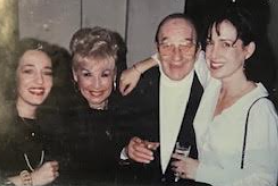
Ms. Herman (left) oversaw the development of the Discovery Channel, the Fashion Channel, QVC, and other networks.Courtesy of the family
As director of programming for the United Cable Television Corp. in the mid-1980s, Ms. Herman collaborated with dozens of networks and oversaw the development of the Discovery Channel, the Fashion Channel, QVC, and other networks.
As senior vice president of programming and production for the Access Entertainment Network in the late 1990s, she reintroduced popular music videos and, according to Variety in 1998, gained six million subscribers in the network’s first three months of existence.
Shefounded her own firm, SLH Communications, in 1999 and contracted with TV Guide, Barnes & Noble, Hilton Hotels, musicians Quincy Jones and Jon Bon Jovi, and other entertainers and businesses. In New York, in the 1980s, she worked with cosmetics mogul Estée Lauder.
Temple officials noted her “influential career” in a tribute, and longtime friend and colleague Martin Lewis said: “She had a relentless thirst for charting new paths forward. She proselytized new media, new approaches, new everything.”
Ms. Herman (right) enjoyed time with her family.Courtesy of the family
In 2007, Ms. Herman reduced her daily responsibilities after being seriously injured in an auto accident in California. She moved to Florida in 2021.
Lewis said: “She was inventive, creative, exhilarating.”
Sheri Lynn Herman was born May 21, 1955, in Philadelphia. She grew up in Overbrook Park with her parents and older sister, and graduated from Philadelphia High School for Girls.
Her family featured several singers, and she spent many holidays singing songs and playing guitar around the piano at her grandparents’ home in Wynnefield. She loved music, studied ballet when she was young, and performed later with the Janosik Polish Dance Ensemble.
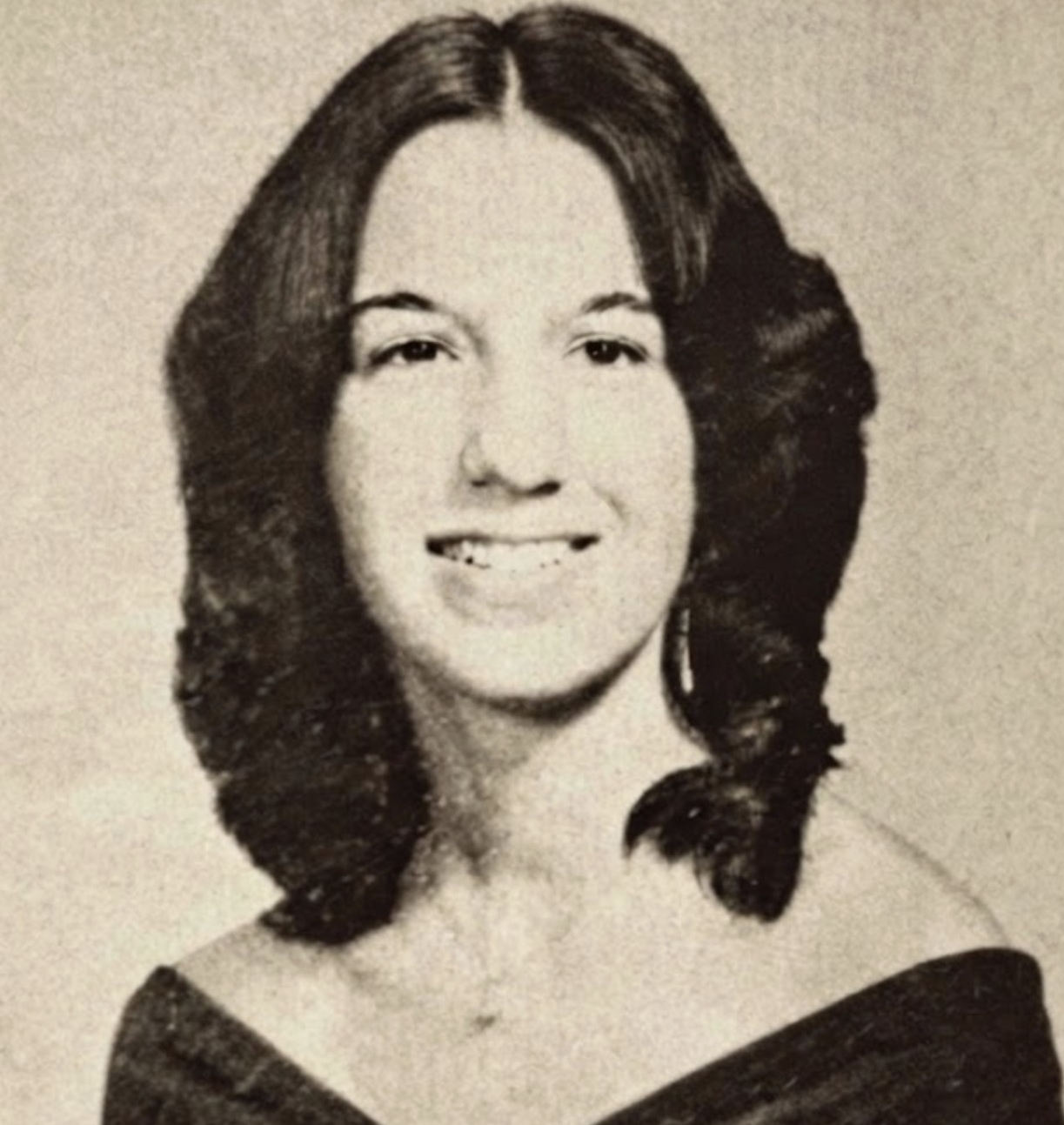
Ms. Herman was a magna cum laude communications graduate at Temple University.Courtesy of the family
Stylish and social, Ms. Herman enjoyed traveling and entertaining. She was a skilled seamstress who made her own clothes, an accomplished chef, and adept at interior decorating. She doted on her cats and dogs.
She married and divorced twice, and, after Philadelphia, lived in New York, Denver, and Los Angeles before Florida. Her sister said: “She was brilliant.”
In addition to her sister, Ms. Herman is survived by other relatives.
A celebration of her life is to be held later. Family, friends, and colleagues can connect at www.SheriHerman.com.
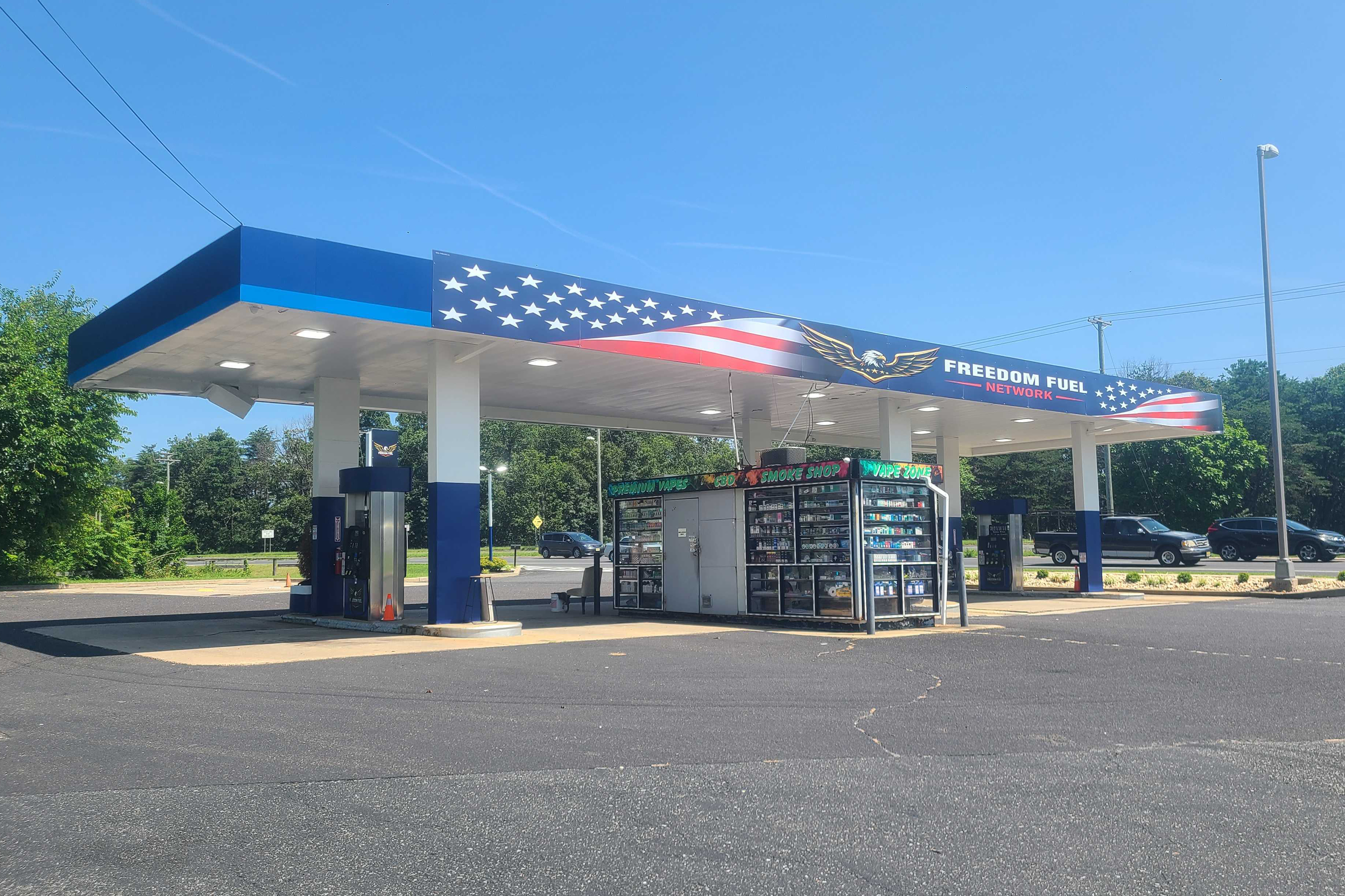
Six South Jersey gas stations that the White House promoted in July, touting below-market fuel prices, have racked up environmental violations with the state dating back to 2023.
The New Jersey Department of Environmental Protection issued close to $430,000 in fines in May to operators who run 17 gas stations, including the six Freedom Fuel locations, for the violations accrued over the years, according to an administrative order first reported by Politico and obtained by The Inquirer. The fines were issued before these stations rebranded to Freedom Fuel.
The Freedom Fuel stations, which made their debut this summer, accrued more than $202,000 in fines, according to department records. All 17 stations are owned by asset manager Blue Owl Capital and operated by Cherry Hill developer Shamikh Kazmi and his brother Syed Kazmi.
Blue Owl and the Kazmi brothers could not be reached for comment.
The owner-operators have requested a hearing, according to DEP spokesperson Larry Hajna, but no date had been set as of Wednesday.
The violations include failing to properly register underground storage tanks, failing to provide overfill prevention for some tanks, failing to cut and cap lines that lead to out-of-service tank systems, and violating delivery bans.
A Freedom Fuel location at 6801 Tilton Rd. in Egg Harbor was issued a fine of $50,000, the maximum penalty for the violation. The location received four deliveries in November 2023, despite having been banned from doing so because it did not properly register its storage tank.
In its justification for the fine, the department described the operator’s actions as a “deliberate and knowing act,” noting it was a major violation.
The Kazmi brothers have been embroiled in at least two lawsuits related to previous gas station ventures, including a 2021 trademark dispute with BP American Inc. and BP Products North America Inc. Additionally, Petroleum Marketing Group Inc., a fuel distribution company, accused the brothers of stealing thousands of gallons of gas from the company.
City won’t shut down Philly Freedom Fuel station
The Freedom Fuel station on Bustleton Ave. in Philadelphia.Dana Munro / staff
The network’s Bustleton Avenue station — also linked to the Kazmi brothers — failed a license renewal inspection at the end of July that could have forced its closure. But the owners remedied the issue and can continue to operate the station, according to a city spokesperson.
More than two months after having been loudly promoted by the White House and PresidentDonald Trump, Freedom Fuel’s owners have remained silent about their discount gas operation.
Baltimore Ravens assistant coach Randy Brown and former commodities trader Yoni Gontownik signed the company’s certificate of formation in Delaware and have not spoken publicly about the highly touted enterprise.
Freedom Fuel launched with prices 40 to 50 cents a gallon cheaper than nearby stations, frustrating competitors and confusing experts who follow the notoriously low-margin business.
“With every new site, we’re driving down gas prices at the pump for more communities,” reads a message on the network’s website.
In recent weeks, prices across Freedom Fuel locations have risen closer to other discount locations.
Take the location on Dreshertown Road in Upper Dublin Township, which was promoted in a video shared by the White House. When it launched at the beginning of July, the station sold gas for $3.47 a gallon — a nod to Trump being the 47th president. But as of Tuesday, the station was selling gas for $3.89 a gallon, about a dime cheaper than a nearby Citgo station and slightly more than Sam’s Club, according to gas-tracking website GasBuddy.
The average cost of a gallon of gas in Philadelphia on Tuesday was $4.15, according to AAA. That was up more than 28% from this time last year, when the cost averaged $3.23.
2026 Audi Q3 S line Quattro: Adding some fun to the premium compact SUV?
Price: $51,790 as tested. This is the only trim level available but the test model featured about $8,000 in options, so there’s some customization to be had.
What others are saying: “Highs: Big style in a little package, clever controls that aren’t just a gimmick, improved straight-line performance. Lows: More standard features mean a higher standard price, mandatory all-season rubber limits grip, sluggish dual-clutch transmission,” says Car and Driver.
What Audi is saying: No real slogan; they’re keeping it low-key.
Reality: A hot SUV. Literally, sometimes.
What’s new: The Q3 has been redesigned for 2026, with a more powerful version of its turbocharged engine.
Up to speed: The 2-liter turbocharged four-cylinder engine creates 255 horses and gets the small SUV to 60 in 5.3 seconds, according to Car and Driver.
Shifty: Automakers are all trying something different when it comes to getting into gear, and here’s one I’ve never see before. The gear selector is on a plastic disc thing on a stalk, and it — no lie — reminds me of a makeup compact.
The shifter works well once you figure it out. Use paddles to select your own gears, but the transmission takes such good care of the driver that I said, “Why bother.” Only once did it get stuck in a low gear, when I passed someone in a real hurry and then was stuck going 55 behind the next car before the upshift occurred.
On the road: The Q3 is naturally quite a sporty model, with extremely fun handling — that part is not a surprise. But highway driving is also the bomb. I drove along a beat-up right lane on U.S. 202 and the ride was quite smooth — and not just for a lower-priced Audi, but for something far less sporty.
Audi delivers a Sport mode as a toggle with Drive via the shifter, and that mode is really enough to draw out all the power. For the other selections, Audi has decreed The Screen Must Be Touched. Boo!
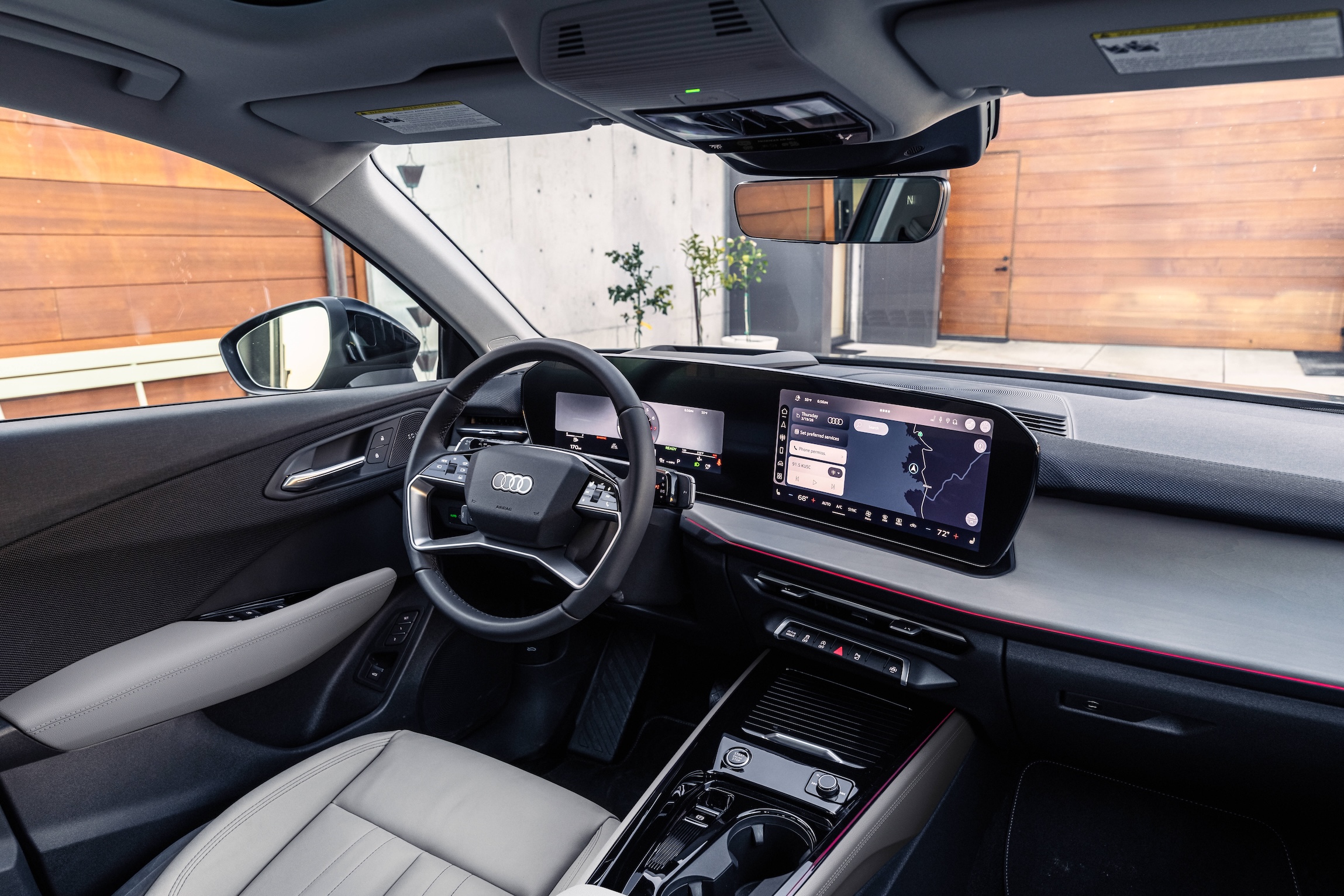
The interior of the 2026 Audi Q3 carries on with the spartan premium appearance the brand is known for. But removing the heater controls was not cool.Audi
Driver’s seat: As a Mr. Driver’s Seat of a certain age, it can be hard to tell where old-man back problems end and hard seats begin. I first suspected that the leather driver’s seat in parchment beige with steel gray stitching might not be the culprit, and fortunately my aches let up in time to decree — it’s just me. The Q3’s seat is fine, comfortable and supportive just like almost all the rest.
Friends and stuff: The rear corners provide fairly nice accommodations, with seat comfort matching the front to some extent. The seat back has two or three recline positions; the seat also slides forward and back but it’s for naught; the only usable position is all the way back.
Cargo space is 29 or 50 cubic feet, depending on the seat origami.
In and out: The Q3 sits at a nice height for hopping in and out, no ducking or climbing required.
Play some tunes: The 12.8-inch screen isn’t bad for the stereo operation. I switched into CarPlay most of the time but finding other sources is not too hard.
Sound from the Sonos system is excellent, an A trending toward an A+. It’s very clear.
Keeping warm and cool: This is where touchscreen joy goes to die.
Little icons along the bottom of the screen allow for changing the temperature, auto control, seat heater, defrost, and a few other things. But if you want to change the blower speed, you have to open up the HVAC screen, and the blower buttons are pretty small and hard to locate.
The location of the big screen also means the center blower vents sit quite low, which can make cooling the vehicle a little slower on a hot day.
Also, hot days interfere with the touchscreen haptics. Good luck making quick adjustments when starting up on 90-degree days; I have the sweaty back to prove it. Well, had; I promise I’ve showered since.
Fuel economy: I averaged about 24 mpg in 100 or so miles of testing, not many highway miles.
Where it’s built: Gyor, Hungary. The countries that supply the most parts are Hungary at 37% and Germany at 27%.
How it’s built:Consumer Reports hasn’t hazarded a guess yet on the Q3’s reliability. But the previous year’s model garnered a 5 out of 5 rating.
In the end: The Q3 is a delight to drive and to ride in. It’s almost a few dials away from perfection. Try the Countryman for an equal level of delight.
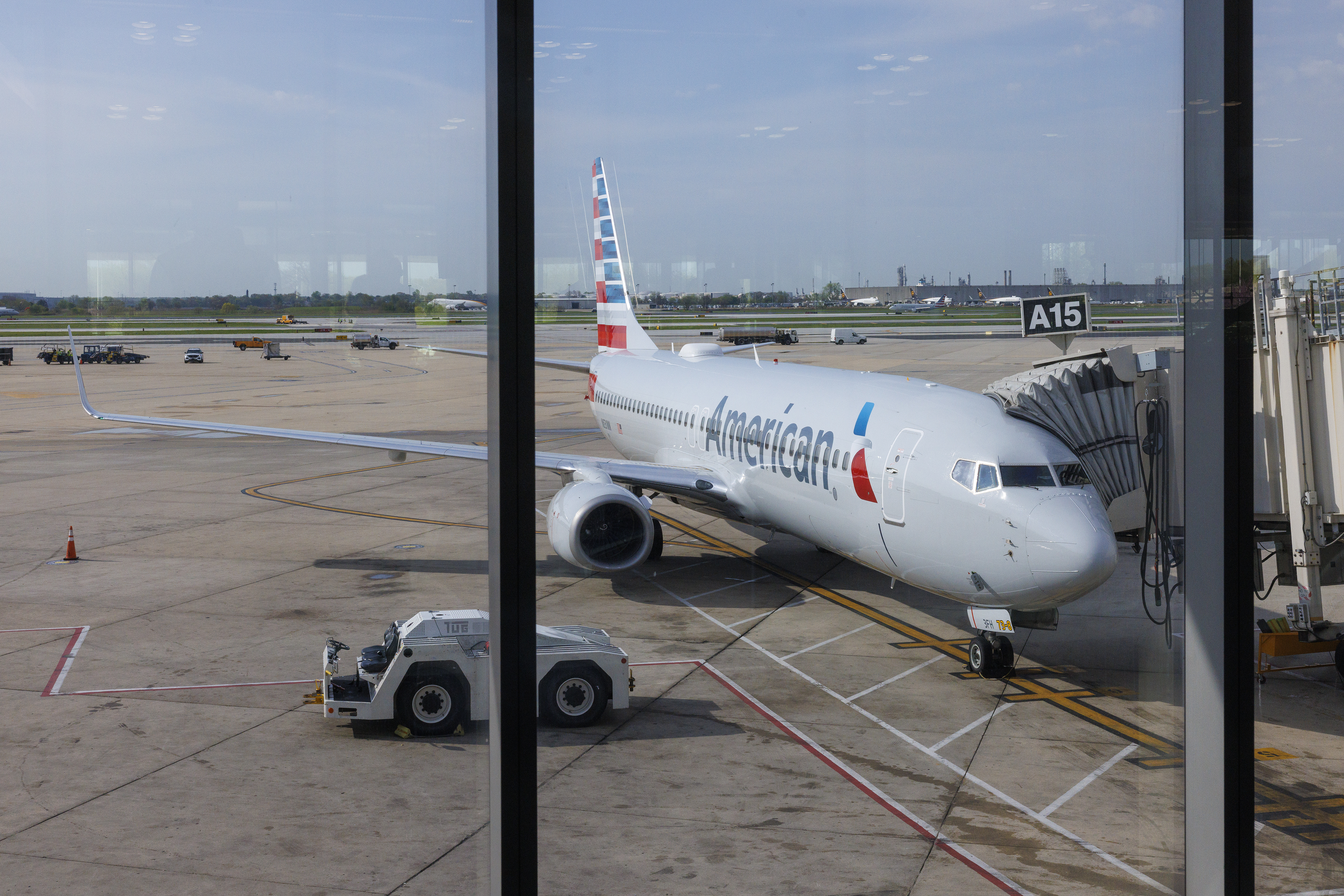
American Airlines will officially add three new international routes out of Philadelphia International Airport next year.
The airline announced on Thursday that flights to the European cities of Porto, Portugal, and Vienna, Austria, will depart from Philadelphia in 2027.
The airline is also adding trips to Reykjavik, Iceland, a route that was previously announced in 2019 but never came to fruition because of pandemic travel restrictions.
Flights will begin operating to Porto on March 28, to Vienna on May 6, and to Reykjavik on May 27. The routes to Porto and Vienna will be operated on an Airbus A321XLR aircraft, and the route to Reykjavik will be served on an Airbus A321neo.
Travelers can purchase tickets on the new routes beginning on Aug. 31.When the new routes are operational, American will have 21 transatlantic routes operating out of PHL.
The new destinations are American’s latest service expansion at PHL. American is the largest carrier out of PHL by passenger volume, carrying more than 20 million travelers through the airport last year — nearly 70% of PHL’s total passengers. The second largest carrier, Frontier Airlines, carried roughly 3 million passengers through the airport in 2025.
American increased the number of flights traveling through Philadelphia by 10% this summer compared to the same time last year, according to the airline.
John F. Kennedy International Airport in New York, one of America’s other transatlantic gateways, sees business and leisure travel, but Philadelphia “has a much bigger footprint when it comes to leisure summer travel,” said Cesar Marchese, vice president of operations for the airline in Philadelphia.
Five and a half weeks before its opening concert of the fall season — months later than usual — the National Symphony Orchestra (NSO) announced that it will perform at six venues in and around Washington, D.C. while the Kennedy Center is closed for a planned two-year refurbishment.
While President Donald Trump’s role in the Kennedy Center renovations has sparked political debate and division, from the standpoint of the NSO, the issue is less about the president’s involvement and more about the risks of not having a permanent home. Concert halls have long been instruments of cultural power — places that determine who will be heard, who will be seen and which musicians or institutions will be able to claim prestige.
This issue has a history that stretches from the 19th century to the 21st, which was when Philadelphians confronted these risks, witnessing the Philadelphia Orchestra battle bankruptcy, and later, the Philadelphia Pops lose its home at the Kimmel Center, with serious ramifications for its survival.
The lesson of this history is that artistic prestige and institutional security are not the same thing. Even a great orchestra depends on physical, financial and social infrastructure to survive.
Long before purpose-built concert halls became symbols of civic prestige, musical life in 19th-century Europe revolved around drawing rooms, salons and subscription concerts. They brought together professionals and accomplished amateurs in spaces where conversation, performance and social interaction were deliberately interwoven.
The career of the Polish pianist and composer Maria Szymanowska illustrated how this culture functioned. Szymanowska performed before audiences across Europe before settling in St. Petersburg, where she became part of a musical scene in which domestic social life and professional activity were closely intertwined.
Szymanowska was one of three salon pianists, alongside Maria Kalergis-Mukhanov and Marcelina Czartoryska, who dominated a network that stretched from Warsaw and St. Petersburg to Vienna, Paris and London. All three gave public concerts, but their salons also provided access to international artistic and social circles that were beyond the reach of many musicians. Szymanowska’s acquaintances included some of the most distinguished cultural figures of her generation, including pianist and composer John Field, poet Adam Mickiewicz and author and playwright Johann Wolfgang von Goethe.
Such connections were not merely a sign of social prestige. They could lead to recommendations, invitations and access to wider cultural networks. In a profession where reputation and patronage were closely intertwined, gaining entry into these circles could open up opportunities that were unattainable through musical talent alone.
However, this system also had an obvious drawback for musicians. The opportunities offered by the salon depended on access to the host, their home and their social network. Unlike a permanent musical institution, this infrastructure could disappear if the host withdrew from the scene, moved away or died.
In other words, cultural prestige did not always guarantee the institutional stability necessary to thrive musically.
As public concert culture expanded during the 19th century, some musical authority shifted from private hosts to permanent organizations and concert halls that served as stable venues around which audiences could organize their musical lives. The concert hall became not merely a place where music was performed, but also part of an orchestra’s institutional identity. The development of American symphony orchestras made this transformation particularly visible.
When financier Henry Lee Higginson founded the Boston Symphony Orchestra in 1881, he aimed to establish a permanent ensemble. For nearly two decades, it performed at the Boston Music Hall before moving to the purpose-built Symphony Hall in 1900, making a permanent home part of the institution. Today, the Boston Symphony describes this hall as a public “temple of music.”
The shift to concert halls transformed the scale of musical life but did not alter its dependence on infrastructure and wealthy patrons. Orchestras now required administrators, sponsors and long-term planning. Stability became part of the promise an organization made — but fulfilling that promise required an increasingly complex infrastructure.
The management challenges faced by Philadelphia’s orchestras in the 21st century have illustrated the opportunities and risks associated with this structure.
Made By History sponsors. FOR USE ON MADE BY HISTORY STORIES ONLY.Inquirer Staff
Founded in 1900, the Philadelphia Orchestra became one of the country’s most renowned ensembles, and in 2001, it moved to the newly opened Kimmel Center. However, its prestigious reputation and state-of-the-art venue did not guarantee financial stability. Even in the first few years after the move, the orchestra was operating at a loss. An initial increase in ticket sale revenue was insufficient to offset rising costs and longer-term financial pressures.
In 2005, the Philadelphia Orchestra Association and Encore Series Inc., the nonprofit organization behind the Philly Pops merged many of their administrative and operational functions. This arrangement was designed to improve efficiency, particularly in ticket sales and fundraising, while enabling the Pops ensemble to draw on the administrative resources of the larger orchestra.
Both organizations retained their artistic independence, with separate boards of directors and subscription seasons. However, this agreement nevertheless linked the Pops more closely to the institutional infrastructure of the Philadelphia Orchestra.
The merger, however, could not prevent continued declines in attendance and revenue. In 2011, the Philadelphia Orchestra filed for Chapter 11 bankruptcy. The crisis laid bare a contradiction that seemingly permanent institutions are meant to overcome: the orchestra could enjoy exceptional cultural prestige without possessing institutional stability.
Among the organizations caught up in the crisis was the Philly Pops. When the Philadelphia Orchestra Association filed for bankruptcy, Encore Series Inc. followed suit. By that point, the relationship between the two musical ensembles had deteriorated. Ultimately, the organizations went their separate ways, and the Pops received $1.25 million in compensation.
The Orchestra emerged from bankruptcy in 2012 following restructuring, a new collective bargaining agreement, lease concessions and a fundraising campaign that raised nearly $36 million from 1, 500 donors.
These changes helped to restore the orchestra’s financial and institutional stability, but the Pops was not so fortunate. In January 2023, the group lost access to the Kimmel Center due to a dispute over unpaid fees. Concerts were suspended, and by March, the Pops was left without a permanent venue and had postponed further performances.
The dispute subsequently moved to federal court, where the Pops filed an antitrust lawsuit against the Philadelphia Orchestra and the Kimmel Center, alleging that they had attempted to drive it out of the market. The defendants contested the Pops’ version of events and later moved to have the case dismissed.
The original Pops organization eventually ceased performing, but many of its musicians came together to form the “No Name Pops” ensemble, which in 2025 adopted the historic “Philly Pops” name and resumed performing at a variety of venues.
This history helps explain the implications of the NSO’s current relocation. While the orchestra will have a 2026—2027 season, the six venues hosting concerts all have smaller capacities than the Kennedy Center Concert Hall. Music Director Gianandrea Noseda has described this year as a period during which the NSO will effectively function as a “regional touring orchestra.”
The experiences of 19th-century salon musicians and 21st century Philadelphia orchestras were vastly different. Yet, they reveal the same underlying vulnerability, which now confronts the NSO.
Salon musicians were able to build prestigious careers thanks to networks centered on specific hosts and their homes. However, these opportunities remained dependent on constant access to those spaces. Modern orchestras have replaced the salon with a far more complex institutional infrastructure. But the principle remains remarkably similar: artistic success depends not only on the musicians themselves, but also on the concert halls, patrons, administrators and audiences that support them.
The Philadelphia Orchestra’s 2011 bankruptcy did not mean that it suddenly lost its artistic excellence or international reputation. What became unstable was the institutional structure upon which its artistic reputation rested.
The Philadelphia Orchestra demonstrated that an orchestra can survive such institutional problems. Yet, the experience of the Philly Pops shows just how serious the consequences of losing an institutional foundation can be.
This history illuminates why the NSO’s loss of its home is significant — even if it is supposed to be temporary.
Cultural significance and institutional stability are not the same. Even the most renowned orchestras depend on funding, infrastructure, audiences and collective bargaining agreements. When they lose elements of this institutional backbone, it can imperil even the strongest orchestra.
Stacy Olive Jarvis is a musicologist and researcher at the University of Birmingham, specializing in 19th-century musical culture, musical networks and the social history of classical music.
Made by History takes readers beyond the headlines with articles written and edited by professional historians. Opinions expressed do not necessarily reflect the views of The Inquirer.