Emily Wielk, a senior policy analyst for working families at the Bipartisan Policy Center, says that she “hears consistently” that paid family and medical leave is a benefit that workers want and need to continue working.
“It is also a benefit that many businesses want to offer, but they are trying to determine the best way to manage the financial, compliance and administrative burdens,” she said.
It doesn’t matter how big or small your business is. Providing this benefit has become increasingly important for recruiting and retaining talent. The good news is that the federal government can help, and thanks to 2025’s One Big Beautiful Bill Act, more support is available.
Employer tax credit
Since 2018 there has been a generous tax credit available for employers who want to voluntarily provide some sort of compensation to their employees taking leave. It’s called the Employer Credit for Paid Family and Medical Leave under Internal Revenue Code Section 45S.
As long as you pay your employee a minimum of 50% of their normal wages while they are on leave, you can take a 12.5% tax credit on what you pay. The credit then increases by 0.25% for each additional percentage point of wages paid.
“If you offer the leave, you have greater certainty that the employee is coming back, and you can determine how to manage the gap in the interim,” said Wielk. “If you lose the worker, you will spend more time, money, and energy recruiting and trying to replace that employee.”
For example, if an employee normally earns $15,000 over 12 weeks and you pay the employee $7,500 while on qualifying leave, your business may receive a federal income-tax credit of $937.50. The more of the employee’s normal wages you replace, the larger the potential credit — up to 25% of the qualifying wages paid. So if you paid the full $15,000, your credit would be $3,750.
To claim the credit, you must have a written policy and provide two weeks of paid leave (not vacation or sick time).
If you own a pass-through business, like an S corporation or partnership, you can still claim the credit against the taxes you owe. If the credit is larger than the taxes you owe, you can carry it forward for up to 20 years. Highly compensated employees — those making $96,000 or more per year — are excluded.
“One specific thing the Section 45S credit does is encourage businesses to offer the benefit specifically to lower- and moderate-wage workers — not just necessarily to their C-suite or higher-wage earners,” said Wielk. “It is designed to ensure that workers who typically don’t have access to the benefit are getting access.”
Updated guidance
Earlier this month, the Treasury Department and Internal Revenue Service provided interim guidance on the expanded credit (more comprehensive proposed regulations are expected.)
Among these changes: Employers who purchase insurance providing paid family and medical leave benefits may now calculate the credit using qualifying premiums rather than wages actually paid during leave. It also potentially allows certain employers to use the credit where leave is required by a state or local government (such as New Jersey and soon in Delaware).
Previously, only wages paid to employees who worked for a company for a year were eligible, but that requirement was relaxed to six months. For 2026, employees who earned more than $96,000 are excluded. Most importantly, the credit has now been made permanent. Previously it came up for renewal every few years.
Stability promises
Wielk says that for Section 45S in particular, the fact that it was a pilot program created uncertainty. She believes that even when businesses knew the credit existed, they couldn’t be sure it would still be there four, five, or six years down the road.
“Many businesses were hesitant to use it for a few years and then have to assume the entire financial burden if the credit expired,” she said. “I think that uncertainty deterred some businesses from utilizing the credit.”
According to Wielk, the data “is very clear” that when workers have access to paid family leave, it boosts employee morale and increases loyalty to the business.
“It allows employees to take the time they genuinely need away from work with the knowledge and security that they can come back,” she said. “That has ripple effects on their ability to return and be productive.”
The people who built 3.0 University Place, an eight-story lab and office complex that covers a landscaped block of West Philly, had a problem: During the biotech slump after their 2023 opening, security costsescalated faster than occupancy.
“We had 80 Siemens cameras in there,” remotely monitored from a suburban surveillance office, and were “paying more than $150,000 a year for guard shifts,“ said Anthony Maher, the University Place Associates president.
But the building’s New York owners were still getting midnight calls for nonevents. Meanwhile the human video watchers missed incidents of concern — the stranger who had taken to sleeping on a tenant’s canopy at night, the fired contractor who sneaked back into the building one weekend.
Investors pressed them for a better way.
Maher and his partner, Scott Mazo, went hunting for an artificial-intelligence solution — an AI-era automated security system to collect and analyze camera, physical, and human-observed surveillance data; rank threats; sort out false alarms; open or shut locks; and quickly notify law enforcement, emergency services, management and owners’ groups as needed.
They rang an entrepreneur they’d met five years earlier at a Drexel University pitch meeting: Matias Klein, founder of Manayunk-based Kognition AI.
Kognition specializes in what Klein calls “cyber-physical threat detection systems,” which link and analyze digital security video, activate remote locks and sensors, load key data into formulas matching clients’ priorities and requests, sort and sharecommunications to alert the right people and agencies, and update responses based on results.
“You hang the cameras; we network the building systems,” as Klein puts it.
100 North American buildings
At 3.0 University Place, “Matias’ system gave us full access to the best 25 cameras, every floor, all times,” said Maher. The system caught incidents, routed them to the right people, and suggested simpler warning paths.
“They keep teaching us to manage the building, telling us, for example, about our people coming in when they didn’t really need to,” he said.
It worked so well “we told the owners to take the security-guard line-item out of the budget,” though they still use guards on occasion. It helps that the building’s big new tenant is the city police forensics unit: “We have a lot of cops coming here,” Mazo added, laughing.
More than 100 North American properties use Kognition AI, from Scotia Plaza, one of the largest office buildings in Toronto; to Pa.-based Benco Dental locations in several states.
A growing sector
Kognition, founded by Klein in 2017, was one of a handful of Philadelphia-area AI start-ups that presented to local investors at a June gathering. Investors included Osage Capital, MissionOG, and Susquehanna International Group’s SIG Growth Equity Fund.
“The AI landscape is changing so fast, it’s hard to tell what will be supplanted in a few months,” said Ellen Weber, who runs Robin Hood Ventures, and attended the meeting.
Robin Hood is a Philadelphia investors’ group whose members include start-up veterans. Members’ portfolio of local AI-dependent start-ups include Center City-based Deepwave, which makes laser weapons guidance systems for Air National Guard jets and other military projects; University City-based GreenIRR, which uses AI to speed carbon-emissions detection for truckers; and Proscia, which digitizes biotech images for fast diagnosis and pharmaceutical drug trials.
Thomas P. Dwyer, a partner at the law firm Troutman Pepper Locke who organized the June meeting, said Philadelphia trails other AI hotbeds.
“Philly has a lot of potential and opportunity here, especially if some of its larger companies get involved, as they do in Silicon Valley,” he said.
AI, he noted, is still seen as a threat by many local companies. They worry, “Can someone armed with Claude overtake your business, duplicate your software, and compete with you immediately — without having to hire people?”
And veteran investors are “gun shy” about AI profitability, he said.
Which, he added, leaves opportunity to those investors who make the “leap of faith” to promising AI start-ups
Operating on ‘the edge’
“An AI product makes itself better” the more it is used, said Kognition AI founder Klein.
Some of the best-known (and most-feared) AI image-and-data applications are based on giant AI companies’ mass sorting of millions of individuals’ information into ever-improving, readily searchable central databases at big new data centers — raising familiar privacy worries, as seen in the recent controversy over the alleged misuse of Flock digital camera data that police have used in attempting to quickly identify drivers.
By contrast, Kognition is one of the firms that operates at the “edge” of big networks, Klein said in an interview at his firm’s Manayunk meeting space. “We don’t send customers’ data throughout our network, and we don’t preload that information,” he said. “We don’t flow data back to a central monitoring station.”
Rather, the goal is “to give people control over the spaces where they live or work or worship, so they can get into a defensive posture fast, if they ever need to.” Custom, localized, focused solutions are “a big area of value creation” for AI start-ups, according to Klein.
Customized experiences
Kognition AI’s custom sharing limits and options are part of its appeal to Ravi Kalidindi. He was tasked by leaders of Bharatiya Temple, a Jain and Hindu religious congregation inMontgomery County, with setting up a system “that gave us control of our doors” without intimidating visitors or compromising members’ private information.
Kalidindi turned to Kognition as a locally based provider.
The system at Bharatiya starts with security cameras at the main entrance and stairways, integrated into a software and communications platform. “They check if our doors are closed. They tell us where there is human traffic. We can let the cleaning crew in without a key. It has mobile device control. It can even work on fobs,” Kalidindi said.
Kognition also has capabilities the temple has not used: “It has a weapons-detection system we have not enabled. It has additional sensors that can ID what people are carrying. It can tell us if we are seeing an above-average or above-expected crowd, make a note of the faces of people who are entering for the first time, and trigger an alert.”
There is a sense of user control of the AI systems that Kalidindi finds reassuring: ”We want to enhance the sense of security, that our facilities are being monitored, but also that everyone with good intent is allowed to enjoy the premises.”
Maleka Evans waited outside Octapharma Plasma in South Jersey at 8:30 on a recent sweltering morning, sweat beading on her face. A dozen other prospective donors had arrived before her, and the line was still growing a half hour before doors opened.
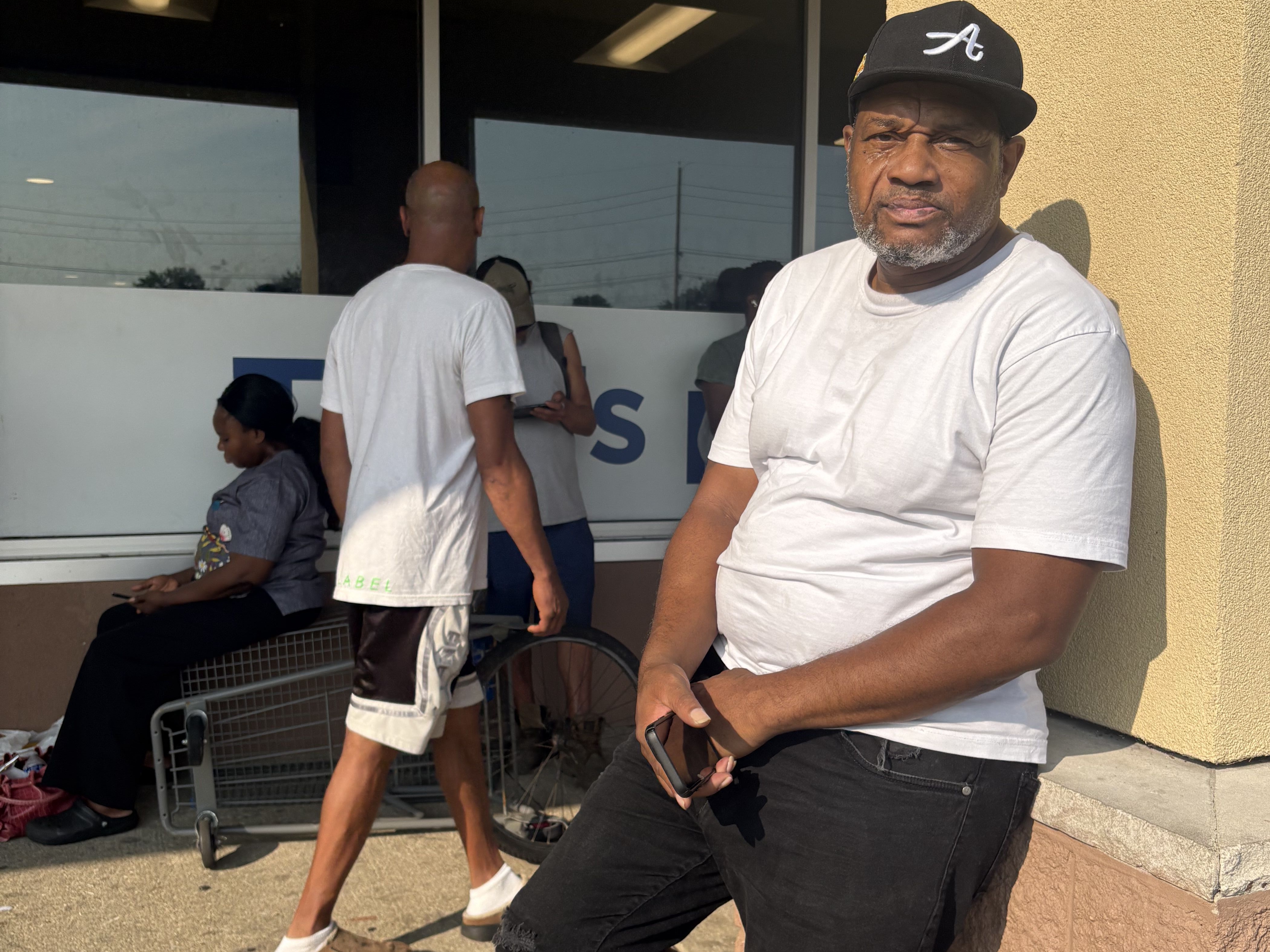
One woman sat on an overturned shopping cart pilfered from the nearby Walmart. Another brought her own folding chair. A man held a bicycle tire, removed to protect his bike from being stolen once he was inside and hooked up to a machine that extracts antibody-rich blood plasma needed for medical treatments.
Every Monday and Friday for the last three years, Evans has trekked to the Audubon strip mall for what she considers her second job. She takes a 45-minute bus ride from her Willingboro home to Camden, then walks another 45 minutes to the donation site with a slogan posted in its window: “When it pays to give hope. That’s plasmagic.”
The 37-year-old single mom has noticed the lines growing in the last year, as others are seeing at donation sites elsewhere in the Philadelphia region and across the nation. The for-profit business is booming as more and more Americans, both poor and middle class, struggle to straddle the gap between stagnant wages and increased living costs.
Evans relies on the $50 that she typically earns for each plasma donation — loaded onto a prepaid debit card — to help with bills that she cannot cover with her $18-per-hour job packing boxes at a warehouse.
“Prices for everything — food, rent, transportation, electricity — are just getting higher and higher,” Evans said. “You have to work two jobs to make ends meet, and you’re still living paycheck to paycheck.”
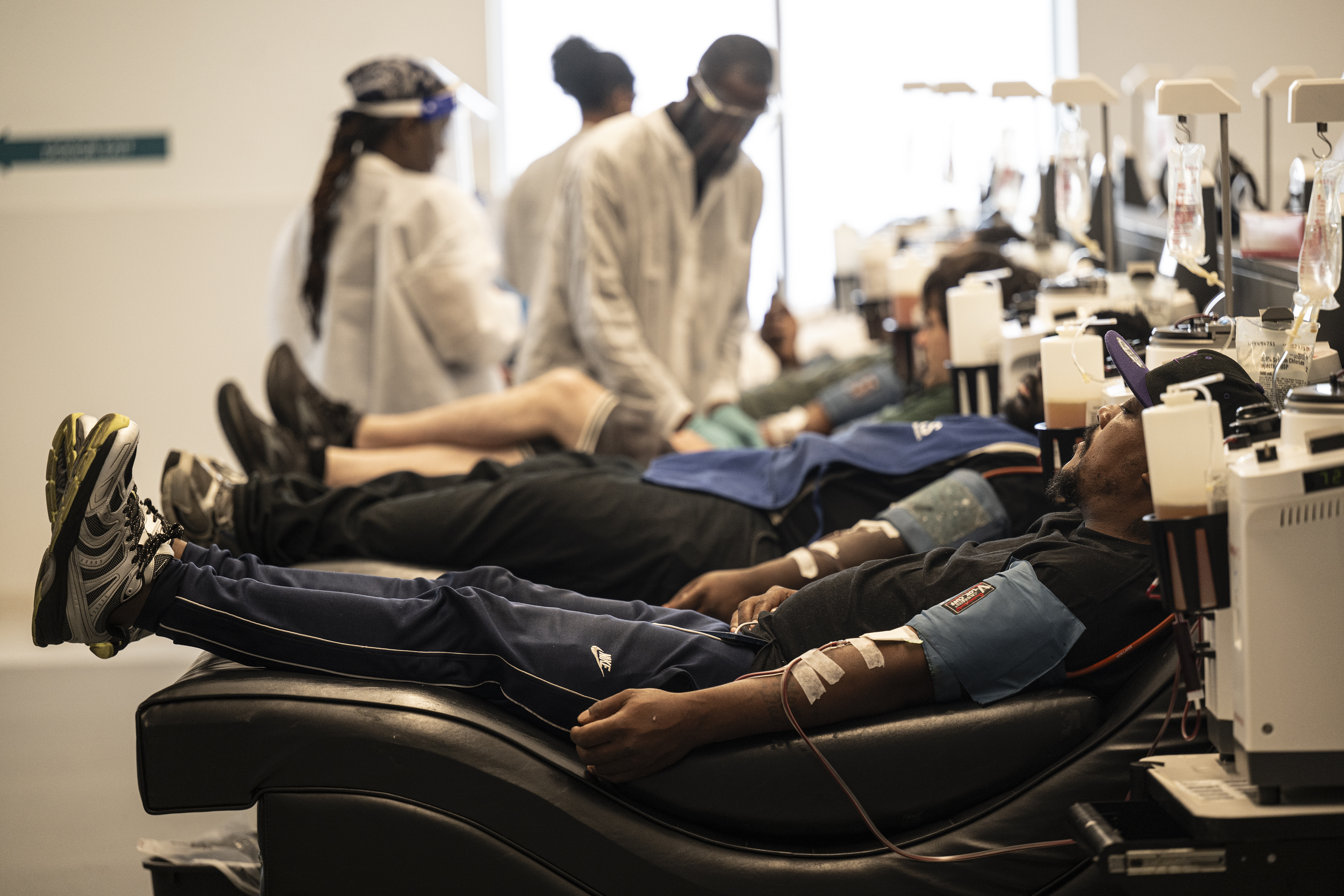
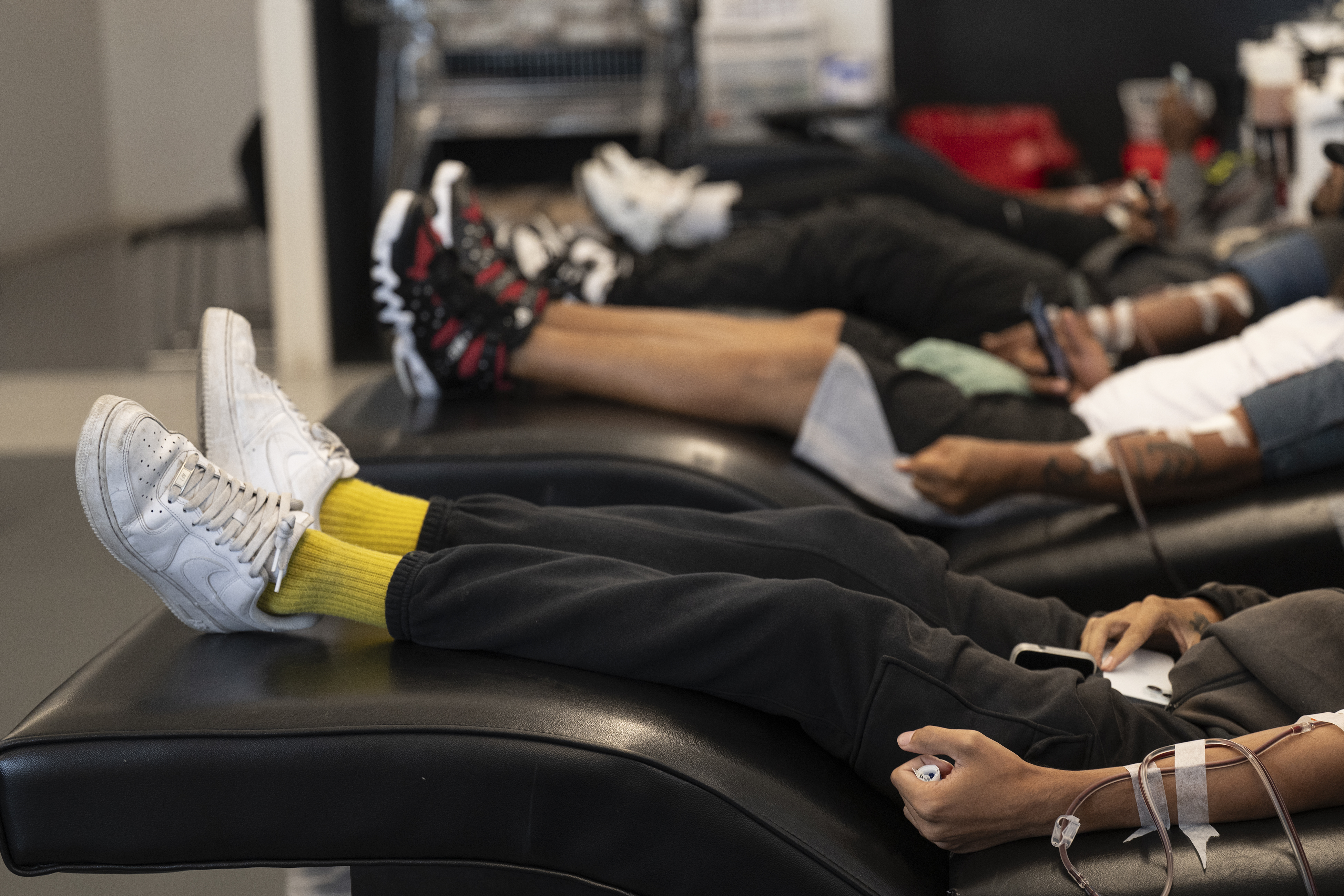
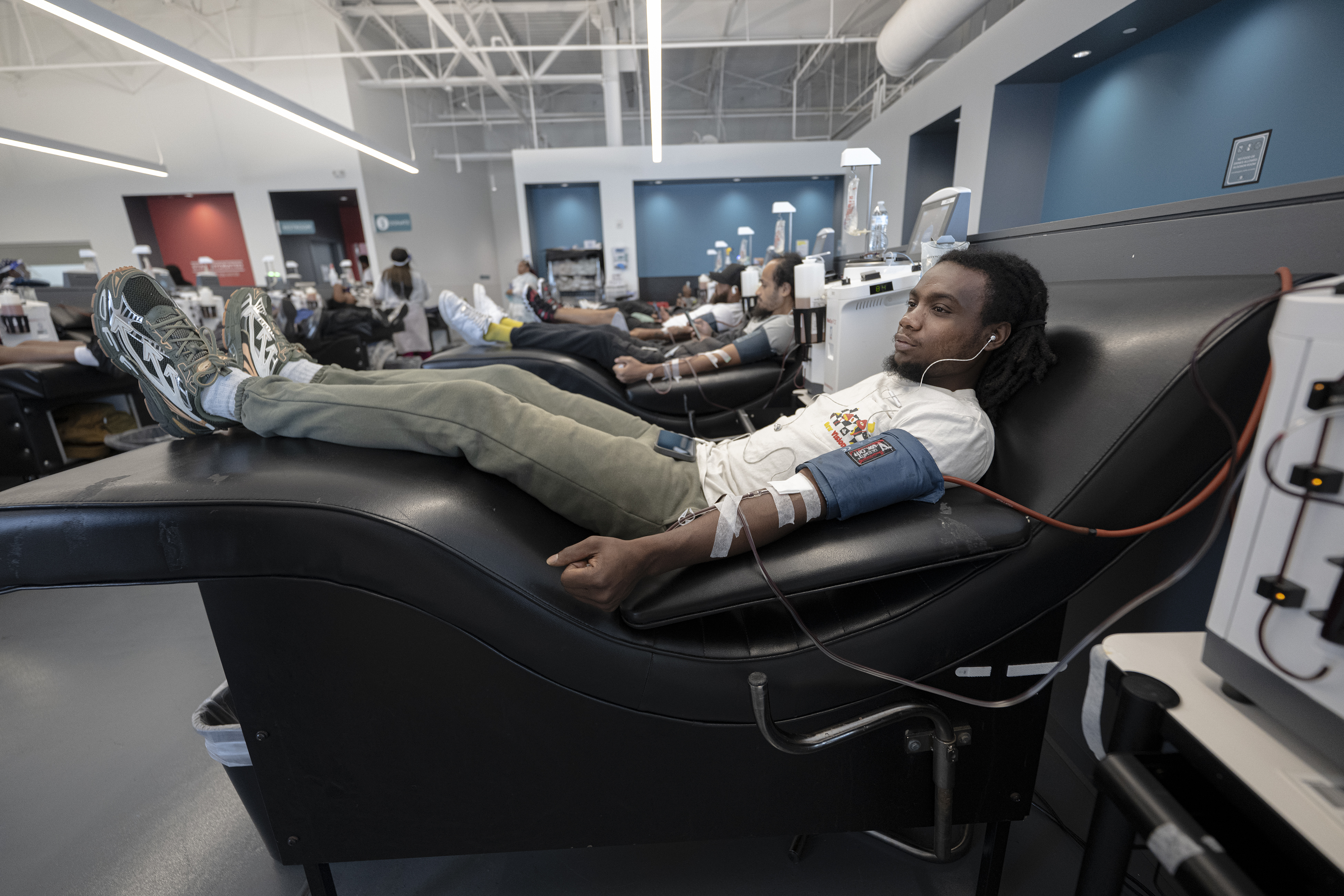
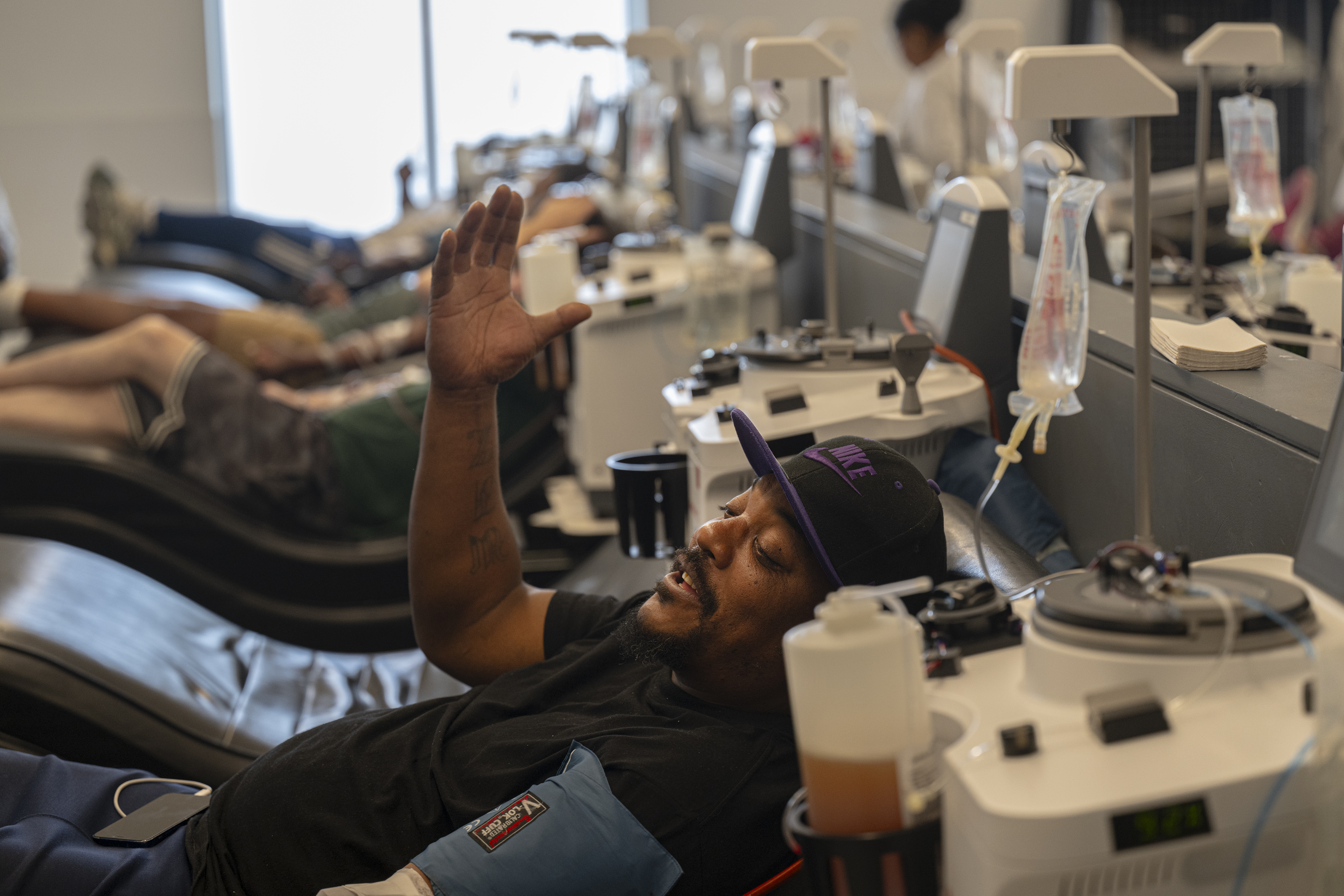
An increasing number of people in the Philadelphia region are selling their blood plasma for money. Here, local donors sit in recliners with needles in their arms at B Positive Plasma in Montgomery County.Jose F. Moreno / Staff Photographer
The U.S is one of about a dozen countries where it is legal to pay donors for plasma. It is among only three countries where people are allowed to donate two times over seven days, though not on back-to-back days, per U.S. Food and Drug Administration regulations.
Nearly 70% of the world’s plasma comes from donors in America, fueling a multibillion-dollar global industry. Plasma, a straw-colored liquid in blood, contains antibodies and other proteins used for treating a wide range of patients with immunodeficiencies, neurological conditions, kidney disease, and bleeding disorders.
Last year, U.S. donors produced 62.5 million liters of plasma — the highest volume ever collected and an 8% increase from the previous year. That trajectory has continued into this year, according to Georgetown University professor Peter Jaworski.
“When the price of most staples goes up, so does the amount of plasma donations,” Jaworski said. “If I fell on hard times, the very first thing I would do is become a regular plasma donor.”
Donating plasma is widely considered low-risk, with millions of people doing it each year without reported health problems. However, the long-term health effects of donating twice weekly for years have not been well-studied. Safety concerns raised by the deaths of two people in Canada who had recently donated at for-profit clinics run by the healthcare company Grifols haveprompted an investigation there.
In the U.S., an FDA investigation into 34 deaths of people who had donated plasma between 2016 and 2020 did not find a link between donations and fatalities.
Some donors experience lightheadedness, fatigue, bruising, bleeding, or dehydration. Drinking water and eating foods high in iron and protein can help alleviate those side effects, according to U.S. health guidance.
Security guard Danny Morales of North Philadelphia said he feels “tired” after donating. But that has not deterred him from heading to CSL Plasma in the city’s Olney neighborhood twice a week, as soon as he finishes his overnight shift at 6 a.m.
Morales can earn $520 a month donating plasma, which helps to offset rising expenses that have the 35-year-old father feeling ever more drained: The cost to fill up his Honda Civic’s gas tank jumped from $30 to $80 in the last year; a package of ground beef increased by $8; and even the brand of mac and cheese that his 8-year-old daughter and 2-year-old son enjoy costs about $1 more, he said.
“It’s just getting worse and worse,” said Morales, whose plasma donations supplement his $18 hourly security job wage. “Stuff is just getting so expensive. Groceries are ridiculous.”
CSL opens at 6 a.m., but a line starts to form around 4:30 a.m. In late July, it snaked past the building, wrapping around the corner. The sight caught the attention of nearby Olney resident Tony Reed.
“There’s always a line there, especially toward the end of the month and definitely on Monday mornings,” Reed said. “People are broke.”
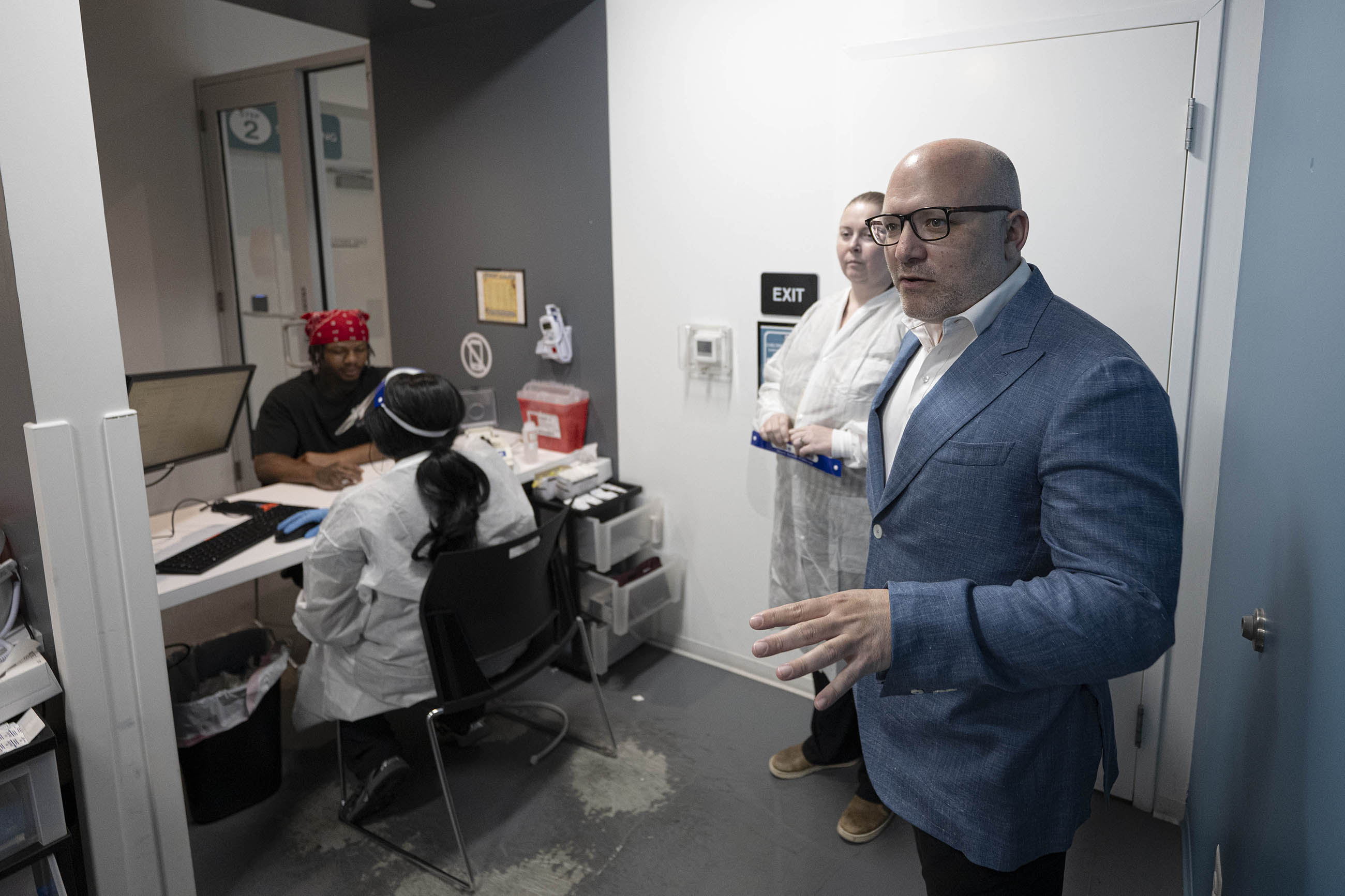
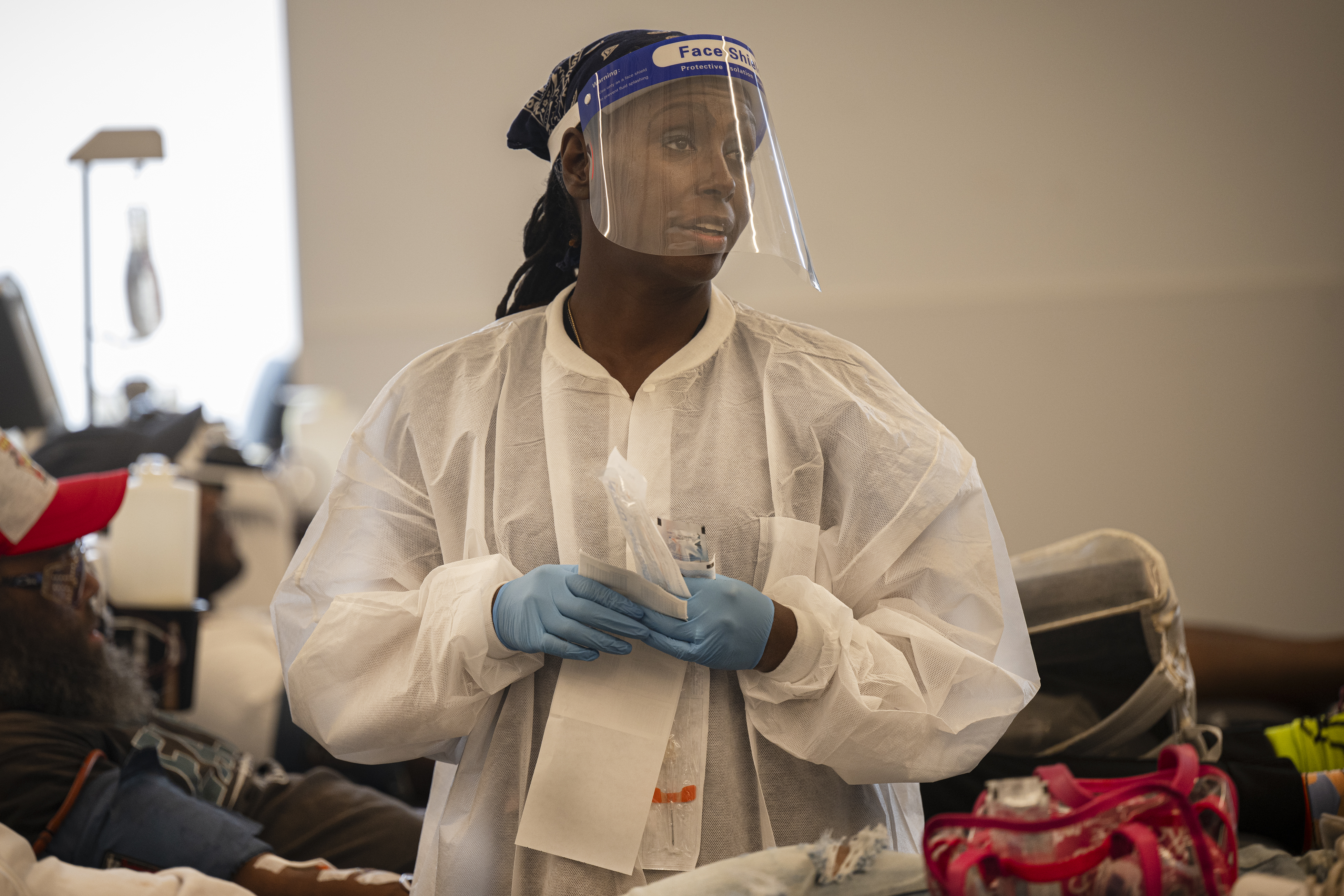
Ben Ruder, CEO and founder of B Positive Plasma, and Pearl Dixon, an assistant manager and phlebotomist, explain the donor intake process. Each donor fills out an extensive health questionnaire, undergoes a medical exam, and gets a finger prick to test their blood for iron and protein levels. Jose F. Moreno / Staff Photographer
Inside the booming industry
On a recent Wednesday afternoon at B Positive Plasma in Montgomery County, a steady stream of donors checked in at kiosks in the lobby.
After filling out an extensive health history questionnaire, each new donor undergoes an on-site medical exam by a licensed practical nurse. Repeat donors must get annual exams. At each visit, a medical tech checks their vitals, including blood pressure, pulse, and temperature, and performs a finger prick to test their blood for protein and iron levels. Donors must weigh at least 110 pounds.
“We make sure they’re healthy and well,” said Ben Ruder, founder and CEO of B Positive Plasma, noting that the plasma itself is tested for HIV and hepatitis B and C before being sold.
Next, plasma donors are hooked up to a machine that draws out blood, spins off the plasma, and then returns the red blood cells back to the donor, a process that typically takes 45 minutes to an hour.
At 2 p.m., 18 of the 24 cushioned recliners at the Wyncote location on Cheltenham Avenue were occupied by donors, each with a needle in one arm. They included a Philadelphia police officer who had donated more than two dozen times since May 2025; a casino cleaner who earns $120 a week donating to support his young daughter; and a home health aide who donates twice a week to help cover his $750 monthly apartment rent.
Jason Johnson, 29, of East Mount Airy, has donated plasma 68 times at B Positive Plasma in the past two years. He makes an extra $120 a week donating twice weekly. The money helps supplement the $17.80 an hour he earns as a cleaner at Live! Casino & Hotel Philadelphia. “In the beginning, I was doing it for the extra money, but once I learned that I’m helping people out in their life, it made me want to come back even more,” Johnson said. Jose F. Moreno / Staff Photographer
Plasma donation differs from whole blood donation, a faster process that relies on unpaid volunteers who can donate only once every 56 days in the U.S.
B Positive Plasma is on track to see a record year, with 180,000 donations, peaking this holiday season, when people need extra money for gifts. Last year, the company saw 150,000 donations at about 1 liter per person.
Ruder, 42, who lives in Center City, opened his first plasma donation center in Cherry Hill in 2012 and rapidly expanded to 12 locations in New Jersey, Pennsylvania, and Delaware. He plans to open two more sites in Maryland next year and another in Allentown later this year.
B Positive Plasma, like other plasma companies, structures payments to incentivize twice-weekly donors. For instance, donors whose weight and physical health yield the maximum amount of plasma — 1,001 to 1,200 milliliters — will receive $45 for the first visit and another $90 if they return that same week. Plus, the company offered a $50 bonus for anyone who donated eight times in August.
Donyele Wilkins, 48, a phlebotomist and medical assistant, works in the donation room at the B Positive Plasma in Montgomery County. She suffers from lupus, a chronic autoimmune disease for which she receives plasma-derived infusions to control her symptoms.Jose F. Moreno / Staff Photographer
Phlebotomist Donyele Wilkins works 12-hour shifts, four days a week, at B Positive Plasma.
For Wilkins, the paycheck is not the only benefit of working there.
The 48-year-old Northeast Philadelphia resident suffers from lupus, an autoimmune disease in which the body’s immune system attacks its own tissues and organs. Wilkins said she relies on plasma-derived medication, infused through an IV every four to five months, to help control symptoms like inflammation and joint pain.
Knowing how plasma is processed makes her feel “safe,” she said. She also likes getting to know “the regulars” who donate.
“It makes me feel like I know exactly where it’s coming from, and I know the people who are doing it,” Wilkins said. “A lot of them really need the money, so they’re helping me, on top of me helping them.”
‘Blood money’
Paying donors for plasma has sparked ethical debate, with some accusing the industry of exploiting poor people.
In her 2023 book, Blood Money: The Story of Life, Death, and Profit Inside America’s Blood Industry, Kathleen McLaughlin, a Montana-based journalist, found that donors in many U.S. regions are disproportionately Black and brown people.
McLaughlin, who has a rare autoimmune disease treated withmonthly plasma-derived infusions, said today’s rise in donations is “a symptom of our broken economic system.”
While the FDA regulates health safety at plasma centers, the pay rate is set by the companies, McLaughlin found. She thinks donors should be paid more and the amount should be standardized.
“Right now, it’s a capitalist free-market system, where the pricing isn’t transparent,” McLaughlin said. “The profit margins are crazy for these plasma companies, and it’s gamified to make you donate twice a week, every week, in perpetuity.”
Jaworski, the Georgetown University professor, said donors are compensated fairly. A donor whosits for an hour and a half makes “significantly more than” New Jersey’s $15.92 minimum hourly wage and Pennsylvania’s $7.25. Plus, he stressed, donors save “hundreds of thousands of lives.”
Wallace Smith, 45, of Upper Darby, prides himself on making an honest living. He earns $15 an hour as a home health aide. He makes an extra $130 a week selling his blood plasma. The money helps cover cigarettes, rent, and his phone bill. Jose F. Moreno / Staff Photographer
Recently published research suggests that communities can benefit when a new plasma center opens, because fewer young people take out high-interest payday loans and area crime drops, mostly driven by decreases in property and drug-related offenses.
“It helps you from having to do something wrong,” plasma donor Wallace Smith said.
When Smith was in his late 20s, he got arrested for selling drugs. Now 45, he is still struggling to find a job that pays a living wage, he said.
Smith, of Upper Darby, works three days a week, earning $15 an hour, as a home health aide. He earns $130 a week donating plasma, which helps pay for cigarettes, his phone bill, and rent, he said.
Like many donors, Smith said he likes the win-win of earning extra cash and helping patients who depend on plasma.
“They say there’s a job’s out here for everybody, but when you become a person who made mistakes in life, then they look at your background, so there’s only certain jobs you can do,” Smith said as his blood flowed into a spaghetti-thin clear tube at B Positive Plasma.
“With that being said, you don’t go back to your old ways,” he said. “You find better resources like this.”
On a hot August morning, donors line up outside Octapharma Plasma in South Jersey to sell their blood plasma for money. They arrive before the doors open at 9 a.m. to beat the wait. Donor Carl Davis, 56, of Camden, donates every Saturday and Monday, earning $70 each time. The extra money helps supplement his $900 monthly Social Security Income disability check. “I get SSI disability, but it’s not enough at all to pay my bills and buy food,” Davis said.Wendy Ruderman
Beach boardwalk fun
At Octapharma Plasma in South Jersey, the wait time can be as long as three hours, donors said. When a sewer pump broke and bathrooms stopped working earlier this year, the company trucked in a row of porta-potties to accommodate donors and staff.
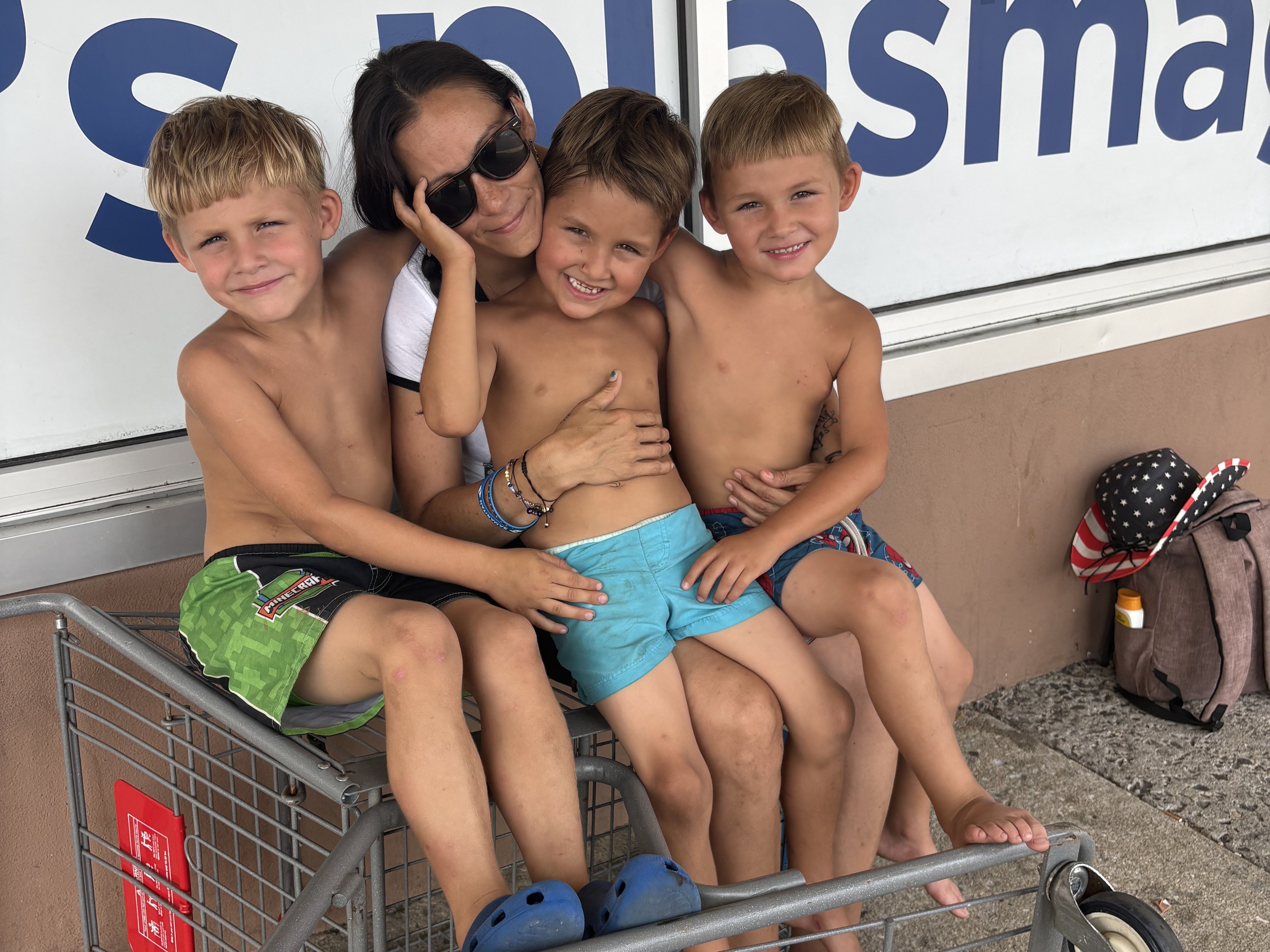
On a recent August morning, Brittany Barr, 36, and her three sons — 5-year-old twins and a 6-year-old — waited outside Octapharma as her husband donated. The family had walked roughly two miles from their Gloucester City home.
When Barr learned her friend had kidney failure and needed plasma infusions, she wanted to help. Barr was unable to donate plasma because she is anemic, so her husband agreed to do it.
In the month since Barr’s husband started donating, the family has earned more than $500. It has helped with groceries and their phone bills to supplement her husband’s income as a shipping manager.
“With only one income, money is tight these days,” Barr said. “Everything is messed up.”
The boys, clad in their bathing suits, climbed up on Barr as she sat on a tipped-over shopping cart. They were headed next to Atlantic City for a beach day.
“This week, the money is going toward fun. They’re going to play arcades and have ice cream or whatever their little hearts desire,” Barr said. “Next week, it’s going to school supplies.”
Brittany Barr, 36, seated with her boys (from left) Cooper, Cannon, and Colton, waits outside for her husband to finish donating plasma at Octapharma Plasma in Audubon, N.J. The family from Gloucester City was next headed down the Shore, where they planned to spend the extra money earned from donating plasma on arcade games and ice cream.Wendy Ruderman / Staff
The U.S. Federal Trade Commission has reached a settlement with Zillow and Redfin to resolve the regulator’s claim that the companies made an illegal deal to suppress competition in online rental advertising.
The FTC said Monday that it filed a proposed order with the U.S. District Court for the Eastern District of Virginia. It essentially requires Redfin to restart its standalone rental housing listings business, which the commission says will restore competition in the market for rental property listings. The settlement also resolves litigation brought by state attorneys general in Arizona, Connecticut, New York, Virginia, and Washington.
“This settlement delivers better, quicker, more certain results for both renters and property management companies than we would have been able to achieve after prevailing at trial, including firm and enforceable commitments by Redfin to relaunch its rentals advertising business,” Daniel Guarnera, director of the FTC’s Bureau of Competition, said in a statement.
In its complaint filed almost a year ago, the FTC alleged that in exchange for $100 million and other compensation from Zillow, Redfin had agreed to shut down its internet listings and exclusively repost Zillow’s apartment listings, transition its customers to Zillow, and stay out of the apartment listings market for up to nine years.
The commission argued that the companies’ February 2025 pact violated federal antitrust laws and could reduce incentives for competition, leading to higher prices and fewer choices for multifamily rental advertising customers.
Zillow and Redfin said their agreement was not anticompetitive and benefited renters and property managers alike.
The FTC’s proposed order requires Redfin to restart its rental listings business and hire enough staff to maintain it within six months of the order being finalized, or face financial penalties. The FTC said Redfin fired hundreds of employees shortly after announcing its deal with Zillow.
And while Redfin will continue to syndicate Zillow’s listings, it will be free to seek out and advertise non-Zillow listings, according to the FTC.
In a statement Monday, Seattle-based Zillow said it “has consistently maintained the partnership with Redfin is pro-consumer and procompetitive, and we’re pleased to have found a resolution that enables its continuation.”
A spokesperson for Redfin, which was acquired by Detroit-based mortgage giant Rocket Cos. last year, said Monday that the agreement “allows us to maintain our rental partnership with Zillow through at least 2030 while building and investing in a standalone rentals business of our own.”
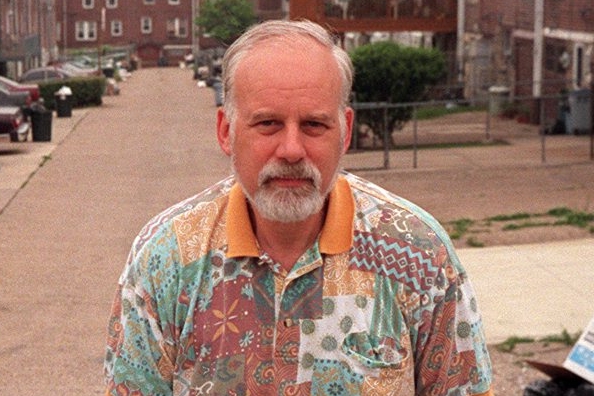
Ron Avery, 85, of Philadelphia, retired eclectic reporter and columnist for the Daily News, Philadelphia historian, volunteer city tour guide, author, high school history teacher, veteran, and canoe enthusiast, died Sunday, Aug. 2, of complications from amyotrophic lateral sclerosis at his home in East Falls.
Reared in Fairmount, Mr. Avery graduated from Thomas Edison High School and earned a bachelor’s degree in history at Pennsylvania State University. He was assigned to the ship newspaper in the Navy after college, found a creative niche in journalism, and went on to work for more than 30 years at the Associated Press, the Bucks County Courier Times, the Courier-Post in South Jersey, and the Daily News.
He wrote for the Daily News as a correspondent in 1981, joined the staff in 1982, and, until his retirement in 2000, wrote thousands of stories about crime, casinos, war orphans, historic houses, the MOVE bombing, local notables, and other subjects. His columns, “Poor Ronald’s Almanac” and “One of Us,” hammered away at local issues and featured everyday people doing exceptional things.
“He covered every nook and cranny of the city,” said his son Serge. “That burning curiosity sustained him till his last days.”
He wrote three books about Philadelphia, including A Concise History of Philadelphia in 1999. He produced a series of video guides he called the Urban Explorer for local TV in 2004 and posted blogs about the city from 2017 to 2019 on a website called Philadelphia Cracks Me Up.
“Like all cities,” he said in a 1995 Daily News column, “Philadelphia is honeycombed with hidden spaces and forgotten places.” In a 1997 review of his book, City of Brotherly Mayhem: Philadelphia Crimes and Criminals, The Inquirer’s Thomas Brady said: “The book … is decidedly a fun read.”
Alex Strang, his director on the Urban Explorer videos, called Mr. Avery an “unforgettable legend” and “a walking encyclopedia of the city’s history and eccentricities” in a Facebook tribute. Other former colleagues said he was “a clever journalist” and “a true Philadelphian.”
Longtime Daily News colleague Robin Palley said on Facebook: “He had an amazing knack of finding quirky people with fascinating skills or habits and making them come to life on our pages.”
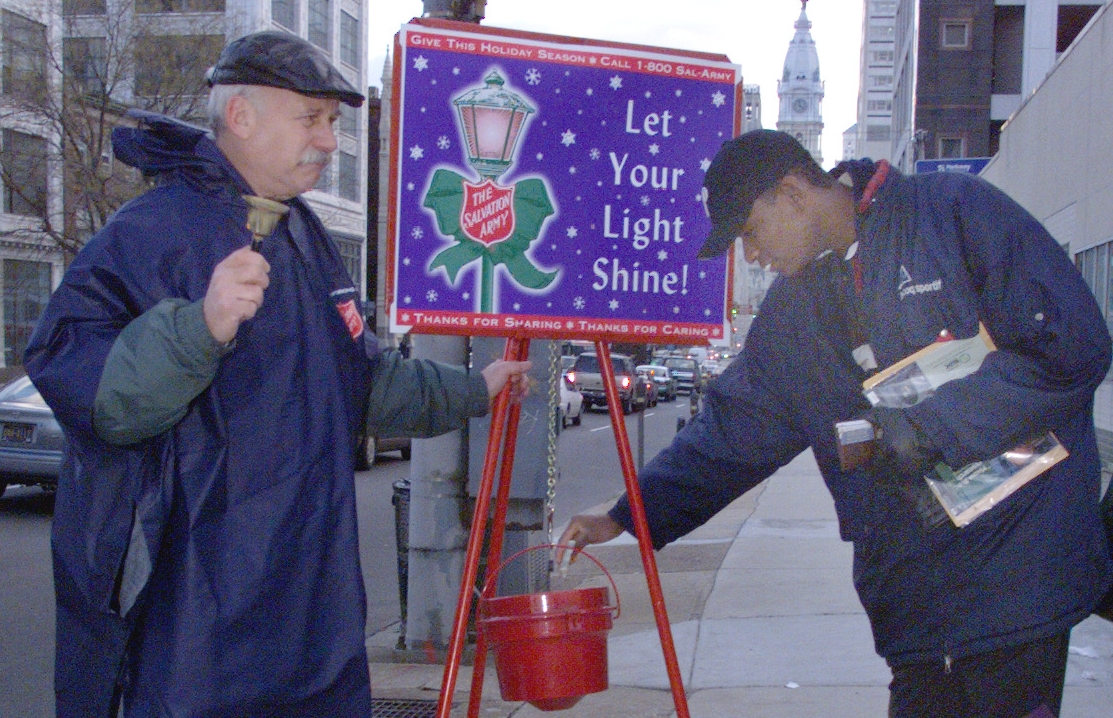
Mr. Avery (left) mans a Salvation Army donation kettle in 1999.Steven M. Falk / Staff Photographer
Before the Daily News, Mr. Avery wrote news and feature stories for the Courier-Post in the 1970s, and the Courier Times and the AP in the 1960s. He moved to Israel for six months in 1972 but returned to work for the Courier-Post in 1973.
He also wrote freelance pieces for the Hidden City Daily, PhillyHistory.org, UShistory.org, and op-eds later for The Inquirer and Daily News. He served in the Navy from 1964 to 1966, joined the Philadelphia Canoe Club later, and led water trips in the New Jersey Pine Barrens and elsewhere.
Knowledgeable, energetic, and naturally affable, he was a tireless promoter and volunteer guide in Philadelphia. He led walking tours throughout the city for students, civic groups, and other organizations, and his explanatory video tours featured cobblestone alleys, urban gardens, museums, statues, and other features of city life.
He was a stickler for details and historical accuracy, and he helped spur City Council to pass an ordinance in 2008 to educate and certify paid Center City tour guides. “They score high as Philadelphia ambassadors of good will,” he said in a 1995 column about uneducated guides, “but as historians they often flunk out.”
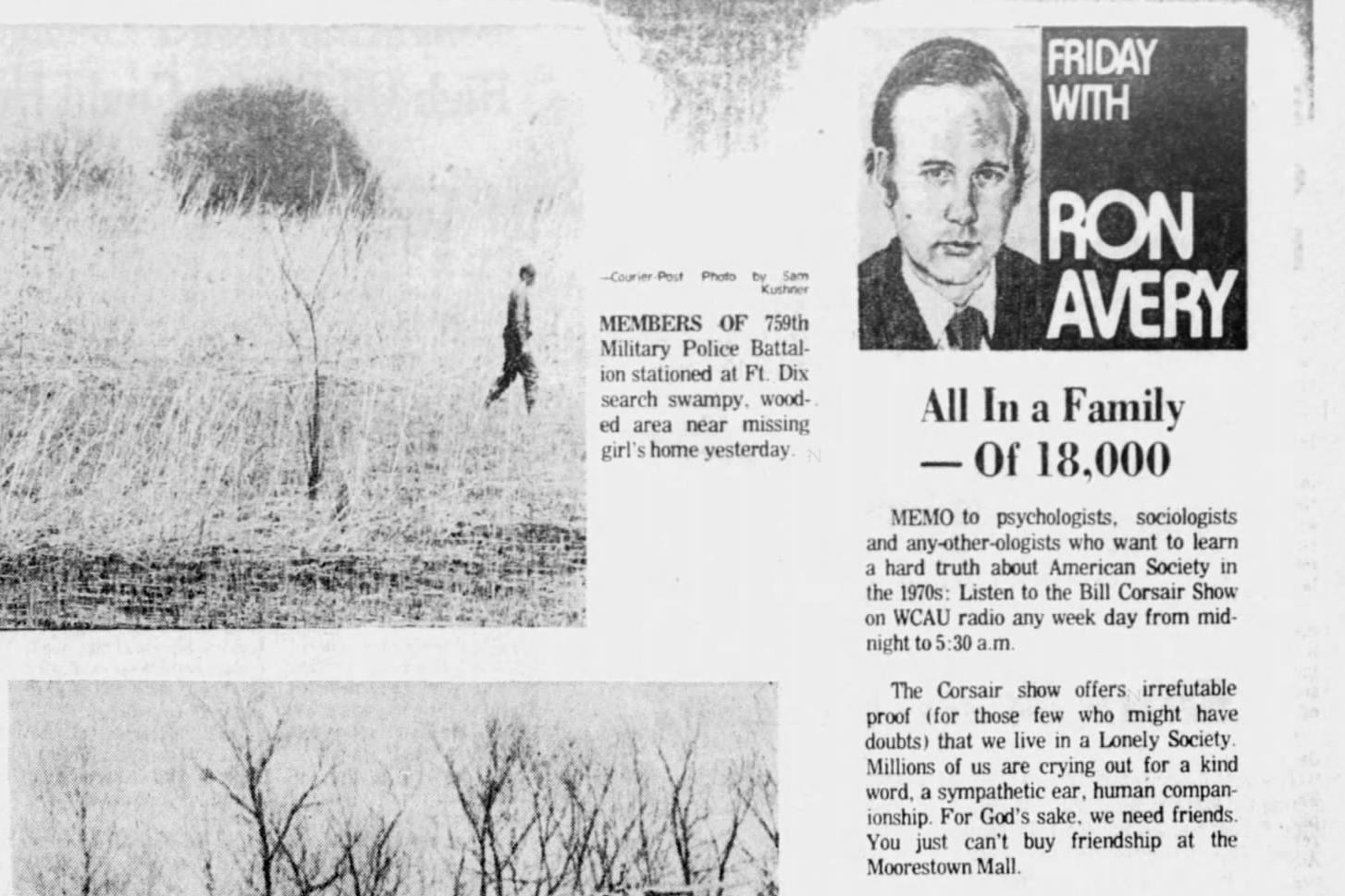
Mr. Avery wrote a column for the Courier-Post in 1974.Newspapers.com
Ronald Avery was born June 10, 1941, in Strawberry Mansion. He joined the Boy Scouts, earned his bachelor’s degree at Penn State in 1963, and taught history at Bensalem High School for a year.
He was a boxer in college and, mesmerized by the sport, later worked as a referee for amateur matches.
He met Suzet Habif in Israel in 1967, and they married in 1968. They had sons Serge and Ben, and lived for years in a rowhouse in Oxford Circle.
Mr. Avery cared for his wife during her long illness in the 1980s and ’90s. She died in 1993.
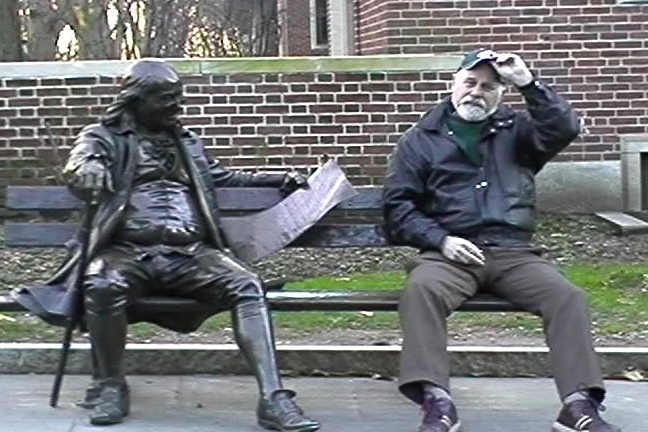
Mr. Avery liked to hang out with Benjamin Franklin and other historic figures. Alex Strang
He lived later in Pennsport and East Falls, was diagnosed with ALS in 2015, and proudly outlived its average life expectancy of 18 months by nearly a decade. “He defied that diagnosis and did not let it define him,” his son Serge said. “He always said he had a lot to live for.”
Mr. Avery was an avid reader and street photographer. He liked poetry, wrote limericks on birthday cards, and posted hundreds of his photos on flickr.com. One of his photos won a contest and was displayed at the airport.
He enjoyed jazz and jokes, led the prayers at family gatherings, and gave Yiddish quizzes to his two grandsons. He shared favorite recipes with Daily News colleagues and whipped up memorable homemade soups, especially white bean.
“I’ll greatly miss his endless anecdotes about all things Philadelphia,” said his daughter-in-law, Rebecca Houlding, “the stories about the local criminals, and his love of his family and friends.”
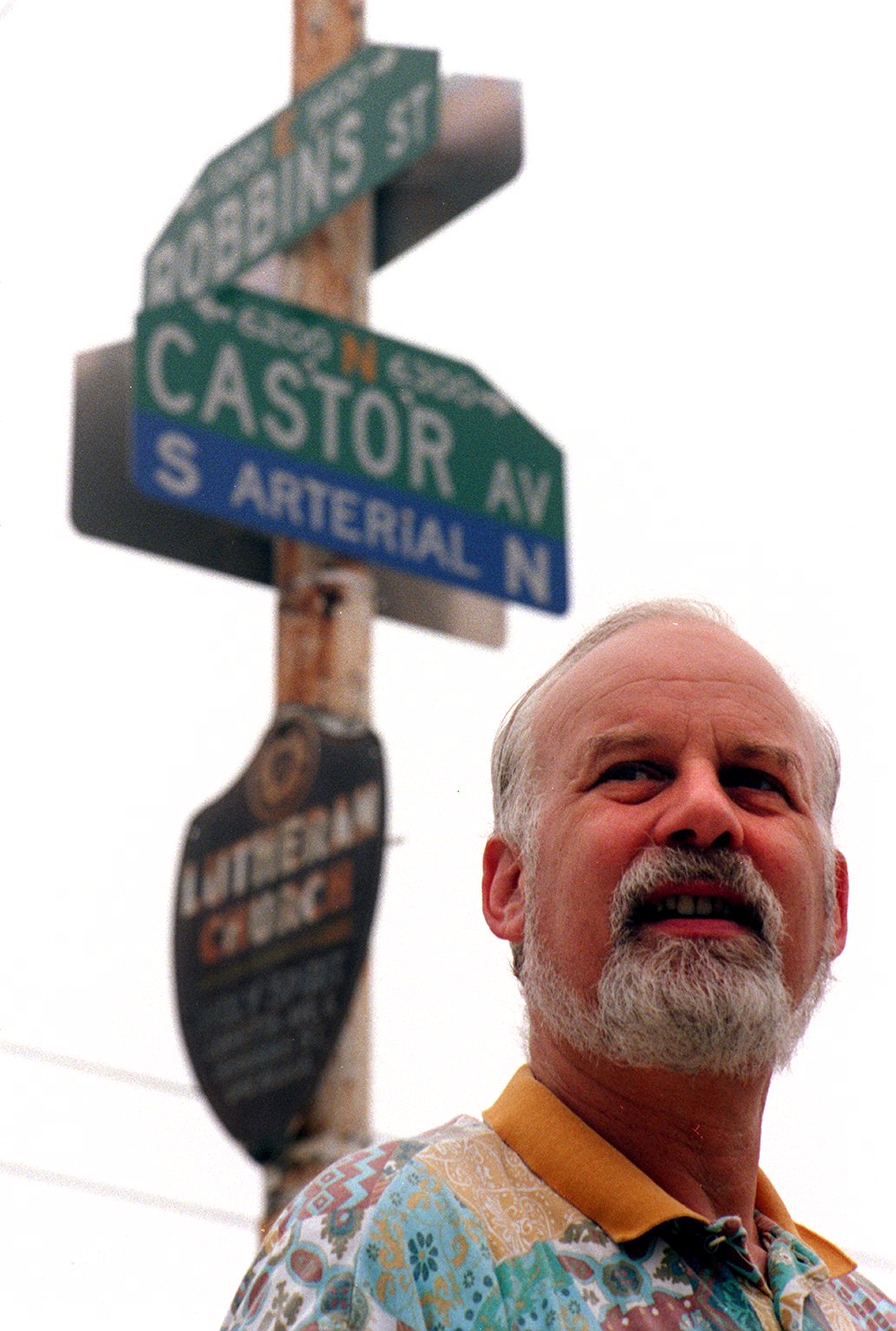
Mr. Avery wrote about his life in Northeast Philadelphia for the Daily News in 1997.Alejandro A. Alvarez / Staff Photographer
His son Serge said: “He loved chasing the stories from the back alleys and driveways, highlighting the working people of our town.”
In addition to his sons, daughter-in-law, and grandsons, Mr. Avery is survived by other relatives. A sister died earlier.
Universal Health Services Inc. has long dominated as the nation’s largest provider of behavioral health services through its network of 182 hospitals and 110 outpatient facilities.
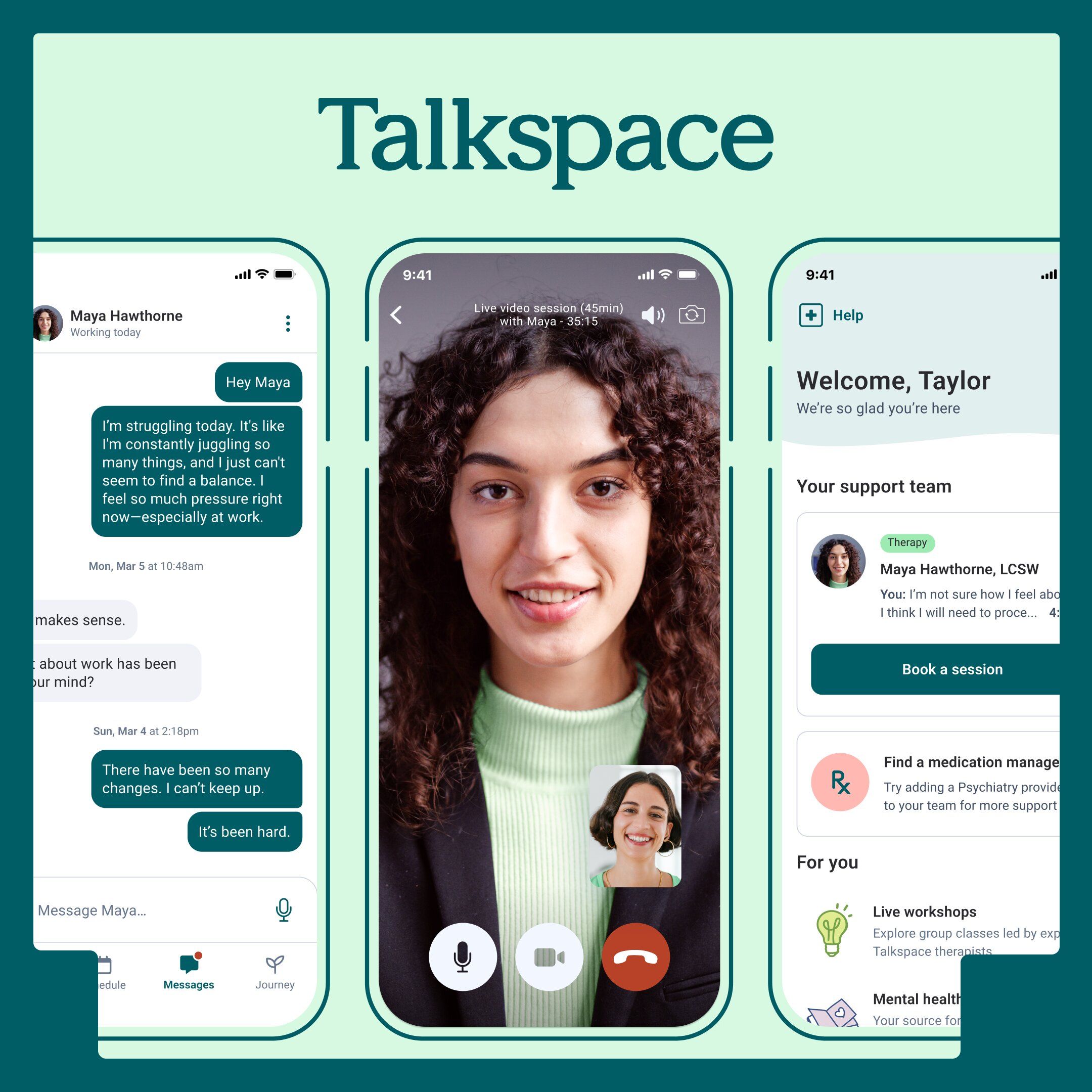
Last week, the King of Prussia company added a new dimension, completing the acquisition of Talkspace Inc., a virtual behavioral health company, for $835 million. It was UHS’s biggest deal in 15 years.
“We look at this as a real significant moment for healthcare,” UHS CEO Marc D. Miller said in an interview Tuesday. “It’s not simply a transaction for the company, but creating something in behavioral health that hasn’t existed.”
UHS’s goal is to create what Miller described as a new mental health continuum of care — including an AI agent introduced in June with human oversight and immediate intervention by licensed clinicians for safety if needed.
Talkspace’s network of 6,000 therapists conducted 933,000 treatment sessions with patients covered by insurance or employee assistance plans in the first half of this year. It had an additional 5,000 active patients who paid directly for the service during that period, according to Talkspace’s quarterly report.
The New York-based company reported $123.4 million in revenue and a $7.8 million net loss for the first six months of 2026.
UHS’s behavioral health arm had $3.9 billion in revenue and $773 million in profit before taxes in the six months that ended June 30. Philadelphia-area facilities include Friends Hospital in Philadelphia, Horsham Clinic in Ambler, and KeyStone Center in Chester.
UHS also owns the largest behavioral health company in the United Kingdom. Including its 30 acute-care hospitals, UHS’s six-month revenue totaled $9.1 billion.
The Inquirer spoke with Miller about how Talkspace is expected to complement UHS’s current business. This interviewhas been lightly edited for length and clarity.
What made Talkspace attractive to UHS?
By acquiring Talkspace for UHS, we’re creating the industry’s first nationally scaled end-to-end connected continuum in all of behavioral healthcare. Nobody has what we now have. For example, you can go to Talkspace to get treatment on your phone through the app, access therapists wherever you are, whatever’s comfortable for you. The vast majority are patients that UHS never would have touched.
Now, they’re going to know about UHS, so it would be natural that if they need excess care after they’ve had some care with Talkspace, they’re going to immediately be referred to all of the different options that UHS offers. On the flip side, we’re now going to have this Talkspace option after somebody’s either in one of our more intensive outpatient programs or an inpatient, so we can quickly say, as part of your aftercare, you might want to go to Talkspace, which is a subsidiary of UHS.
The concept makes sense. How do you make it work?
It’ll be totally integrated. Most of the insurers that they’re contracted with we’re contracted with, so there won’t have to be huge changes. There are some different contracts, and there will certainly be some things to work out, and there are some small pockets where they’re with somebody that we’re not. But for the most part, that’s not a big concern.
As far as the referral networks, we’re just doubling what we have. So there’s the current referral networks that go into UHS. There’s the current referral networks to Talkspace that are vastly different.
We’re now going to put this together, and we’re going to kind of double up the opportunities to both companies. It’s incredibly positive.
Talkspace’s AI agent Tee has gotten attention. Why is it different from using ChatGPT or Claude like a therapist?
Tee was purpose-built for mental health. Rather than just adapting a general purpose chatbot to a clinical context, this was built for this. That’s a huge difference. This was built by mental health experts who had safety and privacy in mind, and it was designed to complement human care.
People right now are going to ChatGPT and Claude and all these things and asking them questions that are totally disconnected, totally disjointed from any care they could be getting. If they’re not getting care, they’re really relying on something that is not expert to help them in a most serious endeavor.
Editor’s note: This article has been updated to correct UHS’s revenue and profit for the six months that ended June 30.
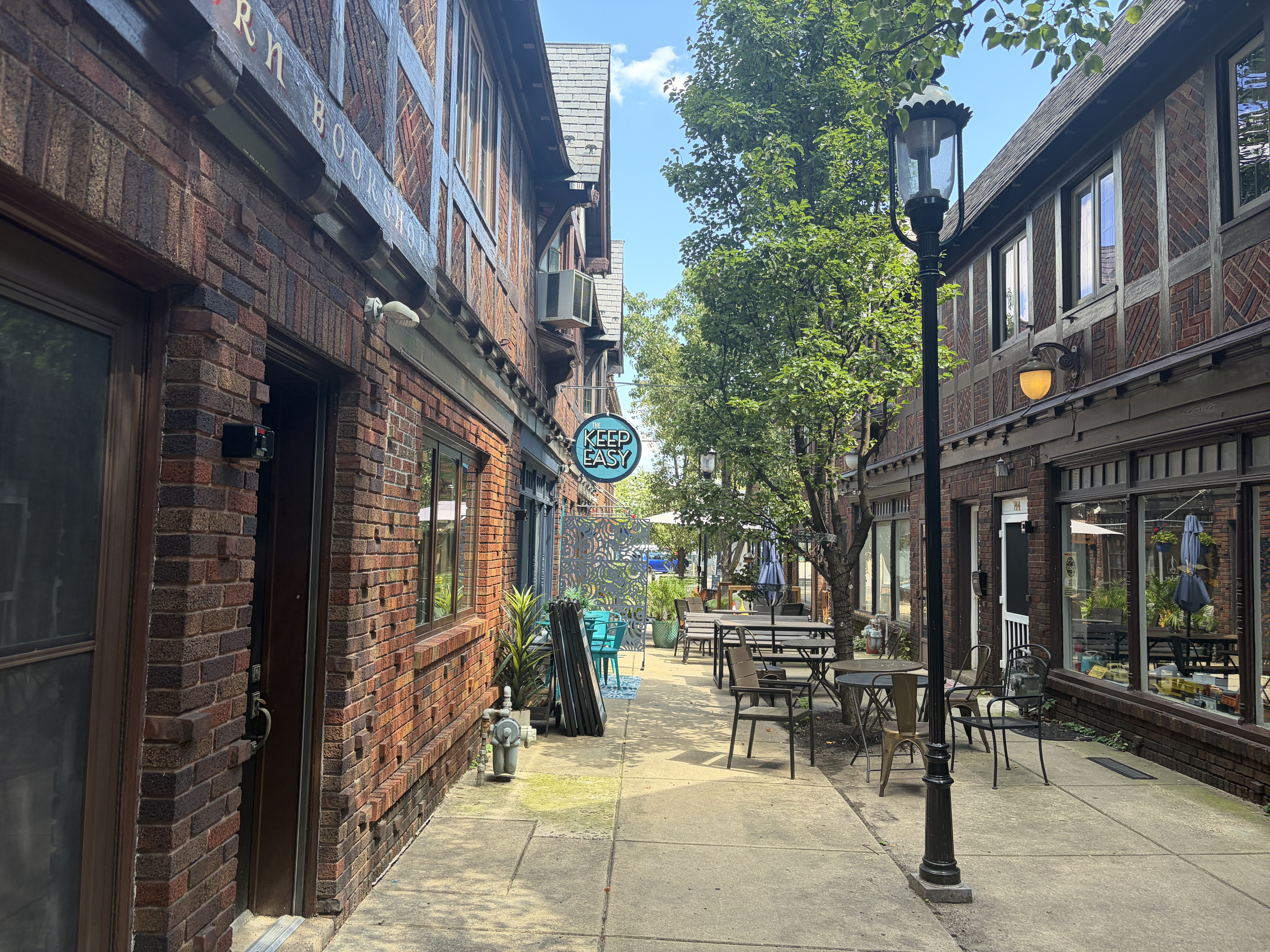
It looks like a street that belongs in its namesake English city, but the secluded, bricked Yorkway Place instead sits near the heart of Jenkintown, Pa.
For years, locals say, the pedestrian walkway drew few pedestrians: Offices and empty storefronts offered little reason to stroll along the 1930s Tudor-lined path, which runs into Route 611.
“I still meet people today who don’t even realize it’s there,” said Ross Abel, a Jenkintown resident who bought a Yorkway Place building this year that now hosts a cafe.
Unusual bar concept sparks alley renaissance
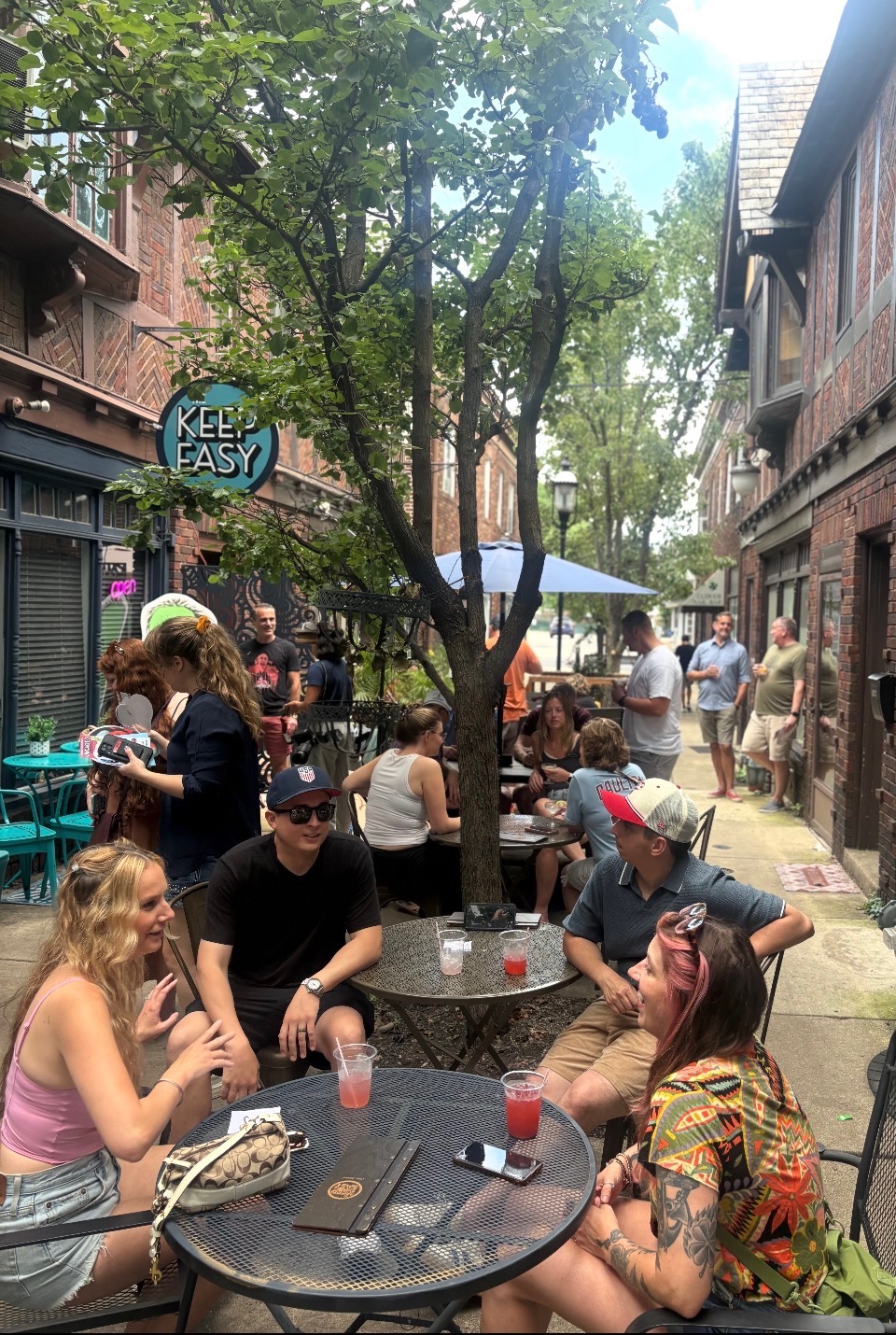
The tide began turning in 2023 when Melissa Hager turned her herb and tea store into a meadery, the Keep Easy, with her partner, Mike O’Donnell. While the Herb Shop had struggled, the bar took off.
Yorkway Place in Jenkintown, June 2026.Mel Hager
“That might’ve been the catalyst,” said Borough Manager George Locke. “The secret was getting that foot traffic in there.”
After the Keep Easy came Carminati Creamery, a gelato shop from Glenside, bringing a kid-friendly option to the alley.
The ice cream store “is the first thing that drew us in,” said Jenkintown Mayor Gabe Lerman, who has school-aged children. “Whatever we do for dinner, we can just walk up to Carminati’s.”
The Lore Café, an upscale, all-day coffee shop, added morning visitors to the scene. That’s what gave Jackie Botto the confidence to move Capricorn Books into Yorkway Place.
“We took a gamble,” Botto said. “I did not plan for it to be so busy.”
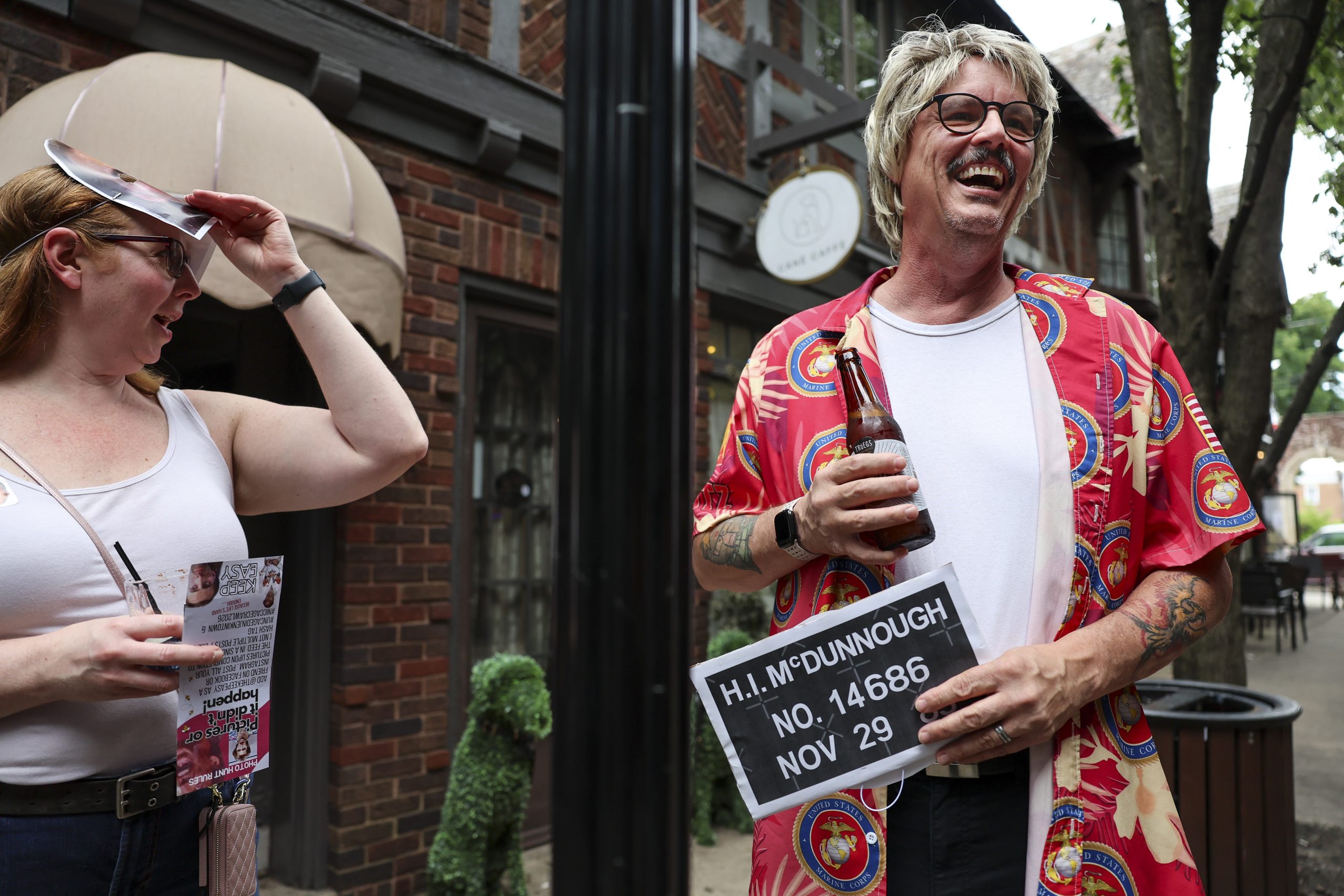
Themed events have attracted more newcomers, from a Nic Cage bar crawl to Jenkintown Festivus. Capricorn participated in the annual Philadelphia Bookstore Crawl, typically the store’s biggest day of the year, at their new Yorkway Place location for the first time this past weekend.
Vicky Hutz and Mike Hutz, of Huntington Valley, speak with a reporter at the Keep Easy during the Nic Cage cocktail crawl on Sunday, June 28, 2026, in Jenkintown, Pa. Participants gathered to celebrate actor Nicolas Cage with Cage-themed cocktails, movie screenings, and “Cage matches.”
Personalized support helped local businesses
Personalized, direct support has helped bring more small businesses to Jenkintown, locals say.
The borough started helping owners secure sewer permits from the state several years ago, Locke said. Each permit is “20 to 40 hours of my time.”
“It’s a tough process,” he said.
As for filling Yorkway Place, “It’s been Mel,” Botto said, who’s been reaching out to potential owners about vacancies.
“I was texting everyone I know,” Hager, the meaderist, said.
Lerman said Jenkintown also recently added free 20-minute parking spots, which helped stores throughout the town.
And many of Yorkway Place’s business owners live in the borough, the mayor said: “They’re all invested in being good stewards and in having a place you can feel good about sending your kids with a few bucks to get a gelato, or a book.”
Jenkintown alley to see new stores in 2026
Several more businesses are set to arrive in Yorkway Place in the coming months.
In September, insect taxidermist Kat Smith is opening an art supply, stationery, and craft cafe.
A game room and bottle bar is slated to open above Keep Easy in October.
And a record store, Smelly’s Vinyl Vibes, is also coming this fall.
“This is such a cool little street,” Abel said. “All these new shops are helping people to discover it.”
This suburban content is produced with support from the Leslie Miller and Richard Worley Foundation and The Lenfest Institute for Journalism. Editorial content is created independently of the project donors. Gifts to support The Inquirer’s high-impact journalism can be made at inquirer.com/donate. A list of Lenfest Institute donors can be found at lenfestinstitute.org/supporters.
Autonomous drones may soon be delivering Amazon packages across South Jersey.
Amazon representatives have told local officials and emergency responders that the e-commerce giant plans to start drone-delivery service out of its West Deptford facility this fall, according to West Deptford Mayor James Mehaffey and Mantua Township Police Chief William Murphy.
The news comes days after Amazon announced a massive expansion of its Prime Air program, which already delivers packages via drone from launch sites in 11 U.S. cities, none of which are in the Northeast.
By the end of the year, Amazon wants to expand its drone coverage area to nearly 500 cities and towns nationwide, the company said, allowing tens of millions of customers to get products flown to their doorsteps in 30 minutes to an hour.
“We are always exploring new ways to get customers a wider selection at faster speeds,” Amazon spokesperson Smitha Rao said in a statement, in response to The Inquirer’s questions about the South Jersey meeting, which occurred last week.
“We are currently working with local officials and exploring opportunities to expand our fast, reliable drone delivery service to reach customers in areas across the country.”
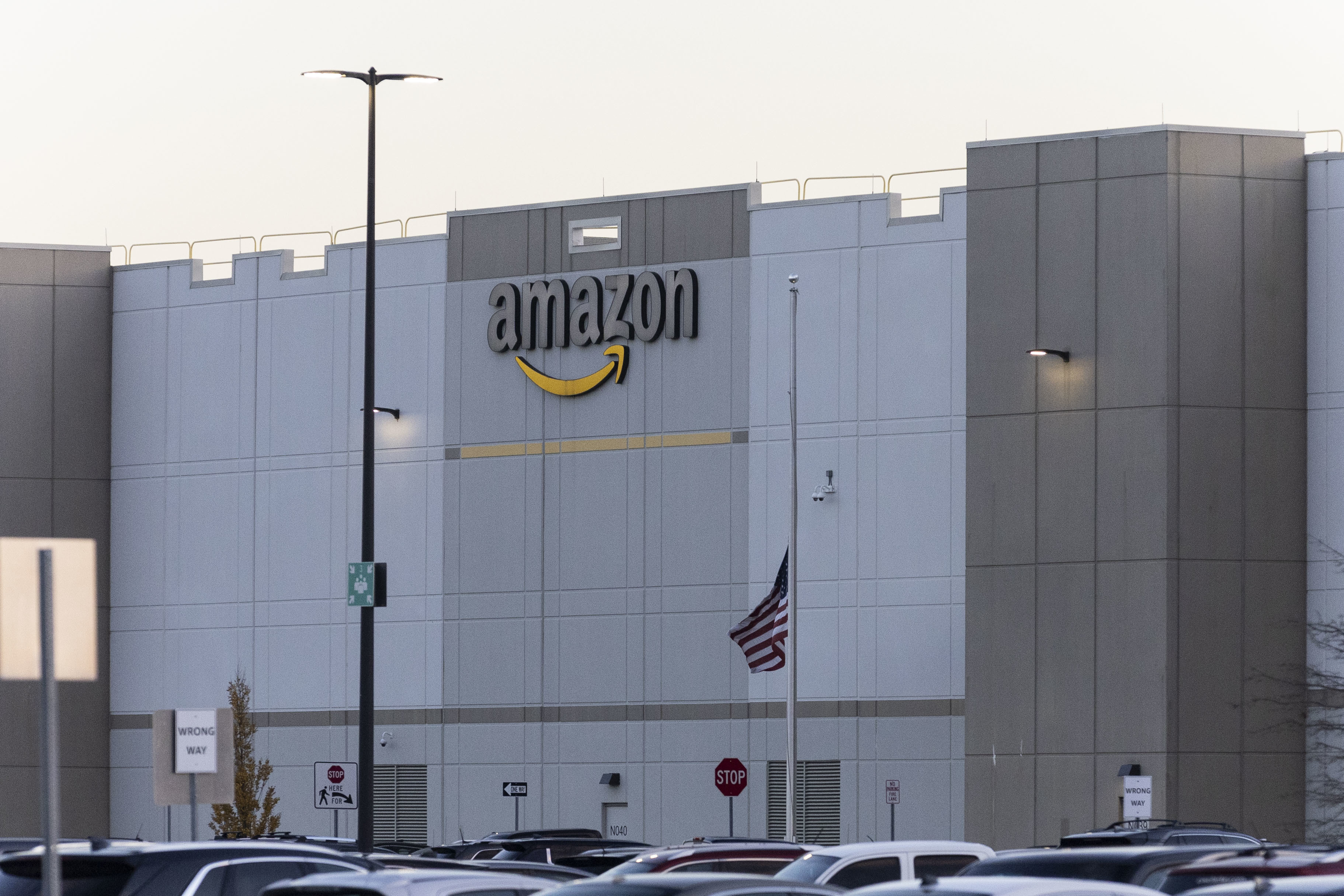
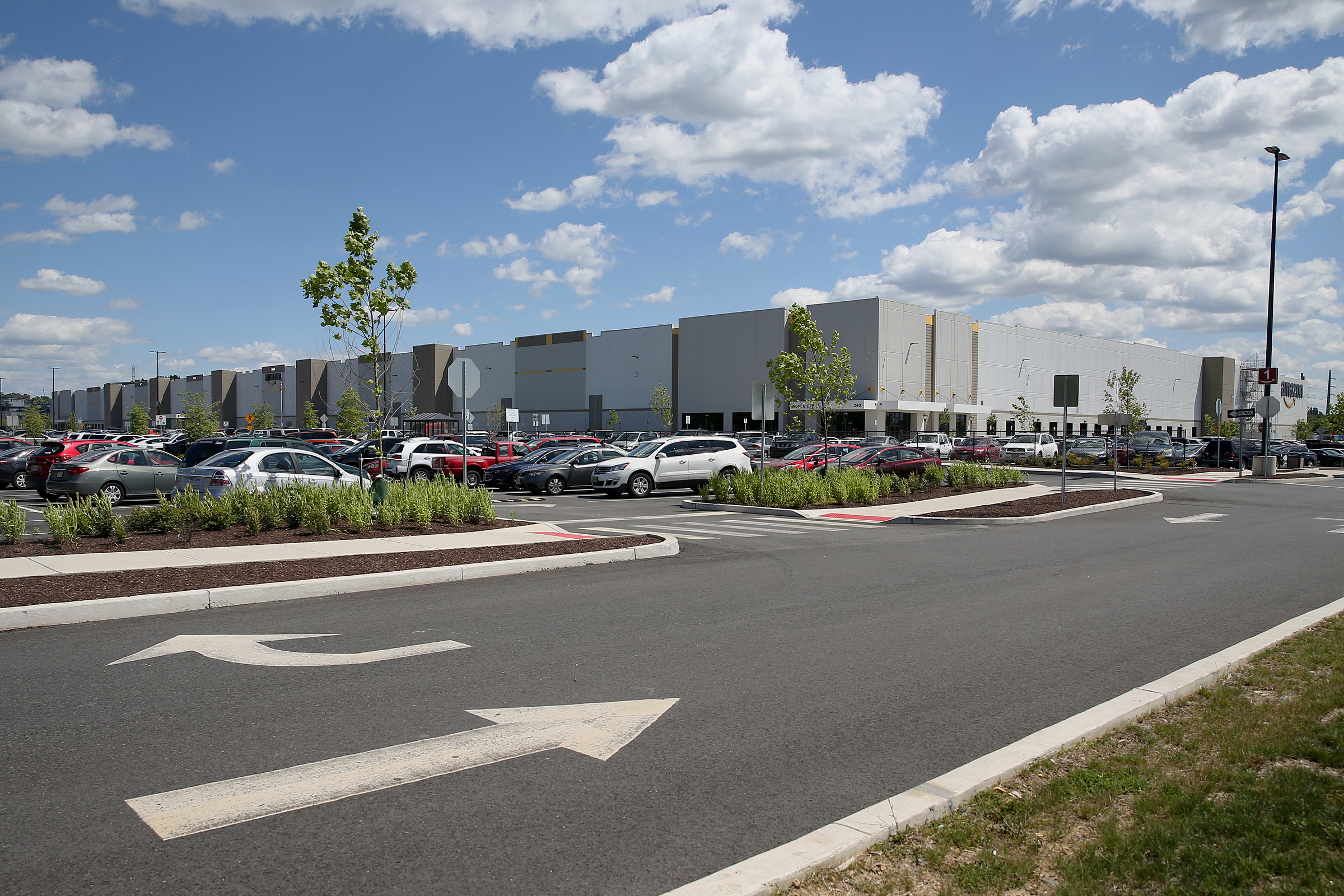
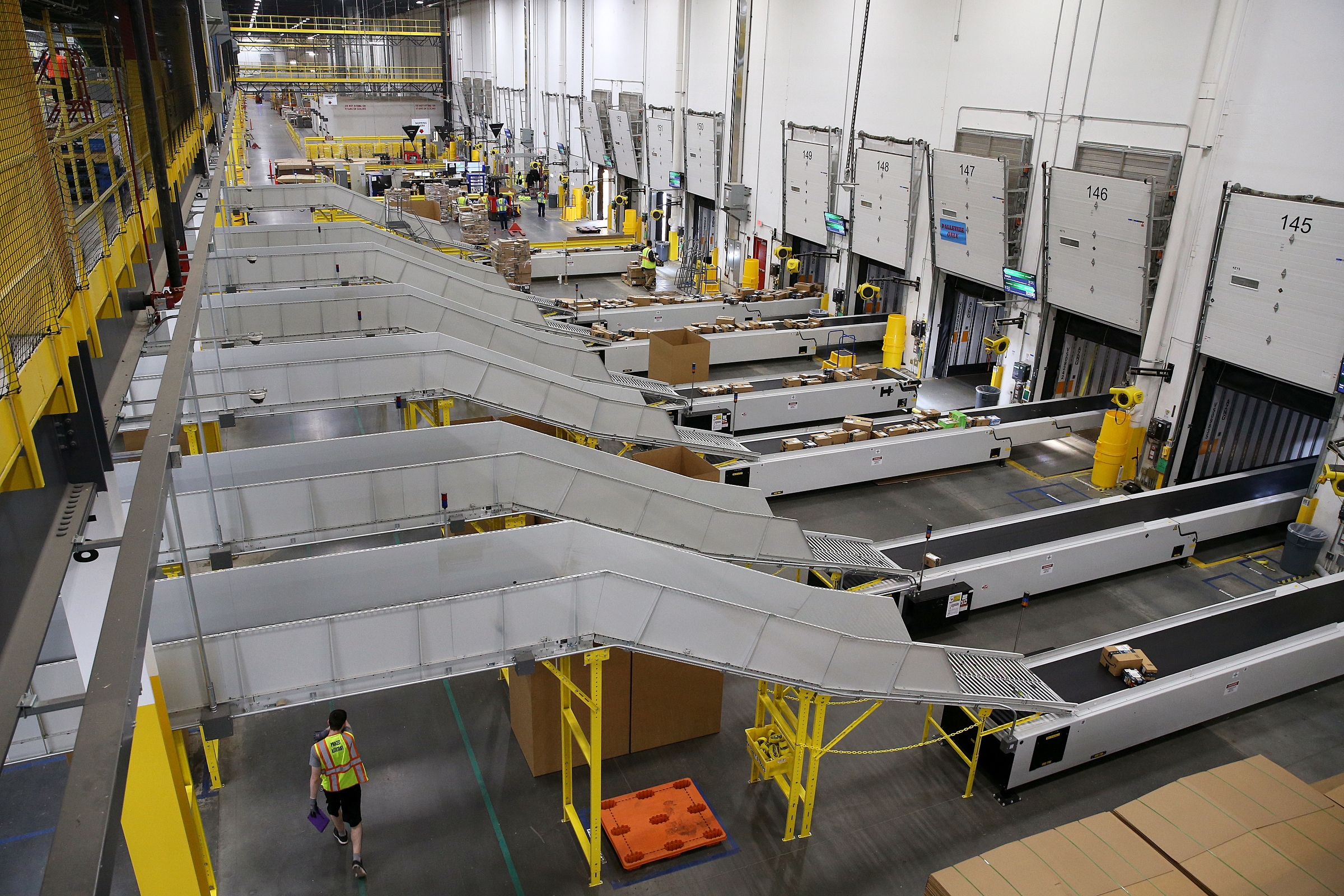
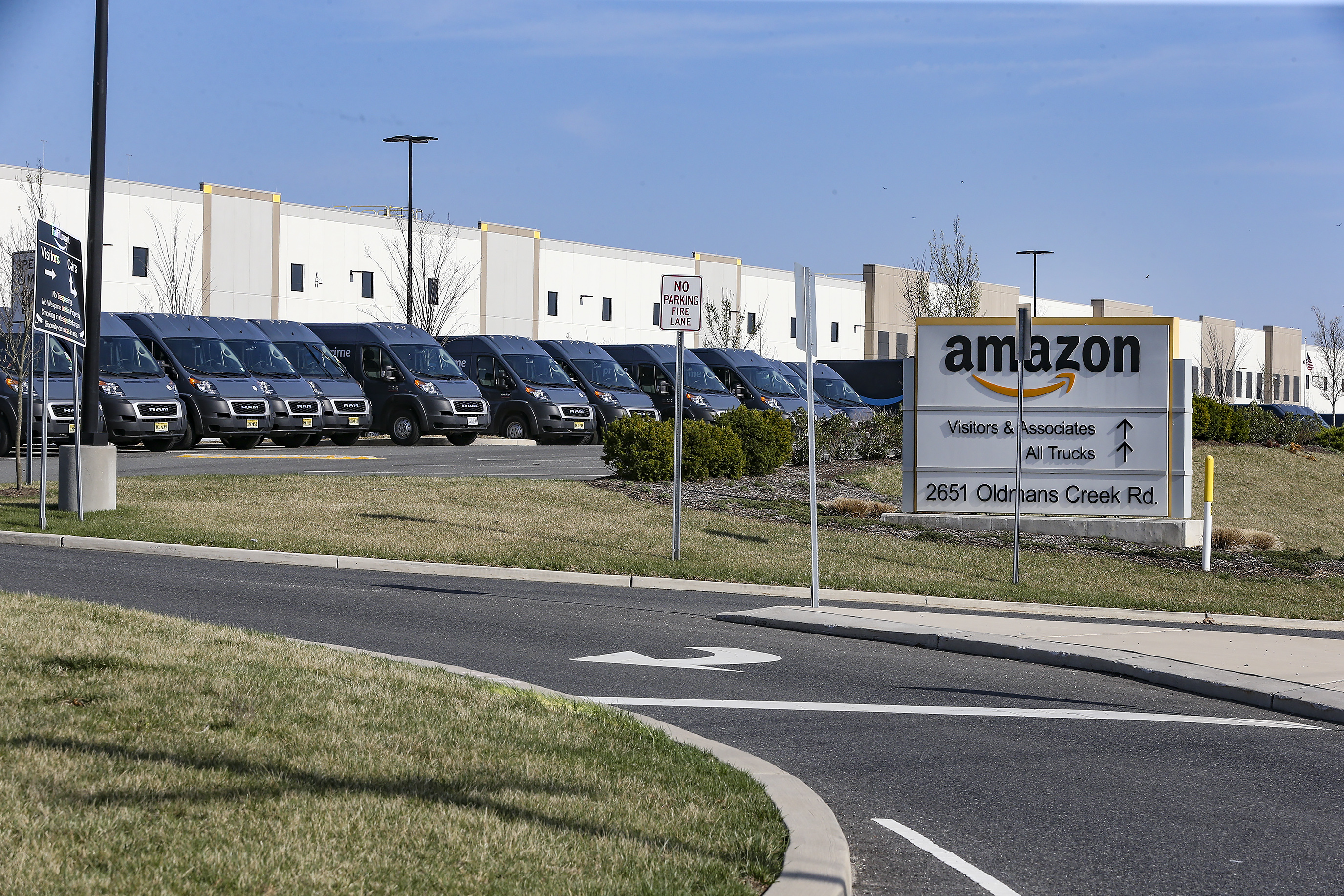
According to local officials briefed on the Amazon plans, the company’s drones would fly out of the warehouse at 240 Mantua Grove Rd., a 650,000-square-foot facility that sits next to I-295 and is among the company’s largest in the region.
The Amazon Fulfillment Center in West Deptford, seen in 2019, is among the region’s largest.TIM TAI / Staff Photographer
The company’s drones can typically deliver to addresses within 175 square miles of each launch site.
In a Facebook post from the Mantua Township Police Department account, Murphy shared a screenshot of the local drone-delivery radius that he said Amazon shared during the Zoom meeting. The photo indicated that drones from the West Deptford site would be able to reach places within about a 15-mile radius — from Bellmawr to Mullica Hill in New Jersey, as well as parts of Ridley Park, Darby, Glenolden, and South Philadelphia across the Delaware River.
Amazon told local officials that the drones would operate from 15 minutes before sunrise to 15 minutes after sunset, according to Murphy, and be authorized to fly at altitudes below 400 feet, in accordance with Federal Aviation Administration regulations.
The company plans to start drone delivery from West Deptford as early as October, according to Murphy and Mehaffey.
Amazon’s drones can deliver groceries, cosmetics, medications, even iPhones — anything that weighs 5 pounds or less and fits in a large shoebox. Amazon says those characteristics apply to more than 60% of its most popular products.
Boxed orders are sorted at the Amazon Fulfillment Center in West Deptford in 2019.TIM TAI / Staff Photographer
Customers can browse drone-deliverable items the same way they search for any other Amazon products, according to the company, and select the best spot for a drone to leave the package.
Amazon Prime members can get complimentary drone delivery on orders of $50 or more, or pay an extra $2.99 on orders under $50. Nonmembers can pay $4.99 for drone delivery.
The drones are not monitored by humans in real time, according to Amazon. Instead, the devices use an autonomous system of cameras and sensors to navigate, avoid obstacles, and deliver the package safely.
Some South Jersey residents said they have questions about those cameras, as well as the impact Amazon drones may have on their quality of life, safety, and environment. As of Sunday, more than 100 people had signed a petition asking for public hearings and written disclosures about Prime Air and its data practices before the drones start flying in the area.
Amazon said in its expansion announcement that the drones’ cameras do not “track individuals or record movement.” The drones are electric, emit no exhaust, and make little noise, according to the company. The drones are quieter during drop-off than “an idling delivery truck,” Amazon said, and sound similar to a “window fan on low” while in flight. The company said people indoors cannot typically hear the drones outside.
In areas where the drones are already flying, company spokesperson Rao said, “the response from customers using Prime Air has been overwhelmingly positive.”
Mantua Township Mayor Bob Zimmerman told residents in a Facebook post that the Amazon drones were “forthcoming.”
“Please understand that whether you are for, or against deliveries of this kind by drones, we have no say over the matter,” wrote Zimmerman, who did not return a request for additional comment.
Amazon has not said whether it plans to fly drones from other warehouses in the Philadelphia area, and has not posted Prime Air job openings at other local sites.
The company has dozens of facilities across the region, with larger warehouses in Carneys Point and Logan Townships in South Jersey, and near Wilmington. Officials in those areas did not return requests for comment.
Amazon’s Logan Township warehouse is pictured in 2021.STEVEN M. FALK / Staff Photographer
Jason Bobst, township manager of West Norriton Township in Montgomery County, said the company has not been in touch about flying drones from its facility there.
“We have not been approached by Amazon regarding drone delivery operations from its West Norriton facility, nor have we received any indication that Amazon is currently considering that location for drone delivery service,” Bobst said in an email.
Bobst said township officials did have a preliminary conversation about Walmart looking to expand its drone delivery service in the area, but nothing formal has been presented.
In recent weeks, food-delivery apps Uber Eats, Grubhub, and DoorDash also have unveiled similar plans, but have not started flying to Philly-area customers.
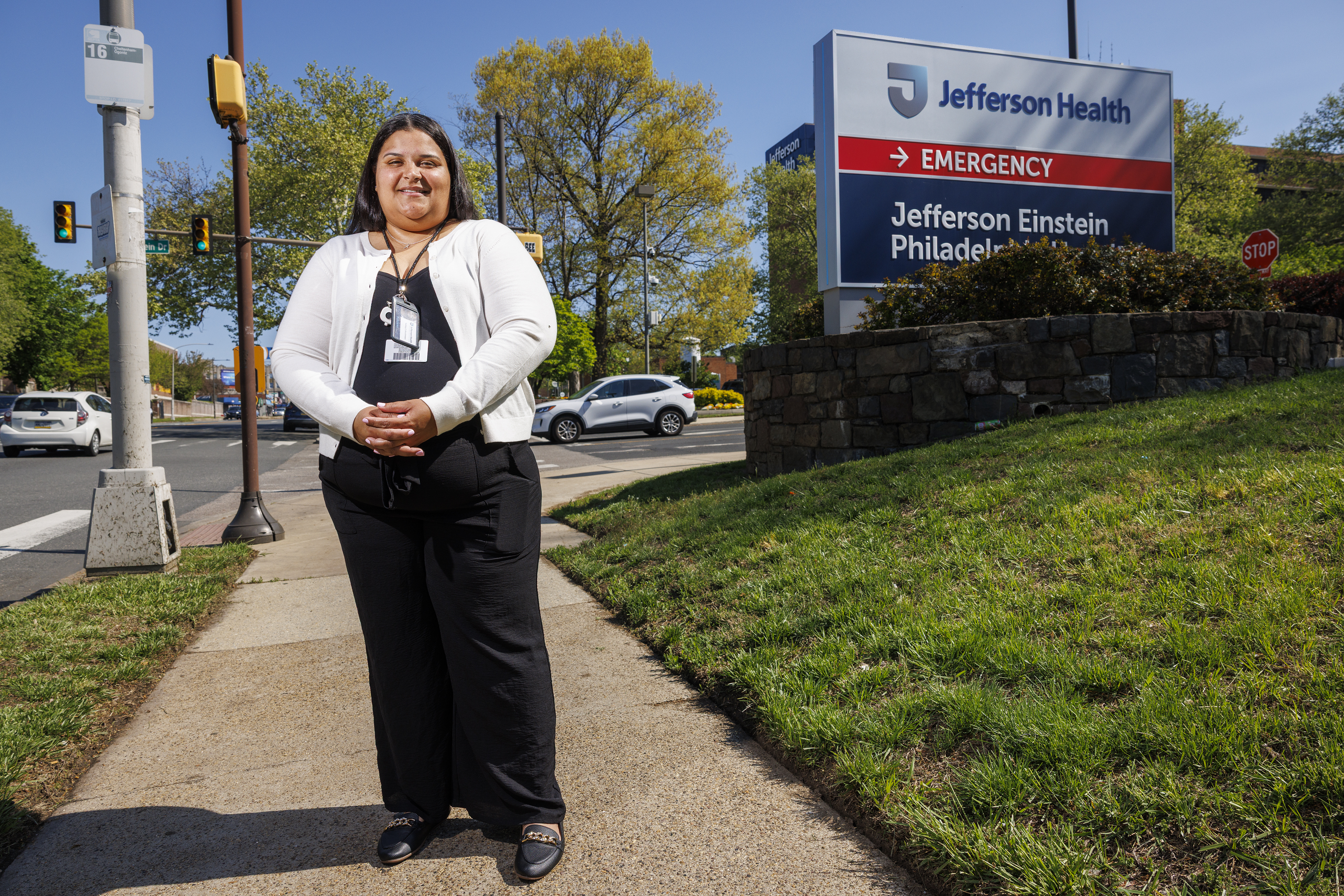
Ashley Boudreaux, an operations manager at Jefferson Health, would like to run a hospital someday.
“I would really like to make it to the C-suite — be a CEO,” said Boudreaux, 37, who works at the medical group’s Philadelphia and Montgomery County sites.
So, without quitting her job, Boudreaux pursued her undergraduate degree in health administration with the University of Phoenix. She graduated in 2023, and now she’s on track to get her master’s in business in November. She’s done all her coursework while working full-time.
It wasn’t easy, Boudreaux said.
“You’re just moving constantly,” she said. “When I look back, I’m like, I don’t know how I did it.”
It helped that Jefferson provided some financial support for Boudreaux’s education.
More than 40% of employers offer this benefit, according to Alex Alonso, chief knowledge officer at SHRM, a human resources association. That number has waned a bit in recent years, but some large local employers still do so.
They include Comcast, which offers tuition reimbursement as an employee benefit and works with Drexel University to shape several master’s programs for tech workers. Another is Aramark, which covers up to the full cost of tuition for eligible hourly employees, and tuition assistance for salaried employees. And Philadelphia’s city workers get tuition discounts at more than a dozen local colleges.
For many, completing a four-year degree would still prove beneficial, said Sean Vereen, president and CEO of nonprofit Heights Philadelphia, which connects young people with education and career opportunities.
“The college degree is not the only way to get to economic success, … [but] there is a connection between your ability to have stronger credentials and your ability to move economically,” Vereen said.
Sean Vereen of Heights Philadelphia. Paola Nogueras
Why workplaces offer tuition assistance
Federal tax incentives have encouraged employers to assist with education costs, said Alonso of SHRM. The benefit also helps companies compete for good hires, he noted.
Most commonly, Alonso said, employers offer up to $5,250 per employee per year. That’s the maximum they can give toward education costs without the employee paying taxes on it. Workers are often required to show that the education is related to their job or career, so they “can actually bring back what they learn to their workplace,” he said.
Sometimes getting additional education, including short-term microcredentials, are prerequisite to a promotion, said Phil Brooks, a vice president at nonprofit Graduate Philadelphia, which supports adult students.
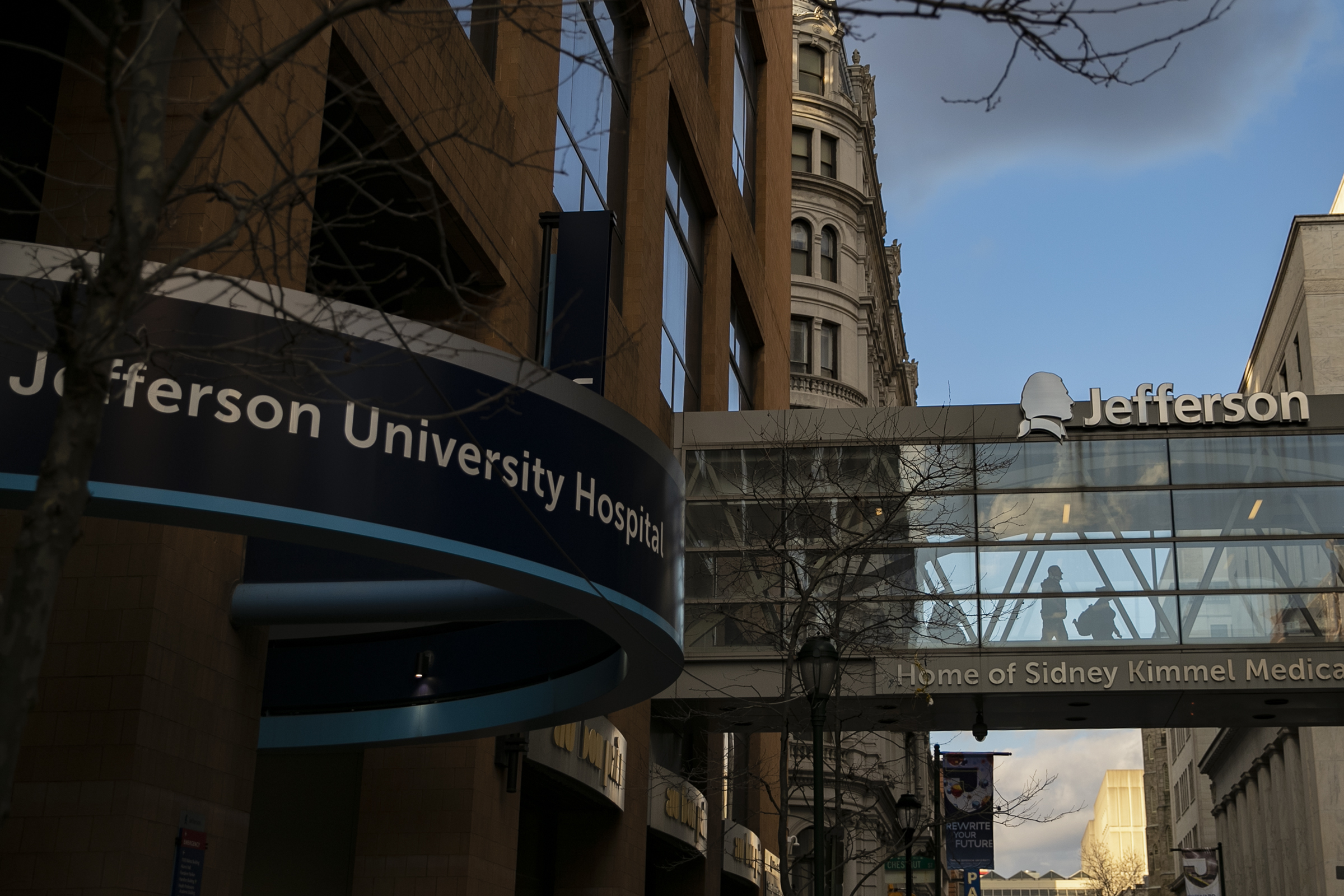
Thomas Jefferson University Hospital in Center City Philadelphia is shown in this 2020 file photo. Heather Khalifa / Staff Photographer
Hurdles for worker-students
Getting a degree while working full-time can mean early mornings, later nights, giving up weekend time, or even using lunch breaks to squeeze in school work.
Other challenges can include transportation for in-person programs or access to a computer and reliable internet connection, says Brooks. Students who owe money to a school where they were previously enrolled might also be held back from transferring or finishing their degree.
Graduate Philadelphia sometimes helps students negotiate with schools to decrease that amount owed, “literally removing this barrier as much as we can,” Brooks said.
“Slow progress is still progress,” she said. “A lot of times, when we start off on a journey, we see the entire staircase, but not realizing that it takes one step at a time to get to the top.”
Getting the promotion
When Nicole Henderson, 38, graduated high school, going to college right away wasn’t an option.
“It just didn’t make sense for our family,” she said. “We just couldn’t afford it.”
Years later, while working at a trading firm, she started pursuing a bachelor’s in accounting. But she put it on hold after a semester when she learned her employer, who encouraged her to go back to school, wouldn’t cover her tuition.
Five years ago, while searching for work as an executive assistant, she saw a role open up at the Children’s Hospital of Philadelphia that didn’t require a bachelor’s degree. She got the job and soon felt the urge to continue advancing her career.
“I’m now at this huge organization with all these opportunities,” Henderson said. “I was like, oh, man, eventually I’m going to have to have this bachelor’s degree.”
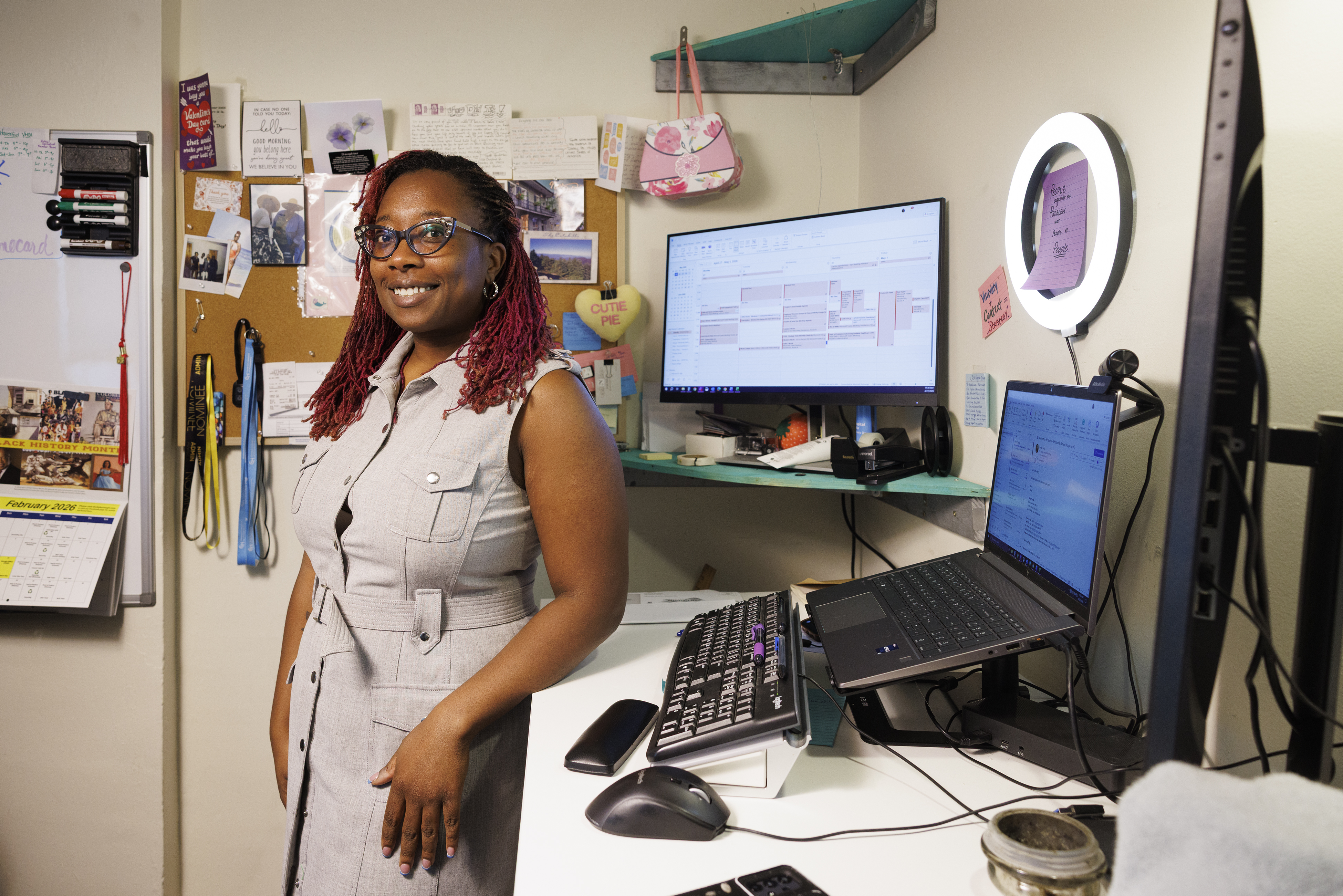
Nicole Henderson in her home office in Darby. She went back to school while working full-time and recently earned her bachelor’s from Temple.Alejandro A. Alvarez / Staff Photographer
In 2023, she started working toward that undergraduate degree again. Her colleagues at CHOP were supportive, and she was given flexibility to tune into classes from work sometimes, or work remotely on the days she had a lot of studying to do. CHOP also reimburses a portion of her tuition and has a student loan repayment program. Without that financial support, Henderson says she wouldn’t have pursued the degree.
Juggling work and school can be exhausting, Henderson said. She slept through the day some Saturdays because her “brain was just so overloaded with information.”
But she got her bachelor’s in business from Temple University in December and walked across the stage at graduation in May.
Her classes gave her a new awareness of what’s important to bosses and leaders at her organization, she said, and “how to speak their language.”
She also negotiated a promotion from executive associate to project manager, with a raise.
Now she doesn’t have to wonder “how am I going to convince people that I’m qualified to do this?” she said. “I kind of already have this degree that says that for me.”
Within minutes of waking up, I can’t help but reach for it. The iPhone on my nightstand has a gravitational pull.
I swipe through my Instagram feed before my eyes have even adjusted to daylight. Of course, there is nothing urgent in this sea of vacation pictures, pregnancy announcements, adorable dog videos, and ads for products I Googled the day before.
Yet I can’t stop scrolling.
Last month, I became hyperaware of my dependence on this unhealthy habit when I deleted Instagram — my millennial social media of choice — for two weeks. It was for “work purposes,” I told myself, and would inform this story about how much time and money some consumers have spent trying to pull themselves from their screens.
I ended up deleting Facebook, too, after a day spent filling Instagram’s absence with rambling posts from neighborhood groups.
After my experiment, I see why people are willing to pay to unplug from social media.
Chen Wang, an associate professor of marketing at Drexel University’s LeBow College of Business, said she gets it, too. Not only because she observes the habits of her Gen-Z students, but also because she researches consumer technology and self-regulation.
The human-smartphone relationship, Wang said, has become “a paradox.”
“It makes our life so convenient. We can do almost everything on our phone,” Wang said. “At the same time, we’re also wishing we could use it less.”
Why some pay to unplug
Someone scrolls on their phone in this 2019 file photo.Heather Khalifa / Staff Photographer
As consumers have become increasingly aware of how social media and screen time affects their mental health, a cottage industry of social-media-detox businesses has emerged.
And an array of phone applications — ironically — block other apps. Some of those app-blockers are free. Others offer paid tiers from $40 to $100 a year.
Others struggling with social media overuse have spent hundreds of dollars on wellness retreats, where screen time is limited. In May, Cristen DeDomenico, a Philly-based bartender and therapist-in-training, spent about $1,300 to attend a weeklong retreat at the Kripalu center in Massachusetts.
“It definitely involved turning off and stepping away” from the digital world, said DeDomenico, 35, who felt less tempted to scroll social media in the retreat environment. “No one else was on their phone, so you didn’t feel the urge to be on yours.”
Closer to home, for a nominal fee, community leaders and small-business owners around the Philly area have been organizing social gatherings and workshops where attendees have to put their phones away.
Glenside educator Charlie Price started her digital-detox and wellness business, Time and Space, during the pandemic, when she noticed her own bad phone habits while stuck at home. Price, 36, said she’d often scroll Instagram for more than 30 minutes at a time.
Now, Price hosts regular events, including hikes and art workshops, for which people pay between $5 and $25 per person. Attendees abide by an honor system: Keep phones out of sight.
The focus, Price said, is “getting together in person and in nature … getting out IRL,” — in real life, in internet parlance.
What works best for reducing screen time
A man looks at his phone while walking his dogs.David Zalubowski
At its core, the solution to our scrolling problem is free: We all could just turn off, hide, or simply walk away from our devices.
DeDomenico said she learned that when she returned from her retreat. For the first few weeks, she was more present in her daily life, she said, but then old habits crept back in — and her post-work scroll got longer.
I’ve found this, too, since redownloading Instagram. Grabbing my phone to check the weather or pull up a photo can quickly turn into a waste of 15 minutes or more on mindless swiping.
I don’t think going cold turkey is the answer. I do enjoy those adorable dog videos and the funny reels, and the photo dumps from people I haven’t seen since grade school.
After Wang’s reassurance about the effectiveness of external motivators, I’ve been reading more articles about the best app-blockers — and even toying with the idea of investing in one of them.
Peace of mind is probably worth at least $50, right?