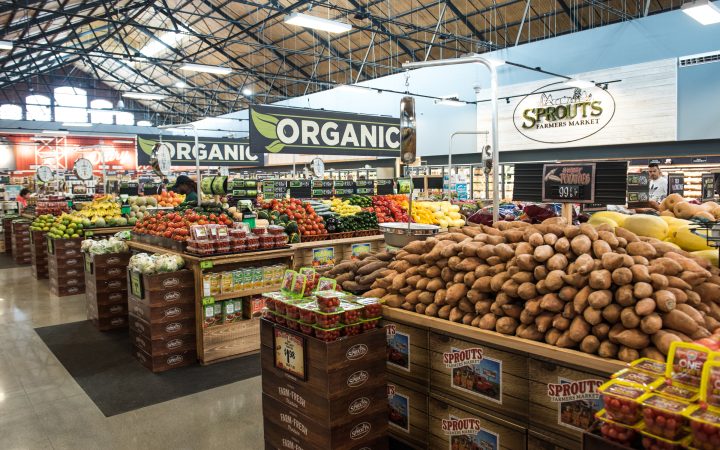
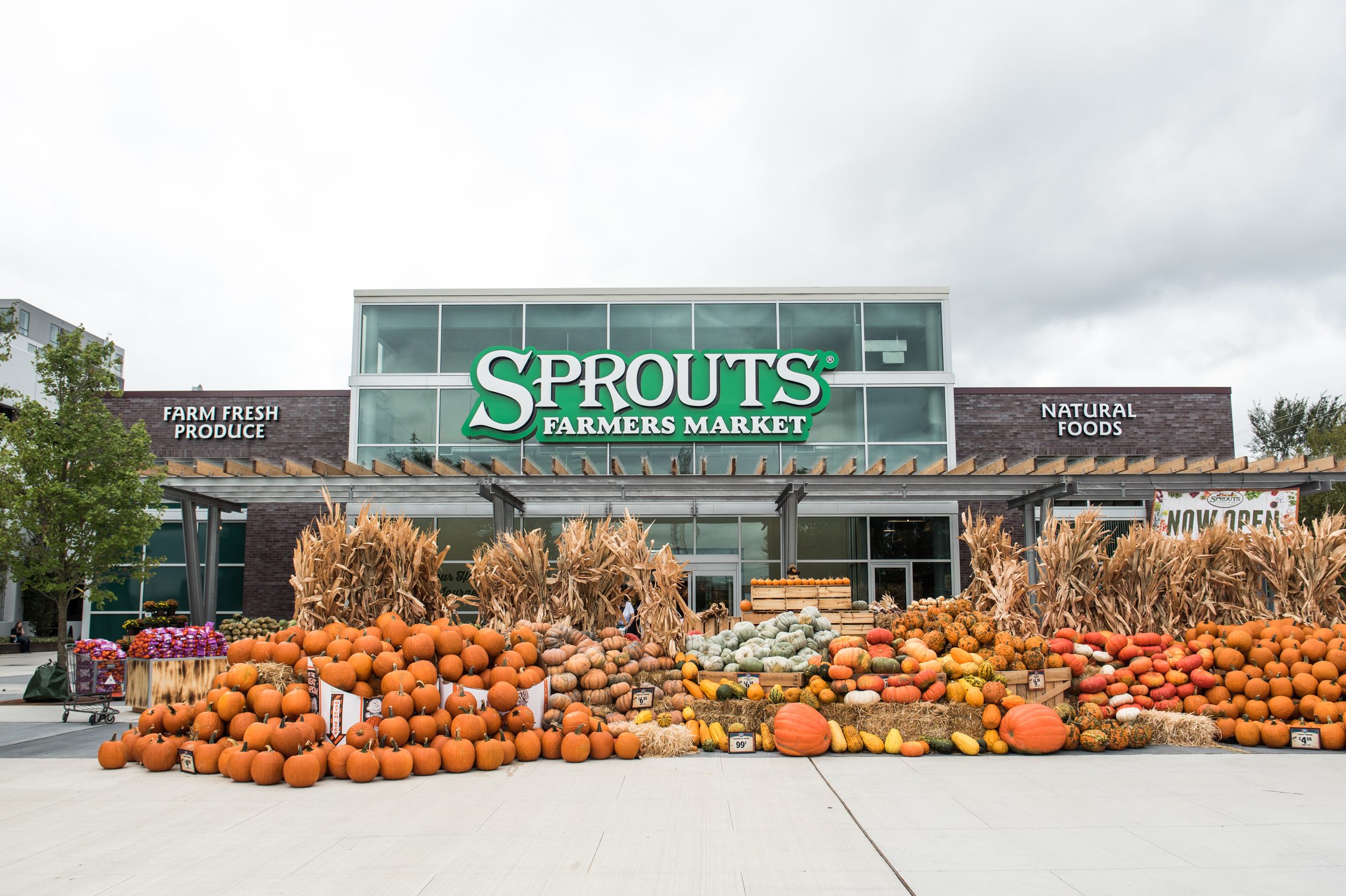
Another Sprouts Farmers Market is coming soon to South Jersey.
The Sprouts in Washington Township is set to open Aug. 28, the company announced Tuesday in a statement.
The 23,000-square-foot organic grocery store is under construction on Egg Harbor Road in Sewell, with an attached 6,400-square-foot storefront for lease, according to marketing materials for the new development.
Sprouts plans to bring on about 90 full- and part-time employees, with hiring events scheduled next week for Tuesday and Wednesday at the Double Tree by Hilton in Cherry Hill.
This Sprouts in South Philadelphia opened in 2018.STAFF / GRACE DICKINSON
The Washington Township location will be the Phoenix-based chain’s fourth in South Jersey. The grocer, which specializes in organic, gluten-free, and plant-based products, also has stores in Haddon Township, Marlton, and West Deptford.
Across the river, the company operates four Philadelphia locations, including Roosevelt Mall in the Northeast and the new Rivermark complex in Northern Liberties, as well as two Montgomery County stores in Upper Dublin and Montgomeryville.
Wars. Inflation. Tariffs. Labor shortages. High interest rates. Political uncertainty. If you only read the headlines, you’d think America’s small businesses are on life support. They’re not.
The sentiment I’ve been hearing and seeing from dozens of industry groups and clients about this year is “so far, so good.” This comes from businesses that do everything from distributing industrial equipment to installing commercial doors. With few exceptions, most have not only been holding their own in 2026, but they’ve been growing.
Anecdotal? Hardly. The data supports these claims.
Manufacturing in the U.S. has expanded for the past five months, reaching its highest level since 2022, according to the closely watched Purchasing Managers Index from the Institute for Supply Management. Service industry companies, according to a similar index, have seen expansion since 2024.
In June, small-business revenue increased in 11 of 12 sectors and in all eight U.S. regions, according to a small-business index published monthly and based on real-life data from hundreds of thousands of customers using Intuit QuickBooks. Payment processing firm Fiserv found that small-business sales showed steady short-term expansion in June, with both nominal sales and transaction volume increasing. Last quarter’s national GDP was just revised from 1.6% to 2.1%.
The U.S. Census Bureau reported that new business applications continue to come in at all-time highs. Even LinkedIn said that there’s been a 69% year-over-year increase in the number of U.S. members adding founder to their profile.
Want more proof?
Despite lower levels of optimism, over half of Main Street owners rated the health of their business as “excellent or good,” the National Federation of Independent Business reported this month. A recent survey from financing firm OnDeck said 93% of small businesses expect growth in 2026, and marketing firm Vistaprint said this month that 84% of small-business owners report being happy operating their businesses, despite ongoing economic and operational challenges.
Bank of America’s June 2026 Small Business Checkpoint said the small-business sector remains “financially healthy and operationally resilient.” MetLife and the U.S. Chamber of Commerce found strong confidence in business health, cash flow, and future growth prospects despite ongoing concerns about inflation, labor costs, and economic uncertainty.
Three out of four U.S. small-business owners expressed “high confidence” in their business’ future, according to new research from Capital One. TD Bank’s recent survey said that small-business owners also remained highly optimistic about future growth.
Economist Mark Zandi recently wrote that among the 25 largest metropolitan areas in the country with populations of more than 3 million, Philly enjoyed the strongest job growth last year. Payroll firm ADP reported that the private businesses in the U.S. added 122,000 jobs in May and 98,000 in June. HR giant Paychex said small-business hiring increased over the past four months.
Job openings among small businesses are rising, an indicator of demand for employees.
“Main Street job openings in New Jersey and nationwide are starting to pick up after a decline in May,” National Federation of Independent Business New Jersey state director Eileen Kean told ROI-NJ.
Center City, which represents 42% of all Philadelphia employment, has seen office leasing activity reach its highest level in six years, according to Center City District’s State of Center City 2026 report. The report also highlighted development projects topping $2 billion; projected Convention Center attendance exceeding 1 million in 2026; and retail, restaurants, and cultural institutions that “continue to rebound strongly.”
There are always news reports about how this business is “struggling” and that business is “barely holding on.” There’s no denying that this happens. How could it not? There are more than 34 million small businesses in the United States operating in hundreds of different industries and localities. Some are bound to be doing better than others.
But other things happening right now are underscoring small-business growth and optimism.
Tariffs (that aren’t being refunded) may have increased costs for some, but many manufacturers are reporting increased domestic demand as global firms move more operations here.
Inflation is sticky, but at less than 3% excluding energy, most business owners have found ways to pass these costs down to their customers or find other savings internally.
Labor shortages persist but most company owners are getting their work done regardless.
Many owners are also benefiting from a lighter federal regulatory environment and friendlier tax policies. Capital is more expensive than in years past, but available for those who can measure return on investment. The stock market is up over 20% over the past year, providing more financial security. And for entrepreneurs and small-business owners, government aid and other resources, education, tools, and support proliferate like never before.
Small businesses employ half of the country’s workers and make up half of our GDP. Their success is critical for the U.S. economy.
They aren’t ignoring the challenges. They’re simply finding ways around them. And that’s why, despite all the doom and gloom, many are having a surprisingly good year.
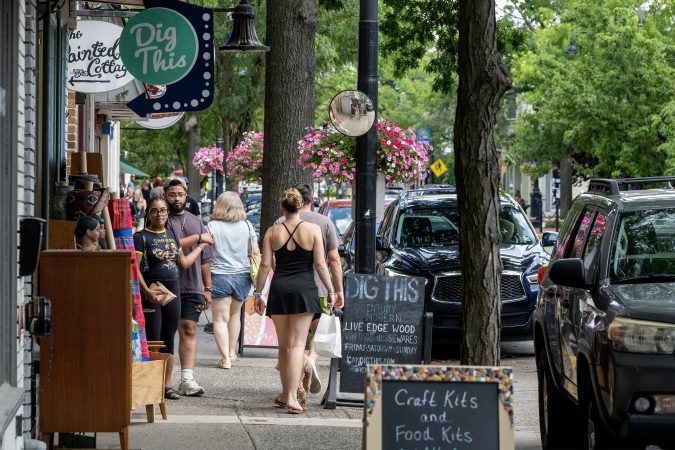
A dozen new businesses have opened in downtown Ardmore so far this year, bringing Japanese barbecue, build-your-own salads, and organic dog treats, among other goods, to the Main Line community. New and incoming businesses include mom-and-pop shops, national chains, and expansions of popular Philly-area names, such as decorated Szechuan eatery EMei and New Jersey-based burger chain Gouldsburger’s.
Here’s a breakdown of the new retailers that have opened in Ardmore this year, and some others that are on the horizon.
What’s new?
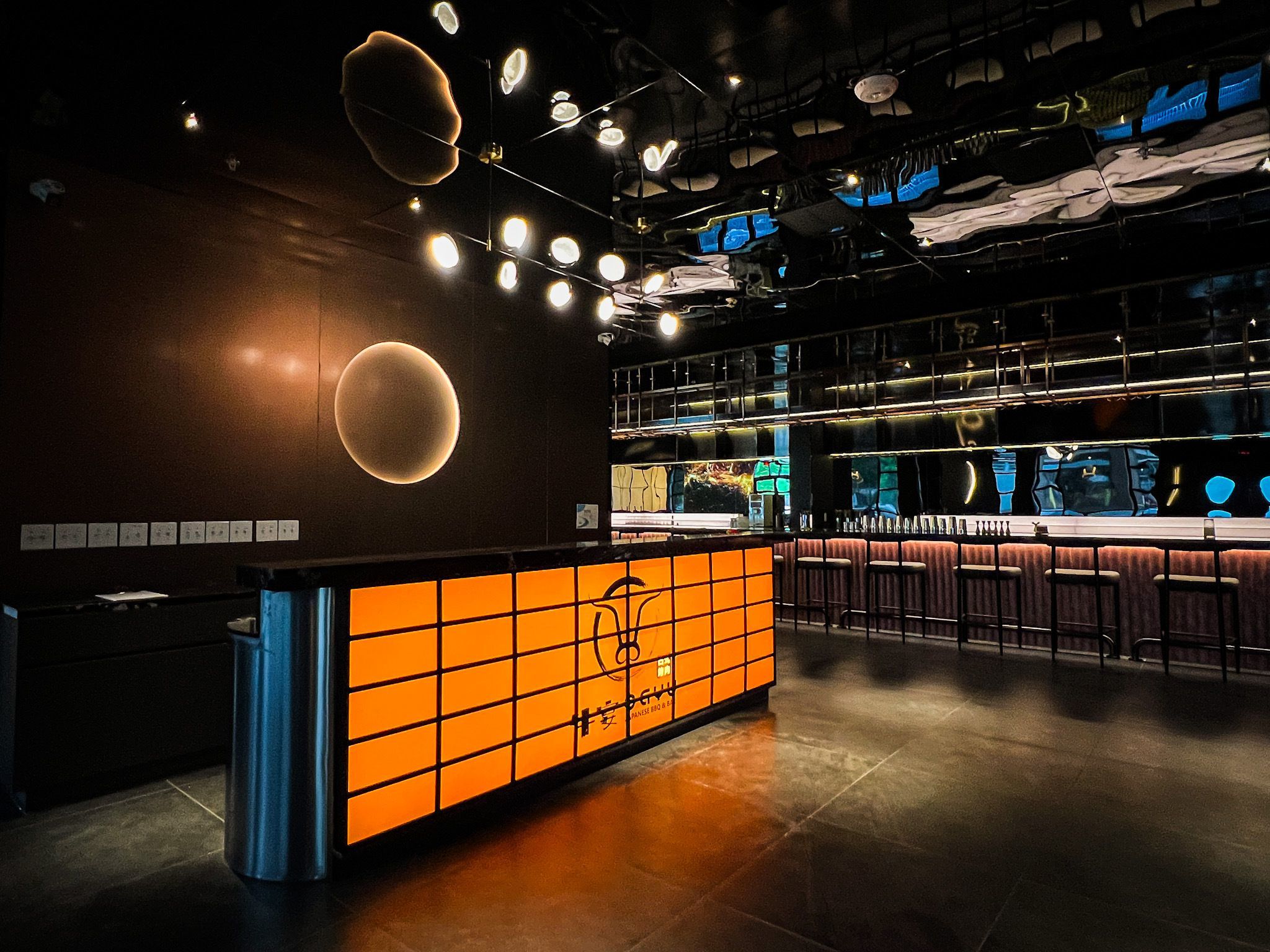
OGYU Japanese BBQ
OGYU Japanese BBQ (60 Greenfield Ave.) is a tabletop cooking Japanese steakhouse experience from Osushi owner Sam Li. OGYU offers an all-you-can-eat, tiered, fixed-price menu, as well as a full bar. Li has opened Osushi locations in Wayne, Ardmore, and Marlton, as well as upscale eatery Hiramasa in Newtown Square. OGYU opened last month.
Just Salad
Healthy food chain Just Salad (167 W. Lancaster Ave.) opened in Ardmore in May, adding to the company’s more than 100 locations across seven states. Just Salad serves fast-casual salads, warm bowls, wraps, and smoothies.
Barizi
Barizi (29 W. Lancaster Ave.) is a design, home, and gift store offering curated ceramics, textiles, leather goods, vintage furniture, and self-care items. Barizi’s Ardmore store opened in May and is its second after New York City.
Gouldsburger’s
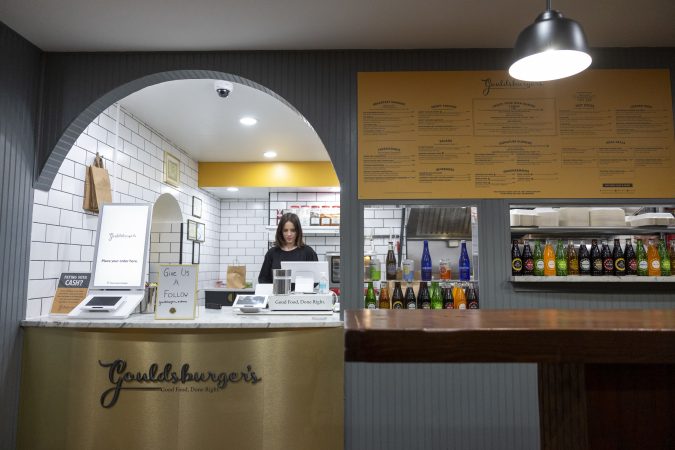
Gouldsburger’s (4 Station Rd.), a Jersey-based mini-chain serving up burgers, cheesesteaks, chicken sandwiches, and other fried snacks, opened across from Ardmore’s train station in February. The restaurant has vegan and vegetarian options, and its cheesesteak has even made the ranks of the Inquirer’s favorites.
Inside OGYU Japanese BBQ in Ardmore. Michael Klein / Staff
CorePower Yoga
CorePower Yoga (169 W. Lancaster Ave.), a heated yoga and strength training studio with hundreds of locations across the U.S., opened in Ardmore in April. This is the chain’s third location in the Philadelphia area, after Center City and Northern Liberties.
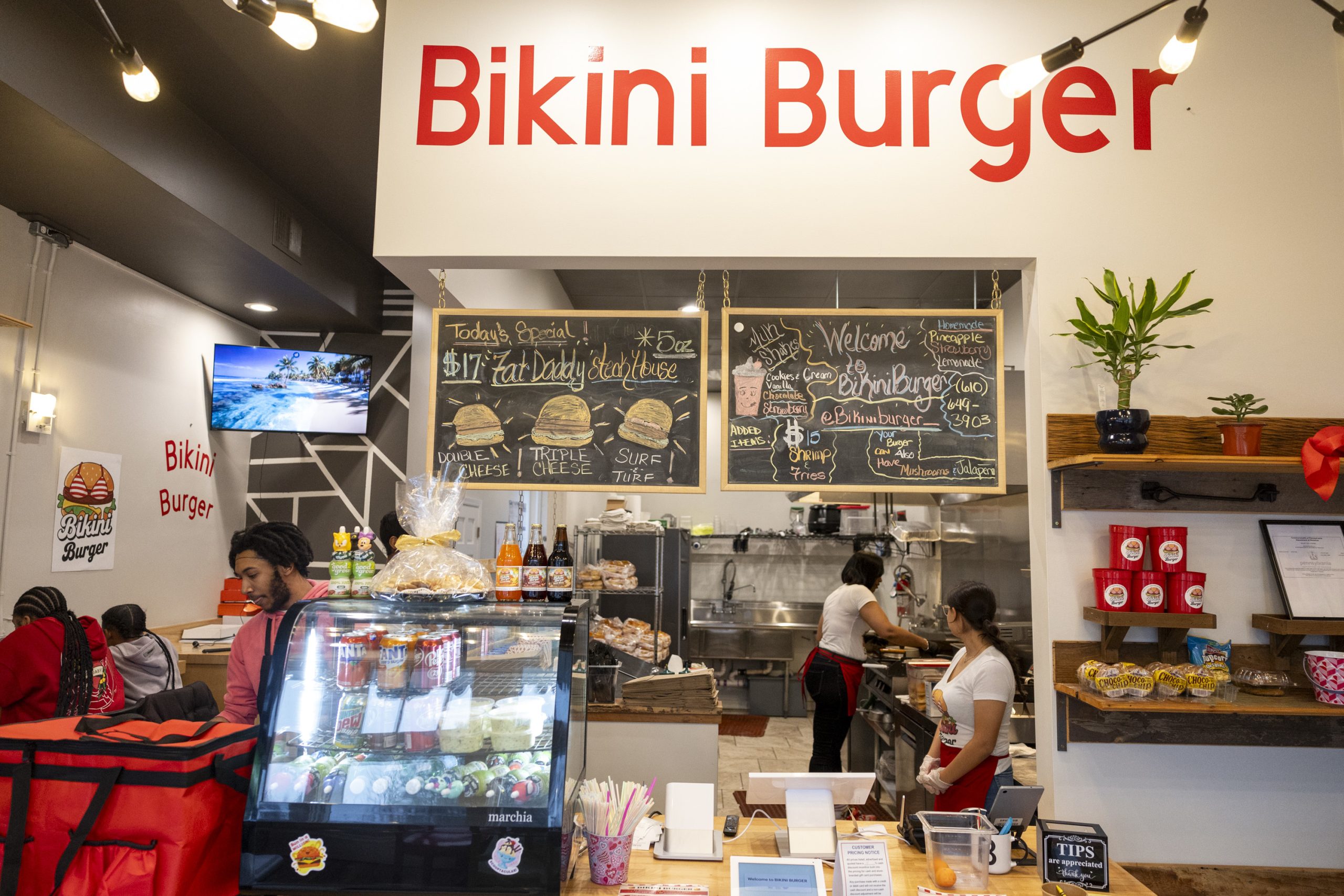
Bikini Burger
Penn Valley resident Mia Robertston opened Bikini Burger (44 Rittenhouse Pl.) in January with the goal of bringing a simple and “really good burger” to the area. Robertson’s Burgers are made with beef from a Lancaster County butcher, can be topped with Cooper Sharp, among other accoutrements, and are never smashed.
R3 Gaming & Toys
R3 Gaming & Toys (6 W. Lancaster Ave.) is a toy and game shop built for collectors and “curious minds of all ages.” The store stocks classic toys, board games, puzzles, comics, graphic novels, and other novelties.
Jersey Mike’s
Sub sandwich giant Jersey Mike’s (20 Greenfield Ave.) opened its doors in the former Revitalize Aesthetics storefront in March. The sub shop is open seven days a week and offers both hot and cold sandwich options.
Mia Robertson, owner of Bikini Burger, makes a cheeseburger at the Bikini Burger in Ardmore. The burger joint is one of a slate of new businesses to open in Ardmore this year. Tyger Williams / Staff Photographer
Revivéa Health
Revivéa Health (20 Ardmore Ave.) opened in Ardmore in April and offers various wellness treatments including IV therapy, vitamin injections, and red light therapy. Ardmore is Revivéa’s second local storefront after West Chester.
Raffs Italian Cuisine
Raffs Italian Cuisine (65 Cricket Ave.) is the second restaurant of chef and owner Raffael Kupa, who also runs Buona Vita in Somers Point, N.J. Raffs, which opened in April, is BYOB, open for dinner seven days a week, and offers traditional Italian fare.
Bored Trading Café
Bored Trading Café (43 Cricket Ave.) is an all-day eatery serving bagels, sandwiches, salads, wraps, smoothies, and burgers, among other items. The cafe held its grand opening in January.
What’s coming soon?
Mango Mango
At Mango Mango (38 Greenfield Ave.), an Asian-inspired dessert chain with locations across the U.S., “mango’s our muse.” Mango Mango serves mango- and non-mango-flavored cakes, waffles, smoothies, ice creams, and teas. Its Ardmore franchisewill be opening later this month.
Vintner’s Table
Vintner’s Table (24 Cricket Ave.) is an Italian-inspired wine bar affiliated with Folino Estate Winery & Restaurant in Kutztown. The Ardmore location will be the third Vintner’s Table after Phoenixville and Wyomissing. Vitner’s Table has not shared an anticipated opening date yet.
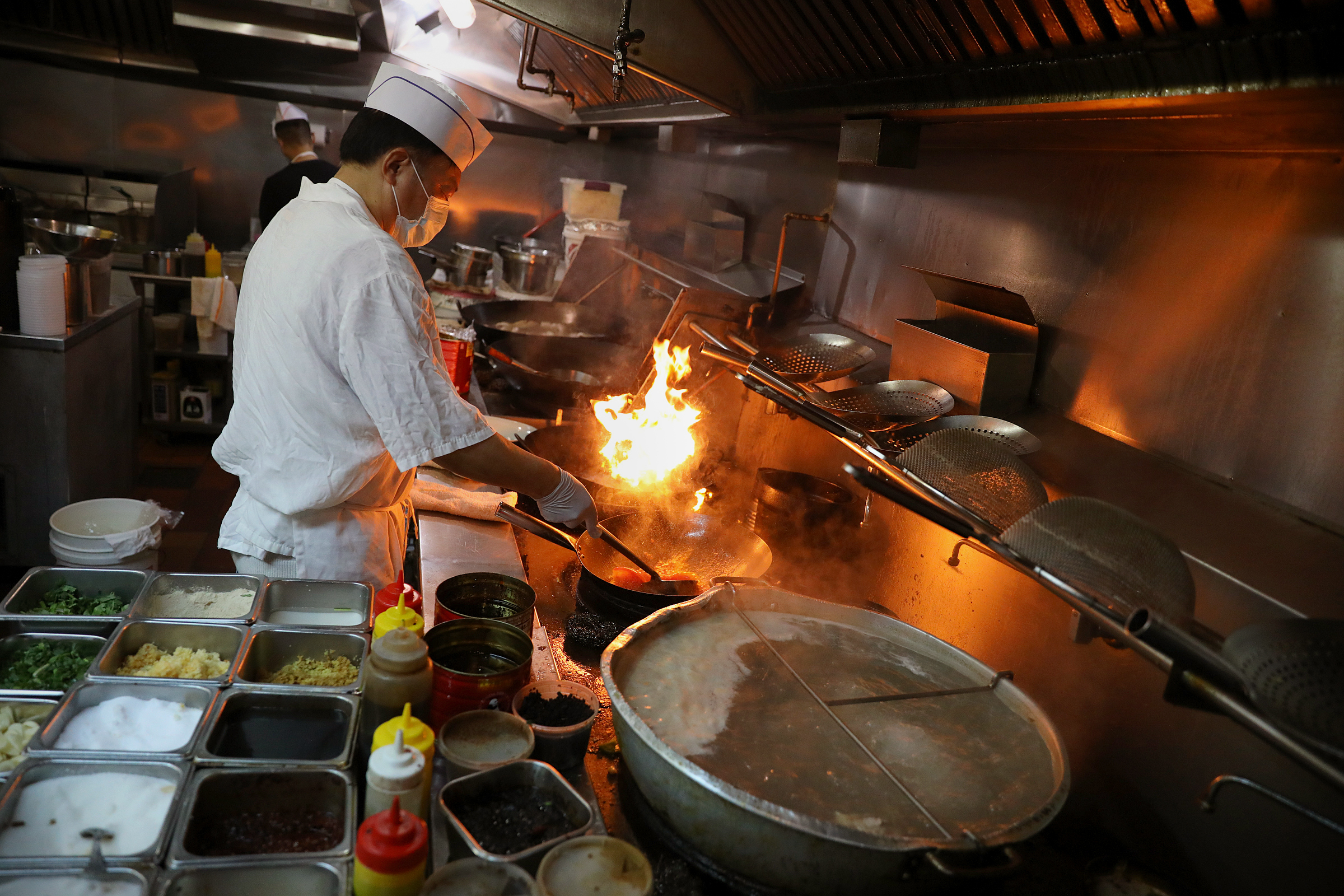
Chef Yongcheng Zhao preparing a crispy whole boneless sea bass dish at EMei in Chinatown. The restaurant is set to expand to Ardmore. TIM TAI / Staff Photographer
EMei
Inquirer food critic Craig Laban says EMei (98 Cricket Ave.) is a “Szechuan feast with few peers in Philly.” The lauded Chinatown eatery, owned by Dan Tsao, is expanding to South Philly and Ardmore in the near future, though the timeline for expansion has been pushed back due to permitting and architecture hiccups.
Pure Green
Cold-pressed juice company Pure Green (56 E. Lancaster Ave.) is set to open in Ardmore next year. Pure Green offers superfood smoothies, acai and pitaya bowls, steel-cut oatmeal bowls, sourdough toasts, and cold-pressed juices.
Calm and Strong Yoga and Pilates
Calm and Strong (46 Rittenhouse Pl.) is a yoga and pilates studio bringing a variety of sculpt, flow, and strength classes to Ardmore. The studio is set to open this fall.
This suburban content is produced with support from the Leslie Miller and Richard Worley Foundation and The Lenfest Institute for Journalism. Editorial content is created independently of the project donors. Gifts to support The Inquirer’s high-impact journalism can be made at inquirer.com/donate. A list of Lenfest Institute donors can be found at lenfestinstitute.org/supporters.
Scrap metal, one of the Philadelphia area’s biggest shipping products, has been piling up in area scrapyards since June 4 when Camden officials closed EMR USA Holdings Inc.’s metal-shredding facilities after the latest in a series of fires affecting the region’s million-ton-a-year scrap shipping industry.
Scrap dealers, faced with bulging inventories, blame the fires on the increased use of lithium-ion batteries — not so much large car batteries but the increasingly ubiquitous, highly combustible smaller batteries slipping into landfills from lawn mowers, construction tools, “smart” infrastructure, and household appliances.
The two-alarm May 29 fire, following a four-alarm Feb. 21, 2025, blaze that sent 100 neighbors fleeing for shelter, is the latest in what Camden code enforcement director Gabriel Camacho said have been up to a dozen “harmful, offensive, or obstructive” blazes at the Camden yard, which is at 1400 S. Front St. near the city’s Beckett Street Terminal.The fires spread smoke and hazardous materials.
Camden officials in statements on the fire have focused on the effects, not the causes, of the fires.
EMR CEO Joseph W. Balzano, whose company sued to reopen, last year agreed to pay the city $4.5 million up front and $2.2 million over five years, plus more for community and facility upgrades. After the May fire, the company promised steps to reduce fire risk.
City Council is scheduled to review the proposal at a meeting Tuesday evening.
The scene at EMR Metal Recycling in Camden on Feb. 22, 2025, the morning after a four-alarm fire sent thick plumes of black smoke over Camden County, causing some residents to evacuate two nearby hotels.Frank Kummer / Staff
EMR, including its offices and auto-parts business as well as its recycling facilities, employs 575 workers — almost 200 are Camden residents — including members of the Teamsters union.Some workers operate shredding and sorting machinery and haul old iron and steel to the South Jersey Port Corp.’s nearby pier, which is named for Balzano’s late father, who headed the port.
EMR shreds and ships steel from smaller dealers, some to foreign users, but most of it, in recent years, to U.S. electric steel mills and other industrial recyclers.
“We haven’t laid anyone off — our people are like family — but we are getting to the end of our rope,” Balzano said last week.
Competing terminals at the port in Fairless Hills, Bucks County, and in Newark, N.J., have picked up some of the business, he said — at a higher price, including the cost of trucking scrap a longer distance.
England-based European Metal Recycling Ltd. acquired and began operating the Camden site since it purchased the former Camden Iron & Metal in 2006.
Scrapyard officials say they tracked the latest fire to a discarded lithium-ion battery, a factor in what they say is a surge of scrap fires.
“It’s the biggest issue all recyclers face,” Balzano said. “Regulations need to be put in place that keep these batteries out of commerce.”
The batteries are used in items like stoves, washing machines, dryers and “things you wouldn’t think of like light ballasts or guard rails,” he said.
“Nine times out of 10, it’s a power-tool lithium-ion battery,” he said. “Contractors throw ‘em in the dumpster, not realizing it’s hazardous once it’s broken out of its original container. Lead-acid batteries, not such a big deal. But lithium batteries burn so hot, you almost have to let ‘em burn out.”
Burns Co., a building-materials recycler whose yard covers more than 12 acres in Philadelphia’s Hunting Park section, needed city help putting out its most recent lithium-ion battery fire in May, said Allen Burns, who runs the family-owned yard, which employs nearly 100.
He points to scorch marks on a concrete-block wall at the facility.
“It took 30 firemen five hours to put out the fire,” Burns said. “They looked on our camera system, dug down, and found a lithium-battery-powered tool. There must be a landfill fire every day from a lithium battery.”
Burns said the Camden shutdown has backed up shipments at yards around the region.
“We have had to bail metal to conserve space,” he said. Disposal costs are up.
David Wiechecki, owner of International Scrap Iron & Metal in Chester, said, “You don’t want to leave [lithium-ion batteries] laying in your yard. It’s a real problem.”
“You go over the loads with a fine-tooth comb, but people who want to sneak them by will do it,” he said. “Meanwhile, prices are down because export demand is down,” leaving scrapyards with more iron and more fire concerns.
Lithium-ion battery fires were blamed last year for burning dozens of decommissioned SEPTA buses and led to the end of SEPTA’s Proterra electric-bus program.
Thomas said his group and national scrap-metal and waste-disposal trade associations want federal legislation forcing manufacturers to pay lithium-ion battery recycling fees.
“But they don’t want them back. It’s cheaper for them to buy virgin material,” he said. “So there’s a big tug of war in state legislatures with the manufacturers. In Pennsylvania, we had a bill stalled in the state Senate just in the last 10 days with no action.”
Staff writer Frank Kummer contributed to this article.
This story has been updated to correct the timing of EMR’s agreement with Camden last year.
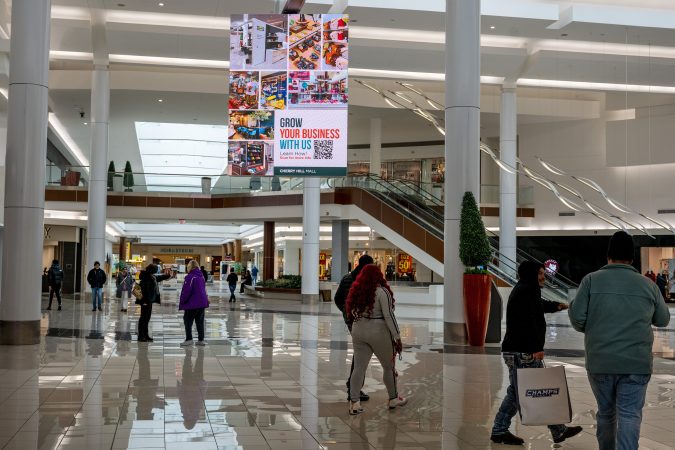
The Cherry Hill Mall is soon set to welcome five new stores that have committed to more than 25,000 square feet of retail space at the South Jersey mall.
The additions include Aritzia, the viral women’s clothing brand, which is set to open a store at the 1.3 million-square-foot Camden County mall by spring 2027. The complex is also adding legacy brands such as Timberland and True Religion, according to executives with PREIT, which owns the mall.
“Retailers at this level are choosing their next locations very carefully right now, and the fact that six of them chose Cherry Hill Mall in the same leasing period speaks volumes,” Paula Charles, PREIT’s senior vice president of leasing, said in a statement.
“For shoppers, it means more of the brands they want in one place and an experience that keeps getting better every time they visit,” Charles added.
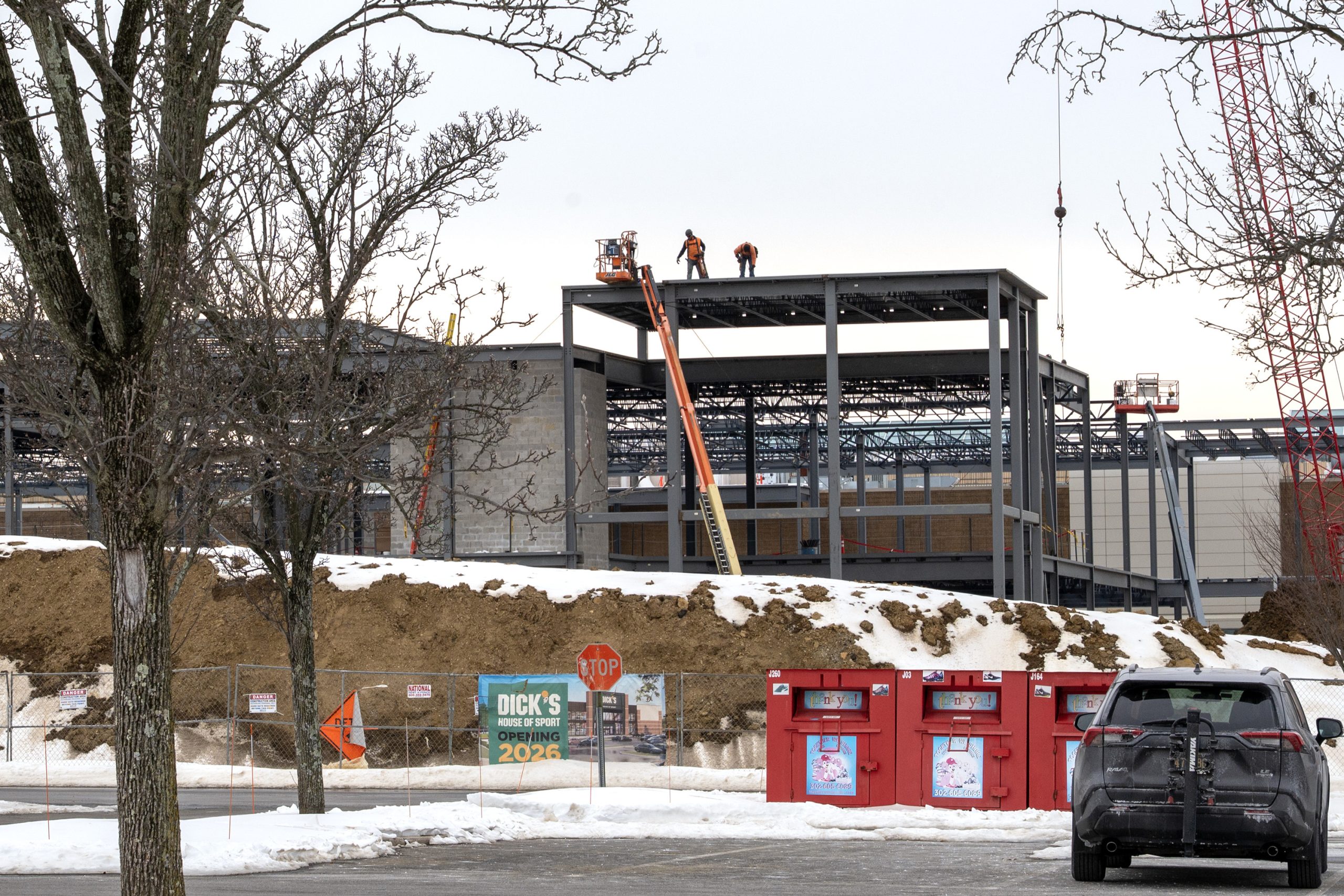
One of dozens of Dick’s House of Sport outposts, it will be represent “the largest single-tenant addition to Cherry Hill Mall in more than a decade,” PREIT executives said.
The new retailers will also join Crocs, which last month opened a 2,000-square-foot store near the future Dick’s House of Sport, and DoneRight Doner Kebab, a fast-casual Mediterranean food spot that mall executives said will open later this summerin the food court.
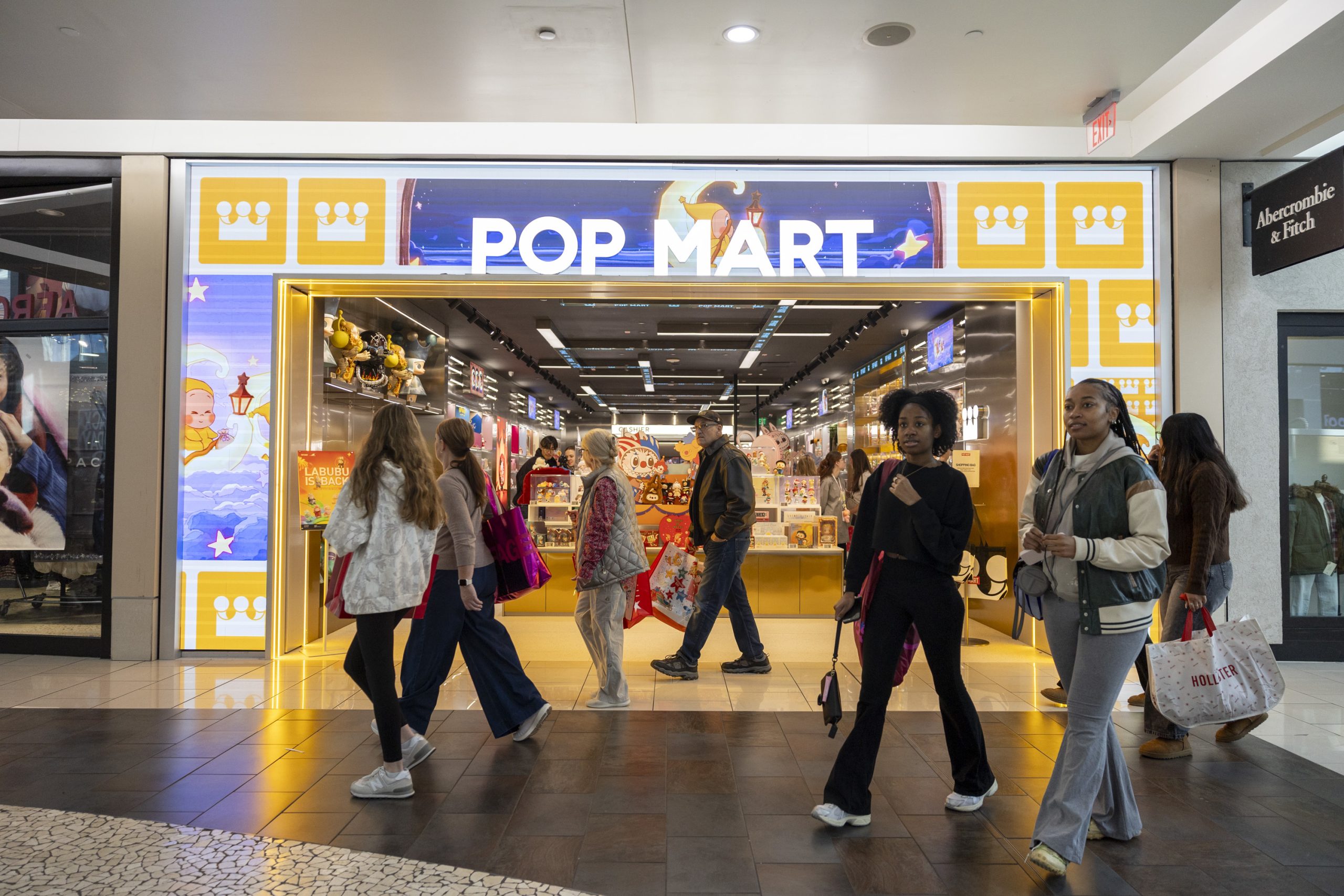
People walk by a new store, Pop Mart, at Cherry Hill Mall on Black Friday 2025.Tyger Williams / Staff Photographer
But higher-end complexes like Cherry Hill and King of Prussia seem to be thriving. King of Prussia Mall, in Montgomery County, also just announced a slate of new openings.
Here’s what to know about the new shops coming soon to the Cherry Hill Mall:
Timberland: The boots and outdoor-wear company is set to open an 1,800-square-foot store later this summer. It will be near Dick’s House of Sport.
Indochino: The custom-suit-maker is set to open a 1,200-square-foot store before the 2026 holiday season. It will be off the Grand Court, near American Eagle and Pop Mart.
Aritzia: Set to occupy more than 20,000 square feet in the central Grand Court, its space will include not only a clothing store but also an A-OK Cafe, the brand’s in-house coffee shop. It is on track to open in spring 2027.
True Religion: The denim company is set to open a 2,230-square-foot store sometime early next year near Dick’s House of Sport.
Also at the mall, Pandora and Spencer’s recently moved into larger storefronts, and Lululemon is set to relocate into an expanded space in the Grand Court before the 2026 holiday season.
Peco and its worker union reached a tentative agreement on a new contractlate Monday, ending the first strike in the company’s history on its third day.
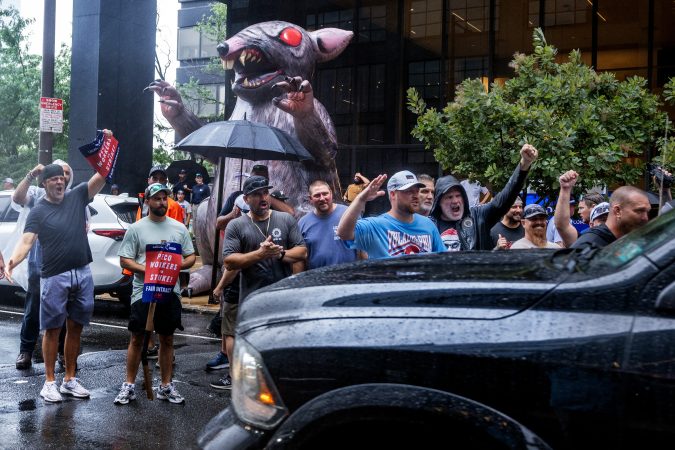
Roughly 1,500 unionized linemen, field workers, call center staff, and other Peco employees have been without a contract for more than three months, since their most recent five-year agreement expired on March 31. They walked off the job on the Fourth of July.
The union characterized the five-year agreement as a “historic contract victory” in an announcement late Monday, noting that it included cash balance pension plans, full retirement medical coverage, and “significant wage increases” for all members.
“We said from day one that our members’ top priorities were restoring pensions and retirement medical coverage for all members, and we won that and more,” Larry Anastasi, president of IBEW Local 614, said in a statement.
Wage increases for field workers are 4% annually for the first four years and 4.5% in the fifth year, according to the union, and call center workers are to get 3% raises annually throughout the five-year contract.
Peco announced the agreement Monday night in a company statement.
“We value our long-standing relationship with IBEW Local 614 and appreciate the efforts of both bargaining teams in reaching this agreement,” Peco’s statement said. “The proposed contract recognizes the contributions of our employees while supporting our responsibility to deliver reliable, affordable service across southeastern Pennsylvania.”
With the agreement in place, Peco and the union said, the work stoppage will end while union members vote on ratifying the contract.A union spokesperson said members would return to work Wednesday and a date to vote on the contract has not yet been decided.
Peco and the union had held daily bargaining sessions since last Wednesday to reach an agreement. Over the weekend and into Monday, workers picketed outside Peco’s headquarters in Center City.
Larry Anastasi, president and business manager of IBEW Local 614, and Stuart Davidson, general counsel for the union, speak with the media Monday amid contract negotiations and day three of the worker strike.Jose F. Moreno / Staff Photographer
Meanwhile, Peco has been contending with outages following thunderstorms in recent days. The company had a contingency plan in place, which included workers from outside the region.
Over 57,000 customers were without power on the night of July Fourth at the height of the outages, Peco said, but within less than 24 hours, that number was reduced to less than 6,000. As of Monday afternoon, the company reported roughly 4,400 outages on its webpage, and the number was just over 100 a day later.
The tentative deal marks a pivotal moment in what have been challenging negotiations between the union, IBEW Local 614, and Peco. Bargaining turned ugly in April, as each side accused the other of using unfair tactics.
In addition to raises and better healthcare benefits, the union wanted its contract to include a uniform retirement plan for all members. Currently, roughly 600 of the 1,500 union workers do not have pensions, the union has said, and pension benefits vary for the other 900 or so.
Utility companies started moving away from providing pensions to new hires in the 1990s, according to William Dwyer, a professor at the Rutgers University School of Management and Labor Relations, who once worked at PSE&G in New Jersey. That left 401(k) as the typical retirement benefit. At Peco, that happened later — the company stopped putting new hires into its pension plan in 2021, according to the union.
The tentative agreement includes a requirement that call center workers get 24-hour notice of mandatory overtime, as well as better upgrade pay for union members who complete tasks outside their typical job description, according to the union.
In Southeastern Pennsylvania, Peco provides electricity to 1.7 million customers and natural gas to 553,000.
WASHINGTON — President Donald Trump on Monday rang the opening bell for the New York Stock Exchange and the Nasdaq from the golden confines of the Oval Office, a symbolic act that reflects how he has increasingly tied his presidency to the stock market.
With high inflation hurting Trump’s popularity, the Republican president has tried to get more Americans to focus on their 401(k) investments, saying that his policies should get the credit for any gains, particularly as the November midterm elections draw closer.
“It’s going to go up — I think the market’s going to go through the roof,” said Trump after formally launching the start of trading.
Only 33% of U.S. adults approve of Trump’s economic leadership, according to a June survey by the Associated Press-NORC Center for Public Affairs Research.
Still, the act of ringing the opening bell suggests why the president’s emphasis on the stock market might not help his party much with voters this fall.
In championing the accounts, Treasury Secretary Scott Bessent has emphasized that many Americans have no direct exposure to stocks.
This means that millions of people are not benefiting from investments that largely accrue to more affluent households or that the benefits they’re receiving are for retirements decades away.
Bessent declared before the bell ringing that “38% of American families do not have any exposure to our great equity markets.”
The S&P 500 stock index posted gains of 17.9% in 2025, but that came after annual returns of 25% in 2024 and 26.3% in 2023, during the presidency of Democrat Joe Biden. The benchmark stock index has risen roughly 10% so far this year.
The Consumer Price Index has climbed 4.2% over the past 12 months, up from 3% when Trump started his second term in January 2025.
Trump, however, is betting that the stock investments that are being seeded by the government and by some prominent companies and billionaires will give future generations a deeper stake in the U.S. economy. The accounts already have gotten a boost from billionaires beyond the $1,000 from the government.
Michael Dell, the founder of Dell Technologies, and his wife, Susan, appeared by Trump on Monday as they have pledged $6.25 billion for the accounts, while there have been separate pledges by billionaires including investor Ray Dalio and SpaceX president Gwynne Shotwell, who said Monday that she would donate stock in the Elon Musk-led company to the accounts.
Trump jokingly acknowledged that children had missed the stock market gains that have occurred so far because of the delay in launching the Trump Accounts.
LONDON — Sky, the British media group owned by Comcast, said Monday that it was buying the television arm of ITV in a deal that would vastly expand its audience and help Comcast compete with rival streaming platforms.
The 1.6-billion-pound ($2.1-billion) takeover would combine two major media brands into a broadcaster that is expected to account for 20% of home viewing in Britain. The deal includes ITV’s free-to-air channels and its streaming platform.
Last week, Philadelphia-based Comcast announced it would spin off NBCUniversal and Sky into a separate company focused on media and entertainment, while Comcast would center on its cable and internet services. Earlier this year, Comcast moved its cable channels, including MS NOW and CNBC, into a new company called Versant.
Dana Strong, the CEO of Sky Group, called the merger “a defining moment for British media” in a statement. Comcast acquired Sky in 2018.
“ITV will remain a public service broadcaster at the heart of British life, and we’re excited about the future we can build together,” she said.
ITV, the oldest commercial network in Britain, has suffered as viewers and advertisers have shifted to YouTube and streaming giants such as Netflix and Disney. Sky said that under the merger, ITV’s channels would remain free to air and that ITV News and Sky News would remain distinct news outlets.
Sky is acquiring ITV for 1.2 billion pounds ($1.6 billion) in cash, with add-ons for advertising performance potentially bringing the transaction up to 1.6 billion pounds. As part of the deal, Comcast is expected to sell its Love Productions business, which makes The Great British Baking Show, to ITV.
ITV Studios, the production arm, is not included in the acquisition by Sky and is to operate independently. Sky has agreed to spend at least 2.1 billion pounds ($2.8 billion) over five years on content from ITV Studios, which the company said would help to support creative jobs and British-centric production.
The deal faces regulatory approval and is not likely to be completed until next year.
Jefferson’s Joseph G. Cacchione ranked as the highest-paid CEO at the Philadelphia region’s nonprofit health systems in 2024, with total compensation of $7 million, according to The Inquirer’s annual review of public tax forms.
Madeline Bell at Children’s Hospital of Philadelphia collected $5.5 million in 2024, giving her the number two spot.
Both also were top earners in The Inquirer’s 2023 compensation analysis. Jefferson is the largest system based here, both by revenue and number of hospitals, with 33 stretching from South Jersey to near Scranton. CHOP is among the nation’s top-ranked children’s hospitals.
Janice Nevin at ChristianaCare joined the ranks of the top five. She received$3.5 million, about the same payas the region’s fourth highest earner,Al Maghezehe at Capital Health, which has a network of outpatient clinics in Bucks County and two hospitals in Mercer County. Maghezehe’s compensation stands out because Capital had by far the lowest revenue among the systems with the 10 highest-paid CEOs.
A couple of CEOs who left their positions before 2024 continued collecting long-term compensation, as is common in the industry.
Most notably, Jefferson’s former CEO Stephen K. Klasko collected just over $1 million in 2024. Heretired at the end of 2021, but remained an adviser through June 2022. The 2024 payment brought his total through 2024 to $48.7 millionfor 8½ years as CEO.
Lori Herndon left AtlantiCare in June 2023. Her compensation the following year was $1.3 million.
Here’s a look at the numbers from The Inquirer’s review of the latest 990 tax returns of 20 nonprofit health systems, covering 11 health systems with operations concentrated in Southeastern Pennsylvania, seven in South Jersey, and two in northern Delaware:
(function(){function e(){window.addEventListener(`message`,function(e){if(e.data[`datawrapper-height`]!==void 0){var t=document.querySelectorAll(`iframe`);for(var n in e.data[`datawrapper-height`])for(var r=0,i;i=t[r];r++)if(i.contentWindow===e.source){var a=e.data[`datawrapper-height`][n]+`px`;i.style.height=a}}})}e()})();
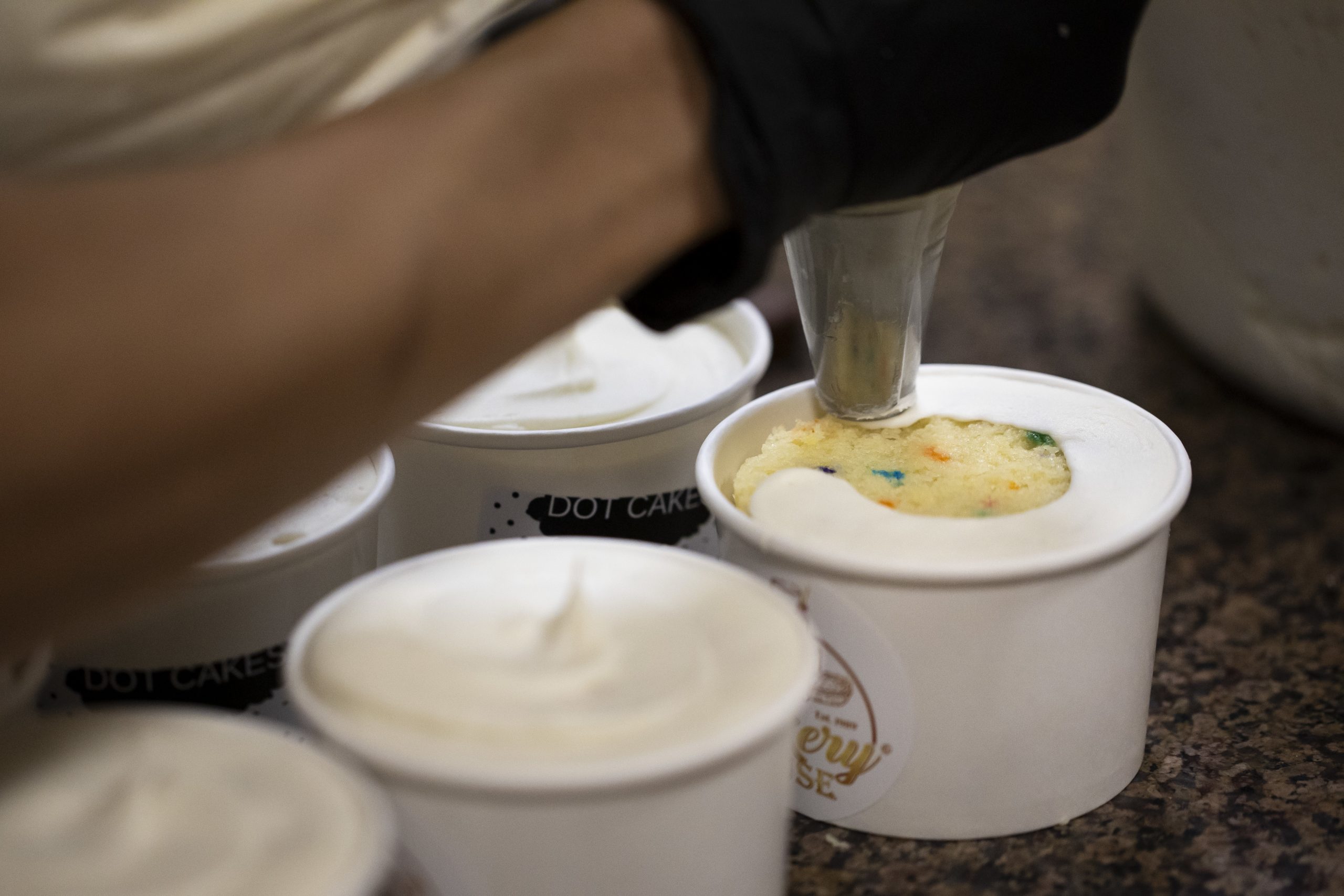
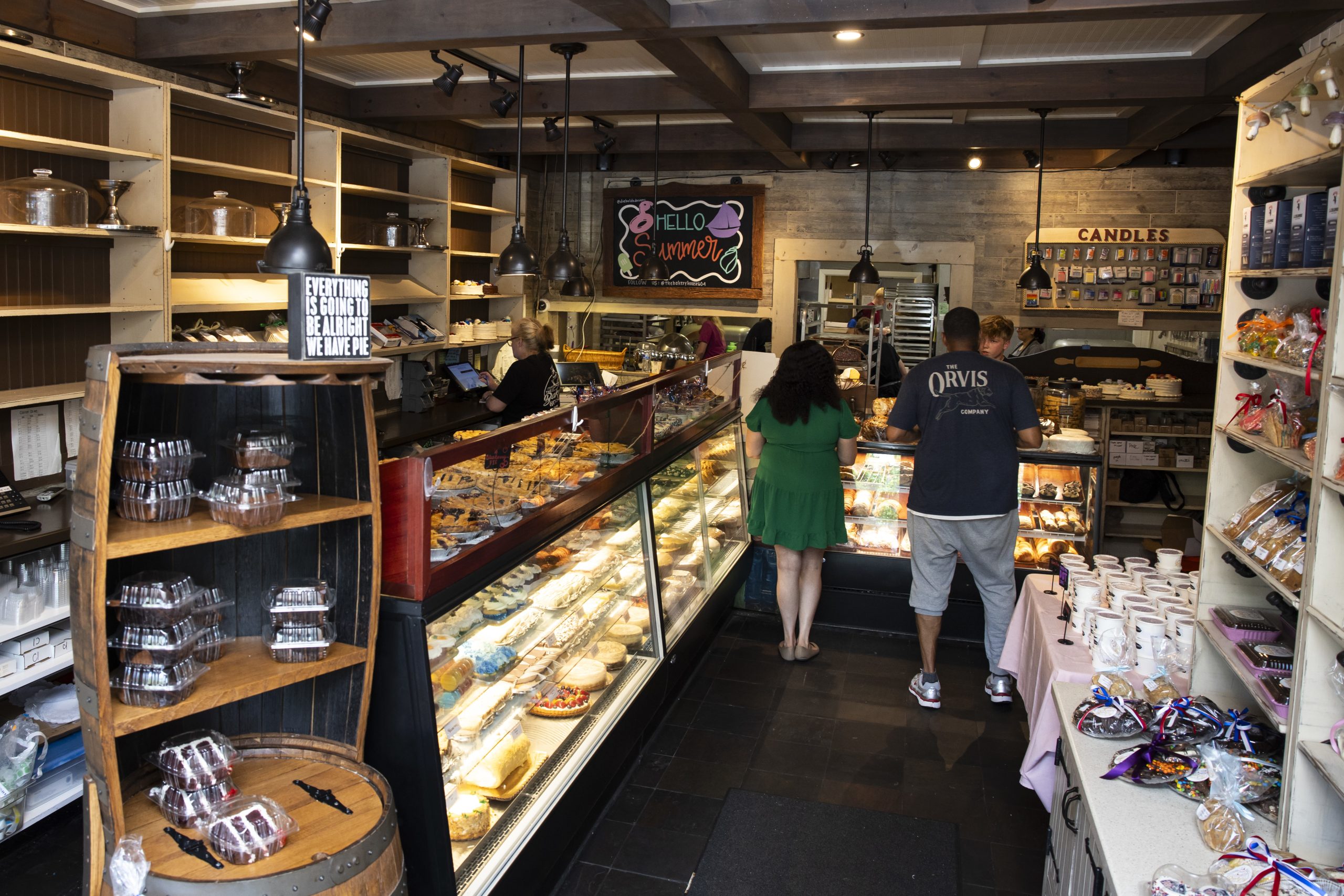
Michael Ibrahim, general manager of the Bakery House in Bryn Mawr, said custom orders for dot cakes, the latest viral TikTok food trend, started trickling in at the end of May. By June 1, the Bakery House posted the new menu addition on Instagram and Facebook.
Within 15 minutes, they were sold out.
“We ordered more material, made more the next week, and then we made sure to never run out of it again,” Ibrahim said.
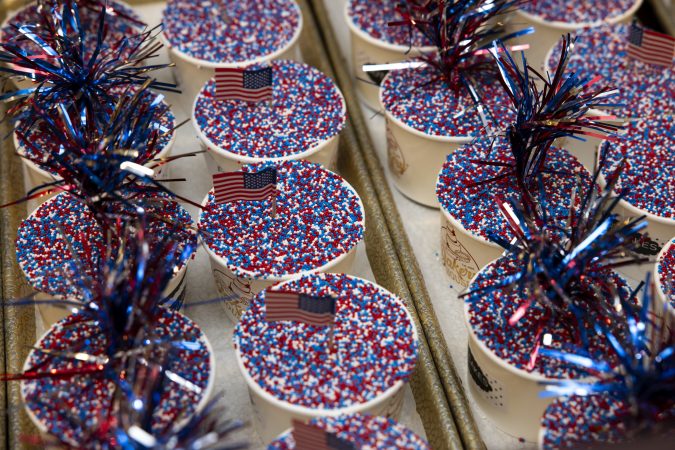
The dessert — a layered cake in a cup coated in nonpareil sprinkles — was created in 2017 by mother-daughter duo Alex and Sondra Posner of the Dot Cakes in Roslyn, N.Y. It reached national audiences this past May when influencers began reviewing the bakery’s dot cakes sold in New York City’s Butterfield Market. In June, the New York Times Style section reported people standing in line at 6 a.m. for a taste of the sweet treat.
Elizabeth Aversa, owner of the Margate location of Aversa’s Italian Bakery, said her shop is now regarded as “cool” after introducing dot cakes.
“I’m getting these new, trendy people that we were never getting before,” Aversa said. “Before, we were just like a mom-and-pop, old-school store … but now they come to us.”
With viral trends appearing and fading almost as fast as they arrive — remember crookies and butter boards? — deciding which fad to hop on can be a challenge for small businesses.
Ray Sheehan, founder of Old City Media, said businesses have to identify when viral trends will stick around long enough to be worth the investment. That most often occurs when they cut across several consumer demographics.
“When things take off like this, it’s almost like pop music,” Sheehan said. “It just speaks to so many different people.”
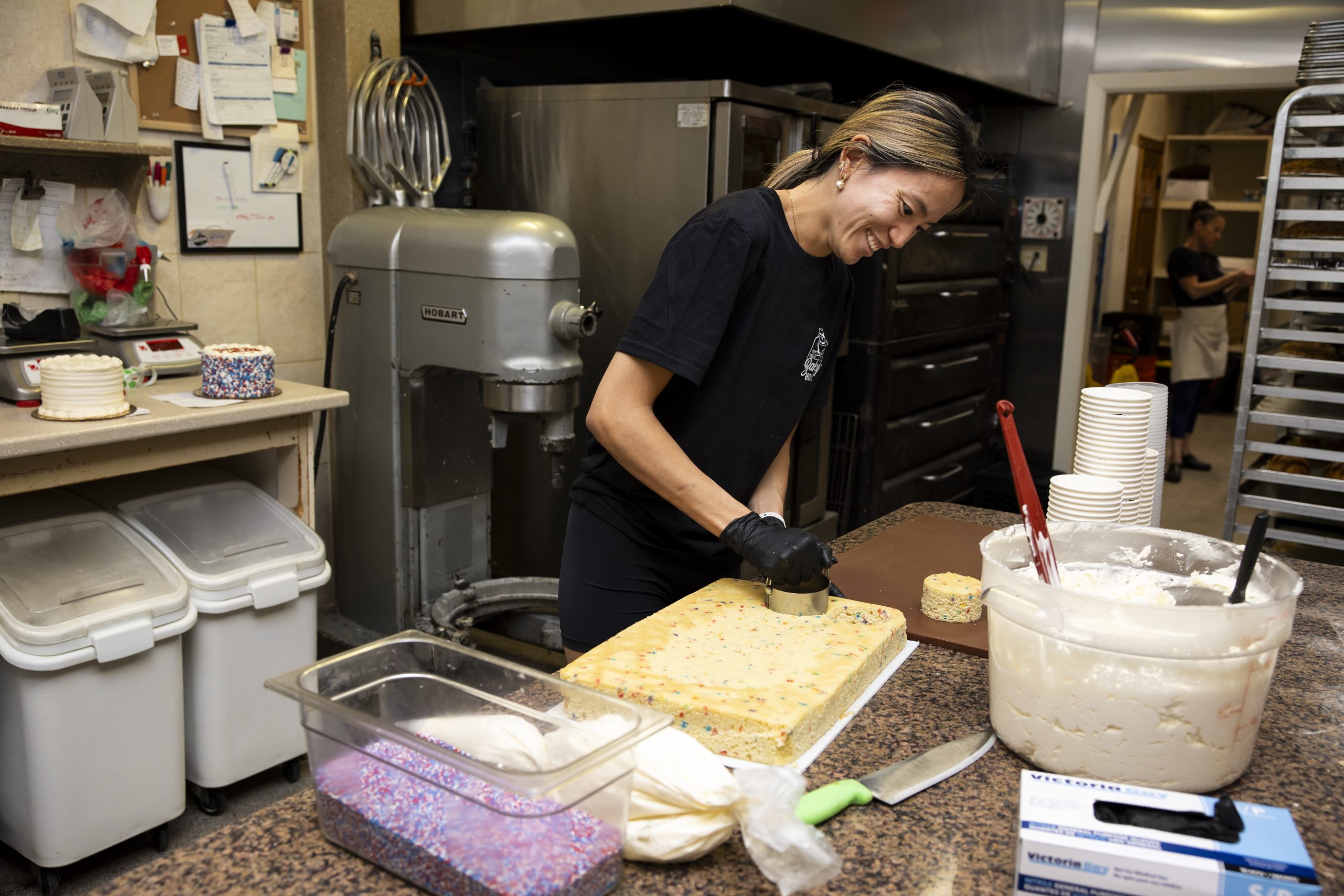
Lily Diebold assembles dot cakes at the Bakery House. Monica Herndon / Staff Photographer
‘Everybody started calling’
When the Bakery House got its first order for dot cake, Ibrahim thought it was an easy request. The bakery already had everything needed to prepare the dessert: cake ingredients, frosting, and nonpareil sprinkles
“Then, the customers told each other, and then everybody started calling,” Ibrahim said. “All of a sudden, we had about 60 custom orders for dot cake.”
Ibrahim said that the team usually avoids bending to the whims of social media trends — notably, they skippedthe “crookie” despite offering both croissants and cookies on their menu.
“We didn’t do it in the store because we didn’t feel that anybody was asking for it,” Ibrahim said.
Dot cake, however, was so popular among customers that the Bakery House decided to put it on the menu permanently.
According to Sheehan, adapting to a viral trend is one of the best ways for businesses to show consumers that they are relevant.
“If I’m a customer, it feels like this bakery is in tune and that they’re talking to me,” Sheehan said. “I’m resonating with their brand because they understand me, and that this thing is so popular.”
Dot cakes have been around for years, but only recently became popular nationwide due to TikTok. Monica Herndon / Staff Photographer
Ibrahim said the bakery now has two employees dedicated to making dot cakes all day, and the fervent demand has caused a dip in sales for traditional cupcakes.
Though, he says, it’s a net gain. Ibrahim estimated that for every loss of 100 cupcakes, 200 dot cakes are sold. On top of that, dot cakes are priced about $5 more than the bakery’s most basic cupcake, generating greater revenue.
A middle schooler’s suggestion
At Aversa’s bakery, the decision to start making dot cakes was a family affair.
Aversa’s 14-year-old son, Ralph, saw the viral dessert on TikTok and he asked his mother to make dot cakes for a school party.
It was a popular choice: ”He was a rock star at the party,” Aversa said.
Ralph wanted to bring dot cakes to the bakery. His mother let him go for it, thinking it would be a fun summer activity.
Then they flew off the shelves.
“We put 20 out; they sold out. Then 40, then 50,” Aversa said. “Now we’re selling almost 100 a day.”
Aversa said that dot cake sales are not replacing regular items but rather bringing in new customers. The younger demographic, drawn in by the dot cakes, may bring their parents, who then come across Aversa’s chicken salad or Caesar salad wraps.
“Some people maybe never would have come to Aversa’s if it wasn’t for the dot cakes,” she said.
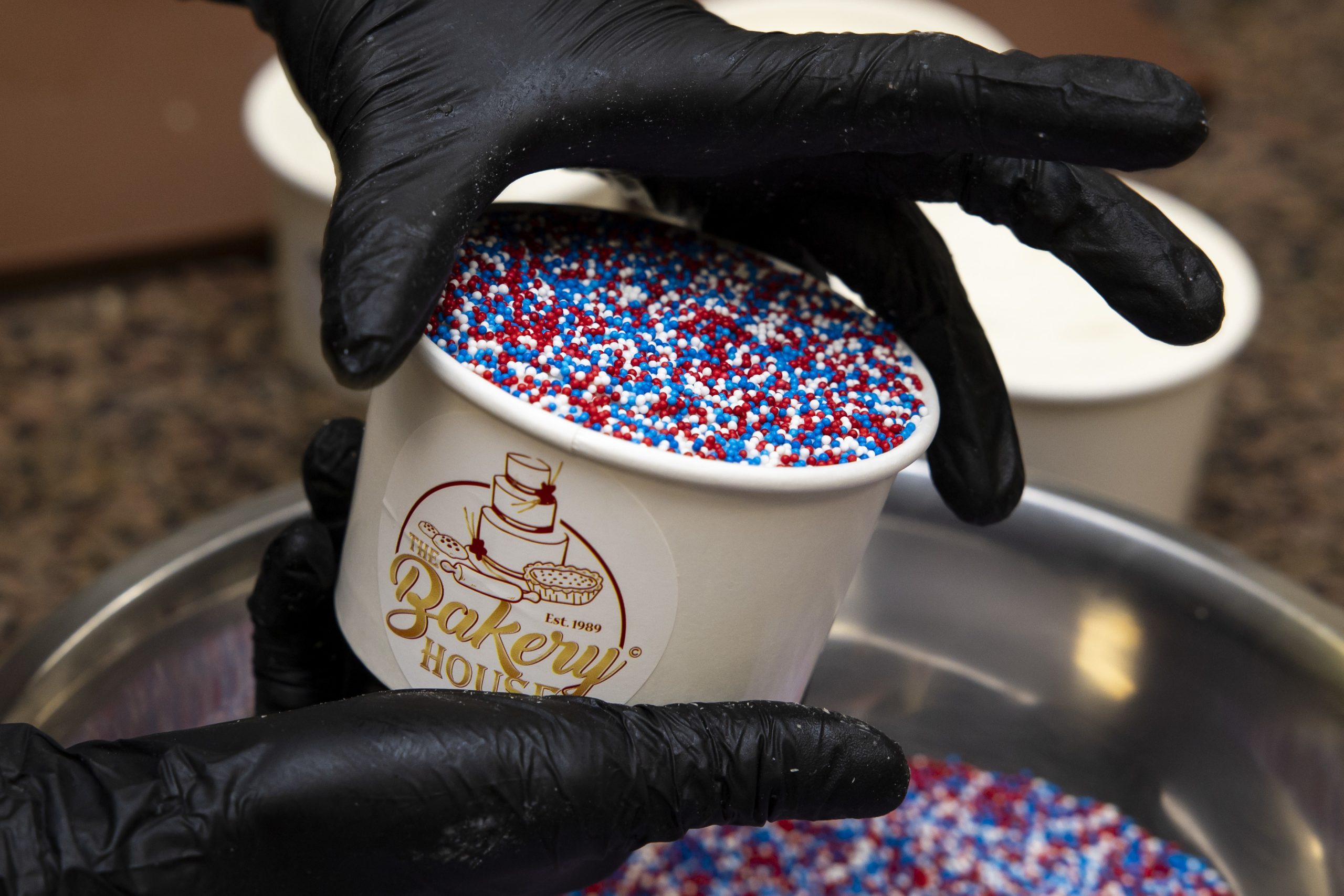
Dot cakes get a layer of icing and then a crunchy topping of nonpareil sprinkles. Monica Herndon / Staff Photographer
Influencer tips
At Sweet Box Bakery on South 13th Street, owner Gretchen Fantini said a well-known social media personality who frequents the shop tipped her off to dot cakes.
Destiny Deniz, a Philly-based creator with nearly 177,000 followers on TikTok, told Fantini that the dessert was blowing up in New York, and Sweet Box should hop on the trend. At first Fantini was reluctant, but then she started seeing it all over her feed.
“We have everything here,” Fantini said she thought at the time. “We should just do this.”
Since the business — and local influencers — started advertising Sweet Box’s dot cakes, Fantini said their Instagram has grown by almost 1,000 followers.
Sweet Box’s feed features collaborative posts with local food Instagrammers showcasing the viral dot cakes, including @josheatsphilly (197,000 followers), @phlfoodstagram (42,900 followers), and @phillyfoodies (135,000 followers).
Fantini said the bakery’s influencer relationships are built organically. Creators may pop into the shop, and she’ll give them a taste of her baked goods for free, but she has not done a paid partnership so far.
Customers line up at the Bakery House in Bryn Mawr, which recently starting selling more dot cakes than cupcakes each day.Monica Herndon / Staff Photographer
“I’m Italian, so if you come into my bakery and I’m baking something, I’m going to give it to you to try,” Fantini said.
Dot cakes are hit at Sweet Box, but so far sales have not surpassed cupcakes, the bakery’s specialty. On a day where the bakery sells 500 cupcakes, Fantini said they typically sell about 250 dot cakes.
“I want to make my customers happy,” Fantini said. “If I can stay true to what I’m making, and if it’s something that they want, I’m going to make it.”