NEW YORK — No large data centers can be built in New York for up to a year as the state creates rules to protect the environment and its energy grid from the power-hungry facilities fueling artificial intelligence.
Gov. Kathy Hochul signed an executive order Tuesday imposing the country’s first statewide moratorium on hyperscale data centers, which house thousands of computer servers and require massive amounts of energy and a steady supply of water to keep cool.
The move pushes the state into a raging debate over how to regulate the AI industry, as concerns over rising electric bills and environmental risks collide with a desire to stimulate local economies and foster the U.S. tech sector.
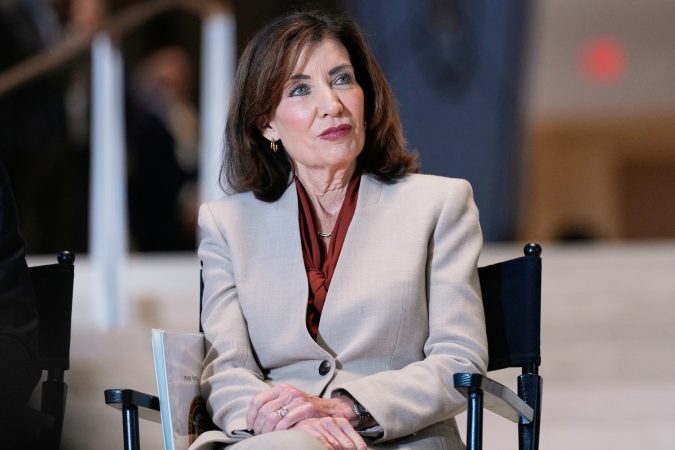
“The bottom line is that progress shouldn’t arrive with a higher utility bill, deleted water supply, or noise pollution, so we have no choice but to address these challenges created by these massive facilities,” Hochul said at a celebratory signing ceremony in Brooklyn.
President Donald Trump has warned states not to slap regulations on the AI industry, echoing tech companies in arguing such moves hamper job growth and cede ground to China in a race to lead in the rapidly growing field.
Earlier this year, Maine seemed poised to establish a similar moratorium. But the measure was vetoed by Democratic Gov. Janet Mills because it would have blocked a proposed data center in a town that has struggled after a mill closed.
Moratoriums have been proposed in at least a dozen states but have not gotten far, though some counties and municipalities have imposed their own temporary bans.
New York’s executive order pauses state permitting for new large data centers and directs state regulators to create standards that address environmental impacts, energy demand, water usage, and other factors, the governor’s office said.
The decision in New York also carries political significance for Hochul’s reelection campaign and the state’s tight congressional races this fall, as Democrats move to address affordability concerns over high utility bills. In addition, the governor this year softened New York’s ambitious goals to reduce greenhouse gases, citing rising energy costs for consumers.
Hochul’s Republican opponent in the governor’s race, Nassau County Executive Bruce Blakeman, opposes a statewide moratorium and says local governments should be allowed to strike deals with tech companies for data center projects that promise enough economic benefits.
In a statement Tuesday, Blakeman said the governor “doesn’t work with local governments and business leaders to figure out how to get things done,” while pledging to “modernize our economy to bring costs down and create good jobs.”
The state Legislature this year approved its own moratorium bill, but Hochul’s office described the legislation as complex and said it needed additional work. Instead, the governor opted for an executive order that would take effect immediately.
State Sen. Kristen Gonzalez, a Democrat who sponsored the legislation, joined the governor during the signing ceremony. “If Big Tech is coming onto our turf, it should be on our terms,” she said.
New York, at this stage, has not been a destination for the largest hyperscale data centers.
Nab a table at Collingswood’s Sabrina’s Cafe at 11 a.m. on a Sunday without a wait? Good luck with that.
A dinnertime walk-in at one of the town’s many vaunted restaurants might be easier. On a weekday, you’ll practically be a shoo-in.
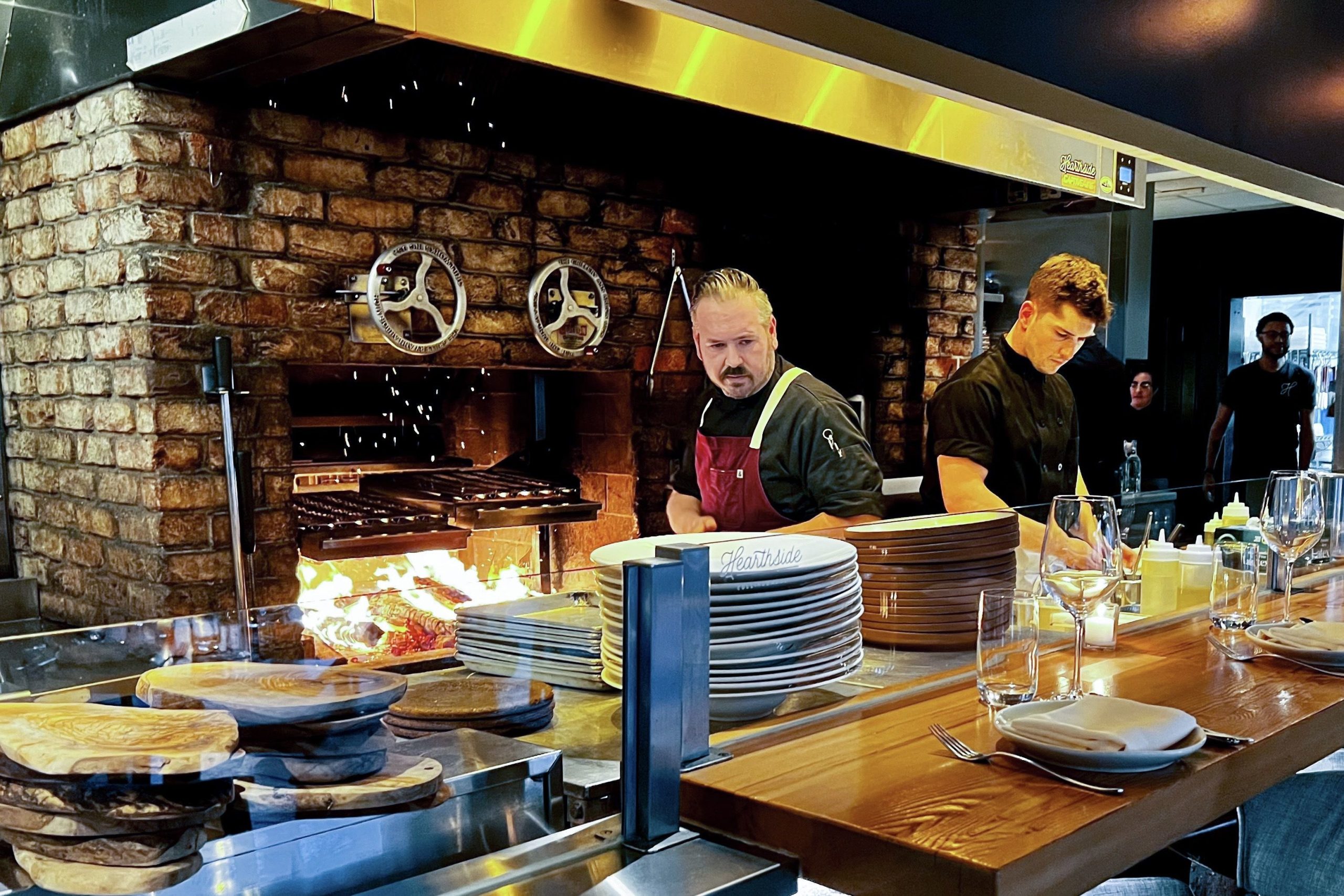
Despite its reputation as a South Jersey dinner destination — owing to longtime red-sauce staples like Villa Barone and Il Fiore and newer fine-dining joints like Hearthside and June BYOB — restaurant owners on Collingswood’s popular Haddon Avenue say business isn’t booming on weeknights.
With thinner margins brought on by the higher costs of food, supplies such as to-go containers, and labor, it’s getting harder for some of these spots to get by.
The Camden County town of 14,000 is hopping with energy on weekend days thanks to the beloved Saturday morning farmer’s market, a bevy of city-organized events, and Collingswood’s variety of stores. But the energy on Haddon Avenue often fizzles come evening.
Business owners of all types point to one main reason: Collingswood is dry.
“During the day on Saturday when we’re prepping, there are people walking around everywhere, but on the weekdays after 5 o’clock, there’s just nobody walking around,” said Dominic Piperno, chef and owner of Hearthside, which opened on Haddon Avenue in 2017.
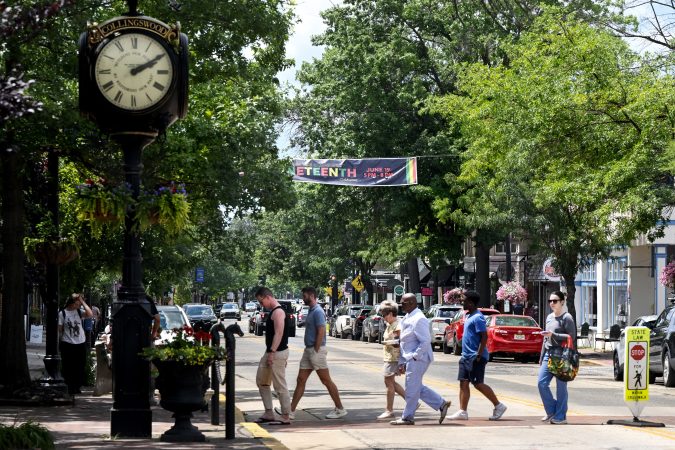
People walk along Haddon Avenue in Collingswood. Elected officials and business owners say the town needs more experiential businesses.Tom Gralish / Staff Photographer
Piperno said weekday evenings have become increasingly quiet in the past few years. There was a boom just after COVID-19 restrictions lifted, when folks were happy to get out of their homes, but it didn’t last. He and other Haddon Avenue restaurant owners say inflation and the rising cost of living are partly to blame, with disposable income for many out the window.
Giovanni Barone, whose family has owned and operated Haddon Avenue Italian restaurant Villa Barone for 32 years, thinks the town could make some changes to support restaurants. He motioned toward nearby Haddon Township, which has long allowed alcohol sales and on-site consumption.
There, “on a weekday night — Wednesday or Thursday, for example — I drive down the street and it’s packed,” Barone said. “We’re losing a bit of that piece of the pie.”
A thriving daytime scene
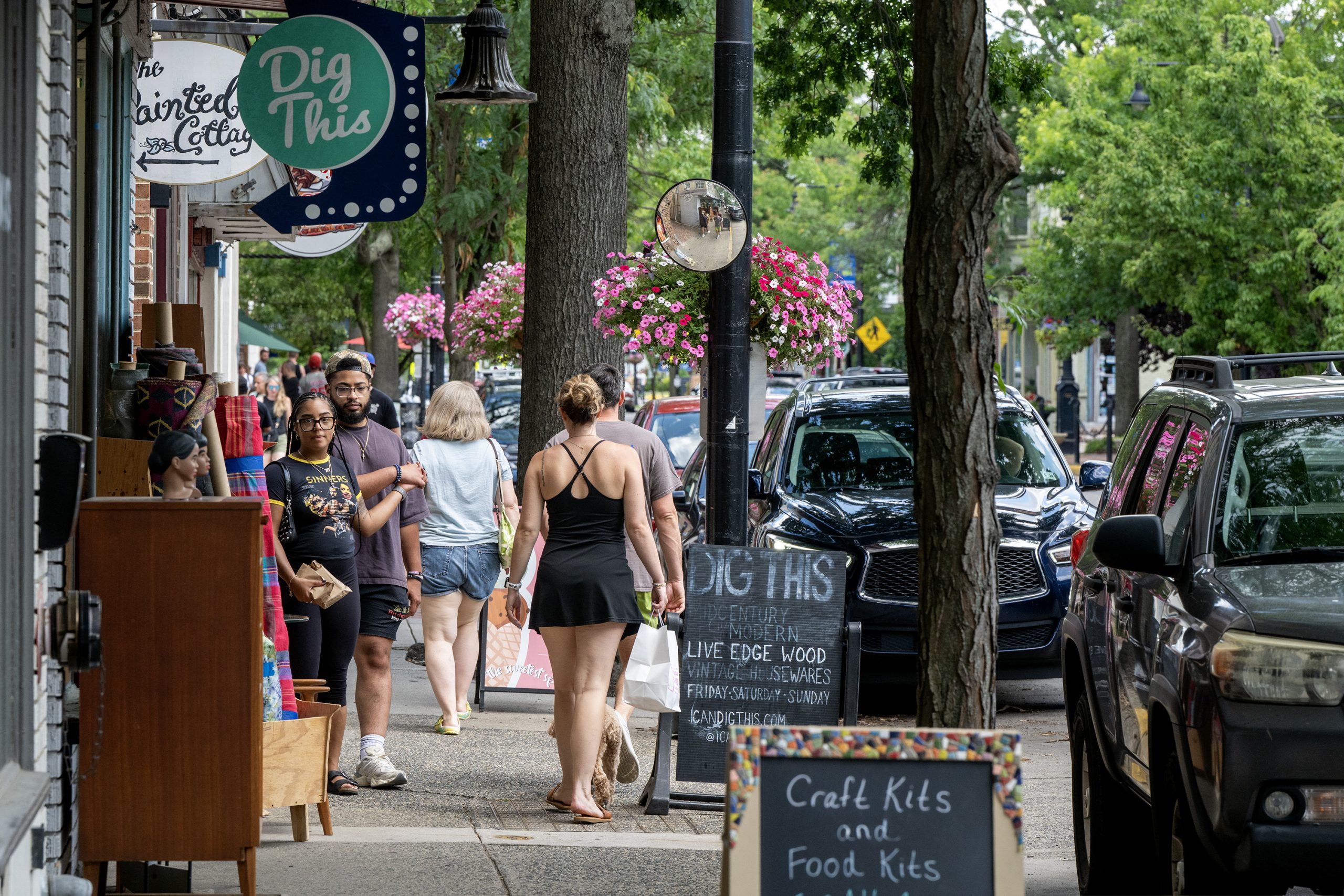
Yet amid the challenges, Collingswood’s share of Haddon Avenue is experiencing a wave of new businesses filling long-vacant storefronts and injecting fresh daytime activity.
Kaival Patel of John’s Friendly Market in nearby Haddon Heights is preparing to open a convenience store-like concept in Collingswood with a deli case and prepared foods in the former Wawa space, likely this summer.
The business was courted by Collingswood Commissioner and Deputy Mayor Amy Henderson Riley. She campaigned with Mayor Daniela Solano-Ward on the promise of ensuring downtown continued to welcome diverse business owners and shoppers of various income levels. James Maley, a commissioner since 1989 and Collingwood’s mayor from 1997 until Solano-Ward took office, continues to serve as a commissioner.
“We’re replacing Wawa in our own way,” Patel said. “We’ve heard that people used to get their groceries from Rite Aid next door that closed, too, so we’re going to try to add groceries as much as possible.”
Nearby, a bank that has sat empty for years is primed for a new life as a three-storefront building topped with condos, said Keller Williams real estate agent Pat Ciervo. The parking lot will become public parking, Ciervo said — a perk for that end of downtown.
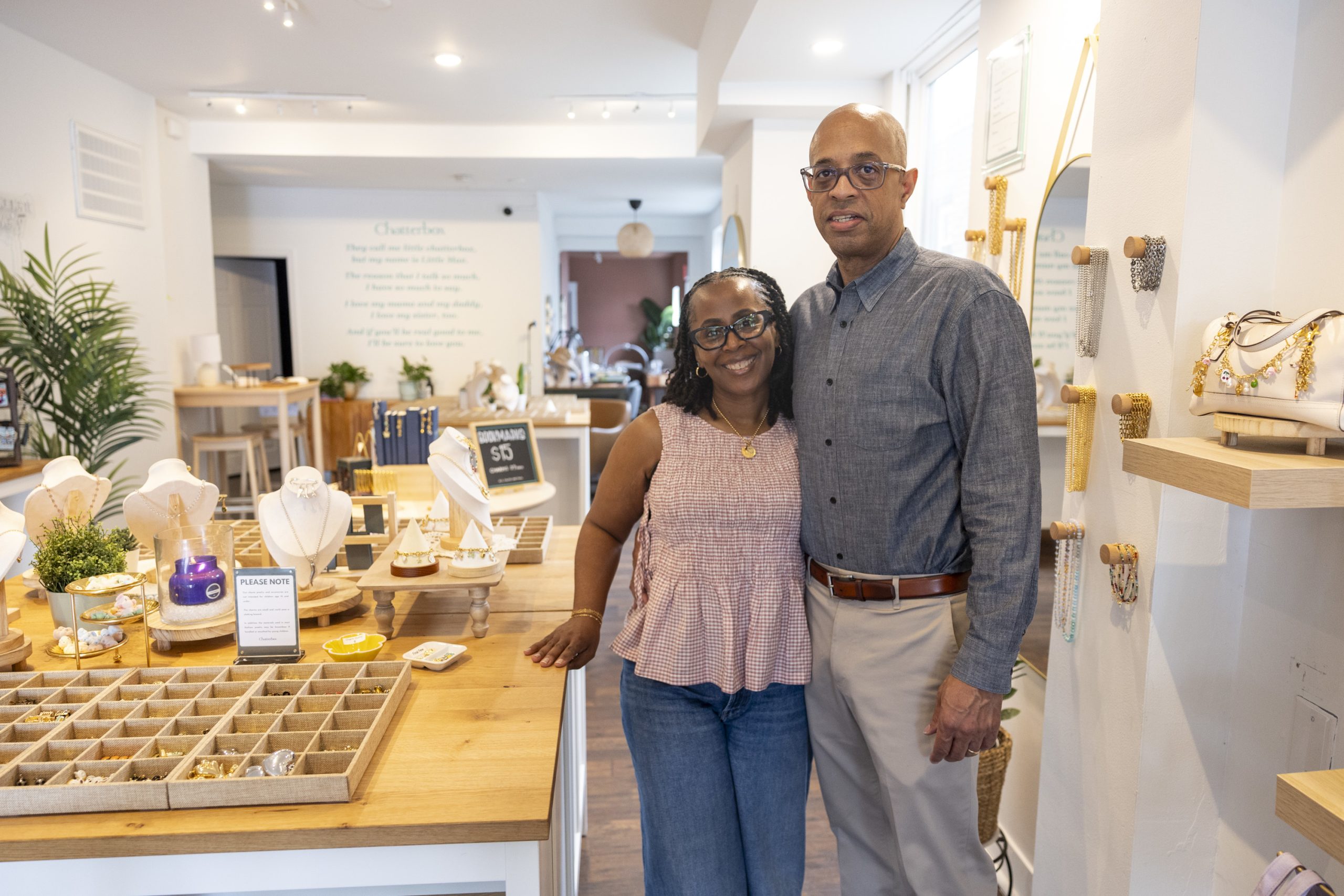
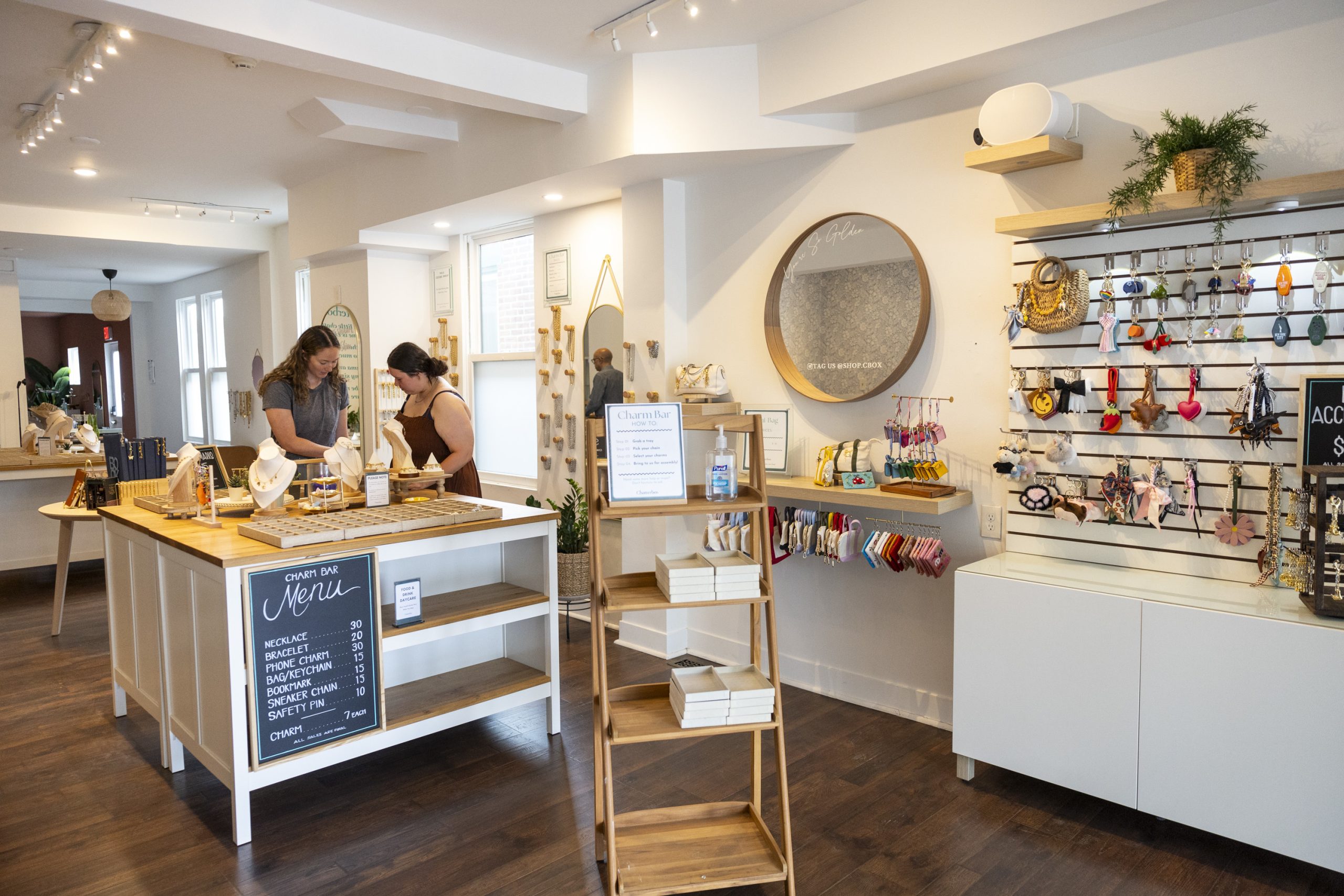
Charm bar and permanent jewelry studio Chatterbox celebrated its first anniversary July 4. Business has been good for owners Douglas and Nikki Coleman. People are eager to support a Black- and family-owned business, Douglas Coleman said.
Douglas and Nikki Coleman at their business Chatterbox in Collingswood.Tyger Williams / Staff Photographer
“Weekends have been very steady for us,” he said. Weekday business fluctuates, “but this has become a destination for people, just the store in itself. We’ve had people come from Boston and Virginia.”
Lindsey Ferguson, Collingswood’s director of business and community development, praised the store.
“We have loved the addition of Chatterbox because, simply, their business model includes waiting for your jewelry, so people then walk around and shop” at other businesses on the avenue like suburban birding store House Finch or Occasionette gift shop, she said.
Ferguson would like to see more so-called experiential businesses like Chatterbox and nearby pottery-painting studio All Fired Up! And she’d like to add nighttime businesses “that can kind of lift everybody up.”
Ends of the Earth, a cigar lounge that recently debuted in Collingswood’s former fire station, is open until 7 p.m. on Thursday, Friday, and Saturday — a welcome evening addition, according to Ferguson.
Ferguson said the chasm between daytime and nighttime foot traffic along Haddon Avenue dates to the pandemic years, when some businesses began closing earlier.
But that lack of deep overlap between so-called daytime and nighttime businesses has left Collingswood’s restaurant scene in the lurch.
The inside of Douglas and Nikki Coleman’s business Chatterbox in Collingswood.Tyger Williams / Staff Photographer
‘Let’s not mess this up’
Liquor was prohibited by ordinance in Collingswood in the 19th century, dating back to its Quaker roots.
Now Collingswood’s three-person Board of Commissioners, which includes Henderson Riley and Solano-Ward, is considering a resolution to put liquor sales on the ballot in November.
“It’s a conversation we need to keep having as a community,” Henderson Riley said. “It would be an influx of cash into the town that would be up to voters to decide.”
In 2015, Collingswood voted to allow craft breweries, and now Raccoon Taproom operates on Haddon Avenue under a state-issued limited brewery license. The license allows operator Swedesboro Brewing to serve beer in the taproom.
Chef-owner Dominic Piperno (left) with line cook Christopher Ross at Hearthside in Collingswood in 2023.Michael Klein / Staff
Henderson Riley said officials are concerned about how to equitably distribute the restaurant and retail liquor licenses. Collingswood would receive up to four, based on its population, which isn’t enough for all of its dinner-serving establishments. And if they are auctioned to the highest bidder, Ferguson noted, out-of-town restaurant groups could come in and create even more competition for licenses.
“We want to keep restaurants open. We want to keep our downtown thriving,” Henderson Riley said. “We see neighboring towns that are open a little later than us, and the main reason is liquor.”
And as a result, Henderson Riley said, the restaurants in those neighboring towns have a lower price point for their food.
Nearby Haddonfield is also a dry town but allows businesses to operate under state-issued manufacturing licenses — not just for beer — and is now home to a brewery, a winery tasting room, and a distillery. Piperno, of Hearthside, sees how these businesses help feed the area’s restaurants, even if the restaurants can’t sell alcohol.
“My wife and kids and I will walk Haddonfield at night, and like on a Monday, Tuesday, it’s jamming,” Piperno said. “It just has helped that downtown a lot, especially with younger families.”
Piperno said Fridays and Saturdays at Hearthside are still “jammed,” but “it’s really hard to survive this industry with just two really busy nights.” The restaurant plans to relocate to Haddon Township in 2027, where it will have a liquor license.
“It’s a bittersweet thing for us because we love Collingswood,” Piperno said, “but something has to change.”
Still, for Collingswood, much already has. Former Mayor Maley is owed much of the credit, says Henderson Riley, the deputy mayor.
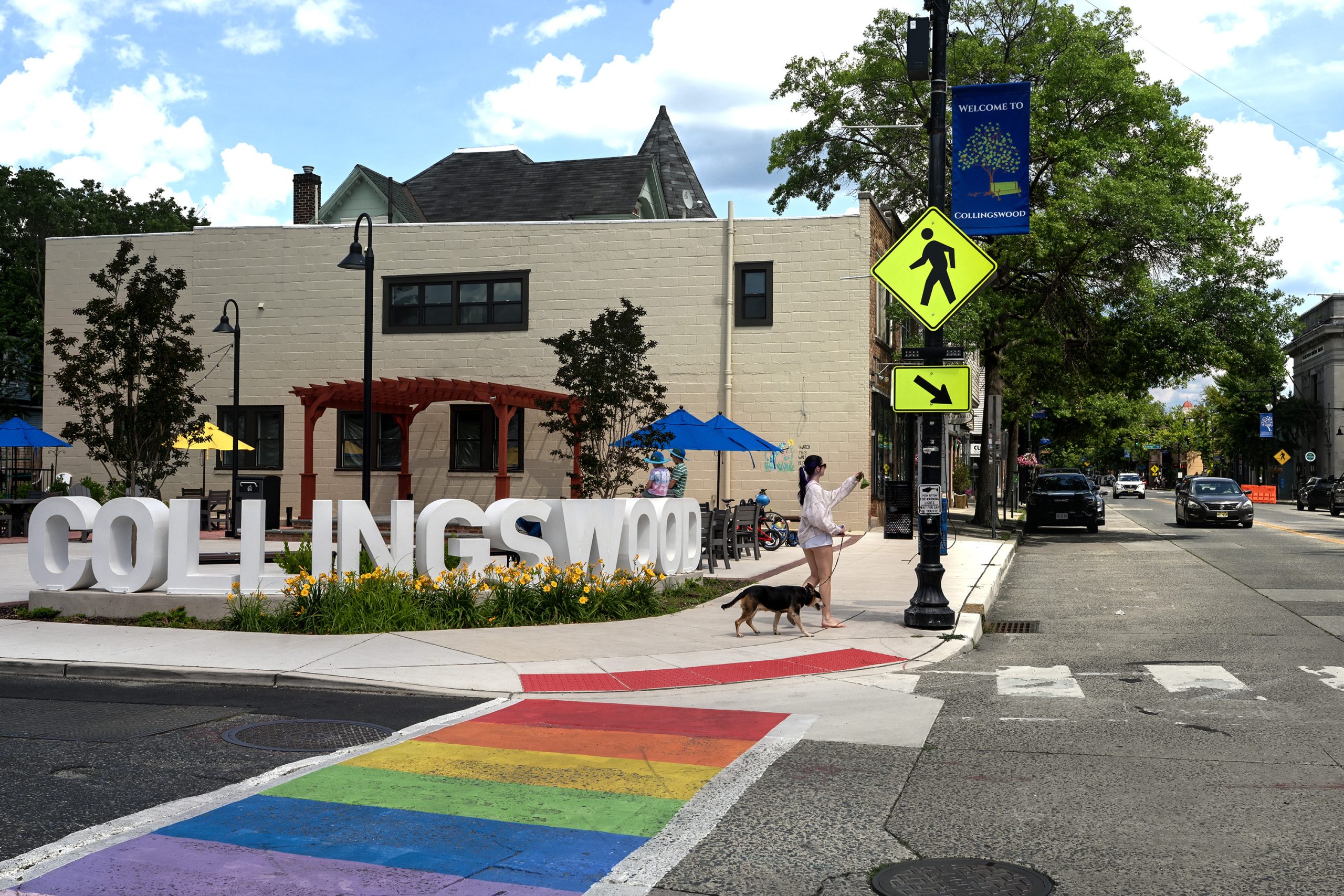
The downtown pocket park with a “Collingswood” sign.Tom Gralish / Staff Photographer
Henderson Riley recalled Maley’s efforts to attract new homeowners by incentivizing converting former duplexes into single-family homes, and appeals to Philadelphia’s LGBTQ+ population to move across the bridge.
“Part of what drew us here was what he used to call the Collingswood story,” Henderson Riley, who has lived there for 15 years, said. The businesses and restaurants that germinated from it are the basis of Haddon Avenue’s reputation today.
Nikki Coleman, of Chatterbox, grew up in Cherry Hill and has watched throughout her life as Collingswood’s downtown transformed from a dingy strip into a robust retail scene. She has shared her observances with her husband.
“This has been a great case study for how to take a town and really bring a certain dynamic to it that I think a lot of other small towns wish they had,” Douglas Coleman said. “I don’t know if we’re doing anything wrong, but it’s more of a ‘Let’s not mess this up.’”
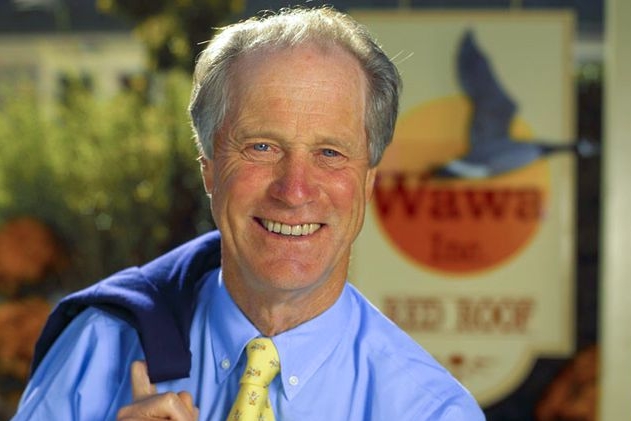
Richard D. Wood Jr., 88, of Wawa, Delaware County, chair emeritus and former chief executive officer and president of Wawa Inc., Convenience Store News Hall of Famer, lawyer, trustee, mentor, veteran, and philanthropist, died Friday, July 10, of age-associated decline at his home.
Born in Philadelphia, Mr. Wood earned a law degree at what is now the University of Pennsylvania’s Carey Law School in 1964 and joined his family’s nascent Wawa food market company in 1970 as its first general counsel. His great-grandfather founded the Wawa dairy in 1902, and his father’s cousin opened the first Wawa food market in 1964.
By 1977, Mr. Woodhad ascended to president of the company, and its innovations, including 24-7 hours of operation and custom-made hoagies, made it the region’s dominant convenience store. He became CEO in 1980 and chair in 1982, and was named chair emeritus in 2020.
In 2020, Inquirer business writer Joseph N. DiStefano said Mr. Wood “presided over the board during the period of Wawa’s rapid growth from a regional cokes-smokes-milk-and-hoagies chain to a convenience store and gas outlet with more than $12 billion in annual sales and 850 stores from New Jersey to Florida.”
For more than 40 years, Mr. Wood supervised Wawa’s multistate expansion, addition of gas pumps, expanded inventory, rigorous employee training, and popular employee stock ownership plan. During his tenure, the company grew to more than 36,000 associates and was one of the largest privately held companies in the country.
Through it all, Mr. Wood was affable and curious, friends and family said. He wanted to know everybody’s name and what they thought, and he enjoyed touring the stores and chatting up associates and customers, especially on Christmas Day. He told colleagues he wanted to “create an environment where each of us believes that we can make a difference.”
“Dick Wood was our true lead goose who was the guiding heart and soul of the company,” Chris Gheysens, Wawa’s chairman and CEO, said in a tribute. “He is the reason why Wawa is the company we are today and why we enjoy so much share of heart from our customers and dedication from our associates.”
Mr. Wood hired students and women to work in the stores, and offered flexible schedules to accommodate their availability. He oversaw Wawa’s $200 million of donations to community nonprofits and its college tuition reimbursement plan for associates.
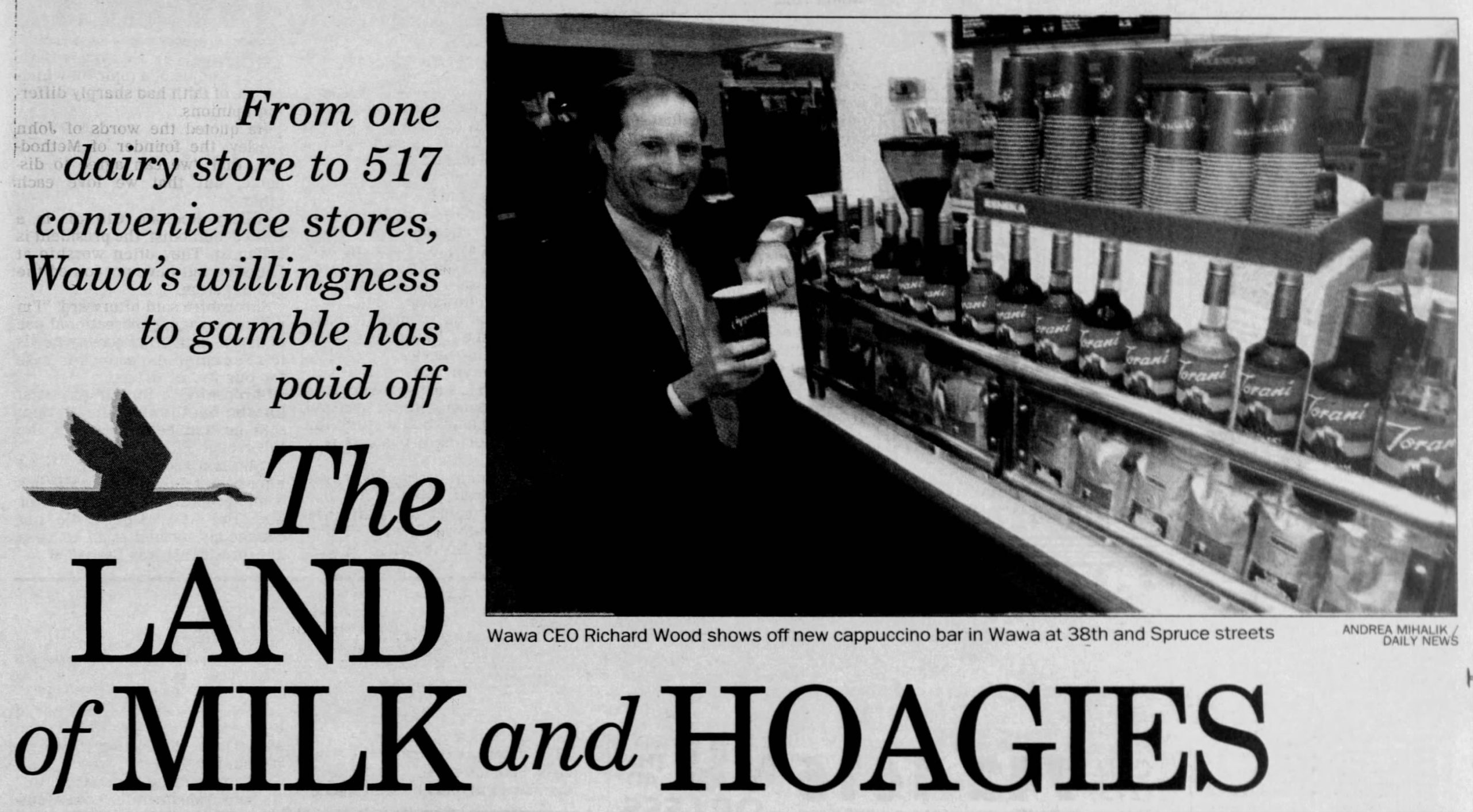
This photo of Mr. Wood and a story about Wawa appeared in the Daily News in 1994. Newspapers.com
In 2021, to mark his 50th anniversary at the company, Wawa established the Dick Wood College Scholarship Fund for associates. He told Inc. magazine in 2018: “Values and culture mean more in this company than being smart.”
Colleagues called him “humble, gracious, curious, and kind” and “a beloved treasure to the company” in tributes. His life-size bronze statue greets visitors at Wawa’s corporate headquarters.
“He made people feel important,” said Barbara Ennis, his longtime assistant, ”because to him, they were.”
Mr. Wood was onetime chair of the executive committee of the National Association of Convenience Stores and on boards at Children’s Hospital of Philadelphia, Riddle Memorial Hospital, Philadelphia National Bank, Bok Tower Gardens in Florida, and other organizations. He appeared oftenin The Inquirer and Daily News, spoke on panels and at conferences about corporate leadership, and was inducted into the Convenience Store News Hall of Fame in 1996.
Mr. Wood (left) worked closely with fellow CHOP trustee N. Scott Adzick.Children's Hospital of Philadelphia
He served on the Chester Heights Borough Council in the early 1980s and was named 1996 businessman of the year by the Great Valley Regional Chamber of Commerce. Before Wawa, Mr. Wood was a public defender in Philadelphia and a lawyer at Montgomery McCracken.
“People loved to follow him,” said his son, Richard D. Wood III. “He was larger than life,” said his daughter, Lisa Wright.
Sometimes, his family said, Mr. Wood walked the halls of the hospital, sharing Wawa coffee and conversation with patients and families. CHOP honored him at its 2019 Carousel Ball. Madeline Bell, CEO at CHOP, said: “I will truly miss his warmth, wisdom, and generous spirit.”
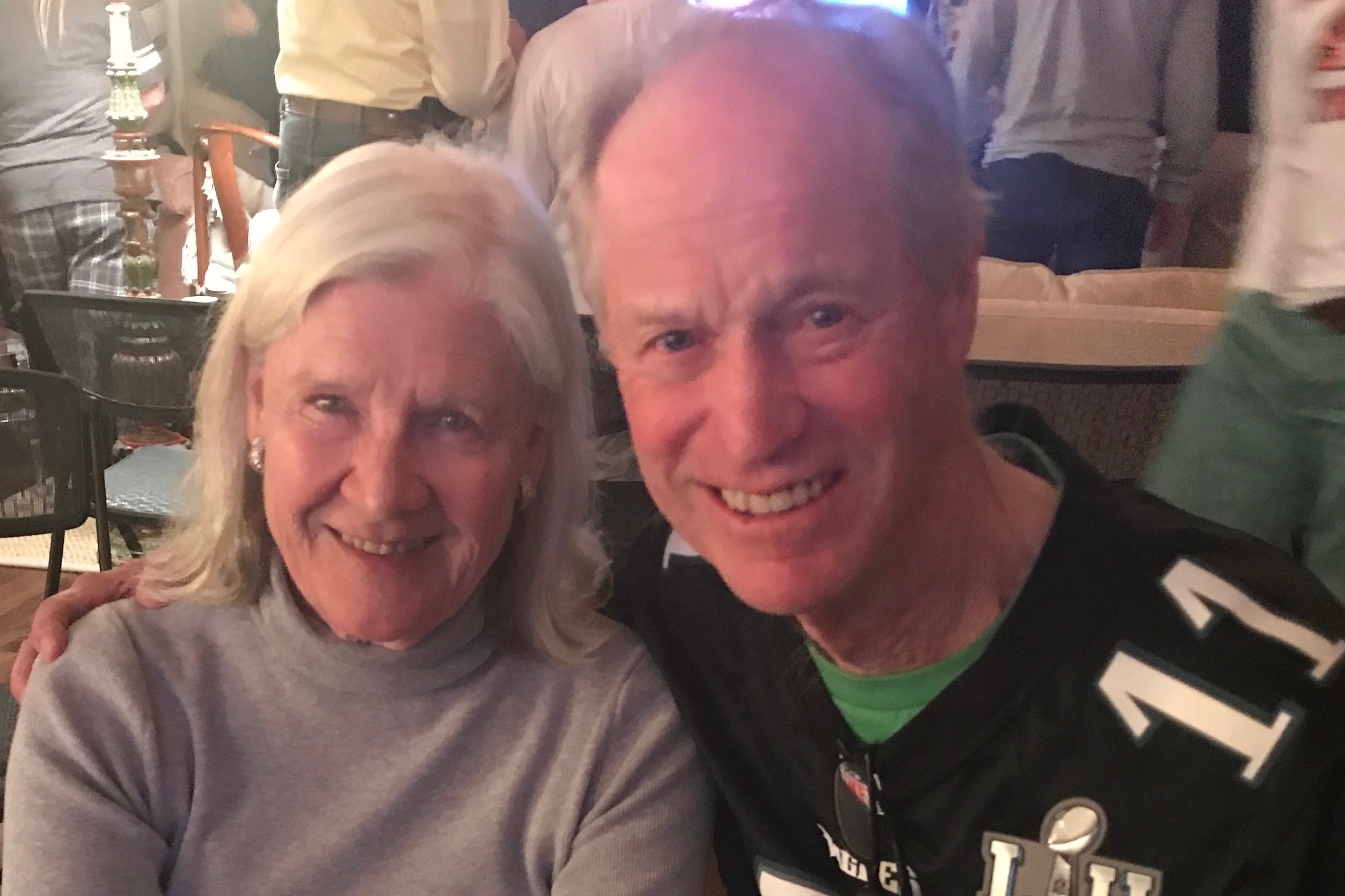
Mr. Wood and his wife, Jeanette, married in 1964.Courtesy of the family
Howard Stoeckel, former Wawa vice chair, CEO, and president, said in a tribute: “He had a special mix of heart, compassion, empathy, and humility that made him a true believer and practitioner of servant leadership.”
Richard Davis Wood Jr. was born March 4, 1938. He graduated from St. Paul’s School in Concord, N.H., earned a bachelor’s degree in business at the University of Virginia, and served for a year in the Marine Corps and later in the Marine Corps Reserve.
He met Jeannette Andrews when he was visiting New York with friends, and they married in 1964. They lived in Philadelphia and Wawa, and had a daughter, Lisa, and a son, Richard III. His wife died in 2025.
Mr. Wood was an avid golfer, and he belonged to the Gulph Mills and Pine Valley Golf Clubs, and the Mountain Lake Club in Florida. He played tennis and bridge, and was a longtime season ticket holder for the Eagles and Flyers.
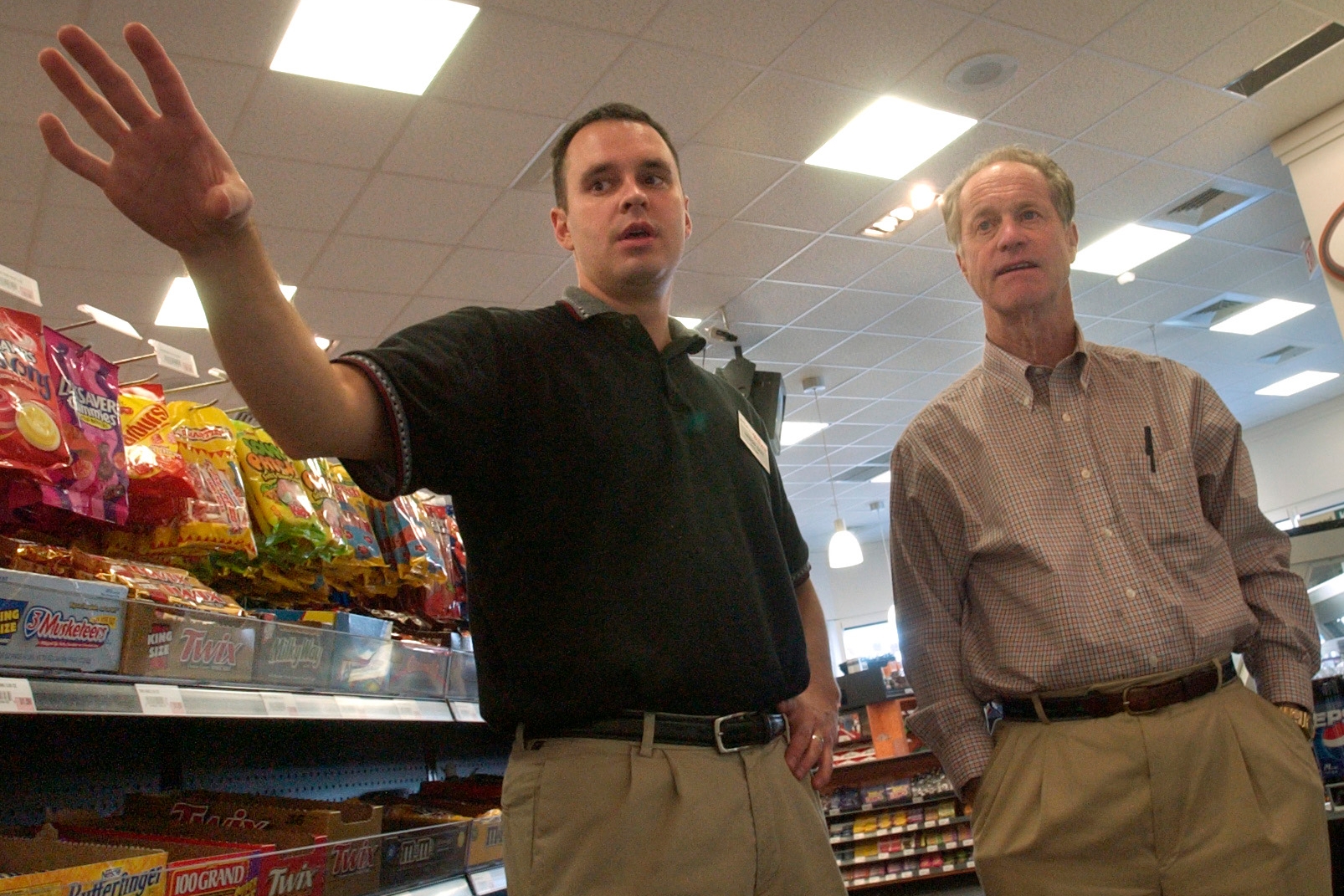
Mr. Wood (right) enjoyed meeting and talking with Wawa associates and customers. Jonathan Wilson / Staff Photographer
He and his wife traveled, hosted family holiday parties, and spent memorable winters in Lake Wales, Fla. He drove his favorite Honda Accord for years and followed Virginia college football and basketball closely.
He championed conservation, education, and health. “He treated every single person the same,” his daughter said. His son said: “Humility defined him.”
Asylon Robotics, a 100-employee robot software and hardware maker based in Norristown, says it has been picked to test its network of doglike robots, flying robots, and software links at the Air Force’s Warner Robins Air Logistics Complex in Georgia.
The Air Force has already reviewed individual Asylon products. The new Phase Three contract will test four Asylon products networked into a single system dubbed Multimodal Autonomous Robotics for Inspection of Aircraft (MARIA).
The goal is to improve the speed and reliability of plane checks by Air Force maintenance crews, the company said in a statement. The value of the contract was not immediately available. It’s worth “multimillions,” an Asylon spokesperson said.
“This award reflects the Air Force’s confidence” in Asylon’s systems, said Anthony McCarty, a retired Air Force colonel who heads Asylon’s government sales arm.
Asylon noted that its systems have already completed 350,000 autonomous missions. Civilian clients include Citizens Bank.
McCarty said the new award puts better systems directly in the hands of Air Force personnel.
MARIA includes:
Guardian sUAS (small, unmanned aircraft systems), flying drones that can check aircraft from above and around;
DroneDog Q-UGV (four-legged, unmanned ground vehicles), which adds Asylon’s PupPack security system — magnifying cameras, heat sensors, connectivity, and video analysis processors — to off-the-shelf Boston Dynamics Spot-brand robots;
Asylon’s Range autonomy system, the hardware and software that makes the robots go;
DroneIQ command and dashboard system, which gives Air Force maintenance humans two- and three-dimensional images of what the vehicle sensors project so they can be analyzed and acted upon.
Asylon promises faster, more consistent review than human-only teams. Its systems collate images via Light Detection and Ranging (LiDAR) and other mapping tools for review, analysis, and action by human maintenance crews.
The company is based on Buttonwood Street near the Schuylkill in a century-old brick factory building at a complex where ring-binders were formerly made for Philadelphia’s once-vast mass-publishing industry.
Asylon in a statement said successful tests will speed autonomous aircraft inspection and boost demand for its products.
The company was founded in 2015 by three MIT grads: CEO Damon Henry, who earlier worked at GE and Boeing; Adam Mohamed, a helicopter engineer, now chief technology officer; and Brent McLaughlin, a former Johns Hopkins Applied Physics Lab engineer, now chief operating officer.
Asylon has raised more than $45 million from investors including Allegion, which owns Schlage locks and other physical security products; Insight Partners, a New York venture capital firm backed by Pennsylvania teachers’ PSERS retirement plan and other big investors; the Texas-based Hersh family-led Veteran Ventures Capital; and the taxpayer-backed GO PA Fund.
American businesses are increasingly convinced that higher inflation is here to stay.
Even if Tuesday’s inflation report shows the cooling economists anticipate after a recent easing of gasoline prices, few forecasters or executives expect the relief to last.
Instead of fading, the forces pushing prices higher are multiplying. Tariffs are still grinding through supply chains, the Middle East war is keeping oil markets on edge, and another wrinkle — a boom in artificial-intelligence infrastructure — is driving up the cost of electronic components and electricity.
The result is that prices may rise faster than normal for many months.
“People hate inflation,” said Douglas Holtz-Eakin, president of the conservative American Action Forum. “Right now, we’ve got no real wage growth. That’s a broadly distributed pain that hurts the people who are felt to be responsible — the party in power. So Republicans have to worry about every election while that continues.”
For some smaller manufacturers, the effects of tariffs have proved more persistent than many economists initially expected.
“My biggest heartache is still steel,” said Glen Calder, president of Calder Brothers, a family-owned maker of asphalt-paving machines in Taylors, South Carolina, where the price of steel has roughly doubled in 15 months, to as much as 72 cents a pound from the mid-30s.
“It just keeps climbing,” he said.
Indeed, many companies already plan to keep hiking prices, in response to tariffs, over the coming months. In surveys published last week by the Federal Reserve Bank of New York, nearly half of the firms that paid tariffs said they still expected to raise prices again to make up for tariff costs, some in six months or later. Businesses reported they have been waiting for some previously negotiated contracts to expire, absorbing higher costs in the meantime. And some companies acknowledged they plan to raise prices in deliberate increments to avoid alienating customers.
“[I]n an ever-changing tariff environment, many firms are spreading price increases across extended periods — meaning that inflationary pressures due to tariffs may well last for some time to come,” the researchers wrote.
In Madison, Indiana, John Grote’s 125-year-old family company, Grote Industries, which makes lighting and wiring systems for trucks and trailers, is being hit from nearly every direction at once.
Resin for its molded plastic lenses is tied to oil prices and is up 30 percent to 40 percent. Tariffs have hiked prices for copper, which the company uses in a 53-foot harness system that powers lights, cameras and brakes for trailers. And electronic components have more than doubled as AI data centers bid up scarce capacity.
“We’re getting squeezed,” Grote said. Because his prices can’t be adjusted off-cycle, the company has eaten much of the increase. His profits are down 20 percent to 30 percent, and he expects to raise prices in January.
How long the squeeze lasts is clouded by uncertainty on at least two fronts. The war in Iran remains volatile. The U.S. and Iran exchanged some of their heaviest strikes in months over the weekend, renewing concerns about energy supplies and fuel costs.
Meanwhile, businesses could soon face another round of tariff uncertainty. One set of 10 percent global tariffs, which cover roughly one-third of U.S. imports, is set to expire in late July, leaving businesses unsure what to expect next. The Trump administration is expected to use different legal authorities to replace the expiring tariffs.
Companies are already contending with persistent inflation pressures. Delta Air Lines said Friday that record fuel costs — the highest in the company’s history — weighed on quarterly profits despite a double-digit jump in revenue. Executives said the industry had little choice but to maintain recent fare increases because inflation in both fuel and non-fuel costs remained significant.
Seneca Foods, the canned-vegetable giant, told shareholders last month that last spring’s steel-tariff increases are only now flowing fully into its container costs and have been built into its selling prices, adding that the tariffs “simply cannot be absorbed long term.” The company also noted that prices for canned fruit and vegetables have risen more than 48 percent since 2019, nearly double the pace of fresh alternatives, largely because of tariffed tin.
And Winnebago Industries said its model-year 2027 price increases could reach low double digits for some products, as some of its brands face significantly higher raw-material costs than others.
Some economists argue the inflation pressures run deeper than any single shock.
Even without the conflict in Iran or a trade war, inflation would probably be running well above the Fed’s 2 percent target, said Michael Strain, director of economic policy studies at the right-leaning American Enterprise Institute.
That’s because the economy itself is running hot: Consumer spending remains strong, the government is running massive deficits that pump demand into the economy, and financial markets show little sign that the Fed’s interest rates are biting.
“The Fed thinks it has its foot on the brake pedal,” Strain said, “but it actually has its foot on the gas.”
Soon after Aubrey Lee graduated college and moved to Queen Villagein 2021, she determined that her burgeoning career in marketing would be aided by time spent in an actual office.
Partly that’s because her first job was fully remote, and she was laid off after only five months. But she also found it alienating to fully work from home, with little chance to interact with coworkers.
So Lee prioritized finding jobs with in-office requirements, and her next one — secured two weeks later — allowed only one day of remote work a week.
“I feel like remote work, especially at such an early point in my career, made me more of a face on a Teams screen than an actual person,” said Lee, who is 27. “I’d also been inside, locked away from my senior year of college during COVID and feeling very isolated.”
Lee said her friends generally agree that working outside the office early in their careers was a hindrance.
“Working remotely can have stunting effects on people’s careers, in terms of both being laid off and not being promoted,” said Lee, whose current job at Publicis Health Media in Old City, is also four days a week in-office.
Remote work has many advantages, especially for those with physical disabilities, parents of small children, older workers, and those caring for elderly relatives. It also reduces time spent commuting and money spent eating at restaurants.
But soon after desks emptied in the face of the COVID-19 pandemic, battle lines began forming over the future of the office.
Workers were generally seen as being in favor of the flexibility that comes with remote work, while many employers and managers wanted people back in the office soon after it was safe.
A recent burst of new academic research argues that remote work makes Americans lonelier — especially those who live alone — and that it disadvantages those starting out in the workforce.
Unemployment is relatively high among college graduates and nongraduates, unlike their older counterparts.
Several recent studies argue that the depressed labor market for younger workers — which is often attributed to the explosive growth of artificial intelligence — more neatly matches the rise of remote and hybrid work.
Economists Natalia Emanuel, Emma Harrington, and Amanda Pallais argue that “64% of the recent increase in unemployment among young college graduates is due to remote work.”
They found unemployment among recent college graduates in remote-capable jobs rose early in the pandemic and remains elevated, while those in nonremote capable jobs saw a larger spike in unemployment during lockdown and then a return to the norm.
More experienced remote-capable workers, meanwhile, saw their unemployment levels fall slightly in 2020 and remain lower than pre-pandemic.
“Our overall takeaway is that for young people specifically, it looks like this rise in remote work made it relatively difficult for them to find a job,” said Harrington, assistant professor of economics at the University of Virginia.
The researchers examined hiring at a Fortune 500 online retailer and found that young engineers who worked remotely would get 20% less feedback from their colleagues. They ended up writing lower-quality code, and the company hired fewer younger workers.
“If it’s going to be really hard to build talent internally, one reasonable response is, ‘Well, let’s just not do that,’” Harrington said. “Let’s try to buy talent that has already been built up. That’s consistent with what we’re seeing in the unemployment data.”
Remote work and loneliness
Harrington and Emanuel’s research also has found that remote work increases loneliness by making it harder for people to socialize or make friends in their adult lives, leading to negative effects on mental health.
That resonated with West Philadelphia engineerJohn Reid’s experience with an almost fully remote job he got in 2022. In his case, the company did have an office, in Valley Forge, but few people actually worked from there.
At first Reid, 38, enjoyed the remote work lifestyle, especially with a new child at home. But as the years wore on, that changed.
“I was mostly remote until late 2025, and I felt like I was getting weird from working at home all the time,” Reid said. “I still had a decent amount of interaction because we live in the city, and I was walking to daycare, but there was less serendipity or new connection than I was used to.”
Today Reid has a new engineeringjob in Center City, which requires three days a week in-office. He said he would prefer not to go back to fully remote work, nor to a job that was in-office five days a week.
Many workers have returned to offices since the pandemic, but remote work remains desirable to many.Elizabeth Robertson / Staff Photographer
That’s largely the equilibrium that office work has settled into.
After a big push to get workers back to the office in 2022 and 2023, little has changed in recent years. Today, 26% of paid work days in the U.S. are worked from home. That’s up from 7% pre-pandemic, but down from 60% in April 2020.
Some negative aspects of remote work can be salved
There are still plenty of remote work enthusiasts among employees, bosses, and labor experts. After all, hybrid work has become the new norm and many still enjoy fully remote work, with a solid 10% of office workers still working from home, according to Nicholas Bloom, economist at Stanford University.
There are ways to mitigate the negative aspects of remote work, he said.
One recent study by Bloom and his coauthors published by the National Bureau of Economic Research, found that a fully remote firm in Turkey saw“weaker team cohesion, fewer opportunities for real-time coaching and persistent retention problems.”
But a control group of workers who began meeting just one day a month in the office saw increases in productivity and attrition decline by a third.
That suggests even a little team building, and in-person interaction, can go a long way.
When Jake Stein, the CEO of Common Paper, was planning to start his legal technology company before the pandemic, he wanted it to be fully remote. He lives in Society Hill and at his previous company had been frustrated by losing workers to cross-country moves.
He agrees that in-person work is a great bonding experience. Many of his closest friends date to his time at a five-day-a-week office job early in his career. But he doesn’t want to restrict his hiring to the talent pool that’s just within an hour drive of Philadelphia.
Instead, Stein strives to ameliorate the disadvantages of remote work by hosting regular get-togethers, including a weeklong company trip to Mexico City.
Common Paper also offers structured and recurring mentorship for their employees, with softwarecode review and feedback, as well as “lunch and learns” where workers educate one another.
Jake Stein outside his Philadelphia home.Jose F. Moreno / Staff Photographer
“Things that might happen organically, we’re trying to make them happen on a schedule and with a process,” Stein said. “These are things that you get [easily] in an in-person office. In many cases, they are gettable in a remote setting, but it requires a lot more deliberate effort.”
What about young workers?
Stein said the fully remote model has been successful, although he noted that he does tend to hire more veteran tech workers.
“There’s a bunch of factors, but it’s definitely true that if you look at the average age, it’s for sure higher in the remote setting,” said Stein, who has seven employees.
But he said its hard to know why that’s been the case. It’s probably also true that older workers, with kids or other family responsibilities, are more interested in applying for fully remote jobs.
Bloom agreed that on a larger scale, it’s hard to tell if remote work disadvantages younger people.
It’s probably part of the story, he said, but it’s hard to disentangle from other factors, including pandemic-era over-hiring in sectors like tech and finance, the disastrous effects of remote schooling during the pandemic, and the rise of artificial intelligence.
“Typically in economics when there are four factors, they all tend to be at play,” Bloom said. “They all look similar; they have similar timings, and similar effects.”
Bloom said his research has found little evidence that most workers want to return to the pre-pandemic norm of working in the office five days a week.
At the same time, remote work remains a boon to many, he said.
“Setting aside for young people, remote work almost surely has increased employment because there’s a lot of people that can’t work without it,” Bloom said.
They may arrive at the same destination, but two passengers on the same flight can have strikingly different travel experiences.
One traveler breezes through a priority security lane and heads straight to an invite-only lounge for craft cocktails and a chef-prepared meal before boarding early. A flight attendant offering a glass of champagne and a warm hand towel welcomes the passenger to a spacious seat at the front of the plane.
The other traveler stands in a line at every step — security screening, a café selling $16 sandwiches, a crowded gate — then boards with one of the final groups, hoping there’s still room for a carry-on in the overhead bin before folding into a cramped middle seat. After the cabin lights dim, sleep comes in fragments, and a travel pillow does little to ease a stiff neck.
The contrasting journeys are no accident. Since the COVID-19 pandemic, the largest U.S. airlines have pulled out all the stops to court premium passengers who are willing to pay for comfort, convenience and exclusivity. Budget-conscious travelers may notice a widening gap between the back of the plane and up front as the carriers increasingly build their businesses around selling first-class, business-class, and premium-economy seats.
“We can’t win by trying to provide the cheapest. We have to be able to win by providing the best,” Delta Air Lines CEO Ed Bastian said in a recent Fortune podcast interview.
The strategy embraced by Delta and rivals American Airlines and United Airlines marks a notable evolution for an industry that spent decades making air travel more accessible. Now, the nation’s largest carriers are reconfiguring aircraft to expand premium seating, designing new fleets with larger premium cabins, and investing billions in amenities that extend the top-tier travel treatment beyond their jetliners.
But United CEO Scott Kirby has pushed back on the idea that the industry has become solely focused on chasing big spenders. He said United’s premium investments are part of a broader strategy to boost the experience of every traveler, pointing to initiatives such as seatback entertainment and improvements to the airline’s mobile app.
“We’re investing nose to tail for all customers,” Kirby said last month on financial firm Morgan Stanley’s Exceptional Leaders podcast.
Premium cabins have become airlines’ most valuable real estate
The premium playbook didn’t emerge overnight.
Airlines used to fill empty first-class seats mainly by giving their most loyal frequent flyers free upgrades. Delta rewrote the rules in the early 2010s by using sophisticated pricing tools to offer more of those seats to coach passengers who were willing to pay a little more, said Henry Harteveldt, president of travel advisory firm Atmosphere Research Group.
The strategy unlocked demand airlines hadn’t fully recognized, encouraging more travelers to trade up and laying the groundwork for today’s broader premium push.
“Travelers could and would pay for noticeably more comfort, noticeably better service, noticeably more amenities, if the price was right,” Harteveldt said.
Then came the pandemic. When business travel collapsed and Zoom replaced many corporate trips, airline analysts wondered whether carriers would once again have to lure travelers with cheap fares. Instead, eager leisure travelers proved willing to splurge on premium seats and perks, convincing airlines that demand extended well beyond the traditional business road warrior, Harteveldt said.
That confidence has only grown. Premium demand is now a fixture of quarterly earnings calls, with airline executives regularly touting premium revenue as they compete for higher-spending travelers.
“When you think about what’s different and what’s changed over the last 10 or 15 years, the premium products used to be loss leaders, and now they’re the highest-margin products,” former Delta president Glen Hauenstein said last summer. “That’s really the headline.”
Analysts say premium cabins — a category that expanded with the introduction of premium economy seats featuring more legroom and amenities at a fraction of the cost — now generate a disproportionate share of airline revenue compared with the space they take up on commercial aircraft.
On heavily trafficked transatlantic routes, business-class tickets can bring in nearly as much revenue as fares and fees paid by passengers in the much larger economy cabin, according to an analysis by consulting firm McKinsey & Co.
Airlines are competing with chef-designed menus and high-end skin care
The premiumization of air travel has become impossible to miss, even for travelers who only get a glimpse through an airport lounge door or while walking down an airplane aisle.
Delta’s new first-class lounges resemble upscale restaurants, with open kitchens plating dishes such as hamachi crudo, cocktail bars serving made-to-order drinks, soundproof relaxation pods, and outdoor decks overlooking the tarmac.
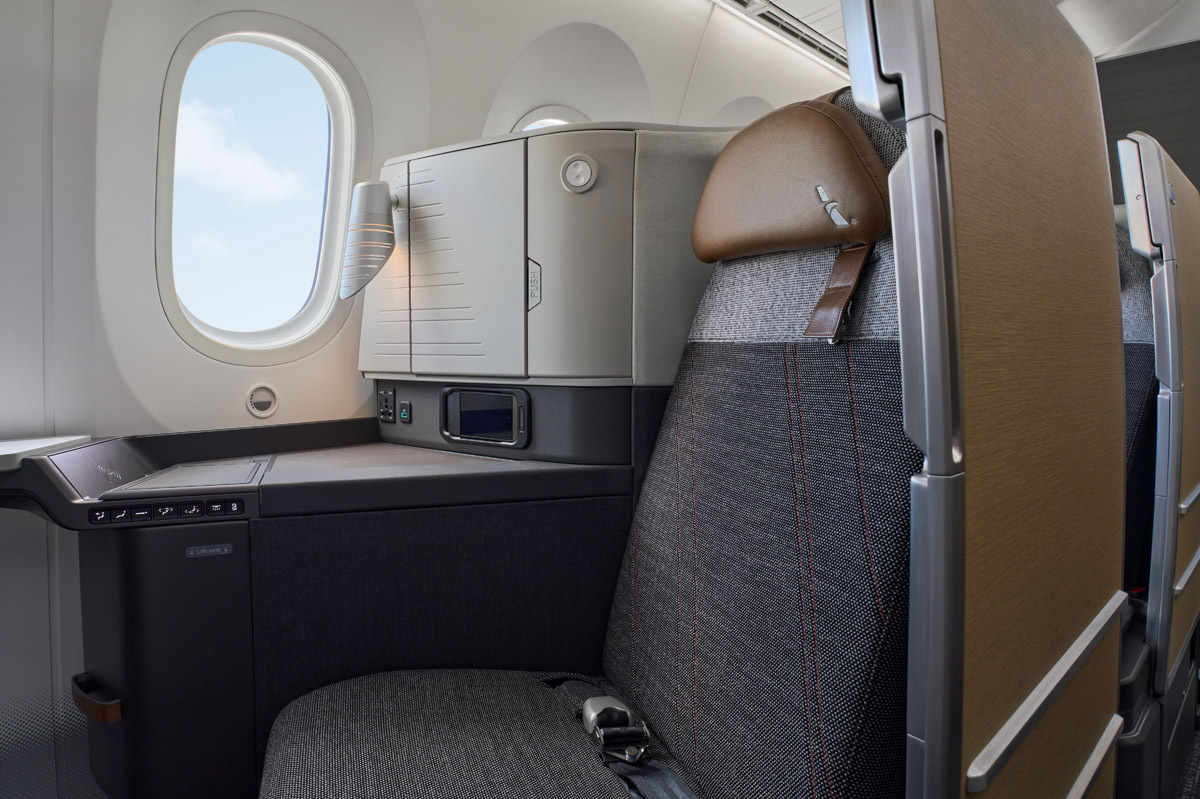
American has partnered with the James Beard Foundation to refresh its lounge menus with dishes like Thai basil and chili crispy shrimp. The airline also redesigned its newest Boeing 787-9 Dreamliners for long-haul international flights around individual business-class compartments with sliding privacy doors, lie-flat seats longer than a standard twin mattress and amenity kits that might include a celebrity facialist’s brand of sheet masks and under-eye patches.
American Airlines’ premium in-flight seats on the airline’s Boeing 787-9 planes.Courtesy of American Airlines
United’s newest business-class cubicles add oversized 27-inch entertainment screens, caviar service, luxury skincare products, and multicourse dining on long-haul international services. The airline said its revamped menus “feature flavors and dishes” inspired by cities across its network.
“Marie Antoinette would feel very comfortable on any of the big three airlines these days,” said William J. McGee, senior fellow for aviation at the American Economic Liberties Project. “But instead of saying, ‘Let them eat cake’ in the back of the plane, she would say, ‘Let them eat Biscoffs.’”
Air travel is getting more stratified as fuel costs increase fares
The airlines’ pursuit of higher-paying passengers shows no loss of momentum. On board Delta’s next-generation Airbus A350-1000 aircraft arriving in 2027, nearly half the cabin will be devoted to premium seating. American has said it plans to expand premium cabins by 50% by the end of the decade.
Yet the new era of luxury in the skies is unfolding alongside a very different reality for other U.S. travelers as broader inflationary pressures have added to the strain on household budgets.
New York-based travel adviser Mary Auteri said more of her clients are “experiencing sticker shock” as fares and add-on fees have gotten more expensive since the Iran war broke out and pushed up the price of jet fuel, one of the largest operating costs for airlines.
A group of friends in their 20s recently asked Auteri to price out flights to the sugar-white sand beaches of Punta Cana, a resort town in the Dominican Republic. After she sent them an itinerary, they said they had found what looked like the same flights on Google Flights for more than $100 less.
But the cheaper fares were basic economy tickets that excluded seat assignments, checked bags, and flexibility to change plans. Once those costs were added back in, the trip no longer fit their budget.
Baggage fees, seat-selection charges, and other add-on costs fall heaviest on economy travelers, McGee said. For wealthier travelers, those fees may amount to little more than an inconvenience. For budget-conscious travelers, they can determine whether a trip happens at all.
“The idea that we’re all created equal? Not in the airlines’ eyes,” McGee said. “Not by any means.”
When Home Appétit moved into a space just off City Avenue in West Philadelphia in 2020, founder and CEO Lee Wallach thought the company would stay five to 10 years.
But given the business’ quick growth, particularly during the pandemic, the company is already “bursting at the seams,” Wallach said. The meal delivery company is moving to East Falls in September, to a former catering facility Wallach bought and is renovating.
Home Appétit, founded in 2013 in Wallach’s Center City apartment, is on track to bring in $10 million in revenue this year, Wallach says. His company delivers roughly 16,000 to 20,000 meals a week within a 50-mile radius.
Wallach sees untapped customers and opportunities he can now pursue.
In addition to buying the new headquarters for a little over $2 million, he plans to spend between $3 million and $4 million on renovations and business upgrades, which he’s been able to do through bank financing. He’s building out a fleet of delivery vans, opening a pickup window, and setting up the business to make and sell more meals. That includes hiring dozens more employees.
With that, Wallach predicts, Home Appétit will “have almost unlimited potential for growth.”
Why Home Appétit grew as some competitors fizzled
In Home Appétit’s early days, Wallach planned to discontinue chicken cutlets. Breading the chicken by hand and cooking it was very labor intensive for his small team, he says.
“I tried to take them off the menu, and I had many customers messaging me that I couldn’t do that,” Wallach said. “They’ve been on the menu ever since.”
It was an early lesson in what keeps people coming back to Home Appétit. Wallach’s earliest customers were doctors. Today, customers include doctors, nurses, and professors, as well as young families, and new parents who receive meal delivery as a gift. Of his original first five customers, two still buy his meals.
In recent decades, plenty ofmeal kit companies such as Blue Apron and HelloFresh have tried to shake up home cooking, providing customers with premeasured ingredients and detailed instructions. But they have faced retention challenges.
Home Appétit, on the other hand, offers fully prepared heat-and-eat or ready-to-eat meals — so do several competitors.
Factor has Keto and vegan options; Thistle offers gluten-free and dairy-free meals; and CookUnity brings together distinct chefs to craft menus.
They’re all helped by a trend of people eating fewer meals out, said Michael Infranco, a RetailStat analyst who covers businesses such as Wegmans, HelloFresh, and Kroger.
But the industry is facing competition from grocery stores that offer prepared meals and delivery, he says. Some are partnering with Uber Eats or DoorDash.
There’s a lot of industry pressure around trends, says Wallach, who has steered clear of them.
“People are looking for protein, and people look for macros, and everybody wants to count calories, and everybody wants to know how many carbs are in [their food],” he said. “That’s not really us.”
His business doesn’t cater to a specific diet, he says. Instead, his team aims to make “restaurant quality” food.
“We’re not just dumping butter or dumping salt into a dish to make it taste good,” Wallach said. “We’re finding different ways and using different techniques to really elevate the flavor and the profile of the meals that we prepare.”
Home Appétit sets itself apart because of its focus on the long-term, Wallach said. He wants it to be an “essential service” to its customers.
That’s been true for Ricky Grenis of Northern Liberties. He and his wife, Bonnie, have been considering a move to the suburbs and often joke that they must stay in the Home Appétit delivery range, Grenis said.
“It’s hard to put a price on the convenience that it provides us as two working parents,” said Grenis, 37, who has two young children andworks in the wine industry. The couple tried out a few national meal-kit companies, but they were unimpressed by the ingredients and still had to cook.
Grenis is a vegetarian, but Bonnie isn’t, and Home Appétit allows them to order meals that both can enjoy, as well as kid-friendly options. “It literally feels like we have a private chef,” said Grenis.
The only downside, he said, is the amount of plastic packaging. “If we could figure out how to even be more sustainable, that would be a plus,” he said.
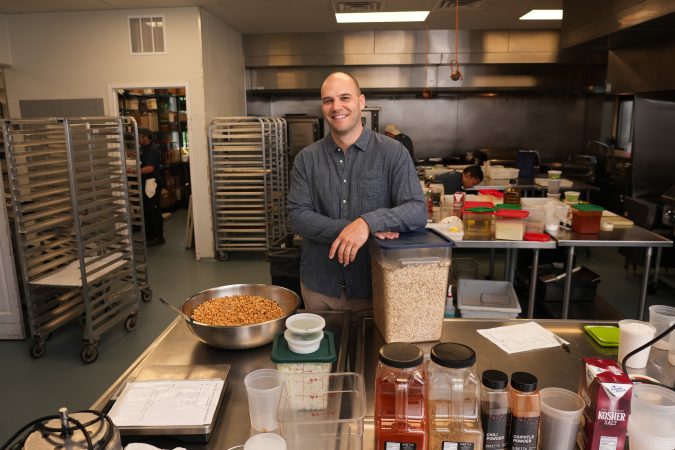
Lee Wallach at the company’s kitchen.Jessica Griffin / Staff Photographer
Staying competitive, and focused on the Philly area
On a recent day in July, Home Appétit’s entree menu included a miso-glazed salmon bowl with bok choy and brown rice, a pulled buffalo chicken sandwich, and a “Southwest Salad” with tortilla strips and buttermilk dressing. The company also offers small plates and add-ons such as roasted asparagus, steamed broccoli, and hard-boiled eggs.
Customers can order anytime between Tuesday and Friday night, to receive their meals the following Monday.
The minimum order costs $100 and covers four to six meals for a single person. Customers can also increase their order size for more people.
While some businesses have struggled with rising food costs, Wallach says Home Appétit has been partly insulated because it sources products from cooperatives and small farms.
“That’s kind of been a bit of a competitive advantage for us, and has allowed us to control our prices a little bit more,” he said.
Still, economic conditions have changed since 2013, particularly the costs of labor. He increased prices for the first time last year. While the basic order still costs $100, adding more people to an order now costs more.
The new headquarters is 23,000 square feet, up from the current 3,500-square-foot space, as well as a leased office in South Philly. With the move, the company will consolidate under one roof.
Wallach plans to have a staff of 200 to 250 by 2028. He currently employs roughly 50 full-time kitchen staff and 10 corporate employees. Meals are delivered by 40 to 50 drivers, who are mostly contractorsin their own vehicles.
Tech company founder Lilly Chen, 30, orders most of her food to her Chinatown apartment, where she lives with her cofounder. She has tried every food delivery service under the sun, she says, but Home Appétit stands out because of its delivery model. She says it’s because the company doesn’t outsource delivery.
“There’s a lot of other meal providers, that because they don’t own it, if something goes wrong — the food spoils or it’s late or you can’t find a delivery — they just kind of have to refund you and then you’re on your own,” Chen said.
Wallach plans to launch pickup at the new location, which customers have been asking for. Home Appétit also got its first refrigerated van.
Under the company’s current model, food gets delivered in insulated bags with ice packs in contractors cars, which puts a limit on how far meals can travel — but Wallach plans to expand the company’s delivery zone as he adds additional refrigerated vans.
He also plans to deliver on more days, not just Mondays, starting next year.
“If we can start delivering [closer to the weekend] and deliver to the Shore, I think it’s a home run for us for the summer months,” Wallach said.
He might pursue other markets in the future, perhaps Boston or Washington, D.C. But for now, Wallach is focused on the Philadelphia region, he says.
“There’s a ton of untapped opportunity here,” he said. “I’m excited to finally be able to take advantage.”
Toyota took heat for years for being slow to jump on the electric-vehicle bandwagon.
But the world’s largest automaker was planning later this year to showcase its revved-up EV ambitions with the debut of a new flagship Lexus EV. It was supposed to kick-start Toyota’s hopes of making the brand all-electric by 2035. Bye-bye, gas.
Then President Donald Trump killed off the $7,500 tax credit for buying or leasing a new EV, allowing the popular program to expire in September. The White House rolled back fuel economy standards. Auto loans got more expensive as interest rates shot up.
Within months, U.S. EV sales cratered — down 27% in the first quarter this year compared with 2025, said Cox Automotive.
As a result, automakers have been busy scrapping EV models and writing off billions in investments.
In May, Toyota abandoned its electrified Lexus “in light of the surrounding environment.” Honda canned three EV models for the American market and took a $9 billion EV-related write-down. Even all-electric Tesla mothballed its Model S and Model X vehicles. Stellantis said it would suffer a $26 billion charge due, in part, to “the cost of overestimating the pace of the energy transition.”
But automakers have not seen a surge in consumers buying traditional gas vehicles. Buyers instead are pivoting to the market’s surprising bright spot: hybrids.
Sales of hybrid vehicles have increased more than 80% from 2023 to 2026, to a pace of more than 2 million vehicles a year, according to Cox.
Hybrids — which use a mix of electric and gas power — made up a record high of 14.1% of new vehicle sales, nearly three times as much as EVs, in the first quarter this year.
The bulk of new cars and trucks sold still run on gas alone. But hybrids have more than doubled their market share over the past three years — taking gains from the shrinking share going to EVs and gas vehicles.
“Hybrids are definitely having their moment,” said Stephanie Valdez Streaty, director of industry insights at Cox.
The success of hybrids has received less attention than the politicized downfall of EVs, which can seem to reduce car-buying options to either environmentally conscious EVs or gas-guzzling behemoths. The future vs. the past.
But the rapid rise of hybrids shows that American car buyers are open to electrified vehicles while hedging their bets. They want better fuel efficiency without sacrificing the things they love about their cars and trucks, according to analysts.
“I think the future is still electric,” Streaty said. “The timeline has just shifted.”
Car buyers want both more miles per gallon and familiarity, said Joseph Yoon, a consumer insights analyst at Edmunds, an automotive research platform. They want a vehicle they already know. And they can’t afford to pay too much more for it. The average new vehicle costs about $50,000.
Yoon said Edmunds ran a small survey of car shoppers just before the EV tax credit expired and found that one of the main reactions was people wanting an electrified version of their favorite vehicle. With price a priority, that often meant a hybrid.
“For a lot of people, hybrids add a layer of fuel savings without changing anything else in their life,” Yoon said. “I think that’s a heck of a value proposition.”
Today, some hybrid models outsell traditional gas ones. A majority of Toyota Highlanders sold earlier this year were hybrids — same with Hyundai Sonatas and Honda CRVs.
“It’s the stealth rise of hybrids,” Yoon said.
The United States’ EV struggles are an outlier. Worldwide, about 25% of vehicles sold last year were EVs, said the International Energy Agency. In China, EVs amounted to more than half of new cars. By contrast, in the U.S., EVs accounted for less than 10% of sales for the entire year, boosted by the tax credits.
So far, the spike in gas prices caused by the war in Iran hasn’t boosted U.S. EV sales. Consumers have been looking and researching EVs more, Yoon said, but that hasn’t translated into more sales.
“It’s hard for us to say what’s going on,” he said.
Electric vehicles tend to be more expensive than gas and hybrid ones. The tax rebates are gone. Interest rates are high.
“Buyers are more focused on value than trying to get into a new platform,” he said.
Automakers, once full of plans for EVs, have been forced to change directions.
Ford replaced its fully electric F-150 Lightning with a hybrid model.
The long-delayed plan to launch an all-electric Ram 1500 pickup is gone, replaced by the promise of a hybrid truck.
“What we are registering is a higher interest on hybrids. This is the power train that is fastest-growing in the market, hybrids,” Antonio Filosa, CEO of Stellantis and owner of Ram, said on an April earnings call.
General Motors CEO Mary Barra said the automaker was scaling back its EV production because it was “operating in a U.S. regulatory and policy environment that is increasingly aligned with customer demand.” But Barra said GM wasn’t giving up entirely on EVs.
“We know EV drivers don’t often go back” to internal combustion engines, Barra said.
The popularity of hybrids has been a win for Toyota’s original strategy.
The automaker’s entire fleet has been slowly shifting to hybrid-only. Its Sienna minivan went that route in the 2021 model year. The Land Cruiser went hybrid with its 2024 model. The Camry followed the next year. The biggest switch came with the 2026 model of the RAV-4 — America’s best-selling compact SUV.
It is available only as a hybrid. Sales have held up.
“The conundrum for the industry is there is interest in electric vehicles,” said Stephanie Brinley, associate director at S&P Global Mobility. “We’re just not quite there yet.”
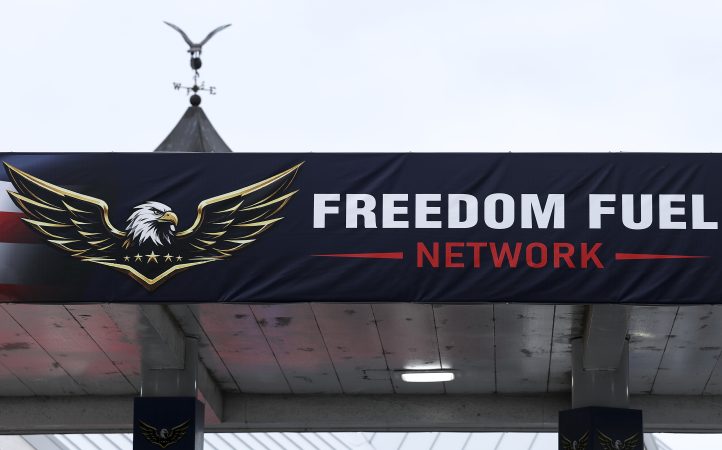
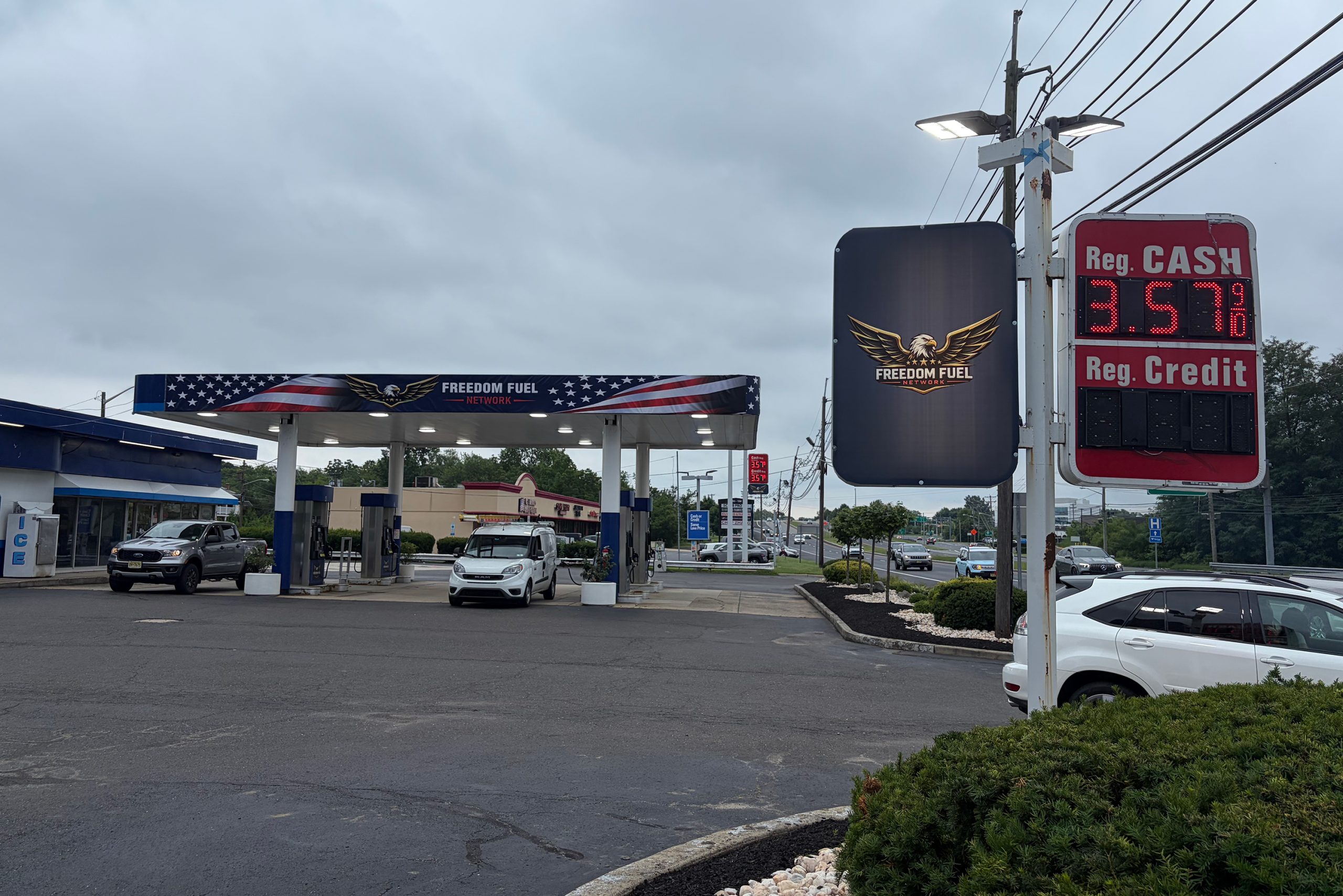
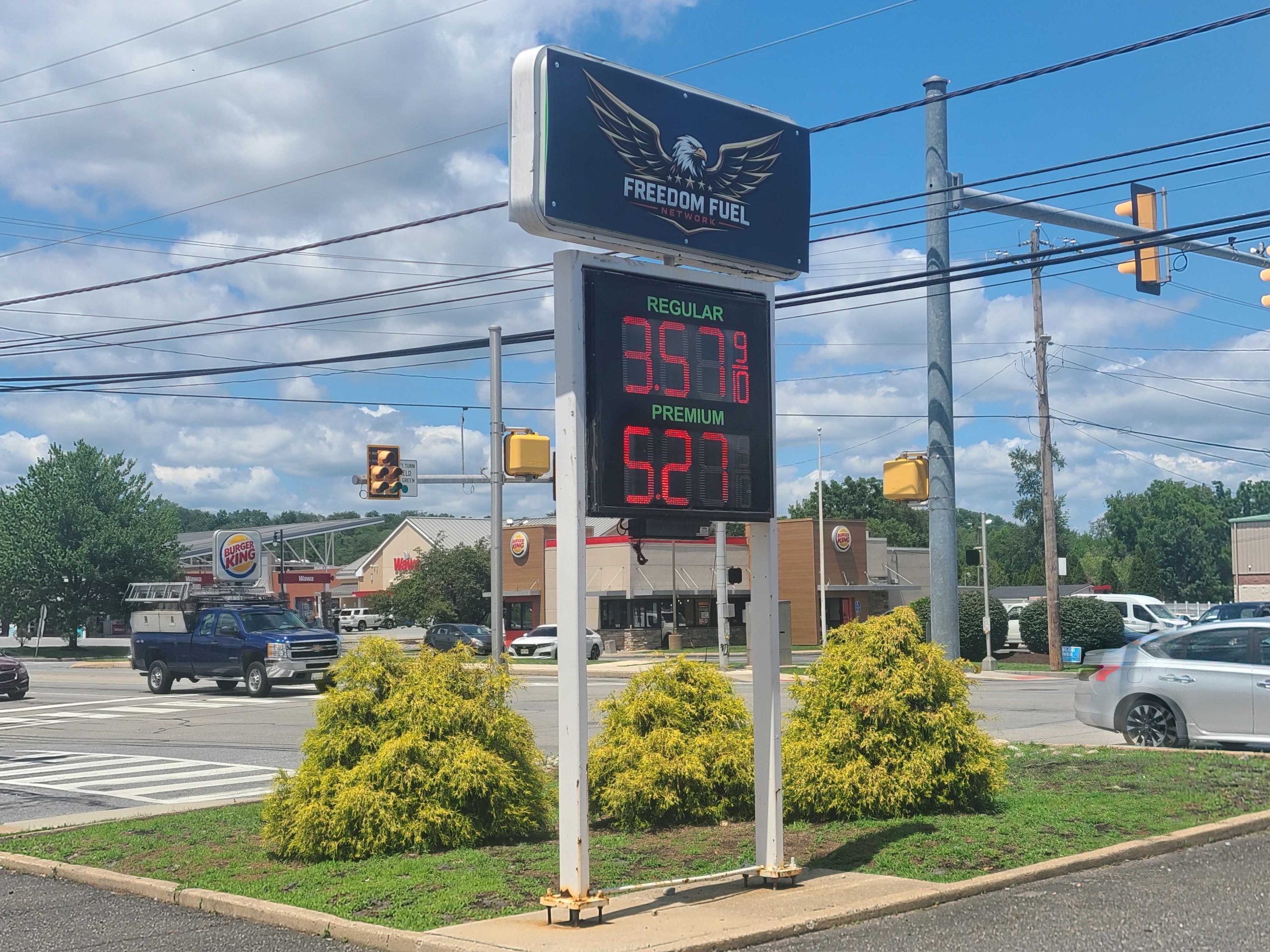
Who is behind the 25 gas stations selling Freedom Fuel in the Philadelphia region, and how they are able to offer gas 40 to 50 cents cheaper than nearby stations, remains unclear.
The effort has been promoted by both the White House and President Donald Trump, raising ethics concerns from the public and government watchdogs.
Richard Painter, who served for two years as chief White House ethics lawyer in the George W. Bush administration, said it is within a business owner’s First Amendment right to sell cheap gas, possibly at a loss, to “improve the image of the president and help the country through a national crisis.”
“The ethical issue is the involvement of the Trump administration,” he said, pointing to federal regulations that set standards of conduct for executive branch employees. “They simply can’t endorse it or have anything to do with it.”
An entity called “Freedom Fuel Network LLC,” based in Delaware, applied for a trademark on July 1. That same day, Trump promoted the network, saying on his Truth Social account that it was being run by a “very smart retailer.”
There are no businesses registered in either Pennsylvania or New Jersey under the name Freedom Fuel Network.
The White House did not respond to multiple requests to identify or provide contact information for the owners. A White Housespokesperson would say only that it is a private company that is not purchasing gas at a discount or receiving government money.
Anna Vishev, the attorney who filed the Freedom Fuel Network trademark application, said she would pass inquiries along to her client, but The Inquirer never heard back.
A Freedom Fuel-branded station on Rt. 73 in Marlton, N.J.Lacey Latch / staff
Due to tight profit margins, stations that sell cheaper gas usually focus on making up the difference in other ways, such as convenience stores and car washes, according to Jeff Lenard, spokesperson for the National Association of Convenience Stores, a trade organization representing retail fuel outlets.
That does not appear to be the case at many of the Freedom Fuel Network stores Inquirer reporters visited in recent days. One location in Brookhaven, Delaware County, had an inoperable convenience store. Several were very small, appeared somewhat rundown, and offered a very limited selection of products.
“It’s difficult to see how these stations are making money,” Lenard said. “Those types of stations tend to be more dependent on gas margins.”
Lenard said it is possible the Freedom Fuel Network branding is a temporary promotion, which is not unheard of in the fuel industry. T-Mobile partnered with Shell last month to offer $1.99-a-gallon gas at stations in Los Angeles, Houston, and Chicago as part of an anniversary promotion.
Some Freedom Fuel stations were already raising gas prices by the end of the week, including in Bensalem, where gas was $3.57 a gallon Friday.
While questions remain about the owners and structure of the Freedom Fuel Network, Lenard said gasoline is a highly regulated industry and drivers should not worry about purchasing fuel from lesser-known brands.
“There shouldn’t be an issue with gas quality,” Lenard said. “When fuel comes out of the refinery, there’s nothing that says it’s BP gas, it’s Wawa gas. … It’s all blended together.”
A small network of local owners and past issues with stations
Freedom Fuel Network branding is draped over a Gas n’ Go sign at a station on Edgmont Avenue in Brookhaven.Rob Tornoe / staff
Inquirer reporters reached out to the parcel owners, lessees,and LLCs connected to at least 19 of the gas stations. Most calls and messages went unanswered, and, on two occasions, reporters were directed to the Freedom Fuel website by LLC affiliates. In-person queries were also unsuccessful, with store attendants saying they were unaware of the origins of the branding change or unauthorized to talk about the matter.
The opaqueness behind a private operation receiving White House promotion has drawn considerable scrutiny online and even an in-person protester at a Montgomery County location.
“Who is paying for this[?]” read a man’s sign last week.
By the end of the week, Freedom Fuel offered limited remarks through the venture’s website, saying it had “answered President Trump’s call to action to lower prices at the pump.” It went on to dismiss unspecified “misinformation and baseless speculation circulating.”
“As a result of lowering prices, 25 gas stations have experienced explosive growth — an average volume increase of more than 50 percent, with several locations surging over 100 percent,” said the message.
The company did not expand on how the operation came to be or how the discounts work, but at least two clusters of network participants have shared ownership ties, with one of the clusters promoting its participation on social media.
A local Karco Gas Instagram account highlighted the Freedom Fuel transformation in its stories — at least two of its locations in Philadelphia and one in Bensalem are part of the network.
The Freedom Fuel site in Bensalem has ties to Cherry Hill developer Shamikh Kazmi, who is listed as president of Diwan Petrol Inc. The business was ensnared in a lengthy trademark dispute with BP America Inc. and BP Products North America Inc. in 2021.
After the business failed to fully comply with a judge’s order to remove BP signage, four deputies with the U.S. Marshals Service seized remaining brand signs in June 2022, according to court documents.
Kazmi could not be reached for comment, but in February announced plans to expand his Yum Grills venture to 15 locations in the Philadelphia region, including a gas station in Eagleville, Montgomery County, that is also part of the Freedom Fuel Network.
At least five other network locations are run by members of a family that operates gas stations in the region under various LLCs, including Syan I Inc., Syan Investment LLC, and Fernwood Realty Co.
Another Freedom Fuel station, this one in the Nicetown section of Philadelphia, had been embroiled in a trademark dispute that ended with a judge ordering the removal of all Phillips 66 branding and a $20,000 judgment against KRSM Inc. and site owner Riar HR LLC in May.
An attorney for the defendants was not listed on the docket and calls to the owner of Riar HR LLC went unreturned.
How promotions have changed during the Trump era
Painter, who is now a law professor at the University of Minnesota, noted that stringent ethics rules have been in place since the Watergate scandal that limit using a public office to endorse any companies or organizations, whether they are private or nonprofits.
That is why Painter was vocal about concerns regarding the creation of the Penn Biden Center for Diplomacy and Global Engagement in 2017. When Joe Biden became president-elect, he encouraged his transition team to have the University of Pennsylvania drop the name to avoid the appearance of impropriety when the university raised funds for the center. That never happened.
Still, Trump and his administrations have taken very different approach to these ethics rules since his first term in office.
“We’ve seen multiple instances in which this president has chosen to endorse, in his official capacity, private companies and private organizations,” Painter said. “This is something I would have absolutely insisted not happen under the Bush administration.”
For now, questions about Freedom Fuel’s structure and ties to the Trump administration continue to spark anger, skepticism, and curiosity.
“Customers are asking. We tell them to visit the website,” said Mike R., a manager of a few Freedom Fuel stations in Delaware County who declined to be fully identified, citing concern over his privacy. ”Frankly, I have no information.”
Meanwhile, Ankit Modi, the owner of a Sunoco franchise in Bensalem for the last 15 years, said the low prices of a Freedom Fuel station next door were hurting his business.
“People see the lower price and just go there,” Modi said. “I don’t know how it works.”
Modi said the Freedom Fuel signs looked temporary, and he had expected the station to revert to Karco following the Fourth of July. That has not happened. On Friday, Freedom Fuel was selling gas for 43 cents a gallon less than Modi’s Sunoco.
“I’m making just eight to 10 cents in profit [per gallon], so how are they able to sell for less without government help?” Modi said. “It’s shady and unheard of.”
Back in North Philadelphia, the lack of information was not stopping drivers from pulling in and filling up their tanks.
“It doesn’t matter to me where it comes from if I see a good price,” said Jorge Mejia, who pumped gas into his car and had no clue what made the gas cheap. “I just hope it’s good.”