Category: Arts & Culture

  • Artistic greatness can’t guarantee stability for orchestras

    Artistic greatness can’t guarantee stability for orchestras

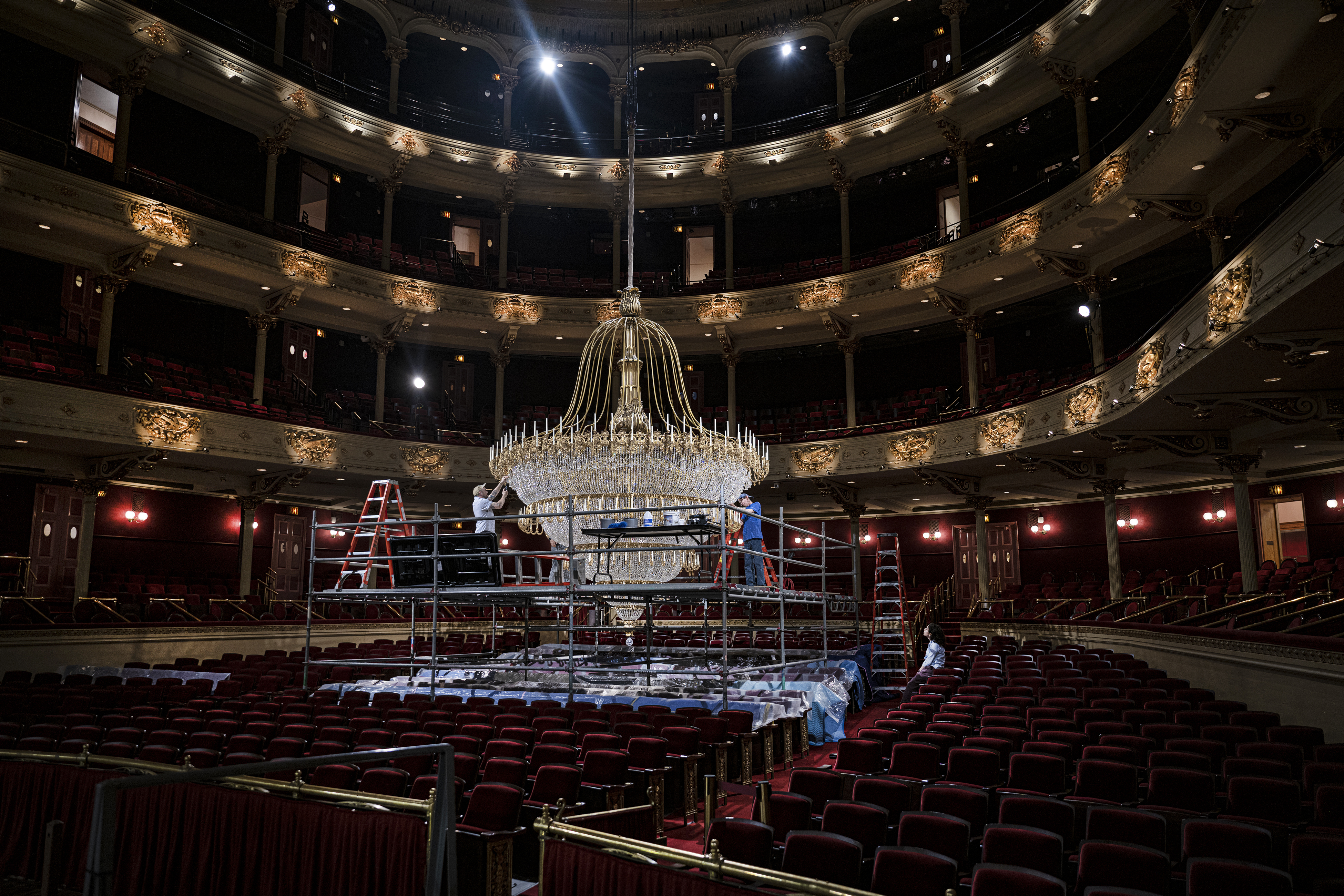
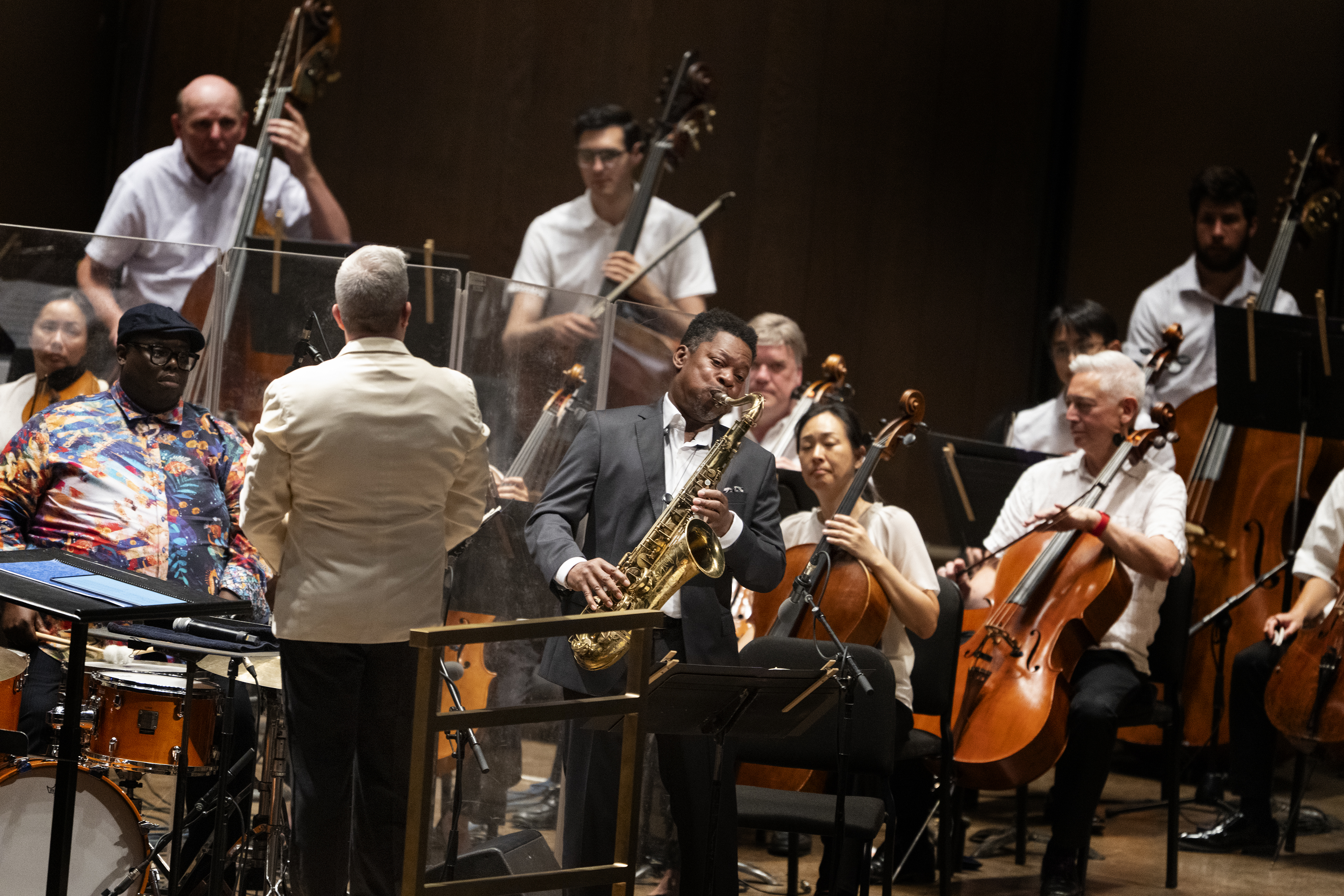
    Five and a half weeks before its opening concert of the fall season — months later than usual — the National Symphony Orchestra (NSO) announced that it will perform at six venues in and around Washington, D.C. while the Kennedy Center is closed for a planned two-year refurbishment.

    While President Donald Trump’s role in the Kennedy Center renovations has sparked political debate and division, from the standpoint of the NSO, the issue is less about the president’s involvement and more about the risks of not having a permanent home. Concert halls have long been instruments of cultural power — places that determine who will be heard, who will be seen and which musicians or institutions will be able to claim prestige.

    This issue has a history that stretches from the 19th century to the 21st, which was when Philadelphians confronted these risks, witnessing the Philadelphia Orchestra battle bankruptcy, and later, the Philadelphia Pops lose its home at the Kimmel Center, with serious ramifications for its survival.

    The lesson of this history is that artistic prestige and institutional security are not the same thing. Even a great orchestra depends on physical, financial and social infrastructure to survive.

    Long before purpose-built concert halls became symbols of civic prestige, musical life in 19th-century Europe revolved around drawing rooms, salons and subscription concerts. They brought together professionals and accomplished amateurs in spaces where conversation, performance and social interaction were deliberately interwoven.

    The career of the Polish pianist and composer Maria Szymanowska illustrated how this culture functioned. Szymanowska performed before audiences across Europe before settling in St. Petersburg, where she became part of a musical scene in which domestic social life and professional activity were closely intertwined.

    Szymanowska was one of three salon pianists, alongside Maria Kalergis-Mukhanov and Marcelina Czartoryska, who dominated a network that stretched from Warsaw and St. Petersburg to Vienna, Paris and London. All three gave public concerts, but their salons also provided access to international artistic and social circles that were beyond the reach of many musicians. Szymanowska’s acquaintances included some of the most distinguished cultural figures of her generation, including pianist and composer John Field, poet Adam Mickiewicz and author and playwright Johann Wolfgang von Goethe.

    Such connections were not merely a sign of social prestige. They could lead to recommendations, invitations and access to wider cultural networks. In a profession where reputation and patronage were closely intertwined, gaining entry into these circles could open up opportunities that were unattainable through musical talent alone.

    However, this system also had an obvious drawback for musicians. The opportunities offered by the salon depended on access to the host, their home and their social network. Unlike a permanent musical institution, this infrastructure could disappear if the host withdrew from the scene, moved away or died.

    In other words, cultural prestige did not always guarantee the institutional stability necessary to thrive musically.

    As public concert culture expanded during the 19th century, some musical authority shifted from private hosts to permanent organizations and concert halls that served as stable venues around which audiences could organize their musical lives. The concert hall became not merely a place where music was performed, but also part of an orchestra’s institutional identity. The development of American symphony orchestras made this transformation particularly visible.

    When financier Henry Lee Higginson founded the Boston Symphony Orchestra in 1881, he aimed to establish a permanent ensemble. For nearly two decades, it performed at the Boston Music Hall before moving to the purpose-built Symphony Hall in 1900, making a permanent home part of the institution. Today, the Boston Symphony describes this hall as a public “temple of music.”

    The shift to concert halls transformed the scale of musical life but did not alter its dependence on infrastructure and wealthy patrons. Orchestras now required administrators, sponsors and long-term planning. Stability became part of the promise an organization made — but fulfilling that promise required an increasingly complex infrastructure.

    The management challenges faced by Philadelphia’s orchestras in the 21st century have illustrated the opportunities and risks associated with this structure.

    Made By History sponsors. FOR USE ON MADE BY HISTORY STORIES ONLY.Inquirer Staff

    Founded in 1900, the Philadelphia Orchestra became one of the country’s most renowned ensembles, and in 2001, it moved to the newly opened Kimmel Center. However, its prestigious reputation and state-of-the-art venue did not guarantee financial stability. Even in the first few years after the move, the orchestra was operating at a loss. An initial increase in ticket sale revenue was insufficient to offset rising costs and longer-term financial pressures.

    In 2005, the Philadelphia Orchestra Association and Encore Series Inc., the nonprofit organization behind the Philly Pops merged many of their administrative and operational functions. This arrangement was designed to improve efficiency, particularly in ticket sales and fundraising, while enabling the Pops ensemble to draw on the administrative resources of the larger orchestra.

    Both organizations retained their artistic independence, with separate boards of directors and subscription seasons. However, this agreement nevertheless linked the Pops more closely to the institutional infrastructure of the Philadelphia Orchestra.

    The merger, however, could not prevent continued declines in attendance and revenue. In 2011, the Philadelphia Orchestra filed for Chapter 11 bankruptcy. The crisis laid bare a contradiction that seemingly permanent institutions are meant to overcome: the orchestra could enjoy exceptional cultural prestige without possessing institutional stability.

    Among the organizations caught up in the crisis was the Philly Pops. When the Philadelphia Orchestra Association filed for bankruptcy, Encore Series Inc. followed suit. By that point, the relationship between the two musical ensembles had deteriorated. Ultimately, the organizations went their separate ways, and the Pops received $1.25 million in compensation.

    The Orchestra emerged from bankruptcy in 2012 following restructuring, a new collective bargaining agreement, lease concessions and a fundraising campaign that raised nearly $36 million from 1, 500 donors.

    These changes helped to restore the orchestra’s financial and institutional stability, but the Pops was not so fortunate. In January 2023, the group lost access to the Kimmel Center due to a dispute over unpaid fees. Concerts were suspended, and by March, the Pops was left without a permanent venue and had postponed further performances.

    The dispute subsequently moved to federal court, where the Pops filed an antitrust lawsuit against the Philadelphia Orchestra and the Kimmel Center, alleging that they had attempted to drive it out of the market. The defendants contested the Pops’ version of events and later moved to have the case dismissed.

    The original Pops organization eventually ceased performing, but many of its musicians came together to form the “No Name Pops” ensemble, which in 2025 adopted the historic “Philly Pops” name and resumed performing at a variety of venues.

    This history helps explain the implications of the NSO’s current relocation. While the orchestra will have a 2026—2027 season, the six venues hosting concerts all have smaller capacities than the Kennedy Center Concert Hall. Music Director Gianandrea Noseda has described this year as a period during which the NSO will effectively function as a “regional touring orchestra.”

    The experiences of 19th-century salon musicians and 21st century Philadelphia orchestras were vastly different. Yet, they reveal the same underlying vulnerability, which now confronts the NSO.

    Salon musicians were able to build prestigious careers thanks to networks centered on specific hosts and their homes. However, these opportunities remained dependent on constant access to those spaces. Modern orchestras have replaced the salon with a far more complex institutional infrastructure. But the principle remains remarkably similar: artistic success depends not only on the musicians themselves, but also on the concert halls, patrons, administrators and audiences that support them.

    The Philadelphia Orchestra’s 2011 bankruptcy did not mean that it suddenly lost its artistic excellence or international reputation. What became unstable was the institutional structure upon which its artistic reputation rested.

    The Philadelphia Orchestra demonstrated that an orchestra can survive such institutional problems. Yet, the experience of the Philly Pops shows just how serious the consequences of losing an institutional foundation can be.

    This history illuminates why the NSO’s loss of its home is significant — even if it is supposed to be temporary.

    Cultural significance and institutional stability are not the same. Even the most renowned orchestras depend on funding, infrastructure, audiences and collective bargaining agreements. When they lose elements of this institutional backbone, it can imperil even the strongest orchestra.

    Stacy Olive Jarvis is a musicologist and researcher at the University of Birmingham, specializing in 19th-century musical culture, musical networks and the social history of classical music.

    Made by History takes readers beyond the headlines with articles written and edited by professional historians. Opinions expressed do not necessarily reflect the views of The Inquirer.
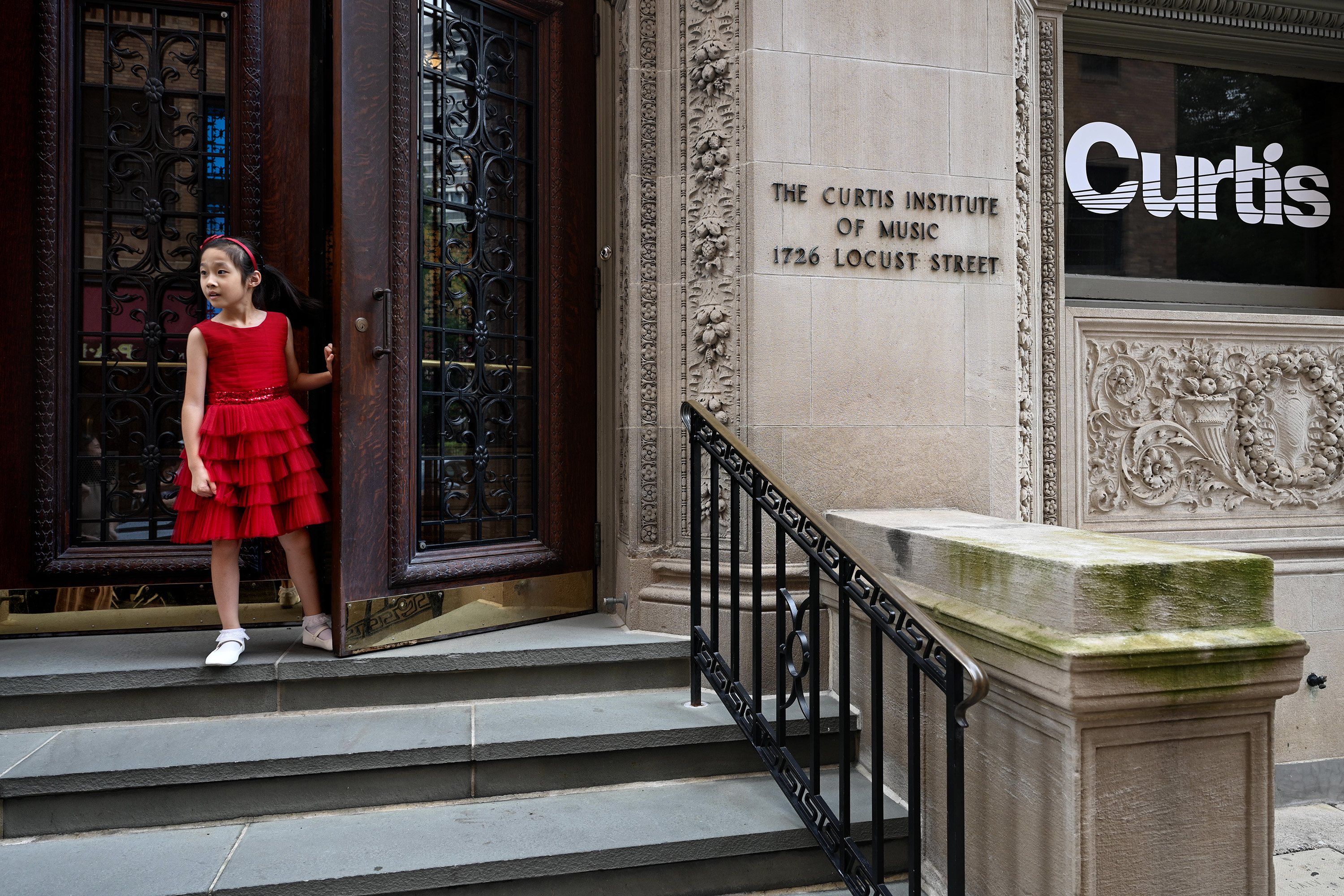
  • Olivia Li is one of the Curtis Institute’s most promising new students. She’s 7 years old.

    Olivia Li is one of the Curtis Institute’s most promising new students. She’s 7 years old.

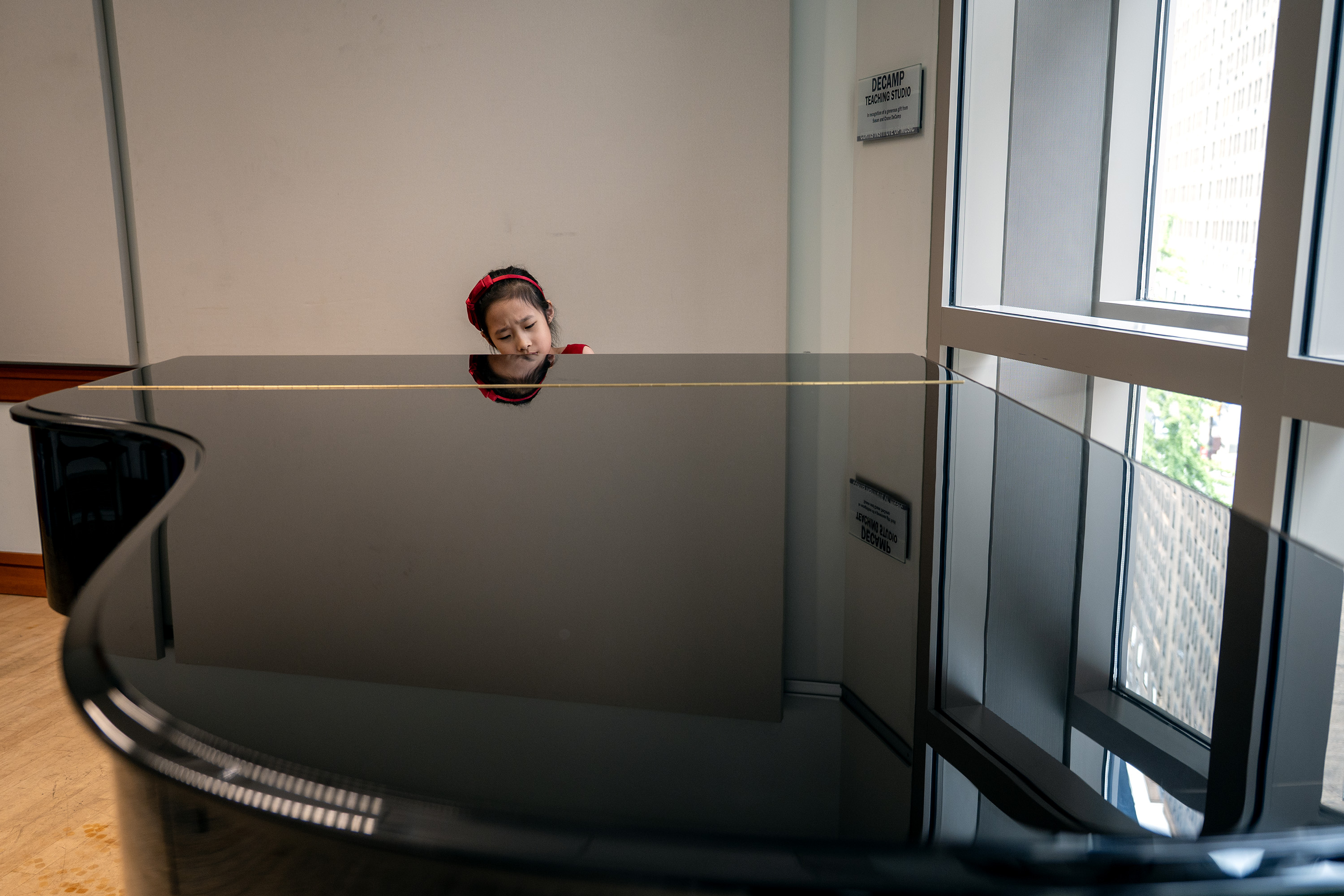
    In the lobby of the Curtis Institute of Music’s Lenfest Hall, Olivia Li, in a frilly-sparkly red dress, is running back and forth through a turnstile. A few minutes later, she is at the piano transformed — playing Chopin eyes closed, a countenance most serious, and seemingly a decade more mature.

    If her legs aren’t long enough for her feet to reach the piano’s pedals without an extender, give her time. She is 7 years old.

    Olivia is one of nearly four dozen new students now arriving at Curtis for the fall term. The school on Rittenhouse Square, one of the world’s top music conservatories, has always had its share of young talent. This year it will have 13 musicians entering school under the age of 18.

    But even at a place known for prodigies, Olivia is unusual. She is believed to be the youngest student to study at Curtis since 1950, when 6-year-old violinist Diana Halprin matriculated.

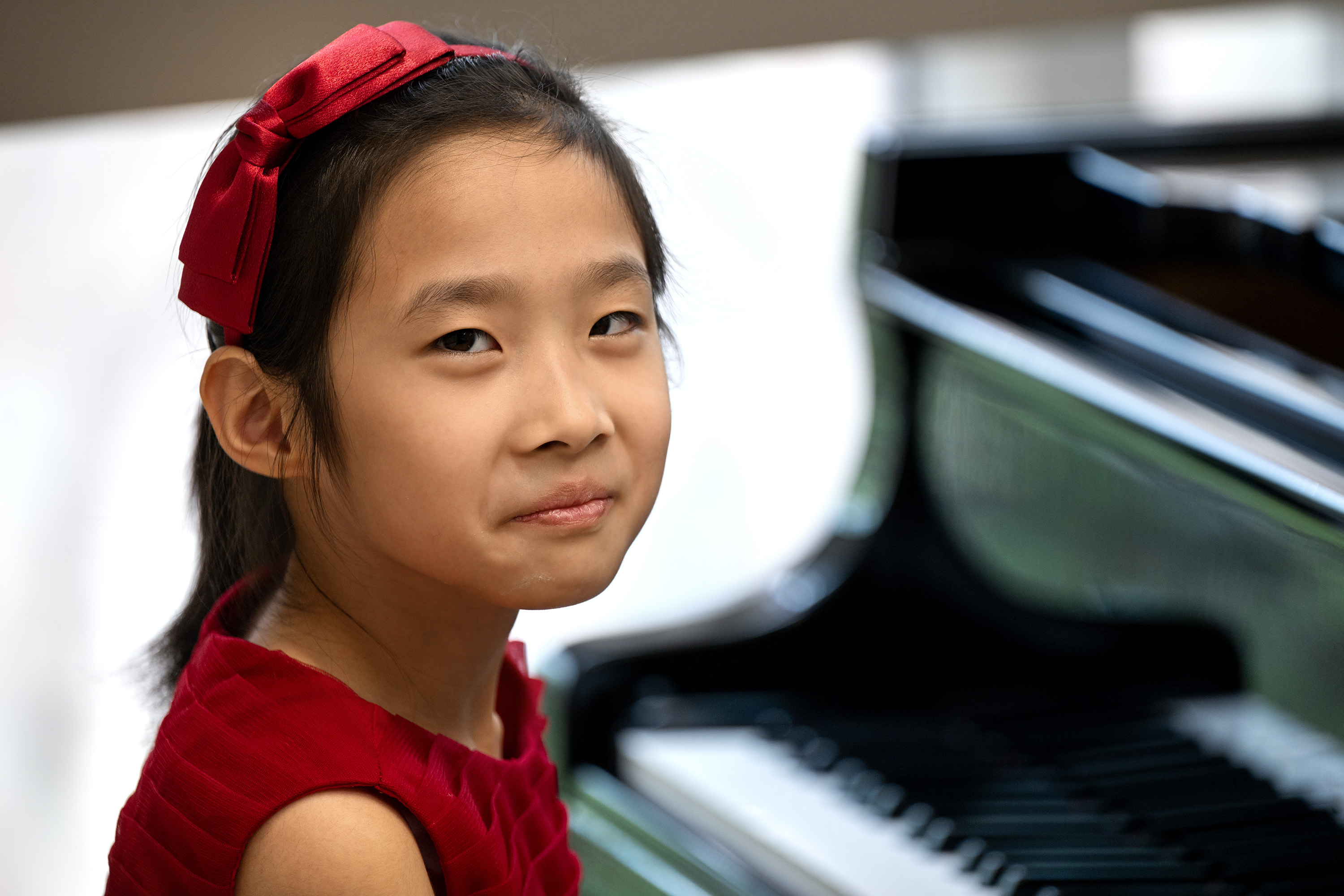
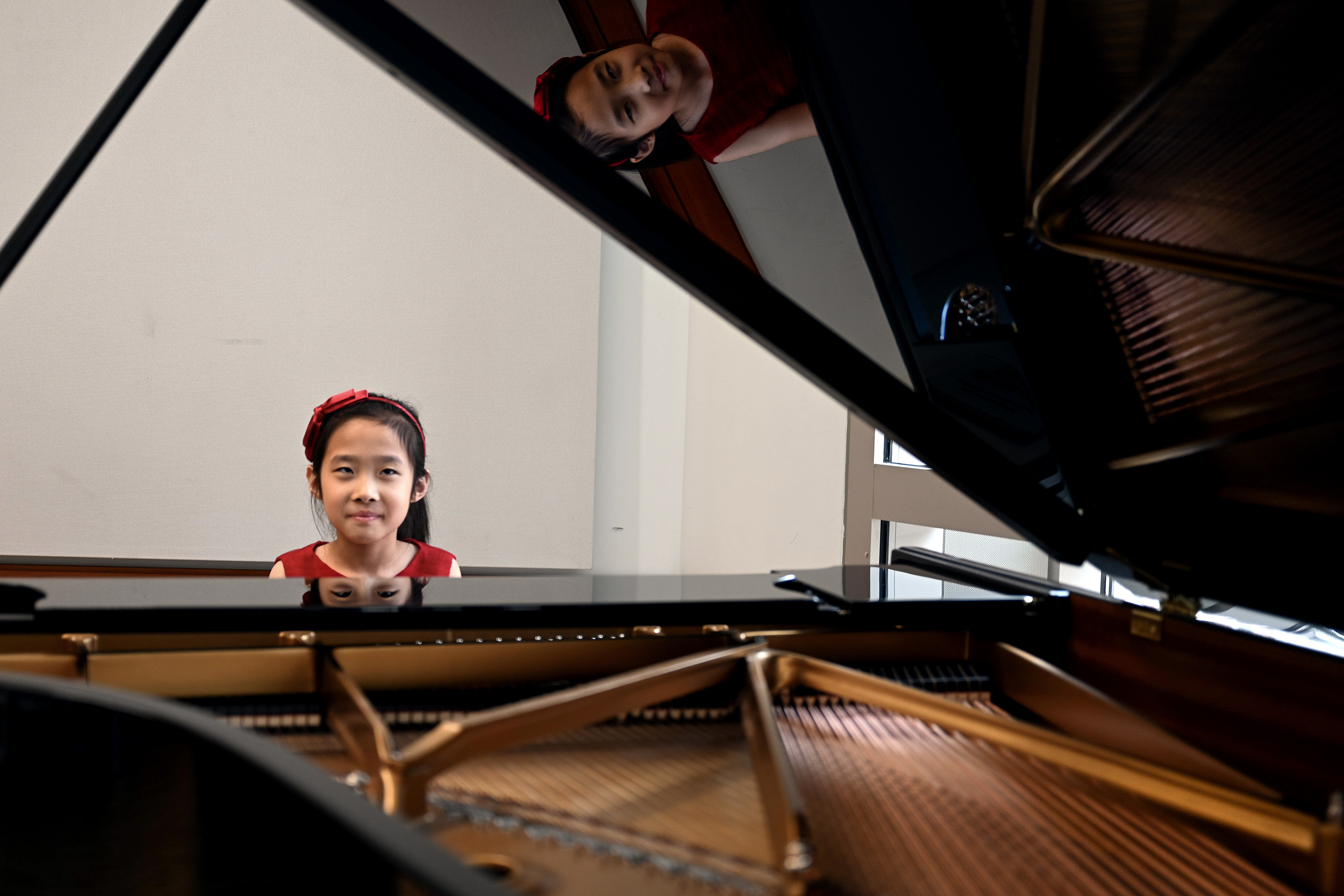
    Olivia Li, 7, plays the piano in a rehearsal room at Lenfest Hall at the Curtis Institute of Music.Tom Gralish / Staff Photographer

    “I was actually preparing for Juilliard,” Olivia said, “but my teacher said I could try for Curtis, and I just did. I didn’t expect I would get in.”

    She got in. Juilliard, too.

    Asked why she chose Curtis, she said, simply, “I just like Curtis better than Juilliard.”

    Michelle Cann, one of two professors with whom Olivia will study at Curtis (the other is Ignat Solzhenitsyn), says that the young pianist has “phenomenal fingers.” Then again, so did others who tried out for the school and did not get in.

    (function(){function e(){window.addEventListener(`message`,function(e){if(e.data[`datawrapper-height`]!==void 0){var t=document.querySelectorAll(`iframe`);for(var n in e.data[`datawrapper-height`])for(var r=0,i;i=t[r];r++)if(i.contentWindow===e.source){var a=e.data[`datawrapper-height`][n]+`px`;i.style.height=a}}})}e()})();

    For the current school year, Curtis received 154 applications to the piano department, a spokesperson said. Sixty-three of those auditioned live in the first round and 15 advanced to the finals. Four were eventually accepted.

    What set Olivia apart in her audition, Cann said, was “how musical she was and how much personality and character about the music-making she had that you don’t expect to see in a 7-year-old. It just stood out so much.”

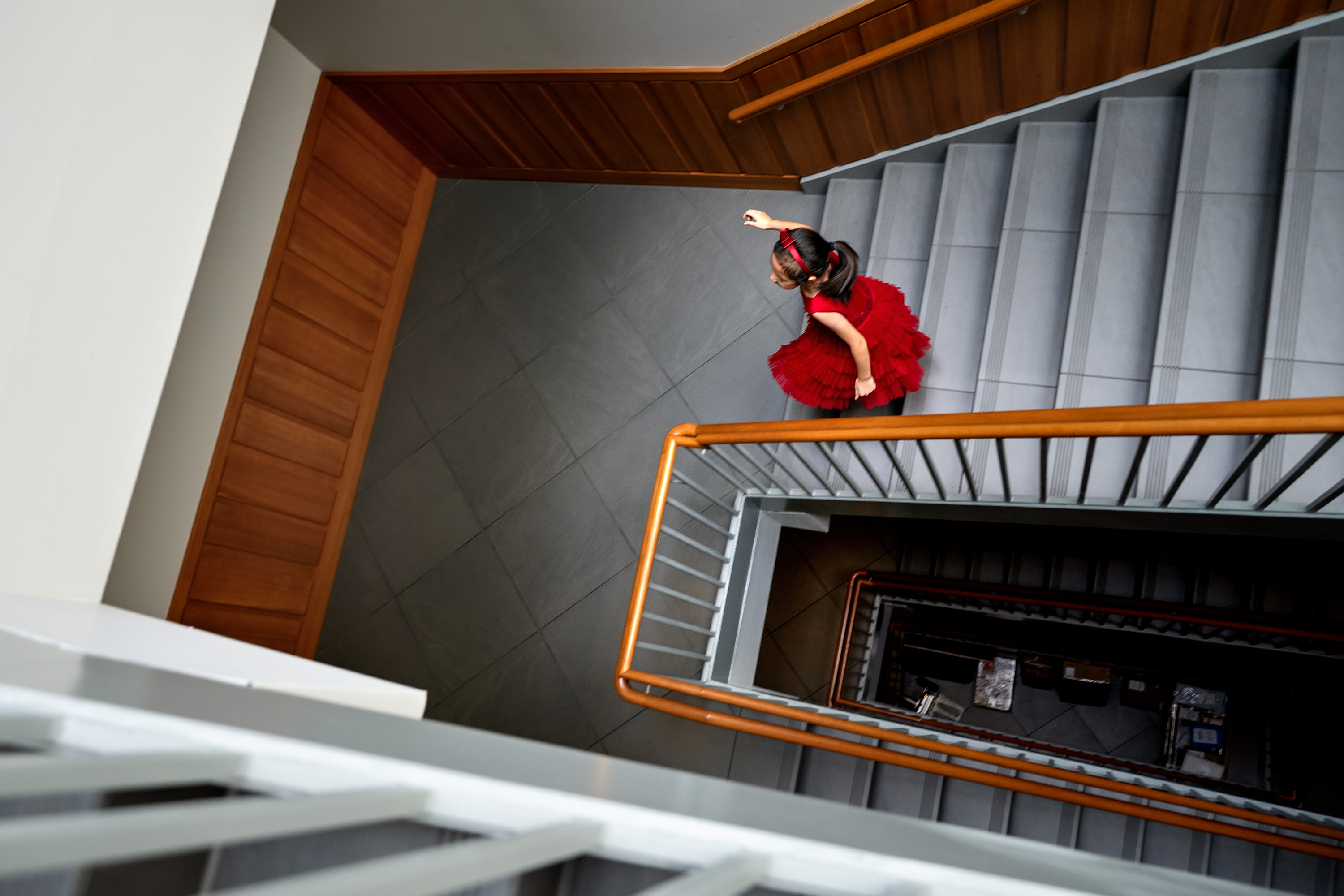
    Seven-year-old pianist Olivia Li rushes down the stairs of Lenfest Hall at the Curtis Institute of Music on Monday, Aug. 17, 2026. She began studying the piano at age 4 and will receive a full-tuition scholarship to the prestigious institution.Tom Gralish / Staff Photographer

    The sole criterion for admission at Curtis is artistic promise, said provost and dean Nick DiBerardino. “It’s rare for someone as young as Olivia to have won a place at Curtis,” he said, “but it does happen, and when it does, it’s because there was something really special happening at the piano.”

    Curtis has had students younger than Olivia. The school is still in the process of reviewing its records, but to the best of its knowledge the youngest was pianist Ruth Slenczynska, who was 5 years and 2 months old when she arrived in April 1930. She stayed just a few weeks.

    The youngest to come and stay was Sol Kaplan, who was 5 years, 7 months when he began studies in 1924, the year Curtis was founded; he went on to compose music for episodes of the original Star Trek TV series and a slew of movie scores.

    Olivia Li is one of the youngest students to study at the Curtis Institute of Music.Tom Gralish / Staff Photographer

    Olivia is in exceedingly rare company. More than 4,000 composers, conductors, vocalists, pianists, and other instrumentalists have graduated from Curtis in its century-plus existence. Only 13 other students were under the age of 10.

    She comes to Curtis from East Williston, Long Island, N.Y. No one in her family is particularly musically inclined, said her mother, Yanan Zhang, who did study piano as a child and continued to play a bit on a digital piano the family had at home.

    “She just naturally started,” said Zhang of Olivia’s attraction to piano. “She saw me playing, and we hired a teacher to come to home once a week to teach her. So initially it was just for fun.”
    Olivia started studying with a teacher — a Yale and Juilliard graduate — who gave her “very systematic training. So from that time, we took the learning seriously,” Zhang said.

    The teacher told Zhang that Olivia learned fast and had strong fingers.

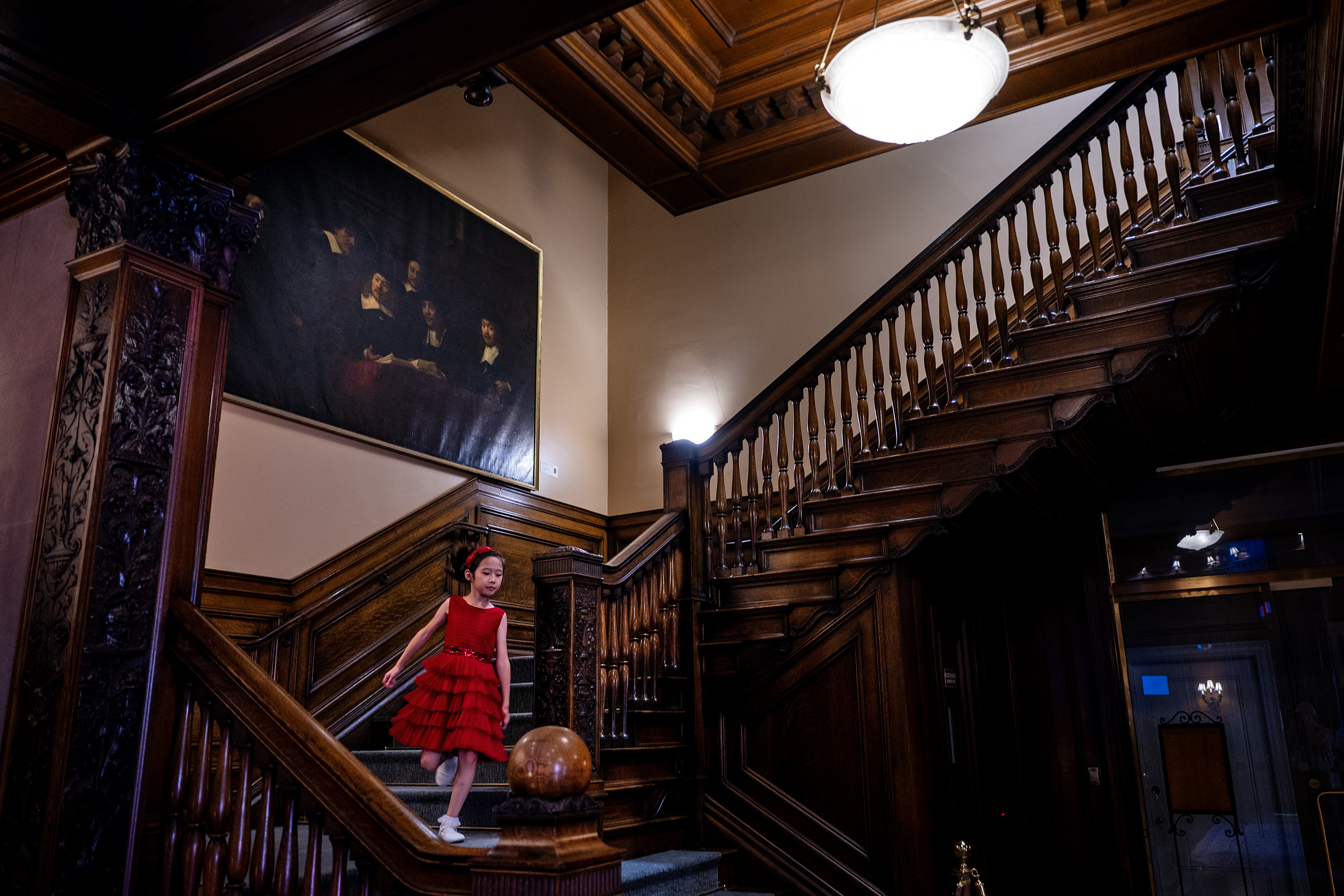
    Seven-year-old pianist Olivia Li in the lobby of the historic 1726 Locust St. mansion at the Curtis Institute of Music on Monday, Aug. 17, 2026. She began studying the piano at age 4 and will receive a full-tuition scholarship to the prestigious institution.Tom Gralish / Staff Photographer

    “I think he told me several times that she is outstanding, but I didn’t really take it seriously. I thought it’s just encouragement from teachers — that’s how they encourage kids, encourage parents.”

    Olivia was 4 when she started piano, and despite her quick progress, it did not occur to Zhang for a while that there was anything unusual about her daughter.
    “I just thought maybe that’s how all kids do.”

    Olivia, of course, is not like other children, and she won’t be like her fellow students at Curtis, either.
    While students are taking coursework during the day covering music theory and history, Olivia will be attending third grade at Germantown Friends School. After her normal elementary school day, she will go to Curtis for two hours of piano lessons per week and receive individualized instruction in other areas like ear-training, music history, and repertoire studies.

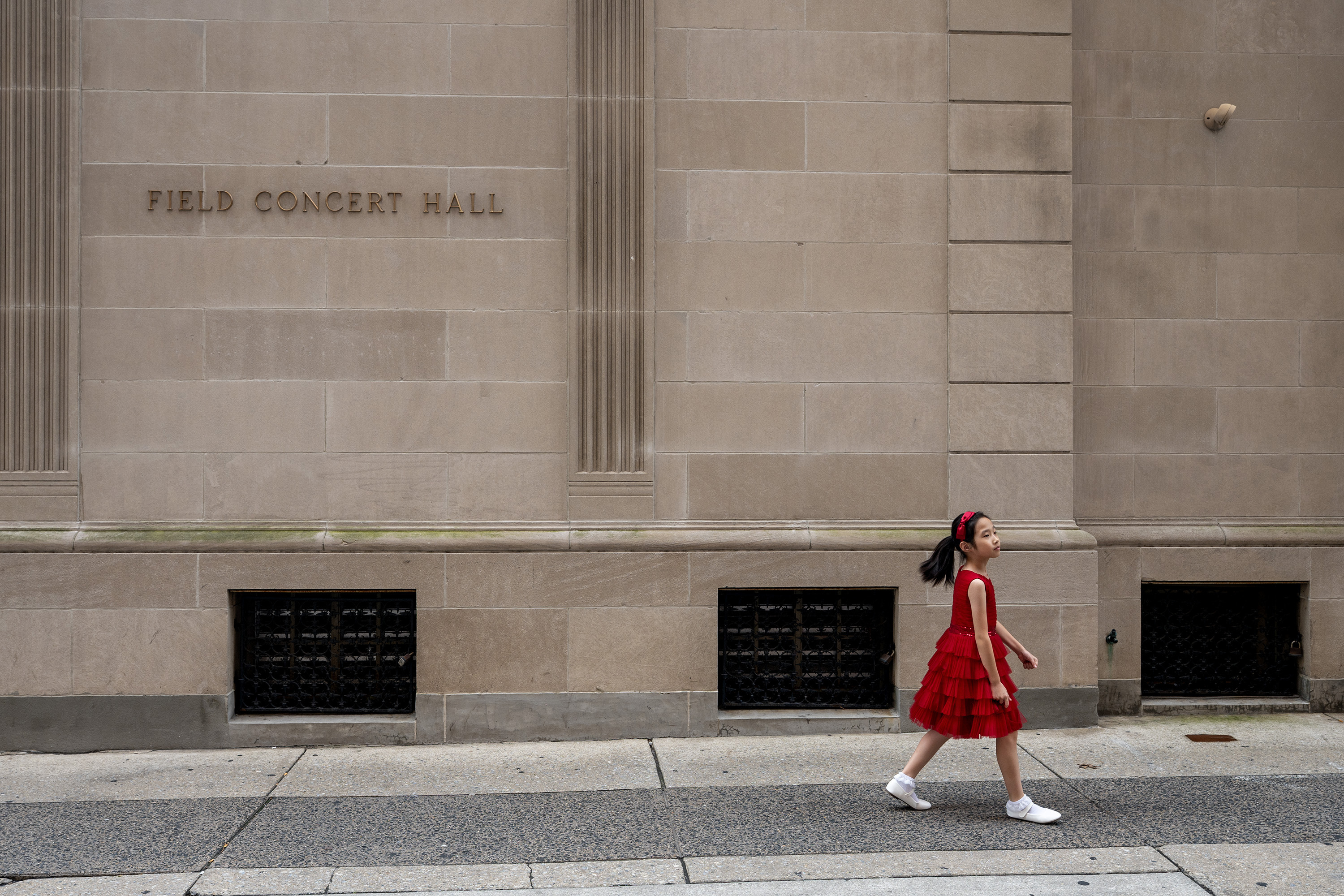
    Olivia Li walks toward the entrance to 1726 Locust St., the one-time mansion that is home to the Curtis Institute of Music.Tom Gralish / Staff Photographer

    Curtis requires students under the age of 18 to live with a parent or guardian, and so Zhang, who works remotely for a bank in risk management, has moved to Philadelphia and set up house locally. Olivia has a younger brother, who loves music but has not yet taken up an instrument.

    How does a 7-year-old integrate socially at a school where some students will be three times her age?

    “We haven’t had a 7-year-old [recently],” DiBerardino said, “but our undergraduate students are very accustomed to playing music with younger people and making a deliberate effort to make them feel welcome.”

    Olivia LiTom Gralish / Staff Photographer

    Some socializing will happen organically, DiBerardino said, but “we do have some structures in place to try to help with that process. We have a dedicated work study program for our undergraduate students who are trained by our student services team to be mentors or big brothers or big sisters. And we regularly check in on students like Olivia. So Olivia definitely would have that support.”

    Outside of practicing, Olivia likes drawing, writing, math, and swimming.

    “When she’s not practicing, she reads a lot,” Zhang said. “She holds a book when she is brushing her teeth.”

    “I like to read fiction,” Olivia said.

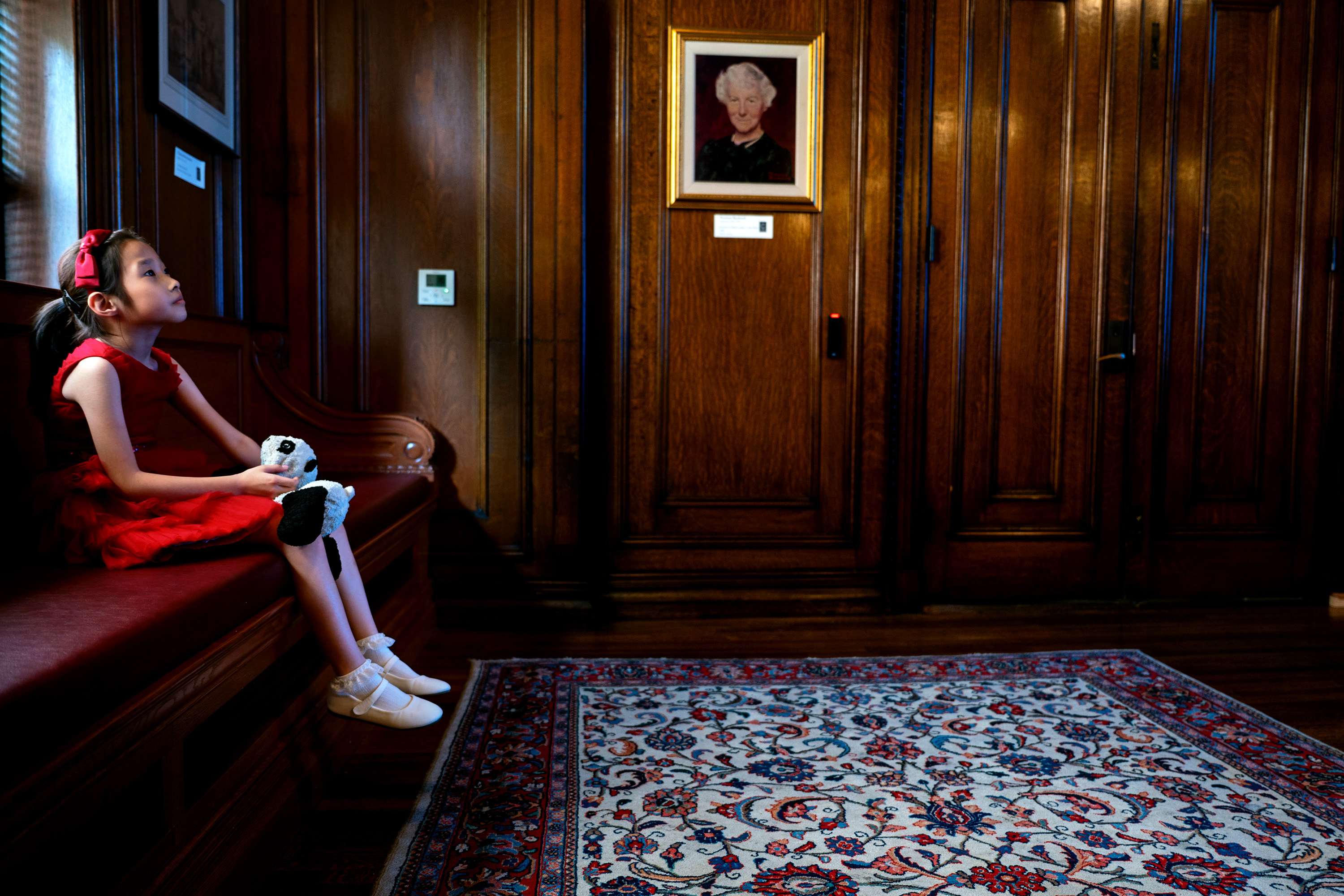
    With a Norman Rockwell portrait of Curtis founder Mary Louise Curtis Bok Zimbalist nearby, 7-year-old pianist Olivia Li sits with her stuffed panda.Tom Gralish / Staff Photographer

    Curtis does not have a separate precollege program the way some other music conservatoires do. Olivia won’t be enrolled in a bachelor’s program, but, rather, a diploma program.

    Several forks in the road lie ahead. She could end up continuing at Curtis post-high school, enrolling in the bachelor’s degree program. That means she could end up being at Curtis well over a decade, a prospect that has some Curtis professors joking that they will be retired by the time she graduates.

    Olivia could also decide at some point that she has gotten what she needed from Curtis and move on to another conservatory or music school.

    Asked whether she would like to be a professional pianist, Olivia said she doesn’t know yet. She is also interested in conducting, “because you get to, like, conduct a whole orchestra.”

    Olivia could also decide that music isn’t where she wants to end up. “We don’t know if at some point she’ll say, ‘I don’t want to do this with my life.’ Who is supposed to know that at 7?” Cann said.

    Zhang said she doesn’t have any thoughts on the matter.

    For now, the artist herself seems content to let the endgame play out. She has plenty to do in the meantime. Of what she wants from a Curtis education, she said:

    “I hope that I can play piano really good and learn a lot of pieces and share my music with the world.”

  • The Slinky became a toy craze in 1945 and has sold millions of pieces. It all started in Philadelphia.

    The Slinky became a toy craze in 1945 and has sold millions of pieces. It all started in Philadelphia.

    Philadelphia Navy Yard mechanical engineer Richard James was experimenting with a torsion spring in 1943 when the coil tumbled from his desk and landed on a stack of books.

    The spring didn’t just sit there. The top coil flipped over onto the next book. Then the back coil flipped over to the next book. Before he knew it, this newfangled thing was taking the hardcovers like stairs.

    Fascinated, James went home and showed the new toy to his wife, Betty.

    She was enthralled and named the metal thingamajig a Slinky because of its wavy, stealthy movement.

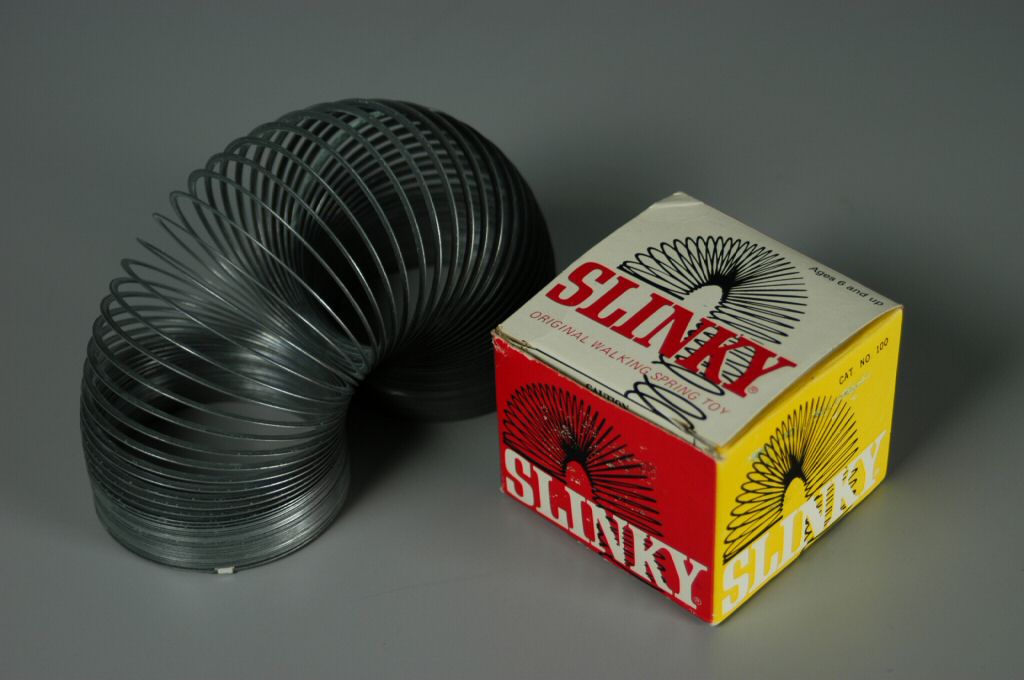
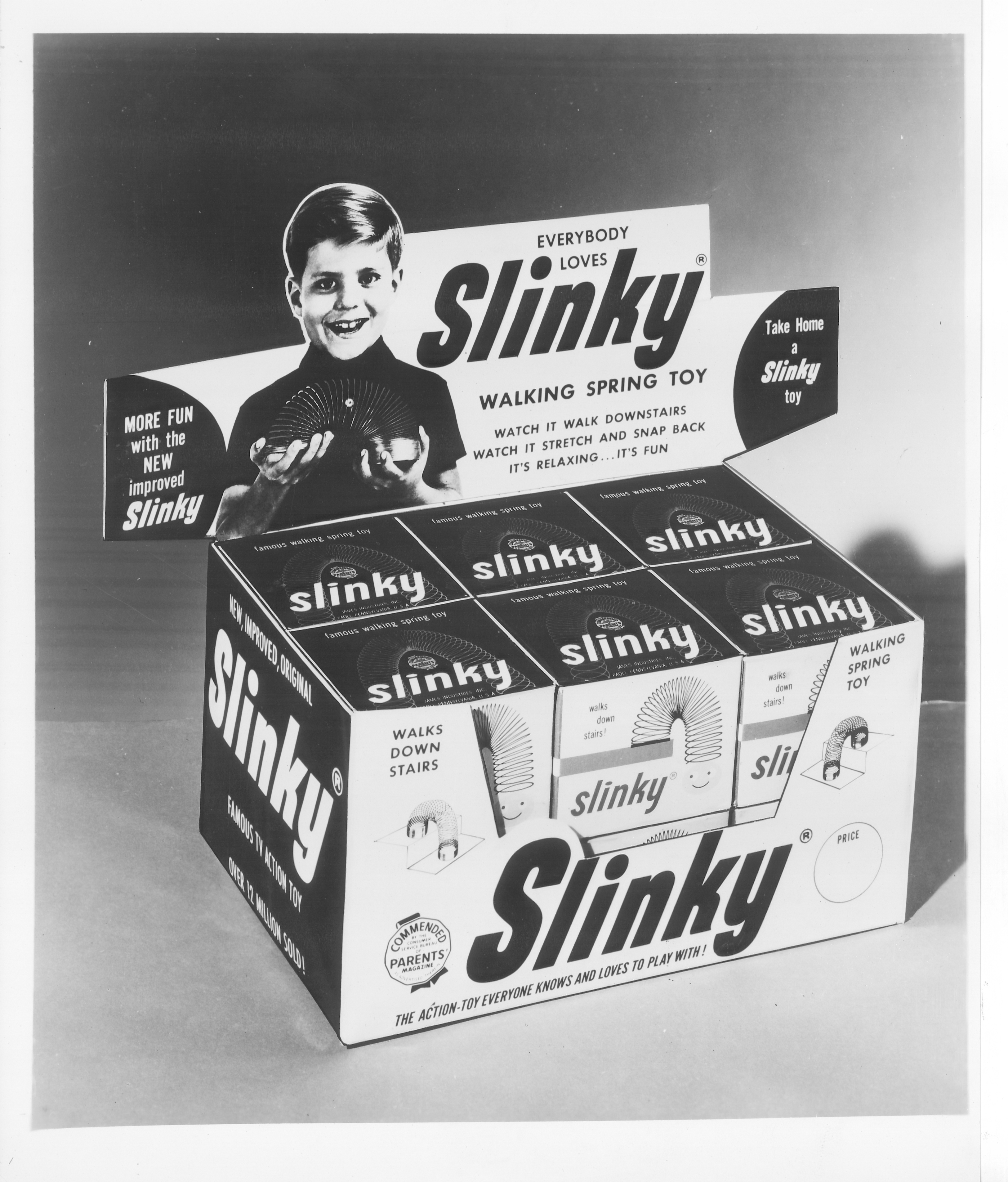
    A vintage Slinky display.

    James finagled with the metal spring for about two years, perfecting its flip-flop down-the-stack movement. Finally, on Nov. 27, 1945, the Jameses brought 400 Slinkies to Gimbels at Eighth and Market Streets, debuting them to shoppers. The whole lot sold out in 90 minutes for $1 a piece.

    A toy craze was born.

    This Saturday, the Philadelphia Historic District will host a “Firstival” to fete the Slinky at the American Philosophical Society from 11 a.m. to 1 p.m. The society’s archives house the 1953 study “On Slinky: The Dynamics of a Loose, Heavy Spring” by British mathematician and oceanographer Michael Longuest-Higgens.

    Firstivals are weekly day parties celebrating America’s 250th birthday. This week’s Firstival is the 35th.

    After the roaring success at Gimbels, Richard James quit his $50-a-week gig at the Navy Yard and founded James Industries, manufacturing Slinkies from a Germantown warehouse. Each Slinky was made from 80 feet of steel on a machine that James invented. It took 10 seconds to make each Slinky.

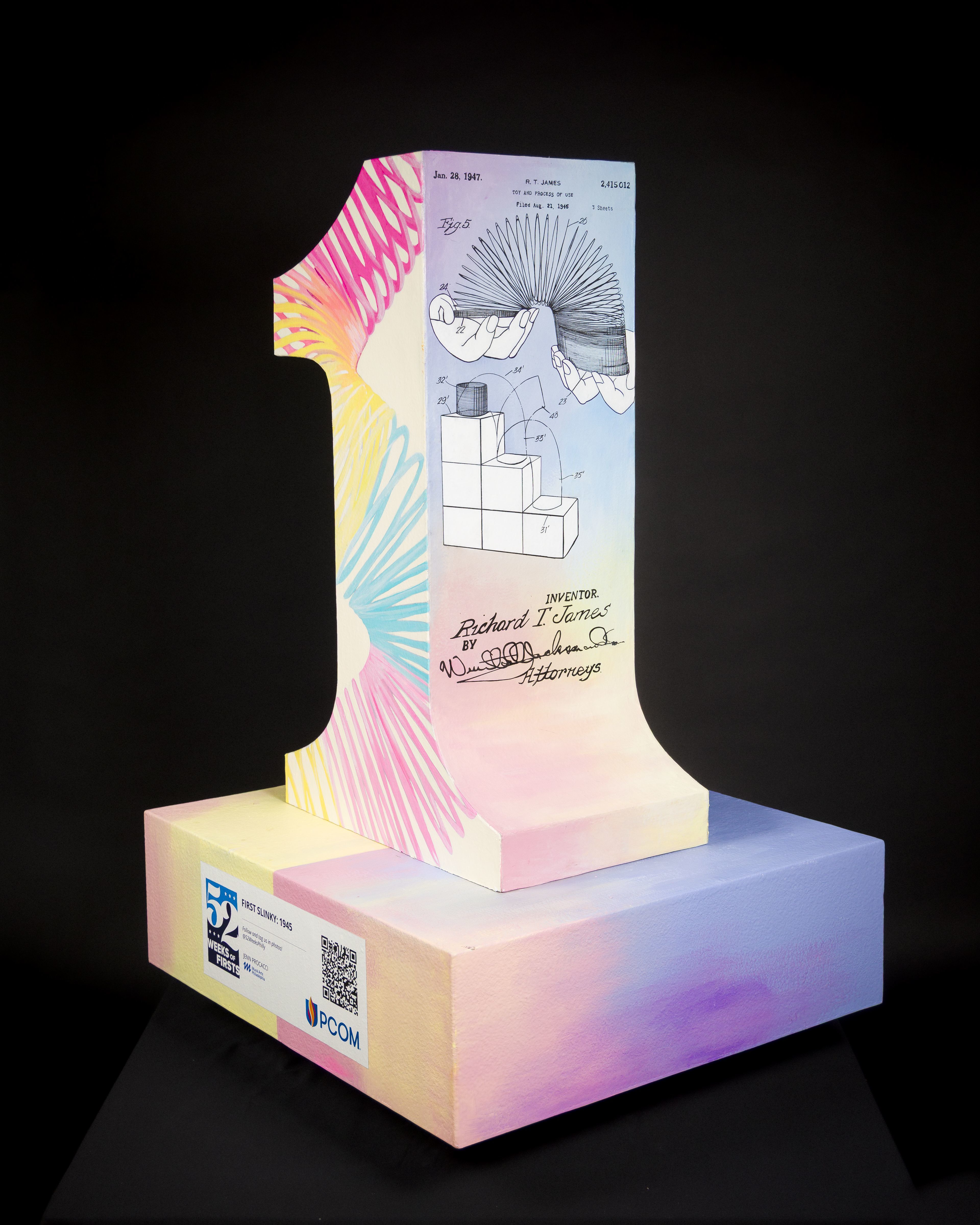
    Jen Procacci’s No. 1 features the original blueprints of the Slinky design, commemorating one of America’s most-beloved toys.Jenn Procacci for Colibrí Workshop

    Slinkies, considered the first toy craze, predating Cabbage Patch Kids, Tickle Me Elmo, and Beanie Babies, were so popular in the 1940s that Macy’s stopped selling them for a bit because the swarming crowds created a fire hazard.

    In the early 1950s, published reports said the Jameses were making more than $1 million a year. James denied those reports in a 1950 Inquirer article but admitted to making “solid profits.” By the end of the decade, the Jameses’ Slinky operation had moved to manufacturing facilities in Clifton Heights and Paoli.

    The couple divorced in 1961.

    Richard James became a missionary in Bolivia, leaving his wife to manage the business and their six children. Betty James moved her children closer to family in Hollidaysburg, Pa., and commuted to the Philadelphia area for three years before moving the company closer to home in 1964.

    In 1962, Betty James launched an aggressive television campaign to build awareness and increase Slinky sales. Songwriters Homer Fesperman and Charles Weagley wrote the unforgettable, now-iconic Slinky jingle.

    “It’s Slinky, it’s Slinky. For fun it’s a wonderful toy.

    It’s Slinky, it’s Slinky. It’s fun for a girl or a boy.

    It’s fun for a girl or boy!”

    The Slinky dog became a party trick. People wore Slinky glasses. Plastic Slinkies were introduced to the market.

    The Slinky was everywhere.

    “During the Vietnam War, soldiers used Slinkies as portable radio antennas,” said Zach Delphais, the public relations manager for Just Play Products, the Bucks County-based brand that owns Slinky today.

    Betty James sold Slinky to Michigan-based Poof Industries in 1999.

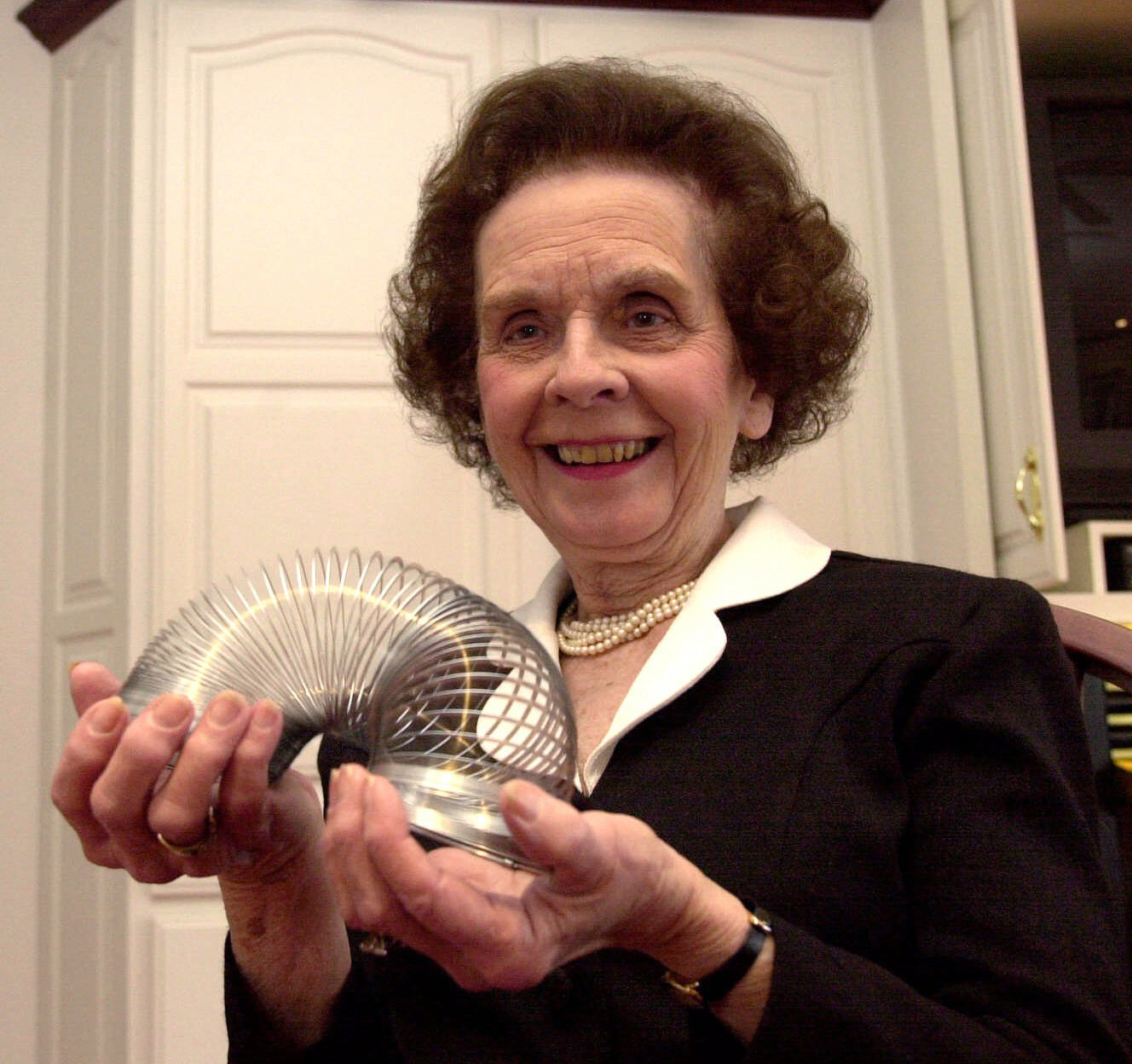
    In this Jan. 18, 2001, photo, Betty James, retired president of James Industries, plays with a Slinky. She died in 2008.AP

    In 2001, Betty James, then 84, was inducted into the Toy Industry Hall of Fame. At that time, more than 250 million Slinkies had been manufactured from hundreds of thousands of tons of steel.

    Betty James died in 2008 at age 90.

    In 2020, Just Play acquired Slinky at auction.

    Today, Just Play makes about 3 million metal Slinkies a year. They sell between $3 and $4 a piece.

    “Slinky has lasted because it’s simple, it’s iconic, and every generation has connected with it,” Delphais said. “It started right here in Philadelphia. That makes it all the more meaningful.”

    This week’s Firstival is Saturday, Aug. 29, from 11 a.m.-1 p.m., at the American Philosophical Society, 104 S. Fifth St.

    Each week, The Inquirer is highlighting a “first” from the Philadelphia Historic District’s 52 Weeks of Firsts. A “52 Weeks of Firsts” podcast, produced by All That’s Good Productions, drops every Tuesday.

  • When Dolly Parton and Patti LaBelle made music with their acrylic nails and reminded me of all my aunties

    When Dolly Parton and Patti LaBelle made music with their acrylic nails and reminded me of all my aunties

    A 1970s baby, I saw my mother (and all of the mother figures in my life) rocking big hair, glossy lips, sequins, and acrylic nails into the early 1990s.

    As did the celebrities who have been a part of my pop-culture consciousness as long as I’ve been alive.

    Women like Gladys Knight, Carol Burnett, Betty White, Patti LaBelle, and yes, Dolly Parton. These formidable women taught me my ABCs on Sesame Street, how to count on Electric Company, and random trivia on Password. These aunties in my head were just like my aunties, teaching me, guiding me, laughing with me, smiling with me, leaving powdery perfume trails of Jean Naté and White Shoulders in their wake.

    That’s why a video of Parton and LaBelle circulating on social media Tuesday afternoon made me pause and shed a tear.

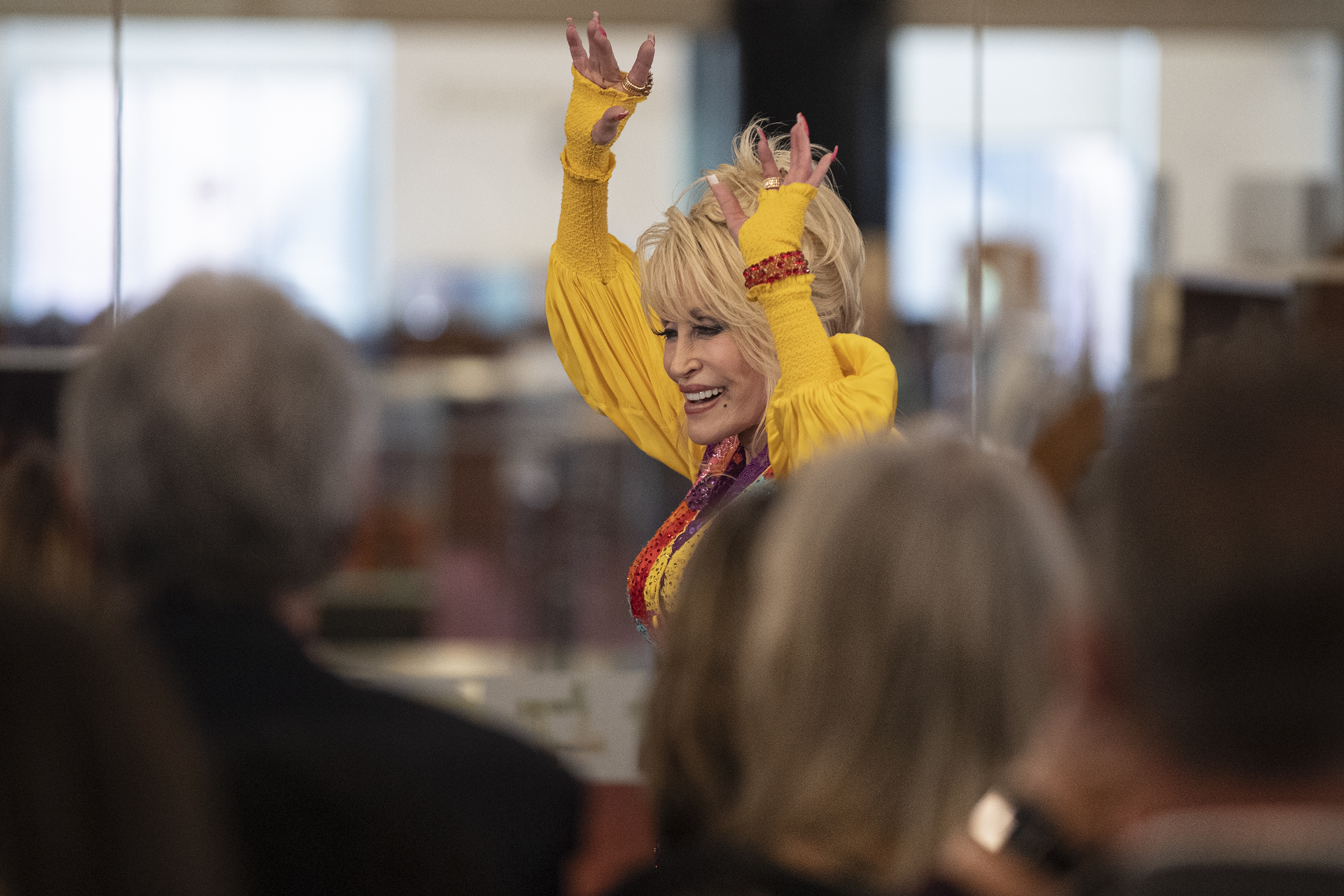
    In the hours after Parton’s nephew Bryan Seaver announced on Instagram the beloved, buxom country music singer had died, a 46-second clip emerged from Parton’s 1987 short-lived ABC variety show, Dolly.

    It is pure, unadulterated ’80s joy.

    LaBelle in her crimped “On My Own” hair — the ‘do she debuted when she released the chart-topping hit with Doobie Brother Michael McDonald — is sitting across from Parton, whose trademark curly blond hair is piled high in a massive bouffant.

    The divas are dressed in elaborate black gowns drenched in sparkles. Parton’s features a sweetheart neckline and poofy shoulders ending in a lace sleeve that would give Madonna’s wardrobe a run for its money.

    The two look like they could be attending a prom, or a tacky wedding. (A Parton classic: ”It costs a lot of money to look this cheap.“) Wherever they are going, we know the vibe is going to be ’80s extravagant.

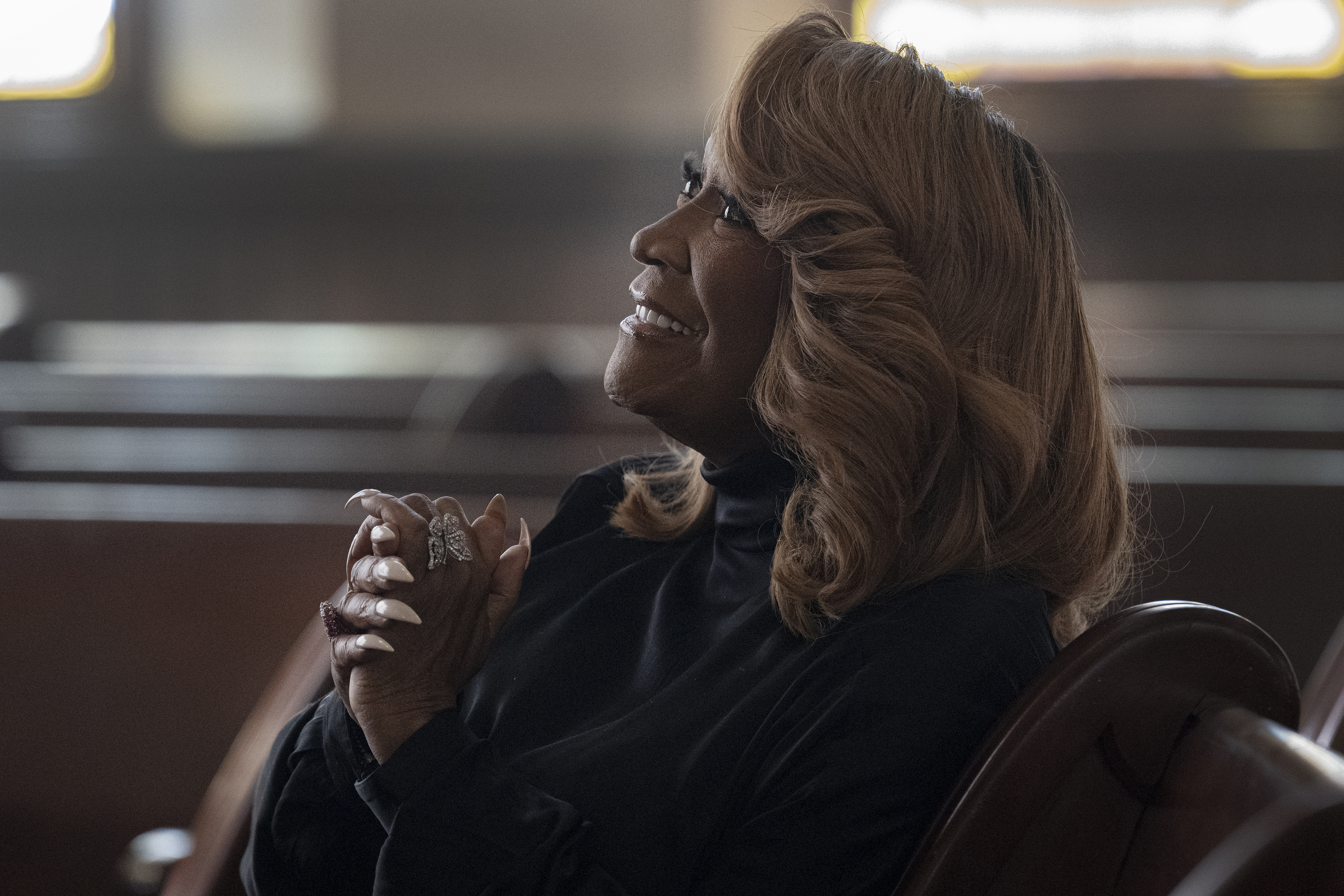
    Singer Patti LaBelle is photographed at Mother Bethel AME Church in Philadelphia, Thursday, Jan. 22, 2026, during a shooting campaign for Visit Philadelphia’s Indivisible initiative, part of an effort to celebrate the city’s communities of color during the nation’s 250th anniversary. LaBelle is starring in the campaign’s Black History Month promotion.Jose F. Moreno / Staff Photographer

    Parton, in her sweet melodic lilt, asks LaBelle if she would join her in using her acrylic nails as an instrument. The two women look like they are filing their nails as they strike up a rhythm.

    Parton, who was born in a log cabin in Tennessee, and LaBelle, a Southwest Philadelphian whose dad was born in Macon, Ga. and moved to the city during the Great Migration, bond over acrylic nails and sing the chorus of the countriest of country songs, “Short’nin’ Bread.”

    “Momma’s little baby loves short’nin’, short’nin’ / Momma’s little baby loves short’nin’ bread.”

    Nails clicking. Powerful voices crooning. Parton and LaBelle sing the hook of the folk song written by James Whitcomb in 1900 in perfect harmony, their voices blending so beautifully that it’s easy to forget historians’ assertions that Whitcomb “borrowed” the song from Black sharecroppers. Allegedly, he retooled and performed it in a minstrel show.

    The video speaks to Parton and LaBelle’s easy friendship and sisterhood.

    “I’m deeply saddened by the loss of my dear friend who was loved by all,” LaBelle said in a statement Tuesday. “Dolly’s artistry, brilliance, and extraordinary life inspired so many people including me. Her light will forever shine!”

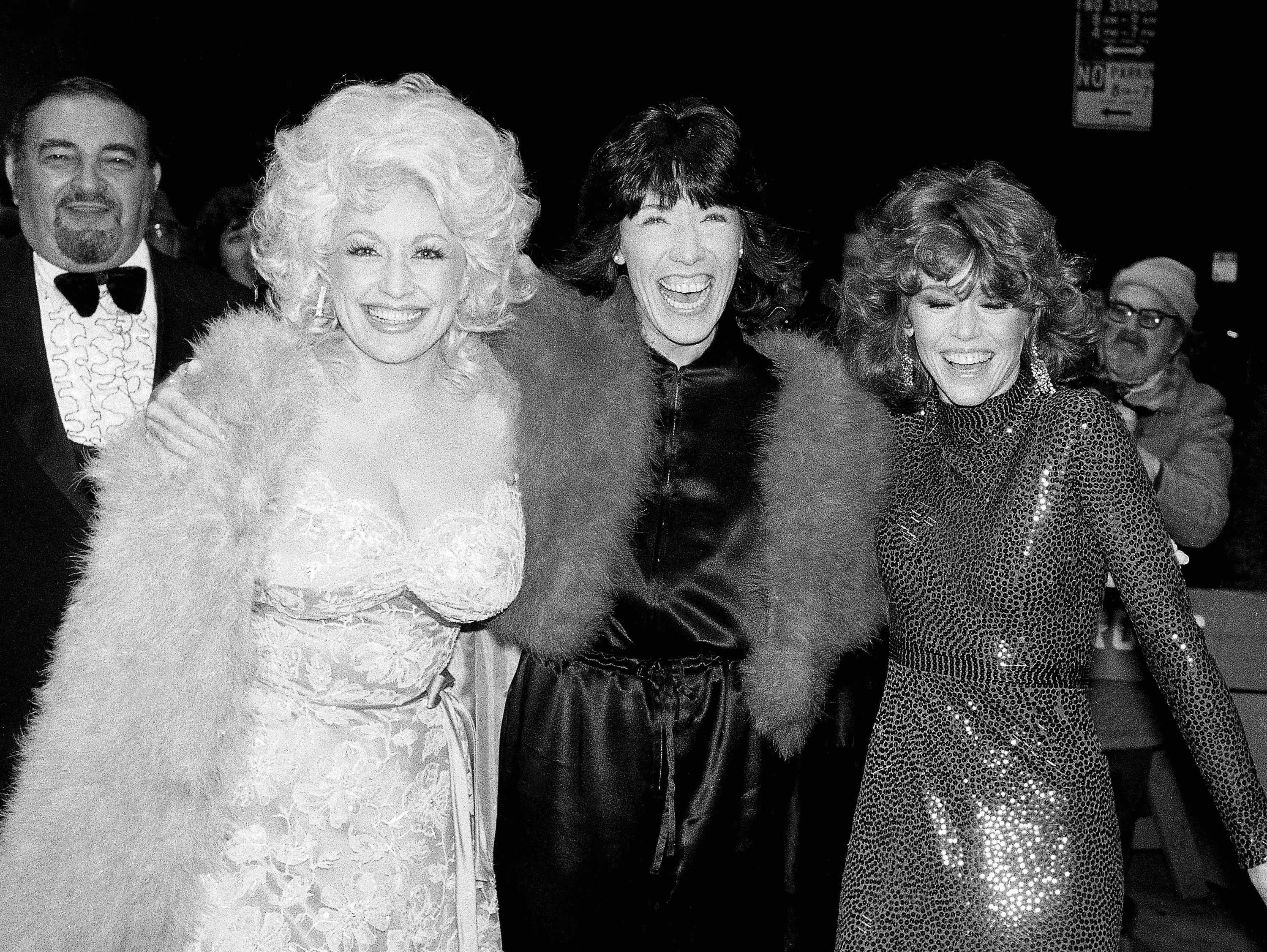
    Dolly Parton (left), Lily Tomlin (center), and Jane Fonda arrive for the premiere of their film “9 To 5” in New York on Dec. 14, 1980. (AP Photo/Richard Drew, File)Richard Drew

    When this performance was recorded almost 40 years ago, LaBelle and Parton had already been celebrities the better part of two decades. Both were already in their 40s. They’d reached auntie status.

    My grandmother used to sing the chorus of “Short’nin’ Bread” while she dealt cards or when she rocked my sister and me in her wooden chair. Parton has been a part of my life in much the same way. Teaching me what it meant to work 9 to 5, performing on musical specials and childhood shows with other aunties and friends like Linda Ronstadt, Emmylou Harris, Loretta Lynn, and the queen of Philadelphia aunties, Patti LaBelle.

    Parton was my country music auntie. She was America’s country music auntie.

    And we will always love her for it.

  • Ron Avery, retired Daily News reporter and Philadelphia historian, has died at 85

    Ron Avery, retired Daily News reporter and Philadelphia historian, has died at 85

    Ron Avery, 85, of Philadelphia, retired eclectic reporter and columnist for the Daily News, Philadelphia historian, volunteer city tour guide, author, high school history teacher, veteran, and canoe enthusiast, died Sunday, Aug. 2, of complications from amyotrophic lateral sclerosis at his home in East Falls.

    Reared in Fairmount, Mr. Avery graduated from Thomas Edison High School and earned a bachelor’s degree in history at Pennsylvania State University. He was assigned to the ship newspaper in the Navy after college, found a creative niche in journalism, and went on to work for more than 30 years at the Associated Press, the Bucks County Courier Times, the Courier-Post in South Jersey, and the Daily News.

    He wrote for the Daily News as a correspondent in 1981, joined the staff in 1982, and, until his retirement in 2000, wrote thousands of stories about crime, casinos, war orphans, historic houses, the MOVE bombing, local notables, and other subjects. His columns, “Poor Ronald’s Almanac” and “One of Us,” hammered away at local issues and featured everyday people doing exceptional things.

    “He covered every nook and cranny of the city,” said his son Serge. “That burning curiosity sustained him till his last days.”

    He wrote three books about Philadelphia, including A Concise History of Philadelphia in 1999. He produced a series of video guides he called the Urban Explorer for local TV in 2004 and posted blogs about the city from 2017 to 2019 on a website called Philadelphia Cracks Me Up.

    “Like all cities,” he said in a 1995 Daily News column, “Philadelphia is honeycombed with hidden spaces and forgotten places.” In a 1997 review of his book, City of Brotherly Mayhem: Philadelphia Crimes and Criminals, The Inquirer’s Thomas Brady said: “The book … is decidedly a fun read.”

    Alex Strang, his director on the Urban Explorer videos, called Mr. Avery an “unforgettable legend” and “a walking encyclopedia of the city’s history and eccentricities” in a Facebook tribute. Other former colleagues said he was “a clever journalist” and “a true Philadelphian.”

    Longtime Daily News colleague Robin Palley said on Facebook: “He had an amazing knack of finding quirky people with fascinating skills or habits and making them come to life on our pages.”

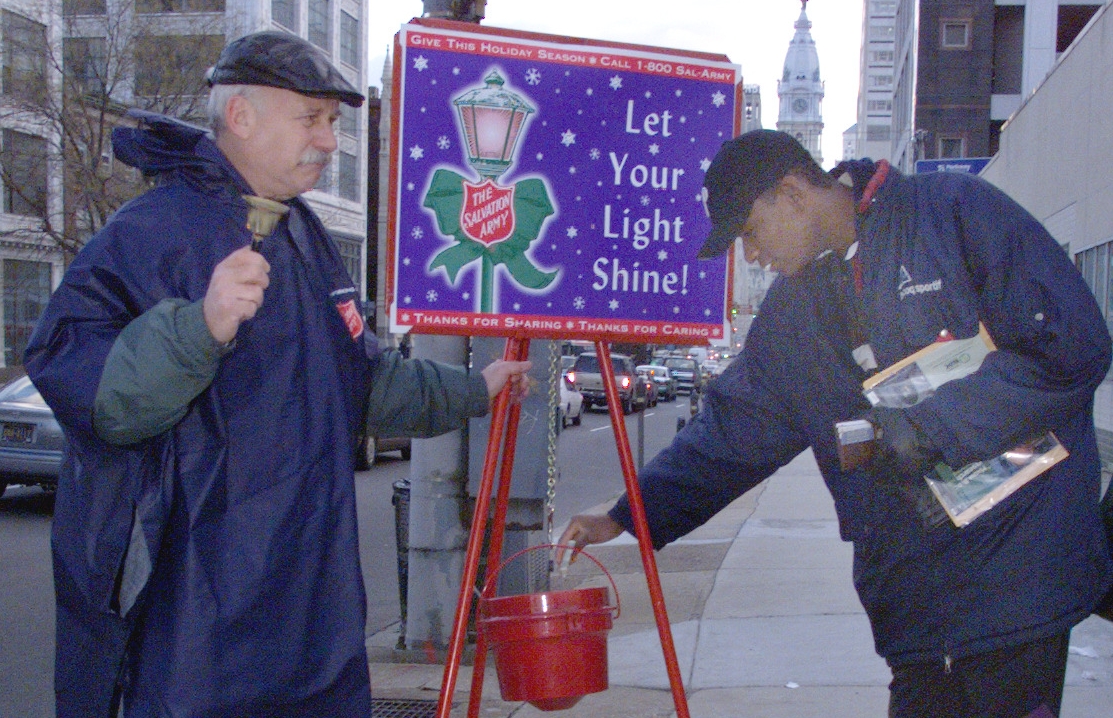
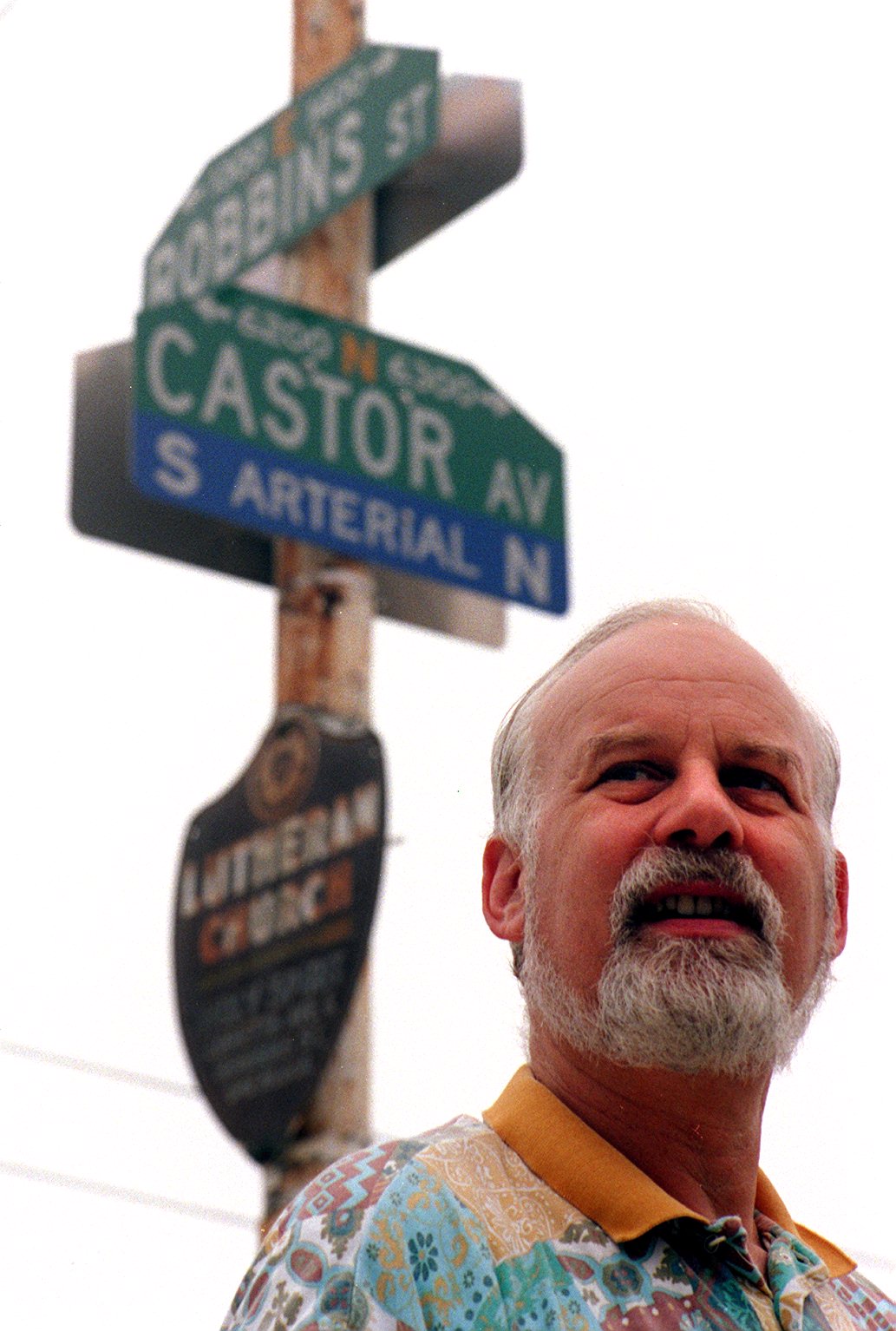
    Mr. Avery (left) mans a Salvation Army donation kettle in 1999.Steven M. Falk / Staff Photographer

    Before the Daily News, Mr. Avery wrote news and feature stories for the Courier-Post in the 1970s, and the Courier Times and the AP in the 1960s. He moved to Israel for six months in 1972 but returned to work for the Courier-Post in 1973.

    He also wrote freelance pieces for the Hidden City Daily, PhillyHistory.org, UShistory.org, and op-eds later for The Inquirer and Daily News. He served in the Navy from 1964 to 1966, joined the Philadelphia Canoe Club later, and led water trips in the New Jersey Pine Barrens and elsewhere.

    Knowledgeable, energetic, and naturally affable, he was a tireless promoter and volunteer guide in Philadelphia. He led walking tours throughout the city for students, civic groups, and other organizations, and his explanatory video tours featured cobblestone alleys, urban gardens, museums, statues, and other features of city life.

    He was a stickler for details and historical accuracy, and he helped spur City Council to pass an ordinance in 2008 to educate and certify paid Center City tour guides. “They score high as Philadelphia ambassadors of good will,” he said in a 1995 column about uneducated guides, “but as historians they often flunk out.”

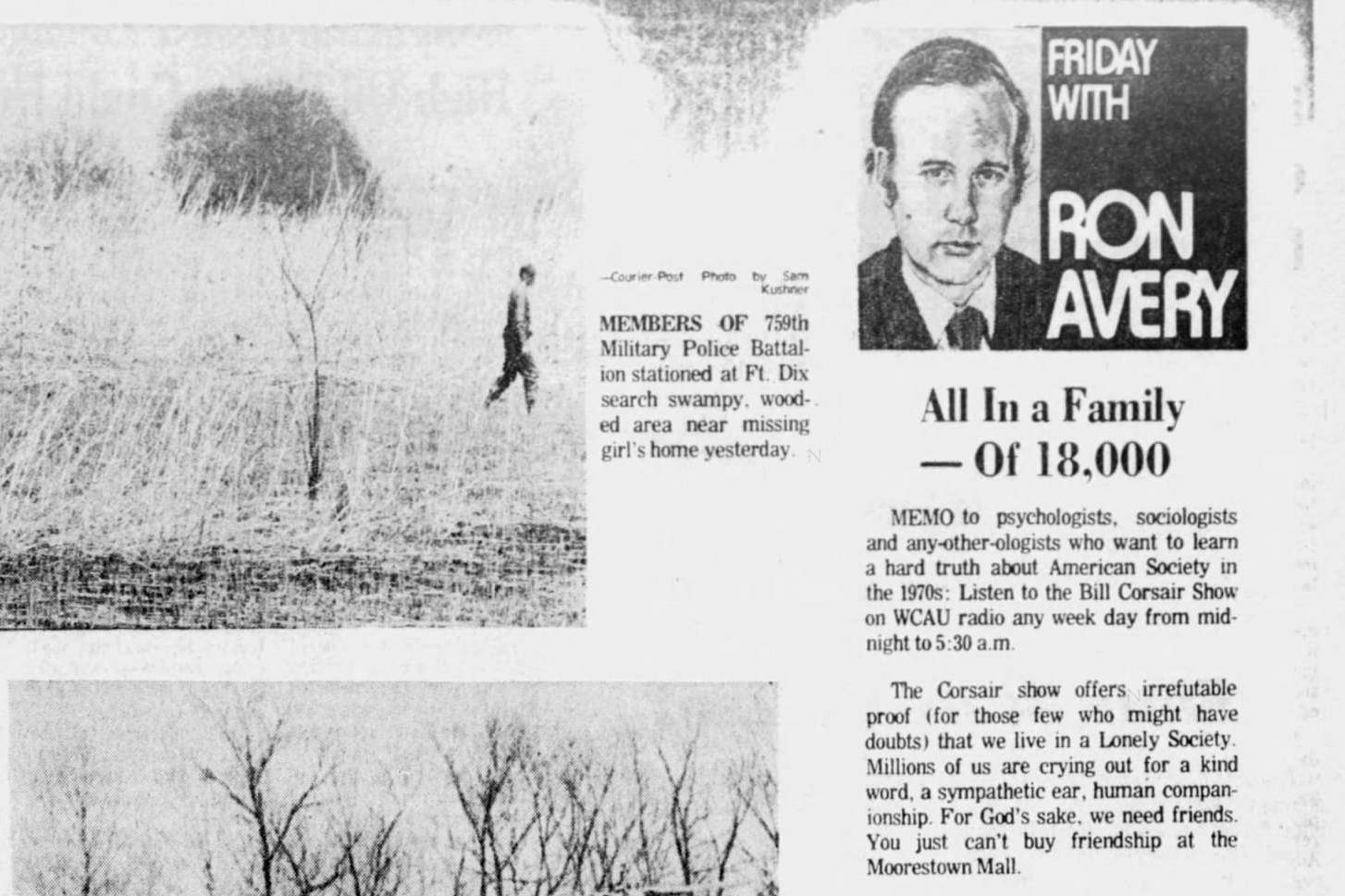
    Mr. Avery wrote a column for the Courier-Post in 1974.Newspapers.com

    Ronald Avery was born June 10, 1941, in Strawberry Mansion. He joined the Boy Scouts, earned his bachelor’s degree at Penn State in 1963, and taught history at Bensalem High School for a year.

    He was a boxer in college and, mesmerized by the sport, later worked as a referee for amateur matches.

    He met Suzet Habif in Israel in 1967, and they married in 1968. They had sons Serge and Ben, and lived for years in a rowhouse in Oxford Circle.

    Mr. Avery cared for his wife during her long illness in the 1980s and ’90s. She died in 1993.

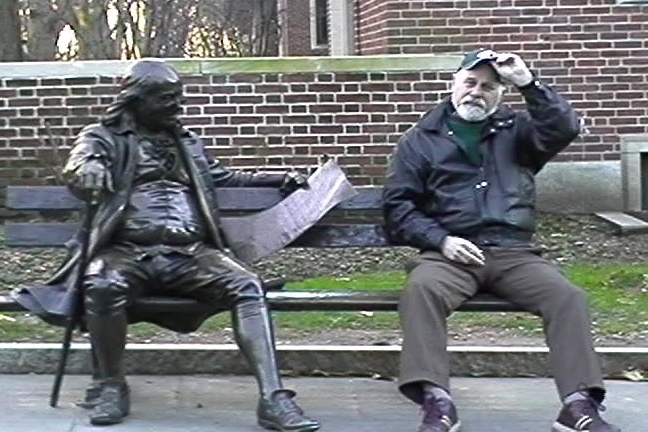
    Mr. Avery liked to hang out with Benjamin Franklin and other historic figures. Alex Strang

    He lived later in Pennsport and East Falls, was diagnosed with ALS in 2015, and proudly outlived its average life expectancy of 18 months by nearly a decade. “He defied that diagnosis and did not let it define him,” his son Serge said. “He always said he had a lot to live for.”

    Mr. Avery was an avid reader and street photographer. He liked poetry, wrote limericks on birthday cards, and posted hundreds of his photos on flickr.com. One of his photos won a contest and was displayed at the airport.

    He enjoyed jazz and jokes, led the prayers at family gatherings, and gave Yiddish quizzes to his two grandsons. He shared favorite recipes with Daily News colleagues and whipped up memorable homemade soups, especially white bean.

    “I’ll greatly miss his endless anecdotes about all things Philadelphia,” said his daughter-in-law, Rebecca Houlding, “the stories about the local criminals, and his love of his family and friends.”

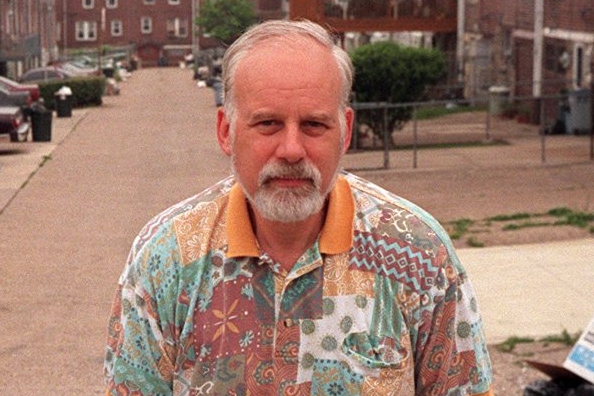
    Mr. Avery wrote about his life in Northeast Philadelphia for the Daily News in 1997.Alejandro A. Alvarez / Staff Photographer

    His son Serge said: “He loved chasing the stories from the back alleys and driveways, highlighting the working people of our town.”

    In addition to his sons, daughter-in-law, and grandsons, Mr. Avery is survived by other relatives. A sister died earlier.

    Services were held earlier.

    Donations in his name may be made to Paralyzed Veterans of America, Box 758589, Topeka, Kan. 66675; and the Hebrew Immigrant Aid Society, Box 8688, Philadelphia, Pa. 19101.

    Mr. Avery “loved chasing the stories from the back alleys and driveways, highlighting the working people of our town,” his son Serge said.Alex Strang
  • LeIbrahim Muhammad, LeBoul James, and the art of giving very Philly nicknames to LeBron James

    LeIbrahim Muhammad, LeBoul James, and the art of giving very Philly nicknames to LeBron James

    We know who King LeBron James is. But LeBoul James? He’s one of us.

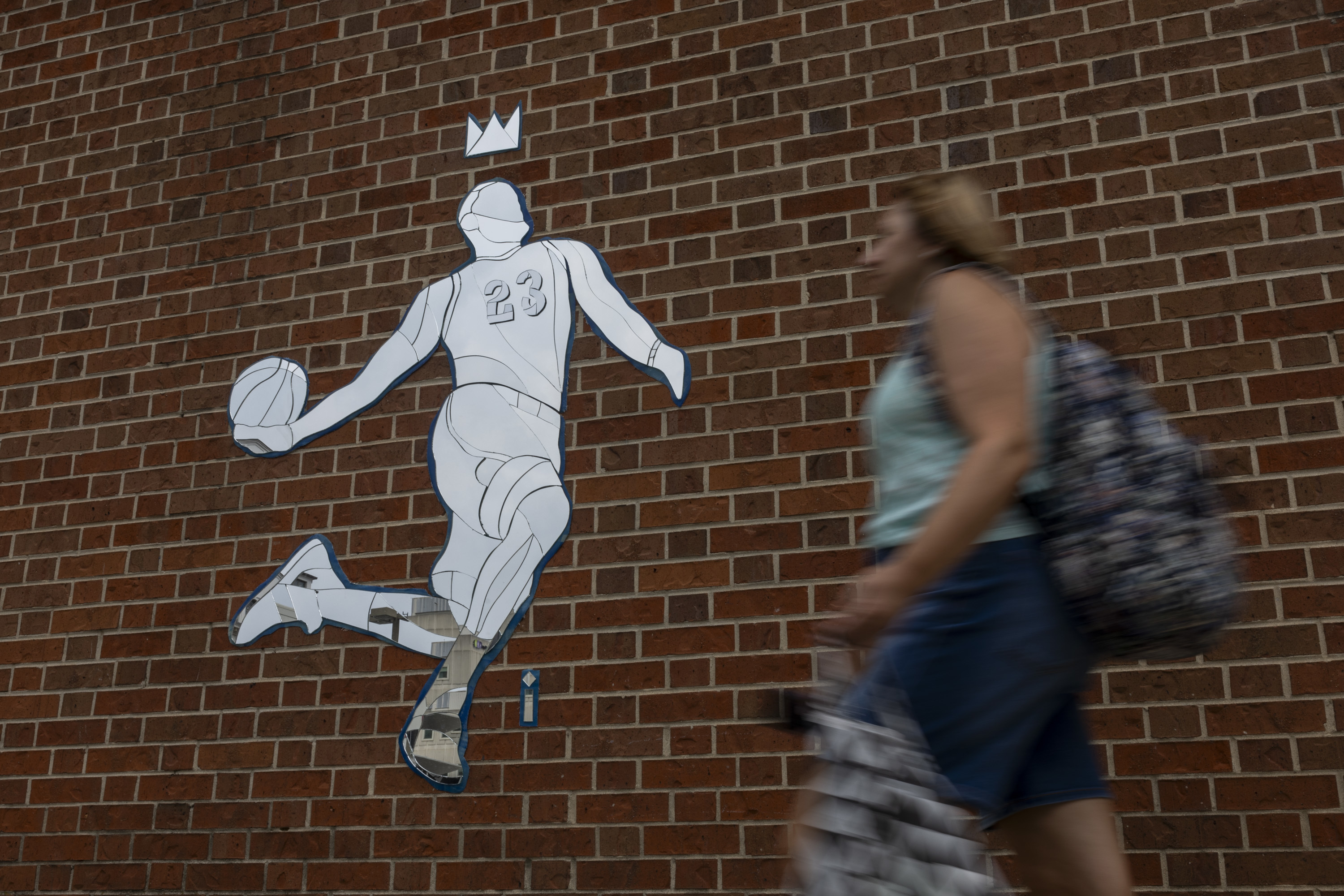
    Mere hours after James announced he was signing with the Sixers, Philadelphia fans started honoring him with public artwork, billboards, merch, sunburned backs, and his own state-designated day.

    But among fans’ biggest gestures of goodwill is trying to find James a Philly-coded nickname.

    “I like LeJawn. It’s so Philly,” said Saleem Lewis, owner of clothing label What Happened to Love and a Frankford native.

    Lewis said the rush to give James a local nickname reflects the NBA superstar’s natural kinship with Philadelphians.

    “If you’re not from here, you might not get it. But the jokes are all out of love,” he said.

    “I like the one I came up with, ‘Abdul Maalik James,’” said social media creator Jamaal Thomas, who created an AI image of James wearing a thobe and kufi.

    A billboard welcoming LeBron James along Packer Avenue, in South Philadelphia on July 24, 2026.Yong Kim / Staff Photographer

    Another moniker doing the rounds on social media is “LeIbrahim Muhammad.”

    The root of the nicknames and ensuing AI-generated memes is a fusion of hip-hop and Muslim cultures. These two elements are deeply embedded in the fabric of the city’s Black community, as evidenced by the influence of rappers like Freeway, Beanie Sigel, and PnB Rock, who “weaved the imagery, religious symbology, and practice of Islam into their lyrics,” said James Peterson, professor of literature at Delaware State University and host of Evening WURDs.

    Within this meme and nickname multiverse, Philly slang like jawn and boul — both with roots in the city’s African American Vernacular English — coexists with Black Muslim content creators throwing in names like Ibrahim and Abdul. The result is a high form of welcome extended to the King of the Hardwood from the City of Brotherly Love.

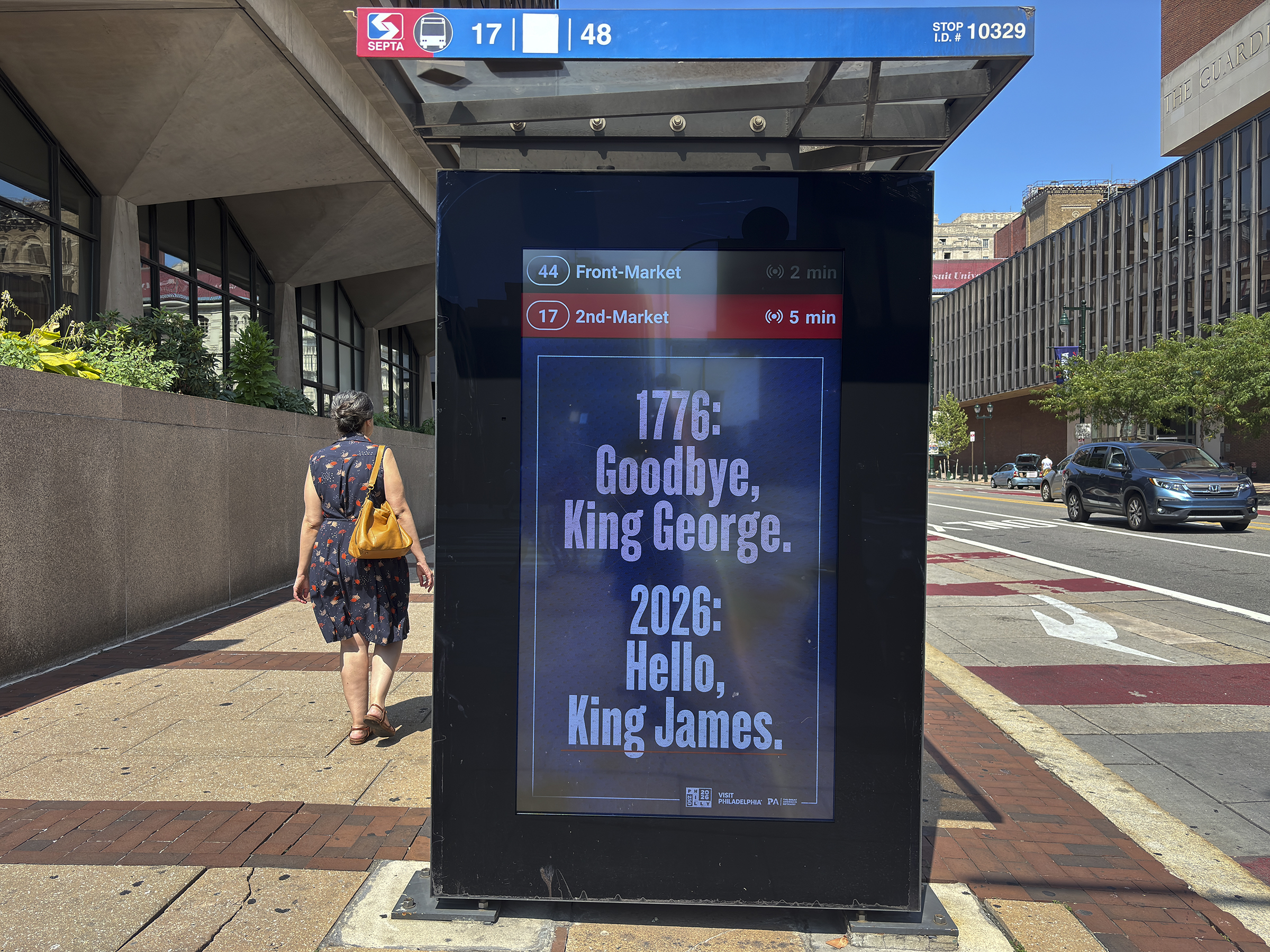
    A welcome sign for new Sixers LeBron James on a SEPTA bus shelter along Market Street in Center City on Saturday, July 25, 2026.Yong Kim / Staff Photographer

    “This is part of the reason the memes resonate with Philadelphians because whether you’re Muslim or not, the culture of Philadelphia is Islamic,” Peterson added. “You can’t go through places like Malcolm X Park or other areas of Philly without seeing the accouterments of the Islamic faith all around us. It’s not just the mosques; it’s the brothers and the sisters in the streets. It’s in the air in Philadelphia.”

    Also, as Lewis points out, “Philly embraces people who work, compete, and don’t back down. LeBron has been doing that for over 20 years.”

    A passerby is seen with a mosaic of LeBron James on Eighth and Market Streets in Philadelphia on July 28, 2026.Tyger Williams / Staff Photographer

    The ‘Philly beard,’ a thobe, and LeIbrahim Muhammad

    For West Philly native Max Johnson Dugan, a visiting professor of Islam at Trinity University, the memes highlighting Philly’s Black Muslim culture through James, who is a Christian, are a “brilliant” balance of humor and “self-seriousness.”

    “I’ve prayed next to people, packed food boxes, and volunteered at parks, or been in dialogue with folks who are dressed like those memes,” he said. “To me, it’s a beautiful thing that people can chuckle about this and live in a way that’s serious and significant to them.”

    Dugan said James’ beard may be familiar to Philly’s Black Muslims because it resembles a style many followers believe was donned and ordained by the Prophet Muhammad. It’s commonly known as a “Sunni” or “Sunnah beard” in Philly, and those outside of the city call it a “Philly beard.” Dugan said it’s possible content creators saw the similarity between James’ beard and others by practicing Muslims, and “put two and two together.”

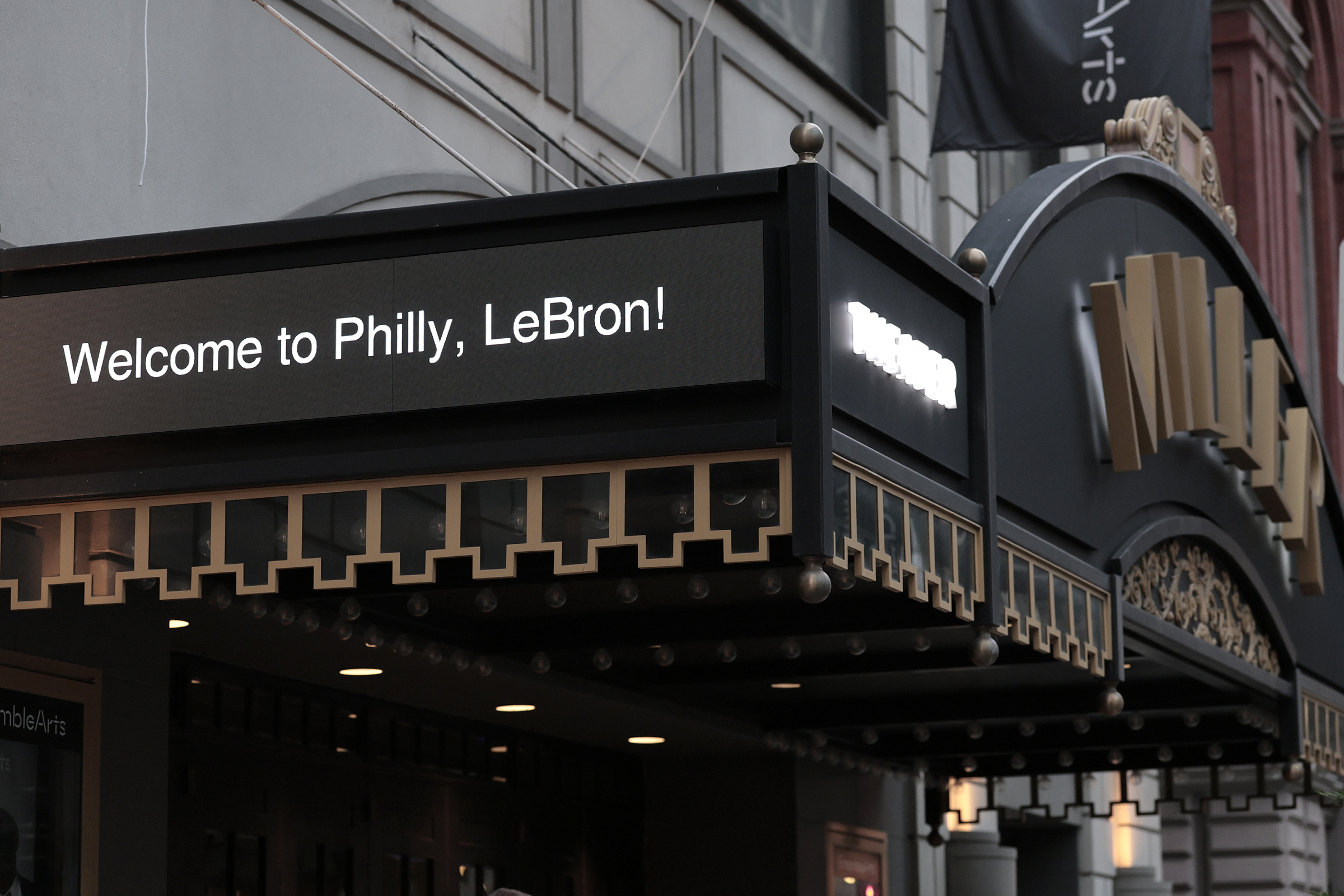
    The Miller Theater in Philadelphia welcomes LeBron James on July 29, 2026.Elizabeth Robertson / Staff Photographer

    The memes may be fabricated, Peterson said, but have a “kernel of truth,” that James is coming into a “Black Islamic world.” The doctored images of James in a kufi and thobe, shared by the likes of educator, author, and media personality Marc Lamont Hill and hip-hop artist D Sturdy, acknowledge James as a Philly guy, one of us, even before he steps foot in the city.

    “LeBron coming to Philadelphia means that all of Philadelphia embraces him. And that also means one of the largest Black Muslim populations [in the U.S.] and one of the most distinct Black Muslim cultures is embracing him, too,” said Peterson.

    The Los Angeles Lakers’ LeBron James shares a laugh with Philadelphia 76ers’ Tyrese Maxey during a game on Dec. 7, 2025, in Philadelphia.Chris Szagola / AP

    For Dugan, the memes are interesting in the way newly-traded star Jaylen Brown, who is Muslim and has traveled to Mecca to perform Umrah, hasn’t been welcomed with similar nicknames or memes in the same breath as James.

    “I don’t want to speculate,” Dugan said, “I would say it points to [James’] visibility and significance. It’s funnier to share a meme of [James in Muslim traditional wear] than it is to share a meme of [Brown].”

    “It has irony and tongue and cheek-ness,” he said.

    Photo collage of LeBron James throughout his NBA career.John Duchneskie

    LeBoul James, the NBA champion

    North Philly-native Salim Weldon, co-owner of Whimsicle fruit pops, is confident James will live up to the name of “LeBoul,” another nickname that has appeared under scores of AI-generated social media posts.

    Some show James ordering at a Wawa, some have him astride dirt bikes and four-wheelers, and some show him standing outside of “papi stores” — a friendly term used by Black Philadelphians for corner stores often operated by Latin American men.

    The Philly word boul meaning boy, is a word James is already familiar with, thanks to his friend and North Philly-native Kevin Hart. The Sixer even said it in a recent Instagram post with the actor, who was giving his friend a crash course in Philly-isms while the two were golfing.

    “We’re going to help [James] with a Philly barber to make sure that he keeps his beard a certain way,” Weldon joked. “And as you can see, he and Kevin Hart are close, so he will help him get that Philly swag.”

    Quincy Harris, a Germantown-raised media personality and former host of The Q on Fox 29, said the early reactions are because of the championship dreams James helps Philadelphians imagine.

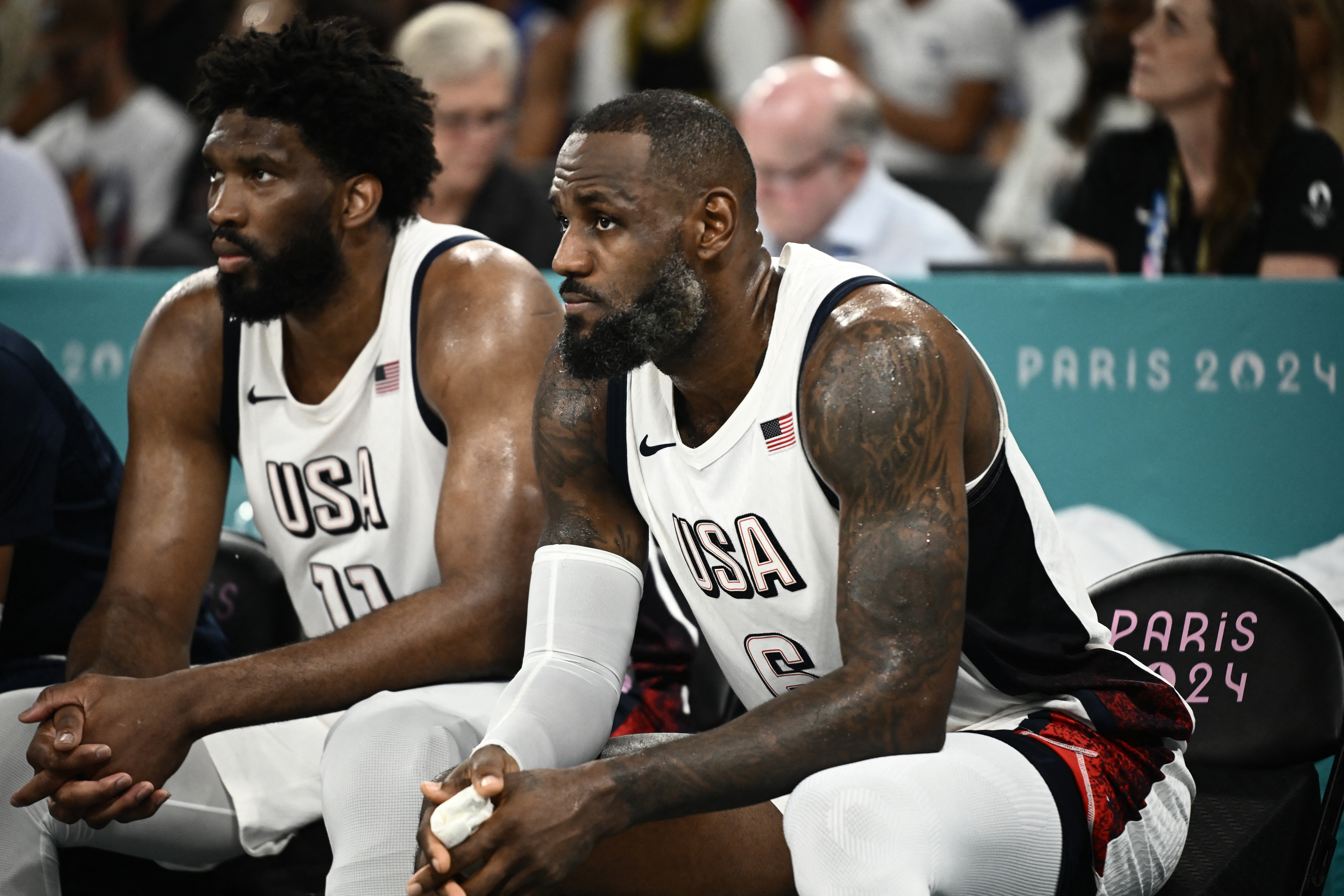
    USA’s #11 Joel Embiid (left) and #06 LeBron James react from the bench in the men’s semifinal basketball match between the USA and Serbia during the Paris 2024 Olympic Games on Aug. 8, 2024. (Photo by Aris Messinis / AFP via Getty Images)AFP via Getty Images

    “He’s a top five player to ever play the game of basketball,” he said. For him, the energy James sparked is reminiscent of the Allen Iverson era in the late 1990s and early 2000s.

    Peterson doesn’t quite agree. For him, Iverson remains the “archetype of a Philadelphia athlete.” Plus, can LeBron James truly ever be LeBoul, if he doesn’t live in the Philadelphia region?

    “Philadelphia fans want to hold you close. They want to see you walking around and moving around in the community,” he said, while acknowledging that James’ signing has brought a new level of excitement to Philadelphia.

    “I think that energy is just going to be injected back into the city. It’s going to be a great time,” Harris said, adding that he won’t “cosign” the trending nicknames.

    But there’s one he thinks will resonate with Philadelphians the most.

    “Five-time NBA champion.”

  • ‘It was like we had won the Super Bowl’: 20 years ago, Philadelphians raised $68 million in 45 days to keep an iconic painting from being sold

    ‘It was like we had won the Super Bowl’: 20 years ago, Philadelphians raised $68 million in 45 days to keep an iconic painting from being sold

    One painting stands out among the stately portraits, vast landscapes, and elaborate tableaux of figures in the Philadelphia Museum of Art’s early American art galleries.

    And not just for its size.

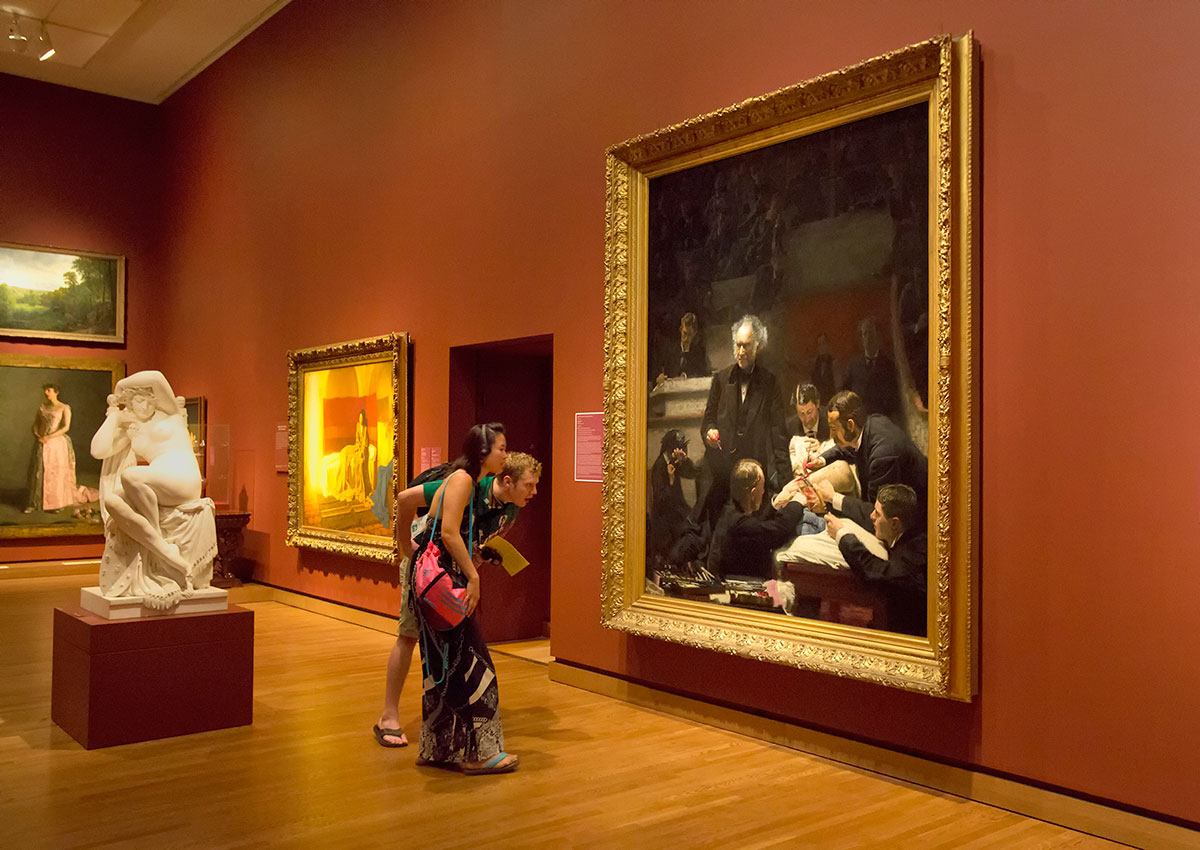
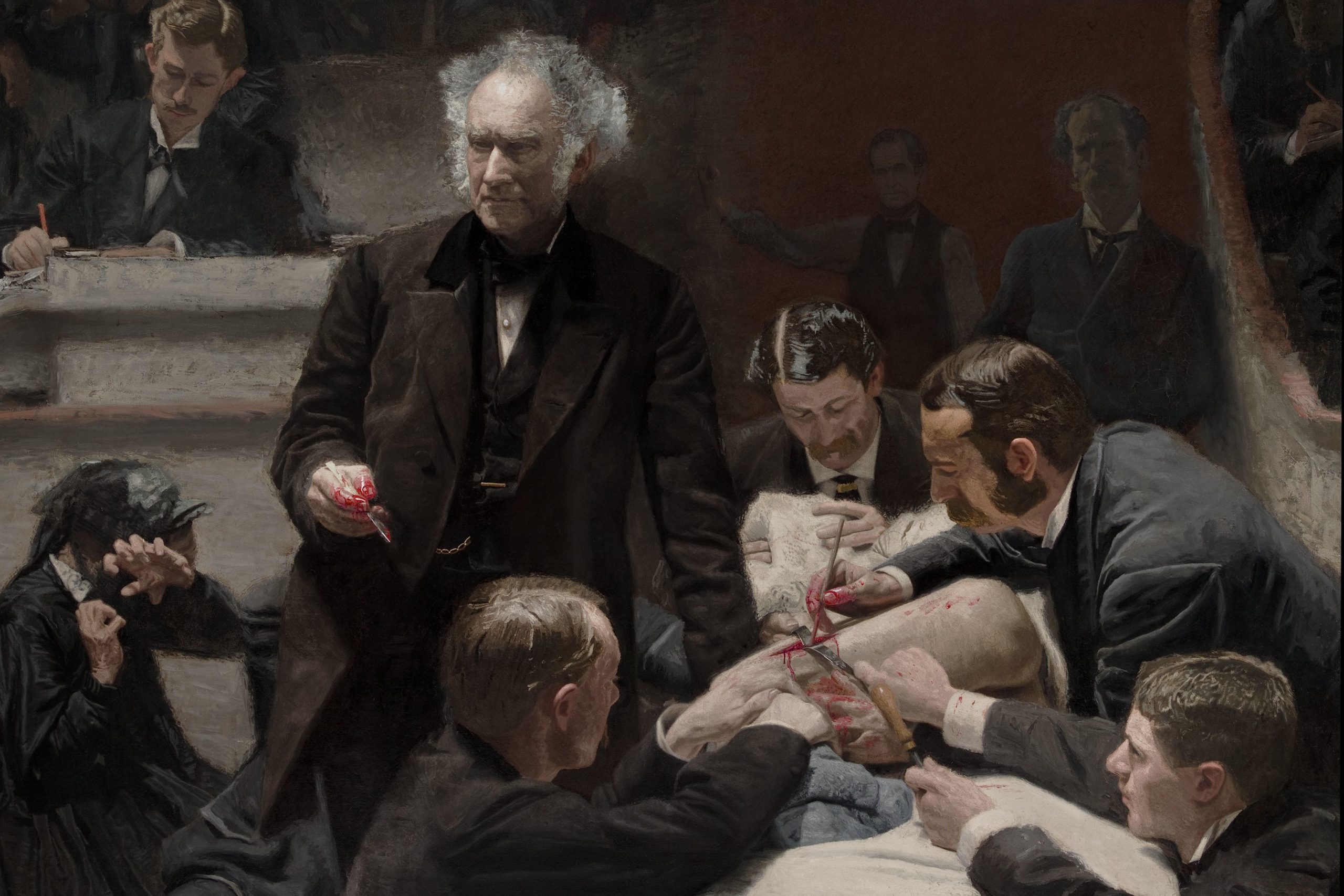
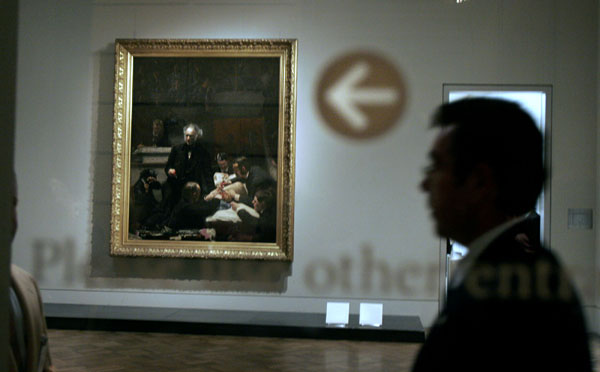
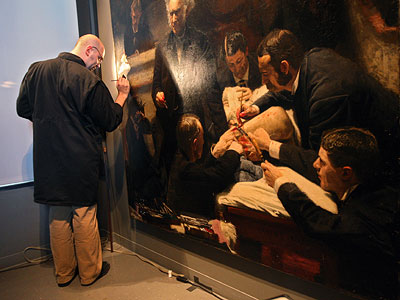
    In the 8-by-6.5-foot oil painting, a stern-looking man with fluffy gray hair stands next to an operating table. A crowded amphitheater watches him and a group of doctors operate on a boy’s leg. The wound, their hands, and their scalpels are covered in bright red blood.

    A detail from “The Gross Clinic.” Courtesy the Philadelphia Museum of Art and the Pennsylvania Academy of the Fine Arts

    This is Philadelphia native Thomas Eakins’ The Gross Clinic, painted in 1875 and depicting Samuel D. Gross teaching surgery at Jefferson Medical College at Thomas Jefferson University.

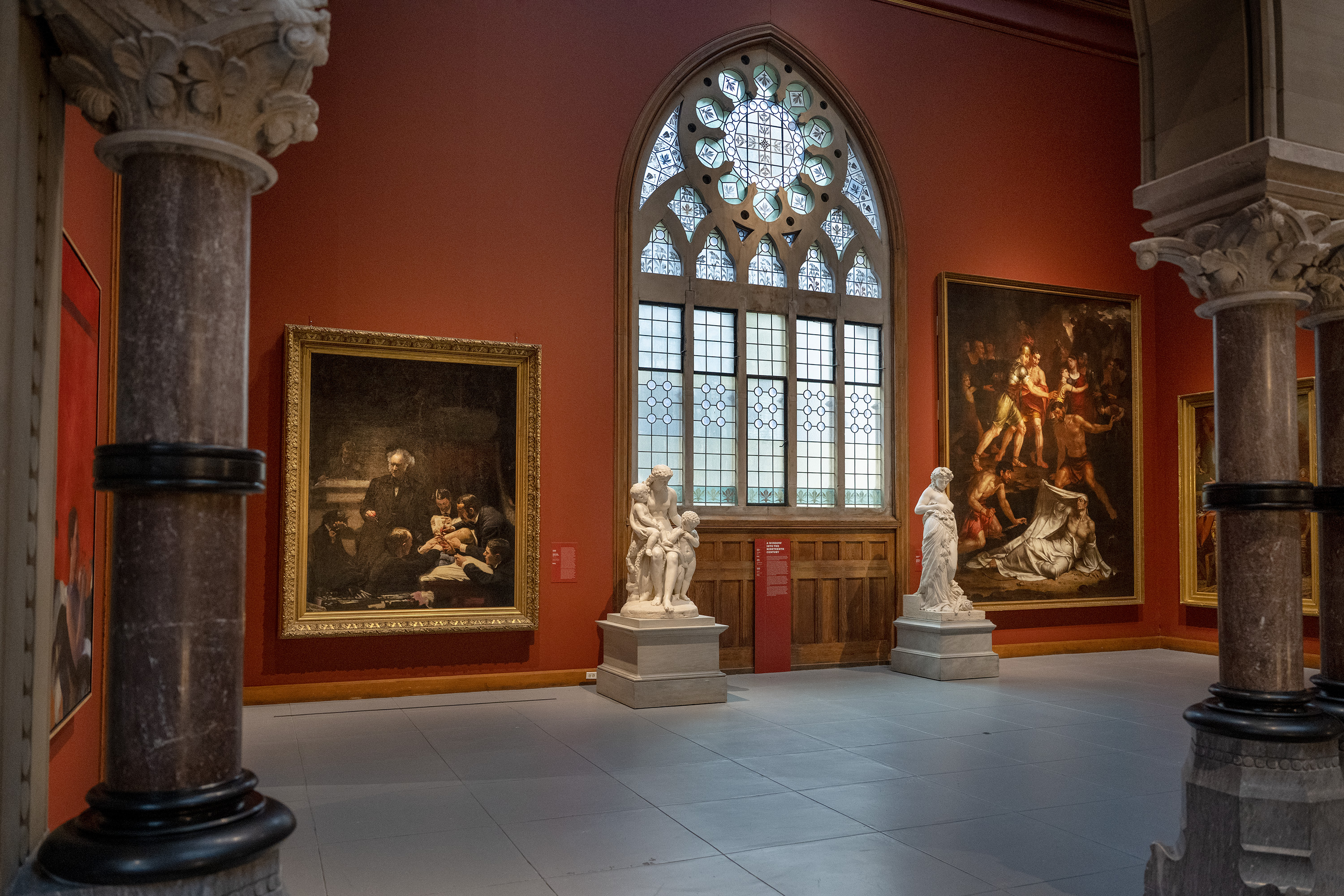
    The painting is currently owned jointly by the PMA and the Pennsylvania Academy of the Fine Arts (PAFA), where Eakins studied.

    But the story of the journey to that ownership is not a simple one.

    In 2006, after 128 years of displaying the painting at Jefferson, the university sold it in a surprise deal. Local institutions had 45 days to match the price: $68 million.

    PMA and PAFA started a public fundraiser, and Philadelphians took swift action — no one was going to take their painting away from them.

    Twenty years ago, Philadelphia almost lost The Gross Clinic forever. Almost.

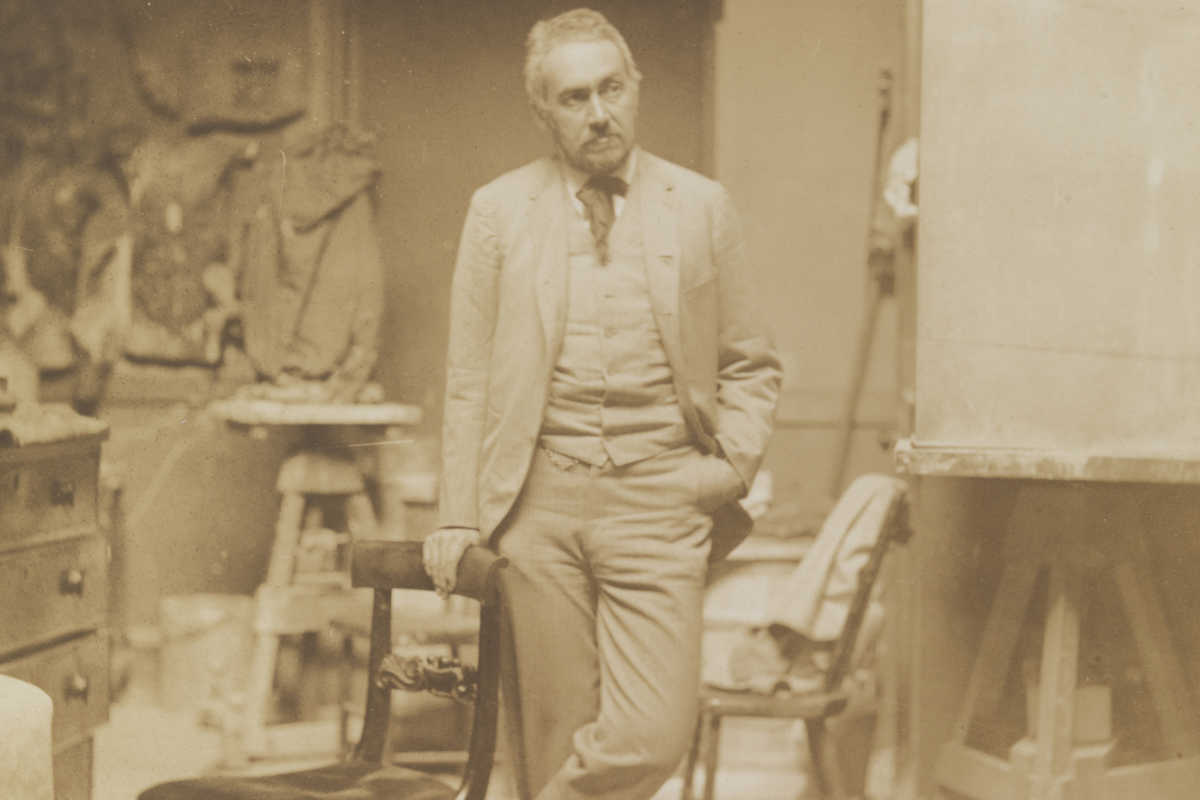
    Thomas Eakins in his Chestnut Street studio.Photo taken by Samuel Murray.

    The slow burn of ‘The Gross Clinic’

    Eakins was incredibly passionate about the medical profession. So much so that while studying at PAFA, he also enrolled in anatomy and dissection courses at Jefferson, where Gross was teaching.

    “He was very obsessed with the accuracy of the body because as a painter, knowing the human body and depicting it is the highest skill level to attain,” said Reisa Mukamal, a PMA museum guide.

    In The Gross Clinic, Gross is operating on an adolescent boy with osteomyelitis, a bone infection that had previously been treated with amputation. The painting depicts the doctors performing a newer procedure for the disease involving removing the damaged bone tissue rather than cutting off the limb — a stunning medical advancement.

    Works in the newly renovated Furness and Hewitt building at the Pennsylvania Academy of the Fine Arts, including “Portrait of Dr. Samuel D. Gross (The Gross Clinic)” by Thomas Eakins.Tom Gralish / Staff Photographer

    “The light is shining off Dr. Gross’ head and it’s almost like your eye goes there. It’s a dark painting, and then your eye goes to his forehead, sort of symbolizing his intellect. … This is a live surgery, which was a brand new thing to paint,” said Mukamal.

    Eakins was excited to show off The Gross Clinic at the 1876 World’s Fair in Fairmount Park, which doubled as a Centennial celebration and exhibition.

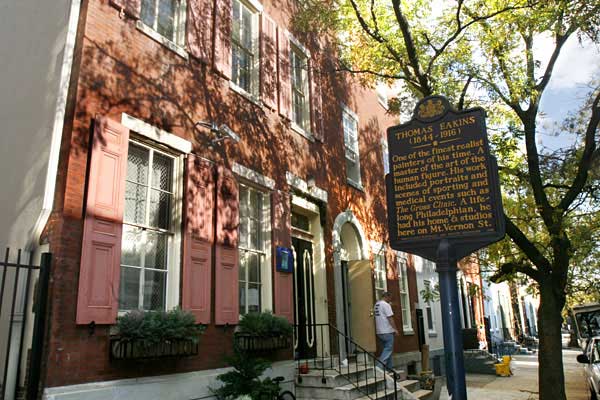
    Thomas Eakins lived virtually his entire life in Philadelphia, including at 1729 Mount Vernon St. He was a student and later a teacher at the Pennsylvania Academy of the Fine Arts.Gerald S. Williams / Staff Photographer

    Unfortunately for the young artist, it was perceived as too disturbing for the art jury. The painting was moved to the fair’s U.S. Army field hospital exhibition due to its medical nature. Jefferson alumni gifted it to the university two years later.

    ‘It belonged here’

    But 128 years after receiving that gift, Jefferson made a shocking announcement. On Nov. 11, 2006, university officials said The Gross Clinic was to be sold to a museum partnership between the National Gallery in Washington and the Crystal Bridges Museum of American Art in Arkansas, for $68 million.

    The money from the sale would help finance an ambitious expansion plan for the medical school.

    “This is a big undertaking, a transformational undertaking, and it requires a redirection of our assets,” said Robert L. Barchi, Jefferson’s president, in a November 2006 interview with The Inquirer’s Stephan Salisbury.

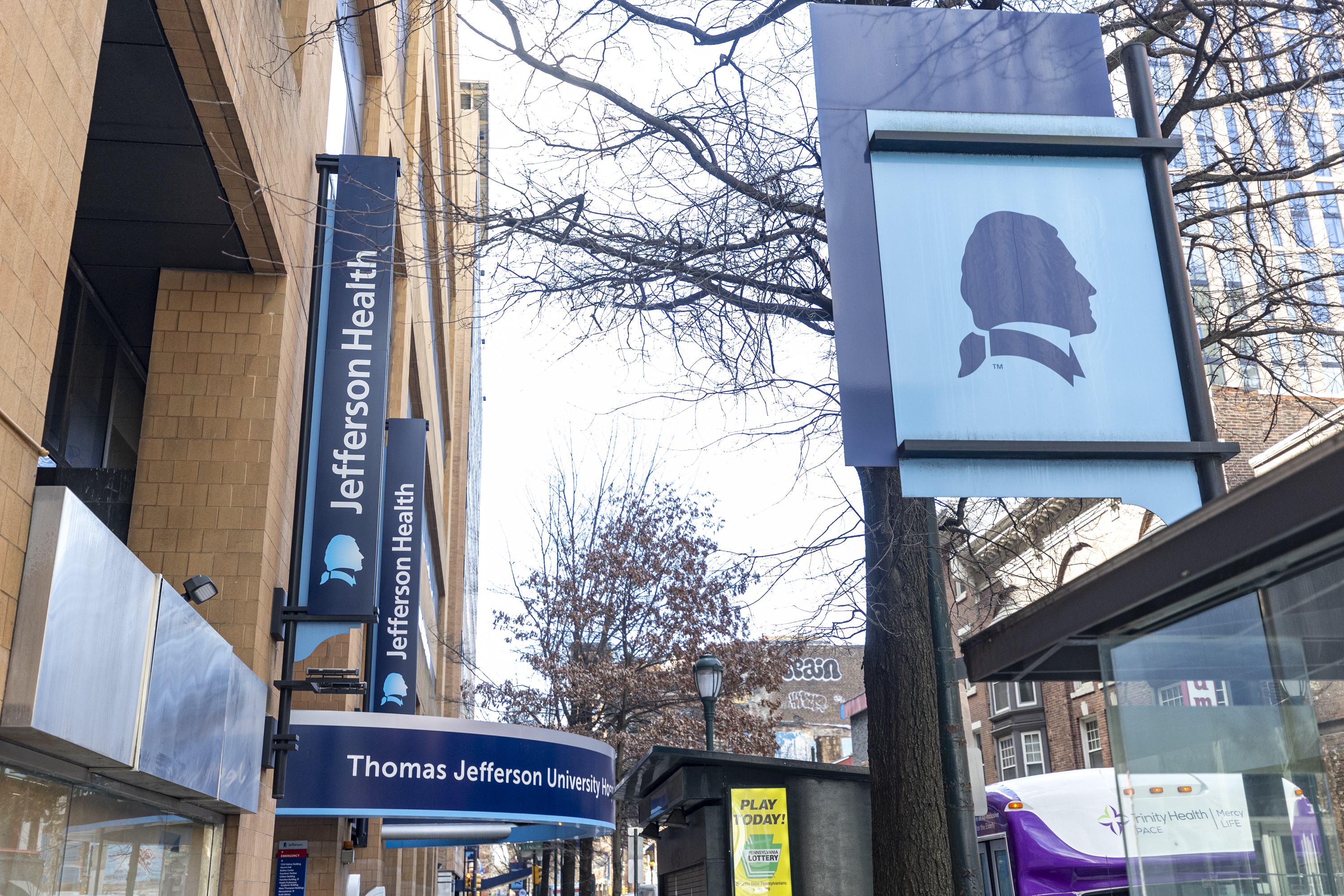
    Thomas Jefferson University Hospital entrance at 11th Street in Philadelphia.Tyger Williams / Staff Photographer

    “We’re not a museum. We’re not in the business of art education,” he added.

    Jefferson’s chairman of the board, Brian Harrison, said, “Our first obligation as trustees of the university, if we are going to release an asset like this, is to maximize value.” He acknowledged the “importance of the painting” to Philadelphia and noted that “the [Jefferson] alumni revered” it.

    Once the deal brokered by the auction house Christie’s was struck, an additional clause was added to the agreement. It allowed Philadelphia to keep the painting if it could match the sale price. Jefferson gave the city 45 days to do so — a month and a half to raise the largest amount ever paid for a pre-World War II American painting up until that point.

    “There’s no museum, in fact I can think of no nonprofit in the U.S., that can raise $68 million in 45 days,” said Kathleen Foster, senior curator and director of the Center for American Art at the Philadelphia Museum of Art. “There wasn’t really time to twiddle our thumbs, we had to just dive in.”

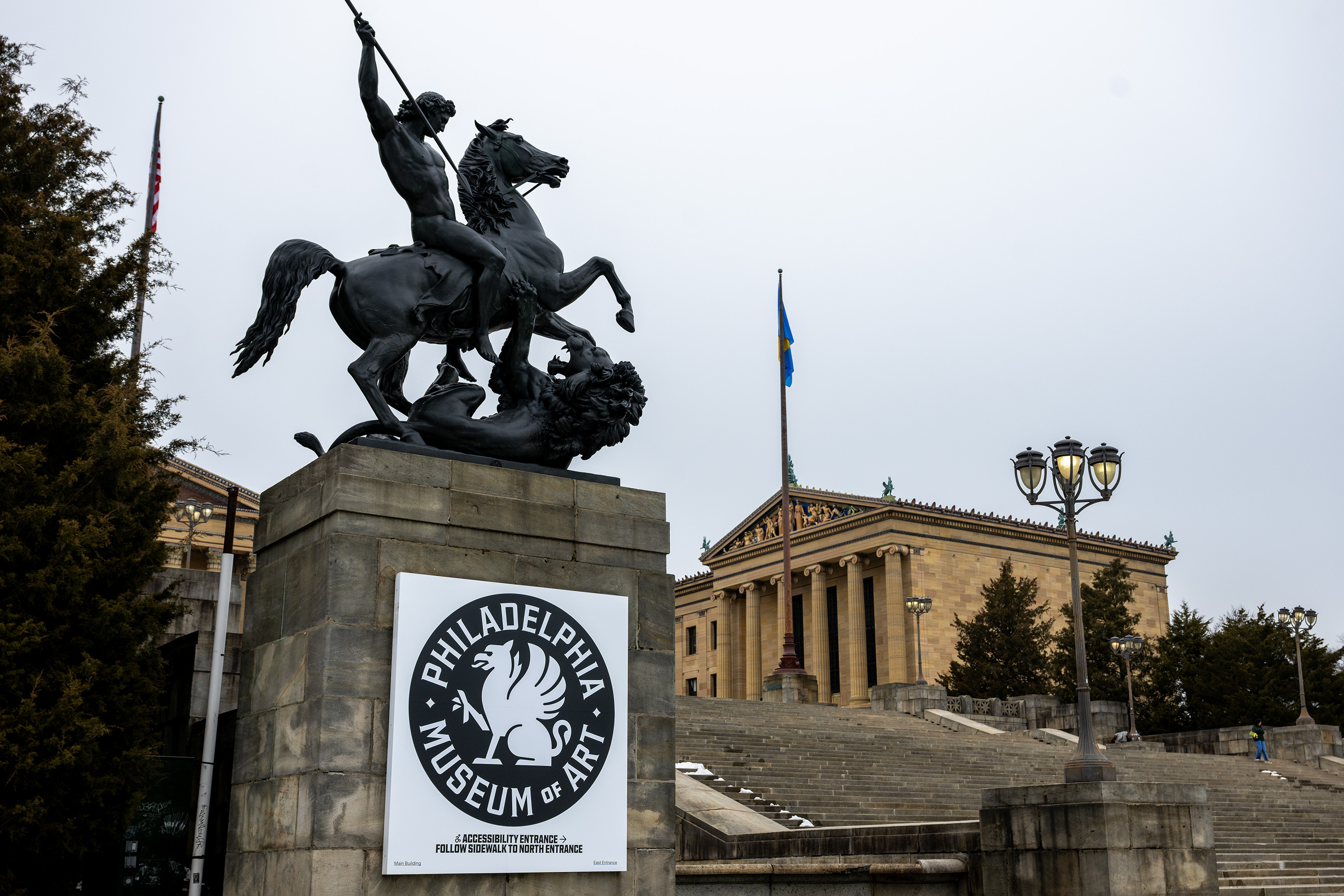
    One of the newly installed signs at the Philadelphia Museum of Art.Tom Gralish / Staff Photographer

    Anne d’Harnoncourt, the director and CEO of PMA at the time, “was never ever dissuaded,” Foster said. She started a fundraising campaign and immediately put the museum staff on phones calling government officials. She had them giving talks to the public, updating them on the campaign, and she suggested partnering with PAFA.

    The museums met with bankers and coordinated to receive donations from Philadelphia-based philanthropists. The Annenberg Foundation, Gerry Lenfest, Pew Charitable Trusts, Nicholas and Athena Karabots, and Joe Neubauer all pledged donations in the millions, making up about a third of the funds raised.

    Joe Neubauer, chair of the Neubauer Family Foundation.Jose F. Moreno / Staff Photographer

    Neubauer, formerly CEO of Aramark, has supported several institutions through his family foundation, including the Pew Research Center, Brandeis University, the Jewish Theological Seminary, and Calder Gardens.

    “I like challenges. This seemed to me to be in the essence of Philadelphia,” said Neubauer, who donated $3 million to the cause. “An artist, who was the greatest artist in Philadelphia in his period, this was his greatest piece that he had ever done. It’s been in Philadelphia from the beginning. He lived in Philadelphia, worked in Philadelphia, went to art school in Philadelphia, went to Central High School. It belonged here and to take it out seemed to be just not fair.”

    A few Eakinses for an Eakins

    Both the PMA and PAFA parted ways with several of Eakins’ other paintings they owned via a process called deaccessioning — selling work from the collection and using those funds to keep The Gross Clinic.

    Among Eakins’ paintings that the PMA sold was one of a cowboy playing the banjo. Several Dakota landscape paintings went to a Western art collection in Denver. PAFA had to sell a more beloved Eakins piece, called The Cello Player, to a private collector.

    The Pennsylvania Academy of the Fine Arts’ Frank Furness-designed building on North Broad Street.Tom Gralish / Staff Photographer

    “That was sort of a necessary tragedy. Because it’s a private collector, they could come up with money fast, and the academy could get the money quickly,” said Foster. “For the museum it was a happier ending because the paintings [it deaccessioned] went on view to the public. For the academy it was sadder because the painting has basically disappeared, gone underground.”

    As PMA and PAFA acquired big-name donors and sold beloved artwork, the story of the campaign reached the public. Civic outrage ensued.

    ‘Hopping mad’ Philadelphians

    Steven Conn, a history professor at Miami University of Ohio, was invited to discuss the matter on a local AM talk radio show, then known as The Big Talker, after he criticized the sale of the painting on NPR.

    “I had expected to defend the idea that we should care at all about the sale of this painting and was caught off-guard when I realized that not only the host but several of the callers were hopping mad about it too,” Conn wrote in the 2012 essay “Local Hero: The Gross Clinic and Our Sense of Civic Identity.”

    Allen Kosanovich, a Mellon Fellow in Conservation, works on restoring the part of the “Gross Clinic” painting where the gallery is watching the surgery.Michael Bryant / Staff Photographer

    Kathleen Foster recalls that even Conn’s taxi driver, who picked him up at the airport, became “incensed” when Conn brought up the possible sale of The Gross Clinic. The public was angry, and so were public officials.

    “I had to give this talk and in the front row, there was Ed Rendell leaning forward in his chair, drinking up every word I was saying. Who knows whether he had any idea who Thomas Eakins was before he got this pep talk,” said Foster.

    Rendell was governor of Pennsylvania at the time, and had previously served as the mayor of Philadelphia.

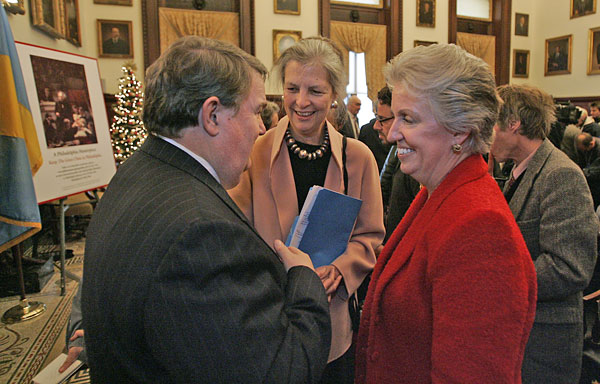
    Hugh C. Long of Wachovia’s MidAtlantic Banking Group, with Art Museum director Anne d’Harnoncourt (center) and Rebecca Rimel, president and CEO of the Pew Charitable Trusts. (MICHAEL BRYANT / Inquirer Staff Photographer)

    “He called up the director of the National Gallery and screamed at him,” said Foster. “He just said, ‘How dare you take this away from Pennsylvania? For shame!’ I heard the director had to hold the phone away because he was being yelled at by the governor of Pennsylvania. That kind of energy I think is pride that this is a gem for our city and for the state.”

    But more important than how angry they were was how willing people were to donate. Before Reisa Mukamal was a PMA guide, she was living in Swarthmore, raising four children and working as a synagogue teacher and writing tutor. When she heard about the campaign, she knew she had to donate.

    “I must’ve read about it in the news,” she said. “I didn’t contribute a lot, it was a modest amount of money. But there was no way I was going pass that up and it seemed like a once-in-a-lifetime story.”

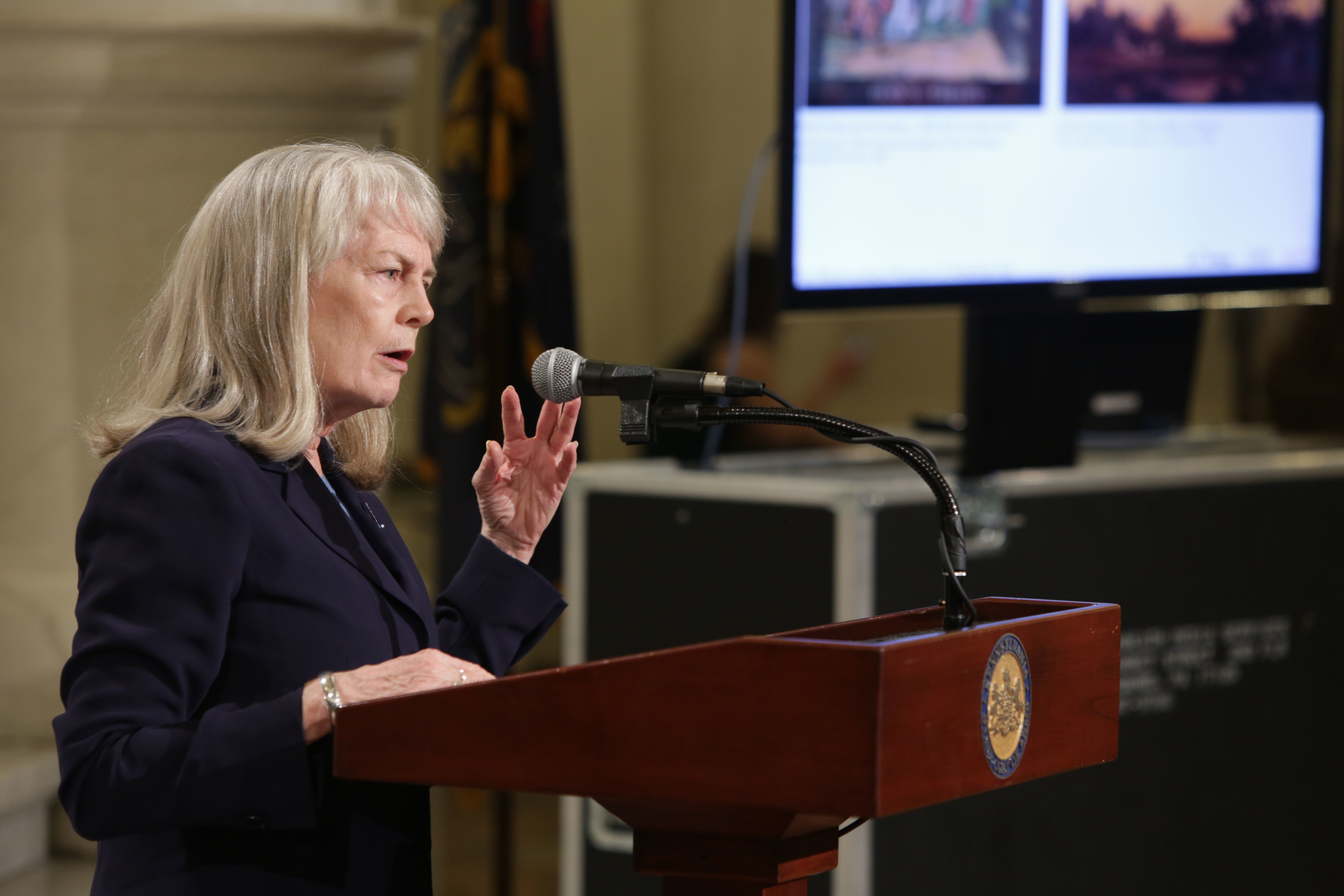
    Kathleen Foster, senior curator and director of the Center for American Art at the Philadelphia Museum of Art, discusses the art-sharing initiative during a press conference at the Pennsylvania Capitol, on April 29, 2019.GK Visual

    ‘Why would we want to let a cherished piece of art leave the community?’

    Foster’s favorite story is of a little boy who donated $2.46 (his piggy bank savings) to the cause after watching his grandfather become infuriated after hearing about the story on television.

    “It’s that kind of anecdote that just was so heartwarming that we just had Philadelphians at home in their living rooms listening to the television, maybe reading stuff from Stephan Salisbury in The Inquirer, and being outraged. We had this torrent of small gifts that were so adorable. Students, people with no money, and then there were the Annenbergs of the world giving a million dollars. We had this amazing spectrum of people.”

    In Salisbury’s original coverage in The Inquirer, he reported that “a woman in Wyoming sent in $25 because her daughter, who lives in Philadelphia, said she wanted a ‘donation to this fund’ as a Christmas present” and “a woman from Philadelphia sent in $100 and noted that she had taken her whole family to see The Gross Clinic over the Thanksgiving holiday.”

    Faculty members at PAFA started selling buttons at the foot of the Rocky steps for a dollar; they said “Keep ‘Gross’ in Philadelphia.” From time to time, they’d bring their jar of dollars into the PMA to donate toward the fundraiser.

    Former Mayor Ed Rendell during opening night of 1776: The Musical at the Philadelphia High School for Creative and Performing Arts on Wednesday, June 24, 2026.Elizabeth Robertson / Staff Photographer

    “It’s amazing to me that people hear about things in the news, whether they read it or watch it somewhere, and all of a sudden, $10, $15 dollars, $5, $1,” said Neubauer. “Contributions now are much more easily made than writing a check and putting it in an envelope and putting a stamp on it. It caught the spirit of the people. Philadelphians are proud of their city, and this was a pride in the city. Why would we want to let a cherished piece of art leave the community?”

    The PMA and PAFA say the campaign received money from between 3,400 and 3,600 donors from across the nation.

    A last-minute fundraising drive kept “The Gross Clinic” in Philadelphia and staved off its sale to two out-of-town museums.Eric Mencher / Staff Photographer

    “I hope people appreciate that it’s not contemporary art, it’s 19th-century art. When I was younger I always marveled at cave drawings. Why did people draw in the caves? Because it was important to them to show what nature was,” said Neubauer.

    The PMA and PAFA raised enough money by the Dec. 26 deadline to keep The Gross Clinic at their institutions indefinitely.

    “I think it’s very important for people in Philadelphia to go see it and understand that it was done in Philadelphia by Philadelphians for Philadelphia,” said Neubauer.

    Supporters packed into the PMA’s Great Stair Hall to cheer on this victory for the Philadelphia art world.

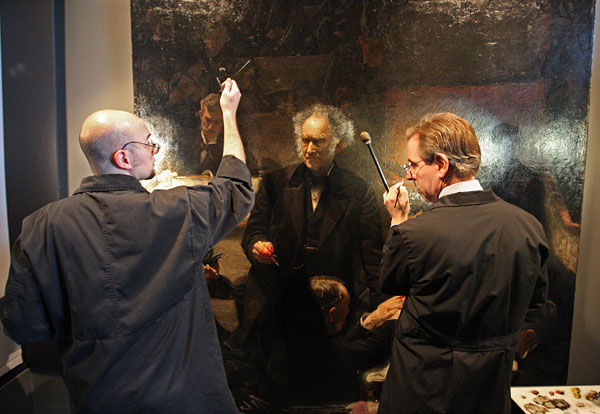
    Conservators Allen Kosanovich (left) and Mark S. Tucker work on Thomas Eakins’ “The Gross Clinic.”Michael Bryant / Staff Photographer

    “Ed Rendell came to the microphone, put his arms up like Rocky, and just bellowed in triumph over the acquisition of this painting,” said Foster. “This cheer goes up from the room, I thought the roof was going to lift. It was like we had won the Super Bowl.”


    “The Gross Clinic” is currently on display in the Historic Landmark Building at the Pennsylvania Academy of the Fine Arts, 118-128 N. Broad St., Philadelphia, Pa. 19102.

    [Editor’s note: Morgan Ritter is The Inquirer’s first recipient of the Stephan Salisbury Internship for Arts Journalism. Salisbury died in 2024, after a long career as an arts and culture reporter for The Inquirer — including his reporting on the proposed sale of “The Gross Clinic.” ]

  • The world’s largest mobile, awesome lanterns, and other Philly art you must experience this week

    The world’s largest mobile, awesome lanterns, and other Philly art you must experience this week

    A Philly punk soundtrack for a stoner comedy

    It’s a good month to be Mannequin Pussy.

    Last week, the Philly band played its biggest ever hometown show as the first act at the Foo Fighters’ “Take Cover” tour at Lincoln Financial Field. Dressed in Eagles green, the band commanded attention, with singer Marisa Dabice stripping down to a T-shirt with a meme of Family Guy’s Peter Griffin proclaiming: “I will die for my country Philadelphia.”

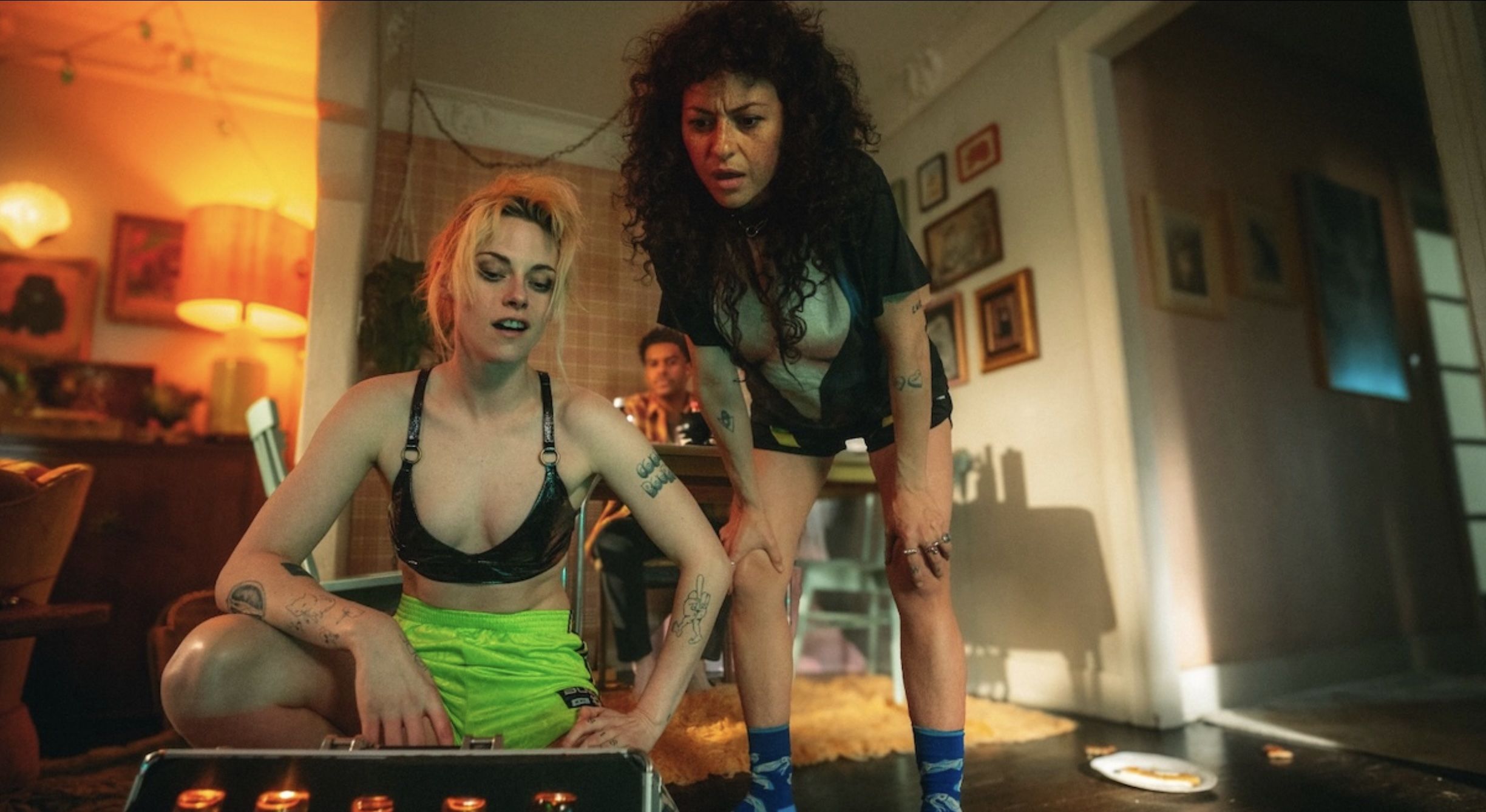
    Kristen Stewart and Alia Shakwat in Dylan Meyer’s stoner comedy ‘The Wrong Girls,’ which features performances by Philly punk band Mannequin Pussy and music by Sheer Mag.NEON

    Now, the band is also featured prominently in The Wrong Girls, the frequently hilarious new stoner comedy starring Kristen Stewart and Alia Shawkat. It’s written and directed by Stewart’s wife, Dylan Meyer, and the loaded cast includes LaKeith Stanfield, Kate McKinnon, Zack Fox, with Seth Rogen and Kumail Nanjiani voicing a pair of cats.

    In The Wrong Girls, the plot turns on a mistaken identity encounter that Stewart’s delivery driver/secret genius character Frankie has at a Mannequin Pussy show.

    Just as they did onstage at the Linc, the band makes the most of its screen time, turning in ripping versions of “Patience” and “I Got Heaven,” the title track from the 2024 album that the band, who opened for Florence + the Machine this year and was featured in a NPR Music Tiny Desk Concert, continues to support on the road.

    They play European dates this month and will rejoin the Foos in North Dakota and Canada in September.

    Besides Mannequin Pussy, The Wrong Girls, which is playing at area theaters, also features a Philly-connected garage-punk soundtrack that reflect Meyer’s excellent taste. The opening credits song is “What You Want” by Philly’s Sheer Mag, the score is by Ty Segall, and songs are heard by Tacocat and Slutever, the 2010s L.A. punk led by Philly natives Nicole Snyder and Rachel Gagliardi.

    Mannequin Pussy is playing the First Unitarian Church, 2125 Chestnut St., Oct. 28, r5productions.com.

    — Dan DeLuca

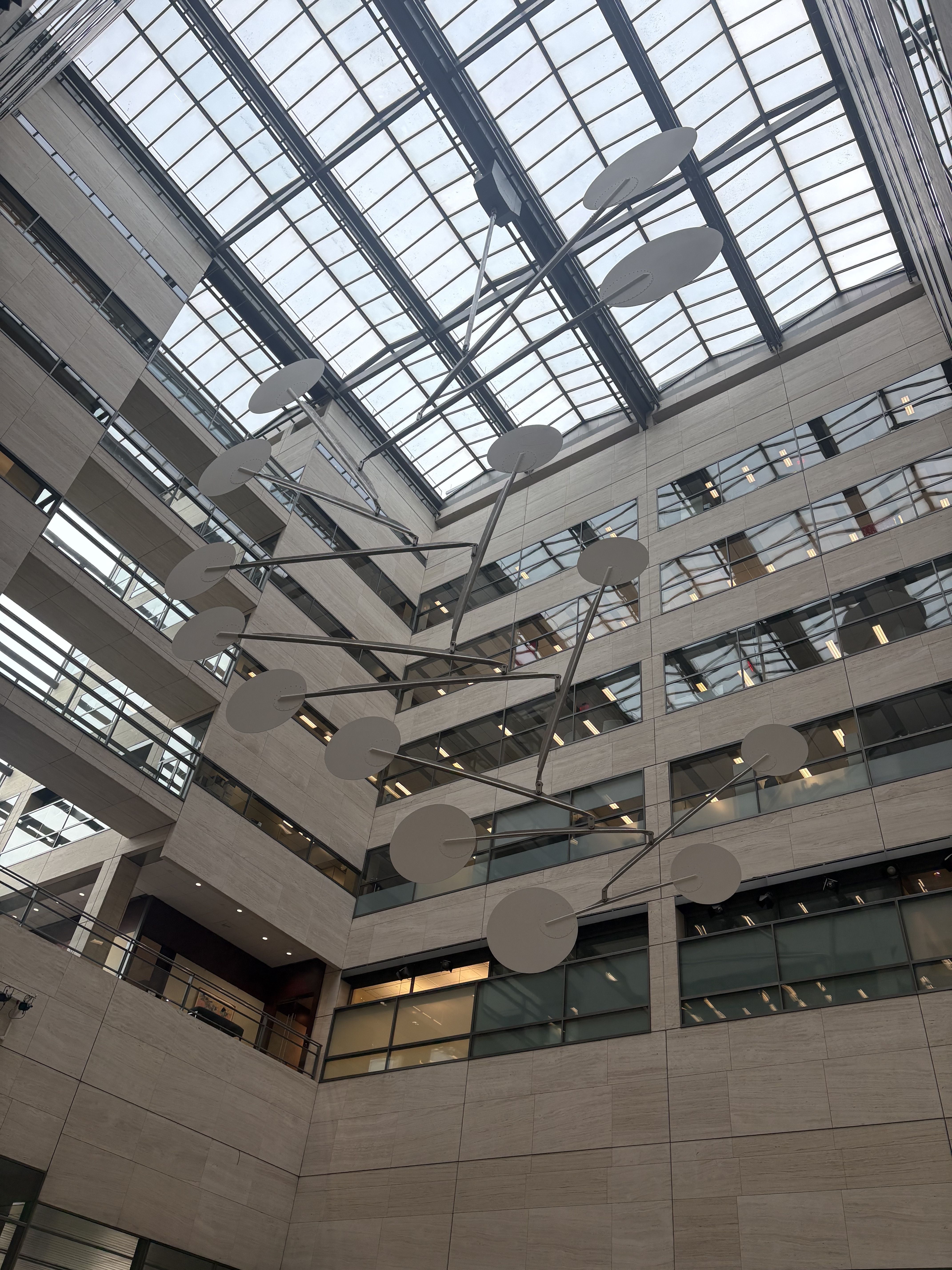
    “White Cascade” by Alexander “Sandy” Calder at the Federal Reserve Bank of Philadelphia.Peter Dobrin

    The largest mobile in the world

    When Calder Gardens opened nearly a year ago and the spotlight was on the pioneer of the mobile, Calder fans were unable to see the artist’s largest contribution to the genre. That’s because public access to White Cascade in the Federal Reserve Bank of Philadelphia was closed off for a year during an exhibit renovation in the atrium.

    In June, though, the Philadelphia Fed reopened access to the piece, one of Alexander “Sandy” Calder’s last before his death in 1976.

    You do wish it were a little more accessible. The piece is hung quite high, so you have to try a few spots to fully appreciate it. Employees looking into the atrium from areas not open to the public probably have the better view.

    Still, one overcast morning this week, its lithe, hypnotic presence belied the superlative statistics. White Cascade is not only Calder’s largest piece — it is 100 feet tall, and weighs almost 10 tons — it is often cited as the largest mobile in the world.

    And yet, it has a way of disappearing.

    “We get folks who stop and look up at it,” said Todd Zartman, the Philadelphia Fed’s economic education manager, “and then other folks, they might work here two or three weeks and they’ll walk right under it and not realize what it is until someone points it out to them.”

    What might not be obvious to either kind of viewer is that the mobile isn’t static. It’s hung from a motor that rotates the entire work at a very slow — though adjustable — speed.

    “It’s been at this speed for quite a while, as long as I can remember, but I know it has been quicker at times,” said Zartman.

    The gradual journey, which takes about 45 minutes per cycle, adds to the arresting effect. White Cascade moves so slowly, you can find yourself standing there for a while trying to prove to yourself that it does move.

    If there’s any larger meaning to the piece, it’s up to the individual viewer to find it.

    “The economy is constantly moving, it’s also not static, so I often tell people it kind of fits well here,” said Zartman.

    “To most people who look at a mobile,” Calder once said, “it’s no more than a series of flat objects that move. To a few, though, it may be poetry.”

    The artist might have appreciated the response of one visitor.

    “I had a young girl who said it reminds her of the wintertime, of snowflakes coming down,” said Zartman, “and I thought about that, and I was like, ‘That’s kind of relaxing.’”

    “White Cascade” can be seen at the Federal Reserve Bank of Philadelphia, 10 Independence Mall (Sixth St. between Arch and Race), Monday through Friday, 9:30 a.m. to 4:30 p.m. Admission is free.

    — Peter Dobrin

    A display at the Philadelphia Chinese Lantern Festival, running through Aug. 30.Rosa Cartagena

    Lit snakes, foxes, flowers, and butterflies

    I played tourist last weekend as my parents were visiting and finally made my way to Franklin Square for the annual Philadelphia Chinese Lantern Festival. Unlike the weather in recent nights, it was a perfect evening to stroll through the wow-worthy sculptures of steel and silk.

    At points, I felt like I was walking around an animatronic zoo as a giant bear scooped up salmon and raccoons played around. (I could skip the ones that talked.) Artisans from Zigong, China, created rows of flowers and families of animals like tigers, horses, and otters that completely take over the park. The central fountain is dotted with lit-up lily pads and dazzling swans while nearby there’s an entire jungle habitat with monkeys, birds, butterflies, an elephant, and a sassy snake whose automated mouth opens like a greeting.

    The welcome arch features an array of traditional lanterns with multicolored silk and cool graphics that make for an excellent photo op as does the massive dragon that takes up nearly an entire block.

    The shining star of the night for me was the stunning fox from the persimmon tree display meant to express “blessings of happiness, harmony, and success in the year ahead.” It lounged in front of the bright red fruit tree with a Mona Lisa smile, its mostly white fur illuminated by rainbow lights along its body and bushy, multilayered tail.

    This diva deserves its own animated movie because its presence was pure magic.

    The Philadelphia Chinese Lantern Festival runs through Aug. 30.

    — Rosa Cartagena

    RDZ Parfum’s latest fragrance, Wooder Ice, smells exactly like lemon water ice, a favorite Philly sugary-sweet summertime treat. It costs $160 for a 100 ML bottle and is available at Perfumology and online at RDZParfums.comAlex Rodriguez

    A wooder ice perfume for your pulse points

    With top notes of Italian lemon, sweet orange, and bergamot, perfumer Alex Rodriguez’s latest fragrance, Wooder Ice, smells exactly like lemon water ice, a favorite Philly sugary-sweet summertime treat.

    But the perfume’s black currant middle notes and cedar wood and vanilla base gives it a musky vibe turning the warm weather-inspired scent into one that boasts sultry fall redolence.

    And I love it, surprising even myself. I’m not a fan of florals or citrus scents but warm amber and musk notes ground me in reality. A few sprays of RDZ Parfum’s Wooder Ice on my pulse points lit up my summertime glow. Yet, I could see myself cozying up by the fireplace in the wintertime with Wooder Ice wafting in the background.

    That’s the point, said Rodriguez, who released RDZ’s 15th perfume Friday.

    “This is a lemon vanilla gelato,” Rodriguez said. “I want people to take their summer memories into the cold, winter months.”

    Rodriguez, the 40-year-old founder and creative director of RDZ Parfum, was born in Camden and spent his preschool years in Puerto Rico before moving back to live in South Jersey and North Philadelphia. He now lives in Pottstown.

    He launched his prestige perfume collection in 2023 to make scents that celebrate his Puerto Rican heritage and Philly-area upbringing. Leyenda 21, his first scent is a salute to Pittsburgh Pirates’ rightfielder Roberto Clemente — one of the first Puerto Ricans to play in the MLB. RDZ’s Art Museum scent, infused with palo santo, is an olfactory nod to the Philadelphia Museum of Art.

    But wait a minute. If Wooder Ice is an ode to Philadelphia, shouldn’t the first scent be cherry?

    He kind of already did that.

    Two years ago, Rodriguez released Philadelphia.

    In addition to geranium, rose, and grass notes in honor of Longwood Gardens and Fairmount Park and salty hints for the soft pretzel, Philadelphia had a very cherry vibe.

    Rodriguez decided to center lemon as the first in his Wooder Ice grouping because it’s his favorite flavor, reminding him of the days when he would frequent Rita’s Ice on South Jackson Street in Camden. “It was just so refreshing,” he said, adding that he’d like to expand Wooder Ice to center other flavors like cherry, grape, and mango.

    “RDZ is about my landscapes, my memories, my culture, and my background,” he said. “Wooder Ice is an extension of that.”

    Wooder Ice is $160 for a 100 ml bottle. It is available at Perfumology, 25 N. Third St. and on RDZParfums.com

    — Elizabeth Wellington

    The return of Isaiah Rashad

    The past five years for Tennessee-born rapper Isaiah Rashad haven’t been quite as blissful. In fact, by the emcee’s own account, it’s been pretty awful.

    In February 2022, an alleged sex tape involving Rashad was leaked on social media, prompting the introverted artist to address his sexual fluidity in media interviews. His bouts of alcoholism, substance abuse, and family drama only added to the descent, which led to a five-year stretch of inactivity.

    That was until Rashad released It’s Been Awful in May. It’s an album unveiling his thoughts at the height of the descension, and the journey he’s undertaken to climb out of it.

    His performance on Thursday started on shaky ground. He opened the show to “The New Sublime” and dropped the mic while leaping from one platform to the other. The crowd recited his lyrics as Rashad, smiling from the embarrassment, walked around to find a quick fix.

    Right before the final verse, someone from backstage handed him a fresh mic, and he reverted into rap mode without missing a step.

    Despite the technical missteps and Rashad’s irritated vocal chords, it was incredible seeing him fight through it all to perform records like “Free Lunch,” “4r Da Squaw,” “Heavenly Father,” and other records that span his decade-long career.

    But no track was more symbolic than “The New Sublime,” an especially breezy song that signals his personal ills, and the ones shared among those closest to him. Even with everything he has been through, Rashad calls for prayer and self-reflection to keep his mind at ease. Like the contrast of the song’s lyrics and instrumental, it’s chaos contained.

    That level of resilience, even in conditions as awful as this one, is why Rashad is considered a high-caliber artist. And why I walked away from his performance feeling like I not only “found” the real Isaiah Rashad, I understood him deeper as a man and artist.

    It’s Been Awful is available on all music platforms.

    — Earl Hopkins

  • Four Philadelphia artists are a part of this year’s Whitney Biennial

    Four Philadelphia artists are a part of this year’s Whitney Biennial

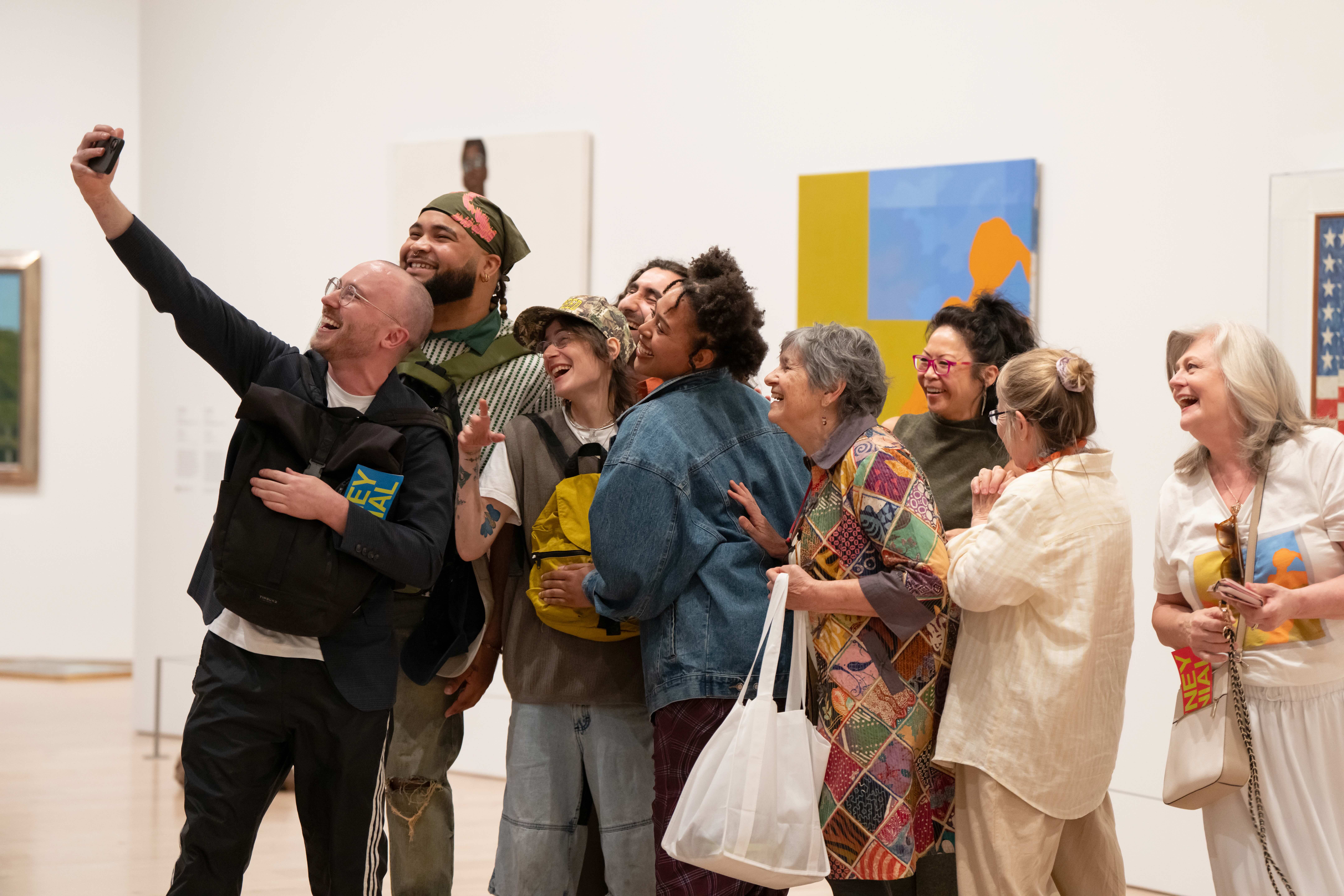
    Whitney Biennial curators travel the length and breadth of the country, paying visits to artists in their studios, surveying their work, and picking creators whose work they think represents the present climate of art making in the country. Together, they bring a once-every-two-years expansive exhibition to New York’s Whitney Museum of American Art, often regarded as the most prestigious and faithful register of American art.

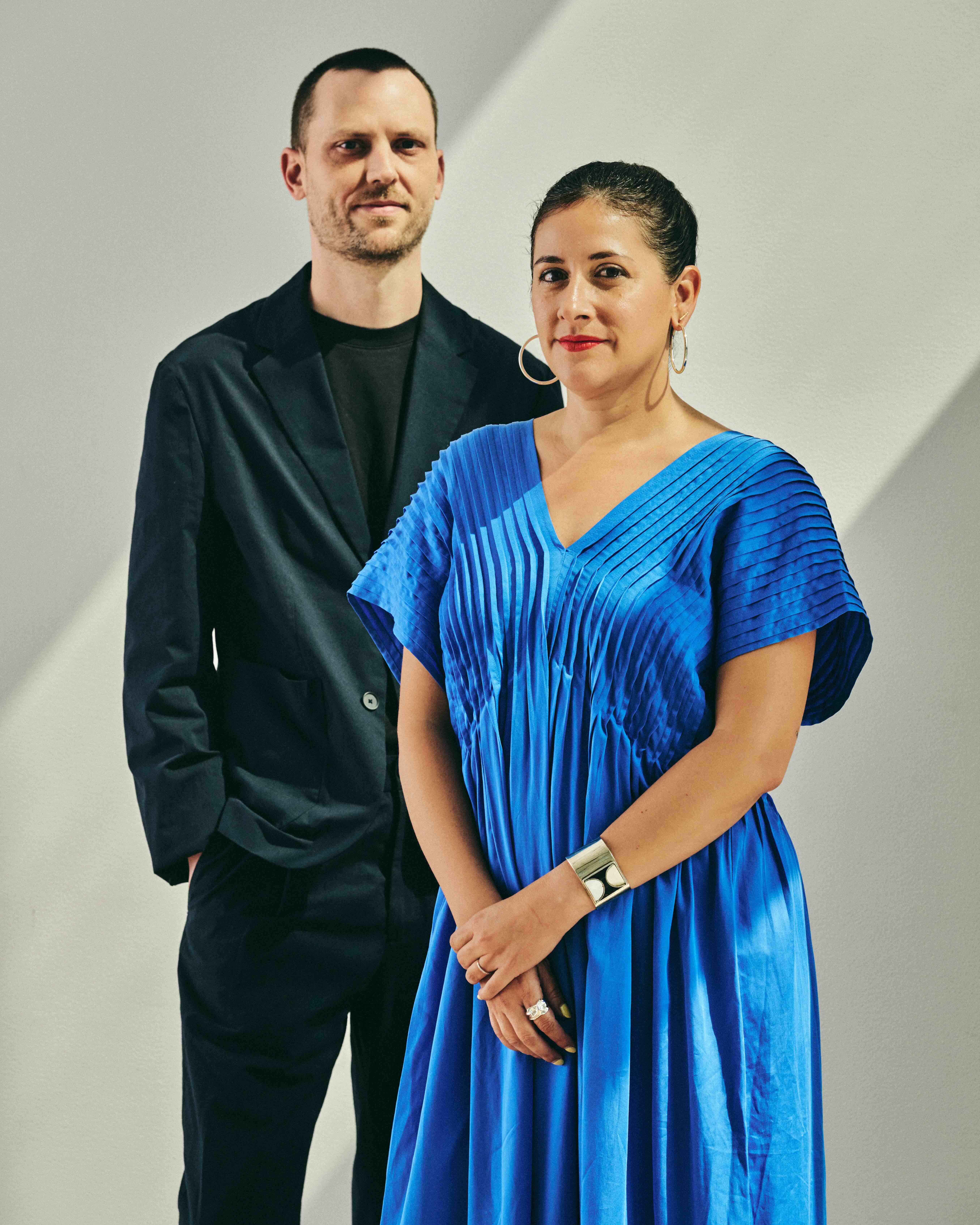
    Past biennial curators — the 2024 edition was curated by the Institute of Contemporary Art’s former associate curator, Meg Onli — have embarked on these travels separately, but for the country’s 250th year and the biennial’s 82nd, Whitney curators Marcela Guerrero and Drew Sawyer traveled together.

    Whitney Museum of American Art’s Biennial 2026 curators Drew Sawyer, Marcela GuerreroBryan Derballa

    “We wanted to just listen to artists and see where they were at, see what they were thinking about, how they were processing recent events,” said Guerrero. They traveled for a bit over a year, nationally and internationally, and visited more than 300 artists.

    “The idea of relationality and how do we relate in different ways” at political and interpersonal levels, is a theme that eventually emerged from their survey, Guerrero said.

    While in the past some curators have traveled as far as Hawaii, Guerrero and Sawyer’s short travel to Philadelphia in the winter of 2024 proved equally fruitful.

    “Philly was such a productive trip and very coherent in terms of what we were hearing from artists on gentrification, displacement, and the cost of living,” Guerrero said.

    Artists in Philadelphia, Sawyer noticed, “seem to be particularly preoccupied with ideas of infrastructure” and there exists a strong sense of connection among them. Several of the city’s artist are graduates of the MFA programs at the University of Pennsylvania and University of the Arts, taught by the same professors like Michelle Lopez (whose work is included in this year’s biennial) and Sharon Hayes (whose work was a part of the 2024 biennial).

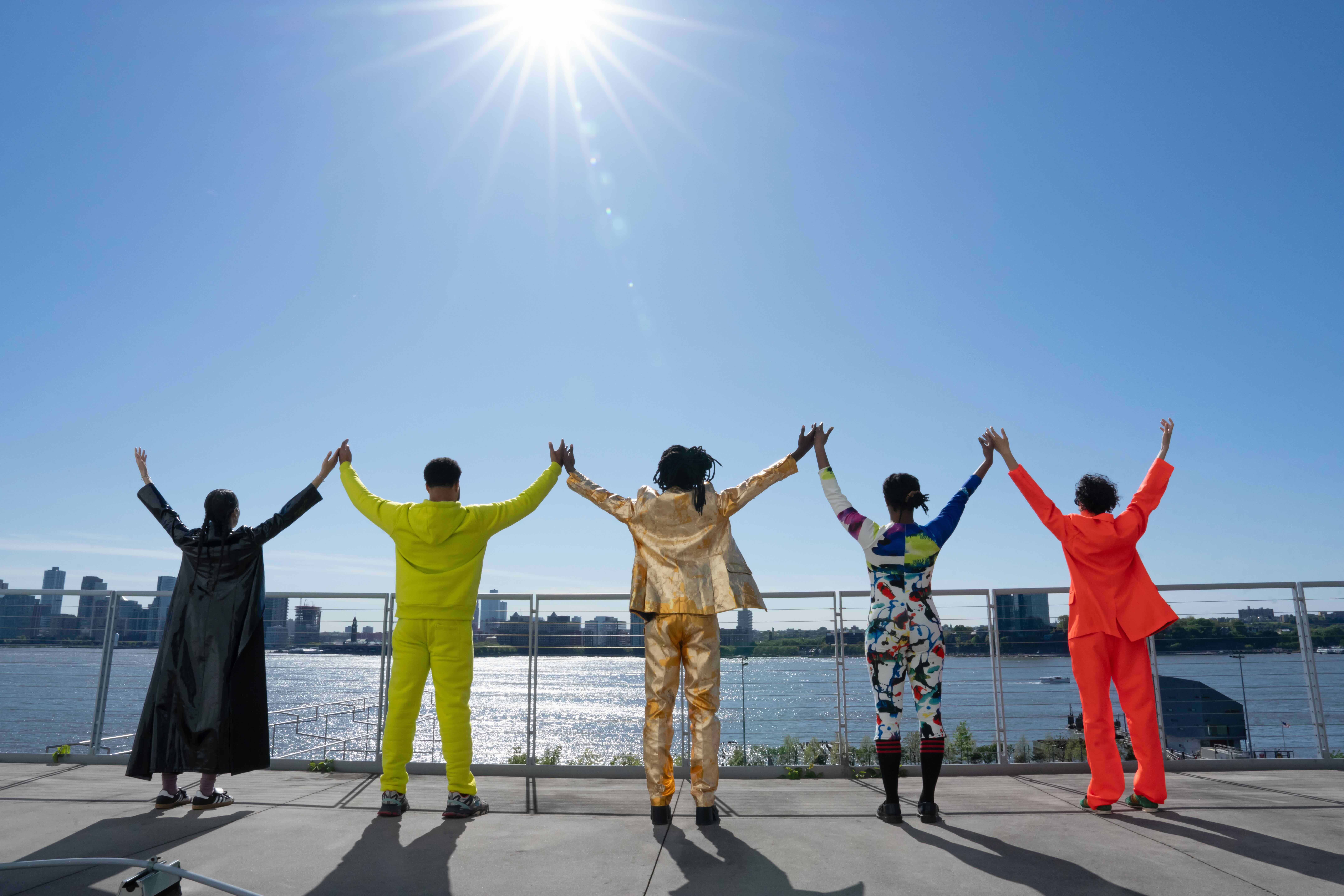
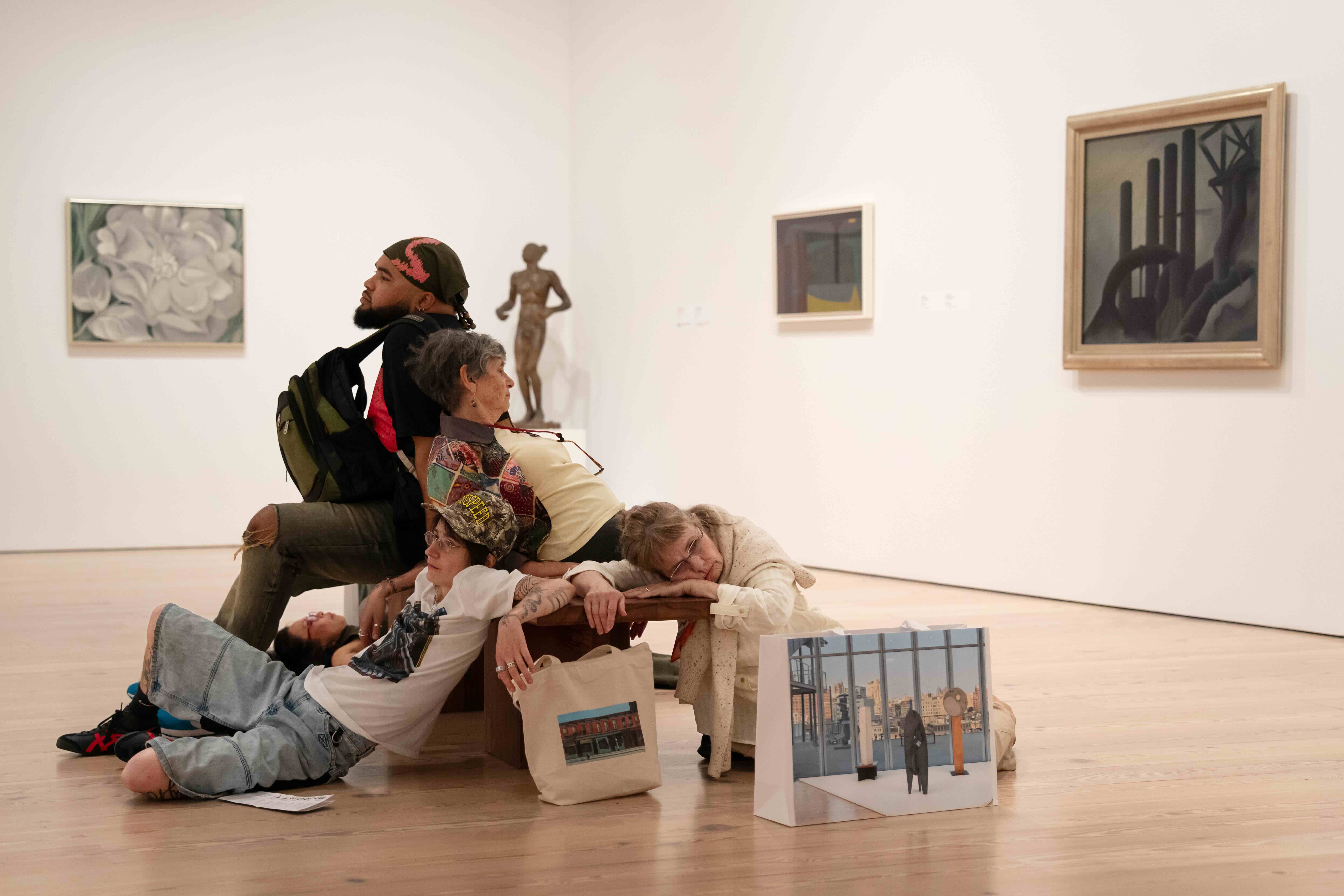
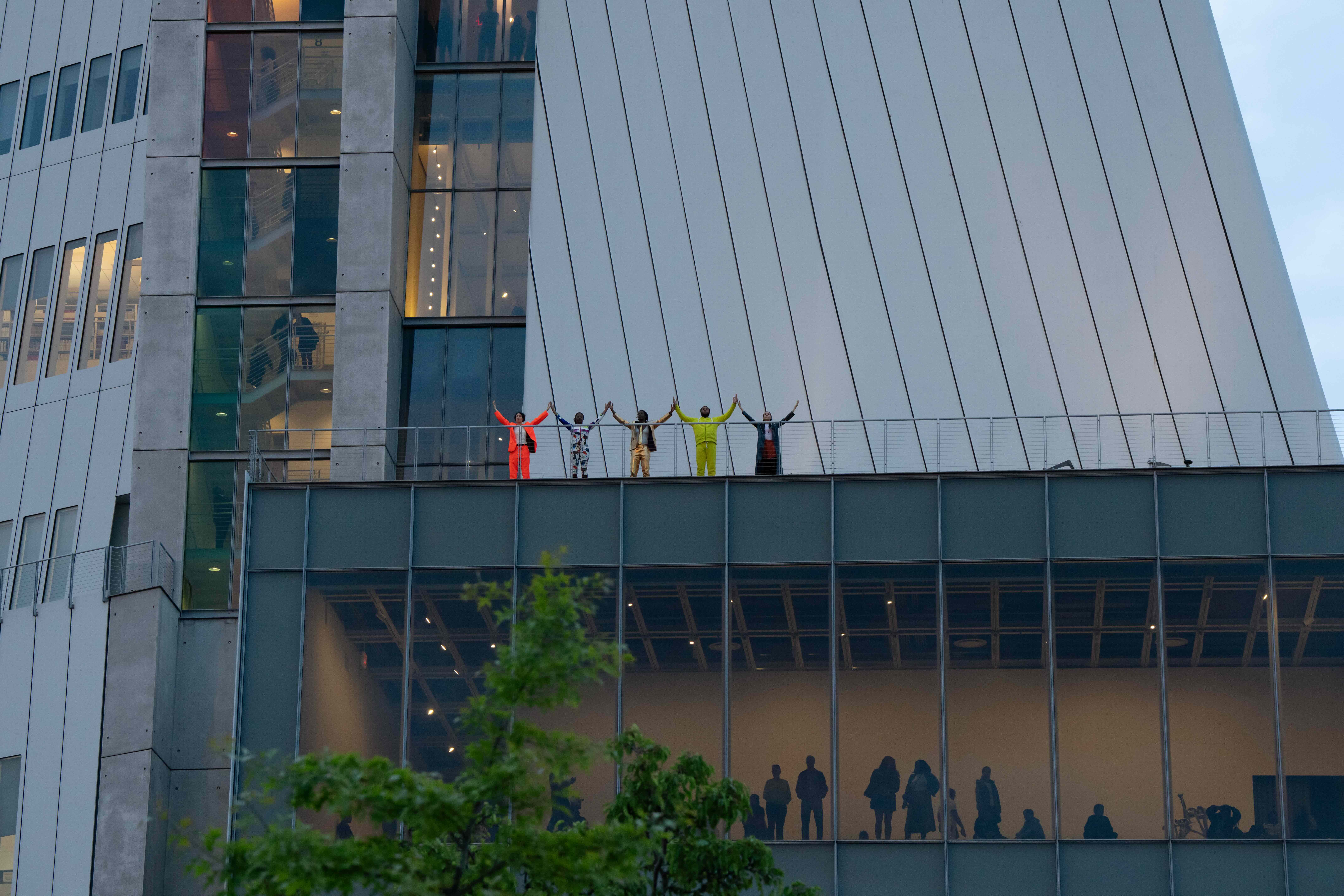
    Maia Chao, “Being Moved,” 2026. Performance, Whitney Museum of American Art, New York, May 14–17, 2026. Commissioned by the Whitney Museum of American Art.Julieta Cervantes

    Performance artists Maia Chao and Jonathan González, both of whose works are part of the biennial, live in West Philadelphia and are friends and collaborators. Emilio Martínez Poppe attended Penn and studied with Lopez, and was particularly interested in the idea of infrastructure from the perspective of the labor of public sector employees to help build and maintain our social and civic architectures.

    “A kind of certain institutional critique, I would say, was common” among Philadelphia artists, said Sawyer.

    “One of my biggest takeaways is the real vibrancy of the artistic scene in Philadelphia,” he said.

    Here are the Philadelphia artists whose works appear in the Whitney Biennial.

    West Philadelphia-based artist Maia Chao’s performance pieces “Being Moved’ and “Scores for the Museum Visitor” are part of the 2026 Whitney Biennial.Amelia Golden

    Maia Chao

    “Scores for the Museum Visitor,” “Being Moved”

    Maia Chao’s performance art emerges from studying social behavior. Where some might see the mundane walk from home to work, she sees choreography, a rhythm, and an interaction of the body with its surroundings.

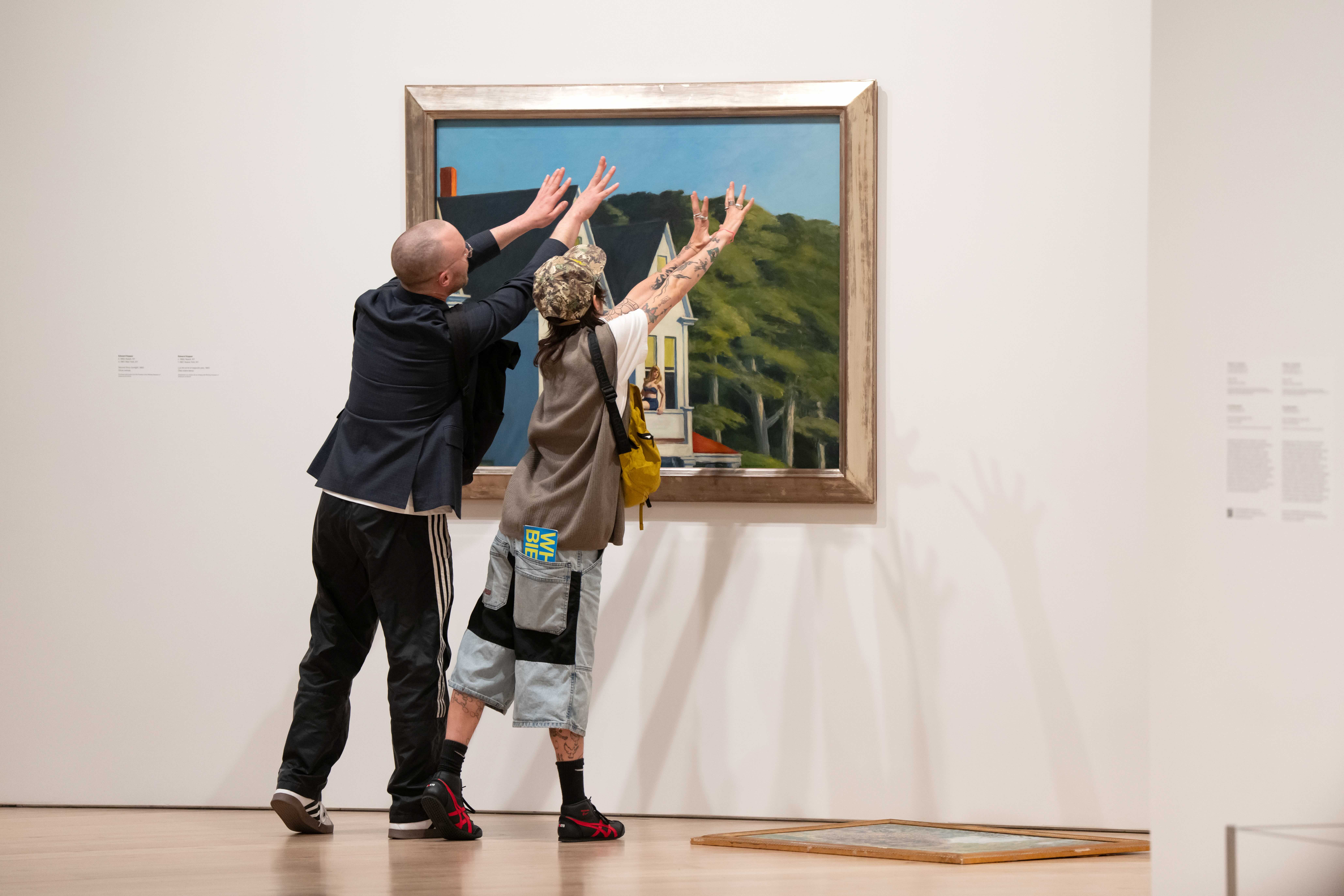
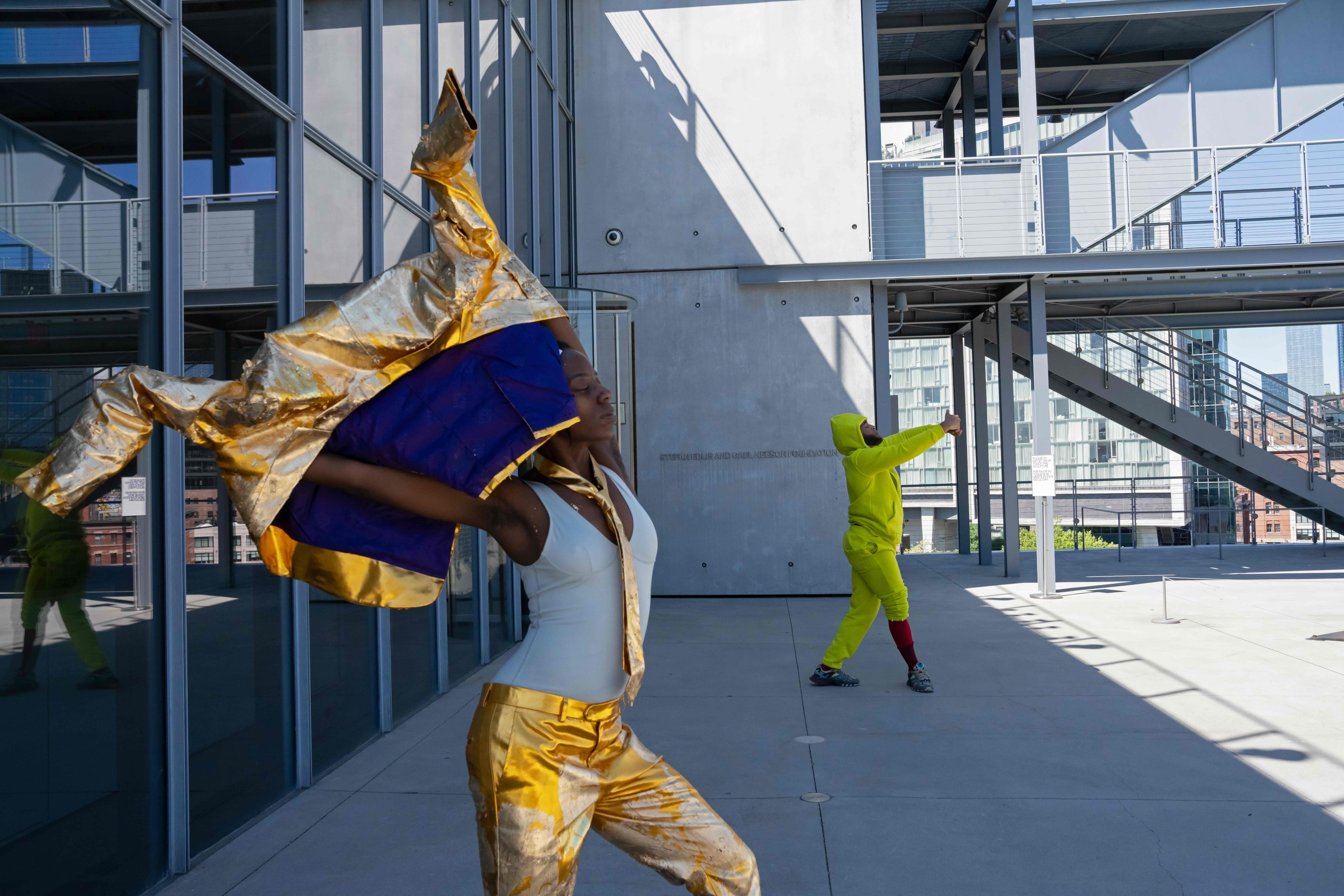
    Her biennial performance piece Being Moved, choreographed by Lena Engelstein, takes inspiration from how museum visitors interact with the art. “It reframes the focus from the art itself to the visitors’ experience,” she said. The title refers to both “this potential to be moved by an artwork,” but also “of the ways that the institution makes us move, makes us move our bodies, and makes us behave in the presence of extremely valuable assets.”

    That tension of the push and pull of a museum — where its mission might seem inviting and welcoming but once inside, rules around how to behave, what to touch abound — is at the center of Chao’s piece.

    Maia Chao, “Being Moved,” 2026. Performance, Whitney Museum of American Art, New York, May 14–17, 2026. Commissioned by the Whitney Museum of American Art.Julieta Cervantes

    When visiting the biennial beyond Chao’s performance schedule, visitors view Scores for the Museum Visitor as a set of prompts, an invitation to create “micro performances” of their own.

    Among the scores are: “Identify another museum visitor. From afar, copy their movements as closely as possible.” “While holding a museum brochure, clasp your hands behind your back. Drop the brochure.” “Find a bench. Take a seat. Imagine the artworks slowly falling to the floor.”

    “These are invitations to kind of transgress the rules, [for] engaging with the artwork, or interpreting and encountering an artwork,” the artist said.

    Maia Chao, “Being Moved,” 2026. Performance, Whitney Museum of American Art, New York, May 14–17, 2026. Commissioned by the Whitney Museum of American Art.Julieta Cervantes

    Chao first caught the curators’ attention with Agents of Deterioration (2024), made in collaboration with Ethan Philbrick, a performance piece commissioned by the Hirshhorn Museum and Sculpture Garden. Sawyer was drawn in by Chao’s “legacy of institutional critique through affective registers.”

    “There’s a real kind of commitment to the institution, even as Maia is critiquing it, which we felt was important in this moment where there’s, from many different directions, an eroding of faith in institutions. We were really interested in the way she both critiques and pushes institutions to do better,” he said.

    Artist and Penn professor Michelle Lopez whose “Pandemonium” is part of the 2026 Whitney BiennialKelsey Valencia, Denniston Hill Residency

    Michelle Lopez

    “Pandemonium”

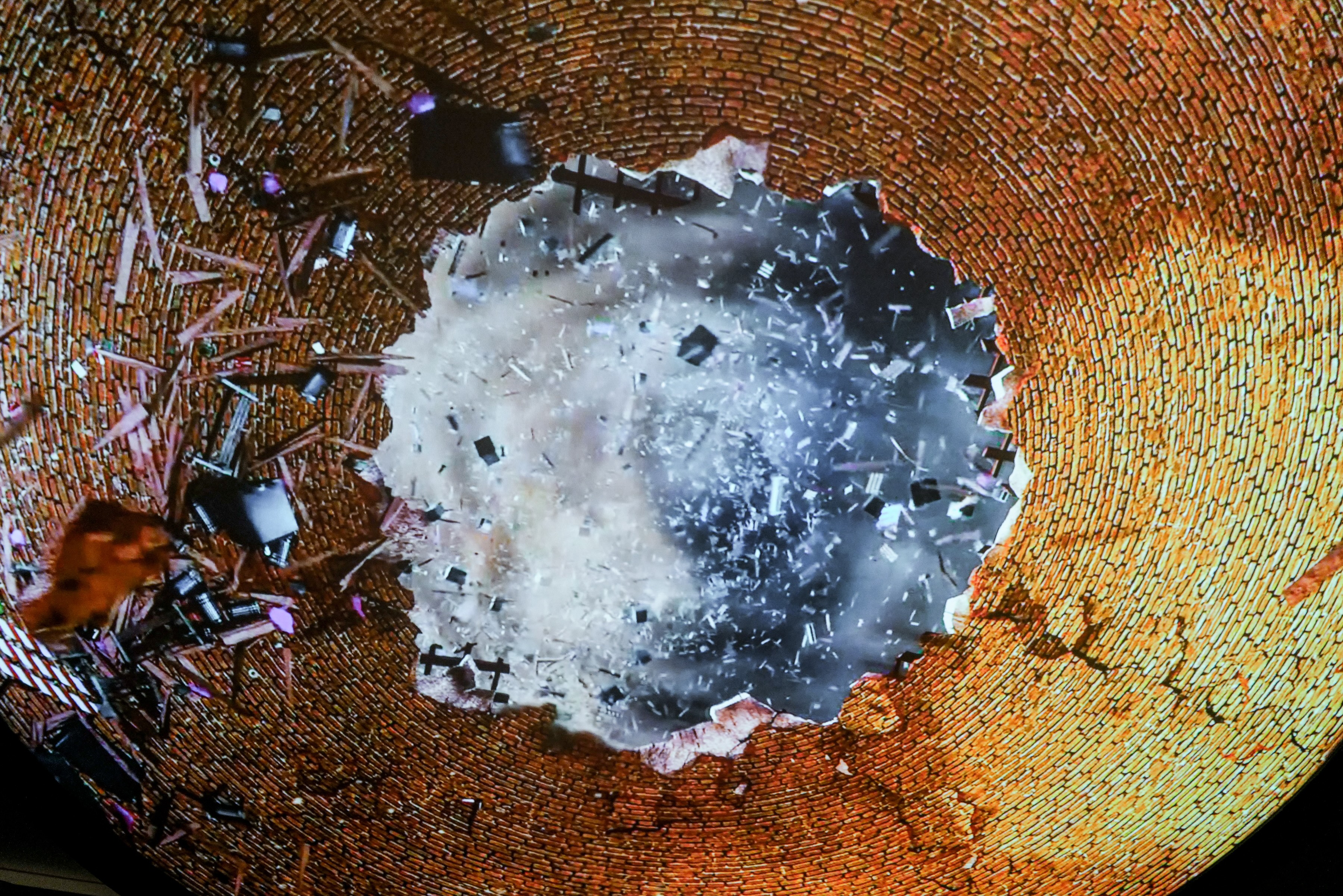
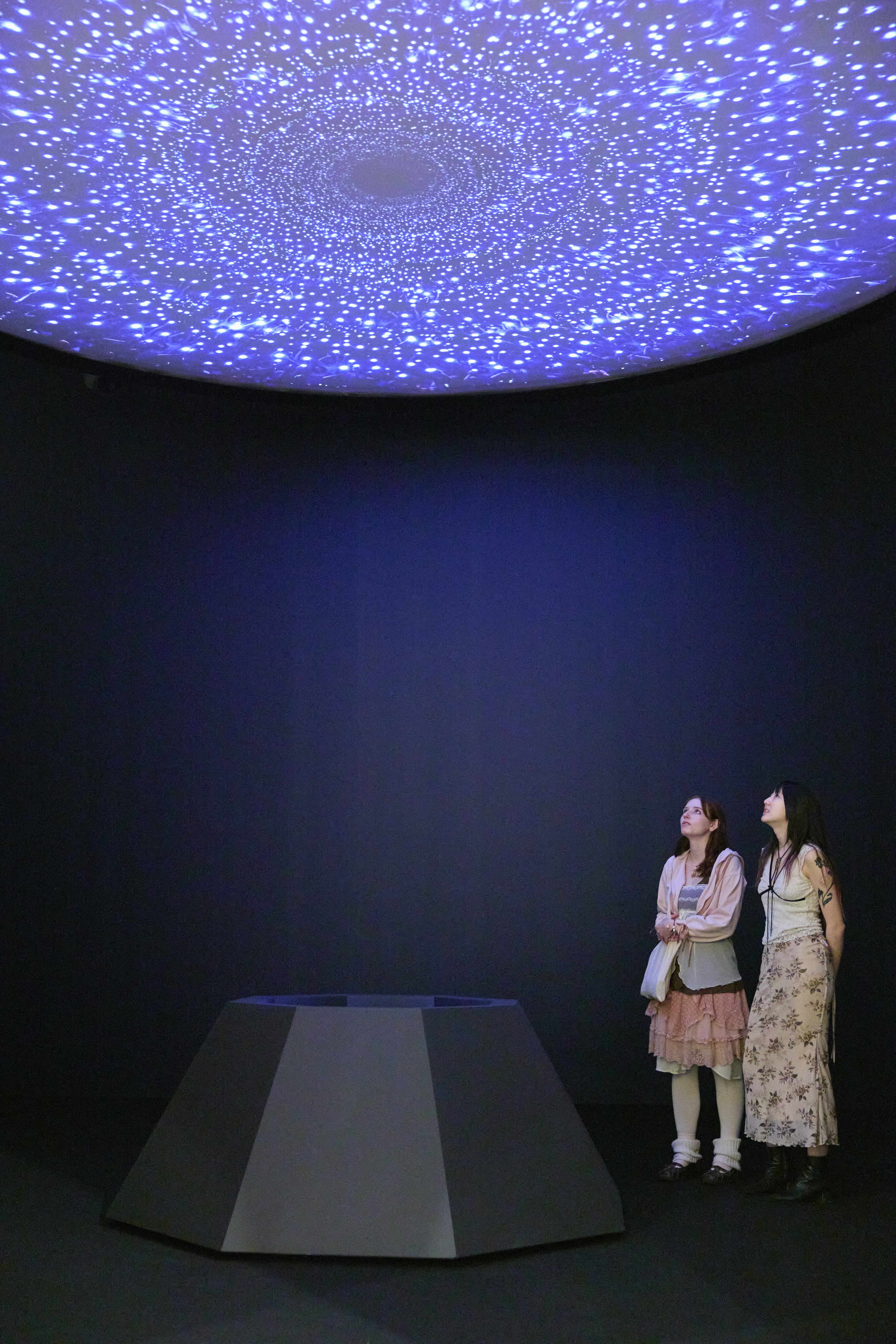
    Pandemonium is a fully Philadelphia piece of art. It was made in collaboration with the Moore College of Art and Design and the Franklin Institute, supported by the Pew Center for Arts & Heritage and the University of Pennsylvania, filmed at Northeast Philadelphia’s RAIR (Recycled Artist in Residency), premiered at the Fels Planetarium and the Galleries at Moore, and inspired by artist Michelle Lopez’s earlier work exhibited at the ICA.

    Installation view of Whitney Biennial 2026. Michelle Lopez, “Pandemonium,” 2025.Jason Lowrie/BFA.com

    “Philadelphia is just a really supportive environment for artists,” said Lopez, who is an associate professor of fine arts at Penn’s Stuart Weitzman School of Design, where she leads the sculpture program. “I could not have made that work in New York.”

    The video project, as Lopez says, came from a desire to “situate the viewer in the eye of a storm so that they could feel, on a somatic level, what it was like to have their environment really collapse around them.”

    Installation view of Whitney Biennial 2026. Michelle Lopez, “Pandemonium,” 2025.Gus Powell

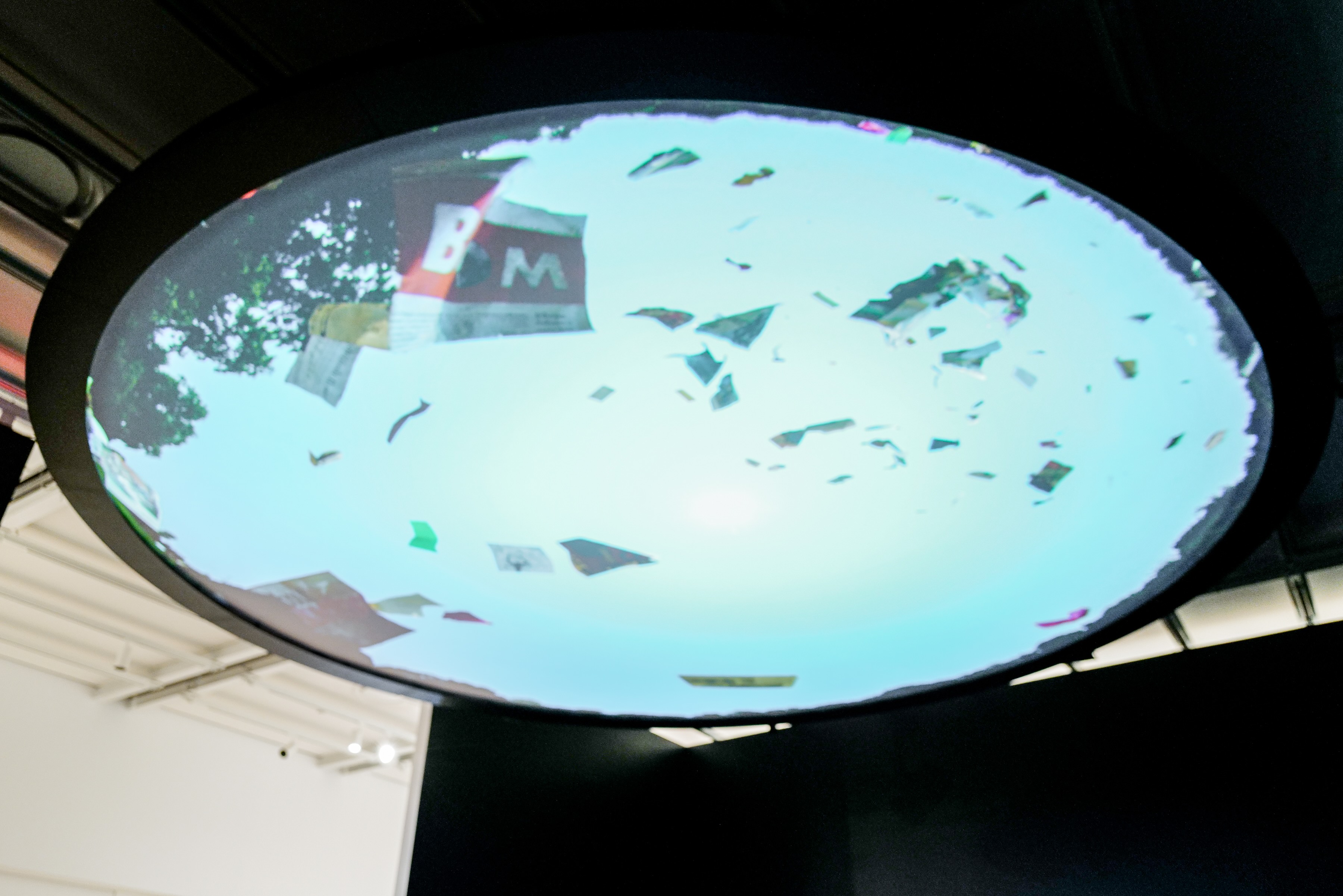
    At the Whitney Museum, Pandemonium plays on a domed screen on the ceiling of the gallery and demands that the viewer sit below it and look up. What they witness is things moving around with a violent force against the sky — debris, newspapers, packaging, clothing (including Lopez’s own and her son’s old underwear), and other markers of extreme human consumption.

    In order to make this mayhem happen, Lopez, who is trained in sculpture, built a tornado machine using a robotic contraption, industrial fans, and leaf blowers. Together they created a simulation of a tornado at RAIR which was then filmed and eventually screened in the Fels Planetarium.

    “A lot of the work imagistically, came from seeing images of tornadoes and hurricanes wiping out towns. I was really interested in the way nature could collapse culture,” said Lopez, who lives in South Philadelphia.

    Installation view of Whitney Biennial 2026 (Whitney Museum of American Art, March 8–August 2026). Michelle Lopez, “Pandemonium,” 2025.Jason Lowrie/BFA.com

    While a Whitney gallery is nowhere close to the grandeur and wonder of the Fels Planetarium, the 360-format video manages to suck in a viewer who feels almost weightless as the feeling of being thrown around by the forces of nature is simulated.

    When the curators visited Philadelphia for studio visits, “top on our list was Michelle Lopez,” said Sawyer. “We were aware that she had been working on this major moving image project that departed from what she’s most well known for, which is sculpture. So we were really excited to meet with her, especially because her work had not been a part of the biennial before.”

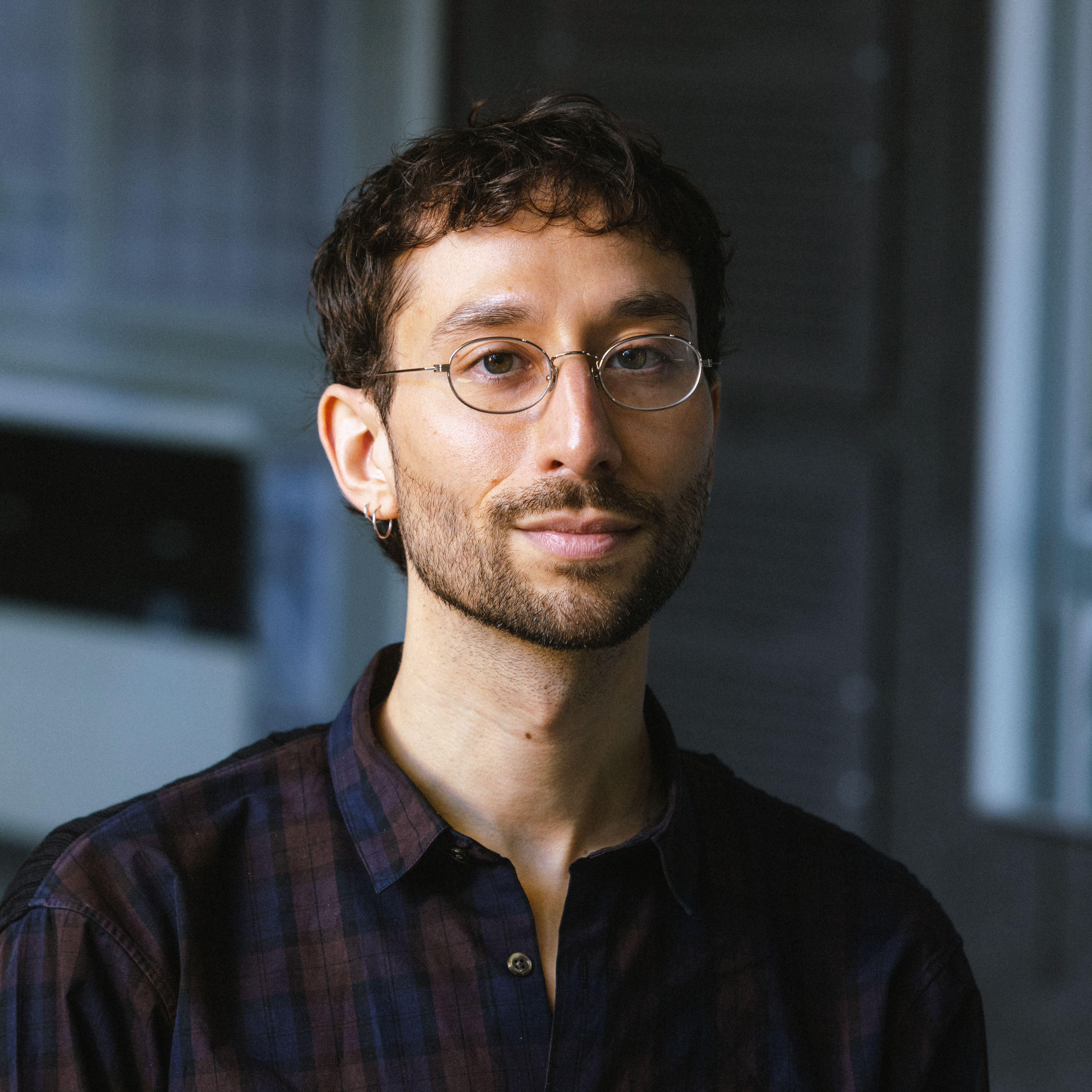
    Artist Emilio Martínez Poppe, whose work “Civic Views” was on display in the City Hall courtyard last year. This year, it’s a part of the Whitney Biennial.Neal Santos

    Emilio Martínez Poppe

    “Civic Views”

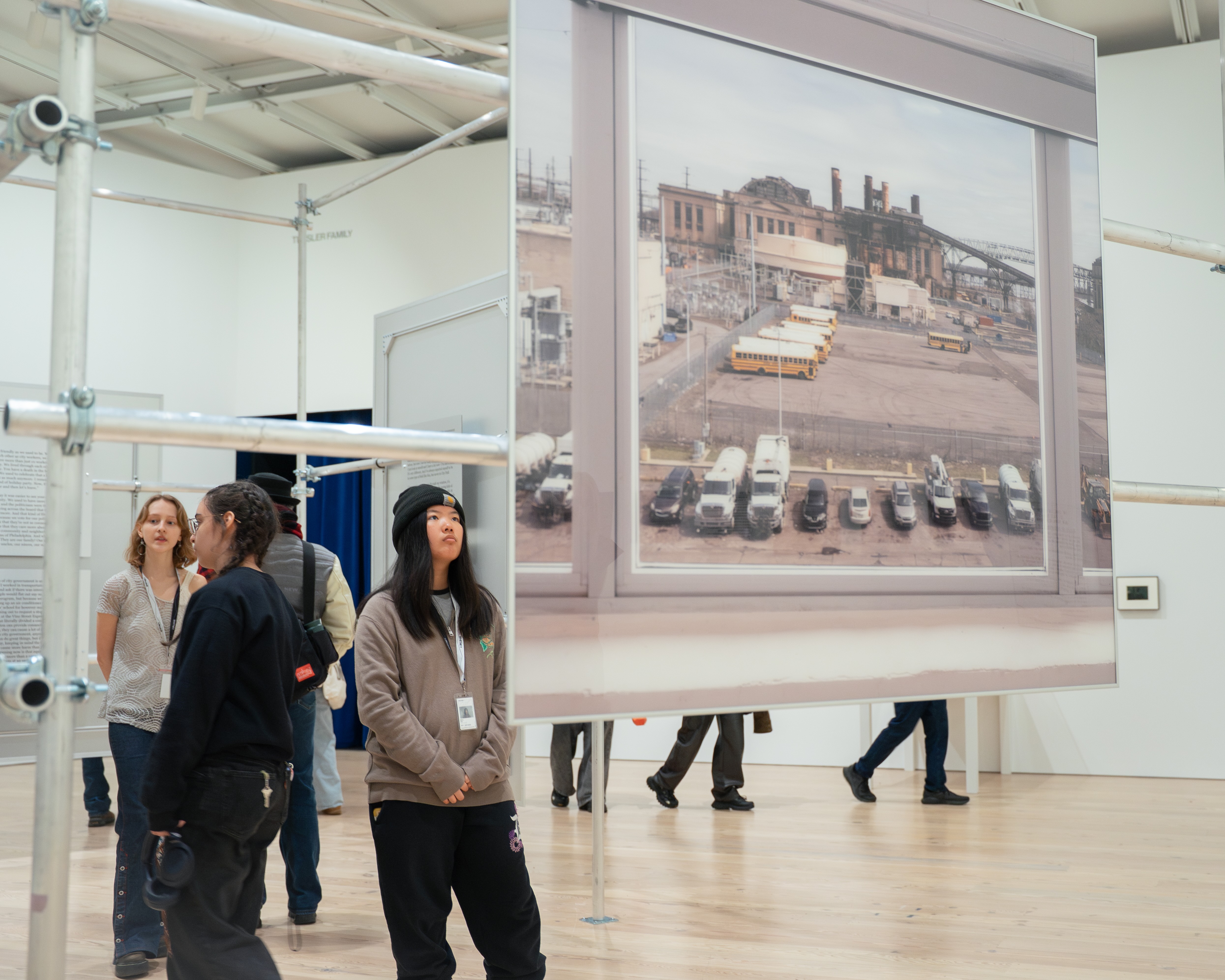
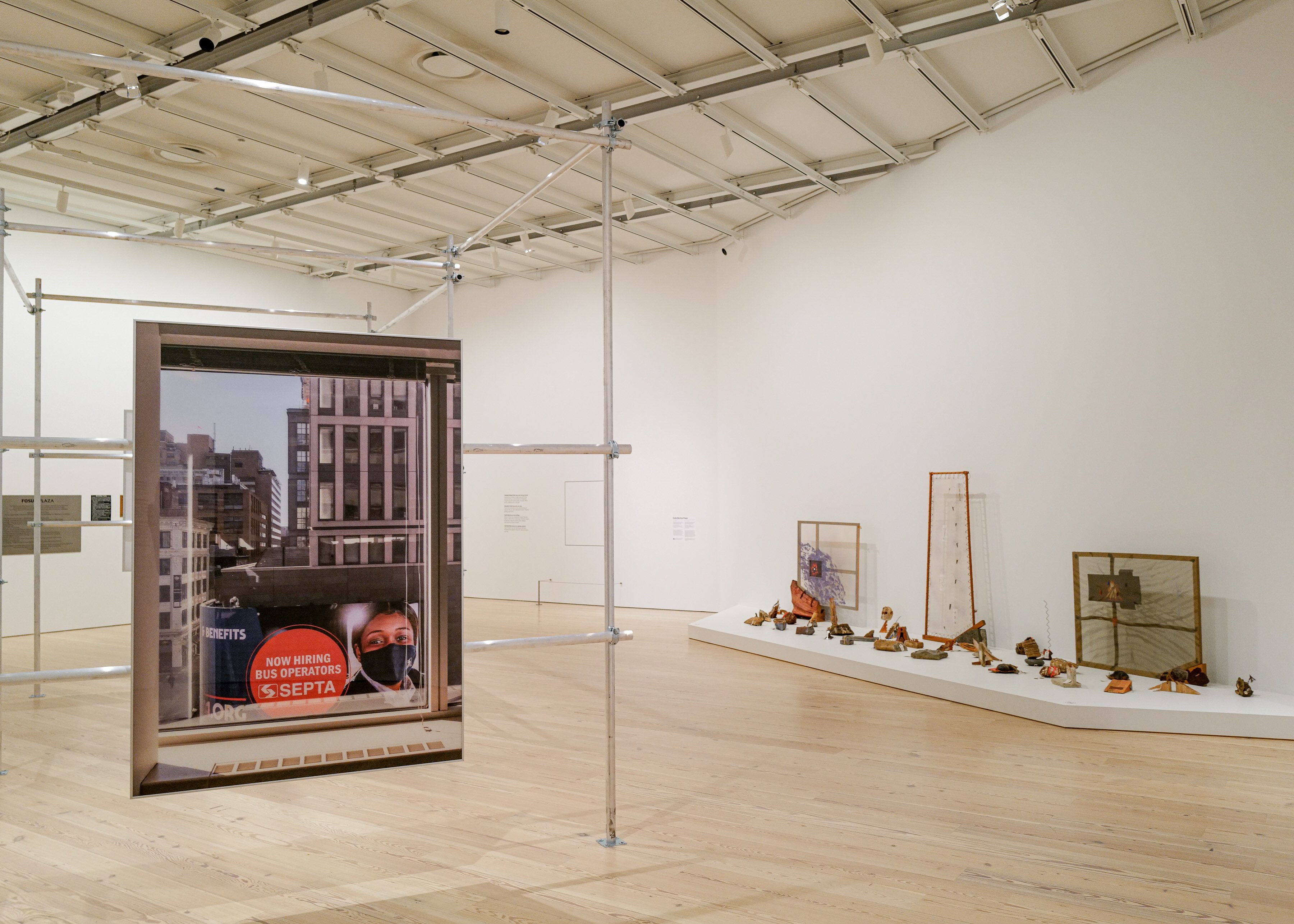
    Like Lopez’s Pandemonium, artist Emilio Martínez Poppe’s Civic Views is an artwork that is only possible because the city of Philadelphia exists. Several Philadelphians have already seen Martínez Poppe’s work when it was on view last year in the City Hall courtyard.

    Martínez Poppe was then studying city planning and working toward an MFA in visual art from Penn when he was mulling over the future of city planning graduate students who’d go on to join the public service workforce.

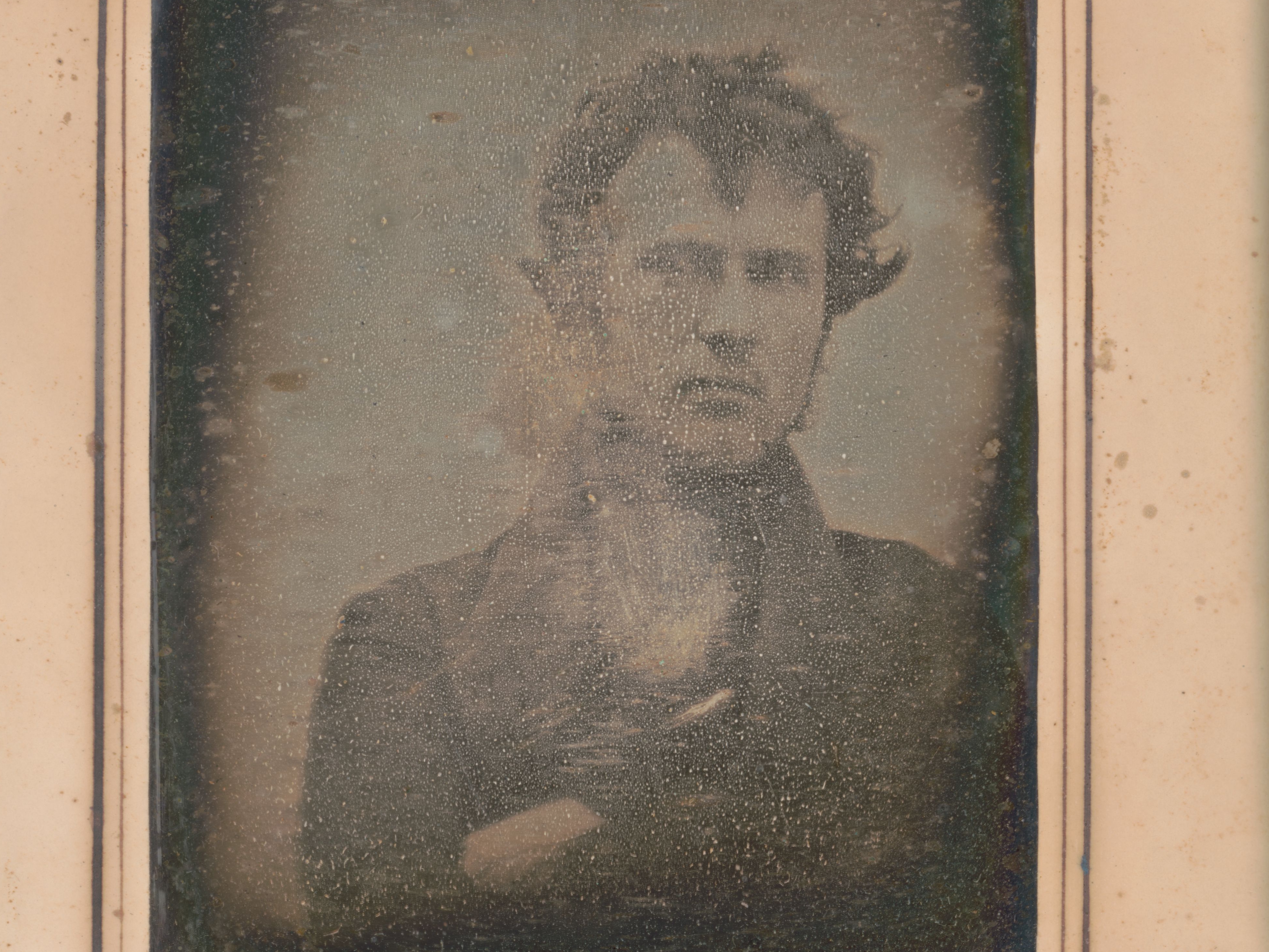
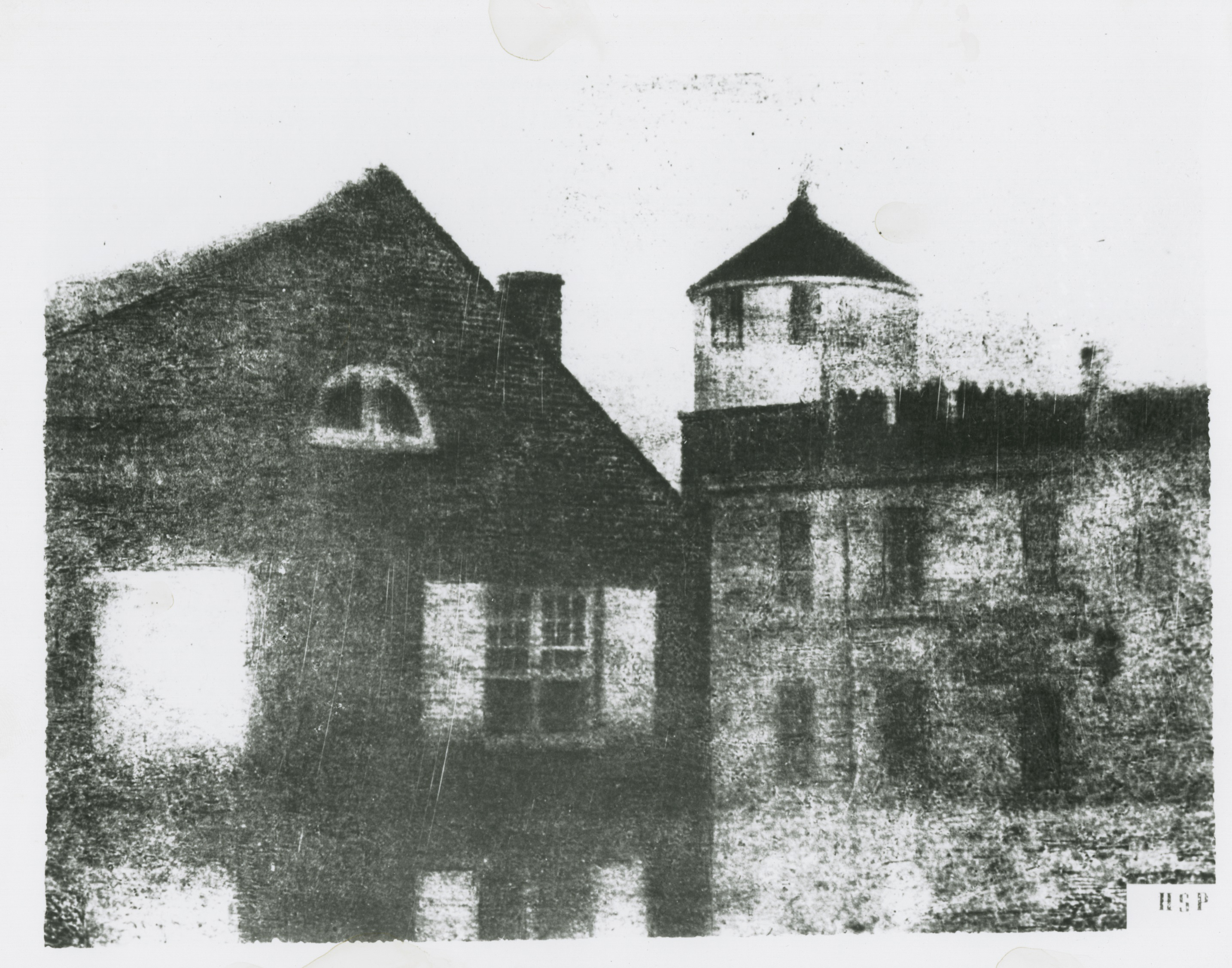
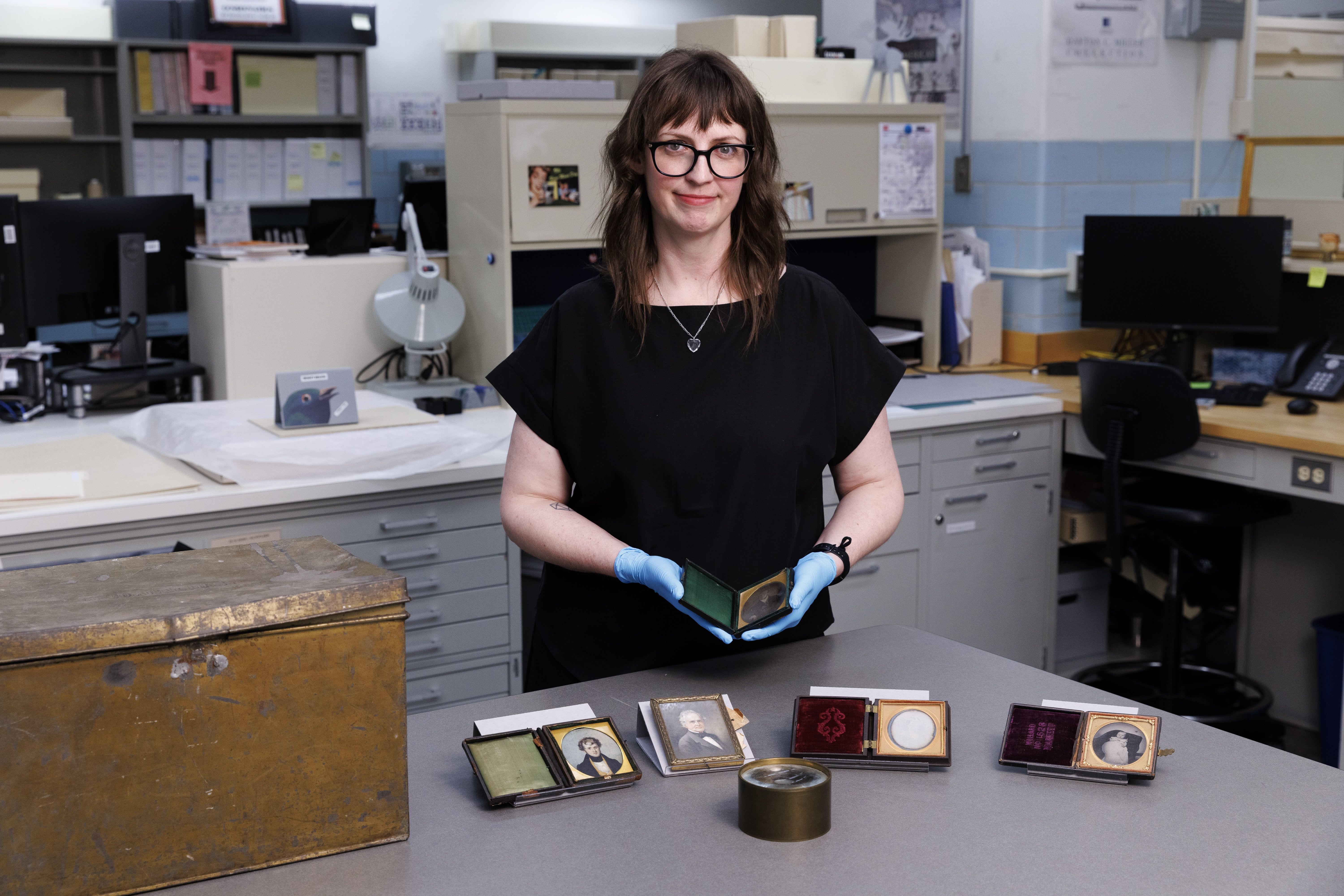
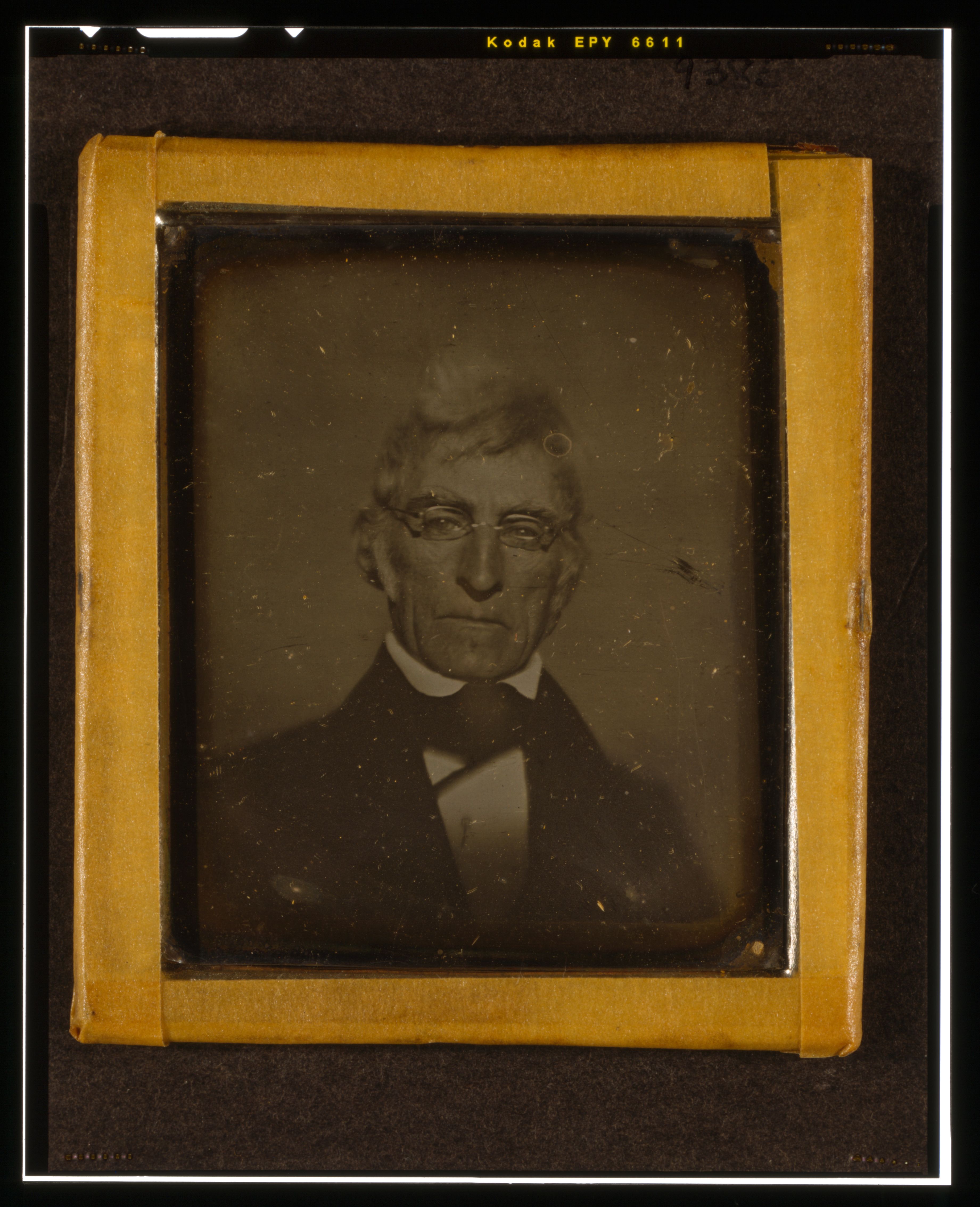
    It was in conversation with professors that he found out that the oldest surviving daguerreotype in the country, which is stored at the Historical Society of Pennsylvania, was taken by Joseph Saxon, who was a public sector employee working for the U.S. Mint.

    “That was shot out of the U.S. Mint, where the Widener Building is today. He’s following Daguerre’s technological recipe, he uses it to photograph what he sees through the window. Unlike Daguerre, who was a theater entrepreneur, Saxton was a public sector employee who was doing something he was not hired to do,” said Martínez Poppe. “He was hired to work on the newly nationalized currency and he was tinkering with this invention in his office, and that view is one of the only real entry points that we have into his position at his job there, which is interesting.”

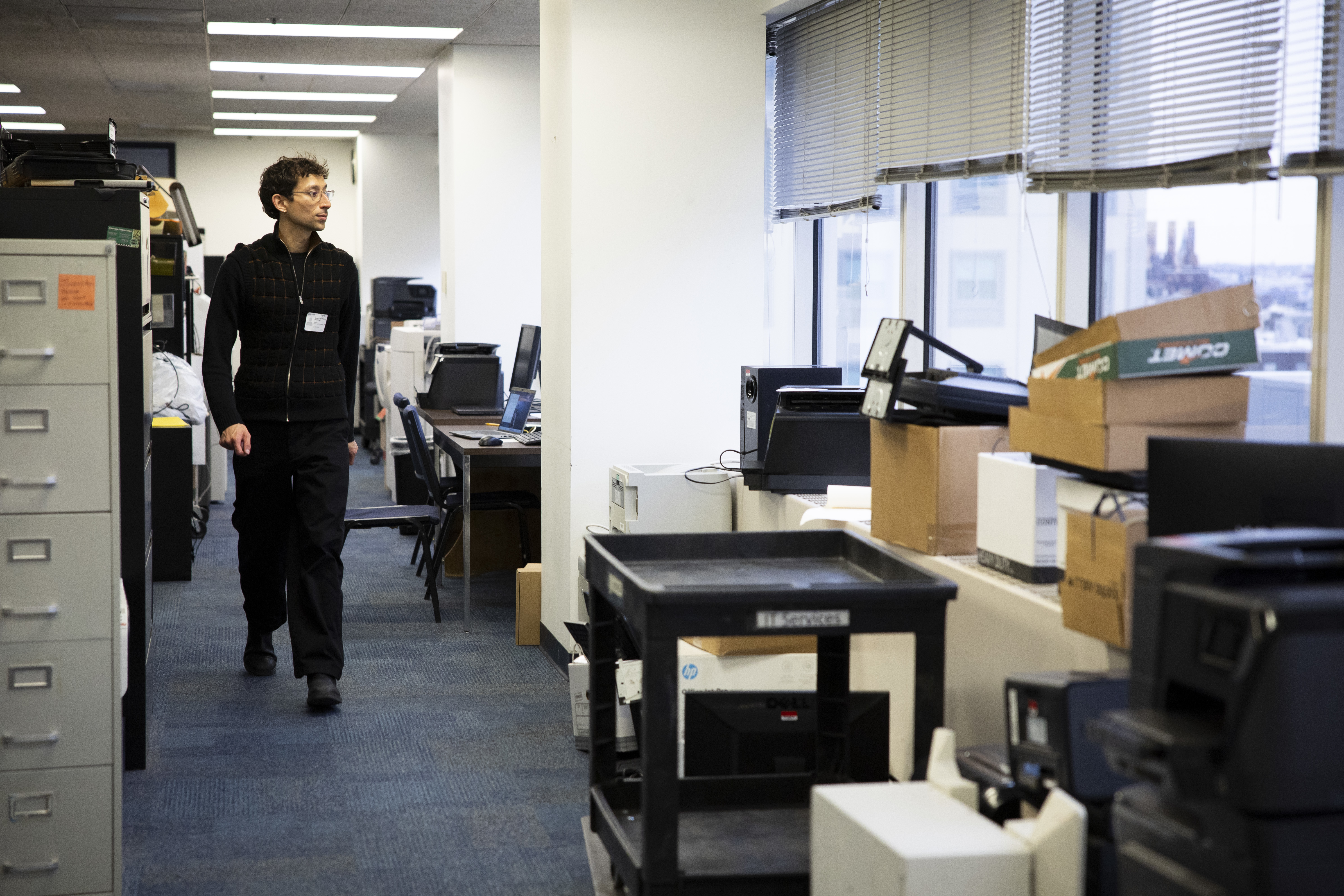
    Emilio Martínez Poppe looks out the windows at the Department of Behavioral Health and Intellectual disAbility Services office on Tuesday, Feb. 11, 2025 in Philadelphia. Emilio Martínez Poppe is working on a project curated by Jameson Paige that documents the views from municipal service buildings. The project also includes interviews with city workers.Monica Herndon / Staff Photographer

    Inspired, Martínez Poppe visited municipal buildings all across Philadelphia and photographed views from the inside out so he could document what city workers see from their windows. Alongside, he conducted “dozens of long form, anonymized interviews” with city workers from more than 20 agencies.

    “I would ask them, what was your perspective of city government before working here, who taught you about the value of public sector work? Often, so many people would tell me it was their mothers.”

    Civic Views is a result of those conversations — a coming together of anonymized interview snippets and photographs displayed in a scaffolding-like structure in the middle of a Whitney gallery. “It’s the scaffolding that dissolves the authoritative center, even in the Whitney Biennial,” said Martínez Poppe.

    Since his exhibition in Philadelphia, there has been a municipal workers strike and threats of a SEPTA strike, and President Donald Trump’s DOGE cuts have resulted in thousands of public sector employees being laid off in the city.

    An installation view of Emilio Martínez Poppe’s “Civic Views.”Summer Surgent-Gough

    “The public sector is vulnerable to radical change, for better or worse. With my work, I want to say that it’s time to seize the means, seize our technology to create the world that belongs to us,” the artist, who now works for the New York City Mayor’s Office as a civic arts programs coordinator, said.

    “We need to assume that responsibility. That’s why the project centers the voices of workers and how their positions shape their views. But also how their views shape the structures that we are living in and living through.”

    On the curators’ Philadelphia visit, Guerrero recalled seeing Civic Views and people of the city interacting with it. “It was very touching,” she said. Her favorite part about the work is that it uses “the tropes of the camera, of the interview, of bureaucracy, but then upends it completely.”

    Installation view of Whitney Biennial 2026 (Whitney Museum of American Art, March 8–August 2026). “Civic Views” (2024) by Emilio Martínez Poppe, “Philadelphia Housing Authority, South,” 2024; Emilio Martínez Poppe, “Philadelphia Department of Sanitation, North,” 2024; Emilio Martínez Poppe along with works of Kainoa GruspeJason Lowrie/BFA.com

    “You see how important the job of a public servant is,” she said, “and how you know they’re in kind of a double bind because they’re the face of the government and also they receive the same services they provide … their kids are in the public school system, they depend on the Department of Sanitation.”

    She finds this complexity “beautifully translated” in Civic Views. “You can really put yourself in the shoes of the person who’s speaking and feel the care that really goes into this type of work that should not be overlooked.”

    Artist Jonathan González whose performance piece ‘magic hour — golden time’ is part of the 2026 Whitney BienialRudy Gerson

    Jonathan González

    “magic hour — golden time”

    Like Chao, Jonathan González’s work also sees a two-pronged approach with performance and photography. Three Super 8 photographs, A, B, and C, mark the locations, across the museum, of the three-hour long performance piece presented by González and their co-artists.

    “Each photograph shares with the performers how to perform the work,” said González, who also lives in West Philadelphia. Magic hour-golden time, they said, “is a double leaning. Magic hour comes from the usage in broadcast television when you have the highest viewership. And golden hour is that moment of the sunset. And so the piece is merging this experience of looking out and also being seen over three hours.”

    Jonathan González, “magic hour–golden time,” 2026. Rehearsal performance, Whitney Museum of American Art, New York, May 12, 2026. Commissioned by the Whitney Museum of American Art.Julieta Cervantes

    From three terraces around the museum, the performers follow the sun’s movement for three hours. In the first hour, the performers “embody the architecture that surrounds the museum” and makes up the city’s skyline. The second hour, they said, “is a procedure of call and response … the dancers dance with every dance you’ve ever danced, and take information from one another as dancers, as well as from the pedestrians.”

    The final hour, González said, is performed on an inaccessible terrace. “It can only be viewed from across the street, you cannot see it from the museum. It’s called the ‘Endless Bow,’ and it’s 60 minutes of bowing to the sun and bowing to the world and bowing to the performance.”

    Philadelphia, the former University of the Arts professor said, gives them “the capacity to slow down to hear these voices, and have dreams, visions come to you.” The city allows them the time to spend time in the studio with friends like Chao and inspires them to “collaborating not toward a particular product or aim, but much of the time experimentation.”

    Jonathan González, “magic hour–golden time,” 2026. Performance, Whitney Museum of American Art, New York, May 12, 2026. Commissioned by the Whitney Museum of American Art.Julieta Cervantes

    “Just the fertile nature of Philly as a historical Black geography has been really important for me to really situate the questions of time and what happens to a city at the late stage of industrialization, and to really think critically about what a group can do, what mutuality is,” they said.

    “Certain artists just stay in your mind, and you want to come back and see what they are working on,” said Guerrero recalling her first tryst with González’s work. “The work felt so mature. There’s this notion of how, through improvisation, you can be attuned to your surroundings. In the case of their performance, they make these other effective strategies [for attunement] that don’t always rely on the senses, and that is something that is very present in the show.”


    The Whitney Biennial 2026 is on view through Aug. 23 and on partial view, which will include all of the Philadelphia artists’ static works, through Oct. 12. The Whitney Museum of American Art, 99 Gansevoort St., New York. whitney.org

  • A 19th century Philadelphia lamp maker took the world’s first selfie and turned the city into a hub of portrait photography

    A 19th century Philadelphia lamp maker took the world’s first selfie and turned the city into a hub of portrait photography

    French inventor Louis Jacques Daguerre introduced the daguerreotype — the world’s first photograph — in Paris in August 1839. By September, he produced a pamphlet introducing the technique to the world.

    When the how-to-take-a-photo leaflets arrived in Philadelphia in late September, the city’s cultured men, scientists, and budding artists gave photography a shot.

    But unlike today’s pointing and clicking, it wasn’t easy.

    “All they got were the pamphlets,” explained Rachel Wetzel, senior photo conservator at the Library of Congress. “Nobody had a camera, plates, chemicals, or darkroom apparatus.”

    The newly minted photographers needed paper-thin sheets of silver-plated copper, iodine, and mercury. The ratio of the chemicals needed to be exact, and the amount of sunlight needed for exposure to capture images varied wildly.

    “Central High School, Philadelphia,” is a facsimile of daguerreotype attributed to Joseph Saxton made in 1839.The Historical Society of Pennsylvania

    On Sept. 25, 1839, U.S. Mint employee Joseph Saxton, whose office was located on the northwest corner of Chestnut and Juniper Street across from Central High School, photographed the city’s first high school from one of his workplace’s top-floor windows.

    That photo is the oldest existing photograph taken in America.

    Saxton soon took up photography as a hobby but had a hard time getting his hands on the thin, silver-plated copper sheets needed to make daguerreotypes. He asked his friend, lamp maker and metal-plating expert Robert Cornelius, for help.

    Cornelius, who had a connection with Scovill Manufacturing, then among the most prominent metalworking manufacturing firms in the United States, happily obliged.

    And as it turned out, Cornelius was curious about photography, too.

    A few weeks later, in late October or early November, Cornelius found himself standing behind his family-owned lamp-making shop at what is today Seventh and Chestnut Streets, experimenting with a camera he fashioned from a small metal box.

    Instead of pointing his lens at a lantern, a cobblestoned street, or a traveling horse and buggy, Cornelius turned his camera on himself.

    He opened his lens cover and stood still long enough in the sunlight for the exposure to capture his image on a metal plate.

    The selfie was born.

    Alana Bograd’s design highlights the fact that the surprising fact the oldest extant photographic portrait photographic portrait was a self-portrait that today we call a selfie. It was taken in Philadelphia by Robert Cornelius in 1839.Alana Bograd for Colibri Workshop

    That first selfie is housed in the Library of Congress.

    And that magnificent moment — predating social media by almost two centuries — will be feted this Saturday at Franklin Square from 11 a.m. to 1 p.m. The selfie celebration is the Philadelphia Historic District’s 34th firstival, a weekly day party in honor of America’s 250th birthday, giving love to events and happenings with very Philly roots.

    When Daguerre came up with his picture-taking method, he did not have portraits in mind, Wetzel said.

    Historians aren’t sure why Cornelius decided to make a picture of himself, but in an 1892 American Journal of Photography article, he talked about what it was like standing alone on the streets of Philadelphia waiting for the image to happen, Wetzel said.

    “When he stood in front of the camera, he wasn’t sure if he was centered or not,” Wetzel said. “That’s why he’s weighted to the right of the plate.”

    The wonder surrounding taking the first selfie seemingly inspired Cornelius.

    In May of 1840, Cornelius opened the world’s second portrait studio at Eighth and Lodge Alley (now Ranstead Street), not far from his family’s lamp-making shop.

    Business partners Alexander S. Wolcott and John Johnson opened the world’s first portrait studio in New York a few months earlier, but only Cornelius’ 1840 portraits endured, explained Wetzel, who is also a leading historian in Cornelius’ work.

    Robert Cornelius historian Rachel Wetzel surrounded by Cornelius’ daguerreotypes at the Library of Congress. Shawn Miller

    She began studying Cornelius’ work in earnest in 2015 while working in Philadelphia at the Conservation Center for Art & Historic Artifacts. Wetzel has studied upward of 70 of Cornelius’ portraits, thanks to plates that have survived more than 100 years.

    Cornelius took portraits of prominent citizens — many of whom were Quakers — in their Sunday best because at $5 a piece, the equivalent of a week’s salary in those days, they were the only ones who could afford it.

    The first portrait he took in his studio was of a man named John McCallister Jr., a wealthy optometrist who, coincidentally, supplied Cornelius with his camera’s lenses.

    In 1840, Robert Cornelius opened the first photographic portrait studio in Philadelphia at 8th on Lodge Alley (now Ranstead Street John McCallister Jr. He was the first one to sit in his portrait studio.Robert Cornelius housed at the Library of Congress

    Cornelius moved his portrait studio to its second location on Market Street before closing the business in 1843, and returning to his family’s lamp business full time.

    “While he’s operating the studio, he never quit working for his family,” Wetzel said. “He’s working the camera, but he had apprentices who polished the plates and did the behind-the-scenes darkroom work.”

    As the mid-19th century approached, the Cornelius family’s lamp business began to boom. Street lamps became commonplace. Philadelphians began putting gas lamps in their homes. Cornelius formed a partnership with Isaac Baker and formed Cornelius & Baker, becoming a premier manufacturer of high-end metalwork, lamps, chandeliers, and gas lighting fixtures.

    Paul Miers lowers the chandelier at the Academy of Music in Philadelphia to clean it and replace light bulbs on Wednesday, May 29, 2024. The large crystal chandelier, measures 16 ft in diameter, and weighs 5,000 Lb.Jose F. Moreno / Staff Photographer

    “Their hand railings, banisters, statues, and chandeliers became world-renowned,” Wetzel said. “Many of their pieces are still found throughout Washington, D.C., and the U.S. Capitol today.”

    The Academy of Music’s massive crystal chandelier in the center of its auditorium was built by Cornelius & Baker for the opera house’s historic 1857 opening. (Yes, the guy who took the world’s first selfie also built the Academy of Music’s chandelier. Let that sink in.)

    Cornelius’ portrait studio may have been short-lived, but his impact on photography is lasting. Wetzel suggests his apprentices went on to open daguerreotype portrait studios across the city, and by 1849, there were at least 100 in Philadelphia. By the end of the 19th century, the costs had come down considerably, and portraits could be purchased for as little as 25 cents.

    “Philadelphians loved portraiture,” Wetzel said.

    National League Futures manager Shane Victorino (center) takes a selfie with members of his team before the 2026 All-Star Futures game in Philadelphia on Sunday, July 12, 2026.David Maialetti / Staff Photographer

    By the mid to late 1850s, daguerreotypes were replaced with the collodion process. But photographs — whether developed in a darkroom or a drugstore, taken on Polaroids, or shot on smartphones — endure.

    And the selfie rules.

    This week’s Firstival is Saturday, Aug. 22, from 11 a.m.-1 p.m., at Franklin Square, 200 N. 6th St. Firstival celebrants will meet under a tent, and the party will be held rain or shine.

    Each week, The Inquirer is highlighting a “first” from the Philadelphia Historic District’s 52 Weeks of Firsts. A “52 Weeks of Firsts” podcast, produced by All That’s Good Productions, drops every Tuesday.