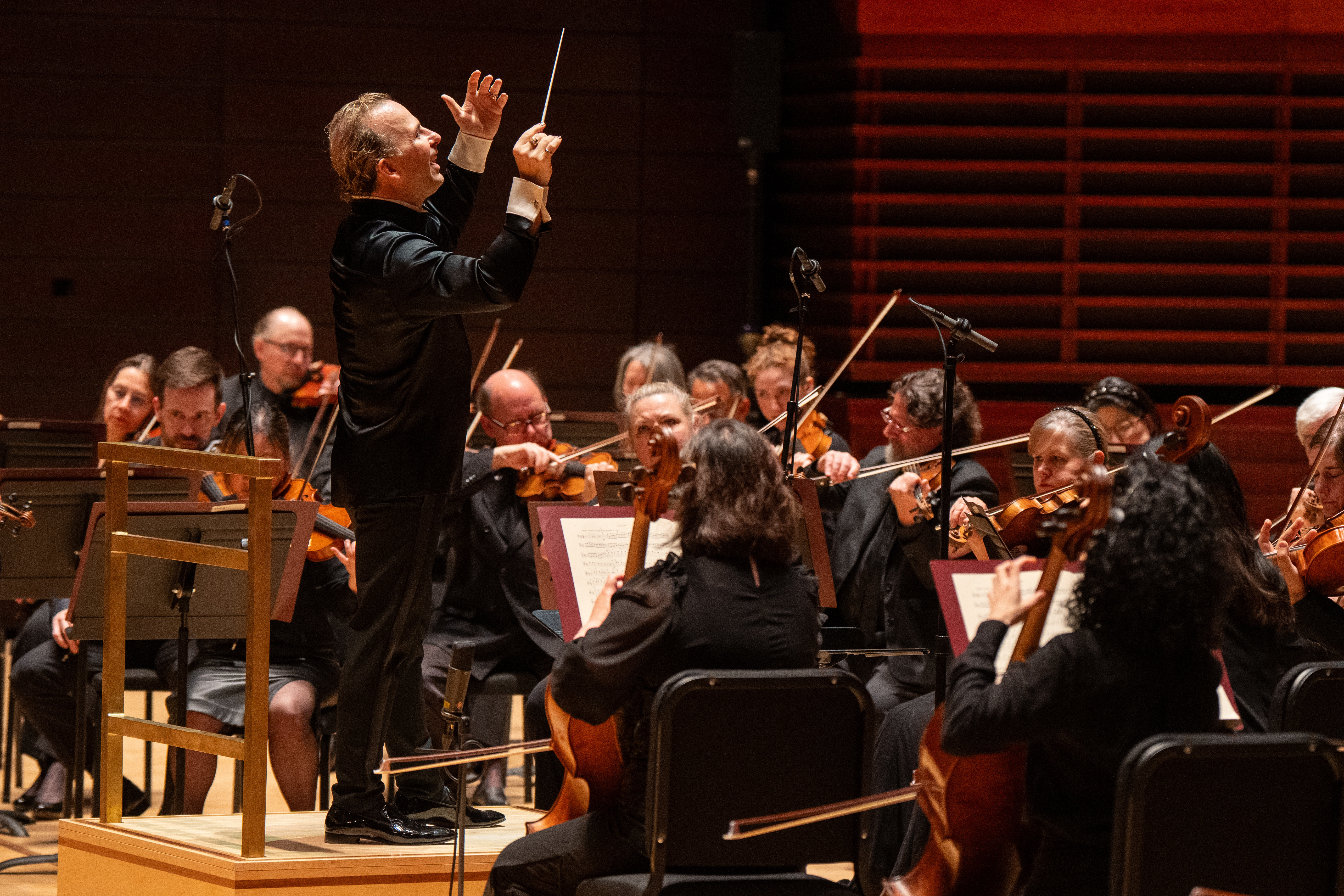
Musicians and management of the Philadelphia Orchestra have struck a tentative agreement on a new three-year labor deal. The pact, whose terms were finalized in the past few days after more than six months of talks, would, if ratified, put the base minimum salary of orchestra members at $200,008 annually by the end of the contract.
Players were presented with the deal Monday and, after a mandatory 48-hour period to mull it, are slated to hold a ratification vote starting Wednesday.
The old contract expired Monday at 12:01 a.m., but no interruption of performances is expected. Opening night of the 2026-27 season is Sept. 24 — a benefit concert for the musicians’ retirement fund featuring Joe Hisaishi’s Orbis and Beethoven’s Symphony No. 9.
The musicians’ negotiating committee recommended the contract — which keeps the Philadelphia Orchestra’s players among a group of the best paid in the U.S. — to the full membership.
“It’s a step in the right direction,” Ellen Trainer, president of local 77-274 of the American Federation of Musicians, said of the tentative deal. “I think the association [management] understood our narrative and worked with us to achieve something we can all be proud of.”
“This is a deal that commits to the artistry of the orchestra,” said Philadelphia Orchestra and Ensemble Arts president and CEO Ryan Fleur. “We’re trying to assure short- and long-term economic stability. It does make an investment in our artists and it is a competitive deal that will keep them among their highest-paid peers.”
The new contract follows one whose negotiations in 2023 were publicly acrimonious and left some orchestra board members feeling bruised. Players authorized a strike, though a strike never happened, and they filed unfair labor practice complaints with the National Labor Relations Board.
Talks this time did not bubble over in public, though musicians did make labor-solidarity statements over the summer such as wearing union T-shirts to rehearsals.
The new contract calls for an increase in base salary from the current $176,280 to $200,008 over the contract’s three-year span. Many players earn more, and some, like principals, make much more.
The contract does not call for changes in healthcare coverage. It provides work-rule changes, such as opening up more rehearsals to students, and spells out protocols for hearing loss protections during performances using amplified sound. The third year of the contract grants supplemental payments to substitute and extra musicians for their retirement accounts.
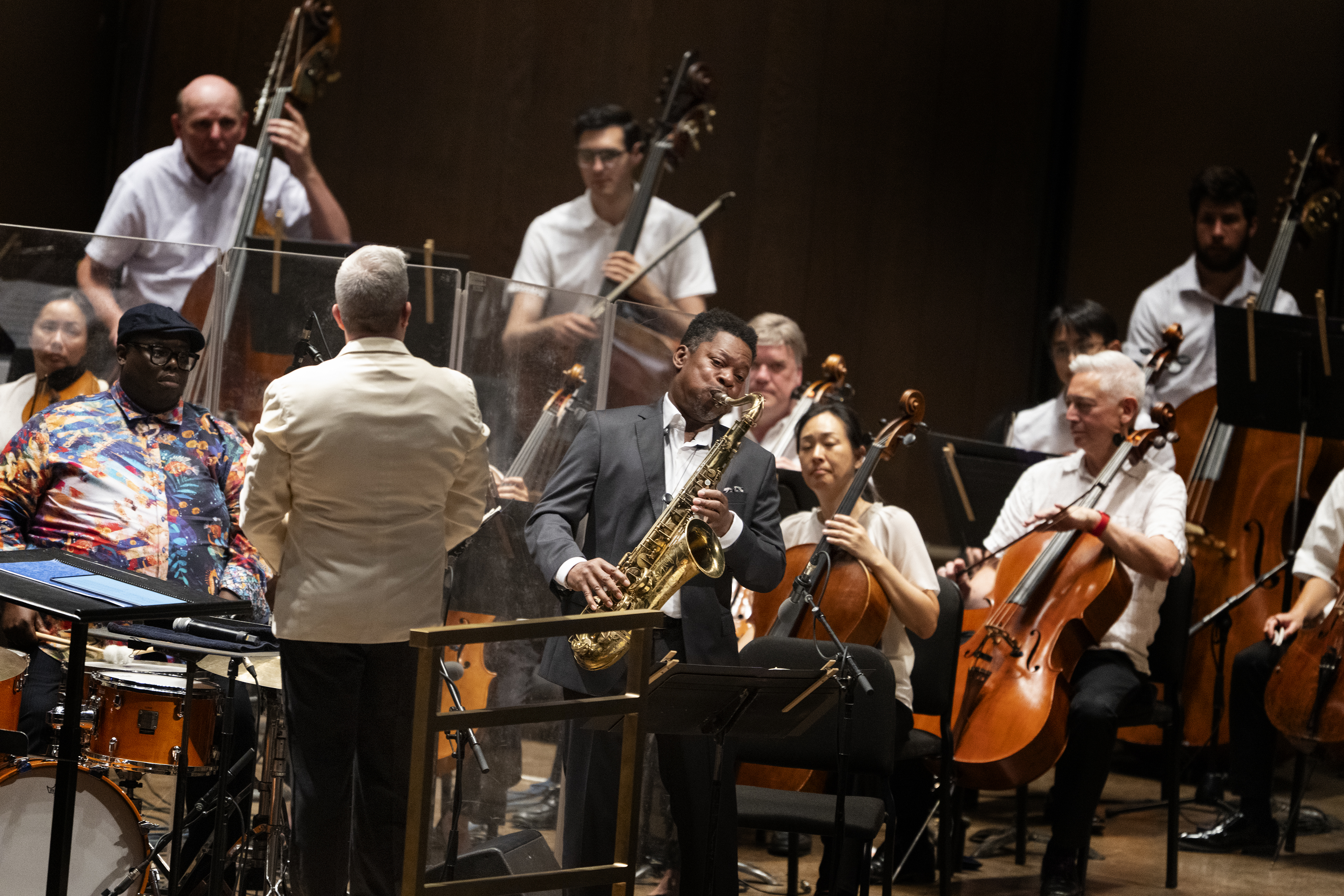
Ravi Coltrane and the Philadelphia Orchestra, conducted by Edwin Outwater, during a concert celebrating the 100th anniversary of John Coltrane’s birth at the Highmark Mann Center this past July.Jose F. Moreno / Staff Photographer
The new contract increases the size of the “complement” — that is, the number of full-time members — from the current 103 to 104 by the third year.
The deal also enshrines for the first time a limit on the number of live-to-screen movie presentations that can be programmed to two per subscription season, with no more than three performances per movie. The contract does not restrict the number of film concerts in summer.
Fleur said it’s not the film music itself that concerns the orchestra’s musicians. But film scores are typically recorded in multiple sessions, and when an orchestra performs the entire score all at once, “it’s a very intense process and requires skills that are not consistent with the skills when responding to [music and artistic director] Yannick [Nézet-Séguin] in a Mahler symphony.”
The new contract also provides for a process at the end of the season to review “the quality of all programs featuring a nonsymphonic work, including, but not limited to, programs featuring pops music,” to discuss the income generated as well as the “impact of the programming on the artistic health of the Philadelphia Orchestra.”
Musician dissatisfaction has been around certain concerts at which “the orchestra is playing with stand-lights and they’re not really a partner on the stage but more in the background,” said Trainer. “They want to be mutually featured.”
A number of other major U.S. orchestras have been in negotiations recently. This month, the National Symphony Orchestra settled a new contract, as did the Boston Symphony Orchestra last month. Players of the Cleveland Orchestra recently voted to authorize a strike. The San Francisco Opera canceled opening night of its 104th season on Sept. 12 after musicians of the orchestra went on strike.
Philadelphia Orchestra has also had its share of strikes, though the most serious work stoppage in past years was three decades ago — a 64-day strike in 1996.
Fleur said that recent talks featured a “collaborative process,” and while there were times when each side got frustrated, “that’s what happens when there’s an open dialogue, and we worked through it.”
Orchestra negotiating committee chairperson and violinist Dara Morales said that this time in talks she felt that “the musicians’ voices and our collective knowledge of the orchestra and our industry were taken seriously.”
On Sunday, Nobel Peace Prize-winning activist Malala Yousafzai was spotted at Lincoln Financial Field with her husband, Asser Malik, for the Eagles’ season opener against the Washington Commanders.
According to a team spokesperson, the Eagles leadership invited the education activist and her husband to attend the game.
Malala Yousafzai visiting an Ethiopian classroom as part of the Higher Education Readiness (HER) programMalin Fezehai
Fans took to social media to post images of Yousafzai in the stands, donning a custom Eagles jersey with her last name stitched on the back.
She quote-tweeted an X post of her pictured on the jumbotron with the caption, “GO BIRDS 🦅.” .
On Monday, she made an Instagram post of her wearing her a custom Birds jersey and matching hat, and enjoying the home opener with Malik from their seats near the 50-yard line.
Last October, Yousafzai visited Philadelphia on the book tour for her memoir, Finding My Way, where she was in conversation with Kylie Kelce.
“I’m really excited to be in Philadelphia,” the cricket fan had said to The Inquirer, “and open to going to an Eagles game. I don’t think I’ve been to any of the games.”
At the book event, encouraged by Kelce, Yousafzai joined the live audience for an Eagles chant. She later posted a picture of herself hugging Kelce on Instagram, with her husband and former Eagle Jason Kelce smiling in the corner of the photo.
Last December, Yousafzai posted a picture of herself wearing an Eagles jersey during her travels with Malik, who is a former executive with the Multan Sultans, a Pakistani professional cricket team. The team’s primary color, coincidentally enough, is also green.
Judging by the online reaction, Yousafzai, the youngest person to receive a Nobel Peace Prize,was welcomed into the Eagles fold.
“You deserve a 2nd Nobel Prize for bringing a peaceful approach to Eagles fandom!,” one X user commented.
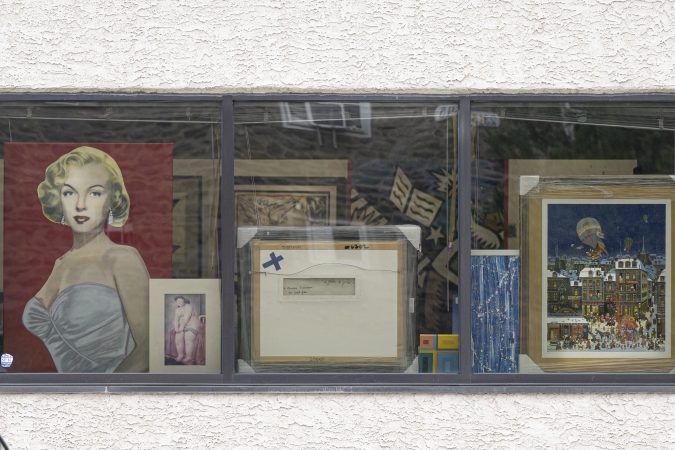
A Main Line art dealer, whose gallery was raided by federal authorities this summer, is named in a new lawsuit, for allegedly participating in an international “pipeline” to sell fraudulent artwork.
Nathan “Nicky” Isen is among half a dozen people being sued by a Florida family who says they were scammed into buying fake Andy Warhol paintings and prints by a network of “suppliers, fake authenticators and distributors.” According to the lawsuit, filed last week in Miami, the enterprise stretched from Isen’s gallery, Dane Fine Art in Haverford Township, to Florida and Peru.
Isen’s lawyer, Patrick Egan, said in a statement Sunday that “the claims in this lawsuit are just that, claims.”
“My client categorically denies any wrongdoing and any connection with any alleged conspiracy,” the statement said. “We look forward to the opportunity to challenge these claims in court.”
The lawsuit, filed by Richard and Judy Perlman, alleges that Isen had developed a “toxic” reputation among collectors and appraisers after he pleaded guilty to money laundering in 2015. He rebranded his then-gallery, I. Brewster & Co., to Dane Fine Art. (A website for I. Brewster & Co. now redirects users to Dane Fine Art.)
But, despite the rebrand, the lawsuit contends Isen’s “modus operandi remained unchanged.” He was “selling pages torn from art books as authentic prints.”
According to the 42-page lawsuit, Isen then “formed a conspiracy” with Leslie Roberts, an art dealer in an affluent Miami neighborhood.
“This conspiracy provided what each needed: Isen got a gallery front in Florida with no connection to his toxic name, while Roberts got forged inventory,” the lawsuit filed by the Perlman family alleges.
The Perlmans also sued Roberts in 2024. That case settled in January for an undisclosed amount, according to the Wall Street Journal. Roberts also pleaded guilty to art-related wire fraud and is scheduled to be sentenced later this month, the news outlet reported.
Between 2023 and 2024, Isen’s gallery repeatedly invoiced Roberts’ gallery for, what the lawsuit called, “forged” Warhol works, which the Perlmans then purchased. Roberts told the Wall Street Journal he believed the Warhols were genuine at the time.
In July, the FBI conducted “court-authorized law enforcement activity” at Dane Fine Art, in the 2300 block of Haverford Road.
It’s unclear why the FBI searched the business. Isen’s lawyer did not respond to questions about the FBI raid and declined to comment on the matter to the Wall Street Journal.
Philadelphians reacted with outrage when Drexel University and the Academy of Natural Sciences announced the closing of its museum on the Ben Franklin Parkway earlier this month.
But the museum is only a part of what the academy does. And while most Philadelphians think of dinosaurs and dioramas,the main business of the academy — its “beating heart,” as one board member calls it — will continue, even if it has often escaped the notice of the general public.
Housed backstage beyond the museum walls is one of the world’s largest repositories of natural specimens: bird carcasses, fish, mollusks, minerals, and bones of various kinds — millions of them amassed over more than two centuries.
And now, amid reports that the academy’s building may be sold and the collection moved, all eyes are on the fate of this trove.
“It’s not just the scope of the collection that’s so important — 19 million specimens representing every aspect of the natural world,” says Robert McCracken Peck, curator of art and artifacts and senior fellow emeritus of the Academy of Natural Sciences of Drexel University. “The collections are not only important because of their associations with historical figures like Lewis and Clark and Thomas Jefferson.
“But these collections were made at specific times in history. We can never go back to collect more of these voucher specimens. They tell us how our world is changing.
“It is by definition irreplaceable.”
Microalgae too numerous to count
Among its peers, the academy’s group of species collections is one of the most significant in the world, and is perhaps unrivaled in certain areas of concentration and historical importance.
More than 220 plant specimens collected by Lewis and Clark on their landmark 1804-06 expedition between the Mississippi River and the Pacific Ocean are housed at the academy. Among the institution’s corresponding members over the years were Thomas Jefferson, John James Audubon, and Charles Darwin. The American Medical Association was founded here in 1847.
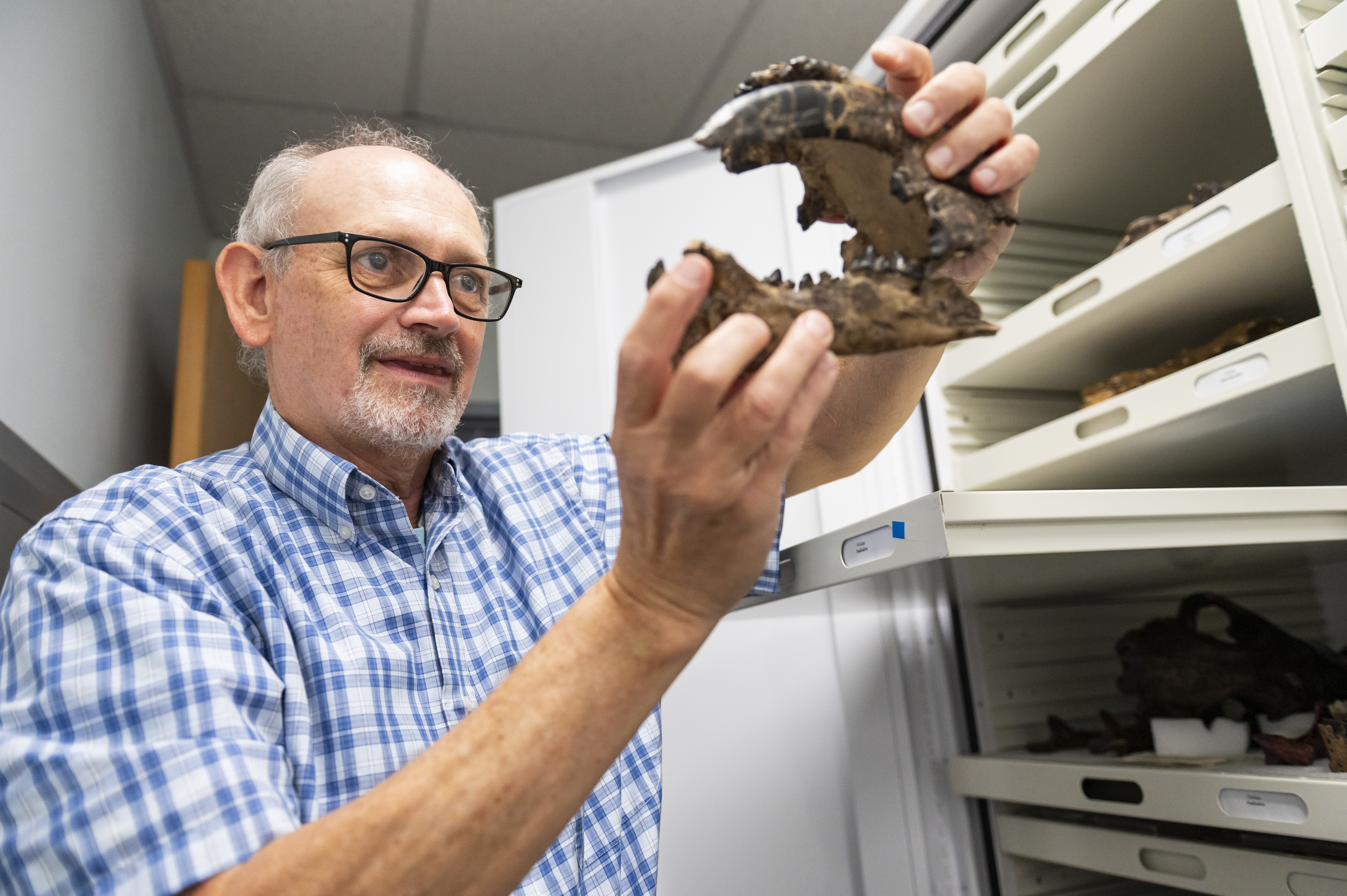
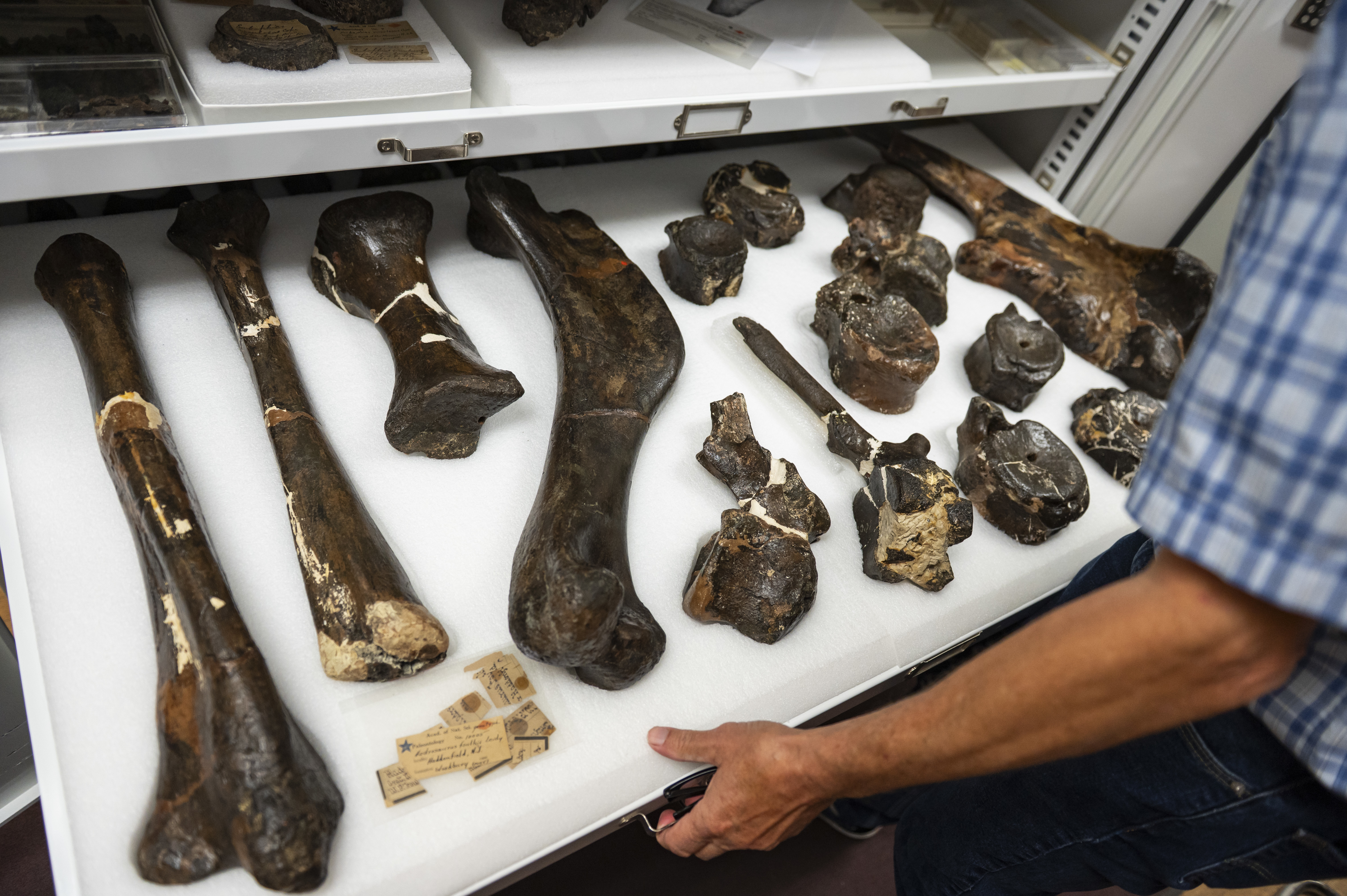
Ned Gilmore, collection manager for vertebrate paleontology, pulls out a drawer filled with bones from the Academy of Natural Sciences’ “Hadrosaurus foulkii.”Allie Ippolito / For The Inquirer
The plants and fungi collection holds 1.4 million specimens of algae, lichens, fungi, and slime molds and includes some of the oldest and most important plant collections in the Americas. The invertebrate paleontology collection is the oldest such collection in the United States.
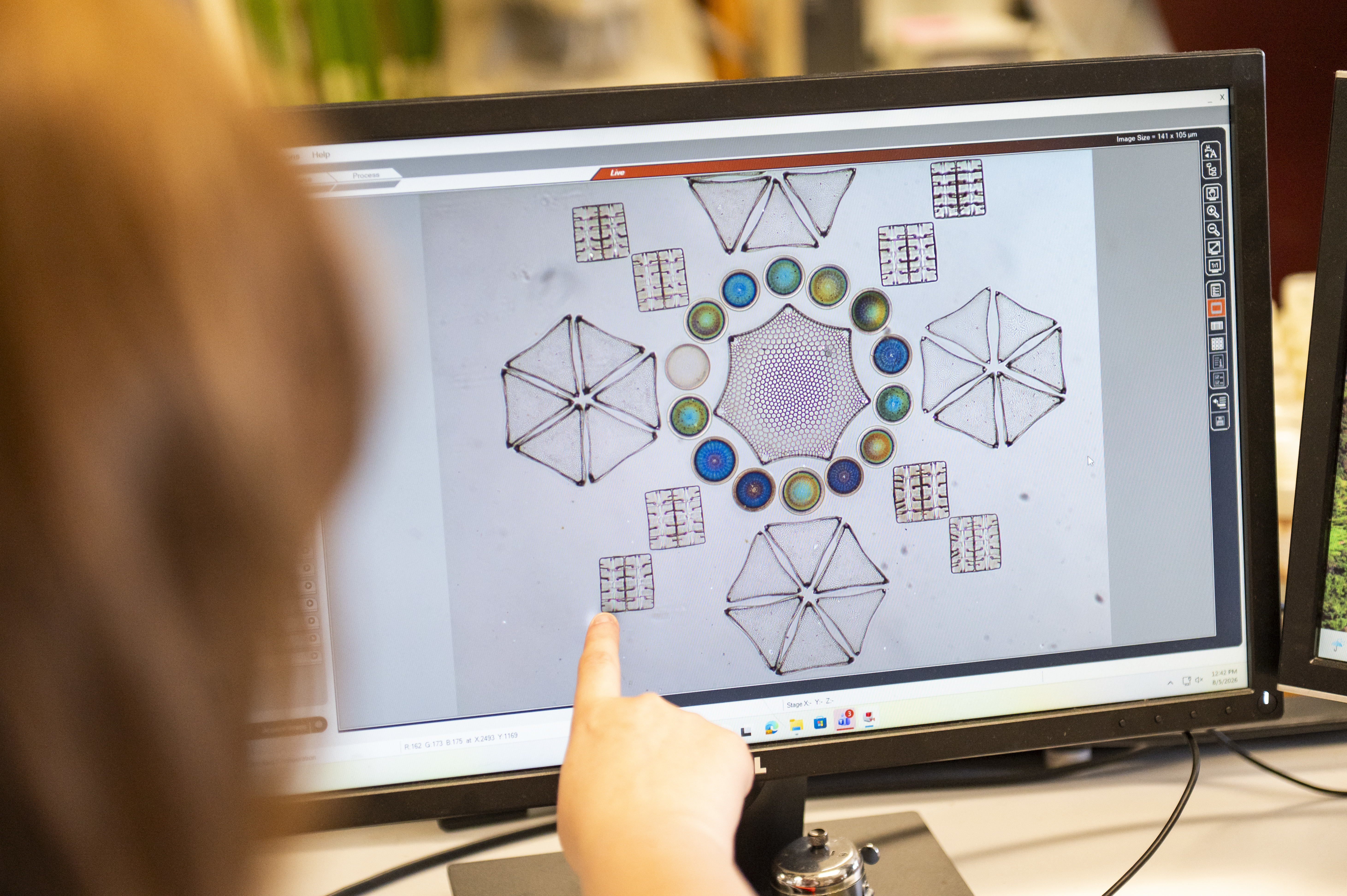
The number of diatoms in that collection is unknown, says Laura Aycock, manager of the academy’s hoard of the single-celled microalgae that are neither animals nor plants, though the academy has around 300,000 slides, with some slides containing upward of a hundred thousand diatoms.
“I’m not going to attempt to calculate that,” Aycock said.
Laura Aycock, collection manager of diatoms at the Academy of Natural Sciences. The diatoms serve as a time capsule.Allie Ippolito / For The Inquirer
The diatoms captured at the academy — which go back to the 19th century and come from around the world — serve as a time capsule.
“You can actually look at water quality and monitor how it’s changing and biodiversity of the diatoms looking at our slides,” says Aycock. “So people will reach out wanting to see, ‘Hey, can I see a snapshot of what this river looked like X many years ago?’”
The academy’s collections are a magnet internationally, says Ted Daeschler, professor emeritus, curator, and chair of vertebrate zoology at the academy.
“It’s a stopping point for people studying a wide variety of different things,” says Daeschler. “Every time I talk to any mollusk person in the world who’s done research, they’re like, ‘Oh yeah, I’ve been to the academy. I’ve done research there.’ Talk to anybody working on crickets and grasshoppers — ‘Oh yeah, I’ve been to the academy.’ People working on Devonian fish, they all came through at one point or another.”
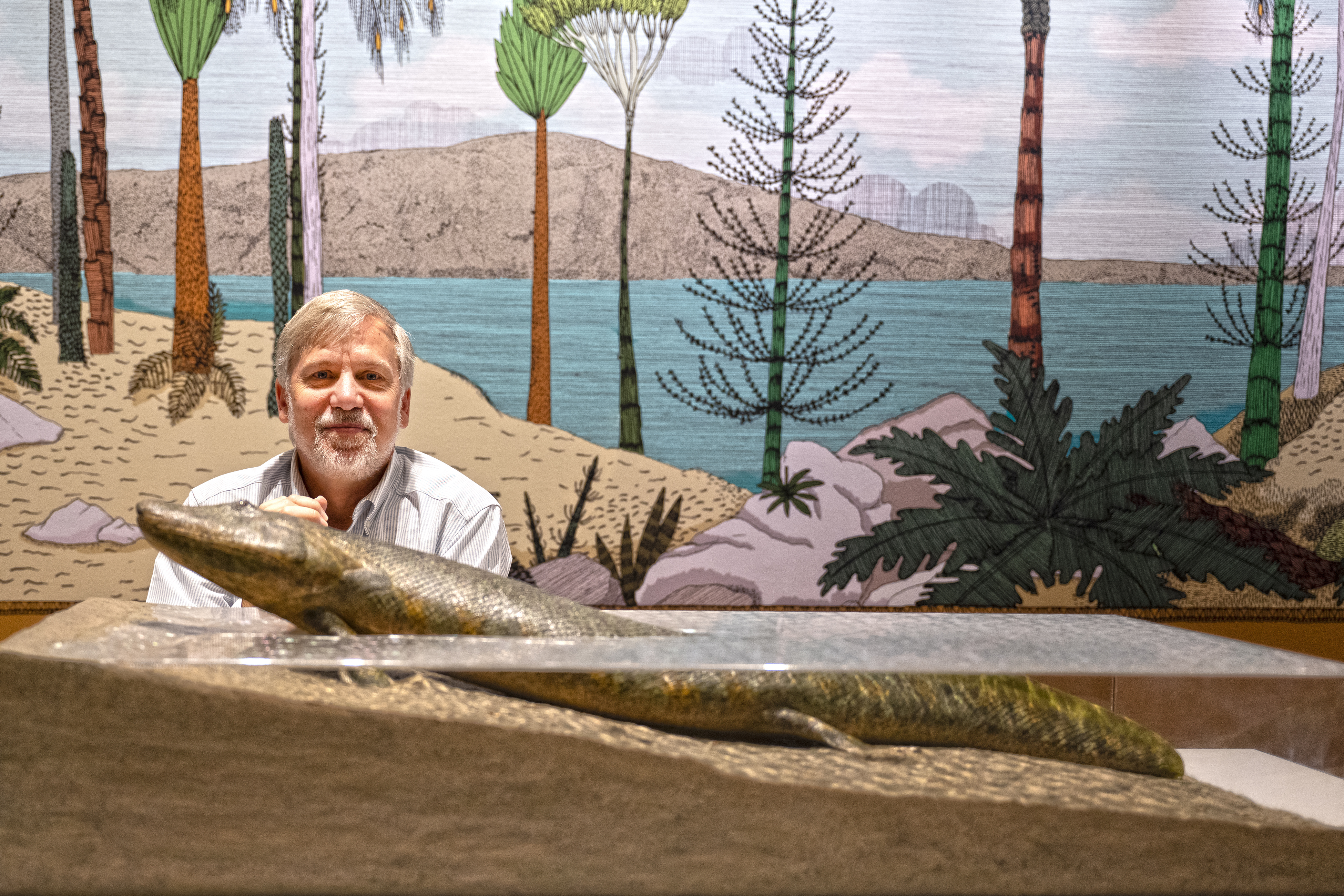
Ted Daeschler in 2023 with a model of “Tiktaalik roseae,” a 375-million-year-old beast whose discovery by Daeschler, Neil H. Shubin, and Farish A. Jenkins Jr. established a new link between fish and land creatures.Jose F. Moreno / Staff Photographer
The academy has seen some novelties over the years: an albacore tuna shipped to the institute from Ernest Hemingway in 1934, fingernail samples from now-retired U.S. Supreme Court Justice Stephen G. Breyer collected in 2010, and two red-eared sliders donated in 1977 by Sylvester Stallone as souvenirs from the original Rocky film.
Hemingway’s tuna remains. But Breyer’s fingernails were tested for stable isotopic composition of carbon and nitrogen to determine the justice’s diet and then discarded, and the turtles Cuff and Link are no longer with us, a spokesperson said.
A key to the ‘next pandemic’?
If some of the collections work and research going on at the academy seems esoteric, there’s no way of knowing what might become urgently relevant at some point.
“We all lived through a pandemic recently — pretty much hell on earth for most of us,” says Jason D. Weckstein, curator of the academy’s ornithology collection and professor at Drexel University College of Arts and Sciences.
“Understanding the ecological interactions that lead to those kinds of events is part of this kind of research. So why are some parasites specific to some hosts, whereas other ones can jump between hosts easily, and there are ecological characteristics that allow that?”
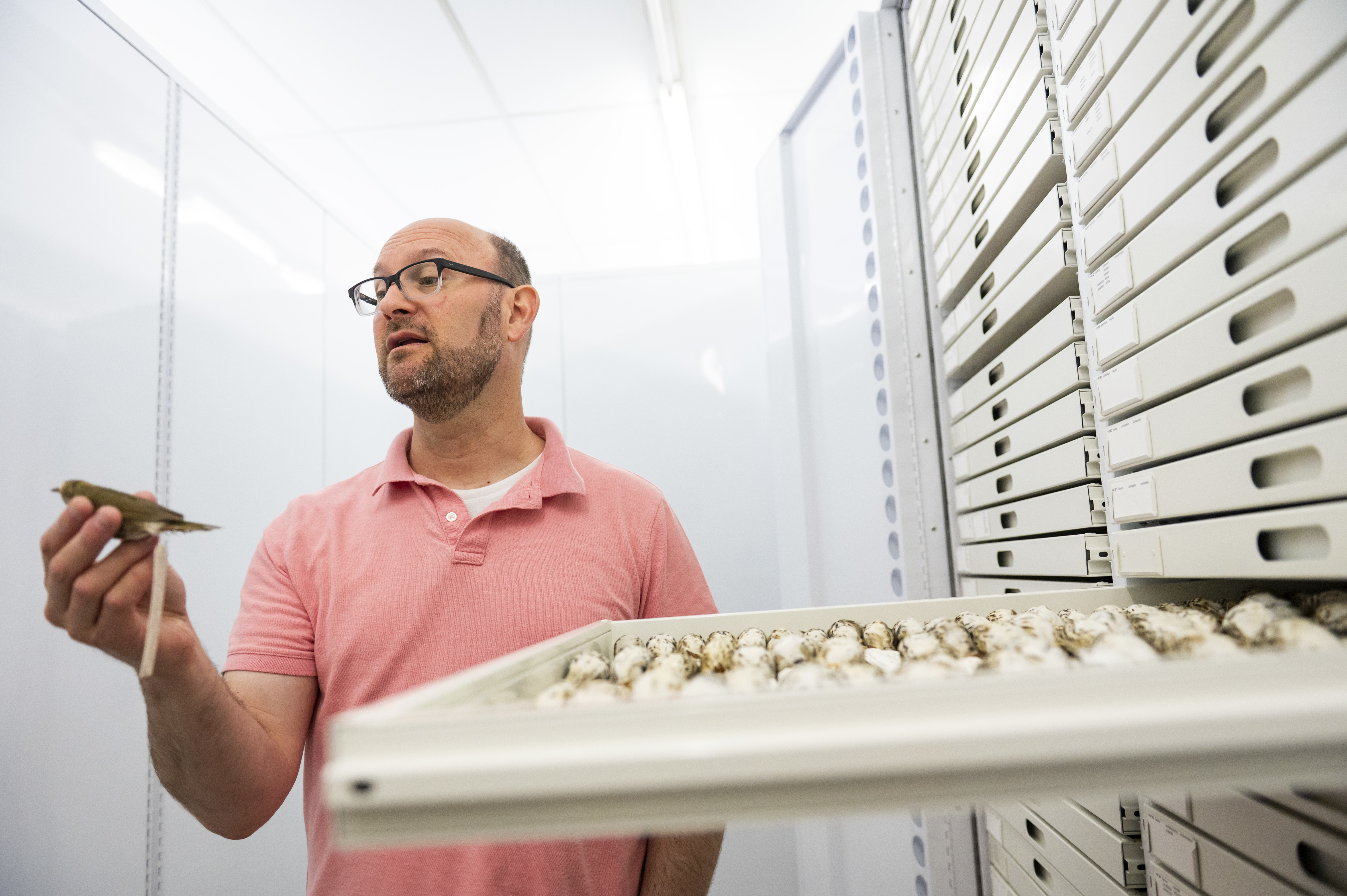
Jason Weckstein, curator of orninthology, holds a warbler at the Academy of Natural Sciences.Allie Ippolito / For The Inquirer
“You just never know when something’s going to happen in the world,” says Weckstein, “and then it turns out there’s something here. We have tissue samples from all over the world. It’s possible we could discover something in those samples that is important for understanding the next pandemic.”
That’s possible, in part, because in the future, specimens might be tested for characteristics whose existence is beyond our current base of knowledge.
Paul Callomon, the academy’s collection manager for malacology and general invertebrates, says that when the first snails entered the academy, “We had no idea what an isotope was. Nobody knew anything about that. But we had an unshakable faith that if we preserve and stabilize these things, as time goes on, they’ll become more important to more people. And so it’s turned out to be. And now of course, with climate change and with this enormous Anthropocene influence on the natural system, the number of ways in which our specimens are going to help tell that story is enormous.”
Each specimen functions as an irreplaceable snapshot in time. Organic materials in their environment are continually breaking down and becoming something else. But when a bird or fish is plucked from its environment, it becomes a permanent record — of itself, but also of the world as it existed at that particular moment.
Biological specimens are often called upon to help solve certain mysteries.
“There are examples in the world generally of new pharmaceutical products being developed from the study of mollusks and their venoms,” says Callomon, “or closer to the academy, we provided shells that were material evidence in the lawsuit against BP for the gulf [Deepwater] Horizon oil spill — historical specimens that proved there was oil in the gulf’s waters before any drilling started, but that it was of a very low level.”
There’s a bigger role now for the academy’s species collection to play, Callomon says.
“The real world is on fire. And the real natural world, the natural ecosystem that sustains all life on Earth, is undergoing enormous changes at the moment. And the only place that you can find material evidence for what it was like before that started, or what it was like at an earlier stage of that process, is natural history collections, and they are mostly housed in museums.”
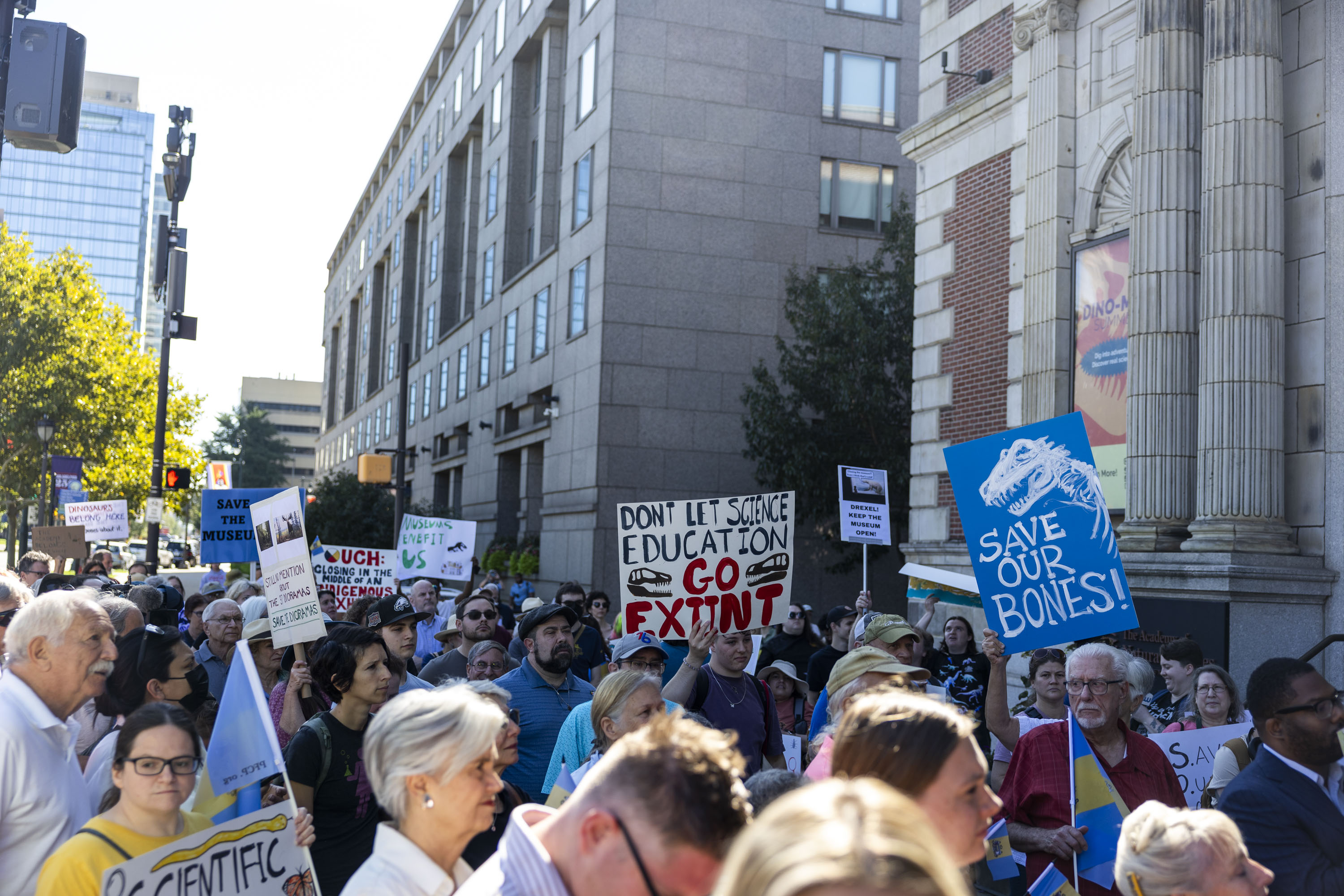
Several hundred Academy of Natural Sciences supporters came out to protest the decision by Drexel University and the Academy to close the Academy’s museum, Sept. 8, 2026.Tyger Williams / Staff Photographer
‘Profound concern’
Curators and scientists say that as the academy has arrived at a vulnerable juncture, its collections and research are more critical than ever given the march of climate change, microplastics contamination, biodiversity loss, and other crises.
The scientific powerhouse’s own future is a question mark at the moment. Drexel is facing deficits and a challenging enrollment environment, and, in a cost-cutting move a decade and a half after a partial merger of Drexel and the academy, the two groups announced last week that the academy museum will end its nearly two-century run at the end of the month.
The aim now is to move the collection and sell the building, according to a source close to the situation who asked not to be identified. This raises questions about the fate of the academy’s historic building and the critical mass of the Parkway’s cultural attractions, as well as concerns for the future of the collection and the academy’s historically significant library and archive, whose holdings span five centuries.
“Profound concern” is how a group whose board includes the largest and most important natural history and science centers in the U.S. has expressed its apprehension over the future of the academy.
“As the oldest natural science research institution and museum in the United States, the academy is a globally important natural history collection and center for biodiversity research,” the Washington, D.C.-based Natural Science Collections Alliance wrote in an April statement after news of a potential schism between Drexel and the academy.
“Any administrative or structural changes at the Academy must prioritize the integrity of these collections. The destabilization of the institutional support or the specialist staff required to maintain these specimens for active use in research would represent an immense loss to the city of Philadelphia, the state of Pennsylvania, and the global scientific community.”
The NSCA’s concerns remain, said president Trina E. Roberts this week, and while “we’re glad to see that the importance of the collection has been acknowledged in public statements,” she said, the closing of the museum was an unwelcome surprise.
“Education, research and collections are all part of a truly functioning natural history museum. It would be wonderful if the academy can find a way to maintain all of those,” she said.
Academy leaders say they will work to find “new and financially sustainable opportunities for the public display of elements” of its collections, but have not specified any details.
In a statement last week, the two institutions affirmed their attention to the trove of specimens, library, and archive.
“The stewardship of the Academy’s collections and their use to advance scientific knowledge will be the focus of our work for the near future,” said a statement from Drexel president Antonio Merlo and academy board chair Suzanne Biemiller.
A Drexel spokesperson this week said there were no immediate plans to move the collection, and, regarding a potential sale of the building, “no decisions have been made regarding its future disposition.”
“The academy’s home will continue to house its collections, library, archives, and laboratories while Drexel and academy leadership consider potential pathways forward,” said Britt Faulstick.
Should relocation become part of a future plan, Faulstick said, “maintaining appropriate access to the collections for research [during a move] would be an important consideration in that process.”
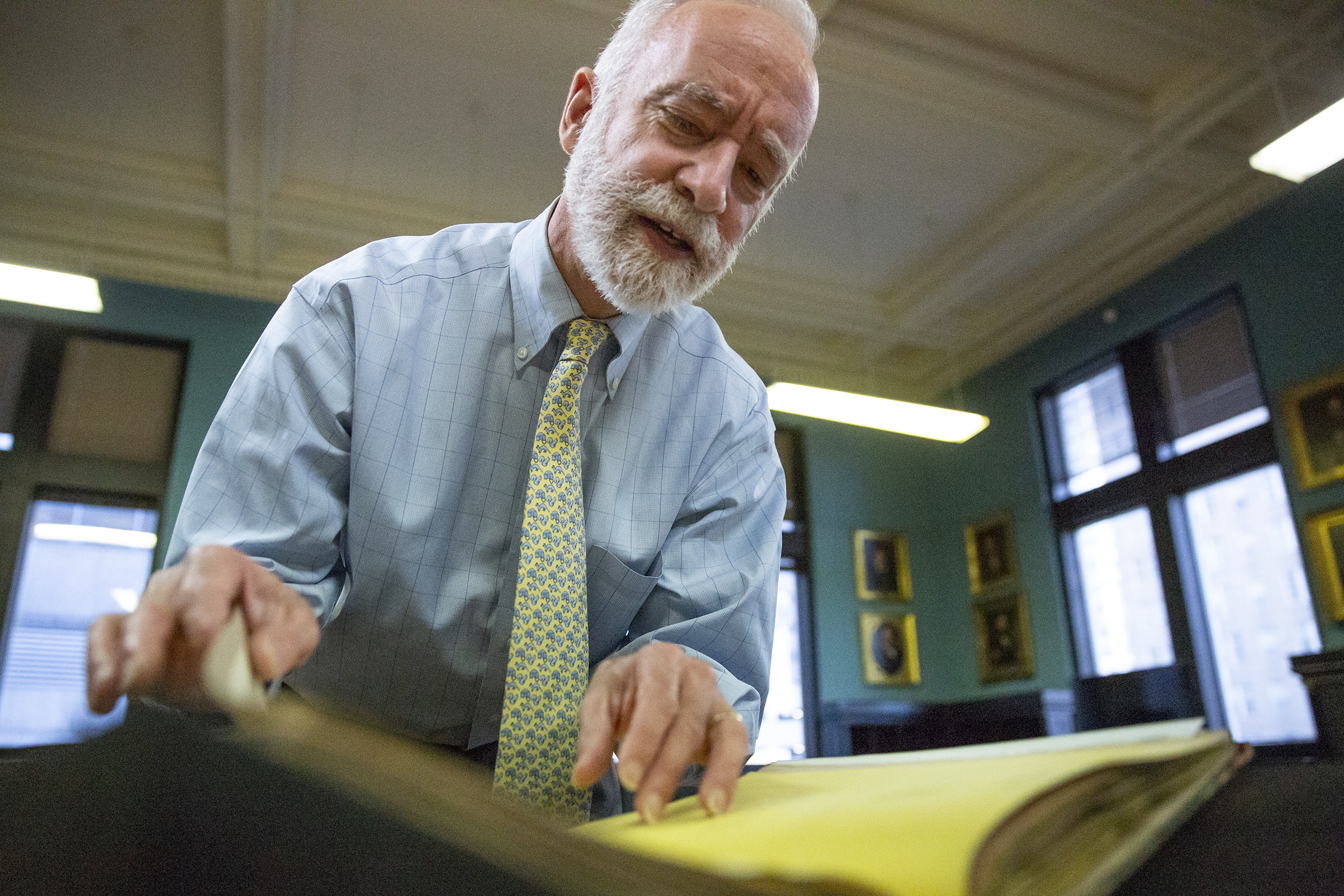
Robert McCracken Peck, curator of art and artifacts and senior fellow emeritus of the Academy of Natural Sciences of Drexel University.HEATHER KHALIFA / Staff Photographer
‘A recipe for disaster’
Moving the collection would be expensive and time-consuming, says Peck, who, with Patricia Tyson Stroud, co-authored AGlorious Enterprise: The Academy of Natural Sciences of Philadelphia and the Making of American Science.
Peck says that in the 1970s, parts of the collection were moved into the former Reliance Standard Life Insurance Co. building on Pennsylvania Avenue now occupied by the Philadelphia Museum of Art, and then, a short time later, were moved back.
“I imagine it would take a couple of years,” he says of a potential move now of 19 million specimens, “because that’s how long it took to move our collections to and from the Art Museum area, and they didn’t even move them all.”
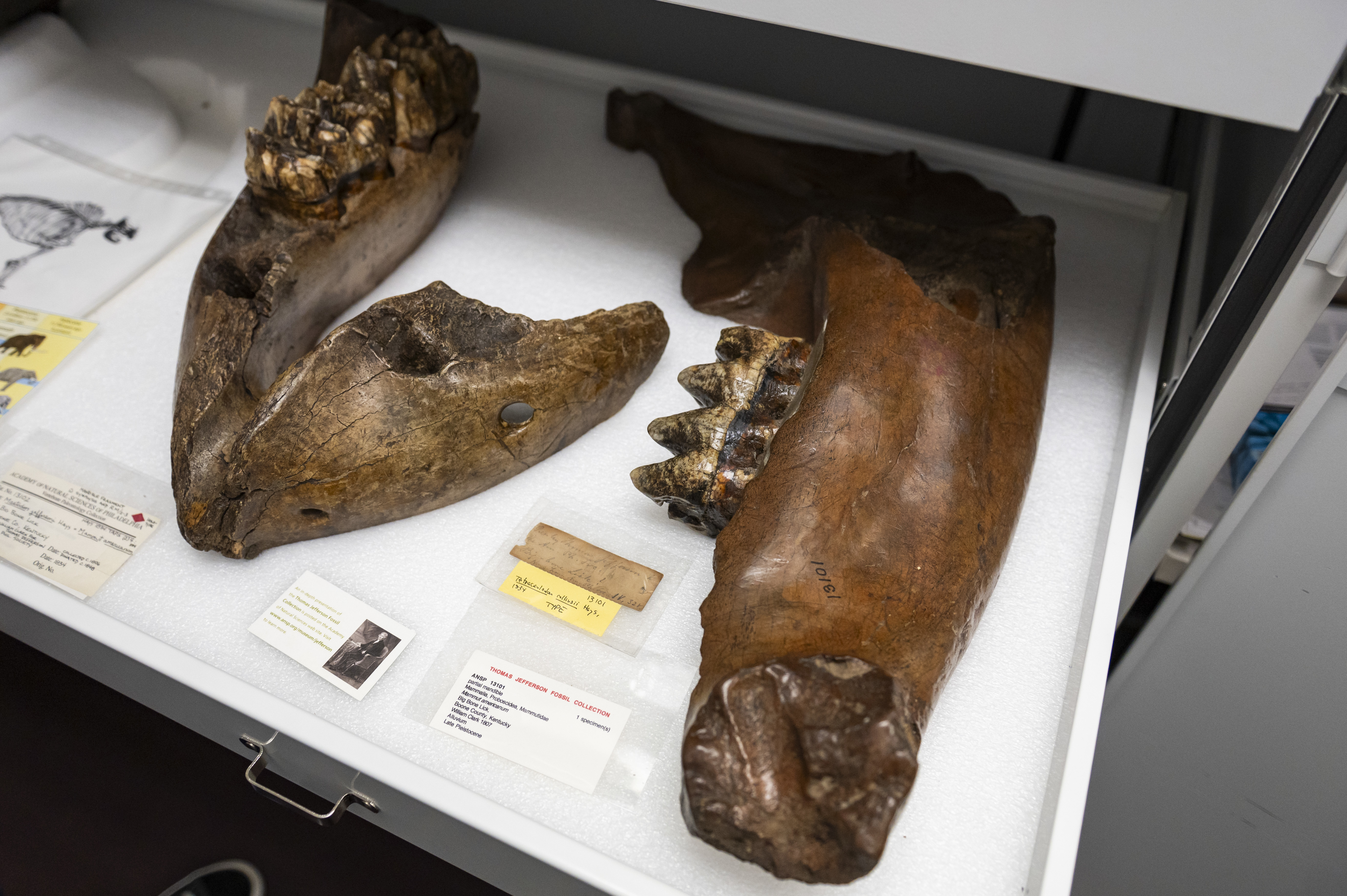
A partial mandible from an American mastodon from the Thomas Jefferson Fossil Collection at the Academy of Natural Sciences.Allie Ippolito / For The Inquirer
“It can be done, and it can be done in a professional and careful way that maintains the integrity of the collection, but you can’t do it in a hurried way,” says the NSCA’s Roberts. “That is a recipe for disaster for a collection of this size and importance. They need to plan for a year before they move any specimens out of the building.”
Collections like these require a specific kind of care, says Roberts, who is also associate vice president for collections at the Natural History Museums of Los Angeles County.
Specimens can degrade over time if not maintained properly, she said.
“We rely on good temperature and humidity control depending on what kind of specimen you have. A dinosaur bone that is basically stone is a lot less sensitive than a plant specimen that is a dried leaf. We’re also concerned about the curatorial and collections expertise that’s represented by the staff.”
Much of the academy’s collection is digitized, and a certain amount of information can be gleaned online, but for some purposes, the actual specimen must be available, which happens either by a visit to Philadelphia or a loan.
“DNA research is just exploding in natural history collections because it turns out that we have this resource we’ve been building for hundreds of years that can still be used for DNA,” says Roberts. “So a plant specimen, an insect specimen, a mammal specimen in a natural history collection from 100 years ago, you can get DNA out of that, and that’s an amazing resource. You absolutely cannot do that from a digitized record.”
It’s possible now, she says, “to look at actual gene expression patterns in different environments — for example, what genes are turned off or turned on in cold vs. hot conditions. That might be something important in an era of climate change if we want to understand how something like plant communities and animal communities are going to respond to that.”
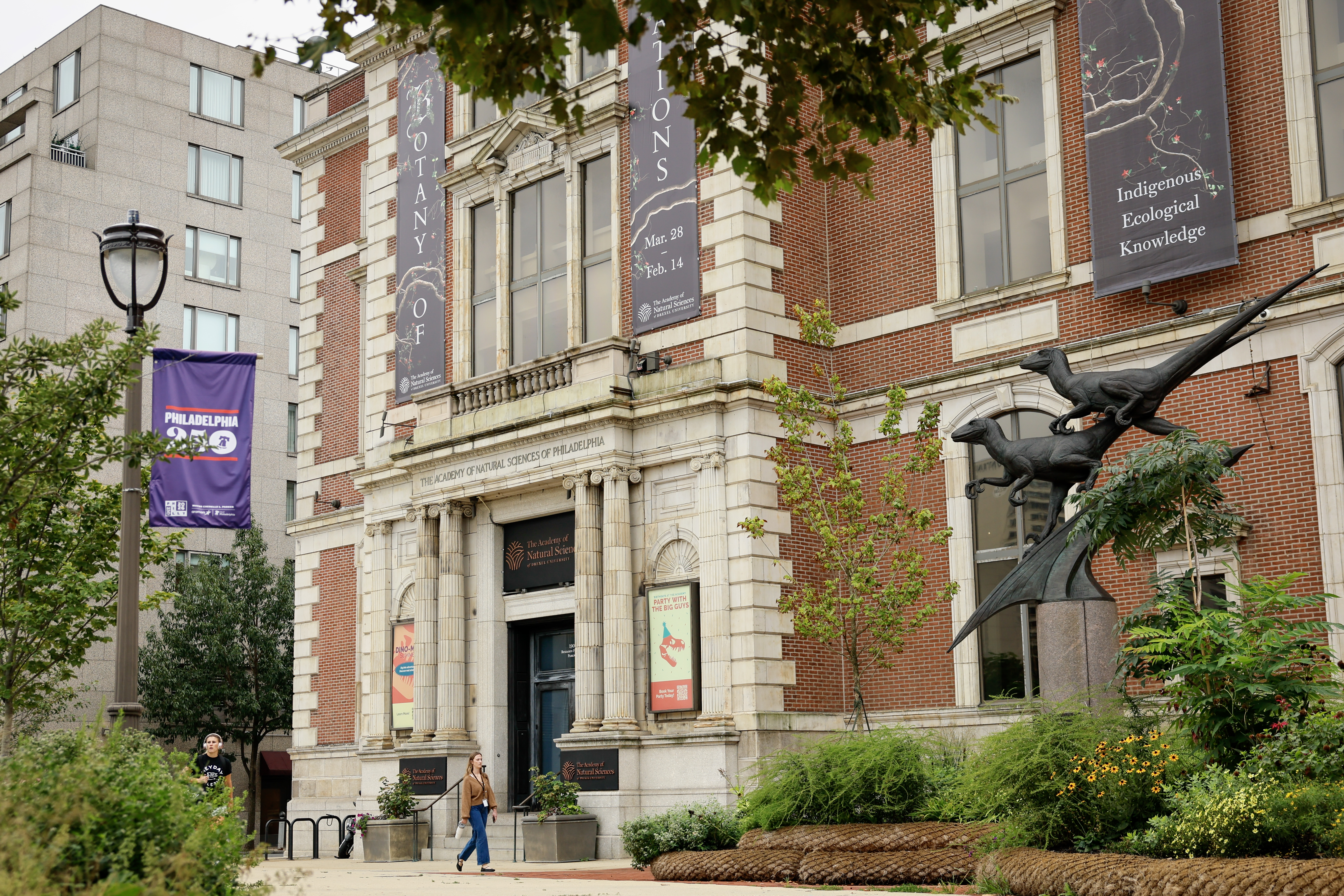
The Academy of Natural Sciences of Drexel University on the Ben Franklin Parkway.Elizabeth Robertson / Staff Photographer
‘It changed their minds completely’
The academy-Drexel partnership, 15 years in, was much in evidence during a several hour visit in early August. In one room at the academy, a group of students was removing organs from birds, and in another, Drexel environmental sciences undergraduate Ean Geller-Nocella was examining a freshwater drum, an invasive species that’s recently turned up in local waters, to see what the fish has been eating.
“I’ve been cutting them open, taking out their stomachs and removing the stomach contents. All that is mussels — freshwater mussels,” he said, referring to a small cluster of crushed up shells.
Another invasive species is being looked at by the academy.
Ean Geller-Nocella, Drexel University co-op student, inspects the contents of the stomach of a freshwater drum in the fisheries department at the Academy of Natural Sciences.Allie Ippolito / For The Inquirer
“Ten years ago in Tinicum, snakeheads weren’t there and we got a picture of what the diet was for the resident fish,” said David Velinsky, senior scientist of the Patrick Center for Environmental Research and professor at Drexel University College of Arts and Sciences. “They’re now there, so we’re doing a study. We already have the samples collected, analyzing on the mass spectrometer how the food web changed, and this gives us an idea of what needs to be protected or not protected.”
Weckstein recently had a Drexel undergraduate student who sequenced the genomes of the parasitic lice living on vultures.
Having students working there “just adds a vibrancy to the place,” says Velinsky.
Says the malacology department’s Callomon:
“I think the role that I’m proudest of our collection’s playing is when Drexel undergrads come here on their co-op and we have successfully diverted careers in medicine, the law, and engineering in favor of working in our part of the world, in our part of science, because of the experience. They came and did a six-month co-op here and it changed their minds completely. It changed their minds because it moved their hearts, and your heart is what drives your mind. But they had no way of previously knowing.”
One persuading factor: at the academy, students have direct, hands-on contact with specimens in the collection.
“Other places use photographs,” says Peck. “Drexel students, thanks to the academy, get to work with real specimens, which dramatically enhances their interest in and understanding of the natural world.”
Just another reason, advocates say, that the academy’s treasures must be kept intact and accessible to all.
“My greatest concern is over keeping the collection together,” says Peck. “It needs to be cared for, for reasons that extend well beyond Philadelphia and the academy. These are collections we hold in trust for the world.”
Staff writer Susan Snyder contributed to this article.
Rubber Band Gun’s ‘Bloodwork’: More musical gems from Historic New Jersey
Kevin Basko has a suggestion: Music might make everything better.
“If you don’t know what to do because you’ve never been this sad before,” Basko sings. “You don’t feel those problems when you’re singing the songs you love.”
That lyric about music’s comforting and healing power is from “Songs You Love,” the closing track on Bloodwork, the winning new album by Rubber Band Gun, Basko’s primary vehicle for the many, many songs he loves to write.
It’s been a good year for Historic New Jersey, the label that — somewhat confusingly — is based in South Philadelphia and whose emergence is one of the most heartening indie rock stories of 2026.
Basko and his Historic NJ pals Emily Moales, who records as Star Moales, and sibling act Sam and Louise Sullivan have been producing a steady stream of retro-leaning but wholly in-the-moment high-level songcraft for a few years now.
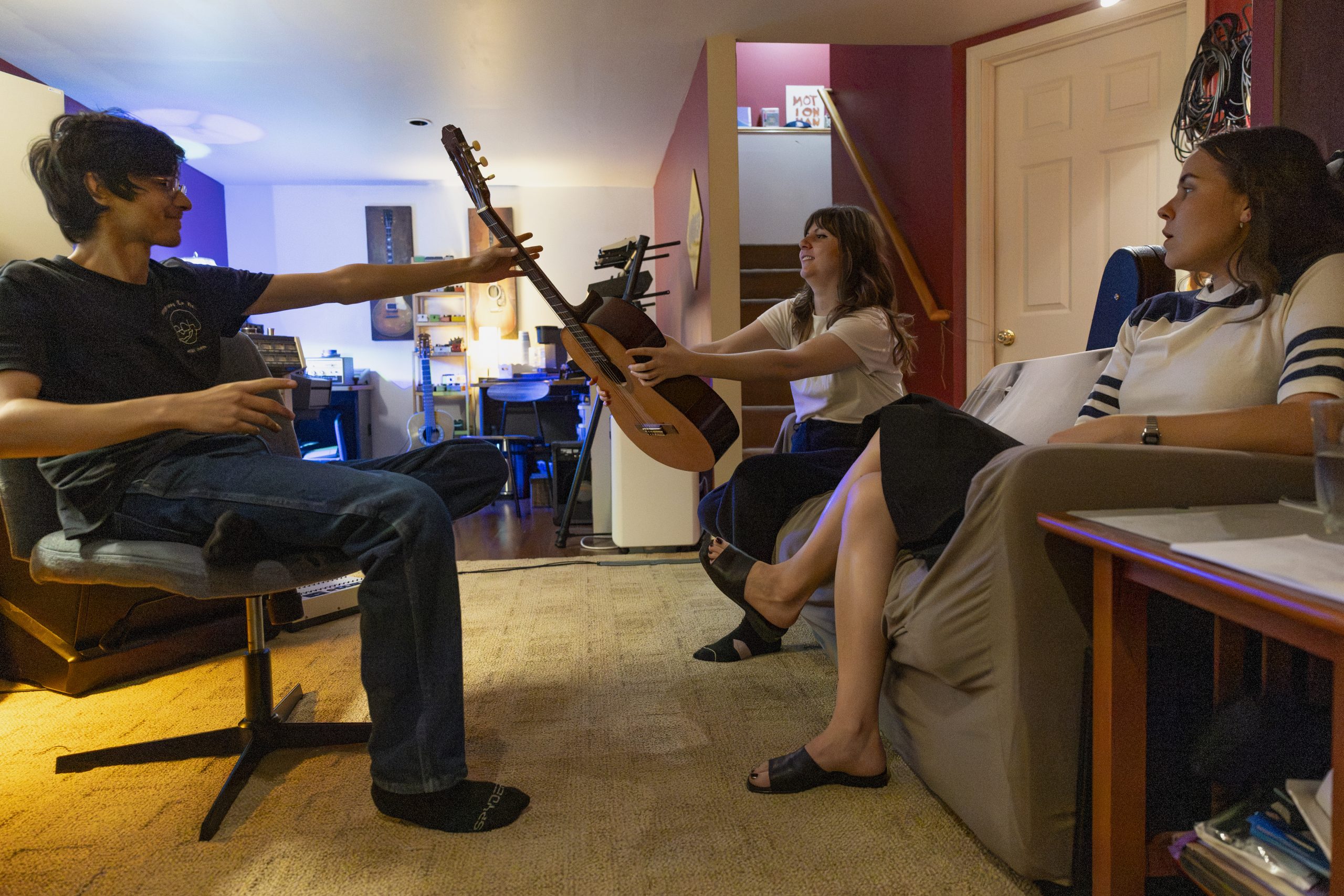
Emily Moles (center), known as Star Moles, passes a guitar to longtime collaborator Kevin Basko inside the Historic NJ studio in South Philadelphia on Friday, July 10, 2026.Aidan T. Gallo / Staff Photographer
Since the spring, the national and international music press has caught wind of what makes Historic NJ special, praising the warmth and camaraderie that comes through on Star Moales’ Highway to Hell and the Sullivans’ Love & Devotion.
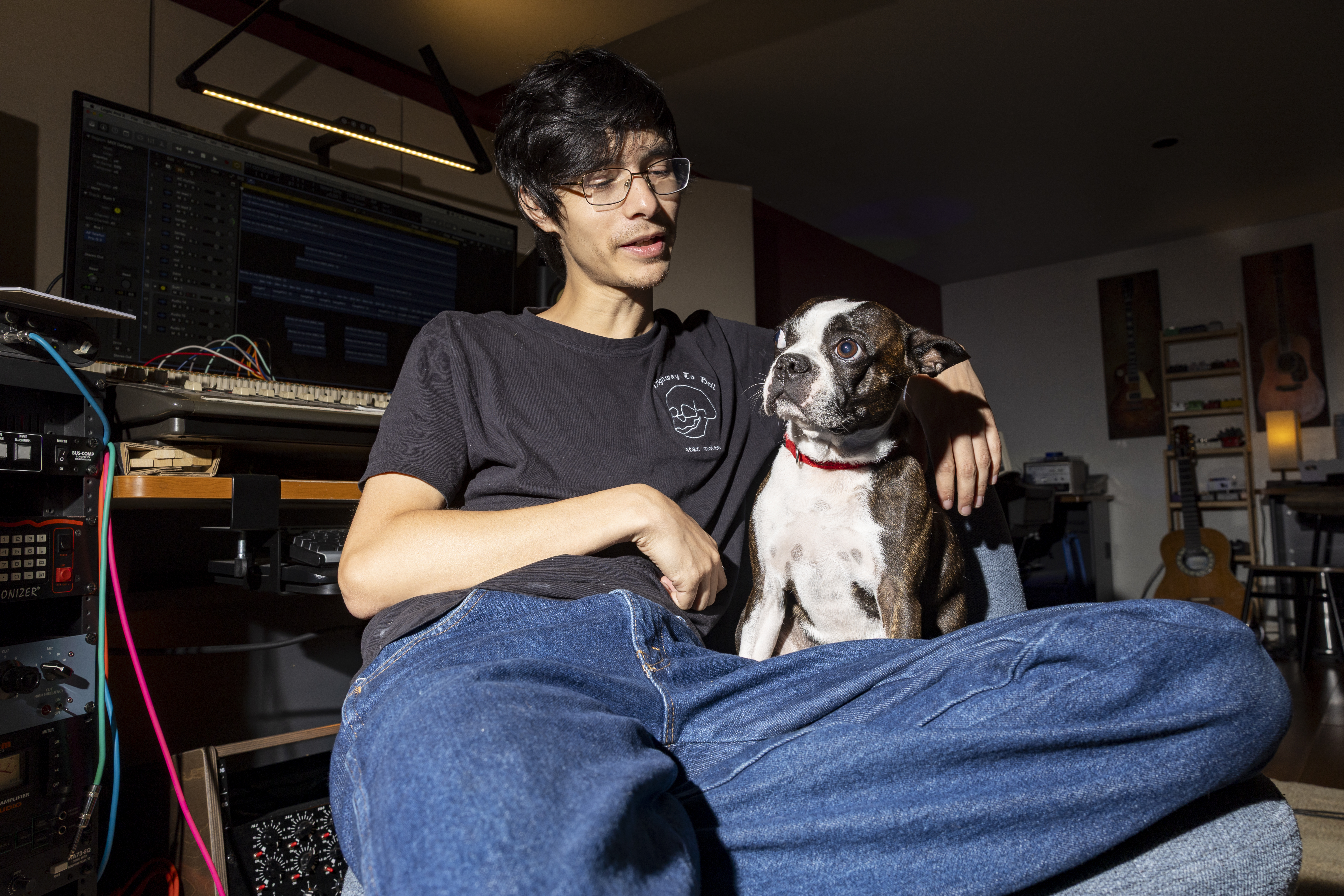
Now, it’s Basko’s turn. Rubber Band Gun’s Bloodwork, like all of the other Historic NJ projects, was recorded and produced at Basko’s home studio in South Philly, with Moales and the Sullivans contributing musically and vocally.
The newest of the dozens of streamable releases on Rubber Band Gun’s Bandcamp page showcases Basko’s canny, inviting songwriting. Tunes like “Love Me Dawg” and “Money on My Mind” consistently offer subtle surprises and are never merely clever, even when Basko is punning on Rihanna and Rage Against the Machine lyrics while singing about feeling out of place in America in “Zombie in the Country.”
— Dan DeLuca
Julia Baccellieri as Joice Heth in “Strange Root, or the Murder of P.T. Barnum by Joice Heth.” Elizabeth Wellington
A Fringe Festival performance gives agency to enslaved member of P.T. Barnum’s 19th-century circus troupe
In 1835, showman, businessman, and politician P.T. Barnum bought an elderly enslaved woman, Joice Heth, from a Kentucky enslaver, added her to his circus, and falsely claimed she was George Washington’s 161-year-old nursemaid.
His advertisements described her as weighing 46 pounds and being blind and toothless — supposed evidence of her extreme age.
To reinforce the trope of the frail, subservient, illiterate Black person, Barnum insisted she use a poor, Southern dialect to regale the audience with stories about her relationship to Washington.
Heth died in 1836 at 80 and Barnum even exploited her in death, charging circusgoers 25 cents to see her dead body, an experience he marketed as a public autopsy.
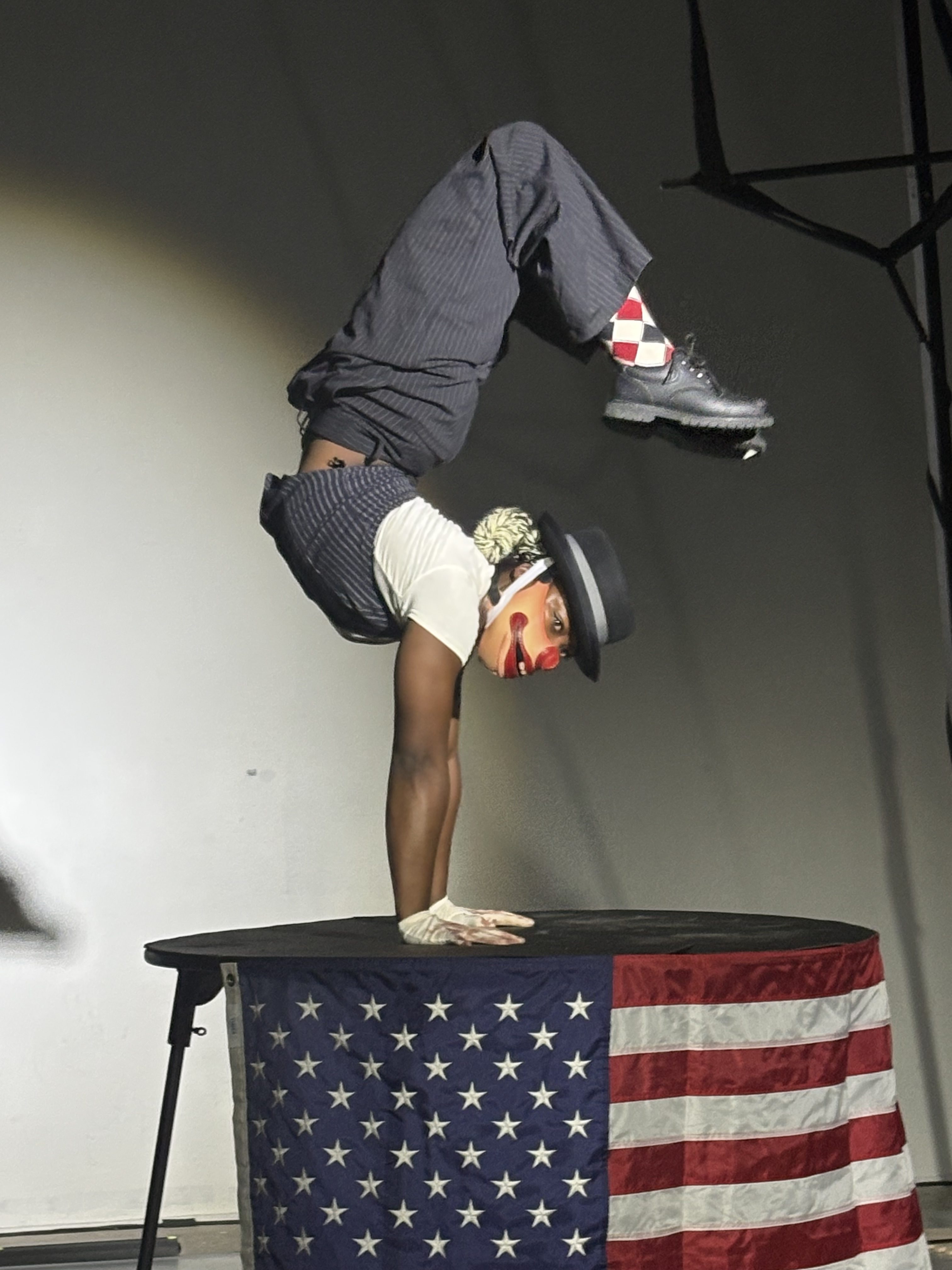
Baccellieri doesn’t portray Heth as a weak woman beaten down by her circumstances. Instead, they use dance trapeze, aerial apparatus, Chinese pole, and hula hoops to give Heth power, agency, and beauty.
The music is contemporary and soulful, weaving in Nina Simone’s jazz with Kendrick Lamar’s bars. Baccellieri dons a clown mask during the performance. They affix it as the audience listens to Maya Angelou read Paul Laurence Dunbar’s 1896 poem “We Wear the Mask,” which speaks to Black Americans’ dual consciousness.
Alston’s portrayal of Barnum as a buffoon gives voice to the stupidity of racism, speaking truth to power: Racists who refuse to see the evil in their actions will cause their own demise.
Strange Root is short — it runs under 45 minutes — but it’s powerful.
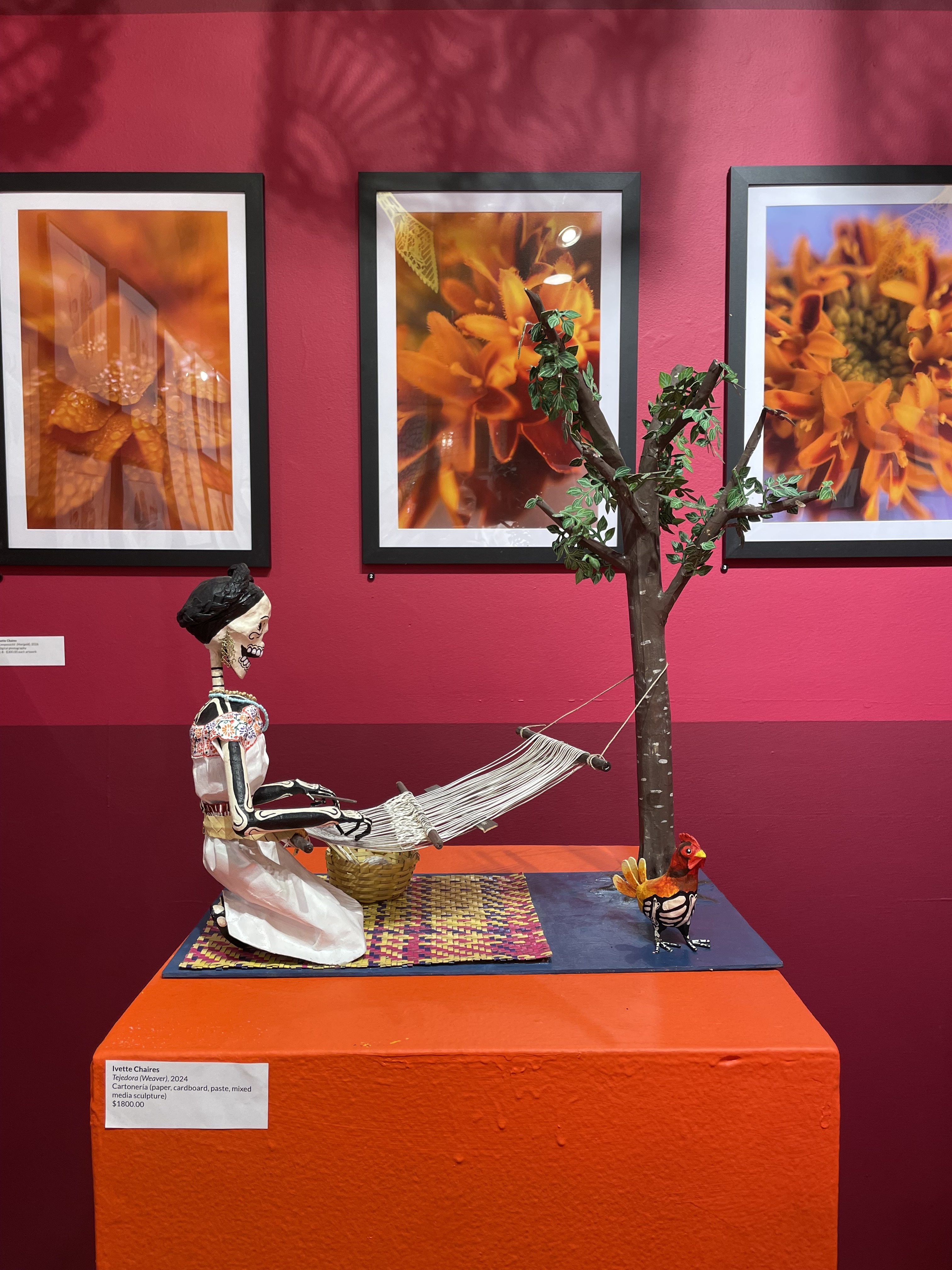
“Tejedora (Weaver)” from Puebla, Mexico, artist Ivette Chaires is on view at Philadelphia’s Magic Gardens as part of her solo show, “Living Through Death,” through Nov. 8.Rosa Cartagena
Skeletal spectacles
South Street’s Magic Gardens are often packed with tourists and fans walking through the outdoor mosaic labyrinth of mirrors, glass bottles, clay sculptures, and ceramic tiles lovingly built by South Philly legend Isaiah Zagar. Inside, though, the building hosts rotating exhibits from other artists; currently on view is “Living Through Death” from Puebla artist Ivette Chaires, who spent time working in Philadelphia as part of the Julia Zagar Residency for Women Artists.
Using papier-mâché, Chaires crafted 36 skeletal figures in the Mexican tradition of cartonería, often seen during Día de los Muertos celebrations. Her skeletons are strikingly animated, decked out in funky modern clothing and thick-rimmed glasses or posing cheekily. There’s a Frida Kahlo figure and an Edgar Allan Poe — and a football fan with an Eagles cap. Several works depict the Zagars, like one with Isaiah and Julia wearing colorful mosaic outfits. The show debuted five months after Zagar died, making it a powerful tribute to his legacy.
Each delightfully spooky sculpture contains incredible layers. Tejedora (Weaver) features a bony woman bending over a loom attached to a tree trunk on one end and wrapped around her waist on the other. The details are so carefully crafted, from her twisted belt to her intricately woven gold earrings. Nearby stands a sweet little chicken with a living head and a dead underbelly. It was a fascinating, fully-formed scene that accomplished Chaires’ goal — for the viewer to feel deeply connected to the dead.
“Living Through Death: Works by Ivette Chaires” is on view through Nov. 8 at Philadelphia’s Magic Gardens, 1020 South St., Philadelphia, 215-733-0390 or phillymagicgardens.org.
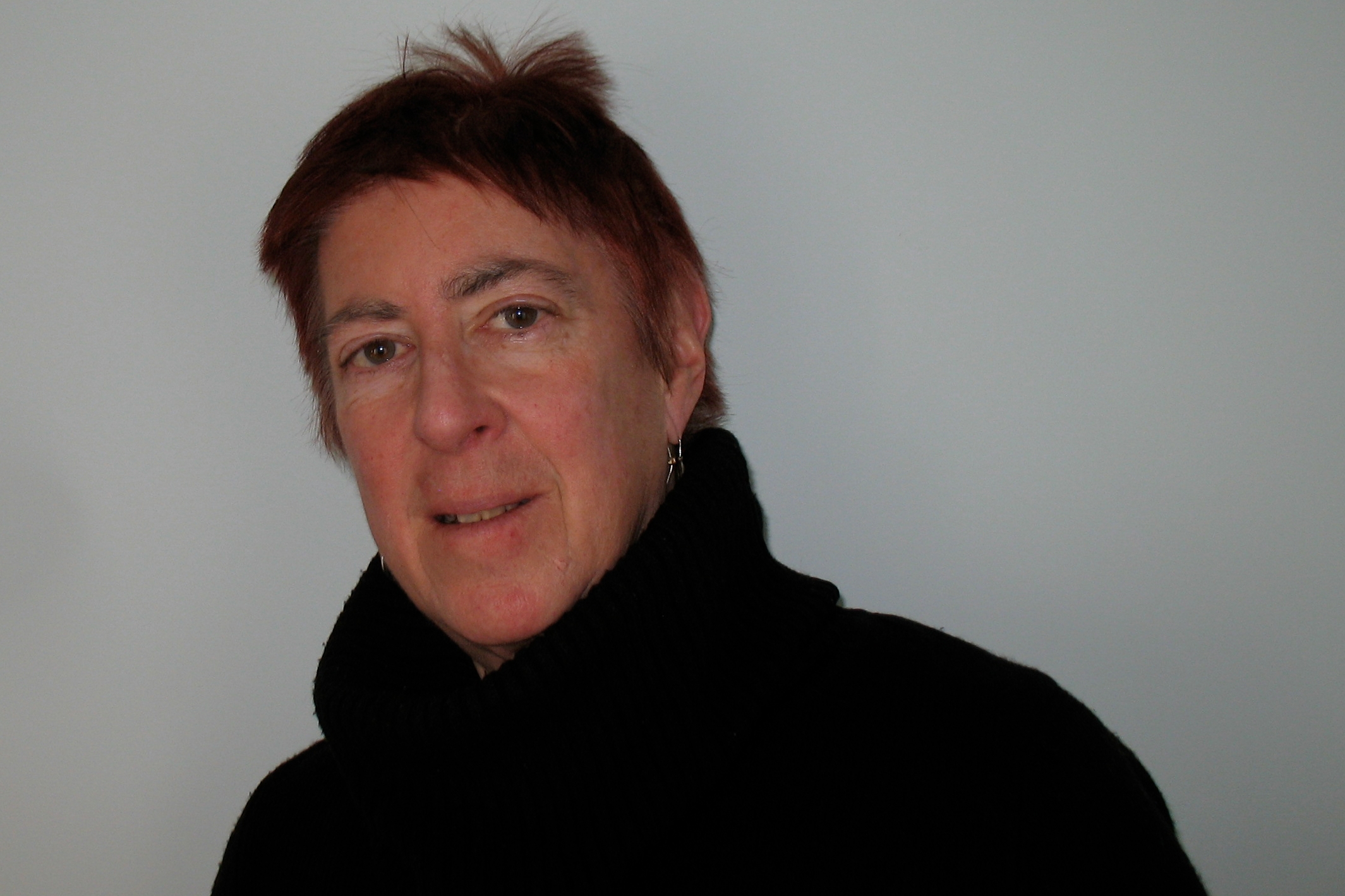
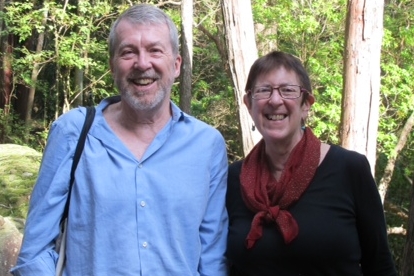
Rachel Blau DuPlessis, 84, of Philadelphia, experimental poet and essayist, literary scholar and critic, Temple University professor of English and creative writing emerita, mentor, artist, and world traveler, died Wednesday, Sept. 2, of respiratory failure at Penn Presbyterian Medical Center.
Professor DuPlessis was an eclectic experimental poet who grew up in New York, lived in Swarthmore and Philadelphia for more than 50 years, and taught a variety of writing and women’s studies classes at Temple from 1974 to her retirement in 2011. She wrote hundreds of poems — she called many of them “drafts” — about feminism, modernism, connectivity, imagery, and consciousness.
She was an expert on cultural poetics and told The Inquirer in 2002 that her poems generally reflect her “awe at the universe, grief at the barbarity of modernism, and sense of how it was to be in the world.” She enjoyed poetic wordplay, reviewers said, and tinkered freely with conventional syntax, sound, tone, and form.
“Reading her is an adventure,” reviewer Robert Long said in The Inquirer in 1997, “and poets this adventurous must be cherished.”
Her poems were published in more than 30 books and in several languages, and also appeared in The Inquirer, other newspapers, magazines, journals, and anthologies. In tributes, fellow poets praised her “unique combination of erudition and exuberance” and her “generosity, brilliance, expansive thinking, and attention to so many possibilities of writing and art.”
“From what I can tell, DuPlessis doesn’t write poems so much as build them,” reviewer Andrew Ervin said in The Inquirer in 2005. “The manner in which she does that is what makes the Temple professor one of the most exciting and inventive writers of our time.”
She told the Oxonian Review in 2015 that “being a poet is not only writing poems. It is an address to the whole apparatus of and the traditions of poetic practice.”
A book publisher said: “She brought such intelligence, generosity, and curiosity to everything she did.” Penn professor Al Filreis told Professor DuPlessis’husband, Robert: “It’s hard to imagine the Philly poetry world without Rachel in it.”
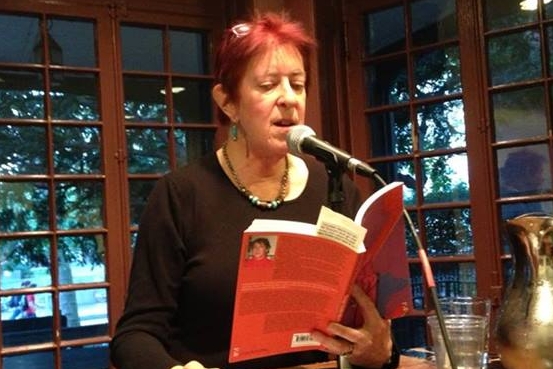
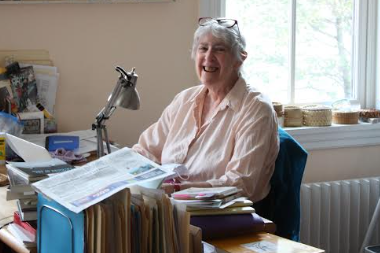
Professor DuPlessis read her poems to people around the world. Courtesy of the family
At Temple, Professor DuPlessis helped establish women’s studies classes and the school’s graduate program in creative writing. She mentored students and other professors, and the English department’s DuPlessis Lecture in Poetry and Poetics is named in her honor.
“She loved being a mentor to people, to encourage them,” her husband said. “She loved being a poet and an academic. She prepared incredibly for her classes and was connected and attentive to her students.”
Earlier, she taught briefly at what is now the College of New Jersey and Rutgers and Columbia Universities. She spent several of her research and study leaves from Temple working with students and colleagues at universities in the Netherlands, France, Belgium, and elsewhere.
She was named a resident poet and distinguished visitor in Italy and New Zealand. She and her husband, a professor emeritus at Swarthmore College, visited every continent except Antarctica, and she spoke French and Italian as well as English.
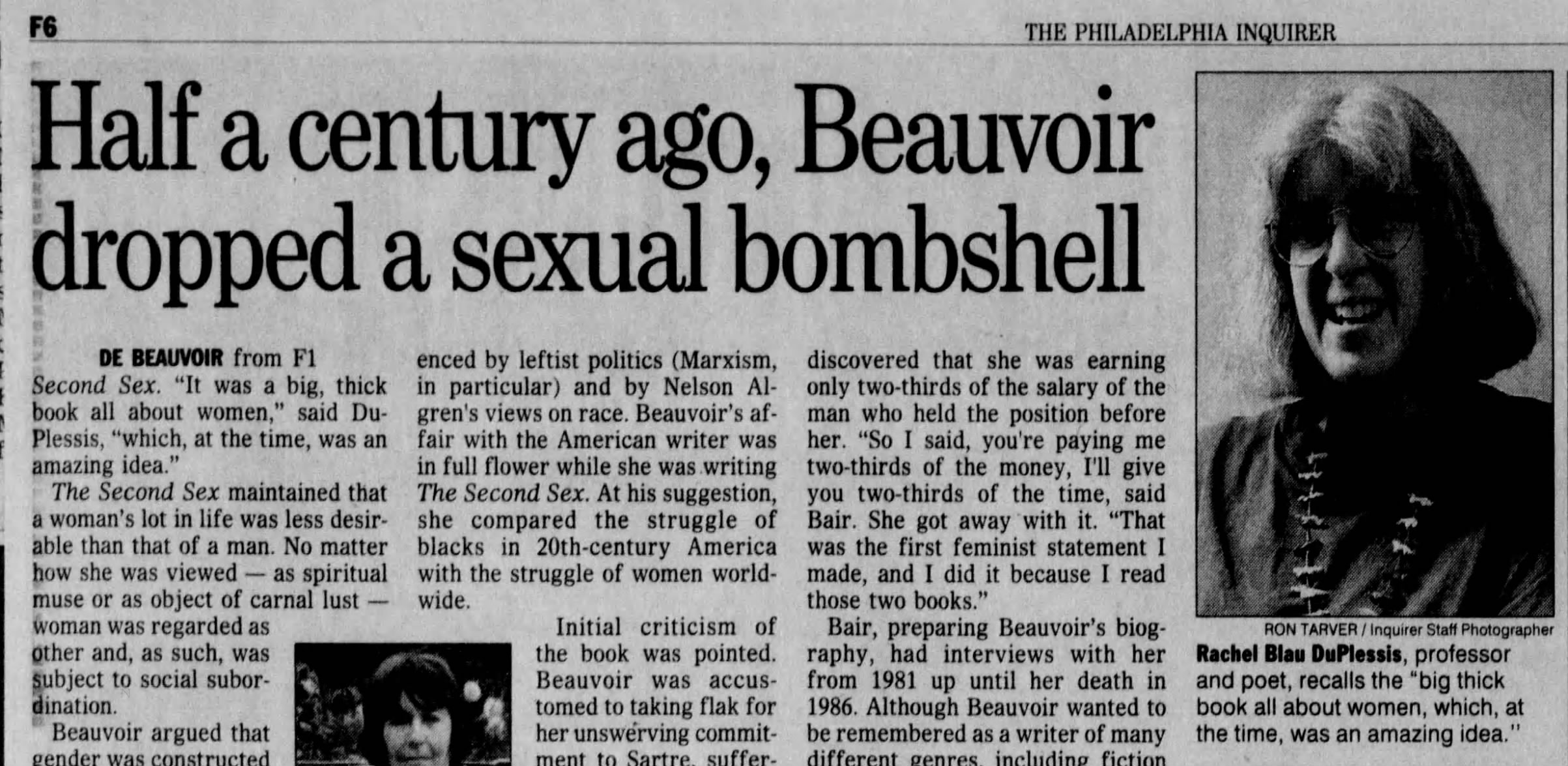
This article featured Professor DuPlessis and appeared in The Inquirer in 1999.Newspapers.com
She earned fellowships from the Pew Center, the Pennsylvania Council on the Arts, the National Humanities Center in North Carolina, and other groups. “She was constantly creating things,” her husband said. “She never stopped.”
Professor DuPlessis also wrote and edited books and articles about writing and poetry, and she reviewed books for The Inquirer and other publications. She read her poems in public, was interviewed often, and earned achievement awards from Temple, the University of California in San Diego, the old Fund for Poetry, and other admirers.
She created a comprehensive website, rachelblauduplessis.com, and made collage art that she augmented with poems. Thomas Devaney, a Philadelphia writer, called her “an important figure of American experimental poetry.”
She told the Oxonian Review: “Poetry is an ethical practice as well as an aesthetic one. Just even thinking about what this means and how it is instantiated is a useful task.”
Professor DuPlessis enjoyed time with her husband, Robert, and daughter, Kore.Courtesy of the family
Rachel Maia Blau was born Dec. 14, 1941, in Brooklyn. She grew up in Queens and the Bronx, and earned a bachelor’s degree in English at Barnard College in New York in 1963 and a master’s degree and doctorate in English and comparative literature at Columbia in 1970.
Her father was a professor, her mother a librarian. She met fellow Fulbright scholar Robert DuPlessis on a boat to France in 1966, and they married in 1968 and had a daughter, Kore.
Professor DuPlessis enjoyed yoga, museums, art history, and long walks with her husband. They went to see and hear the orchestra, the opera, the ballet, and the theater.
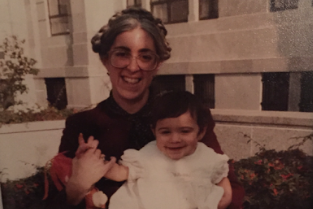
She doted on her daughter and grandchildren. “She always read me stories and sang me songs at night before bed,” her daughter said. “I would hold on to her leg because I didn’t want her to leave.”
Professor DuPlessis started writing poems when she was 12, she said in an interview. “She was determined, hardworking, witty, and a lot of fun,” her husband said. “She was definitely intense.”
Professor DuPlessis said she started writing poems when she was 12.Courtesy of the family
In addition to her husband and daughter, Professor DuPlessis is survived by two grandchildren and other relatives. A sister died earlier.
A memorial service is to be held from 1:30 to 3:30 p.m. Saturday, Oct. 17, at Temple University’s Charles Library, 1900 N. 13th St., First Floor, Philadelphia, Pa. 19122.
Donations in her name may be made to Planned Parenthood, Online Services, Box 96771, Washington, D.C. 20090; Philabundance, 3616 S. Galloway St., Philadelphia, Pa. 19148; and the American Civil Liberties Union, 125 Broad St., 18th Floor, New York, N.Y. 10004.
Rocky Balboa started his new era at the top of the Art Museum steps Friday.
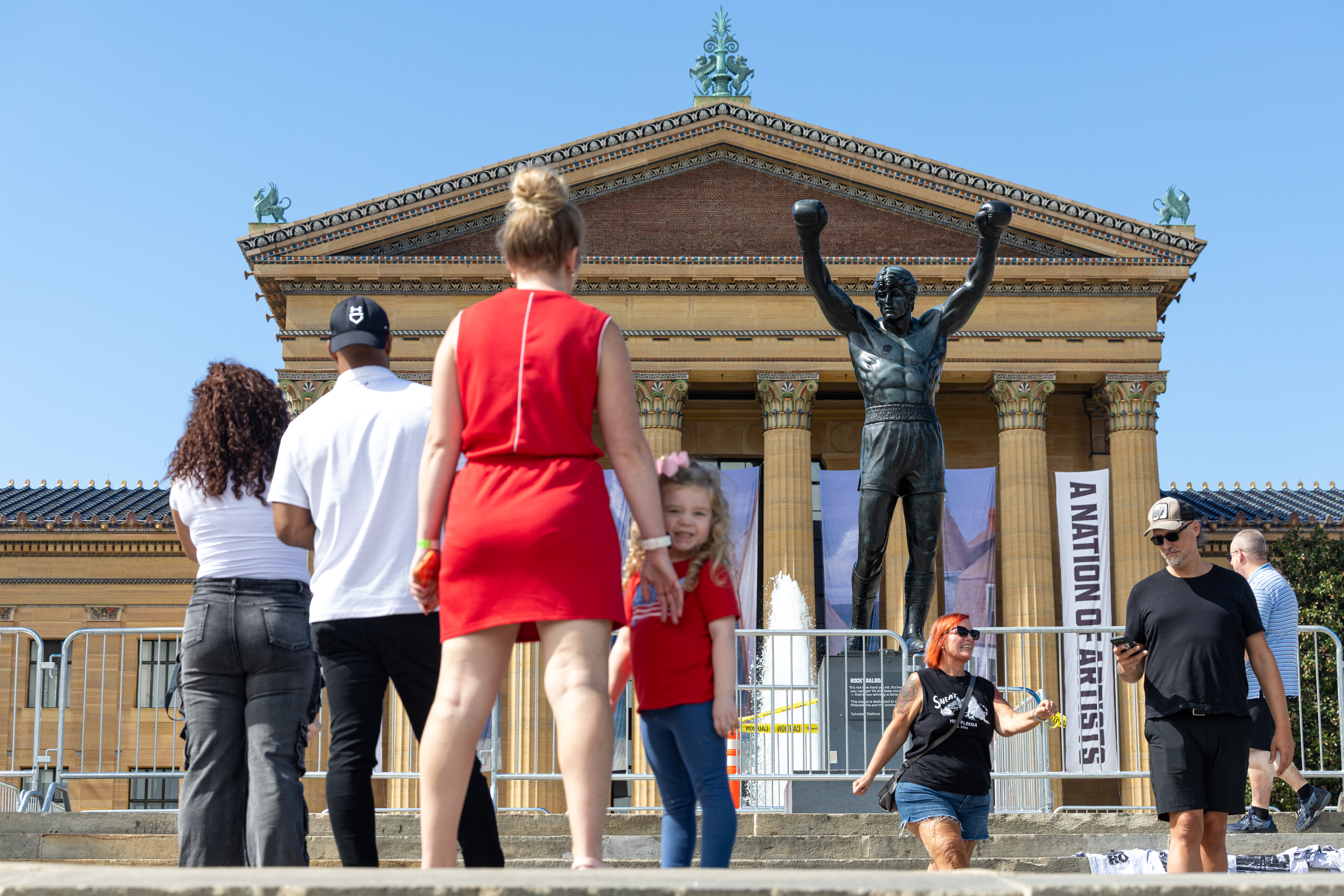
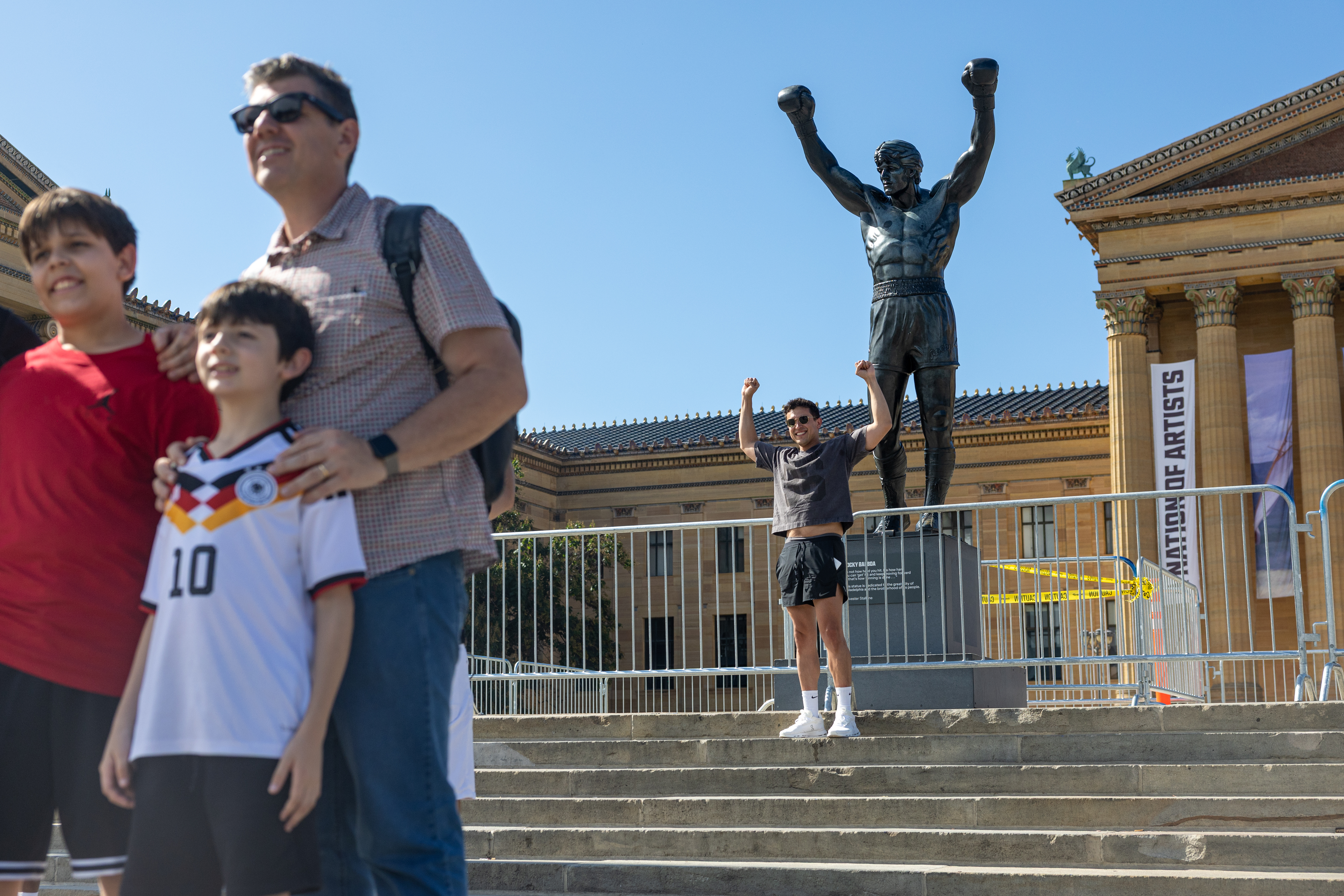
City crews officially began the installation of the 8-foot-6-inch Rocky statue, which is slated to be completed over the next two weeks and cost roughly $150,000 to install, according to Creative Philadelphia, the city arts office behind the proposal. The statue should be fully installed by the end of September.
Access to the fictional Philly boxer will be closed off to the public for the duration of the work. However, the bronze Italian Stallion will still be visible from behind barricades — tourists just won’t be able to touch him.
Visitors take photos in front of the Rocky statue while a fence surrounds the statue before its installation begins in Philadelphia on Friday. Access to the statue at the top of the Philadelphia Museum of Art steps will be temporarily closed for the duration of the work. Rocky will remain visible throughout construction, but will be secured behind barricades limiting access.Aidan T. Gallo / Staff Photographer
The statue, commissioned by Sylvester Stallone for Rocky III, in which it also appeared, depicts the famous moment in the first Rocky where Stallone thrusts his fists in the air as he takes in the city skyline after a rigorous training montage. An estimated four million tourists visit the statue each year to reenact the moment that inspired fans globally.
Since 2006, the statue has sat at the bottom of the Art Museum steps. Before that, Rocky moved between the museum and the South Philly stadium complex at least six different times since the statue was originally revealed in 1981.
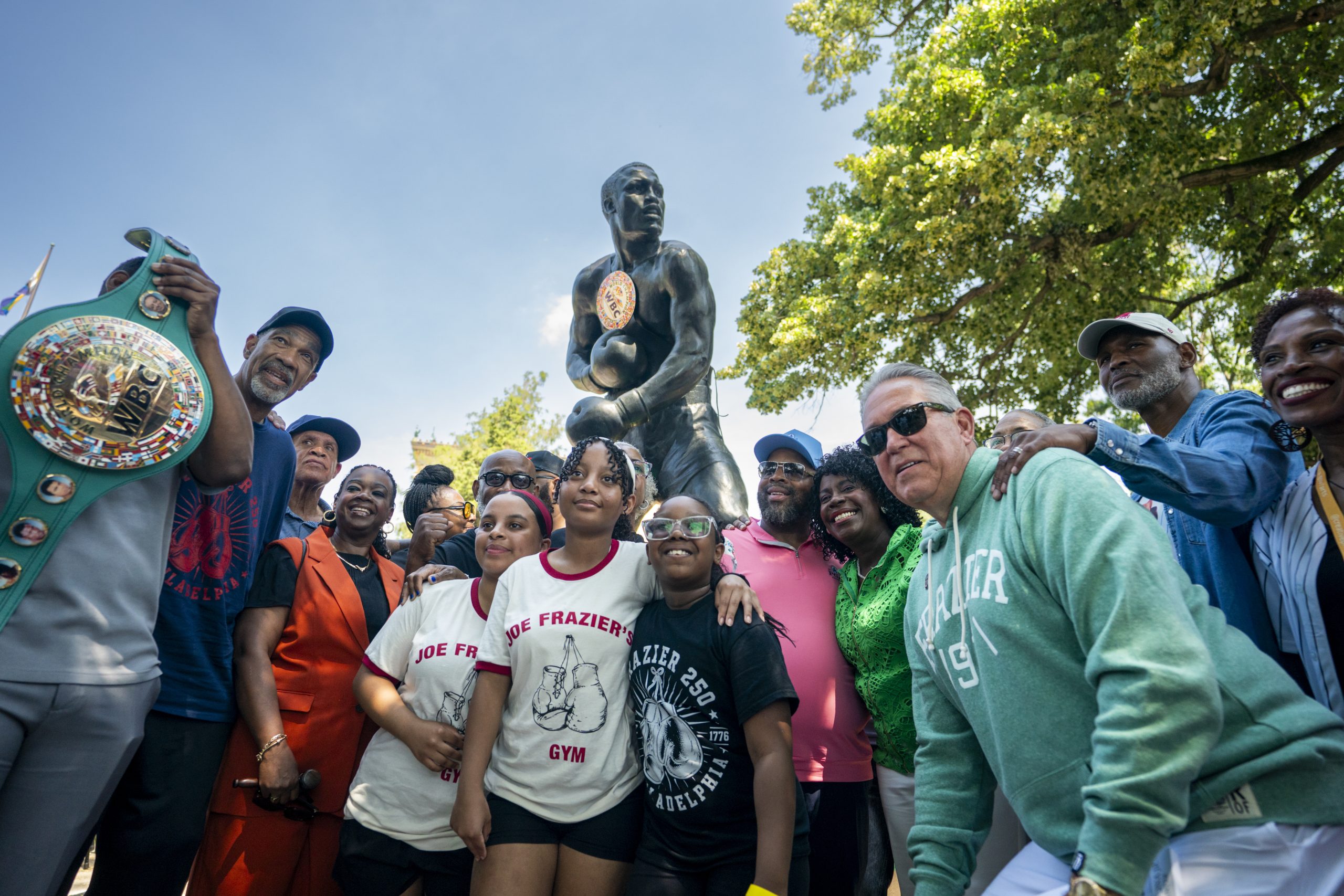
The original statue will be placed on a pedestal around 14 feet back from the edge of the top step, next to where Rocky shoe prints are embedded into the walkway. At the bottom of the steps, where the bronze Balboa had been since 2006, now sits a statue of real-life Philly boxing legend “Smokin’” Joe Frazier.
Mayor Cherelle L. Parker, Frazier family members, boxers, and other dignitaries unveil the new home for its statue of heavyweight boxing champion Joe Frazier on June 29. The statue is installed at the base of the steps of the Philadelphia Museum of Art where a statue of fictional boxer Rocky Balboa once stood.Jessica Kourkounis / For The Inquirer
Placing Rocky at the top of the steps is contentious, though. In an Inquirer survey last fall, 46% of respondents said there shouldn’t be a Rocky statue at the top of the steps, but rather it shouldstay at the bottom where it had been for more than a decade. One out of five respondents said the city shouldn’t have a Rocky statue at all. Even when the statue was revealed more than 40 years ago, some local officials called it “unnecessarily strident.”
Still, that doesn’t stop the millions of people who visit the Art Museum steps just for a glimpse of the bronze boxer. Soon, they’ll be doing it again at the same spot as the movie scene.
Staff writer Nick Vadala contributed to this article.
Hundreds of students darted from School District of Philadelphia buses and climbed Temple University’s Liacouras Center steps on Thursday, anticipating the arrival of multiplatinum artist Meek Mill.
The North Philly native, who grew up just blocks away from the venue on North 18th and Berks Streets, was equally excited to hit the stage. But there was no concert or setlist on the agenda.
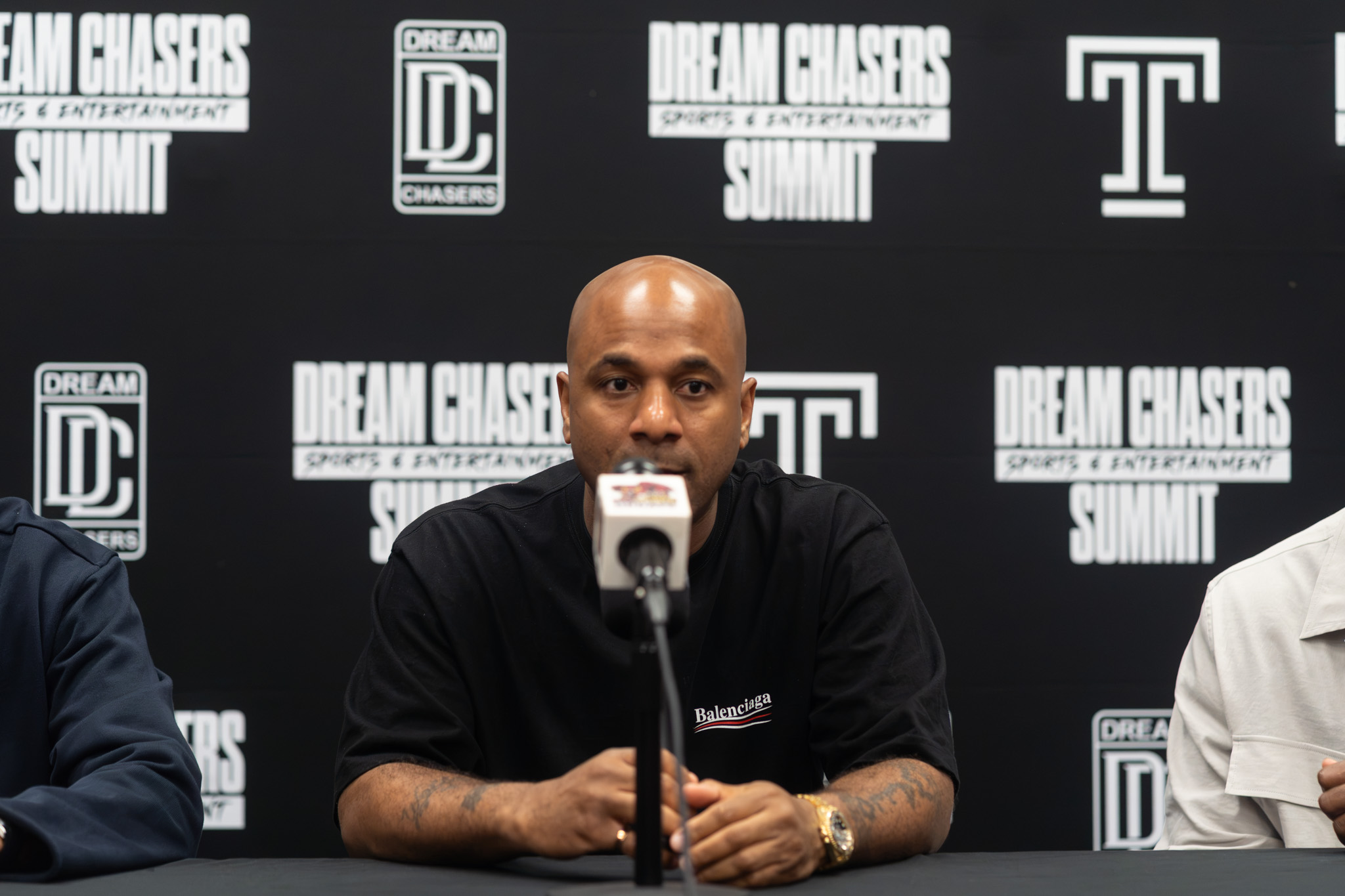
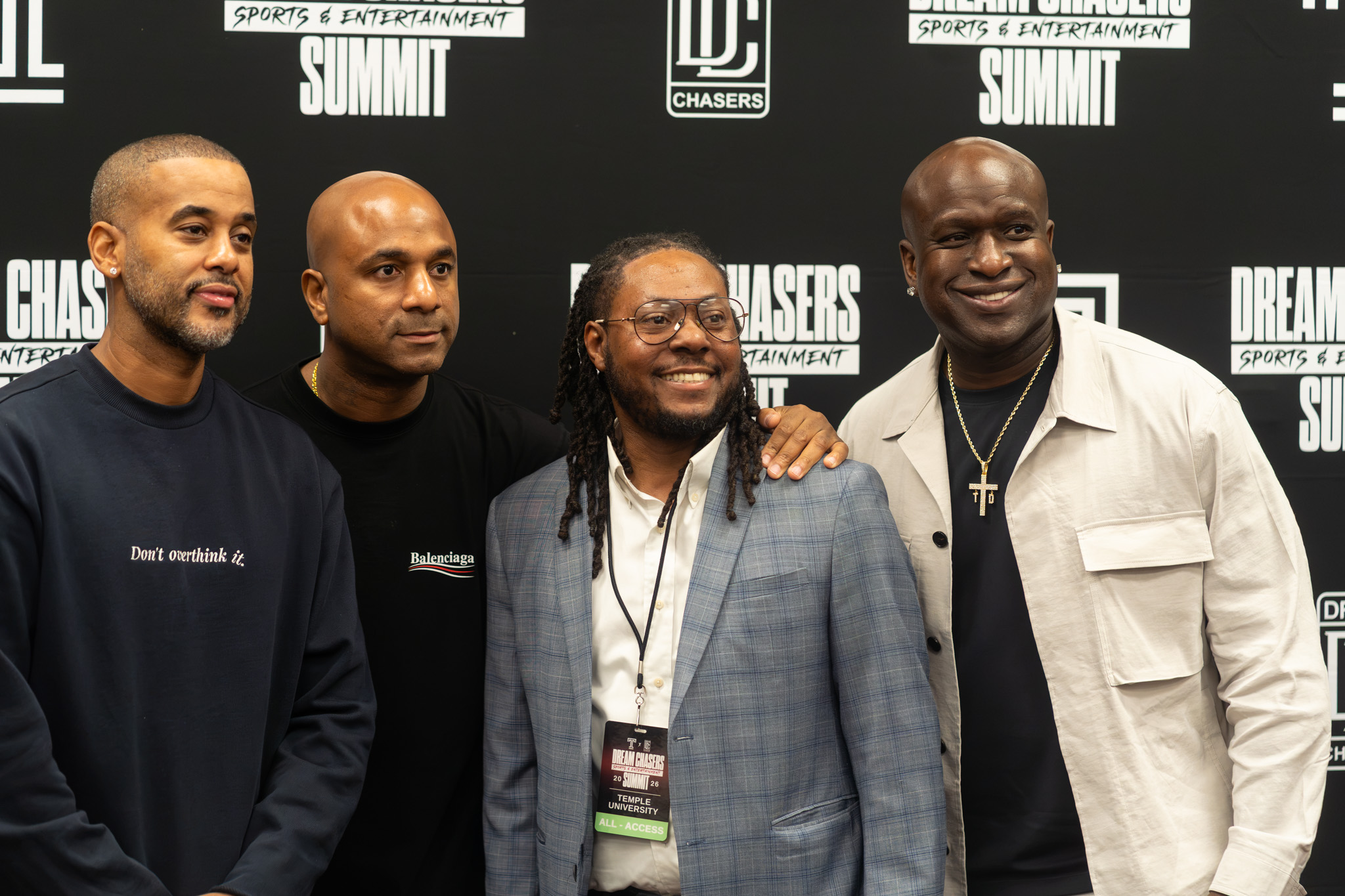
Instead, Meek welcomed high school seniors and Temple students to the Dream Chasers Sports & Entertainment Summit, a daylong event of moderated discussions with industry leaders across sports, business, and entertainment.
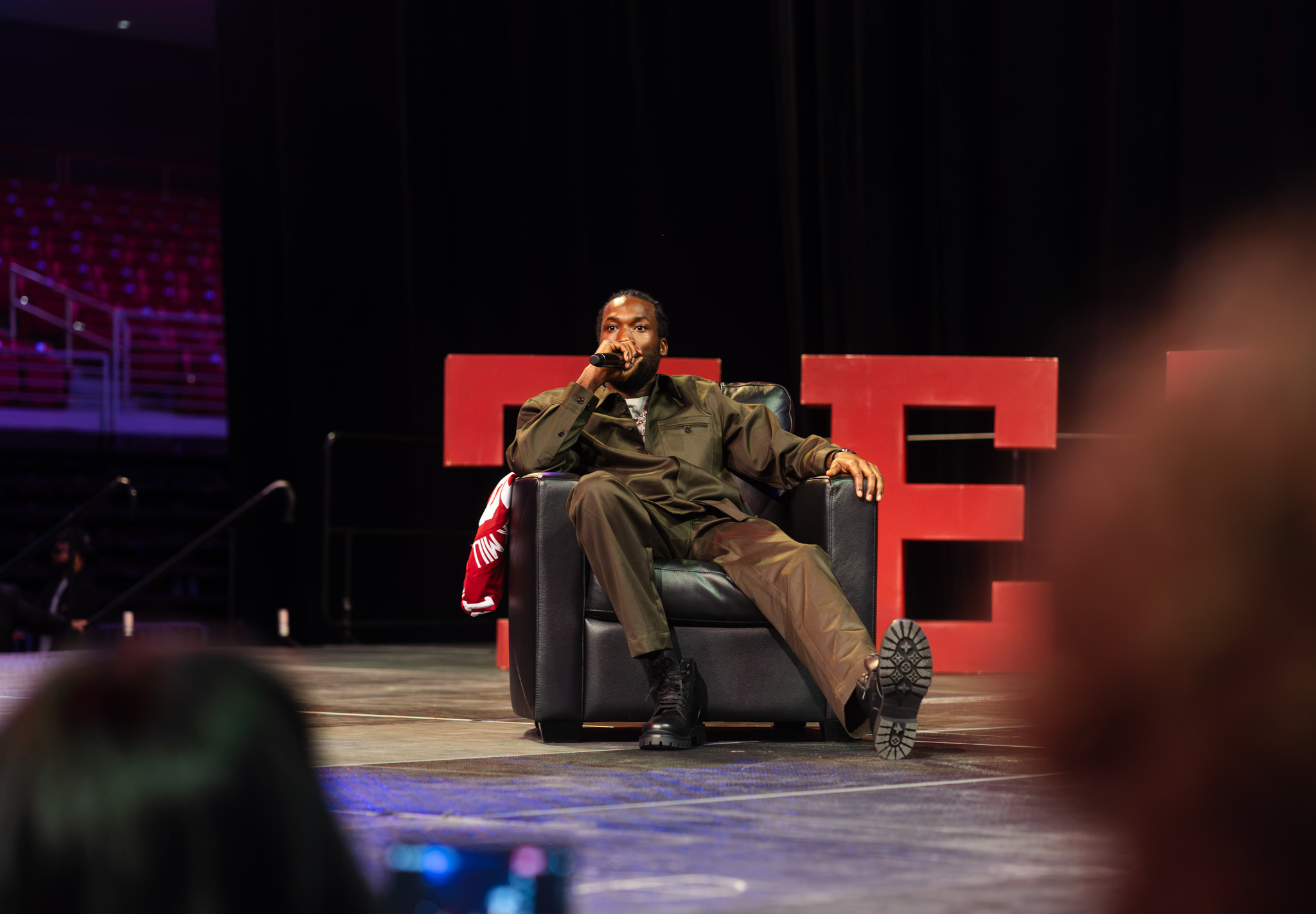
North Philly native and rap star Meek Mill pictured at the Dream Chasers Sports & Entertainment Summit at Temple University’s Liacouras Center on Sept. 10, 2026.Courtesy of Earl Hopkins
Thursday marked the second iteration of the summit; the first was at Temple in 2013. “It feels good to be back in the city,” Meek said in the media room, hours before his keynote address.
While he said this could’ve easily been a rap show, Meek was determined to put on an event that combined youth engagement and education.
“I was looking at the events and things that were going on, and I [didn’t] see a lot of these types of events taking place,” he said. “I wanted to do this just to add another type of motivation to the city. We need more inspiration here in Philadelphia, and I thought this would be the right thing to do.”
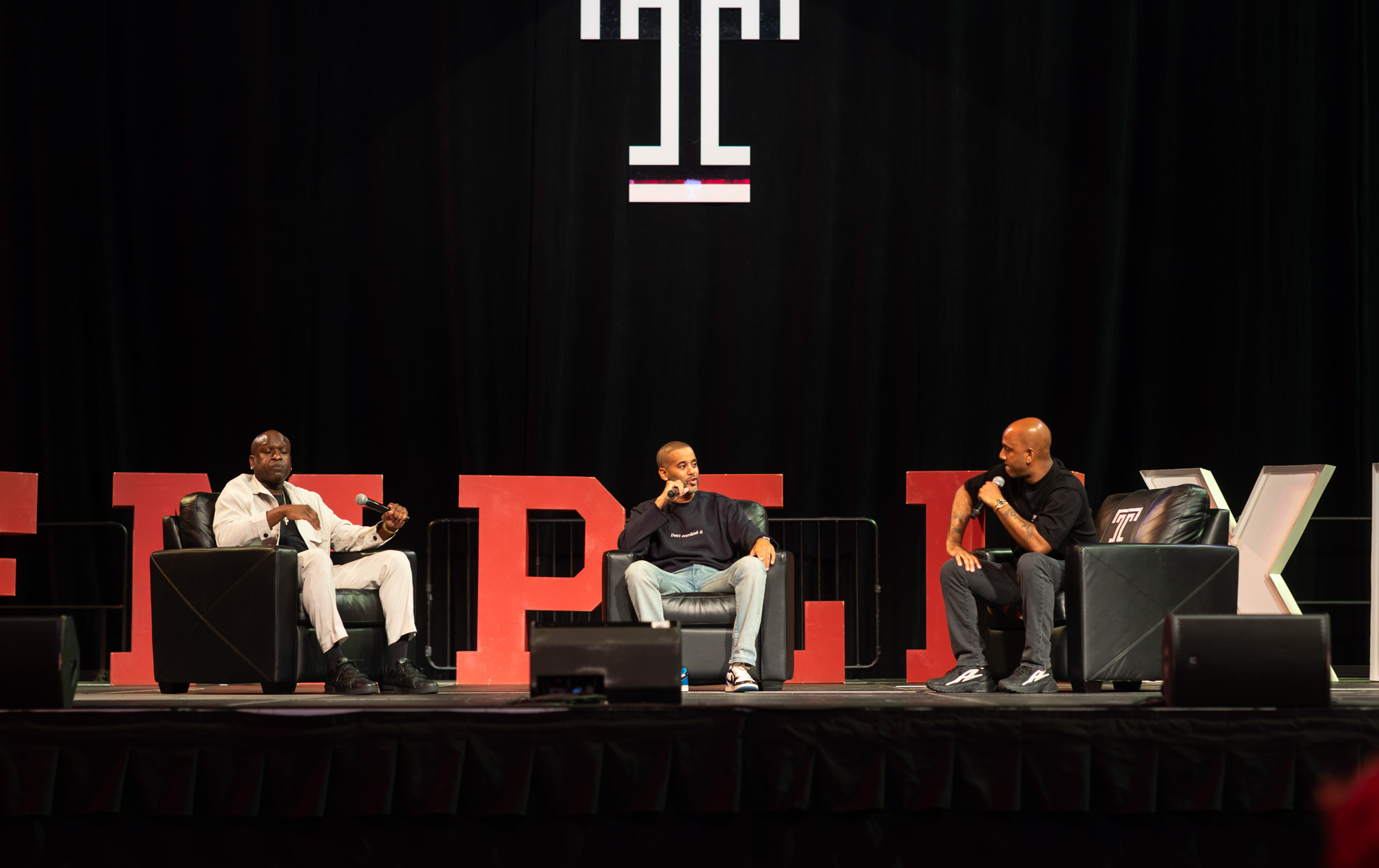
Speakers included Temple athletics director Arthur Johnson, Live Nation Urban president Shawn Gee, D.C. United president of business operations Danita Johnson, SDP superintendent Tony B. Watlington, Million Dollaz Worth of Game podcast host Wallo267, and others through the day.
Attendees ranged from teens to Temple students and administrators, who remained engaged from the event’s opening until the ending “Dreams and Nightmares” session featuring Meek, Wallo267, and Larry Miller, chairman of the Jordan Brand Advisory Board.
The themes of their discussions were based on popular Meek records such as “All Eyes on You,” “Dreams Worth More Than Money,” “Respect the Game,” and others. For second-year Temple student Amira Haynesworth, the summit offered more than just musical references.
Sports agents David Mulugheta and Tory Dandy are pictured with motivational speaker and podcaster Wallo267 at the Dream Chasers Sports & Entertainment Summit on Sept. 10, 2026.Courtesy of Earl Hopkins
Haynesworth, who grew up in North Philly, said hearing Meek, Wallo, and other speakers retrace the obstacles they faced in their journeys gave her and other attendees a sense of self-empowerment.
“They came from such hardship and still made a name for themselves,” Haynesworth, 19, said. “Being young, people tend to doubt themselves, and many feel like they’re not going to make it somewhere high in life. But they didn’t let that define them.”
Meek said recruiting a mix of sports leaders, music executives, justice reform advocates, and athletic department heads was paramount, given how transformative this time period is in their young lives.
“[The summit] is for everybody, but these people are already in that direction, so that was important,” he said. “When I was 17 and 18 years old, those were the most important years of my life when it came to decision-making. I just thought that we have to make sure we touch on the kids first or the younger adults.”
That was the mission that inspired Meek to develop the summit, and inspired Temple leaders to partner for a second iteration.
Temple athletics director Arthur Johnson, who helped steer the summit’s return to Temple, said Meek’s mission aligns with the university’s goals for student success and place-based impact for those who are integrated in both the Temple and North Philly community.
“We’re the wind underneath the wings of all of our students who come and chase their dreams and their goals,” Johnson said. “Helping them understand they can be accountants, attorneys, a compliance person, CFOs, and explore many different careers and opportunities is important.”
Motivational speaker and podcaster Wallo267 at the Dream Chasers Sports & Entertainment Summit on Sept. 10, 2026.Courtesy of Earl Hopkins
City Council President Kenyatta Johnson, who greeted event speakers, attendees, and media members throughout the summit, said Meek’s decision to bring the event to North Philly speaks to his commitment to change young people’s lives in his community.
“It shows the resiliency of Meek Mill, in terms of who he is as a person, the things that he has overcome, but most importantly, his heart and his passion and commitment to giving back,” he said.
Arthur Johnson said the goal is to bring the summit back to Temple next year and to attract a wider swath of students whose upbringings and career ambitions mirror those shared by Meek and the other speakers he recruits. “Next year, I need double,” he said. “But we’ll plan for it. We’ll have a whole strategy around how do we do that.”
Sports agents David Mulugheta (far left) and Tory Dandy (far right) are pictured with motivational speaker and podcaster Wallo267 (second from left) and Philadelphia City Councilmember Jeffery Young Jr. at the Dream Chasers Sports & Entertainment Summit on Sept. 10, 2026.Courtesy of Earl Hopkins
While Meek intends for North Philly to remain the home base for future summits, he wants to expand its attendance and impact, as long as students leave with an endless sense of possibility.
“My whole brand is Dream Chasers, like chasing a dream to live a better life,” he said. “If you could take something from here that could get you to the next level, or get your ideas sparked in your mind, that’s good enough for me.”
While a concert wasn’t advertised for the day, Meek decided to surprise the crowd with a brief performance. Students descended onto the arena floor, pulling out their phone cameras and rapping the lyrics to Meek’s “Dreams and Nightmares.”
“If you want it, you gotta see it with a clear-eyed view,” students yelled at half-court, bringing Meek’s message full-circle.
North Philly native and rap star Meek Mill pictured at the Dream Chasers Sports & Entertainment Summit at Temple University’s Liacouras Center on Sept. 10, 2026.Courtesy of Earl Hopkins
Meta released its new personal AI agent on Tuesday and named it Muse (like this bot is going to inspire humanity to write the next great tragedy and not relegate us to become the lead characters in one).
Of course, Muse could refer to the act of thinking about something very carefully, but that would be even more ironic, given that some experts in the field have sounded alarm bells that AI is advancing faster than humanity is prepared for.
Admittedly, I didn’t hear about the launch until two days after its release (I’m not a tech reporter and still keep a paper calendar), but I was surprised by how it did come to my attention.
In a post on Threads, user @rpennone pointed out how similar Muse’s stroke-like “M” logo is to the logo of one our city’s most beloved institutions, Mural Arts Philadelphia.
View on Threads
I pulled up the two logos on my computer, put them side-by-side, and it painted a pretty clear picture.
Part of our DNA
Typically an “M” is two sets of arches, sometimes with a little rat tail on the upper left side for flair. But both of these Ms have three peaks and valleys with little rat-tail flairs at both ends. Granted, Muse’s logo is blue, while Mural Arts’ is typically purple (though like Gritty’s belly button, it can change colors), and the former’s logo also has more fluid lines, while the latter’s are more rigid. Still, the resemblance is enough to make you go “hmm…”
View on Threads
Given how much people are worried about AI copying everything we create, this isn’t going to help the situation. Maybe nobody outside of Philly would catch it, but Mural Arts is a part of the very fabric of this city, part of its DNA, and someone here was bound to notice the similarity and defend its honor. Nobody paints our baby into a corner.
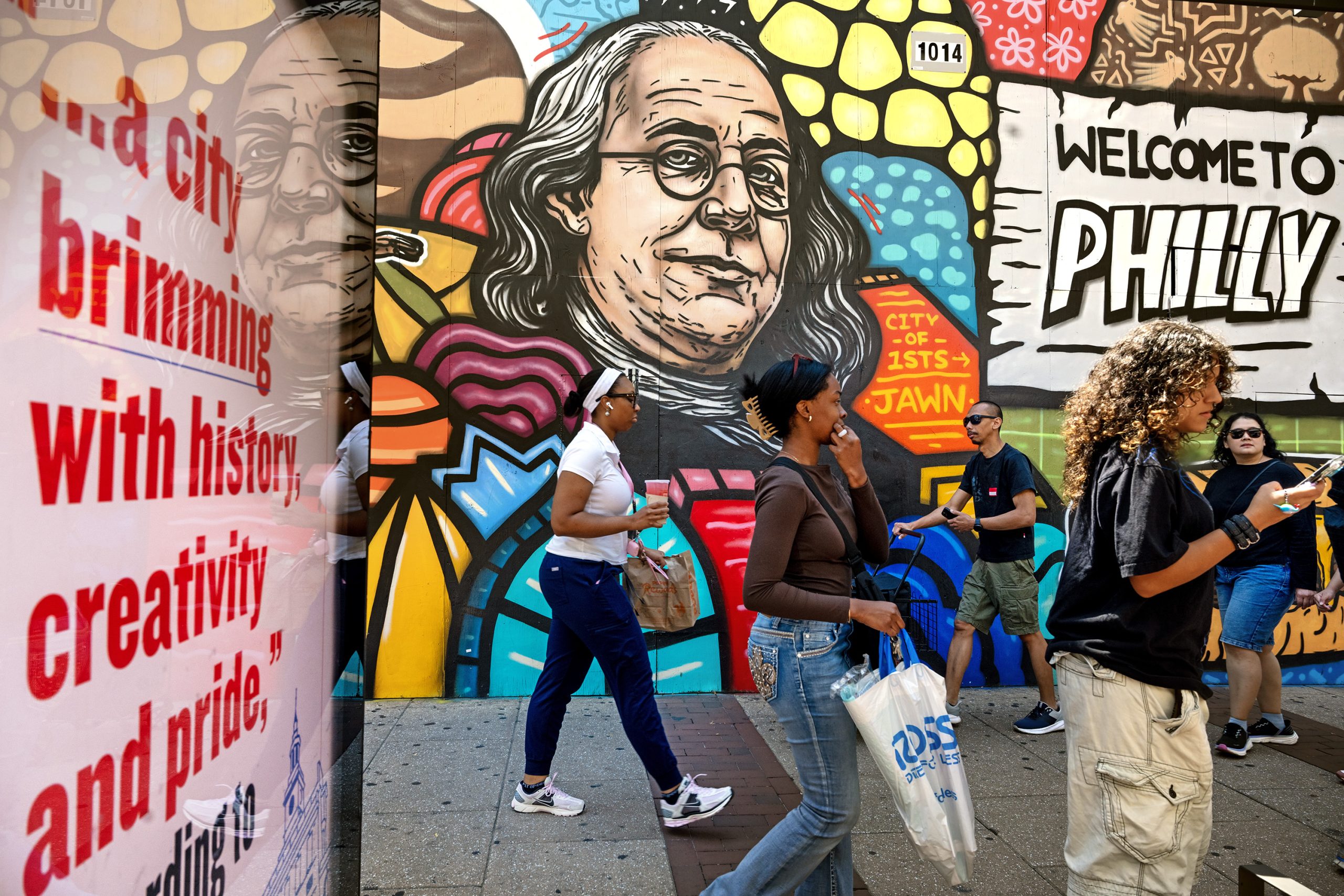
The 150-foot “Welcome to Philly” mural by artist Alloyius McIlwaine on the 1000 block of Market Street. The mural was a collaboration between Mural Arts Philadelphia, the Center City District, Comcast, HBSE, and the ownership group of the 76ers.Tom Gralish / Staff Photographer
For its part, Mural Arts was very diplomatic about the matter. Spokesperson Frank Luzi told me there’s no concern on the nonprofit’s part about copyright infringement and there are no plans for legal action.
“They feel like they are two very different organizations,” he said.
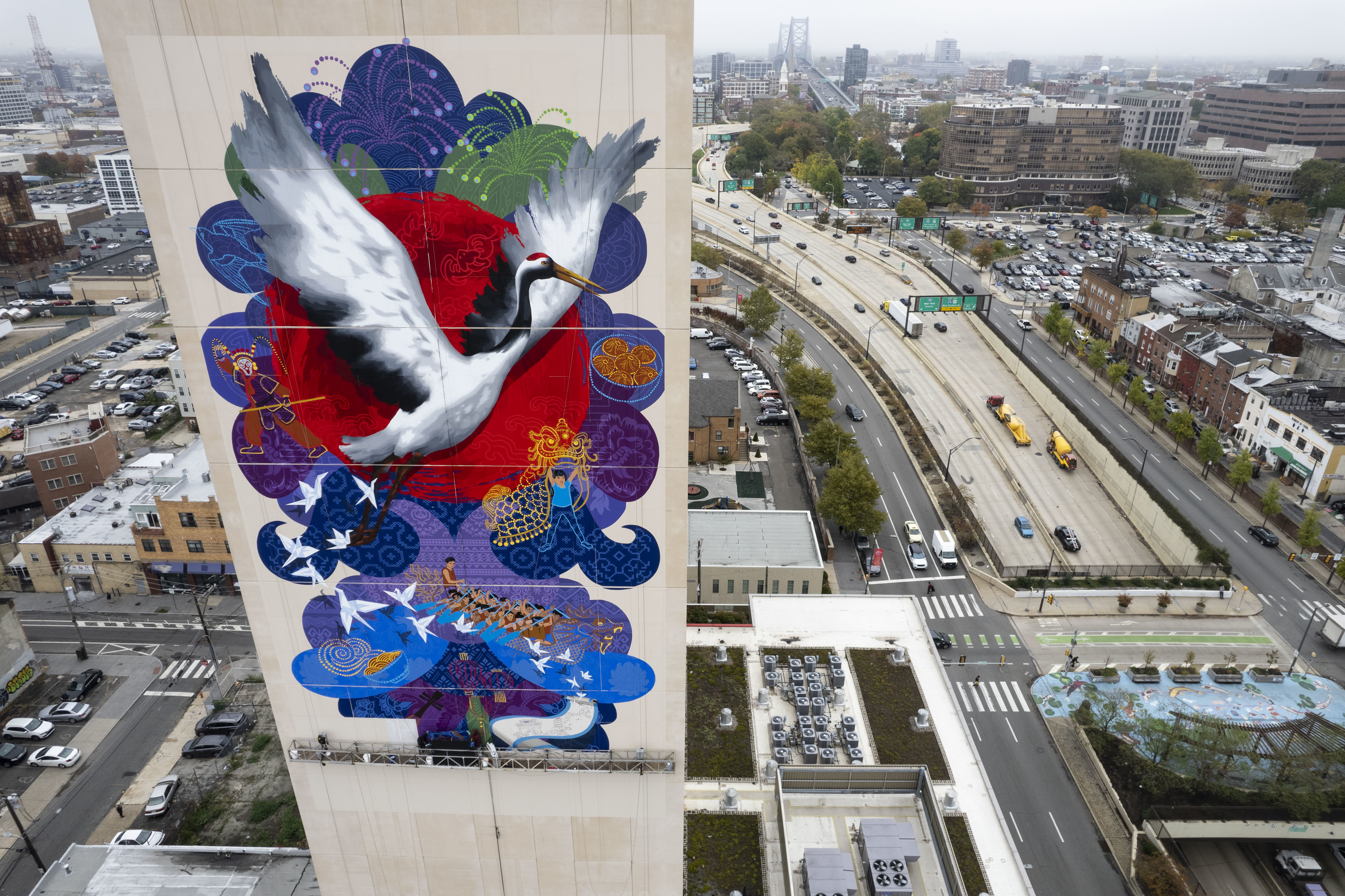
Designed by artist Chenlin Cai, “The Past Supporting the Future” mural in Chinatown was collaborative project by the Philadelphia Chinatown Development Corporation, Mural Arts Philadelphia, and the Philadelphia Housing Development Corporation.Monica Herndon / Staff Photographer
‘Definitely a resemblance’
Here’s the interesting thing, Muse’s logo was designed by a human who “cut my creative teeth in Philadelphia,” according to her website.
Jessica Hische is a lettering artist and author specializing in “typographical work for logos, film, books, and other commercial applications,” whose previous clients include companies like Target and Hallmark and people like Barack Obama and Wes Anderson. Based in Oakland, Calif., she graduated from Temple University’s Tyler School of Art and Architecture in 2006 with a bachelor’s degree in design and illustration.
I reached out to ask her about the similarities in the logos. In an e-mailed statement, she said Meta contacted her after doing its own sketch of an M inspired by a pen stroke or scribble. She said she refined the design by “playing with the stroke angles, end treatments, and vertical rhythm.”
Hische sent me a screenshot of the “M” Meta provided her and 30-plus variations she worked on until she landed on the final version.
I had to squint pretty hard to detect the differences, but lettering isn’t my field of expertise. Meta’s initial version does look more rigid and even more like Mural Arts’ logo, while Hische’s is more fluid.
Mural Arts Philadelphia lead teaching artist and muralist Jamee Grigsby (left) and an apprentice continue painting a mural focused around what accessible justice looks like, at the Mayfair Athletic Club in Russo Park on Edmund Street in Philadelphia on July 30, 2024.Elizabeth Robertson / Staff Photographer
Hische said she was familiar with the Mural Arts program from her time in Philly but hadn’t seen its logo, which was created by J2, a Philly-based branding company, and debuted in 2016.
“There’s definitely a resemblance (and it would have been even closer had we landed on the brushier versions of the “M” I had explored!) but ultimately what Meta hired me to do was to make the mark they had created less rigid and more fluid,” Hische wrote. “The rigidity, regularity, and perfect symmetry are defining qualities of the Mural Arts M (along with the brush stroke treatment), and it’s a great logo.”
Common threads
I appreciated Hische’s response and recognition of the resemblance. It’s not the first time logos have looked similar (Korean Air’s logo looks more like the Pepsi logo than the Pepsi logo does). It’s unclear where or how Meta came up with the original “M” logo Hische was asked to fine-tune. Meta did not return my requests for comment.
The logo for Korean Air bares an uncanny resemblance to Pepsi’s logo. Lee Jin-man
Later in the day, I saw Hische was catching flak online from people in her field for a completely different reason.
Because the digital world is a creepy stalker, as I was scrolling on Threads that evening, my feed suddenly become flooded with posts about Hische from people I don’t follow. Users on Threads — which is owned by Meta — were both condemning her for working on Meta’s AI project and defending her for working on it. Hische also penned her own nine-part Thread explaining her rationale, which includes the line “I have literally been touching grass more because of AI” and ends with a pitch for her latest children’s book.
I couldn’t help but wonder if this is right where Threads wanted me to end up. Why did that initial post about the logos from someone I didn’t follow pop up in my feed? Why did it also end up in the feed of an editor who sent it my way, confirming for me I should write this piece?
I thought I was pulling a thread, but maybe Threads was pulling me all along.
Among the many risks taken by Opera Philadelphia over the past two years, none has been greater than the current production of Mitridate, re di Ponto — the quirk of it all being that such a risk is attached to the name “Mozart.”
Yes, the ever-beloved composer is his ingratiating self in the rarely-heard, remarkably-evolved opera composed at age 14. Age is not an issue so much as the genre that prevailed in 1770 Milan, well before Mozart left behind stock plots about antique royalty that were once standard procedure.
Arias go on for as much as 10 minutes with false endings and expansive postscripts, requiring extraordinary virtuosity and stamina in an age where opera was as much about Olympic-style recreation as artistic communion.
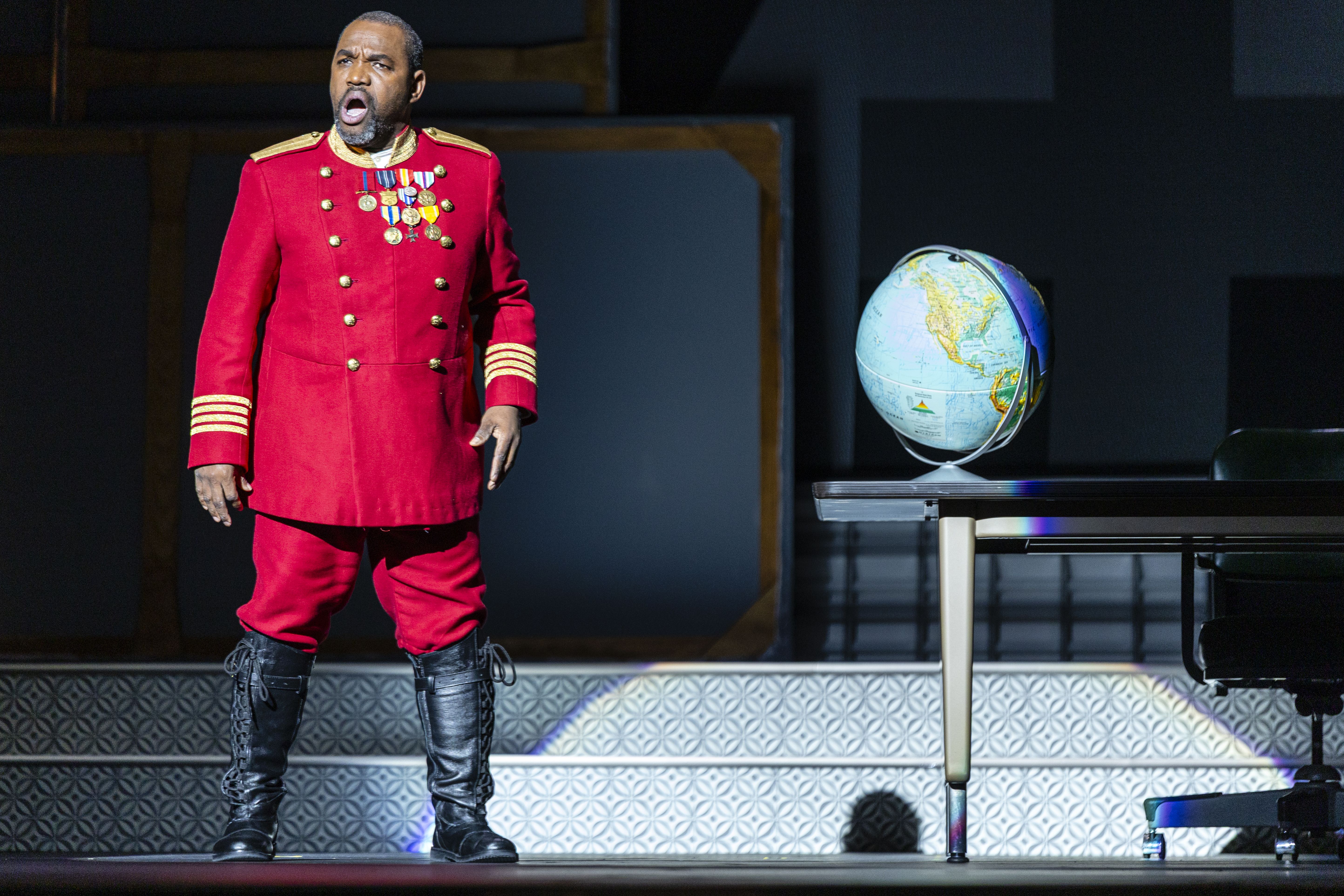
Tenor Lawrence Brownlee in Opera Philadelphia’s production of Mozart’s “Mitridate” at the Academy of Music. The work opened the company’s 2026-27 season.Dominic Mercier
Thanks partly to often electrifying singing in the cast led by star tenor Lawrence Brownlee, the audience seemed fully engaged Wednesday at the Academy of Music, even laughing with the recitatives that focused the characters and made the opera seem far less distant. In his customary pre-curtain speech, general director and president Anthony Roth Costanzo (who was also in the cast) suggested that Mozart was working out his father issues. Opera as psychotherapy? I won’t argue.
What emerged, for me, were parallels with King Lear in this story of the rage-prone monarch Mitridate, ca. 63 BC in the Crimea, whose one son is loyal and the other is plotting an overthrow with aggressive support from Rome. Romantic complications abound — in vocal writing that expects every voice to do everything — in arias that unfold with the dramaturgical formality of a chess game.
Without a lot of direct character interaction, soprano Brenda Rae was able to replace the previously scheduled Lauren Snouffer in the leading role of Aspasia with less-than-usual strain: Mostly, she needed to just show up for her arias, which exist like islands of characterization.
Lengthwise, the opera ranges from two-and-a-half to three-and-a half hours, this version coming in under three. With such flexibility, singers, in theory, can use the opera as a quarry, selecting what best suits them.
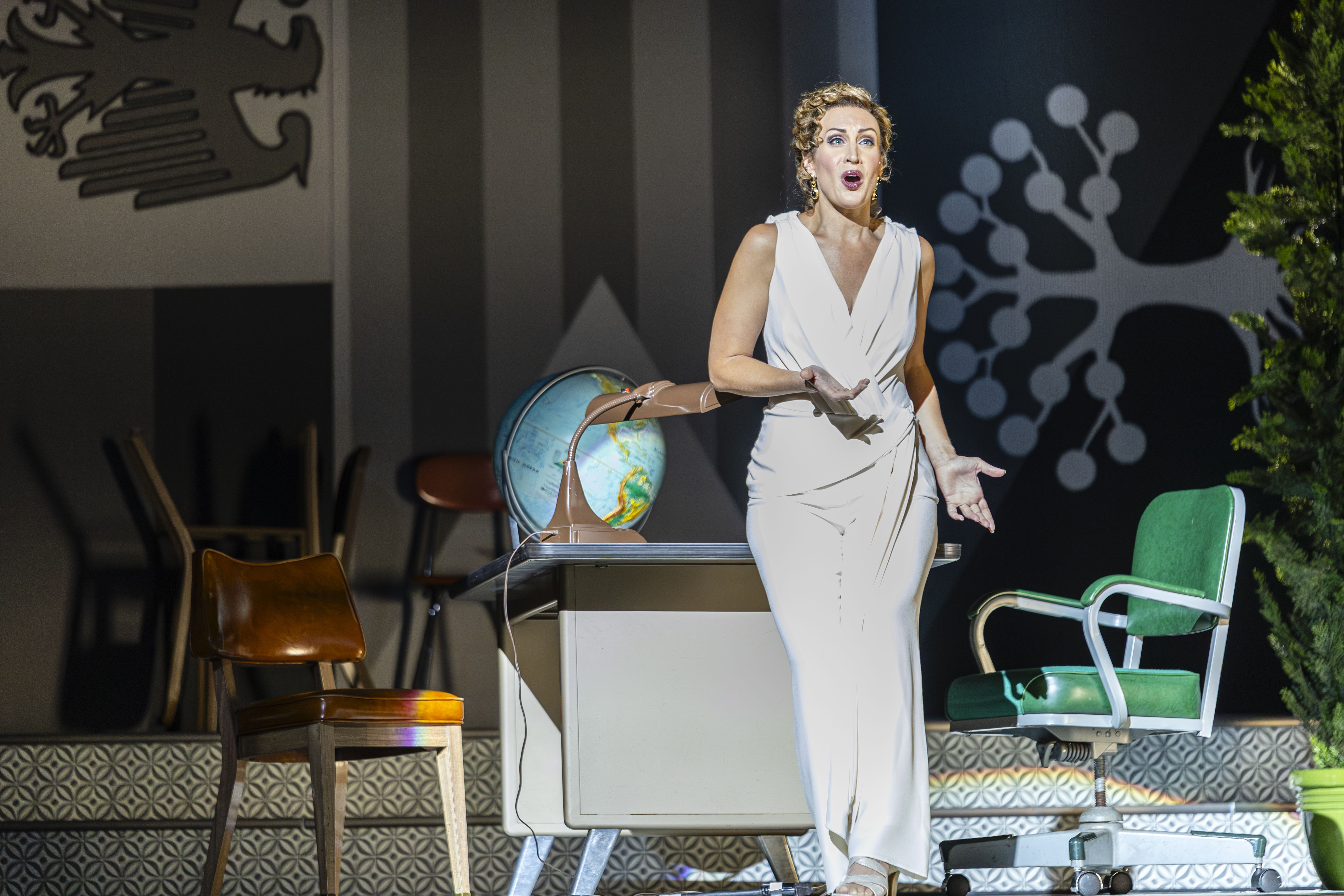
Soprano Brenda Rae as Aspasia in Opera Philadelphia’s fall 2026 production of Mozart’s “Mitridate, re di Ponto” at the Academy of Music.Dominic Mercier
With the convincingly brisk tempos of conductor Corrado Rovaris, the score felt a bit like Philip Glass — with Mozart inhabiting an infectious groove that suddenly changes complexion with the addition and subtraction of a well-targeted note. Long harpsichord-accompanied recitatives can sap the overall momentum, though Leon Schelhase revealed all manner of harmonic richness, creating a space where singers could give their characters greater specificity.
To her credit, stage director Emma Griffin basically left the singers alone — giving their characters a visual context but little physical stage business that would distract them from what they were there to do — sing.
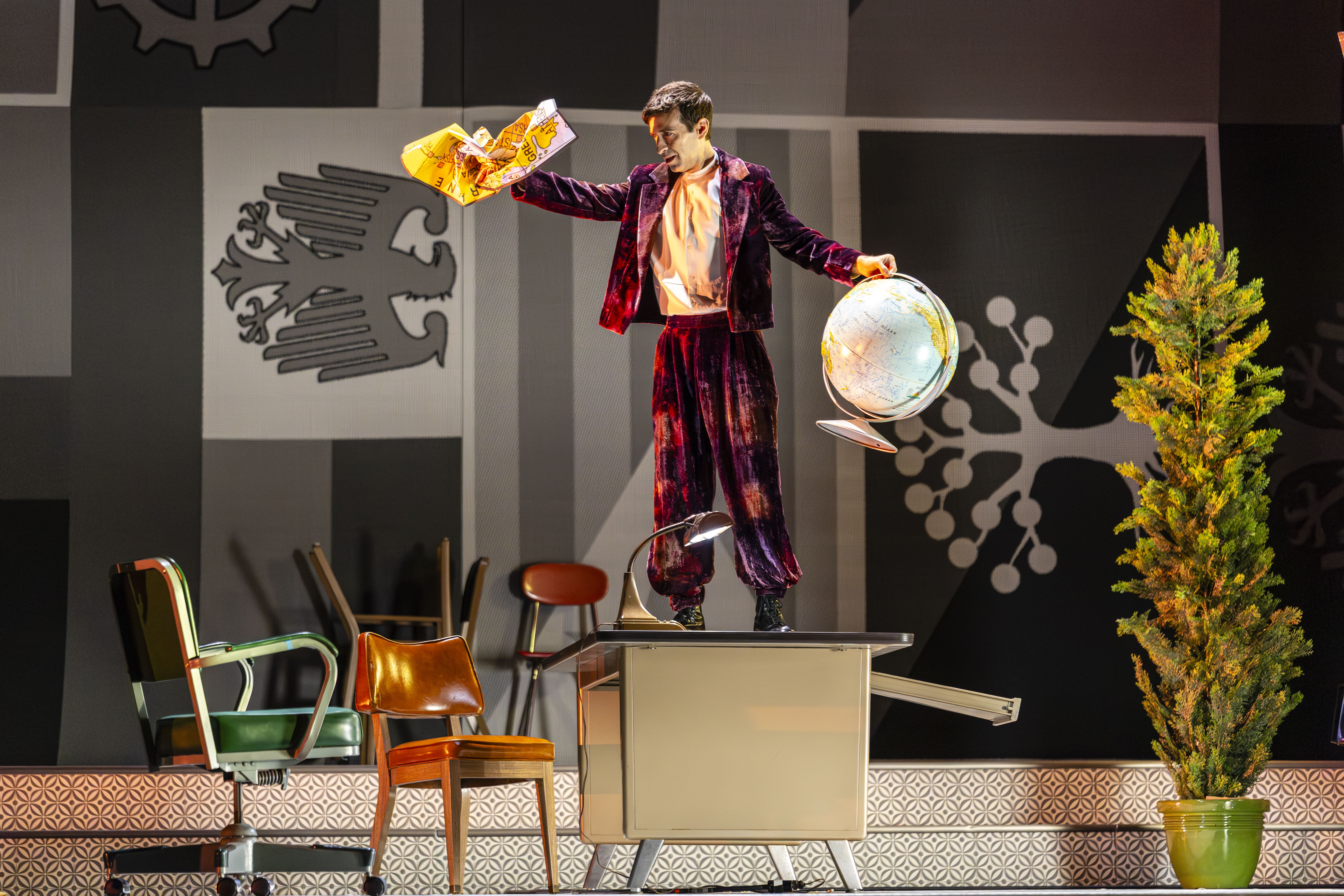
It’s true that countertenor Costanzo (in the role of Farnace, the bad son) was able to sing with astounding accuracy and expressivity while being taken down and tied up. But that can’t be expected of any one else. It’s also true that Griffin had Brownlee’s angry king breaking various objects onstage, but always between phrases, and never stealing focus from his trademark high notes that take off like a skyrocket.
Among all cast members — including Meredith Wohlgemuth as Sifare, Nola Richardson as Ismene, and Sarah Coit as Arbate — the singing was effective but not always tidy, the heat of performance being much more important.
In Opera Philadelphia’s “Mitridate,” from the left: Lawrence Brownlee (Mitridate), Brenda Rae (Aspasia), Meredith Wohlgemuth (Sifare), Sarah Coit (Arbate), Nola Richardson (Ismene), and Anthony Roth Costanzo (Farnace). Dominic Mercier
Two special mentions: The emerging tenor Minghao Liu, as the Roman invader Marzio, is singing lots of Rossini in regional opera but is clearly headed for the top with the remarkable ease of his coloratura technique. In a somewhat different way, Rae is perhaps doing her best work in her middle years with a voice that’s showing some wear but is ever more interesting with the kind of shading she brings to what she sings.
She is able to encompass her entire character in a single cadenza. The depth of meaning she brought to her great Act II aria “Pallid’ombre, che scorgete” (roughly translated “Ghosts who look down from heaven” in which she contemplates the end of her life) was the opera’s most entrancing moment.
That and a number of other Act II arias for other characters (such as “Lungi da te, mio bene” with its horn obbligato) showed Mozart periodically leaping ahead in his maturity, creating music at a level of sophistication that would become customary a decade later. One can hear one of Western civilization’s great artists emerging before your very ears.
“Mitridate, re di Ponto” is performed Thursday at 7 p.m. and Sunday at 2 p.m. at the Academy of Music, Broad and Locust Sts. Tickets are $11-$250. The company’s next opera, “Suddenly Last Summer by Courtney Bryan,” opens Oct. 22 at the Forrest Theatre. operaphila.org, 215-732-8400.