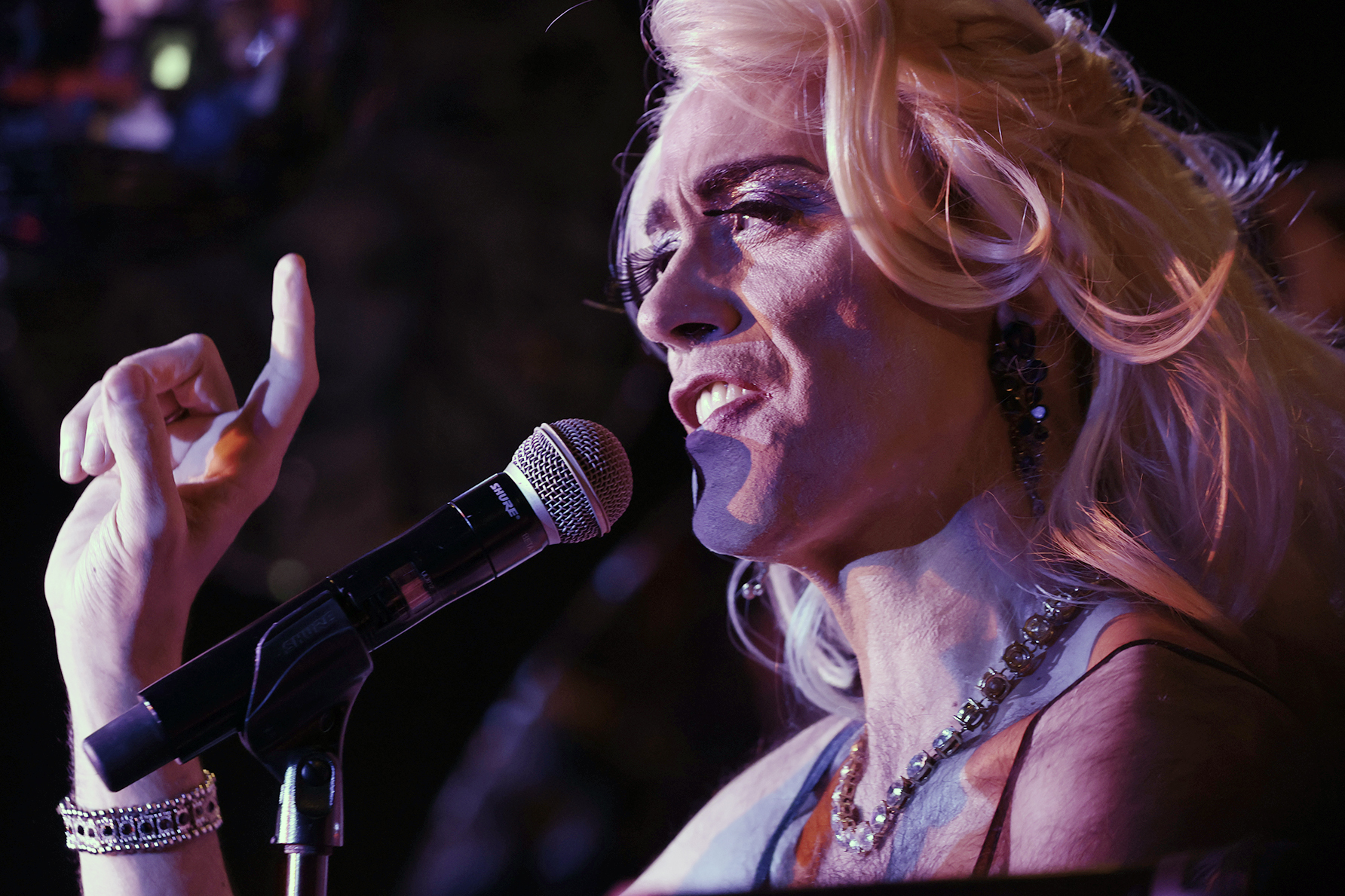
Following the recent death of beloved artist Dito van Reigersberg — who performed as Philly’s legendary drag queen Martha Graham Cracker — his friends, family, and fans are working on two scholarship funds for the city’s artists and students in van Reigersberg’s honor.
Victor Fiorillo, the cabaret pianist who performed with van Reigersberg for years, has launched the Martha Graham Cracker Scholarship Fund to support drag and cabaret artists through microgrants. FringeArts will administer the funding, and the first phase will award $500 in unrestricted funds to three individuals or ensembles performing in the 2026 Fringe Festival.
Fiorillo developed the idea in early August after seeing photos on social media remembering a Martha Graham Cracker Cabaret band fundraiser last year that celebrated the 40th anniversary of Philadelphia’s legendary Live Aid concert. Fiorillo and van Reigersberg raised more than $25,000 for Blood Cancer United (then called the Leukemia & Lymphoma Society) to help others struggling with the kinds of cancer that affected van Reigersberg, who died June 1.
In less than a week, Fiorillo has raised nearly $11,000 with donations from van Reigersberg’s mom, Stephanie van Reigersberg, and longtime Martha fans, like Jose Pistola’s owner Casey Parker and Johnny Brenda’s owner William Reed. He initially raised $5,000 from friends and fans before opening the fund to public donations through GoFundMe. “It was just a no-brainer for people” to say yes, Fiorillo said.
“It’s not only about Martha, of course, it’s about furthering the cabaret and drag arts in Philadelphia … I think of it as paving the way for the next Martha — not that I think that Martha could ever be replaced, but that’s certainly the idea,” said Fiorillo, a reporter at Philadelphia Magazine who lives in West Philly.
“Dito and I both sort of came from privileged backgrounds. We had the money to pay musicians. We never struggled to make Martha a thing. We never had to bet the bank on it or take out a second mortgage. But having worked with so many artists over the years, we know how much some of them struggle.”
Applications for microgrants for 2026 are now open. Fiorillo added that he plans to work with a financial planner to ideally establish the fund long-term. The next 2027 phase of microgrants will be open to drag and cabaret artists outside of the Fringe Festival as well.
Another scholarship fund memorializing van Reigersberg is in the works at Pig Iron Theatre Company, the experimental theater group and school that van Reigersberg cofounded.
Though still in early planning stages, the Dito van Reigersberg Legacy Fund would support artists and students in two ways: by establishing scholarships for Pig Iron graduate students to partially cover tuition costs and through funding Pig Iron’s program The Island, which van Reigersberg codeveloped.
The Island provides artist ensembles with studio space and production support to experiment and workshop performances without the pressure of delivering a final product. (Pig Iron artists have used The Island to eventually create full productions, like 2008’s OBIE Award-winning Chekov Lizardbrain.) The Legacy Fund would finance Pig Iron’s current Island program and invite collaborations with new artists. Additionally, the fund would establish an Island residency for artists, either individually or as a group, to receive two weeks of dedicated time and space for ideation.
“I watched Dito open so many doors for so many emerging artists [especially] in the queer community, just [by] saying, ‘You belong and what you do is valuable.’ For us to be able to carry that on just feels like a gift,” said Pig Iron coartistic director Quinn Bauriedel.
Their goal, Bauriedel said, is to create “a board-designated legacy fund that would operate like an endowment, meaning there would be a principal and the interest would be spent every year,” supporting graduate student scholarships and The Island programs.
Bauriedel hopes to raise between $1 million to $2 million in the coming years and begin offering the graduate student scholarships in fall 2027. Pig Iron will seek contributions from institutional and individual donors. He added that members of van Reigersberg’s family have agreed to serve on the selection committee for recipients.
“Running an experimental theater company and school is a precarious enterprise … I just have this strong feeling that now, Dito, in his next phase, is helping to save the whole enterprise,” said Bauriedel.
“He was always doing special things, and this is yet another one where he might help young artists … who just need to have somebody wrap their arms around them and say, ‘What you’re doing is important and meaningful, even if nobody quite understands it yet.’ Dito continuing to open that door is just beautiful.”
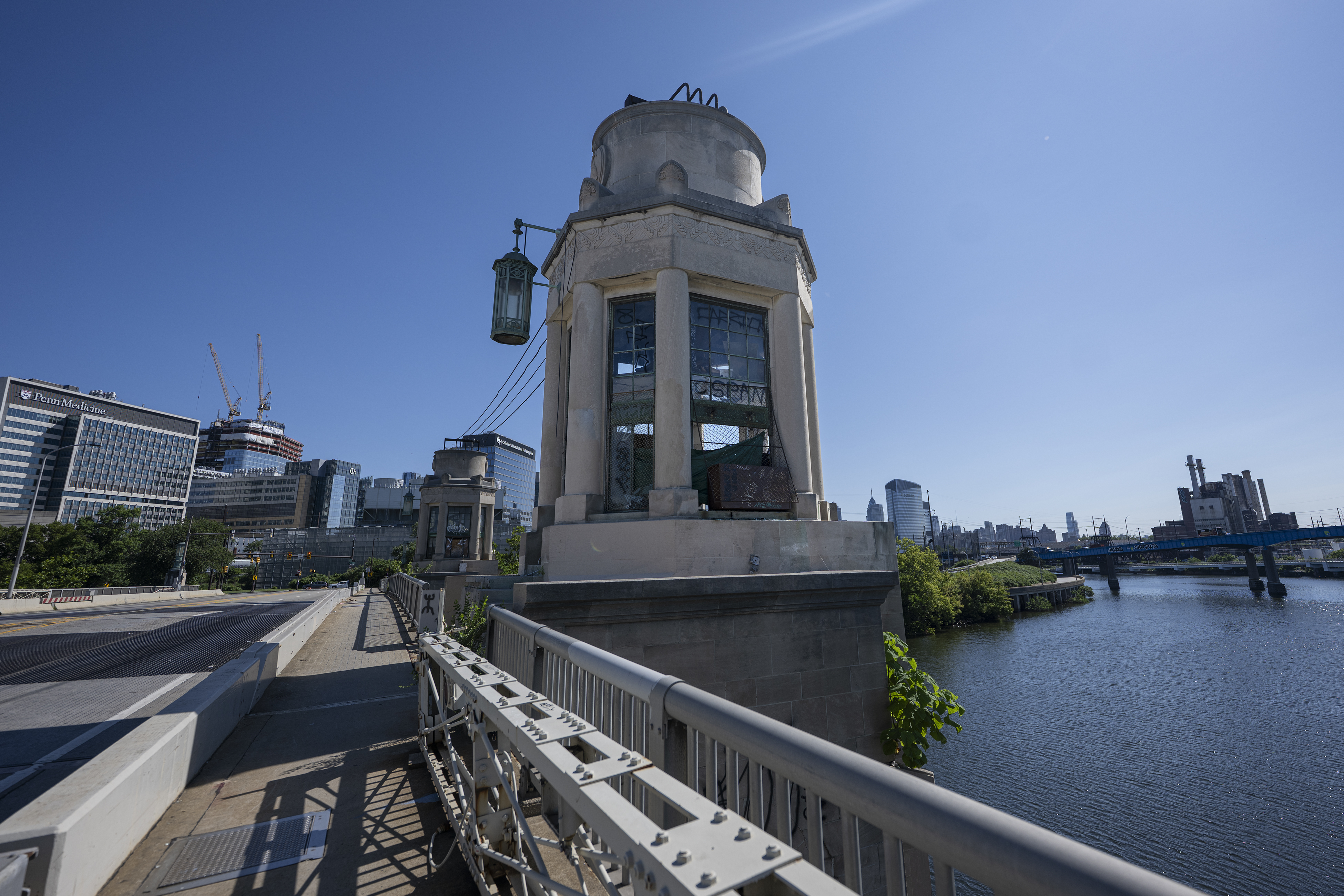
The University Avenue Bridge will soon receive structural repairs, and some of its architectural details will be secured from further vandalism, but a full-scale restoration of the historic span isn’t happening anytime soon.
PennDot is slated to begin work on the drawbridge Aug. 17, the agency announced Monday. Pedestrian and vehicular traffic will be partially impeded for the duration of the job.
A routine inspection in March of the Paul Philippe Cret-designed structure turned up deterioration in some of the steel members, said PennDot assistant district executive for assets Kerri Cutright, “and we were a little concerned, and so that’s why we’ve initiated these repairs.”
The goal is to move the drawbridge from “poor” to “fair” condition, said Cutright.
In addition, plans call for the installation of 8-foot-tall chain-link fencing in front of the two operator’s houses on the east side of the bridge to deter vandals.
Work is expected to continue through Dec. 15.
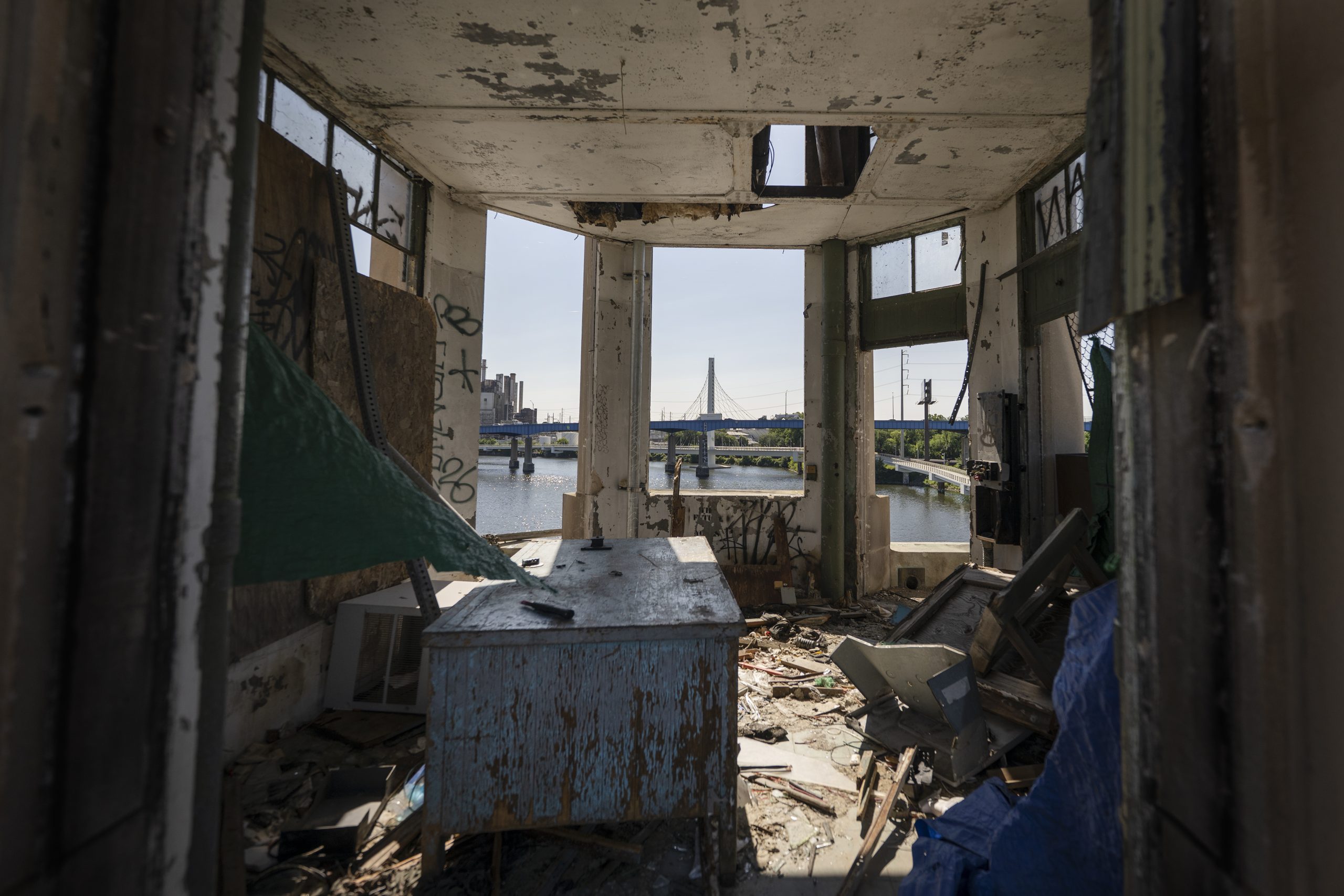
Broken windows and vandalism are visible inside one of the operator’s houses on the University Avenue Bridge on July 23.Jose F. Moreno / Staff Photographer
The project, estimated to cost about $2 million, leaves unaddressed the needs of some major features of the bridge, which was built around 1930. It will not bring back the bridge’s ability to raise its leaves, though the work won’t prevent restoration of that function in the future. The 10 elaborately detailed lighting fixtures will not be returned to working order as part of the job.
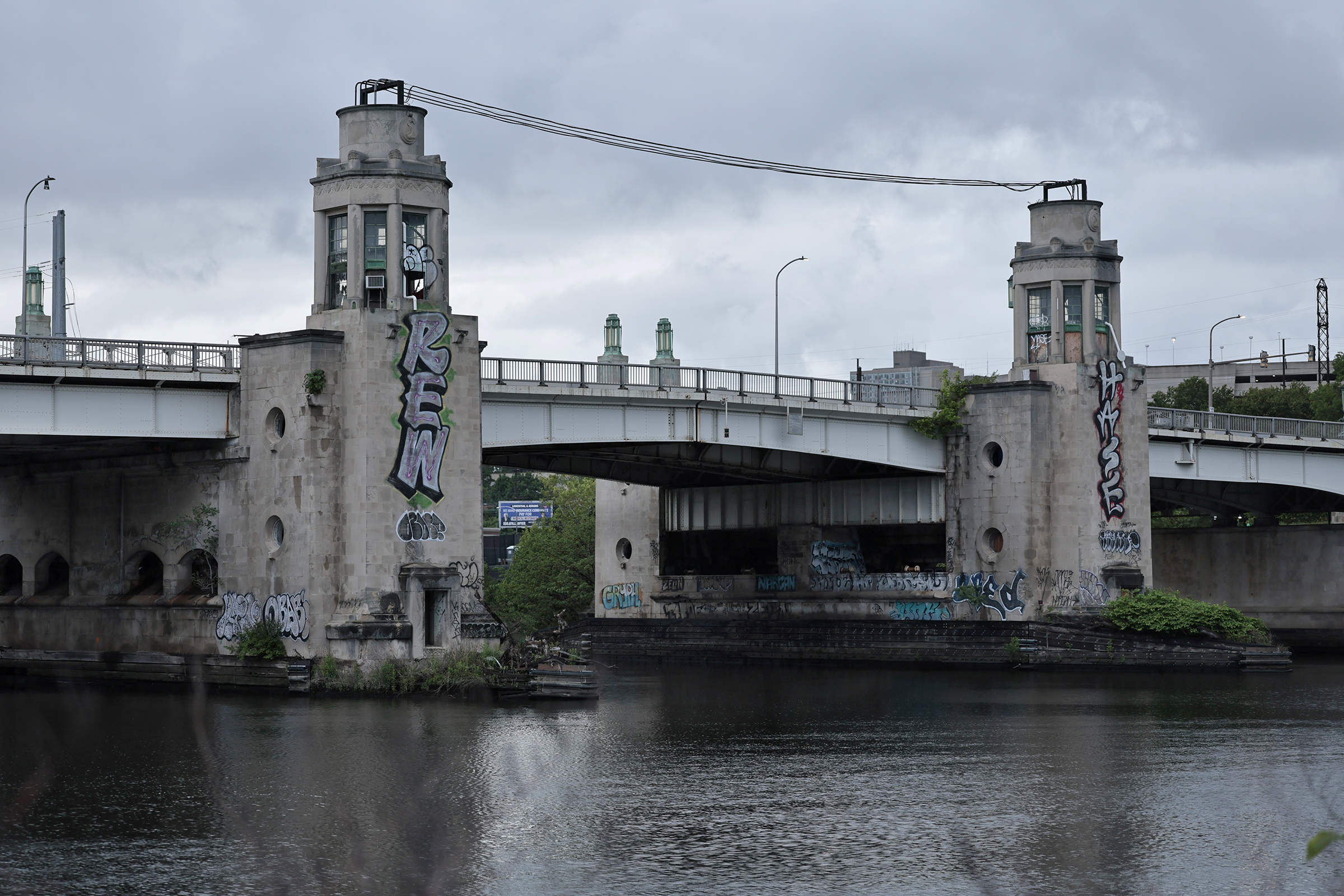
Graffiti has marred the bridge in several places, most noticeably on the Center City-facing sides of the operator’s houses, but there is no immediate plan to clean up the scrawls.
“At this time, graffiti removal is not in the scope, but it is being explored in the near future,” said PennDot spokesperson Brad Rudolph.
Graffiti on the University Avenue Bridge, seen from the Schuylkill River Trail, on May 21.Elizabeth Robertson / Staff Photographer
Vandalism and deterioration on the bridge linking West Philadelphia and Grays Ferry have attracted sporadic public attention for decades. The Inquirer highlighted the conditions last September, with another article in June, and other news outlets have called for the bridge’s stabilization and restoration. A recent change.org petition advocating that it be protected from further damage collected hundreds of signatures.
“Without intervention, these unique design elements risk permanent loss,” the Preservation Alliance for Greater Philadelphia wrote in its magazine, which lists the bridge as one of the city’s places to save.
“We welcome PennDot’s attention to the University Avenue Bridge and the planned work to address some of its most urgent deficiencies. This is a positive first step, especially after years of visible deterioration, but it should not be the end of the effort,” said Paul Steinke, executive director of the Preservation Alliance for Greater Philadelphia. “The bridge is one of Philadelphia’s most distinctive historic spans, and it deserves a broader rehabilitation plan that addresses its historic features, long-term condition and role as a public gateway between neighborhoods.”
The repairs at hand will address the structural elements beneath the bridge’s deck. The bridge uses a girder floor beam stringer system to carry the load, said Cutright, and the deterioration will be addressed with plating, cleaning, and repainting, and some steel members may be replaced.
Vandalism and the elements have damaged the two operator’s houses on the Center City-facing side of the bridge. They will be cleaned out and sealed, and a chain-link fence will be installed in front of the two structures to deter trespassers.
Lane closures will reduce vehicular access to one lane in each direction during construction. Two of the bridge’s four lanes will be closed all day every day, with two lanes left open (one in each direction) through mid-December. The work will begin with closing the two lanes closest to the operator’s houses, and moving all traffic to the other side. Then, in a couple of months, the closure pattern will flip.
The bridge carries more than 36,000 vehicles per day, according to PennDot, and the agency expects significant backups during construction. Pedestrian access will be permitted on the side of the bridge opposite from where work is being conducted.
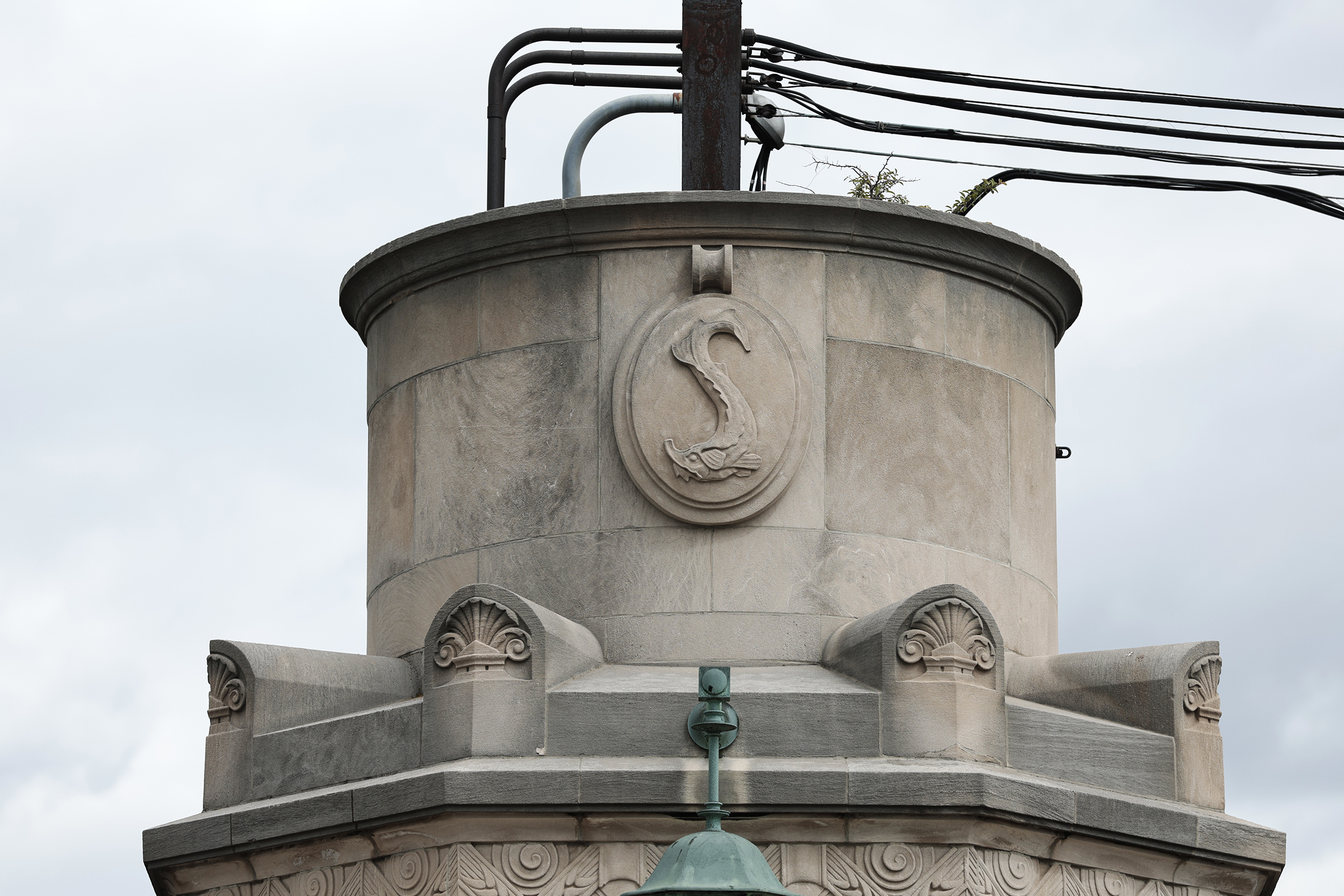
A fish and other details adorn the operator’s houses on the University Avenue Bridge.Elizabeth Robertson / Staff Photographer
Cutright said that while PennDot would like to restore the bridge, the cost is estimated around $50 million, and no funding is currently lined up for an effort on that scale.
Even if funding were in place now, a major rehabilitation would be a long way off. Planning and construction would take five years or more, she said.
“It’s a beautiful bridge, and I would imagine that if we were to do a major project that we would want to restore it to its former glory.”
On a warm summer evening in June, Wayne native Annabelle Dinda was gearing up to take the stage. It was her first time opening for folk sensation Noah Kahan on his “The Great Divide” tour, and it was in Citizens Bank Park, the home of her beloved Phillies.
The last time she had performed on home turf was a month earlier at the Lounge at World Stage for around 200 people. This time, she was about to sing in front of a sold-out crowd of around 45,000.
The 25-year-old singer-songwriter was very excited, as she recalled.
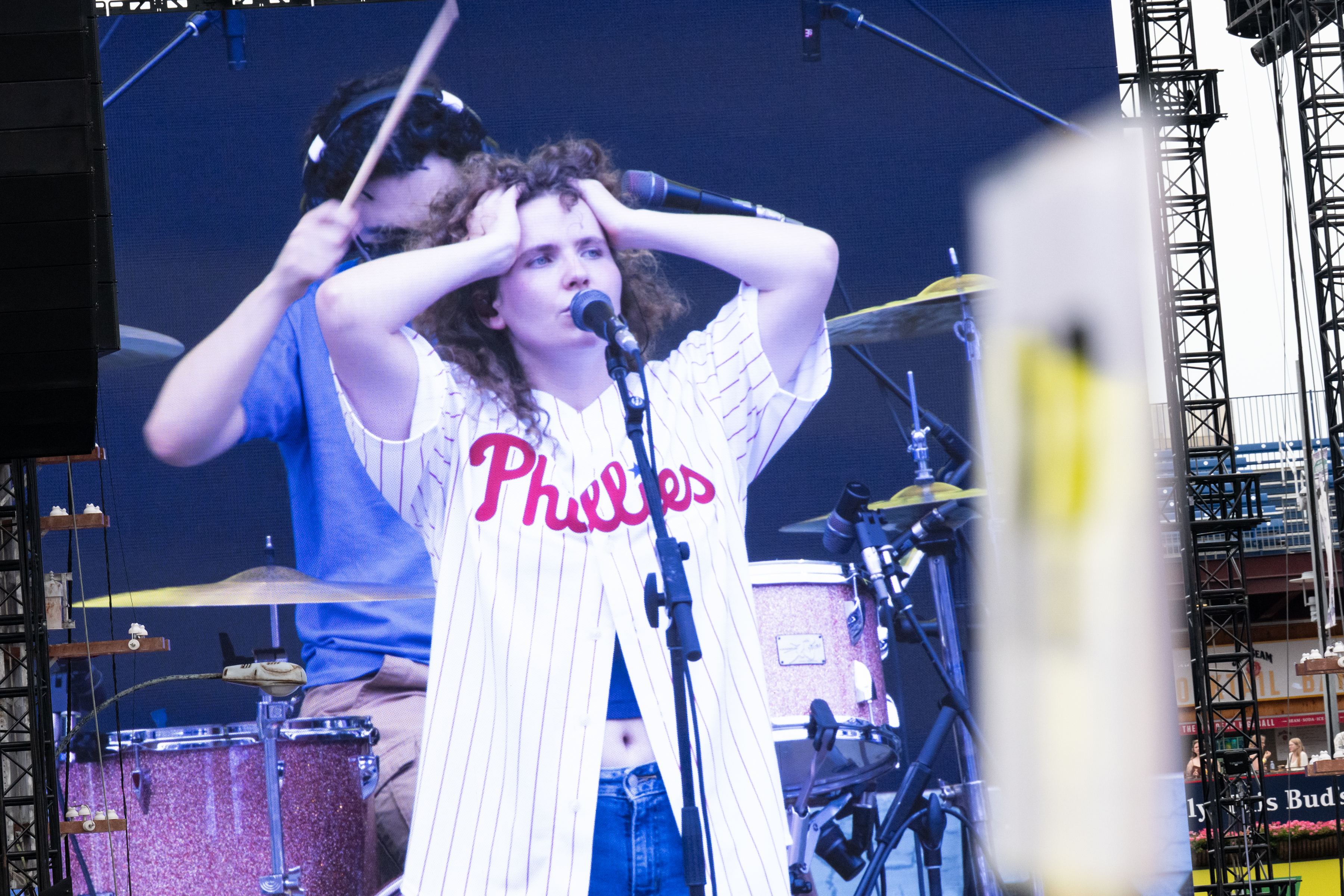
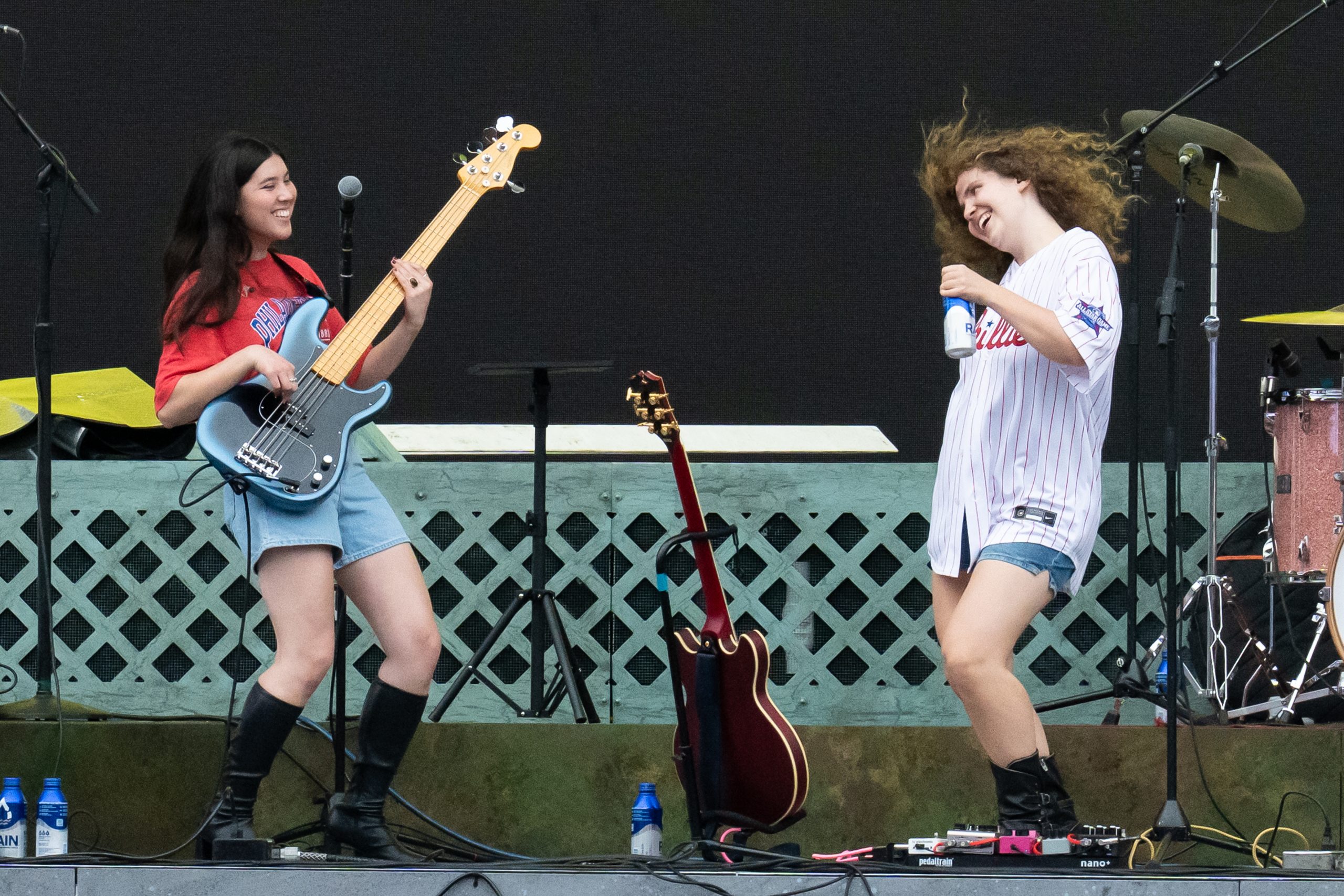
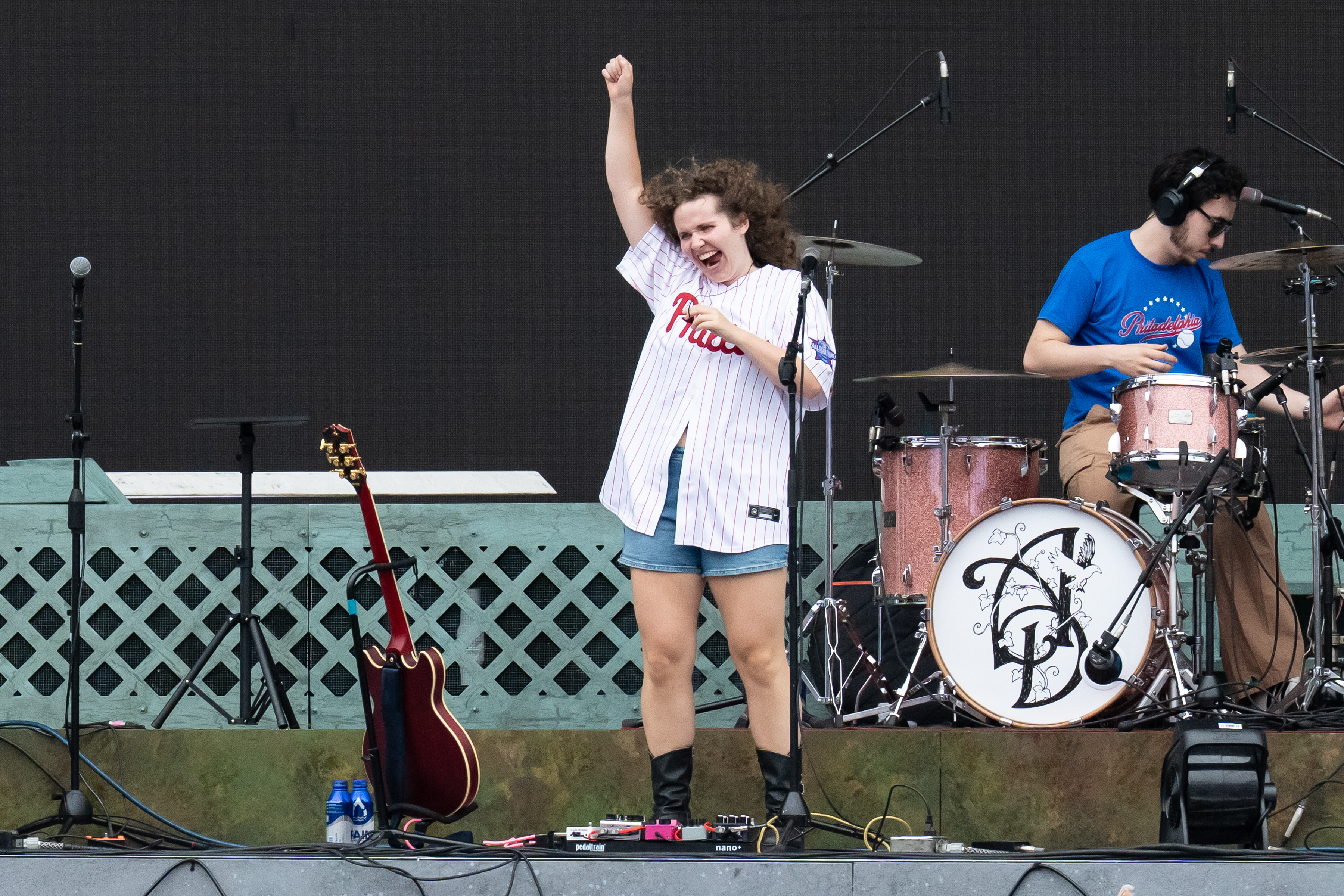
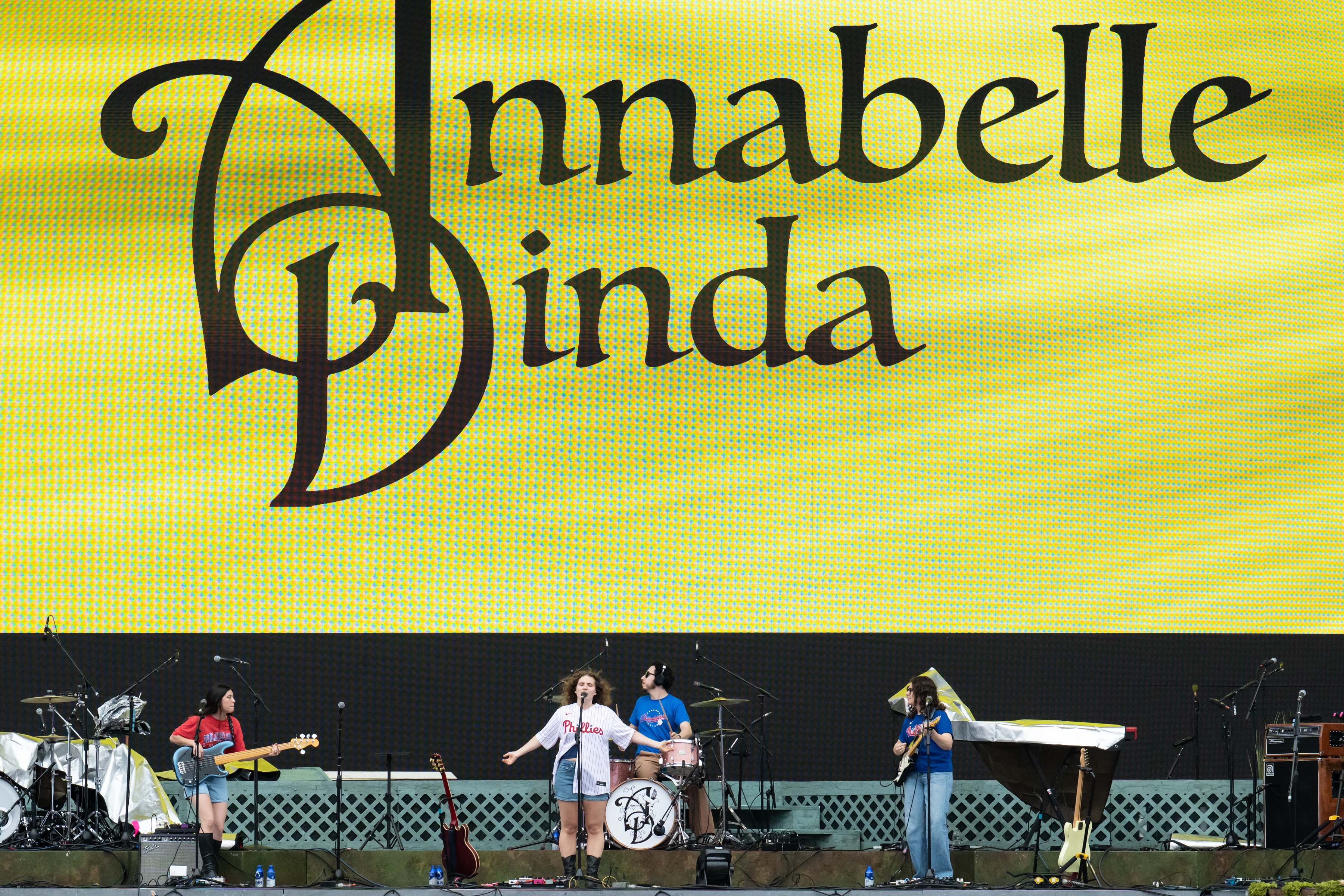
Annabelle Dinda performs an opening set during the Philadelphia stop of Noah Kahan’s “The Great Divide Tour” at Citizens Bank Park on June 26.Erin Blewett / For The Inquirer
“I’m not a huge sports girl, but I do love baseball. I was [like a kid]in the park out there,” said Dinda, 25, on looking around Citizens Bank Park during rehearsals.“[My band and I] walked through the dugouts, I stood on home base, I cried. It was so cool. I could’ve just done that and been done.”
That performance coincided with the first anniversary of her starting to post her music on TikTok. In October of last year, just four months after starting an account, Dinda posted a video of her playing her then unreleased song “The Hand.” It currently sits at 16.7 million views and 2.2 million likes, with praise from popular indie artists like FINNEAS and Gigi Perez.
The song, about the oppressive societal perceptions of women, is now part of her latest album Some Things Never Leave, and is her most popular song by far, with over 55 million streams on Spotify.
this song is called ‘the hand.’ Yes I’m putting it on streaming. this is a run through of the whole thing and it proves that I have to practice like 80 times before I find the breath control and this is only my third run thru ok peace n luv bye
“There were periods of time where I didn’t talk to people, not in an ignoring sense, but because I couldn’t even begin to describe the fabric change of my life,” said Dinda over Zoom from a hotel room in Raleigh, N.C., last month, having been on tour with Kahan for a month at the time of being interviewed.
“It was a huge shift. I was a nanny and I had to quit. The idea of making money from doing music was so alien to me. I’m very grateful for it, but I think I’m maybe about 40% done processing it.”
Springsteen, Sinatra, Demi Lovato
Dinda’s folk rock, Cranberries-esque style of singing captivated TikTok viewers — but she didn’t always have or even want that sound. When she was growing up, her parents would play her Sinatra and Springsteen, while Dinda had a burning desire to sing like the stars she listened to on Disney radio.
“I was absolutely despondent that I couldn’t sing like Demi Lovato. It was one of the worst things that I ever had to come to terms with,” joked Dinda. “I would never sing if I couldn’t belt something, because I thought that’s what good singing was.”
But at a certain point, she said, “you realize your own limits, and then a style comes from singing within those limits.”
Annabelle Dinda performs an opening set during the Philadelphia stop of Noah Kahan’s “The Great Divide Tour” at Citizens Bank Park on June 26.Erin Blewett / For The Inquirer
Citing influences like Sara Bareilles and Ingrid Michaelson, whom she heard while hanging out with her older cousins, Dinda was inspired to start writing music. She was 10. Her fans love her in-depth, poetic lyrics, but she always starts a song with a melody.
“I always approach songwriting melody first … I didn’t give a s— about what the lyrics sounded like or what they meant, and that went on for years. Eventually, I thought it might actually matter what I say.”
After graduating from Radnor High School, Dinda made her way to New York City to attend NYU. She took two music classes and quickly “despised it.”
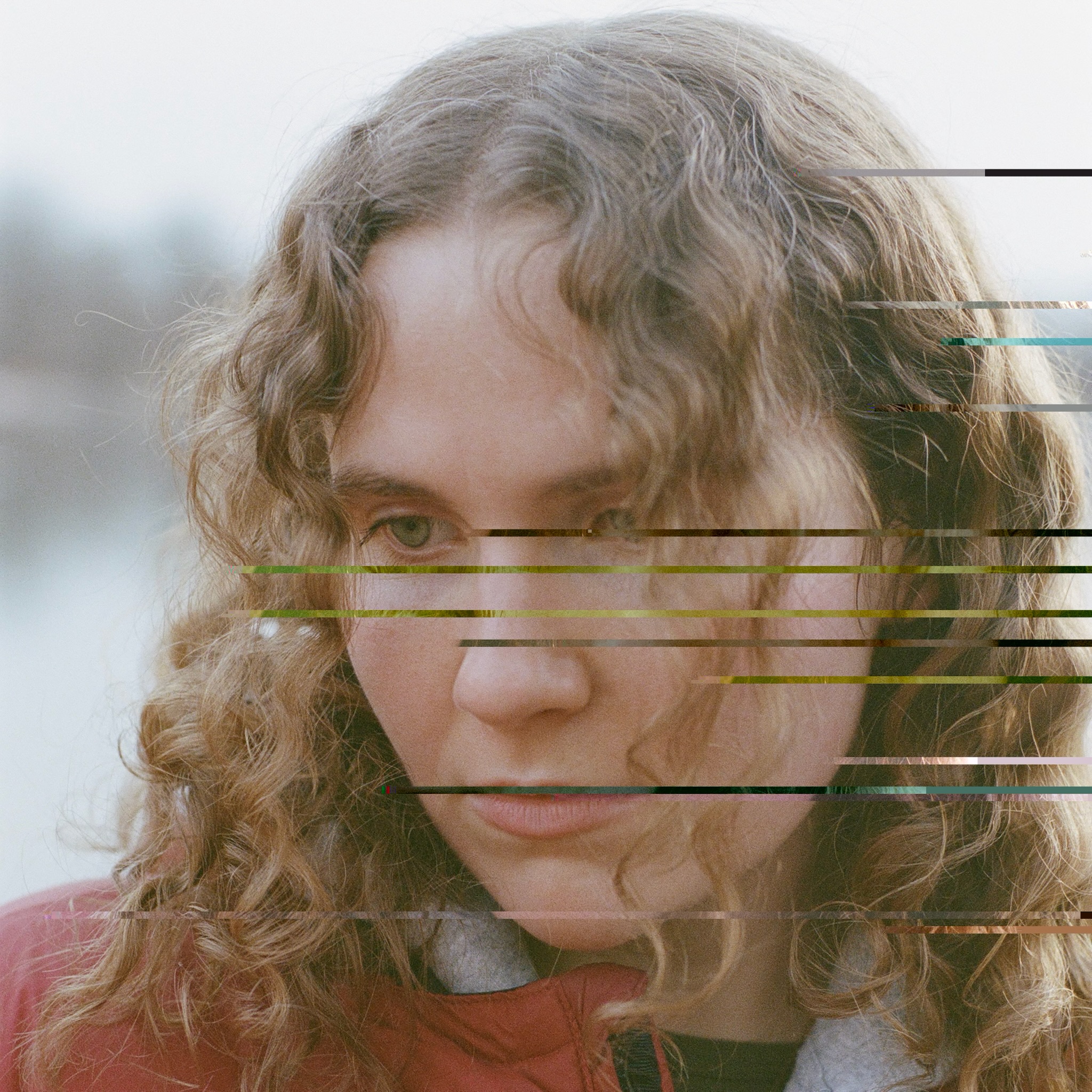
A headshot of Annabelle Dinda as part of the photoshoot for her latest album “Some Things Never Leave.”Lia Whitman
“I’ve met many friends now who did these kinds of music classes, but when I was 18 and meaner and more insecure, I thought those people sucked.”
So she pivoted to crafting her own major in the Gallatin School of Individualized Study, studying poetry and philosophy for the rest of college.
“My final concentration was basically the power of poetic language, the philosophy behind it, and how it can reach this ineffable part of being alive that music, too, can play into.”
It was at this time that she started releasing her music independently. Starting out on SoundCloud, Dinda put out six singles in 2019, followed by her first album Nostalgion in 2020. She would go on to release eight singles, three EPs, and two albums before Some Things Never Leave dropped last January.
Her already extensive catalog tends to be unified by two themes: time and grief.
“I think there’s a natural thematic pairing of time and grief, because time runs out and then that’s grief,” said Dinda. “When I was making the first three [albums] from ages 17 to 22, I had so much anxiety. I was going through so much self-transformation and I did a lot of insular work. In general, but even more so then, I mourned many versions of myself.”
In 2024, she released her third album, Sixth Sense, which dealt with a more acute sense of grief after her brother John passed away earlier that year unexpectedly.
“I think all the songs in that, maybe besides two, I wrote in a three-month period after he passed,” said Dinda. “It was interesting because the muscles that I had built talking about the idea of grief and the idea of time for many years, it became that this theme was all I think about now. It became very tangible.”
Forever rooted in Philly
Dinda is based in New York; the album cover for Some Things Never Leave was shot in Prospect Park. But she hasn’t forgotten about her hometown.
“London Plane Trees Grow in Philly,” the six-minute album closer on Some Things Never Leave, delivers a nostalgic, bittersweet love note to her life and family, with lyrics dedicated to her mom and other brother, Henry.
The cover for Annabelle Dinda’s newest album “Some Things Never Leave” shot in Prospect Park in Brooklyn.Lia Whitman
“Henry studied horticulture and he is a landscaper now. I remember being a teenager and loving [London Plane trees], asking him what that tree was, and him explaining that tree to me,” said Dinda. “I’m really happy with the metaphor of an old-rooted thing being in both [New York and Philly]. They’re city trees, too, so they’re everywhere. There’s something kind of bland about them. The most common things can be the most inspiring because they’re so overlooked and utilitarian.”
In May, Dinda played a “Free at Noon” concert at WXPN before embarking on the tour with Kahan. Her family was in the crowd loudly cheering her on throughout the show.
She was selected as the radio station’s “Artist to Watch” for the month of May by WXPN music director Dan Reed, who was introduced to her songs by his son.
“If you’re gonna write these confessional deep lyrics, that’s great, but they’re not going to have a whole lot of staying power if they don’t have a great song behind them,” said Reed. “She’s able to put those two things together, which is really rare.”
Coming off the melancholic, nostalgic themes of Some Things Never Leave, Dinda released her upbeat single “Whatever You Wanna” in June. This song feels more like holding your hands outside the window of a car on a road trip, with lyrics telling the romantic, but possibly naive tale of Dinda feeling compelled to do whatever crazy thing her lover wants her to do.
Does this more high-spirited track reflect the tone of Dinda’s next album? She says it’ll be more of a “mixture.”
“I’m always wary of people getting too solid an idea of me,” said Dinda, who has been performing unreleased songs “Fill the Gap” and “Learn Something, Baby!” at smaller shows in between Kahan tour dates.
“This last album we recorded so quickly that there were some elements that were left raw that I’m going to try to thicken and expand. I will always want to experiment more than I am currently. I think if you don’t do that, then what the hell are you doing?”
Annabelle Dinda performs an opening set during the Philadelphia stop of Noah Kahan’s “The Great Divide Tour” at Citizens Bank Park on June 26.Erin Blewett / For The Inquirer
Dinda will continue to perform with Kahan through August.
After that? She wants to seek more growth, but also a sense of normalcy.
“I’m really interested in, and this is the grandma in me, a slow and steady growth and seeing how that feels,” she said. She wants to record her next album, release it, and tour again next year, and then compare next year with this year to see what she can do differently.
“I was so deeply overwhelmed this year that I was focused on releasing and getting my face and literal body on stages out in the world. I’ll be happy to have a little more time to do music videos and pay real attention to pictures we take,” said Dinda, who wants to focus more on the creative aspects behind the next album’s rollout. “Incrementally growing I’m really excited about, because I don’t want to feel insane, is my goal.”
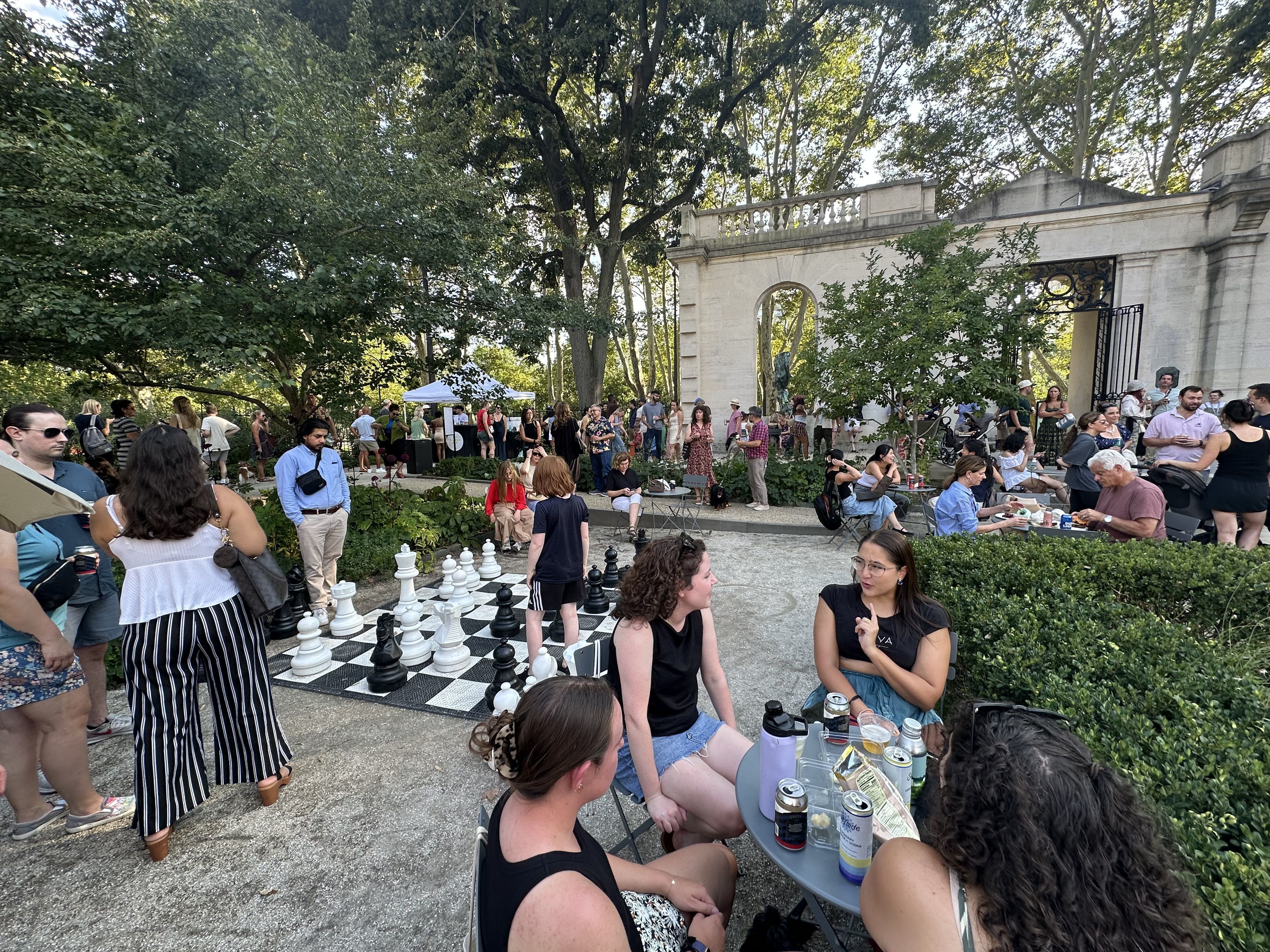
In Rodin Museum’s courtyard last Friday evening, you could run into old friends, play a game of gigantic chess, or try to keep up with your toddler toddling through the garden.
Or you could just sit back, sipping white wine and taking in the scene.
This weekly urban oasis at the Rodin has often featured live music to accompany drinks and snacks in the gorgeously landscaped courtyard. The event is now in its seasonal homestretch, continuing each Friday evening with recorded music through the end of August.
A Friday evening gathering at the Rodin Museum on the Ben Franklin Parkway, July 31, 2026.Glenn Holsten
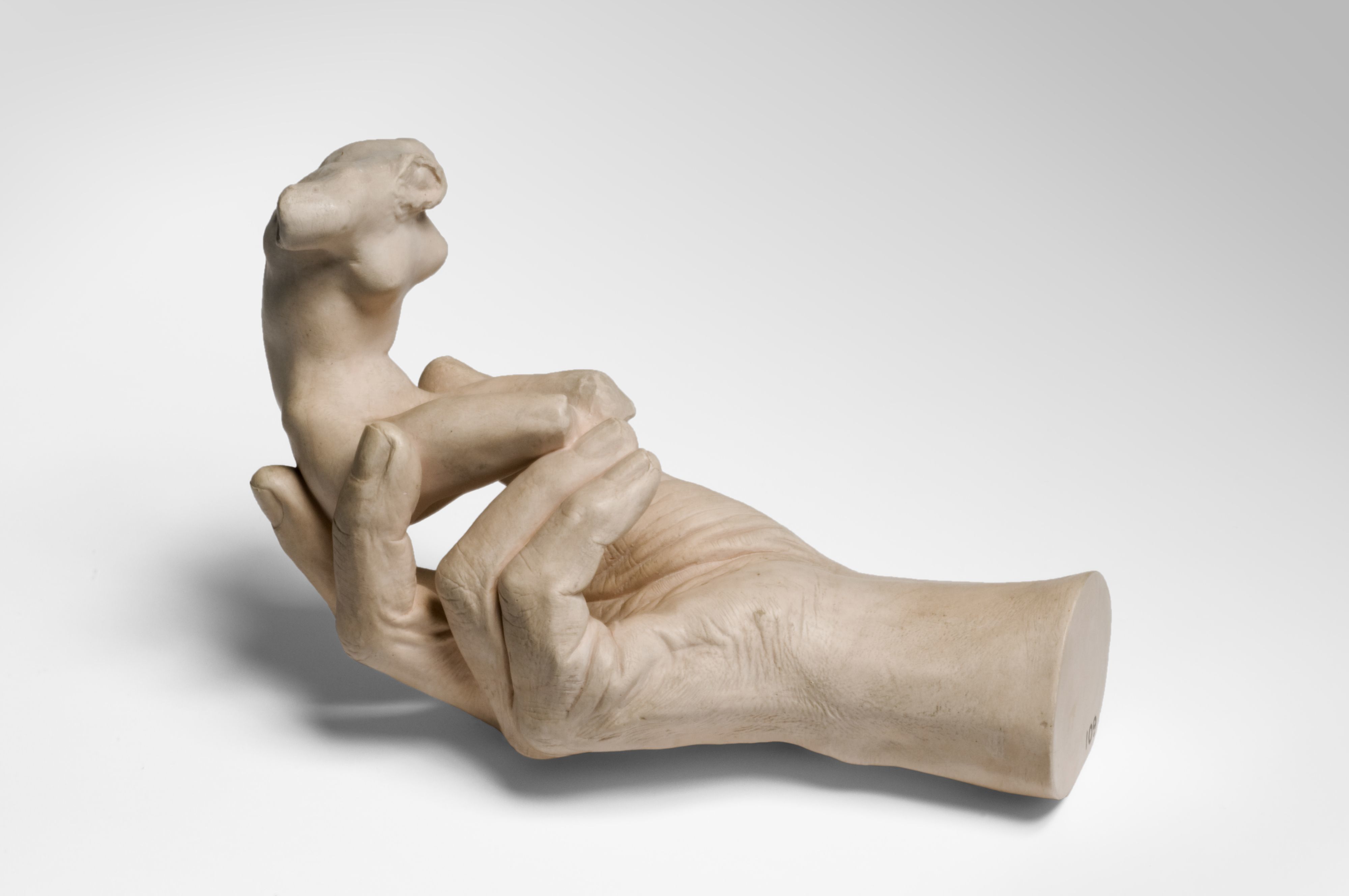
Oh, and while you’re there, you could also take in the jewel-box of a museum, which offers a choice selection of works by the French sculptor. The current show, “Rodin’s Hands,” features 15 bronzes and plasters, some of which relate to Auguste Rodin’s famous The Burghers of Calais.
The Rodin Museum, 2151 Benjamin Franklin Parkway, Friday-Monday, 10 a.m. to 5 p.m., and on Fridays until 8:30 p.m. through Aug. 28. Friday evenings are pay-what-you-wish. philamuseum.org.
— Peter Dobrin
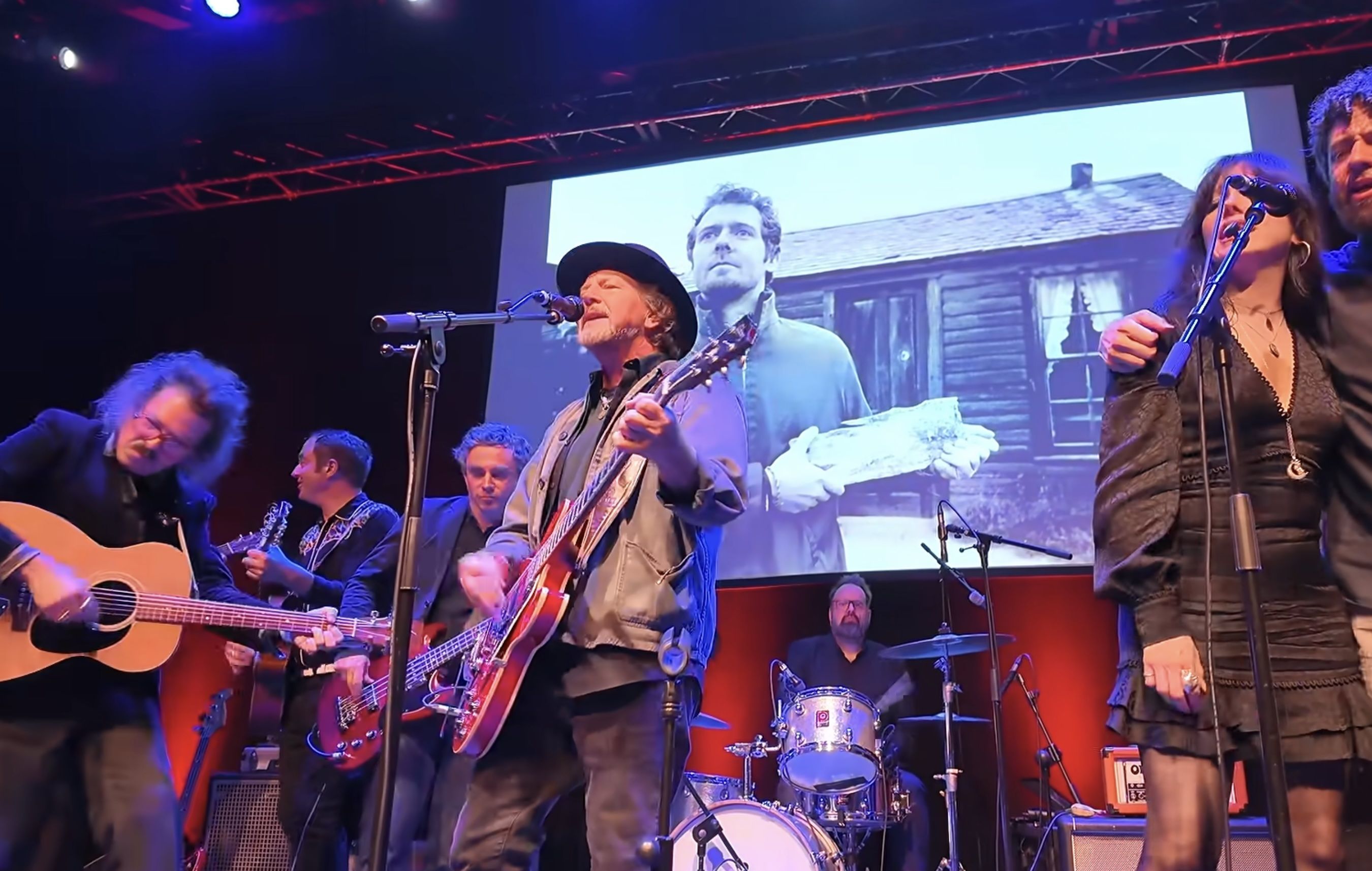
Eddie Veddie with Charlie Hall to his right and Imelda Mae to his left in a tribute to the late Glen Hansard at the Dublin concert hall Vicar Street.Screenshot from YouTube
A devastating Glen Hansard tribute
The last Irish funeral I watched on YouTube was Shane MacGowan’s.
The musical peak of that celebration of the Pogues songwriter, who had been beset by health problems before his death in 2023 at 65, came on a thrilling duet between Glen Hansard and Lisa O’Neill on the whiskey-soaked holiday classic “Fairytale of New York.”
The funeral mass, which was livestreamed Aug. 4 from St. Patrick’s Cathedral in Dublin, — and is archived online — had a feeling of unwanted deja vu. Less than three years after MacGowan had been laid to rest, many of the same musician mourners again gathered to pay tribute to one of their own, in this case a life brought to an unexpected tragic end.
Mourners included U2’s Bono, who led the congregation in an a cappella “Beautiful Day,” and played a voice note recording of Patti Smith singing a lullaby she wrote for Hansard. Eddie Vedder of Pearl Jam, whom Hansard opened for in Philadelphia in 2024, sang “A Song of Good Hope” with the Swell Season’s Marketa Irglova.
The service is a beautiful, devastating watch. Eulogies were given by Hansard’s wife, Maire Saaritsa, and his brothers Richard and Gary, the latter of whom sang the heartbreaking ballad “I Can See God,” written by the Hansards’ uncle Paul Cahill.
O’Neill, who was among the Dublin musicians who played with an expanded Pogues at Franklin Music Hall in Philly last September, was particularly moving on “Old Note,” a song she wrote in a Dublin apartment that Hansard lent her so she could work on her music.
The Philadelphia crew who worked with Hansard at Elm Street Studios in Conshohocken in 2025, and this year, was represented by producer Charlie Hall of the War on Drugs. He can be spotted in the church choir as the service came to a close with a fevered rendition of Bob Dylan’s “Forever Young,” mashed up with George Harrison’s “My Sweet Lord” and led by Hot House Flowers singer Liam Ó Maonlaí.
The night of the funeral, Hansard was further celebrated at Dublin’s Vicar Street concert hall. Vedder led the way on Neil Young’s “Rockin’ in the Free World,” with Hall on guitar on his right, and Asbury Park repped by Jake Clemons of the E Street Band, and photographer/musician Danny Clinch.
Philly musicians who worked with Hansard, including Hall, Luke Carlos O’Reilly, Ben Arnold, and Kevin Hanson, shared their remembrances of him on the Craic Radio Hour on WPPM-FM (106.5). The show can be heard on Mixcloud.
— Dan DeLuca
The fabric of a person
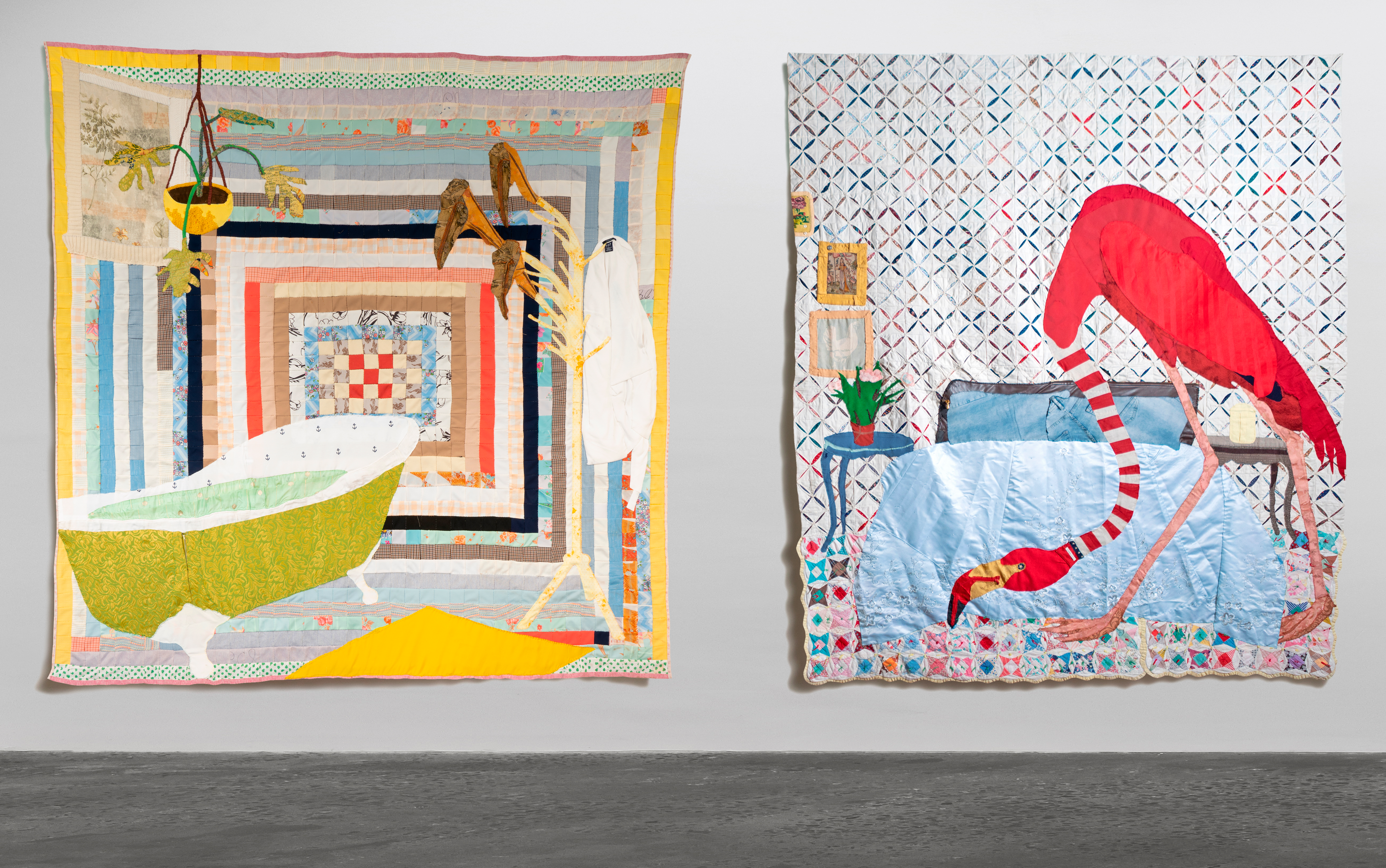
For incarcerated individuals with long-term or life sentences, life outside of prison may seem unimaginable. Artist Jesse Krimes brings those future visions to life through his Elegy Quilts.
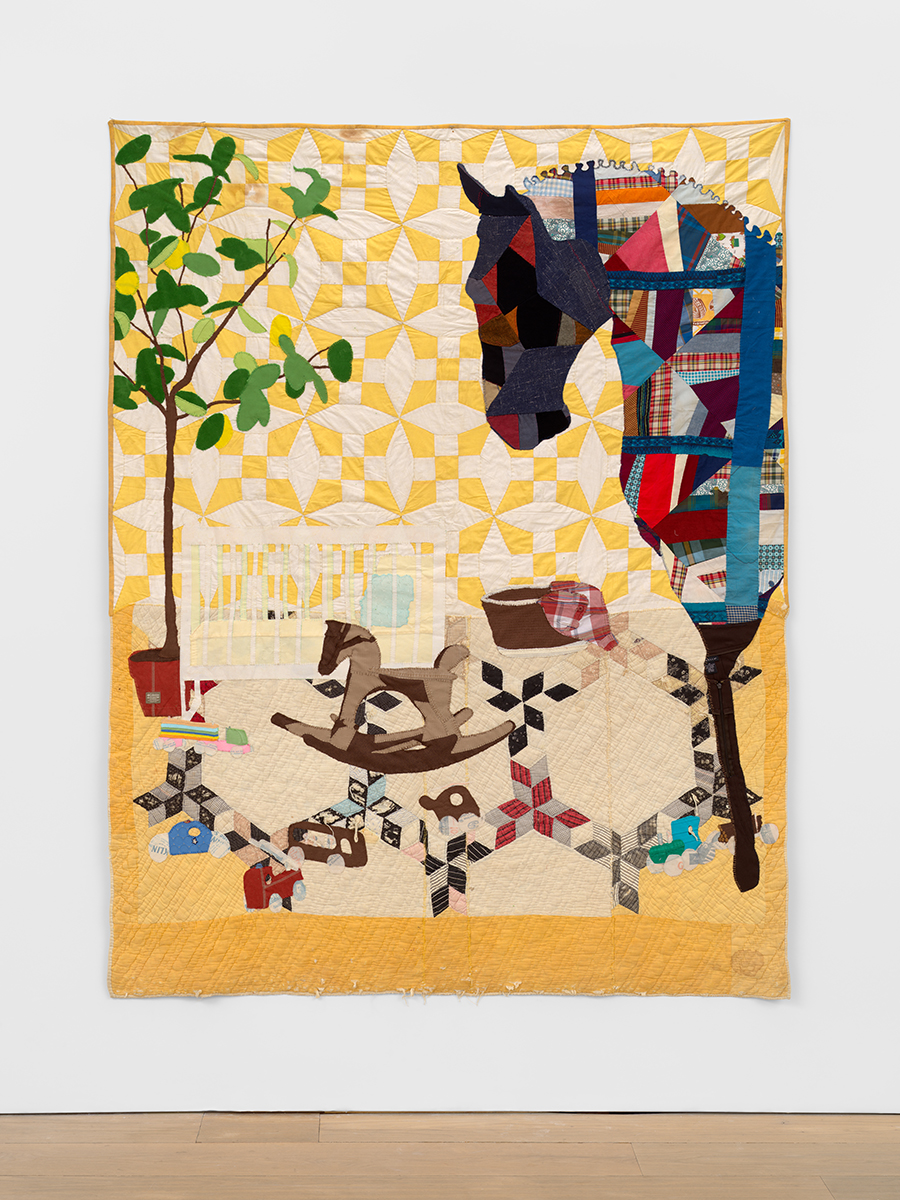
The quilts, currently on display at the Fabric Workshop and Museum, are made up of pieces of clothing from incarcerated individuals. Krimes then asks the subjects of these quilts to name three elements: a piece of furniture, an animal, and an object, all meant to represent the person’s identity.
Some commonalities are present, with multiple individuals selecting a bird or a bathroom setting. However, each quilt feels like its own distinct insight into this person’s life, whether that’s a memory they cherish or the life they wish to return to.
Krimes himself was incarcerated for five years, and used art as a creative outlet during his sentence. All of the pieces in the show are named after prisons.
Jesse Krimes’ 2026 quilt “Riverside” will become a mural in Spring Garden that will be unveiled on June 3. Description: Jesse Krimes, “Riverside,” 2026. Antique quilt, used clothing collected from incarcerated people, assorted textiles, 87 1/2 x 54 inches.Courtesy of Jesse Krimes and Jack Shainman Gallery, New York
The quilts feel incredibly personal, thanks to the elements that Krimes requested of the subjects. Particularly in pieces like Florence, where I could almost see the sadness of the quilt horse as he looks at this childhood playroom scene.
At the same time, as deep as the pieces feel, their ultimate message or theme can’t be known without knowing the subject’s intention. It creates this emotional reaction while also raising questions about these people’s identities and how they perceive themselves: What makes someone feel like they’re an owl? Or a flamingo?
The quilts are striking, and all I want to see besides a million more are the actual stories behind them. That being said, the mystery is heartbreakingly beautiful, too.
“Elegy Quilts by Jesse Krimes” is on display until Nov. 1, 2026, at the Fabric Museum and Workshop, 1214 Arch St., Phila. fabricworkshopandmuseum.org
— Morgan Ritter
Wonders in wood
Inside the quiet, well-air-conditioned Museum of Art in Wood, visitors can explore dozens of wondrous artworks that will leave them asking, “How did the artist make this?” Two floors in Old City are packed with treasures primarily inside humidity-controlled glass cases, though I’d encourage you to check every corner — and make sure to look up! — so you don’t miss a thing.
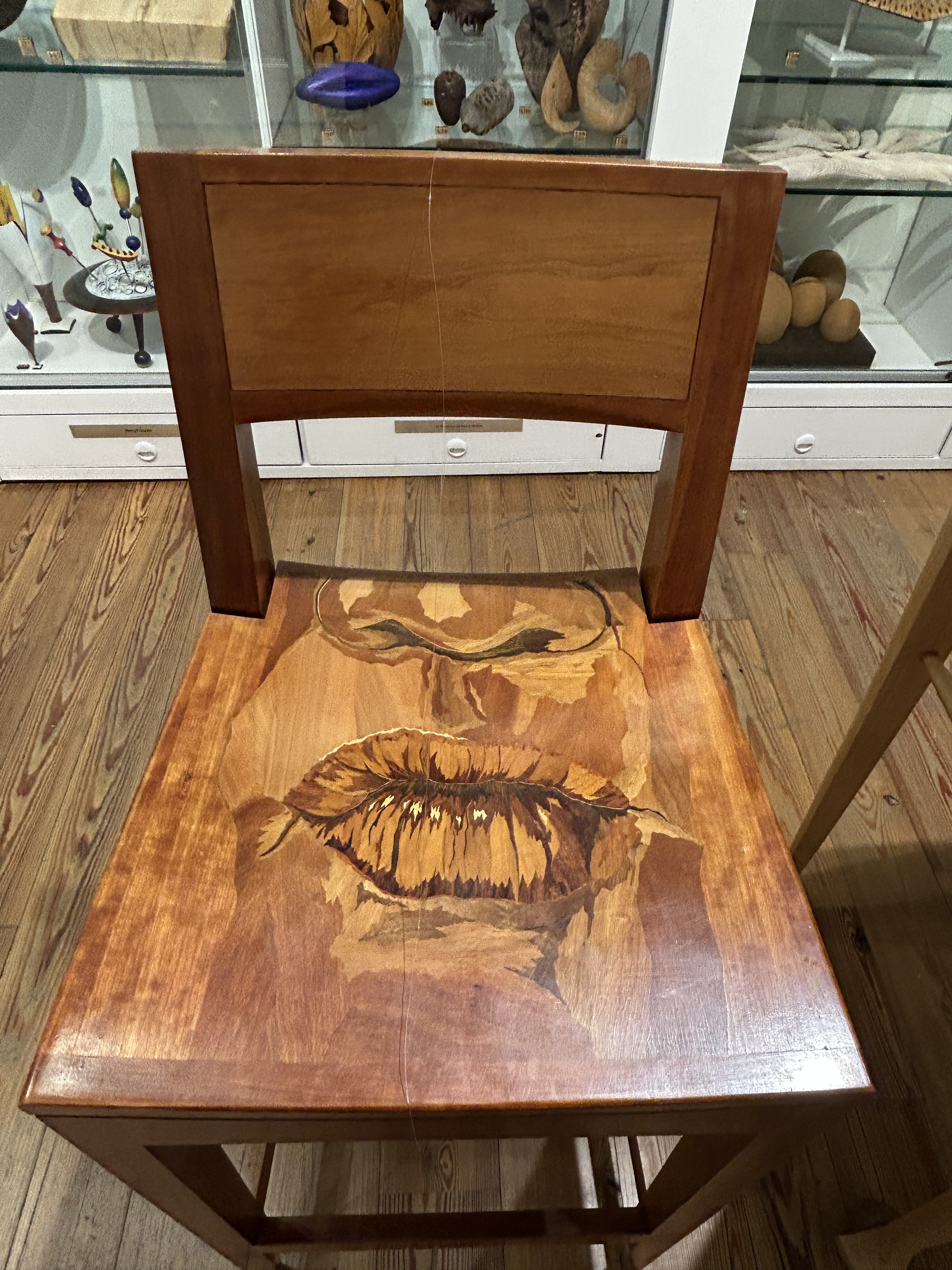
One disarmingly funny work that I loved was a pair of tall bar chairs made of cherry wood with a special design on the seat: meticulously crafted luscious lips. Artists Silas Kopf and Thomas Coughlin fittingly called them Kiss My Ass Chairs, but I was fascinated even before I learned the cheeky title. The lips (and nose) are multicolored to indicate texture, light, and shading with such impressive skill.
Kopf is particularly renowned for his expertise in marquetry, a style of woodworking that incorporates thin pieces of material (in this case, assorted types of wood) to create a design.
One of the “Kiss My Ass Chairs” by Silas Kopf and Thomas Coughlin, on view at the Museum of Art in Wood in Old City.Rosa Cartagena
See also: Louise Hibbert’s stunningly shiny seashells, Daniel Forest Hoffman’s unbelievably realistic Ram, Jason Marlow’s enigmatic helmet, and John H. Williams’ Solar Storm, a deep orange vessel with fingerprint-like swirls.
Those picks are from the permanent collection — the museum also hosts rotating exhibits, with the latest spotlighting their artists-in-residence. (The gift shop is another must-see.)
Plus, if you’re looking to enjoy the air-conditioning a bit longer, enter the museum’s wooden games library and try your hand at various puzzles or the ancient Egyptian board game senet.
Museum for Art in Wood, Wednesday-Sunday, 11:30 a.m.-5 p.m., 141 N. Third St., Phila. museumforartinwood.org
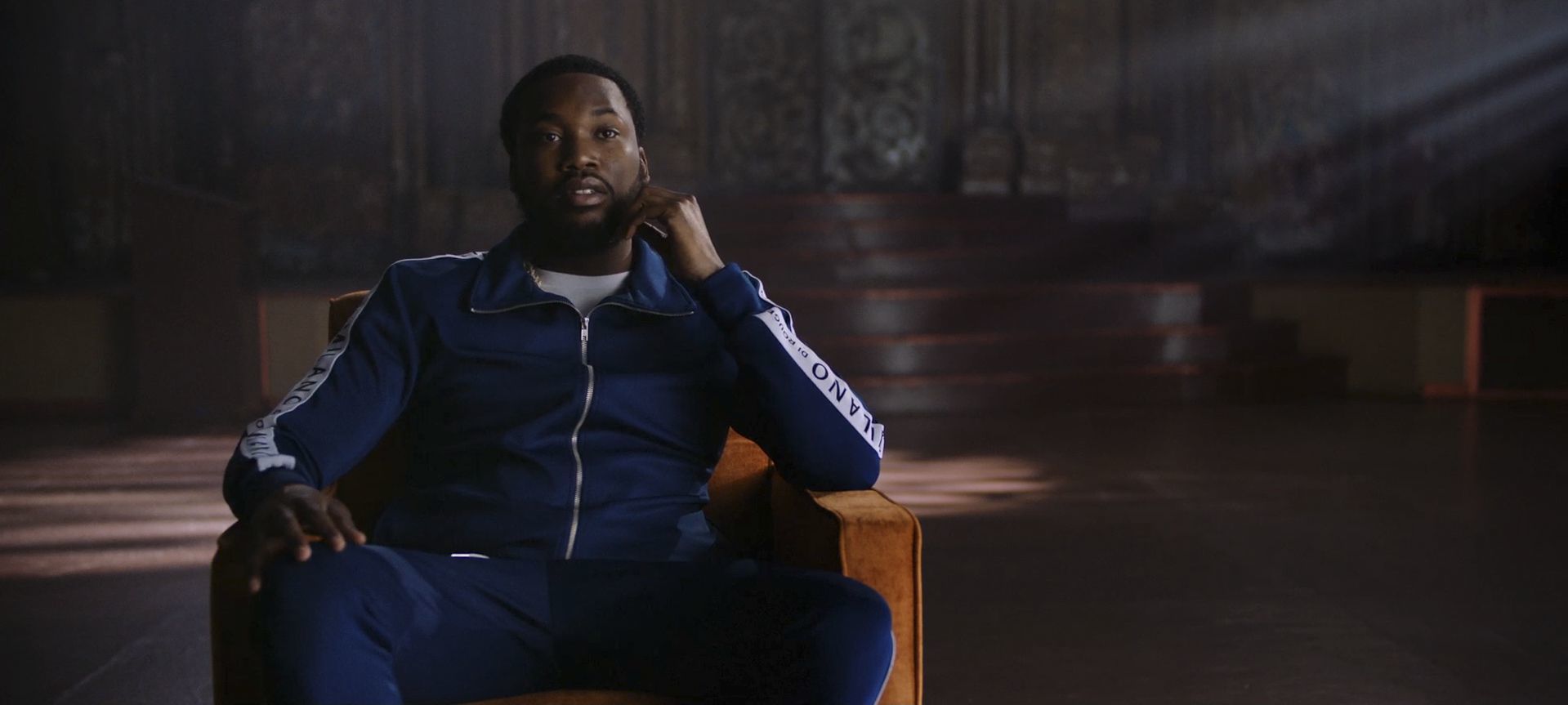
Meek Mill’s newest single “Nightmares to Dreams” has a surprising cameo star: Pennsylvania Gov. Josh Shapiro.
The North Philly rapper calls it a “full circle Philly moment.”
Shapiro appears a little more than a minute into the music video, hugging and conversing with the rapper, with whom he’s built a friendship over the past decade.
The clip of Shapiro and Meek Mill is from a brief meeting the two had before Meek took the stage July 4 at the One Philly: Unity Concert for America, according to state officials.
The song is a spirited sequel to Meek’s 2012 anthem and title track of his debut studio album, Dreams and Nightmares.
The update features a similar melody as the original but with a more frenetic, more menacing instrumental on the song’s back half. Shapiro’s appearance in the song’s music video marks a convergence of some key themes in Meek’s life and music career.
“‘Nightmares to Dreams’ is about coming from North Philly, surviving everything that came with that, chasing a dream, and then using what I built to create opportunities and make change for other people,” Meek, also a criminal justice reform advocate, said in a written statement to The Inquirer.
With “Dreams and Nightmares,” the career of the rapper born Robert Rihmeek Williams began to take off. But he remained on probation with a decade of legal woes stemming from a 2008 drug and gun charge. Court-imposed restrictions disrupted his ability to travel and work, he said, and years of supervision limited his freedom and his musical ascension.
“I was selling out shows, taking care of my family, and representing my city, yet the system still controlled my life,” Meek said in the statement. “That probation nightmare followed me for years and sent me back to prison because of technical violations.”
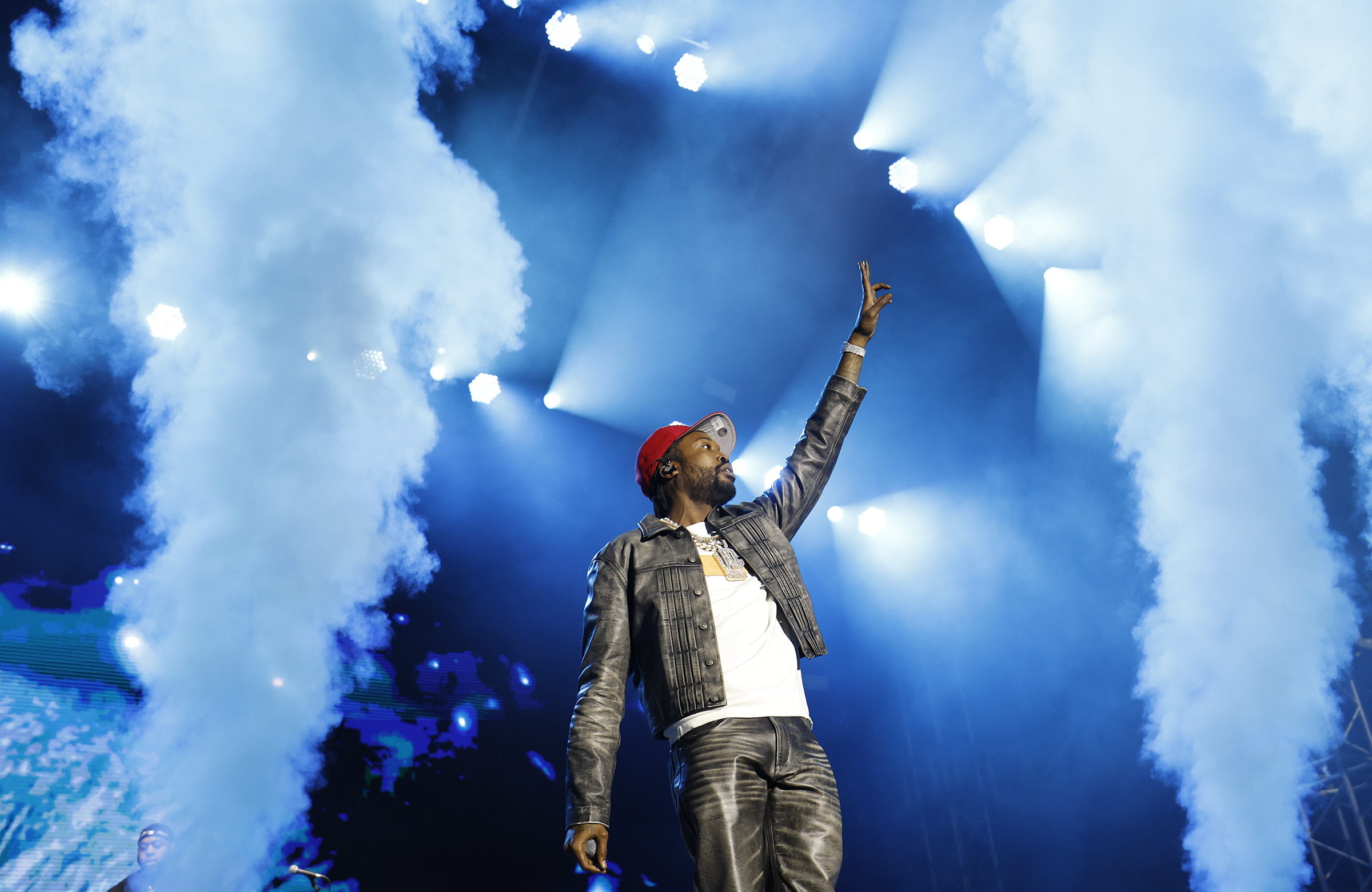
Meek Mill closes day 2 of the Roots Picnic 2025 while performing on the Fairmount Park Stage at the Mann Center on Sunday, June 1, 2025.Yong Kim / Staff Photographer
In November 2017, the rapper was sentenced to two to four years in state prison following a string of nonviolent technical probation violations.
It was this court decision by former Common Pleas Court Judge Genece E. Brinkley that brought the incident to then state attorney general Shapiro’s attention.
“Meek got a real raw deal,” Shapiro said in an appearance on the Higher Learning podcast in March.
After Meek’s sentencing, Michael Rubin, founder and CEO of the sports platform Fanatics and a mutual friend of Meek’s and Shapiro’s, urged Shapiro to look closely into Meek’s legal battle.
The #FreeMeek campaign was launched soon after Meek’s sentencing and Shapiro urged Rubin to broaden the mission of the movement, he said on the podcast. The campaign became a national push for criminal justice reform for those who fell victim to systemic corruption.
Meek Mill in Amazon’s Free MeekAmazon
The Pennsylvania Supreme Court ordered Meek to be released from prison on bail in April 2018. In January 2019, he cofounded the nonprofit Reform Alliance, with Rubin, Robert Kraft, and Jay-Z. The aim was to mount a five-year campaign to overhaul Pennsylvania’s probation system.
“What happened to me wasn’t just my story,” Meek said. “It was happening to millions of people across this country. That’s why we created Reform Alliance. We wanted to turn one person’s experience into a movement that changes the system for everyone.
“Gov. Shapiro understood this issue was bigger than me” said Meek, “He told us to put a bill on his desk, and when we did, he kept his word.”
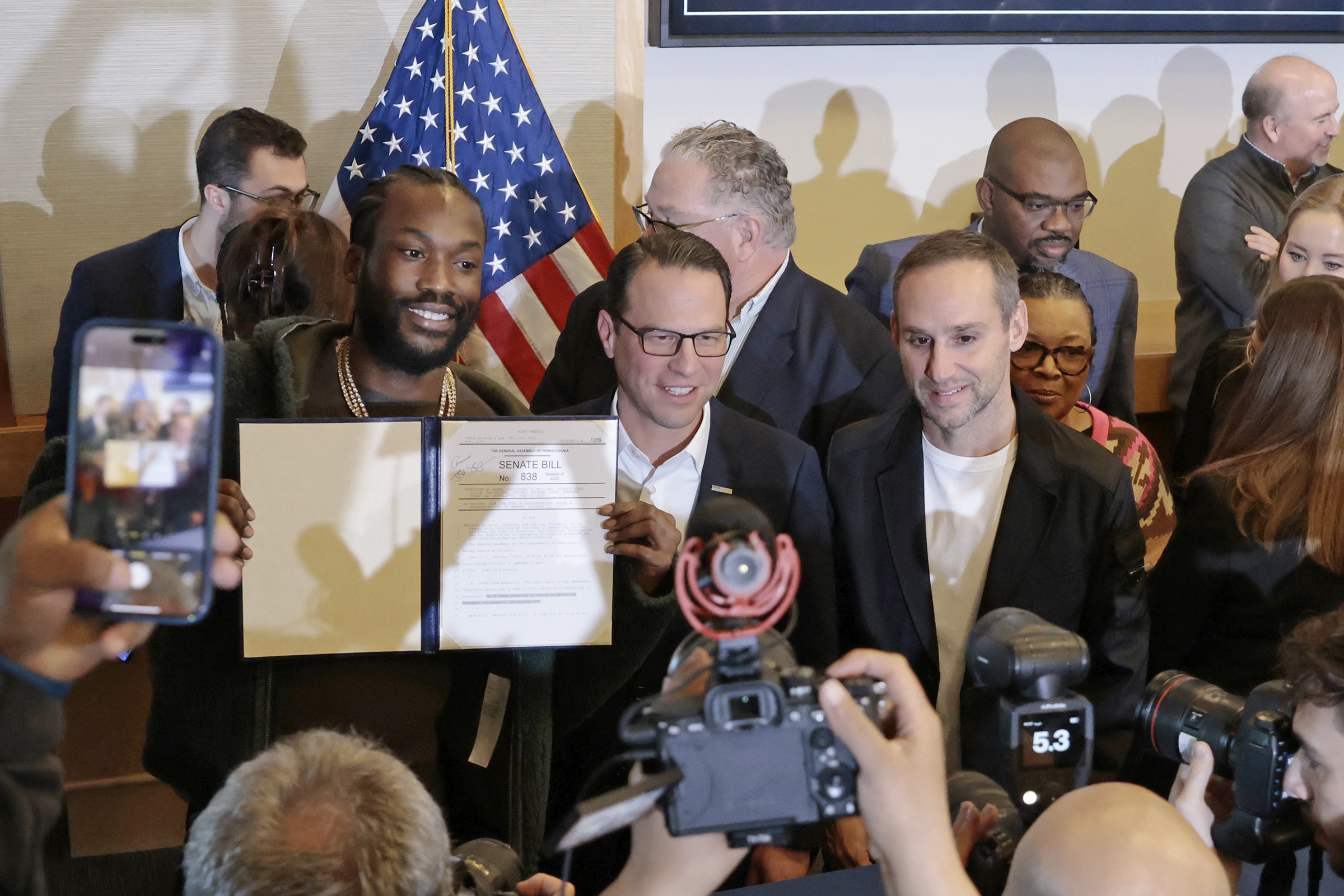
Shapiro signed Act 44 into law in December 2023. It creates new pathways for eligible Pennsylvanians to receive early termination hearings, finish probation after demonstrating sustained progress, and limits incarceration for technical violations of probation.
The act “created a more proportionate approach to technical violations, the same kind of noncriminal missteps that repeatedly sent Meek back to prison and derailed the progress of too many others,” Reform Alliance CEO Jessica Jackson said in a statement.
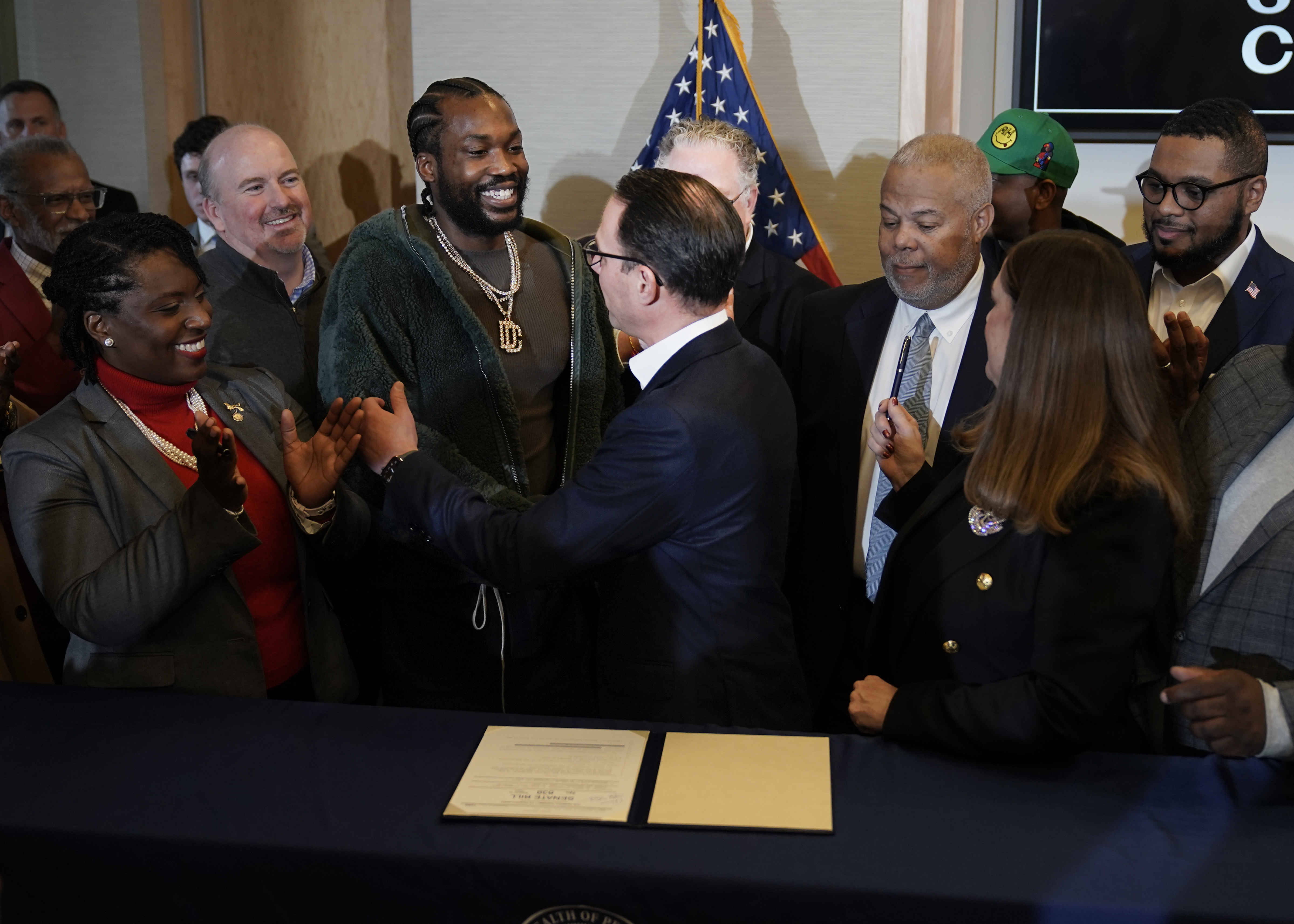
Rapper Meek Mill (center left) and Pennsylvania Gov. Josh Shapiro move to embrace during a ceremonial bill signing in Philadelphia, Friday, Dec. 15, 2023. More criminal records in Pennsylvania can be sealed from public view and fewer people might be kept on probation or in county jails, under legislation signed by Shapiro. (AP Photo/Matt Rourke)Matt Rourke
Shapiro commends Meek for opening his eyes to the failures of the Pennsylvania criminal justice system and for working to ensure others didn’t face the same barriers as him.
“I’m a more compassionate person and understanding person for what he’s taught me over the years. And I appreciate him,” Shapiro said to Higher Learning podcast hosts Van Lathan and Rachel Lindsay. “There are a whole lot of people who are no longer incarcerated, who shouldn’t have been incarcerated in the first place, because of policies I’ve changed in Pennsylvania, decisions I’ve made on pardons and clemencies because of lessons Meek has taught me.”
Meek has even informed his musical tastes, the governor said.
When they first sat down for a dinner at Rubin’s house, Shapiro admitted he wasn’t a fan of the rapper’s music. “I really find a lot of your music quite offensive,” Shapiro recounted telling Meek.
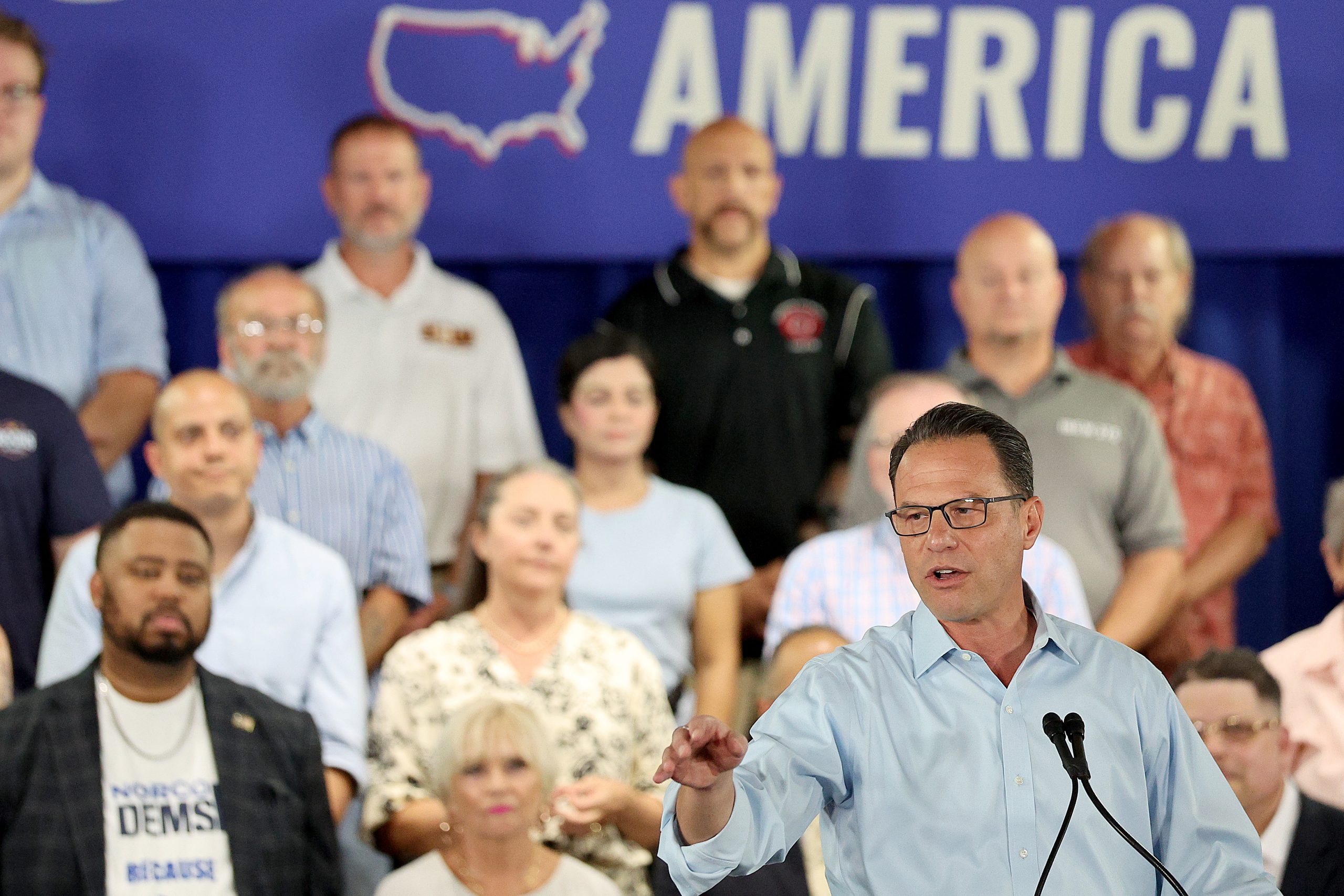
Pa. Gov. Josh Shapiro addresses the audience during a rally for Congressional candidate Bob Brooks at the United Steelworkers Union Hall in Bethlehem, Pa., on Sunday, July 26, 2026.David Maialetti / Staff Photographer
But after Meek played his songs and explained the meaning behind the lyrics, “it opened up my eyes a lot more into understanding his music, the way he thinks, the way he approaches things,” Shapiro said.
Years later, Meek said his music and circumstances have changed vastly.
That is what is reflected in the video to “Nightmares to Dreams,” which includes Philly landmarks and other high-profile cameos from the likes of Philadelphia Mayor Cherelle L. Parker and Million Dollaz Worth of Game hosts Wallo267 and Gillie da King.
It illuminates his North Philly roots, the distance he has traveled, and the change his advocacy has inspired.
What was once a nightmare is shaping up to be a dream, with a friendship with the governor to boot.
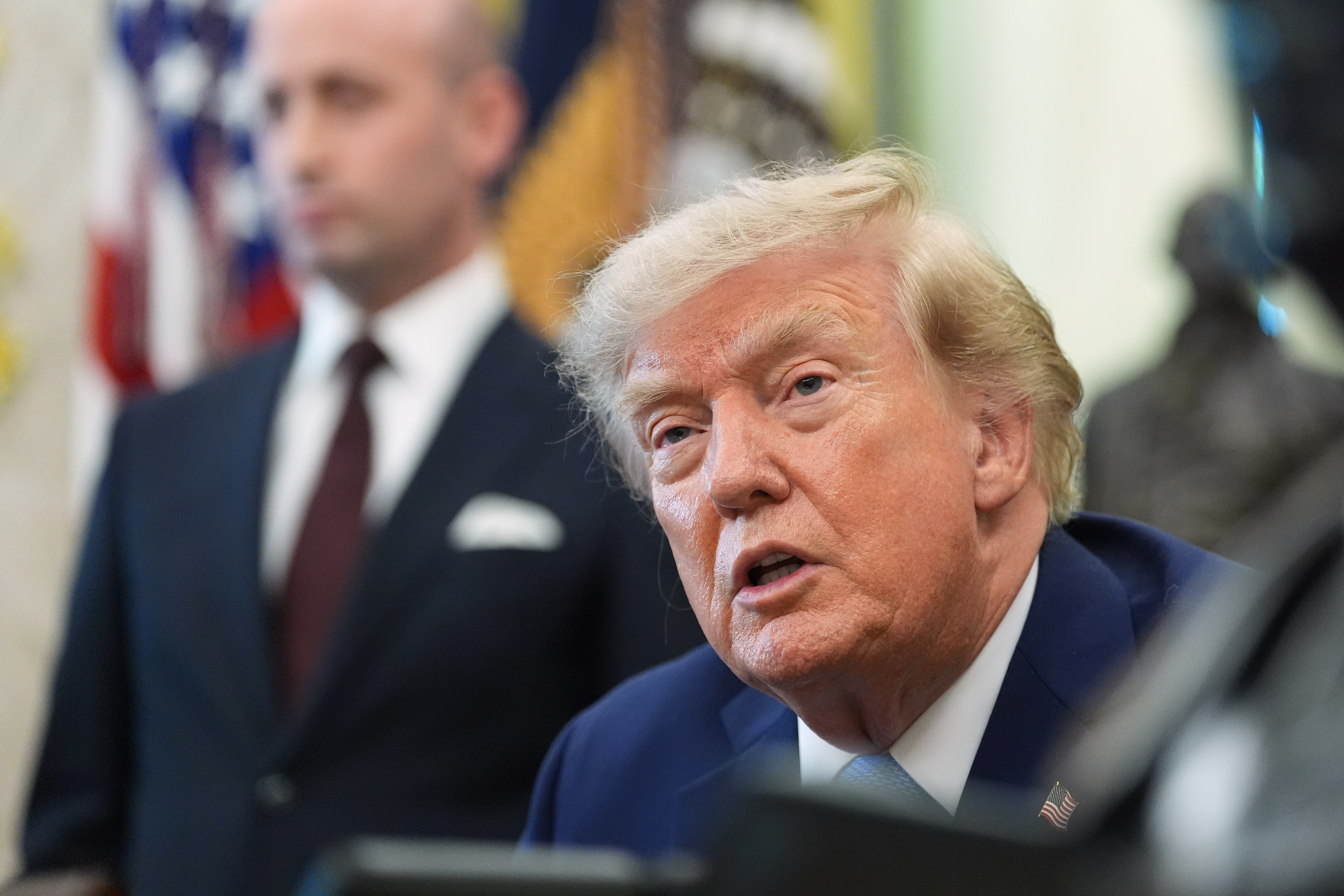
WASHINGTON — President Donald Trump said Thursday that he is once more trying to limit the number of people who are born in the country who can become American citizens, in a sign that even after his first attempt at limiting birthright citizenship was rejected by the Supreme Court, he’s ready to try again.
The president said he was signing two executive actions on immigration.
He said one will limit the number of people eligible for U.S. citizenship after being born in the United States.
A second order seeks to curb what Trump called “birth tourism” by increasing restrictions on visitors to the U.S. who want to obtain visas to give birth while in the country.
Additional details weren’t provided, but Trump said he thought his latest actions would be constitutional.
In June, the Supreme Court rejected Trump’s previous efforts to declare that children born to people in the U.S. illegally or temporarily aren’t American citizens, and upheld a broad conception of birthright citizenship.
On Trump’s first day in office of his second term, he signed an executive order aimed at ending birthright citizenship, which allows anyone born in the United States to automatically become an American citizen.
Trump’s administration was immediately sued by opponents who said the executive order went against the 14th Amendment, adopted after the Civil War, which makes anyone born in the country a citizen, with very limited exceptions.
The executive order was blocked by several lower courts and never took effect.
In June, the Supreme Court struck down Trump’s order by a 6-3 vote. But the vote was too close for many immigration advocates and legal observers who felt the legal question of birthright citizenship was a long-settled issue.
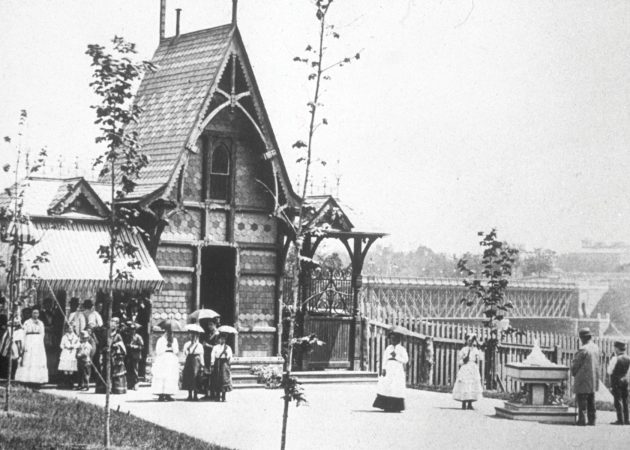
During his extensive travels to Europe, 19th-century doctor and Philadelphia socialite William Camac was impressed with the vast zoological parks he visited, especially the one in London.
He soon convinced his well-to-do cronies in the Union League, the Pennsylvania Academy of the Fine Arts, and the Franklin Institute to open a zoological garden in Philadelphia. And on March 21, 1859, the Pennsylvania state legislature passed a charter establishing the Zoological Society of Philadelphia.
Its purpose: to purchase and collect living and wild animals for public exhibition.
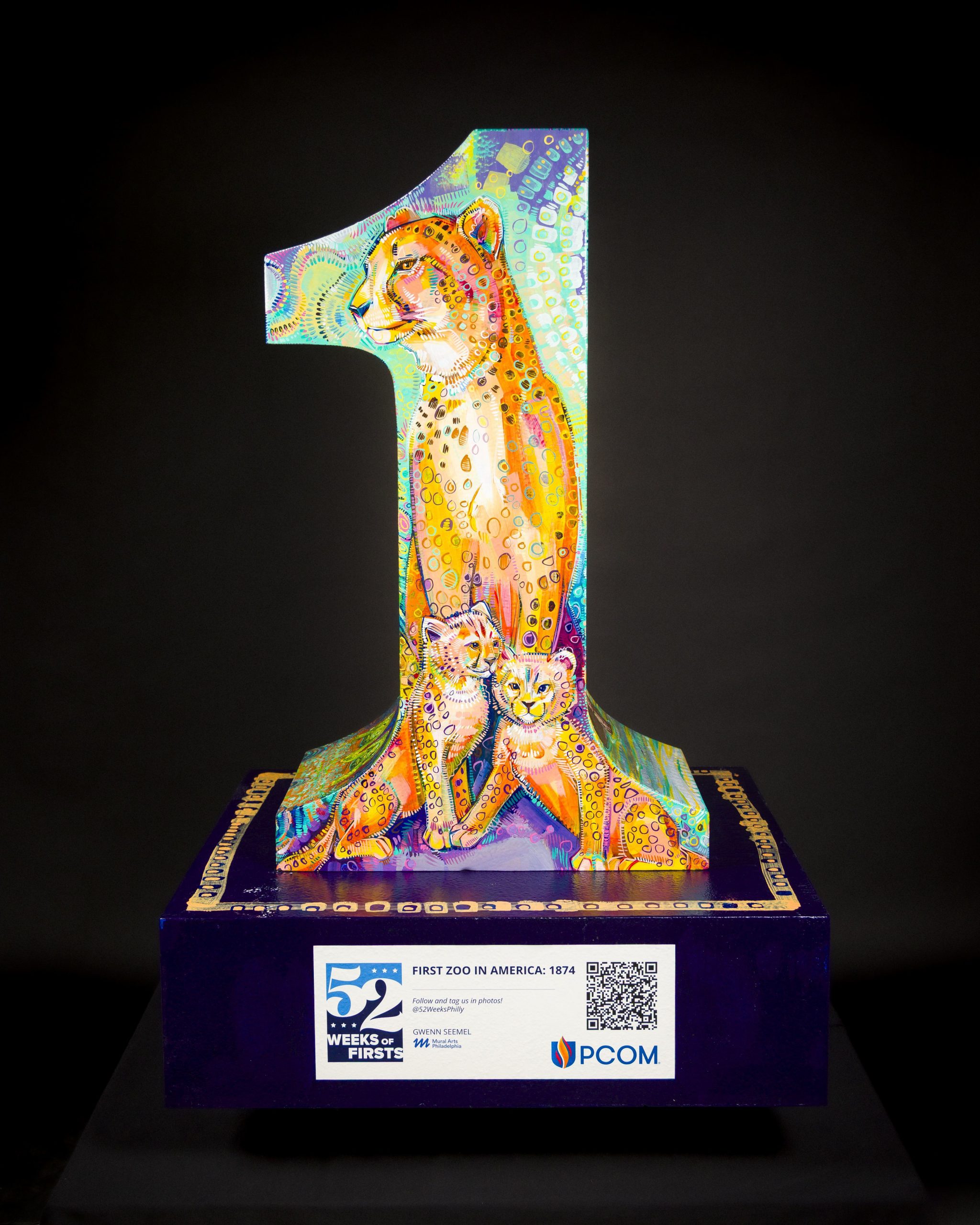
Artist Gwenn Seemel’s No. 1 captures many of the Philadelphia Zoo’s first milestones.Gwenn Seemel and Colibrà Workshop
Organizers started building in earnest immediately, but the Civil War slowed down the process. (Camac served as a surgeon in the Union Army.) After the war’s end, in the late 1860s, the city granted the Zoological Society a lease to choose land. The society went with a 42-acre site in West Fairmount Park near the brand new Girard Avenue Bridge.
On July 1, 1874, America’s first zoo opened, in Philadelphia.
The Philadelphia Historical District will celebrate this moment Saturday at the Philadelphia Zoo. The party is part of the historic district’s weekly “Firstivals,” a yearlong recognition of places and events with Philly roots.
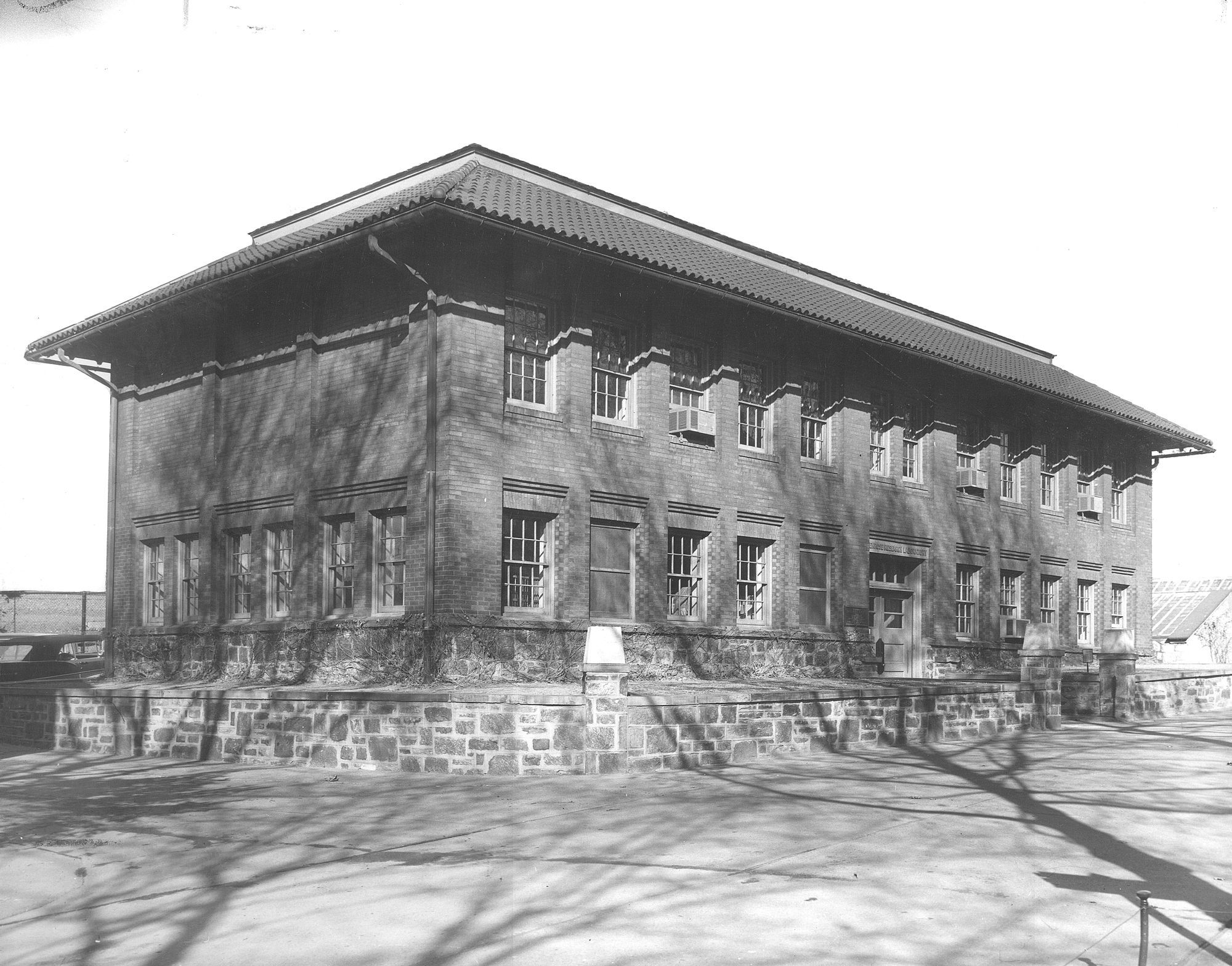
In 1901, the Philadelphia Zoo opened the Penrose Research Laboratory, the world’s first zoological research laboratory.Philadelphia Zoo
Admission to the Philadelphia Zoo on opening day was 25 cents for adults and 10 cents for children. The orchestra played as visitors strolled through the gardens.
Featured exhibits included a prairie dog village, that, according to a 1874 article in The Inquirer, “was not to be found in any other zoological garden in the world.” There was also a buffalo range, a beaver pond, alligators, and “five specimens of grizzly bears.”
More than 227,000 visitors arrived by foot, horse carriage, steamboat, and passenger train during the zoo’s first eight months.
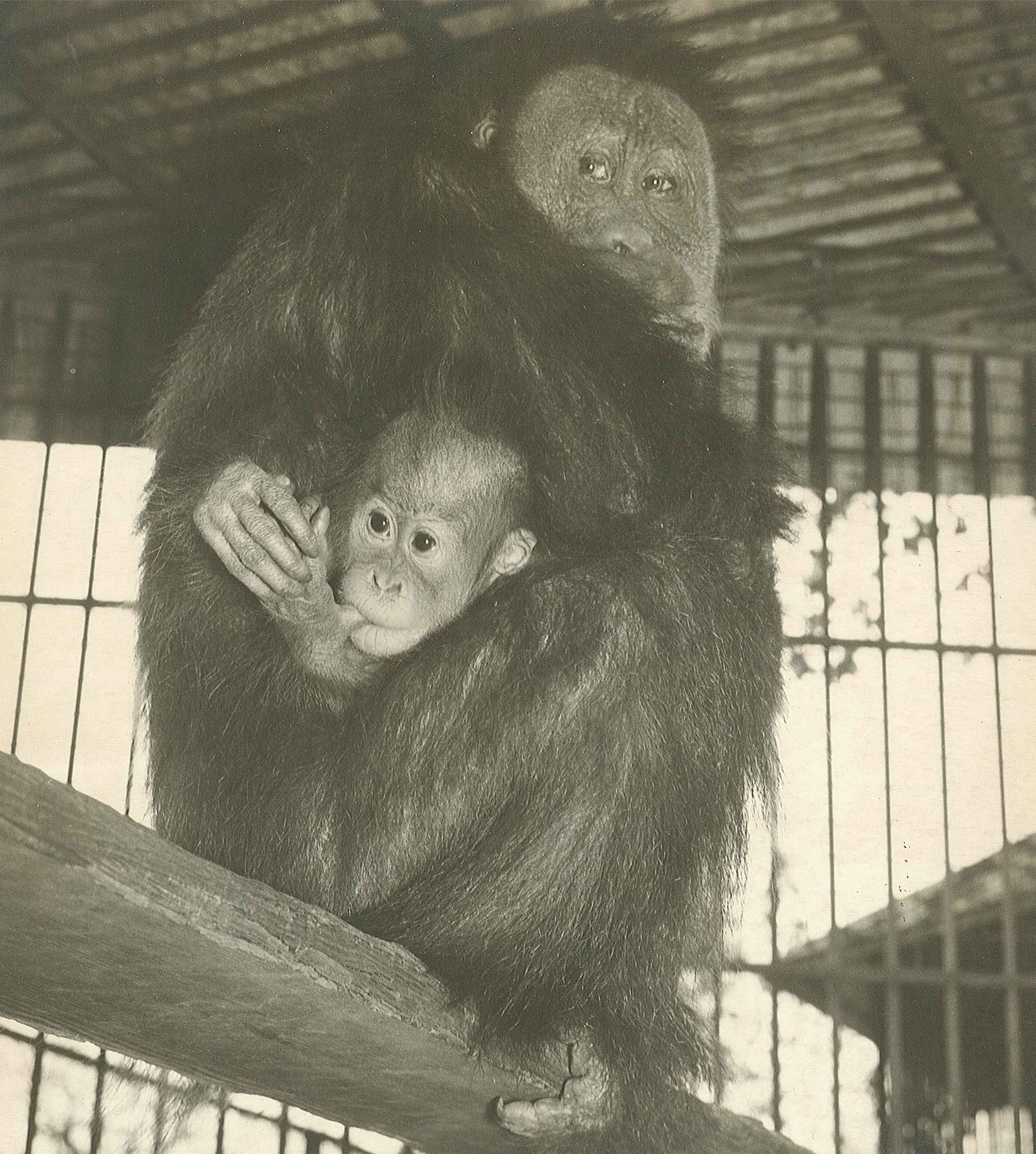
Momma Maggie and Baby Lucky, the first orangutan born in an American zoo, in 1928.The Philadelphia Zoo
Apart from being the first zoo, the Philadelphia Zoo boasts many of the nation’s other zoological firsts.
In 1901, the Philadelphia Zoo opened the world’s first-ever animal health research laboratory, where Charles B. Penrose pioneered the idea of giving zoo animals balanced diets.
In 1928, the first orangutan and the first chimpanzee to be born in an American zoo were born here.
In 1935, Ellen P. Corsen White formulated the first food for zoo animals, called Zoo Cake, which helped the zoo animals be less susceptible to disease.
In 1956, the first cheetahs to be born in an American zoo were born in Philadelphia.
In 1974, the Philadelphia Zoo and the Portland Zoo became the nation’s first officially accredited zoological gardens.
Even today, the Philadelphia Zoo continues to be run by the Zoological Society of Philadelphia. In 2009, it opened a state-of-the-art bird center, and in 2024, the Philadelphia Zoo celebrated its 150th birthday.
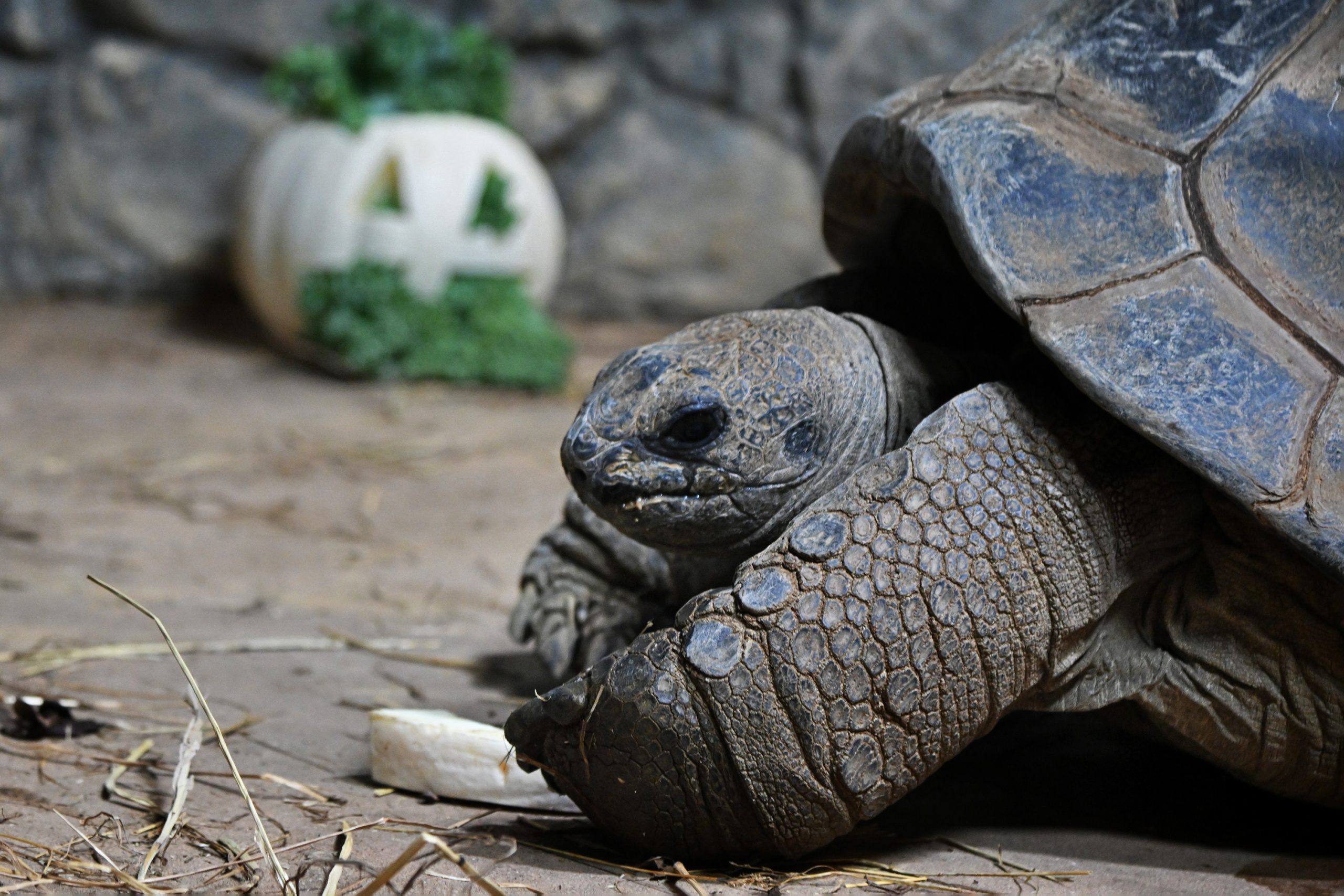
Galapagos tortoise Mommy (estimated to be 97 years ofd) eats a piece of pumpkin at the Philadelphia Zoo on Oct. 28, 2025.Tom Gralish / Staff Photographer
“The Philadelphia Zoo is a part of the fabric of this city,” said Jo-Elle Mogerman, president and CEO of the Philadelphia Zoo. “We have served as a window into the world of wildlife for generations.”
This week’s Firstival is Saturday, Aug. 8, 11 a.m.-1 p.m., at the Philadelphia Zoo, 3400 W. Girard Avenue.
Ahead of the 15th annual celebration of films by Black, brown, and Indigenous filmmakers, we spoke to the local filmmakers whose projects will be featured this year.
They told us about the impact of BlackStar on their careers, Philly’s influence on their filmmaking, and their favorite spots to hang out after a long day on set.
Answers have been edited for length and clarity.
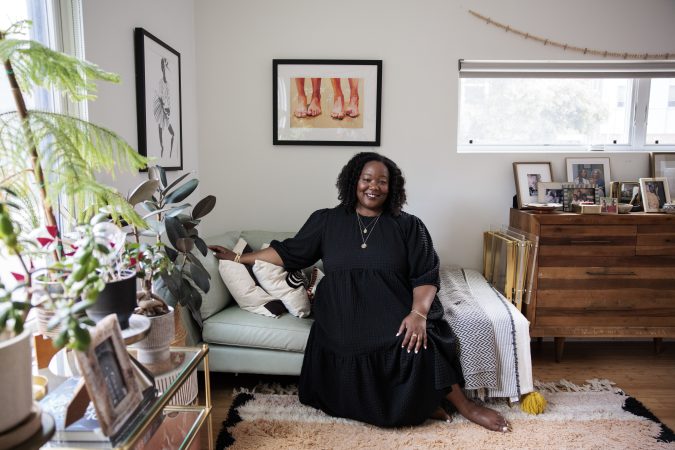
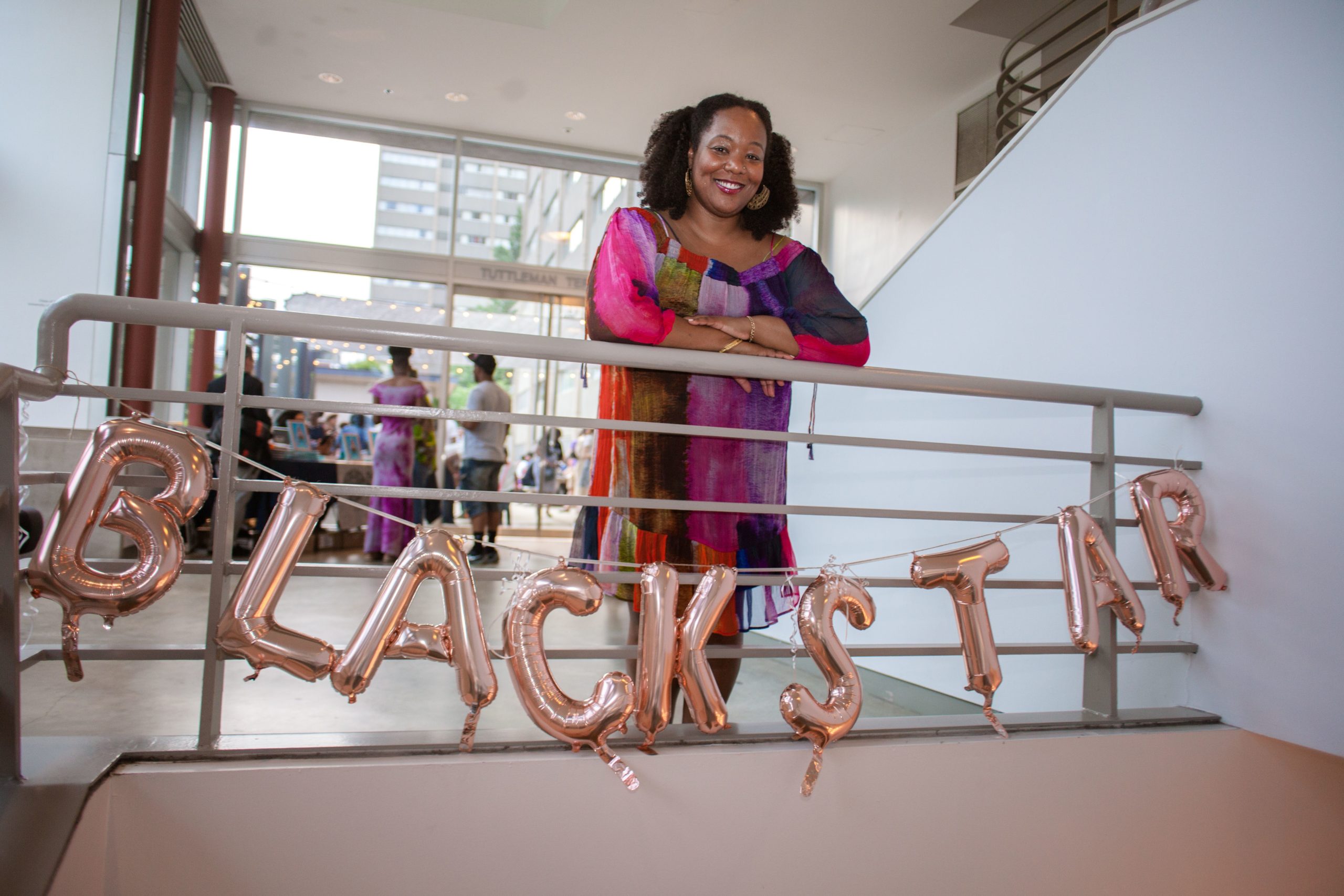
Maori Karmael Holmes poses for a portrait near Forin Cafe on July 22, 2025, in Philadelphia. Her 2006 film, “Scene Not Heard: Women in Philadelphia Hip Hop,” will play at this year’s BlackStar Festival.Monica Herndon / Staff Photographer
Maori Karmael Holmes
‘Scene Not Heard: Women in Philadelphia Hip Hop’
Aug. 7, 4:30 p.m., Suzanne Roberts Theatre and streaming virtually
What’s your film about?
Taking Scene Not Heard: Women in Philadelphia Hip Hop on the festival circuit back in 2006 gave me the bug to launch a festival of my own — the Black Lily Film & Music Festival in 2007. So many of the relationships I made in its production are still relevant to the festival’s origins.
Holding the “hometown premiere” at International House in January 2006 to a packed house [established] my connection to that venue, which was where the first BlackStar took place. Aside from BlackStar, seeing this film and the [culture] scene two decades later, and with some issues still being relevant, it’s sobering in some ways.
What’s your connection to Philly?
I moved to Philadelphia from LA in 2001 to pursue my Master of Fine Art in Film & Media Arts at Temple University. Prior to that, I’d visited the city a few times, as I have some very dear friends from here. Since then, I’ve made my home here and have so many beautiful friends and chosen family now.
How has Philadelphia inspired you as a filmmaker?
The legacy of Black struggles for freedom and intellectual pursuits abounds in Philadelphia, and I am constantly learning about both historical marvels and uncovering new artists and thinkers who live here in the present. I have found a lot of opportunities in my time here, and as someone with a lot of ideas, it has afforded me plenty of space to try out new things in an incredibly supportive community.
How valuable is BlackStar for filmmakers of color?
I think that BlackStar is valuable for filmmakers of color as a platform for everyone to know about their work. Sometimes in mainstream spaces, nuance and humor are misunderstood, or there’s a need to overexplain. BlackStar offers a space for artists of the global majority to present their work in a space that goes beyond the 101 understanding.
We also value experimentation and a lot of artists of color are tapping into ancestral esthetics that fall outside of our contemporary Eurocentric conventions. I imagine it is affirming to present work to audiences who appreciate that kind of exploration.
Your favorite Philly bar or hang when you’re out on the town?
I do a lot of eating out (and in) with my friends. Picnic, which is a few blocks away from my house, is a current favorite.
Directors Melissa Beatriz & Andrés Cisneros are set to premiere their short documentary, “Philly Rumba,” at the 2026 BlackStar Film Festival.Courtesy of Luiza Barreto
Melissa Beatriz and Andrés Cisneros
‘Philly Rumba’
Aug. 6, 2:30 p.m., Perelman Theater and streaming virtually
Tell us about your film’s role in starting BlackStar?
Philly Rumba is about a group of African American men in Philadelphia who gravitated toward Cuban rumba as an expression of their African roots during the Civil Rights and Pan African Movements. More than 50 years later, they continue to play rumba together, proving that music can create community and solidarity in difficult times.
What’s your connection to Philly?
MB: I’ve been based in the Philly region for the past 16 years. During my first few years in Philly, I worked with local Latine serving nonprofit organizations in North Philadelphia, including Taller Puertorriqueño and Esperanza. From there, my first community media roles were with Scribe Video Center (shout out to Street Movies!) and Movement Alliance Project.
Philly provided the space for my interest in community media and arts and culture to develop and flourish throughout this time. I’ve gotten to build a network of artists and cultural workers, and develop my body of work that focuses on visualizing underrepresented stories of communities of color in the region.
AC: I came to Philadelphia for what was supposed to be a temporary teaching job. Eighteen years later, the city is home. Through artists and communities like Kùlú Mèlé and Conjunto Philly, I’ve continued to learn, collaborate, and build projects rooted here.
How has Philadelphia inspired you as a filmmaker?
MB: Philadelphia has taught me the power of collaboration, and supported my creative style. I am inspired by the tight-knit community of independent filmmakers and artists, which is often using the arts as a way to catalyze impactful change.
Philly Rumba is technically my first independent film as a director but it was the years of collaborating with the Philly arts community that prepared me to make this short documentary.
AC: A way to empower a community is to give them a chance to show you who they are. As an educator and musician, I know how art brings people together. Filmmaking became another way to preserve culture and tell stories that deserve to be seen.
How valuable is BlackStar for filmmakers of color?
MB: BlackStar is essential for filmmakers of color, as it is a culturally affirming space. It rejects the mainstream gaze and celebrates films that are from the perspectives of filmmakers of color and their broader communities. These films are not exploitative, but instead are deeply rooted in diverse histories and traditions.
AC: BlackStar is an ecosystem of artists, mentors, and collaborators that gives independent filmmakers of color the support and visibility our work deserves.
Your favorite Philly bar or hang when you’re out on the town?
MB: Renata’s in West Philly, Bok Bar in South Philly, and El Nopalito in Camden County.
AC: For years, it was ending the day at rehearsal and making music with friends. These days, I’m just as happy ending the day at home with my family.
Filmmaker Donn Thompson Morelli’s short documentary, “The Philadelphia Sensei: Lovett Hines,” will premiere at the 2026 BlackStar Film Festival.Courtesy of Whitney T
Donn Thompson Morelli
‘The Philadelphia Sensei: Lovett Hines’
Aug. 9, 4:30 p.m., Perelman Theater and streaming virtually
In your own words, what’s your film about?
My film introduces Philadelphia music educator Lovett Hines, teacher to generations of acclaimed artists. Believing there was a gap between the visibility of the artists and the visibility of the person who helped shape them, I sought to heal that gap. I was curious about the idea of legacy through others, how one person can influence culture without necessarily being centered in it.
Lovett’s impact is deeply felt, but not widely documented in this way — until now. The Philadelphia Sensei: Lovett Hines is an introduction to his living legacy and what happens when someone sees you before you see yourself.
What’s your connection to Philly?
West Philly raised me. My family’s musical, two-story rowhouse on Osage Avenue was my launching pad. It’s where I wrote my first poetry and songs.
It continues to drive me to tell stories and buoys every reinvention, including my directorial debut. Philly being Philly, actor Coleman Domingo and I shared an alley. Philly is a magical place.
How has Philadelphia inspired you as a filmmaker?
Philadelphia has main character energy. It inspires me to lean in, watch, and listen. Extraordinary stories are hiding in plain sight.
How valuable is BlackStar for filmmakers of color?
Very. BlackStar elevates our stories and amplifies them to the world. This year, that includes my film about arts education at a time when arts funding is increasingly under pressure. There’s hope in that, and a challenge for culture to course correct.
Your favorite Philly bar or hang when you’re out on the town?
Lately, Honeysuckle. When my creative battery is blinking red, the food, art, and the warm communitythere are a perfect reset.
An image of filmmaker Gabrielle Patterson, whos short documentary, “The Seeds We Carry,” will premiere at the 2026 BlackStar Film Festival.Courtesy of Jonathan Pushnik
Gabrielle Patterson
‘The Seeds We Carry’
Aug. 6, 2:30 p.m., Perelman Theater and streaming virtually
In your own words, what’s your film about?
It’s a short documentary about the power of growing, cooking, and sharing food in community. The film weaves together intimate portraits of urban farm stewards in Southwest Philadelphia, whose everyday acts of community care nourish bodies, while also nurturing belonging, forging cross-cultural kinship, and preserving a sense of home amid the pressures of gentrification and displacement.
What’s your connection to Philly?
I came to Philadelphia in 2011 to attend the University of Pennsylvania, where I received my Bachelor of Arts in Fine Arts.
After graduating, I decided to stay in Philly, and the city quickly became my home as I formed deeper bonds with friends, explored new interests, and developed my career in animation and design.
In late 2025, I decided to move back to the Atlanta area to live closer to my parents and sister. However, Philly will always feel like home.
How has Philadelphia inspired you as a filmmaker?
I am inspired by the ordinary, but also by the unexpected wonders of the city’s landscape, from an especially lush front-yard garden to a humorous or insightful conversation with a neighbor.
I am also inspired by fellow artists and filmmakers around me who navigate all sorts of barriers and obstacles to bring their creative visions to life and see them through until the end.
I don’t know if I would be a filmmaker if not for this city. I am grateful for organizations like the Leeway Foundation, Scribe Video Center, People’s Media Fund, SIFT Media Collective, and Termite TV Collective that have supported me on my journey.
How valuable is BlackStar for filmmakers of color?
When I think of what a film festival should be, I think of BlackStar. The quality and diversity of films from around the world is incredible, as is the care and consideration for the participating filmmakers and audiences.
For filmmakers of color, the festival is an amazing opportunity to see how the themes we explore in our work are interconnected, despiteus often coming from vastly different regions and cultures.
Your favorite Philly bar or hang when you’re out on the town?
Ifit’s summertime and the weather is nice, Pentridge Station for DJ Jamz’s Watermelon Glow party. When I’m in need of chill or cozier vibes, dinner and board game night with friends is the way to go.
Filmmaker Tshay Meade’s “Tell Me When You Get Home” will make its East Coast premiere at the 2026 BlackStar Film Festival.Courtesy of Naomieh Jovin
Tshay Meade
‘Tell Me When You Get Home’
Aug. 8, 5 p.m., Suzanne Roberts Theatre and streaming virtually
In your own words, what’s your film about?
Tell Me When You Get Home is about an uncle and niece who are making sense of loss, love, and connection during a family party. The film is semi-autobiographical in that it draws on my experience of losing a close loved one.
The film is my attempt to create a portrait of a family reflecting on their connection to each other, both with people who are living and those who have passed on.
What’s your connection to Philly?
I’m a transplant to the city, but in a sense, I grew up here. I moved to Philadelphia for college and have pretty much been here since. In 2015, I began volunteering with BlackStar Film Festival and Scribe Video Center. They aretwo incredible film organizations in the city where I sharpened both my artistic sensibility and political understanding. BlackStar became my film school.
How has Philadelphia inspired you as a filmmaker?
During my six years as a volunteer and staff member at BlackStar, I watched hundreds of movies from filmmakers of all scales and sizes, learning from people who make work across genre, duration, approach, and attitude. This was a formative, nurturing environment for me as a young person interested in the arts, and it inspired me to pursue a life in independent cinema.
A decade later, I’m still in Philly making work with many of the people I met at BlackStar.
How valuable is BlackStar for filmmakers of color?
BlackStar places cinematic work within a context of cultural organizing, which inspires attendees to think about the aesthetic and social implications of the work. It’s about more than watching a movie. The films, panels, side convos, and parties create a container for dialogue, exchange, and uplift around the pressing issues of our time.
Your favorite Philly bar or hang when you’re out on the town?
Blue Corn in South Philly.
Louis Massiah at the Scribe Video Center in Philadelphia on March 12, 2024.Courtesy of Laurence Kesterso
Louis Massiah
‘Tenants of Lenapehocking in the Age of Magnets’
Aug. 6, 5:30 p.m., Perelman Theater and streaming virtually
In your own words, what’s your film about?
Tenants is a biography of North Philadelphia, as told through the personal stories of 10 present-day and former residents.
It reminds us that we live on a patch of land that wasstewarded by the Lenape for millennia. The period that the film covers is the late 19th century to the mid-20th century, the Age of Industrialization and the Great Migration of Black people from the South to Philadelphia — the Age of Magnets.
And the idea of Tenants is to make clear the impermanency of home. The visuals of the film come primarily from the extraordinary photo archives of the Charles L. Blockson Afro-American Collection at Temple, specifically the photographs of John Mosely.
What’s your connection to Philly?
I’m a lifelong North Philadelphian, still living in the family house where I grew up. And it’s funny, I seldom say Philly. The word Philadelphia helps me stay clear about the history and complexity of the place.
How has Philadelphia inspired you as a filmmaker?
Philadelphia has been a center of time-based media storytelling, film culture, and film industry — from the work of Sigmund Lubin beginning in the late 1890s to the independent film and video movement that blossomed in the 1970s and 1980s.
I must add that my father, Frederick Massiah, was the contractor who built the Royal Theater on South Street. Film for me is very much a Philadelphia thing and a personal thing.
How valuable is BlackStar for filmmakers of color?
What the visionaries of BlackStar have understood is that film is meant to be a communal activity. A film screening is an opportunity to bring our best selves together to share. BlackStar allows film to be part of a much larger project of building and strengthening community. Film is the inspiration of necessary conversations.
Your favorite Philly bar or hang when you’re out on the town?
It’s a toss-up. Madis Coffee shop in West Philadelphia is my place to be nourished if I’m at Scribe Video Center on Lancaster Avenue. If I’m in North Philadelphia, Honeysuckle is the place I dream about because they take food and food culture so deliciously seriously.
The article was updated with responses from Andrés Cisneros and Louis Massiah.
Watching Maori Karmael Holmes’ 2006 documentary Scene Not Heard: Women in Philadelphia Hip Hop is a sweet throwback to the era of Questlove and Mike Nyce on the Tastytreats turntables at Fluid Nightclub.
It’s remembering what it was like seeing Jill Scott, Floetry, Kindred the Family Soul, and the Jazzyfatnastees at Black Lily.
It calls to mind open mic poetry at Crimson Moon coffee shop, the simplicity of Razr cellphones, and the ubiquity of the Honda Accord. Before there were Instagram stories and Facebook feeds, Megan Thee Stallion and Cardi B, Holmes made Scene, an authentically Philly exploration of the life of the lady emcee.
The 44-minute documentary, featuring legendary rappers Bahamadia and Monie Love, deejays Lady B and Dyana Williams, and poets Ursula Rucker and Lady Alma will screen again Friday afternoon at 4:30 p.m. during the 15th BlackStar Film Festival at the Suzanne Roberts Theatre.
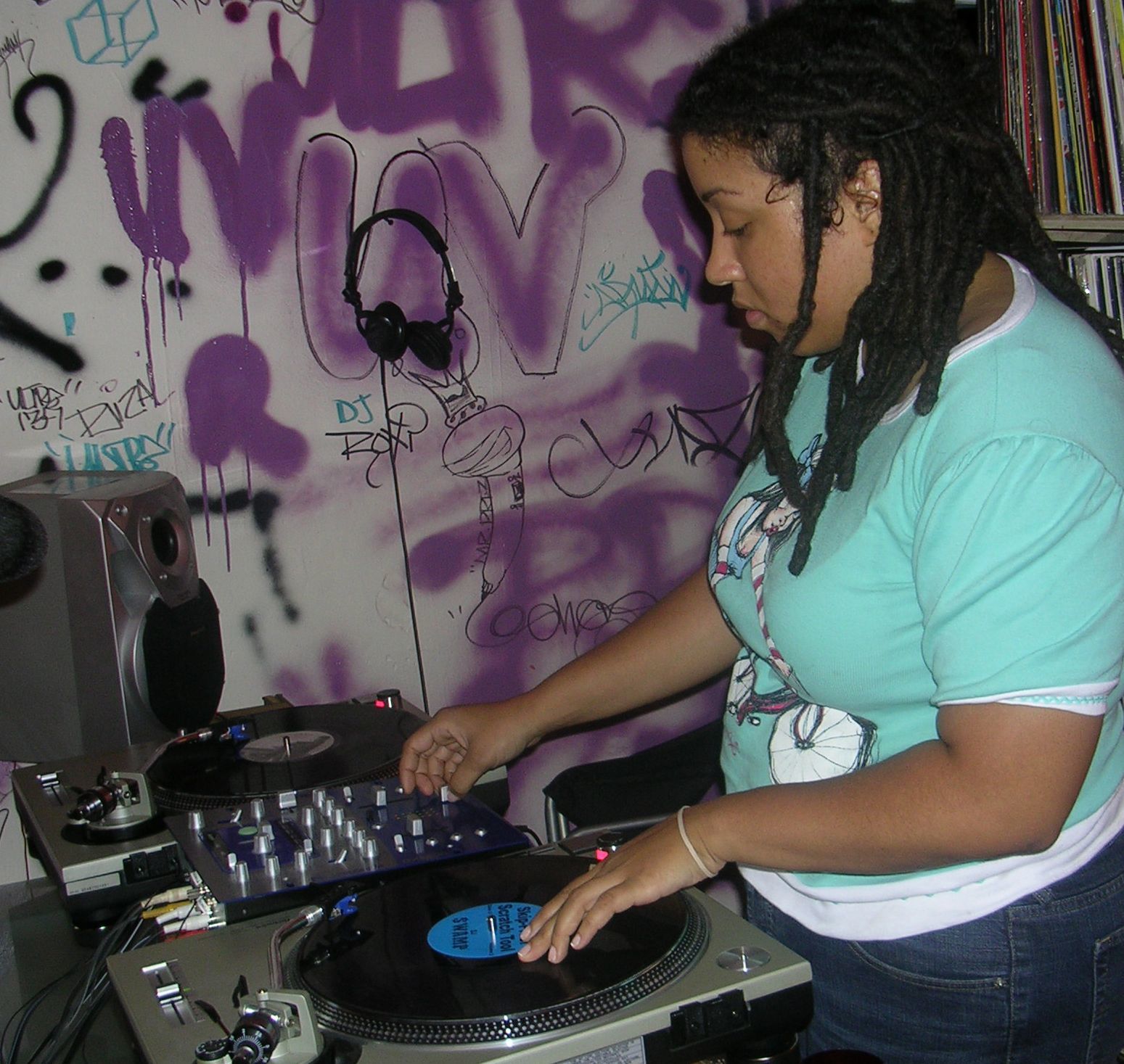
A still from Maori Karmael Holmes’ 2006 documentary “Scene Not Heard” centering the experiences of lady emcees in hip-hop. Pictured here is DJ Ultra Violet.Maori Karmael Holmes
“Scene Not Heard is a part of the BlackStar origin story,” Holmes said in a video call last week. She didn’t know it back then but Scene — her thesis project for her Temple University MFA — would become BlackStar’s foundation.
It feels like a lifetime ago.
“There are so many people who identify me with BlackStar, but they have no idea that I’m a filmmaker. They see me as an arts worker,” said Holmes, who has since released several documentaries and directed the music video for India Arie’s 2018 single That Magic.
Friday’s screening is the first time Scene will be shown at BlackStar. Holmes is a little nervous about rereleasing Scene to a new generation of film festivalgoers, but she’s also curious about what they’ll think about watching the film she made when the festival itself was a distant dream.
For Scene, Holmes masters the art of being the silent observer. She gets more than a dozen women in Philly hip-hop to talk candidly about what it feels like to assume roughneck personas or bepressured to dress scantily to be seen on the scene. That couldn’t have been easy when the male gatekeepers at the time were as vindictive as they were entitled. The women talk about their love of hip-hop but don’t deny how the culture marginalized them.
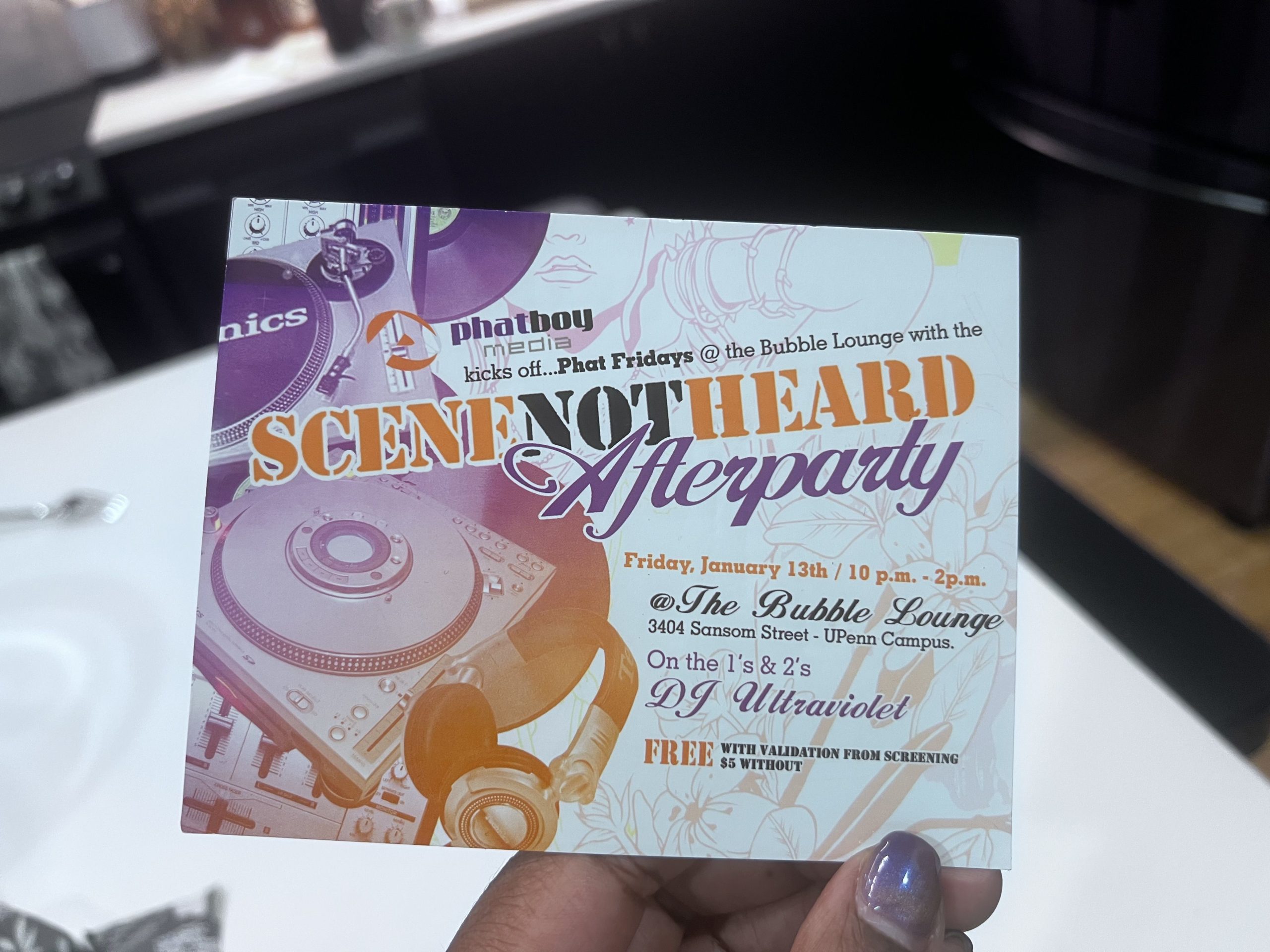
The flyer for the afterparty to the 2006 screening of Maori Karmael Holmes’ “Scene Not Heard” at the International House.Courtesy of Maori Karmael Holmes
Bahamadia cries, recalling how hard it was to break through and how in 2005 she was fighting to remain relevant.
That was 20 years ago. I wondered aloud how she felt now. Holmes wasn’t sure.
Bahamadia is invited to the screening but hasn’t RSVP’d yet. By the end of Scene, it’s clear that Philly B-girls of the late ’90s and early aughts made a way for Cardi, Megan, Tierra Whack, Latto, and Doechii to find their footing in the industry.
“There is so much more visibility for women in hip-hop now,” Holmes said. “It used to be you got one at a time. Nicki Minaj was the last of that era.”
The old and the new at the 15th BlackStar
Scene is one of 91 films from 43 countries featured in the 2026 BlackStar Film Festival, more than double the number of films shown at the first fest in 2012. The festival runs Thursday through Sunday.
This year’s standouts include The Keeper, a horror film by Tananarive Due and her husband, Steven Barnes, scheduled for Saturday, 8:30 p.m., at the Perelman Theater.
Ethiopian filmmaker Haile Gerima’s five-part documentary Black Lions – Roman Wolves: The Children of Adwa will be screened throughout the four-day fest, culminating into a closing-night showing.
“It is the corrective story of the Ethiopian resistance to Italian occupation in Ethiopia,” explained festival director Nehad Khader.
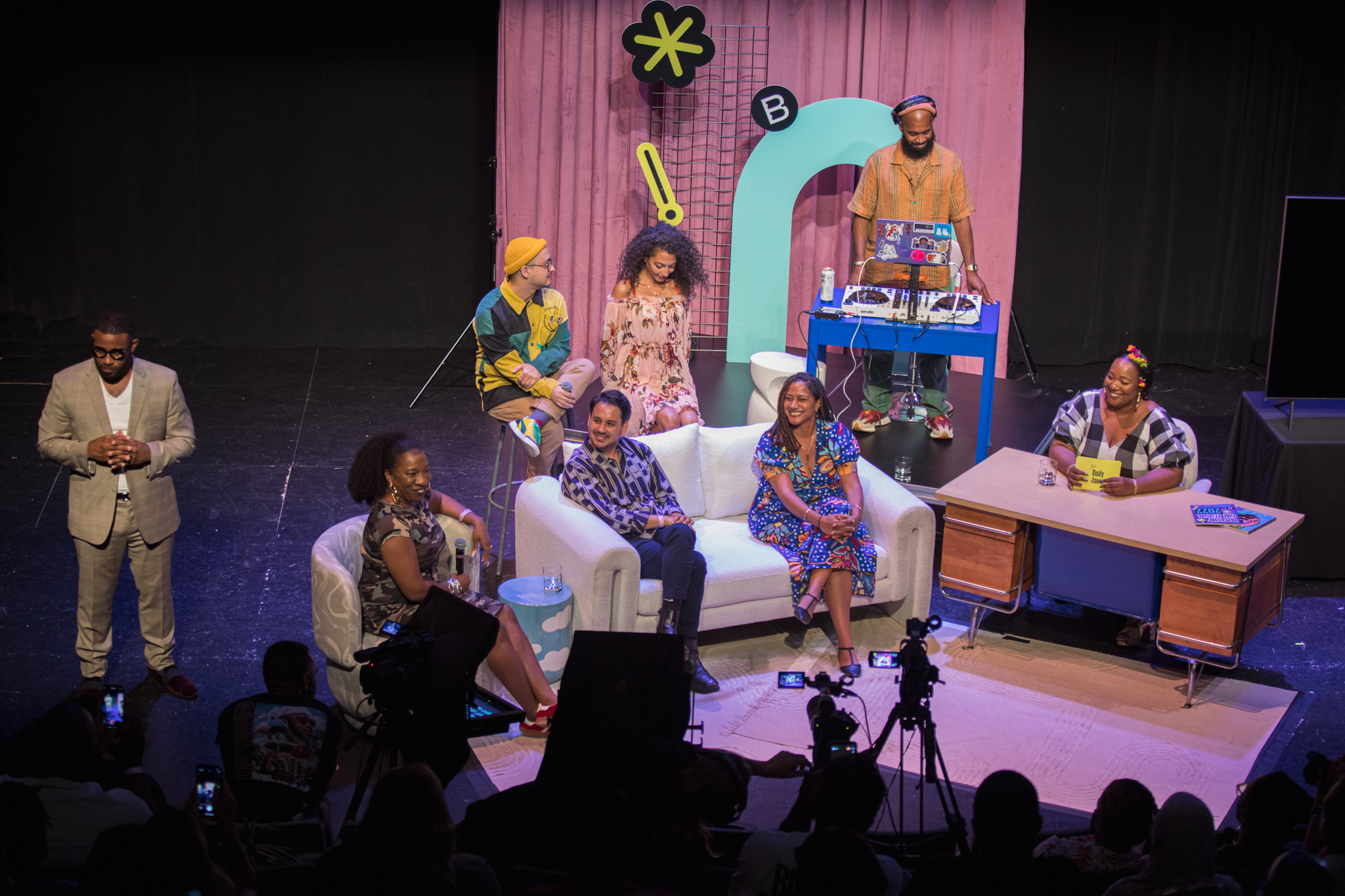
The Daily Jawn Morning Show will return to the Kimmel. BlackStar’s health and wellness program has grown more robust over the years, featuring daily yoga, acupuncture, and breathing sessions.
The Daily Jawn stage at the 2023 BlackStar Film Festival.Daniel Jackson for BlackStar Projects
Earlier this year, Scene went through a 2K restoration and was transferred to a digital file. Itis one of two retrospective films featured at the festival this year. Showing throwbacks, Khader says, pays homage to the independent filmmakers from previous generations.
The second is A Different Image, a 1982 film by Alile Sharon Larkin, exploring Black women’s beauty standards. It will be screened Sunday, Aug. 9, at the Wilma Theater. Like Scene, it speaks to how today’s generation of Black women’s mothers and grandmothers demanded to be seen on their own terms, setting the stage for their agency in this millennium.
“We have so many newcomers to BlackStar,” Khader said. “People of this generation may not know these stories. Scene Not Heard is a revival of Philly history, but it’s also Maori’s backstory.”
After its Philly run, Holmes screened the film at more than 40 hip-hop, women’s, music, and movie festivals between 2006 and 2007. Itwon best documentary at the Denver Pan African Film Festival and best short documentary at the Trenton Film Festival, among other awards.
The BlackStar Film Festival in Philadelphia puts Black, brown, and Indigenous artists center stage. Image is from 2022.Daniel Jackson for BlackStar Projects.
Scene, however, didn’t launch Holmes’ film career. She instead began building platforms for other artists to show their work. In 2007 and 2008, Holmes partnered with the Jazzyfatnastees Mercedes Martinez and Tracey Moore to create the Black Lily Film &Music Festival. It ran for two years.
“We launched with 40 films, from four continents over four days,” Holmes said.
BlackStar Film Festival founder Maori Karmael Holmes in 2021.Daniel Jackson
Today, BlackStar is the crown jewel under the BlackStar Projects umbrella. It operates with a $4 million budget and a staff of 15. It publishesthe biannual film journal Seen and hosts the William and Louis Greaves Filmmaker Seminar at Stanford University. BlackStar is a curation partner for programs at the Barnes Foundation and the Philadelphia Museum of Art.
Currently “Freedom Dreams,” a film exhibit Holmes cocurated at the Barnes with its Fleischner Family vice president for engagement of community engagement James Claiborne, is on view.
“The through line for me is curiosity,” Holmes said. “Everything I’ve done, from my exhibitions to my films, is because I’m curious about things. I want to figure out how to make things happen. Sometimes I’m teaching myself along the way. But that curiosity is what fuels me.”
Yesterday’s curiosity leads to today’s conversations.
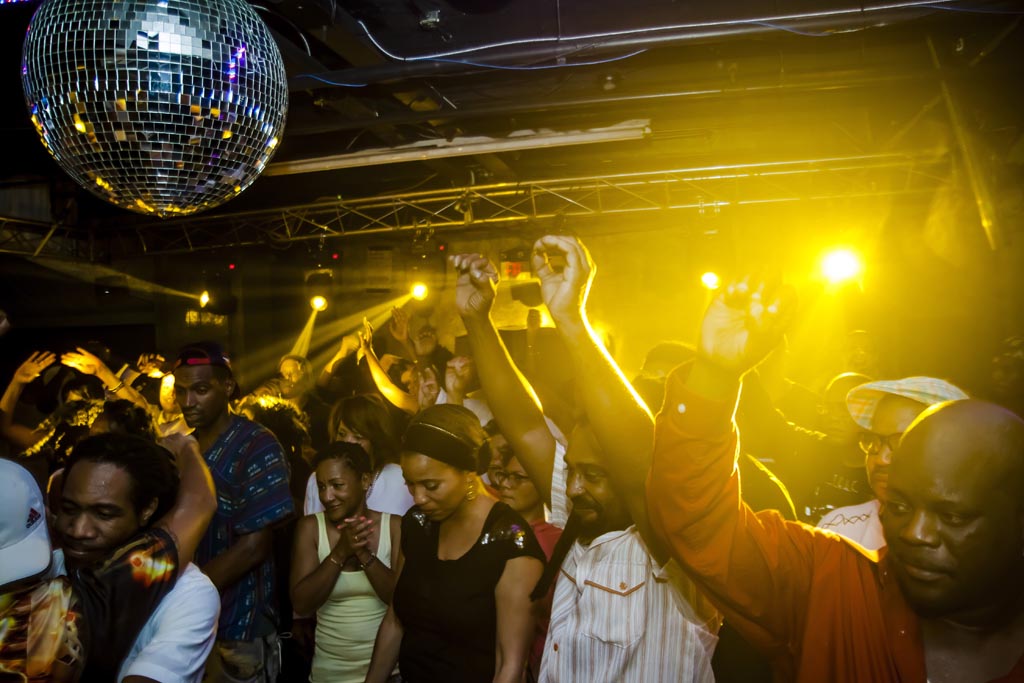
DJs Sonny James, Lee Jones, Matthew Law, Rich Medina, Ultraviolet, and Mike Nyce at a 2014 party at Fluid Nightclub ( Tim Blackwell / Philly.com )
Friday afternoon’s screening will be followed up Saturday with a panel featuring Holmes, Martinez, and filmmaker Tina Morton. The conversation is to be moderated by Deesha Dyer, Barack and Michelle Obama’s Philly-born former social secretary and author of Undiplomatic. Dyer was a mover and shaker in the scene back in the day, too.
Thanks to the screening of Scene, BlackStar promises to be a reunion of Philly’s hip-hop greats. There will be reminiscing. The scene has changed so much.
The Black Lily is no more. Tastytreats is over. Crimson Moon is closed.
“That film represents a time, the ending of a time, when people went to the culture,” Holmes said. “Now, culture comes to us on YouTube.”
This weekend, we can see the culture for ourselves at BlackStar.
The BlackStar Film Festival 2026 will screen movies throughout Philadelphia from Thursday, Aug. 6, through Sunday, Aug. 9. For a complete schedule, visit BlackStarProjects.org.
Albert Gury, 74, of Philadelphia, lifelong painter, former chair of the painting department at the Pennsylvania Academy of the Fine Arts, award-winning lecturer at the old University of the Arts and other institutions, author, mentor, community advocate, and cat rescuer, died Thursday, June 25, after a long illness at the Hospital of the University of Pennsylvania.
Born in Peoria, Ill., Professor Gury came to Philadelphia in the early 1970s after a professor at St. Louis University advised him to enroll at the Pennsylvania Academy of the Fine Arts. He did, and he never left.
He earned a four-year certificate in painting at PAFA in 1976 and, starting in 1980, taught painting, drawing, figure drawing, anatomy, art history, and art education at PAFA. He was chair of the painting department from 2000 to 2022 and creator of several innovative art education programs.
He painted portraits of young gun violence victims for PAFA’s Lost Dreams on Canvas exhibit and founded and directed the academy’s popular after-school free art program for high school students in 1994. In 2026, he earned a community recognition award from the Philadelphia School District.
“This is a way for us to reach out to the community and really try to do something beneficial,” Professor Gury told The Inquirer in 2005. “We train them as if they are college freshmen, not high school kids. It raises the bar on the quality of their work.”
Professor Gury also lectured for decades at University of the Arts, the Fleisher Art Memorial, the Barnes Foundation, and elsewhere.He instructed students at Jefferson Medical College on anatomy, consulted for the city’s mural arts program, and ran art seminars and painting workshops regionally and in Scotland and Croatia.
He earned a master teacher’s award from University of the Arts and a master’s degree in fine arts at the University of Delaware in 1992. Former students called him “unfailingly caring, and supportive, and smart,” and “very generous in sharing his wealth of knowledge” in online tributes. One said: “What a great example to us all.”
In a tribute, PAFA officials said: “We remember Al not only for what he taught but for how he taught: with patience, conviction, humor, discipline, and an open heart.”
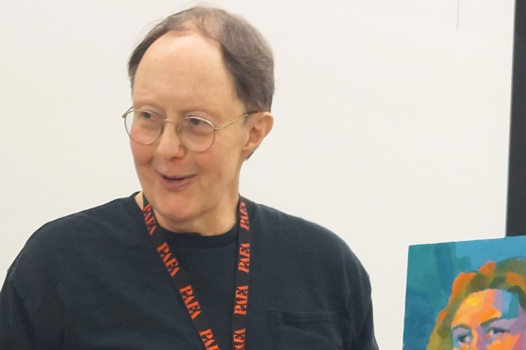
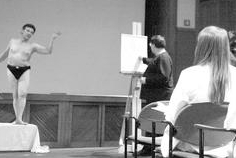
Professor Gury (center) draws and explains the nature of the human form to students at Jefferson Medical College in 2007.
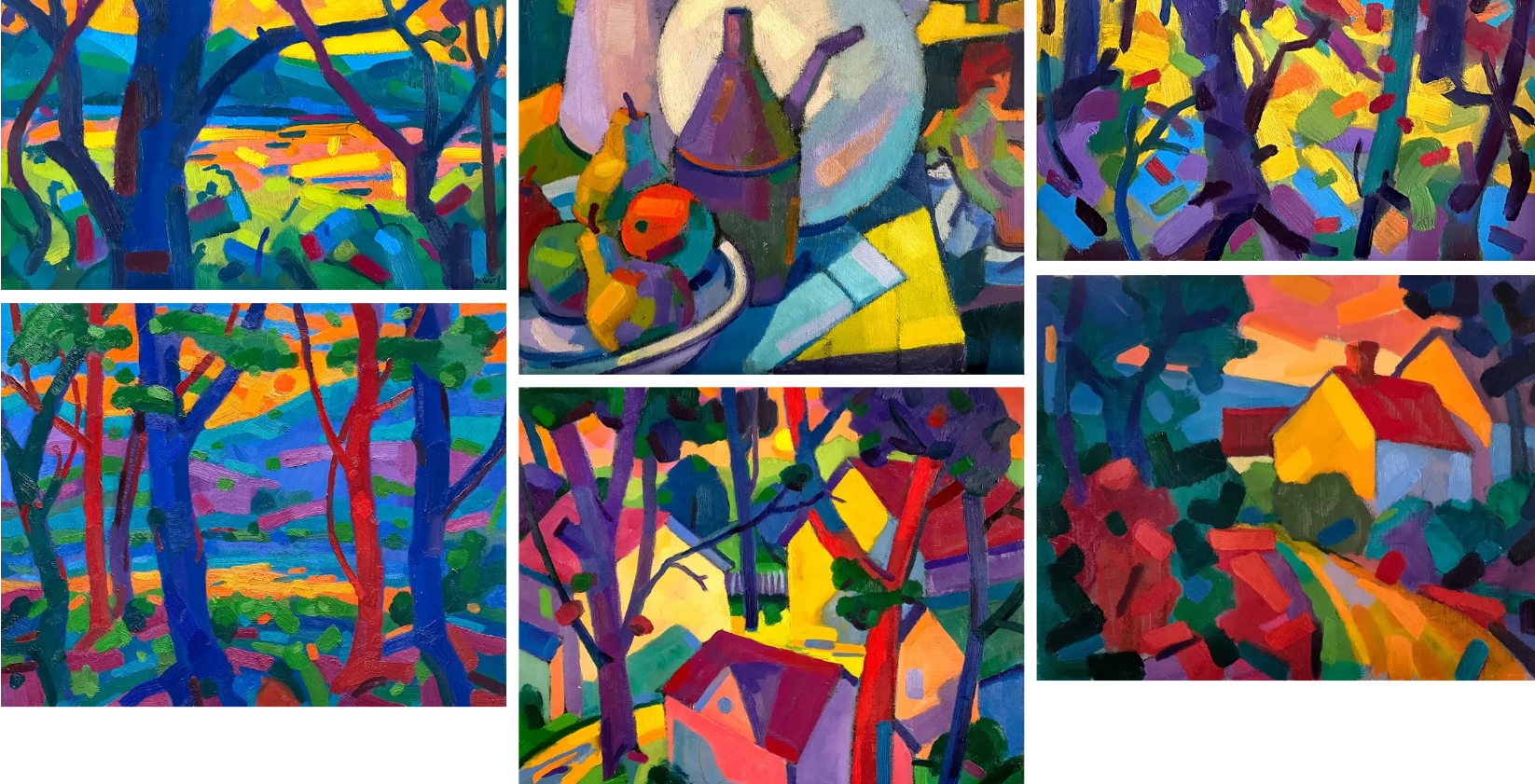
In the studio, Professor Gury painted colorful figures, landscapes, still life, and portraits. His portrait Alice of Dunk’s Ferry hangs in historic Christ Church in Old City, and he showed at the Philadelphia Museum of Art, the F.A.N. Gallery on Arch Street, the National Academy of Design in New York, the U.S. Capitol in Washington, and elsewhere.
He especially enjoyed painting abstract landscapes, he said in a 2014 video, because “they are pure.” He told the Daily News in 2000: “I like to paint the things I love. I like the intimacy of small paintings. I move the paint around and put together elements in nature even if they don’t exist that way. I like to imagine things rather than just paint what is in front of me. Sometimes it becomes a little surreal.”
In 2000, critic Anne R. Fabbri said in the Daily News that many of Professor Gury’s paintings are “united by his layered brushwork, tonal depths, and the creative act that transforms color, line, and composition into a life-enhancing work of art.” He was honored by the Philadelphia Sketch Club in 2017.
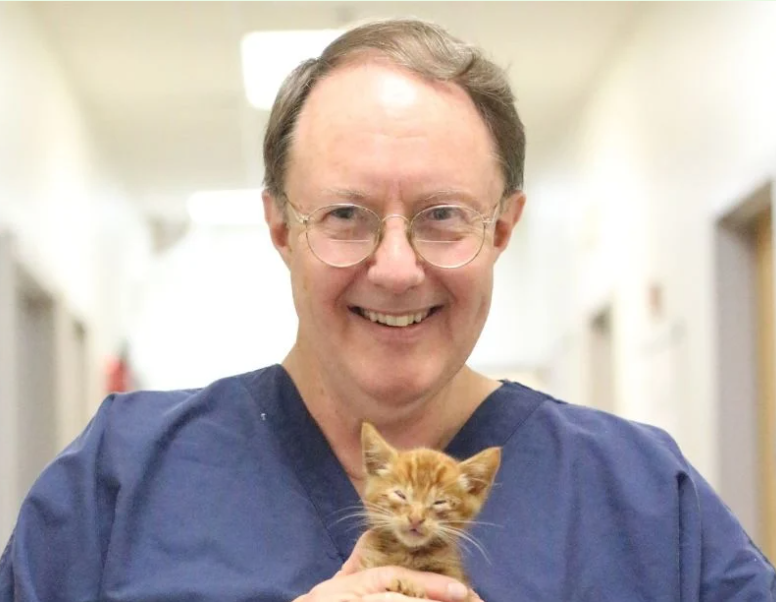
In his neighborhood, Professor Gury advocated for better housing and fostered rescue cats in his home. He volunteered at the Philadelphia Animal Welfare Society and was named its 2015 volunteer of the year. The group renamed its kitten maternity ward after him.
“We are searching for words to express just how extraordinary Al was, what a profound difference he made, and how much we loved and appreciated him,” colleagues at PAWS said in a tribute. “We hope he knew what an immense impact he made, and how much better and more beautiful the world is because of him.”
Albert Francis Gury was born Oct. 23, 1951. A family friend introduced him to painting when he was young, and he spent many days roaming the galleries at the Art Institute of Chicago while his father worked downtown.
He earned a bachelor’s degree in fine arts at St. Louis University in 1973 and won scholarships, grants, and honors as both a student and a professor at PAFA. He collected quilts and rare books on art.
Professor Gury loved animals, especially cats.Philadelphia Animal Welfare Society
In 2018, his apartment building on Chestnut Street burned down in an early-morning fire. Several of his cats and parakeets perished, and much of his artwork was lost. “The whole thing is just tragic,” he told The Inquirer then.
Friends called him “a classic caregiver” and a “protector of the underdog.” Longtime friend and colleague Reza Ghanad said: “If you were feeling down, he would pick you up.”
Friend and colleague Morgan Hobbs said: “He noticed students who could have gone unnoticed without him. He had a special gift for that.”
Professor Gury is survived by several relatives.
His ashes are interred at Christ Church Burial Ground. A celebration of his life is to be held later.