Until the 1750s, America was a community of loosely organized colonies where residents were content — if not happy — to be a part of the powerful British Empire.
But, after the colonists joined Britain to help the Crown win the French and Indian War, they started to wonder if it was worth it to remain the King’s subjects.
For one, King George III issued the Royal Proclamation of 1763 forbidding Americans west of the Appalachian Mountains, angering the land-hungry colonists.
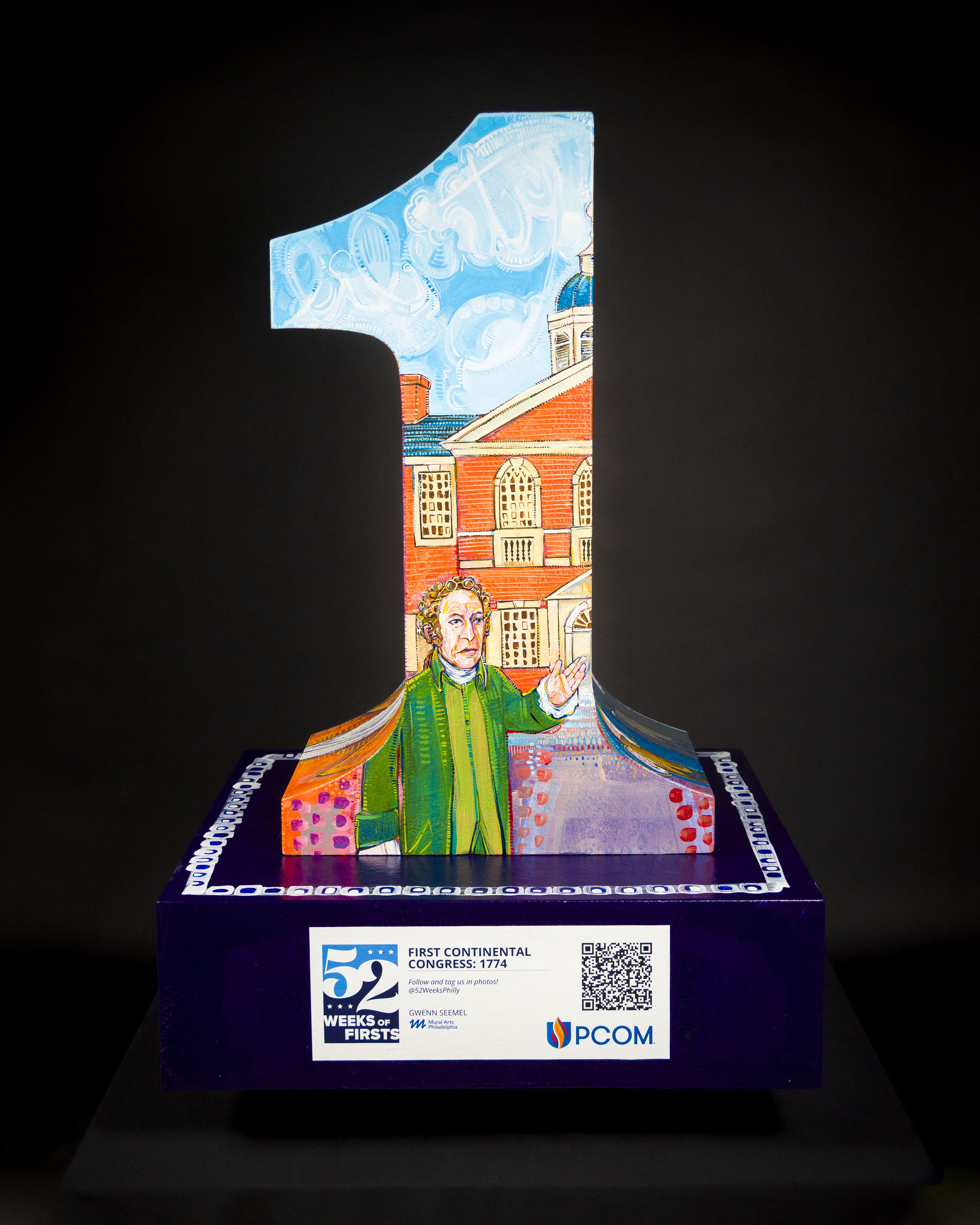
Gwenn Seemel depicts Patrick Henry in front of Carpenters Hall for the No. 1 in honor of the First Continental Congress.Gwenn Seemel courtesy of Colibrí Workshop
Then came the beginnings of taxation without representation. In 1765, England enacted the Stamp Act, levying a tax on every piece of paper, pamphlet, or card bought and sold in America. Eventually, the colonists rebelled and Britain repealed the act five months after it started.
However, the seeds of rebellion were planted.
Uncomfortable with angry subjects, Britain stationed troops in New England. Those rising tensions led to the Boston Massacre in 1770. In 1773, King George III taxed tea imported to the colonies from London. (He was insistent on collecting the colonists’ money by any means necessary.)
When tea arrived from London in Boston Harbor in December of 1773, colonists dumped it into the Atlantic Ocean. In retaliation to the infamous Boston Tea Party, the Crown levied a series of Intolerable Acts.
“In the eyes of the colonists, the Intolerable Acts were severe,” explained Michael Norris, the executive director of Carpenters Hall.
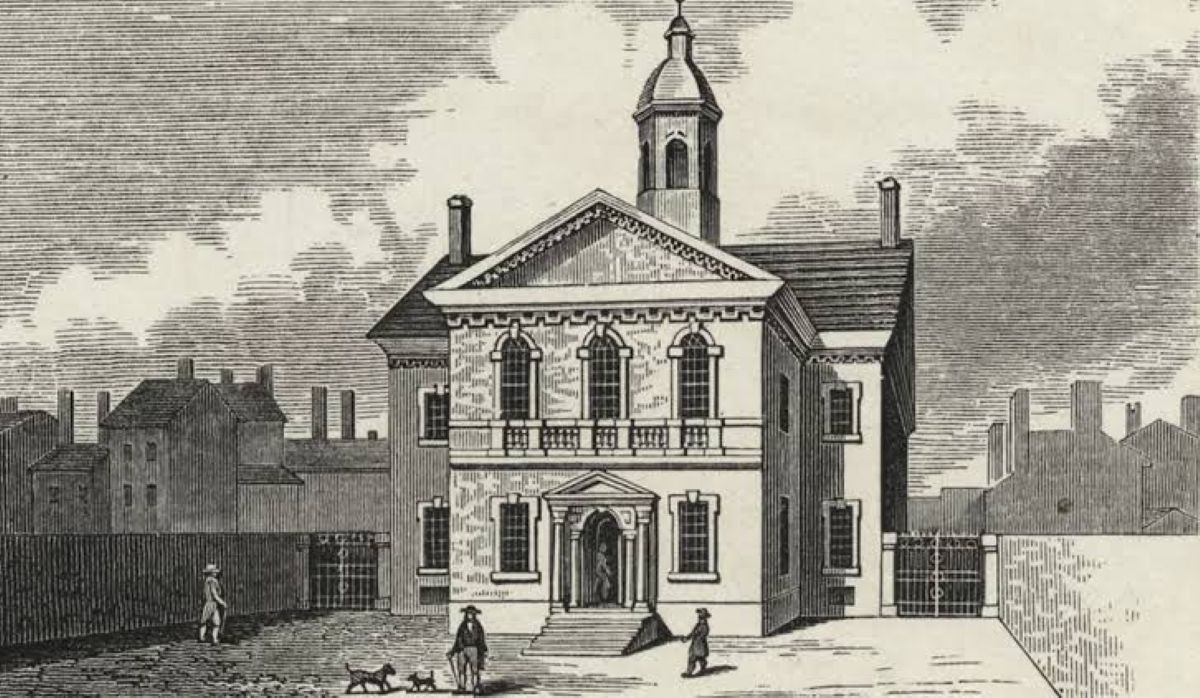
An etching of what Carpenters Hall looked like in the 1700s.Courtesy of Carpenters Hall
The acts, Norris explained, disbanded the Massachusetts legislature, putting Britain in charge of the state’s government. Britain closed the Port of Boston and stationed British troops in Massachusetts, requiring residents to feed, clothe, and house them.
The colonists thought, “if Britain could do this in Massachusetts, what would that mean to the rest of the colonies?”
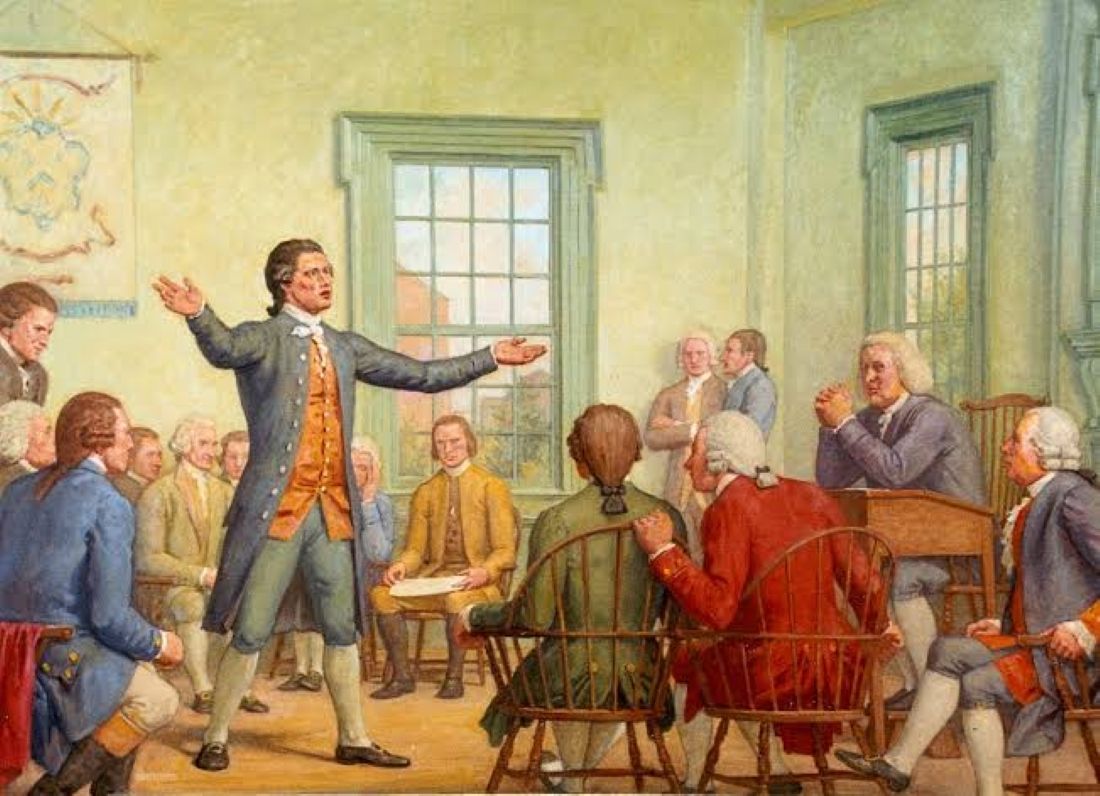
On Sept. 5, 1774, 56 delegates from 12 colonies — Georgia didn’t come — convened at the then-new Carpenters Hall for the First Continental Congress. Their goal: to work out a deal between the colonies and their Mother Country so life in the New World could continue, albeit a bit smoother.
That first meeting of the Continental Congress will be remembered Saturday at Carpenters Hall from 11 a.m. to 1 p.m. during the Philadelphia Historic District’s weekly “Firstival” celebration. Each Saturday this year, the district is throwing a day party honoring events that happened in Philadelphia that changed the world.
For eight weeks, through Oct. 25, delegates hashed out a plan for independence and to heal their disagreement with the Crown.
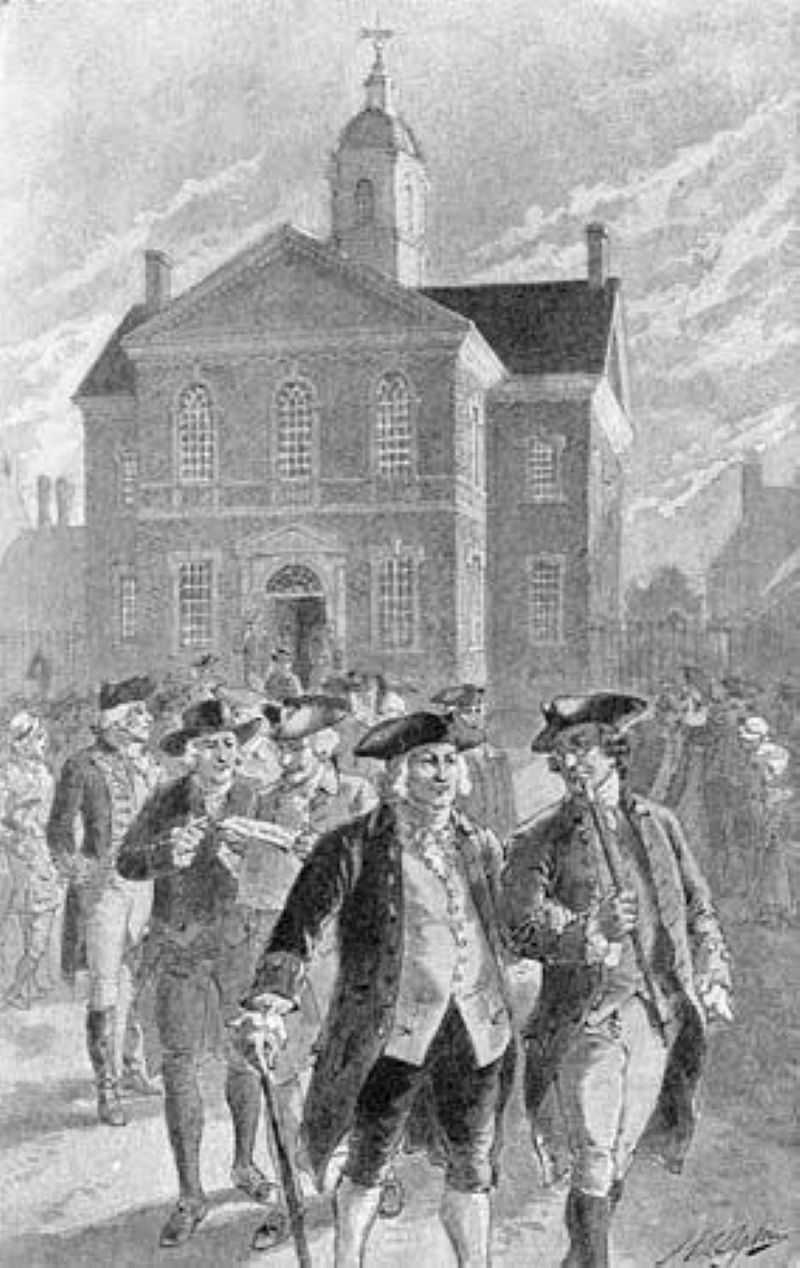
An etching of colonists and delegates gathering in front of Carpenters Hall.Courtesy of Carpenters Hall
They drafted a Declaration of Rights & Grievances in which they demanded England send its troops home and stated they wouldn’t stand for taxation without representation. (Historians refer to this declaration as a prelude to the Declaration of Independence.) Delegates also adopted the Articles of Association, in which they voted to stop all trade with England until the Intolerable Acts were repealed.
“They were trying to use their economic muscle to get England to the table,” Norris said.
The First Continental Congress created a unity among the colonies that hadn’t existed before, Norris said. “Up until then, they thought of themselves as British subjects, more connected to the Mother Country than their neighbors. The Congress changed this dynamic.”
This sentiment is best illustrated in Patrick Henry’s famous quote, during the opening sessions of that first Congress: “The distinctions between Virginians, Pennsylvanians, New Yorkers, and New Englanders are no more,” Henry said. “I m not a Virginian, but an American.”
It is why the late historian David McCullough referred to Carpenters Hall as the “acorn of American democracy.” It is where, Norris said, “the seed of independence was built that ultimately grew into the United States of America.”
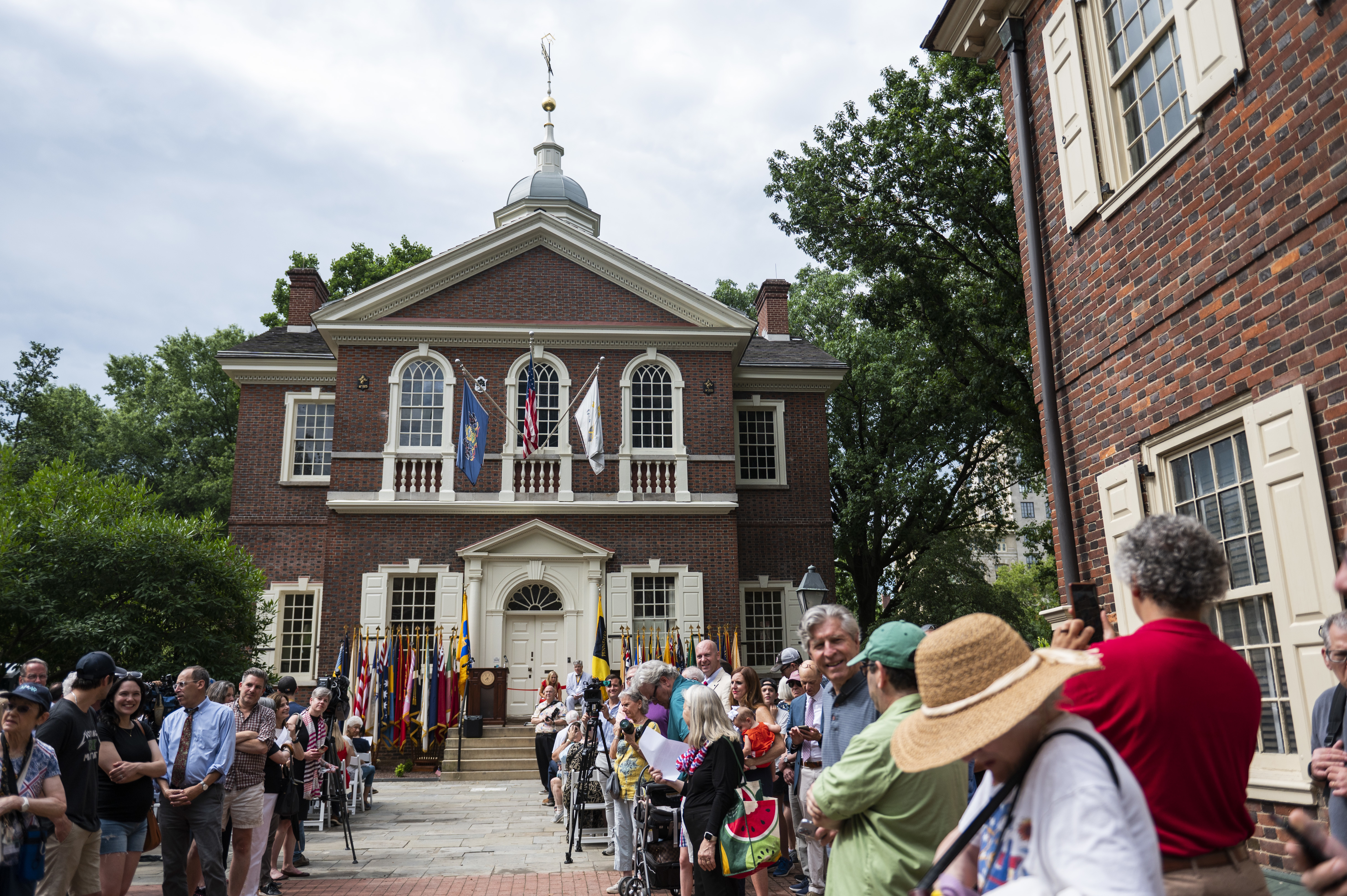
A reopening ceremony at Carpenters Hall on Monday, July 3, 2023. The building opened to the public for the first time since April 2022.Allie Ippolito / Staff Photographer
Delegates planned to reconvene in May of 1775 to address England’s response to their demands. But in April, the first shots of the Revolutionary War were fired and the Continental Army — victorious in the Battles of Lexington and Concord — were in a full-fledged war.
Making nice with England was completely off the table.
This week’s Firstival is Saturday, Sept. 12, from 11 a.m.-1 p.m., at Carpenters Hall, 320 Chestnut St., Philadelphia, Pa.
Sandy McNeal came to the Academy of Natural Sciences of Drexel University on a mission that belied the beauty of a September morning that was as splendid as it gets in Philadelphia: She was aiming to prevent a “funeral.”
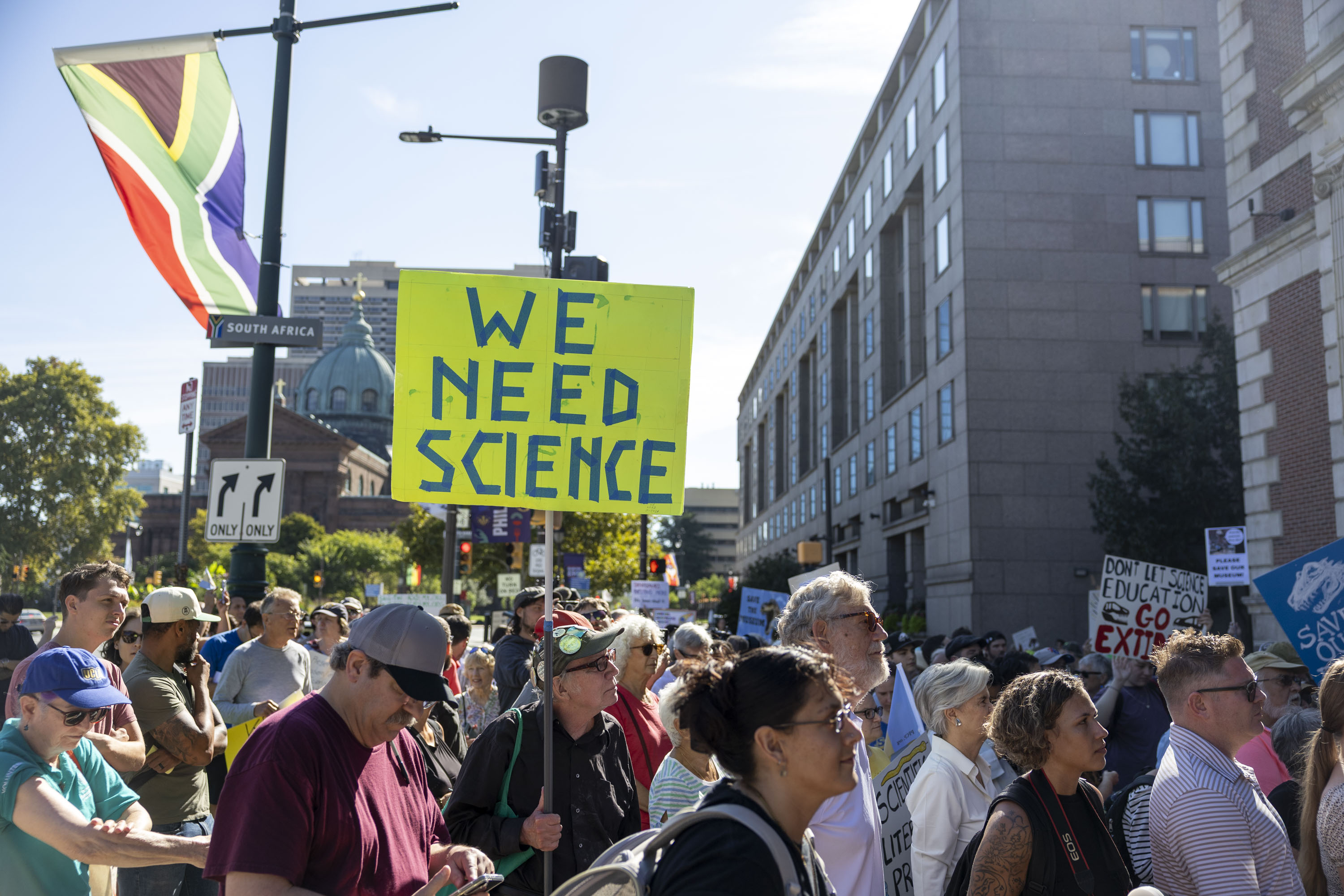
McNeal, 69, and several hundred other protesters, chanting “Hey Drex! Save T-Rex,” gathered at the landmark building on Logan Square to demand that Drexel, the academy board, the state — somebody — find a way to prevent the closure of the museum, scheduled for Sept. 30.
They came armed with signs reading “Save Our Saurs” and “Drexel Destroys Dinos?”
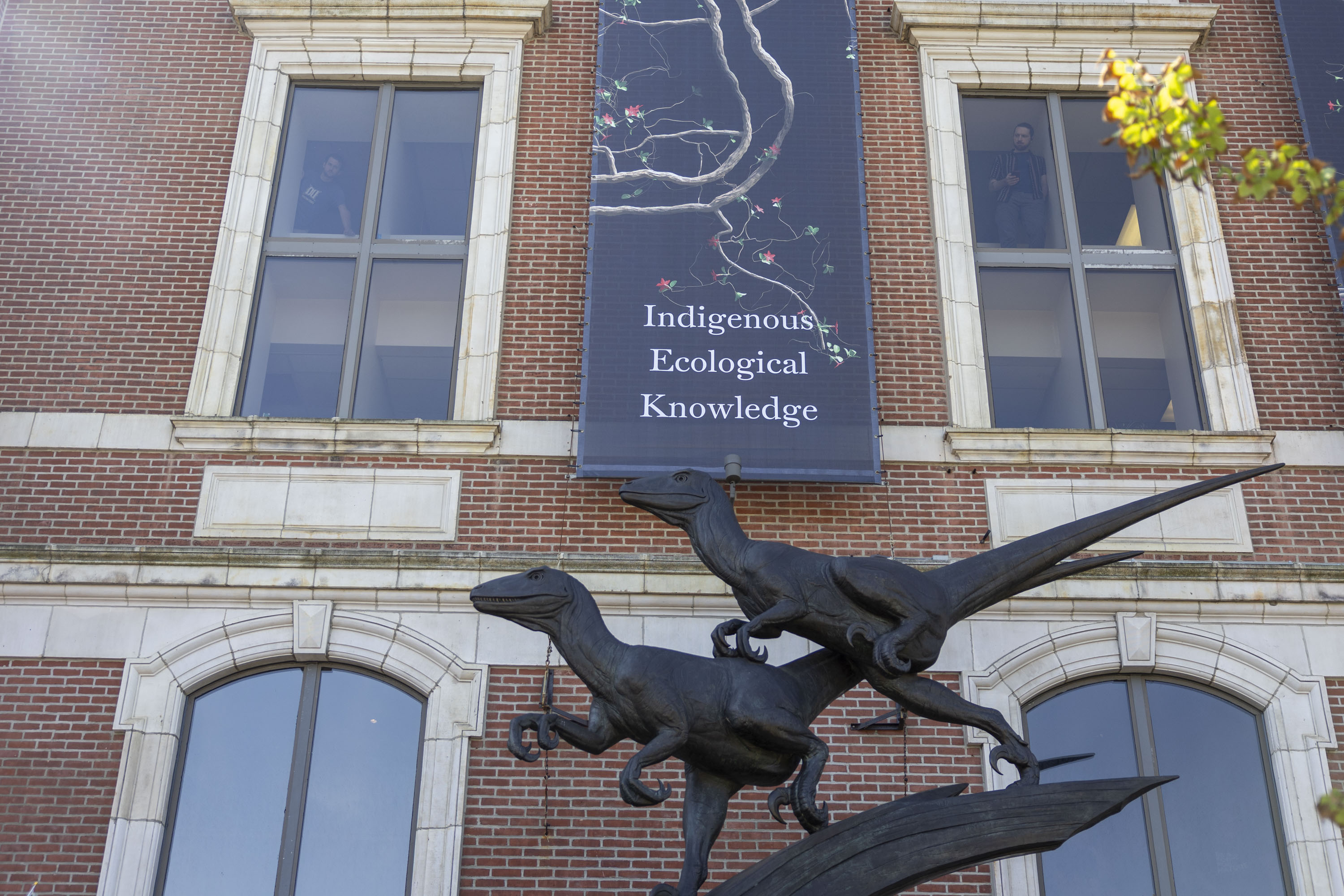
Staff look down as people come out to rally, speak out, and support the Academy of Natural Sciences of Drexel University on Tuesday, Sept. 8, 2026, in Philadelphia, Pa.Tyger Williams / Staff Photographer
Protest organizer Sarah McAnulty told the decidedly intergenerational crowd, made up of children and a whole lot of former children, that the academy, whose roots date to January 1812 — when Charles Darwin had not yet turned 3 — “brought an understanding of the vast array of Earth’s life to Philadelphia.”
The museum “must remain open to the public,” she declared.
“Philadelphia should be ashamed,” said McNeal, who lives in Delaware County and whose daughter is a marine biologist. For her, the museum’s closing would be akin to a “funeral.”
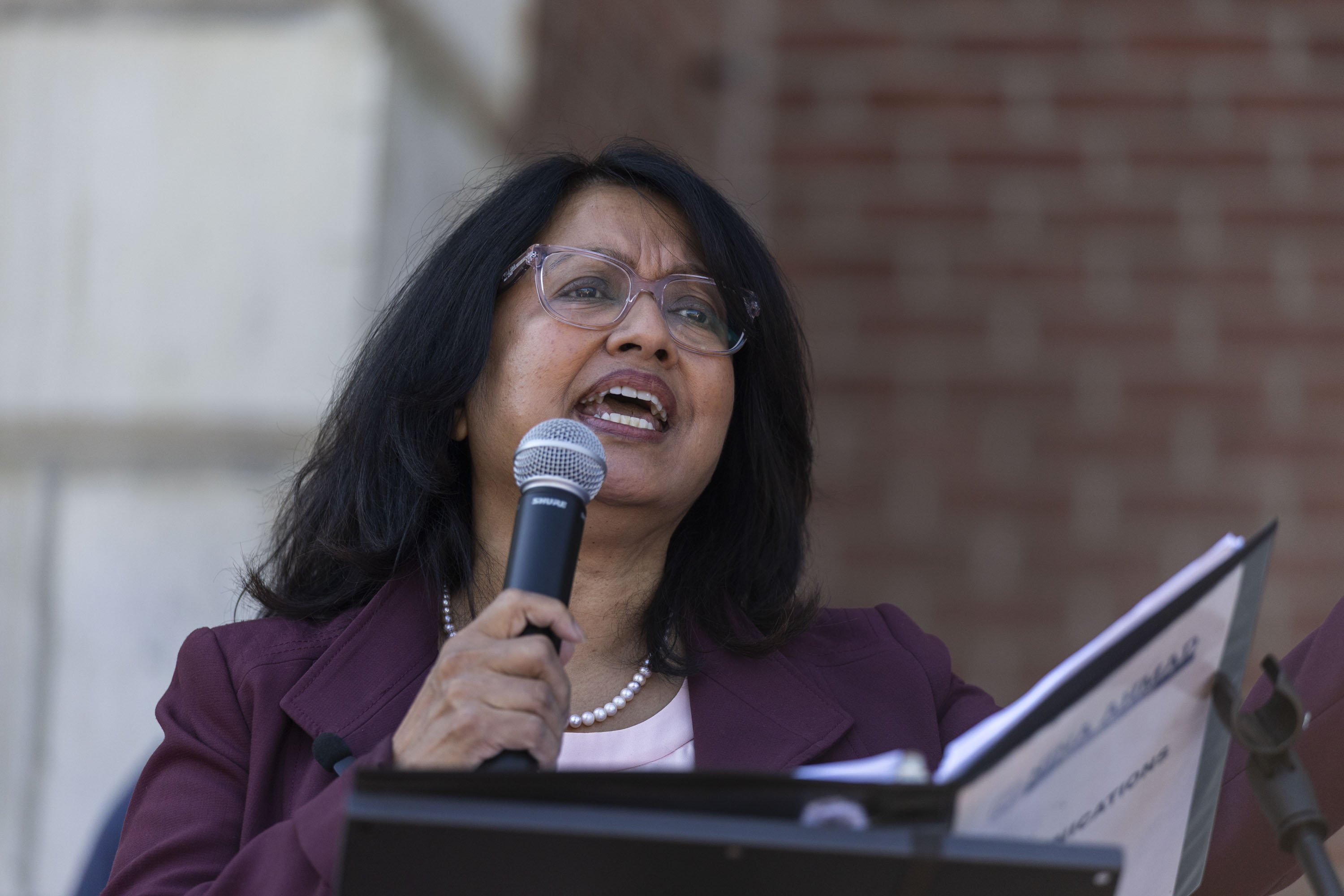
As for the city government’s possible role, Councilmember Nina Ahmad said she and her colleagues were as surprised as everyone else by the announced closing.
City Council member Nina Ahmad, speaks in front of folks rallying outside the Academy of Natural Sciences of Drexel University on Tuesday, Sept. 8, 2026, in Philadelphia, Pa.Tyger Williams / Staff Photographer
“Why haven’t we heard about it? Why haven’t they come to us? We are the legislative body,” she told the crowd. Drexel and museum officials have said a dramatic drop in visitors since the COVID-19 pandemic and Drexel’s budget issues drove the closure decision.
They have said that the collections would be maintained and the academy’s research would continue at a different location, but that the public museum, housed in a commodious building that opened in 1876 during the city’s centennial celebration, would be closed and eventually sold.
The phrase “Academy of Natural Sciences” first appeared in the March 1812 minutes of a group of Philadelphia naturalists who had begun meeting two months earlier at the home of druggist John Speakman at Second and Market Streets, according to a 1909 history. It was a year more well-known for wars and the likes of Napoleon and Andrew Jackson, but founder Speakman found like-minded citizens in the Quaker City.
The academy, whose participants included William Bartram, son of legendary botanist John Bartram, would grow into one of the nation’s most significant research centers, and the museum would become a popular public attraction, known for its dinosaur exhibits and dioramas, a vehicle for awing adults and piquing the interest of children in natural history.
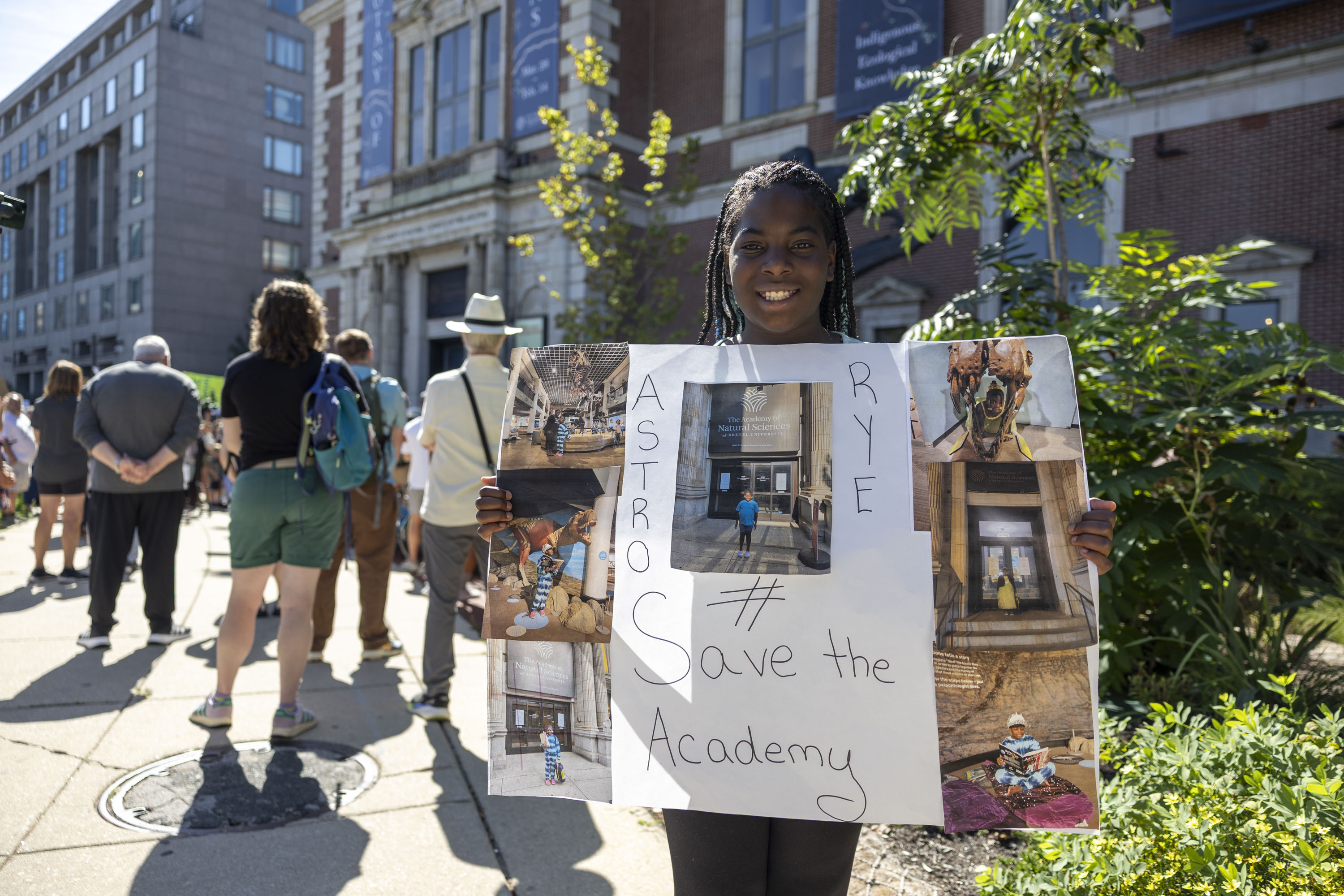
Ryan Sumner-lee, 10, poses for a photo holding a sign she made of her experiences here at the Academy of Natural Sciences of Drexel University on Tuesday, Sept. 8, 2026, in Philadelphia, Pa.Tyger Williams / Staff Photographer
Having bunked a few hours of school, 10-year-old Ryan Sumner-lee was among those who made it to the protest Tuesday.
“It’s the place that taught me I want to be a rock scientist, a paleontologist,” the fifth grader said. Aware of the closing plans, she begged her mother to take her to the demonstration.
“She wanted to come,” said her mother, Tammy Sumner. “I am just the driver. She gives me hope” for future generations.
Ross Bradley, 36, who brought his 6-year-old and 2-year-old to the protest, said he could not imagine a situation in which kids would not get to learn about science in their own city.
“I have a lot of anxiety about the climate and raising young kids in an uncertain future,” Bradley said. “Having this place, where they can get invested about the future, it’s vital for them to not just feel hopeless about the planet.”
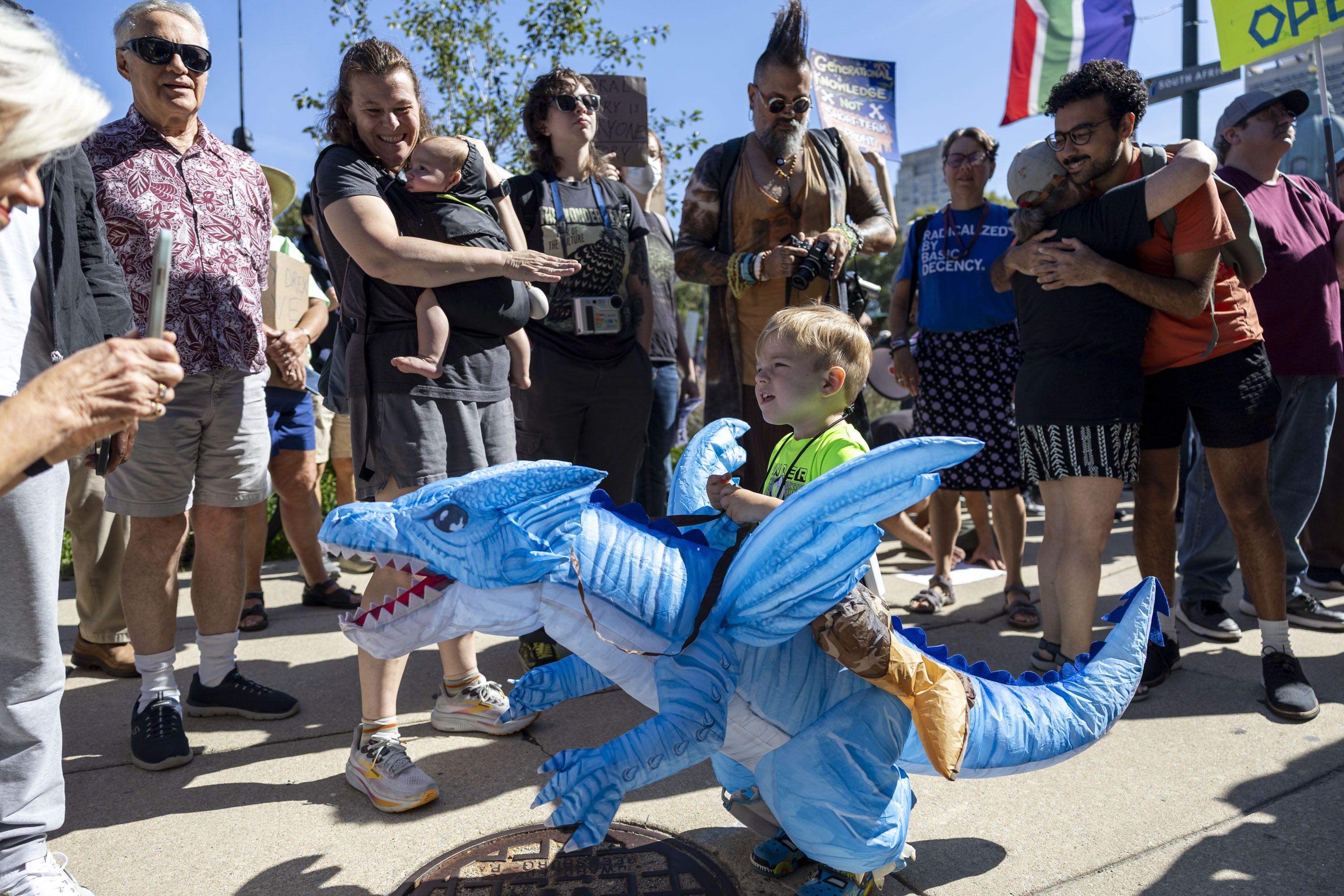
Braxton Huminski, 3, is wearing a costume to show his support for the Academy of Natural Sciences of Drexel University on Tuesday, Sept. 8, 2026, in Philadelphia, Pa.Tyger Williams / Staff Photographer
Daryl Stoner, 67, a retired physician from Chestnut Hill, said she brought her children to the museum once a week when they were in elementary school. The closure means an “invaluable resource” will soon be lost.
“If we’re trying to get our kids active and off their phones, what’s better than bringing them down, walking them through the halls, and showing them things that have been there for eons.
“We can’t afford to lose it for future generations,” Stoner said. “It’s horrendous that our city would lose this.”
Three weeks, over 330 shows, across 100 venues throughout Philadelphia. That’s right, it’s September and time for the annual Philadelphia Fringe Festival. The festival runs from Sept. 8-27, and we know choosing among the number of shows can be a little overwhelming.
So we reached out to artists involved to get some suggestions on what to see and how best to navigate the festival.
“We are taking all five Twilight movies and attempting to perform them in one hour; it’s the definition of our ‘low-stakes, high-fun’ mentality,” Edwards says of the show, which plays at the Hamilton Family Arts Center on Sept. 25 and 26.
Theatre Contra’s “The Whole F**king Twilight Saga…in 60 Minutes.” “We are taking all five ‘Twilight’ movies and attempting to perform them in one hour,” said codirector Bryant Edwards.Courtesy of Andrew Watring
A piece of advice for someone checking out Fringe for the first time
Try NEW things. The shows are much more affordable than “traditional” theater, and every performance is filled with so much heart. It really is the best time to push your boundaries and experience art you may not have considered in the past. And don’t forget to tell your friends about anything you see!
Nichole Canuso
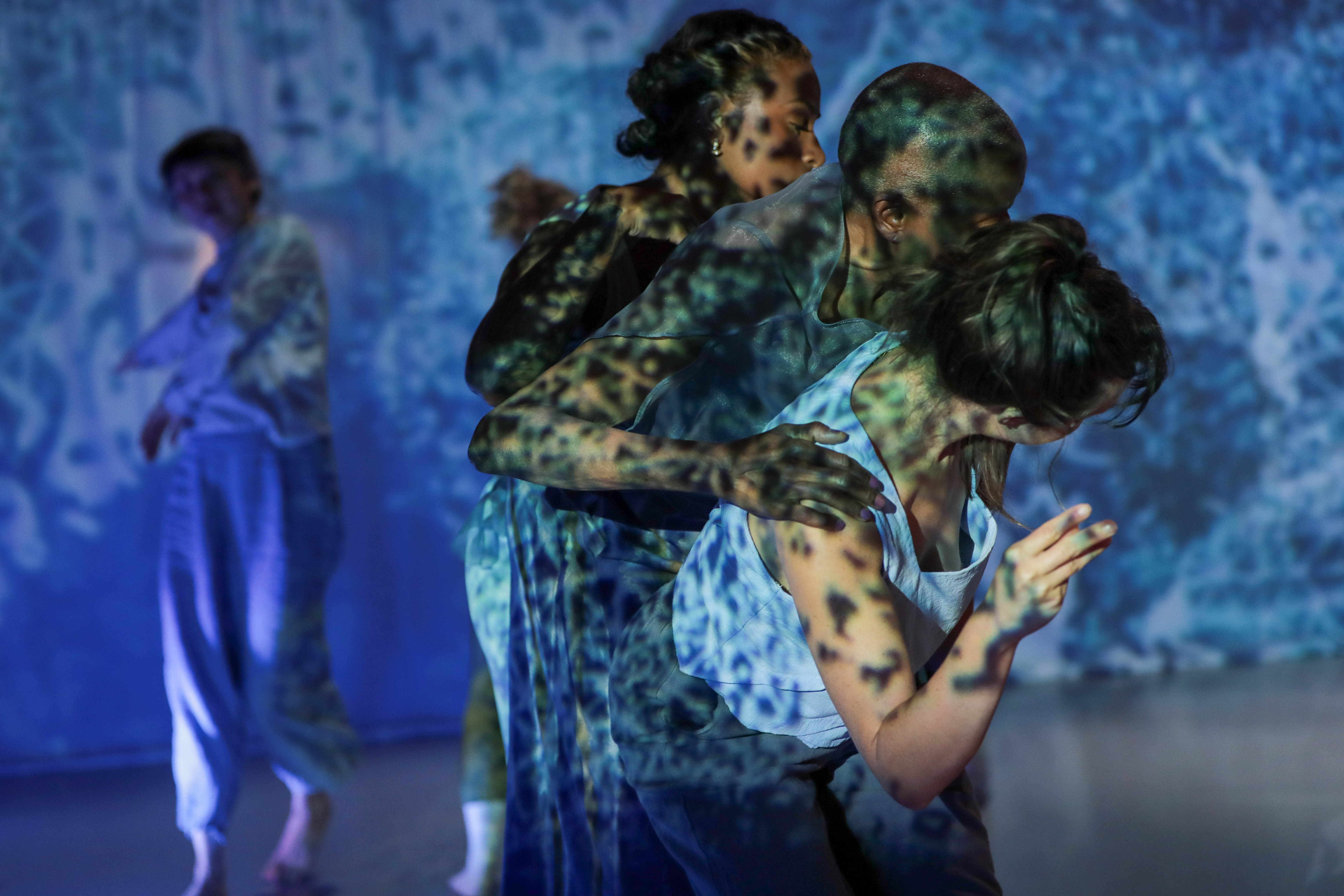
Founder and artistic director of Nichole Canuso | Branching Paths, presenting Lunar Retreat, an interactive, multisensory performance, playing at the Pearlstein Gallery Sept. 9-22.
Nichole Canuso | Branching Paths’ “Lunar Retreat” is an interactive, multisensory performance at Fringe Fest 2026.Theo Cote
A piece of advice for someone checking out Fringe for the first time
Take a risk! Check out a show or a venue that you’ve never heard of before. The city is bursting with creativity.
Rose Jarboe
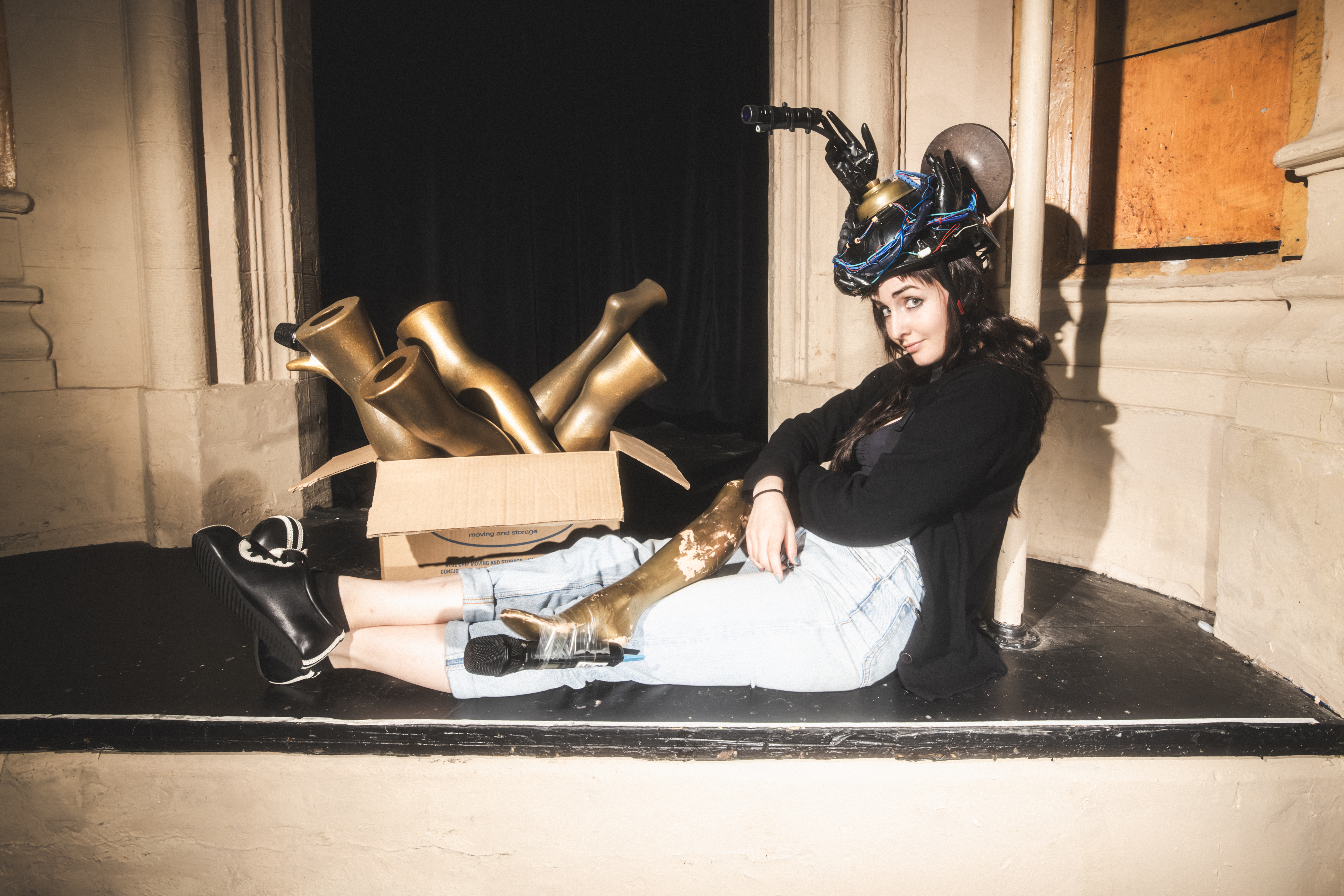
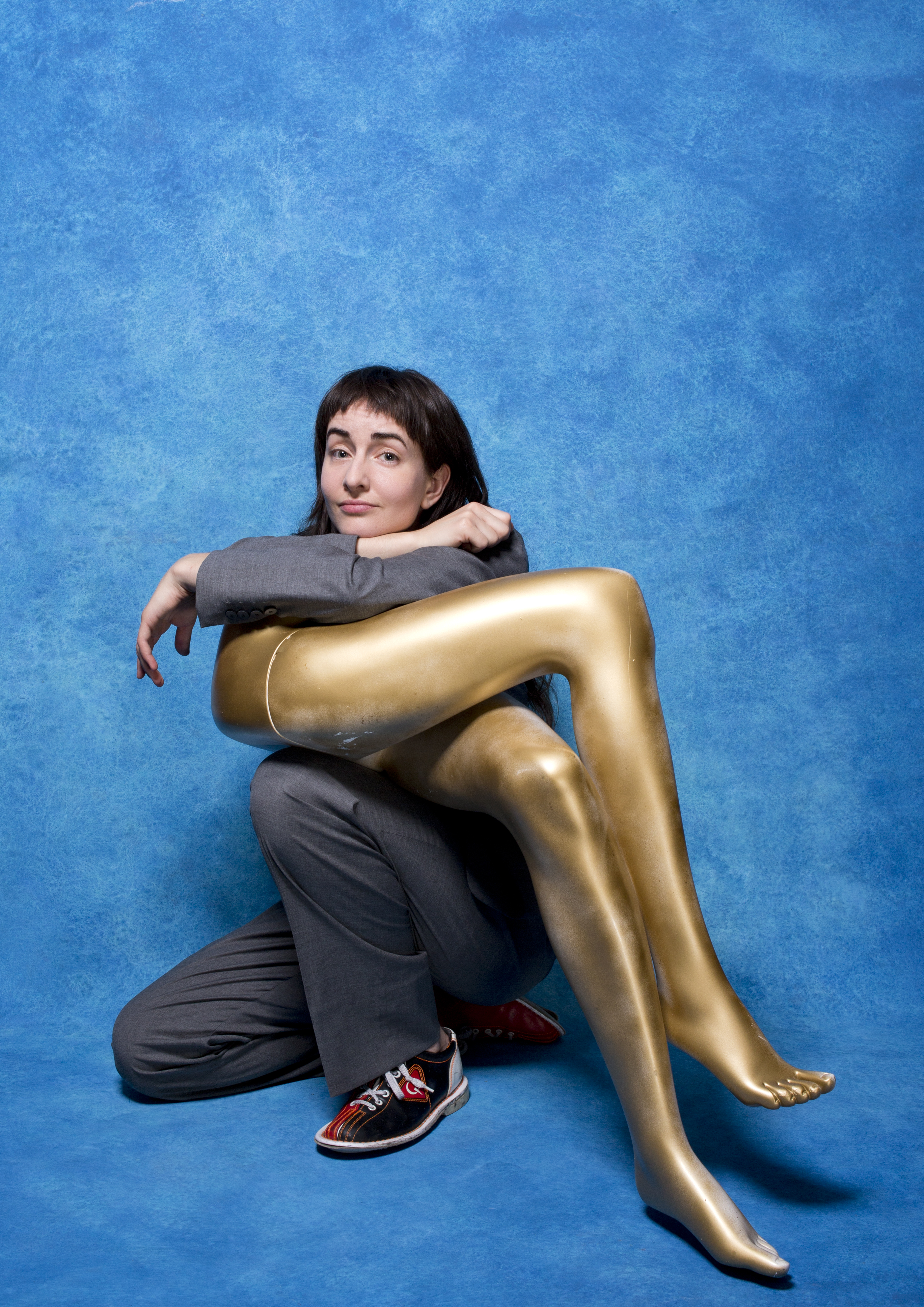
Artistic director of the Bearded Ladies, which is presenting Priority Hoarding: A Retrospectacle. Jarboe describes it as “a large-scale immersive art installation and an unasked-for retrospective of the first 16 years of the Bearded Ladies Cabaret.”
“Whether you know us well or just wandered in off the street, we’re exploring themes of legacy, grief, and owning our own queer history while we’re still around, so there’s something for everyone,” she said.
Rose Jarboe, artistic director of the Bearded Ladies, says “Priority Hoarding: A Retrospectacle” is “a large-scale immersive art installation and an unasked-for retrospective of the first 16 years of the Bearded Ladies Cabaret.”Courtesy of the Bearded Ladies Cabaret
It’s on view from Sept. 10-27, with live events called “Now Hoarding: An In-flight Entertainment Series” scheduled on Sept. 12, 19, and 26.
What Fringe shows are you most excited to see?
Dickie Dickie Dicky Donnie by BETTY (MK Tuomanen, Shelby Richardson, Paul Kruse) (Sept. 9-20, Asian Arts Initiative Third Floor)
ha ha ha ha ha ha ha ha by Julia Masli (Sept. 10-13, the Proscenium at the Drake)
A piece of advice for someone checking out Fringe for the first time:
Pace yourself, drink water, and talk to the artists. If you loved what you saw or even if you only loved one part of it, tell them. A little encouragement pays dividends along the way. See how you can be involved. I hear Fringe is looking for volunteers.
Julia Masli, whose “ha ha ha ha ha ha ha ha” is playing as part of the Philadelphia Fringe Festival 2026.Holly Revell
Andrew Watring
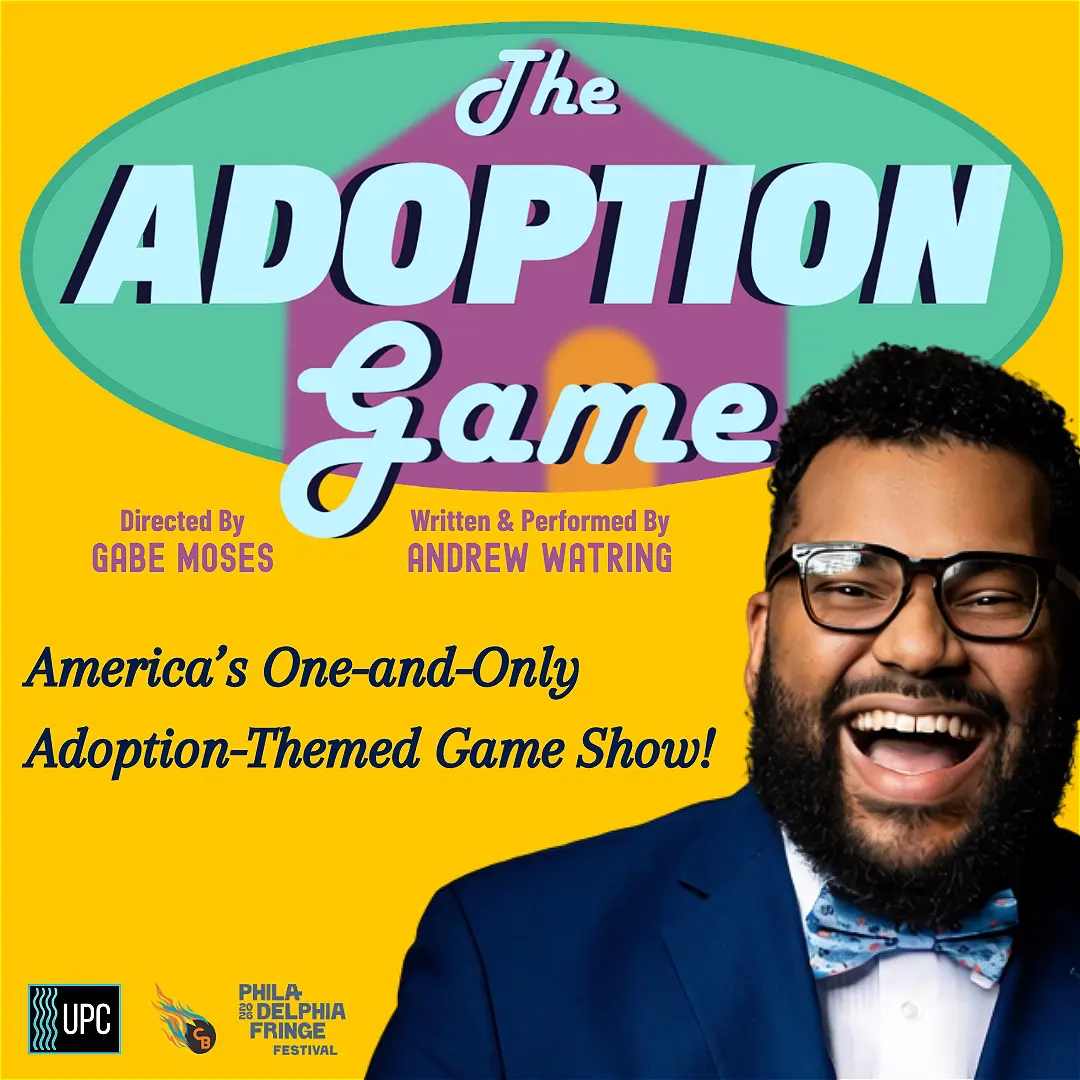
Associate artistic director at People’s Light. This is Watring’s first Fringe as a performer. They are presenting their interactive solo-show The Adoption Game! with Upstream Performance Collaborative. It runs Sept. 25-27 at the Asian Arts Initiative Third Floor.
What Fringe show are you most excited to see?
Lunar Retreat by Nichole Canuso | Branching Paths. (Sept. 9-22, The Pearlstein Gallery)
A piece of advice for someone checking out Fringe for the first time:
See everything! While it’s fun to go to the show that everyone is seeing, it’s also so worthwhile to be in an audience of five people seeing something that you’d never experience otherwise. Fringe is the theatrical equivalent of a streaming service … start flipping through and turning on as many options as you can.
Andrew Watring is associate artistic director os People’s Light. This is their first Fringe as a performer where they are presenting their interactive solo-show “The Adoption Game!” with Upstream Performance Collaborative.Courtesy of Andrew Watring
David Brick
Cofounder of Headlong Dance Theater, Brick is making his return to performance in The Holy Fool. The Ninth Planet show also features his daughter Zephyr Saffron Brick. It runs from Sept. 10-19 at the Gym at Impact Services.
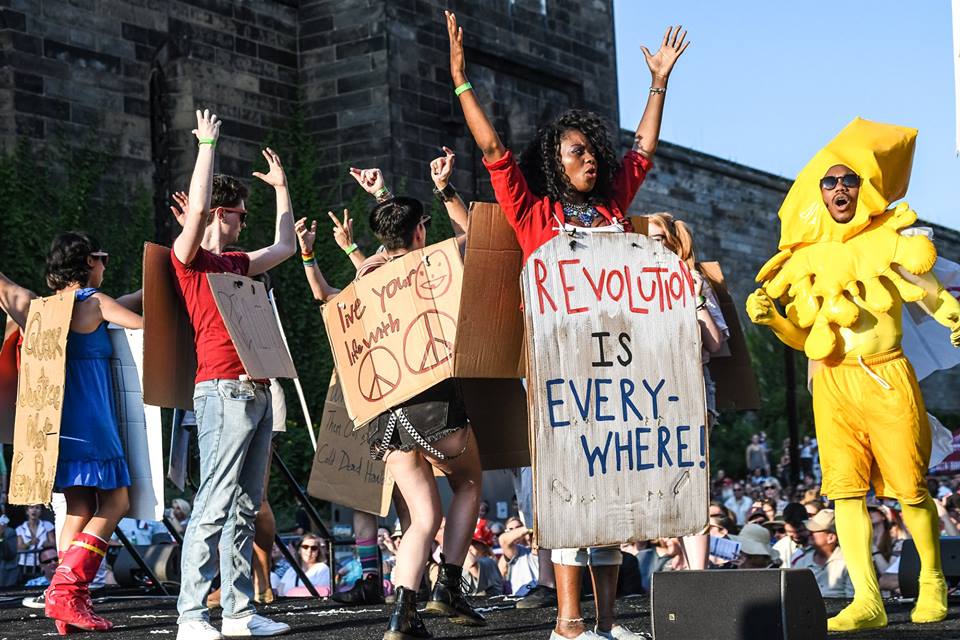
Performers at the Beaded Ladies Cabaret’s Bastille Dance in 2018. The 2026 Fringe production “Priority Hoarding” is, per its artistic director, “retrospective of the first 16 years of the Bearded Ladies Cabaret.”Albert Lee
A piece of advice for someone checking out Fringe for the first time:
The best experimental work blows pixie dust on the hidden mechanisms of the world. It makes visible things that the culture has not acknowledged or reached consensus on, [things] that are not already digested and content-delivered to you in a thousand ways. With that in mind, see anything that seems to tickle your interest and if it’s great, enjoy! But if it’s not automatically wonderful on first blush, take some time to think about what may be trying to be born from the vast unknown and let [that] thinking be the treasure you take home. Feel free to despise the work you see but understand why. That is a gift as well.
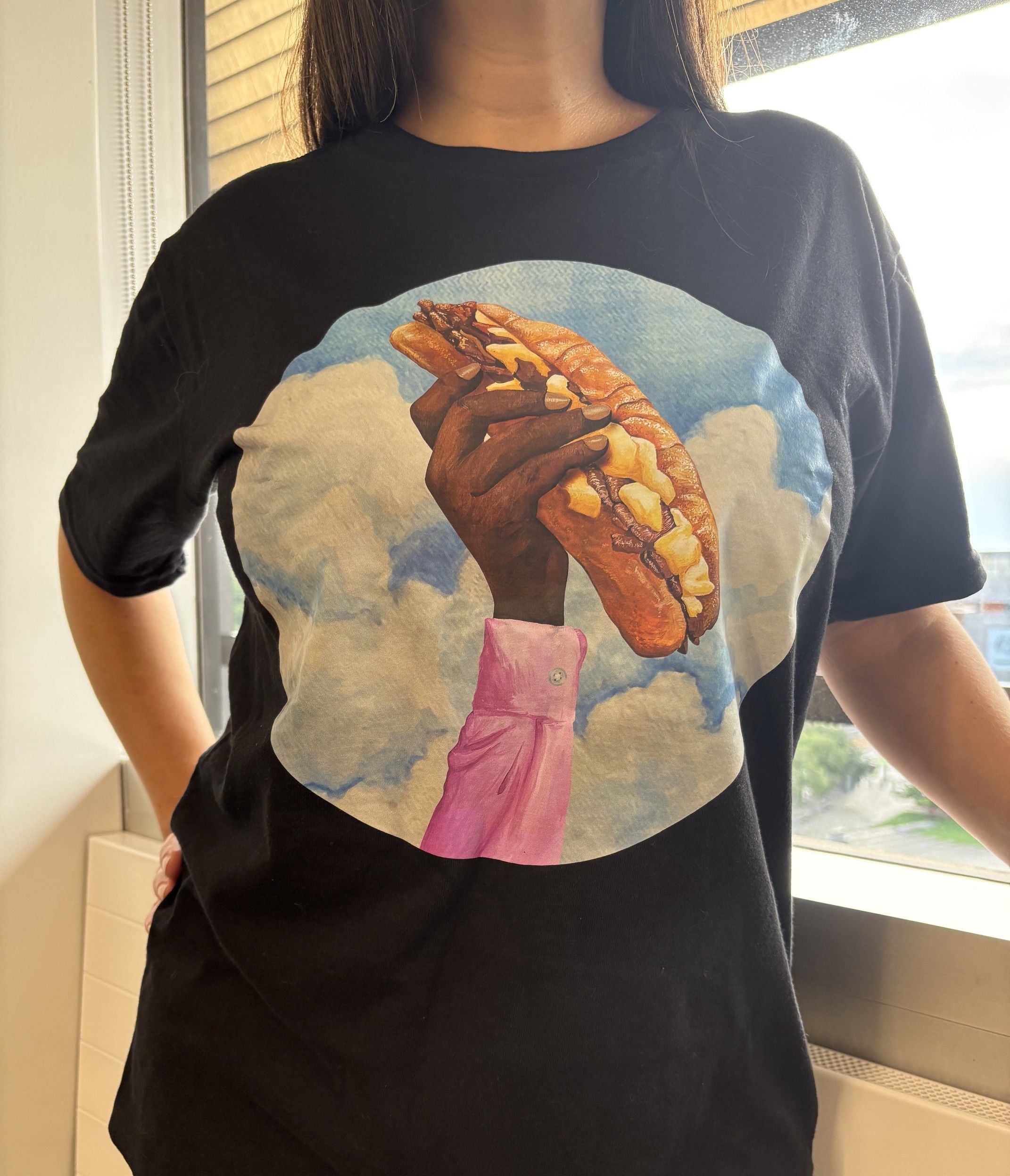
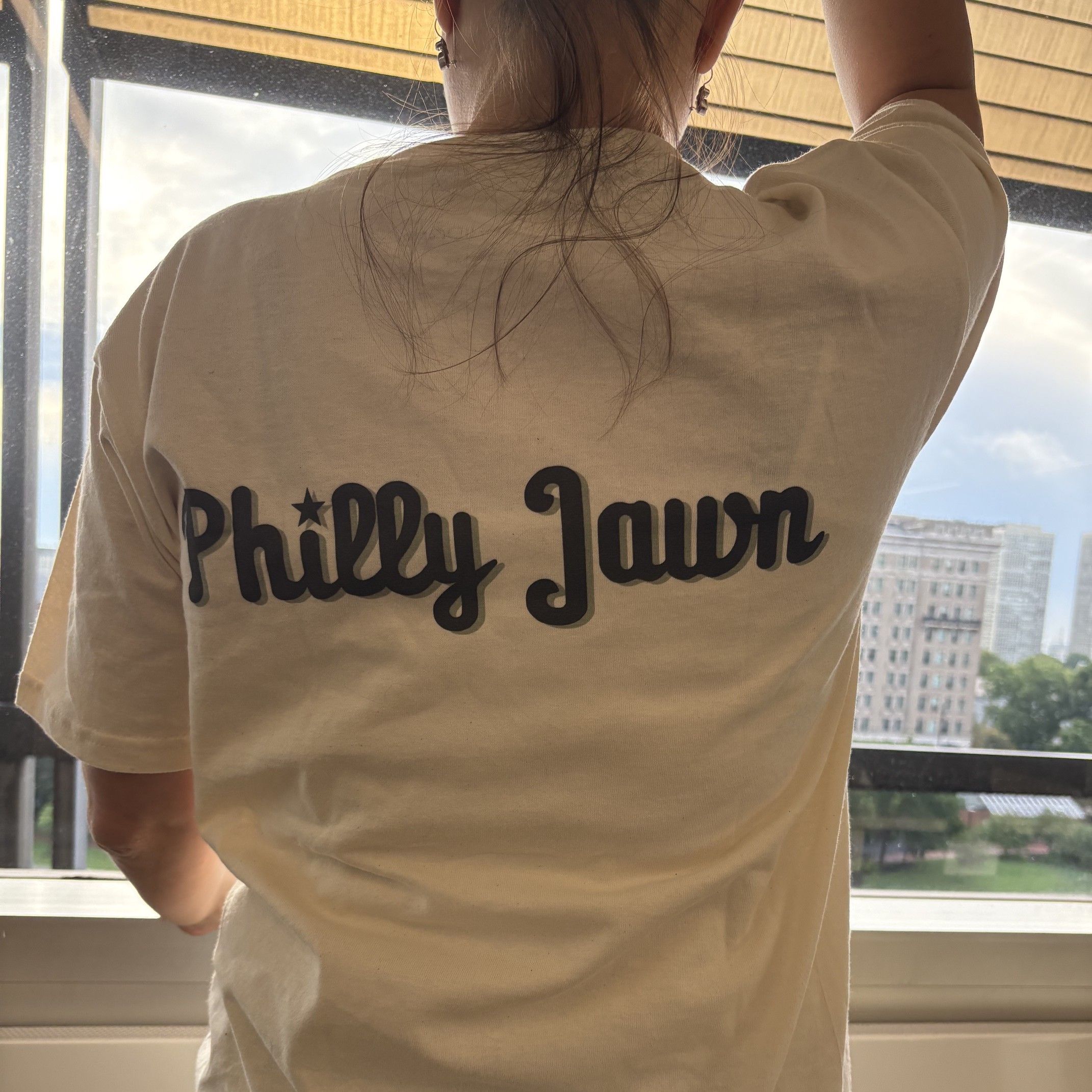
A manicured hand holding a cheesesteak, a hoagie, or an iron skillet filled with scrapple. Now imagine that on a hoodie or T-shirt. Add to that the beloved moniker “Philly Jawn” printed on the back in Philadelphia Phillies-style print and I’m hooked.
I may be a born and bred New Yorker, but after living here for 23 years, I’m a total Philly Jawn.
This latest sartorial homage to Philly food is a collaboration between interior designer Sheila Bridges and food writer, producer, and media entrepreneur Stephen Satterfield.
Sheila Bridges X COMOCO T-shirts featuring a Philly cheesesteak, are part of a limited-edition collaboration between interior designer Sheila Bridges and Stephen Satterfield, best known for the Netfix documentary on African American food, “High on the Hog.”Elizabeth Wellington
Earlier this year Bridges partnered with Walmart on a Philly-centric collection of tableware featuring her iconic Harlem Toille de Juoy print. Satterfield is best known for Netflix’s Peabody and NAACP award-winning series High on the Hog. Its first season featured Philadelphia food and Black catering families including Robert Bogle.
The Sheila Bridges X COMOCO T-shirts and hoodies are available in six foodie styles. In addition to the cheesesteak, hoagie, and scrapple designs are a soft pretzel, a rainbow water ice, and a hot dog.
Black tees feature hands raising hoagies, cheesesteaks, and hot dogs to a clear blue sky with fluffy white clouds. To me, it depicts the heavenly experience of biting into a yummy hoagie, cheesesteak, or hotdog.
“Because of the 250th, I was in this very Philly mindset,” said Bridges, Bill Clinton and author Tom Clancy’s interior decorator, who is calling Philly home these days.
The back of Sheila Bridges X COMOCO T-shirts inspired by iconic Philadelphia food. The shirts are part of a limited-edition collaboration between interior designer Sheila Bridges and Stephen Satterfield, best known for the Netfix documentary on African American food, “High on the Hog.”Elizabeth Wellington
“I love Philly food,” she said. “Every time I’m in town, I’m always looking for a soft pretzel with mustard or a cheesesteak.”
One of Bridges’ in-house artists nailed the illustrations. The shirts were produced by COMOCO Cotton, Satterfield’s apparel brand that uses cotton grown by Black-owned family farms in the South.
“I love how all of the cotton in our products is fully traceable from seed to garment,” Bridges said.
So do I.
Sheila Bridges X COMOCO Cotton’s limited-edition Philly-centric shirts are available online at SheilaBridges.com. Hoodies are $100. T-shirts are $85. Sizes: S, M, L, XL, and 2XL
— Elizabeth Wellington
A childhood anime favorite in 4K
Katsuhiro Otomo’s Akira (1988) is one of my favorite films ever. I watched a grainy pirated copy of it from an USB drive a friend lent me on my laptop screen and was spellbound by the hand-drawn animated frames. The film, based on the manga of the same name, is set in the dystopian faraway year of 2019 where Tokyo is in ruins following sudden destruction in 1988. It is plagued with protests, unemployment, corruption, and an overwhelming sense of decay and anger.
The action of the film unfolds when Shōtarō Kaneda’s bike gang, the Capsules, races against a rival gang in the midst of a rally that quickly escalates and becomes disruptive. In the middle of the action, Kaneda’s best friend Tetsuo Shima clashes with an otherworldly esper and gains supernatural powers, the same powers possessed by Akira who caused 1988’s wreckage. What follows is a tale of Shima developing superhuman strength and a destructive rage that consumes much of the city. The army and the police fail to manipulate Shima into submission.
It is a cyberpunk action film; so yes, there’s blood, death, several crashes, splintering glass, and never-ending dystopic vistas. The excellent score draws heavily from traditional Japanese and Indonesian styles and is composed by Shōji Yamashiro.
Imagine experiencing all of that on a grainy .mov file on a laptop screen. But you don’t have to! A new 4K and IMAX restoration, distributed by Crunchyroll and Sony Pictures Entertainment, has been released with English subtitles and English dub. Watching it felt like I was watching the film for the first time.
The glass shimmers, the blood glows redder, and everything looks grander on the big screen. It is an epic for our times, and for any era where too many people suffer under the reckless might of men drunk on their own power.
The 4K restoration of “Akira” is playing in theaters across the region, including AMC Broadstreet 7, AMC Cherry Hill 24, and AMC Voorhees 16.
— Bedatri D. Choudhury
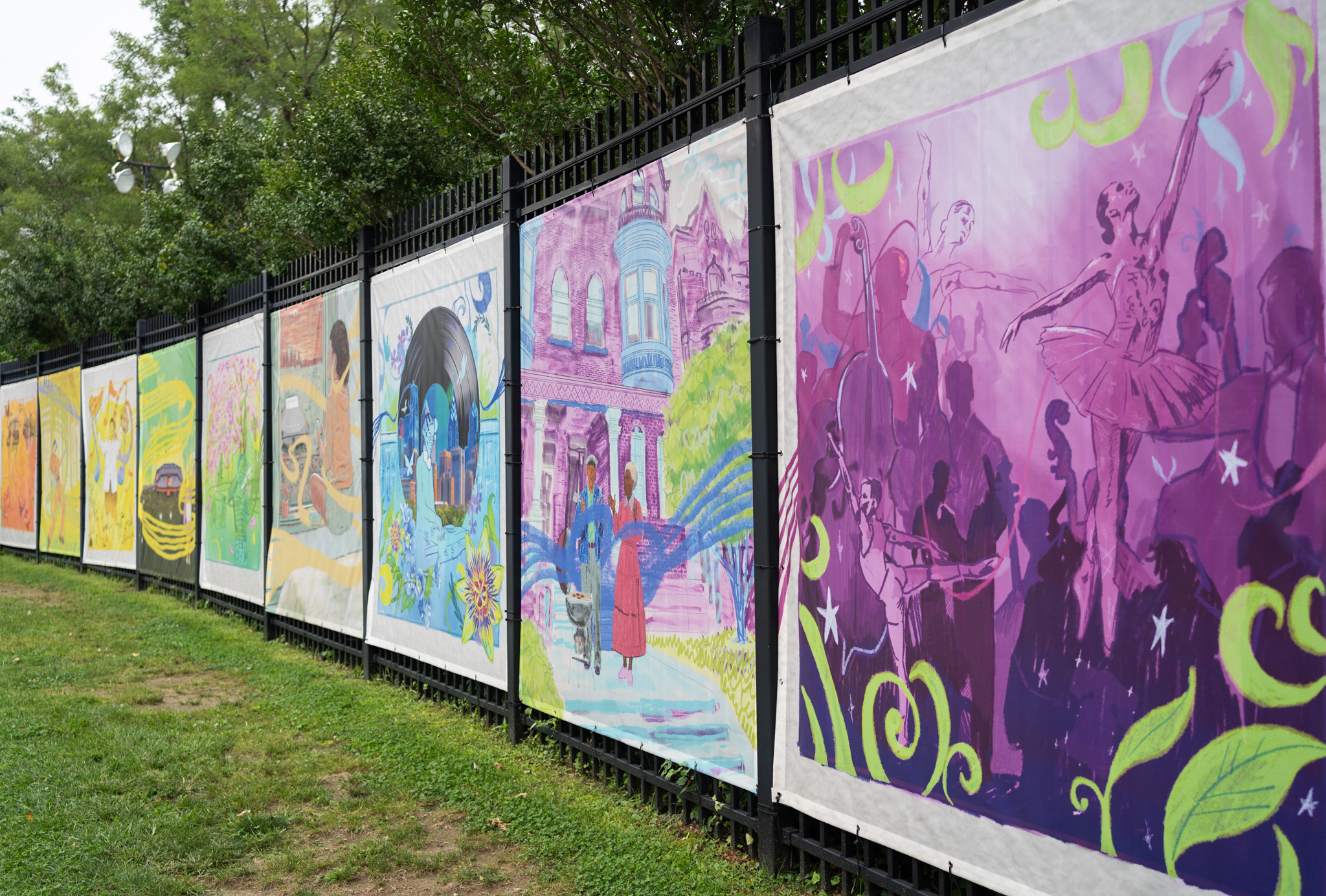
The new art installation, “Echoes Beyond the Stage,” was dedicated to the Highmark Mann Center for the Performing Arts on July 31, 2026.Courtesy of Earl
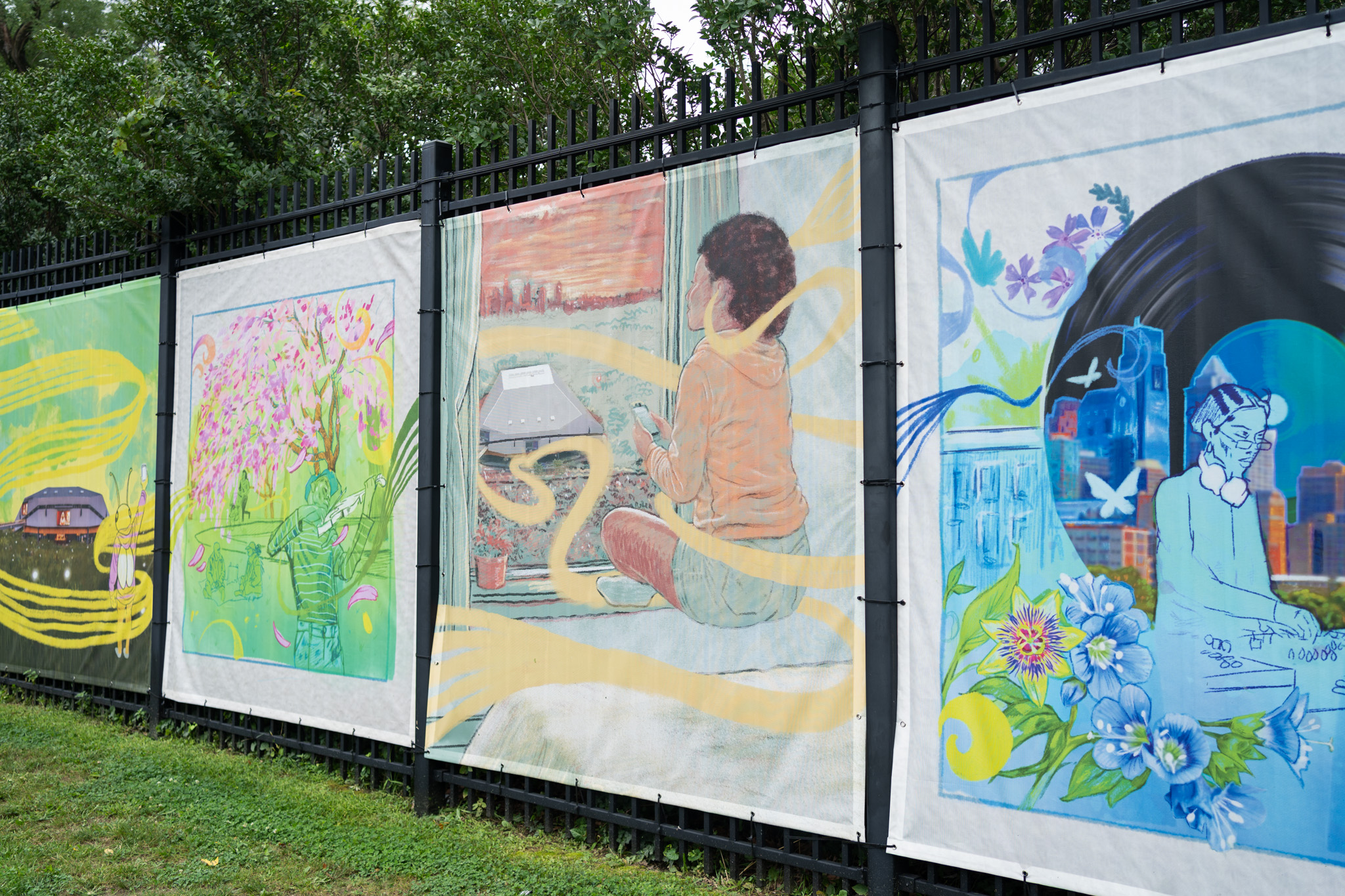
As visitors walk along the gravel-covered trail on Georges Hill Drive, they see a series of 10-foot-long panels that are a part of Echoes Beyond the Stage. The new installation was developed by artists Nile Livingston and De’von Downes to commemorate 50 years since the Mann moved to its current West Fairmount Park location.
Livingston and Downes collaborated with Streets Dept founder Conrad Benner and Mural Arts Philadelphia to create artwork that reflects the amphitheater’s history, while illuminating the people, historic blocks, and other institutions that surround its borders.
The new art installation, “Echoes Beyond the Stage,” was dedicated to the Highmark Mann Center for the Performing Arts on July 31, 2026.Courtesy of Earl
One mural references one of Aretha Franklin’s final performances at the Mann. Another highlights the century-old rowhouses that line the outside blocks, and others reflect the energy of past block parties, barbecues, and other activities brought to the community. Musical notes float from one panel to the next, showcasing the musical influences and memorable performances that have passed through time. Dancers, vocalists, DJs, and instrumentalists perform under purple, green, and amber-covered skies, while spectators watch from their amphitheater seats or windowsills.
While each panel differs in focus, they are bound by visual harmony. These works show Mann is not just a performance venue; it’s an essential part of the community and an integral piece of the city’s broader music history. And the best part? Visitors get a glimpse of it before stepping foot inside through the entrance gates.
The Highmark Mann Center for the Performing Arts is at 5201 Parkside Ave., Phila.
— Earl Hopkins
Turnstile’s ‘Never Enough’ reimagined by Will Yip, Alex G., and … Elton John?!
What do Alex G., Will Yip, and Elton John have in common?
The Havertown indie songwriter, Grammy-winning Philly producer and studio owner, and “Philadelphia Freedom” British rock legend all have a hand in Never Enough: Versions, the new album that reimagines Never Enough, the 2025 album by Baltimore pop hardcore band Turnstile.
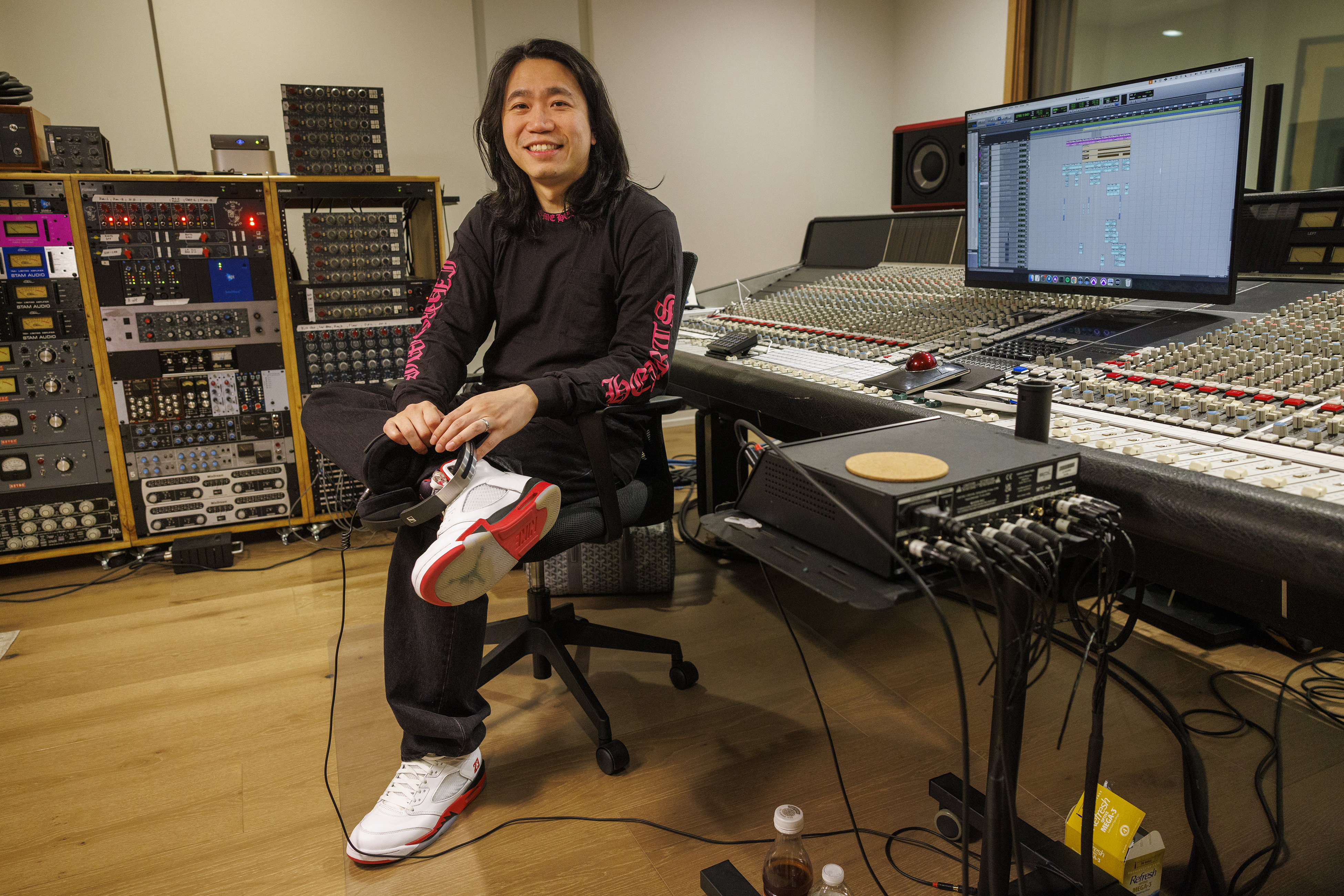
Turnstile’s “Never Enough” won a best rock album Grammy for the band and Philadelphia engineer-producer Will Yip. Now it has been reimagined as “Never Enough: Versions,” with new takes on the songs by Elton John, Alex G., Hayley Williams, Branden Woody, Panda Bear, Slayyyter, and more.Trevor Roberts
Never Enough was already one of the most-acclaimed rock albums of the decade. At this year’s Grammys, the Brendan Yates-fronted band’s “Birds” won for best metal performance. And Turnstile and Yip, the owner of South Philly’s Memory Music Studios, who engineered the album and assisted Yates in producing it, won prestigious best rock album trophies.
Now, the 14-song album has been expanded with 22 new tracks, with the original songs remixed, rearranged, and reinterpreted by a dazzling array of artists.
Will Yip in Studio 5 in his newly constructed studio, Memory Music Studios, South Philadelphia, Tuesday, Jan. 13, 2026. He won a Grammy for his work engineering and assisting with production on Turnstile’s “Never Enough” which has now been expanded as “Never Enough: Versions.”Alejandro A. Alvarez / Staff Photographer
The most mind-blowing presence is John, who turns “Seein’ Stars” into a proper song, and whose fame exponential outreaches that of his fellow Turnstile fans.
Those fans include Paramore singer Hayley Williams, who interprets “Ceilings”; boygenius’ Julien Baker, who teams with Sudanese Canadian poet Mustafa on an absolutely gorgeous “Time Is Happening”; jazz trumpeter Brandon Woody, who turns in a lovely instrumental “Dreaming”; and breakout electro-pop star Slayyyter, who soars on a high-flying “Birds.”
Both Baltimore club party MC Rod Lee and New York synth-pop songwriter Porches take on the Never Enough title track. Alex G. — whose full name is Alex Giannascoli and is also in music news for his score to Jane Schoenbrun’s movie Teenage Sex and Death and Camp Miasma — delivers an atmospheric, cinematic spin on “Magic Man,” which is also interpreted by Panda Bear of Animal Collective.
All in all, it’s a thoroughly impressive project that makes Turnstile seem like they might possibly be the coolest band in the world.
“Never Enough: Versions” is available to stream and purchase on music stores and platforms.
Dozens of parents pushing two-seat strollers cleared paths along the sidewalk in front of the museum at 19th and Benjamin Franklin Parkway. They were all looking for a spot in the line that stretched to the corner of Cherry Street.
Small children climbed onto the building’s brick-covered grooves for a peek inside the museum as they inched closer to the museum’s doors, which opened at 10 a.m.
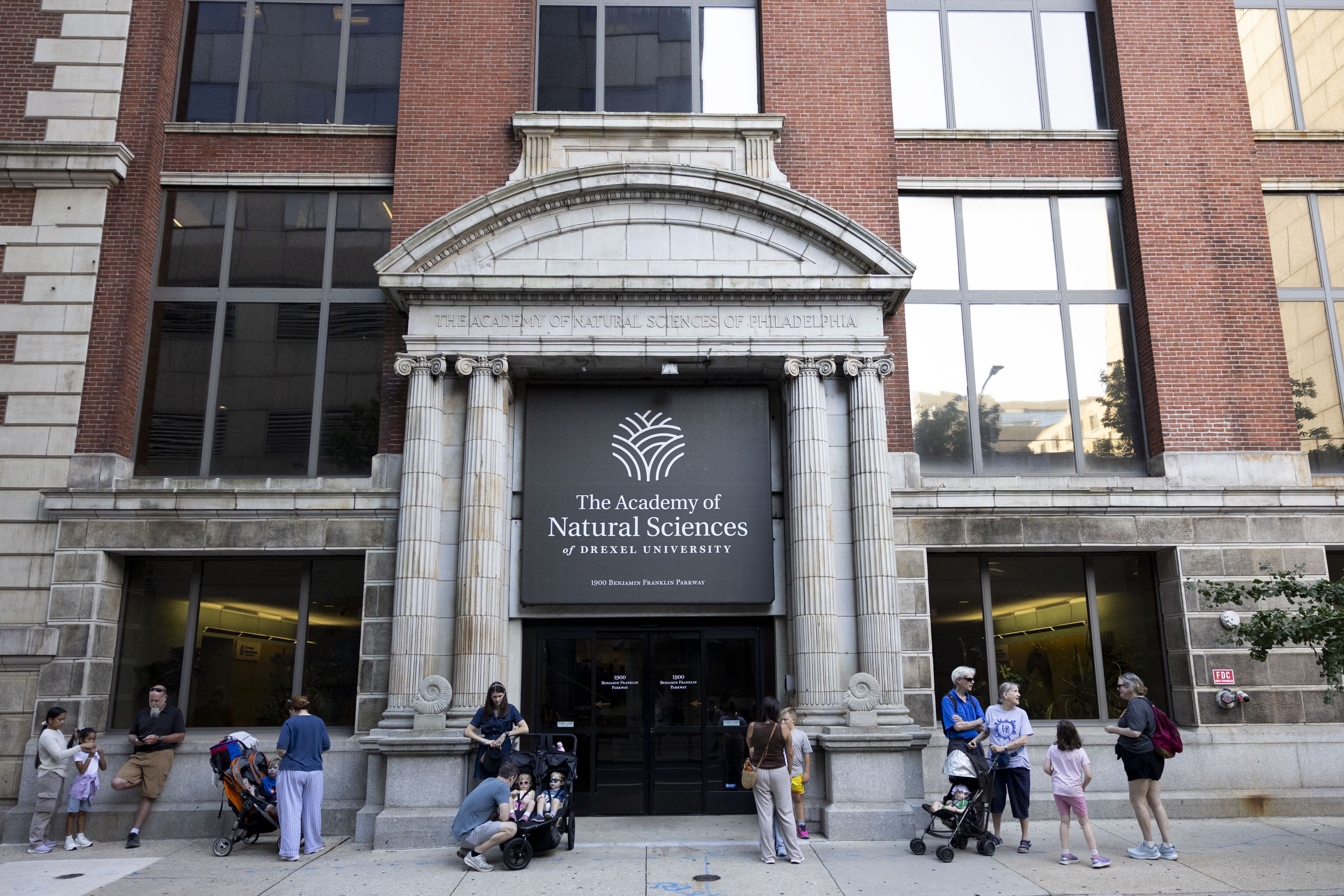
People waiting at the side entrance at the Academy of Naturals Sciences of Drexel University on Friday, Sept. 4, 2026, in Philadelphia, Pa.Tyger Williams / Staff Photographer
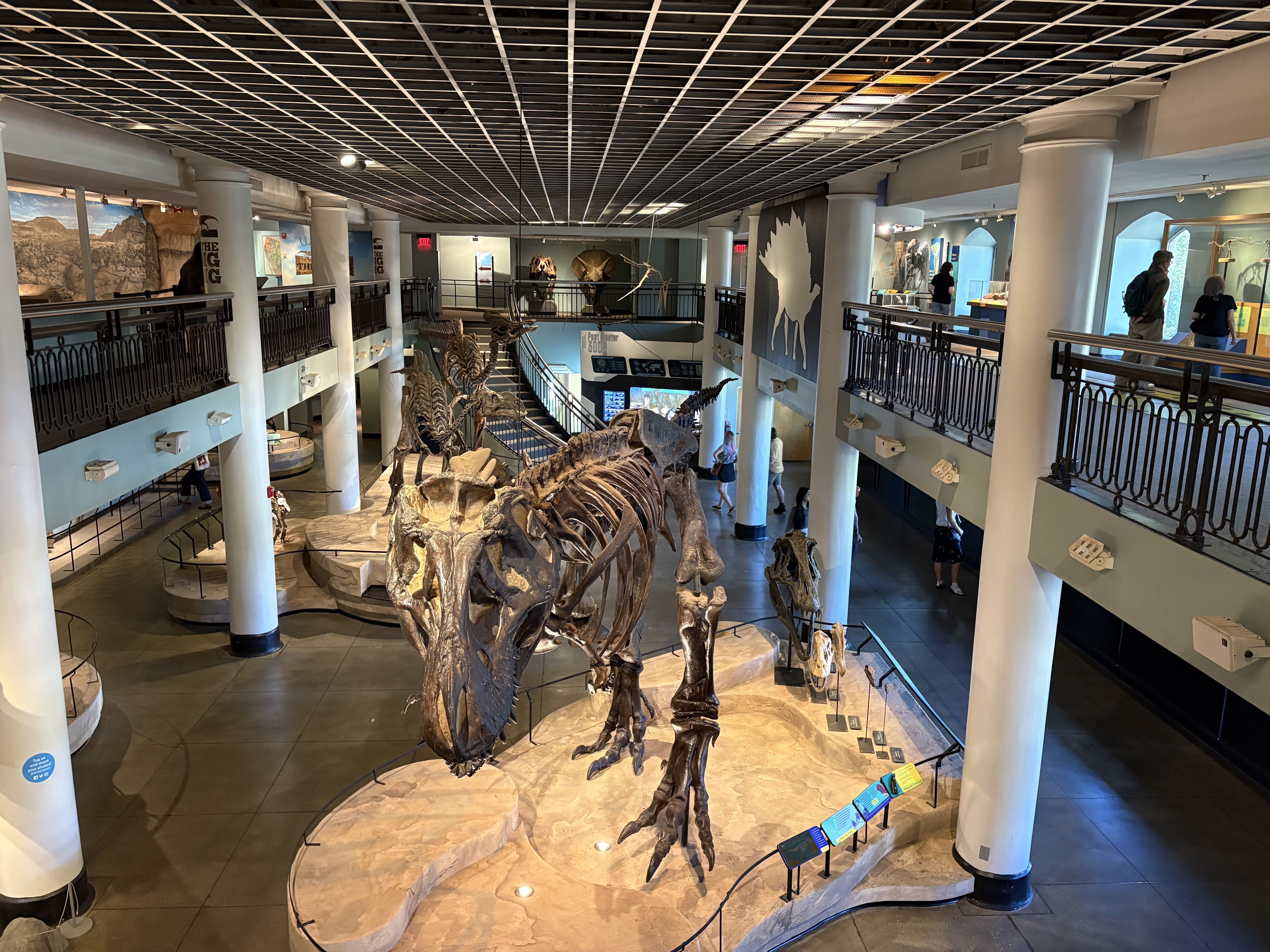
Inside, the museum was filled with visitors snapping selfies and taking family photos in front of full-scale dinosaur displays. Children sprinted across the mezzanine floor and rolled up their sleeves for the “big-dig” fossil exhibit. Others stopped by for close encounters with turtles and other live animals, while some frolicked alongside prehistoric creatures using virtual reality.
Staff members eagerly welcomed the growing crowd, with one commenting that the attendance reminded her of pre-pandemic times.
That post-pandemic drop in visitors, along with added financial pressures linked to Drexel’s budget deficit, are the reason the museum — which opened to the public in 1828 — plans to cease operations at the end of the business day Sept. 30.
Bella Vista resident Reiss Clauson-Wolf said he brought along his 2-year-old son to experience the same “wonder” he encountered as a 4-year-old visiting the museum.
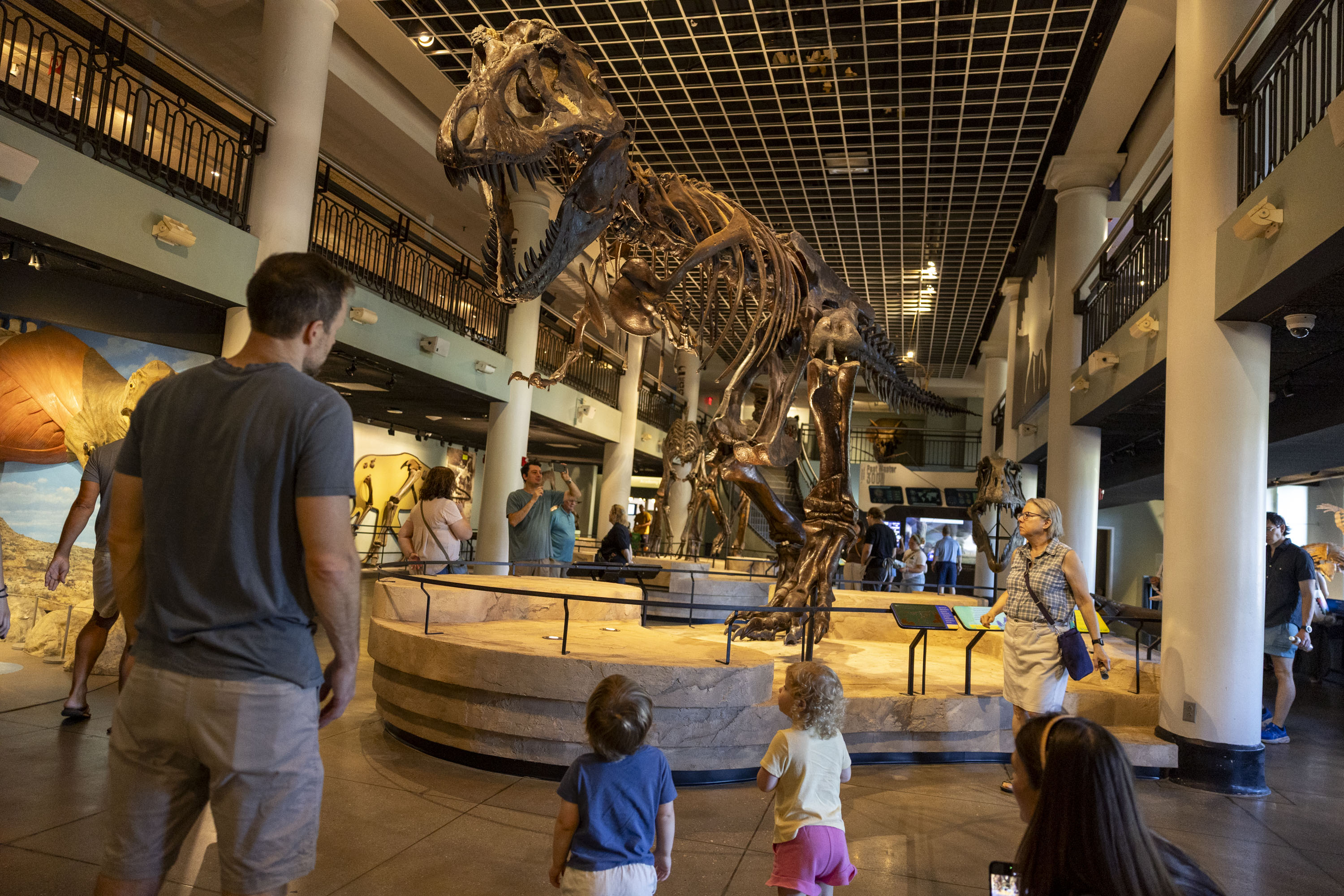
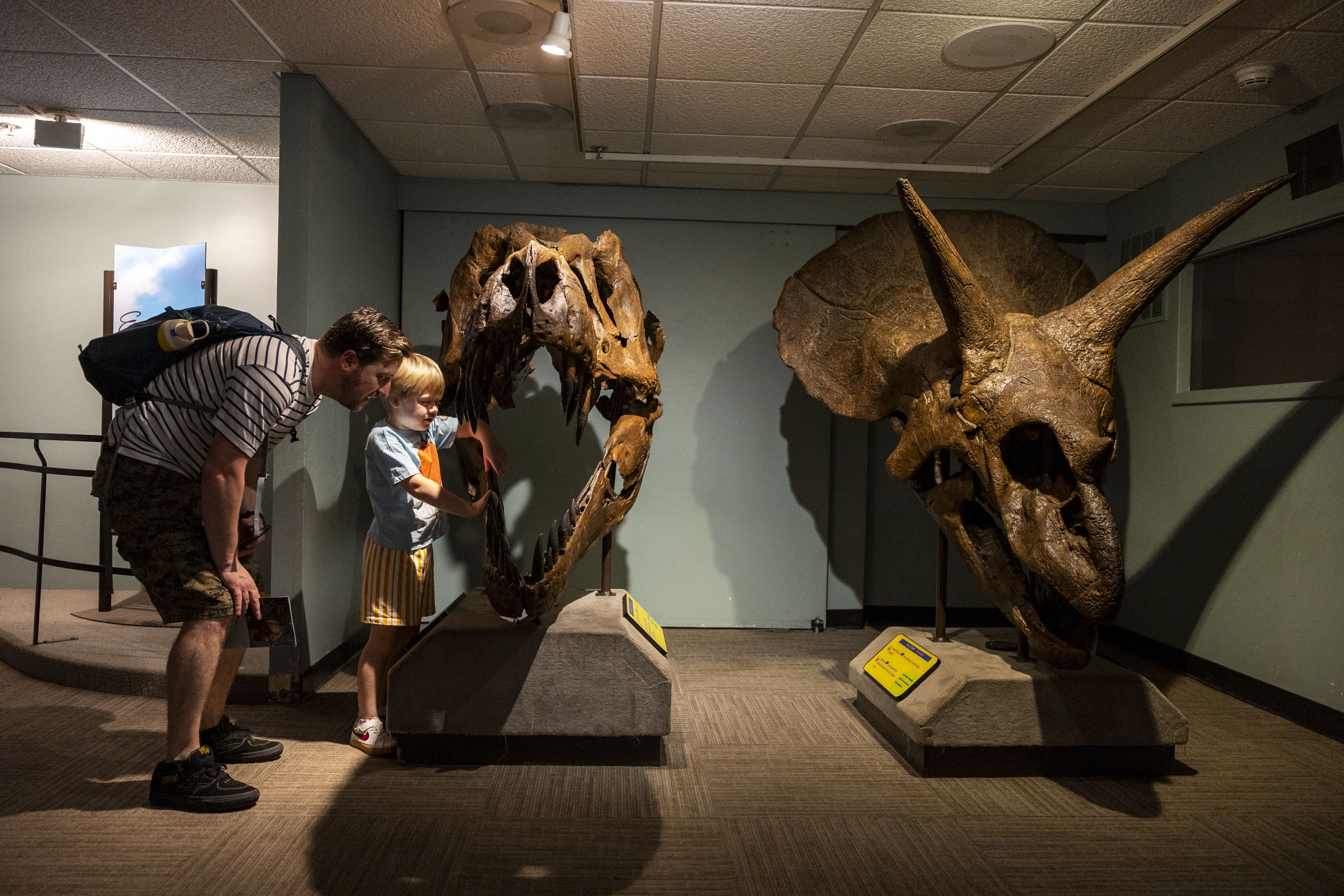
Michael Ashleigh, of Phoenixville, Pa., is with his son Otto, 5, looking at the Tyrannosaurus Rex Skull in the Dinosaur Hall at the Academy of Natural Sciences of Drexel University on Friday, Sept. 4, 2026, in Philadelphia, Pa. Michael wanted to give his son the experience he had 20 years ago when he first visited the Academy of Natural Sciences.Tyger Williams / Staff Photographer
The Dinosaur Hall and old-school dioramas of bison, bears, and tigers are core memories of his childhood, and he’s sad knowing his son and others won’t be able to experience it much longer.
“It’s such a joy. It’s really sad when an institution like this closes,” Clauson-Wolf said.
The museum’s last day with regular hours for the public will be Sept. 27.
Chris Bodenhamer, 39, said he didn’t know about the impending closure until he came into the museum on Friday morning. He had traveled from Miami to visit friends in the city and stopped by the museum to check out the new exhibit, “Botany of Nations,” which features historical items linked to Native American nations and explorers Lewis and Clark.
But upon hearing the news, Bodenhamer, who often visited the museum on his frequent trips to Philly, said he was devastated.
“It’s such a special place. You don’t get all of this stuff in one area. What can you do that’s better than this to replace it?” he said.
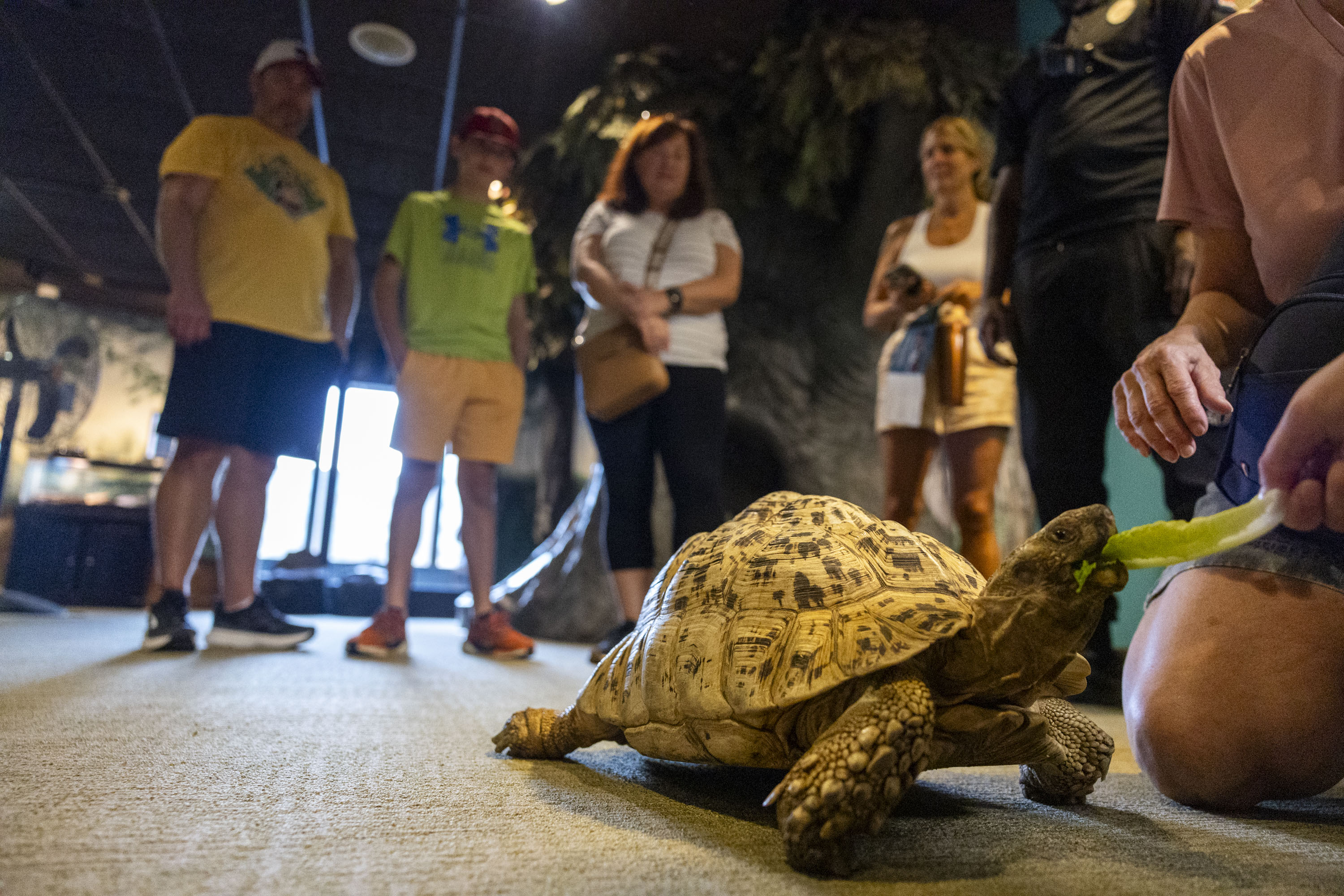
Ollie, the Leopard Tortoise around the age of 60, is being fed by Lead Animal Keeper Rachel Brown, at the Academy of Natural Sciences of Drexel University on Friday, Sept. 4, 2026, in Philadelphia, Pa.Tyger Williams / Staff Photographer
After hearing the news, Lancaster resident Dana Krooeck was determined to bring her two nephews to the museum before it closed. She enjoyed watching them walk the halls and engage with the exhibitions.
“They’re very hands-on, and they’re learning different stuff you don’t get a chance to learn about anywhere else,” Krooeck said.
Like Krooeck, her nephews Ethan Miegel, 10, and Benjamin Elmer, 8, said their favorite part was roaming through Dinosaur Hall.
“Everything here is awesome,” Elmer said.
“It’s an awesome museum. Why would they close it? I’m going to miss it,” said Miegel.
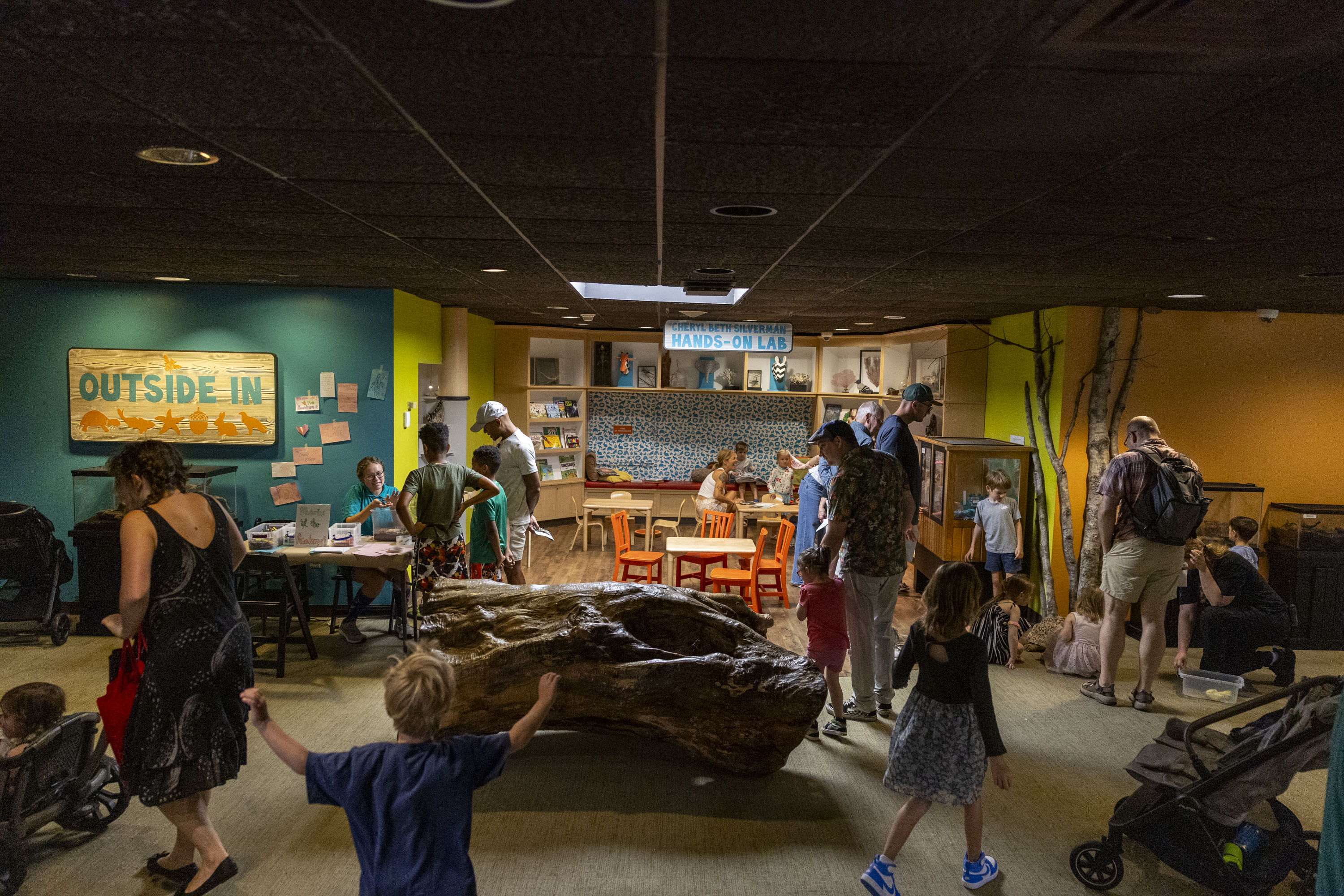
Families and their kids in the Outside In area where guests can pet live animals and other creatures during their visit at the Academy of Natural Sciences of Drexel University on Friday, Sept. 4, 2026, in Philadelphia, Pa.Tyger Williams / Staff Photographer
A rally aimed at saving the museum is planned for Tuesday at 10 a.m. in front of the Academy building at 1900 Benjamin Franklin Parkway. It is being organized by Skype A Scientist founder Sarah McAnulty, a squid biologist whose nonprofit focuses on science education, as well as Philly Science Action and Green Philly.
“We have the responsibility to make sure Drexel and other decision-makers know that this isn’t something we are going to take lying down,” said McAnulty.
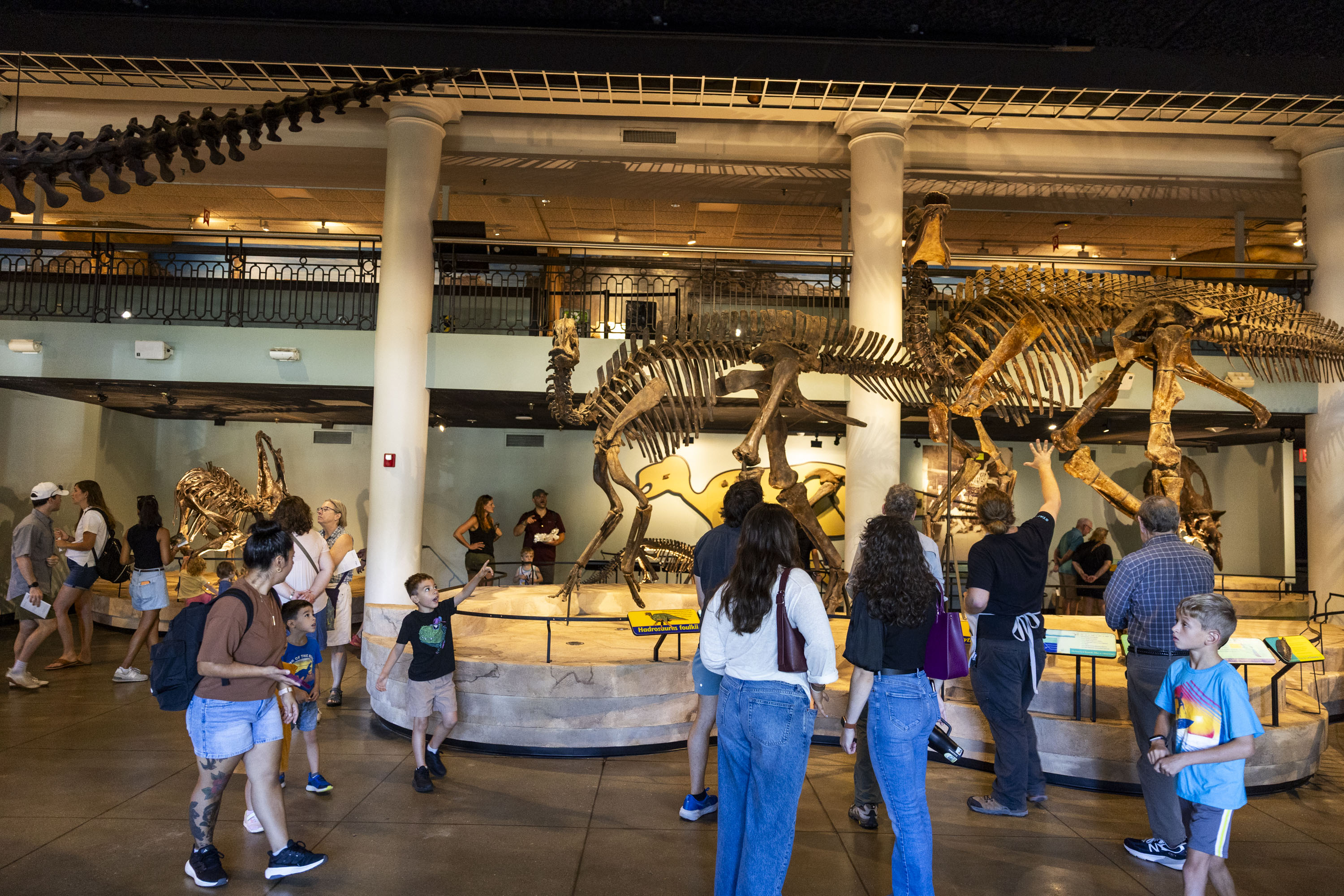
People walking in to see the Dinosaur Hall with various Skeletons and displays at the Academy of Natural Sciences of Drexel University on Friday, Sept. 4, 2026, in Philadelphia, Pa.Tyger Williams / Staff Photographer
McAnulty said she grew up in the Philadelphia area and went to the Academy frequently. It’s important not just to the city but the entire country, she said, noting its fame as the first natural history museum in the United States.
“It’s unconscionable to close the museum down to the public,” she said. “It’s the responsibility of the stewards of that museum, the Academy board, and Drexel to do whatever it takes to preserve both the collections and the public-facing museum.”
In a social media post announcing the rally, organizers called on Drexel to find a way to keep the museum open.
“At a time when climate change and science continue to be under attack, Philadelphia cannot afford to lose another institution that connects people to the natural world,” the post said. “This is an institution Philadelphia can’t afford to lose.”
“We recognize that this is an emotional time for many who care about the academy,” Drexel said in a statement in response to the announcement of the rally.
Mackenzie Guiloaune, 19, of Mount Laurel, N.J., is drawing the Kodiak Brown Bear in the display for Giants of the Alaskan Coast at the Academy of Natural Sciences of Drexel University on Friday, Sept. 4, 2026, in Philadelphia, Pa. Mackenzie often comes to the Academy to draw the various displays to help with her artist block.Tyger Williams / Staff Photographer
The decision to close the museum, the school said, was “not made lightly” and will “protect the collections and scientific mission at the heart of the Academy and represents an important step toward addressing the Academy’s financial challenges.”
“The Academy’s Board and Drexel leadership are committed to developing a sustainable long-term model that preserves the Academy’s scientific research enterprise and creates new, meaningful opportunities for continued public engagement and display of these natural history collections and the scientific discoveries they make possible,” the statement said.
Back at the museum, Mackenzie Guillaume, 19, said the museum’s closing is also a loss for artists, who like her, visit the museum to clear “artist’s block.”
“This is one of my favorite places to come, draw stuff, and show people,” she said.
The second-year student at Moore College of Art & Design said the full-scale replicas of animals inspire her art. The sketches she has done at the museum incorporate the details of the animals and the small “stories” embedded inside the museum’s encasings.
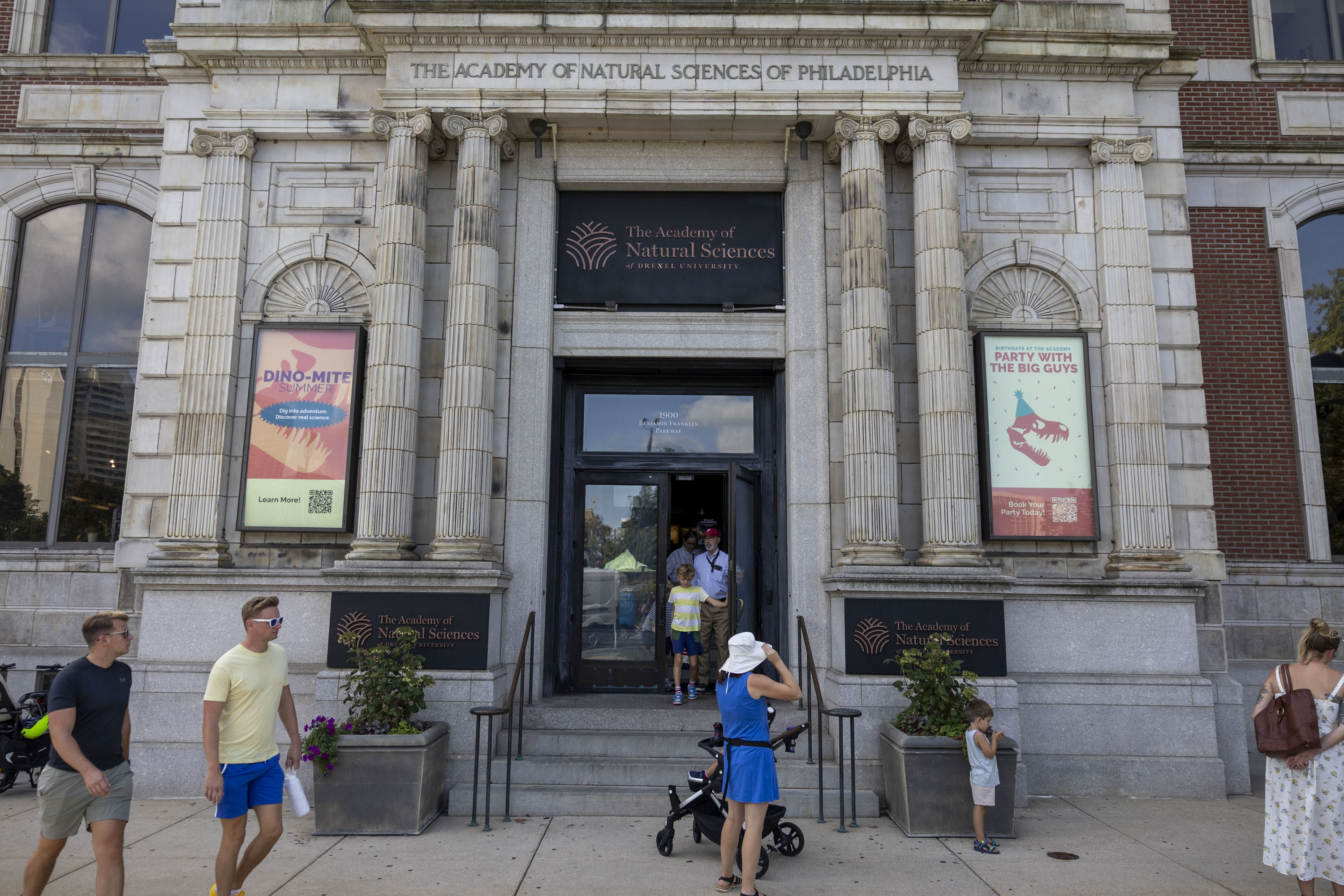
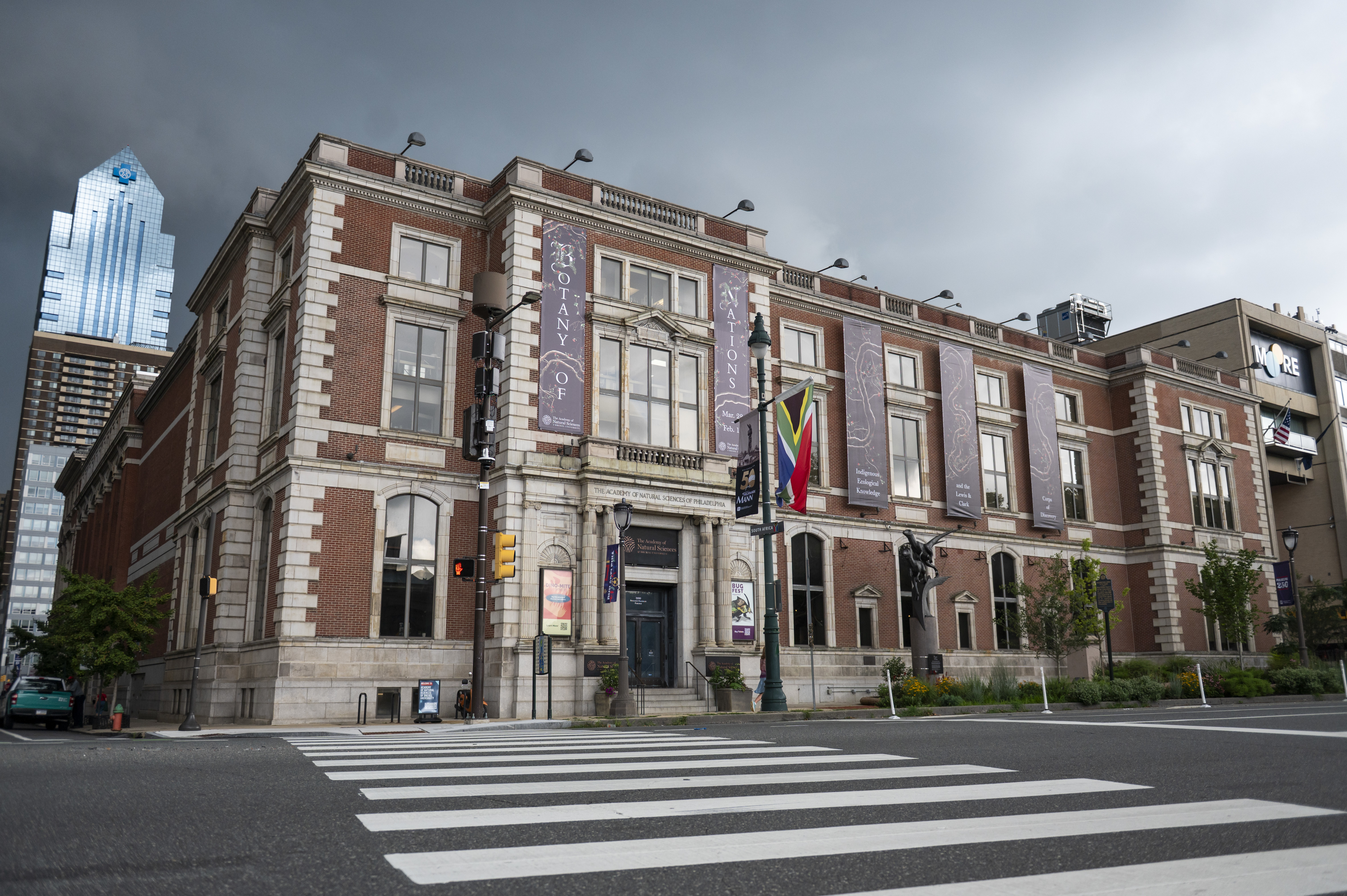
The outside entrance to the Academy of Natural Sciences of Drexel University on Friday, Sept. 4, 2026, in Philadelphia, Pa.Tyger Williams / Staff Photographer
Guillaume said the closure felt like part of a broader trend. “I feel like I’m watching everything get stripped away. From UArts to [defaced] murals and now this,” she said.
The closure of the museum doesn’t affect the rest of the Academy, which builds and maintains the collections and conducts research, all housed inside the Parkway structure. Though not part of the new terms of the deal between Drexel and the Academy, officials said, the goal is to relocate the museum’s collections and sell the 1876 building, owned by the Academy.
Mitchell Hirsch, a Spring House resident and retired scientist, brought his son and two grandchildren into the city to visit the museum.
“This is the only dinosaur museum in all of Philadelphia, and I think its loss will be a serious one,” he said.
Speaking over the din of the noisy museum,filled with children shouting with excitement, he said that the increased attendance was evidence of the institution’s impact, and hopes it signals a brighter future for the Academy museum.
“These institutions enrich all of our lives,” he said.
Theatre Philadelphia announced the nominees for the 2026 Barrymore Awards — recognizing the best theatrical productions, actors, directors, behind-the-curtain designers, and artists in the Philly area — on Friday morning.
This year’s selection includes productions from more than 30 regional theater companies across 22 categories during the 2025-2026 season. Old City’s Arden Theatre Company led the nominations, receiving 20 nods, while People’s Light in Malvern trailed close behind with 19. Other theater companies with 10 or more nominations include Inis Nua Theatre Company, which stages productions from Ireland and the U.K. at the Drake in Center City, the Tony Award-winning Wilma Theater on Avenue of the Arts, and Norristown’s Theatre Horizon.
“In the 250th year of our nation, Philadelphia theaters gave us the fuel we needed to get out of our houses and filled our year with great theater,” said Darnelle Radford, executive director of Theatre Philadelphia, in an email to The Inquirer. “We laughed, we cried, we got fired up and while we are celebrating our nominees, we are really celebrating the resilience of Philadelphia theater and we want the region to know there is world-class theater in our world-class city!”
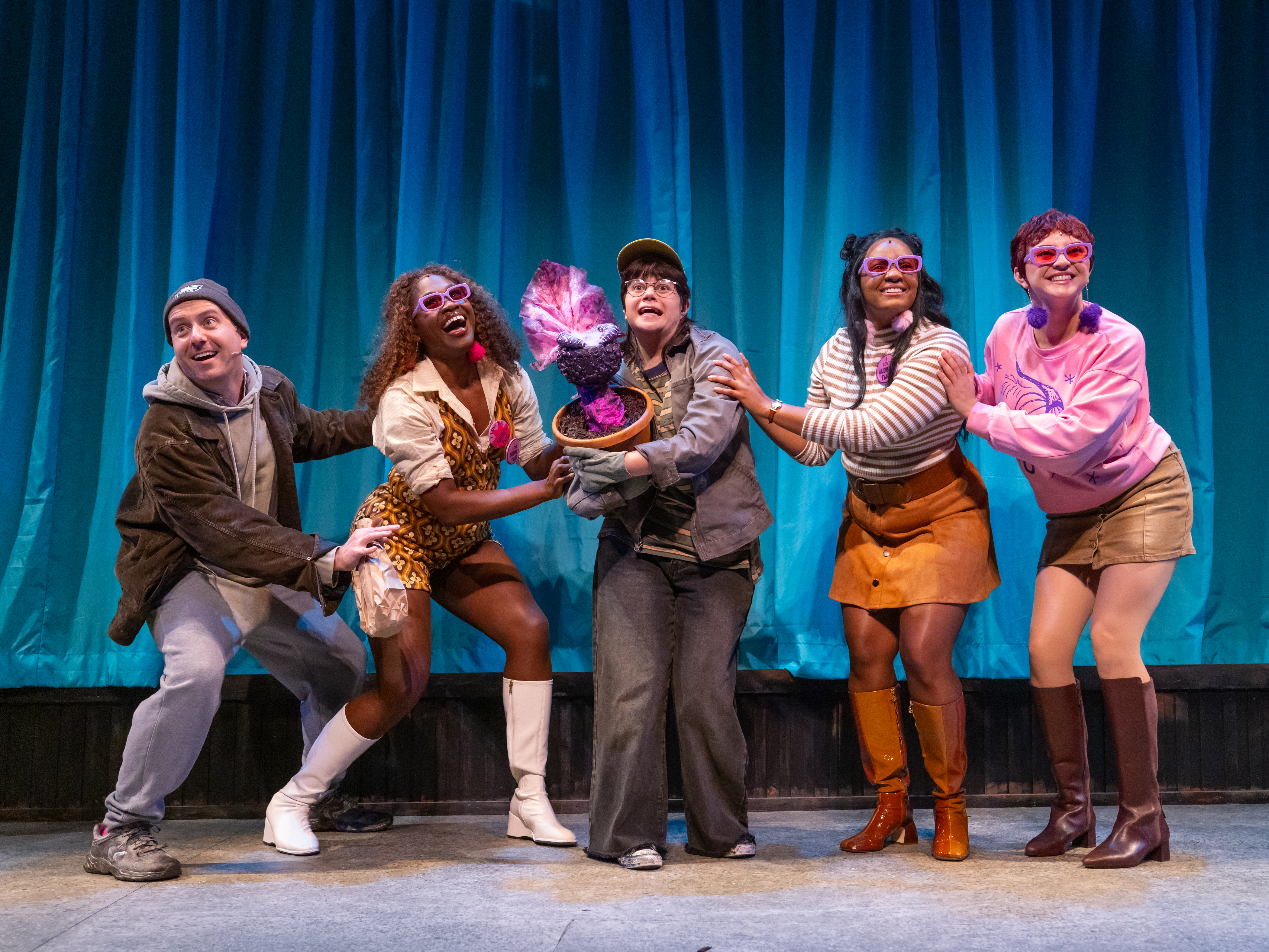
The 2025 production of the beloved classic Little Shop of Horrors, based on the 1960 monster comedy, was a clear favorite among Barrymore voters. Directed by Molly Rosa Houlahan and presented by People’s Light, the musical is up for 11 awards including outstanding overall production of a musical, direction, costume design, and props or puppetry design, a new Barrymore category this year.
Little Shop actors Anna Faye Lieberman and Jessica Money earned nods for lead performances in a musical, while their supporting actors Mary Elizabeth Scallen and Andrew Kane were nominated in the corresponding category; they’re also in the running for outstanding musical ensemble.
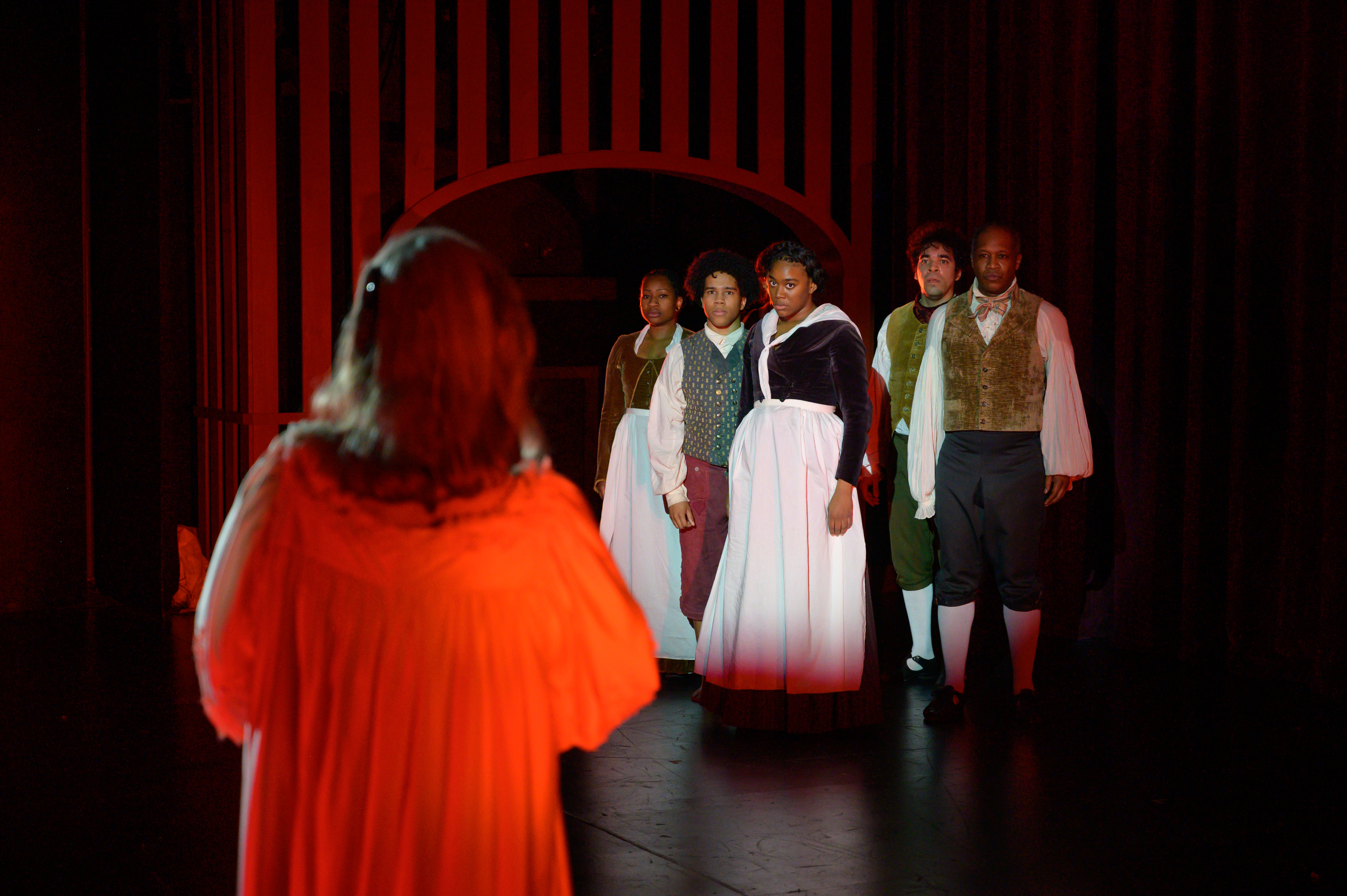
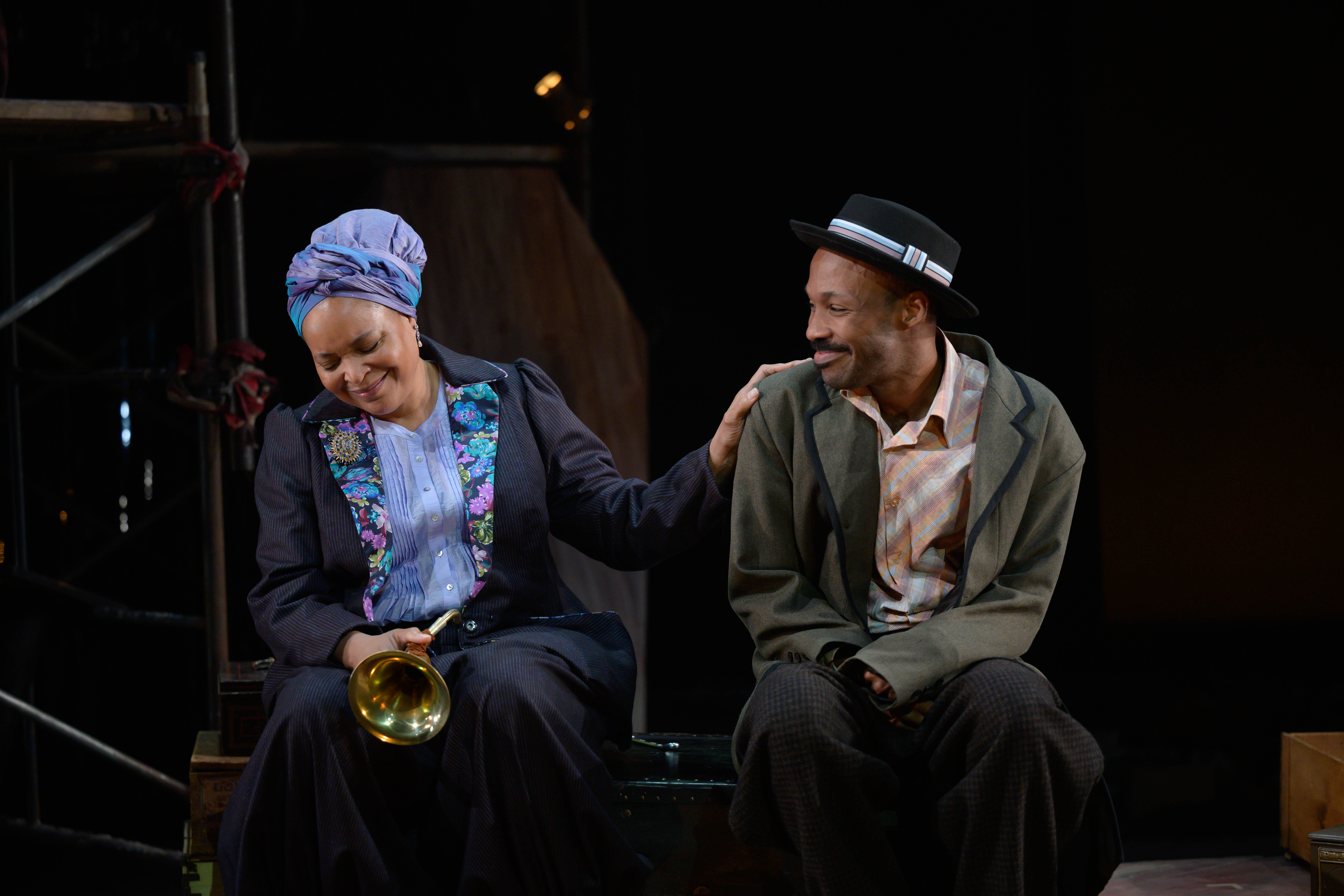
From left: Nancy Boykin, Ciera Gardner, Jayson Brown, Jada Mayo, Anthony Martinez-Briggs, and Steven Anthony Wright in “The Most Spectacularly Lamentable Trial of Miz Martha Washington,” nominated for nine Barrymore Awards.Johanna Austin
Miz Martha received nine nominations, including outstanding production of a play, choreography/movement in a play (for Dominic Moore-Dunson), ensemble, and design categories in scenic, costume, and lighting. (Two other Ijames’ plays, the world premiere of Wilderness Generation and his 2023 play Good Bones, are previous Barrymore nominees.)
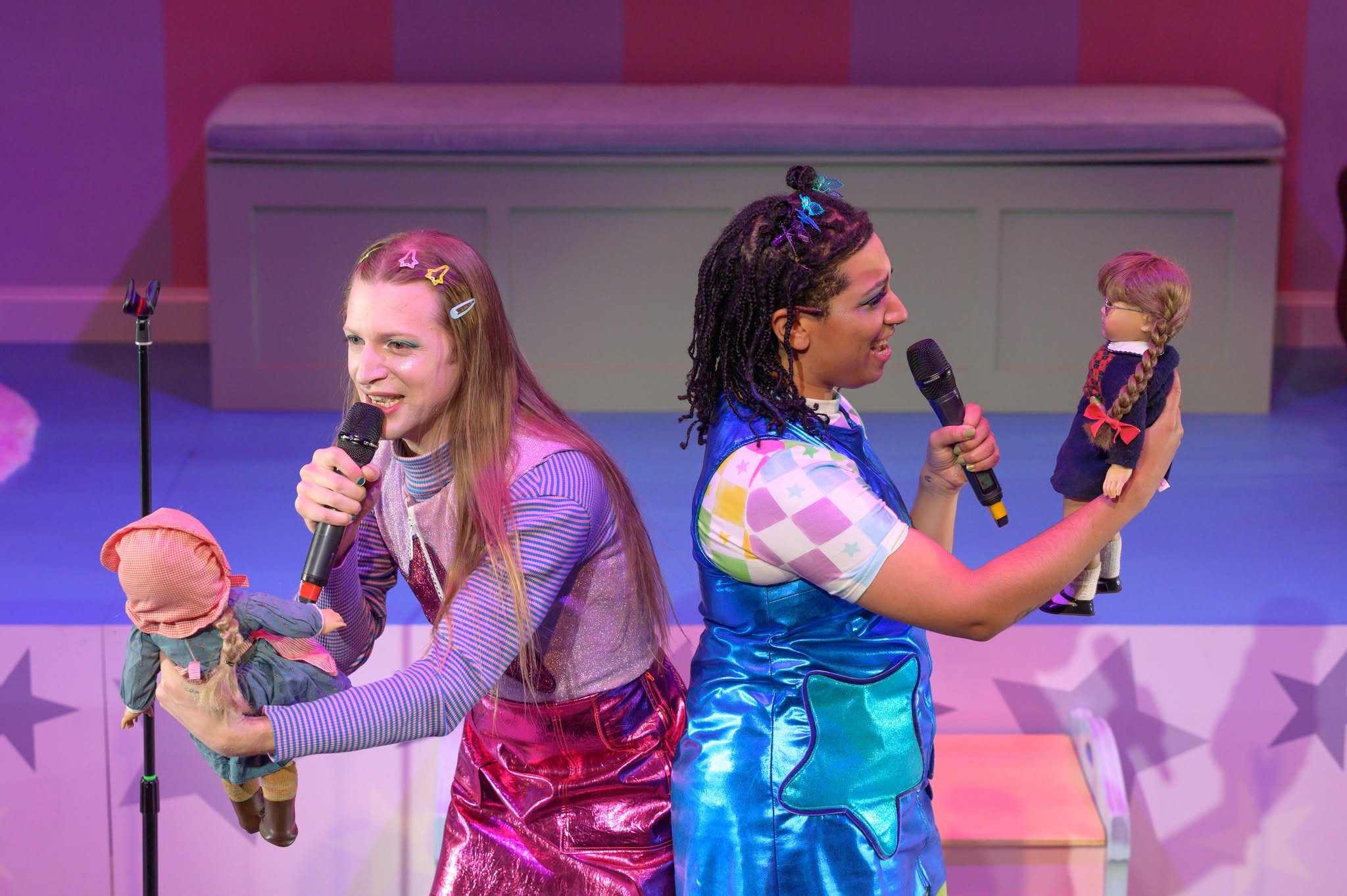
Two theater artists, Pax Ressler and Jordan McCree, received three nominations each. For Girl Dolls: The American Musical, which they created with Jackie Soro in collaboration with Bearded Ladies Cabaret, Ressler is up for outstanding original music, music direction, and original production. McCree is also in the running in the original music category for their work on Miz Martha, in addition to two nods for outstanding sound design in Miz Martha and Philadelphia Theatre Company’s Caesar.
Seven artists received double nominations. Theatre Horizon’s incoming artistic director, Amina Robinson, was nominated for outstanding direction of a play for Primary Trust and of a musical for Ain’t Misbehavin’, while Brett Ashley Robinson received nods for her direction of Miz Martha and her lead performance in the role of narrator inThe Greatest Play in the History of the World.
New this year: Stage managers for the nominees in outstanding overall productions in play and musical categories are now named in the Barrymore Awards nominations list. It’s part of the organizers’ efforts to spotlight the pivotal behind-the-scenes work that stage managers contribute to each show. (The awards recognize all participating artists for the winning productions.)
“As the shepherds of these creative teams, the stage managers facilitate and encourage the smooth cohesion of all the incredible artists, technicians and administrators from all corners of the theater that make these Overall Productions so outstanding,” said CJ Higgins, Theatre Philadelphia’s director of programming and operations, in an email.
Theatre Philadelphia also grants the Philadelphia Award for Social Insight, celebrating “the ability of theatre to illuminate the way we live and interact with others as we seek to build community,” reads the description. This year, 12 productions are nominated for the recognition, which comes with a $25,000 cash prize funded by the Virginia Brown Martin Fund of the Philadelphia Foundation.
The 2026 Barrymore Awards ceremony will be held on Monday, Nov. 16, at 7 p.m. at the Suzanne Roberts Theatre in Center City.
See the full list of nominees here:
Outstanding overall production of a play
Patreshettarlini Adams — The Most Spectacularly Lamentable Trial of Miz Martha Washington, The Wilma Theater
Celia HuttonJohns — Same Team, Inis Nua Theatre Company
Brigitte Rottman — Little Shop of Horrors, People’s Light
Brigitte Rottman — Wishing to Grow Up Brightly, Theatre Horizon
Gina Giachero — Falsettos, Arden Theatre Company
Outstanding outdoor production
A Bottom’s Dream — Shakespeare in Clark Park
Twelfth Night, O Lo Que Quieras — Delaware Shakespeare
Fraternity — Theatre in the X
Outstanding original production
Jackie Soro and Pax Ressler — Girl Dolls: The American Musical, Bearded Ladies
Chaz T. Martin — Class C, Azuka Theatre and Simpatico Theatre
Alice Yorke and Scott R. Sheppard — Lions, Lightning Rod Special
John Bellomo — Sacco & Vanzetti: A Tragedia dell’Arte, Curio Theatre Company
Chris Davis — The Presented, Chris Davis
Dan Kitrosser — Marsha Blovotnik and the Magical Chicken Soup, Theatre Ariel
Saymoukda Duangphouxay Vongsay — Seng’s Hair Salon, InterAct Theatre Company
The Philadelphia award for social insight
Inheritors — Philadelphia Artists’ Collective
Draw the Circle — Hedgerow Theatre Company
Good Bones — Arden Theatre Company
The White Chip — New Light Theatre
Sacco & Vanzetti: A Tragedia dell’Arte — Curio Theatre Company
Ain’t Misbehavin’ — Theatre Horizon
The Woman Question — People’s Light
The America Play — Wilma Theater
Franklinland — Lantern Theater Company
Same Team — Inis Nua Theatre Company
The Great Privation — Theatre Exile
1 Pound 4 Ounces — Azuka Theatre and Simpatico Theatre
Correction: This article has been updated to reflect updated information from Theatre Philadelphia. Eliana Pinckney and Andrew Kane’s names have been corrected and the nominee for outstanding sound design for ‘JOB’ is Andrew Nelson.
The Continental Army won the Revolutionary War in 1783.
But, in the four years following that victory, the new country wasn’t very united. In fact, young America was only a loosely organized group of 13 colonies, with governors fighting to control their own fiefdoms.
That left the states vulnerable to world powers eager to scoop up the fragmented new nation. Add to that, America was broke, with debts owed to France, Spain, and the Netherlands after the Revolutionary War.
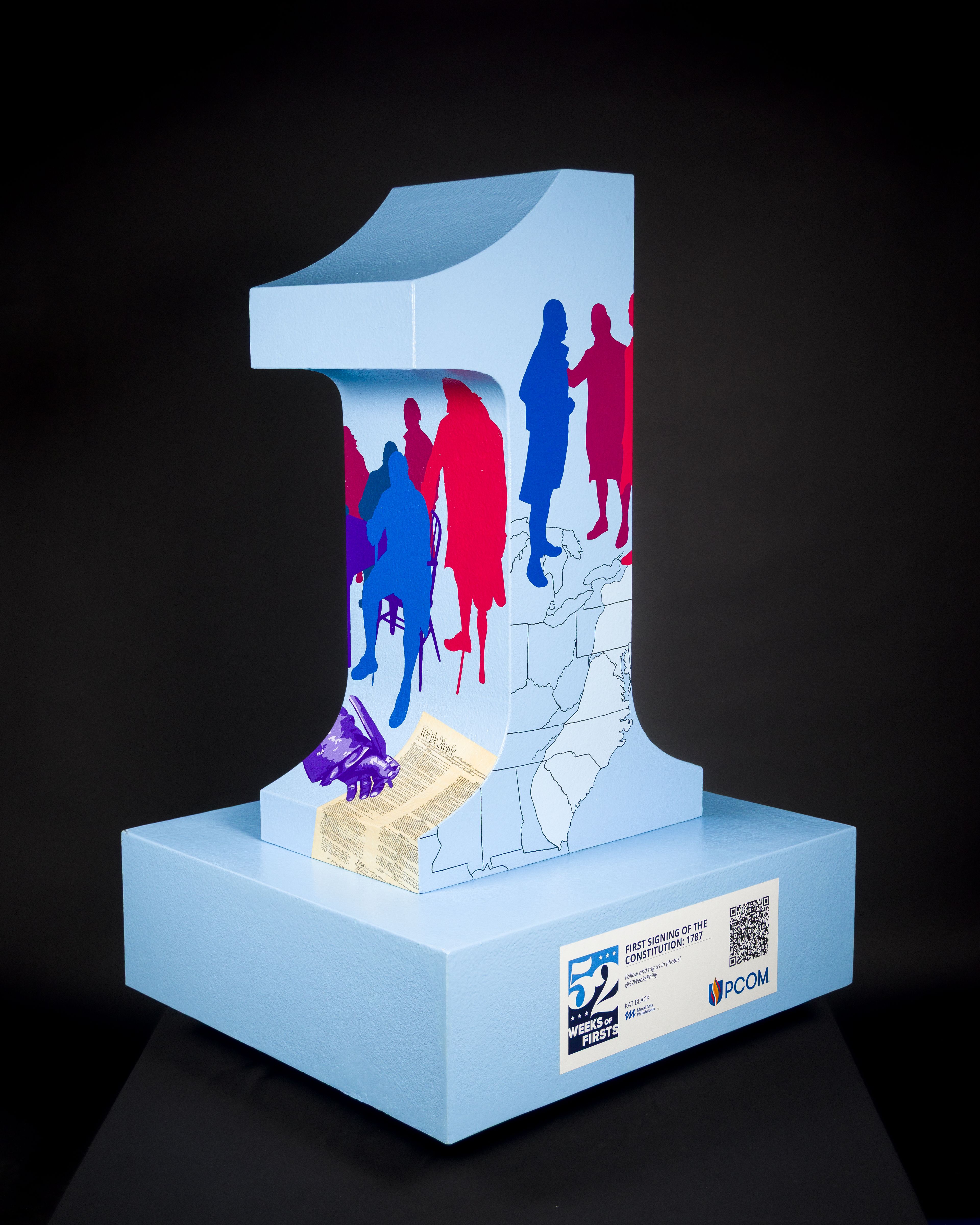
Kat Black’s design emphasizes the dedication and collaboration behind the signing of the U.S. Constitution in 1787.Kat Black for Colibrí Workshop
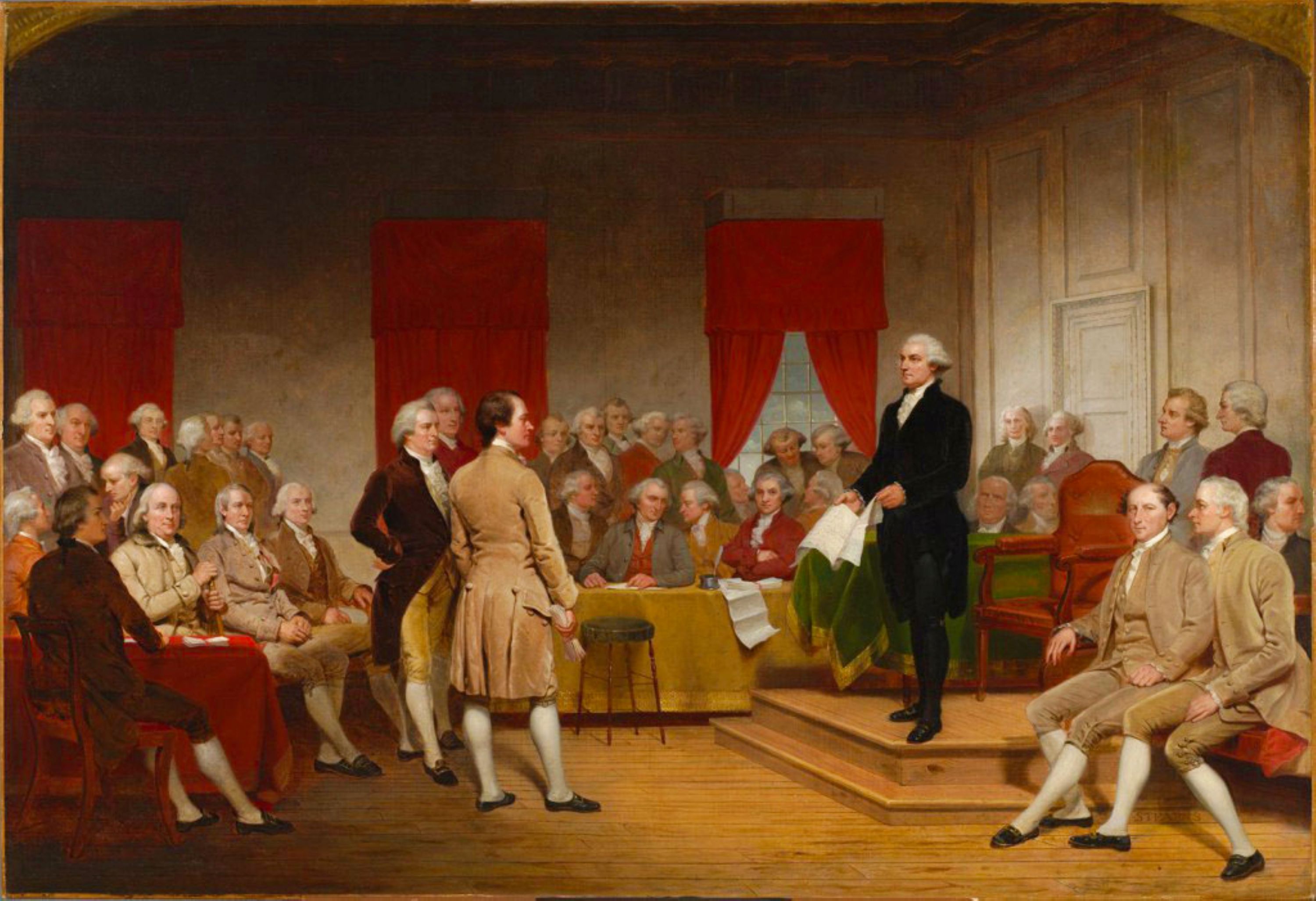
Petrified their “great experiment” would be short-lived and eight years of a violent revolution fought in vain, James Madison, Alexander Hamilton, and John Jay convinced George Washington to convene a Constitutional Convention at Independence Hall in May 1787.
By September, the delegates had worked out the brass tacks of the American government and signed the Constitution, establishing the political system that would help America become a world power.
This firstival will kick off a series of events honoring the Constitution and includes First Amendment Day on Sept. 9 and Constitution Day on Sept. 17.
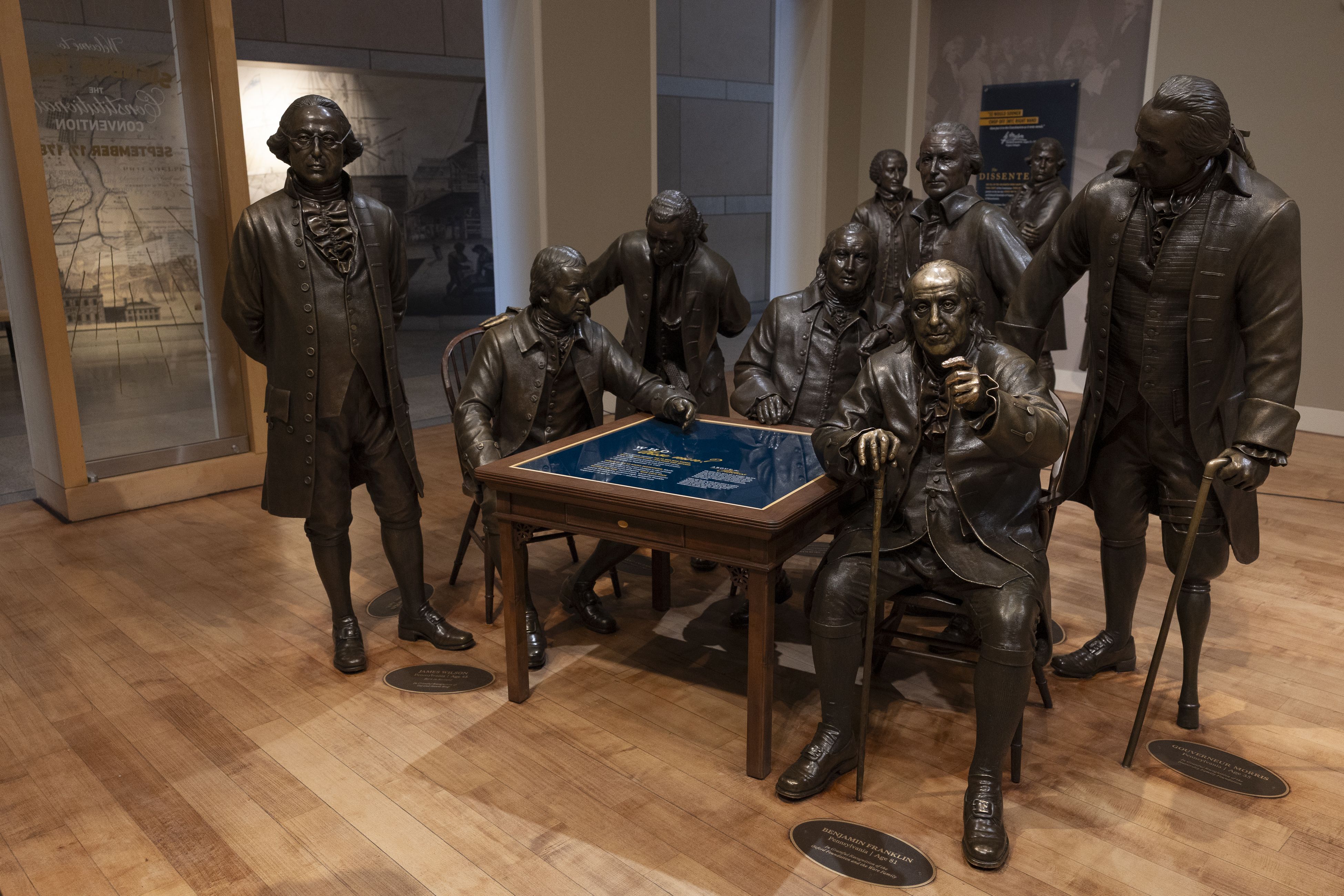
Statues of the delegates are on display at the National Constitution Center, 525 Arch St.Jason E. Miczek courtesy of the National Constitution Cente
“I think many of the Founding Fathers would be surprised to know the form of government they created is still going,” said Vince Stango, interim president and CEO at the National Constitution Center. “The Founders knew it was a ‘great experiment’ and … knew it would take work, compromise, and sacrifice.”
During the summer of 1787, 55 delegates from 12 of the 13 colonies — Rhode Island didn’t send delegates — wheeled and dealed to create a government by the people, controlled by the people, and unable to be corrupted by the people.
The Founding Fathers didn’t agree on much, but none of them wanted to be ruled by a monarch and insisted on a government with checks and balances.
Enter James Madison, author of the Virginia Plan that proposed a strong national government with three branches: executive, legislative, and judiciary.
After the three branches of government were established, a series of compromises were made. Among them, a legislative branch that afforded each state two Senate seats. The number of members of the House of Representatives for each state would be chosen based on population.
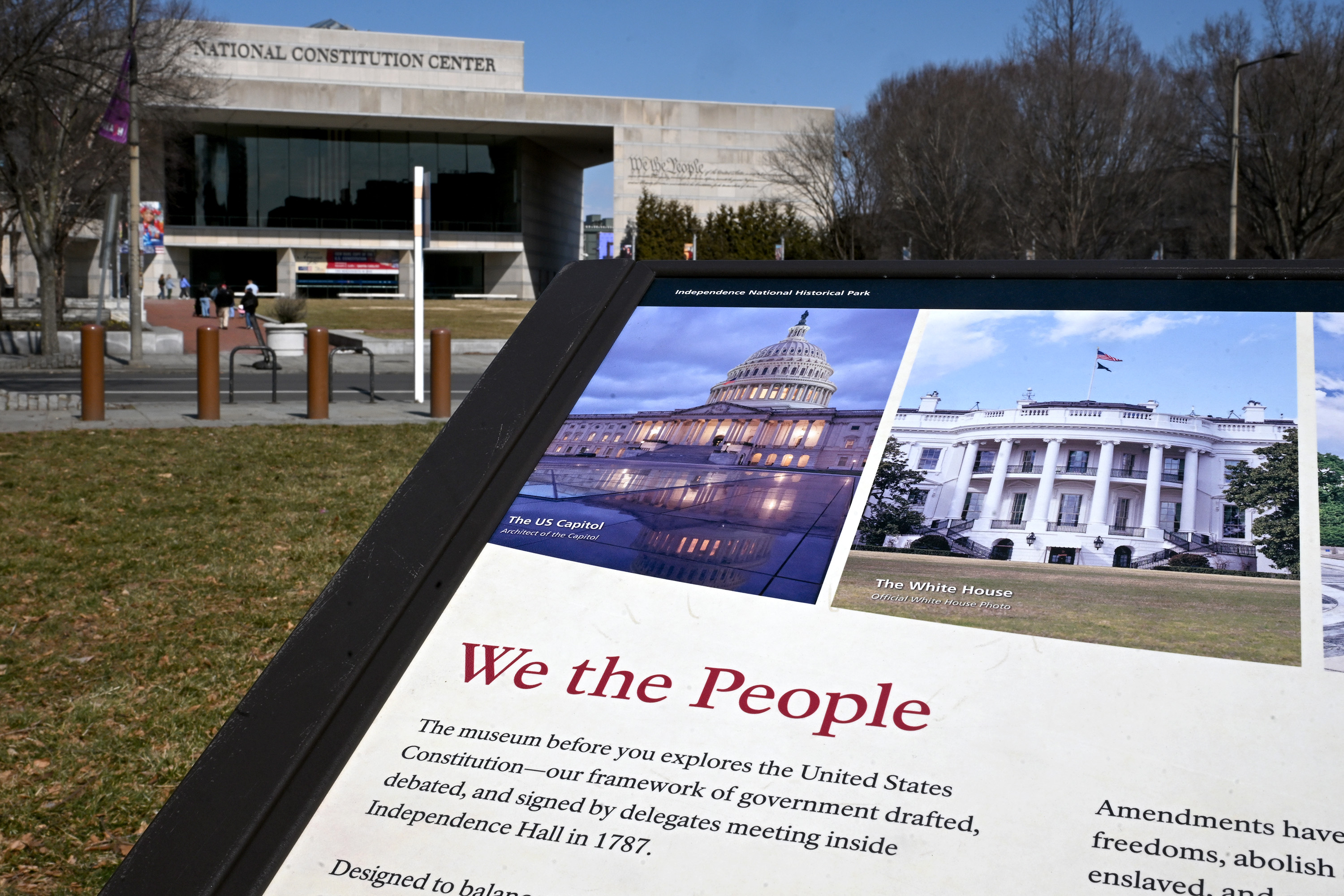
The National Constitution Center, 525 Arch St., is the site of this week’s Firstival, on Saturday, Sept. 5, from 11 a.m.-1 p.m.Tom Gralish / Staff Photographer
This set up a series of compromises that would institutionalize slavery. Enslaved Black people would be counted as three-fifths of a person to boost the Southern states’ population, giving them more representation in the House. Yet Black men — enslaved or free — would not have the right to vote anywhere until the 15th Amendment was ratified in 1870.
Compromises also included allowing the Atlantic slave trade to remain legal. Founders also inserted a Fugitive Slave Clause stating that if an enslaved person emancipated themselves, they could not be freed in the new state. These compromises, made to appease the South, instituted slavery as the law of the land, and paved the way for it to become the backbone of commerce that established America as a superpower.
During the convention, delegates also established the Electoral College. The Founding Fathers didn’t believe the average voter was intelligent enough to choose a president by majority vote.
Nevertheless, America officially became a constitutional republic.
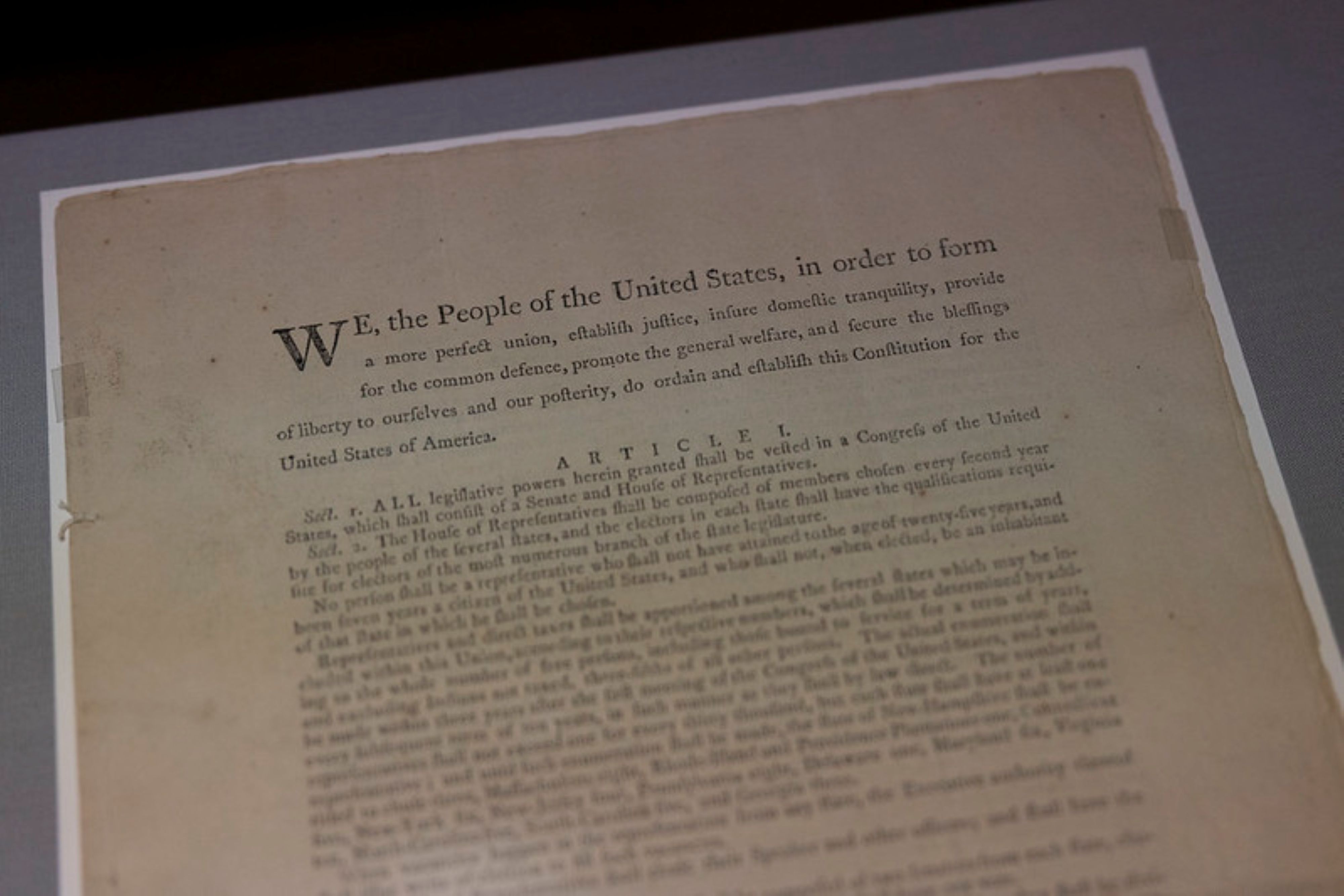
A copy of the United States Constitution, on exhibit in the National Constitution Center.Jason E. Miczek courtesy of the National Constitution Center.
Pennsylvania delegate Gouverneur Morris drafted the preamble and the Constitution’s seven articles between Sept. 8 and Sept. 12.
Although 55 delegates attended the Constitutional Convention, only 39 signed it on Sept. 17. The Constitution still had to be ratified. And there were still some issues.
The anti-Federalists — which included delegates and dissenters George Mason, Edmund Randolph, and Eldbridge Gerry — thought the power of government rested in the hands of the elite and advocated for a Bill of Rights.
After yet another of series of compromises, which included the promise of a Bill of Rights, the Constitution was ratified on June 21, 1788.
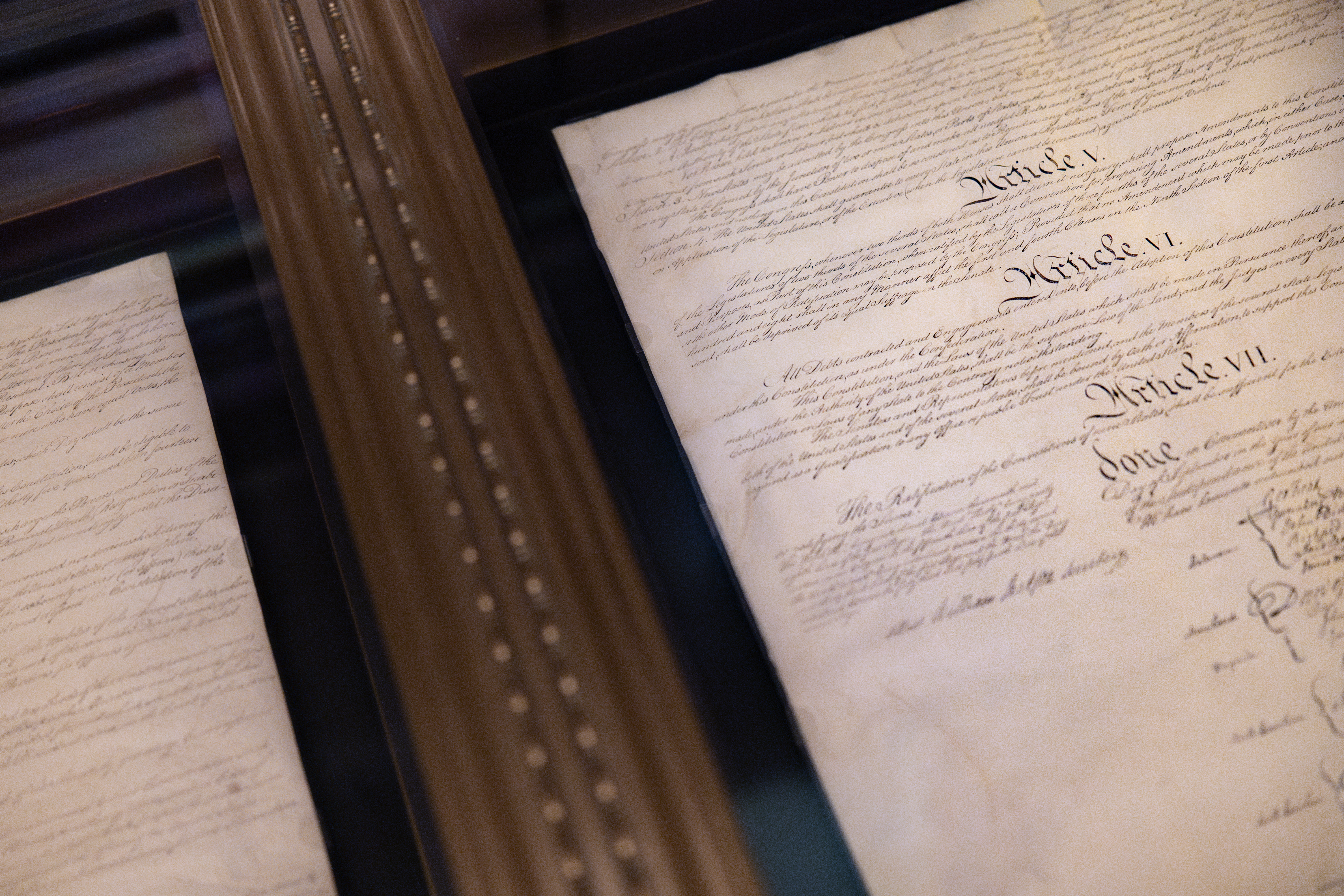
Article V of the Constitution, and the rarely shown fifth page, when it was on public display at the National Archives in Washington. MUST CREDIT: Tom Brenner / For The Washington PostTom Brenner
It went into effect on March 4, 1789, and on April 30 in New York, George Washington was sworn in as president of the United States.
On Dec. 15, 1791, Congress ratified the first 10 amendments of the Constitution, creating the Bill of Rights.
This week’s Firstival is Saturday, Sept. 5, from 11 a.m.-1 p.m., at the National Constitution Center, 525 Arch St.
After 205 years, the Saturday Evening Post, the famed magazine that printed its first issues on Ben Franklin’s Old City printing press and whose Norman Rockwell covers defined the optics of quintessential 20th-century Americana, will print its last issue early next year.
Subscribers received a letter in the September issue, which arrives in mailboxes this week, stating that the January/February 2027 issue will be the publication’s last printed edition. It will continue to publish online.
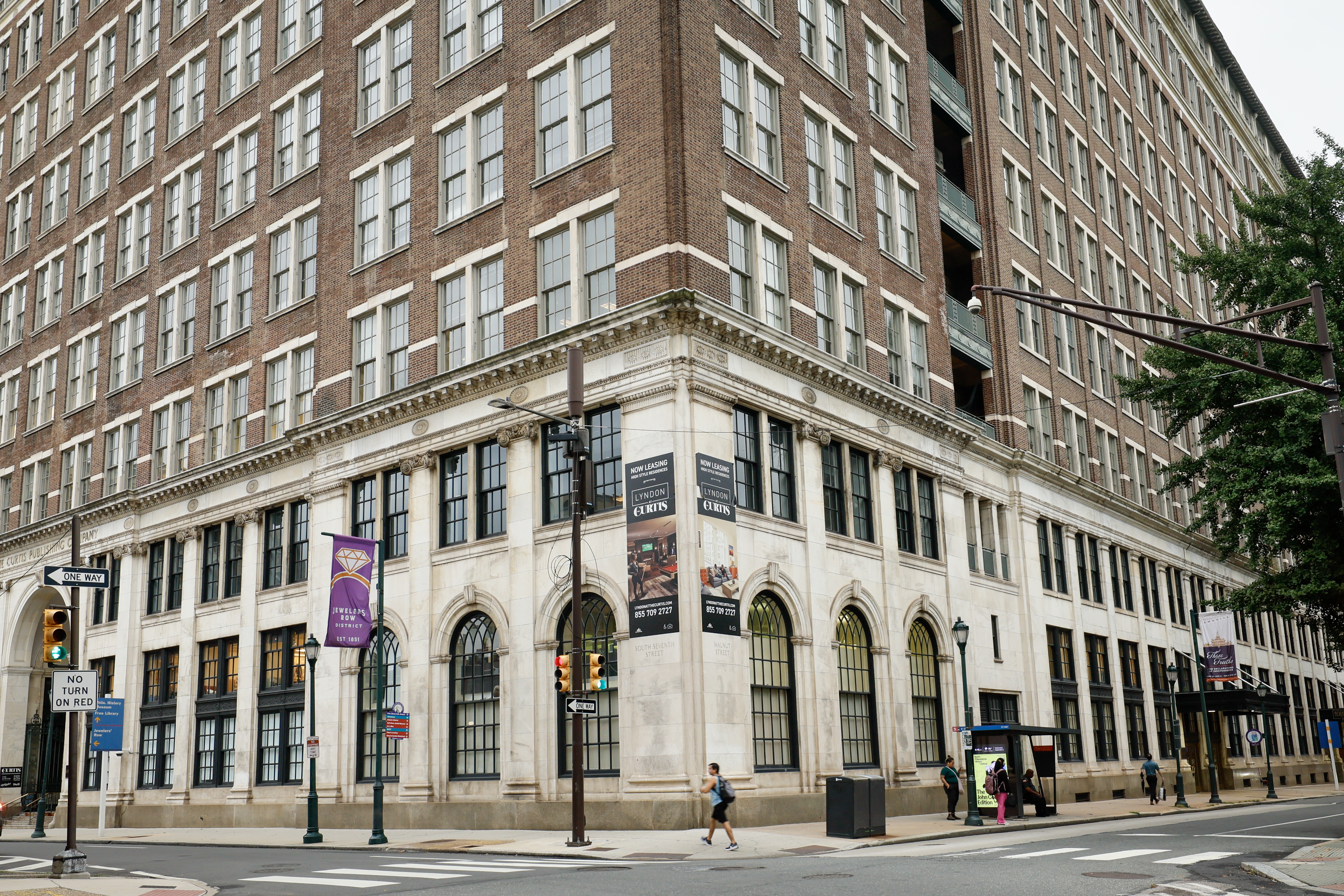
The Post, which was published from the Curtis Building at Sixth and Walnut Streets, from 1910 until 1969, was one of the standouts of 19th-century Philadelphia publisher Cyrus Curtis’ portfolio.
Like many other print publications, the change in readers’ habits has impacted the Post’s bottom line.
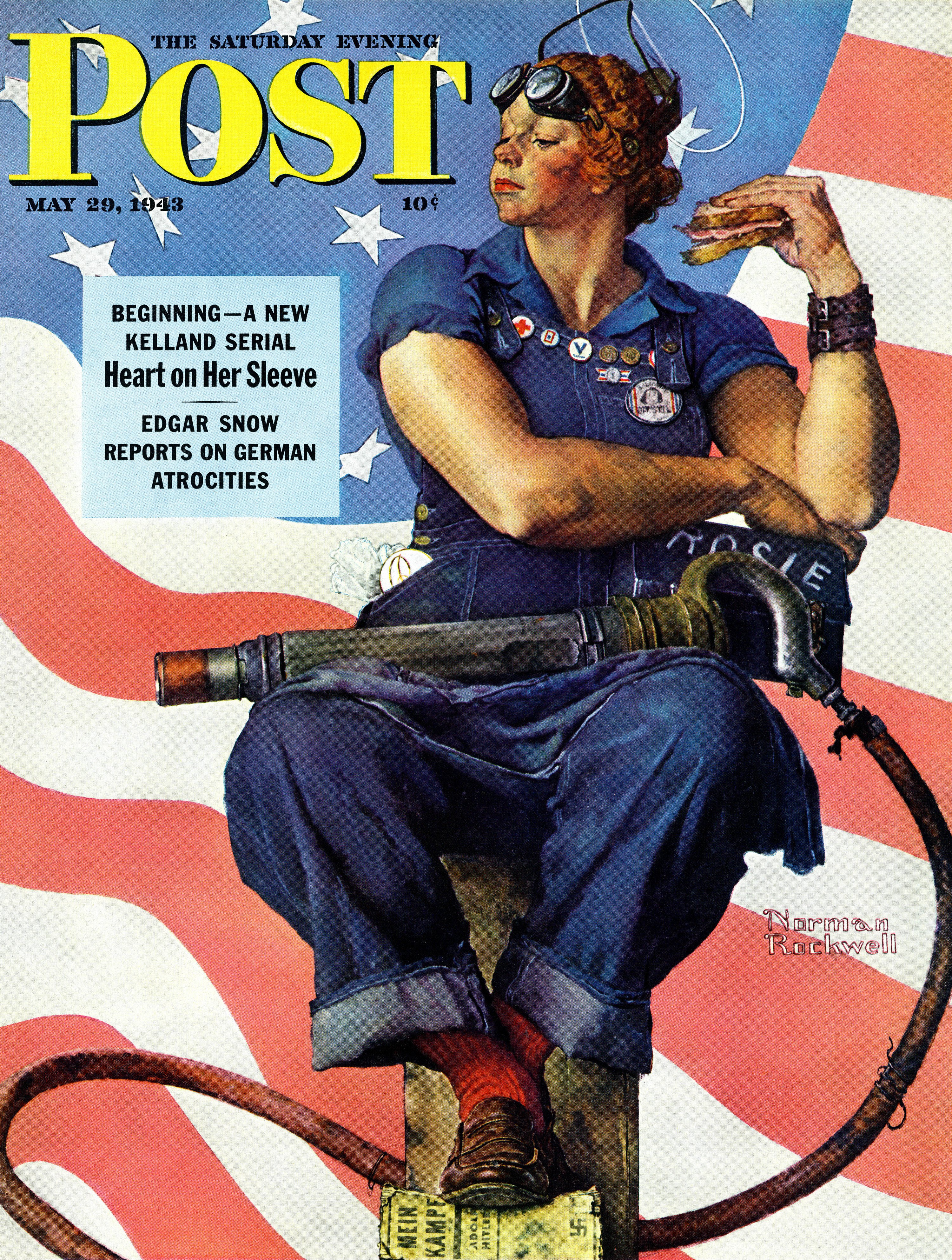
A Norman Rockwell artwork of “Rosie The Riveter,” on the cover of The Saturday Evening Post of May 29, 1943. The January 2027 issue will be the last Saturday Evening Post in print. The magazine, which debuted in 1821, will continue to publish new articles and fiction online.SEPS
“Advertising revenue has shifted away from print and we don’t have that 18-to-45-year-old demographic that does really well with TikTok,” said Joan SerVaas, the president and publisher of the Saturday Evening Post.
SerVaas’ father, Beurt, purchased the near bankrupt Post from the Curtis family in 1969 and moved the publication to Indianapolis.
Her mother, the late Cory SerVaas, who was a journalist and a physician, revamped the Post, adding coverage on health and wellness issues.
Joan SerVaas says she’s in talks with the University of Pennsylvania to purchase the mostly Philadelphia-centric ephemera that includes minutes from Curtis Publishing’s board of directors’ meetings dating back to 1886. Included in the collection are also correspondence from famous writers and artists including Rockwell and J.C. Leyendecker. Many of the original magazines going back to 1821 are also in the catalog.
“It’s really important to us that we preserve this history,” SerVaas said. “And Philadelphia is a wonderful place for it to be preserved because it’s the magazine’s home. Without Philadelphia, we would have no Post.”
The Post may have been based in Indianapolis for more than a half a century, but its media roots are in colonial Philadelphia’s cobblestoned streets.
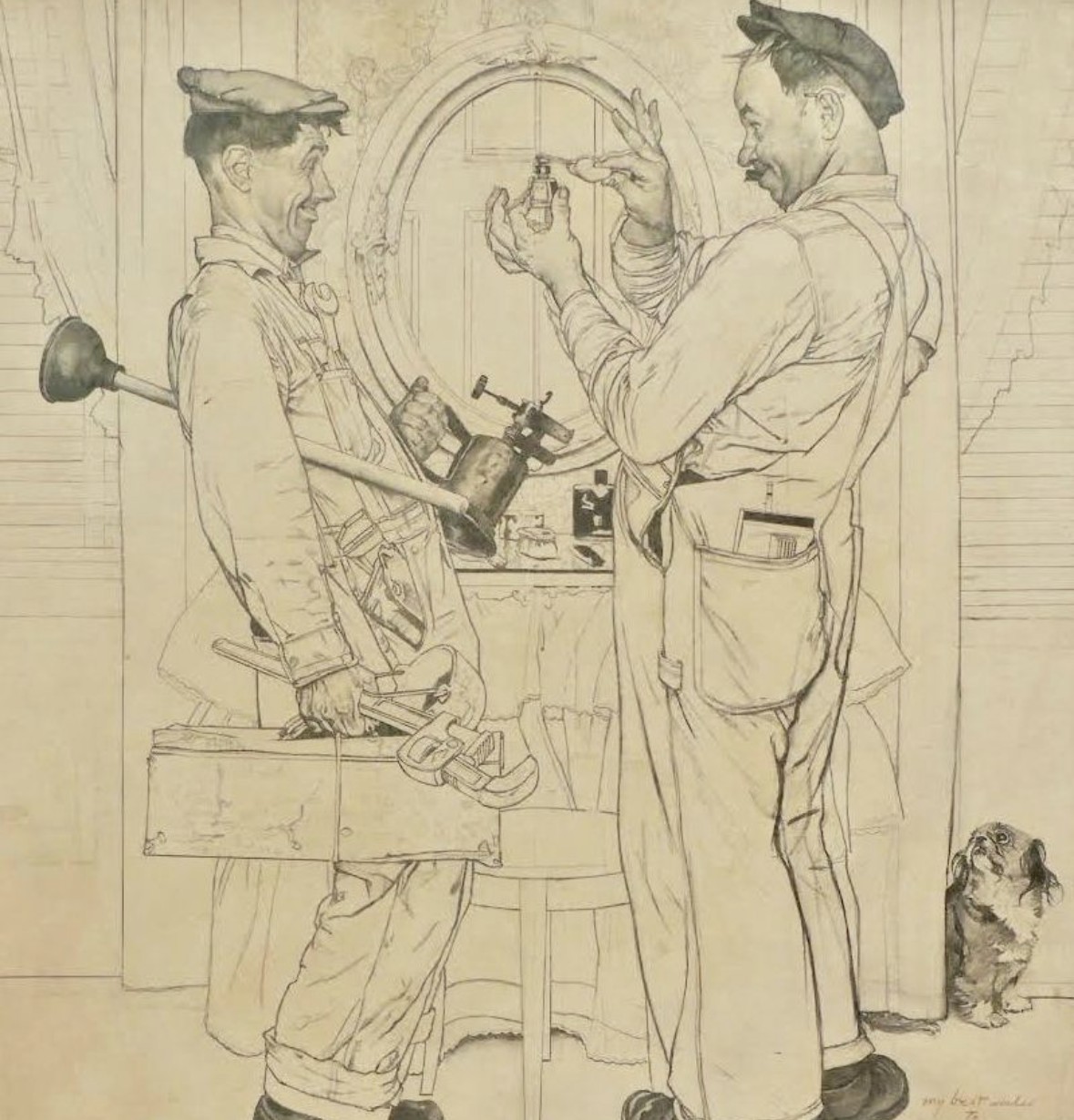
Norman Rockwell’s “Preparatory Drawing for Plumbers,” Saturday Evening Post cover, 1951.courtesy of Woodmere
In 1728, Benjamin Franklin took over the publication of the Pennsylvania Gazette, a general-interest magazine that covered politics, science, and government out of his print shop at No. 53 Market St. By the 1740s, it was the most popular publication in the colonies. Franklin retired in 1748 and the Gazette continued to publish until 1800, 10 years after his death.
By the early 1820s, Franklin’s print shop was owned by Samuel Atkinson. He, along with Charles Alexander, started a newspaper that would carry on the tone of Franklin’s Gazette but print in time to be delivered to Philadelphians in the Saturday evening mail. The Post carried news, but readers liked it because it reported on the drama — including letters — between ex-presidents and political enemies John Adams and Thomas Jefferson. The death of Napoleon was also a big story.
The Post also printed essays, stories, and poems written by major American writers: Edgar Allan Poe, James Fenimore Cooper, Harriet Beecher Stowe, Washington Irving, and Mark Twain. Circulation ebbed more than it flowed until 1897 when Cyrus Curtis — who transformed a farming magazine into Ladies’ Home Journal, the first magazine to reach a circulation of one million — purchased it from publisher A.W. Smythe for $1,000, about $40,000 in today’s money.
The Saturday Evening Post was published from the Curtis Building from 1910 to 1969. Elizabeth Robertson / Staff Photographer
Curtis wanted the Post to be for men what Ladies’ Home Journal was for women: cutting edge, insightful, and of the moment.
In 1899, Curtis hired 32-year-old literary editor George Horace Lorimer, ushering the magazine into its 20th-century heyday.
Lorimer would be one of the first editors to print the work of Joseph Conrad, O. Henry, Rudyard Kipling, and Jack London. And in 1916, when he was just 22, Rockwell received his first commission at the Post, beginning a 47-year relationship that produced 322 original cover illustrations.
Rockwell — whose most iconic paintings include the 1943 Freedom of Want of a family celebrating Thanksgiving dinner; the quirky 1953 Triple Self Portrait, and the 1963 memorial image of image of John F. Kennedy — was just one of many artists who got their break in the art world at the Post.
The Post helped fuel a community of illustrative artists most of whom lived in Philadelphia support themselves for more than 150 years, said William R. Valerio, executive director of Woodmere, the Chestnut Hill museum whose collection includes several Saturday Evening Post covers.
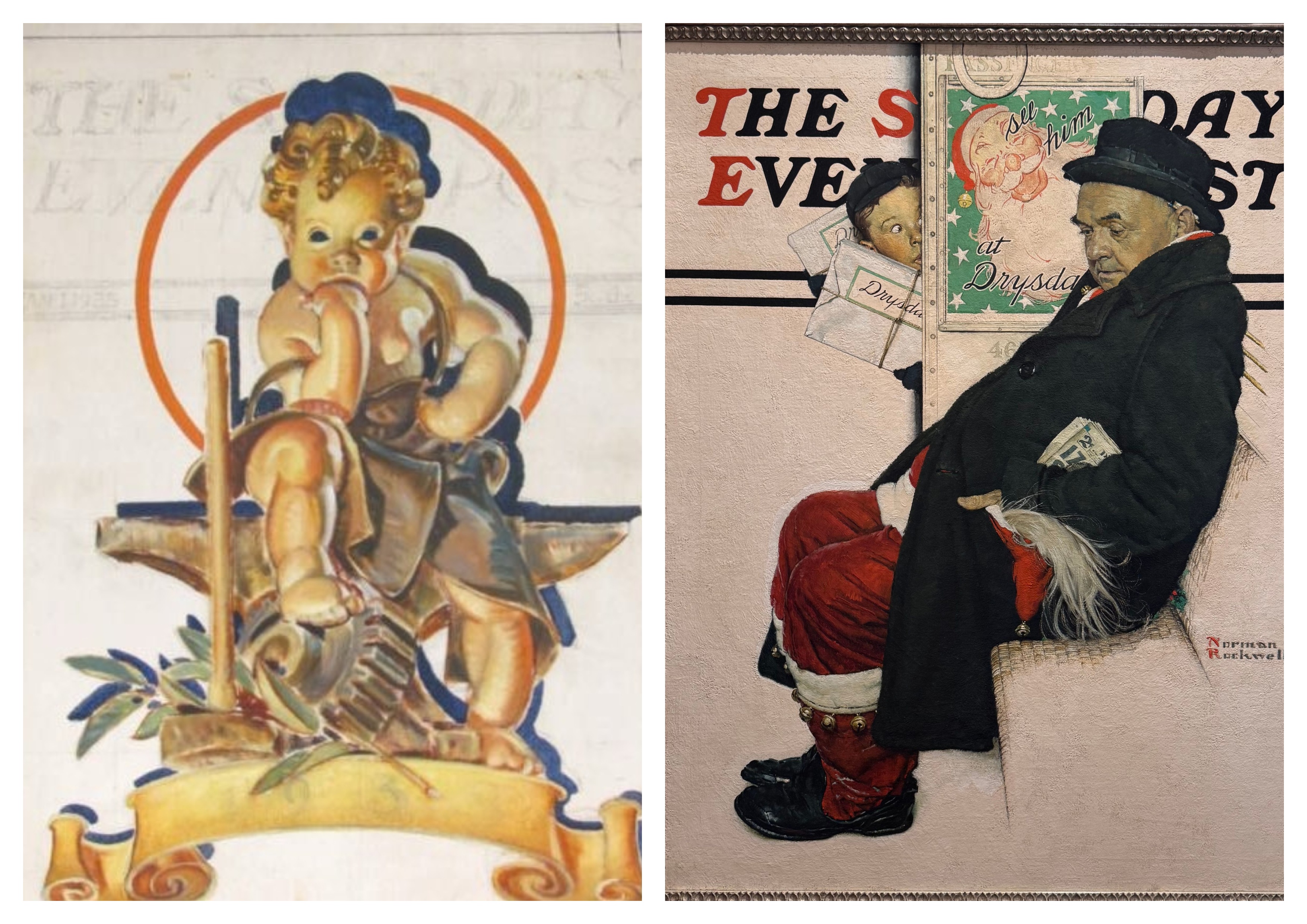
Rockwell’s Santa on a Train, and his Preparatory Drawing for Plumbers have both been exhibited in Woodmere’s Frances M. Maguire second floor gallery, an homage to Philadelphia-based illustrative artists. Many of whose work has graced the cover of the Post.
“Violet Oakley, Jessie Wilcox Smith, Robert Riggs, Benton Spruance, their work has all been in the Post,” Valerio said. “No artist works without community, and the Post helped create a vibrant community of artists in Philadelphia.”
The museum opened in 1828, and moved to its current location on the Benjamin Franklin Parkway in 1876. Its last day with regular hours for the public will be Sunday, Sept. 27.
For some, the greatest loss was the sense of wonder children get when they peruse the museum, see bugs squirm, explore enormous nest displays and dioramas and, of course, lay eyes on the gigantic dinosaur skeleton.
“I’ll always remember the first time I went to the museum and I saw the dinosaur bones,” said Sakura Okuri, a 53-year-old retired FBI special agent who grew up in Germantown. “I’m just sorry that young kids aren’t going to be able to have that memory.”
Okuri, who now lives outside Pittsburgh, took comfort in knowing that if he missed something in one of the rich, expansive exhibits he’d have another chance because “it would always be there for me,” he said. “Apparently that’s not the case.”
The exterior of the Academy of Natural Sciences on Aug. 5.Allie Ippolito / For The Inquirer
The news landed hard for 9-year-old Mira Thompson, who was leaving the Free Library of Philadelphia’s Parkway Central branch with her dad Tuesday afternoon when she got word. She’d gone to the Academy museum on multiple school field trips recently and was looking forward to more visits.
“That’s where I learned about pH testing last year,” Thompson said. “I didn’t know how to do that before going. I’m going to miss just being there.”
For many, it was a site of family bonding. Temple University senior Sean McClendon recalled fond memories there with his Opa, his grandfather, who worked at the museum taking care of owls and birds. Michael Ginsberg, a 60-year-old Northeast Philly native, remembers zealously volunteering to hold a hissing cockroach during a presentation at the museum to “get a rise out of my daughter.”
“My wife was not a fan of that,” he recalled. “‘Go wash your hands,’” she instructed.
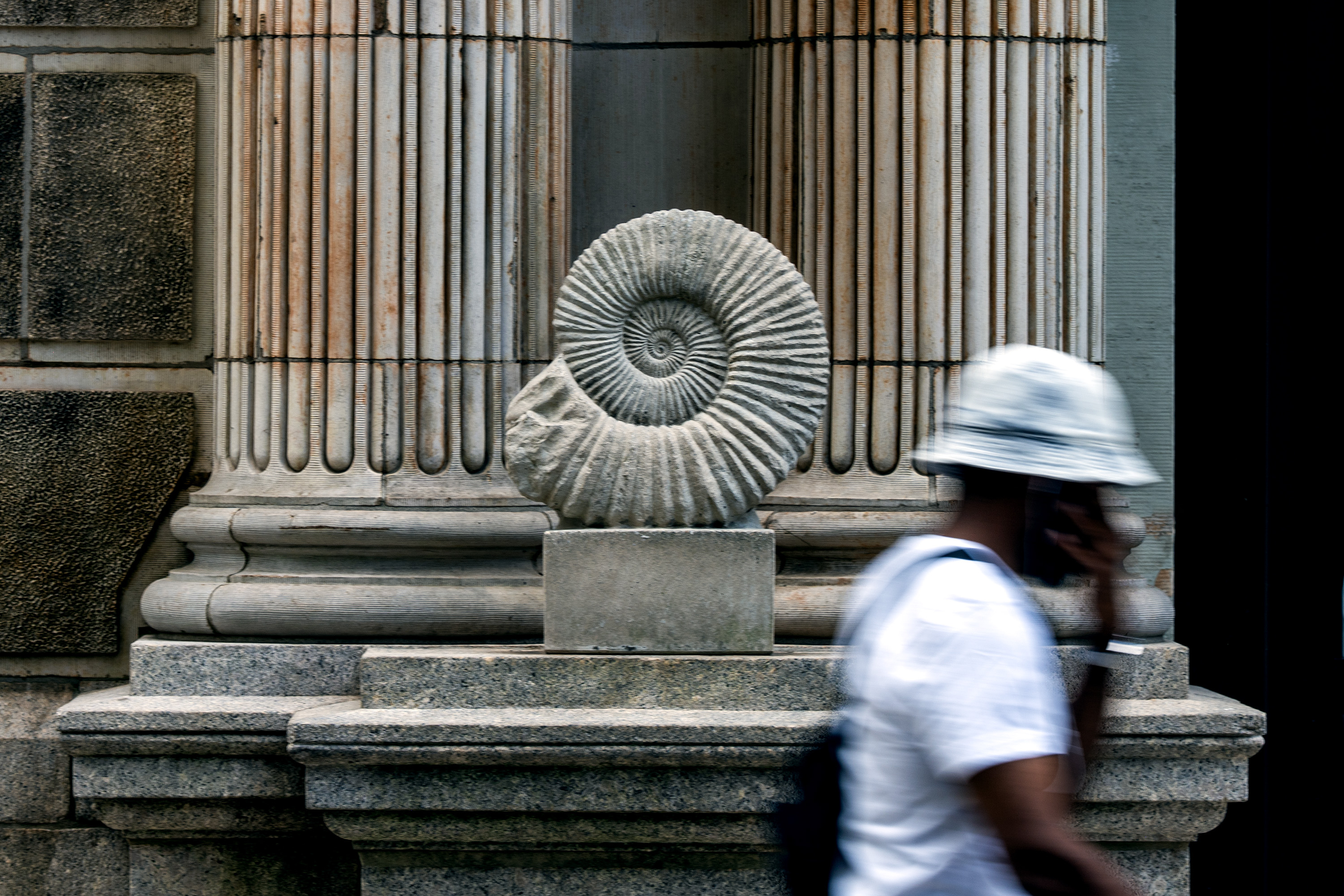
One of two shell sculptures placed on either side of the entrance on the 19th Street entrance to the Academy of Natural Sciences of Drexel University.Tom Gralish / Staff Photographer
Ginsberg’s dad took him there when he was in first grade. Seeing the dinosaur bones in real life was a thrill after only knowing them on the pages of library books. He was shocked to see they were brown and not white like in renderings.
When he became a dad, himself, he started bringing his daughter.
“Dad, why are all the animals dead?” he remembered his then-toddler asking.
“They’re stuffed, hon,” he explained to her. “It’s a really cool art. It’s a way to get you closer. Just trust me, this is really cool stuff.”
The aim , ultimately, is to relocate the Academy’s collections and sell the building, which has a lot of deferred maintenance needs, said a source close to the talks between Drexel and the Academy, who asked not to be identified.
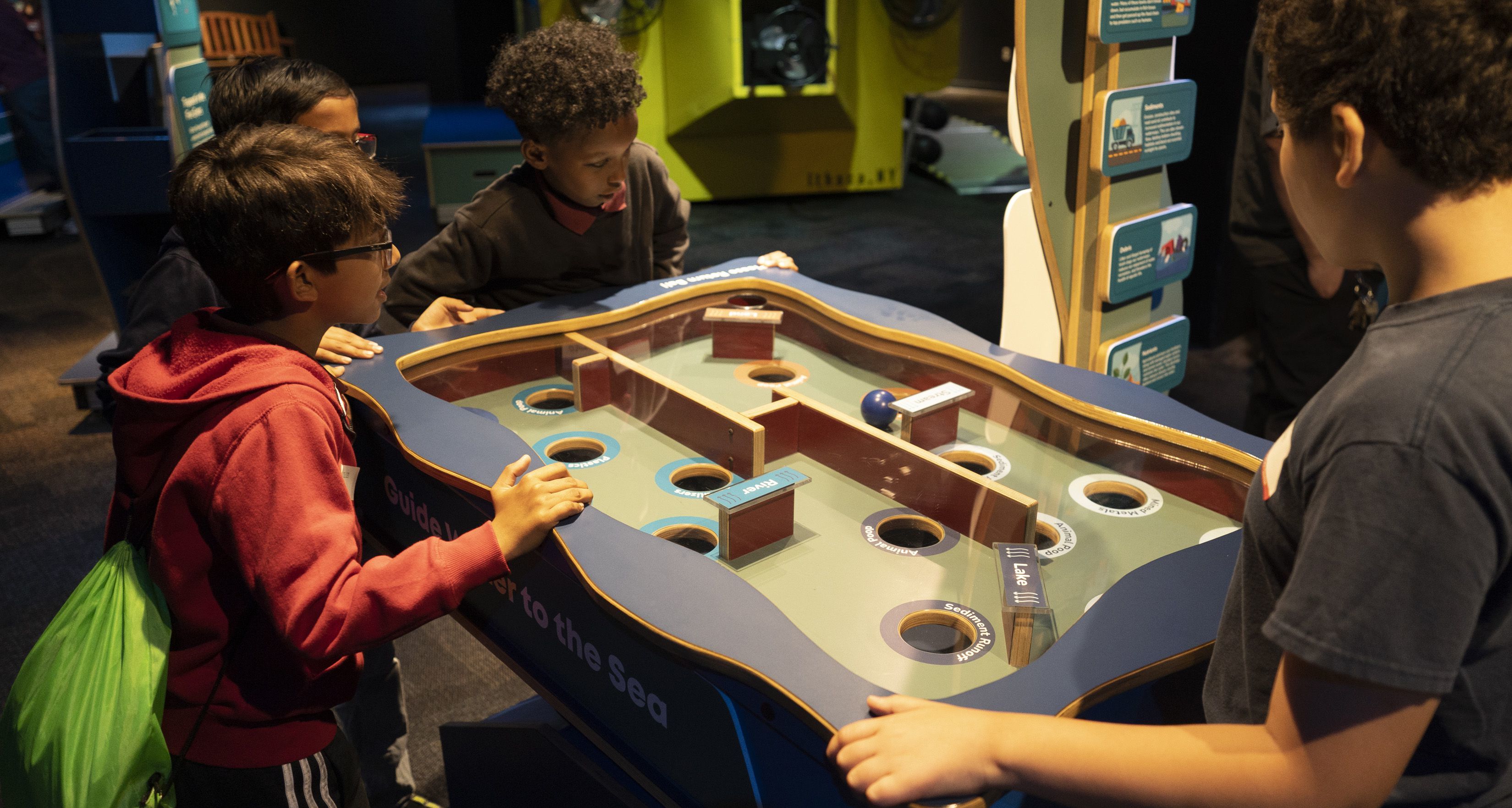
The interactive “Ocean Bound” exhibit at Academy of Natural Sciences in 2023.Courtesy of the Academy of Natural Sciences of Drexel University
Online, tributes poured in. Some said the museum inspired them to study museum education, others brought their kids there when they learned to walk, they said, or when the air-conditioning in their homes broke in the summer. Some parents considered it a seminal part of parenthood in Philadelphia; others relayed fond memories of bringing their kids with disabilities to the sensory friendly hour.
Kim Lynne, from Drexel Hill, often brought her 18-year-old son, Ethan, who is on the autism spectrum, to the museum starting around age 3. He appreciated the dinosaurs and bugs; she appreciated the discount Ethan’s medical needs access card granted them on the admission fee.
“He loved the third floor where they had the children’s area, the insects,” Lynne said. “He was into it early on.”
Colleen Hall, 45, often marveled at the museum when she passed by it during her years at Community College of Philadelphia. She then ventured in for social events and was wowed by the dinosaurs, butterflies, and polar bears. She enrolled at St. Joseph’s Museum and Cultural Heritage education graduate program in hopes of working there one day.
It’s hard to wrap her mind around the notion that the museum is really closing.
“My brain just isn’t going there yet,” she said when asked how she felt about the closure.
“It’s not the 11th hour yet,” she added.
For longtime Philadelphians, the loss of the museum marks another step in the city losing its character as shiny new facades slowly replace the old and storied institutions closing their doors.
“We are losing some of the things that make us a historic city,” said McClendon, the Temple senior. “I think that’s really something that’s part of Philly’s brand or image, not just cheesesteaks, and I think people might forget how much history there is because it’s so modernized.”
To those who’ve gone with parents and kids like Ginsberg, the facility is a generational treasure and one of the few places that Philadelphians of all ages, races, and socio-economic classes can enjoy.
“Our city is losing abig part of its heart,” he said.
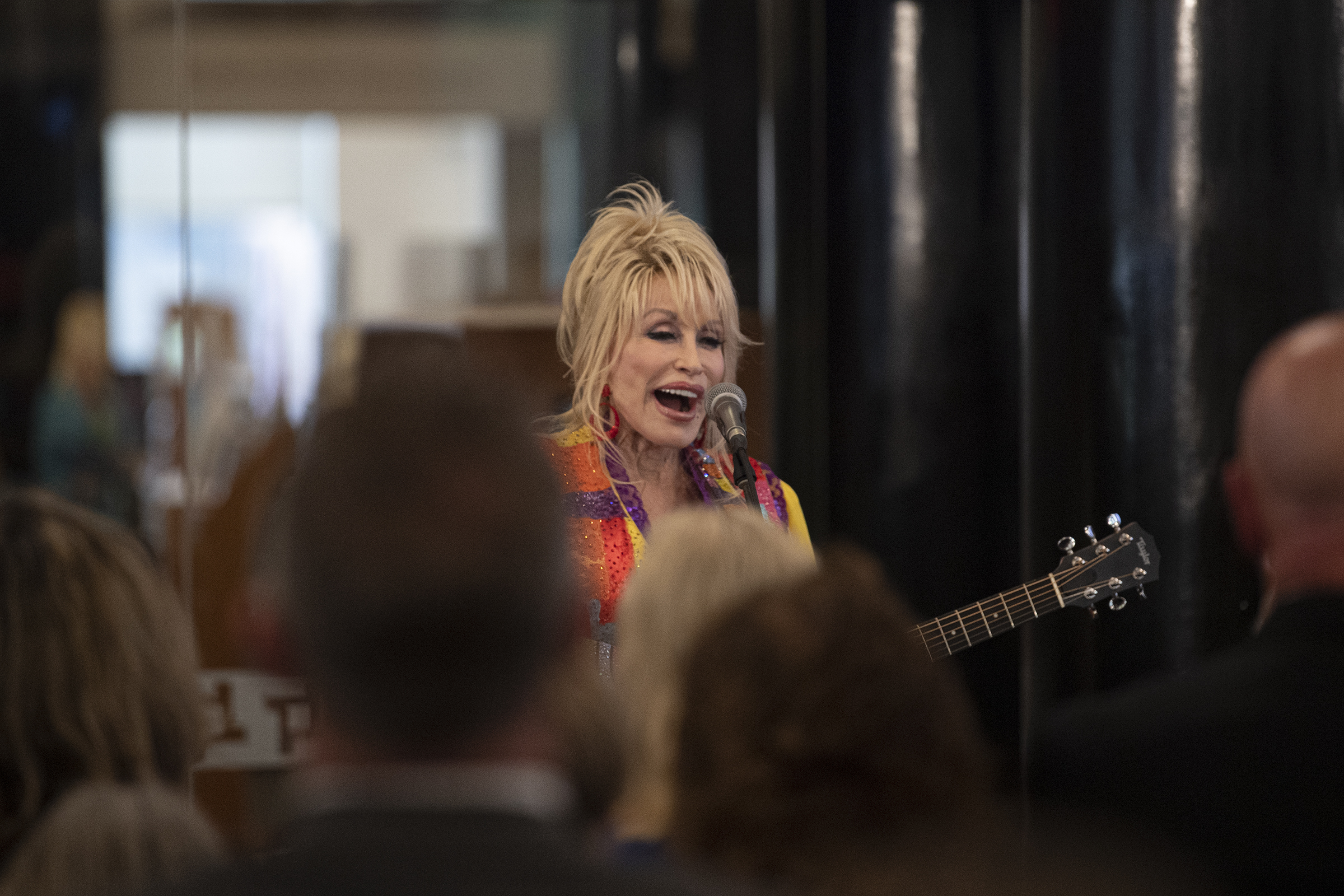
A favorite Dolly Parton, Doc Watson musical memory
Dolly Parton’s death this week spurred innumerable tributes celebrating her kindness and generosity of spirit from seemingly everyone who ever knew, worked with, or even had a chance encounter with the beloved country singer.
And along with the heartfelt testimonials to a truly one-of-one cultural figure also came the outpouring of video clips that flood social media when a cherished performer dies. The digital grieving ritual reminds us why we fell in love with our heroes in the first place and maybe shows us something to make us treasure them even more.
Lots of cool clips have been circulating, all easily findable if they haven’t already shown up in your feed. Among them is a 2019 snippet from backstage at the Newport Folk Festival that’s barely over a minute long, with Parton dressed in an embroidered cowboy suit, leading the Highwomen in a version of her song “Eagle When She Flies.”
Other charmers includes an adorable duet with Los Lobos’ David Hidalgo on Texas country singer Freddy Fender’s “Before the Next Teardrop Falls,” which Hidalgo posted with a note remembering how Parton could tell how nervous he was and put him at ease telling him, “You’re shy and I’m not.”
There are two clips of performing for a clearly smitten Johnny Carson on The Tonight Show in the 1970s, each playful and clever, but also displaying what a fine finger picking guitarist she was.
And her excellent taste is also apparent in a 1988 episode from her ABC variety show Dolly in which she headed to the Crescent City for Dolly Down in New Orleans and teamed with Allen Toussaint, Irma Thomas, and Dr. John for a delightful take on Lee Dorsey’s “Workin’ In a Coal Mine.”
My favorite of the bunch, however, is of Parton paired with the late guitarist Doc Watson in rehearsals and on stage in 2001 at MerleFest, the North Carolina traditional music festival named after Watson’s son, Merle, who died in 1985.
Parton and Watson work up a tender “The Last Thing on My Mind,” the Tom Paxton song she and Porter Wagoner recorded as their first single in 1967. She shadows Watson vocally, perfectly complementing him with her angelic voice. The furtive camera grants us the privilege to witness a private moment between a pair of legends working together for the first and only time, both now sadly gone.
— Dan DeLuca
A treasure trove of a coffee-table book celebrating Black art collectors
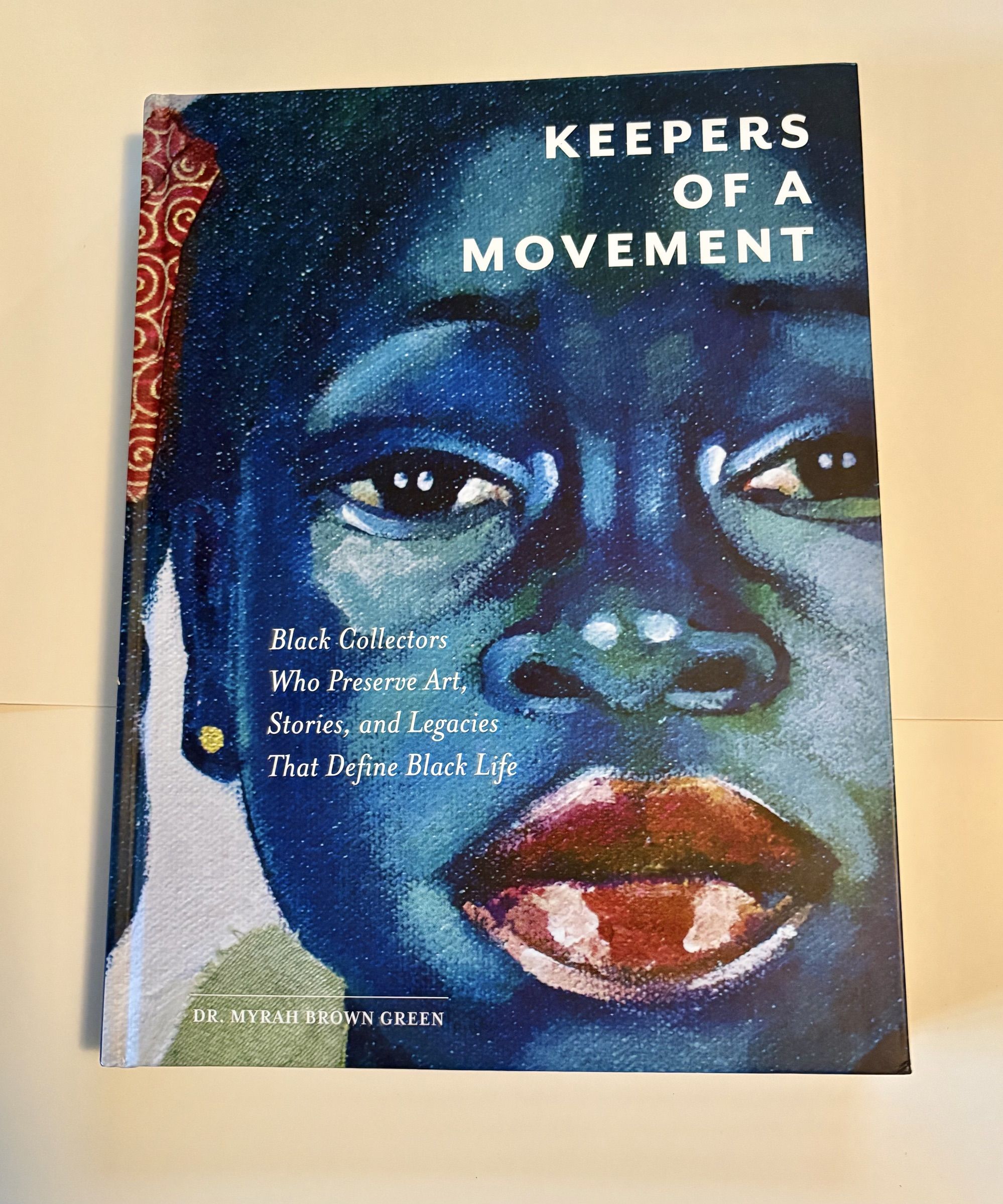
The 272-page text written by art historian, archivist, and curator Myrah Brown Green features the collections of Philadelphia-based art connoisseurs including Donnell Walker, founder of Fine Art for All Roots, a Lansdowne-based community arts organization; Vashti DuBois, founder of Germantown’s Colored Girls Museum; and the late Danny Simmons, owner of North Philadelphia’s Rush Gallery.
Cover of “Keepers of a Movement: Black Collectors Who Preserve Art, Stories, and Legacies That Define Black Life.”Elizabeth Wellington
(Simmons’ widow, Keia D. Carter Simmons, associate director of Temple Contemporary Art Gallery, penned the foreword.)
Portraits by Philadelphia artists Tara “Misty Sol” Pearson, Nile Livingston, and Chantelle Phillips are also featured. A sculpture by North Philadelphia potter and ceramicist Roberto Lugo is pictured, too.
The glossy volume is a beautiful work of art overflowing with pieces that are timeless, unique, and oozing with history. Images of rare prints from African American masters including Elizabeth Catlett’s 1957 portrait Nina, part of 94-year-old Brooklyn-based sculptor Otto Neals’ collection, are in the book. As is a Romare Bearden 1980 watercolor Man Seated with Red Rooster from the collection of the late Brooklyn-based attorney Patricia Scipio-Brim.
Six paintings from actress CCH Pounder’s massive collection are photographed in Keepers.
Even more important than the art of the masters are the works from lesser-known artists. Often without recognition, they too document the lives, history, and experience of Black Americans and all who consider themselves part of the diaspora.
Simmons’ collection of comic books, toys, and superhero figurines is the kind of art I grew up with but didn’t consider art until recently. New York-based jewelry designer Donna Chambers’ collection of 19th-century Black cameos by unknown artists are a window into my obsession of the untold stories of the lives of my ancestors. Ohio-based quilter and historian Carolyn Mazloomi’s social justice textiles expanded my idea of art with a purpose.
“This book is the appropriate response to the current conditions that are removing Black art and Black history,” DuBois told audiences at the end of the show. “Black collectors have always done this work. We will continue to do this work as keepers of the movement.”
Amen. Alleluia.
“Keepers of a Movement: Black Collectors Who Preserve Art, Stories, and Legacies That Define Black Life” is available for purchase at the Colored Girls Museum located at 4613 Newhall St. in Germantown.
— Elizabeth Wellington
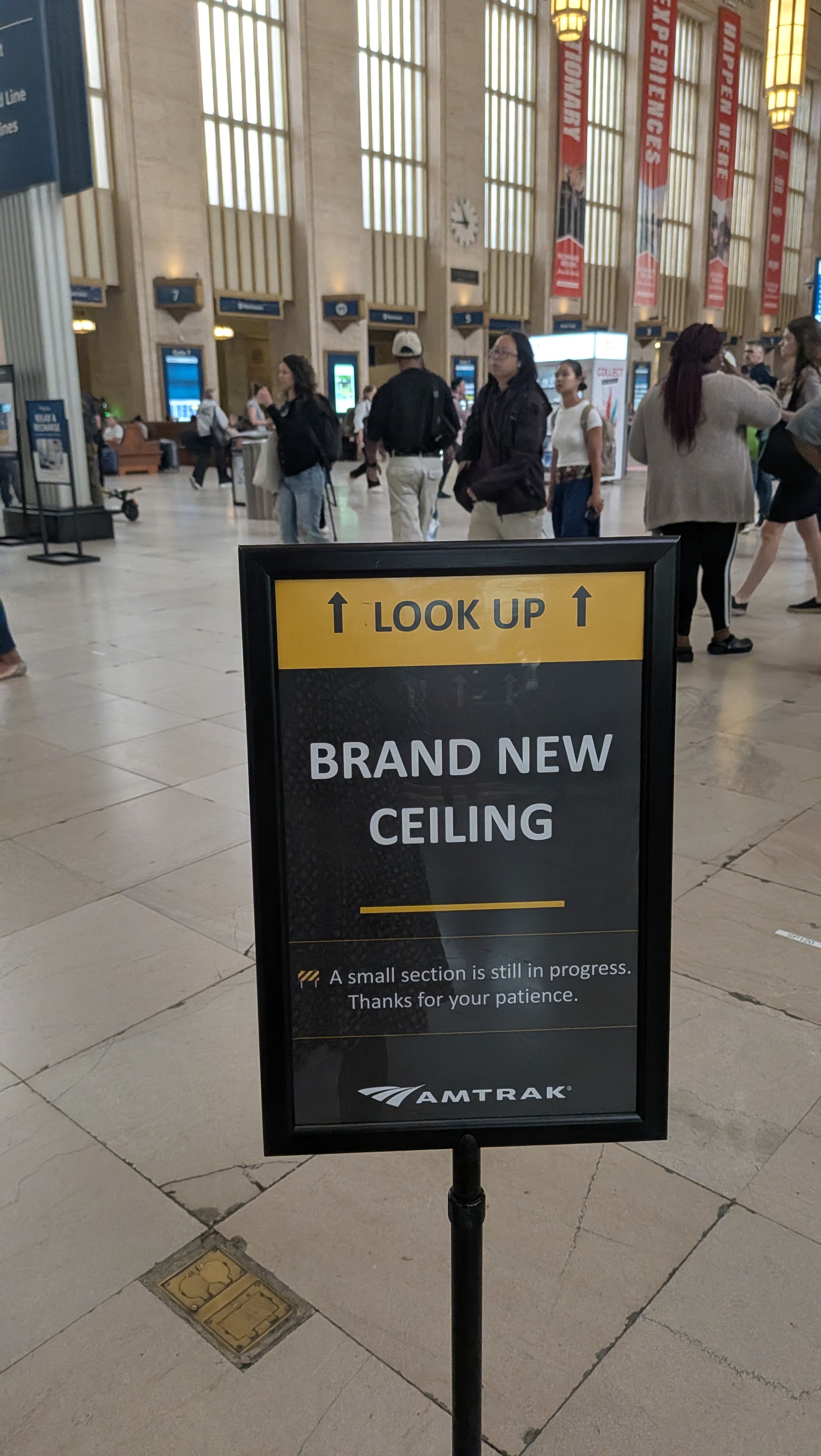
The newly restored ceiling at Philadelphia’s 30th Street Station.Bedatri D. Choudhury
A ceiling like no other
Like many other people going in and out of Philadelphia, I had gotten used to the scaffolding at 30th Street Station until this week a little sign from Amtrak urged me to look up. The scaffolding pipes were gone and a newly restored ceiling gleamed. Innumerable perfect squares with more perfect squares nested within. The sienna (the exact shade is called Tuscan Red, a reader pointed out), gold, and cream colors look different as the light streams in from the 50-foot-tall windows and plays with the patterns and solid blocks of color along the length and breadth of the 93-foot-high coffered ceiling.
The indented panels are clean, the ornate art deco chandeliers are glowing, and the pendant lights are on. Philadelphia union workers have painted, fixed, and restored the station’s ceiling and it’s breathtaking in its art deco glory. A grand entry into a grand city.
The station, which opened in 1933, was designed by the Chicago-based firm Graham, Anderson, Probst, and White. It was part of the City Beautiful movement where, in the late 19th- and early-20th-centuries, governments took to designing grand and beautiful public spaces.
A sign asking people to look up and view the newly restored ceiling at Philadelphia’s 30th Street Station.Bedatri D. Choudhury
As part of a recent $550 million restoration, there’s talk of a food court and other things that’ll crowd into the main concourse of this awe-inspiring building that is on the National Register of Historic Places. A small corner of the ceiling above the Dunkin’ kiosk remains unrenovated. Just outside, a world of steel, glass, and concrete awaits along with a news cycle of reflecting pools and algae.
But for the minutes we can spare, as we rush in and out of our commutes, the grandeur of the ceiling and the building do their very best to make us forget that outside world and immerse us in a bygone time when wrecking balls didn’t charge through the White House but governments believed in investing in grand, beautiful spaces accessible to all.
— Bedatri D. Choudhury
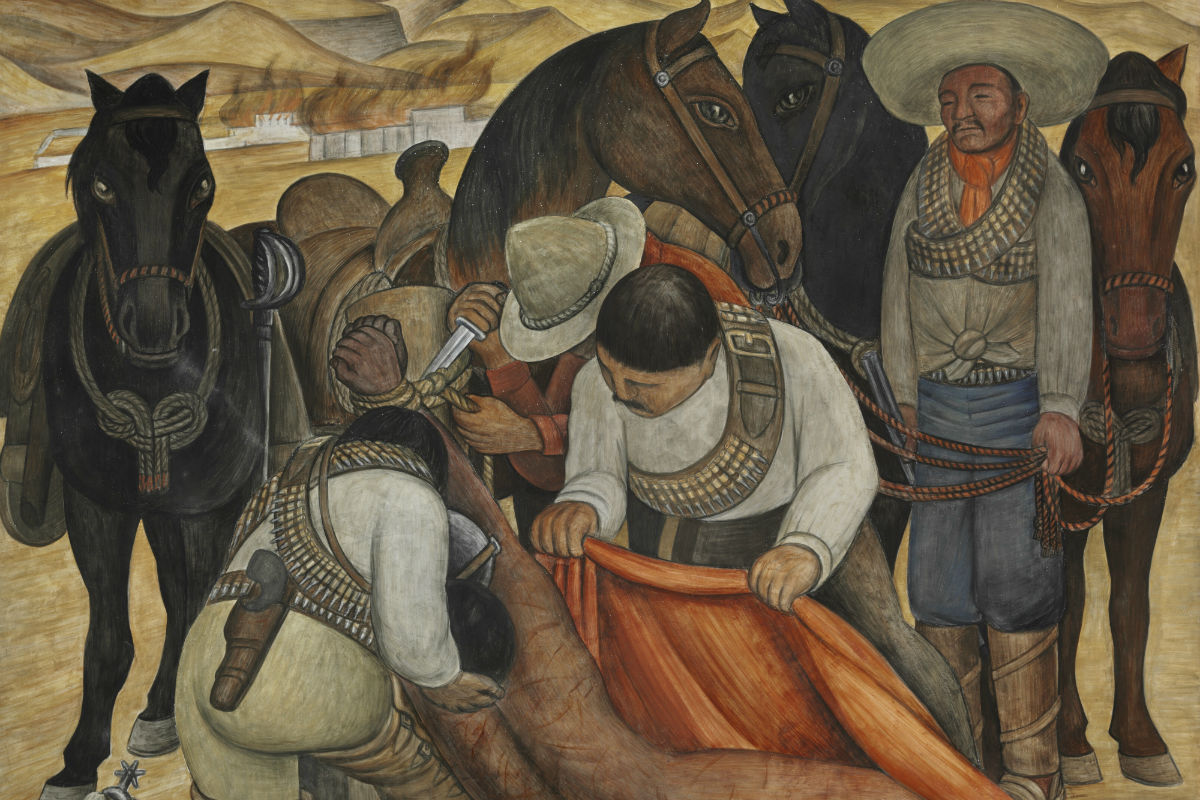
“Liberation of the Peon” (1931) by Diego Rivera is on view at the Philadelphia Museum of Art.
A meeting of worlds with Diego Rivera and Gabriel García Márquez
There’s a pair of stunning Diego Rivera paintings at the Art Museum from 1931 — depicting scenes of harsh, back-breaking, intensive labor in Mexico — that I can’t stop thinking about.
The bright bluish-green stalks in Sugar Cane tower above the workers who hunch over, some attacking the crop with curved knives while others hoist overweight bundles onto their backs for transport. In the background, a white foreman reclines on a hammock above two sleeping dogs while another overseer is on horseback with his whip at the ready. The exploitation cuts across age groups, too, as a little Indigenous girl is pictured, helping her mother harvest papaya.
The violence of Sugar Cane is quieter than that of its companion, on view across the narrow hallway, called Liberation of the Peon.
Both illustrate the devastatingly difficult reality for farmworkers forced to labor under inhumane and cruel conditions. In Liberation, four revolutionary soldiers come to the aid of a worker who was stripped naked, tied up, and ruthlessly whipped. The men gently hold the victim, placing a vividly orange sheet around his bloody body and supporting his head as they cut the ropes on his wrists. Waiting patiently behind them are gorgeous horses; they are the only figures staring out from the fresco, their tender, wide eyes captivating the viewer with probing gazes that feel fittingly accusatory.
These artworks feel directly in conversation with the exquisite-yet-underrated show One Hundred Years of Solitude, the Netflix adaptation of Colombian author Gabriel García Márquez’s 1967 masterpiece of the same name that just released its series finale this week. It’s a beautifully shot, profoundly magical, and deeply tragic story following multiple generations of the Buendia family.
García Márquez used his incredible writing to condemn exploitative labor practices in Colombia as one major storyline took aim at United Fruit Company, an American corporation that monopolized land and resources across Latin America to violent excess (today it’s called Chiquita). One Hundred Years follows the expansion of banana plantations with horrifically abusive working conditions — concluding in the shooting of thousands of striking workers and their families, based on the Banana Massacre of 1928 — and mirrors the kind of greed-fueled brutality that Rivera captured in his paintings.
“Sugar Cane” and “Liberation of the Peon” are on view at the Philadelphia Museum of Art; “One Hundred Years of Solitude” is streaming on Netflix.