Category: Arts & Culture

  • A Philadelphia high schoolers’ production of ‘1776’ is former Gov. Ed Rendell’s dream come true

    A Philadelphia high schoolers’ production of ‘1776’ is former Gov. Ed Rendell’s dream come true

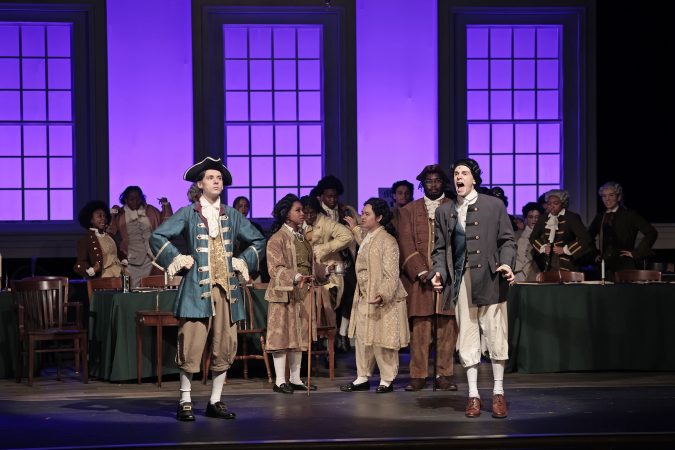
    In tricorn hats and tail coats, their locs, microbraids, and wavy tresses gathered into 18th-century low ponytails, 27 Philadelphia-area high school students transformed into America’s Founding Fathers on Wednesday evening at the Philadelphia High School for Creative and Performing Arts.

    The young thespians debated and deliberated the benefits of forming a sovereign nation. Their well-practiced Southern accents and New England inflections echoed in the full auditorium.

    In 2½ hours, Massachusetts congressman John Adams (played by Jackson Preisser), Ben Franklin (Jayden Duvene), and Thomas Jefferson (Maxwell Henderson) made the case for liberty, overcoming the petty aristocratic concerns of Pennsylvania delegate John Dickinson (Greg Rist).
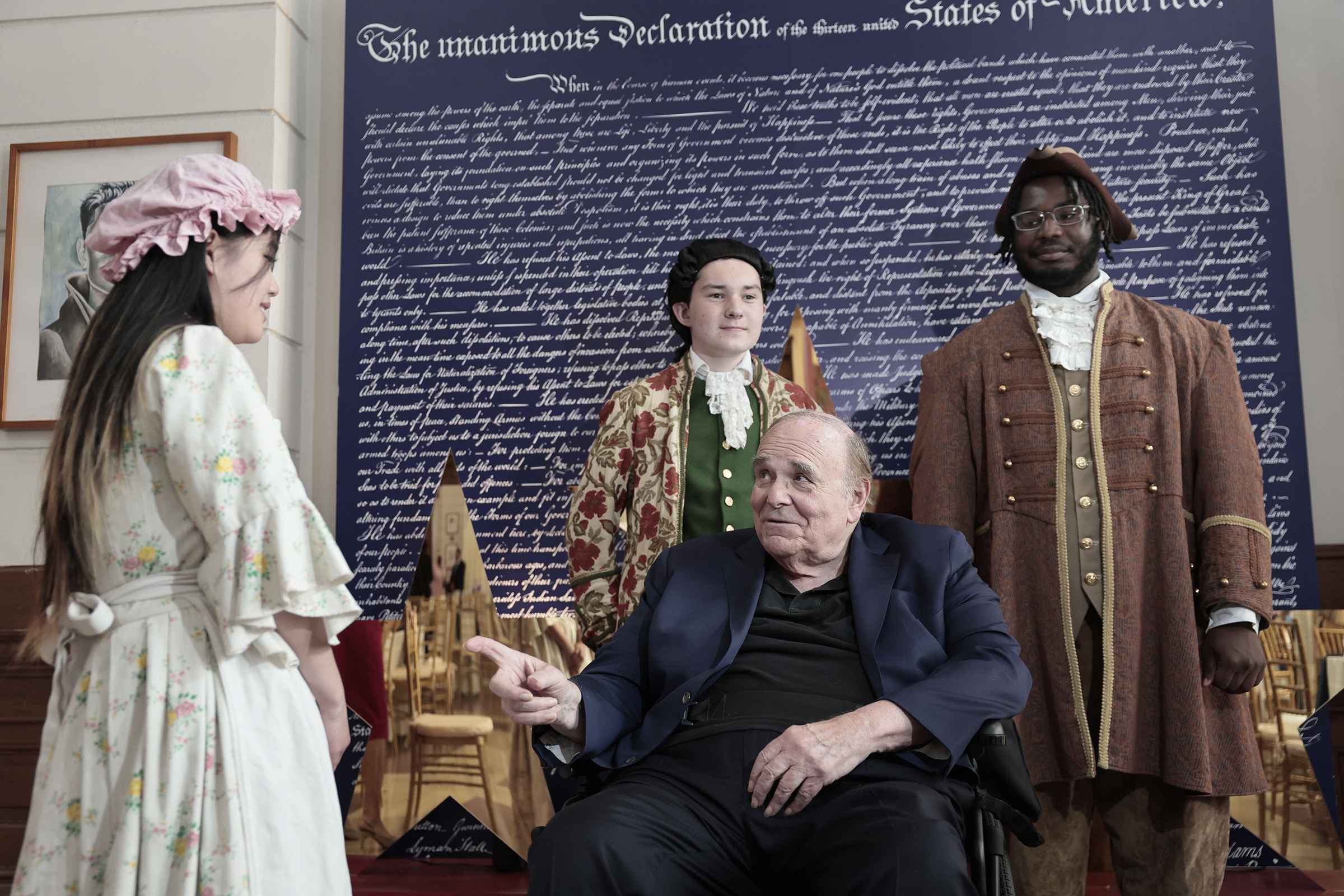
    Former Mayor Ed Rendell meets cast members (L-R) Abigail Adams (played by Chloe Chau), John Dickinson (played by Greg Rist) and Ben Franklin (played by Jayden Duvene) during opening night of 1776: The Musical at the Philadelphia High School for Creative and Performing Arts on Wednesday, June 24, 2026.Elizabeth Robertson / Staff Photographer

    On a set that looked remarkably like Independence Hall, the students staged the Tony Award-winning 1969 Broadway musical 1776 and argued for and against liberty with witty songs and sophisticated dialogue.

    The reenactment of the signing of the Declaration of Independence was everything Ed Rendell, the elder statesman and the brain behind the production, wanted it to be.

    “It’s been my dream for quite some time to see this production happen,” Rendell said to The Inquirer, his voice a raspy whisper, worn and weary from Parkinson’s disease. Sitting in his wheelchair at the red, white, and blue step and repeat, Rendell smiled as CAPA’s lobby was turned into a dining room for dignitaries hours before the play began.

    “In honor of America’s 250th birthday, we wanted to use 1776 to teach high school students the sacrifices and compromises it took to form this great nation,” he said.

    Rendell’s love for 1776 is rooted to the night in 1969 when he watched the colonial drama unfold on Broadway, starring William Daniels as John Adams, Ken Howard as Thomas Jefferson, and Howard da Silva as Benjamin Franklin. Daniels, Howard, and da Silva starred in the 1971 Oscar-nominated film of the same name.

    “I loved it,” Rendell said, whose favorite ballads from the play are Franklin, Adams, and Jefferson’s quirky performance of “The Egg,” in which the forefathers humorously choose the bald eagle as America’s national bird. (That didn’t really happen during the Second Continental Congress, but it’s a nice touch.)

    Another of Rendell’s favorite songs is “Is Anybody There?,” a melancholy number during which Adams asks himself if his dedication to the cause of independence is worth it.

    “It struck the right chord, giving all the facts about how we came to our freedom, our independence,” Rendell said. “When I became mayor, I went back and studied it and began to think of it as an important civics lesson. There were so many things I didn’t even know.”

    A former president, a mayor, a speaker walk into a play

    The 1776 opening night saw the attendance of a who’s who in Philadelphia politics, business, and civics.

    Former President Joe Biden was in the house on the opening night of Rendell’s theatrical milestone. After he was presented with a copy of the declaration signed by the cast, the former president delivered a nine-minute speech about the importance of teaching American history in present-day America, although he did not mention President Donald Trump by name.

    “What I can tell you is that from the moment the Founding Fathers signed the Declaration of Independence, we have been in a consistent battle for the soul of the nation,” Biden said as guests prepared to dig into barbecued chicken, brisket, and ribs, Rendell’s favorite.
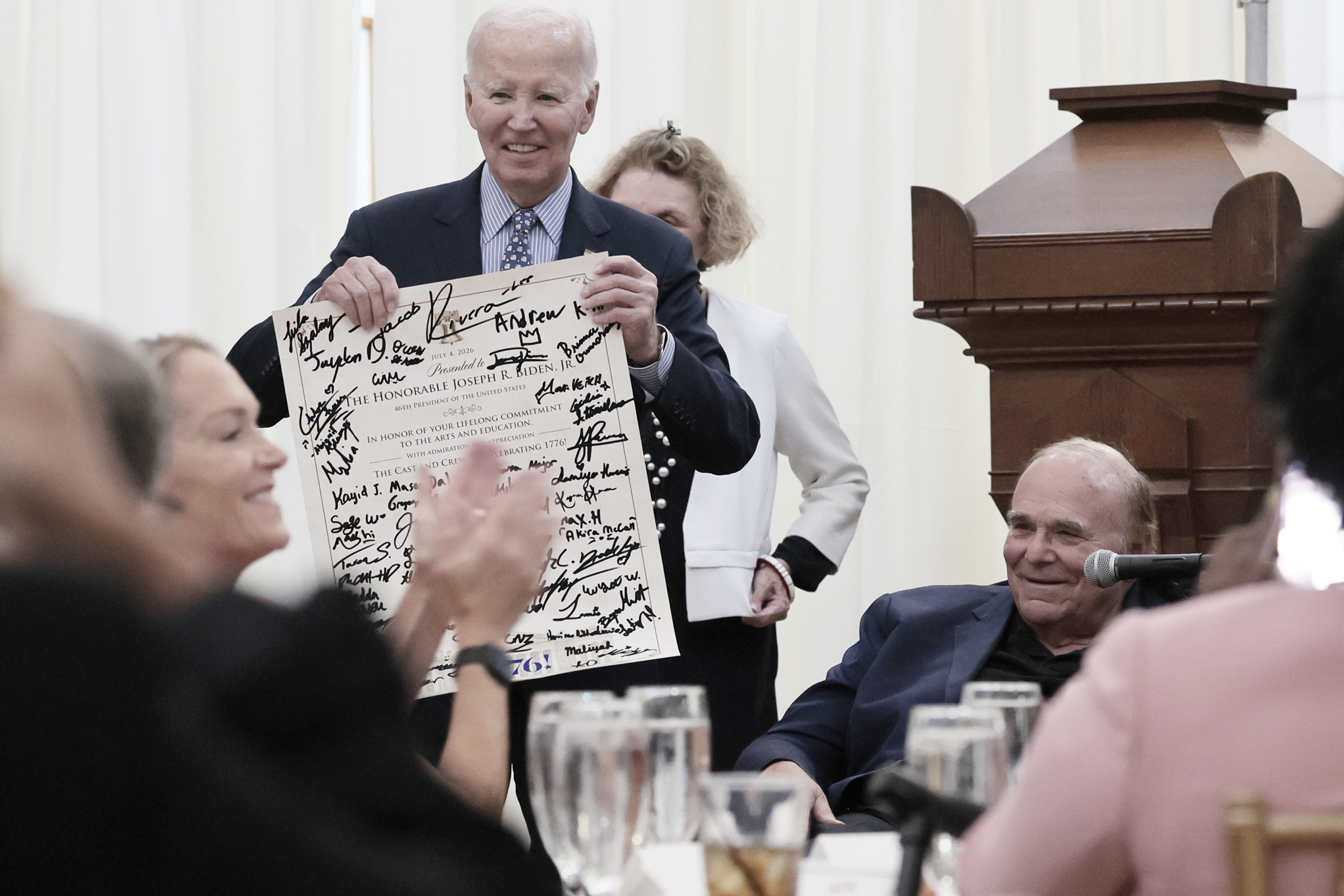
    Former President Joe Biden displays a signed poster from the cast as former Mayor Ed Rendell looks on during the opening night celebration of 1776: The Musical at the Philadelphia High School for Creative and Performing Arts on Wednesday, June 24, 2026.Elizabeth Robertson / Staff Photographer

    “Even when there is darkness,” Biden said, “we’ve summoned our angels and crawled back from the brink. We are trying to do that now.”

    Mayor Cherelle L. Parker, Pennsylvania House Speaker Joanna McClinton (D., Philadelphia), and State Rep. Joe Ciresi (D., Montgomery) were also in attendance. Philadelphia School Superintendent Tony B. Watlington Sr.; Temple University president John Fry; and David L. Cohen, the former senior executive vice president to Comcast and U.S. ambassador to Canada, were on hand, too.

    “When Mr. Rendell calls, people come out,” said Adrian R. King, a partner at Philadelphia-based law firm Ballard Spahr and a former Rendell staffer.

    Their attendance reflected their respect for Rendell, a former governor of Pennsylvania and mayor of Philadelphia who, in his political heyday in the 1990s, led the efforts to reimagine South Broad Street as the now-bustling Avenue of the Arts. CAPA’s 1997 opening was a part of that plan.
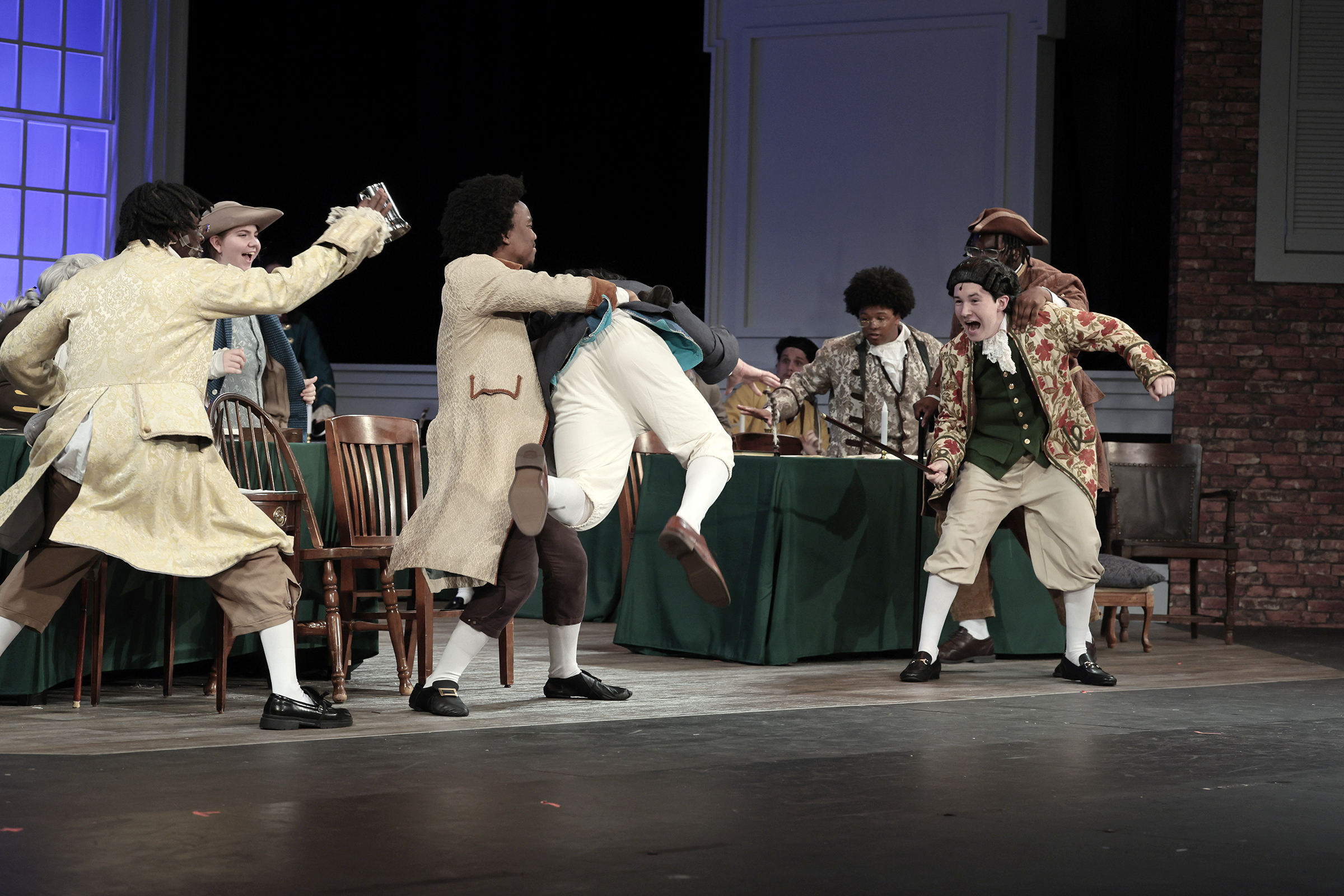
    John Adams (played by Jackson Preisser, middle) and John Dickinson (played by Greg Rist, right) are seperated during a scene from the opening night of 1776: The Musical at the Philadelphia High School for Creative and Performing Arts on Wednesday, June 24, 2026.Elizabeth Robertson / Staff Photographer

    Rendell’s baby

    Rendell has dreamed of this production for years. He began working on it in earnest last year, bringing on veteran Philadelphia arts administrator Karen Corbin to executive produce. Phillip Sean Brown, director of theater at Bryn Mawr’s Shipley School, was roped in to direct.

    “The governor had very specific ideas of what he wanted,” Brown said. “He wanted to show the history of our country, show the drama of the birth of a nation, and have the students learn everything they could about the craft of theater.”

    The first order of business was securing the rights to the late composer Sherman Edwards’ script and music. That will cost about $45,000 by the end of the run, Corbin said.

    Casting began in February and auditions began in March. Forty actors from eight area high schools were picked for the multicultural, gender-fluid rotating cast, giving the revival of the 57-year-old production Hamilton vibes.

    In addition, Brown said, more than 30 students were hired as musicians and production crew.
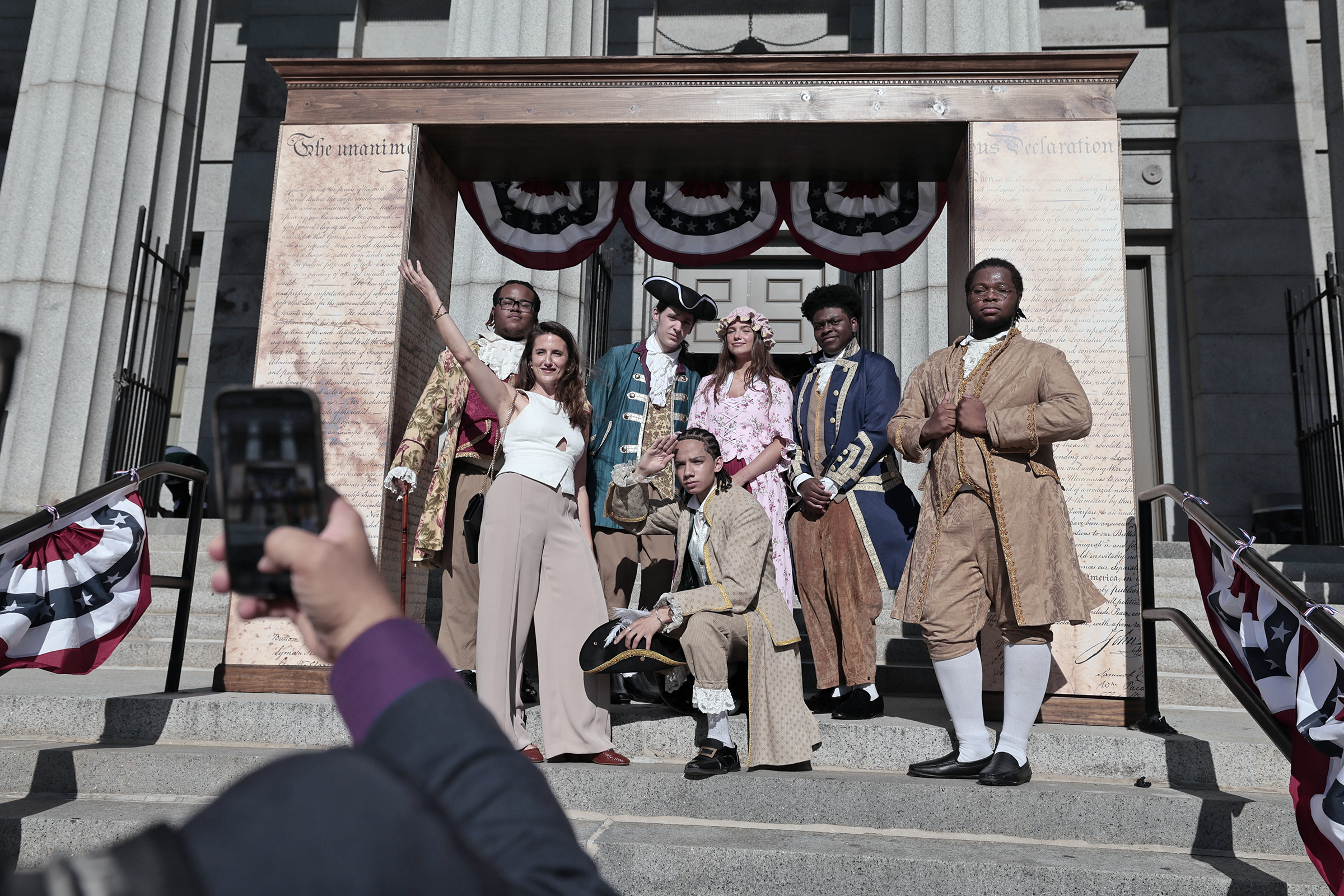
    Cast members posed with guests before opening night of 1776: The Musical at the Philadelphia High School for Creative and Performing Arts on Wednesday, June 24, 2026.Elizabeth Robertson / Staff Photographer

    “They worked with professionals in theater lighting, costume, sound, and props,” Brown said.

    Students were paid $150 a week during rehearsal weeks, and will make $300 a week through the eight-week performance. The entire production cost $850,000 including a $150,000 grant from the state.

    There will be 50 shows through Aug. 15 at CAPA. Actors will also perform vignettes of the musical throughout Philadelphia’s historic district, including Carpenters Hall.

    ‘All good things take compromise’

    Students’ exposure to the arts and history has been priceless.

    “This experience represents striving forward — as an actor with my cast,“ said Mason Daly, a CAPA graduating senior whose biting Southern accent for South Carolina congressman and segregationist Edward Rutledge was chilling.

    Daly’s role as Rutledge is particularly eye-opening. 1776 tells us that Jefferson’s original draft of the declaration included a clause abolishing slavery in America. Rutledge, however, would support America only if that part of the declaration were struck.

    Jefferson laments to Franklin, saying, “Mark me, Franklin … if we give in on this issue, posterity will never forgive us.” But he does give in.

    “Playing him, I learned to value the nuances of the perspectives of even those we disagree with,” Daly said.

    “It’s about his personal compromises to get to the yea vote that allowed independence to go forward. That dialogue, that discussion, that back-and-forth between him and the various colonial representatives is the basis of our democracy and government.”
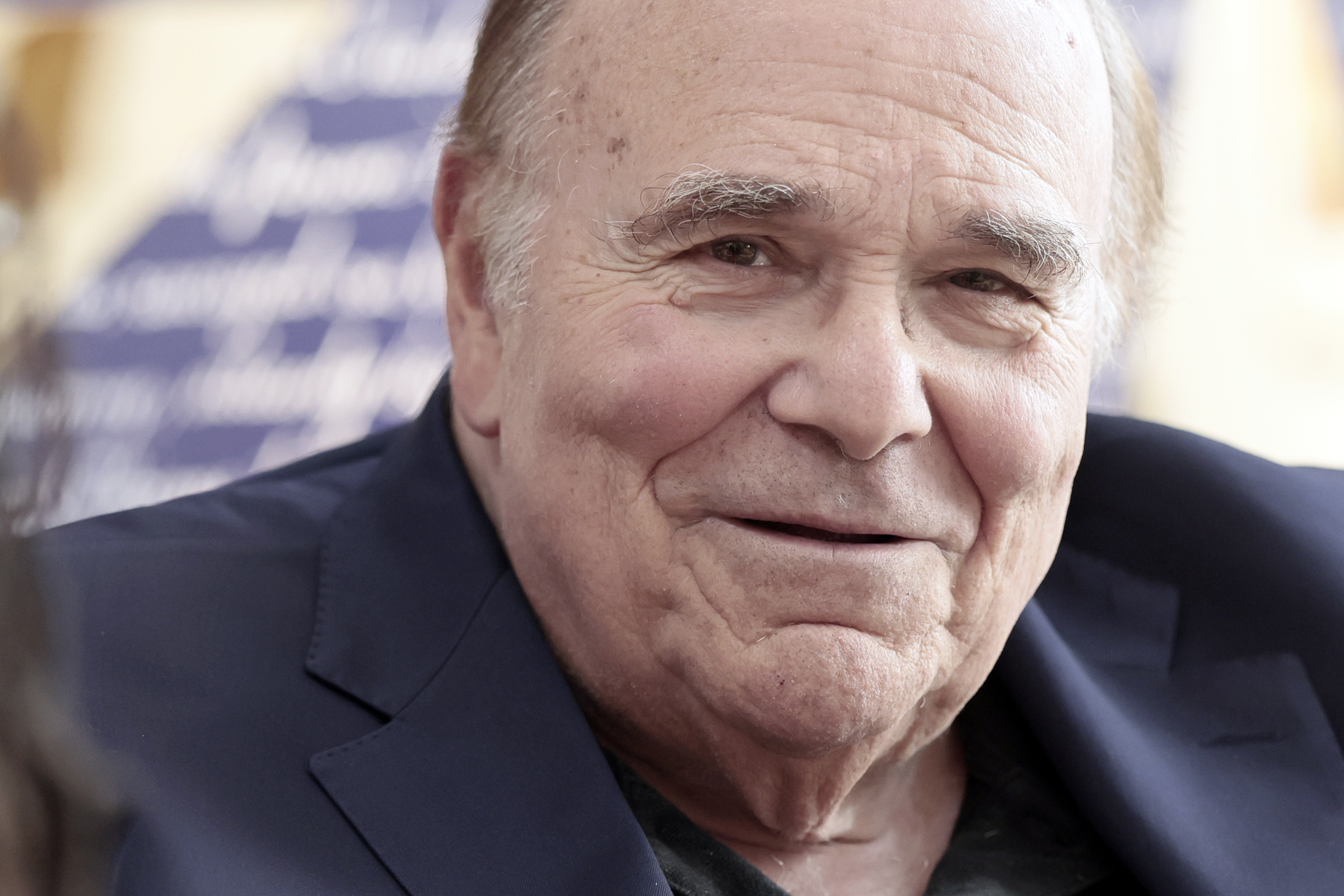
    Former Mayor Ed Rendell during opening night of 1776: The Musical at the Philadelphia High School for Creative and Performing Arts on Wednesday, June 24, 2026.Elizabeth Robertson / Staff Photographer

    The actors’ parents bubbled with excitement.

    “My child is really being taken seriously as an actor in this production,” said Justina Barrett, chief learning and engagement officer at the Historical Society of Pennsylvania, and mother to Sage Wentz, who played Col. Thomas McKean of Delaware. “This whole play is about the messy business of making the United States. It was hard. These guys weren’t nice. It wasn’t pretty. In many ways, we are divided then as we are now.”

    Although difficult, this idea of forming a new nation through compromise is what Rendell hopes is the ultimate lesson for all involved.

    “We can’t get anything done without compromise,” Rendell said. “We have to get back to a government that is working toward the good of the government. The Civil Rights Act took compromise. Women’s rights took compromise. All good things take compromise.”

    “1776″ will be performed at CAPA, 901 S. Broad St., through Aug. 15. Tickets start at $11. For more information, go to the Celebrating 1776! website.
  • What this former Inquirer columnist learned from writing 468 parenthood columns over nine years

    What this former Inquirer columnist learned from writing 468 parenthood columns over nine years

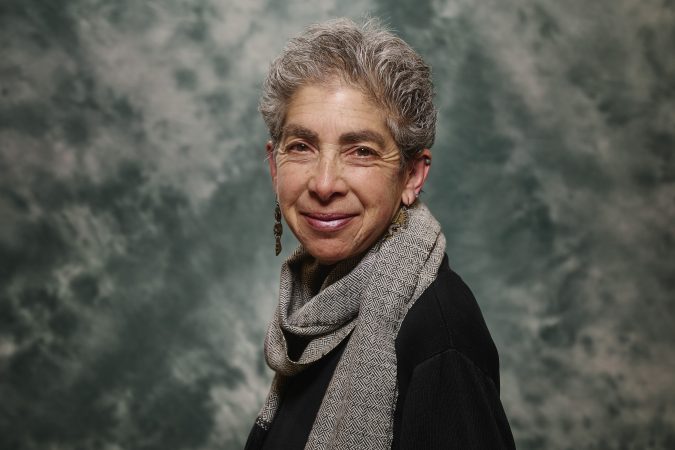
    For nine years, every week, writer Anndee Hochman attempted to answer one question.

    What does the road to parenthood look like for people who don’t follow the family “norm”?

    For her Inquirer column “The Parent Trip,” she profiled different Philadelphia-area families with children, all with atypical experiences creating their family.

    This included queer parents, single parents, interracial parents, interfaith parents, and so on. Hochman spoke to parents who adopted children, conceived them through IVF, got pregnant unexpectedly, and more.

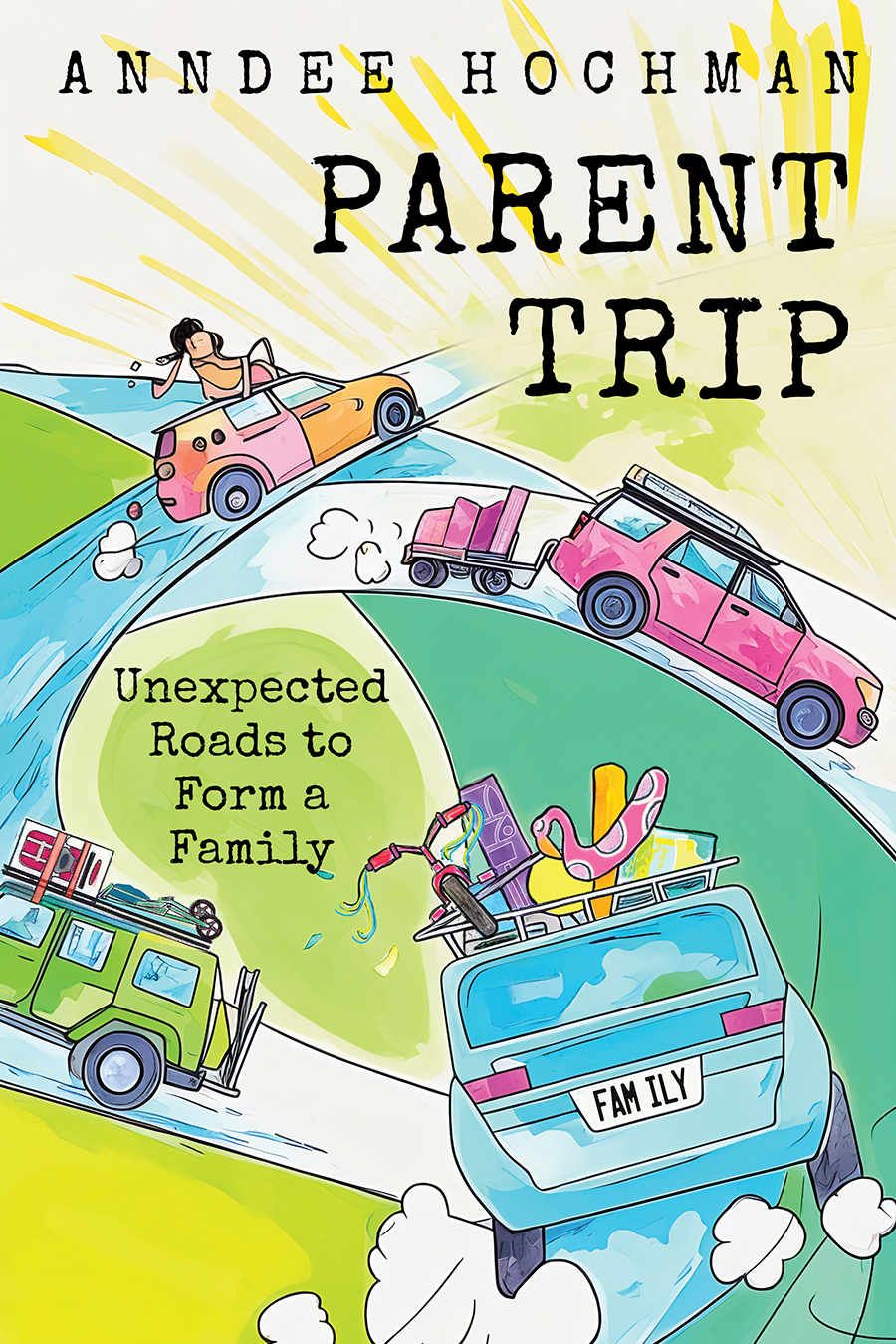
    Anyone who had a story around parenthood with a less talked-about aspect found themselves in Hochman’s column. Forty-two of 468 of those profiles have now been compiled into a new book, Parent Trip: Unexpected Roads to Form a Family, published by Temple University Press.

    Hochman, who is queer, started writing about family life in 1990, when she was living in Portland, Ore. After her straight housemates got engaged, she wrote an essay for the now-shuttered LGBTQ publication Just Out, detailing her feelings on the discrepancies between how straight and queer relationships are perceived socially.

    The Eighth Mountain Press publisher Ruth Gundle reached out to Hochman, asking if she had more to say on the subject. As it turned out, she had a whole book’s worth. Her first book, Everyday Acts and Small Subversions: Women Reinventing Family, Community and Home, released on Eighth Mountain in 1994.

    Anndee Hochman’s “Parent Trip: Unexpected Roads to Form a Family” is a collection of stories from her original column.Temple University Press

    By 1999, Hochman had moved to Philadelphia and began freelancing for The Inquirer, still writing about family. In 2014, former Inquirer features editor Cathy Rubin asked her if she’d be interested in writing a weekly feature on people becoming parents.

    That’s how “The Parent Trip,” the column, was born. Hochman began by reaching out to midwives and OB/GYN offices to see if any of their clients would be willing to participate. The column asked readers to submit their stories.
    “Becoming a parent and forming a family felt like a messier version of the Wedding column, and that’s exactly what we got,” said Rubin, referring to the column on marital stories that “Parent Trip” replaced. “It was beyond my wildest dreams to witness and experience all of the different ways that families formed and the challenges that people had.”

    Hochman, whose daughter with her long-term partner, Elissa, was born in 2001, was able to use her own experience as a parent to inform the column.

    “When I was interviewing families who didn’t fit the norm and I shared my own family configuration with them,” she said, “I felt like I could feel their shoulders relax a little bit, particularly with the queer families.”

    “The Parent Trip” began nine months before marriage equality for same-sex couples was legalized and concluded just over a year after Roe v. Wade was overturned, reversing a half-century of legalized abortion.

    Hochman makes clear with this book that families will always exist beyond the heteronormative structures society deems “normal.”

    The book is categorized into nine chapters, each carrying three to seven profiles. Through these, Hochman covers topics such as infertility, adoption, age gaps in relationships, religious differences, interracial marriages, and other circumstances that make families less “normal” per social mores.

    “I wanted the 42 [profiles] that ended up in the book to reflect the same diversity and span as the 468 that comprised nine years worth of columns,” Hochman said. “You will not find a section of stories all about single parents, or a section all about queer parents. I was more interested in the themes that echoed across all kinds of families.”

    Through writing this column, Hochman says she learned about situations she never experienced in becoming a parent, including adoption and how common miscarriages are.
    A phrase repeated by many of the parents she interviewed was “you just don’t know what’s going to happen.” Whether that be when you try to adopt, conceive, when you’re in the delivery room, once the baby is home, and once they’re 2, 6, or 25, she said.
    “There is no one right or normative way to be a family,” Hochman said. “I hope people come away with an expanded sense of what a family can look like and how children can be welcomed into one’s life.”

    “Parent Trip: Unexpected Roads to Form a Family” by Anndee Hochman is now available all over the country. $20.

  • Parts of Fairmount Park were not only the site of America’s first paper mill, but also the country’s first company town

    Parts of Fairmount Park were not only the site of America’s first paper mill, but also the country’s first company town

    We take paper for granted now. But in the late 1600s, when Pennsylvania’s founder William Penn recruited German papermaker and preacher William Rittenhouse to manufacture the writing parchment in the New World, paper was a luxury.

    England’s King William III made it difficult for his subjects — at home and in the Americas — to have it. Like many monarchs of his day, he believed it was the Crown’s duty to record history.

    The English imported paper from other European countries. So, to make matters worse, colonists who managed to appeal to the king for paper were double and triple taxed. They got fed up and went about securing their own paper to document the goings on in the government, inform citizens, record history, and ultimately plan a revolution.

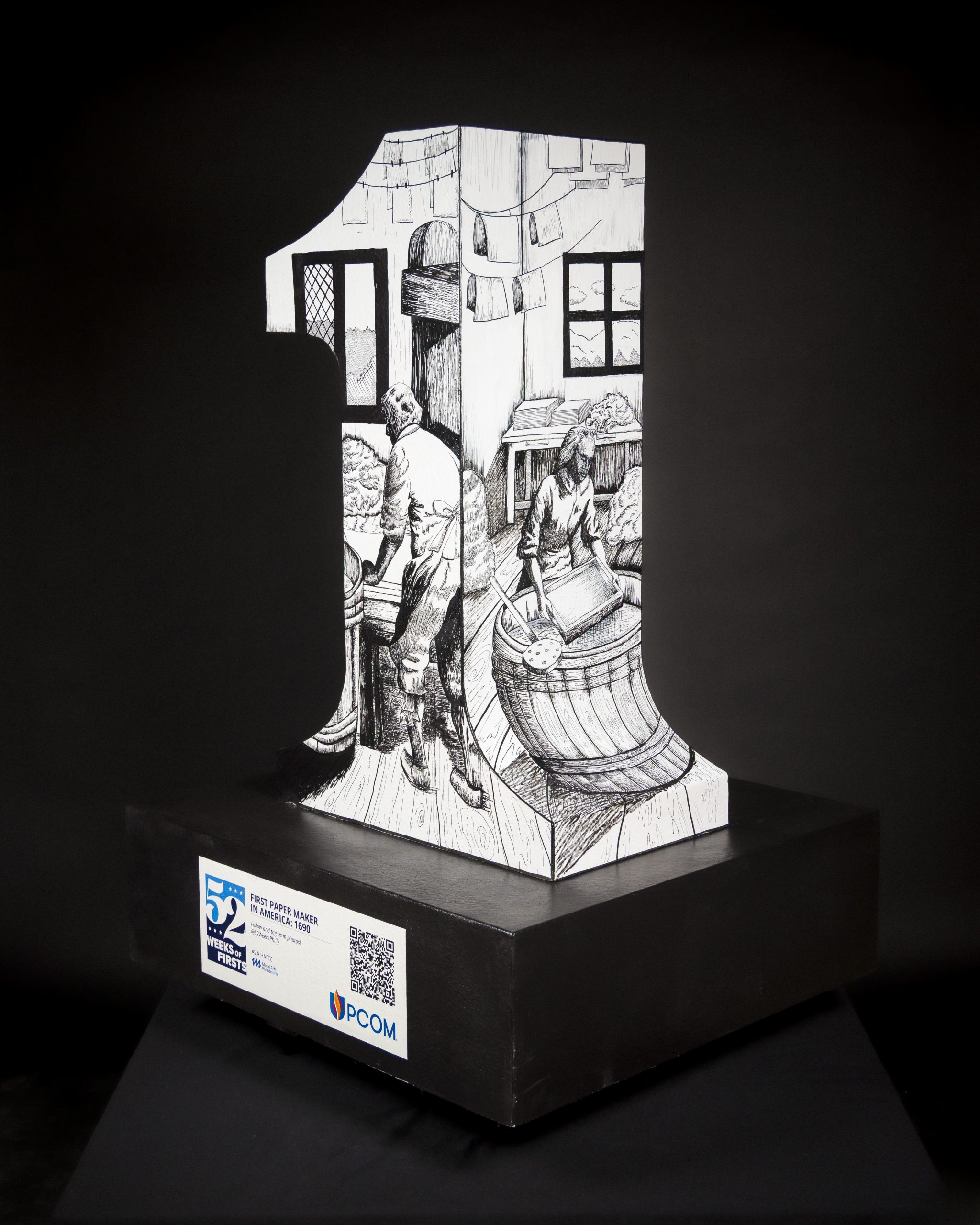
    Artist Ava Haitz’s No. 1 honors the country’s first paper mill, celebrating the invention and craftsmanship that made widespread written communication possible.Ava Haitz for Colibri Workshop

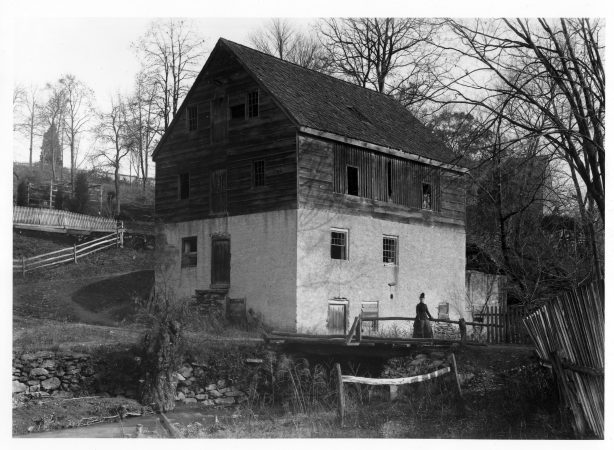
    In 1690, Rittenhouse partnered with Philadelphia’s first printer, William Bradford, to build America’s first paper mill, situated in northwest Philadelphia and powered by the Monoshone Creek, a tributary of the Schuylkill.

    The paper mill will be celebrated this Saturday at Historic RittenhouseTown, part of a series of weekly “Firstival” celebrations. Firstivals are the Philadelphia Historic District’s yearlong birthday nod to places and events with Philadelphia roots. The day parties are a hallmark of this year’s Semiquincentennial fetes.

    At the Rittenhouse mill, paper was made from linen rags fashioned from flax grown in Germantown, that were broken down and shaped into sheets. The mill grew quickly as Rittenhouse, America’s first Mennonite bishop, provided paper for Bibles and Quaker and Mennonite texts in German.

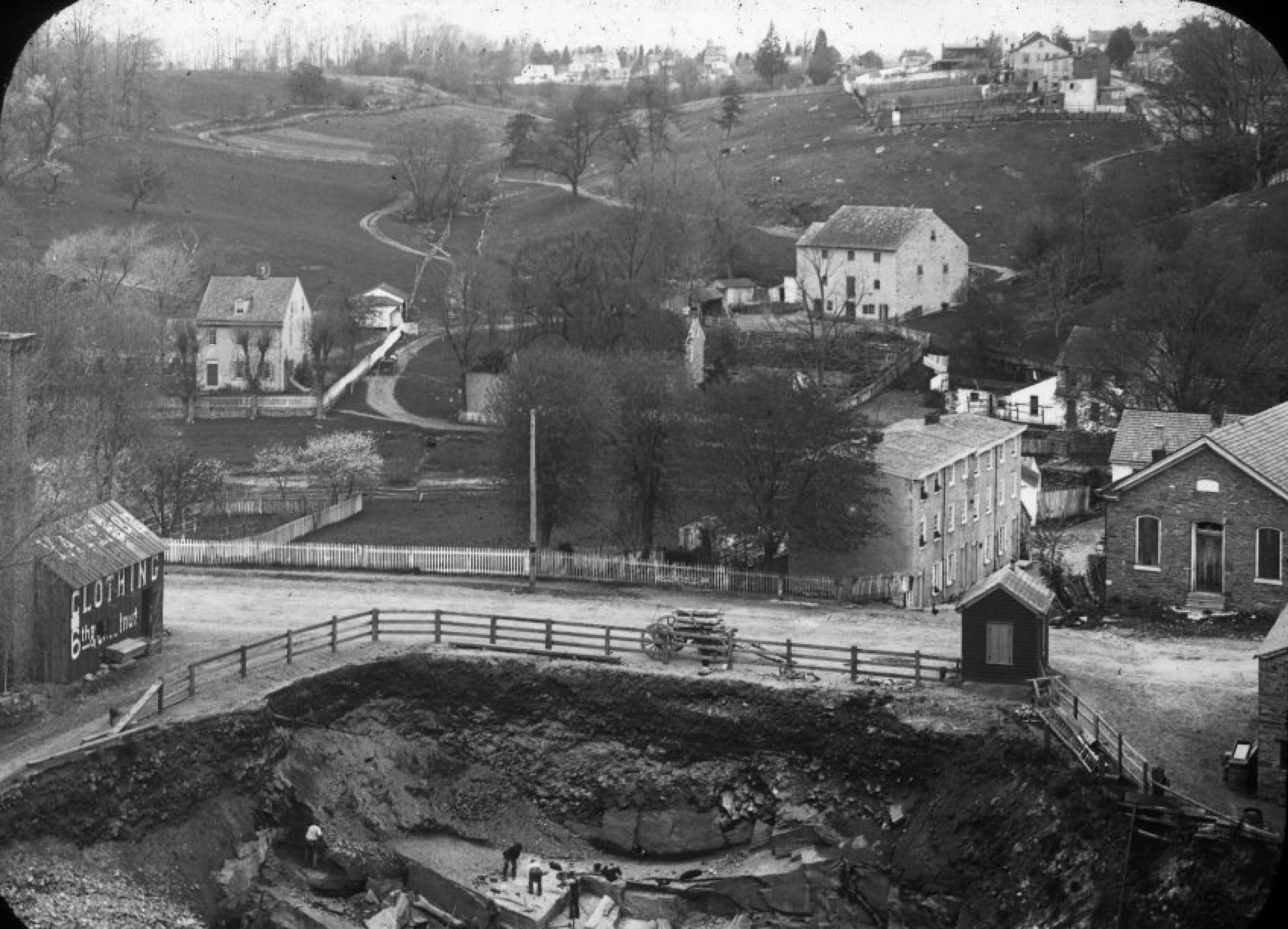
    An aerial view of RittenhouseTown circa 1840-1860. The site eventually grew to more than 200 acres.Historic Rittenhouse Town

    Rittenhouse’s first paper mill was destroyed by a flood, said Alexander Jones, preservation and education manager at Historic RittenhouseTown.

    Then “Rittenhouse rebuilds and he buys out his partner,” Jones said. “The paper mill becomes his sole enterprise. Instead of hiring workers, he recruits his family and it becomes a giant company town. There is a church, a blacksmith, stone houses, a bake house, and more than 40 buildings with five or six of them under what is now Lincoln Drive.”

    RittenhouseTown’s paper mill was the only source of paper in America for more than 40 years, Jones said. It would grow to more than 200 acres.

    David Rittenhouse — Rittenhouse’s great-grandson and the astrologer, clockmaker, and first director of the U.S. Mint after whom Rittenhouse Square is named — was born in his family’s RittenhouseTown homestead in 1732.

    The town thrived for more than a century.

    By the mid-1800s, the paper mill began to slow down as dyes from textile and carpet manufacturers and chemicals from blacksmithing started to pollute the Schuylkill. The filthy water made it nearly impossible to produce good quality paper at the mill.

    The Fairmount Park Commission began acquiring parts of RittenhouseTown through a series of purchases and donations from 1890 to 1917. The city demolished many of the town’s buildings, including a barn that, Jones said, was razed and rebuilt within a year.

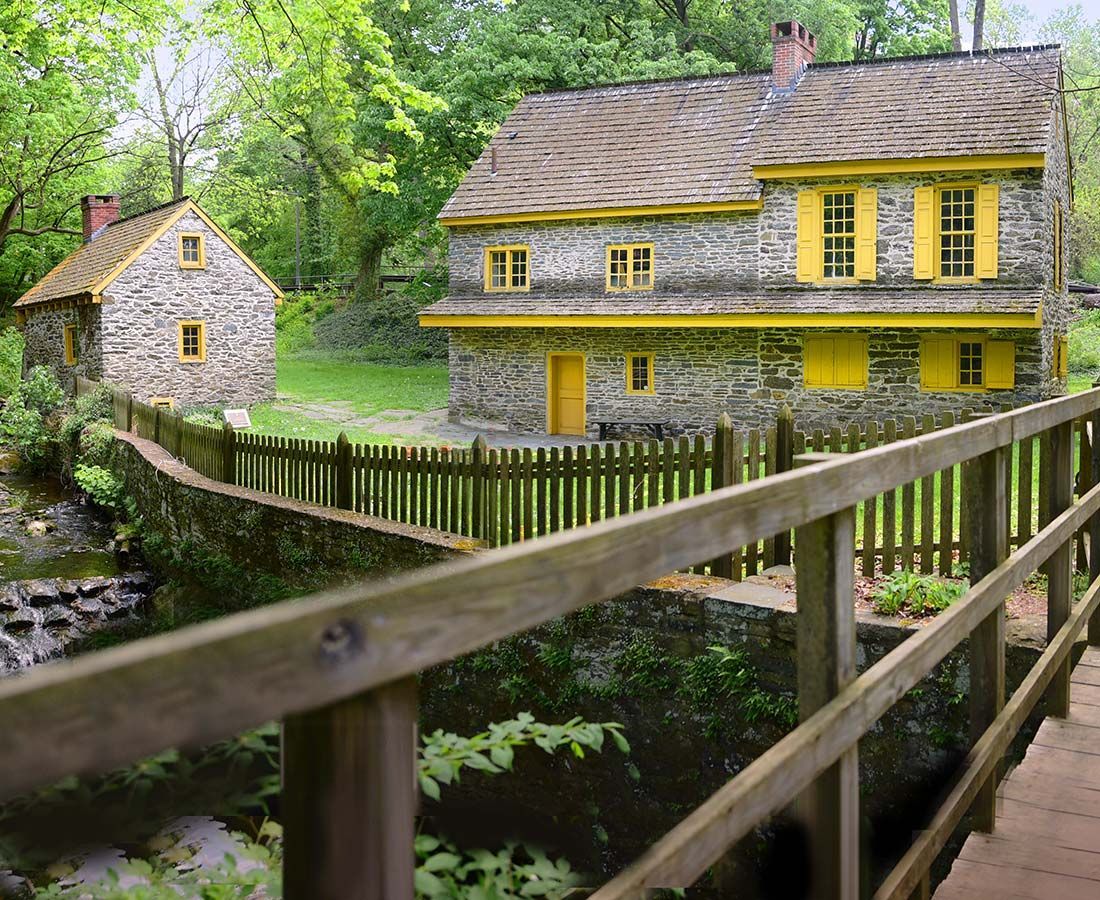
    RittenhouseTown’s homestead and bakehouse. The first permanent home for the Rittenhouse family and birthplace of David Rittenhouse, great-grandson of William Rittenhouse for whom Center City’s Rittenhouse Square is named.Al Cassidy for Historic Rittenhouse Town

    By that time, however, the Rittenhouse family had spread throughout the Philadelphia region from Center City to Blue Bell, Jones said.

    Today, RittenhouseTown spans 20 acres nestled in Fairmount Park right behind Lincoln Drive. Six of the original buildings remain, serving as a reminder that RittenhouseTown was the first building block of American industry.

    “The paper mill really got the ball rolling for Philadelphia,” Jones said. “And from that first came so many other American firsts in Philadelphia: the first Mennonite bishop, the first company town, and America’s first director of the U.S. Mint.”

    This week’s Firstival is Saturday, June 27, 11 a.m.-1 p.m., at Historic RittenhouseTown, 208 Lincoln Drive.

    The Inquirer is highlighting a “first” from the Philadelphia Historic District’s 52 Weeks of Firsts program each week. A “52 Weeks of Firsts” podcast, produced by All That’s Good Productions, drops every Tuesday.

  • See how Philly museums and arts organizations are celebrating America’s 250th

    See how Philly museums and arts organizations are celebrating America’s 250th

    No city does history quite like Philadelphia — and it’s all on full display this summer for the nation’s 250th. From museums and historic houses to outdoor experiences and more, here are some must-dos over the coming days, weeks, and months.

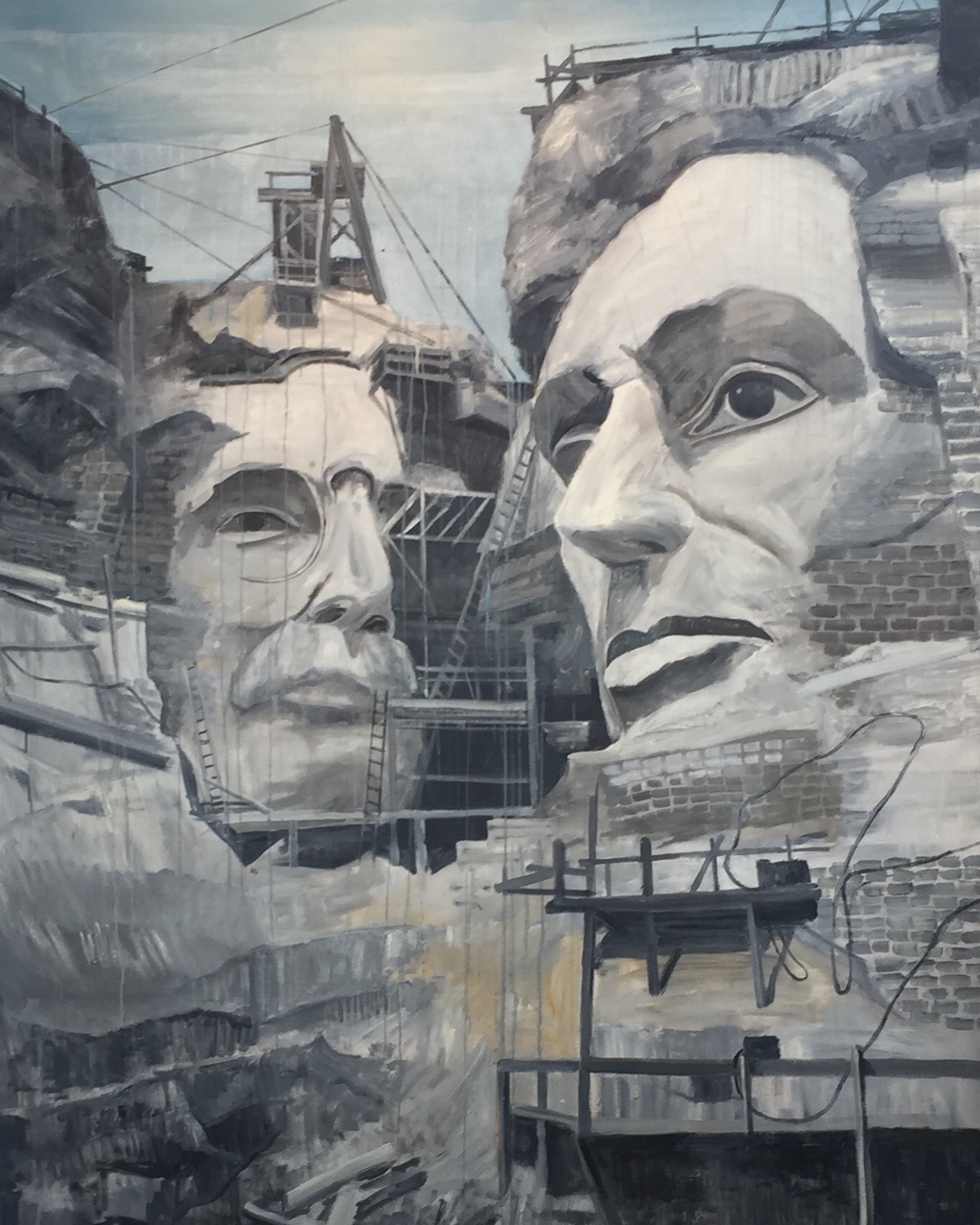
    “Rushmore,” a 2016 painting by Tom Judd, is part of the “Arc of Promise” exhibit at the Woodmere Museum.Woodmere Museum

    ‘Arc of Promise’

    Woodmere Museum

    Examine how Philadelphia artists have imagined America — from earlier perspectives to modern day — in paintings, sculptures, and other media. Inspired by local artist Jerry Pinkney (1939-2021), whose “arc of promise” concept was influenced by America’s painful histories of slavery, displacement, and injustice, while holding onto the belief that renewal is still attainable.

    9201 Germantown Ave., now through Jan. 10, 2027, woodmeremuseum.org/exhibitions/arc-of-promise

    ‘The First Salute’

    Weitzman National Museum of American Jewish History

    Explore events surrounding Nov. 16, 1776, the day the Dutch governor of St. Eustatius welcomed a ship flying the new American flag into the harbor — making the first recognition of the new nation by a foreign entity. A critical thruway for commerce between Europe and North America, the island’s Dutch leaders offered Jews a relatively high level of religious tolerance. Highlights include a 1761 Hanukkah lamp.

    101 S. Independence Mall East, now through April 2027, theweitzman.org/exhibitions/first-salute/

    Sky Hopinka: ‘Red Metal Dust’

    Barnes Foundation

    View works by artist Sky Hopinka featuring personal perspectives of Indigenous homelands and landscapes. In recognition of the 250th anniversary of the signing of the Declaration of Independence, these works of art thoughtfully explore and interrogate the American experience and its histories.

    2025 Benjamin Franklin Parkway, now through Jan. 18, 2027, barnesfoundation.org/whats-on/exhibitions/sky-hopinka

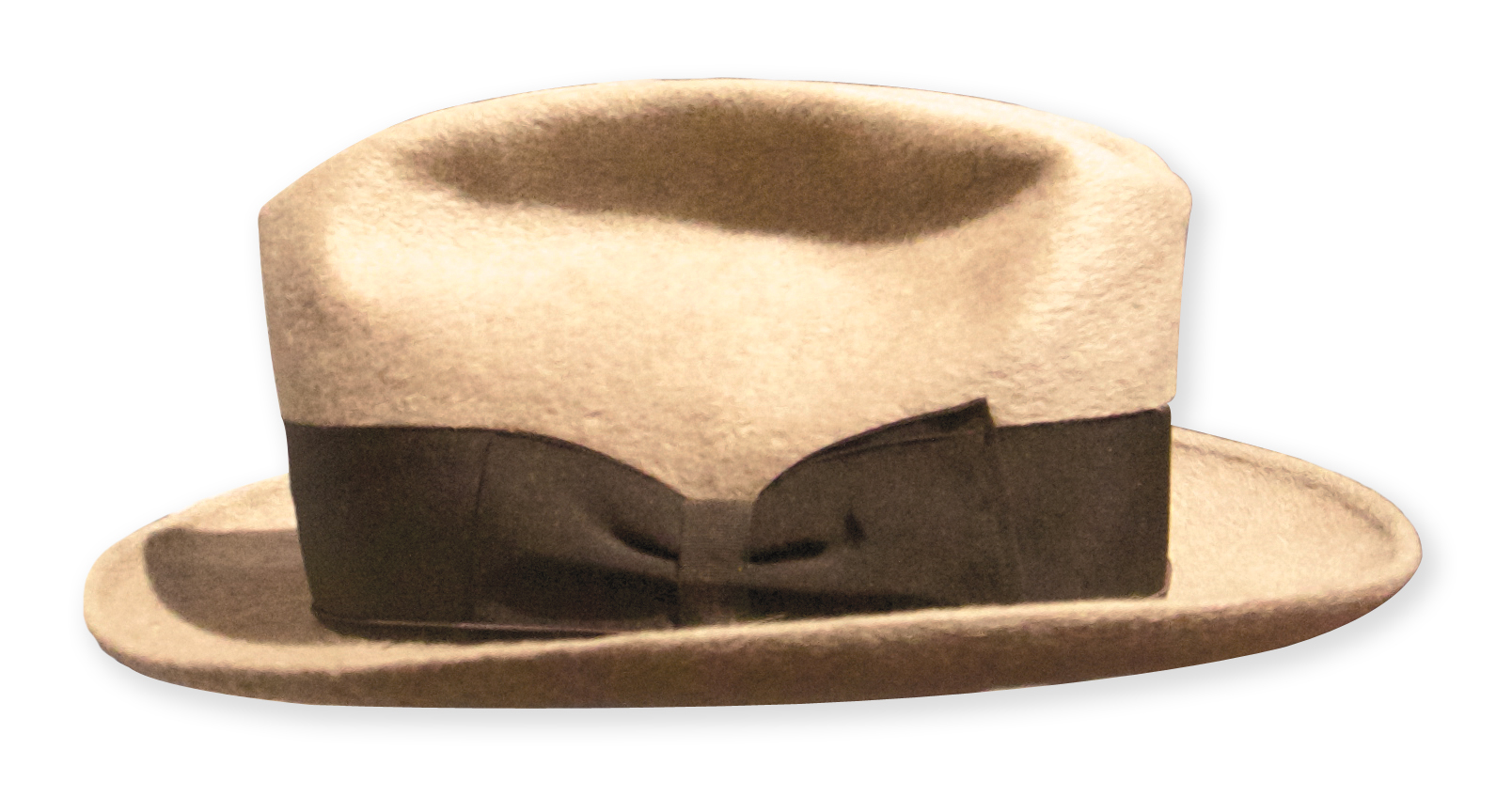
    A fedora owned by Franklin Delano Roosevelt is part of the “Governing the Nation” exhibit at the National Constitution Center.National Constitution Center

    ‘Governing the Nation’

    National Constitution Center

    Explore how the American system of government functions through immersive media, dynamic projections, and 3D models of the U.S. Capitol, the White House, and the U.S. Supreme Court. View a pamphlet written by Alexander Hamilton on the constitutionality of the National Bank, as well as Franklin Delano Roosevelt’s fedora.

    525 Arch St., now on permanent display, constitutioncenter.org/museum/exhibits-programs/governing-the-nation

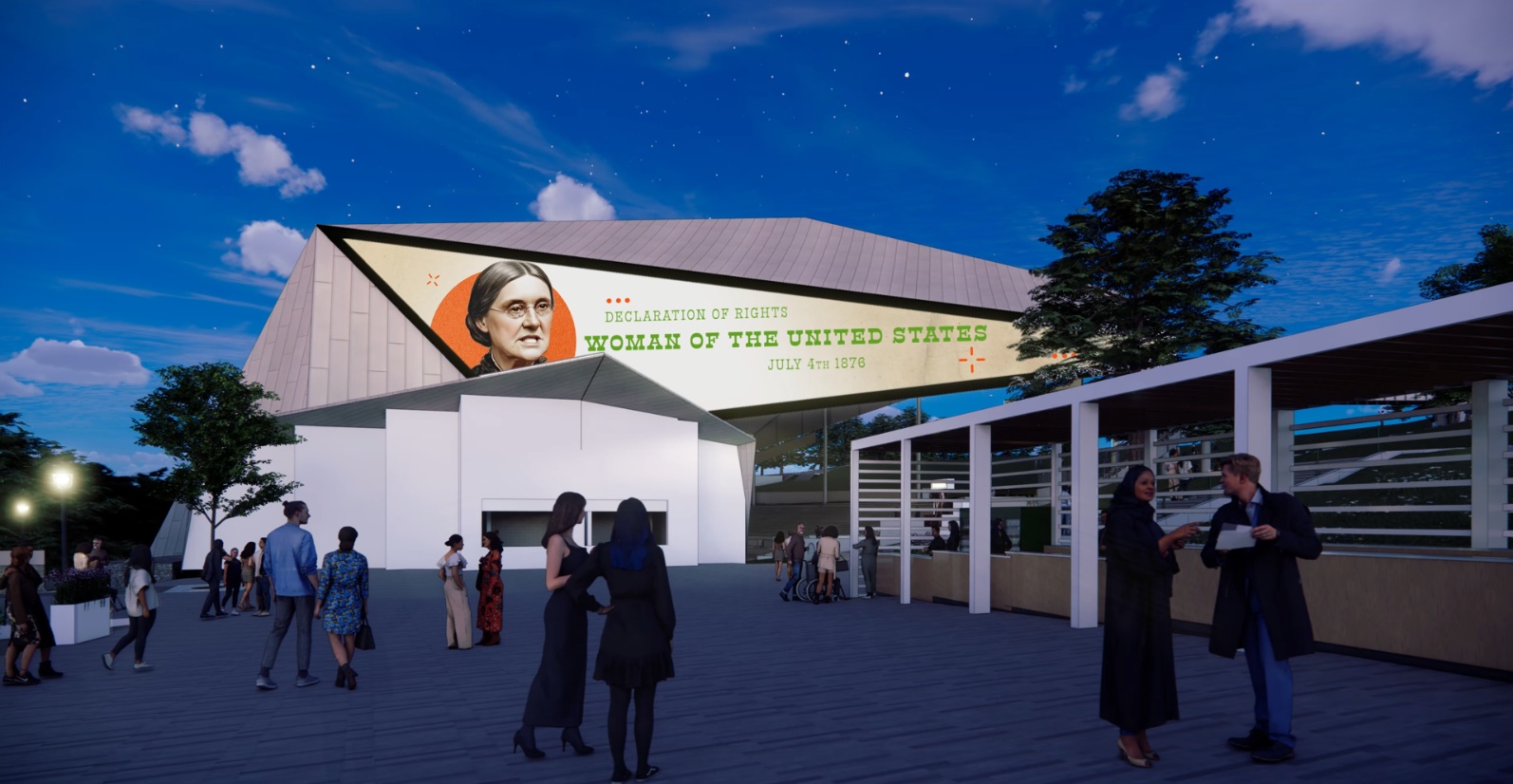
    A view of “Proving Ground: The First 250 Years of the American Experiment,” at Highmark Mann Satell Centennial Wall East.Mylin Batipps

    ‘Proving Ground: The First 250 Years of the American Experiment’

    Highmark Mann Center for the Performing Arts

    Enjoy an outdoor film experience with the 4,500-square-foot immersive LED canvas at the entrance of Highmark Mann on its new Satell Centennial Wall East. This massive storytelling canvas features cinematic visuals, motion design, music, and historical imagery that immerse visitors in Philadelphia’s role in shaping the American story.

    5201 Parkside Ave., now until October, highmarkmann.org

    ‘Revolutionary Family: The Biddles and American Independence’

    Andalusia Historic House

    Explore historical art and documents based on the Biddles, one of America’s most prominent colonial families. Discover what happened at the Andalusia site during the time of the American Revolution, including the military activity that surrounded the area, and view the beautiful painted portrait miniatures of Clement and Rebekah Biddle.

    1237 State Rd., Andalusia, now through Nov. 13, andalusiapa.org/exhibition/revolutionary-family/

    ‘Freedom Through Faith: Judaism at Eastern State and Beyond’

    Eastern State Penitentiary

    Discover how religious freedom, one of the “unalienable rights” stated in the Declaration of Independence, was strongly represented and practiced in America’s first penitentiary, especially by its Jewish inhabitants. A restored synagogue is a central feature of the exhibit and is the first synagogue in a U.S. prison.

    2027 Fairmount Ave., opening July 2 for permanent display, easternstate.org

    ‘Creating a City of Medicine’

    Mütter Museum

    Explore 250 years of Philadelphia’s impact on health and healing in the U.S., including medical education, technological innovation, and community-based healing practices. Featuring well-recognized Philadelphia leaders as well as lesser-known figures, the exhibit will educate visitors on the vital role Philadelphia played in American medicine and medical education.

    19 S. 22nd St., now through June 2028, muttermuseum.org/visit/

    ‘Nursing the Revolution’

    Barbara Bates Center for the Study of the History of Nursing at the University of Pennsylvania

    In celebration of America 250 at Penn, this exhibit showcases rare materials and reproductions surrounding Revolutionary-era nursing. Explore the influence of Black and Indigenous people on the profession, and the influences of African healing and Indigenous practices on early American medicine.

    418 Curie Blvd., now through Nov. 20 by appointment only, library.upenn.edu/exhibits/nursing-revolution

    ‘Seeking Profit and Power’

    Independence Seaport Museum

    Explore the history of trade between the U.S. and China, as it relates to the birth of the United States and the long history of trade between them. View a bowl purchased by a Philadelphia merchant for George and Martha Washington, decorated with an unbroken circle and chains representing the strength of the new nation.

    211 S. Columbus Blvd., now through Jan. 3, 2028, phillyseaport.org/current-exhibits/

    ‘The Declaration’s Journey’

    Museum of the American Revolution

    This exhibit traces the American Declaration of Independence’s global influence across 250 years, including political and social change. Featuring 120-plus artifacts from almost 20 nations, it explores how leaders from the Rev. Dr. Martin Luther King Jr. to Gandhi used the declaration’s words as inspiration to inspire political revolutions and civil rights movements worldwide.

    101 S. Third St., now through Jan. 3, 2027, amrevmuseum.org/exhibits/the-declaration-s-journey

    ‘These Truths: The Declarations of Independence’

    American Philosophical Society Museum

    Located next door to Independence Hall, this new exhibition shows that the declaration was a process, and continues to evolve and shape the nation. This exhibit displays 19 rare early printings of the declaration — including one handwritten by Thomas Jefferson, and a copy from July 4, 1776.

    104 S. Fifth St., now through Jan. 3, 2027, amphilsoc.org/museum/exhibitions/these-truths

    ‘Paths to Independence, 1765-1787’

    Historical Society of Pennsylvania

    View 140 rare, original materials tracing how American colonists transformed from loyal British subjects to revolutionaries. Highlights include a letter written by John Adams the day after the adoption of the Declaration of Independence, praising a Massachusetts woman as a “historiographer” of the revolution, and view early drafts of the Constitution.

    1300 Locust St., now through Sept. 18, hsp.org/explore/exhibits-hsp/paths-independence-1765-1787

    ‘A Nation of Artists’

    Pennsylvania Academy of the Fine Arts and Philadelphia Museum of Art

    Two of Philadelphia’s premier institutions have united for this landmark exhibition. At PAFA, works made from the late 18th century to modern day showcase scenes of westward expansion and the rise of industry. At PMA, view American art from 1700 to 1960, identifying global connections that inspired artistic and technological innovation. Featuring more than 1,000 works — including pieces from the private Middleton Family Collection, and by Georgia O’Keeffe and Andy Warhol.

    PAFA, 118-128 N. Broad St., now through Sept. 5, 2027; PMA, 2600 Benjamin Franklin Parkway, now through July 5, 2027; anationofartists.org

    ‘America Today: Voices in Contemporary Print’

    The Print Center

    Explore the current state of democracy through contemporary printmaking from 38 artists. This free exhibition was inspired by the New Deal of the 1930s and 1940s, when printmaking was used for political commentary. View works from generations of artists who use printmaking as an art form to explore and express the issues we face today.

    1614 Latimer St., now through July 25, printcenter.org/100/america-today/

    Medical History in Philly

    Pennsylvania Hospital Museum

    The Pennsylvania Hospital Museum, which opened in May, transforms the historic Pine Building of America’s first chartered hospital, founded by Benjamin Franklin and Thomas Bond in 1751, into a public museum. Discover breakthroughs in brain health, and trace medicine from herbal healing teas to one of the most groundbreaking medical innovations: CRISPR gene editing.

    800 Spruce St., now open permanently, pahmuseum.pennmedicine.org

    ‘Revisit 1876’

    Lits Building

    Connect today’s Philadelphia to 1876, when Philadelphia made history as the first city in North America to host the World’s Fair. At this free exhibit, explore that period and see how far technology has taken us. Use your cell phones to capture a replica of Alexander Graham Bell’s first telephone.

    701 Market St., now through Dec. 31, centercityphila.org

    Part of “The Doan Gang: Outlaws of the Revolution” exhibit at the Mercer Museum.Kevin Crawford

    ‘The Doan Gang: Outlaws of the Revolution’

    Mercer Museum

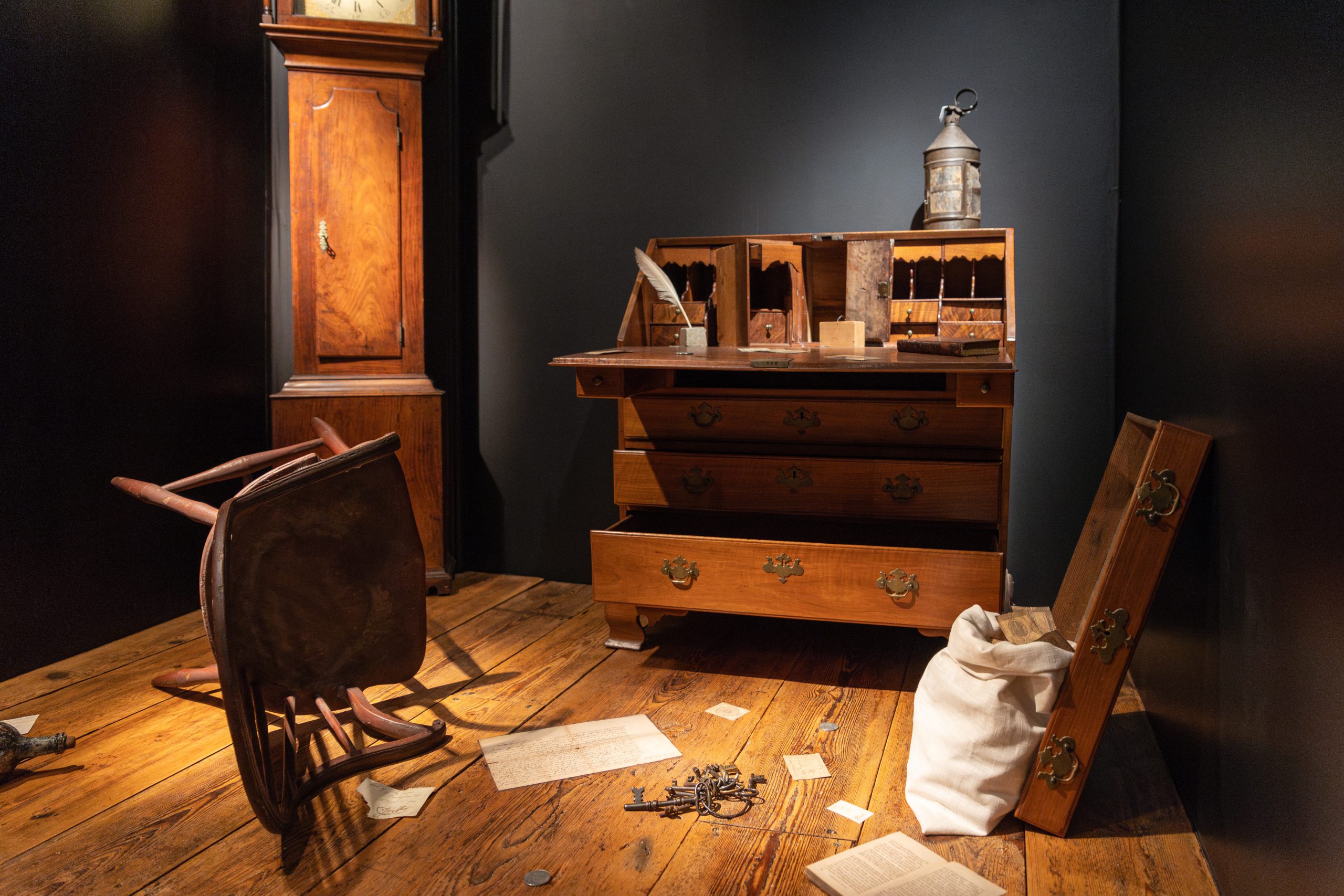
    Explore your rebellious side with these known enemies of the Founding Fathers, the Doan Gang, who were loyal to British rule in the colonies. This exhibit is from the perspective of Loyalists, who opposed American independence. Discover the untold stories that combine espionage, legendary robberies, and mythical lost treasure.

    84 S. Pine St., Doylestown, now through Dec. 31, mercermuseum.org/doangang/

    ‘Freedom Dreams’

    Barnes Foundation

    View powerful works by artists that invite viewers to immerse themselves in the memories, dreams, and histories of Black Americans from the past and present. Reflect on how Americans of color have shaped identities and created spaces of resistance, joy, and resilience in the face of systemic oppression. Featured artists include Philadelphia-based David Hartt and Tourmaline.

    2025 Benjamin Franklin Parkway, now through Aug. 9, barnesfoundation.org/whats-on/exhibitions/freedom-dreams

    ‘Let Freedom Ring’

    Cherry Street Pier

    This summer, the Delaware River Waterfront transforms into a free, outdoor gallery called “Where Freedom Flows.” Highlights include “Let Freedom Ring” by Paul Ramírez Jonas — where visitors can strike a 600-pound bell to sound the final note of “My Country, ’Tis of Thee,” connecting Philadelphia’s historic waterfront to the nation’s evolving story of freedom.

    121 N. Columbus Blvd., now through Sept. 27, cherrystreetpier.com

    ‘Wings and Water: The Space Between’

    Cherry Street Pier

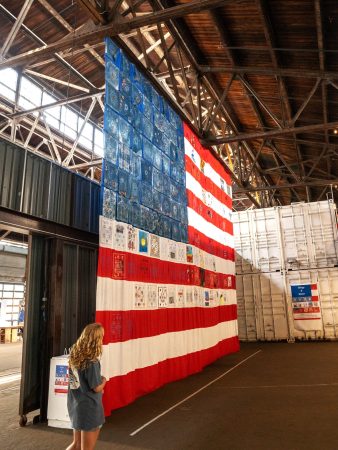
    Set your sights on this beautiful community-driven artwork installation by GrioXArts — artists Duwenavue Santé Johnson and Kara Mshinda. The textile centerpiece is a reimagined American flag composed of hand-embroidered bandannas created during a previous public workshop. It reflects personal and cultural narratives of BIPOC voices into Philadelphia’s evolving story and history.

    121 N. Columbus Blvd., July 3 through Aug. 1, cherrystreetpier.com

    ‘At Liberty: Life in the City of Brotherly Love During the Early Republic’

    Arthur Ross Gallery at the University of Pennsylvania

    Explore fine art during our forefathers’ time with holdings from the University of Pennsylvania, the Pennsylvania Academy of the Fine Arts, the Winterthur Museum, and the Metropolitan Museum of Art. Curated by Gwendolyn DuBois Shaw, it features paintings, sculptures, and watercolor drawings of notable figures, including Benjamin Franklin.

    220 S. 34th St., Aug. 28 through Dec. 13, arthurrossgallery.org

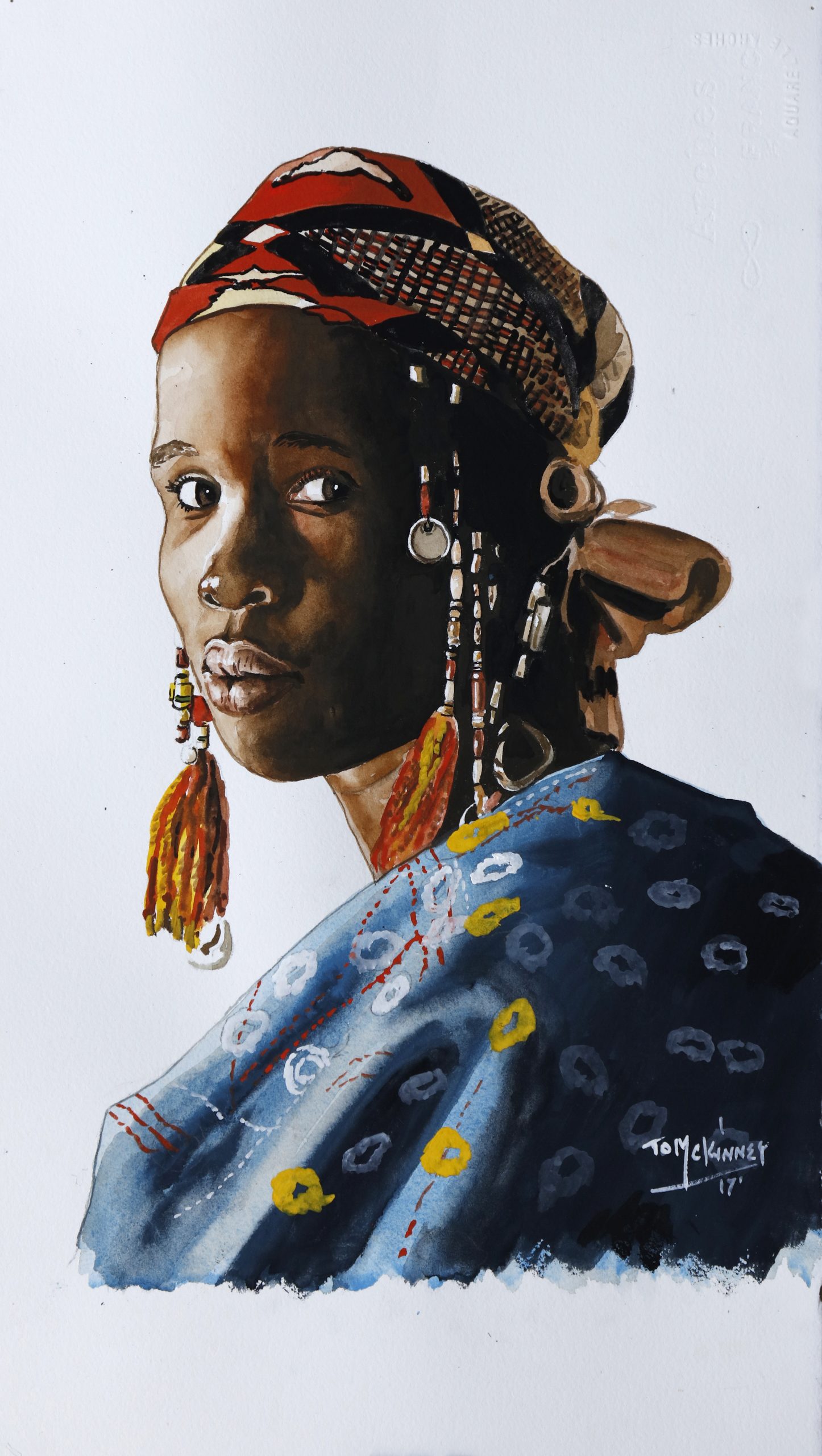
    A portrait by Tom McKinney is part of the “From Invisible to Invincible” exhibit at the Historic Strawberry Mansion.Historic Strawberry Mansion

    ‘From Invisible to Invincible: Honoring the Art of Color’

    Historic Strawberry Mansion

    This exhibit recognizes both the 250th anniversary of the founding of America and the 100th anniversary of the Committee of 1926, a women-led organization formed during the 1926 Sesquicentennial International Exposition, and dedicated to preserving the history and heritage of this mansion. It will showcase artists who did not get a fair opportunity to shine in the original 1926 exposition due to systemic inequities.

    2450 Strawberry Mansion Dr., Sept. 18 through Nov. 8, historicstrawberrymansion.org

  • S. Broad Street gets a new landscaped median — and it’s just the start of what’s planned

    S. Broad Street gets a new landscaped median — and it’s just the start of what’s planned

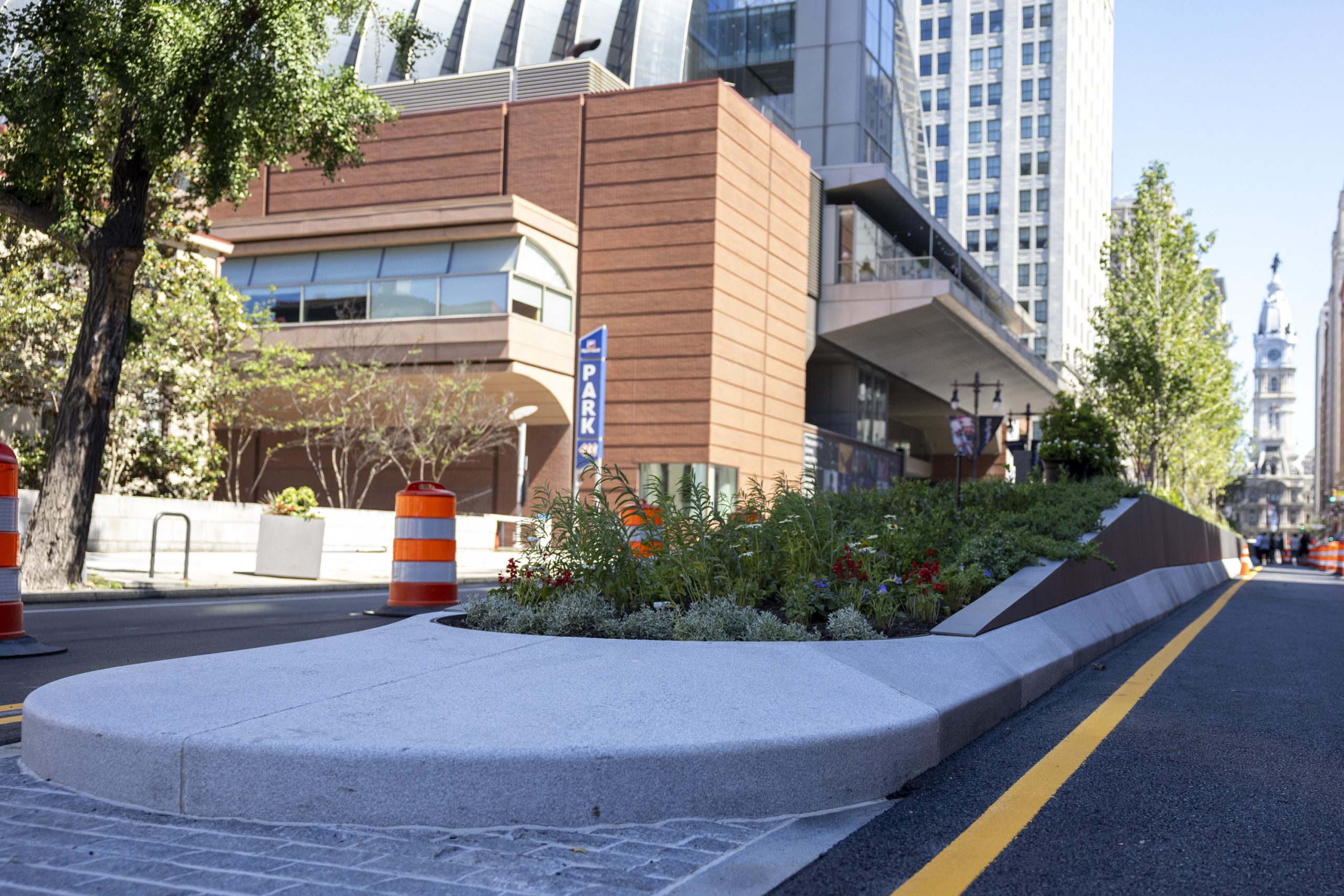
    A new landscaped median under construction for months in front of the Kimmel Center has reached completion — the down payment on a promised major redo of the Avenue of the Arts streetscape.

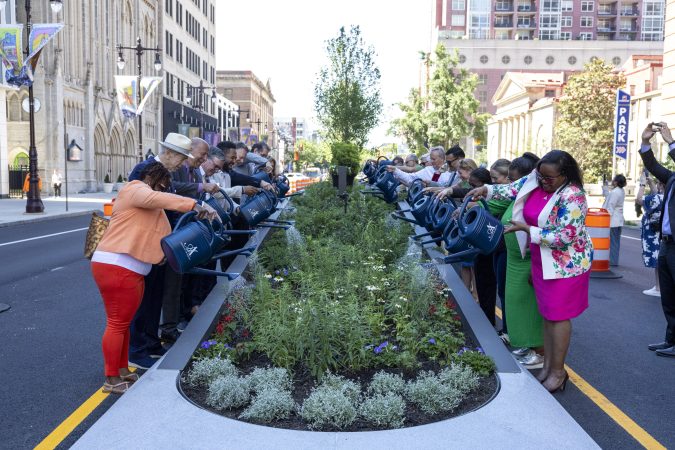
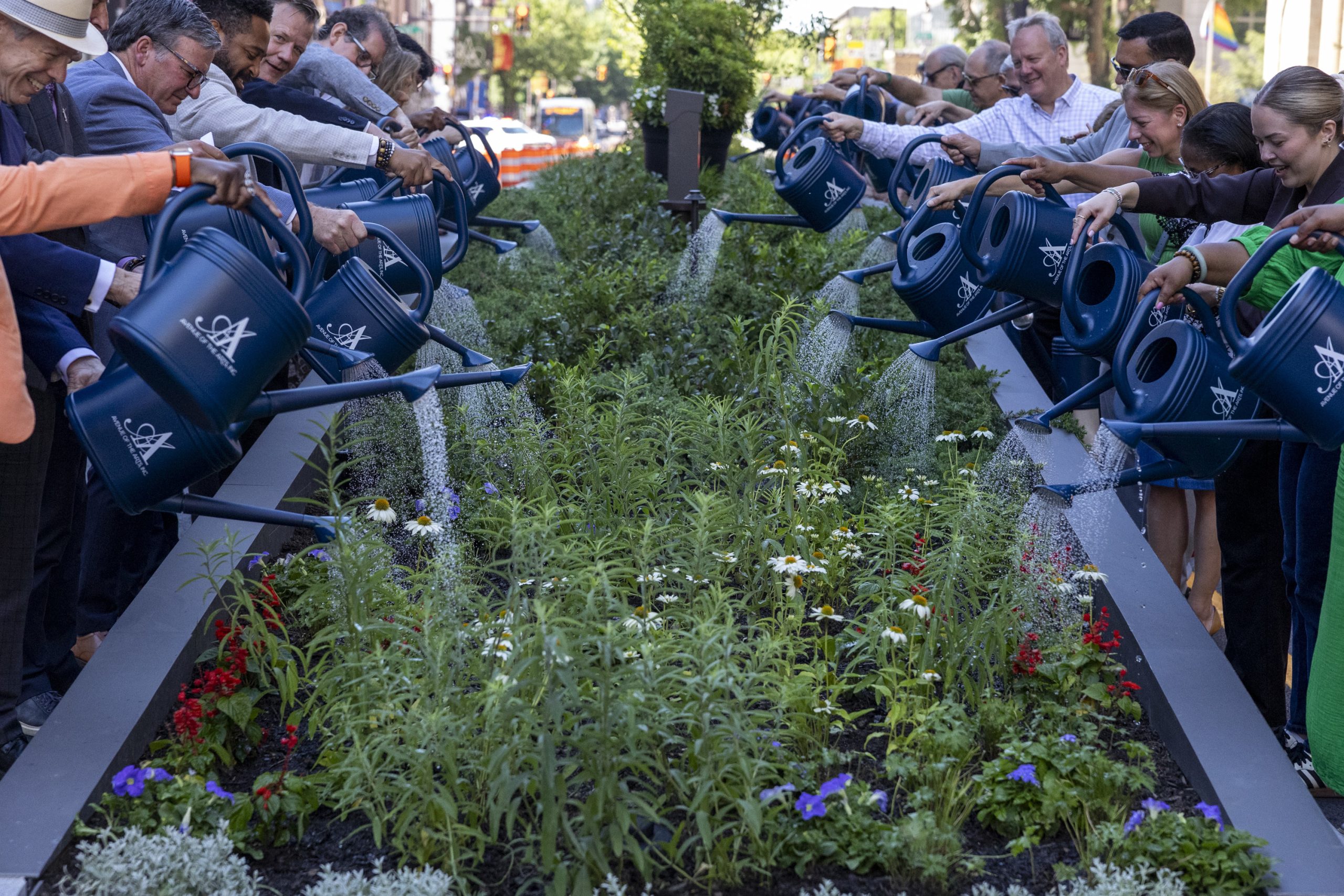
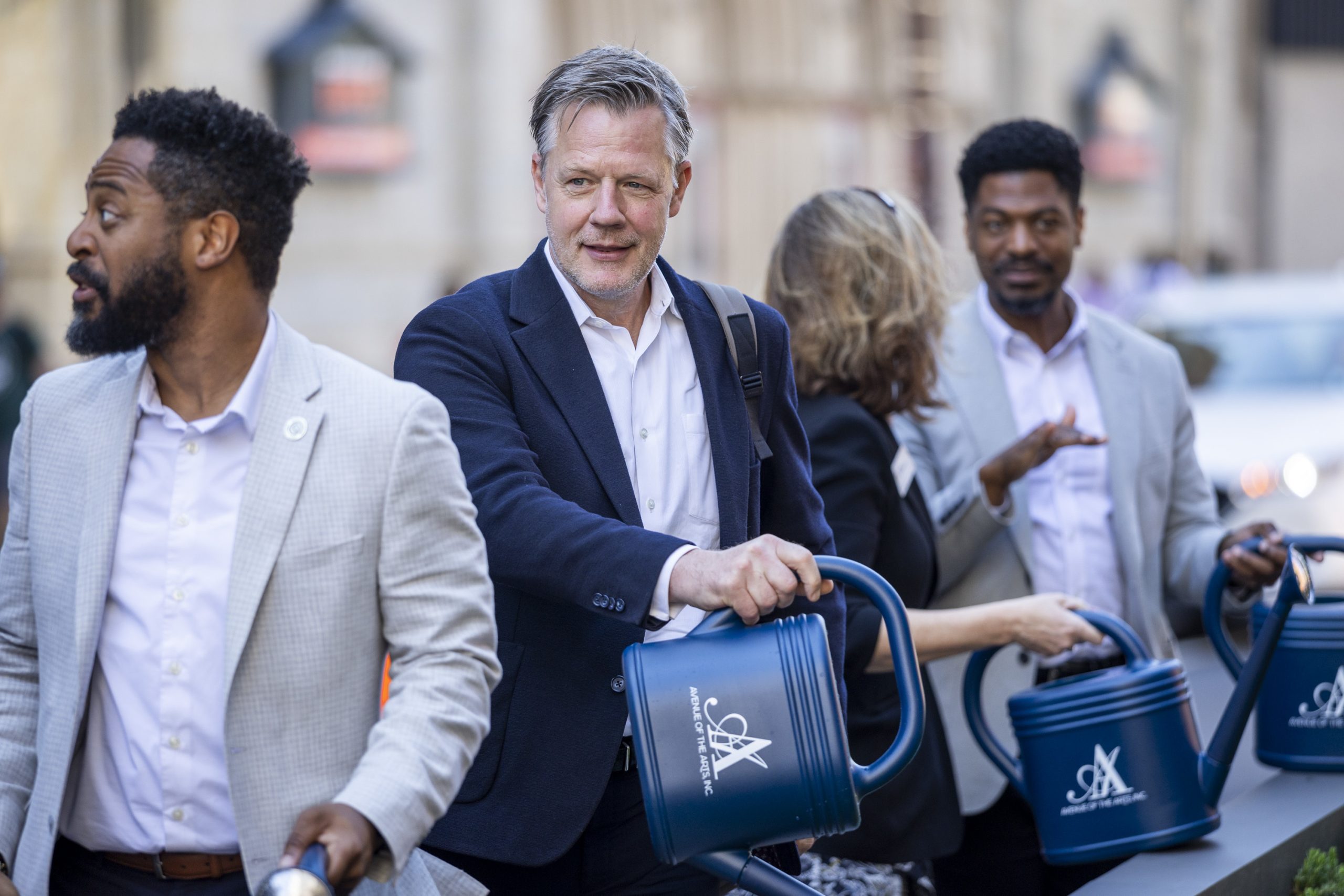
    The leafy ribbon down the middle of Broad Street from Spruce to Pine Streets was officially unveiled Wednesday morning with speeches and a ceremonial sprinkling from blue watering cans onto the new plantings.

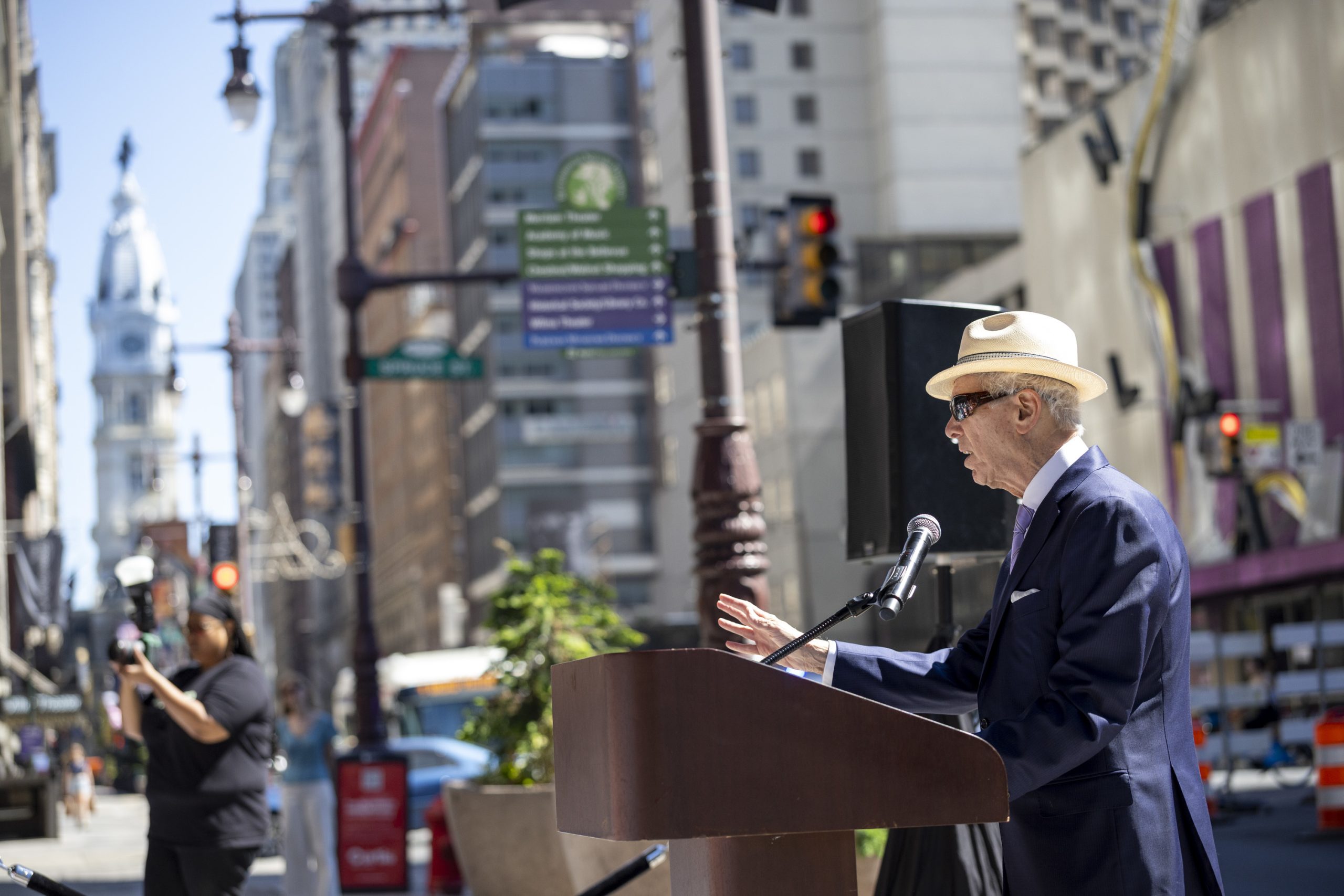
    “We aimed high and we met our lofty expectations, and we’re off and running,” said Carl Dranoff, chair of Avenue of the Arts Inc., which is spearheading the project.

    There is a practical, traffic-calming intention behind the raised median: It leaves less space for drivers to make U-turns on the block occupied by the arts center and residences, and creates a barrier to thwart pedestrians jaywalking across Broad Street.

    Attendees watering the new redesign of the South Broad Street median outside the Kimmel Center in Philadelphia, Pa., on Wednesday, June 24, 2026.Tyger Williams / Staff Photographer

    But the slender, shapely strip of trees, shrubs, and ground cover atop a granite base with metal skirt signals a larger transformation to come.

    In spring of 2027, work is expected to begin on an ambitious beautification of the heavily trafficked block. Sidewalks will be landscaped, sculptures installed, and pop-up performance space carved out, creating what planners say will be a markedly different vibe.

    That will give the project’s leaders something tangible to point to when raising money for the entire streetscape project, which is envisioned as eventually stretching from City Hall south to Washington Avenue.

    “The idea of a beta block was to get everybody on board and excited about what can be accomplished — the doability and to create buzz,” said Dranoff, who said the median was the first step in turning South Broad Street into “one of the great streets of the world.”

    Oliver Schaper, Ubran Designer for the Project with the New York office of Architecture/Design Firm Gensler, waters the plants in the redesign of the South Broad Street median outside the Kimmel Center in Philadelphia, Pa., on Wednesday, June 24, 2026.Tyger Williams / Staff Photographer

    That larger, 10-block effort is expected to cost about $150 million and take years to design and complete, with funds anticipated from both government sources and philanthropy.

    The design of each segment will vary, said Oliver Schaper, an urban designer for the project with the New York office of architecture/design firm Gensler.

    “The requirements of adjacent buildings are different on every block, the left-turn lanes are different, even the length of the median is different from block to block,” Schaper said. “We wanted to make sure that all the design elements can act as a kit of parts and adjust, so each design of a block will be an application of that kit of parts so they feel like cousins, but specific.”

    Some design professionals have criticized the median as intrusive to sight lines, but the design and landscaping were chosen to preserve sight lines, Dranoff said.

    Carl Dranoff, Chair of Avenue of the Arts Inc., speaks about the redesign of the South Broad Street median outside the Kimmel Center in Philadelphia, Pa., on Wednesday, June 24, 2026.Tyger Williams / Staff Photographer

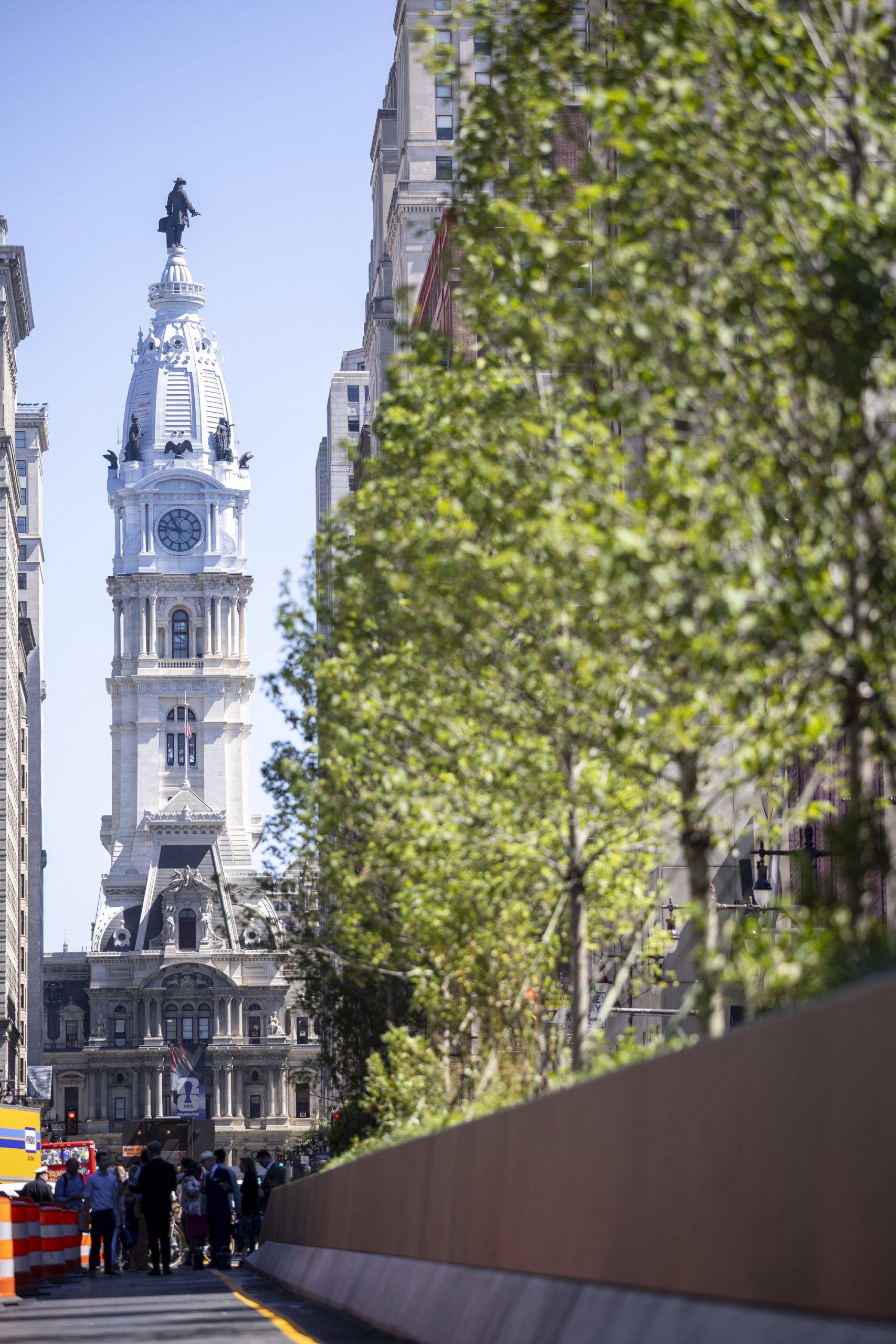
    “All of the trees were specifically selected to have long trunks and very narrow canopies, all the vegetation.” The designs adhere to standards for safety, he said, “so we are very confident that we will not block views.”

    The flora — about three dozen kinds of native and adaptive plants — were chosen by OJB Landscape Architecture to withstand “the abuse that they will be subject to in terms of the winters and the salt and all that,” Schaper said.

    Looking ahead, the blocks farther north from Spruce Street are anticipated as having fewer trees, to preserve the view of City Hall.

    “We even designed, as you get closer to City Hall, standing areas for brides and photo ops, so that we’re not taking anything away from people,” Dranoff said. “We have parade areas so that Mummers and other parades have performance areas between the medians.”

    City Hall seen in the back near the new redesign of the South Broad Street median outside the Kimmel Center in Philadelphia, Pa., on Wednesday, June 24, 2026.Tyger Williams / Staff Photographer

    But more immediate is the work from Pine to Spruce, where Dranoff’s 47-story Arthaus residential condo tower sits. The $5 million needed to pay for the median and work on the infrastructure beneath the street “is accounted for and that was utilized,” Dranoff said, “and of the $10 million for the sidewalks, we have several million lined up and more to go, and we’ll have it all by the end of the year.”

    Construction on the sidewalk portions is expected to begin in 2027 and be completed by the end of the year “or thereabouts,” he said.

    Schaper said part of the goal is to rebalance the dynamic between pedestrians and other factors.

    “I think as designers at some point we take a position, and our position was, ‘Let’s design for pedestrians.’ There are, of course, very specific requirements that we need to adhere to — for example, it’s reflected in conversations that we had with the Kimmel Center about their bus queuing, and we made adjustments to continue to allow that to happen.”

    The new redesign of the South Broad Street median outside the Kimmel Center in Philadelphia, Pa., on Wednesday, June 24, 2026.Tyger Williams / Staff Photographer

    But, he said, the plan sets out to be “an advocate of the pedestrian experience, and not think that private car access is the model of the future for cities.”

    Dranoff said construction of this first median phase, running much of the block from Spruce to Pine, was delayed by the unusually harsh conditions of this past winter, but workers made up for lost time.

    “Philadelphia’s going to be a hotbed this summer, and the whole point of this was to show what we can do and be more beautiful and more attractive and more compelling to Philadelphians and to suburbanites and to the world.”

  • How the Marquis de Lafayette became a surprising selfie favorite with visitors at the French National Archives

    How the Marquis de Lafayette became a surprising selfie favorite with visitors at the French National Archives

    PARIS, FRANCE — On a recent sunny May morning, Parisian middle schoolers had found a curious selfie point. Not a tourist landmark, not a kitschy backdrop, and not a mirror booth.

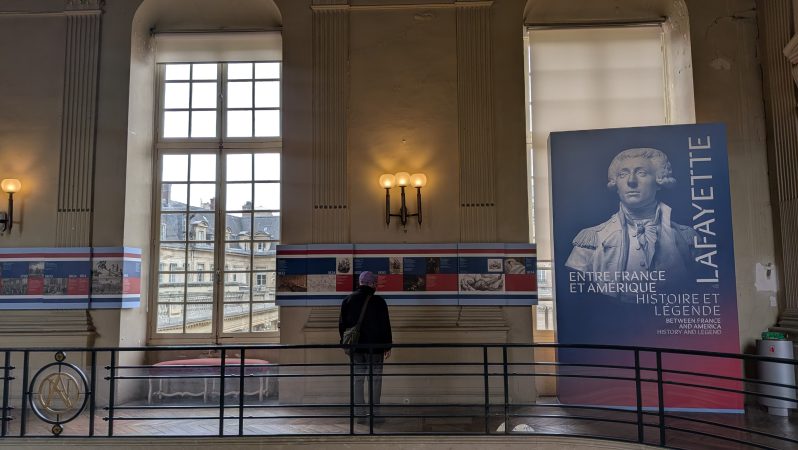
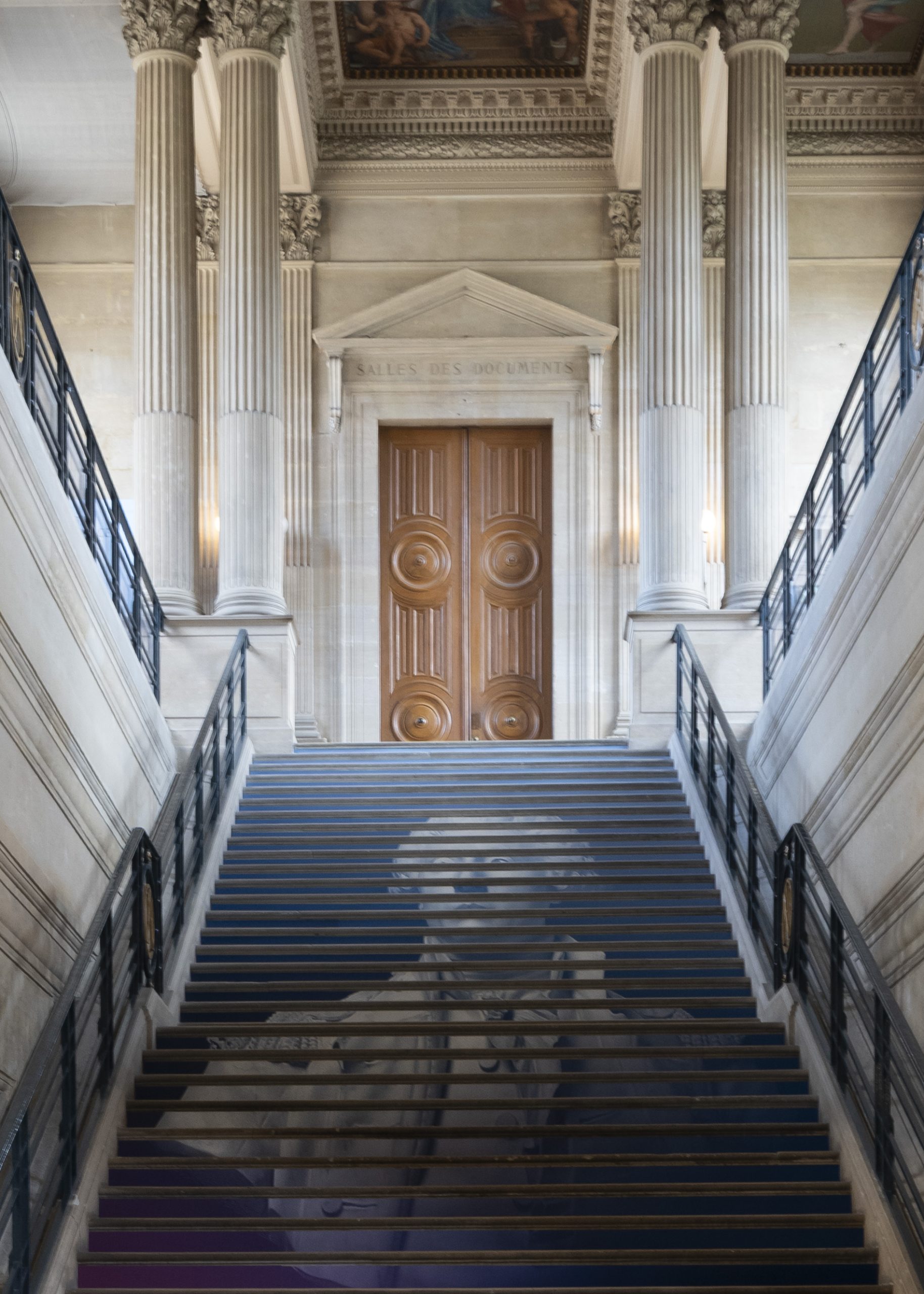
    It was the long rococo staircase of the 14th-century Hôtel de Soubise, which houses the Museum of the National Archives of France, plastered with the face of Marquis de Lafayette, the French military officer who died in 1834.

    “This has become a selfie hot spot somehow,” said Alexandra Hauchecorne, the museum’s technical director of the “Lafayette, between France and America: History and Legend” show.

    The Hôtel de Soubise’s rococo staircase, with likeness of the Marquis de Lafayette, has become a selfie hot spot at the Musée des Archives Nationales in Paris.Carole Bauer, Archives Nationales de France

    Lafayette — both before and after Lin-Manuel Miranda’s Hamilton — is a celebrated hero in America. Textbooks record that he was only 19 when he came to America in 1777 to join the Continental Army under George Washington. He fought for American independence, participated in the Battle of Brandywine and the Siege of Yorktown, faced the harsh winter of Valley Forge, convinced the French King Louis XVI to send more troops, and developed a deep relationship with Washington — so much so that Lafayette named his only son, George Washington.

    And of course, Lafayette has also become the de-facto author of the catchphrase “Immigrants… We get the job done” by way of Daveed Diggs playing him in Miranda’s immensely popular musical, a phrase splashed on countless tote bags and in hashtags.

    In France, however, “Lafayette was not regarded the same way as he is here,” said Olga Anna Duhl, professor of French and comparative literature at Easton, Pa.’s Lafayette College and one of the exhibition’s curators.

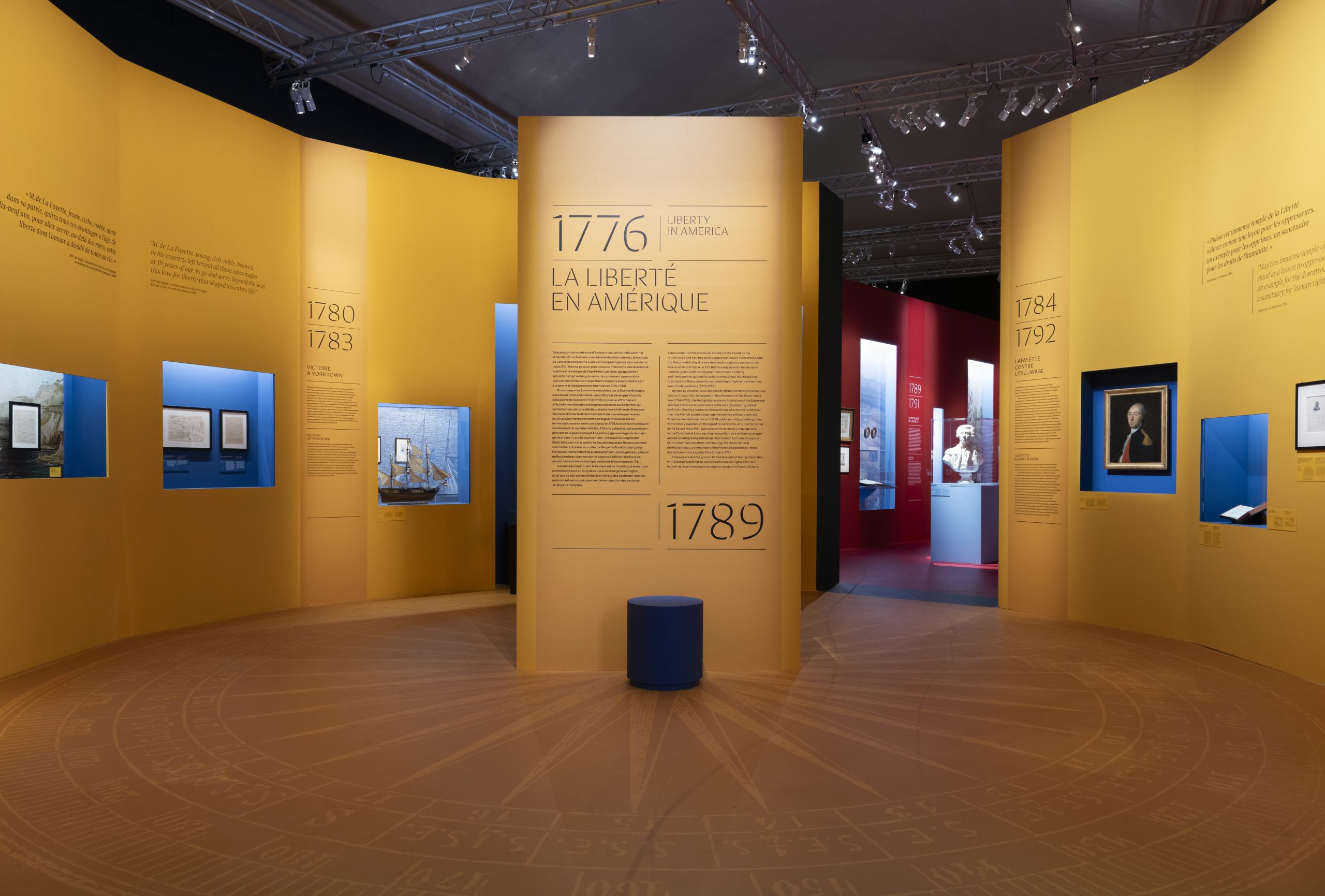
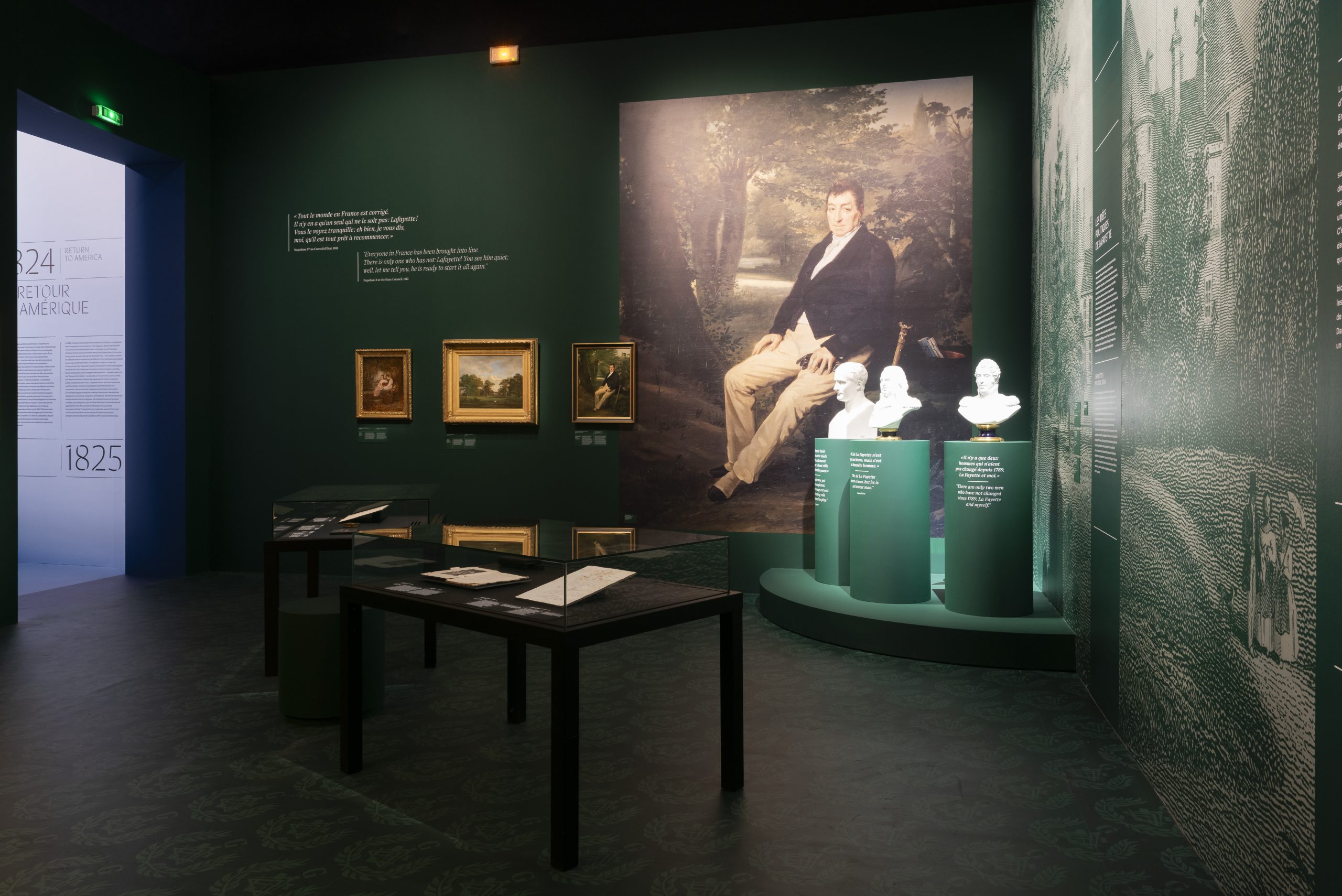
    The yellow room of the ongoing “Lafayette, between France and America: History and Legend” at the Musée des Archives Nationales in Paris. The exhibit focuses on Lafayette’s participation in the American Continental Army.Carole Bauer, Archives Nationales de France

    His involvement in the French Revolution and desire to have France be a constitutional monarchy, as opposed to a republic like America, made him a target of criticism from both the left and right of the French political system. He was perceived as a traitor and eventually forced to flee the country. Lafayette was imprisoned first by the Austrians and then by the Prussians, who (ironically) considered him a rebel.

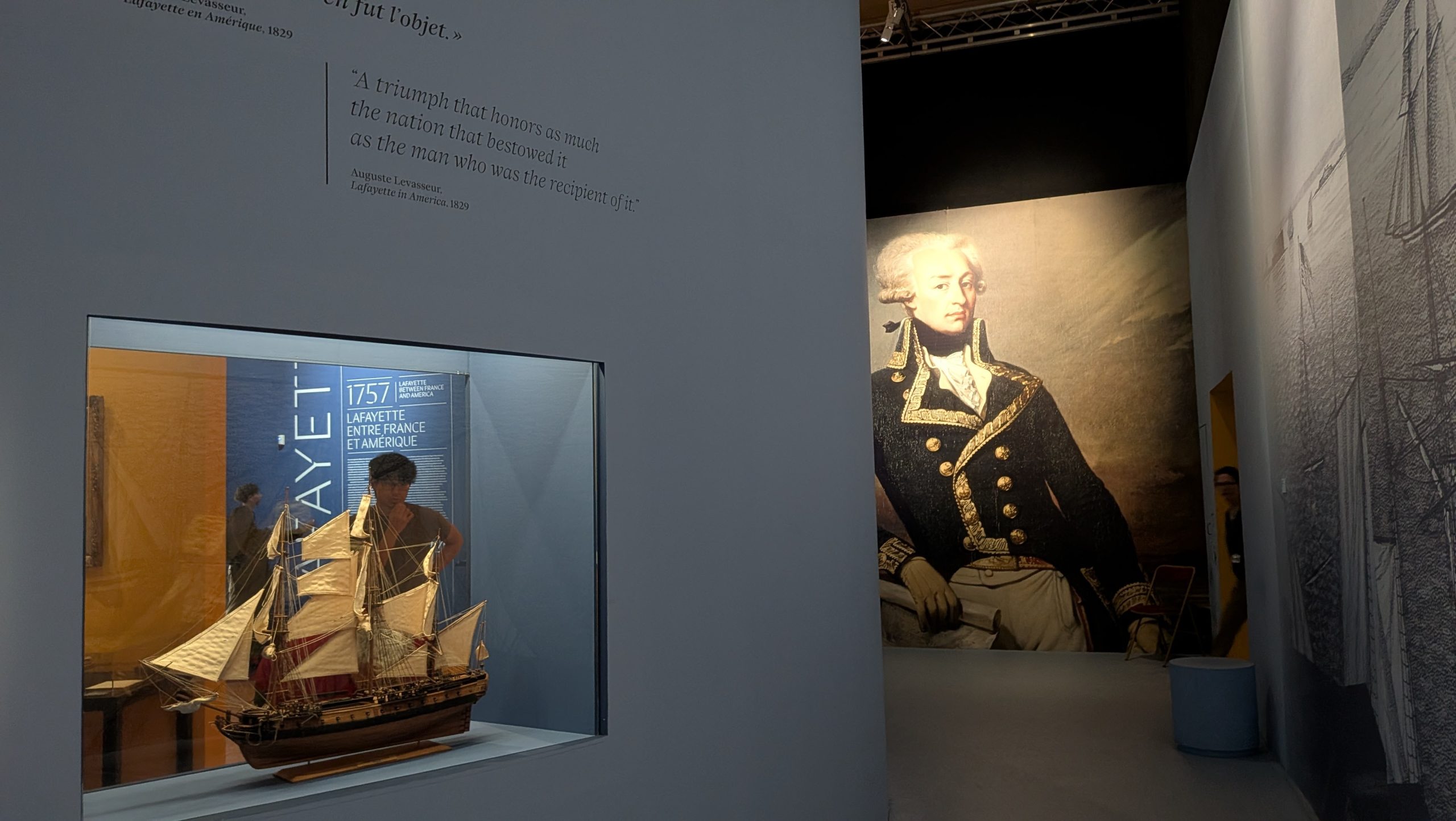
    With it being the American Semiquincentennial, Duhl “thought that it would be wonderful” to have an exhibition in Paris and “educate the French people, and any person who comes to visit” about Lafayette.

    In France, she said, “you study history, then you go into his life, and especially his American side. But you know very little about his French contribution, which is very paradoxical.”

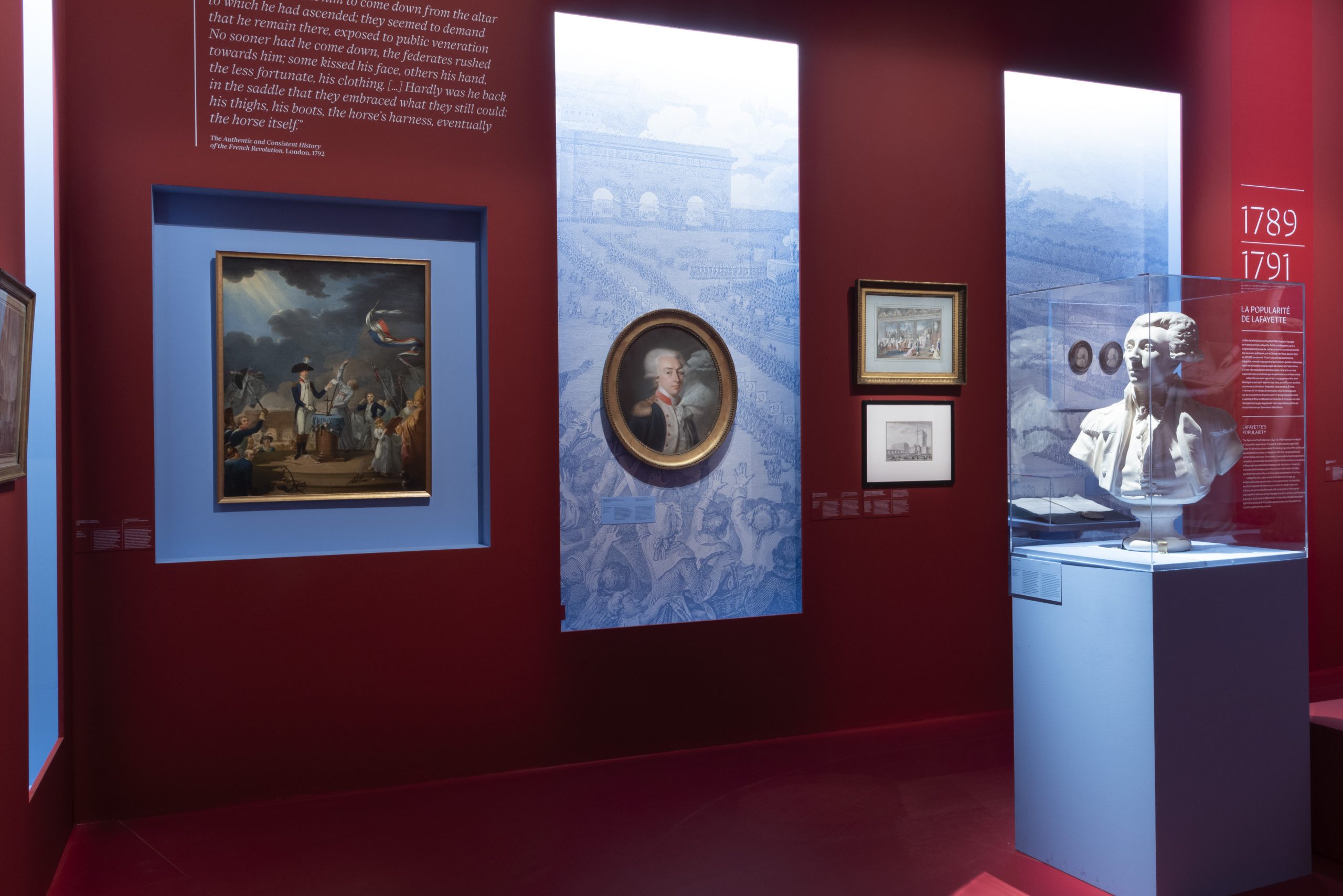
    The red room of the ongoing “Lafayette, between France and America: History and Legend” at Paris’ Musée des Archives Nationales focuses on Lafayette’s participation in the American and French revolutions.Carole Bauer, Archives Nationales de France

    The exhibition encompasses five rooms color coded to fit the years of Lafayette’s life — yellow, the color of the Continental Army uniform, to tell the story of Lafayette’s years in America; red denoting the American Revolution; green to denote Lafayette’s years in semiretirement in France, gardening and practicing agriculture and often experimenting with seeds from America; a light blue to mark Lafayette’s triumphant return to America in 1824; and a darker blue to denote monarchy and Lafayette’s last years, which he spent backing King Louis Philippe I and supporting other revolutions.

    The red room — the most interesting one — builds up Lafayette as the American hero he became. Among other artifacts, it includes a letter Ben Franklin wrote to him on behalf of the Philadelphia Philanthropic Society in 1788.

    The green room of the ongoing “Lafayette, between France and America: History and Legend” at Paris’ Musée des Archives Nationales focuses on Lafayette’s years of semi-retirement spent gardening in Château de Chavaniac.Carole Bauer, Archives Nationales de France

    “Most of our Legislators have already abolished the Slave Trade,” it reads, “…But from the influence of narrow prejudices and jealousies there is too much reason to apprehend that nothing effectual will be done in this business until France concurs in it, of which we cannot but entertain the most pleasing expectation.”

    Franklin enclosed copies of the U.S. Constitution for Lafayette’s perusal, only six months after Franklin, whose health was failing, had James Wilson read aloud his closing speech at the Constitutional Convention.

    A letter Lafayette wrote to George Washington on March 17, 1790, is on display, too. Along with the letter, Lafayette sent his mentor the key to “that fortress of despotism” that was the Bastille. Thomas Paine, who carried this extraordinary gift, said, “That the principles of America opened the Bastille is not to be doubted, and therefore the Key comes to the right place.”

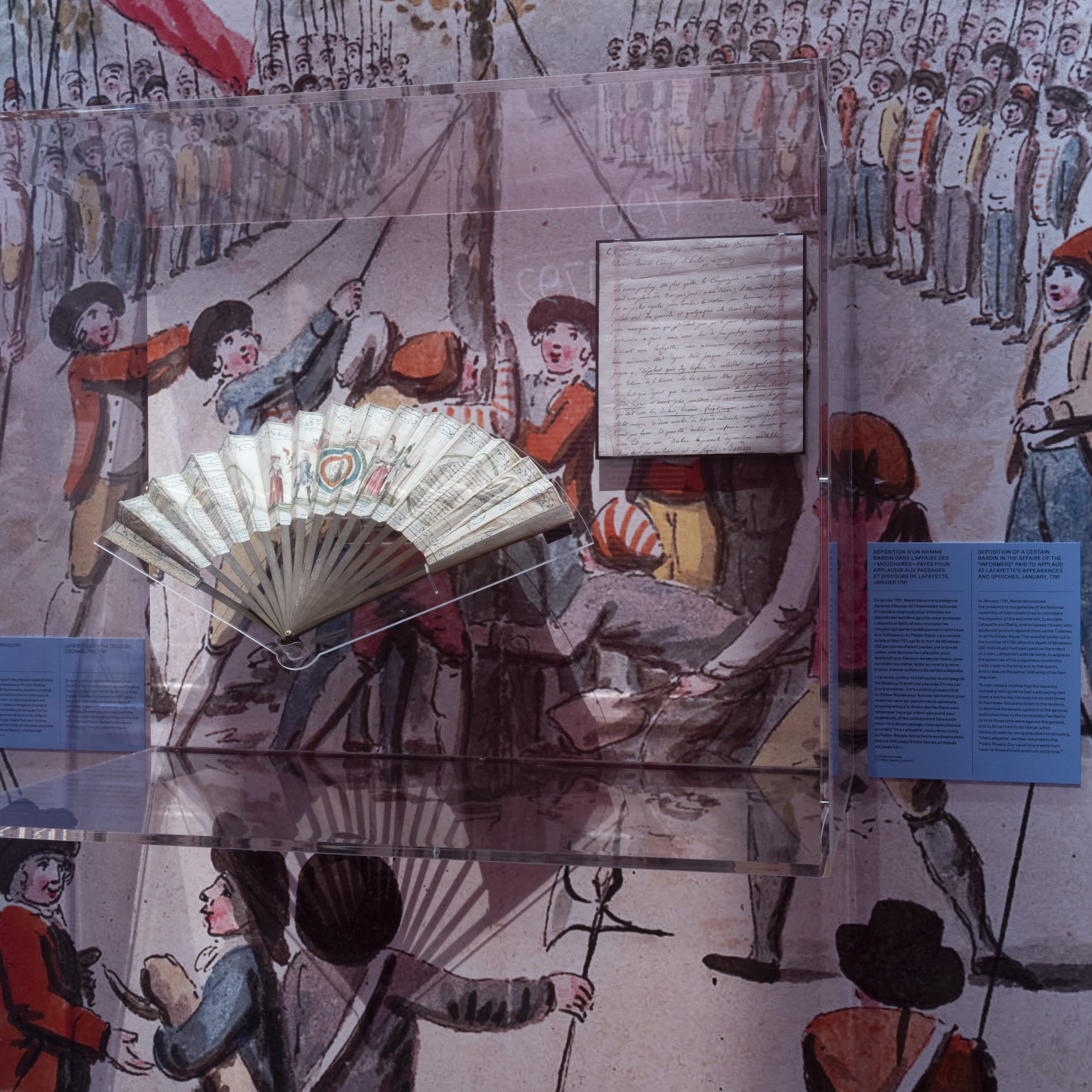
    Paper fans carrying Lafayette’s name were popular among his followers. Lafayette was a canny self-promoter who hired publicists to defend his image.Carole Bauer, Archives Nationales de France

    Also on display are lampoons and letters that speak to the immense distrust both the aristocrats and democrats had of Lafayette.

    “If this is the eldest child of Liberty, he is murdering his mother,” a letter reads. “Lafayette treated as he deserves by democrats and aristocrats,” reads a lampoon showing the French lieutenant général being hung by a noose by two men on his either side.

    Lafayette, on his part, was a canny self-promoter. He hired several publicists to defend his public image and recruited people to clap at his speeches. In what would be classified as merch today, his face adorned fans, buttons, and commemorative plates.

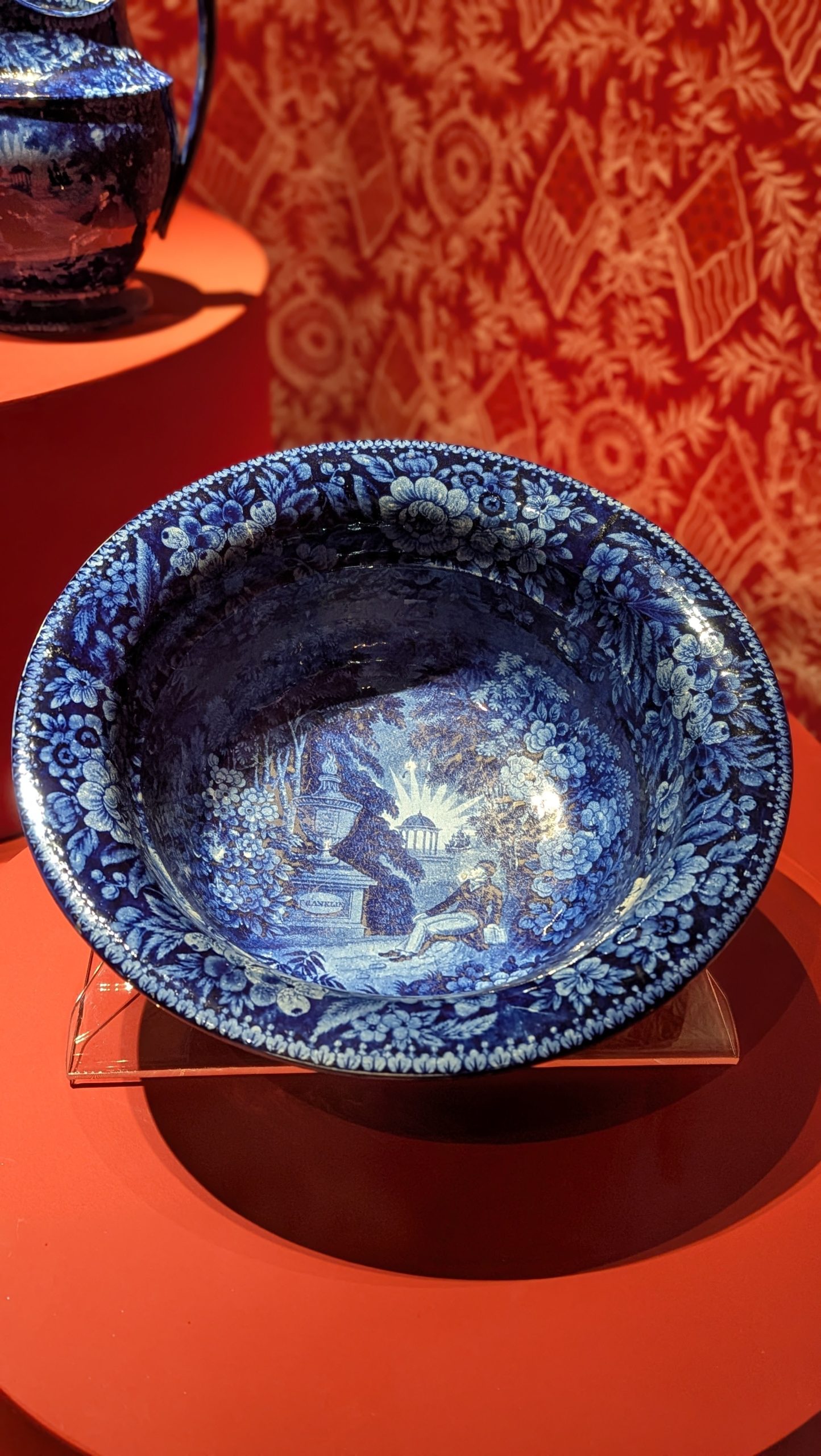
    On display in the light blue room, marking his triumphant return to America in 1824, are several objects — pitchers, tea sets, baby shoes, shoeshine brushes — all emblazoned with his face and name.

    Produced in a factory in Burslem, Staffordshire, a tea service set in blue and white earthenware shows the Marquis de Lafayette sitting by Benjamin Franklin’s grave. This imaginary scene appeared on plates and other items manufactured to commemorate Lafayette’s return to the U.S. in 1824. From the “Lafayette, between France and America: History and Legend” at the Musée des Archives Nationales, Paris.Bedatri D. Choudhury

    As Lafayette’s reputation in France remained checkered at best, many of these branded memorabilia were found in homes in Philadelphia, a prominent stop in Lafayette’s “Farewell Tour” of the Union’s 24 states. An invitation to the Lafayette Ball held in Philadelphia in 1824 hangs on the wall.

    Much of the artifacts come from the collection of Lafayette College, the only college in the U.S. named after him. More streets and public places in the U.S. are named after Lafayette than any other foreigner. In Paris, about six hours away from Chateau Lafayette where he lived, only Rue La Fayette, one of the city’s longest streets, bears his name.

    That and a glitzy shopping mall with 10 floors, best known for its rooftop views of the city.

    “Lafayette is very well known [in France] but not as a historical figure,” said Duhl. “And one of the educational aims of this exhibition is to educate people about this compelling figure … so that the new generation can really develop an idea about who Lafayette really was, because he has disappeared basically from manuals.”

    The “Lafayette, between France and America: History and Legend” exhibit at Paris’ Musée des Archives Nationales seeks to educate French visitors about the historical importance of Marquis de Lafayette.Bedatri D. Choudhury

    On a weekday morning, there was a mix of visitors to the exhibition that, Hauchecorne said, was a rare bilingual event at the Archives. Parisians and school children have been visiting, as have Americans on vacation, to know more about the man who has been shown rapping lines that are becoming of his high self-esteem: “No one has more resilience or matches my practical, tactical brilliance!”

    Even though previous exhibitions have not had much materials translated into English, the Archives, which houses records dating back to the 1st millennium, has had Americans dropping in before.

    Most notably: Tom Cruise performing a motorcycle stunt as Ethan Hunt in Mission: Impossible — Fallout (2018).


    “Lafayette, between France and America: History and Legend” runs through July 14 at Musée des Archives Nationales, 60, rue des Francs-Bourgeois, 75003 Paris. archives-nationales.culture.gouv.fr

  • Meek Mill joins the July 4 ‘One Philly: Unity Concert for America’ lineup

    Meek Mill joins the July 4 ‘One Philly: Unity Concert for America’ lineup

    The event billed as the nation’s largest free concert and biggest celebration of America’s 250th anniversary just got bigger.

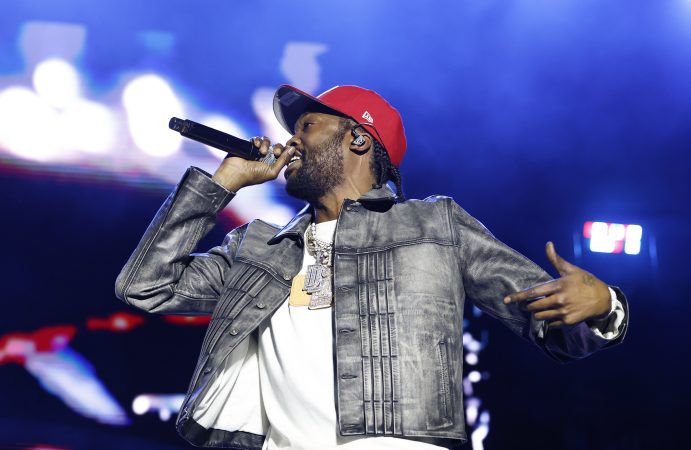
    Meek Mill will join headliners Christina Aguilera, Jill Scott, and The Roots to perform at the “One Philly: Unity Concert for America” on July 4 on the Benjamin Franklin Parkway.

    ESM Productions and Live Nation Urban announced the addition of the Dreams and Nightmares rapper to the Parkway bill on Tuesday morning, hot off his Saturday night performance at “Lit in AC,” a hip-hop festival featuring early 2000s bling-era rappers T.I., Eve, Shyne, Havoc, and Ms. Jade.

    Will Smith & DJ Jazzy Jeff; Kathy Sledge, lead singer of ’70s R&B girl group Sister Sledge; and State Property, the Philly hip-hop collective that includes Beanie Sigel, Freeway, Peedi Crakk, and Chris and Neef, are also scheduled to perform.

    While the bill includes mostly Philadelphia-area musicians — Aguilera grew up outside Pittsburgh — performers also include Seal, the Brit whose hit “Kiss From a Rose” still stops music fans in their tracks; Infinity Song, the Detroit-born soft rock and soul family; and Jordan Davis, the Louisiana-born country music singer.

    Comedian and part-time Media resident Wanda Sykes is hosting. Gillie da Kid and Wallo267 are also slated to make an appearance.

    The nearly seven-hour show will start at 5 p.m. and end just before midnight, with a fireworks finale to follow. Admission to the concert starts at 3 p.m.

    The “One Philly: Unity Concert for America” is presented by the City of Philadelphia and produced by Center City-based ESM Productions with executive producers Scott Mirkin, Shawn Gee (The Roots’ manager and head of Live Nation Urban), and Roots frontman Ahmir “Questlove” Thompson.

    Wawa is a sponsor of the concert, but the show is not part of Wawa Welcome America, the series of events leading up to the July 4 holiday, which this year will include concerts with Queen Latifah, Eve, Idina Menzel, and Pink Sweat$, among others.

    The “One Philly: Unity Concert for America,” according to the news release announcing the event, is “designed as a non-partisan celebration of unity, diversity, and democracy” that brings together “voices, perspectives, and performances that reflect the richness of the American experience across generations and genres.”

  • ‘Oh, Mary!’ is coming to Philadelphia on its first national tour

    ‘Oh, Mary!’ is coming to Philadelphia on its first national tour

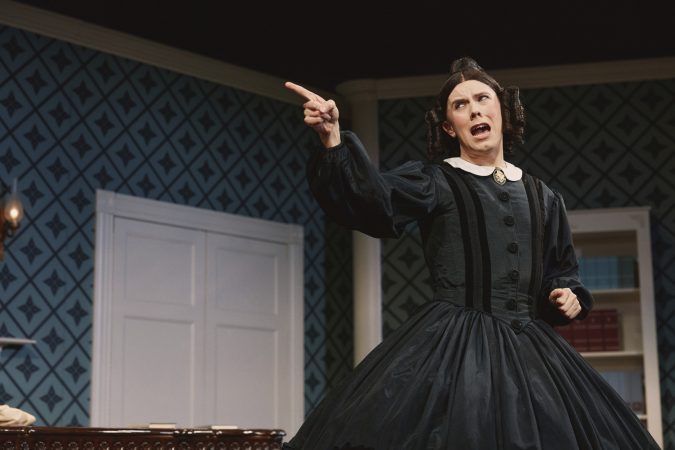
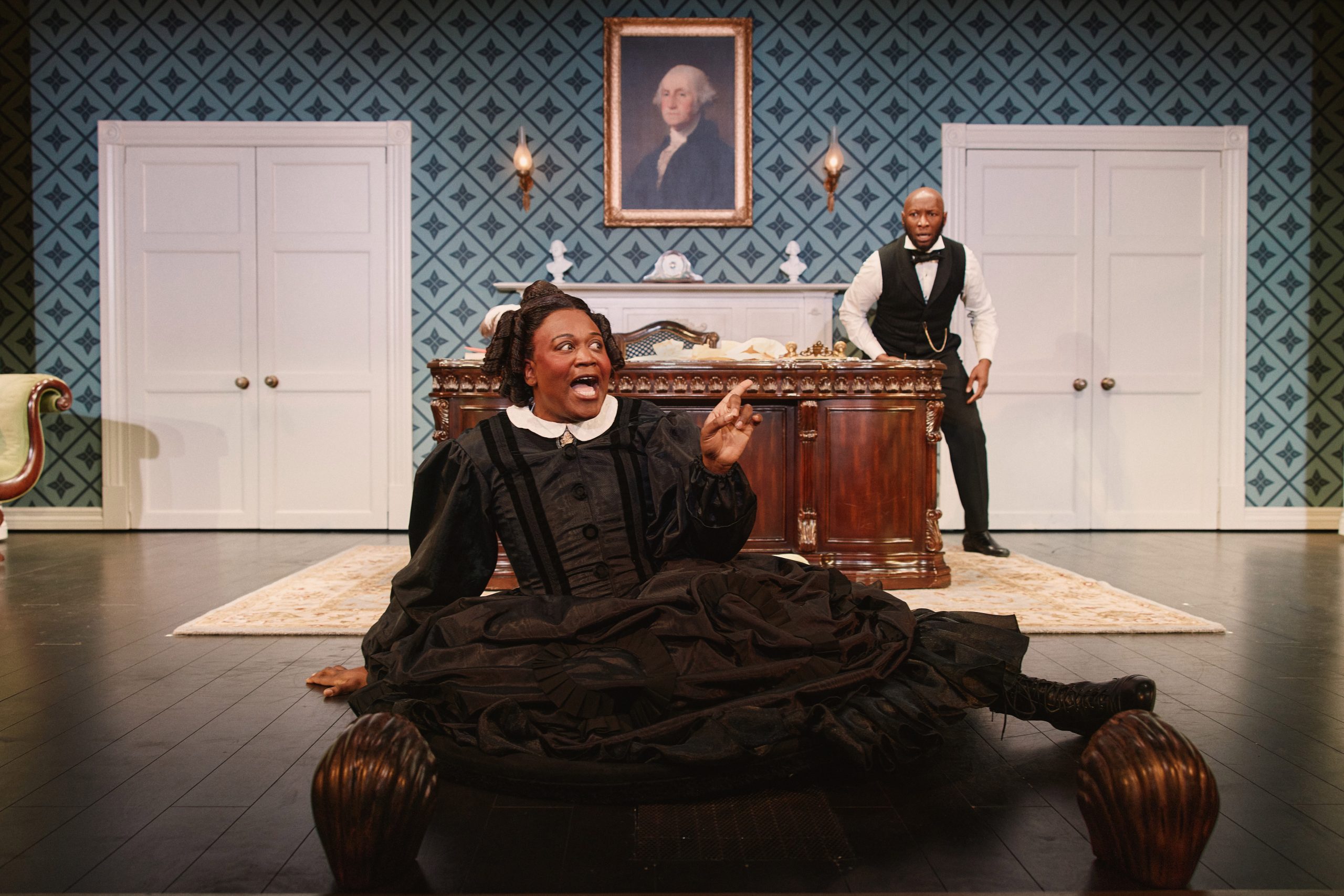
    Oh, Mary!, the wacky and irreverent Tony Award-winning play about first lady Mary Todd Lincoln, will stop in Philadelphia on its first national tour next spring, and tickets go on sale this week.

    Following a record-breaking box office Broadway run, the Philadelphia premiere of Oh, Mary! will be one of the buzziest theater tickets of the season. Its brief run at the Miller Theater from March 9 to 14 will likely sell fast given the show’s massive popularity.

    Written by actor/comedian Cole Escola, the play focuses on the Lincolns in the weeks leading up to the assassination of President Abraham Lincoln (here called “Mary’s husband”). The dark, campy comedy first featured Escola in the role of Mary — which led them to win the 2025 Tony Award for best leading actor in a play — and has since hosted special guest stars like Maya Rudolph, Tituss Burgess, Jinkx Monsoon, and Jane Krakowski. The show also won the Tony for best direction of a play, and was named a Pulitzer Prize finalist.

    Tituss Burgess and Phillip James Brannon in “Oh, Mary!” on Broadway. The Tony Award-winning comedy about Mary Todd Lincoln runs March 9 to 14, 2027, at the Miller Theater.EMILIO MADRID

    “Oh, Mary! is exactly the kind of bold, inventive Broadway sensation that we want to bring to Philadelphia,” said Frances Egler, Ensemble Arts Philly’s vice president of theatrical programming and presentations, in a statement. “The play is both razor-sharp and delightfully idiotic, an absurdist, whip-smart comedy … And given Mary Todd Lincoln’s well-documented fondness for shopping in Philadelphia, it feels only right that she finally gets top billing here.”

    Casting for the tour has not been announced yet. Presale tickets are available for Ensemble Arts Philly members; tickets go on sale to the general public at 10 a.m. on Friday, June 26.

    “Oh, Mary!”, March 9-14, 2027, Miller Theater, 250 S. Broad St., 215-893-1999 or www.ensembleartsphilly.org.

  • What is the Camden bop, the region’s latest viral dance that has earned over a million fans across the world?

    What is the Camden bop, the region’s latest viral dance that has earned over a million fans across the world?

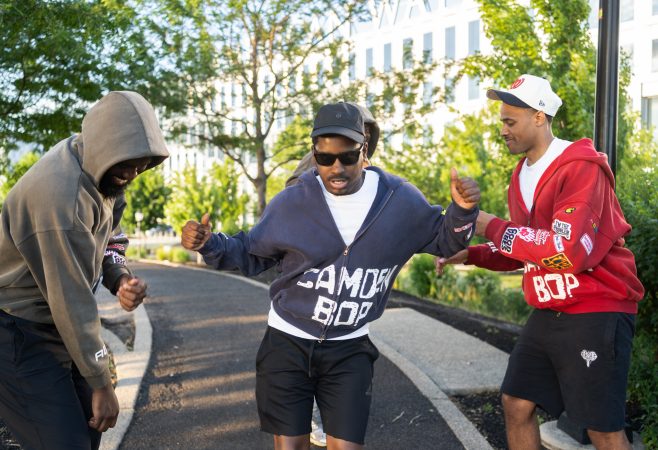
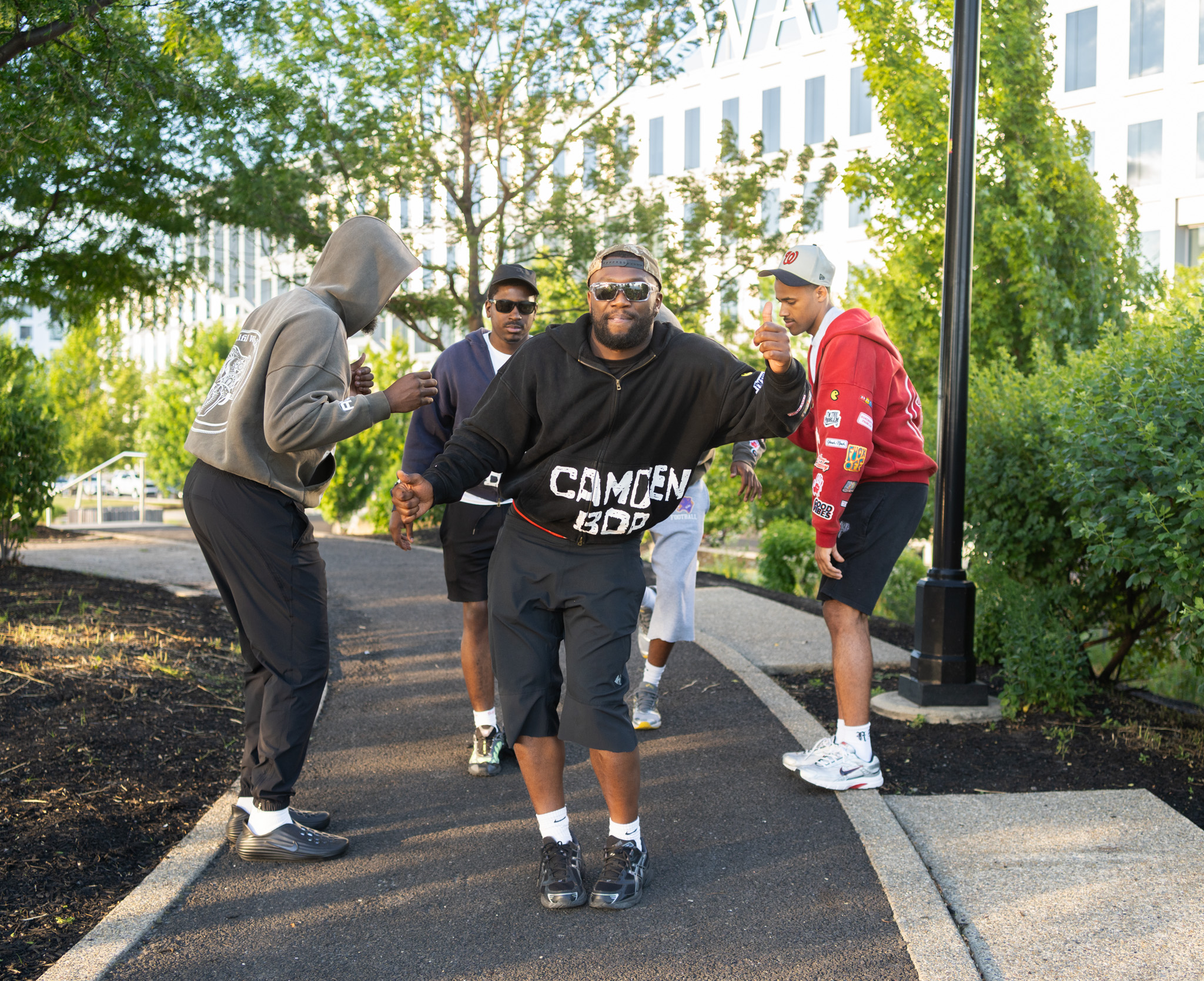
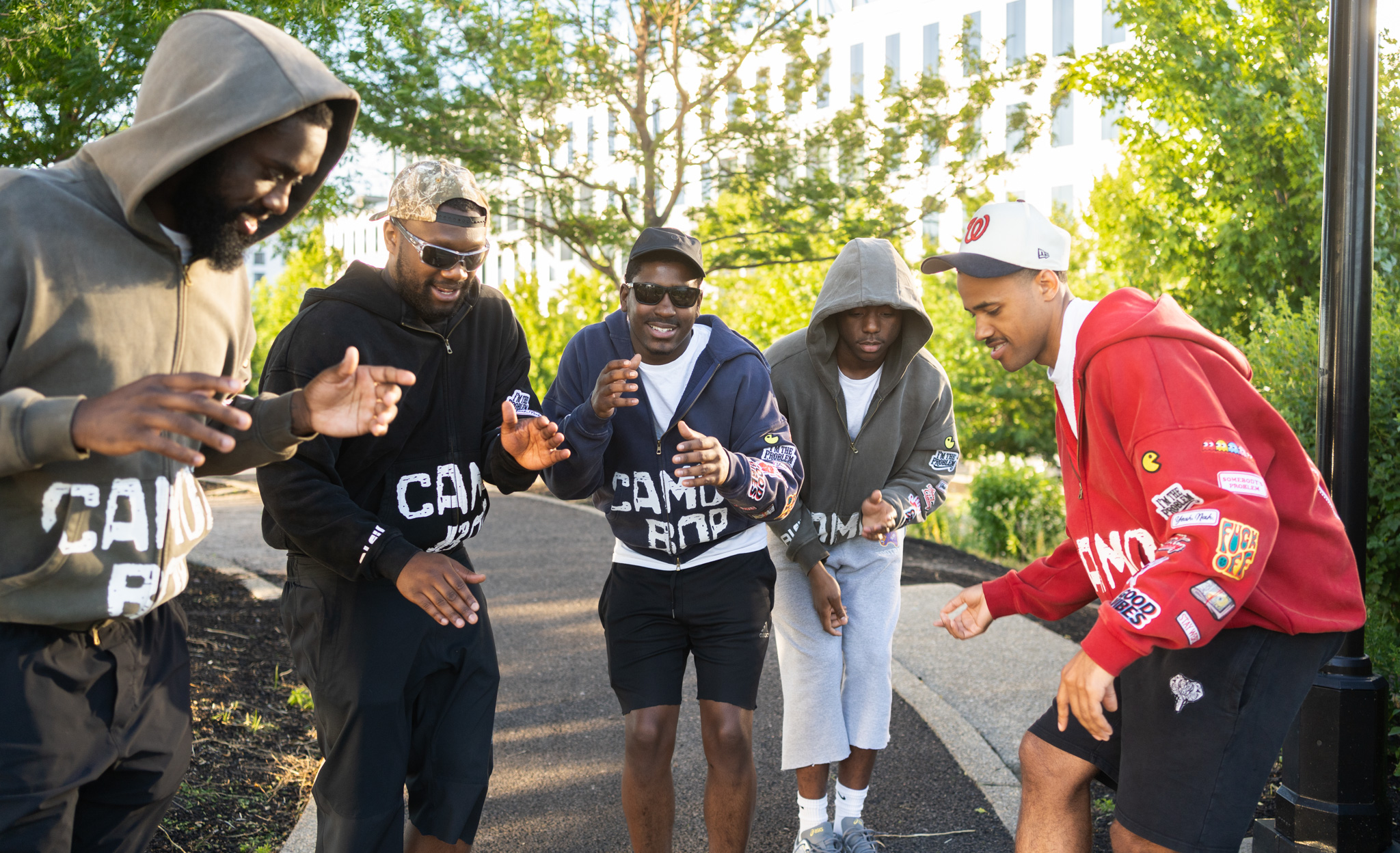
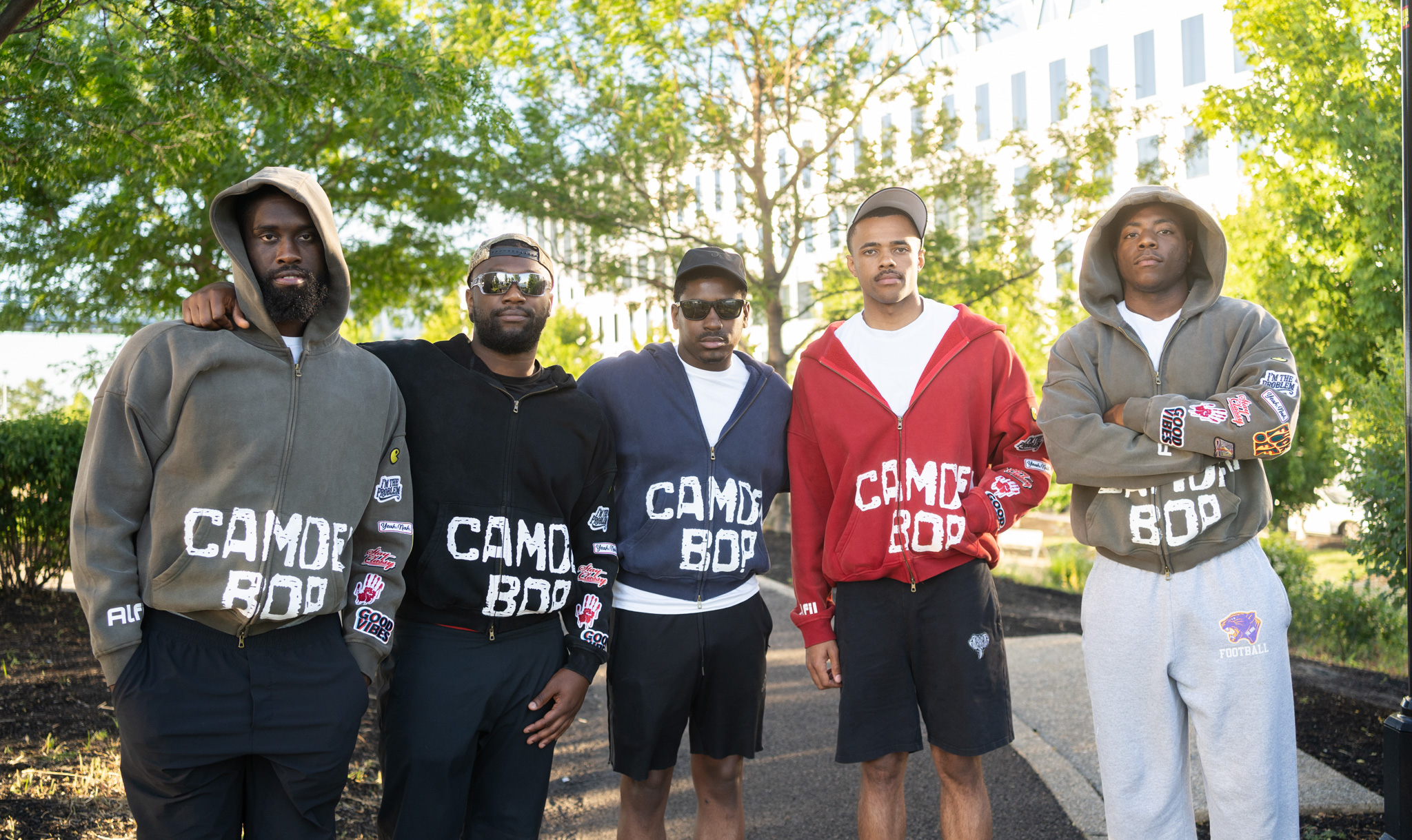
    Last week, just outside the Camden Waterfront walkway, stood a group of five men, ages 18 to 25. They were all decked out in embroidered hoodies with the words “Camden Bop” stitched on the front.

    They were quiet at first before the sight of a camera and sound of an up-tempo beat grabbed their attention. They smiled and their motionless bodies kicked into action.

    They shifted their hips from side to side, while their arms and heels bounced to the song’s drum kicks and chopped vocal sample. They added leg extensions and shifty pivots into the mix, creating a synchronized dance that flowed like water.

    The words stitched across their hoodies took on new meaning.

    This is the Camden bop. Viral TikTok videos and Instagram clips of the group, known as the Camden Bop Originators, have turned the move into a social media sensation.

    Ethan Tarte, pictured at the center of the image, is the man behind the now-viral dance, the “Camden bop.”Earl Hopkins

    The crew comprises Camden natives Ethan Tarte, Myles Thompson, Nafi Muhammad, Rodney Barge Jr., and Haleem Muhammad.

    At 16, Tarte unintentionally created the Camden bop by trying to imagine what it would be like to circle the rink at Camden’s Millennium Skate World. Before he had skates, he practiced his moves barefoot in front of his mirror.

    What emerged became the foundation of the Camden bop.

    The influence of Jersey Club dances is present in the heel-toe slides, leg extensions, and quick pivots they add to the Camden bop over up-tempo club remixes of popular rap and R&B songs like Ryan Leslie’s “Addiction” and R. Kelly’s “Freaky in the Club.”

    “We grew up Jersey Club dancing … back when dancing was allowed,” Tarte, now 25, joked, “so it definitely comes from that.”

    ‘We’re more than what everybody thinks we are’

    When the dance didn’t yet have a name, Tarte flirted with the idea of calling it the E Boogie Bop, after a nickname he had earned for his quick moves on the basketball court at Camden High School. But he opted for the name of his hometown, hoping the dance would change people’s perception of a city that was once among the nation’s poorest and most dangerous.

    “I hear how people talk about Camden, and people are genuinely afraid sometimes to come through here,” Tarte said. “I was excited it was the Camden bop, so that everyone knew that there was something good that came out of Camden. We’re more than what everybody thinks we are.”

    Not long after, Tarte started posting Snapchat videos of him doing the dance with his friends Thompson, Barge, and Nafi Muhammad. Haleem Muhammad, 18, joined later. Some of their peers called them corny at first, but the bop eventually caught on with others at Camden High.

    “It really started from us having fun, and wanting to be us,” Tarte said. “People used to make fun of us, but it really comes from the love [of dancing].”

    The same people who called the dance corny are now tripping over their feet to learn it, said Tyray Green, who graduated from Camden High with Tarte.

    “People are insecure with themselves,” he said. “The whole time, they could have minded their business.”

    “I feel like they’re doing it worldwide now,” Green said.

    A fan in 2Rare

    The dance shared among high schoolers has now drawn the attention of artists, athletes, and content creators from around the country.

    Among them is North Philly rapper 2Rare, best known for his viral TikTok songs and dance videos, who featured the Originators in the video for his single, “Camden Bop,” after seeing the group’s TikTok videos.

    2Rare, born Naseem Young, reached out to the Originators so he could put a face and name to the dance that was taking over people’s social media feeds.

    “I know how quickly people can steal a wave, and nobody will ever know who the dance was from, who started this or started that,” he said. “I’ve had it happen to me. People have stolen my dances and ran off with it, so reaching out to them was a big deal.”

    He first considered shooting the video in Philly, but thanks to advice from Gillie Da King, he recognized the significance of bringing the production to the birthplace of the dance.

    “I had to make it happen,” 2Rare said. “I want to really shed light on them, and Gillie said, ‘They will never forget about you for doing something like that,’ and he was absolutely right.”

    For Green, the recognition proves what he’s always known: Camden has more than just athletic talent. For him, it’s a city with both grit and style, deserving of its own recognition.

    “We get overlooked a lot,” he said. “To see [2Rare] who has eyes on him, stick their arms out to give our city notoriety is big.”

    ‘There’s love all over the map’

    In April, the dancers joined 2Rare outside of Camden High School to film the music video, now sitting at 2.8 million YouTube views since its May 7 premiere.

    “It’s humbling,” Tarte said. “This all happened for a reason. It all fell into our lap.”

    Earlier this month, their performance on a New York-based music radio show, On The Radar, with 2Rare shined a brighter light on the movement. The viral clips from that performance have reached more than 3 millions views on Instagram, with hundreds of commenters lauding their performance and the homage to their hometown.

    “Keep [putting] on for the city @camdenboppers 🙌🏾🕺🏾,” one user commented.

    Even Chance the Rapper followed the group’s Instagram page, and top streamer Tylil dropped a comment, giving 2Rare and the crew props for their performance.

    Nafi Muhammad, 23, who started bopping as a junior at Camden High, said the reactions have been “overwhelming.”

    “My nephew watched it on his tablet like a thousand times,” he said. “It’s been a lot of love.”

    For years, Muhammad wondered where the group would be if they dedicated more time to promoting the dance back in high school. Now, with the millions of viewers they have reached, little is left to the imagination.

    They are living it.

    “If TikTok was jumping like it is now back in high school, we would have the dance in another stratosphere,” Muhammad said. “But we kept saying it, and then it happened.”

    The “Camden bop,” originated by dancer Ethan Tarte, has become a viral sensation. Tarte’s group, the Camden Bop Originators, includes members Myles Thompson, Rodney Barge Jr., Haleem Muhammad, and Nafi Muhammad.Earl Hopkins

    “There’s love all over the map, and it’s definitely only the beginning,” Tarte said.

    The group has met criticism too, with online comments often ranging from “wild dance” to “horrible song.”

    The criticism isn’t new territory for Tarte. “People used to call me weird in high school, and now I hear I’m too old to do the dance,” he said.

    None of that has ever stopped him.

    The “Camden bop,” originated by South Jersey-born dancers Myles Thompson, Ethan Tarte, Rodney Barge Jr., Nafi Muhammad, and Haleem Muhammad, has become a viral sensation.Earl Hopkins

    “Camden is a small city, but we’re making big noise right now, and we’re trying to keep that going,” Barge said, adding that he’s grateful for the collaboration with 2Rare.

    The love is not one-sided. 2Rare said the collaboration has elevated his career, too.

    “They are part of the reason I’m hot right now, so I could never not acknowledge them,” the rapper said. “If it wasn’t for the dance, it would have still been difficult. I had a quiet moment, but I had to pop out and show out. That was a big jawn.”

    The rapper is already planning for a remix of “Camden Bop,” and wants to bring the Originators to Atlanta for Streamer University, a multiday workshop for growing and aspiring content creators.

    As for the Originators, they want to continue spreading the joy that dancing has afforded them, and encourage others to absorb it as well.

    That’s the Camden way.

  • Tears for Fears, rotary phones, flares: Philly’s Bicentennial babies are turning 50 as America turns 250

    Tears for Fears, rotary phones, flares: Philly’s Bicentennial babies are turning 50 as America turns 250

    Gen Xers watched dial-up phones shrink to pocket size, typewriters turn into touch screens, and appointment TV give way to streaming binges.

    But Bicentennial babies are a special group of Xers. Born in 1976, they are celebrating a milestone birthday this year right along with the country. As America turns 250, they are turning 50. And on the cusp of the Semiquincentennial, Philadelphia’s Bicentennial babies are feeling reflective.

    1976 was just three years after Roe v. Wade, the landmark Supreme Court ruling giving a woman the constitutional right to end a pregnancy. It came 11 years after the Voting Rights Act of 1965 made it illegal to try to stop Black Americans from voting, and 12 years after the Civil Rights Act of 1964 ended legal segregation.

    Yolanda Wisher, producer of the “Bicentennial Baby” podcast, photographed in the Philadelphia Inquirer studio on May 28.Monica Herndon / Staff Photographer

    These changes to the American landscape gave Bicentennial babies a level of personal freedom and agency when they were coming of age during the turn of the 21st century that their parents and grandparents did not have. But in the last decade, they’ve seen the Supreme Court reverse Roe and weaken civil rights laws to the point that Bicentennial babies’ babies now don’t have the same privileges their parents did.

    “I had been thinking about 2026 and being a Bicentennial baby,” said Yolanda Wisher, Philadelphia’s third poet laureate and host of the Bicentennial Baby podcast, a part of Art Philly’s “What Now: 2026″ festival.

    “I felt like this opportunity was the best way to study this major moment in American history from a personal angle and revisit what it means to be a Bicentennial baby from a Philadelphia perspective,” Wisher said.

    Each of the 10- to 15-minute Bicentennial Baby episodes bubbles with late ’80s and early ’90s nostalgia from the cassette tape centered in the podcast’s logo, to the funky theme music lending to its WDAS Quiet Storm vibe, to references to banana clips and acid-washed jeans.

    At its core, however, Bicentennial Baby is unapologetically Philly.

    Today’s 50-year-olds were in the first grade when Thriller was released, but they also remember 1982 as the year Constance Clayton became the first Black person to serve as the superintendent of Philadelphia public schools. They watched the Flyers on PRISM and music videos on MTV.

    Some of them were born in the Booth Maternity Center.

    Earlier this year, Wisher put a call out on social media asking Philadelphians turning 50 in 2026 to join her in conversation about their unique perspective as they enter middle age.

    “I was interested in finding the diversity of the Bicentennial babies’ experience,” Wisher said. “What does it mean to be a 50-year-old born and raised here? Or to be that person, who wasn’t born here, fell in love with the city, and decided to make it home?”

    A dozen applied. Wisher chose six.

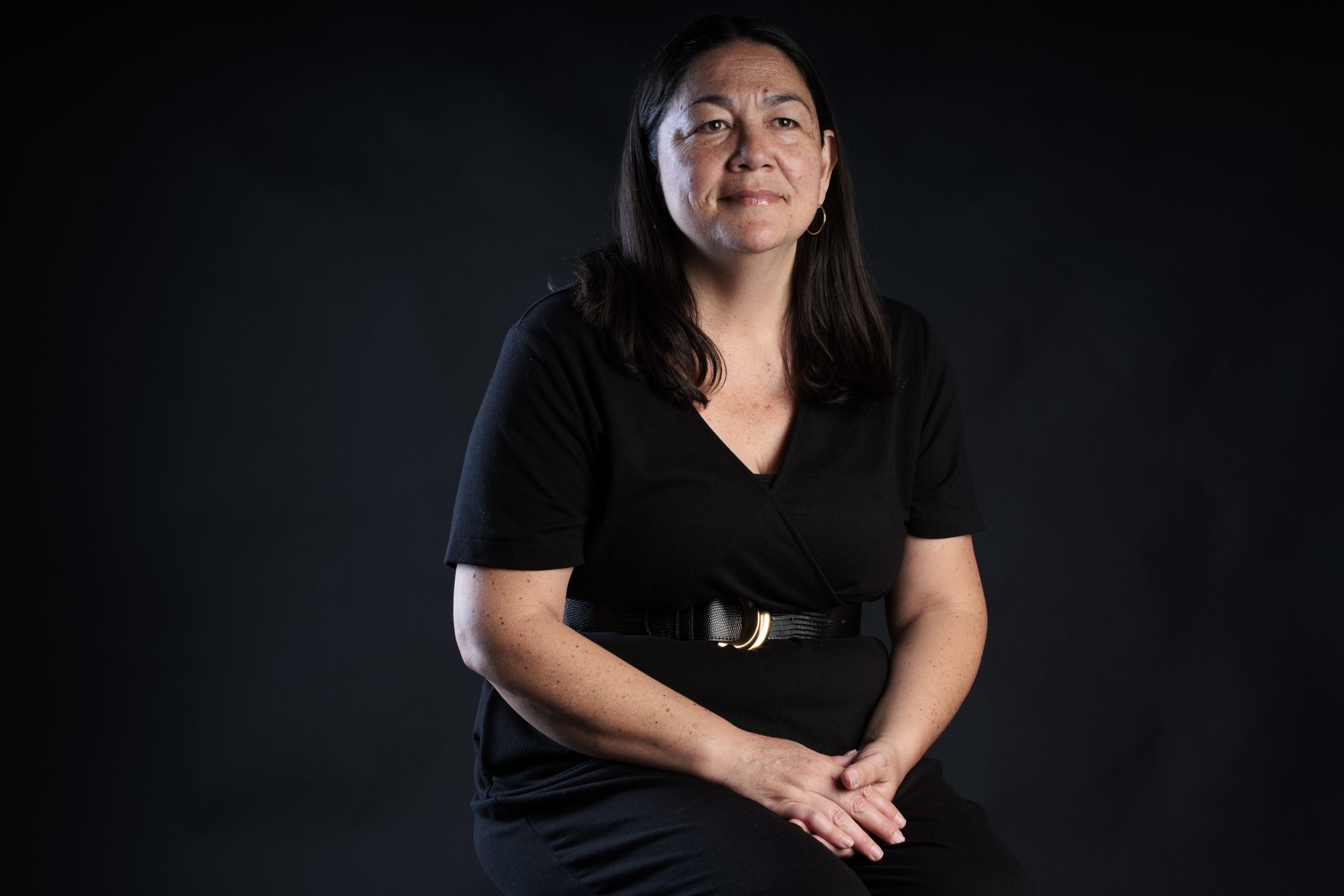
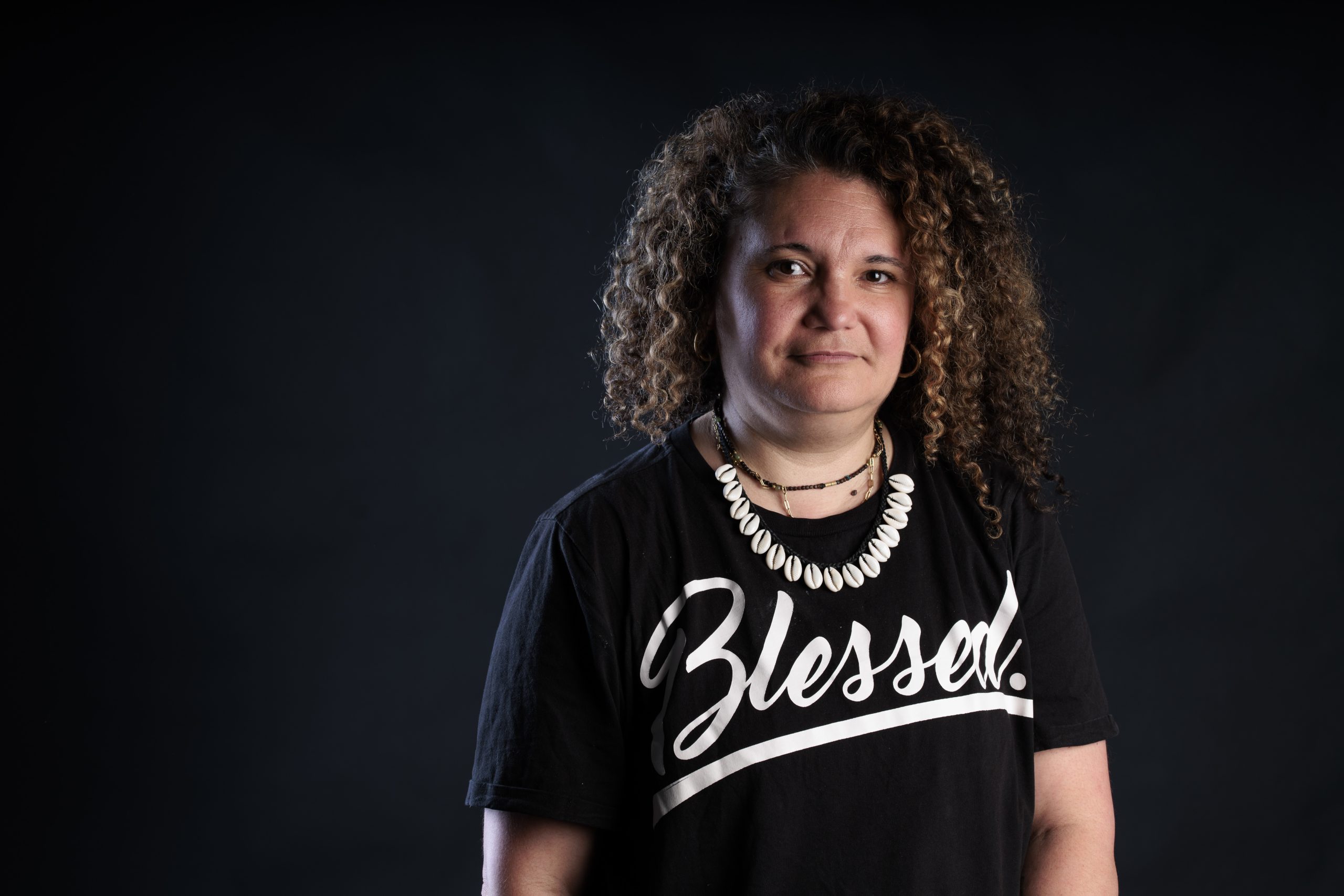
    They are Laurie Allen, a librarian who lives in South Philly; Maleka Fruean, a community journalist who lives in Germantown and is a mom of four; Kenny Guy, who lives in Mount Airy and is a father of six; Michiko Hunt, a development associate at Greene Street Friends School, who lives in Germantown, and is a mom of two; and Stewart Varner, a manager of the University of Pennsylvania’s Digital Humanities Lab who lives in West Philly.

    Naila Mattison was selected to participate in the “Bicentennial Baby” podcast. Mattison died in late February, shortly after the podcast was taped.Bicentennial Baby

    Naila Mattison, a poet, artist, and mom from West Philly, was the guest on the podcast’s first episode, which aired in late May. She died in February of cancer.

    “She came to us with such a sense of urgency,” Wisher said. “She wanted to share her story. I’m so glad we made space for her.”

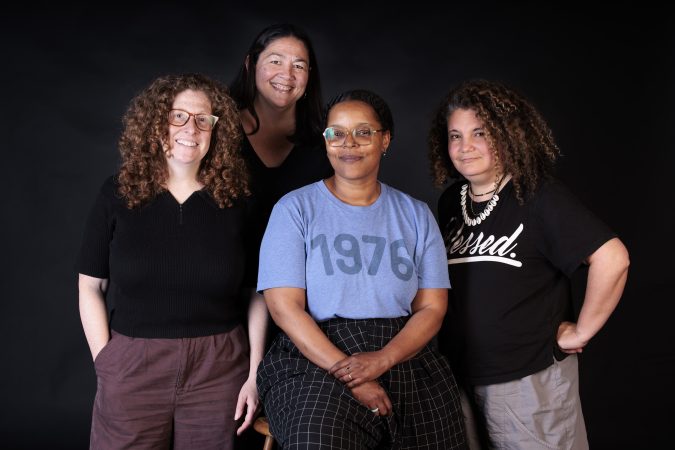
    The Inquirer invited the Bicentennial babies to our studios earlier this month for a photo shoot. Allen, Fruean, Hunt, and Wisher — in her blazing blue 1976 T-shirt — came in and shared how being born during the Bicentennial impacted their outlook, is shaping their present, and is setting them up to be cool elders.

    The interviews have been edited for clarity.

    On Gen X culture

    Michiko: In Philly, I was always conscious of being a part of this microgeneration because there were literally less of us. In the 1980s, all the entertainment we watched was focused on our parents, L.A. Law, Hill Street Blues, even The Cosby Show. My parents bought Thriller and Bruce Springsteen. But then when I was in my 20s, everything was teen-focused. I mean, Britney Spears? I was too old for that. There were all these kids who were born in 1982 who loved her. And I just missed it.

    Michiko Hunt photographed in the Philadelphia Inquirer studio on May 28. Hunt is featured in the “Bicentennial Baby” podcast, produced by Yolanda Wisher.Monica Herndon / Staff Photographer

    On technology

    Michiko: I went to my father’s office at 19th and Cherry Streets and typed my college applications on his electric typewriter. It was fancy. You could delete mistakes with correction tape.

    Yolanda: My grandmother had a rotary phone. We had a push button phone. I had a pager.

    Maleka: And right around our senior year in high school, that’s when cell phones started to come in.

    Yolanda: And they were huge, like the New Jack City phone … They were crazy expensive like video recorders. Like, if you had one of those …

    Michiko: You were rich!

    On fashion

    Michiko: It’s true: What’s old is new again. What we called flare, my mother calls bell-bottom, and my daughter calls wide-legged. We had a distinct style though. Fashion bubbled up from specific subcultures like goth or hip-hop. Now everything comes from the internet. It’s really flattened style.

    Maleka: And analog is a style now. Analog, as in not digital. It’s a fashion category. Like what people carry in their analog basket is a thing: a pencil and a notebook? That’s just what I put in my backpack.

    Maleka Fruean photographed in the Philadelphia Inquirer studio on May 28. Fruean is featured in the “Bicentennial Baby” podcast, produced by Yolanda Wisher.Monica Herndon / Staff Photographer

    On music

    Michiko: Our music was the best. I still have ticket stubs when I went to see the Roots. We all listened to hip-hop but we also listened to other kinds of music, too.

    Yolanda: Tears for Fears!

    Maleka: The Eurythmics!

    Michiko: MTV!

    Laurie: I remember when the radio was the only thing that mattered. Then we went to tapes, then to CDS, MP3s streaming. Each time I was like, I’m not going to do it. Yet every time I made the switch. Every. Single. Time. But I think it’s going full-circle. I miss playing guilty pleasure music without a digital trail of what I listened to.

    On working

    Yolanda: I watched my mom work hard everyday. When she retired from her job at Merck, all she got was a watch. That said something to me. I watched my mom struggle as a single mom, work her way up, put my siblings and I through college. That job was in the background of our lives our whole life.

    Maleka: My children understand [better than I do]. They are not going to break their backs for a pittance. I’ve worked so hard my whole life. Still, I have no idea what my retirement is going to look like.

    On learning from elders and turning 50

    Yolanda: Womenfolk in my grandmother’s generation were more matronly. My grandmother had a whole closet full of church hats. She kept her house a certain kind of way. She had a routine. She was very straitlaced, at least in public. She had a secret life we didn’t ordinarily see.

    Michiko: We have a blessing of choices. My dad’s mom was Japanese American. She was born in California, a first generation immigrant. She was a teenager during the Depression. Her family worked in a packaged frozen food factory. Today she would have been an artist. She made all of our Cabbage Patch Dolls and all of those beautiful doilies. She had the soul of an artist.

    Maleka: We have access to so much more information. And because of that we have wonder.

    Laurie Allen photographed in the Philadelphia Inquirer studio on May 28. Allen is featured in the “Bicentennial Baby” podcast, produced by Yolanda Wisher.Monica Herndon / Staff Photographer

    On becoming an elder

    Laurie: My body does not look like it does when I was 20, 30, or even 40. And I assumed when I got this age I would want to go back in time. But I don’t. Instead, I’m grateful for the wisdom for knowing who I am. I don’t want to go back to those uncertain times. I may have looked better, but I felt worse.

    On being American

    Maleka: When I was growing up, I had mixed feelings because I saw so many vulnerable people who needed to be protected. I didn’t have the language to define institutionalized or systemic racism. Now that I do, I want America to do better. But I’m still proud to be an American.

    Yolanda: The Semiquincentennial isn’t a one-sided story, but one that celebrates the complicated history of America. The racial, cultural, and social point of view of the people who are running isn’t the only perspective. We should be able to hold all of these voices at the same time and move forward.

    “Bicentennial Baby“ is available on Apple, Spotify, and Amazon Music.