In a historic addition, Independence Mall will soon be home to a sculpture derived from an iconic political cartoon.
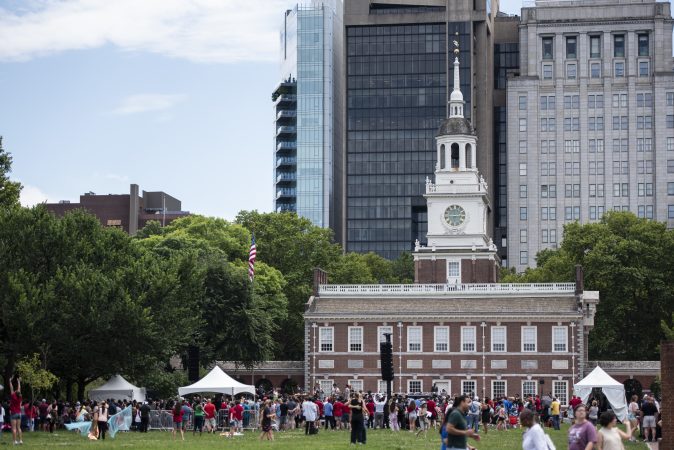
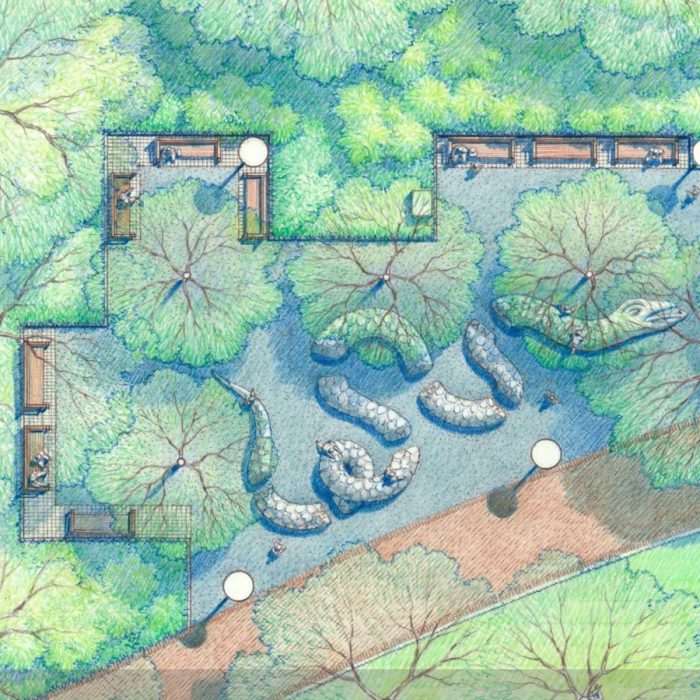
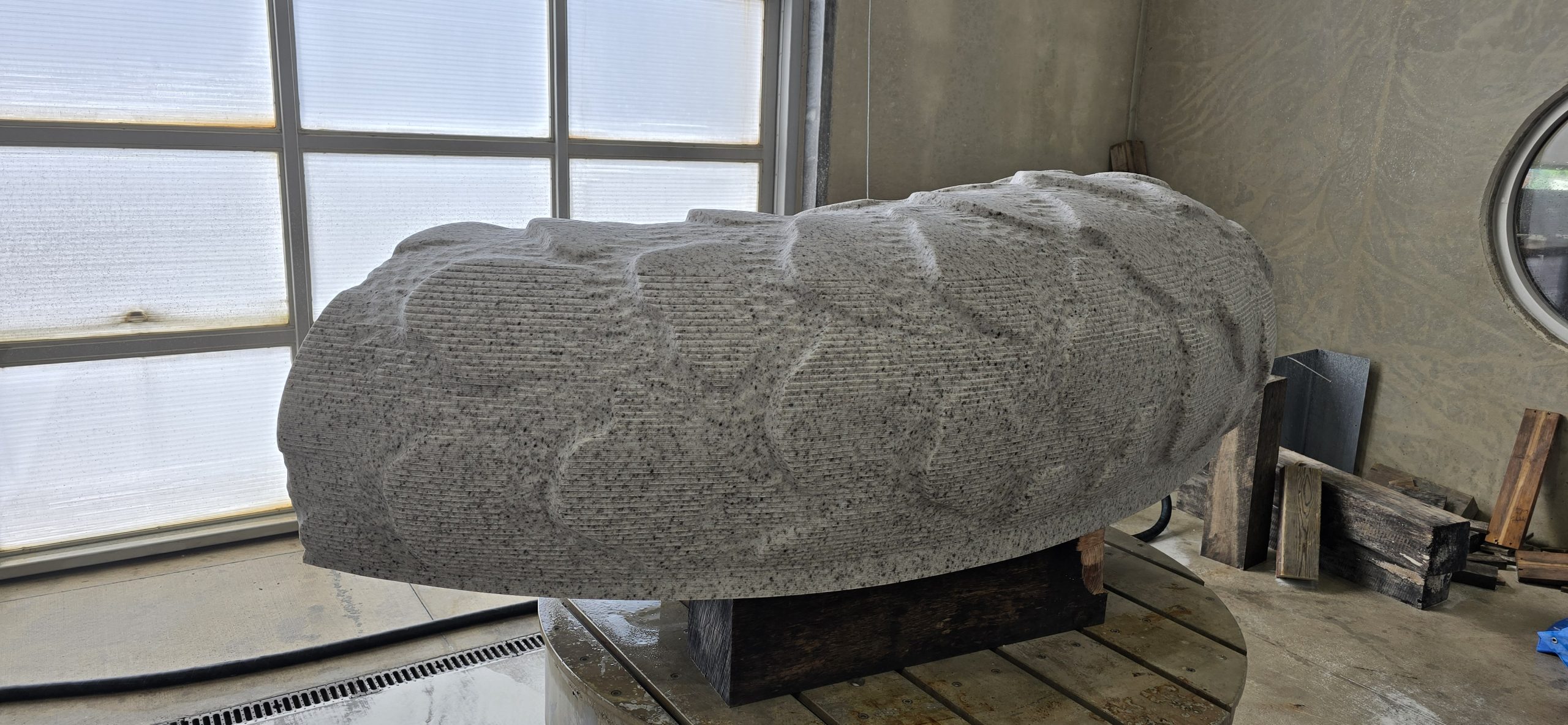
A 46-foot-long sculpture of Benjamin Franklin’s “Join or Die” snake is set to be unveiled this fall on the Liberty Bell Center block of the Independence Mall, near the corner of Fifth and Chestnut Streets. The sculpture will feature eight pieces that represent segments of the snake’s body. These will be carved out of granite, each marked with the initials of the respective colony it’s meant to represent.
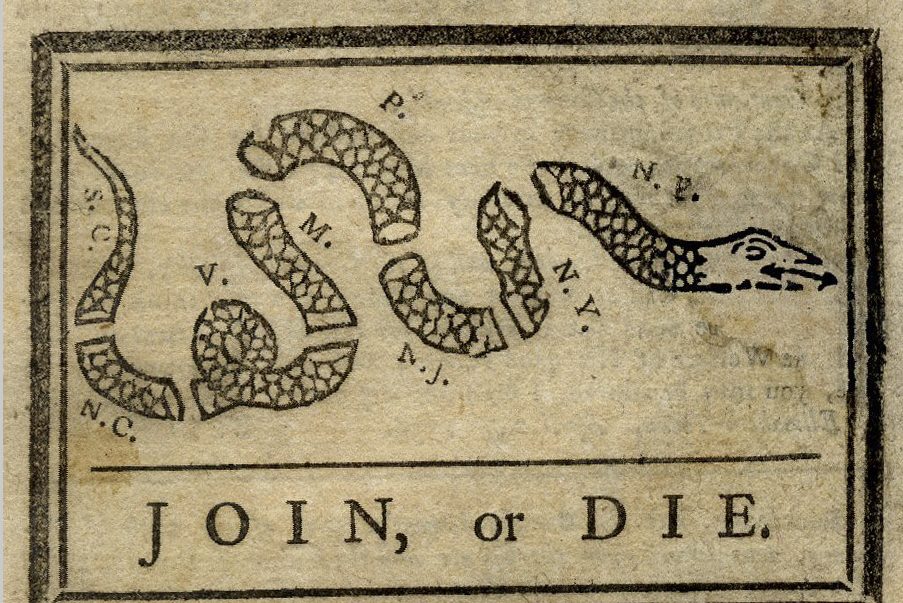
The political cartoon created by Franklin in 1754 was first published in his newspaper, the Pennsylvania Gazette. Each piece of the snake is meant to represent one of the 13 original colonies, except for the snake’s head which represents the six colonies of New England.
The cartoon called for unity among the colonies, particularly during the French and Indian War.
This political cartoon, long said to be the work of Ben Franklin, appeared in the May 9, 1754, edition of Franklin’s Pennsylvania Gazette,Nate D. Sanders Auction
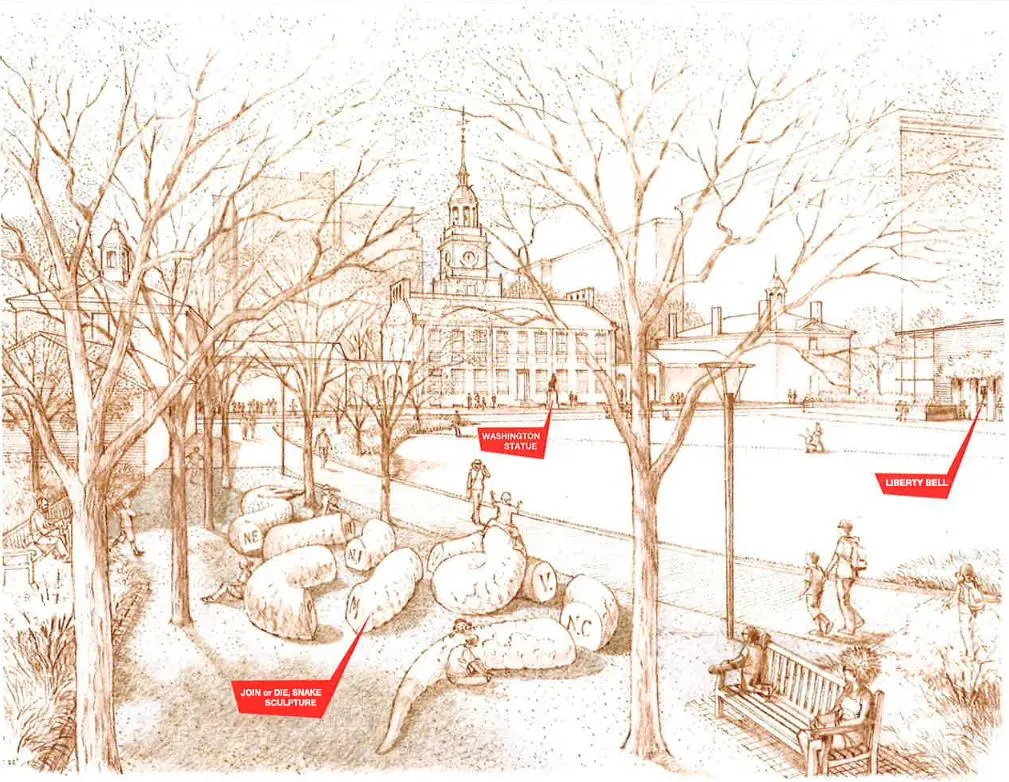
The Independence Mall sculpture will be installed on the ground, allowing visitors to interact directly with the sculpture.
“I thought it was a great idea to have that on the mall because it’s considered the first political cartoon in the country before we were a country in 1754,” said John Collins, the artist behind the sculpture. “I thought interpreting that into a large sculptural work that still has a playful element to it, that the mall is really lacking in, would be a great addition.”
Collins, who was an architect for 15 years after graduating from Penn State, had first heard of the project in the 2000s while working at landscape architecture and urban design firm OLIN. Founder Laurie Olin had proposedthe snake sculpture to be included inan interpretive art program for Independence Mall in 1997, but that part never came to fruition.
An aerial-view rendering of the “Join or Die” sculpture, set to be displayed near the corner of Fifth and Chestnut Streets on Independence Mall.Courtesy of Independence Historical Trust
“During the pandemic I sent an email to Laurie asking if we could try to resuscitate the snake project and he responded within a couple hours,” said Collins, who left OLIN in 2009. “He said if I put together a proposal with a team and some costs and graphics, we could then shop it around to private donors and try to raise money for it and treat it essentially as a gift to the Park Service.”
This “gift” has come to a total of approximately $3.9 million, with funds raised by Independence Historical Trust, the park’s nonprofit fundraising organization.
The sculpture was originally one of several other improvements to the park proposed in 2025 to be completed before this year’s Semiquincentennial.An America250 time capsule was buried at that same corner at Fifth and Chestnut Streets — just a few feet south of where the snake’s head will be.
A rendering of the “Join or Die” sculpture, which is set to be installed this fall near the corner of Fifth and Chestnut Streets on Independence Mall.Courtesy of National Park Service
In July of 2025, the Inquirer reported that the project was short the $1.6 million needed to complete the project by this summer.
Severe budget cuts to the National Park Service and other federal funding gaps forced the trust to turn to public fundraising for their improvement efforts. They were able to secure funding for this project from the state, the city, private foundations, legacy groups, and individual philanthropists.
Despite the delay, Jonathan Burton, the trust’s director of development, maintains that the fundraising was “intentionally phased.”
“Early commitments allowed the project to advance through design and engineering while additional support was secured for fabrication,” he said. “We are now working on installation fundraising.”
A piece of the “Join or Die” snake sculpture carved out of granite stone.Courtesy of John Collins
The installation of the sculpture still requires an additional $800,000. The trust has set up a public donation page for fundraising.
“The sculpture will create a new civic destination in the heart of Historic Philadelphia, inviting residents and visitors alike to engage with one of America’s most enduring symbols,” said Burton. “It will strengthen Philadelphia’s reputation as a city where history is not simply preserved but experienced, inspiring new conversations about the values that continue to shape our nation.”
No official unveiling date for the sculpture has been announced.
The article has been updated to reflect accurate numbers for the funding shortfall received from the Independence Historical Trust, and details about the America 250 time capsule.
In 1866, the realist painter Thomas Eakins was in Paris studying at the École des Beaux-Arts. While there, he wrote to Emily Sartain, a family friend and artist who, from 1886 to 1920, would go on to become principal of what is now the Moore College of Art.
“I am proud to be a Philadelphian. … I feel 6 ft and 6 inches high whenever I only say I am an American,” he boasted.
It took some years before Philadelphia accepted and loved the artist back.
In 1870, Eakins returned to Philadelphia, where he began a career painting subjects of modern life in a straightforward manner without pretense or flourish. Establishing a studio at his family home on Mount Vernon Street, he hoped to find artistic success in Philadelphia.
But his first paintings received mixed reviews and found no buyers.
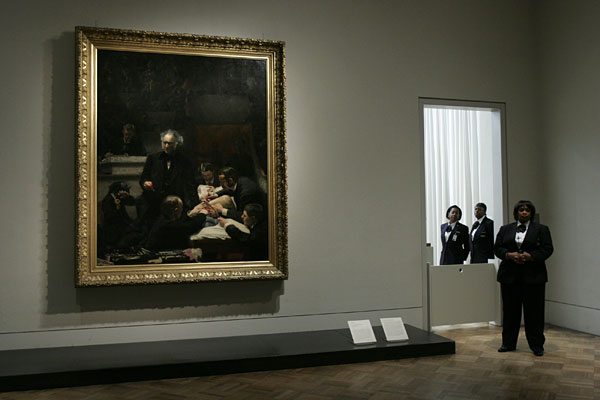
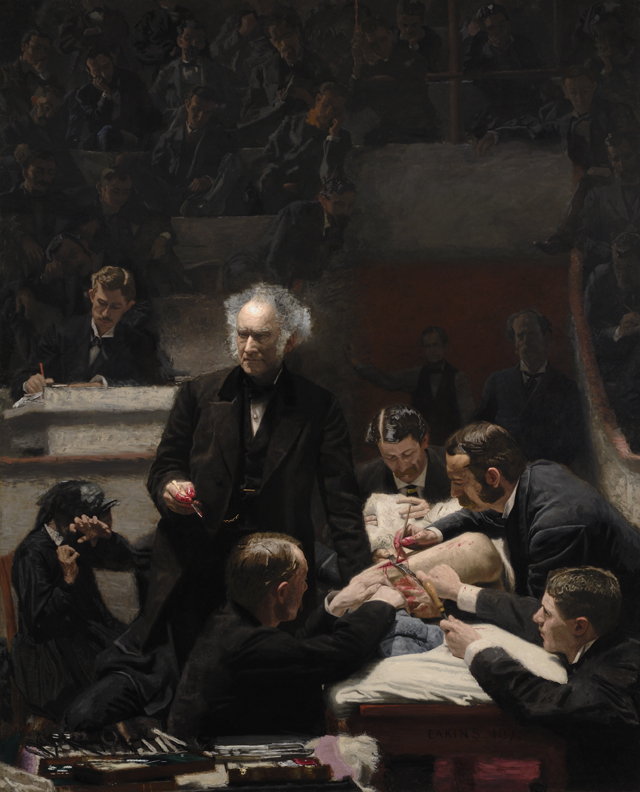
Thomas Eakins, “Portrait of Dr. Samuel D. Gross (The Gross Clinic),” 1875. Oil on canvas, 96 x 78 ½ in. Courtesy of the Pennsylvania Academy of the Fine Arts, Philadelphia. Gift of the Alumni Association to Jefferson Medical College in 1878 and purchased by the Pennsylvania Academy of the Fine Arts and the Philadelphia Museum of Art in 2007 with the generous support of more than 3,400 donors.Courtesy of the Pennsylvania Academy of the Fine Arts
‘The Gross Clinic’
In 1875, at age 30, Eakins began work on Portrait of Dr. Samuel D. Gross(The Gross Clinic), a noncommissioned oil painting of the eminent surgeon-teacher in clinical instruction at Jefferson Medical College, where Gross was chair of surgery from 1856 to 1882.
Drawing the nude model was a central aspect of academic art training, and students were required to attend lectures on anatomy and study animal and human cadavers in dissection labs. To better his scientific realism, Eakins attended surgical demonstrations and anatomy lectures at Jefferson, and often observed surgical demonstrations by Gross.
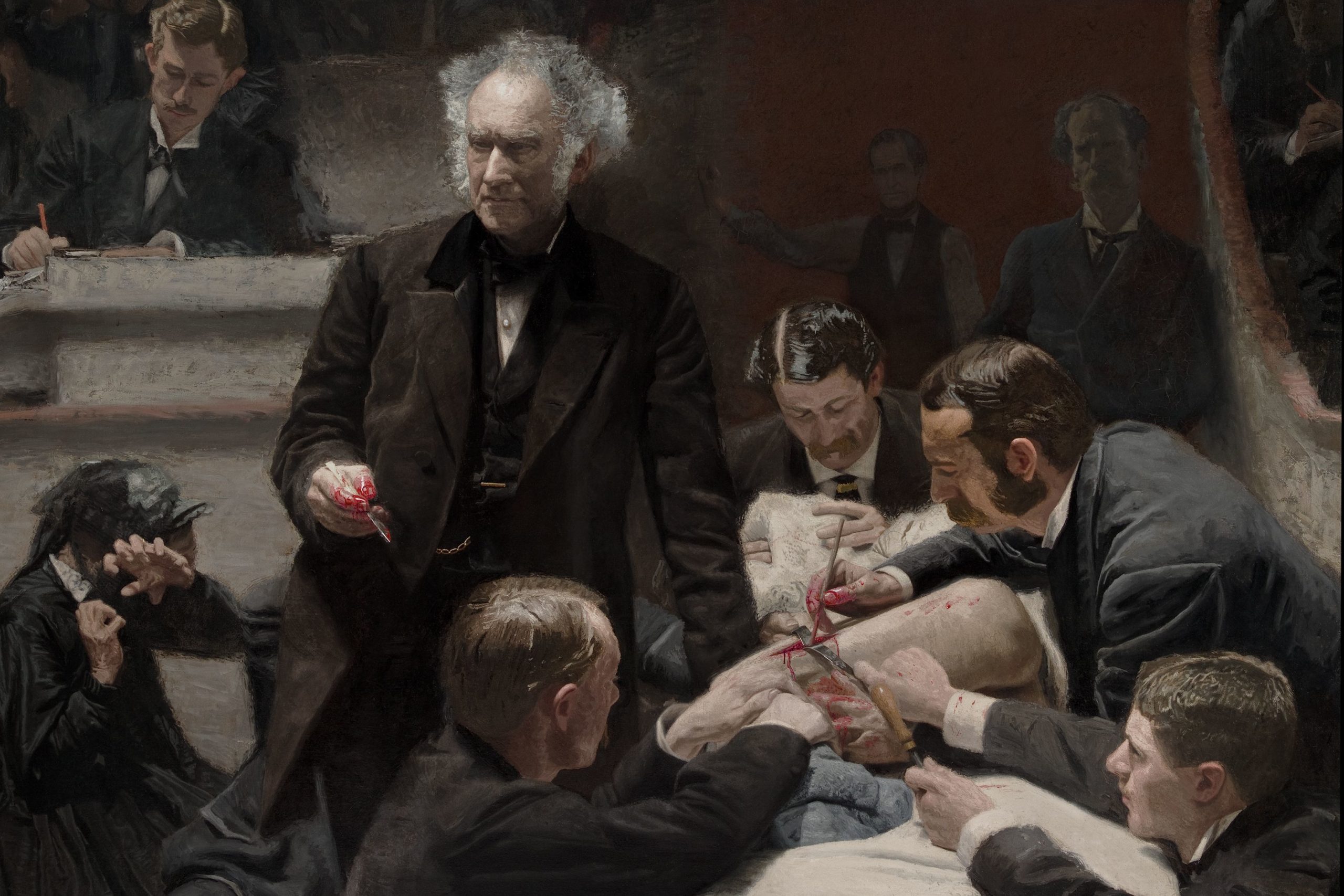
Detail from “The Gross Clinic” by Thomas Eakins. The painting was a gift of the alumni association to Jefferson Medical College in 1878 and purchased by the Pennsylvania Academy of the Fine Arts and the Philadelphia Museum of Art in 2007 with the support of more than 3,600 donors.Courtesy the Philadelphia Museum of Art and the Pennsylvania Academy of the Fine Arts
The Gross Clinic, the 8-by-6.5-foot large oil on canvas, shows Gross and his assistants operating in their street clothes worn with long coats. The surgical tools and bandages lie unprotected on a table in the lower foreground. (Germ theory of disease was yet to become an influential factor on medical practice in the United States.)
For this first clinic portrait, Eakins uses dramatic lighting that reflects off Gross’ forehead and his extended right hand. He holds a believably bloody scalpel, emphasizing how successful surgery requires intellect and manual dexterity.
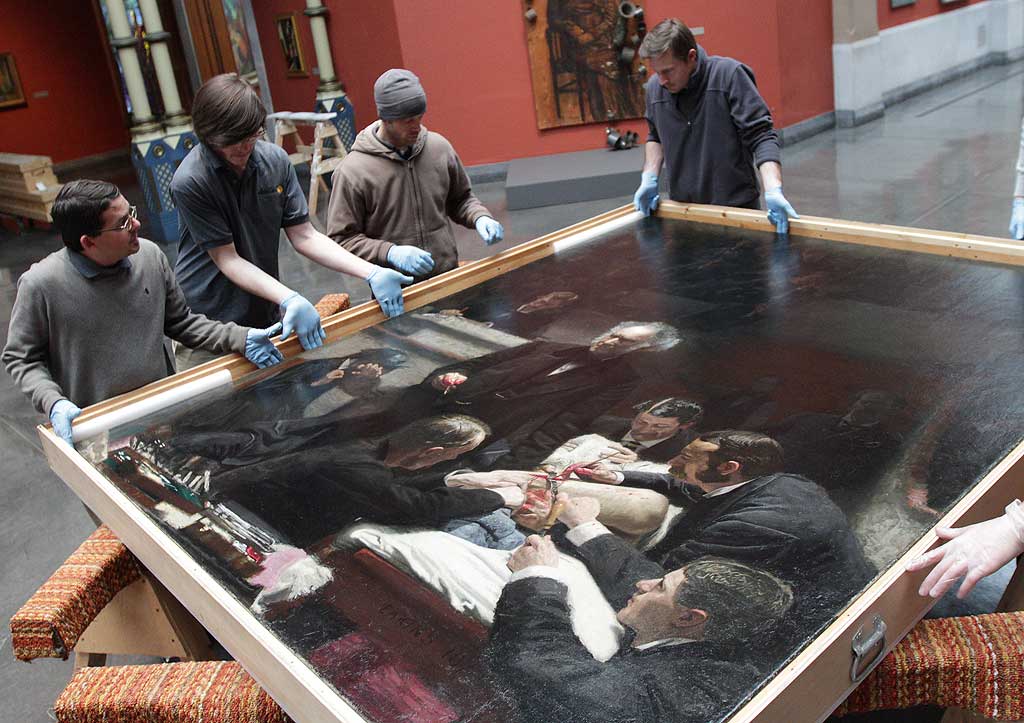
Art handlers from PAFA and Atelier Art Services Inc. place “The Gross Clinic” in a packing crate in 2014. The painting was being moved for display at the Philadelphia Museum of Art. ( David Maialetti / Staff Photographer )
The patient is a minor; the seated woman recoiling in horror is his mother. A chloroform-soaked cloth sedates the child .
In this stopped-action moment, Gross is the commanding figure of the surgical amphitheater. While his assistants hold a retractor to keep the patient’s left thigh incision open, Gross calmly explains to his audience of students the modern practice of removing a piece of diseased bone caused by osteomyelitis.
The moment celebrates stoic men performing surgery. Gross is a heroic savior giving renewed life to a patient who didn’t have to endure a brutal amputation and will retain use of both legs.
Much of the amphitheater is cast in darkness, but a self-portrait of Eakins sits by a railing to imply authenticity of direct observation. He holds a pen or brush like Gross’ scalpel, suggesting that art making is akin to surgery.
The artwork, Eakins believed, was “very far better than anything I have ever done,” as he wrote in an 1875 letter to Earl Shinn, a Philadelphia friend who had also studied at the Ecole in Paris.
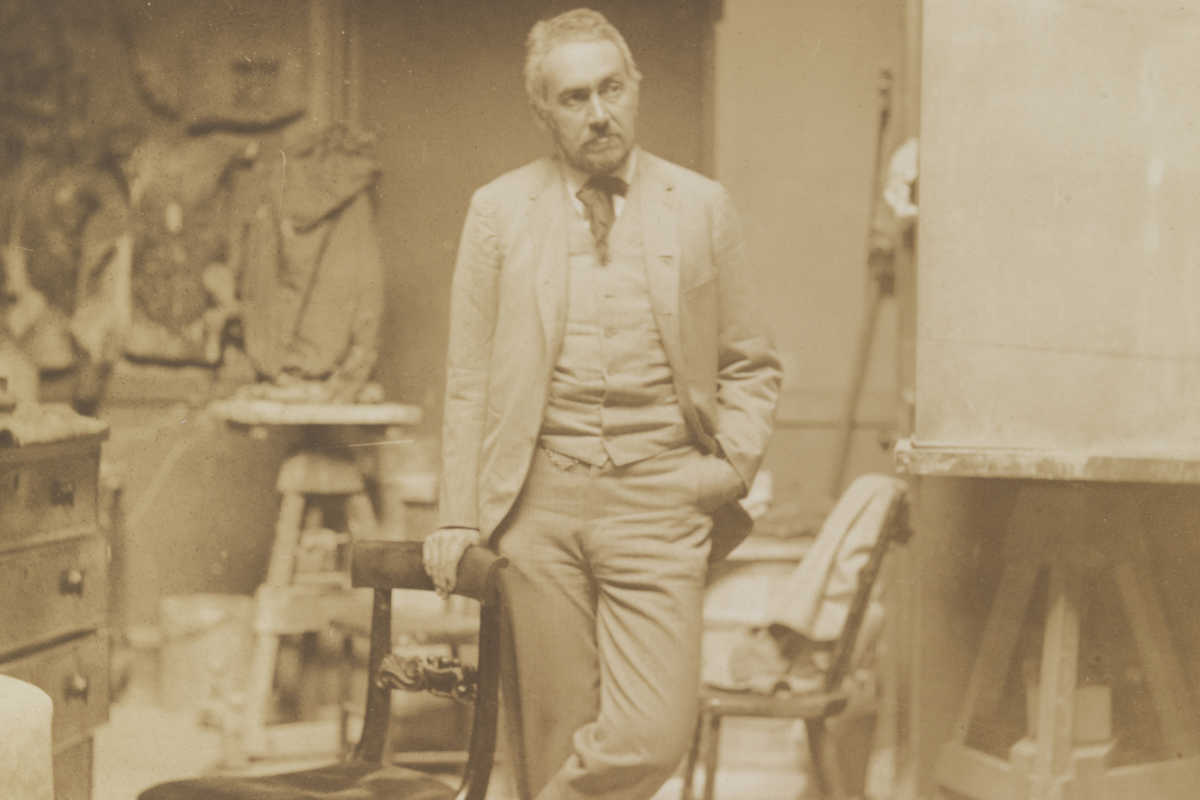
Thomas Eakins in a Chestnut Street studio, 1891-92.Photo taken by Samuel Murray.
Eakins had hoped the portrait of Gross would be seen at the large international art exhibition in Memorial Hall during the 1876 Centennial Exposition in Philadelphia, and help establish his reputation.
It was rejected by the art jury, but was displayed as part of a medical exhibit in the U.S. Army Post Hospital. When the painting was exhibited later at the second annual exhibition of the Society of American Artists in New York, a New York Daily Tribune critic wrote: “It is a picture that even strong men find it difficult to look at long, if they can look at it at all.”
Given the long-term relationship of Gross with Jefferson Medical College, the artist hoped the institution would acquire the painting for its art collection. It was only in 1878 that the Alumni Association of Jefferson Medical College purchased the portrait for $200 (approximately $6,660 in today’s dollars) and presented it to the school where it remained for 129 years.
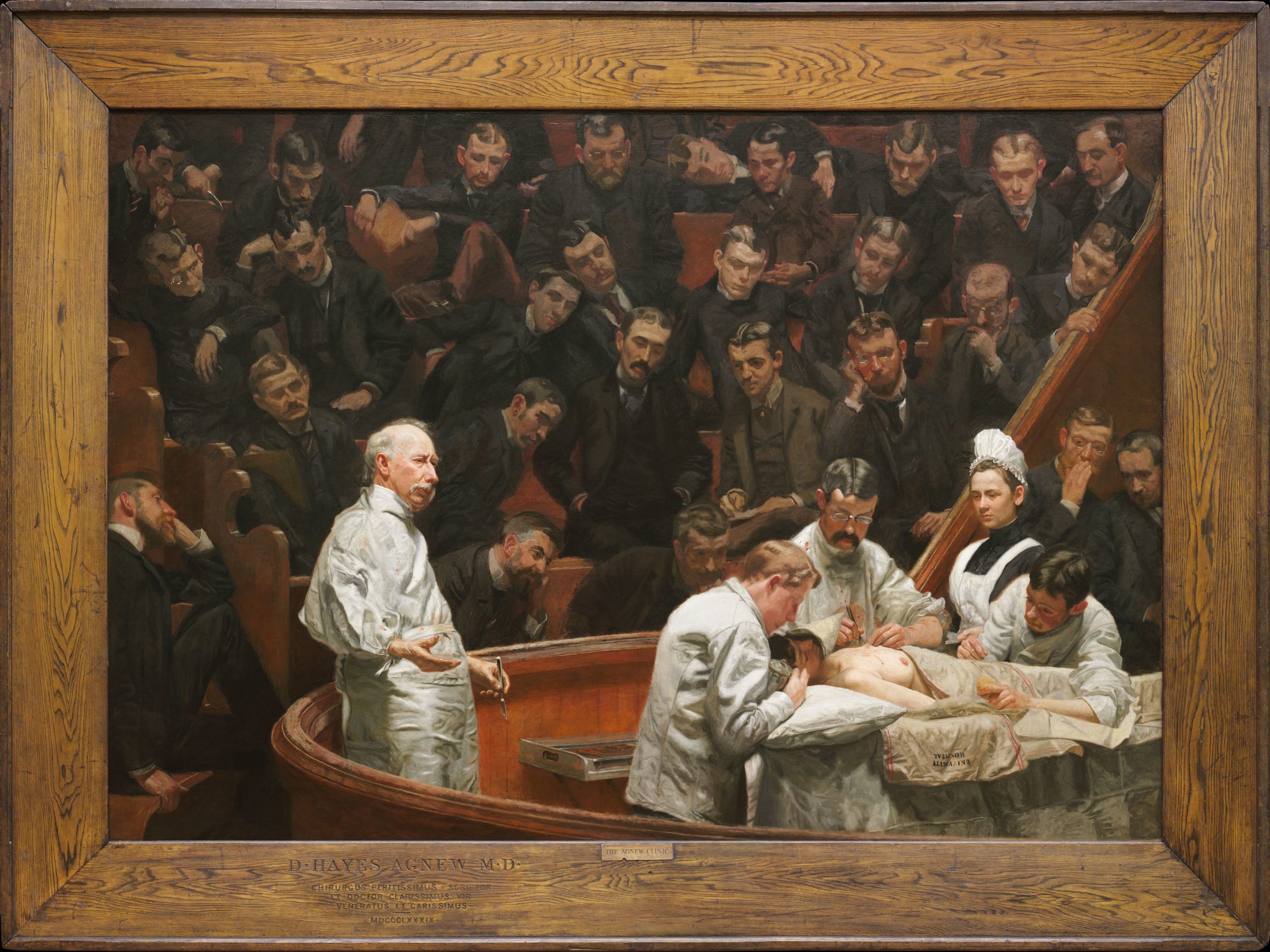
“The Agnew Clinic” (1889) by Thomas Eakins. On long-term loan to the Philadelphia Museum of Art.Courtesy of the University of Pennsylvania Art Collection
‘The Agnew Clinic’
Fourteen years later, in 1889, Eakins painted The Agnew Clinic.
By then, he had taught at PAFA, which admitted women; a rarity in its time. Eakins believed all serious art students, regardless of gender, must work from the life model and learn anatomy.
“I see no impropriety in looking at the most beautiful of nature’s work, the naked figure,” he said. His emphasis on nude life drawing and anatomical study was unsettling to Victorian propriety and his teaching methods eventually proved controversial.
The last straw came in early 1886 when Eakins was giving an anatomy lecture during which he removed a loincloth from a male model in the presence of female students. As requested by the administration, the artist, who was the academy’s director, submitted his resignation, stating: “Was ever so much smoke for so little fire?”
This was upsetting for him. In the summer of 1887, to overcome depression, Eakins made “a little trip to the West,” as he then wrote his friend and former student John Laurie Wallace, to experience “camp cure” at a ranch in the Dakota Territories.
Back in Philadelphia, Eakins received a major boost when in February 1889, he was commissioned by a group of aspiring doctors from the University of Pennsylvania School of Medicine, the nation’s oldest, to paint their retiring teacher, David Hayes Agnew, a colleague of Gross. They offered the artist $750 (approximately $27,148 in today’s dollars).
Eakins began work on The Agnew Clinic, his second clinic portrait.
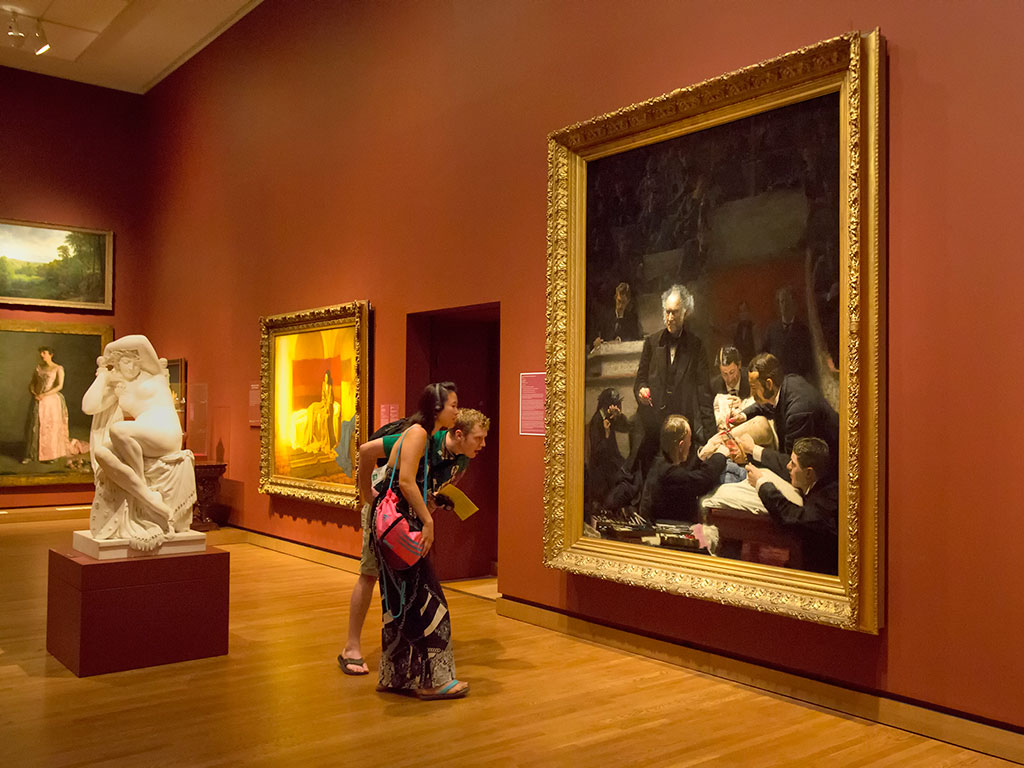
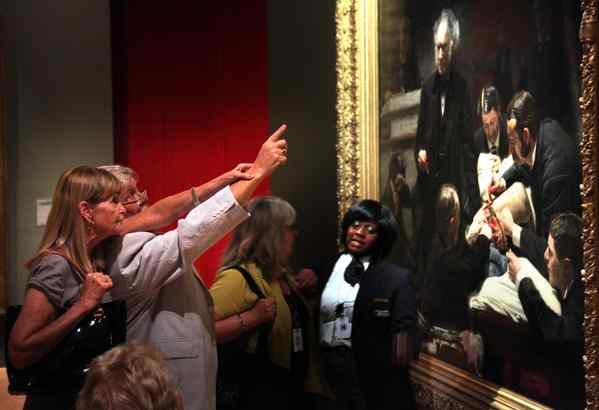
Visitors look at Thomas Eakins’ “The Gross Clinic” in the newly redone American gallery at the Philadelphia Museum of Art in 2014.
Even larger, at 6 feet by 11 feet, the painting reveals some newly instituted aseptic practices. Surgeon Agnew and his team wear white gowns; sterilized instruments are placed in a covered tray. The operation has a nurse at the patient’s side, but no gloves or masks are seen being used.
Because the canvas was too large for his easel, Eakins worked on the lower sections sitting on the floor, spending long days and nights (and occasionally falling asleep) on the studio floor. The work was completed in three months.
With less dramatic lighting and looser brushstrokes than The Gross Clinic, Eakins shows Agnew in his pedagogical role operating with assistant physicians, a nurse from the HUP Training School, and more easily visible class members who are observing the surgery.
Eakins places Agnew isolated at the left, lecturing. The patient, who has had a mastectomy, is having her incision sewn as a male assistant leans over her lower body. On the far right, the artist, who in this work was painted by his wife, Susan Macdowell Eakins, observes the nude woman sedated with an ether cone.
Deemed “not cheerful for ladies to look at,” the painting is a most provocative choice of surgery for Agnew, who wasn’t a breast cancer specialist but an authority on gunshot wounds.
The Agnew Clinic was given by the medical class of 1889 to their school.
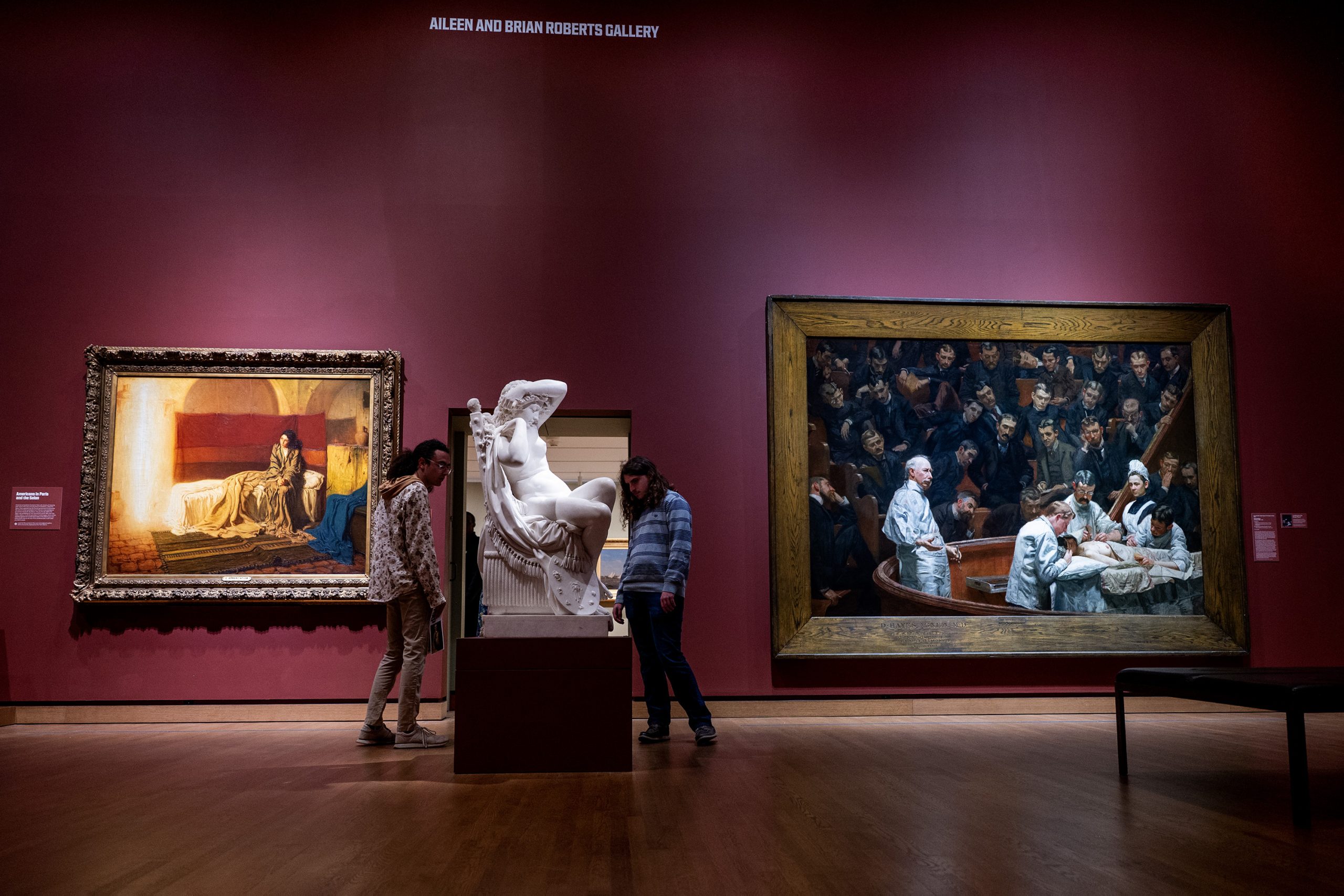
Marble sculpture “La Première Pose (center, 1873-1876) by Howard Roberts; and paintings “The Annunciation” (left, 1898) by Henry Ossawa Tanner and “Portrait of Dr. Hayes Agnew (The Agnew Clinic)” (right, 1889) by Thomas Eakins.in the “A Nation of Artists” show at the Philadelphia Museum Monday, May 4, 2026, in the newly renovated American galleries which were closed for several years.Tom Gralish / Staff Photographer
Side by side
Eakins is a distinguished presence in “A Nation of Artists,” the exhibition of 1,000-plus artworks organized by the Pennsylvania Academy of the Fine Arts and the Philadelphia Museum of Art to mark the 250th anniversary of the founding of the United States.
The Gross Clinic at PAFA and The Agnew Clinic at the PMA are part of this expansive dual-venue survey of American artworks; each is a tour de force.
The two medical portraits reveal the painter’s respect for the art of surgery, underscoring Philadelphia’s vital role in medicine and its preeminent medical schools. Anesthesia, which was newly introduced in the 19th century, is used in both operations.
Both paintings were not well received and regarded as disturbing and unsightly. But both of those large clinical portraits were exhibited together at the 1893 World’s Columbian Exposition in Chicago.
A Philadelphia Public Ledger writer complained that the “surroundings and accessories are scarcely in good taste for a public exhibition.” Another critic dismissed “the clinical horrors” as “ghastly symphonies in gore and bitumen” and mused: “To have hung the pictures at all was questionable judgment.”
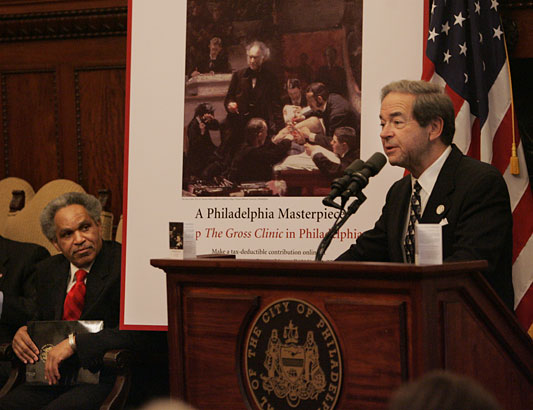
In this photo from 2007, Herbert Riband, vice chairman of the board at the Pennsylvania Academy of the Fine Arts, speaks at City Hall as Mayor John Street listens during the announcement that the Philadelphia Museum of Art and PAFA are to acquire “The Gross Clinic.” Michael Bryant / Inquirer Staff Photographer)
Afterlives
In November 2007, Jefferson Medical College agreed to sell The Gross Clinic for the stunning sum of $68 million offered by Alice L. Walton, Walmart heiress and founder of the Crystal Bridges Museum of American Art in Bentonville, Ark.
It set off a maelstrom resulting in a spirited fundraising campaign that successfully matched her price in a few weeks, keeping the masterpiece in Philadelphia. With a few thousand donations, PAFA and the Art Museum jointly acquired the canvas.
The two institutions collaboratively share the painting on a five-year cycle; it will be at PAFA until 2031.
On opening day of an exhibition at the Art Museum’s Perelman Building, visitors gather around Thomas Eakins’ “The Gross Clinic.” Photo from 2010.LAURENCE KESTERSON / Staff Photographer
Unlike The Gross Clinic, Eakins was asked to paint the portrait of Agnew, creating his second clinic image and the largest canvas of his career. It was completed for presentation at the graduation ceremony that took place at the Academy of Music on May 1, 1889. Its original wood frame has a Latin inscription believed to have been carved by Eakins honoring Agnew as “the most experienced surgeon, the clearest writer and teacher.”
Since 2000, the canvas has been on loan from the university to the PMA.
While recent research has shed light on his pattern of sexual harassment, including allegations that he sexually molested his niece, Eakins continues to be appreciated as an individualist and one of America’s greatest painters. He maintained: “My life is all in my work.”
“A Nation of Artists” runs through July 5, 2027, at the Philadelphia Museum of Art (2600 Benjamin Franklin Parkway, Philadelphia, 215-763-8100 or philamuseum.org) and through Sept. 5, 2027, at the Pennsylvania Academy of the Fine Arts (118-128 N. Broad St., Philadelphia, 215-972-7600 or pafa.org). Note: Exhibit admission is separate at each venue, though discounts are available to view both.
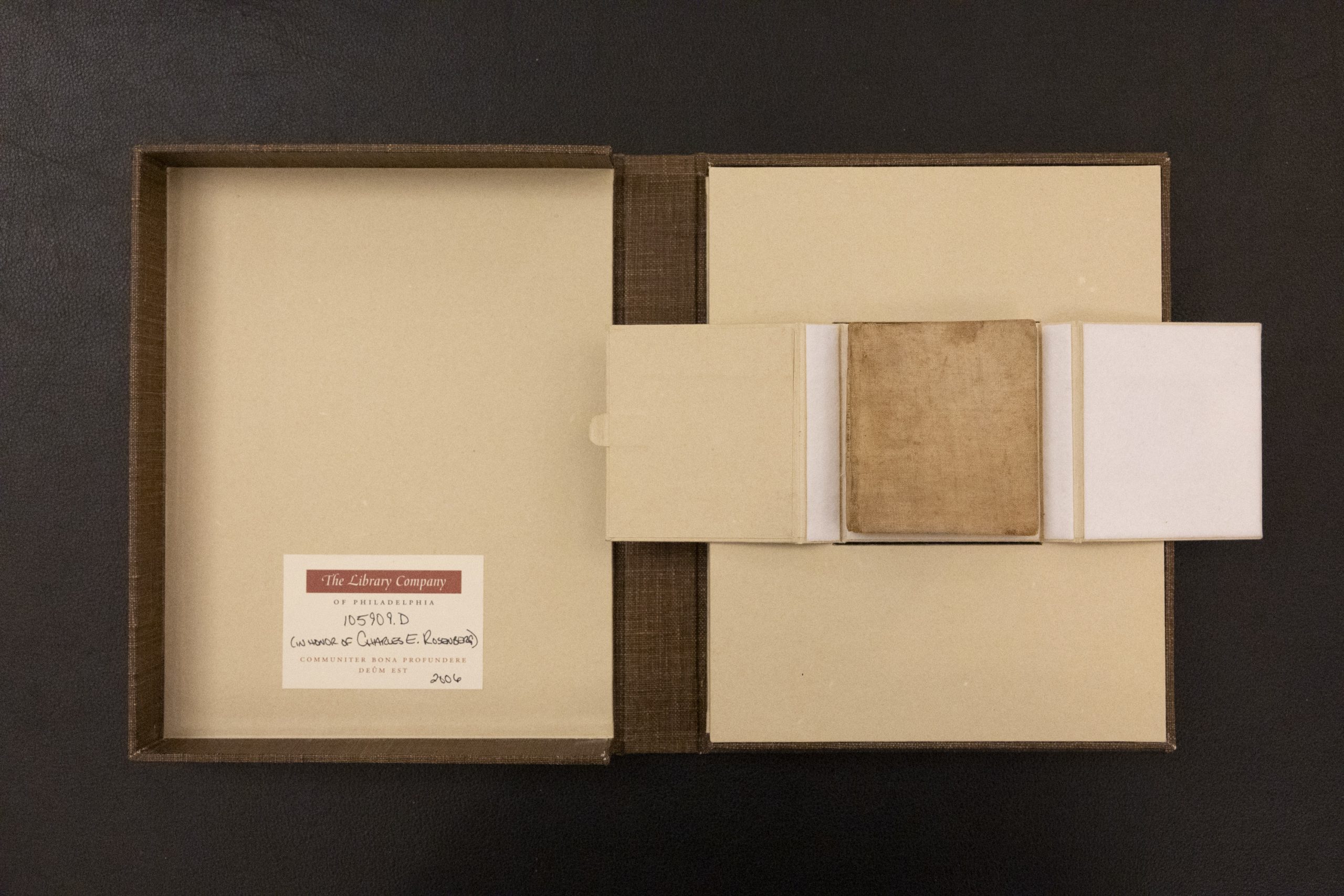
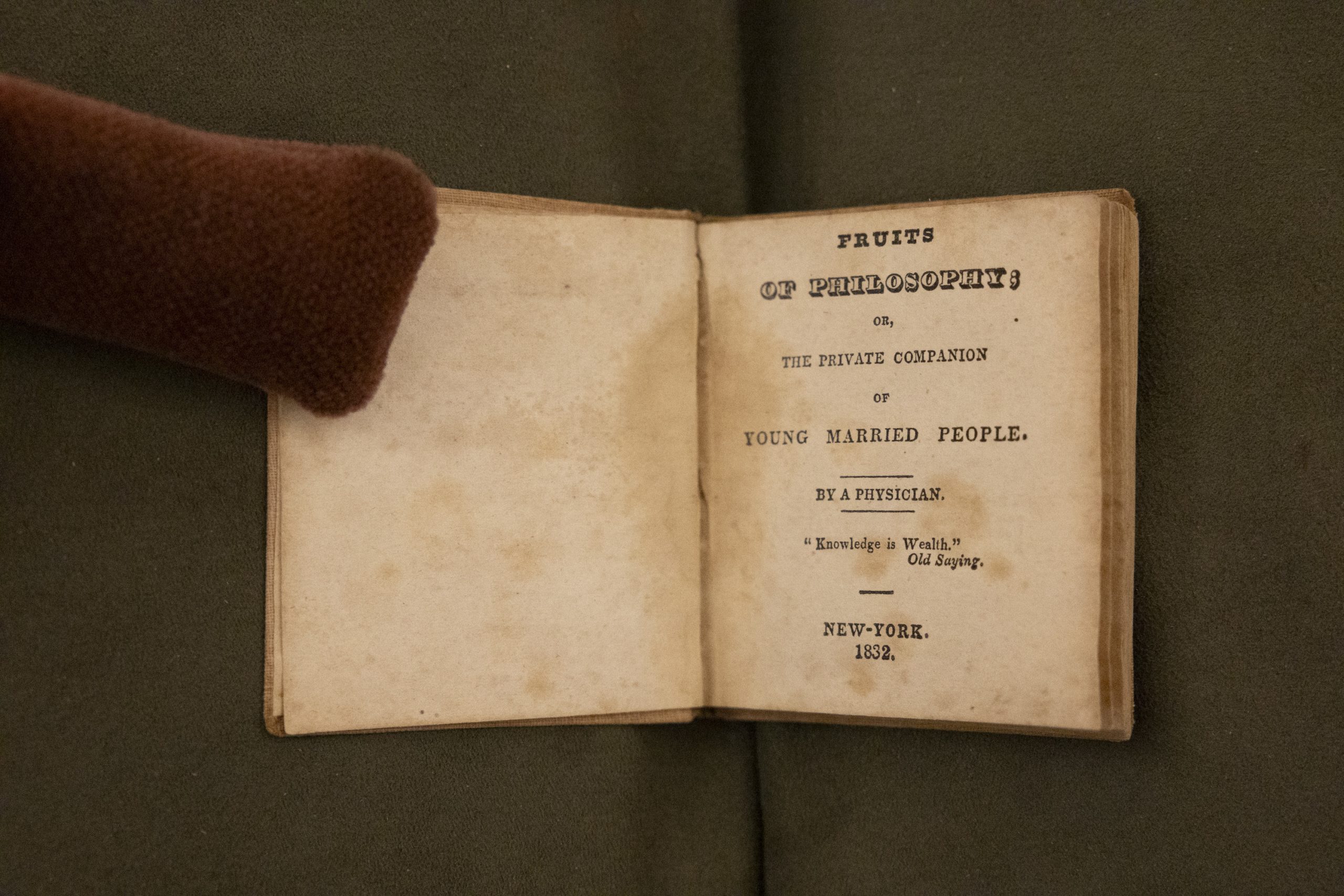
On a recent visit, the Library Company of Philadelphia’s curator of printed books, Rachel A. D’Agostino, gently removed the delicate 1832 edition of Charles Knowlton’s Fruits of Philosophy from a matchbox-size box within a box.
The two-and-a-half-inch-tall book’s exquisite packaging was like that of a 1.5 oz. bottle of vintage French perfume.
But unlike Chanel N°5, there were no fancy logos or recognizable typeface on the weathered encasing; just a small sticker with its title. Next to the first edition print were two additional volumes published in 1834 and 1839, respectively.
Both a tad bigger, yet small enough to fit discreetly on a chatelaine.
“Fruits of Philosophy is a 19th-century manual about birth control,” D’Agostino whispered like she was sharing a confidence, not simply using her inside-of-the-library voice.
“Fruits of Philosophy,” a 19th-century manual about birth control first written by Charles Knowlton in 1832. Tyger Williams / Staff Photographer
”Everything about it is meant to be hidden, a secret. There is no name of the printer, or publisher. Knowlton’s name is not even there. Everybody knows this book is a potential problem and they are saying, ‘We think this is important and at the same time we have to keep it hidden.’”
Fruits of Philosophy is one of 1,500 19th-century clandestine hardcovers that are part of the Library Company’s most recent set of acquisitions from respected medical historian, author, and avid book collector Charles E. Rosenberg. Over the last 40 years, he has donated more than 16,000 books to America’s first independent lending library.
Rosenberg’s own scholarly texts about cholera, mental health, and religion in science are widely read and referenced. However, these bound works donated by him were expected to be tucked away in secret compartments and buried in the bottom of bedroom drawers when they were first published upward of 200 years ago.
“Fruits of Philosophy,” an 19th century manual about birth control first written by Charles Knowlton in 1832. One of the various books on the science of sex from the 18th and 19th Century at The Library Company in Philadelphia, Pa., on Tuesday, July 21, 2026.Tyger Williams / Staff Photographer
Why? Because they are all about sex. The books taught denizens of centuries past about sex and their bodies.
Not scintillating, bodice-ripping sex, but scandalous enough.
Books about every conceivable unmentionable
Americans didn’t go to the doctor for regular checkups before the mid-20th century, let alone talk to their MDs about their sexual health. Discussions about sex — even between husband and wife — were taboo.
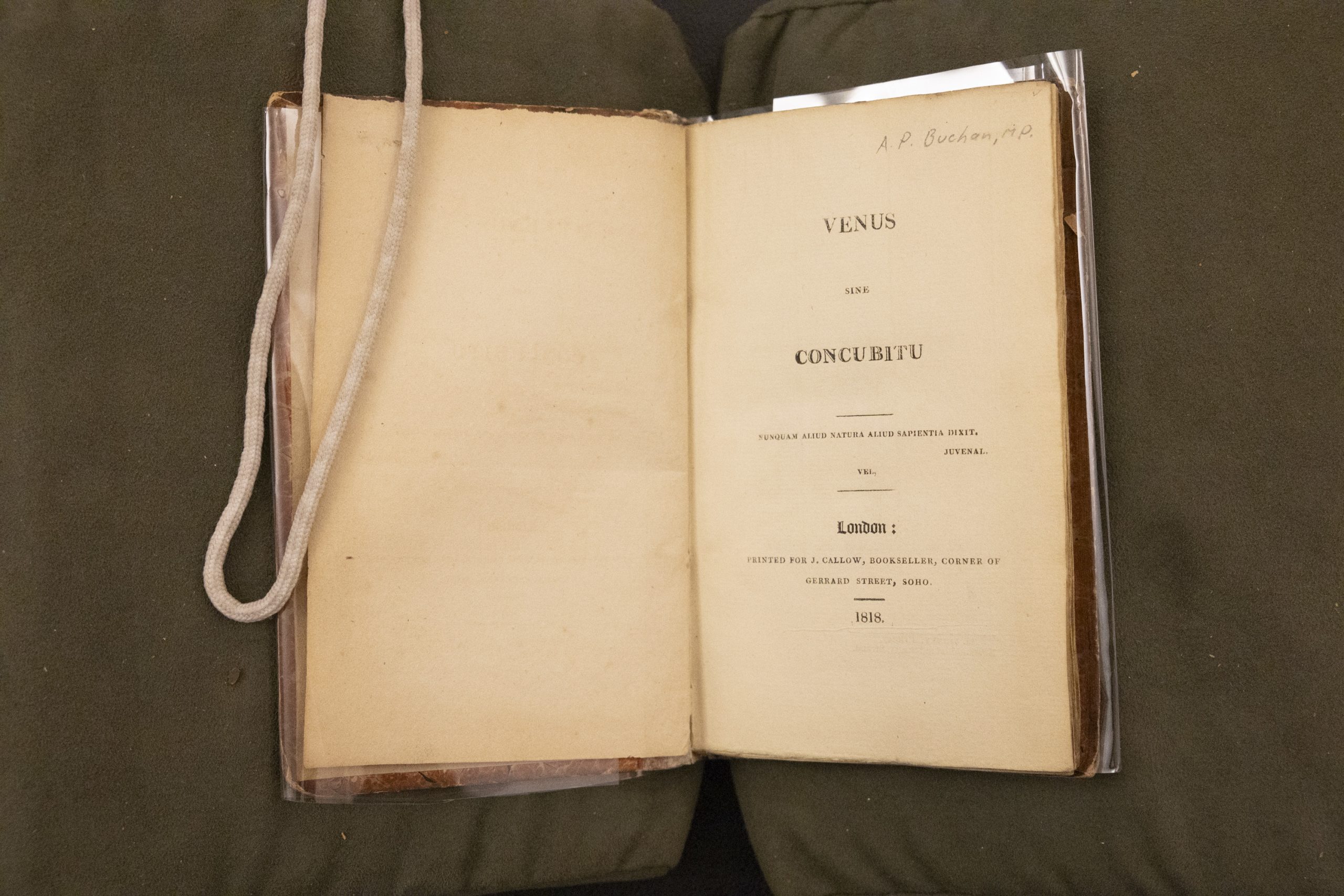
So, an entire underground economy of books and pamphlets printed to help people navigate their sexual lives emerged. They were naughty at best, scandalous at worst, and distributed through the kinds of secret channels we think of today as the dark web. Despite their nefarious nature, people sought them out even when the tips — especially the birth control hacks in Fruits — would be considered dicey by today’s standards,
“They helped people manage their bodies,” said Rosenberg, whose collection spans from the early 18th- to the mid-20th century. “Abortion, birth control, masturbation, anything involving sexual pleasure was controversial in polite company.”
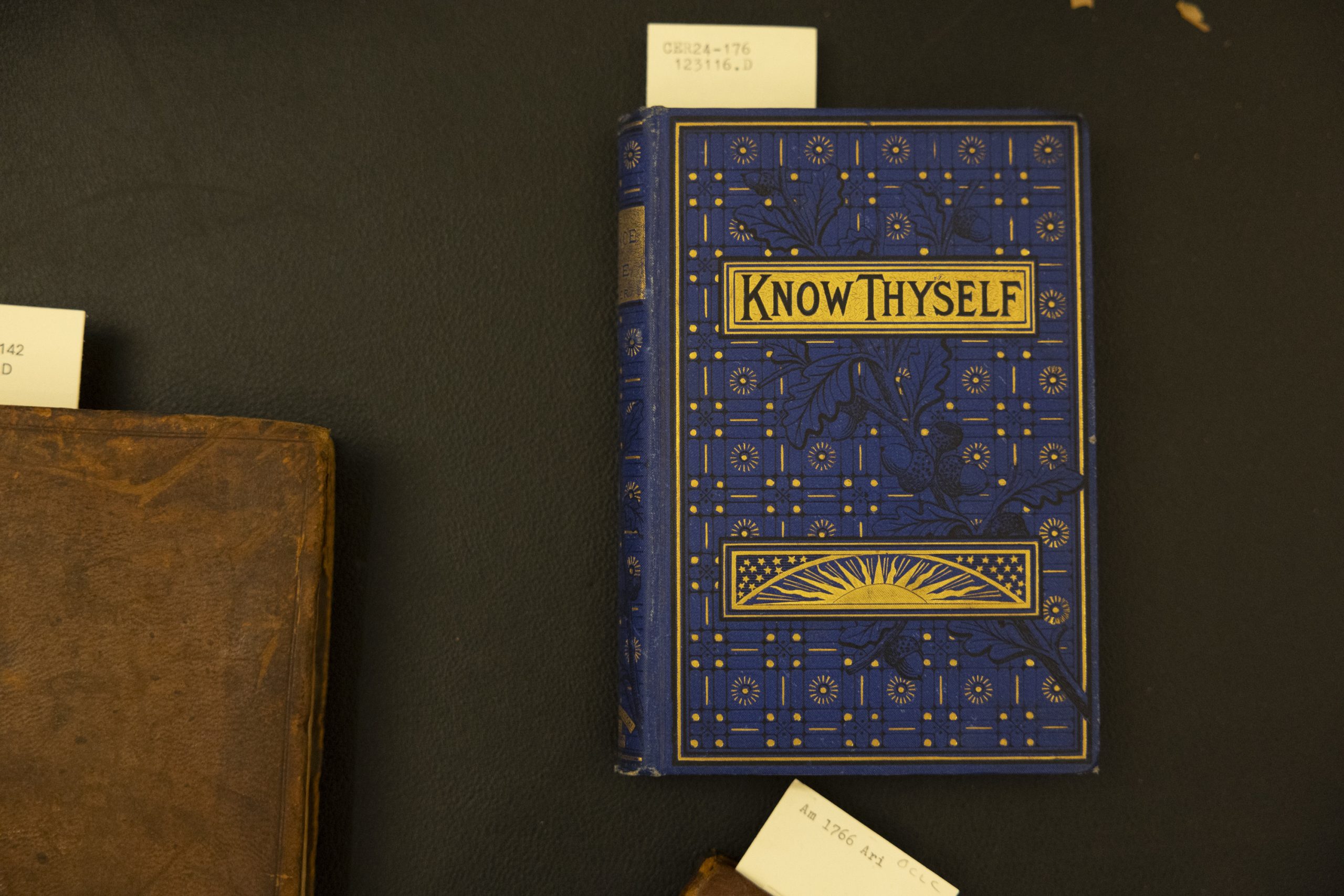
The title of this book appears to be, “Know Thyself” However, its true name is ‘The Science of Life, or, Self Preservation.” “Perhaps the biblical reference on the cover hints at what the book was really about without telling you directly that its about sex,” Rachel D’Agostino suggests.Tyger Williams / Staff Photographer
Rosenberg’s provocative collection covers every conceivable unmentionable from sterility to STDs.
Young wives learned what was expected of them in the marriage bed from sneaking reads of William H. Walling’s 1904 hardcover, Sexology. Men discovered why their virility might be waning through covert perusals of George Howard Jones’ 1881 manualThe Science of Life, or, Self-Preservation, whose cover hid the book’s real title and was labeled as Know Thyself.
“Perhaps, the biblical reference on the cover hints at what the book was really about without telling you directly that it’s about sex,” D’Agostino suggested.
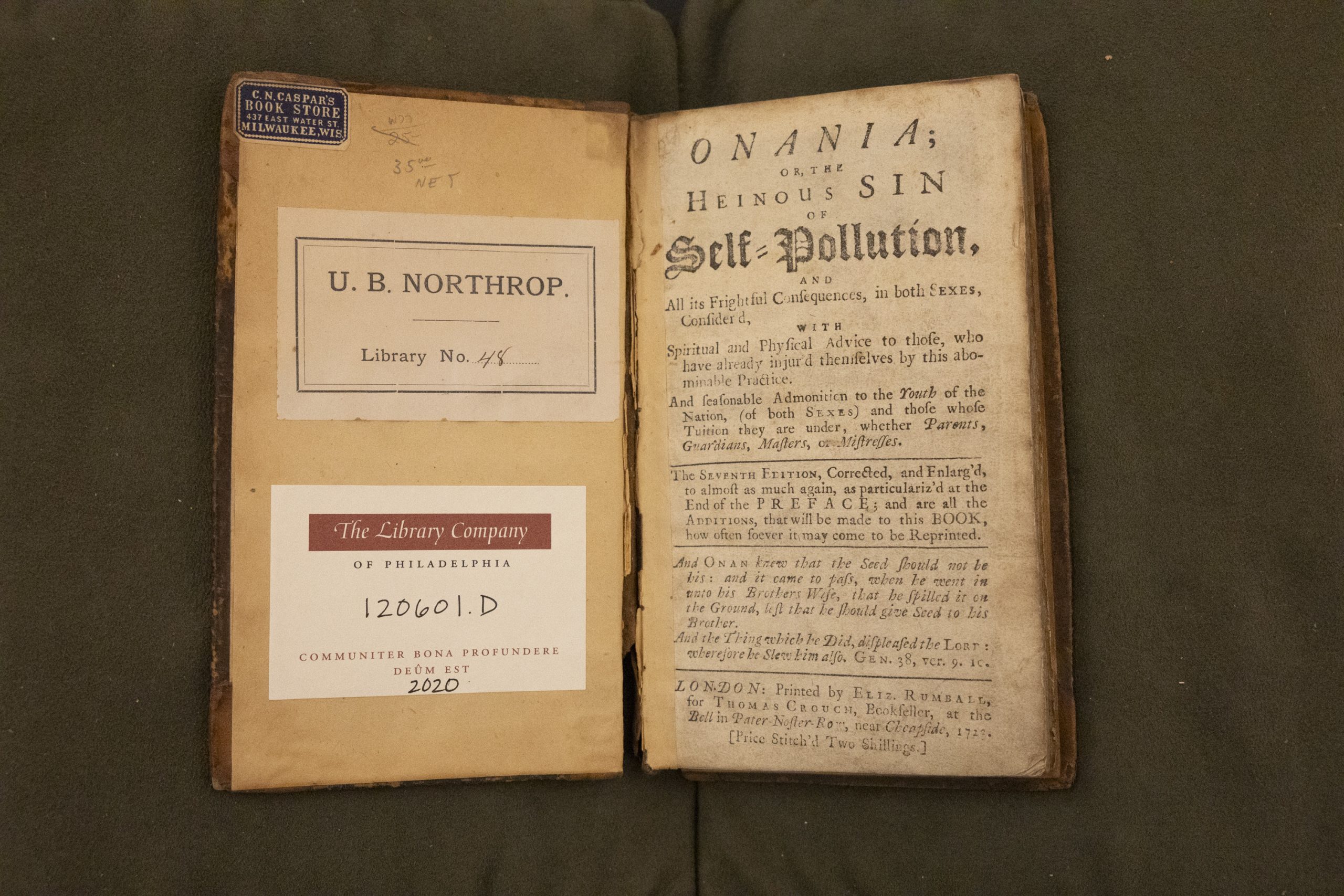
There are also several editions of the 18th-century masturbation treatiseOnania: Or, the Heinous Sin of Sexual Pollution in the Rosenberg donation. In keeping with the mores of the times, the anonymous pamphlet damns the act but also entertains questions from anonymous readers curious about their urges.
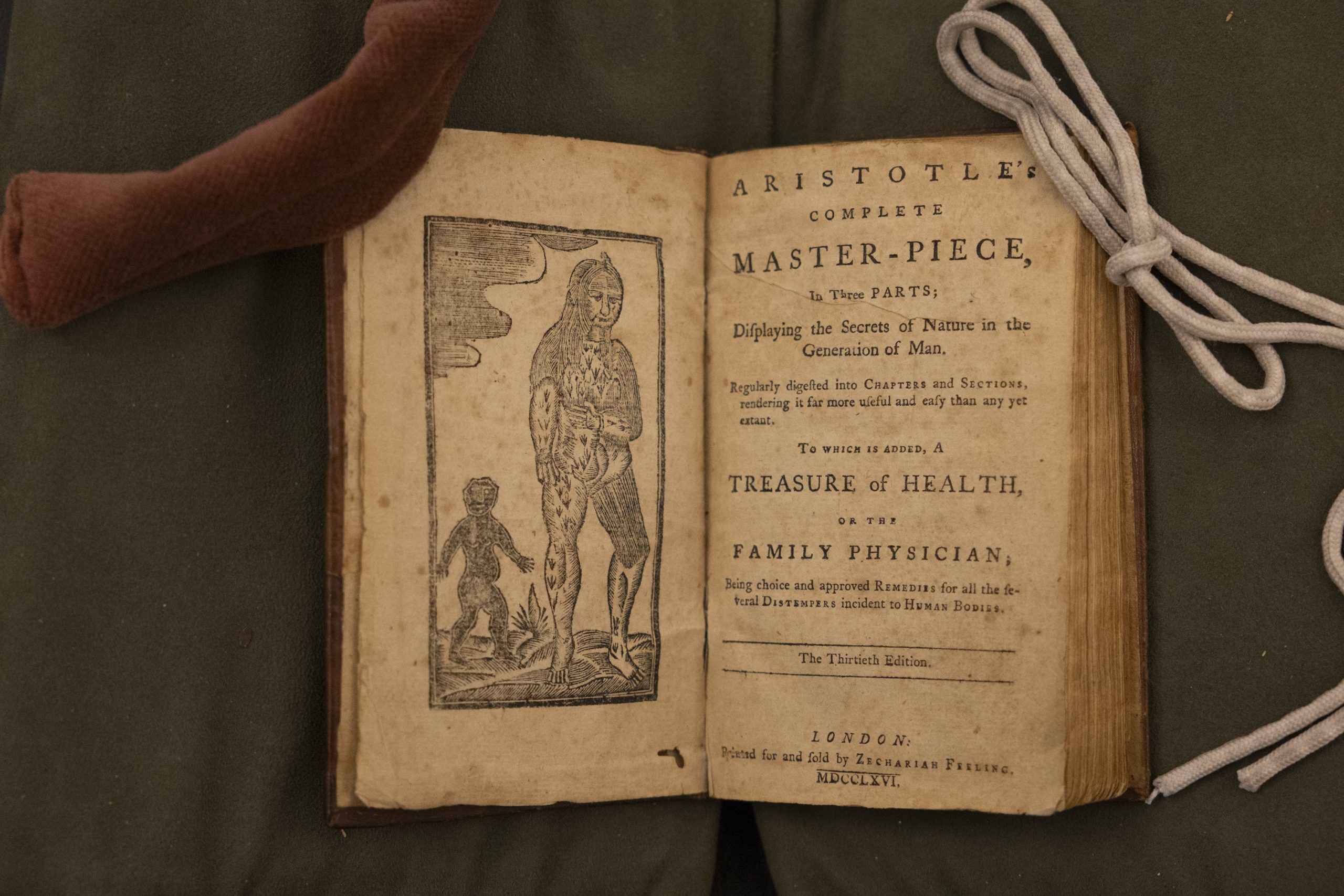
First published in 1684, “Aristotle’s Masterpiece” is a midwifery and sexual education manual that among other things acknowledged that women do enjoy sex. It’s the collection’s donator Charles Rosenberg’s favorite.Tyger Williams / Staff Photographer
“The conversations might have been forbidden, but people were still clearly talking,” D’Agostino said. “It really makes you wonder where these conversations started. Were people asking about themselves, or their teenage sons. … These books give us so many hints about what was important in society, what we shouldn’t talk about, but what was talked about anyway.”
Rosenberg’s favorite are the 35 copies of Aristotle’s Masterpiece. First published in 1684, Aristotle’s Masterpiece — which, by the way was not written by the Greek philosopher — is a midwifery and sexual education manual that among other things acknowledged that women do enjoy sex.
Illustrations, although rudimentary, firmly place the manual in the naughty category.
“I was very fascinated by Aristotle’s Masterpiece,” Rosenberg said. “There is just something very romantic about rare items.”
” Onania: Or, the Heinous Sin of Sexual Pollution,” an 18th century treatise on the perils of self-pleasure, is among the many books donated to The Library Company by Charles E. Rosenberg. Tyger Williams / Staff Photographer
A subset of ‘popular medicine’
Rosenberg’s donated sexual health primers from yesteryear are a subset of his larger collection of hundreds of books on “popular medicine,” a term he’s lauded in academic circles for coining.
Scientific discoveries made during the Age of Enlightenment challenged the belief that any ailment — whether a stomach ache or a sprained finger — was a punishment from God. As the study of medicine found its way to the halls of universities, a new genre of reading material, blending home remedies with the popular science of the day, came on the scene. Like the wellness gurus of today.
In the 19th century, such reading material teetered between blindly obeying the will of God and understanding the needs of everyday people.
Which is why the popular science in sex subset is the most radical part of Rosenberg’s collection.
“I wasn’t interested in the high culture of medicine,” he said. “I was interested in the questions ordinary people had about their bodies as it related to their health.”
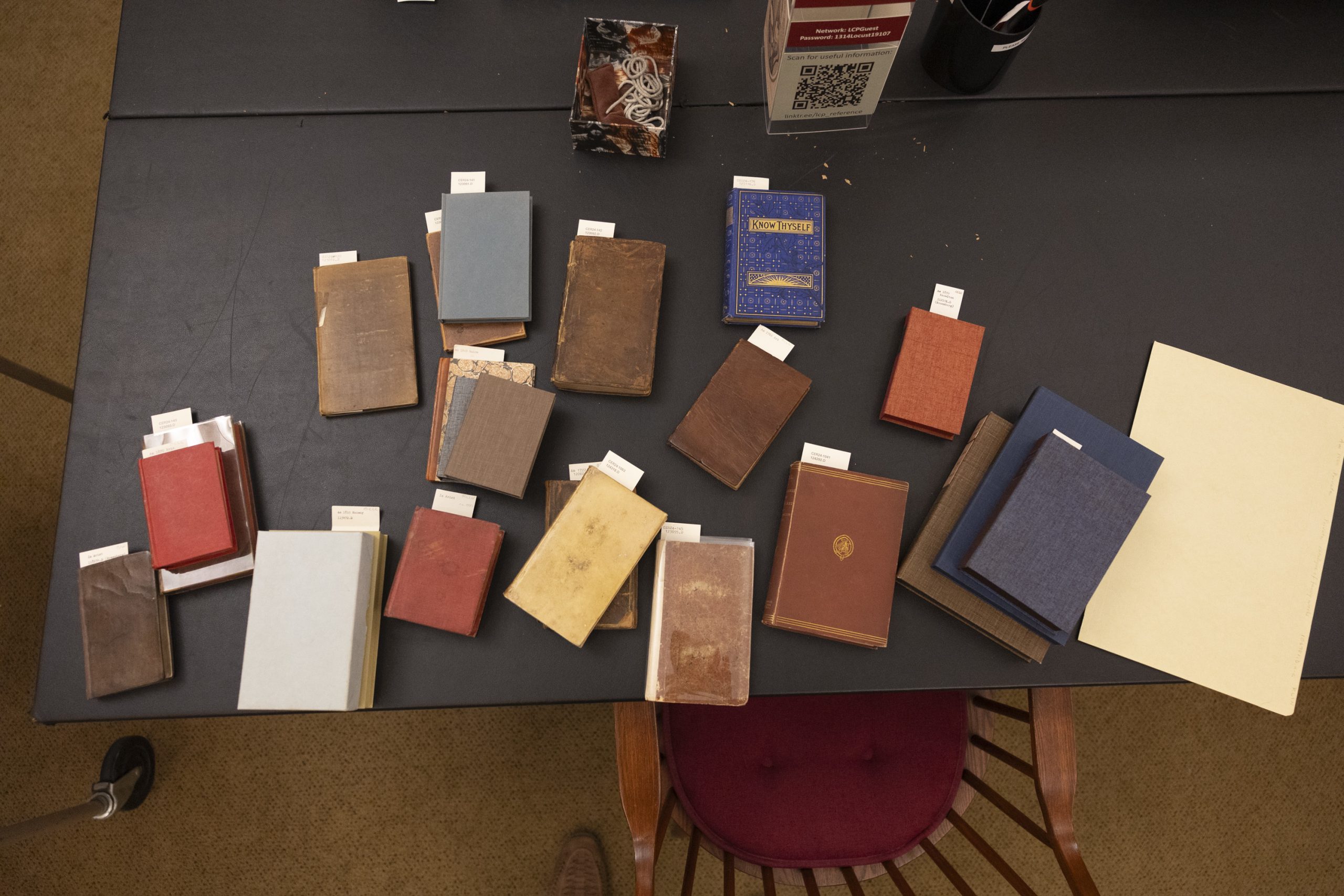
A view of respected medical historian Charles E. Rosenberg’s collection of “scandalous” 18th and 19th century books about popular medicine centering sex. Rosenberg donated these books to The Library Company of Philadelphia. Tyger Williams / Staff Photographer
In 1962, while a lecturer at the University of Wisconsin, Rosenberg’s most famous work, The Cholera Years: The United States in 1832, 1849, and 1866, was published by the University of Chicago Press. When the first cholera outbreak hit in 1832, people thought contracting the cholera bug, which caused diarrhea and dehydration, was a punishment from God.
During the 1849 cholera epidemic, physician John Snow determined the disease spread through contaminated drinking water. When cholera reemerged in 1866, it was treated as a public health issue. Rosenberg’s book examined the societal shift’s impact on medicine and personal hygiene.
“By this time I already had a great collection of popular science books that I accumulated through my research,” Rosenberg said. “I was a nutty collector.”
One of the various books on the science of sex from the 18th and 19th Century at The Library Company in Philadelphia, Pa., on Tuesday, July 21, 2026.Tyger Williams / Staff Photographer
Books, books, books
Rosenberg moved to Center City in 1963 to take a job as an assistant professor in the University of Pennsylvania’s history department.
Shortly after coming to Philadelphia, he befriended Edwin Wolf II, the rare book aficionado and bombastic director of the Library Company. Wolf is credited with breathing life into the struggling institution in the 1950s.
Rosenberg gave his first set of books to Wolf in the 1960s.
“I liked the notion of it being the oldest surviving colonial library that wasn’t a university,” Rosenberg, 89, said. “It was associated with Ben Franklin, the Declaration. … It was rich with American history.”
Charles E. Rosenberg, respected medical historian, author, avid book collector and Library Company Emeritus Trustee has donated more than 16,000 books to The Library Company of Philadelphia including, 1500 popular medicine titles centering 19th century sex.Charles E. Rosenberg
He spent the next 40 years of his life researching, collecting, writing, and giving away books about popular science.
Each book, essay, or paper he wrote meant he amassed books on a new genre of popular science, which would eventually make their way to the Library Company — usually after a major move.
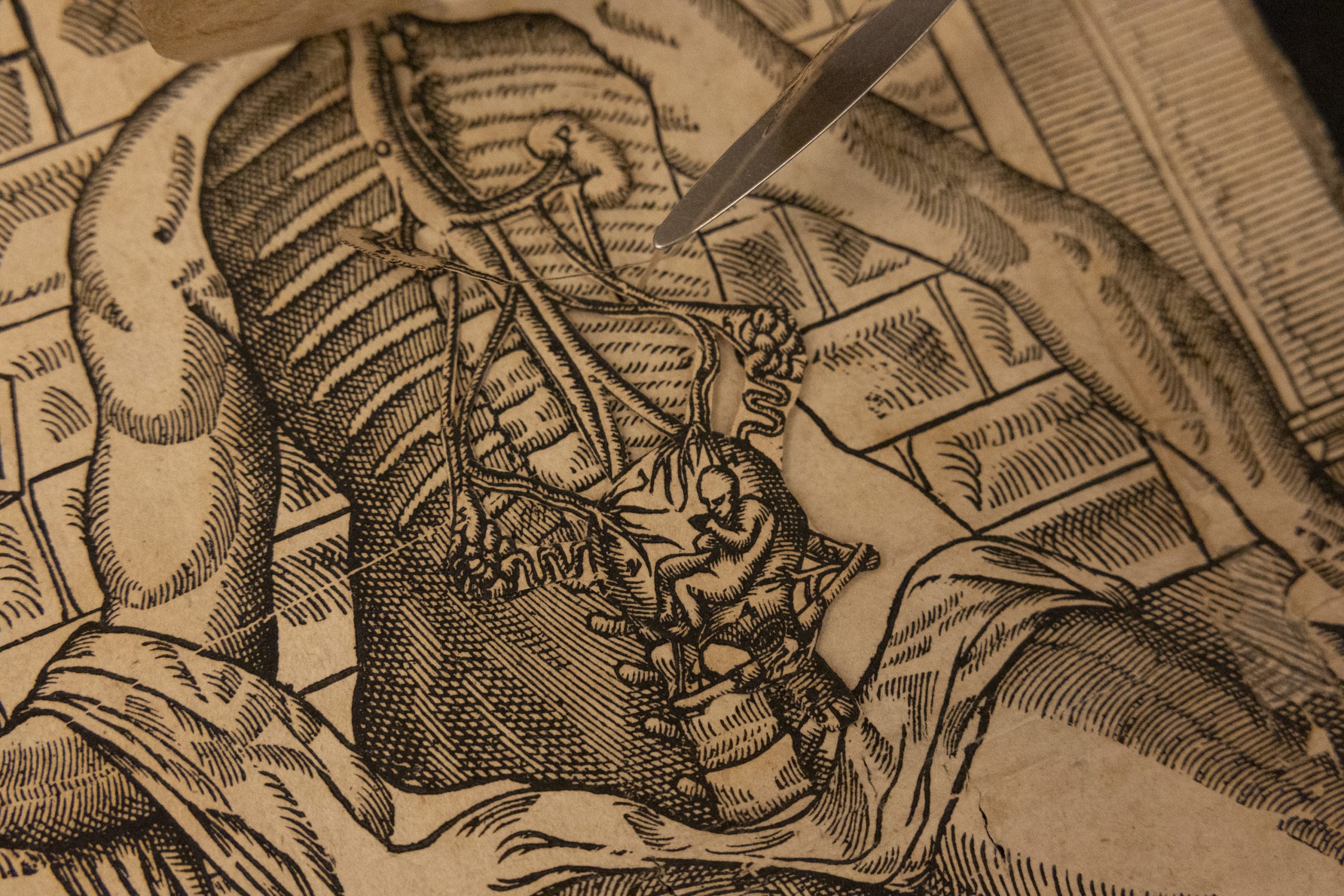
An example of a 17th century anatomical illustration that showing the insides of a woman carrying a child. Although not a part of Rosenberg’s collection these texts centering science rather than God’s will were not socially acceptable at the time. Tyger Williams / Staff Photographer
“When I moved from Center City to West Philly, I gave a bunch of stuff to the library,” Rosenberg, who became chair of the department of history and sociology at Penn in 1991, recalled. “Then I moved to Merion and gave even more books.”
In 2001, Rosenberg’s wife, Penn professor Drew Gilpin Faust, was appointed the first dean of Harvard University’s Radcliffe Institute for Advanced Study, prompting Rosenberg to donate a slew of books to the Library Company. (Faust became Harvard’s first female president in 2007 and served as its leader until 2018.)
Rosenberg kept donating books through his time on Harvard’s faculty and after his retirement in 2004. The popular sex collection donation, made in the spring of 2024, is his latest batch.
He held on to them the longest, he said, because he was toying with the idea of writing a book that looked at how sexual agency developed through the centuries and would discuss topics like abortion and masturbation.
“When I gave up on that project, I decided to part with the books,” said Rosenberg, who is now a Library Company emeritus trustee.
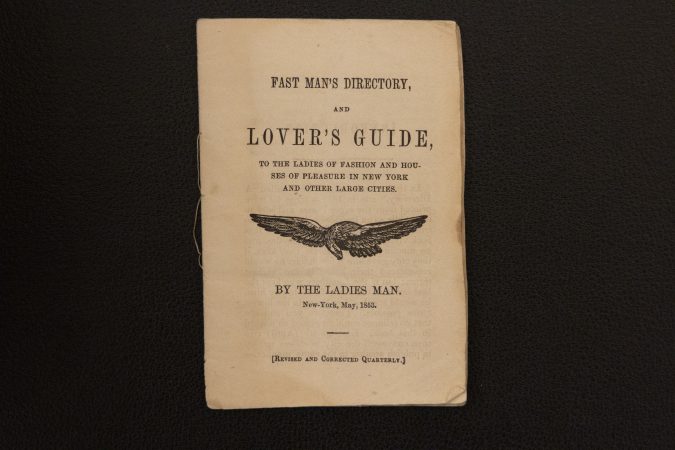
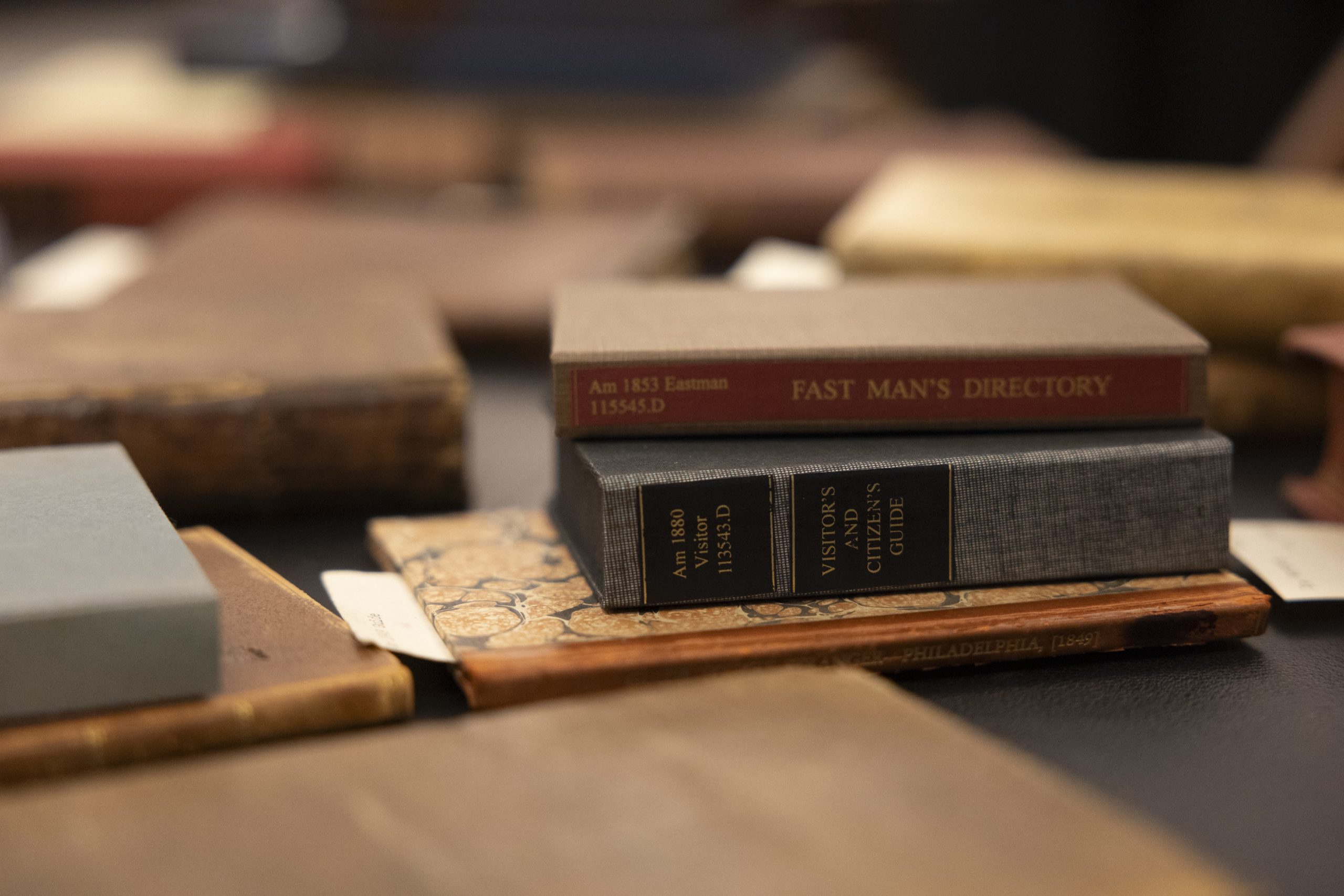
Pictured here are the “Visitor’s & Citizen’s Guide, of Pleasure and Amusement in the City of New York. New York, 1880. Anonymous. and “Fast Man’s Directory, and Lover’s Guide to the Ladies of Fashion and Houses of Pleasure in New York and Other Large Cities” New York, circa 1853. They are among the collection of books at The Library Company of Philadelphia illuminating the sexual habits of 19th century people.Tyger Williams / Staff Photographer
Sex in the stacks
The Rosenberg acquisitions are extra special, D’Agostino said, because they provide a glimpse into how people actually lived, thought about, and had sex.
“The Library Company didn’t acquire these books on their first run,” D’Agostino said. “We bought for the gentleman, the most upstanding people at the community. They would have come here looking for medical texts, but not books about managing their sex lives.”
Today, Rosenberg’s donations are nestled in the stacks on the top floors of the Locust Street building that smells of old leather.
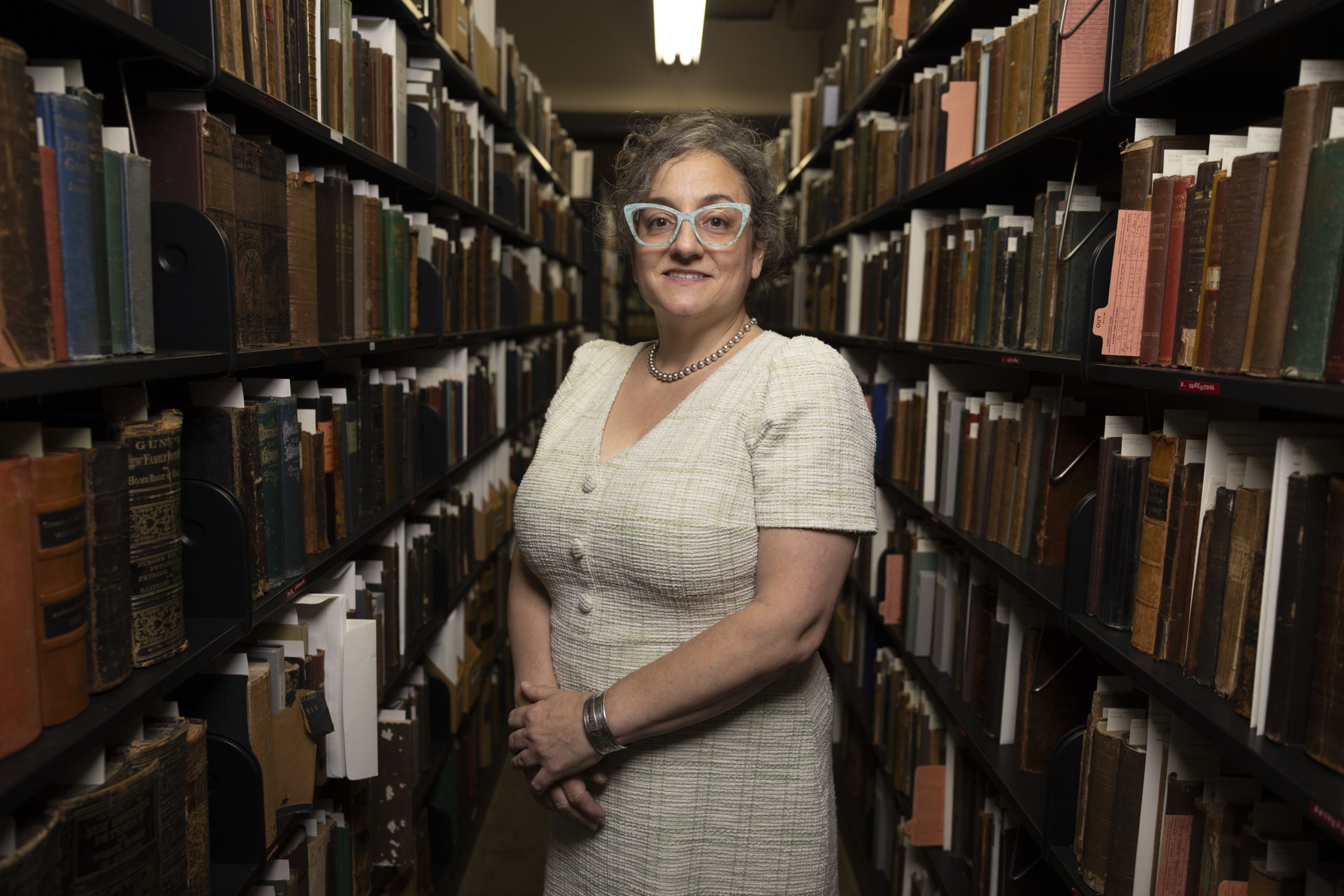
Rachel D’Agostino, curator of printed books at the Library Company of Philadelphia, in the stacks. Tyger Williams / Staff Photographer
They sit not far from the quack medicine pamphlets of the late Philadelphia-born collector William Helfand. If Rosenberg’s collection speaks to managing and understanding sexual desires, Helfand’s ephemera — a seemingly endless grouping of city directories telling where and how to cure venereal disease — is proof people were living out those desires.
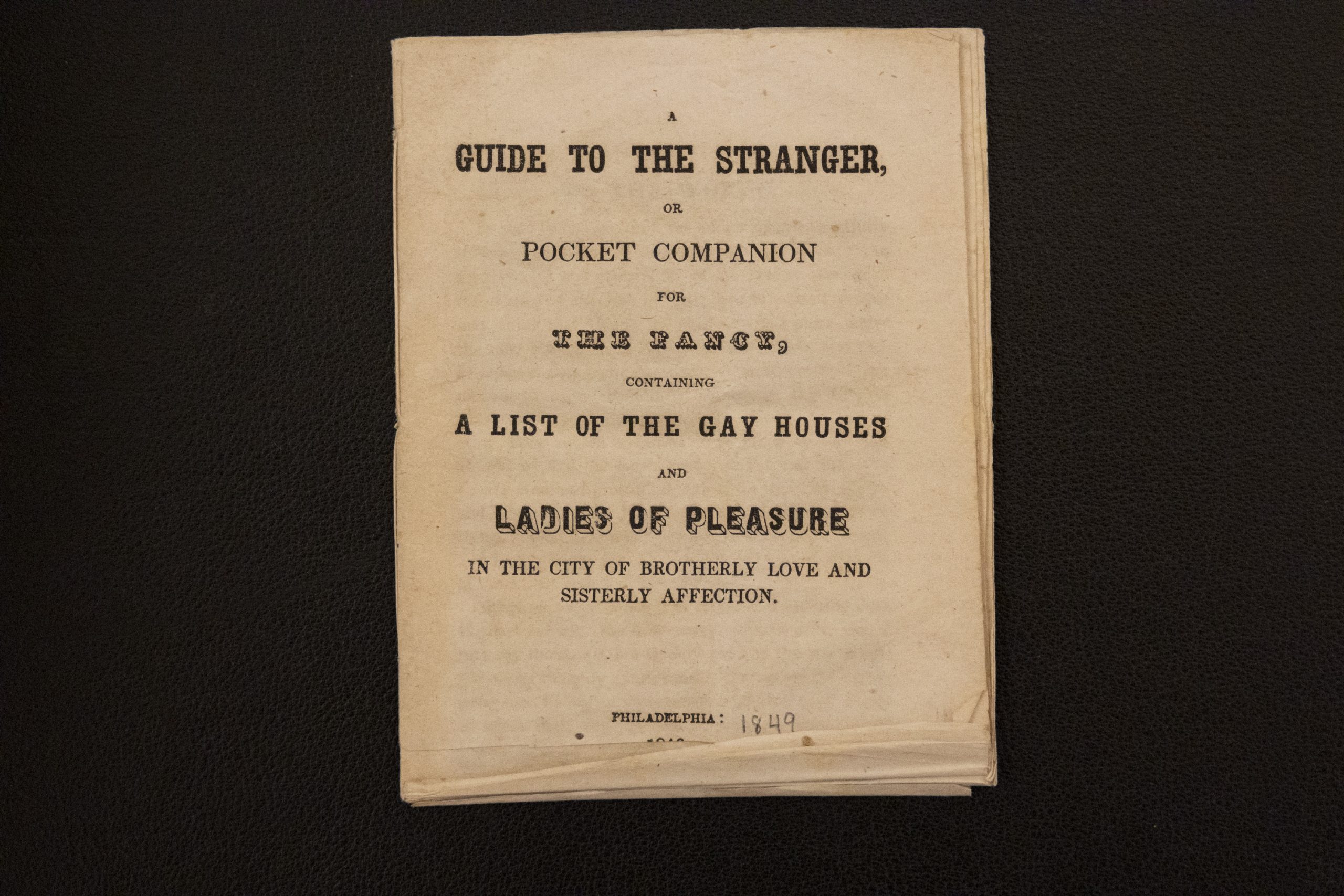
Also in the vicinity are several brothel directories including A Guide to the Stranger, or Pocket Companion for the Fancy, Containing a List of Gay Houses and Ladies of Pleasure in the City of Brotherly Love and Sisterly Affection from 1849. It reads like a Yelp review, rating things like cleanliness and performance.
“Look at how they are folded,” D’Agostino said, pointing to a centuries-old crease in one directory. “Proof that this was perhaps hidden in a man’s jacket pocket?”
Recently, D’Agostino purchased a 19th-century condom and corresponding advertising material.
“A Guide to the Stranger, or Pocket Companion for the Fancy, Containing a List of Gay Houses and Ladies of Pleasure in the City of Brotherly Love and Sisterly Affection” from 1849. This is a part of the Library Company’s growing collection about the sexual lifestyle of 19th-century Philadelphians. Tyger Williams / Staff Photographer
People like to romanticize the 19th and early 20th centuries as a time when only people on the societal margins were having sex outside of society’s rules of decorum. And that’s just not accurate, D’Agostino said.
She still works with Rosenberg to build collections designed to help researchers illuminate stories lost to the dark shadows of disrepute but which are important to America’s story.
“A market for this work always existed and always will exist,” D’Agostino said. “It’s just finding its way into formal history now.”
Charles E. Rosenberg’s collection at the Library Company of Philadelphia is available for perusal by appointment only. It is located at 1314 Locust St.
I’ve visited At My House a couple of times, scouring the aisles for quirky vintage pieces, loving the eclectic vibe of the store even when I didn’t buy anything. So I was not surprised to see them hosting what is possibly the most whimsical art show I’ve ever been to, displaying art about the size of a postage stamp.
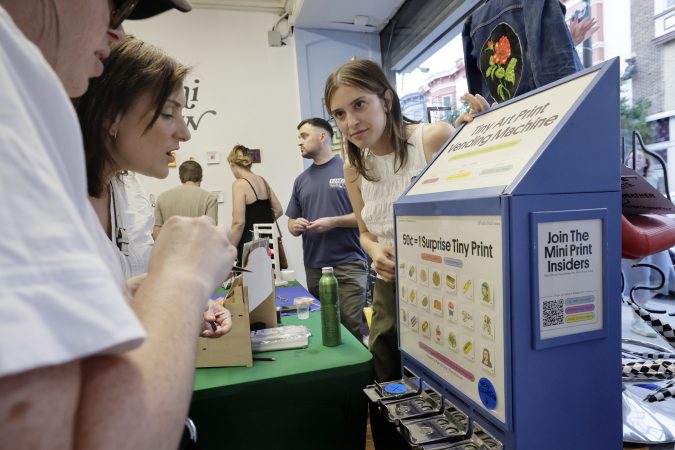
The Queen Village clothing and homewares store is run by Kelly Braun who, in collaboration with artist Fabiola Lara, started the mini art show last year. They invited artists to create art that was 3 inches x 3 inches, so this year, it had to be even more silly, cutting it in half to 1.5 inches x 1.5 inches.
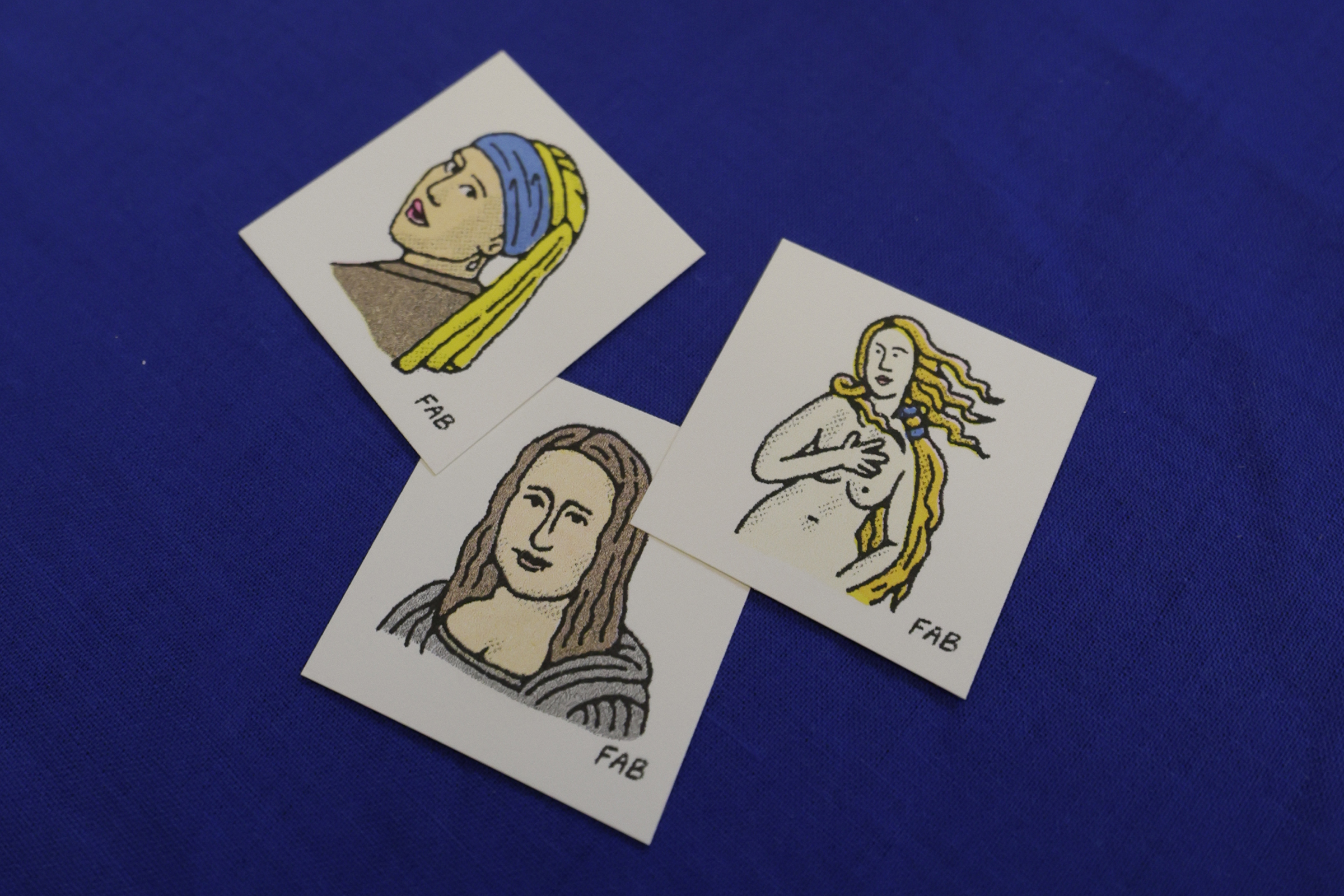
Prints by artist Fabiola Lara for sale at “The Mini Mini Art Show” at the store At My House on Fourth Street in Philadelphia on Friday, July 24, 2026.Elizabeth Robertson / Staff Photographer
The opening reception for the show was absolutely buzzing, with people grabbing cocktails and lining up around the store to view the wall of tiny pieces. There was tiny clothing, houses, rooms, closets, and classic art pieces — those were made by Lara, who is no stranger to mini art.
You may have come across her mini art vending machines, of which there are 13 around the city.
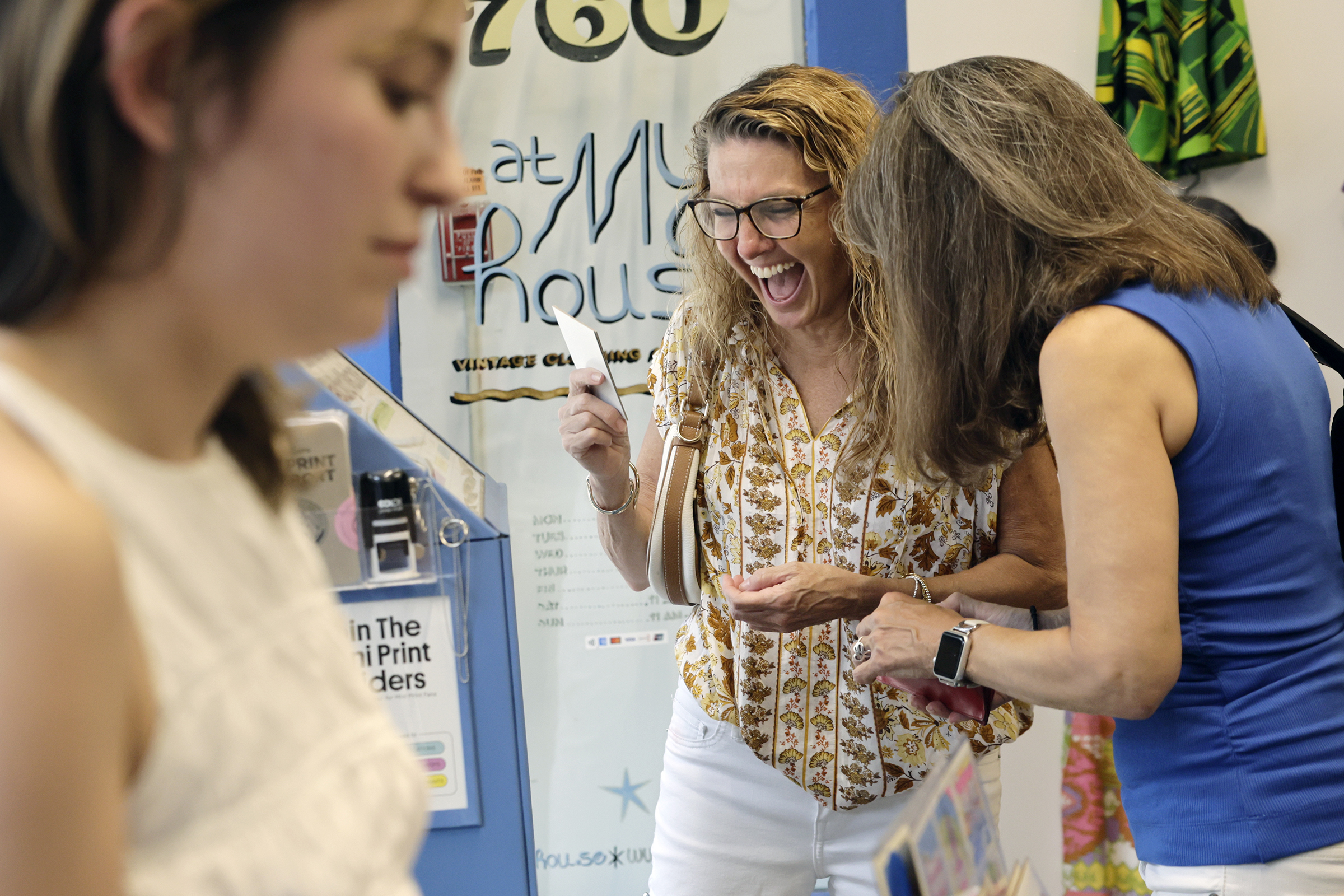
Leann Curly (middle) and Karen Sarappo (right) were thrilled with artist Fabiola Lara’s (left) mini art print that they purchased from the mini art print vending machine during the opening/public reception of “The Mini Mini Art Show” at the store At My House on Fourth Street in Philadelphia on Friday, July 24, 2026.Elizabeth Robertson / Staff Photographer
After visiting several major museums with grandiose pieces, I never thought I would see people get the most excited over art that can fit in the palm of their hands. But there was an infectious energy and a sense of joy at At My House.
In a world where large-scale exhibits are so heavily celebrated, getting giddy over comically tiny art felt like a therapeutic break from artistic snobbery.
“The Mini Mini Art Show” is on display through Aug. 2 at At My House, 760 S. Fourth St., Philadelphia. atmyhou.se
— Morgan Ritter
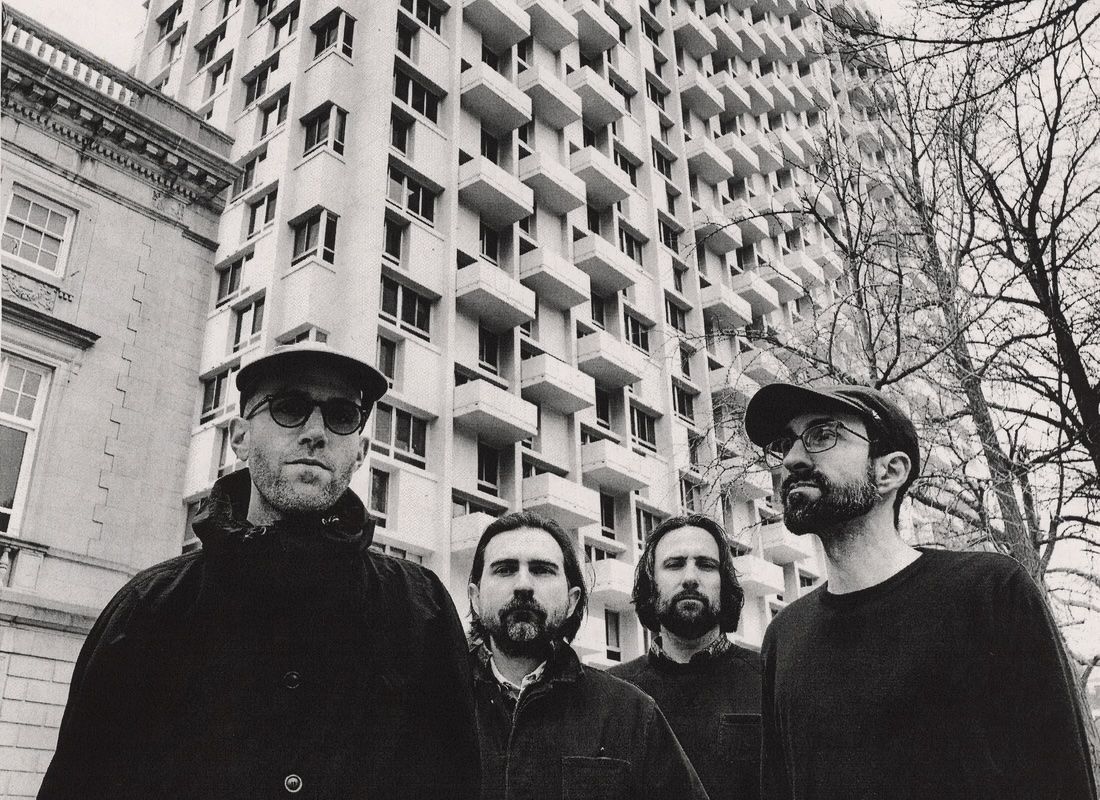
Philly band Hurry’s new album is “Zoned Out.” They play Main Street Music in Manayunk on Aug. 1 and Philly Typewriter on Aug. 22. Luke Ivanovich
Harmony-happy Hurry is back with ‘Zoned Out’
Matthew Scottoline is Zoned Out. That’s the title of the transporting new album by Hurry, the jangly Philadelphia band that has been his creative outlet since 2012, when Scottoline — previously the bassist in Philly emo band Everyone Everywhere, stepped out as leader of his own power-pop project.
Now six albums in, Scottoline continues to refine the harmony-happy Hurry approach, where longing and yearning and experiencing a bittersweet melancholy is elevated to an art form.
In his notes to the album — which began as home recordings on cassette and was completed at the Metal Shop in East Kensington — explains that the dreamy, hypnotic song that gives the collection its name came about because “I tend to disassociate. I zone out and sort of crawl into my own head.”
In this case, that dissociating is a result of facing life changes — the end of one relationship, the beginning of another, and the decision to become a parent — “and how [expletive] scary that is,” as Scottoline puts it in his notes.
But while that tension exists as an undercurrent, Scottoline’s knack for breezy, cascading melodies mean that Zoned Out is always riding a pleasurable, reassuring wave. The album — which features a cameo from Gerard Love of Scottish power-pop heroes Teenage Fanclub — conveys a sense that any conflicts or “Complications” that may arise will ultimately resolve themselves, just as the melodies do on this seriously catchy set of 10 songs.
Hurry will perform for free Aug. 1 at Main Street Music, 4444 Main St. in Manayunk with Planette Automatic, mainstreetmusicpa.com. After heading to England and Scotland for a short tour, the band will be back in town at Philly Typewriter, 1735 Passyunk Ave., with Chime School and Te Vista on Aug. 22. r5productions.com.
— Dan DeLuca
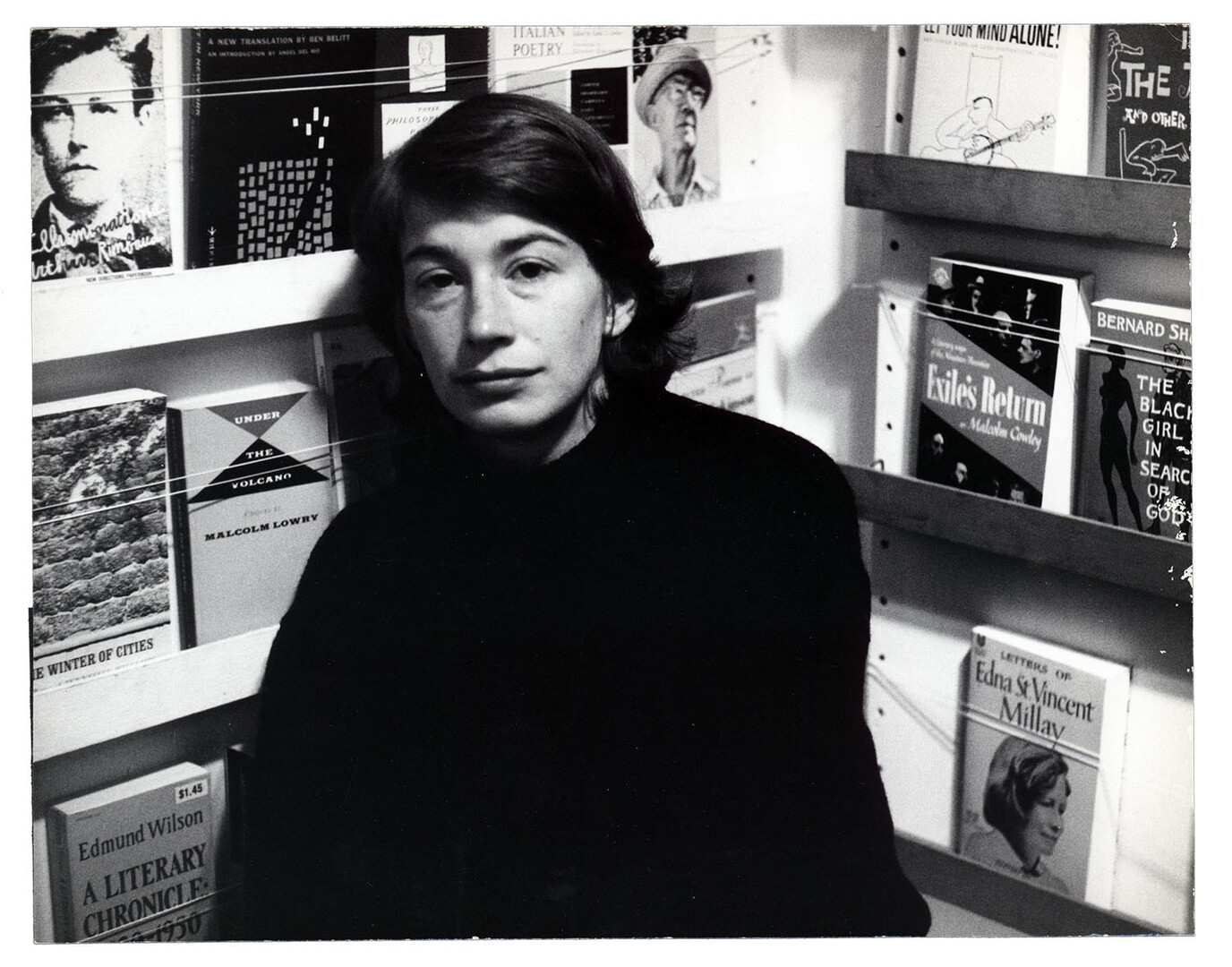
A photograph of Mary Oliver from Sasha Waters’ documentary, “Mary Oliver: Saved by the Beauty of the World.”Courtesy of Kino Lorber
Saved by Mary Oliver
Before Mary Oliver’s poems became the stuff of Instagram inspiration posts, she was the patron saint of college girls discovering love and nature for the first time. I was 16 when I read “Wild Geese,” almost crying at the lines: “You do not have to be good. / You do not have to walk on your knees / for a hundred miles through the desert repenting.”
In the years since, I have met so many women in love with her words: a former coworker had a tattoo of her lines, a friend will often quote from Oliver’s “The Summer Day” from memory just to describe her joy of being in a beach on a day so hot that the water shimmers as it evaporates in the horizon.
Oliver, who lived with her partner, Molly Malone Cook, in Provincetown for several years, is also a queer icon whose words never fail to soothe a soul in need of a reminder of the love and tenderness in this world.
Now, a documentary on her life and career — featuring readings of her poems by the likes of Helena Bonham Carter and Oprah Winfrey — celebrates the poet who died in 2019. Peppered with poetry, remembrances, interviews, photos, and notebook pages, Sasha Waters’ Mary Oliver: Saved by the Beauty of the World is a treat to those who love Mary Oliver and those who are waiting to start.
“Mary Oliver: Saved by the Beauty of the World”plays July 31-Aug. 6, at the Bryn Mawr Film Institute, 824 W. Lancaster Ave., Bryn Mawr. brynmawrfilm.org
— Bedatri D. Choudhury
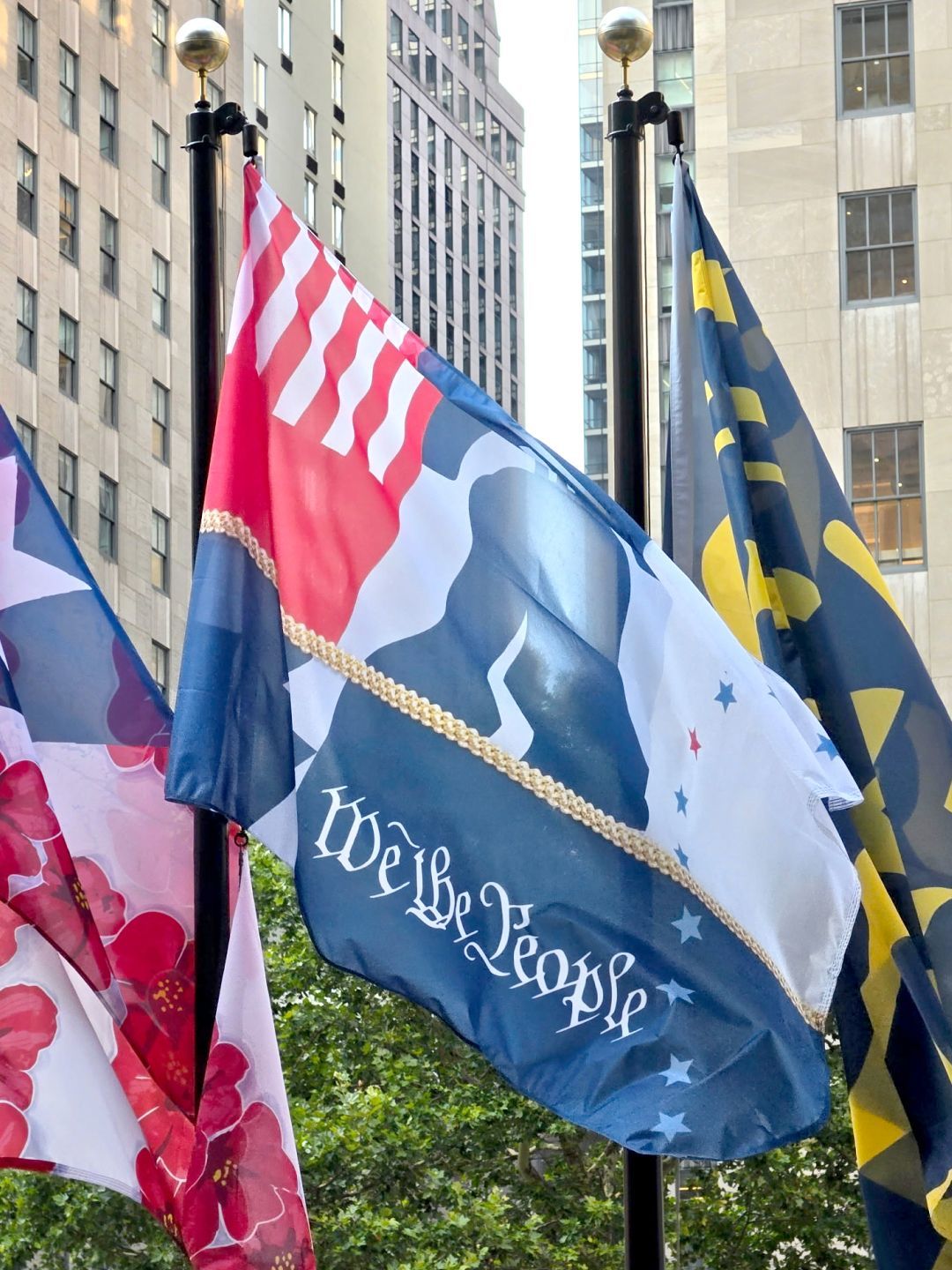
Jeweler Steven Lagos’ flag is among the 120 flags from national and international designers celebrating America’s 250th birthday in Rockefeller Center. The flags will be up through Sept. 4, 2026.Lagos
Steven Lagos’ Philly pride at Rockefeller Center
Philly master jeweler Steven Lagos’ flag blows along the perimeter of Rockefeller Center with graphic images of a cracked bell, 13 stars, and red-and-white striped detail. At first glance, it does not look much different than other art shouting out Philly’s history.
Then, I noticed Lagos’ golden caviar bead ribbon dancing in the center of the red, white, and blue canvas and thought this is special in a Lagos loves Philly kind of way.
Those caviar beads are Lagos’ trademark, a part of the design dictionary of Philadelphia, where Lagos has lived and worked for more than 50 years. It’s amazing to see him continuing to integrate Philly in his work.
Lagos’ flag is among 130 featured in the “United Flags of Fashion,” a joint project between the Council of Fashion Designers of America, Vogue, Rockefeller Center, and America 250 to honor the country’s milestone birthday. CFDA describes the project as a “sweeping tribute to American creativity, identity, and design.”
Other household-name fashion brands with flags flying high are Tommy Hilfiger, Vera Wang, Calvin Klein, Gap, and Kenneth Cole. Bucks County-born Thom Browne’s flag is steely gray flag and features a crest; Main Line-bred Tory Burch’s red, white, and blue flag also showcases a Liberty Bell, but her image hovers over the words virtue, liberty, and independence. These Pennsylvania makers are full mast.
While those designers proudly say they are from the Philly area, Lagos — whose red and white stripes represent the columns at the Philadelphia Museum of Art — stayed in Philly. His flagship business is on Philly’s toniest street and, as evidenced in his Rockefeller Center banner, Lagos reps Philly in everything he does.
The flags will fly at Rockefeller Center through Sept. 4.
— Elizabeth Wellington
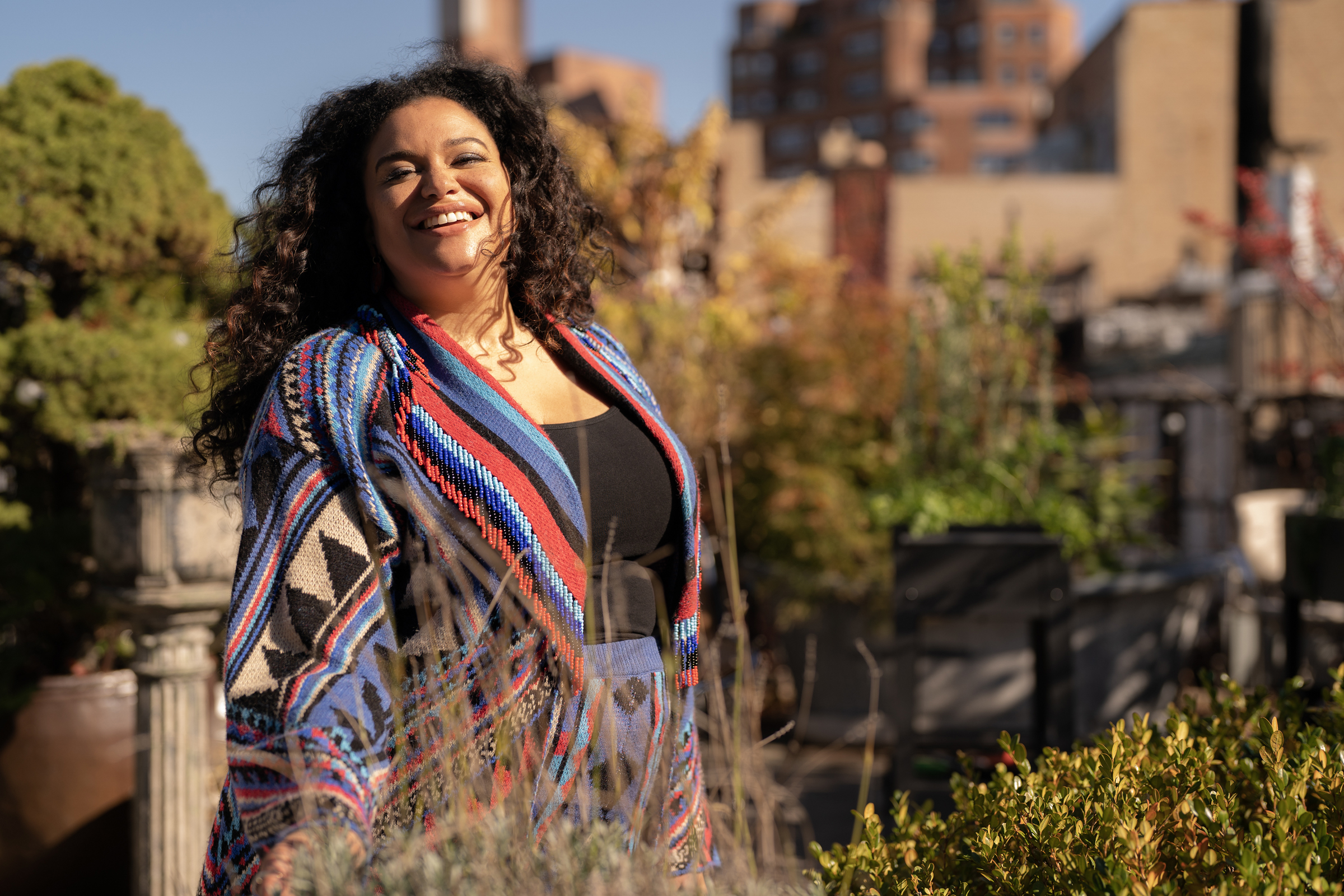
Michelle Buteau as Mavis in the Netflix comedy “Survival of the Thickest.” MUST CREDIT: Netflix photo by Vanessa Clifton
God bless you please, Michelle Buteau
It’s hard to say goodbye to one of my favorite shows, but the third and final season of Survival of the Thickest felt like a fitting ending for Michelle Buteau’s witty comedy. She plays Mavis, an aspiring fashion designer who wants to make clothes that fit all body types — thick girls, genderqueer folks, and anyone else who thrives outside of the fashion world’s narrow beauty standards.
In this season, (part-time) Delaware County resident Wanda Sykes joins the cast as Mavis’ fertility doctor and she’s a cool-headed, hilarious scene partner who deflates her patient’s babbling anxiety with well-timed precision.
The show remains funny, warm, and sassy, but the emotions reach new depths as Mavis experiences a miscarriage and struggles in her recovery. Nothing keeps her down for long though, and it’s such a comfort to see Mavis get back up. It’s an uplifting and heartwarming story that could help any viewer overcome summertime (or other time) sadness.
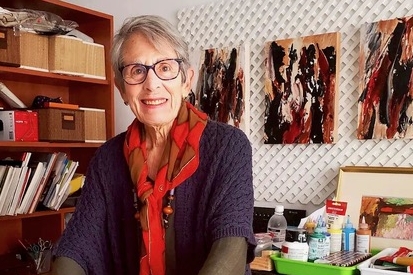
Barbara Gillette Price, 87, formerly of Philadelphia, celebrated painter and designer, former president of Moore College of Art and Design, former dean of Cranbrook Academy of Art in Michigan, former vice president for academic affairs at the Maryland Institute College of Art in Baltimore, fine arts teacher, mentor, and role model, died Friday, April 24, of age-associated decline at a hospital in Granada, Spain.
A lifelong artist and longtime educator, Ms. Gillette Price liked to skip her high school classes in the 1950s and wander around the galleries at the Philadelphia Museum of Art. In sixth grade, she told The Inquirer in 1994, her artistic talent drew attention from the teacher when her drawing of a female form was all too accurate.
She took Saturday classes at Temple University’s Tyler School of Art and the Fleisher Art Memorial when she was young, and earned a scholarship to the old Philadelphia Museum School of Art. She married artist Melville Price in 1957, moved to Tuscaloosa, Ala., in 1958, and earned bachelor’s and master’s degrees in fine arts at the University of Alabama.
She joined Cranbrook Academy of Art in 1978, the Maryland Institute College of Art in 1982, and Moore in 1994. At each stop, she renovated nearby old buildings into studios and galleries, expanded curriculum, and invigorated students with international and innovative programs.
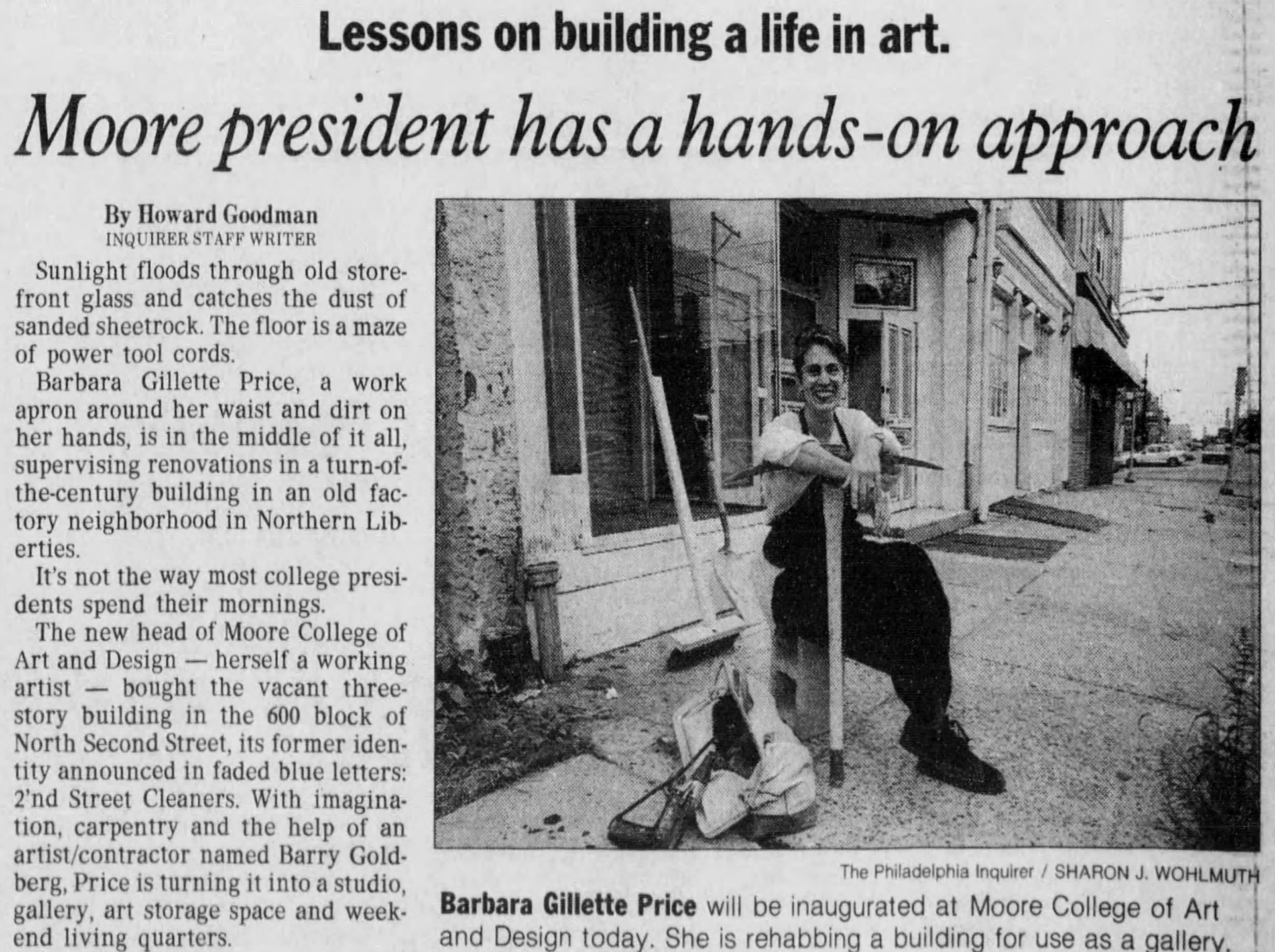
At Moore, she increased enrollment, established a career center, and personally refurbished her three-story studio on North Second Street into a gallery where students exhibited their work and handled logistics and publicity. She also forged working relationships with the Philadelphia School District and other art institutions, supervised an advertising campaign for female artists, and served as a role model for working artists in academia.
“That’s why I think my presence at Moore is a good thing,” she told The Inquirer in 1994.
In 1998, Rochelle Levy, then chair of Moore’s board of trustees, said: “Barbara has really been our ambassador out there. She has set an incredible role model for the students as a woman artist.”
Ms. Gillette Price left Moore in 1998, moved to Spain in 2000, taught art to primary school students, and continued to create and show her work. “Her commitment to arts education helped shape generations of creative thinkers,” former colleagues at Moore said in a tribute. “Her legacy lives on through the institutions she helped strengthen, the students she inspired, and the vibrant body of artistic work she leaves behind.”
Ms. Gillette Price was featured in The Inquirer when she joined Moore in 1994.Newspapers.com
One critic said her work “is of an inherent elegance that emerges from excellent craftsmanship and an intelligent narrative.”
She showed in dozens of solo and group exhibitions in Spain, Philadelphia, Maryland, Michigan, Washington, and elsewhere, and liked to work in the gallery as well as her studio. She painted about nature, light, woman’s perspectives, isolation and fear during the COVID-19 pandemic, and other topics.
“I seek to make the ordinary extraordinary,” she said on her website, barbaragilletteprice.com. “I am inspired by images I accumulate as I travel and view the world about me. This takes the form of remembered landscapes, figurative compositions, and subtle political statements.”
She was active in the Civil Rights Movement in Alabama in the 1960s, worked with the Woman’s Caucus for Art in Washington in the 1970s, and taught ceramics, painting, and drawing at the old Corcoran School of Art and Design in Washington and elsewhere. She belonged to the College Art Association and was on boards at the National Association of Schools of Art and Design, the Philadelphia Art Commission, and other organizations.
She earned grants for her painting and wrote essays and white papers about art. In one paper, she said: “The arts are the humanizing element in the education of the citizens of the 21st century.”
Barbara Amelia Gillette was born June 26, 1938, in Philadelphia. She and her family spent many summers in Atlantic City, and she graduated from Philadelphia High School for Girls.
She took piano lessons, attended Saturday concerts at the Philadelphia Orchestra for years, and hung out with high school boyfriend Edward Cutler and others at jazz clubs and the Gilded Cage coffee shop.
Melville Price died in 1970, and she reconnected with Edward Cutler. They married, had a daughter, Michelle, and lived in Washington. They divorced later, and he died earlier.
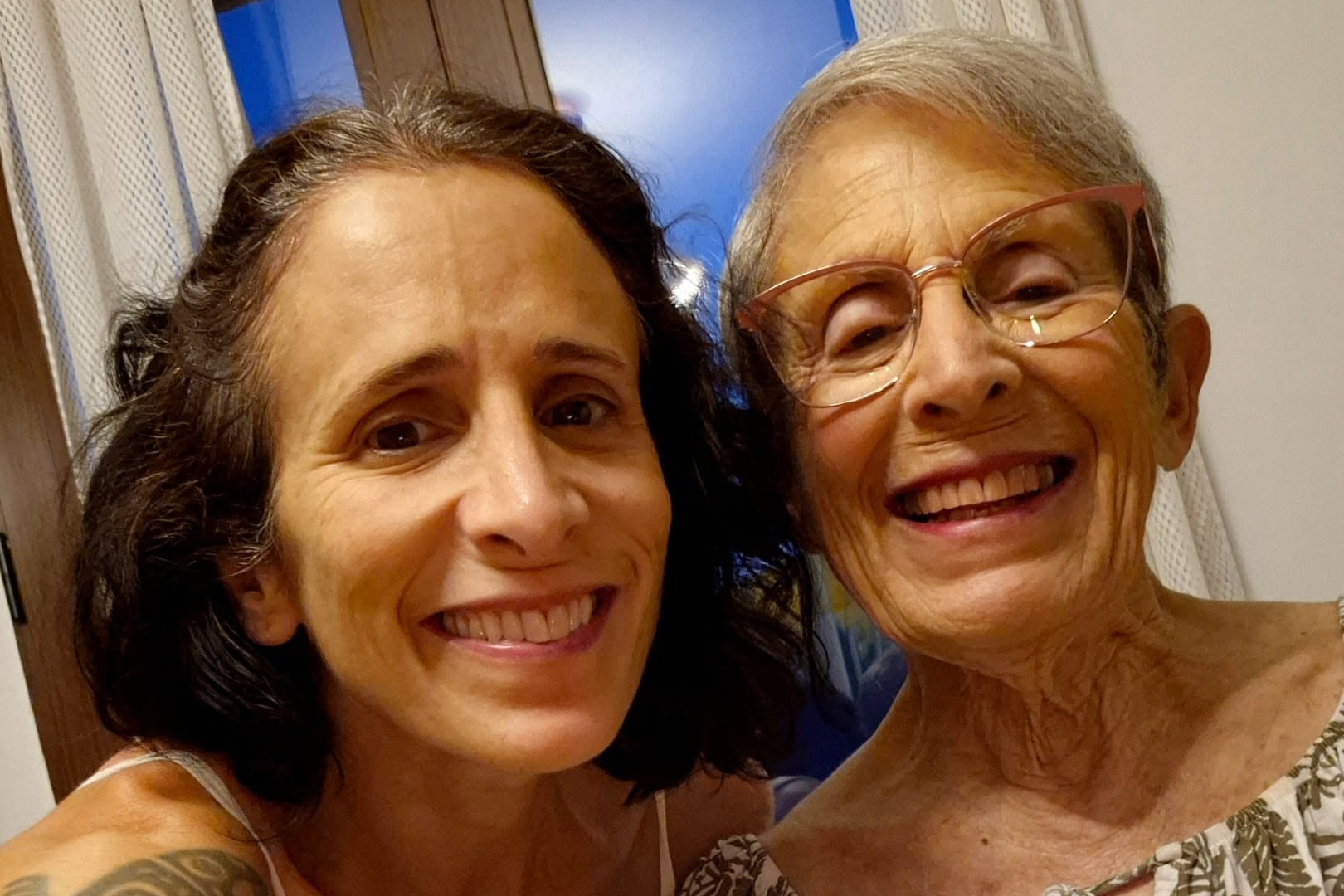
“I consider my mother’s greatest achievement to be the way she showed up as a parent,” her daughter said. “Her artistic legacy can be found in her paintings, drawings, textiles, and exhibitions. Her personal legacy lives on in the people she inspired, mentored, encouraged, and welcomed into her life.”
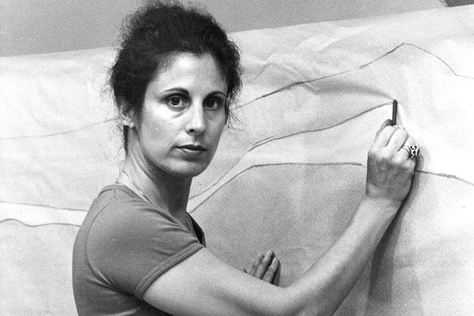
Ms. Gillette Price created in the galleries as well as her studio.Barbara Gillette Price
In addition to her daughter, Ms. Gillette Price is survived by a son-in-law, Eric Maroldo, and other relatives. A sister died earlier.
Times Square is getting a touch of Philly artistry.
West Philly-based Maia Chao has been Times Square’s Public Artist-in-Residence since 2023, having been invited to examine the behind-the-scenes experience of what is one of the busiest tourist areas in the world.
A photo installation and “Midnight Moment” presentation from her work will be on display through the month of August. The art will draw from her studies on the cleaning and beautification processes, and human behavior at the plaza.
“I’ve always been interested in infrastructure, the management of public space, and the sociality of different places,” Chao said. “Times Square itself was a funny place to be presented with because it’s what a lot of New Yorkers avoid passing through. I was coming to it looking at what the space has become as it became corporatized.”
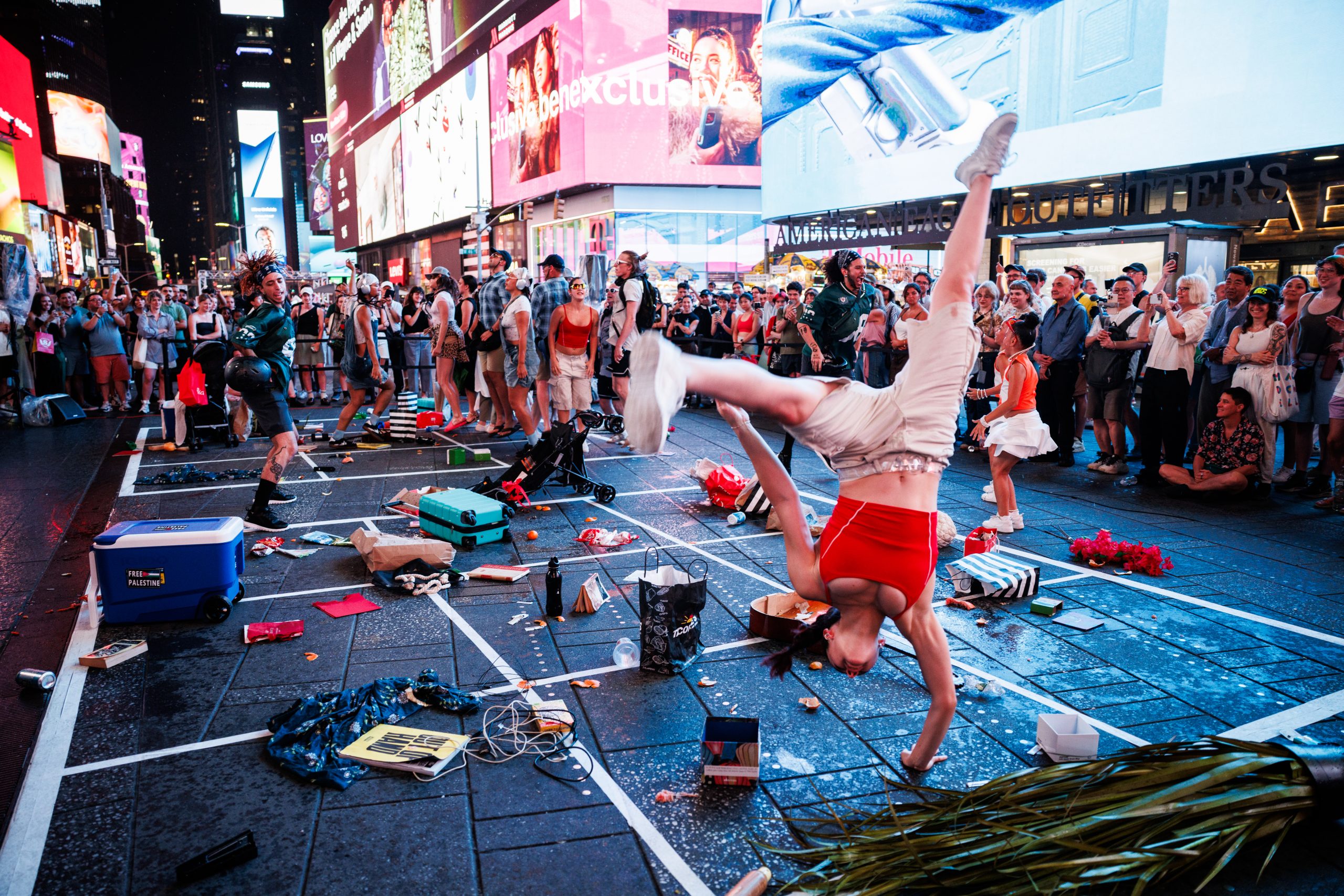
Actors performing in Philly artist Maia Chao’s show “American Idle” in Times Square. The performance is being restaged August 14, 2026.Maria Baranova-Suzuki
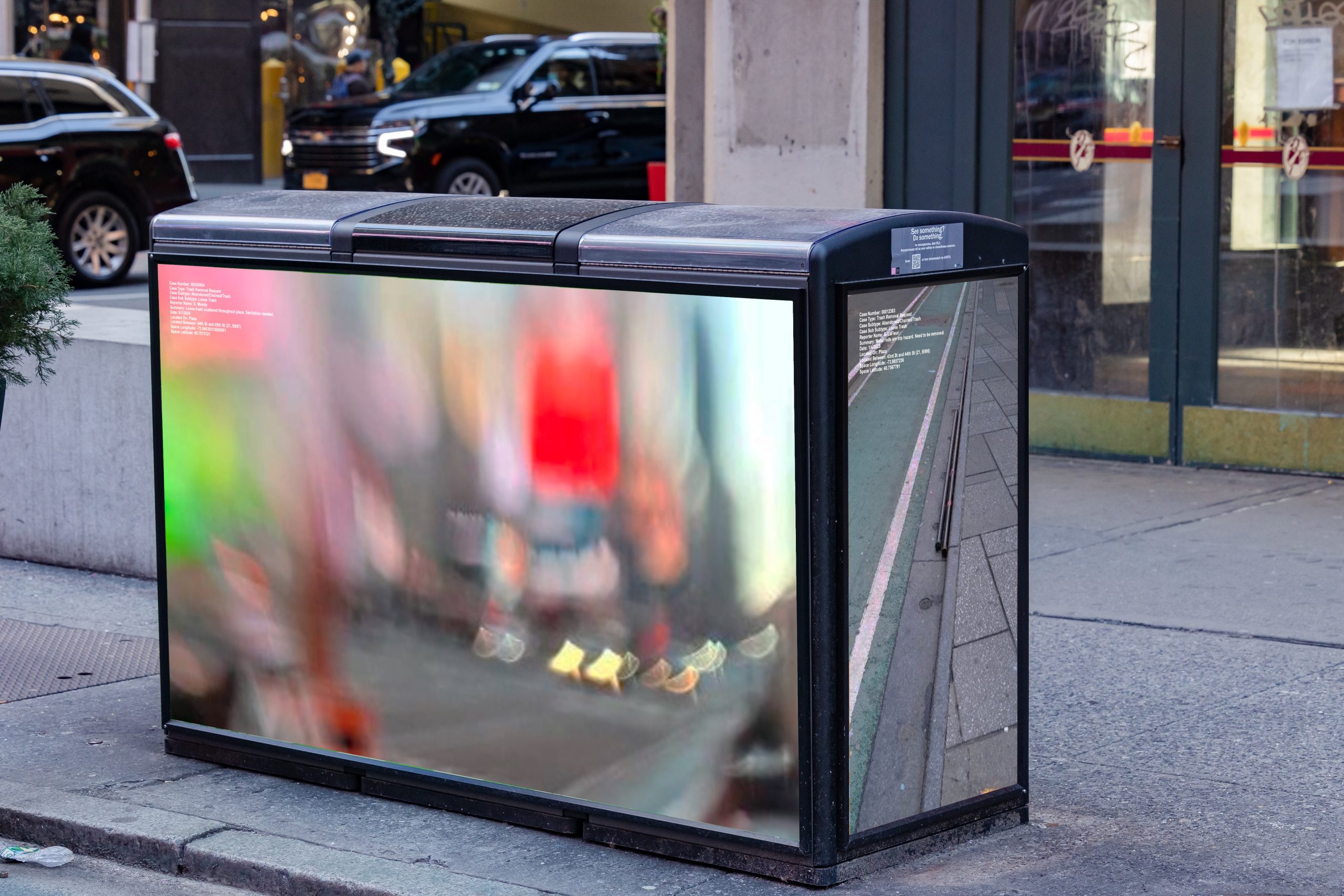
Chao’s photo project “Case Subtype: Damaged/Nonfunctional” will present 30 photographs displayed on Bigbelly trash cans across Times Square. The photographs were taken by actual sanitation workers, who already document potholes, graffiti, and other abandoned objects as a part of their job.
“A lot of the work of the Times Square Alliance is to improve the reputation of Times Square from its history of being ‘seedy’ or ‘dangerous’ in the 1980s and 1990s,” said Chao. “A lot of that effort is about maintaining its appearance as clean and safe to visit. I came to that with a critical lens on what and who is deemed clean and safe.”
The title of her project references how workers mark found objects as “damaged/nonfunctional” when they upload the photos to their system. Details like the location and photographer are seen in small text in the corner of each photograph.
A mockup of one of the photo installations from Philly artist Maia Chao’s upcoming project “Case Subtype: Damaged/Nonfunctional.” The photos are to be displayed on Bigbelly trashcans in Times Square.Liz Ligon
“People are used to seeing advertising [on trash cans] and [the art] might catch their eye when they’re putting something in the trash can,” said Anna Starling, director of Times Square Arts. “I’m hoping that people will understand or at least think about what is this, why it is there, and recognize the beauty in the everyday objects that you see.”
Some of the images on display include photographs of an abandoned bike chained to a pole, a rolling office chair next to a trash can, a spill of light blue paint on the sidewalk, and a pothole with a cone coming out of it.
“There was something appealing to me about thinking about the people making these strange narratives,” said Chao. “When you see a huge microwave on the street or an abandoned stroller, they feel poetic and narrative, and kind of like traces of people’s lives.”
Actors perform in Philly artist Maia Chao’s 2025 work “American Idle” in Times Square. The performance will be restaged August 14, 2026.Maria Baranova-Suzuki
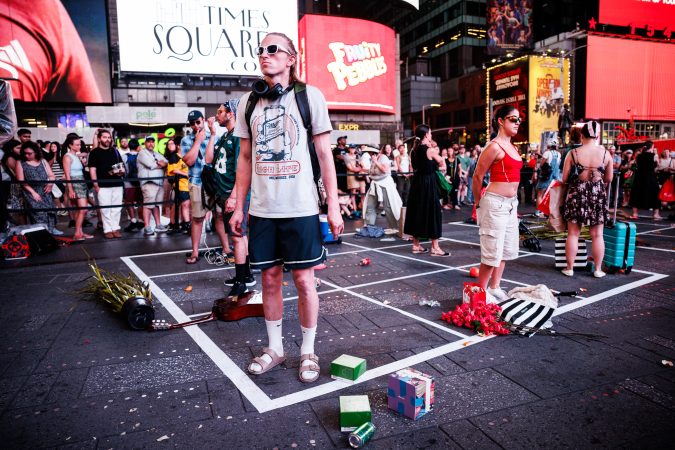
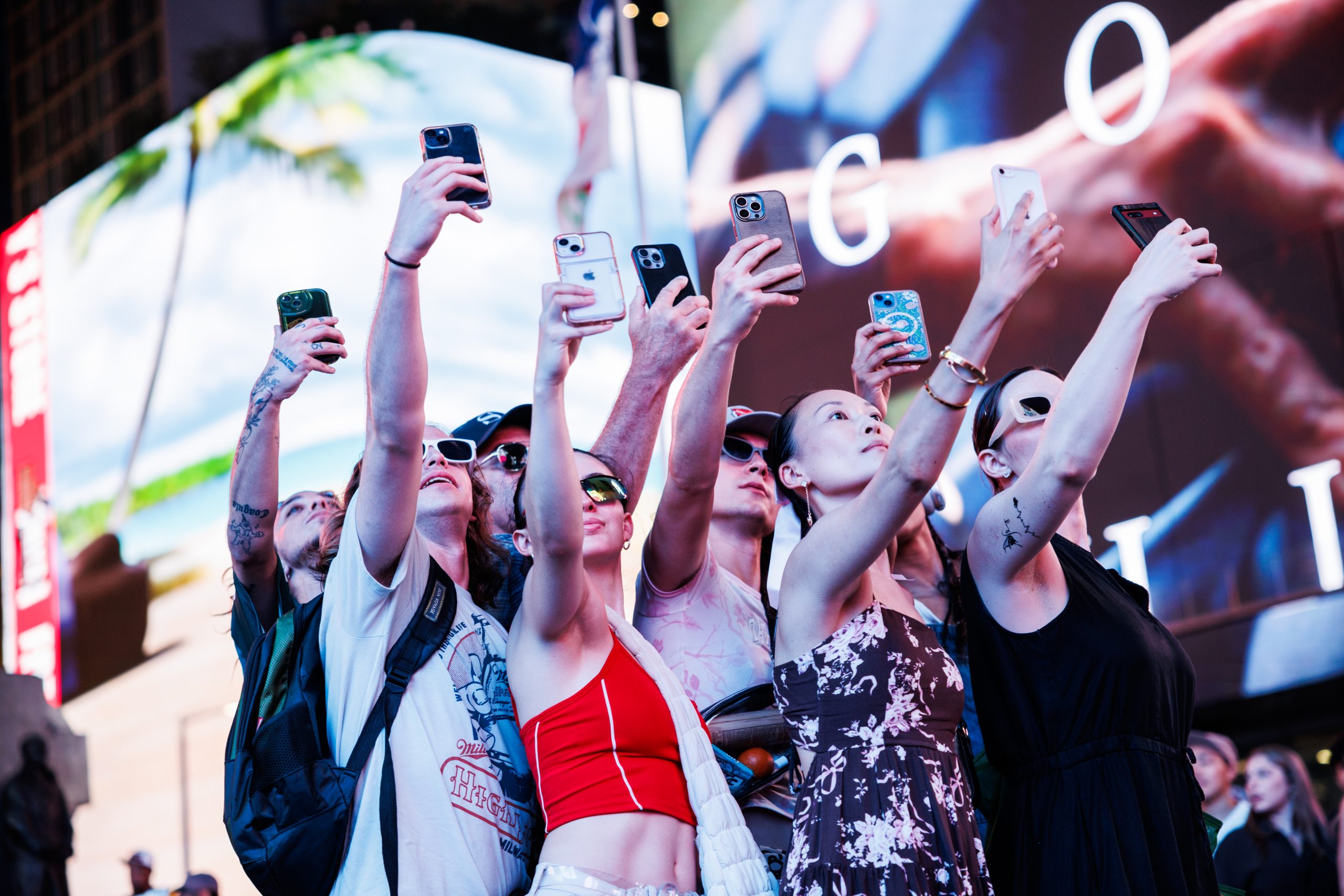
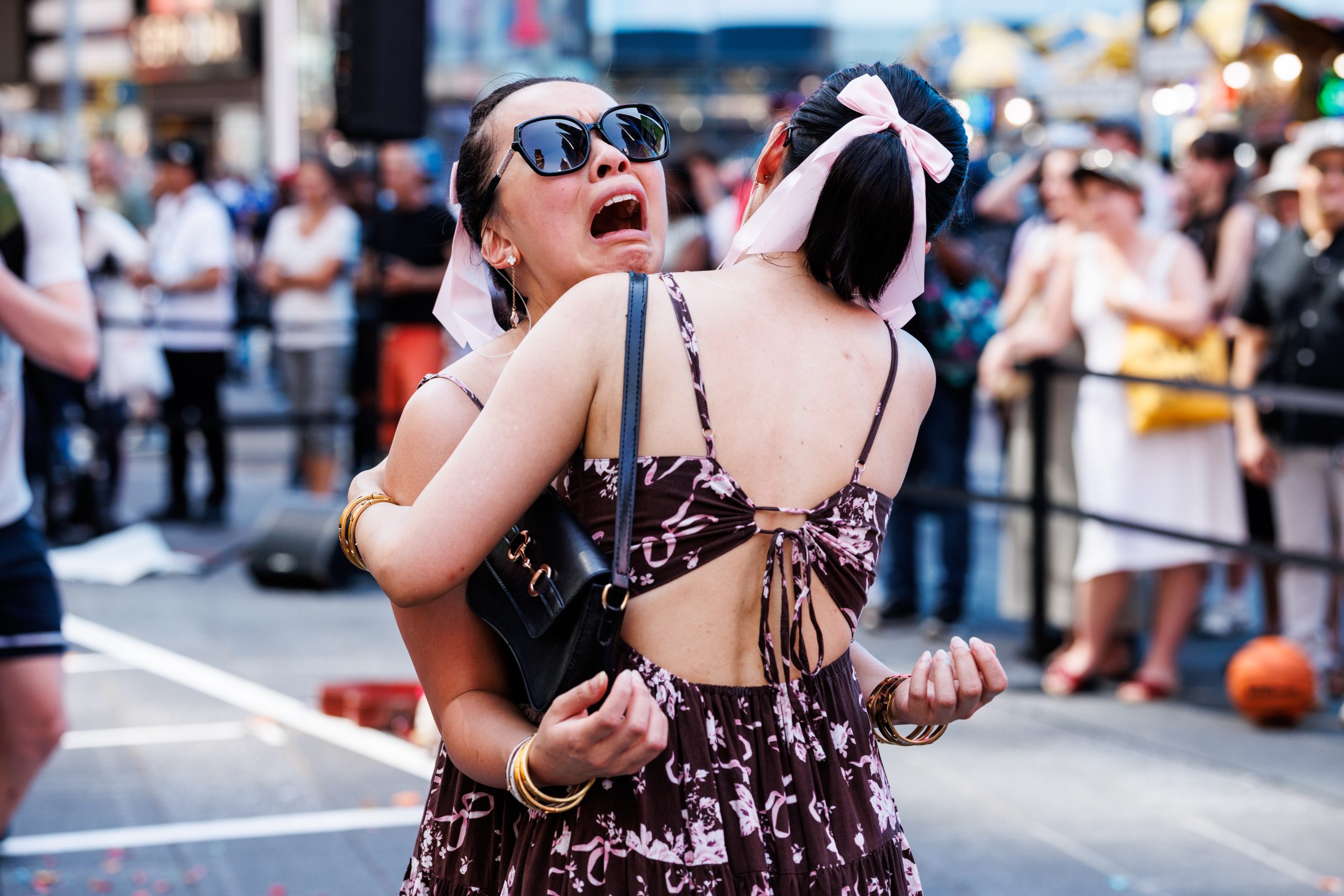
In addition to the photo installation, there will be a restaging of Chao’s 2025 performance piece American Idle on Aug. 14. The show comprises a group of actors playing Times Square archetypes, like tired kids, lost tourists, and influencers, all acting out their typical behavior. At the same time, identically dressed body doubles of each character mimic the other’s actions.
“Initially, the idea was for the pedestrians of Times Square to be able to watch themselves, so it would be a crowd watching a crowd,” said Chao. “Something that may seem spontaneous when one person is doing it, is all of a sudden seen as learned and programmed when two people are doing it in unison.”
Chao, who has a bachelor’s degree in cultural anthropology from Brown University, drew inspiration from the human behavioral patterns she noticed in real life and the 3D modeling program Crowds Pro. Typically used to simulate crowds for TV and movies, the system has a collection of characters being “idle,” shifting their weight and/or looking around, and making common gestures like clapping or scrolling on their phone.
Actors perform in Philly artist Maia Chao’s 2025 work “American Idle” in Times Square. The performance will be restaged August 14, 2026.Maria Baranova-Suzuki
“It’s a way of showing we’re all scrolling and taking pictures, and there’s definitely a pessimism to the ways we’re all becoming these robots or our attention is being conditioned to become increasingly fractured,” said Chao, a Rhode Island native. “But we also need to bring an observational, loving, and compassionate lens on the beauty of people as they are in their everyday selves.”
A three-minute video with portions of choreography from American Idle will be playing every night in Times Square throughout the month. This will be August’s “Midnight Moment,” a long-running program that displays digital art across all the billboards in Times Square, daily, for three minutes before midnight.
“Part of having public art in such large public spaces is having to be accessible to audiences. Maia’s project makes art and its concepts accessible, which draws people in,” said Starling. “The repetitiveness and duplicative aspects of the performance are eye-catching. Then with the art on the everyday receptacles that people pass by, having those two together we felt would engage audiences in new ways.”
Actors performing in Philly artist Maia Chao’s show “American Idle” in Times Square. The performance is being restaged August 14, 2026.Maria Baranova-Suzuki
Chao has plans for her own home city, too. This fall, she will be showing Waste Scenes, a video installation, at the ICA Philadelphia. She will also be curating the multimedia exhibit “An Endless Meeting,” organized by Philadelphia arts collective Vox Populi, of which Chao is a former member.
“I’ve been making live performances for the past few years and I think often there are flows and cycles to my practice,” said Chao. “In the next few years, I might be working in a different way, using one project to escape another, or to exercise a different muscle. I don’t know what medium I’ll be working in next, it could be sculpture. I’m excited to see what the ecosystem of my practice needs or calls for next.”
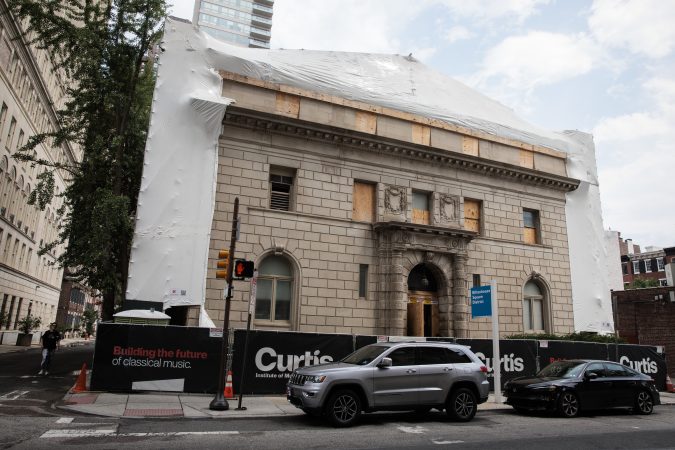
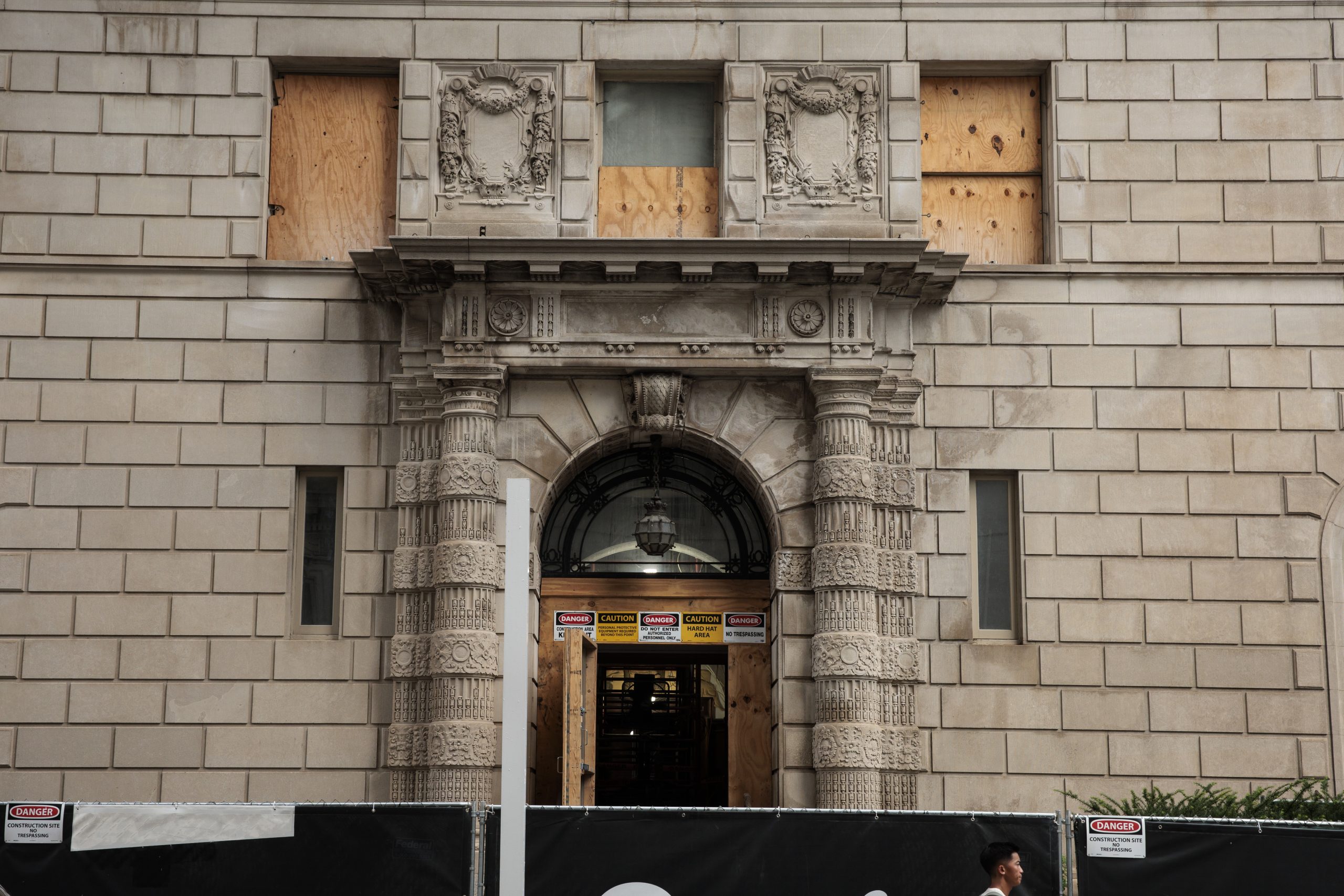
It is hard to imagine, given the charred smell, wrecked plaster, and thick web of scaffolding and structural supports evident these days inside the Art Alliance on Rittenhouse Square. But a year after a devastating fire, the Curtis Institute of Music is closing in on a vision for the historic building’s next act as the new home of the music conservatory’s vocal and opera department.
“My hope has always been that we could use this space to do for the vocal department what we did for the rest of the school or the orchestral program, certainly, with Lenfest,” says Curtis president and CEO Roberto Díaz.
Lenfest Hall, on the 1600 block of Locust Street, opened in 2011, providing the school with 105,000 square feet of dorms, rehearsal studios, a dining hall, a light-filled rehearsal hall large enough to accommodate a full orchestra, and other spaces.
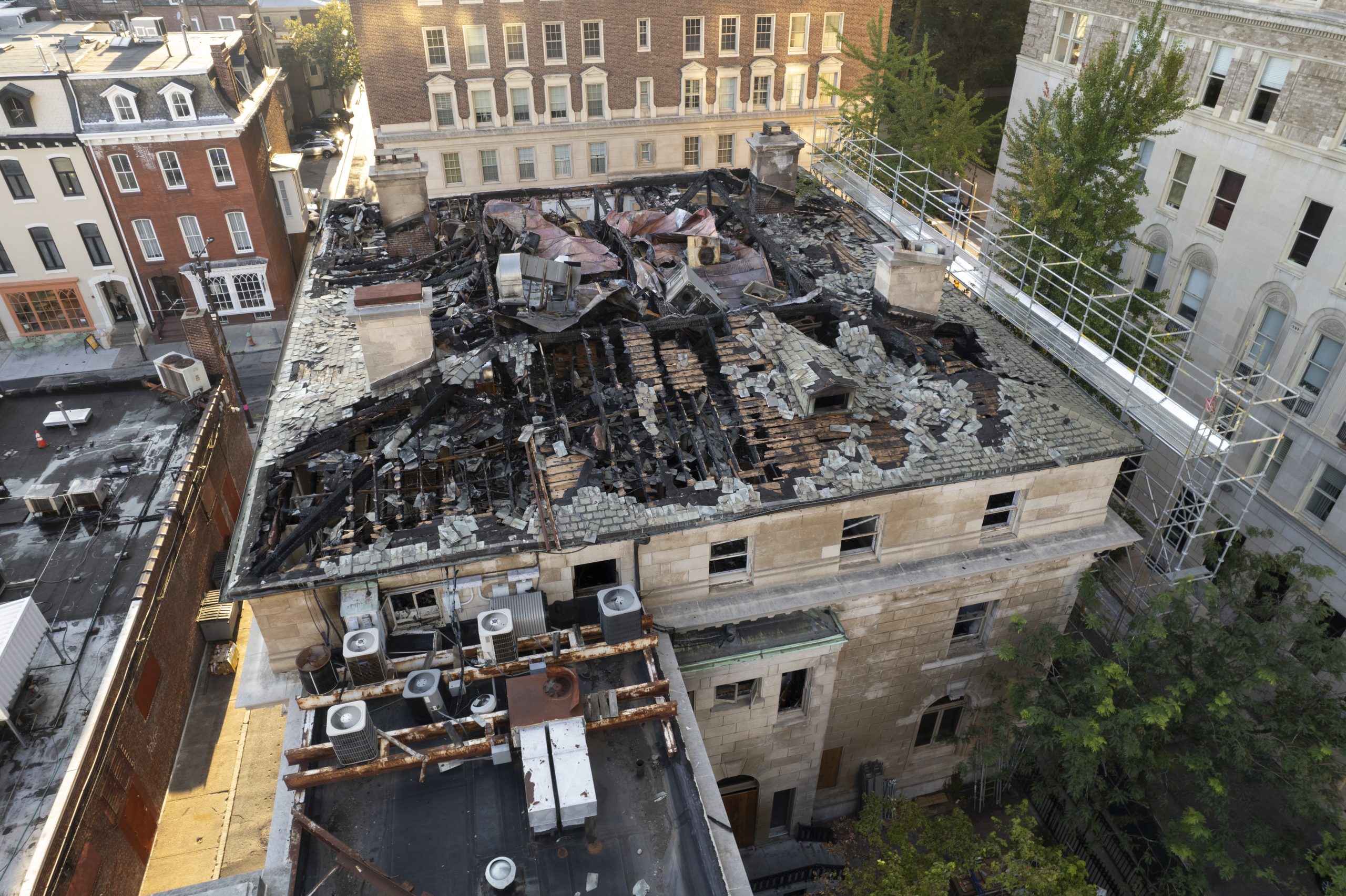
The fire-damaged Art Alliance building at 251 S. 18th St. as it appeared in Aug., 2025.Monica Herndon / Staff Photographer
The Art Alliance was gutted by fire and water damage in July 2025, and plans for its restoration are now being worked out by the school with Philadelphia firm VSBA Architects & Planners.
The first floor is envisioned as having two 1,000-square-foot event spaces for master classes or lectures. The second floor will feature six teaching/coaching rooms and a student lounge. In the basement will be a catering kitchen, a costume shop/dressing room, and storage.
The major new space in the Art Alliance building will be a rehearsal room on the third floor whose 2,900 square feet roughly equal the size of the orchestra rehearsal hall in Lenfest.
“We could open it up for the neighborhood to come in and participate,” Díaz says, “but it gives the vocal department something that they just don’t have anything even remotely like.”
The vocal and opera department currently occupies a series of spaces in Curtis’ main historic building on the 1700 block of Locust Street.
The exterior of the Curtis Institute’s Art Alliance building, July 27, 2026.Monica Herndon / Staff Photographer
While the restored and reconfigured Art Alliance building is primarily intended as the home of opera and vocal music, it will also likely host instrumentalists as space and scheduling allow. The school — with a student body of about 160, all on full scholarships — expects to open up events like master classes, informal workshop performances, and lectures to the public, but the frequency of public events has not been determined.
“In addition to supporting the work of our students and faculty, we look forward to ensuring that the Art Alliance is a welcoming place for our neighbors, communities, and partners,” Curtis spokesperson Patricia Johnson said. “At this stage, we’re exploring ways this could take shape.”
The building could open in about three years, Johnson said.
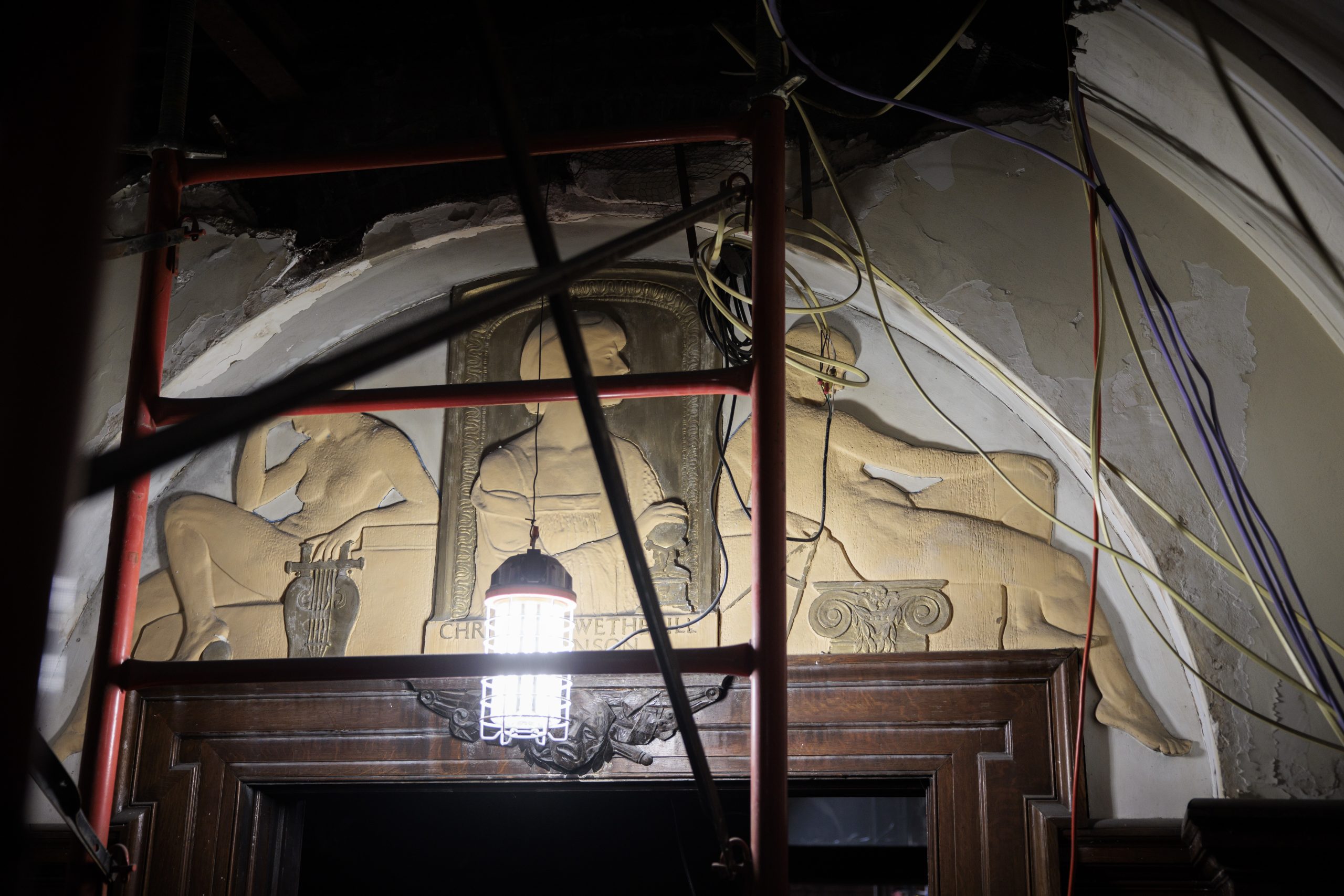
A frieze honoring Art Alliance founder Christine Wetherill Stevenson in the building, July 27, 2026.Monica Herndon / Staff Photographer
Among the issues still to be resolved is the eventual height of the Italian Renaissance Revival building, the onetime Wetherill mansion dating from 1906. Curtis would like to make the ceiling height on the third floor high, the better for acoustics in spaces like the large rehearsal room.
“That’s a work in progress,” Díaz said. “When we were in the design stages of Lenfest Hall, we had to get a lot of permissions from the architectural folks and the [Philadelphia] Historical Commission and so forth. So that would be part of the process here. Obviously the more volume we have in this room, the more things we can do in it.”
The building’s attic was destroyed in the fire, and a new one will not be built.
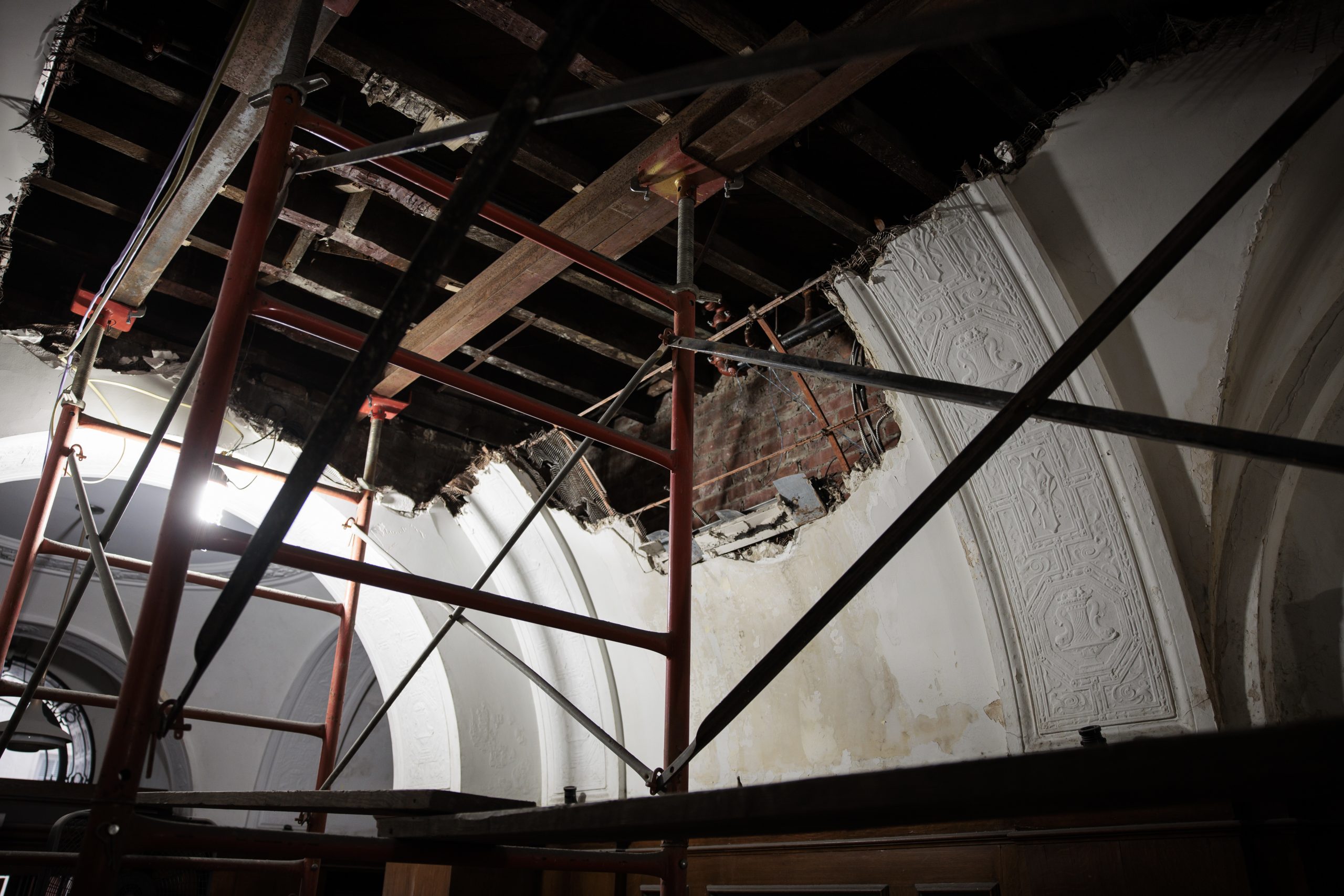
Some of the plaster detail lost in Art Alliance fire.Monica Herndon / Staff Photographer
A number of historic elements of the building have, however, been saved — the stained glass windows on the landing between the first and second floors, and a frieze honoring Art Alliance founder Christine Wetherill Stevenson, among them.
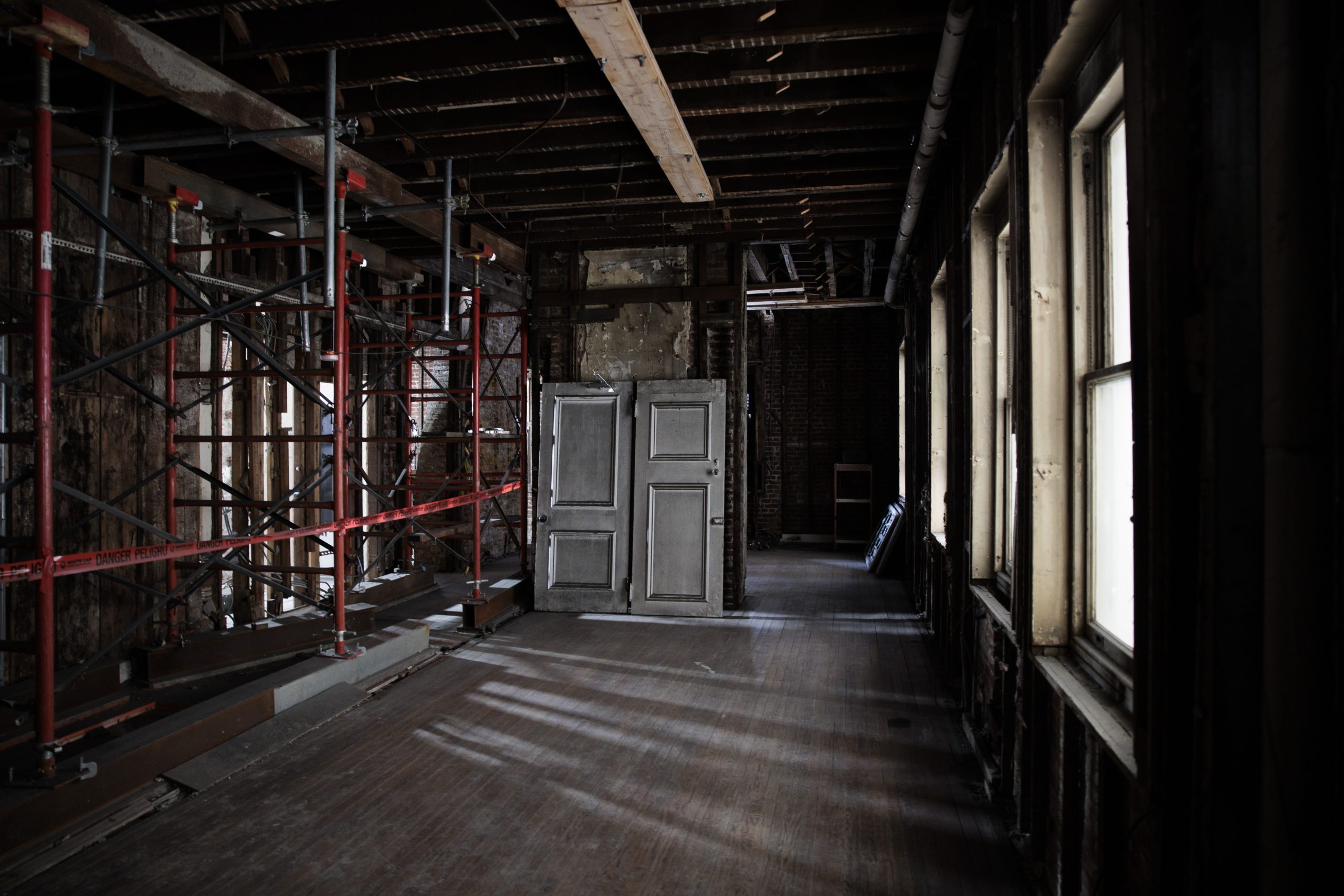
Most of the demolition planned for the building’s interior has been completed, said Scott Kahan, senior project manager with construction management and general contracting firm C. Erickson & Sons.
As the exact programmatic elements of the building are developed, Díaz said, a total project cost will emerge. A rough estimate is around $25 million.
And then there is the matter of paying for it all.
The school’s insurance claim is still unresolved, Díaz said, and philanthropy will be a part of the funding mix.
Curtis has “lots of angels interested in opera and vocal music,” and while none has stepped forward yet, Díaz suggests the building will have naming opportunities.
“The idea is very much like what we did with Lenfest, where Gould Rehearsal Hall has its name and we have the Locks Board Room and we have the teaching studios and rehearsal spaces that are named and so forth.”
Most of the demolition of the Art Alliance building’s fire- and water-damaged interior is complete.Monica Herndon / Staff Photographer
Curtis bid for the Art Alliance building in January 2025, acquiring it for $7.6 million from the bankruptcy estate of the University of the Arts, and was in the process of cleaning it out when the blaze struck. A report from the city’s fire marshal categorized the cause as “undetermined.”
The school was exploring potential uses for the facility at the time.
In its days as an arts institution and restaurant location, the Art Alliance lodged itself in the memories of many for its exhibitions, as well as weddings, parties, and other events.
One element of the building that went unscathed in the fire now seems elegiac. It is a floor mosaic just inside the entrance with the University of the Arts logo rendered in red-and-white tile.
Historic as the logo has become, that detail, Curtis leaders say, will go.
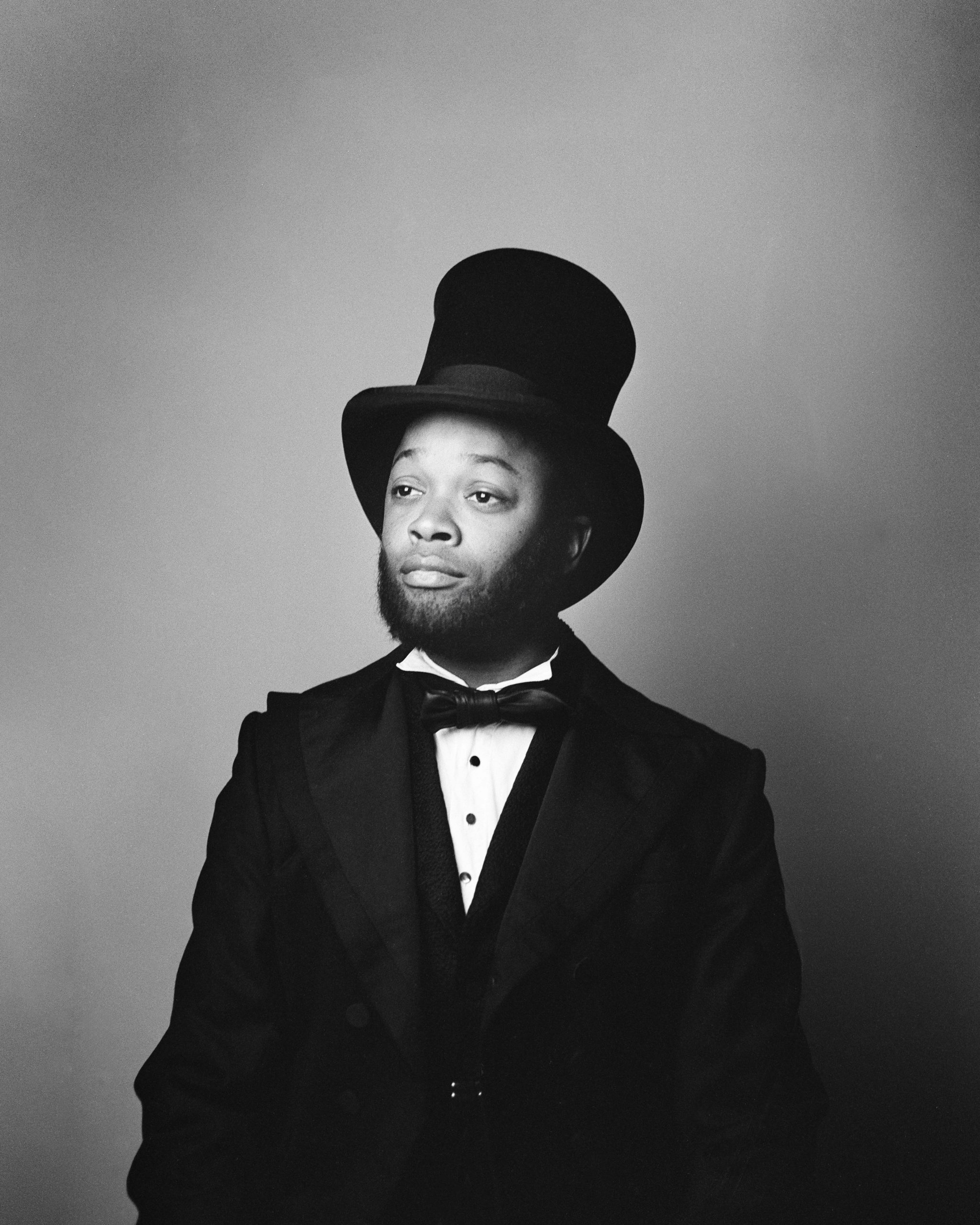
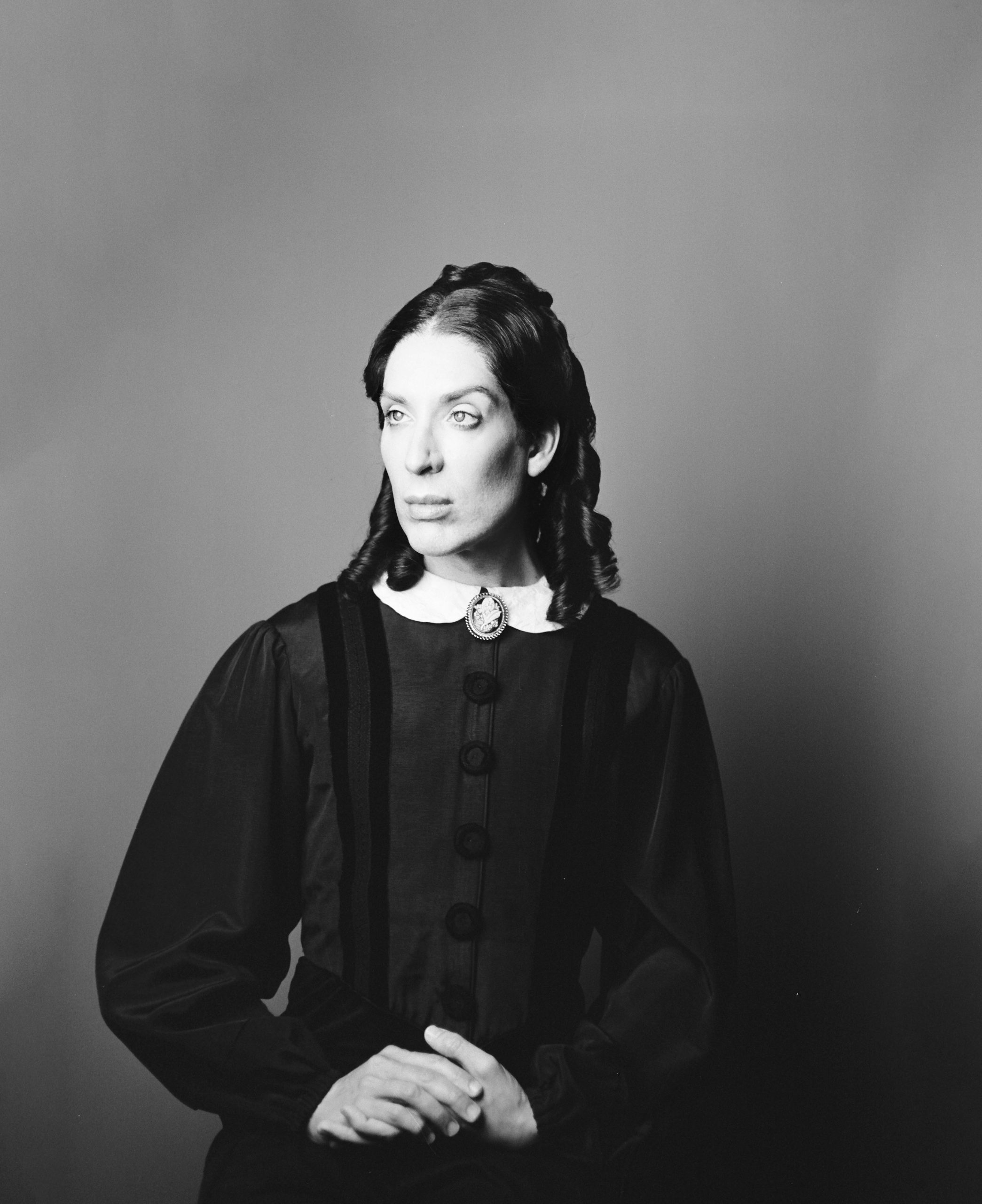
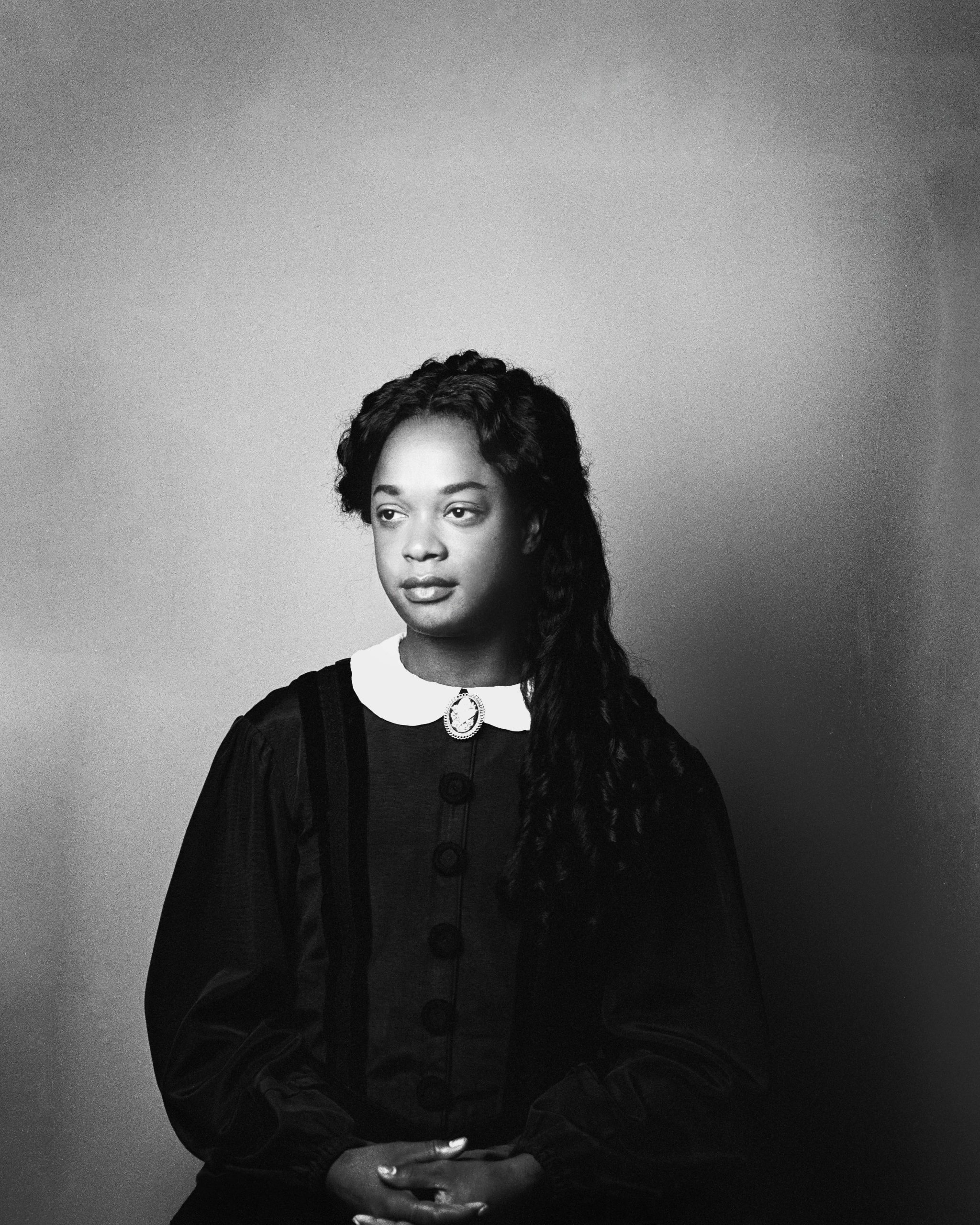
The riotous play Oh, Mary! has found two new leads for its first North American tour kicking off this fall: drag queen Alaska Thunderf— and Broadway darling J. Harrison Ghee. When the show lands in Philadelphia next March, Ghee will take the spotlight as the delightfully mad first lady Mary Todd Lincoln.
First, though, the titular role will go to Alaska, a winner of RuPaul’s Drag Race All Stars, who grew up in Erie, Pa., and graduated from the University of Pittsburgh. While she stars as Mary, Ghee — a longtime New Yorker originally from Fayetteville, N.C. — will play “Mary’s Husband,” aka President Abraham Lincoln, becoming the first actor to play both roles in the play.
J. Harrison Ghee will play “Mary’s Husband” opposite Alaska Thunderf-‘s Mary Todd Lincoln in the first part of the North American tour of “Oh, Mary!” before they take the titular role in Jan. 2027.Daniel Rampulla
The 2026-27 tour starts in Hartford, Conn., in September and runs through May, with stops including Washington, Boston, Los Angeles, and Detroit. Alaska will play Mary through Jan. 17 and Ghee will take over the lead role beginning Jan. 19 in Chicago. They will be the star during the show’s brief Philly run at the Miller Theater from March 9 to 14.
The camp comedy from actor/comedian Cole Escola follows a miserable, alcoholic Mary Lincoln just before her husband’s assassination in a satirical story that “finally examines the forgotten life and dreams of Mrs. Lincoln through the lens of an idiot.” Following Escola, several stars have put their own stamp on the role, including Tituss Burgess, Maya Rudolph, Jane Krakowski, and Jinkx Monsoon (another breakout star from the RuPaul’s Drag Race universe).
Drag queen Alaska Thunderf— will play Mary Todd Lincoln in the first part of the “Oh, Mary!” North American tour.Daniel Rampulla
The play was a massive hit when it landed on Broadway in 2024, becoming a Pulitzer Prize finalist and receiving five Tony Award nominations. Oh, Mary! won two in 2025, including best direction of a play and best performance by an actor in a leading role in a play for Escola — who made Tony Award history as the first nonbinary actor to win in that category.
So it’s fitting that Ghee — a nonbinary actor who also achieved a historic first at the 2023 Tony Awards when they won best leading actor in a musical for playing Daphne/Jerry in Some Like It Hot — will get a chance to play Mary, too.
The two actors haven’t yet talked in-depth about the roles, but earlier this year, they crossed paths when Ghee was waiting to hear back on their audition results. “We spoke briefly at the Tony [Awards] after-party at the Carlyle [Hotel], and they had kind of given me a hint,” said Ghee, who’s currently playing Hermes in Hadestown on Broadway.
“They were like, ‘I feel like I’m gonna see more of you coming up.’”
Ghee has seen Krakowski, Monsoon, and Hannah Solow play Mary so far and they can’t wait to take up the role. “I’ve seen a spectrum of Marys, and I’m excited to, as Billy Porter would say, ‘steal the good sh—,’ and also just bring myself to it and really have fun.”
They first auditioned for the role of “Mary’s Husband” but had eyes on the lead, too.
“It was very much a ‘yes, and’ [situation],” Ghee said. “A lot of my career has been based in duality. I am very that, and I love versatility. I don’t ever want to be pigeonholed … I want to show people the capacity — don’t let other people limit you.”
J. Harrison Ghee pictured as Mary Todd Lincoln. “Oh, Mary!” lands at Philadelphia’s Miller Theater from March 9 to 14, 2027.Daniel Rampulla
As for stopping in Philadelphia, Ghee said it’s one of the cities where they’re most eager to perform. They love visiting the city and enjoying the food culture.
“I love to take an Amtrak down to Philly because you still get city vibes, but it breathes a little easier,” they said. “So I’m even considering, like, is there a world where I live in Philly one day? I don’t know!”
Tickets are on sale now for “Oh, Mary!,” which runs March 9-14, 2027, at the Miller Theater, 250 S. Broad St., Philadelphia, 215-893-1999 or ensembleartsphilly.org.
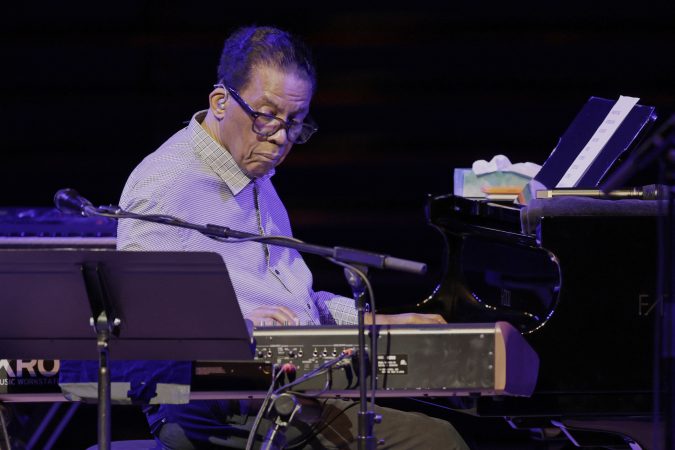
At some point in his 86 years of life, Herbie Hancock — one of the most revered artists in jazz — became a rock star.
That was evident simply from the rapturous reception that greeted the legendary keyboardist and composer at Kimmel Center’s Marian Anderson Hall on Wednesday night, from a packed crowd that would have been a demographer’s dream.
The point was driven home throughout his nearly two-hour performance, which was raucous, pyrotechnical, and just plain big.
That includes the members of his audacious quintet, outsized musical personalities all.
Trumpeter Terence Blanchard is a fellow NEA Jazz Master who likely answers few calls for sideman work these days, busy as he is writing scores for Spike Lee and other filmmakers, composing acclaimed operas, and leading his own band.
Benin-born guitarist Lionel Loueke pairs a singular sound (Hancock mused that he must be “either alien or AI”) with vocals that incorporate Xhosa-inspired rhythms and tongue clicks.
James Genus is a virtuoso with a deep groove whose Saturday nights have been booked solid for more than 25 years as the bassist in the SNL band.
The wild card was 27-year-old drummer Jaylen Petinaud, who played with the destructive force of a bulldozer, an avalanche of funk that provoked his elders on the stage into visceral flights. He was embraced so quickly by the Kimmel crowd that he received a trademark hazing, getting heckled for daring to show up for the gig sporting a Knicks cap. He obliged by turning the offending logo to the back.
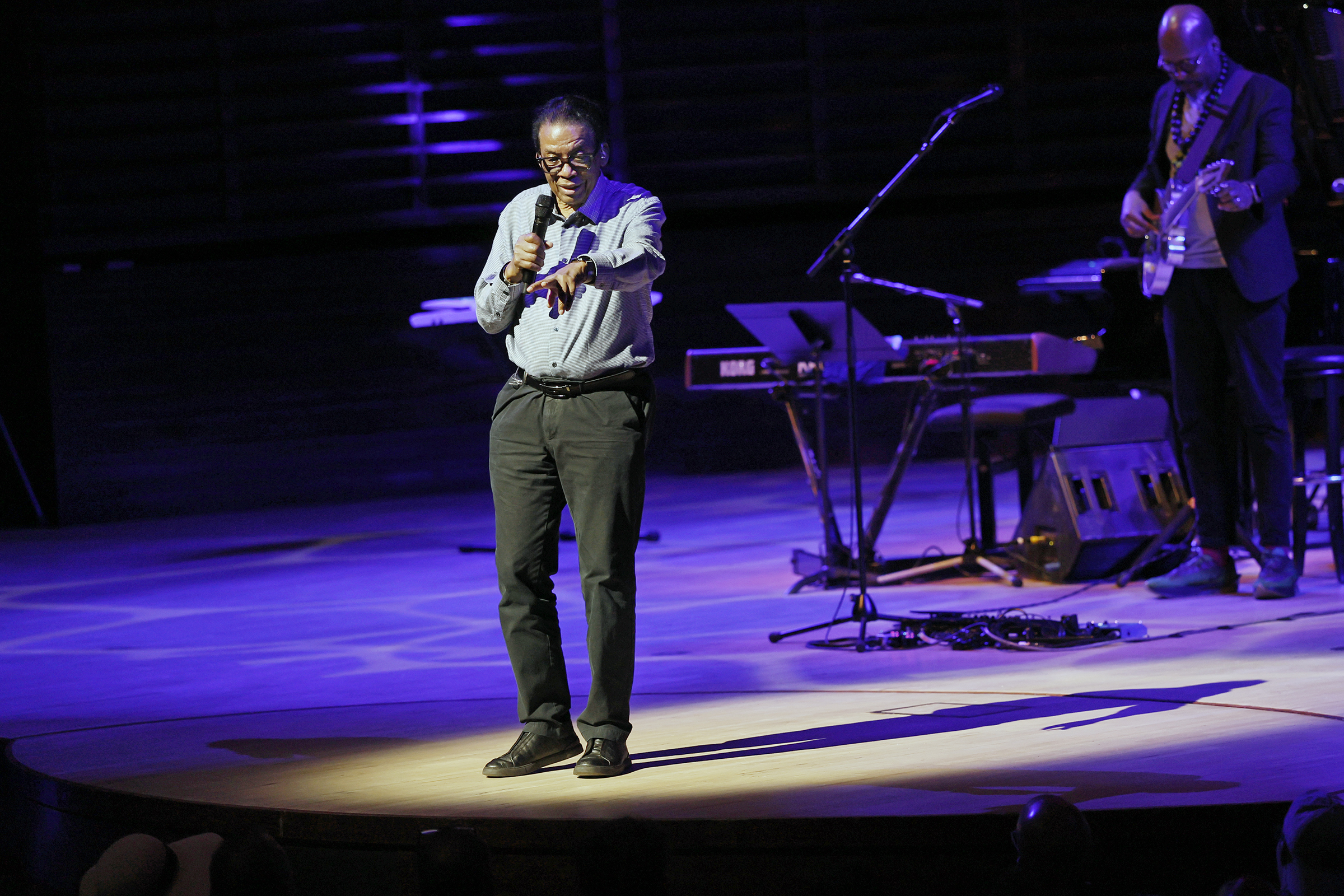
Herbie Hancock greets the audience during his tour stop at the Kimmel Center in Philadelphia on Wednesday, July 29, 2026.Elizabeth Robertson / Staff Photographer
Hancock, attempting to introduce the band, was unaware of the details but quickly picked up on the vibe, asking, “What’s that, some Philly stuff?”
As tumultuous as the set would become, it began in a meditative mood. Hancock spent the first few minutes musing on “Maiden Voyage,” the title tune from his 1965 Blue Note classic, letting the melody submerge and rise again from his elegant, gossamer lines as if gently bobbing on ocean waves.
After a few minutes, he turned to his right, bringing in the band with the familiar strains of “Watermelon Man” on his Korg keyboard. In that 90-degree swivel was represented a pivot point in jazz, the turn from the acoustic piano to the electric keyboard and the adoption of ‘70s rock into fusion, as embodied by Hancock’s Headhunters.
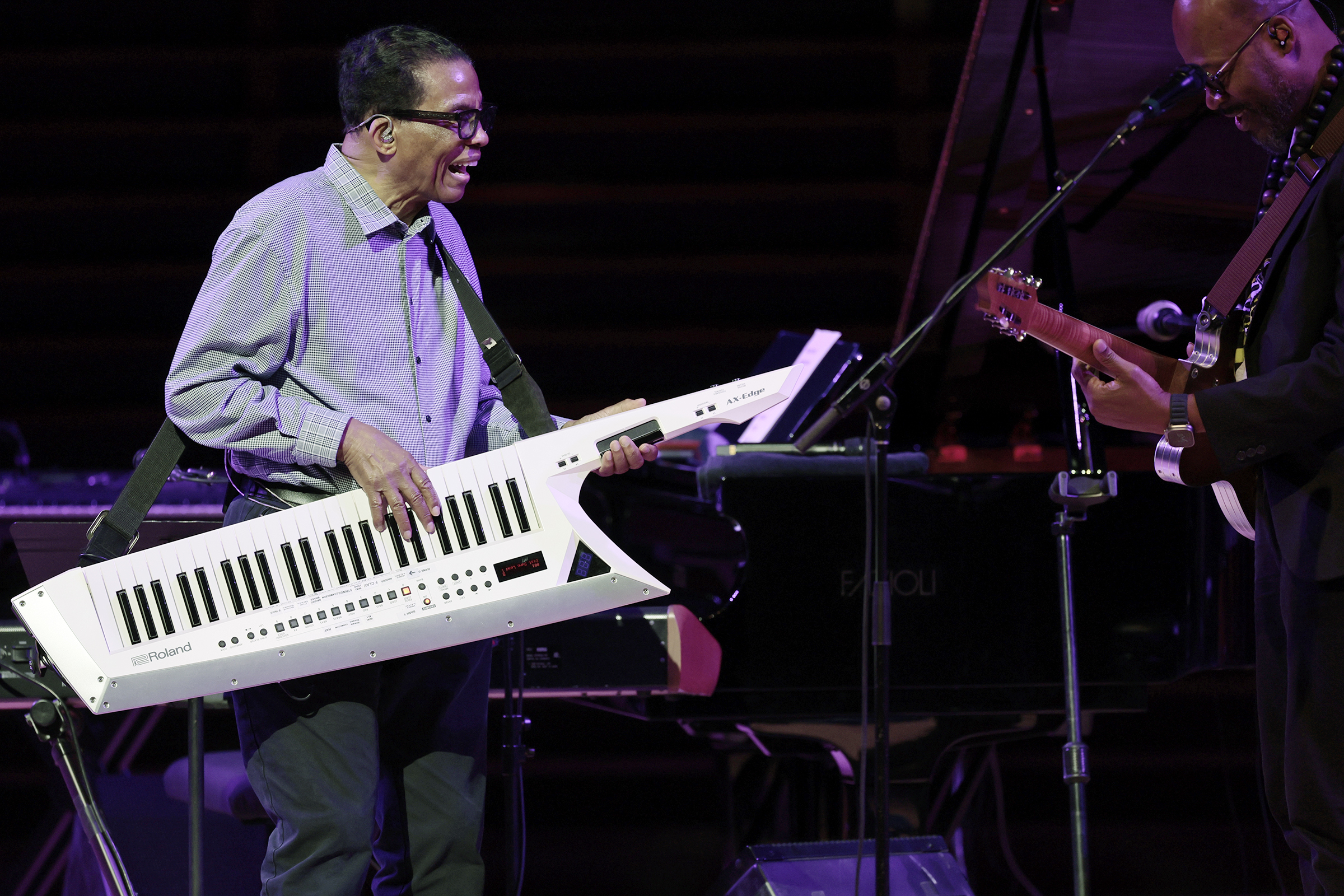
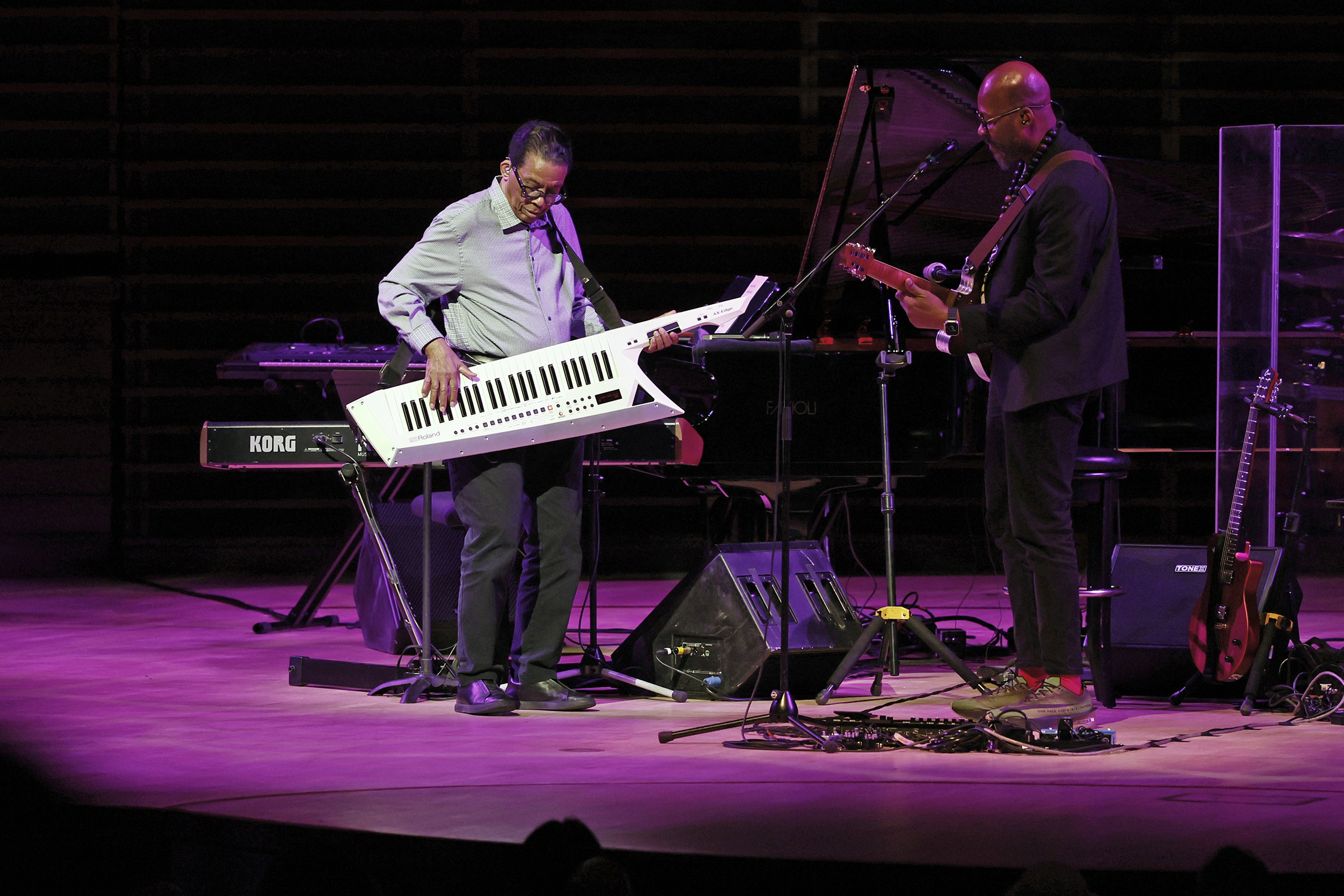
The bandleader has long since melded the two strains into one, moving effortlessly throughout the show between piano, keyboard, and keytar — the latter allowing him to roam the stage and bend notes like a guitar wizard.
Hancock’s age was a constant theme of the night, for him at least — nothing about his playing or his stamina showed any sign of slowing, even if his gait shuffled more than in the past. By the end of the night, he would be face-to-face with Loueke, wailing on the keytar while executing synchronized jumping jacks with the guitarist more than three decades his junior.
Herbie Hancock (left) and guitarist Lionel Loueke perform during “Herbie Hancock’s Summer Tour 2026” stop at the Kimmel Center in Philadelphia on Wednesday, July 29, 2026.Elizabeth Robertson / Staff Photographer
He introduced much of the set with jabs at the material’s age, only backing off when he realized that he might be insulting fans who can remember when these songs were new. “I was going to say this one is older than me, but that can’t be,” he remarked at one point — then added, “Nothing’s older than me.”
This was in Hancock’s introduction to “Actual Proof,” an avant-funk framework for improvisation from 1974’s Thrust that proved to be one of the show’s most vital and exuberant highlights. Driven by Petinaud’s percussive barrage, Hancock erupted into forceful cascades along the piano, his hands crashing down onto the keys and then skittering away into curious, serpentine lines. (“I call that a finger-breaker,” he commented afterward.)
Blanchard’s turn opted for tension, his electronically-enhanced trumpet sculpting sleek contours vigorously resisting the pull of Petinaud’s boisterous funk. Loueke’s quicksilver solo, Genus’ burbling flow unfolding with the logic and cadence of a monologue, and Petinaud’s final explosion rounded out the jaw-dropping showcase.
These classics were balanced by a few newer pieces that Hancock introduced as works in progress, though “Secret Sauce” has been a staple of his setlist for nearly a decade. The other, tentatively titled “Phoelix” after one of its cocreators (along with Loueke and flutist Elena Pinderhughes), was a neo-soul-inflected number featuring Hancock singing through a vocoder. Genus’ eloquent unaccompanied solo, fleet and mellifluous, so impressed one woman in the audience that she was moved to announce, “I love bass players!”
Herbie Hancock (left) and guitarist Lionel Loueke perform during “Herbie Hancock’s Summer Tour 2026 Tour” stop at the Kimmel Center in Philadelphia on Wednesday, July 29, 2026.Elizabeth Robertson / Staff Photographer
“Footprints” was also included as an homage to the late Wayne Shorter, Hancock’s bandmate in Miles Davis’ second great quintet and “my best friend.” His investigatory piano solo offered a capsule portrait of Shorter’s quizzical and mysterious nature, becoming increasingly insistent and blistering as it unfurled, hinting at stride inflections that further expanded the historical reference points. Loueke’s solo turned from an intricate guitar/vocal pairing to blues-rock shredding, then to taut, gnarled figures, the malleable rhythm section hyper-attuned to every swerve and sudden stop.
“Let’s see if we can have some fun,” is how Hancock introduced the evening, making sure to wave to every section and balcony before taking his seat at the piano.
Mission accomplished, judging by the standing ovation from the crowd and the ear-to-ear grin on Hancock’s face after every tune. He confirmed the feeling with a final outburst of, “We had fun!” before breaking into a giddy run across the stage and shaking hands with an adoring crowd.
In the early 1800s, Philadelphia’s loose cohort of natural scientists became obsessed with learning all they could about the plants and animal species of the New World.
They shipped dried specimens to Britain for naturalists to identify and catalog. And when the American naturalists discovered a new species, the Brits named it and took the credit for the findings in their medical journals.
When the Crown enacted trade restrictions in 1807 — ultimately leading to the War of 1812 — American botanists, herbologists, and entomologists had enough with Britain’s interference.
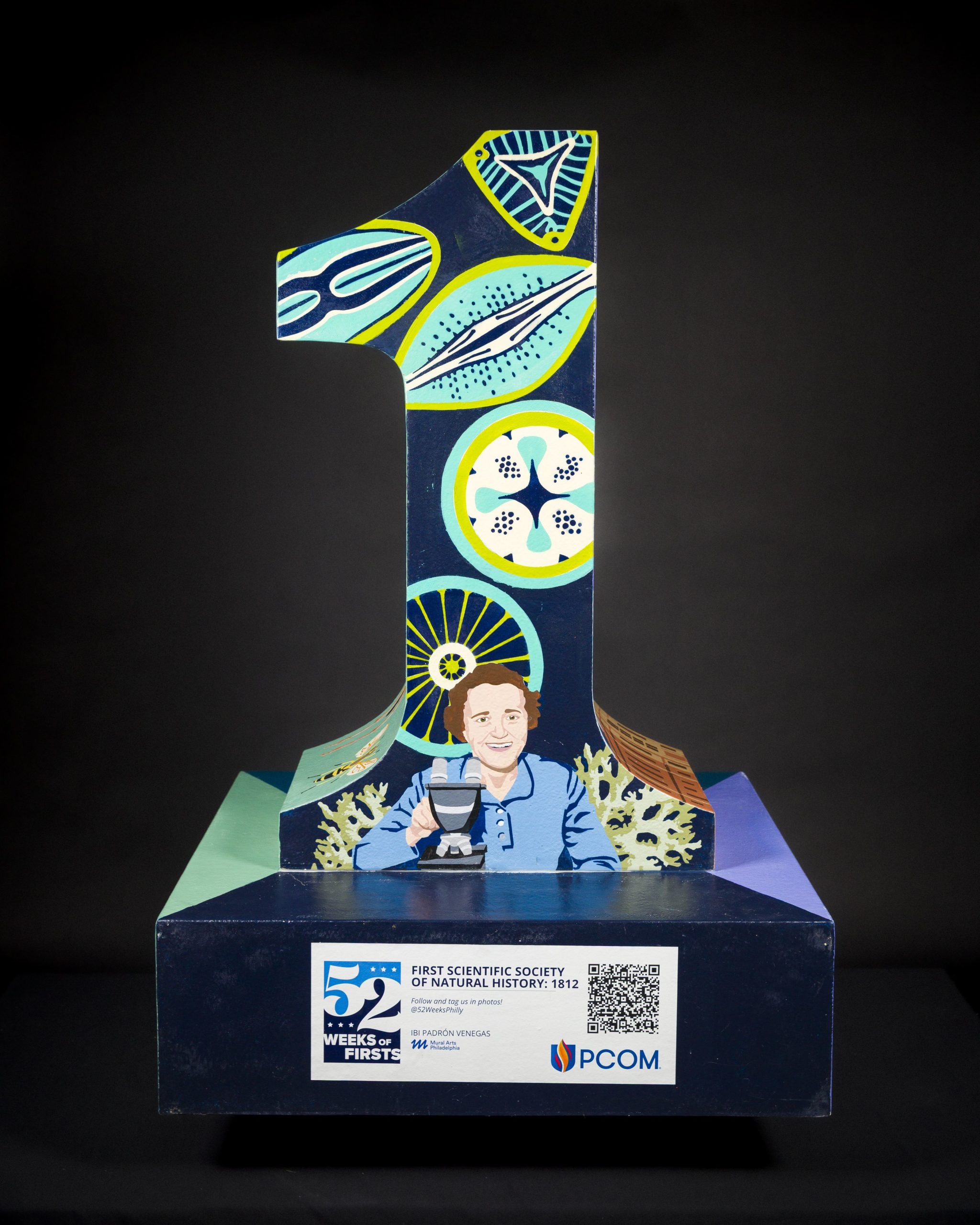
Artist Ibi Padrón Venegas’ Academy of Natural Sciences No. 1 translates his ideas of daydreams, everyday sensations, and the curiosity that comes with playing with science for his sculpture.Ibi Padrón Venegas for Colibrí Workshop
Six Philadelphia gentlemen and amateur naturalists — Gerard Troost, Nicholas S. Parmentier, Camillus MacMahon Mann, Jacob Gilliams, John Shinn Jr., and John Speakman — held a meeting Jan. 12, 1812, in Speakman’s Old City apothecary. Their goal: to map out a plan to be recognized as scientific experts on what grew on their own soil.
The Philadelphia Historic District will celebrate the academy’s beginnings at its Ben Franklin Parkway home on Saturday from 11 a.m. to 1 p.m. The party, or “Firstival,” is part of a series of yearlong fetes honoring events, places, and organizations with Philly roots in honor of America’s 250th birthday.
“Americans were doing the research and risking their lives to cull these specimens,” said Robert M. Peck, curator of artifacts and senior fellow emeritus at the Academy of Natural Sciences of Drexel University.
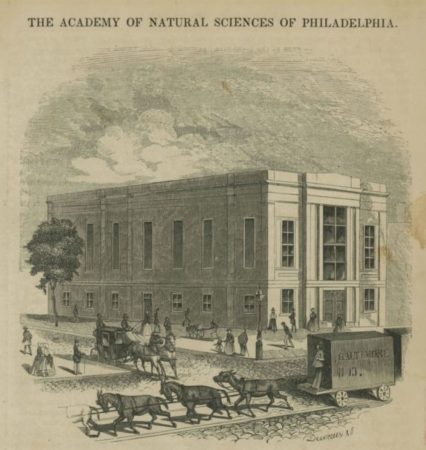
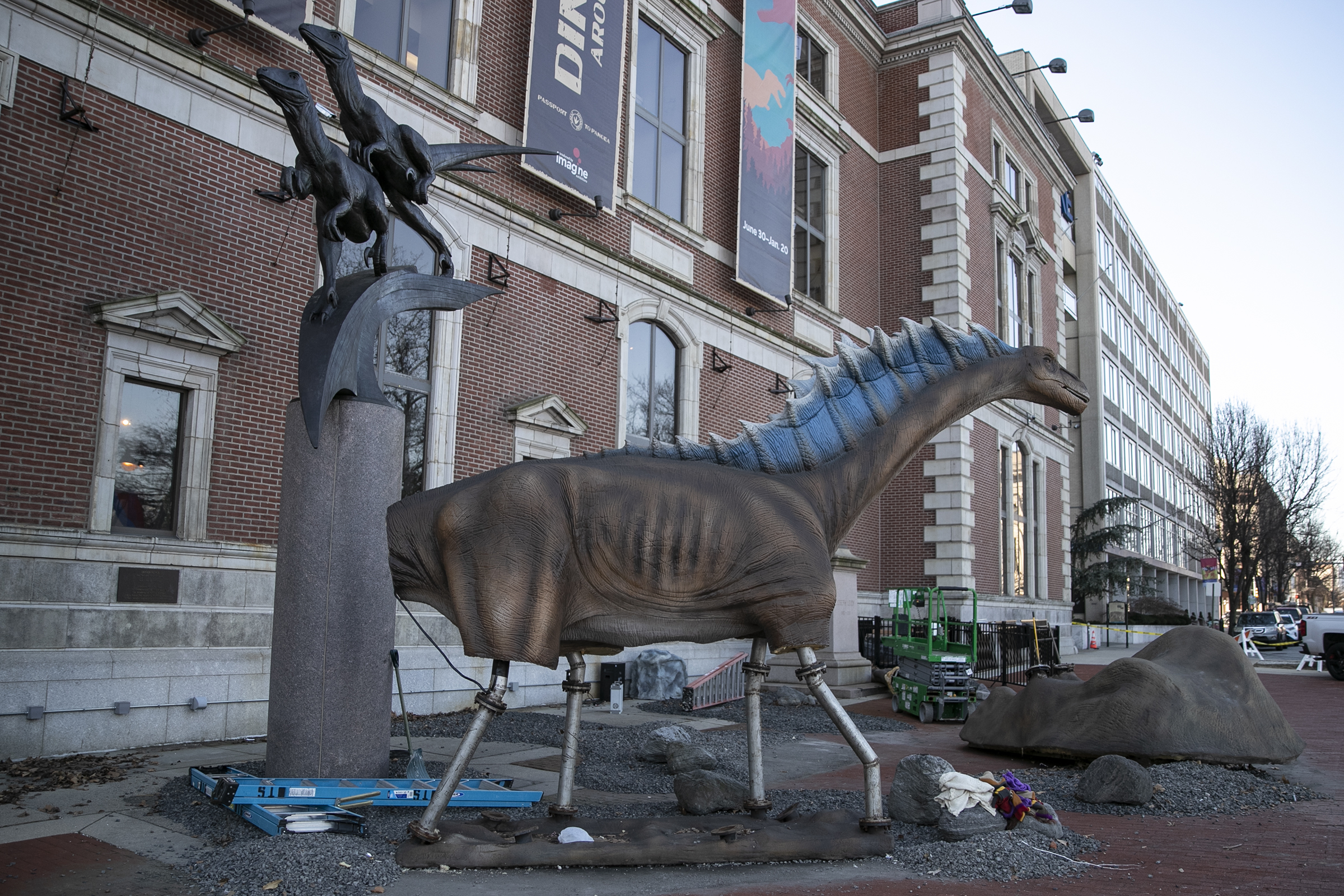
The Academy of Natural Sciences’ current home at 1900 Benjamin Franklin Parkway. This building opened in 1876 for the Centennial and stands through present day.Courtesy of the Journal of the Academy of Natural Sciences of Philadelphia
Thomas Say is listed as the seventh founder, though he didn’t attend the first meetings, Peck said. Still, Say is the most famous of the early members as he is the father of American entomology and conchology.
The academy was a private club in the beginning, opening its nature collections to the public in 1828 when it was housed at the Swedenborgian Church at 12th and Sansom.
By the mid-19th century, the academy was as important in Philadelphia’s science and education circles as Ben Franklin’s highbrow American Philosophical Society. In 1849, the society transferred Thomas Jefferson’s fossil collection to the academy, where it remains today. During the mid-19th century, the academy acquired the bird skins from John James Audubon’s collection, and the pressed plants gathered by explorers Meriwether Lewis and William Clark.
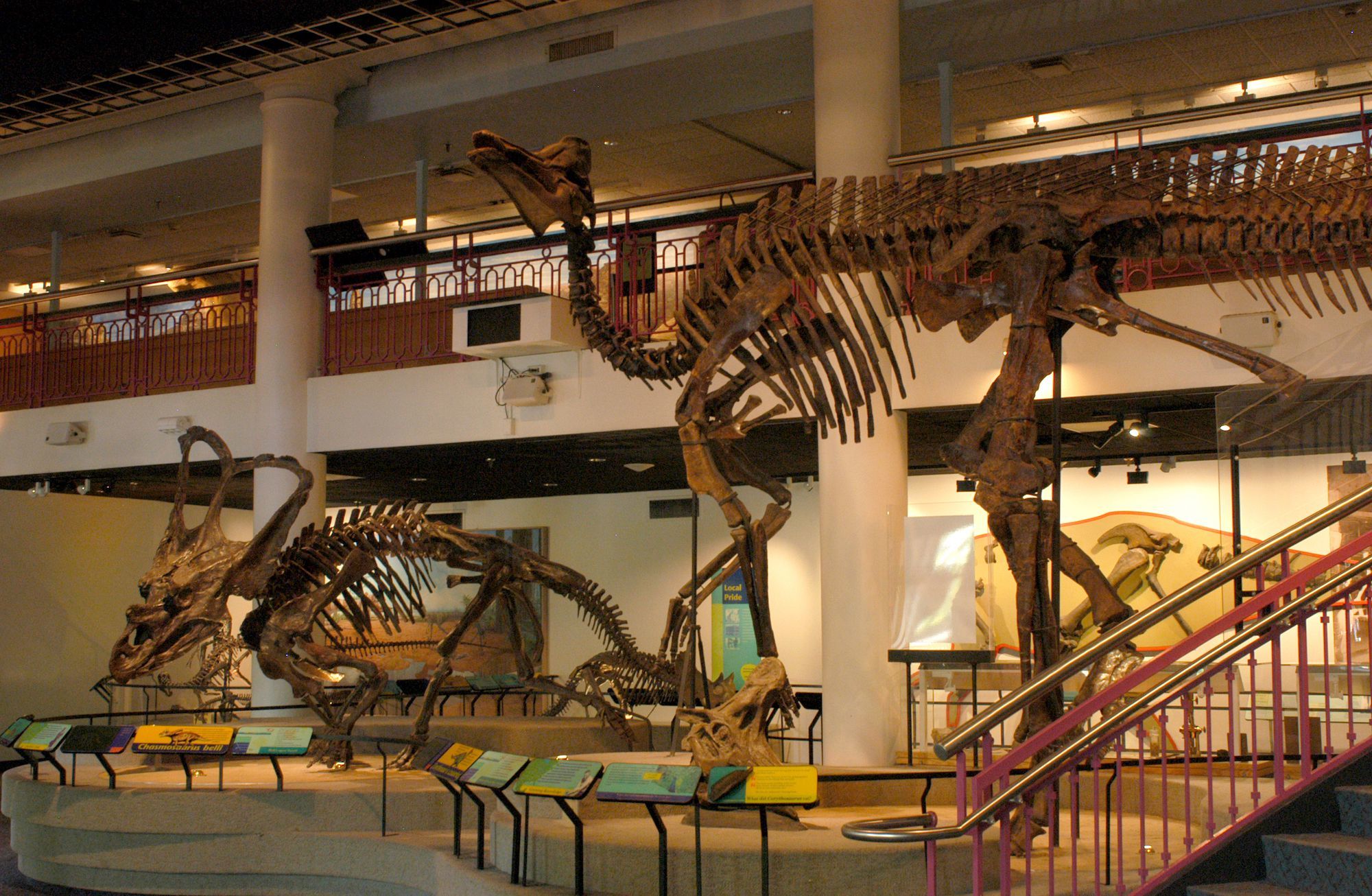
In 1868, the academy made paleontology history when Benjamin Waterhouse unveiled a 15-foot-tall complete dinosaur skeleton of Hadrosaurus foulkiibuilt from the bones of the plant-eating dinosaur excavated in Haddonfield 10 years before.
Samples of the Academy of Natural Sciences’ robust dinosaur collection as photographed in 2020. Courtesy of the Academy of Natural Sciences of Drexel University
“Before then, people didn’t understand what dinosaurs really were, how they really looked,” Peck said. “This is the first time the world had ever seen what a dinosaur really looked like and it shaped how we still see them today.”
In 1876, the academy moved to its present building on the Parkway, where, exactly 100 years later, the Please Touch Museum opened its 2,200-square-foot pilot. (It is now located in Memorial Hall on the Centennial campus in West Philadelphia.)
The academy went on to become a home base for scientists who study a wide range of climate-related topics, from global warming in Mongolia to avian bird flu in Vietnam.
The Academy of Natural Sciences in June 2020. HEATHER KHALIFA / Staff Photographer
In 2011, the Academy of Natural Sciences became a subsidiary of Drexel University, retaining its own board and legal status as a separate nonprofit organization. In April, The Inquirer reported Drexel was in discussions to sever ties with the academy unless it agreed to grant Drexel its building, endowment, and significant collections.
This week’s “Firstival” is Saturday, Aug. 1, 11 a.m.-1 p.m. at the Academy of Natural Sciences of Drexel University, 1900 Benjamin Franklin Parkway.