In a world full of blowhard self-promoters who lack expertise in anything outside hat-backward bro-chat, it’s refreshing to hear smart guys talk about interesting stuff in plain words.
That’s what you’ll get when you find Episode 12 of the Negotiation Warriors podcast on YouTube. On the podcast, former Chicago Bears executive Cliff Stein spends 75 minutes discussing the evolution of NFL front-office practices with a certain former Eagles and Cleveland Browns executive.
The episode is titled “The Salary Cap Godfather with Joe Banner.”
This is not hyperbole.
Banner entered the NFL in 1994 as the salary cap and free agency became the league’s most important drivers of roster construction. Banner was, simply, smarter and braver than almost everybody else making those decisions. It was he who designed the template for salary-cap management, free-agent pursuit, and, to a degree, the maximization of early- and late-round draft pick evaluation.
Banner (with an assist from his then-administrative assistant, Lee Ann Hartley, who gets name-dropped in the episode), also invented Howie Roseman, who since has led the Eagles to three Super Bowls, two championships, and today generally is considered the NFL’s top executive.
But everybody has a godfather.
Banner served a similar role to Stein, a North Philly kid who played receiver for Ron Cohen at George Washington High School and rose from fringe-player agent to the role of senior vice president for 22 years with the Bears, until regime change in 2023 ended his tenure.
Stein, 59, then became a consultant for college programs dealing with NIL challenges, helped develop software called Front Office 360 to help schools manage their salary caps, and, of course, started the pod. He’s already hosted super-agents Drew Rosenhaus and Peter Schaffer, and he has about 30 more in the bank. None, he said, was as rewarding as the Banner pod.
“He’s not known as a very tall man, but he is a giant when it comes to negotiations,” Stein says, introducing Banner in anatomically and metaphorically appropriate terms.
Why Banner? Why now?
Because the business of the NFL was uncharted territory in the mid-’90s. Banner was Magellan. Now semiretired and semiforgotten by a generation that uses his methods but has no appreciation of their origins, it is important to Stein to shine light on Banner’s massive contribution, from negotiating stadium deals to navigating the cap to assigning values to players on the front and back ends of their careers.
“My biggest takeaway was the value of a negotiator in the role of a GM, and to show that’s what he was doing,” Stein said.
Banner’s one of the most respected sports executives, one of the most brilliant minds and canniest negotiators the NFL has ever seen. Some would even call him the Godfather.
From North Philly to the South Side
Stein got his business and law degrees at Temple, then began work as a union lawyer in 1994 when he also got his NFL agent’s license. Three years later he partnered with Jerrold Colton, continued his law practice, and acted as agent for a few low-level players such as former Eagles offensive lineman Jerry Crafts and kick returner Michael “Beer Man” Lewis, the 29-year-old Arena Football League speedster who delivered Budweiser but did not play college football. The Eagles cut Lewis in 2000, but he eventually reached the Pro Bowl with the Saints.
In 2002, the Bears solicited Stein’s application to be their contract negotiator. He spent much of the next 22 years in that role and several others as senior vice president and general counsel, a vital adviser for Bears executives and ownership, until Kevin Warren was hired as president in 2023 and dismissed him.
Banner was instrumental in nurturing Stein’s development.
The podcast is 75 minutes of two of the deepest sorts of sports insiders discussing not only the inner workings of the NFL’s well-cloaked business models and practices but also the origins of those practices in the salary-cap, free-agency world, the very creation of which they played a crucial role.
Detail-oriented pod
That’s the word that keeps popping up: detail. Banner’s philosophy in preparing to negotiate: be detailed. The key trait in every hire Banner makes or recommends: obsession with detail.
Stein learned from Banner, and the stories in the podcast episode are clinically detailed.
They discuss how, under Banner, the Eagles used principals of analytics years before the Moneyball revolution coalesced in the later 2000s.
The most poignant anecdote involves Roseman’s biggest hit. In 2004, as a low-level assistant — director of football administration — Roseman, in his fifth year with the organization, was eager to add a kid named Jason Peters. At that time, Peters not only was a rookie tight end, but he was on the Buffalo Bills’ practice squad. It would have cost the Eagles nothing to acquire him except a minimum salary. Coach Andy Reid didn’t want to use the roster spot for Peters.
Four years later, again at the insistence of Roseman, who now was vice president of player personnel, Banner traded three picks for Peters, gave him a six-year, $60 million contract, and watched him go to seven of the next eight Pro Bowls.
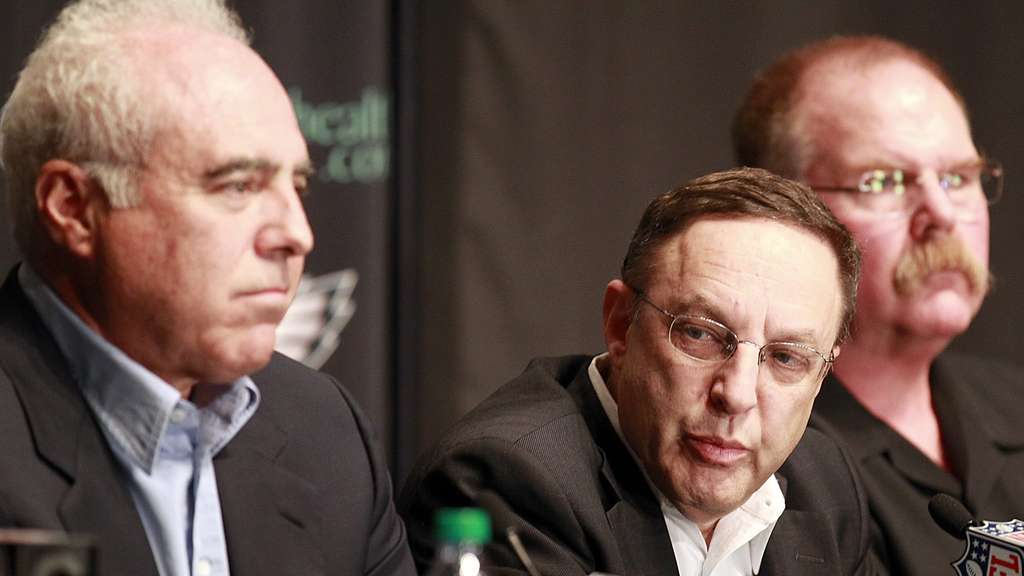
Joe Banner (center) and Jeffrey Lurie (left) came to the Eagles in 1994. YONG KIM / Staff
Banner had more stories Sunday afternoon, stories that didn’t make the pod. Such as:
Lurie bought the Birds in 1994, the same year Stein got into the agent game. As newcomers, Banner thought it would be wise to introduce himself and Lurie by entertaining the adversaries.
In October 1994, at the owners’ meetings in Chicago, Banner and Lurie hosted a cocktail hour for the Eagles’ agents at the time. This was tantamount to Abraham Lincoln, in 1863, inviting Jefferson Davis and his generals to Thanksgiving dinner. The other owners and league office were furious.
Banner claimed ignorance.
“We were flagrantly breaking the ‘rules,’” Banner said, “But we honestly didn’t realize how bad a line we were crossing.”
When Stein was with the Bears, they regularly crossed that line.
Later in the podcast, in addressing the number of front-office executives who began their careers under Banner, Stein recalled his introduction to Roseman.
For months, Hartley had received and rebuffed Roseman’s daily letters pleading to join the Eagles — a plea he sent to virtually every other team, too — in any capacity. Roseman’s persistence impressed her, which, Stein said, was key: “I knew that if someone like Lee Ann likes you, you’re going to get the respect of Joe Banner and Jeffrey Lurie.”
In 2000, after Jets GM Mike Tannenbaum met and vetted Roseman — a Fordham Law graduate, just like Stein — Banner finally relented and gave Howie an interview.
“I think I saw a little of me in him,” Banner said.
Banner then fired his current numbers guy and hired Roseman, who took up residency on the corner of Hartley’s desk outside of Banner’s office on the fourth floor of Veterans Stadium. And the rest, as they say, is history.
Fast forward
Stein says he’s content to continue his life in Chicago to be near his two grown children, unless some team comes at him with an offer he can’t refuse. For now, he’s eager to plumb the podcast depths. He says he’s gotten a commitment from an executive who said he’d never do a podcast but changed his mind after seeing the Rosenhaus pod.
Until then, Stein is positively giddy at the chance that the Eagles might make Hartley available for an episode. She now is the vice president and senior adviser to Lurie; essentially, the job she used to do for the president she now does for the owner.
Imagine the stories she could tell.
“I’m going to do a behind-the-scenes on someone who knows everything about the business, part of the NFL population that never gets credit,” Stein said. “To have her as a potential guest? I mean, she’s half the reason Howie got hired!”
As for Banner, he left the Eagles in 2012 to become Cleveland’s CEO, but he was out by 2014. He’s been an adjunct professor at Villanova, a role in which Stein, still in Illinois, now serves at Northwestern. Banner has acted as a consultant on dozens of NFL coach and executive searches; cofounded the 33rd Team group of football consultants with Tannenbaum; acted as an adviser during the 2021 NFL CBA negotiations; and has sat on the board of Patricof Co, a venture capital firm that caters to pro athletes.
In his dotage, Banner, like so many, splits time between Maine and Florida, enjoys his grandchildren, and hopes to stay relevant and appreciated.
The pod, and maybe this column, will serve that end.
“I gotta say, I feel like that 45-year-old golfer who’s leading the Masters after the first round,” Banner said with a chuckle.
Well, Jack Nicklaus won it at the age of 46. Banner might not be the Nicklaus of the NFL, but he’s at least the Fred Couples of the boardrooms.
The president and CEO of Welcome America Inc. has resigned. While the reasons were unclear for the departure, Monday’s announcement followed the city’s decision to take over Philly’s Fourth of July concert and fireworks from the group that has been involved with organizing the event since 1993.
In a statement, Michael DelBene said this year’s celebration of America’s 250th birthday — interrupted by a storm that pushed back the fireworks finale to the early hours of Sunday morning — “was a spectacular accomplishment. … I am humbled by what we have accomplished together, and excited about what lies ahead for the organization.”
DelBene had held the role since 2019. In a post to his LinkedIn account on Monday evening, DelBene said he was stepping down, and “as for what’s next? I don’t know yet. And I find that completely exhilarating!”
Fireworks fill the sky at the One Philly: Unity Concert for America on the Benjamin Franklin Parkway early Sunday morning.Monica Herndon / Staff Photographer
Welcome America is a public-private partnership that receives city and state funding as well as corporate sponsorships. Mayor Cherelle L. Parker and Councilmember Mark Squilla are board members.
It was uncertain when Welcome America plans to name its next president and CEO. DelBene was the organization’s longest serving CEO, and the only one whose tenure spanned multiple mayoral administrations. DelBene has had a busy summer — he also has been working as an executive producer with FIFA World Cup 26 Philadelphia, overseeing the Fan Festival in Lemon Hill and other parts of the fan experience.
Despite planning Welcome America’s days of programming leading up to the nation’s 250th celebration, DelBene was not involved in the final signature event. This year, Parker’s administration took control of the city’s free concert on July Fourth from Welcoming America, rebranded it as the “One Philly: Unity Concert for America” in reference to her “One Philly: A United City” slogan, and spent significantly more taxpayer dollars in the process.
Will Smith performs at the One Philly: Unity Concert for America. Yong Kim / Staff Photographer
The city hired ESM Productions to put on the 250th anniversary fireworks show and concert for $15.5 million, which cost Welcome America only about $3 million to produce last year.
ESM’s pay was almost triple Welcome America’s $6.6 million budget in 2024, of which $5.3 million came from government grants, according to its federal nonprofit disclosure.
Despite a lengthy storm delay, Philly’s Fourth of July celebration went forward with performances from Will Smith, the Roots, and Meek Mill, and a fireworks show that technically began and ended on July 5 — coincidentally just a few minutes shy of 2:50 a.m.
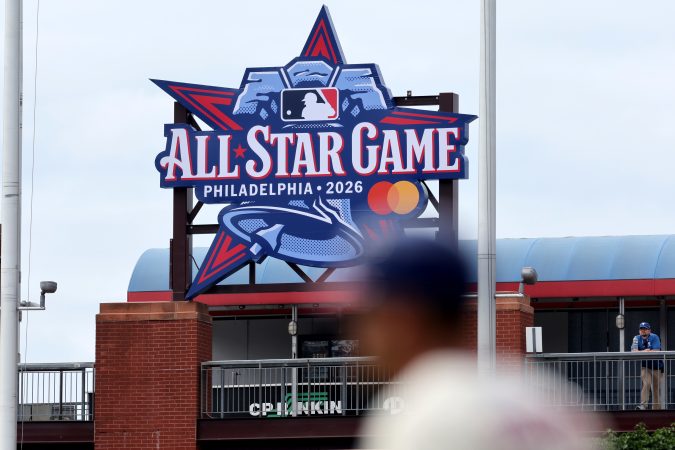
It was more than seven years ago that Major League Baseball announced the All-Star Game would come to Philadelphia for the nation’s 250th birthday. The game is the bookend to a season of big events following March Madness, the PGA Championship, and the FIFA World Cup.
Baseball’s midsummer classic, which returns to Philly for the first time since 1996, will be more than just a game, as the city will be the center of the baseball world for nearly a week.
Here’s a look at what to expect:
HBCU Swingman Classic
When: 7 p.m.,Friday
TV: MLB Network
Location: Citizens Bank Park
What you need to know: The fourth annual game is a showcase of the best players from historically Black colleges and universities. The classic was founded by Ken Griffey Jr. as a way to give a platform to players who often are overlooked.
The local connection: Jimmy Rollins will manage one of the teams, and Mayor Cherelle L. Parker will throw out the first pitch. The teams will visit City Hall before the game to honor Octavius Catto, a civil rights activist who cofounded one of America’s first organized Black baseball teams in 1865. There is a statue of Catto outside City Hall. Mayfair’s Santino Harwood will play in the game. The Roman Catholic grad is a shortstop at Delaware State.
Pitcher Gage Wood was the Phillies’ top pick in last year’s MLB draft.Yong Kim / Staff Photographer
The MLB draft
When: 1:30 p.m., Saturday; TBD Sunday.
Location: Pennsylvania Convention Center Grand Hall
What to know: The event is free to attend, but ticket registration has closed. The draft used to be held at MLB Network’s studio in Secaucus, N.J., before the league moved it to All-Star Week starting in 2021. The White Sox have the first pick, and the Phillies have to wait until No. 36 for their first selection.
All-Star Village
When: 10 a.m.-8 p.m. Saturday and Sunday; 10 a.m.-6 p.m. Monday and Tuesday
Location: Pennsylvania Convention Center
What to know: The event is similar to Fan Fest that came with the 1996 game, but it’s much bigger now. The village will feature big league mascots and appearances by a cast of Phillies legends including Steve Carlton, Cole Hamels, John Kruk, Larry Bowa, Dave Cash, and Carlos Ruiz. Fans can make their own strikeout call, test food from around the majors, throw a pitch, take batting practice, see the World’s Largest Baseball, and even strap on a Velcro suit, jump, and stick on a wall for a home run-robbing photo op.
Former Phillies pitcher Cole Hamels is scheduled to make an appearance at MLB’s All-Star Village. Yong Kim / Staff Photographer
Futures Game
When: Noon Sunday
Location: Citizens Bank Park
TV: NBC10
What to know: The game is a collection of baseball’s best prospects as each team sends two players from its farm system. The players are split into American League and National League squads. The game will feature nine of MLB Pipeline’s Top 10 prospects including top-ranked Jesús Made, a shortstop in the Milwaukee Brewers’ system.
Local connection: The teams will be managed by Larry Bowa and Shane Victorino. Gage Wood, who may have a shot to reach the majors this year, will represent the Phillies a year after they drafted the hard-throwing right-hander 26th overall. Wen-Hui Pan, a right-handed reliever, also was selected for the Futures Game. Both pitchers are with double-A Reading.
What to know: New this year, MLBx replaces the Celebrity Softball Game. The fast-paced event is a modified home-run hitting challenge in which players are awarded points for their hitting and the catches they make in the field.
Local connection: Ryan Howard, Rollins, and Victorino will captain teams, with Atlanta Braves legend Andruw Jones leading the fourth squad. Howard has Eagles wide receiver DeVonta Smith on his team while Rollins is teamed up with Terrell Owens. Each team includes an MLB legend, a professional softball player, and a nonbaseball celebrity.
Bryce Harper was the last slugger to win the home run derby in his home ballpark. However, that was in 2018 while he was with the Nationals.Jose F. Moreno / Staff Photographer
Home Run Derby
When: 8 p.m. Monday, July 13
TV: Netflix
Location: Citizens Bank Park
What to know: It’s been 20 years since Howard won the Home Run Derby. The Phillies are due. Bryce Harper is the last player to win the derby in his home ballpark, which he did with the Nationals in 2018 by beating … Kyle Schwarber in the final round.
The competitors: There will be eight participants, but could two of them be Phillies? Perhaps we’ll see a rematch of the 2018 final.
The format: The league is ditching the clock that governed the derby since 2015, as players now will be given a finite number of swings per round. A batter gets 20 swings in Round 1, 15 in Round 2, and 15 in the final. If a batter homers on their final swing, they keep swinging until they come up empty. The top four players from the first round move to Round 2, and the top two then move to the final round. The tiebreaker in Round 1 is home run distance, and Rounds 2 and 3 use a three-swing swing-off.
The red carpet
When: 2 p.m. Tuesday, July 14
TV: MLB Network
Location: Independence Hall
What to know: The players will showcase their fashion just steps from the Liberty Bell before walking all the way to South Philly. Just kidding. They’ll board a bus and head to the game after walking the red carpet. This event is free for fans to attend, but ticket registration has closed.
All-Star Game
When: 8 p.m. Tuesday, July 14
TV: Fox29
Location: Citizens Bank Park
What to know: Only one player has won back-to-back All-Star Game MVP awards, Mike Trout in 2014-15. Could Schwarber be the next? It’ll be hard to match last year’s heroics, when Schwarber won the game for the NL in a dramatic swing-off at the Atlanta Braves’ stadium. Expect the game to have a star-studded lineup for pregame ceremonies and something special during the game. Last year’s tribute to Hank Aaron set the bar.
Phillies in the game: Brandon Marsh will start after receiving the most votes on the fan ballots. He will be joined by Bryce Harper, Kyle Schwarber, Jhoan Duran, and Cristopher Sánchez.
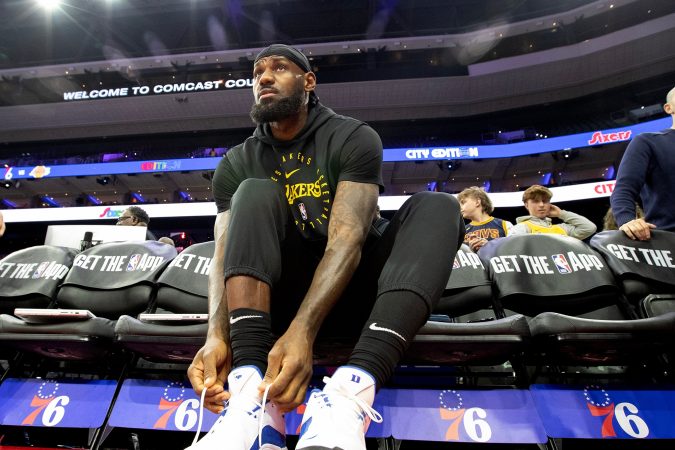
Rich Paul said something the other day that is worth a little bit of reflection for anybody who rolls their eyes at the idea of LeBron James joining the Sixers.
Paul, the NBA superagent who was essentially created by James and who also hosts a podcast alongside former ESPN personality Max Kellerman, claimed that the Knicks would have been James’ clear first choice had they not won an NBA title this season.
“If the Knicks hadn’t have won, this wouldn’t even — there would be no board. He’d be going to the Knicks,” Paul said to Kellerman as he was breaking down James’ potential landing spots.
Rich Paul on LeBron James to the Knicks 😳
“If the Knicks hadn’t won, there would be no board. He’d be going to the Knicks…. Jalen Brunson would literally have to pick up the phone and say ‘hey man, there’s no issue with me.’ They (Knicks) have checked in.”
The comment was both surprising in its bluntness and unsurprising in its conclusion. To anybody who had followed James’ career and psychologically profiled him from afar, it would have made perfect sense if he decided to go where he would be the biggest fish in the biggest pond and also have a chance to write a story that ended up near the top of the local history books.
That probably sounds discouraging to anybody who had been holding out of picking Philadelphia from the list of 10-14 potential destinations Paul broke down for Kellerman. And let’s be clear, that’s probably the correct interpretation. Hey, we all love Philly. But it’s generally not a place for people who dream of places like New York, Los Angeles, and Miami.
Except, there’s another way to interpret Paul’s comments, at least as it pertains to James’ psyche heading into his 24th season in the NBA. While it is impossible to overlook his clear affinity for the bright lights and big city, James also clearly cares deeply about his legacy and his place in the historical record. Neither the Clippers nor the Nets are on his list, after all. His desire for the Knicks would have been as much about the story as the setting. Not only would he have had a chance to become the first player to win four NBA titles with four different teams, he would have won each of them in a place where they meant something.
Such motivation is perfectly reasonable. Inevitable, even. When a competitor spends two decades as the undisputed greatest player in his sport, he needs to find something else to compete against. For many of them, that something is history. James has accomplished more than almost all of the greatest of the greats, and thus needs to keep coming up with new historical challenges to overcome. Leading the Knicks to their first title in 50-plus years would have been the ultimate bucket list item. But Jalen Brunson did it first.
The Sixers aren’t to Philly what the Knicks are to New York. As far as I know, Taylor Swift and Travis Kelce didn’t tour Xfinity Mobile Arena as a potential wedding venue. That being said, the Sixers do offer James a chance to do something novel. You can’t say that about many of his potential landing spots.
What could James accomplish in Denver, Golden State or Boston? All have won championships within the last decade led by stars who’ve spent their entire careers with the organizations. Each has a significant edge over Philly if James’ goal is basketball nirvana. Playing alongside Steph Curry or Nikola Jokic or Jayson Tatum would be a hell of a lot of fun, and any of the three could arguably offer James a better chance at winning a title. But none of them offer him a chance to prove something one last time.
In Miami and Cleveland, James has been there and done that. Miami would offer him a unique narrative symmetry along with a chance to play alongside Giannis Antetokounmpo. He went back to Cleveland and won a title with a totally different team from his first stint. Now, he can do the same in Miami. That’s almost as compelling as the prodigal son returning home to close out his career where his heart has always remained. The problem with both situations is the fit.
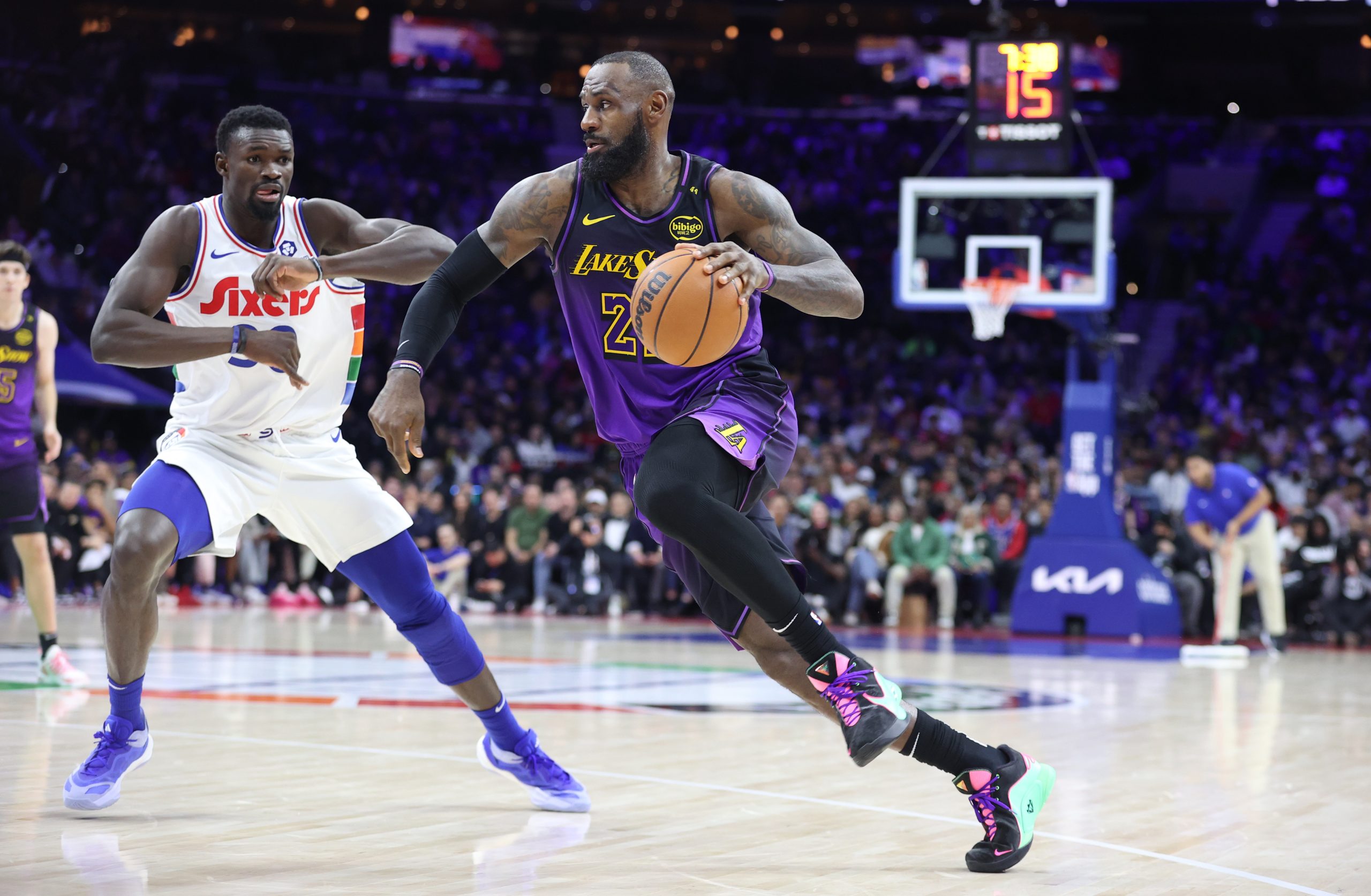
Look, James would fit pretty much anywhere, even at 42 years old, which he’ll turn Dec. 30. He averaged 20.9 points, 7.2 assists, and 6.1 rebounds last season. His efficiency remains elite. He led his team to a first-round upset of the Rockets before getting swept by the Thunder. The question is whether he would enjoy playing basketball with James Harden in Cleveland.
LeBron James averaged 20.9 points during the 2025-26 season.Charles Fox / Staff Photographer
In Miami, the trio of LeBron, Giannis and Bam Adebayo might be too clunky to get it done given the Heat’s deficiencies in the backcourt and in overall depth. One can argue the Sixers with LeBron have a chance to be a much more enjoyable experience, and potentially much better team than Cleveland and Miami. Going home again comes with the risk of undoing some of the good feelings you carried with your initial departure. Does LeBron really want to risk ending his career in either city with disappointment?
I’ll believe James is seriously considering joining the Sixers as soon as I see him shaking Mike Gansey’s hand in front of the cameras and fielding questions from reporters at the team’s practice facility in Camden. In the event he does not hold an introductory news conference this summer, I will believe he is joining the Sixers the moment I see him at training camp in a Sixers jersey. Even then, I might want to at least poke him with a finger to make sure my eyes do not deceive me.
We’ve done this dance before, haven’t we? Once upon a time Ben Simmons was the Klutch Sports mentee and Joel Embiid was the rising superstar. It was only eight years ago that Josh Harris and Brett Brown climbed aboard the Starchaser Enterprise and flew out to California with the hope that they could sway James to sign with the Sixers. Somehow, they managed to express these hopes with a straight face. The result was little more than a needlessly expanded carbon footprint. The Sixers didn’t even get face time with James himself, and the four-time MVP wound up signing with the Lakers, as everybody had long expected.
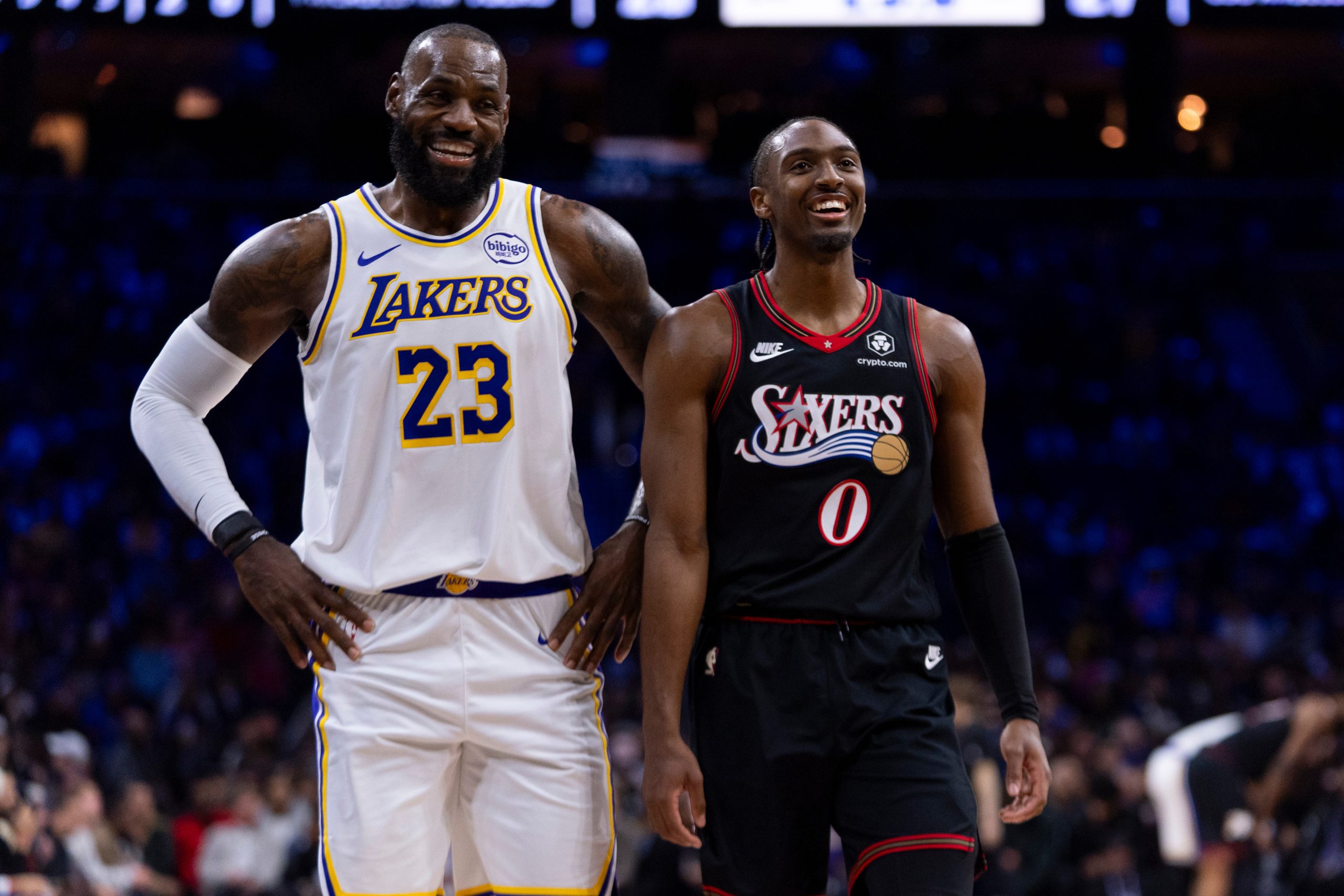
LeBron James and Tyrese Maxey are both members of Klutch Sports.Chris Szagola / AP
At this point, there is little reason to assume that things will play out any differently. The one commonality between all three of James’ free agencies is that they’ve all involved a level of protracted drama that, in hindsight, seemed at least partially contrived. In all three instances, James wound up in a place that looked like the most obvious option, at least in hindsight. The first time he left Cleveland, and went to a place where he could build his own superteam in America’s premier locale for the young, rich and famous. His return to Cleveland both rebuilt and burnished his standing as a hometown legend. The Lakers are the Lakers.
No offense to James, and no offense to Gansey or Bob Myers or Tyrese Maxey or whoever else thinks their personal connection to the King is strong enough to convince him to spend what could be the last season or seasons of his career in a city that offers a tiny fraction of the prestige or narrative value of several of the other potential destinations he is allegedly considering after opting out of his Lakers contract.
I’m not suggesting that anybody on the Sixers side is deluding themselves, and I’m not suggesting that James or Paul is feeding those delusions in bad faith. I’m sure Paul would be thrilled to see James team up with Maxey, another one of his clients at Klutch Sports. I’m sure James loves Maxey, who is impossible not to love, and it’s more than possible that he feels a genuine connection to Gansey, a fellow former Ohio schoolboy star who began climbing up the ranks of the Cavaliers front office around the same time James returned to Cleveland after his four seasons with the Heat. I’m far from sure that any of that will matter in the end.
The Heat and Cavaliers make the most sense from an end-of-career narrative standpoint. The Warriors and Nuggets make the most sense from a pure basketball bliss standpoint. For James to choose the Sixers, he’d need sentiment, basketball bliss, a setting to take a backseat to his desire to put his singular imprint on a new city and a new organization, and to potentially leave both of those entities better off after he is gone than they were before he arrived.
As long as the Sixers can offer him that, you can’t rule him out.
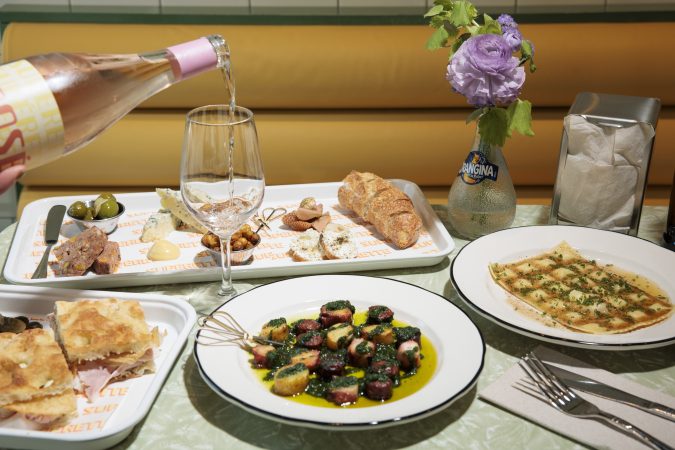
As the most popular dinner reservation times trend earlier and daycaps (aka late afternoon drinks) replace post-dinner cocktails, some Philadelphia bars and restaurants are forgoing happy hour for something with a chiller, convivial vibe: aperitivo.
A longstanding European tradition, aperitivo — which means “to open” in Italian — refers to the late afternoon and early evening hours ripe for lighter-paced drinking and snacking. While other countries have their own words for it (“apéro” in France, “la hora del Vermut” in Spain), the menu always includes fortified wines, bittersweet cocktails and liqueurs, and small bites meant to stimulate appetites.
The ritual is a natural fit for Philadelphia, the so-called “Frenchest city in America,” and its rise of Euro-American-inspired bars and restaurants. Operators are leaning into food-driven aperitivo hours to stretch out the day longer and cater to diners that are going home earlier and drinking less. Signature aperitivo drinks — classic negronis, savory vermouths, and bittersweet amaris — aren’t as heavy or fast-paced as half-priced beer and shot specials, and often come with sidecars of salty snacks, like cured meats, olives, and bread. Others, like an Aperol spritz or an Americano perfecto (a spaghett-style cocktail with beer, Vermouth, Campari, and an orange slice), tend to be lower in ABV.
People are “drinking earlier, coming right from work, and getting a small spritz, a snack, and then going to dinner,” said Benjamin Kirk, the beverage director at Michelin-key Hotel Anna & Bel, which offers an aperitivo menu three days a week at its cocktail lounge, Caletta. “You don’t see people out as late as you normally would since the pandemic.”
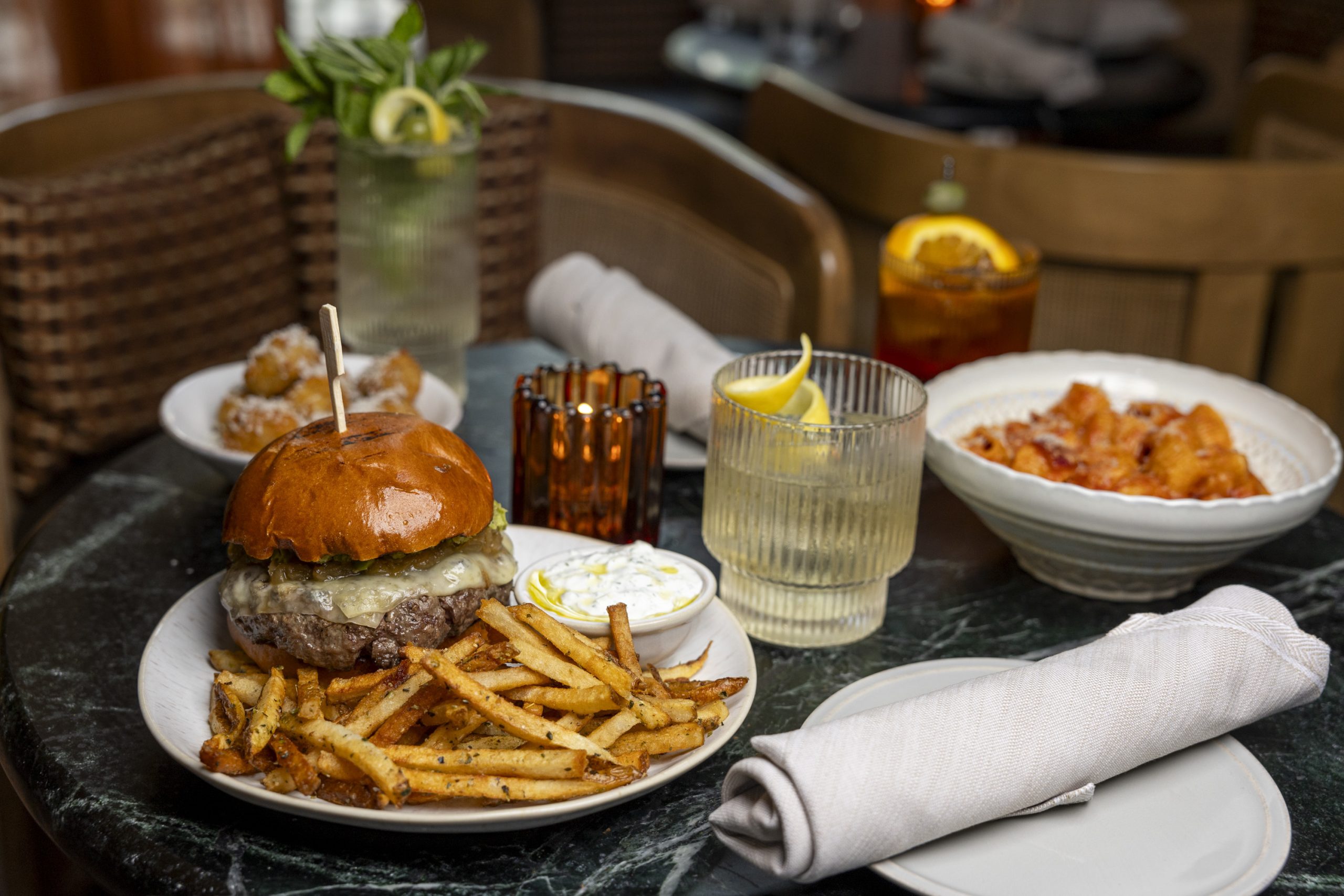
A cheeseburger and fries, the rigatoni all Amatriciana, and croquettes are all part of the aperitivo menu at Caletta in Fishtown.Tyger Williams / Staff Photographer
Aperitivo is also more casual, less hurried, and lower pressure than a sit-down dinner or an after-work date. Reservations aren’t required, and it’s not uncommon to see friends popping in and out for a drink or kids joining family at the table.
“It’s a lot easier to roll into aperitivo with a stroller and get a glass of wine with kids while you are catching up with friends rather than going to a bar,” said Chris DiPiazza of the South Philly bakery Mighty Bread, which started offering aperitivo hour in August 2024.
Apéro is also “a marathon, not a sprint,” said Chloé Grigri, whose bars Superfolie, the Good King Tavern, Le Caveau, and Supérette all offer some version of late afternoon drink and food deals year-round. For Grigri, the purpose is less about pushing discounts so customers can drink more than it is about finding ways to intertwine French culture with happy hour. In Bella Vista, for example, the Good King Tavern is expanding daily apéro deals from 3 to 6 p.m. during the World Cup games (and beyond) to include discounted charcuterie, tartines, and “Frenchie-Americana” drink specials like Suze and Mountain Dew highballs and whiskey and Kronenburg citywides. “It’s the sort of thing you’d stumble across in Paris today in my opinion, but better,” she said.
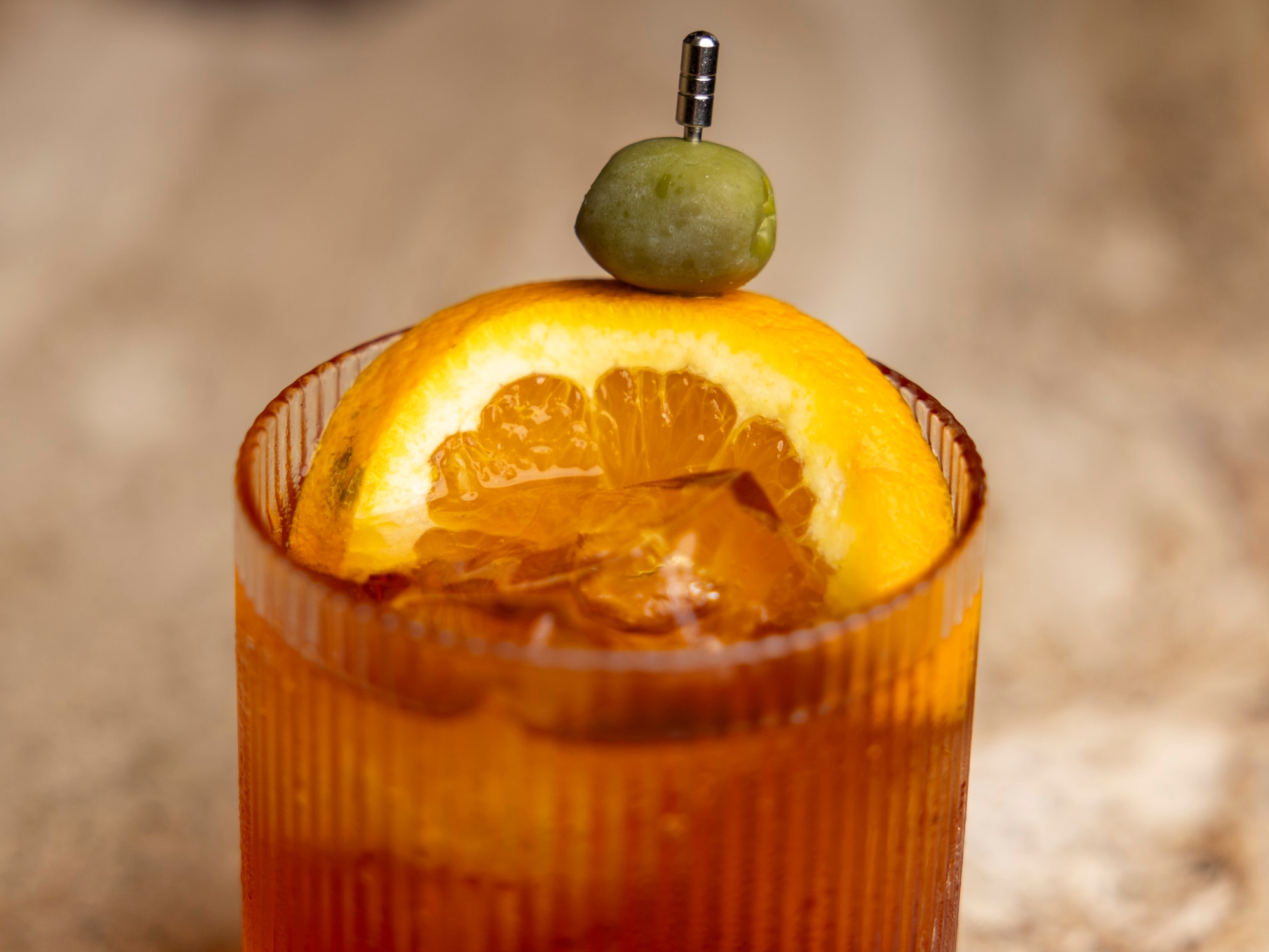
The Americano? Americano!, a vermouth cocktail that’s available only during aperitivo at Caletta.Tyger Williams / Staff Photographer
Still, prices at aperitivo tend to hover at $8 to $16 — roughly between the cost of a beer or glass of wine — which can attract customers during slower weekday business hours, said Le Virtù general manager Chris O’Brien. In the restaurant on East Passyunk Avenue’s monthly wine club newsletter, O’Brien said that 2026 has been “our busiest year on record by a long shot” with an uptick in patio reservations, where its all-you-can-eat northern Italian aperitivo events take place.
Similarly at Fishtown’s Caletta, Kirk said he’s seen a midweek bump with more guests requesting aperitivo hours even during offseason months. Grigri also noted the timing of the World Cup this summer has worked well for her businesses across the board. “Le Caveau had an immediate noticeable uptick,” in business, she said, alongside Good King Tavern and Supérette, where aperó has had a steadier and slower build. “It’s about getting people in right before our normal busy hours,” said Grigri.
Here are eight places to sip, linger, and graze al fresco for aperitivo in Philly.
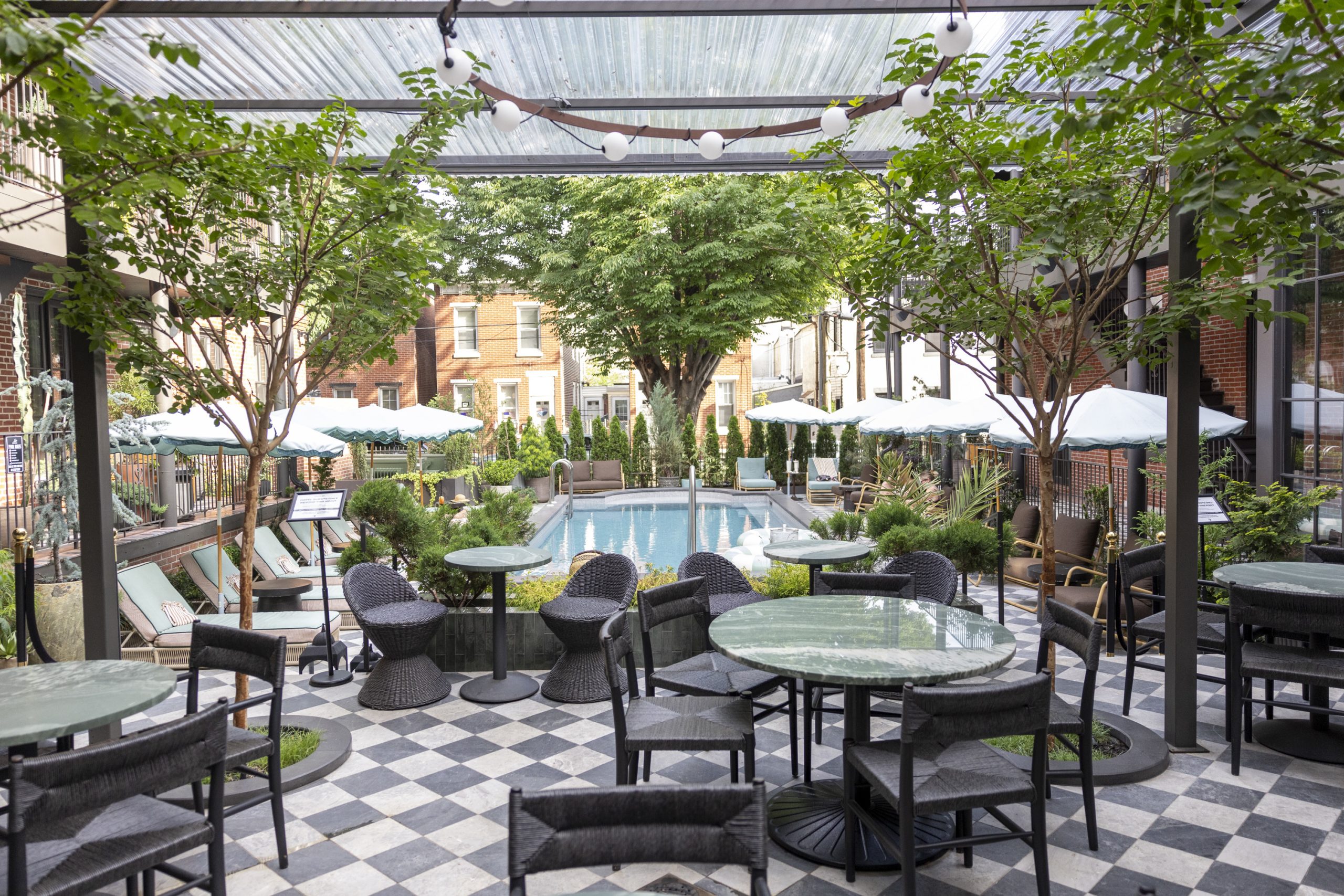
Outdoor seating at Caletta, which offers an aperitivo menu from 4 to 7 p.m. Wednesdays through Fridays.Tyger Williams / Staff Photographer
Where to find aperitivo in Philly
Caletta
Caletta’s patio aperitivo (Wednesday through Friday from 4 to 7 p.m.) transports you from a quiet Fishtown block to the Mediterranean coastline. At this hotel bar, the cocktails include split-based, lower ABV drinks that use house-made liqueur blends and fortified wines, like the “Americano? Americano!,” which includes a mix of coffee liqueur, sweet vermouth, red bitters, orange, and olive. A bonus: Your first drink comes with a complimentary salty snack dish of mixed nuts, roasted peppers, or salami with house-made focaccia.
📍1401 E. Susquehanna Ave., Philadelphia, Pa. 19125, 📞267-682-8253 🌐 calettafishtown.com
A selection of complimentary aperitivo snacks alongside two cocktails at Sorellina, 699 N. Broad St.Courtesy S
Sorellina
At owner Joe Cicala’s casual pizzeria in the Divine Lorraine, aperitivo is baked into the regular menu. Every table gets a few olives and tuna-stuffed peppers to snack on while deciding what to order for dinner. Italian-style bitter cocktails, imported beers, and amari anchor the bar program, though Cicala has noticed more customers ordering nonalcoholic bitter sodas — perhaps influenced by summer Euro trips, he noted.
Banshee’s dedicated aperitivo section features Spanish-style small plates of croquettas and patatas bravas, among others, plus drink specials from 5 to 6 p.m. daily. The Mediterranean-inspired bar in Graduate Hospital folds cocktails from Spain (Kalimotxo), France (Kir), and Italy (the not-discounted-but-still-excellent Spring Americano with strawberry vermouth and rhubarb aperitivo) into one concise menu. Our recommendation: Order everything, including a side of the house-made sourdough.
📍1600 South St., Philadelphia, Pa. 19146 📞 267-876-8346 🌐 bansheephl.com
A spread of stuzzichini (bite-size appetizers from Northern Italy) at one of Le Virtú’s summertime aperitivo events.Courtesy Le Virtú
Le Virtù
For a glimpse of more communal-style aperitivo, East Passyunk’s Le Virtù hosts one-off seasonal patio gatherings throughout the summer that draw from the culture of Abruzzo, Italy, where owner Francis Cratil-Cretarola is from. Programming — typically on a Wednesday, weekend afternoon, or early evening — is lightly curated with unlimited buffet-style stuzzichini (bite-sized northern Italian appetizers) for $35 and $14 wines by the glass in collaboration with a rotating mix of producers and importers. Follow @levirtuphila on Instagram for upcoming events.
This retail shop, tasting room, and cocktail bar adjacent to the Gayborhood lets you choose your aperitivo experience — order a drink and stay awhile or buy bottled-in-state products for at-home concoctions. Either way, you can’t go wrong with its “Slayborhood Spritz,” featuring Apologue persimmon liqueur, Kyro pink gin, prosecco, and club soda or a lemon herbaceous amaro with Fast Penny Spirits Americano Bianca.
Light bites and negroni cocktails from Irwin’s aperitivo menu, which runs Wednesday through Friday from 5 to 7 p.m.Alli DelGrippo
Irwin’s
Nothing beats a rooftop hang — especially with classic Sicilian drinks and snacks. Irwin’s, just across the hall from Bok Bar, hosts aperitivo hour inside and out on the roof every Wednesday through Friday from 5 to 7 p.m. during the summer. Everything on the menu is $13 or less: Negroni cocktails, charcuterie and formaggi, anchovies, tomato pie, and eggplant caponata (a chef Michael Ferreri family recipe for an antipasto vegetable stew).
This James Beard Award-nominated South Philly bakery is home to a family-friendly aperitivo. On weekdays year-round (except Tuesdays) from 4 to 6 p.m. you can enjoy Philly-Italian bites, cocktails, beer, and wine inside or in the courtyard. Snacks highlight bread in various forms: “Mighty Munch” with baguette chips, candied nuts, and seasoned pretzel chips; focaccia; and scallop toast with fermented aji chili butter. There are easy-sippers with Pennsylvania-made spirits, too, like Char & Stave coffee Amaro and soda, a ready-to-drink sparkling wine spritz, and Mighty Bread’s own Italian semolina pilsner, Amici Del Pane.
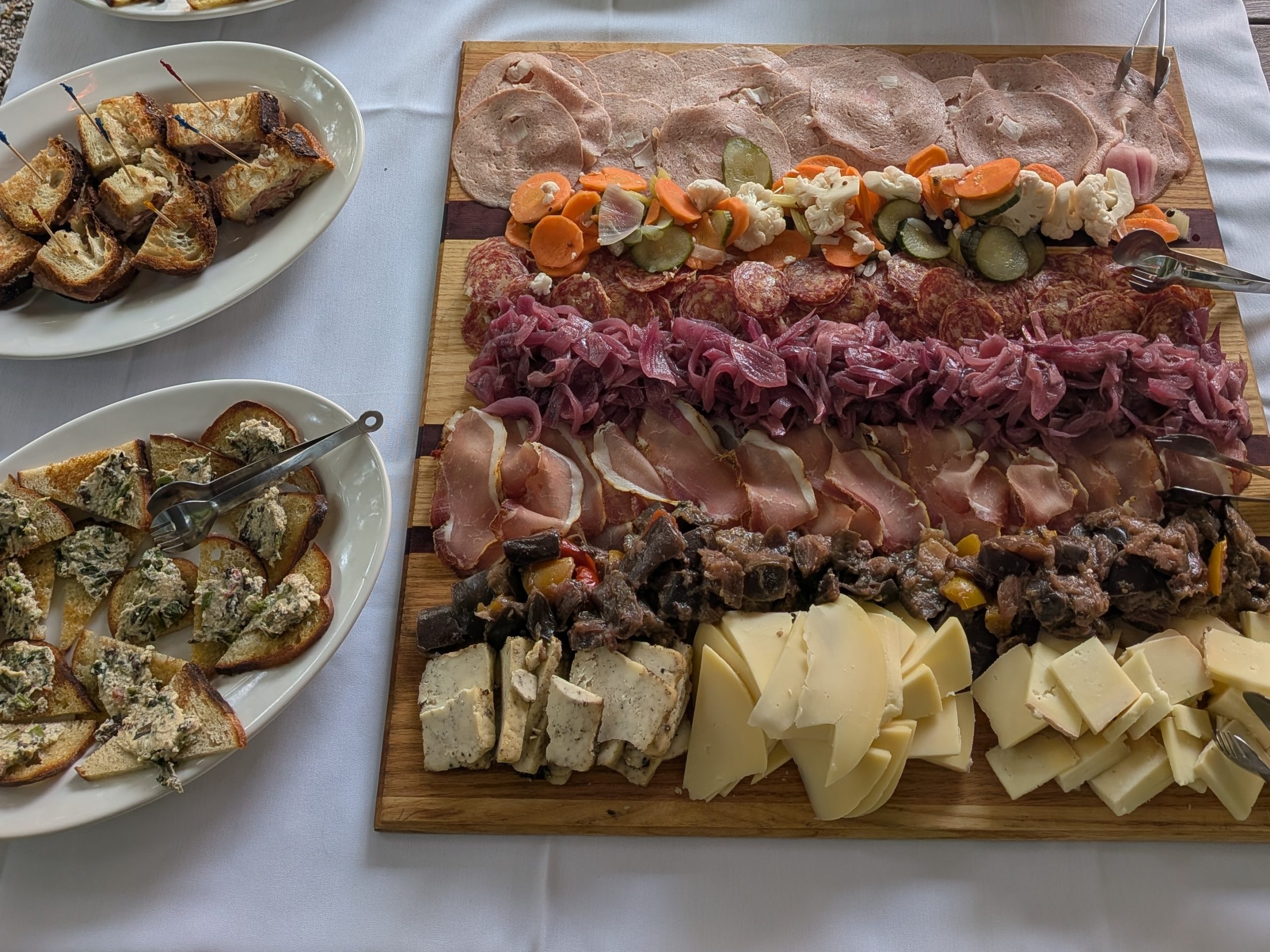
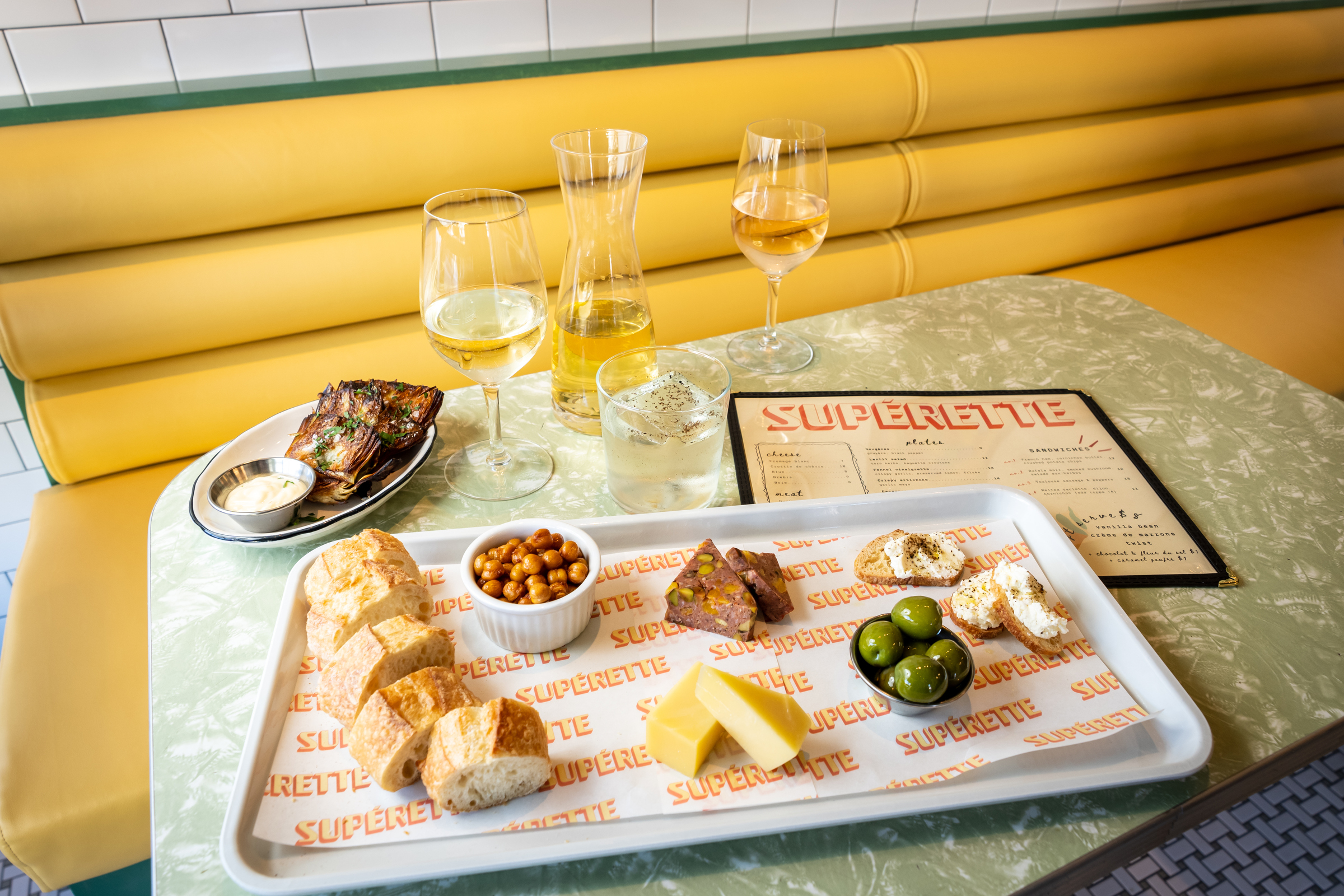
A snack board at Supérette, a restaurant, bottle shop, and wine bar on East Passyunk Avenue.Jessica Griffin / Staff Photographer
Supérette
Supérette captures that quintessential French-style apéro energy: Customers drift in and out the door, shopping for natural wine in the bottle shop or sipping highballs at the bar. The day-to-night vibes at Chloe Grigri’s épicerie and wine bar on East Passyunk Avenue invite spontaneous meetups fueled by olives, mini-chip-filled jambon-and-beurre sandwiches, and Frenchie disco fries (aka nachos with shredded cheese, local spam, cornichon relish, and crème fraîche). Better yet: Apéro is every weekday year-round from 3 to 6 p.m.
For 30 years, Nettie King, 92, has relied on Social Security to survive.
She and her former employers at the Oak Lane Diner near her home paid into Social Security through payroll taxes for years.
While the storied institution closed in 2015, the Social Security benefit checks that King’s work generated have kept coming. “It’s been comfortable,” explained King, who said she was the diner’s first server of color in 1963.
But now there’s a problem.
King is among 68 million Americans facing possible reductions of 22% to their benefits by 2032 unless Congress acts, according to a new report by Social Security Administration (SSA) trustees released last month.
Pennsylvania residents could lose an average of $520 each from their monthly Social Security checks, according to the Committee for a Responsible Federal Budget, a nonpartisan think tank. That would affect an estimated 255,000 Philadelphians receiving Social Security benefits, according to Olivia Mitchell, director of the Boettner Center on Pensions and Retirement Research at the Wharton School of the University of Pennsylvania.
“Losing that much would be a disaster,” King said. “I pray the money doesn’t stop.”
It won’t if Congress overcomes its partisan divide and creates a workable solution to make Social Security solvent, say advocates for the elderly — including AARP, whose senior vice president Bill Sweeney warned in a recent press call that “the longer they wait, the harder it gets.”
Speaking for the Trump administration, Treasury Secretary Scott Bessent said in a statement, “We are working to preserve Social Security … and recognize that more work remains to secure benefits for future beneficiaries.”
Someday soon
Analysts have long predicted the Old Age and Survivors Insurance trust fund from which most retired Social Security claimants draw benefits could dissipate, said Temple University labor economist Samuel Solomon. But that was always regarded as a “someday” event.
“Someday” may now be just six years away. “That’s a big deal,” Solomon said.
The SSA wouldn’t stop paying benefits altogether, Mitchell said. Although the report predicts the fund’s reserves could be tapped out by 2032, “continuing payroll tax revenue [from people currently working] would cover about 78% of scheduled retirement benefits,” she added.
At nearly $1.6 trillion annually, Social Security represents more than 20% of the U.S. budget and is the nation’s largest single expense, Solomon said.
Various factors have combined recently to accelerate the fund’s potential depletion, according to the report submitted by SSA trustees, who include Bessent, as well as Health Secretary Robert F. Kennedy Jr.
First, the fertility rate this year is going down faster than predicted: 1.75 children per woman vs. 1.9.
Also, immigration is lower than estimated. That trend will continue as the government maintains restrictive immigration policies, experts say. It represents a potentially immense loss of revenue, according to Wharton research, which shows that “unauthorized immigrants” paid $24 billion in Social Security payroll taxes in 2024, despite being ineligible to collect any benefits.
Both the slowed fertility and diminished immigration rates have lowered the anticipated number of workers and the payroll taxes they’d have contributed to Social Security, said Kathleen Romig, Social Security expert with the Center on Budget Priorities and Policies, a left-leaning research group.
The final factor, the trustees report said, is that the One Big Beautiful Bill Act that decreased income tax rates has reduced revenue that would’ve flowed into the program.
The SSA didn’t respond for requests to comment.
The Social Security system had been strained long before the trustees report. The giant baby boomer generation has been retiring since around 2011, siphoning millions from the program, Solomon said.
In 1950, when the first boomers were 4 years old, every 100 workers paid the Social Security benefits of 13 elderly people, Solomon said. Today, it’s 25 elderly people per 100 workers — “more responsibility on a single working person to support more retirees,” Solomon said.
That worries Doris Kitt, 81, of Jenkintown, a Social Security benefits recipient who still works at a South Jersey pediatric dental practice.
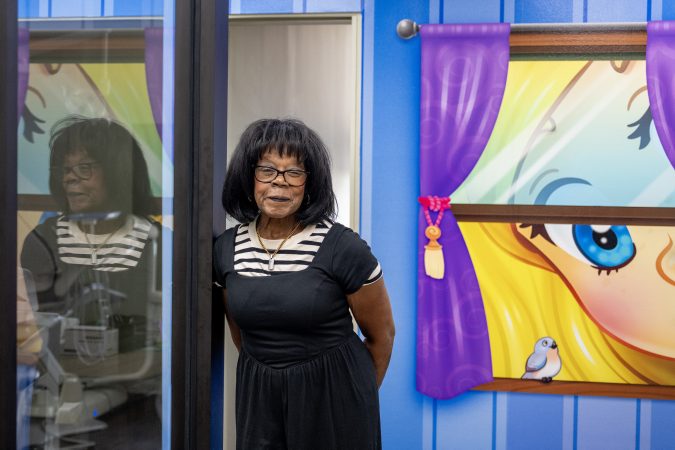
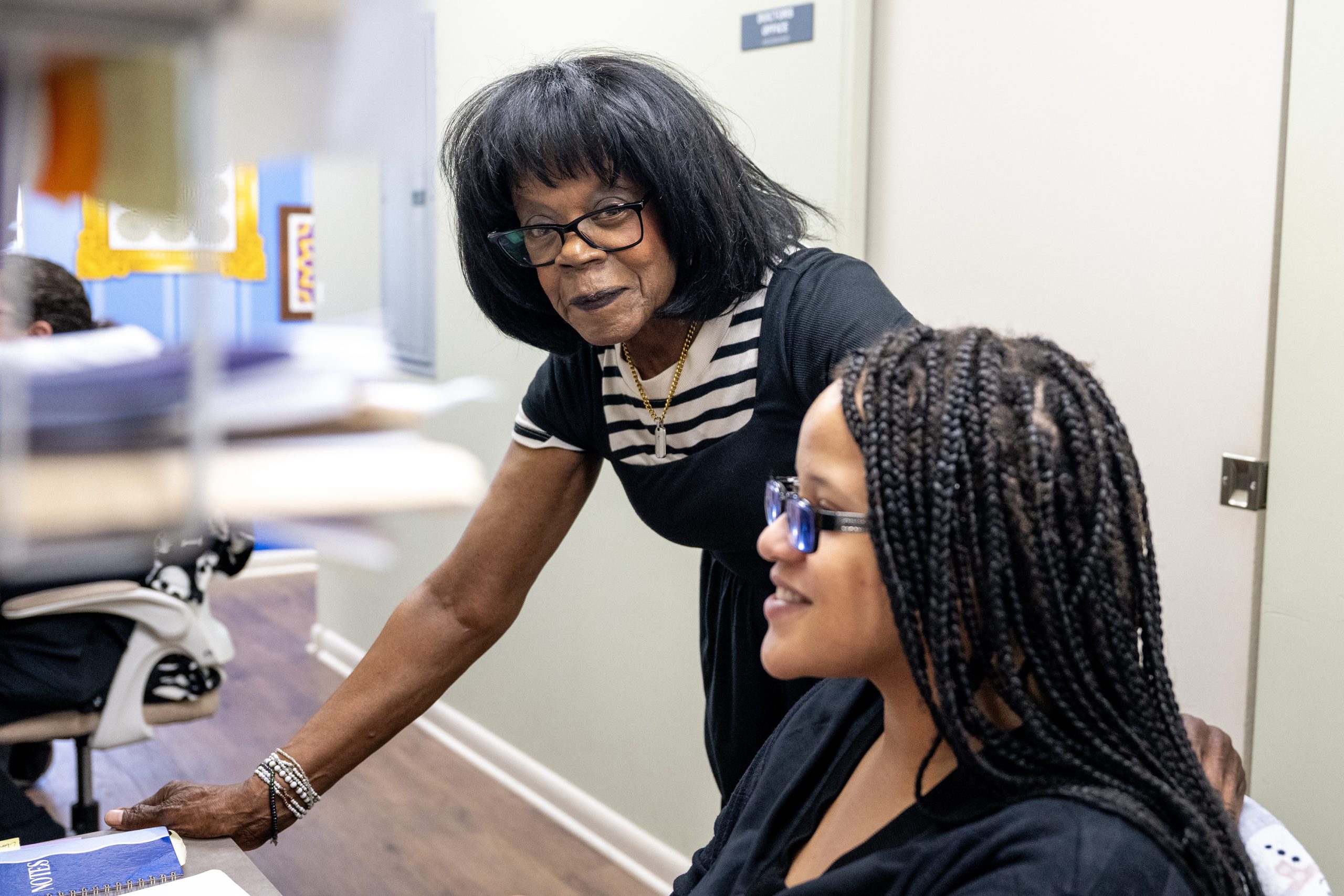
Doris Kitt talks with coworker Asia Bagby. Kitt, who is 81, still works and also collects Social Security benefits. Tom Gralish / Staff Photographer
“Less Social Security when rent and food continue to cost more is a challenge,” Kitt said.
‘Give me what I’m due’
Through the years, Republicans and Democrats have forwarded competing remedies for repairing Social Security.
GOP suggestions include raising the retirement age to 70, and privatizing the system.
Democrats call for raising payroll taxes and ending the payroll tax cap. (Currently, wages above $184,500 are not subject to Social Security taxes. Democrats would eliminate the cap so higher-income earners pay into the system on 100% of their earnings.)
In a statement, U.S. Rep. Brendan Boyle, a Northeast Philadelphia Democrat running for reelection in November against Republican challenger Jessica Arriaga, said the trustees report makes it clear that “we must act to protect Social Security benefits for all generations.“
He referenced a bill he introduced in May 2025 that would require Americans earning more than $400,000 to contribute a greater percentage of their wages to Social Security. It’s now before the House Ways and Means Committee.
U.S. Rep. Lloyd Smucker, a Republican representing Lancaster County, also issued a statement, saying Social Security could be fixed by a “bipartisan fiscal commission” to “build consensus” and eliminate depletions of benefits. Smucker is being opposed by Democrat Nancy Mannion in his bid for reelection.
“We must preserve the trust fund millions of Americans rely on and keep our promise to those who have been paying into the system their entire lives,” he said.
That covenant must be honored, said Shirley Stringfield, 70, a retired city worker from Germantown.
“I spent 55 years of my life paying into Social Security,” she said, “so I want them to give me my due. I expect to receive my benefits until I expire. I need every cent.”
Jefferson’s Joseph G. Cacchione ranked as the highest-paid CEO at the Philadelphia region’s nonprofit health systems in 2024, with total compensation of $7 million, according to The Inquirer’s annual review of public tax forms.
Madeline Bell at Children’s Hospital of Philadelphia collected $5.5 million in 2024, giving her the number two spot.
Both also were top earners in The Inquirer’s 2023 compensation analysis. Jefferson is the largest system based here, both by revenue and number of hospitals, with 33 stretching from South Jersey to near Scranton. CHOP is among the nation’s top-ranked children’s hospitals.
Janice Nevin at ChristianaCare joined the ranks of the top five. She received$3.5 million, about the same payas the region’s fourth highest earner,Al Maghezehe at Capital Health, which has a network of outpatient clinics in Bucks County and two hospitals in Mercer County. Maghezehe’s compensation stands out because Capital had by far the lowest revenue among the systems with the 10 highest-paid CEOs.
A couple of CEOs who left their positions before 2024 continued collecting long-term compensation, as is common in the industry.
Most notably, Jefferson’s former CEO Stephen K. Klasko collected just over $1 million in 2024. Heretired at the end of 2021, but remained an adviser through June 2022. The 2024 payment brought his total through 2024 to $48.7 millionfor 8½ years as CEO.
Lori Herndon left AtlantiCare in June 2023. Her compensation the following year was $1.3 million.
Here’s a look at the numbers from The Inquirer’s review of the latest 990 tax returns of 20 nonprofit health systems, covering 11 health systems with operations concentrated in Southeastern Pennsylvania, seven in South Jersey, and two in northern Delaware:
(function(){function e(){window.addEventListener(`message`,function(e){if(e.data[`datawrapper-height`]!==void 0){var t=document.querySelectorAll(`iframe`);for(var n in e.data[`datawrapper-height`])for(var r=0,i;i=t[r];r++)if(i.contentWindow===e.source){var a=e.data[`datawrapper-height`][n]+`px`;i.style.height=a}}})}e()})();
University of Pennsylvania doctor Anuja Dokras spent the last 14 years working to rename a common medical condition that can impact fertility in women, called polycystic ovary syndrome, or PCOS.
Rooted in outdated science, the name often confused her patients into incorrectly thinking they had cysts on their ovaries.
It also made people think the disorder — which affects one in eight women — was primarily gynecologic in nature, when it actually has whole-body effects.
“We knew this was a misnomer,” Dokras said.
An international group of experts, including Dokras, announced in May that PCOS would now be called polyendocrine metabolic ovarian syndrome (PMOS), in an article published in the medical journal The Lancet.
The new name is meant to capture the broader hormonal and metabolic effects of the condition.
Dokras estimates it will take another three years to formally classify PMOS as an endocrine condition, change insurance billing codes, and update published literature.
Scientists also need to get the word out to patients, doctors, and the public at large. The previous name had been around since 1935.
The Inquirer spoke with Dokras, director of the Penn PMOS Center, about the name change and the impact she hopes it makes.
Anuja Dokras directs the Penn PMOS Center and played a key role in the renaming process.Courtesy of Anuja Dokras
What is PMOS?
It’s the most common endocrine disorder in women.
The presentations are typically irregular menses (menstrual periods) and increased hair growth and acne. We also typically see lots of follicles within the ovaries. Those three become the criteria for making the diagnosis.
Research from my group and others has shown that these patients are at a high risk for cardiometabolic complications, including high cholesterol, high blood pressure, diabetes, or problems with their blood sugar and weight gain. They also have an increased risk of mental health conditions like depression, anxiety, and disordered eating.
When did you start to question the name PCOS?
When I began to work in this space, it was clear that women [with PCOS] did not have large cysts on their ovaries. What they had were small follicles, and each of the follicles contain eggs. It’s part of their fertility.
As we asked patients what symptoms they were most concerned about, they talked about ovarian cysts, which was because of said misnomer.
We spend a lot of time correcting that misinformation when patients come to see us. Then we have to reassure them and say, ‘you don’t have a big cyst in the ovary. It’s not going to rupture, it’s not going to twist.’
How did the idea for a name change came up?
The first time it was brought up was when we had a meeting at the National Institutes of Health in 2012. The reviewing panel came back and said, “We suggest you change the name, because the name doesn’t represent everything that you have shared with us about the advances in this condition.” That’s when the journey began.
What did the renaming process involve?
Surveys went out to patients and the providers that offer care. We made sure that there were responses from different world regions as well.
The patients didn’t want a word that would be stigmatizing. If you have a condition that’s going to affect your fertility, that is not viewed favorably by families, and patients were very concerned about the choice of words. They also wanted words where there’s clarity, so you can communicate easily.
Finally, there were workshops where the medical professional societies and patient groups across the globe sent one representative each.
How did the name polyendocrine metabolic ovarian syndrome (PMOS) come about?
This is an endocrine condition, which means that there are certain organs within the body that are making hormones and those hormones are not working well. They’re either over-secreted or under-secreted. The word ‘poly’ was attached, because it was not just one hormone. A lot of different endocrine glands or organs are involved.
Then metabolic was added because there are a number of cardiometabolic abnormalities: the high cholesterol, glucose problems or diabetes, high blood pressure, and obesity.
We left ovarian because we also had marketing input and there were some suggestions to not be completely different (from PCOS) because that’s going to be confusing.
And we needed the word syndrome because it still describes a constellation of features.
How has the response been to the name change?
It was more than what we had expected. I think we live in a very different world now, where communicating with the patients is on a different level. It’s not just through publications. The patient community and the advocates got the news very quickly because of social media. It was lit up.
In terms of getting the information out to the medical community, it’s always going to be a little slower. We’ll continue to do that at different meetings.
We’ve said it may be a three-year transition.
What work remains?
The first step was the communication and getting the message out. Then in parallel, there needs to be a smooth transition in terms of our research publications. We don’t want to lose out what was published under the name of PCOS because now it’s PMOS.
When patients go to see their doctors, there’ll have to be a transition in the electronic health records, in terms of the terminology and insurance companies trying to understand this new word PMOS. The codes for billing will need to change.
We’re also trying to do a research reclassification. PMOS was formally considered an ovarian condition, and we’re trying to switch it now to become an endocrine condition.
What do you hope this name change accomplishes?
I’m hoping that, from the patient perspective, they’re going to be less worried about cysts in the ovaries. I’m also hoping they will get earlier diagnoses because the name includes endocrine and metabolic. Now we’re hoping that all these different specialties will take some ownership of the syndrome, and that way the patient is not hopping between different caregivers.
For the researchers — I’m one of them — I do hope that there’ll be increased funding. We still have a lot of gaps in knowledge, and we need to do a lot more research.
We hope that there would be funding, not just from the institutions that support women’s health, but from those that support diabetes, endocrinology, heart disease, dermatology, and mental health.
We hope that a name that’s so comprehensive and broad gets more people invested in helping answer some of these very important questions.
If you’re a regular visitor to the Jersey Shore, catching up with your longtime favorite foods, chefs, and restaurants can often tell a wider story about what’s been happening in your favorite beach towns. The economic pressure of rising real estate prices has made the arrival of a sweet little BYOB like Joy & Salt on Long Beach Island a test case for the future of the small operator. The saga of ongoing attempts to revitalize Atlantic City’s Tennessee Avenue development? It just got a fresh boost from the comeback of a talented local chef. A new gem for stellar soul food, a growing audience for deep-crusted pizza, the rise of fancy iced coffee (with everything but the taste of coffee), and sage advice on how to choose the right pasta shape all added a tasty helping of color to this week’s fresh batch of restaurant reports from LBI to Margate.
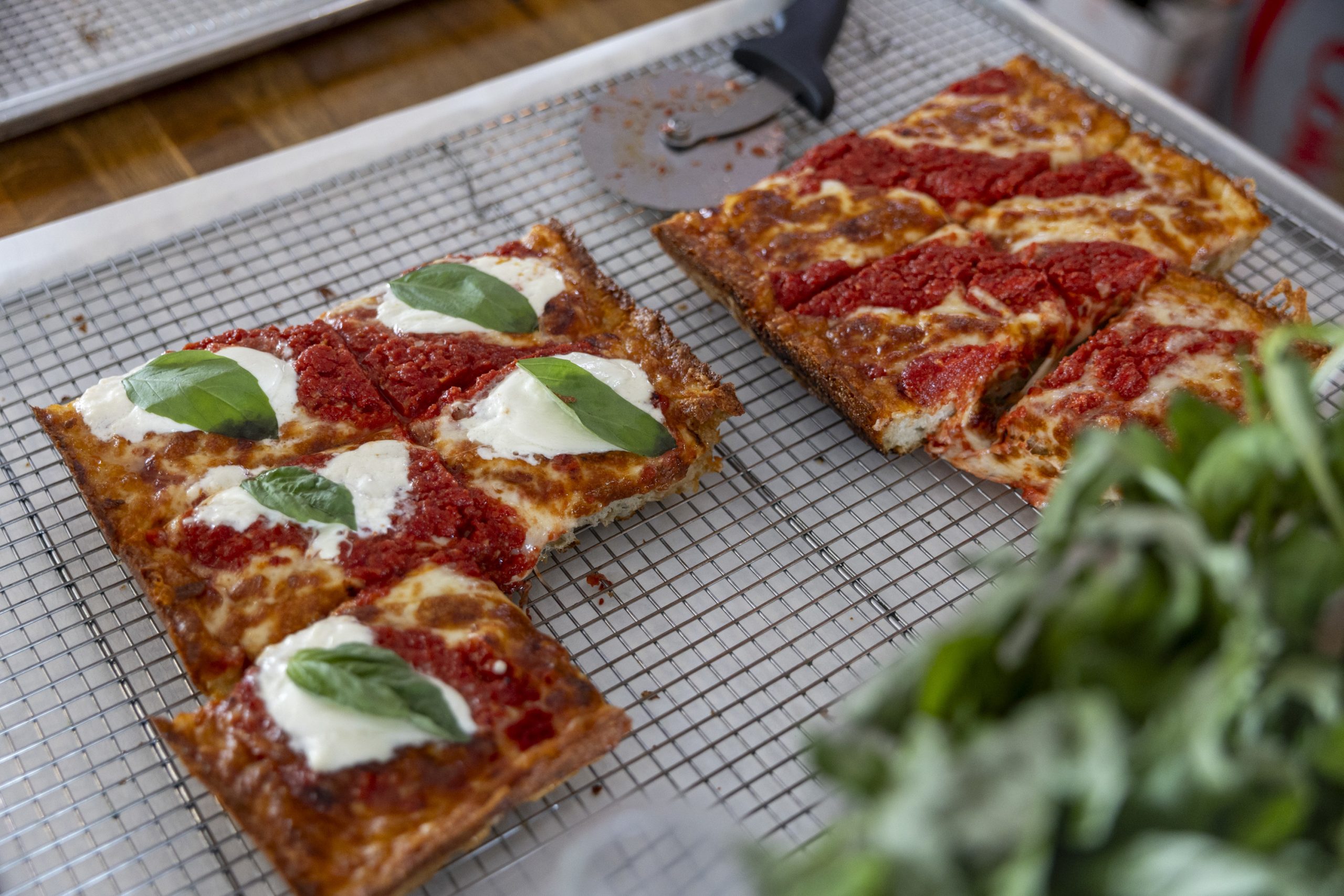
The burrata with fresh basil and plain cheese pie at Queen City Crust in Beach Haven, N.J., on Thursday, June 18, 2026.Tyger Williams / Staff Photographer
I also delve into the Ventnorian controversy over a classic sub shop that’s been remade into an artisan sourdough bakery and touched a nerve with locals who fear their community is becoming too bourgeois. Then again, when something is as good as Florida Cuts is, perhaps it’s not simply change for the sake of trends but actual progress.
Next week: new options from Cape May to Ocean City.
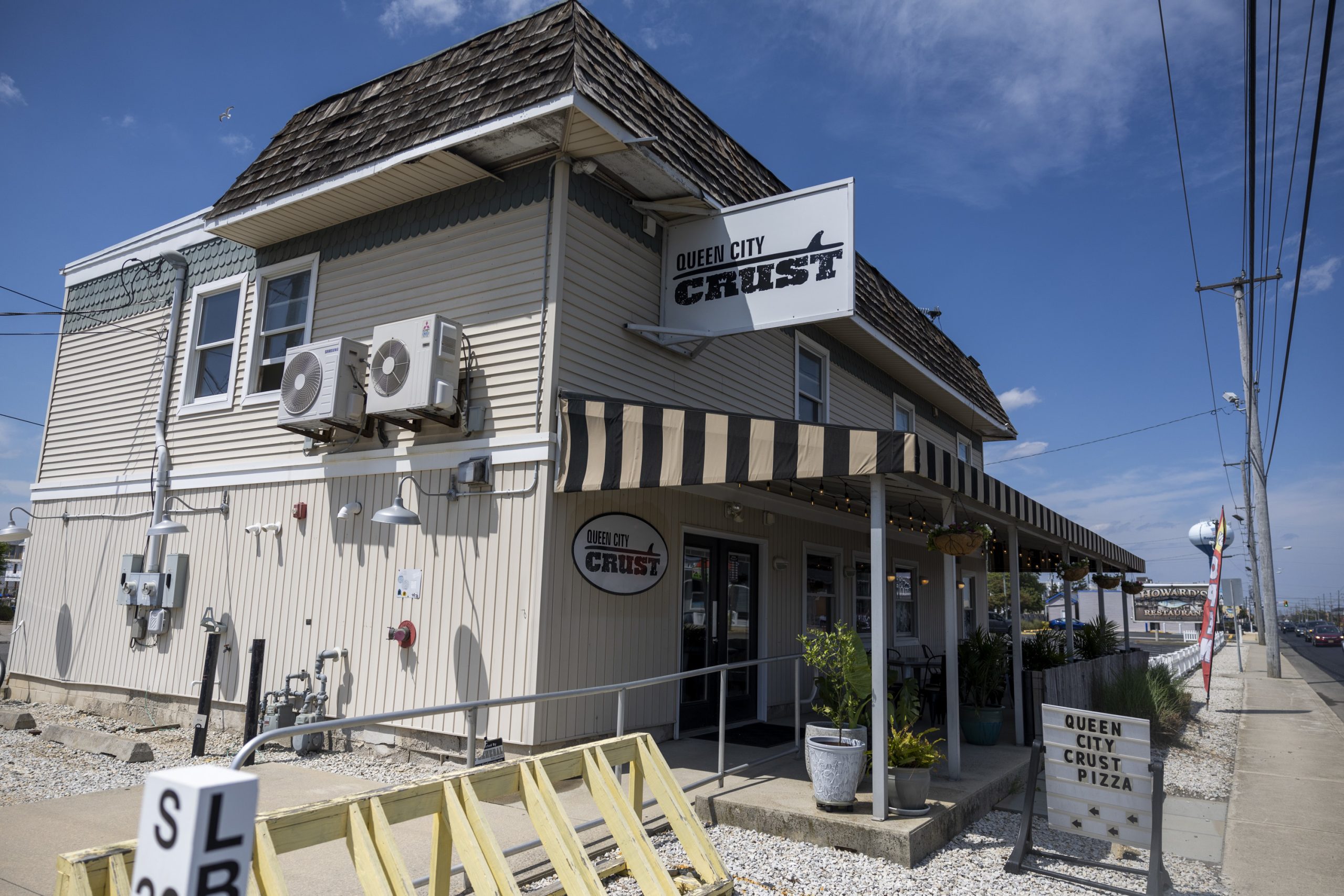
The outside of Queen City Crust in Beach Haven, N.J., on Thursday, June 18, 2026.Tyger Williams / Staff Photographer
LONG BEACH ISLAND
Joy & Salt Cafe
With a temporary sign, and an understated location at an intersection near the ocean where drivers slingshot on and off the causeway to Long Beach Island, you could easily miss Joy & Salt Cafe. But it’s worth a stop at this low-key newcomer to Ship Bottom, a collaboration between two veteran chefs hoping to claim one of the few remaining corners of the island and make what partner Jordan Miller says is “a last-ditch effort for the charm of an old-school BYOB.”
Miller and his business partner and co-chef, Jimi Savianeso, make up for the understated location with genuine hospitality and hands-on scratch cooking. The duo met cooking on the line years ago at local favorite Black-Eyed Susans. With years of fine dining experience behind them, they are opting for a more casual approach to this diner-space and channeling good local ingredients into food they simply like to eat.
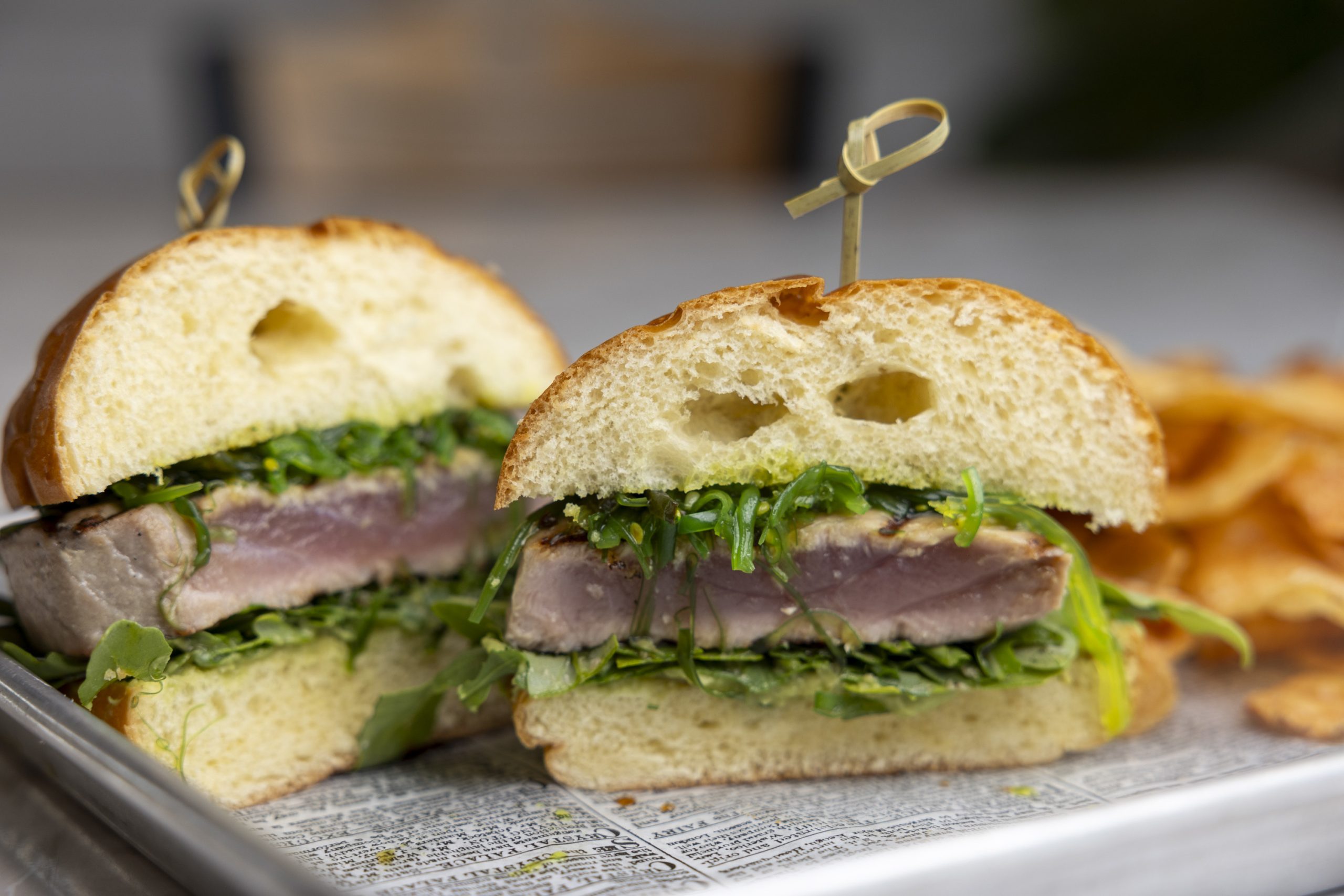
James Savianeso, chef and co-owner of Joy & Salt Cafe, working in the kitchen in Ship Bottom, N.J., on Thursday, June 18, 2026.Tyger Williams / Staff PhotographerThe grilled ahi tuna sandwich at Joy & Salt Cafe in Ship Bottom, N.J., on June 18, 2026.Tyger Williams / Staff Photographer
That could mean a flavorful chowder made from just-dug whole clams, a slice of locally fished grilled tuna on brioche glossed in house-made Japanese barbecue sauce, or a bountiful chilled shrimp cocktail tossed in a saucy Mexican-style marinade (the secret? fresh tomato juice and orange soda). The duo routinely cook fresh-off-the-boat seafood specials for dinner sourced from the nearby docks, but the menu’s default is a homey Italian touch that comes natural to Savianeso, whose North Jersey upbringing imbues his red sauce and sausage and peppers with a nonna-esque magic. That is especially evident at lunch, where Savianeso’s chicken cutlet parm drenched in super-creamy vodka sauce may well become LBI’s sandwich of the summer.
Joy & Salt Cafe, 816 Long Beach Blvd., Ship Bottom, N.J. 08008; 609-342-0794; joysaltkitchen.com
Ellis’ Chicken & Crab Cakes
Takeout can be tricky when determined diners are waiting in lines up to two hours for a seat at one of the Tide Table Group’s roster of popular restaurants on Long Beach Island (Parker’s Garage, Bird & Betty’s, Black Whale, Ship Bottom Shellfish) and in Manahawkin (Mud City Crab House, the Old Causeway Steak & Oyster House). They’ve addressed that conundrum with the creation of Ellis’ Chicken & Crab Cakes, a convenient destination for some of their greatest hits, collected in the fast-casual confines of a crisply rehabbed former antiques shop in Beach Haven that doubles as a boardinghouse for many of the company’s summer workers.
The name offers a good clue as to the specialties: the fried chicken is the same crackle-crusted, buttermilk fried bird from Parker’s Garage. The crab cakes comes in two styles, the somewhat bready OG cakes from Mud City or the baked variation from Parker’s which I far preferred, not only because they’re gluten-free, with tapioca starch for binding, but because they’re made from sweet lump crab bound with a béarnaise sauce flavored with tarragon and Old Bay. The super-plump peel-and-eat shrimp offer a worthy, non-fried option. But this kitchen’s best assets are all about the crisp. Don’t leave without a side of deep-fried green tomato tots covered in creamy drizzles of zesty pimento cheese.
Ellis’ Chicken & Crab Cakes, 208 N. Bay Ave., Beach Haven, N.J. 08008; 609-342-1100; ellislbi.com
Queen City Crust
Jersey Shore pizza has been trending toward thicker crusts in recent years, rising from the cardboard-thin rounds that have long been the boardwalk prototype to heartier, pan-baked pies with flavorful slow-fermented doughs and borders that snap with crispy cheese edges. Bakeria 1010 and Squares & Fare are two outstanding examples I’ve enjoyed in Ocean City and Somers Point, respectively. Long Beach Island has also gotten into the Detroit-style pie action with Queen City Crust, a former pop-up sensation that is now in its third year as a standalone storefront in Beach Haven.
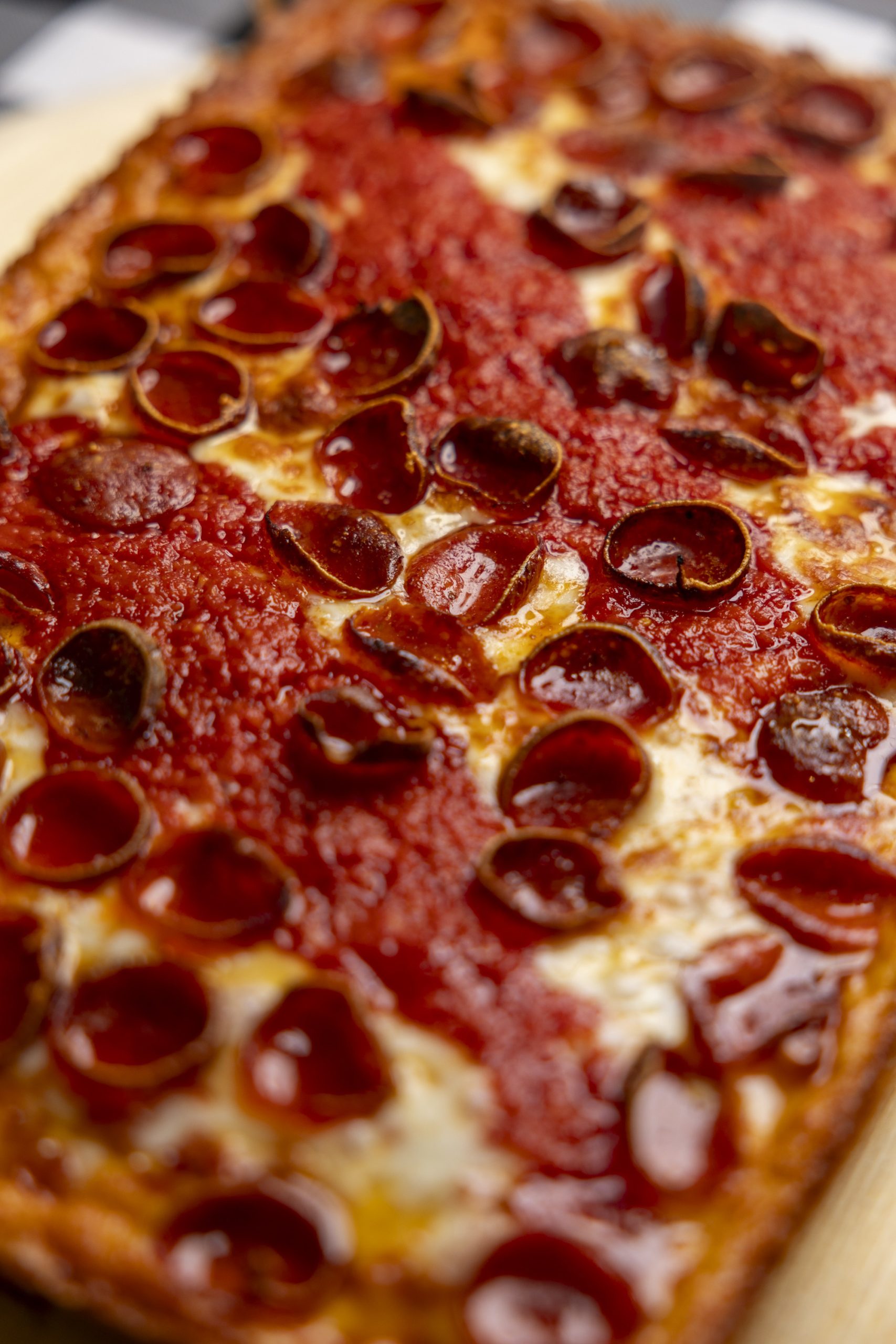
Hot honey pepperoni pie Queen City Crust in Beach Haven, N.J., on Thursday, June 18, 2026.Tyger Williams / Staff Photographer
Owner Troy Sambalino, who spends his offseason running the service pass at Jean-Georges in Manhattan, says the Detroit style, which involves a slower, lower-temp prebake followed by a hot flash to finish pies to order, is ideal for beach locations with the technical limitations of a standard oven. But he still manages to crank out 200 pies on a busy Friday night, good enough to earn him the No. 1 spot in a 2025 ranking of 55 Shore pizzerias by NJ.com.
Sambalino has a patient approach to his dough, which, after a two-day cold ferment, has both an impressively airy interior and a bottom that forms a delicate crisp against the olive oil-lined pan. Mozzarella and tangy cheddar are his cheese combo of choice, with the cheddar tucked near the edges forming a toasty crisp. One 10-by-13-inch pan can easily feed two to four people, but I appreciate that Queen City also sells its pies by the slice so you can taste a variety of toppings. From the cup-and-char pepperoni drizzled with hot honey to sausage with crunchy banana peppers, basil-topped puddles of milky burrata laced with bright tomato sauce, or a fusion pie of breaded chicken bits streaked with spicy Asian barbecue sauce, these pies offer hearty satisfaction when your teeth sink into their crusts.
Queen City Crust, 13504 Long Beach Blvd., Beach Haven, N.J. 08008; 609-661-7769; queencitycrust.com
Guapo’s Coffee House
As I steadily caffeinated during my restaurant research missions up-and-down the Jersey Shore, my encounters with confectionary-sounding coffee drinks that included “dulce de leche, “dot cake,” and “banana bread” in the titles made it clear that running a cafe in 2026 is as much about thinking like a pastry chef as a barista.
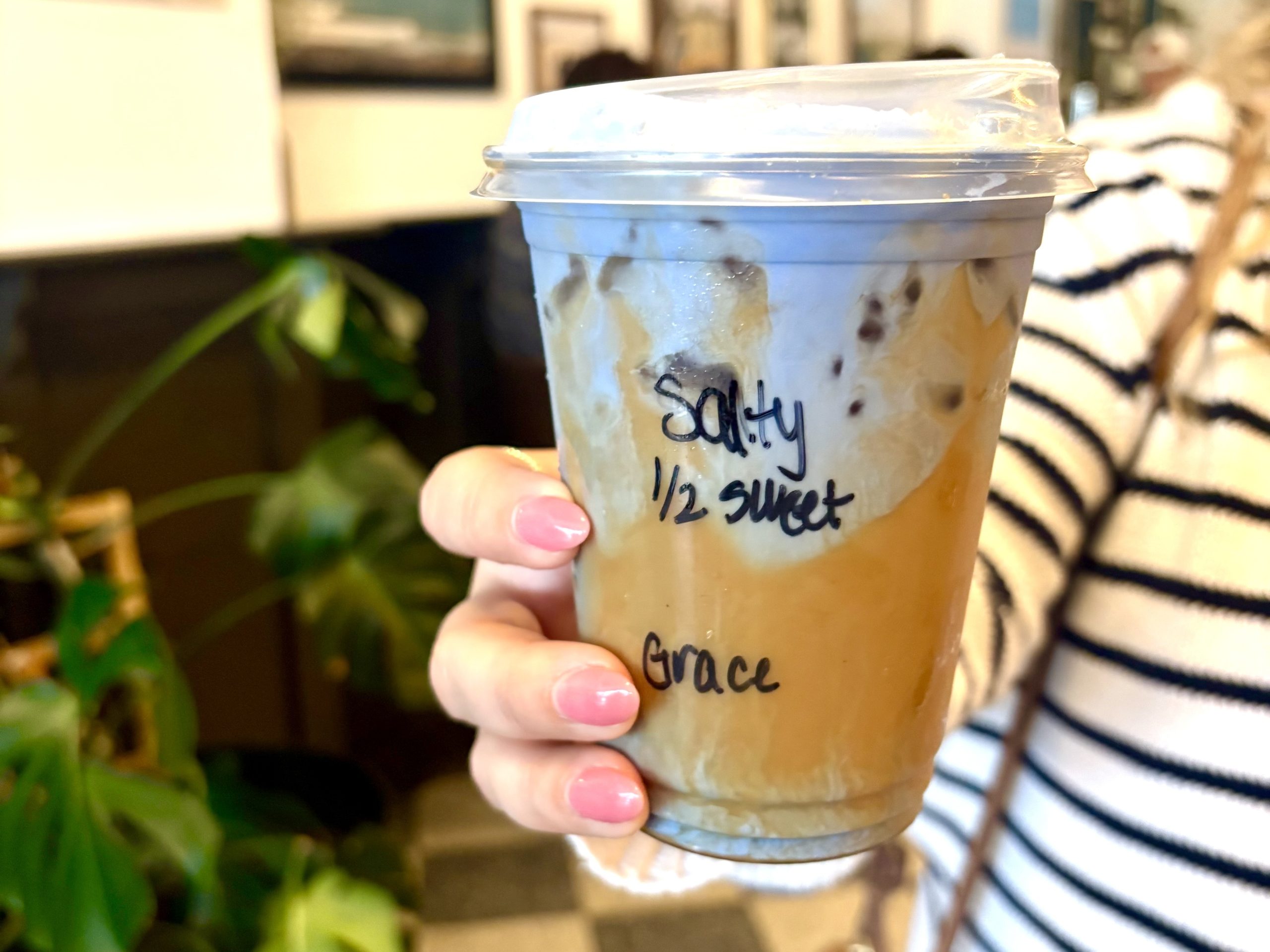
The Salty Dog iced coffee at Guapo’s Coffee House in Beach Haven blends salted caramel-sweetend espresso with whipped cream turned blue with spirulina. It’s become a viral hit.Craig LaBan / Staff
In general, I’m not a dessert coffee fan. But the reason I returned multiple times to Guapo’s in Long Beach Island is because their specialty drinks still taste like they also actually include coffee. Even owner Sammy Jo Alvarez’s most viral and colorful drink, the Salty Dog (named for her pup Guapo), still delivers a toasty undertow of the house blend of Ethiopian and Colombian beans, roasted to a medium hue by Yellow Dog Roasters in nearby Manahawkin. The secret to making creatively flavored drinks that still have coffee integrity, says Alvarez, a longtime local bartender before launching her roof deck-topped cafe in Beach Haven four years ago, is balance and focusing on natural ingredients. All the add-in ingredients here are made in-house, from the sea salted caramel syrup to the top layer of fresh whipped cream (aka “cold foam”) that she turns sky blue with organic spirulina. “Basically, it looks like a day at the beach inside a cup — and people love it.”
Guapo’s Coffee House, 106 N. Bay Ave., Beach Haven, N.J. 08008, 609-661-3504; guaposcoffee.com
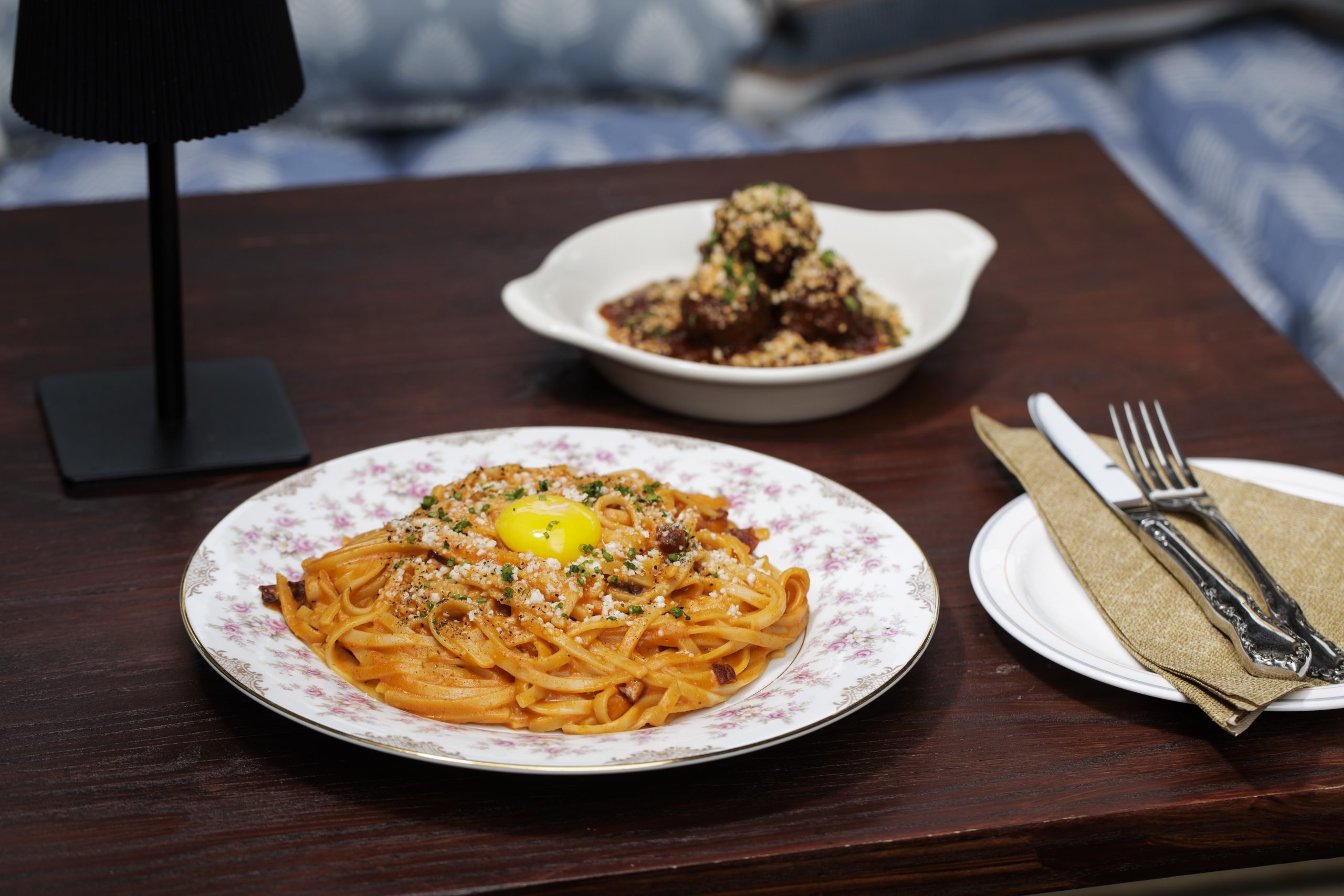
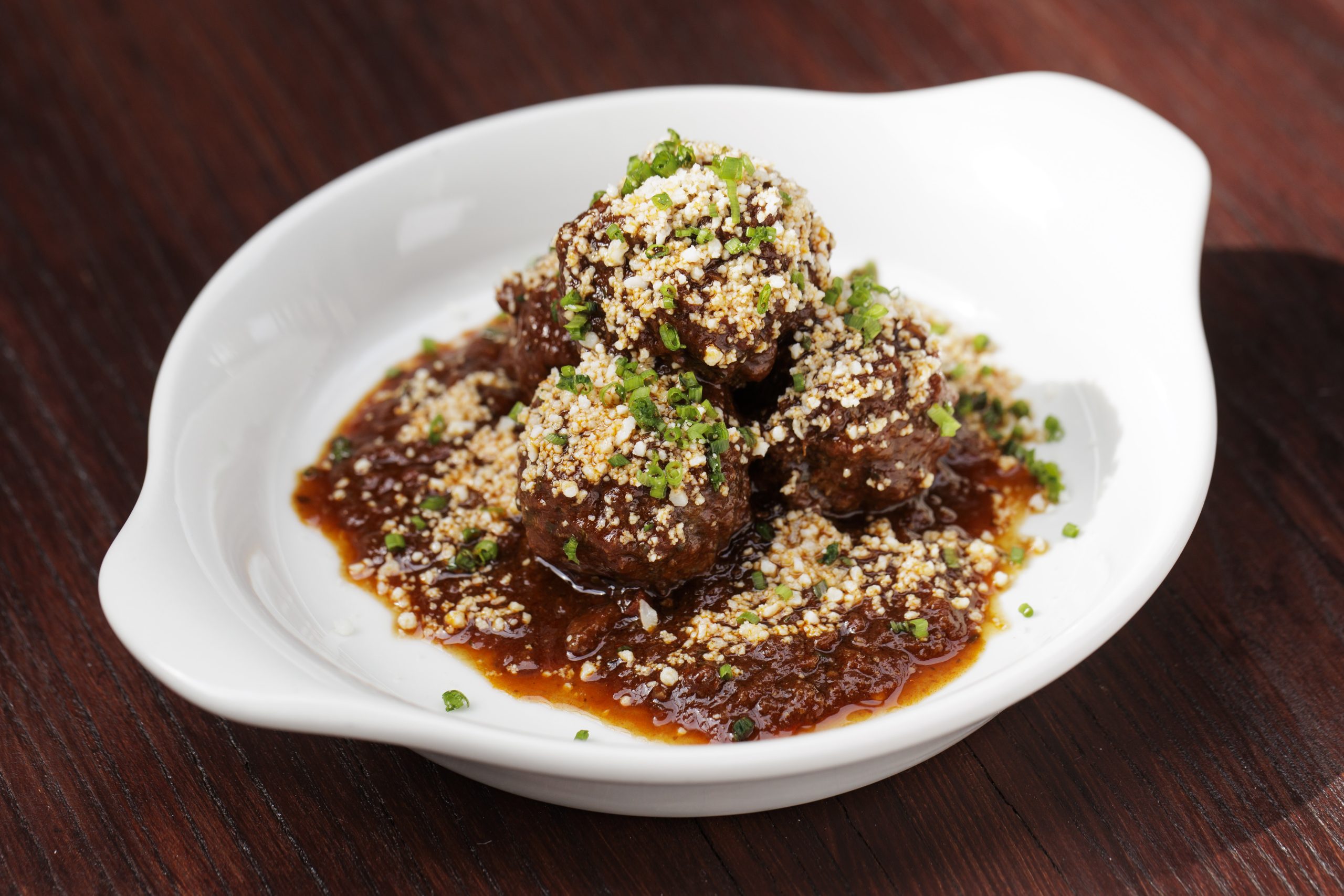
The gochujang carbonara and Oaxacan meatballs at the Iron Room in Atlantic City, N.J. The Iron Room is hidden behind a door at Bar 32.Monica Herndon / Staff Photographer
ATLANTIC CITY
Nana’s Good Eats
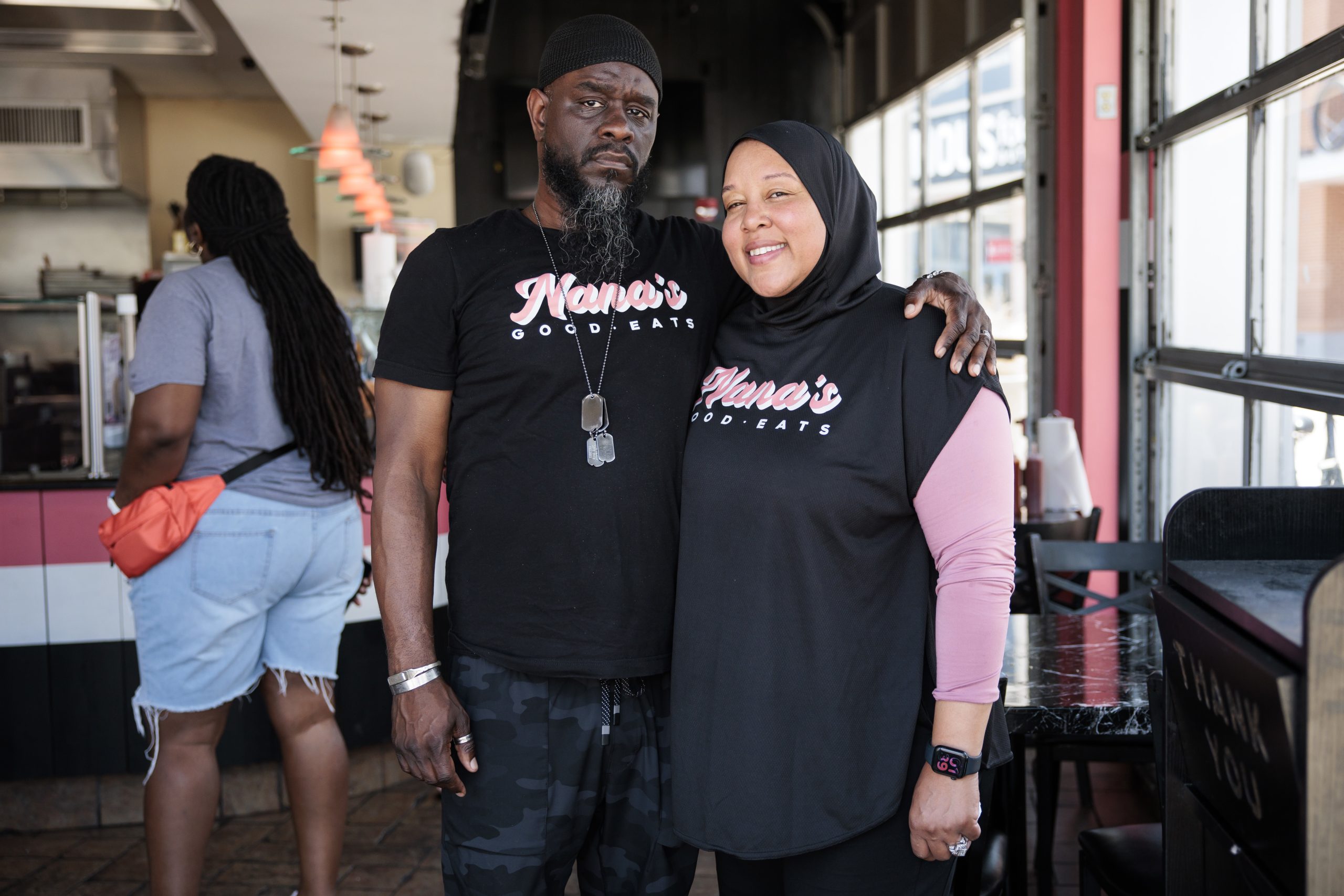
If there’s a 20 minute-plus wait for your food at Nana’s Good Eats, it’s for a good reason: nothing hits the fryer before you order from this cheerful soul food hub, located on the pedestrian pavilion of Atlantic City’s Tanger Outlet mall. The wait is absolutely worth it, because Nana’s serves up some of the most delicious fried whiting I’ve had in recent memory, a huge portion of plump and lemon-scented fresh fillets sealed inside a delicate cornmeal crust, just as owner Samantha Prescott’s grandpa Dennis McDowell, a professional chef, taught her as a little girl. (“Most parents lead with how to tie your shoe, but my grandpa started by teaching me how to stir a pot of grits so it doesn’t stick to the bottom.”) Prescott’s cooking chops are also evident in her succulent fried jumbo shrimp, as well as every side I sampled. The mac and cheese retained the almost fluffy texture of perfectly cooked cavatappi while a balanced five-cheese sauce remained creamy, not broken or greasy. The tender braised collards were infused with the whiff of smoked turkey wings and a perky finishing tang.
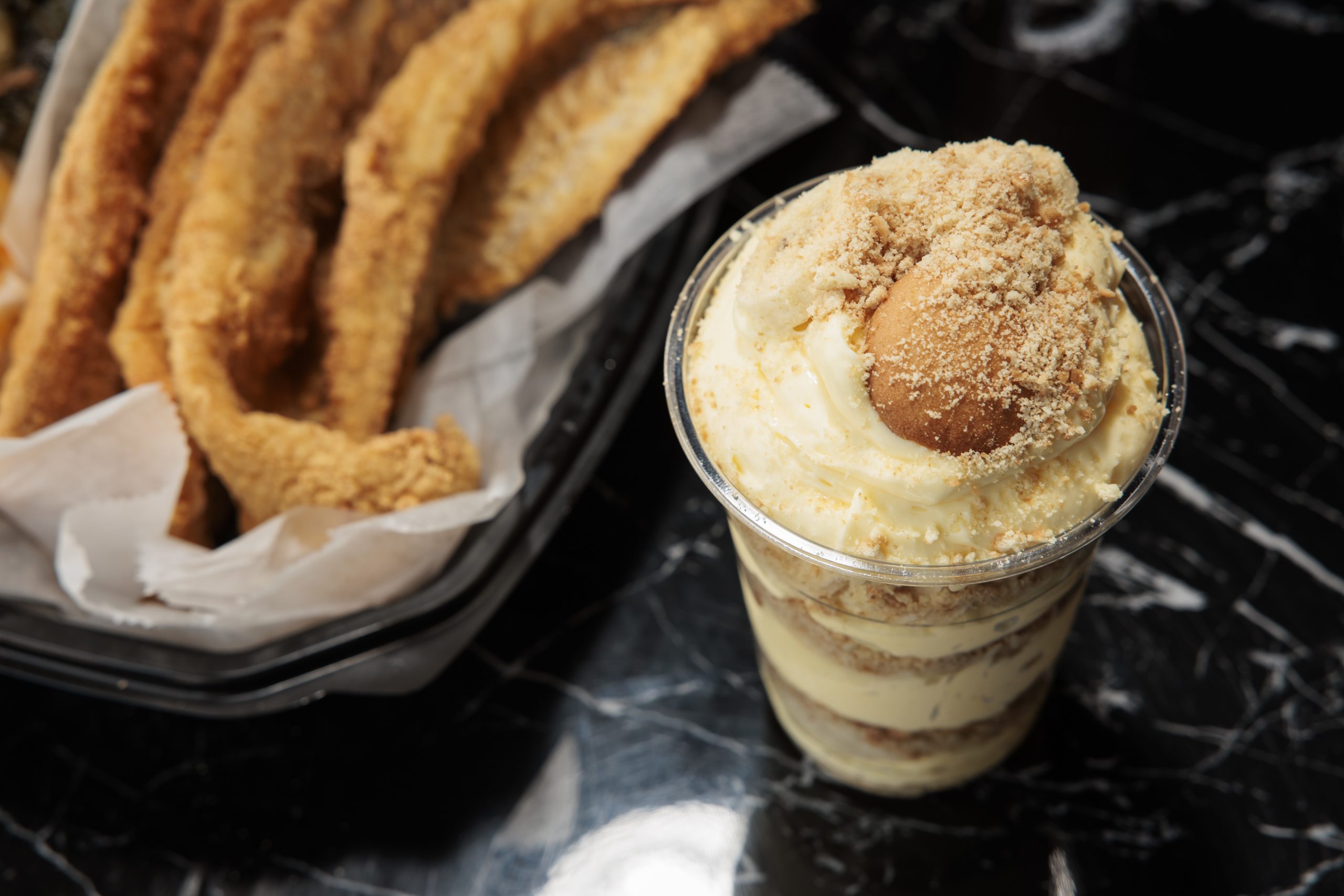
The OG banana pudding at Nana’s Good Eats in Atlantic City, N.J.Monica Herndon / Staff PhotographerOwners Rahman and Samantha Prescott at Nana’s Good Eats in Atlantic City, N.J.Monica Herndon / Staff Photographer
Prescott’s talent as an entrepreneur, meanwhile, answers all that savory goodness with the sweet indulgence of her first endeavor, Nana’s Good Puddin’. Prescott brought the customization concept of Cold Stone ice cream to the world of pudding in a popular dessert business she opened in 2020 in the Hamilton Mall, which she has since closed and merged into the Atlantic City Good Eats location. The build-your-own options here are vast, with 30 different base puddings (from classic flavors to white chocolate, pistachio, or Oreo cream), crunchy cookie add-ins and various different crumbles. I chose the OG banana pudding and was impressed by its banana-flavored intensity, but also by the meticulous manner in which it was constructed to order, with multiple layers of creamy pudding, crunch and vanilla wafer cookies being patiently added until, at last, it was finally handed over and I dove in spoon first.
Nana’s Good Eats, 122 N. Michigan Ave., Atlantic City, N.J. 08401; on Facebook
The Iron Room
Do you believe in do-overs? The reboot of chef Kevin Cronin’s Iron Room, Atlantic City’s favorite hidden gastropub — now in its third incarnation and second location — might be the spark that finally gives the Tennessee Avenue development some momentum. First, you have to find it. True to its speakeasy roots (the original Iron Room was located behind a liquor store) this restaurant is tucked into an enclosed back alley patio accessed through the rear door of another establishment, Bar 32 Chocolate & Cocktails. A tall green wall on one side of the 50-seat al fresco space faces an awning-covered bar where some of the best cocktails I sipped this summer — a smooth but potent Manhattan; the mezcal-washed Storm Queen — are served in antique crystal coupes inherited from Cronin’s grandmother while a retro acoustic soundtrack sets a mellow mood.
The Oaxacan meatballs at the Iron Room on Thursday, June 11, 2026 in Atlantic City, NJ. The Iron Room is hidden behind a door at Bar 32.Monica Herndon / Staff Photographer
The small plates emerging from the shipping container kitchen are pure fusion fun, with bold flavors that resurrect some established Iron Room hits, including a thick-cut hunk of candied Nueski’s bacon, truffled udon mac and cheese, and a tamari-charred hanger steak fanned over brussels sprouts. Cronin’s new creations are equally bold. The spicy Oaxacan chorizo meatballs glazed in red salsa and shavings of Bar 32 chocolate were a favorite, along with the barbecue sauced boneless Korean-fried chicken and a rich pasta carbonara blushing with Korean gochujang spice. I would have loved the shrimp toast had the top layer of crustacean paste not been turned an unappetizing gray by the addition of black garlic. Next time, I’d consider preordering one of the menu’s large-format specials: a spatchcocked whole barbecue chicken with sides; a “big ass whole snapper” with tostones, or the Ron Swanson special (a rib eye, deviled eggs, and a flight of Lagavulin) that was also an old Iron Room “iykyk” draw. Hopefully, this time it will take.
The Iron Room, 121 S. Tennessee Ave., Atlantic City (enter through Bar32 Chocolate, and head to back alley through back door); instagram.com/ironroom_ac
Bar 32 Chocolate & Cocktails
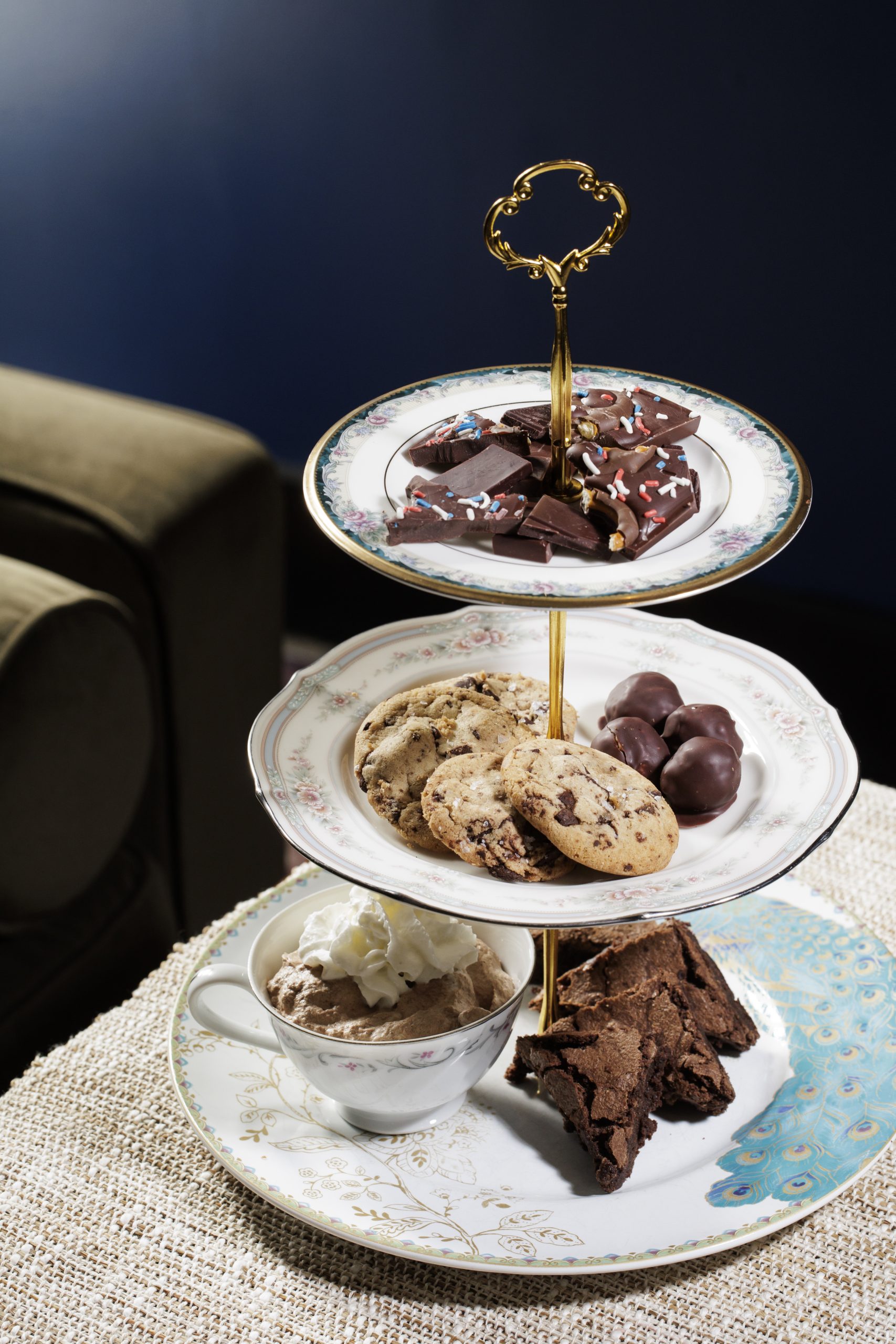
There’s no dessert served at the Iron Room by design. The separate and independent bar that fronts it has that course covered. Nicole Callazzo’s revamp of the project formerly known as Made Atlantic City Chocolate Bar has kept the original concept’s ambitious bean-to-bar chocolate production in place as the anchor for the chocolate-themed sweets menu. While there are more sophisticated chocolatiers in the region, the quality of Callazzo’s small batch chocolates made from ethically sourced cacao, which can take up to five days to make, is satisfying in a straightforward way. You can sample a little bit of several specialties on a tiered platter, which brings multiple shades of chocolate bars, double fudge brownies, chocolate mousse, and various bonbons. Try it while sipping a martini infused with the bar’s own 60% cocoa chocolate. The baked-to-order brown butter cookie skillet is also a popular choice here, if you have an extra 15 minutes to wait. But I’d return especially for one of the Bar 32 whiskey flights, which pair three different pours of Michter’s (or Whistle Pig) whiskey with different chocolates for $40. Considering the quality of the spirits, it’s a fair deal.
Bar 32 Chocolate & Cocktails, 121 S. Tennessee Ave., Atlantic City, N.J. 08401, 609-248-6960; bar32chocolate.com
“A little bit of everything” at Bar 32 on Thursday, June 11, 2026 in Atlantic City, NJ. Bar 32 offers bean-to-bar chocolate, handmade desserts, and craft cocktails.Monica Herndon / Staff Photographer
Moments at Scannicchio’s
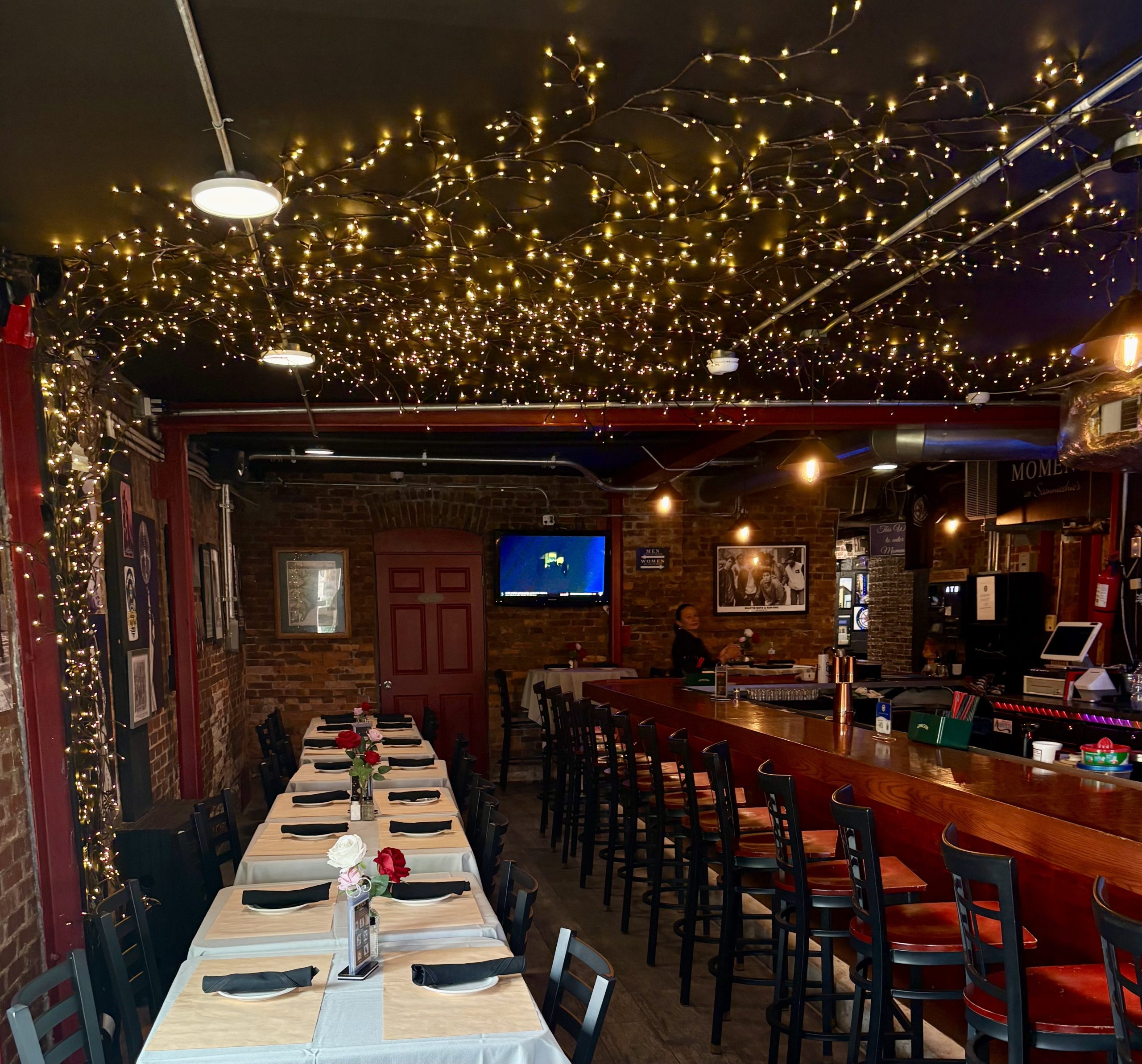
Some places are all about the food. Others revel in quirky ambiance. You can get a bit of both at this Atlantic City sibling to Scannicchio’s, one of my favorite old-school Italian haunts in South Philly. The AC experience offers the split personality of two adjoined spaces: the charming intimacy of a dark corner barroom lit with Christmas lights, and a bright sports bar lounge next door where a DJ spins retro hits for a handful of dancers while spillover dinner crowds sup at high-tops in the glow of large TVs.
The corner dining room of Moments at Scanniccho’s in Atlantic City is darker and more intimate than the neighboring lounge.Craig LaBan / Staff
A tender and massive double-cut pork chop Siciliana buried beneath a zesty gravy of cherry peppers, onions, olives, and mushrooms was the hands-down highlight of our meal. The big menu also showcases several familiar favorites from the South Philly original (clams casino, a stuffed artichoke, the sausage and figs app), although it was not cooked with the same consistency and finesse. Even so, we enjoyed the experience. And I’ll especially treasure the moment our larger-than-life server (who had a bear hug for every one of the restaurant’s many regulars) offered a memorable logic for his general preference of pasta shape with entrees: “Why should I waste calories twirling spaghetti when I can just get straight to it with penne? Stab and eat! Stab and eat!” Such wisdom alone is worth the visit.
Moments at Scannicchio’s, 2647 Fairmount Ave., Atlantic City, N.J. 08401, 609-344-5338; momentsatscannicchios.com
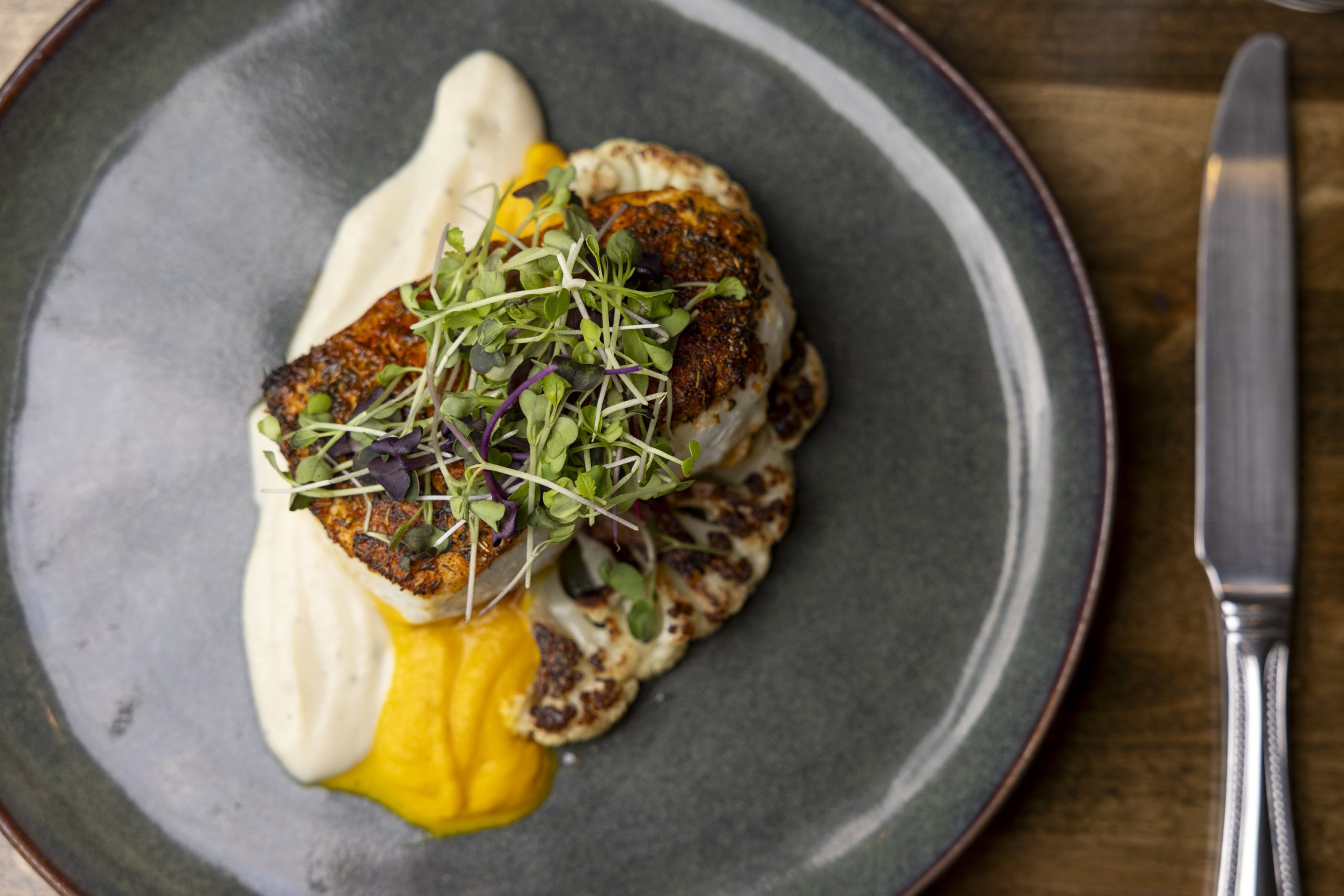
The halibut entree at Rustico in Ventnor City, N.J., on Wednesday, June 10, 2026.Tyger Williams / Staff Photographer
VENTNOR
Rustico
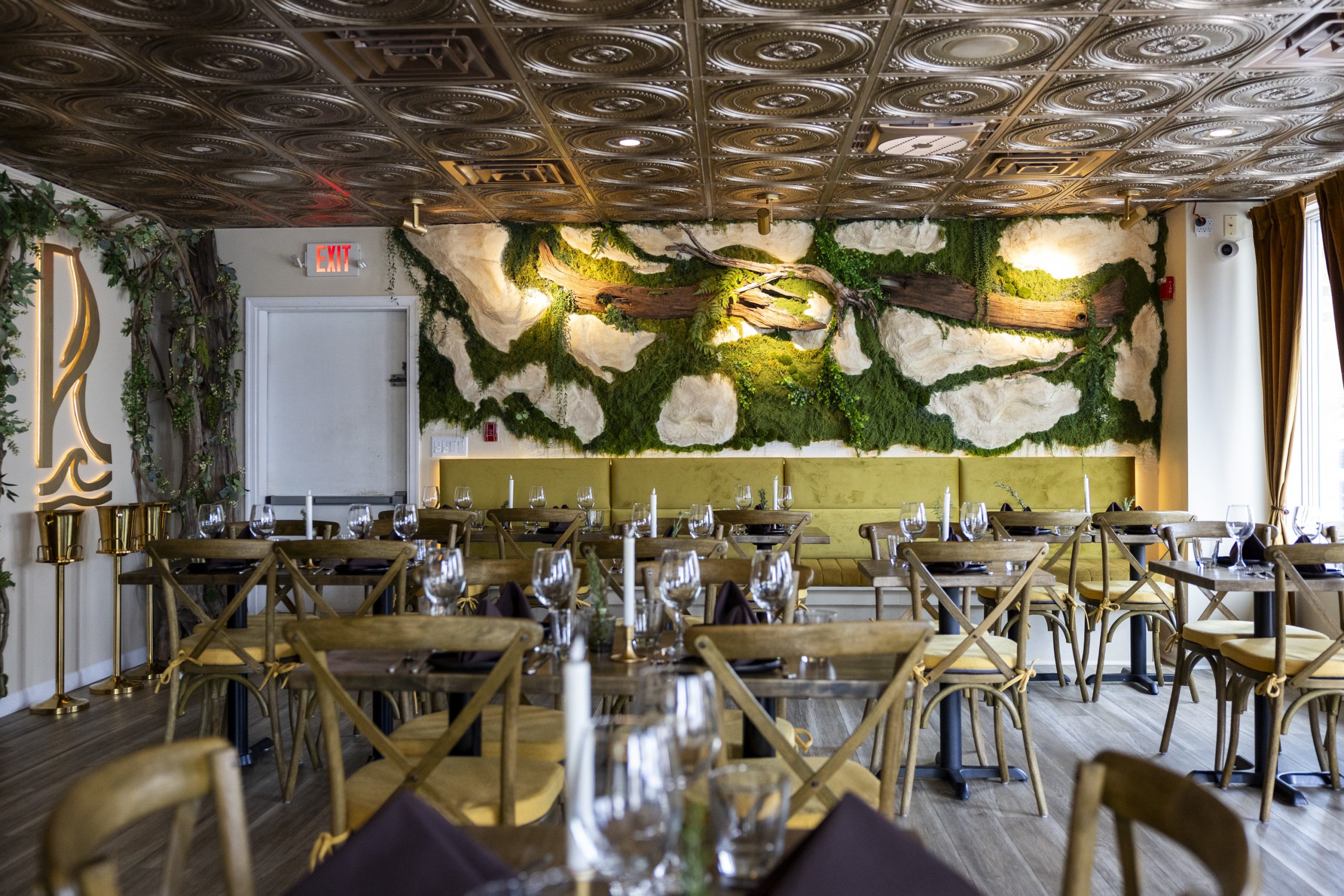
Few restaurant couples have been able to create evocative dining experiences in small BYOB spaces through DIY design as deftly as Tanya and Petar Petrov. A veritable lemon grove on the ceiling of their debut Italian hit last year, Martina’s, conjured a glimpse of the Amalfi Coast on Atlantic Avenue. This year, they’ve turned to a closer source of marine inspiration — the bay beside their Ventnor home — for the makeover of Petar’s former Cafe Velo into Rustico, a naturalistic dinner cove that wraps diners in plastered wall montages of foraged driftwood, sea moss, and rocks. The menu is still decidedly Italian. While some Ventnorians have complained to me about menu overlap between the two restaurants, the fact that waiting lists can exceed 300 names for those hoping to get into 48-seat Martina’s means there is a legitimate demand for 80 more seats at Rustico (plus 28 more outside), where devotees can order the tried-and-true arancini, linguine with vongole, and chicken Parm.
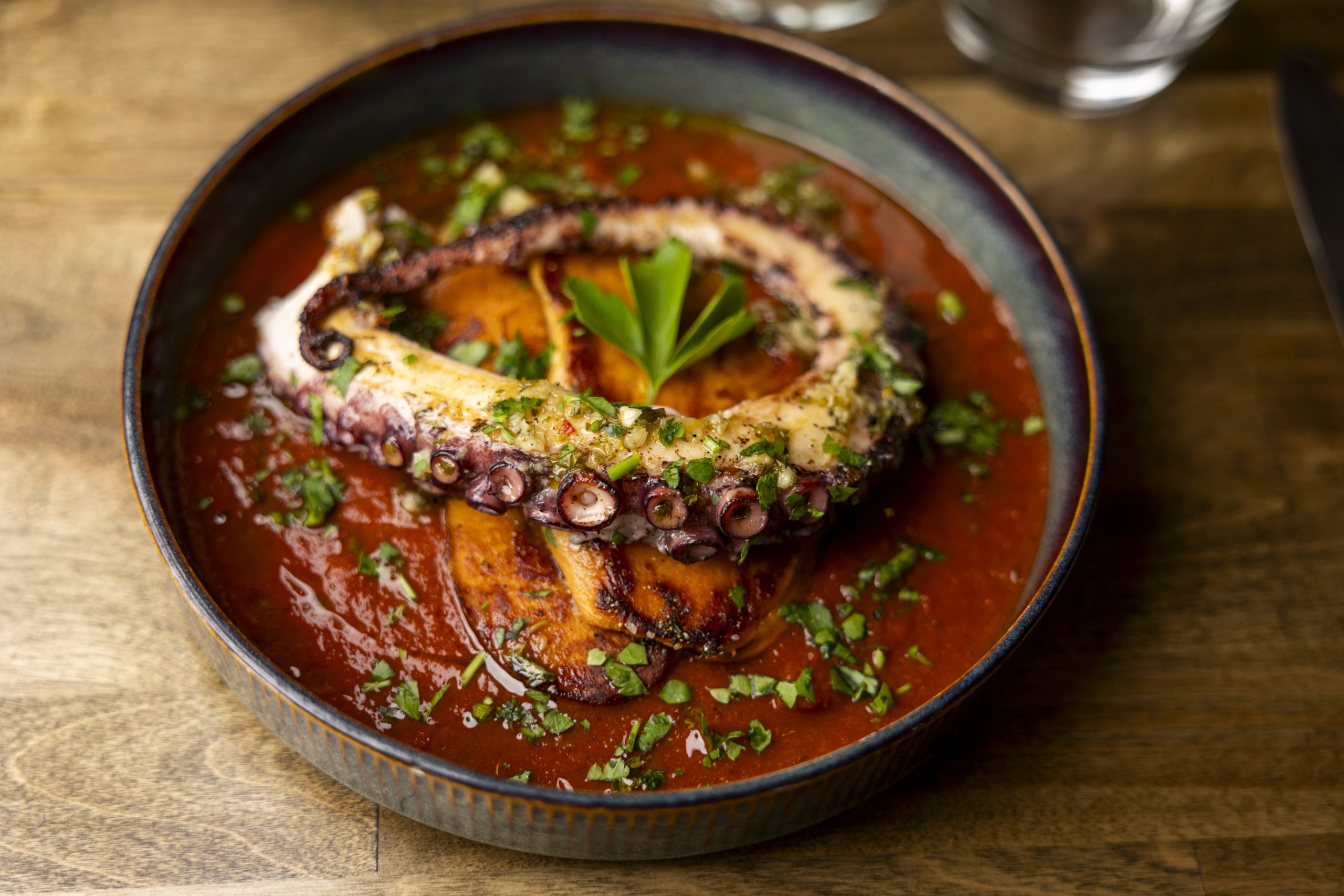
The octopus dish at Rustico in Ventnor City, N.J., on Wednesday, June 10, 2026.Tyger Williams / Staff PhotographerThe inside of Rustico in Ventnor City, N.J., on Wednesday, June 10, 2026.Tyger Williams / Staff Photographer
The chicken Parm was the least compelling thing we ate at Rustico. An unconventional starter of grilled octopus curled over a platform of sweet potato turned out to be delicious, the potato’s soft sweetness contrasting the texture of the meat while balancing the savory tomato sauce. That dish is a legacy of Cafe Velo’s early days, when the tiny kitchen would cross-utilize ingredients between the popular breakfast and dinner menus. Rustico, which expanded both its dining rooms and kitchen, has capacity now to undertake ambitious specials like broiled lobster and linguine feasts for two (very limited nightly). A soulful short rib and shiitake ragù was a hearty winner over fresh pappardelle made by Haddon Township’s Severino, whose owner is the Petrovs’ neighbor.
Fresh seafood also remains a strength, with entrees like blackened ahi tuna with red bliss potato hash and hollandaise. A moist and meaty halibut set over two-toned purees of cauliflower and carrot was also fantastic, a special-turned-standby from chef de cuisine Lorenzo Hernandez. Of course, I ordered at the very moment this kitchen ran out of halibut. Luckily, Petar had a spare portion in the fridge at nearby Martina’s, and he retrieved it just in time for this busy kitchen not to miss a beat: “That’s the beauty of having two restaurants so close,” says Petar. “Stuff happens!”
Rustico, 6525 Ventnor Ave., Ventnor City, N.J. 08406, 609-727-0499;rusticoventnor.com
The inside of Florida Cuts in Ventnor City, N.J., on Wednesday, June 10, 2026.Tyger Williams / Staff Photographer
Florida Cuts
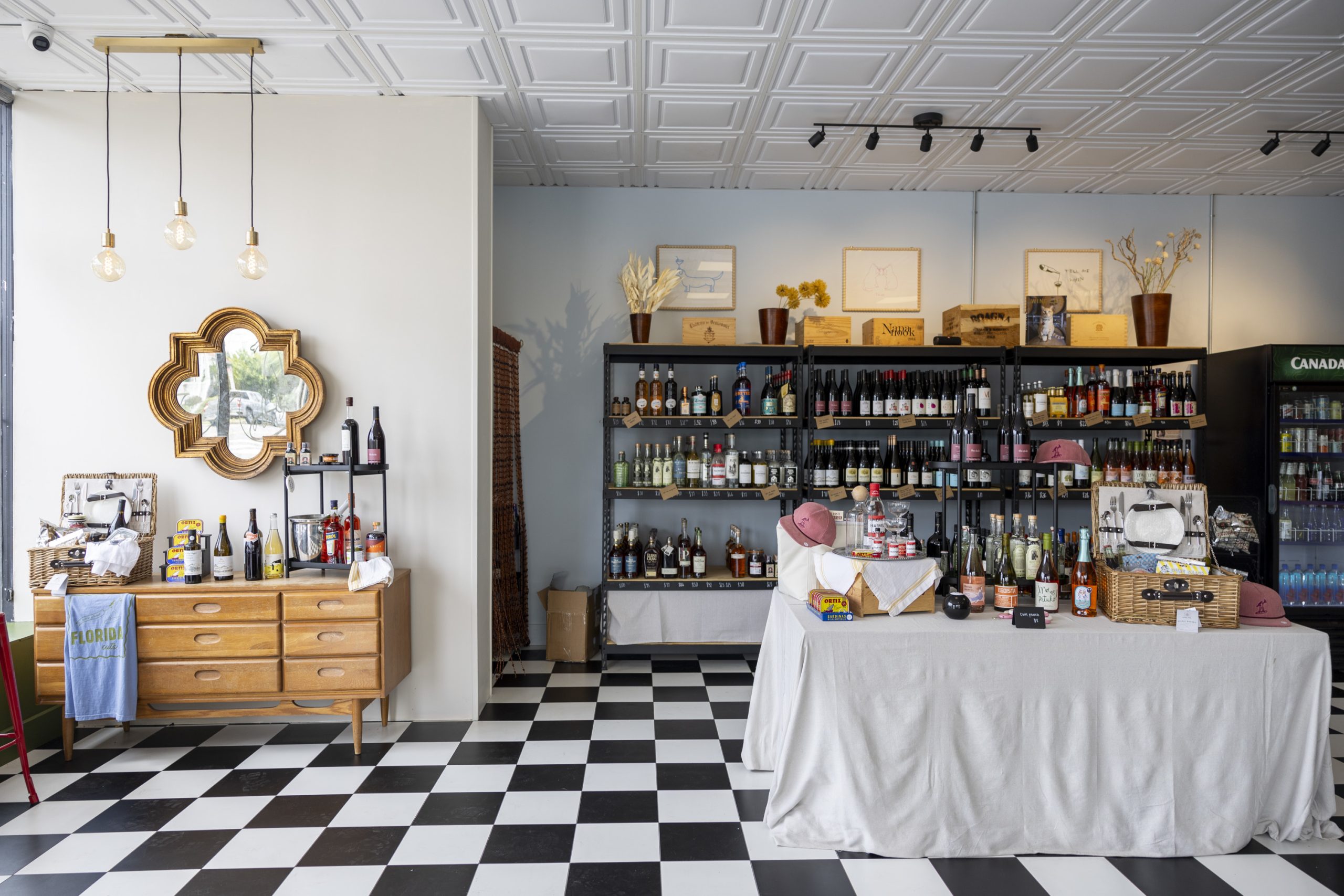
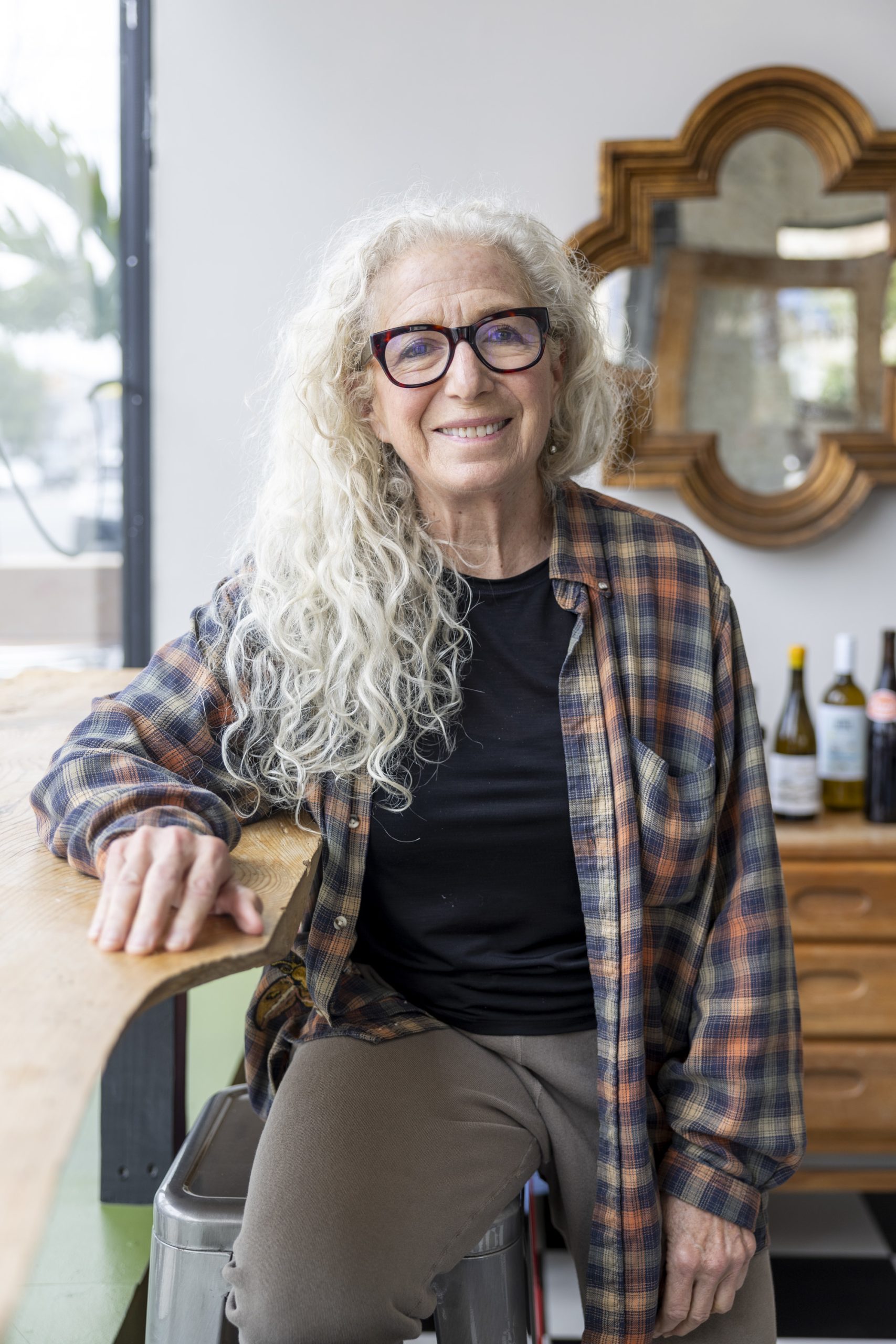
Cookie Till of Steve & Cookie’s bought the half-century-old Florida Cold Cuts & Liquors deli in 2022 and began to reshape it to her vision. What was a gradual makeover the first few years, most notably upgrading the sandwiches and bottle selection, became a wholesale change this spring when Till removed “cold” from the name and replaced the classic sub shop format with an artisan sourdough bakery turning out a lineup of grab-and-go sandwiches built on two kinds of focaccia and sesame-speckled semolina baguettes. The longtime tuna salad and Italian hoagie crowd is not pleased: “Cookie really took a good thing … and turned it into something nobody needed,” a reader wrote me in a direct message on social media.
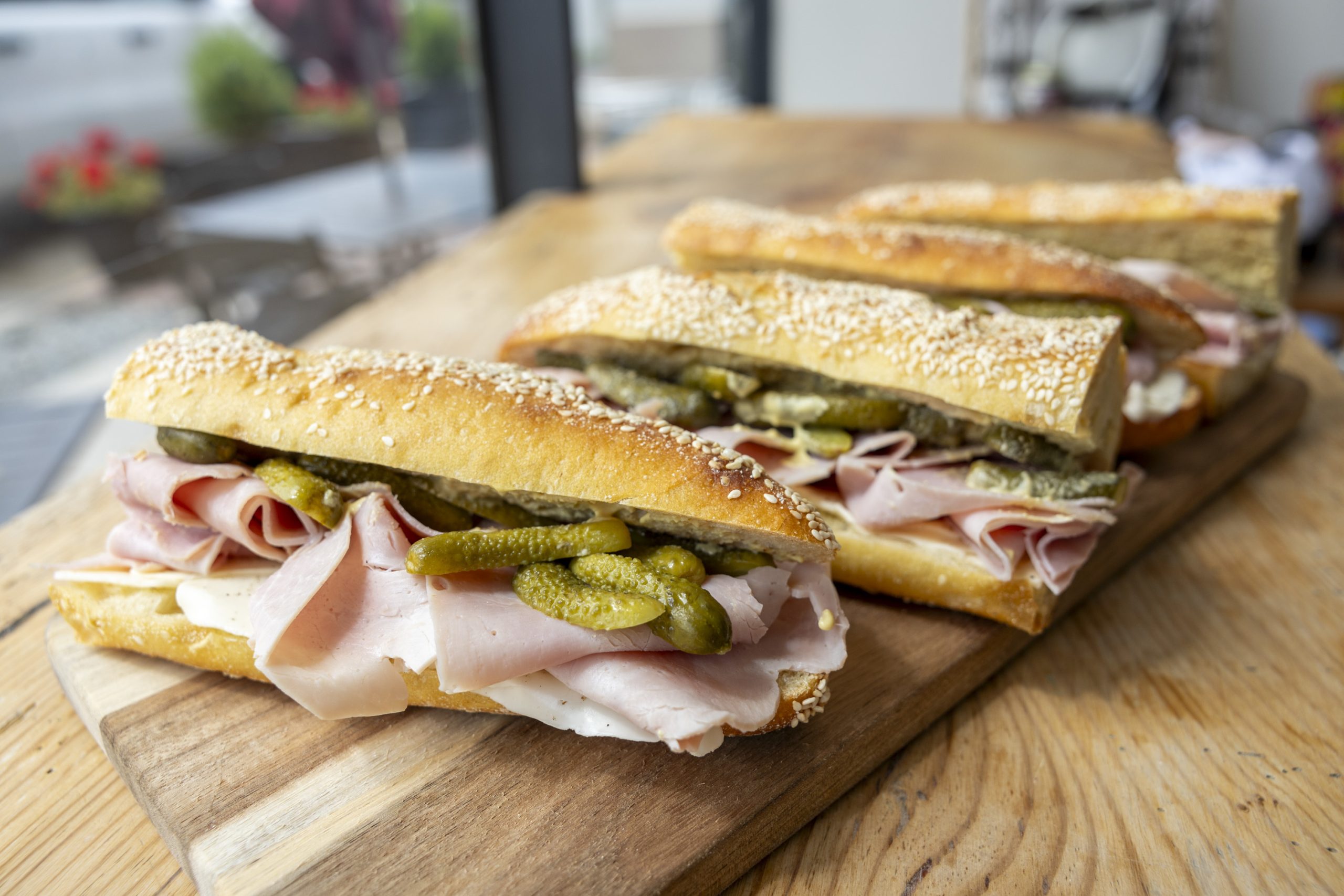
The ham and butter baguette at Florida Cuts in Ventnor City, N.J., on Wednesday, June 10, 2026.Tyger Williams / Staff Photographer
I loved the old corner shop’s house-baked tavern ham sandwiches as much as anyone, but I disagree. What makes a smart restaurateur like Till so invaluable is her willingness and wherewithal to take risks to do things differently. Till has a track record of creating top-notch progressive concepts people simply didn’t realize they needed until she made it happen, from a craft coffee shop in Ventnor No. 7311 to an interactive organic farm with a philanthropic mission at Reed’s Farm. There are plenty of places to get a classic sub on Absecon Island, but there is nothing like the new Florida Cuts, where lead baker Santina Renzi (a longtime key contributor at Her Place Supper Club), consultant Jon Taus, and sourdough specialist Victoria McHugh are working with Till’s partner Kim Richmond to create stellar loaves made from flour milled from local grains that result in bread with integrity and flavor. They’re used for original sandwiches that are largely outstanding, from the minimalist focaccia laced with mortadella, ricotta, and pistachios (all crackly crust and lush stuffing richness), to the freshly house-roasted turkey layered with Steve & Cookie’s signature “ugly tomato salad,” Gorgonzola, and crispy shallots. The tuna salad fragrant with lemon zest and crunchy peperoncini rings is a sleeper hit, while the ham and butter on a sesame semolina loaf can compete with Philly’s best.
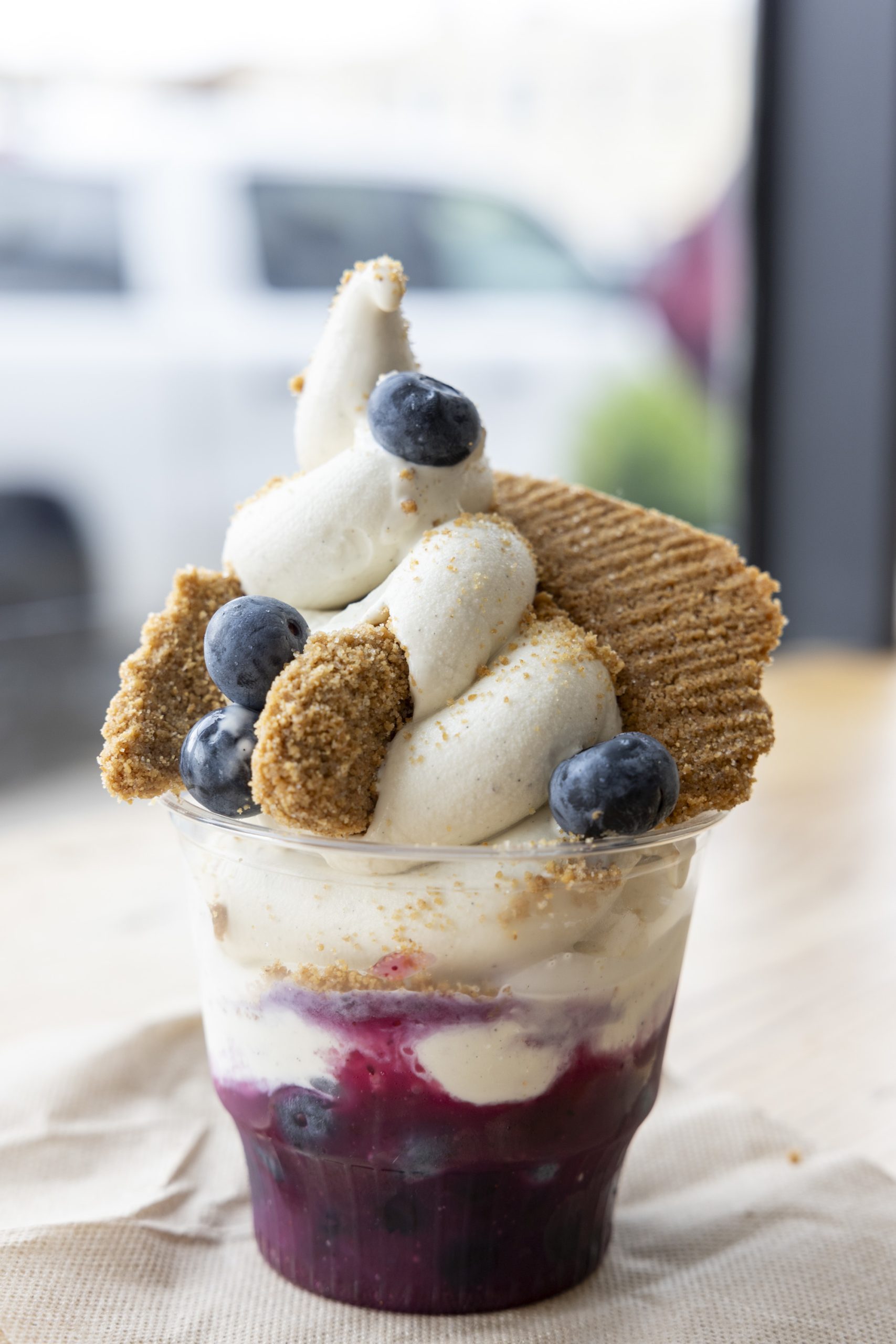
Owner Cookie Till at Florida Cuts in Ventnor City, N.J., on Wednesday, June 10, 2026.Tyger Williams / Staff PhotographerThe soft-serve sundae with Steve& Cookie’s blueberry pie at Florida Cuts in Ventnor City, N.J., on Wednesday, June 10, 2026.Tyger Williams / Staff Photographer
My one disappointment was the cutlet sandwich, which didn’t have nearly enough Caesar salad inside. But there were so many consolations: a fridge case stuffed with local farmstead cheeses; focaccia flatbread topped with butter-poached clams; warm rounds of fresh-baked sesame tahini cookies; shelves stocked with quality spirits and affordable natural wines. There’s also soft-serve now, offered as a sundae layered with Cookie’s famous blueberry pie. Now I definitely need that, even if I didn’t know it before I walked in the door.
Florida Cuts, 7301 Ventnor Ave., Ventnor City, N.J. 08406; floridacuts.com
MARGATE
Tideline
The scene at Tideline on the bay behind Margate City, where full restaurant service is offered on deck to 30 moored boats and 12 Jet Skis at a time, could make anyone have yacht envy. But this splashy yearling from the family behind Tomatoes — an unabashed gesture to the city’s ever more ritzy denizens — has room on its multifloor 240-seat bar complex for everyone else to linger, nibble, imbibe, and observe. One of the area’s most spectacular bay perches for sunset views is an undeniable bonus. Given the swanky setting, the food from chef Carlo Marsini’s kitchen is a notch better than it has to be, from the generously stuffed truffled cheesesteaks and chicken Italiano cutlet sandwiches to the shot glasses stuffed with fried soft-shell crab halves dunked into an avocado green crema sparked with poblanos.
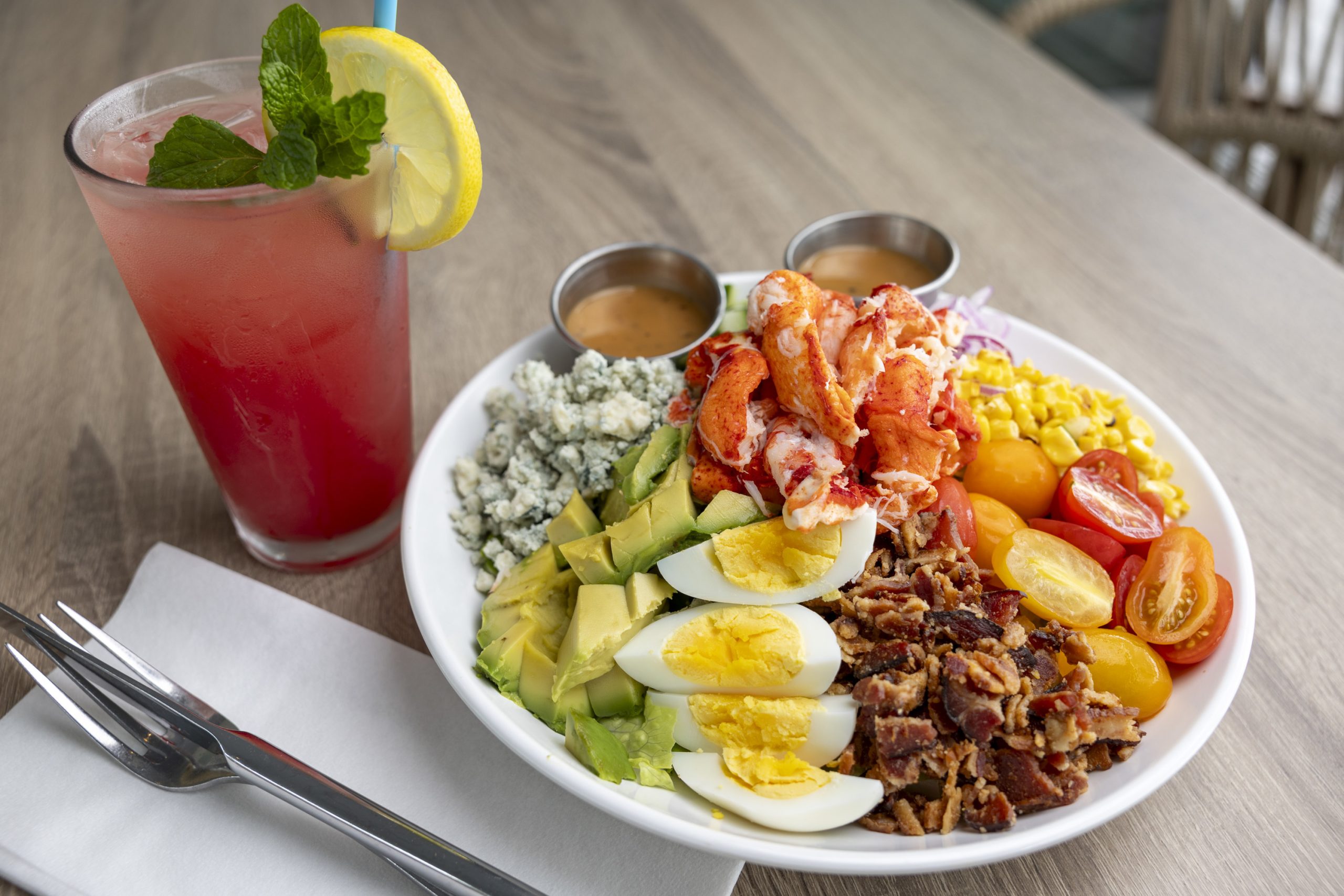
The lobster Cobb salad at Tideline in Margate City, N.J., on Wednesday, June 10, 2026.Tyger Williams / Staff Photographer
I’d definitely return for the generous lobster Cobb salad and a Dockside cocktail of watermelon juice spiked with Tito’s. But don’t get too ambitious. The items we ordered from the large plate section, chicken kebabs and a $32 coffee-rubbed pork chop, were incinerated by the grill chef. The drink menu has a danger zone, too, with a cocktail called Liquid Asset. It’s made with trendy Clase Azul Gold tequila and a chile pepper but what’s spicy is the price tag of $1.1 million. That’s because this drink comes with a 39-foot speed boat. That may be the stuff yacht club dreams are made of for some, even if there’ve been no takers yet. But unsurprisingly, this land-loving mezcal fan wasn’t even tempted.
Tideline, 9317 Amherst Ave., Margate City, N.J. 08402; 609-350-6717; tidelinemargate.com
Jaylen Brown loves attention, which is why he went on Twitch to talk about his feelings just hours after releasing a statement on social media expressing his feelings about being traded from the Celtics to the Sixers for a PED cheat and four speculative draft picks.
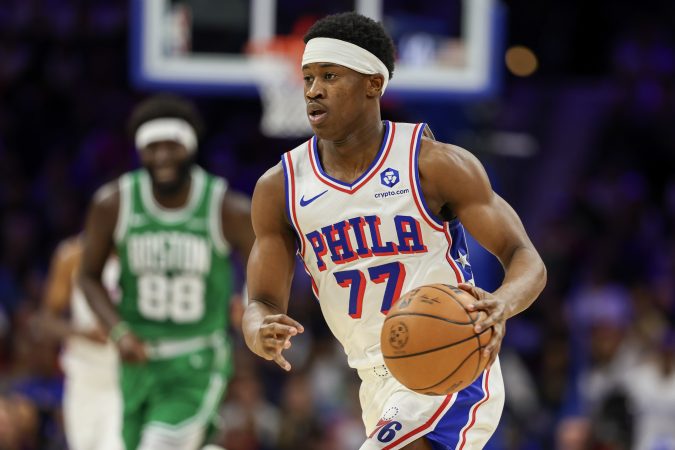
While Twitch-ing, or whatever it’s called, Brown got a phone call from the coworker who probably is happiest to have him aboard: VJ Edgecombe.
It was just 30 seconds of Gen Z acknowledgment and ego stroking, but there was a real vibe of Thank God you’re on my team so now I don’t have to play every minute of every game.
V.J. Edgecombe calls into Jaylen Brown’s stream. 🤣🤣🤣
"You on stream gang, it's JB…I know it's JB bruh. I got your number."
Call it Process 2.0, and understand that Edgecombe, properly nurtured, will be as important to its success as anyone.
That nurturing process got a lot smoother when the Celtics gave Brown away on Wednesday.
It could get even smoother if King James arrives.
On Thursday, LeBron James’ camp let it be known that he would consider playing next season in Philadelphia now that Brown has joined Joel Embiid, Tyrese Maxey, and Edgecombe. The King, now 41, is hunting a fifth NBA title, and Philly has become a viable contender within the last few days, even though the Sixers currently can pay him only the veteran minimum, just under $4 million. This would be a $48 million pay cut from last season with the Lakers.
Don’t hold your breath.
As insane as landing LeBron would be, shedding a bad contract and landing a superstar is even nuttier. And fishier.
Something is amiss when the smartest organization in basketball gives away a top-10 player and asks in return for a broken-down PED cheater and two first-round picks that probably aren’t going to be that good anyway.
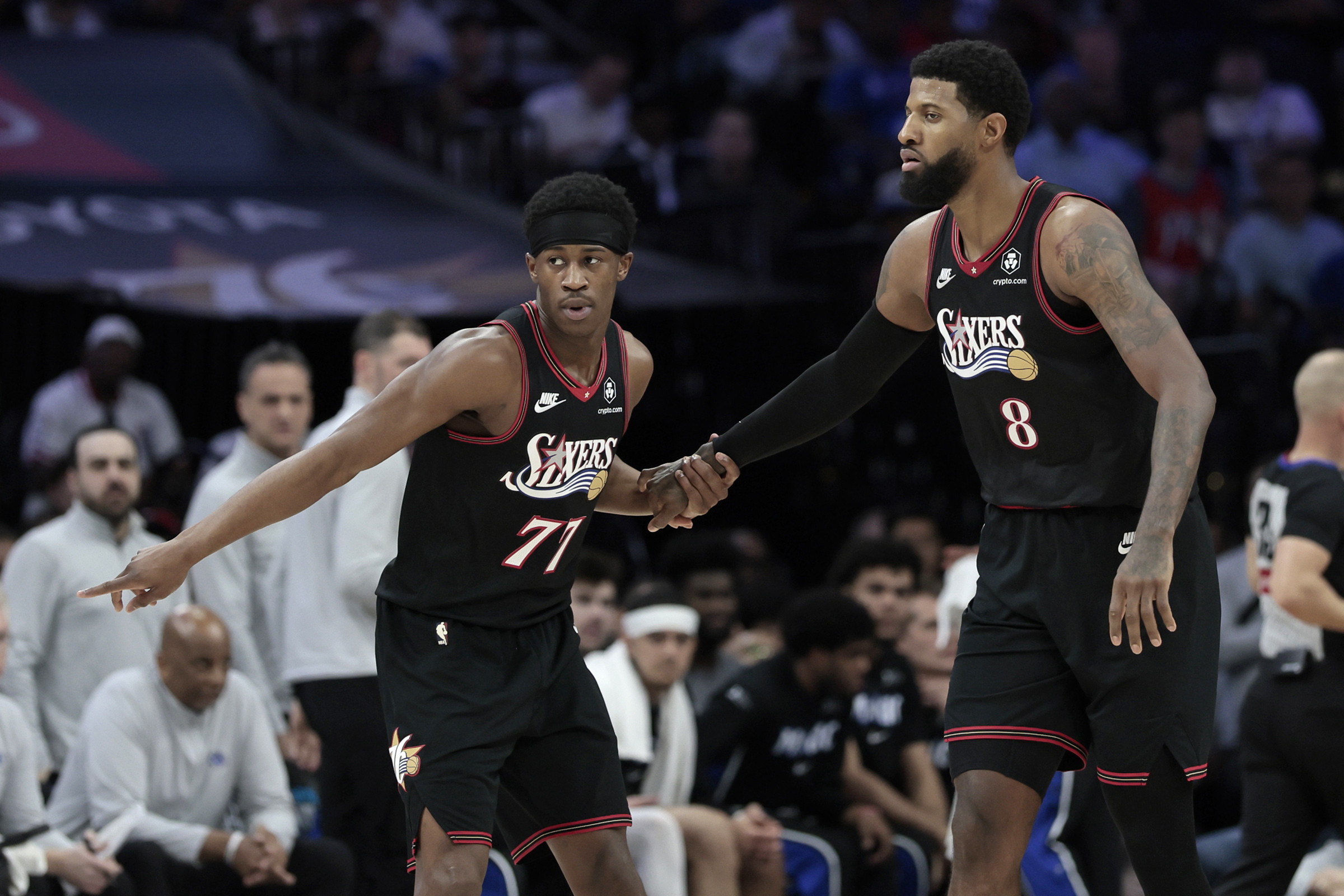
At any rate, the Celtics on Wednesday traded Brown, a five-time All-Star, who is 29, to the Sixers for Paul George, who is 36, and who has had just one good season since he was 29. The Sixers also sent first-round picks in 2028 and 2031 and two second-round picks to Boston. The most significant aspect of the deal is that it erased the worst contract in the history of the franchise; George has two more seasons left on a four-year, $211 million deal, and he hasn’t been worth one-tenth of it.
The move also made the Sixers an immediate NBA title contender, since Brown is everything the Sixers wanted George to be: a shot-creating athlete at all three levels who can play and defend multiple positions.
The deal also delivers an invaluable byproduct.
It gives Edgecombe time.
Time to develop.
Time to learn.
Time to rest.
Edgecombe not only led rookies at 35 minutes per game, he ranked 11th in the entire league and averaged the eighth-most minutes for a rookie guard in the last 17 seasons. As the Sixers dealt with injury absences of Joel Embiid as well as the early load-management strategies and the late PED suspension of George, Edgecombe proved himself too good to not protect.
“VJ is going to be a lot better in the long run with J.B. around,” said an NBA source who is intimately familiar with the 76ers. “At the end of last season, he was pretty worn out.”
Outside of a diminished three-point shooting percentage, the wear and tear didn’t really show up in his other raw stats. They dipped in the playoffs, but then, Embiid and George were back on the court for much of the late season and postseason. But his decision-making became errant, his shot selection more questionable, and he tended to disappear. He needed help that his big-money vets were not there to provide.
The absence of Paul George (8) had a trickle-down effect at times on VJ Edgecombe. Elizabeth Robertson / Staff Photographer
Combined, they missed 89 of 164 games, more than half. This has been the norm for both of them for the past few seasons.
Brown plays about 20 more games a season than Embiid and George.
That means that when Embiid misses his 30 or 35 games this season, Brown will be there to carry the load, whereas George was not.
That also means that when Embiid plays, Edgecombe will not have to serve as the second or third offensive option, using moves he shouldn’t be making and taking shots he shouldn’t be taking for at least another season or two. When the Sixers drafted him third overall, most projections cast him as a superior athlete with unlimited defensive potential but with limited plug-and-play offensive ability. He learned fast, averaged 16 points per game, and made the All-Rookie team, but, man, there were some ugly nights and some ugly shots.
Brown will also help Maxey get off his feet a little more. Maxey led the NBA at 38.0 minutes per game in an MVP-caliber season, but he wore down, too. Both were affected by the early injury absence of Jared McCain, and then by McCain’s exit at the trade deadline, as well as the lack of consistent contributions from guard Quentin Grimes.
Edgecombe and Brown don’t play the same position, exactly, but they will combine with Maxey, and possibly rookie Labaron Philon Jr., to manage the primary backcourt duties.
Brown will arrive motivated to make the best impression possible.
He’s in line for a two-year, $140 million extension that will put him under contract for the next five seasons. He will be a more focused defender and rebounder, play-make with more alacrity, and, inevitably, he will assume the role of mentor to Edgecombe that George served last year.
He said in Thursday‘s social media post that he was “Excited and disappointed at the same time” to be leaving Boston, where he won a title, and coming to the Sixers, who bounced him from the playoffs this spring.
It was delivered with Brown’s typical class and polish.
The Twitch stuff? Less classy, less polished, but just as real.
The Celtics, meanwhile, immediately started planting narratives about how zero-time All-Star guard Derrick White is a more valuable player than Brown. ESPN insider Brian Windhorst also reported that the Celtics, after consulting their analytics, considered it imperative to get backup center Mitchell Robinson off the court when they played the Knicks. Then, on Wednesday, they signed Robinson to a three-year, $47.4 million deal.
No wonder the Sixers knocked them out in the first round.
There is always the possibility that this trade is not as lopsided as it seems. The Celtics certainly didn’t see the value in retaining a guy who can make more than $320 million if he’s offered an extension.
The pocket protector crowd loves to cite and manipulate undependable metrics that diminish Brown’s obvious talent, skill, value, and performance. They insist that his playmaking fluctuates, his defense is overrated, and his shot diet doesn’t regularly generate the most efficient looks for him or his teammates.
Remember, analytics is an industry, and it has to feed itself and convince its consumers of its necessity.
Therein lies an irony. As much as analytics have torpedoed the Sixers’ plans, execution, and hopes over the past 14 years of “The Process,” it appears that analytics now have delivered an unexpected reward — in the form of Jaylen Brown.