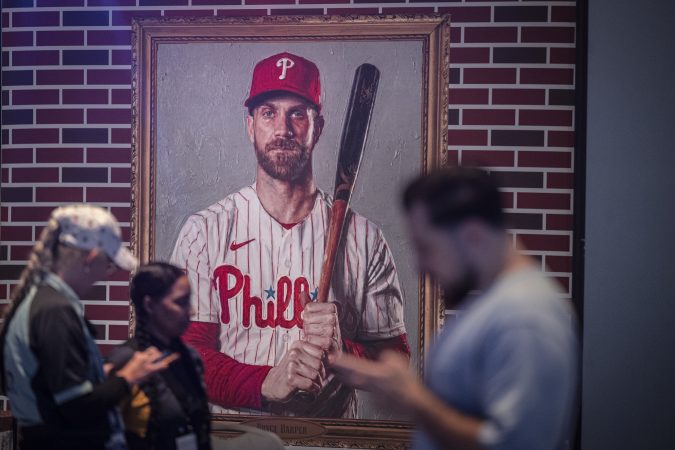
Bryce Harper, the Phillies’ All-Star first baseman, said on Monday that he was unknowingly working on behalf of FanDuel when he recorded a personalized video for a man with a gambling addiction who had placed millions of dollars in bets on the site.
Harper, in a story on his verified Instagram account, wrote that he thought he was just doing a message on the site Cameo — in which celebrities are paid to record videos for fans — but “what happened here went beyond anything I knew about or approved.”
“I did not know this video would be used for commercial purposes,” Harper wrote. “The request included a short script. I read it in good faith. FanDuel then put its own logo on the video and used it as a gambling promotion. I did not know FanDuel would do this, I did not consent to it, and FanDuel had no right to do it.”
The Inquirer obtained a copy of the 21-second video from November 2024, which is marked with a blue FanDuel logo and shows Harper offering a greeting to the bettor, Terry Thompson, and Thompson’s son, by name.
Harper’s statement also said he has no affiliation with FanDuel and that “Contrary to the Inquirer’s suggestion, I did not know that the Cameo video would be used for a FanDuel VIP promotion.”
However, in the video Harper states that he’s reaching out at the request of Thompson’s VIP manager — “your host Bryttanni at FanDuel.” Harper also posted the Cameo script, which included the same language about FanDuel.
The Inquirer reported on the video on Thursday. Harper had declined to comment until Monday. His statement came ahead of his planned appearance at Monday night’s 2026 MLB Home Run Derby at Citizens Bank Park.
Beginning in 2020, Thompson wagered $18.5 million with FanDuel and lost $1.5 million, according to a lawsuit that the Public Health Advocacy Institute filed in March in Common Pleas Court in Philadelphia on behalf of Thompson and against FanDuel and DraftKings, to which Thompson also lost money.
Harper says he did not know anything about Thompson.
“Had I known FanDuel’s true intent, I would not have made the video,” Harper wrote on Instagram. “The same is true had I known anything about Terry or his situation, or about any alleged ‘partnership’ between Cameo and FanDuel.”
On the advice of counsel, Harper wrote, he would not comment further. Harper did not discuss the matter further during a media availability Monday.
Cameo notes in its terms of service that celebrities are not required to follow a purchaser’s instructions exactly. Harper, however, mostly stuck to a short script that made clear to Thompson that the Thanksgiving message was arranged by the FanDuel host.
Cameo has not responded to requests for comment.
FanDuel did not respond Monday to Harper’s Instagram post. Last week the company released a statement:
“FanDuel is committed to fostering a culture of responsible gaming and protecting our customers. Unlike illegal offshore sportsbooks, FanDuel employees are trained to recognize and flag signs of problem gambling and offer resources and tools, and we continue to review and strengthen our policies to ensure we have the industry’s strongest consumer protection initiatives.”
The Phillies and Major League Baseball have so far declined to comment on the video.
The Pennsylvania Gaming Control Board, which regulates casinos, online gambling and sports wagering, said on Friday that it is examining the video, but a spokesman for the board declined to provide details.
The Inquirer will continue to report on issues related to the growth of gambling addiction — among teens and adults — across Pennsylvania. If you, or someone you know, wants to speak with a reporter, please contact David Gambacorta or William Bender at dgambacorta@inquirer.com and wbender@inquirer.com
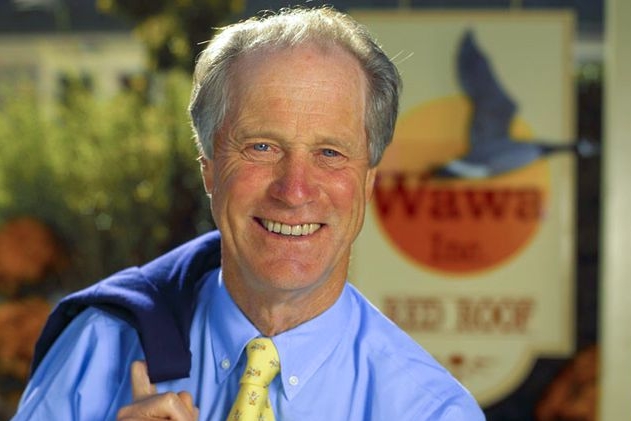
Richard D. Wood Jr., 88, of Wawa, Delaware County, chair emeritus and former chief executive officer and president of Wawa Inc., Convenience Store News Hall of Famer, lawyer, trustee, mentor, veteran, and philanthropist, died Friday, July 10, of age-associated decline at his home.
Born in Philadelphia, Mr. Wood earned a law degree at what is now the University of Pennsylvania’s Carey Law School in 1964 and joined his family’s nascent Wawa food market company in 1970 as its first general counsel. His great-grandfather founded the Wawa dairy in 1902, and his father’s cousin opened the first Wawa food market in 1964.
By 1977, Mr. Woodhad ascended to president of the company, and its innovations, including 24-7 hours of operation and custom-made hoagies, made it the region’s dominant convenience store. He became CEO in 1980 and chair in 1982, and was named chair emeritus in 2020.
In 2020, Inquirer business writer Joseph N. DiStefano said Mr. Wood “presided over the board during the period of Wawa’s rapid growth from a regional cokes-smokes-milk-and-hoagies chain to a convenience store and gas outlet with more than $12 billion in annual sales and 850 stores from New Jersey to Florida.”
For more than 40 years, Mr. Wood supervised Wawa’s multistate expansion, addition of gas pumps, expanded inventory, rigorous employee training, and popular employee stock ownership plan. During his tenure, the company grew to more than 36,000 associates and was one of the largest privately held companies in the country.
Through it all, Mr. Wood was affable and curious, friends and family said. He wanted to know everybody’s name and what they thought, and he enjoyed touring the stores and chatting up associates and customers, especially on Christmas Day. He told colleagues he wanted to “create an environment where each of us believes that we can make a difference.”
“Dick Wood was our true lead goose who was the guiding heart and soul of the company,” Chris Gheysens, Wawa’s chairman and CEO, said in a tribute. “He is the reason why Wawa is the company we are today and why we enjoy so much share of heart from our customers and dedication from our associates.”
Mr. Wood hired students and women to work in the stores, and offered flexible schedules to accommodate their availability. He oversaw Wawa’s $200 million of donations to community nonprofits and its college tuition reimbursement plan for associates.
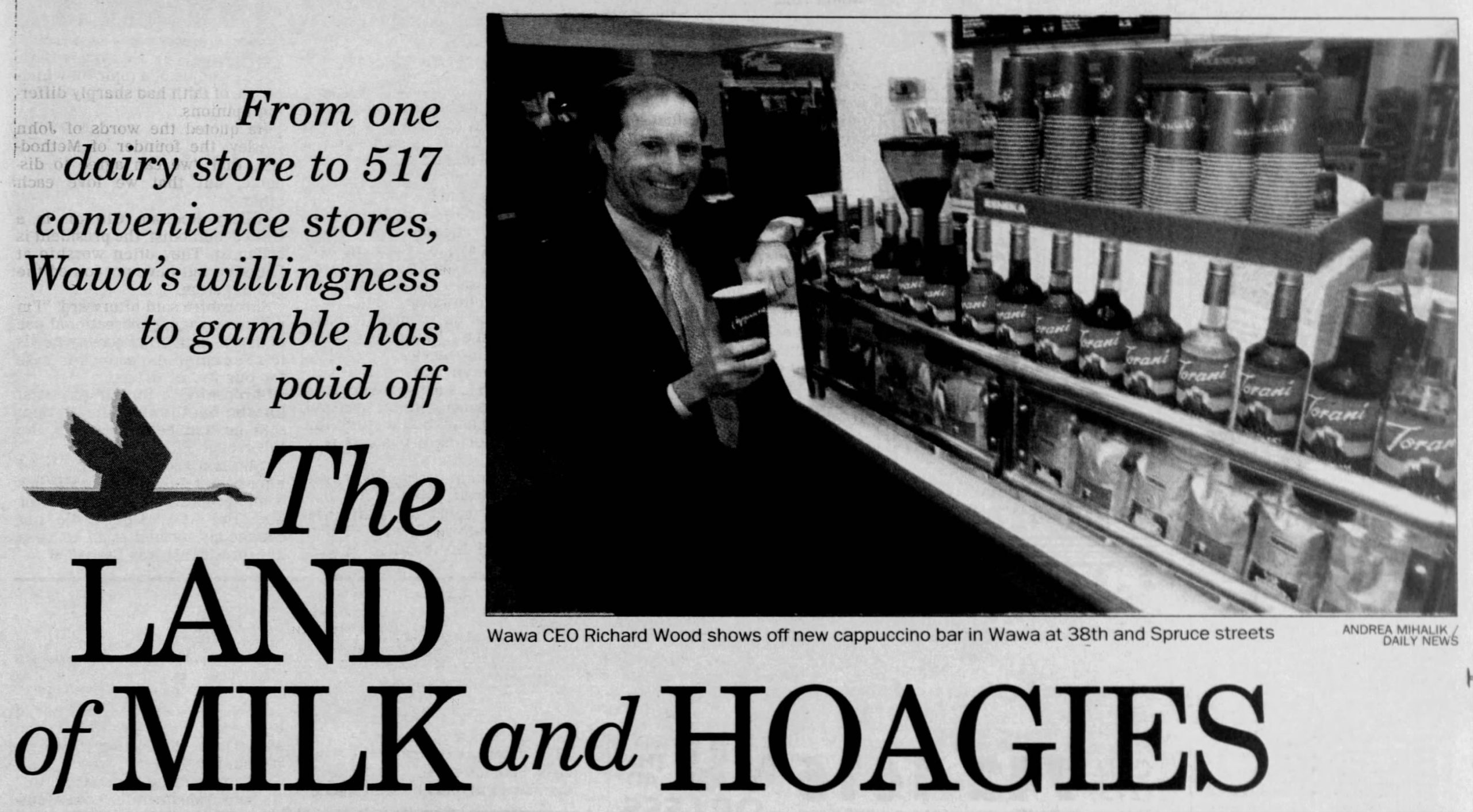
This photo of Mr. Wood and a story about Wawa appeared in the Daily News in 1994. Newspapers.com
In 2021, to mark his 50th anniversary at the company, Wawa established the Dick Wood College Scholarship Fund for associates. He told Inc. magazine in 2018: “Values and culture mean more in this company than being smart.”
Colleagues called him “humble, gracious, curious, and kind” and “a beloved treasure to the company” in tributes. His life-size bronze statue greets visitors at Wawa’s corporate headquarters.
“He made people feel important,” said Barbara Ennis, his longtime assistant, ”because to him, they were.”
Mr. Wood was onetime chair of the executive committee of the National Association of Convenience Stores and on boards at Children’s Hospital of Philadelphia, Riddle Memorial Hospital, Philadelphia National Bank, Bok Tower Gardens in Florida, and other organizations. He appeared oftenin The Inquirer and Daily News, spoke on panels and at conferences about corporate leadership, and was inducted into the Convenience Store News Hall of Fame in 1996.
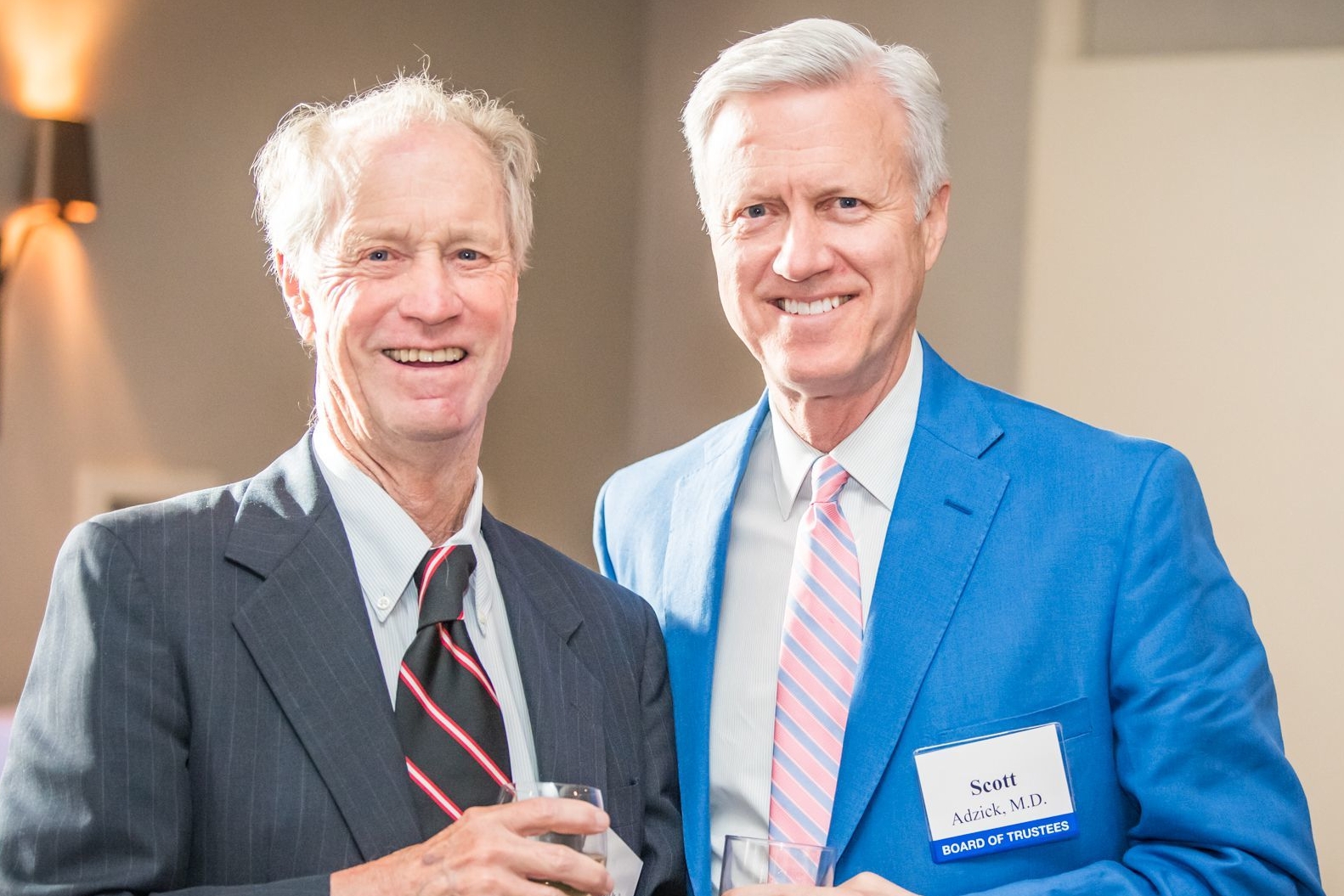
Mr. Wood (left) worked closely with fellow CHOP trustee N. Scott Adzick.Children's Hospital of Philadelphia
He served on the Chester Heights Borough Council in the early 1980s and was named 1996 businessman of the year by the Great Valley Regional Chamber of Commerce. Before Wawa, Mr. Wood was a public defender in Philadelphia and a lawyer at Montgomery McCracken.
“People loved to follow him,” said his son, Richard D. Wood III. “He was larger than life,” said his daughter, Lisa Wright.
Sometimes, his family said, Mr. Wood walked the halls of the hospital, sharing Wawa coffee and conversation with patients and families. CHOP honored him at its 2019 Carousel Ball. Madeline Bell, CEO at CHOP, said: “I will truly miss his warmth, wisdom, and generous spirit.”
Mr. Wood and his wife, Jeanette, married in 1964.Courtesy of the family
Howard Stoeckel, former Wawa vice chair, CEO, and president, said in a tribute: “He had a special mix of heart, compassion, empathy, and humility that made him a true believer and practitioner of servant leadership.”
Richard Davis Wood Jr. was born March 4, 1938. He graduated from St. Paul’s School in Concord, N.H., earned a bachelor’s degree in business at the University of Virginia, and served for a year in the Marine Corps and later in the Marine Corps Reserve.
He met Jeannette Andrews when he was visiting New York with friends, and they married in 1964. They lived in Philadelphia and Wawa, and had a daughter, Lisa, and a son, Richard III. His wife died in 2025.
Mr. Wood was an avid golfer, and he belonged to the Gulph Mills and Pine Valley Golf Clubs, and the Mountain Lake Club in Florida. He played tennis and bridge, and was a longtime season ticket holder for the Eagles and Flyers.
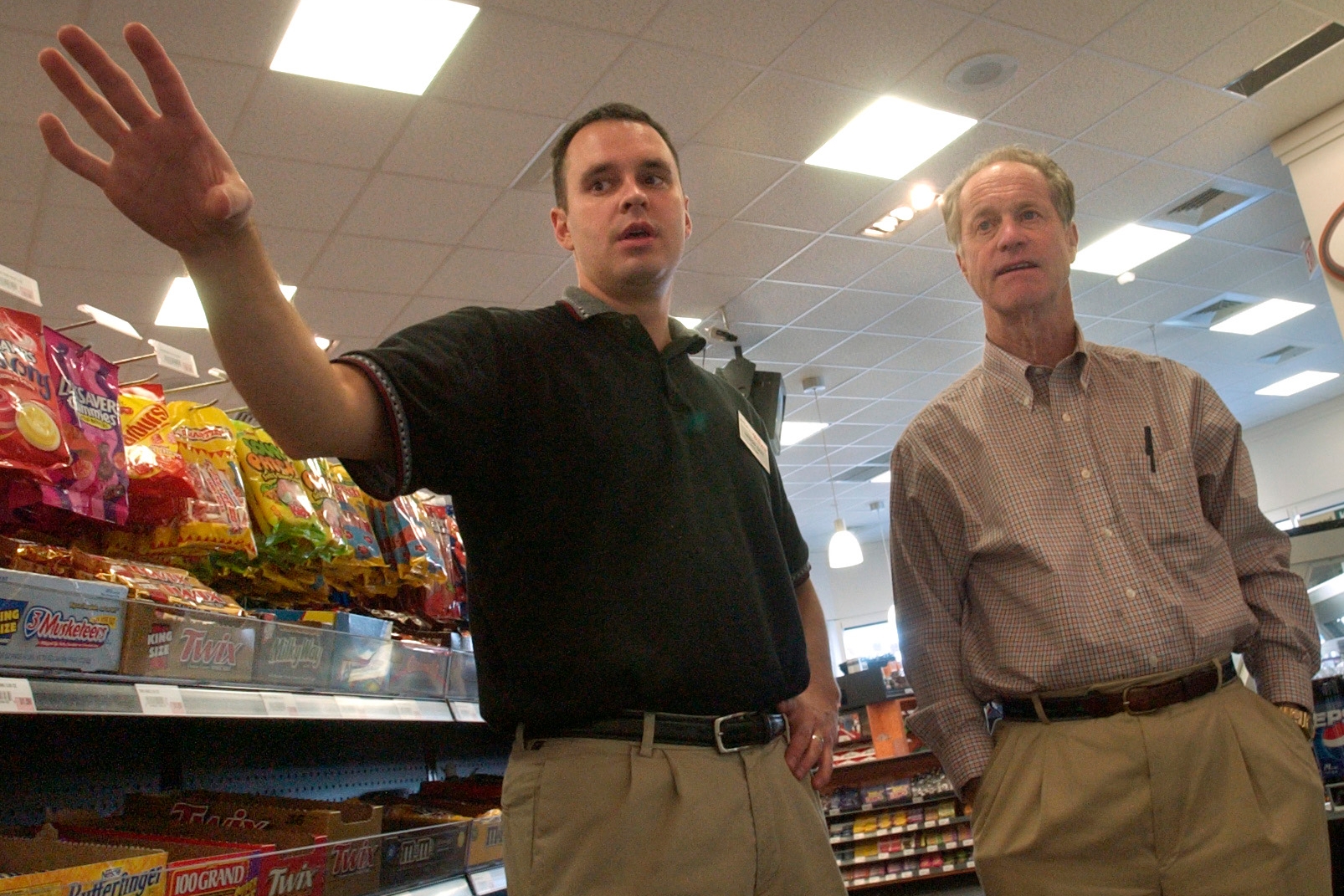
Mr. Wood (right) enjoyed meeting and talking with Wawa associates and customers. Jonathan Wilson / Staff Photographer
He and his wife traveled, hosted family holiday parties, and spent memorable winters in Lake Wales, Fla. He drove his favorite Honda Accord for years and followed Virginia college football and basketball closely.
He championed conservation, education, and health. “He treated every single person the same,” his daughter said. His son said: “Humility defined him.”
Cleanup from Saturday’s storm was continuing Monday, as communities around the Philadelphia region deal with aftermath of fallen trees, flooding, and high winds.
A series of four “microbursts” brought severe damage to a limited area Saturday, with wind gusts traveling up to 60 to 70 miles per hour. Those isolated bouts of high winds, which ripped through parts of Philadelphia and Montgomery County, toppled hundreds of trees and damaged or collapsed several buildings, while sudden and severe rains caused floods around the region.
Microbursts, the National Weather Office said, occur when there is a rapid increase in the updraft of a thunderstorm. Once that updraft stops, the mass of the storm system crashes back down, resulting in severe winds.
As of early Monday afternoon, Peco continued to restore power to affected customers, with more than 170 outages impacting nearly 2,400 people. And though a comprehensive account of damages was not immediately available, damage reported to the weather service and select other entities indicated dozens of recorded incidents.
(function() {
var l2 = function() {
new pym.Parent(‘july_11_storms’,
‘https://media.inquirer.com/storage/inquirer/projects/innovation/arcgis_iframe/july_11_storms.html’);
};
if (typeof(pym) === ‘undefined’) {
var h = document.getElementsByTagName(‘head’)[0],
s = document.createElement(‘script’);
s.type = ‘text/javascript’;
s.src = ‘https://pym.nprapps.org/pym.v1.min.js’;
s.onload = l2;
h.appendChild(s);
} else {
l2();
}
})();
How much does Dave Dombrowski believe in his best acquisition of the offseason?
By several metrics, Jonathan Bowlan has been one of the most productive relievers in the majors over the last 2½ months. Since May 3, he ranks among the top 15 in the majors in the following categories:
Strikeout rate (33.7%, 11th)
Walk rate (4.8%, 15th)
Strikeout/walk ratio (7.00, 8th)
Ground-ball rate (58.3%, 15th)
And then there is the most important category. Heading into Sunday, only three pitchers carried a lower ERA than the 0.86 Bowlan had posted in his last 21 outings: Robert Suarez (Braves), Luke Weaver (Mets), and Mason Miller (Padres).
That trio has logged a ton of high-leverage innings over the years. The question Dombrowski must ask himself: Can Bowlan do the same?
The answer should play a big role in the Phillies’ trade deadline strategy. The back of their bullpen has been leaking some serious oil as of late. Since June 1, Orion Kerkering, Brad Keller, and Jose Alvarado have combined to allow 18 of 42 batters to reach base in high-leverage situations in the seventh, eighth, or ninth inning. Of those 18 baserunners, nine have scored.
At this point, Kerkering shouldn’t be a serious consideration when the Phillies are projecting the top of their postseason depth chart. The 25-year-old righty’s struggles in pressure situations was a recurring theme even before last October’s meltdown in Game 4 at Dodger Stadium. Over the last two regular seasons, Kerkering has 37 strikeouts against 22 walks and hit-by-pitches in high-leverage situations. In the last two weeks, he has entered two late-game situations and then proceeded to walk three batters. There is nothing Kerkering can do between now and the trade deadline that should make the Phillies more comfortable with him high on the pecking order behind Jhoan Duran.
Orion Kerkering shouldn’t be a serious consideration for the top of the Phillies’ postseason depth chart.Yong Kim / Staff Photographer
Alvarado is fast approaching that point. The veteran lefty entered Sunday having allowed runs in eight of his last 19 outings, and at least two runs in six of them. Only two relievers in the majors had pitched as many innings as him with a higher ERA. The numbers are a little bit confusing. His 28.5 strikeout rate ranks 29th out of 171 qualified relievers. Although his walk rate is slightly worse than league average, it is markedly better than any that he posted during his prime years of 2021-24 (8.9% this season vs. a minimum of 10.5% previously). His fielding independent metrics are better than they’ve been since 2023.
Even taking all of that into consideration, Alvarado is a dramatically different pitcher than he was in 2022 and 2023, when he struck out 37% of his batters with a 2.14 FIP (3.38 this season). It’s fine to consider him a wild card vs. writing him out of the picture completely. But he won’t be anything more than a wild card before the trade deadline.
Keller? Even without the forearm issue, the Phillies haven’t seen much to make them comfortable heading into a postseason as the primary bridge to Duran. Opposing hitters have posted a whopping .856 OPS against him in high-leverage situations. In an ideal world, the 30-year-old is a sixth- or seventh-inning arm come October.
Which brings us back to Bowlan. Acquired in an offseason trade that sent Matt Strahm to Kansas City, Bowlan appears to have elbowed his way into his manager’s circle of trust. On Saturday night, Don Mattingly turned to Bowlan with two on and nobody out in the bottom of the eighth inning to protect a 4-1 lead. After hitting his first batter with a pitch to load the bases, Bowlan got Spencer Torkelson to ground into a double play. He escaped the inning with just the one run scored, walking Riley Greene before getting Eduardo Valencia to ground out.
It wasn’t exactly the cleanest audition. But maybe that counts for something. This was a big-boy spot. Middle of the order, a trio of young power hitters, two men already on base. To hit a batter and walk a batter and only allow one run at least shows a little bit of intestinal fortitude.
If Mattingly is going to make Bowlan his primary eighth-inning arm for the foreseeable future, then he is doing the right thing. At 6-foot-6 and 240 pounds, the 29-year-old righty sure looks the part. But that is still very much a hypothetical. Bowlan was predominantly a middle-innings guy during his three years in Kansas City. He isn’t a classic strikeout arm, whatever the overall numbers say this year. He has seven of them in 28 high-leverage plate appearances this season, compared with four walks. Again, though, the sample size is small. The Phillies would be wise to get a longer look at him.
In the meantime, there really isn’t a question about the trade deadline and the bullpen. The Phillies need to do everything they can to address it. A lot of people seem to want to frame it as an either/or, with regard to their clear holes in the outfield and/or from the right side of the plate. That’s not the right way to look at it. After this latest virtuoso performance by the top two pitchers in the Phillies’ rotation, and with Bryce Harper and Kyle Schwarber hitting like MVP candidates, Dombrowski can’t afford to pick and choose which holes he fills this July. Last year, the Blue Jays acquired Louis Varland and Ty France from the Twins in a deadline deal. The Phillies themselves landed Duran and Harrison Bader. They can and should be thinking quantity.
The real question right now is quality. Do the Phillies need an eighth-inning version of Duran? Or can they get by with a Varland type? A lot depends on how they feel about Bowlan. Because, right now, he looks like the only viable option.
Soon after Aubrey Lee graduated college and moved to Queen Villagein 2021, she determined that her burgeoning career in marketing would be aided by time spent in an actual office.
Partly that’s because her first job was fully remote, and she was laid off after only five months. But she also found it alienating to fully work from home, with little chance to interact with coworkers.
So Lee prioritized finding jobs with in-office requirements, and her next one — secured two weeks later — allowed only one day of remote work a week.
“I feel like remote work, especially at such an early point in my career, made me more of a face on a Teams screen than an actual person,” said Lee, who is 27. “I’d also been inside, locked away from my senior year of college during COVID and feeling very isolated.”
Lee said her friends generally agree that working outside the office early in their careers was a hindrance.
“Working remotely can have stunting effects on people’s careers, in terms of both being laid off and not being promoted,” said Lee, whose current job at Publicis Health Media in Old City, is also four days a week in-office.
Remote work has many advantages, especially for those with physical disabilities, parents of small children, older workers, and those caring for elderly relatives. It also reduces time spent commuting and money spent eating at restaurants.
But soon after desks emptied in the face of the COVID-19 pandemic, battle lines began forming over the future of the office.
Workers were generally seen as being in favor of the flexibility that comes with remote work, while many employers and managers wanted people back in the office soon after it was safe.
A recent burst of new academic research argues that remote work makes Americans lonelier — especially those who live alone — and that it disadvantages those starting out in the workforce.
Unemployment is relatively high among college graduates and nongraduates, unlike their older counterparts.
Several recent studies argue that the depressed labor market for younger workers — which is often attributed to the explosive growth of artificial intelligence — more neatly matches the rise of remote and hybrid work.
Economists Natalia Emanuel, Emma Harrington, and Amanda Pallais argue that “64% of the recent increase in unemployment among young college graduates is due to remote work.”
They found unemployment among recent college graduates in remote-capable jobs rose early in the pandemic and remains elevated, while those in nonremote capable jobs saw a larger spike in unemployment during lockdown and then a return to the norm.
More experienced remote-capable workers, meanwhile, saw their unemployment levels fall slightly in 2020 and remain lower than pre-pandemic.
“Our overall takeaway is that for young people specifically, it looks like this rise in remote work made it relatively difficult for them to find a job,” said Harrington, assistant professor of economics at the University of Virginia.
The researchers examined hiring at a Fortune 500 online retailer and found that young engineers who worked remotely would get 20% less feedback from their colleagues. They ended up writing lower-quality code, and the company hired fewer younger workers.
“If it’s going to be really hard to build talent internally, one reasonable response is, ‘Well, let’s just not do that,’” Harrington said. “Let’s try to buy talent that has already been built up. That’s consistent with what we’re seeing in the unemployment data.”
Remote work and loneliness
Harrington and Emanuel’s research also has found that remote work increases loneliness by making it harder for people to socialize or make friends in their adult lives, leading to negative effects on mental health.
That resonated with West Philadelphia engineerJohn Reid’s experience with an almost fully remote job he got in 2022. In his case, the company did have an office, in Valley Forge, but few people actually worked from there.
At first Reid, 38, enjoyed the remote work lifestyle, especially with a new child at home. But as the years wore on, that changed.
“I was mostly remote until late 2025, and I felt like I was getting weird from working at home all the time,” Reid said. “I still had a decent amount of interaction because we live in the city, and I was walking to daycare, but there was less serendipity or new connection than I was used to.”
Today Reid has a new engineeringjob in Center City, which requires three days a week in-office. He said he would prefer not to go back to fully remote work, nor to a job that was in-office five days a week.
Many workers have returned to offices since the pandemic, but remote work remains desirable to many.Elizabeth Robertson / Staff Photographer
That’s largely the equilibrium that office work has settled into.
After a big push to get workers back to the office in 2022 and 2023, little has changed in recent years. Today, 26% of paid work days in the U.S. are worked from home. That’s up from 7% pre-pandemic, but down from 60% in April 2020.
Some negative aspects of remote work can be salved
There are still plenty of remote work enthusiasts among employees, bosses, and labor experts. After all, hybrid work has become the new norm and many still enjoy fully remote work, with a solid 10% of office workers still working from home, according to Nicholas Bloom, economist at Stanford University.
There are ways to mitigate the negative aspects of remote work, he said.
One recent study by Bloom and his coauthors published by the National Bureau of Economic Research, found that a fully remote firm in Turkey saw“weaker team cohesion, fewer opportunities for real-time coaching and persistent retention problems.”
But a control group of workers who began meeting just one day a month in the office saw increases in productivity and attrition decline by a third.
That suggests even a little team building, and in-person interaction, can go a long way.
When Jake Stein, the CEO of Common Paper, was planning to start his legal technology company before the pandemic, he wanted it to be fully remote. He lives in Society Hill and at his previous company had been frustrated by losing workers to cross-country moves.
He agrees that in-person work is a great bonding experience. Many of his closest friends date to his time at a five-day-a-week office job early in his career. But he doesn’t want to restrict his hiring to the talent pool that’s just within an hour drive of Philadelphia.
Instead, Stein strives to ameliorate the disadvantages of remote work by hosting regular get-togethers, including a weeklong company trip to Mexico City.
Common Paper also offers structured and recurring mentorship for their employees, with softwarecode review and feedback, as well as “lunch and learns” where workers educate one another.
Jake Stein outside his Philadelphia home.Jose F. Moreno / Staff Photographer
“Things that might happen organically, we’re trying to make them happen on a schedule and with a process,” Stein said. “These are things that you get [easily] in an in-person office. In many cases, they are gettable in a remote setting, but it requires a lot more deliberate effort.”
What about young workers?
Stein said the fully remote model has been successful, although he noted that he does tend to hire more veteran tech workers.
“There’s a bunch of factors, but it’s definitely true that if you look at the average age, it’s for sure higher in the remote setting,” said Stein, who has seven employees.
But he said its hard to know why that’s been the case. It’s probably also true that older workers, with kids or other family responsibilities, are more interested in applying for fully remote jobs.
Bloom agreed that on a larger scale, it’s hard to tell if remote work disadvantages younger people.
It’s probably part of the story, he said, but it’s hard to disentangle from other factors, including pandemic-era over-hiring in sectors like tech and finance, the disastrous effects of remote schooling during the pandemic, and the rise of artificial intelligence.
“Typically in economics when there are four factors, they all tend to be at play,” Bloom said. “They all look similar; they have similar timings, and similar effects.”
Bloom said his research has found little evidence that most workers want to return to the pre-pandemic norm of working in the office five days a week.
At the same time, remote work remains a boon to many, he said.
“Setting aside for young people, remote work almost surely has increased employment because there’s a lot of people that can’t work without it,” Bloom said.
Some weekends are just dates on the calendar. Others become part of history.
America’s 250th anniversary was one of those weekends.
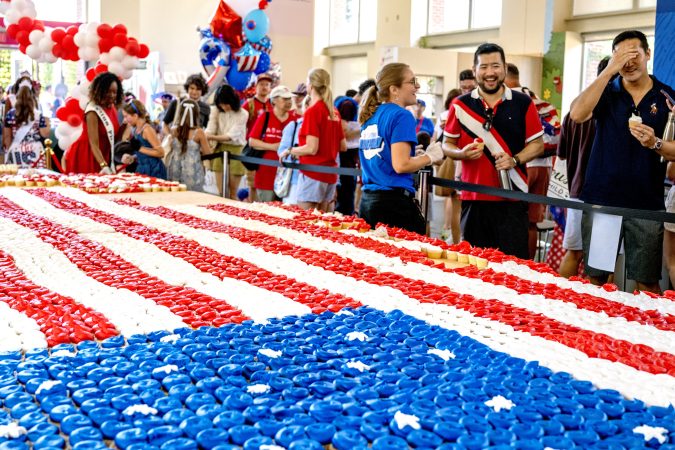
Philadelphia, where the nation began, became the center of the celebration. Across days marked by extreme heat, thunderstorms, fireworks, a canceled parade, and a World Cup match, The Inquirer’s photographers captured the defining moments — and the quieter ones in between — creating a portrait of the country at 250.
After days of closed streets, parking restrictions, and traffic backups leading up to the weekend, Jessica Griffin planned to ride to cover the Wawa Salute to Independence Semiquincentennial Parade. But it was canceled amid a declared heat emergency with 100-degree temperatures before she even left her house.
Instead, she found all the floats — moved overnight from the Pennsylvania Convention Center to Independence Mall in preparation for the parade — in an unofficial parade away from the Historic District.
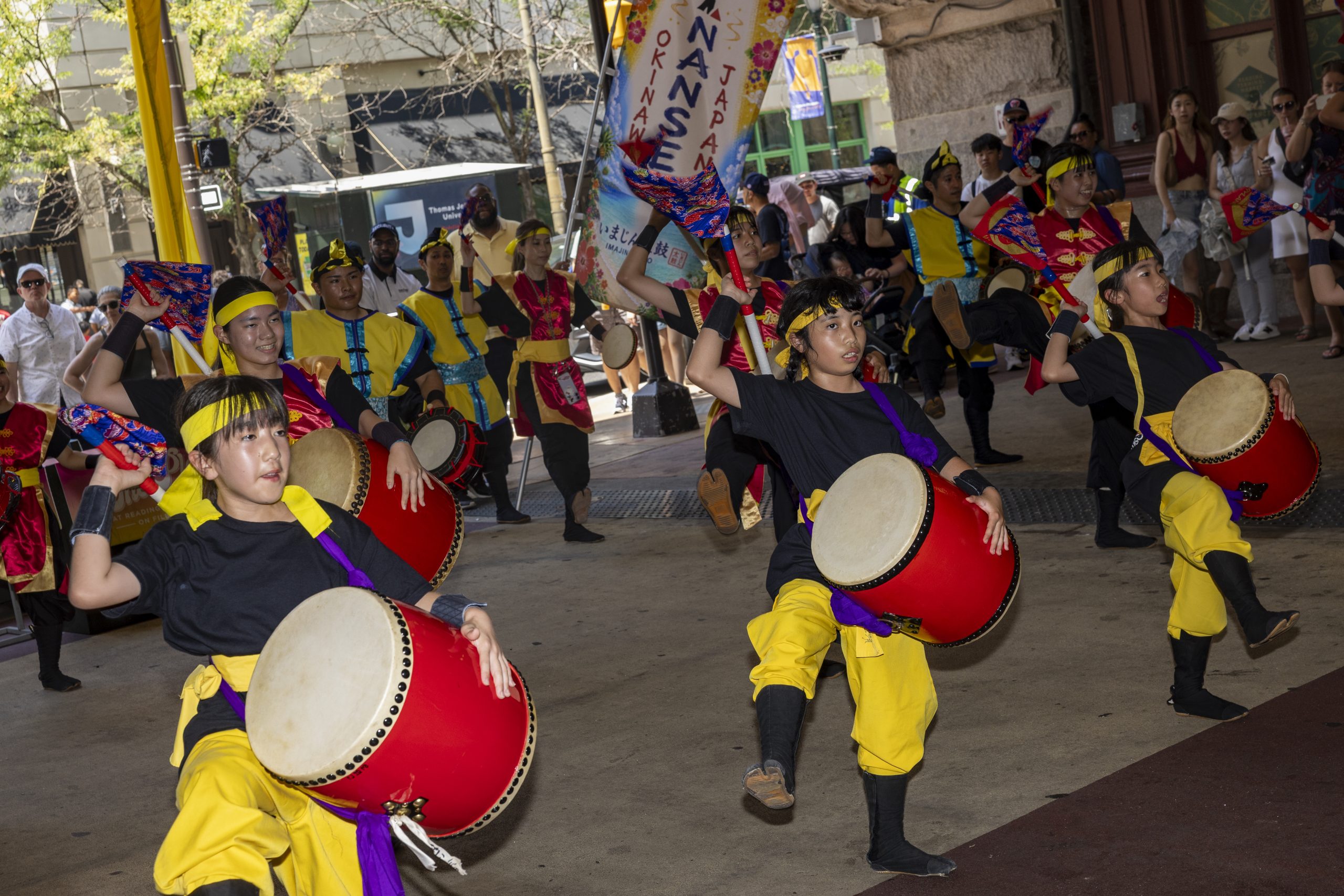
The cancellation gave the many would-be paraders the opportunity to perform around Center City. Summer intern Aidan T. Gallo photographed Imajin Taiko, a lively dance group from Nakijin, Okinawa, Japan, performing outside Reading Terminal Market.
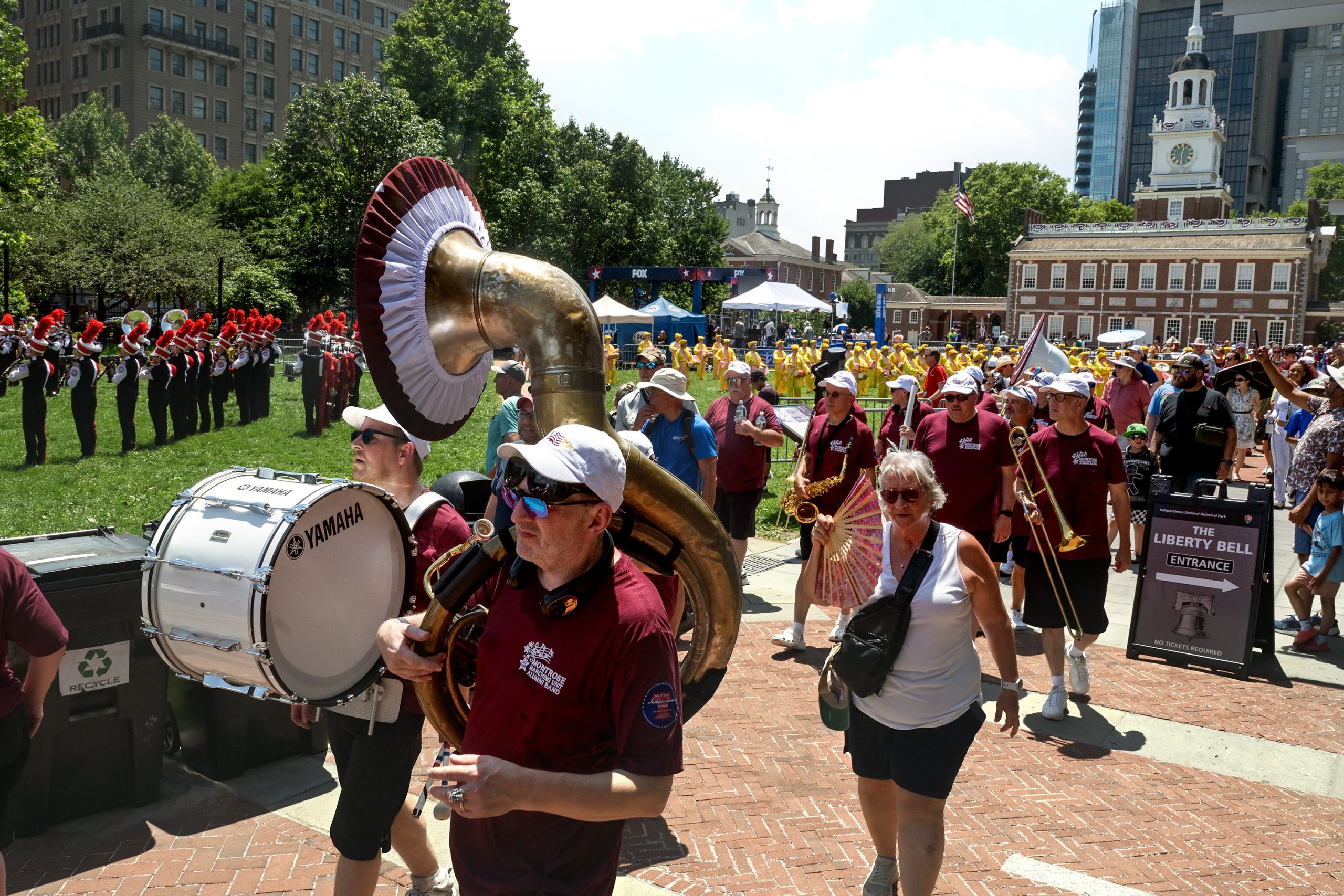
Musicians, Colonial reenactors in sweat-soaked wool, and visitors (also sweaty) wandered the Historic District looking for something to do. It led to impromptu pageantry around Independence Hall. Marching bands did their (stationary) thing, taking turns performing on the grassy mall.
Working the scene, I was able to frame three different bands at once. The Montrose Marching Unit Alumni Band from Susquehanna County was leaving as the Triuggio Marching Band, a community group from the northern Italian city of Triuggio, and a Falun Gong drum band from New York prepared to perform.
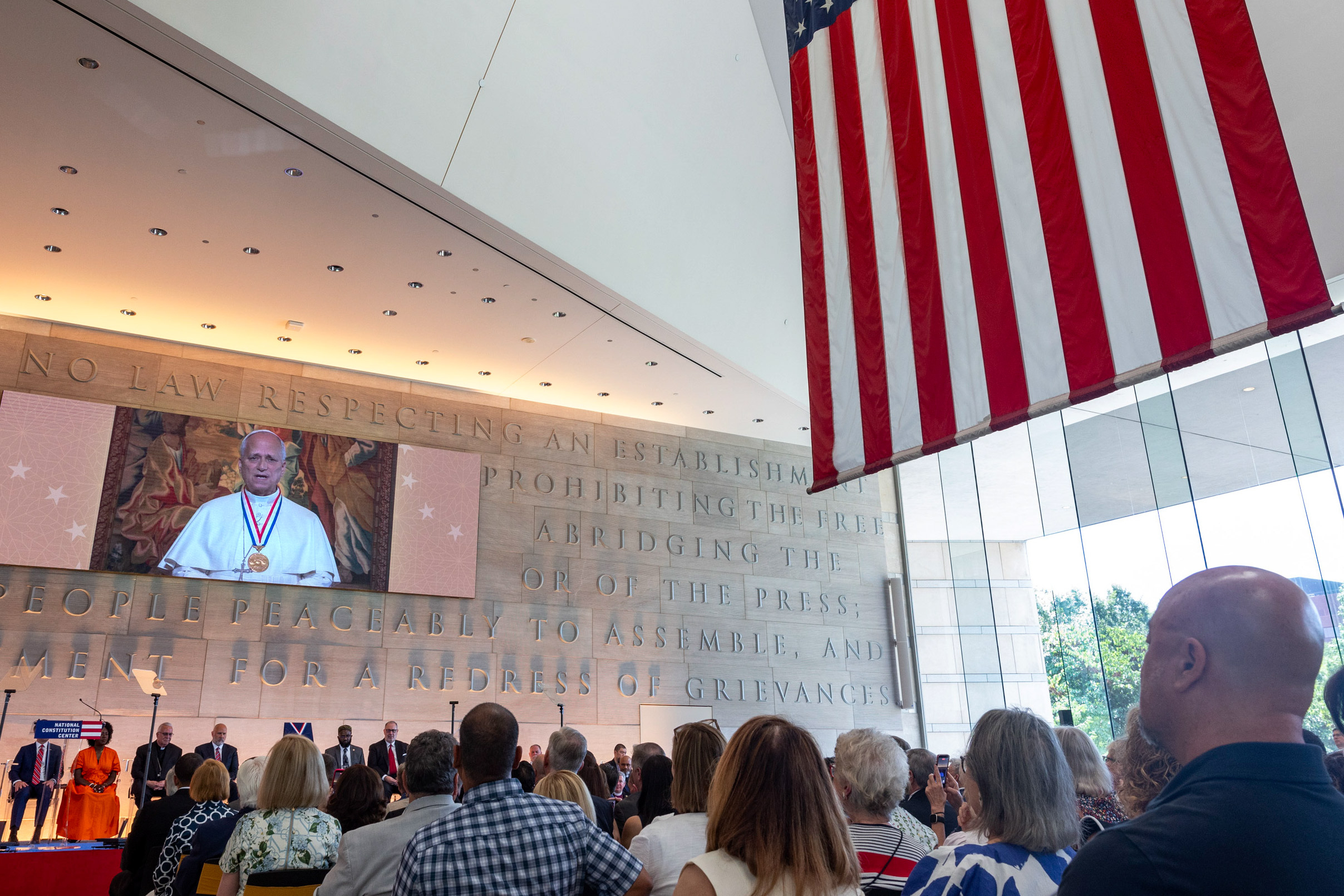
On the Fourth, Tyger Williams found photographing the National Constitution’s Liberty Medal presentation an interesting experience even though the honoree, the U.S.-born pope and Villanova alum, Pope Leo XIV, wasn’t physically there.
Finding a compelling way to photograph someone appearing only on a screen wasn’t easy, he said. “I wanted to be able to show the atmosphere when the Pope was speaking and show the impact he has to those listening to him.”
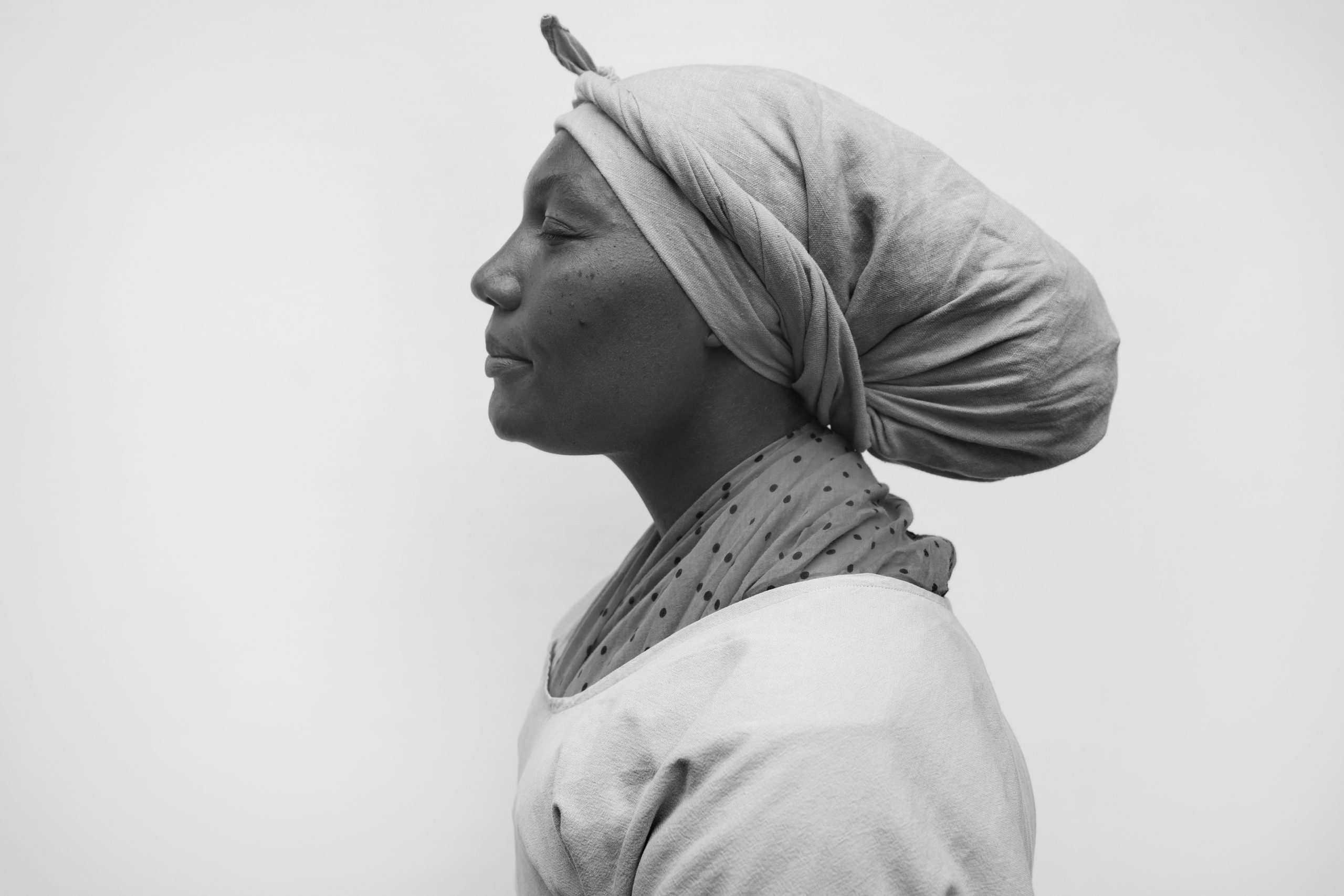
Jose F. Moreno wanted to create a simple, straightforward portrait essay on the people we often see in costume walking through the Historic District to recognize the people “whose passion, knowledge, and dedication help tell Philadelphia’s story as the city celebrates this historic milestone.”
By using a plain white background and removing all distractions, the focus remained entirely on the individuals and the history they represent. He photographed each History Maker one after another, asking them to “do nothing more than be themselves.” He only made two or three frames of each person against a plain white background.
Courtney Mitchell, who portrays Margaret Woodby, a free Black woman who owned a cake-baking business, smiled during her full-length portrait before turning slightly to the side.
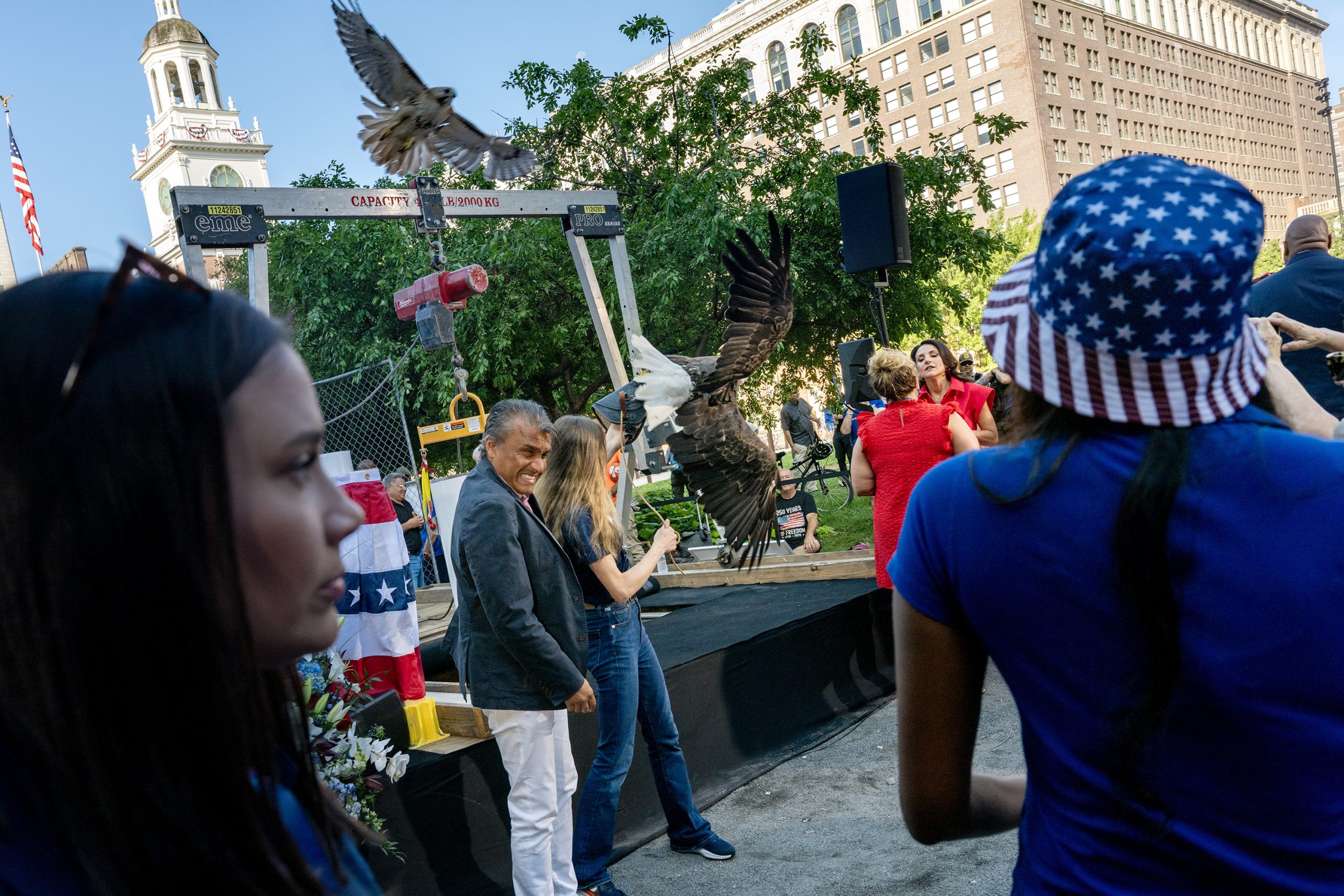
On the morning of the Fourth, I covered the burial of “America’s Time Capsule” in Independence National Historical Park. Before the ceremony, dignitaries posed with Indy, a bald eagle from the Auburn University Raptor Center. Suddenly, another bird of prey swooped down asserting its territory.
I wasn’t actively photographing the scene, but luckily my camera settings were already dialed in. I managed to capture a frame just as the hawk came within striking distance. Indy — who made her first appearance at a Philadelphia Eagles game in 2023 — and her handler spent the rest of the photo opportunity watching the skies overhead.
Also on Saturday, Gallo was back covering neighborhood block parties. In Point Breeze, he heard kids sliding down an inflatable bounce water slide — a block party staple. What he didn’t expect was to see multiple children sliding all at once, including a little girl holding onto her popsicle.
By the time she got to the bottom, the popsicle was knocked out of her hands into the pool. “Luckily, I pressed the shutter at the right times to capture the popsicle and its flying pieces mid-air.”
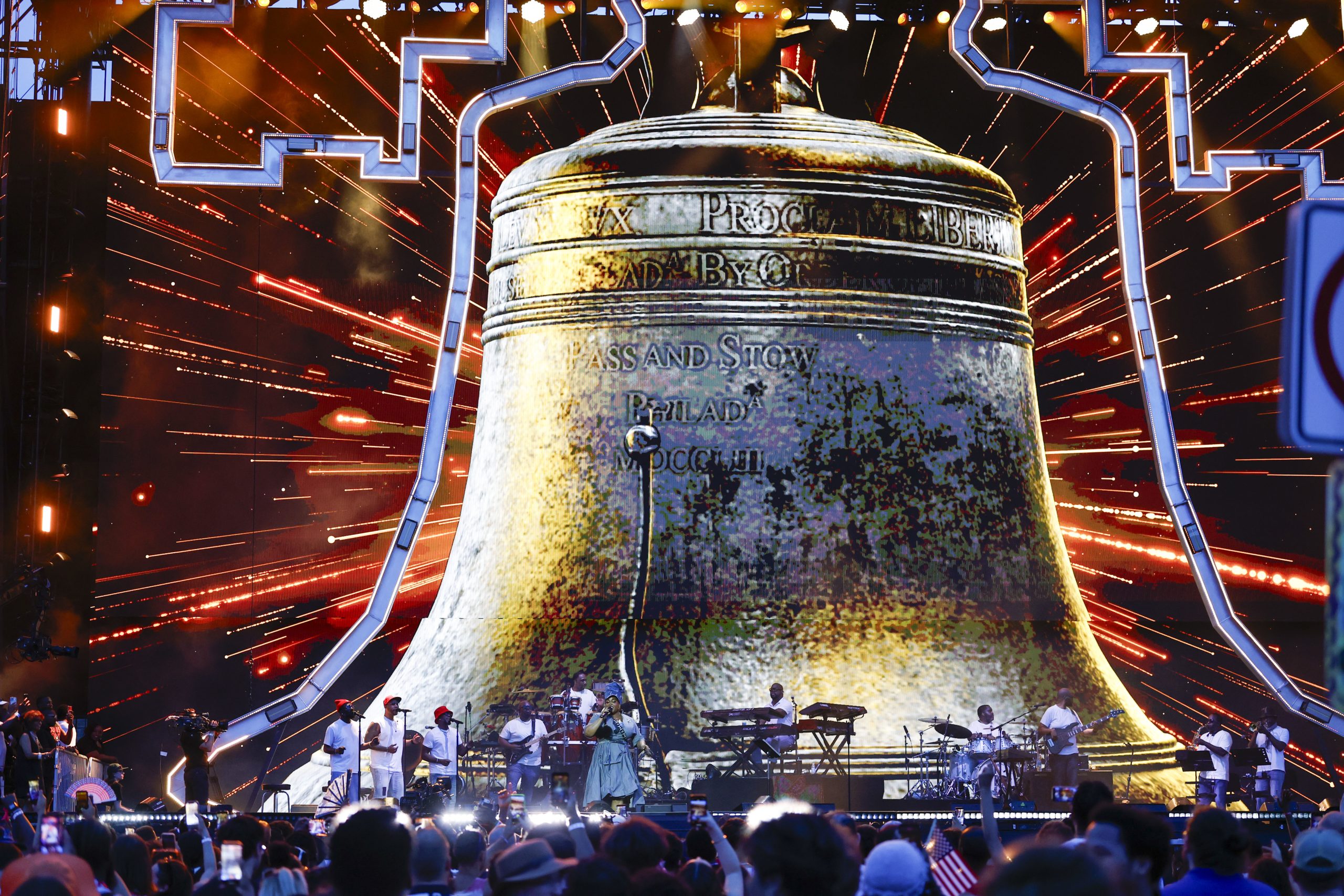
Jill Scott takes to the stage for One Philly: Unity Concert for America on the Benjamin Franklin Parkway on Saturday, July 4, 2026, in Philadelphia.Yong Kim / Staff Photographer
Kim and Elizabeth Robertson evacuated the area during the more than three-hour rain and lightning display, eventually taking shelter beneath the canopy of a gas station along Spring Garden Street.
Monica Herndon had been at The Inquirer for more than six years, but this was her first time covering the Parkway concert and fireworks. She “definitely did not expect to still be out there at 2:30 a.m.”
As the storm soaked the area, she waited it out in her car, “eating snacks and singing along to Christina Aguilera hits.” Once the concert resumed, she grabbed her tripod and headed down the Parkway deciding to “set up farther back than usual, hoping to make an image that felt a little different from the fireworks photos I’d seen in years past.”
Herndon used a slow shutter speed, alternating between one and two seconds, “to let the fireworks expand across the frame.” She made lots of images but liked the one with streaks of light that felt “organic and almost painterly…I also love the small starbursts created by the stage lights, a result of shooting at a narrow aperture [f/18].”
A few days before Sunday’s World Cup Round of 16 match, David Maialetti began preparing by cleaning his gear and checking his cameras. He knew the extreme heat was going to be a challenge so kept himself extra hydrated leading up to the match, dressed in loose-fitting, sweat-wicking clothing, and topped it off with a bucket hat.
“The last thing I wanted,” he said, “was to pass out during a key goal and end up a highlight on SportsCenter.”
David Maialetti / Staff Photographer
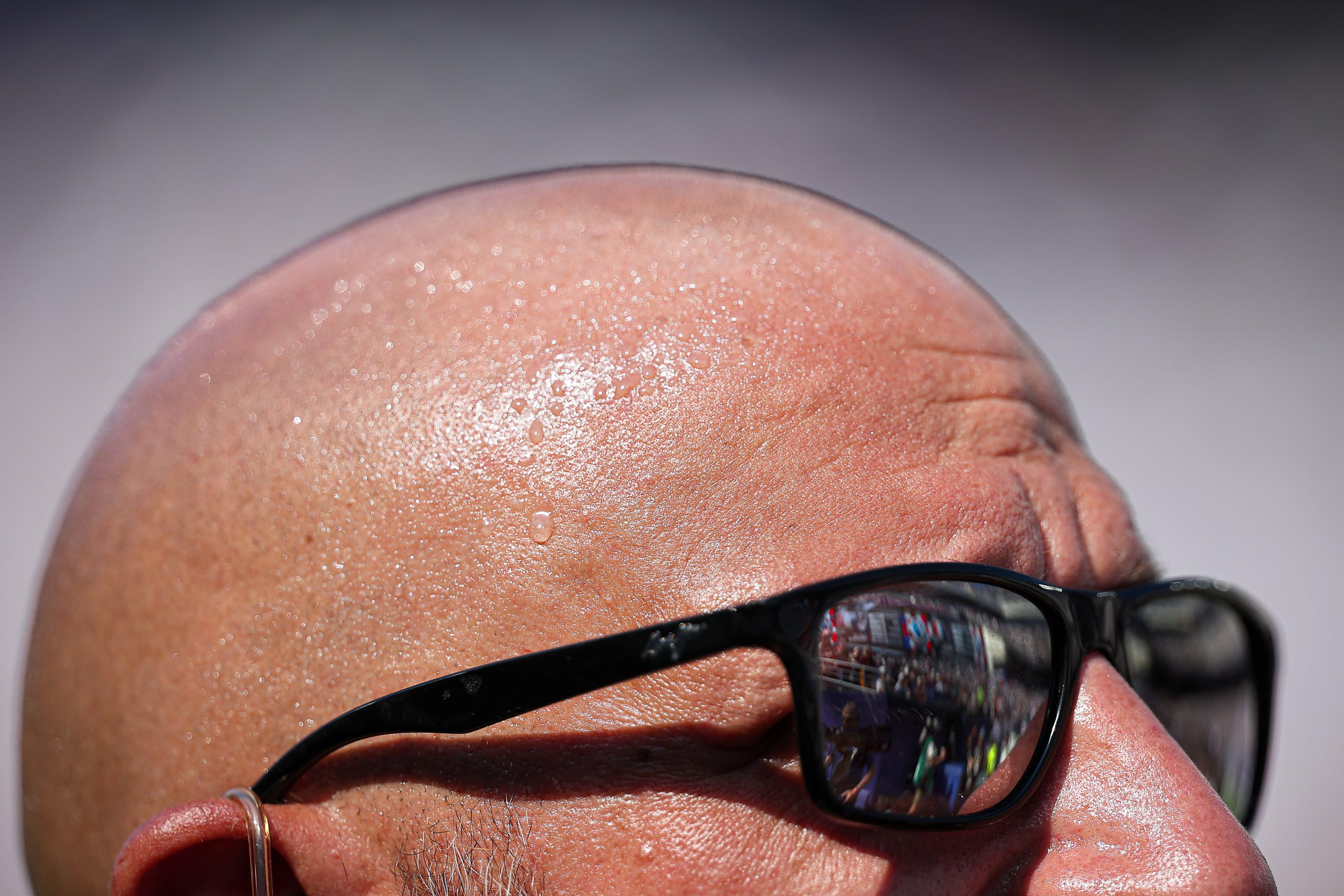
Before kickoff, he photographed fans and the sweltering conditions, including a security guard dripping with sweat before France faced Paraguay.
His game plan sounded solid on paper until he realized the top of his cameras would “feel like a sizzling frying pan.” He knew the electronics could malfunction if they overheated and “gripping a hunk of hot metal for a few hours,” would not be the most comfortable way to work. His “brilliant hack in the moment,” was to turn his camera upside down so the controls weren’t exposed to the blazing sun. “It was totally awkward like trying to ride a bicycle backwards.”
Fortunately, newer cameras automatically reorient the electronic viewfinder, so after a few minutes it began to feel natural.
His plan kept the cameras cool enough to capture France’s lone goal by superstar Kylian Mbappé. The only downside: every image had to be rotated before he could file on deadline.
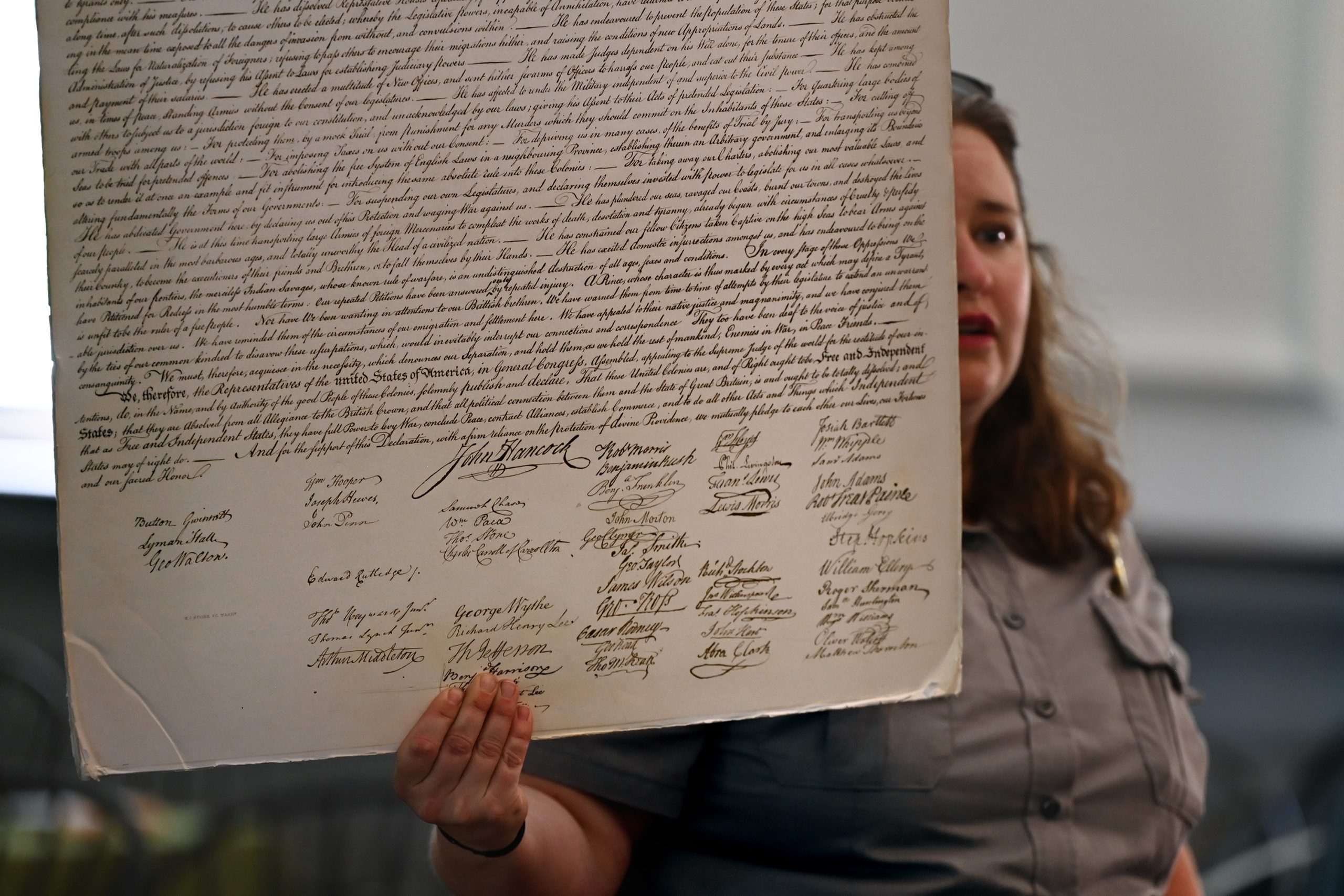
National Park Ranger Maggie Burkett holds an oversized replica of the Declaration of Independence while guiding visitors on a tour of the Assembly Room in Independence Hall (then called the Pennsylvania State House) where the Second Continental Congress met and the Declaration of Independence was adopted. Tom Gralish / Staff Photographer
In the month leading up to the weekend, I worked on a photo essay on the local Delaware, New Jersey, and Pennsylvania Founders who signed the Declaration of Independence. With help from their lineage organization, I met and photographed direct descendants of the often overlooked men who were here with the Second Continental Congress as America was born.
The Town Crier of Hopewell, N.J., and his wife, Stanley and Cindy Saperstein, attend Hopewell’s USA 250th Town-Wide Block Party in June. John Hart, a signer of the Declaration of Independence, is buried at the Old School Baptist Church there.Tom Gralish / Staff Photographer
Since 1998 a black-and-white photo has appeared every Monday in staff photographer Tom Gralish’s “Scene Through the Lens” photo column in the print editions of The Inquirer’s local news section. Here are the most recent, in color:
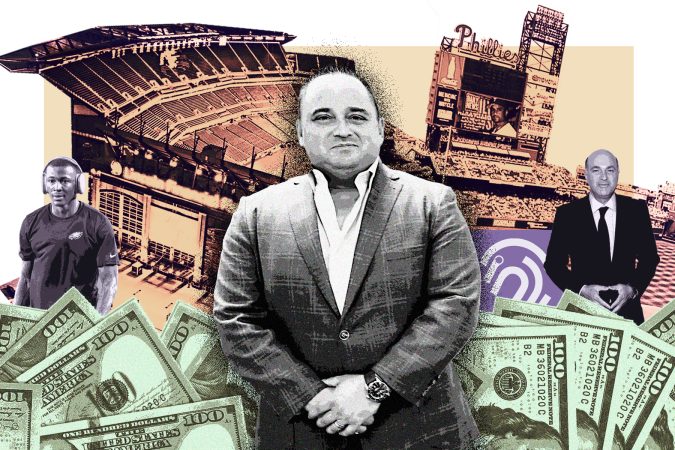
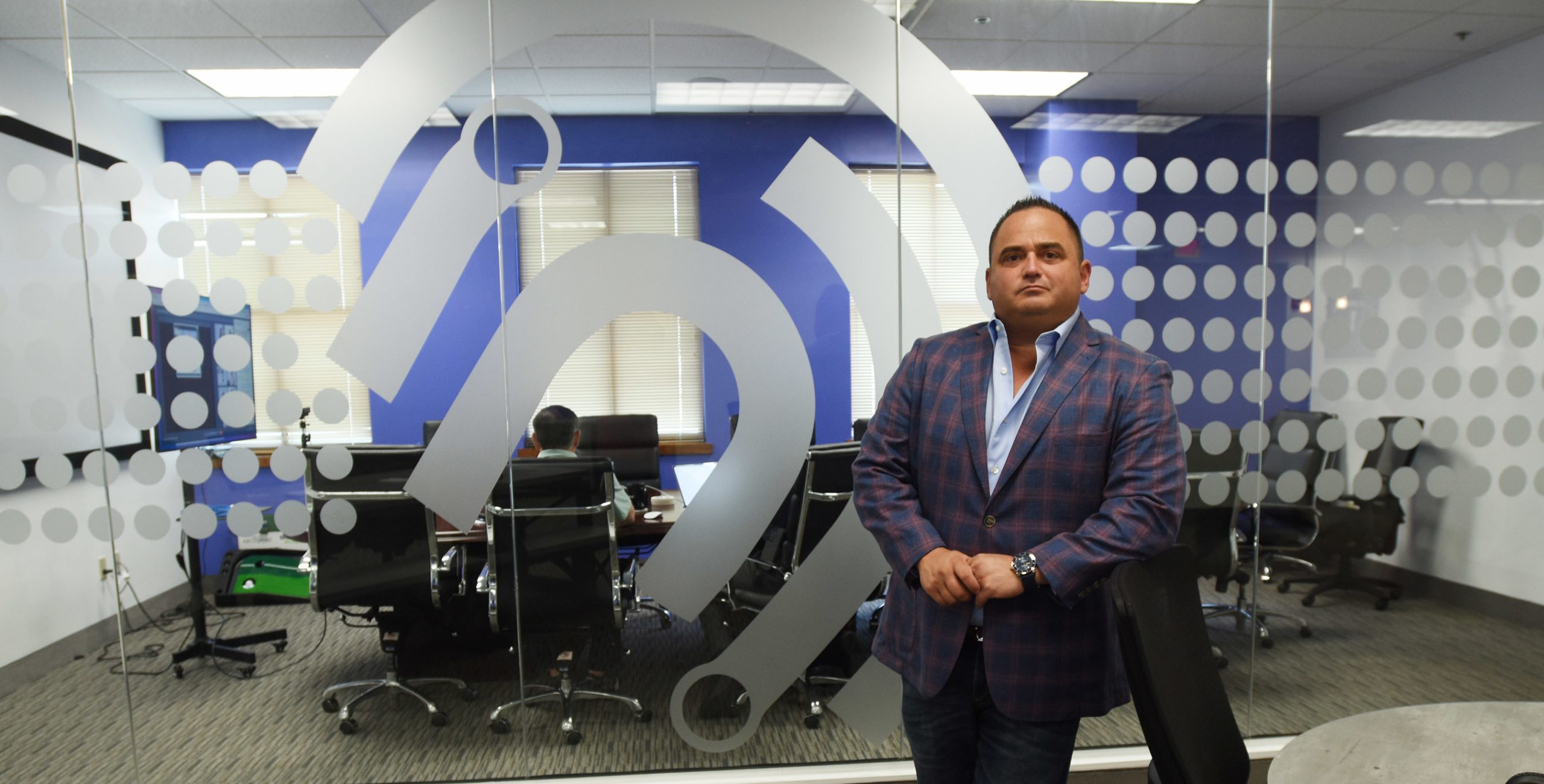
Nothing about T.J. Colaiezzi screamed “tech CEO.” He was a former gym manager from Delaware County who had dropped out of college and could not write code. But with $27 million in venture capital in the bank, his AI-powered start-up took a risky marketing gamble in the South Philly stadium complex that announced his big ambitions.
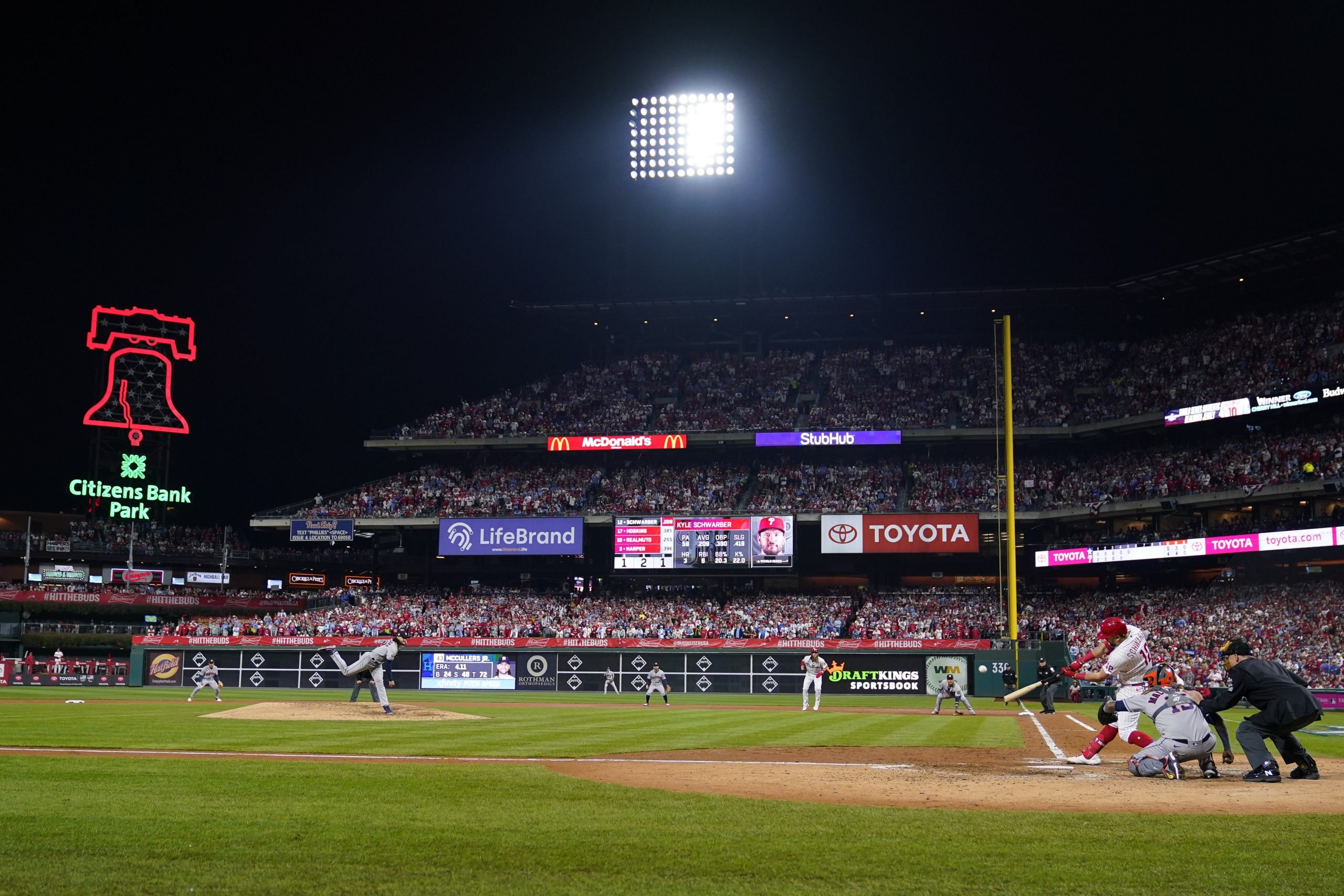
Over three seasons, with the Phillies slugging their way to a World Series, the Eagles racing to another Super Bowl, and a Sixer winning MVP, hometown crowds looked up at scoreboards with ads for his little-known company, LifeBrand. And as Colaiezzi wooed investors from the VIP suites, he sold an underdog story fit for the Philly fanbase and the broader cultural moment.
LifeBrand, he said, was a safeguard for the cancel culture era, with software that could scour years of social media in seconds and flag compromising posts. Users could purge past mistakes with a click and potential employers could avoid making a hire that might later prove embarrassing. Colaiezzi secured support from sports icons like Phillies legend Jimmy Rollins, as well as current and former Eagles.
“Catch all your cringeworthy social media posts with LifeBrand,” Eagles wide receiver DeVonta Smith said in a LifeBrand commercial that showed a photo of a “#wasted” tailgater posted carelessly online.
Now Colaiezzi, 45, is facing accusations of fraud that no artificial intelligence tool can erase.
Hundreds of pages of court documents and internal company records reviewed by The Inquirer, as well as interviews with a dozen people involved with LifeBrand, tell the story of how a fledgling CEO won over deep-pocketed athletes and business owners, and then — following a series of admitted missteps and alleged misspending — was forced to sell the tech company once valued at $137 million for next to nothing.
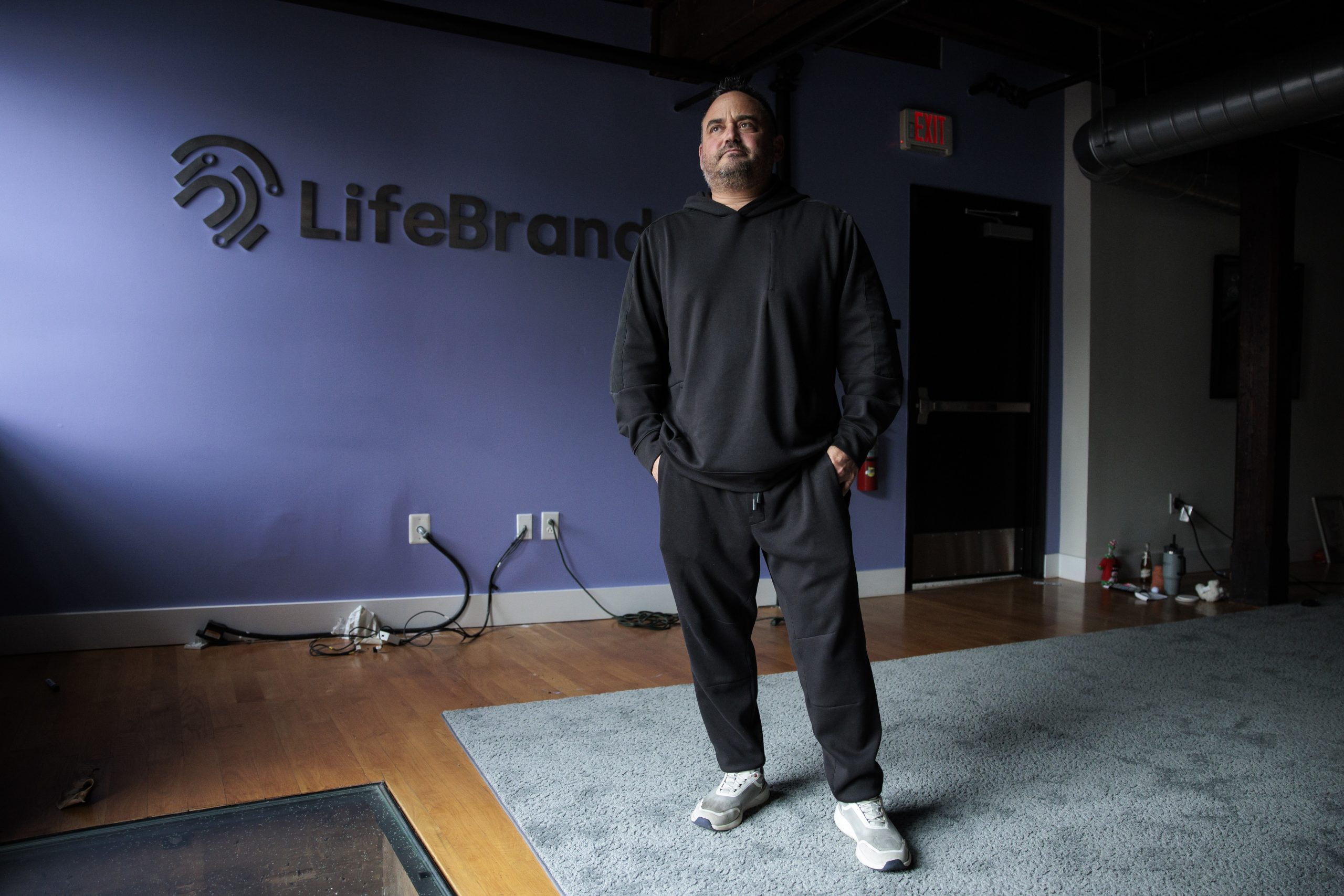
T.J. Colaiezzi posed for a portrait in the LifeBrand offices on Wednesday, May 27, 2026, in West Chester, Pa.Monica Herndon / Staff Photographer
In two lawsuits, including one filed last month in Delaware Chancery Court, investors say Colaiezzi squandered their money on a stadium-sized marketing blitz, hired unqualified friends at inflated salaries, and pocketed $6 million to finance a lavish lifestyle, including a $4.8 million home in Ocean City, N.J., and a powerboat. Both lawsuits allege that a prominent regional bank and an enthusiastic securities broker helped facilitate Colaiezzi’s deception.
Federal regulators are showing interest in the case, with the U.S. Securities and Exchange Commission (SEC) questioning at least one LifeBrand investor in March, according to correspondence reviewed by The Inquirer. An SEC spokesperson declined to comment.
Meanwhile, the Eagles, Phillies, and Sixers claim LifeBrand owes them a combined $6.2 million in unpaid marketing bills, court records show. And some LifeBrand employees are still owed paychecks from before the company’s collapse.
To the financiers who sued him, LifeBrand amounted to a “Ponzi-like” endeavor focused more on attracting capital than generating revenue. To Colaiezzi, it was a genuine effort that came up short.
In multiple interviews with The Inquirer — granted, he said, against the advice of his attorney — Colaiezzi characterized the lawsuits as fallout from former partners who are jockeying for the last scraps of his assets. Those same investors, he said, did not object to his marketing campaign or salary decisions until the company went under.
Colaiezzi acknowledged making mistakes but denied that any of them amounted to fraud.
“I was always the first to admit I was not a tech executive,” he said. “I ran health clubs for a living. And I thought I was surrounding myself with the right people.”
His $6 million stock cash-out was one of those admitted mistakes. But he maintained it was a lawful transaction that took place three years before LifeBrand failed and was never concealed from investors.
The first investor lawsuit, filed in 2024, reached a settlement in March. Attorneys for the plaintiffs — among them former Eagles Brent Celek and Todd Herremans — declined to comment, citing a confidentiality agreement.
Meanwhile, a chorus of other backers who saw their capital vanish but have not taken Colaiezzi to court say that the CEO lured them with hollow promises and misled them about LifeBrand’s prospects long after the company began to collapse.
“I will never go as far as saying this should be on American Greed,” said investor John Cerasani, referring to the CNBC docuseries about white-collar criminals. “He’s not a con man. But it was 100% reckless behavior with other people’s money.”
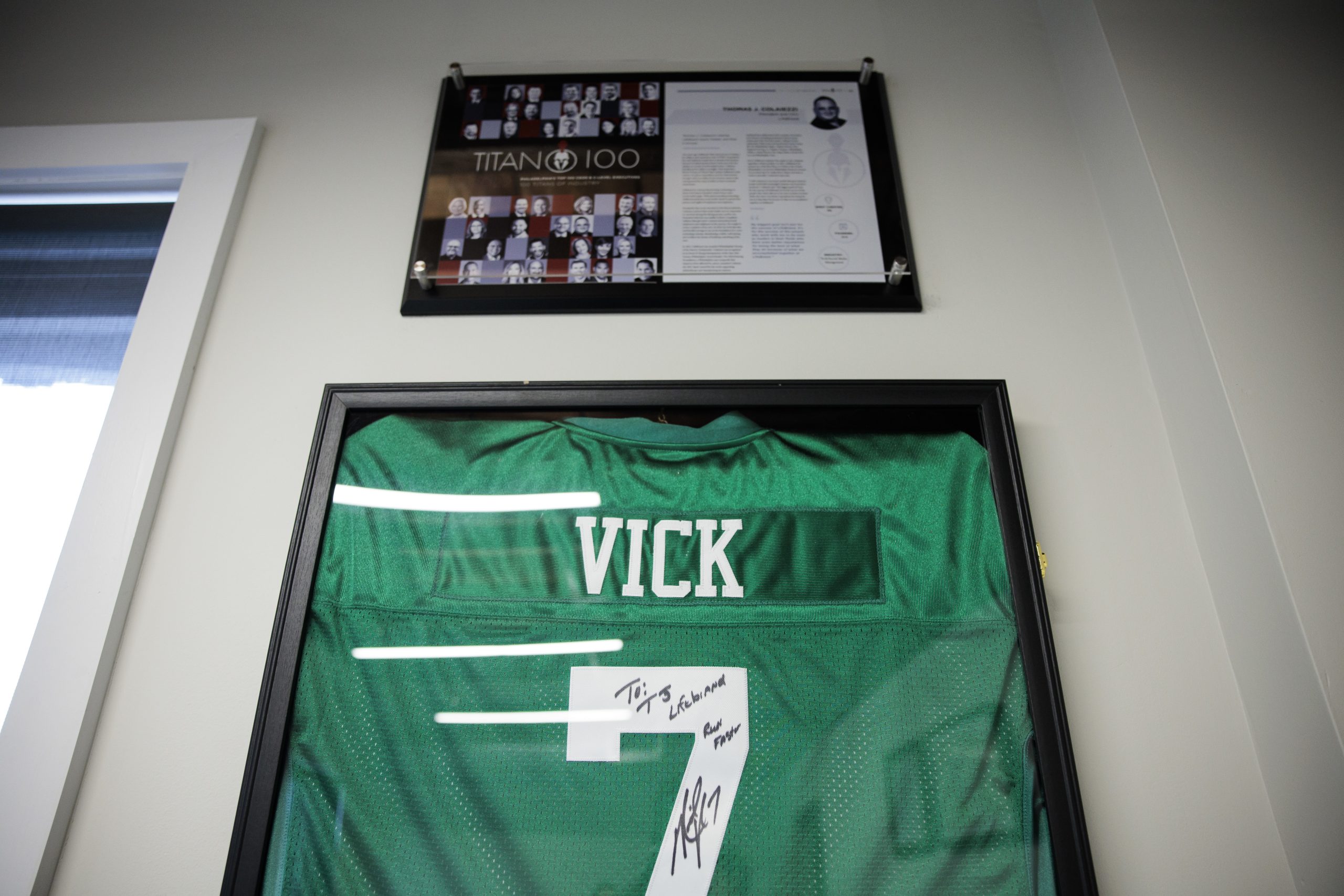
An autographed Michael Vick jersey in the LifeBrand offices on Wednesday, May 27, 2026, in West Chester, Pa.Monica Herndon / Staff Photographer
From gym manager to tech CEO
The son of an IRS official and a homemaker, Colaiezzi went to Springfield High School, where he played lacrosse and built replicas of Victorian furniture. He became a volunteer firefighter, tried to open a deli, and dropped out of Pennsylvania State University before settling in the fitness industry.
He started cleaning gyms and ascended to regional manager, overseeing LA Fitness and Crunch Fitness locations. It was there, fielding complaints about things that personal trainers and other employees had posted online, that he got the idea for LifeBrand.
Colaiezzi saw a market full of people getting fired over old Facebook posts and pro athletes apologizing for the flippant tweets they made as teens. Companies wanted ways to vet prospective employees. The need for protection was urgent — a firewall against the damaging effects of a careless post lingering somewhere in the internet’s bottomless memory. Even the dating scene, riven by partisan politics, could benefit from an online cleanup.
After raising seed money from family and friends, Colaiezzi hired a Prague-based development company to build the software that made LifeBrand a reality.
His big break came in 2020, when he won a virtual pitch competition hosted by Kevin O’Leary from the hit show Shark Tank, who called Colaiezzi a “strong entrepreneur with every question answered.” The start-up won just $10,000 but earned something better than a cash prize: credibility.
Colaiezzi leveraged the pitch competition win into a Series A investor drive, securing over $27 million by the end of 2021, surpassing expectations.
He once told an interviewer that he wouldn’t sleep until he sold the company or until every investor was paid back. One financier, Nick Guiffre, a retired CEO of a manufacturing company, said he saw “the eye of the tiger” in Colaiezzi — a man who could make good on his word.
After losing more than half a million dollars in LifeBrand, Guiffre, who is not pursuing litigation, said he wished he had done more diligence.
“I don’t want to say I could afford to lose money,” he said, “but some people who put money in early on, it was their 401(k)s. It was their future.”
Colaiezzi filled out the top ranks of his company by hiring people he knew. LifeBrand’s earliest board members consisted of Colaiezzi, his brother, a doctor, and an early venture capital investor. His chief operating officer came from the fitness industry.
He maintains that they were qualified. But, like him, no one had real tech experience.
“I think I was too loyal to people who were with me from the beginning,” Colaiezzi said. “I should have operated it more like a competitive sports team, and not like a family.”
LifeBrand President and CEO T.J. Colaiezzi is shown at his corporate office on Monday, Sept. 13, 2021, in West Chester, Pa. Bradley C Bower / For The Inquirer Bradley C Bower / For The Inquirer
The shadow broker
Anthony Falco wanted everyone to know how excited he was about LifeBrand. Maybe too excited, his attorney would later concede in court.
“Dude, this LifeBrand thing is going to [be] f— HUGE,” he texted an investor in 2021. “Signed the Phillies yesterday! Big investors involved. You will thank your little Italian buddy for this someday very soon.”
Falco was a financial adviser and securities broker who worked at Central Pennsylvania-based Mid Penn Bank and Wayne-based Alden Investment Group. But he had a side job consulting for LifeBrand that involved hyping up its prospects to investors, according to the two lawsuits.
Gregarious and well-connected, he was Colaiezzi’s liaison to a world of high net-worth investors and sports influencers. Falco invited him to celebrity golf outings, introduced him to Mid Penn Bank’s CEO, and helped bring on big names like ex-Eagles Celek and Herremans.
“We were banking at TD Bank at one point, and then [Falco] invited me golfing with the CEO of Mid Penn Bank,” Colaiezzi said. “And, you know, why wouldn’t you want to bank with a smaller bank where you got the CEO’s phone number?”
To Colaiezzi, sports were LifeBrand’s ticket to fame.
Between 2021 and 2023, LifeBrand paid millions to the Eagles, Phillies, and Sixers in a deal that included naming rights for a gate at Lincoln Financial Field and access to the Eagles Tunnel Club, a 1,400-square-foot lounge where VIPs could rub shoulders with the home team’s players as they hit the field.
Investors contend both Falco and Colaiezzi deceptively cast these deals as investor partnerships, rather than paid campaigns. According to the lawsuit initiated by the group that included Celek and Herremans, Falco received over a million shares of LifeBrand stock for inducing investors to the company through exaggerated claims, despite telling one that he was not allowed to accept comped shares.
While working out of LifeBrand’s offices, he texted investors that LifeBrand was going to be “a billion dollar company,” hyping up talks with the NFL and Jay-Z’s Roc Nation. In another text, Falco said LifeBrand was projected to make $58 million in revenue in 2022. But he also cautioned the investor that “nothing is real UNTIL we see that it is real!!”
LifeBrand’s revenue at the end of that year: $496,005.
In a motion to dismiss the 2024 lawsuit, Falco’s attorney Sean Bellew wrote that his client was at most guilty of being “overly enthusiastic” about LifeBrand and denied misleading anyone.
Both Mid Penn and Alden, which investors in that case accused of failing to supervise Falco, denied wrongdoing. Mid Penn argued in court that it had no formal relationship with the investors and that Falco’s work for LifeBrand was an outside matter. The bank declined to comment, citing pending litigation.
Alden argued much of Falco’s work at LifeBrand occurred prior to his joining the firm, which never formally advised any of the investors. Alden nonetheless paid $500,000 in March through its insurance policy to settle the 2024 lawsuit, according to Falco’s FINRA broker check page. The firm did not respond to a request for comment.
As for the new lawsuit, Bellew told The Inquirer that Falco never met the plaintiffs who renewed the allegations against him. Falco, he said, was “a victim” of Colaiezzi’s characterizations about the company — same as the other investors.
LifeBrand ads could be seen in the outfield of Citizens Bank Park during the Phillies 2022 World Series run. Matt Slocum
The Hail Mary marketing plan
For a self-made CEO from Delco, seeing his company’s name lit up across three stadiums was glorious. It was also a gamble for a young, unprofitable company. Last year, for example, the Tunnel Club naming rights were acquired by Janney Montgomery Scott, a wealth management and investment advisory firm with more than 100 offices and $1 billion in yearly sales.
Colaiezzi said he told investors about a third of the start-up capital would go toward marketing and said the stadium blitz had their support at the time. He produced text messages from investors who later sued him, which showed them asking for access to VIP seats and praising the buzzy brand campaign.
“There’s not a single email, text, or phone call with any adviser or board member saying ‘you shouldn’t be spending money on this,’” Colaiezzi said. “Everyone was in line until we ran out of money.”
Between 2021 and 2023, records show, LifeBrand spent over $16 million on advertising and marketing contracts — more than half its venture-capital haul.
Colaiezzi said the marketing helped introduce customers to LifeBrand, which scanned millions and deleted tens of thousands of social media posts over those years. He said his sales team used the stadiums to pursue multimillion-dollar contracts with major institutions and companies.
Some investors told The Inquirer they always had doubts about the marketing. Cerasani, a venture capitalist and gambling influencer, had been wooed as a potential investor with sideline tickets and access to the Tunnel Club, with its open bar with premium liquors, and a buffet with shrimp cocktail and prime rib.
Every time Cerasani visited, he said, it looked like a private party for LifeBrand executives and Colaiezzi’s close friends, who treated him like “a king.” Rarely did he see prospective clients.
Colaiezzi denied that characterization. But the gap between the marketing spend and the revenue it produced was impossible to ignore. By 2023, the company was losing over $800,000 a month, according to internal financial records reviewed by The Inquirer.
Sales reps would take clients to games and work them for months to close a modest $12,000 sale, Colaiezzi acknowledged. The big institutional contracts were not coming through.
Yet he kept sending optimistic signals to investors.
In an August 2023 email obtained by The Inquirer, Colaiezzi announced that he had just closed a “transformative deal” with a Denver-based education nonprofit — a three-year, $63 million contract that would use LifeBrand’s data to help students at underserved schools.
It is not clear how the client, which has no online presence and no publicly available nonprofit filings, was equipped for a deal of that size. The revenue never materialized, and one investor alleged in court that the deal was fiction.
Colaiezzi said the eight-figure contract was real. He assigned two full-time employees and flew out to meet with leaders, but the nonprofit backed down before the bills were due. If anything, Colaiezzi said, “we got scammed by them.”
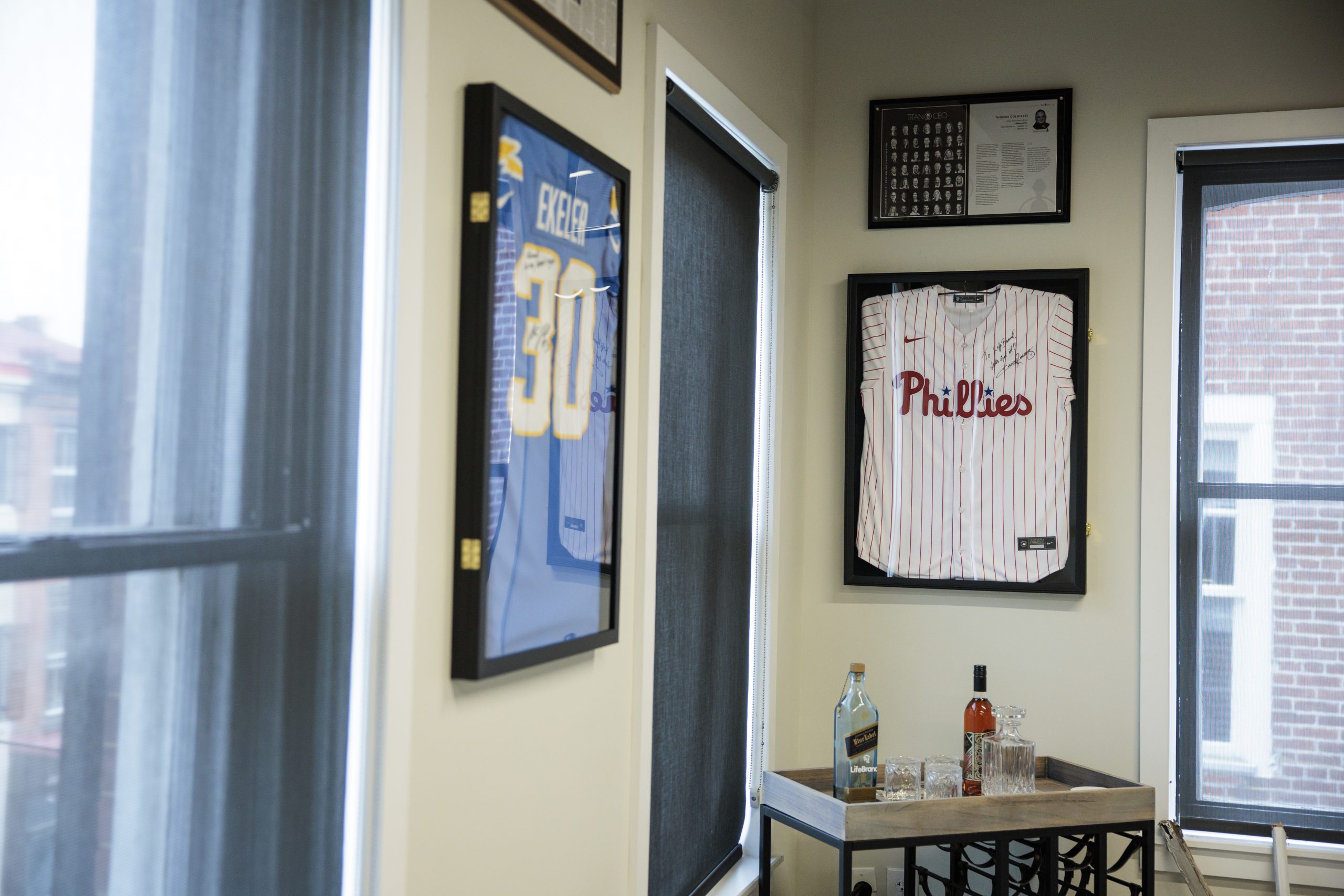
Autographed jerseys on the wall in the LifeBrand offices on Wednesday, May 27, 2026, in West Chester, Pa.Monica Herndon / Staff Photographer
Bedlam in the bank
In May 2024, a group of anxious investors gathered on a video call to discuss the millions they’d sunk into LifeBrand.
The company was on the brink of collapse. The money was gone. And all that the investors had to show for their backing were memories from the Eagles VIP suite.
As they raised concerns on the call, one investor shared that Colaiezzi had paid himself a $6.17 million stock redemption at a time when the company had little revenue, according to four people who attended the meeting. Outrage erupted.
“It was very obvious that things were going off the rails,” said Dan Ellison, a business owner who had invested in the start-up with his wife. “But no one knew that [Colaiezzi] took $6 million.”
According to Colaiezzi, the 2021 stock redemption was done at the urging of shareholders at the time to dilute his control in the company, and was documented on capitalization tables shared with subsequent investors.
He said he put $3 million back into the start-up to keep it afloat as he pursued a Series B fundraising round that would generate an additional $50 million — money that could finally turn LifeBrand profitable. That never happened.
Simon Wong, an engineer who worked at LifeBrand for a year until he was laid off in May 2024, recalled a workplace without the start-up grind culture. Most employees left each day at 4 p.m., and at 2 p.m. on Fridays, he said. Wong said he believed in the product and saw Colaiezzi as a leader who cared and said “the right things” about his mission.
By May, Wong said, software subscriptions stopped getting paid and paychecks were late — then they stopped entirely.
Colaiezzi agreed to fire himself as CEO, along with his other longtime executives. Then the rest of the board quit, leaving only Colaiezzi to run the company. He begged investors for patience while working with an outside firm to stave off bankruptcy. He laid off the entire staff and then tried to bring some of them back for a slimmed-down version of LifeBrand.
“It kind of felt like we were getting strung along,” said Wong, who said he is still owed pay from most of his final month working at the start-up.
LifeBrand — which Colaiezzi valued at $137 million in 2021 — was sold in August 2024 for $75,000 to Sentiment AI, an acquisition company formed by AI consultancy Global Fusion. Colaiezzi was initially kept on as an adviser, but the future of the company would be in the hands of more seasoned tech leaders. He said most investors agreed to convert their shares into the new venture in exchange for a promise not to sue.
Another group of investors took him to court. And the company’s turnaround effort stalled almost immediately, which Colaiezzi blamed on the litigation.
“It hit a point where people wanted to kind of run or protect themselves,” Colaiezzi said.
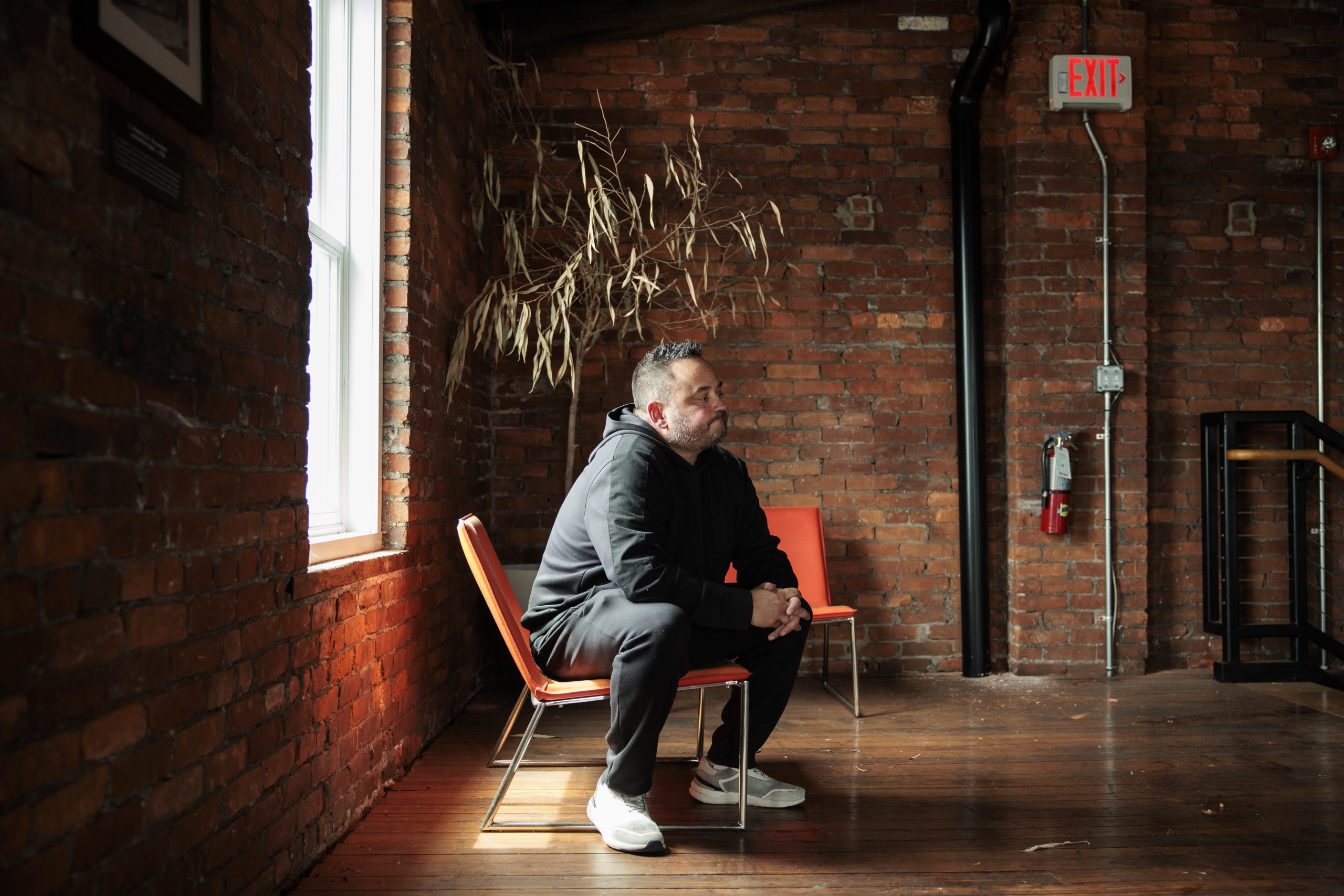
T.J. Colaiezzi posed for a portrait in the LifeBrand offices on Wednesday, May 27, 2026, in West Chester, Pa.Monica Herndon / Staff Photographer
‘It’s like I lost my baby’
One day last month, inside the restored 19th-century workshop in West Chester where LifeBrand operated for years, Colaiezzi walked solemnly past whiteboards crowded with years-old strategy notes. Framed Eagles, Sixers, and Phillies jerseys still hung on the wall.
He said in an interview that he feels “a weird obligation” to come to the office every day, while it is still his.
The building, which Colaiezzi purchased for $2.7 million with other investors and leased back to LifeBrand, is under foreclosure. Now he sat alone at a folding table among packed boxes in what used to be a conference room.
“It’s like I lost my baby, you know?” he said. “There was so much great potential.”
Moving on involves finalizing the lawsuits and paying off debt. Lenders and investors have placed liens on Colaiezzi’s Jersey Shore home. Asked if he got in over his head, Colaiezzi said, “Yeah, probably.”
But he is making plans to erase the LifeBrand failure and replace it with a success story.
His next venture, he said, is “a family-first social network” powered by AI.
Parents will be able to upload family histories, recipes, and advice for their children. The idea, he explained, is that children living in a harsh world should be able to get answers to sensitive questions from their own families rather than a remote server.
“The AI will basically learn how Grandpop would answer a question,” he said, “not how ChatGPT would.”
The pitch has already secured $50,000 from investors.
Staff writers Joseph DiStefano, Samantha Melamed, and Abraham Gutman contributed to this article.
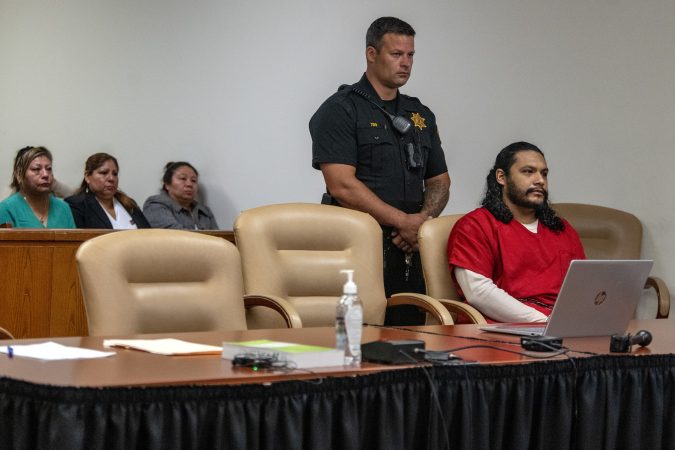
An Oregon man on Thursday was ordered to spend 30 years in prison for fatally stabbing a beloved South Jersey veterinarian at the vet’s Cherry Hill home.
During Custodio-Aquino’s sentencing before Camden County Superior Court Judge Judith Charny, Anthony’s family members spoke tearfully of late veterinarian, who they described as kind, wickedly funny, and a devoted father to his sons.
Above all, they grappled for answers as to why Custodio-Aquino murdered Anthony that morning on his front lawn.
“You took all of the future moments that should have belong to him,” said Patricia Anthony Gershefski, one of Anthony’s sisters.
Anthony Gershefski said her brother was warm and sensitive, even moving his veterinarian practice just to be closer to his children.
The brutal nature of the crime confounds the family to this day.
In her career as a professional psychologist, Anthony Gershefski said, she has found “no diagnostic category for the deliberate destruction of another person’s life in this savage and grotesque manner.”
Kyle Bartsch, Anthony’s partner, said in a statement read by prosecutors that Anthony had filled their home on Sharrowvale Road with love and laughter.
His death, Bartsch said, leaves “a permanent void in the lives of those who knew him.”
While Custodio-Aquino’s attorneys had previously suggested that prosecutors did not have enough evidence to convict their client of murder, they were mum throughout the proceeding.
In addition to the eyeglasses investigators linked to the Peru native, license plate readers captured Custodio-Aquino’s car entering and exiting Anthony’s neighborhood that morning, and forensic experts later recovered a sample of the veterinarian’s blood from the vehicle.
Prosecutors believe Custodio-Aquino traversed the country in a fit of jealousy that fall before killing Anthony.
He had previously dated Anthony’s partner, Bartsch, and once lived with the man in Haddon Township before the couple separated in 2021 after a domestic dispute, according to prosecutors.
Custodio-Aquino, given the opportunity to address the court, spoke so softly that Charny asked that he repeat himself.
Raising his voice, he said: “I do agree that the world is less than without Michael Anthony.”
He was sentenced to 30 years in a state correctional facility without parole. Charny offered few words on the ruling beyond wishing Custodio-Aquino good luck.
It was Henry Anthony, Anthony’s teenage son, who saved some of the most biting remarks for his father’s killer.
“Your life is officially over,” Anthony said, turning to look at Custodio-Aquino. “I honestly wonder what your reason for living will be for the next 30 years.”
One person after another shuffled toward her from the funeral line snaking down the center aisle, through the vestibule of St. Anthony of Padua Catholic Church, out to Forest Avenue in Ambler, and I wondered as I approached her how long Meg Kane could keep this up. The sad, grateful smile. The long, tight hugs. The posture she maintained, straight as a soldier, when the shock and grief simmering within her should have sent her to her knees.
It was Friday, April 12, 2024. Eight days had passed since the house fire that killed her parents — the kind of unbelievable tragedy that interrupts a local newscast, helicopters hovering over the smoldering ruins. Unbelievable, too, because it had happened to Meg. Over the quarter-century that we have been close, she has risen through the public relations industry to a place of power and influence within Philadelphia without compromising the qualities that made her, above all else, a decent human being. It always seemed that her intelligence and drive, her character and achievements, melded to form a shield that would protect her from catastrophe. Something like this doesn’t happen to someone like Meg, I thought that day, as if such a thought were anything other than a mind trick, a weak attempt to reconcile how and why my friend’s mother and father were dead.
The line stretched to more than 200 people, perhaps more than 300. No one standing in it should have been surprised at its length. Meg had relationships and connections throughout the Delaware Valley, of course, but more than that, she and her family had embodied the blending of some beautiful and long-conflicted aspects of Philadelphia’s history and culture. They had learned to live with and revel in the tensions inherent in certain traditions here. Their roots were that deep. Their hearts were that open. Hers most of all.
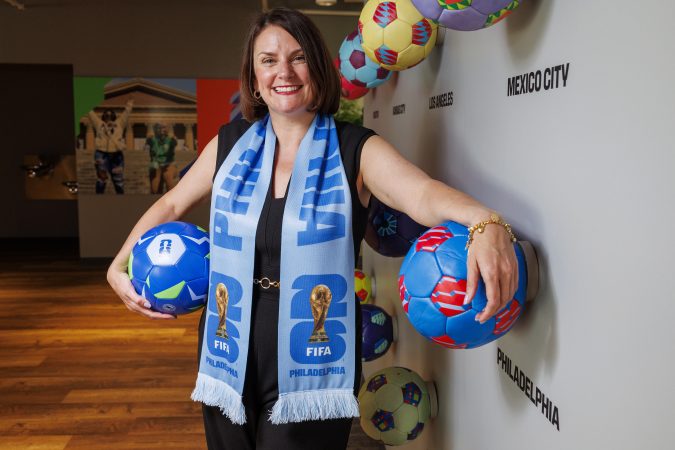
That background is one reason Meg has been the ideal face of the campaign to bring the World Cup to Philadelphia and promote it once it was here, to play up and celebrate the happy marriage of soccer and the city. It also is the reason that — through every match, every publicity event, every meeting, every long and restless night before and during this tournament, all while the eyes of the globe had been on Philadelphia — she has been holding all that pride in the same palm as so much pain.
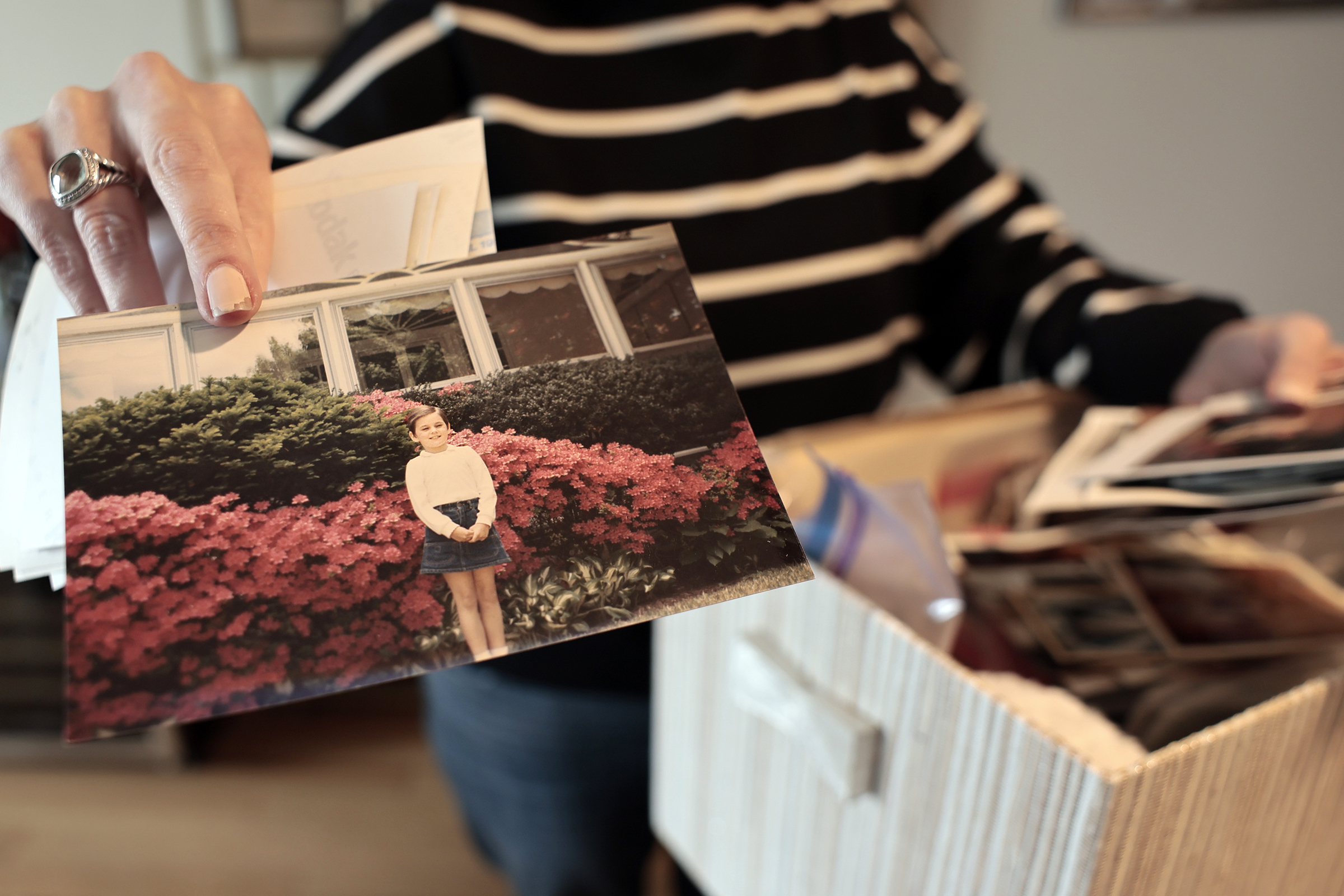
Meg Kane looks at a photo of her mother among old family photos in her Philadelphia apartment in May. The photos were recovered from the scene of an April 2024 house fire in Ambler that killed both of her parents.Elizabeth Robertson / Staff Photographer
Everything essential in life
There she is again. Another quickie interview on Fox29. Another guest spot on a PHLY Sports panel. Another four paragraphs of insightful quotes to us at The Inquirer. Another Amtrak ride up to New York or 14-hour flight to Doha, Qatar, to see what she could learn, then another debrief with her colleagues at Philadelphia Soccer 2026. Here’s what they did. Here’s why it did or didn’t work. Here’s what we can and should do.
Nothing new for Meg Kane. Nothing out of the ordinary. Revitalizing Tastykake’s brand and business when its headquarters relocated from Hunting Park to the Navy Yard … making ready the way for Pope Francis’ visit to town in 2015 … counseling the Philadelphia Orchestra and the archdiocese … all this at the tenderest of ages, all this before she turned 45 in January.
“When the odds are against us,” said her friend Christopher Pinto, the development lead of the Philly Pops, “this city calls Meg Kane to make the impossible possible.”
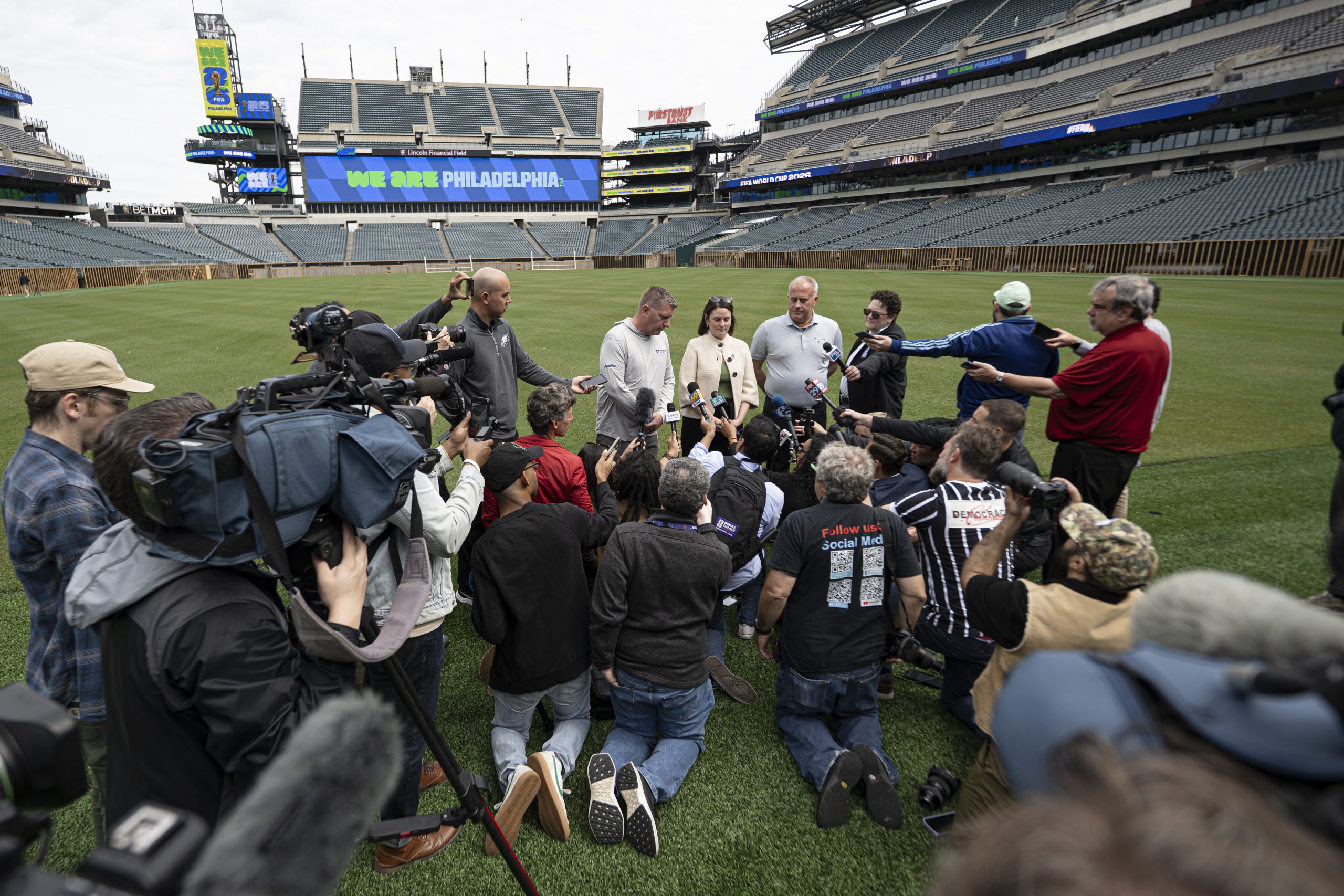
Meg Kane (center) speaks at a press conference about preparations for the FIFA World Cup in May at Lincoln Financial Field.Jose F. Moreno / Staff Photographer
Who was better to evangelize about Philadelphia, to make the case that it was an ideal location for the biggest event in the world’s most popular sport? Who else had the requisite combination of local expertise and enthusiasm to share the multitudes that the city contained? Meg’s mother, Debbie, and biological father, Richard, had divorced not long after Meg was born. Debbie then married Steve Wood in September 1983 — a Little Flower alumna and a North Catholic graduate reconnecting 15 years after they’d met as teenagers on the Wildwood boardwalk.
Meg wasn’t yet 3 when Steve became her stepfather, but the word was appropriate only in its most literal sense. He was Dad, too, and she was his daughter, full stop, and everything that was essential in his life became essential in hers …
… and everything included their early-afternoon car trips together starting when Meg was 7, when Steve would pick her up after another half-day at St. Martin of Tours School and drive down I-95 to 13th and Walnut, to the bar that Steve and his brother, Bill, had opened in 1980, to Woody’s — to the best-known gay social establishment that Philadelphia has ever known. While Steve balanced the books, Meg — still in her Catholic school uniform, her plaid skirt and saddle shoes — sat at the bar, the daytime bartenders fixing her fresh cherry Cokes, making them the right way, muddling the fruit and filling her glass with fountain soda, the little girl chatting up the customers and playing Ms. Pac-Man on the arcade machine upstairs and remaining mostly oblivious, never thinking anything there was strange or sinful, her parents never suggesting anything was.
As a child, Meg Kane’s afternoons sometimes included stops at her dad and uncle’s bar, Woody’s.Elizabeth Robertson / Staff Photographer
The cognitive dissonance might have caused constant friction in one family or torn another apart. It didn’t exist within Meg’s. Steve had one rule about the visits that Meg, her younger sister, Liz, and their younger brother, Stephen, made to Woody’s: If you see someone there you know, keep it to yourself. “It was important we never outed anybody,” Meg said. “At that time, there were people for whom Woody’s was an oasis, an escape, the one place they could be themselves.”
The bartenders there picked up extra work at Liz’s and Stephen’s christening parties. Bill’s partner, Lee Mallon, showed up to the family’s annual Christmas party dressed as Santa. Debbie, who became a principal at Norwood-Fontbonne Academy in Chestnut Hill after years of teaching in the archdiocese, loved to tell the story about the earnest couple who made an appointment to tell her something troubling … except the delicate topic had nothing to do with the couple’s children. The husband had been downtown, and he and his wife had been praying about whether to share what he saw with Debbie, and, well … Your husband walked into Woody’s. And Debbie let out a belly laugh. Oh, I know … By the way, have you forgotten what my last name is?
At the height of the AIDS crisis in the 1980s and ’90s, Steve and Bill kept employees on the payroll even though they couldn’t work anymore, held celebration-of-life luncheons at the bar, and covered the cost of memorial services and burials when no one else would. Those trips to hospitals and funeral parlors were rarely, if ever, spoken of within the Wood family. Steve’s mother had died when he was 4 and his father when he was 13. His siblings had raised him, and he considered business associates to be friends and friends to be family, and maybe a young woman who later would be charged with uniting a diverse but territorial city behind a common mission had to grow up immersed in such acceptance, such label-free loyalty.
There was Meg, riding with Steve every morning during her high school years from their new home in the Montgomery County suburbs to Academy of Notre Dame in Villanova — a school with a great speech-debate program for a teenager who knew she’d end up talking for a living — the two of them listening to WIP throughout those 45-minute commutes. “It’s how I learned to be a sports fan,” she said. “My passion was cultivated because of our relationship.” There was Liz, going her own way at Mount St. Joseph Academy. There was Stephen, heading off to St. Joseph’s Prep. But it wasn’t until Meg’s freshman year at La Salle, when a male student she didn’t know knocked on the door of her dorm room to thank her — Your family owns Woody’s, right? I don’t know what I would have done without it — that she perceived her family as resting at the center of every Venn diagram of Philadelphia, sharing something in common with every group and subgroup.
I met her during the first semester of her junior year at La Salle, when she took a journalism class I was teaching in the fall of 2001. It is an intimidating thing to be a 26-year-old adjunct professor, to have taught for just two years, and to suspect immediately that one of your students is smarter and wiser and more sophisticated than you are. Ten days into the term, on Tuesday, Sept. 11, she proved she was.
Class began at 9 a.m. I tried to get 20 minutes worth of lecture time in as black smoke billowed from the World Trade Center towers and my students, a few of whom hailed from New York and North Jersey, chewed their fingernails and fidgeted in their chairs. Finally, Meg shot me a look that said, I know you mean well, but … please, we gotta get out of here. When the class reconvened later that week, I asked for the students’ forgiveness for my stupid officiousness, for my failure to read the classroom, and we spent the rest of the period discussing and venting about the terrorist attacks and their aftermath. In September 2011, Meg sent me a letter — not an email, not a direct message, a letter, on paper, more permanent — recalling that week. You did what a teacher is supposed to do, she wrote. You earned our trust, and you never lost it. It remains a treasured gift, that letter and its contents, that benefit of the doubt, that measure of grace that I hadn’t earned and didn’t deserve.
By then, Steve and Bill had sold Woody’s and opened another bar, Knock, and Meg had lifted off and would continue climbing in her career: from La Salle — she was her class’s commencement speaker — to graduate school at Maryland; from earning a master’s degree to planning and publicizing some of the city’s biggest events; from getting a text message in November 2019 from Angela Val, who was the CEO of the city’s convention and visitors bureau at the time, to meeting her that night at the Ritz Carlton. We need you, Val told her. We’re going to bid on the World Cup.
It was the project of a lifetime. It gave her the runway and credibility to open her own PR firm, Signature 57, in 2021. It put her front and center as the captain of the city’s World Cup cheerleading squad — “the Pied Piper of Philly soccer,” someone called her. And she still could be the daughter and sister and friend she’d always been, ready at a moment’s notice to give whatever had to be given. Drive five hours one way to attend the funeral of a colleague’s parent? It’s a day. What’s a day? Get off a plane after a week of work in Ireland and head straight to a chamber of commerce dinner that night? Work an 80-to-100-hour week? Of course. How else would she be there for her family if she didn’t excel in her professional life, if she didn’t squeeze her responsibilities and extra efforts into the smallest possible windows of time?
Yes, she thought it, too: Something like this doesn’t happen to someone like me. But things did happen. Debbie retired and, without her work in education, struggled in the void, losing weight, chain-smoking so much that her favorite blanket became pocked with holes where fallen ashes — and even the still-lit tip of one of her Merit Menthols, as she was dozing off — had burned through the wool. Stephen moved back in with his parents after finishing at Penn State and stayed with them for nine years, teaching English at Norwood, helping Steve care for Debbie. Liz and her husband, Michael McCabe, both faculty members at La Salle College High School, lost a baby daughter, Eleanor, and one night, Steve sat with Meg at his dining room table, a Phillies game on TV in the background. He had grown up without a mother and father. He had watched dear friends waste away to a deadly virus. Yes, these things and more did happen, but “my dad,” Meg said, “had an incredibly positive view of the world,” and at the table, he described to her how he had tried to comfort Liz.
Don’t despair, he said. Don’t despair. It’s the only way to keep going.
The horror of a ticking clock
On Thursday, April 4, 2024. Meg was in a room at the Fairmont in Washington, D.C., already awake for close to two hours, writing and rewriting speeches and teleprompter scripts for the Horatio Alger Association Awards, a three-day event for the philanthropic juggernaut that had become a signature project for Signature 57: a CEO’s retirement, the introduction of 12 new members, two major dinners, an undertaking so massive that Meg and four coworkers bunkered for a week in the hotel to complete it.
Still in her pajamas, she was trudging to the bathroom to wash her face when her phone buzzed and lit up pink, the color that meant Liz was calling. She assumed something was wrong with Francis, Liz and Mike’s 4-month-old son.
Meg looked at her phone. It was 6:42 a.m.
Liz?
Meg, she shrieked, I’m watching the house burn down!
What?
I’m watching the news. I’m holding the baby, feeding the baby, and the house is on fire!
Meg told Liz to call the police. She put her phone down and walked to the bathroom, violently shaking, and did not wash her face. She called her boyfriend, Keith Audit, and told him, I need you to find out if my parents’ house in on fire, and Liz called back and said that the police had told her that someone would be in touch and she had tried calling Steve’s phone but it had gone right to voicemail and Liz kept saying, It’s definitely the house, and I don’t know what to do, and then Meg said out loud an irrational thing: We have to call Norwood. Stephen’s a teacher. Stephen’s not going to make it to school. Someone has to let Norwood know to get a sub. And Meg hung up with Liz and called Shannon Craige, Norwood’s curriculum director, who told her the students were on spring break and Norwood was closed.
Meg looked at her phone. It was 6:53 a.m.
She called Stephanie Bambach, the vice president of Signature 57, who was in a room above her. When she arrived at Meg’s room, Bambach was surprised that Meg’s demeanor was as measured as it was. She was not surprised that Meg’s voice was trembling.
I have to finish writing the remarks for Saturday night, Meg said. I’m only halfway done. I can’t leave.
It doesn’t matter, Meg.
Meg reopened her laptop and emailed every document and every draft of every unfinished document to Bambach. She grabbed a black striped sweater and a pair of black leggings, went into the bathroom, and got dressed.
“I remember looking at myself in the mirror,” she said later, “and saying, ‘You will never wear these clothes again.’”
Bambach arranged for a car service to pick up Meg at the hotel and drive her back to Philadelphia. The two of them rode an elevator down to the lobby. Meg held her room key. She tried to hand it to Bambach.
In case, Meg said, someone needs to use my room.
Bambach didn’t take the key. Keep it. Good thoughts. It’s going to be OK. You might come back.
I’m not coming back, Meg said. It’s not going to be OK.
In the back seat of a black sedan, Meg’s phone rang again.
I’m at the house, Liz said. I just spoke with a detective. Mommy and Daddy didn’t make it.
Meg took a deep breath. Where. Is. Stephen?
He’s OK, Liz said. He got out.
Meg looked at her phone. It was 7:43 a.m.
The black sedan pulled up to her apartment. Keith was waiting for her. She threw her bags in his car, and they drove to Temple University Hospital’s burn unit. Stephen was there, in a bed in a room in the back, his face and body covered in soot. That acrid, sickening odor. Physically, somehow, he was fine.
“We were the luckiest people on that floor,” Meg said later. “He was going to get out of that bed and go home. That day couldn’t have been worse, but my God, it could have been.”
She looked at her phone. It wasn’t yet 11 a.m.
Miles away
Two months. That’s how long she stepped away. From the World Cup campaign. From Signature 57. From everything except what was gone and what remained.
The fire’s official cause was undetermined. Its damage was incalculable. Steve and Debbie had no wills. Their birth certificates and Social Security cards were gone. Meg had to pick up the mail and pay the mortgage and pay other bills and access both their personal bank account and the finances for Knock and show up for every meeting with every lawyer and builder and contractor, everything moving incredibly fast and in slow motion at the same time, so many dear memories now coldly cataloged on an Excel spreadsheet.
She did not talk about the fire at all in public and only rarely in private. Her last name was not Wood; few strangers, if any, knew her connection to the tragedy. The relative anonymity was meager relief from the pressure she piled on herself. Who else could handle the fallout? Who else could inch everyone a little closer to normal again? It had to be her.
She didn’t have a newborn to raise, like Liz and Mike did. She hadn’t awakened in the dead of night to dodge flames and hold her breath to keep smoke from seeping into her lungs, like Stephen had. Hell, her poor brother couldn’t even cradle his baby nephew two months after their parents’ deaths: A potent combination — a crackle of July 4 fireworks and a quick post-traumatic contemplation of the fragility of human life — compelled him to hand Francis off to someone, anyone, before something terrible happened again. Nothing she was dealing with came close. Hell, she had been 150 miles away when the house went up. She hadn’t even been there.
Her friends worried that she was pushing herself to the brink of a breakdown and beyond. “She’s really not someone who leans on people,” Bambach said. “I wish she had leaned on us more in the aftermath. So much of her identity is who she is as a leader of Signature, of Philly Soccer, and accepting help from people was a position she was really uncomfortable with. As her friend, I had moments when I wished she would just ask for help.”
Two months. She couldn’t bring herself to take more time away from work. She ping-ponged between her guilt over what she had to do for her family and her guilt over her desire to return to her career. “I really struggled with that,” she said. “Everyone is replaceable at work. If I’m not there, does it run better without me? Are people doing better? Philadelphia World Cup 2026 — is it running better and smoother? Are they finding this to be easier without me? I thought about that even with Signature 57. I’m the founder and CEO, and I still grapple with that. You can go to dark places.”
Meg Kane was out of town the night a house fire killed her parents.Elizabeth Robertson / Staff Photographer
The things that remain
On the kitchen table of her Fairmount apartment, Meg Kane reached into a box to handle the delicate pieces of her parents’ past and her present. Three pages from a memoir by talk-show host Mika Brzezinski, their edges singed black, survived the fire; Meg found them when she first returned to the house’s site. A couple of old family photo albums, the pictures mounted under sticky plastic, the books stashed in a sealed Tupperware container, seem untouched, save for their smoky smell. “It’s really hard to …” she said. “It takes you back there.” So does a black magnetic card that she lifted out of the box. The key to her room at the Fairmont. She kept it.
There’s a vision she can’t shake: Steve waking Stephen up, making sure he got out of the house, then remaining at Debbie’s side, knowing he could not leave her, his children knowing he never would. He had to be so scared in those final moments. He had to be so brave.
“At the end, there’s just grief,” Meg said. “I’m not sure I’ve dealt with the grief. I don’t know I’ve felt it all the way. I don’t know that I’ve allowed it to be something I fully felt.”
So she stores it away, lets it out only during the brief and rare breaks in her schedule, when the events and interviews have paused and some stillness and quiet return to her life. In May, Stephen proposed to his girlfriend, and at the engagement party, Meg pulled him aside for a conversation. It lasted 15 minutes. “It was the talk that everybody was avoiding all night,” he said, a talk about how much he had grown over the last few years, “the kind of talk you would want from your mom or dad.”
It was the happiest moment in a spring and summer that have had many happy ones. She partied on Lemon Hill in Fairmount Park and marched with several hundred Croatian soccer fans from Center City to Old City and rode a subway train quaking from the chants and songs of Brazil’s futbol fanatics, and she saw Philadelphia reveal itself as a world-class sports showcase. They are just Band-Aids, to be sure, covering the paper cuts of knowing that her parents never got to meet their son’s fiancée or hear their grandson speak his first word. But for those of us fortunate enough to call her a friend, they are the answer to the question we were asking as we stood in that church two years ago. How would she get through each day? How would she keep this up?
She did it by holding on to something a father told his daughters. She did it in the only way any of us can. She remembered that she has loved and is loved, and she did not despair.
Biblical references seem to find a home with the Philadelphia 76ers.
Moses Malone arrived in 1982 and immediately led the team to the promised land.
Allen Iverson arrived in 1996 and, five years later, took the Sixers to the NBA Finals. For fans of gospel music, his nickname, “The Answer,” recalled a 1970s hit by Andraé Crouch and the Disciples: “Jesus is the Answer.”
And, now, LeBron, who was nicknamed “King James” while still a princeling high school star in Akron, Ohio. His namesake, England’s James I, commissioned a translation of the Bible in the early 17th century, the one with all the “Thee’s” and “Ye’s” and my personal favorite, “believeth.”
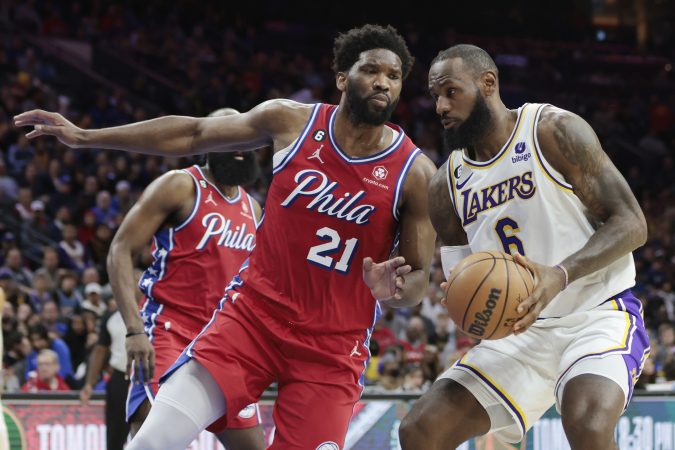
But if, by some miracle, he does agree to a tiny free-agent contract this summer, LeBron surely would make the Sixers a favorite to win their first Larry O’Brien Trophy since Larry O’Brien actually was the NBA commissioner.
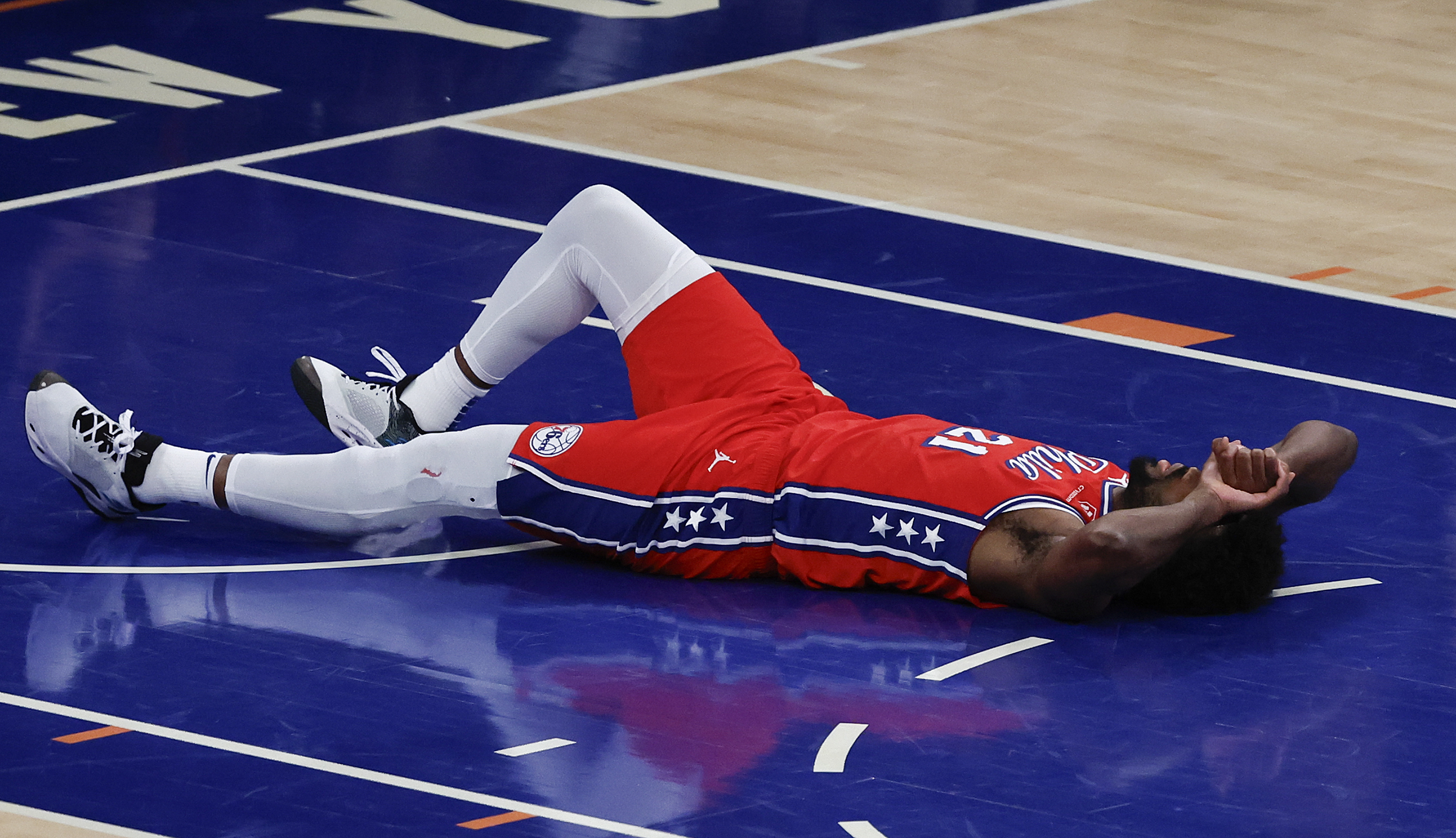
This has not been the case largely because the sole benefit of “The Process,” the disastrous, failed rebuilding strategy that began in 2013, is Joel Embiid. He has MVP talent, and he won the award just three years ago, but his rank unprofessionalism — a refusal to commit to fitness, too much energy focused on extracurriculars, an obsession with personal milestones — has kept Embiid and the Sixers from reaching their potential.
And, while King James might not save Embiid’s mortal soul, with his special brand of tough love, LeBron very well could save Embiid’s mortally afflicted career.
Come on, man
Before this goes any further, I don’t believe LeBron is interested in playing basketball for the Philadelphia 76ers. Yes, the Sixers somehow traded Paul George and picks for Jaylen Brown — Celtics president Brad Stevens must’ve lost either a bet or his mind — which instantly turned the Sixers into a viable Eastern Conference contender. Nevertheless, I think it’s likely that LeBron’s representatives are using this (feigned) interest as leverage to land the King elsewhere.
I don’t think he wants to be in Philadelphia, which is a much tougher city than anywhere else he’s played. I don’t think he wants to deal with an organization with an absentee owner and a first-time top executive. I don’t think he wants to be associated or represent one of the most dysfunctional organizations in major league sports over the past 14 years, and with the NFL’s Jets, Raiders, and Browns in that mix, that’s quite an accomplishment. I don’t think he wants to play for the NBA veteran minimum, which is all he’d get at this point.
There is a chance, though, that his desire to be worshipped will override his desire to give himself the best chance to win a fifth title, because nowhere would worship him the way Philadelphia fans would worship him, just as they worship Moses for leading them out of the wilderness.
LeBron already did that in Cleveland and Miami. And, as my colleague David Murphy pointed out on Monday, his agent, Rich Paul, said the Knicks disqualified themselves from the LeBron sweepstakes when they won a championship. Murphy’s logic: He could not end their drought, and therefore could not be seen as their savior, so why bother?
Now that Jalen Brunson did what Patrick Ewing failed to do, LeBron can’t do it. But he damn sure could help Embiid do what Embiid will be paid an average of $62.6 million a year to do over the next three seasons.
Winning a title, even with James on board, requires getting the most of whatever’s left out of Embiid, who has bad knees and a bad attitude. Getting the most out of Embiid is something that championship-winning coaches Doc Rivers and Nick Nurse abjectly failed to do, and they had three years apiece.
This is different.
LeBron, who is 41 with the body of a 32-year-old, is entering his 24th season. He has gotten the best out of his teammates everywhere he’s gone, whether it’s fellow Hall of Fame-caliber players like Dwyane Wade, Chris Bosh, and Kyrie Irving or lesser lights such as Kevin Love and Mo Williams. He has won four championships because of it. You think Austin Reaves — an undrafted tweener guard who averaged 10.8 points in four years of college — would have been offered $185 million by the Lakers for the next four years if LeBron hadn’t been his teammate for the past five years?
Injury issues have plagued Joel Embiid throughout his career.Yong Kim / Staff Photographer
Embiid, who is 32 with the body of a 42-year-old, is entering his 11th season since being drafted, though he missed the first two seasons with injuries. On the day the Sixers season ended in a playoff sweep (at the hands of those Knicks) he announced that the 2025-26 season had been a success for him. That’s because his left knee no longer impeded him to the degree it had him impeded him for the past several years.
Embiid then swore that, at the end of this summer, when training camp begins, since his body feels better, he will be better prepared than in recent years to finally get the Sixers … past the second round of the playoffs?
Talk about aiming low.
At any rate, no Sixers since Moses himself is better equipped to make sure Embiid follows through on his latest promises. It worked on “big-boned” Charles Barkley.
“If it wasn’t for Moses Malone, I’d be working at McDonald’s.”
Charles Barkley on how the late, great Moses got him to lose 50 pounds and changed the course of his NBA career. pic.twitter.com/eovRoU1E9w
— Podcast P with Paul George (@PodcastPShow) August 8, 2024
Filling a void
Since trading cornerstone All-Stars Andre Iguodala in 2012 and Jrue Holiday in 2013, the closest the thing the Sixers have had to a real leader was Jimmy Butler, whose headstrong attitude and routine insubordination were less an example of leadership than a display of self-aggrandizement. Embiid was in his third year of actually playing NBA basketball during the Season of Jimmy, and he certainly got that message.
Who’s the leader now?
Embiid blew his chance years ago when it became clear that he was less interested in chasing championships than he was in seeking MVP trophies, Olympic gold medals, milkshakes, and Shirley Temples.
I went to Chick-fil-A with Landry Shamet and (get ready for the sports radio style tease!) you WON'T BELIEVE the amount of Chick-fil-A calories Joel Embiid consumes during team flights https://t.co/yRGIMKFE6C
Tyrese Maxey is an ebullient, well-spoken workaholic, but he lacks the gravitas to lead a championship-caliber team, especially when the roster includes more accomplished players like Embiid and Brown.
As for Brown — well, he might find it hard to lead a bunch of dummies; last week, he called most pro athletes morons when compared to him after unnamed sources accused him of thinking he was the smartest person in the room: “Let’s keep it a buck [100] … The bar is f— low.”
James might not be a budding chess master like Brown, but he’s smart enough to know how to win a title and how to run a team. After all, the bar is low.
Do you think LeBron is going to let Joel make his teammates wait for 2½ hours to leave for the plane after road games? Do you think LeBron is going to sit around and wait for Embiid to come to meetings and shootarounds? No. The answer is, simply, no. If you’re James’s teammate, you will be professionalized or you will be marginalized.
If LeBron James comes to Philly, you will see a fitter, tougher, more committed Joel Embiid.
James’s habits aren’t contagious, they’re compulsory. It’s a trait he shares with Kobe Bryant. James is kinder than Kobe, and he’s more deferential, but compared to the typical laissez-faire NBA star, he’s neither kind nor deferential.
He is desperate to win, and if you can’t help him do that, then he doesn’t have time for you.
Again, I don’t think it’s a realistic outcome. But King James in Philly would be the best medicine for Embiid’s ailing legacy.