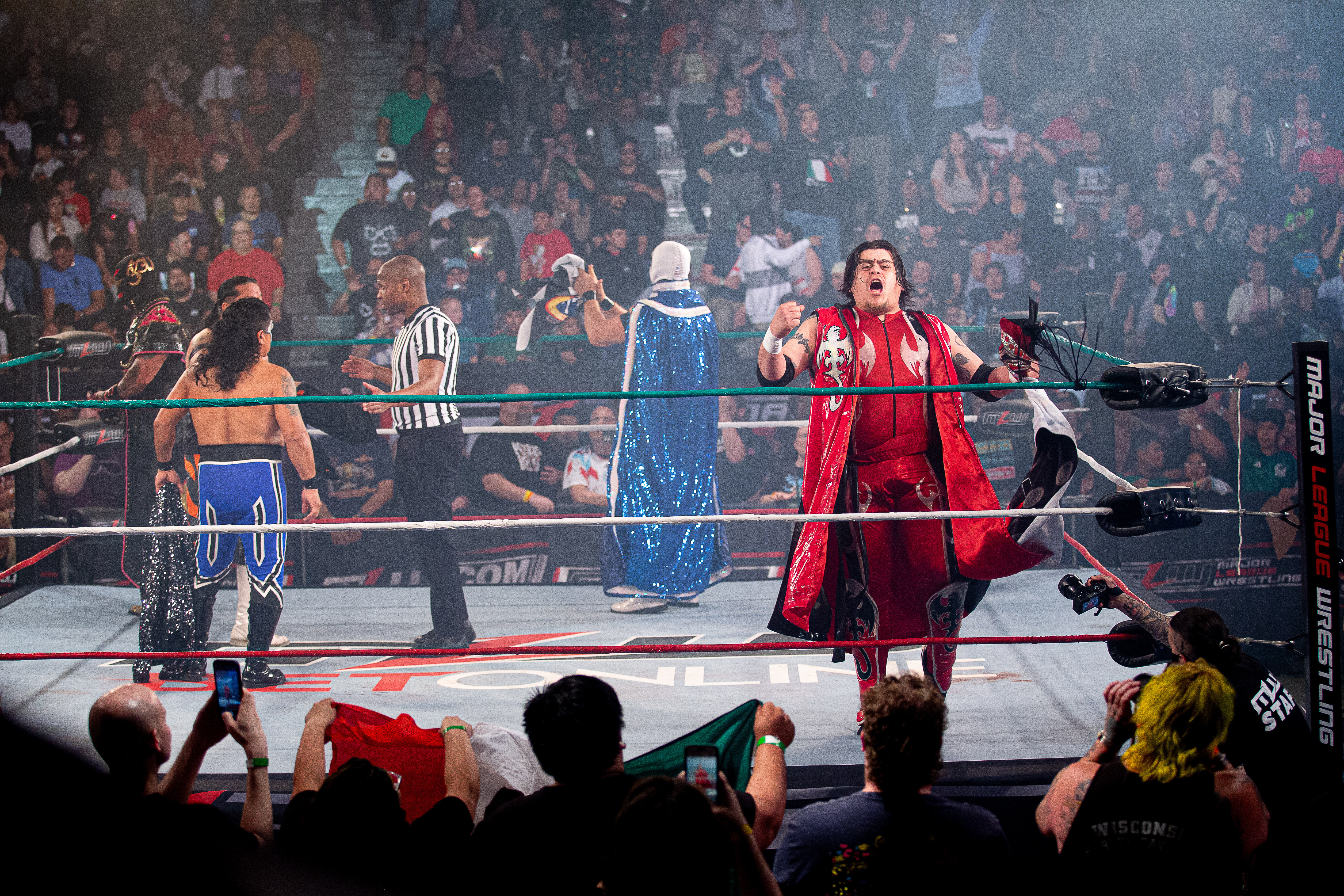
Major League Wrestling is returning to Philly for the first time in over two years with two nights of action this weekend at the 2300 Arena. MLW has history with the venue, hosting its debut event, Genesis, at the arena in 2002. Since, it has operated in major markets like New York, Los Angeles, and Chicago.
As part of the promotion’s 24th anniversary, it’s returning to Philly for a doubleheader that includes a national taping of the new season of MLW Fusion and its signature event, Summer of the Beasts.
Across both nights, fans can expect appearances from the promotion’s biggest stars, including Karrion “Killer” Kross, Shotzi Blackheart, CONTRA Unit, and Don Gato. There will also be Allentown native Matt Riddle, and behind the scenes, Jesús Rodriguez, a Lancaster resident.
One ‘Rude Dude’
The “Rude Dude” Riddle has a chance to reunite with the title on Saturday night as he prepares for his second match against Kross, the current world heavyweight champion, for the evening’s main event.
“The Rude Dude’s not going to lose two times in a row,” Riddle said. “So I think the fans can expect to hear, ‘And new MLW champion, the Rude Dude Riddle.’ Whenever somebody like myself and Kross get in the ring and then we get in the ring again, we just end up — it’s going to be more intense and crazier.”
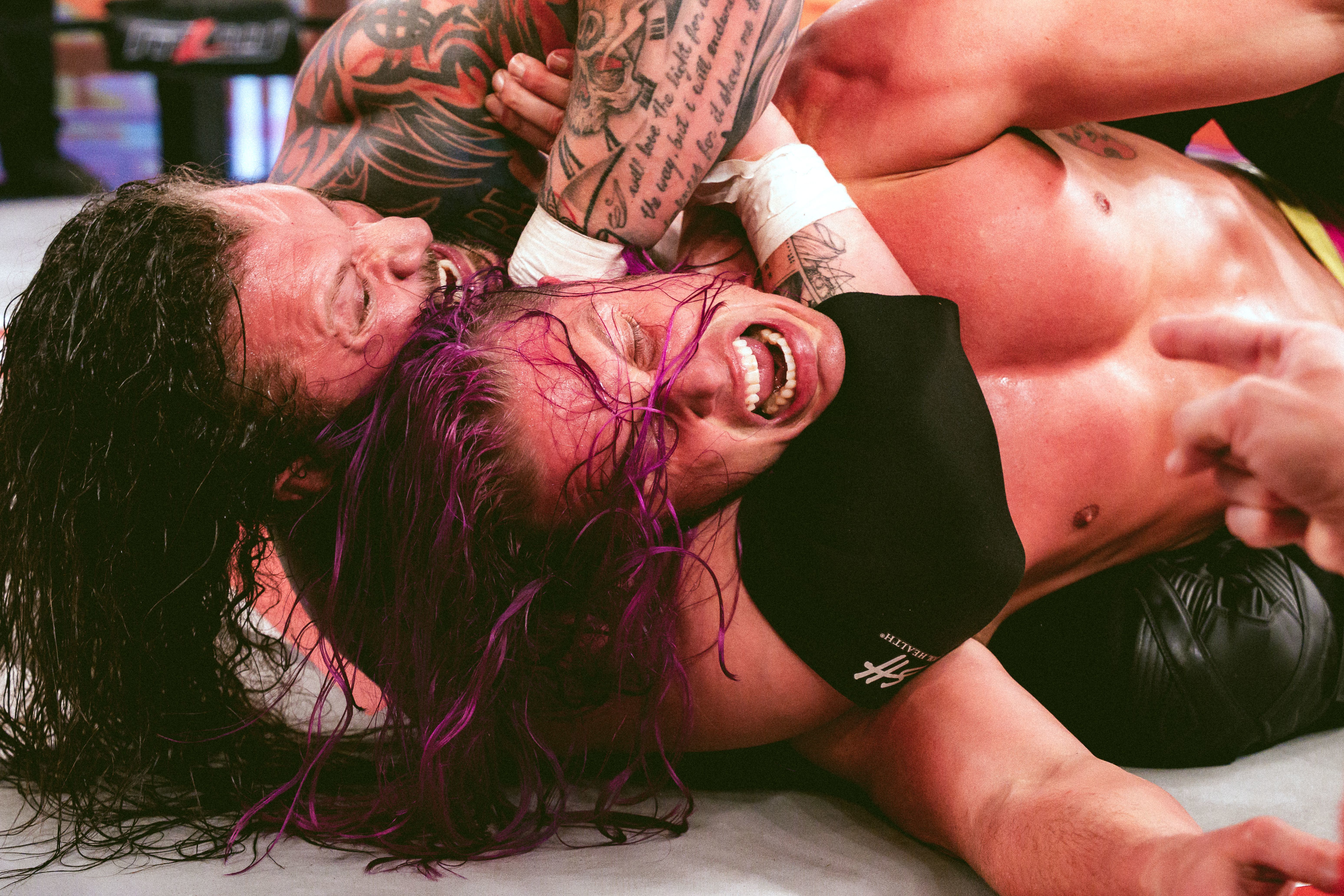
The last time they met in the ring, Riddle lost to Kross by a rear-naked choke. But this time around, Riddle will have an advantage performing in front of a crowd he knows well.
“I’m really excited to be in front of that Philly crowd,” Riddle said. “They’re a little raw. They’re a little more intense. In the wrestling business we call them smarks. Because they’re not only wrestling fans. But they’re smart, intelligent, educated wrestling fans. They’re intense. They like you to make it feel real and that’s what I’m good at.”
Competing for championships against big names like Kross isn’t new for the 40-year-old Riddle. In high school, he defeated former UFC champion Jon Jones on the wrestling mat to become the 2004 New York state champion.
“Daniel Cormier used it to talk trash [against Jon Jones] but then Jon Jones beat Daniel Cormier,” Riddle said. “So, at the end of the day, isn’t it just making me look good?”
Matt Riddle lost to Killer Kross with a rear naked choke in their first match in Nov. 2025.MLW
Riddle made the move to upstate New York and attended Saratoga Springs High School. He returned to his home state to attend East Stroudsburg University on a wrestling scholarship.
After dropping out during his third year, Riddle transitioned into Mixed Martial Arts — training out of Palmerton, Pa., at Rat Pack Fighting Systems. Riddle’s MMA career lasted from 2008-2014, and included an appearance on The Ultimate Fighter 7 and an 8-3 record in the UFC before he was released in 2013.
Eventually, Riddle decided it was time for a career change. In 2014, he started training at Monster Factory, located in Paulsboro, to begin his transition to professional wrestling.
“Growing up as a kid, I always wanted to be a pro wrestler,” Riddle said. “But as I got older, I just felt like I wasn’t big enough to be a pro wrestler. But when I was released I was like, you know what? I just knew it was time to start pro wrestling.
“[Monster Factory] had a legacy of high-end talent. Sheamus. Big Show. There’s a huge list of people, including myself now. When I moved back to Pennsylvania, I was just looking for the hardest working gym in the area and the Monster Factory was that. My buddies Q.T. Marshall and Damian Priest were training there and they probably are the ones I hold most responsible for getting me up to speed.”
Riddle took on a persona of a carefree, surfer boy, wrestling barefoot in the ring. He signed with the WWE in 2018, where he won the NXT tag team championship, the United States championship, and the RAW tag team championship alongside Randy Orton.
After getting released by the WWE in 2023, Riddle returned to MLW in 2024 — and recorded a 245-day title reign before losing to Mads Krule Krügger — following his initial stint with the promotion in 2018.
This weekend, he wants to get his belt back.
Jesus Rodriguez has gone from wrestler to working on the production side of the business.Courtesy of Major League Wrestling
From in the ring to behind the scenes
While Riddle will be front and center, Rodriguez will be behind the scenes producing some of the women’s matches at the former ECW arena.
“It’s such an iconic building,” Rodriguez said. “It has so much history. And to be able to perform in a venue that has such a long history of pro wrestling is surreal. And to feel that passion that the Philadelphia fans have is so real and it’s something that has to be experienced.”
Rodriguez has been with MLW for the last three and a half years, taking on multiple different roles — working as a backstage talent producer, getting involved with the production side, and working as an on-air talent.
“It’s been an amazing journey,” Rodriguez said. “I have been very blessed that I have been in the industry for 20 years now. And through my ventures — not just in the U.S., but internationally — I’ve gotten experience with major TV companies, not just in wrestling, but also in production aspects. Now I’m able to put it all together and share my knowledge.”
Rodriguez previously worked for the WWE under the ring name Ricardo Rodriguez. He also worked as a manager for Alberto Del Rio for the promotion Nación Lucha Libre, and worked as an announcer for Combate Americas and AEW.
But throughout his wrestling journey, he found himself battling addiction. Years after his departure from the WWE, Rodriguez made the move to Lancaster to get help from Blueprints rehab facility.
After rehab, he decided to give back to a community that gave him so much. To do that, he started Three Legacies Wrestling Academy in Lancaster in 2022. The academy includes seminars and lessons from himself and other WWE alumni.
“I feel like I was at the right place at the right time,” Rodriguez said. “A lot of times when folks battle issues, it’s a lack of focus. So, having the academy and then having MLW, and the fact that both entities are able to collaborate together has given me purpose and focus. Can it be stressful at times? Absolutely. But at the same time, this is also what I wanted and the choices that I made for something greater.”
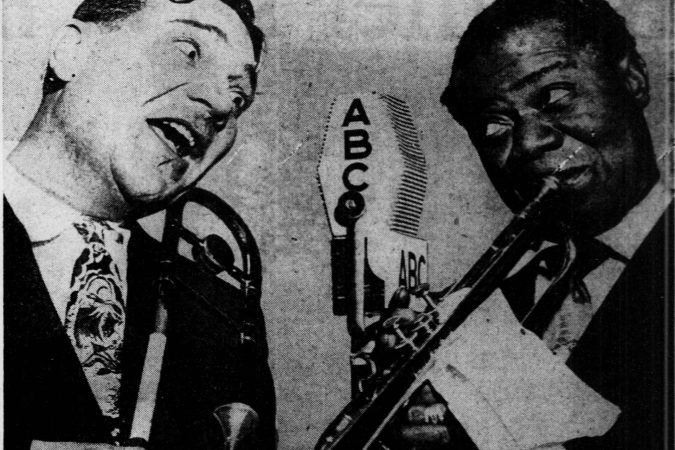
Before Jay-Z at the Roots Picnic or Bad Bunny at Made in America, there was Louis Armstrong at the Philadelphia Music Festival.
Before there was the American Idol competition, there was Philly’s “Voices of Tomorrow.”
Shortly after Germany surrendered, but a few months before Japan followed suit, Philadelphia put on its first true citywide music festival.
In 1945, the city held its inaugural festival, creating an event leaders claimed was for the kids and a distraction from war, and a celebration of Philly’s robust music scene. It also made use of a large stadium during the slower summer months post-World War II.
By 1949, the city was on its fifth event, and the festival had proved to be an opportunity to raise money and spirits.
‘Symposium of the arts’
On Friday night, June 10, 1949, the city’s festival held its fifth iteration.
The Inquirer, which sponsored the event, called it a “symposium of the arts.”
“On a magnificent June night with a great golden moon peeping over the rim of Municipal Stadium, an exited and delighted throng of 80,000 people, largest crowd ever to attend a cultural event in this city, roared their applause last night for the star-studded fifth annual Philadelphia Music Festival,” The Inquirer reported the following day.
The paper said the total eclipsed the previous year’s attendance of 72,000, with acts like jazz legend Armstrong, violinist Jeanne Mitchell, and pianist and vocal improvisationalist Alec Templeton.
These performances included local acts from area high schools, bugle corps, and marching bands.
‘Voices of Tomorrow’
In its annual “Voices of Tomorrow” contest, four young singers rose above a field of more than 2,000 competitors, singing in opera and “other fields” hinting at what was coming in the following decade. Competitors would sing in front of the crowd, which would choose the four winners by applause.
And the nearly four-hour event closed with the playing of “The Star-Spangled Banner.”
Municipal Stadium, which was opened in 1926 for the Sesquicentennial, would be named after John F. Kennedy in the 1960s, and would close in 1992.
The city’s 11th annual music festival in 1955 was its last until the 1960s brought the Philadelphia Folk Festival, Beatlemania, and a cultural revolution.
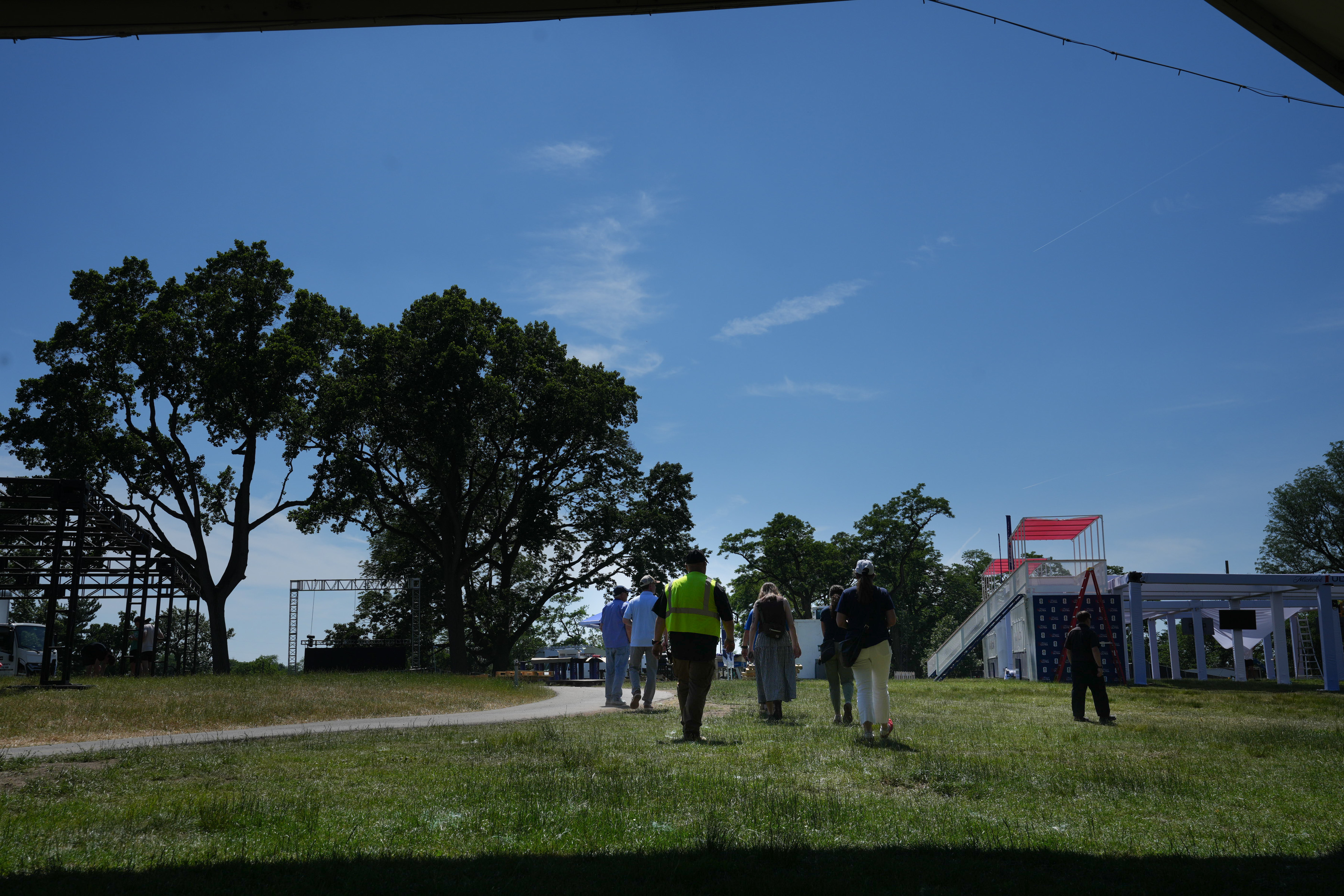
On a muggy Friday days before the World Cup began, a small team of medical emergency planners inspected the cavernous, air-conditioned tent erected for patients at Lemon Hill in Fairmount Park, not far from the enormous screen where thousands can watch matches through July 19.
Near a FIFA tent already full of merchandise, and branded “fan pavilions” in various stages of construction, Philadelphia’s host city medical lead, Patrick J. Brennan, paced what is now the medical home base for dozens of doctors, nurses, and EMTs over the next several weeks.
Brennan, who is also the chief medical officer of University of Pennsylvania Health System, pointed out where the dunk tanks for heatstroke victims would go. He walked through tents with massive fans and misters and visited a smaller first-aid tent for minor medical issues.
Philadelphia is no stranger to large events, from a papal visit to the NFL Draft to the annual Roots Picnic. But the World Cup fan festival at Lemon Hill will be open for more than a month — and is taking place in a summer of high-profile events expected to bring more than 1.5 million visitors to the city.
“That’s the difference — the duration of the event,” Brennan said.
Preparing for the full range of medical emergencies got underway nearly two years ago for Philadelphia’s public health leaders and largest health systems. They have prepared for heat-related illnesses, injuries, mass casualties, and terrorism.
Infectious diseaseis a leading public health concern among host cities and national health agencies.
Measles, a disease once considered eradicated through widespread vaccination and now on the rise across the country, is at the top of their list. An Inquirer analysis found that the Philadelphia region is pockmarked with vulnerable communities, where vaccination rates have fallen below the rate scientists say is necessary to prevent widespread illness.
Now thousands of people from all over the world will turn Philadelphia into a petri dish prime for the spread of infectious diseases. Yet another concern is an Ebola outbreak in parts of Africa, including the Democratic Republic of Congo, which has a team participating in the World Cup games in Houston.
Public health leaders say their best strategy for preventing widespread illness, especially should a case of highly infectious measles arise, is to respond as quickly and efficiently as possible.
Hospitals have added questions about measles vaccination to their routine emergency department screening, with weekend and evening contacts on call at the city lab that would test potential measles samples. Newly posted flyers in local medical buildings explain how to recognize the early signs of measles — which many doctors have never encountered.
“My main concern with measles are the pockets where people are under-vaccinated, too few people are vaccinated to really stymie an outbreak,” Brennan said. “It’s going to be hard to prevent it from coming into the country.”
The city’s health department, public safety units, and leaders from top health systems, including Temple Health, Penn Medicine, and Jefferson Health, all had seats at the table.
They hashed out responses for potential public health emergencies ranging from bioterrorism, a mass casualty, and violence to routine heat-related health issues. Experts anticipate that the ongoing heat wave, paired with high levels of alcohol consumption, will lead many to experience heat exhaustion, dehydration, and potentially heatstroke.
The prep work built on efforts for past major events, such as Pope Francis’ visit in 2015 or the 2016 Democratic National Convention. New this time around, Philadelphia and World Cup host cities across the country are paying much more attention to infectious-disease concerns.
P.J. Brennan (right), Penn Medicine’s chief medical officer and the medical team lead for FIFA’s Philadelphia events, stands with Jack Welsh, an emergency preparedness specialist and clinical nurse at Penn Medicine, outside the main medical tent at the FIFA Fan Fest in Lemon Hill Park.Jessica Griffin / Staff Photographer
Until recent years, measles was not “immediately on the radar” for public health planning, said Jessica Caum, director of disease control for the Philadelphia Department of Public Health.
“We’re in a different place now with measles,” she said. “More cases, increases in vaccine hesitancy, decreases in vaccination rates — all of these things are important to keep in mind.”
The planners looked at staffing levels at medical tents and hospitals, including where surge staffing could come from. They developed a plan for where to quarantine a large number of people, in the event of an outbreak of measles or other infectious disease, but declined to provide details.
“We want to be as prepared as possible,” Caum said.
All that preparation still may not provide a firewall against weeks of sustained sports chaos.
The city’s game-day strategy, should a suspected measles case crop up, is to react as quickly as possible.
Temple trained its emergency department staff to ask new screening questions about measles symptoms and vaccination status in an effort to quickly identify anyone who is at risk, said Daniel Feinberg, chief medical officer for Temple University Hospital Inc.
Temple has been distributing measles information in Spanish and English to providers at its hospitals. Joe Lamberti / For The Inquirer
People whose vaccination status is unclear, or who say they are unvaccinated, will immediately be whisked to an isolation room if they show symptoms associated with measles, such as fever, cough, runny nose, and red eyes.
The telltale blotchy red rash does not typically appear for up to four days, though hospital administrators distributed photos of it to help medical staff recognize it.
Once isolated, people with suspicious symptoms will be tested, with the sample rushed to a city lab on call for such emergencies.
Administrators lined up contact information to reach the lab in the evenings or weekends, when it is typically closed, and discussed the fastest way to get a sample to the lab — potentially to have someone with good sneakers run.
“We don’t want any time wasted,” said Carlene Muto, vice president of infection prevention and occupational health services at Temple Health.
The MMR vaccine can protect against the virus if given to someone within 72 hours of being exposed. Measles immunoglobulin, which contains concentrated antibodies, can provide temporary protection against the virus if given within a few days of exposure. But it is often reserved for infants and other high-risk patients.
The faster health providers identify a measles case, the faster they can work to trace who else may have been exposed.
Medical tents are prepared to handle medical emergencies during the World Cup.Jessica Griffin / Staff Photographer
The risk of exposure is high when someone with measles attends a busy outdoor event, and the challenge of locating all the people who could have come in contact with the disease is immense.
Nine out of 10 unvaccinated people who come into contact with measles will get sick, making it among the most highly contagious diseases.
Anyone who does not get treated in time and has not been vaccinated will need to quarantine for 21 days.
At Jefferson, health system screening protocols are routinely updated to address the latest health threats, said Eric Sachinwalla, Jefferson’s medical director of infection prevention. Its hospitals recently added Ebola screening questions for patients who are being admitted and have traveled to at-risk countries.
Jefferson and other health systems are more likely to see “low-impact” but predictable threats: COVID-19 and other respiratory illnesses, sexually transmitted infections, and gastrointestinal diseases. These illnesses “can spread between people pretty quickly,” he said, but health systems are generally equipped to handle them.
A case of Ebola or measles, however, requires significant resources devoted to treatment and preventing further cases — so hospitals also have to carefully prepare for that possibility, he said.
“It’s balancing those two things. We plan for the high-occurrence things but also [diseases with] high potential impact,” Sachinwalla said.
As graduating seniors at St. Joseph’s Preparatory School prepared for college, summer jobs, and other hallmarks of young adulthood this spring, 17-year-old Shawn Rinnier was focused on a simpler goal.
He hoped to muster the physical strength to walk across the graduation stage to collect his diploma.
That’s because the Bryn Mawr teenager is recovering from a traumatic brain injury that his parents say he suffered during an assault at a late-night party in Wissahickon Valley Park last month.
The attack knocked him unconscious, they said, and he has since experienced poor memory, fatigue, delayed vision, balance issues, and numbness in the right side of his body.
Now, in addition to caring for their son during what they expect to be a lengthy recovery, the Rinniers are seeking accountability for the people who assaulted their son.
“Nobody will talk at this point, and it just seems like people are trying to protect themselves, protect their friends,” said his mother, Susan Rinnier. “There’s some young adults that have a lot on the line here.”
Alongside investigators with the Philadelphia Police Department, Rinnier’s parents are working to piece together the events of the May 10 “tiki party” in the woods near Chestnut Hill, where they say about 250 teenagers had gathered before the evening turned physical.
Rinnier’s brain injury has left him with little recollection of what happened, said his father, Shawn Rinnier Sr., leaving his parents to look for clues after being sent photos and videosof the assault that partygoers took on their cell phones.
That night, students from a nearby Philadelphia private school as well as those from schools in the suburbs gathered for the party, which had been promoted on social media, Shawn Rinnier Sr. said.
He did not name the schools, deferring comment on those details to investigators.
The videos, Susan Rinnier said, show young people growing increasingly aggressive and eventually fighting.
“A couple fights broke out where the video evidence is showing that the other students were the aggressors” in the assault of her son, Susan Rinnier said.
“Some kids are on the sidelines yelling and chanting ‘punch on him’ and riling things up,” she said. “Our son, kind of scared, turns around and starts walking out of the event. The group follows him for about a second or so. That’s all we can see.”
A woman driving home in Chestnut Hill that night discovered Rinnier lying in the street around midnight and called 911, his father said. Shawn Rinnier Sr. later spoke to the woman, who told him “hundreds” of people had been fleeing through the woods with flashlights.
The parents did not recognize the young people involved in the assault, and they continue to communicate with detectives who told them they are interviewing people who may be involved.
A spokesperson for the police department did not return requests for comment on the investigation.
Rinnier was rushed to Jefferson Einstein Philadelphia Hospital and put on a ventilator, his parents said, and doctors later determined that his traumatic brain injury was moderate to severe.
“When he finally awoke, he was suffering from poor memory, couldn’t follow instructions, was confused, acting impulsive,” his mother said. The teen then moved to a rehabilitation unit at Bryn Mawr Hospital, where he continues to recover, she said.
The violent events of that spring night were life-altering, Rinnier’s parents said.
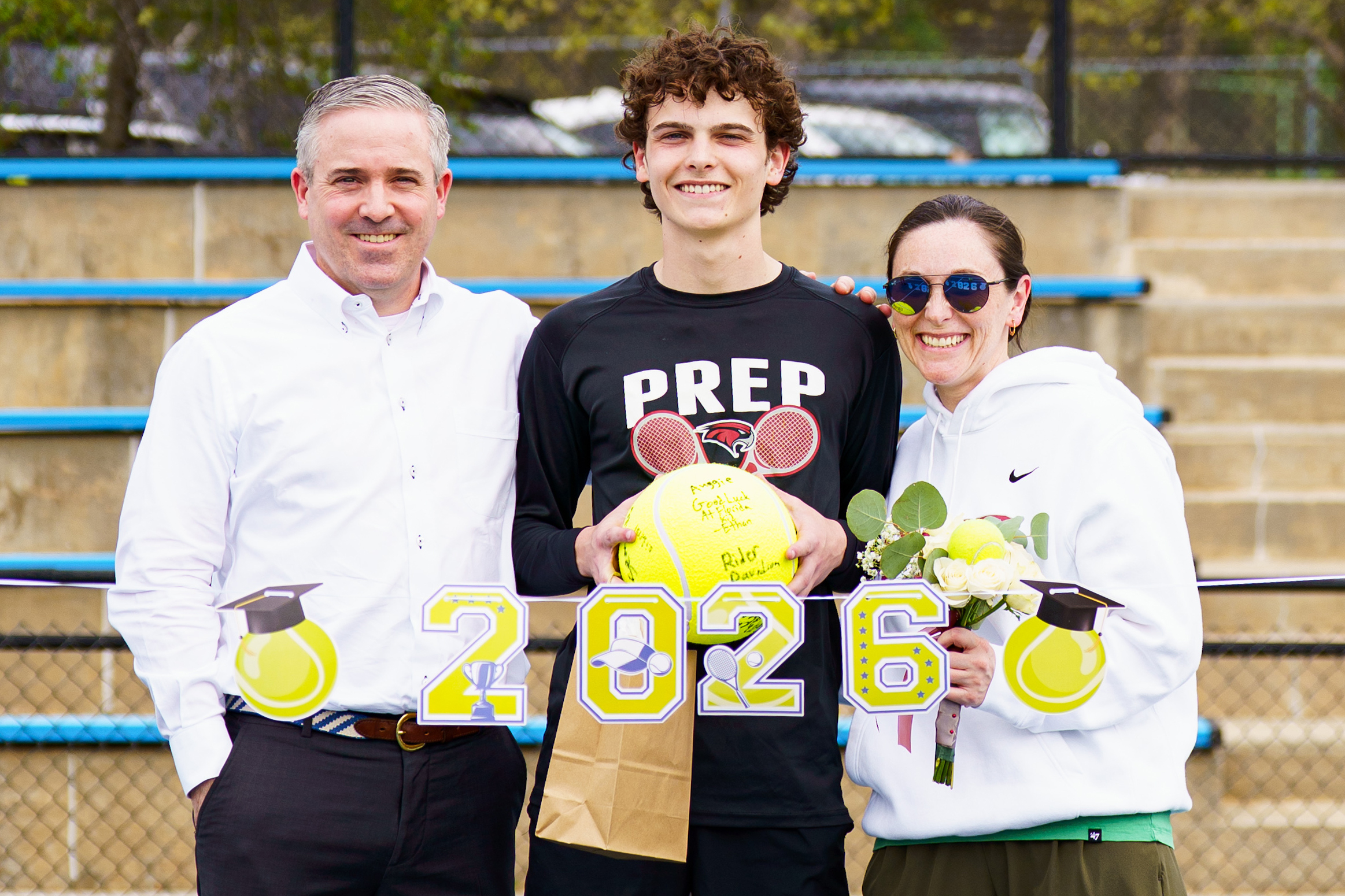
Their son, a tennis player, was preparing to attend the University of Florida on a scholarship this fall, they said. Those plans are now on hold.
Instead, the teen is taking part in an extensive outpatient rehab program, and his parents are working to have his enrollment deferred to 2027, when they hope he will be well enough to attend school.
Making sure that Rinnier took part in graduation at St. Joe’s last month was a more readily attainable goal, his parents said, and they were determined that he would achieve it.
Susan Rinnier was pleased to see that he was able to walk across the stage on May 31, even if he soon grew fatigued and experienced numbness in his legs after the ceremony, she said.
The Rinniers’ next hope is that police will find and charge their son’s attackers. Meanwhile, they continue to scan social media for additional photos and videos that may offer a better view of the incident.
“We owe it to Shawn to continue to move this forward any possible way we can, to get to the bottom of this,” his father said. “That’s our job as parents, and we’re not gonna stop.”
One of the Eagles’ great strengths as an organization is they understand the implications of the NFL’s competitive Darwinism. You evolve, or you die. It is a league full of maniacs who will not sleep until they figure out what your team is doing and how to stop it. The margins are slim, so fortune can flip fast. The Eagles saw it with Chip Kelly in Year 1 vs. Years 2 and 3. Anybody who can’t adapt to what comes next will quickly be out of the league.
The Eagles were on the field for only a few days this week, but their mandatory minicamp was long enough to give you a real sense of why the offseason went the way it did. It was a startling thing to behold, both on the practice field and inside the building. Over five seasons, almost nothing had changed with regard to the fundamentals of the Eagles offense. Sure, coordinators came and went, but the identity remained the same. It served them well, with two Super Bowl appearances in three years, one of them a title from which they were less than a year removed when the offseason began. Yet they clearly sensed that an inflection point was coming, if it hadn’t already arrived.
That sense was most evident in the words and tone of one Lane Johnson, the eldest statesman of the offense and the keystone around which the Eagles have built everything over the last decade and a half. Earlier this week, the veteran tackle spoke publicly for the first time since before a foot injury sidelined him for the last eight games of the season. A lot had changed in the interim. Gone was Jeff Stoutland, the legendary offensive line coach who inspired a fierce loyalty in his former players. In his place was a new blocking scheme, with new terminology, and a new philosophy, all under the command of a 34-year-old first-time playcaller whose playing career ended less than three years ago.
Yet here was Johnson, barely a year removed from anchoring one of the greatest single-season offensive line performances of all time, and having done so under the tutelage of one of the greatest offensive line coaches of all time, en route to one of the most dominant Super Bowl victories of all time, and dadgummit if he didn’t sound positively refreshed.
“I think with this offense, we’ll be able to stretch the field and really work our zone game and get the defense running and work things off of that,” Johnson said. “I’m really excited for what it can do, not just for tackles. I think it will open up a lot in our game.”
The two keywords there are “this offense.” As opposed to that offense. You know, the one the Eagles used to run. It may sound like a small thing, but only if you didn’t listen closely during the four previous changes at playcaller. I don’t think that phrase was ever used. At least, not like Johnson and the rest of the Eagles who spoke publicly have been using it. As a signifier of real, legitimate change. It didn’t sound like this when Nick Sirianni gave way to Shane Steichen, nor when Steichen gave way to Brian Johnson, nor Johnson to Kellen Moore or Moore to Kevin Patullo. The operative question always centered on who would have final say over the plays rather than what those plays would look like from a broad schematic standpoint.
Not so this time around.
The change is real. That was the biggest takeaway from this week’s preamble to training camp. The hiring of Mannion, the jettisoning of Stoutland, the trading of A.J. Brown, the subtle challenges to Jalen Hurts … this was not the same window-dressing offseason of years past. These were purpose-driven moves rooted in the realization that 2025 would not be a one-year blip if the Eagles fooled themselves into thinking that the things that worked in previous seasons would one day work again.
It remains to be seen what the scheme will actually look like. You’d have to work just to get an NFL coach to admit he will have precisely 11 players on the field. But Johnson referred to Mannion’s scheme as a Kubiak/Shanahan system, the archetype being the 1990s Broncos teams that utilized heavy amounts of outside zone/stretch runs from under center and the resulting play action looks that offered quarterbacks ample passing lanes and plenty of distance between them and the line.
Head coach Nick Sirianni and the Eagles have seemingly embraced an offensive scheme change this offseason.Monica Herndon / Staff Photographer
“I’ve always envied wanting to be a part of it,” Johnson said. “So here I am, after all these years, getting that chance. Not to say we’re going to be better because there’s a lot to learn. I think we have the ability to be a lot more than what we were last year.”
The Eagles did the right thing in treating last year as a sign of the times rather than awarding themselves a mulligan. Their strength as an organization has long been their willingness and ability to execute a hard pivot. Dating back to Joe Banner’s reign as club president, the Eagles front office has built its decision-making processes on a cold philosophical calculus. A team is better off being a year early than a year late on its consequential decisions.
It is true at all levels of football management, from awarding contract extensions to the evaluation of veteran players to the identification of leaguewide trends. There is considerable risk in being early, which is why a lot of teams end up being late. It isn’t easy to let a franchise icon leave town, or to spend a second-round pick on a quarterback when one already has a starter. Vindication occurs in a separate time horizon from a fan base’s patience. It is good to be proved right. It is better to be employed.
What Jeffrey Lurie and Howie Roseman both realize is that the last teams to arrive for dinner often become the dinner. Barely a year after winning their second ever Super Bowl title, the Eagles decided that they’d arrived at one of those inflection points that plenty of teams would ignore in the interest of convenience or ego protection.
Will the offense actually look different? Like, materially? The players sure seem to think it will. In which case, the big question is this:
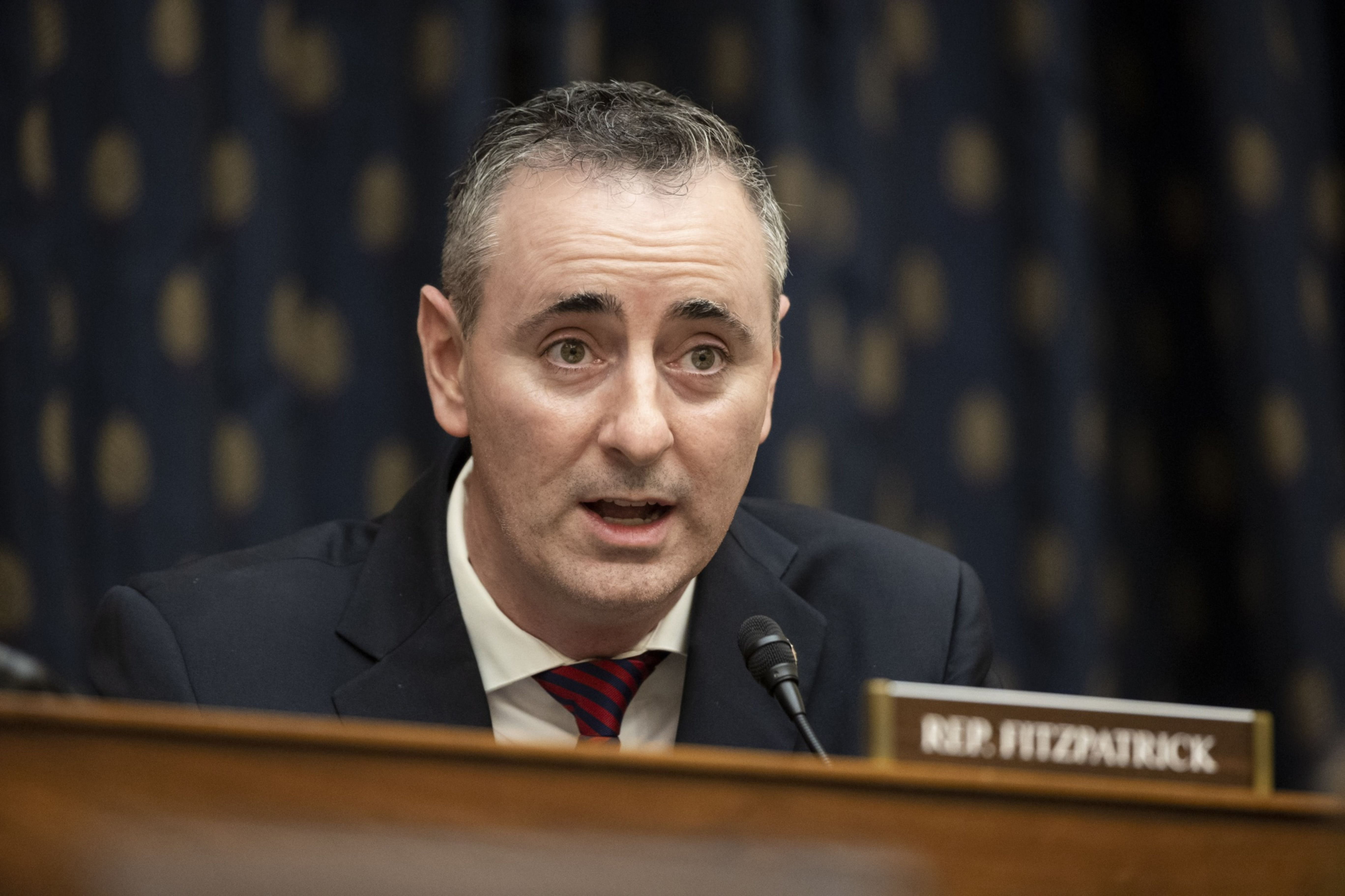
WASHINGTON — As U.S. Rep. Brian Fitzpatrick’s fiercest reelection battle in years got underway in the last two months, the moderate Bucks County Republican has called to restrict President Donald Trump’s war in Iran and prohibit a so-called “anti-weaponization fund” that could reward the president’s allies.
He’s talked up Democratic Gov. Josh Shapiro’s potential run for president, and he’s said he would “100%” become an independent if Pennsylvania didn’t have closed primaries.
He went even further this week — deriding House Republican leadership for opposing a process that allows lawmakers like him to force a vote on issues like the weaponization fund.
“Leadership of both parties have been guilty of this for years… just further evidence of the brokenness of the two-party system — and the rise of Independent voters is a direct manifestation of this,” Fitzpatrick wrote on social media.
Behind the scenes, though, Fitzpatrick has started to lean on his party’s vast resources to help win his reelectionand, Republicans hope, keep the narrowly divided 435-member House in GOP control.
In a newly scheduled television ad campaign that will begin later this month, Fitzpatrick is teaming up with the National Republican Congressional Committee — the official campaign arm of House Republican leaders — to launch ads aimed at boosting his campaign in the 1st Congressional District against Democratic nominee Bob Harvie, a Bucks County commissioner who won last month’s primary with support from Shapiro and national Democrats.
The $120,000 worth of cable TV ads represent the first foray by the NRCC in any Pennsylvania district so far this year, according to the tracking firm AdImpact.
Both parties are competing heavily over four Republican-held seats in Pennsylvania, making the state one of the centerpieces in the fight to win the House majority during this year’s high-stakes midterms.
The NRCC and other Republican groups have promised to help reelect all four incumbents. And with the new ads benefiting Fitzpatrick, the NRCC is spending first on the candidate who’s been the most publicly critical of their leadership and even gotten some blowback from Trump as a result.
“Trump can say whatever Trump wants,” Robin Kolodny, a Temple University political science professor, said of the president’s accusations that Fitzpatrick is insufficiently loyal. “But you get to 218 by adding one race at a time. And if you have an incumbent who’s been successful, the party has every incentive to support them until they find that the polling says it’s the lost cause.”
Fitzpatrick has won five terms in a nearly evenly divided Bucks County-based district with what observers have called a specific brand of politics. He votes with his party and supports Trump’s priorities the vast majority of the time, though he’s broken with them in instances like the final passage of the One Big Beautiful Bill and the expiration of COVID-era Affordable Care Act tax credits that kept costs lower for individuals using the public marketplace.
His recent opposition to the anti-weaponization fund has echoes of that healthcare debate in December, when Fitzpatrick joined with Democrats in trying to use a process called a discharge petition to force a vote that Republican House Speaker Mike Johnson declined to set up.
Fitzpatrick’s office and campaign did not respond to requests for comment for this story.
But earlier this week, thePennsylvania lawmaker and U.S. Rep. Tom Suozzi (D., N.Y.) said they would launch a discharge petition to prevent Trump from creating a fund to compensate people who claim to be victims of a weaponized federal government, Punchbowl News reported. The idea for the $1.8 billion fund emerged from a settlement between Trump and the Department of Justice in a case about the leak of Trump’s tax returns.
Republican lawmakers who have often acquiesced to the president’s demands voiced deep concerns. Acting Attorney General Todd Blanche responded by saying the administration was walking away from the idea. Still, Trump officials have quietly worked to keep it alive and have not ruled out payments going to individuals previously charged with attacking the Capitol on Jan. 6, The Atlantic reported Thursday.
“The statement’s not satisfactory,” Fitzpatrick said on CNN earlier this month while discussing Blanche’s comments. “We need both a legal avenue here and a statutory legislative avenue. That’s what Tom and I have introduced, and that’s what we’re going to force to the floor.”
He called the fund an “abuse” of the law. In a post on X this week, he also disparaged Republicans leaders’ “poorly managed House Floor” for preventing a discharge petition to squash it.
Johnson, the Louisiana Republican who leads the chamber, headlined a fundraiser earlier this year for Fitzpatrick, who generally does vote for GOP priorities — including this week’s successful effort to provide additional funding for immigration enforcement within the Department of Homeland Security.
Fitzpatrick and Suozzi had not yet launched the discharge petition as of Thursday evening, after Punchbowl reported that Republican leadership was frustrated with the idea. Some even proposed pulling back campaign contributions from NRCC “patriots” who signed on to a discharge petition, according to Punchbowl.
Fitzpatrick is one of 15 Republicans in the NRCC’s “patriots” program that prioritizes sending resources to competitive districts.
Also on the list are U.S. Reps. Scott Perry, in a Harrisburg-based district; Ryan Mackenzie, in the Lehigh Valley; and Rob Bresnahan, in a Scranton-based district. Each of those races are considered more of a “tossup” than Fitzpatrick’s, and Kolodny said it’s likely the NRCC will invest in advertising and campaign operations to help them as well, possibly a little later in the summer.
She said the earlier spending on behalf of Fitzpatrick is likely a sign they found him to be “newly vulnerable” after the May 19 primary, when Harvie was nominated.
Widely considered the most formidable challenger to Fitzpatrick so far, Harvie has already been elected by voters twice in a majority of the district and both national and state Democrats have coalesced around him.
Kolodny called the size of the NRCC’s ad-buy “modest” but said that “they’ve done anything at all means that their polling has shown them they’ve got a problem.”
“They have a new level of concern that they didn’t have before,” Kolodny said.
Harvie, who is expected to benefit from outside spending by the NRCC’s counterpart, the Democratic Congressional Campaign Committee, said in a statement that the ads are proof Republican leaders “can count on [Fitzpatrick’s] vote when they need it most.”
“We are tired of politicians like Fitzpatrick talking out of both sides of their mouth,” Harvie said. “He claims to be ‘independent,’ but he’s seeking a bailout from Trump’s Republican Party because he is one of their own.”
Charlie Gerow, a Republican strategist with a Harrisburg-based public affairs firm, said he didn’t view Fitzpatrick’s latest moves as much different from any other instance in which he’s successfully walked a “political tightrope” in his district,which is one of only nine GOP-held districts in the country that went for Kamala Harris in 2024.
He said the assist from the NRCC also makes sense because of how large Fitzpatrick’s district looms in a House that’s currently split 218 Republicans to 212 Democrats, with one independent and four vacancies.
“Leadership has an absolute interest in making sure that Brian Fitzpatrick gets reelected, despite their displeasure from time to time with what he says and does,” Gerow said.
Welcome to Shackamaxon, a weekly politics column focused on what’s happening at City Hall and in Harrisburg. It is named for the place where the Lenape chiefs would meet to conduct the people’s business, which is now known as Penn Treaty Park. This week’s column covers ward leader elections, efforts to make community events affordable, and a U-turn on some painful cuts at the Philadelphia School District.
Council member Cindy Bass has been widely condemned for declaring herself the winner of a controversial election for the leadership of the 22nd Ward.Alejandro A. Alvarez / Staff Photographer
The dinosaur groans
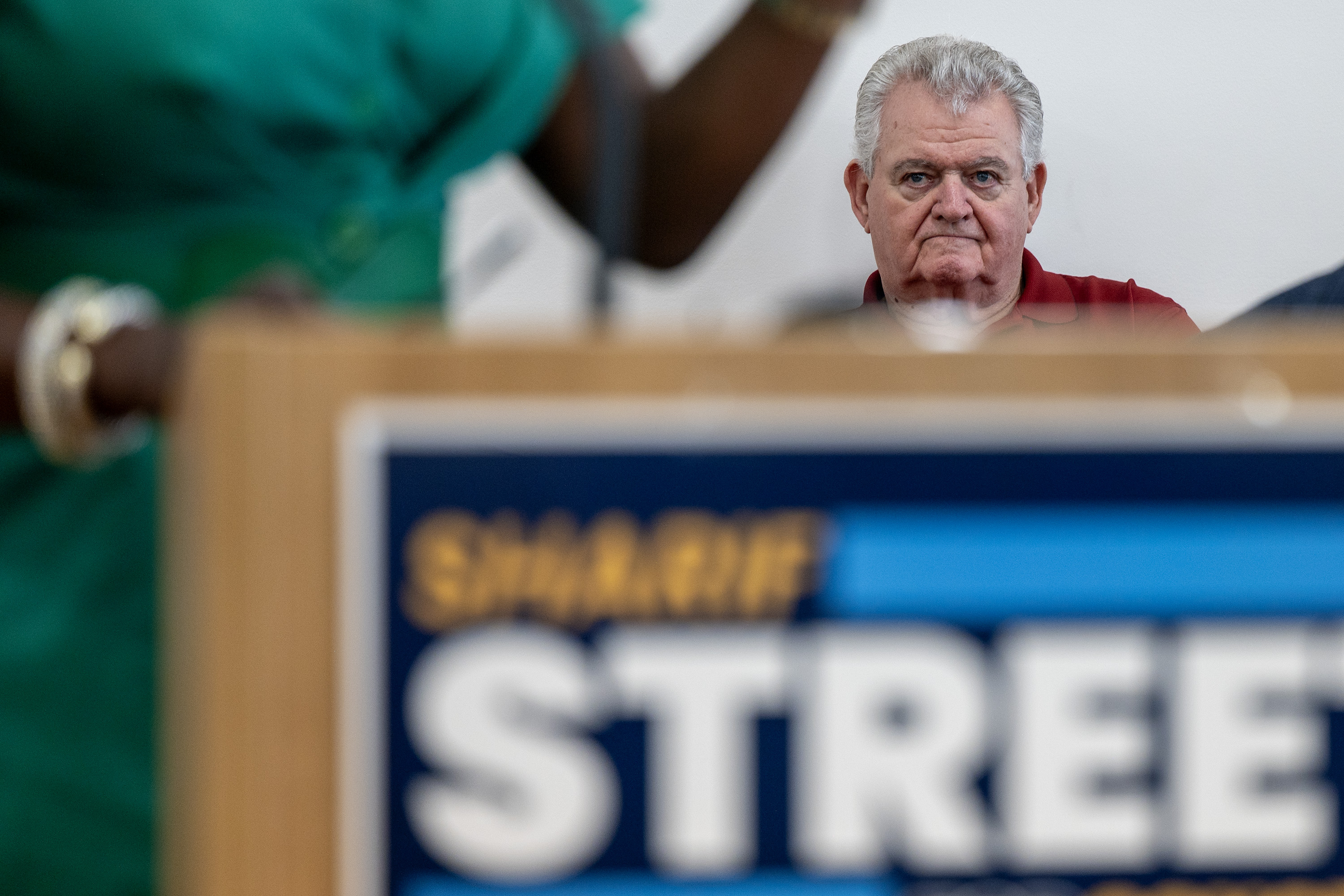
After the primary elections three years ago, Philadelphia Democratic Party Chairman Bob Brady was in a celebratory mood. In an open letter posted on social media, Brady boasted that the “dinosaur roared,” a playful, self-deprecating reference to the party establishment’s wins over progressive and reformist alternatives. During this week’s ward elections, however, establishment candidates had little to brag about. Wards That Work, a coalition of left-leaning groups, announced that candidates they supported had won six of the city’s 69 ward leadership positions. While the party’s old guard still holds a significant lead in the total number of ward leader positions, it is clear where the energy and enthusiasm of the party are headed. The insurgent wards, and the wards they’ve contested but haven’t yet prevailed in, are filled with committeepeople. The machine-dominated wards are filled with vacancies.
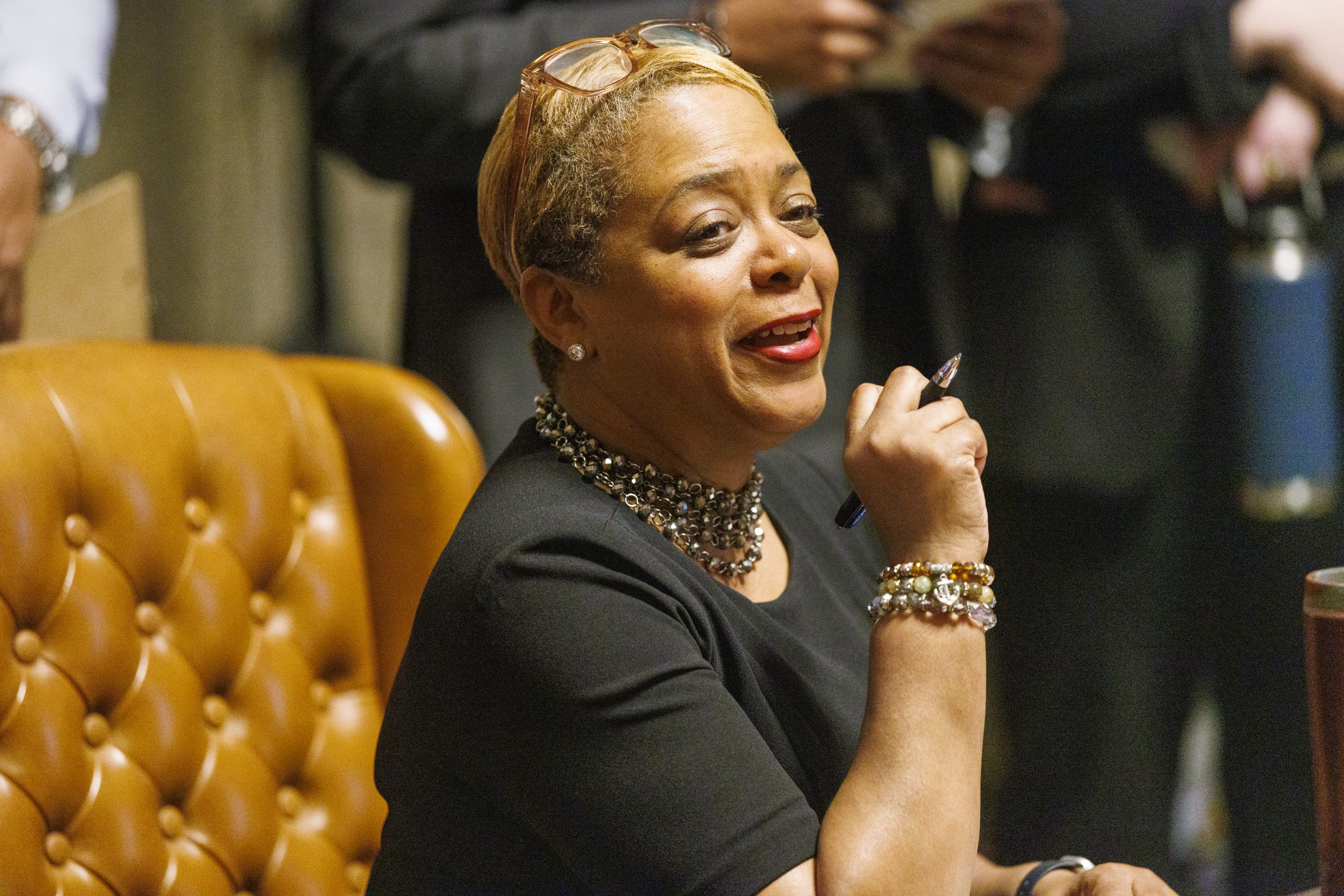
Fred Dedrick, an elected committeeperson, told me that current ward leader and 8th District Councilmember Cindy Bass had initially told folks to show up by 7:15 p.m. if they wanted to participate in the reorganization vote. After the meeting finally began at 8 p.m., she quickly called for a voice vote, declared herself the winner, ignored requests for a roll-call vote, and sent everyone home.
Under the party’s own rules, Brady told The Inquirer’s Sean Collins Walsh, a roll-call vote must be taken if it is requested.
Bass’ tactics drew widespread condemnation. Even U.S. Rep. Brendan Boyle, who usually stays out of local governmental issues, said he was “absolutely disgusted” by what he saw in a video of the vote, and made a direct comparison to President Donald Trump’s repeated efforts to “obstruct our democracy.”
ThePhiladelphia Democratic City Committee, for its part, is planning to host a revote between Bass and her challenger, Octavius Price.
This is far from Bass’ first controversy. Her tenure on City Council has been characterized by high-profile disputes with some community organizers. Bass’ critics cite what they describe as a lack of consistency, particularly on issues of development: When Bass opposes a project, like the proposed reuse of the Ada Lewis Middle School property, she cites a lack of popular support. When she’s behind an effort — like the decision to grant development rights at the former Germantown YWCA — the community’s viewpoint isn’t taken into account.
That kind of vacillation could be part of why Bass won her most recent primary election in 2023 by just over 400 votes, despite her opponent having little in the way of name recognition.
Former City Council member (and prominent real estate developer) Allan Domb cautioned his colleagues in city government to move slowly before they acquired the former Inquirer building. They probably should have listened to his advice.Tom Gralish / Staff Photographer
Avoidable boondoggle
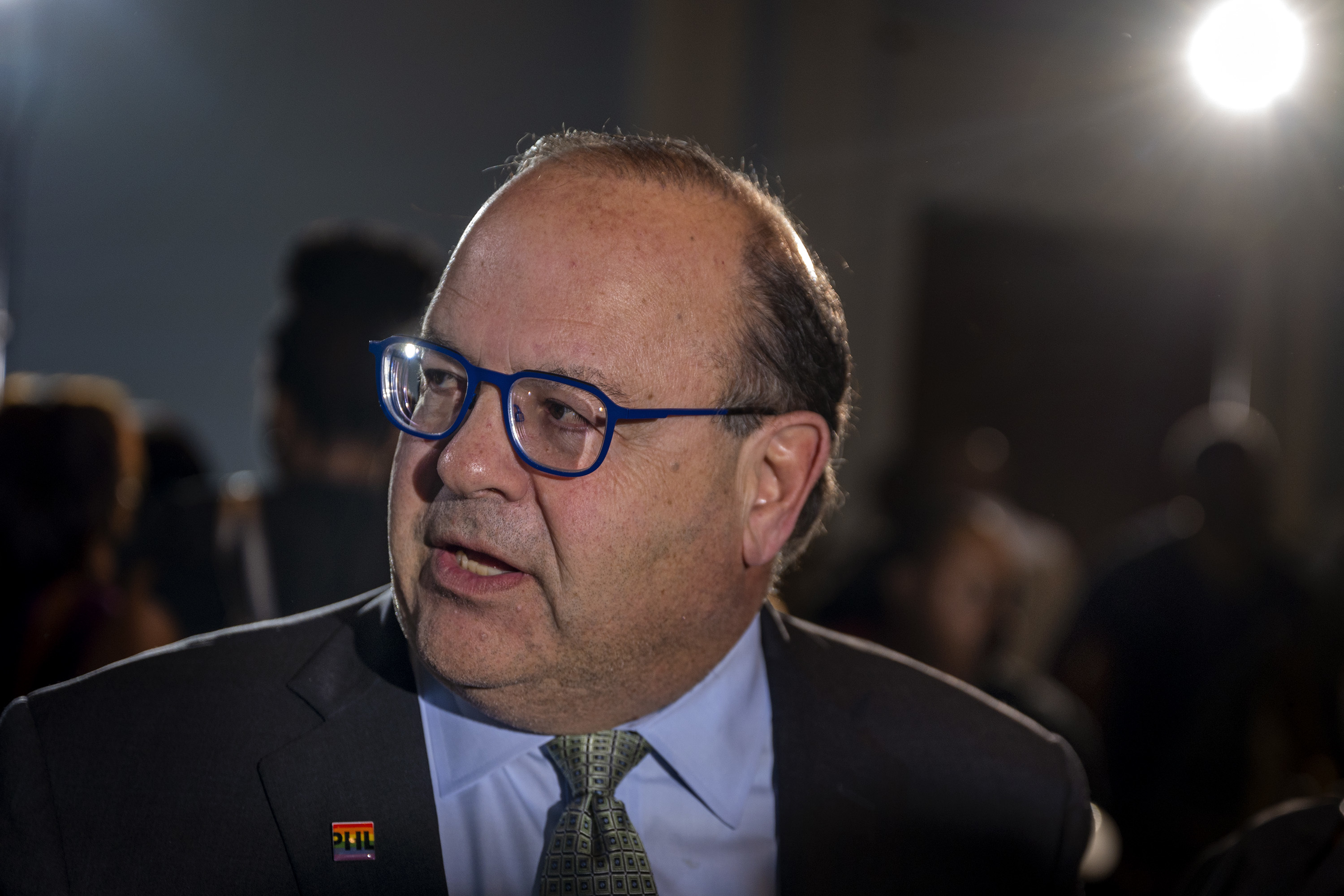
In 2016, then-Councilmember Allan Domb raised concerns about then-Mayor Jim Kenney’s plan to turn the former Inquirer building on North Broad Street into the new police department headquarters. Domb’s objection was basic common sense. If the city is going to spend a quarter of a billion dollars, shouldn’t we at least get an appraisal first? Especially given that a developer had spent just $22.7 million — a fraction of its expected price tag — to acquire it in the first place.
An Inquirer analysis suggested that the city had, in fact, overbid. The city ended up paying around $90 per square foot, which is higher than the $71 per square foot paid for a comparable property, the former GlaxoSmithKline headquarters that sold three years before. Since 2018, the value of commercial real estate in Center City has declined. The sprawling Centre Square complex near City Hall sold for under $60 per square foot.
In fact, in addition to buying the building without an appraisal, the city also agreed to a yearslong leasing agreement, which allowed the owner, developer Bart Blatstein, to utilize historic tax credits.
Now the bill has come due, with city officials forced to either buy the building outright at its inflated price or pay double in rent payments while searching for a new location, which would also likely cost hundreds of millions of dollars to get up to standards.
While buying the building may be the least bad option at this point, the entire situation is a frustrating reminder of how defensive and parochial city government can be. Despite having a bona fide real estate expert in Domb available to assist their decision-making, city officials embarked on the plan without asking for his input ahead of time.
A report by City Controller Christy Brady found that Philadelphia’s cumbersome rules for event planning are getting in the way of some long-standing civic traditions.Tom Gralish / Staff Photographer
Haphazard hosting
With the World Cup having kicked off and America preparing to celebrate its 250th birthday, you might think the city would be filled with local events, festivals, block parties, and other revelry spreading to all corners of the cradle of liberty. Thanks to the city’s stringent regulations and a stated lack of resources, there will be fewer events than many Philadelphians might have hoped for.
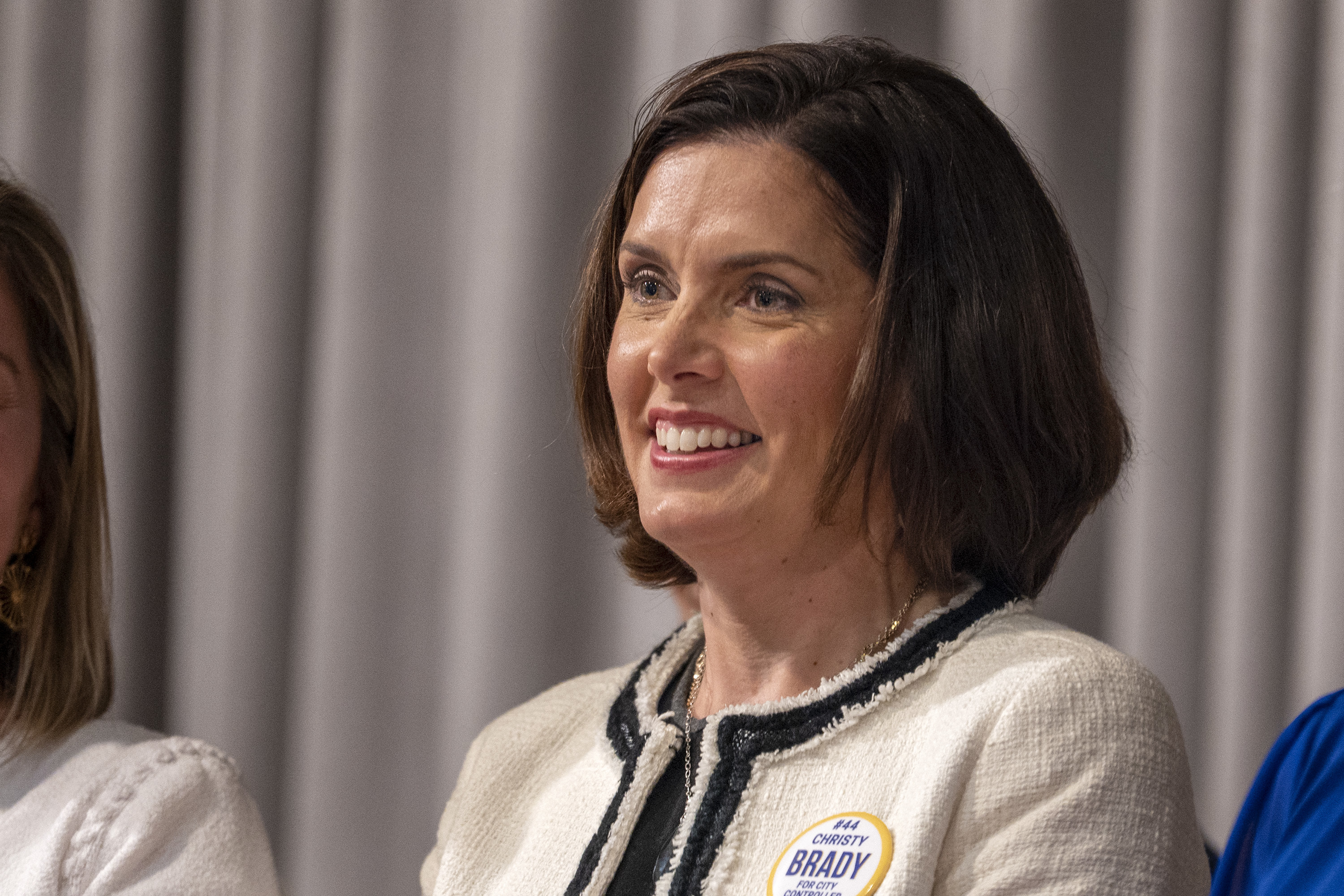
Hosting events in Philadelphia is a slog during the best of times. City Controller Christy Brady issued a report earlier this year that reiterates findings reported in The Inquirer: The high cost of security and convoluted permitting process is shrinking, pushing out, and eliminating many long-standing civic traditions.
This year was supposed to be different, thanks to the Neighborhood Celebrations Grant Fund. But organizers told Inquirer reporters that they are running into unforeseen obstacles, including blackout dates that extend from June 11 to July 18. This means neighborhoods are being restricted at the same time when demand is highest. While security concerns are a legitimate issue, giving people an option to celebrate closer to home could be the key to avoiding the traffic, parking, and crowding concerns that inspire caution in the first place.
Schools switch
After weeks of debate over the proposed rideshare tax and the insistence that a failure to pass it would result in the elimination of 340 positions in the Philadelphia School District, officials have backpedaled. Apparently, there will be no cuts after all.
The district’s revenue needs are what they are, but the way city officials handled the situation fostered confusion and cynicism. Threatening to make cuts without additional revenue, only to cancel the cuts despite failing to secure new money, makes everyone look opportunistic. What was the fight all about in the first place?
The compromise, however, required sacrifices elsewhere. The city had to raid its capital budget and cut some of the Commerce Department’s budget for contracted services, per a statement from City Council President Kenyatta Johnson’s office. More painful cuts could be on the horizon for next year’s budget if a new revenue source isn’t found.
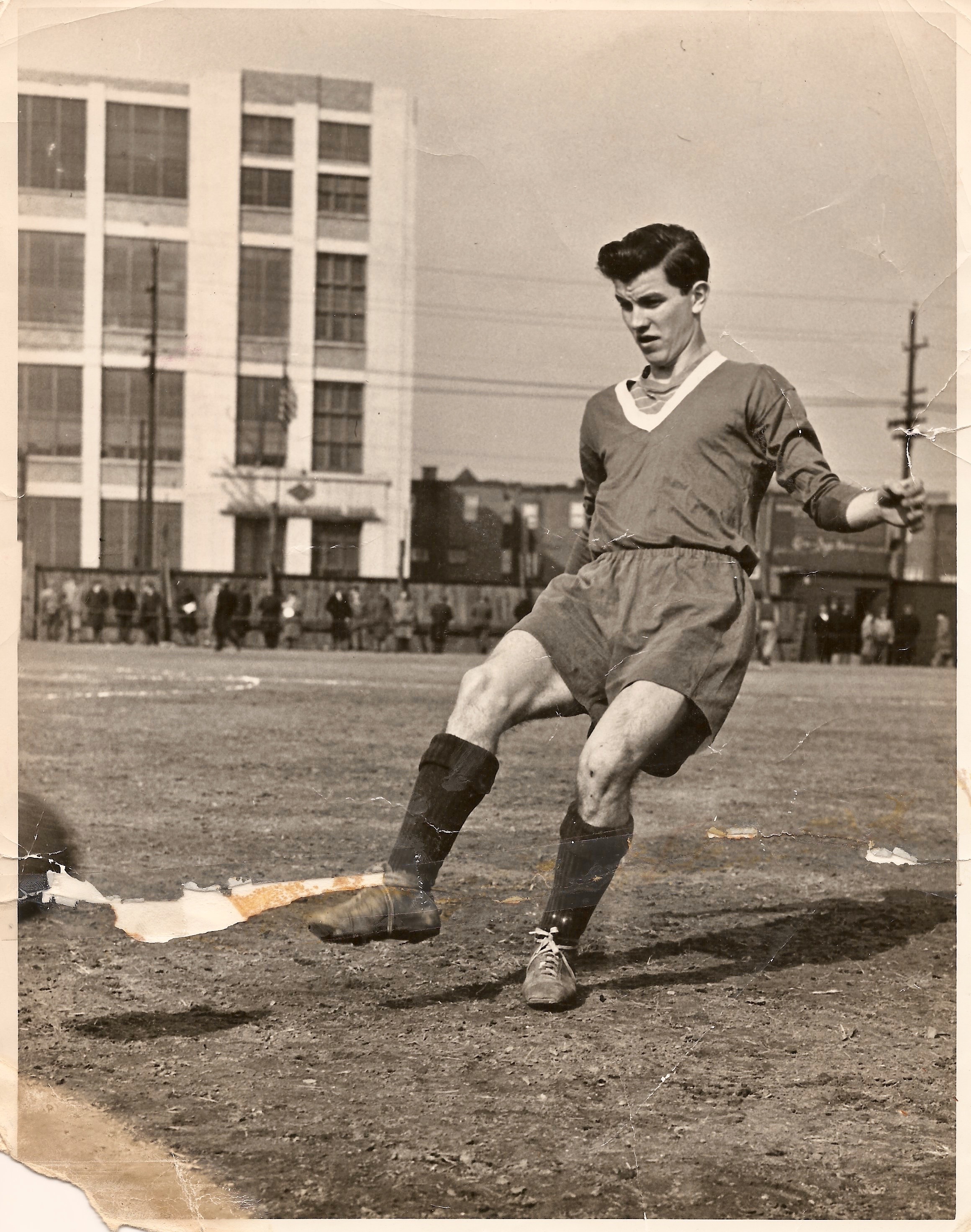
The parking lot was crammed, and the game was already underway when Benny McLaughlin pulled his Impala toward McVeigh Playground, the spot in Kensington where he played as a kid before traveling the world as one of Philadelphia’s true soccer pioneers.
He grew up on Hurley Street in a rowhouse across from the playground where neighbors hung out their windows in the summer of 1948 to fete McLaughlin with a ticker-tape parade after he made the Olympic team.
McLaughlin played professionally as a teenager, was a star at North Catholic, kicked leather balls that felt like cinder blocks in the rain, and helped the U.S. qualify for the 1950 World Cup.
But he had to miss the tournament in Brazil. Why? Because his job refused to give him time off.
McLaughlin, who once played in front of more than 100,000 people in Scotland, was told by a British journalist that he was good enough to play in England’s first division. Considered by one admirer to be the “Babe Ruth” of his neighborhood, in Philadelphia soccer circles, McLaughlin was an icon.
But he still needed a parking spot that Sunday afternoon in the early 1970s at his old playground. Finally, he was spotted behind the wheel.
“Someone goes, ‘Benny’s here,’” said his son, Andy, who sat in the passenger seat. “They waved him in and just said, ‘Park the car anywhere. Leave the keys. Drop it here.’”
Benny McLaughlin already had his cleats and shorts on. He was in his early 40s, there to play in a reunion game of old teams.
Benny McLaughlin playing for the Philadelphia Nationals at Holmes Stadium on Erie Avenue.Mark McLaughlin
Andy, then 12 years old, watched as his dad subbed in. A defender from the Five And One Club — another Kensington watering hole — pointed to McLaughlin and said he had him covered. Good luck.
“He made a move or two around the guy and the guy just fell down,” said Andy, 65. “He took a quick pop shot, and it was in. It was just smooth. I was going crazy. I get goose bumps thinking about it now. And it’s true. I witnessed it. He still had it.”
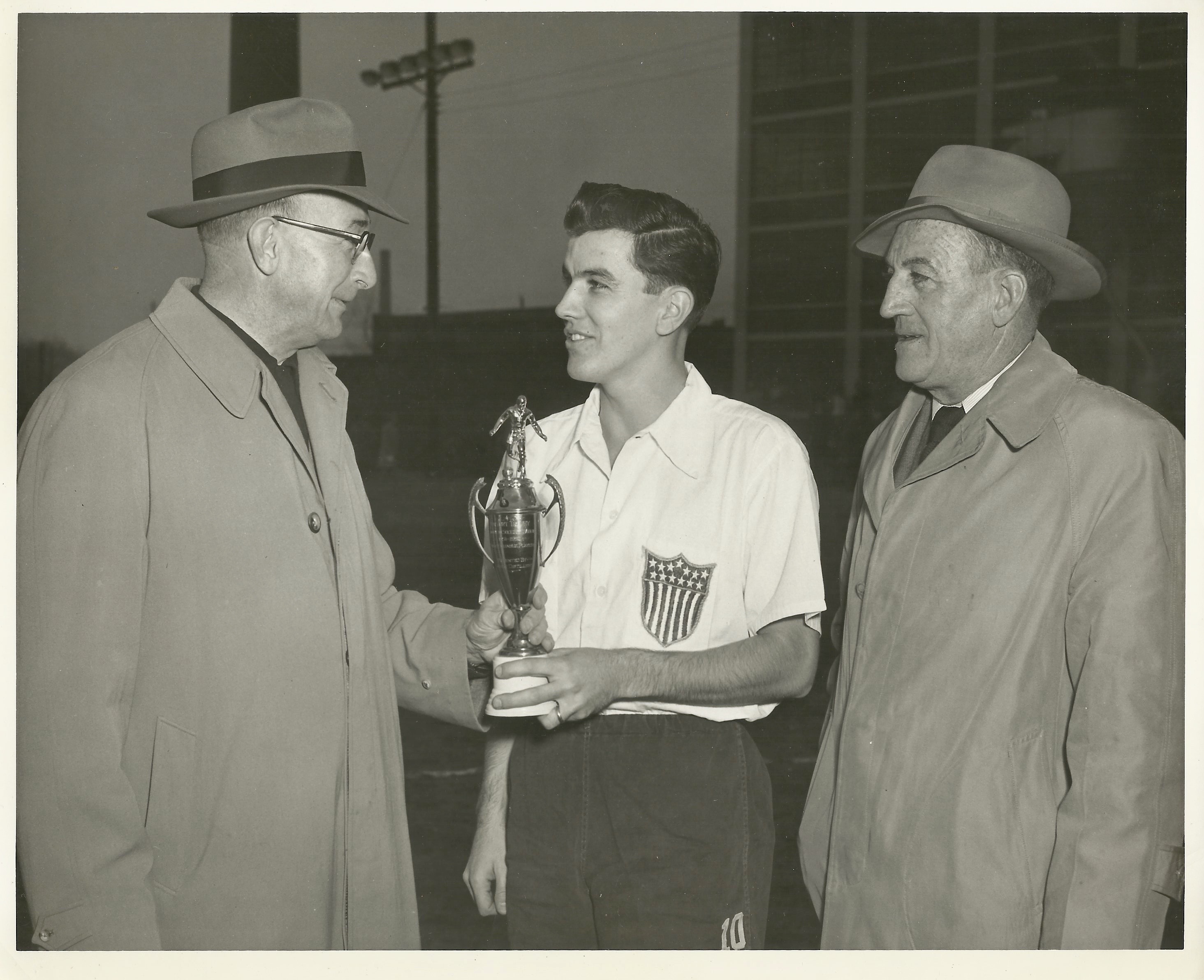
McLaughlin’s six children would often ask their dad how good he was back in the day. The dad guarded his heroics like state secrets. He was humble. McLaughlin was inducted into the National Soccer Hall of Fame in 1977 and told his kids that it was because he had good teammates.
Just once, Andy said, he wished his dad would brag. That wasn’t McLaughlin, who always had a second — or third — job while raising his family on Convent Avenue in the Northeast.
He finally gave his son a glimpse of the life he lived when he blasted that shot into the net at his old playground.
“That was the proof,” Andy said. “I was like, ‘Yeah!’ I was roaring. What would you do? My friends needle me like, ‘What happened to you?’ It’s like being Mickey Mantle’s son. What do you want from me?”
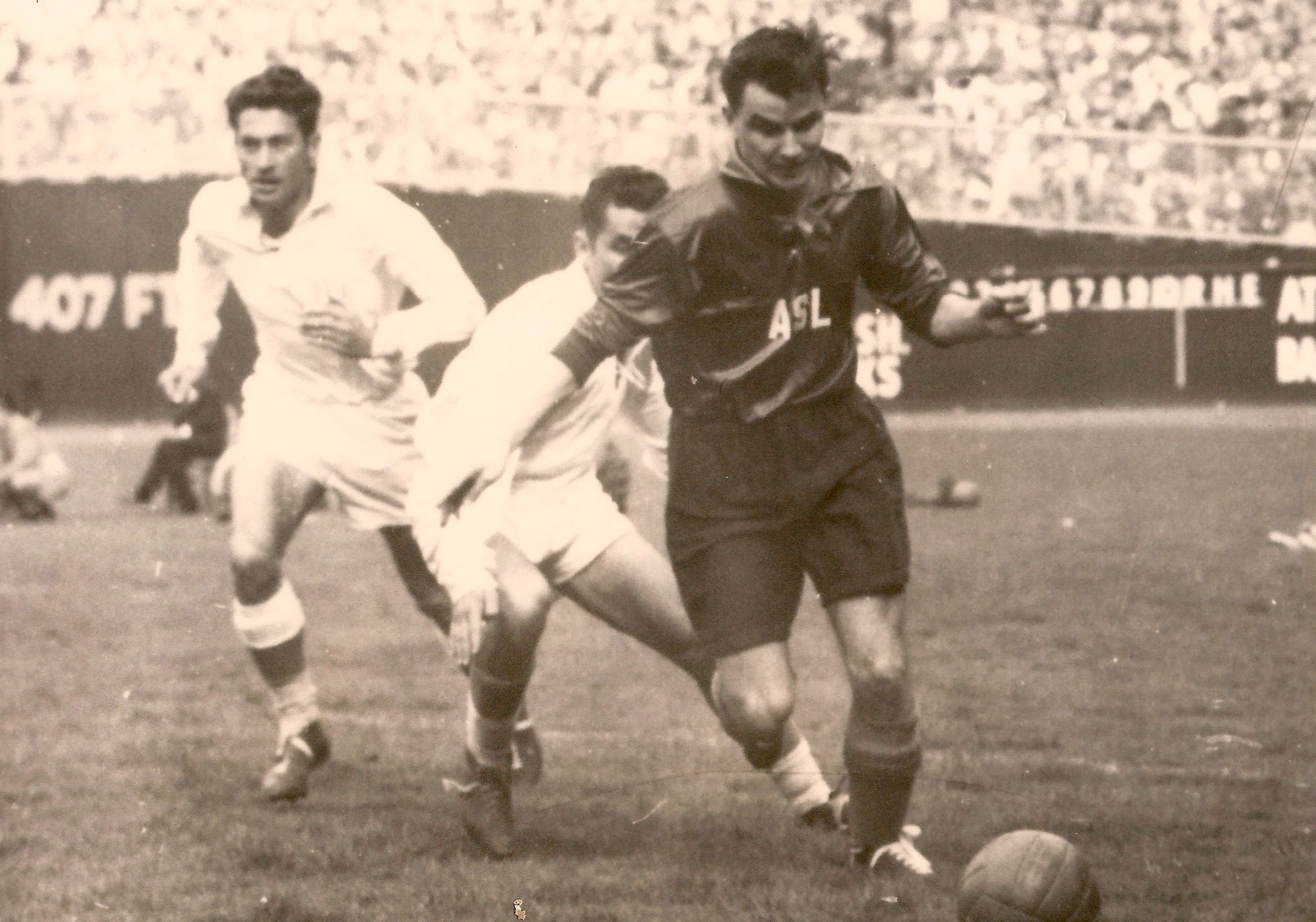
Benny McLaughlin was the 1951-52 American Soccer League MVP.Mark McLaughlin
Missing the World Cup
The World Cup will be broadcast worldwide over the next six weeks as players from 48 nations play in sold-out stadiums across three countries. Six games will be in Philadelphia, and the event is now a spectacle after years of planning.
But in 1950, it was anonymous to most Americans. McLaughlin, then 22 years old, was in Mexico the previous September to help the U.S. qualify for the 1950 World Cup. He graduated from North Catholic three years earlier and was an all-American at Temple before dropping out after one year to work.
He was hired in 1949 by Fischer & Porter, a factory in Hatboro that made parts for Navy ships and submarines, where his brother-in-law was an executive. McLaughlin asked the company if he could have a few weeks off to go to Brazil and play in the World Cup.
“They told him, ‘If you go, you no longer have a job,’” Andy said.
Len Oliver, a Hall of Fame soccer writer and Philadelphia native, once wrote that McLaughlin was one of the best American-born players of his era. He was a star. But he couldn’t play in the World Cup.
“Imagine that happening today,” Andy said. “Let’s say you’re a youth player, you make the national team, and you’re going to go represent the U.S. in a foreign country. They would wrap the company’s logo around you. It had to be a real kick in the teeth not to go. But he had to decide. He had a life decision to make. He needed to work. He wanted to get married. If the company said you can’t go, then what do you do?”
McLaughlin playing for the American Soccer League All-Stars in 1947 at Ebbets Field.Mark McLaughlin
That’s Bernie Flanagan
McLaughlin’s father, Bernard, immigrated from Scotland after being recruited by Bethlehem Steel to work at its plant and play on its soccer team. The McLaughlins eventually moved to Kensington, where Benny learned to play soccer in the streets as the boys used the neighborhood’s narrow passages as soccer fields.
His skills blossomed at Lighthouse Boys Club where he played with Walter Bahr, another Kensington kid who became a giant in Philadelphia soccer. They were best friends and played together as teenagers on the Philadelphia Nationals, a professional squad that traveled to New York on the weekends.
McLaughlin was just 15, so he used a false name — Bernie Flanagan — to protect his amateur status while making $15 a game. A tipster wrote to the U.S. Olympic Committee in June 1948, informing them that Bahr and McLaughlin were pros. The USOC passed the information to the U.S. Soccer Federation, which said it would investigate the high schoolers. Nothing to see here, they said.
“Ben, a young fellow doing a graduate thesis came across these letters,” Bahr wrote to McLaughlin years later after being sent a series of correspondences about their amateur case. “Thought you’d get a kick out of them.”
McLaughlin and Bahr remained amateurs and played together on the U.S. team at the 1948 Olympics in London.
“He looked up and saw 90,000 fans,” said McLaughlin’s son, Bernie, 73. “His cousins from Scotland came over to see him play. He said he was never more proud to be an American.”
Two years later, he was ready for the World Cup. But the company did not budge. McLaughlin, engaged to be married later that year, couldn’t risk losing his job.
“He needed a job, right?” said his son Mark, 59. “All he ever said to us was that it was for personal reasons. What do you do? You choose family. That’s him.”
The U.S. team stunned England that summer in a 1-0 win that still stands as one of the most significant moments in American soccer history. It was so hard to fathom that the Brits back home thought the score was a mistake. They even made a movie about the upset.
Bahr assisted the winning goal, which was scored by the player Andy said replaced his dad on the roster. McLaughlin and Eugene Olaff — who was slated to be the backup goalie but couldn’t get off work as a New Jersey state trooper — read about the win in the newspaper.
“Imagine getting that news,” Andy said. “It had to be bittersweet. You’re thrilled for them but sorry for yourself. When you have time to evaluate it, what’s a few weeks when you’re making history?”
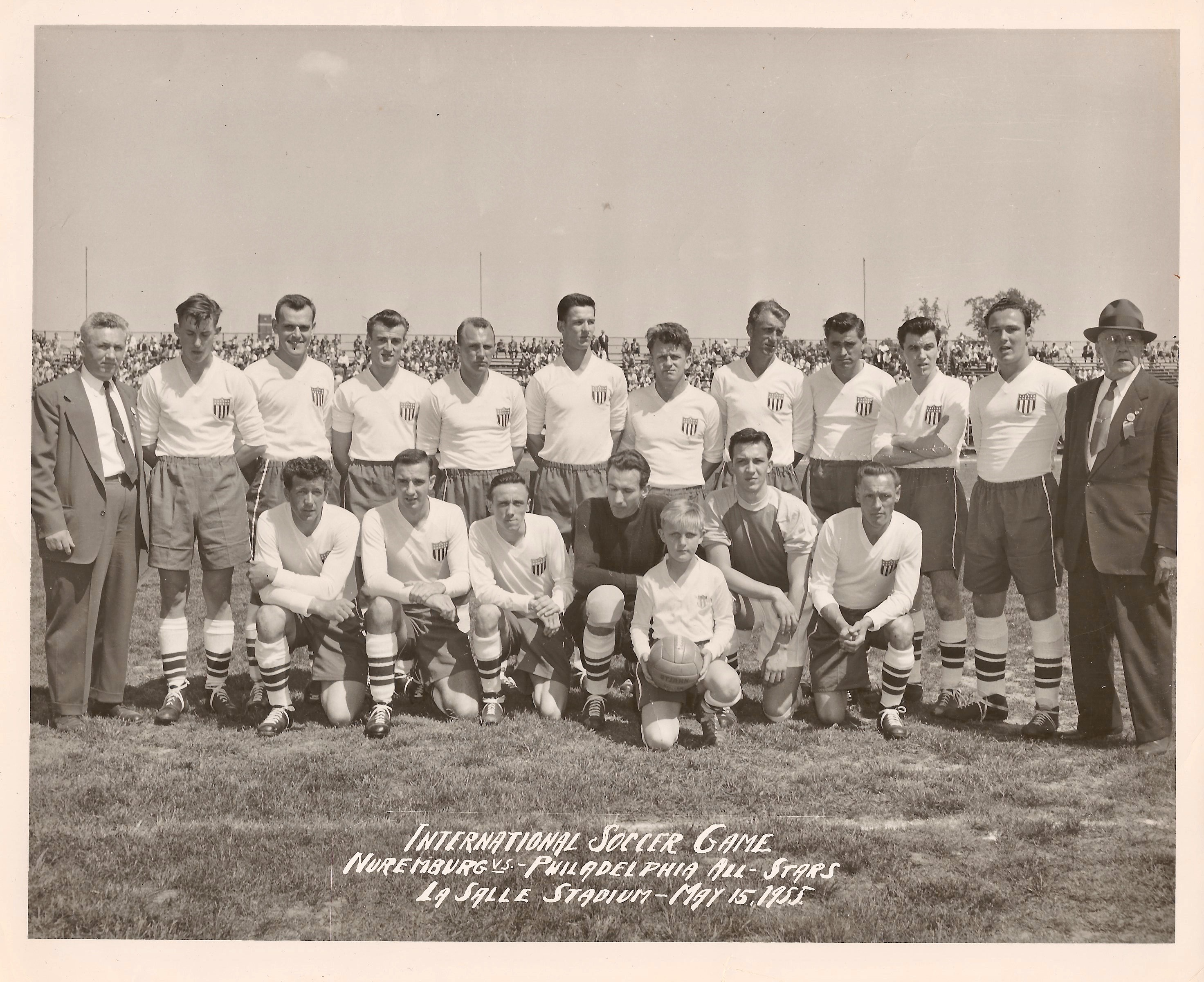
Benny McLaughlin (second from right in second row) at a Philadelphia All-Stars game in 1955.Mark McLaughlin
Benny’s legacy
Bernie was a freshman at St. Joseph’s when some teammates who grew up in his dad’s old neighborhood recognized his last name.
“My dad’s picture was hanging up in bars in Kensington,” he said as the taverns all sponsored teams. “They said, ‘Is your dad Benny McLaughlin?’ I said, ‘Yeah.’ They said, ‘Well, if you grew up in our neighborhood, you would’ve never had to buy yourself a beer.’”
About 10 years ago, Andy was sitting at a quiet bar on Torresdale Avenue when he heard a few guys talking about soccer. He joined the conversation.
“I said, ‘Yeah, my dad played one time,’” Andy said. “The guy said, ‘Oh yeah? Who’s your dad?’ I said, ‘Benny McLaughlin.’ He looked stunned. He said, ‘Your dad is Benny McLaughlin? Benny McLaughlin is your dad?’ He was fumbling for words. Finally, he says to the bartender, ‘This guy is on scholarship for the rest of the afternoon.’”
McLaughlin’s name still means something in Philadelphia, but his legacy has dimmed outside the city. Perhaps that would be different if he played in that World Cup and scored that iconic goal. But he never thought about it, his sons said. It didn’t make him bitter or dim his love of the game he learned to play as a kid in Kensington.
He kept a pair of old soccer cleats — “You would’ve thought they were Frankenstein’s boots,” Mark said — under the basement stairs and watched VHS tapes of European highlights, marveling at how they blasted the ball. He cheered the next generation of American players, some of whom grew up near Kensington. The game never left him.
“He always said that soccer is for the new generation,” Mark said. “He had no regrets for what he did. He was grateful for what he was able to accomplish. He never looked back.”
Ed Blaney, who played at St. Joe’s, told the McLaughlins that he credited their dad for his college scholarship. McLaughlin, he told them, helped make soccer relevant in the U.S., which caused more colleges to field teams.
Blaney played at North Catholic and grew up in Kensington, just like McLaughlin. He would not have been able to afford college without the pathway the neighborhood celebrity created. Forget the World Cup. That is McLaughlin’s legacy, Bernie said.
Walter Bahr and Benny McLaughin with McLaughin’s four sons: Mark, Andy, Brian, and Bernie.Mark McLaughlin
One last reunion
McLaughlin kept his job at Fischer & Porter for more than 20 years before working for the city in the redevelopment authority. He sold carpet at night and delivered kegs on the weekend, doing whatever it took to raise six children with his wife, Joan. McLaughlin made breakfast every Sunday — fried eggs and bacon — and often topped a summer barbecue with a drive to Goodnoe’s Ice Cream in Bucks County.
“I want to stop myself from bragging about him,” Andy said. “But I don’t. As great as a soccer player as he was, he was a great dad, too. He was always looking out for us. He always had a nice word for you. He was just a great, loving dad.”
McLaughlin was starting to fade in 2010 when his family moved him to a senior facility in West Chester. A few weeks later, a new resident named Harry Naughton was complaining about his hips. He told the staff he used to play soccer. They told him they had someone else living there who once was a big soccer player in Philly.
“Don’t tell me it’s Benny McLaughlin,” Naughton said.
The staff asked Naughton how he knew it would be McLaughlin.
“Who doesn’t know Benny McLaughlin?” he said.
Mark soon took his dad to Naughton’s apartment. Benny couldn’t say much, but his son knew he recognized his old teammate. Naughton was a goalie on the Philadelphia Nationals, the team McLaughlin played for under that fake name.
Mark took out his phone, called Bahr, and put him on speakerphone. The three teammates were together again.
Bahr asked Naughton how his back was feeling. He said it was giving him trouble, but how did Bahr know?
Benny McLaughlin (left) and Walt Bahr at Lincoln Financial Field for the Union’s first game in April 2010.Mark McLaughlin
“‘Oh, I just figured it would be bad from all the times you had to bend over to pick the damn ball up from the back of the net,’” Bahr said.
Benny McLaughlin, who died two years later in 2012 at age 84, laughed. So did the others as they chatted that afternoon about the old days.
McLaughlin played the game as a kid with wizardry, a skinny kid from Kensington who moved the ball with ease and always seemed to find an open teammate. Eric Charleson, one of America’s earliest soccer experts, once wrote that McLaughlin had “a fire, spirit, and determination that defied the rigors of the sport.” But he was more than that, Charleson wrote, as McLaughlin had “integrity, sportsmanship, and character.” That’s why he didn’t talk much about his career. His game said it all.
And there he was in his old buddy’s apartment, talking about the game they once mastered. The game they played on the streets in Kensington and the game they toasted in those little neighborhood taprooms. The game that took them around the world and the game that wasn’t yet popular enough to get you off from work. But McLaughlin didn’t mind. The game gave him enough memories. He didn’t need a World Cup.
“You almost saw a youth come into all of them,” Mark said. “They were young again for a minute. The joy and the smile. The eyes were shining. It was just so awesome. It was the best day ever.”
Prosecutors have dismissed at least 24 firearms cases after defense lawyers challenged the legality of stops conducted by two Philadelphia police officers who they say systematically targeted Black men for unlawful searches.
Lawyers with the Defender Association of Philadelphia say former partners August Gershwin and John Lee initiated hundreds of pedestrian investigations in Northwest Philadelphia without sufficient legal justification — ordering Black men to submit to searches during interactions that were supposed to be voluntary, delaying activation of body-worn cameras until after stops were underway, and rarely documenting investigations unless they yielded illegal guns or contraband.
The allegations come more than a decade after Philadelphia entered into a federal consent decree aimed at curbing unconstitutional stop-and-frisk practices. The agreement requires officers to document investigative stops for review by independent monitors and encourages police to handle low-level violations through so-called mere encounters — voluntary interactions with officers in which people are free to ignore questions and walk away.
The lawyers contend that Gershwin and Lee exploited that distinction, routinely detaining people without the legal justification required for a stop while avoiding the scrutiny those interactions would otherwise receive.
Their review, detailed in recent court filings, has prompted prosecutors to abandon dozens of cases tied to the officers, while the fate of dozens more remains uncertain.
The dismissals began with the case of Namir Mack, charged with firearms offenses and evading arrest after a March 2025 stop by Gershwin and Lee led to the recovery of an illegal handgun.
According to court filings, the officers stopped Mack as he walked along West Erie Avenue. Body-worn camera footage showed Mack lifting the back of his sweatshirt after the officers ordered him to expose his waist.
Mack then ran. During a brief chase, he was struck by an SUV on Hunting Park Avenue, and officers recovered a handgun. A supervisor’s body-worn camera footage captured the aftermath.
“What is this?” Sgt. Christopher Bloom asked. “A mere encounter turned into a foot pursuit?”
Defender Association lawyers characterized the pattern of conduct discovered in their review as deeply concerning.
The officers’ actions were “flying in the face of everything that’s supposed to be happening with this march toward more equitable policing in Philadelphia,” said Michael Mellon, who, along with Paula Sen, leads the association’s police accountability unit and conducted the review.
Efforts to reach Lee, who left the department last November, were unsuccessful. Gershwin directed inquiries to his supervisor, who declined to comment.
The police department declined to comment on the dismissed cases and the Defender Association’s findings.
Police Commissioner Kevin J. Bethel declined an interview request, and police union leaders did not respond to requests for comment.
The district attorney’s office, too, declined to comment.
Police spokesperson Sgt. Eric Gripp said that pedestrian stops must be based on something more than a “hunch,” and that “the mere presence of a firearm” or “a person being in a particular area does not, standing alone, automatically justify a detention or frisk.”
Department policy also requires officers to activate body-worn cameras at the outset of investigative stops. But the lawyers found that in every reviewed stop for which footage was available, the officers activated their cameras only after the interaction had begun, obscuring the moments most critical to determining whether the stop was lawful and whether citizens had voluntarily complied with police requests.
Paula Sen and Mike Mellon, who lead the police accountability unit of the Defender Association of Philadelphia, at their offices.Alejandro A. Alvarez / Staff Photographer
According to the lawyers’ legal filings, the department sustained at least three investigations for body-worn camera violations against both Gershwin and Lee during the two-year period reviewed by attorneys.
Of the nearly 500 pedestrian interactions reviewed by Mellon and Sen, only 130 were documented as investigative stops. The officers recorded an additional 320 as mere encounters.
After reviewing body-worn camera footage, police paperwork, and other materials, the lawyers concluded that 277 of the interactions described as mere encounters should have been classified as investigative stops and subjected to consent-decree review. Of those, 218 involved weapons license investigations. None resulted in the recovery of an illegal firearm.
The lawyers also found that all but one of the nearly 500 people the officers stopped during the review period were Black. All but two were men.
<div data-analytics-viewport="autotune" data-analytics-label="stops-06-11-26" id="stops-06-11-26__graphic" data-iframe-fallback="https://media.inquirer.com/storage/inquirer/ai2html/stops-06-11-26/fallback-mobile.jpg" data-iframe-fallback-width="350" data-iframe-fallback-height="1062" data-iframe="https://media.inquirer.com/storage/inquirer/ai2html/stops-06-11-26/index.html" data-iframe-height="1038" data-iframe-resizable></div> <script type="text/javascript">(function() { var l = function() { new pym.Parent( 'stops-06-11-26__graphic', 'https://media.inquirer.com/storage/inquirer/ai2html/stops-06-11-26/index.html'); }; if(typeof(pym) === 'undefined') { var h = document.getElementsByTagName('head')[0], s = document.createElement('script'); s.type = 'text/javascript'; s.src = 'https://pym.nprapps.org/pym.v1.min.js'; s.onload = l; h.appendChild(s); } else { l(); } })(); </script>
In one encounter classified as voluntary, body-worn camera footage showed Gershwin asking to search a man’s bag outside a beer deli. When a woman in the group objected, Gershwin searched the bag anyway before walking away, having found nothing.
In another supposedly voluntary encounter, Gershwin warned two teenage boys that if they did not lift their shirts, “we’re gonna cuff you.” Neither teen was found to have a weapon.
“They know they don’t have reasonable suspicion,” Sen said, “so they’re simply not documenting them.”
Gripp said the department’s internal affairs bureau conducted six investigations involving Gershwin and four involving Lee related to pedestrian stops and searches. Two allegations against Gershwin were sustained, he said, and none of the cases against Lee was sustained.
David Rudovsky, a civil rights lawyer who helped secure the consent decree, said he is “concerned that at least some officers in the department are doing an end run around the consent decree.”
Rudovsky said he plans to press the department to investigate Gershwin, Lee, and other officers who appear in body-worn camera footage reviewed by defense attorneys.
“If we’re not satisfied,” he said, “ultimately we can seek relief from the court.”
The Citizens Police Oversight Commission also said it plans to analyze department data on mere encounters and conduct audits as a result of the Defender Association’s findings and complaints from residents.
While most active cases handled by the Defender Association have been dismissed, Mellon and Sen estimate that an additional 30 to 40 cases involve private defense attorneys. They said they next plan to press the district attorney’s office to review closed cases tied to the officers’ arrests and broaden their analysis to other officers.
Philadelphia School District officials and public education advocates were relieved Wednesday when Mayor Cherelle L. Parker announced she had reached a deal with City Council that will prevent 340 classroom positions from being eliminated amid the district’s funding woes.
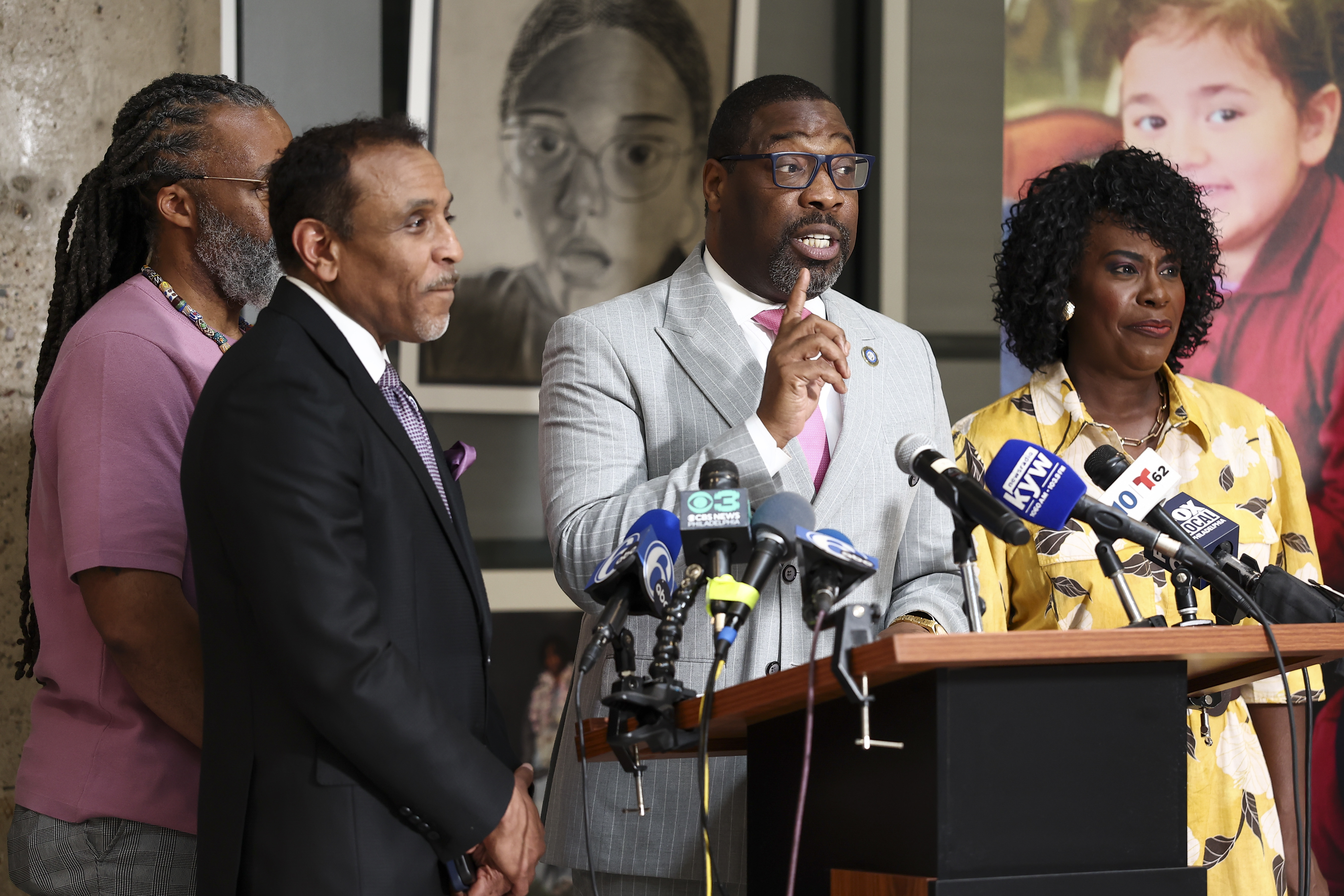
But as limited details about the agreement began to emerge Thursday, it became clear that the deal was less of a schools-funding program than a plan to figure one out over the next year — with the prospect of $216 million in city budget cuts taking effect if Parker and Council cannot eventually agree to adopt a new revenue stream.
“Council President Kenyatta Johnson and I publicly committed to working together to find local, recurring, predictable, and dependable revenue sources for the School District of Philadelphia over the next year to ensure that we keep these critical positions,” Parker said Thursday during a city budget bill-signing ceremony. “That is our shared goal and our commitment.”
But if Parker and Johnson do not make good on that commitment by July 1, 2027, the city will be on the hook for additional funding it has promised the school district between 2028 and 2031, including roughly $50 million in the first year of that time frame.
Council President Kenyatta Johnson speaks during an announcement at the School District of Philadelphia Headquarters on Wednesday, June 10, 2026 in Philadelphia. Philadelphia School District officials will move to restore 340 classroom-based jobs that were slated to be cut, despite top district leaders saying last week that they did not have the recurring funding needed to keep the positions.Monica Herndon / Staff Photographer
Parker, Johnson, Superintendent Tony B. Watlington Sr., and school board president Reginald Streater triumphantly unveiled the agreement to stave off the planned job cuts Wednesday. That announcement followed days of suspense after Council last week refused to pass the mayor’s proposed $1-per-trip rideshare tax, which would have funded schools, and instead advanced a city budget with about $50 million from one-time cuts that would be sent to the district as a Band-Aid for its $300 million budget gap.
Council’s move prompted Watlington, with Parker’s backing, to say the positions would still be eliminated without an explicit promise that the money would be recurring, rather than a one-time allocation.
Officials said they worked “around the clock” between Council’s rejection of the rideshare tax and Wednesday’s announcement, which Johnson jubilantly hailed as “Christmas in June.”
On Thursday, education advocates and labor leaders heaped praise on the administration for the deal.
Several district principals said Thursday they do not yet have details about exactly how much they will get back in their budgets, or how the dominoes will fall once positions are restored.
Watlington had school leaders build their 2026-27 budgets as if the cuts were happening, and many of the affected teachers, counselors, and climate staff secured new positions, some in the district and some outside the system. The restoration will undoubtedly cause vacancies elsewhere, months after other districts filled jobs for the fall.
“The win is making sure that those 340 jobs, with teachers, will not be laid off, and they will not have to second-guess if next year they’re going to come back to work,” Johnson told reporters Thursday. “And I think ultimately we can talk about sometime the ‘how’ we get to a particular end. But it’s always the ‘why.’ … At the end of the day, all of our young people still can have a chance to get a quality education.”
‘Budget sequestration’ comes to Philly?
The agreement between Parker and Johnson in some ways hearkens back to Congress’ 2011 “budget sequestration” debacle, when President Barack Obama, a Democrat, and House Speaker John Boehner (R., Ohio) agreed to severe across-the-board spending reductions that would take effect automatically if lawmakers and the White House failed to reach a “grand bargain” to restructure the federal budget.
They never reached an agreement — and the sequestration cuts, once thought of as too painful to countenance, eventually became reality.
Parker and Johnson are optimistic their arrangement for the school district and the city budget will not suffer a similar fate.
The future city budget cuts will be reflected in the city’s five-year plan, which must be approved by a state oversight board each year but is not binding legislation like annual taxing and spending measures. That gives City Hall more wiggle room to figure out how to find the money officials have now promised the district than Obama and Boehner had.
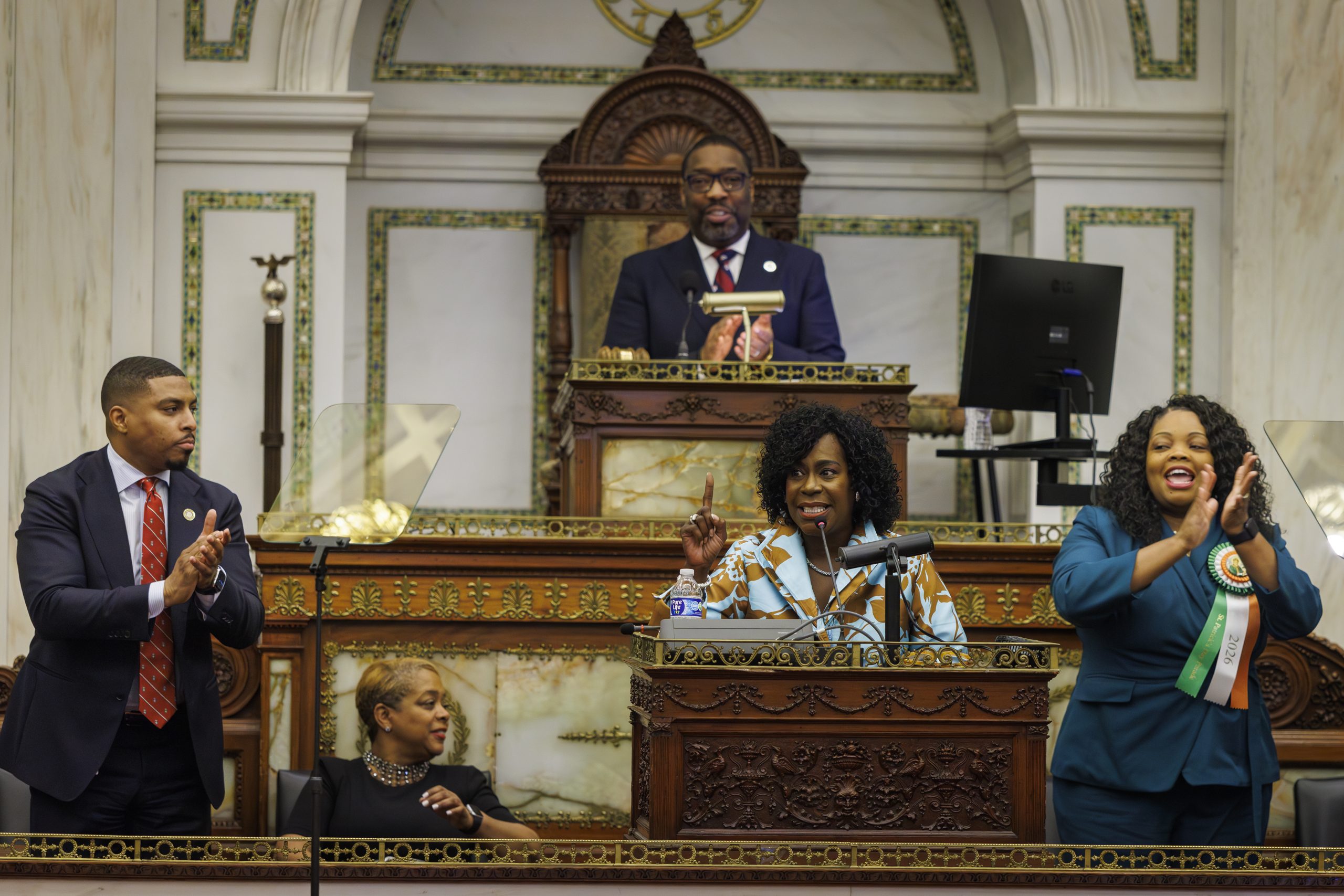
Philadelphia Mayor Cherelle L. Parker is cheered by members of Philadelphia City Council at conclusion of the budget address, Thursday, March 12, 2026. From left are council members Nicholas O’Rourke, Cindy Bass and Katherine Gilmore Richardson. In background is council President Kenyatta Johnson. .Alejandro A. Alvarez / Staff Photographer
Parker said her administration has already identified the cuts that will be reflected in the five-year plan when it is up for approval next month at the Pennsylvania Intergovernmental Cooperation Authority. But she has offered few specifics on what those potential cuts would entail.
Parker said Thursday that the city could make up part of the difference by reducing future debt repayment obligations by reducing the size of planned city bond sales. She mentioned the city’s capital budget, which funds projects like repaving roads and renovating recreation centers, but did not say how much would be cut.
And she said the city could halve its next borrowing related to her signature housing program, Housing Opportunities Made Easy. The city plans to take out a second tranche of $400 million in city bonds next year for H.O.M.E.; the potential cuts to free up money for schools could include taking only $200 million at that time, she said.
“Where did we get the money from in future years?” Parker said Thursday. “In our five-year plan, we made cuts to very important programs associated with our capital budget and even our H.O.M.E. plan — but cuts that will never have to be realized once we all make good on that commitment to generate that approximately $50 million in new, predictable recurring revenue.”
One complication in the negotiations to come is that Parker and all 17 Council members are up for reelection next year, and lawmakers are not eager to approve new taxes before voters head to the ballot box.
The Democratic primary, which effectively decides almost all elections in Philadelphia due to the city’s deep-blue electorate, will be in May 2027. The next city budget, including all tax measures for the following fiscal year, must be enacted by the end of June 2027, leaving several weeks after the election for Council to potentially approve a new tax to provide money for the district next year.
Philadelphia City Council members at City Hall in Philadelphia, Pa. on Thursday, June 11, 2026.Aidan T. Gallo / Staff Photographer
Some possibilities do not involve new or increased taxes for residents. The city, for instance, could speed up its plans to increase the share of property tax revenue that is dedicated to the district. Currently, the district receives 56% of property tax revenue, while the city takes 44%.
Parker said the agreement will allow Philadelphia to present a united front in Harrisburg as officials prepare to ask for more state funding for the city’s school district. State lawmakers in the past have pointed to disagreements among city leaders when rejecting requests for additional support.
“This is the first time … in my lifetime that the city of Philadelphia, the administration, and the legislative branch, along with the superintendent of the School District of Philadelphia and the school board, will all travel [to Harrisburg] in unity, along with all of our union partners and all of our education advocates,” Parker said. “We can stand up when we arrive in Harrisburg and say … ‘Philadelphia’s homework is done.’”
School advocates relieved
Arthur Steinberg, president of the 14,000-member Philadelphia Federation of Teachers, said the news of Parker and Johnson’s agreement came just in time. Thursday was the last day of school for 114,000 district students; staff finish the school year Friday.
“It was a very difficult year, and I’m glad that we’re able to tell them now that the positions that were cut due to this will be restored,” Steinberg said at a news conference Thursday morning outside Council chambers. “This means a lot to them. There’s stability over the summer. The communities will know who their teachers will be, and they’ll know where they’re going.”
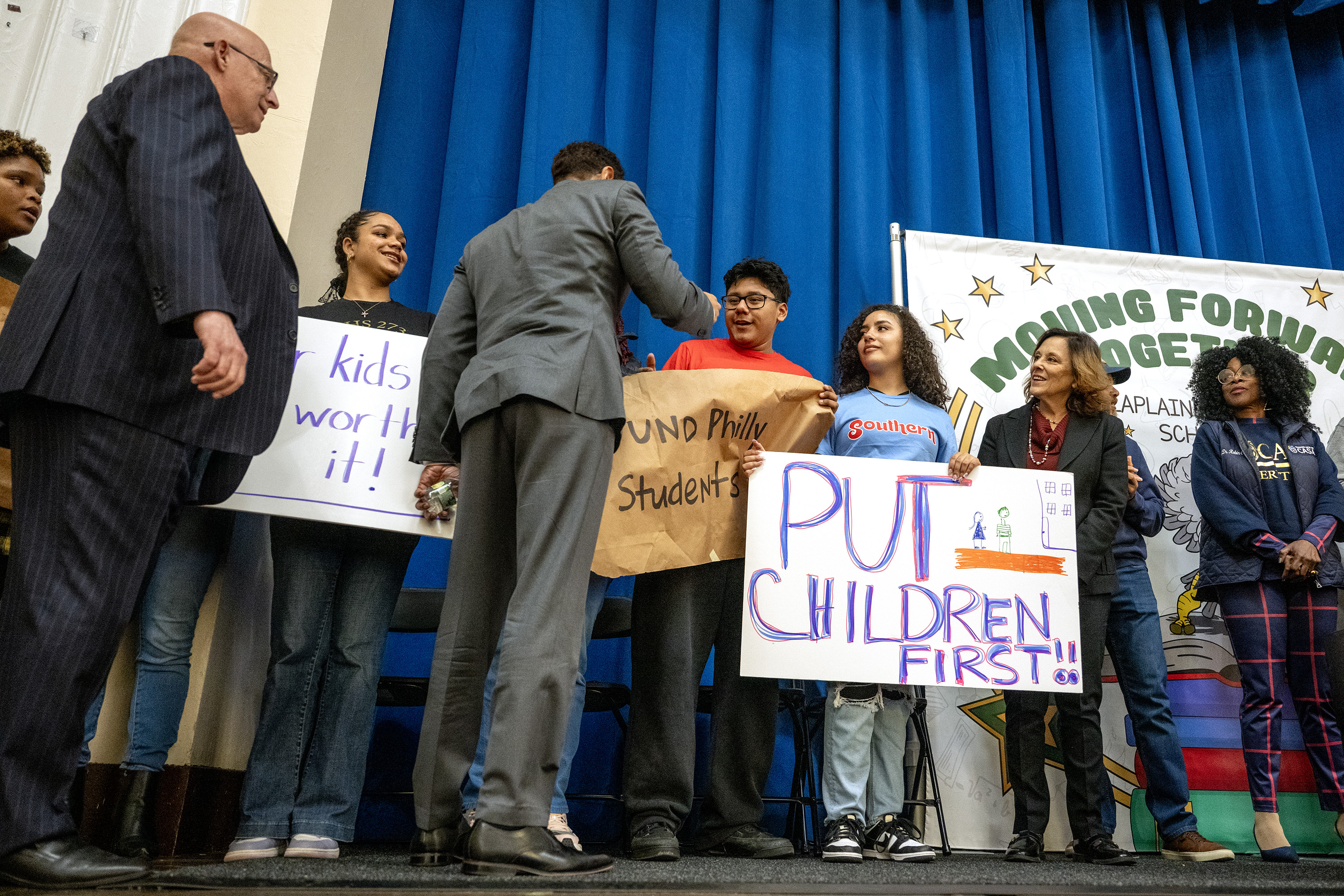
Arthur G. Steinberg (left), president of the Philadelphia Association of Teachers, and school superintendent Tony B. Watlington, Sr. (right) greet students as they arrive onstage for Mayor Parker’s announcement March 23, 2026, of $1 rideshare tax proposal to fund city schools.Tom Gralish / Staff Photographer
Tiffany Johnson Williams said she was thrilled that cuts at her child’s school — Nebinger Elementary in South Philadelphia — and others would be rolled back.
“I am equally grateful to Mayor Parker, Superintendent Watlington, and the school board for coming back to the table and working collaboratively to reach the solution that restored our critical positions,” Williams said at the news conference. “As a parent and educator and a youth advocate, I know that stability matters.”
Councilmember Isaiah Thomas, who has had a testy relationship with the district and school board over the last several months, suggested it was time to move forward cohesively to push for more funding elsewhere.
“I think where we are at this moment is recognizing that as we come together as Philadelphians, our job now is to use our advocacy initiatives and our leverage to try to get even more resources from Harrisburg,” Thomas said.
Staff writers Anna Orso and Jake Blumgart contributed to this article.