Tag: Weekend Reads

  • The Women’s Lacrosse League is preparing to make history in the Philly area. To Mayor Parker, ‘it’s about opening doors.’

    The Women’s Lacrosse League is preparing to make history in the Philly area. To Mayor Parker, ‘it’s about opening doors.’

    The summer of unforgettable sports moments in Philadelphia is far from over, and Mayor Cherelle L. Parker was excited Wednesday for the next event coming to town.

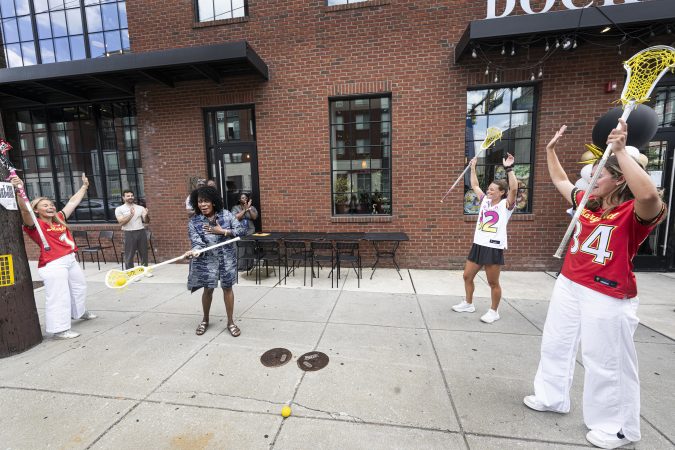
    Parker and local youth lacrosse players gathered at Dock Street South to celebrate the inaugural Women’s Lacrosse League championship, which is Aug. 15 (5 p.m., ESPN) at the Union’s Subaru Park in Chester.

    “For a long time, women’s sports were treated as an afterthought, a smaller version of the real thing,” said Rachael DeCecco, a USA Lacrosse Hall of Famer and Broomall native who’s the senior vice president of the PLL and WLL.

    “Every young girl who’s going to watch this league will understand, without ever having to be told, that this is a real path, a real career, a real sport worth playing at the highest level. And there is no better place to host this historic first-ever WLL championship than right here in Philadelphia.”
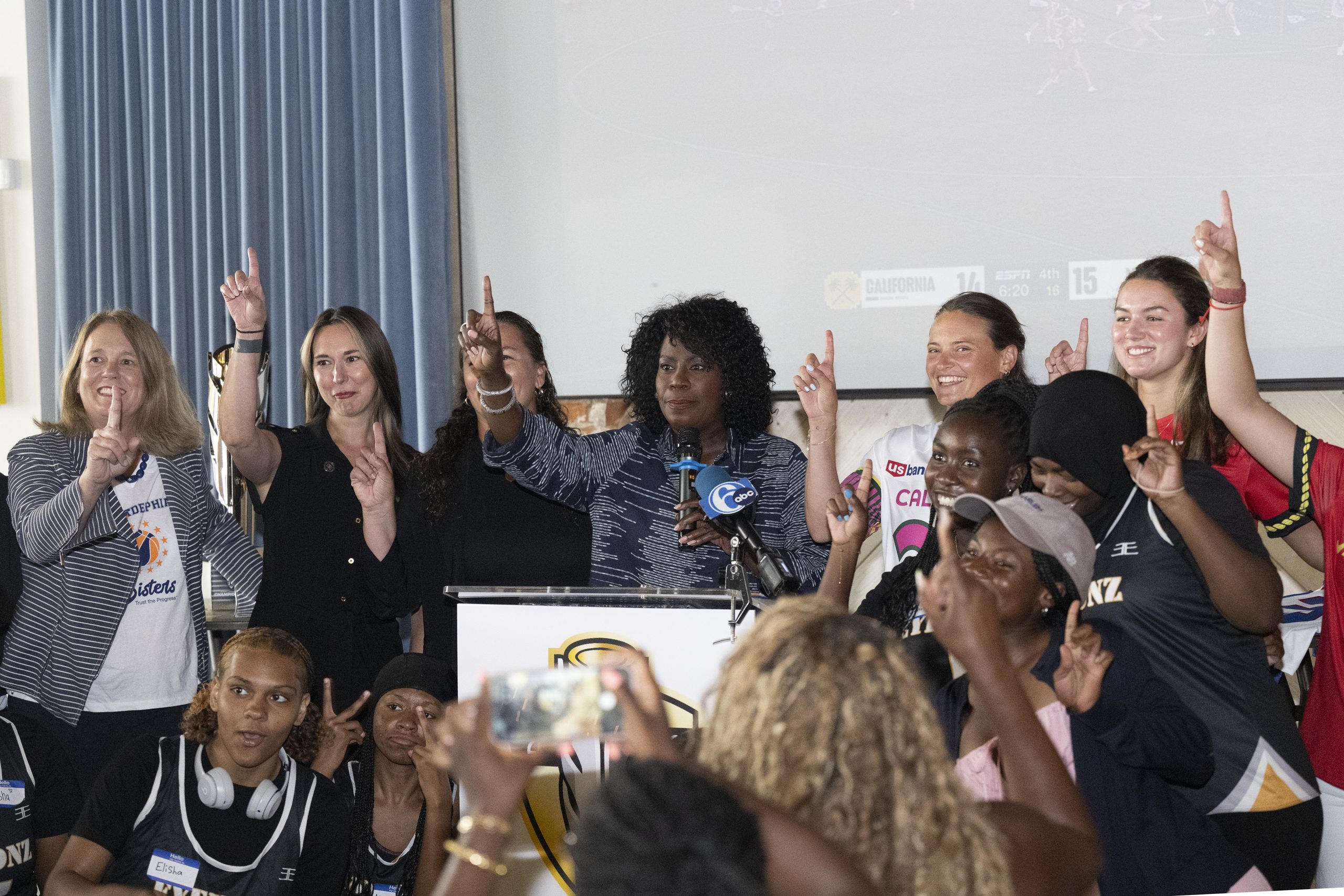
    Mayor Cherelle L. Parker (center) speaks at an event celebrating the inaugural Women’s Lacrosse League championship coming to the Philly area.Jose F. Moreno / Staff Photographer

    The Philly area is a hotbed for women’s lacrosse. Of the WLL’s four teams — the Maryland Charm, California Palms, New York Charging, and Boston Guard — 18 players and two coaches have ties to the region.

    Three of those players — California Palms defender Katie Detwiler (Devon, Archbishop Carroll) and the Maryland Charm’s McKenzie Blake (Haddonfield) and Abby Bosco (Penn) attended Wednesday’s event. Also in attendance was Tina Sloan Green, the former Temple women’s lacrosse coach who has been breaking barriers in field hockey and lacrosse since the 1970s.

    Now 82, Green said the formation of the WLL, which is in its second season, is her legacy.

    “I can’t even believe it,” Green said. “I grew up here and was the only Black female playing the sport. So this means so much to me because I know that my grandchildren, and their children, will get opportunities.”

    Parker also discussed wanting to create more opportunities in women’s sports. Discussions about hosting the WLL championship, as well as bringing a WNBA team to Philadelphia — which will happen in 2030 — have been on her radar since her days as a City Council member from 2015 to 2022.

    “We’re proving every year that our interests are in building and growing professional women’s sports in the city of Philadelphia. We’re doing it in a tangible way. We’re at the table,” Parker told the crowd. “This championship, to me, is about more than competition. It’s about opening doors. And in a city like Philadelphia, I can’t begin to talk about the importance of Black and brown young women being able to know that this sport, too, is for them.”

    At the end of her speech, Parker invited the youth lacrosse players in attendance to join her in reciting her signature chant, “one Philly, a united city; one America, a united nation,” before leading an “E-A-G-L-E-S” chant and laughing with the players about spelling it correctly this time.

    One of the young players in the crowd was Shiyann Werts, a lacrosse player and rising junior at Germantown Academy. Werts fell in love with the sport in sixth grade after being introduced to it at the Thomas K. Finletter School, where the Harlem Lacrosse program provides year-round academic and athletic support.

    Since then, she has seen the sport’s popularity grow.

    “It makes me really kind of emotional,” Werts said. “I’ve been seeing all the news on lacrosse, and it’s getting the recognition that I think it deserves. I’m really excited to see what the WLL will bring to that.”

    Werts hopes to play college lacrosse, and the opportunity to play professionally after graduation is becoming a realistic pathway for female athletes who previously had few options to continue competing after their NCAA careers ended.

    “I think it’s just super crazy growing up in the area,” Detwiler said. “When we were growing up, we didn’t have any of this. We played in college, and then it was on to the real world. So I think it’s really good for them to see what could be possible someday. It’s awesome to see.”

    The WLL and the city are working together to ensure the championship reaches all parts of the community. The league is donating 2,500 tickets to nonprofit organizations, youth programs, and community groups.
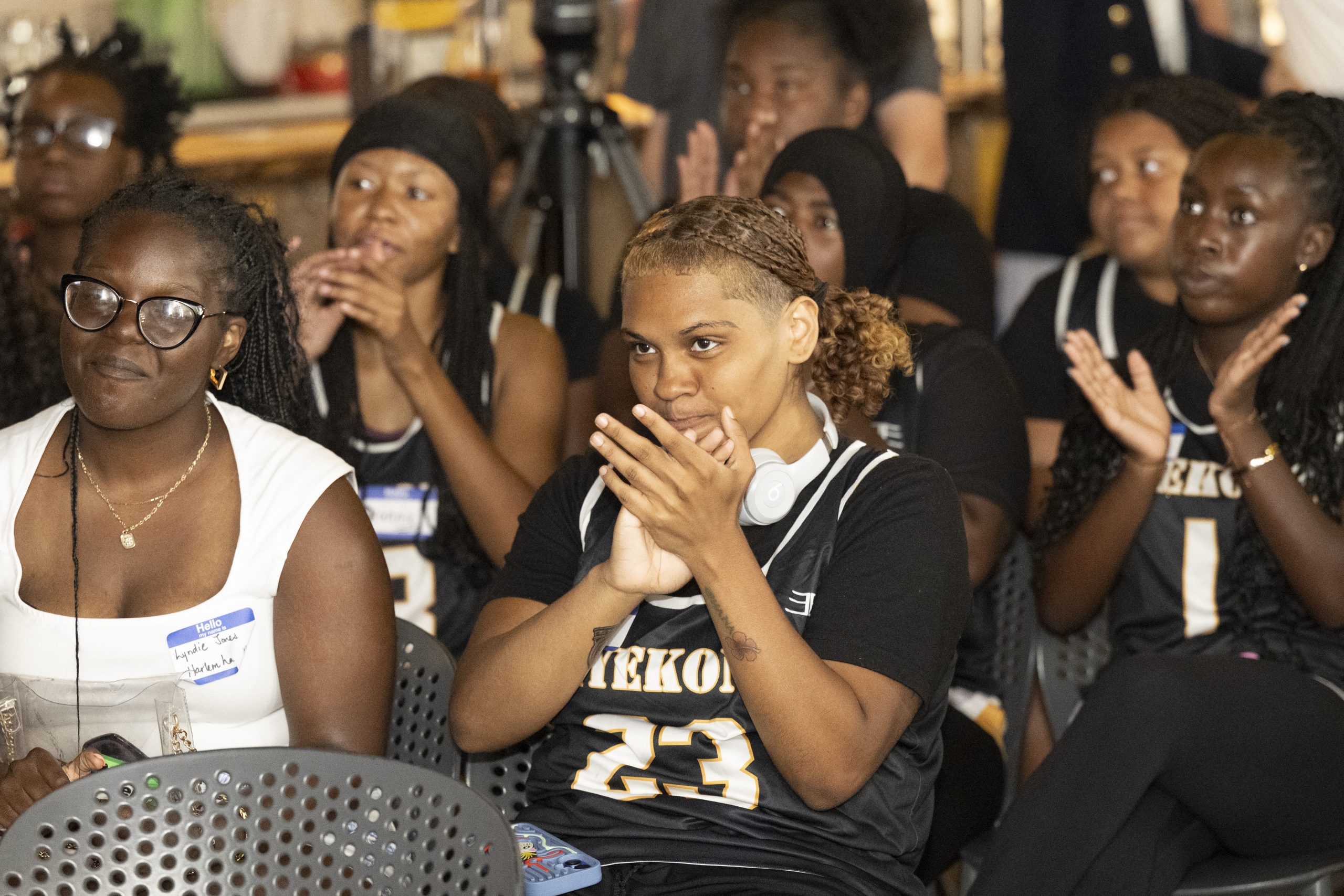
    Youth lacrosse players listen as Mayor Cherelle L. Parker speaks during a news conference on Wednesday.Jose F. Moreno / Staff Photographer

    Ashley Walkowiak, executive director of the Governor’s Advisory Commission on Women, echoed the hopes of the room that the championship is only the beginning of the impact women’s professional sports can have on Philadelphia.

    “Seeing the first WLL championship hosted right here in Pennsylvania is a powerful reminder of what’s possible when we invest in expanding opportunities,” Walkowiak said. “Philadelphia has long been a place where history is made, and this championship continues that legacy. But it is more than a game. It’s a celebration of talent, leadership, and the growing momentum around women’s athletics.”
  • Jalen Hurts has high hopes for the 2026 season. He knows delivering on them requires his teammates sticking together.

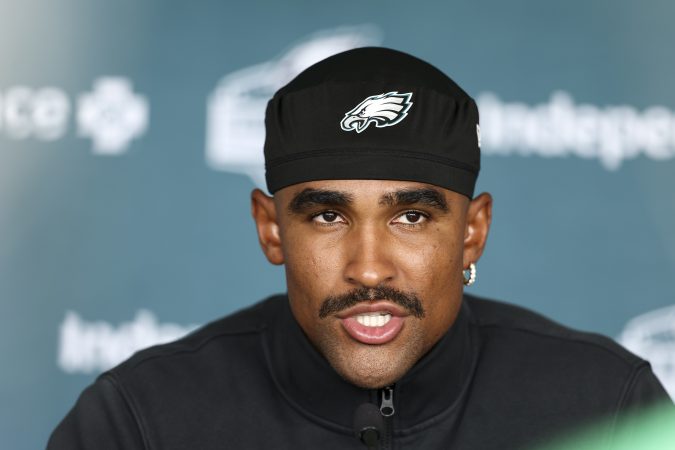
    Jalen Hurts has high hopes for the 2026 season. He knows delivering on them requires his teammates sticking together.

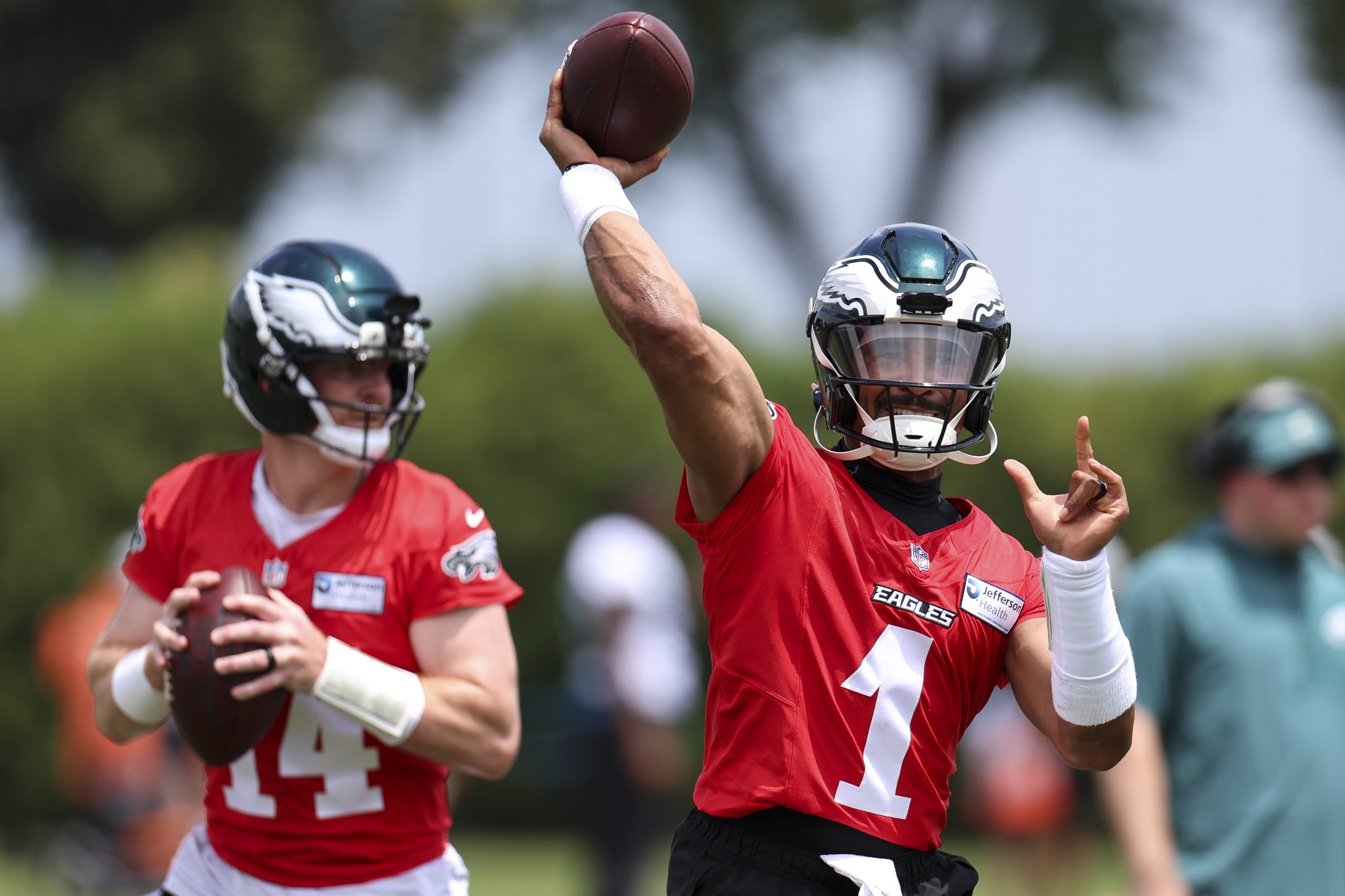
    Nick Sirianni opened his team meeting on Tuesday with a message about the importance of the team sticking together and staying aligned, according to Jalen Hurts.

    The Eagles head coach’s words compelled Hurts to jot down a phrase in his notebook, one that resonated with his own philosophy on how he seeks to build relationships with his teammates.

    “100% alignment and zero entitlement,” Hurts recalled on Wednesday.

    Hurts is bringing that mantra to life beyond the pages of his notebook. The sixth-year starting quarterback explained he has emphasized that approach ahead of camp with his teammates, a new-look group that is in the process of implementing a fresh offensive scheme under Sean Mannion.

    A new-look group that, as of two months ago, no longer includes A.J. Brown, a former key piece of the Eagles’ passing attack.

    In Hurts’ opening statement before taking questions at his news conference after the first practice of training camp, he outlined his own message of togetherness to his teammates, one that closely aligned with Sirianni’s.

    “I’d say one of my main points coming in, especially talking to my teammates and getting a sense of where we are throughout the summer and where we’re going is just the importance of discipline and unity,” Hurts said. “And I can’t emphasize enough how important it is to carry and protect the intimacy of this team and what we do because it takes all of us, and we know that there are challenges that come throughout a year.”

    Last year’s challenges, particularly on offense, are well-documented. The offense, which finished 23rd in the league in passing yards and 18th in rushing yards, never quite found its identity. Brown went public with his frustrations about the offense and his utilization within it, both in public comments and via social media, and was traded to the New England Patriots six months after the season ended.

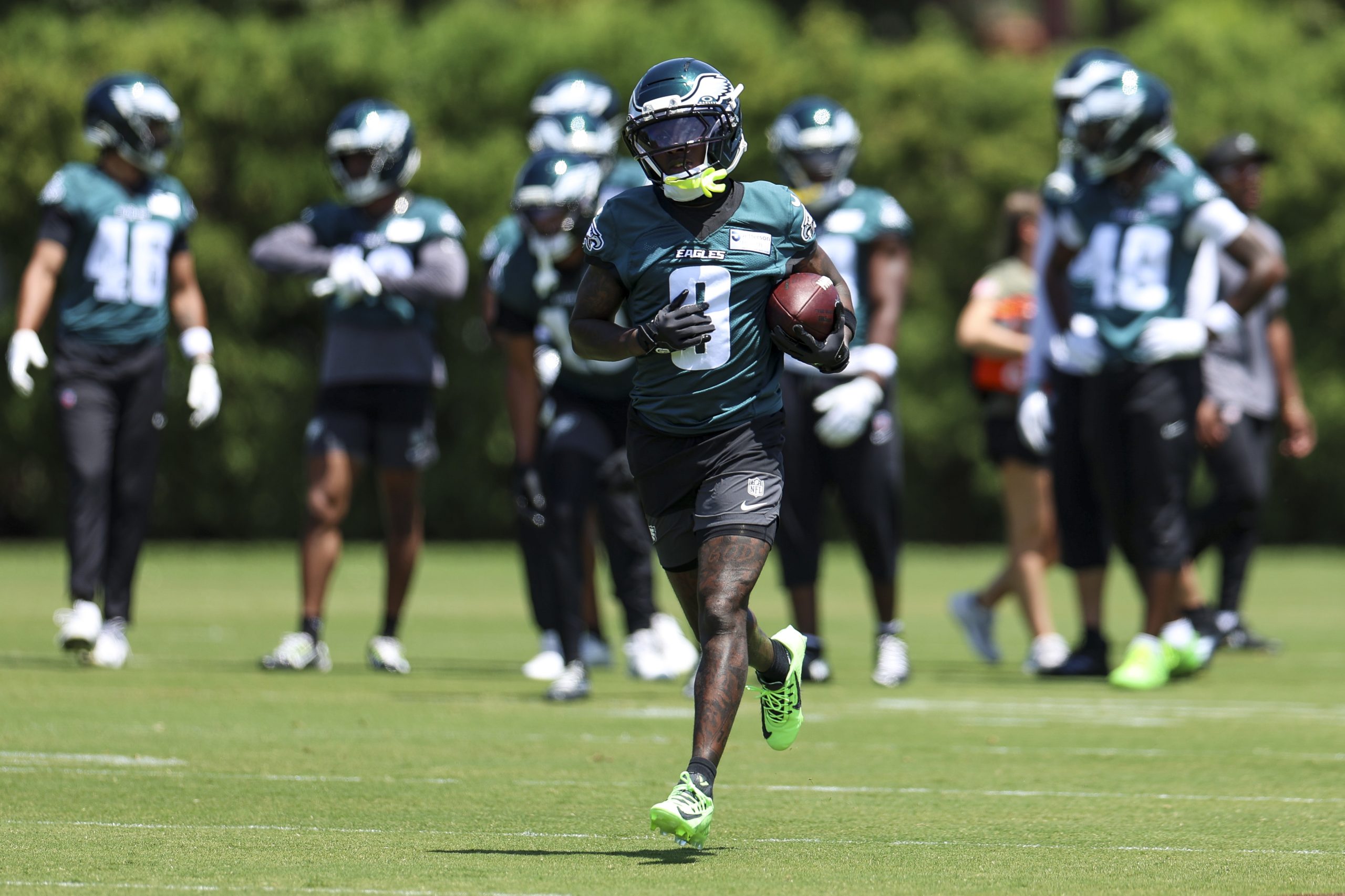
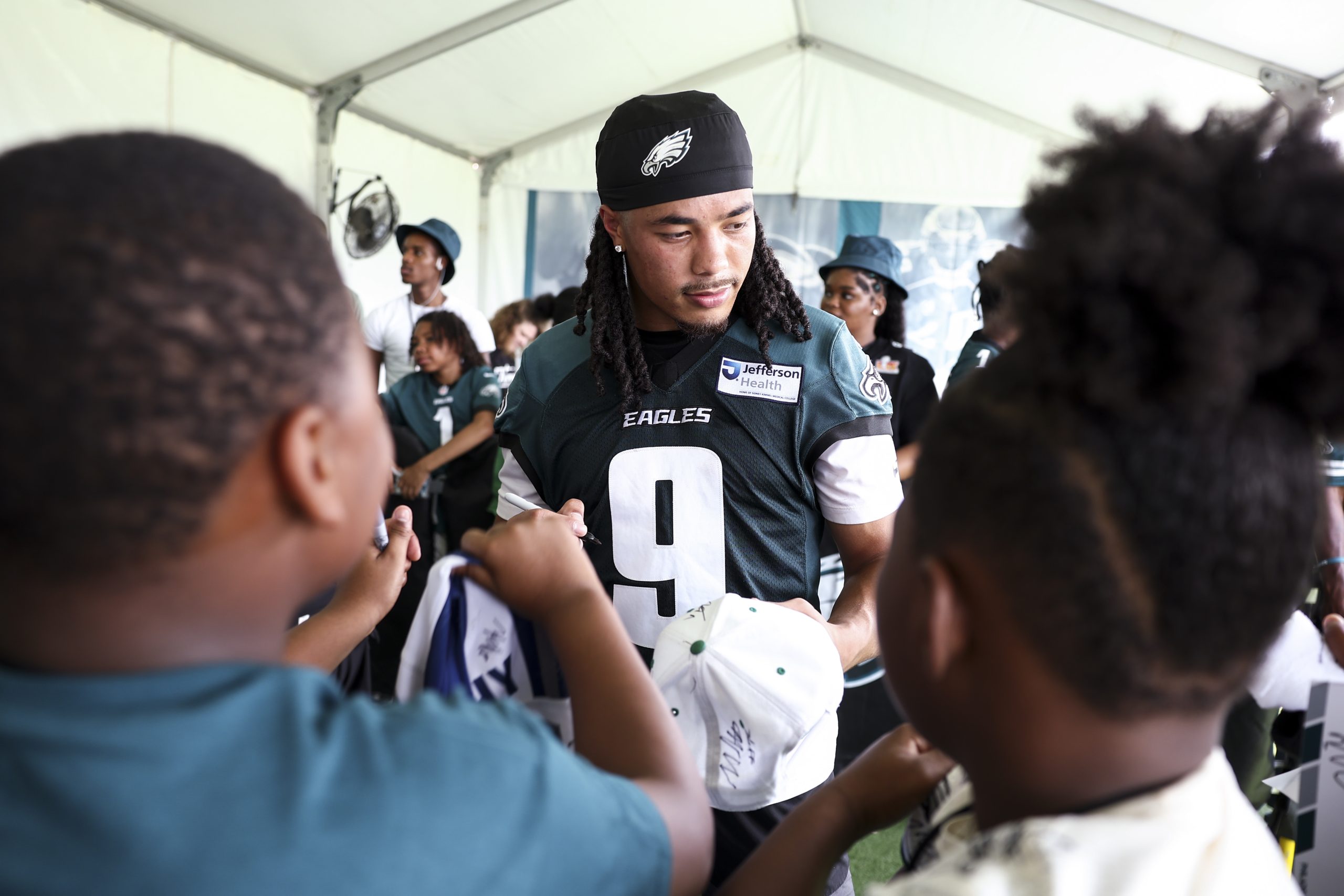
    Rookie wide receiver Makai Lemon (9) has sought to forge an early bond with quarterback Jalen Hurts. Monica Herndon / Staff Photographer

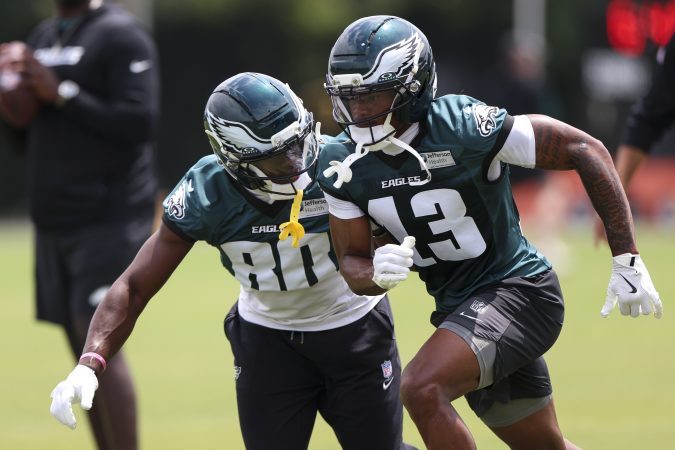
    New challenges await Hurts, who is tasked with adjusting to yet another offensive play-caller and a new scheme. He has plenty of new faces among his receiving corps, too, in Makai Lemon, Dontayvion Wicks and Hollywood Brown.

    But Hurts isn’t just preaching the importance of togetherness as he helps onboard his new teammates ahead of the new season. He’s living it, too, by spending time away from the facility with members of the offense this summer. Among the players he practiced with this offseason was Lemon, the Eagles’ first-rounder out of USC.

    “I see his heart and I see his hunger,” Hurts said of the rookie receiver.

    Hurts noted that he was playing in the NFL when Lemon was in high school back in 2022. While Hurts is in a self-described “vet role” as he answers Lemon’s questions, he acknowledged that he is also learning the new offense alongside the rookie.

    “We’re both learning something new, onboarding something new, and we want to be able to own it and say it’s ours and we’re growing in that,” Hurts said. “So we’re growing together.”

    Hurts noted the importance of kickstarting that growth in the summer with his receivers, as those offseason practice sessions are a “reflection of what comes in the season.”

    “I think it was really good to have everybody all in on it, going into this offseason, and have everybody expressing and showing that hunger to build and learn each other’s personalities a bit, so we can go out there and thrive on the field,” Hurts said. “So I was definitely excited about that, and I think it’ll pay forward. The work will show.”

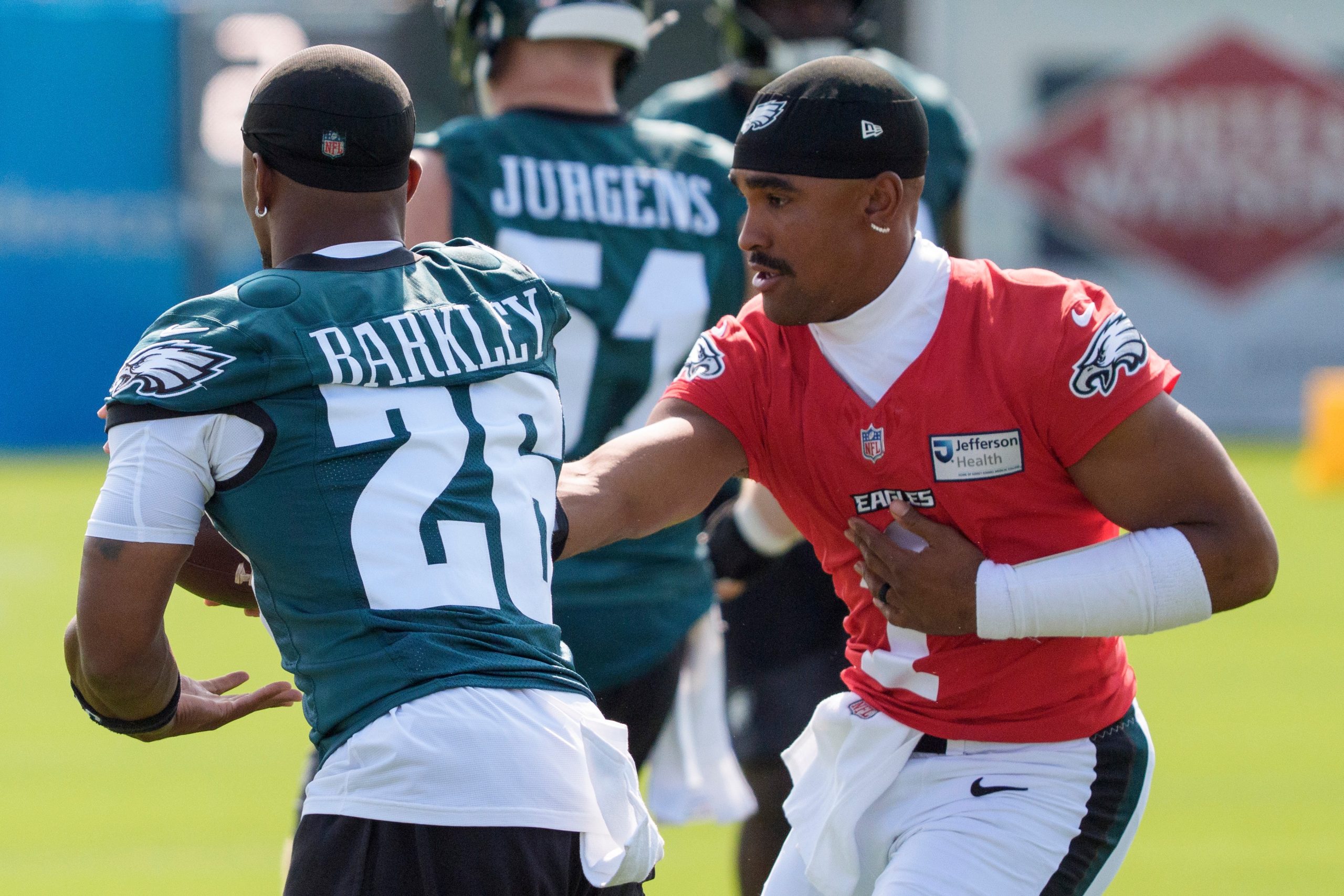
    “Jalen is willing and able to do whatever we ask him to do,” running back Saquon Barkley said on Wednesday. Chris Szagola

    Hurts and the rest of the offense had the opportunity to show the fruits of their offseason work on the first day of training camp. While the offense may experience some growing pains in a new scheme, Nick Sirianni said that the “standard remains the standard” as far as his evaluation of his players, Hurts included.

    The offense displayed some of those new wrinkles on Day 1, including the increased frequency of Hurts lining up under center, the emphasis on the play-action passing game, and the utilization of pre-snap motion. Hurts, according to Saquon Barkley, has embraced all of the intricacies of the offense.

    “Jalen is willing and able to do whatever we ask him to do,” Barkley said. “And he has that competitive mindset of just wanting to be great and doing whatever it takes to win. But also always trying to find ways to improve his game. And he’s doing that. It’s Day 1 and we’ve only had OTAs and we’ll all just keep getting better and better.”

    While the scheme may change, Hurts’ approach to training camp remains the same. He said that every summer, he strives to get on the same page with his offensive coordinator and his teammates.

    “I’m always seeking alignment, and I think with different pieces that come and go, it can make that challenging or it can make it easier,” Hurts said.

    Once alignment is achieved, Hurts will aim to make the most of the tools at his disposal, he explained.

    “At the end of the day, the goal is to go out there and win,” Hurts said. “So we’ve got to prepare ourselves to be able to do that.”

  • A new live stream camera at the Liberty Bell increases access, but raises questions for privacy experts

    A new live stream camera at the Liberty Bell increases access, but raises questions for privacy experts

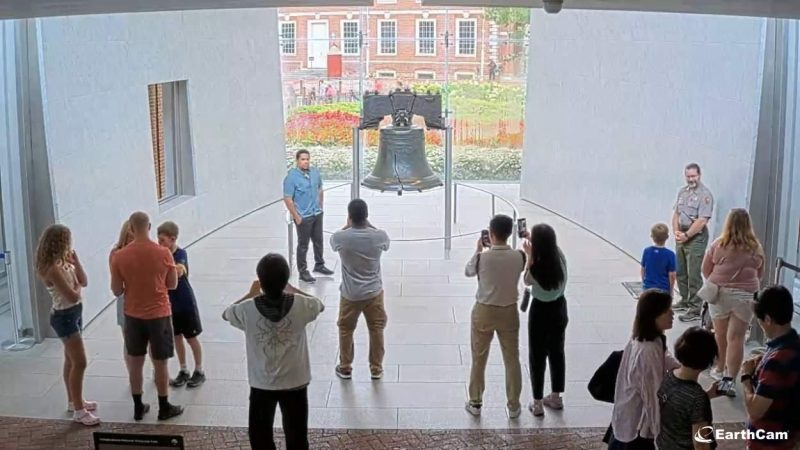
    Strangers took photos of families in front of the Liberty Bell, as others took close-up photos of the iconic symbol of U.S. independence.

    A little boy in blue shorts and curly hair ran up to the bell to point out the crack. A National Park Service staffer looked at his watch. It was almost closing time at the Liberty Bell Center and the crowd began to dwindle as 5 p.m. approached Tuesday.

    The boy posed next to a little girl for the last photo of the day, and the room cleared.

    The bell received a reprieve from visitors until 9 a.m. Wednesday, when it all started back up again.

    These moments were captured by a new camera that transmits a 24-7 live stream of the Liberty Bell on EarthCam, a website that live streams various iconic sites around the world.

    “At Independence National Historical Park, the livestream provides the public with a real-time virtual view of one of the nation’s most iconic historic sites, expanding public access and engagement,” said a spokesperson for Independence National Historical Park in a statement.

    The Liberty Bell live stream is Philadelphia’s second on EarthCam. A camera set at the Franklin Institute that points toward the Central Library of the Free Library of Philadelphia on the Benjamin Franklin Parkway has been live on the internet since 2018.

    The Eagles Super Bowl parade down the Benjamin Franklin Parkway as captured by EarthCam from the Franklin Institute. February 14, 2025.EarthCam

    The camera pointing at the Revolutionary-era relic was set up ahead of the United States’ 250th anniversary celebration earlier this month, and adds to the website’s collection of iconic travel destinations that includes Times Square in New York City, the Temple Bar in Dublin, and the crosswalk at Abbey Road, London. There is also a camera streaming Andy Warhol’s grave in Bethel Park, Pa., outside Pittsburgh.

    The streams, while an effort to increase access to historic sites, also raise questions for surveillance experts and are part of a growing number of live streams in public places.

    “The general trend of video surveillance [is] becoming pretty ubiquitous in common public spaces and across cities,” said Jake Laperruque, deputy director of the Security and Surveillance Project at the nonprofit Center for Democracy and Technology.

    EarthCam, a New Jersey-based web-camera technology company, installed the Liberty Bell camera and live stream as part of a donation of 250 cameras for the United States’ 250th birthday.

    “Taking people to that park and showing that view is amazing,” said Brian Cury, EarthCam’s founder and CEO.

    The Liberty Bell cam has racked up more than a quarter million streams since it was installed about a month ago, Cury said, including 80,000 virtual visits on July Fourth.

    Cury said EarthCam donated the camera to the National Park Service at no cost. The company streams from national parks throughout the country, including the Flight 93 National Memorial in the Shanksville, Pa., area.

    The streams are a way to bring iconic sites to people in a way that is more compelling than a photo, Cury said. And hopefully, he said, they can entice people to step outside.

    “There are lots of kids that should get out of the house and go explore our amazing country,” the CEO said. “But they are online.”

    Visitors to the EarthCam website can view the live stream, a video archive of the last 24 hours, and a collection of still images from previous days since the camera has been installed (a “hall of fame” of sorts, Cury says.)

    Still images from recent days show the bell at night, families visiting, and groups gathering in front of the bell for photos.

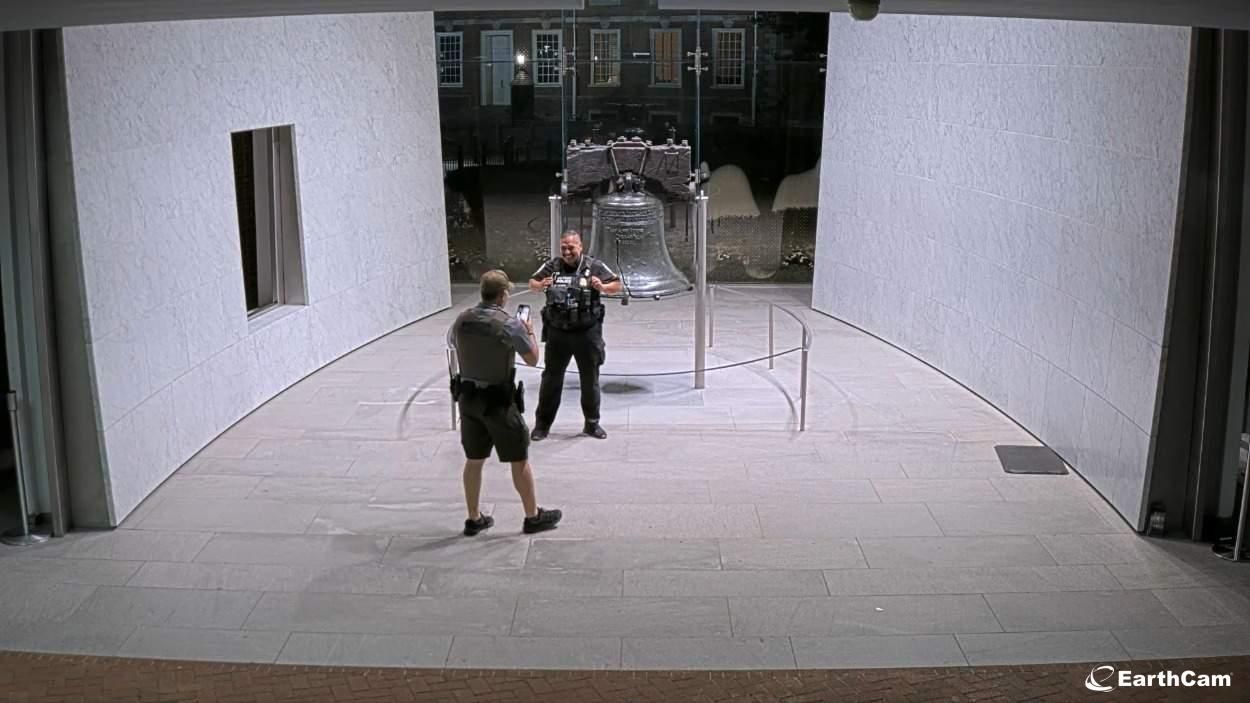
    Also on the “hall of fame”: a park ranger taking a photo of a law enforcement officer in a black uniform posing in front of the bell after hours.

    A law enforcement officer poses in front of the Liberty Bell after hours.EarthCam

    Some surveillance experts say the archive raises privacy concerns, especially because people are identifiable in the image.

    “The longer those pictures are kept, the more it makes me uneasy,” said Rachel Levinson-Waldman, director of the Brennan Center for Justice’s Liberty and National Security Program.

    “The more it’s susceptible to even a private company just collecting those pictures and using them for some other purpose,” she said. “Or just people scrolling through and seeing the pictures for who knows what purposes people might use them.”

    There is no information posted at the site about the live stream, but a security sign at the center’s entrance advises: “video surveillance in effect.” Online, the live stream is advertised via a small link at the top of the National Park Service’s Liberty Bell web page.

    EarthCam does not place cameras in private locations where people have an expectation of privacy, Cury said. And the camera itself — on the wall in front of the bell — is not hidden, he said. Visitors, the CEO said, view the camera as an attraction.

    “When you are looking at a lot of our cameras,” Cury said, “people are standing in front of them and waving.”

  • How LeBron James could impact Philadelphia’s economy, according to local experts

    How LeBron James could impact Philadelphia’s economy, according to local experts

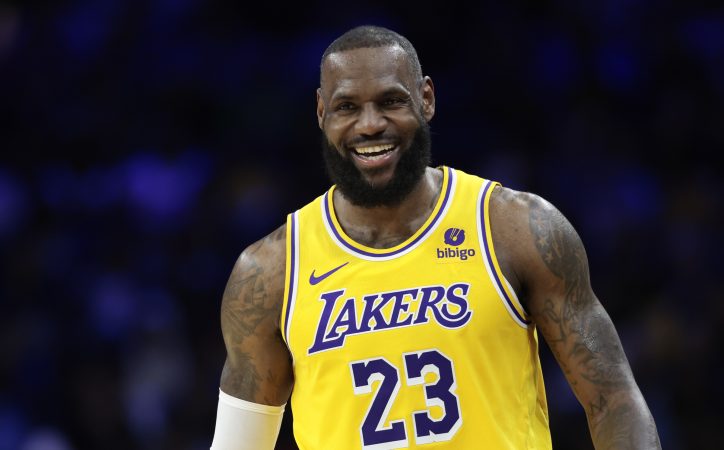
    LeBron James is set to make $8 million over two years with his move to the Philadelphia 76ers. But how much money will the city’s economy get out of the deal?

    “It’s hard to precisely quantify, sitting here today, what that exact number is going to be,” said Ethan Conner-Ross of Econsult Solutions Inc., a Philadelphia-based economics policy consulting firm.

    Of course there’s James’ own money as a high-earning professional coming into the region — including any local taxes he’d pay, and the money he would spend to rent or buy a place in the Philly region, though rumors suggest he might commute from New York.

    The greater economic impact depends on how many consumer dollars come into the city that wouldn’t have without James joining the Sixers.

    “The level of interest in the team, and then ultimately the success of the team, could definitely play out in more economic activity in a few different ways,” including short- and long-term outcomes, Conner-Ross said.

    History provides some idea of how this athlete could financially benefit the city.

    A 2017 Harvard study found that James’ presence in Cleveland and Miami was tied to an increase in the number of food and beverage businesses within a mile of the arenas in those cities and a boost in employment at those establishments.

    Moody’s Analytics economist Matt Colyar says James’ presence won’t increase housing prices in the area or lower the unemployment rate, but if the team performs well and ends up playing more playoff games, that could fill up restaurants, bars, and hotels with Sixers fans on additional days.

    “All that is serious dollars,” Colyar said, “but not the kind of thing that makes us revisit our forecast for Philadelphia’s long-term trajectory.”

    Where will money be spent?

    In the short-term, James’ move could mean more ticket sales and jerseys bought, Conner-Ross said. It likely means more media and more fans coming to town for games.

    Early signs suggest this is already happening. Fanatics, the sports apparel company, sold out of some LeBron James Sixers jerseys within hours of the announcement Friday that he would join the team. Preseason ticket prices have risen as well, 6abc Action News reported.

    How much money stays in Philadelphia will be a “tourism story,” Conner-Ross said. Hotels, restaurants, and bars near the arena or downtown could benefit.

    Some of the money spent by locals on James-related experiences and merch may have been spent locally anyway, Conner-Ross said. That could still be positive for the city, he said.

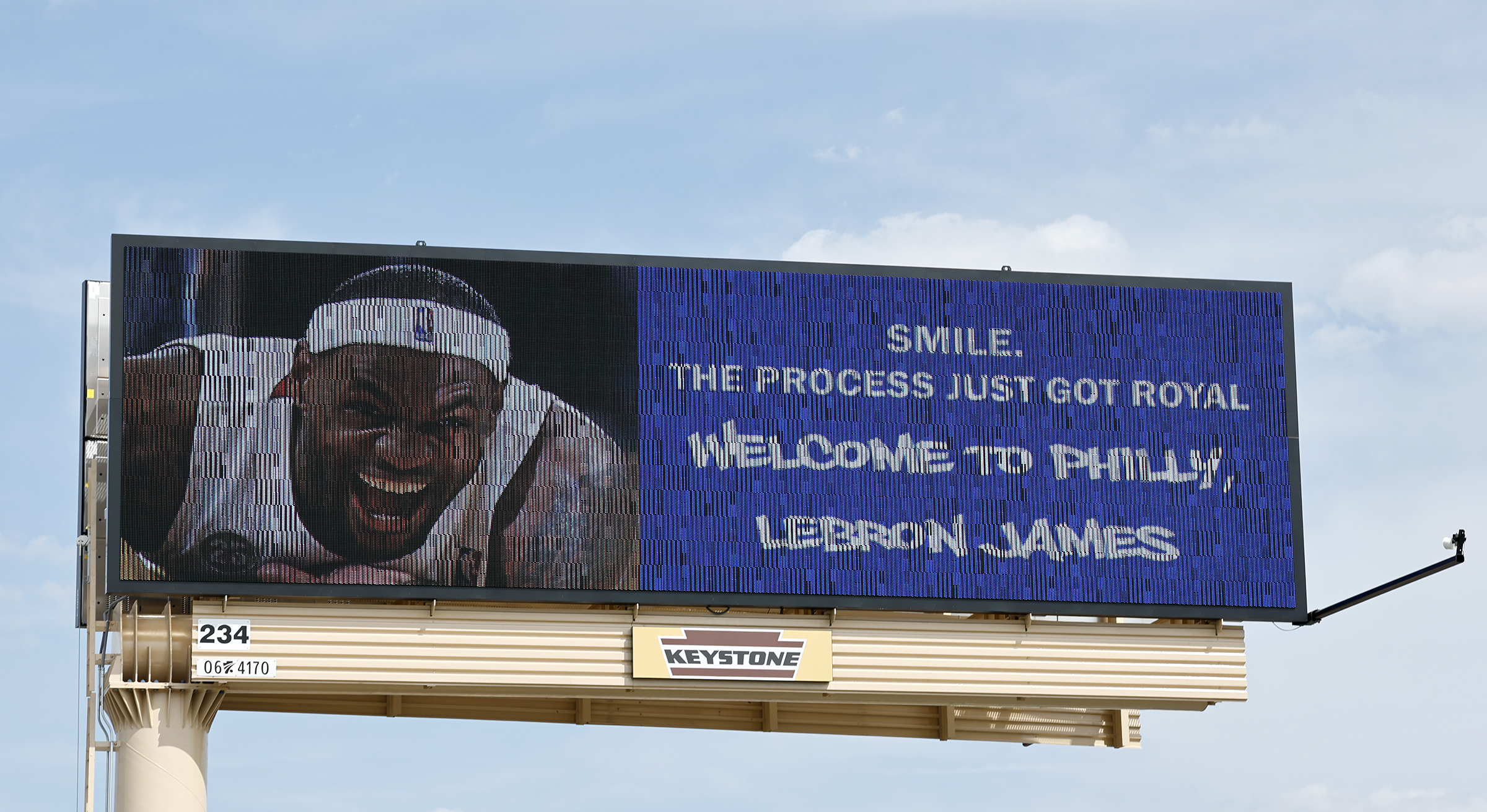
    A billboard welcome sign for new Sixers LeBron James along Packer Avenue in South Philadelphia on July 24.Yong Kim / Staff Photographer

    “Philadelphia entertainment activities are not the only things competing for those dollars,” he said. “These folks have the ability to spend their entertainment dollars at the Shore or going to New York, or what have you.”

    If “they’re excited about the Sixers and spend more in town, it’s probably a net positive,” Conner-Ross said.

    Boosting Philly’s reputation

    Some of the James effect — like more media exposure and nationally televised games for the Sixers — will make money for non-Philly beneficiaries.

    “Those aren’t dollars that are going to support public parks in Philadelphia,” Colyar said.

    But there could be a reputational gain, Conner-Ross said. Hosting the World Cup, the All-Star Game, and other events have helped Philadelphia be seen in a positive light, he noted, and James could similarly contribute to the city’s image.

    “Philadelphia is … competing with other East Coast cities, other places in the country, in the world for residents, for visitors, for businesses, and that reputation really does matter,” Conner-Ross said.

    That kind of influence can have financial consequences, even if it’s hard to measure in exact dollars.

    International soccer star Lionel Messi, for example, helped raise Miami’s profile in the soccer world as well as attract tourism, and the Wall Street Journal says some have estimated that his presence on Inter Miami has generated billions of dollars for the city.

    To be sure, Messi’s and James’ situations are like apples and oranges — or soccer balls and basketballs — in part because they’re playing out in different cities.

    In any case, the influence of a star like James could have a trickle-down effect.

    People aren’t “going to necessarily point to LeBron James and say, ‘Now I have to live there,’” Conner-Ross said. But “it affects their perception of Philadelphia as a place that people choose.”

  • LeBron likes Beethoven. Now there’s a playlist for that.

    LeBron likes Beethoven. Now there’s a playlist for that.

    He likes his cookies chocolate chip, and his wine Oregon pinot noir.

    And when it comes to music, LeBron James has a thing for Beethoven.

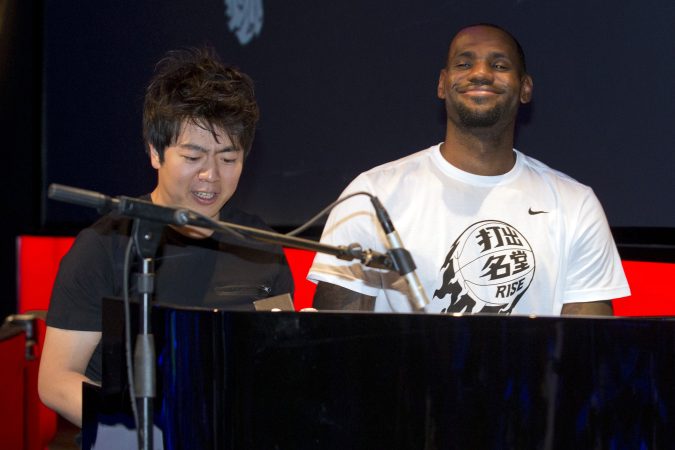
    In fact, the Sixers’ new No. 23 has had a bit of a first-hand experience with classical music. He once took some quick instruction from Curtis Institute of Music alum Lang Lang before the two broke into a four-hand duet — brief, random, and (intentionally) atonal.

    Lang Lang called the light-hearted 2014 collaboration a “piano dunk.”

    Beethoven has a particular role in Jame’s routine, he explained in an interview with The Shop. He gets to games hours early and goes to the weight room, where he listens to hip-hop.

    “And then when I leave the weight room, I gotta calm down and that’s why I’m listening to, like, more like old school jazz or I listen to a lot of, like, Beethoven,” he said on the talk show in 2022. “I like classical music, too.”

    Taking its cue from James’ classical leanings, WRTI-FM (90.1) has quickly assembled some music especially for him.

    “We thought we would create something Philadelphia-specific that we could put out as his new pregame playlist as the jazz and classical station here,” said WRTI classical program director Zev Kane.

    Jazz cuts to make the list include “Smilin’ Billy Suite: Part II” by South Philadelphia’s Heath Brothers and Philadelphia organist Shirley Scott in “Soul Shoutin’.”

    On the classical side: Rachmaninoff’s Symphonic Dances, because of its place as “a dazzling showcase of energy, elegance, and the unmistakable Philadelphia Sound,” the playlist text says.

    Marian Anderson in “He’s Got the Whole World in His Hands” is included because, well, she’s Marian Anderson and this is Philadelphia.

    The Barber Violin Concerto is on the list, since the third movement’s “breathless finale takes off with the speed of a full-court chase-down block.”

    Kane says he believes there are characteristics shared by music and sports that could act as an on-ramp into music for classical newbies.

    “I think playing music at an extremely high level and playing sports at that level — I think there are parallels: the need to train mind and body, the practice, the repetition, the heat of the moment, the debate over greatness, and the thrill of convening to see that spectacle together.”

  • A Queen Village show is drawing big crowds with postage stamp-size art

    A Queen Village show is drawing big crowds with postage stamp-size art

    It’s a warm Friday evening in July, and the Queen Village neighborhood is abuzz. Philadelphians are grabbing dinner and perusing the many shops. One shop, particularly, has attracted a crowd that it can barely contain.

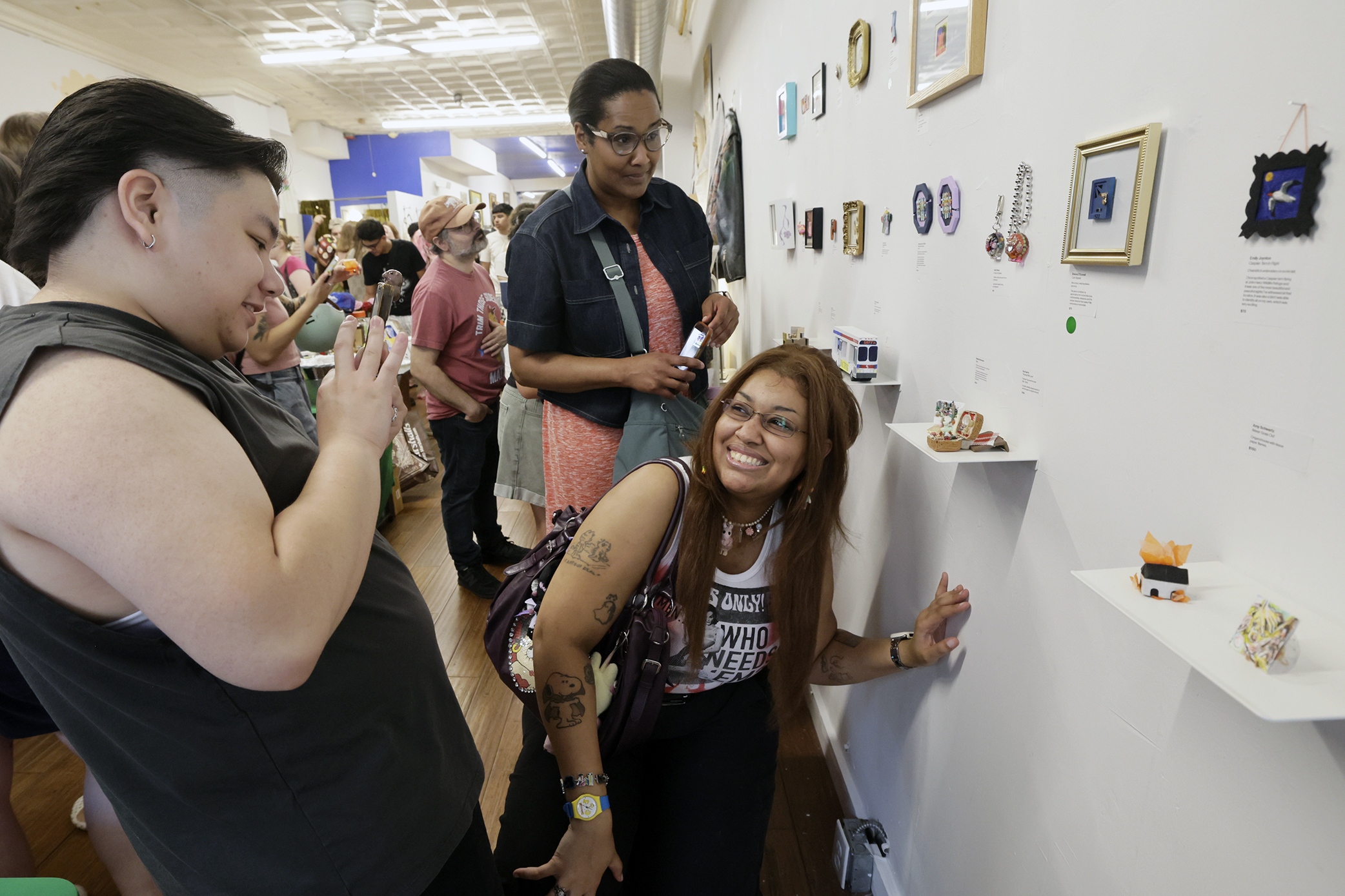
    Inside the vintage store At My House, people are immediately amazed by the knickknacks that surround them. They grab a cocktail and line up for the main event, waiting their turn to view a wall at the front of the store displaying a range of art pieces — all of which you can hold in the palm of your hand.

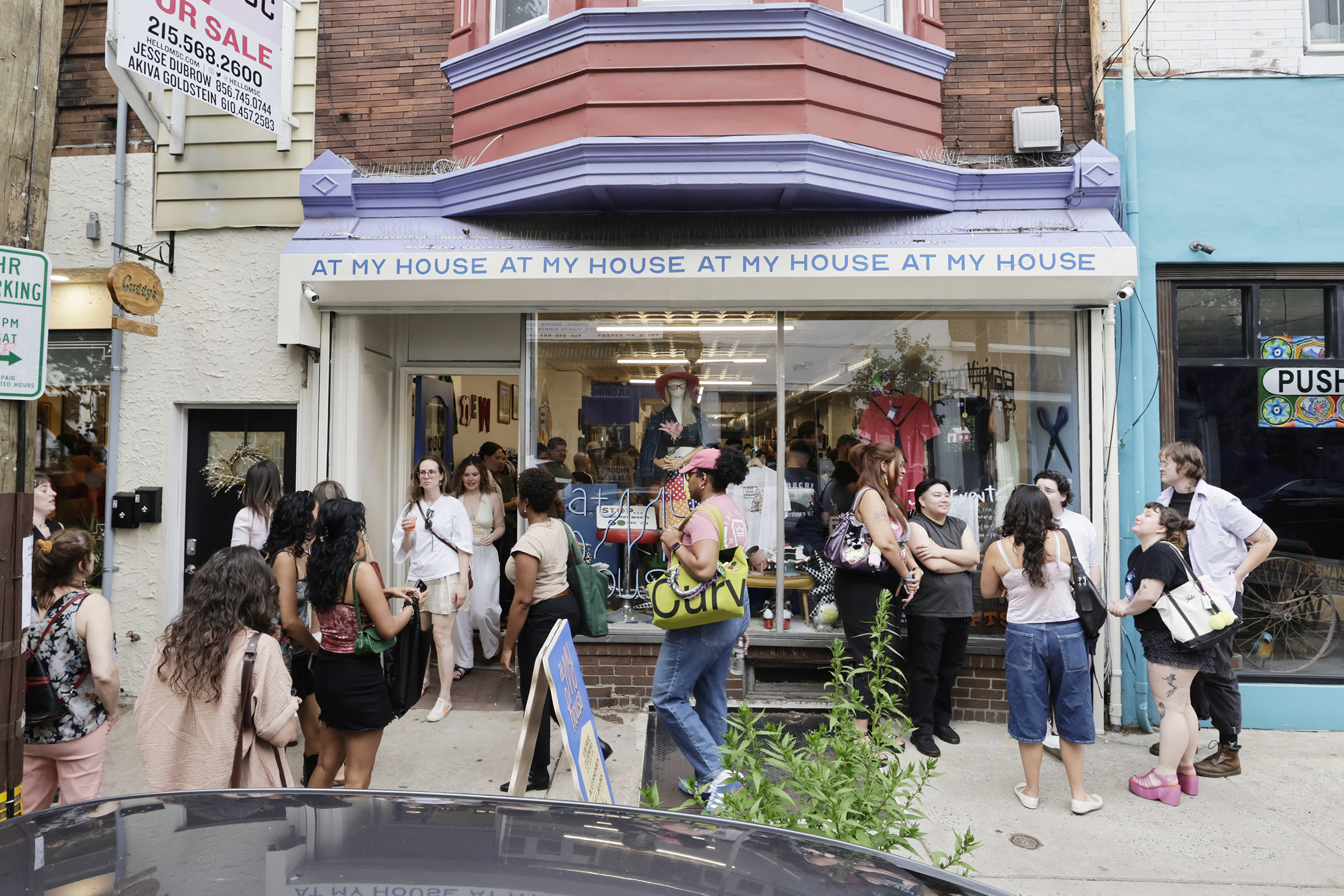
    A large crowd gathers at the opening / public reception of “The Mini Mini Art Show” at At My House on July 24, 2026. Every artwork in the exhibition measures 1.5 inches by 1.5 inches — about the size of a postage stamp.Elizabeth Robertson / Staff Photographer

    On Friday, Kelly Braun, founder and owner of At My House, hosted the second annual mini-art show, dubbed the “Mini Mini Art Show.” Last year, the show invited artists to make art that was 3 inches by 3 inches.

    Braun upped the ante this year.

    “This year, we realized we needed to go mini-er,” she said. “It needed to be more extreme, more silly, more ridiculous. So we cut it in half.”

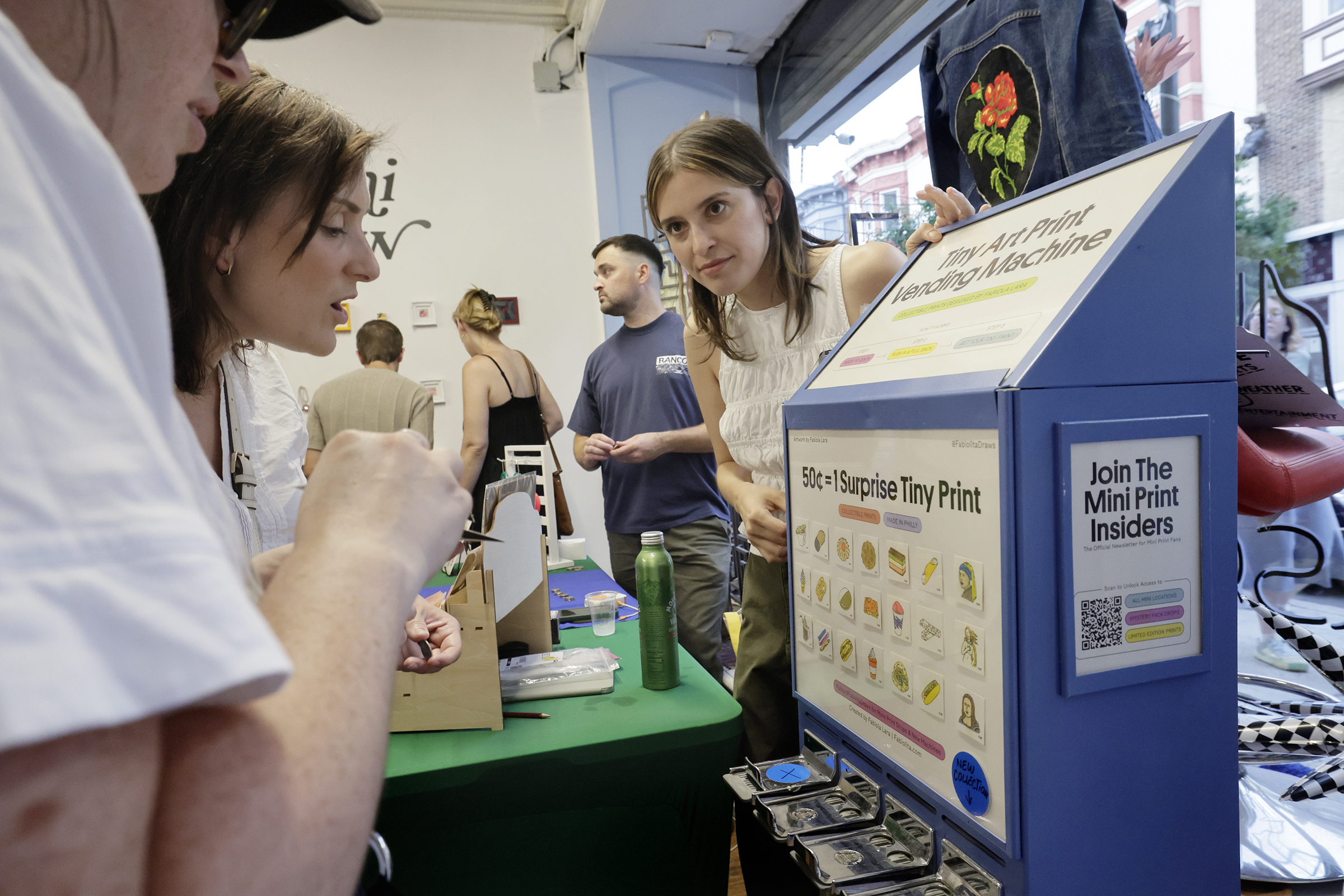
    Artist Fabiola Lara (right) explains her tiny art print vending machine during the opening reception of “The Mini Mini Art Show” at At My House on Fourth Street in Philadelphia on July 24, 2026. Elizabeth Robertson / Staff Photographer

    All of the art on display at “Mini Mini” is about 1.5 inches by 1.5 inches — about the size of a postage stamp. While last year’s artists were invite-only, this year’s show is a mix of submissions and invited artists.

    On the wall are displays of tiny clothing items, makeshift houses and rooms, and some original drawings. All of the artwork is for sale, with items ranging from $60 to $300.

    There are even miniature illustrations of classic art, like Vermeer’s Girl With a Pearl Earring and Botticelli’s The Birth of Venus, created by the event’s cohost, Fabiola Lara.

    “I draw from everyday life, which is why a lot of my prints are Philadelphia-themed. Today, I wanted to take a break from Philadelphia-themed stuff, and literally take the theme of mini art and take the opportunity to do something different,” Lara said. “I’ve always loved to draw, it’s my favorite way to be creative.”

    Crysral Nguyen (left) takes a photo of clay artist Marley Richardson in front her polymer clay art on display at the opening / public reception of “The Mini Mini Art Show” at At My House on Fourth Street in Philadelphia on July 24, 2026. Both ladies are from Philadelphia.Elizabeth Robertson / Staff Photographer

    Lara, a Chilean American artist, has been making mini art since 2024, when she started her mini art vending machines, of which there are now 13 across the city. Anyone can insert four quarters to get a business card-sized piece of original art by Lara, or two quarters for a roughly stamp-sized one.

    “I think fine art in museums is so focused on large-scale, which is great,” said Lara, “but also you have to have the studio space for it, and it’s expensive. I love that people still turn out for this tiny stuff, which is actually really hard to make.”

    Exhibition hosts Kelly Braun (middle) and Fabiola Lara (right), celebrate at “The Mini Mini Art Show” at At My House on July 24, 2026. Elizabeth Robertson / Staff Photographer

    At My House opened its doors in January of last year, and has since become a thriving vintage clothing and homewares shop and event space. When it’s not hosting a mini art show, it hosts collage nights, book clubs, photography pop-ups, platonic speed dating, and even lamp-making workshops.

    “The Mini Mini Art Show” is on display through Aug. 2 at At My House, 760 S. Fourth St., Philadelphia. atmyhou.se

  • Like rival Wawa, Delco’s Swiss Farms plans to add gas pumps under its latest owner

    Like rival Wawa, Delco’s Swiss Farms plans to add gas pumps under its latest owner

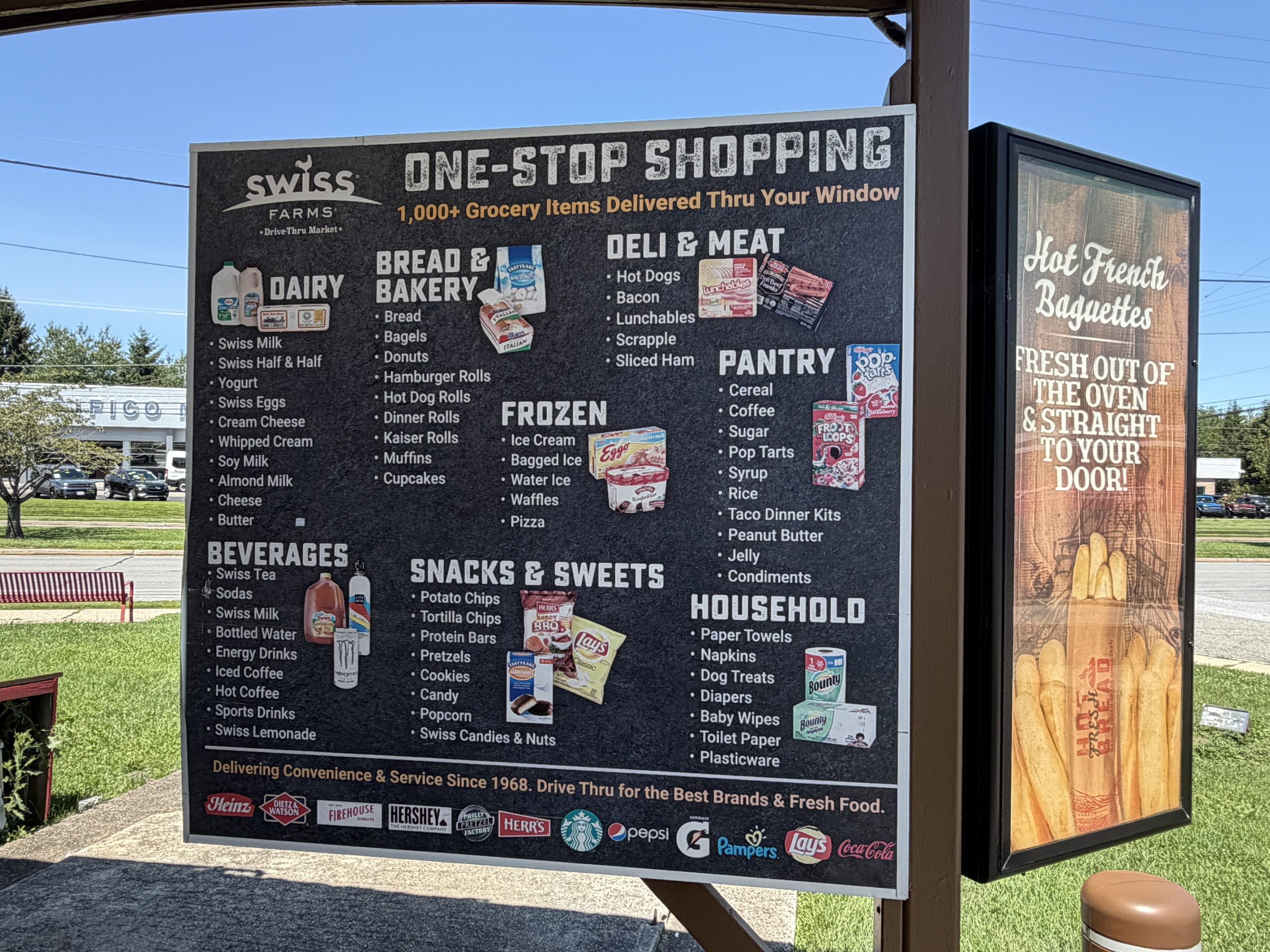
    The new owner of Swiss Farm Stores, a Delco fixture selling dairy, groceries, and convenience goods almost as long as cross-county rival Wawa, is planning new stores with gas pumps in Delaware, Philadelphia, Montgomery, and Bucks Counties.

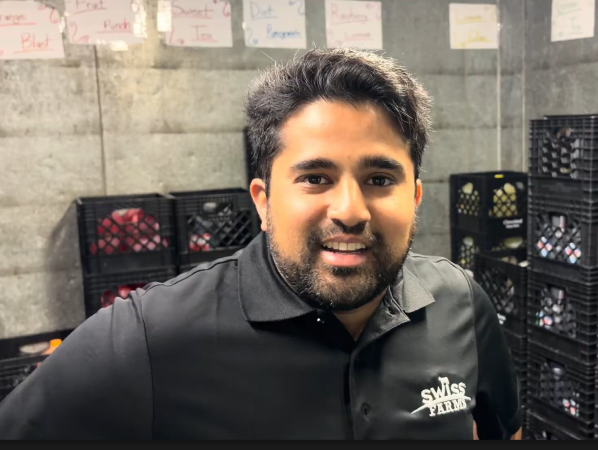
    “We were neck and neck with Wawa, then they went into gas in 1996, and it revolutionized their business,” said Arsh Pola, a Drexel University graduate and gas station and convenience store operator, who bought the chain in stages after starting talks in 2022.

    “It’s a beautiful business,” Pola said. Serving through drive-up windows from posted menus of hot and cold foods and pantry items, “we have a different customer from other stores: mom. We are serving local families milk and the things that built a cult following. We will add more of the right things.”

    Side entrance at Swiss Farm Stores’ Drexel Hill, location.Joseph DiStefano

    Pola’s vision to update Swiss Farm, which started in 1968, is fuel and an expanded menu.

    Adding gas to a drive-up chain might not be a long jump for Pola, who owns gas stations, stores, and apartments in Philadelphia and Montgomery County.

    The North Penn High School alumnus jokes that his retail focus in a family of professionals — engineer, pharmacist, dentist — makes him “a black sheep” but also tracks with his Gujarati immigrant grandfather, a teacher who saved his pay to buy a New England convenience store.

    Pola began negotiating to buy Swiss Farm franchises in 2022, two years after Florida-based Farm Stores bought the company from Radnor-based MVP Capital and other investors.

    Earlier owners tried and failed to grow Swiss Farms beyond Delaware County. When Pola realized the Delco-area franchises were the only stores still open, he bought one after another, starting in 2024, and then the parent company. He was financed by regional banks that also backed his gas station deals. The purchase closed June 30.

    His plans rely on execution by Swiss Farm veterans, topped by Chris Gray, who worked 25 years at the company and rose to CEO before MVP let him go. Pola, now CEO, brought Gray back as chief operating officer.

    Pola agreed to detail his plans for Swiss Farms to The Inquirer in interviews at the Broomall and Drexel Hill stores.

    How did you get into retail?

    When I was studying finance at Drexel [graduated 2019], I had the dream of working at Goldman Sachs. I became the youngest co-op at Goldman Sachs. And they quickly told me, ‘You get along really well with the clients.’

    I started buying gas stations while I was still a student. I took Warren Buffett’s advice: ‘Buy something with a moat around it.’ Gas stations have a very strong customer cash flow that’s recession-proof.

    I started with a former Liberty, up at Ridge and Manatawna. I wanted my own brand on the store. I called it Posh [with a crown over the P]. I ended up doing Marathons and Lukoils. I still have a few stations in Philadelphia and Montgomery County.

    How could you afford to buy Swiss Farms?

    Each gas station required a million-dollar investment. So I wanted to do a portfolio deal [buy several at once]. Everything was financed from the banks that knew me. They do 20-year mortgages.

    Farm Stores’ goal was: ‘Let’s franchise!’ Wawa doesn’t franchise. Raising Cane’s CEO Todd Graves talks about this: You can’t control the quality of a franchise when you don’t own it.

    I told Farm Stores, ‘You guys are 1,500 miles away. Let me buy it all.’

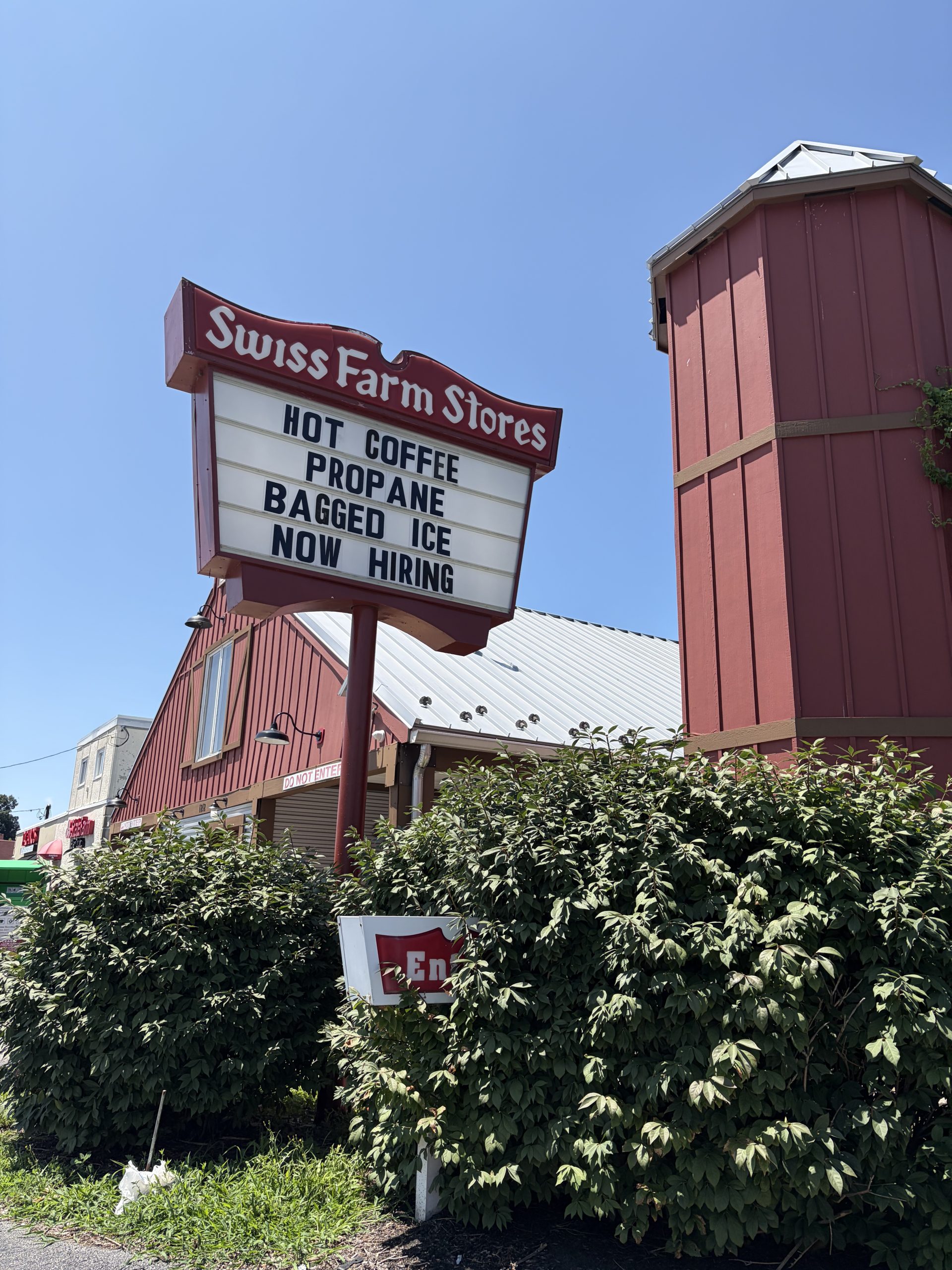
    Sign at Swiss Farms’ Broomall, Delaware County store.Joseph DiStefano
    What are the first few things you will add or take away?

    The stores need a facelift. We won’t take away the silos, but [we’ll give them] a fresh look.

    And the stores need more employees. In-N-Out doubled their payroll, and sales went up three or four times over.

    We always had employees in these black shirts. Now we’ve added six new colors, make it fun for the staff.

    We just did an event with [former Eagle] Brian Dawkins. Everyone on his staff knew Swiss Farms and loves us.

    How can you compete with large chains like Wawa and 7-Eleven that can purchase gas and food in bulk at lower costs?

    I’m already in the gasoline business. I buy on the open market every day. I buy from the same [fuel suppliers] that sell to BJ’s and Sunoco. We are going to price gas the most aggressively we can.

    Some costs you can cut. Swiss Farms had a consultant negotiating what were supposed to be the best trash rates. We cut that.

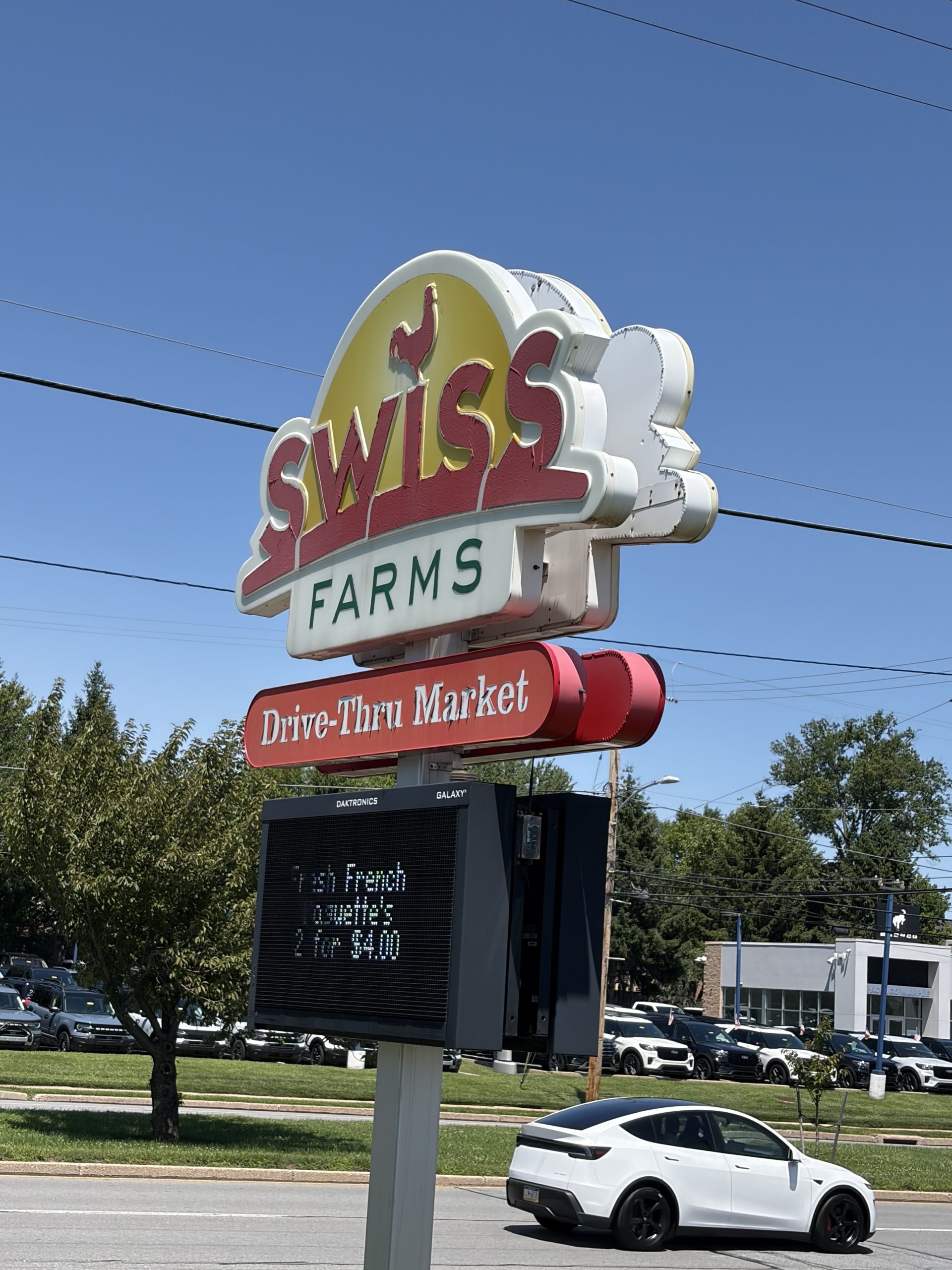
    Swiss Farm Stores drive-up menu, July 2027Joseph N. DiStefa
    Kathy Strimmel, who runs the Drexel Hill store, says she’s a longtime customer, who’s now been working there for a year. Is it hard to find people to work your stores?

    It’s difficult to find quality talent. People don’t all have the same drive, or loyalty. We start at $10 to $12 an hour.

    Your milk costs maybe a dollar more a gallon than the store down the street, why?

    It’s good milk! People don’t say, ‘Can I get a gallon of whole milk?’ They say, ‘Can I get Swiss Vitamin D?’ And we share the cost for getting it into your car.

    We do have the best prices on our iced teas. I don’t know why, but Delaware County has a reputation as the best iced-tea market in the country.

    How many new stores are you planning?

    Twenty-five in the next five years. We will find locations here in Delaware County, and we will enter Philadelphia, Montgomery County, and Bucks County. After that, we will grow organically, state by state, where it makes sense.

    I respect Wawa. [Wawa CEO] Chris Gheysens said, ‘It took 60 years for us to get into six states; it’ll take six years to get into the rest.’”

    Wawa has closed several of its Philadelphia stores. How can Swiss Farms make the city work if Wawa can’t?

    You have to choose locations very wisely. I have gas stations in Philadelphia. I know how to do that.

  • Pa. mushroom growers are divided over cheap, grocery-store fungi

    Pa. mushroom growers are divided over cheap, grocery-store fungi

    Pennsylvania mushroom growers welcomed this month’s U.S. Department of Commerce preliminary finding that Canadian farms are selling mushrooms to U.S. grocery stores at unfairly low prices.

    The ruling against “dumping” threatens to make mushrooms more expensive to import, easing competitive pressure on family-owned U.S. growers in an industry also under pressure from a shortage of harvesters amid the U.S. immigration crackdown.

    “This ruling supports the long-term health of our industry” in Pennsylvania, said CJ Ciarrochi, CEO and fourth-generation owner of Modern Mushroom Farms in Toughkenamon, Chester County, part of the Fresh Mushrooms Fair Trade Coalition supporting the case against the Canadians.

    But one of the largest area growers called the decision a protectionist move that would enable aging U.S. farms to avoid upgrades and leave consumers with fewer choices.

    “We sell our Canadian-grown mushrooms in the U.S. at a higher price than our U.S.-produced mushrooms — the polar opposite” of dumping, said Lewis Macleod, Kennett Square-based CEO of South Mill Champs mushrooms, which also has operations in Canada and Mexico.

    (function(){function e(){window.addEventListener(`message`,function(e){if(e.data[`datawrapper-height`]!==void 0){var t=document.querySelectorAll(`iframe`);for(var n in e.data[`datawrapper-height`])for(var r=0,i;i=t[r];r++)if(i.contentWindow===e.source){var a=e.data[`datawrapper-height`][n]+`px`;i.style.height=a}}})}e()})();

    Final decisions in September could impose penalties that boost U.S. grocery stores’ cost to buy Canadian mushrooms. The Commerce Department’s calculations suggest anti-dumping and countervailing-duties penalties, if adopted, could add 10 to 15 cents per $1 to the price of Canadian mushrooms exported by Champs, owned by Eos Partners of New York; Highline Mushrooms, owned by Japan-based Sumitomo Corp.; and Windmill Mushrooms, owned by Toronto-based Instar Asset Management.

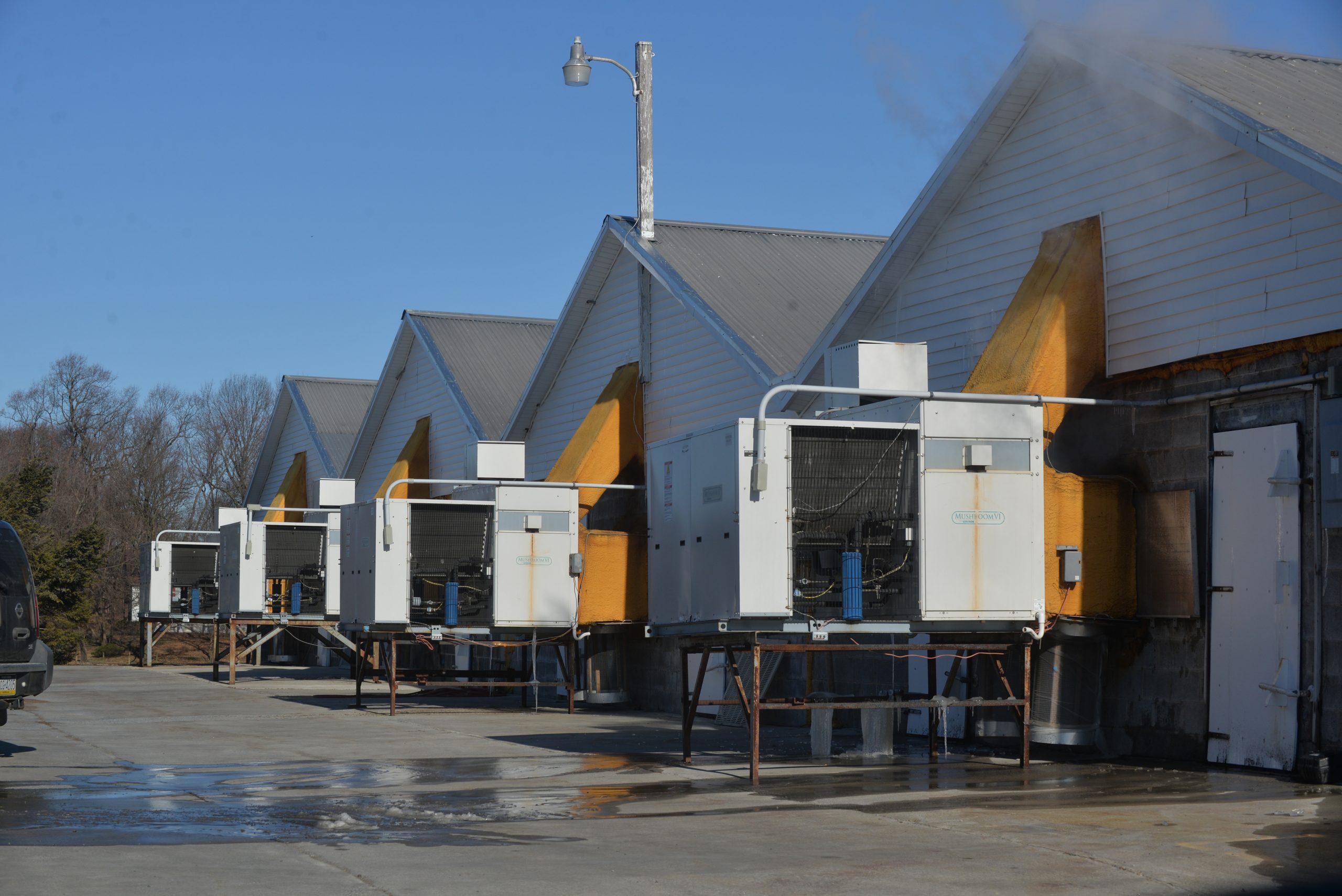
    That would ease import competition for Pennsylvania growers, who produce more than two-thirds of the U.S. mushroom crop, mostly in clusters of climate-controlled sheds in northern Berks County and southern Chester County.

    At Modern Mushroom Farms, on Newark Road, Toughkenamon, Chester County, in 2020.Bob Williams For The inquirer

    The Department of Commerce’s finding “is a win for fairness, competition and the future of American mushroom farming” and for “everyone to play by the same rules,” said Mark Currie, CEO of 99-year-old Giorgio Cos.’ food division, the largest of the coalition members.

    Giorgio employs over 2,300 in Berks and Chester Counties and also buys from other growers such as Modern. Its corporate parent, Giorgi Global Holdings, is an international bottle and can maker with $5 billion in yearly sales.

    While Champs’ Macleod predicted the Commerce Department’s final probes would find no dumping, Currie said he expects the review of sales records would find more evidence.

    “We know the private-equity playbook: ‘Let’s drive the mom-and-pops out, jack prices, and then flip our companies” to outside investors and global companies, Currie said. “We called them on it. Enough’s enough.”

    Both sides agree that Canadian growers have been winning a larger share of the U.S. market.

    Sales to U.S. buyers peaked at around 1 billion pounds in 2019 but have since declined, according to the Mushroom Council, a national organization that promotes the crop. Canadian farms are gaining larger sales in a smaller U.S. market.

    U.S. production peaked in 2015 at 811 million pounds and has fallen each year since, to 631 million pounds in 2025.

    Fresh mushroom imports, mostly from Canada, have grown steadily since 2012, more than doubling to 208 million pounds in 2025.

    The trade coalition says at least 10 U.S. mushroom farms have closed since 2022, including five in Chester County and one in Berks County.

    In its investigation, the Commerce Department compared the prices of premium-grade U.S. mushrooms to lesser-grade Canadian mushrooms and discounted low-priced U.S. mushrooms, Macleod said.

    Canadian exports are winning U.S. customers not because Canadians are selling unfairly cheap but because Canadian farms tend to be new and efficient and grow an attractive product, he said.

    Commerce began the investigation of alleged dumping and subsidies in January. The department’s latest finding follows its May “preliminary affirmative determination” that some Canadian mushroom farms were operating with an effective Canadian government subsidy of up to 5%.

    South Mill Champs was set up in 2017 by Eos Private Equity, which bought a controlling stake of South Mill’s Kennett Square mushroom-growing complex from the founding Pia family and combined it with the Champs mushroom farms in British Columbia. It is based in Kennett Square.

    South Mill Champs built an additional plant in 2023 in Chester County’s Elk Township, near the Maryland border, and now directly employs around 400 in the county, according to Macleod.

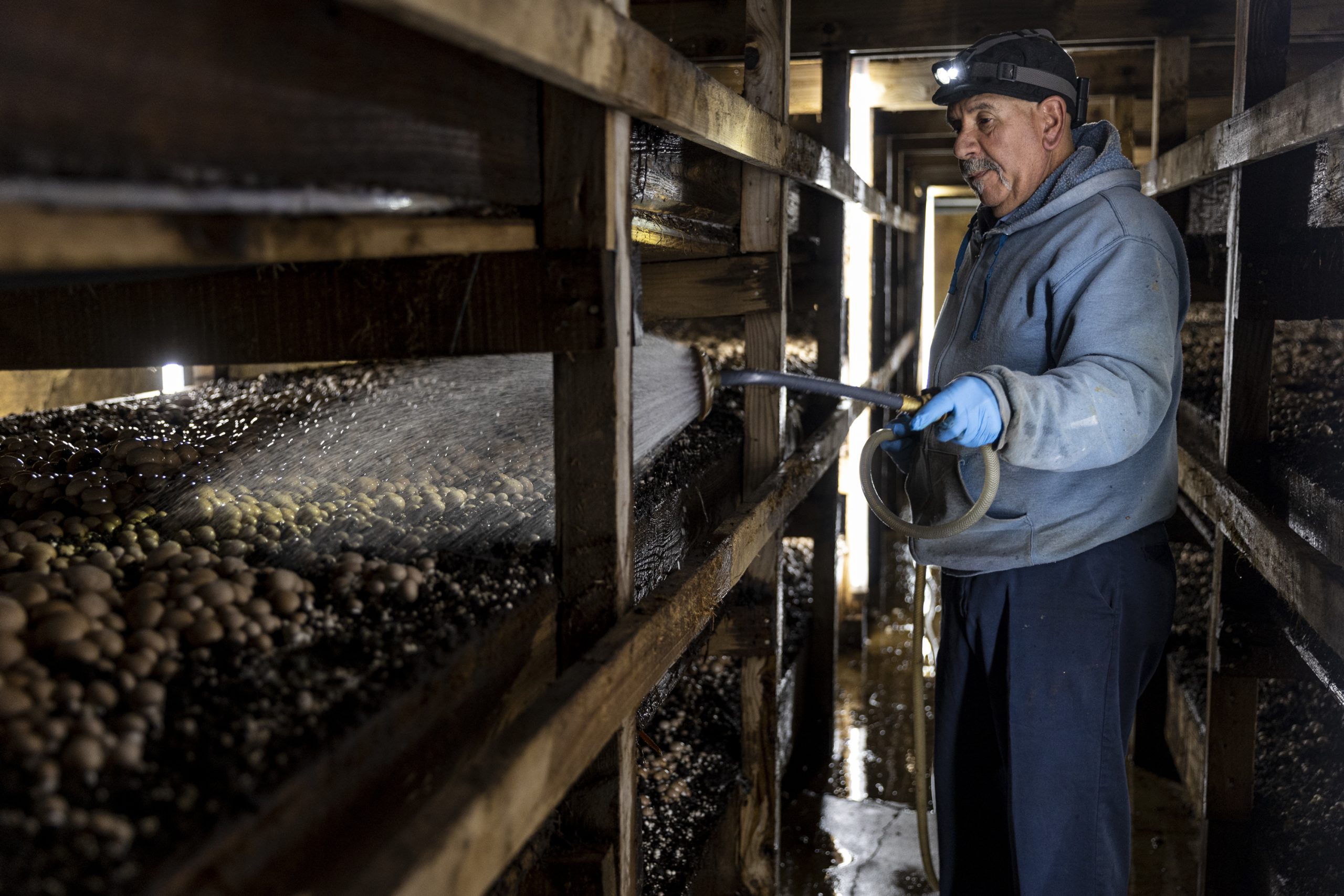
    A worker is watering Crimini Mushrooms being grown at The Woodlands at Phillips Mushroom Farm in Kennett Square in 2022.Tyger Williams / Staff Photographer

    The company also has added mushroom production near Winnipeg, Manitoba, and is building in Mexico’s Guanajuato state. It has a processing plant in Cambridge, Md., and has diversified into mushroom-based snacks and fruit storage and distribution.

    Rival Giorgio has a joint-venture plant in Saltillo, northern Mexico, which has been selling to Mexican and U.S. buyers since the 1990s.

    Many of Chester County’s Mexican mushroom workers are from Guanajuato. Thousands gained legal resident status and a path to citizenship in President Ronald Reagan’s 1980s amnesty program. Many have raised families and started businesses in the county. Nearly half Kennett Square’s population is Latino, according to the U.S. Census’ 2025 estimates.

    Mario Gomez, of West Grove, cooks white mushrooms in butter, garlic, and salt to give out as free samples during the annual Mushroom Festival in Kennett Square in 2023.Tyger Williams / Staff Photographer

    In recent years, growers have had more difficulty obtaining U.S. work permits for workers from other countries.

    Miguel Morales, a Guatemalan labor contractor who served as employer of record for nearby Chester County mushroom growers from his base at an Oxford convenience store, was convicted in federal court in Philadelphia last year of hiring unauthorized workers and failing to collect and pay taxes for some of them. He was sentenced to a year in prison, plus $8 million in restitution to the IRS. The growers were not charged.

    South Mill Champs’ Macleod said he and his neighbors, though they differ on trade and sanctions, all support efforts by the American Mushroom Institute to expand legal status for immigrant farm laborers.

    But with government restrictions on labor growing instead of easing, he said, “we have had to limit our expansion in the U.S., owing to challenges with labor availability.”

    Macleod says the key to the U.S. mushroom industry’s survival and growth is automation.

    The “distraction” of the trade dispute has delayed South Mill Champs’ proposed investment in a new, fully automated mushroom farm at its Oxford facility, where there’s room to triple the size of the current facility, he said.

  • The six biggest roster battles as Eagles training camp gets underway

    The six biggest roster battles as Eagles training camp gets underway

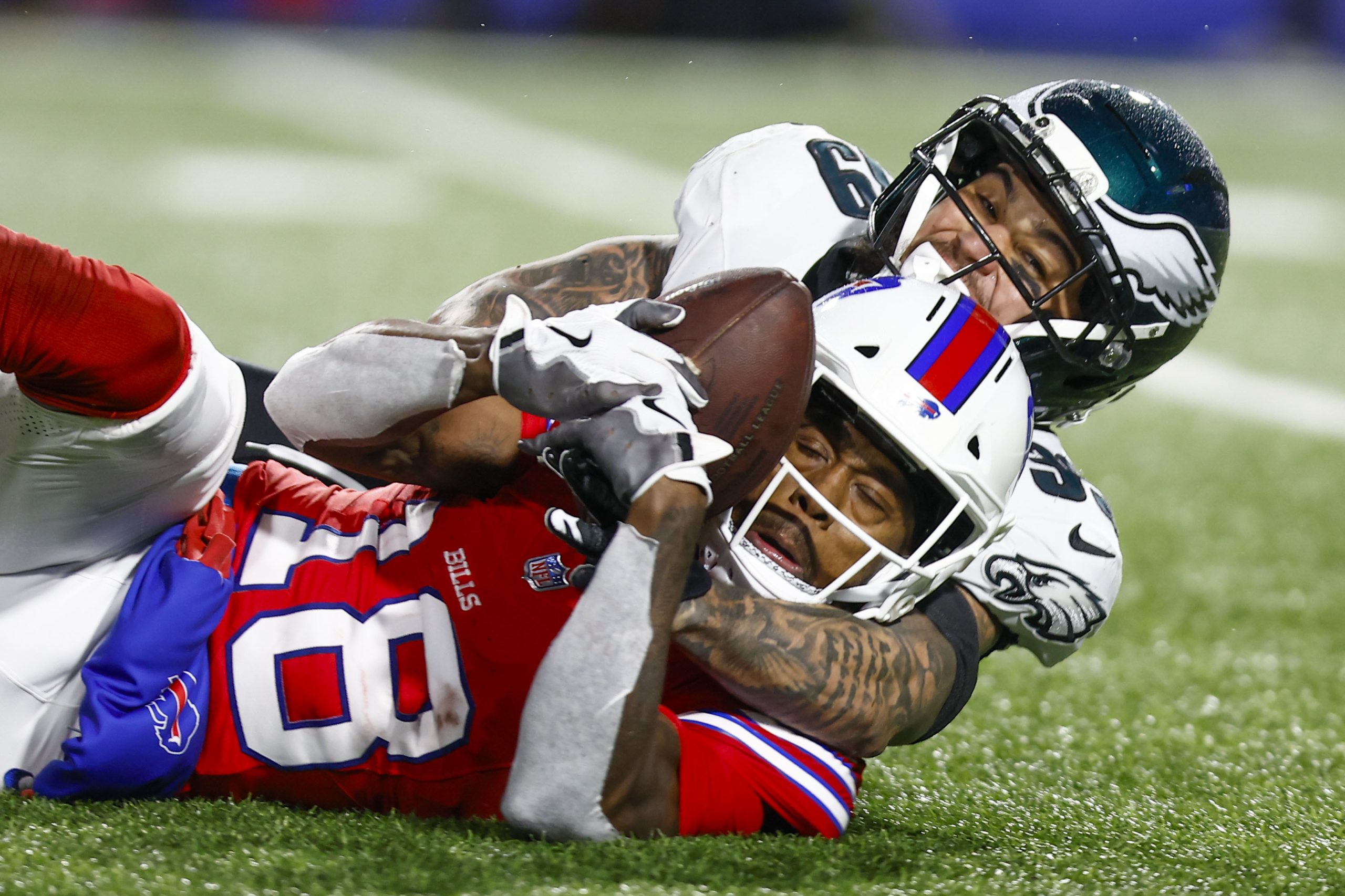
    The Eagles reported to training camp Tuesday and hit the field Wednesday for their first official workout of the 2026 season.

    The Sean Mannion era is here, the A.J. Brown era is over, and Nick Sirianni’s sixth training camp is underway as the Eagles again have a roster capable of making a deep playoff run.

    Good teams like theirs mean fewer opportunities to get on the initial 53-man roster, which means there will be plenty of competition in camp. And while most of the starting jobs are spoken for, this Eagles training camp still has its share of intriguing position battles to pay attention to.

    Here’s a closer look at six of them:

    It’s Marcus Epps’ (right) job to lose at safety, but he’ll be pushed. Monica Herndon / Staff Photographer

    Safety: Will Marcus Epps hold off the field?

    It’s worth starting with safety because it’s one of the few spots on the field where a starter is written in pencil and not pen.

    If you’ve been paying any attention to the Eagles since the spring, you know that Cooper DeJean is slated to move from nickel to safety in base defense. But the Eagles, like most NFL defenses, use nickel and dime packages much more often than base. So the spot next to Andrew Mukuba mostly will be manned by someone not named DeJean.

    Vic Fangio indicated that Marcus Epps is in the pole position for the job to replace Reed Blankenship, but the 30-year-old will have to earn it. There will be competition from converted nickel Michael Carter II, seventh-round pick Cole Wisniewski, veteran special teamer J.T. Gray, and long shots like Andre’ Sam, Kapena Gushiken, and Maximus Pulley.

    Don’t count out another roster addition, too, if Howie Roseman decides the Eagles need to upgrade the safety spot.

    The progress of Hollywood Brown (0) in training camp figures to have an impact on the wide receiver depth chart. Monica Herndon / Staff Photographer

    Wide receiver: Who gets the final spots?

    The top of the depth chart is basically set. Life after Brown means DeVonta Smith is WR1, but the order behind him needs some sorting out.

    The Eagles were in 11 personnel (one running back, one tight end, three wide receivers) nearly 60% of the time in 2025. There’s a new coordinator in town, and the Packers were slightly below the Eagles in that type of usage, but expect some of the same in 2026.

    Who joins Smith on the field in three-receiver sets? In a perfect world, the Eagles would want Dontayvion Wicks and Makai Lemon to get the bulk of those reps, but Hollywood Brown was brought in to be a vertical threat and should force his way onto the field. Those personnel packages will work themselves out.

    Smith, Lemon, Wicks, and Brown are locks. It’s beyond them where the real training-camp battling begins.

    Will the Eagles keep five receivers or six? Sirianni loves the “dirty work” Darius Cooper and Johnny Wilson do, but is keeping them both redundant? Can Elijah Moore prove he’s worth keeping around? Britain Covey, meanwhile, still wants to show he’s the best kick-returning option in camp.

    What’s the vision for Andy Dalton (left) as the depth chart stacks up behind Jalen Hurts?Monica Herndon / Staff Photographer

    Quarterback: Will Andy Dalton or Tanner McKee back up Jalen Hurts?

    The Eagles have a quarterback controversy. Sort of.

    Andy Dalton and Tanner McKee alternated reps with the second-team offense during the offseason program, and it’s unclear which is the preferred backup to Jalen Hurts.

    The team also drafted Cole Payton in the fifth round, and it seems pretty unlikely they make room for four quarterbacks on the initial 53-man roster given the talent elsewhere.

    So, what gives?

    The Eagles would love to find a trade partner for McKee, who is entering the final year of his contract. But if they can’t, does that put Dalton in jeopardy of being cut (or traded)? Payton is a bit of an unknown, but he has an intriguing athletic profile, and while the Eagles cut a sixth-round draft pick last year (Kyle McCord), they probably would be hesitant to expose Payton to waivers given his traits. Otherwise, maybe he joins Clayton Thorson as a recent fifth-round pick who hits the chopping block.

    Third-round tackle Markel Bell has a chance to make an immediate impact. Jose F. Moreno / Staff Photographer

    Swing tackle: Can rookie Markel Bell supplant Fred Johnson?

    Considering how much time Lane Johnson missed last season, and Jordan Mailata’s stint on injured reserve in 2024, the swing tackle is a pretty important job.

    The Eagles brought back Fred Johnson in free agency because they know how important the backup tackle position is. They then used a third-round pick on Markel Bell, the 6-foot-9 tackle out of Miami. It was a bit surprising the Eagles waited until the 68th pick to select a tackle, but they like Bell a lot, and the big man has plenty of upside.

    Which tackle will be first up if Lane Johnson or Mailata misses time? It was Bell who got the first nod filling in for Lane Johnson during OTAs, but Bell missed the final minicamp workout of the spring due to an undisclosed injury.

    Who will emerge from camp as the preferred option?

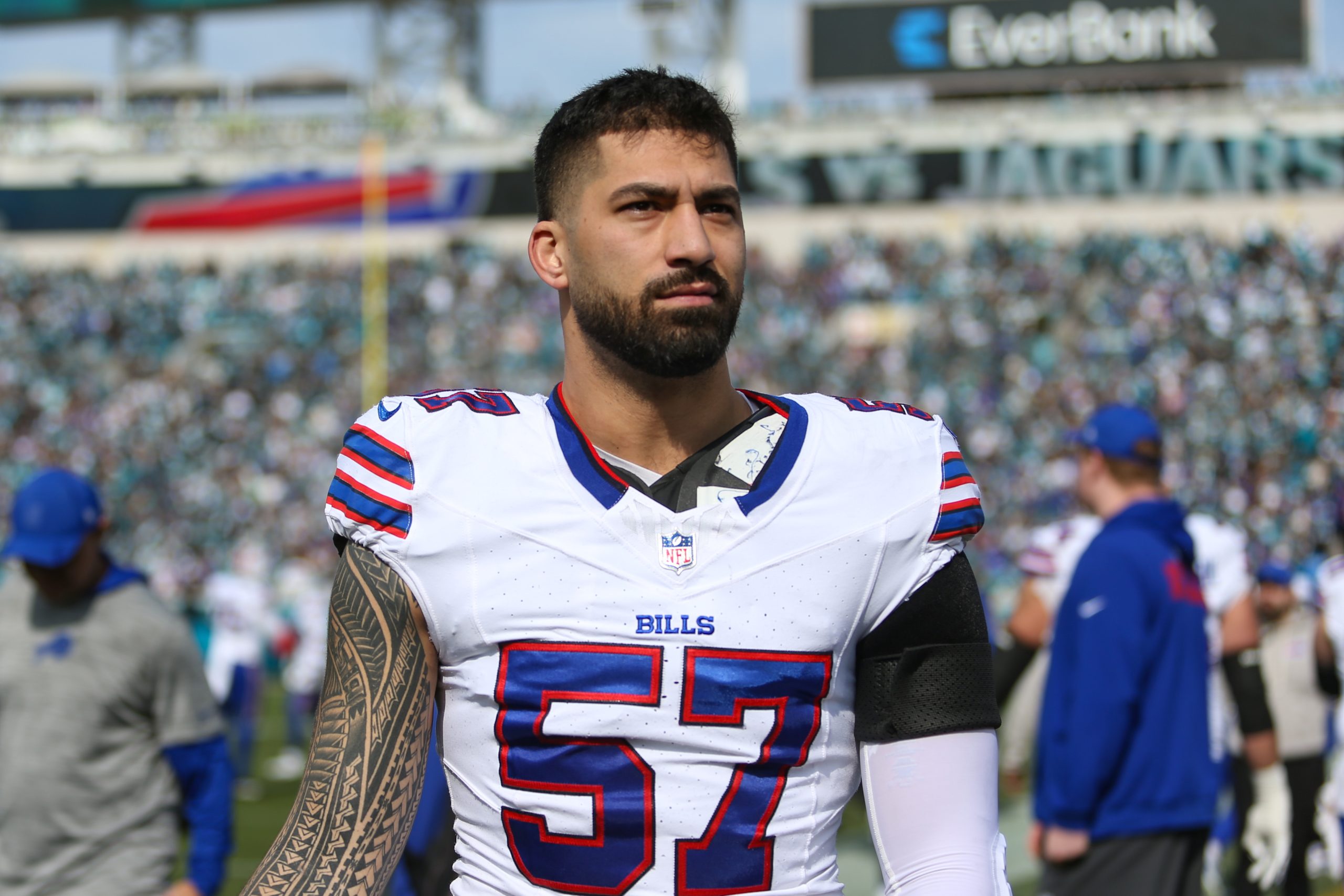
    A.J. Epenesa was a solid edge contributor on a generally strong Bills defense in recent years. Gary McCullough

    Edge rusher: Will A.J. Epenesa show his worth?

    This group is pretty similar to wide receiver. The Eagles are set at the top. It’s Jonathan Greenard, Jalyx Hunt, and Nolan Smith Jr. Sure, there’s some interest in which of Hunt or Smith gets more snaps, but the top three edge rushers will see plenty of the field.

    Behind them is where it gets interesting. Arnold Ebiketie signed a deal that could be worth around $7 million and is the clear No. 4 as camp begins.

    Will the Eagles keep five or six here? They kept five last year and six the year prior in Fangio’s first season.

    The Eagles made an interesting signing at the end of the offseason program in June, agreeing to a one-year deal with A.J. Epenesa.

    Epenesa’s sack total fell from six in 2024 to just 2½ last season, but he had a better pressure rate (10.6%) in a reduced role with the Bills. He is the biggest edge rusher in the building by 2 inches at 6-6, a size that could be useful in helping set the edge against the run.

    Epenesa will be in competition with seventh-round pick Keyshawn James-Newby, an undersized but speedy edge, as well as Jose Ramirez. The Eagles also have Joshua Weru, an International Pathway Player, in camp.

    Kelee Ringo (left) is among those seeking a corner job. Monica Herndon / Staff Photographer

    Cornerback: Can the Eagles find a trade partner for a bottom-of-the-depth-chart corner?

    The Eagles could have the best cornerback trio in the NFL this season in Quinyon Mitchell, DeJean (nickel), and Riq Woolen, but behind them at corner are jobs up for grabs.

    Veteran free-agent signing Jonathan Jones probably is a lock to take a roster spot given his 10 years of experience and inside-out versatility. Who claims the remaining spots will be determined in part by how many corners the Eagles decide to keep. They kept six last year, but could a player at a different position — like reserving a roster spot for defensive tackle Uar Bernard to not expose him to waivers — force them to go with five?

    That would leave one spot for Kelee Ringo, Jakorian Bennett, and Mac McWilliams.

    Ringo probably would be the preferred candidate there given his special-teams talent. The Eagles could also keep six and have spots for two of them.

    It’s also possible that Roseman finds himself looking to offload one of them via trade in August.

    Honorable mention

    Fullback: Is it 1996? The Eagles may have a fullback competition in camp between Carson Steele and Cameron Latu. Latu is listed as a tight end, but he’s more of an H back who blocks well and plays special teams.

    Interior offensive line: Who would be first in line to back up Landon Dickerson or Tyler Steen? Right now, it’s probably Drew Kendall, who also is the backup center. After that, veteran guard Michael Jordan will try to edge out a group that includes sixth-round pick Micah Morris. Keep an eye on Myles Hinton, too. The second-year lineman took some reps at guard after entering the league as a tackle. The back end of the offensive-line group will be a fun battle to track.

    Tight end: Dallas Goedert and second-round pick Eli Stowers are locks. Johnny Mundt’s blocking skills should lock him up a spot, too. With that in mind, it’s hard to imagine Grant Calcaterra, intriguing UDFA Dae’Quan Wright, or Stone Smartt earning a job, especially given the aforementioned skills that Latu brings to the table.

  • Trump wants to use the FCC to silence Philadelphia’s 6abc. We must reject this attack on the First Amendment.

    Trump wants to use the FCC to silence Philadelphia’s 6abc. We must reject this attack on the First Amendment.

    A pending FCC broadcast license review now targets eight ABC television stations owned and operated by the Walt Disney Co. — among them WPVI Philadelphia, known to most viewers as 6abc. It has been said that “all politics is local.” Here in Philadelphia, this truism has applied with growing frequency to clear and present threats to the First Amendment — recently in our public parks and monuments, and now on our airwaves.

    In 1934, years before the advent of commercial broadcast television, the Federal Communications Commission was established by an act of Congress to help govern the burgeoning American radio industry.

    Among its roles, the FCC now regulates the granting of broadcast licenses, controlling which television stations can or cannot access a finite spectrum of public airwaves. Both by law and by long-standing precedent, broadcast license review is typically an independent, pro forma exercise. Before the current administration — under 14 previous presidents, seven Democrats and seven Republicans — the television licensing process had been largely nonpartisan, and operated in the public interest.

    In fact, the need for broadcasters using public airwaves to operate broadly in the public interest is the very definition by which the FCC is meant to grant television station licenses. The FCC is required to renew a broadcast license if it finds that “the station has served the public interest, convenience, and necessity.” Philadelphia’s 6abc and its 55-year-old Action News programming embody this principle.

    Unfortunately, under President Donald Trump, the FCC has become — unabashedly — a partisan attack dog rather than the guardian of the public interest.

    On May 29, the FCC launched the first stage of a potential challenge to the licenses of ABC-owned and operated stations around the country, including 6abc, Philadelphia’s leading local news broadcaster and a strong pillar of our community. The FCC ordered eight ABC stations — in New York, Los Angeles, Chicago, Houston, San Francisco, Raleigh-Durham, N.C., and Fresno, Calif., as well as Philadelphia — to submit renewal applications years before their original renewal dates, which range from 2028 to 2031.

    This is just one of many fronts in a long-running battle between the Trump administration and a broad array of independent media that has cost the American news industry time, money, and, too often, operating independence at a moment of extraordinary need for a free press. The challenge to ABC broadcast licenses has its most recent origins in the political harassment of late-night talk show host Jimmy Kimmel and the daytime program The View, each periodically critical of the president and other government officials on both sides of the aisle.

    FCC Chairman Brendan Carr is the administration’s front man in the ABC case. Carr, you may recall, tried to intimidate ABC, its affiliate stations, and Kimmel some months ago, referring, like a mob boss, to “doing it the easy way or the hard way.” This license renewal harassment, which will cost Disney shareholders millions in legal fees, is presumably the “hard way.”

    By law, the government’s filing allows public comment for either renewal or denial of ABC’s licenses. You can make your views known, quickly and easily, here: FCC Submit an Express Comment. Responses to the request for comments are due by Wednesday.

    We in Philadelphia know that 6abc is an especially inappropriate target for accusations of not operating in the public interest. The station is a longtime ratings leader for news programming serving a geographically broad and politically diverse footprint. It has, for decades, produced consumer interest, investigative news, and community-oriented programming that speaks truth to power of all stripes.

    At the Lenfest Institute for Journalism, of which I am chief executive, we have worked with 6abc on nonpartisan election coverage (Every Voice, Every Vote) and on fundraising for Philadelphia-area residents in need (Philly Gives). Executives at 6abc have always offered their help, their production skills, and their unrivaled broadcast audience for free — in the public interest.

    This month, we celebrated America’s national freedom and independence, born here in Philadelphia. Let it not be a summer in which Philadelphia’s leading local television broadcaster is, with impunity, threatened with the loss of its right to broadcast freely and independently.

    Jim Friedlich is CEO and executive director of the Lenfest Institute for Journalism, the nonprofit, noncontrolling owner of The Inquirer. @jimfriedlich