In a historic addition, Independence Mall will soon be home to a sculpture derived from an iconic political cartoon.
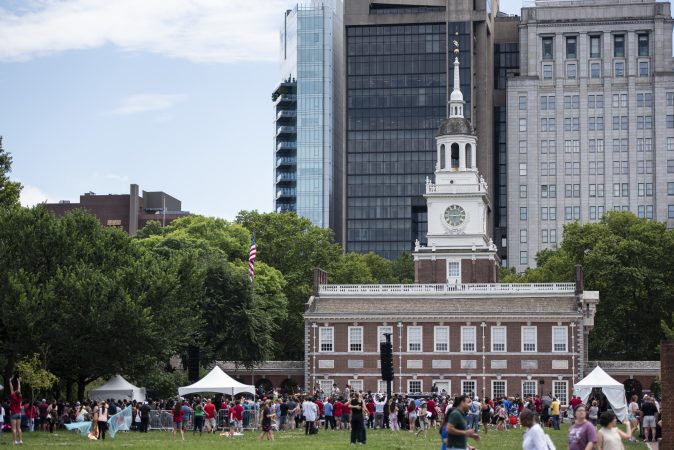
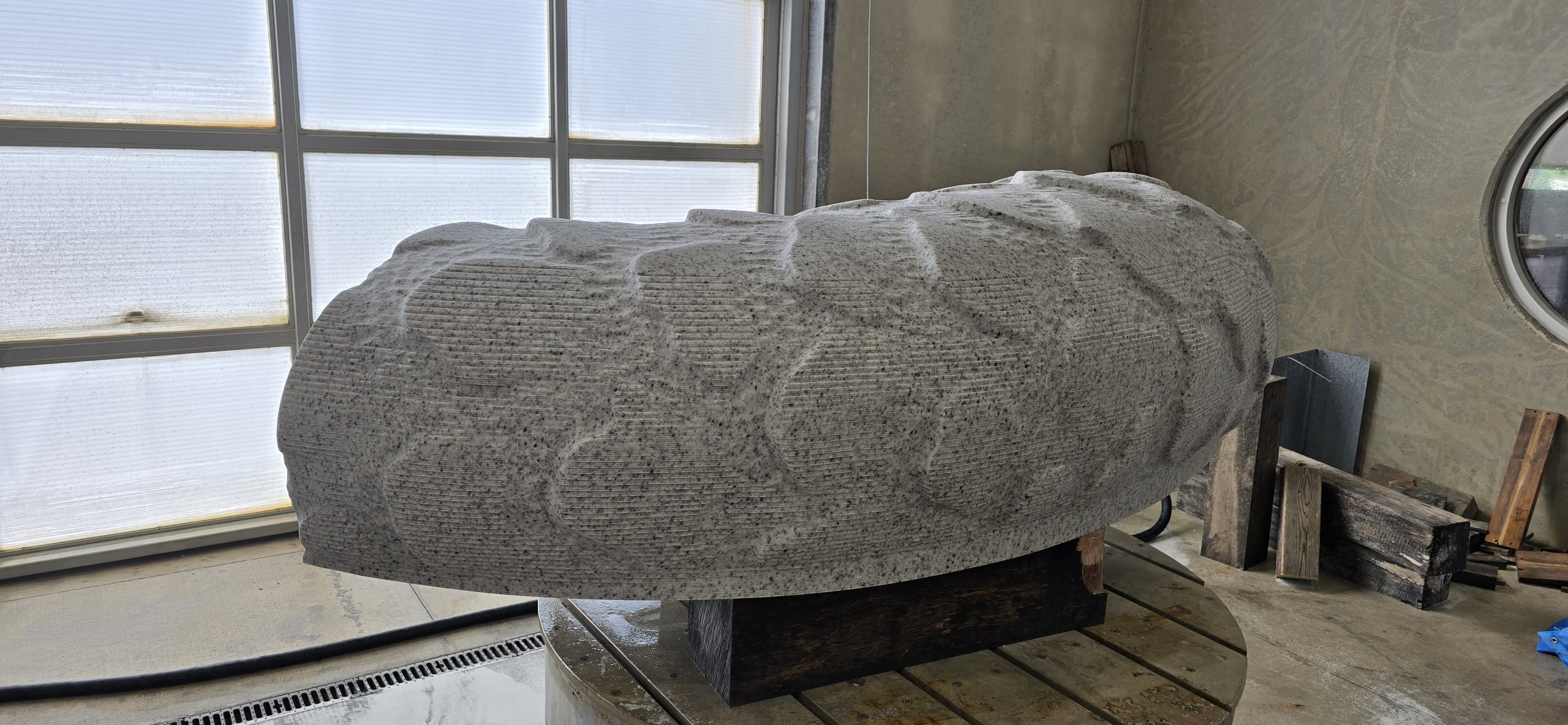
A 46-foot-long sculpture of Benjamin Franklin’s “Join or Die” snake is set to be unveiled this fall on the Liberty Bell Center block of the Independence Mall, near the corner of Fifth and Chestnut Streets. The sculpture will feature eight pieces that represent segments of the snake’s body. These will be carved out of granite, each marked with the initials of the respective colony it’s meant to represent.
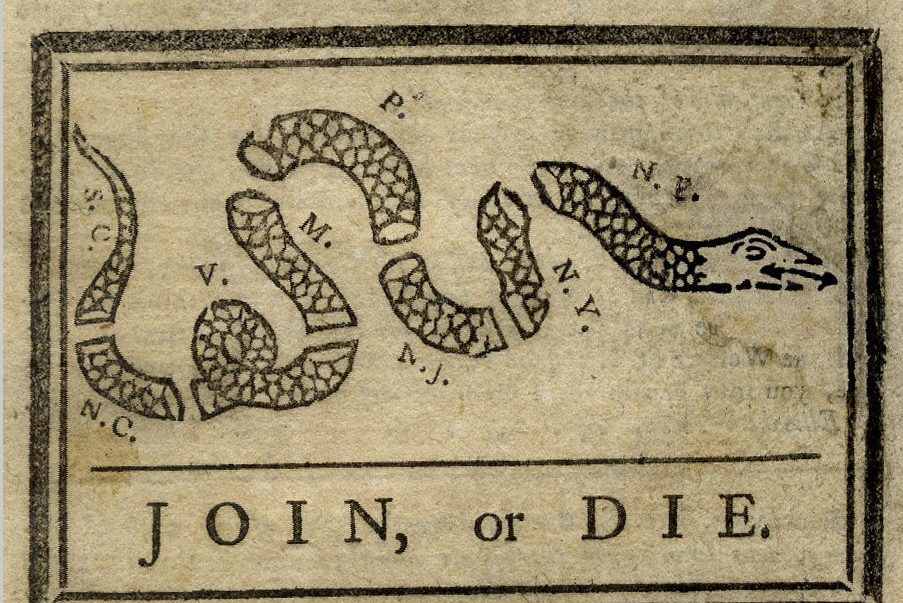
The political cartoon created by Franklin in 1754 was first published in his newspaper, the Pennsylvania Gazette. Each piece of the snake is meant to represent one of the 13 original colonies, except for the snake’s head which represents the six colonies of New England.
The cartoon called for unity among the colonies, particularly during the French and Indian War.
This political cartoon, long said to be the work of Ben Franklin, appeared in the May 9, 1754, edition of Franklin’s Pennsylvania Gazette,Nate D. Sanders Auction
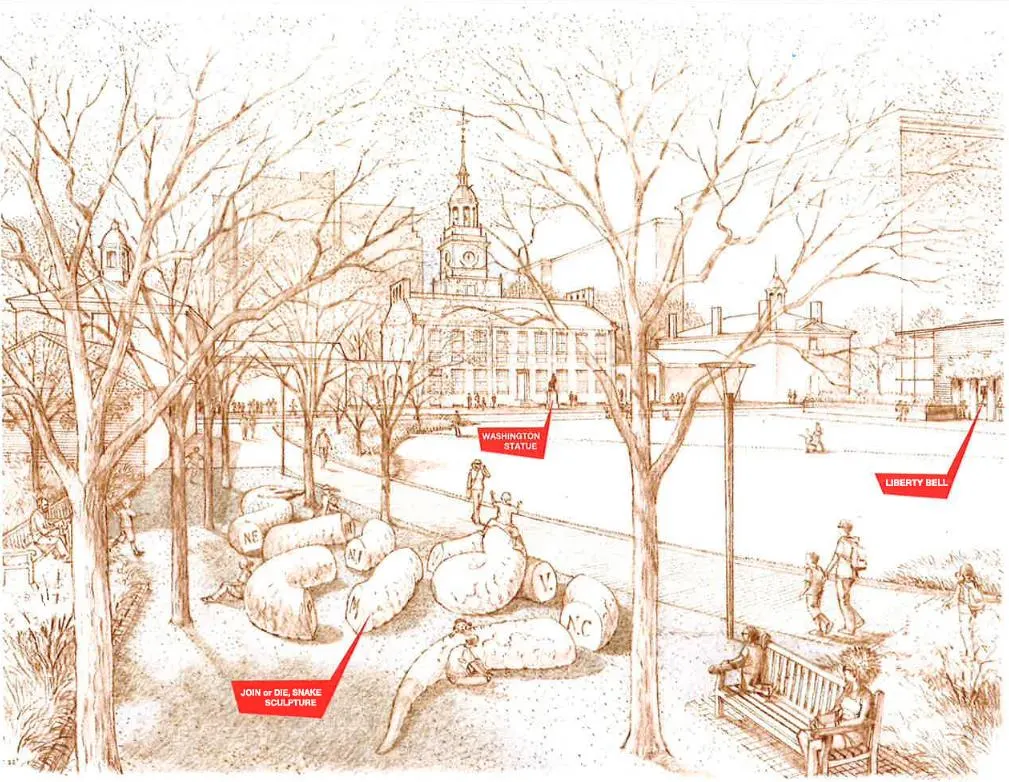
The Independence Mall sculpture will be installed on the ground, allowing visitors to interact directly with the sculpture.
“I thought it was a great idea to have that on the mall because it’s considered the first political cartoon in the country before we were a country in 1754,” said John Collins, the artist behind the sculpture. “I thought interpreting that into a large sculptural work that still has a playful element to it, that the mall is really lacking in, would be a great addition.”
Collins, who was an architect for 15 years after graduating from Penn State, had first heard of the project in the 2000s while working at landscape architecture and urban design firm OLIN. Founder Laurie Olin had proposedthe snake sculpture to be included inan interpretive art program for Independence Mall in 1997, but that part never came to fruition.
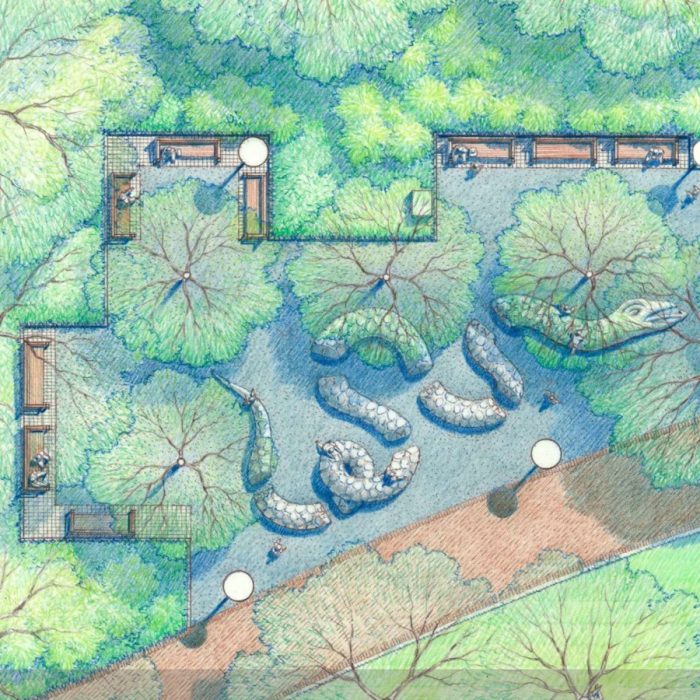
An aerial-view rendering of the “Join or Die” sculpture, set to be displayed near the corner of Fifth and Chestnut Streets on Independence Mall.Courtesy of Independence Historical Trust
“During the pandemic I sent an email to Laurie asking if we could try to resuscitate the snake project and he responded within a couple hours,” said Collins, who left OLIN in 2009. “He said if I put together a proposal with a team and some costs and graphics, we could then shop it around to private donors and try to raise money for it and treat it essentially as a gift to the Park Service.”
This “gift” has come to a total of approximately $3.9 million, with funds raised by Independence Historical Trust, the park’s nonprofit fundraising organization.
The sculpture was originally one of several other improvements to the park proposed in 2025 to be completed before this year’s Semiquincentennial.An America250 time capsule was buried at that same corner at Fifth and Chestnut Streets — just a few feet south of where the snake’s head will be.
A rendering of the “Join or Die” sculpture, which is set to be installed this fall near the corner of Fifth and Chestnut Streets on Independence Mall.Courtesy of National Park Service
In July of 2025, the Inquirer reported that the project was short the $1.6 million needed to complete the project by this summer.
Severe budget cuts to the National Park Service and other federal funding gaps forced the trust to turn to public fundraising for their improvement efforts. They were able to secure funding for this project from the state, the city, private foundations, legacy groups, and individual philanthropists.
Despite the delay, Jonathan Burton, the trust’s director of development, maintains that the fundraising was “intentionally phased.”
“Early commitments allowed the project to advance through design and engineering while additional support was secured for fabrication,” he said. “We are now working on installation fundraising.”
A piece of the “Join or Die” snake sculpture carved out of granite stone.Courtesy of John Collins
The installation of the sculpture still requires an additional $800,000. The trust has set up a public donation page for fundraising.
“The sculpture will create a new civic destination in the heart of Historic Philadelphia, inviting residents and visitors alike to engage with one of America’s most enduring symbols,” said Burton. “It will strengthen Philadelphia’s reputation as a city where history is not simply preserved but experienced, inspiring new conversations about the values that continue to shape our nation.”
No official unveiling date for the sculpture has been announced.
The article has been updated to reflect accurate numbers for the funding shortfall received from the Independence Historical Trust, and details about the America 250 time capsule.
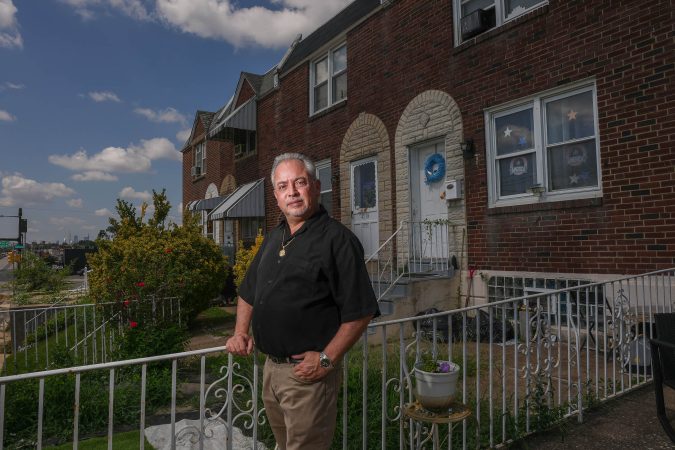
Jorge Luis Burgos of North Philadelphia, a registered Democrat, was one of many Latino voters who shifted to the right and voted for President Donald Trump in the 2024 presidential election.
Now he’s planning to shift back and vote for Democratic Gov. Josh Shapiro as he runs for reelection in the key swing state.
“Shapiro 100%. I love the way he manages everything,” Burgos said while attending Arte en las Calles, an event last weekend celebrating Latino culture held by the Esperanza Art Center in North Philadelphia.
Burgos, 57, who moved to Philadelphia from Puerto Rico in 1980, said he voted for Trump in 2024 because he was worried about inflation and felt betrayed by the last-minute switch that swapped then-President Joe Biden for Vice President Kamala Harris as the Democratic nominee. But he said Trump has failed to fulfill his promises, and he has found himself turning back to the Democratic Party.
“I was disappointed, and that’s why I switched. But you ask me now, I’m disappointed, too. Big time,” Burgos said. “Trump didn’t accomplish his promise: ‘On Day One,’ inflation is gonna go down. It didn’t happen.”
In the past decade, support of Republican candidates, specifically Trump, has grown in the majority Latino precincts of Philadelphia — with Trump’s share of the vote increasing from 6.1% in 2016 to 21.8% in 2024.
While Harris still won these wards — and a slight majority of Latino voters nationally, according to exit polls — Trump’s improved performance with this voter group helped him win both Pennsylvania and the presidency.
Burgos, like many other supporters who shifted to the right, said Trump’s promises to bring the cost of living down to its pre-COVID rate ultimately won over their vote.
Ninety-three percent of Trump’s Latino supporters cited the economy as the main issue driving their vote in the 2024 election, according to a September 2024 Pew Research Center poll.
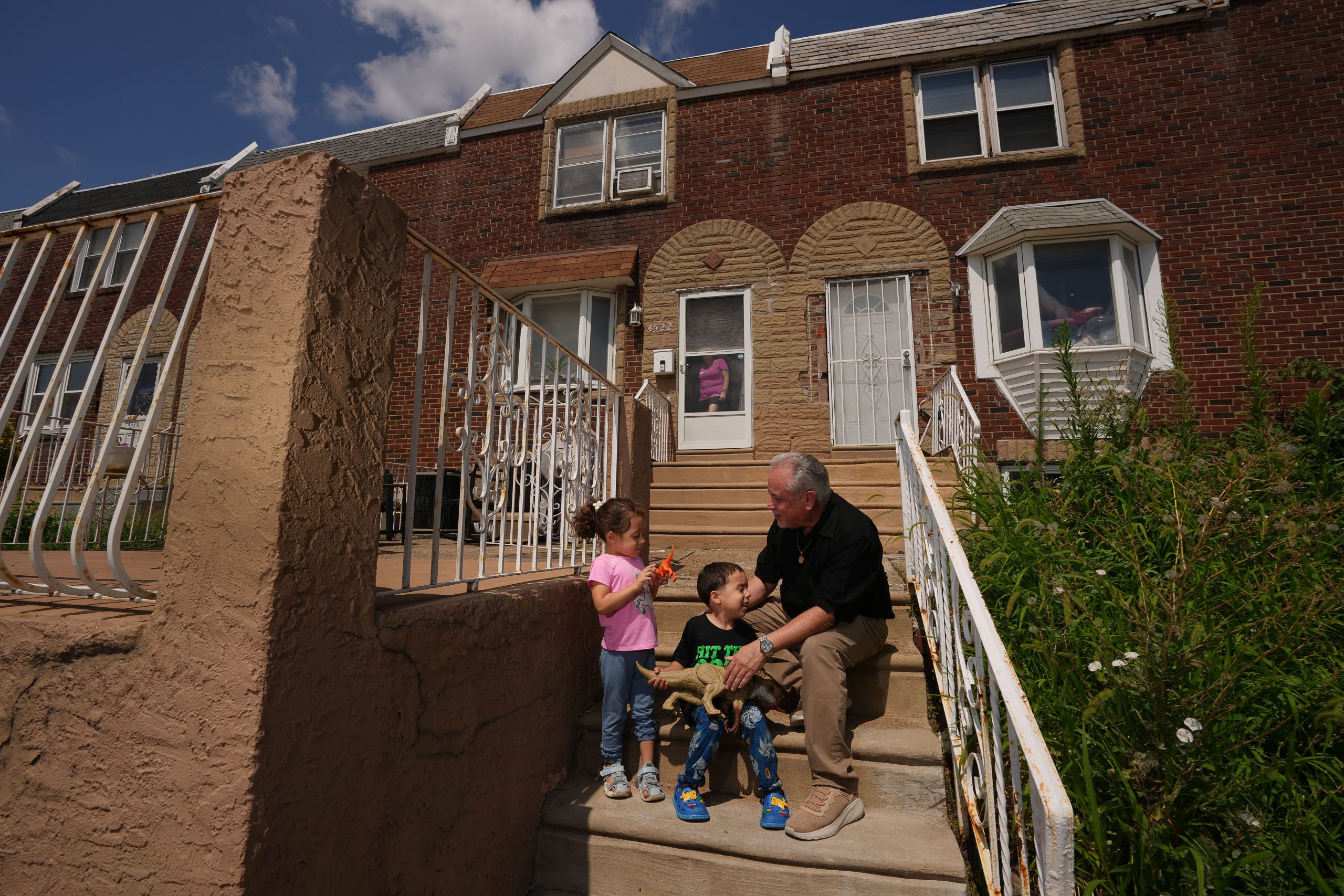
Jorge Luis Burgos with his grandchildren Luis Burgos Jr. and Athena Burgos, in Philadelphia. His wife Carmen is standing in the doorway in this photo.Jessica Griffin / Staff Photographer
But now many Latino voters have not seen the outcomes they were hoping for, with a May poll fromPew finding that Trump’s support has fallen more sharply with Latino voters than othervoters. Only 66% of Hispanic Trump voters approved of his job performance in the poll, falling 27 percentage points from the start of his presidency.
According to a May poll from UnidosUS, a national Latino civil rights organization, 66% of Latino voters say Trump and congressional Republicans are not focused on fixing the economy.
Pennsylvania Democrats and Republicans will be seeking to sway these voters in November when Shapiro faces off against Republican nominee Stacy Garrity, the state’s treasurer, in the race for governor.
What are the issues on the minds of Latino voters?
Latino voters, who make up more than 600,000 of eligible voters in Pennsylvania and are the fastest-growing demographic group in Philadelphia, said in interviews that the economy, immigration, and support for small businesses are the issues that will determine who they vote for.
“They’re focused on cutting costs,” Shapiro said of the region’s Latino voters at a rally with congressional candidate Bob Brooks and House Minority Leader Hakeem Jeffries in the 7th Congressional District, one of four GOP-held seats in the state Democrats are hoping to flipafter the area accounted for some of Trump’s biggest Pennsylvaniagains in 2024.
“They’re focused on their small businesses getting help,” Shapiro said. “They’re focused on more cops on the street for safer communities and schools that are stronger.”
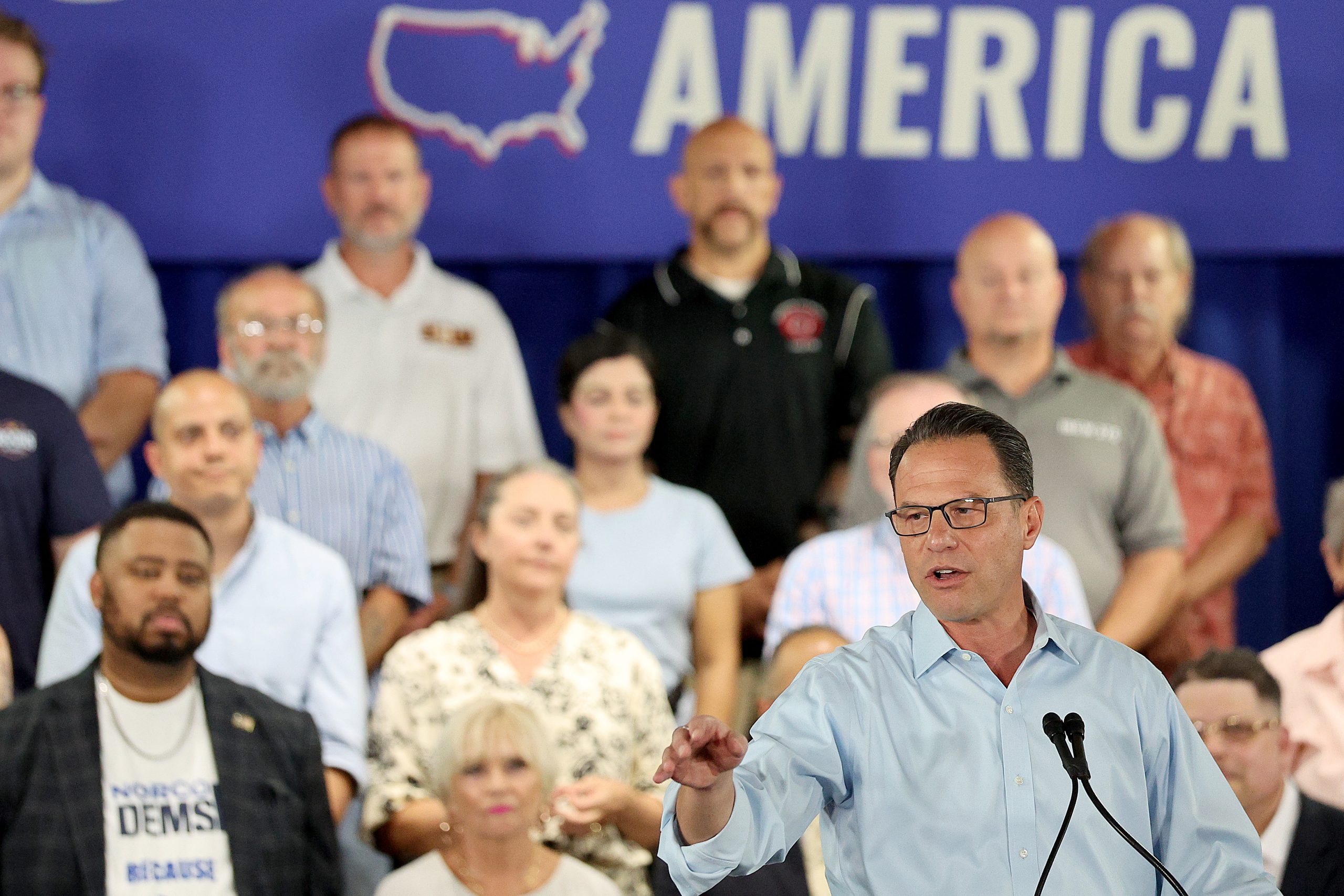
Gov. Josh Shapiro addresses the audience during a rally for congressional candidate Bob Brooks at the United Steelworkers Union Hall in Bethlehem, Pa. on Sunday, July 26, 2026.David Maialetti / Staff Photographer
Jaime Negrone, 67, from North Philadelphia, has lived in Pennsylvania his whole life but has roots in Puerto Rico. He said the cost of living is the major issue he is hoping to see tackled.
“Everything has become so expensive,” Negrone said. “People are sacrificing necessities on one end to cover for the other end: food, gas, housing.”
Negrone said he will vote for Shapiro over Garrity because the governor seems to be more connected to the people of Pennsylvania.
“Shapiro has a pulse on the issues in Pennsylvania,” Negrone said. “He’s been in the office, he knows the politics, and he seems to be a politician for the people.”
Seth Ortiz, 30, a second-generation Puerto Rican from Northeast Philadelphia, said he’s goingto vote for Democratic candidates in November because he feels that’s the only wayto protect people’s rights amid increased immigration enforcement.
“I don’t like the fact that ICE is pretty much doing what they want in U.S. cities. At some point, even killing American citizens and getting away with it, it’s horrible,” Ortiz said. “So anyone who is going to stand up for immigrant rights is probably the most important thing for me. And it’s probably always going to be the Democrat.”
Gladis Avila, 55, a Venezuelan business owner from South Philadelphia, said she is not sure who she is going to cast her vote for yet. She wants a candidate who is going to stand up for her community and small businesses but has not heard much outreach from either campaign.
“The Latino community needs people who work more for our community,” Avila said.“…When we vote, we want to feel like we are voting for someone who is going to help our community. Because that’s our voice, and our voice has an impact.”
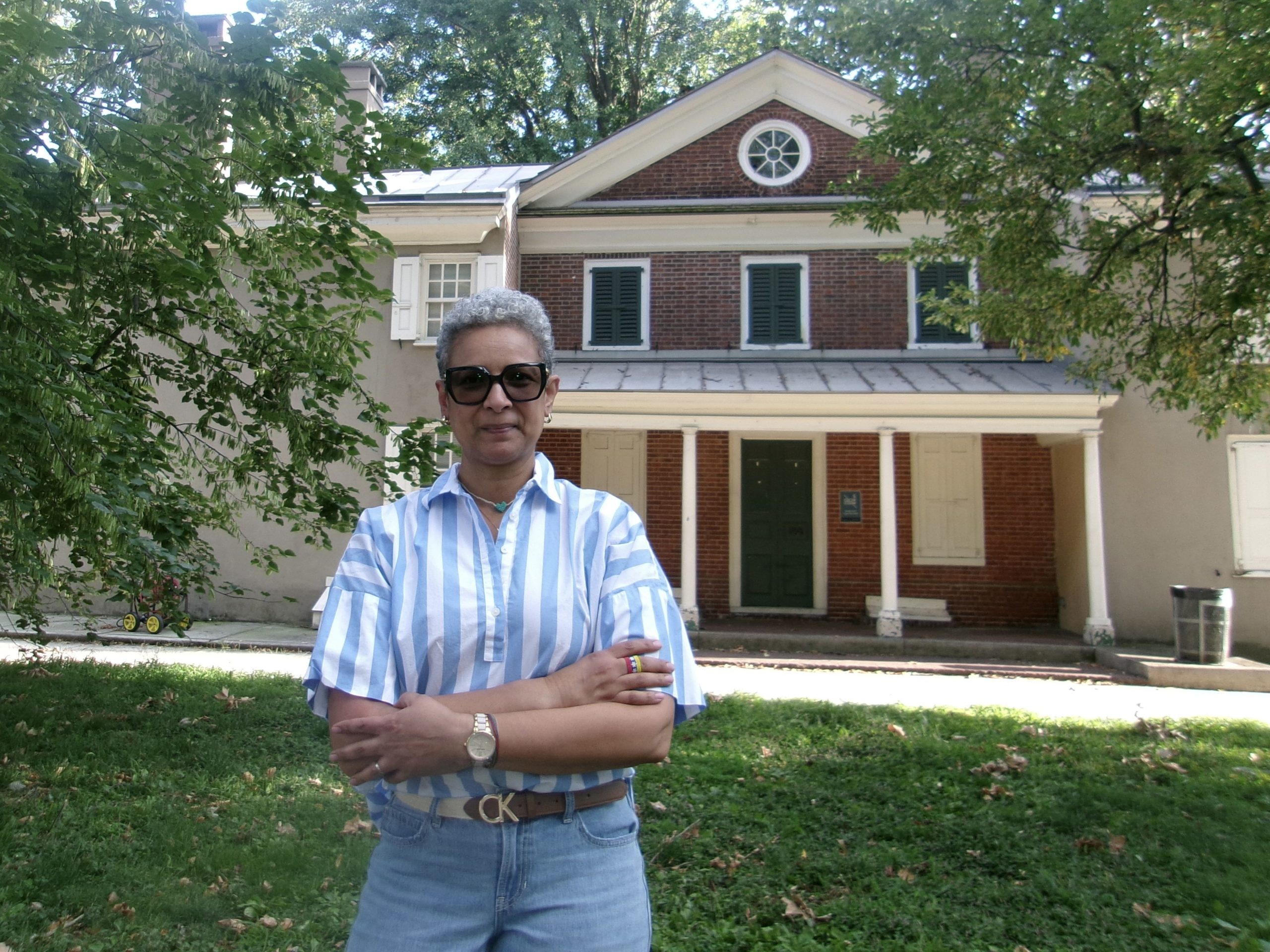
Gladis Avila stands in a park near her house in South Philadelphia.Andrea Padilla
Echoing this, Jennifer Rodriguez, president of the Greater Philadelphia Hispanic Chamber of Commerce, a nonprofit focused on the economic growth of the Hispanic community, said she’s heard worries from businesses about being able to keep up with their expenses.
“Small businesses are very, very concerned about the viability of their businesses,” she said. “And in the really escalating cost environments. Particularly, the labor force has become very costly.”
How are campaigns reaching the Latino community?
Matt Beynon, a representative for the Garrity campaign, said that helping small businesses is the main concern the campaign has heard from Latino voters.
“And a lot of concerns she’s hearing are about the overregulation and red tape that is preventing them from either starting a business, growing their business, expanding their business,” he said.
Outreach to the Latino community has so far included attending community events in Philadelphia and other communities with large Latino populations, like Allentown, Beynon said.
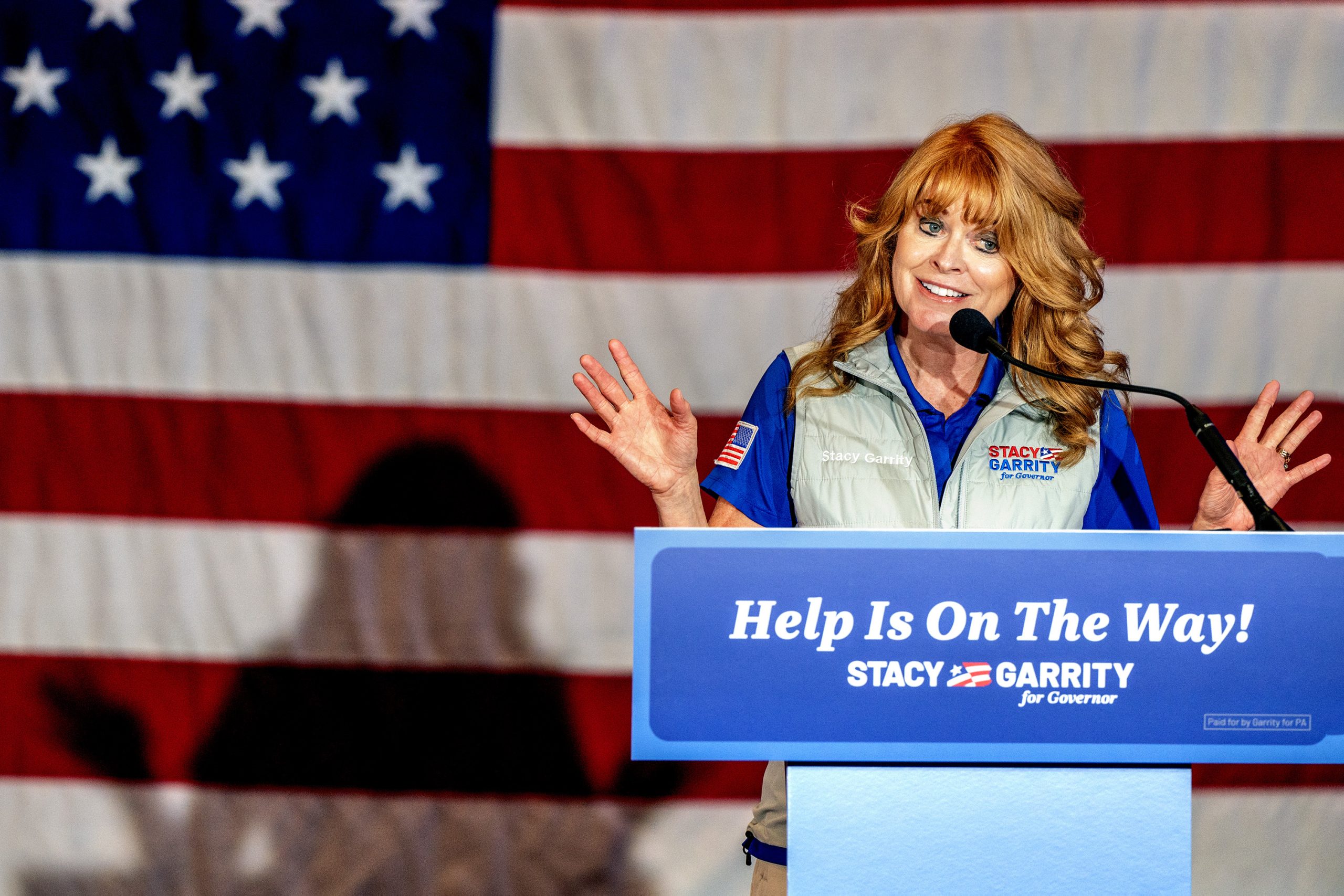
State Treasurer and Republican candidate for governor Stacy Garrity holds a rally in Bucks County Sept. 25, 2025 at the Newtown Sports & Events Center.Tom Gralish / Staff Photographer
Shapiro has also spent time in majority Latino areas. In May, he attended and co-hosted “Fiesta on Hamilton,” in Allentown, a street festival that celebrates Latino culture in the Lehigh Valley.
“During Fiesta on Hamilton, Gov. Shapiro met with local small business owners, entrepreneurs, creators, cultural leaders, and local officials as part of Shapiro for Pennsylvania’s ongoing commitment to engaging, uplifting, and investing in Latino communities across the Commonwealth,” the Shapiro campaign wrote in a statement.
Samantha Reposa, a representative for the Shapiro campaign, said the campaign is also running Spanish-language radio ads to further engage voters.
‘I feel left behind’
Despite this, many Latino voters in Philly said they haven’t felt reached by either campaign.
Rodriguez expects messaging to ramp up closer to the election. Because of the Latino community’s lower voter turnout in relation to other groups, Rodriguez said they are often the last to be reached, a strategy she is hoping to see change
“One thing that typically happens is that the Latino community oftentimes is the last community to be approached by politicians and their systems,” Rodriguez said. “The Latin community’s voter engagement is relatively low. And a lot needs to be improved, but a lot of it has to do with candidates really seeking the relationship with our community much earlier on.”
Carolina Hansell, 61, immigrated from Venezuela 33 years ago and is planning to vote for Shapiro, but said she has seen and felt the conservative shift in her community and that it’s in part due to a lack of outreach.
“They need to work and talk to real people and the neighbors over here,” Hansell said. “It’s the only way to convince people and have a good plan. There’s not a plan right now, not in that Democratic Party.”
Anjoli Santiago, 41, said it’s not just the Democrats that are lacking but feels like both political parties have lost touch with the Latino community and sees that trend continuing.
“I think it will continue if we don’t have more conversations about how diverse our people are and the different needs that our people have,” Santiago said. “I feel left behind by both parties definitely. It feels like we are voting and those who we vote for no longer represent us.”
Staff writer Michelle Baruchman contributed to this article.
For decades, Donald Wittenberg spent much of his free time scrupulously documenting how the Holocaust affected people in the Philadelphia region and educating people to prevent anything like it from happening again.
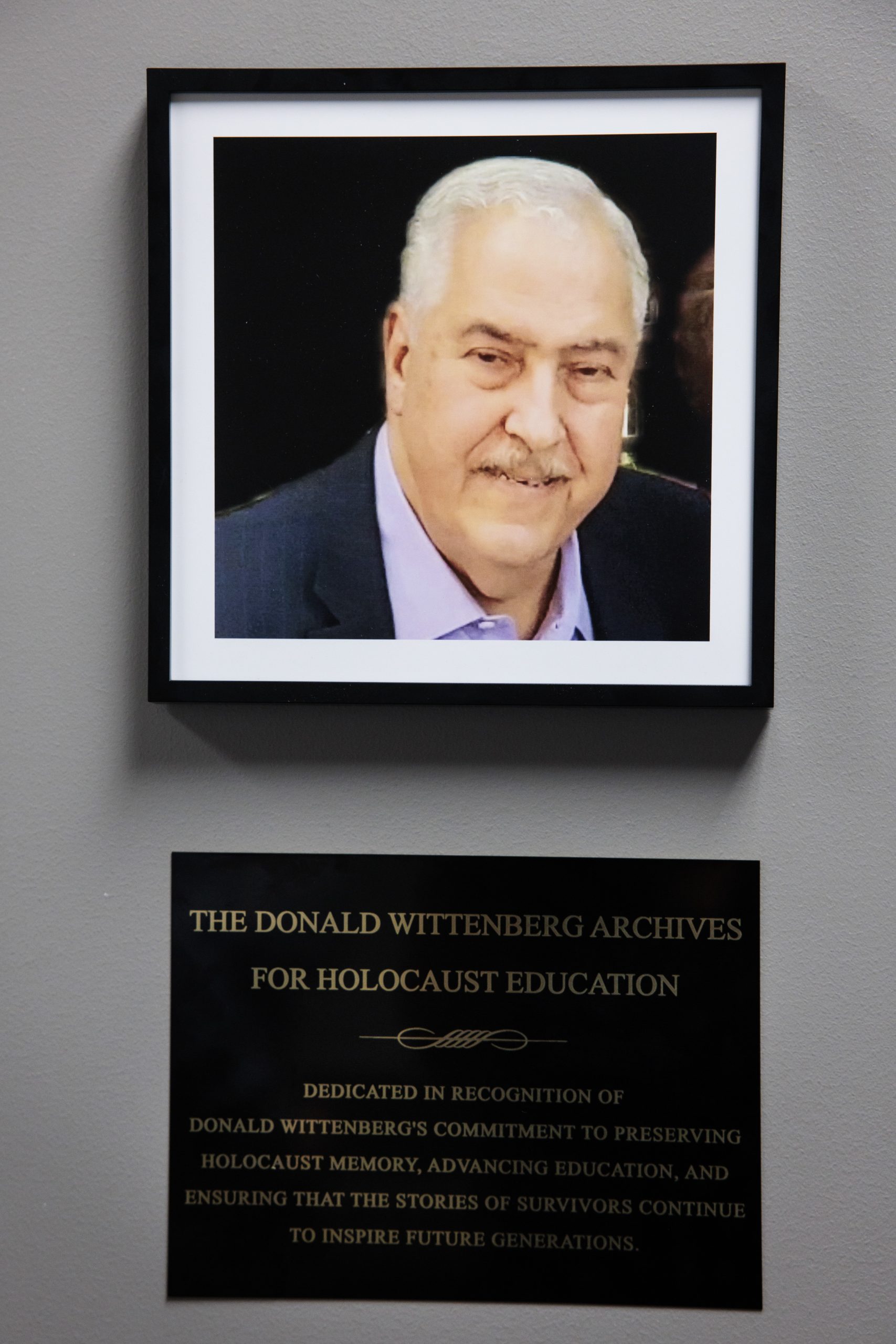
Now, the archives of the Holocaust Awareness Museum and Education Center (HAMEC) in Elkins Park are dedicated to Wittenberg, who died in March at age 79.
“In these more than difficult times, Don’s efforts will go on, and we will always appreciate those efforts,” HAMEC board president Chuck Feldman said to family and friends gathered at the museum Sunday.
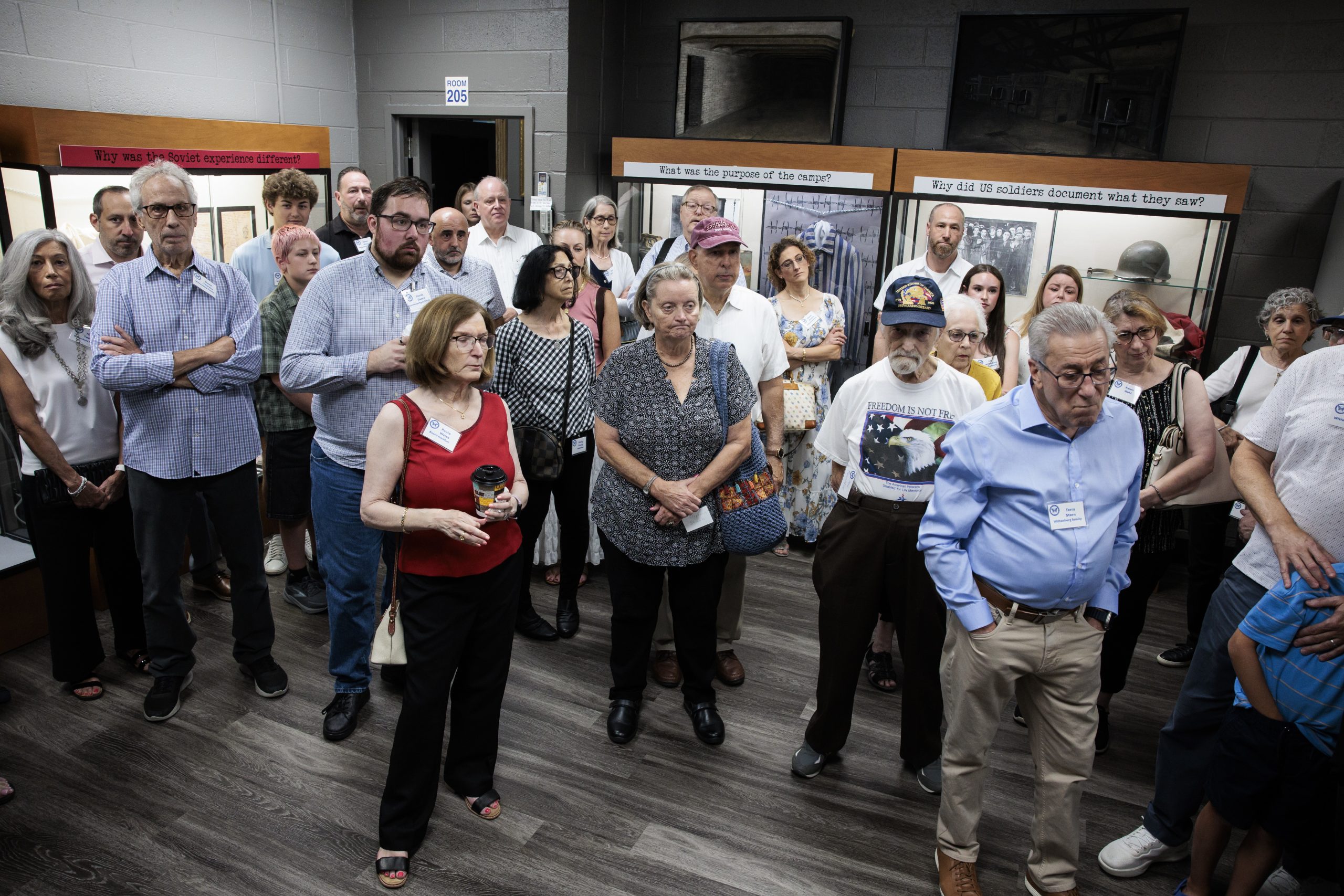
Attendees listen to the dedication ceremony at the Holocaust Awareness Museum and Education Center on Sunday, Aug. 2, 2026, in Elkins Park. The Archives for Holocaust Education were dedicated in honor of longtime curator Donald Wittenberg.Monica Herndon / Staff Photographer
Feldman estimated that with Wittenberg’s guidance, the museum and its educational programs have reached 400,000 young people in Pennsylvania and beyond.
Feldman said he had known Wittenberg since 1970, when they were young members of the Northeast Independent Democrats, helping to elect Milton Shapp for Pennsylvania governor.
Back then, the museum was in the basement of Yaakov Riz, who survived five years in a Soviet labor camp only to learn that 83 of his family members died in the Holocaust, Feldman said.
Though Riz was the museum’s founder, Wittenberg — a public school teacher and administrator — helped build it into what it is today, Feldman said.
“Don found artifacts through the local community, whose owners were looking for a respectful and impactful resting place,” Feldman said.
Wittenberg’s wife, Bonnie, said his motivation was partly personal. On his father’s side, most of Wittenberg’s family died in the Holocaust. Wittenberg wanted to know who they were, and who may have survived.
Visitors browse the exhibits during the archives dedication ceremony at the Holocaust Awareness Museum and Education Center.Monica Herndon / Staff Photographer
“He was like a detective. He was trying to solve mysteries,” Bonnie Wittenberg said.
One example: Her husband became obsessed with finding where a distant relative had been buried. She wasn’t sure if he ever found out, but unanswered questions like this one often drove his research.
This curiosity marked his conversations with the many Jewish families who over the years came to him with their own family stories. “He wanted to tell the story right,” she said.
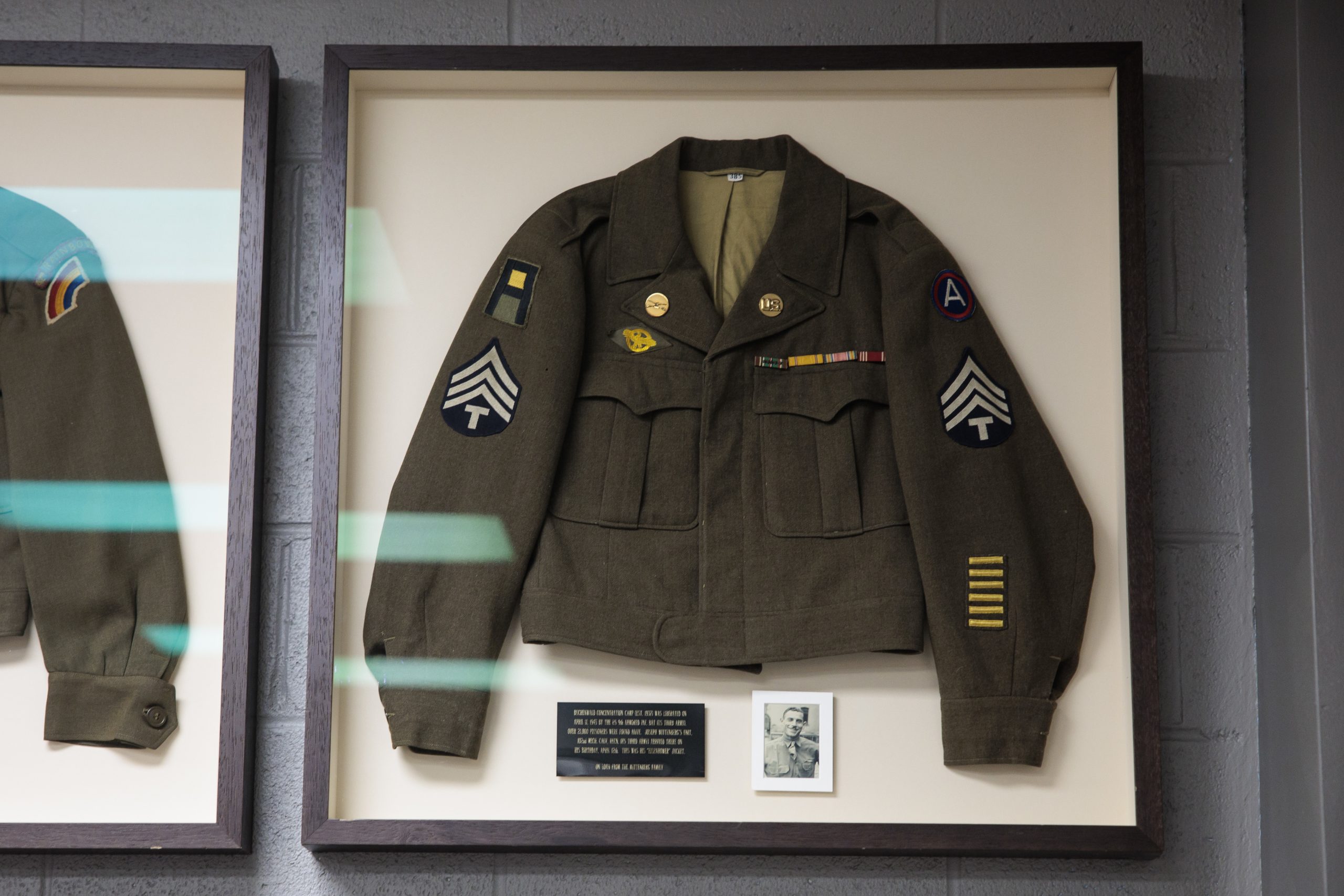
Joseph Wittenberg’s Army jacket worn during the liberation of the Buchenwald Concentration Camp, on display during the dedication ceremony at the Holocaust Awareness Museum and Education Center on Sunday, Aug. 2, 2026, in Elkins Park. The Archives for Holocaust Education were dedicated in honor of his son, longtime curator Donald Wittenberg.Monica Herndon / Staff Photographer
Wittenberg’s search for his ancestors continued a journey begun by his own Hungarian-born father, Joseph Wittenberg, said Donald’s son Steven Wittenberg.
Joseph Wittenberg served in the U.S. Army during World War II, “and when the war was over, he went back searching for his family, but he couldn’t find them,” Steven Wittenberg said.
After Joseph died, Donald Wittenberg found personal journals and war trophies that revealed more about his family and his father’s military service, he said. He learned his father had been in Normandy on D-Day plus one and had seen combat.
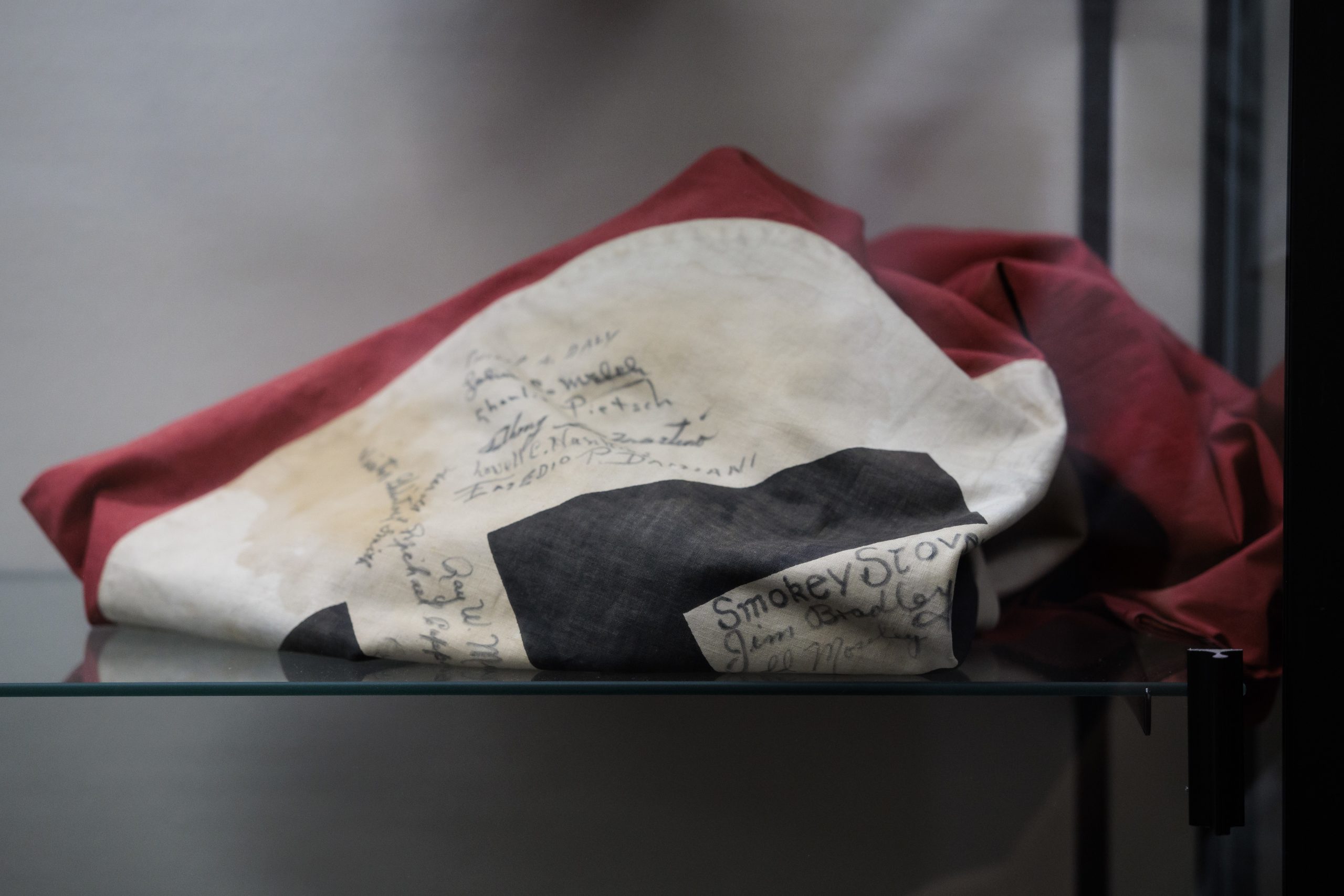
One item, a Nazi flag taken from Nuremberg’s city hall and signed by Joseph Wittenberg’s comrades in the U.S. Army 102nd Cavalry Regiment, is now on display in the museum. So is Joseph Wittenberg’s Army service coat, which Steven and his brother Jan remembered wearing when they were children.
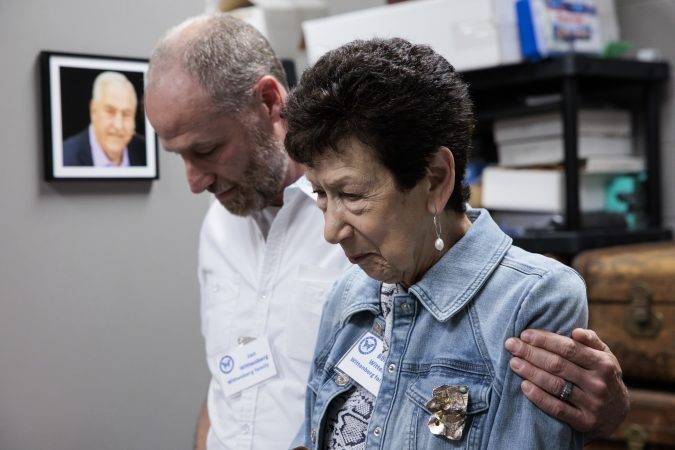
A photograph of Donald Wittenberg and a commemorative plaque were placed during a dedication ceremony at the Holocaust Awareness Museum and Education Center on Sunday, Aug. 2, 2026, in Elkins Park. Monica Herndon / Staff Photographer
These objects, and the stories they tell, offer lessons for people today, Steven Wittenberg said: “The survivors are starting to pass away, and so you need to document that.”
Donald Wittenberg carefully chose every artifact in the museum, said Jacob Dupre, a Holocaust historian who worked as Wittenberg’s assistant and who will be taking over as curator. Dupre noted that there were no images of death on display — a choice Wittenberg made.
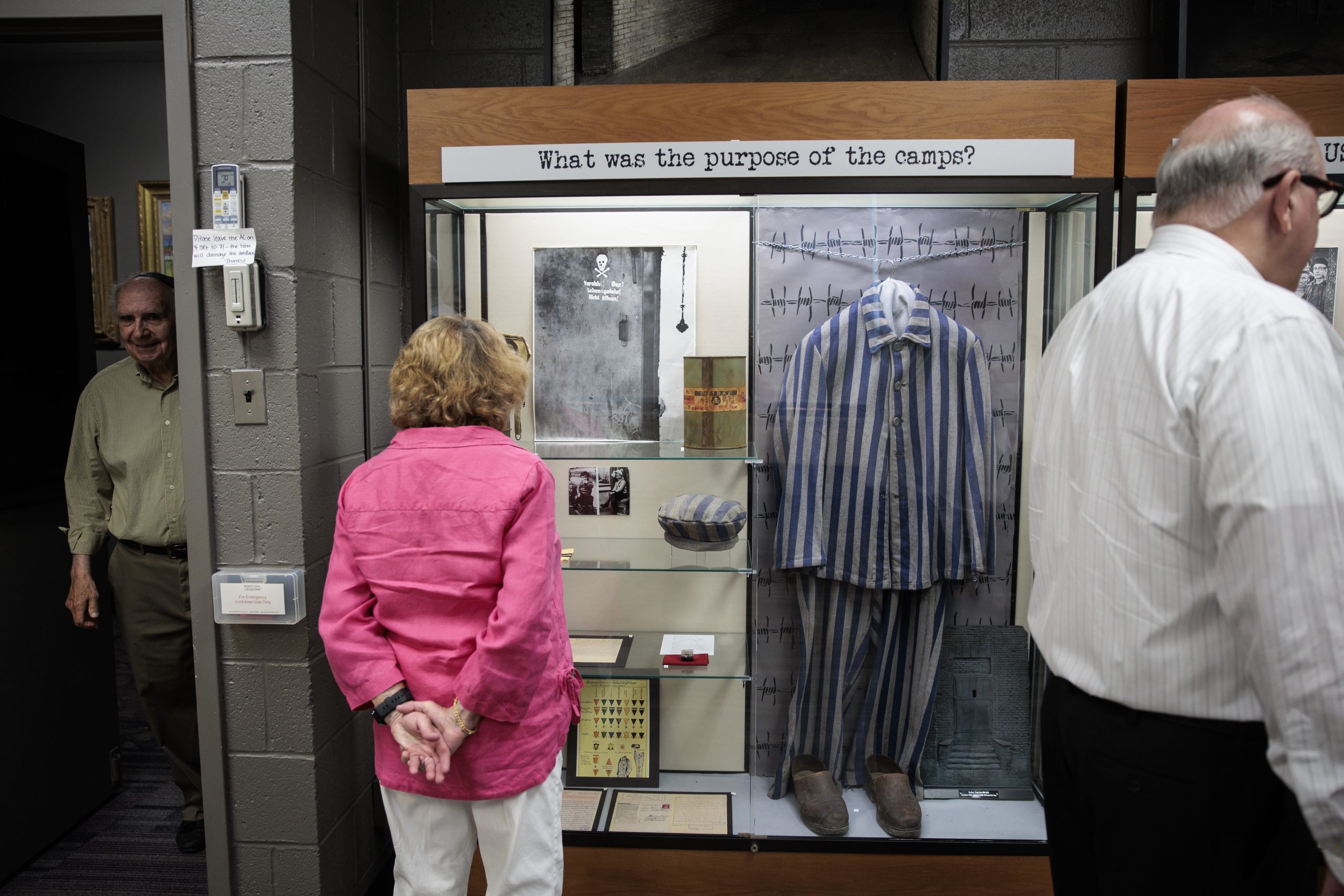
Wittenberg did include evidence of Nazi atrocities in the display, however. Tom Brennan of Oreland acquired a canister that once held Zyklon B, a gas used to kill people. Brennan noted that the shape of the puncture holes in the canister were the size of a standard-issue German soldier’s knife.
Other artifacts spoke to the resilience of those imprisoned in the camps, such as a tiny six-sided die made of bread dough.
A Nazi flag from Nurenberg during the dedication ceremony.Monica Herndon / Staff Photographer
One poignant item, a handmade birthday card passed between two concentration camp prisoners, was translated from German to read, “Whom the stork brought in May / the sun smiled on him.”
The poem-like text of the card, written more than 90 years ago, concluded with the lines, “Everything on Earth will change / when we’re all home again.”
Such messages of hope and endurance, found throughout the museum, still have something to teach people today, said HAMEC CEO Fabulous Flores. The museum tracked the yearslong process from the Nazi’s hate campaign against Jews to the end of World War II.
“We talk a lot about empathy,” Flores said. “When antisemitism is on the rise, when one group is targeted for hate, everyone is at risk.”
Tracy Chapman’s “Fast Car,” a ballad about a dead-end life, made the Billboard Hot 100 twice, nearly 40 years apart. As a doctor, I’m not surprised. “Fast Car” is about someone trying desperately to move up in life even as obstacles mount — bleak job, insufficient finances, family obligations, and increasing isolation. The song endures because it validates the experience of millions of Americans.
I hear versions of “Fast Car” every time I set foot in the hospital as a general internist. My patients tell me stories about how, no matter how hard they work, the path to a better future slips farther away. It inevitably comes up as the reason they feel sick. My patients even have a name for their condition: they feel stuck.
The more I listened, the more I realized this wasn’t just an individual problem. We’ve reached our 250th anniversary as a stuck country.
I’ve been documenting what our research group has come to call “stuckness” for a decade. It’s more than poverty, loneliness, or a lack of opportunity. Stuckness emerges when real barriers in our jobs, finances, relationships, health, neighborhoods, and politics coalesce to keep people from having a real shot at success and happiness. It is a feeling and a reality that reinforce each other, robbing us of hope, generating chronic stress, and making it harder to move forward.
As one young man, stuck with dwindling job prospects, mounting debt, and few close relationships, said: “I’m not hopeful. I may not make it past the age of 35 if things continue this way.”
My patients are right to identify stuckness as the biggest threat to their health. Yet, our country hasn’t found effective ways to fix it. Part of the issue is that when people tell us they are stuck, we believe it can be solved by self-help books, a positive attitude, or the latest wellness fad.
The bigger issue is that we haven’t really understood the problem.
My colleagues and I at the research nonprofit Opportunity for Health decided to change that. In a recent survey, we asked working-age adults across America whether they felt stuck. We found that more than one in five respondents — representing about 40 million adults — strongly felt stuck. Nearly half of the people taking our survey felt at least somewhat stuck. Stuckness was most common among lower-income Americans, but one out of 10 of the richest or most educated Americans felt stuck, too.
Respondents got stuck because of job or financial challenges, worsening conditions in their neighborhood, social isolation or fraying relationships, or because of a sudden illness or disability. Once any one of these challenges set in, others quickly piled on.
A health problem leads to lost work, creating financial strain that weakens relationships, and the resulting hopelessness and stress further damage health. That cycle helps explain why people who felt strongly stuck were five times more likely to report being in poor health than those who didn’t feel stuck at all.
While our survey covers only a single year — no one had bothered to ask about it before — other data show that stuckness has grown over time.
That tracks with what I hear from my patients. The likelihood that low-income Americans can move up the economic ladder has fallen since at least the 1980s. So has the share of Americans who are able to leave neighborhoods that aren’t working for them in search of new opportunities.
Using economic survey data, the fraction of working-age Americans facing multiple challenges — whether unemployment, a work-limiting disability, low household income, social isolation, or being moored in place — rose from 14% in the late 1980s to 24% today, writes Atheendar S. Venkataramani.Lynne Sladky
Based on my calculations using economic survey data, the fraction of working-age Americans facing multiple challenges — whether unemployment, a work-limiting disability, low household income, social isolation, or being moored in place — rose from 14% in the late 1980s to 24% today.
Stuckness also shows up more often in our culture. In the more than three decades bookending the appearances of “Fast Car” on the Billboard Hot 100, the share of songs mentioning feeling stuck rose from one out of every 100 to one out of every 20 — and that doesn’t include Chapman’s hit or other songs by Bruce Springsteen or Garth Brooks that describe stuckness without using the term.
It is not a coincidence that the rise in stuckness coincides with our flatlining life expectancy. We are getting sicker despite the trillions of dollars we throw at healthcare. My patients wouldn’t find that surprising: they aren’t asking for more medicines or tests. They just want to get unstuck.
Because stuckness arises from a cascade of factors, solutions must do two things: prevent people from falling into those slumps and help them escape when they do.
That means ensuring that work once again provides a pathway to security through fair wages, ample opportunities to develop new skills, and ensuring that new technologies like AI expand rather than replace human potential.
It means investing in communities that have been left behind, building up local economic capacity and infrastructure so that every corner of America has the basic tools for people to thrive.
Because stuckness arises from a cascade of factors, solutions must include investing in communities that have been left behind and building up local economic capacity and infrastructure, writes Atheendar S. Venkataramani.Jose F. Moreno / Staff Photographer
It means making healthcare, childcare, paid family leave, and other basic supports reliable foundations that keep temporary setbacks from becoming permanent ones.
Finally, we shouldn’t ignore growing concerns about affordability or the economy. We shouldn’t make it harder for people to access safety net programs like Medicaid and the Supplemental Nutrition Assistance Program (SNAP), as the administration is now doing, because they can help our neighbors escape stuckness.
And we shouldn’t make it harder for people to weigh in at the ballot box to seek the wider changes that will improve their lives on how to get their communities unstuck.
The solutions to stuckness will vary across regions. We will need to argue productively, try, fail, and try again to get it right. One of the most shocking findings from my team’s research is that stuckness touches us all: even richer Americans are less healthy when people in their communities get stuck. There’s a reason for that. When millions get stuck, we collectively become less productive, angrier, and more divided.
Now that our country has turned 250, we face a critical choice. We can keep pouring resources into treating the consequences of stuckness or we can confront its causes.
My patients already understand this distinction. They know that what makes them sick is not simply a disease. It is the growing feeling that no matter how hard they try, their future remains limited and bleak. If we want a healthier America, we need to build a country where effort once again leads somewhere.
Atheendar S. Venkataramani is a physician and professor of medical ethics and health policy at the University of Pennsylvania. He is the founding director of Opportunity for Health and is a senior fellow at the Penn Leonard Davis Institute of Health Economics.
Philadelphia restaurants Hiroki, La Calaca Feliz, and the Lodge by Two Robbers have announced their departures in the last week.
The latest announcement was Hiroki, sushi chef Hiroki Fujiyama’s serene omakase room behind Wm. Mulherin’s Sons in Fishtown, which posted Friday that Aug. 8 would be its last service.
In an interview with The Inquirer, David Grasso, a principal in owner Method Co., called the closing “a strategic repositioning rather than a retreat from fine dining” and added that the decision was driven by a desire to stay ahead of customer preferences and culinary trends, not by problems with the restaurant or a broader pullback from fine dining. Method is planning to open a new concept — so far undetermined — in the space on Lee Street next year.
Method also has several new fine-dining concepts planned for other markets. Fujiyama, former head sushi chef at Morimoto, remains involved with Method, including a Detroit project called Hiroki-San, Grasso said.
La Calaca Feliz’s last day at 2321 Fairmount Ave. in Fairmount was Saturday. Owner Brian Sirhal, who opened the Mexican cantina 15 years ago with fellow Garces alumnus Tim Spinner, said its lease expired. Sirhal owns Cantina Feliz in Ambler, while Spinner’s holdings are Taqueria Amor and Riptide Tavern, side by side in Manayunk.
The Lodge by Two Robbers Spirits Co. is the second tasting room/restaurant concept from the Philadelphia-based hard seltzer-turned-vodka soda maker.Jenn Ladd / Staff
The Lodge, the Bella Vista offshoot of Fishtown’s Two Robbers at 11th and Fitzwater Streets, announced on social media Thursday that its last call would be Aug. 9 after barely a year. The post said it would operate as a pop-up and private-event space “for a period of time.” Vivek Nayar, who founded Two Robbers as a hard-seltzer business with his twin brother, Vikram, said they decided to focus on scaling their wholesale beverage line and running their Fishtown location.
These closings do not necessarily point to an industry in retreat. More often, such changes reflect the constant reshuffling of a business in which closures and openings tend to move in tandem. Many of these addresses already have suitors or redevelopment plans, and there is never a shortage of projects in the pipeline.
Latin mainstay Mixto in Washington Square West closed July 12 after 24 years. Lori Penrose, owner of the former South Philadelphia sports bar Toll Man Joe’s, purchased the property at 1141 Pine St. She hopes it will open in late August.
Besides falafel, Goldie is known for tehina shakes.TIM TAI / Staff Photographer
Four Center City Federal Donuts & Chicken locations and three Goldie falafel eateries are bowing out, as founders Michael Solomonov and Steve Cook announced July 14. In the city, only the FedNuts shop at Seventh Street and Fairmount Avenue remains, as well as the Goldie at 1911 Sansom St.
Pita Pocket Eatery in Cheltenham Village wrapped a 15-year run on July 23.
The Langhorne Hotel, a landmark bar and restaurant in Langhorne Borough, closed July 18 after 54 years under the Asta family. New owners Joe and Megan Kontz told the Bucks County Courier Times that they plan to spruce it up, change the name to honor the town’s original name (Four Lanes End), and open late this year.
A series of chain restaurants have shut down recently, including the Perkins in Drexel Hill, the Cracker Barrel in Downingtown, the Miller’s Ale House in Springfield, Delaware County, and the Brio Italian Grille locations in Marlton and Cherry Hill.
Elected officials in Tredyffrin Township are moving ahead on turning an eyesore property into a park featuring tennis and pickleball, fulfilling a campaign promise of the chairperson’s. But some residents are worried the costs have soared too high.
What started as a project this year rehabbing the dilapidated Chase Road Park for roughly $725,000 in its first year, with more funding to come in later years, instead grew to $1.7 million this fiscal year. All said and done, it is likely to exceed $2 million, officials have said.
The jump in cost came with sticker shock for some residents, who have worried the township is sinking too much money into the park, and is doing so without sufficient public involvement.
“In my opinion, they should go back to the drawing board, because this whole thing is a way greater cost and scope than had ever been contemplated,” said Mike Heaberg, a resident who previously served as a board member.
Township officials argue it’s an investment for community amenities that flush reserves can cover.
“[The] $1.7 million to get a full five-acre park with all the courts and bathrooms and a big barn, … it’s not a bad deal if you think objectively about what we’re doing there,” said board chairperson David Miller.
The land
Located in Chesterbrook, Chase Road Park had a former life as a private swim club, with tennis courts and a popular parking lot basketball hoop that drew a crowd after hours. Almost a decade ago, its owner sold the park to a developer, who wanted to reimagine the five-acre parcel into housing. That wasn’t a popular plan, however, and the township rejected the request to change the zoning.
Miller said the community was “overwhelmingly supportive” of the decision; he recalls meetings about the prospect being standing room only, with a majority in favor of the board’s decision.
The township’s eminent domain is still in the courts, where it could play out for years. The final price tag could be higher than that initial down payment, depending on a judge’s ruling.
The plan
Early into acquiring the property, the township discussed turning it into a long-requested racquet sports center, for which it was already outfitted. The park’s future surfaced at a series of Parks and Recreation board meetings in 2025 and 2026, and some tweaks were made along the way.
Under the current project plan, the park will offer four tennis courts, six pickleball courts, a bathroom building, and a storage barn. There will be a pavilion and a grassy area for community use.
Further down the line — and currently tabled while the board mulls it over — will be a basketball court, most likely a half court. The board is also considering adding a path and bridge to connect this park with nearby Wilson Park. Those would come with additional costs.
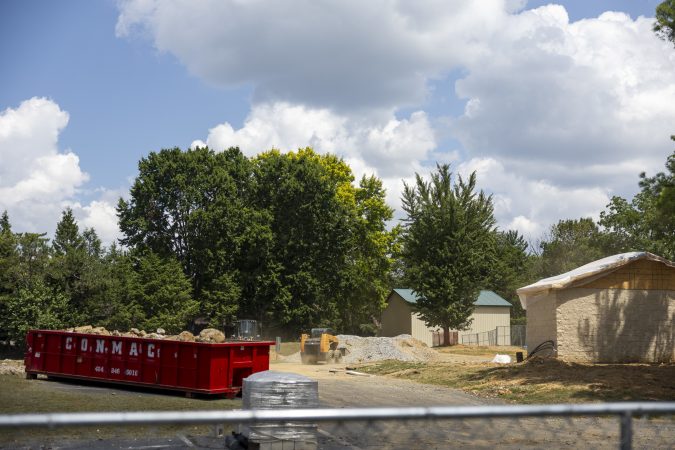
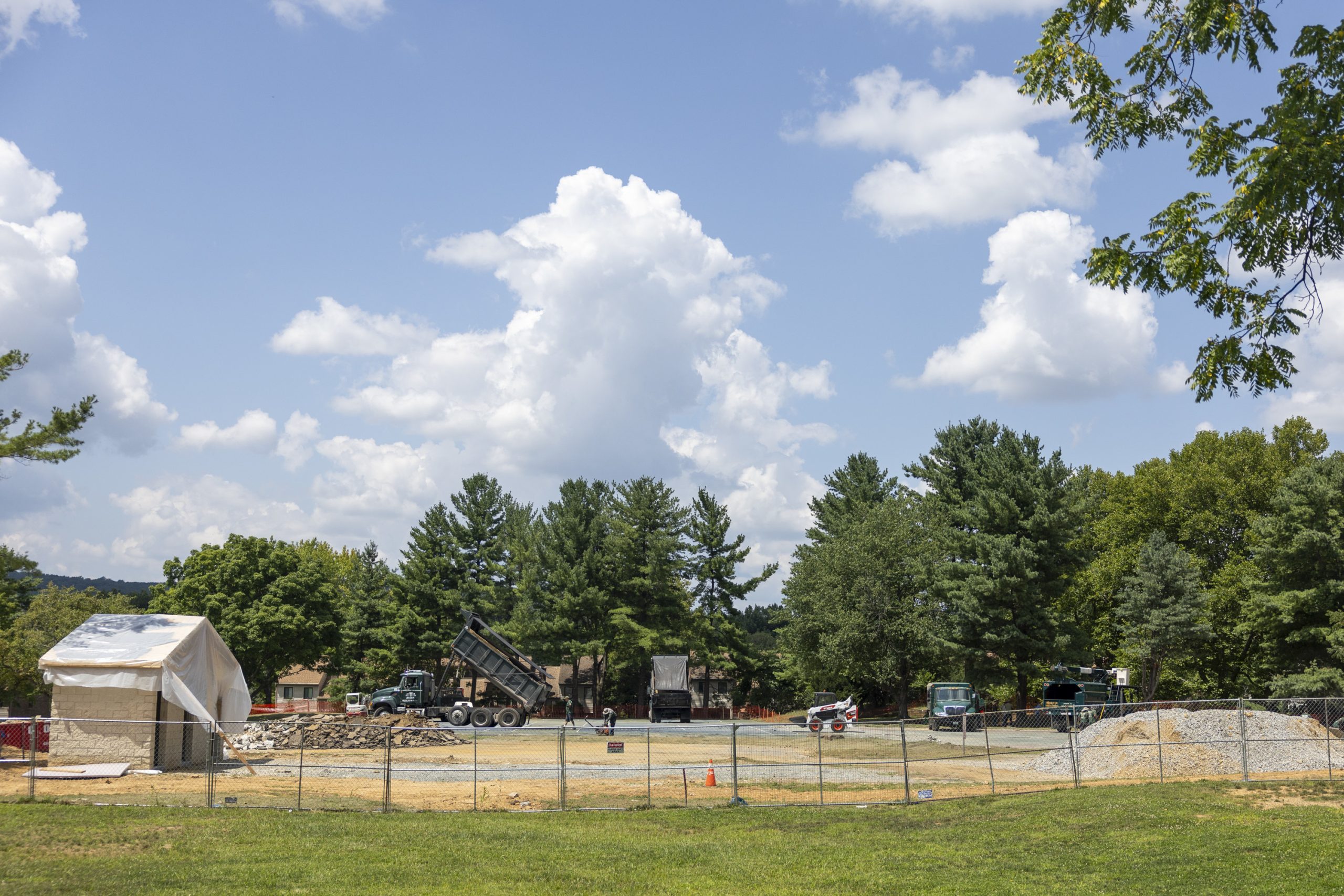
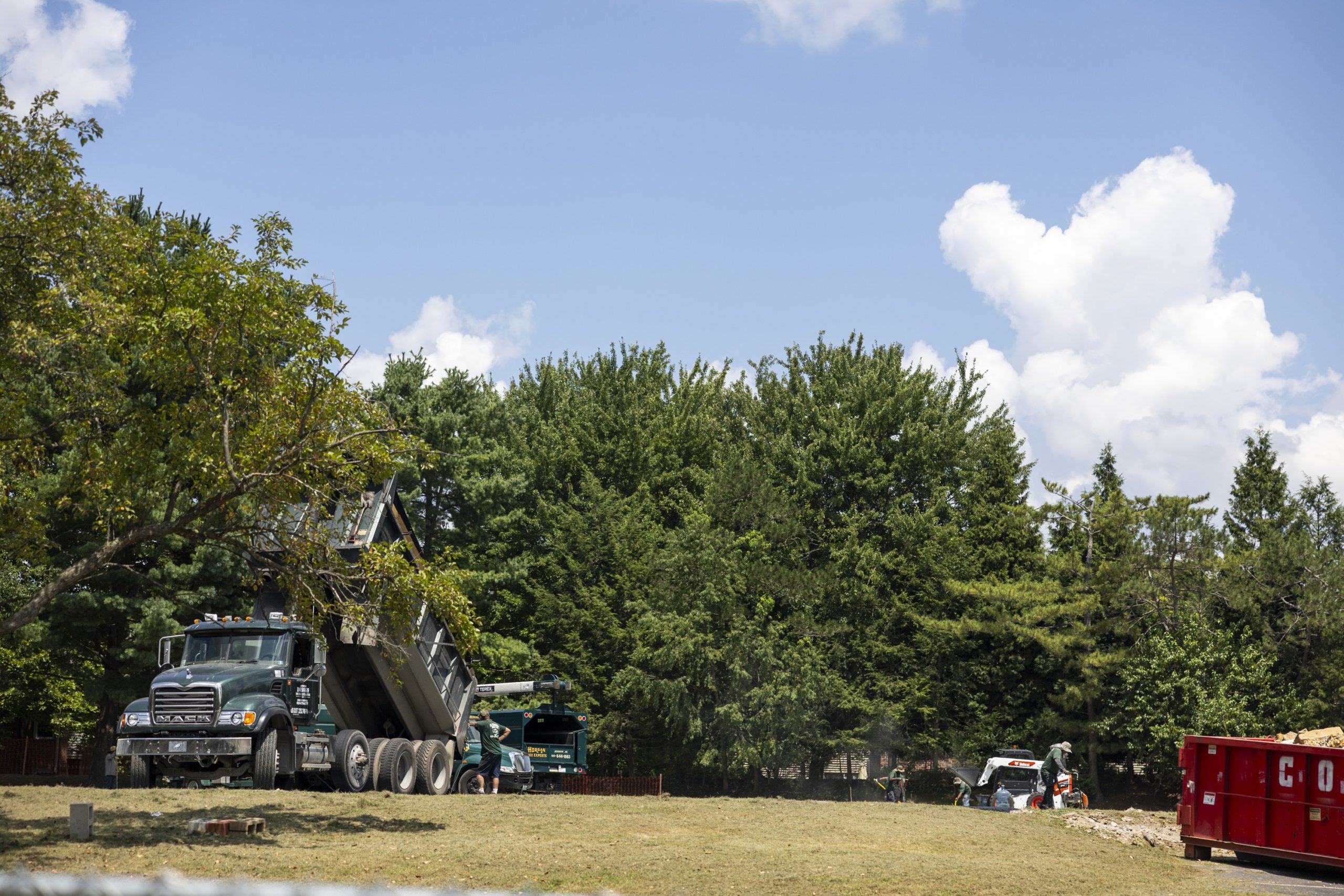
Construction site at Chase Road Park in Tredyffrin Township. The park has been sitting vacant and deteriorating for roughly a decade in Chesterbrook, Pa., on Friday, July 31, 2026.Tyger Williams / Staff Photographer
Township staff found that it was more cost effective to do a bulk of the work in one year, Miller said, so they decided to speed up the process, hence that initial jump.
Then, at their May meeting, the board added a late agenda item to green light spending about $1.7 million to fix up the park — including the courts, fencing, the parking lot, constructing the barn and restroom facilities, a pavilion, and other “miscellaneous” work.
In total, the township estimates it will spend at least $2.3 million on the park, including the initial $625,000 to take it by eminent domain, and the upgrades.
That increase boiled down to a variety of reasons, Miller said. The condition of the courts was “not what we expected,” and they needed to be completely redone. The township decided to install a better fence, with sound-dampening material to snuff out the bouncing of pickleballs, which needed to be installed deeper into the ground than the previous posts. The bathroom building was “vandalized pretty heavily,” so they decided to knock it down and start over. Plus, “prices are higher” for materials like asphalt, he said.
“There’s a bunch of things like that that get it to creep,” he said.
Miller said the park will be paid for out of the regular operating budget; whatever doesn’t come out of normal tax revenue will come out of the general fund, which sits at about $18 million, he said.
The concerns
Heaberg, the former supervisor, told the board his “jaw was hanging open” when saw them approve the budget change for more than $1.7 million with no discussion.
“It blows my mind, really,” he said.
Speaking to the board in July, resident Carol Clarke didn’t “know how you can, in a meeting, go past the budget by more than a million dollars.”
“I think you owe it to the taxpayers to acknowledge what you’re doing, and maybe the taxpayers might have said, ‘Whoa, is this an appropriate use of our funds? Could we be doing something else?’” she told them. “I support the park, but maybe it would have been an idea of, ‘Well, let’s get the funding in place, etc., and then we can add on to the park.’ … There’s good things that are being done, but is that a wise use of our funds?”
Plus, the township’s use of the COSTARS, a program that allows local governments to purchase supplies and services through state-managed contracts, seemed problematic to resident Ray Clarke, who argued the project should have been competitively bid, citing the township’s charter.
“All projects must be competitively bid, with exception of a few things into which this does not fall,” he told the board, noting that “all the sudden” a list was given by the same contractor who worked on nearby Wilson Farm Park, which was renovated in 2025 and 2026.
“Which may well be the lowest cost — who knows, we have no idea,” he said.
Miller disputed that reading, saying the township was within its rights to use the COSTARS program rather than request bids.
The pushback from residents has led to some charged moments in recent months.
Board member Carlotta Johnston-Pugh said she understood “the public is having a hissy fit because they don’t feel like they were involved. I understand that.”
“Because yes, if a million dollars or a $1.2 or $2 million is coming out of a general fund or a piggy bank, yes, everybody in this township should have a say in it. What do you want us to do? Do you want us to stop the project completely, go back to the drawing board?” she said. “… I’m getting a headache. I’m actually getting a headache.”
The park on Chase Road in Tredyffrin Township will offer tennis and pickleball courts, plus a bathroom building, pavilion and grassy recreation space. Construction is underway in Chesterbrook, Pa., on Friday, July 31, 2026.Tyger Williams / Staff Photographer
The flip side
The project isn’t without its supporters, however, arguing the board had been clear about the timeline and the scope.
“We went through 10 years of a derelict property in our neighborhood and we are grateful” the work isn’t being phased in, like previous plans discussed, said Joanna Fisher, of the Chesterbrook Civic Association.
Tim Connor, who lives near the park, said the alternative was dozens of townhouses, which would have been a negative for the community.
“Yes, it’s an investment right now, but long-term, those 50 townhouses would have had so many kids in the schools. It was a long-term loser. I think [this is a] better alternative,” he said.
And for Miller, the park has been a personal goal: He campaigned on it. The township is working with Miller, separately, for naming rights of the park which he’d purchase for $625,000 — the initial cost to purchase the land. (It would not be named for Miller himself, he said.)
Miller abstained from an initial vote in June OK’ing the township to draw up an agreement with the solicitor for naming rights. Miller said if someone else wanted to donate, he’d drop his bid, but he had the “capacity and willingness, and it’s important to me.”
“When I ran this time, I said I was going to get this park built. I got over 8,000 votes,” he said later. “It seemed like something I should do since I told people I’d get it done.”
This suburban content is produced with support from the Leslie Miller and Richard Worley Foundation and The Lenfest Institute for Journalism. Editorial content is created independently of the project donors. Gifts to support The Inquirer’s high-impact journalism can be made at inquirer.com/donate. A list of Lenfest Institute donors can be found at lenfestinstitute.org/supporters.
Psychiatry’s leading guide to diagnosing mental health conditions is due for a major update — and a University of Pennsylvania psychiatrist is heading the effort.
Called the Diagnostic and Statistical Manual of Mental Disorders, the DSM was first published in 1952 and has historically been updated every 10 to 20 years.
The American Psychiatric Association released the last major update, the DSM-5, in 2013. (A text revision came out in 2022.) There is currently no estimated date of publication for the next edition, given the scale of the project.
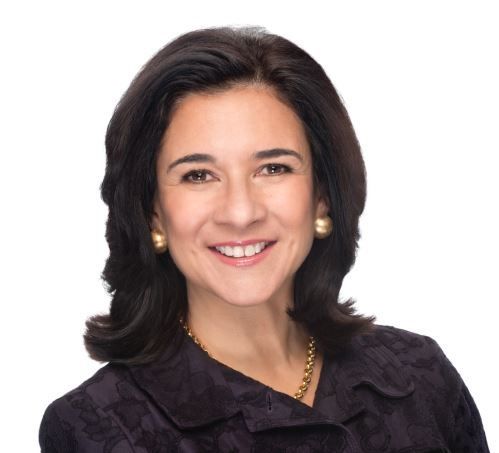
Maria Oquendo, who chairs Penn’s department of psychiatry, was tapped to lead the strategic committee for the sixth edition. That will entail developing a road map for the future of the DSM, based on more than a decade of advances in research and patient care.
“I am very honored and also very daunted,” Oquendo said.
The group has proposed creating a “living DSM,” changing the manual’s name, and making diagnoses more “person-centered.”
There are subcommittees focused on the socio-economic, cultural, and environmental determinants of health, the biological factors behind mental health conditions, symptoms spanning multiple conditions, and functioning and quality of life.
Past DSM updates have similarly introduced sweeping changes — including changing how autism is diagnosed and adding “prolonged grief disorder” as a condition.
The manual is commonly used by mental health professionals, researchers, insurance companies, and the legal system.
The committee wants to make sure a small change doesn’t cause drastic ripple effects for the public, such as disqualifying people from insurance coverage or altering “the standard for deeming someone not criminally responsible,” Oquendo said.
“If it has a big impact, then the rationale has to be extremely robust,” she emphasized.
The Inquirer spoke with Oquendo about what changes could be coming in the next edition of the DSM in a conversation lightly edited for length and clarity.
Maria Oquendo, who chairs Penn’s department of psychiatry, was tapped to lead the strategic committee for the next edition of the DSM.Courtesy of Penn Medicine
What is the DSM?
The DSM is a clinical manual intended to help clinicians make diagnoses.
It provides not only a list of all of the diagnoses but also descriptions that include some background information like family history. Importantly, it makes sure that when I, as a clinician, am talking about obsessive compulsive disorder, the person who’s listening to me knows exactly what I’m talking about.
The reach of this book is quite global, and in many places such as Western countries, it’s used as the primary diagnostic tool.
What changes are you hoping to make with the new edition?
There are people who refer to the DSM as the Bible. It’s not the Bible. At best, it’s a dictionary. And what we want to do is increase focus on contextual factors that are important for making a diagnosis. Ideally a person-centered explanation is about not only what the disorder is, but what’s contributing to it. We know that socio-economic, cultural, and environmental factors are super important for mental health.
If you’re assessing someone, knowing about that can be really helpful to understanding that person and where they are coming from.
As an example, if somebody comes from a culture like my culture (Puerto Rico), where people have very strong connections with the deceased, sometimes they experience the deceased person’s presence or hear them talk, especially at night. That could be construed to be hallucinations, and yet in the context of not only my culture but many cultures, that would be completely normative.
What other changes are being considered?
We are very focused on making sure that functioning and quality of life get the attention that they deserve. There are some people who have lots and lots of symptoms, and they’re happy as a clam. The amount of distress that a person feels can vary quite significantly, and it’s very relevant in terms of not only diagnosis but treatment planning. What are the best interventions to help that person get better?
We also have a section on biomarkers and biological factors. That’s really important because, to date, the DSM has been kind of agnostic about what the contributors to mental disorders are. But we know that there are biological contributors, and we also know that the environment is extremely important, and it’s the interaction of those two things that is critical in terms of whether an individual manifests a mental disorder or not.
What do you mean by biological factors?
I don’t necessarily only mean things like genetics and predisposition. Experiences like trauma can change our biology. We know that the stress response system in the brain can change very dramatically after trauma. That’s another biological contributor to a mental disorder that is not innate.
Another proposed change is to encourage broader diagnoses. Can you elaborate on that?
Historically, the DSM has encouraged precise diagnosis to the extent that it’s possible. But we think that in most first encounters, it’s very common not to be sure what the diagnosis is. You may know that a person has a mood disorder of some type, but you may not be sure if they really have bipolar disorder or major depression, as an example. Sometimes it takes time for that to become clarified. You need to get collateral information from loved ones to confirm what’s happening in the environment, or it may take time because you just need the symptoms to evolve.
We’ve looked at data from insurers, and found that people are using more general diagnoses. What we want to do is provide a platform so that people can start from that, and as they get to know the patient better, refine their diagnosis with more data and more information.
What about the proposal to change the DSM’s name?
It’s called the Diagnostic and Statistical Manual because, when it was first developed, the goal was to be able to develop estimates of the frequency of diagnosis, so public services could be planned. But now that’s not what it’s used for at all. We actually are planning to change the name to Diagnostic and Scientific Manual because we want to strongly communicate that this is based on science.
How could this next update make the manual a “living DSM”?
The American Psychiatric Association really wants to make sure that this next DSM can stay as up to date as possible. The idea is that there would be a book version, but also an electronic version that would be updated on a periodic basis.
One of the things that’s really tricky about that is that you want to keep things current — we don’t have to wait 13 years for things to be updated. But if you change things too much, you drive people in the field crazy.
It will soon be closing time for New Barber’s Hall, an iconic Black cultural space that has brought jazz, revelry, and community to North Philadelphia for nearly 50 years.
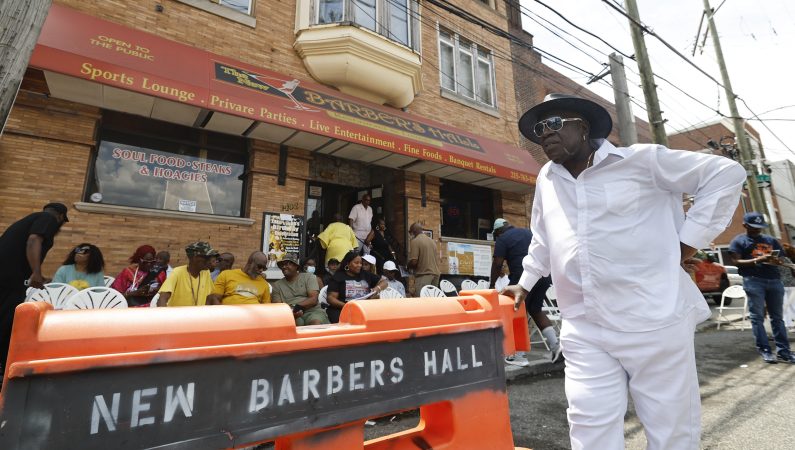
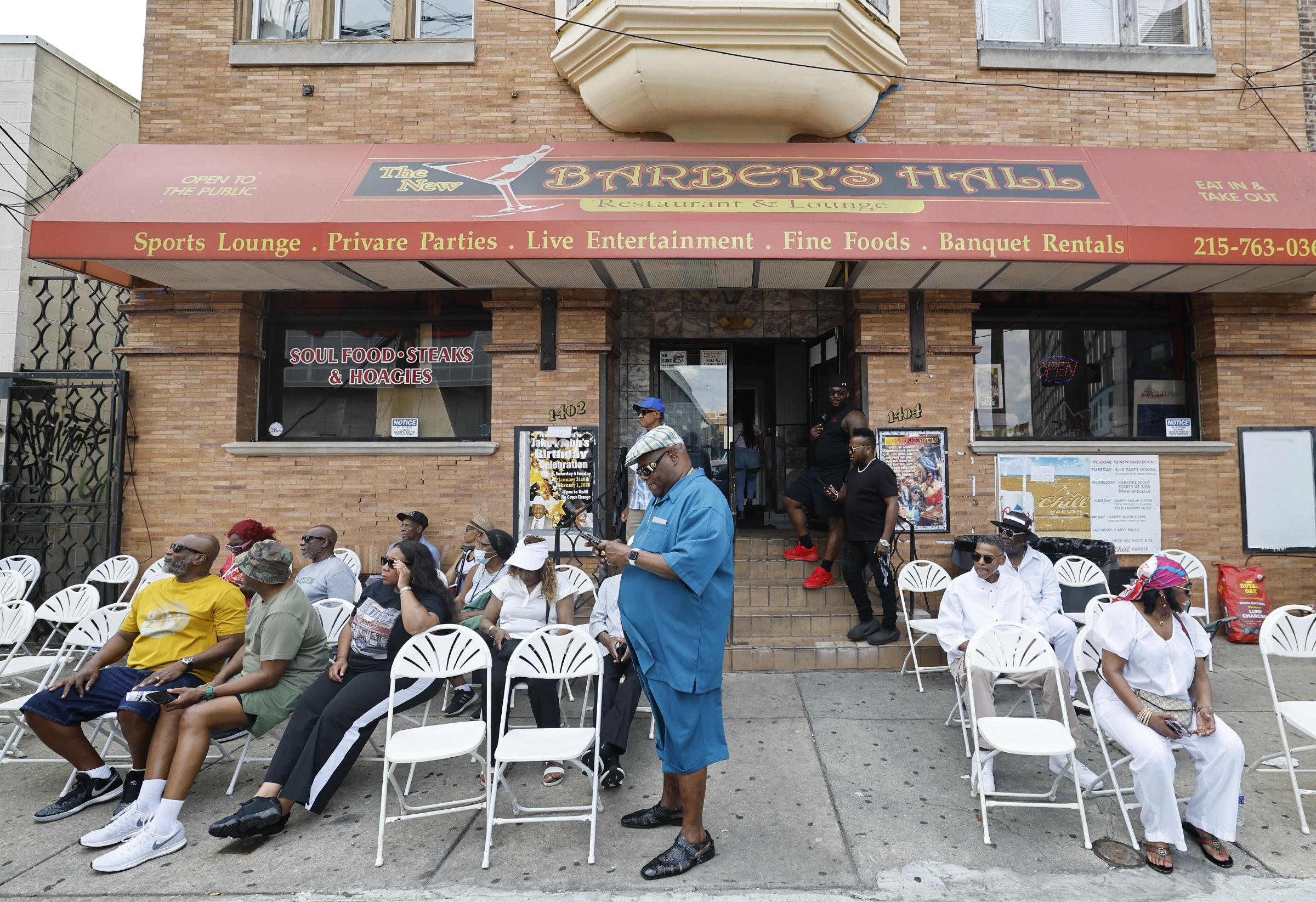
On Saturday, the combination music venue, restaurant, and ballroom on the 1400 block of West Oxford Street celebrated what will be one of its last hurrahs — the longtime owner, Jake Adams, has sold the building.
Adams and his wife, Sarah, said they plan to keep the joint open for as long as they see fit, though at some point the buyer — neighboring Temple University — will take over the property to enact plans not yet revealed.
Before curtains are called, local leaders and hundreds of loyal patrons gathered to celebrate decades of good times and cultural milestones that took place at New Barber’s Hall, a three-story brick building that dates to the 1800s and was once a social hub for the city’s Black barbers.
While there was plenty of talk about icons who had once played gigs or simply passed through — from Miles Davis and John Coltrane to Patti LaBelle and Boyz II Men — the afternoon’s focus was largely on Adams, who has diligently played host since purchasing the building in the late 1970s.
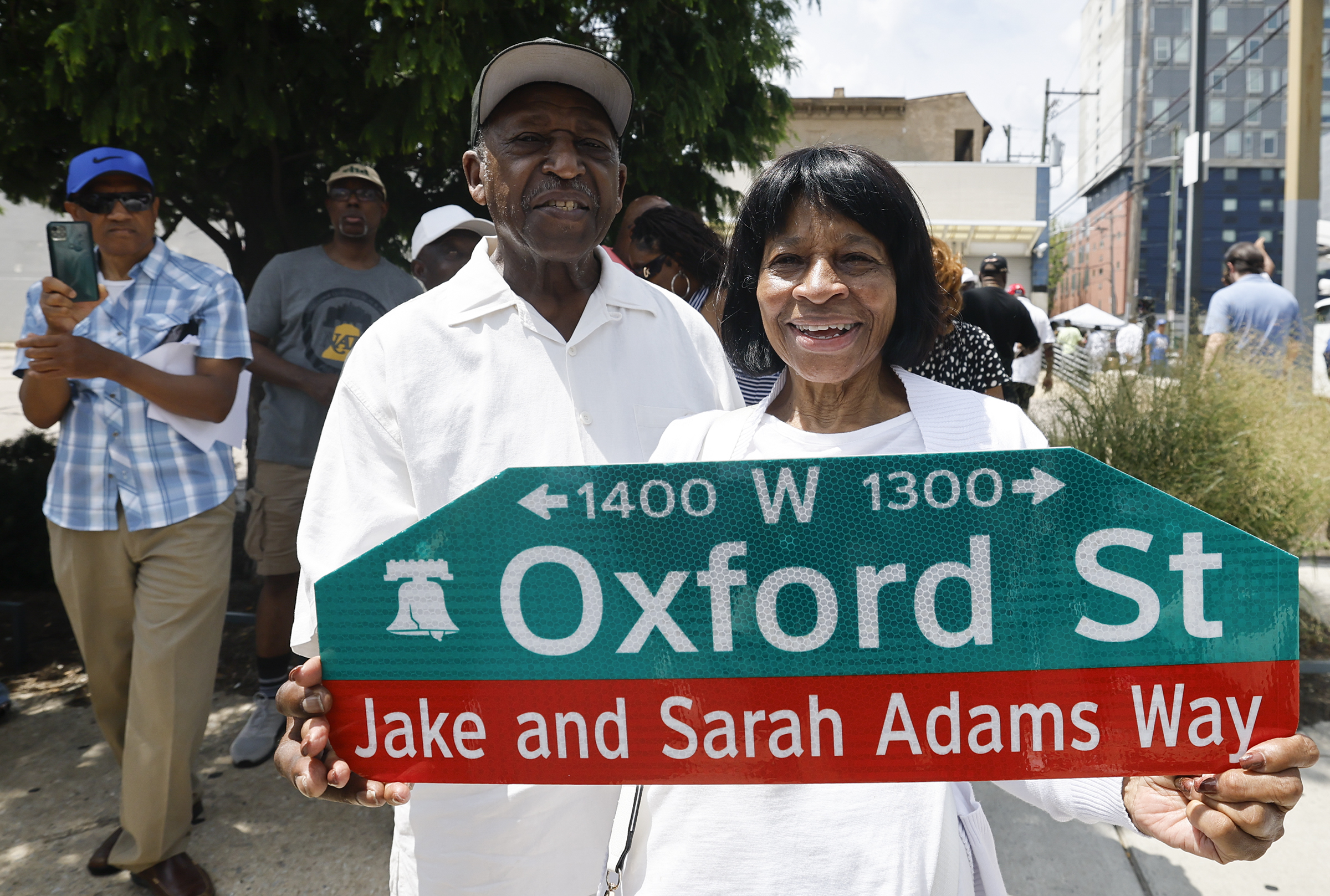
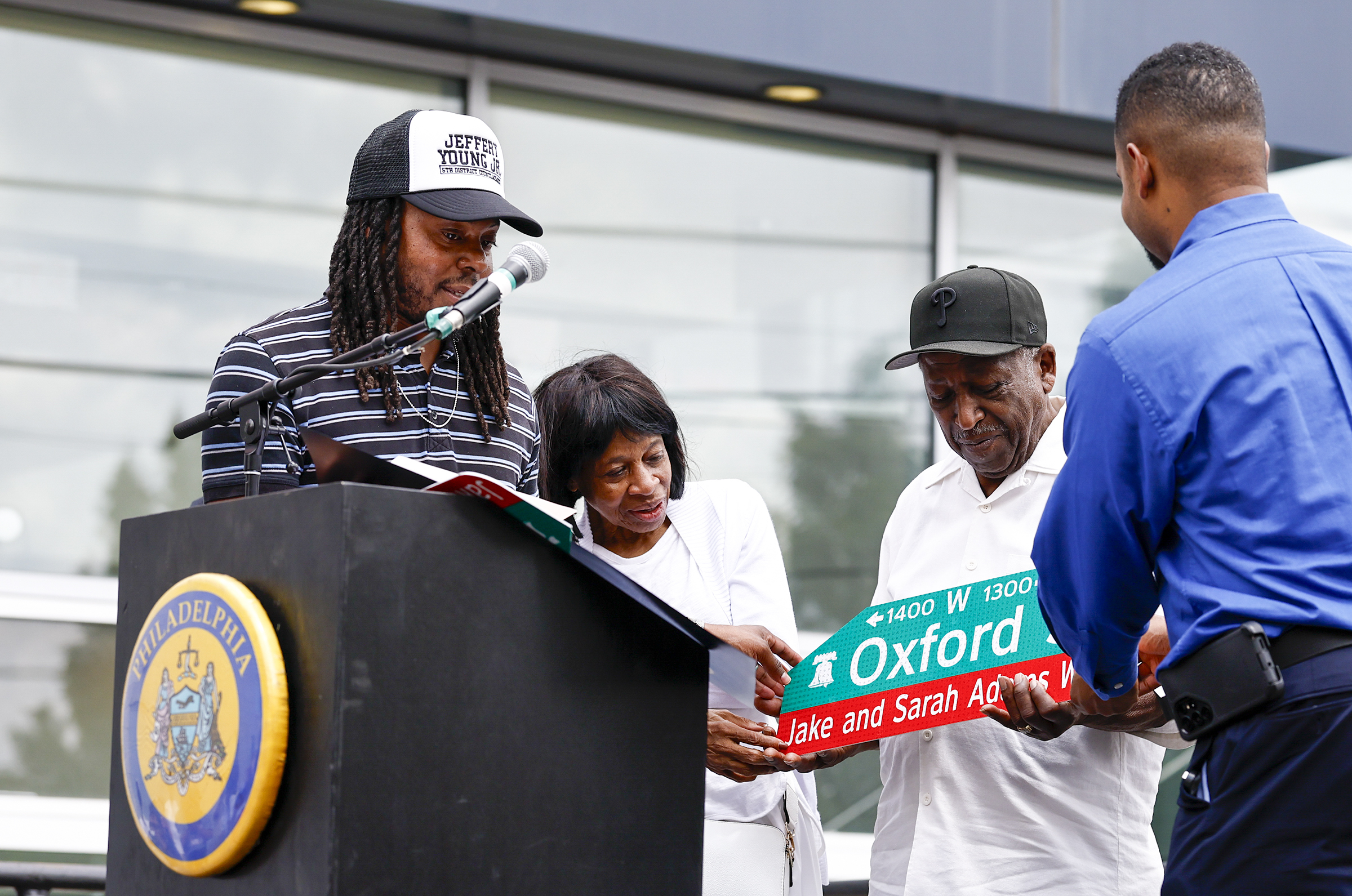
New Barber’s Hall owners Jake and Sarah Adams hold a street sign in their honor during a Barber’s Hall community legacy celebration, a daylong celebration of music, history, and community in North Philadelphia on Saturday, Aug. 1, 2026.Yong Kim / Staff Photographer
To honor the duo, the celebration included the unveiling of Philadelphia’s newest street sign, designating that portion of West Oxford Street as “Jake and Sarah Adams Way.”
“For almost 50 years being a business leader here in the city, Jake has given back numerous times,” said City Councilmember Jeffery Young, whose district covers much of North Philadelphia, as he announced the new placard.
“When we announced we were doing this, people said, ‘Oh, my God, I had my baby shower there, my wedding reception there, I met my spouse there.’” Young said. “That’s what this place is.”
Adams, who in addition to owning New Barber’s Hall was a Democratic leader of the city’s 14th Ward, gave bittersweet remarks as he thanked the crowd for years of support.
“I tried to fix the building. I tried to make sure that everybody had a great time,” he said.
New Barber’s Hall owners Jake (second right) and Sarah Adams receive a street sign in their honor presented by 5th District Councilmember Jeffery Young Jr., (left) during a Barber’s Hall community legacy celebration, a daylong celebration of music, history, and community in North Philadelphia on Saturday, Aug. 1, 2026.Yong Kim / Staff Photographer
The sale is the latest development in the building’s lengthy history.
Constructed in the 1860s, it evolved over the decades to house various civic and fraternal organizations such as the National Council for Jewish Women and the Quaker City Wheelmen, and in the early 20th century it spent time as a bicycle factory.
The Barber’s Hall name came about when Black barbers pooled their money to purchase the building in 1949. It soon became a hub for the city’s growing Black community, and musicians staying at the nearby Chesterfield Hotel — listed in the Jim Crow-era “Green Book” — often stopped by to play.
Adams and his older brother purchased the building in 1978, running it as a jazz venue and soul food restaurant.
In addition to LaBelle, greats like Isaac Hayes, Grover Washington Jr., and Robert “Bootsie” Barnes graced the room (in an oft-repeated tale, a teenage Jill Scott was turned away because she was underage).
Guests attend the New Barber’s Hall community legacy celebration, a daylong celebration of music, history, and community in North Philadelphia on Saturday, Aug. 1, 2026.Yong Kim / Staff Photographer
The building was set to receive a historic designation from the Philadelphia Historical Commission in 2024 that would have safeguarded it from demolition. But at the last minute, Adams had a change of heart about the nomination, saying he did not want his children to inherit a building with strict restrictions for potential buyers.
Temple, seeking to expand its footprint under president John Fry, quietly snatched up the building earlier this year for $2.3 million. The school will “explore further uses for the property, specifically related to how it might support the soon-to-be-completed campus development plan,” Temple said in a statement, according to the Philadelphia Business Journal.
In the meantime, Adams told revelers Saturday that the true coda for New Barber’s Hall won’t come until he says so, adding that Temple had agreed to the arrangement.
For those like Lisa Sanders, who grew up around the corner from the venue, that day will mark the end of an era.
“It’s been a part of our family history,” said Sanders, 58, recounting countless birthday parties and platters of shrimp and chicken at the hall.
“It’s definitely been a pleasure, and [Jake and Sarah] deserve it,” she said. “I’ll really miss Barber’s Hall — but as long as I can still go, I’ll be happy about that.”
Clowns, grim reapers, witches, and vampires ventured down the Shore on Saturday morning to welcome spooky season a little early.
Spirit Halloween, the retailer best known for its costumes, animatronics, and creepy dolls, hosted the annual grand opening of its 20,000-square-foot flagship store in Egg Harbor Township, N.J. Preregistration for the event was capped at 2,000 people, but a company spokesperson estimated that an additional 1,000 showed up for general admission.
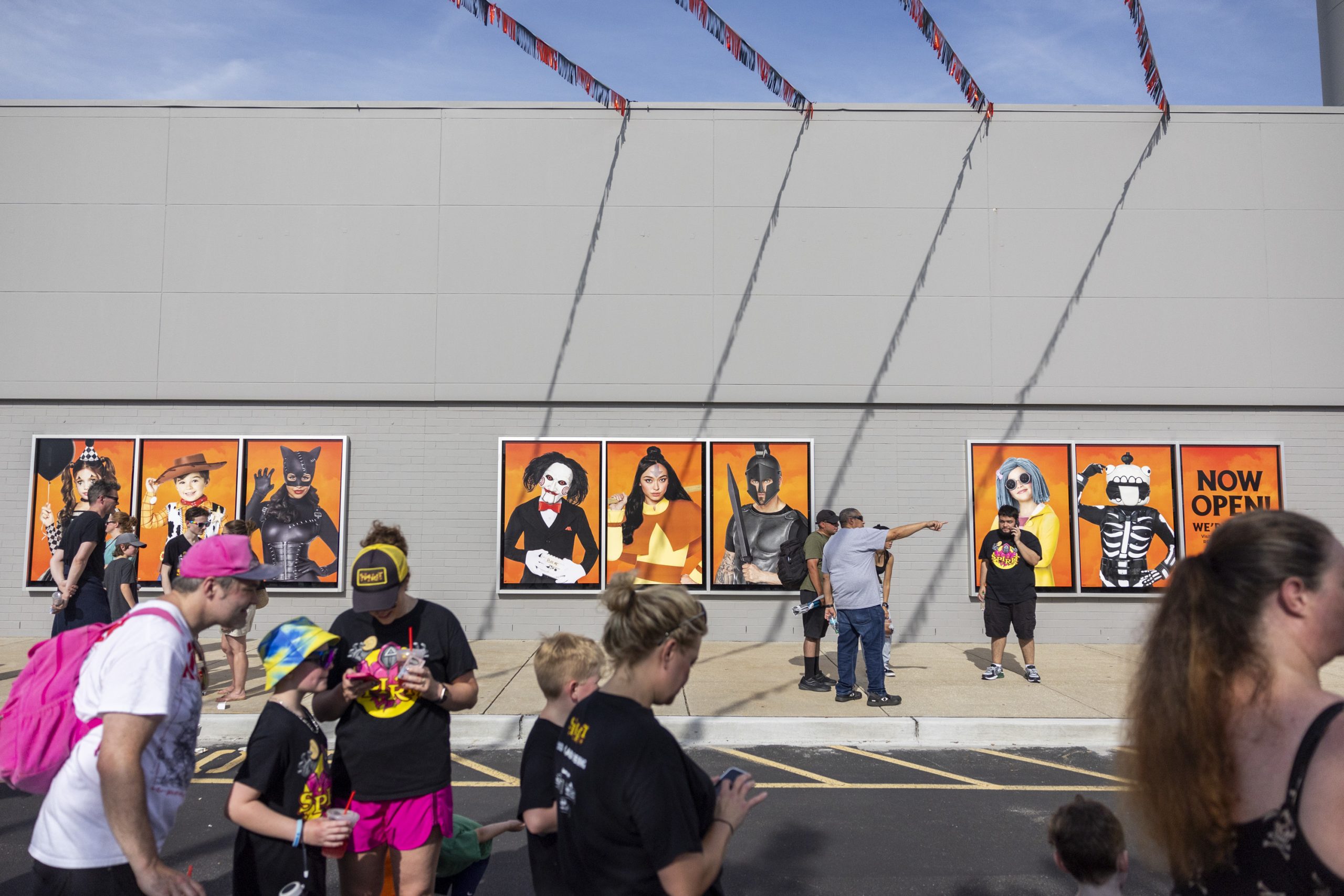
By 9 a.m., the line snaked around Harbor Square Mall despite the heat. Seagulls circled. Food trucks, music, face-painting, outdoor games, and freebies awaited those who made it through. Children and adults alike varied in dress, from shorts and T-shirts to bloody character costumes.
Cesar and Adrianna Balmaceda, with son Cesar, were among the attendees who made it through. They gathered near the entrance as Jack the Reaper, Spirit’s mascot, parachuted out of a blimp overhead.
A skydiver jumps out of the Goodyear blimp wearing a Jack the Reaper costume for the newly opened Spirit Halloween flagship store in Egg Harbor Township, N.J., on Saturday, Aug. 1, 2026.Tyger Williams / Staff Photographer
When Cesar Balmaceda, 31, asked the first person in line when they arrived and where they came from, he was not too surprised by the answer: 5 a.m., from Ohio.
“I don’t think it’s as bad as previously,” Cesar Balmaceda said. “People used to camp out for days.”
That obstacle had kept the Balmacedas, Atlantic City locals, from braving the line previously, even though 8-year-old Cesar makes YouTube videos featuring vintage Spirit animatronics. His favorite is Hugz the Clown, a discontinued 6-foot, purple-haired robot.
But this year, Spirit banned camping out and used the preregistration system instead, which allowed the Balmacedas to get free tickets after the deadline from a kind Facebook user. Young Cesar won a swag bag and quickly changed into themed Spirit gear.
Naoki Sanchez, 15, stood with her family nearby. They live in Atlantic City, too, and came to meet people with similar interests, since Sanchez also makes animatronic YouTube videos. On Saturday, she wore a zombie baby toy in a chest harness.
“It’s part of the Spirit Halloween community,” Sanchez said of gathering for the store opening. “We live here, basically.”
Jump scares and costumes galore
From bedazzled Michael Myers masks to dog costumes to a pop-up trash raccoon animatronic, visitors to the flagship store had no shortage of options.
When the doors opened at 10 a.m., employees called out numbers to welcome in small groups of customers one at a time. A life-size Freddy Fazbear animatronic, new to Spirit and sold only in person, sold out in 10 minutes.
But attendees outside awaited that news anxiously. Employees chatted that the first one was nabbed by a family from Canada, and they weren’t sure how they would get the 6-foot-6, $499.99 robot back home.
“Are there Freddys still?” a child shouted through the open doors.
Lori Tesoro, a Spirit spokesperson, said several other animatronics sold out, including a life-size Jason of Friday the 13th and Michael Myers of Halloween fame, along with a line of horror-themed teddy bears.
Nineteen staffers, including four from other stores, managed the frenzy.
A limit of one animatronic per person, from Art the Clown of Terrifier to Harmonica Hank (a skeleton scarecrow who can play your music via Bluetooth), kept things from getting too chaotic, as customers leaned on boxes to claim them. Staff wore “Camp Harbor Lake” T-shirts, the 2026 store theme, inspired by campground horror movies. One employee said the company spent about a year planning the celebration.
The chain, which operates more than 1,500 stores across the U.S. and Canada from August through early November, is headquartered in Egg Harbor in the same office as its parent company, Spencer’s.
The flagship location, which looks much like every other Spirit store, is owned by the chain year-round but is used for research and development during the offseason, Tesoro said.
About 400 Spirit stores opened on Aug. 1, while the rest will open in the coming weeks. Still, a company spokesperson said people came from hours away, including from California and the South, to get the earliest possible glimpse at Halloween.
‘Life’s too short’
Back in line, Anthony and Jessica Trabolse and their four kids, all under 8 years old, waited in the sun. They came to Jersey from Staten Island, N.Y., and already have their Halloween costumes planned out, which will likely include wardrobe changes.
During the Halloween season, Anthony Trabolse said, he works at Spirit to support his son Lucas and his horror obsession. They host an annual Summerween party, featuring years’ worth of Spirit animatronics. This year, Lucas, 7, said he hopes to expand his haunted collection with a 4-foot-10 evil clown, Wind-Up Wally, and meet his favorite Halloween YouTubers.
“‘Cause I really like Halloween,” Lucas said, sporting a Mohawk and a camera around his neck.
People gathering for the new Spirit Halloween flagship store in Egg Harbor Township, N.J., on Saturday, Aug. 1, 2026.Tyger Williams / Staff Photographer
Ashley Giordano, 23, and Aliah Roseman, 36, both work as special effects makeup artists for Reaper’s Revenge Haunted Hayride in Scranton. They drove more than four hours for the Egg Harbor event with Giordano’s son, Nico, to celebrate his birthday.
“He’s only 3, and he can name Spirit animatronics back to 2008,” Giordano said, fake blood spattered on her face. “That’s our Miss Rachel.”
Roseman said Saturday was their first time coming to Spirit’s annual flagship opening. After recent health issues and a cancer battle, Roseman said people should not deny themselves a good time, including a long Spirit Halloween road trip.
“Life’s too short to not do fun things,” Roseman said.
Tynan knew she wanted to retire back in 2020, when she signed her last contract with the station, which will end next month just as her youngest daughter heads off to college.
Since then, it had been something of an open secret inside the 6abc newsroom that Tynan’s time at the station was coming to an end. Any chance of her extending her contract ended a few years ago, when she experienced a short but intense bout of vertigo.
“For most of the day I couldn’t do anything, and I thought this must be what it’s like to be really old and infirm,” Tynan said. “I didn’t want to work all the way up to get to that stage, so it kind of sealed the deal.
“I’m 57, which is relatively young, I guess, for retiring,” Tynan added. “But I wanted to retire while I’m healthy and active.”
So rather than stick around 6abc or move up the national ladder, Tynan and her husband, Greg, plan to split time between their homes in Delaware County and Florida after her last day, Aug. 31. She even turned down a chance to come back to host Philadelphia’s Thanksgiving Day parade, something she has done for close to 25 years. But the idea of being able to cook Thanksgiving dinner for her family for the first time won out.
“My children have never spent the night before Thanksgiving in their own home. We’ve always been in a hotel by the parade route, and I’ve never actually cooked,” Tynan said. “I’ve always picked it up from Whole Foods and reheated it.”
Tynan discussed her decision to retire, what’s next, and the best and worst weather events she has covered in her three decades at 6abc. This conversation has been edited for length and clarity.
How do you plan on filling your retirement? Is it just going to be water-skiing and enjoying life?
That sounds pretty great!
That’s definitely a big part of it. That and visiting and watching all my daughters’ cross-country and track meets. I do want to stay active in animal rescue. … I’ve been really active with Providence Animal Center. I’m not sure exactly how I’ll do it, but I would definitely still want to be involved in that.
And I’d like to be able to go to bed at a decent hour.
What do you make of the reaction to your decision to retire?
I’ve been talking about it for months with my personal friends and they’d be like, “Philadelphia’s gonna freak,” and I’m like, “No, everyone’s gonna be fine.” I get it because I’ve been here for almost 31 years, so for a lot of people it seems like they’ve been watching me their whole lifetime. I think that Philadelphians have a special relationship with Action News that you don’t see in a lot of other cities or stations.
Are there any on-air memories that stand out?
One fun moment was when my earring fell off, and Jim Gardner got up. I saw him stand up and take off his microphone, and there was a frenzy behind the scenes, like, “Jim’s on the move. Traveler’s on the move.”
I tried to ignore it, and then I saw this white thing go behind my head, which I thought was a cloud animation. Then I realized it was his hair. It was hilarious and then it went viral — it was on Live With Regis and Kelly the next day and stuff, and that was fun.
Another one was when I was on the morning show with Monica [Malpass] and Rick [Williams], I would always try to crack them up by dancing off camera.
One time Rick told the director, “Record Cecily when she’s dancing.” I dance like Elaine from Seinfeld, but worse. And so they aired that.
Is there a reason you stayed in Philadelphia vs. moving to national television?
I was born and raised in Newtown, Conn., so I always watched the New York stations.
I thought I would work here a few years and then go to New York. Then I had I had some opportunities early in my career to go up. I filled in on Good Morning America for a full week with Charlie Gibson and Diane Sawyer, which was a great experience. Gibson gave me a bottle of champagne when the week was over.
I talked about going to New York with Tom Kane, who was the general manager of WABC and was the GM when I came to Channel 6. … But then I spent the rest of my week there and was like, “Man, I want to get back to Philadelphia.”
Philadelphia felt like home. … Even when I walked in for my interview, I felt really at home with everyone and they were all nice and welcoming. No backstabbing at all.
Also, once you have children, that really grounds you. Your children are growing up in a community, and you don’t want to uproot them and leave.
What are the best weather events to cover, and what are the worst?
The worst are tornado warnings because we get a lot of those nowadays, because we have more advanced radar … and we do have a warmer climate. But tornado warnings freak people out, because I’m telling them to get in their basement.
I was at the airport back in the spring … and the people in front of me recognized me and thanked me. They live in Mullica Hill, and they were there when they had the tornado warning and I told them to get in their basement. They said they got their kids and their pets down there … and when they got out of the basement, their house was destroyed. But they were OK. … That really hit home about the importance of our job. I kind of teared up.
I’m sure you hear the other side, too, when the weather shifts and your forecast might be off.
Oh, yeah. The whole saying, “Oh, I wish I had a job where I could be wrong 90% of the time and still keep my job.” I get that all the time. Anybody who says that doesn’t really understand the complexities of the atmosphere. … But I feel like when you’re in the public eye, you do have to grow a thick skin. Especially in Philly. They’re going to tell you what they really think, so they’re not going to sugarcoat it.
Is there a weather thing people still get confused by?
One thing I think people really don’t understand is tornado watch vs. warning.
When a tornado watch is issued, it usually means there’s like a 2% chance of a tornado happening in your neighborhood. It’s pretty low.
I think a lot of people think when there’s a tornado watch it means warning, which it doesn’t. It just means heads up. The warning is when you have to go to your basement.