The “hurry up and wait,” often for ridiculously long times for a news conference to start, or a newsworthy event to happen, or even everyday life to unfold is not just an occasional part of a career in journalism, it becomes the basic rhythm of the job.
Like spending an entire day outside a courthouse for a few brief moments and the opportunity to photograph defendants arriving or leaving (cameras are not allowed in courtrooms in Pennsylvania).
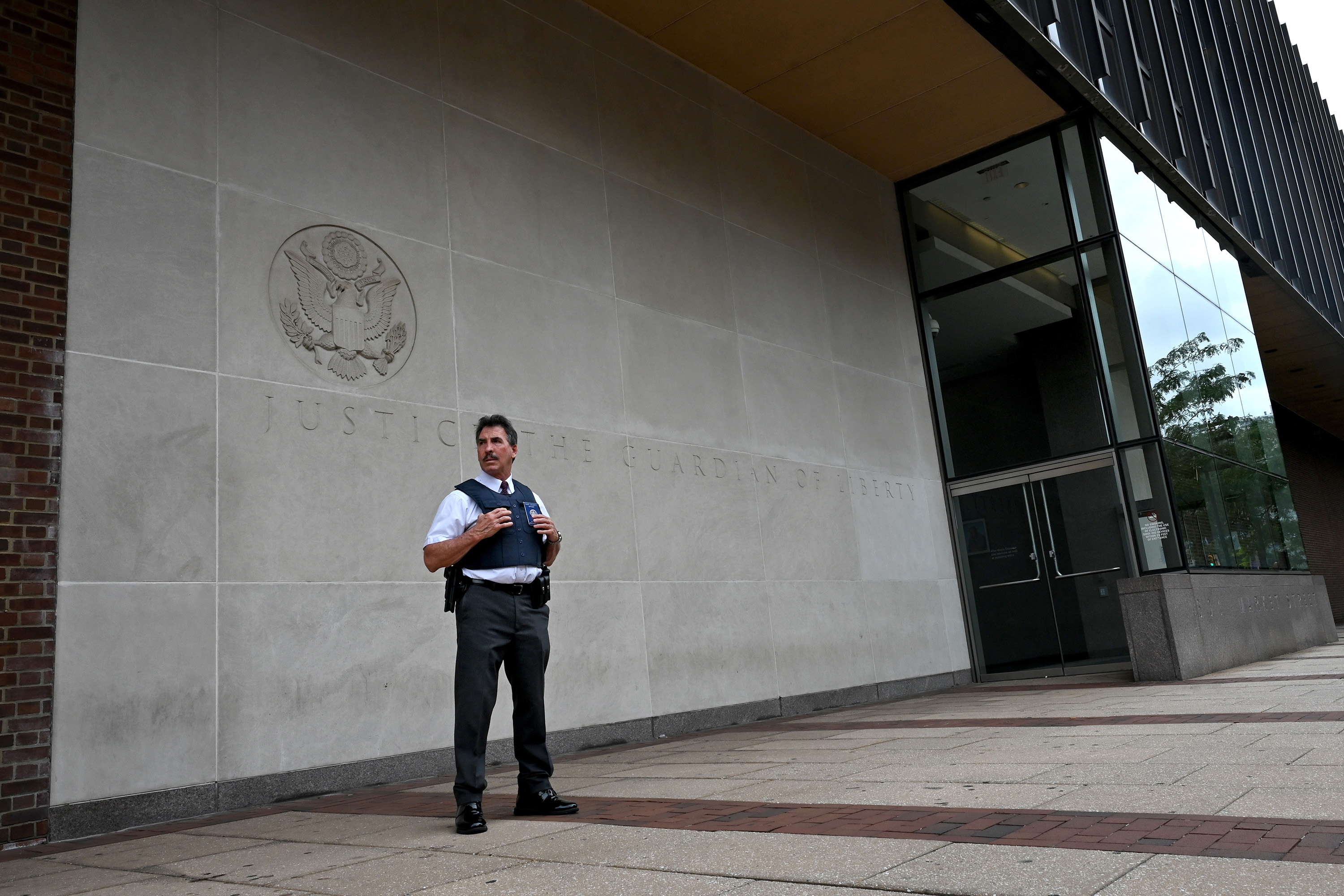
Waiting, with an officer with the United States Marshals Service, outside the James A. Byrne U.S. Courthouse at 6th & Market Streets.Tom Gralish / Staff Photographer
You’re waiting for something you can’t control, all the while trying to alert for the moment it finally happens.
Over my years as a photographer there has been one “wait” that is even more constant and one that I probably could control.
When I am assigned to photograph a building or city street scene I could just make sure my camera setting are all correct, my battery is fresh and I have clean SD card in the slot. Then make a quick snap to show readers what the building or street scene looks like and move along.
But no, I wait. A lot. For a bunch of random elements to line up perfectly.
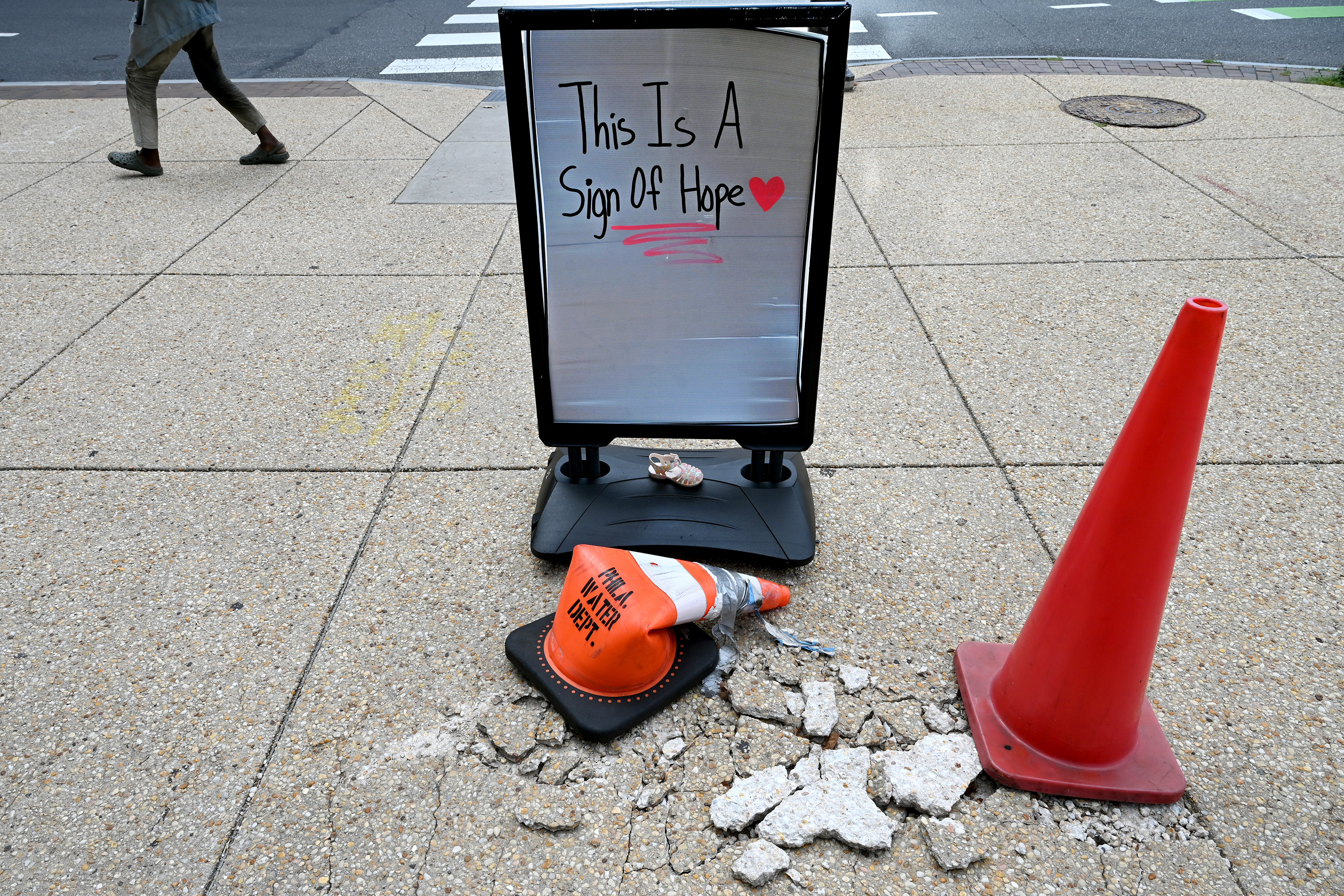
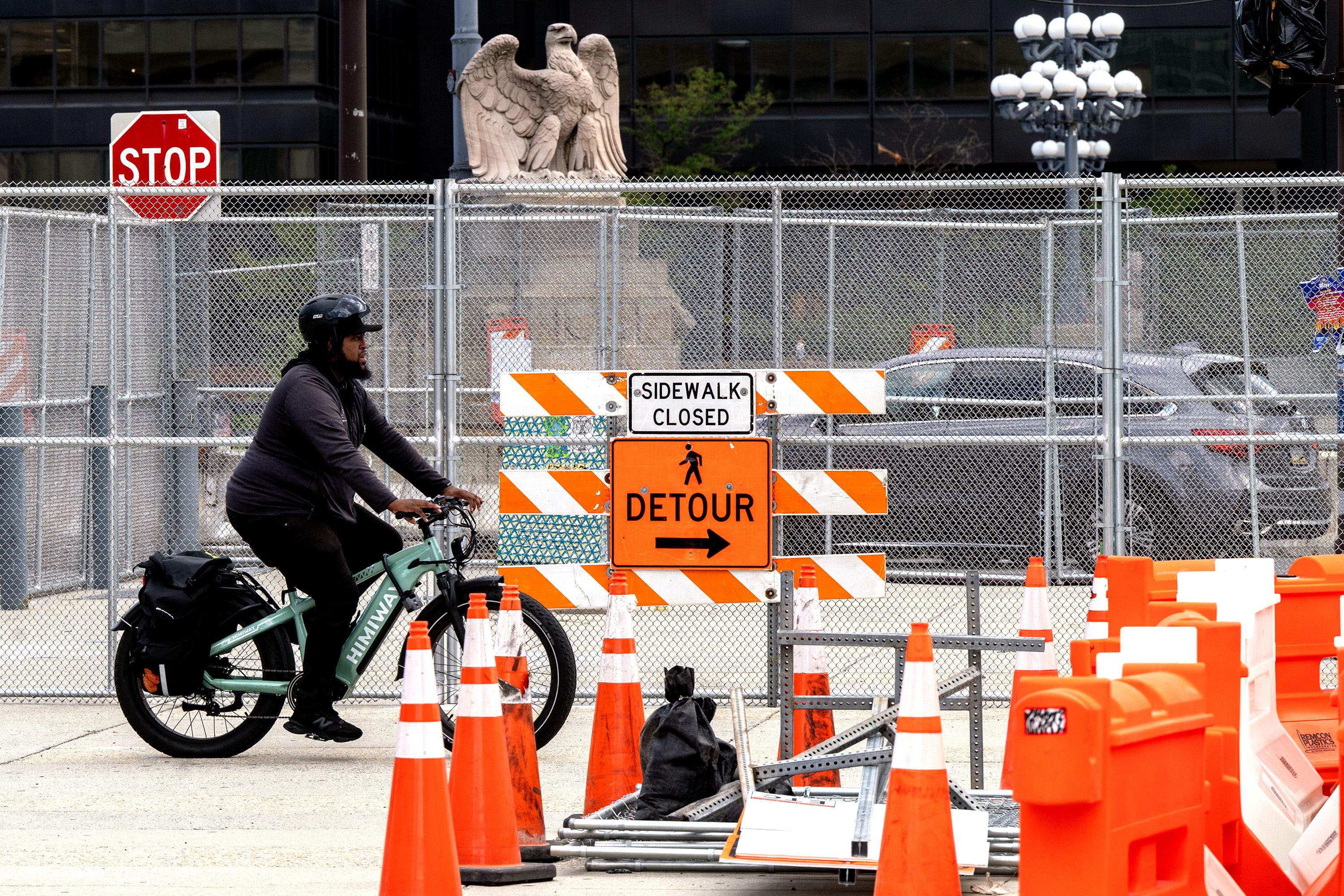
Waiting – without any luck – for an orange-clothed pedestrian or bicyclist. Tom Gralish / Staff Photographer
I stand there like the two characters in the 1952 Nobel Prize-winning Samuel Beckett absurdist play, Waiting for Godot. But instead of some mysterious stranger, I am waiting — and hoping — the stars all align just right, the photo gods are willing, and the universe gets it together to allow that one person, dog-walker, jogger, bicyclist, scooter, car, bus, or trolley to pass through my carefully pre-composed frame at just the “right” time. In the “right” place.
And maybe the “right” color. Like my yearslong Oy-Yo yellow pursuit (those waits however were for a mere 7.6 minutes at a time).
I like to think of myself as being patient and even visually heroic; good qualities to have in a photojournalist.
But anytime I really think about it or try to explain the “why?” to friends or even colleagues it ends up sounding both obsessive and pathetic.
The solitary waits are a great time for self-reflection. Or during more media busy events a chance to hang out with photo friends.
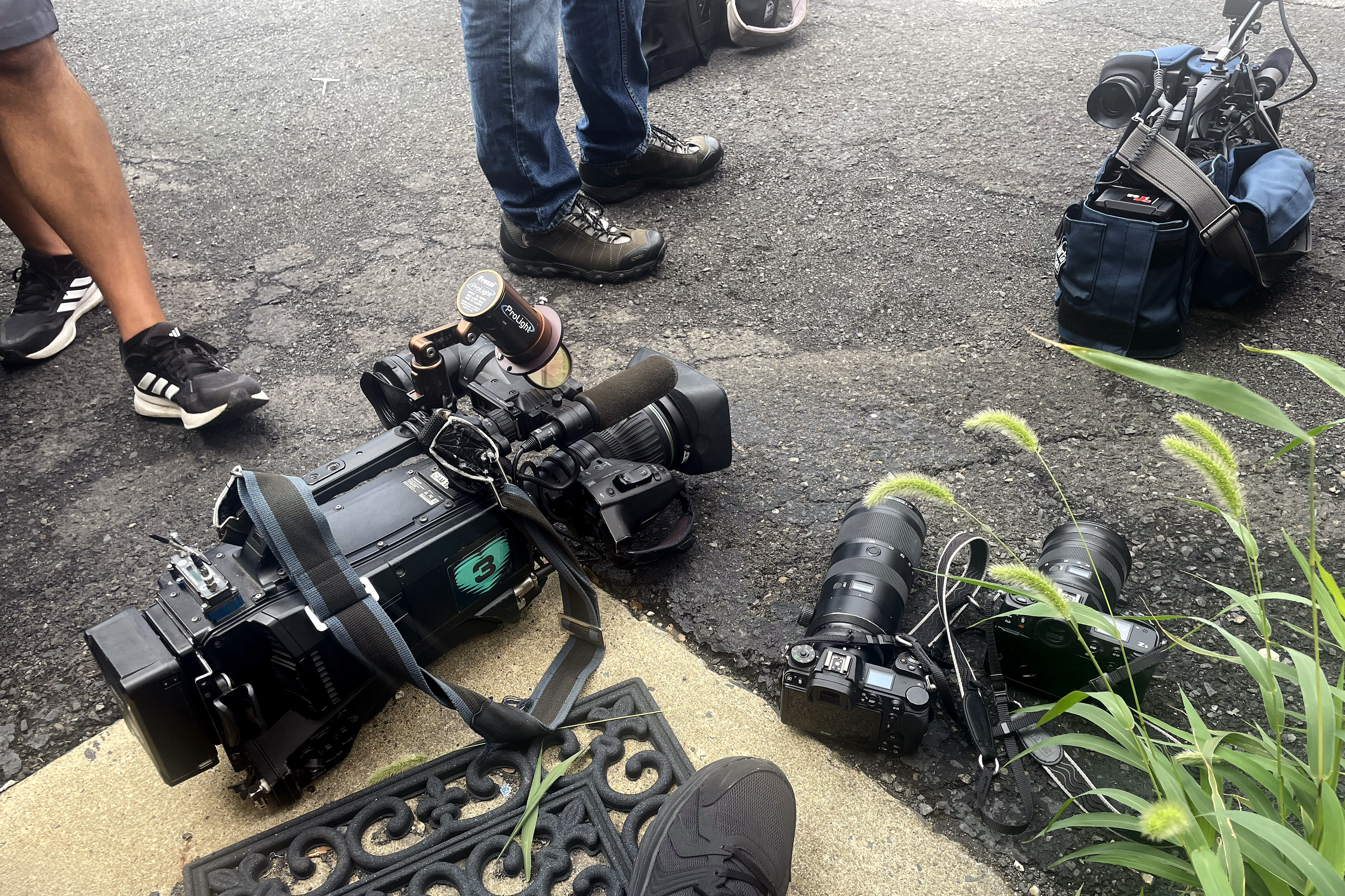
Waiting with the cameras and news photojournalists outside Montgomery County Magisterial District Court in Jenkintown.Tom Gralish / Staff Photographer
One last literary reference, before unfolding a few of the photos I’ve made recently while waiting. They’re another way I keep myself entertained, and help avoid feeling too much like Sisyphus, condemned to push that stone up the hill only to watch it roll back down.
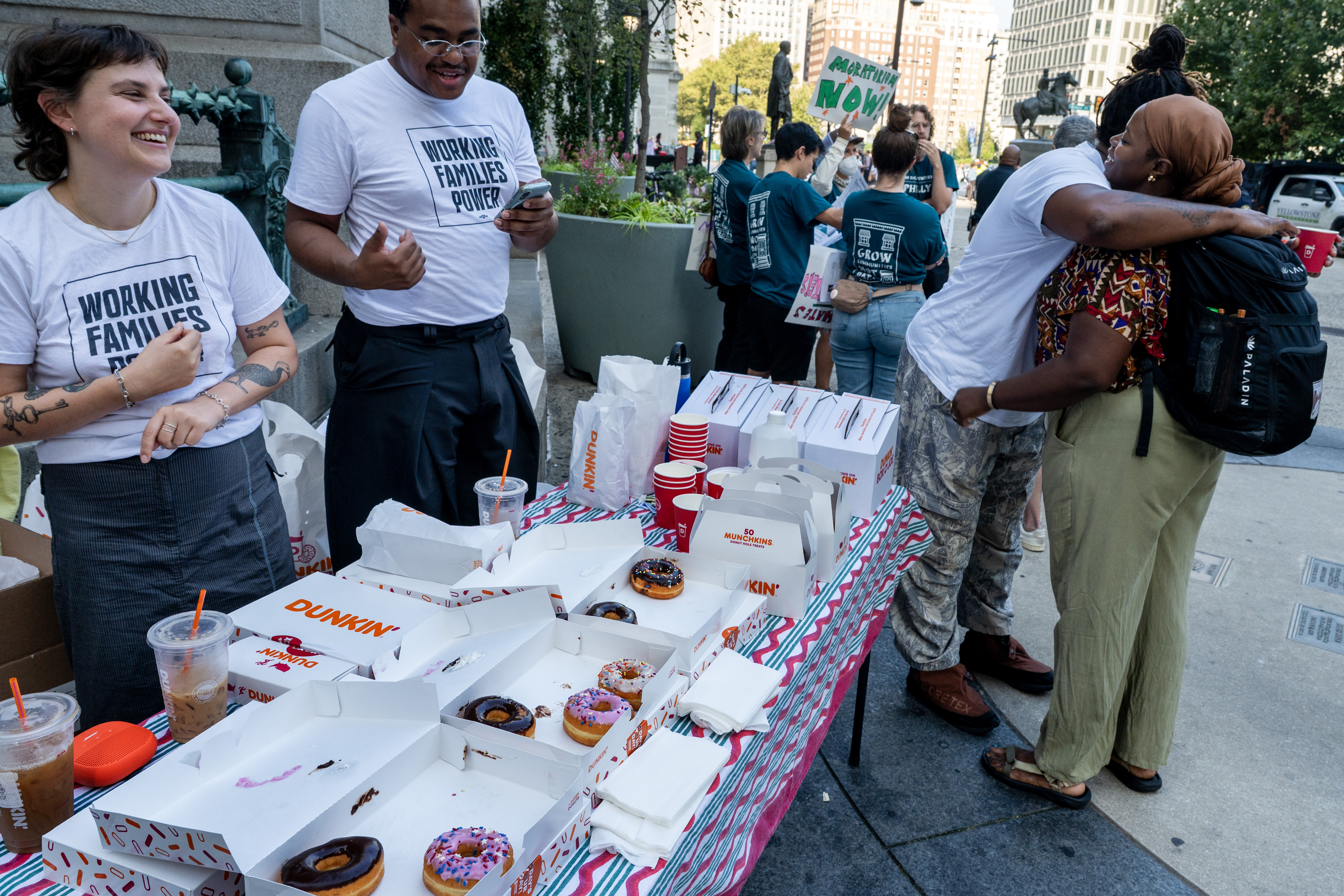
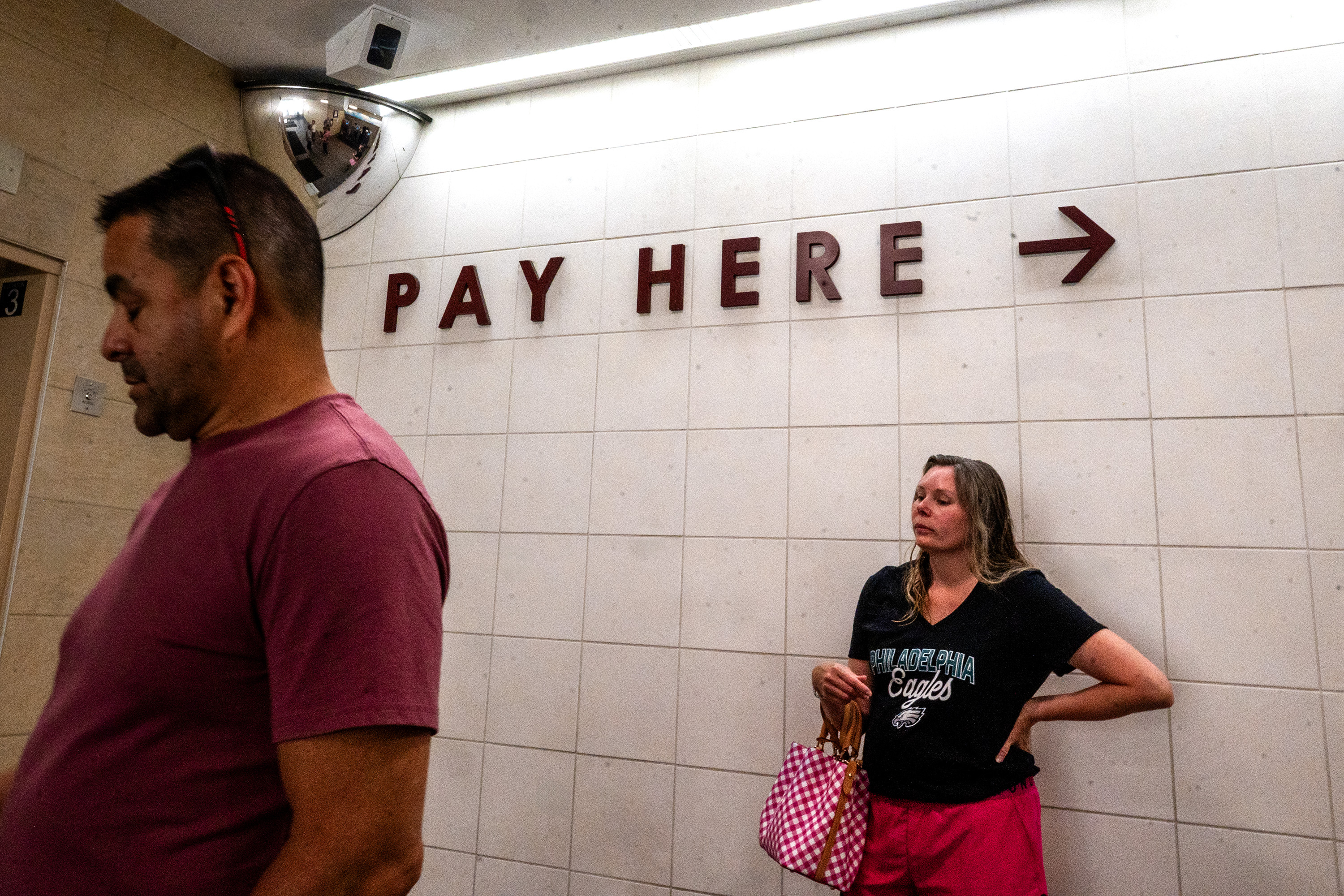
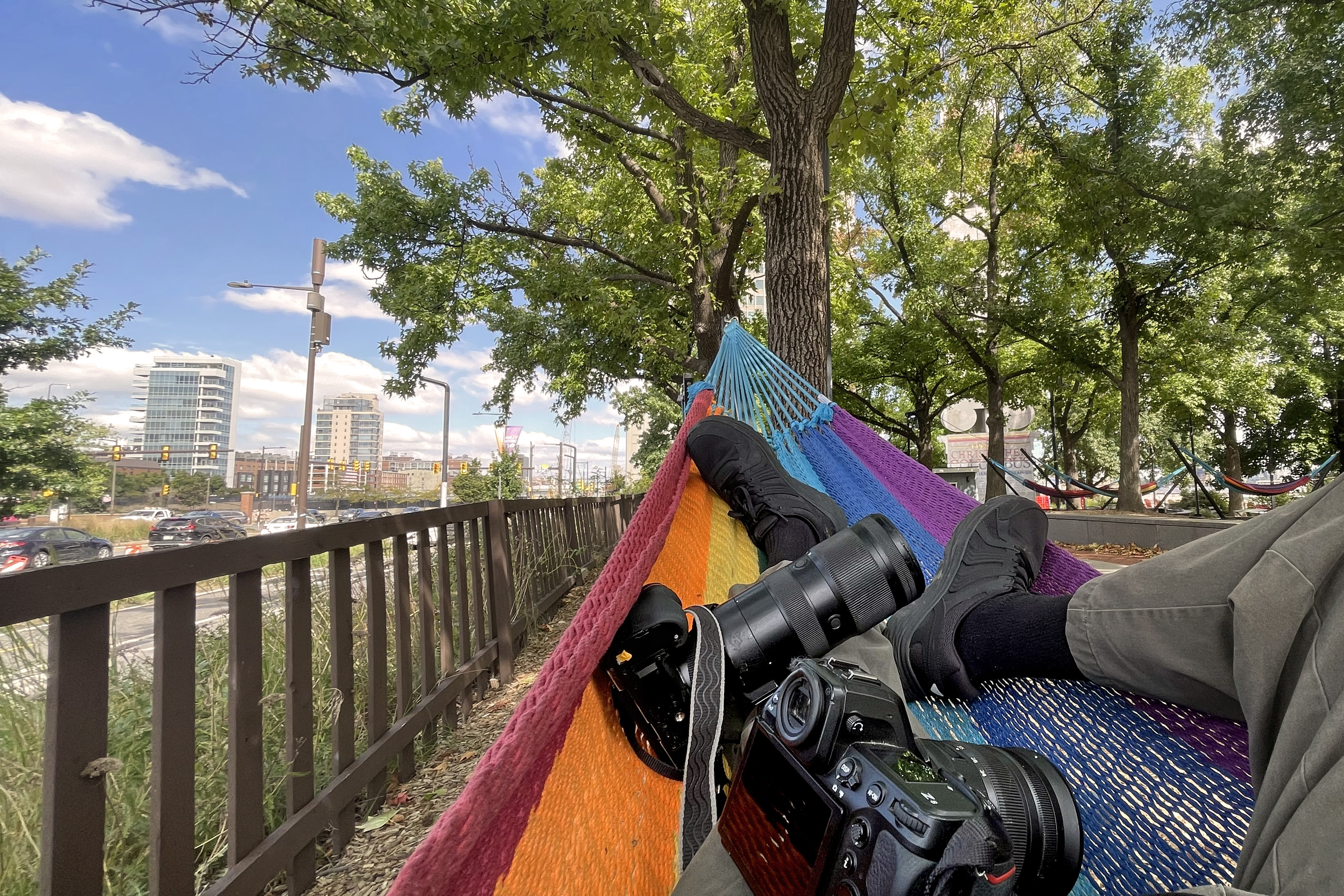
Waiting in University City and looking up as a helicopter conducting power line inspections passes overhead.Tom Gralish / Staff PhotographerWaiting outside City Hall – with free coffee and donuts for those arriving early – for the day’s meetings and protests to begin.Tom Gralish / Staff PhotographerWaiting at a candidate’s rally.Tom Gralish / Staff PhotographerWaiting outside a courthouse, and watching the cell phone – and reflections – for that text from inside that a hearing is over.Tom Gralish / Staff PhotographerWaiting for the parking garage elevator.Tom Gralish / Staff PhotographerThe photographer takes a break from waiting – and hoping.Tom Gralish / Staff Photographer
Since 1998 a black-and-white photo has appeared every Monday in staff photographer Tom Gralish’s “Scene Through the Lens” photo column in the print editions of The Inquirer’s local news section. Here are the most recent, in color:
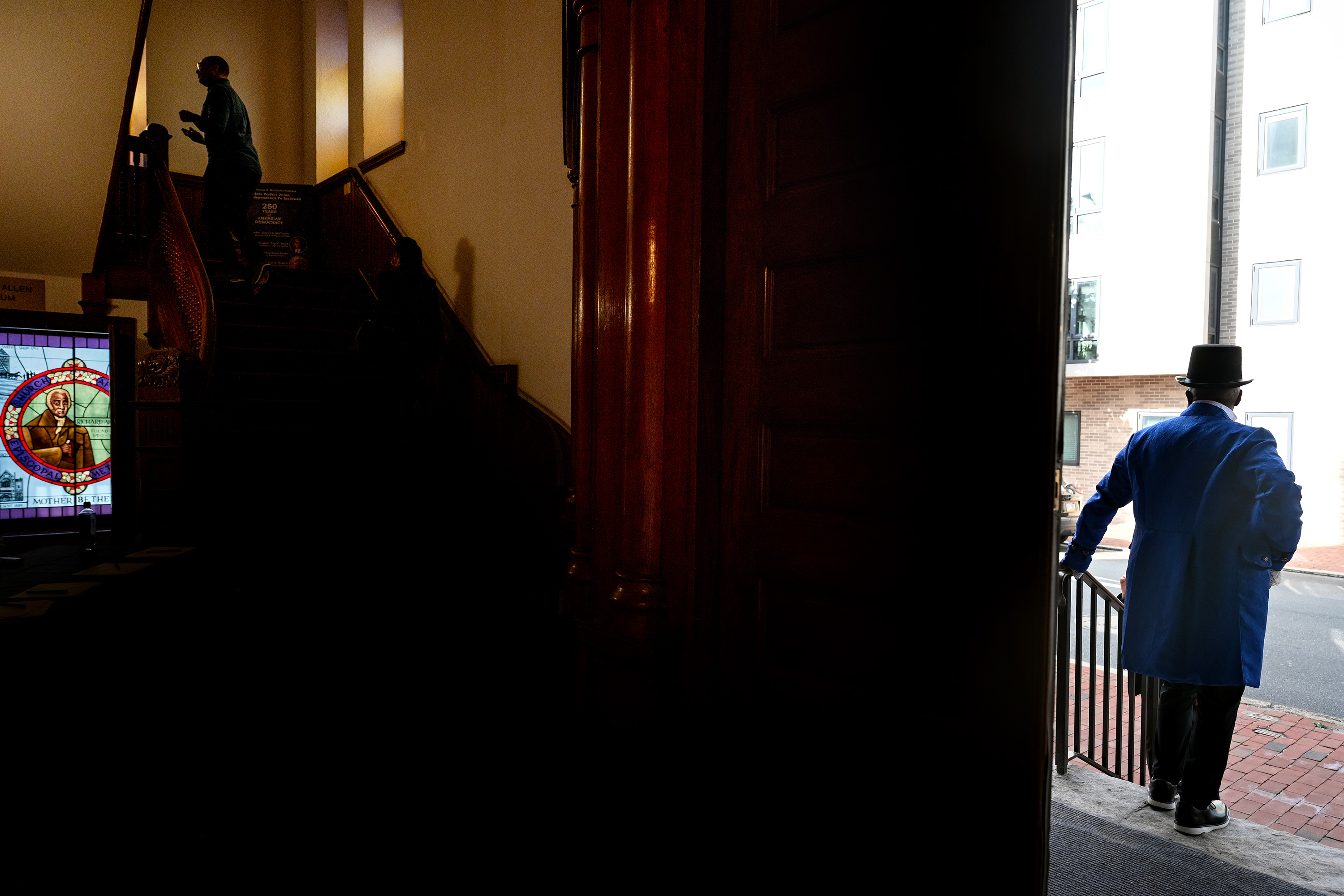
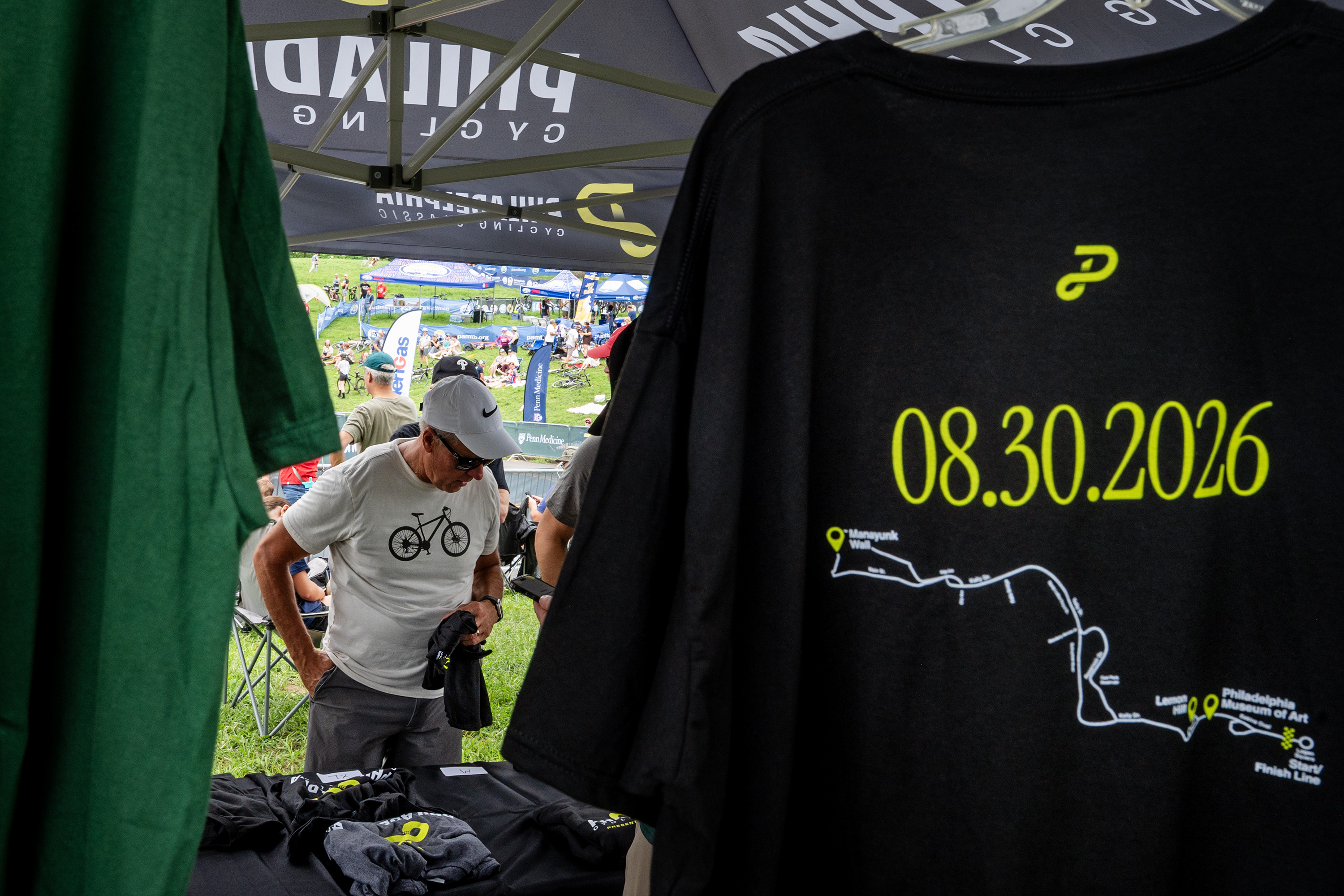
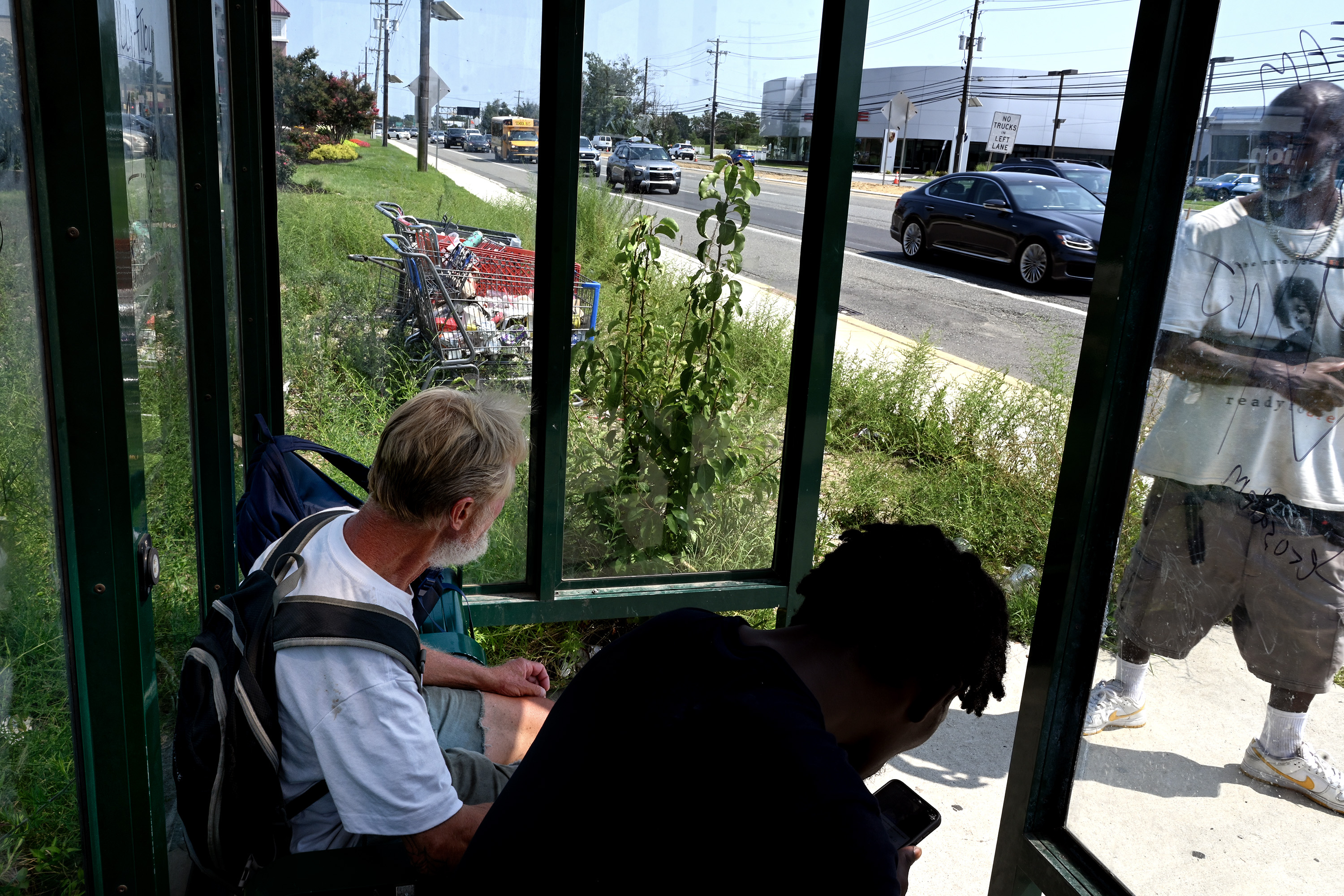
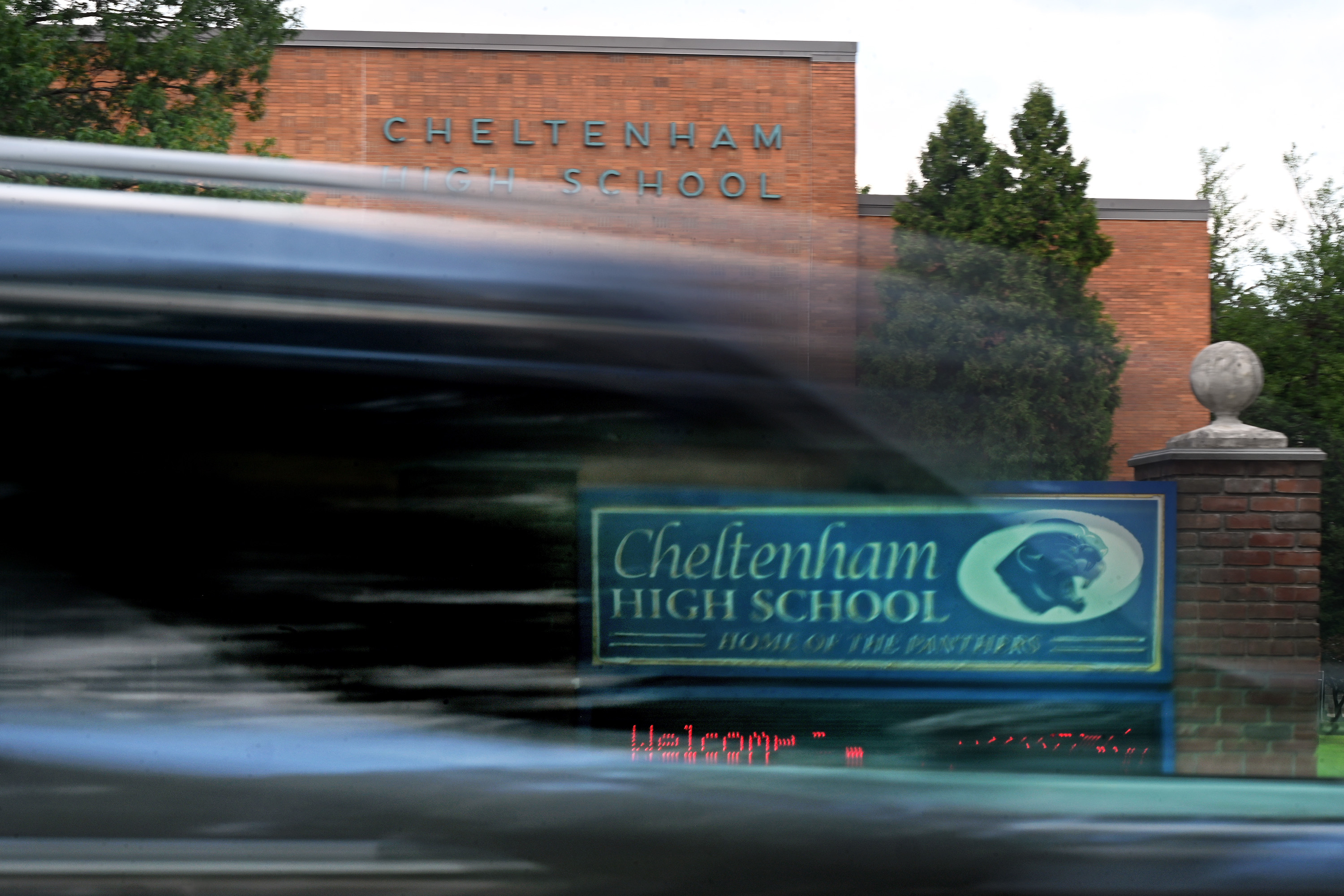
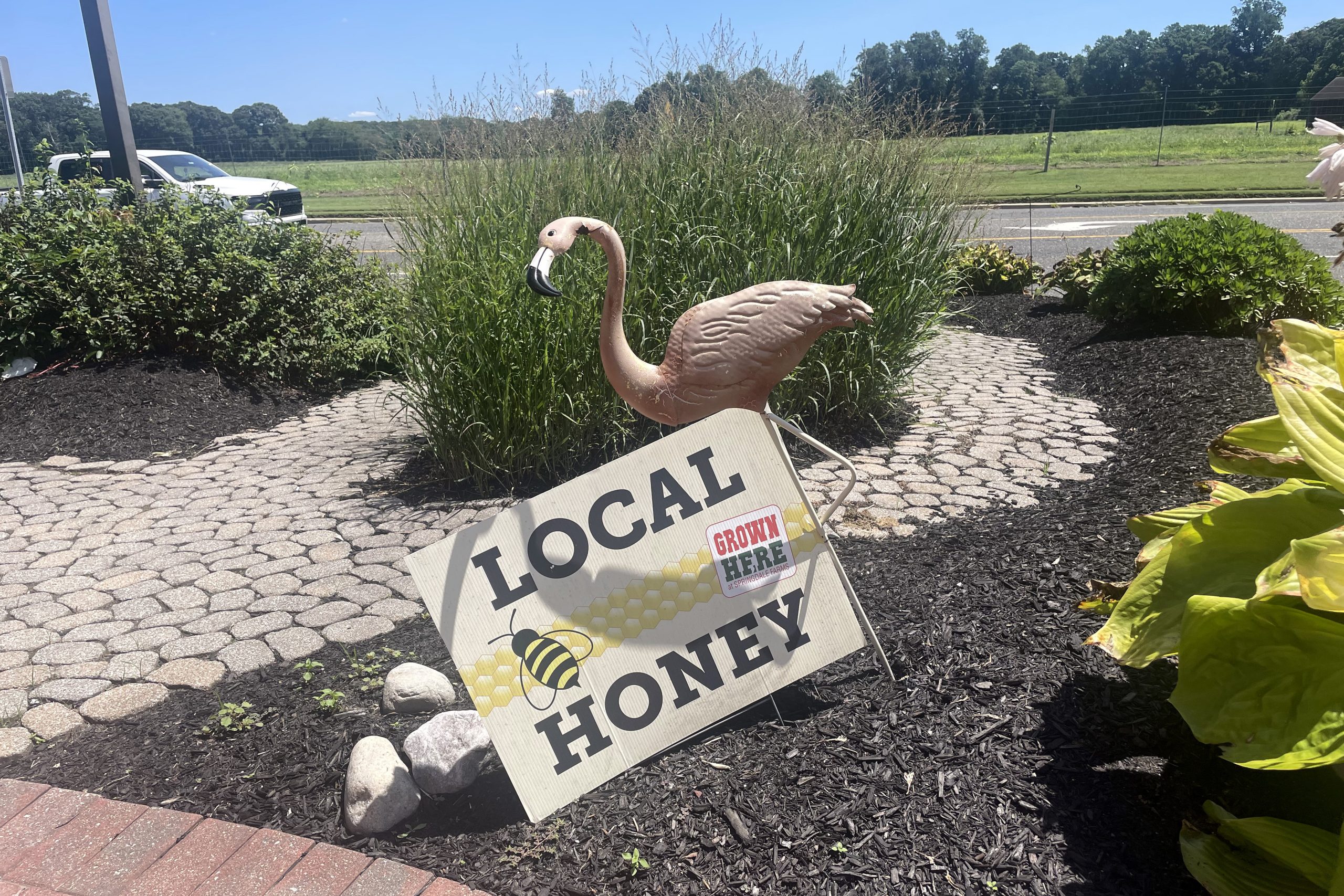
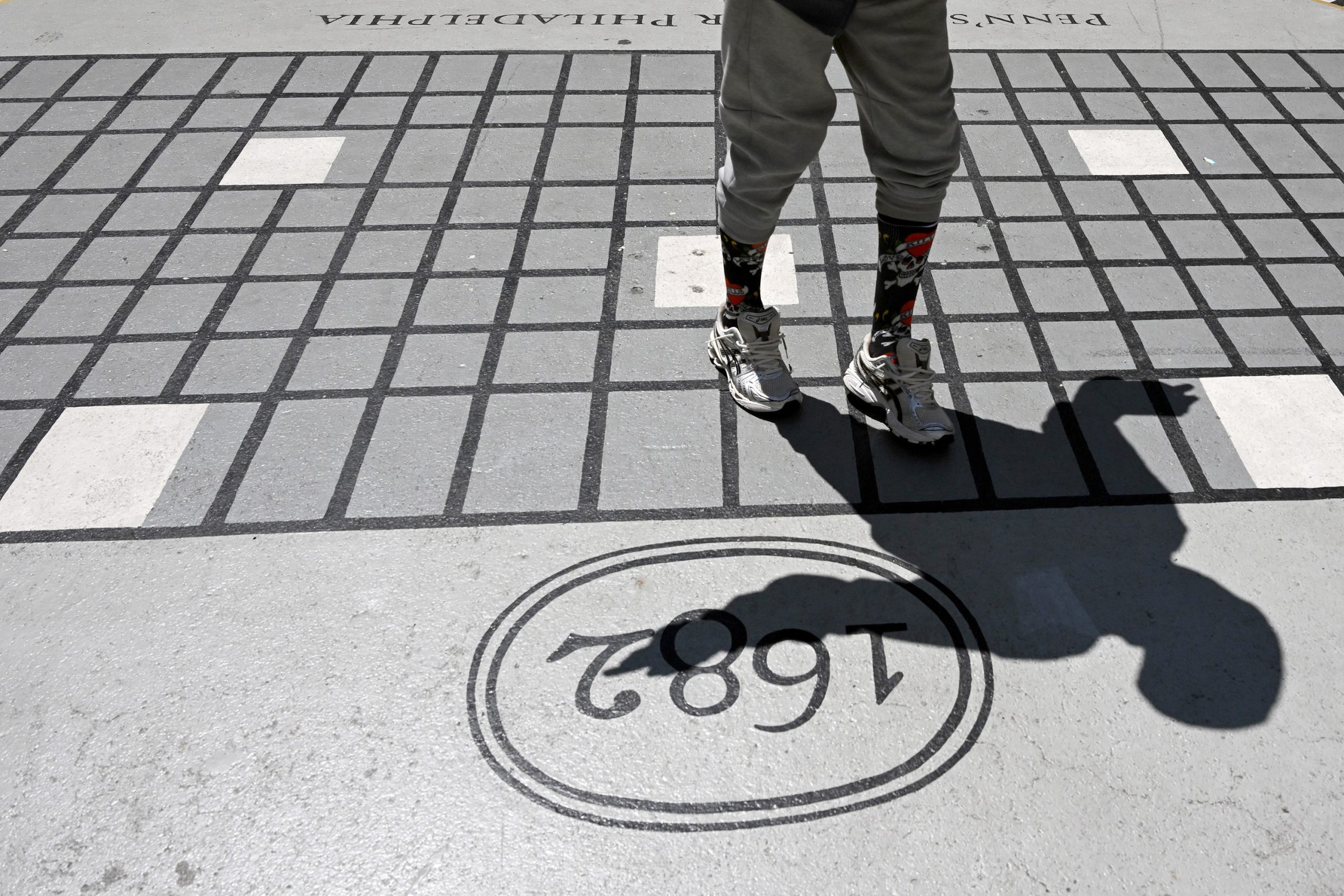
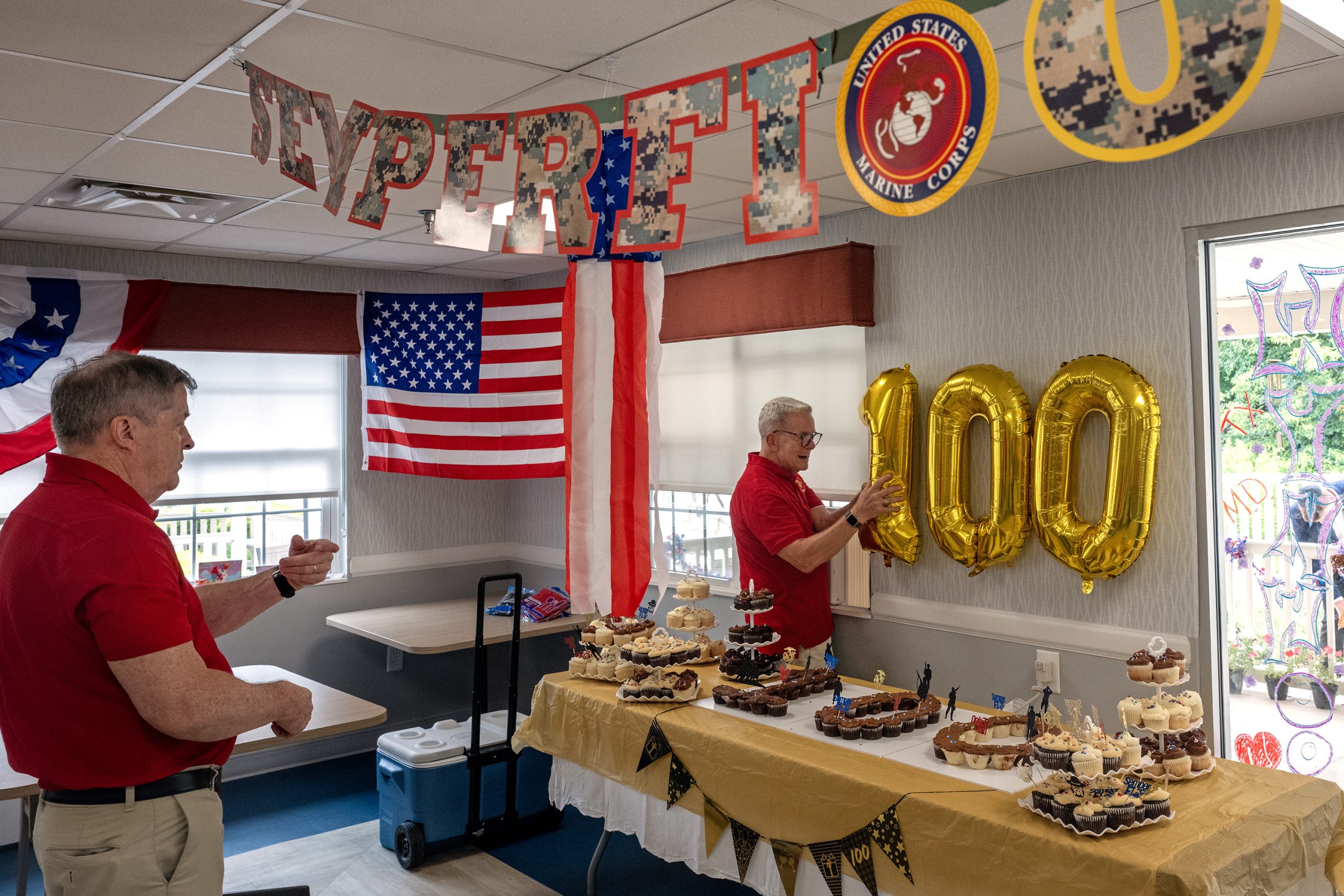
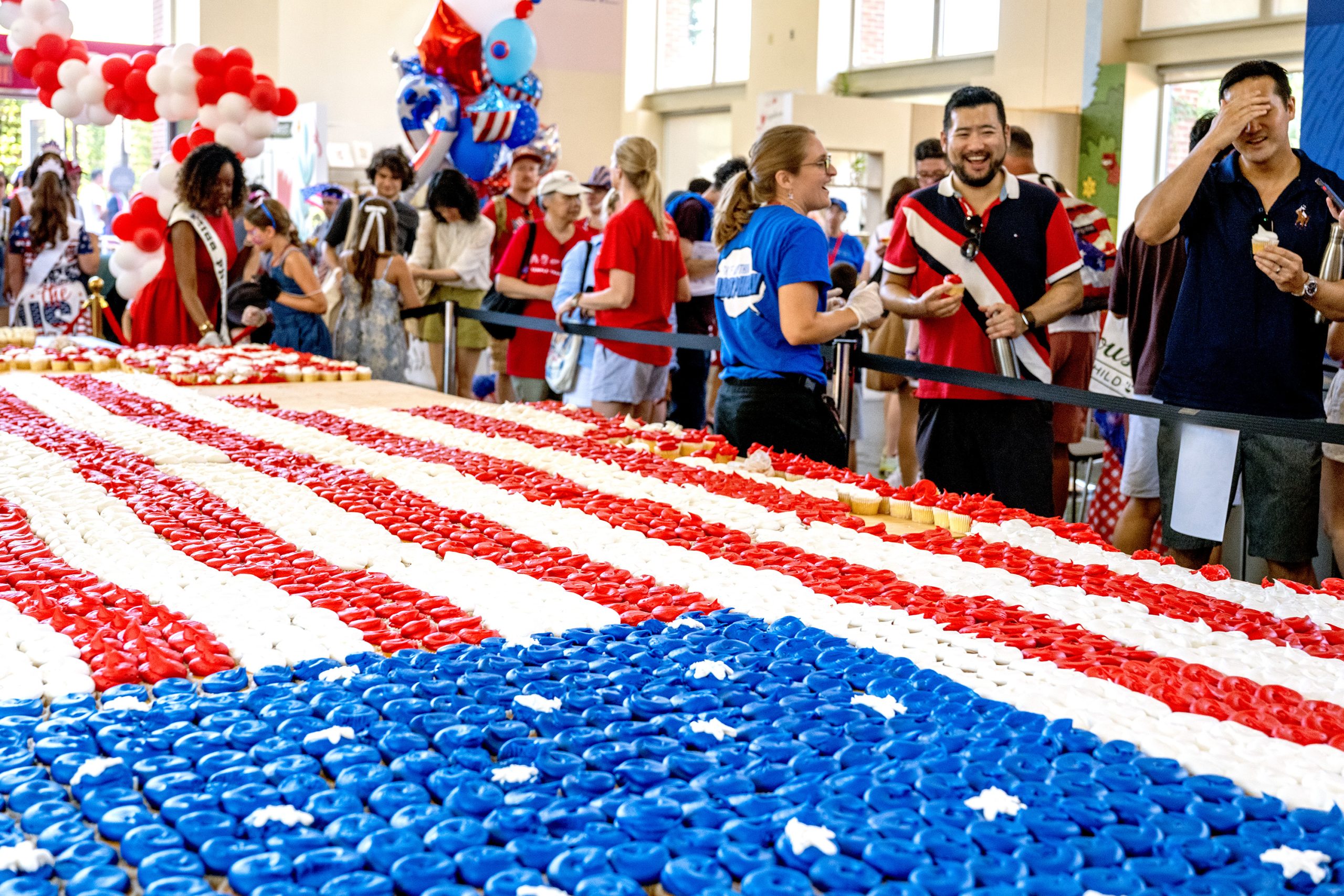
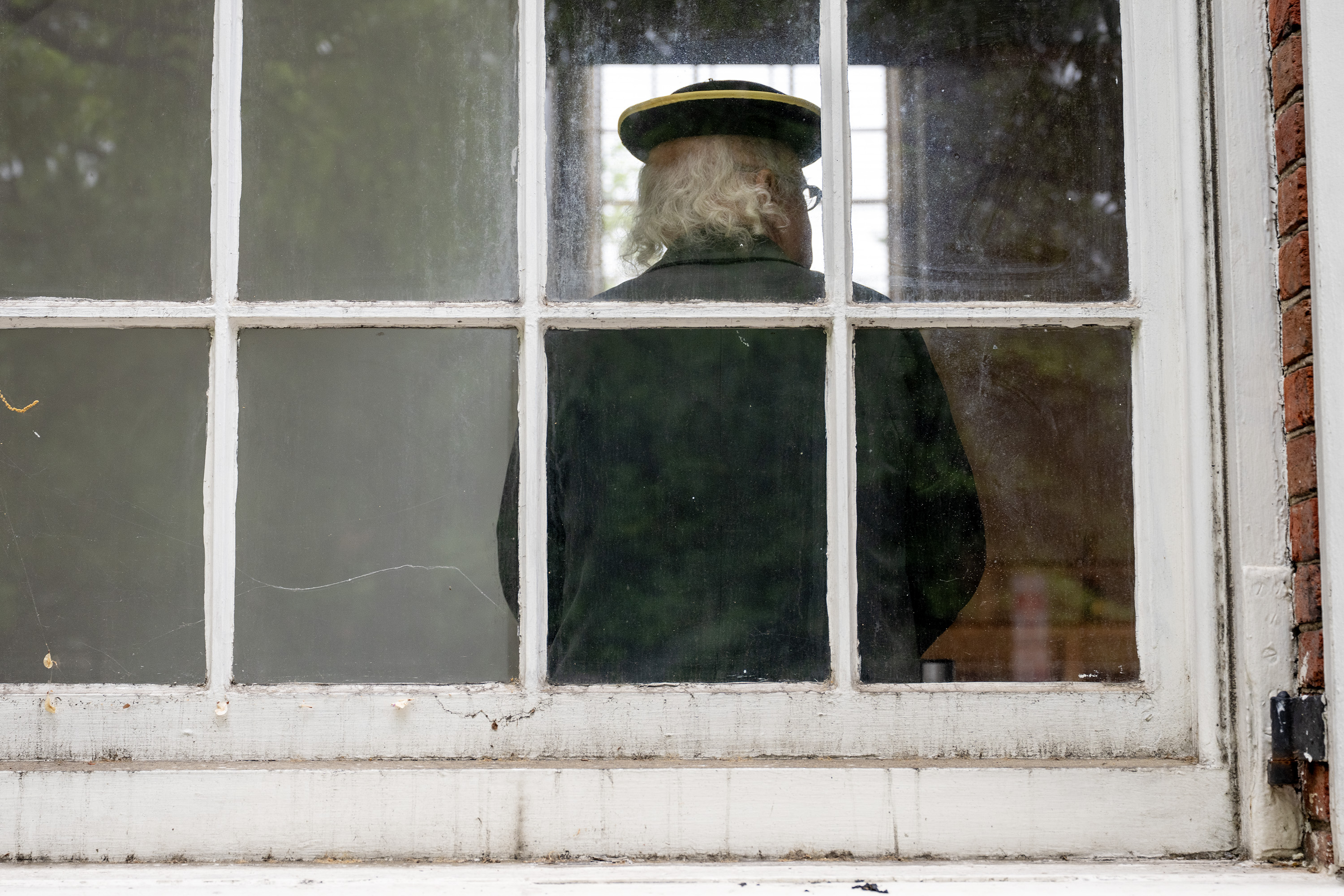
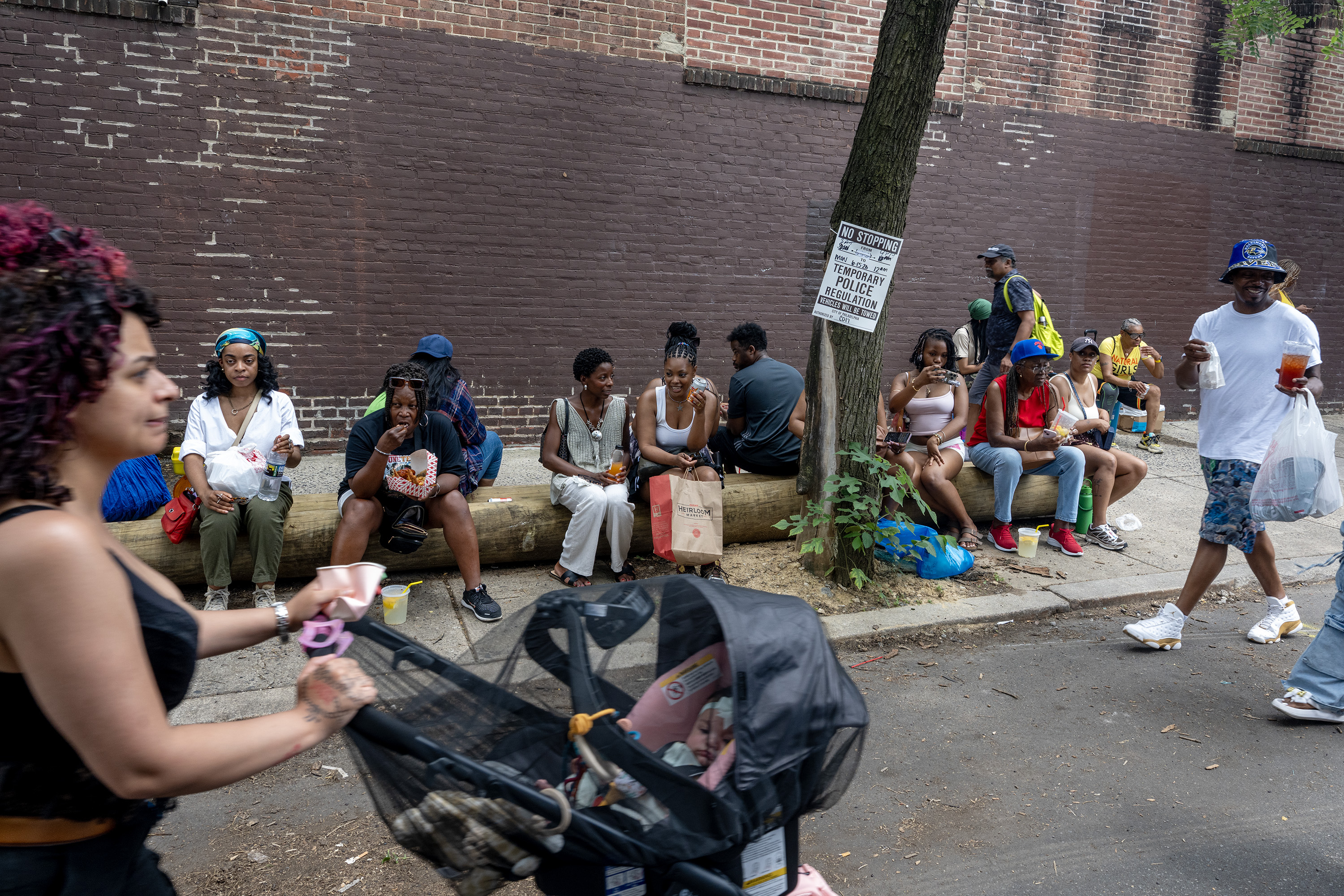
September 21, 2026: Students wait in the auditorium before the arrival of Eagles linebacker Jalyx Hunt at an assembly at Little Flower Catholic High School for Girls where he announced the establishment of three scholarships and an endowment to support students. Tom Gralish / Staff PhotographerSeptember 14, 2026: Chris Lewis (right), portraying James Forten, an abolitionist, activist, and sailmaker in colonial America, greets visitors outside Mother Bethel A.M.E. Church as they arrived for an America 250 Conversation hosted by Pennsylvania House Speaker Joanna McClinton on Sept. 10. The stainedglass window at left depicts Richard Allen, founder and first bishop of the African Methodist Episcopal Church in 1816, the first independent black religious denomination in the United States. Tom Gralish / Staff PhotographerSeptember 7, 2026: Joe Ackler of Skippack shops for a race T-shirt during a lull between laps in the Philadelphia Cycling Classic on Aug. 30. He is wearing a shirt he bought in 2003 when he attended the Tour de France. Tom Gralish / Staff PhotographerAugust 31, 2026: Robin P. Cooper (upper right) watches as Superintendent Tony B. Watlington Sr. (far left) gathers school and city officials for a group photo outside the district bus, stopped at McClure Elementary on the first day of school in Philadelphia. The bus was on its annual back-to-school celebration visit to schools throughout Philadelphia. Cooper later left the bus to join in the photo. Tom Gralish / Staff PhotographerAugust 24, 2026: Pencils were sharpened in the first-grade classroom of teacher Lauren Cucinotta at Fanny Jackson Coppin Elementary as she prepared for the start of the new school year for the Philadelphia School District on Monday.Tom Gralish / Staff PhotographerAugust 17, 2026: Wayne Peters (left) and Bobby White (right) wait for the #406 bus to Camden, on Rt. 70 in Cherry Hill, near the entrance to stores at the Garden State Pavilion shopping center and NJ Transit’s Cherry Hill station. Peters says it “Gotta be the worst bus stop in the state,” with White adding, “You’d think something in Cherry Hill would be better. How hard would it be to put a trash can here?” Before their bus arrives, Peters, trying to be positive about the shelter, reminds him “They fixed a broken window once.”Tom Gralish / Staff PhotographerAugust 10, 2026: Cheltenham High School in Wyncote, on the day the Montgomery County district attorney announced charges in connection with two assaults in the school’s football locker room. A photo of the static signs was made more visually interesting by using a slow camera shutter speed to blur the passing cars. Tom Gralish / Staff PhotographerAugust 3, 2026: Sign for locally “grown” honey outside the market at Springdale Farms, the only working farm left in Cherry Hill. Before WWII, when it was still known as Delaware Township, there were 82 farms in operation feeding South Jersey markets and supplying the massive fresh vegetable and crop demands of the Campbell’s Soup Company in Camden. Tom Gralish / Staff PhotographerJuly 27, 2026: Lyn-el “The Torch” Wright pauses on the City Hall Courtyard’s rendering of William Penn’s Philadelphia city grid plan. Penn designed the 1,200-acre “Greene Countrie Towne” between the Delaware and Schuylkill rivers with wide, crisscrossing streets to prevent the overcrowding and fires he had witnessed in London. Tom Gralish / Staff PhotographerJuly 20, 2026: Pat Dailey (left) and Ken Hopper with the Tun Legacy Foundation prepare a room at the Wynwood Rehabilitation & Healthcare Center in Cinnaminson, N.J., for a surprise 100th birthday party for WWII U.S. Marine Corps veteran Stephen Anderson. Dailey founded the nonprofit that supports veteran causes, Masonic charities, and educational scholarships. The organization is also rebuilding and reestablishing an authentic reproduction of the original Tun Tavern building in Philadelphia. The Tun, constructed in 1693, was the first documented lodge in North America and the birthplace of the U.S. Marine Corps in 1775.Tom Gralish / Staff PhotographerJuly 13, 2026: The Independence Visitor Center offers free birthday cake to the public on the Fourth of July, in the form of a massive American flag made of 5,000 cupcakes frosted red, white and blue.Tom Gralish / Staff PhotographerJuly 6, 2026: National Park Police Deputy Chief Rebekah Spedaliere shows off her own bald eagle tattoo while posing for a photo with bald eagle “Indy” and handler Amanda Sweeney with the Auburn University Raptor Center, during ceremonies over the July Fourth weekend. Indy came to Auburn, in Alabama, in 2018 after suffering a wing injury as a young bird and imprinted on humans during rehabilitation, so she couldn’t be released back into the wild. Now, she serves as an ambassador bird, teaching people about raptors, conservation, and the ecosystems that sustain them. Not her first rodeo in Philly, she made her first appearance at the Linc for an Eagles’ game in 2023. Tom Gralish / Staff PhotographerJune 29, 2026: Shecky Perlman as Ben Franklin is inside the Free Quaker Meeting House on Independence Mall as he and other historical reenactors receive their diplomas after weeks of intensive, immersive training for the 21st season of Historic Philadelphia’s Once Upon a Nation program — where costumed actors perform first-person interpretations of real 18th-century Philadelphians in the Historic District and at Valley Forge National Historical Park.Tom Gralish / Staff PhotographerJune 22, 2026: A downed utility pole serves as a quiet place to eat, away from the crowd at the Odunde Festival, billed as the largest African street market in North America.” Tom Gralish / Staff PhotographerJune 15, 2026: Bob Myers, president of Harris Blitzer Sports & Entertainment, owner/operator of the 76ers and the NHL’s New Jersey Devils, as well as a future Philadelphia WNBA team, talks to reporters after Mike Gansey made his first appearance as Sixers president of basketball operations at the Penn Medicine Philadelphia 76ers Training Complex in Camden. Tom Gralish / Staff Photographer
My fifth grader wants to take Regional Rail back from his downtown magnet school by himself. He’s done a few weeks with an adult so he knows the route, and I can track him on my phone. But he doesn’t have any buddies to walk back with. Is this crazy, or will it help foster independence?
Amy Rosenberg, Life & Culture reporter
I want this to be OK, but my first thought is maybe fifth grade is a little too young?
Elizabeth Wellington, features columnist
I think you might be right, Amy. I mean, when I was 10 — and that was 100 years ago — I took the bus by myself. But the train was a different animal completely. There are a lot of ways for them to get lost, and missing a stop is a long walk, rather than a few blocks. You know?
Amy Rosenberg
It also depends on the child. Some are more ready than others. A group of fifth graders, or maybe two of them together, might work? Not sure about the walk home from the stop either. I walked to and from school for lunch as a fifth grader and that seemed fine, but it was also a long time ago.
Elizabeth Wellington
I walked to and from school by myself when I was in the fifth grade. I demanded it because I had a crush on a boy, but that’s another story.
Now, I’d be afraid to let my fifth grader walk to the end of the block by themselves. Then again, I wouldn’t want to foster sense of fear for the city in my fifth grader either.
Amy Rosenberg
I used to walk home and read the newspaper that was in the driveway and eat my lunch out of a bag (not every day!). My girls had a lot of freedom as kids, but still, as fifth graders they were not traveling around by themselves.
Maybe this person hires someone to meet the child at the train station? I’d definitely try to find another student making that same trip. Maybe there’s an older student that could be a buddy.
Elizabeth Wellington
That’s a great idea. I think the fifth grader wants to feel independent around friends, and there are always friends to travel from school to the train with. If someone is waiting for them when they get home then the parent can know the child made it home safely and the 10-year-old can still feel cared for. Because sometimes when you’re 10 — and even when you are 50 — you need to know someone is there for you when you get home.
When the 10-year-old becomes a 12-year-old or maybe even 13, then they can travel by themselves confidently. Even today, as Gen X’s latchkey-kid generation, I’m not sure 9- and 10-year-olds coming home by themselves from school was the safest thing.
Amy Rosenberg
I agree. There’s a lot of maturing that happens between 10 and 12. I think kids should move around the city confidently and be able to ride public trains by themselves, but the sweet spot age seems a little bit older than fifth grade. Especially the start of fifth grade.
I also think the parent would worry, and be constantly tracking, or even on the phone with the child, and that’s hardly independence. That’s just anxiety.
Elizabeth Wellington
And independence for one person should never translate to anxiety for a loved one.
Amy Rosenberg
I had an after-school babysitter one year who famously drove into our garage door with my girls in the backseat, at around fifth grade. Luckily, only damage to the garage door. So danger everywhere!
Elizabeth Wellington
Yeah, and I fear a 10-year-old kid walking to and from school by themselves, even with a cell phone, might be a danger magnet.
I’m getting nervous just thinking about it.
Amy Rosenberg
I have recently done a bit of traveling on Regional Rail, and I didn’t see anyone that young. And those stations are big. It’s nice to want independence for your kids, but this seems like a big step. I would definitely wait, or try to find a traveling buddy.
I also bet other parents at the school have a big range of travel strategies and opinions about age and independence.
So, look for smaller ways to foster independence at this age.
Elizabeth Wellington
And explain it to them in a way that doesn’t say you don’t trust them, but that it’s a good idea to wait a few years.
Amy Rosenberg
Yeah, lean into finding a buddy or two. I traveled on trains to school with buddies beginning at around 14 and those were great memories.
Elizabeth Wellington
I think it’s important that the child knows that it’s not that you don’t trust them. … Just it’s not their season yet to be taking public transportation alone.
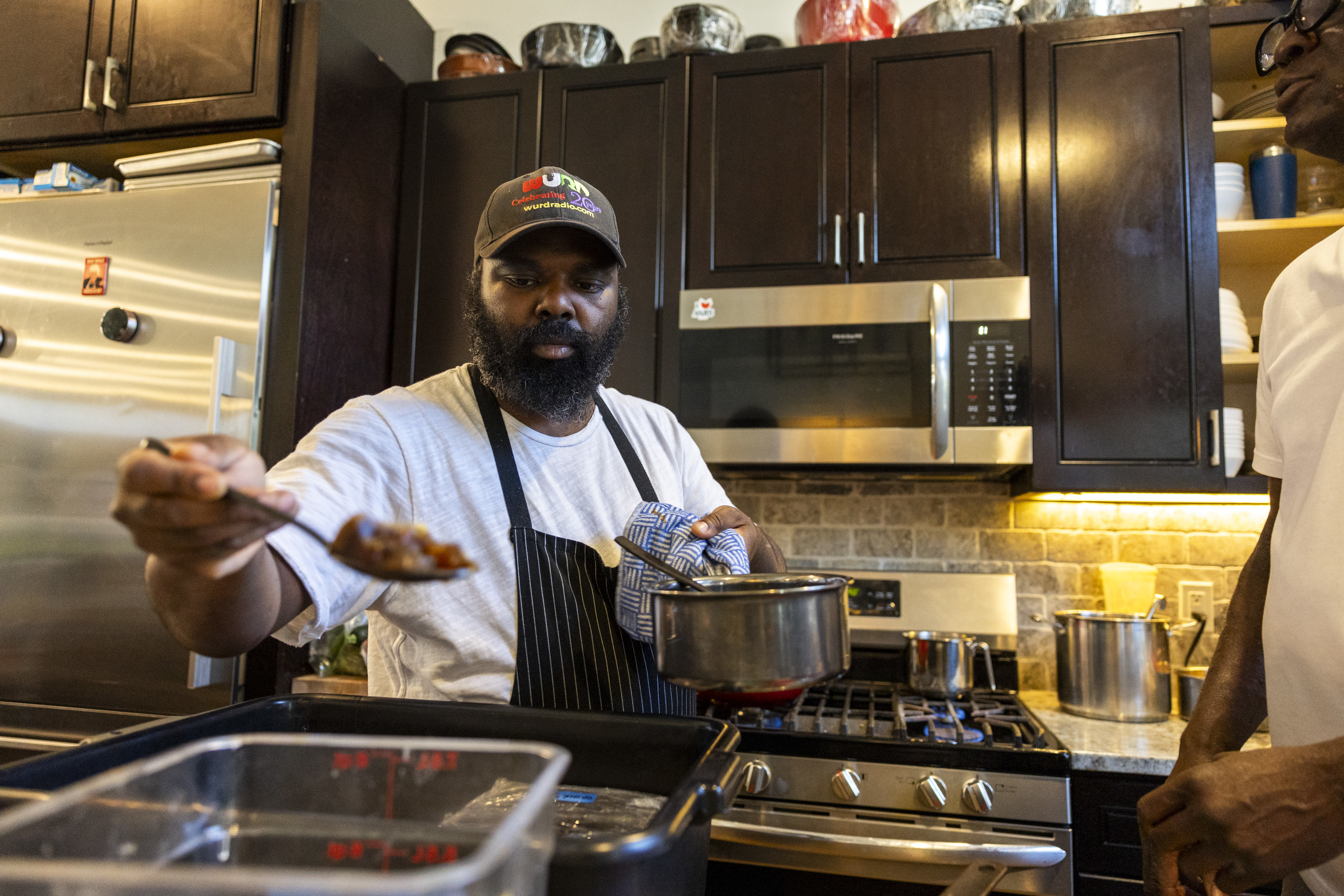
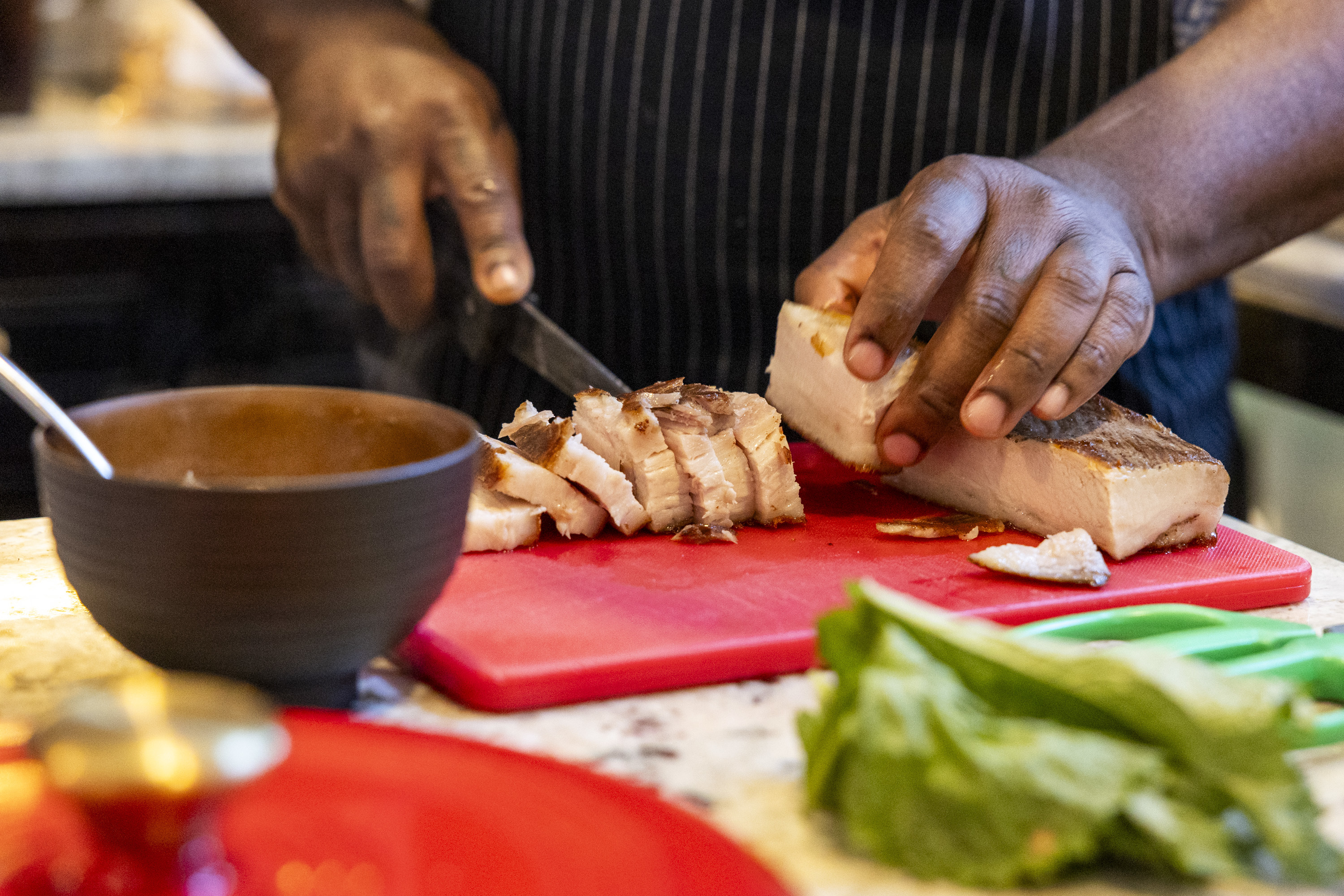
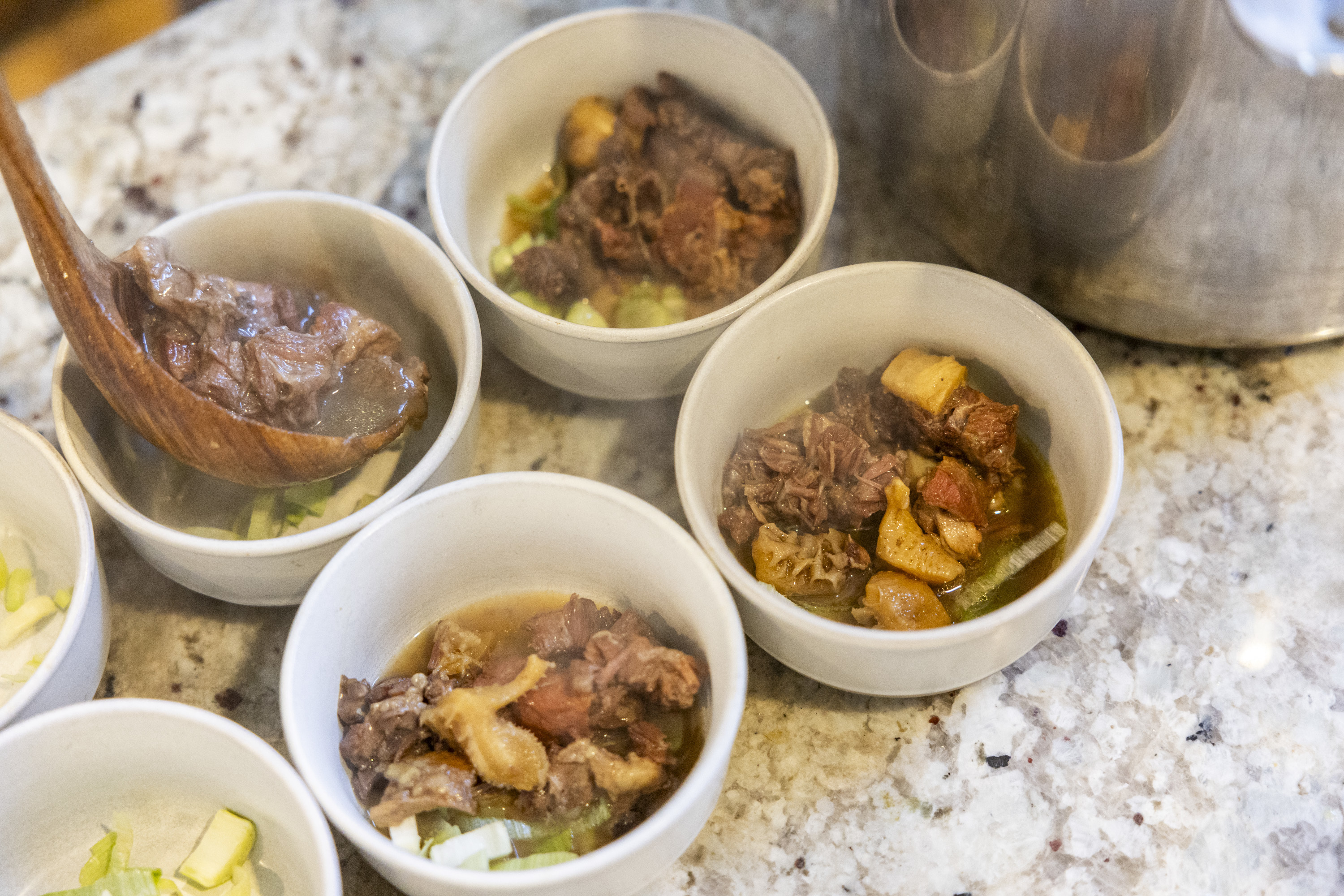
The parade of soup bowls that perfumed the air of chef Shola Olunloyo’s South Philadelphia home kitchen with spice and heady broth could not have been more different. A buttery brown stew enriched with veal and bacon. An ethereal orange purée of squash that harbored habanero heat and delicate shellfish. A modernist collage of deconstructed elements — oxtail, pork belly, and frilly tripe dabbed with a gingery green mince of Caribbean herbs — artfully posed over a shallow splash of dark broth. But each one answered to the same name: pepper pot.
“Pepper pot! Smoking hot!”
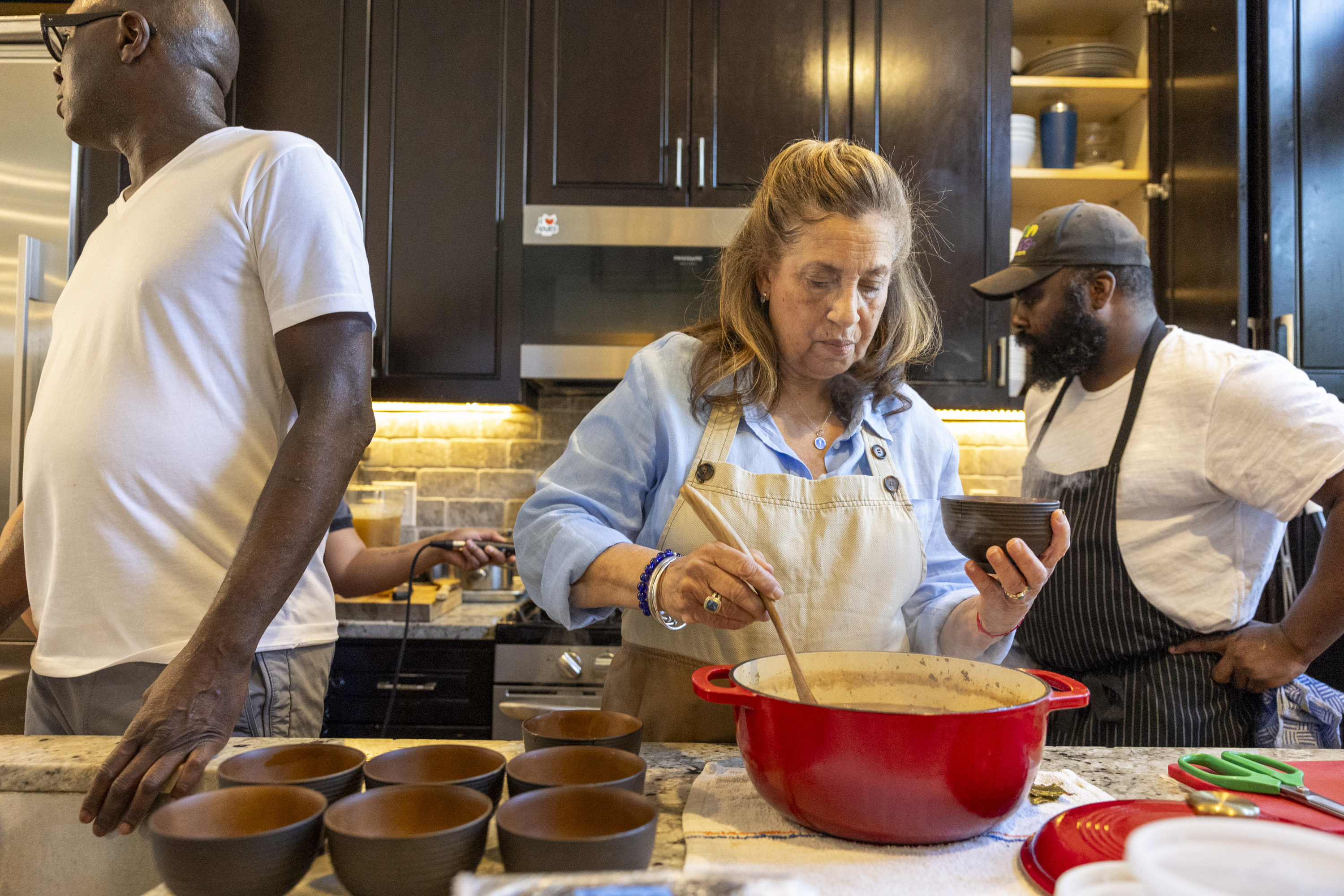
Chef Angie Brown prepares to serve her version of pepper pot for fellow chefs to try.Tyger Williams / Staff Photographer
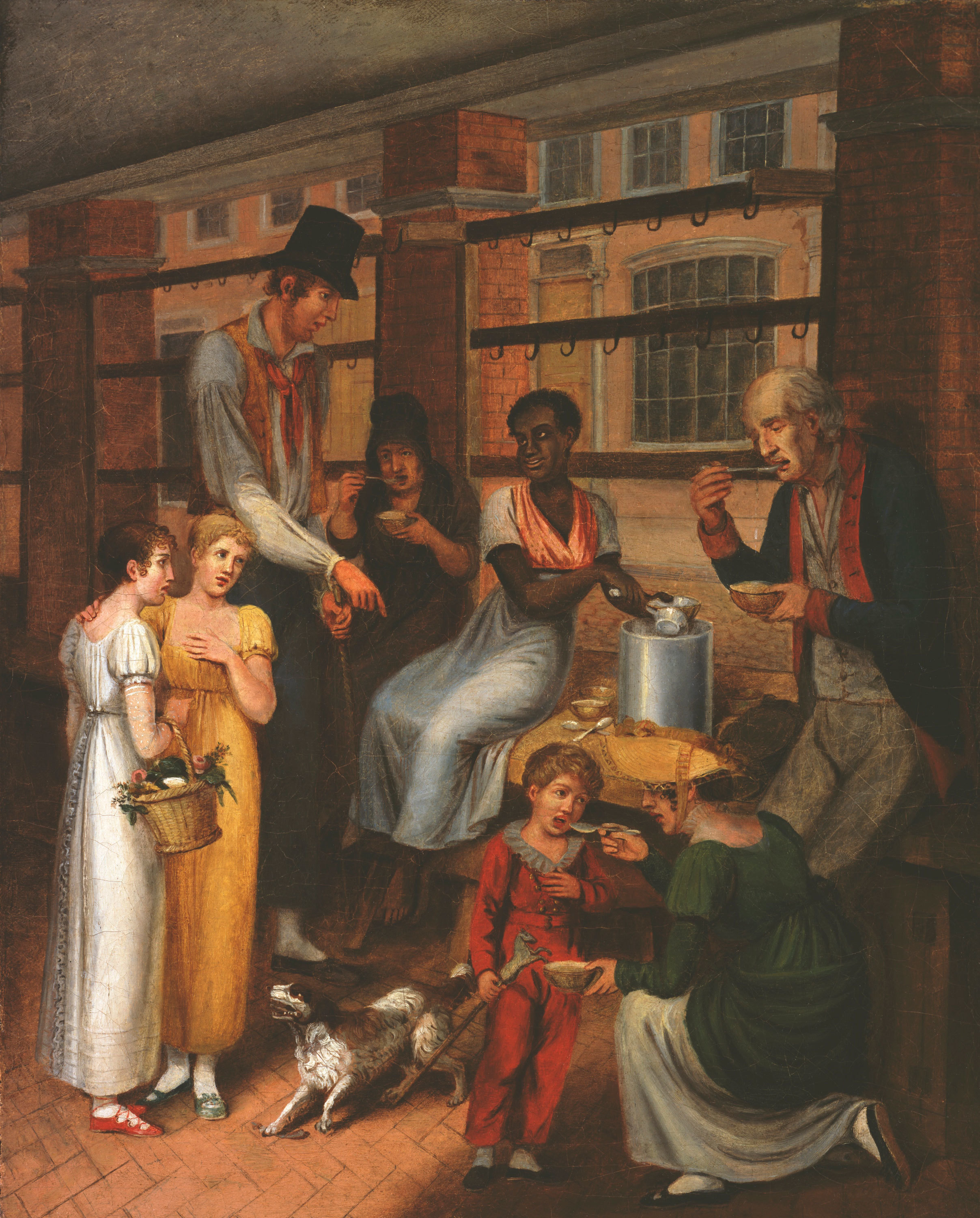
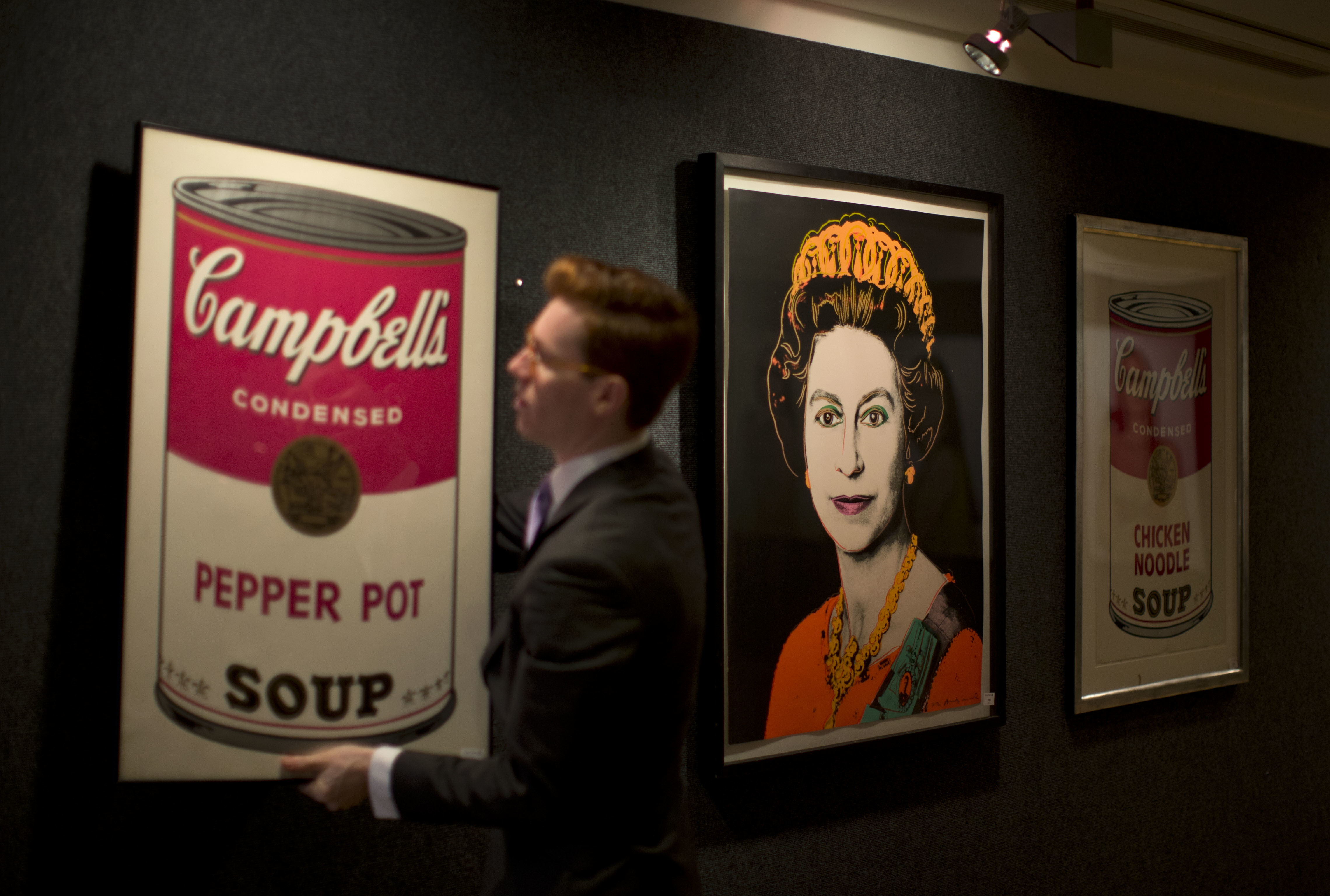
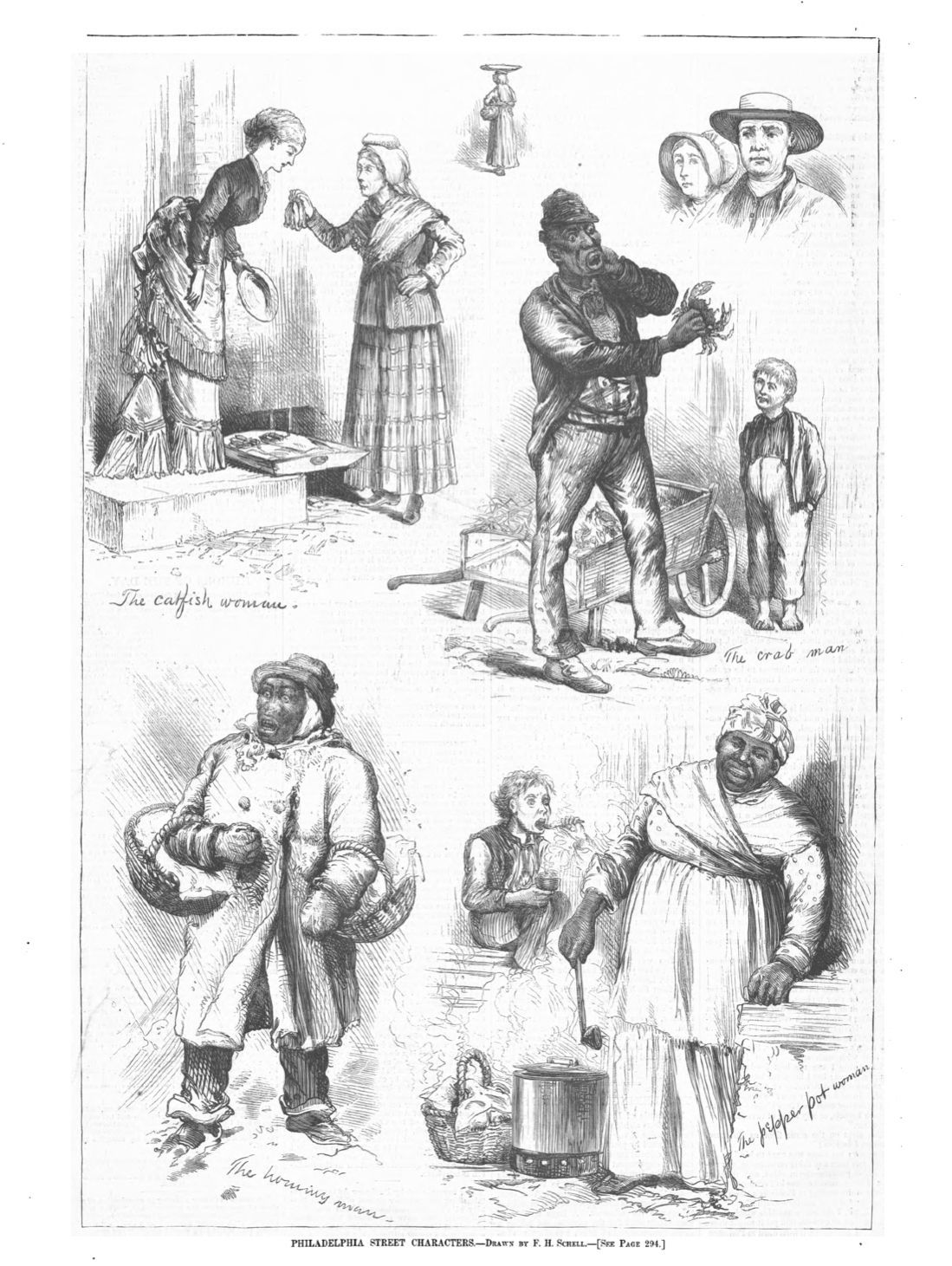
So went the chant of the colonial-era vendors whose pepper pot cauldrons simmered on street corners across Philadelphia, America’s first capital city, with a “pleasant feast” made from an improvised variety of inexpensive cuts of meats, often including ox foot, tripe, and “a great portion of spice.” This iconic soup, largely produced by Black women from the West Indies, was immortalized as a city staple in an early 19th-century booklet chronicling the street cries of Philadelphia, a painting of an 1811 market scene painting by John Lewis Krimmel that hangs in the Philadelphia Museum of Art, and, more than 150 years later, Andy Warhol’s Pop Art series of Campbell’s soup can prints.
“Pepper-Pot: A Scene in the Philadelphia Market” by John Lewis Krimmel depicts Philadelphians of varying classes enjoying the soup. Philadelphia Museum of Art: 125th Anniversary Acquisition. Gift of Mr. and Mrs. Edward B. Leisenring, Jr., 2001-196-1
Over time, pepper pot evolved into a broad diversity of styles, hinted at by the starkly different interpretations on the table at Olunloyo’s home. Olunloyo, a culinary consultant and the chef of Studio Kitchen, had gathered a small group of Black chefs there for a pepper pot summit — to taste and compare recipes, reflect on its legacy, and, perhaps, spark a localresurgence.
“I was excited to learn that Philadelphia had a distinct dish that was not just cheesesteaks or pretzels, and to be a part of understanding what cemented Philadelphia’s culinary reputation,” says chef Omar Tate, who served us a test run of a pepper pot he plans to add to the menu at Honeysuckle this fall.
Chef Chad Williams, who was unable to attend the June gathering, is planning to serve a version of pepper pot on the tasting menu soon at his Michelin-starred Friday Saturday Sunday. He’s starting his process with the flavor memories of a pepper pot his grandpa Chester once made in West Philadelphia, along with other variations Williams cooked earlier in his career, then “working our way backwards.”
“We’ve got to put it on restaurant menus again because if we don’t cook it, it dies,” says Angela Brown, a private chef and former culinary director for Rex at the Royal, who led off the lunchtime event with a hearty rendition of the dish she learned from her great-grandmother. “This new generation of cooks doesn’t know anything about pepper pot, so it’s nice to bring it back.” (The meal was also documented for radio by NPR reporter Justin Kramon for WHYY’s The Pulse.)
Andy Warhol’s 1968 color screenprint “Pepper Pot.”Matt Dunham
The rise and fall of pepper pot
The effort can’t come soon enough. In 2026, pepper pot as we once knew it has become nearly extinct. Campbell’s stopped producing it in 2010, coinciding with a dwindling appetite for tripe. History-minded chef Adam Diltz still produces it occasionally at Elwood. There have been efforts by local food historians and home cooks to keep its memory alive. The last local restaurant to regularly serve pepper pot was City Tavern (although chef Walter Staib’s West Indies version was without tripe), before the replica of the historic tavern closed in 2020.
The timing of this pepper pot party is not a coincidence. Reflections on history have been at the forefront of this year’s celebration of America’s 250th anniversary. Food historian William Woys Weaver, among the tasters at Olunloyo’s house, argues in his forthcoming Pepperpot City that no proto-Philadephia dish may be as meaningful — or elusive — to grasp.
Weaver unearths a stunning array of pepper pots in the book, due out in October, from the humblest market-stall versions to those ladled from the gilded tureens of society’s hautest tables: There are myriad variations of meats, seafood, seasonal produce, dumplings, and numerouscultural influences.The breadth of iterationsmakes it impossible to define Philadelphia’s pepper pot as one specific thing, aside from the inclusion of tripe (usually, but not always) and the presence of spice. It was a way of life and cooking more than a particular bowl of soup.
“What’s pepper pot? It’s whatever you had there right in front of you,” says Weaver. “These chefs did not live by written recipes, but oral traditions they learned from a mentor. That’s why there were so many different kinds. Each person cooked from their soul.”
The ever-morphing nature of the soup became emblematic of colonial Philadelphia as a focal point for the New World melting pot, he says, where the confluence of Black, white, and Creole foodways began to define this newly founded country’s culinary personality.
“The City of Brotherly Love helped create a singular identity that helped shape what we know today as American cuisine,” writes Weaver. “Especially when winnowed through the hands of Black cooks.”
Chef Omar Tate served a test run of a pepper pot he plans to add to the menu at Honeysuckle this fall.Tyger Williams / Staff Photographer
Diverse foodways, all in one dish
Philadelphia’s pepper pot shares Afro-Caribbean roots with a number of soups that go by the same name in the Caribbean and South America, although they’re distinctly different, since many are flavored with the caramelized cassava juice known as cassareep. It is also cousins with the callaloos and pepper soups of West Africa, as well as New Orleans gumbo and Haitian soup joumou.Pepper pot reflects Philadelphia’s unique status as a haven for free Black communities who had access to the tropical foodstuffs — allspice, habaneros, sea turtles, and pumpkins — arriving at its vibrant port on ships that also supplied the West Indies slave trade.
This illustration of “Philadelphia street characters” was published in Harper’s Weekly in 1876. “The pepper pot woman” stands at the bottom right.Harper's Weekly/Google
For this reason, many, including Weaver and food historian Jessica B. Harris, have come to regard early Philadelphia as the northernmost Creole city.
“Nowhere is this connection more apparent than in Philadelphia’s pepperpot soup,” Harris writes in her book Beyond Gumbo. In a recent interview, she elaborated: “You’ve got a port bringing foods from other places and people also who are coming in from all over, enslaved and free. This kind of urban polyglot mix — that is the matrix of Philadelphia. And then you start getting their food. You know women of West Indian origin are going to make use of their skills and call on their memories to make something palatable to the people in this new place. All those things come together in pepper pot.”
That lineage was especially resonant for Angela Brown, whose deeply flavored and nuanced stew of veal, bacon, and tripe took on a buttery texture from a dark roux and delivered just a gentle glow of peppercorn spice.
“As a Black woman, when I think about all those women in the 1700s out there on the wharfs cooking soup to sell for the day and praying they get enough money, I feel sort of sad that my ancestors had to work that hard,” she says.
Chef Angie Brown prepares her version of pepper pot for fellow chefs.Tyger Williams / Staff Photographer
Yet cooking pepper pot also brought her joy, because it conjured warm memories of Brown’s childhood in Mount Airy. She’d walk to the neighborhood butcher for a pound of tripe, then closely watch her great-grandmother, Carrie Smithers, make it, beginning by sizzling the holy trinity of celery, bell peppers, and onions in rendered bacon fat and veal drippings.
“That’s the reason I knew how to layer it,” says Brown. “I was very close to my great-grandmother, and she would be so proud that I made it delicious. I might have even made it better than hers.”
Brown’s soup was the closest we’d taste that day to the thick, meaty tripe stew from Campbell’s that stamped pepper pot as a Philadelphia specialty, along with a version popularized nationwide on the dining cars of the Pennsylvania Railroad.
“But there never really was a single ‘Philadelphia-style’ pepper pot. It was a marketing device, because this was a diverse city and pepper pot changed with every neighborhood,” says Weaver, who documents several 19th-century soup halls known as “pepperpot hotels” across the city, along with recipes that range from Esther Levy’s Jewish beef-and-mutton pepper pot from 1871 to pepper pot with crab, asparagus tips, and dumplings from a culinary instructor named Aunt Matilda in 1879. “Every Philadelphia recipe I’ve seen is different.”
A recipe published for the Philadelphia World’s Fair in an 1876 cookbook from the Women’s Centennial Exhibition Committee featured two kinds of tripe in a veal knuckle broth studded with veal dumplings. Another completely different pepper pot called gingambo au potiron — with sea turtle broth, seafood, and a Brazilian pumpkin — emerged from the émigré Creole neighborhood called Hamiltonville, on the Woodlands estate southwest of the University of Pennsylvania campus.
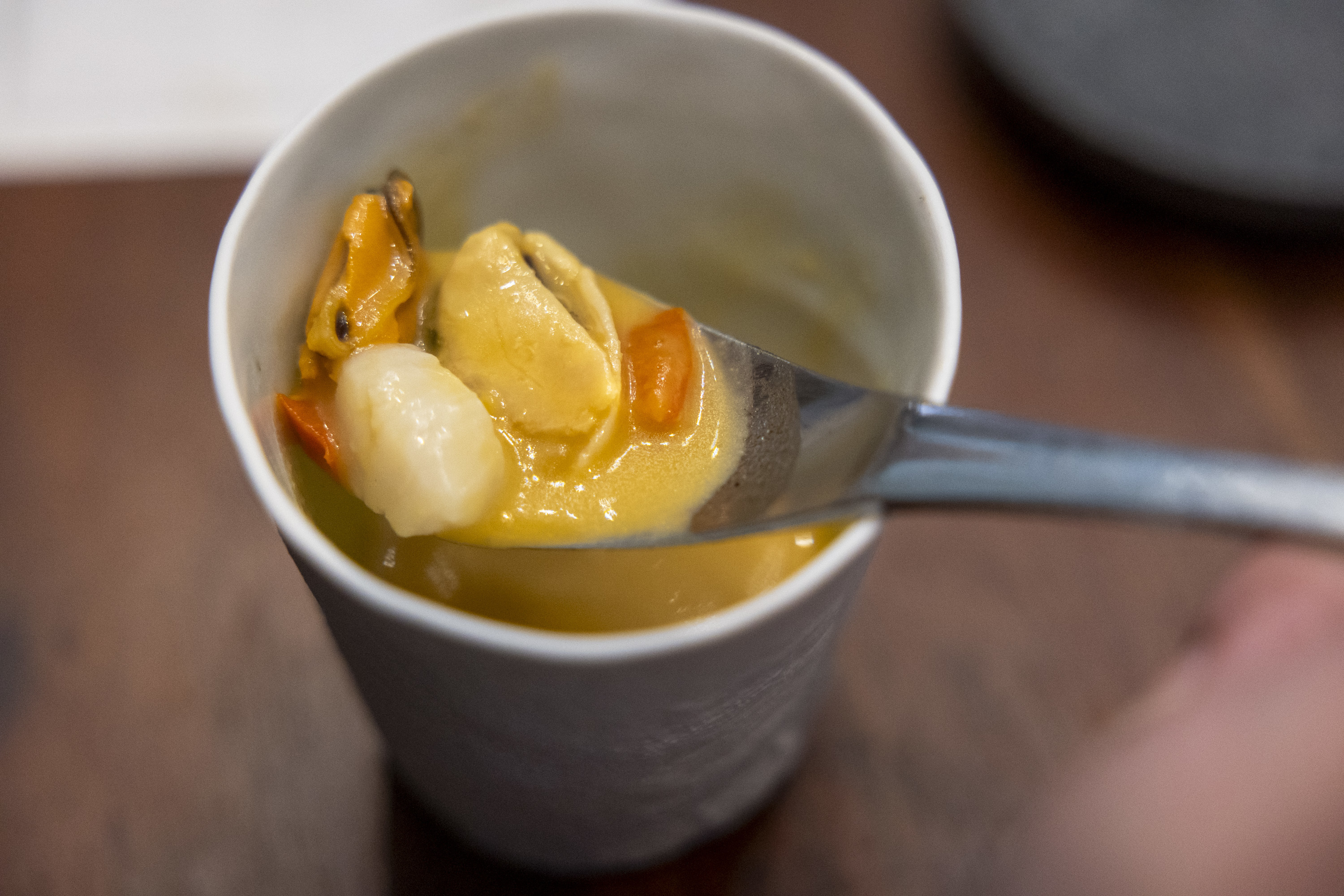
Chef Shola Olunloyo, a culinary consultant and the chef of Studio Kitchen, made a variation of a seafood-pumpkin pepper pot he once cooked at the restaurant Deux Cheminees.Tyger Williams / Staff Photographer
A soup that unlocks memories
Coincidentally, Olunloyo served us a variation of that same seafood-pumpkin pepper pot, a dish he grew fond of making regularly when he launched his career at Deux Cheminées. The late chef-owner there, Fritz Blank, had amassed a legendary cookbook collection and befriended both Weaver and Harris, who published Blank’s recipe in Beyond Gumbo.
Olunloyo’s soup skipped the turtle broth for rich fish stock and swapped out pumpkin for butternut squash. The froth of its silky orange puree — enriched with vermouth, cream, and leeks — sparks with Scotch bonnet, ginger, and a scant pinch of aromatic mace. Sweet little bay scallops, added to the bowl raw, cook in its warmth alongside mussels and other shellfish. It was an elegant reminder of the refinements that European-trained French chefs gave to the high-society kitchens of early Philadelphia, one of “two separate strands” — the vernacular creativity of its street foods being the other — that shaped the city’s culinary evolution, says Weaver. Ever-evolving pepper pot existed in both spheres.
For Olunloyo, whose career as a consultant and supper club chef has been most influential in its advocacy of modern methods and cutting-edge technology, diving back into pepper pot has been a reminder of his formative years as a cook and the enduring value of classic techniques.
Chef Shola Olunloyo ladles out a meaty version of Nigerian pepper stew, a not-so-distant cousin of pepper pot.Tyger Williams / Staff Photographer
The dish transports him even farther back to his childhood in West Africa and the pepper soups he grew up eating in Nigeria. In addition to his seafood-squash pepper pot, he served the group a boldly spiced version of that pepper soup — a rustic, bone-in stew of goat, beef neck, and tripe flavored with a blend of Nigerian seeds and dried chilies, with an extra hit of habanero and fresh green shiso he snips over each bowl to replicate hard-to-find African scent leaves. The connection to the West African roots of pepper pot’s creators could not have been more obvious.
“Taste is not linear,” observed Omar Tate. “It is kind of like a spiral, the memory is trying to circle back home at every point when you pick up an ingredient.”
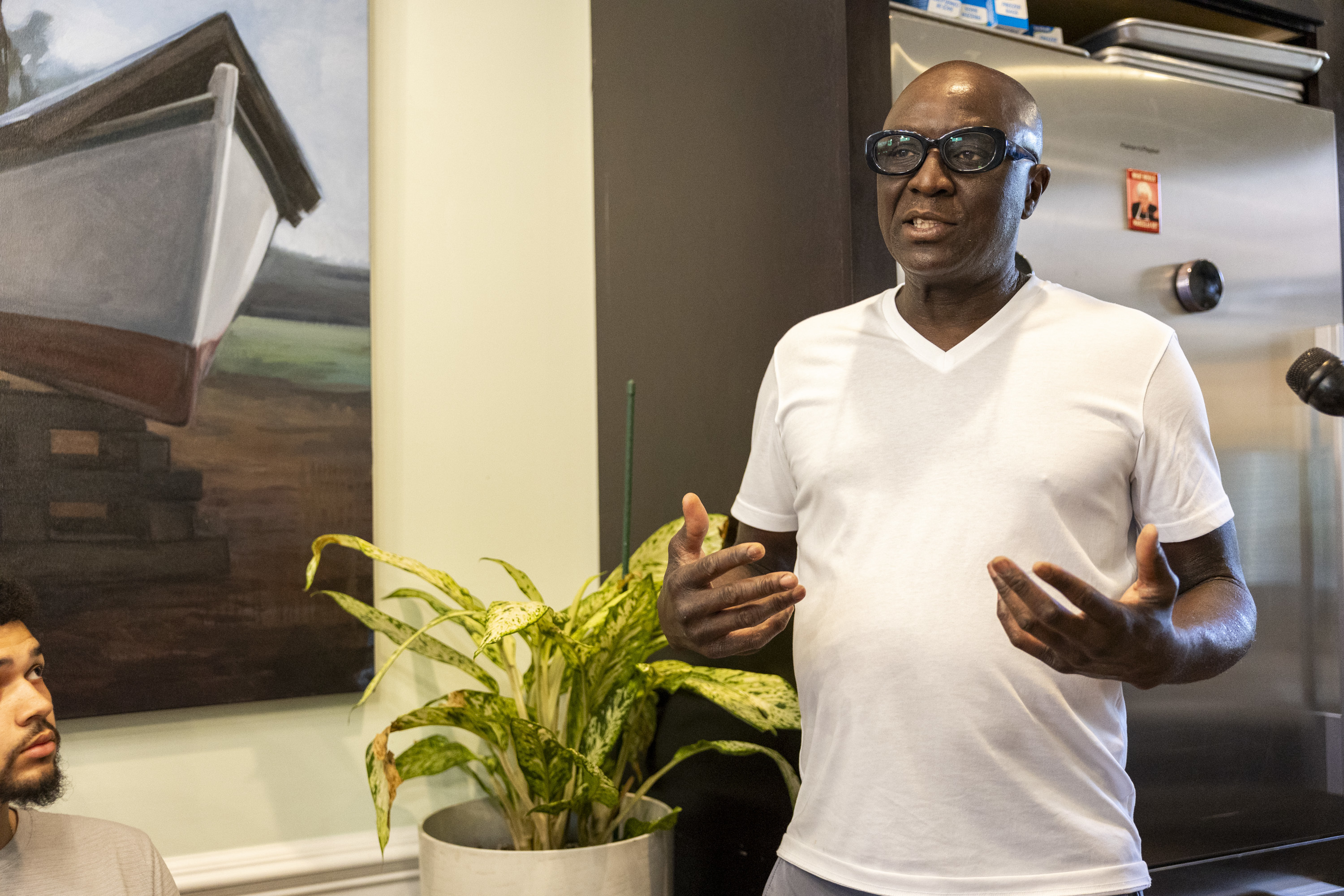
Chef Shola Olunloyo explains his pepper pot recipe in his home kitchen in South Philadelphia.Tyger Williams / Staff Photographer
The importance of historical Black dishes in 2026
For Tate, whose pepper pot efforts sit squarely within the provocative explorations of the Black American foodways Honeysuckle is known for, the point of the exercise for him was not to recreate history — “I’m not interested in copy-and-paste tradition” — but to modernize it for today’s tastes. His rendition with oxtail, pork belly, and honeycomb tripe was partly inspired by the Krimmel painting of a woman serving a market crowd of early 18th-century Philadelphians. But Tate’s deconstructed presentation, with each element suspended above locally raised vegetables and a puddle of intensely flavored broth spiced with fish peppers from Honeysuckle partner Plowshare Farms, looks like the melting pot in reverse. (Seeds for the fish pepper, an heirloom chile used by Black caterers in Baltimore in the 1800s, were publicly reintroduced by Weaver in 1995.)
“I’ve never been able to fully sit in the idea of what tradition is because of my relationship to Black history in America, and realizing that the strongest, most consistent Black tradition is being uprooted constantly all the time,” he says. “Yes, we are preserving culture and honoring the past, but I’m constantly trying to disrupt what I know about that, because it helps understand how people navigated change.”
Chef Omar Tate of Honeysuckle plates his version of pepper pot.Tyger Williams / Staff Photographer
In this respect, the timing could not be more keen for a pepper pot tribute and the conversations it starts about the important role Black chefs played in shaping the nation’s cuisine. Keeping history front and center through food remains a powerful act, especially after the administration of President Donald Trump abruptly altered displays at the President’s House on Independence Mall to sanitize George Washington’s role there as an enslaver of nine people, including the seminal chef Hercules Posey.
“We tried to honor their history and make sure tradition was preserved, but now that’s been disrupted and they have to be reimagined,” said Tate of the enslaved individuals previously commemorated at the President’s House, where the changes, he said, have deeply affected him. “That can only come through the possibility of taste and oral history.”
Chad Williams agrees.
“You have to cook it to keep it alive. Much of what makes dishes truly great is difficult to put into a recipe — the flavor, the experience of the dish, and making sure that gets pushed forward into the future by cooking it hand-to-hand. It can’t always come from a book.”
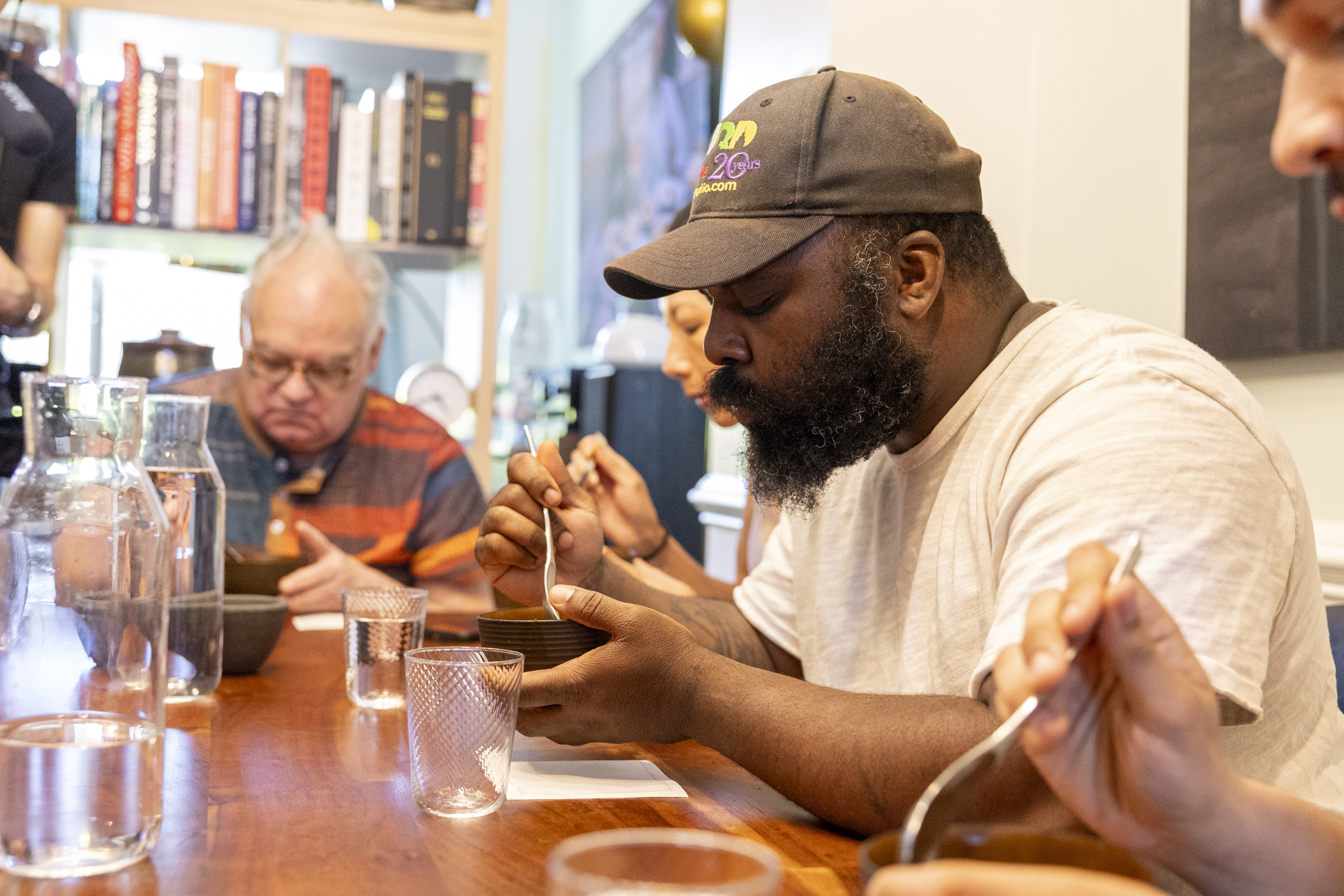
Honeysuckle chef Omar Tate tastes the pepper pot recipe of Angie Brown.Tyger Williams / Staff Photographer
Pepper pot keeps evolving
The beauty of Philadelphia’s pepper pot is that it has proven to be less of a specific recipe than a culinary approach tied to this city, a resourceful way to coax tender sustenance and comfort in a stew flared with spice and the memories of a faraway land using whatever was locally available. As Tate and others at the tasting noted, such dishes have, in fact, continued to thrive with the arrival of new waves of immigrant communities, even if their fiery tripe-laced soups go by other names.
Vietnamese bún bò Huế. Mexican menudo. Mauritanian tripe and cow skin gravy over Jollof rice. Spicy Korean beef gopchang-jeongol. Polish flaki. Italian trippa alla Romana. Excellent versions of all these and more can be found here, which, in the context of Pepperpot City, means they, too, could be considered as part of a grand centuries-old Philadelphia tradition that’s not quite ready to fade away.
“They’re all pepper pots,” insists William Woys Weaver. “That’s our local word for it, you know! Let’s stop pretending that pepper pot is one thing. Pepper pot is Philadelphia’s soul soup.”
The cover of “Pepperpot City,” a book about Philadelphia food history by local historian William Woys Weaver. The cover features a portion of an 1811 painting by John Lewis Krimmel depicting a pepper pot vendor selling the soup in a market.Courtesy University of Pennsylvania Press
Zoe Tanner’s handiwork is immediately recognizable: Cloudlike cold foam puffs flecked with sprinkles that adorn the lattes at Loretta’s, the Society Hill cafe at the epicenter of Philly’s little treat boom.
Loretta’s sells about 200 specialty lattes on a busy day, Tanner estimates.
This September, Tanner spent hours in Loretta’s basement making bite-size uncrustables to top the coffee shop’s PB&J latte, which comes with Concord grape syrup and a peanut butter cold foam. In May, the drink du jour was a black-raspberry-maple concoction topped with a nutty tahini whip and sprinkles shaped like spring flowers. Next month, Tanner is whipping up a banana latte decorated with pretzel rod ghosts. Proceeds from each creation have gone to local charities such as ACCT Philly and the Eagles Autism Foundation.
“Say what you want about the girls that come in from Instagram, but they’re making a difference by buying a drink,” Tanner said. “That matters to me.”
Tanner, 31, serves as the operations director of all three of Bush and Morris’ businesses, splitting her days between training staff, managing inventory, and developing latte recipes. Barista-ing at Loretta’s, however, is the best part of her job.
“I love connecting with people,” said Tanner. “And coffee is so cool because it goes through so many processes to get into your cup, but everyone who touches it is really important, from the grower to the roaster to the barista.”
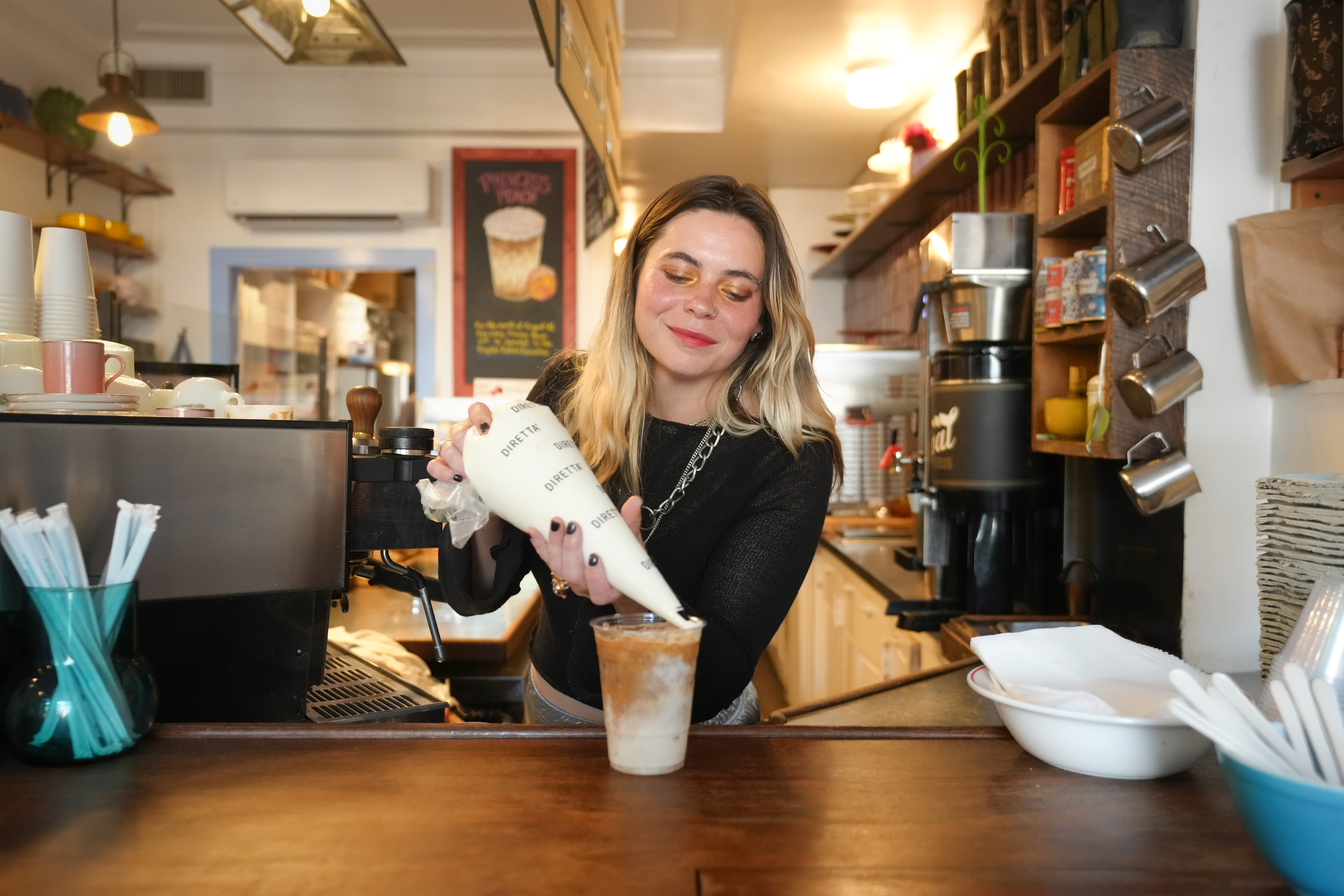
Zoe Tanner pipes marshmallow whip onto a speciality latte at Loretta’s, a coffee shop in Society Hill.Jessica Griffin / Staff Photographer
Tanner, who moved to Philly in 2015 from a small town in Maryland, fell into coffee by working at Starbucks while attending the University of Valley Forge. After, she worked her way up from being a barista at La Colombe’s Dilworth Park location to account manager for the local coffee chain, where she was responsible for convincing mom-and-pop shops to use the brand’s products. She started at Loretta’s when they opened.
The job fuels Tanner’s second career as a self-made musician who writes, records, and mixes all her music. This fall, Tanner will release her fifth album as Mommy Rockstar Bitch, the grunge persona that has helped Tanner find power in her role as the self-proclaimed “mom friend.”
Tanner said working at Loretta’s keeps her grounded like the novelist Charles Bukowski, who kept his job as a mailman during his early days as a writer. It’s also brought her unexpected fame.
Zoe Tanner plays guitar in the living room of her apartment in Olde Kensington.Rowan Ohara
“I was running in Fishtown the other day when a group stopped me and were like, ‘Can we take a picture with you? You’re the Loretta’s girl,’” Tanner said. “Never did I think coffee would be how I build my brand.”
So, how does Philly’s most famous barista spend a perfect day in the city? It involves sharing human food with her dog, running a half marathon, and mixing music from her home in Olde Kensington.
5 a.m.
I generally wake up at 5 a.m. with my dog Barrett — a 6-year-old German shorthaired pointer — barking at me to give him pets. I automatically smile; one of my biggest accomplishments in life is that he’s so well-behaved because GSPs are such a tough breed.
After a quick morning walk with Barrett, I’ll head to a 6 a.m. Heated Power Strength yoga class at Monarch Yoga in Kensington. I go without having any coffee, which is so unnatural for me, and then when I get out, I feel so awake and alive. The music is also so upbeat and fun for a strength class, but since it’s a yoga studio, [the instructor] still gives us a spiritual concept to focus on.
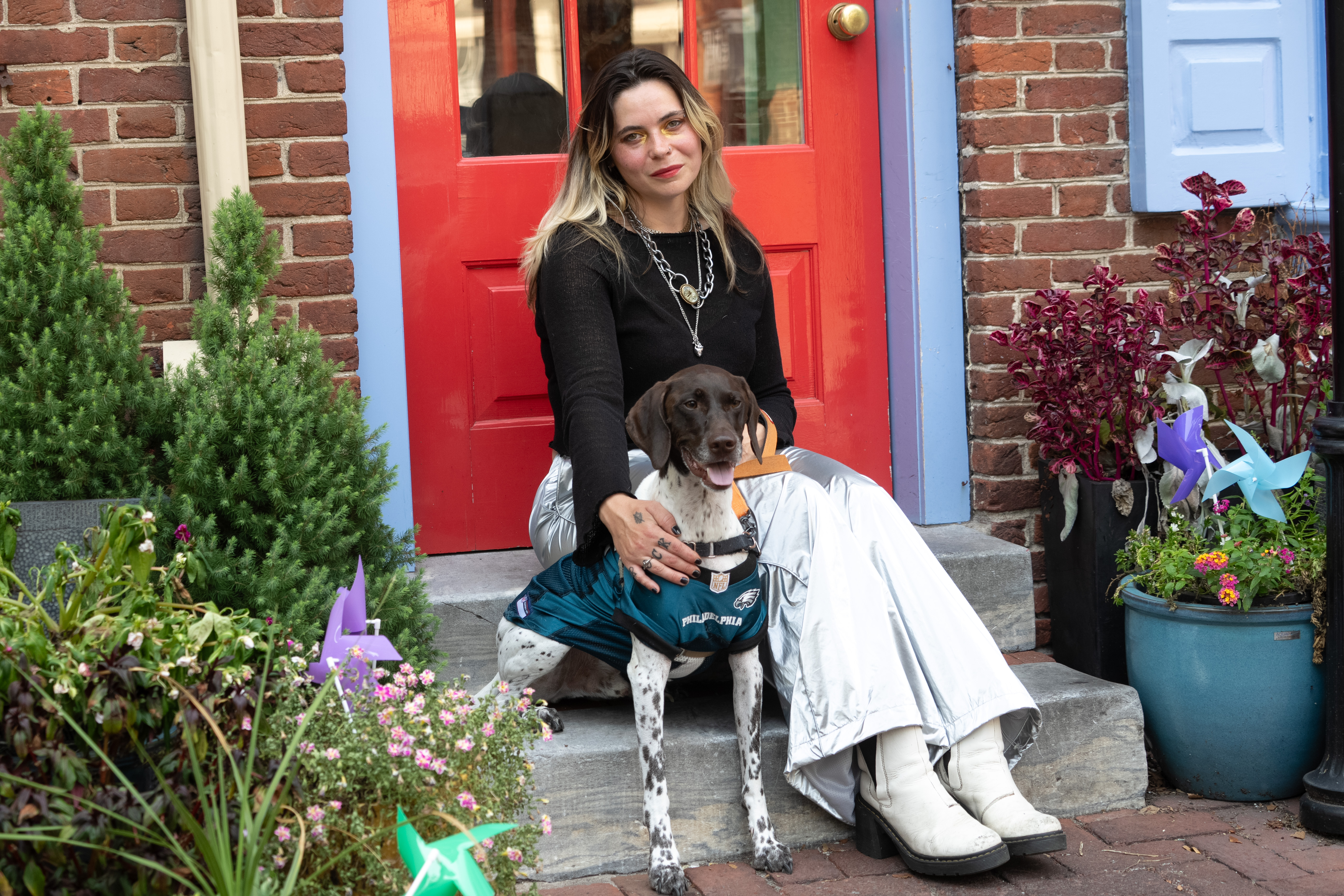
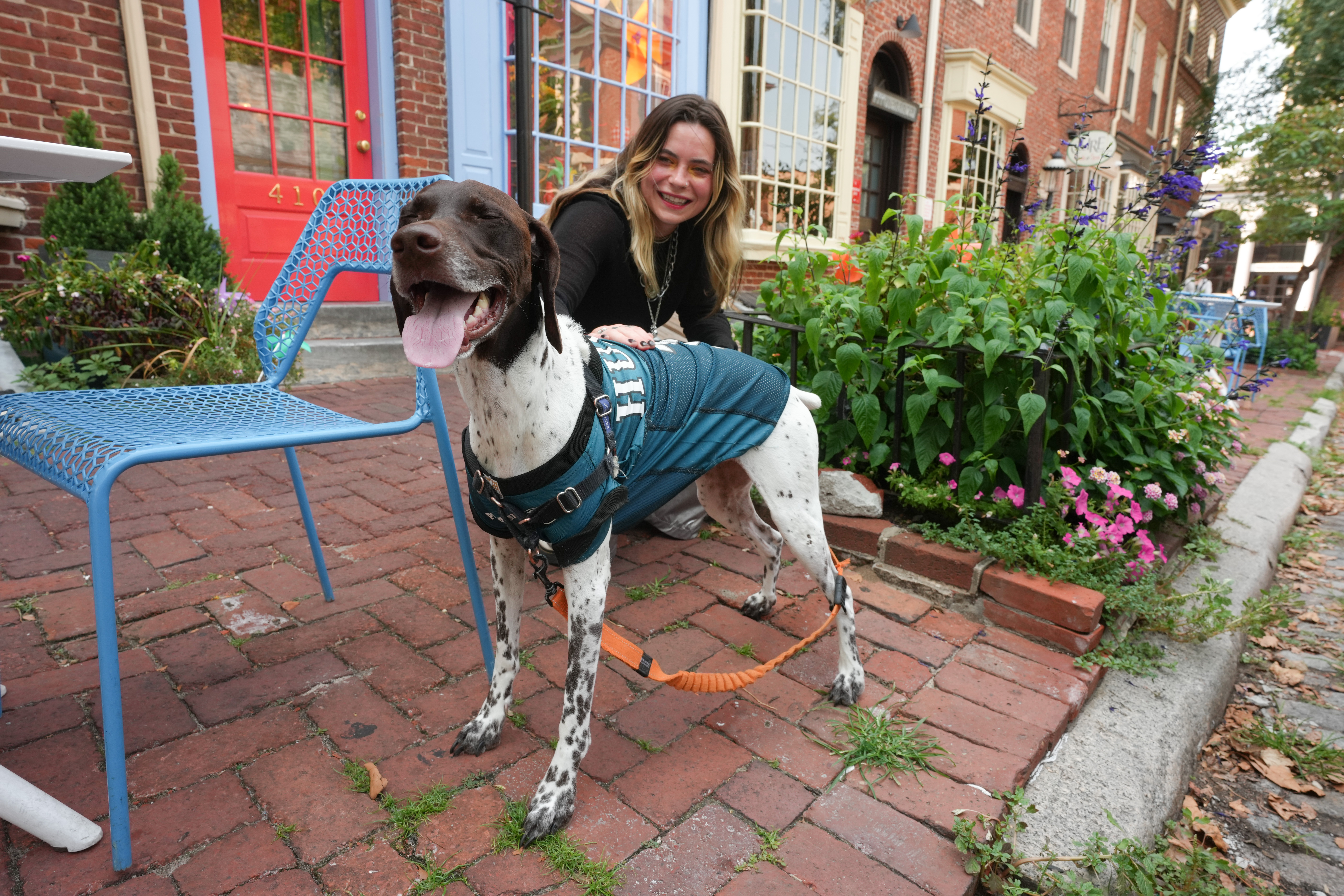
Tanner likes to share food with Barrett, her 6-year -old German shorthaired pointer. His favorites include banh mi from Ba Le and pizza from Pizzeria Beddia.Jessica Griffin / Staff Photographer
7:30 a.m.
Next, I’ll grab Barrett for a long walk that’s mostly about him being the center of attention. People might say that I’m a bad dog mom for this, but I share my food with him.
I’m not even embarrassed by this because Barrett has good taste: When we go on long runs, we always stop at Ba Le Bakery in South Philly for a lemongrass and beef banh mi, and when we walk down Frankford Avenue, he will literally yank me across the street for Huda Burger. I even gave him a Pizzeria Beddia birthday party. I promise he’s a healthy dog.
Anyway, on our long walks we will either stop at Rival Brothers Coffeefor a short Americano and so Barrett can look out the window, or Càphê Roasters to split a fried chicken sandwich. It’s funny because I used to joke about never wanting to be a regular somewhere, but now I walk into these places and it feels like I’m talking to my siblings. It’s a beautiful way to start my morning.
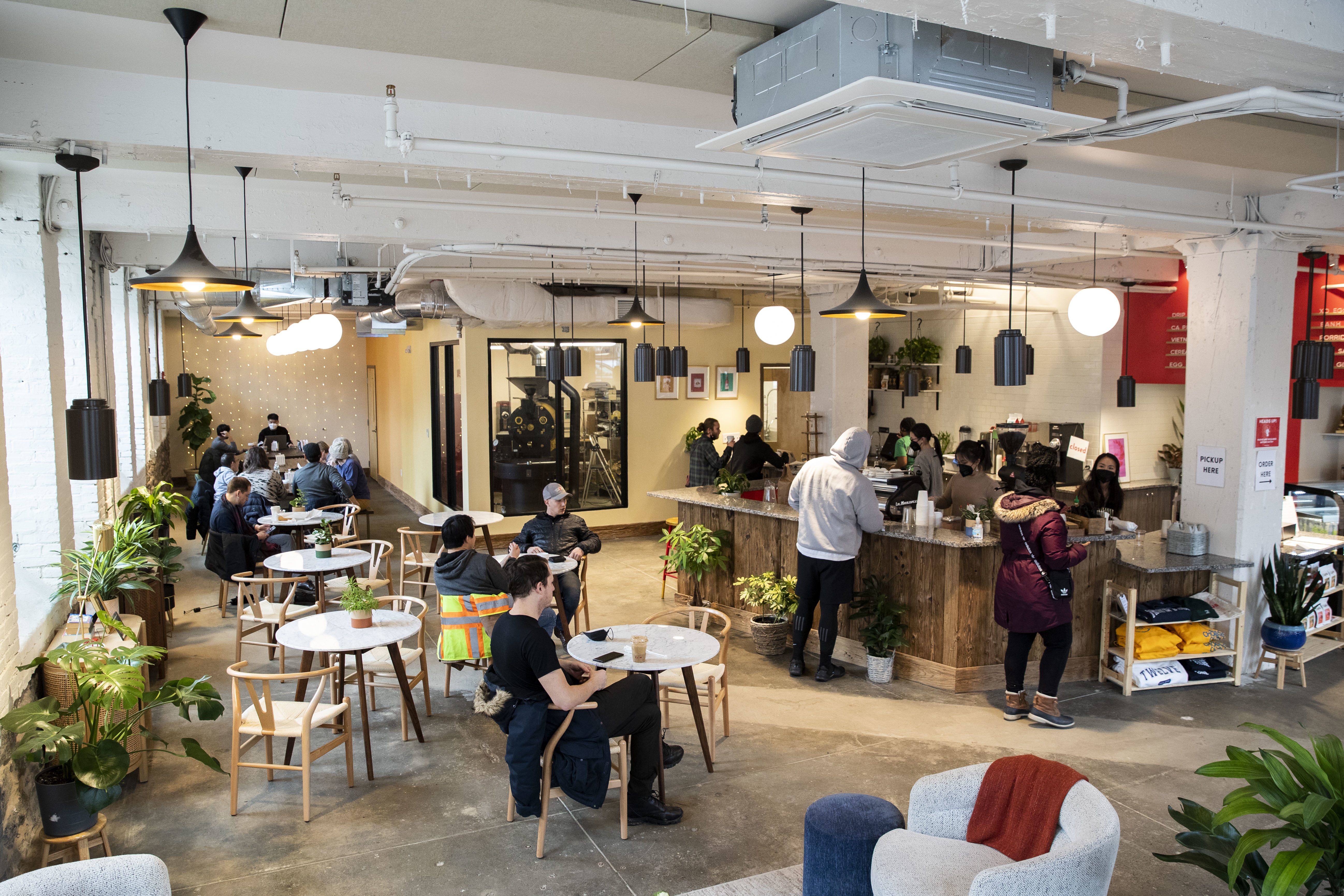
The inside of Càphê Roasters in Kensington, where Tanner and her dog Barrett are regulars.Monica Herndon / Staff Photographer
10 a.m.
After also feeding Barrett real dog food, I head down to Loretta’s to clock in for a shift. On a perfect day, work involves barista-ing a little bit, doing latte research, and filming content for social media.
All of our specialty lattes involve a specialty syrup and cold foam, and they take about three iterations each to get right. I love it because I feel like I’m in a lab, trying to find the right balance of fun and sweetness without just serving people sugar just because it looks pretty … [Kelsey Bush] and I are both very anti-unicorn frappuccinos.
As director of operations at Loretta’s, Zoe Tanner says the best parts of her job include working on latte recipes and barisa-ing.Jessica Griffin / Staff Photographer
At some point, I will stop for lunch. I’m in a protein era right now, so I like to order the Emma, which I equate to Loretta’s version of a chicken Caesar salad wrap. I also love our Rice Krispies Treats. They’re just perfectly done. Packaged Rice Krispies Treats are always so dry.
2 p.m.
It is officially time for me to go on a long run — 13.1 miles at minimum because I’m a distance diva.
My go-to route is river to river: I’ll run from my apartment to Penn Treaty Park, down to the Headhouse Shambles, across South Street to Schuylkill Park, up to the Philadelphia Museum of Art, and back.
While I’m running, I like to listen to a lot of my raw mixes to get a sense of what needs work, but if I’m trying to have a really blissful run, I’ll listen to Dean Blunt or Sade. If you run by the river and put on Sade, you’ll feel like the hottest person in the universe. Trust.
Tanner likes to run along the Schuylkill River, the Delaware River, and through Penn Treaty Park.TYGER WILLIAMS / Staff Photographer
I also like to think of my runs as quests. I will deliberately only bring my phone and headphones so I’m forced to stop for the things I need to keep going, like a snack or electrolytes. It’s fun because it helps me get to know the city better, even after more than a decade. … I think people get tired of Philly because they don’t chew down on it enough.
Running this way has also made me a public bathroom expert because peeing, of course, is always part of the quests. My hot tip: Never count out a Whole Foods.
6 p.m.
After my run, I like to get dinner and drinks with my friends.
Our go-to is Monk’s Cafe, which I recently learned might be haunted? I typically order the Thai curry mussels, a saison, and fries.
I know there’s a lot of discourse about Monk’s having the best fries, but I want to make clear that I do NOT play that game. Fries come in all shapes and sizes, and they’re all good. I would never body shame a fry. It’s like trying to say a basketball player is more athletic than a football player. How could you?
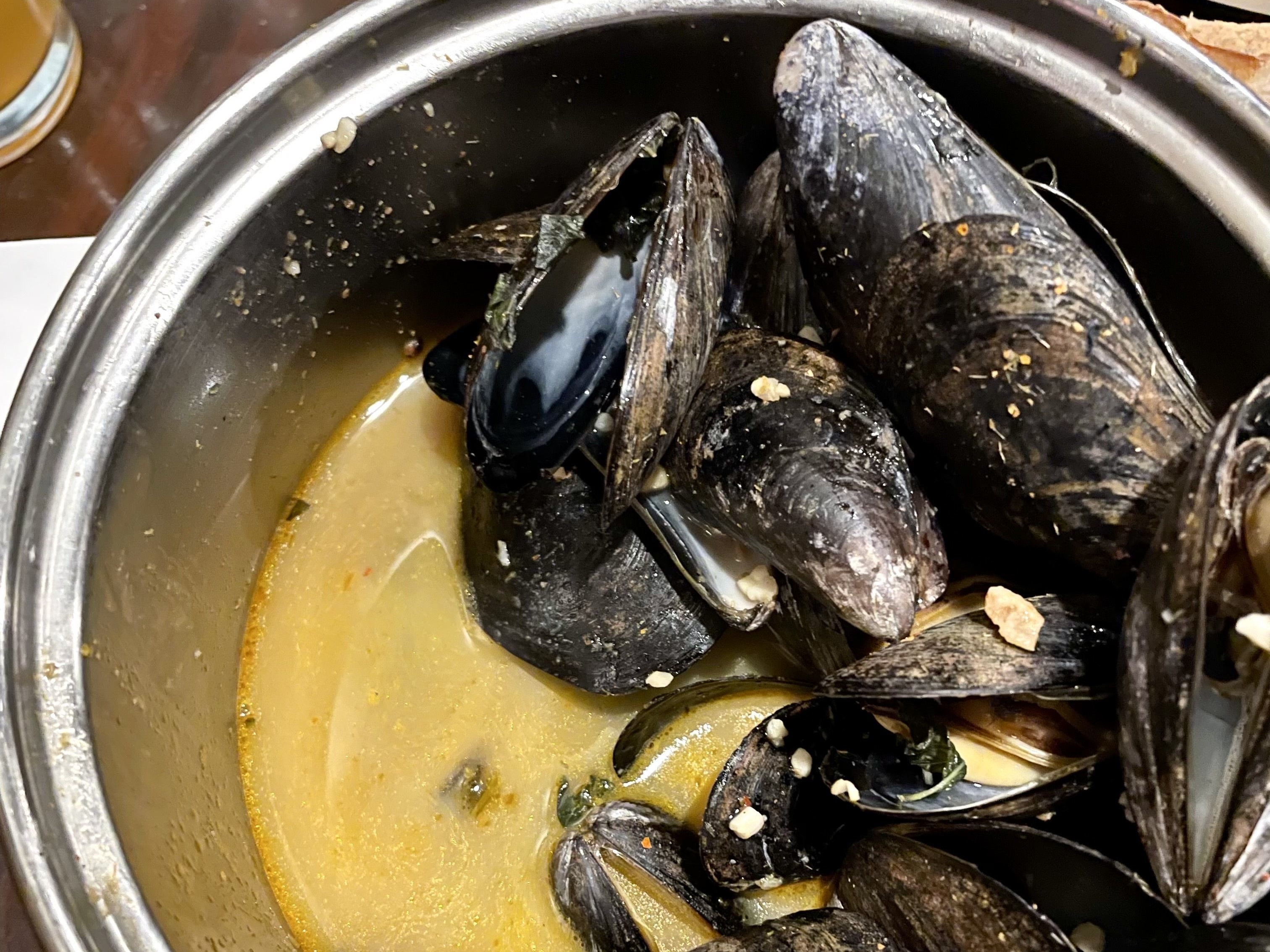
A pot of mussels in Thai curry broth at Monk’s Cafe.Craig LaBan
If we want to have a less chill night, my friends and I will go to Johnny Brenda’s— I had my first ever legal drink there, and they make a great steak. For a more chill night, we like to eat at Phở 75. I want my pho with dark meat chicken and all the fixings — jalapeños, bean sprouts, cilantro, sriracha, hoisin. Barrett, of course, will probably have a piece of the chicken.
9 p.m.
I like to end my day with music, either by practicing with my band or mixing my album, which reminds me a lot of coming up with drinks for Loretta’s since both start with me asking the same question: What can I do to make this thing pop?
Sound mixing is so similar to food and beverage because it’s very easy to sense when you’ve done too much and need to pull back. Things often taste and sound the best when they’re at their most natural.
This interview has been edited for length and clarity.
Wonderland Pier closed almost two years ago. Now, Ocean City has declared part of the former amusement pier unsafe after a wall beneath the decking began caving in. Developer Eustace Mita says the iconic Ferris wheel — which his original hotel proposal called for preserving — is in such bad shape that it will have to be “literally torched” and cut into pieces to come down.
Oof.
For generations of families, that Ferris wheel was part of the Ocean City skyline. You could see it from the beach, the boardwalk, blocks away. Even after Wonderland closed, it was still there.
There’s plenty of debate over what happens to this property next, including Mita’s proposed hotel. But whatever eventually replaces Wonderland, this part is just sad.
A bad-luck sports September: F
Did the Phillies, Eagles, and Flyers collectively break a mirror? Walk under a ladder? Open an umbrella indoors?
First, Phillies All-Star starter Jesús Luzardo landed on the injured list with a sore shoulder, just as the postseason approached. Then the Eagles lost three-time Pro Bowl guard Landon Dickerson to injured reserve with a bone bruise in his already twice-repaired right knee. And Tuesday, Flyers MVP Dan Vladař left a preseason game injured after a collision.
The Phillies were counting on Luzardo as a major part of an October rotation. The Eagles already look like they desperately miss Dickerson in the run game. And Vladař was the heart of the Flyers team that finally made hockey fun around here again last season.
Bad luck comes in threes, right? Well, apparently not.
So much for completing our allotment of sports misery.
Whatever dark cloud is following Philadelphia sports around, please find another city. Four is plenty. We’ve officially met our injury quota for the month.
Fall understood the assignment: A+
Finally, fall in Philly actually feels like fall. The autumnal equinox arrived Tuesday, and somehow the weather timed it perfectly: cool mornings, highs in the 60s, and just enough color starting to show up in the trees.
This is the good stuff. Open windows, sweatshirts, and walks that don’t end in sweating. It’s the beginning of leaves changing along Kelly Drive and the few glorious weeks when sitting outside is actually pleasant.
Of course, Philly weather couldn’t just let us enjoy this. A powerful early-season nor’easter is expected to bring heavy rain and winds that could gust to 45 mph in the city this weekend, with even worse conditions and significant flooding possible at the Shore.
Fall arrived right on time. Apparently, it also brought weather.
The agency unveiled an ambitious 10-year vision this week that includes new trolleys, new El cars, more accessible stations, and a pretty wild idea for Regional Rail: trains every 15 minutes or better on several lines. SEPTA says the change would essentially give the region another 75 miles of subway-level frequent rail service.
And people are riding again. SEPTA says it’s now carrying more than 800,000 daily riders, after reporting a summer spike tied in part to Philly’s huge slate of events.
There is, naturally, a very SEPTA-sized catch: Someone has to pay for all of this. The agency still faces a $192 million operating deficit next fiscal year, and much of this vision depends on additional funding.
But after years of “save SEPTA,” it’s nice to spend a week imagining a SEPTA that gets better instead of merely surviving. Regional Rail that comes every 15 minutes? Keep talking.
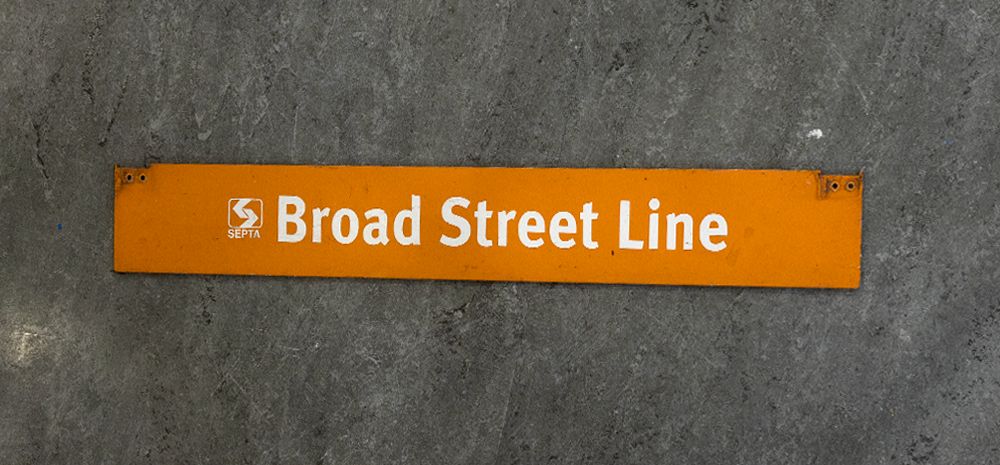
Broad Street Line signs, like the one pictured above, quickly sold out in SEPTA’s RETROmania sale.Courtesy of SEPTA
$350 for an old SEPTA sign?: B
Speaking of SEPTA, it may have accidentally discovered its next funding source.
Philadelphians have spent years complaining about SEPTA. Turns out, we like to own pieces of it.
SEPTA dug through its vault and put old transit signs, maps, and TransPass sheets up for sale this month, and people went nuts. More than 100 decommissioned signs sold, some for $350 apiece, and the old Broad Street Line signs were among the first to go. (Duh.)
The sale came about because riders kept asking what SEPTA was doing with the old signs as it switched the Broad Street Line to the “B” — a name change many Philadelphians are still politely declining to participate in.
And apparently nothing says the Broad Street Line will always be the Broad Street Line quite like paying $350 to hang the evidence in your basement.
Lynnewood Hall is getting a second chance under new ownership.Monica Herndon
Lynnewood Hall opens its doors: A
For 84 years, one of the most spectacular buildings in the Philadelphia region has been sitting in Elkins Park with its doors closed to the public, but not anymore.
Lynnewood Hall, the 100,000-square-foot Gilded Age mansion built for industrialist Peter A.B. Widener, is now open to the public for the first time since 1942. And naturally, a house this over-the-top is reopening (through Oct. 4) with thousands of flowers and a show inspired by HBO’s The Gilded Age.
But the really exciting part is what happens after the flowers leave.
The mansion sat abandoned for decades before the Lynnewood Hall Preservation Foundation bought it for $9.5 million in 2023 and began the enormous job of bringing it back to life. Now, the group is planning more public programming for 2027.
There are plenty of old buildings around Philly that people wish somebody had saved before it was too late, so it’s pretty nice to watch one actually get a second chance.
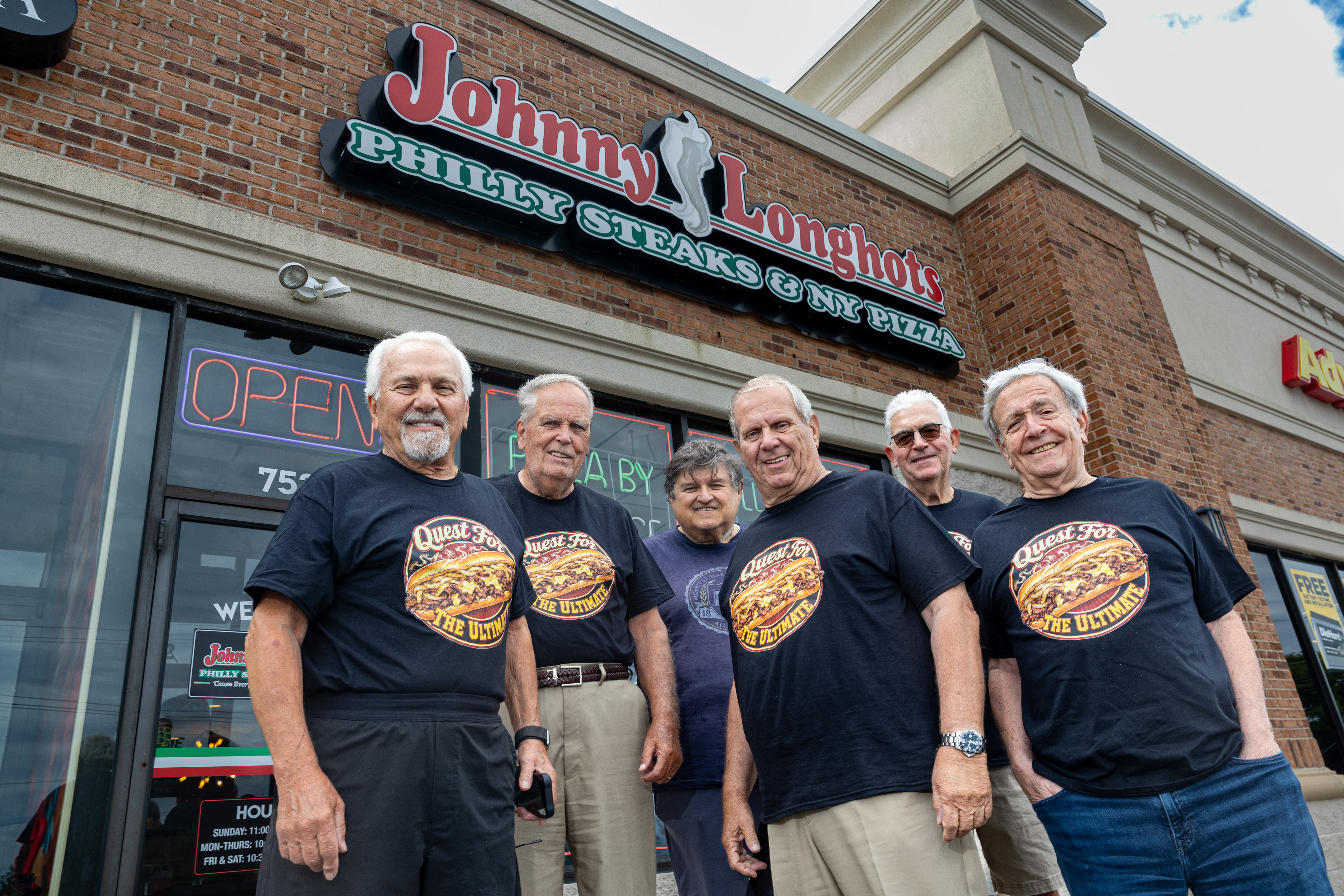
At Marlton’s Johnny Longhots on Sept. 18, 2026, are (from left): Ralph DiSibio, 85, Bob McDermott, 83, Gary Mazzucco, 78, Paul Ferretti, 79, John DeSilvio, 74, and Mike Mouber, 79.Aidan T. Gallo / Staff Photographer
Retirement, but make it cheesesteaks: A+
Six friends from a 55+ community in Moorestown have embarked on a mission to find the best cheesesteak in South Jersey, trying a new spot every month and debating the important things: bread firmness, hot peppers, meat-to-money ratio and whether Cooper Sharp was actually the right call.
There’s a spreadsheet, but no real scoring system. They mostly decide whether a sandwich is “good” or not while talking about sports, movies, and whatever else comes up.
So far, Chick’s Deli is winning. Donkey’s lost points for the kaiser roll. And they refuse to cross the bridge because there are too many cheesesteaks in Philly and, as they put it, they’re not sure they have enough time to eat them all.
Forget pickleball, these guys have retirement figured out.
As a reporter for “How I Bought This House,” The Inquirer’s series that shares the stories of how people purchased homes, I’ve spent a lot of time asking people about, well, how they bought their houses. How much they offered. What they waived. What they regretted. I’ve learned all sorts of tips and tricks, strategies, and common mistakes to avoid.
So when I bought my first house this August in Philadelphia, I fancied myself savvier than the average first-time buyer. I knew, for instance, that the appropriate response to discovering knob-and-tube wiring is to run in the opposite direction, and that only a fool would waive the inspection.
I headed into the process eager and overly confident, sure I’d be able to nab the perfect house well below the asking price and secure a mortgage at the lowest possible interest rate. I’d planned to use things I learned while helming this column, like seller assists and mortgage buydowns, to finagle the seller into practically giving me the house for free.
Then I found a house I really wanted, and I learned that knowing what to do is one thing. Doing it when you are terrified that someone else might buy your dream house is another.
Most of the hacks I picked up flew out the window the second another couple showed up at the open house. Faced with a competitive seller’s market, I quickly folded on things I would’ve previously considered nonnegotiable.
Like the inspection. While I didn’t waive it entirely, I did agree to it being “information only,” meaning I gave up my right to ask the seller to fix or pay for anything. Information-only inspections can strengthen your offer when you can’t afford to pay more, but they can still end up costing you in the form of a hefty repair bill.
Looking back, I wish I had done a full inspection. I didn’t know the details of the other offers, but I doubt anyone else waived theirs. When the report came back with a list of necessary repairs totaling $15,000, I was stuck.
I knew from interviewing dozens of buyers that people often use inspection findings to negotiate a seller’s credit. I would’ve liked to ask for one to cover some of the $12,000 it cost to replace the cloth wiring. But because I’d agreed to an information-only inspection, my only real option was to walk away. I believe this is what people in business call giving away your leverage.
And speaking of giving away leverage, I don’t know why I offered over the asking price except that fear is a powerful motivator. And by that point, I had developed a healthy fear of being outbid.
I had already been outbid on two houses, both of which sold for more than $40,000 above asking. This time I could afford to offer more, so I did, even though I didn’t know what the other offers were.
In a less panicky state, I might have remembered something I’d heard again and again reporting on homebuyers: If someone else offered more than us, the seller would probably circle back and ask if I could match them. That would’ve been a good time to go above the asking price. Instead, I did it right out of the gate. To borrow another phrase from the business community, I negotiated against myself.
Thankfully, not everything I learned from How I Bought This House was for naught. While debating ways I could fend off the competition I was convinced was trying to steal my house, I remembered a couple from Collingswood who hoped to avoid a bidding war. They had bought and sold several homes before, so they knew how to put together an irresistible offer. One of the things they did was waive the mortgage contingency.
When you waive the mortgage contingency, you’re essentially telling the seller that your financing is your problem, not theirs. If your loan falls through, you can’t back out of the deal and get your earnest money back. You have to be able to buy the house one way or another.
It sounds risky — especially if you’re still planning to use a mortgage — but I felt it was a risk I could safely take. My lender was confident I’d be approved.
Plus, I knew the seller would find it appealing because sellers love certainty. Waiving the mortgage contingency gave them the security of an all-cash offer without requiring us to actually make one. A true “win-win,” as my friends in business would say.
Of course, I have no idea whether it won us the house, but after spending so much of the process paying extra to calm my own nerves, it felt good to finally strengthen my offer for free.
If I learned anything from buying my first house, it’s that you should decide what you’re willing to spend, waive, or risk before you fall in love. Then stick to it. I didn’t. But I still got the house. And I don’t have any regrets.
The cleverest pastas tend to trick the eye and tease with wordplay. Are those postage stamps or francobolli? A plate of handkerchiefs or fazzoletti? Sorprese? Or surprise! It’s stuffed with nothing at all.
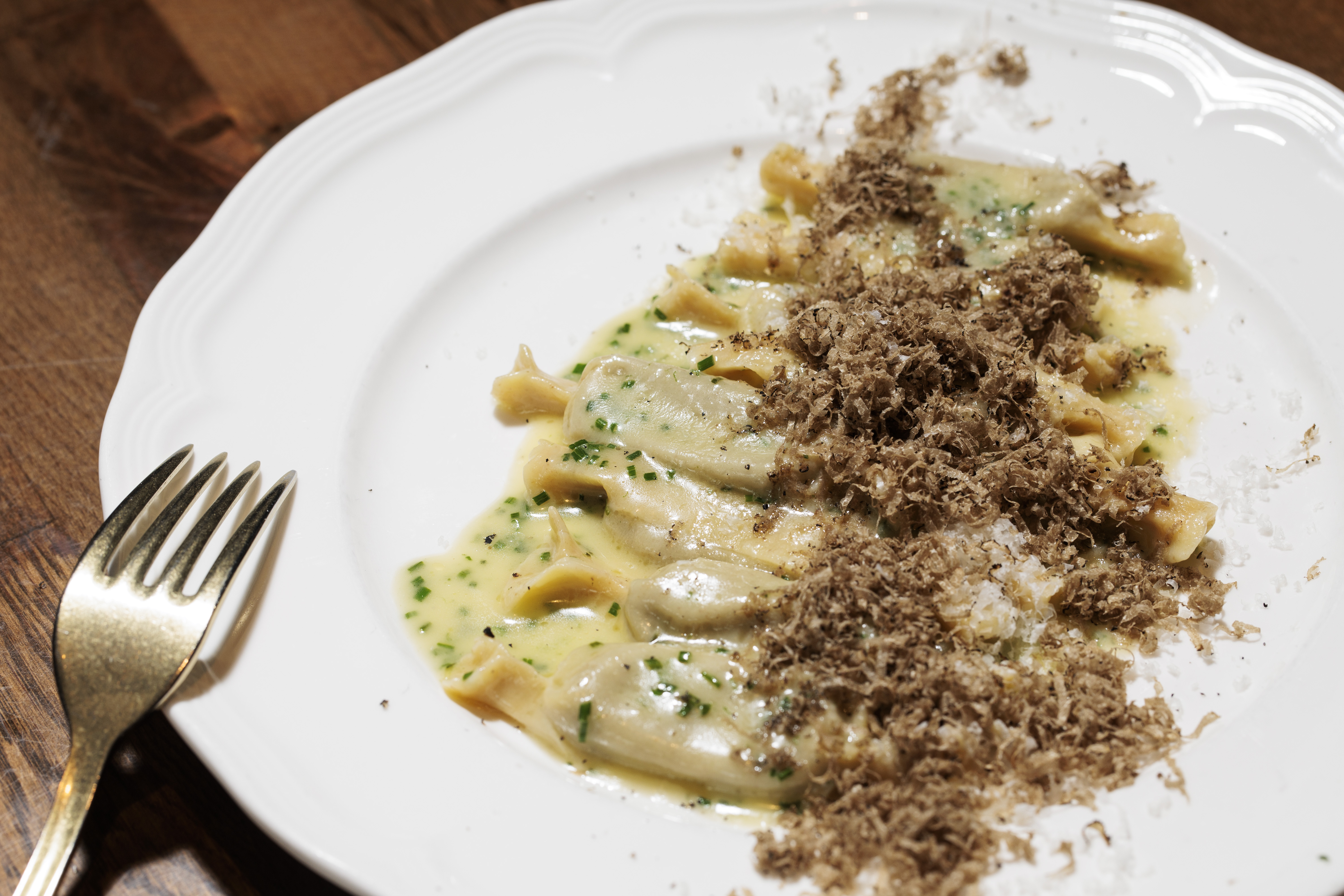
But no pasta shape is more visually convincing than caramelle, which closely resembles oblong candies in wrappers, with both ends twisted to contain the fillings. Fiorella’s cooks add another layer of wit to their current variation on the classic shape: Their caramelle are undeniably sweet (something that pasta often is not).
But the historic Italian Market butcher shop-turned-pasta bar isn’t sugaring its pasta. The caramelle’s sweetness comes naturally from late-summer corn simmered in butter and funked up with huitlacoche and black summer truffles.
“Huitlacoche is known colloquially as the poor man’s truffle,” said chef Matt Rodrigue, who loved the duality of uniting it with conventionally expensive black truffle — and with the fungus’ host.
“Pairing huitlacoche [corn smut] with corn isn’t reinventing the wheel but, again, it was simple. They grow together. It’s one of the few fungal infections that happen on a farm where the farmer is, well, not upset because of how much it can sell for,” he said.
It’s unlikely you’d fly to Italy and get a plate of caramelle pasta made with huitlacoche, but it’s an essential ingredient in Mexican cuisine — and in Philly’s Italian Market, which nowcontains far more Mexican businesses than its namesake suggests.
By cooking with locally available ingredients, Rodrigue is, in essence, hewing to Italian tradition and simplicity in his approach to making pasta, even if he’s not always sticking to ingredients from Italy.
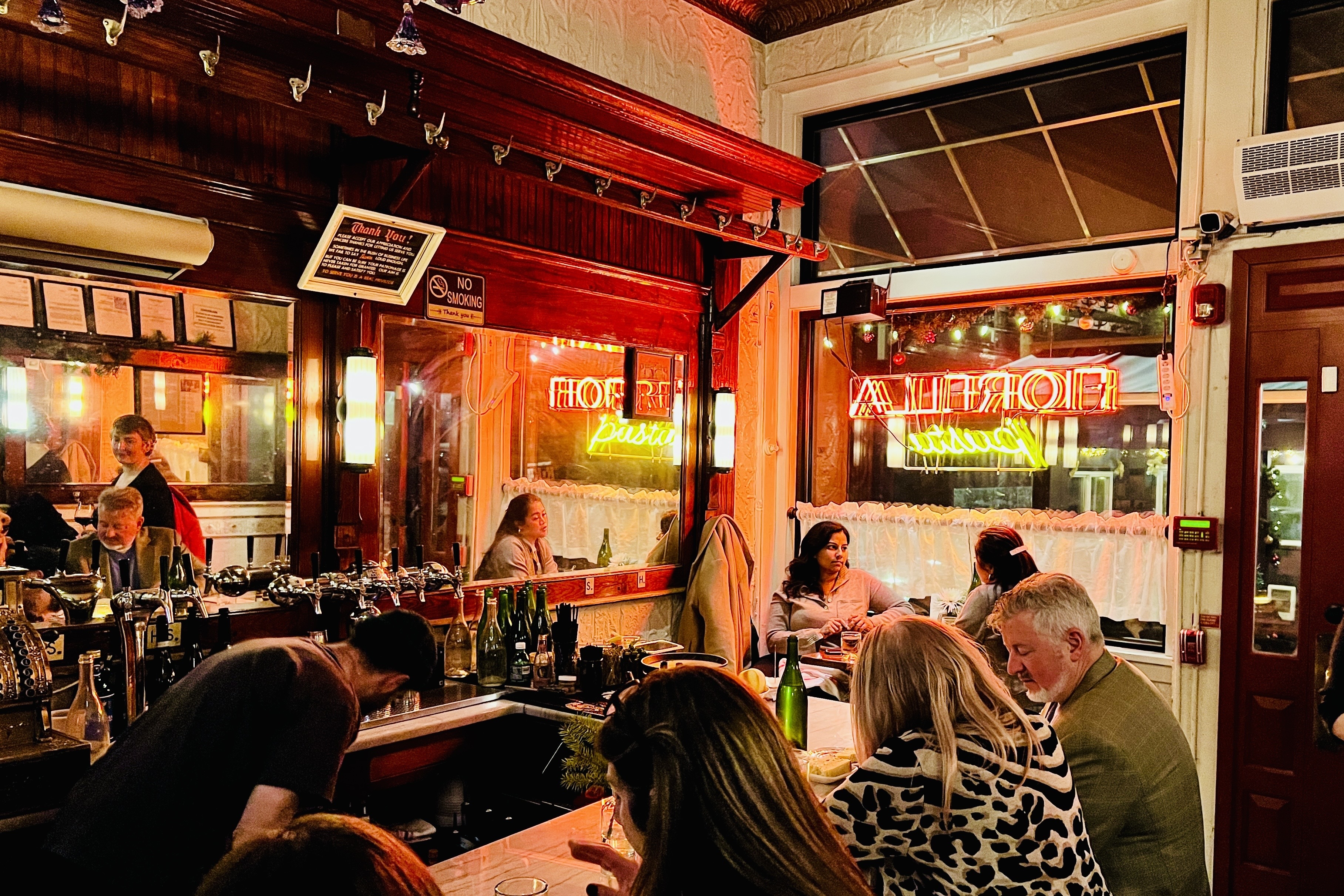
Fiorella Pasta, 817 Christian St., Philadelphia, on Dec. 27, 2025.Michael Klein / Staff
“Simple is hard. It’s difficult to be restrained and to work within confines,” Rodrigue said. “But rules help you develop a vision.”
And so his caramelle filling is simply corn, huitlacoche, butter, and onion simmered together, pureed until silken, then twisted up into pasta. The candy-shaped batons are cooked, then dressed with pasta water that’s emulsified with chives by vigorously tossing the caramelle in the pan. The dish is finished with a snowdrift of Parmigiano Reggiano and black truffle shavings. The result is a marriage of cultures, aromatic funk from two different sources, and the last breath of the season’s corn.
“People pay for things. For truffles, for certain mushrooms. And I felt corn should be in that category and an all-star. Corn is perfect. It just needs butter and salt and you’re good to go,” said Rodrigue.
And Fiorella’s caramelle is a perfect salute to corn and its smut. But also, of course, butter.
Museums and galleries are spaces we enter expecting to find joy and beauty in art. Even when we leave overwhelmed with feelings, we know that we went in looking for that beautiful indescribable emotion. That joy is doubled when art comes at you from unexpected corners.
I was walking across the John F. Kennedy Boulevard Bridge one morning when my eyes fell on a manhole cover. A metal lid on the city’s unseen river of waste? Decidedly not art.
A Philadelphia Water Department metal manhole cover on the John F. Kennedy Boulevard Bridge, on Sept. 17 2026.Bedatri D. Choudhury
But imagine it’s early morning and the sun isn’t too strong yet, you’re walking to work with purpose and a head full of to-dos. You see the metal lid that conceals what you’re not supposed to see. The lid is stamped with a design of what looks like shoots of a plant with little leaves growing on them, and the words “Philadelphia Water” occupy the center in symmetrical typographic harmony.
It’s beautiful; its beauty enhanced by the fact that it didn’t have to be anything but a plain metal lid screwed to concrete. No one is supposed to stop and look at manhole covers in silence like framed art in a gallery but someone somewhere in the long line of civic workers at the Philadelphia Water Department decided to build something beautiful just in case someone on their way to work decided to stop and look. Someone came up with a design, someone forged a stamp, someone stamped the metal with it, and someone put that metal lid on the bridge I walk to work. There’s so much joy in discovering this silent gift. Thank you.
— Bedatri D. Choudhury
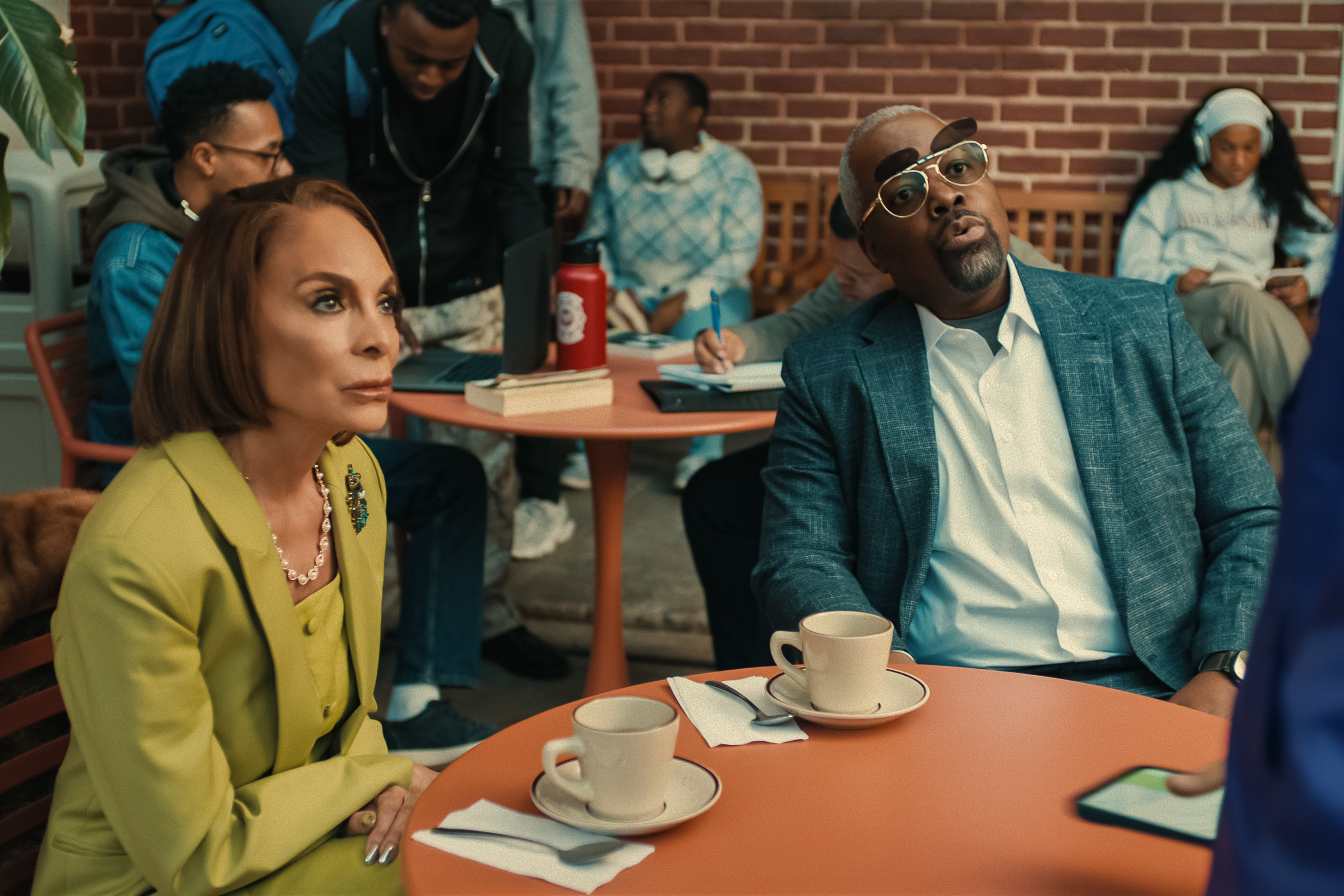
Jasmine Guy and Kadeem Hardison in a scene from “A Different World.” (Netflix via AP)Uncredited
Netflix’s ‘A Different World’ is everything I wanted ‘Bel-Air’ to be
For those of you who don’t remember, A Different World was NBC’s 1987 spinoff of North Philly’s own Bill Cosby’s The Cosby Show. It featured Cliff’s second daughter, Denise Huxtable (Lisa Bonet), as a freshman at her parents’ alma mater, the fictional historically Black university, Hillman College.
After one season, however, Denise was out, Whitley (Jasmine Guy) was the center, and viewers were glued to their seats every Thursday night following Dwayne (Kadeem Hardison) and Whitley’s budding romance. By the end of its six-season run, Dwayne and Whitley were married, and we assumed they lived happily ever after.
After almost 30 years, Netflix has revived A Different World millennial-style, and this week it’s back.
The 10-episode first season gives Philly-inspired Bel-Airvibes; it’s a serious take on a fun-and-games ’90s comedy. At first glance, the male lead, Shaquille Johnson (Cornell Young IV), looks a lot like Jabari Banks, the West Philadelphia-born actor who assumes Will Smith’s character on Peacock’s Bel-Air.
Debbie Allen in a scene from “A Different World.” (Netflix via AP)Uncredited
But that’s where the similarities end.
The updated version of A Different World is what I thought Bel-Air would be. It remains true to the original show’s characters: Whitley is still an entitled snob. Dwayne remains as thoughtful as he is brilliant. And Dwayne and Whitley’s daughter, Deborah (Maleah Joi Moon), is a delightful blend of her mom’s sense of bougieness and her dad’s altruism. It’s a stone-cold gas that her favorite accessory are flip glasses just like Dwayne Wayne. (It made me want to dig mine out)
Yet, the new A Different World is more than a nostalgic walk in the park. The first few episodes deal with 2020s issues like the current presidential administration’s attack on Black history, rampant mismanagement of funding by university administrators, and what it’s like for this generation of college students to engage with professors and each other after almost two years of COVID-19 lockdown.
Just like its 1980s predecessor, A Different World millennium-stylehas the same immediacy.
“A Different World” is now airing on Netflix.
— Elizabeth Wellington
Beethoven meets Joe Hisaishi, thanks to the Philadelphia Orchestra
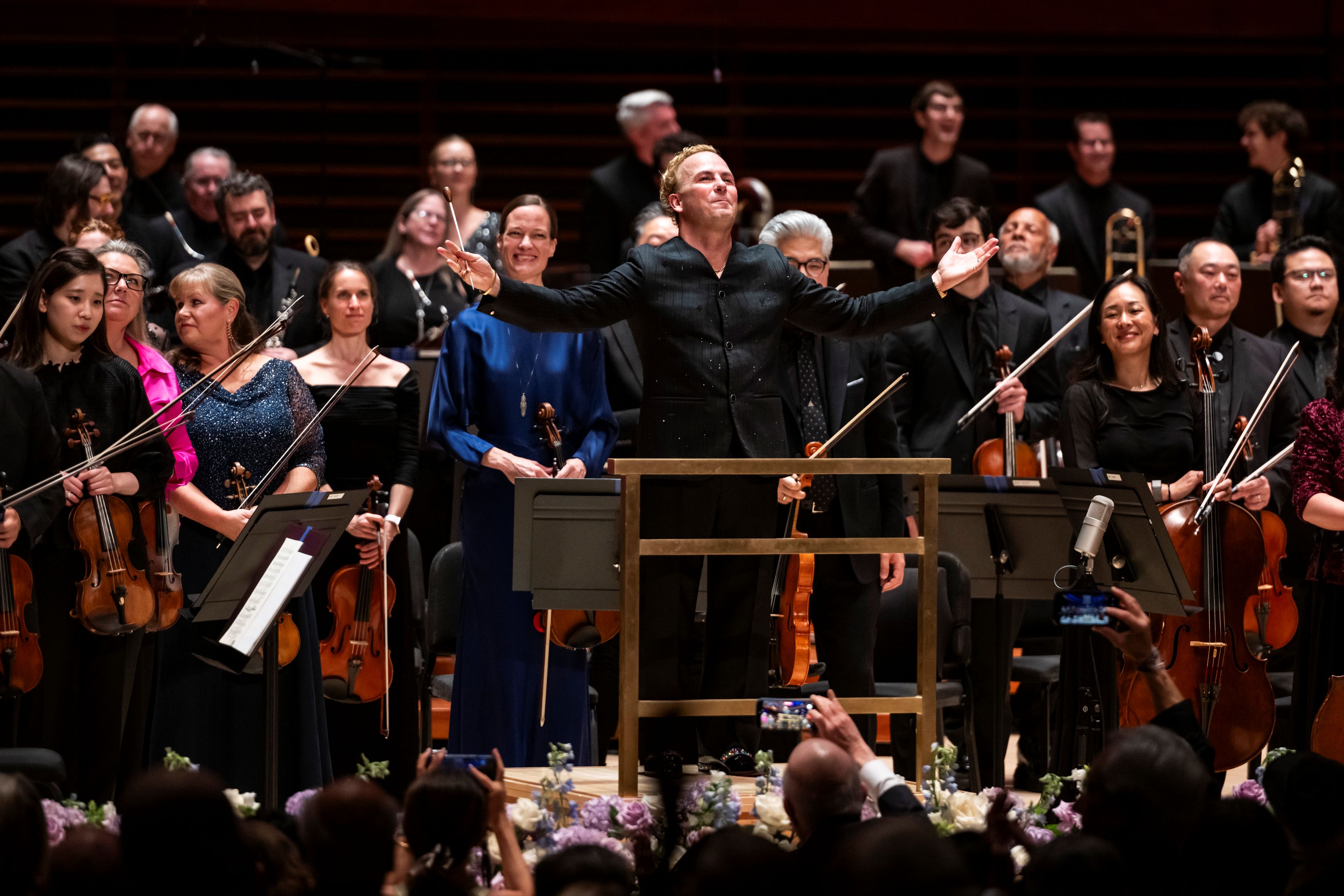
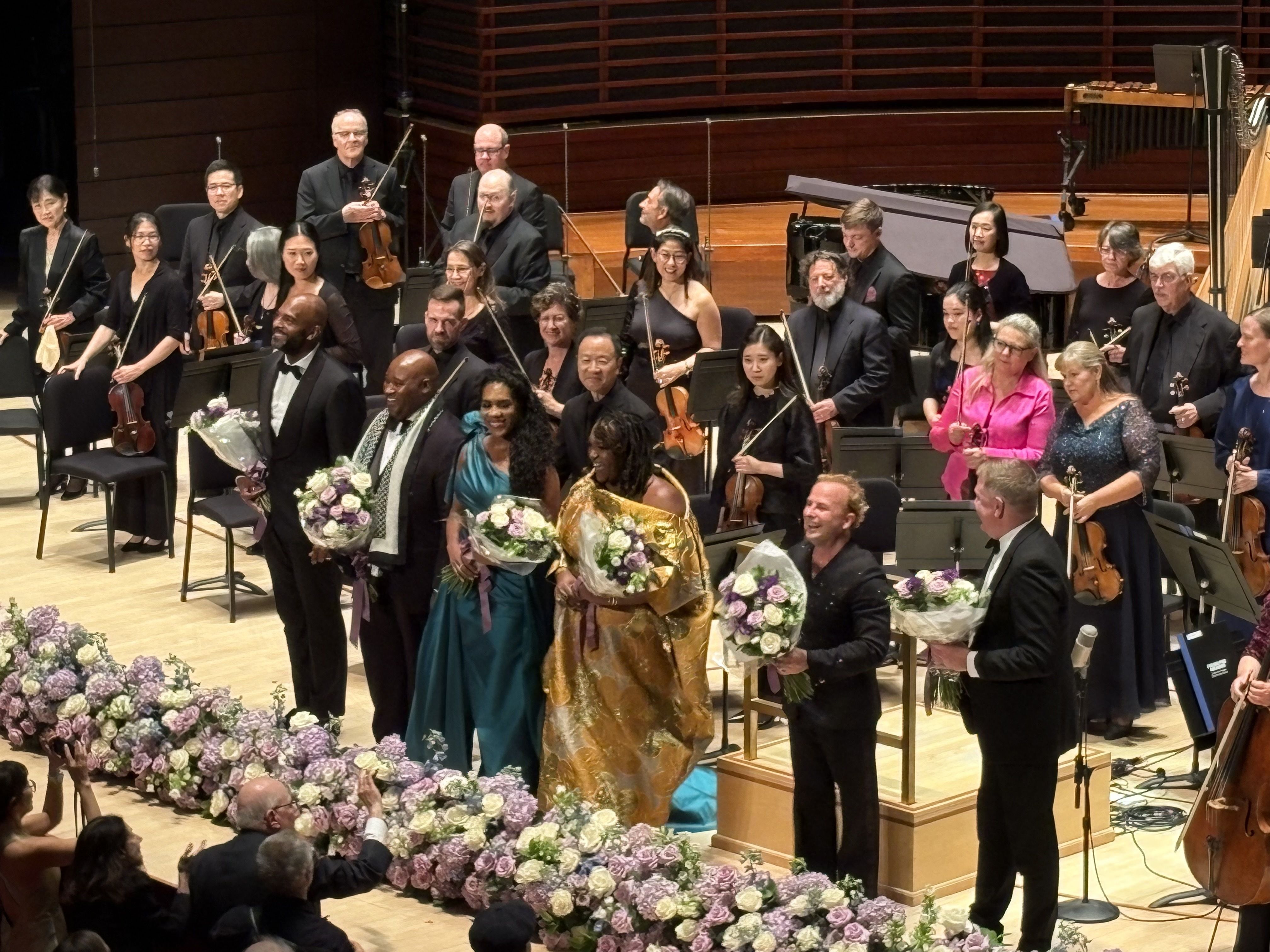
At opening night of the Philadelphia Orchestra’s 2026-27 season in Marian Anderson Hall, performers take bows after Beethoven’s Symphony No. 9. From left, bass-baritone Ryan Speedo Green, tenor Issachah Savage, mezzo-soprano J’Nai Bridges, soprano Leah Hawkins, conductor Yannick Nézet-Séguin, and Philadelphia Symphonic Choir artistic director Joe Miller.Peter Dobrin
Yannick Nézet-Séguin opened the Philadelphia Orchestra’s 127th season Thursday night with a message at once broad and universal, and very local.
The piece was Beethoven’s Symphony No. 9, and the orchestra’s music and artistic director was no doubt referencing the state of the world when he spoke to the Marian Anderson Hall audience of the work’s shared humanity and how it reminds us that “there’s much more that unites us than what divides us.”
But “this is why,” he continued, “I want to finish by saying that it’s important for me and all of us to recognize all the musicians who have devoted their lives to the orchestra.”
No one said it explicitly at this gala fundraiser, but musicians and management of the orchestra recently agreed to remain united another three years. A new labor contract was ratified last week by players — “overwhelmingly,” a union official said — after six months of talks.
Nézet-Séguin not only praised orchestra members who have been “at the service of this incredible … treasured sound that’s unique in the world,” but an unusually large number of them populated tables in the Kimmel Center lobby for the dinner following the concert, where flowered tablescapes featured photographs of the players.
If the orchestra had wanted to extend the theme of unity, it might have programmed Valerie Coleman’s Umoja: Anthem of Unity, which the ensemble premiered in 2019 and has since championed. But Joe Hisaishi is the orchestra’s composer in residence, and his Orbis, a work whose sound straddles film and concert music, fit the moment.
The orchestra, too, now occupies both of these stylistic realms, making Hisaishi’s ethereal-to-brightly-stirring score — whose Latin text sung by the Philadelphia Symphonic Choir speaks of joy — emblematic of the season ahead.
The short work was written in 2007 as a companion piece to Beethoven’s symphony, which on Thursday featured the expert choir and four soloists who ranged from strong to stupendous: soprano Leah Hawkins, mezzo-soprano J’Nai Bridges, tenor Issachah Savage, and bass-baritone Ryan Speedo Green.
Gala concerts of this sort often feature a single big-name soloist. The spotlight here was on the Beethoven, this great undying statement of humanity, and it was a programming decision endorsed by an audience that responded to the conductor’s push of the tempo at the end with a spontaneous roar.
There was another notable singer in attendance — Kathleen Battle, not on stage, but in the audience. At 78, the soprano still has presence, and you couldn’t help but sense her place as a bridge in history, a link from the pioneering Black contralto for whom the hall is named to the four soloists on stage who represent the future of the art form.
— Peter Dobrin
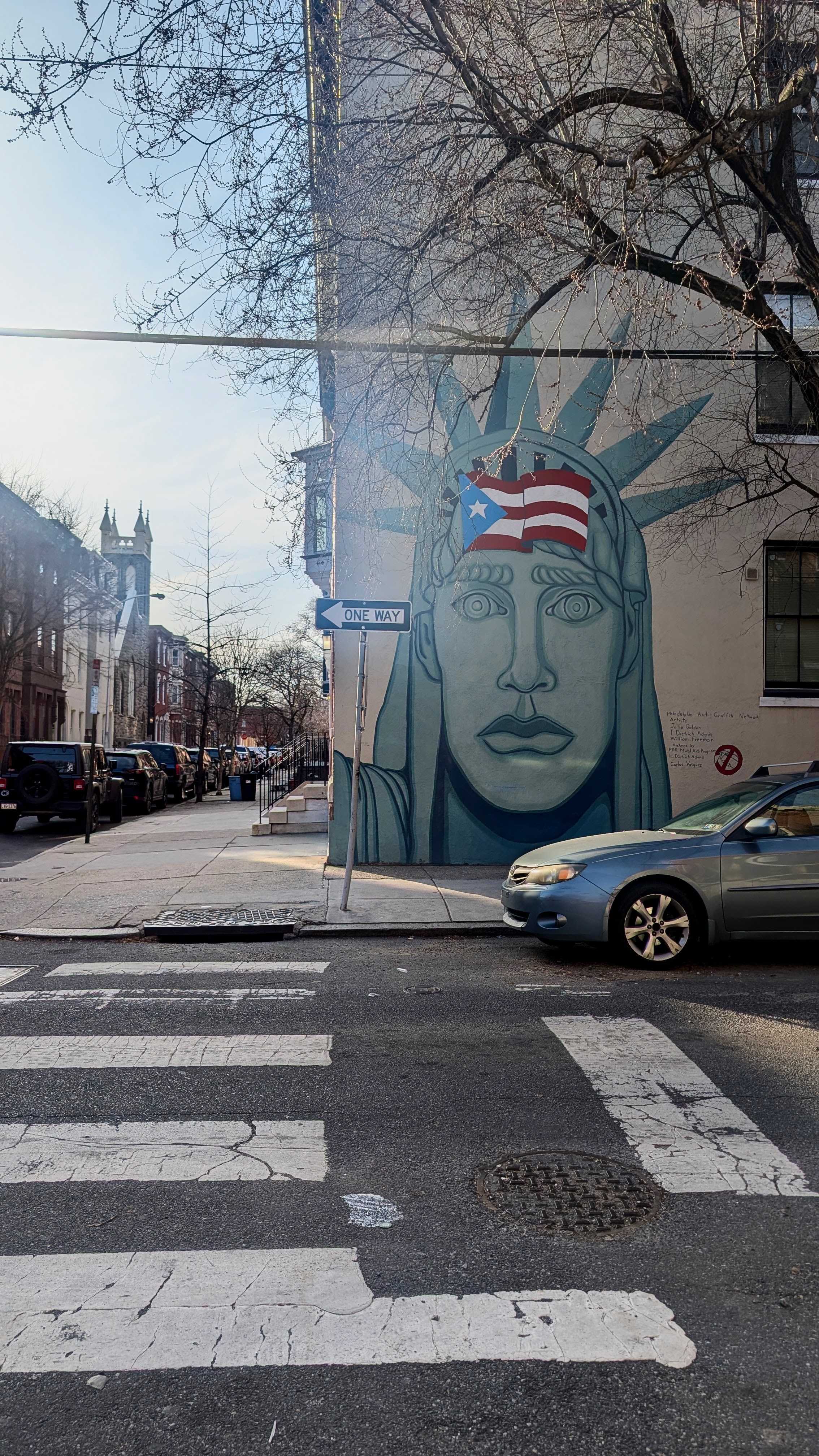
The mural “Puerto Rican Statue of Liberty” in Fairmount, captured in March 2025.Bedatri D. Choudhury
Ladies of liberty and Boricua pride
Thousands of Philly Ricans will celebrate the annual Puerto Rican Day Parade on the Parkway this weekend in one of the loudest and proudest parties of the year spotlighting our city’s incredibly strong Boricua community. All year round, though, there are other places in Philly with quieter but no less exuberant representations of Puerto Rican history and culture that recently made me smile.
In Fairhill — where I was thrilled to see the indie band Chuwi from Isabela perform at Feria del Barrio a couple weeks ago — there’s a towering, brightly colored mural by Philadelphia artist Parris Stancell that’s a joy to see. There are two vejigante figures in striking red, green, and yellow masks, one with arms wide open like it’s about to embrace the viewer. (These characters typically appear in festivals with frightening, monstrous masks to scare away bad spirits.) Beautiful birds and symbols from Indigenous Taino tribes adorn the vibrant scene.
Also, picture the Statue of Liberty with a Puerto Rican flag hanging from her crown. If that sounds familiar, you may have seen a mural in Fairmount depicting Lady Liberty with the same flag. That painting offers a close-up look at the statue’s mournful, softly defiant face.
Both murals show a powerful symbol in the history of Puerto Rico’s independence movements: These ladies of liberty were not some artistic imagination but recreations of a protest from 1977, when a group of Puerto Rican nationalists occupied the Statue of Liberty and draped their flag across her forehead to demand independence for Puerto Rico.
According to Mural Arts, the Fairmount mural was first made by an anonymous graffiti artist in the early 1980s who wanted to honor that significant historical event, but the mural was later covered up, only to be recreated after Philly Ricans petitioned the mayor to replace it.
These murals have me reflecting on the power of the diaspora in Philadelphia and beyond as Puerto Ricans on the archipelago are struggling through a devastating water crisis. That Statue of Liberty takeover happened nearly 50 years ago to criticize the government for treating Puerto Ricans as second-class citizens. Today, during Latino Heritage Month, when many Latin American nations ring in anniversaries of their independence days, Puerto Rico remains in colonial limbo. And Philly Ricans won’t let anyone forget it.
— Rosa Cartagena
Writer and performer Chris Davis in “The 40-Year-Old Ballerino” as part of the 2026 Philadelphia Fringe Festival. Ashley Smith / Wide Eye Studios
Finding balance at Fringe
Chris Davis is still learning to let go of the barre. A literal ballet barre, from his years of late-in-life dance training. But the barre also represents the vices of his past — drugs; alcohol; unrealistic romantic expectations, thanks to too much exposure to ‘90s media; a codependent relationship.
And, he might admit, maybe they’re not all left in the past.
Dressed in a white tank top, tights, and slippers, Davis stretches and speaks to the Fringe Festival audience with nothing beside him onstage, except the barre and a boom box, which he occasionally holds above his head à la Say Anything.
The sparse set and sub-hour runtime are effective in centering Davis’ emotional journey from the guy who takes up ballet because of a ballerina ex, to the guy who keeps up with ballet (five to six days a week!) because it is what’s filling the existential void. There are more toxic ways to start over.
I’m calling this a win (for my predictions score; people have very different views of the hotel). In June, Eustace Mita finally got his dream of a declaration that the old Wonderland Pier site at 600 Boardwalk in Ocean City is “in need of rehabilitation.”
The Icona developer is now in negotiations with Ocean City about a hotel proposal, which he says will be a scaled-down version of his initial seven-story, 252-room plan that called for saving the Ferris wheel and historic carousel. City council is vowing to be guided by recommendations from a Boardwalk subcommittee. Meanwhile, council hired a lawyer to defend against a lawsuit by citizens’ groups.
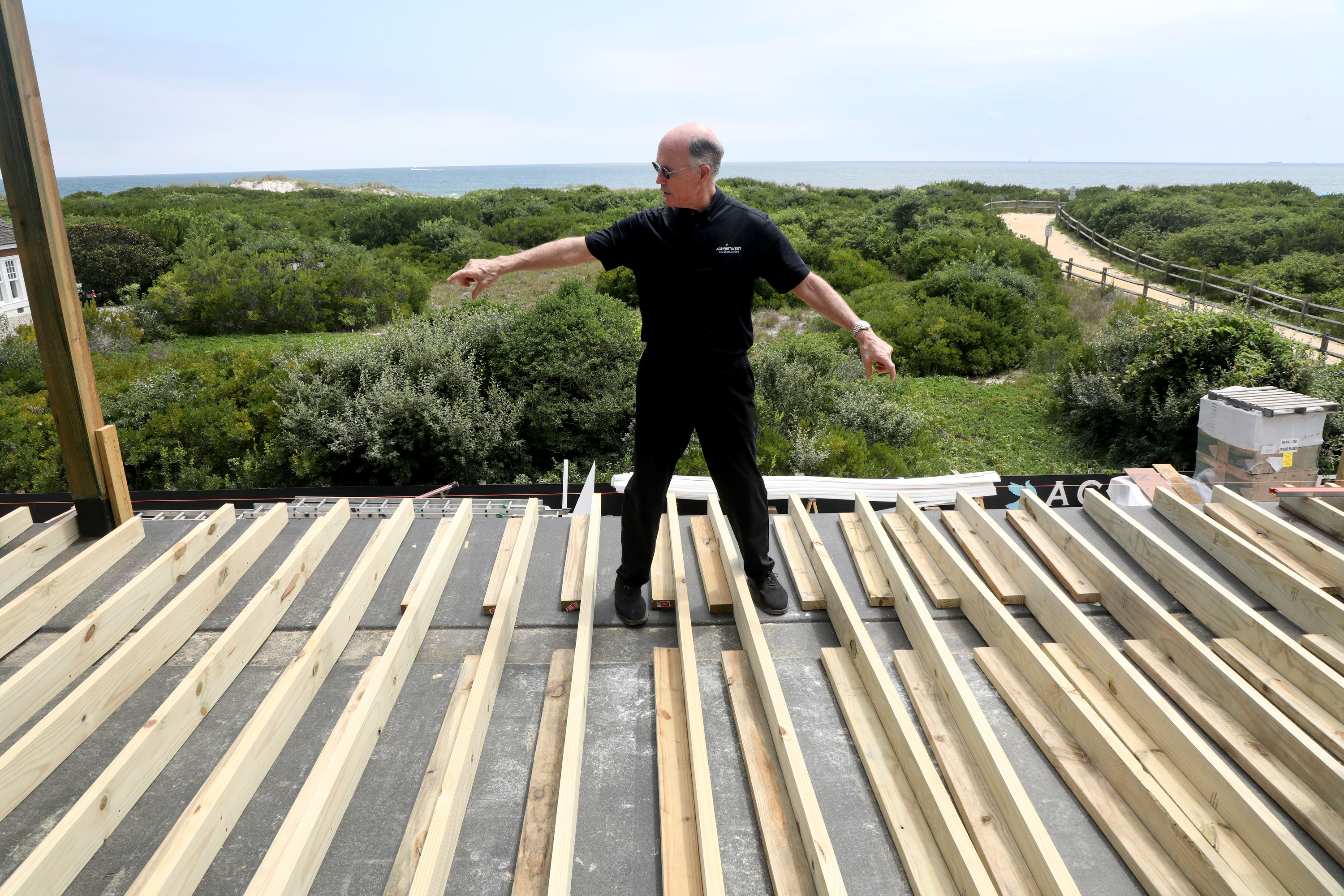
Eustace Mita talks about the construction of this beachfront Achristavest home on 116th Street in Stone Harbor on Tuesday, August 18, 2026.Vernon Ogrodnek / For The Inquirer
Atlantic City’s Irish Pub will rise again. ❌
Alas, not even the sale of the Irish Pub in Philadelphia appeared to jump-start any renovations in Atlantic City, where owner Cathy Burke has been in a stalemate with state inspectors over whether the iconic, beloved pub on St. James Place should be considered a high-rise. The pub has been closed since January.
Will locals have their fish and chips and Guinness on Christmas Eve as per usual? You never know. Burke did not answer a text message seeking an update. Asked about the Irish Pub’s status, Atlantic City spokesperson Andrew Kramer said he had “nothing new from my end on this one.”
But, in an upset, the city has begun paving Atlantic and Pacific Avenues, in a development Mayor Marty Small Sr. called “massive,” and said would be completed by year’s end.
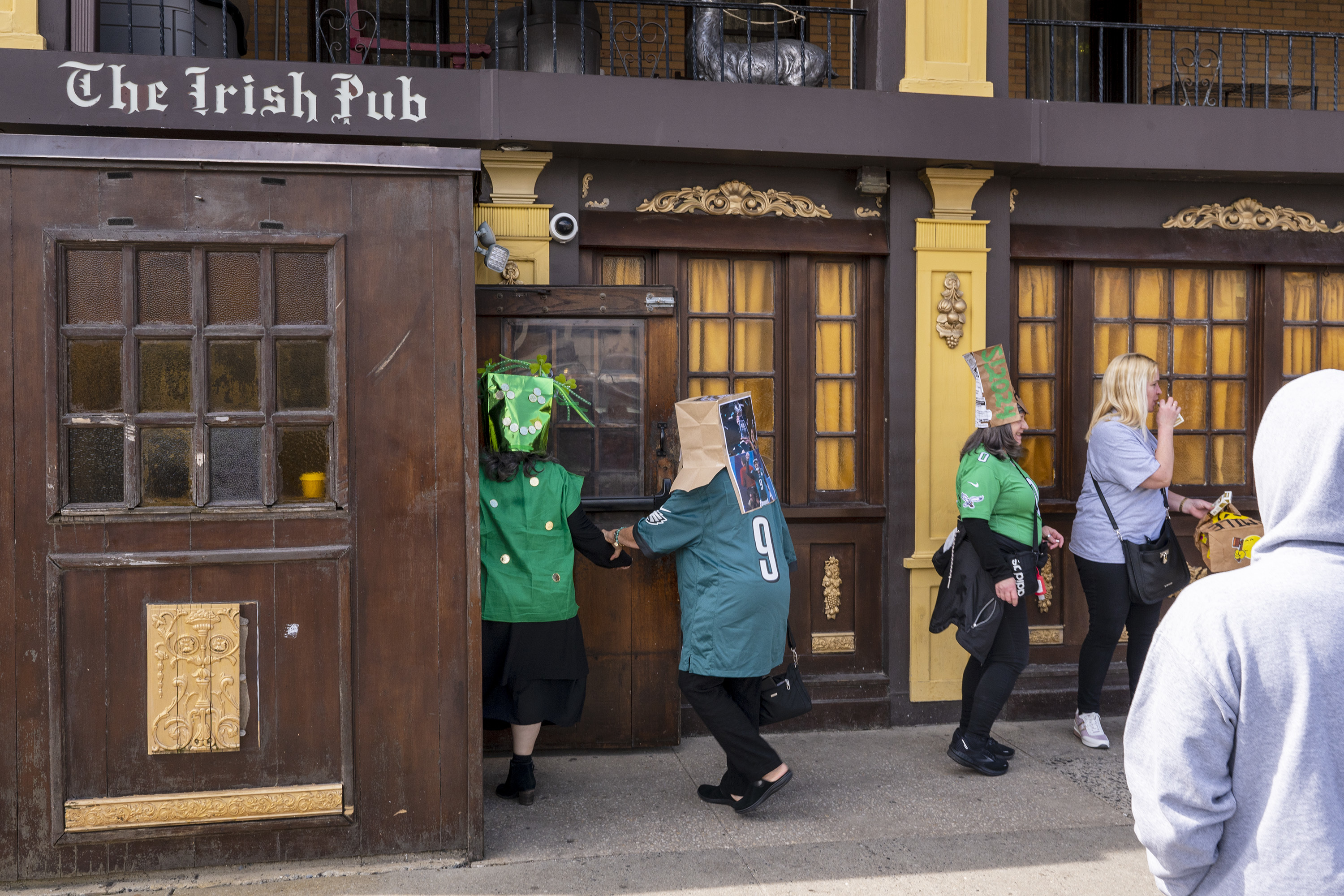
Fran Cann (left) helps Debbie Stiles (#9, right) get through the door, since she can’t see as well wearing a “St. Nick” Foles bag over her head, as they celebrates Bag Day at the Irish Pub in Atlantic City Monday, Mar. 18, 2024. The friends, from Berlin, N.J.were attending their first Bag Day. The tradition got started when a late-to-the-party patron showed up to the 24-hour bar a day after St. Patrick’s, then put a bag on their head.Tom Gralish / Staff Photographer
Shore restaurants will tough it out, but struggle. ✅
Restaurants were stressed this summer. As is usual in late summer, many lost employees as the season wore on all the way to Sept. 7, and had to cut back seating or hours. Others pleaded with their clientele for patience. Still, there were lines down the block for coffee places, and booked up reservations for favorites like Steve & Cookie’s and Cafe 2825. New places were opening deep into summer, like Culina Mundi in Ventnor and Sabrina’s Kitchen in Atlantic City.
Bakeria 1010 owner and pizza savant Mike Fitzick posted a mock obituary for himself at summer’s end: “Welp that’s all she wrote folks. … Right from start I knew this season was gonna be rough. All the staff I tried to hire fizzled out and the staff I had last year were mostly gone. This summer was pretty treacherous in every aspect … June was trash, July was ok and we finally hit our stride in August. Better late than never, I guess. Unfortunately I have passed away due to self-inflicted cortisol poisoning. In lieu of flowers please donate to the Bakeria 1010 all winter. Jokes aside we WILL be open for lunch today…”
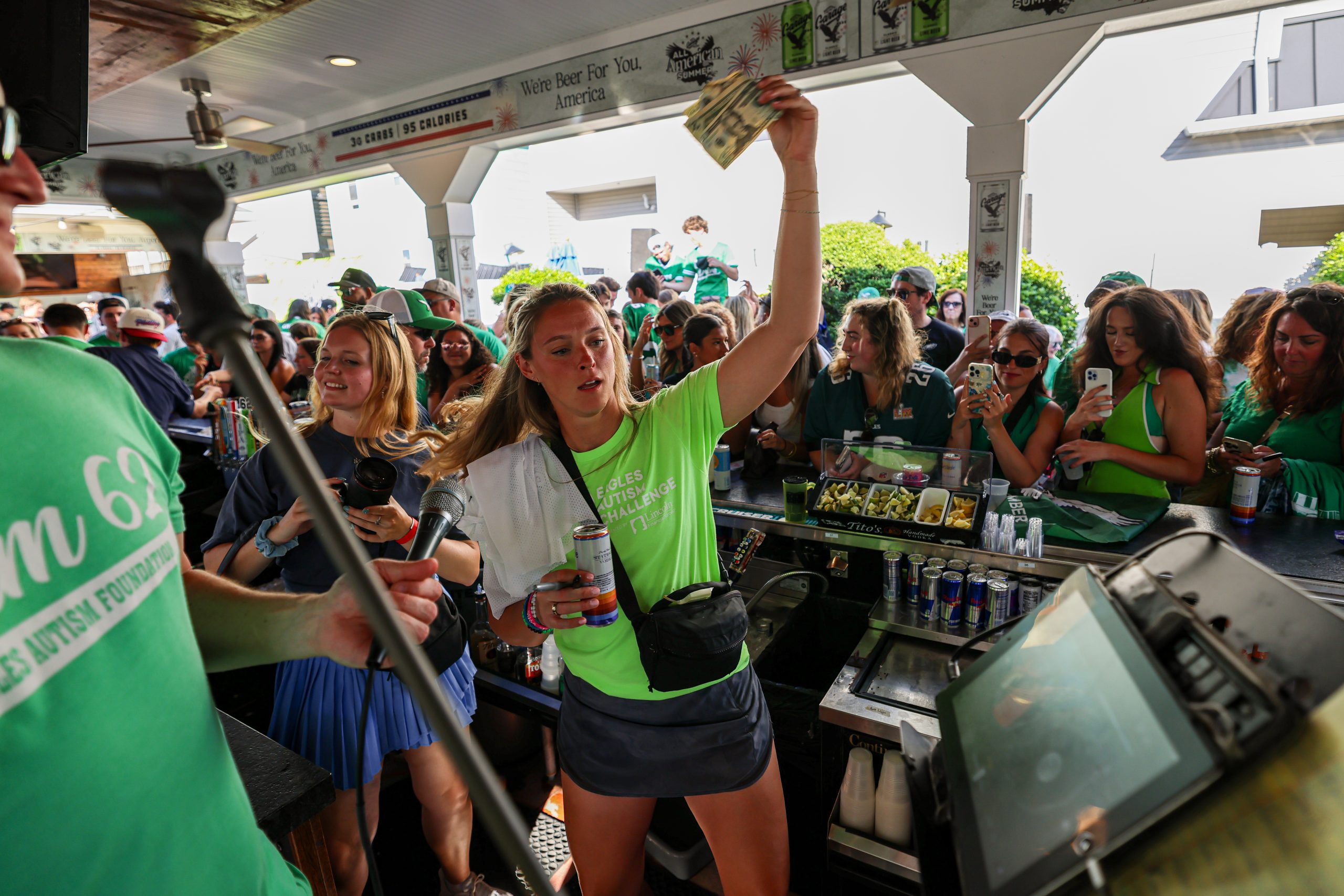
Kylie Kelce adds some money to the cash register during the Shore Birds celebrity bartending event in Sea Isle.Courtesy of the Philadelphia Eagles
Taylor and Travis will not honeymoon in Sea Isle, but…? ✅ ❌
No, they did not honeymoon in Sea Isle, choosing instead Big Sky, Mont. (a lovely place), so that’s an easy one in my favor. But my leaving open the possibility that they would make an appearance in Sea Isle seems, on balance, ridiculous. Maybe they’re waiting for Jason and Kylie Kelce to finally make it off the waiting list for the Sea Isle Yacht Club. Maybe a celebrity bartending gig for Taylor at the Eagles Autism extravaganza next summer? Meanwhile, have fun in Ohio!
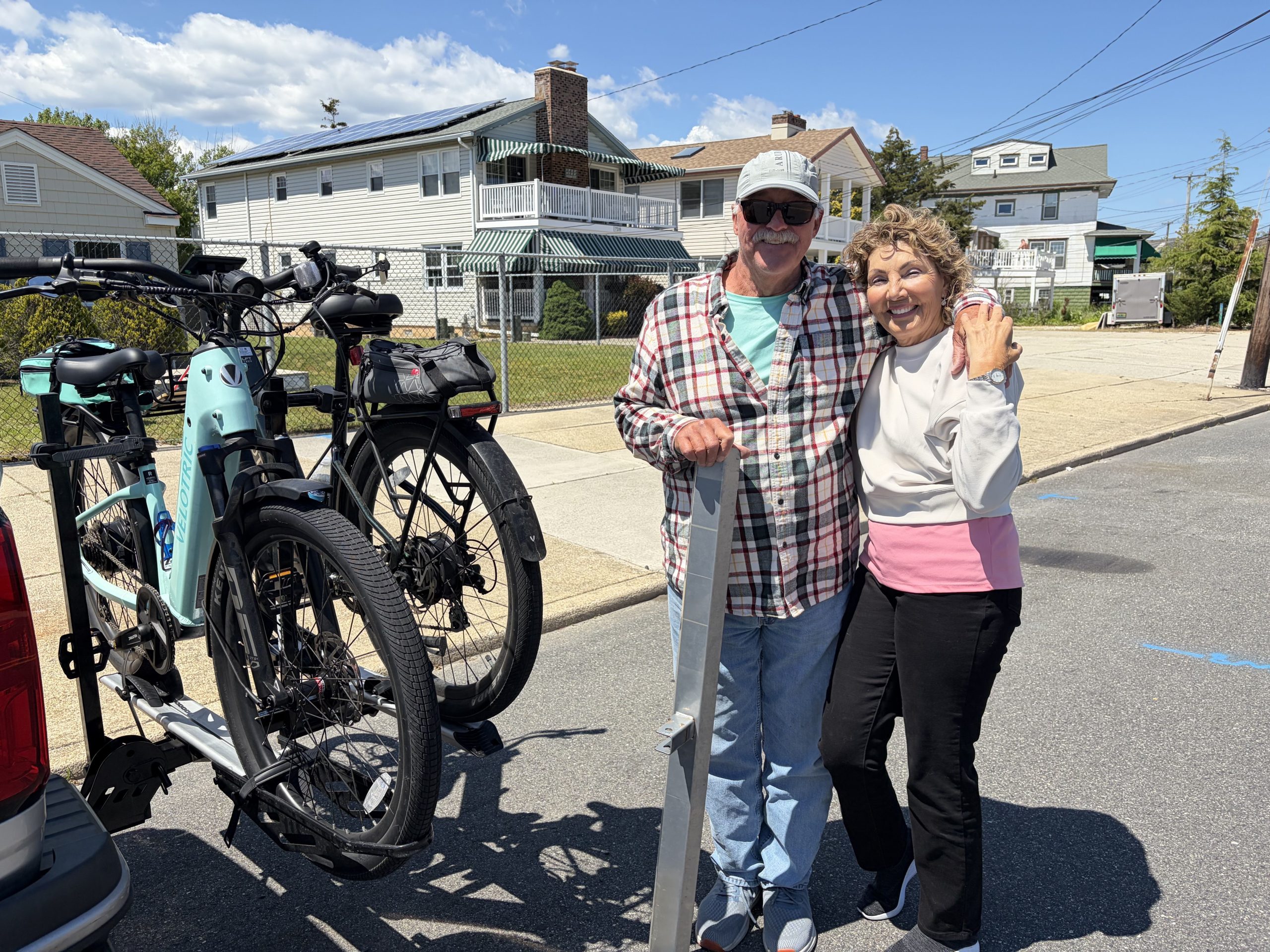
Mike and Annamarie Carr of Ventnor, owners of Jagielky’s candy shops, with the e-bikes they love to ride. Ventnor won’t allow them on its own Boardwalk. The couple drove to Ocean City on June 2 and started and ended from there.Amy S. Rosenberg / staff
E-bikers will be hauled off the boardwalks and fill municipal court Zoom hearings. ❌
There was a lot of confusion over the new e-bike law in New Jersey.
First the state Motor Vehicles Commission said Pennsylvania visitors shouldn’t sweat the new registration requirements, then they changed their mind and said visitors should start their week down the Shore with a trip to the DMV. Adding to the confusion, the MVC requirements explainer page that says out-of-staters should comply now also says, “This page is intended for New Jersey Residents.”
In all, the MVC has issued a total of 13,850 e-bike registrations, according to commission statistics; 365 of those for out-of-state residents.
But police were generally light-handed on enforcement measures for the new law, with departments focusing on safety issues, like helmets, and age restrictions, rather than registrations.
Doug Bergen, a spokesperson for Ocean City, said no citations were issued there this summer under the new law.
In Ventnor, Lt. Bryan Gaviria said between May 1 and Sept. 10, the department issued six curbside warnings to juveniles, 10 e-bikes on the boardwalk warnings, and one ticket for riding on the boardwalk.
“We’re still in the education phase,” he said.
Statewide, statistics show 628 total citations under the e-bike and motorized bicycle law for July and August, according to data supplied by the New Jersey Judiciary.
Of those, just 77 were given for low-speed electric bicycles, 22 citations were for failing to have the registration required by the new law, and two were for drivers being under 15. The rest of the citations issued were for motorized bicycles, the higher speed classification.
Retiring boomers will continue their takeover of Shore towns. ✅
Or how about this 17,684-square-foot house in the Avalon dunes, built on spec by Eustace Mita (see above), with the distinction of being Avalon’s largest house and an expected price tag in the tens of millions.
Rendering of a 17,684 square foot home being built as a spec house in the dunes in Avalon, at 5745 Dune Drive, by developer Eustace Mita. It will be the largest home in the borough.Courtesy Avalon Borough
Wildwood boardwalk hours will again be expanded overnight, but all people will talk about are the electric Volvo SUVs driving the tram cars. ✅ ❌
Wildwood spokesperson Alicia Deluca says the hours remained curtailed, with the boardwalk closing between 1 and 5 a.m.
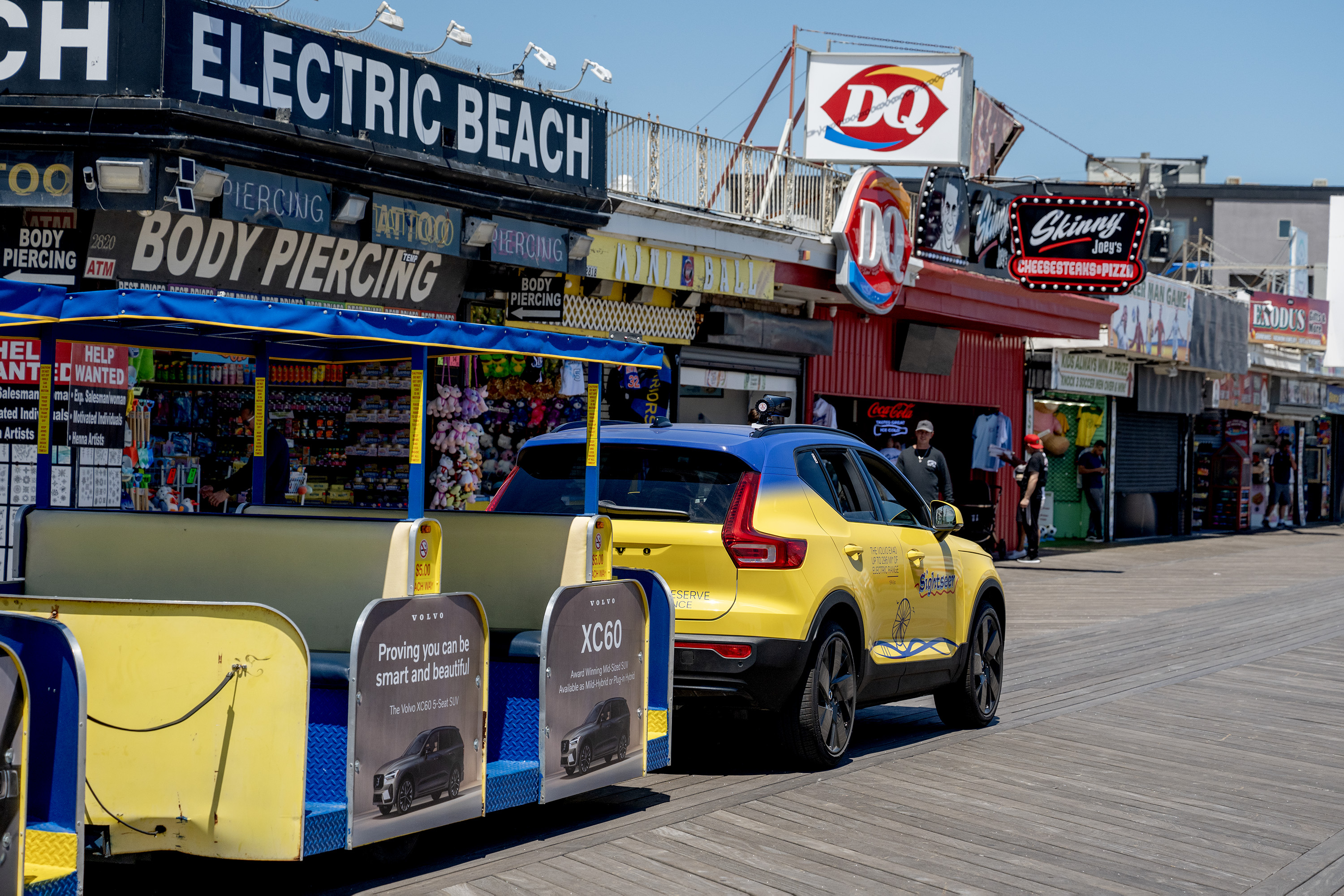
The grumbling over the new Volvo tram cars continued all summer, though. People do not like change. Meanwhile, though, Wildwood is preparing a 20-year redevelopment plan for its boardwalk that will see mixed-use projects, including hotels, apartments, condominiums, businesses, and centralized parking garages.
A Sightseer tram car is pulled by a Volvo EX40 electric vehicle on the Boardwalk in Wildwood Tuesday, June 2, 2026. The Wildwoods Boardwalk Special Improvement District struck a deal with Volvo to provide three free electric vehicles in return for ads placed on the individual tram cars. Four of the older engines remain in use for now.Tom Gralish / Staff Photographer
There will be a lot of complaining about changing parking regulations. ❌
I didn’t hear much over the din of loud music from Gully’s, and Facebook groups seemed preoccupied with other things: flies, shaming noise complainers, and finding the best chicken Parm.
The return of the day-tripper. ✅
This prediction was a good one. Costs continued to rise, making shorter trips and day trips appealing. I predicted Atlantic City would get renewed attention, and it did, with groundbreakings for new housing developments, a container retail park close to opening, and the enduring appeal of a wide, free beach and a relatively inexpensive real estate picture.
Obvious miss on the predictions front: Atlantic Avenue is finally being paved. The odds were very long on this one.
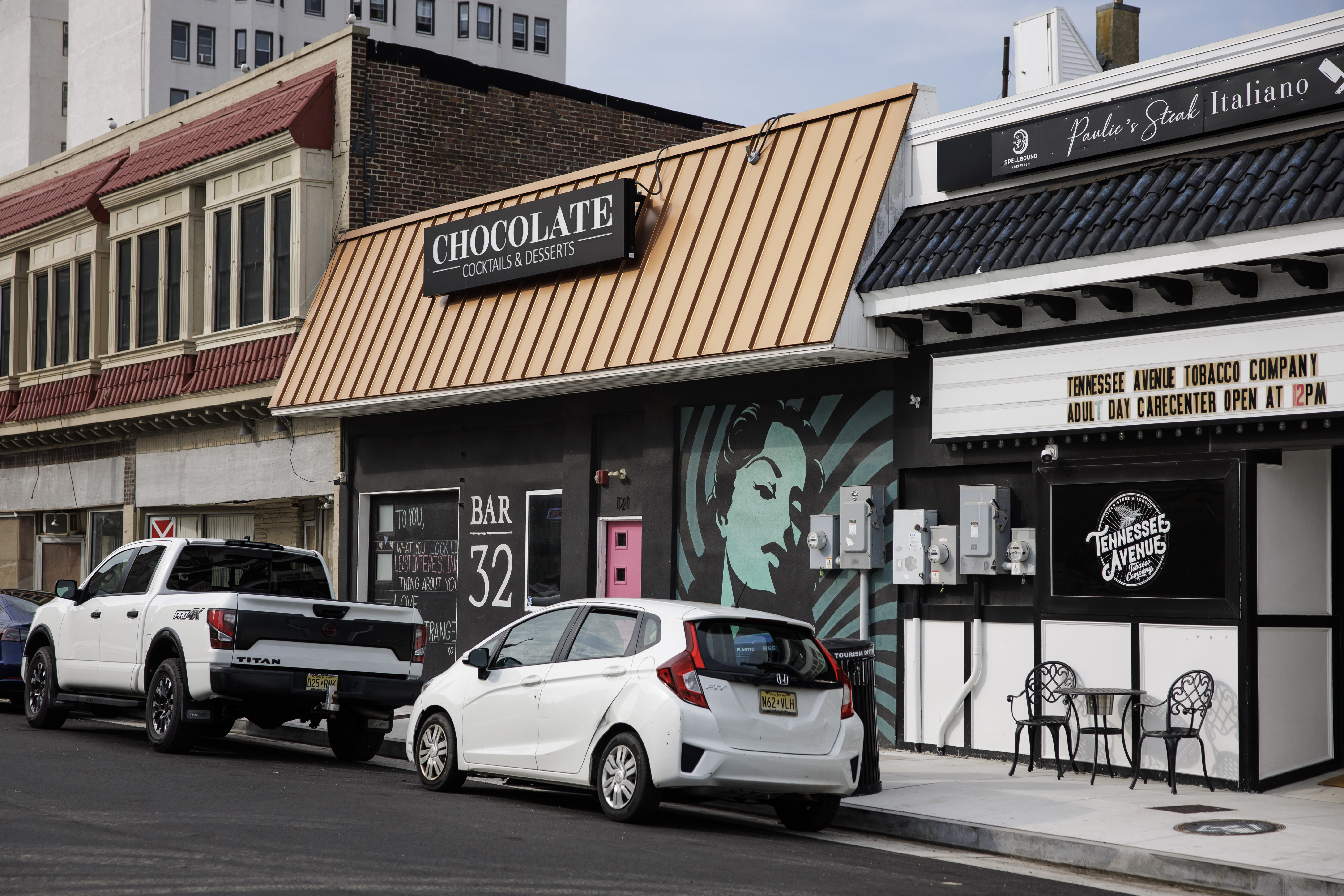
The exterior of Bar 32 on Thursday, June 11, 2026 in Atlantic City, NJ. Bar 32 offers bean-to-bar chocolate, handmade desserts, and craft cocktails.Monica Herndon / Staff Photographer
The summer will seem verrrrry long. ✅
So long. How long? Basically an extra week until the Sept. 7 Labor Day. Which left beach patrols, restaurants, and other business strapped for employees, and rewarded marathon beach lovers with two days of atrocious flies on the beach Sept. 4 and 5, worse than anyone had ever experienced, like, really terrible! See ya next year!
Total score: 6/10. We’ll get ‘em next summer, hopefully over a plate of lollipop meatballs at the Irish Pub.
“It’s a great art, is rowing. It’s the finest art there is. It’s a symphony of motion. … When you near perfection, you’re touching the Divine.”
— George Y. Pocock, renowned rowing coach and boatbuilder
“If you want to be a Schuylkill Dragon, don’t be a schmuck.”
— Judy Gernon, 81
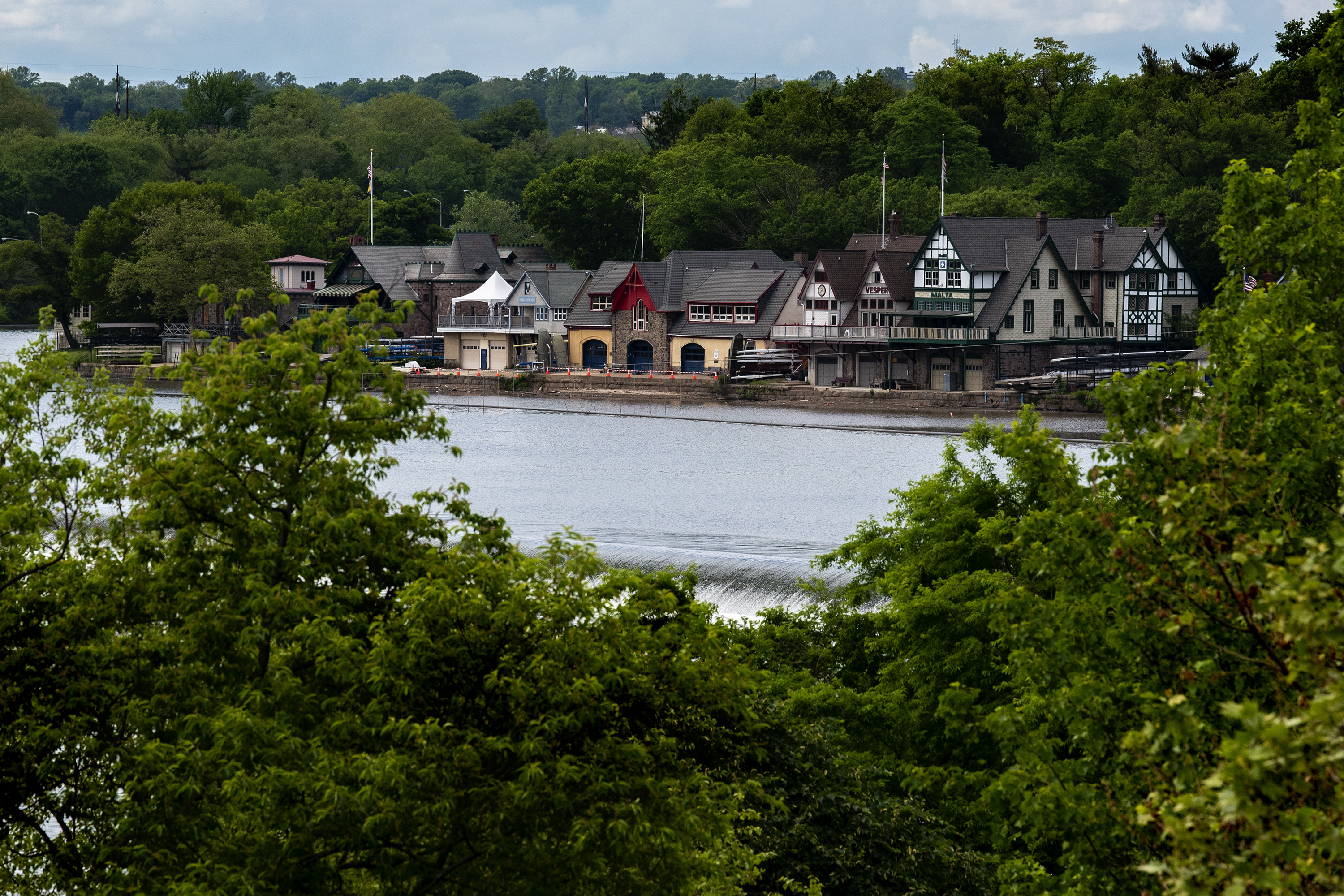
Boathouse Row, on the Schuylkill, is the epitome of old-money elegance — a Ralph Lauren catalog come to life.
Home to more than a dozen of the city’s storied rowing clubs, it’s atimeless civicfixture. Opulent brick houses with palatial decks. American flags fluttering from poles. Young rowers with sinewy physiques andwell-earned tans, milling about the docks.
There’s a reason it is considered one of the city’s most iconic settings, the subject of postcards and poetry.
Boathouse Row, a picturesque scene located along the east bank of the Schuylkill.TOM GRALISH / Staff Photographer
About two miles upriver, meanwhile — far from this extravagant scene — sits another boathouse, of far less renown.
To get to it, you have to trek through knee-high grass, past the porta-potties and discarded car tires, and the mosquitoes as big as Buicks. Go past the chain-link fence choked by weeds and the dead trees the city hasn’t yet gotten around to clearing, and soon enough, you’ll reach it.
The humble headquarters of the Schuylkill Dragons.
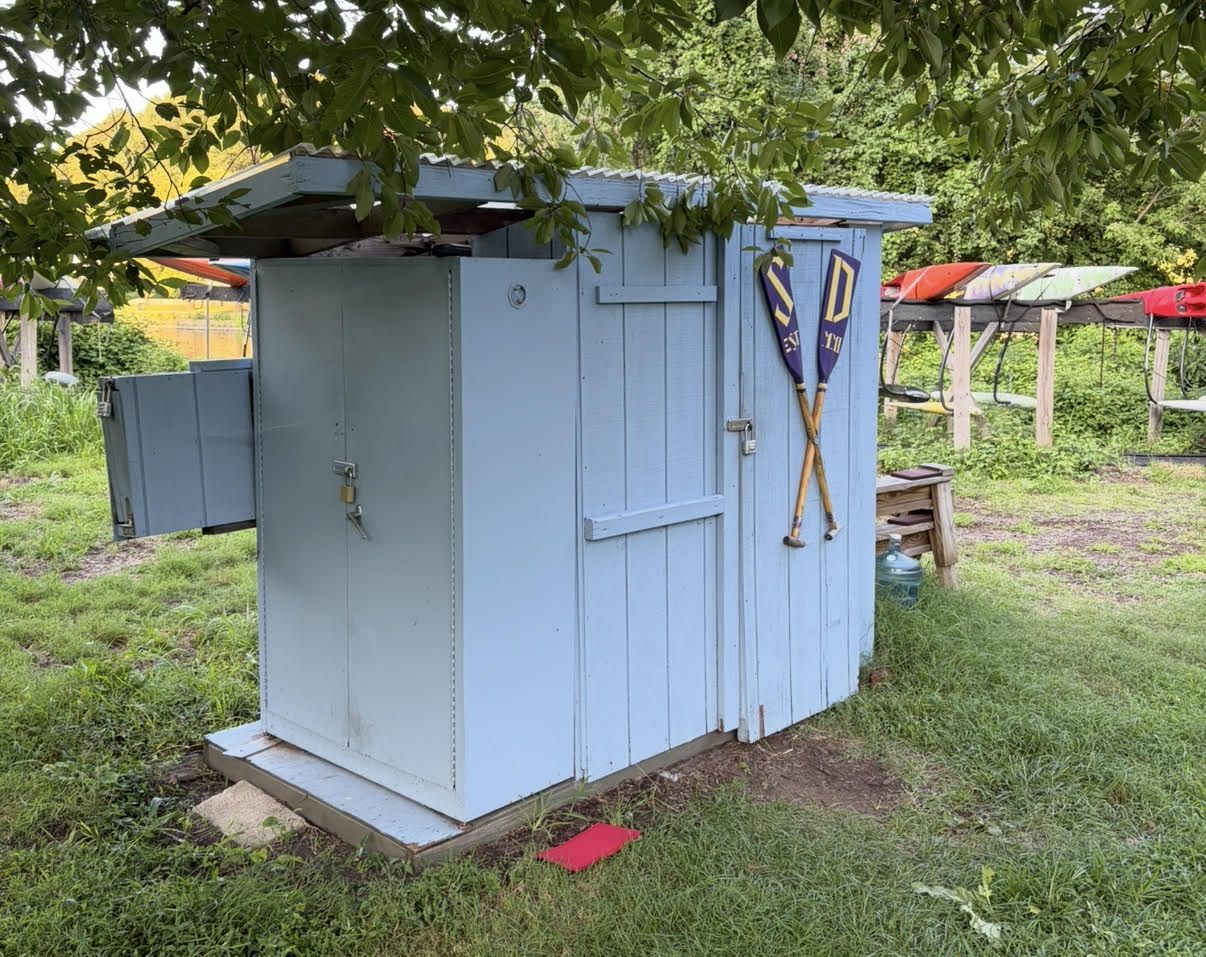
It is 4 feet by 6 feet. It is packed with faded life jackets, water jugs, a smattering of rusted, secondhand tools. The only thing WASPy about it are the actual wasps — which, at the moment, have infested a corner of the small structure.
It is damp and dirty, thick with dust and cobwebs.
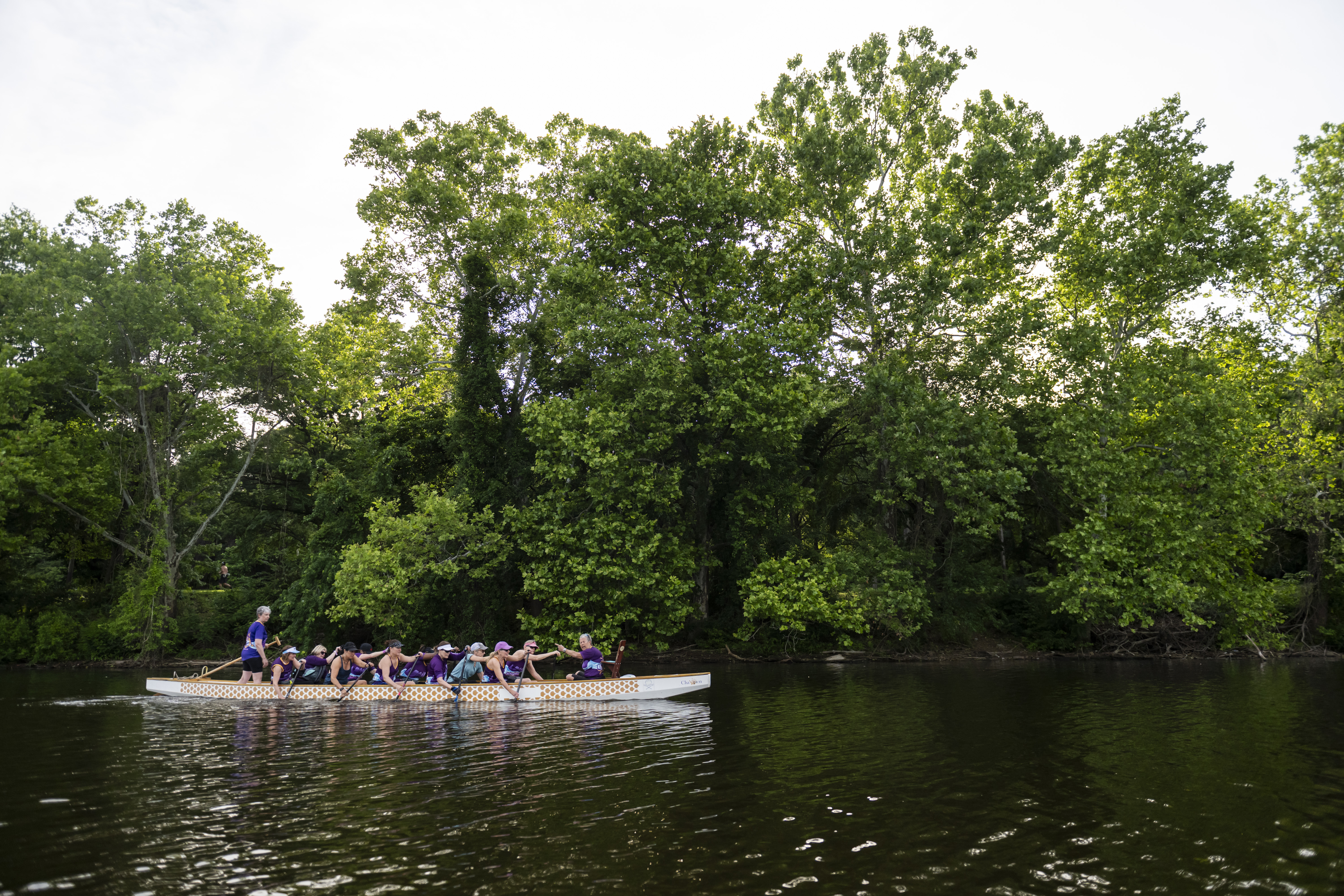
To the ladies of the Schuylkill Dragons — the city’s oldest all-woman dragon-boating team and its unlikeliest sports dynasty — there might be no better place on earth.
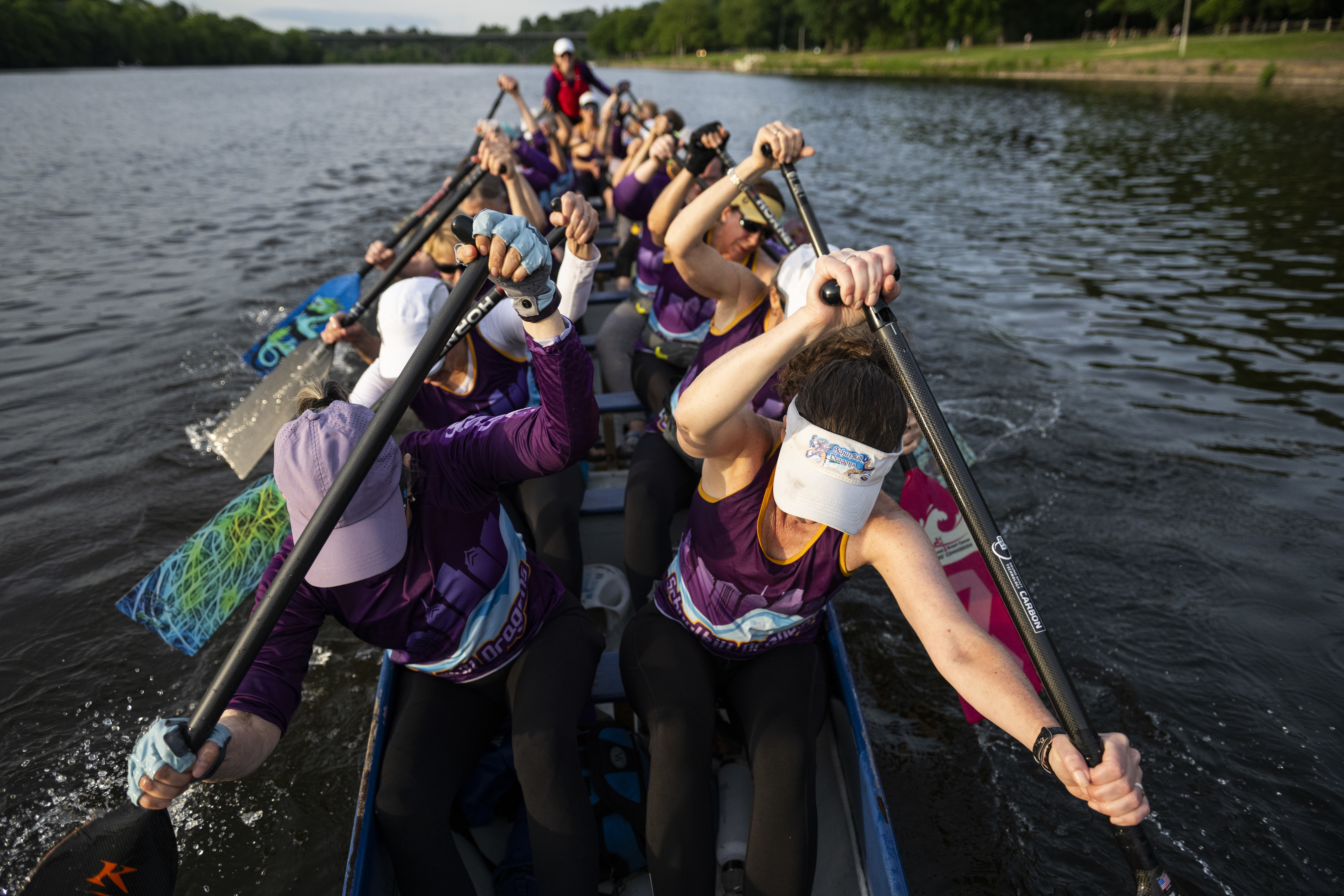
The Schuylkill Dragons on June 2, 2026.Allie Ippolito / For The Inquirer
A ‘dump truck’ on the water
My introduction to the Schuylkill Dragons came on a Saturday morning this summer, at a team practice along the Schuylkill.
As I followed the team down a dirt path toward the water, a tiny white-haired woman in her 80s sidled up to me.
“It’s a good thing you didn’t come last Thursday,” she said, “‘cause it was raining like a b—.”
The “boathouse” of the Schuylkill Dragons stands on the west bank of the Schuylkill, near the team’s dock. Members of the team built the structure in 2015.Dugan Arnett
For 25 years, the Dragons have been rumbling their way up and down the Schuylkill.
And for 25 years, they have been the river’s most immovableforce — a sweatin’, swearin’, swaggerin’ group of bandits that no one has quite figured out how to tame.
“Underestimate them at your own peril,”says Bob Mina, a longtime member of the Philadelphia Dragon Boat Association.
Many are in their 60s, 70s, and 80s, and — having endured some of life’s cruelest challenges: cancer, divorce, the loss of spouses — do not find it particularly daunting to propel a two-ton boat upriver until their backs and shoulders scream.
There is Cindy Roberts, a65-year-old retired preservationist known for growling loudly throughout races. And Sue Ferry, 64, who goes by the nickname “Machete” — due to the fact that she once brandished one at practice and used it to hack a path through the weeds to the team’s boat ramp.
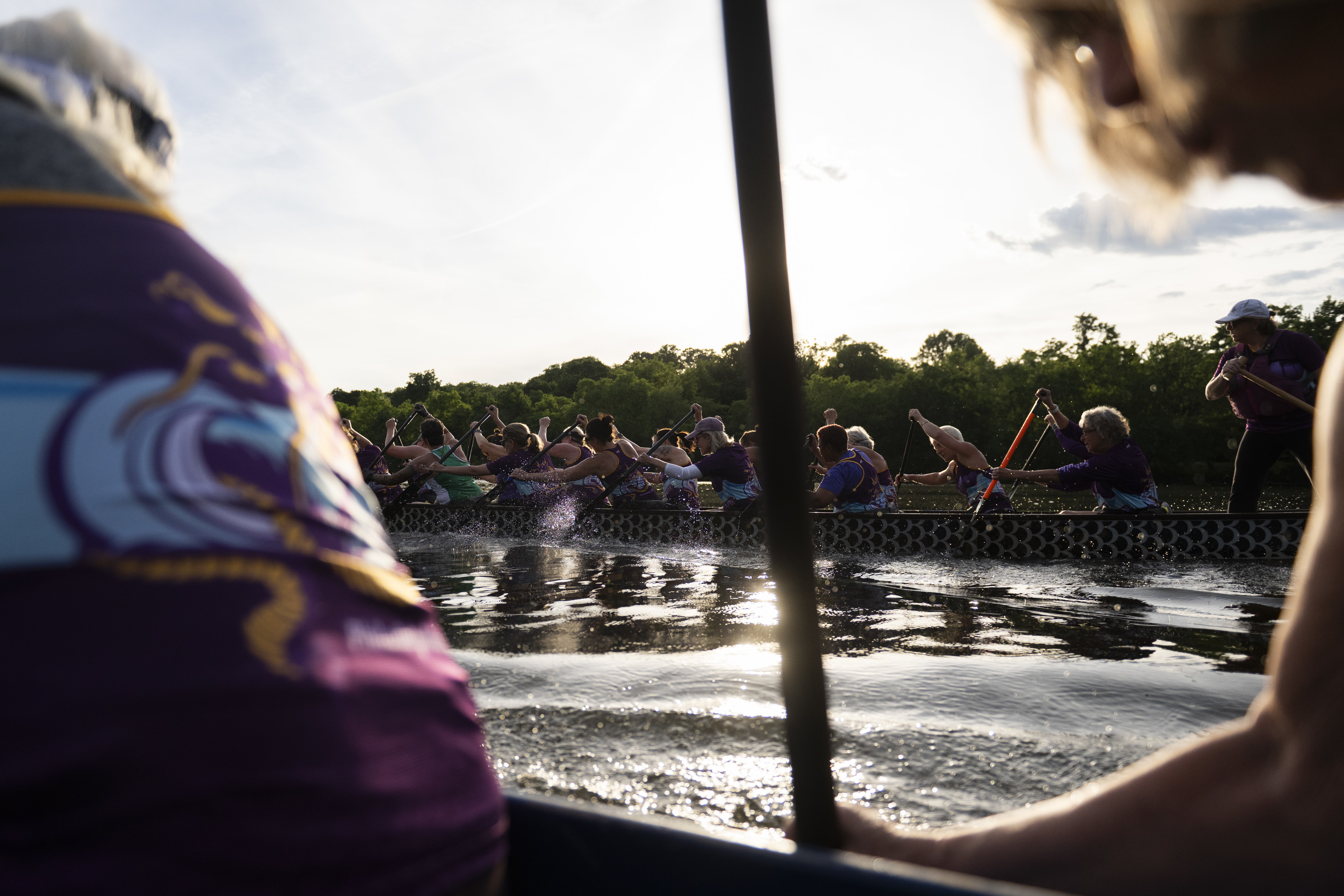
Judy Gernon, drummer with the Schuylkill Dragons, yells out calls during a practice ahead of an forthcoming race.Allie Ippolito / For The Inquirer
There is “Crazy Judy” Gernon, a tattooed 81-year-old former Army brat who stands 5-foot-1 (“and a half”) and has never met a sentence she felt couldn’t be enhanced with an expletive (or six). A while back, the team had to convince her to stop flashing people on the river.
Nothing has been able to slay the Dragons. Not injury (they’ve been known to schedule their hip-replacement surgeries around dragon-boating season). Not the city’s rowers (with whom they regularly clash), or the younger, fitter teams they routinely find themselves lined up against (the Dragons have won medals across the globe and are widely considered the gold standard for women’s dragon-boating in the city).
Even their own coaches have occasionally found themselves at the mercy of the Schuylkill’s Bad News Bears.
Years ago, the team was led by a man who worked as an attorney for a prominent pharmaceutical company, a guy with a reputation for navigating the corporate world with iron-fisted efficiency.
“What cracked us up is he had no qualms going into some office and firing everybody there,” says Crazy Judy.
“But to work with a women’s dragon-boating team? He couldn’t say s— if he had a mouthful.”
The Schuylkill Dragons on Tuesday, June 2, 2026.Allie Ippolito / For The Inquirer
‘Renegades’ of the river
Since hosting its first regatta in 1835, the Schuylkill has been a national hub for U.S. rowing. It has produced Olympic rowing medalists and national collegiate champions, been the training ground for clubs with names like Vespa and Crescent.
It was into this hallowed setting, meanwhile, that the Schuylkill Dragons arrived, in 2001, with all the subtlety of a right cross.
Though not the first dragon-boating team on the river — at least one men’s team started in the mid-1980s — the Dragons quickly established themselves as the most colorful.
“We were like renegades,” says Patti Miller, 72, one of the Dragons’ founding members. “We were a novelty: Who are these Schuylkill Dragons?”
If rowing is jazz — smooth, elegant — then dragon-boating is a half-dozen teenagers in a garage, thrashing on electric guitars and banging on drum kits.
Their stroke is urgent and aggressive. Their boats — usually adorned with large dragon heads and tails — are massive, measuring some 40 feet in length. Unlike rowing, which typically includes no more than eight people to a boat, dragon boats hold 22: 20 paddlers, a drummer (who sits up front, banging a drum to set the paddling pace and barking instructions through a microphone) and a steersperson (stationed in the back and responsible for keeping the boat on course).
Amy Virus, a 52-year-old member of the Dragons, explains it this way:
The Schuylkill is like a smooth-running highway, the rowers and kayakers minding their own business.
“And then a dump truck gets on,” she says, “and gets in [everybody’s] way.”
Video: The Schuylkill Dragons are Philly’s oldest all-woman dragon-boating team
The early years weren’t always easy. To find members, the Dragons handed out flyers and published classified ads in the newspaper: Women wanted to paddle on the Schuylkill.
For years, the team was stationed on the Kelly Drive side of the Schuylkill, their boats tied to a tree on the river’s bank. Before each practice, the women — many postretirement age — had to rappel down a rock wall to board the boat.
Introducing dragon-boating to the Schuylkill, meanwhile, was a little like releasing a pack of honey badgers into a wedding reception.
Years ago, a group of male dragon-boaters — who’d apparently done a little too much prerace imbibing — managed to tip their boat during a race, sending themselves spilling into the river. When a police boat arrived to pull them out of the water, they managed to sink that boat, too.
Lora Dunnigan, one of the coaches of the Schuylkill Dragons, on Tuesday, June 2, 2026.Allie Ippolito / For The Inquirer
It was “basically like West Side Story on the water,” says Mina, of the PDBA, of the rower-dragon-boater tension. “Only without the jaunty musical numbers.”
When the Dragons first started on the river, the mostly male rowers would report the team to the Schuylkill Navy — the river’s rule-enforcement body — for rules violations. Or scream at the women to get out of their way.
Today, the two groups seem to have reached an uneasy detente, though plenty of Dragons believe the rowers would be happy if they packed up their hulking boats and disappeared forever. Says Meg Fasy, 62, “They’re looking at us like we’re a bunch of old broads, I’m sure.”
Which is not to say, of course, that the Dragons do not give as good as they get.
Not long ago, when the team encountered a group of younger male rowers on the river during practice, one Dragon couldn’t help herself.
“I’ve got shoes older than you!” she bellowed.
The Schuylkill Dragons on Tuesday, June 2, 2026.Allie Ippolito / For The Inquirer
‘I was better than they were’
Because many came of age before Title IX, the Dragons are, for some, the first team they’ve ever been a part of.
Growing up in Massachusetts, Susan Wilson — the Dragons’ oldest member at 83 — spent childhood evenings playing street baseball with the boys in her neighborhood — long, glorious hours chasing fly balls under a fading New England sun.
But at a certain point, the boys all joined organized teams, and Wilson was relegated to the bleachers — a development particularly unjust, she explains, considering “I was better than they were.”
When she eventually discovered dragon-boating several decades later, in her late 50s, it was a revelation.
“The first night I went out on the water, there were whitecaps [and] hail,” says Wilson. “And I went, ‘Oh, yes, this is for me.’”
One after another, members credit the Dragons with bringing them out of their shells, with instilling in them a newfound confidence.
As a young mother, Karen Anderson, 72, says, she was so competition-averse that during her kids’ youth sporting events, “I’d hope for a tie, so everyone left happy.”
Now?
“I never know what’s going to come flying out of my mouth,” she says. “It’s made me really like a crazy woman when I’m racing.”
Consider Marina Della Putta Johnston. On land, she is a mild-mannered, 62-year-old former Italian Studies lecturer at Penn. On water, she’s “The Marinator” — a nickname earned following a race in Sarasota, Fla., in which the boat she was steering inadvertently clipped that of a rival team, dumping its occupants into the lake.
“They flipped,” Johnston says, “and we kept going.”
Beneath all their bluster, the Dragons care deeply for one another.
Stacy Kent Wyckoff, a member of the Schuylkill Dragons, an all-woman dragon-boating team, sits with teammates before the start of practice on the Schuylkill on Tuesday, June 2, 2026.Allie Ippolito / For The Inquirer
They arrange meal trains when a teammate is sick or injured. They check in on one another. When her husband’s health was declining in 2022, says Stacy Kent Wyckoff, 66, it was the Dragons who helped her through her grief.
“It was just a very healing thing to jump into,” she says.
This is another Dragons specialty — moments of quiet tenderness amid all the grunting and growling and middle-finger salutes.
Two years ago, at a team camp in Florida, a few Dragons were driving from their hotel to dinner. In the passenger seat, 79-year-old Phoebe Wood — who is typically about as sentimental as a court order — suddenly grew nostalgic.
“I just want to say,” she announced, “that I love everyone in this car.”
The Schuylkill Dragons warming up before a practice on June 2, 2026.Allie Ippolito / For The Inquirer
‘Solemn and deadly’
At competitions, some teams arrive at the starting line light and loose — laughing, dancing. The Dragons prefer a different approach: “Looking solemn and deadly,” says Wood.
Talking is almost always prohibited in the boat, even at practice — the better to stay focused.
Today, the team has a standing offer: $20 to anyone who pukes during a race.
The Dragons train four days a week in the summer — Tuesday and Thursday evenings, plus Wednesday and Saturday mornings. In the winter, many team members travel more than an hour each weekend to Pottstown, where they train indoors in a simulation paddling pool. Each spring, a group of Dragons attends a grueling preseason dragon-boating camp in Florida, enduring hours-long days on the water.
The Schuylkill Dragons on June 2, 2026.Allie Ippolito / For The Inquirer
They have competed across the world — Hungary, Canada, Italy. Members have paddled for Team USA at the dragon-boating world championships, considered the sport’s Olympics.
“If you want to race seriously,” says Mina, “that’s the club you want to go to.”
Indeed, it is not for the faint of heart.
The Dragons have paddled with torn rotator cuffs, artificial hips, wonky knees. You could field a marching band with all the Dragons who are currently in physical therapy for one ailment or another. One local paddler with emphysema used to lug her oxygen tank with her onto the boat.
The Schuylkill Dragons launch off the dock at the start of a practice on Tuesday, June 2, 2026.Allie Ippolito / For The Inquirer
Today, Philadelphia is home to more than a dozen competitive dragon-boating teams, many of which share a pair of docks on the Schuylkill’s western bank, off Martin Luther King Jr. Drive.
And while this growth has been viewed very much as a positive, it has occasionally resulted in what the husband of one team member refers to as “Dragon Drama.”
For the Dragons, much of that drama has involved another of the city’s longstanding women’s dragon-boating teams, a rivalry that — like many great conflicts — is rumored to trace its origins to failed romance.
Years ago, according to one version of rivalry lore, the then-coaches of the two teams became romantically involved — which was fine, up until the relationship came to an unceremonious end.
“Then it became, ‘Kill the Dragons!’” says one longtime member of the rival team.
For a long time, the two teams wouldn’t acknowledge each other. Or, conversely, would acknowledge each other too much — lobbing insults from their respective boats before races.
The iciness has since thawed — to a degree.
“We might like them off the boat,” says Anderson. “But on the water … we want to beat their asses.”
The Schuylkill Dragons on June 2, 2026.Allie Ippolito / For The Inquirer
‘You ever heard of dragon-boating?’
The team built its own boathouse, over a single weekend in 2015. They own three dragon boats — long, massive vessels of wood and fiberglass — which they store, patch, and repair themselves. Whereas the clubs of Boathouse Row havestocked bars and gleaming workout facilities — the University of Pennsylvania’s College Boat Club recently underwent a $13.5-million renovation — the Dragons have 70-year-old Julie Regnier, nicknamed “MacGyver” for her proficiency with a two-by-four and a can of epoxy.
Says Linda Breitstein, a 72-year-old Dragon: “These are not women who are used to saying, ‘I’ll call the man to take care of everything.’”
Keeping the team competitive, meanwhile, has required a constant commitment to recruiting, a duty the Dragons have embraced with the intensity of a Southeastern Conference football coach on the hot seat.
They’ve plucked new team members from the gym, from the community garden, from dinner parties. They are not above cornering a fit-looking stranger in the cereal aisle of their local grocery store and extolling the virtues of dragon-boating.
Emma Thomas, center, has served as the Schuylkill Dragons’ tireless team president since 2025. The job includes everything from organizing team events to facilitating the team’s annual training camp in Florida to – on occasion – weed whacking. Thomas joined the team in 2021.Allie Ippolito / For The Inquirer
Once, Anderson found herself at a Bucks County hospital. Her daughter had just gotten out of surgery, and was being wheeled into the post-operation room, but Anderson couldn’t take her eyes off the attending nurse.
“She was tall and she was fit and she had some muscles,” says Anderson, now one of the team’s three coaches. “And I said, ‘I’m going for it.’”
“Excuse me,” she said, as her daughter lay unconscious a few feet away. “Have you ever heard of dragon-boating?”
The nurse joined the team soon after, bringing a neighbor with her.
Though the Dragons are open to women of all ages — their youngest member is 23 — the team has long trended older. As of last year, the average age of the team sat somewhere in the neighborhood of 60.
Lately, there’s been a conscious push to bring in younger paddlers — “our succession plan,” says one former member of the team’s board of directors.The team has instituted an annual rookie camp to scout new members;of the six paddlers who received invitations to join the team this summer, five were under the age of 40.
Short of that, the Dragons have developed a backup plan for ensuring the team’s longevity.
When Crazy Judy told coach Stacey Scanlan recently that they’d have to find a replacement for her eventually, Scanlan shrugged.
“Just don’t die,” she replied.
A steerer on the Schuylkill Dragons, an all-woman dragon-boating team, practices with the team on the Schuylkill.Allie Ippolito / For The Inquirer
The race
On a Saturday afternoon in July, the Dragons gathered in an asphalt parking lot near Baltimore’s Inner Harbor, one of a dozenteams across the Northeast competing in the Charm City’s Dragon Boat Challenge.
It was not going well.
Earlier in the day, the team had finished third in a race they’d hoped to win; afterward, they’d stalked silently to their team tent, pulling out knitting needles or hardcover books and keeping largely to themselves.
Now, as they boarded their boat for the regatta’s final event — the 2,000-meter, the sport’s longest and arguably most grueling race — they vowed to salvage their day.
The Schuylkill Dragons’ final competition of the season takes place Saturday, Sept. 19, at the Mercer County Dragon Boat Festival. The Dragons are among nearly 70 teams competing in the event. Allie Ippolito / For The Inquirer
Ten minutes later, they’d done it, cruising to an easy victory in the eight-team race.
Their smiles returned. They bumped fists. They slapped the side of their boat.
“What a show!” someone yelled from the crowd.
At the awards ceremony a few minutes later, the event’s teams gathered near the water. One by one, they stepped forward to collect their medals. But when it was the Dragons’ turn, the team was nowhere to be found.
“Schuylkill Dragons…” an MC called over a microphone.
“Schuylkill Dragons, are you still here?” he said, finally. “Do you want your medals?”
Far across the parking lot, however, the Dragons were lost in their own little world, giggling and dancing to “Funkytown” and looking to all the world like there was nowhere they’d rather be.