The owners of two Port Richmond restaurants plan to open a moderately upscale Mexican restaurant in Old City, banking in part on the impact of the forthcoming Park at Penn’s Landing, which will cap I-95 and — they hope — send crowds to their doorstep.
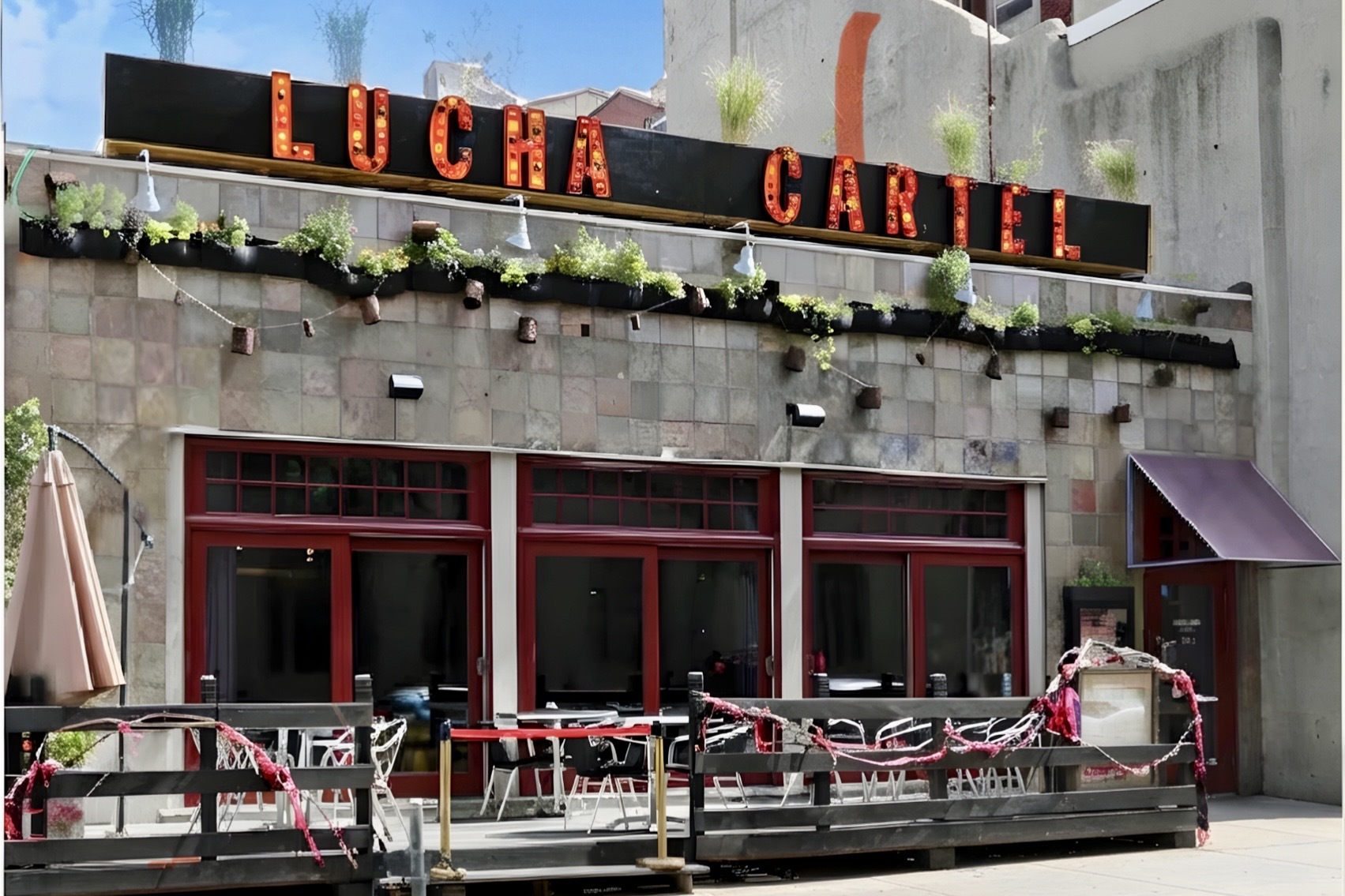
“It was an opportunity, and we decided to take a chance,” said chef Jesus García, a former executive chef at Lucha Cartel, which occupied the building at 207 Chestnut St. from 2013 until it closed last year. It was Philadelphia Fish & Co. from 1983 to 2009.
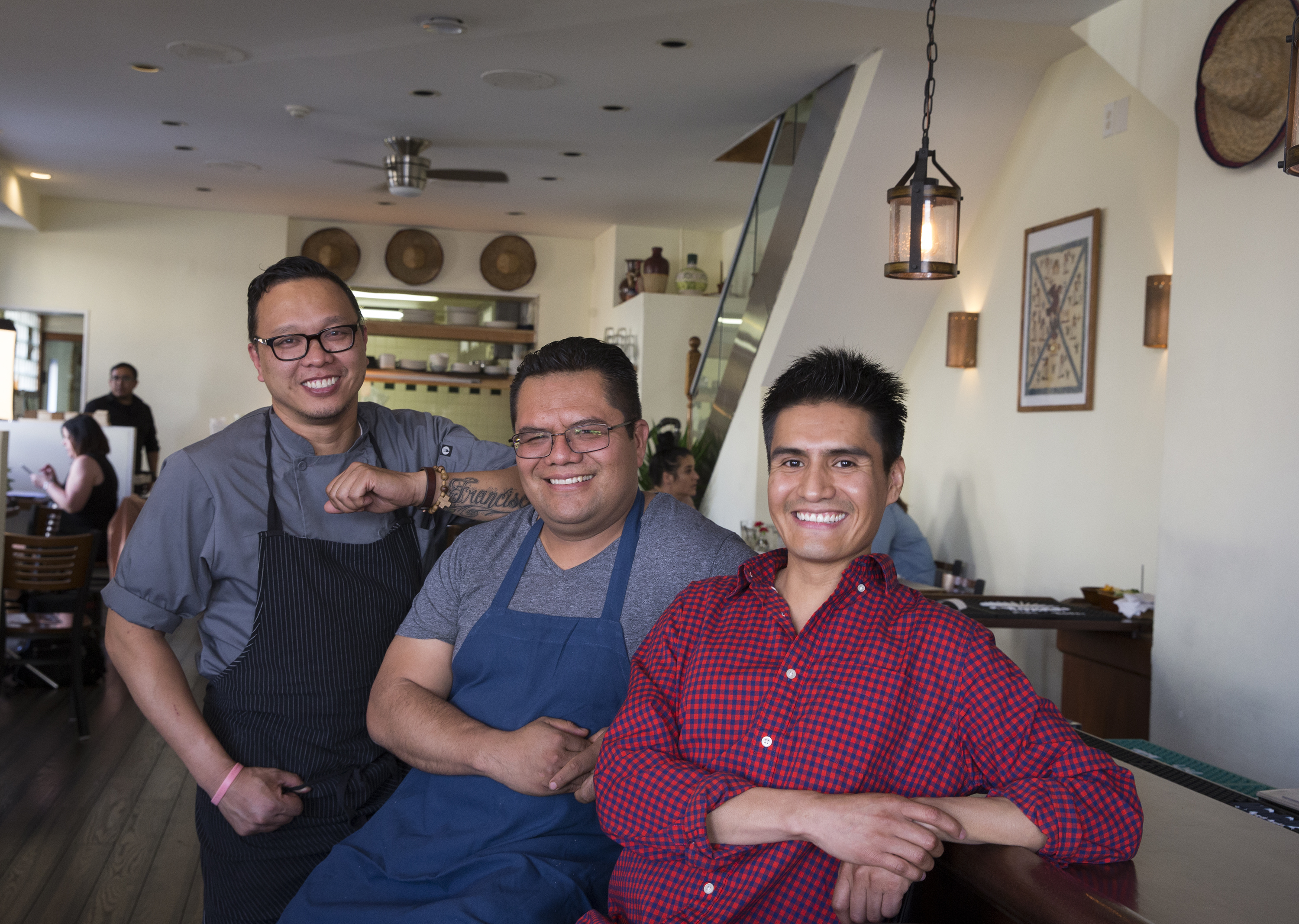
Chef Jesus Garcia (center) and Alejandro Fuentes (right) with Jasper Alivia at their restaurant Nemi in 2019. Charles Fox / Staff Photographer
García and Alejandro Fuentes, his partner in the Mexican restaurant Nemi and the cross-cultural La Roma, bought the property this week and plan to open a yet-to-be-named Mexican restaurant similar to Nemi, which Inquirer critic Craig LaBan has praised, particularly for its creative tacos.
Fuentes and García opened Nemi at Ann and Thompson Streets in 2018, and followed in 2022 with La Roma at Allegheny Avenue and Mercer Street, where the menu crosses Mexican, Italian, and other influences.
Their new restaurant will enter a pocket of Old City that already has several Mexican restaurants. La Catrachita Taqueria opened next door in May. Across Second Street, Buena Vista Mexican Restaurant & Bar opened last summer at 123 Chestnut St., while South Street’s Las Bugambilias moved to 15 S. Third St. in 2021.
Fuentes and García’s purchase of 207 Chestnut marks the end of a saga that had entangled the property in competing efforts to resurrect the name of Tun Tavern, considered the birthplace of the U.S. Marine Corps.
Montgomery Dahm, the Marine veteran who has operated a Tun Tavern in Atlantic City since 1998 and owns the trademark to the name, moved into Old City amid a trademark fight with the nonprofit Tun Legacy Foundation, which was planning its own historically accurate re-creation of Tun Tavern nearby.
In September, Dahm announced an agreement to take over Lucha Cartel at 207 Chestnut, about 400 feet from the foundation’s proposed site around the corner on Second Street. He told The Inquirer that he intended to spend $2.5 million to $3 million to turn the property into a Tun Tavern.
In November, Dahm added bunting and lightly renovated the restaurant for a party commemorating the Marine Corps’ 250th anniversary. Less than three months later, in February, Dahm and the foundation settled their trademark dispute. Dahm subsequently decided not to proceed with the Tun Tavern at 207 Chestnut, leaving the property available.
Billy Creagh of National Realty Commercial brokered the sale, whose terms were not immediately disclosed.
Fuentes and García’s timing coincides with one of the largest public-space projects in the city’s recent history. The Park at Penn’s Landing, being built over I-95 and Columbus Boulevard between Chestnut and Walnut Streets, will reconnect portions of Old City and Society Hill with the Delaware River waterfront for the first time since the 1970s. The project, anticipated to be completed in 2029, is expected to create nearly 12 acres of parkland and dramatically change the pedestrian approach to the waterfront.
For 207 Chestnut, the significance is geographic: The restaurant will sit only a few blocks from the new park, along one of the principal east-west streets connecting Center City and Old City with Penn’s Landing.
The Old City project will put Fuentes and García in a considerably different restaurant market from Port Richmond, with heavier tourist traffic, historic attractions, nightlife, and increasing competition for Mexican food.
“I think it’s a great neighborhood, even if sometimes it has some ups and downs,” Fuentes said. “But there are a lot of local customers, and there are also a lot of tourists who visit Old City.”
Chenin blanc ranks among the most underrated wine grape of all time in terms of its quality potential. When grown and made with care, as with this California example, its wines can be spectacular. Combining the aromatic finesse of riesling with the tactile opulence of chardonnay, chenin blanc rivals the finest of white grapes.
However, chenin blanc has struggled to shake off a bulk-wine reputation because its strengths are so easy to exploit in making cheaper wines, especially sweeter wines.
Depending on decisions made by vintners, any green grape can make wine that is still or sparkling, sweet or dry, oaked or unoaked. Whether the wine is lightweight or heavyweight is determined by how ripe the fruit is at the moment of harvest. Most wine grapes perform better in one or two styles, and people come to know what to expect from them. Sauvignon blanc is almost always dry and unoaked, for instance, while riesling is more often made to be sweet. Chardonnay is usually dry but fuller-bodied and often oaked, and almost every other grape has a similar “classic” style.
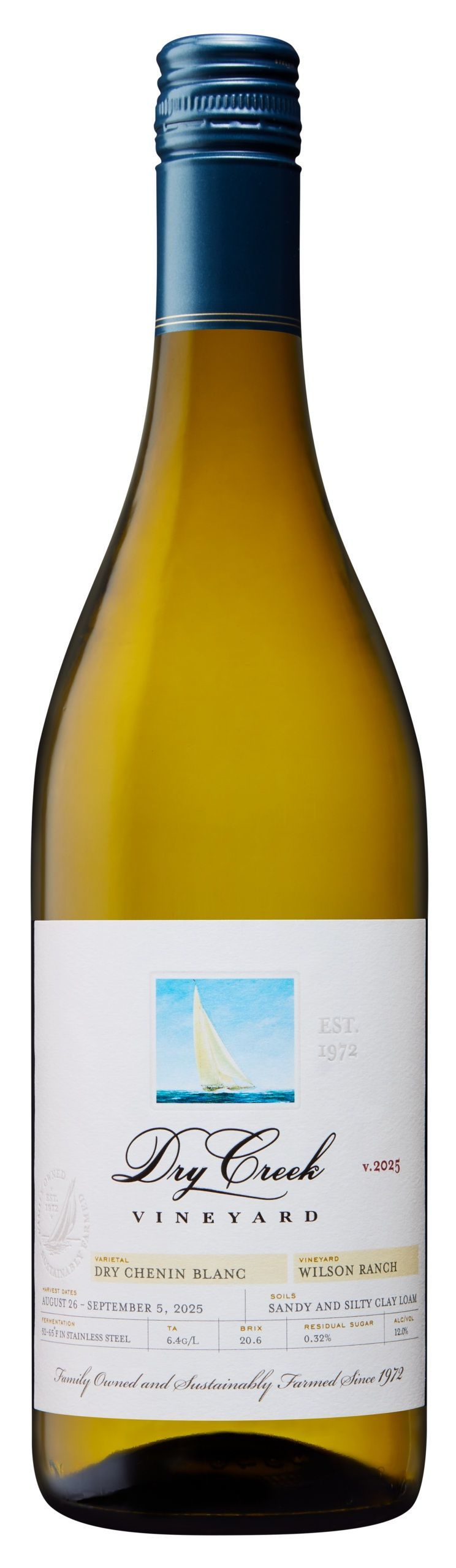
This is where chenin blanc has a truly perverse problem from a marketing perspective — it is simply too good at making too many styles to have carved out any single recognizable stylistic niche. This makes every bottle purchased a bit of a leap of faith for the buyer, who can’t be sure quite what they’re going to get. That’s why it is so helpful that Dry Creek Vineyard shares this wine’s technical data right up front, confirming that the wine is made in a style that is light in body, at only 12% alcohol, and quite dry. Most vintages contain less than half a percent of residual sugar, which is well below the threshold of perception for most drinkers.
Where many California chenin blancs are barrel-fermented as if they were chardonnays, this wine’s back label confirms that it is unoaked. In the glass, the wine has strong green apple and golden apple flavors, accented with notes of mandarin orange and honeydew melon. It is brisk, clean, and dry and makes an excellent partner for sushi or heirloom tomatoes.
Dry Creek Vineyard Dry Chenin BlancCourtesy of Dry Creek Vineyard
Dry Creek Vineyard Dry Chenin Blanc
Clarksburg, California; 12% ABV
PLCB Item #86917
On sale for $15.99 (regularly $17.99) through Aug. 30
Also available at: Moorestown Super Buy Rite ($13.49) in Moorestown, N.J., moorestownbuyrite.com; Hopewell Super Buy Rite ($15.99) in Pennington, N.J., buyrite.wine; and WineWorks ($16.98) in Marlton, N.J., wineworksonline.com.
If you didn’t know better, you could be convinced — as you slide a spoonful of lightly breaded crab cake out from its stuffed shell, gaze at the soft light pouring through stained glass windows, and sip a frosty martini — that Waltz, at Front and Ritner, has been dancing on this corner of deep South Philadelphia for decades.
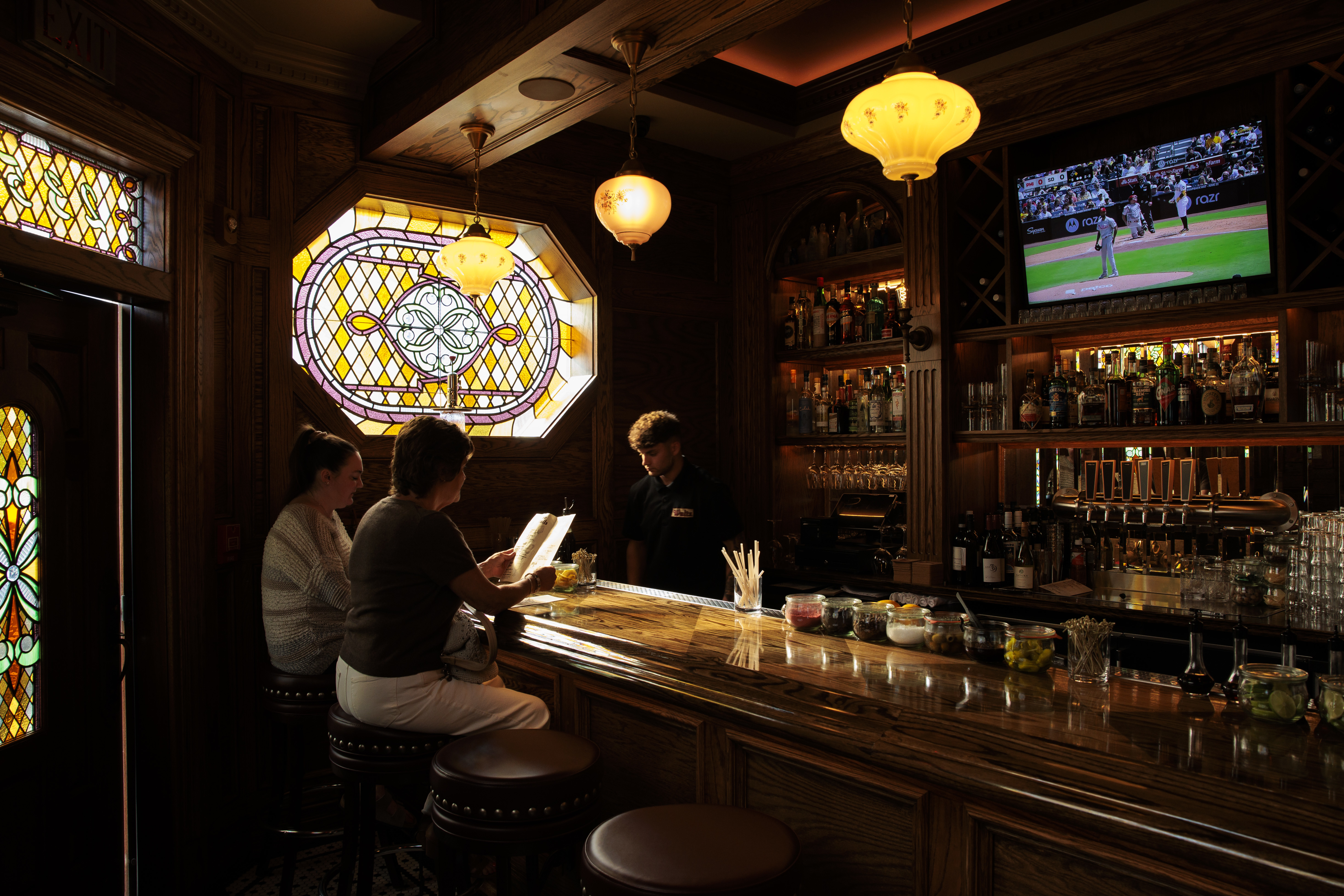
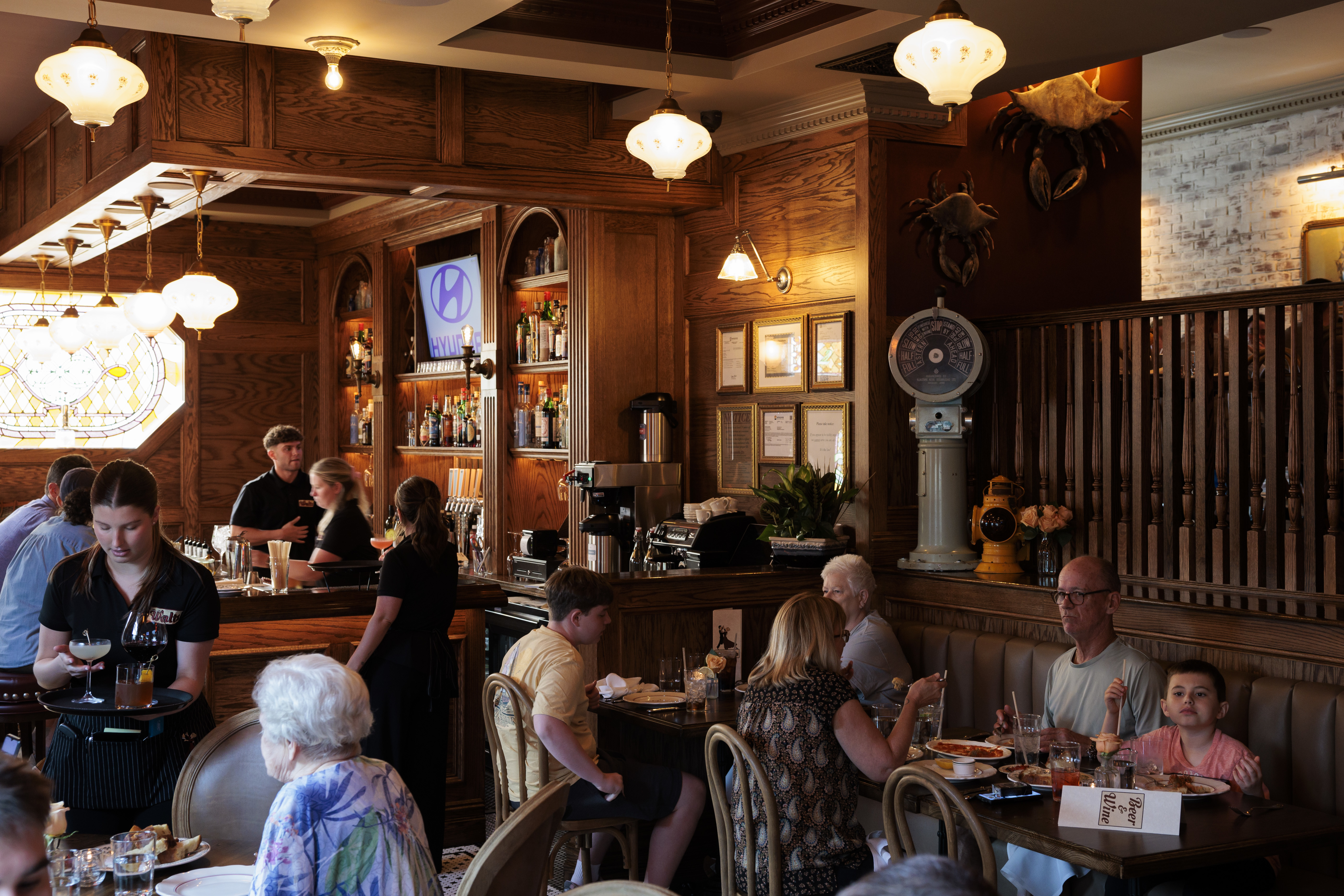
Cue the crowds that reliably fill the bentwood chairs in its wood-paneled downstairs bar and the bustling upper dining room even on weekdays. Forks angle through heaping platters of spaghetti while the Delfonics, O’Jays, and other Philly soul greats croon in the background. The vintage vibes here are pristine — except for the fact that Waltz is not vintage at all, but a five-month-old passion project thatunpretentiously delivers a style of polished Italian American dining that’s been on the slow fade for decades due to demographic shifts and changing tastes.
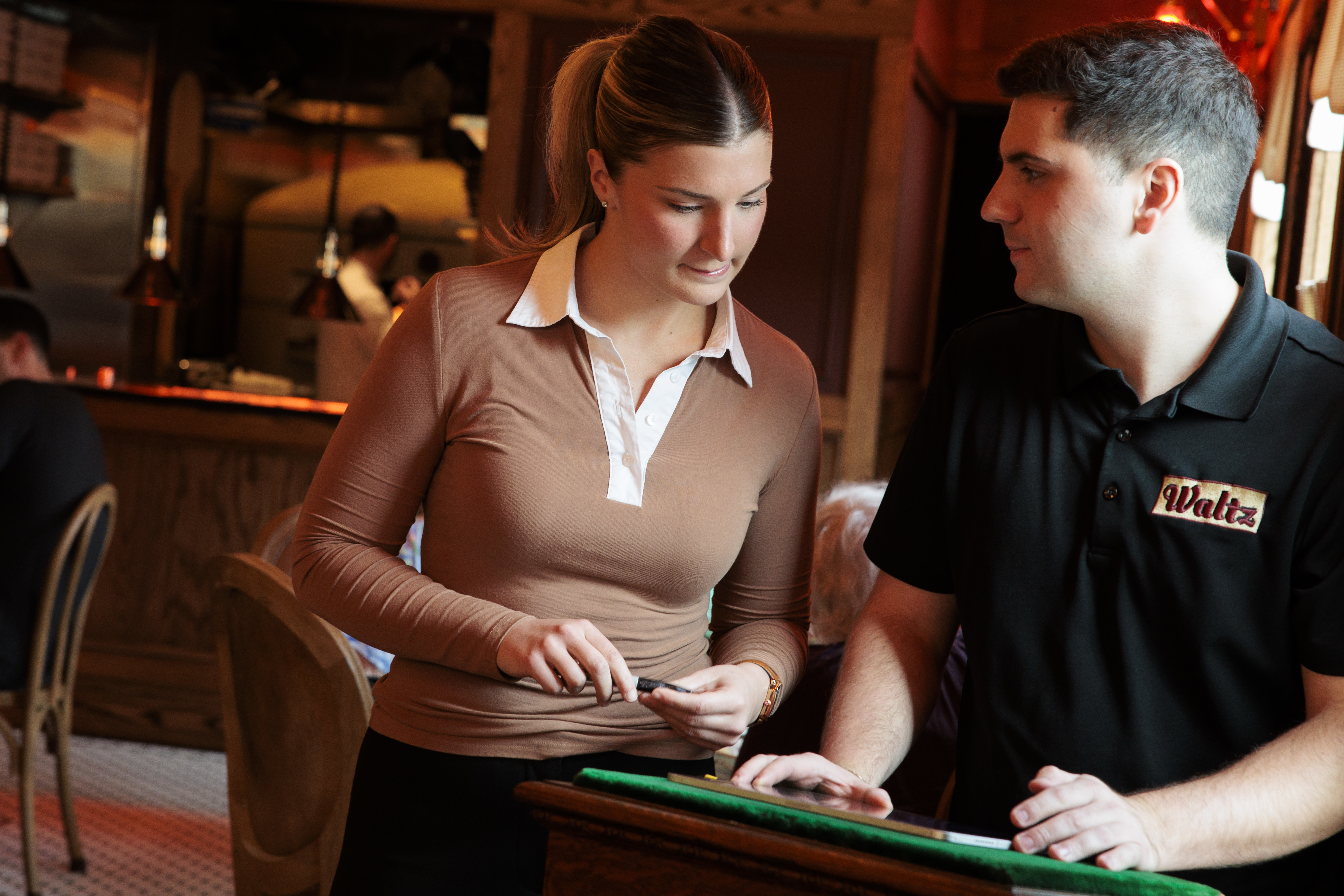
Celine Tobin and Joey Dougherty work at Waltz on Wednesday, May 27, 2026 in Philadelphia.Monica Herndon / Staff PhotographerThe bar at Waltz on Wednesday, May 27, 2026 in Philadelphia.Monica Herndon / Staff Photographer
This restaurant’s charm is more than just a wistful nod to “they don’t build ’em like that anymore” nostalgia. Waltz is anything but stale from the moment you’re greeted warmly at the maître d’ stand, most likely attended by manager Celine Tobin, who also happens to be co-owner Joey Dougherty’s girlfriend. A wood-fired oven beckons from just beyond in the partially open kitchen, where the 800-degree hearth fuels a menu built around pizzas, roasted meats, and house pastas.
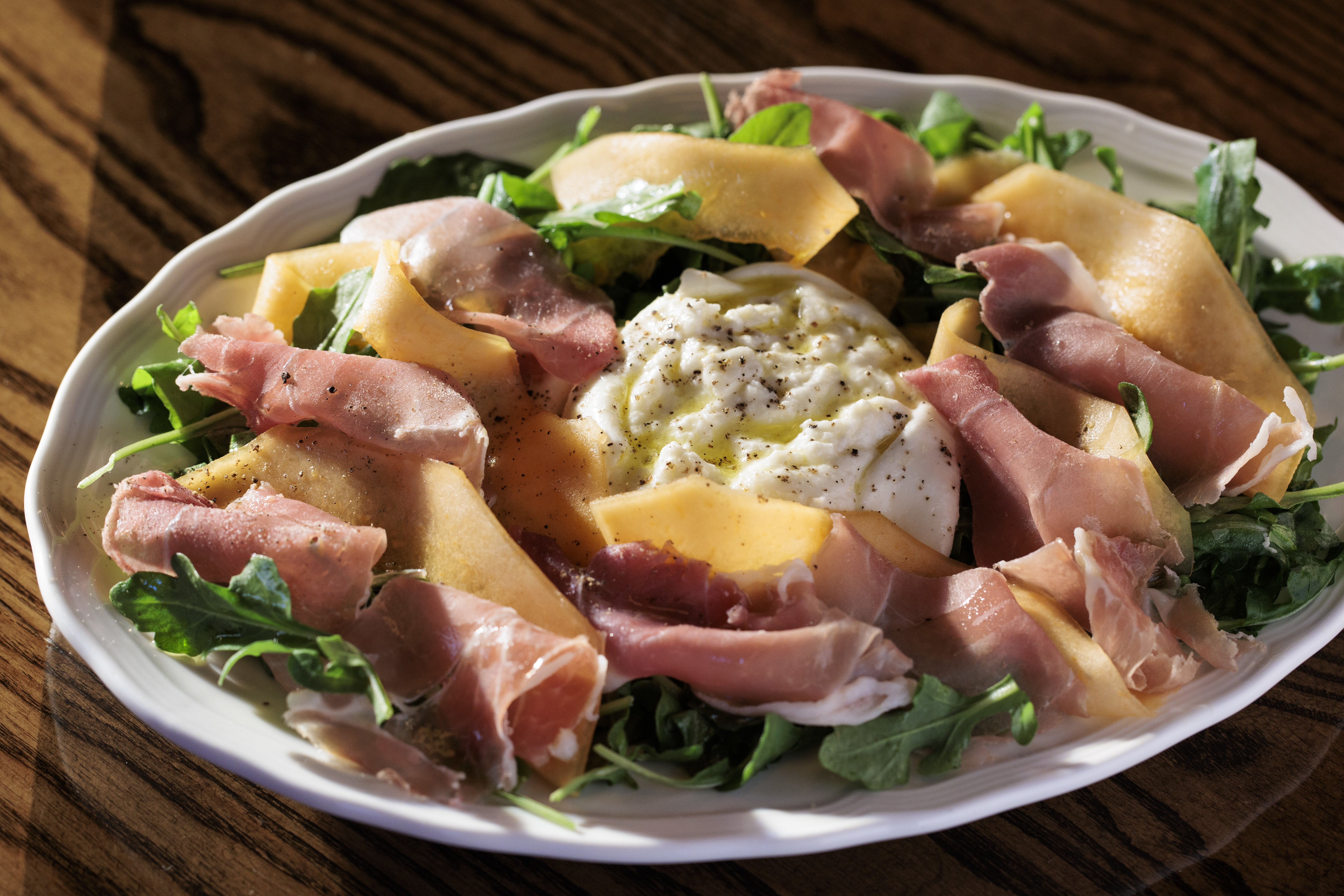
The menu, conceived and implemented by consulting chef Eric Leveillee, formerly of Lacroix at the Rittenhouse, is key to Waltz’s allure, offering a familiar repertoire of popular dishes, then raising the bar with added elements of craft. The mozzarella is hand-pulled from Caputo Bros. Creamery curds just before service, so the milky white burrata — its core stuffed with rosemary-infused mascarpone — is extra sweet when draped with salty pink curls of prosciutto, juicy cantaloupe, and peppery green olive oil. The pizzas are made from sourdough, which lends their crusts an extra crackle, complexity, and tang.
The burrata with prosciutto, melon, and olive oil at Waltz on Tuesday, Aug. 4, 2026, in Philadelphia.Monica Herndon / Staff Photographer
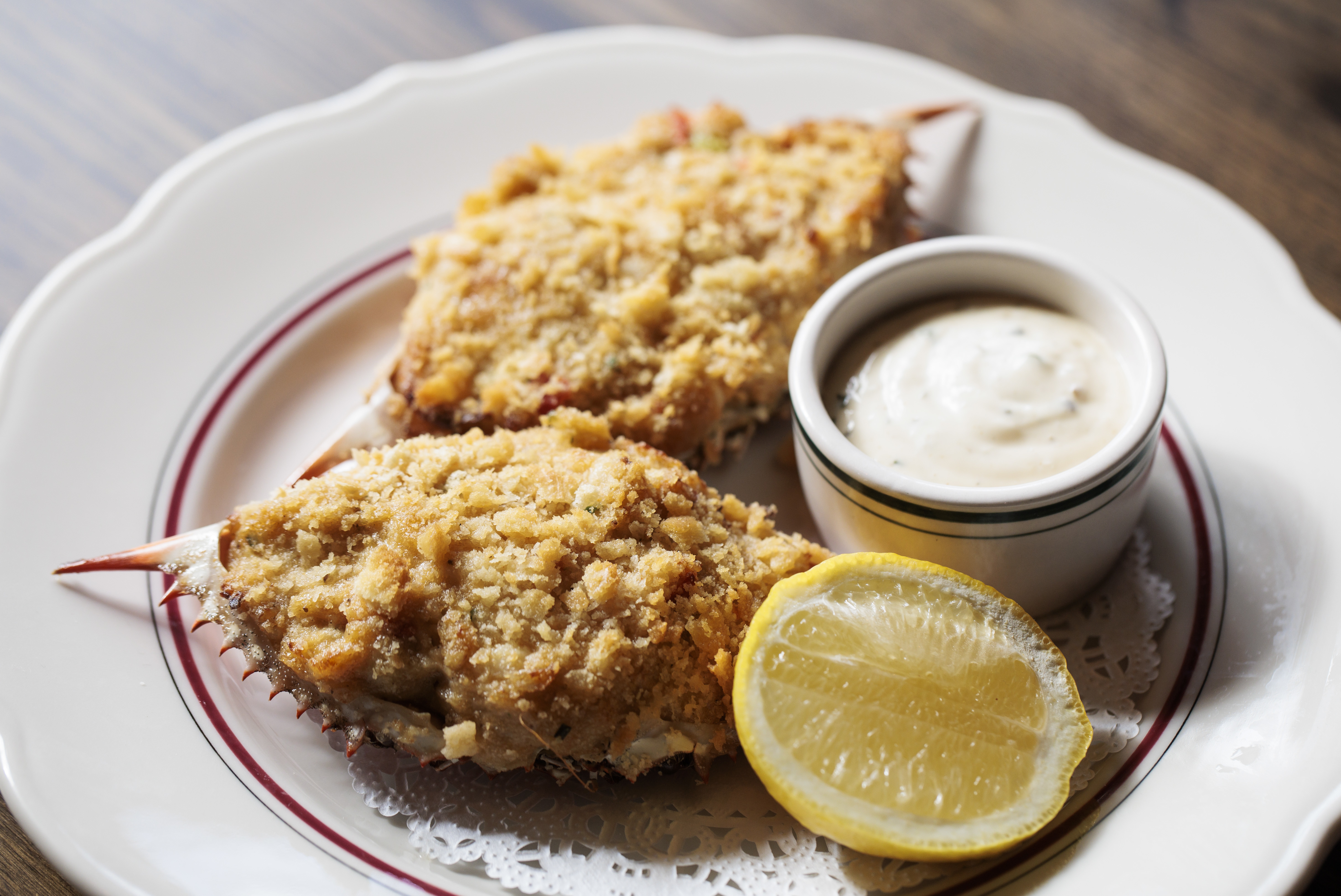
Thehouse-extrudedpastas gain extra vibrance from their springy texture. There’s noticeable resilience in the wide lumache elbows, for example, whose bounce stands up to a spiced blush sauce that’s not simply rich with cream and fistfuls of crab, but boosted by the depth of a freshly steeped crab stock. That pasta, as well as the signature appetizer of crab cakes, is a nod to the hard-shell history of this address’ previous occupant, Anthony’s Crab House.
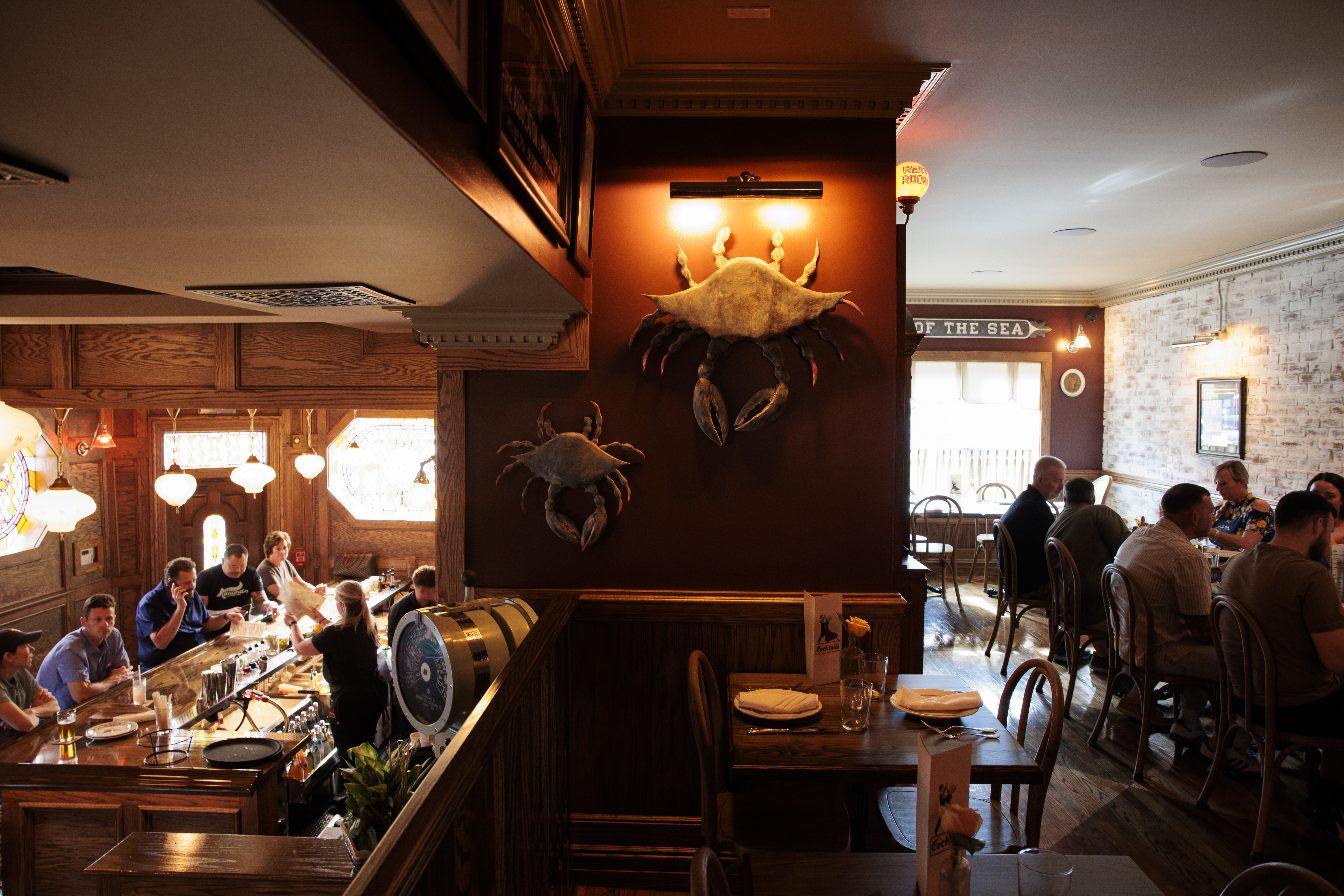
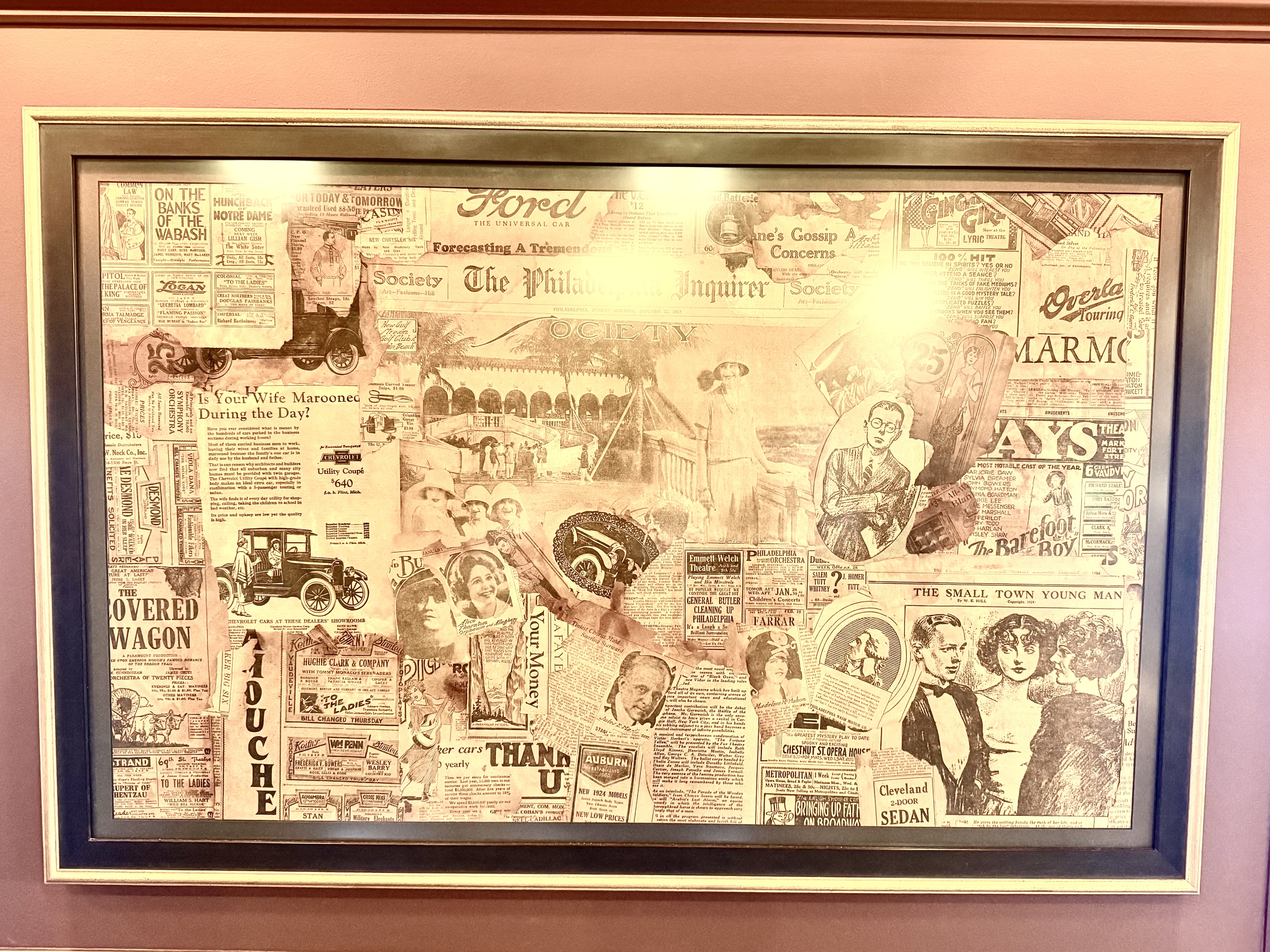
Waltz is a wordplay tribute to the Whitman neighborhood at the city’s southeasternmost corner, an area near the port bordered by railyards and strip malls rich in casual dining options (John’s Roast Pork, Wolf Burger, Oregon Diner, and the newly opened Angelo’s location), but slim on date-night draws. Dougherty aimed to answer that need by rehabbing this corner haunt, which had fallen into disrepair a block from his family’s contracting business, Dougherty Electric. As such projects often go, an intended modest facelift turned into a major renovation: The Doughertys created a wider opening between the dining rooms in two adjoining properties, restored the exterior brick by brick, and completely rebuilt the interior, down to the framed collage of 1924 editions of The Inquirer that had been used inside the walls as insulation.
The stuffed crabs at Waltz on Wednesday, May 27, 2026 in Philadelphia.Monica Herndon / Staff PhotographerThe interior of Waltz on Wednesday, May 27, 2026 in Philadelphia.Monica Herndon / Staff Photographer
Based on the craftsmanship of the fixtures, from the millwork of the wood paneling to the barroom tiles, vintage pendant lights, and even the beautifully outfitted marble bathrooms downstairs, it’s clear the Doughertys used many of their professional contacts here.
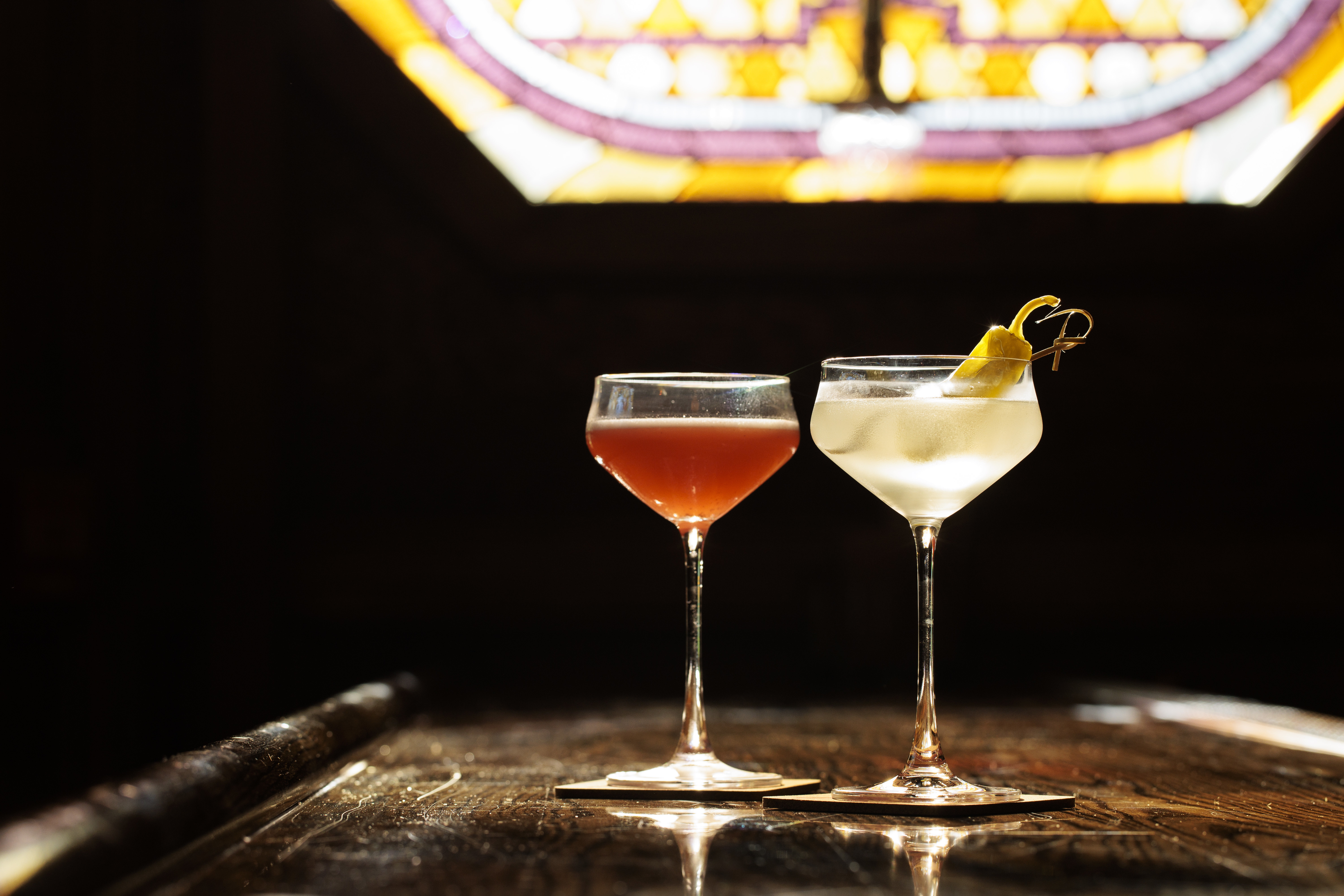
They might want a rebate, though, from their HVAC guy. The air-conditioning in the nautical-themed upper dining room cut out halfway through a meal with my boss on a 100-degree day, awkwardly leaving us sweatyover our peperoncini-spiked martinis and the crisply fried fritto misto.
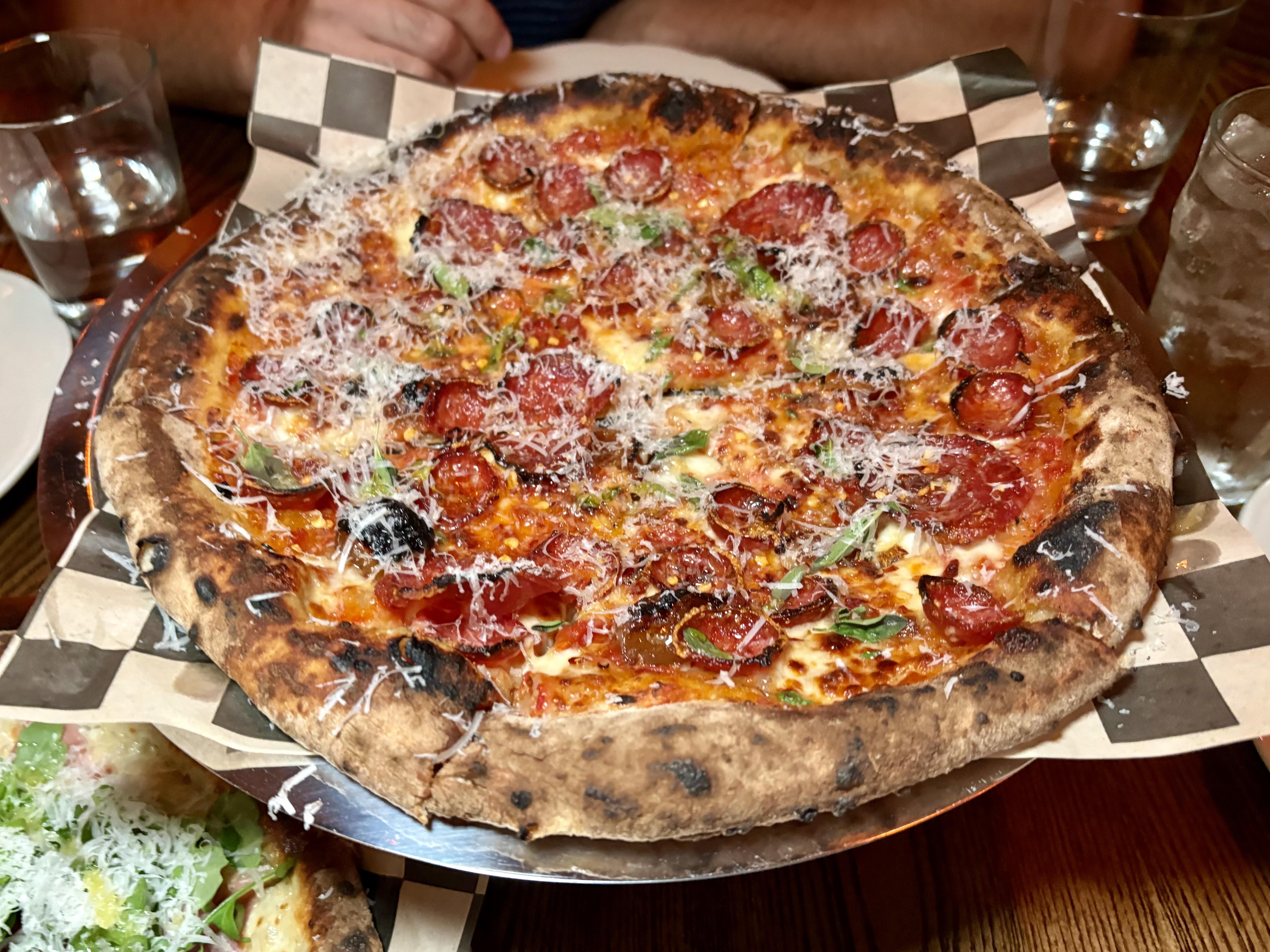
The interior of Waltz on Wednesday, May 27, 2026 in Philadelphia.Monica Herndon / Staff PhotographerThe sourdough piccante pizza at Waltz includes pepperoni, soppressata, hot honey, and onion agrodolce.Craig LaBan / Staff
It’s a tribute to the kitchen that our table remained upbeat despite the sticky heat. The carbonara pizza — a white pie with béchamel and fontina scattered with salty nuggets of guanciale and a golden glaze of egg yolk — was my favorite pizza of that first visit. The piccante — a red pie with pepperoni, soppressata, hot honey, and sweet-tart onion agrodolce — was my pick on a return meal when the AC, thankfully, was working again.
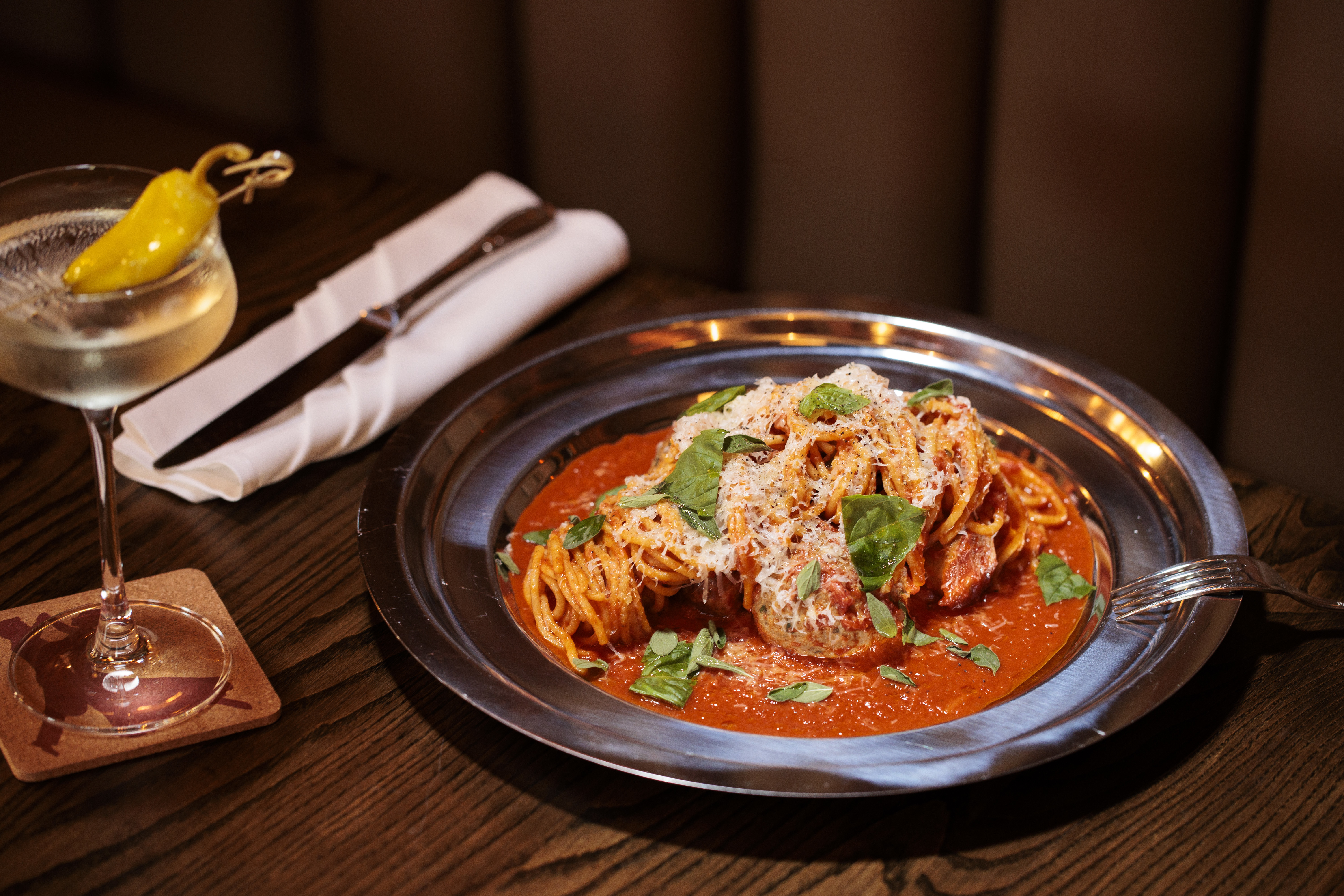
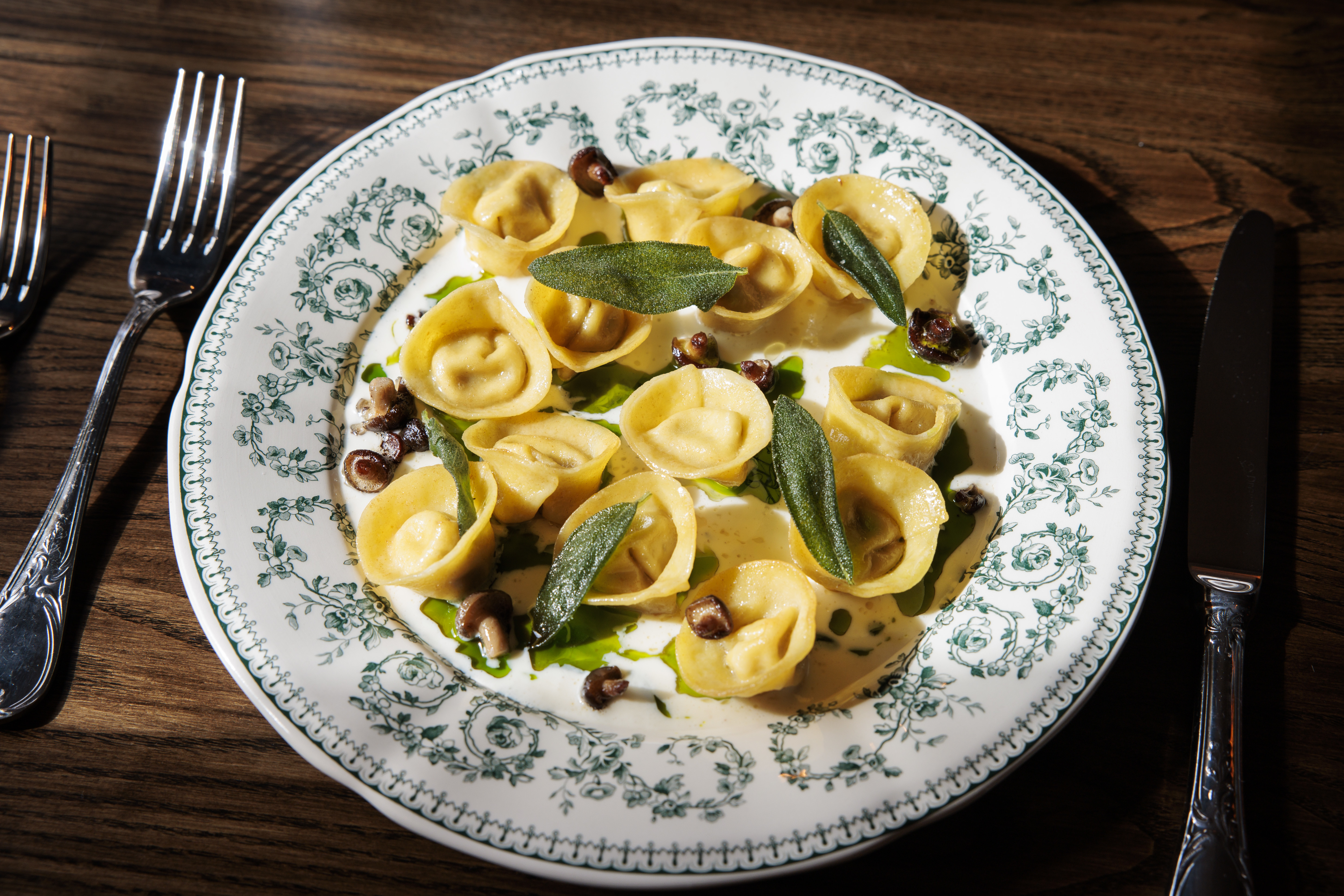
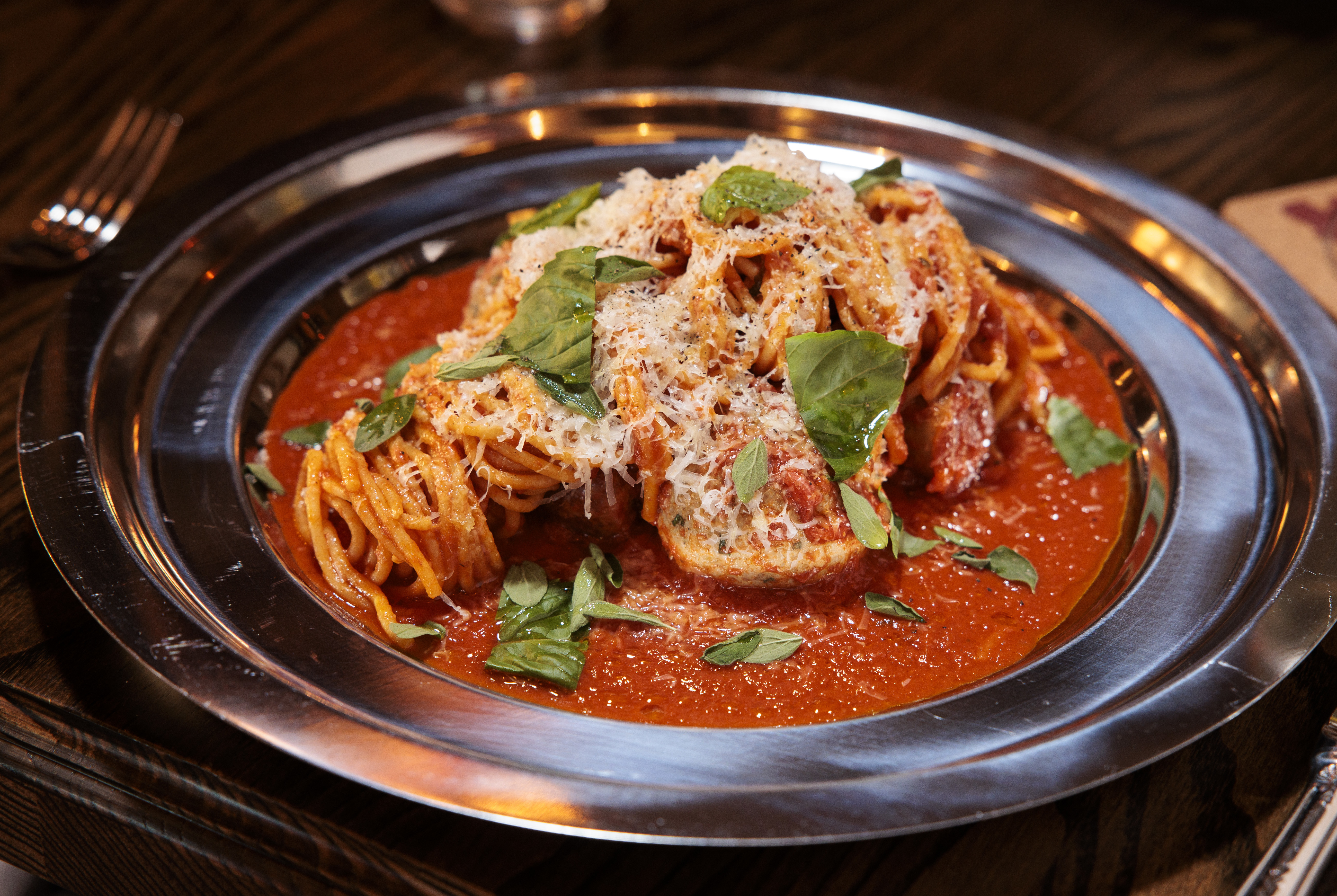
The pastas at Waltz are also consistently excellent, including deftly folded tortellini stuffed with mushrooms in Parmesan cream sauce, and the ruffled-edge ribbons of pappardelle that cradled rustic duck ragù. The snap of fresh noodles lend the already irresistible silver platter of spaghetti with meatballs and sausage in red sauce extra oomph. It was so zesty, I couldn’t help but wonder how this Sunday gravy became a treasured tradition of the Dougherty family in this historically Irish enclave of South Philly.
The tortellini at Waltz on Wednesday, May 27, 2026 in Philadelphia.Monica Herndon / Staff PhotographerThe spaghetti and meatballs at Waltz on Tuesday, Aug. 4, 2026 in Philadelphia.Monica Herndon / Staff Photographer
“We call it ‘Gus’ gravy,’” says Dougherty, noting that his father, Donald “Gus” Dougherty, also a partner at Waltz, learned the recipe in 2008 from some Italian friends he met while he was serving 18 months in federal prison at Fort Dix for defrauding the IBEW Local 98 electricians union, formerly run by his close (but unrelated) associate, John “Johnny Doc” Dougherty. “He’s made it every Sunday since.”
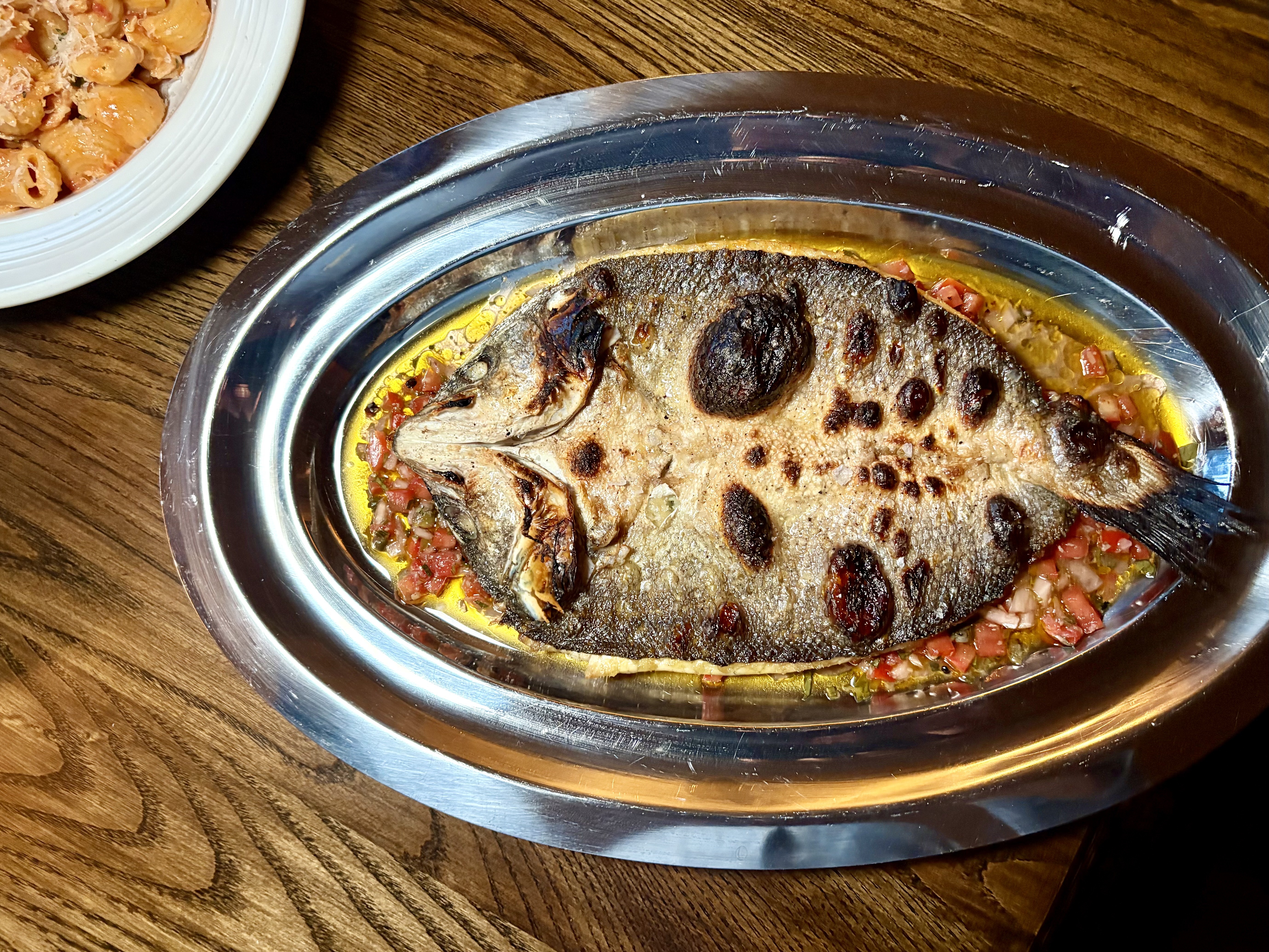
That gravy also features prominently on the chicken Parm, although that is one dish here I found unexciting. Yes, the sharing portion is gigantic, which, at $30, is a reminder that prices here are very fair. But the breading had gone so soggy in all that red sauce the exterior was almost fluffy, leaving this Parm one-dimensional. Your best bets for the handful of large-format sharing dishes emerge from that wood hearth; the heat-blistered silver skin of a butterflied whole branzino, for example, is fantastic over the tangy vinaigrette — called sauce vierge — of fresh tomatoes, capers, and a splash of chili oil that makes it glow.
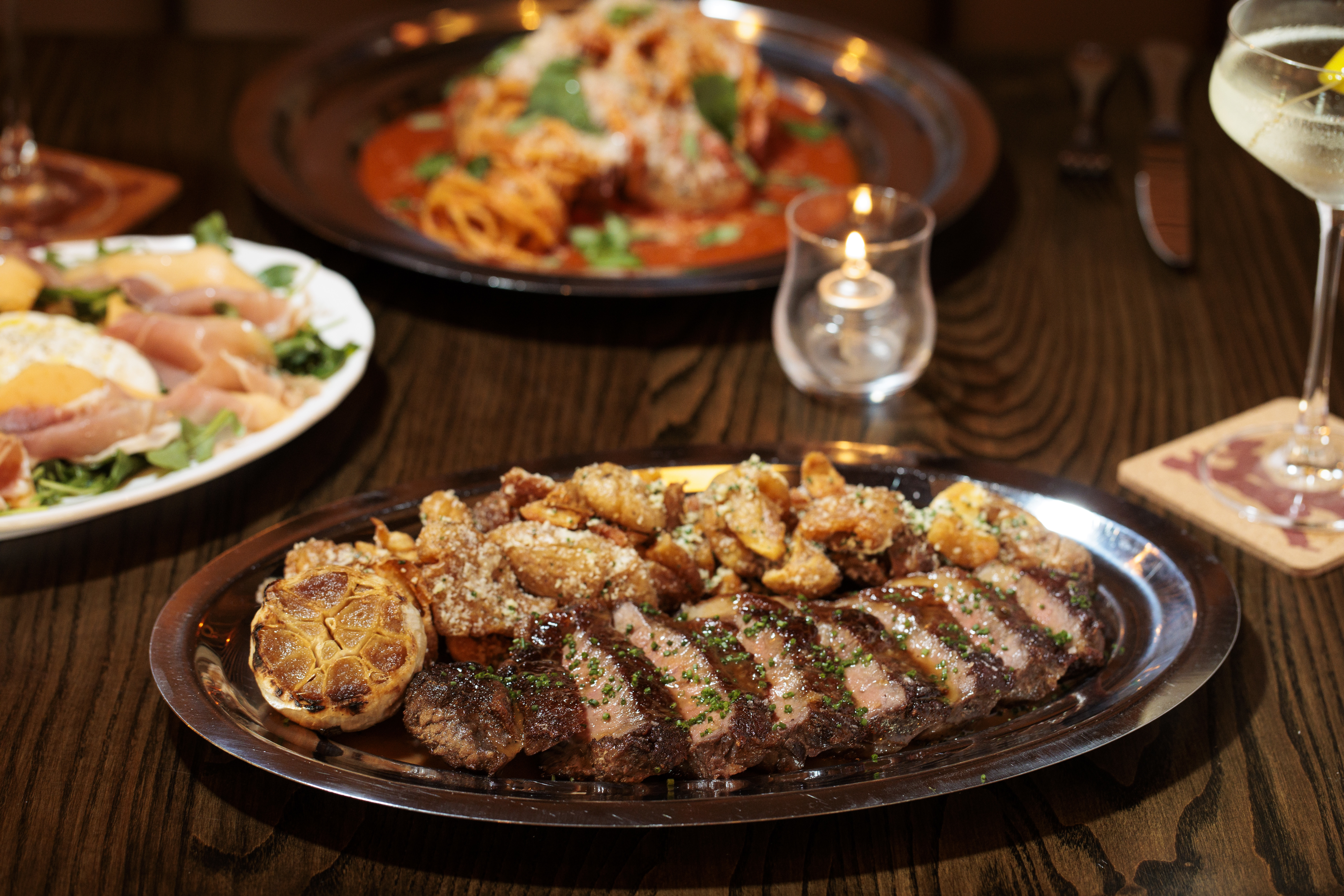
The superbly tender 14-ounce strip steak, meanwhile, roasted to a perfect medium-rare in that pizza oven, was one of the more memorable cuts of beef I’ve eaten this year. It arrivedfanned over a silver platter beside shatteringly crisp fried fingerling potatoes and a head of sweet roasted garlic glossed in a black peppercorn jus that’s a telltale perk from Leveillee’s years of sauce work in French kitchens.
The 14-ounce New York strip steak with smashed fingerling potatoes, roasted garlic, and black pepper jus at Waltz on Tuesday, Aug. 4, 2026 in Philadelphia.Monica Herndon / Staff PhotographerThe whole branzino at Waltz is roasted in the wood-fired oven and paired with a tomato and caper vinaigrette.Craig LaBan / Staff
Between that steak, the crab cakes, pastas, and the retro tavern vibe, I can see why some have likened Waltz to a combination of the Saloon and the newly revived Bomb Bomb Bar. Waltz’s still-evolving repertoire isn’t quite that proven or deep yet, even if I have little doubt executive chef Sergio Mateo — an alum of Ambra, Whetstone, and Lacroix who’ll be carrying the menu forward once Leveillee’s consultancy is finished — has the skills to get there.
Waltz’s drink program has a bit further to go. The cocktails offer some trendy twists to classics but occasionally landed shy of their promise (the weak foam on the Fluffy Negroni Sour, for example, had deflated by the time it arrived). The potentially clever concept of a cocktail list organized by glass shapes fumbled over its own format: The Centerbe-spiked Waltz Whit Me camein a large martini coupe instead of the Nick and Nora tulip touted on the menu.
The Blush Sour and the Pepperoncini Tini at Waltz on Tuesday, Aug. 4, 2026 in Philadelphia.Monica Herndon / Staff Photographer
At a very reasonable $15 or less a cocktail, however, it’s hard to complain loudly. Joey Dougherty is admirably determined not to overprice Waltz for a neighborhood that currently doesn’t have many upscale dining options. The small wine list is also full of basic Italian wine values for $13 a glass or less, and a tiny reserve bottle list for a Super Tuscan or Brunello di Montalcino. Dinner as a whole is fairly priced considering the quality, with check averages of $55 to $65 including beverage, before tax and tip.
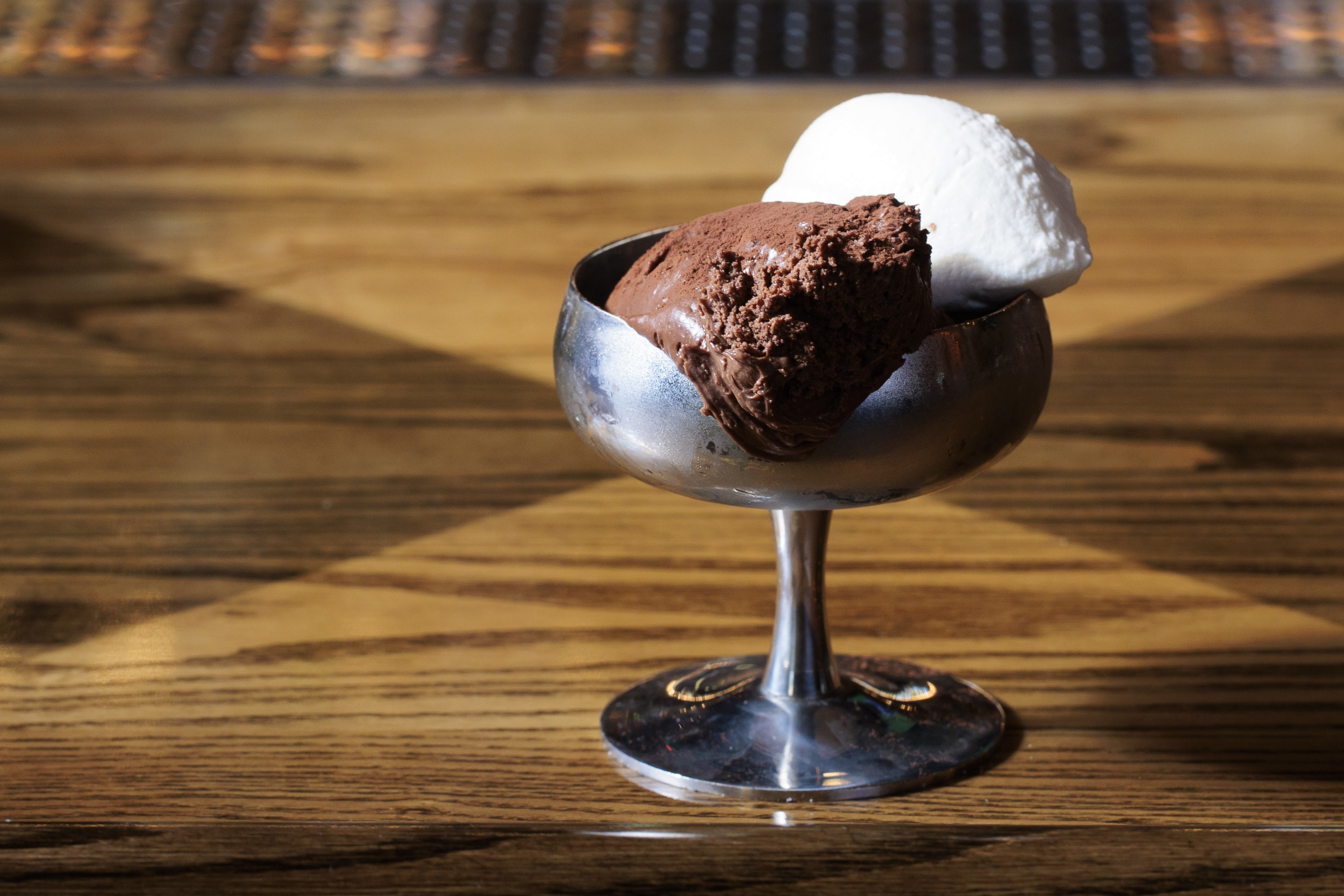
Dinner finishes up strong with good scratch versions of common desserts. The made-to-order tiramisu, whose lady fingers are dunked to order in coffee then layered with sweet cheese, is somewhat controversial among traditionalists who expect it to be already fully saturated, but I enjoyed the faint crunch of those biscuits softening while we ate. There were no quibbles over the lusciously rich chocolate mousse, which is made with 70% Valrhona chocolate and served with raspberry compote and amaretto whipped cream.
The lusciously rich chocolate mousse, made with 70% Valrhona chocolate and served with raspberry compote and amaretto whipped cream, at Waltz on Wednesday, May 27, 2026, in Philadelphia.Monica Herndon / Staff Photographer
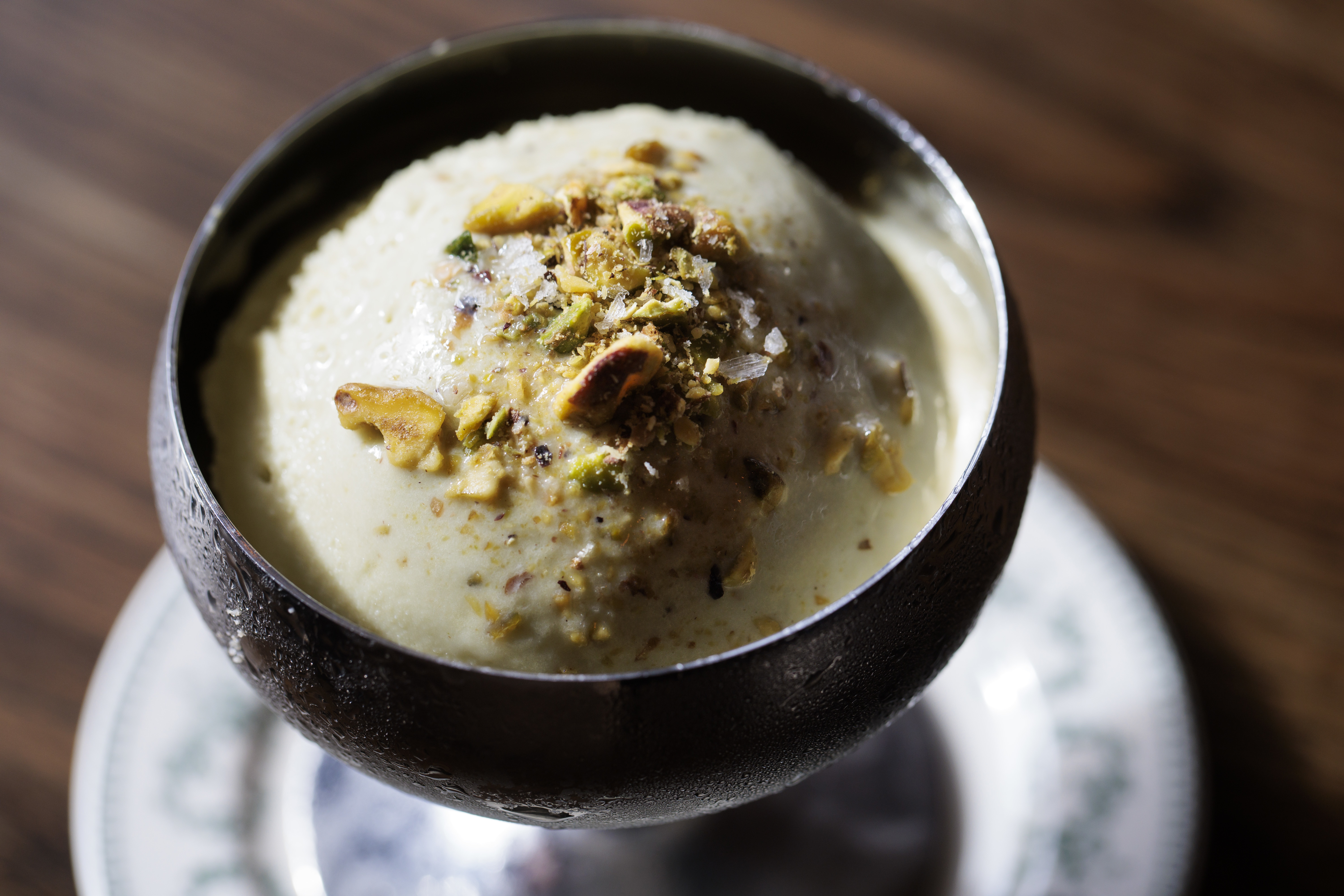
Waltz’s finest finishing moves are the exceptional gelati, which are spun daily before service so the textures remain spoonably soft and vivid of flavor. The pistachio is always my go-to, and didn’t disappoint here, but I could also taste the real Tahitian beans (not extract) steeped into the vanilla. I was thoroughly charmed by the Andes Mint flavor topped with a dusting of the grated chocolate-and-crème de menthe candies. Even better was the strawberry sorbetto, which doubled down on berry flavor with a crimson glaze of strawberry compote.
If you’re going to build a new restaurant that feels like an old soul inspired by another era, these are just the kinds of fresh touches required to appeal to diners today.
Pistachio gelato at Waltz on Wednesday, May 27, 2026 in Philadelphia.Monica Herndon / Staff Photographer
Pizzas and pastas: $16-$24; larger sharing plates, $30-$50.
The bar dining room is wheelchair accessible through a side door, but the bathrooms, located in the basement, are not.
About 50% of the menu is gluten-free or can be modified, including availability of gluten-free pastas.
Menu highlights: House burrata with prosciutto and melon; stuffed crabs; fritto misto; pizzas (carbonara, piccante); lumache pasta with spicy crab vodka sauce; tortellini; pappardelle with duck ragù; spaghetti with meatballs and sausage; New York strip steak; branzino; house gelati (pistachio; Andes mint); strawberry sorbetto.
Drinks: Classic cocktails with modern twists are categorized by glass shape (highball, coupe, Nick and Nora) but perplexingly not always served in the advertised glass. The drinks themselves are solid, not spectacular, but fairly priced at $15 or less. The small wine list offers affordable Italian basics, including a Pecorino white and a plush Piemonte Rosso I’d drink all night for $11 a pour.
The owners of Waltz restaurant in South Philadelphia made a collage of articles from a 1924 Inquirer that was found during renovations in the walls of the building at Front and Ritner, where it was used for insulation.Courtesy Waltz restaurant / Joey Dougherty
Bananas are both tropical and ubiquitous — an ingredient that couldn’t be less local to our region, but found in every grocery store. They’re mundane yet polarizing, especially when ripened and rendered into syrup. They’re summery, due to their cultivation in hot climates, and soul-warming.
The fruit has long been taken for granted, until now. Its popularity is suddenly booming: It’s a featured ingredient in protein bars, gummy bears, coffee creamer, lip balms, and body washes. Even Wendy’s launched a Minions-themed Banana Frosty Swirl last month.
But bananas’ recent prevalence in Philadelphia’s bars and cafes has little to do with the little yellow cartoon characters. Banana beverages have been a long time coming, hot on the heels of other wildly popular, vibrantly colored, Asian-inflected flavors like matcha and ube.
(Unlike matcha and ube, we’re probably not going to see a shortage of banana. But you never know. The bananas we buy at most grocery stores are of the Cavendish variety, but artificial banana flavoring was engineered with the Gros Michel variety in mind. And sometime in the 1950s, after a devastating fungal blight or “bananapocalpyse” called Panama disease, Gros Michel bananas mostly disappeared.)
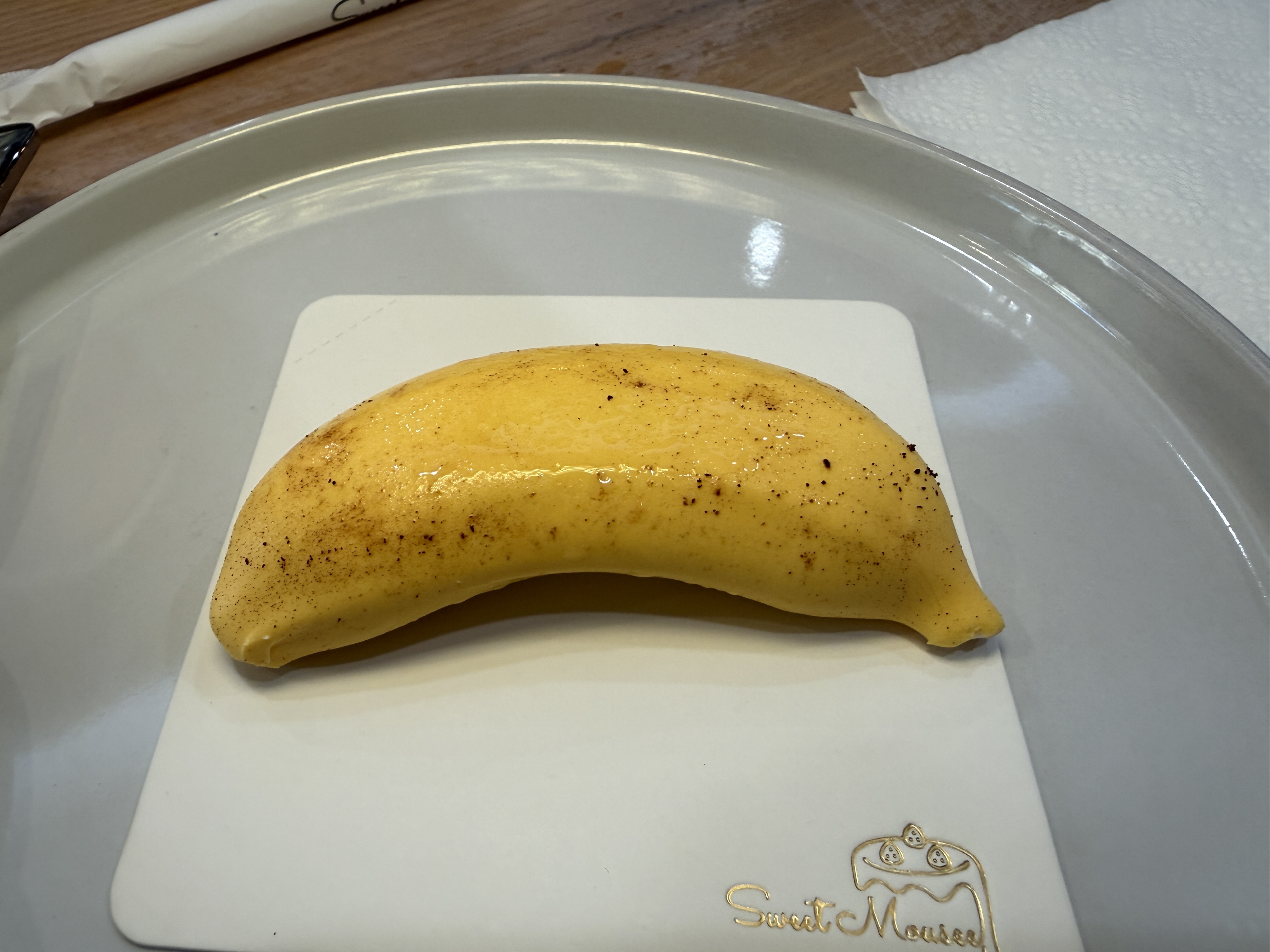
“Little treat” cafes are utterly enamored with the banana, as evidenced by banana milk, a classic Korean beverage that has made it onto several cafe menus lately. The cafe crush doesn’t stop there: At the just-opened Sweet Mousse on South Street in Graduate Hospital, you can get a tiny trompe l’œil banana mousse cake ($6) with a dark chocolate center.
The dark chocolate banana mousse cake from Sweet Mousse in Graduate Hospital.Kiki Aranita / Staff /
But bananas are not the easiest ingredient to work with.
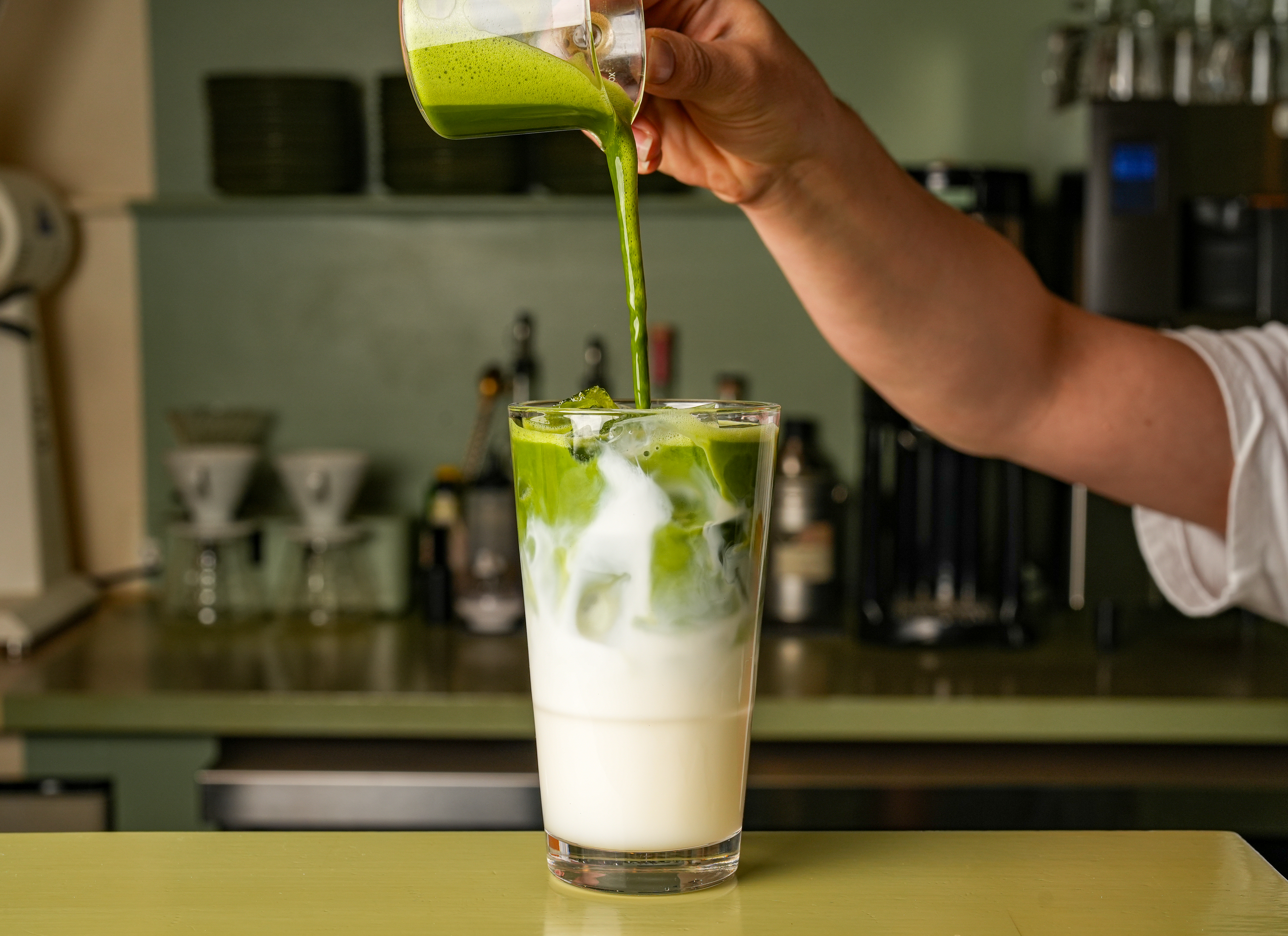
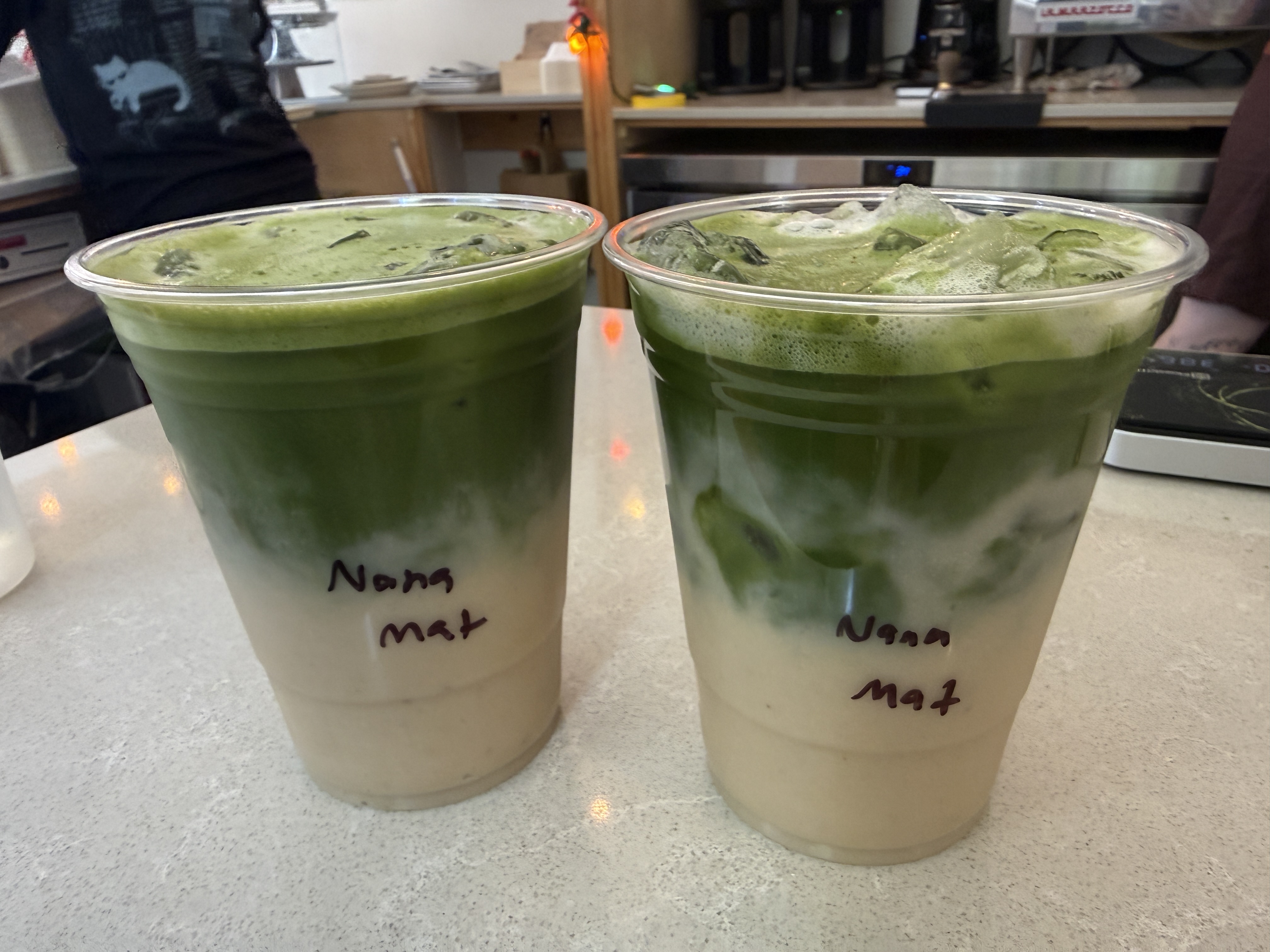
At Seaforest Bakeshop, also in Grad Hospital, cafe manager Mackenzie Quick makes banana milk from scratch, blending oat milk, maple syrup, vanilla extract, and bananas. It’s layered into the cafe’s best-selling beverage: their iced banana milk matcha. And it can only be served iced. “It’s not good at all hot. When you steam it, it turns into porridge,” said Quick.
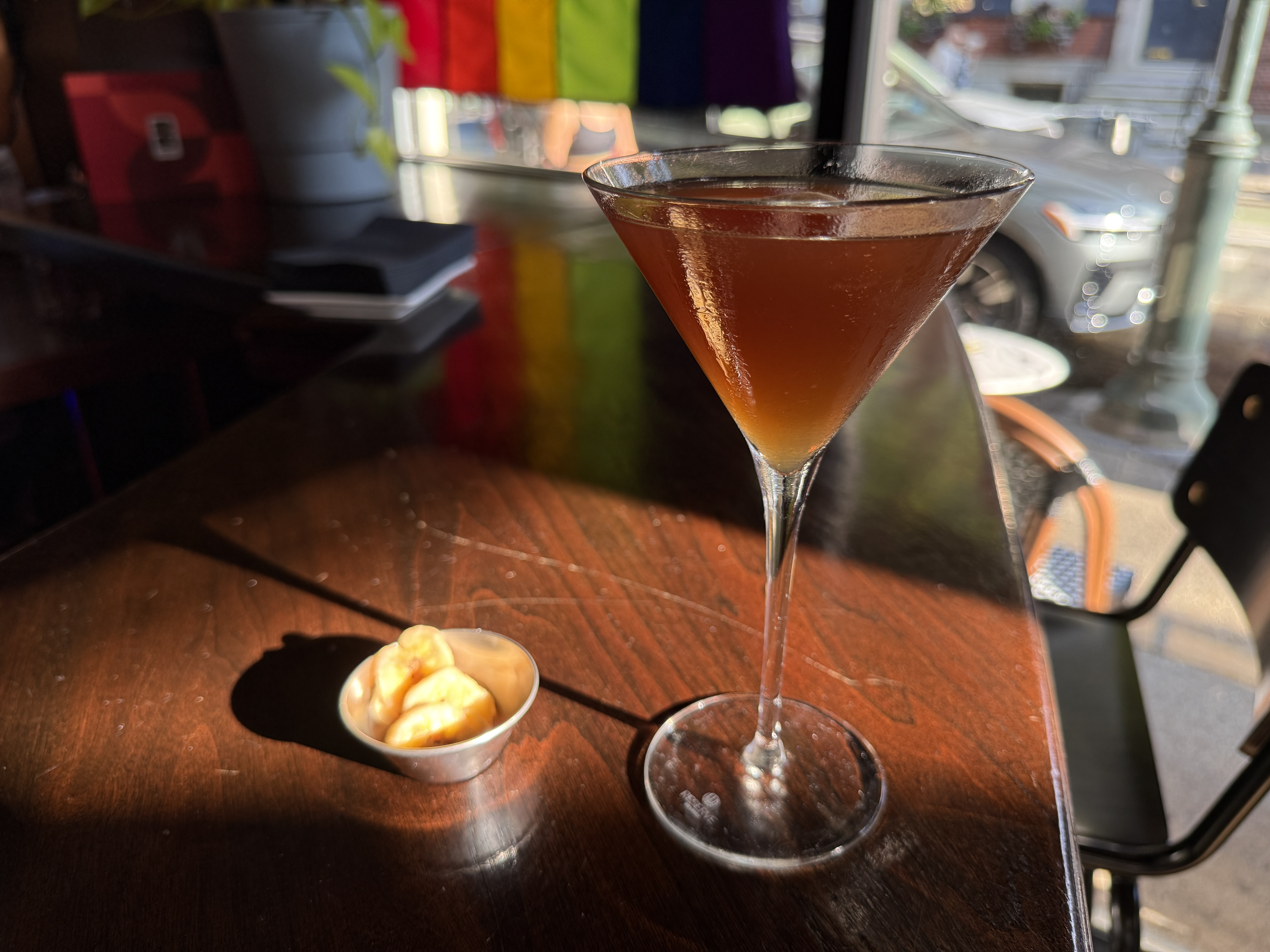
Bartenders are reaching for all types of banana liquor, including Giffard’s Banane du Brésil, which goes into the banana cocktails at Friday Saturday Sunday and Sao, and Crème de Banane from Tempus Fugit Spirits, which is shaken into the banana Negroni ($13) at Cormorant Corner Bar and a banana-y Old Fashioned riff called the Triple Header ($16) at Bar ILU.
Philly cocktail bars are also coming up with unique ways to use the banana in its entirety, including its peel.
“We take the leftover peels after infusing bananas into dark rum and cut them down into half-inch slices,” said Josh Grejdus, the beverage manager at Bluebird Distilling. “Then we use equal parts by weight of sugar and macerate the skins. Let it sit overnight and then strain it” to create a banana oleo-saccharum (or aromatic syrup). A similar elixir is made at both Static! and Next of Kin, said co-owner Kyle Darrow, where brûléed banana goes into liquors like rum and scotch.
Libertee Grounds, the bar with indoor mini golf in Fairmount, takes an approach akin to Seaforest Bakeshop’s. “I make a banana puree, then incorporate it into a simple syrup using a mixture of sugar, maple syrup, cinnamon, nutmeg, and vanilla to lean into the banana bread feel,” said beverage manager Ellie Bley. “I batch this about once a week or more depending on demand.”
And demand for bananas sees no signs of waning.
Where to fuel up with banana cafe drinks
The iced banana milk matcha from Forin Cafe.Mike Prince
Forin Cafe
Forin makes a banana milk that consists of a simple syrup base with a banana emulsion and vanilla paste, which you can add to coffee and matcha drinks. Most popularly, it’s combined with ube and matcha.
The iced banana milk matcha latte from Seaforest Bakeshop uses house-made banana milk.Kiki Aranita / Staff /
Seaforest Bakeshop
Seaforest’s iced banana milk matcha uses Junbi matcha with their house-made banana-oat-maple syrup milk. The matcha is vigorously whisked for a drink that is creamy, fresh, grassy, and thick. It’s lightly sweet and has the texture of a loose smoothie.
This pink-tiled Chinatown cafe serves a banana latte ($7.75) made with strong Vietnamese phin-brewed coffee, poured over ice and layered with milk and foam spiked with DaVinci brand banana syrup.
Matcha Cafe Maiko in Chinatown is serving a banana pudding matcha latte, in which banana extract is mixed into whipped cream, the sweetness of which is balanced by a very robust matcha base. The whipped cream tastes like a cross between Runts and sunscreen (which some people love).
Static! has a banana cocktail called Split Decision made of brûléed banana scotch, banana skin, absinthe, bitters, and is washed with brown butter. Sister bar Next of Kin uses a similar process for their banana cocktail, Crocodile Tears.Kiki Aranita / Staff /
Next of Kin
While Static’s bestselling banana cocktail is rotating off their menu soon, the process for making it continues at sister bar Next of Kin, where banana is brûléed, infused into liquor for a day, then strained. Next of Kin’s banana daiquiri, one of the cocktails that uses rum infused with banana, is also one of the bar’s top sellers.
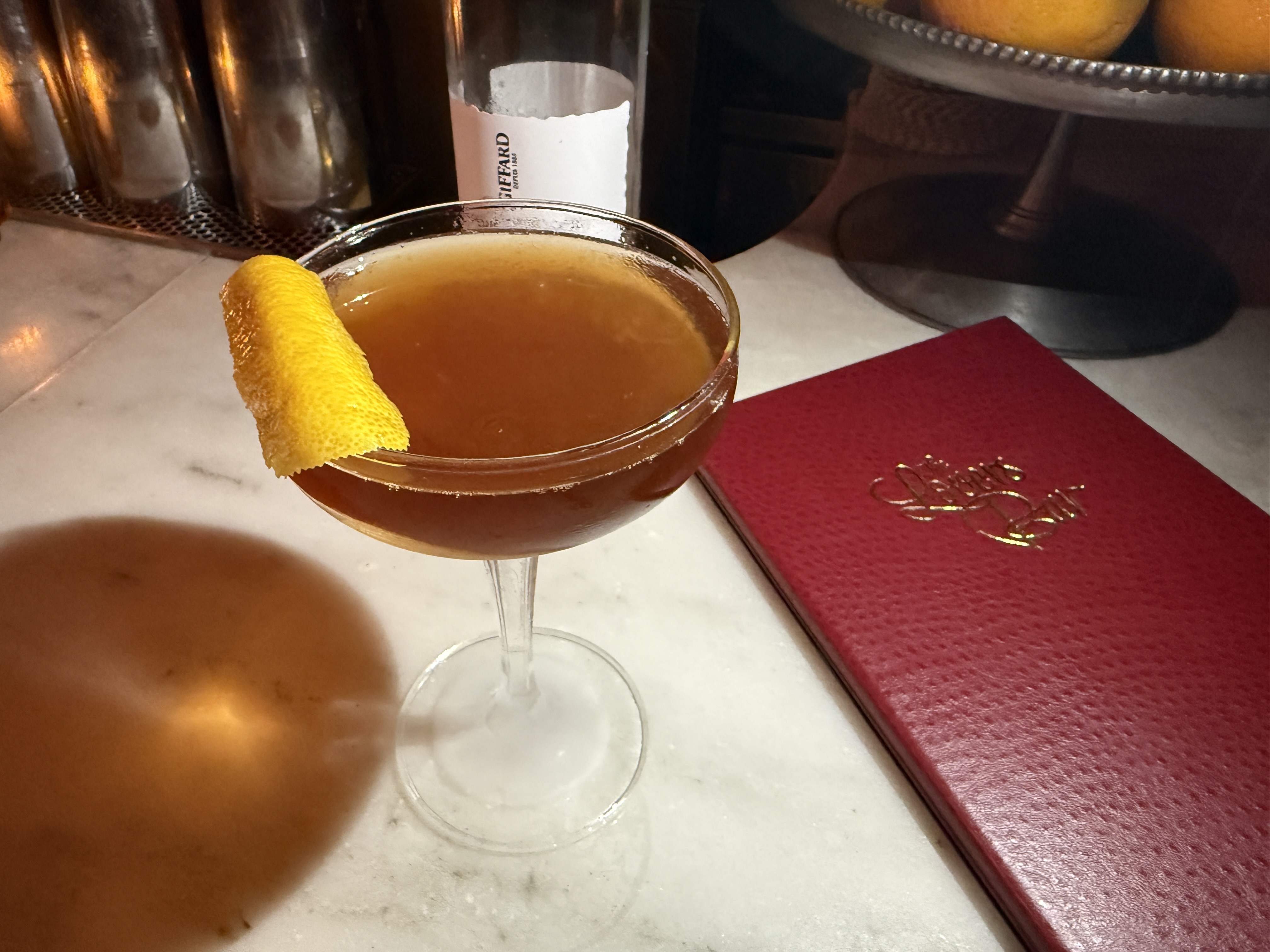
The cocktail Saul’s Revenge at the Lovers Bar at Friday Saturday Sunday consists of quinquina, pineapple distillate, Malört, coffee and banana liqueurKiki Aranita / Staff /
The Lovers Bar at Friday Saturday Sunday
Bartender Eric Martinez created the extremely complex cocktail Saul’s Revenge ($20) for the Lovers Bar using six ingredients: Quinquina, a French bittersweet aperitif, a pineapple distillate akin to mezcal), the divisive and herbaceous Malört, coffee, and Giffard banana liqueur, which is made from overripe Brazilian bananas. The result is smoky, nuanced, and gets a bitter edge from the Malört.
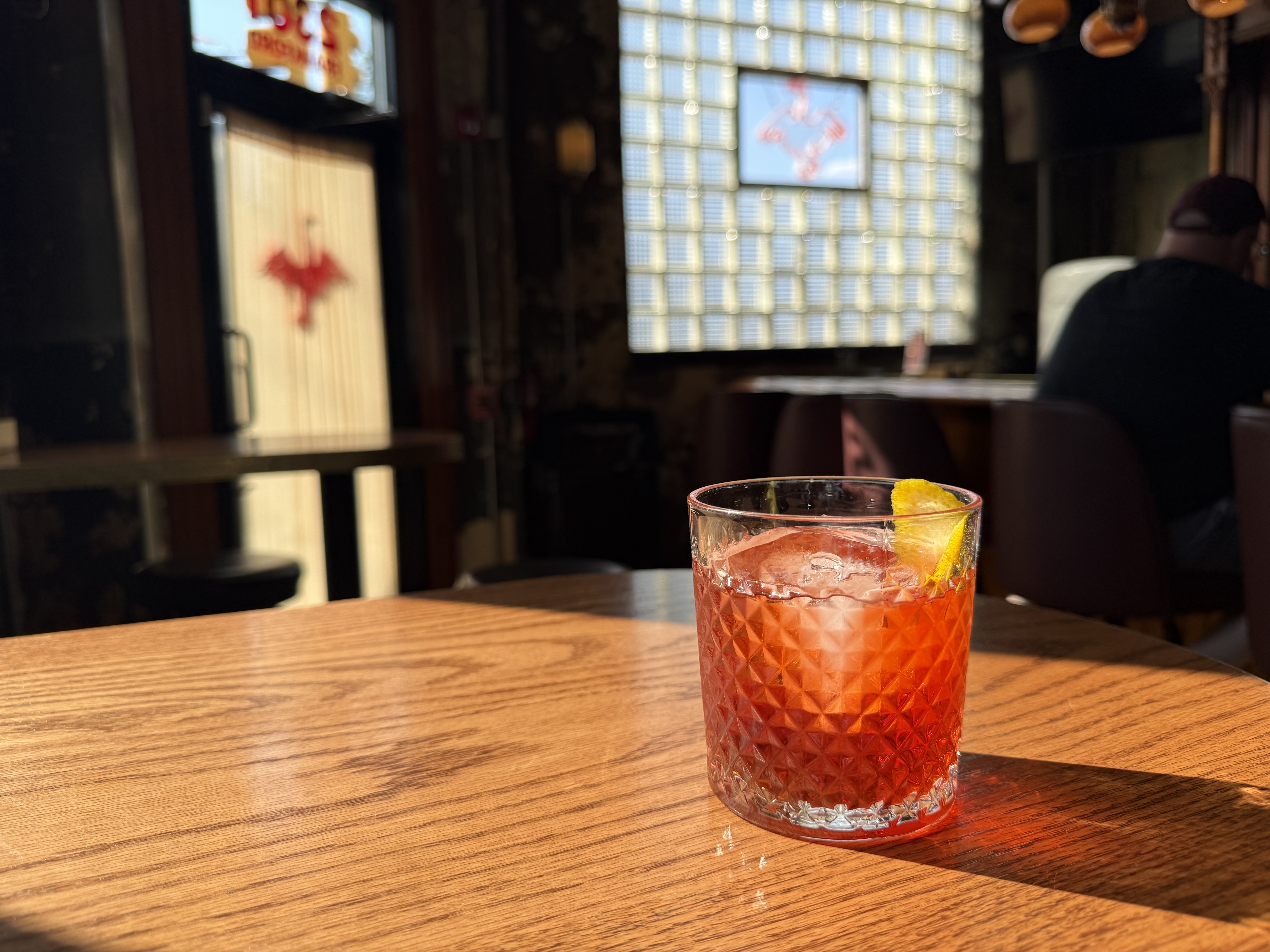
The banana negroni from Cormorant Corner Bar uses Crème de Banane.Kiki Aranita / Staff /
Cormorant Corner Bar
A fairly straightforward Negroni (with gin, Campari, and sweet vermouth) is transformed with a slug of Crème de Banane liqueur. Crème de Banane lends a silky viscosity to the classic cocktail and balances out its herbal notes.
Cormorant Corner Bar, 2301 Frankford Ave., 215-575-5112, cormorantphl.com
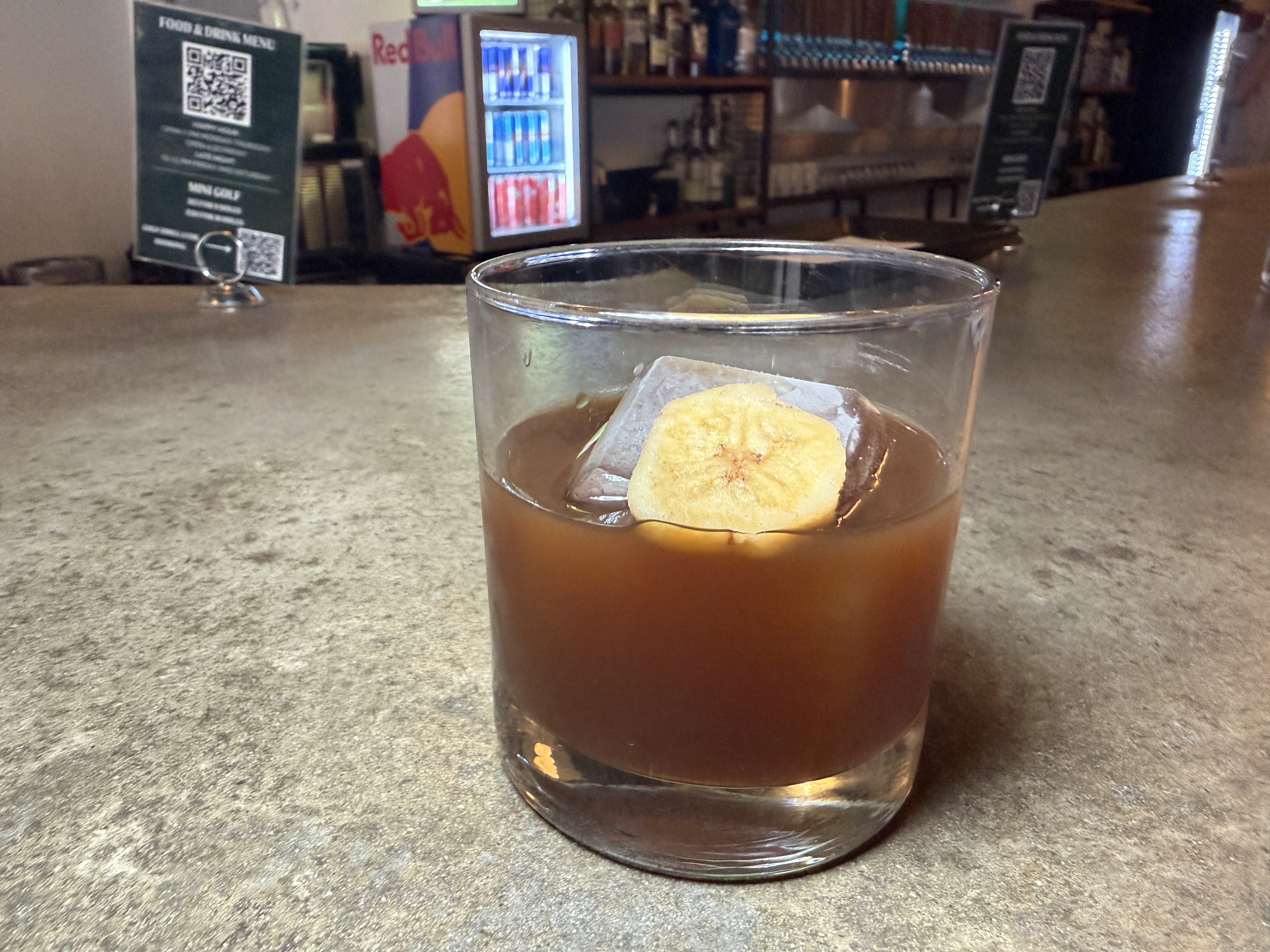
The Drunken BBL cocktail at Libertee Grounds consists of vanilla vodka, Borghetti espresso liqueur, Cynar, La Colombe cold brew, and banana.Kiki Aranita / Staff /
Libertee Grounds
Take a break from mini golf to try Libertee Grounds’ clarified cocktail, the Drunken BBL ($14) which combines vanilla vodka with Borghetti espresso liqueur, Cynar, La Colombe cold brew, and a house-made banana milk that consists of banana puree mixed with wintry spices.
Libertee Grounds, 1600 W. Girard Ave., Ste. C5, 267-324-3487, liberteegrounds.com
The Michelin Guide is taking its Northeast restaurant awards back to New York.
Michelin said Tuesday that its 2026 Michelin Guide Northeast Cities ceremony will be held Dec. 14 at the Glasshouse in Manhattan, where it will disclose its latest restaurant selections for Boston, Chicago, New York, Philadelphia, and Washington.
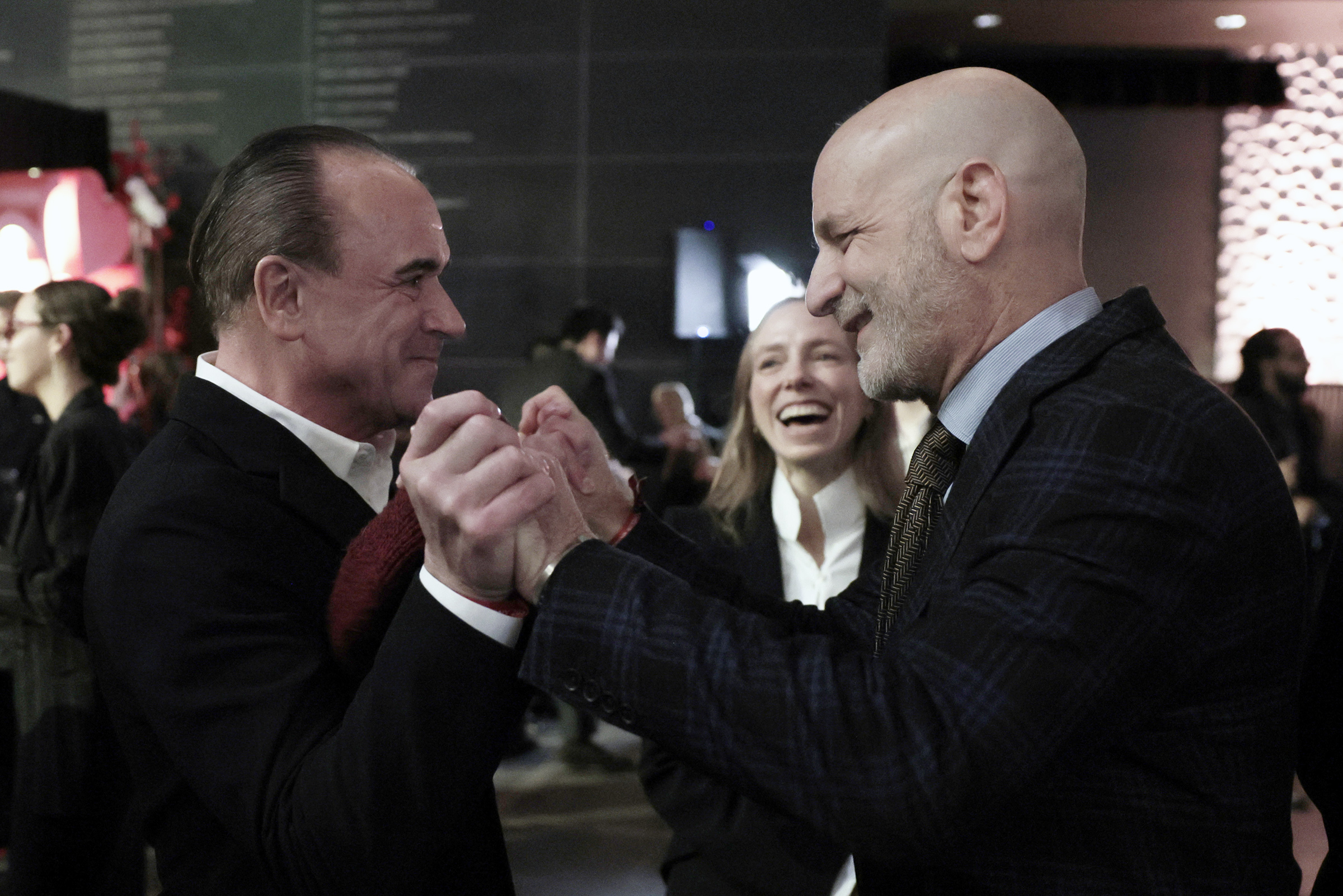
Jean-Georges Vongerichten and chef Marc Vetri greet each other as Megan Vetri looks on during the cocktail hour at the Michelin Guide announcements at the Kimmel Center on Nov. 18, 2025, in Philadelphia.Elizabeth Robertson / Staff Photographer
Restaurateurs should treat this as a reminder that Michelin’s famously anonymous inspectors are on the prowl.
The 2025 ceremony was held at the Kimmel Center in Philadelphia, as Philadelphia and Boston joined the guide for the first time. Michelin, which hosted ceremonies in New York in 2023 and 2024, said last year that it planned to hold the annual ceremony in different cities.
A representative of the Philadelphia Convention and Visitors Bureau was not immediately available Tuesday to say whether Philadelphia had sought to host the event again.
Last year’s ceremony, attended by culinary glitterati from around the world, gave Philadelphia its first Michelin stars. Friday Saturday Sunday, Her Place Supper Club, and Provenance each received one star, while 31 other Philadelphia restaurants — including three cheesesteak shops — received Michelin recognition. Ten earned Bib Gourmands, Michelin’s designation for restaurants offering good food at a good value, while 21 were Recommended. Pietramala, the vegan restaurant in Northern Liberties, also received a Green Star for its sustainability practices. (Don’t expect more Green Stars this year; the award category was retired in May.)
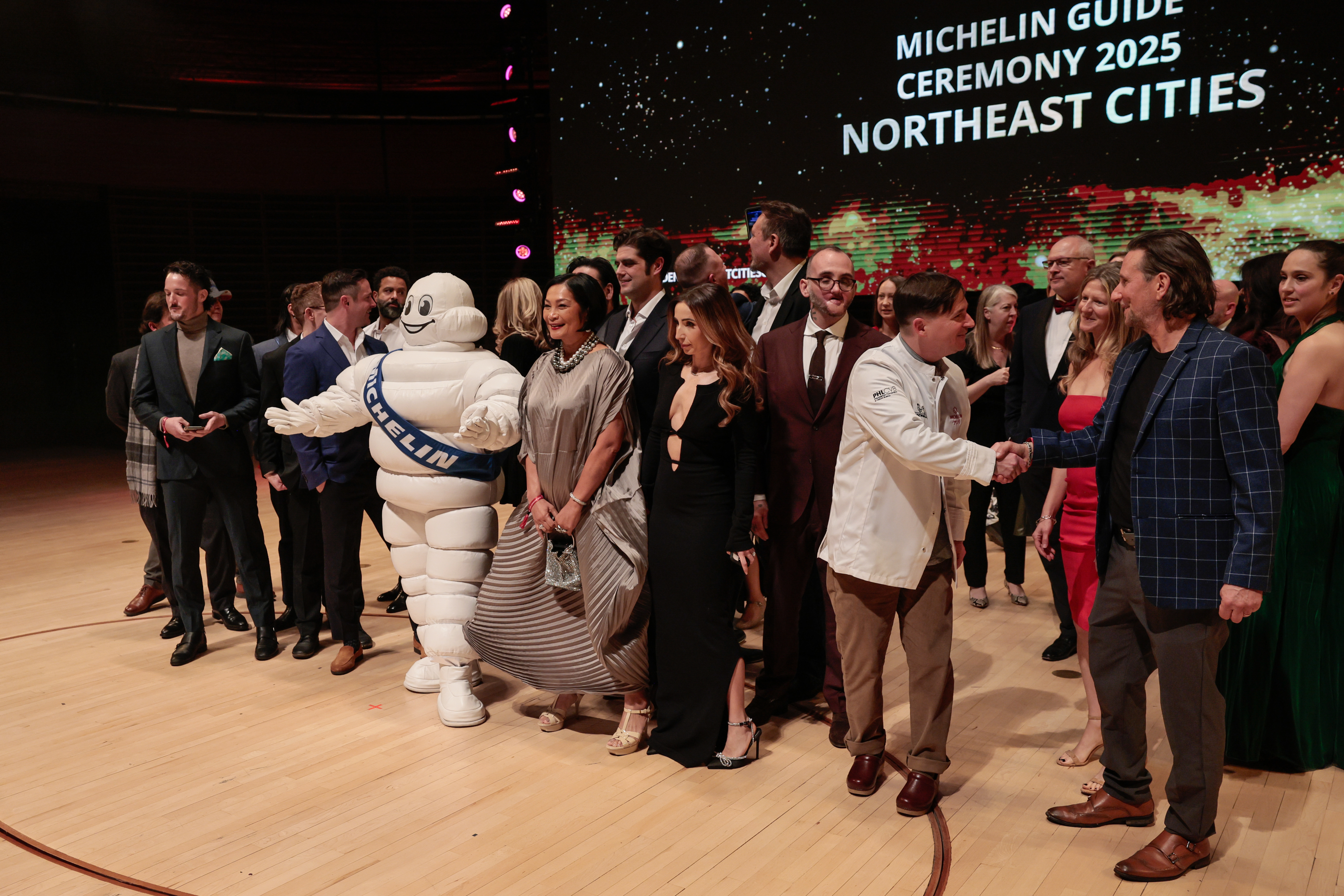
The Philadelphia chefs flooding the stage at the Michelin Guide announcements on Nov. 18, 2025.Elizabeth Robertson / Staff Photographer
Michelin’s stars denote increasing levels of distinction: One star signals very good cooking that is “worth a stop,” two stars indicate excellent cooking “worth a detour,” and three stars represent exceptional cuisine “worth a special journey.”
The French tire company introduced its first North American guide in New York in 2005 and has expanded rapidly since. Chicago followed in 2011 and Washington in 2017, while California, Florida, Toronto, Vancouver, Colorado, Atlanta, Mexico, Texas, and Québec were added in subsequent years.
The expansion has accelerated recently. Michelin added the American South, Boston, and Philadelphia in 2025 and the Southwest and a statewide Florida guide in 2026. An American Great Lakes guide is scheduled to debut in 2027.
Philadelphia’s inclusion is part of a partnership with the Convention and Visitors Bureau, which has not disclosed how much it is paying Michelin.
What started as a halal coffee-and-pastry counter tucked inside a Narberth restaurant has grown into a full-fledged cafe in Willow Grove, with a bakery operation fueled by a mosaic-tiled oven turning out za’atar-topped flatbreads and pizza. And for good measure, the new Mazaj will have a drive-through.
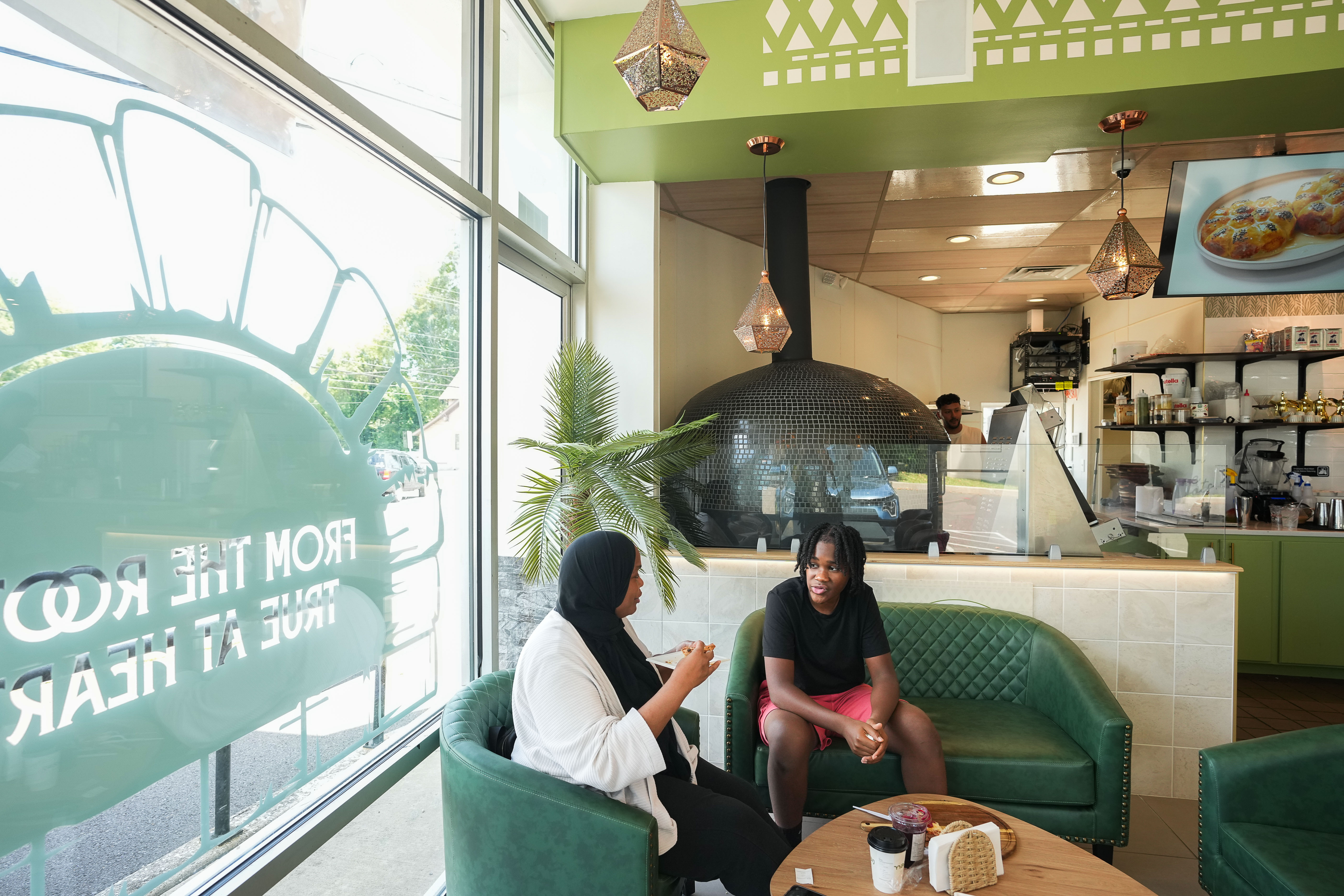
Mazaj, a Yemeni- and Saudi-inspired cafe, opened earlier this month in the former Grandma’s Grotto Pizza on Route 611 near Blair Mill Road.
Owners Mohammed Tashkandi, Mohammed Aqlan, Yousef Muneer, and Omar Alkahily also operate Malooga, the Yemeni restaurants in Narberth and Old City. Mazaj began in March as the coffee bar and bakery inside the Narberth location, where the partners developed its drinks and pastries while spending more than two years searching for a place where the concept could stand on its own.
They deliberately looked beyond the city limits, Tashkandi said. They wanted parking, easy access, and enough room to create the sort of coffeehouse where customers could settle in — without making a quick coffee run difficult.
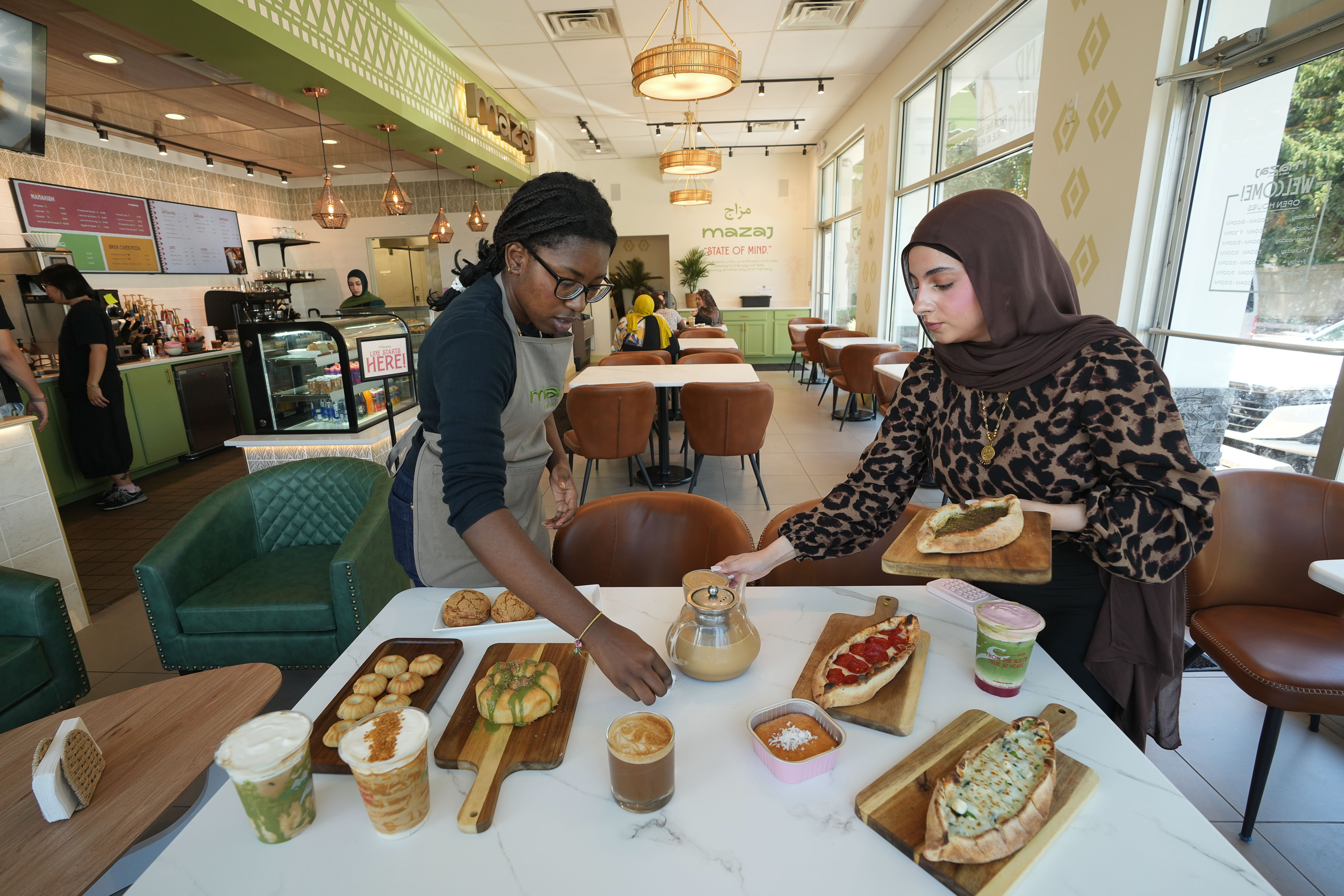
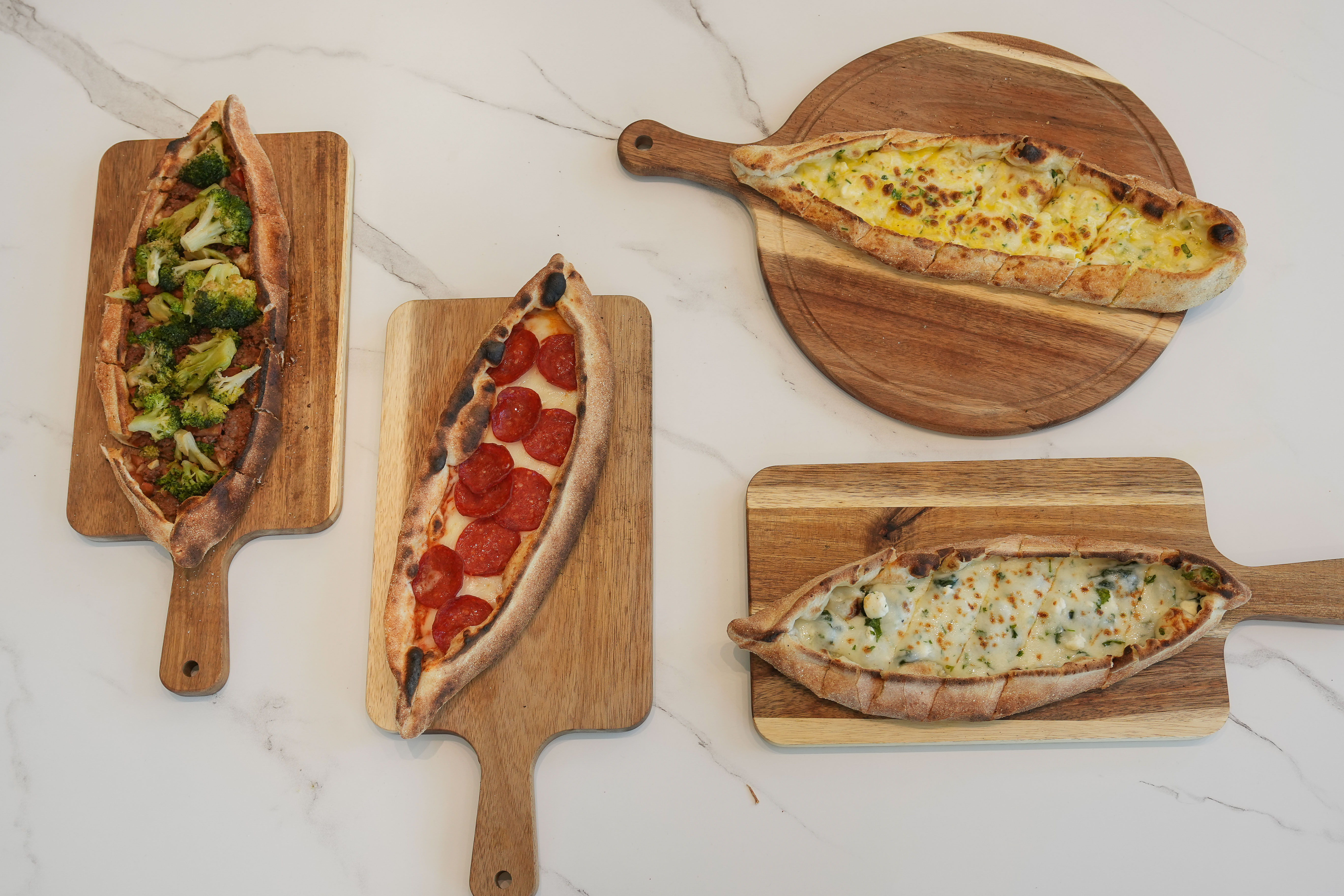
Manakish are baked to order in a Forno Picone oven near the front of the cafe at Mazaj. The flatbreads can be spread with za’atar and olive oil or topped with cheese or meat.Jessica Griffin / Staff Photographer
The Willow Grove location, at 2700 Easton Rd., just north of the Pennsylvania Turnpike interchange, is designed to do both. There are sofas and upholstered chairs for lingering, tables lining the windows, and — unlike Narberth — a drive-through for customers who have no intention of lingering at all. The drive-through is expected to open at the end of the month with premade pizzas and manakish that can be reheated in two minutes.
“Two things can be true at the same time,” Tashkandi said. “Our homemade food, locally roasted coffee, and crafted drinks are intentionally chosen to elevate your day, whether you want to spend time in our spaces or grab something to go as you move through your day.”
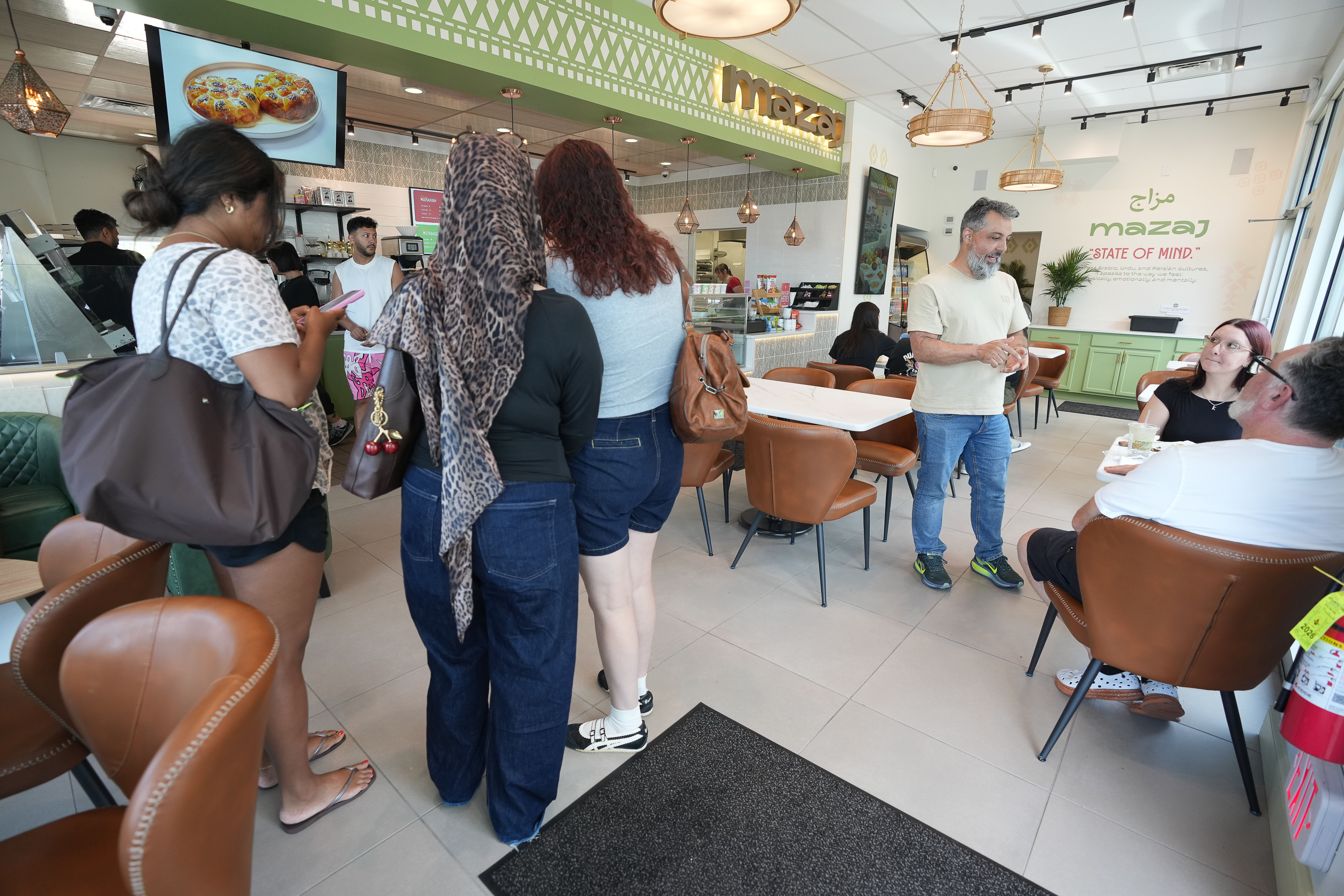
A crowd has already formed at the new Mazaj in Willow Grove, Aug. 4, 2026.Jessica Griffin / Staff Photographer
That dual identity is wrapped into the name. Mazaj — also spelled mizaj or mizaaj — is an Arabic word for “mood,” “temperament,” or “state of mind” that is also used in Urdu and Persian. The partners were compelled to choose it because of the idea that what people eat and drink can change how they feel.
The menu crosses borders. Tashkandi is from Saudi Arabia, while his partners are from Yemen, but they don’t describe Mazaj strictly as a Yemeni coffee shop, an increasingly popular cafe format. They see it as a broader Middle Eastern cafe.
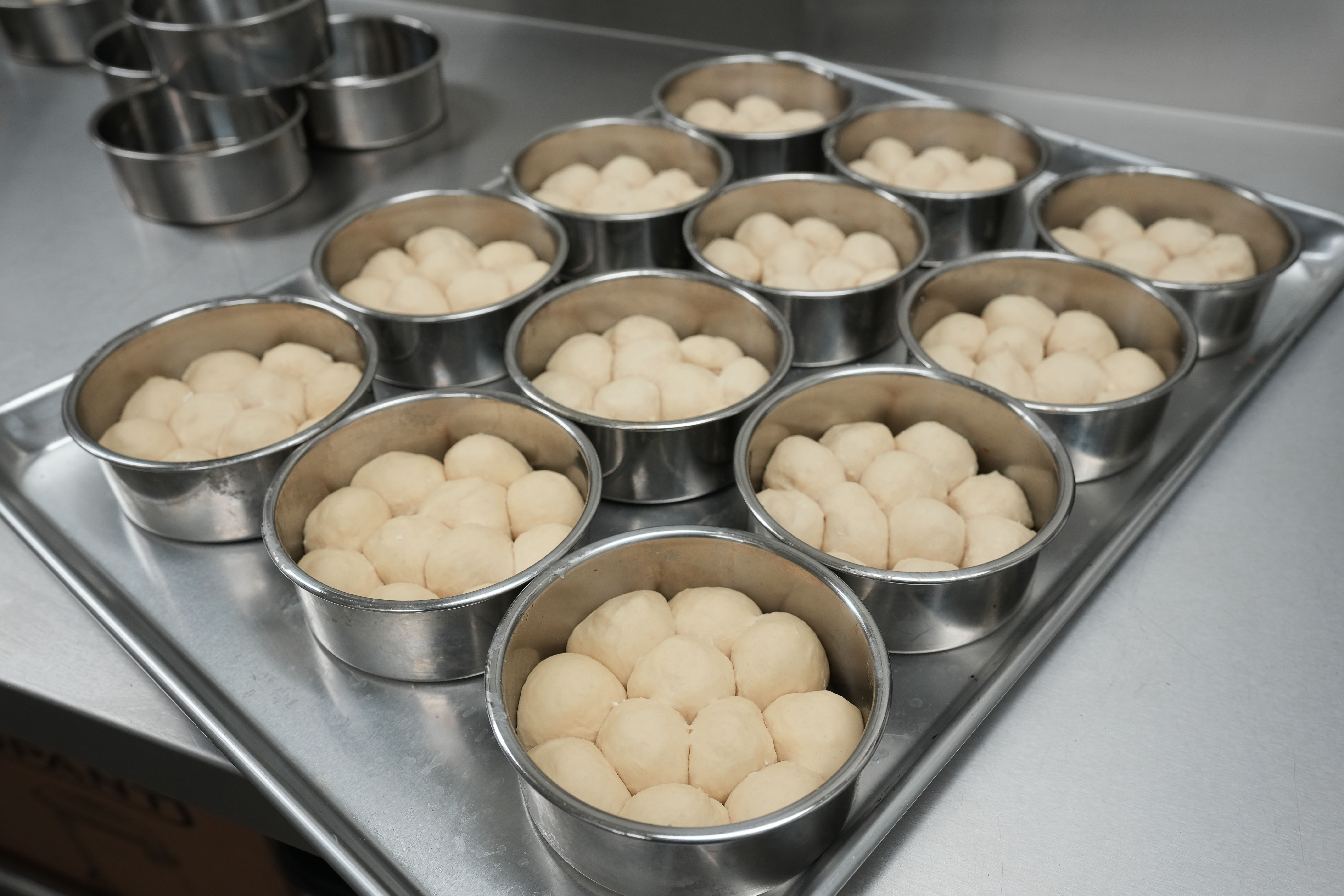
Honeycomb, Yemeni pull-apart bread, before it is baked at Mazaj, in Willow Grove, Aug. 4, 2026.Jessica Griffin / Staff Photographer
There are Saudi coffees and mutabbaq, the flaky stuffed pastry pockets popular in Yemen and Saudi Arabia, alongside Levantine manakish, honeycomb bread, date cake, and other pastries. The contemporary coffee-shop side of the menu brings espresso drinks, ceremonial-grade matcha, and flavored lattes.
Mazaj’s manakish are baked to order in a Forno Picone oven, a striking, mosaic-covered centerpiece near the front of the cafe. The flatbreads can be spread with za’atar and olive oil or topped with cheese or meat.
And now there’s pizza.
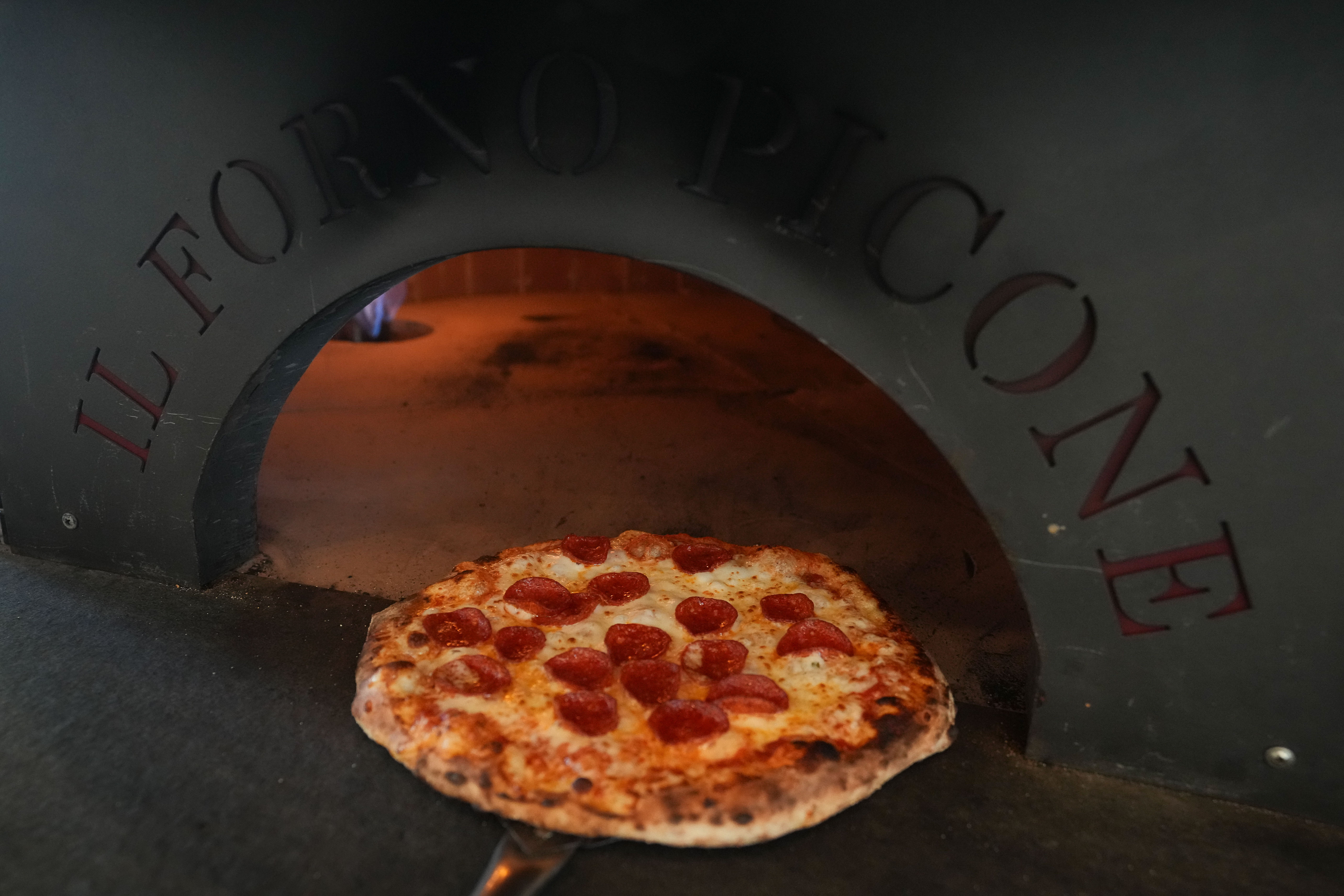
Pizza topped with beef pepperoni coming out of the oven at Mazaj, in Willow Grove, Aug. 4, 2026.Jessica Griffin / Staff Photographer
It is the major menu addition in Willow Grove, baked in the same oven as the manakish. A separate commercial deck oven handles the cafe’s pastries.
The expansion has turned Willow Grove into the baking hub for the partners’ other restaurants. The owners are shifting production from Malooga to the new cafe, which will supply baked goods to both Narberth and Old City. The company has also begun laying the groundwork for a wholesale operation to sell pastries to other coffee shops and supermarkets, and the partners say they are meeting with potential franchisees.
Head baker Samar Alasbahi leads a baking staff with backgrounds in Yemen and Syria. The pastries are made in-house, and Tashkandi said leftovers aren’t put back into the case the next morning. Unsold baked goods instead go to employees, neighbors, and others in the community.
Customers can linger in the comfy upholstered furniture at Mazaj.Jessica Griffin / Staff Photographer
The partners have thoroughly remade the former pizzeria. Olive green and cream set the palette, with patterned tile, geometric motifs, Moroccan-style pendant lights, and a long pastry-and-coffee counter. Faux marble tables and caramel-colored chairs dot the narrow, window-lined dining room, while deep-green upholstered chairs and a sofa make up a small lounge. Behind glass near the front sits the new, dark-tiled brick oven.
For all the Yemeni and Saudi influences behind Mazaj, Tashkandi said the idea is deliberately broader: a cafe where Middle Eastern food traditions overlap rather than stay within national boundaries. “We want the menu to reflect that diversity,” he said.
Mazaj, 2700 Easton Rd., Willow Grove, 267-900-3167, mazajpa.com. Hours: 8 a.m. to 9 p.m. Monday through Friday, 8 a.m. to 4 p.m. Saturday and Sunday.
When Point Breeze resident Bonnary Lek, 46, first moved to the neighborhood in 2023, a neighbor told her that at the corner of 17th and Wharton Streets, “there’s an Asian couple who makes the best chicken sandwich in Philadelphia.” This particular sandwich has found fame in Point Breeze and far beyond, primarily through word-of-mouth.
Some people refer to the store, which has no visible signage, as Mrs. Lee’s. Even Lek and her fiancé, Manong sous chef Juan De Ocampo, cannot agree on what to call the store. De Ocampo swears it’s “Jimmy’s.” Credit card receipts read “Kim Woa Store,” a name which is strikingly similar to another South Philly fried chicken sandwich institution, Kim Woo Store, which is at the corner of 19th and Moore Streets.
Whatever the name of the store is, it’s an ordinary corner store with uneven linoleum floors laid with mismatched tiles, soda bottles lining the shelves along with single rolls of toilet paper and canned soup. Extremely neat, if a bit shabby.
Longtime regulars drive in from New Jersey, Delaware, and as far south as North Carolina — mostly former Point Breeze residents who need their chicken sandwich fix. TikTok has brought customers as far away as Canada.
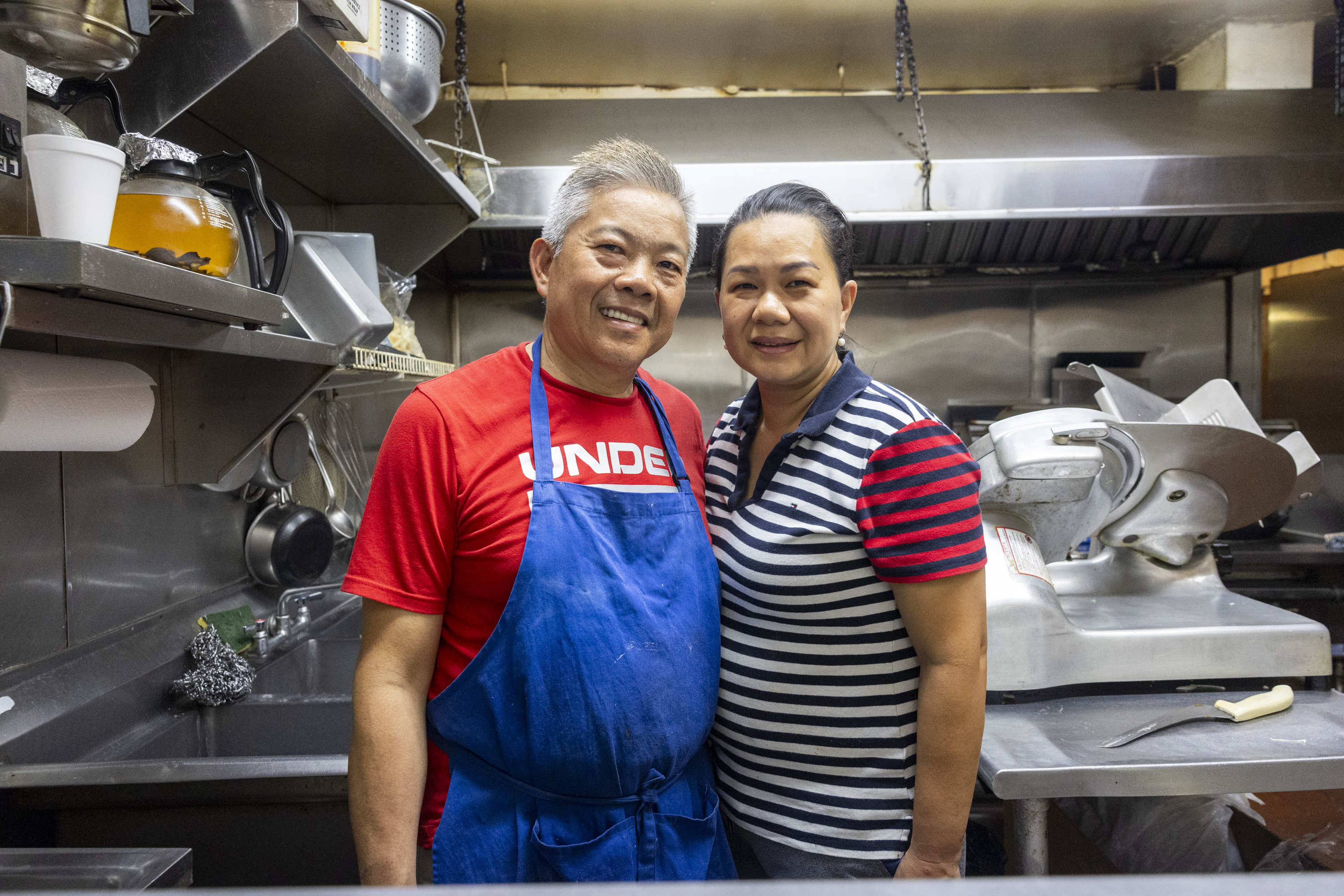
The store is owned by Lynda Cong, 50, and Jimmy Cong, 53. They met in Philly in the early 2000s, after Lynda came to the area to study public health at Stockton University. Both the Congs are southern Chinese, but came from Saigon, now Ho Chi Minh City. They speak to their children (the two younger ones help out in the store, and two older ones are grown) in Cantonese.
A customer, before he moved away seven years ago, presented the Congs with a custom sign that reads: “The Best Chicken Sandwich in Philly.” It hangs in the spotless, stainless steel kitchen, facing the interior of the store.
Above the kitchen window: a handwritten menu with prices scratched out.
Lynda Cong and her husband, Jimmy Cong, pose for a portrait at their corner store in Philadelphia on Aug. 5, 2026.Tyger Williams / Staff Photographer
The Congs took the store over from Jimmy’s sister “between 10 and 15 years ago,” according to Lynda, when the sister retired. Jimmy’s sister was known as “Mrs. Lee” and she first opened the store in 1986. “Kim Woa” is an older Romanization of the Cantonese phrase “gam waa,” which translates literally to “golden splendor” and means “prosperity.”
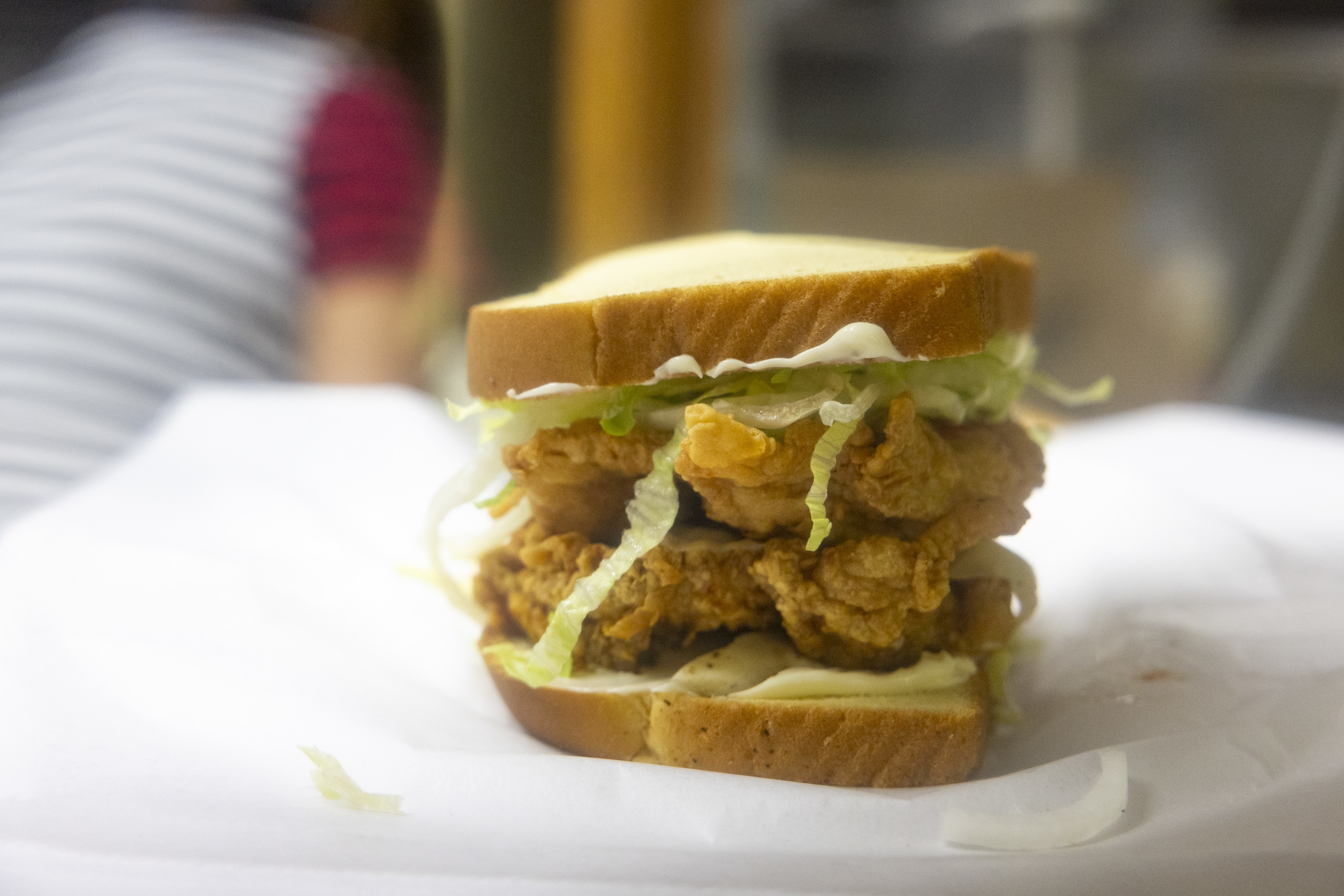
“Golden” is apt, as it accurately describes the fried breading on the sandwich, which costs $9 and consists of two chicken breast cutlets, thickly breaded with a super crunchy exterior. Ordering it “with everything” means that it comes with pickles, mayo, onion, tomato, and lettuce, laid on two slices of potato bread.
Earlier this year, a few TikTok influencers also discovered the sandwich, though it has still hardly reached the point of virality. The chicken sandwich whisper network, however, did prompt me to get one.
After one bite, I promptly texted my editor, “I hit the chicken sandwich jackpot.”
Is this The Best Chicken Sandwich in Philly ? I let My Followers Pick My Spot & Meal for The day & This Was The First Suggestion ! So I’m at Kim Woo Store in Philly on 19th St I Got The Chicken Sandwich 🔥 . . . . . . . . . #food#fyp#philly#foodie#WhereToEat
The wings are improbably juicy, with the same crispy breading and are perhaps even more delectable than the famous chicken sandwich. “It’s just salt, pepper, flour, water, and garlic powder,” said Lynda, who has met this sudden interest in the sandwich with amusement. The Congs now sell about 50 of the sandwiches every day; they say the interest has only somewhat affected daily sales.
The sandwich and the wings (three for $5 or six for $9.60), along with a massive array of salads, cheesesteaks, hoagies, wraps, and fried rice, emerge from a highly polished and well-scrubbed stainless steel kitchen. (You can order things that aren’t even on the menu. You can order whatever you’d like in a wrap.)
Over the years, the Congs have watched the neighborhood around them evolve. They’ve added most of the menu items to meet new demands and new tastes. But the chicken sandwich has stayed the same.
Kim Woa Store, 1300 S 17th St, 215-463-5426, Hours: Monday to Saturday, 9 a.m. to 6:30 p.m.
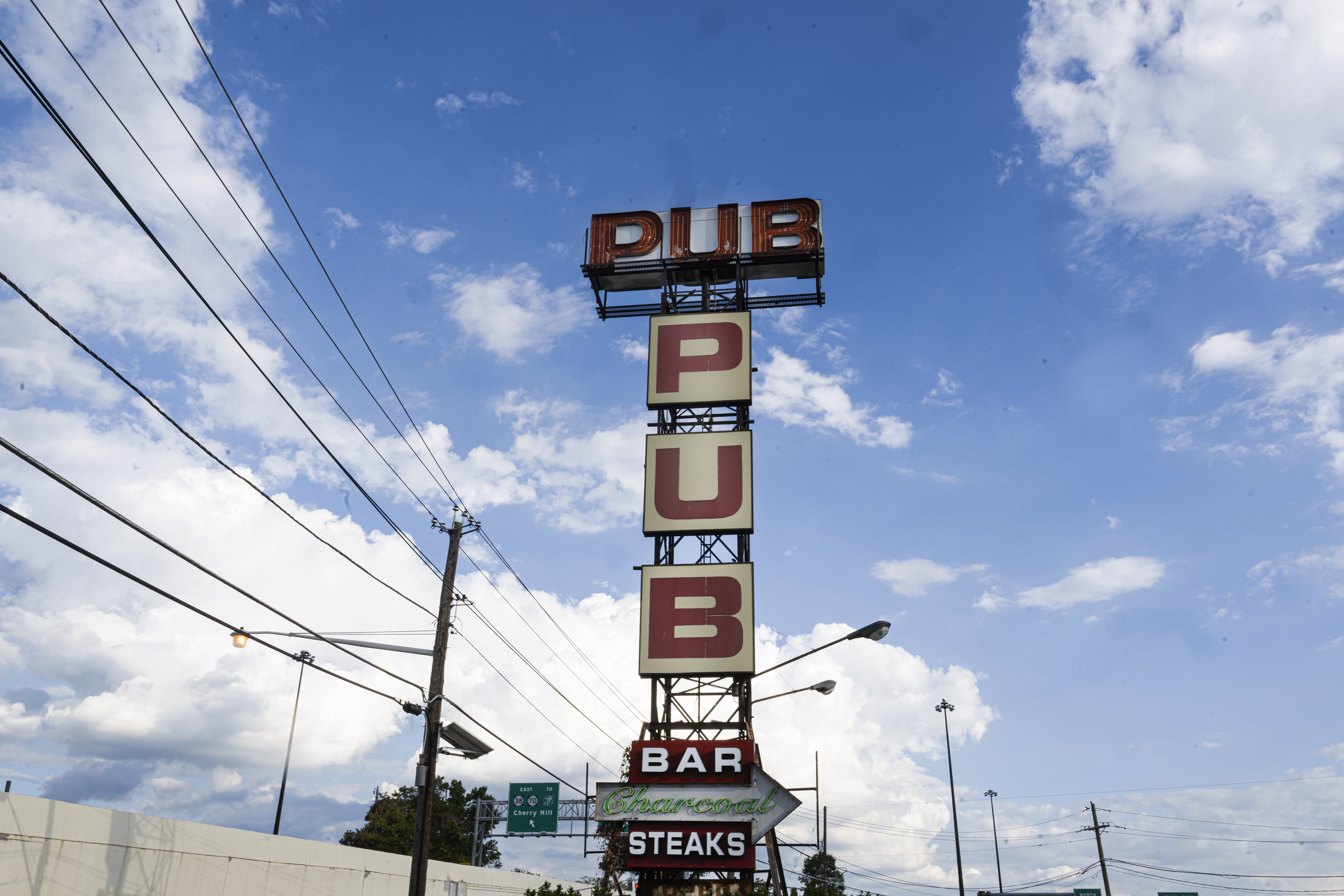
The Pub, the landmark Pennsauken restaurant known for its open-hearth steaks, twin salad bars, and medieval banquet-hall atmosphere, is going on the market.
The Gelman family, which has owned the establishment for 26 of its 75 years, said it plans to begin soliciting buyers Tuesday for the restaurant, business, and property at 7600 Kaighn Ave. on the old Airport Circle.
There is no asking price, and the family is not using a real estate broker. Prospective buyers will be required to sign a confidentiality agreement before receiving financial and other information.
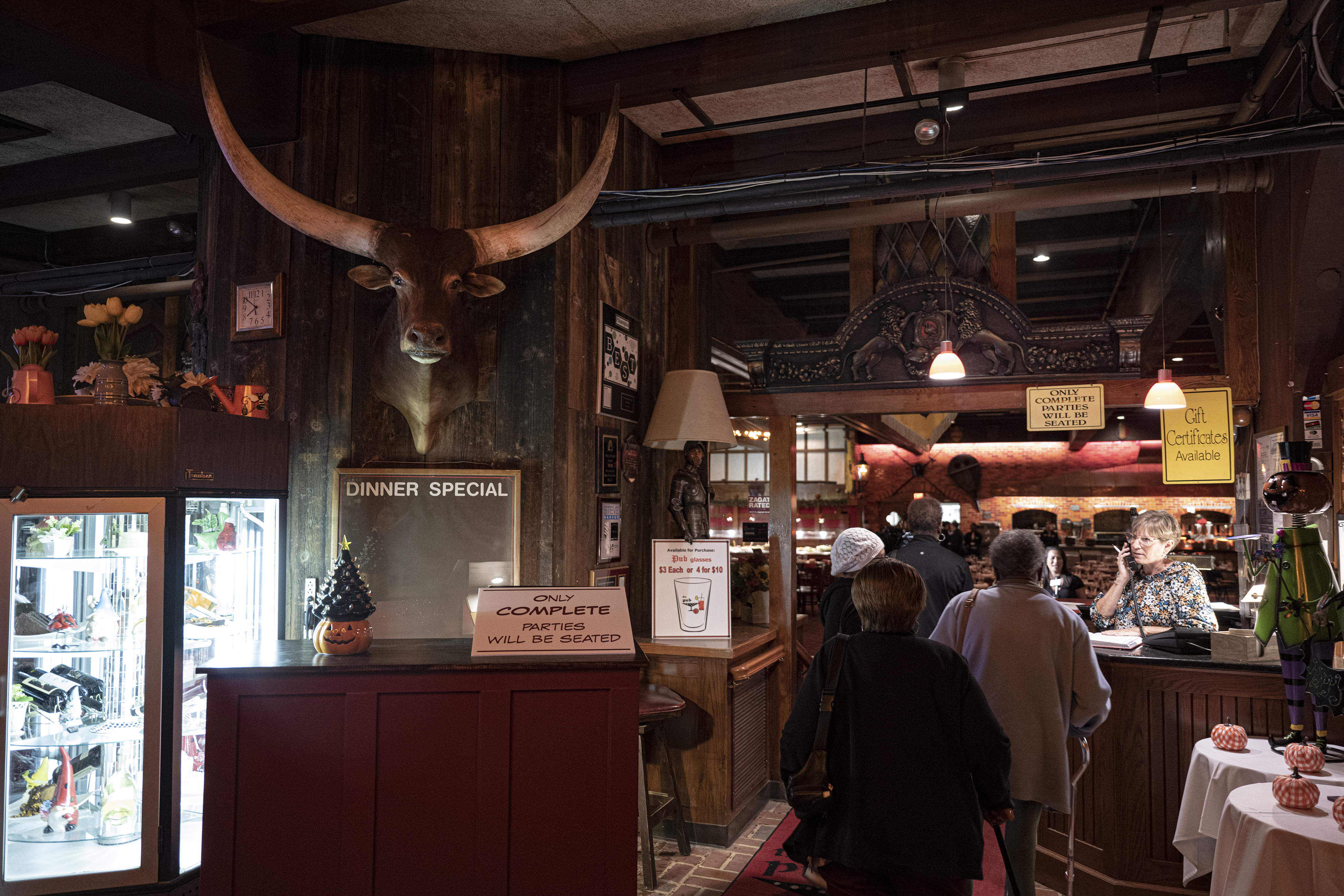
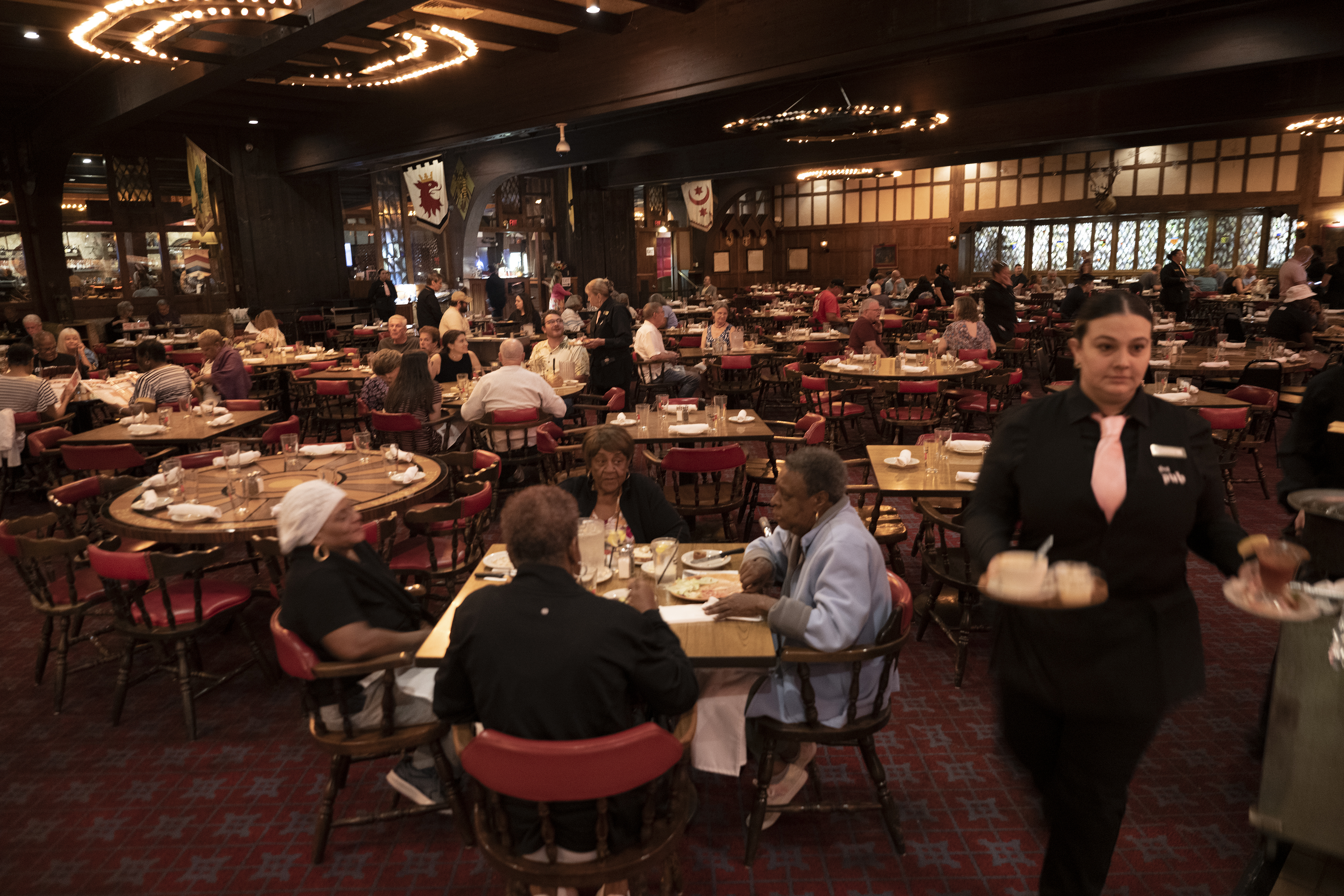
The Pub, as seen in 2024, is largely a time capsule of ye olde steakhouse dining.Jose F. Moreno / Staff Photographer
“We haven’t listed it with anybody, and we’re not going to list it with anybody,” said David Gelman, whose father, Marc, bought the restaurant in 2000. “This is something we’ve been talking about doing for a little while. I think now is the best time.”
The offering does not mean that the Pub is closing, Gelman said. The restaurant began its annual summer break Aug. 3 and is still scheduled to reopen Sept. 18.
“It’s just time,” Gelman said of the decision to sell. “I don’t think there’s one thing in general, but it’s time for a new steward, if you will, of the business or the property.”
The Pub in September 2024 after its reopening following a summer of renovations. Jose F. Moreno / Staff Photographer
That distinction — business or property — could be significant. The offering is aimed both at someone interested in continuing the Pub and developers who might see other possibilities for the large tract near Routes 38, 70, 73, and 130 and the Ben Franklin and Walt Whitman Bridges.
“Restaurants are not what they were for many years,” Gelman said. “There may be a developer who has a grand plan or something like that. There are a lot of different opportunities out there.”
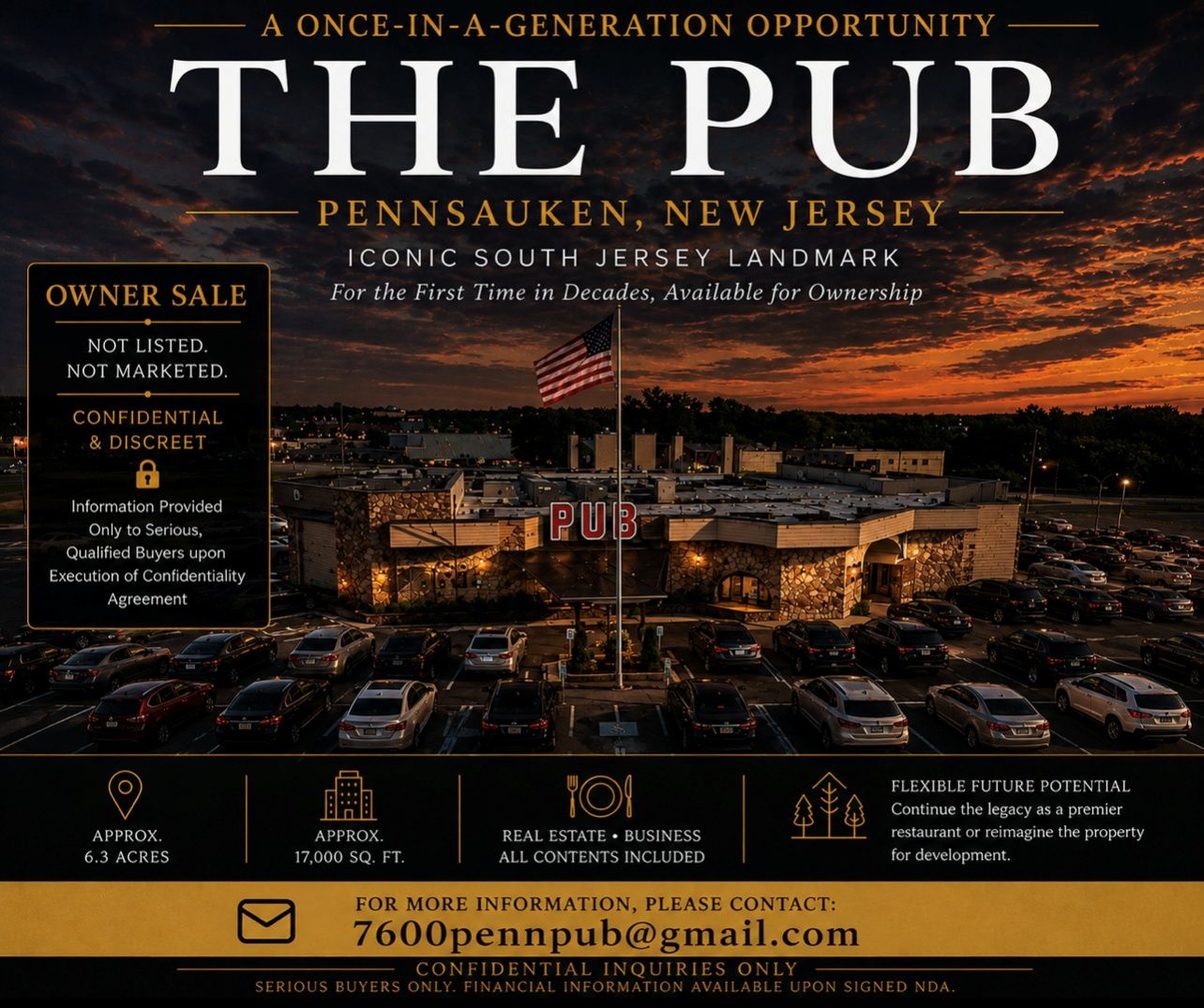
Real estate solicitation for the Pub in Pennsauken.Courtesy of the Pub
An advertisement seen by The Inquirer describes approximately 6.3 acres with a roughly 17,000-square-foot building and says the real estate, restaurant business, and contents are included. It lists an email address for contact.
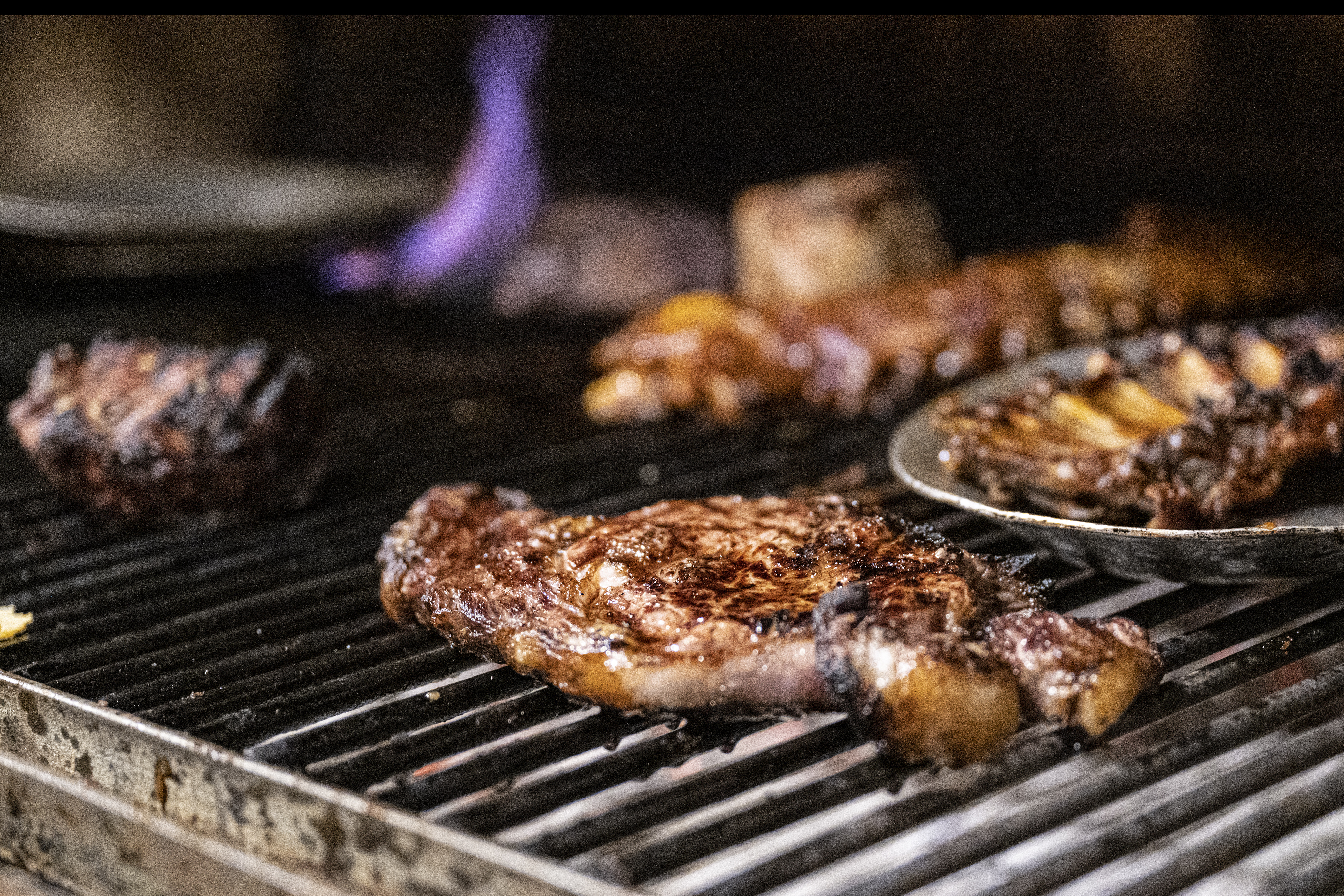
The Pub can seat about 1,200 people in dining rooms dominated by a cavernous space resembling a medieval banquet hall, festooned with war flags, swords, and assorted taxidermy beneath wooden beams. Six open hearths are used to broil steaks.
On a typical Saturday, 700 to 1,000 customers cycle through, and the restaurant may roast 10 to 15 of its best-selling prime ribs, each weighing 12 to 15 pounds. About 120 employees work there on a peak night.
The Pub opened in 1951 at what was then Airport Circle, at Route 130 and Kaighn Avenue, and was rebuilt in the early 1960s after a fire. Marc Gelman, David Gelman’s father, bought it in 2000 after previous co-owner Gary Perez retired.
David Gelman said owning it has meant maintaining a restaurant whose appeal is tied as much to memories and tradition as to its steaks.
“It’s been great,” he said. “Keeping the traditions alive, really. A lot of good memories for us and for families in general. It brings them back to their childhood.”
The timing of the sale announcement could cause confusion because the Pub is currently dark, but Gelman emphasized that the sale announcement and summertime closure were unrelated.
The restaurant began taking extended summer breaks in 2024, when it closed from July 1 and reopened Sept. 20 after nearly $250,000 in repairs, including roof work, new kitchen equipment, painting, and carpeting. Last year, it closed from June 30 through Sept. 18 for plumbing, air-conditioning, kitchen, and carpeting improvements.
Steaks sizzle on one of six open hearths at the Pub in 2024.Jose F. Moreno / Staff Photographer
Gelman has said the shutdowns make sense because summer traditionally is slow. It gives employees time off and allowing work to be done without disrupting customers. This year’s break began Aug. 3, later than the previous years’ breaks.
Gelman said his family was planning to reopen in September. If a buyer struck a deal before then, he said, the family would consider the buyer’s wishes, but he called completing a transaction within 30 days highly unlikely.
The offering comes two years after 7600 Kaighn Ave. surfaced in commercial real estate marketing by Binswanger. The materials contemplated an industrial redevelopment, prompting speculation about the Pub’s future. At the time, Gelman said the Pub was not for sale or lease and Binswager representatives did not return messages seeking comment.
On Monday, Gelman said his family had never authorized Binswanger to market the property and added that the family did not know how the offering had originated.
This time, there is no ambiguity about the Gelmans’ intentions. Gelman said the family sees little reason to hire a broker when it can reach prospective buyers directly and provide information to those with serious interest and financial wherewithal.
“There’s really no need to have it listed when social media nowadays and everything else is just as good, if not better,” he said.
The family also owns Library II in Voorhees, Gelman said, but it is not part of the offering.
As for what ultimately becomes of the Pub, Gelman said he would prefer to see the restaurant survive under new ownership, even as the family entertains other possibilities for the land.
“It’s a landmark,” he said. “Hopefully it doesn’t go anywhere.”
Since it’s noontime on the first Thursday of the month, eight residents of Wesley Enhanced Living at Pennypack Park are chatting at the long table in the middle of the main dining room at Kelly’s Seafood in Northeast Philadelphia.
Back in the kitchen, twin brothers Brian and Brett Kelly and Brian’s son Tommy are knocking out the lunch orders. Crab cakes sizzle in sauté pans. Snapper soup bubbles in the kettles.
For the Wesley residents, this is the end of a longtime ritual.
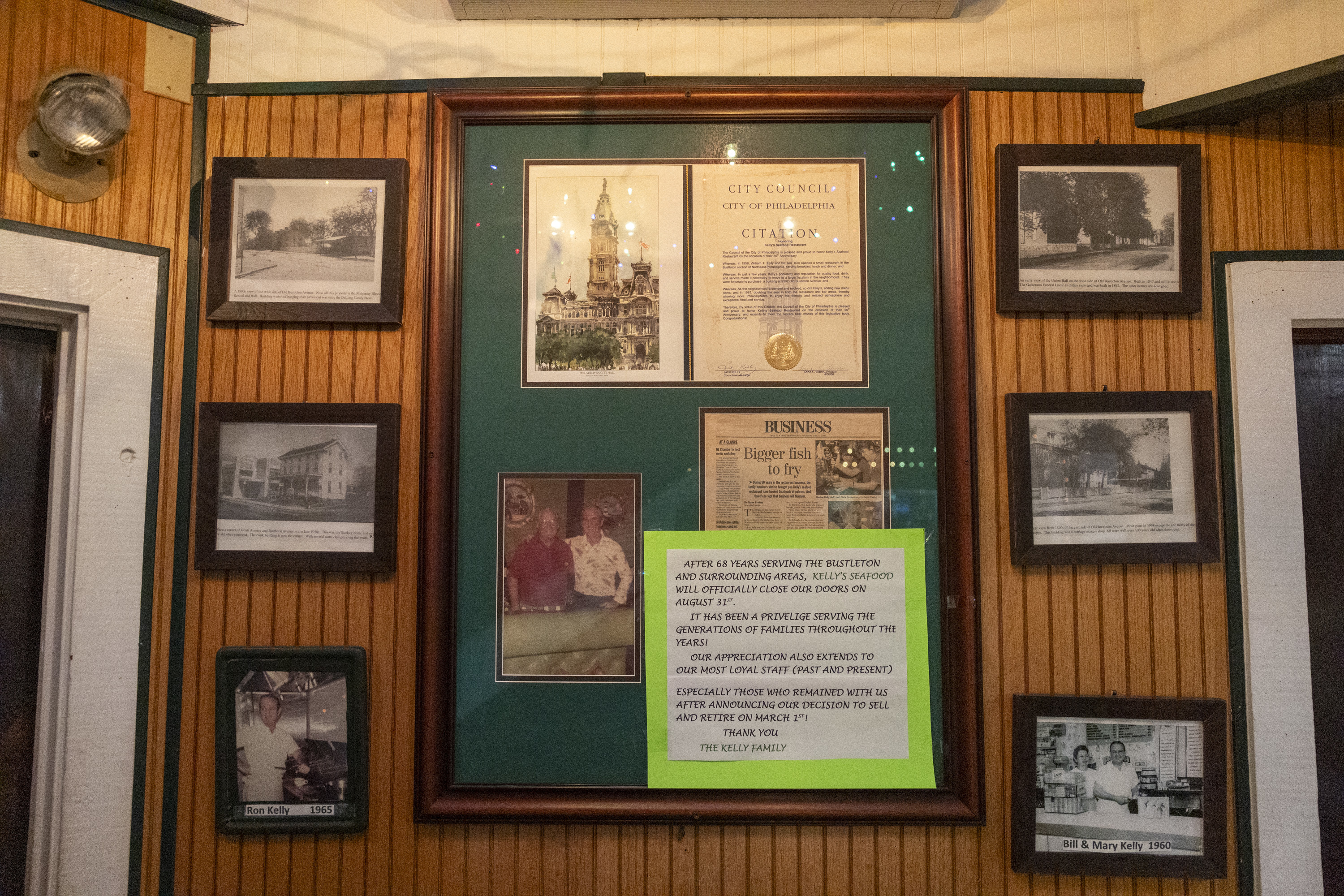
Kelly’s Seafood, whose history stretches back 68 years, will close Aug. 31.
“When they leave today, we’ll all be crying,” said server Chris Brown, who has worked at Kelly’s since 1988. The Kelly brothers’ sister, Denise Barreras, nodded.
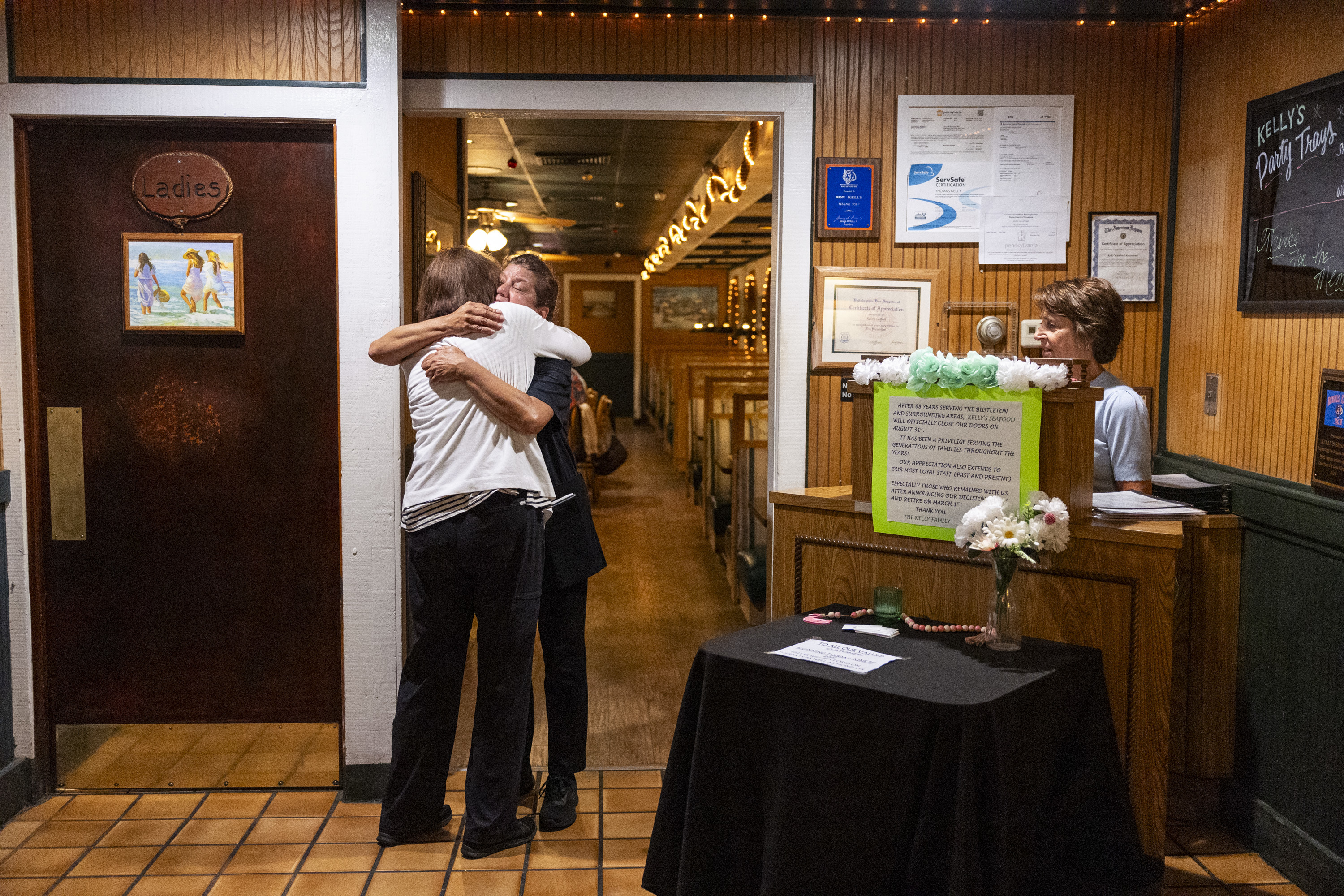
A few minutes later, their checks paid, the residents rose from the table.
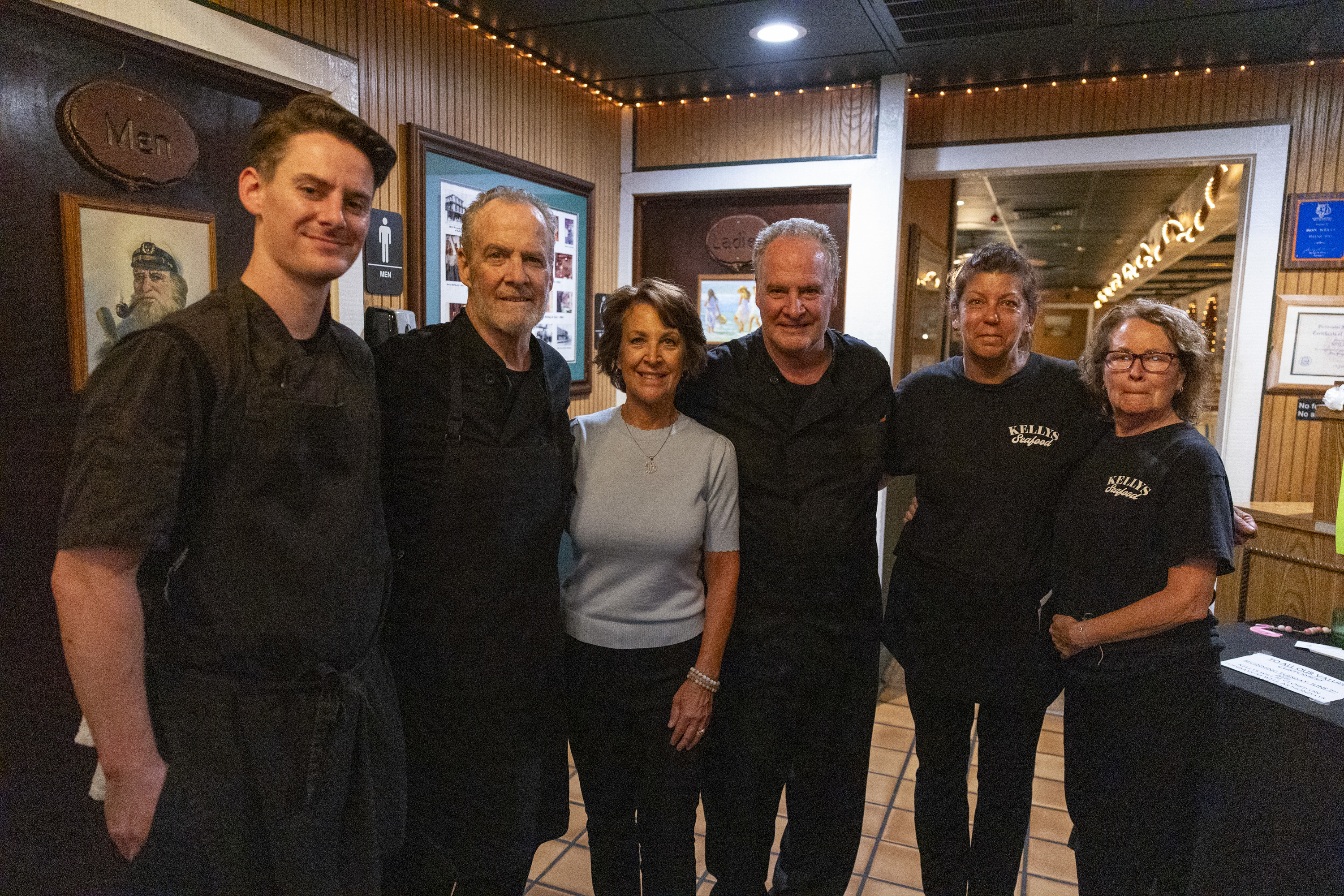
The crew at Kelly’s (from left) Tom Kelly, siblings Brian Kelly, Denise Barreras, and Brett Kelly, server Chris Brown, and bartender Cathy Sims.Tyger Williams / Staff Photographer
And just as Brown had called it: tears and hugs.
Where will September’s first-Thursday lunch be? They’re not sure.
Kelly’s, one of the last of the Northeast fish houses, has been the setting for countless rituals like theirs, a place where people who came as children later brought their own children.
“People my age are saying they’ve been coming here since they were 10 years old,” said Brian Kelly, 62, who has been reading customers’ recollections since the closing was announced. “They’re talking about christenings, baptisms, graduations. It really makes you realize how many people have come through these doors over the years.”
The Kellys had hoped to make it to 70 years. Instead, the family has reached the point where keeping the restaurant going would require more than they are willing — or able — to give it.
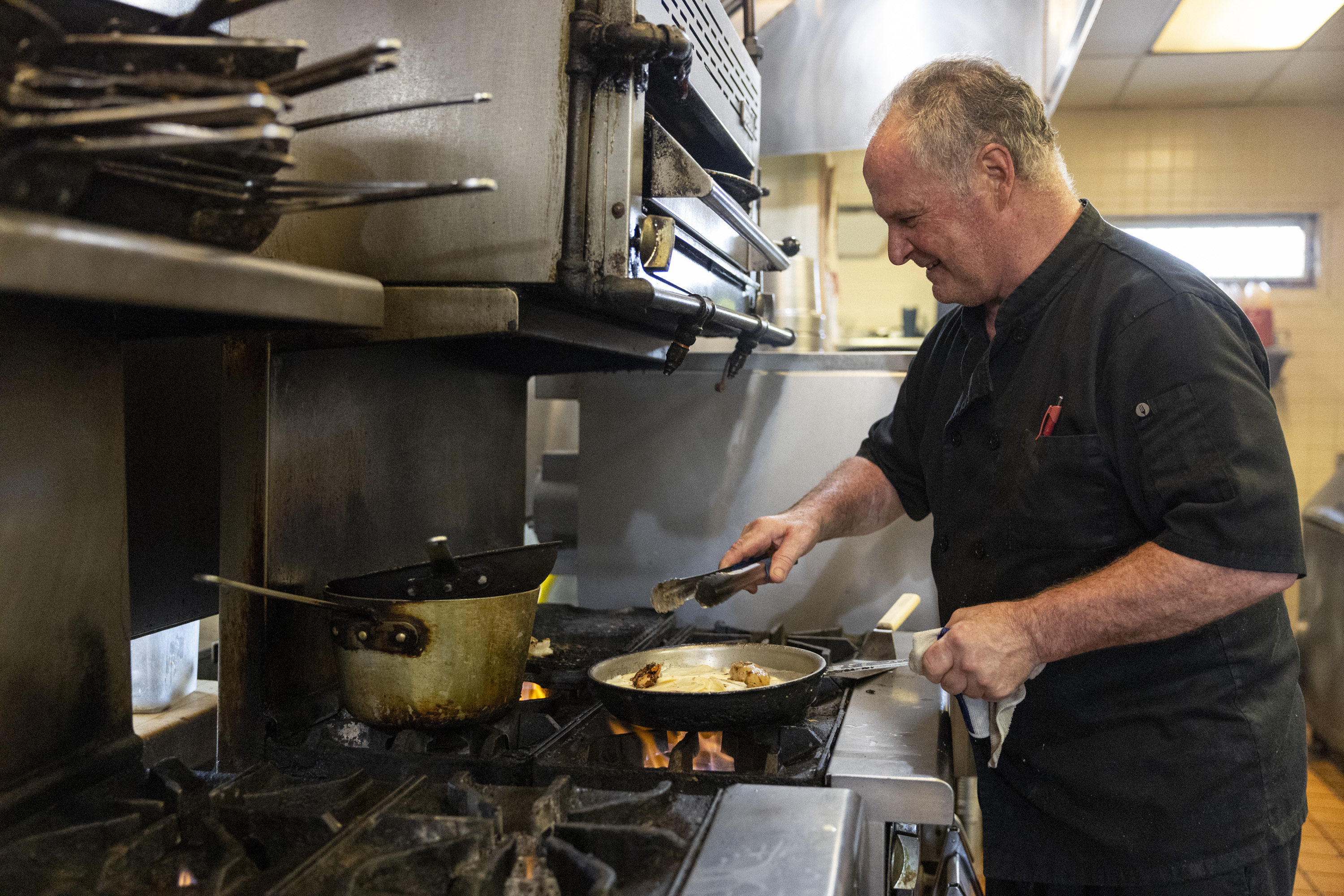
Brett Kelly working the stove at Kelly’s.Tyger Williams / Staff Photographer
Brian and Brett’s father, Ron, died in July 2023 at age 87. Of his nine grandchildren, only Brian’s son Tommy now works at the restaurant. An illness has sharply limited how much Brian can work, leaving Brett to pull double shifts since October.
The family announced on March 1 that Kelly’s was on the market, hoping to give employees and customers plenty of warning. In late July, with the restaurant still unsold, they decided that they needed to set an end date.
Kelly’s Seafood history
The story began in 1958, when Ron Kelly and his father, William T. Kelly, opened Kelly’s Grille, a luncheonette in a shopping center a few blocks from the current restaurant.
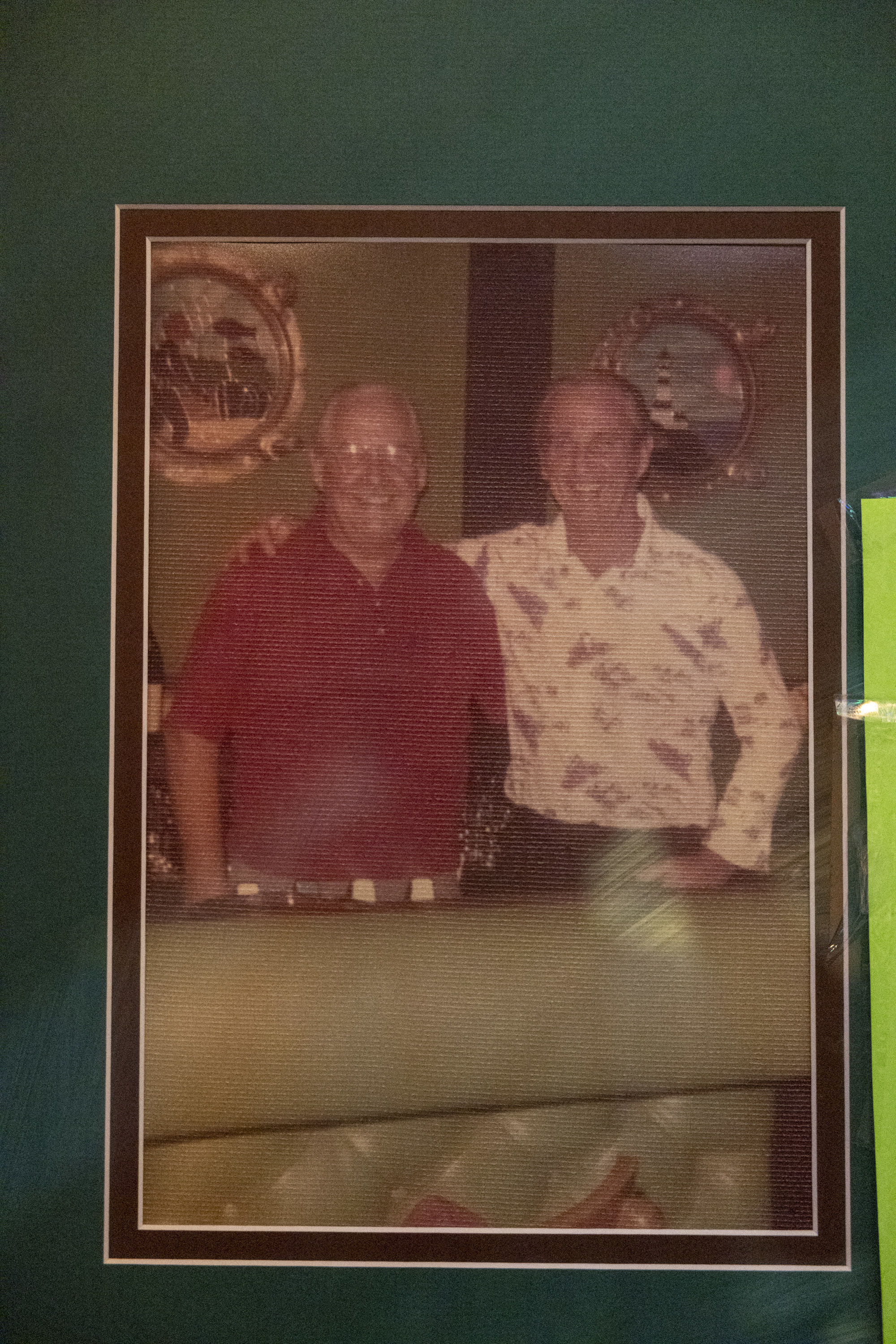
Founders William (left) and Ron Kelly, in a photo hanging at Kelly’s Seafood.Tyger Williams / Staff Photographer
William had worked on a milk wagon. Ron, newly out of military service, wanted to get into the restaurant business, and his father went along with him.
In 1964, they moved Kelly’s to 9362 Old Bustleton Ave., just off Bustleton Avenue and Welsh Road, and Kelly’s Seafood took shape. (It is unrelated to the long-ago Kelly’s on Mole Street in Center City.)
The family and restaurant became difficult to separate.
William lived in the apartment above Kelly’s and cleaned the bathrooms every morning. Ron and Jean Kelly’s four children — Denise, Tim, Brian, and Brett — all grew up working there.
Kelly’s Seafood lines its walls with memorabilia.Tyger Williams / Staff Photographer
Brian and Brett walked over after school and spent Wednesdays and Thursdays in the basement, which they called “the dungeon,” breading shrimp and other seafood.
“We were about 12 years old,” Brian said. “Today they’d probably shut us down for child labor. Back then it was just part of growing up in the family business.”
Their brother Tim, now 63 and living in Florida, also started young, walking over after school to help. Eventually, all nine of Ron and Jean’s grandchildren worked at Kelly’s in some capacity.
The restaurant itself looks as if it has been accruing memories for nearly seven decades.
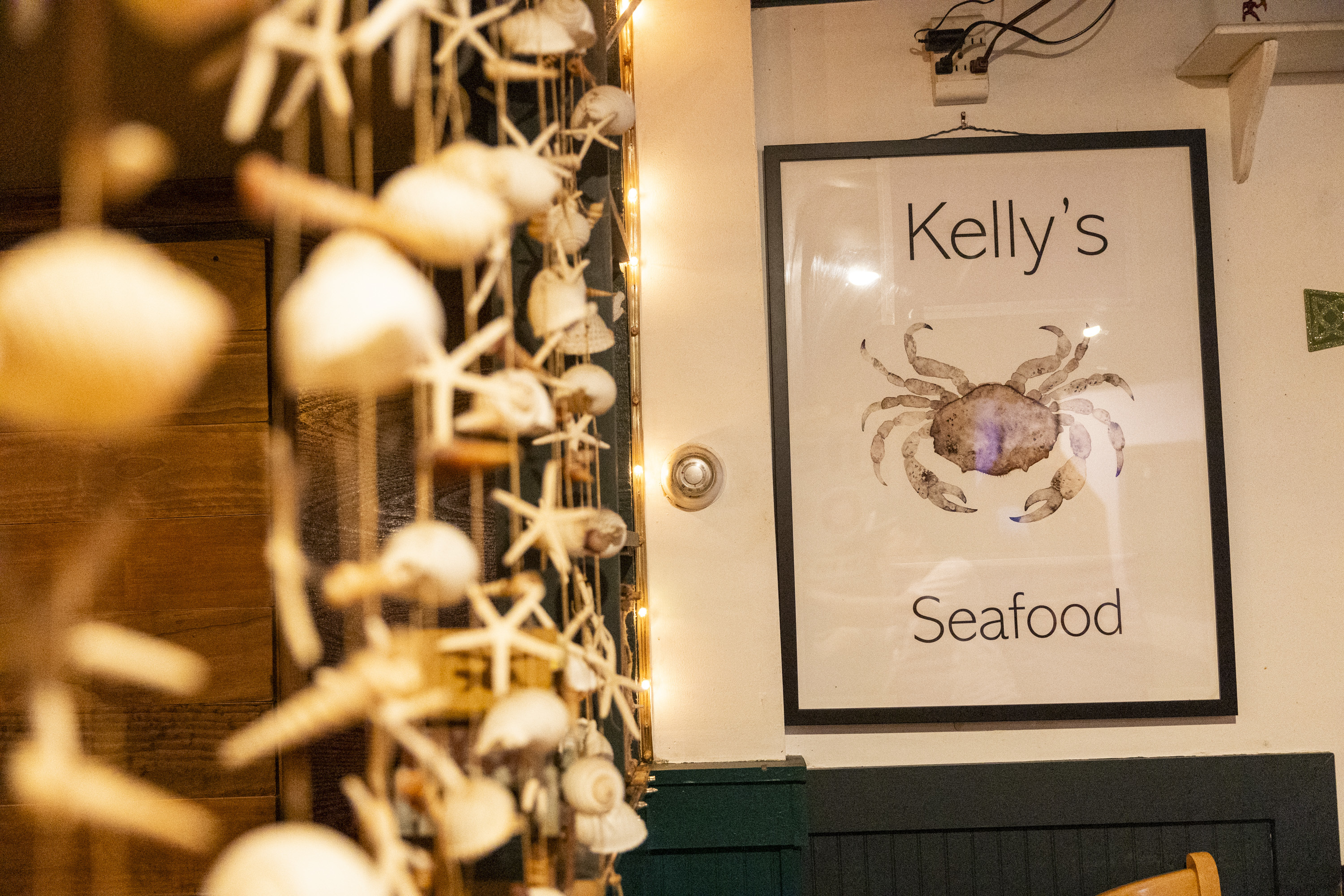
Seashells hang from netting at Kelly’s.Tyger Williams / Staff Photographer
The decorating scheme includes a decades-long accumulation of Shore-life artifacts — wood paneling, striped booths, fish prints, shells, ship models, string lights, and enough nautical memorabilia to outfit a small maritime museum.
The accumulation includes people.
Bartender Cathy Sims first came to Kelly’s as a customer, bringing her daughters here after their ring Mass at St. Hubert’s High. After she graduated from bartending school, Barreras hired her in 1997.
She never left.
“I love them,” Sims said. “They’re my best friends. And then I’ve got all my people who have been coming in for 20 years.”
Brown started waiting tables in June 1988 after a former Dunkin’ Donuts coworker told her that Kelly’s was hiring. “I came over, and the rest is history,” she said.
When the Kellys gathered the 25 employees in March to say the restaurant was for sale, they told them they would understand if anyone wanted to find another job.
Nobody left.
“They all said they’d stay through the end,” Brian said.
Preparing for the finale
The family wanted customers to have the same notice.
“A lot of restaurants close and all of a sudden there’s a note on the door, and sometimes even the staff doesn’t know about it,” Brett said.
The Kellys also wanted customers to have time to use their gift certificates. Brian said they have honored certificates dating to the mid-1990s and will reimburse anyone left with one after the closing.
But the March announcement caused confusion. Some customers thought Kelly’s had already closed.
Once the family set Aug. 31 as the final day, business surged again. One recent Wednesday was the busiest Wednesday Kelly’s had seen in three months.
“A lot of people are saying, ‘We’ve got to get the family out there one last time,’” Brett said.
And some are stocking up, especially on snapper soup.
Customers have been calling Brett to ask whether they can buy it by the quart and freeze it. He tried freezing a bucket during the pandemic and found that, aside from some crystallization, it held up well enough.
Now he is dispensing freezer advice along with soup.
One day last week, he thought he had made enough to get through the following day. That night, customers bought 10 quarts and nine pints. The Wesley group took six quarts. “They were lucky because I just made it,” he said.
Moving on
What Kelly’s cannot stockpile is another generation willing to take over the way the previous ones did.
Brett’s children worked here as teenagers, bussing tables, washing dishes, and doing whatever else was needed, but neither wanted the restaurant business.
“All the nieces and nephews worked here one way or another,” Brett said. “They all did their part here. But nobody wants to basically do what Brian and I did — be hands-on with it. So we knew it would probably end with us.”
Tommy works in the kitchen with his father and uncle, but he can’t run it alone. “Managing the business is a different world,” Brett said. “And we don’t have enough family coming in behind him to back him up.”
Brett has watched what the restaurant demanded of his own generation. “I think the best move for him is to go try something else and maybe enjoy life more than we did,” he said. “Now we’re going to enjoy life more.”
Brian’s illness hastened the decision. “I’m used to working all those hours, and I just can’t anymore,” Brian said. “I come in and help my brother when I can, but it’s not the same.”
The restaurant, meanwhile, keeps demanding attention, even now.
A month ago, an oven the Kellys had used for about 30 years died. It was too old to repair.
“I’m thinking, ‘Geez, I’ve got to get a new oven for, like, three months?’” Brett said.
They bought the oven.
The approximately 7,300-square-foot building — including its liquor license, equipment, furnishings, and attached apartment — is listed for $2 million. The Kellys say there are prospective buyers, though no deal has been completed, and they don’t know whether the next owner will operate it as a restaurant.
Nor do Brian and Brett know exactly what they will do after taking a well-earned break. They have kicked around the idea of someday opening something much smaller, perhaps selling Kelly’s staples such as snapper soup and crab cakes, or even operating a food truck.
Brown expects to find another job eventually. First, she plans to take some time off.
“I need to wrap my head around it,” she said.
After 38 years, she isn’t angry with the Kellys for their decision.
“I’m glad for them,” Brown said. “They deserve it. They deserve it.”
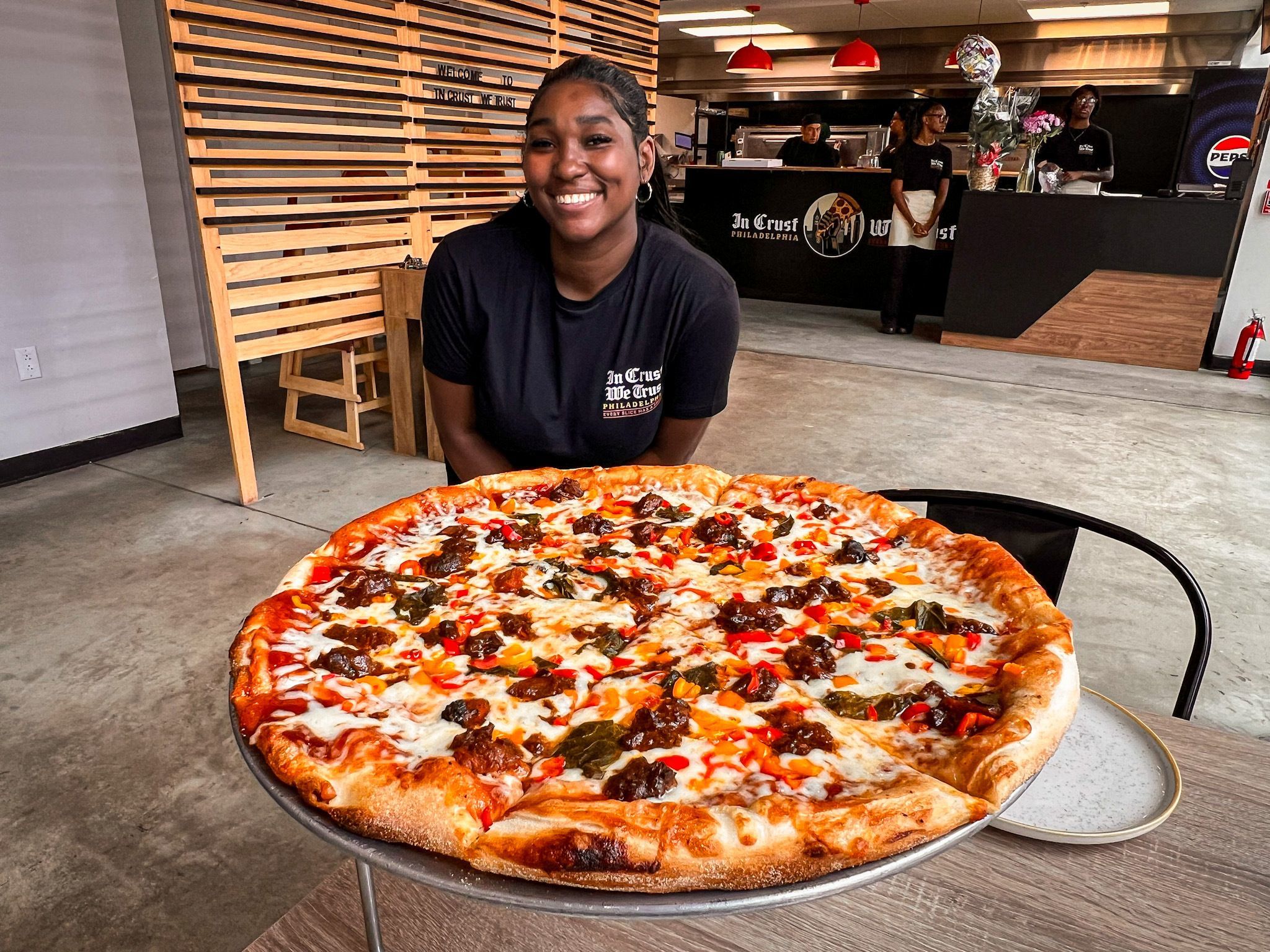
You can eat quite well at the nearby Pizzeria Beddia, Liguria, Marina’s, Shackamaxon, D’Oliva, Scusi, Rustica, Urban Village, and Bar1010. But no other pizzeria in Fishtown offers pies topped with oxtail and collard greens, Cajun shrimp with broccoli and grits, or jerk chicken with pineapple and mango glaze.
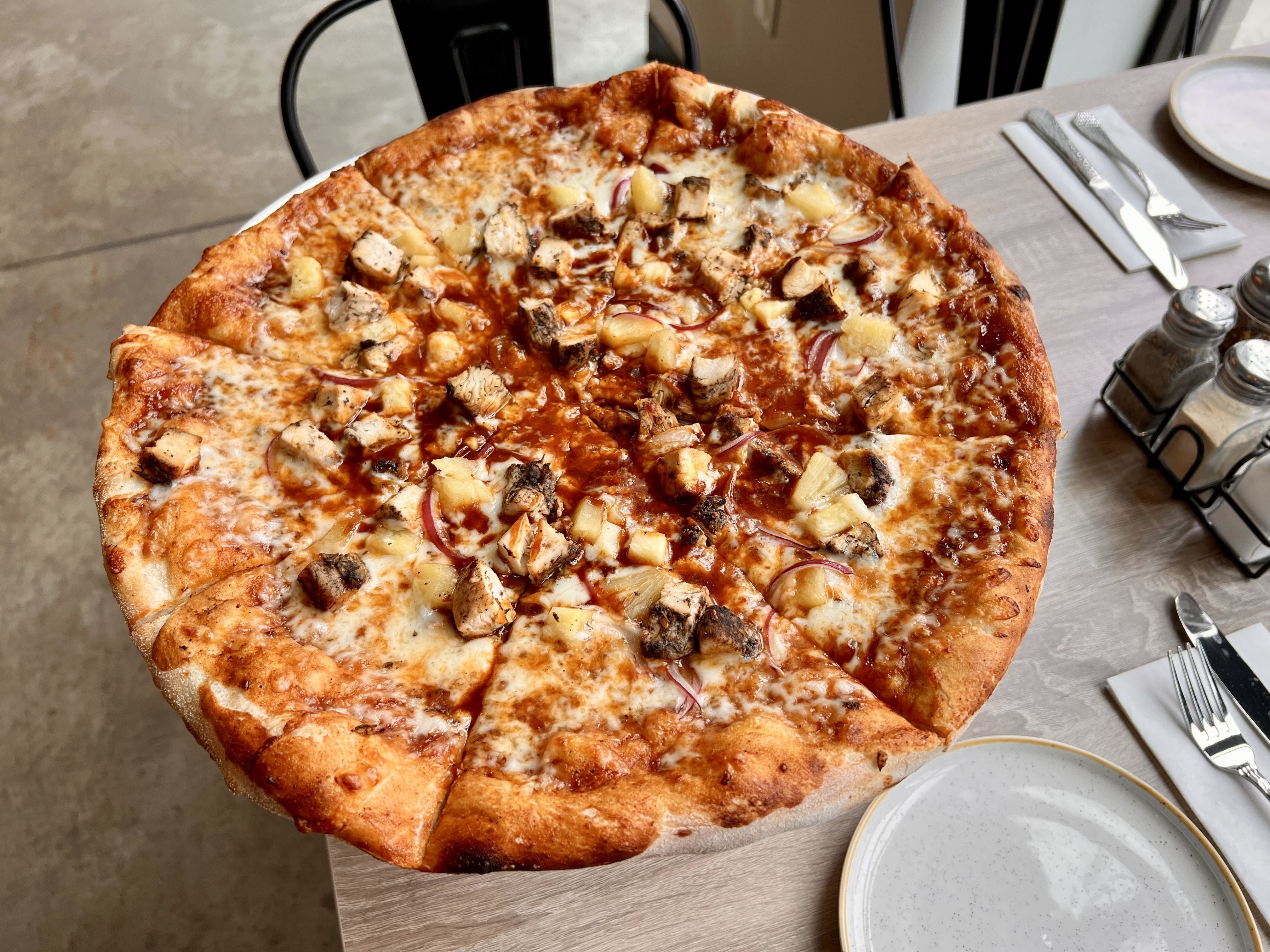
The Bottom (jerk chicken, mozzarella, pineapple, and mango glaze) at In Crust We Trust.Michael Klein / Staff
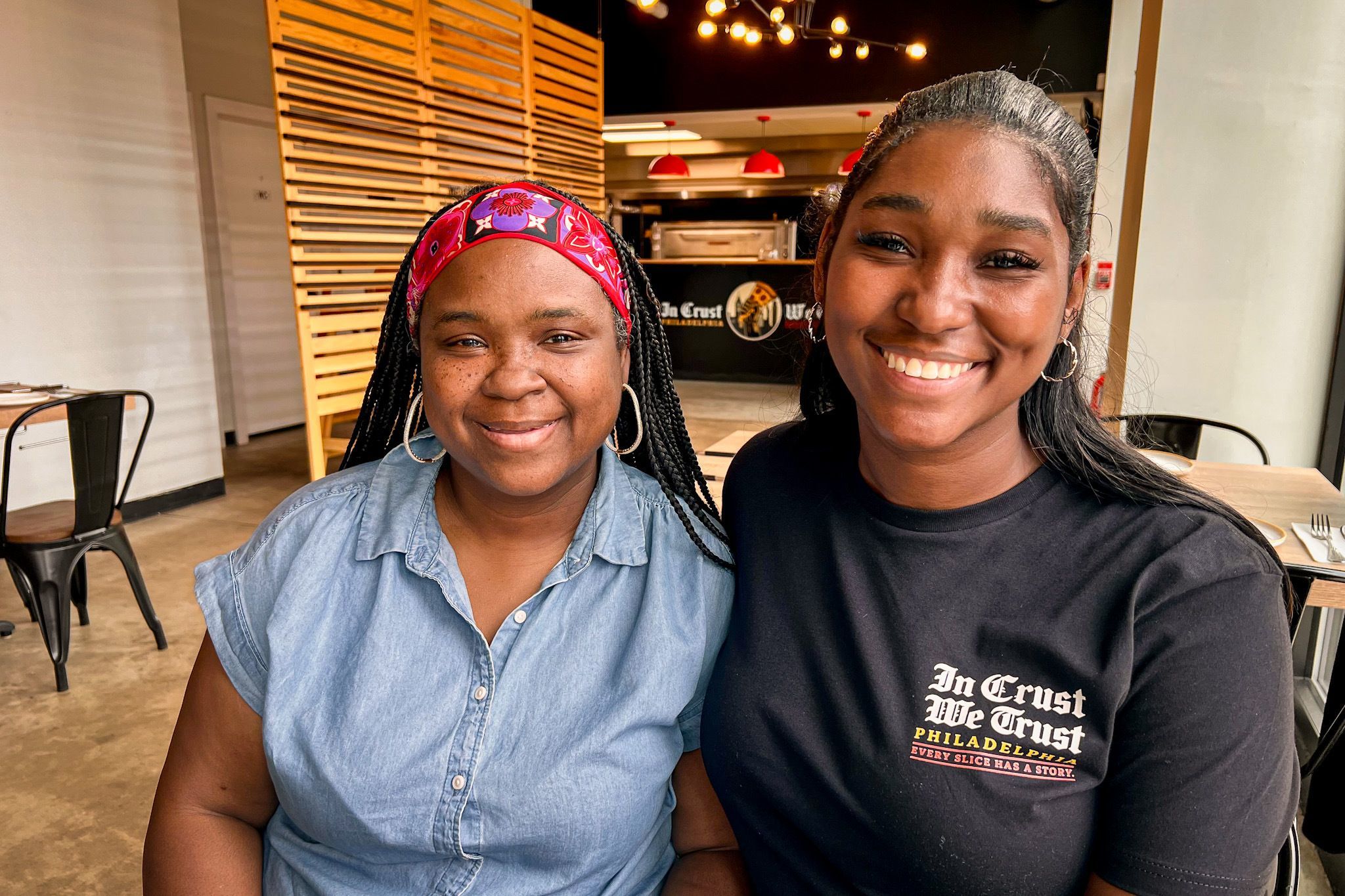
In Crust We Trust, which opened Aug. 1 in the former Vince’s Pizzeria at Frankford Avenue and Richmond Street, across from the Fillmore, is the first solo restaurant from Anyae Wilson-Worley, 25.
Though she grew up around restaurants and learned the business from her mother, restaurateur Felicia Wilson, Wilson-Worley is emphatic that In Crust We Trust is distinctly her own.
Pizzaiolo Jose Maria worked with Wilson-Worley on intentional menu combinations for the New York-style pies. She said she wanted to bring Black culture into the recipes while creating a dining room that reflects it. “When people walk in, I want them to feel like a story is being told — taking them back to a Harlem Renaissance type of thing,” she said.
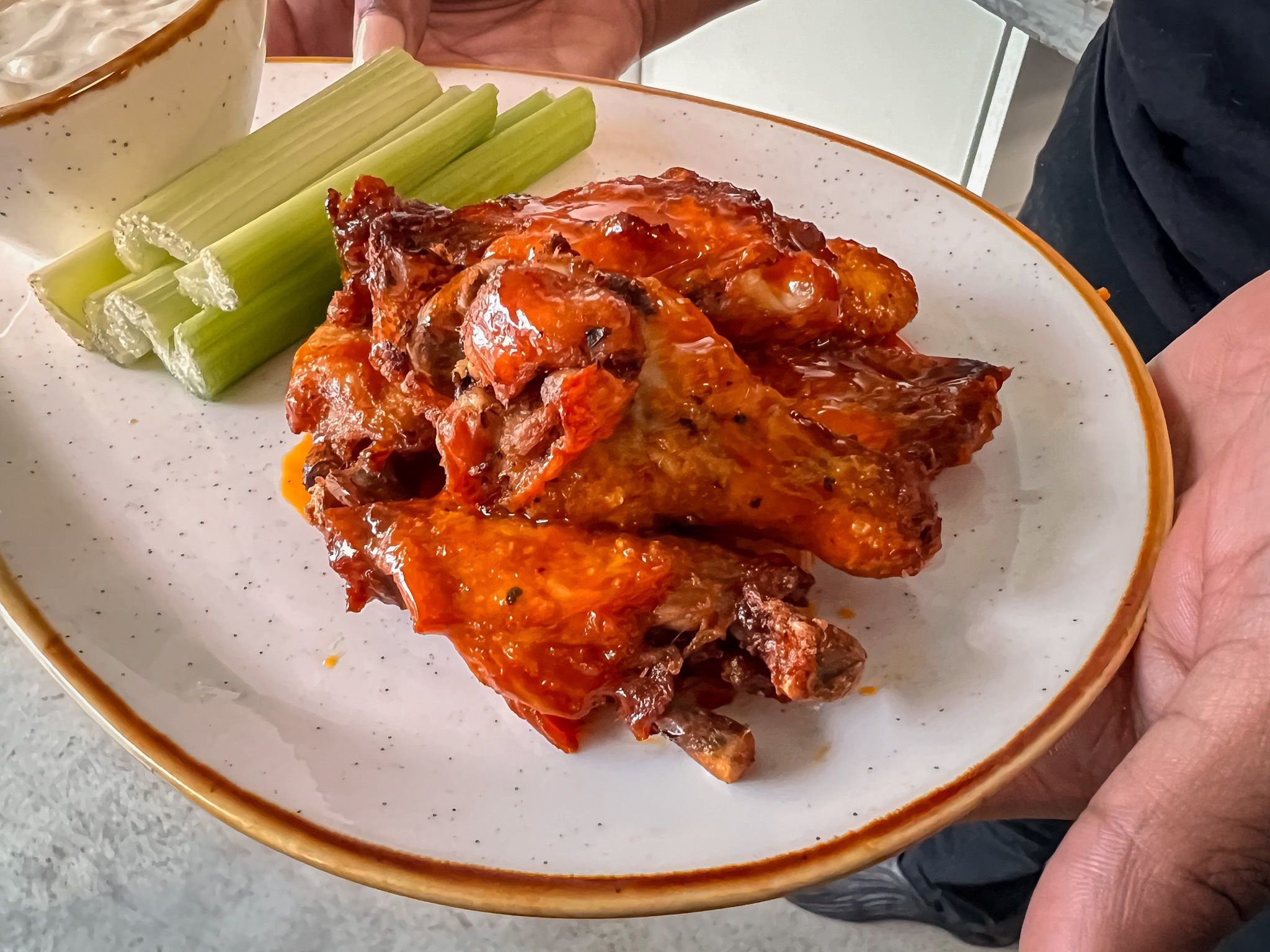
Corner store wings, topped with cayenne pepper and peri peri, at In Crust We Trust on Aug. 2.Michael Klein / Staff
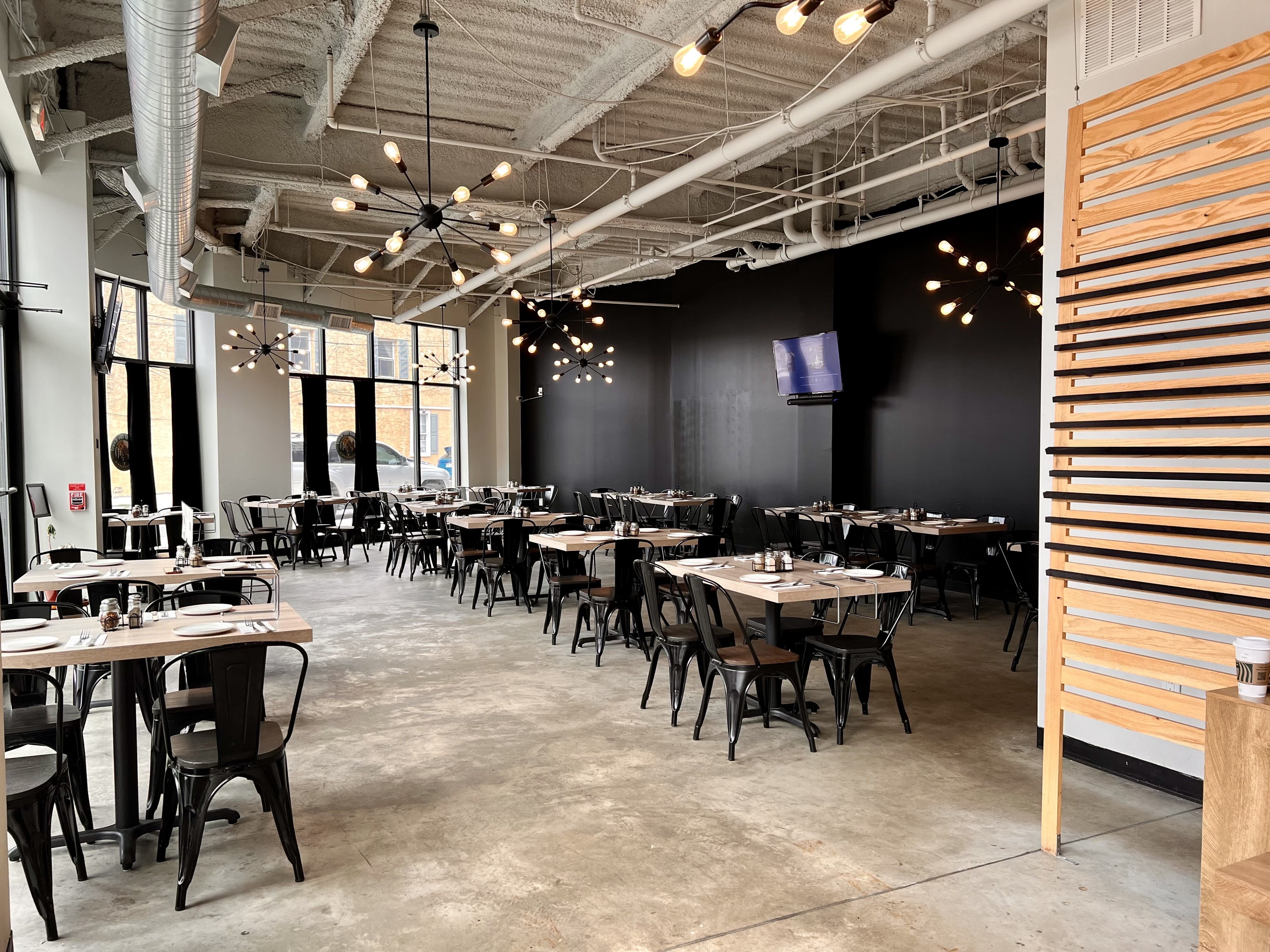
The roughly 80-seat restaurant offers table service as well as a takeout counter and delivery. Beyond pizza, the menu includes wings, two salads, cheesy collard greens, and desserts (including a chocolate chip-oatmeal raisin-sugar cookie baked in a cast-iron skillet and topped with vanilla gelato) — all made with halal ingredients.
Wilson-Worley is the oldest of Felicia Wilson’s three children. Her mother owns Amina, Avana, Fia, First Daughter Oyster & Co., and BlackHen. “She’s been much more than a role model,” Wilson-Worley said. “I definitely wouldn’t be in this position without my mother.”
Still, restaurants were not part of Wilson-Worley’s original plan.
She attended the University of Miami, where she majored in health sciences on the pre-med track. She said she was lucky enough to come out of school with no debt. “I took that as an opportunity to seize what was around me,” she said. “At the time [four years ago], my mom was in the height of opening all of her restaurants.”
Anyae Wilson-Worley (right) with her mother, Felicia Wilson, at In Crust We Trust on Aug. 2.Michael Klein / Staff
While finishing school, she regularly flew back to Philadelphia to help with the expanding restaurant group. Eventually, she decided to stay to help her mother run the business.
“Anyone who knows me can tell you that ever since my mom opened the restaurant, I always said, ‘This is not what I want to do. I don’t want to be here,’” Wilson-Worley said. “But now this has become my life.”
Her mother provided the example and the education, but Wilson-Worley said the concept, menu, and identity of In Crust We Trust reflect her own perspective.
Wilson-Worley describes Philadelphia as a city whose Black culture is foundational but not always fully recognized. Through the restaurant, she hopes to celebrate that culture while encouraging others to pursue their own ambitions.
Dining room at In Crust We Trust.Michael Klein / Staff
“I hope to create a pathway for other Black people like myself to get involved,” she said. “Not only through food, but through anything.”
The menu draws from years spent observing professional kitchens.
“I’ve learned a lot from being around the chefs,” she said. “Watching them, listening to them, and working alongside them has expanded my culinary knowledge. I took everything I learned from them and applied it to create a menu that I’m really proud of.”
Wilson-Worley also sees common ground with Down North Pizza, the Black-owned North Philadelphia pizzeria known for hiring formerly incarcerated employees. Both restaurants emphasize community engagement, though she said she does not view them as competitors.
“I’m all about Black empowerment and working with other people like myself in this industry to contribute to the greater good of hospitality,” she said.
Ultimately, she said, her goal is more immediate than making a statement with every slice.
“I want people to feel loved and appreciated,” Wilson-Worley said. “When someone dines here, I want them to walk away thinking, ‘I’ve never had pizza like this before.’”
In Crust We Trust, 965 Frankford Ave. Hours: 11 a.m. to midnight Monday to Thursday, 11 a.m. to 3 a.m. Friday and Saturday, and noon to 11 p.m. Sunday.