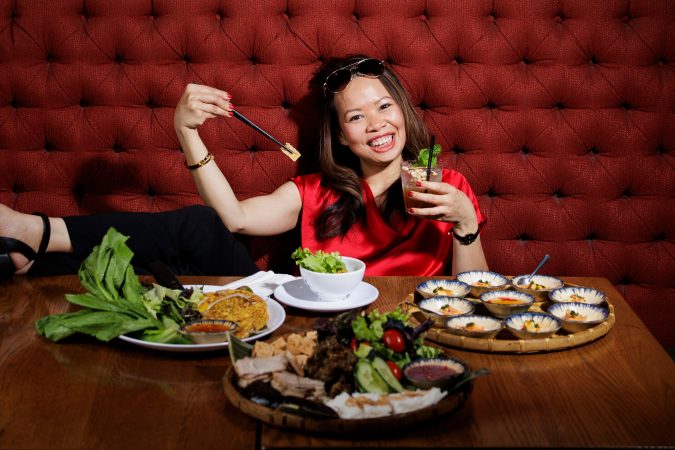
Gabriella’s Vietnam, the acclaimed South Philadelphia restaurant known for showcasing regional Vietnamese cooking, will close in mid-December after nearly six years as chef-owner Thanh Nguyen searches for a new home.
Nguyen began looking for another location last fall after the building at 1837 E. Passyunk Ave., near Mifflin Street, was sold. She has continued operating under a month-to-month lease while planning the restaurant’s next chapter.
The building’s new owners, Bharat Bist and Gigi Giri — who operate Mount Masala in Voorhees and Nepali Momo Kitchen in Spring Garden — plan to open a yet-to-be-named Himalayan restaurant there early next year. Giri said the menu will combine Mount Masala’s bold stews with Nepali Momo Kitchen’s extensive lineup of momos, the steamed, filled dumplings.
“I have a dream to do something different,” said Giri, whose husband, Bist, is the chef.
The couple also plan to open a shop serving coffee and momos on Third Street near South Street within the next two months.
Nguyen said she and Giri reached an agreement that allowed Gabriella’s to remain open through mid-December.
“Gigi was very sweet and nice,” Nguyen said. “She didn’t kick me out right away, and she gave me a year.”
Gabriella’s backstory and future plans
Gabriella’s, which opened in February 2021 in the former home of Ange Branca’s Saté Kampar, has earned widespread acclaim. It appeared on The Inquirer‘s 76 list and was named to the New York Times’ 2022 list of Best New Restaurants.
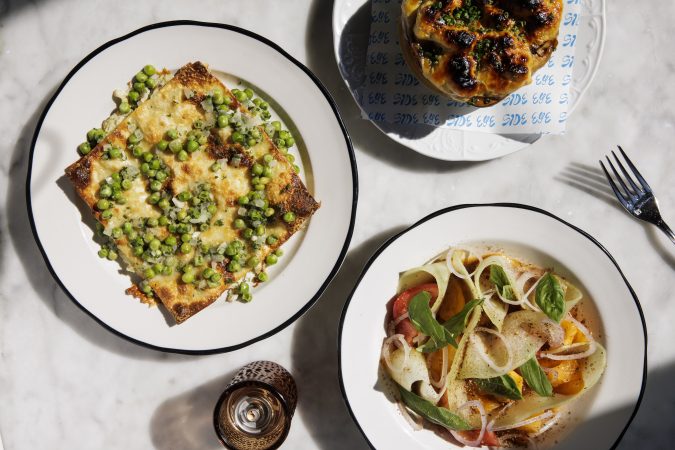
The restaurant helped broaden Philadelphia’s understanding of Vietnamese cuisine beyond pho and bánh mì, centering its menu on dishes from across Vietnam’s regions. Among its specialties are lemongrass clams and a catfish hot pot, dishes rarely found elsewhere in the city.
For Nguyen, Gabriella’s also fulfilled a longtime personal ambition.
“I came to the U.S. and went to school for my family, not for me,” said Nguyen, who left the University of Pennsylvania one English composition class short of completing an undergraduate degree in biochemistry. “I wanted to make a business like my family did.”
She told The Inquirer’s Craig LaBan that her parents own a seafood market in Ho Chi Minh City, formerly Saigon, and initially disapproved when she entered the restaurant business with her husband, Chris.
The couple began building their restaurant company in the suburbs in 2012, opening Banh Mi Bar & Bistro in Norristown, followed by Melody’s Grillhouse in Ambler. Gabriella’s Vietnam, named for their younger daughter, marked a shift toward a more ambitious menu focused on traditional Vietnamese cooking beyond the country’s best-known dishes.
Nguyen hopes her next restaurant will have a full liquor license, allowing her to expand the beverage program alongside the food. Gabriella’s now operates under a satellite license through Five Saints Distilling that permits it to serve Pennsylvania-produced spirits, including the vodka used in its signature pho cocktail.
Developing those drinks sparked an unexpected passion for mixology, Nguyen said, and she envisions her next restaurant having a larger cocktail program and a menu of bar snacks to complement its Vietnamese cuisine.
“I had several restaurants in the suburbs, but when I came to Philly, I realized Philly was really missing traditional Vietnamese food besides bánh mì,” Nguyen said. “There are so many other foods popular in Vietnam that don’t get as much focus. And I want people to try it.”
I want to root for a restaurant like Side Eye. There’s the quirky name, of course; a tribute to the owners’ beloved late dog, Sheba, whose legacy lives on in the many pooch pictures posted around the space and which has fostered a strong pull from the city’s canine-centric crowd, my family included. What a perfect place to catch up with our dog Buttercup’s veterinarian over steak fries and a peppercorn burger! And was that the (human) mom of Buttercup’s playmates sipping a glass of wine at the long bar? Yes, it was. Philly’s dog lovers are an easy demographic for any new restaurant to target, especially one with a pet-friendly 10-seat patio outside its Queen Village storefront.
But there are other reasons to wish for Side Eye‘s success, including its aim to be an affordable neighborhood bistro when soaring prices are on everyone’s mind. In an era when $35 chicken entrees and $20-plus cocktails are not uncommon in local restaurants, Side Eye’s half bird is selling for $25 and nearly every cocktail and glass of wine is $13 or less.
Given that Side Eye’s co-owner, Hank Allingham, is a numbers guy, having previously spent his career in finance for large restaurant companies, including the Patina Group in New York and Nando’s Peri-Peri in D.C., it’s no surprise he’s using fair prices as a draw for this new venture, launched in February with his wife, Katherine Hanson.
The exterior of Side Eye on Thursday, July 23, 2026 in Philadelphia.Monica Herndon / Staff PhotographerSide Eye co-owner Hank Allingham inside the bistro at Sixth and Bainbridge on Friday, January 23, 2026.Yong Kim / Staff Photographer
But value is a relative concept. What good are house-baked buns if the inexperienced kitchen frequently scorches them before sending a burger out to the dining room? Does it really matter that the roast chicken is relatively inexpensive if the skin on those commodity birds is underseasoned and flabby? (It’s also set over borlotti beans — a nice idea until the beans were overcooked to a sticky paste.) Also, does Side Eye make the worst cocktails in Philly? The drinks at our first visits ranged from watery and muddled to raggedly boozy, providing a reminder that you sometimes get exactly what you pay for.
That is, until recently, when I’ve finally begun to detect some needed improvements on multiple fronts. One key has been a shift in the front house staff, essential to maintaining the warm neighborhood mojo at the Queen Village space that once housed beloved Bistrot La Minette, which called it quits in 2024.
The service during my early visits ranged from chaotic — with more plates landing simultaneously at our little table than it could possibly hold (and the server impatiently waiting for us to play Tetris to somehow find space) — to borderline hostile.
“OK, now who‘s ordering here?!” snapped the waiter at my second meal, scolding me for ordering fries for the table when it apparently wasn’t my turn to speak. He’s coincidentally no longer with the restaurant, Allingham said, before I could even mention it.
The Lipstick Stain (left) and Bulldog Cooler at Side Eye on Thursday, July 23, 2026 in Philadelphia.Monica Herndon / Staff Photographer
What a difference the calming presence of a pleasant server such as Tessa Draper can make, righting the mood as weekend sunshine poured through the windows into the cobalt blue room, and we settled into a lovely brunch. It was highlighted by a perfectly fluffy French omelet rolled around house-made fromage blanc, topped with roasted mushrooms, and finished with a dessert of crêpe Suzanne, sweetly named for the chef’s mom. The warm crêpes bundled around that same cheese, all topped with brandied warm caramel and juicy orange segments.
The crêpe Suzanne at Side Eye on Thursday, July 23, 2026, in Philadelphia.Monica Herndon / Staff Photographer
The meal was far from perfect. The cucumber-gin Breakfast Cup cocktail had too much bitterness from the lime peel. The avocado toast was not especially green. And this kitchen burned the slender toast “soldiers” served alongside its soft-boiled eggs. But we loved the poached shrimp and fresh-dressed cod rillettes salad that came on the side. The lemony hollandaise for the Parisian ham Benedict served over house-baked brioche was extremely tasty.
It felt like Side Eye had finally found a comfortable groove, enough for me to return for one more dinner.
With Draper once again tending to our table, the improvements continued, especially with new vegetable-forward dishes that turn out to be a strength for chef Finn Connors, 26, an alum of Osteria, Wilder, and Sally. He cooks a range of diverse ingredients but also concedes, “I mostly eat vegetables.”
The tomato and honeydew salad makes the most of summer’s bounty.Monica Herndon / Staff Photographer
His tomato and honeydew salad makes the most of summer’s bounty, winding luscious tomato chunks inside ribbons of shaved honeydew that added a textural snap and juicy burst of bright sweetness. Snappy batons of zucchini are roasted with just a touch of char, dressed with basil oil, and paired with a creamy dip of that ricotta-like house-strained cheese for another simple but memorable starter. A classic ratatouille, with separately stewed eggplant, red peppers, and zucchini finished with saucy tomatoes, sherry vinegar, and herbs, was one of the menu’s most confident nods to a French canon the chef had never previously cooked.
Connors bakes a very respectable French baguette, a nice wink to the standby offering at La Minette. I just wish they offered more than a stubby little heel of it for $5. That bread may be at its best diced into croutons that give the delicious French onion soup a sturdy, spoonable body and an irresistible dome to be gratinéed; delicious even when they occasionally burn it.
The French onion soup at Side Eye on Thursday, July 23, 2026 in Philadelphia.Monica Herndon / Staff Photographer
When it comes to cooking proteins, Side Eye has work to do. They struggled to nail a medium-rare doneness on the burger (twice overcooked, once underdone) but also need some basic seasoning to boost the flavors of the Camembert and peppercorn aioli garnish. The coarse-chopped beef tartare was both unpleasantly chewy and overwhelmed by the sharp garnish of crumbled Gorgonzola cheese.
An intriguing early menu item of stuffed cabbage filled with braised short rib suffered from some less-than-tender braised meat. This kitchen also got too clever with a usually no-brainer pot of mussels marinières, swapping out the shellfish’s natural liquor for a Miller High Life-infused dashi mixed with crab fat and a hunk of not-especially-tender pork belly. Not only was the dashi lacking focused flavor, there wasn’t nearly enough of it, leaving the bowl so dry that the high percentage of empty shells was obvious.
A simple plate of flaky hake with chile-spiced piri-piri broth and herbed potatoes (reminiscent of the similar retro hit at Meetinghouse) offered minimalist satisfaction. The dish was recently updated to seared cod with a summery garnish of couscous in a tomato-tinted velouté Aurora sauce. I’ll order that next time.
The lasagna at Side Eye on Thursday, July 23, 2026 in Philadelphia.Monica Herndon / Staff Photographer
Fresh pasta is consistently one of Side Eye’s better moves. I enjoyed the early menu’s tagliolini with Café de Paris butter and shaved Mimolette cheese. But this summer’s lasagna is one of the kitchen’s best dishes to date; a low rise double stack of fresh pasta sandwiching the fresh cheese with artichoke hearts, topped with a crispy pasta lid that gets gratinéed with Manchego cheese and scattered with a fistful of peas.
As inconsistent as the drinks were at my early meals, something also clicked in the glass for our final visit. The refreshing tequila and Aperol-fueled Lipstick Stain and a solid old-fashioned hit the spot. For $12 to $14 a pour, an accessible wine list of independent French producers of picpoul de pinet, Anjou rouge, and a cinsault-syrah blend from Les Enfants Sauvage proved to be among the restaurant’s better values.
The bar at Side Eye on Thursday, July 23, 2026 in Philadelphia.Monica Herndon / Staff Photographer
When it comes to dessert, Side Eye serves up an olive oil cake trifle layered with lemon curd and a fluffy marshmallow crown torched for drama. But we couldn’t resist the low-key crème caramel, a fresh take on the standard that gives the silky sweet custard a modern update with a crunchy dusting of bittersweet cocoa nibs and flaky Maldon sea salt.
The effect of those bold contrasting flavors and textures — when perfectly fine-tuned — compels your spoon to return for another scoop. It was an irresistible finale for a meal that finally gave a hint of what this restaurant can be. Side Eye still has plenty of wrinkles to iron out to reach its full potential, but I’ve seen enough signs of progress lately, and I’m hopeful that can continue.
Side Eye
623 S. Sixth St., Philadelphia, Pa. 19147,267-807-1164, sideeyephilly.com
Dinner Sunday through Thursday, 4 to 11 p.m.; Friday and Saturday, until 1 a.m.; brunch Saturday and Sunday, 11 a.m. to 3 p.m.
Dinner entrees, $14-$25.
Wheelchair accessible.
About half the menu is gluten-free or can be modified.
Menu highlights: Dinner: French onion soup; tomato-honeydew melon salad; roasted zucchini with fromage blanc; ratatouille; bread and butter; triple-cooked steak fries; artichoke-pea lasagna; cod. Brunch: French omelet; Benedict variations; crêpes Suzanne.
Drinks: Cocktails and affordable French wines (all $14 or less a glass) drive the program. Reasonable prices are the draw, but craftsmanship on cocktails has been shaky. There are some thoughtful nonalcoholic options and the beer list has several worthy choices, from local Forest & Main and Monk’s Flemish sour to La Fin du Monde.
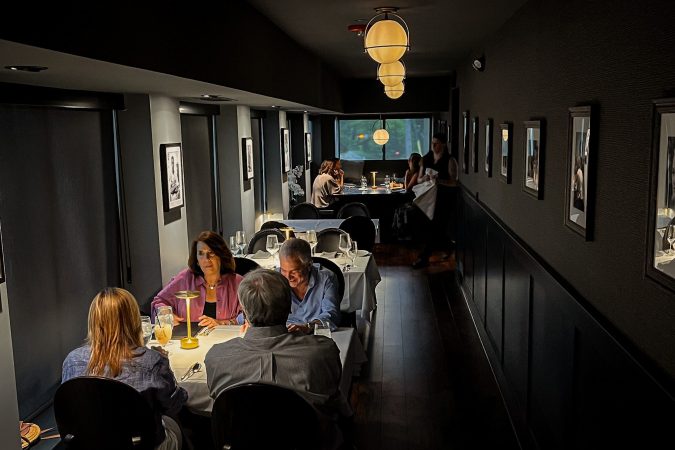
The dining room at Side Eye on Thursday, July 23, 2026 in Philadelphia.Monica Herndon / Staff Photographer
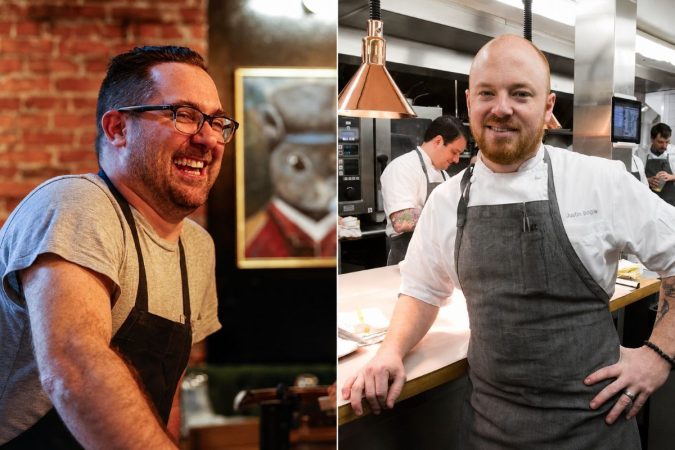
After nearly four decades of friendship and two careers that took them in different directions, chefs Arthur Cavaliere and Justin Bogle are working together.
The Roxborough natives and best friends since third grade, both 45, have signed a lease for the former Winnie’s Manayunk space on Main Street near Roxborough Avenue, where they plan to open a new restaurant in late fall. Though they are keeping most details, including the name, under wraps, they describe the project cryptically as a “punk French” restaurant inspired by the neighborhood that helped shaped them.
The former Winnie’s at 4266 Main St. in Manayunk.Alejandro A. Alvarez / Staff Photographer
For both, the restaurant represents the fulfillment of a dream they have shared since they started cooking together as teenagers.
“Artie and I have been best friends since grade school,” Bogle said. “We always had this vision, this pipe dream, that someday we would join forces and do something together.”
The two met at Shawmont Elementary in Roxborough and got their start in the late 1990s working for chef Derek Davis at his string of restaurants then on Main Street. Their careers soon diverged.
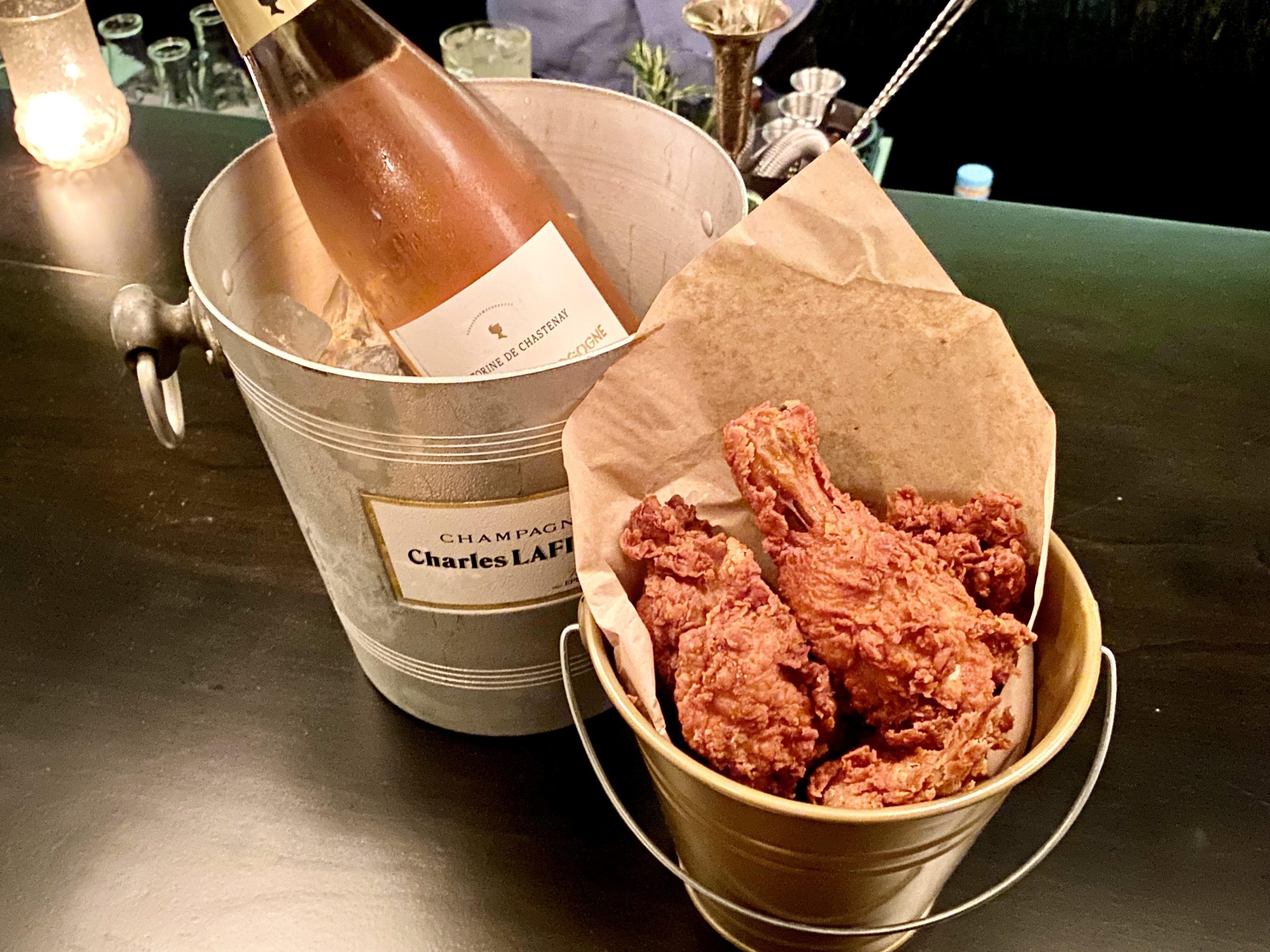
Cavaliere is a longtime consulting chef. Among the gems he created was the shatteringly crispy chicken at the former Bar Poulet at 20th and Walnut Streets. He came up through Philadelphia kitchens including El Vez and Parc, where he was executive chef, and headed to chef Michel Richard’s orbit in Washington, before opening In Riva, Black Squirrel Pub & Haunt, and Foghorn in East Falls. He left that partnership last year.
Chef Arthur Cavaliere’s fried chicken was a signature at Bar Poulet, which was open in 2021-22 at 2005 Walnut St. Michael Klein
Bogle, who attended Walnut Hill College, cooked at Striped Bass and Alma de Cuba before heading to New York, where he became one of the youngest American chefs to lead a two-Michelin-starred restaurant at Gilt. In 2013, he returned to Philadelphia to open Avance — the successor to Le Bec-Fin — and after its 2014 closing joined Garces Group as corporate executive chef. He later returned to New York, where he spent years with Union Square Hospitality Group, most recently as executive chef of Manhatta.
Family drew him home after nearly two decades in New York.
“I knew I needed to give my kids a backyard,” Bogle said. “Raising three kids in a two-bedroom apartment wasn’t the goal for me.”
Avance, led by Justin Bogle, had a 10-month run after Le Bec-Fin’s closing at 1523 Walnut St.David M Warren / Staff Photographer
He left Manhatta last spring, relocated his family to the area last August, and immediately resumed planning with Cavaliere. They spent the past year evaluating Main Street locations before settling on the former Winnie’s, which closed last November.
“When the right space presented itself, it was a no-brainer,” Bogle said.
The partners are keeping quiet about the menu, name, and design while they refine the concept. Bogle will oversee the kitchen and said the long-term plan extends beyond a single restaurant. “We have goals and aspirations to do more than just this,” he said.
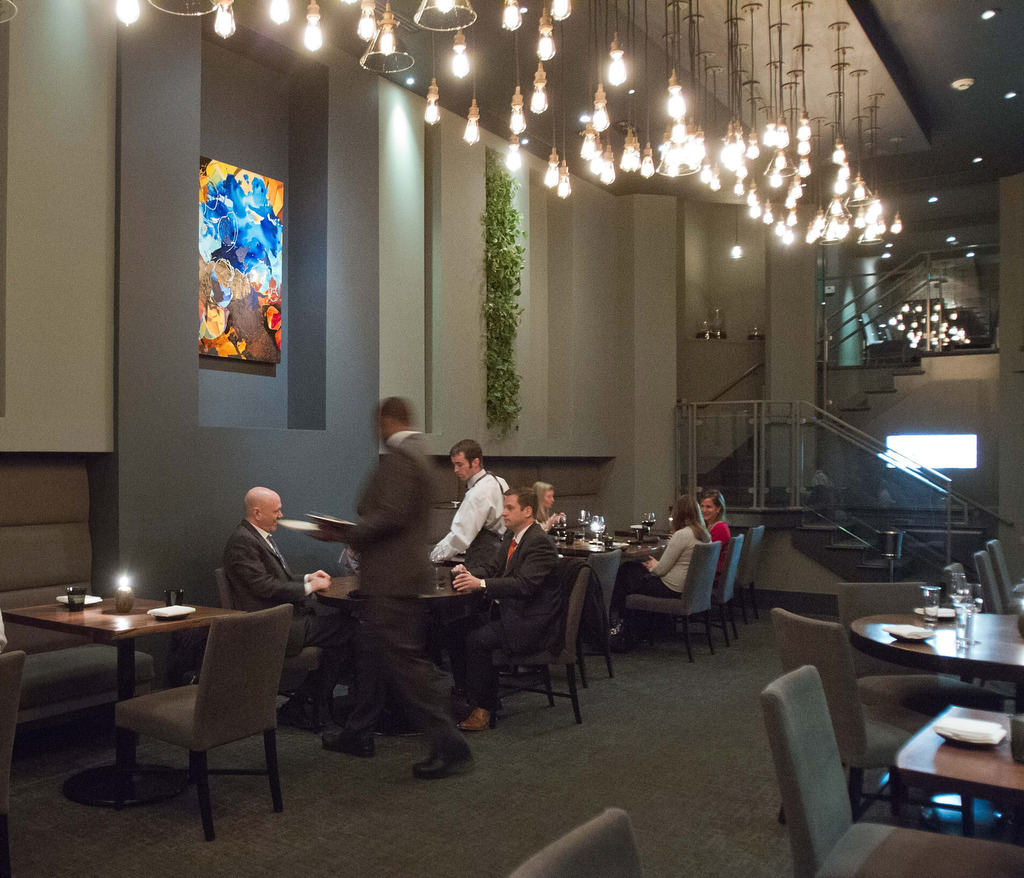
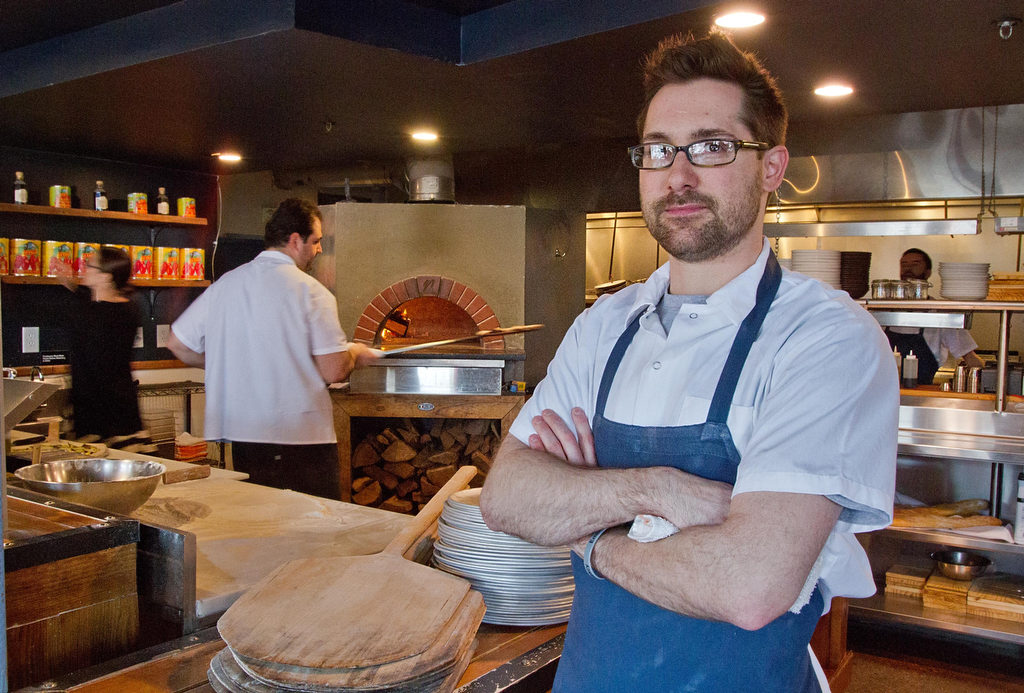
Chef-owner Arthur Cavaliere at In Riva in 2013. Working the pizza oven at rear is sous chef Biff Gottehrer, now at Ripplewood, the Refectory, and Izzy’s.David M Warren / Staff Photographer
If construction and permitting stay on schedule, they hope to open in November. If delays push the project into December, they are likely to wait until after the new year.
Cavaliere said the concept is rooted in “friendship, memory, and the neighborhood that raised” them.
“Their decision to invest in Manayunk is another testament to the strength of the neighborhood and the continued momentum of its dining scene,” said Veronica Blum of MPN Realty, who brokered the lease with Alex Charen. “It’s especially rewarding to help bring operators of this caliber to a community that values independent concepts.”
For Bogle, returning to Main Street with the friend he has known since childhood carries a significance beyond opening another restaurant.
“For us to come back to where it all started, plant our roots there, and have some fun — it has been a goal for a long time,” he said. “We’re just really excited about the opportunity.”
Located at 22 W. Lancaster Ave. in the former Kung Fu Tea storefront, Half A While is a tea and dessert shop specializing in high-quality cold-brewed teas and pastries and cakes with Asian influences.
Husband and wife owners Leo Wei and Haley He acquired the storefront from Kung Fu Tea after years of dreaming about opening their own business.
At Half A While, the duo is serving a range of treats, including handmade crepe and tiramisu cakes; cold-brewed leaf teas; and buns filled with taro, minced pork, and sausage. Half A While’s teas come in flavors from passion fruit to brown sugar, and can include manyof the boba accoutrements customers at Kung Fu Tea came to love.
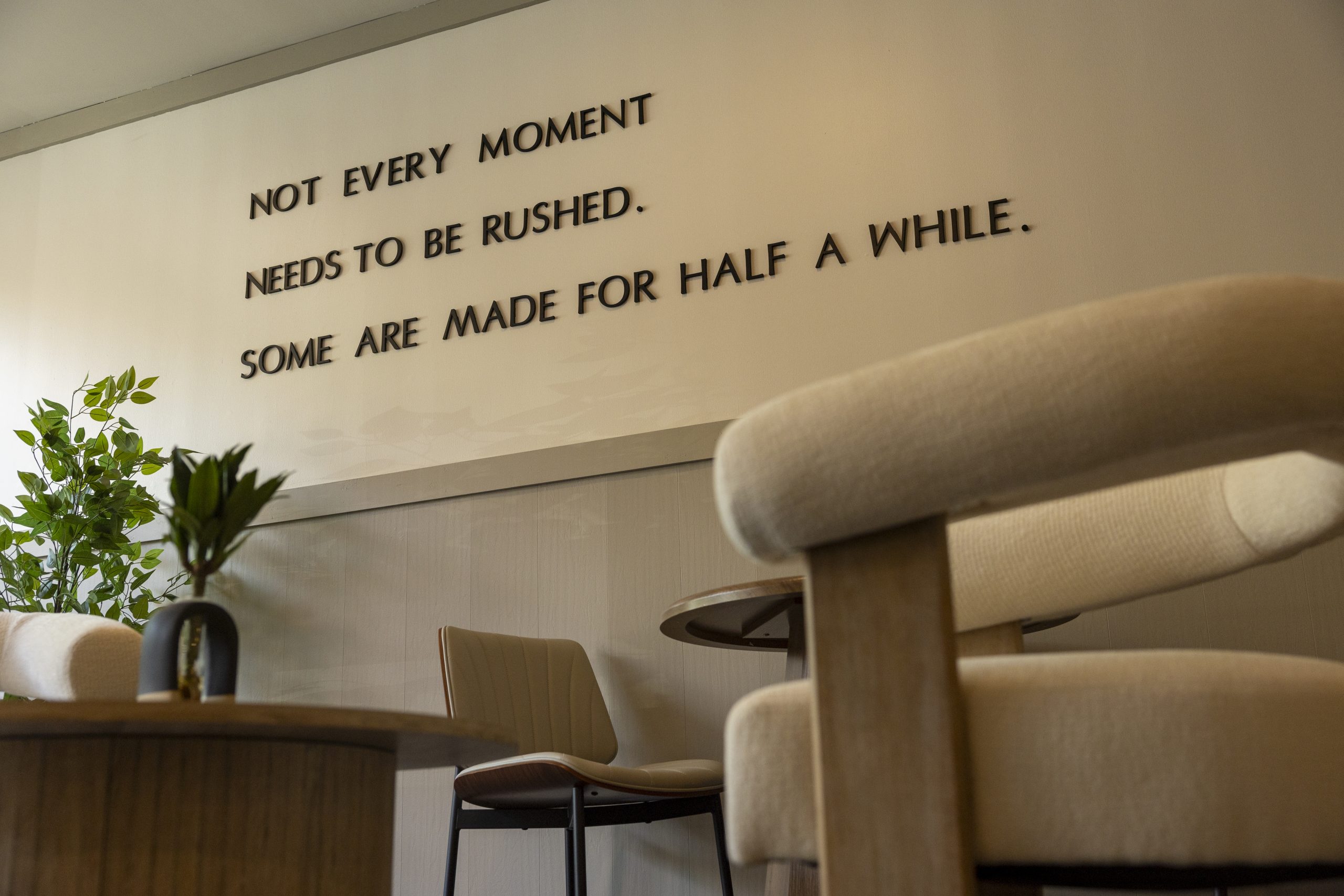
Half A While tea shop in Ardmore. The lettering on the wall is 3-D printed by store owner Leo Wei.Aidan T. Gallo / Staff Photographer
The name Half A While is a mashup of two core tenants of the café.
“Half” symbolizes Wei and He’s goal to use around half the amount of sugar traditionally found in items like bubble tea and crepe cake.
“That is our intention, to be more healthy,” Wei said.
“While” signifies their desire for patrons to feel comfortable in the shop and stay a while, lounging on the sofa or posting up at one of the tables. It’s a “really cozy place,” Wei said.
Half A While will be in its “soft opening” phase through the end of August or the beginning of September, as Wei and He pin down inventory needs, train staff, and get their online apparatus up and running. The store is currently open from 10 a.m. to 8 p.m., Tuesdays through Sundays.
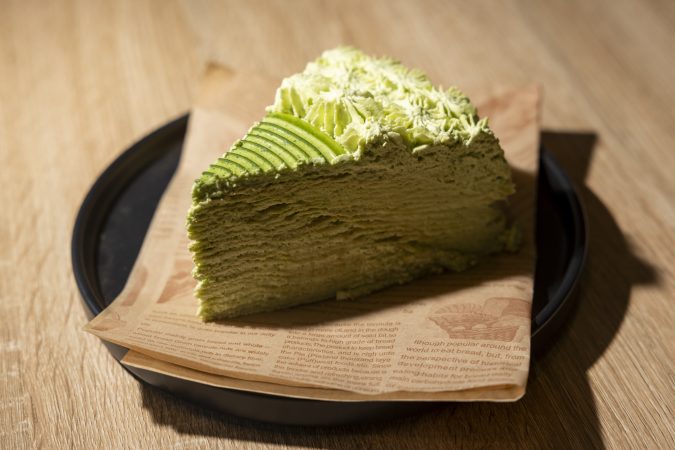
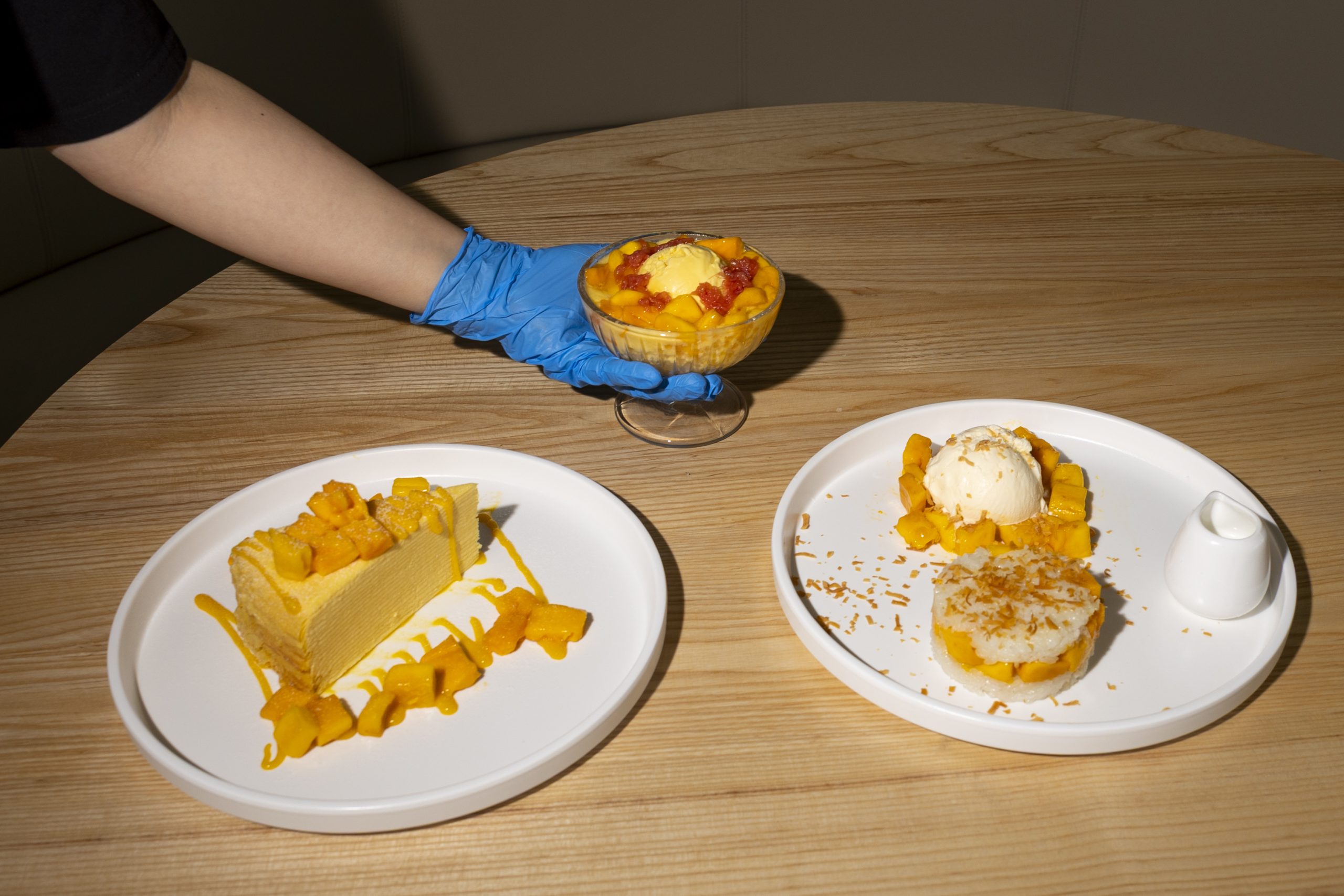
The mango mille crepe cake slice, strawberry mango juice sago and lychee jelly with mango ice cream, and the mango coconut sticky rice ice cream at Mango Mango Dessert in Ardmore.Aidan T. Gallo / Staff Photographer
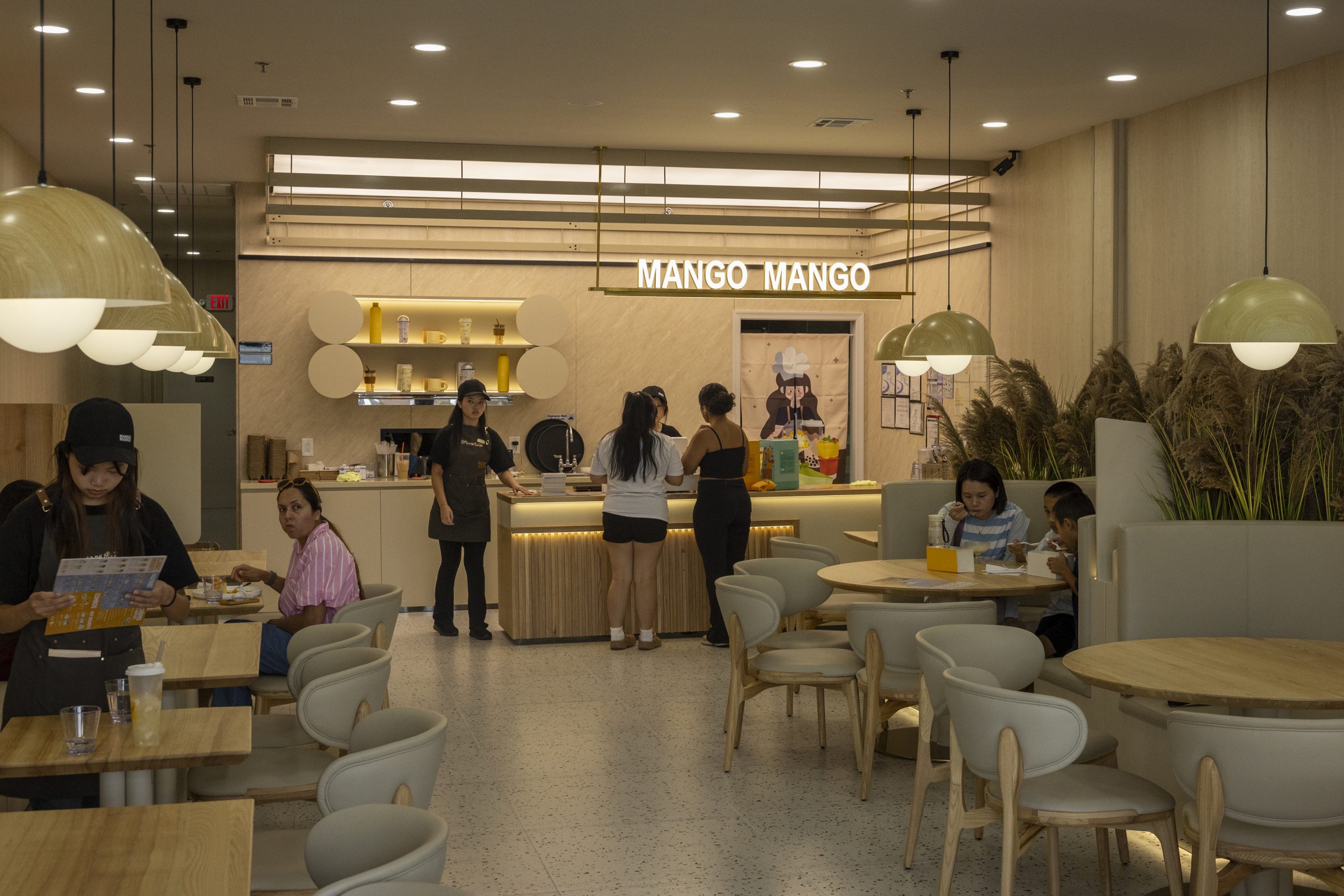
Around the corner, Mango Mango has moved into 38 Greenfield Ave., the former home of electronic store World Wide Stereo.
Mango Mango is a growing chain of Asian-inspired dessert restaurants, where the sweet, sticky stone fruit is the menu’s “muse.”
The first Mango Mango opened in New York City’s Chinatown in 2013, and the dessert chain has since opened more than three dozen franchises across the U.S., from Hawaii to New Jersey. Ardmore is Mango Mango’s sixth Philly-area location after Chinatown, University City, Oxford Circle, Berwyn, and Cherry Hill.
Mango Mango Dessert in Ardmore.Aidan T. Gallo / Staff Photographer
Mango Mango’s menu is extensive, ranging from pillowy crepe cakes to ice cream sundaes and fruit teas. Naturally, the café’s desserts and teas lean heavily on mango — one can order a mango smoothie, mango crepe cake, layered mango snowcloud with fresh mango chunks and popping bubbles, and hot mango green tea — though other flavors are available, too.
Mango Mango’s Ardmore outpost held its grand opening on July 31. The café is open from noon to 10 p.m. seven days a week, and the shop will be running deals and promotions through its first four weeks of service.
The two dessert cafés join an expanding list of new businesses in Ardmore, both in the Main Line community’s downtown corridor and in Suburban Square, the popular Kimco Realty-owned outdoor shopping center.
This suburban content is produced with support from the Leslie Miller and Richard Worley Foundation and The Lenfest Institute for Journalism. Editorial content is created independently of the project donors. Gifts to support The Inquirer’s high-impact journalism can be made at inquirer.com/donate. A list of Lenfest Institute donors can be found at lenfestinstitute.org/supporters.
Philadelphia restaurants Hiroki, La Calaca Feliz, and the Lodge by Two Robbers have announced their departures in the last week.
The latest announcement was Hiroki, sushi chef Hiroki Fujiyama’s serene omakase room behind Wm. Mulherin’s Sons in Fishtown, which posted Friday that Aug. 8 would be its last service.
In an interview with The Inquirer, David Grasso, a principal in owner Method Co., called the closing “a strategic repositioning rather than a retreat from fine dining” and added that the decision was driven by a desire to stay ahead of customer preferences and culinary trends, not by problems with the restaurant or a broader pullback from fine dining. Method is planning to open a new concept — so far undetermined — in the space on Lee Street next year.
Method also has several new fine-dining concepts planned for other markets. Fujiyama, former head sushi chef at Morimoto, remains involved with Method, including a Detroit project called Hiroki-San, Grasso said.
La Calaca Feliz’s last day at 2321 Fairmount Ave. in Fairmount was Saturday. Owner Brian Sirhal, who opened the Mexican cantina 15 years ago with fellow Garces alumnus Tim Spinner, said its lease expired. Sirhal owns Cantina Feliz in Ambler, while Spinner’s holdings are Taqueria Amor and Riptide Tavern, side by side in Manayunk.
The Lodge by Two Robbers Spirits Co. is the second tasting room/restaurant concept from the Philadelphia-based hard seltzer-turned-vodka soda maker.Jenn Ladd / Staff
The Lodge, the Bella Vista offshoot of Fishtown’s Two Robbers at 11th and Fitzwater Streets, announced on social media Thursday that its last call would be Aug. 9 after barely a year. The post said it would operate as a pop-up and private-event space “for a period of time.” Vivek Nayar, who founded Two Robbers as a hard-seltzer business with his twin brother, Vikram, said they decided to focus on scaling their wholesale beverage line and running their Fishtown location.
These closings do not necessarily point to an industry in retreat. More often, such changes reflect the constant reshuffling of a business in which closures and openings tend to move in tandem. Many of these addresses already have suitors or redevelopment plans, and there is never a shortage of projects in the pipeline.
Latin mainstay Mixto in Washington Square West closed July 12 after 24 years. Lori Penrose, owner of the former South Philadelphia sports bar Toll Man Joe’s, purchased the property at 1141 Pine St. She hopes it will open in late August.
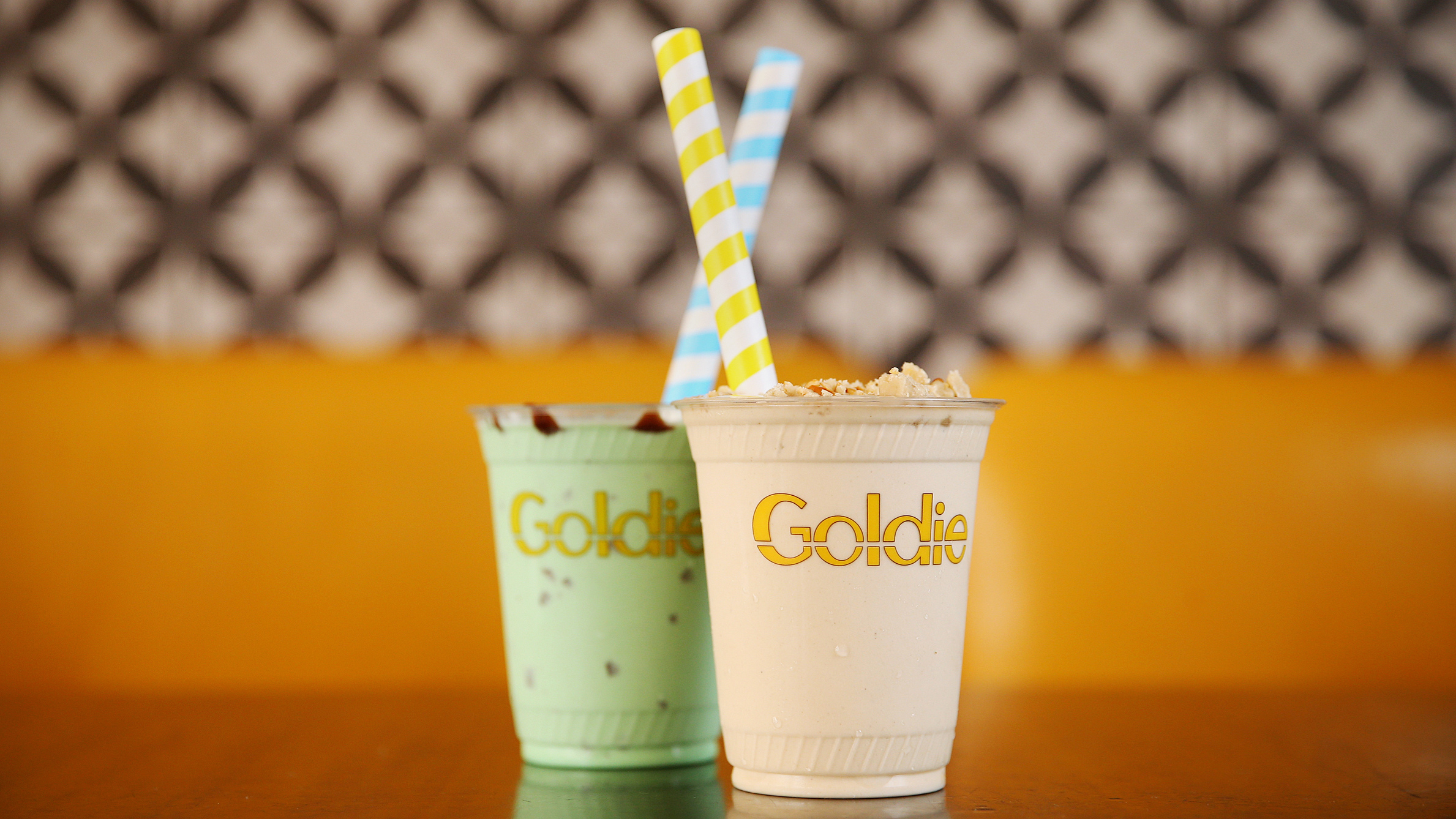
Besides falafel, Goldie is known for tehina shakes.TIM TAI / Staff Photographer
Four Center City Federal Donuts & Chicken locations and three Goldie falafel eateries are bowing out, as founders Michael Solomonov and Steve Cook announced July 14. In the city, only the FedNuts shop at Seventh Street and Fairmount Avenue remains, as well as the Goldie at 1911 Sansom St.
Pita Pocket Eatery in Cheltenham Village wrapped a 15-year run on July 23.
The Langhorne Hotel, a landmark bar and restaurant in Langhorne Borough, closed July 18 after 54 years under the Asta family. New owners Joe and Megan Kontz told the Bucks County Courier Times that they plan to spruce it up, change the name to honor the town’s original name (Four Lanes End), and open late this year.
A series of chain restaurants have shut down recently, including the Perkins in Drexel Hill, the Cracker Barrel in Downingtown, the Miller’s Ale House in Springfield, Delaware County, and the Brio Italian Grille locations in Marlton and Cherry Hill.
Market Day Canelé’s savory tart is a scrapbook of sorts for owners Gil Ortale and Nem Ngo. It’s sold at farmers’ markets on weekends, each tart a collection of every interaction they’ve had through the week, shopping from their fellow vendors at Rittenhouse, Headhouse, Chestnut Hill, and Swarthmore Farmers’ Markets, and filling in the gaps at Reading Terminal Market, where Ortale once ran Fireworks, a charcoal-grill stall four decades ago.
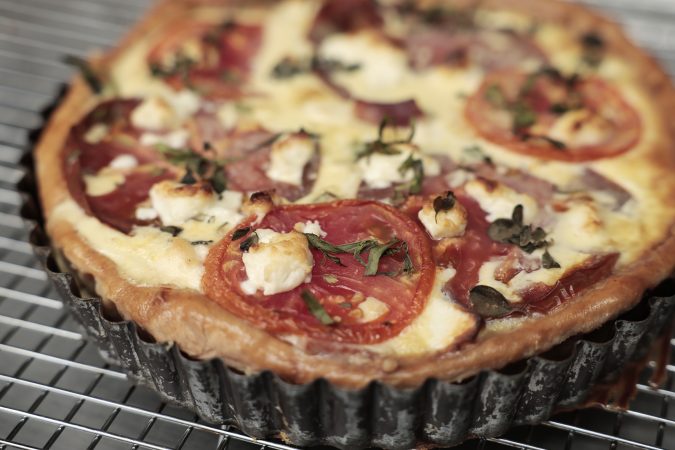
It’s tomato season, and the Market Day savory tomato tart ($30) is an ode to this area’s most covetable, most anticipated fruit. Crimini and white button mushrooms, corn, herb-roasted cotto ham from Claudio, Alderfer Farm eggs, and gruyère play supporting roles to the tomato slices splayed across its top. It’s a tart that’s also a philosophical meditation on produce.
“Flavors [in my cooking] should be crystal clear examples of the very thing you imagine,” said Ortale, whose resume reads like a highlights reel of Philadelphia’s most storied restaurants, as he has worked everywhere from Frog to La Terrasse. “Like when you’re a child and tasting herring or Roquefort for the first time.”
Ortale’s goal is to make food that tastes exactly like one’s first recollection of tasting any food. And so, his tomato tart reminds me of the first time I tasted fresh tomatoes cooked gently on a pizza, when I was five years old. It made me think of the first time I had sweet, fresh corn and the kernels burst in my mouth, and the savory British pies I ate growing up in Hong Kong.
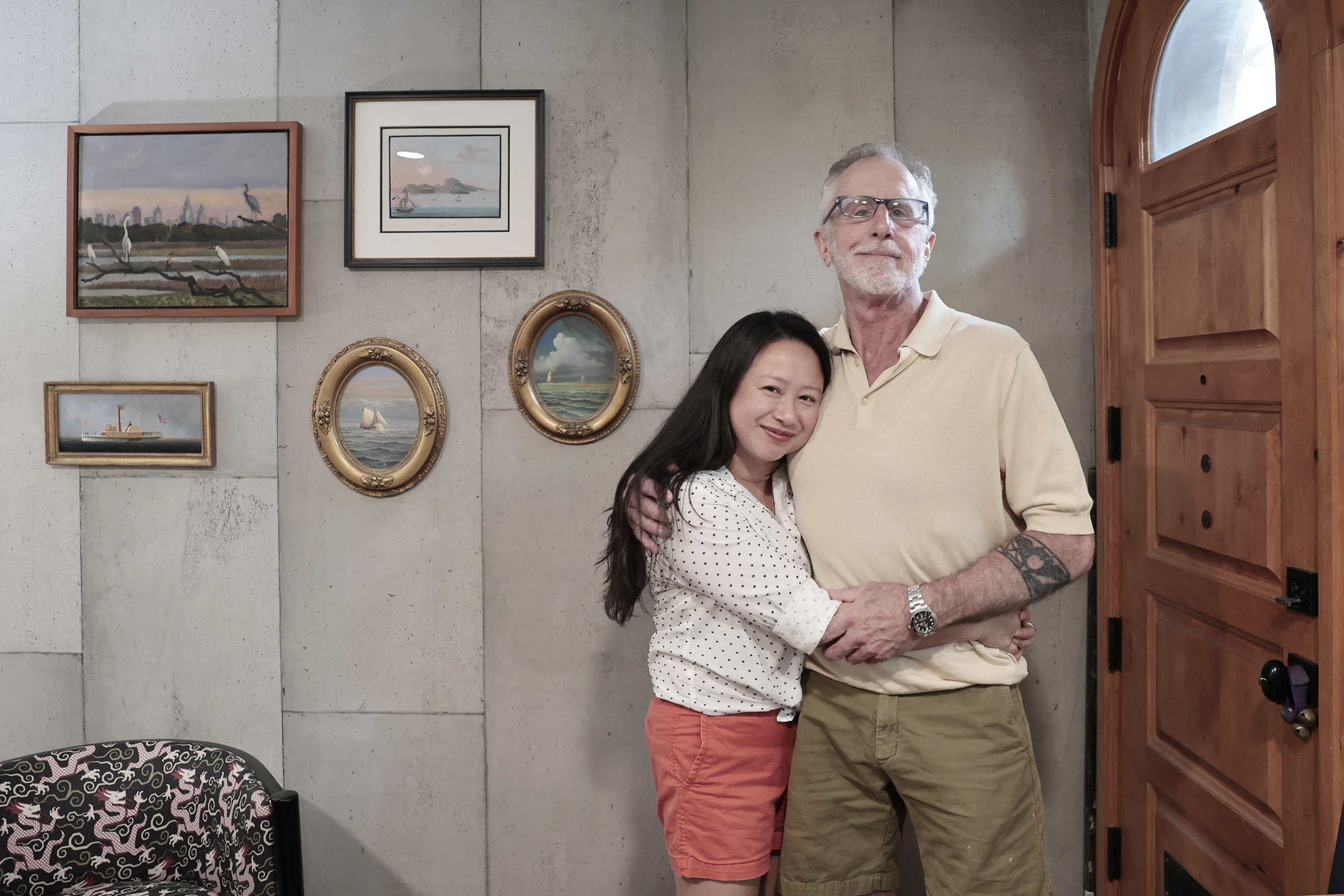
Nem Ngo and Gil Ortale are the folks behind Market Day Canelé. They were photographed in their Philadelphia home on Thursday, July 30, 2026.Elizabeth Robertson / Staff Photographer
It’s so good that I was hesitant to write about it, as Ortale and Ngo usually only make two dozen to sell every week, and if you get one, there’s far less of a chance I’ll be able to get one.
The crust is intentionally imperfect and not uniform, which makes it so flaky, it will stop you in your tracks, mid-bite. Ortale makes every single tart by hand. He doesn’t use a mixer or a Robot Coupe. “He blends the butter into the dry ingredients for each dough ball. That’s why they taste the way they do, they’re light and never stodgy,” said Ngo. “You can’t get that without elbow grease. It can’t be done with a machine.”
This approach is also why Market Day Canelé has never opened a brick-and-mortar bakery. They have no desire to scale up.
“We’re not hardcore capitalists. We just genuinely want to make good food. The farmers’ market industry is the most supportive and values-driven part of the food economy. People are shopping there because they want to know where their food is coming from and they want to see the faces of the people who make the food. We try to uphold that by doing everything by hand, with love, and to the best of our ability,” said Ngo.
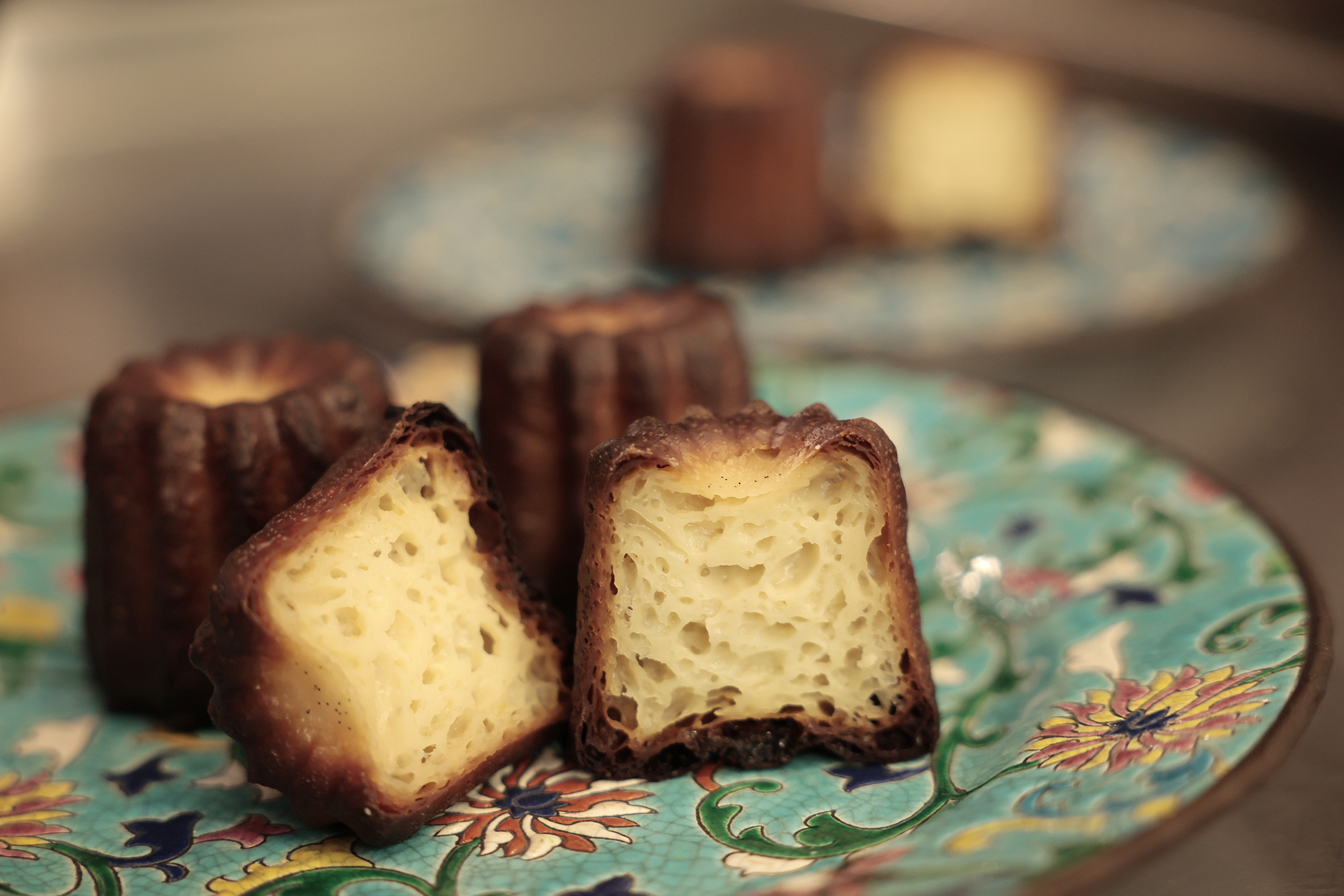
The canelé by Market Day Canelé is a vanilla custard pastry that is the traditional pastry of Bordeaux. It was photographed in Philadelphia on Thursday, July 30, 2026.Elizabeth Robertson / Staff Photographer
The airy, honey-combed crevices of beeswax and butter-slicked canelés may be the emblem of their business. They certainly have sent Ortale and then Ngo down an obsessive path of perfecting a corner of French-rooted baking traditions. But their savory tarts, with a rotation of ultra-local ingredients, many sourced from their friends, are the finest illustration of how skilled hands and devotion to one’s community can produce extraordinary things.
Market Day Canelé, instagram.com/marketdaycanele. Hours: Every Saturday, 9 a.m. to 2 p.m. at Rittenhouse Farmers’ Market and every Sunday, 10 a.m. to 2 p.m. at Headhouse Farmers’ Market. Every other Saturday: Chestnut Hill Farmers’ Market and Swarthmore Farmers’ Market, 9 a.m. to 12 p.m.
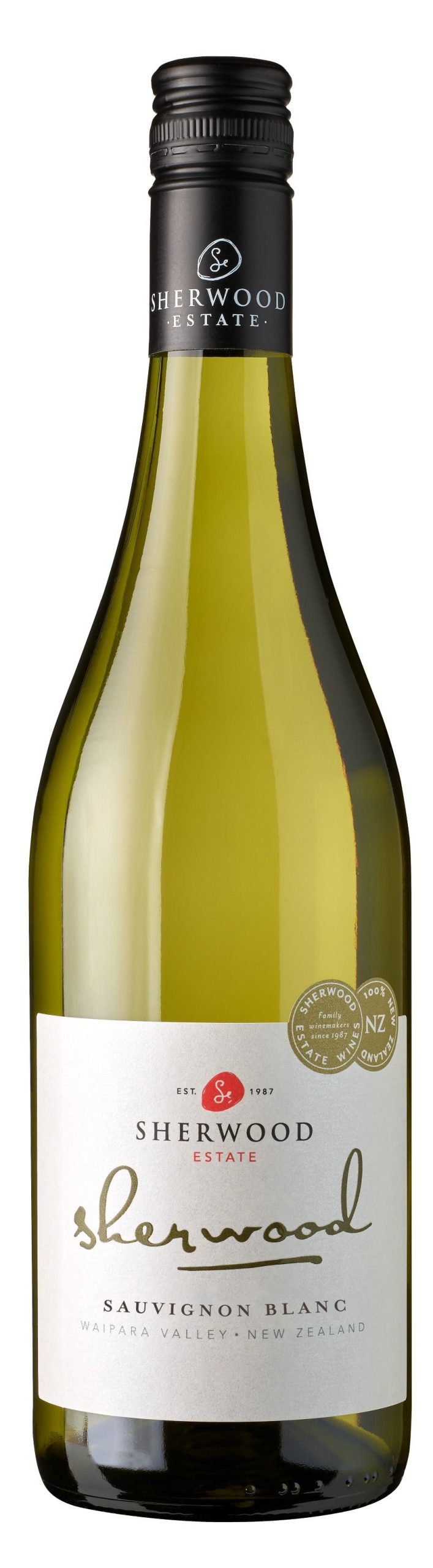
New Zealand wines were rarely encountered in the U.S. before the 1980s, when their distinctive citrusy take on unoaked sauvignon blanc took the world by storm, starting with the Marlborough region. Almost all the examples of New Zealand wine available stateside still come from there. However, there is considerably more to explore than Marlborough, as with this tasty sauvignon blanc from the scenic Waipara Valley.
Like Marlborough, the Waipara Valley is located on New Zealand’s sparsely populated South Island, but it has significant differences of climate and terrain that create noticeable differences in wine flavor. Marlborough’s vineyards are centered on a broad expanse of cool and moist coastal flats at the northern tip of South Island. The Waipara Valley lies further south, near Christchurch, with vineyards that tend to be even cooler, higher, and drier in a network of sheltered valleys. This provides grape growers with a cooler but longer growing season, which develops more prominent tropical fruit flavors while remaining quite light-bodied and refreshingly tart.
Like most New Zealand sauvignon blancs, this iteration still features the green and leafy aromatics that give the best ones a savory, ceviche-like profile. This delightful example offers vibrant flavors of passionfruit and guava; zesty, lime-like acidity; and a fragrance with notes of fresh cilantro and parsley.
Sherwood Estate Sauvignon BlancCourtesy of Sherwood Estate
Sherwood Estate Sauvignon Blanc
Waipara Valley, New Zealand; 13% ABV
PLCB Item #100056939 — on sale through Aug. 2 for $17.99 (regularly $19.99)
No alternate retail locations within 50 miles of Philadelphia, according to www.wine-searcher.com.
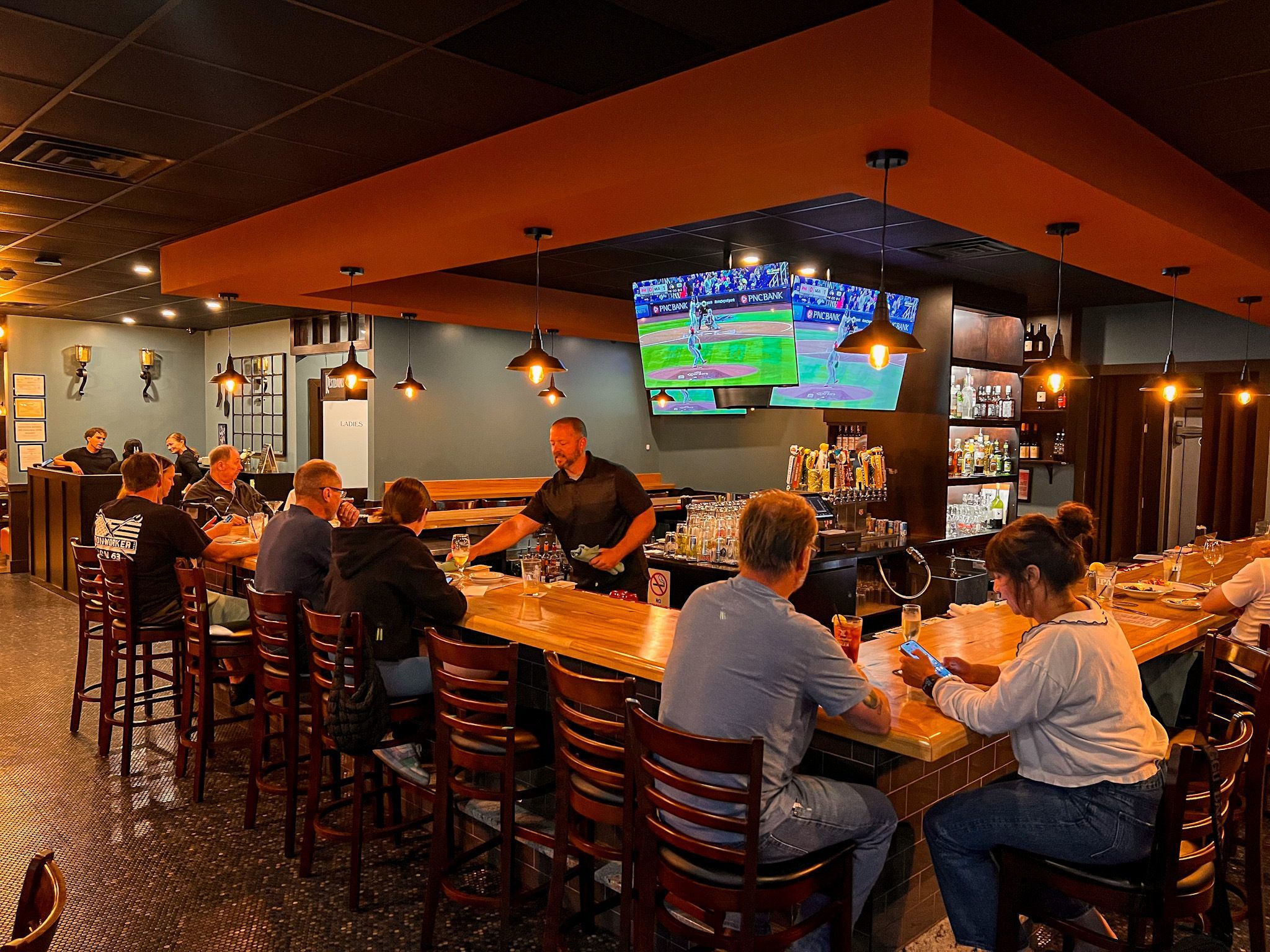
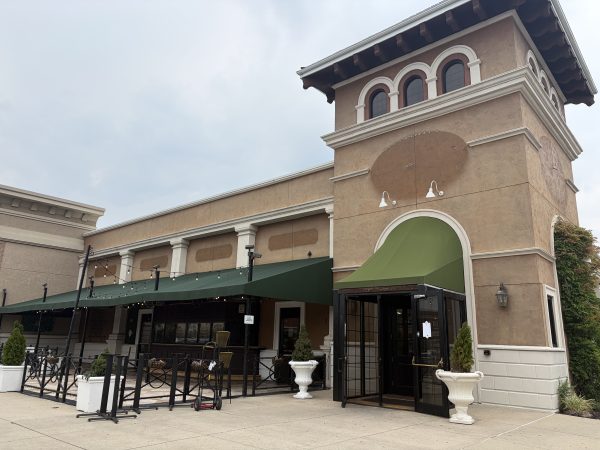
An eclectic crop of new restaurants has opened over the last several months across the Philadelphia suburbs in Pennsylvania, New Jersey, and Delaware. Some — like the three sports bars in Camden County alone — are breathing new life into familiar addresses. Others mark ambitious first ventures.
Here are 18 of them, from Phoenixville to Gloucester Township to Wilmington.
Pennsylvania
Academy Grill (424 S. Bethlehem Pike, Fort Washington): Michael Sloane and Jay Rosenthal’s group, Fine Line Dining, has transformed the former Cantina Feliz into a polished white-tablecloth destination. Jeffrey Power, longtime chef at the erstwhile Dettera in Ambler, oversees a menu of house-made pasta, seafood, and steaks.
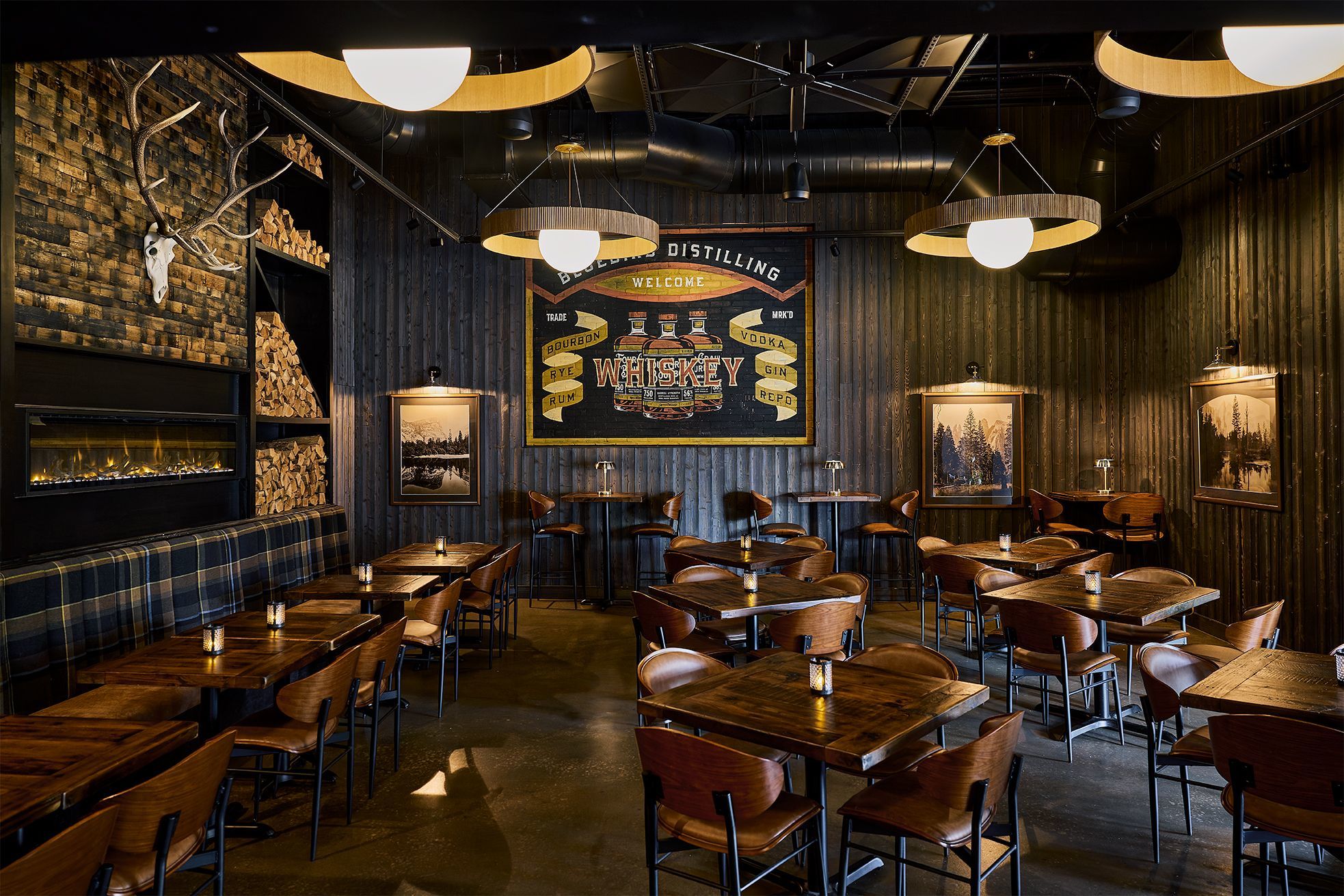
Bluebird Distilling has reopened with a new neo-Neapolitan pizzeria and restaurant.Photos courtesy of Ed Newton
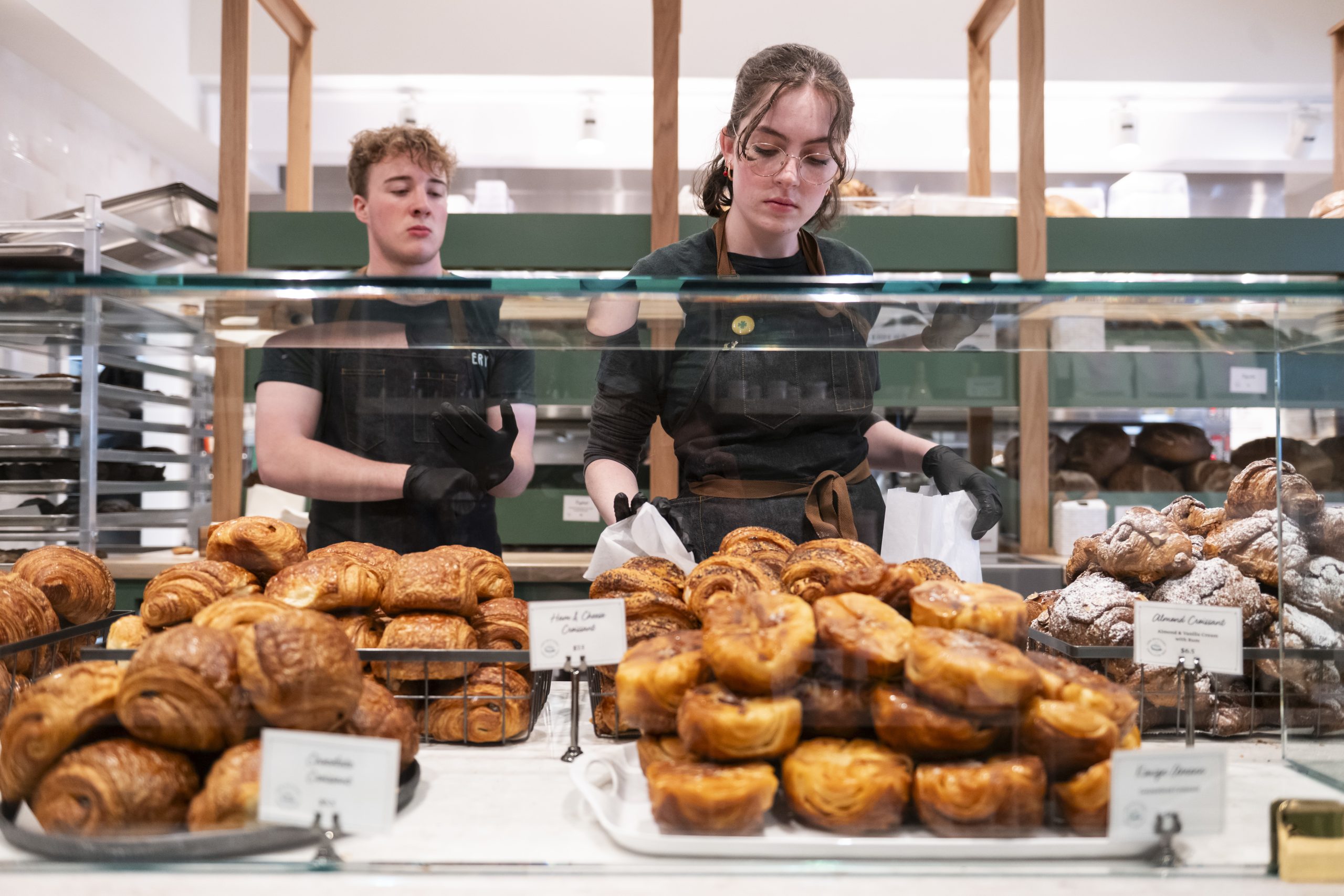
Noah Clifford (left) and Sofia Siano working the pastry case at the Buttery in Bryn Mawr.Allie Ippolito / For The Inquirer
The Buttery Bryn Mawr (836 W. Lancaster Ave., Bryn Mawr): The Malvern bakery-cafe opened its Main Line expansion with 82 indoor seats and daily service from 7 a.m. to 5 p.m. The menu includes sourdough breads, pastries, Turkish eggs (poached eggs cooked in garlicky yogurt with a drizzle of spicy butter), sandwiches, and seasonal lunch dishes, plus grab-and-go foods after the kitchen closes at 3 p.m.
Cleavers (103 Squire Dr., Newtown Square): The Center City cheesesteak shop grand-opened its second location last month at Ellis Preserve, offering cheesesteaks, chicken cheesesteaks, burgers, sandwiches, fries, and milkshakes.
The Coffee Station (1117 Smithbridge Rd., Glen Mills): The Delaware County breakfast-and-lunch operator took over the former Meghan’s Restaurant, which had occupied the building for 27 years. The menu includes omelets, pancakes, breakfast sandwiches, burgers, hoagies, wraps, soups, and salads. Other locations are in Morton and Garnet Valley.
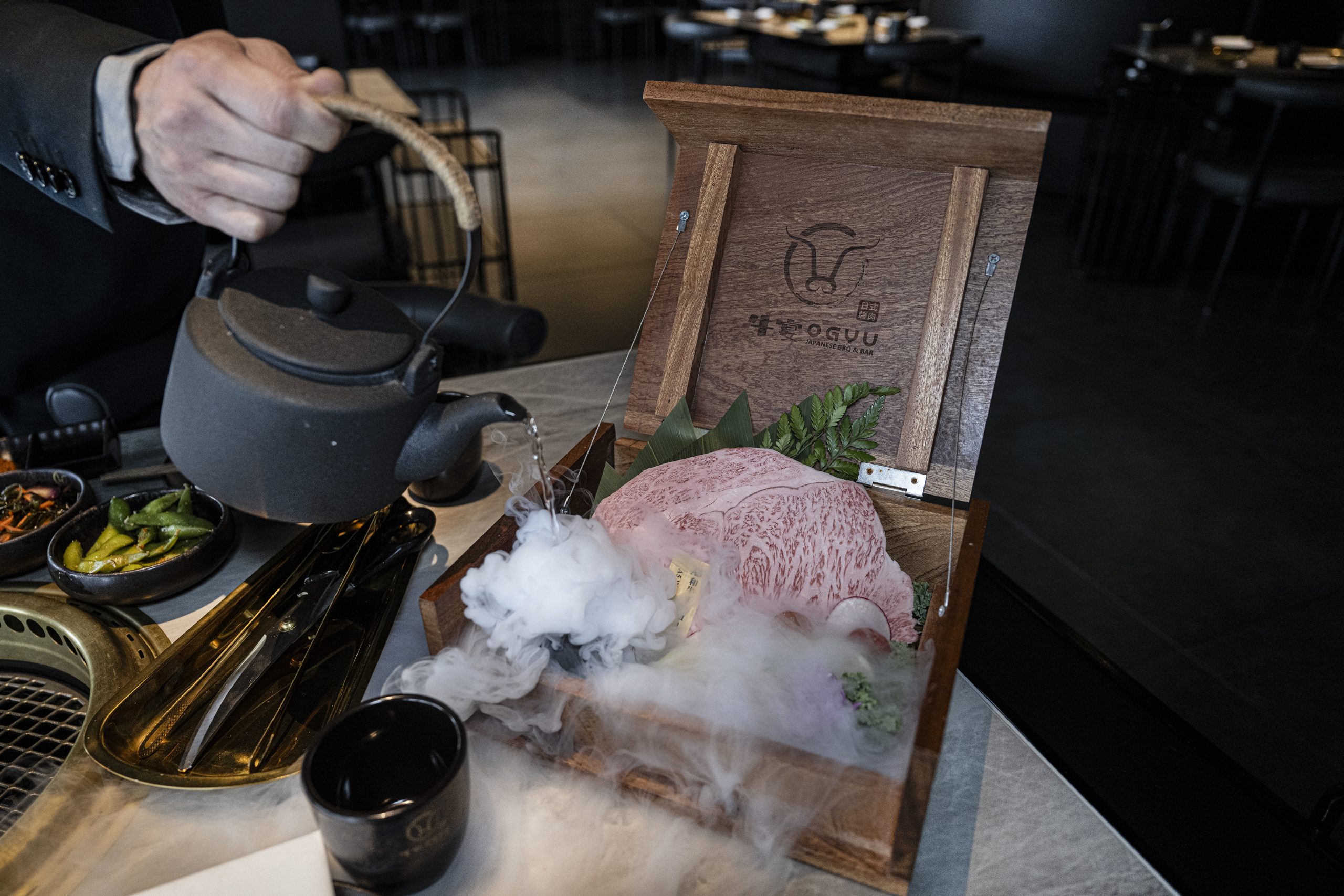
Tabletop and tableside cooking are offered at Ogyu Japanese BBQ.Jose F. Moreno / Staff Photographer
Ogyu Japanese BBQ & Bar (60 Greenfield Ave., Ardmore): Restaurateur Sam Li’s upscale yakiniku restaurant occupies the former Iron Hill Brewery. Customers grill premium Wagyu and other meats on tabletop burners, choosing from fixed-price packages or à la carte selections. The dramatically remodeled space includes black-and-gold finishes, marble-paneled walls, a large bar, and private dining rooms.
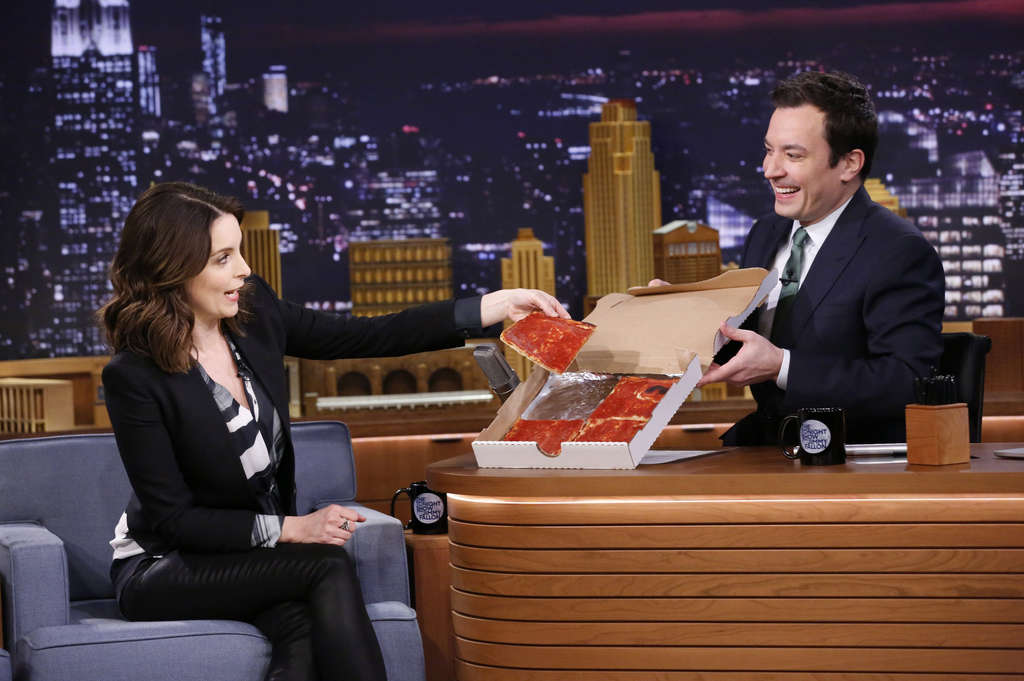
Upper Darby’s Tina Fey offers Jimmy Fallon a slice of Pica’s pizza on the “Tonight” show in 2014.Lloyd Bishop / NBC
Pica’s Italian Market (1101 Sussex Blvd., Broomall): After closing its landmark Upper Darby dining room earlier this year, the Pica family soft-opened this mostly takeout shop in a Delco light-industrial park, carrying the restaurant’s signature square pizzas, sandwiches, prepared foods, and other Italian specialties. Pica’s, which hit the national radar in 2014 when locally raised Tina Fey sampled its pizza on the Tonight show, traces its roots to Frank Pica Sr.’s West Philadelphia pizzeria. There’s a West Chester location, too.
P.J. Whelihan’s (2920 S. Eagle Rd., Newtown): The regional sports-bar chain took over the former Iron Hill Brewery at the Village at Newtown with its signature wings, burgers, sandwiches, salads, and American entrees, backed by numerous televisions and a broad draft-beer selection. Most of Iron Hill’s existing layout was retained.
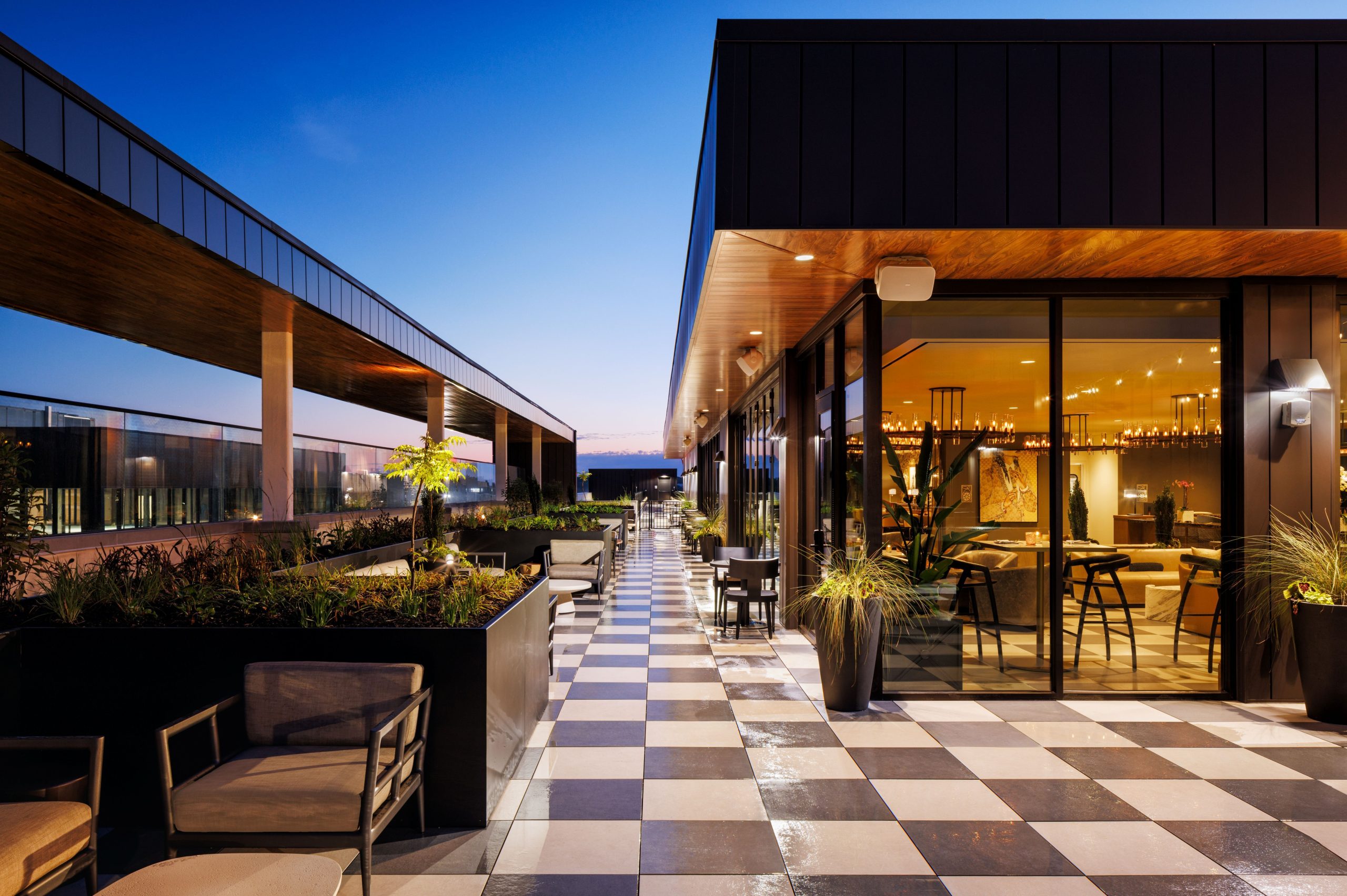
Pomelo Rooftop Terrace at the Brandywine, 165 King of Prussia Rd., King of Prussia.The Brandywine
Pomelo Rooftop Terrace (165 King of Prussia Rd., Radnor): This expansive rooftop bar and lounge atop The Brandywine hotel in Radnor (with 136 seats, inside and out) will grand-open Aug. 8 with chef Michael Davies’ menu of shareable plates (e.g. oysters, scallop crudo, a smash burger, grilled branzino, lion’s mane mushroom cake), raw bar, botanical-focused cocktails, wine, and beer. Weekend brunch begins Aug. 22.
Porter (34 E. Butler Ave., Ambler): This newcomer is in the former Gypsy Blu space on the first floor of Ambler’s historic former Wyndham Hotel, offering contemporary American cooking in a candlelit, vintage-inspired dining room. Menu includes oysters, pasta, risotto, seafood, and meat dishes. Gaslight, a separate craft-cocktail bar with small plates, is upstairs.
Rick’s Tavern (201 W. Seventh Ave., Conshohocken): Chef Derek Davis runs the show at Rick and Gale Mahoney’s modern tavern on the rebuilt site of Pizza Time Saloon and Old Time Saloon. The two-story restaurant honors those neighborhood institutions with wood-fired pizza while adding house-made pasta, cocktails, private-event space, and live music upstairs on Friday and Saturday nights.
The bar at the Scratch Kitchen by Gallo’s, 575 Horsham Rd, Horsham.Michael Klein / Staff
The Scratch Kitchen at Gallo’s (575 Horsham Rd., Horsham): The Harvey family, owners of Gallo’s Seafood in Northeast Philadelphia, is behind this casual, roomy neighborhood restaurant in the former Farm & Fisherman Tavern. Chef Bob DeLange, the owners’ son-in-law, combines seafood dishes from Gallo’s with burgers and bar food inspired by Harv’s Burger Bar, Gallo’s adjoining Northeast Philadelphia tavern.
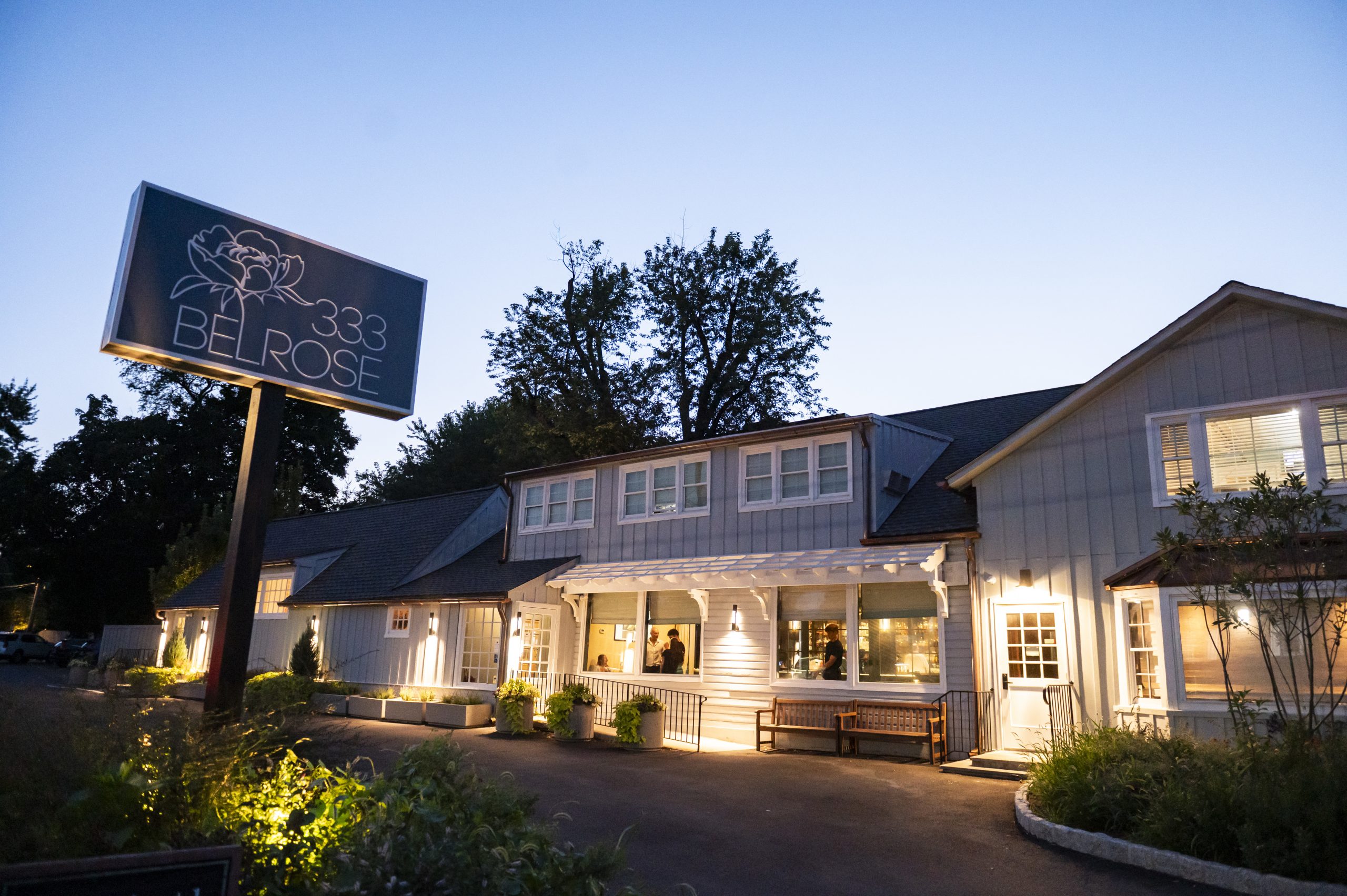
The exterior of 333 Belrose in Radnor’s St. Davids’ area.Allie Ippolito / For The Inquirer
333 Belrose (333 Belrose Lane, Radnor): The longstanding contemporary American restaurant has reopened under chef Ross Essner after an extensive renovation that flipped the positions of the bar and main dining room.
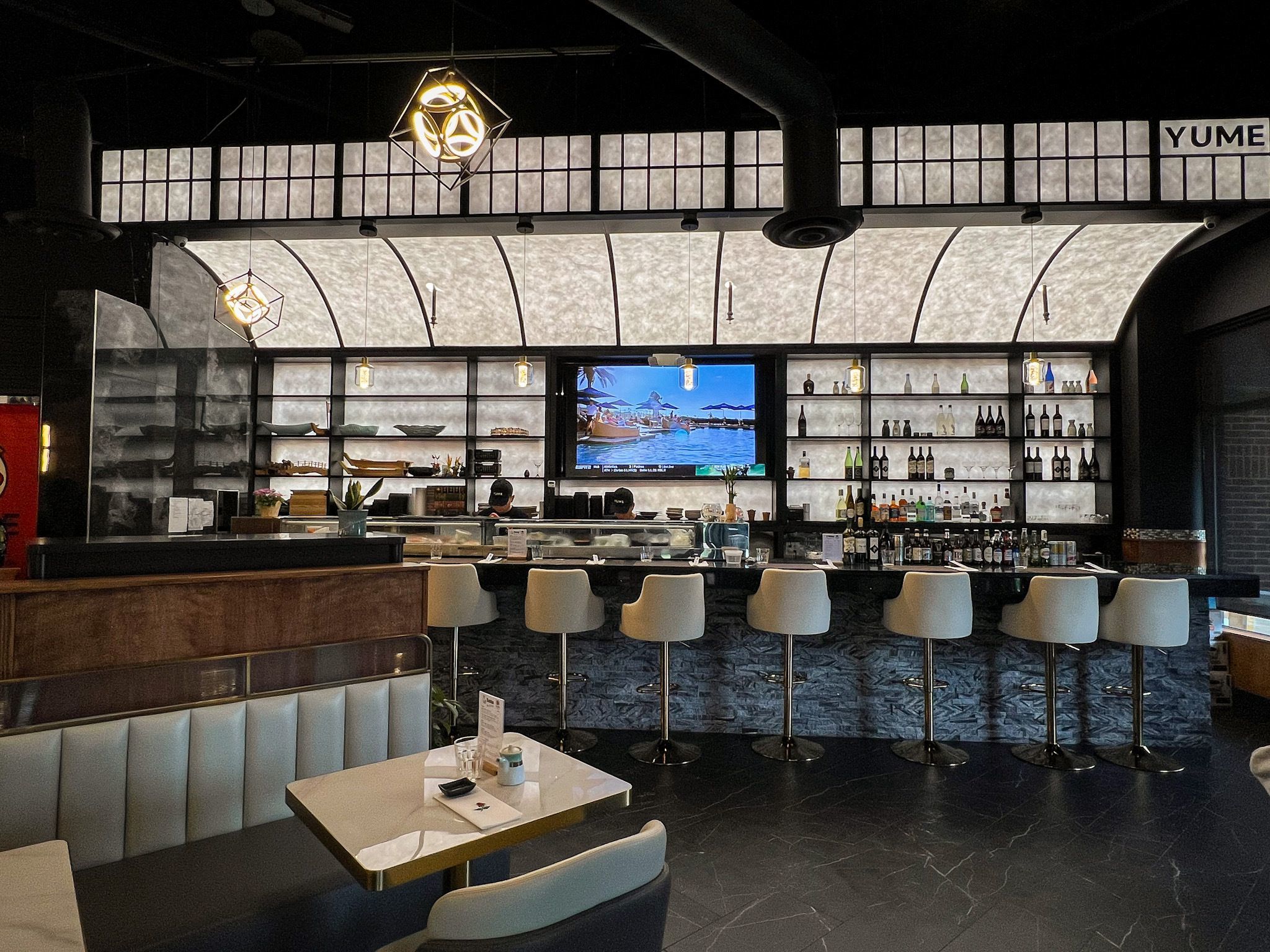
Yume Sushi in the Shoppes at English Village, 1460 Bethlehem Pike, North Wales.Michael Klein / Staff
Yume Sushi (1460 Bethlehem Pike, North Wales): This Japanese restaurant has opened in the Shoppes at English Village, down the row from Trader Joe’s. Co-owner and head chef Kevin Wan brings about a decade of sushi experience to the venture. The menu centers on sushi, sashimi, rolls, and Japanese-Asian fusion dishes.
New Jersey
Flying Pig Tavern & Tap (1300 Blackwood-Clementon Rd., Gloucester Township): The sprawling former Favorites off-track-betting building has come up as the fifth unit in a growing group. Menu of pizzas, burgers, wings, tacos, and entrees shares billing with live bands, darts, shuffleboard, and a covered tiki bar. A sixth location is planned for the former Andalusia Bar & Grill space in Bensalem.
Home Team Tavern (267 S. Black Horse Pike, Mount Ephraim): Greg D’Alesio has turned the former Mount Ephraim Bar & Grill into a compact, sports-themed neighborhood tavern. Its scratch kitchen serves pizzas, burgers, wings, sandwiches, and elevated bar food, alongside draft cocktails and beer.
Thirsty Turtle Tavern (270 White Horse Pike, Barrington): This new concept from SAS Restaurant Group in the former Chuck Lager space features an open kitchen, burgers, pizza, sushi, cocktails, draft beer, and an outdoor patio behind garage doors. It operates daily; weekday happy hour and weekend brunch are expected to begin in the fall.
Delaware
Ezme (625 N. Market St., Wilmington): Chef Antimo DiMeo and the Bardea Restaurant Group opened this coastal Mediterranean restaurant across from Bardea Food & Drink. Inspired by cuisine from Turkey, Greece, and the Aegean coast, the menu encompasses mezze, raw-bar dishes, handmade breads, grilled seafood, and fire-driven preparations accented with herbs, citrus, and spices. Both à la carte and tasting-menu formats are available.
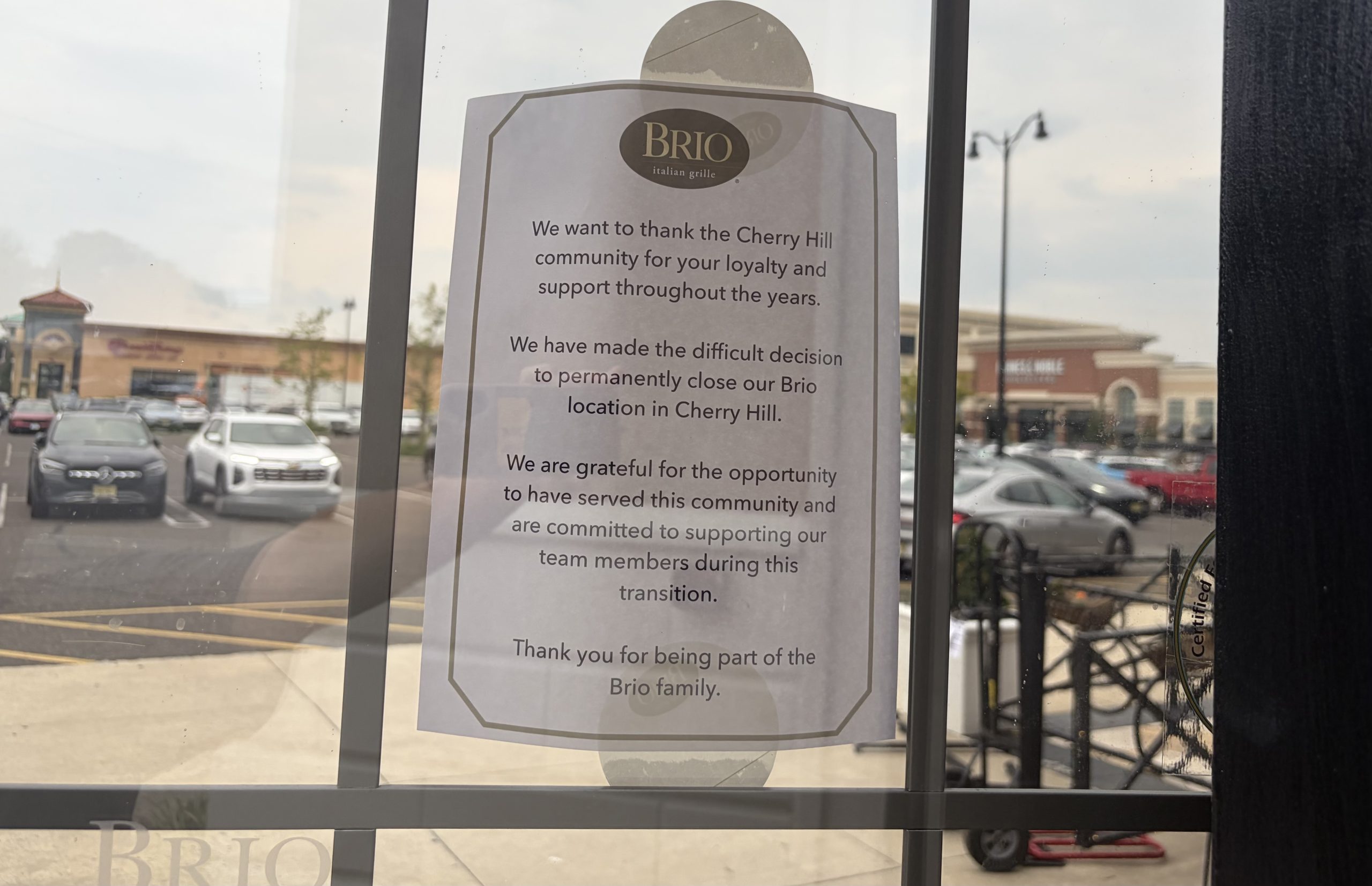
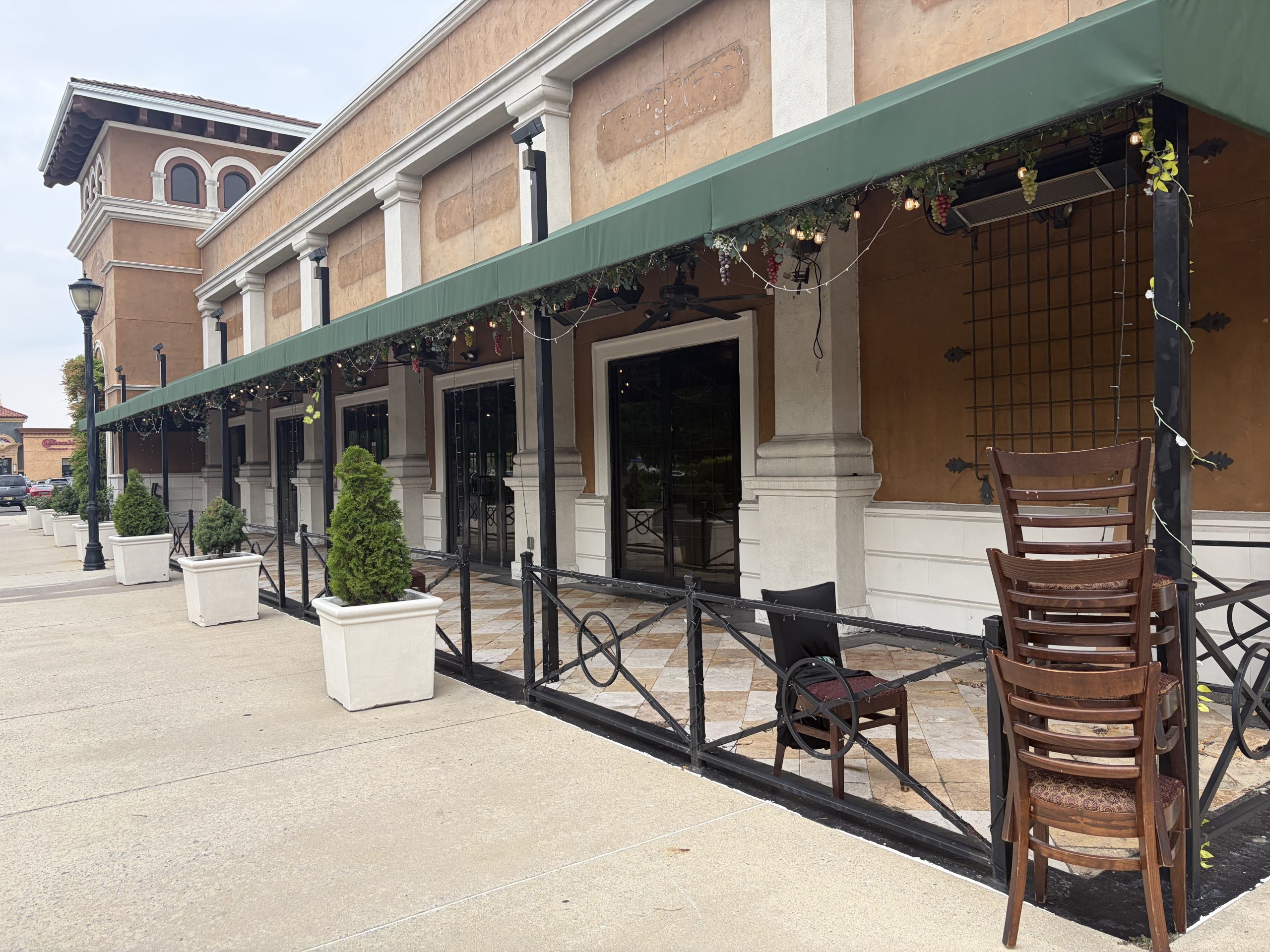
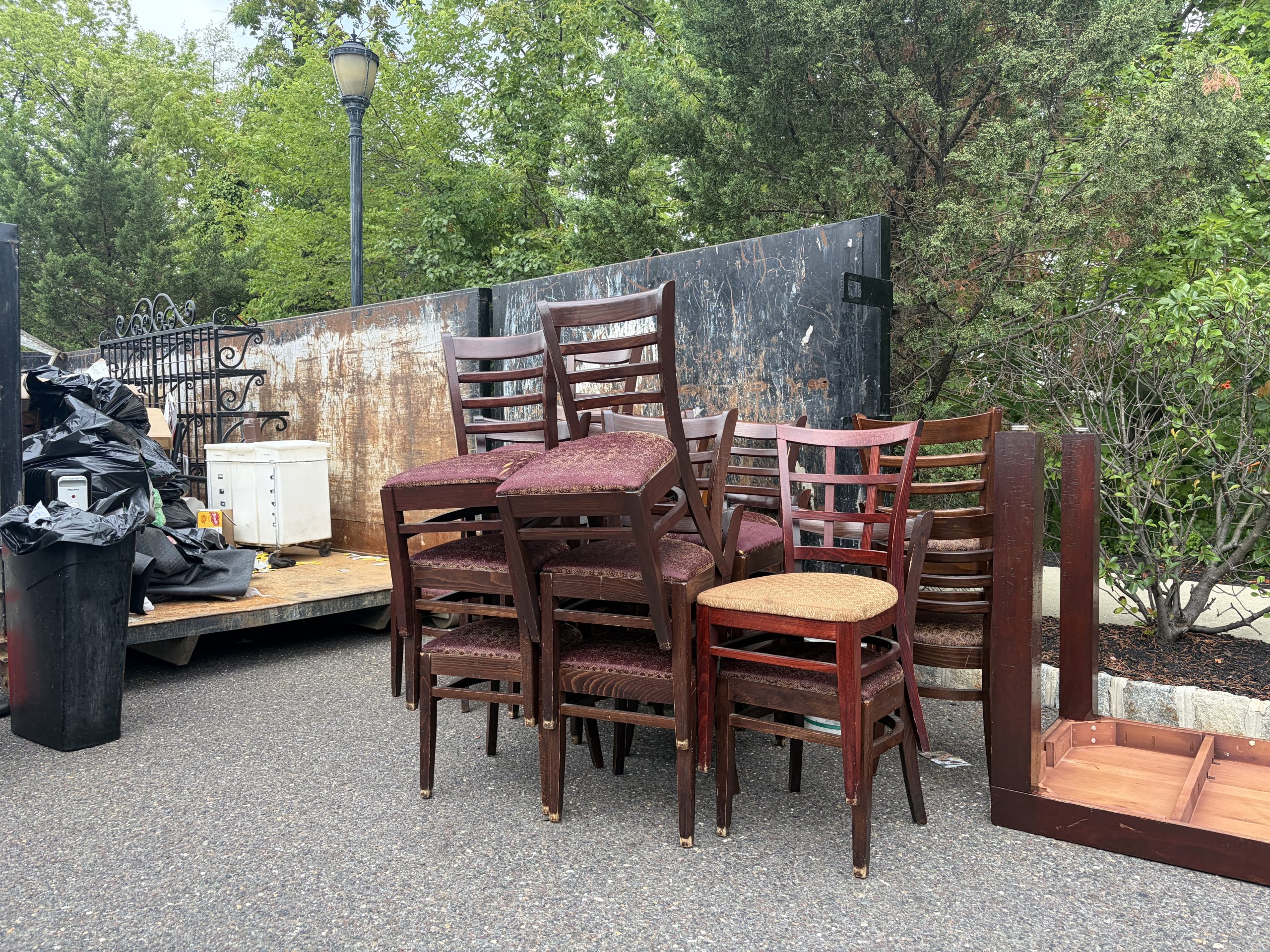
The signage is down and the furniture and appliances were on their way out of Cherry Hill’s Brio Italian Grille on Tuesday after the restaurant permanently shut its doors.
“We have made the difficult decision to permanently close our Brio location in Cherry Hill,” a sign posted to the restaurant’s entrance reads. “We are grateful for the opportunity to have served this community and are committed to supporting our team members during this transition.”
A sign posted to the entrance of Brio Italian Grille in Cherry Hill announces the permanent closure of the restaurant on July 28, 2026.Lacey Latch
Calls to the restaurant went unanswered Tuesday and the location had been removed from the Brio Italian Grille website.
The other Brio Italian Grille location in Marlton closed in May, less than a year after the chain’s parent company filed for bankruptcy for the second time in five years.
South Jersey residents interested in a visit to the Italian restaurant will now have to travel more than 200 miles to the nearest location, in Connecticut.
The patio at Brio Italian Grille in Cherry Hill was cleared of all furniture save for some stacks of chairs on July 28, 2026 after the restaurant’s sudden closure.Lacey Latch
Is Fogo de Chão moving in?
As rumors of closure swirled last month, so, too, did rumors that Fogo de Chão Brazilian Steakhouse would move into the space.
42 Freeway, a publication covering development in South Jersey, first reported the news in May, followed by NJ.com, which cited project plans filed by Fogo de Chão and the owners of the Towne Place shopping center to the Cherry Hill Township Zoning Board of Adjustment in April.
Those plans propose a remodeled restaurant with 296 seats, and the required zoning permits for the conversion to the steakhouse have already been issued, Cherry Hill Township attorney Cosmas Diamantis previously told The Inquirer.
Staff were at Cherry Hill’s Brio Italian Grille on July 28, 2026 clearing out the restaurant following the sudden closure.Lacey Latch
Now, with Brio closed, it is still unclear if the steakhouse plans to lease the property.
A spokesperson for Fogo de Chão declined to comment on the matter last month and again on Tuesday.
Joe Morris, an executive for M&M Realty Partners, which owns the landlord entity that manages Towne Place tenants, previously said that the chain has inquired about joining the Cherry Hill retail center for more than a decade. Morris did not respond to requests for comment this week.
“I can absolutely tell you, if Brio gives their space back, Fogo is 100% a tenant we would be interested in speaking with,” Morris said last month amid the first round of closure rumors.
Oroshi Sushi Omakase opened on Broad Street last month, with startlingly low prices for the elegant format, where chefs slice fish and gently coax rice into nigiri, one piece at a time. Each nigiri constitutes one course in omakase dining.
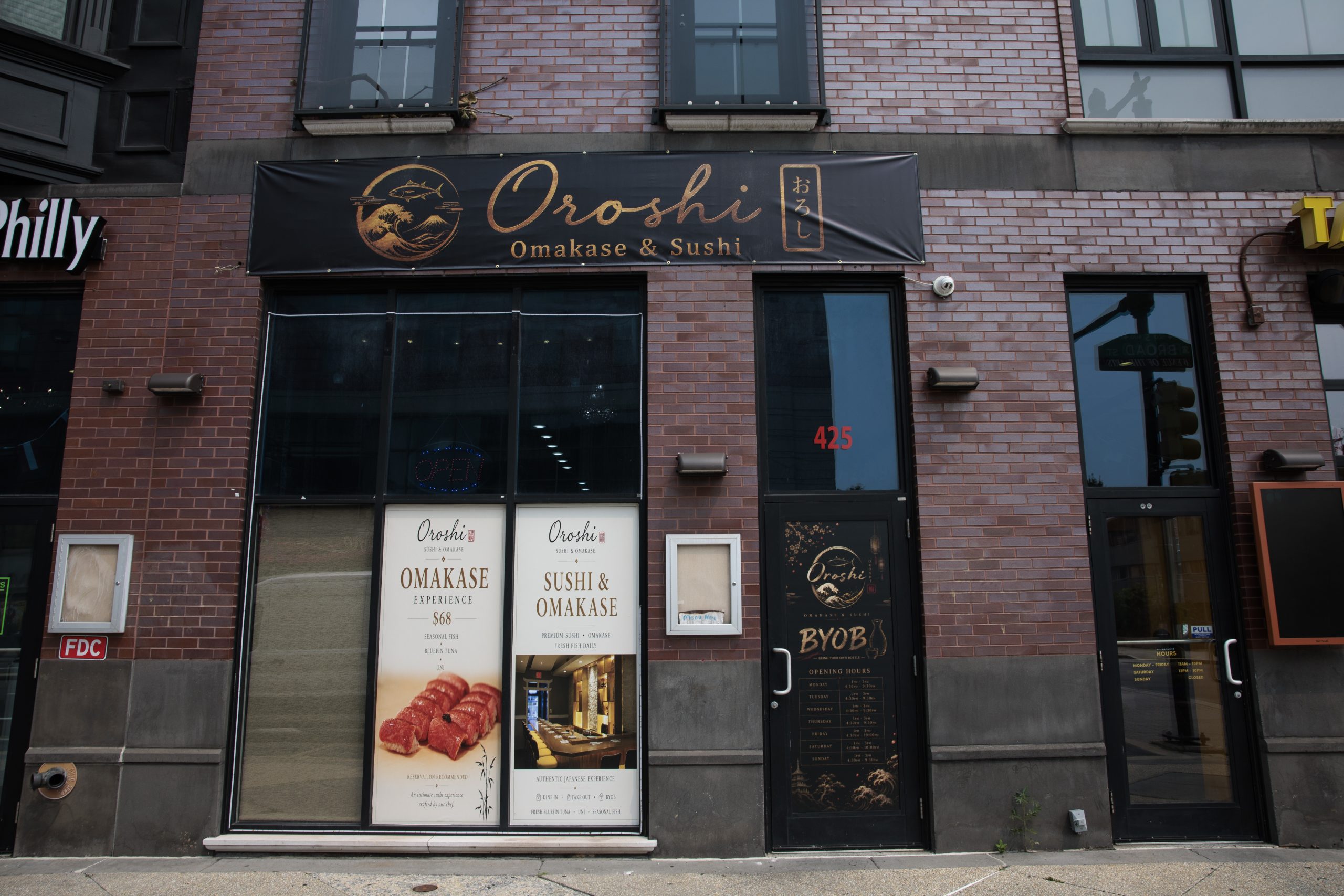
Oroshi, which means “grated” in Japanese, serves omakases at dinner service at $68 for 15 courses, and lunch, for $48 and 10 courses (prices throughout this article are not inclusive of tax and tip). Dinner takes precisely 90 minutes and lunch takes 60 minutes.
Omakase deals can also be had at Uchi, whose happy hour omakase (served between 4 p.m. and 6 p.m. daily) costs $60 for nine courses. Oroshi’s omakase is even cheaper than the one at Yuhiro in Fishtown, which costs $78 per person and also takes 90 minutes to serve 15 courses. Most sushi restaurants in Oroshi’s price range focus on rolls and takeout, neither of which is available there.
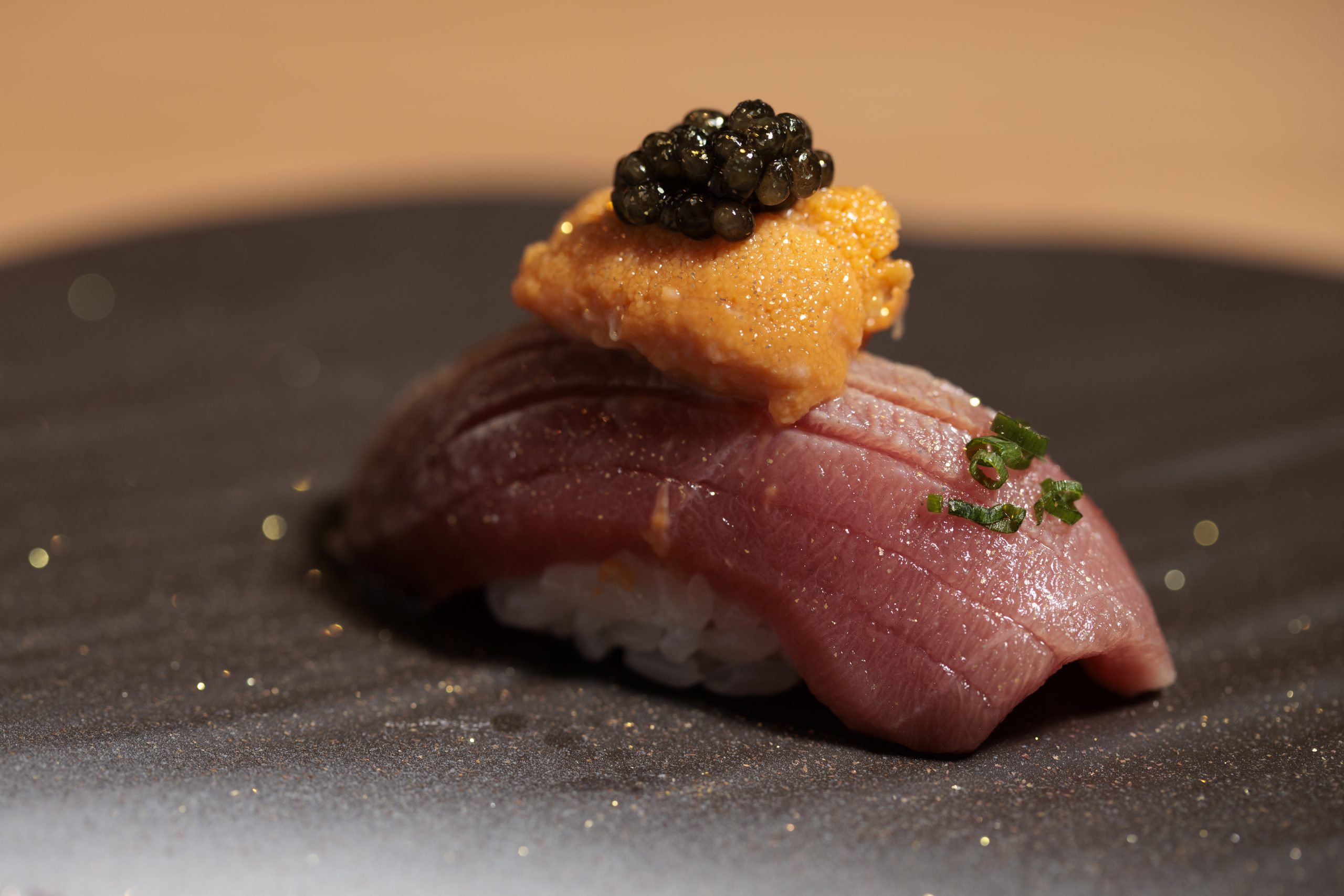
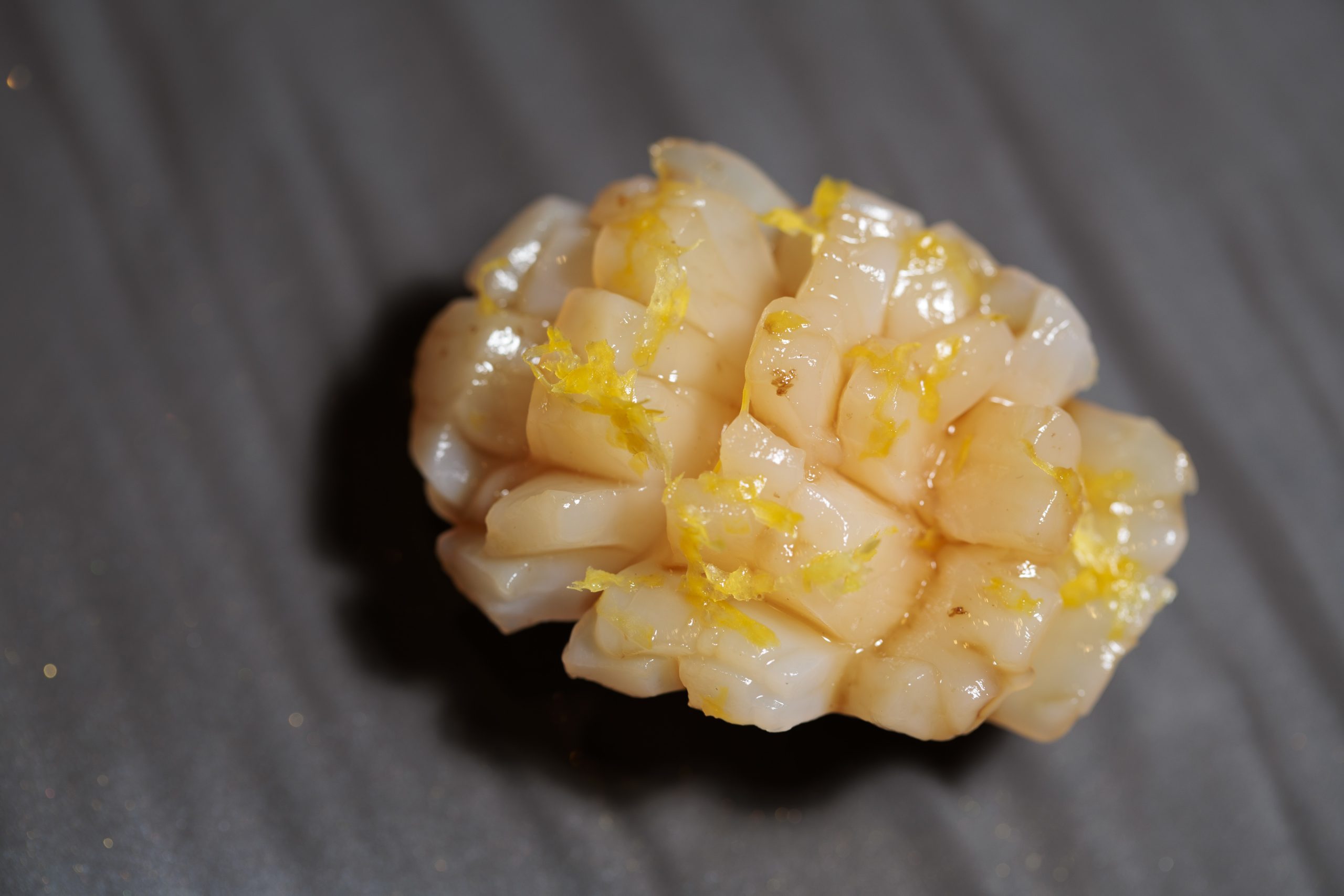
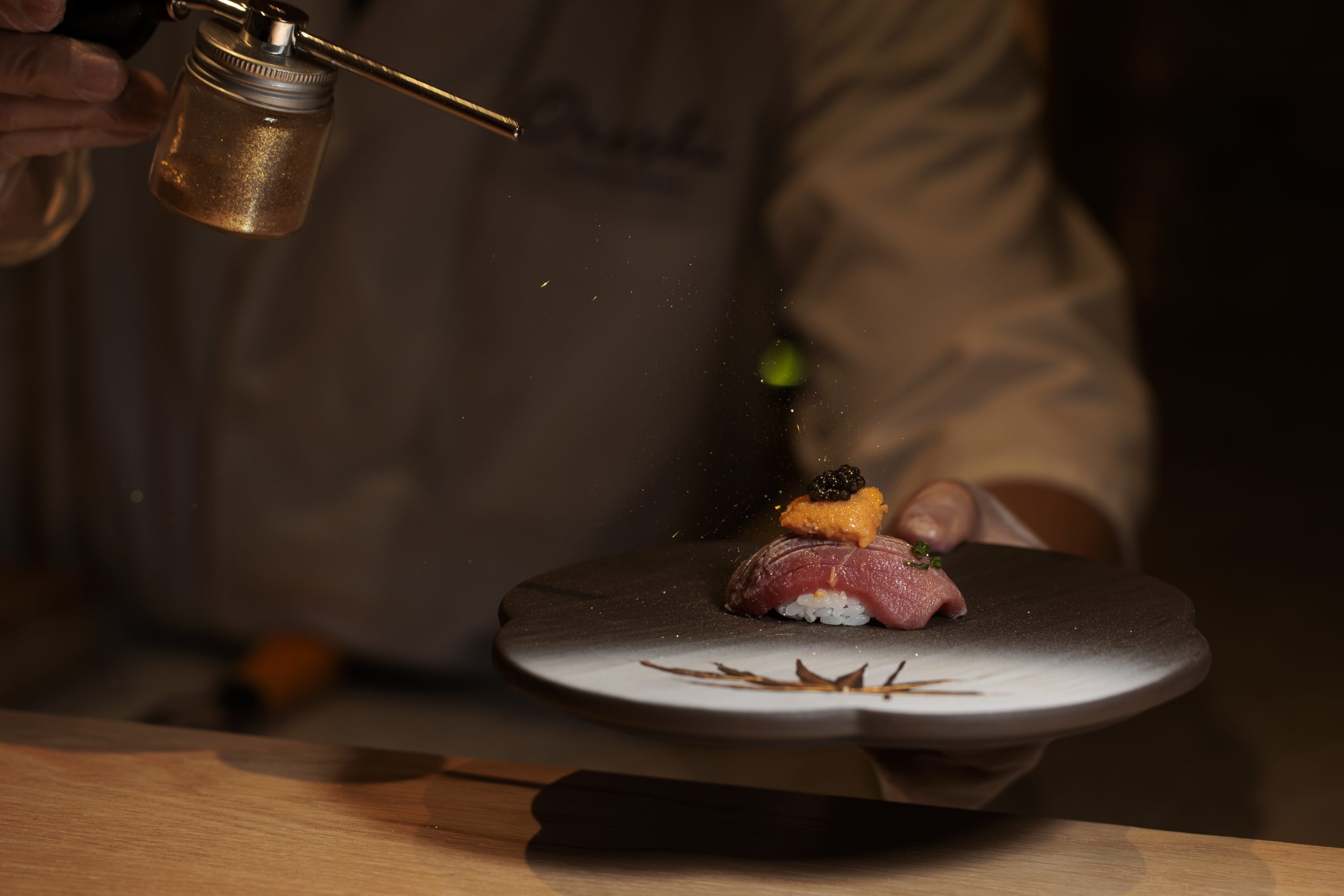
The Otoro with Uni and Caviar at Oroshi on Thursday, July 16, 2026 in Philadelphia. Oroshi offers a $68 omakase.Monica Herndon / Staff PhotographerThe Hotate scallop at Oroshi on Thursday, July 16, 2026 in Philadelphia. Oroshi offers a $68 omakase.Monica Herndon / Staff Photographer
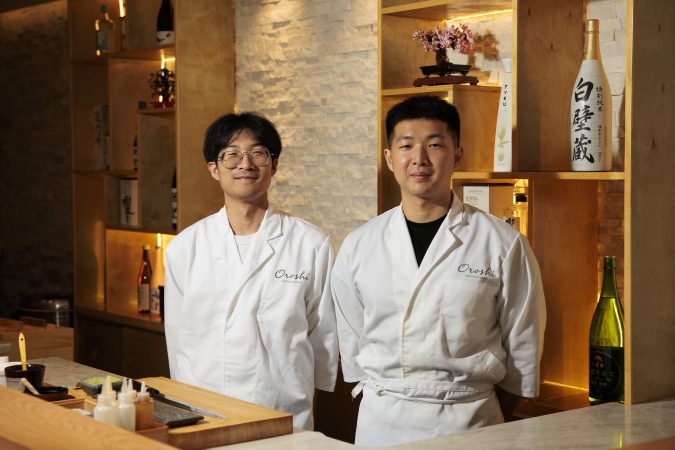
Yuhiro is also where Oroshi general manager Jahang Zhang, 29, met chef Leo Liu, 27. Together, they run Oroshi, along with recently hired 27-year-old sushi chef Ming Lee (he also goes by Leo), who just moved to Philadelphia from New York City two weeks ago.
Oroshi is funded by a private investor, who was also once a sushi chef.
The exterior of Oroshi on Thursday, July 16, 2026 in Philadelphia. Oroshi offers a $68 omakase.Monica Herndon / Staff Photographer
Liu, whose father was also a sushi chef, most recently worked at Hiroki (where the omakase costs $195 before a mandatory 20% service charge). Both he and Zhang were determined to share the omakase format and make it more approachable.
“I have worked in sushi restaurants since I was a kid — since I was about 14 years old. My dream was to open a sushi restaurant,” said Zhang, who worked every position in family-owned sushi restaurants at places like Rayaki in Franklin Mills and Sushi Man in Huntingdon Valley before going to manage Yuhiro, where Liu was working as a sushi chef.
The “zoomakase” trend, where single pieces of nigiri are served at a rapid pace and at much lower prices than traditional omakases, has been pervasive in New York, especially on the Lower East Side. But here in Philly, it never really took off. Just like the hand roll or temaki trend overwhelmed New York, but exists only in pockets here.
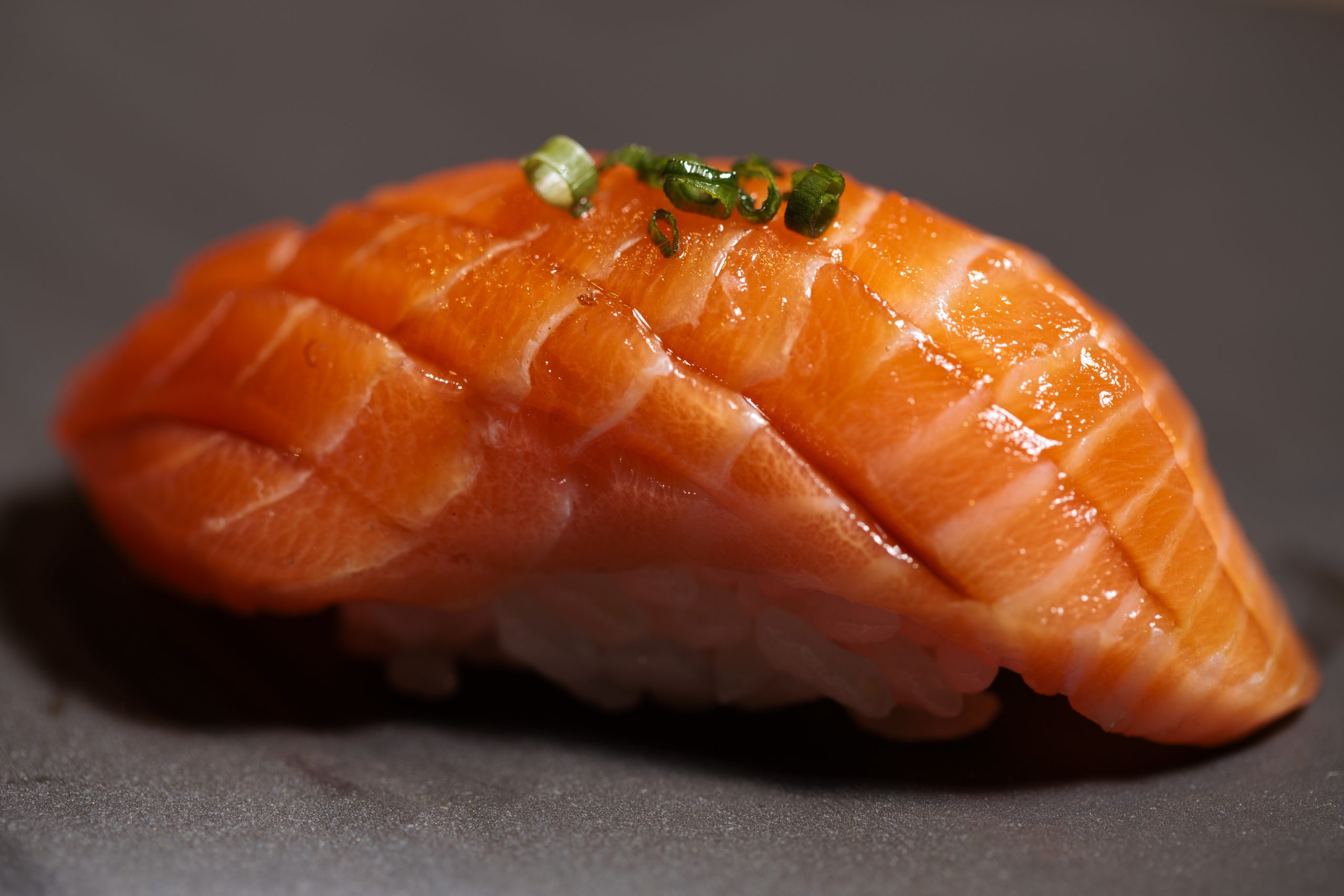
The King Salmon at Oroshi on Thursday, July 16, 2026 in Philadelphia. Oroshi offers a $68 omakase.Monica Herndon / Staff Photographer
Oroshi isn‘t skimping on ingredients to make their pricing work, flying in fresh fish and wagyu from Japan like the other omakase-focused restaurants in Philly.
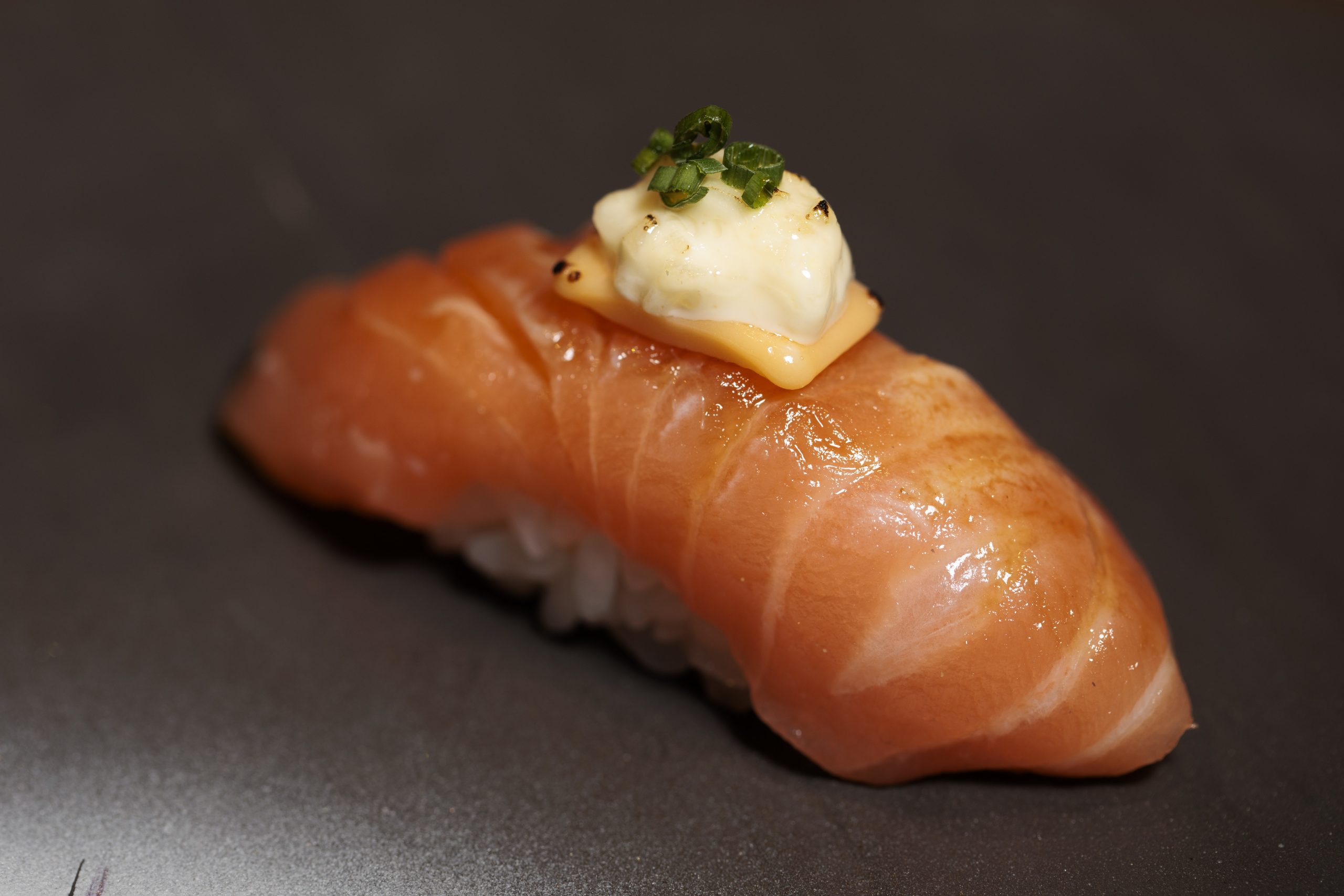
On a recent night, the mist of gold glitter that Liu sprayed upon the otoro nigiri with caviar met with gasps of glee. (Indeed, there is caviar at Oroshi, though a very small amount.) Oroshi is also playful: a nigiri on their opening menu that they’ve since phased out consisted of premium Bakkafrost salmon from Scotland, topped with mayonnaise and a tiny square of Kraft American cheese that was torched multiple times.
The salmon with American cheese at Oroshi on Thursday, July 16, 2026 in Philadelphia. Oroshi offers a $68 omakase.Monica Herndon / Staff Photographer
At Oroshi, the lights are bright and the decor is spare. There are sake bottles and framed wagyu certifications behind the sushi bar. The former is just for decoration, as Oroshi is a BYOB. The latter is legitimate, indicative of the quality of their ingredients.
The Otoro with Uni and Caviar at Oroshi on Thursday, July 16, 2026 in Philadelphia. Oroshi offers a $68 omakase.Monica Herndon / Staff Photographer
It’s not a place to linger, but they will allow for add-ons so you can repeat your favorite pieces of nigiri and these range between $7 to $14 per piece. Salmon, for instance, is $7. Otoro, or the most prized and fatty cut of tuna, is $14 a la carte. That same otoro nigiri add-on at Royal Sushi? $35.
Oroshi Sushi Omakase, 425 S Broad St., oroshisushiomakase.com. Hours: 1 p.m. to 3 p.m. Monday through Friday, 4:30 p.m. to 9:30 p.m. Sunday through Thursday, 4:30 p.m. to 10 p.m. Friday and Saturday.