Tag: UniversalPremium

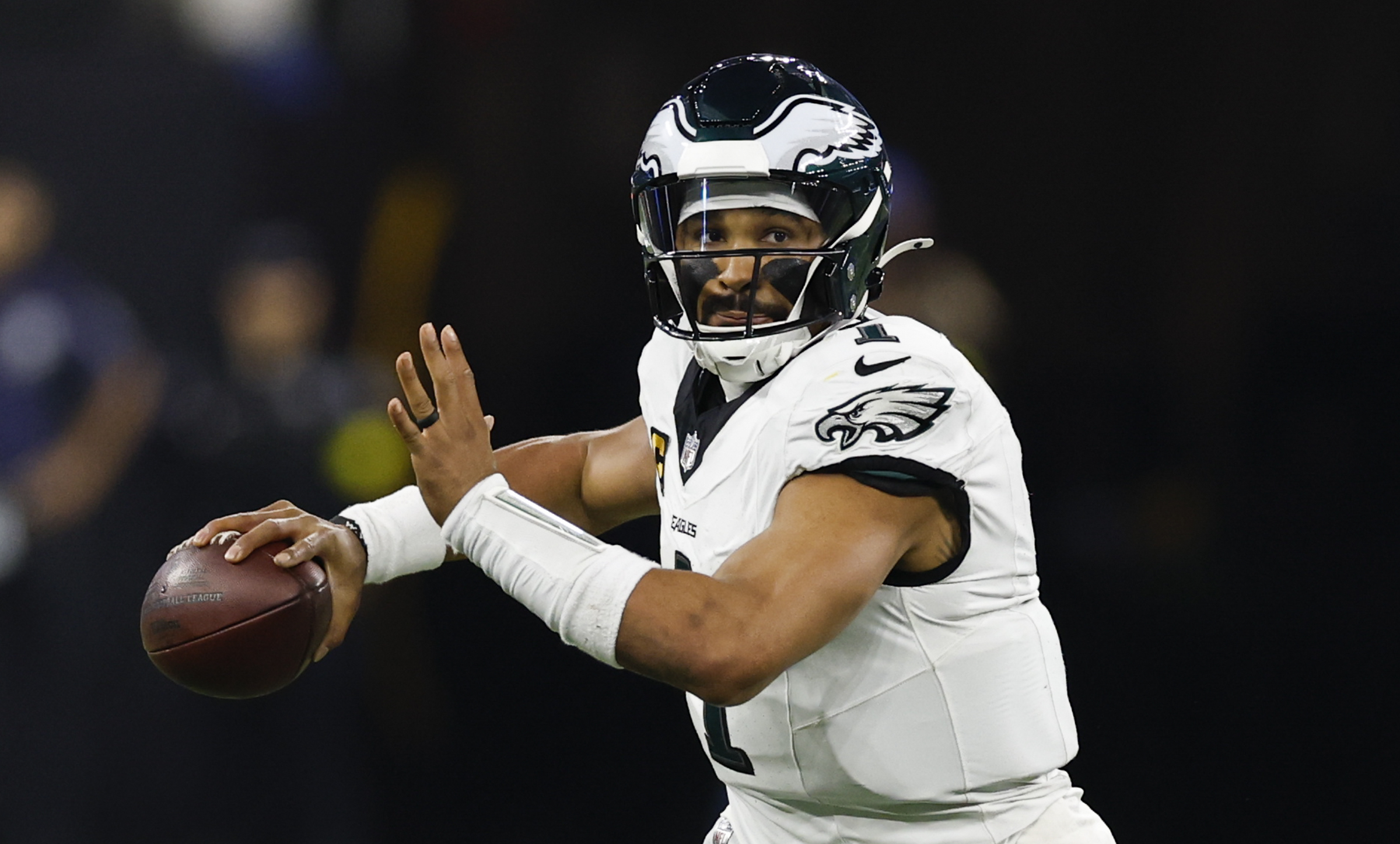
  • Jalen Hurts’ play is again under the microscope. His latest effort to evolve could determine his future.

    Jalen Hurts’ play is again under the microscope. His latest effort to evolve could determine his future.

    Jalen Hurts wanted more context. He wanted to know why a certain question was asked, or more pointedly, the narrative of the story that was clearly behind the asking.

    Hurts, on rare occasions, will pull a reporter aside post-news conference and ask for clarification and even offer more information. This was partially that. But he also seemed to genuinely entertain the premise, and in doing so, slightly lifted his carefully maintained veil.

    The Eagles quarterback tried earlier to answer the big-picture question about the concept of pressure and his excellence when the stakes were highest following an August practice during a dog day of training camp.

    “It’s hard to think about any other thing than just improving every day,” Hurts said last month. “That pressure that you’re talking about, those opportunities that I relish in, they start now in these moments.”

    The timing and the setting didn’t allow for depth, especially from someone who prefers to shun introspection. But Hurts must have sensed there was more to the premise. And he was correct. It wasn’t just in big games that he thrived. He’s had his best seasons when facing external doubts about his future.

    And this season, so the theory goes, is another make-it-or-break-it moment for the quarterback.

    Hurts nodded. He understood the construct. He may claim that he doesn’t read or listen to outside opinion, but he did cop to being aware of current storylines about him. It’s part of the job. And he’s heard this one before.

    “No narratives are new,” Hurts said, “just recycled.”

    In 2024, the Eagles were coming off a season with offensive regression that led to an early playoff exit and the coordinator getting fired. Hurts and Co. responded, of course, by winning a Super Bowl.
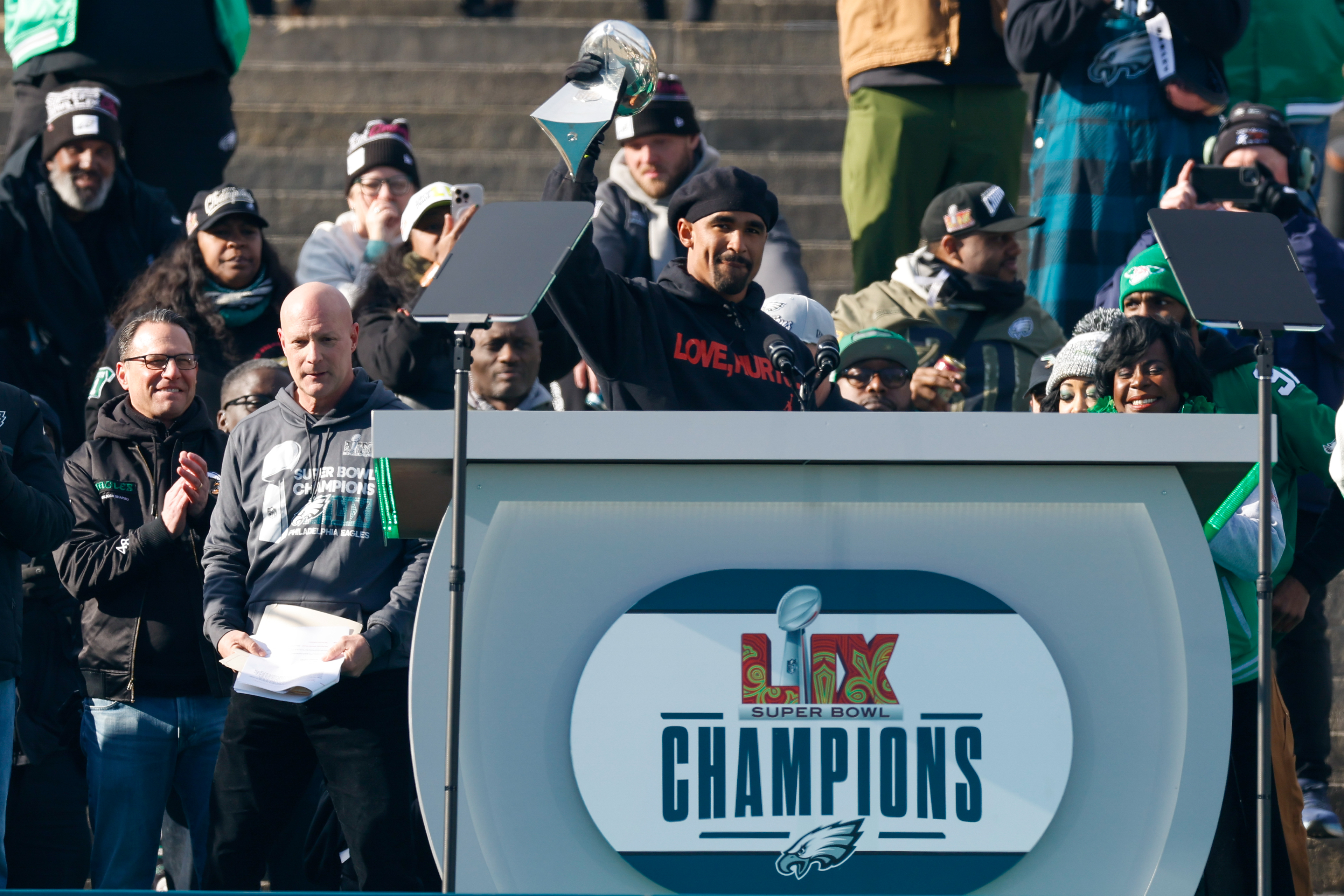
    Jalen Hurts, having won the Super Bowl MVP award in the Eagles’ victory over the Kansas City Chiefs, holds up the Lombardi Trophy on the stage at the Art Museum during the team’s victory parade.Yong Kim / Staff Photographer

    The circumstances are similar two Septembers later. Hurts will have another new play caller in Sean Mannion as coach Nick Sirianni searches for a constant that prevents the fluctuation that has led to annual turnover at the position.

    But for the first time in the Sirianni-Hurts tenure, the scheme will be dramatically different. At least that’s the plan. And the quarterback won’t have A.J. Brown, his former No. 1 wide receiver and close friend, to throw to for the first time in five seasons.

    The notion that Hurts is on the hot seat, though, comes more from various reports that his uncompromising ways and resistance to change has contributed to the team’s overall struggles, and that an unresolved contract situation doesn’t guarantee his return in 2027.

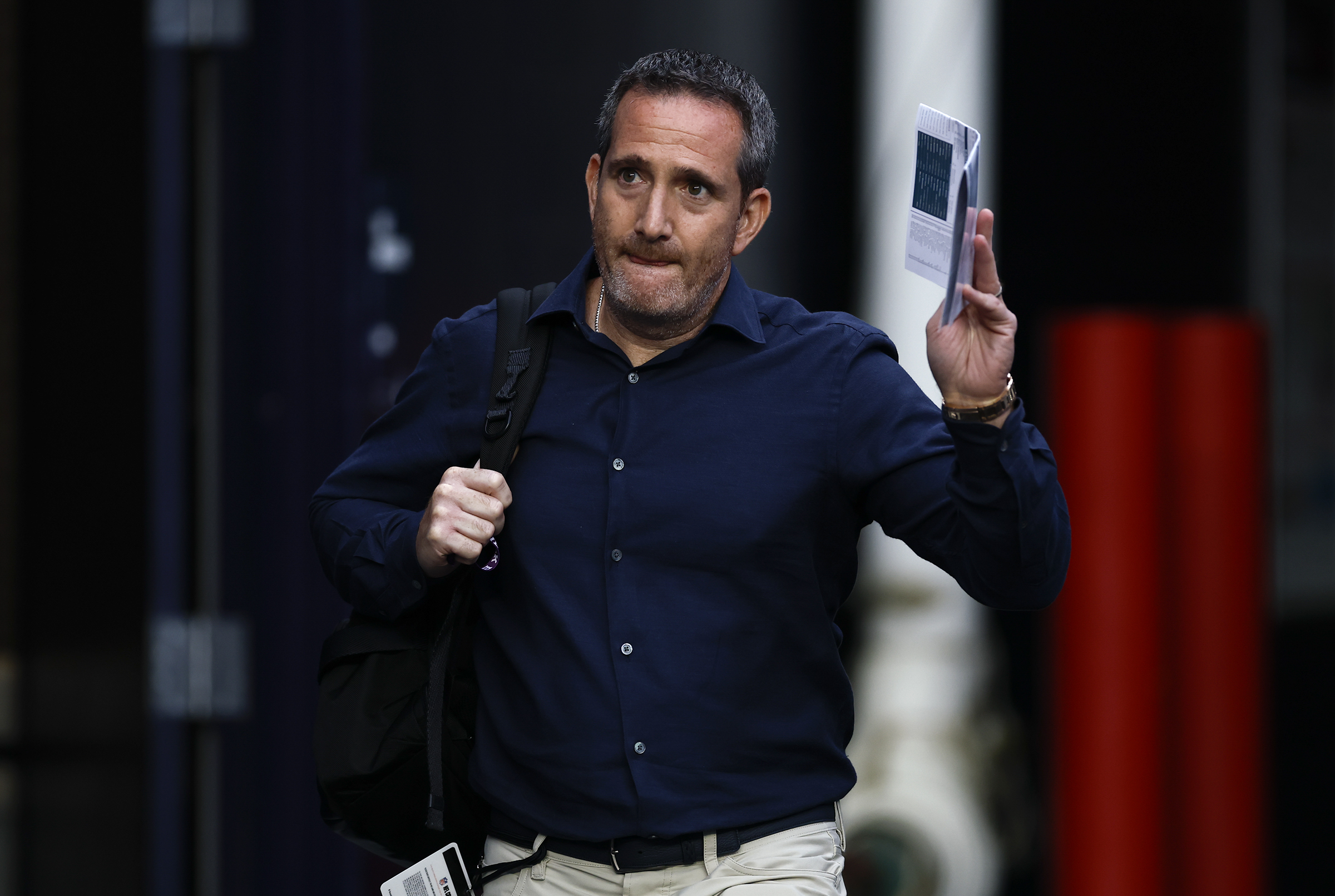
    General manager Howie Roseman has decried the reports and denied the suggestion that the Eagles have put the 28-year-old on the clock by not restructuring his deal.

    Hurts addressed the characterizations and the uncertainty over his future in June. But given all the variables and what they could amount to, he didn’t discredit the perception. He just said it wasn’t his reality.

    “Pressure is an illusion,” Hurts said to The Inquirer. “Fear is an illusion.”

    More was said, but he preferred his cryptic response to stand alone. The conversation lasted less than 10 minutes. Its depiction here isn’t meant to suggest exclusivity or great insight into Hurts. But one-on-one opportunities have been fleeting over his six-plus years in Philadelphia.

    In this case, it was as much the answers he gave as it was the questions he asked. Hurts is making an effort. He’s trying to let his guard down. It’s been evident in his pressers this summer, in the recent profile he did with GQ, and most importantly, inside the Jefferson Health Training Complex.

    The Eagles seemingly never have to worry about Hurts’ work ethic or his behavior off the field. But as the franchise quarterback, there are interpersonal parts of the job that are almost requirements. Hurts isn’t naturally outgoing.

    “Overall, he’s been better,” a team source said, “when it comes to communication and being around.”
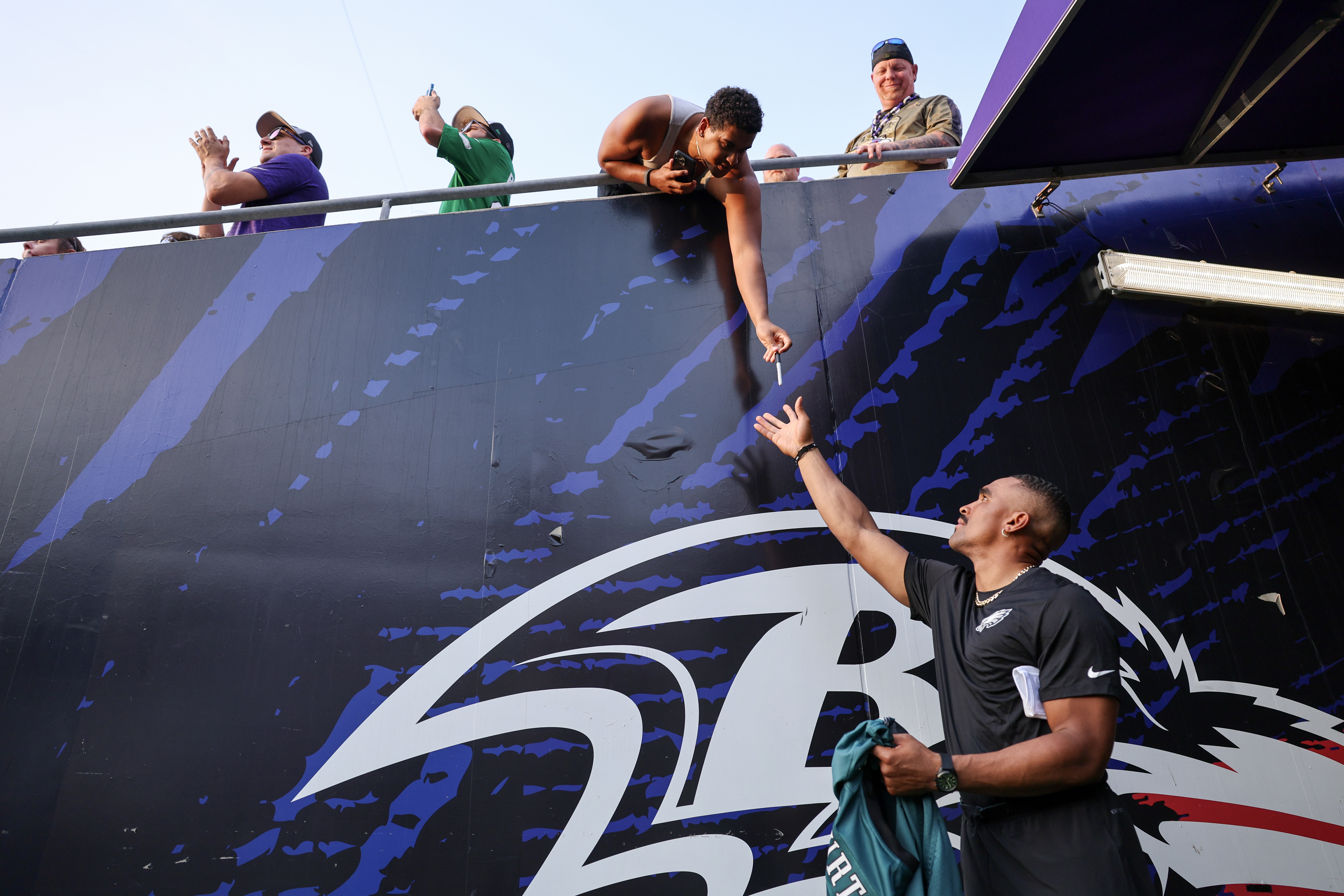
    Jalen Hurts signs a jersey for an Eagles fan as he comes out of the tunnel ahead of a preseason game against the Ravens in August.David Maialetti / Staff Photographer

    It may be just a simple hello in the hallway, or hanging in the locker room longer, or talking about himself more openly. Hurts has organized summer workouts with skill position players before, but he had almost full attendance in the session he ran in Orlando this July.

    No one desires for him to be inauthentically extroverted. Like his goatee that was shaved into a mustache for most of this offseason, Hurts has made outward tweaks. But he remains a figure mostly shrouded in mystery, and seems to relish it.

    Asked to reveal more about a recent anecdote he’d relayed about his wife, Hurts said, “Maybe … if you’re nice to me.”

    Adjustments and growth

    The personality stuff is secondary to performance. Hurts, like many on offense, didn’t play up to expectations in 2025. He finished with his lowest expected points added per dropback since he became the full-time starter in 2021, and ranked a career-worst 18th in EPA among qualified quarterbacks.

    The Eagles haven’t had a pass-heavy offense when at their best, though. And the inability to run with running back Saquon Barkley after a historic 2024 compounded the struggles through the air. But what confounded the most, perhaps, was Hurts being less of a factor on the ground.
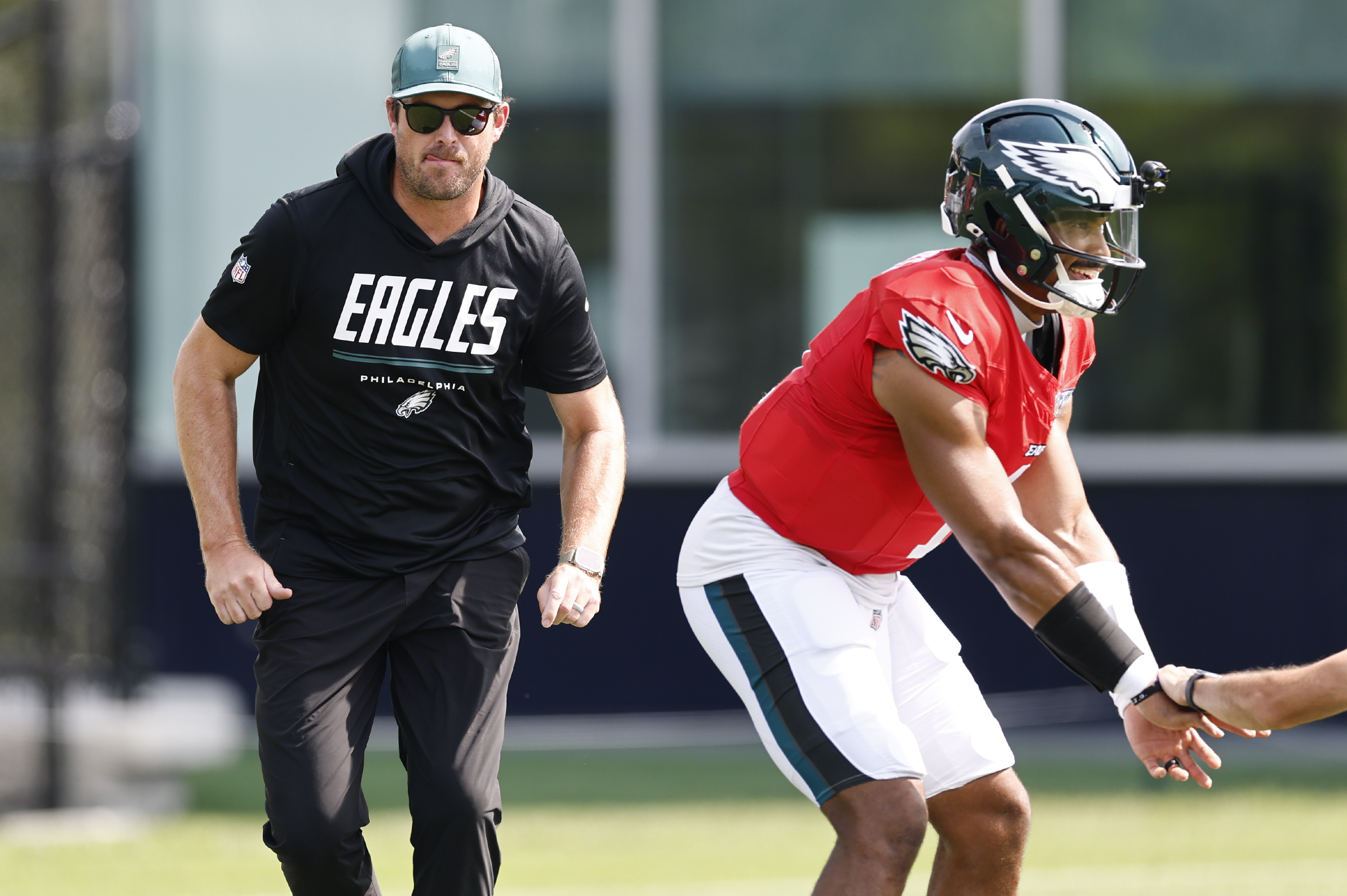
    Another year, another new offensive coordinator for Jalen Hurts: This year it’s Sean Mannion (left).Yong Kim / Staff Photographer

    Numbers hardly tell the full story. The offense was predictable, conservative, and failed to evolve and incorporate modern trends like having more motion. The end result: Kevin Patullo was fired after one season as offensive coordinator, Brown wanted out, and Sirianni hired a first-time play-caller in Mannion, who brings with him the trendy Kyle Shanahan-Sean McVay system.

    Mannion is just the latest in a long line of coordinator changes Hurts has had to endure stretching back to college at Alabama and Oklahoma.

    “I think you can appreciate the 11 different coordinators I’ve had,” he said last month in explaining the ups and downs of his career.

    But as receiver DeVonta Smith said after the playoff loss to the 49ers in January, and as Eagles defensive coordinator Vic Fangio noted last month, the offense hadn’t changed all that much since Sirianni became coach and Hurts his quarterback.

    “A lot’s been made about him, all these coordinators he’s been with, but it’s basically been the same offense every year,” Fangio said. “This is different.”

    Hurts has previously worked from under center. He’s thrown down the middle of the field. He’s had pure progression reads. But he’ll have to do those things at a much higher rate if marrying the run with the pass off play-action is the central principle of the new offense.

    (function() { var l = function() { new pym.Parent( ‘hurts-zones2__graphic’, ‘https://media.inquirer.com/storage/inquirer/ai2html/hurts-zones2/index.html’); }; if(typeof(pym) === ‘undefined’) { var h = document.getElementsByTagName(‘head’)[0], s = document.createElement(‘script’); s.type = ‘text/javascript’; s.src = ‘https://pym.nprapps.org/pym.v1.min.js’; s.onload = l; h.appendChild(s); } else { l(); } })();

    It may seem counterproductive to ask him to major in something he’s only minored in before. But Hurts has shown that he can execute all of the above. The question is how far is he willing to go, or for that matter, how far is the turnover-adverse Sirianni willing to let him go?

    Hurts, by all accounts, has embraced the changes.

    “He’s all-in on this system,” Eagles tackle Jordan Mailata said in July at the start of camp. “The way he’s commanding the huddle. The way he’s getting that ball out. The way he’s throwing it. … He’s all-in. It’s refreshing to see.”

    The scheme could unlock a new version of Hurts as a passer. And having an offense where running is the focal point while not being as dependent on his involvement could limit the hits as he enters the next stage of his career.

    But what happens if there are the expected speed bumps? Or even worse, potholes?

    Hurts has previously resisted new elements, as he did early in former offensive coordinator Kellen Moore’s tenure two years ago. Moore had wanted to include more motion in his scheme, but the Eagles were still near bottom in the league in motion usage through the first four games of the 2024 season.

    A 2-2 start that year in which Hurts turned the ball over seven times prompted offensive changes, the most significant of which was leaning into Barkley and the run game. But motion utilization — pre-snap and at the snap — increased as the season progressed. In April, ESPN published a story that detailed Hurts’ “strong preferences” — a reluctance to motion being one — that sources said had stunted the offense in 2025.

    “I’m always open to growth. I’m always open to improving,” Hurts said when he was finally asked in June about the assertions. “I think a lot of it is, what do we put our time on task? What are we exhausting? What are we repping?”

    While he ultimately didn’t refute the report — “Just let it live,” Hurts said — he did say he wasn’t responsible for the fateful “four verticals” call that ended the season against the 49ers, and a play that in its story ESPN implied Hurts directed.
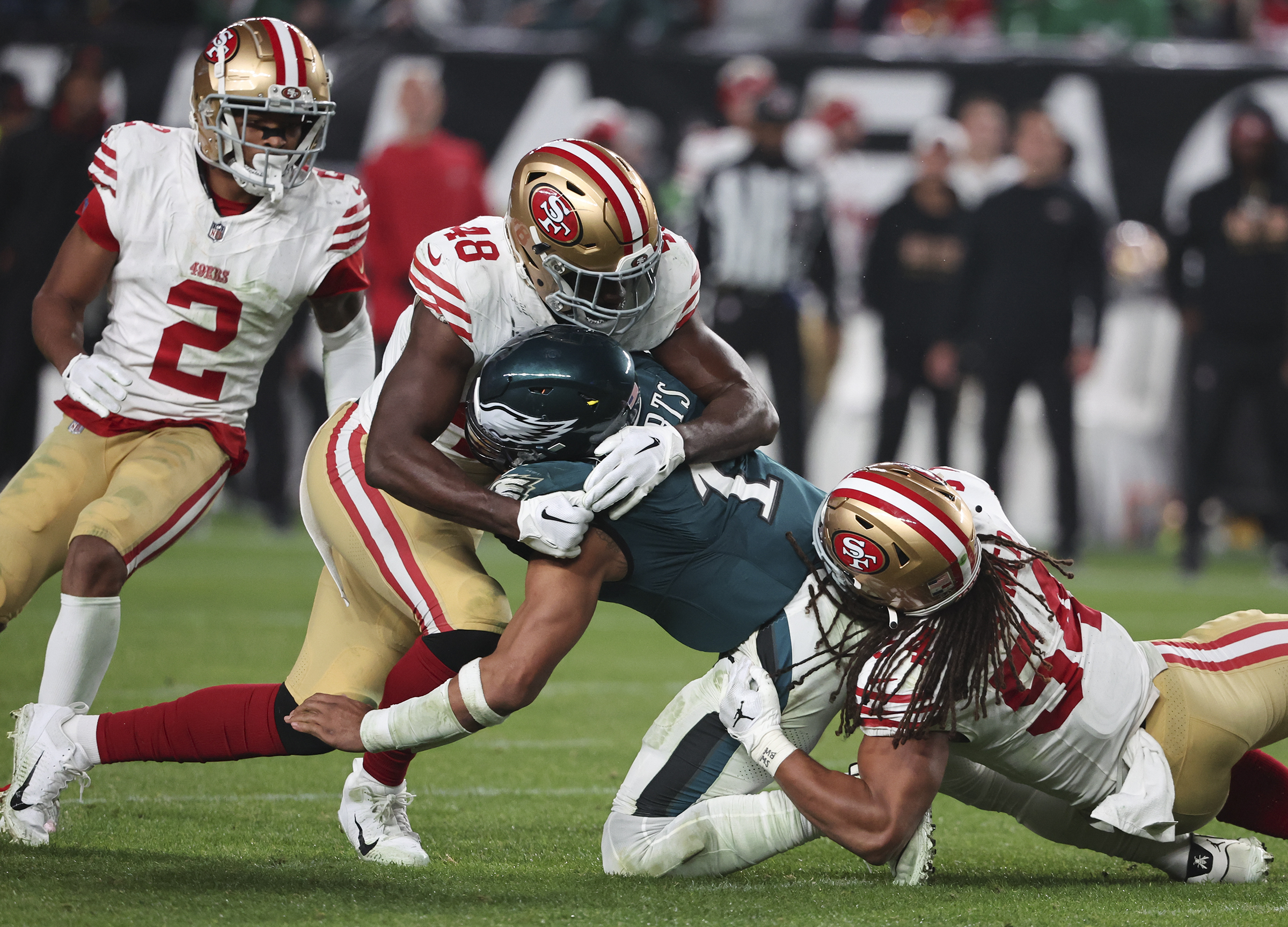
    Last season ended for the Eagles and Jalen Hurts with a home loss to the 49ers. Here, Niners linebacker Fred Warner (right) and linebacker Oren Burks converge to tackle Hurts.David Maialetti / Staff Photographer

    While a source close to the situation confirmed that it was Hurts who suggested the play, two sources familiar with the events said it was only because Patullo had “froze” when going over the play sheet. Ultimately, Sirianni had final say.

    If the outcome was successful, a statue would not have been erected like with the “Philly Special.” But there wouldn’t have been as much consternation about who was responsible: the player who came up with the idea, or the coach who decided it made sense.

    Either way, the play-calling process had become more cumbersome under Patullo than it was under Moore. Some team sources have described Moore as a savant, capable of getting a call in early enough to give Hurts additional information until the cutoff time.

    But Patullo was a first-time play caller, and thus a by-committee approach was used with Sirianni’s supervision. Mannion, also a first-timer, is expected to adopt a similar system with pass game coordinator Josh Grizzard, who has play-calling experience, and others feeding him necessary data.

    Every NFL offensive coordinator has play-calling help. But the Eagles were 1.3 seconds slower out of the huddle last season and had the most snaps in the league (150) with one second or less left on the clock.

    There weren’t any noticeable game management issues in the preseason, but Hurts has yet to play a game with Mannion at the controls. Mannion’s gameday whereabouts — he practiced calling plays from the field and in the booth in the preseason — have yet to be decided.

    “I think the operation’s been good regardless of where he’s been,” Sirianni said.
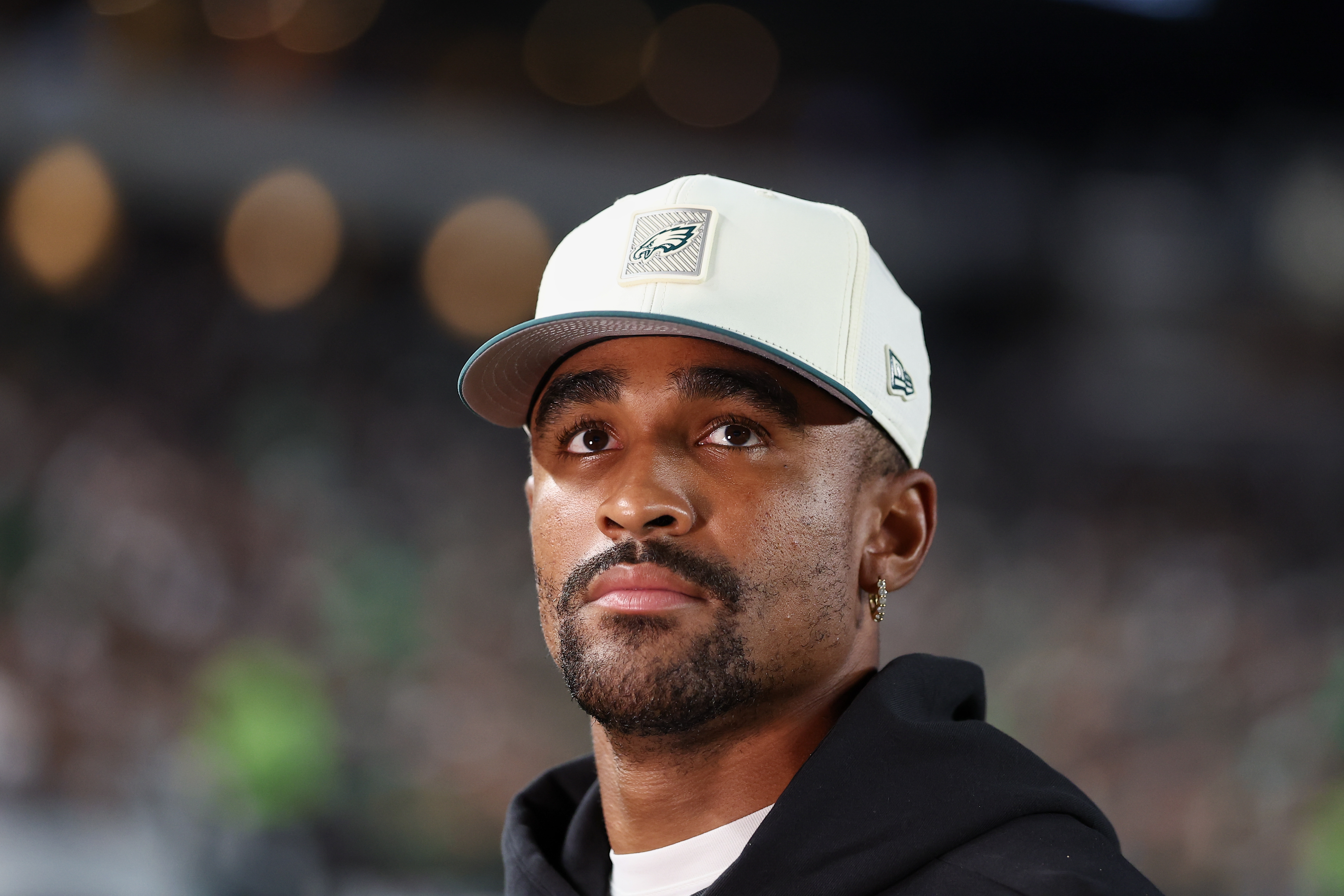
    Jalen Hurts did not play during the Eagles’ three preseason games.Monica Herndon / Staff Photographer

    Handling pressure on and off the field

    While the getting-out-of-the-huddle issue can be mostly attributed to the play-calling process, the late snaps are probably more of a quarterback problem. Mannion has added more plays in which the offense breaks the huddle and hurries to the line for a quick snap.

    But that tactic can be deployed only so often. Hurts still has to make checks at the line and change protection calls based upon his pre-snap reads of a defense. In terms of setting the protections, particularly vs. pressure looks, former Eagles center Jason Kelce took charge until he retired in 2023.

    Hurts has made strides against the blitz over the past two seasons, in particular in finding his hot reads. But he struggled more last season with simulated pressures — in which defenses feign sending extra rushers — with the Eagles often errant in their protection assignments.

    Mannion said the pre-snap calls will be made by either Hurts or the offensive line “dependent on the protection scheme,” Eagles center Cam Jurgens said. “It’s similar, but not the same,” in terms of how responsibilities are doled out.

    Hurts faced a lot of unblocked pass rushers in two joint practices with the Patriots last month. It was a good test for Mannion’s unit because New England loves to disguise its looks and send simulated pressure at quarterbacks.

    The Eagles offense was effective on the ground in the early portion of Day 1. But Hurts was hurried or sacked on multiple drops in the latter team drills. And on Day 2, he threw multiple interceptions, although there were positive moments through the air as well.

    As important as the scrimmages were for the teams, Brown’s performance against his former team garnered as much attention. “He was the best player on both offenses,” an Eagles source said of the new Patriots receiver.

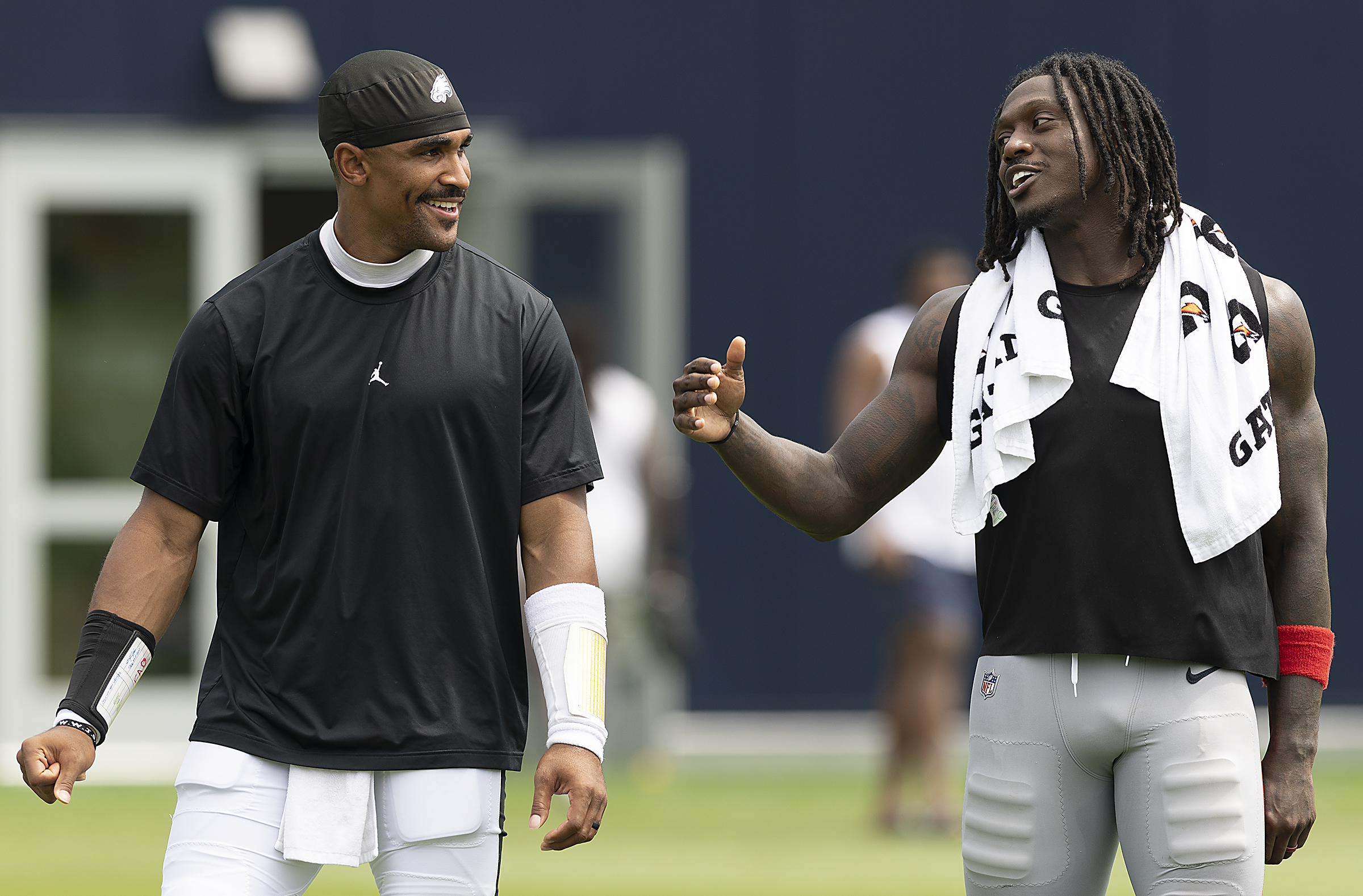
    Brown said after the first workout on Aug. 19 that he hadn’t spoken to Hurts since he was traded on June 1. Both players were guests at Eagles receiver DeVonta Smith’s wedding just 12 days later.
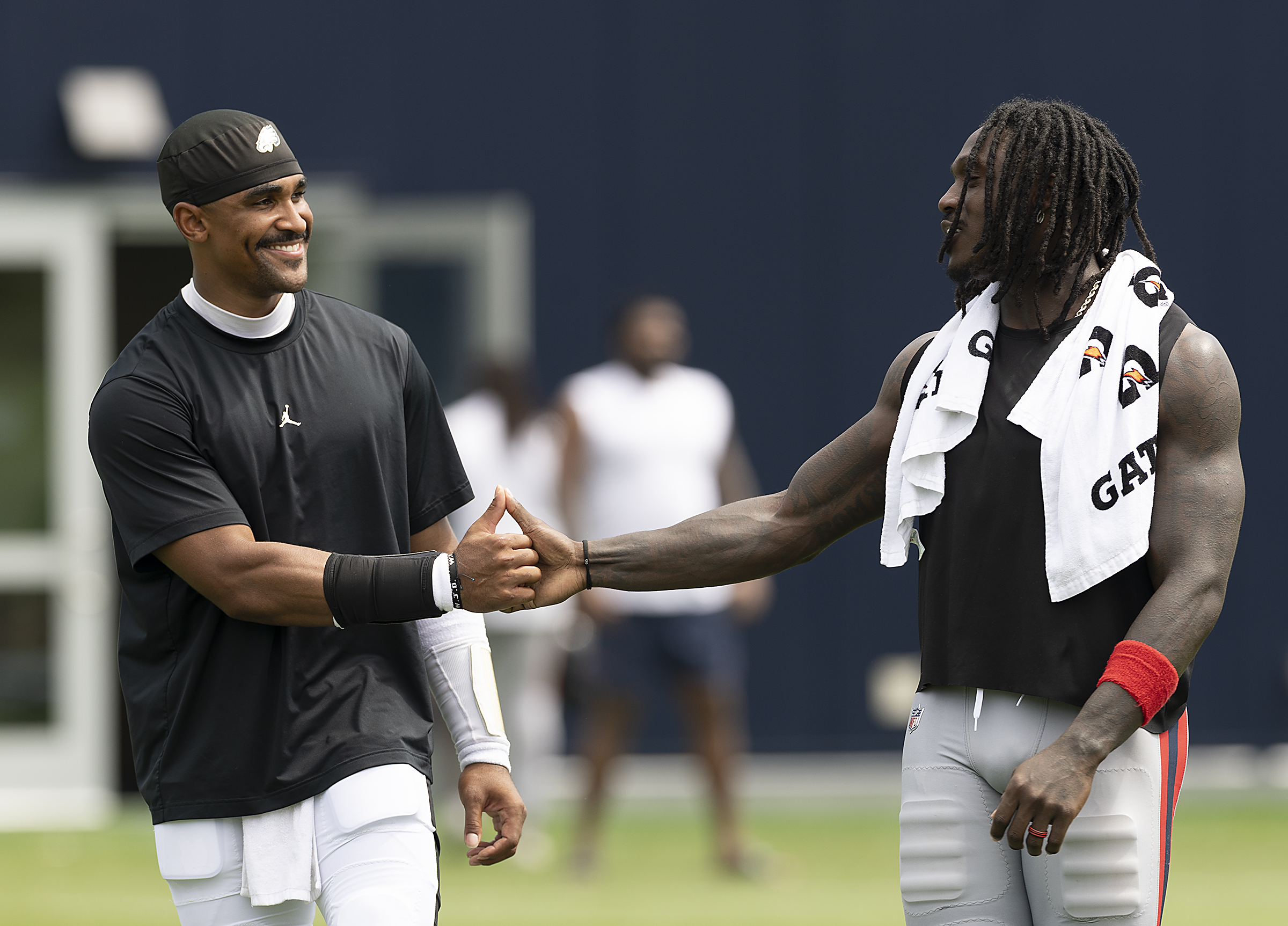
    Jalen Hurts and A.J. Brown exchanged greetings after the Eagles and Patriots had a joint practice in August.Yong Kim / Staff Photographer

    But on his way to the locker room after the second practice, Brown jogged down to Hurts as he was throwing passes, and the two embraced. They asked about each other’s families, wished the other good luck in the coming season, and exchanged a few jokes, according to a source briefed on the interaction.

    Both teams had wanted a made-for-the-cameras reconciliation and Brown, who had told NBC Sports at the time of the trade that he was no longer close to Hurts, agreed when an intermediary intervened.

    In June, Hurts gave an ambiguous answer about being “focused on the collective” when asked about Brown’s description of their relationship. But when GQ pressed him on the subject of whether they were no longer as tight, Hurts said, “Clearly.”

    Brown declined to address why he wanted to be traded. Several Eagles sources opined that there wasn’t more behind his exit than what was on the surface: He wanted to further cement his legacy as a Hall of Fame-caliber receiver and didn’t believe that was possible in Philly.

    And while that implied that Hurts was at the core of his leaving, there were off-field reasons for why they drifted apart. Brown, for instance, had organized team bonding trips to an escape room and Top Golf, or get-togethers at the movies or his house. Hurts was among those who didn’t always attend such excursions.

    Hurts, as quarterback, had other responsibilities. But there was a general feeling from some team leaders that he needed to be more engaged.

    In July, Hurts hosted many Eagles skill position players in Orlando for workouts at Central Florida’s Bounce House. But the players also golfed, had dinners, and socialized. When asked about the excursion at the start of camp, Hurts talked about “unity” and protecting the “intimacy of this team.”

    Brown, who was often outwardly emotional, had expressed public frustrations via social media, something he later said he regretted.

    The sphinxlike Hurts has preferred to let his actions on the field do most of the talking. And his accomplishments in just five seasons as the starter speak for themselves: 56 victories and a 71.8 winning percentage, five playoff appearances, two Super Bowl trips, and an MVP performance in beating the Chiefs in the title game just two seasons ago.

    Hurts’ resumé should make it almost inconceivable that the Eagles would contemplate — no matter how this season unfolds — parting with him next offseason. And yet, his contract doesn’t make it a foregone conclusion.

    Forecasting the future

    Hurts is guaranteed $51.5 million for 2026, but less than half of his $51 million average annual salary ($22 million) is guaranteed in 2027. He has no guarantee in 2028, the final year of the five-year, $255 million extension he signed in April 2023.

    Eagles owner Jeffrey Lurie, when asked about the deal in April at the league meetings, said Hurts was in the “middle of the new contract now.” But teams have given extensions to franchise quarterbacks with similarly structured contracts to create salary cap space.
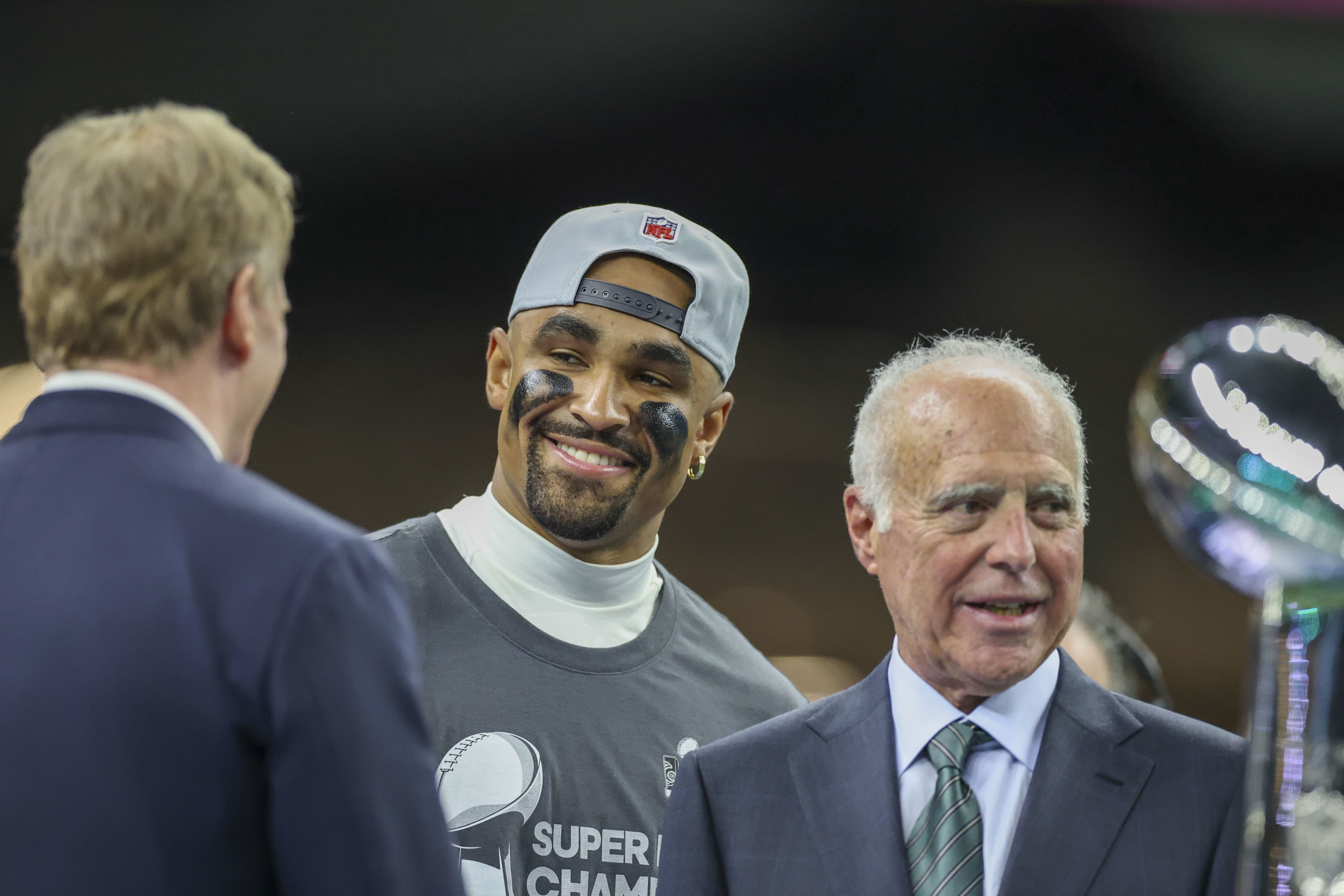
    Jalen Hurts and Eagles owner Jeffrey Lurie have enjoyed the ultimate success together. David Maialetti / Staff Photographer

    Lurie was otherwise effusive praising Hurts. The owner pushed for Roseman to select the Oklahoma product in the second round of the 2020 draft. Hurts may not have a bigger fan in the building, and that’s notable when looking at his future.

    The Eagles front office views his deal as winding down and expects optimum production — like any player under similar circumstances — but it’s hard to predict anything with the next offseason eons away in NFL terms.

    “For me, I’m truly focused on being the best I can be right now,” Hurts said when asked about his contract in June. “That’s where my energy is.”

    When camp opened a month later, Hurts appeared trimmer than previous years. Fangio and a few defensive players said he looked faster. Hurts said he felt the same and hadn’t altered his training regimen.

    Last season, he finished with his lowest number of rushing attempts (105) and rushing yards (421) since becoming the starter in 2021. The Eagles wanted to curtail Hurts’ exposure to harm early on, but despite Patullo’s pledge that more carries were coming, Hurts was rarely a plus-one factor down the stretch. Hurts insisted that he was willing to run as much as he had previously, and has said as much about this season. But there will likely be fewer opportunities for designed runs with more plays starting from under center.

    “I don’t think that’s something I can manage,” Hurts said last month. “That’s ultimately up to what we’re doing as an offense and how we put everything together. When you look back about 2020 and 2021 and those times we were a heavy [shotgun] team, ran a lot of inside zone, run a lot of [run-pass option], got to the edge a good bit, and defense was different, too. And the game has changed.

    “That doesn’t mean you remove those elements, but again the base of the offense was run inside zone and that’s not typical for this West Coast-type of style.”
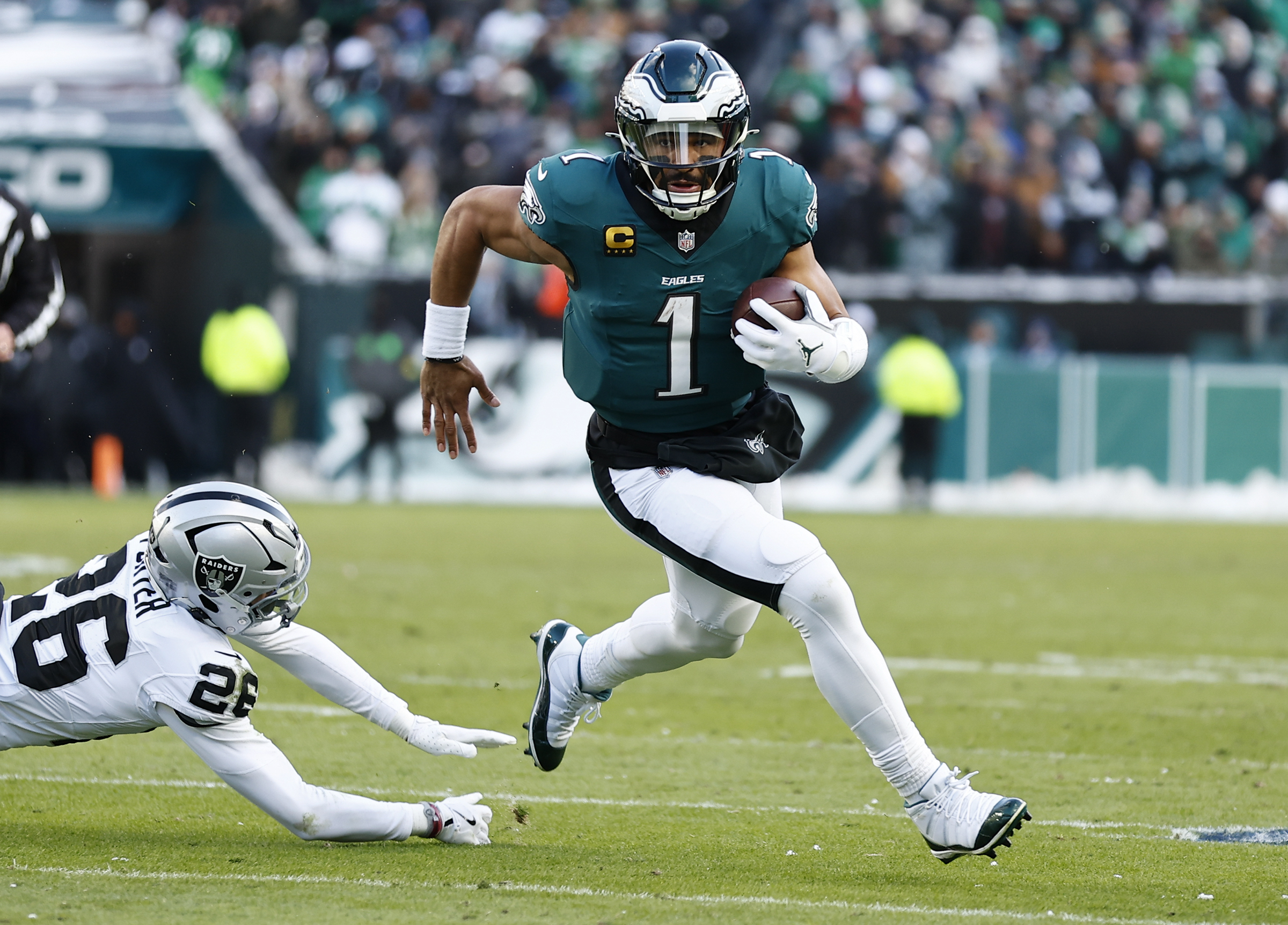
    Jalen Hurts’ effectiveness as a runner will be scrutinized within Sean Mannion’s scheme. Monica Herndon / Staff Photographer

    The outside zone is the base run play of the Shanahan-McVay offense, and its effectiveness sets up throws off naked bootlegs that are designed in part to be layups for the passing game. There is a horizontal stretching of defenses, but the play-action is also designed to create space for receivers downfield.

    Backup quarterbacks Andy Dalton and Tanner McKee were under center on 38% of the snaps they took in the preseason. But it was a small sample and neither player has Hurts’ mobility and athleticism.

    “The piece of him as an athlete in the running game is something unique,” Mannion said. “Those are elements we can lean into a little bit, as well.”

    But with so much of the scheme predicated on marrying the run with the pass and keeping defenses on their toes by not giving away plays based on formation and technique, it will be difficult to shift the play-calling.

    Sirianni hired the 34-year-old Mannion for his acumen, but also for his knowledge of this scheme.

    Overall, Hurts was accurate and efficient in camp. But he also had rough moments and tossed eight interceptions. That’s seven more than he threw last summer, so practice doesn’t always correlate to regular-season performance.
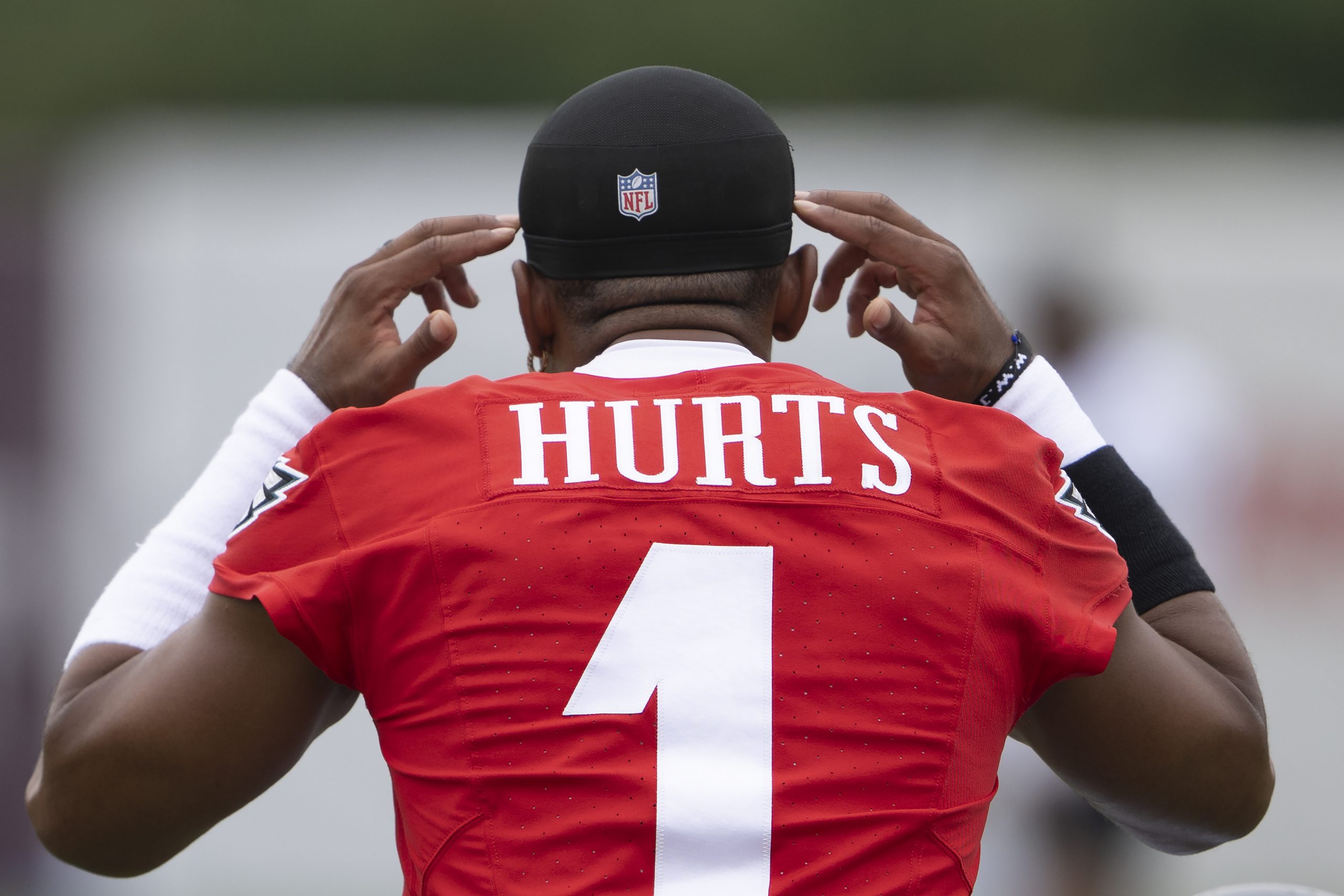
    Jalen Hurts had an up-and-down camp as he learned the new offense. Jose F. Moreno / Staff Photographer

    But with more full-field progression reads than the coverage reads that were a larger part of the previous system, timing with his receivers will be pivotal. Hurts may have less to do pre-snap, but with many new faces, there will likely be a learning curve.

    Mannion didn’t gloss over the interceptions from the joint practices. He pointed them out and didn’t excuse them as experimental throws. But there is some question as to whether Hurts will overpower a young coordinator when expressing his preferences.

    There is a balance to strike in doing what’s best for the quarterback and what’s best for the entire group. The same could be said about a possible blending of the old with the new. For all the hand wringing about the offense last year — that was also affected by O-line injuries — the scheme had produced remarkable highs in the past.

    “I think that’s a great question,” Hurts said when asked about carryover. “And it’s something that you keep in mind when you’ve had so much success. How will it look? You don’t really know. Do you want to win? Absolutely.

    “So we’ve got to figure out who we are as a team. Obviously, coaches come in with a great mindset, great philosophy and putting everything together. It brings us a bit more structure. In the end, it’s about what’s going to go out there and be the best for our team.

    “I know Sean will come up with the answer over time.”
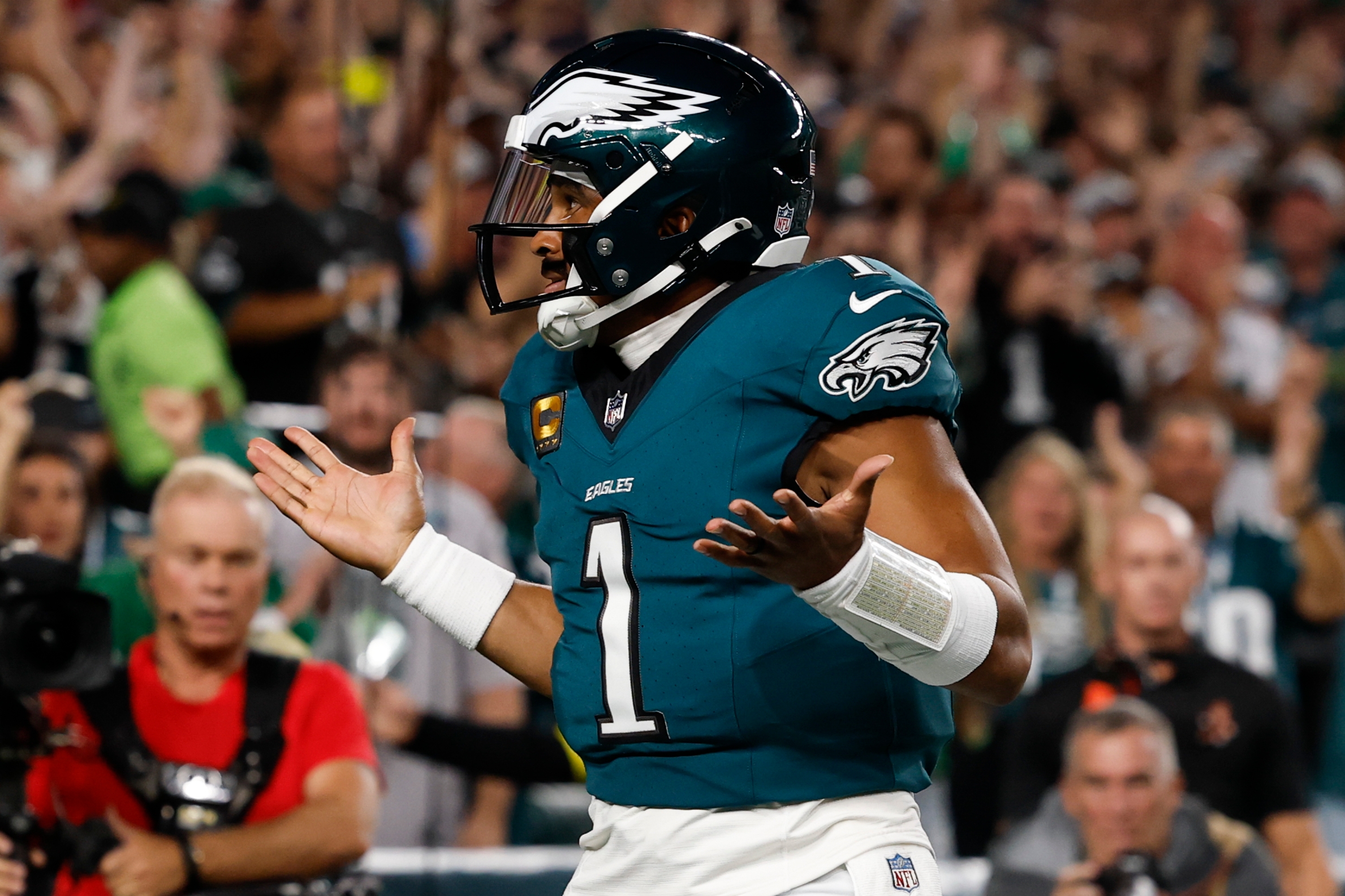
    Jalen Hurts has seemed open to both schematic and personal changes that will help turn the page on a disappointing 2025. Yong Kim / Staff Photographer

    ‘I am who I am’

    Time will show if the relative openness Hurts has shown to others will extend to the offensive changes. But if stoicism or hardheadedness were his worst crimes, he wouldn’t be unlike many high achievers.

    Four years ago, Hurts agreed to participate in what has remained his lone sit-down interview with The Inquirer. The topic of the Eagles’ legacy of Black quarterbacks was one that appealed to him because he admired his predecessors and knew the bleak history of how African American men were treated in relation to the position.

    “I think there’s levels to that, and I’ll just leave it at that,” Hurts said when asked if he felt Black quarterbacks still faced additional scrutiny.

    A follow-up posed the question of whether he didn’t show more of his personality because of the history.

    “As I grow and mature, that will evolve,” Hurts said then. “But I am who I am in terms of my character, how I was raised and where it comes from. But like I said, there’s levels to everything.”

    Hurts isn’t any less an enigma than he was then or ever. He’s seemingly let outsiders in just a little. But it’s also his coolness that defines him and helps him maintain a fierce number of loyalists.

    When Hurts told the story at the start of camp of how he offered the recently extended Jalen Carter the $5 bill his wife, Bryonna, puts in his backpack — “A little inside joke between her and I,” he said — it was one of the rare times he ever spoke anecdotally.

    It also gave a glimpse, perhaps, of his private life. The Inquirer later asked for more detail. Hurts repeated what he said several times before when the reporter asked for additional access: “Maybe … if you’re nice to me.”

    When the question was posed again, following the brief post-news conference interaction a few weeks later, Hurts laughed, then walked away.

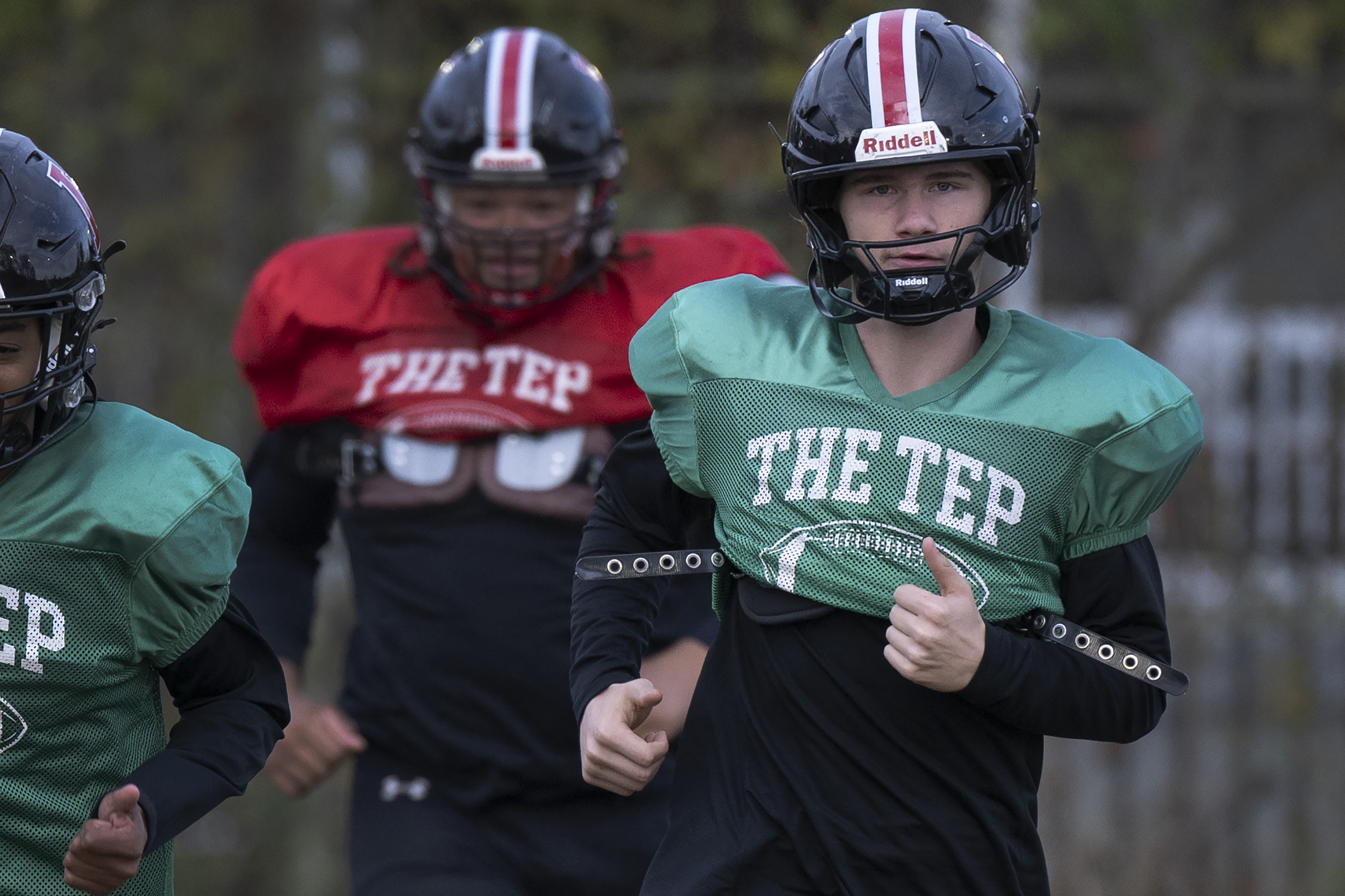
  • The Philly area’s top 10 high school football programs to watch in 2026

    The Philly area’s top 10 high school football programs to watch in 2026

    Over the last decade, there was one team the Philadelphia area was measured by in high school football: St. Joseph’s Prep. That changed last year. The 2025 season marked a historic shift in power for several programs.

    Roman Catholic won its first PIAA state football championship, taking the Class 5A title with a dominant team that defeated Bishop McDevitt (Harrisburg) in the state finals, and beat Philadelphia Catholic League and Class 6A state champion La Salle during the regular season.

    La Salle had its greatest team in school history, beating two state powerhouses twice in one season, Pittsburgh Central Catholic and, locally, St. Joe’s Prep, en route to its first PIAA Class 6A state championship and first state title since 2009 — the 4A title in the PIAA’s four-class structure. Before last year, the Explorers had only beaten the Prep three times in the previous decade.

    Plus, Springfield (Delco), Cardinal O’Hara, and Class 1A Belmont Charter won state playoff games for the first time, each reaching their respective state semifinals. Springfield (District 1 5A) and O’Hara (District 12 4A) also achieved their programs’ first district titles.

    It all sets up for an intriguing 2026 season, without a clear-cut dominant team in the area. The usual suspects — La Salle, St. Joe’s Prep, and Roman Catholic — will be good again, but so will Bonner-Prendergast, O’Hara, Archbishop Wood, and Archbishop Ryan.

    The talent gap between the powerful Catholic League and PIAA District 1 has narrowed. Central Bucks West, Downingtown East, and North Penn return a wealth of talent, enough to attract Power Four programs.

    Malvern Prep is well stocked again, looking to claim its fourth straight Inter-Ac championship, but the Friars will first have to deal with a tough nonleague schedule that includes La Salle, St. Joe’s Prep, and perennial Public League power Imhotep Charter.

    As for the Public League, Imhotep will once again be the standard, although the Panthers will drop from Class 6A to 5A this season, opening the doorfor several schools in 6A like rebuilding Northeast and Lincoln to make postseason runs.

    Here are the top 10 area teams — in descending order — to watch this season.

    10. Springfield (Delco) (14-1 last season)

    The Cougars had their best season in program history in 2025. Eight starters are back on defense and seven on offense for the three-time defending Central League champions. The program won its first PIAA District 1 Class 5A championship last season and returns a core group that includes junior quarterback John Hopkins, senior running back/linebacker TJ Valletti, two-way senior lineman Zion Culbreth, and junior running back/defensive back Michael DePetris.

    Games to watch: Oct. 9 at Ridley; Oct. 30 at Strath Haven.

    9. Central Bucks West (7-4)

    The Bucks return eight starters on offense and seven on defense for one of the better coaches in the area, Rob Rowan. CB West lost in the first round of the PIAA District 1 Class 6A playoffs last season to Neshaminy. The Bucks are led by senior quarterback Josh George, senior center Jake Stranix, senior middle linebacker Nick Miletto, senior safety Louie Cipollo, senior defensive back Mason Darrows, and senior defensive ends Liam Laphen and Ryan Zadroga. It is a senior-led team that is well aware of the last time the Bucks won a District 1 championship: back in 2000 under Mike Carey (as a Class 4A program before the Class 6A system took over in 2016).

    Games to watch: Sept. 18 at Pennridge; Sept. 25 vs. North Penn.

    8. Pope John Paul II (10-2)

    The Panthers reached the PIAA District 1 Class 4A finals, where they lost to Bishop Shanahan (42-21) last year. This was a young team that made some amazing strides for coach Darrell Scott in his first year. Junior quarterback TJ Dozier, junior tailback Kassidy Jackson, senior WR/DB Eric Green, and four offensive linemen (senior Dan Tammaro and juniors Nate Seasholtz, Julian Betts, and Griffin Kaczerski) return. The Golden Panthers will move this season from the Pioneer Athletic Conference small-school Frontier Division to the large-school Liberty Division.

    Games to watch: Sept.18 at Bishop Shanahan; Sept. 25 vs. Owen J. Roberts.

    7. North Penn (12-3)

    The Knights won the District 1 Class 6A title last year, beating Pennridge (21-14), and reached the state semifinals, losing to eventual state champion La Salle (49-14). North Penn, under legendary head coach Dick Beck, has a strong nucleus back, led by three-year starters, senior running back Rylei Gray, who rushed for close to 1,200 yards last season, senior WR/DB Sal Colella, and junior RB/DB Ziyon Smith, who will combine with Gray to make up one of the area’s best backfields. Senior London Evans is the leading candidate at quarterback.

    Games to watch: Sept. 25 at Central Bucks West; Oct. 9 vs. Pennridge.

    6. Downingtown East (8-4)

    The Cougars reached the PIAA District 1 Class 6A quarterfinals, where they lost to eventual district finalist Pennridge, 21-9. They feature one of the best players in the state, game-changing Notre Dame-bound edge rusher Abraham Sesay, along with senior quarterback Ethan Ellis, senior tight end/H-back Michael Schlachter, and junior running back Juelz Robinson.

    Games to watch: Oct. 9 vs. Downingtown West; Oct. 23 at Coatesville.

    5. Imhotep (8-5)

    The Panthers won their 13th straight Public League championship (the COVID-19 pandemic canceled the 2020 season), and second straight PPL Class 6A championship, The Panthers lost to eventual 6A state champion La Salle in the District 12 championship (31-16). Joey McLeish, Imhotep’s three-year starting quarterback, will lead the offense, with support from junior running back Kassan Chappelle. On defense, 6-1, 170-pound junior cornerback Kaleb Woseley, the younger brother of former Imhotep star Kenny Woseley, now at Virginia Tech with James Franklin, and Tristan Alexander, a 6-4, 250-pound sophomore edge, will carry the load. The Panthers are young and open against Camden, DeMatha Catholic, and Malvern Prep.

    Games to watch: Sept. 5 vs. DeMatha Catholic (Md); Sept. 12 vs. Malvern Prep.

    Joey McLeish has been a three-year starting quarterback at Imhotep.Jose F. Moreno / Staff Photographer

    4. St. Joe’s Prep (5-5)

    The Hawks had a highly uncharacteristic season last year, going 5-5, the first time they finished .500 or worse since 2010, when former coach Gabe Infante went 4-7 in his first year at The Prep. It’s still a prideful program that has produced nine PIAA state championships (two Class 4A under the 4A system and seven under the 6A system), which is more state titles than any other Philadelphia area program. Five of the Hawks’ nine state titles came under current coach Tim Roken and his staff. It’s a program that plays under high expectations, and this season will not be any different. The Hawks have possibly the best linebacker in the state in Oregon-bound senior Brandon Lockley, and one of the nation’s best receivers in 6-1, 180-pound Ohio State-bound Jett Harrison, a junior who is the son of Hall of Famer Marvin Harrison. Max Rogers, a 6-foot, 190-pound junior, will take over at quarterback and Army-bound senior Jake Wilson, a 6-5, 240-pound tight end and the younger brother of former Archbishop Carroll basketball stars Taylor and Brooke Wilson, both now playing for Army, will be a large target down the middle of the field.

    Games to watch: Sept. 19 vs. Malvern Prep at Franklin Field; Oct. 10 at La Salle at Central Bucks South; Oct. 31 vs. Roman Catholic at Franklin Field.

    3. La Salle (13-1)

    The Explorers were pounded by graduation but still return a good chunk of talent to defend their Catholic League, District 12, and 6A state crown. La Salle will have back a solid foundation in junior wide receiver Owen Johnson, one of the best in the state, UCLA-bound senior cornerback Trey Hopkins, and senior offensive guard Andrew Sorge. Luke Gordon, a 5-11, 170-pound junior and son of Explorers’ coach Brett Gordon, will take over at quarterback and knows the system. Tailback Ahzir Nelson will carry an impact this season, taking some of the load off Luke Gordon. Watch for 6-foot, 185-pound sophomore receiver Jordan Reid, and 6-3, 235-pound sophomore edge Jye Walter.

    Games to watch: Sept. 4 vs. Malvern Prep at Ocean City, N.J.; Oct. 10 vs. St. Joe’s Prep at Central Bucks South; Oct. 17 vs. Roman Catholic.

    2. Malvern Prep (8-2)

    The Friars won their third consecutive Inter-Ac championship last year, sharing the title with Springside Chestnut Hill after winning the Inter-Ac outright in 2023 and 2024. The Friars will be going for their seventh Inter-Ac title in the last nine years. This is a loaded team, arguably the best in the area, returning LSU-bound receiver Cade Cooper, Duke-bound offensive tackle Tyler Graham, and major Division I junior edge recruit George Parkinson IV.

    Games to watch: Sept. 12 at Imhotep at the Germantown Supersite; Sept. 19 at St. Joe’s Prep at Franklin Field.

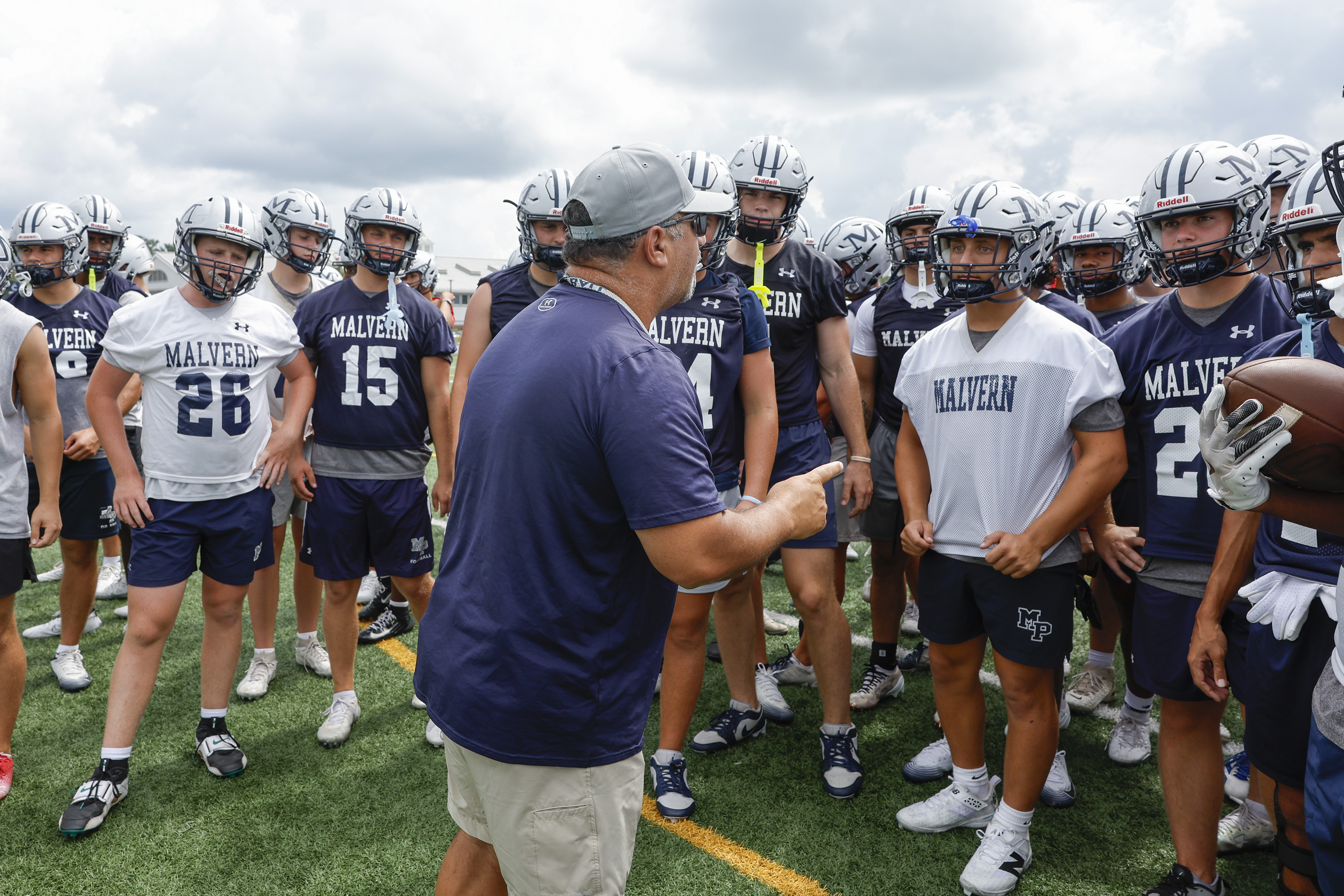
    Malvern Prep coach Dave Gueriera addresses his team during practice on Aug. 18.Steven M. Falk / For The Inquirer

    1. Roman Catholic (12-3)

    Like La Salle, the Cahillites enjoyed their best season in school history last year, winning its first state championship; Roman beat La Salle last season and almost beat St. Joe’s Prep for the first time since 2011 (a 45-17 Roman victory in a Catholic League semifinals) and during the regular season for the first time since 1999 (a 27-24 Roman victory). Coach Rick Prete has opted for a national schedule, so the Cahillites may be roughed up early. One thing is certain, Roman will have a stout defense that features stalwarts Victor Ezeukwu, a junior edge rusher, and Pitt-bound senior linebacker Walter Hudson. Junior Jahmil Hawkins will step in for graduating all-time Roman passing leader Semaj Beals, now at Akron, who threw for over 12,000 yards in his four-year career. The Cahillites will make the jump this season from Class 5A to 6A, with La Salle and St. Joe’s Prep in the Catholic League Red Division.

    Games to watch: Oct. 17 at La Salle; Oct. 31 at St. Joe’s Prep at Franklin Field.

    Honorable mention: Archbishop Ryan, Archbishop Wood, Bishop Shanahan, Belmont, Bonner-Prendie, Cardinal O’Hara, Central Bucks South, Chester, Downingtown West, Garnet Valley, Haverford School, Lincoln, Neshaminy, Neumann Goretti, Owen J. Roberts, Perkiomen Valley, Pennridge, Pennsbury, Plymouth Whitemarsh, Springside-Chestnut Hill, and Upper Dublin.

  • The PGA Tour finally got the FedEx Cup playoffs right, just in time to ruin them. It’s an impossible product to sell.

    The PGA Tour finally got the FedEx Cup playoffs right, just in time to ruin them. It’s an impossible product to sell.

    It was a historic Sunday afternoon at Atlanta’s East Lake Golf Club in the penultimate Tour Championship in its present form, which begged the question: Why change?

    With the exception of contrived, boorish, international gimmickry, golf will never be relevant after majors season ends. With apologies to the British Open, golf’s not particularly relevant after Father’s Day and the final round of the U.S. Open. This was proved again last weekend when everything was up for grabs: golf’s biggest money, its MVP trophy, a Tiger record, all swirling around the game’s biggest star.

    And all most sports fans cared about was if Bill Belichick’s lousy college football team would win in Ireland (they did; ugly), how many NFL teams would keep four quarterbacks (four teams did, including the Eagles), whether Aaron Donald would unretire to join Myles Garrett with the Rams (he did; yikes), and if the Brewers and Rays are for real (TBD).

    Meanwhile, golf’s most monied weekend delivered. It was a closed, $40 million tournament with mostly the same old names, but it delivered more drama than any 16-man, single-elimination tournament will deliver when the latest format begins in 2028, the year after FedEx’s deal expires with the Tour.

    This is the brainchild of a panel of existing Tour stars and new PGA Tour CEO Brian Rolapp, the latest attempt of Big Golf to extend interest to compete with MLB’s stretch run, the NCAA’s kickoff frenzy, and the NFL’s annual four months of dominance. Past formats have included cumulative points systems that rendered playoff events (as many as four of them) moot, as well as a system that awarded the best players with pre-tournament handicaps that absurdly skewed the odds of winning the Cup.

    Currently, players compete for FedEx Cup points to determine the field for a playoff tournament for the top 70, which winnows the next field to the top 50, which winnows the next field to the top 30, the winner of which wins the Cup and the $10 million first-place check.

    It is imperfect, but it is simple, and it is elegant.

    Beginning in 2028, a bifurcated series of Tour events will assign qualifying points to determine the top 90 golfers, who will compete in a stroke-play tournament to determine a top 32 in points. That group will compete for a week in round-robin, match-play in pods of four. The two top players from each pod advance to a Sweet 16, single-elimination, match-play tournament to determine a playoff winner.

    The problems:

    1. Match play is boring, even if it winds up at non-traditional venues like Pine Valley or Bandon Dunes. The Ryder Cup is the only exception, but that’s more about jingoism and theater than it is about golf.
    2. Stroke play is a truer test of quality. There’s a very real chance that Min Woo Lee and Viktor Hovland would have been the finalists had the 2028 format been used this year. Yawn.
    3. This year’s tournament absolutely delivered.

    Got it right

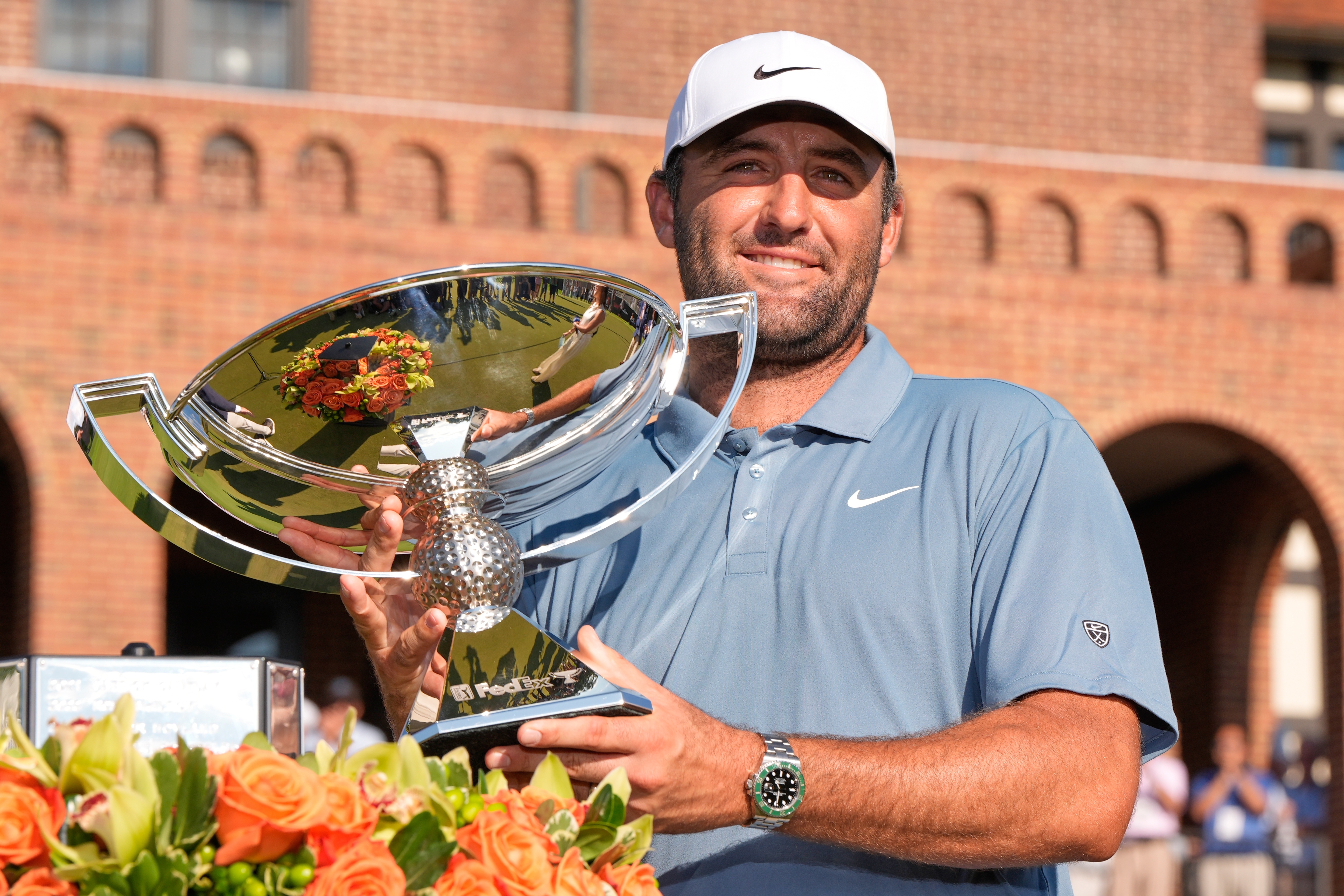
    The best golfer of his generation came from three strokes down for a three-stroke win to claim his second FedEx Cup title and surpass the winnings of the best golfer of any generation.

    Scottie Scheffler passed Tiger Woods and became the all-time leading money winner in PGA Tour history.

    The win, Scheffler’s third of the season, his second of the playoffs, and his 22nd of his career, surely secured his fifth straight Player of the Year award. It will be announced in December, and the five in a row ties him with Tiger. (The award has only existed since 1990, so it postdates Jack and Arnie and Gary Player, but Tiger also won it three times in a row and 11 times overall.)

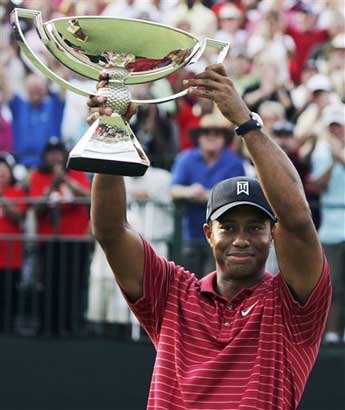
    Tiger Woods, who won the FedEx Cup three times, was the tour’s player of the year 11 times.AP

    Before the 30-man Tour Championship there was, incredibly, some debate over whether Scottie should win it over a handful of other players. This, even though Scheffler had a lead of more than 1,400 points over the next closest Tour Championship qualifier; had won two tournaments; and led the Tour in second-place finishes (five), top-5 finishes (13), scoring average (by nearly three-quarters of a stroke), birdie average, greens in regulation, scrambling, and, with more than $20 million in the bank, had earned more than $6 million more than his closest competitors — Matt Fitzpatrick, Wyndham Clark, and Cameron Young.

    Uphill battle

    At any rate, Scheffler took care of business — a business that he has dominated. Since Official World Golf Rankings began 40 years ago, his 207 weeks at No. 1 are third-most in history, including the last 172 weeks, the third-longest streak in history. He recently ended a streak of 78 consecutive cuts made, sixth-best in history.

    In a world of self-promoting social media wankers, he’s about as interesting as warm skim milk.

    It’s not his fault. In the midst of golf’s most divisive era, Scheffler won’t say anything controversial. In the midst of America’s most heated political climate in 60 years, Scheffler is apolitical. He’s a retiring Christian family man who tries to play the best golf he can every time he plays.

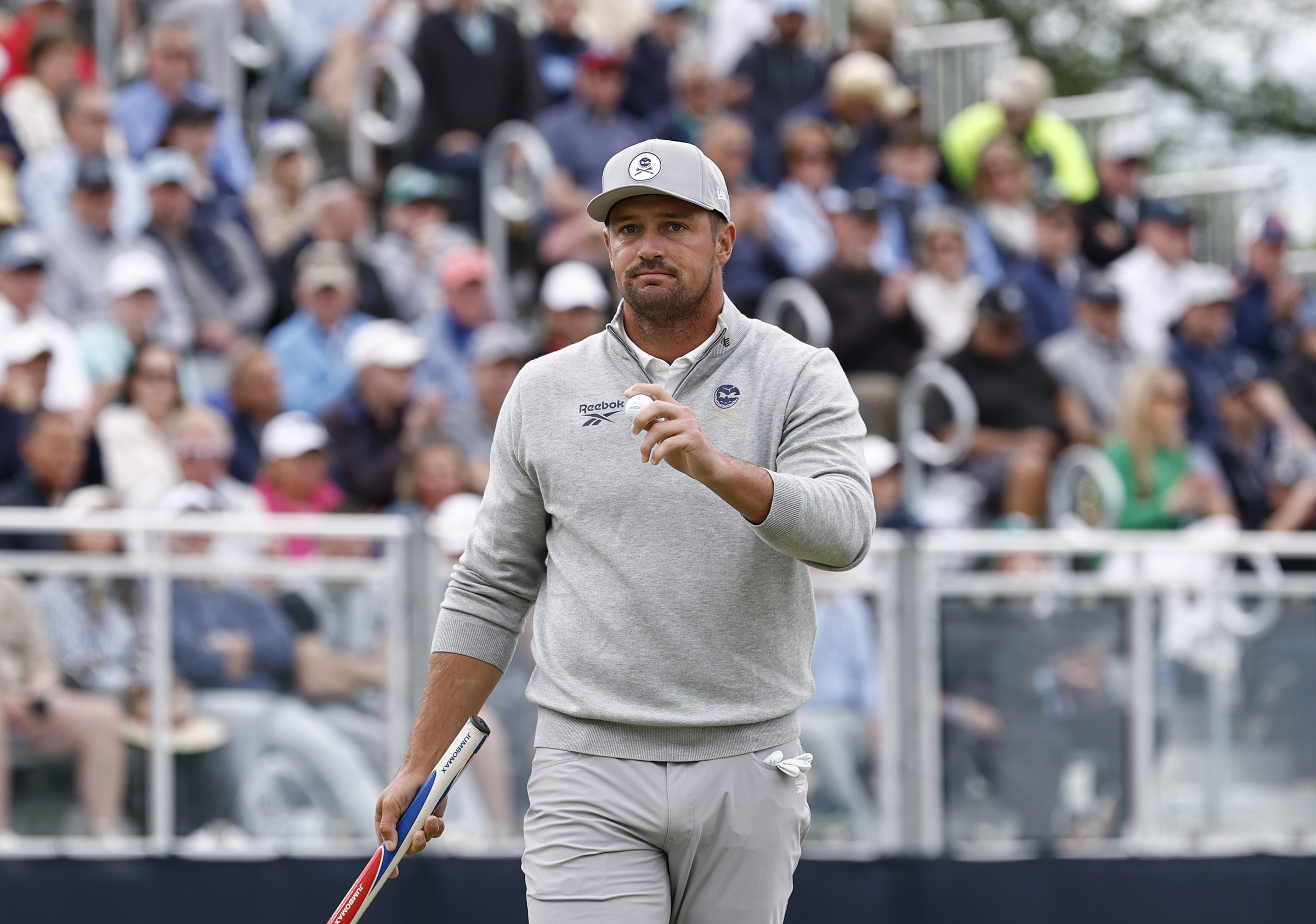
    Bryson DeChambeau is always interesting, no matter how he plays.Yong Kim / Staff Photographer

    He lacks the additive abrasion of Bryson DeChambeau. He lacks the international appeal and frank assessments of Rory McIlroy, a glib Northern Irishman, or Jon Rahm, a prickly Spaniard.

    Exhausted

    More than anything, the Tour’s long, top-heavy schedule is its own worst enemy.

    Its best tournament, the Players Championship, happens in March. Its most beloved tournament, the Masters, happens in April. Its best major tournament, The PGA Championship, now comes in May. Its toughest test, the U.S. Open, is in June. Its oldest and coolest tournament, the British Open, is played in July.

    By August, all but the most rabid golf fans (hand raised) are burned out. Every other year the casuals need the eight weeks between the British and the Ryder Cup to refuel. (We’ll keep ignoring the President’s Cup until it matters.)

    As LIV dies and its prodigals return, the Tour Championship in its present form only would have become better. Now, instead of being virtually assured of having DeChambeau, Rahm, LIV stud Joaquin Niemann playing against Rory and Scottie at East Lake on the final Sunday of the 2028 season, you’re guaranteed to have no more than two of them.

    More than likely, you’ll have none of them.

  • Matt Campbell’s path to Penn State began with small-town roots and led him through a decade in the Big 12

    Matt Campbell’s path to Penn State began with small-town roots and led him through a decade in the Big 12

    On Christmas mornings while growing up in Northeast Ohio, Matt and Scott Campbell were excited to fulfill what became a yearly tradition. Most kids raced toward the Christmas tree to open presents and celebrate the holiday, but not the two brothers, who were born four years apart. They raced out the door to get a football game in, even when snow covered the ground.

    Those games were one-on-one, mano a mano. Matt “had quite an impressive [size] advantage on me,” Scott said. The memory proved instructive of his older brother’s competitiveness, as Matt steps into his third college football head coaching job.

    “It was not uncommon to get your favorite football jersey for a Christmas present. And then Riddell was giving out all those football uniforms that came with shoulder pads, leg pants, and helmets,” Scott Campbell told The Inquirer of his earliest football memories with Matt. “Then you go outside [to play against Matt].

    “I never won these games.”

    Football runs deep for the Campbells. Rick Campbell, Matt and Scott’s father, was a high school coach at Jackson High School in Massillon, Ohio, and later went into administration.

    The sport quickly became the center of Matt’s life, too.

    He would attend two-a-days with his dad before his school day started.

    “My greatest childhood memories are being in the locker room and being on the football field with my dad, watching him lead and coach a football team,” Matt Campbell told The Inquirer in July. “I wanted to help give back and make a difference [as a coach] because so many people had done that for me.”

    (function() {
    var l2 = function() {
    new pym.Parent(‘campbell2’,
    ‘https://media.inquirer.com/storage/inquirer/projects/innovation/arcgis_iframe/campbell2.html’);
    };
    if (typeof(pym) === ‘undefined’) {
    var h = document.getElementsByTagName(‘head’)[0],
    s = document.createElement(‘script’);
    s.type = ‘text/javascript’;
    s.src = ‘https://pym.nprapps.org/pym.v1.min.js’;
    s.onload = l2;
    h.appendChild(s);
    } else {
    l2();
    }
    })();

    From those early days in their backyard, to stops at Pittsburgh and Mount Union as a player, then coach, and several other stops before landing his highest-profile opportunity yet at Penn State, Campbell has remained the same, his former teammates, players, and coaches across his 24-year coaching career say.

    “Anybody that knew younger Matt or played with him or crossed paths with him, I don’t think anybody is surprised [by] the success he’s had,” Indianapolis Colts tight end coach Tom Manning said by phone shortly after Campbell was hired at Penn State. “Obviously, he’s a very good football guy in terms of X’s and O’s, but I think the thing that makes Matt dynamic is his ability to inspire others, certainly a great teacher, but he has this ability to have a relationship with everybody that is authentic and real.

    “He creates this culture of unification, of toughness, of having a chip on your shoulder. And I think that every person that’s ever played [in] his football program or coached for him, they just feel like they’re part of something a little bit bigger than themselves.”

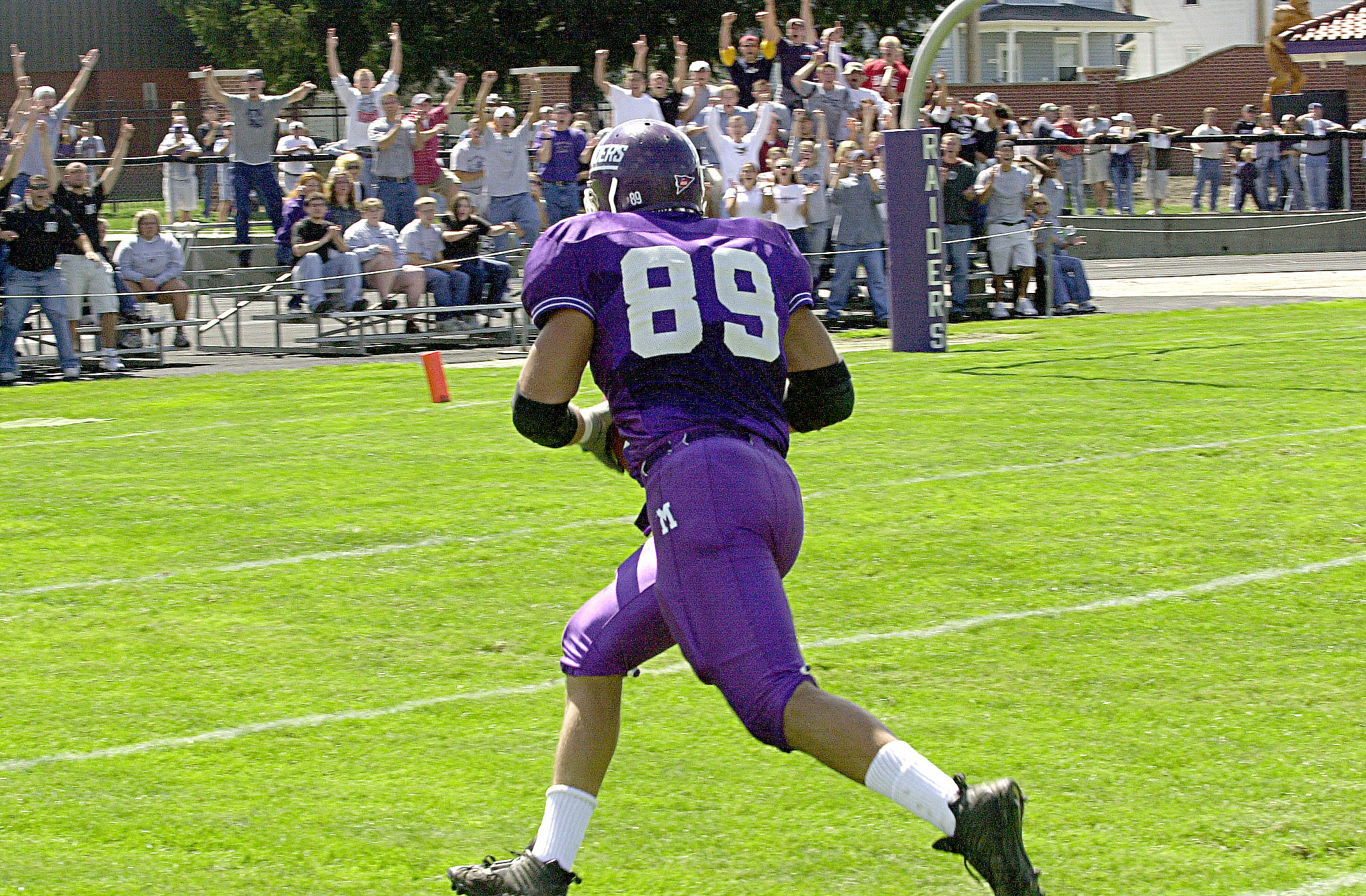
    Matt Campbell (center) makes a tackle during a game for Mount Union during his playing days.Courtesy of Cockrill’s Studio

    Embracing the ‘abnormal’

    Campbell, now 46, developed into a standout defensive end at Perry High School in the 1990s. Matt was coached there by Keith Wakefield, who is “as inspirational as anybody in his life,” Scott said.

    Out of high school, he accepted a scholarship from Pitt, but after the team went 2-9 his freshman season in 1998, he transferred to Division III Mount Union — a move that not only defined his playing and coaching career, but moved him closer to home.

    Campbell won three D-III titles from 1999 to 2002 at Mount Union, was named an All-American twice, and was the Ohio Athletic Conference defensive lineman of the year in back-to-back years in 2001 and 2002. But it was during his playing days there, under legendary coach Larry Kehres and alongside lifelong friends and coaching contemporaries, where Campbell first showed an inkling toward his future career.

    Matt Campbell played defensive line at Division III school Mount Union after spending his freshman season at Pitt.Courtesy of Cockrill’s Studio

    “The connection of understanding the value of ‘People don’t care how much you know until they know how much you care,’ and you go back and you say, ‘Man, why? What made the great coaches that you had impactful in your life?’” Campbell said. “It was a transformational experience rather than a transactional journey. And you’re talking about two of the winningest coaches in the history of Ohio high school football, and certainly in all of college football [in Wakefield and Kehres].

    “I think their greatest gift was their gift to connect … and find a way to help make their players better, because their belief [of], ‘Man, they cared about them and they wanted to have a real relationship with them.’ So I think that foundation has been huge.”

    Often understated about Campbell’s background is how impactful he was on the field for the perennial title contender. His 182 assisted tackles and 55 tackles for loss rank fourth in school history, his 26 career sacks are seventh, and he is 19th in total tackles (256).

    Matt Campbell played and coached at Division III Mount Union.Courtesy of Cockrill’s Studio

    His on-field success, though, was anchored by film study. Campbell would know “the play that was coming by whether it was the formation or certain motions that they do into the boundaries, and he was calling the plays out,” said Scott, who joined his older brother on Mount Union’s football team in 2002. Campbell’s teammates also took notice.

    “All of them knew the way that Matt prepared for football games was abnormal,” Scott said.

    But what made what Matt was doing abnormal?

    “I don’t think it’s uncommon for a player to be obsessed at watching film,” Scott said. “Some people get really good at honing their skills and they want to do it. It’s abnormal when they bring people along with them. So when you might get a kid, like a very talented defensive tackle … and some of these guys that he played with, they’re meeting on a Sunday night and doing hard core [film study] because they want to be ready for the next week.

    “When you have gravitational pull to bring the people that either you’re leading, which we are seeing it with him as a coach, or the ones that you’re going to war with as a football player … for them to match your intensity, they were buying into that and they saw, ‘Well, Campbell’s doing that. We have to do it.’”

    Added Manning, Matt’s teammate for two years at Mount Union: “He was always in the film room. He was always trying to find an edge, in terms of being a player, and he was a guy that was probably more talented than most of the people that he played, and he still had the work ethic and the attention to detail as a player that I think helped him separate himself even further.”

    Matt Campbell was twice named to the College Football All-America team and named Ohio Athletic Conference’s defensive lineman of the year at Mount Union.Courtesy of Cockrill’s Studio

    ‘Just as authentic’

    When Campbell finished his playing career at Mount Union in 2002, he went to Bowling Green to work as a graduate assistant, but returned to Mount Union in 2005 and was its offensive coordinator and offensive line coach for the next two seasons.

    The program won back-to-back titles, with a staff that included Eagles coach Nick Sirianni (2004 to 2005), Campbell’s college teammate and former roommate, as defensive backs coach in that first year. Connecticut coach Jason Candle (2003 to 2008), another former teammate, and Syracuse defensive coordinator Vince Kehres (2000 to 2019), Larry Kehres’ son, were on the staff both seasons.

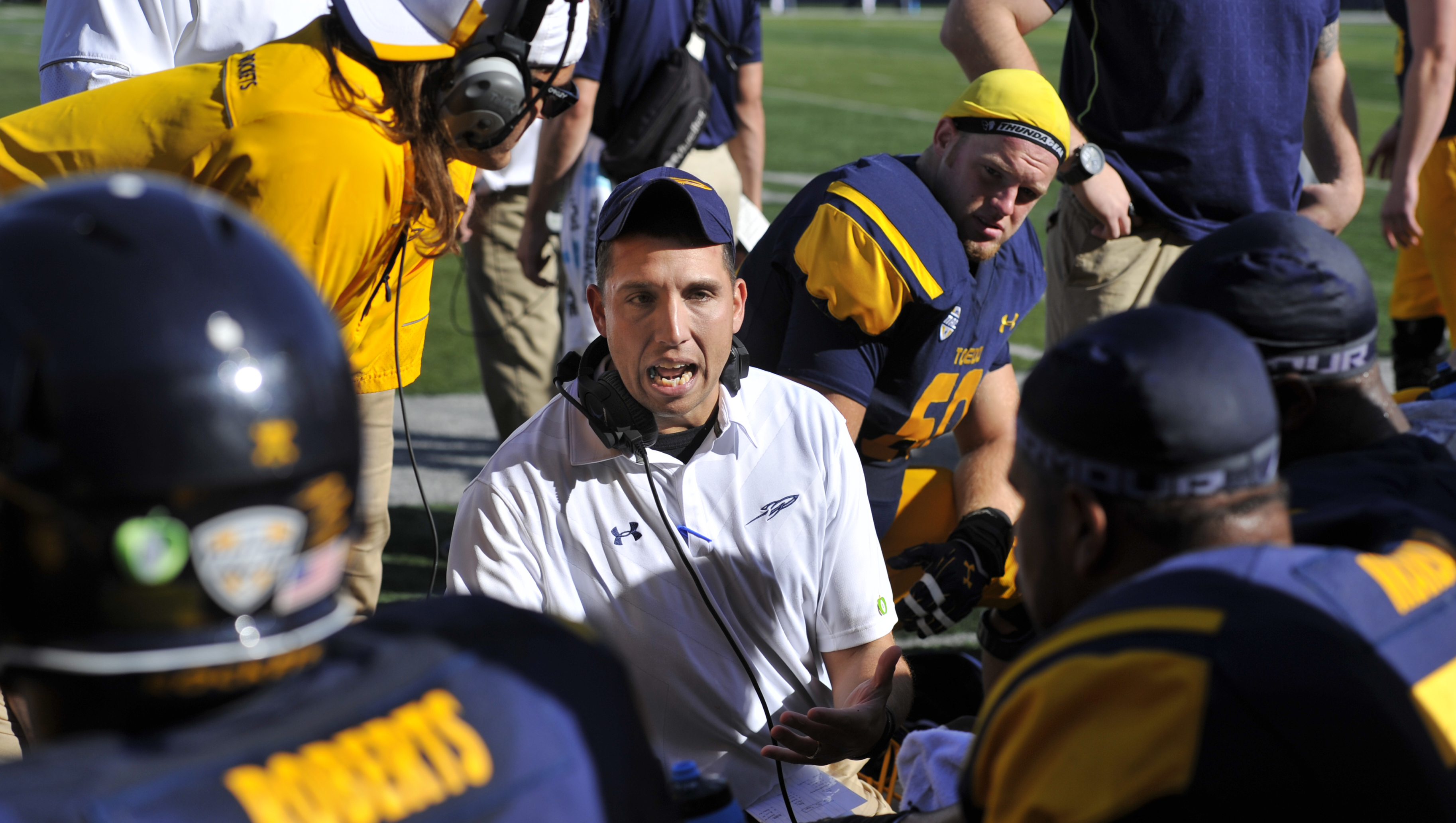
    Campbell returned to Bowling Green for two more seasons before landing at Toledo in 2009, first as an offensive line coach and run game coordinator. By 2012, he was the program’s head coach at 32 years old, making him the FBS’s youngest coach at the time.

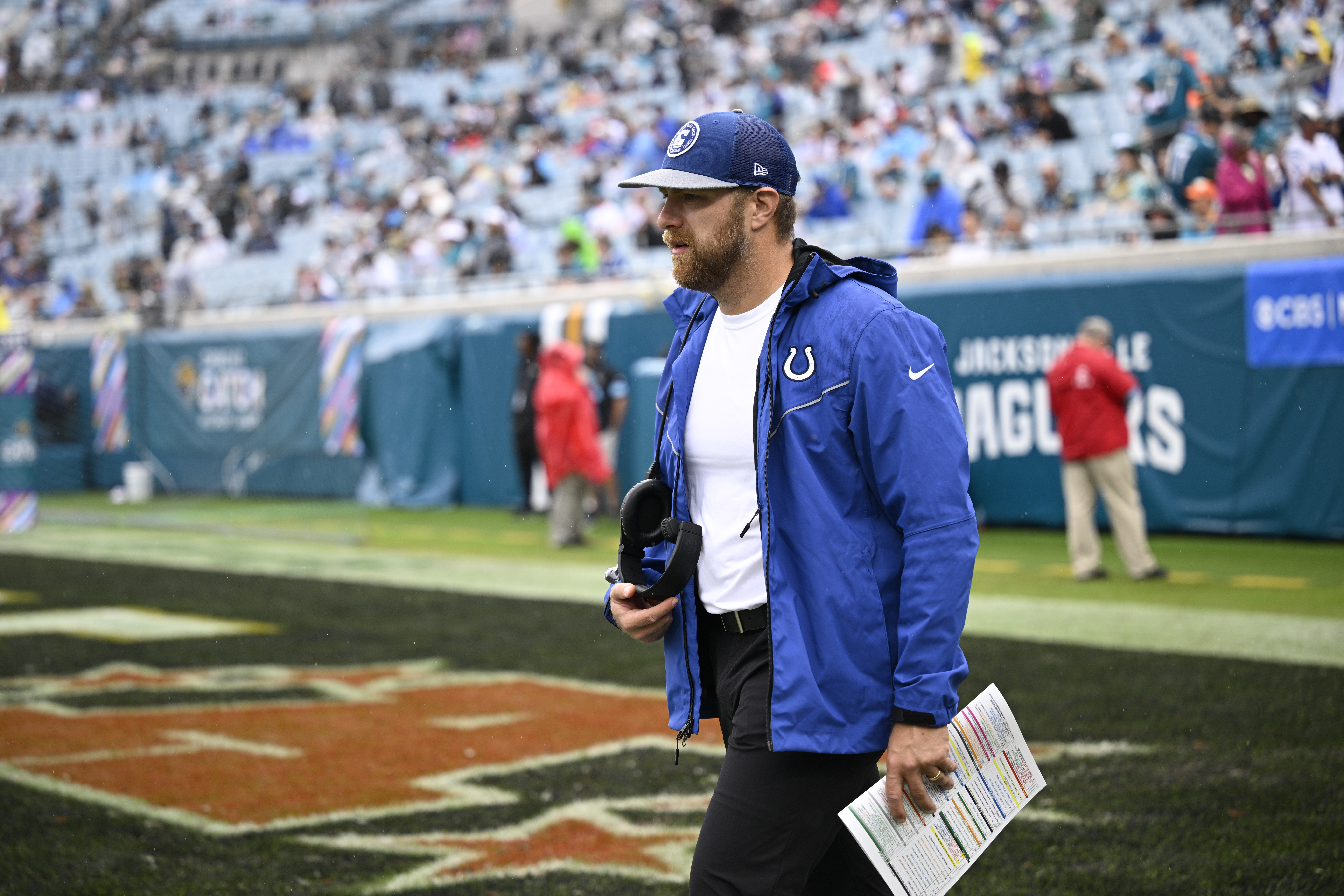
    Colts tight ends coach Tom Manning was teammates with Matt Campbell for two years at Mount Union.Phelan M. Ebenhack

    What impressed Manning, who also worked at Toledo as a graduate assistant (2009) and later as its director of football operations and offensive line coach, was how quickly Campbell connected with players and recruits.

    “What I really recognized the most was that he was different in recruiting, [he had a] dynamic personality, but I was always impressed, and probably what stuck out the most was that when he had recruits, whether up on campus or visiting him, he had a real relationship with a ton of kids,” Manning said. “I was like, ‘Man, I don’t understand how this guy after just a couple brief contacts, has the ability to know so much about him, have real conversations with him.’ … I knew Matt as a younger guy, and now I knew him in the professional world. I was like, ‘Man, the biggest thing about Matt is he’s just as authentic as he was the day that I met him.’”

    And that started with his own teammates. Mount Union was “a player-led program,” and Campbell — along with other leaders like Sirianni, Candle, and Kehres — would open their house and “nurture the young kids because that’s the next generation of leaders in that program.”

    Jason Candle followed Matt Campbell to Toledo in 2009 as slot receivers/tight ends coach.Carlos Osorio

    “That’s what that whole program was,” Scott said. “It was a program that was giving way before we even knew it was giving to us.”

    Matt Campbell worked closely with Candle, who followed him to Toledo in 2009 as slot receivers/tight ends coach, especially when the former assumed play-calling duties under Tim Beckman.

    Candle, who considers Campbell a “true friend” and a “great mentor,” recalled the early “camaraderie of the young assistant coaches that we had at the time.”

    “Lots of times you don’t get to work with or alongside with or for your college teammates,” Candle said. “And we’ve been through a lot of battles together as players and certainly as young assistant coaches. [Matt’s] been a guy that I’ve learned a lot of football from and a guy that has certainly earned the right to lead one of the top programs in the country.”

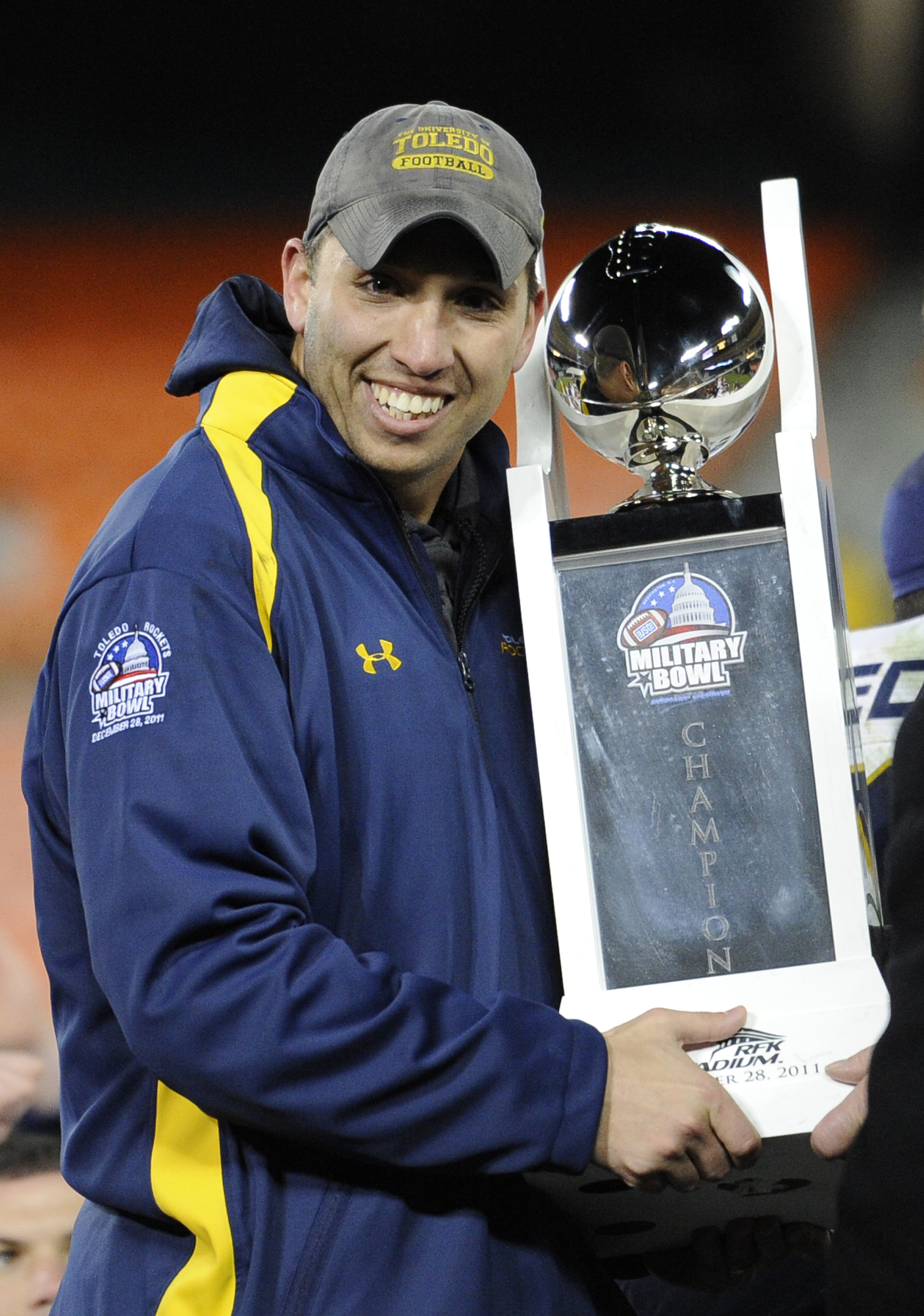
    Campbell went 9-4 in his first season leading Toledo, and he compiled a 35-15 overall record before moving on to Iowa State at 36 years old.

    Matt Campbell compiled a 35-15 overall record while at Toledo.Nick Wass

    Campbell “surrounded himself with young and hungry people,” Manning said, particularly on his offensive staffs at Toledo — which featured future Cincinnati coach Scott Satterfield, future Auburn coach Alex Golesh, and Candle. But it was Campbell “doing things the right way” and never being “anybody that he’s not” that stood out.

    “Working for him is was one of the greatest experiences of my life,” said Manning, who worked with Campbell for a total of 12 years between Toledo and Iowa State. “You felt like you were doing something. … You were coaching the whole player. It was about character. It was about teaching kids attitude and effort, the ability to be consistent, and to give a little bit more themselves and to play in a unified front — that’s what he does so well.”

    Matt Campbell was the head coach at Toledo from 2012 to 2015.David Richard

    ‘Dog mentality’

    In the 10 years before Campbell took over Iowa State, the program had just one winning season and had finished with more than seven wins once since 2000.

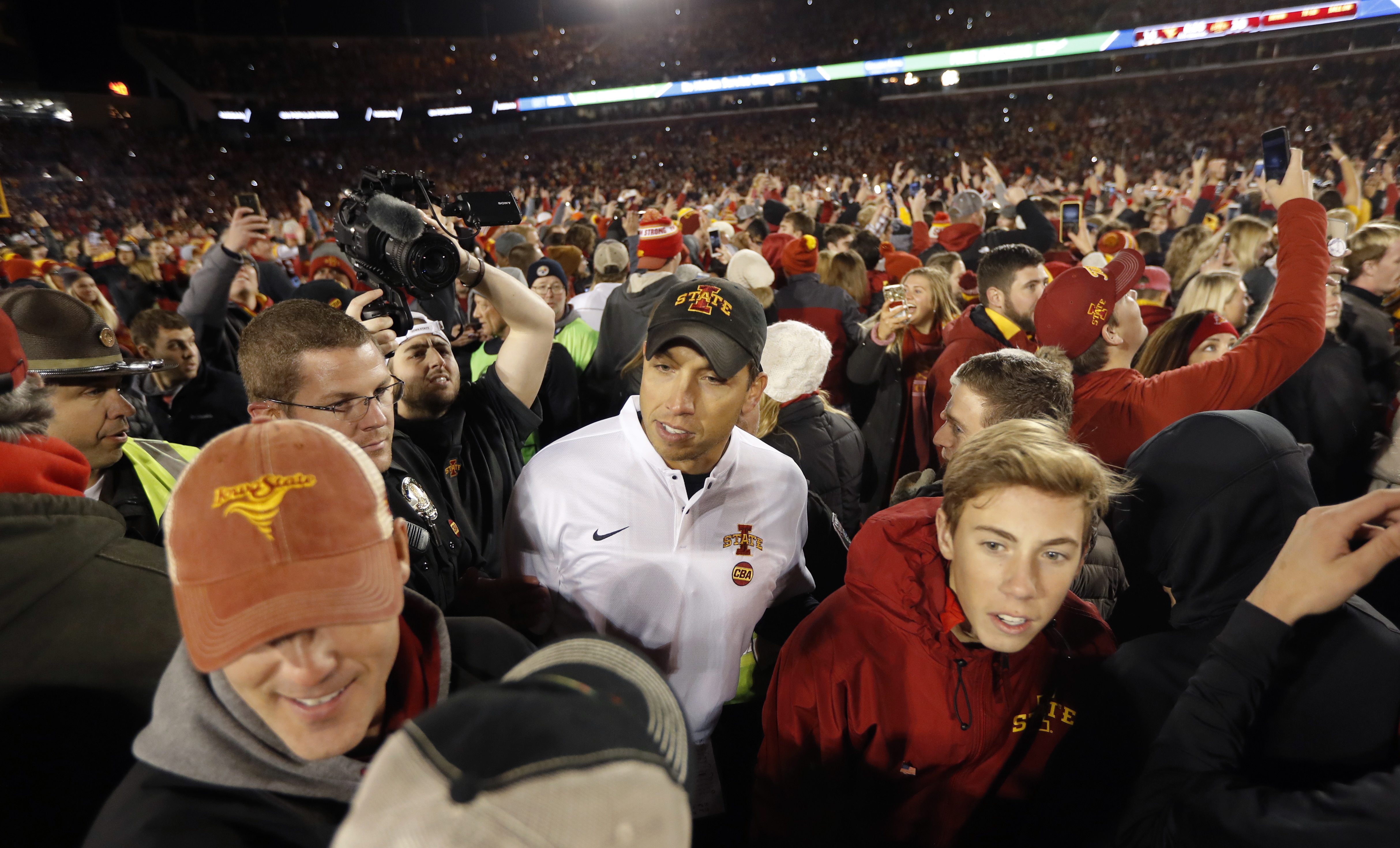
    He accomplished those milestones by Year 2. In 2017, the Cyclones went 8-5, their best record in 16 years, and upset No. 3 Oklahoma, 38-31, a memory that is forever etched in the mind of Manning, who was the team’s offensive coordinator and offensive line coach.

    “That week, we kind of put in a whole new defense,” Manning said. “We had our middle linebacker who [also] was a quarterback. He played about 40% of the snaps at quarterback. He’s playing both ways. We got a walk-on quarterback who essentially ends up winning us the game, and [Matt’s] belief the whole week, his belief during the game, never wavered. A lot of guys tell themselves like, ‘Hey, we’re going to win this game.’ My man thought we’re going to win the game the entire week, and then we end up winning the game.

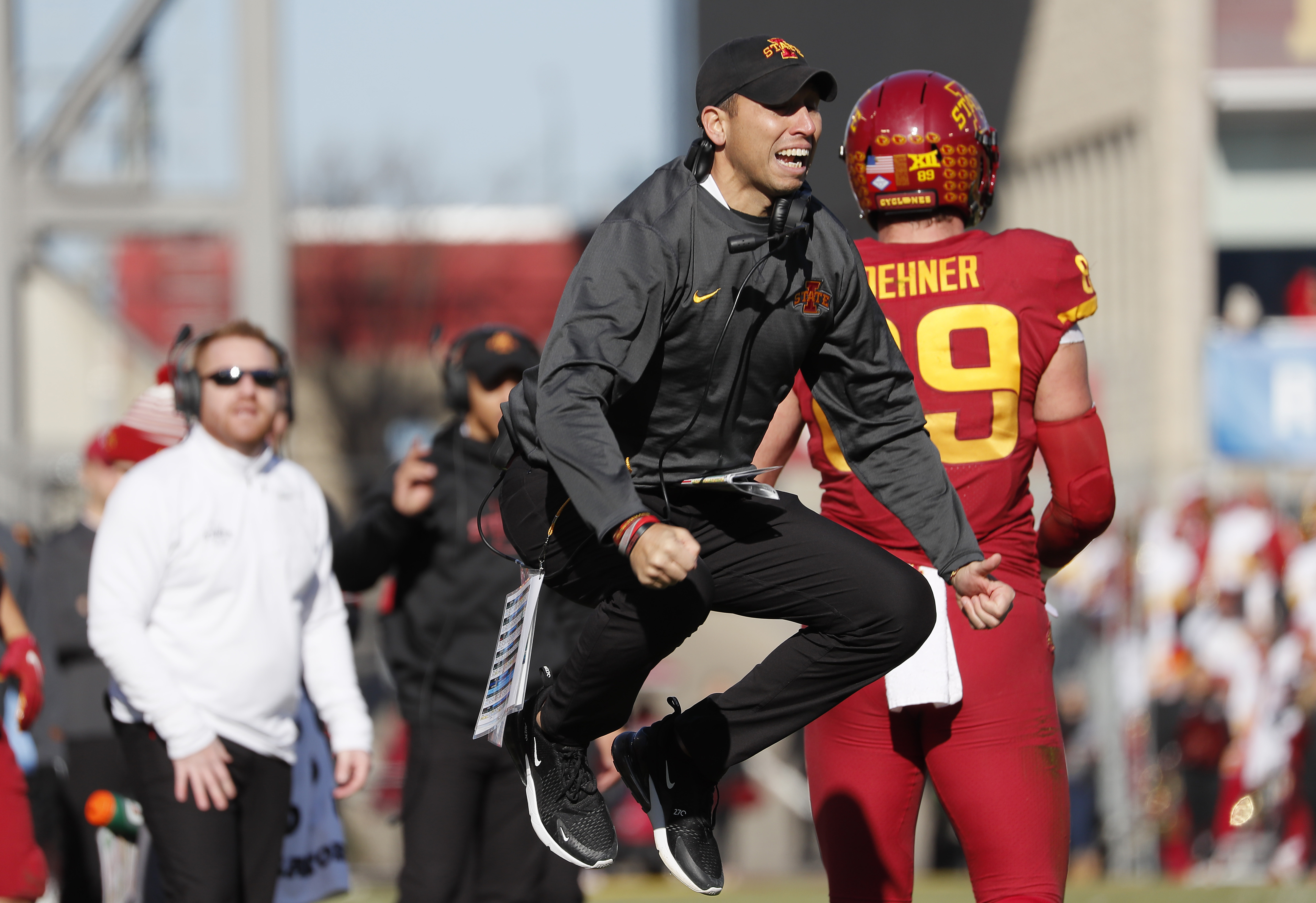
    Matt Campbell became the Iowa State’s all-time winningest coach.Matthew Putney

    “… And to me, it was culture over scheme. Maybe our players collectively weren’t as talented and as good, but, ‘Hey, if we’re united, we have this culture of winning, we do things the right way.’”

    That unwavering belief was reflected by his players, too. Among them was former Iowa State quarterback Brock Purdy, a four-year starter who could sense Campbell’s “loyalty” and praised his former coach “who had a vision for [him in] place.”

    “Coach Campbell’s coaching style is huge on culture. It’s important because he sets up an organization that is able to withstand adversity, the good, the bad,” said Purdy, who’s now the San Francisco 49ers starting quarterback. “And it’s all about being a real team that trusts in each other, goes through things with each other. And then at the end of the day, he is going to prepare us better than anybody in the country in terms of scheme and making sure our bodies are right for a long season.”

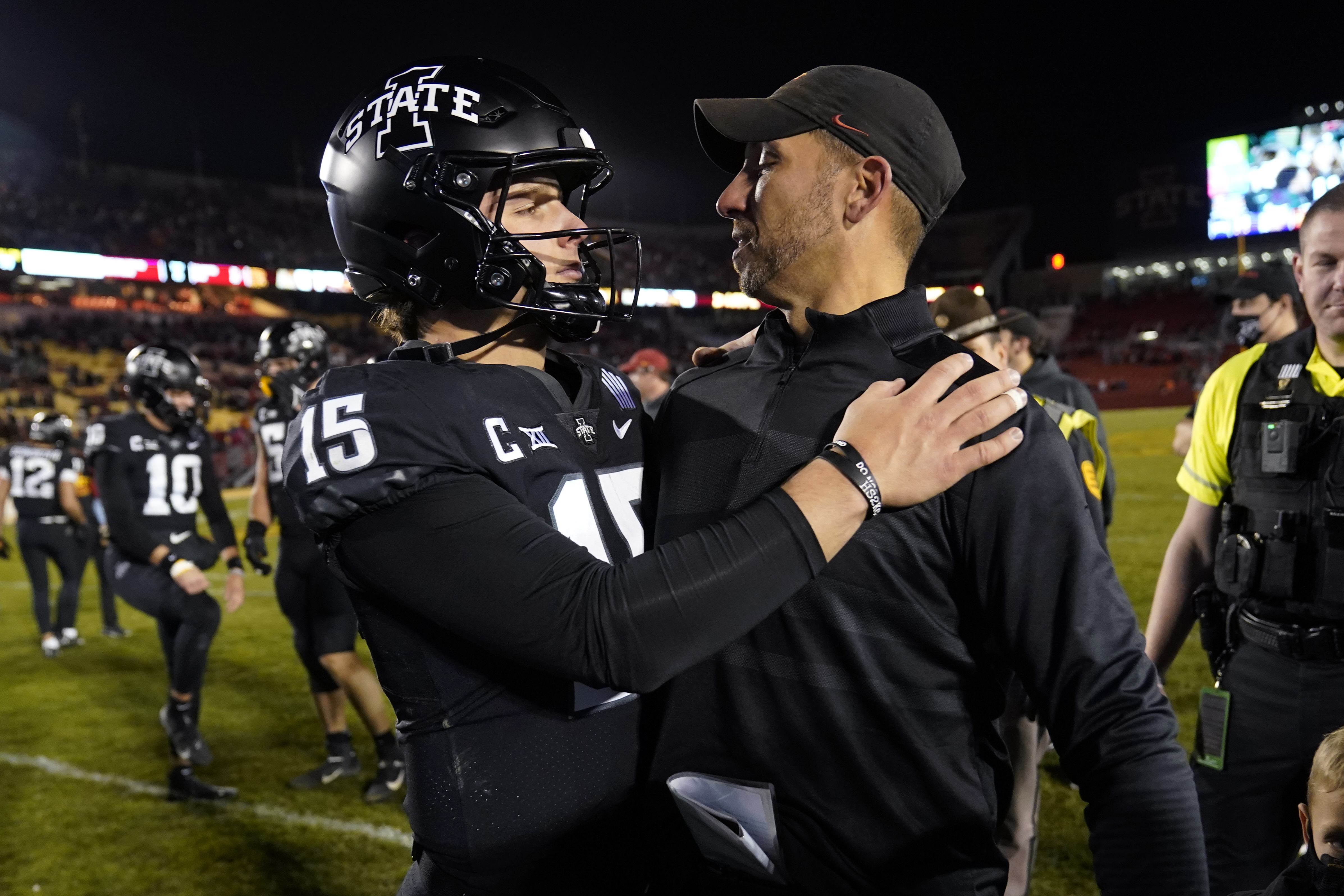
    Former Iowa State quarterback Brock Purdy gets a hug from Matt Campbell against TCU on Nov. 26, 2021.Charlie Neibergall

    Those Iowa State teams often punched above their weight. Campbell’s highest-ranked recruiting class with the Cyclones was the Class of 2026, which was 48th before he departed for Penn State, taking much of that class with him.

    Wide receiver Xavier Hutchinson, who played three seasons at Iowa State from 2020 to 22, said Campbell recruited players that were “like-minded.”

    “Everybody went to Iowa State either because you were underlooked, you weren’t valued, or just people thought [other players] were better,” said Hutchinson, who’s now on the Houston Texans with four other former Cyclones who played for Campbell. “We all had like a dog mentality — and I felt like that’s Coach Campbell’s mentality. It’s like the rough side of the mountain. … He wanted guys who have something to prove and had a chip on their shoulder.”

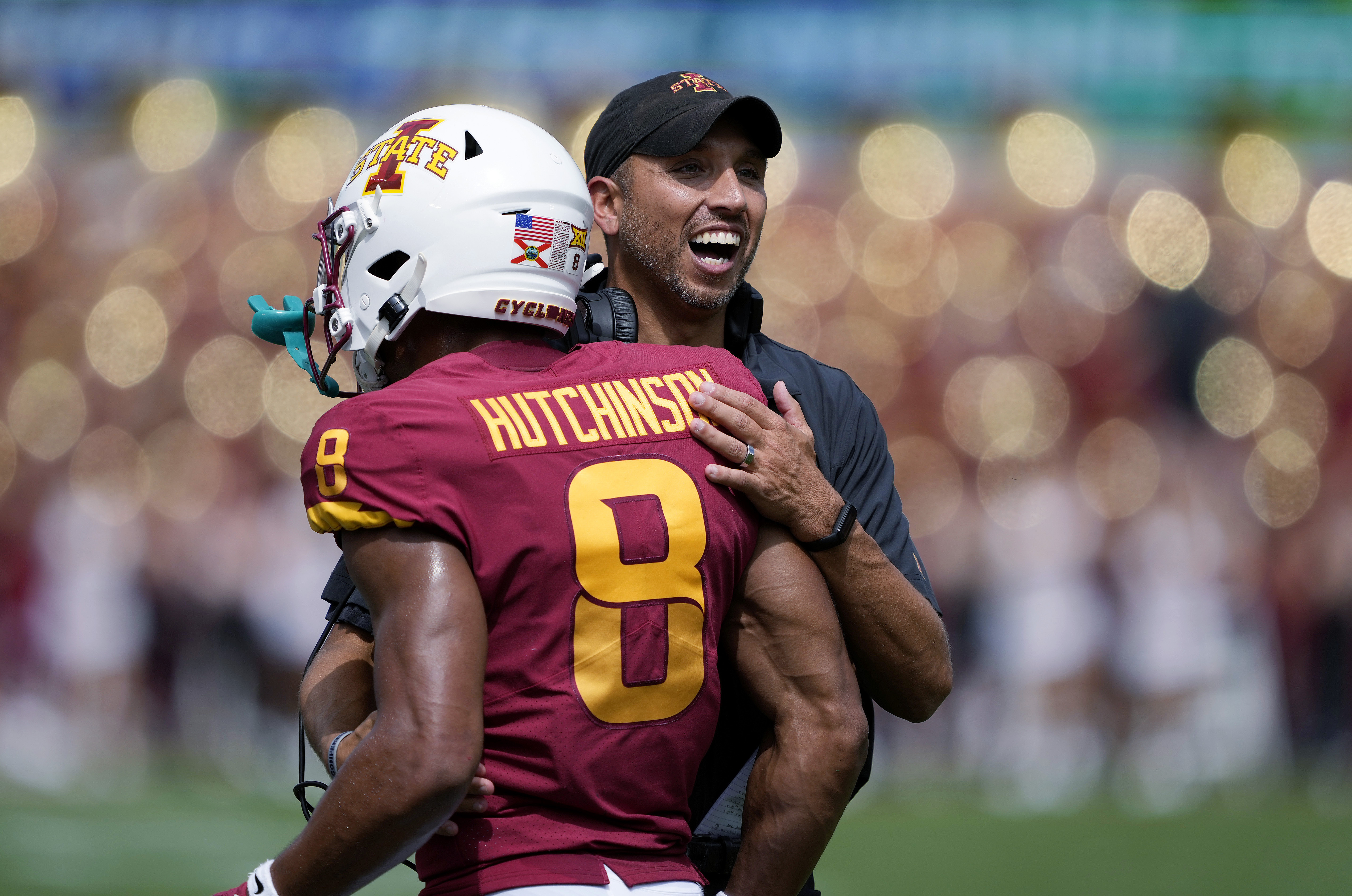
    Matt Campbell congratulates former Iowa State wide receiver Xavier Hutchinson on his touchdown against Southeast Missouri State on Sept. 3, 2022.Matthew Putney

    There were plenty of highs in his 10-year run at Iowa State: Two Big 12 championship appearances (2020, 2024), the most wins in a two-year stretch (19 wins across 2024 and 2025) and double-digit wins for the first time in program history. Twelve of his 17 Associated Press Top 25 wins came in that time frame, and he became the program’s winningest coach.

    Even in the down years — Campbell and Iowa State missed bowl games just twice in 10 years, once in his debut season (2016) and another in 2022 — Hutchinson says his former coach “never let the success or the failures define him as a coach.”

    “He’s taken them all on the chin,” Hutchinson said. “When we’ve had the greatest success, he was there. He still had the same motto even when we started [struggling] a little bit. He was still the same guy every day. And I think when your head coach is the same guy, and he doesn’t get frazzled by the success or the failures — it’s going to bleed into the into the team.”

    Matt Campbell led Iowa State to two Big 12 championship appearances.Charlie Neibergall

    ‘The best version of me’

    Campbell will emerge from the Beaver Stadium tunnel for the first time this weekend, marking the next chapter for him and the program. His team has 24 former Iowa State players who followed him to Happy Valley.

    At the root of his confidence in leading Toledo, Iowa State, and now Penn State is what he learned from his father, Wakefield, and Kehres, his coaching mentors: “Not trying to be somebody else.”

    “I love learning. I love being humble and growing, but I’m just trying to be me, the best version of me,” Campbell said. “What I found is we’ve been able to build trust, loyalty, togetherness in our football program, whether it was at Toledo, whether it’s at Iowa State, and obviously that’ll be a great challenge as we build this Penn State program.

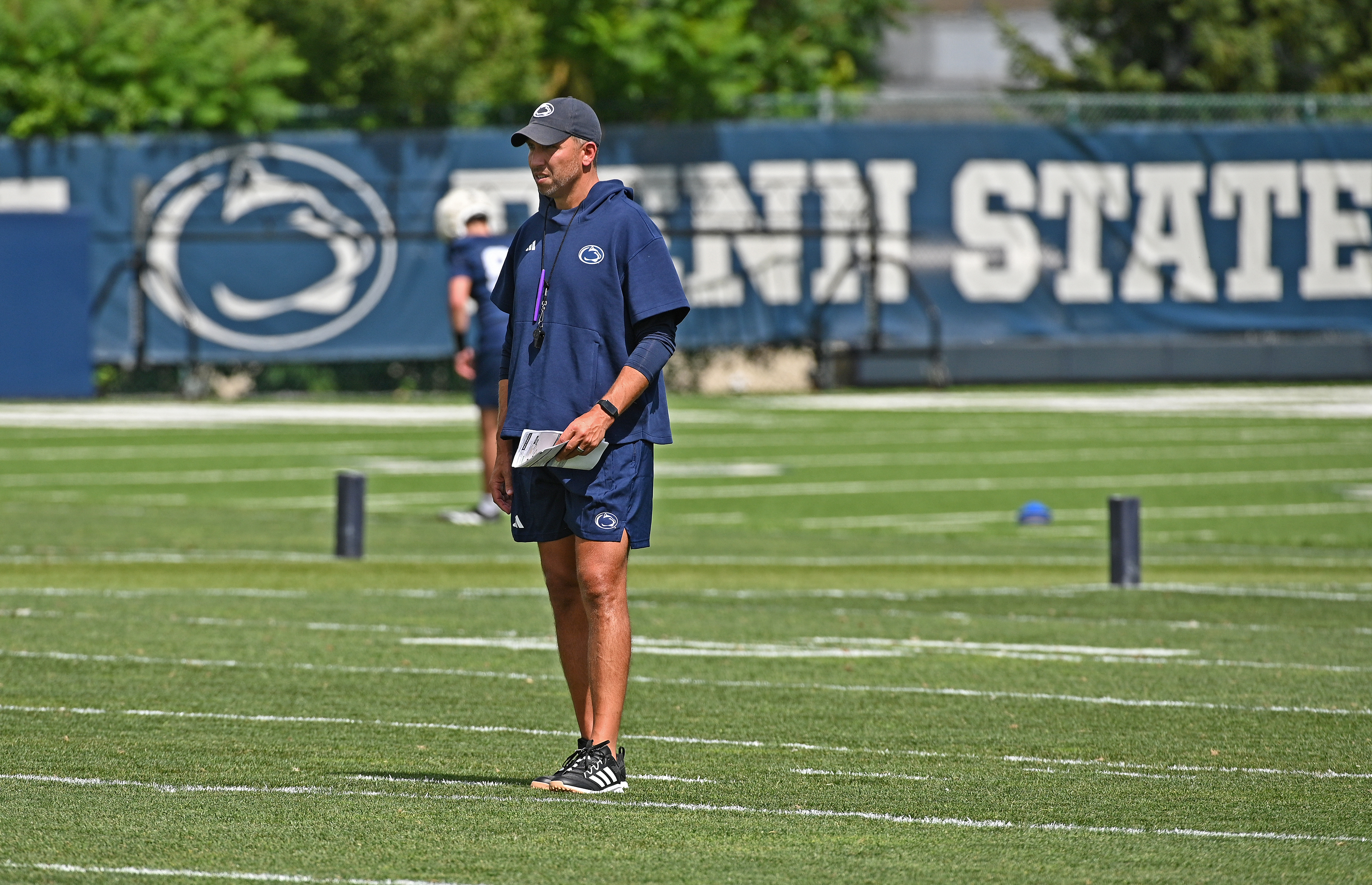
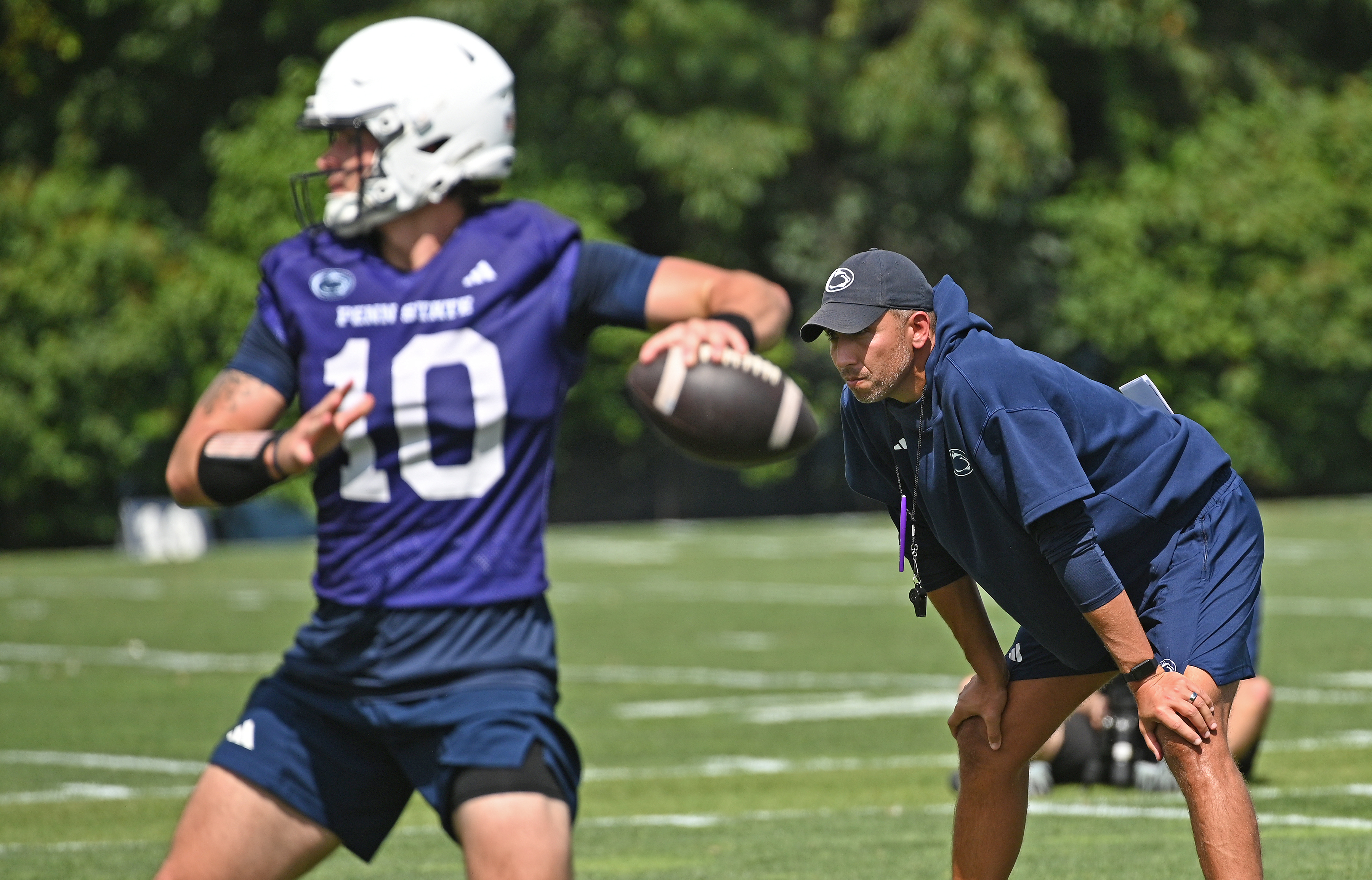
    Matt Campbell during Penn State’s first practice of training camp on Aug. 5.Craig Houtz / For The Inquirer

    “The attitude and the effort and the consistency to show up every day, and be able to be the same person every day, and allowing your staff and the players on the team to know exactly what they’re going to get … I think those are what I learned and took as a player and a coach from [Kehres and Wakefield], and it’s what I’ve tried to emulate everywhere I’ve been as a football coach.”

    His former players, Purdy, Hutchinson, and offensive lineman James Neal III, have no doubts Campbell is ”going to give [Penn State] everything he has” to help it reach new heights. It begins with Marshall on Saturday (3:30 p.m., FS1).

    Scott, who joined Wakefield at a Penn State practice on Aug. 13, says his older brother is doing “what he loves.” And it’s why he believes Campbell has sustained success throughout his career.

    “If somehow you’re able to get, say, the 400, 500 people that at some point came across Matt Campbell at Mount Union College that played with him or whatever, I would probably say in the high 95 percentile range, every one of them would have told you he was going to be a head coach and a successful head coach at some point,” Scott said. “Matt’s elite trait that he has is that he is beyond competitive.

    “He just doesn’t say, ‘We’re going to do this’ because why else would you do it? No. Matt envisions this and believes it. He’s not going to tell you if he doesn’t [believe it.].”

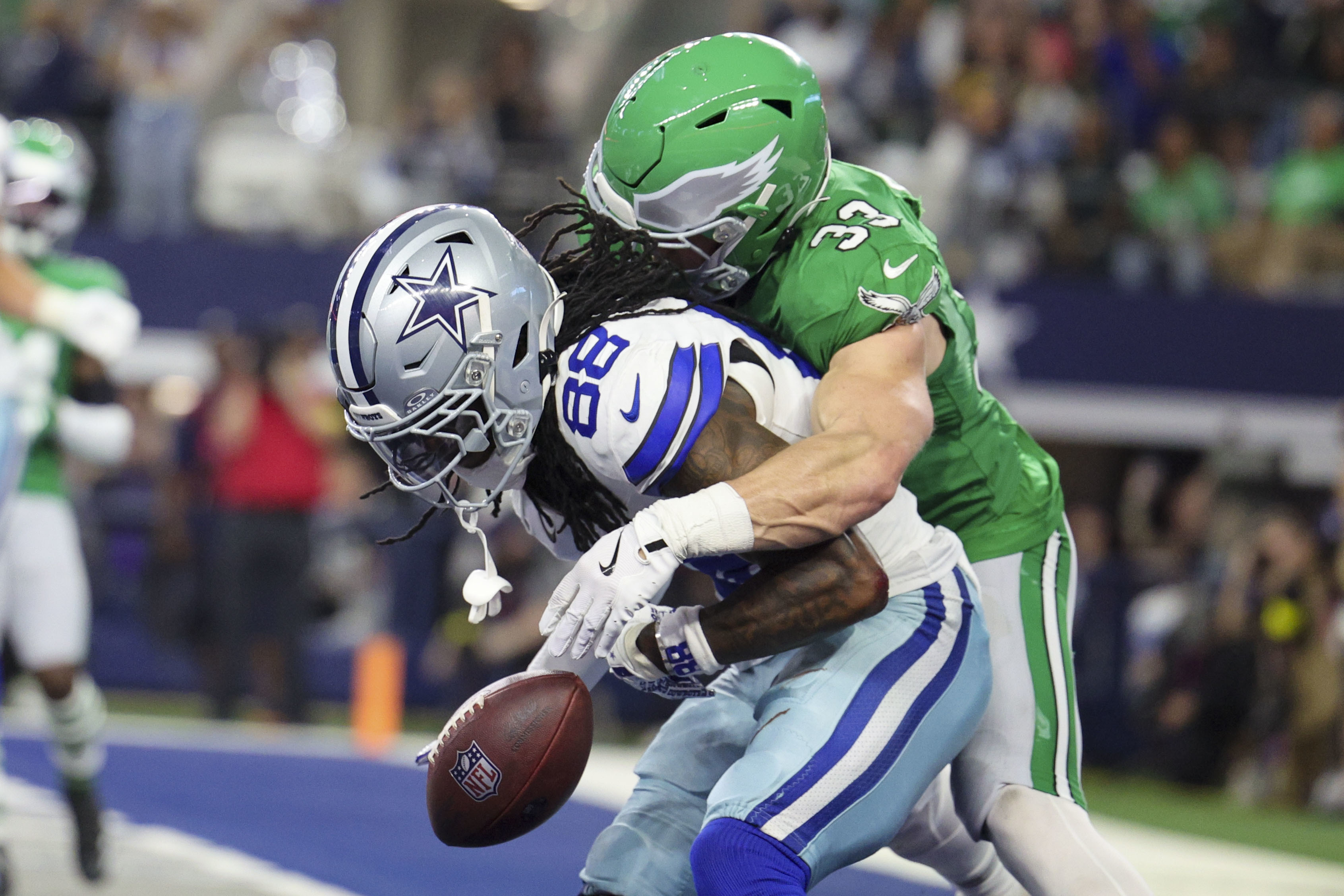
  • The Cowboys aren’t any closer to contending. But are they closer to the Eagles?

    The Cowboys aren’t any closer to contending. But are they closer to the Eagles?

    The only good thing about preseason football is that it eventually ends. Except, this year, the NFL is forcing us to wait until the middle of September until the real games begin. Blame Roger Goodell, or blame the Romans for inventing the Julian Calendar. One thing is for sure: A lot of us will need to find somebody to blame when our significant others find out the Super Bowl is on Valentine’s Day. That, or we should all start casually dropping random comments about the romance inherent in a candlelit breakfast.

    The surest sign that summer needs to end is when people start talking themselves into the Cowboys being anything different than what they are every year. In other words, it needed to end two weeks ago, when NFL.com ran a story from longtime analyst Bucky Brooks with a headline that declared: “Cowboys are True Super Bowl Contenders in 2026.”

    Brooks isn’t alone. Consider the following heading that ran in the Dallas Morning News a couple of days ago: “Difficulty of Cowboys’ roster cuts signifies they’re back to being contenders in 2026.”

    Apparently, the Eagles’ practice squad got a good one in Jaydon Blue.

    There is a long list of reasons to doubt whether the Cowboys are, in fact, a contender. But before we dive further, let’s first remind ourselves of why it matters. For the last several years, the Cowboys have served as a bellwether of sorts for the Eagles.

    Jalen Hurts and the Eagles lost in Dallas 33-13, the second of five losses in their last six games to close the 2023 regular season.Heather Khalifa / Staff Photographer

    Back in 2023, it was the Cowboys’ 33-13 win over the 10-2 Eagles in Dallas that served as the unofficial pronouncement that things really were going south.

    You can say the same of Dallas’ 24-21 win last season, the first of a three-game losing streak that left nobody surprised when the Eagles again failed to get out of wild-card weekend.

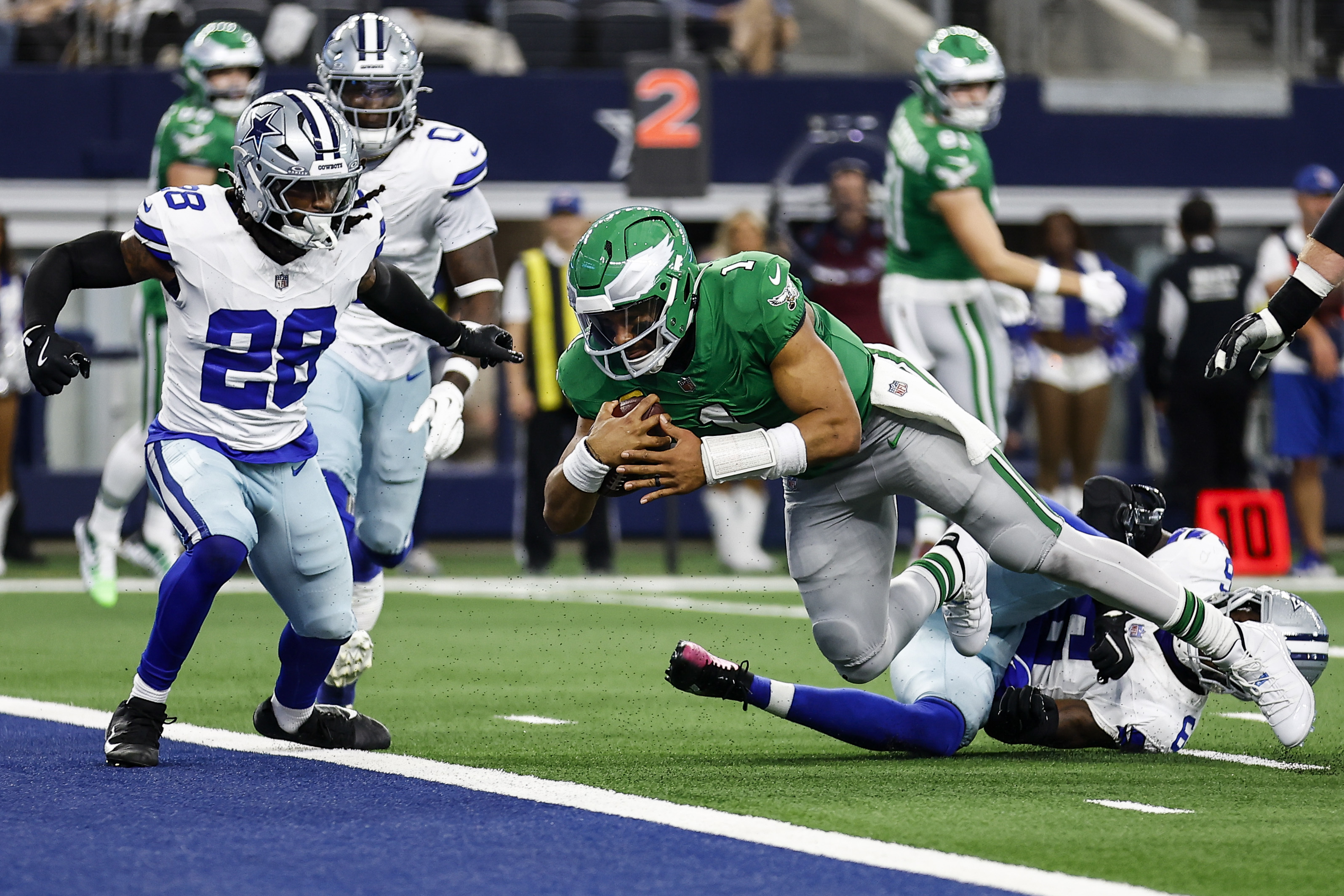
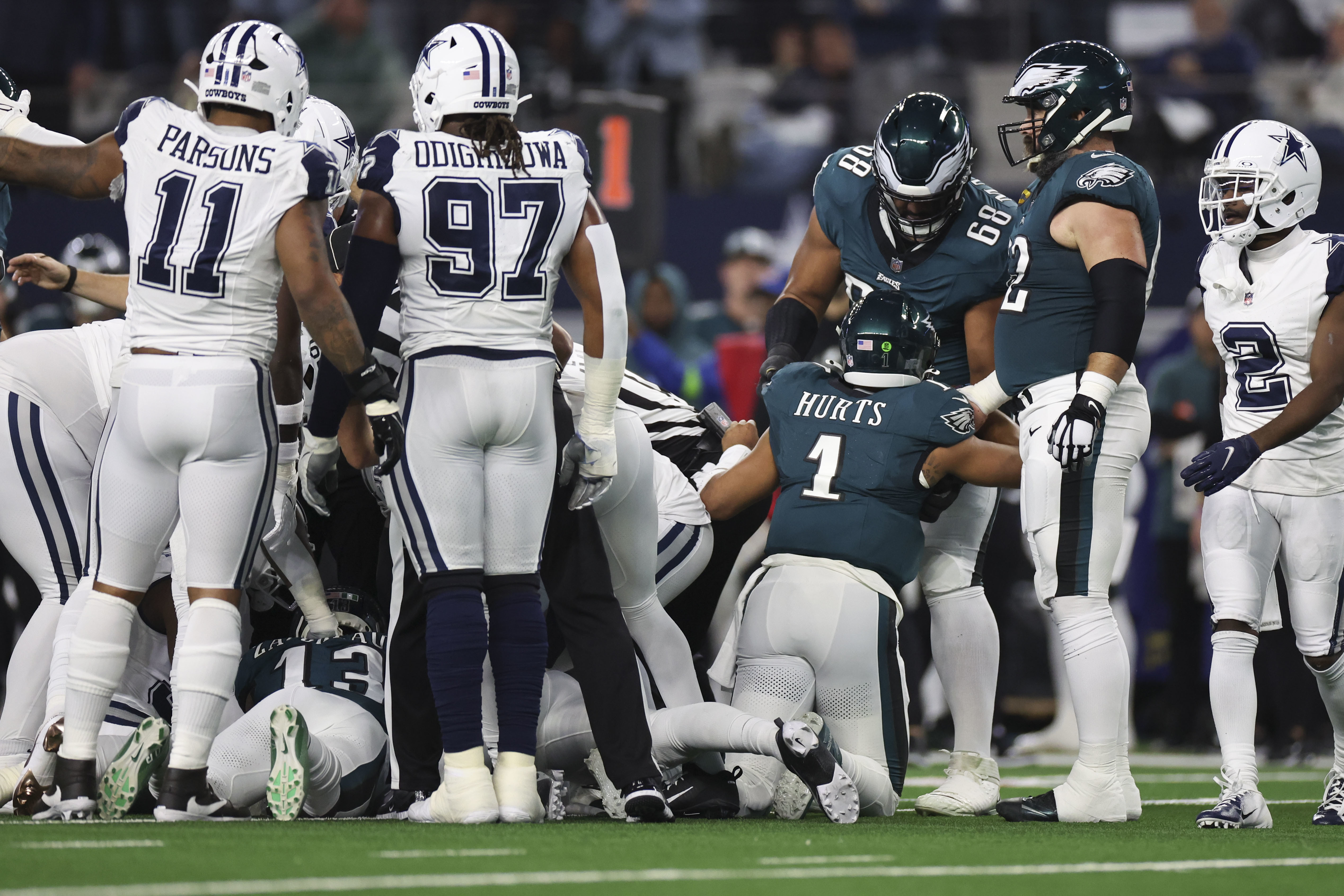
    Both of those losses were canaries in a coal mine. They also happen to be Jalen Hurts’ only two losses to Dallas since his first year as a starter. Compare them to 2024, when the Eagles won two games over the Cowboys by a combined score of 75-13, both in the midst of a stretch where they won 12 of 13 games. They won the Super Bowl that season, you may remember.

    The Cowboys have always played a role in defining the Eagles’ season. I would argue the bulk of the emotional component of the rivalry has its roots back when Dallas was America’s Team and the Eagles were searching for an identity in the wake of the Buddy Ryan Era. James Willis, Mike Mamula, etc. Beating the Cowboys felt awfully good when they were a team full of talkers like Michael Irvin and Deion Sanders and Jimmy Johnson. How many Eagles from those teams do you still see on national television every week?

    The dynamic has shifted. The Eagles have two Super Bowl berths in three years, two Super Bowl wins in eight. They have appeared in eight conference championships since the last time the Cowboys appeared in one. It is now Dallas that can look back on a 7-9-1 season and say that at least they helped show that the Eagles weren’t as good as everyone thought they were.

    Which brings us to 2026. There are plenty of intriguing story lines confronting these Eagles as they head into another post-Super-Bowl hangover season. Hanging over all of them is one overarching question: Are they still a team that should be expecting to win games against teams like the Cowboys?

    That is the litmus test, after all. The longer you look at the Eagles’ schedule, the more you realize that the strength of it depends on how you evaluate the other three teams in the division. The Eagles are 16-8 against NFC East opponents over the last four seasons. Three of those losses have come against the Cowboys, one of them with Gardner Minshew at quarterback.

    The Commanders stink. If the Eagles are anything less than convincing in Week 1, we will know they have problems. The Giants suddenly have an adult in the room in John Harbaugh. But he may be the only one. The first barometer of that we can still pencil in three wins and possibly four right there. If that does not prove to be the case, then it will say something.

    Cooper DeJean (right) and the Eagles’ defense will likely have to stop another formidable Cowboys offense in 2026, led by wide receiver CeeDee Lamb.David Maialetti / Staff Photographer

    The real question is whether the gap has closed or will soon close between the Eagles and Cowboys. If so, it will be due more to the lowering of the tide than the rising of it. Of the Cowboys’ seven wins last season, six came against teams that won fewer than seven games. The combined record of those teams was 21-64. The lone exception was their win over the Eagles.

    Nothing about the Cowboys’ roster or coaching staff suggests they are anything different than what they have been the last five years. Twice they have finished with the NFL’s highest-scoring offense. They have been top five in either points or yards in four of those five years. Three times they have finished with a top seven scoring offense and scoring defense in the same season. Their run defense is better after the midseason addition of defensive tackle Quinnen Williams. But the secondary still stinks. And the pass rush is questionable.

    I suppose it says something that the gap between the Eagles and Cowboys is an open question. How can it not be after a near-loss in Week 1 and then the loss in Week 12?

    Put it this way: If the Eagles are the team they should be, then it won’t be a question for long.

  • Strong drinks and small plates set BAR ilu and Grace & Proper apart in Philly’s buzzy bar scene

    Strong drinks and small plates set BAR ilu and Grace & Proper apart in Philly’s buzzy bar scene

    There are few Spanish bar snacks as satisfying — or so hotly debated — as a properly made tortilla Española.

    If you’re lingering in the hot southern cities of Andalusia, where the iconic potato-and-onion omelet is typically served room temperature or cold, the eggs are fully set.

    “But from Madrid north to Basque Country, it’s traditionally made to order and served warm and custardy,” says Patrick Iselin, 50, the co-owner of BAR ilu, who spent half his childhood in Spain and now splits time between Philadelphia and the Madrid apartment once owned by his grandmother, Iluminada “Ilu” Prellezo Inchausti.

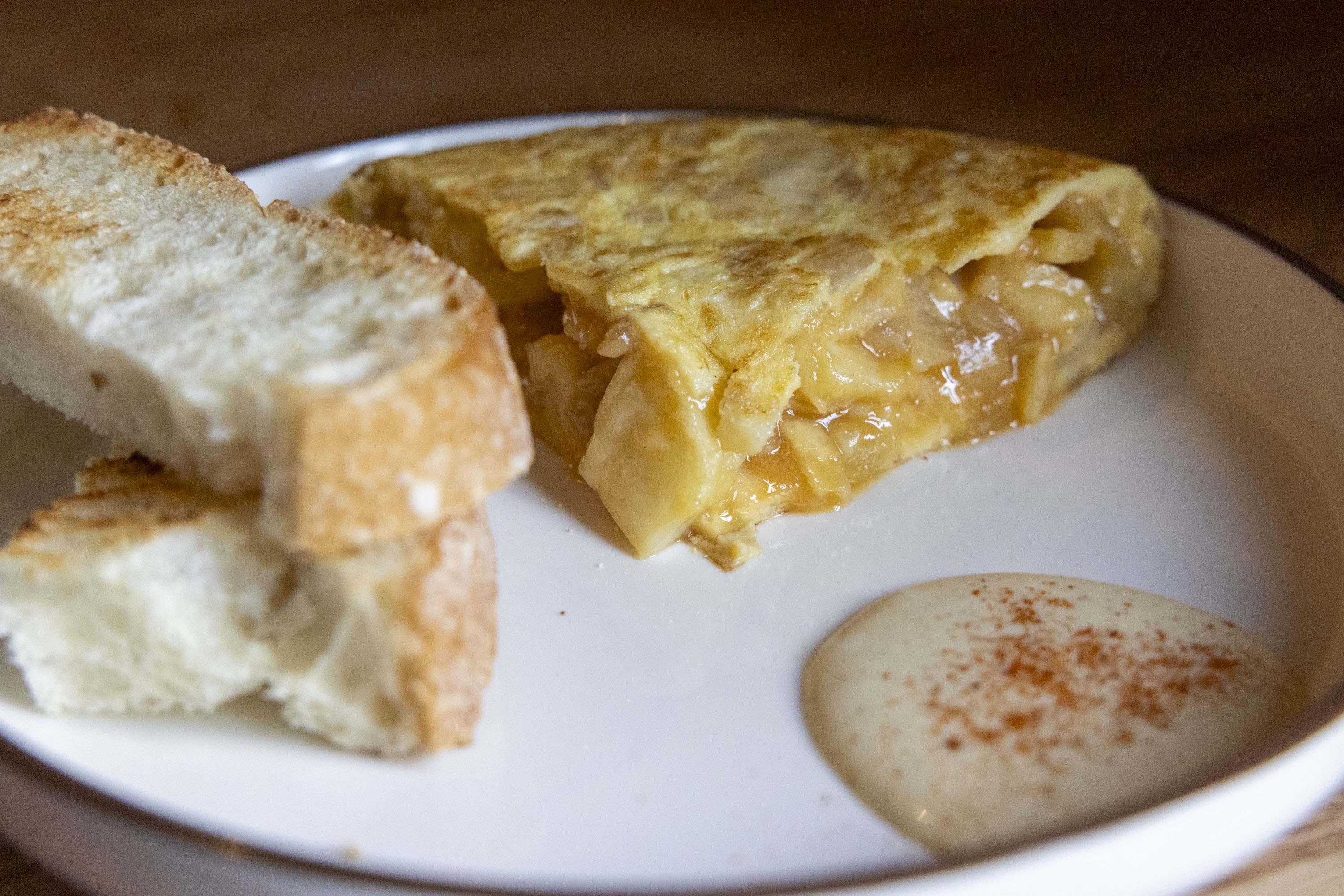
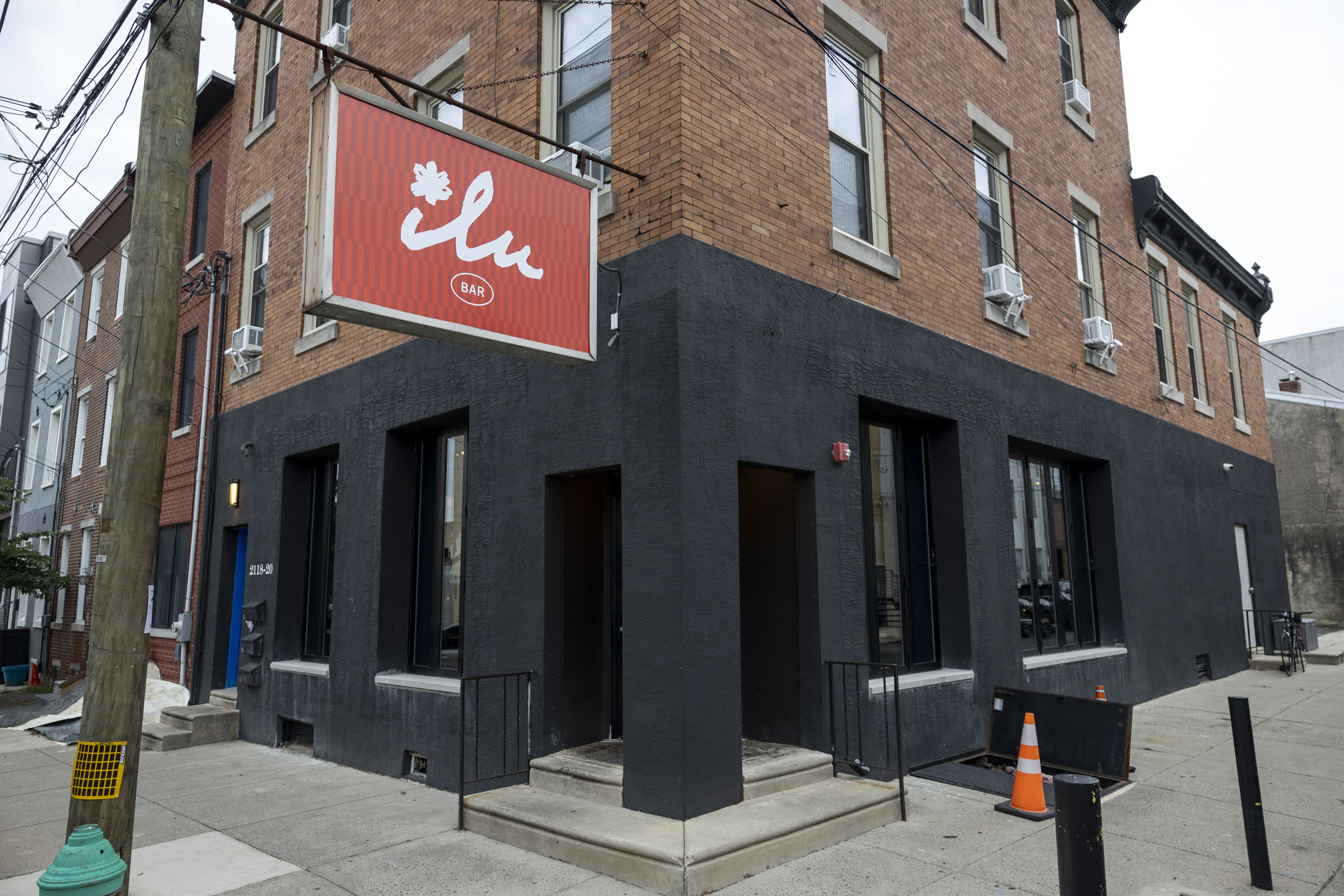
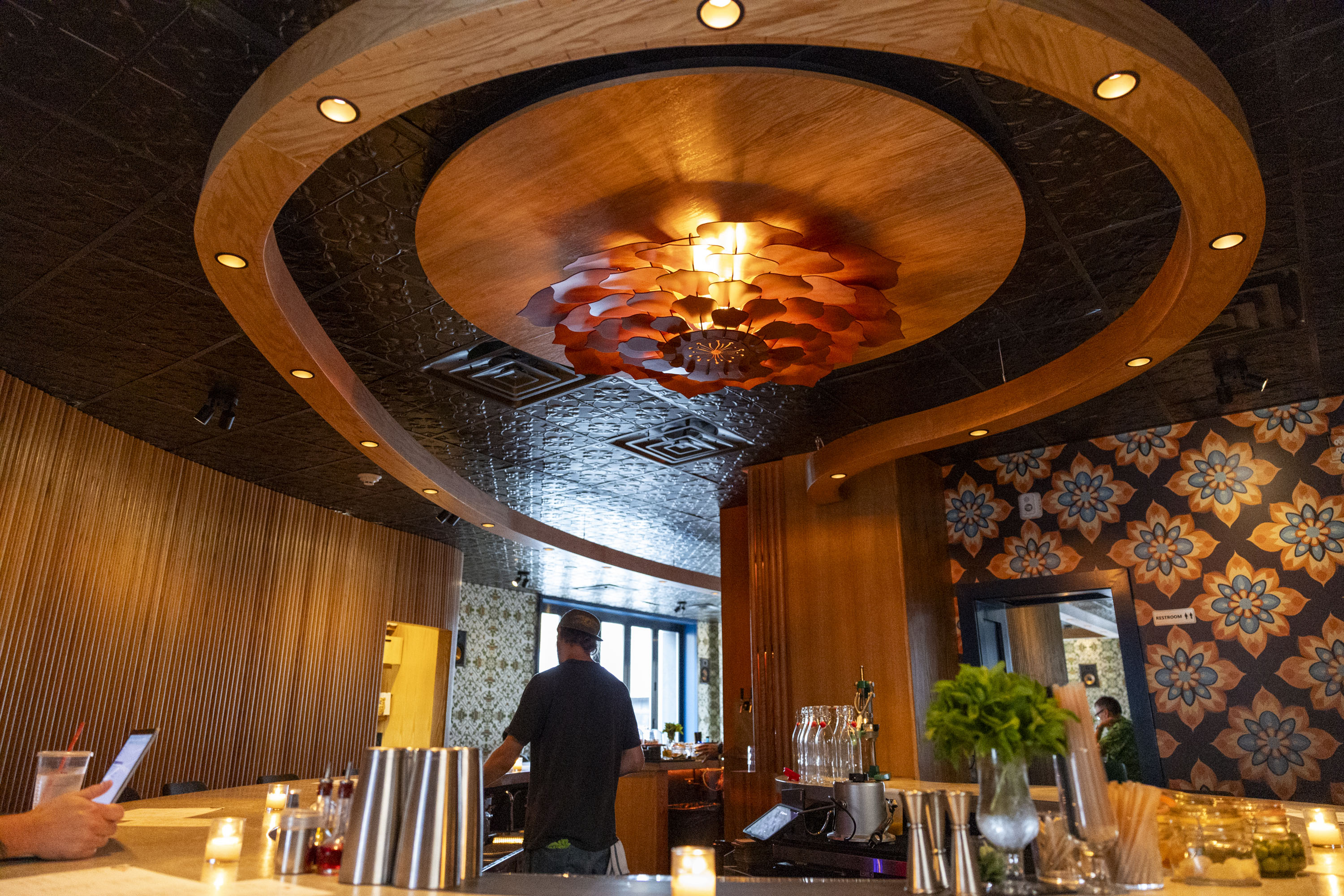
    So it follows that the eponymous new corner bar at Dauphin and Martha Streets — which happen to share the 40th parallel north with Madrid — serves its tortilla Española with a loose and edgy Kensington flair: “runny af,” as noted on the menu. Served as a wedge, with olive oil-fried potato chunks and sweet onion laces bulging from its glossy middle, a warm forkful of this eggy wonder is as transporting as it gets.

    Andrew Butler, chef de cuisine at BAR ilu, making the tortilla Espanola.Tyger Williams / Staff Photographer
    The tortilla Espanola at BAR ilu.Tyger Williams / Staff Photographer

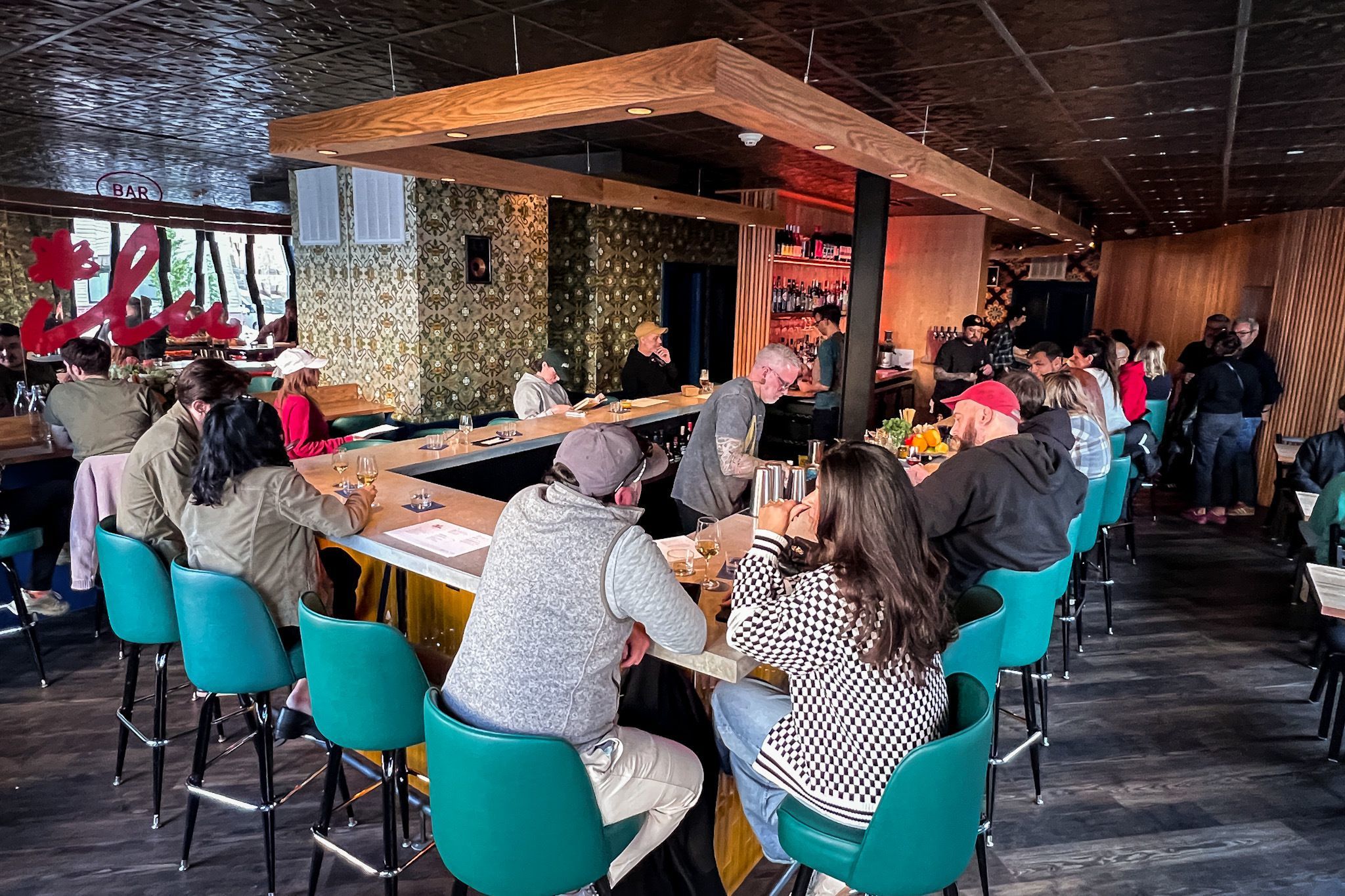
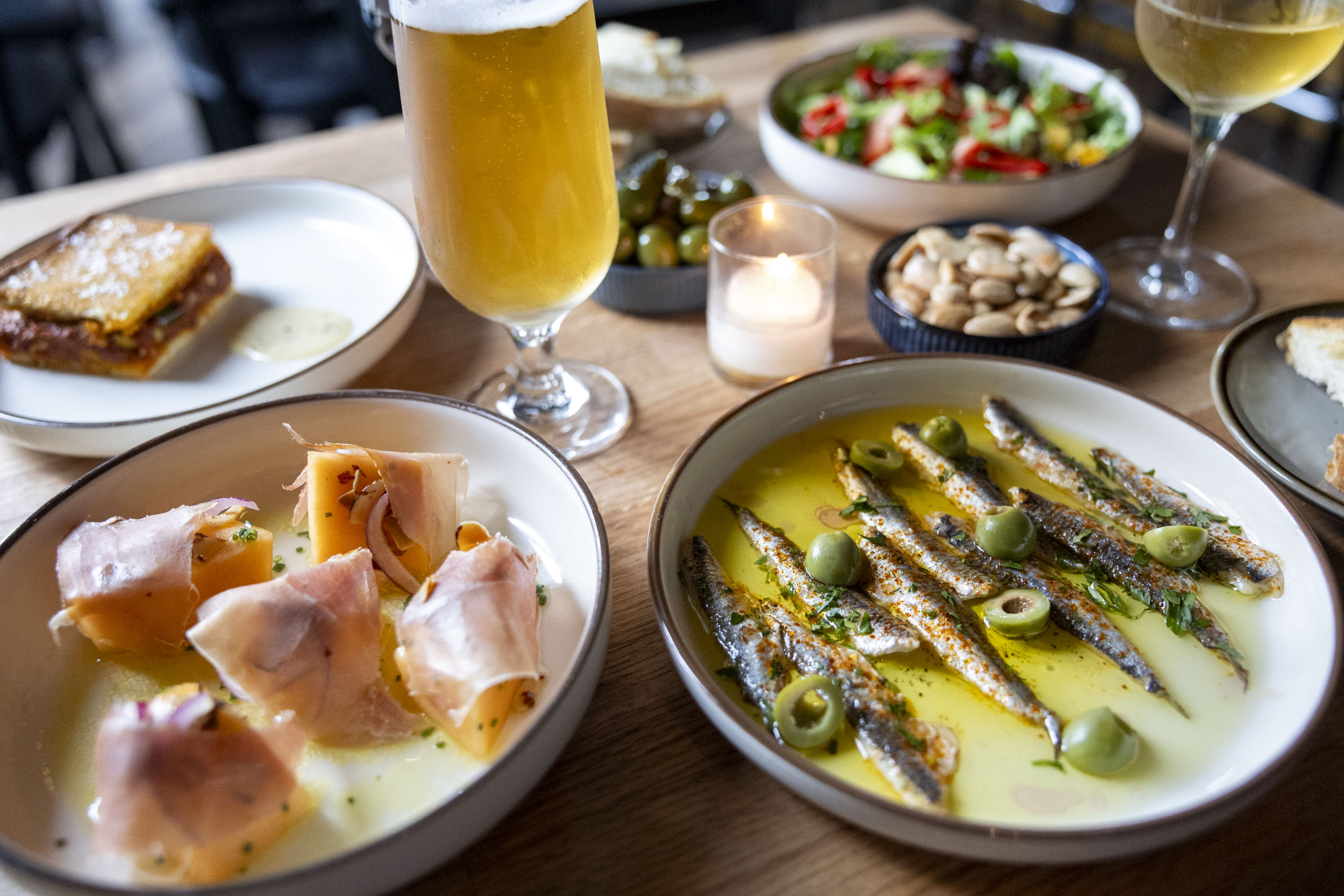
    Wash it down with a bracingly crisp glass of La Gitana Manzanilla sherry on draft, plus a fistful of crunchy Marcona almonds, a forkful of tangy boquerones, and a crock of olives warmed with orange zest and herbs, and it’s hard to deny that BAR ilu is an appealing development for this rapidly changing corner of Kensington. It is perhaps also a little dissonant for those who know the neighborhood history. This stylish Euro concept, complete with its undulating circular bar and foam-topped glasses of vermouth, has landed in a space previously occupied by the Old Philadelphia Bar, one of the last unreconstructed dive bars from what co-owner Scott Coudriet calls Kensington’s “pre-hip-storic” days.

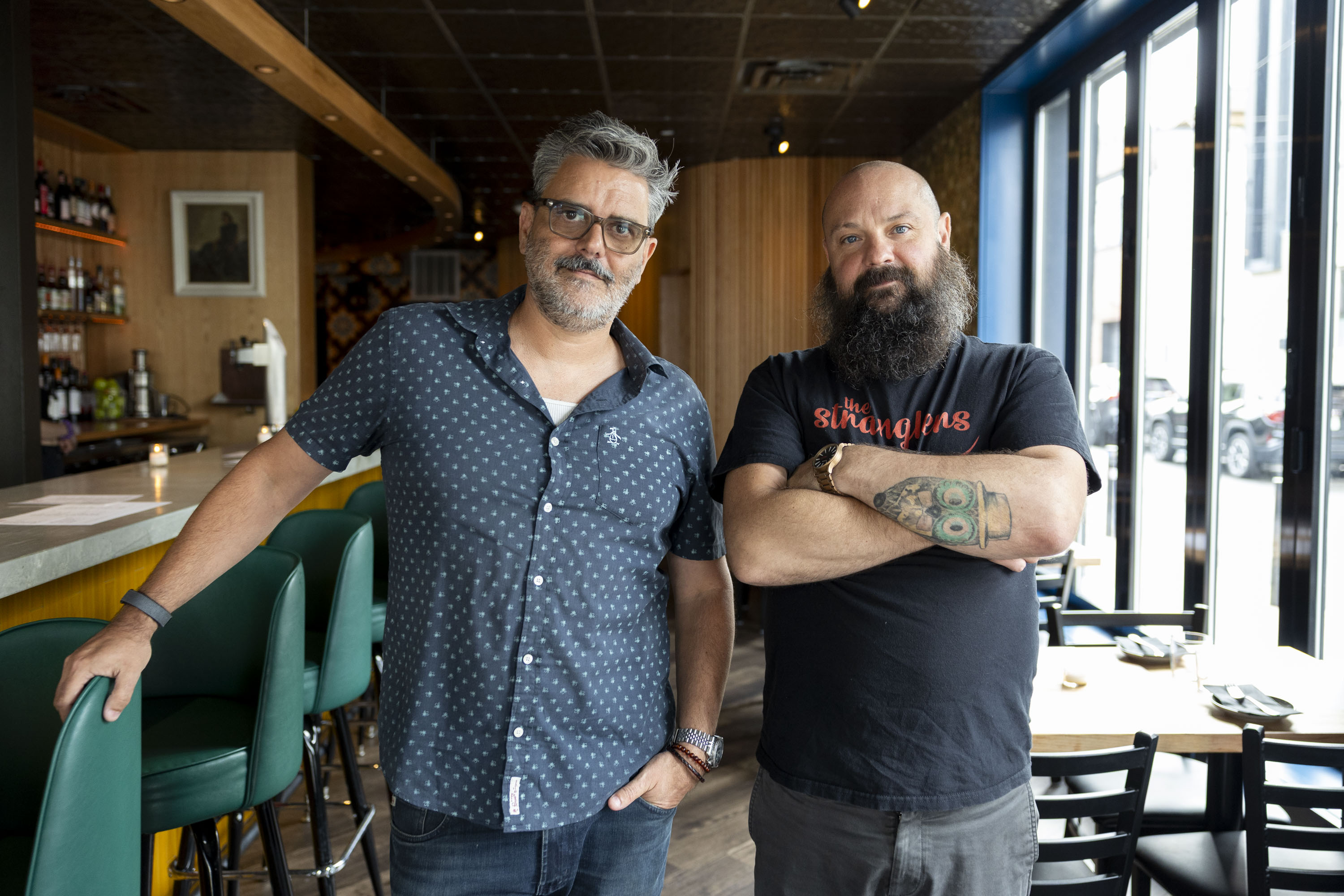
    Coudriet, who owns Fishtown’s Lloyd Whiskey Bar, is also partnered with Iselin at nearby Cormorant bar. Their other partners in ilu are Salvatore D’Amato and Jason Evenchik, whose Vintage Syndicate hospitality group operates Vintage, Starbolt, Time, Bar, three Garage locations, and the Goat Rittenhouse.

    This veteran team is keenly aware of the sensitive dynamics of change at longstanding bars. That’s why Iselin was adamant about keeping prices reasonable for Kensington locals — no more than $14 a plate, and $16 for distinctive cocktails that would easily cost a few dollars more in Center City — while building this tribute to Spain in his adopted city.

    The outside of BAR ilu on Thursday, Aug. 20, 2026, in Philadelphia.Tyger Williams / Staff Photographer
    The back bar area at BAR ilu on Thursday, Aug. 20, 2026, in Philadelphia.Tyger Williams / Staff Photographer

    Iselin wanted to craft this 40-seater with as few clichés as possible (no hanging hams, no toro horns, no sangria), but rather the feel of a modern tapas bar he might frequent in Madrid today. He had no idea he was also tapping into the latest evolutionary trend for the Philadelphia bar.

    Twenty years ago, the smoky old taverns of yore were being replaced by the gastropub movement of the early aughts, where local craft beers flowed and house charcuterie and pickle programs anchored ambitious seasonal menus that gave a cool new vibe to the neighborhood restaurant. In some cases, they helped redefine the neighborhoods themselves.

    Philly’s bar scene is now officially in its grazing phase, with curated drink menus centered around culinary cocktails, natural wines, and nonalcoholic drinks with food offerings often so limited that a hungry fellow like me might need to order three-quarters of the menu to make a meal. Supérette, the charming French wine bar beside East Passyunk’s Singing Fountain, captured this development perfectly in 2025. Owners Chloé Grigri and Vincent Stipo described these snack-centric bars as a “generational thing” for 30-somethings who want a stylish place to hang for in-between meals with friends without committing to an entire evening.

    Co-owners Patrick Iselin and Scott Coudriet of BAR ilu, pose for a portrait together on Thursday, Aug. 20, 2026, in Philadelphia.Tyger Williams / Staff Photographer
    The La Gitana Manzanilla Sherry at BAR ilu on Thursday, Aug. 20, 2026, in Philadelphia.Tyger Williams / Staff Photographer

    A similar approach is at work through a Japanese lens at Almanac, the cutting-edge Japanese cocktail bar (with Wagyu hot dogs and kombu-cured celery sticks) above the omakase room at Ogawa. The food menu at Chris Kearse’s new cocktail bar in Washington Square West, Known Associates, lists only a dozen items, counting the cool ranch freeze-dried peas. Same with the recently opened Lillian’s Bar in Point Breeze. As Chris Fetfatzes told me about Grace & Proper, the Portuguese-inspired bar with “tasca” nibbles he debuted in 2022, this template — a distinctive drink program bolstered by a small menu that can be produced with limited service and light kitchen investment (i.e. no hood) — makes perfect business sense in the post-COVID era.

    Of course, the Spanish have been doing this for centuries with tapas, a light-bite evening repast that reflects their cultural preference for a larger meal earlier in the day. And yes, Amada has been serving tapas here for 20 years, but always alongside a much broader menu with large plates and paellas.

    Considering all the new small-plate projects that have come online recently, including Bar Cicci, Ellen Yin’s all-day aperitivo bar, Philadelphians may have finally embraced the concept on its own snacky terms.

    The front bar at BAR ilu, 2118 E. Dauphin St.Michael Klein / Staff
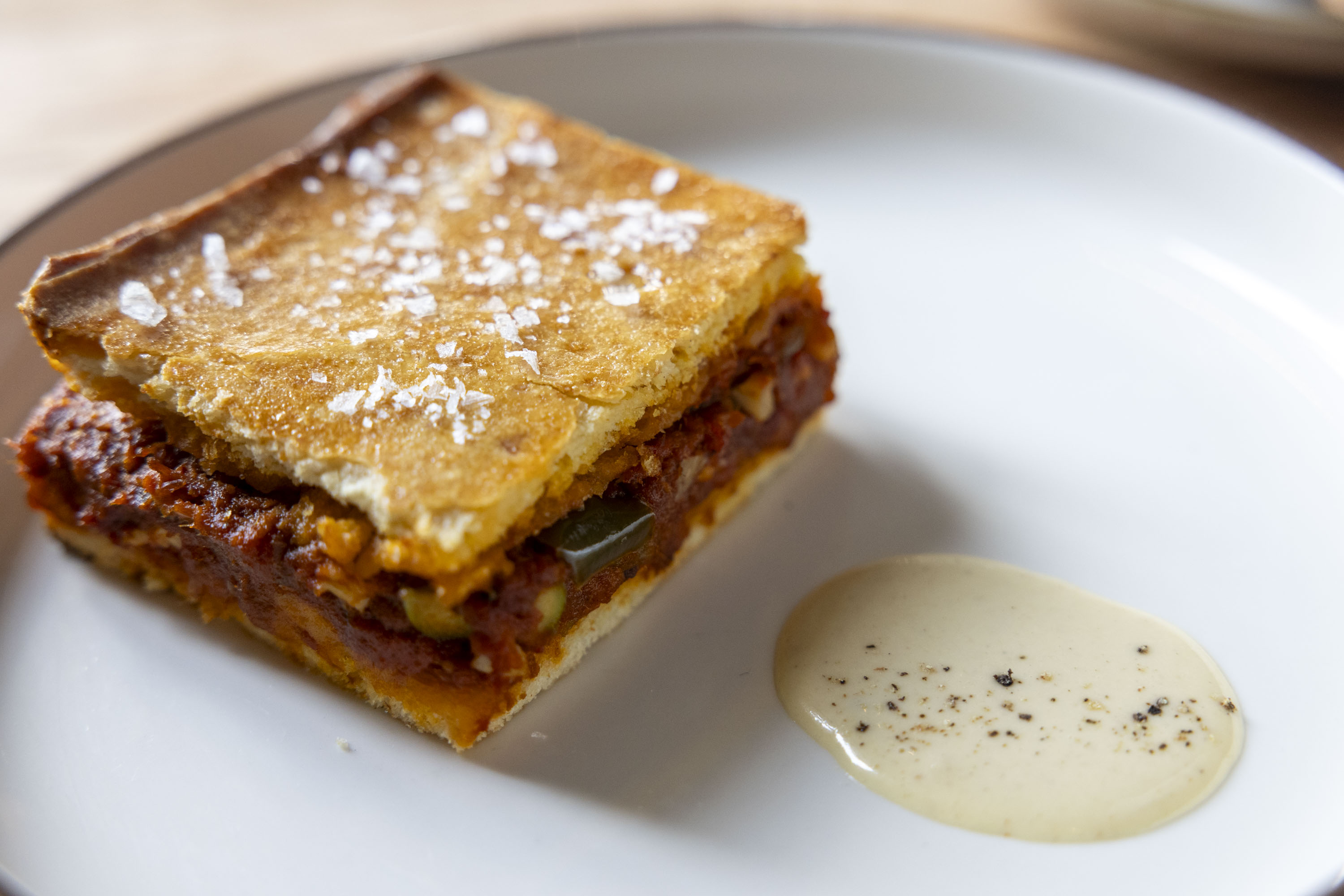
    The various plates including The Boquerones, Melon with Ham, the Tuna Empanada, Tomato Salad, Almonds, and Olives at BAR ilu on Thursday, Aug. 20, 2026, in Philadelphia.Tyger Williams / Staff Photographer

    BAR ilu has a slightly more substantial food menu than most. And part of its appeal is the natural ease with which it blends a Kenzo vibe (see the mismatched thrifter style of its floral-print wallpaper, black tin ceiling, and teal barstools) with an inventive drink program and classic Spanish plates lightly updated by chef Andrew Butler.

    Fig leaf oil adds a shade of coconut-vanilla to a familiar pairing of juicy cantaloupe with shaved serrano ham. Smoked olive oil brings a whiff of earthiness to ripe summer tomatoes with cucumbers and piquillo peppers. A juicy burger topped with Manchego cheese, pickled red onions, and aioli firmly anchors the menu with one can’t-miss comfort option that even the least Spanish-inclined customer will embrace.

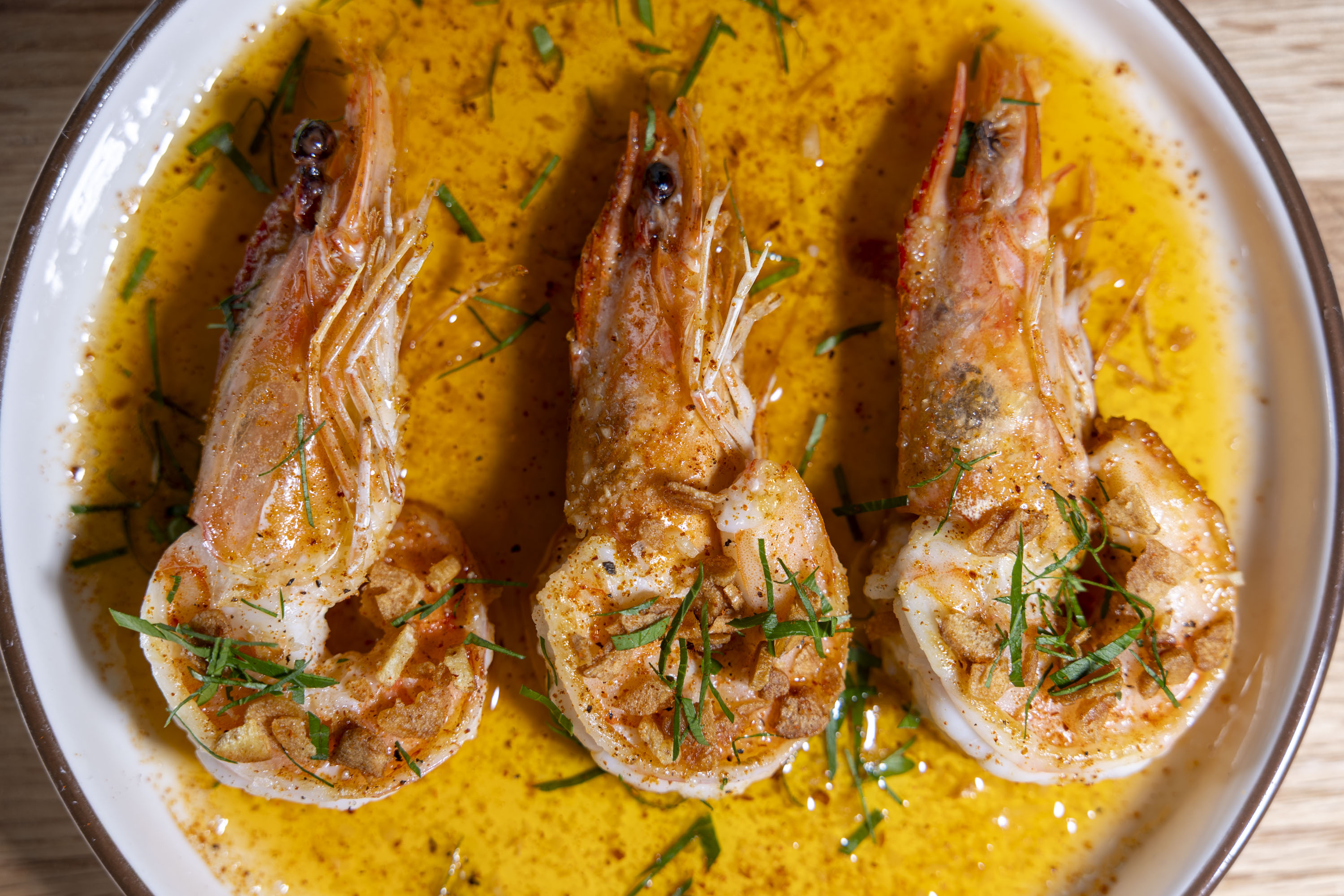
    But the Spanish flavors, both on the plate and in the glasses, are what have me hooked. Aside from the tortilla, there’s a double-crusted Galician-style empanada stuffed with tuna and cooked-down tomate frito. Plump head-on gambas al ajillo take on a flicker of chili oil heat. Crisp spheres of perfectly fried croquetas harbor lusciously creamy béchamel centers flecked with serrano ham or, my favorite, salty flakes of bacalao.

    A Tuna Empanada at BAR ilu on Thursday, Aug. 20, 2026, in Philadelphia.Tyger Williams / Staff Photographer
    Pat Szoke, culinary director, and Andrew Butler, chef de cuisine, at BAR ilu.Tyger Williams / Staff Photographer

    There were a few misfires. The patatas bravas were pale and lacking crisp. The flattened confit artichoke heart was mushy. The seared mushrooms were oversalted. But these were minor complaints compared to winners like the crusty bocadillo sandwich overstuffed with paprika-fried baby squid drizzled with lemony aioli and more tomate frito. Along with some tiny olives stuffed with briny anchovy, every morsel seemed deliberately calibrated to stoke a thirst.

    I especially enjoyed BAR ilu’s creative approach to sherry and vermouth, both in cocktails and poured neat. A crisp Manzanilla, already one of my favorite predinner quaffs in summer, added a bracing dryness to Cynar amaro and gin for Remember the Alimony. Vanilla-scented Licor 43 from Spain pairs with chilled Cafe Bustelo for a carajillo whose pebble ice is dusted with coffee-orange powder, and is now one of my top five coffee cocktails in the city.

    The Carajillo at BAR ilu on Thursday, Aug. 20, 2026, in Philadelphia.Tyger Williams / Staff Photographer

    The Fire Drill is a refreshing tropical blast of passion fruit swirling in mezcal smoke, with an herbal whiff of Lo-Fi gentian amaro to counter the fruity sweetness. A whole Granny Smith apple is juiced to order for the simple Booze & Juice, paired with the spirit of your choice (make it mezcal).

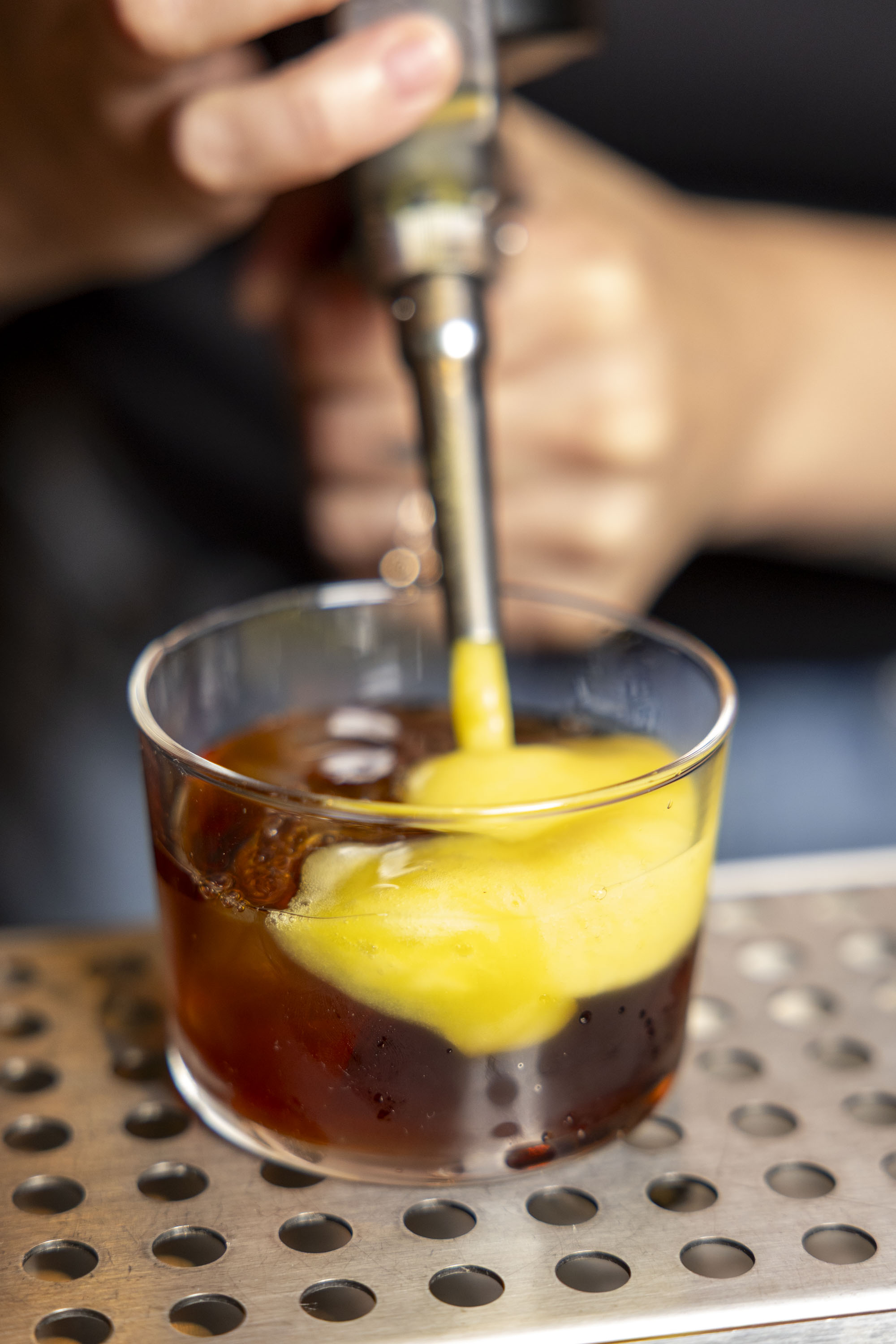
    Meanwhile, unless you order a glass of dark, sweet-tangy Pedro Ximenez to cap your meal, try the Barquero vermut on draft and top it with orange foam, a combo that tastes like flat Coke dolloped with an orange-creamsicle cloud. There is actual dessert here, too: a perfectly fine almond cake with macerated peaches and cream. But that foamed vermouth was satisfyingly herbal, sweet, and mysterious — and one of the best things I drank all summer.

    The Vermouth with Orange foam at BAR ilu on Thursday, Aug. 20, 2026, in Philadelphia.Tyger Williams / Staff Photographer
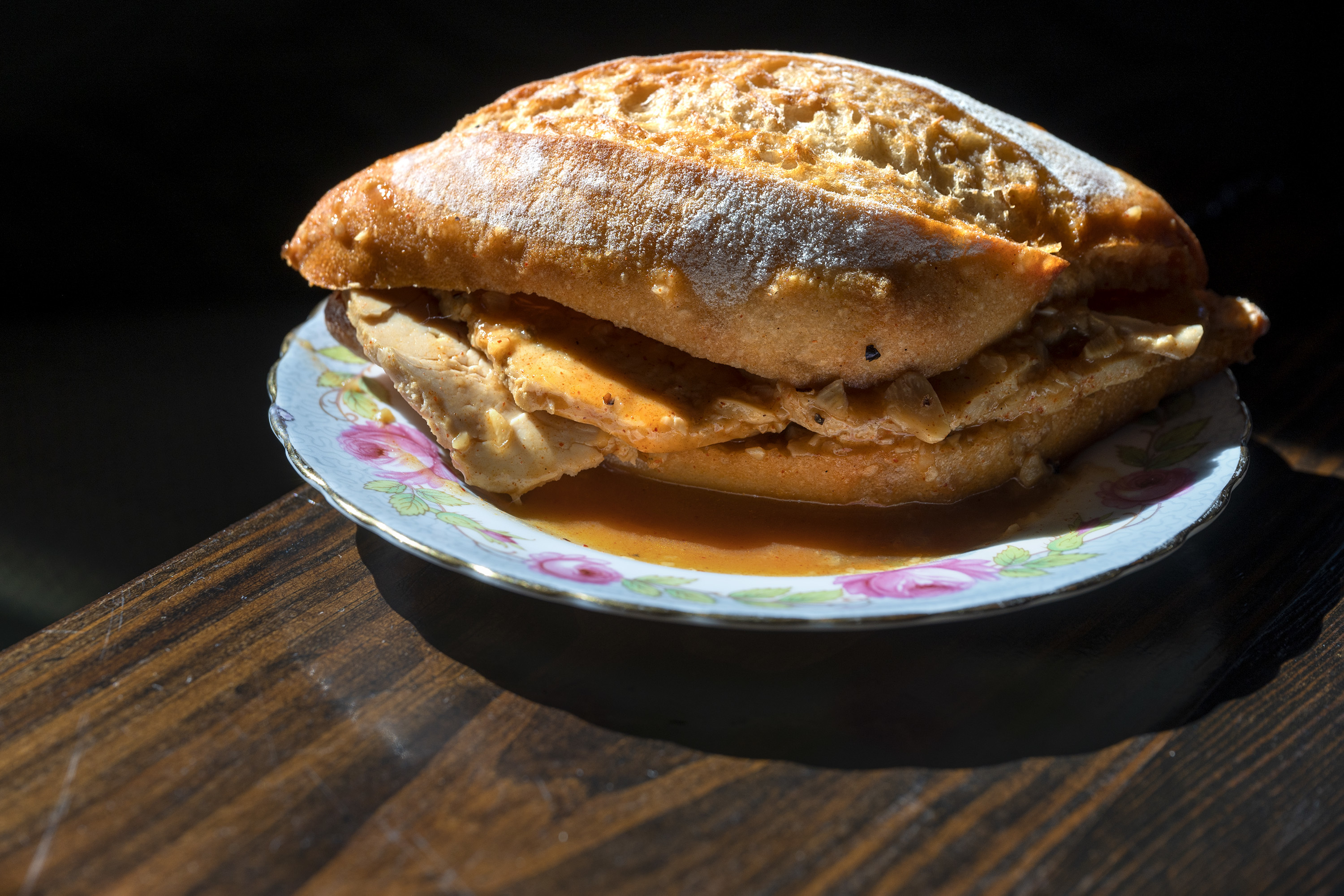
    The Bifana sandwich as served at Grace & Proper in Queen Village Wednesday, Mar. 8, 2023.Tom Gralish / Staff Photographer

    Grace & Proper

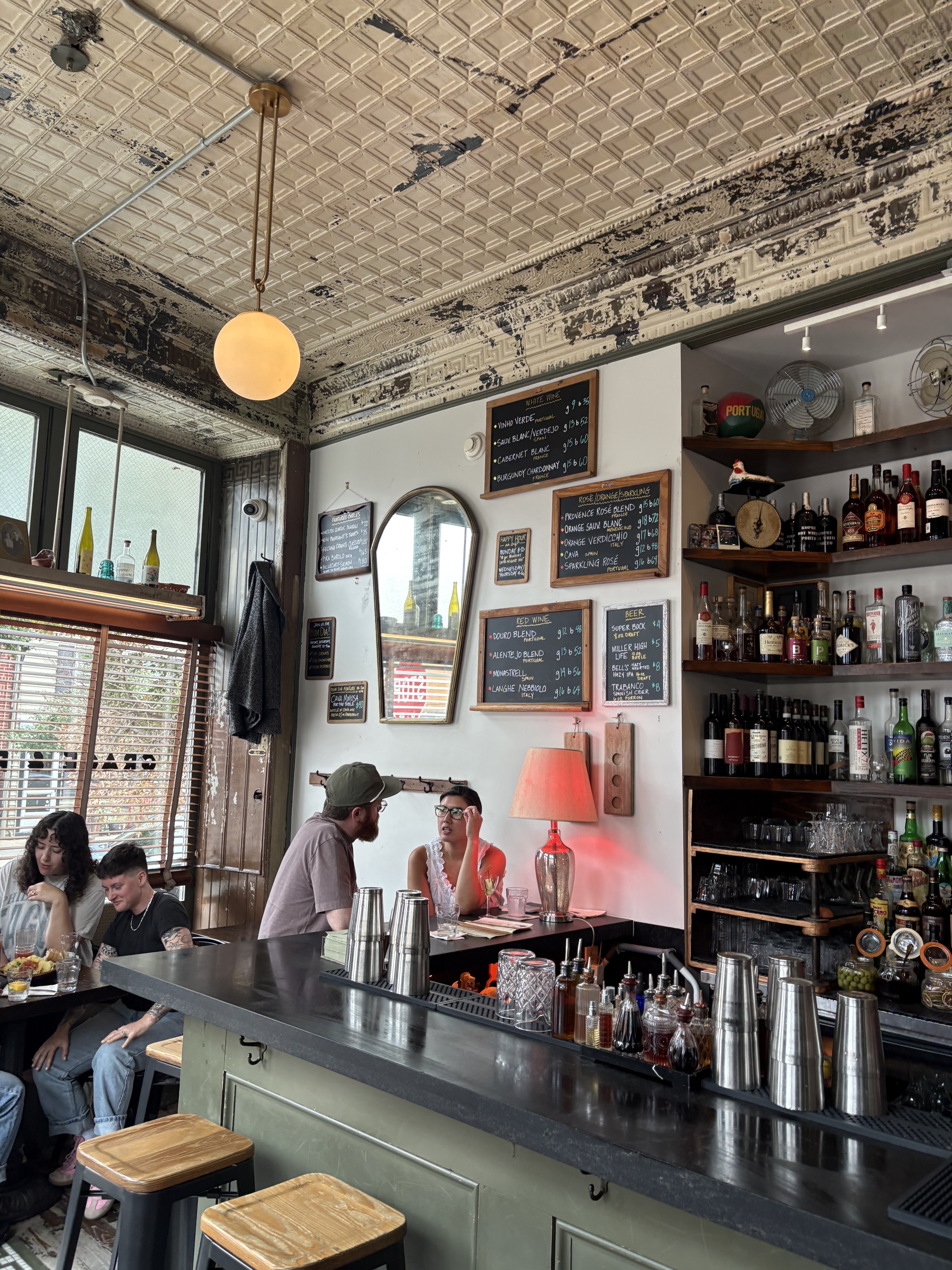
    If BAR ilu represents a modern interpretation of tapas culture in Philly, the vintage vibes at Grace & Proper’s Italian Market space reflect a different take on Iberian bar culture, this one influenced by the Portuguese roots of co-owner Chris Fetfatzes’ family.

    Fetfatzes, his wife, Heather Annechiarico, and their Happy Monday Hospitality partner Susan Freeman, who also own Wine Dive and Sonnys Cocktail Joint, leaned into the antique charm of the distressed tin ceiling, tiled floor, and exposed brick walls that were uncovered during renovations of the old pharmacy (and Italian deli) that once occupied this corner space at Eighth and Carpenter. Fetfatzes was hoping to create the cocktail counterpart to Fountain Porter, the 14-year-old craft beer destination in East Passyunk known for its $7 burgers and pickles that, perhaps, helped mark the beginning of the minimalist-nibble bar.

    Given Grace & Proper’s compact space, with just 15 barstools and 26 table seats sidled into window banquettes (plus 30 more outside in fair weather), it’s amazing how its 200-bottle collection of amari, vermouths, ports, whiskeys, Madeiras, sherries, agave spirits, and indie Euro wines somehow fits into the tall shelves behind the bar. If you’re a fan of funky Asturian cider, there’s a proper porrón carafe to stream it directly into your mouth from an arm’s length away, ideally while watching Premier League or MLS soccer. Or try the Philly-Portugal Lisbon Wide hybrid, a draft of Super Bock Portuguese lager paired with a shot of ginjinha, a house-made cordial steeped from Morello sour cherries harvested in Northeast Philadelphia.

    The Lisbon Wide is Grace & Proper’s Portuguese twist on a Citywide, pairing Super Bock beer with housemade Ginjinha sour cherry liqueur.Craig LaBan / Staff
    The Meat & Chips at Grace and Proper on Thursday, Aug. 3, 2023.Allie Ippolito / Staff Photographer

    Grace & Proper doesn’t post a food menu online, but it’s substantial enough to anchor your table for a couple hours of snacking, from an irresistible pile of truffled potato chips feathered with spicy Calabrese salami to soulful onion soup infused with port and lardo, a crock of white bean stew with kale and breadcrumbs, piri piri-spiked Buffalo chicken dip, and sweet-tart-smoky bacon-wrapped prunes with black garlic aioli.

    I didn’t care for the overly firm meatballs and their unbalanced blackberry romesco or, for that matter, the presentation of cheeses as crumbled nuggets. But these are all quibbles. Because there is really a single essential reason to visit Grace & Proper: the bifana, a classic sandwich of wine-marinated roast pork on a molete roll from Teixeira’s Bakery in Newark that comes perched over a paprika-orange pool of zesty gravy. Equal parts lemony, garlicky, winey, and scented with bay, that roasted pork essence is so good, the gravy is also offered as a chaser to the Piggy Back shot (oloroso sherry and Armagnac).

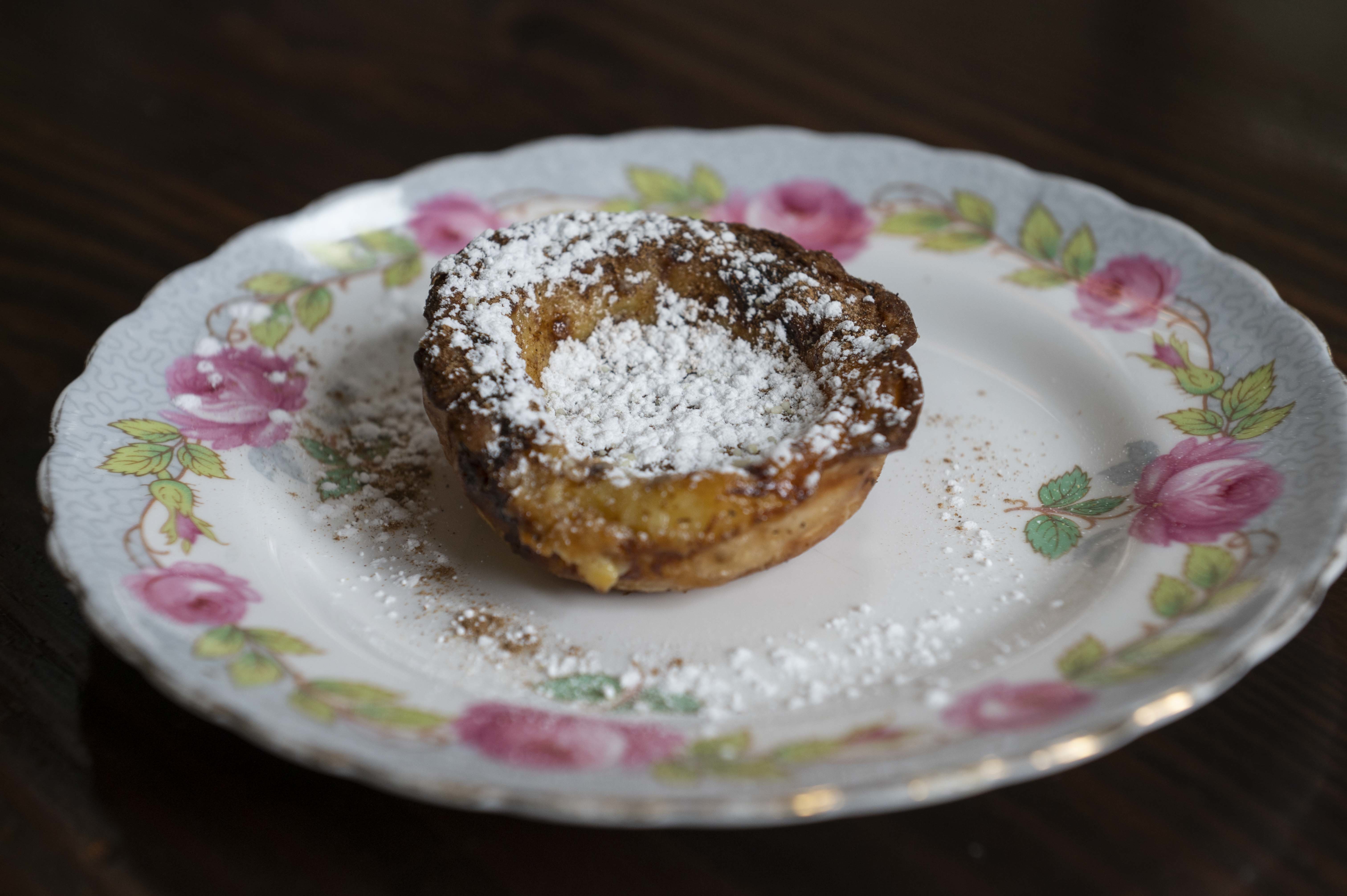
    All you’ll need after that is a custardy sweet pastel de nata (also baked by Teixera’s, according to G&P’s recipe) and what might well be the best crema-topped shot of espresso at any bar in Philly. Grace & Proper is one of the precious few that actually adds fresh-pulled coffee to its espresso martinis, but I still prefer this coffee solo. I value the energy boost because, in these days of no-commitment sip-and-nibble bars, I’ve still got places to go.

    The Pastéis de Nata at Grace and Proper on Thursday, Aug. 3, 2023.Allie Ippolito / Staff Photographer
    Vintage details of the former pharmacy and Italian deli have been preserved to add character to the bar at Grace & Proper.Craig LaBan / Staff

    BAR ilu

    2118 E. Dauphin St., 267-807-2466, iluphl.com

    Menu available 4 to 11 p.m. Sunday, Tuesday through Thursday; 4 p.m. to midnight Friday and Saturday. Bar is open 4 p.m. to midnight Sunday, Tuesday, Wednesday; 4 p.m. to 1 a.m. Thursday through Saturday.

    Plates, $4-$14.

    Dining room is wheelchair accessible via a ramp off rear of building off Martha Street. Bathrooms are not accessible.

    Not ideal for gluten-free diners, aside from some small snacks.

    Menu highlights: croquetas (ham and bacalao); anchovy-stuffed olives; serrano ham and chips; tortilla Española; ham and melon; cheeseburger; gambas al ajillo.

    Drinks: Cocktails built around sherry and vermouth are the most distinctive opening move, while straight fortified wines on draft, including La Gitana Manzanilla or Barquero vermut with orange foam, are also highlights. There are also 10 affordable Spanish wines by the glass.


    Grace & Proper

    941 S. Eighth St., graceandproper.com

    Menu served 4 p.m. till midnight Monday, Wednesday, Thursday; noon to midnight Friday through Sunday. Bar is open till 1 a.m. on Friday and Saturday.

    Plates, $7-$15.

    Not wheelchair accessible.

    About 40% of the menu is gluten-free or can be modified.

    Menu highlights: bifana; bacon-wrapped plums; salami and truffled chips; Porto lardo onion soup; pasteis de nata.

    Drinks: The vast 200-bottle collection is a sipper’s delight, from amari to fortified wines, extensive whiskies, and a surprising agave spirits collection. Don’t miss creative cocktails made with the company’s new house-distilled spirits, including a Chartreuse-inspired “Green Monk” or the ginjinha cordial, steeped from Northeast Philly sour cherries, served in the Lisbon Wide as a sidecar to a draft of Super Bock.

  • Will Matt Campbell get Penn State past the James Franklin era? He’s got some things in his favor.

    Will Matt Campbell get Penn State past the James Franklin era? He’s got some things in his favor.

    One of the biggest unknowns of the 2026 college football season is whether No. 18 Penn State will fare better or worse without James Franklin leading the program.

    While many felt it was Franklin’s time to go, it will still be an adjustment that for the first time in over a decade, a new face at the head-coaching position will run out of the gates at Beaver Stadium when the Nittany Lions open their season against Marshall on Saturday (3:30 p.m., FS1).

    So how might Matt Campbell’s success at Iowa State translate to Penn State, since comparing the Big 12 to the Big Ten is like devouring an apple and claiming it was the juiciest orange you’ve ever tasted?

    A good place to start is the College Football Playoff.

    In the history of the tournament, only four teams from the Big 12 have qualified, and none were named Iowa State, the program Campbell led for the last 10 years. Conversely, six Big Ten teams, including Penn State, have qualified for the CFP, with a program in the conference taking home the title the last three years, the latest when Curt Cignetti and Indiana shocked the college football world.

    Let’s not forget one of those title teams was nearly the Nittany Lions, who were a mere field goal away from a trip to the championship game in 2024 before it all unraveled for Franklin last season and cost him his job.

    Matt Campbell, previously head coach at Iowa State, watches quarterback Connor Barry (10), a transfer from Christopher Newport University, on Aug. 5.Craig Houtz / For The Inquirer

    Here’s what we know about Campbell that bodes well for Penn State.

    In his 10 seasons at Iowa State, he left as the winningest coach in program history with 72 victories. He has an offensive mind, and he convinced quarterback Rocco Becht, the former Iowa State QB and son of former NFL tight end Anthony Becht, to transfer in the offseason and join him in Happy Valley.

    Becht is a whole other beast. The fifth-year player from Wesley Chapel, Fla., is so invested in helping Campbell restore Penn State’s glory that he’s committed to taking just one class this upcoming semester.

    That wasn’t a misprint. One class. Three credits. And it’s an online course, which has legislators questioning how Becht’s situation accurately defines the term “student-athlete.”

    So the program has a new coach eager to prove he can bring the success he had in the Big 12 to the elite level of the Big Ten, a quarterback who’s dialed in to simply being all about football, and an athletics department that’s betting a bit of the farm on Campbell to the tune of an eight-year deal in Happy Valley that will see him collect nearly $80 million over the life of the contract.

    The Nittany Lions also have one of the most favorable schedules. They face just three teams in the Associated Press Top 25 preseason poll in No. 16 Michigan (Oct. 17), No. 17 Washington (Nov. 7), and will host No. 14 Southern Cal in their annual “White Out” game on Oct. 10 (7:30 p.m., NBC).

    The way the Big Ten configuration landed, Campbell will chase a spot in the College Football Playoff not needing to face Ohio State (current AP No. 1), defending champion Indiana, Oregon, or Iowa, all teams in the AP rankings. It’s the perfect schedule for a team not looking to waste time and millions on rebuilding its program.

    Penn State athletic director Pat Kraft poses for a photo with Matt Campbell, after Campbell was announced as the school’s new head football coach in December. Matthew O'Haren, Imagn Images

    In fact, there is no rebuild. If you listen to Nittany Lions athletic director Pat Kraft, Campbell’s upside is believed to be the perfect option to seamlessly right the wrongs that closed out Franklin’s tenure.

    This was Kraft’s statement in the press release upon hiring Campbell last December:

    “Coach Campbell is, without a doubt, the right leader at the right time for Penn State football. He is a stellar coach with a proven track record of success and his values, character and approach to leading student-athletes to success on and off the field align perfectly with the traditions and values of Penn State.”

    Franklin built something from the ashes of what the program became following the Jerry Sandusky scandal, and honed it into a title-contending program (albeit, one that could never figure out Ohio State or Michigan).

    Penn State fired James Franklin on Oct. 12, 2025, after a third straight loss. The Nittany Lions were 104-45 in 11-plus seasons under Franklin.Matthew O'Haren-Imagn Images

    Now, it just needs some fine tuning to be driven again. Campbell is squarely in that driver’s seat with the keys in his hands. He’s got the tools when it comes to Penn State’s pedigree, the coins courtesy of a reported 10-year, $300 million apparel deal with Adidas, and the NCAA’s transfer portal, which will continue to provide the resources, especially after the exodus of starters following last season.

    Can Campbell take this new-look team and right the wrongs of Franklin’s past? It’s tough to say, especially attempting to judge anything by the first three games of the season, starting with the Thundering Herd this Saturday, followed by Temple on Sept. 12 at Lincoln Financial Field (noon, ESPN2), and Buffalo on Sept. 19 (noon, Big Ten Network).

    But the notion certainly does seem worth tuning in for.

  • There was a time when college football’s best played against the NFL’s finest. Could it happen again?

    There was a time when college football’s best played against the NFL’s finest. Could it happen again?

    Imagine this: A college football player lauded as one of the best in the country gets roped into a collective of other top college players just as good for an All-Star team.

    Except these players won’t prove their mettle against other college athletes; they’ll prepare to face the reigning Super Bowl champions.

    Sound preposterous?

    Well, from 1934-1976, this was the case for many of college football’s best athletes, courtesy of the Chicago Charities College All-Star Game.

    The annual All-Star game, also formerly known as the Chicago Tribune All-Star Charity Game, featured not just the full preseason roster of an NFL team that won the league championship but also played many of its starters. The Eagles played in the event in 1949, 1950, and 1961, and actually lost the 1950 game.

    It was an event that offered an honest proving ground for college players to see if they could handle the rigors of playing in the NFL against the league’s top team.

    Imagine being a college player and trying to stop Hall of Fame receiver Tommy McDonald, who scored three touchdowns for the Eagles in the 1961 game.

    What about the Steel Curtain of the Pittsburgh Steelers, against the likes of guys like Ernie Holmes and “Mean” Joe Greene? It happened in 1975 and again in 1976, the last year of the event.

    But as NFL players got bigger, faster, and stronger, the annual preseason spectacle lost its allure. Once considered an even playing field with college’s best lining up against the cream of the NFL crop, the game began turning into a contest of men against boys.

    Fast-forward to today’s college game and NFL, you’ll see that the parity in size, strength, and speed between top college products and NFL players is debatable.

    Thanks to advances in sports science, training methodologies, and more recently, players simply being allowed to play longer college seasons, the idea reviving an annual game between college’s best and Super Bowl champions is at least a conversation starter, right?

    One argument for the water cooler talk would be the NCAA’s recent “5 in 5 rule,” which will allow Division I athletes up to five years of eligibility as long as their first academic year begins no later than their 19th birthday.

    NCAA President Charlie Baker granted athletes five years of eligibility if they enroll in college no later than the academic year after their 19th birthday.George Walker IV

    This rule would guarantee that top college athletes could play through their 24th birthday, which already felt like the norm due to the extra COVID-19 year. Earlier this month, a trickle effect began to occur within many college conferences as NFL players who recently signed pro contracts weighed the option to return and play a fifth season of college ball.

    Also, the age gap between a college team and today’s NFL franchise isn’t too wide. Take just last season and look at the Indiana team that ran the table en route to a national championship. Average age? It was 23.1, and 18 of those players cracked the 53-man rosters of NFL teams this season, according to 247 Sports.

    The average age of the Seattle Seahawks roster that won Super Bowl LX? Just 26.1.

    While there’s precedent for a pro-am like the Chicago Charities College Game to make a return or even have a similar offshoot sprout up, a number of college coaches believe it will never happen — and it has nothing to do with a more level playing field when it comes to athletic abilities.

    Indiana won the national championship with a team that had an average age of 23 when it defeated Miami in last season’s game. Lynne Sladky

    “I think the college kids would be very enthusiastic. I think the NFL guys would be like, ‘Why are we doing this?’” said Temple coach K.C. Keeler, who remembers the old Chicago Charities College All-Star Game well, but contends it has no place in today’s football. “Nowadays, [NFL teams] aren’t even playing their starters in the first preseason game, right? And now you’re talking about a whole game against a bunch of [college] guys who want to prove themselves.

    “But this isn’t about athleticism, it’s about money. One injury can change the trajectory of a player’s career in both pro and college ball. I think just looking at the logistics of pro football, you’d be hard-pressed to find anyone that would be willing to match up these days and risk it all against college kids who have that ‘I’ll show you’ mentality.”

    Temple head coach K.C. Keeler says there’s too much at risk for players in college and the NFL to consider reintroducing a spectacle like the old Chicago Charities College All-Star Game. Isaiah Vazquez / For The Inquirer

    A similar thought process came from Villanova coach Mark Ferrante, who also took a larger look at the state of both college football and the country during the heyday of the annual exhibition.

    “My gut tells me that it would be much harder for a college all-star team to beat an NFL Super Bowl champion,” said Ferrante. “And the reason I say that is, even though the college teams are keeping older guys and all the extra years of eligibility that really came through [because of the pandemic], that’s kind of going to get erased [as those eligibility years phase out].

    Villanova head football coach Mark Ferrante posed for a portrait with an all-star helmet worn by former fullback Ralph Pasquariello, who played in the 1950 Chicago Charities game, with the team that defeated the Eagles.Monica Herndon / Staff Photographer

    “Also, I’d like to see the age rosters of those 1940s and 1950s teams. Because, I bet you a lot of those college guys might’ve actually been the same age or even a bit older than the pro guys they were playing against back then because of [World War II].”

    To Ferrante’s point, it’s also harder for a college kid today to crack an NFL roster. There are a little more than 18,500 Division I players competing for 250-plus spots in the NFL draft.

    “It’s still under 2% of college guys that make it to that level,” Ferrante said. “And we’re talking about the best of the best, not that it wasn’t the best back then, but it’s just different and dare I say harder to get to the NFL now than it was then.”

    But the proving ground for college players in the Chicago Charities All-Star Game was apparent back then, with the Eagles feeling the brunt of it. In 1950, the Eagles lost to a collective of college players, one that featured former Villanova standout Ralph Pasquariello.

    A star fullback for the Wildcats, Pasquariello was coming off an MVP performance a year earlier in the 1949 North-South Shrine Game where he scored the game-winning touchdown.

    Pasquariello was drafted later that year in the first round (ninth overall) by the Los Angeles Rams. The Eagles’ loss was one of just nine times a college team defeated an NFL champion.

    Mark Ferrante holds up an all-star jersey worn by former Villanova fullback Ralph Pasquariello, who played on the 1950 college team that defeated the Eagles in the Chicago Charities College All-Star Game. Monica Herndon / Staff Photographer

    But the notion that a college group would beat an NFL champion today — even with a closer-to-equal playing field than we’ve seen between college and professional football in recent years — would be tough to imagine. Between lucrative name, image, and likeness deals in college and blockbuster sponsorship deals in the NFL, both coaches say there’s too much money to be made.

    “Listen, it would be something really cool to see all these young players who are going to be 22- or 23-year-old seniors go up against NFL stars, but I just don’t think it’s viable,” Keeler said. “Everyone has a time frame now to make as much money as they can. Also, they’re getting rid of more and more [contests like these].

    “I mean, look, they just got rid of the Pro Bowl. Why? The impossibility of suggesting that you can play at three-quarters speed and not get hurt when you’re tackling guys to the ground. That’s just not how this game works anymore.”

  • The 53-man roster is here, but a big mystery remains. Can the Eagles be patient with Makai Lemon and Eli Stowers?

    The 53-man roster is here, but a big mystery remains. Can the Eagles be patient with Makai Lemon and Eli Stowers?

    The Eagles’ drafts from 2021 to 2024 were successful, first and foremost, because the team identified talented prospects, particularly in the first three rounds. But hardly ever forcing a positional need with a draft pick expanded the pool and decreased the expectations that often come attached with being selected early.

    Makai Lemon wasn’t necessarily drafted in the first round to replace A.J. Brown. Eagles general manager Howie Roseman had the parameters for a trade that would move the discontented wide receiver to the New England Patriots in place by the time Lemon was chosen with the 20th pick overall. But Roseman had already begun the process of restructuring the position.

    It wasn’t a complete rebuild, of course. DeVonta Smith was returning as the now-bona fide No. 1 receiver. But Roseman signed free agents Hollywood Brown and Elijah Moore and traded for Dontayvion Wicks by the time the draft arrived. Having them already on the roster would allow Roseman the freedom to take a receiver in the first round and potentially not rush him.

    But what became apparent over the course of training camp was that the Eagles had not only intended for Lemon to play meaningful snaps from the jump, they needed him to start in the slot. Wicks, Brown and Moore all had their moments during the summer — to varying degrees — but the dropoff from Smith was significant.

    Lemon, meanwhile, missed three weeks — including the increasingly important joint practices with the Patriots — with a recurring hamstring injury and didn’t play in the preseason until Saturday’s finale vs. the Cincinnati Bengals.

    It was a small sample, but he looked far from ready to make an impact. He was receiving passes from a quarterback he hardly worked with in camp, but it wasn’t as if he had popped when Jalen Hurts was throwing during practices in which he was healthy.

    The Eagles knew that tight end Eli Stowers would likely need more development, particularly as a blocker. But they had envisioned a scenario in which he would thrive as the “F” tight end on passing downs, much as Zach Ertz did in his first season with the team 13 years ago.

    Eli Stowers struggled to make an impact in camp and did not work with the first-team offense. Jose F. Moreno / Staff Photographer

    But Stowers never worked with Hurts in team drills throughout camp. And just when it seemed like he was making progress, a hamstring injury put him on the shelf for the final week of the preseason. Even before the injury, there was a question of whether the former quarterback would be active for the season opener on Sept. 13.

    Roseman isn’t panicking — at least on the surface.

    “This is the only business that you look at how guys are doing right away and sometimes there are early judgements made. Any other business there’s a long-term view,” Roseman said when asked about Lemon and Stowers contributing right away. “And we see it on our roster, guys how they have developed over two, three, four years. And I understand there are big resources into those guys — first- and second-round picks.
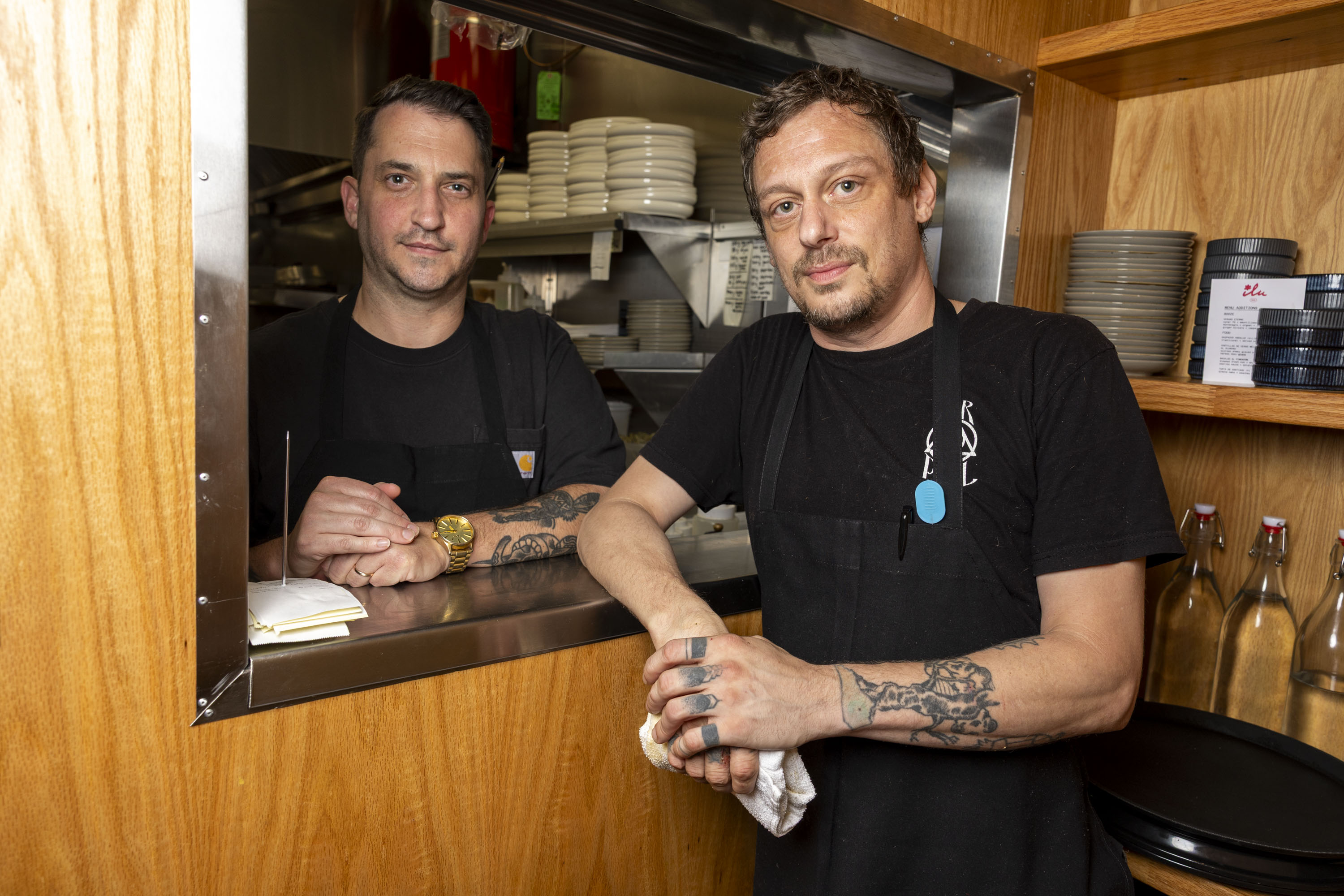
    “Tremendous confidence in who those guys are as players, what their skill set is. Obviously, they had some setbacks here physically and we looked at that as a staff and a group and maybe can figure out some changes here to get those guys going a little bit sooner from a skill position perspective.

    “But don’t have any doubt about what they’re going to be in the NFL over time. Still believe they’re going to contribute to our 2026 team.”

    That may end up the case. But Roseman’s 53-man roster construction suggests he went deeper at receiver and tight end than he did a year ago to account for Lemon’s and Stowers’ stunted starts.

    Moore, as the sixth receiver, could shoulder some of the load on concepts designed for Lemon if he struggles early. And while EJ Jenkins, as the fourth tight end, won’t factor much as a pass catcher, his blocking ability will allow for Dallas Goedert to line up more in the “F” role.
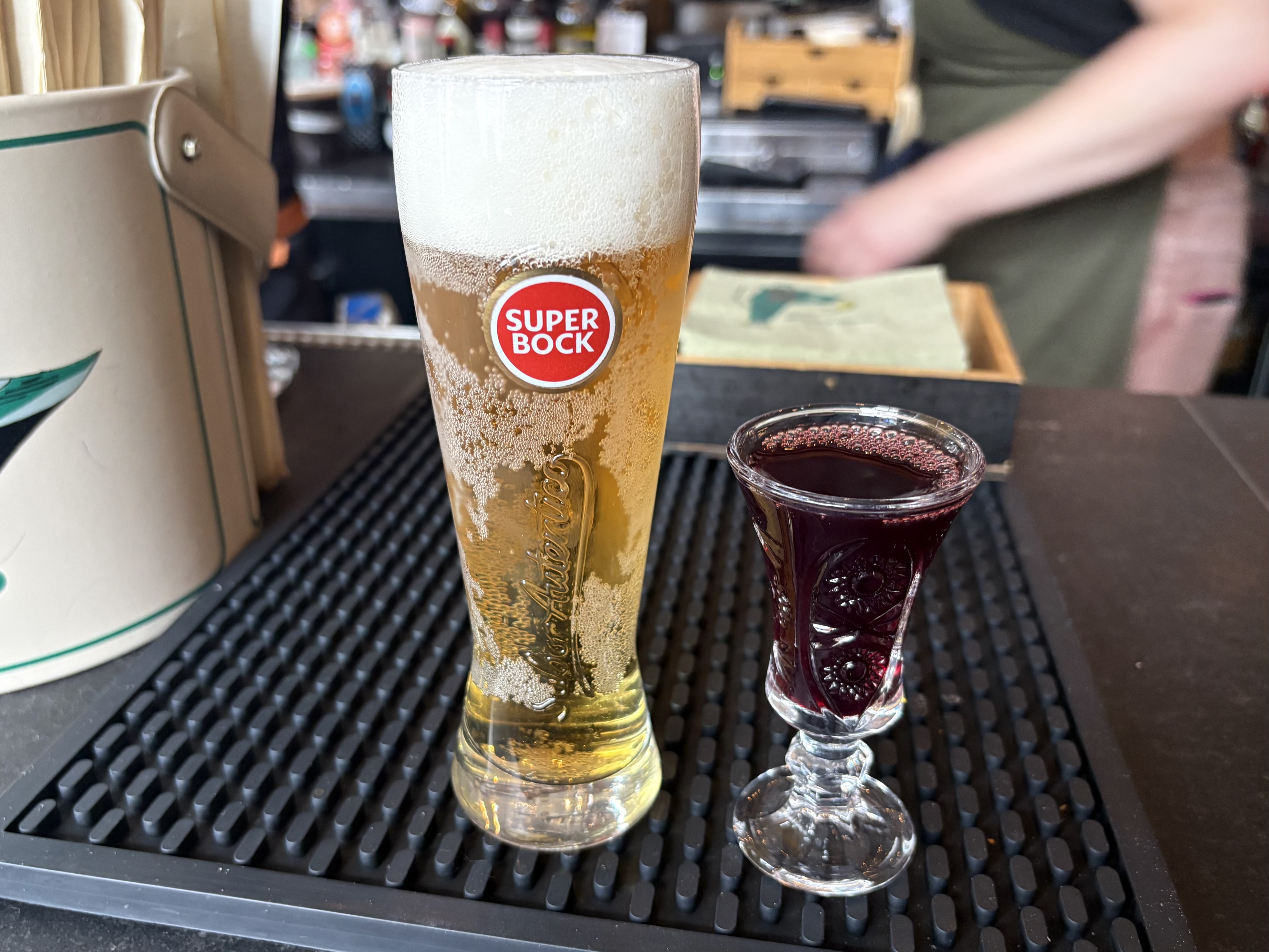
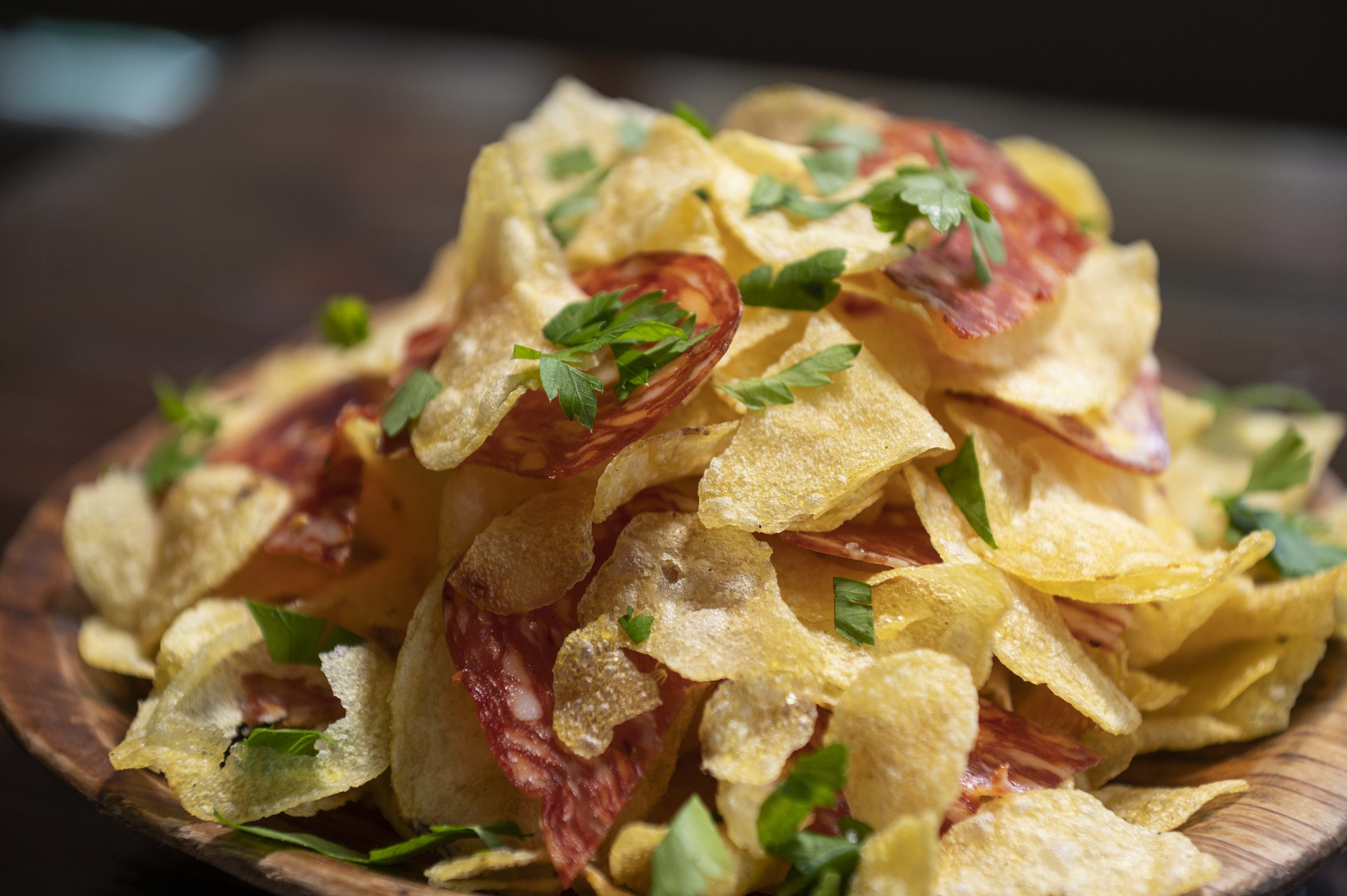
    Howie Roseman did not make a trade as the roster came together, but will continue to look for ways to improve the roster. Yong Kim / Staff Photographer

    Roseman’s actions, ultimately, will demonstrate how he feels about both positions. He’s yet to make a trade during this period — which is uncharacteristic — but he has a week until on-field preparation for the Washington Commanders begins and has other avenues to add players if necessary.

    But Roseman seems to want to follow his own advice, which is to be patient. And that may apply to the new offensive system as much as it does the youngsters. Coordinator Sean Mannion kept his cards close in camp, joint practices, and the preseason. But the offense was objectively scattershot.

    “I think that there has to be a level of patience about how guys are going to look,” Roseman said. “We’re not showing everything in the preseason. That’s not what anyone’s doing. You get an opportunity. The first four games of the season have always been kind of another ramp-up period for your football team.

    “You get an opportunity to evaluate. The trade deadline’s a long way away.”

    And this year the deadline was extended a week to Nov. 10. But Roseman doesn’t have to wait that long to address a need, and he doesn’t even have to part with a commodity if he wants someone sooner.

    Ertz is on the street and available. There’s a question about his recovery from the knee injury that ended his season last December with Washington. But the 35-year-old is open to returning and finishing his career where it started. And he could step into the “F” spot, while also being the ideal mentor to Stowers.

    “First, I’d say what an unbelievable player, what an unbelievable person, tremendous respect for him,” Roseman said when asked about Ertz. “At the same time, love what we have going in our tight end room, too.”

    Could decorated tight end and fan favorite Zach Ertz be an option for the Eagles? DAVID MAIALETTI / Staff Photographer

    Goedert will run the majority of routes in the new scheme that asks for more point-of-attack blocking from its “Y” tight ends. That’s why Johnny Mundt was signed in the offseason and why Jenkins got the nod over Cameron Latu, who was claimed off waivers by New England.

    “You see in this league where the position is going, where it’s trending,” Roseman said. “A lot of similar offensive systems to some of the things we’re running where these “Y” tight ends, they’re highly valued in free agency, they’re highly valued in the draft.”

    And they may have even more value in the Eagles’ version of the Kyle Shanahan-Sean McVay offense because its effectiveness will likely be contingent on how well they can run the ball. There have been signs that the new wide-zone blocking scheme will capitalize on strengths at offensive line and running back.

    But the health of the O-line, in particular left guard Landon Dickerson and 36-year-old right tackle Lane Johnson, warrants monitoring. And if defenses are once again allowed to focus on slowing Saquon Barkley, the deficiencies of the pass offense could be exposed.

    And A.J. Brown, despite his issues last season, won’t be around to alter coverages and win one-on-ones. And it’s unclear whether Roseman did enough to offset his departure, especially if Lemon and Stowers need significant time.

    Jalen Hurts (left) will have to find a way to get by in the post-A.J. Brown era. Yong Kim / Staff Photographer

    For the first time since Nick Sirianni became coach and Hurts his starting quarterback, there is some mystery to the offense. The element of surprise could be a good thing vs. defenses. Or it could be bad, with even Roseman unsure of how it will look.

    Either way, the quarterback will be central to how it unfolds.

    “I think Jalen’s adjusted really well to the new offense. Now again, we’re at a moment in time, we haven’t played a game,” Roseman said. “This isn’t in reference to Jalen; this is in reference to anything else. I think that a lot of the things that we’ll do during the regular season when we have game plans, I think from an offensive perspective, they’re going to be different than what we’ve done in the past.

    “Jalen’s embraced it. He’s excited about it, and obviously we’ve got to be better than we were last year.”

    Even if that’s a relatively low bar to clear, it is an uncertainty.

  • Links exposed physician cell numbers and work schedules at health systems in Philly and nationwide

    Links exposed physician cell numbers and work schedules at health systems in Philly and nationwide

    Philadelphia-area health systems have been moving swiftly to pull offline web links that publicly revealed the daily work schedules and cell phone numbers of healthcare workers, information that hospitals traditionally do not make available online.

    The information for thousands of medical workers at Penn Medicine, Children’s Hospital of Philadelphia, ChristianaCare, and dozens of hospitals nationwide was published online through a popular scheduling service, QGenda.

    Experts said the online availability of internal information raises serious security and privacy concerns at a time when healthcare workers increasingly face the threat of workplace violence and doxing.

    The Philly-area health systems took down the schedules in late August after The Inquirer alerted them that the information was publicly available. Penn and CHOP did not respond to questions about whether they were aware the link was accessible without a log in.

    A spokesperson for ChristianaCare said the system “recently became aware” the pages were public, and “immediately” worked with the QGenda to “eliminate the vulnerability.”

    “We are not aware of any impact to caregivers, clinicians, patient care, or operations,” Christiana’s statement said. “Protecting the privacy and security of our caregivers, clinicians, patients, and information systems remains a top priority.”

    Other Philadelphia-area systems did not appear have publicly available links.

    The web pages managed by QGenda, an Atlanta-based workforce management software company, exposed months of schedules of physicians, nurse practitioners, social workers, and other hospital employees.

    The links don’t appear on Google searches, but anyone with access to basic AI chatbots could pull up live schedules showing the hours and assigned hospital service for on-call doctors and other providers.

    “That’s very concerning,” said Lane Kantor, a fourth-year medicine-pediatrics resident at Penn and CHOP, explaining that healthcare providers’ work “sometimes comes with patients who can harass and threaten us.”

    Kantor, a leader at Penn’s resident union, said the public information of providers who work with undocumented immigrants or in the areas of gender-affirming or abortion care was especially concerning.

    QGenda is used by more than 4,500 organizations, according to the company’s website, including many hospitals that use the software as a one-stop source of information about providers who are on-call and available for consult at any given moment.

    It is not clear how the schedules became public, how long the information was available online, to what extent hospital administrators knew the information was not safeguarded with a log in requirement, or whether anyone — let alone someone wishing to inflict harm — accessed the information.

    QGenda did not respond to multiple requests for comment.

    The Hearst-owned company offers “QuickLinks” to allow “any staff member without a QGenda account” to easily access the schedule, according to the company’s website. The site also notes that “on-call schedules may contain sensitive information” and that there is risk of “unauthorized access or data breaches” without proper safeguards.

    The platform also enables healthcare systems to restrict access, “so that only devices on your practice’s secure network can access schedule data on the public-facing landing page,” the company’s site says.

    Health systems in the Philadelphia area and across the country have taken steps in recent years to minimize doctors’ publicly available information in response to the growing politicization of many health services, especially those involving diversity, equity and inclusion, abortion, and gender-affirming care.

    CHOP, for example, removed provider names from the webpage of its gender and sexual development program in 2022 as the clinic received threats because it provides gender-affirming care for teens. But information on clinic’s providers was available through the now-removed public schedule.

    Security experts say releasing public work times and locations alongside cell numbers leaves providers vulnerable to being targeted by dissatisfied patients, or individuals who disapprove of the type of medicine a doctor practices.

    “This is really alarming,” said Will Owen, a spokesperson for Surveillance Technology Oversight Project, a New York-based privacy nonprofit. “Hospitals must scrutinize the platforms they work with in their data collection to minimize information that can be weaponized.”

    Live hospital schedules exposed

    After receiving a confidential tip that three East Coast health systems had public QGenda web pages, The Inquirer identified public landing pages for nearly 50 health systems or hospitals nationwide, including Veterans Affairs hospitals, using OpenAI’s Codex.

    For some, like Penn and CHOP, the landing pages for the entire system were public. For other hospitals, schedules for only one department or service surfaced.

    Some of the United States’ largest and most prestigious institutions had public QGenda links, including Johns Hopkins Medicine and the University of California-San Francisco.

    The Inquirer attempted to reach out to each hospital or system for which it found schedules before publication. At least 10, including Hopkins and UCSF, have removed the public link completely or added a password requirement.

    A spokesperson for Cedars-Sinai Medical Center in Los Angeles said it was “unaware” that its anesthesia department’s schedule was public. The schedule has since been removed.

    The call schedule for the Children’s Hospital of Philadelphia, and dozens of hospitals nationwide, was available online through a public QGenda link. CHOP updated the web page’s permissions to require a login after being alerted by The Inquirer.Screenshot

    CHOP informed hospital staff last week about security updates made to QGenda “out of an abundance of caution.”

    “We are taking a precautionary step to update access to the QGenda platform used to display CHOP on-call schedules,” CHOP said in an email to staff obtained by The Inquirer.

    QGenda’s platform does not contain patient information, and CHOP “continually assess our systems, processes, and technologies with an eye toward privacy, security, and operational needs,” a CHOP spokesperson said in a statement.

    Penn said it uses QGenda to support communication among care teams.

    “We continually monitor the risk environment surrounding online information and, as it continues to evolve, we are adding controls that both preserve appropriate protection and provide reliable access for those who need the information to coordinate patient care,” Penn said in a statement.

    Privacy concerns rattle doctors

    Healthcare workers have been reporting increased rates of online harassment and workplace violence since the COVID-19 pandemic.

    The problem has become so pronounced that Colorado, for example, enacted in 2021 an anti-doxing law that made it a crime to share the personal information of health workers and their families online.

    An American Medical Association policy from 2024 says the organization supports data privacy and anti-doxing laws to prevent threat and harassment.

    Gennadiy Ryklin, a hospitalist at ChristianaCare, was surprised to learn a colleague had done a work-hour analysis for ChristianaCare’s attending union using an AI model.

    “I asked him, ‘well, how’d you do that without having Claude get access to our private schedules?’ And, well, it’s not private, there’s a public link here,” Ryklin said.

    Privacy and data security are principles are drilled into physicians through policies, procedures, and training courses, Ryklin said.

    “We understand that patient information in the wrong hands can cause a lot of harm,” the doctor said. “Where’s that same concern for us?”

    A June shooting that killed one IT intern and left another injured in ChristianaCare’s Wilmington Hospital underscored for Ryklin the threat of violence within health systems. Law enforcement charged a third intern in connection to the incident.

    He reached out to hospital administrators and last week the hospital began removing the public web pages.

    Employee privacy exists in a legal gray area, with protections often dependent on institutional policies, said Matthew Bodie, a law professor at the University of Minnesota.

    Publicly sharing schedules and cell numbers does “feel invasive,” Bodie said, “especially if employees didn’t know about it.”

    The combination of cell numbers and work schedules could be used to cause harm, whether by patients, politically motivated individuals, or stalkers, said Sharona Hoffman, a co-director of the Law-Medicine Center at Case Western Reserve University.

    The lack of any sweeping federal employee privacy requirements makes the online availability of the information, “not surprising though very disturbing,” the professor said.