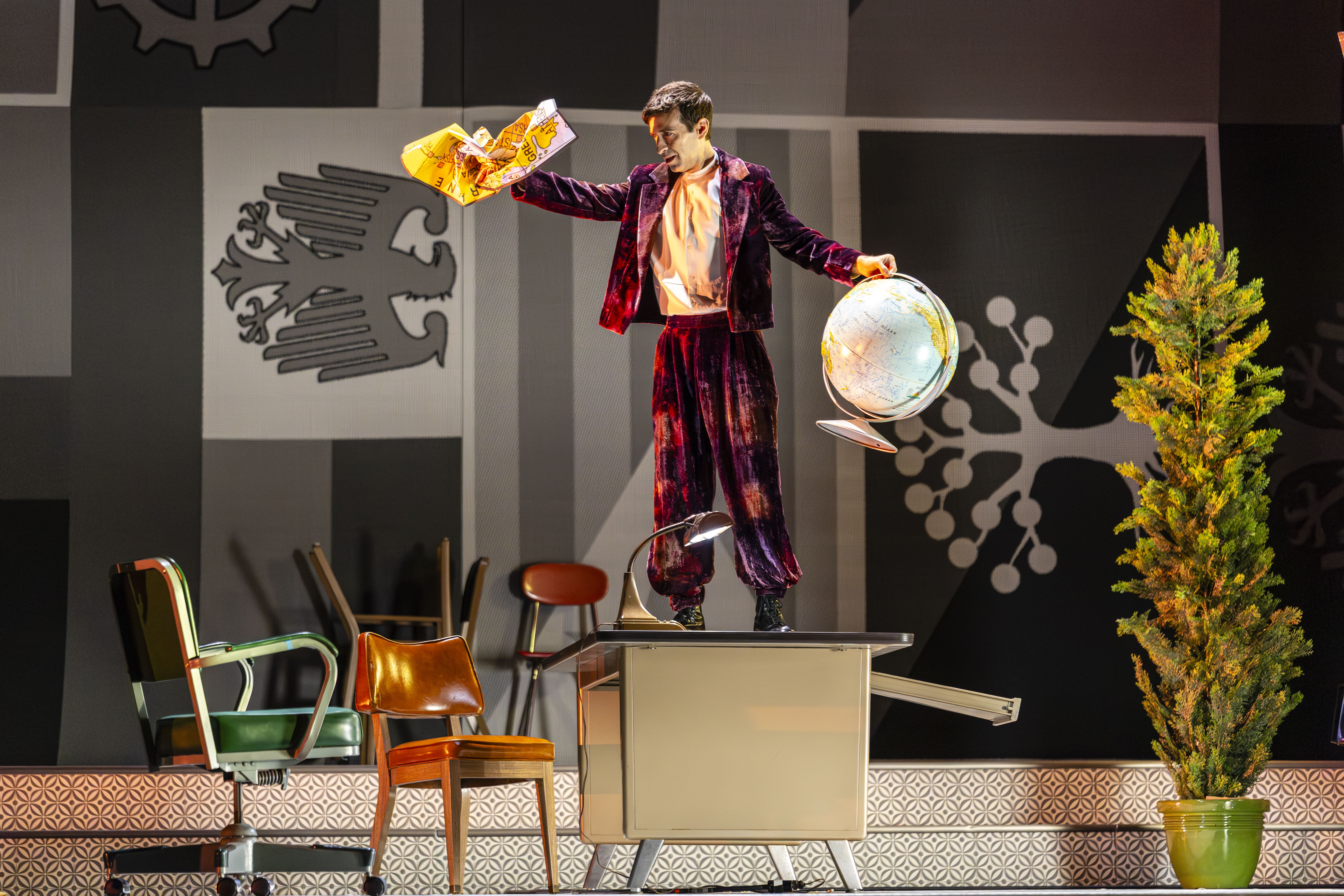
Among the many risks taken by Opera Philadelphia over the past two years, none has been greater than the current production of Mitridate, re di Ponto — the quirk of it all being that such a risk is attached to the name “Mozart.”
Yes, the ever-beloved composer is his ingratiating self in the rarely-heard, remarkably-evolved opera composed at age 14. Age is not an issue so much as the genre that prevailed in 1770 Milan, well before Mozart left behind stock plots about antique royalty that were once standard procedure.
Arias go on for as much as 10 minutes with false endings and expansive postscripts, requiring extraordinary virtuosity and stamina in an age where opera was as much about Olympic-style recreation as artistic communion.
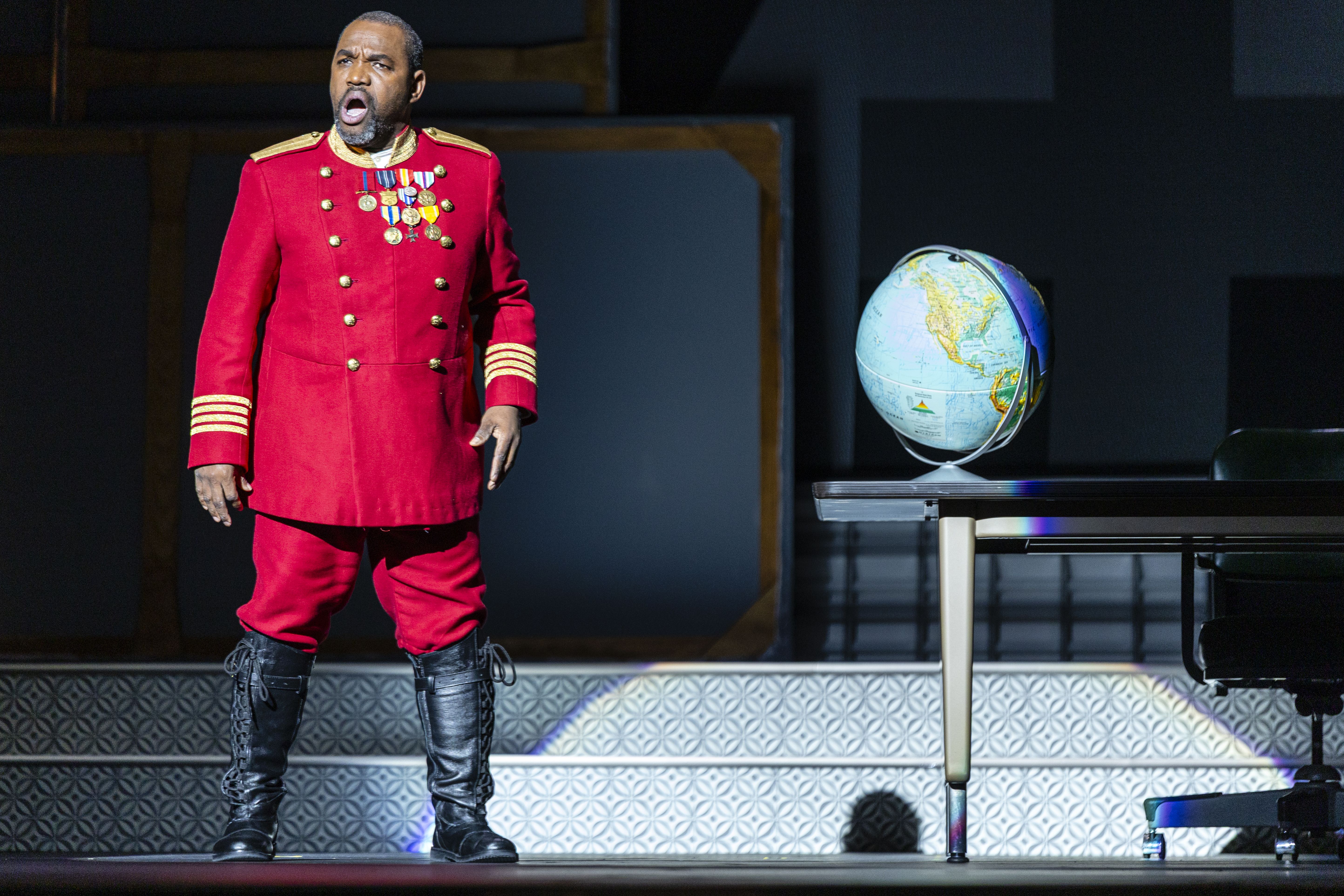
Tenor Lawrence Brownlee in Opera Philadelphia’s production of Mozart’s “Mitridate” at the Academy of Music. The work opened the company’s 2026-27 season.Dominic Mercier
Thanks partly to often electrifying singing in the cast led by star tenor Lawrence Brownlee, the audience seemed fully engaged Wednesday at the Academy of Music, even laughing with the recitatives that focused the characters and made the opera seem far less distant. In his customary pre-curtain speech, general director and president Anthony Roth Costanzo (who was also in the cast) suggested that Mozart was working out his father issues. Opera as psychotherapy? I won’t argue.
What emerged, for me, were parallels with King Lear in this story of the rage-prone monarch Mitridate, ca. 63 BC in the Crimea, whose one son is loyal and the other is plotting an overthrow with aggressive support from Rome. Romantic complications abound — in vocal writing that expects every voice to do everything — in arias that unfold with the dramaturgical formality of a chess game.
Without a lot of direct character interaction, soprano Brenda Rae was able to replace the previously scheduled Lauren Snouffer in the leading role of Aspasia with less-than-usual strain: Mostly, she needed to just show up for her arias, which exist like islands of characterization.
Lengthwise, the opera ranges from two-and-a-half to three-and-a half hours, this version coming in under three. With such flexibility, singers, in theory, can use the opera as a quarry, selecting what best suits them.
Soprano Brenda Rae as Aspasia in Opera Philadelphia’s fall 2026 production of Mozart’s “Mitridate, re di Ponto” at the Academy of Music.Dominic Mercier
With the convincingly brisk tempos of conductor Corrado Rovaris, the score felt a bit like Philip Glass — with Mozart inhabiting an infectious groove that suddenly changes complexion with the addition and subtraction of a well-targeted note. Long harpsichord-accompanied recitatives can sap the overall momentum, though Leon Schelhase revealed all manner of harmonic richness, creating a space where singers could give their characters greater specificity.
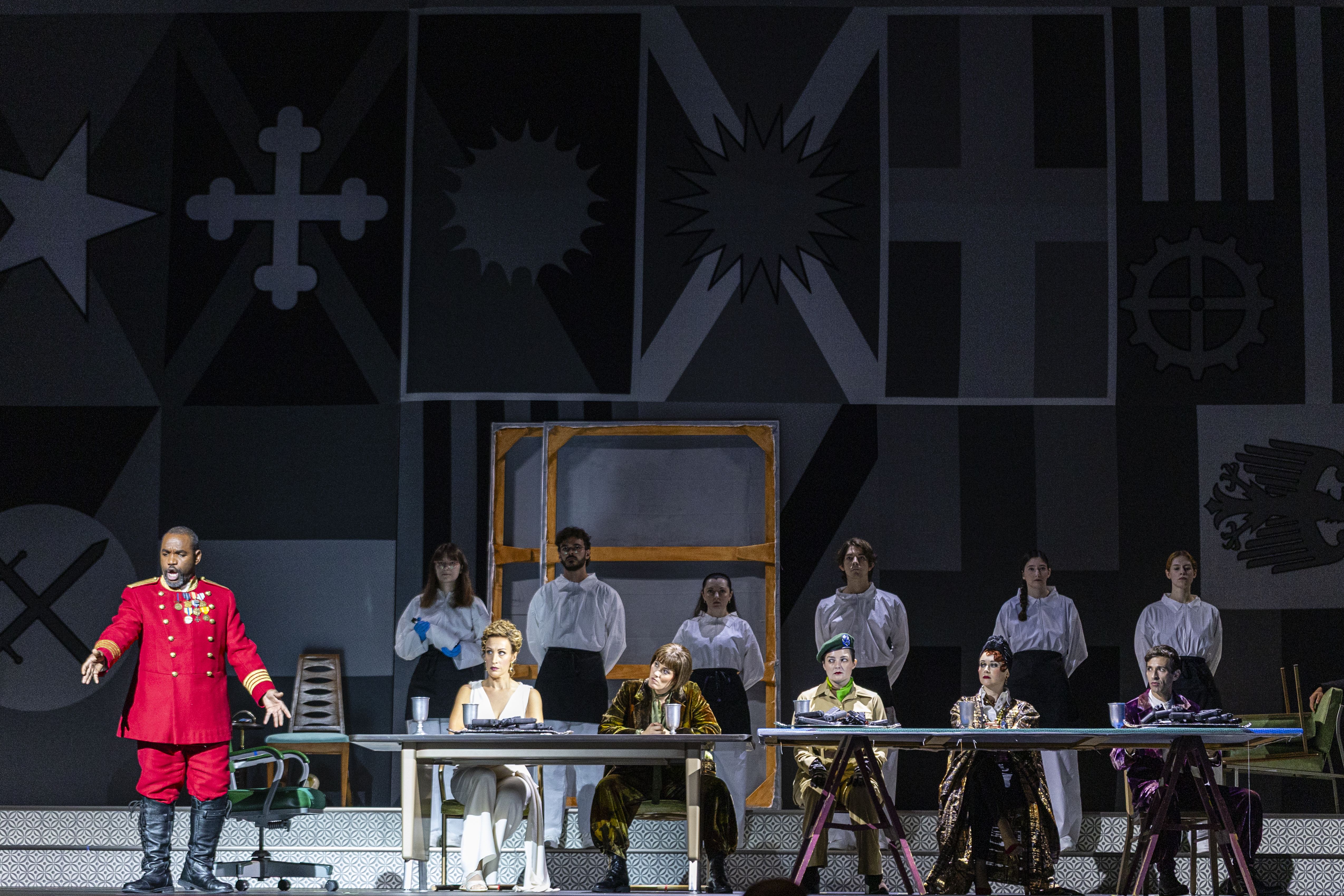
To her credit, stage director Emma Griffin basically left the singers alone — giving their characters a visual context but little physical stage business that would distract them from what they were there to do — sing.
It’s true that countertenor Costanzo (in the role of Farnace, the bad son) was able to sing with astounding accuracy and expressivity while being taken down and tied up. But that can’t be expected of any one else. It’s also true that Griffin had Brownlee’s angry king breaking various objects onstage, but always between phrases, and never stealing focus from his trademark high notes that take off like a skyrocket.
Among all cast members — including Meredith Wohlgemuth as Sifare, Nola Richardson as Ismene, and Sarah Coit as Arbate — the singing was effective but not always tidy, the heat of performance being much more important.
In Opera Philadelphia’s “Mitridate,” from the left: Lawrence Brownlee (Mitridate), Brenda Rae (Aspasia), Meredith Wohlgemuth (Sifare), Sarah Coit (Arbate), Nola Richardson (Ismene), and Anthony Roth Costanzo (Farnace). Dominic Mercier
Two special mentions: The emerging tenor Minghao Liu, as the Roman invader Marzio, is singing lots of Rossini in regional opera but is clearly headed for the top with the remarkable ease of his coloratura technique. In a somewhat different way, Rae is perhaps doing her best work in her middle years with a voice that’s showing some wear but is ever more interesting with the kind of shading she brings to what she sings.
She is able to encompass her entire character in a single cadenza. The depth of meaning she brought to her great Act II aria “Pallid’ombre, che scorgete” (roughly translated “Ghosts who look down from heaven” in which she contemplates the end of her life) was the opera’s most entrancing moment.
That and a number of other Act II arias for other characters (such as “Lungi da te, mio bene” with its horn obbligato) showed Mozart periodically leaping ahead in his maturity, creating music at a level of sophistication that would become customary a decade later. One can hear one of Western civilization’s great artists emerging before your very ears.
“Mitridate, re di Ponto” is performed Thursday at 7 p.m. and Sunday at 2 p.m. at the Academy of Music, Broad and Locust Sts. Tickets are $11-$250. The company’s next opera, “Suddenly Last Summer by Courtney Bryan,” opens Oct. 22 at the Forrest Theatre. operaphila.org, 215-732-8400.
These are the most compelling conversations surrounding the Eagles’ coming season. Crazy, maybe, considering the success of each and their success in tandem, but here we are.
Hurts is under contract for three more seasons, but 2026 is his last season with substantial guaranteed money. Most teams with a $255 million franchise quarterback one season removed from winning a Super Bowl and its MVP award would have discussed an extension that would lock in that QB before the QB market inflates further, but the Eagles have not done that, according to a source. Why? Because Hurts regressed in 2025 and the Eagles are installing a new offense in 2026 and they want to see how he handles it.
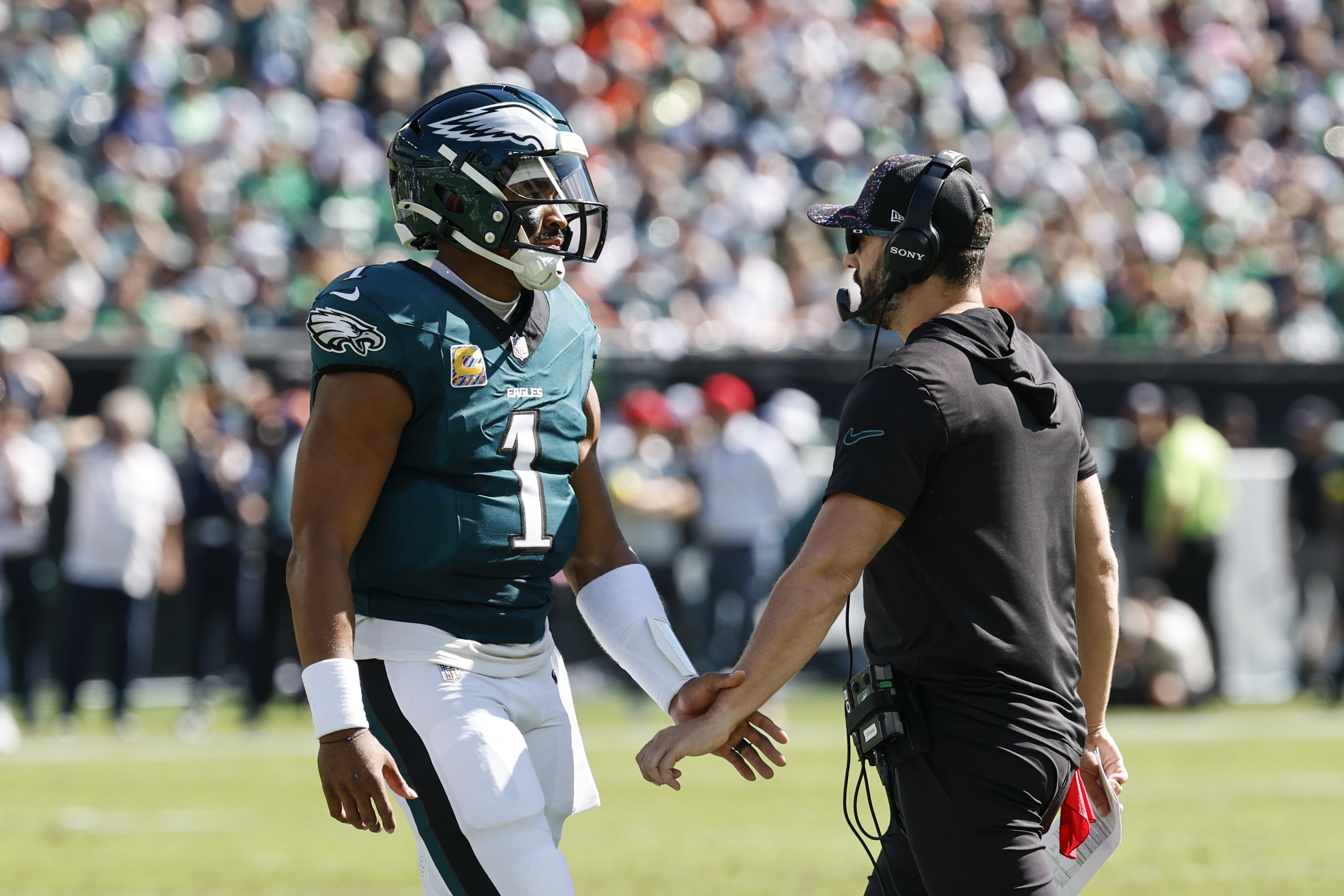
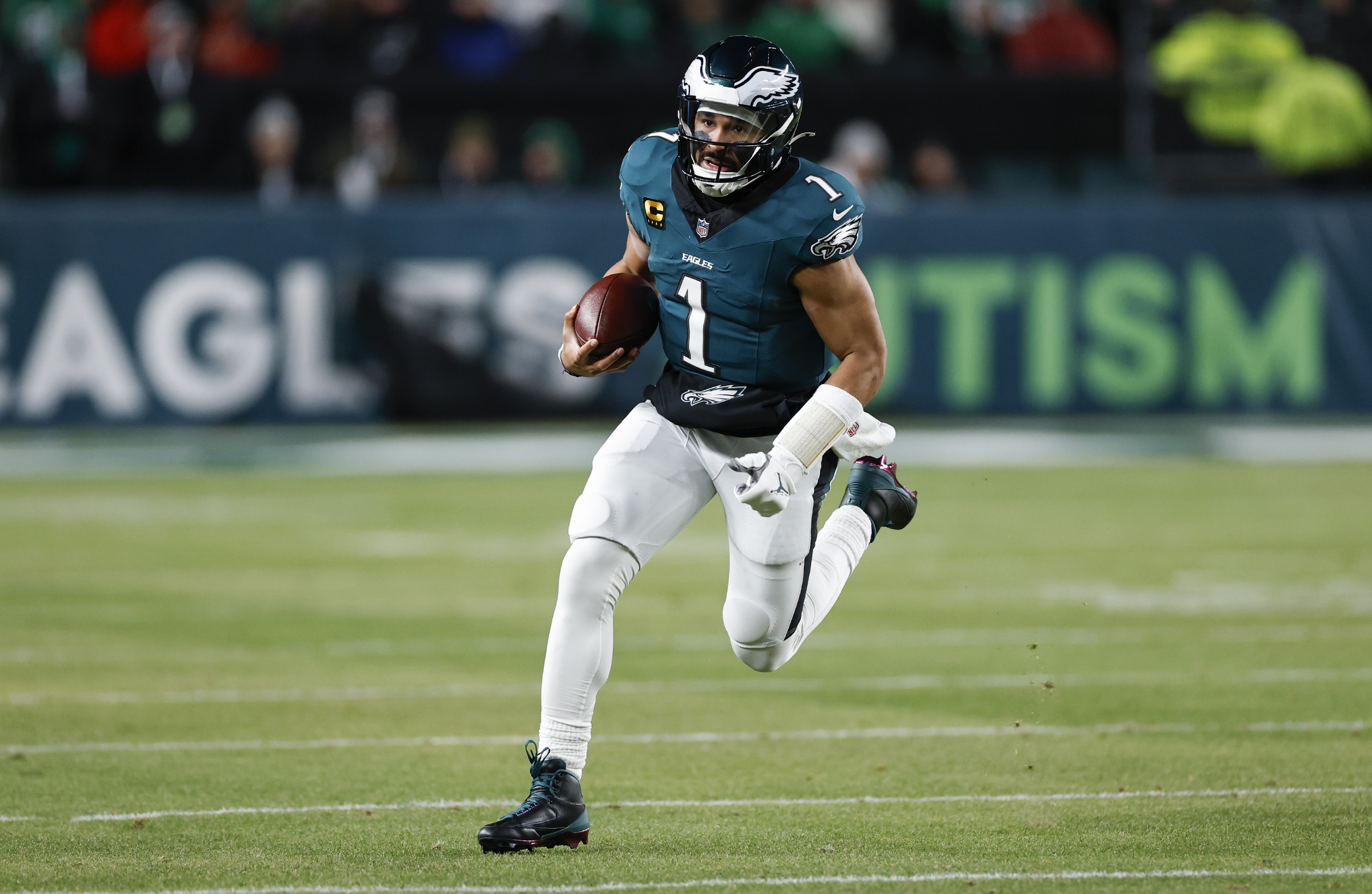
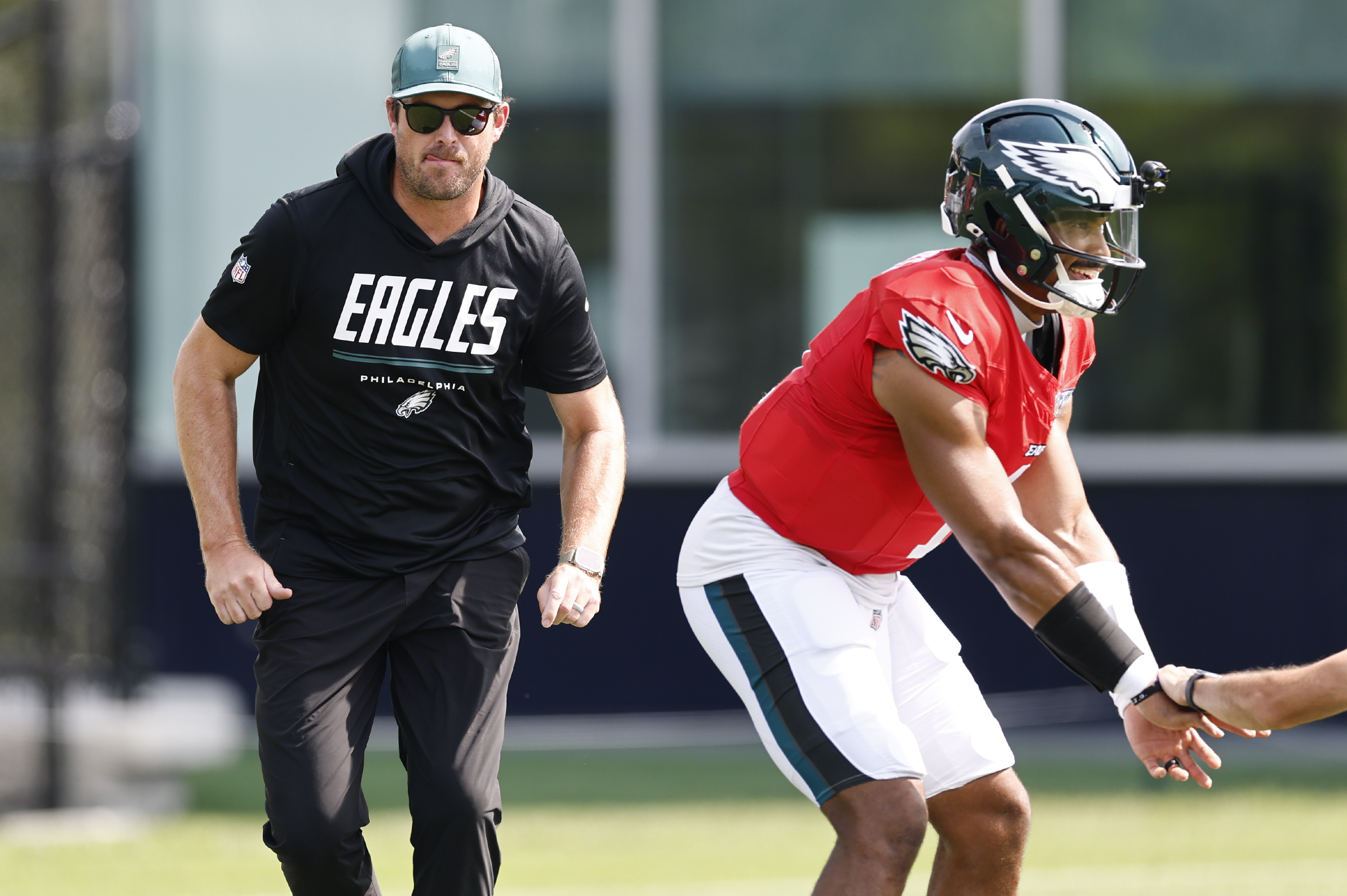
Jalen Hurts and Nick Sirianni both have the equity that comes with a title and will be given a learning curve with a new offense. Yong Kim / Staff Photographer
Sirianni, of course, also is one season removed from winning a Super Bowl, a win that, according to an NFL source, earned him a four-year extension that pays him a $15 million salary through 2029. However, for the second time, Sirianni also lost the offensive coordinator that got him to the Super Bowl. Shane Steichen became the Colts’ head coach after 2022. Kellen Moore became the Saints’ head coach after 2024. Each time, Sirianni failed to replace them with a competent hire of his choosing, and owner Jeffrey Lurie and GM Howie Roseman got involved in pursuing the next coordinators. That’s why Moore got hired in 2024, and it’s why new coordinator Sean Mannion, a disciple of Kyle Shanahan and Sean McVay, is installing that new offense in 2026.
So, while they might be overblown, there are issues with both the quarterback and the coach. Any post-2026 divorce would mean that the Eagles would eat either salary-cap money or Sirianni’s paychecks, but Lurie has never been shy to move off a bad investment.
In the NFL, it’s always easier to replace a coach than a quarterback. After all, Doug Pederson and Sirianni won Super Bowls.
Ominous, no? Apparently, no.
Relax
An offseason of communications with various NFL sources indicated two things:
The Eagles do not consider 2026 to be a make-or-break season for either Hurts or Sirianni. That’s because …
Installing an offense that is so philosophically different than what’s come before it is not a 17-game undertaking. It’s a two-season project.
This makes perfect sense.
It is the proper way to view the matter.
I’ll admit, it’s not the way I viewed the matter this spring. I thought Hurts’ limitations as a passer and decision-maker should imperil his status past 2026. I thought Sirianni’s inability to mature and his lack of offensive innovation should imperil his status as well.
I came around.
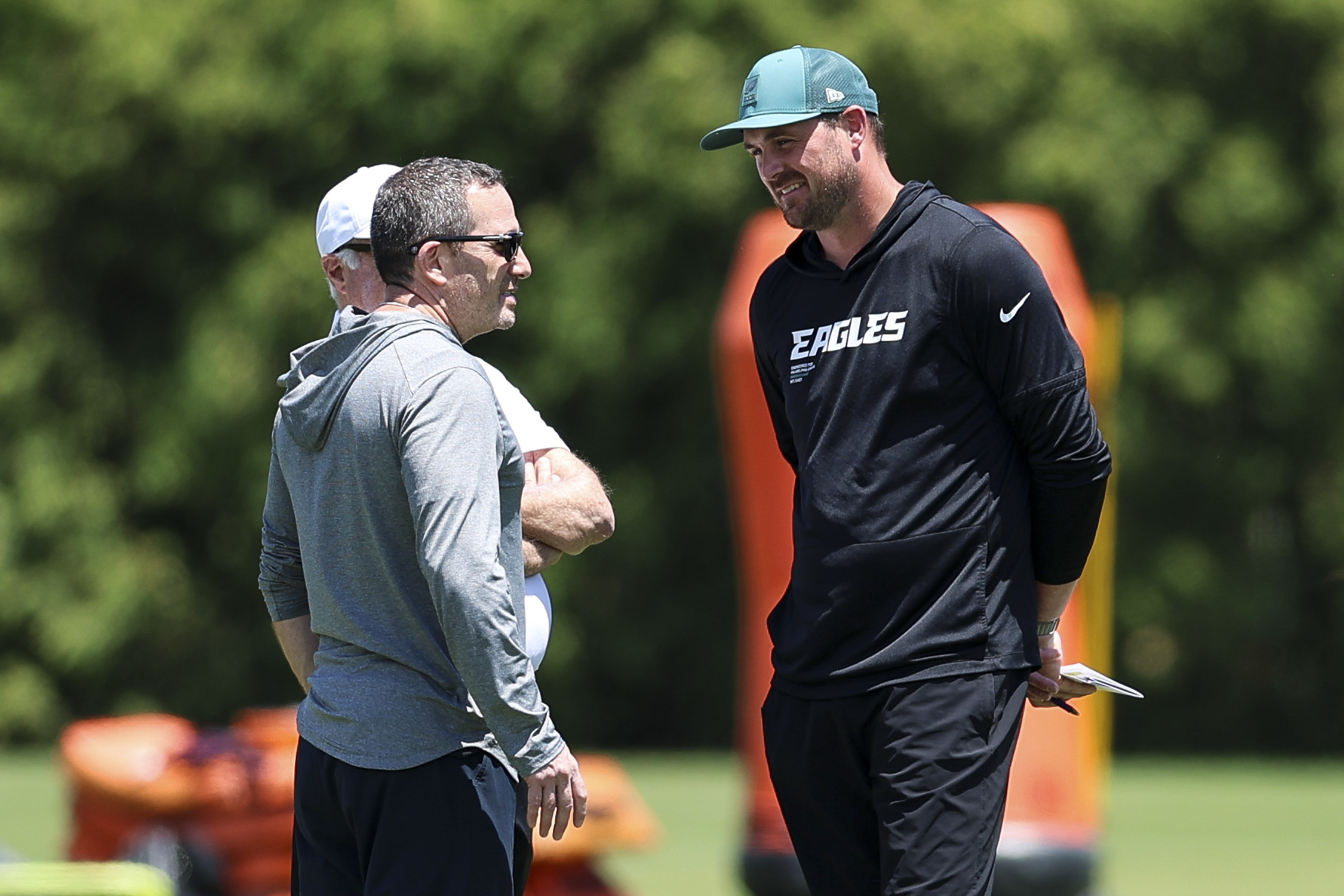
Jeffrey Lurie and Howie Roseman both understand that Sean Mannion’s (right) offensive installation will be a work in progress. Monica Herndon / Staff Photographer
Several NFL insiders said that this season should not be crucial for either the coach or the QB. Why?
Because, as long as the 2026 season doesn’t deteriorate into disaster, and as long as there is promise in December that the Birds can win big as soon as next season, the Eagles will have a better foundation than ever. They could be building something that lasts for the next decade. Mannion likely won’t be here for that long, since top offensive coordinators usually get hired as head coaches as soon as they show any aptitude. But Hurts is only 28. Sirianni can become a legend in Philly. That’s what the Eagles‘ brain trust wants.
My guys
Lurie is proud of acquiring both Hurts and Sirianni while the rest of the league laughed. As such, he is as invested in them as he was invested in Andy Reid and Donovan McNabb.
Also, Lurie is 74. He’s groomed his son, Julian, to replace him at the top. What better gift to give your princeling than a stable kingdom? As such, stability through change takes time.
Lurie and Roseman realize there will be speed bumps. The offense won’t work smoothly immediately. Mannion will virtually have carte blanche in regard to concepts, Sirianni will have final say over who is asked to do what, and Hurts won’t be asked to do things he’s uncomfortable doing.
However, as long as Hurts shows improvement as the season progresses, his future in Philly will be secure.
And as long as Sirianni commits to the concepts Mannion installs, and displays a willingness to adhere to them when Mannion moves on, his future in Philly also will be locked down.
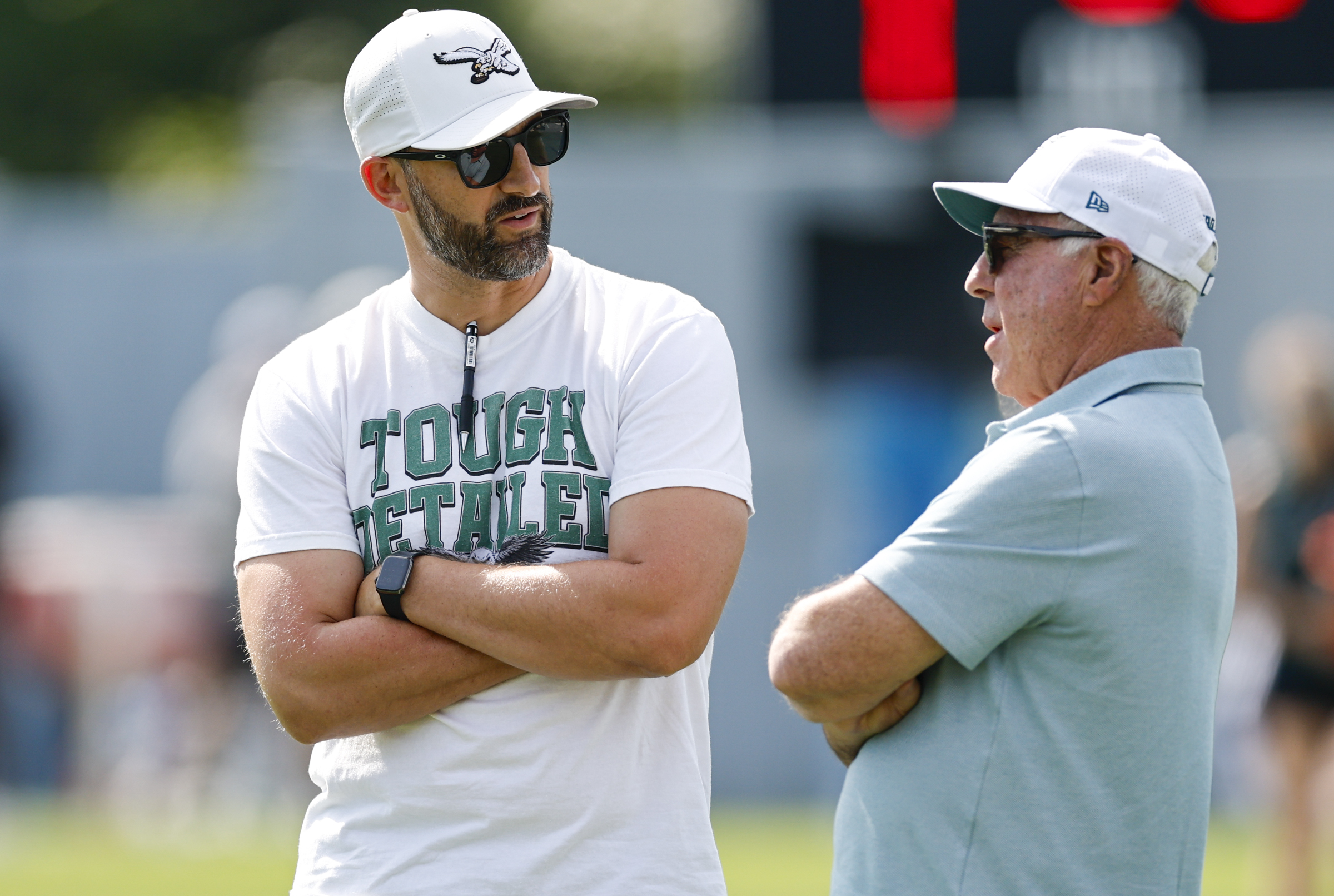
Eagles head coach Nick Sirianni with owner Jeffrey Lurie before a joint practice with the New England Patriots last month. Yong Kim / Staff Photographer
I’ve known Lurie for 30 years, Roseman for 25. They don’t always tell whole truths, but they seemed particularly comfortable and, frankly, honest when, this offseason, they were asked about the futures of Hurts and Sirianni.
Asked last Wednesday on 94-WIP if this was a make-or-break season for Hurts, Roseman replied, “No, I don’t agree with that.”
Asked by reporters in April to review Sirianni’s five-year tenure, Lurie replied, “His performance has been nothing short of outstanding.”
All of this sounds pleasant now, before the first whistle blows. All of this could change drastically. The Eagles’ battered offensive line is being held together by athletic tape and stem cells. The team traded malcontent franchise receiver A.J. Brown, and his replacement, rookie Makai Lemon, doesn’t look ready for the NFL. There’s no proof that superstar running back Saquon Barkley, who carried the club in 2024 when he was 27, didn’t lose a step in 2025 when he was 28; now, he’s 29.
They host a desperate Commanders defense to start the season Sunday, travel to Chicago — where the Bears won a playoff game last season — for Game 3, then host Aaron Donald, Myles Garrett, and the fearsome Rams in Game 4.
There’s a very real chance that the Eagles’ new offense sputters in the first month of the season. There’s a very real chance that Lurie and Roseman become impatient and change their current long-range views regarding the head coach and the quarterback.
For now, though, they seem willing to give them every best chance.
I’m not saying the world’s most coveted beef is an international marketing conspiracy to compel us all to pay more for steak. I have eaten genuine A5 Wagyu fresh off a grill in Tokyo, and the unique sensation of biting into that cube of quivering-hot meat laced with molten fat and feeling it dissolve into buttery richness is unforgettable. Japan’s famously pampered breed of cattle — whose expense results from an intense feeding regimen over a longer duration than conventional beef — can be very special. Especially in small quantities.
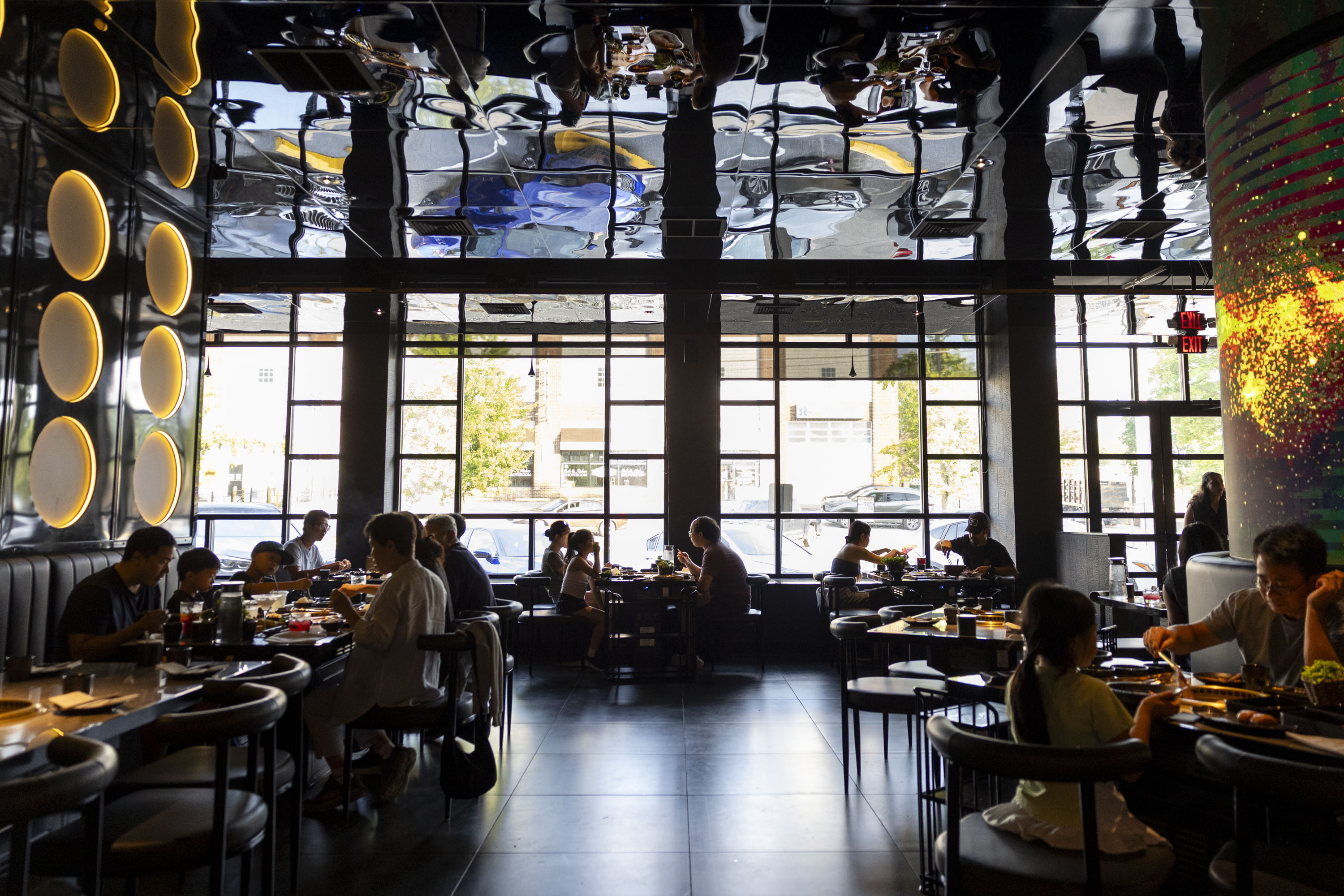
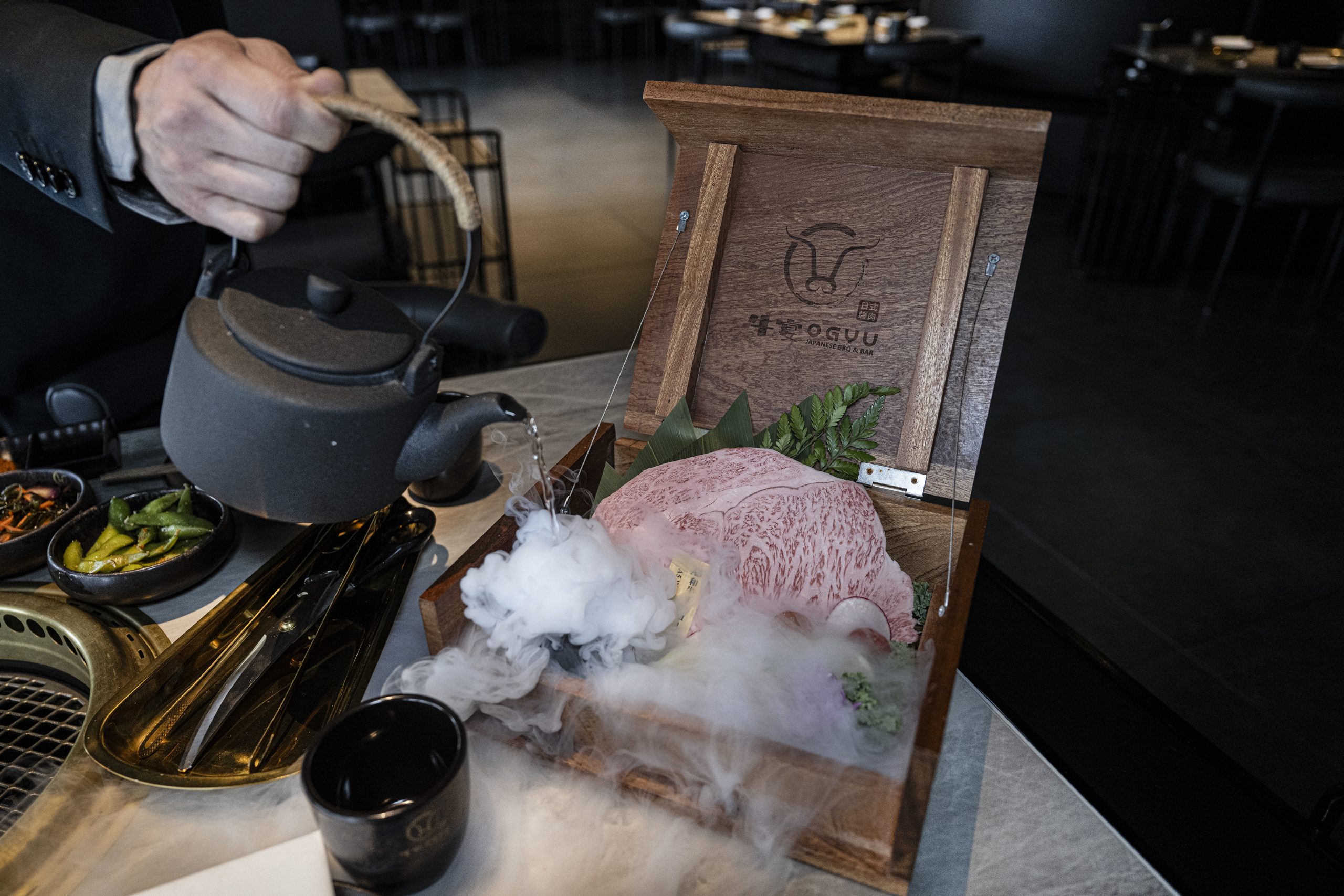
Back here on the front lines of all-you-can-eat wagyu feasting at Ogyu in Ardmore, however, I could not escape the feeling I was in for an experience long on flash — sizzling tabletop grills, swirling plumes of dry ice smoke, digital sparks flying across the room’s giant LED screens — and short on satisfying flavors.
Guests dining in at Ogyu on Friday, Aug. 28, 2026, in Philadelphia.Tyger Williams / Staff Photographer
I was prepped for a 90-minute sprint of carnivorous endurance, limited only by my ability to navigate a DIY iPad menu, forced timing breaks, and the need for a maximalist ordering strategy for Ogyu’s tiered packages,ranging from $39 to $99 per person. Should my appetite stumble? A potential 20% “wasting fee” loomed. (Diners are potentially charged extra if they don’t eat what they order.)
I didn’t want to let our server James down after he successfully upsold us into one of the more expensive packages, whose overlapping lists of meat perks, which gradually increase in quality, reminded me of sussing through the various mysterious options available at a car wash. Sure, my car will be clean no matter which hot wax I select, just as I’ll be full no matter which all-you-can-eat menu I go for. But will I emerge with that ruddy Wagyu shine of beefy bliss?
Definitely not with the entry-level “Silver” ($39) or “Gold” ($59) options, which James wordlessly dispatched as unworthy by comically sticking out his tongue in disdain and slashing his throat with his fingers: “The ‘Diamond’ tier is our most amazing experience,” he counseled.
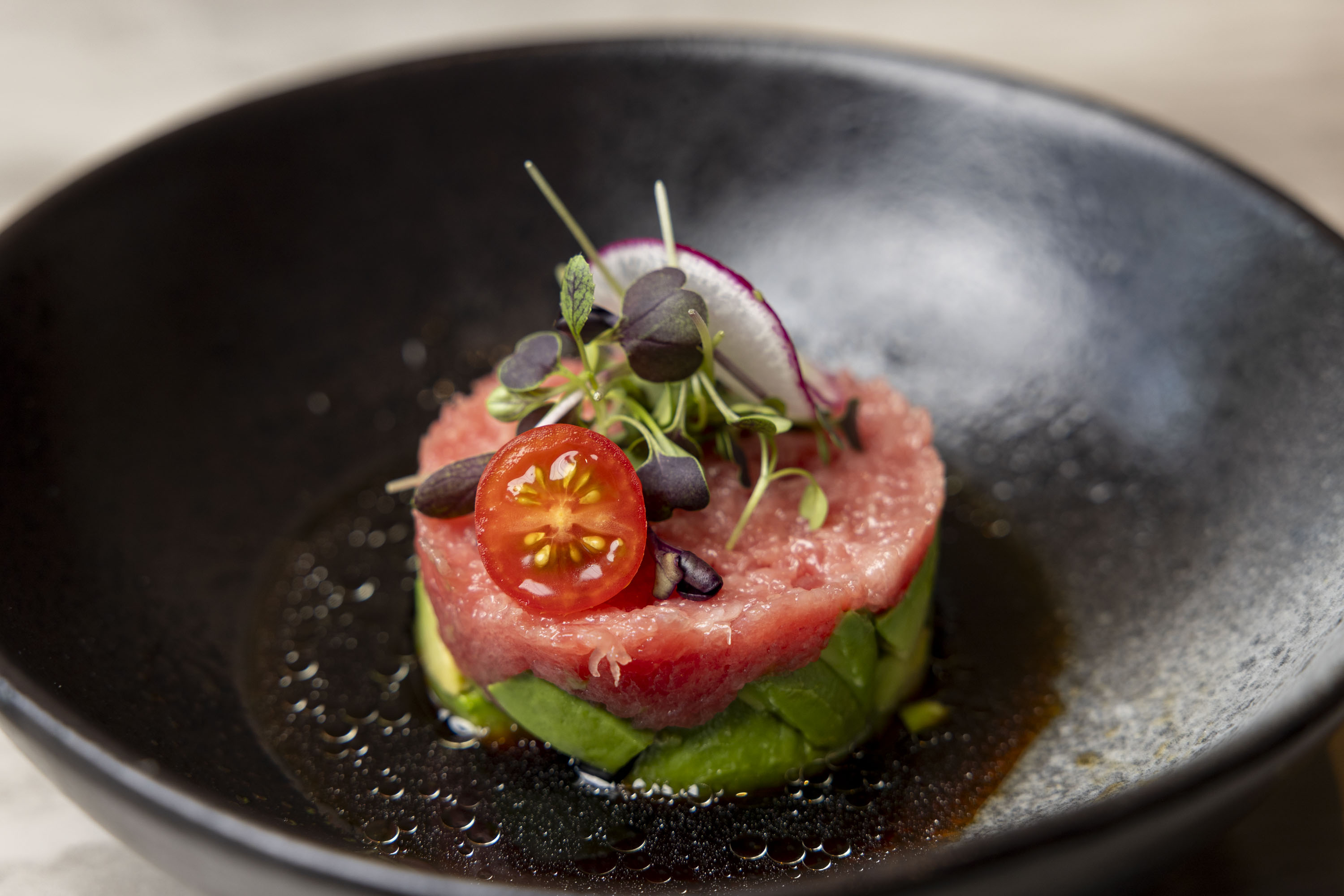
The Bluefin tartare at Ogyu on Friday, Aug. 28, 2026, in Philadelphia.Tyger Williams / Staff Photographer
We settled on the second-most extravagant option, the $79 “Platinum,” in which some genuine Japanese Wagyu is made available along with prime-grade beef and less-marbled American wagyu from the lower levels of the menu.
As a newcomer to the all-you-can-eat universe, I immediately fumbled the challenge of prioritizing our orders properly. Diners are limited to ordering a maximum of 10 items every 10 minutes, and we foolishly crowded our limited table space with mundane belly-fillers like wagyu dumplings (raggedy), hand rolls (mushy with too much panko filler), spring rolls (so greasy), and pencil-size wands of tempura-fried crustacean so thickly breaded they were unrecognizable as lobster tail. The truffled wagyu stir-fried rice was burnt.
I did appreciate the slow-steeped richness of the bone marrow soup. We also enjoyed the thick-cut bluefin tuna sashimi, as well as a toro tartare with avocado and ponzu. (Ogyu’s owner, Sam Li, says several regulars come here to get their money’s worth exclusively in bottomless sashimi.)
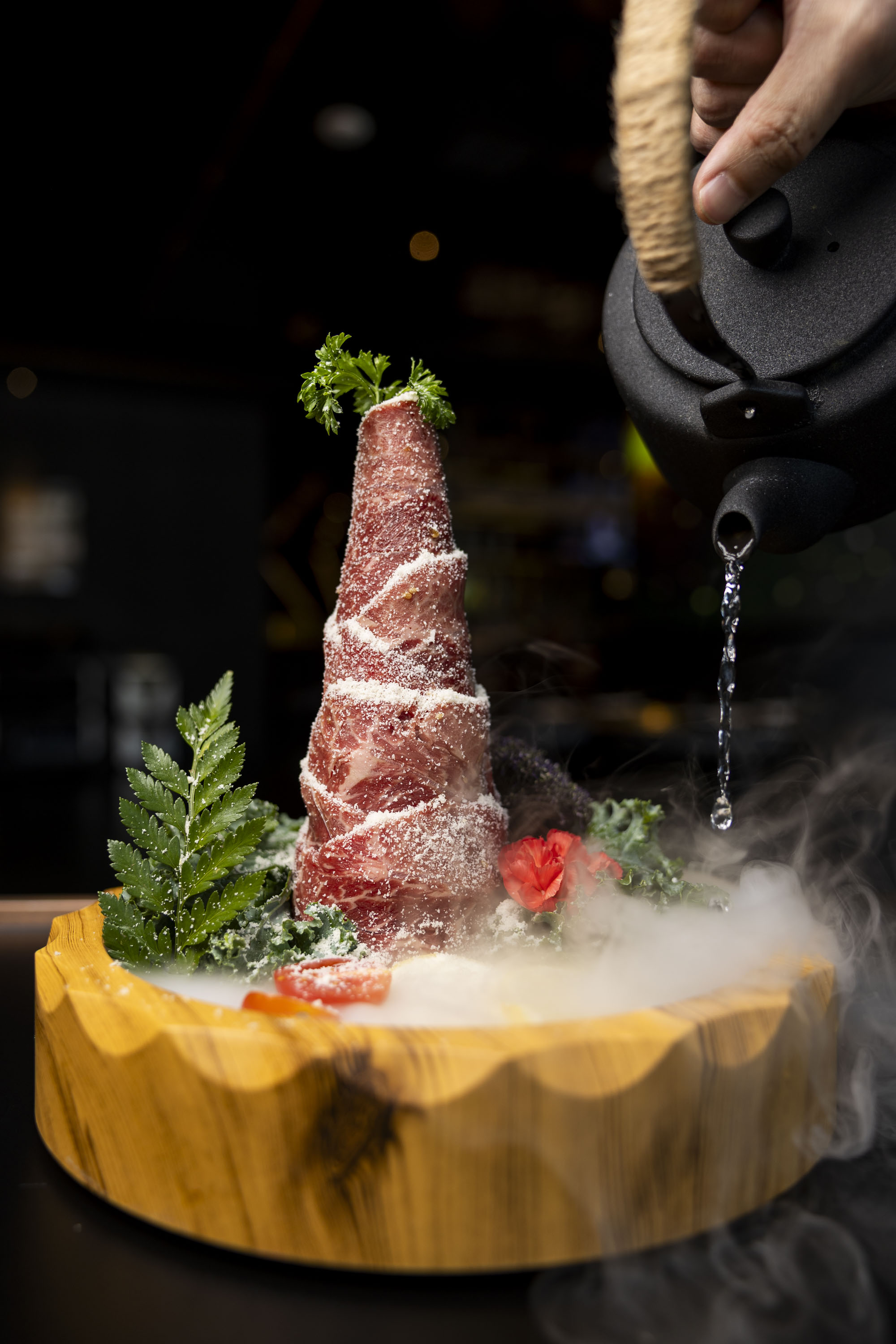
But we were here for the beef. James finally took pity on us, commandeered our iPad, scrolled down to multiple menu panels I’d missed, and began punching up orders for the maximum amount of the A5 Wagyu cuts allowed from Miyazaki Prefecture. I was impressed with the dramatic presentation of the fat-marbled Wagyu rib cap that arrived at our table in branded wooden boxes fuming with smoke — until a server tipped the box too far and the cold water that activated the dry ice smoke streamed right out onto my guest’s lap.
Ogyu Japanese BBQ restaurant is shown on Tuesday, July, 7, 2026 in Ardmore, Pa. The new restaurant by Sam Li offers a modern Japanese steakhouse experience with tabletop cooking, adding to Ardmore’s growing portfolio of restaurants.Jose F. Moreno / Staff Photographer
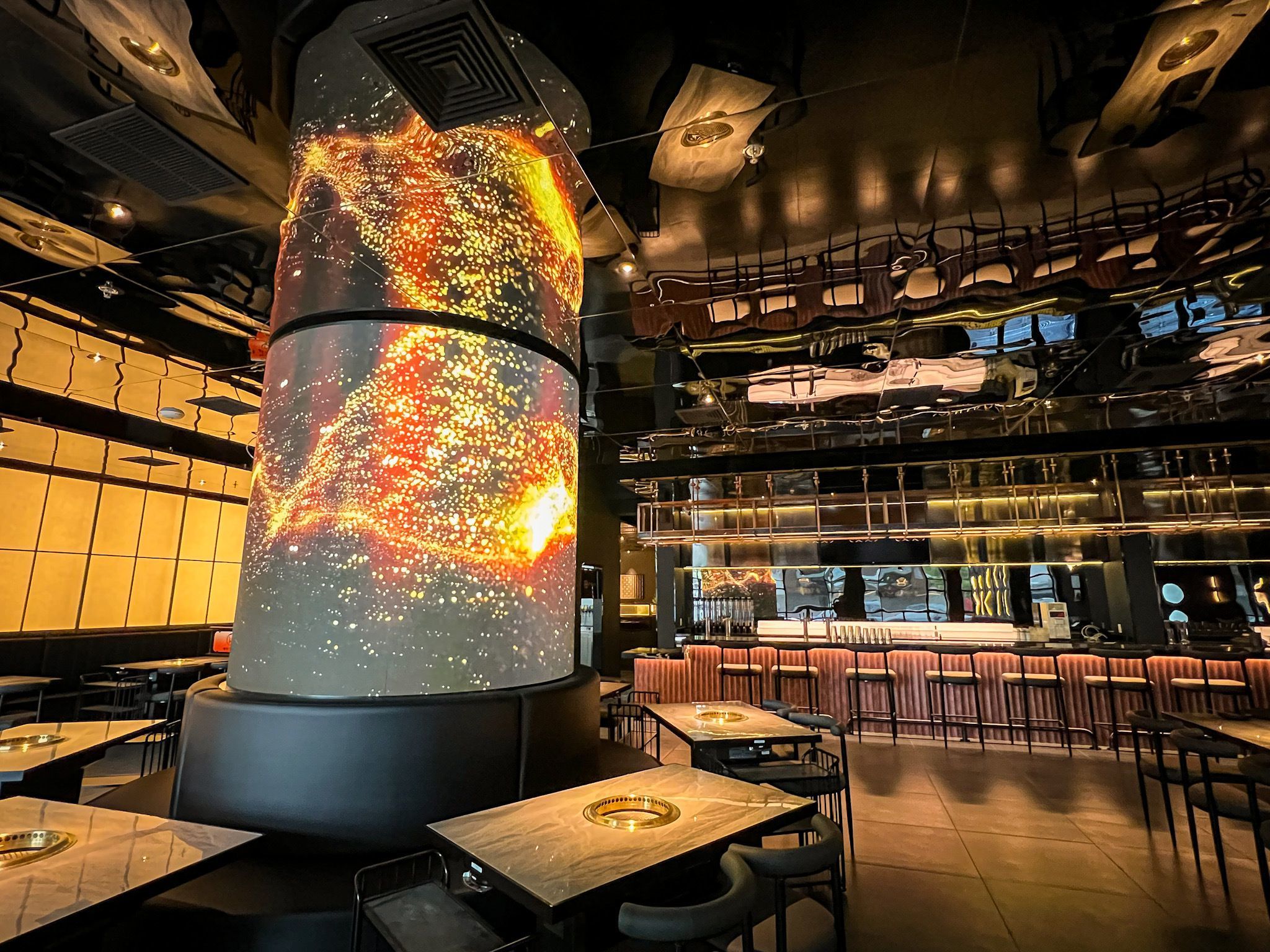
Ogyu (pronounced “Oh-Gee-You”) is a snazzy space. Li, a chef and sushi entrepreneur who also owns three Osushis (in Ardmore, Wayne, and Marlton) as well as Newtown Square’s Hiramasa, spent $3 million transforming the former Iron Hill into a 300-seat meat palace with sleek black fixtures, marble accents, and illuminated walls. The all-you-can-eat format, a national trend in luxury foods, has been a smart move for this three-month-old restaurant, which grills 1,000 pounds of beef each week, 75% of which is wagyu, roughly 20% of which is from Japan. (A la carte options are launching soon.)
But the overall details do not add up to theluxuryexperience the $120 check average should command, from the cruise ship-level tropical drink program to the tiny plastic plates our servers never bothered to clear between courses until I asked. (Nonetheless, our server preselected a 22% gratuity as the default tip on Ogyu’s mobile payment machine.)
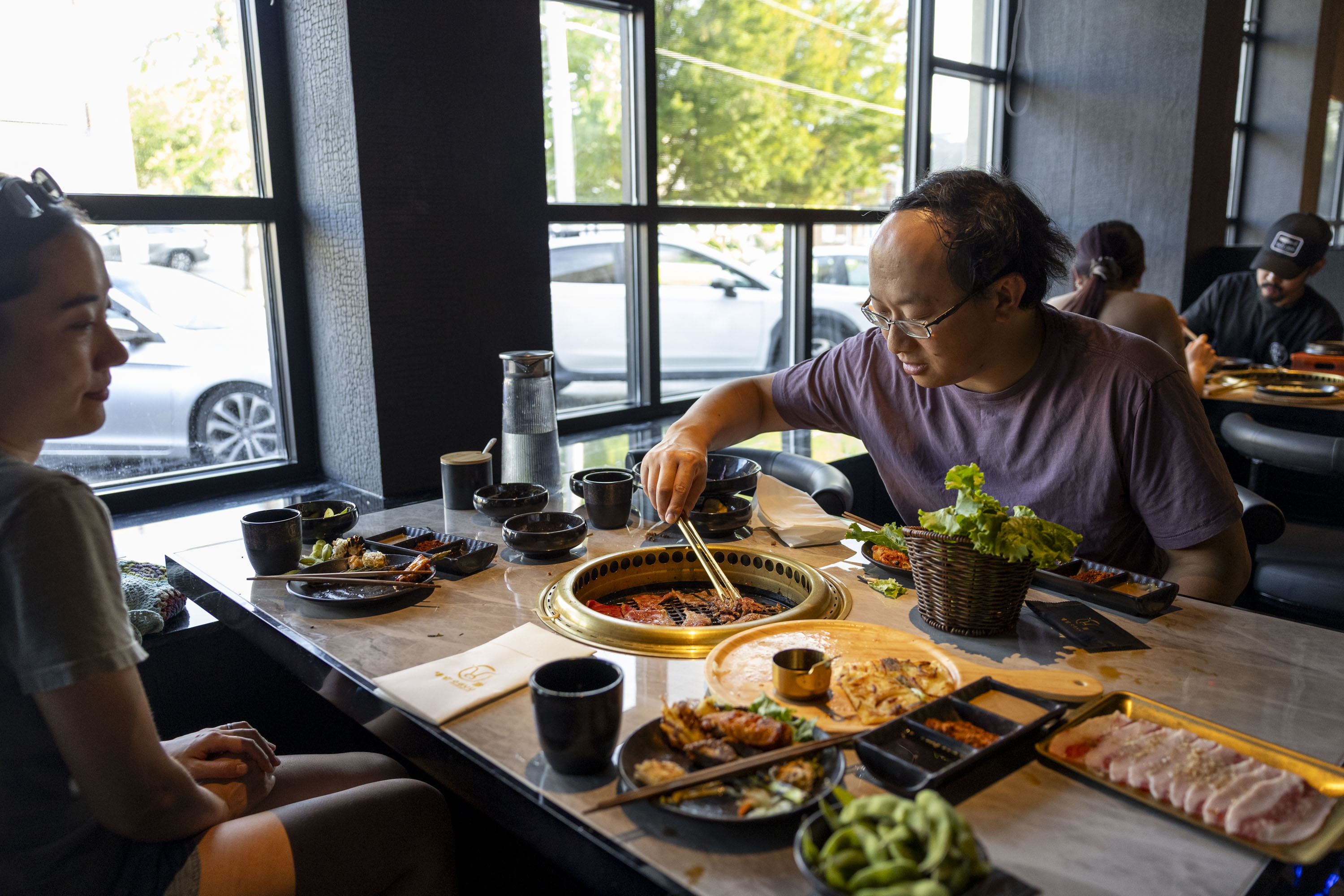
Jason Kan, of Wynnnewood, Pa., and wife Megan Kan, are dining in for the first time at Ogyu on Friday, Aug. 28, 2026, in Philadelphia.Tyger Williams / Staff Photographer
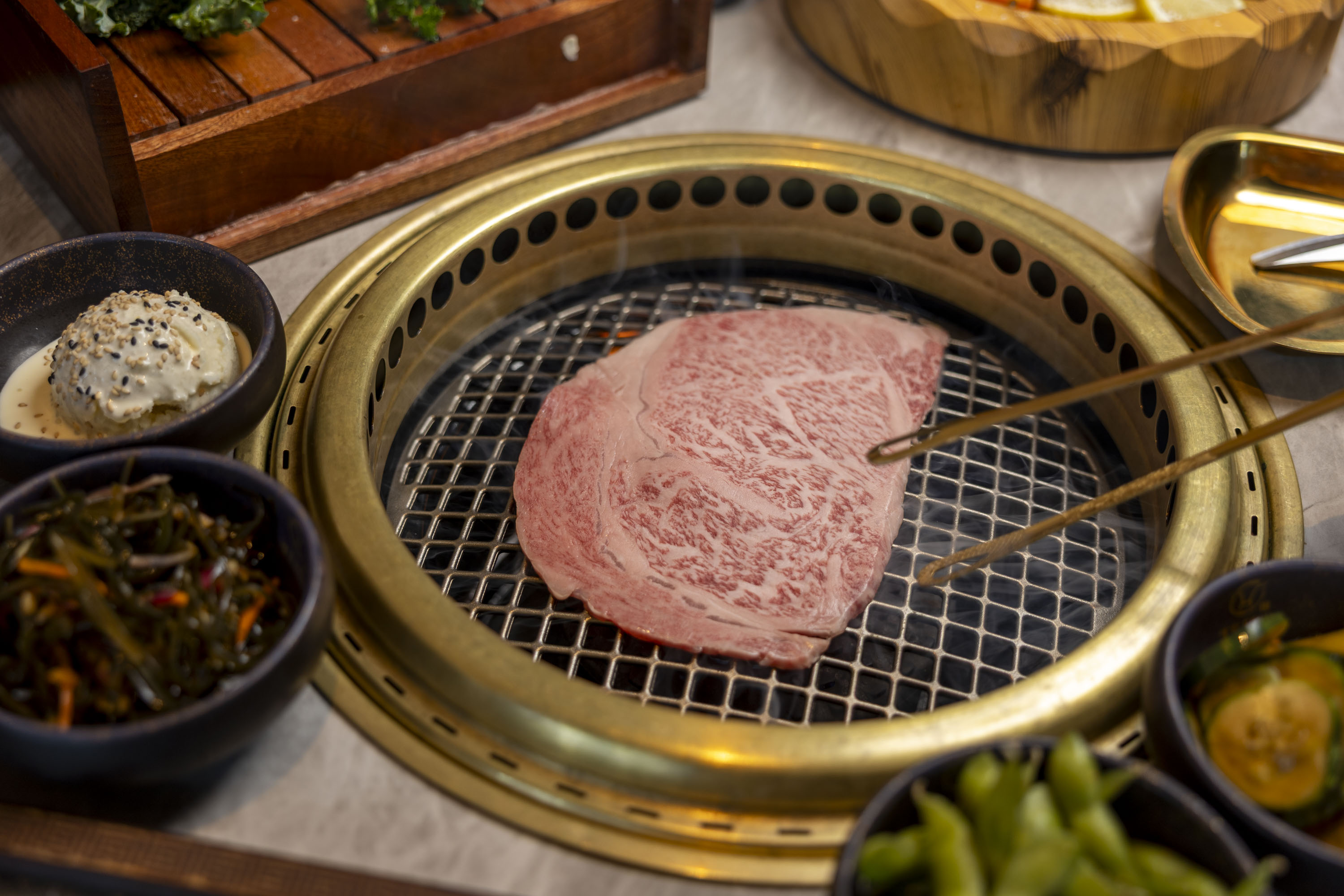
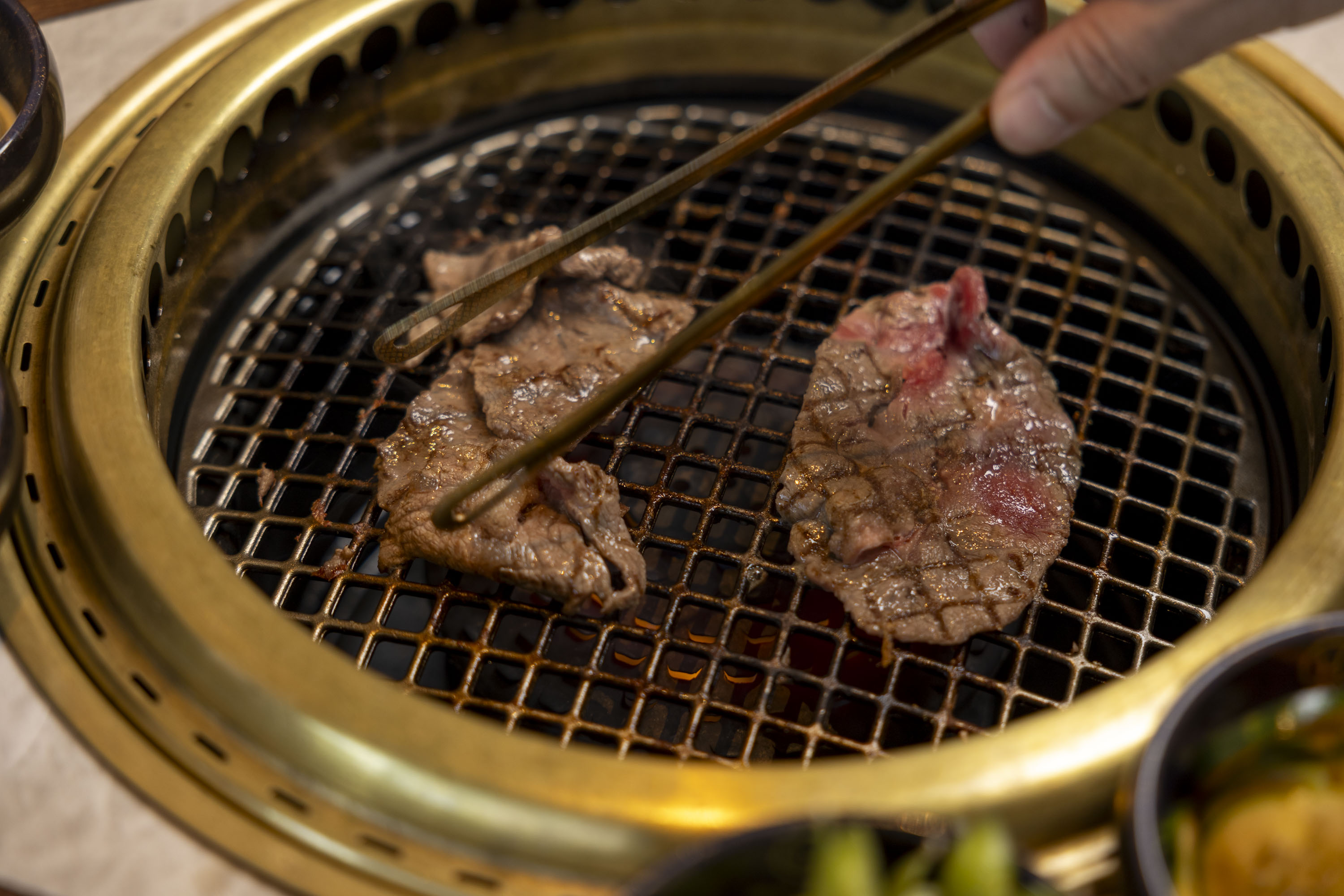
Habitués of all-you-can-eat may understand their task, target, and the rules of the game. Unlike flavorful, marinade-boosted Korean barbecue, this beef is presented relatively unseasoned, in the Japanese yakiniku tradition, to “focus on the quality of the meat itself,” says Li. I only wish someone had bothered to show us the temperature controls on the side of our tabletop grill, which wasn’t set nearly hot enough to properly sear the beef. The A5 Wagyu rib cap itself was legitimately tender and glossed with fatty richness. But served in less-than-prime circumstances, with customers in charge of their own grilling — usually overcooking the meat while simultaneously trying to socialize — it fell flat for me.
A $79 fee, or even $99, is technically a fair deal for a big meal spun around an ingredient that, at its highest quality, sells locally at Barclay Prime for $210 or more for a half-pound portion. But I don’t enjoy Japanese Wagyu in that kind of portion. It’s rich and tender to the point of being mushy. A little goes a long way. But the wider world’s growing appetite for wagyu as a prestige label synonymous with the good life (the global market is projected to grow from $29 to $49 billion between 2025 and 2034) leaves me skeptical.
The Wagyu Mt. at Ogyu on Friday, Aug. 28, 2026, in Philadelphia.Tyger Williams / Staff Photographer
Is wagyu really the lifestyle upgrade we need — not just for occasional splurges, but our everyday burgers and cheesesteaks, too? I don’t think so. It’s just the latest in a long line of token bites of privilege — truffles, caviar, uni — that lose their luster once the industrial food complex latches on for maximum profit, even as standard beef prices hit all-time highs. There is some excellent American wagyu available now, but there’s also enough fake wagyu on the market, let alone less-marbled hybrid versions raised in both America and Australia, to make one question all of it.
Personally, I’d rather sink my teeth into a thick, dry-aged porterhouse that delivers the beefy texture and complex savor of carefully handled meat, not just the fat that gives it richness. I’ll take a well-marinated Korean galbi with all the ssam and banchan fixings at Kim’s, a perfectly cured slice of brisket pastrami (hello, Radin’s deli!), or a grass-fed Brazilian cut roasted over live coals at Picanha over the soft pads of a fatty wagyu splurge.
The Miyazaki rib eye at Ogyu on Friday, Aug. 28, 2026, in Philadelphia.Tyger Williams / Staff Photographer
But the competitive nature in me chafed to learn from James, when I asked him after our meal, that my table of four’s consumption of 32 savory dishes was “below average” for Ogyu. Li later confirmed that his regulars typically order 50 to 60 dishes.
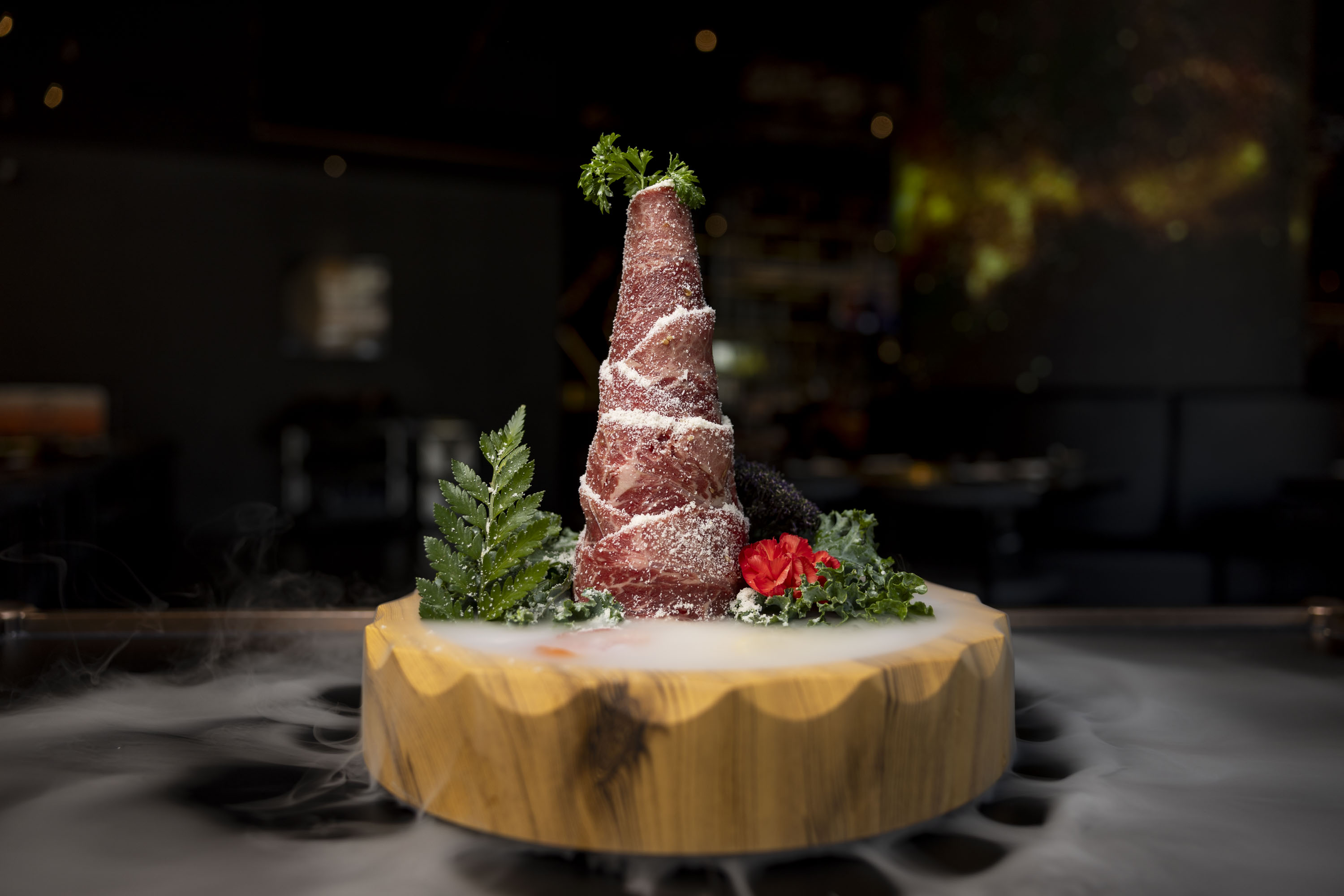
I became determined to run it back for another visit, this time at Diamond-level indulgence, with a disciplined game plan to start with beef and order, order, order at every 10-minute interval. We started at the peak, quite literally, with “Wagyu Mt. Fuji,” a pylon-shaped prong wrapped in American-raised wagyu blade steak whose snow-effect decoration of grated Parmesan had the unfortunate effect of sticking to the grill and causing the beef to shred into worthless flakes whenever we tried to pry it off. Our server whisked away the grill plate before we’d even eaten half.
The Wagyu Mt. Fuji dish at Ogyu in Ardmore, featuring American wagyu blade steak.Tyger Williams / Staff Photographer
I tried the black pepper-marinated eye-of-round to sample a non-Wagyu cut, but these prime-grade strips quickly roasted into unpleasantly twiny ropes that prompted my own impression of James’ pantomimed nixing. It would be almost all Wagyu from here on in as we cycled through multiple 3.3-ounce portions of truffled chuck rib, short rib, strip loin, and thin-cut tongue (too crunchy for my crowd). Piles of empty service trays cluttered our table as the staff arrived with waves of more meat. But few cuts really wowed me, except for the tender New Zealand lamb chops, which I highly recommend.
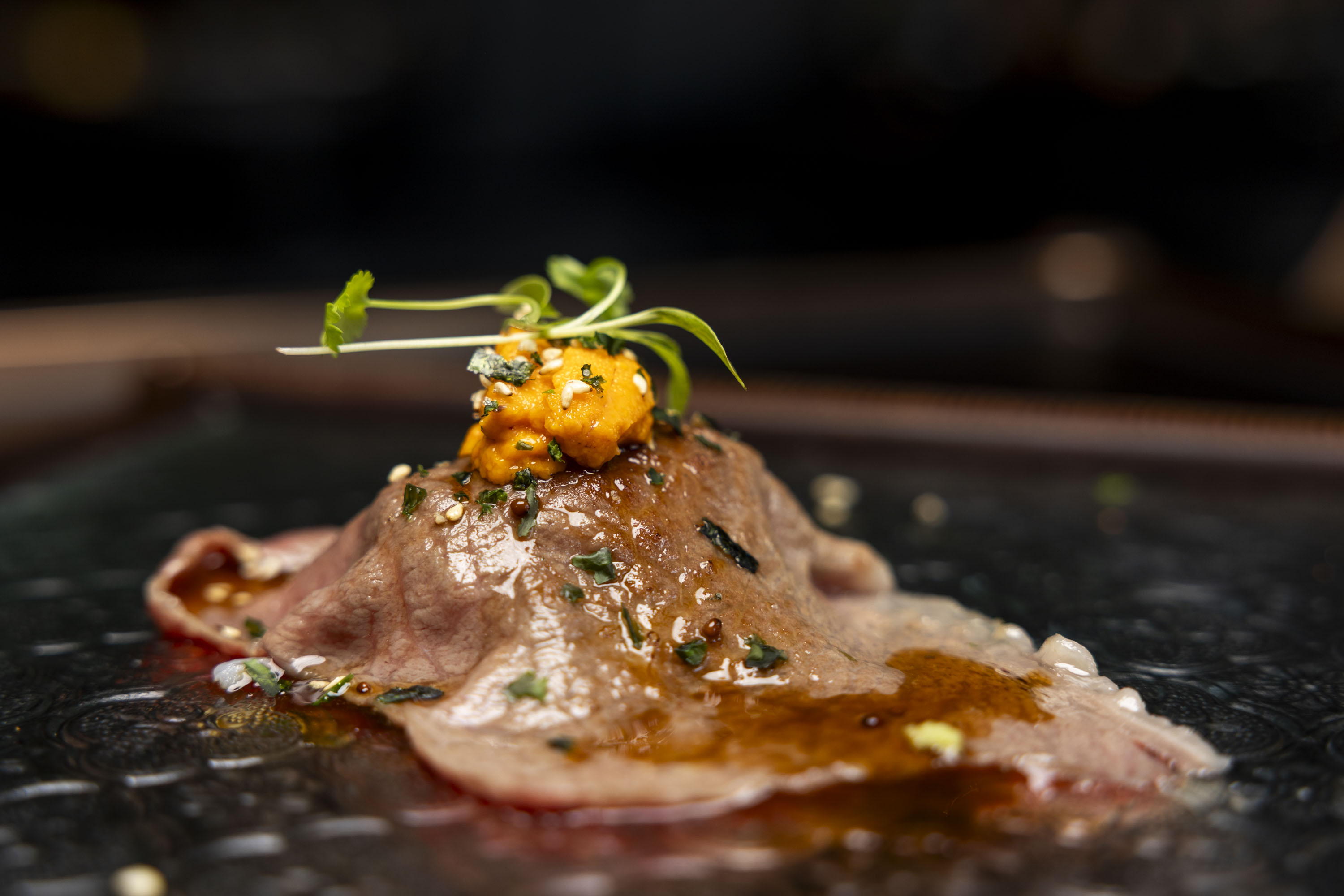
Among the best menu items was the “Meet Wagyu” nigiri, a sheer strip of beef draped over a nub of rice, topped with a nugget of your choice — uni, caviar, truffles, or foie gras — then briefly torched in the kitchen. It was a composed one-bite delight that highlighted Wagyu’s signature virtues. The one knockout cut that impressed on its own was the A5 rib eye from Miyazaki, a succulent pad of velvety soft beef that our server snipped into glistening morsels.
The Wagyu nigiri topped with uni at Ogyu on Friday, Aug. 28, 2026, in Philadelphia.Tyger Williams / Staff Photographer
After 3 pounds of grilled meat between us, I could have kept going. But my tallow-saturated guests could not. Despite my best efforts, we’d only managed a small bump over the previous visit: just 37 plates. We’d maxed out our quotient on the premium Japanese Wagyu, but as plate volume went, we were still way “below average.”
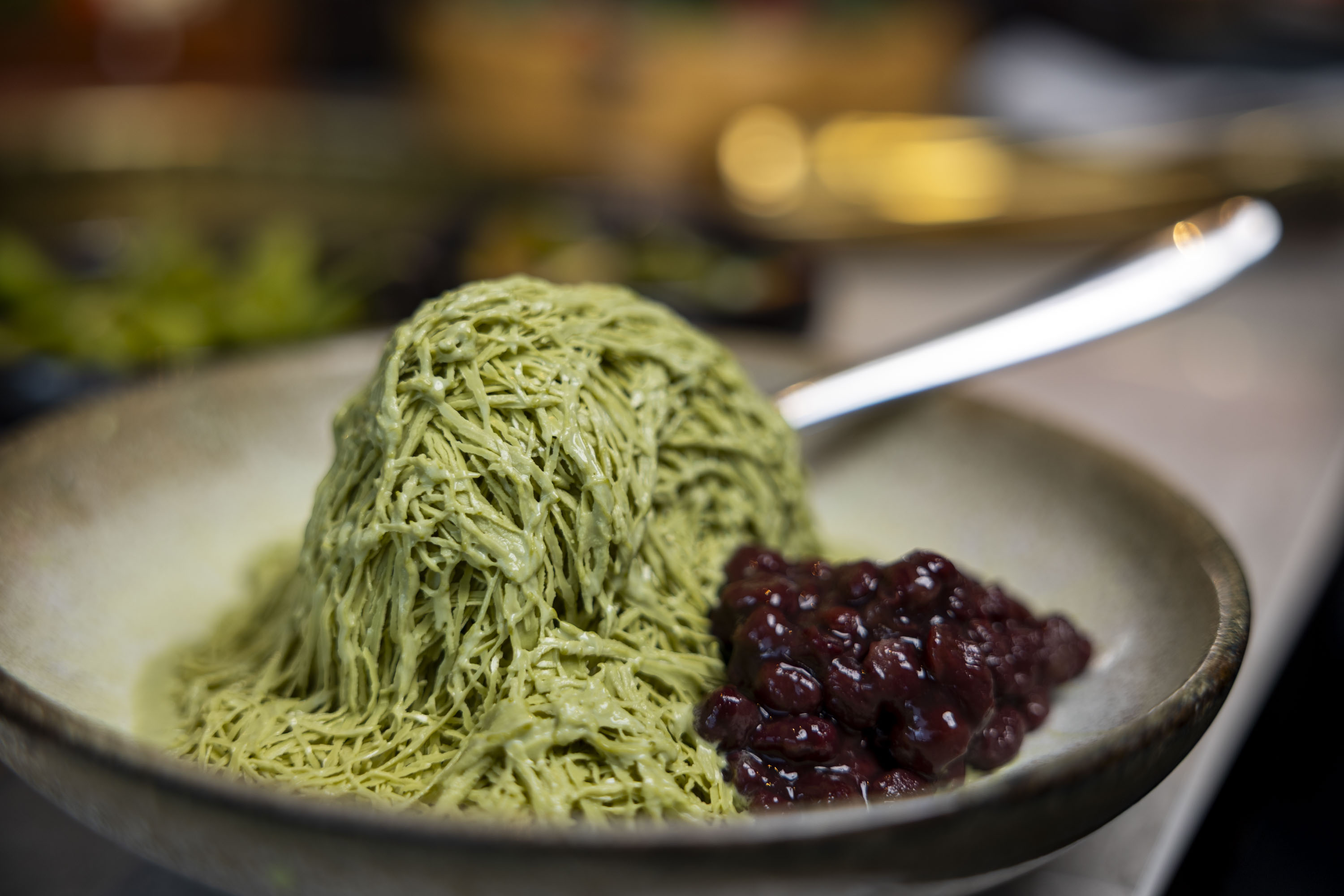
Once the dry-ice smoke settled, I needed a caffeine boost — only to find that Ogyu won’t even brew a simple pot of tea (lest you linger beyond your 90-minute welcome). At least there’s refreshing green tea-flavored ice cream extruded into strands of “matcha snow ice.” Li says they mix their own ice cream base and pair it with red beans to temper the sweetness. After a meal of such unbridled beefy excess, the final restrained note was perfect.
The matcha snow ice at Ogyu on Friday, Aug. 28, 2026, in Philadelphia.Tyger Williams / Staff Photographer
Lunch served 11:30 a.m. to 3 p.m. Monday through Friday; dinner 3 to 10 p.m. Monday through Thursday, until 11 p.m. Friday, and 11:30 a.m. to 11 p.m. Saturday and Sunday
All-you-can-eat packages through four tiers from $39 to $99.
Wheelchair accessible.
About 70% of the menu (including most meats) are gluten-free or can be modified.
Menu highlights: As much of the A5 Japanese Wagyu as your package allowed. Also, the Wagyu nigiri combos, the lamb chops, bone marrow soup, and matcha snow ice.
Drinks: The tropical cocktails are fine and on-theme but not memorable. There’s plenty of sake and Japanese whiskey for big spenders. Otherwise, stick with a draft of Sapporo or Dogfish Head 60 Minute IPA.
Lounge area at Ogyu Japanese BBQ, 60 Greenfield Ave., Ardmore, on May 21, 2026.Michael Klein / Staff
“You have to work the parents,” Michael Cadenazzi, assistant secretary of war for industrial base policy, told contractors assembled by Trump and U.S. Sen. Dave McCormick (R., Pa.) at the U.S. Army War College in Carlisle in July. “Mom and Dad need to understand their kid is succeeding,” even if they skip college for “AI-proof jobs” as “the wizards behind the warriors — shipfitters, welders, pipe fitters.”
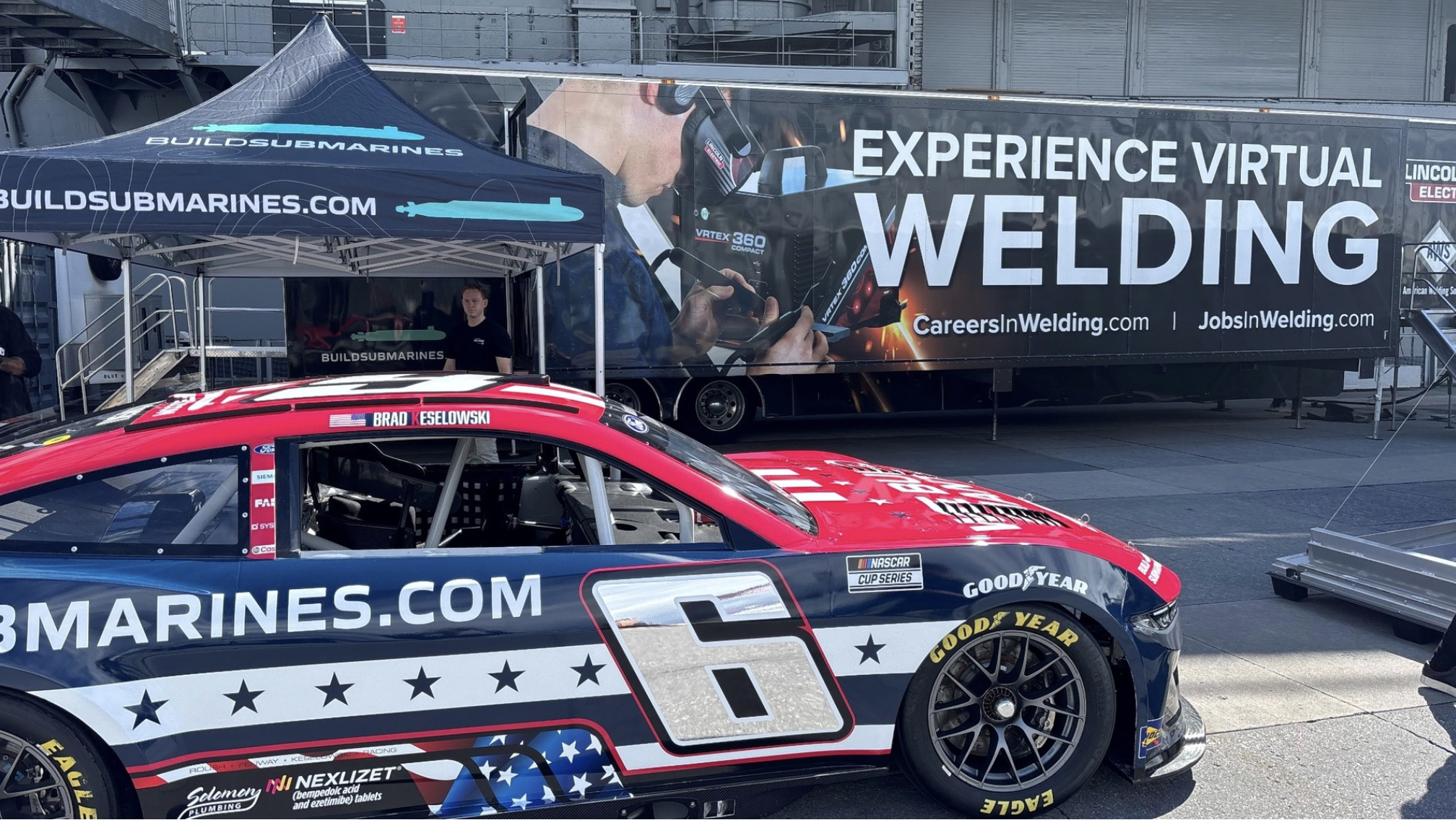
BuildSubmarines.com, a U.S. government-funded marketing effort, is trying to recruit workers for shipyards through public-transit and social-media ads. It also sponsors a Nascar team.U.S. Navy
If would-be college students prove a tough sell, there’s an even larger population of American workers who have what it takes to build ships but don’t want to, said Gary Kim, a Wharton School graduate student who has studied U.S., Chinese, Japanese, and Korean shipyards.
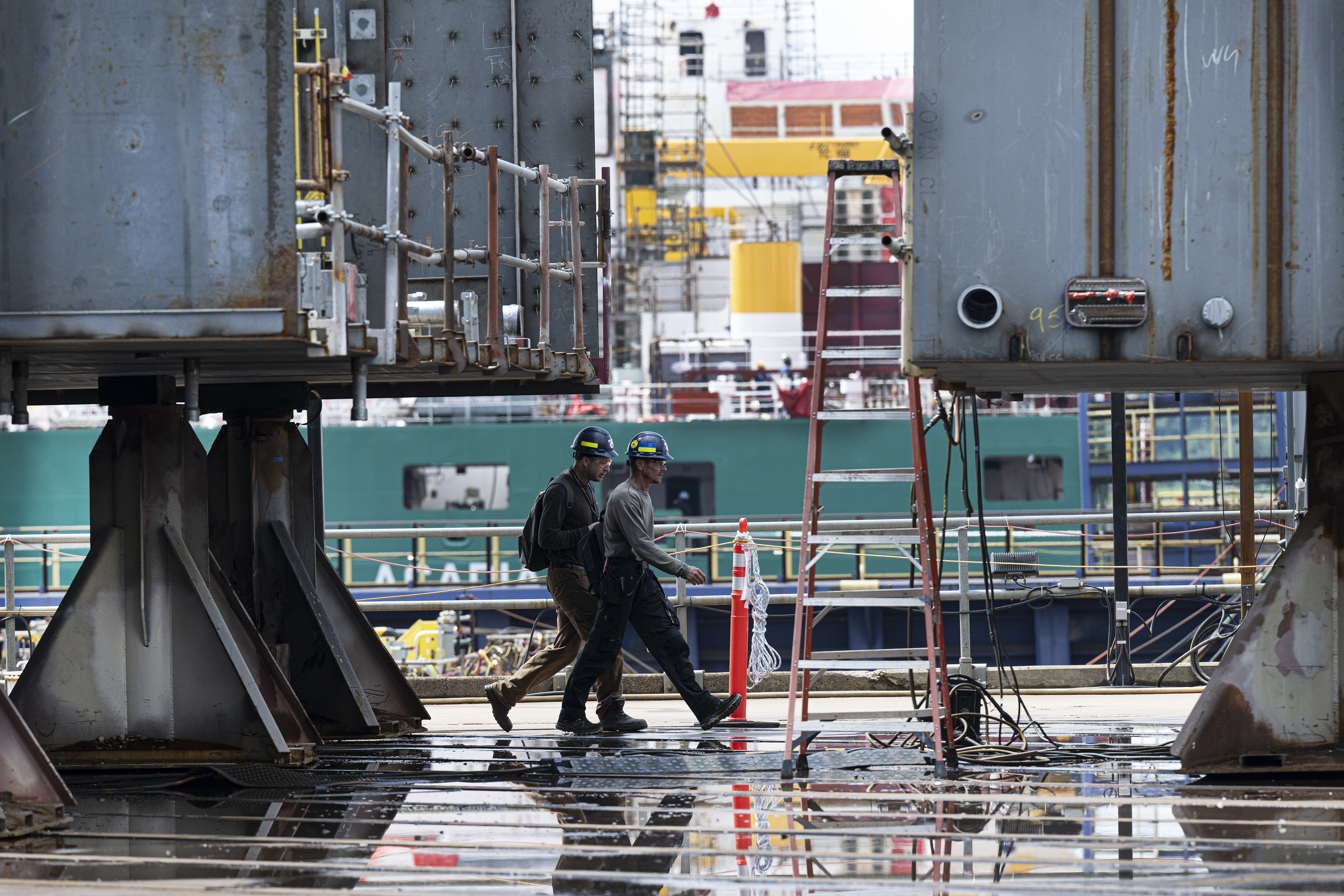
In essays for the U.S. Naval Institute and a series of papers titled The Brutal Realities of Building Ships, Kim, formerly a junior officer with U.S. Navy construction units in Asia and a Detroit manufacturing manager, has detailed rough conditions and skilled-labor shortages and suggested what shipyards have to do to realistically fill those jobs.
You’ve written that shipbuilding is heavy construction work — more dangerous than putting up buildings, less comfortable than modern factories, but not better paid.
Shipyards are great for everyone except the people who work there. The economic boom is paid for in blood.
The question we should be answering isn’t ‘Why can’t we convince 150,000 more kids to build ships?’ but ‘Why are the 30 million Americans already in the industrial workforce — construction, manufacturing, transportation — refusing shipyard jobs?’
Gary Kim in Philadelphia in August 2026. Kim is a Wharton School graduate student and naval reserve officer who has studied U.S., Chinese, Japanese, and Korean shipyards.Joseph N. DiStefano
Shipyard work is an agglomeration of tasks done in the wider industrial economy: welding, plumbing, truck driving. Why does most of that workforce turn away from building ships? Because it’s dark work in dangerous corners. And it doesn’t pay much.
Companies have invested a lot in improving factory conditions over the past 30 years. Manufacturing became gentler on your body.
But it’s also less unionized than before. In the new factories, adjusting for inflation, the pay is less. Factory workers and warehouse workers accept repetitive labor in air-conditioned facilities, in exchange for lower pay.
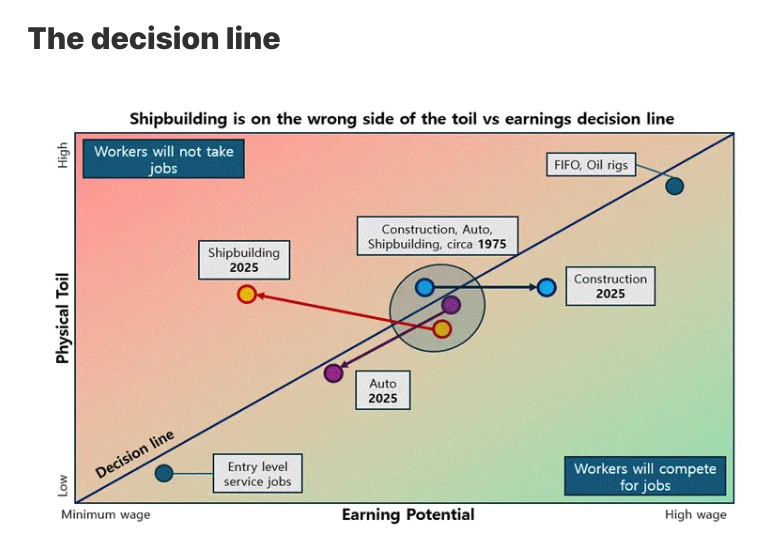
Construction is a rough trade, but it pays better. The economic rewards have increased. Not only there’s better pay, but it’s a way men and women can become entrepreneurial. Some become contractors. It’s just as hard as shipbuilding, but the payoff is better.
In shipbuilding, the pay in real terms has declined, but the workplace is only transforming recently with advanced robotics. Sometimes shipyard apprenticeship programs that teach industrial skills see [their graduates] leave for other industrial jobs.
Comparison of construction, shipbuilding, factory, energy, and entry-level service jobs, pay vs. relative danger, 1975-2025, from data compiled by Gary Kim and posted in his series “The Brutal Realities of Shipbuilding.”Gary Kim
Could Philadelphia double the ship workforces, as Hanwha Philly Shipyard and Rhoads Industries say they hope to do in the next few years?
Philly is going to struggle to recruit an industrial workforce. There is a rhyme and rhythm to an industrial city.
You have industrial accidents. You have elevated rates of chronic conditions years afterward.
Look at the reactions to the Canada wildfires. Detroit had the worst air quality in the world for a day, but nothing shut down. Everyone from the UAW director to the people in the city government knows the four or five closest auto plants each generate tens of millions of dollars in economic activity daily. Even if city health officials say it’s too much risk, nobody needs to be told what you are taking out of the city if you close.
Industrial work brings prosperity and less economic inequalities, with [personal and environmental] costs. Manufacturing requires higher risk and having your citizens accept that risk. You have that in the Gulf [home to the U.S. oil industry] and in the Mississippi Valley [where the U.S. steel industry has moved], and in Michigan [auto plants].
The economy here has been running on services and logistics for so long thatI don’t think Philadelphia any longer has that intestinal fortitude to accept what shipyards really are.
Do U.S. shippers really want more U.S. commercial ships at U.S. prices?
If the Jones Act [requiring U.S. ships for cargoes between U.S. ports, suspended by Trump] is waived indefinitely, companies are not going to need more ships built here.
And you need more orders. If a shipyard does not lay out several a ships a year, you can’t develop a career. You start laying a keel; you need a lot of welders. Then cutters. Then plumbers. Then there’s a surge of need for electricians. You can’t sustain that workforce unless you can stage crews across different jobs in the time it takes to build a ship.
Rhoads in Philadelphia fabricates nuclear-submarine modules for General Dynamics. Can this region eventually build subs?
Nuclear reactors, spaceships, and American submarines are the most stringent things to build in the world. If Philadelphia wants a more meaningful part of the submarine value chain, we need to build with spaceshiplike tolerances.
The Navy is putting out the correct messaging that the industrial base needs a diversity of jobs. An amazingly large part of the maritime industrial base doesn’t come from port cities but from inland operations. The most critical part of submarines is the gearboxes, built in California.
The government has ordered two missile and satellite tracking ships from Hanwha Philly Shipyard. Will Philadelphia-area defense contractors likely do the electronics?
[The Lockheed Martin-run Navy electronics facility in Moorestown] is the technology center of that industry. But I think the biggest reason Philadelphia landed the tracking ships here was that the yard needed a win. And backlogs in other shipyards are now 10 years and more.
Hanwha wants to buy Austal’s Alabama shipyards and submarine module works and its California ship repair facility. What does that leave for Philly Shipyard?
Hanwha wants to be a globally competitive defense prime contractor. Buying Austal would make Hanwha a solid #3 shipyard operator in the U.S., plus their megayard in Korea.
I expect the Austal yard would focus on smaller warships. Philly would focus on surface auxiliary vessels.
Most yards lose more money the more ships they build. Hanwha thinks they can do better, and I seriously hope they are right.
Editor’s note: This article wrongly identified the role of Philadelphia Gear in Navy ship construction. It has been updated.
Diving deep into the data to look at three trends that will help determine the Eagles’ fate in 2026 (with an assist from pro-football-reference.com and nflfastR).
23rd
That’s the average ranking from last season of the 14 pass defenses the Eagles will face in 2026. It is the softest schedule in the league by a wide, wide margin. The Eagles couldn’t have handpicked a better setup for Jalen Hurts and first-year offensive coordinator Sean Mannion. Right out of the gate, they’ll face a Commanders defense that finished tied for 30th in yards per pass attempt allowed, then a Titans defense that finished dead last. In fact, nine of their 14 opponents finished lower than 20th in yards per attempt.
A big factor in the Eagles’ good fortune is a division that includes two of the three worst pass defenses from a year ago in Dallas and Washington, plus a Giants team that finished in the bottom half of the league. The Cowboys also finished in the bottom 10 in sack rate while ranking 27th in their rate of passing plays of 20 or more yards, two categories in which the Eagles schedule also ranks among the most favorable.
The nondivision slate will likely play a little tougher than it looks on paper. The Rams (tied for 11th in YPA) rebuilt their secondary while adding Myles Garrett and Aaron Donald to the pass rush. The Colts could be better in their first full season of cornerbacks Charvarius Ward and midseason trade acquisition Sauce Gardner. That said, no team in the NFL has a more favorable schedule top to bottom. The Eagles’ opponents had an average rank of 22.9 in passing yards per game and 20.2 in yards per attempt allowed last season. Both are the highest in the NFL.
The sequencing is as beneficial as the actual opponents. The two toughest defenses on their schedule don’t come until Weeks 15 and 16, with just five days separating the Seahawks on Dec. 19 and the Texans on Christmas Eve. Both games are at home.
The early-season schedule is soft enough to counteract whatever learning curve that will exist for Hurts and the rest of the offense in Mannion’s scheme. The expectations should be high.
3.98
That was the average yards per carry of Eagles running backs when they had multiple tight ends on the field last season in neutral game script situations. That ranked in the bottom half of the league and well behind the teams that made it to their conference championships.
A sampling …
Running-back yards per carry in multi-tight-end sets (first and second down outside the 10-yard line)
Bills: 5.25 (4th in NFL)
Rams: 5.23 (5th)
Seahawks: 4.56 (9th)
Bears: 4.52 (10th)
Broncos: 4.44 (11th)
Patriots: 4.30 (17th)
Eagles: 3.98 (20th)
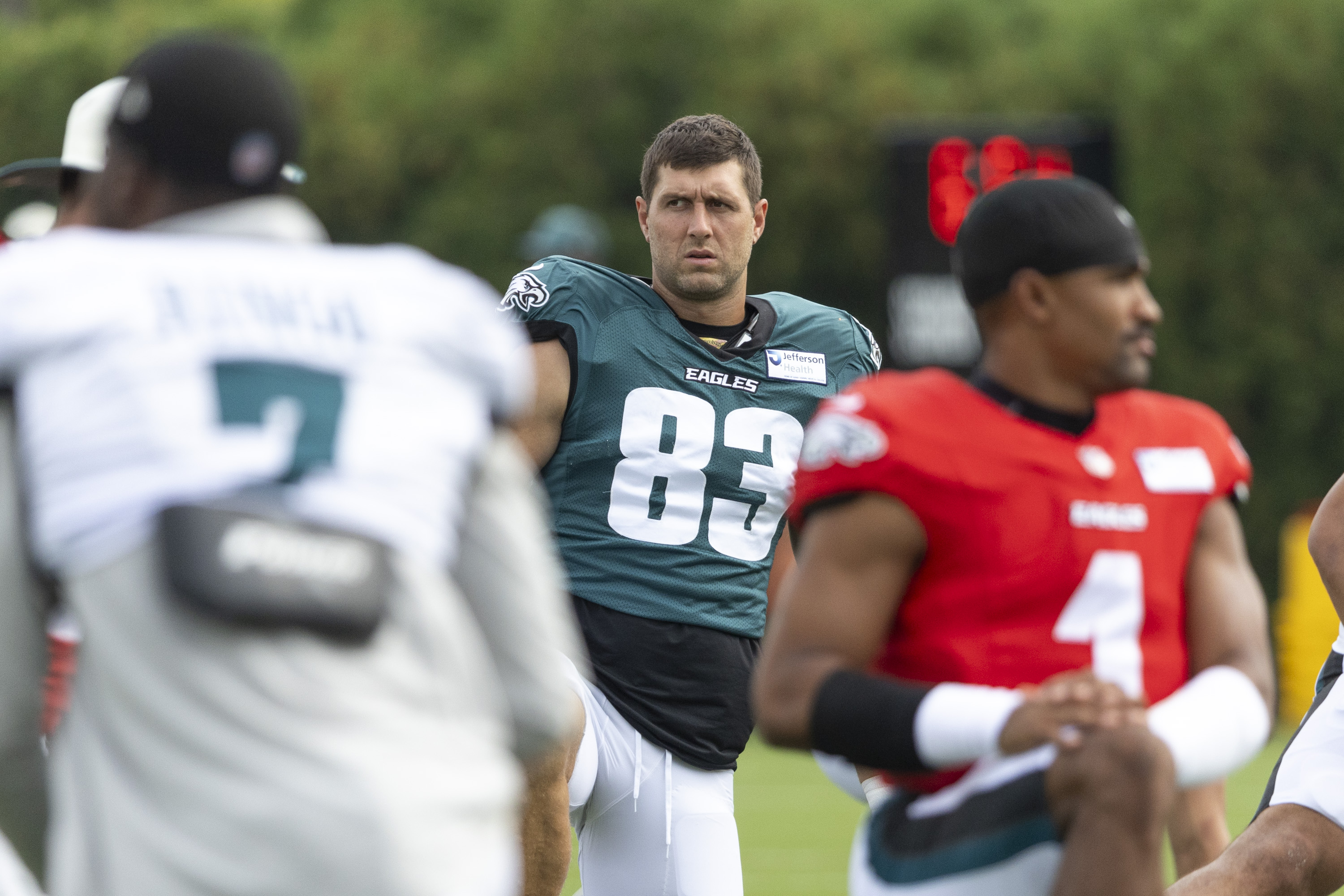
Johnny Mundt (center) was brought in to help the Eagles’ blocking in multiple tight end sets.Tyger Williams / Staff Photographer
Johnny Mundt didn’t get a ton of coverage in training camp. Blocking tight ends rarely do. But the Eagles signed the 31-year-old veteran for a reason. With Cameron Latu lost to waivers and Grant Calcaterra on injured reserve, the Eagles will enter the season without two of their top three tight ends from last year. Add to that the steep learning curve awaiting rookie second-round draft pick Eli Stowers and tight end is one of the bigger question marks on this 2026 roster.
The question is especially relevant given the leaguewide paradigm shift. Teams like the Rams and Seahawks have spent considerable resources accumulating talent at the tight end position in recent seasons. Seattle drafted AJ Barner and Elijah Arroyo in the fourth and second rounds in back-to-back seasons, while the Rams just added second-round pick Max Klare to a stable of tight ends that already included 2025 second-rounder Terrance Ferguson, high-priced free agent Colby Parkinson, 2023 fifth-rounder Davis Allen and veteran Tyler Higbee.
It remains to be seen how central a role multi-tight-end sets will have in Mannion’s offense. Last year, his Packers team finished in the top half of the league in both RB yards per carry and pass yards per attempt.
That’s how many quarterbacks rushed for 600-plus yards last season. The last time the NFL had a regular season where no quarterbacks reached 600 yards was 2017. At least two had done it in each of the previous five seasons.
Hurts’ rushing production has garnered plenty of attention, and deservedly so. The Eagles were a dramatically different offense in 2022 when he averaged 50.7 rushing yards per game compared to the one they’ve been over the last three seasons, when Hurts has averaged just 34.5 yards. It’s certainly reasonable to think that he can and should be well north of the 26.5 yards he averaged last season. But it isn’t all on him.
The natural trajectory of a dual-threat quarterback is to see a year-to-year decline in rushing production. It has happened to virtually every quarterback who has done the things Hurts did early in his career. The league adjusts quickly. It’s no coincidence that virtually every scrambling quarterback saw a significant decline in his rushing production last season.
New Eagles OC Sean Mannion could utilize Jalen Hurts’ running ability more in 2026.Yong Kim / Staff Photographer
Jayden Daniels missed 10 games, but in the seven games he played, he averaged just 39.7 yards, down from 52.4 the year before. Lamar Jackson’s 26.8 yards per game was barely half of the 52.6 he averaged over the two years prior. Bo Nix’s per-game rushing yardage fell by more than 20% (25.3 yards to 20.9). Drake Maye’s was down 18.5%. Josh Allen has averaged 32 yards per game over the last three seasons after averaging 46.2 yards per game in 2021 and 2022.
“I think [Hurts has] really operated through all facets of the offense comfortably,” Mannion said earlier this summer. “But the piece of him as an athlete in the running game is something unique. Those are elements we can lean into a little bit as well.”
Mannion should be thinking that way. But quarterbacks who have running ability will almost always see that running ability limited by defensive coordinators’ awareness of said running ability. The league has seen enough of it in recent years that it is getting better at stopping it.
Nurses at three Jefferson Health facilities want to unionize under the Pennsylvania Association of Staff Nurses and Allied Professionals, saying their effort addresses safety and quality-of-care concerns.
Nurses at Jefferson Bucks Hospital filed paperwork with the National Labor Relations Board for an election to form a new union chapter at the hospital that, if approved, would represent 170 staff members.
In a separate filing, nurses at Jefferson Health — Center One, a primary care and outpatient facility in Northeast Philadelphia, and Willowcrest, a skilled nursing center at Jefferson Einstein Philadelphia Hospital, are seeking membership in the existing nurses’ union at Jefferson Einstein Philadelphia. If approved, the move would add 43 nurses from Center One and Willowcrest to Einstein Nurses United.
The organization efforts would bring more than 200 Jefferson Health nurses into union chapters affiliated with PASNAP.
At a news conference outside Jefferson Bucks Hospital in Langhorne Tuesday, nurses said they wanted to organize because hospital administrators have not heeded their concerns that understaffing, heavy workloads, and insufficient resources could harm patients and lead to staff burnout.
“Jefferson Bucks nurses are being asked every day to do more with less and less, and it’s getting harder and harder to feel like our concerns are actually being heard,” Ashley Bupp, an emergency room nurse at Jefferson Bucks Hospital, said in a statement.
Jefferson Health accused PASNAP, which represents some 11,000 nurses and other healthcare professionals across Pennsylvania, of “promoting a narrative that serves its organizing efforts and ultimately, its own bottom line.”
“PASNAP has once again relied on a predictable campaign of misleading claims and public attacks designed to generate headlines rather than constructive solutions,” the nonprofit health system said in a statement. “Jefferson remains focused on supporting our nurses, caring for our patients, and meeting the healthcare needs of the communities we serve.”
Kiersten McCalmant, a nurse at Jefferson Bucks Hospital, said she and her colleagues were inspired to organize by the nurses at Jefferson Einstein Philadelphia Hospital.
Einstein Nurses United, which represents nearly 1,200 nurses, signed a new contract earlier this year that gave nurses raises, strengthened staffing, and included protections against forced shift rotations.
“We saw what a great contract they had already, and the fact that they were able to stand together and win improvements, and protect what they already had,” McCalmant said in a statement. “We thought, if nurses at Einstein can bargain with Jefferson and be successful, why can’t we?”
He homered, he flapped, he Euro’ed, he curtain called. It was quite the weekend for Ronald Acuña Jr., the Braves’ right fielder and newest Philly villain.
Acuña is a five-time All-Star, the 2023 National League MVP, and, in many respects, Atlanta’s version of Phillies superstar Bryce Harper, from his sense of style to his sense of swagger. That was amplified during the four-game series against the Braves that began Friday, with supremacy in the NL East at stake.
When he took the field Friday, Acuña was disliked, perhaps because of his general excellence while playing for a rival team, perhaps more so specifically stemming from a leisurely home-run trot in Philadelphia in 2021.
By the time he departed Philadelphia on Monday he had two homers, two wins, and a target on his back. He was hitting .308 with 20 homers and 64 RBIs in 97 career games vs. the Phillies, among his best numbers against any opponent. Further, he gloated in his success and mocked Phillies fans.
It. Was. Awesome.
Can’t wait for more.
The Phillies visit the Braves this weekend but they don’t host Atlanta again until next season unless the teams meet in the playoffs. We pray for that sort of theater. It has always been worth the price of admission.
Not since Phillies killers Mike Piazza and Chipper Jones have Phillies fans had such a legitimate object for their derision, and neither of them had the gall to taunt the most passionate fan base in sports.
For years, the Phillies lacked a great player from another team they could legitimately loathe. Acuña is now that guy.
Fresh meat
Acuña left town with seven hits, among them two doubles and, most significant, two homers.
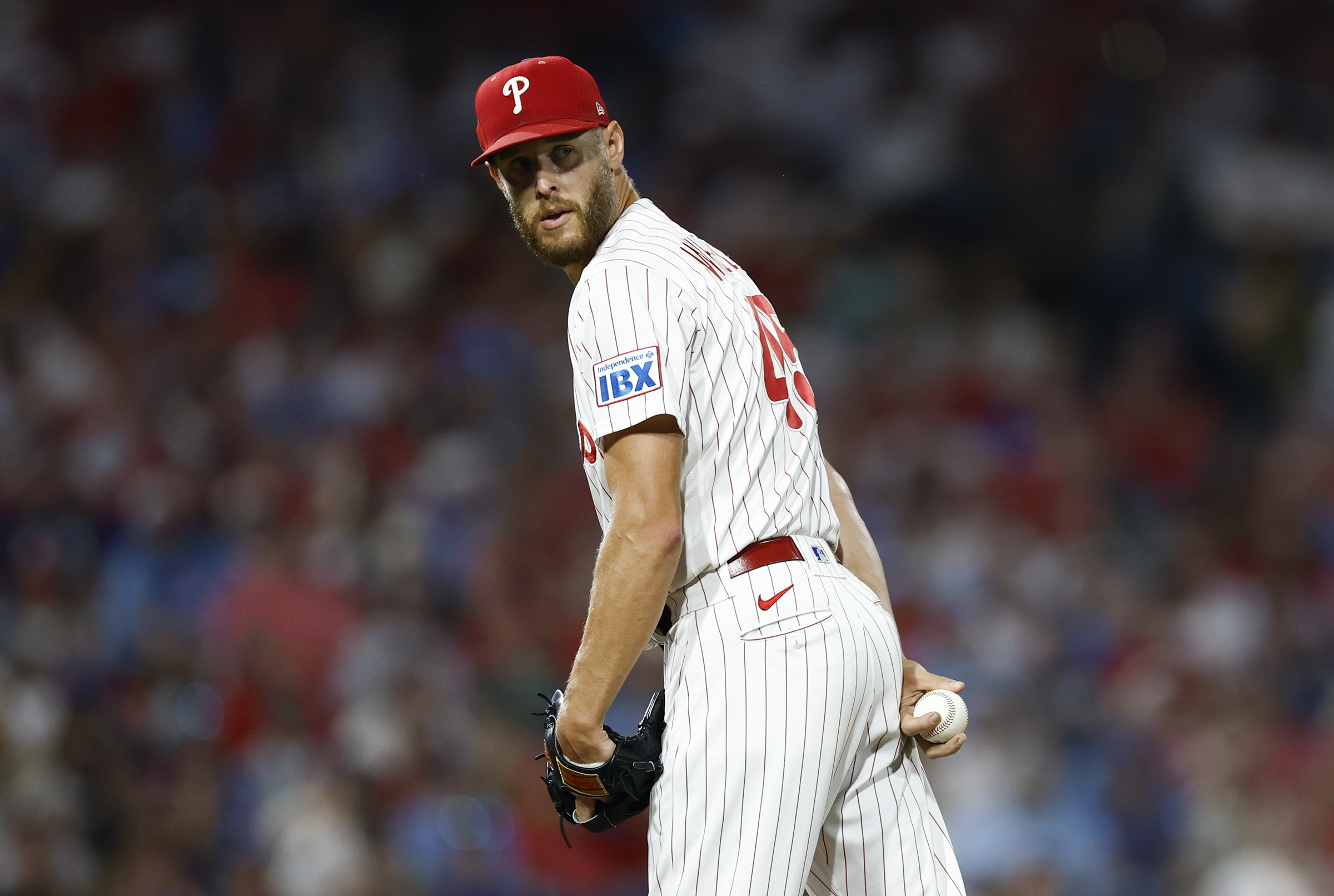
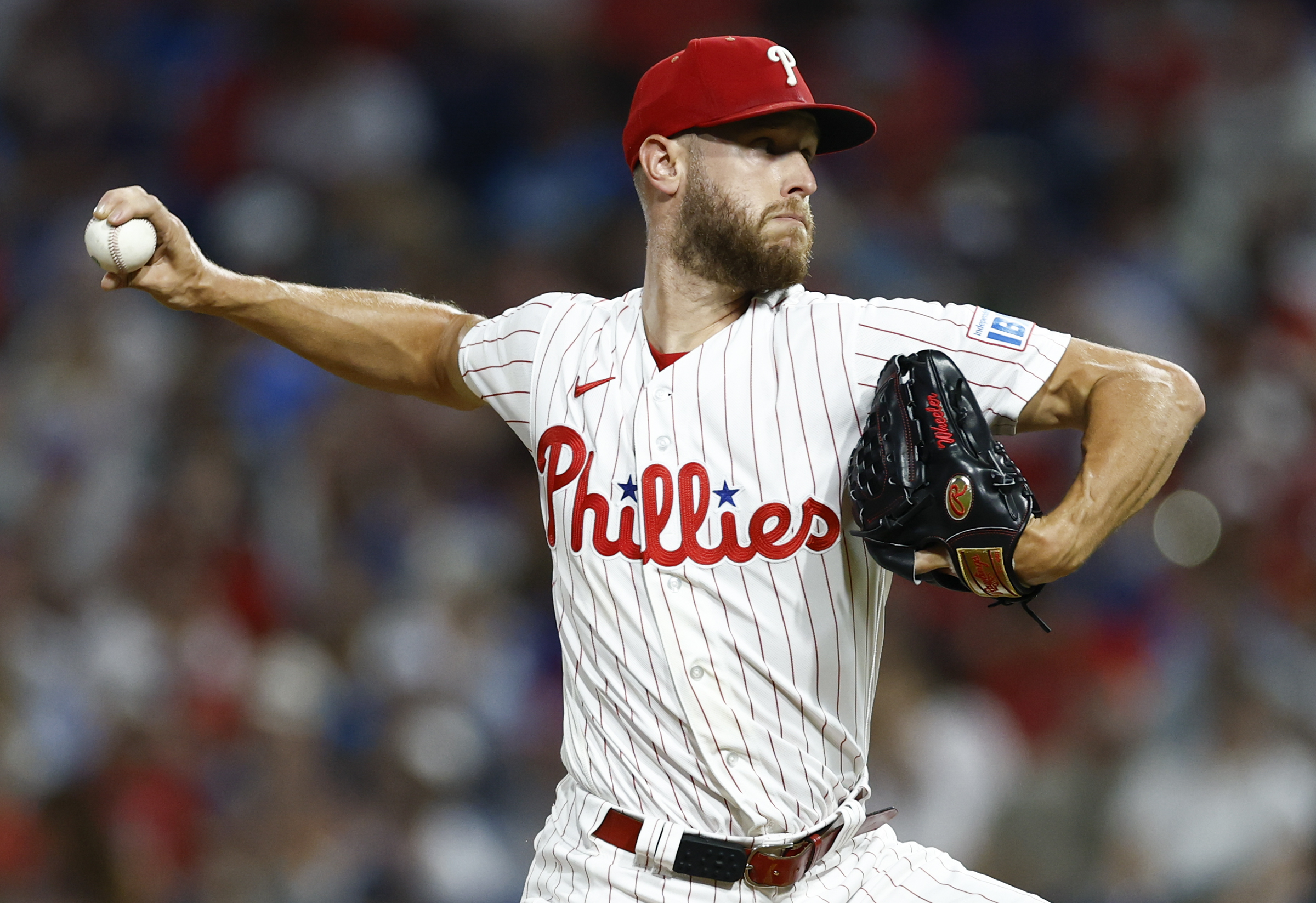
After the first homer, a 450-foot bomb off Zack Wheeler in the third inning Saturday, Acuña took his time getting around the bases. He’d cut the lead to 3-1, but he acted like he’d flipped the lead. He beat his chest at first base, flapped his arms at second base, Euro-stepped at third base, then sauntered home. That’s his home-run trot routine this season, but that didn’t make it any less deplorable. It took 29.51 seconds. Wheeler glared at him.
The second homer, a three-run blast off reliever Alex McFarlane on Sunday, was crushing. It tied the game, 4-4, in the eighth inning. Fully aware of the uproar his trot caused Saturday, Acuña poured it on Sunday. He stared into the Phillies’ dugout before beginning the journey. This time, he took 32.36 seconds to round the bases, his slowest of 16 trips this season and the third-slowest of his career 202 trips.
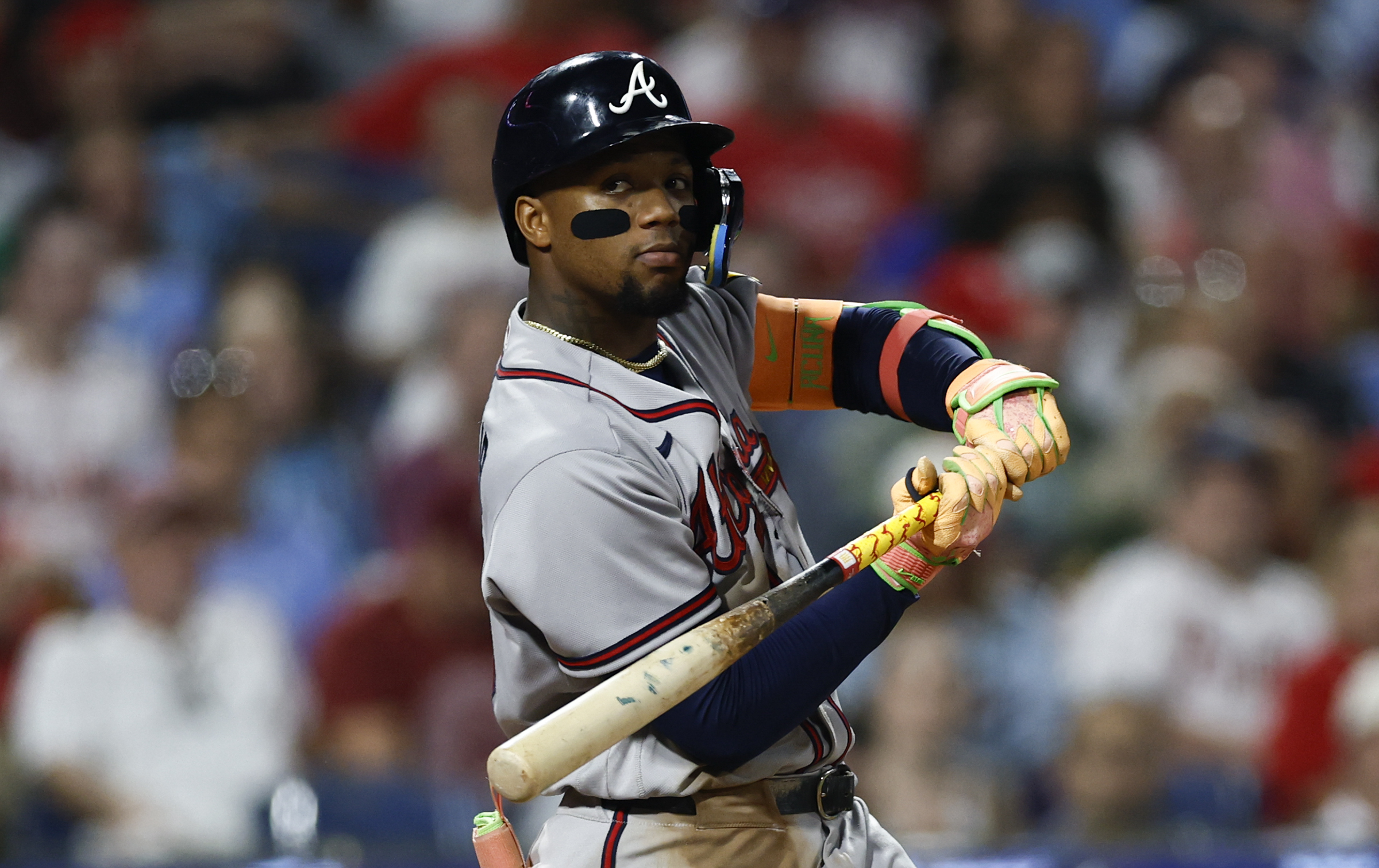
Ronald Acuña Jr. homered twice this weekend against the Phillies.Yong Kim / Staff Photographer
“I love the fans from Philly because they boo me,” Acuña told reporters Sunday.
Acuña also had three hits in Friday’s win.
The two Braves wins assured that the Phillies, who trailed them by four games entering the series, could not make up ground in the NL East. Monday, his one-out walk in the ninth inning put the tying run on first base in a 1-0 game. Phillies starter Jesús Luzardo stranded him, to the delight of the 41,820 at Citizens Bank Park. Tragedy averted.
Luzardo logged the first complete game of his career, a shutout no less, but he did so with disaster just 270 feet from home plate.
The fans were delighted by the feat two outs later … but just imagine their angst if Acuña started another comeback and the Phillies had blown a second straight win.
Acuña’s trot Sunday led to questions before Monday’s game regarding how to approach the outfielder, whose hot bat had become a real threat again, and whose cocky attitude had rankled traditionalists.
“What are you going to do? Are we going to knock him down three times and that’s going to make him uncomfortable?” Phillies interim manager Don Mattingly said before the game. “That’s just not part of the game now.”
Saturday night, Mattingly, who is 65, acknowledged that baseball had long since legislated intentionally hitting batters who showboated.
“Today’s game, you see it all the time,” Mattingly said. “It’s more commonplace. Let the kids play, right? We started that.”
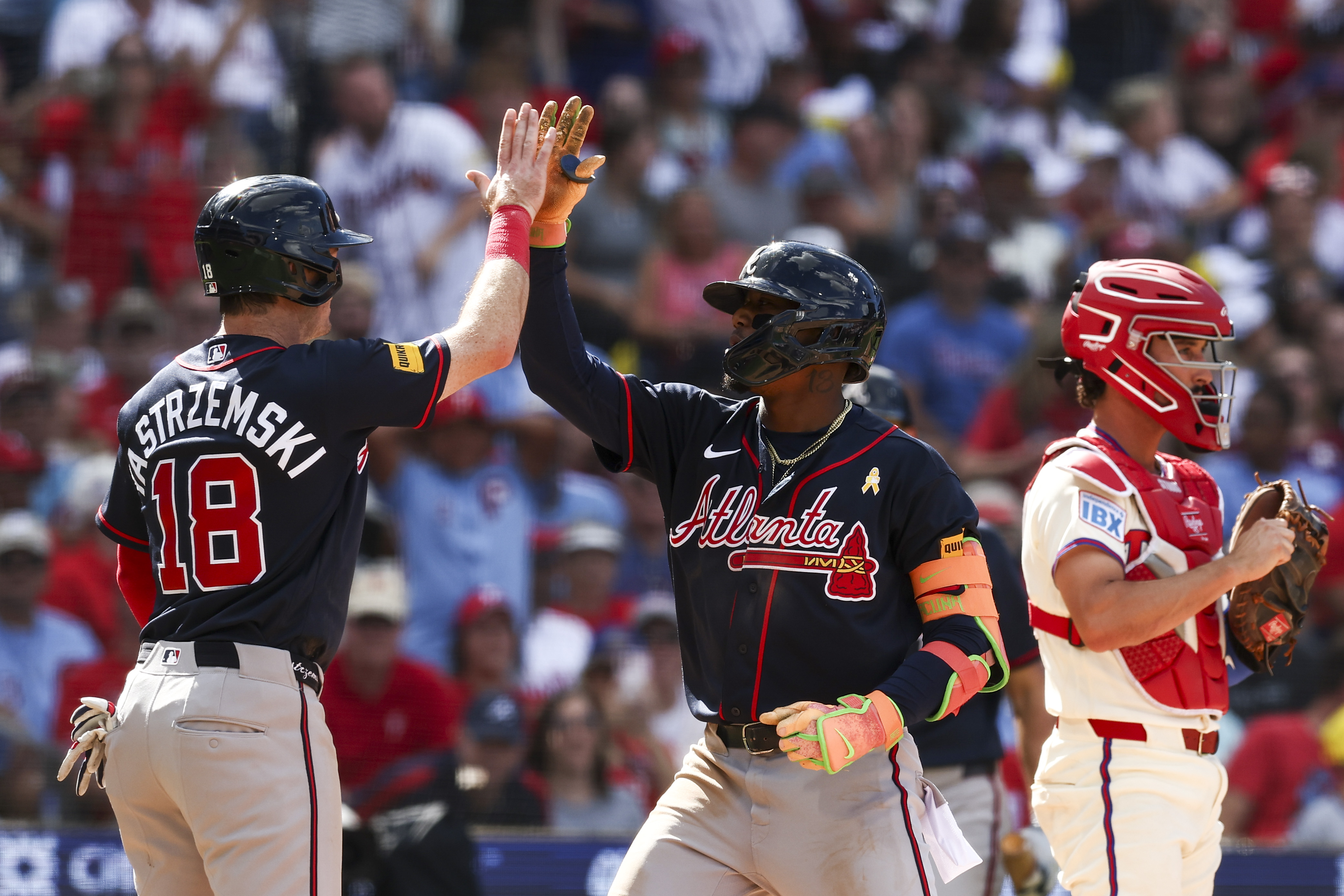
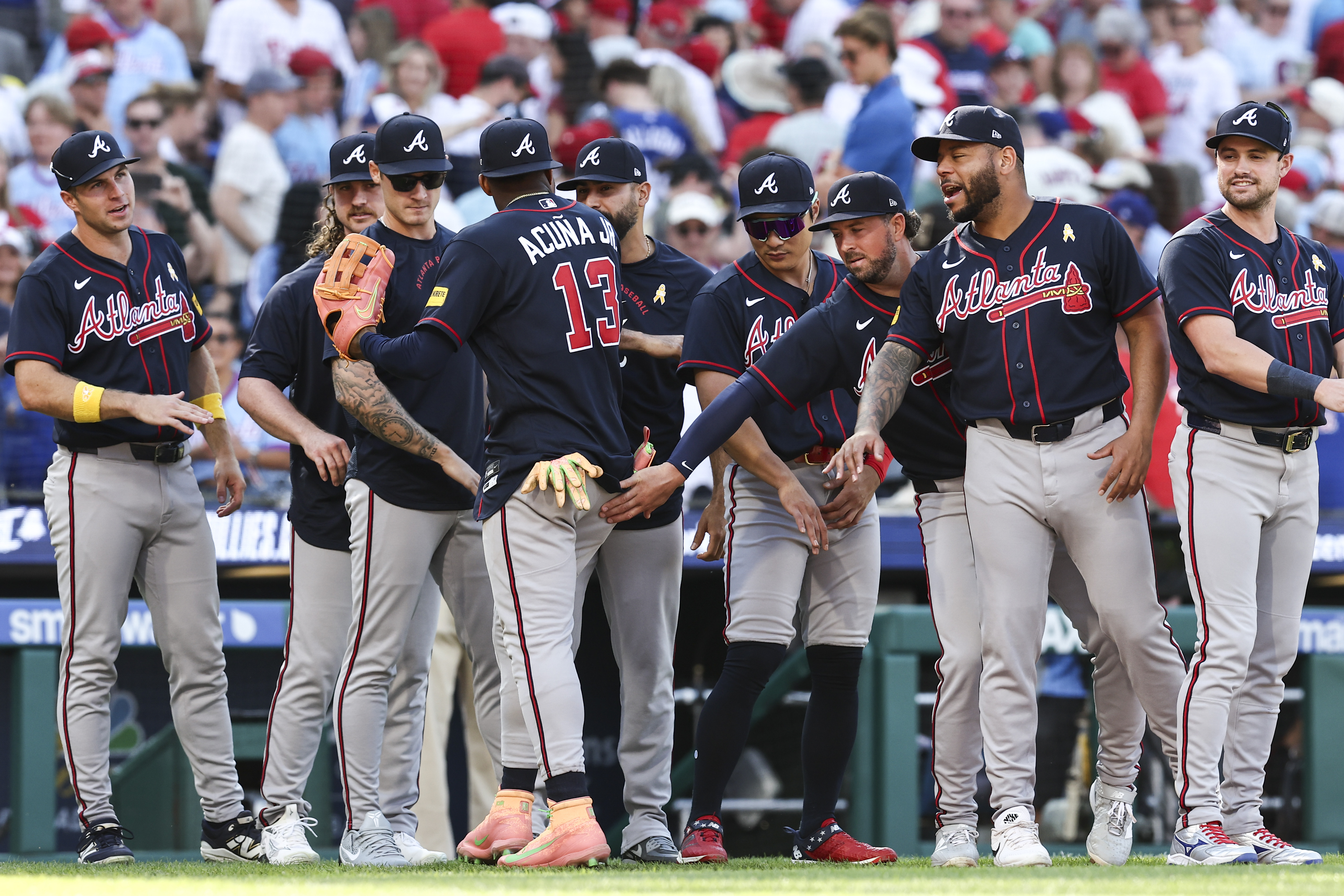
Ronald Acuña Jr. celebrates with teammates after helping the Braves beat the Phillies on Sunday.Monica Herndon / Staff Photographer
That doesn’t mean everyone likes it … especially star pitchers.
“Our guy just rounds the bases that hits 50 here,” said Wheeler.
That might be true of the guy in question, Kyle Schwarber. He homered Saturday, and brushed off questions about Acuña’s home-run trot. He homered again Monday, but pointedly declined to become part of the Acuña narrative. He followed his shot in the eighth with a brisk scoot around the bags, and afterward scoffed at the notion that his home-run trots were now being scrutinized.
It most definitely is not true of the more significant guy, Bryce Harper.
Philly’s own
Harper made an art of the home run celebration since he entered pro ball as a teenager; he got into trot-trouble in the minors.
And nobody milks the moment like the guy they call “The Showman.”
After Harper made a baserunning error in Game 2 of the 2023 NL Division Series, Braves second baseman Orlando Arcia mocked him. So, when Harper hit two homers in Game 3, Harper stared down Arcia each time. Later that fall, in Game 5 of the NL Championship Series in Arizona, after he homered, Harper stared down Michael Phelps, who lives in the area and had thrown out the first pitch. Phelps is a 23-time Olympic gold medalist as a swimmer — and Harper’s buddy.
In March, Harper took 35.63 seconds to round the bases after his 432-foot home run for Team USA against Venezuela in the World Baseball Classic. It took him 5 seconds to even leave the batter’s box. He literally threw his bat 30 feet back toward the Team USA dugout. At third base, he paused to salute. As Harper approached home plate, he screamed into the camera and patted the American flag on his left sleeve. It wasn’t even a big-league game and it wasn’t a game-winner. It just tied the game, 2-2, and Harper and the Americans eventually lost.
If Harper is the Prince of Petty, he doesn’t own the most obnoxious trot in Phillies history, but he was there for it. In 2019, after the Mets hit J.T. Realmuto in what appeared to be a retaliation plunking, Rhys Hoskins took 34.22 seconds to circumnavigate the diamond, at that point the longest trot since trots began to be measured, and it was utterly provocative. It was the ninth inning, and it made the score 6-0. Harper had a front-row seat for that one, because it was Harper that Hoskins drove in.
How about the moment that turbocharged the recent Phillies playoff runs?
That was Hoskins’ third-inning, three-run, bat-slam dinger in Game 3 of the 2022 NLDS against … you guessed it — the Braves. Acuña watched that one from right field at the Bank.
💥 BAT ̶F̶L̶I̶P̶ SLAM 💥
The Phillies take a 4-0 lead thanks to this three-run home run BOMB from Rhys Hoskins.
So, yeah, the Phillies and their fans live in glass houses when it comes to criticizing somebody else’s home-run behavior.
And then …
If the Phillies sought revenge, Acuña barely gave them the chance to knock him down Monday. He occupied the designated hitter spot (perhaps protected from Phillies fans in right field), batted first in the order, and swung at the first pitch in his first two at-bats.
Not much drama. Not much satisfaction. Satisfaction arrived in the sixth.
Luzardo struck out Acuña on three pitches, and it was the moment the fans had been waiting for. After he flailed at a sweeper and jogged back to the dugout, fans erupted in cheers and mocked his failure by flapping their arms.
Flapping their arms?
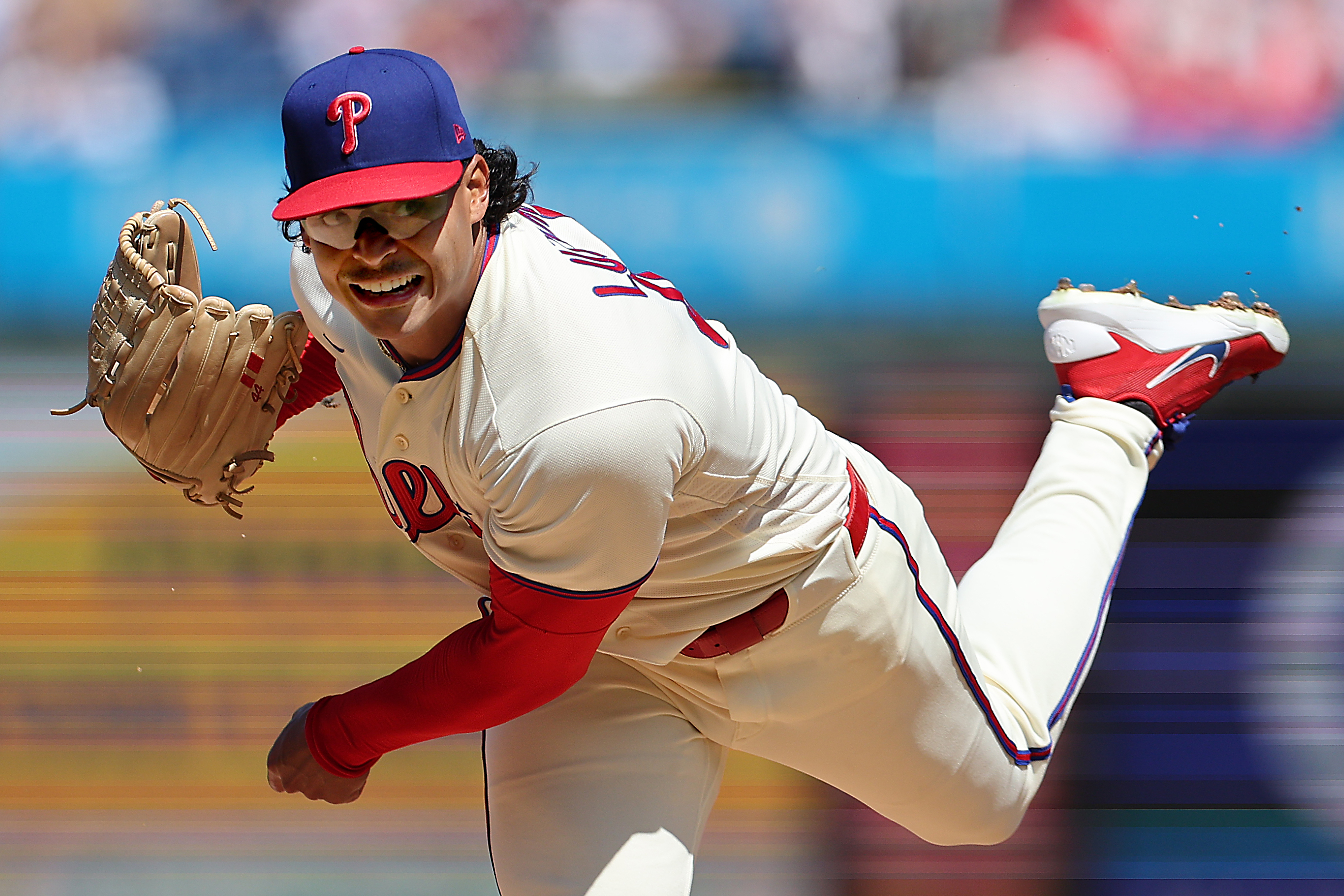
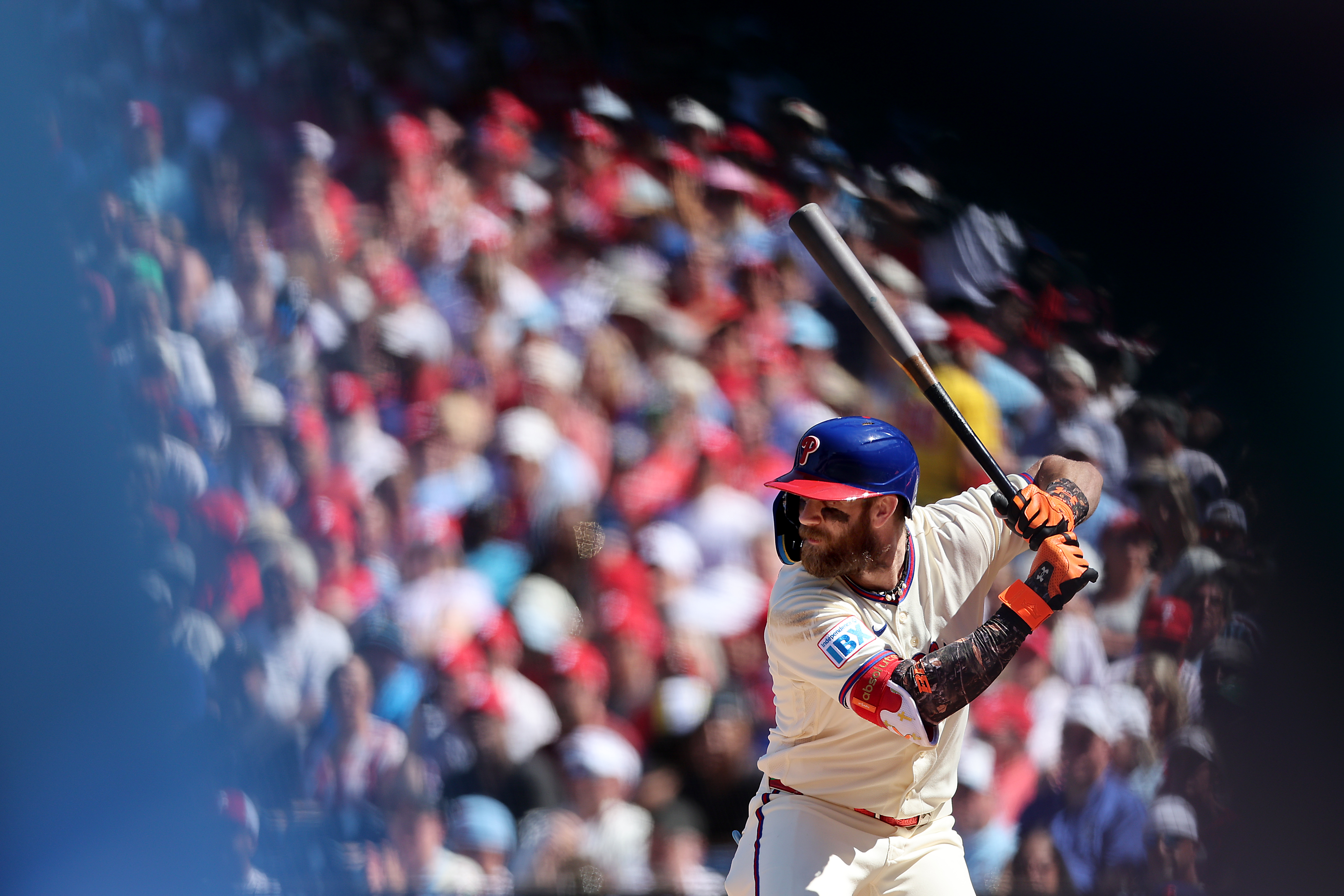
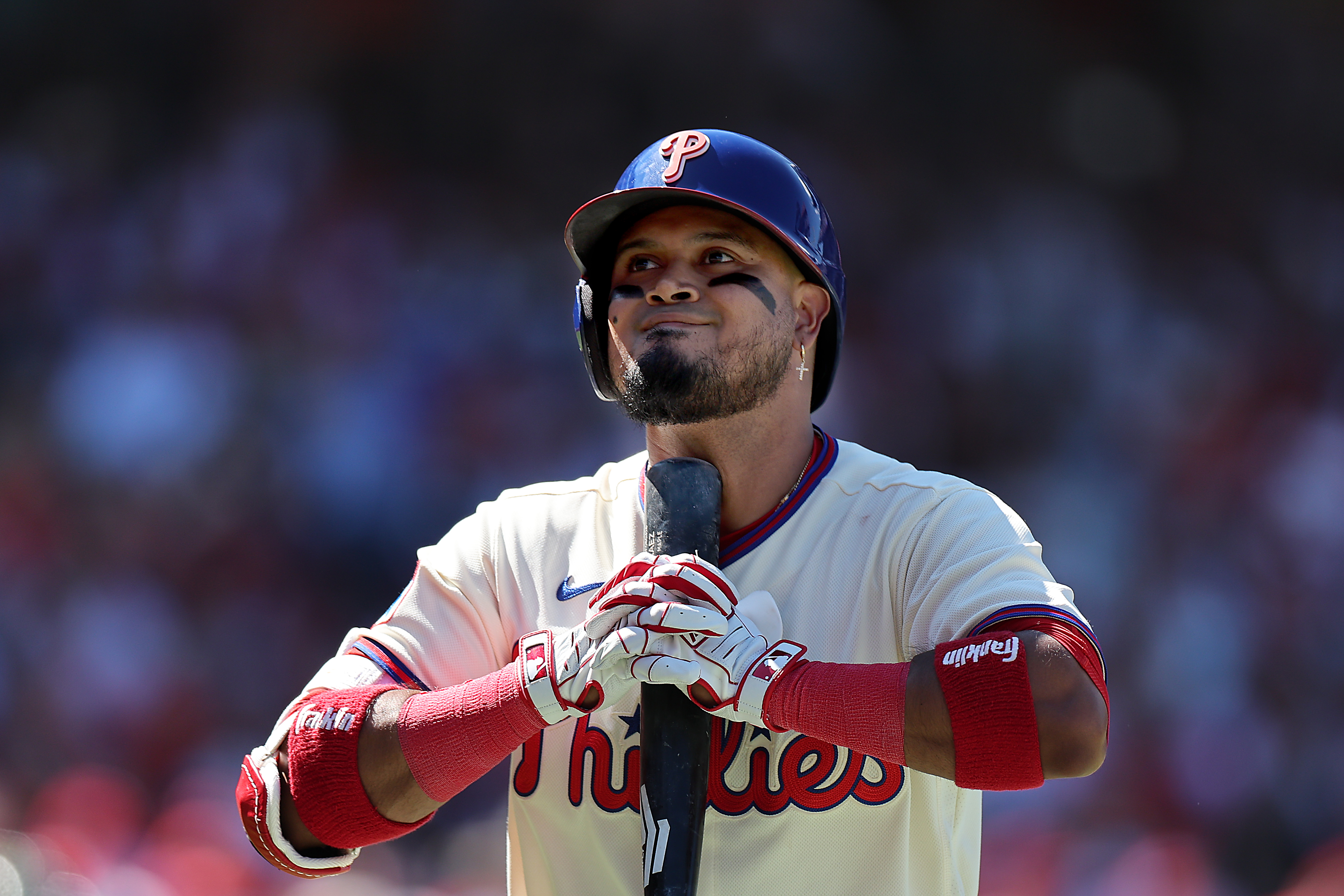
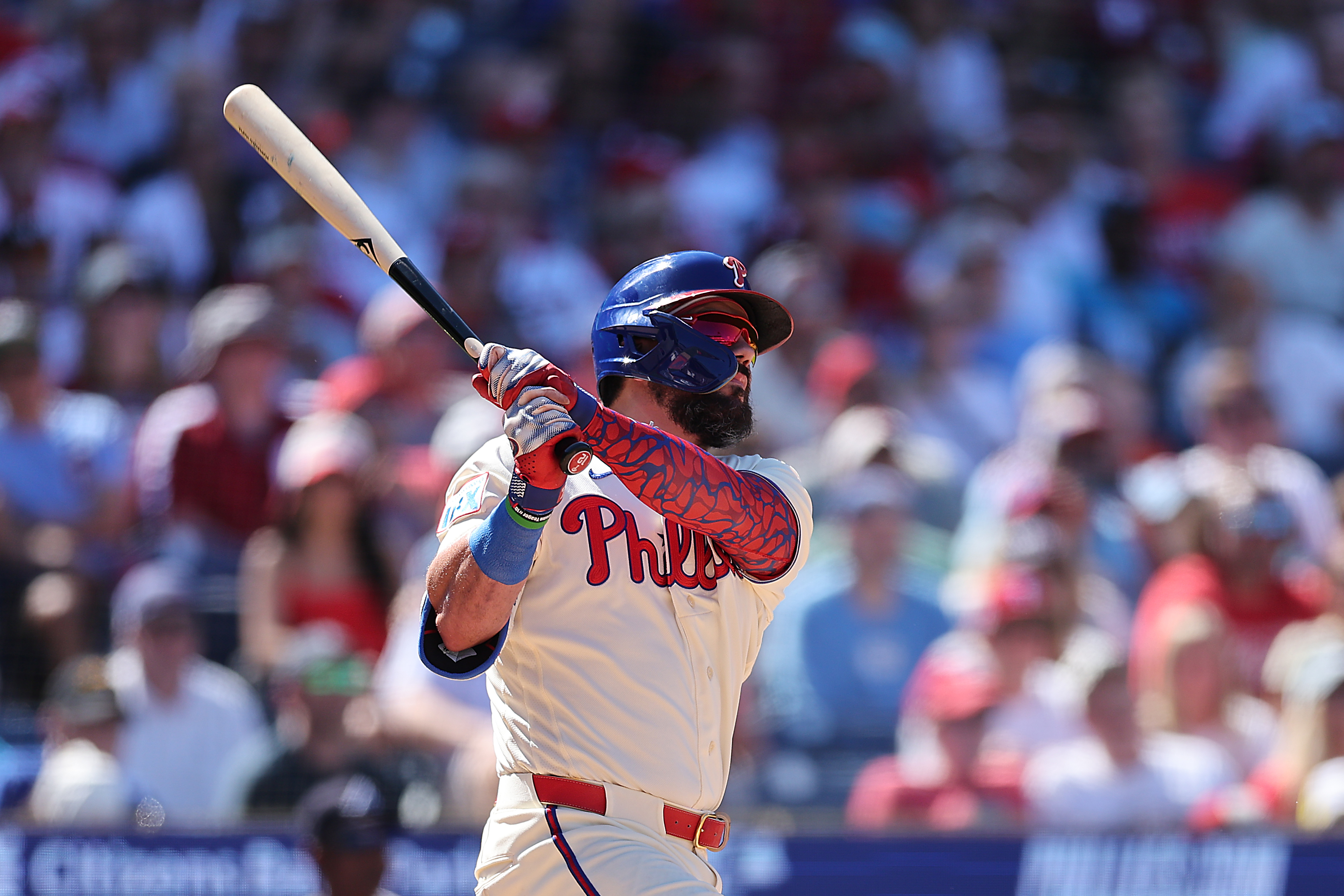
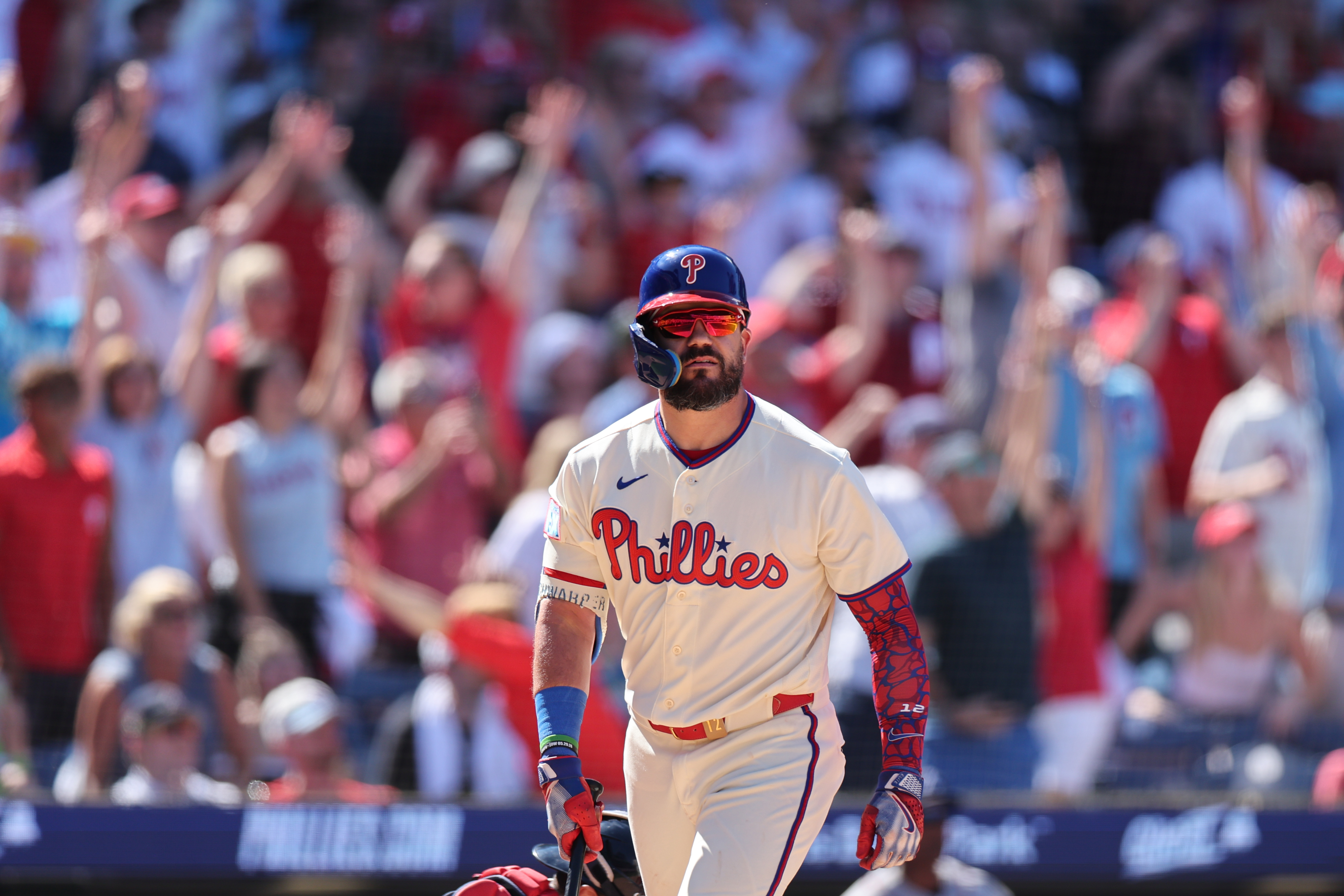
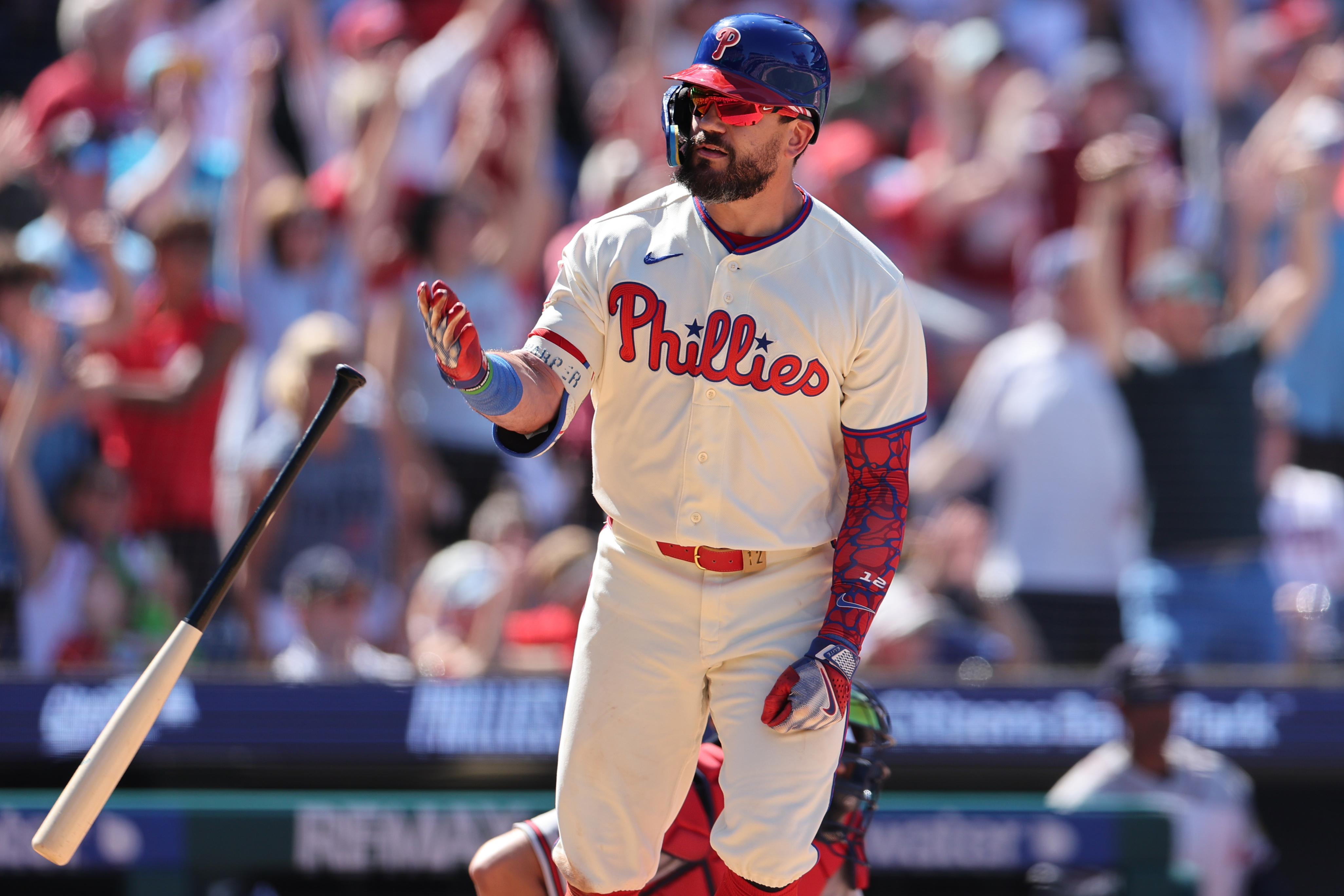
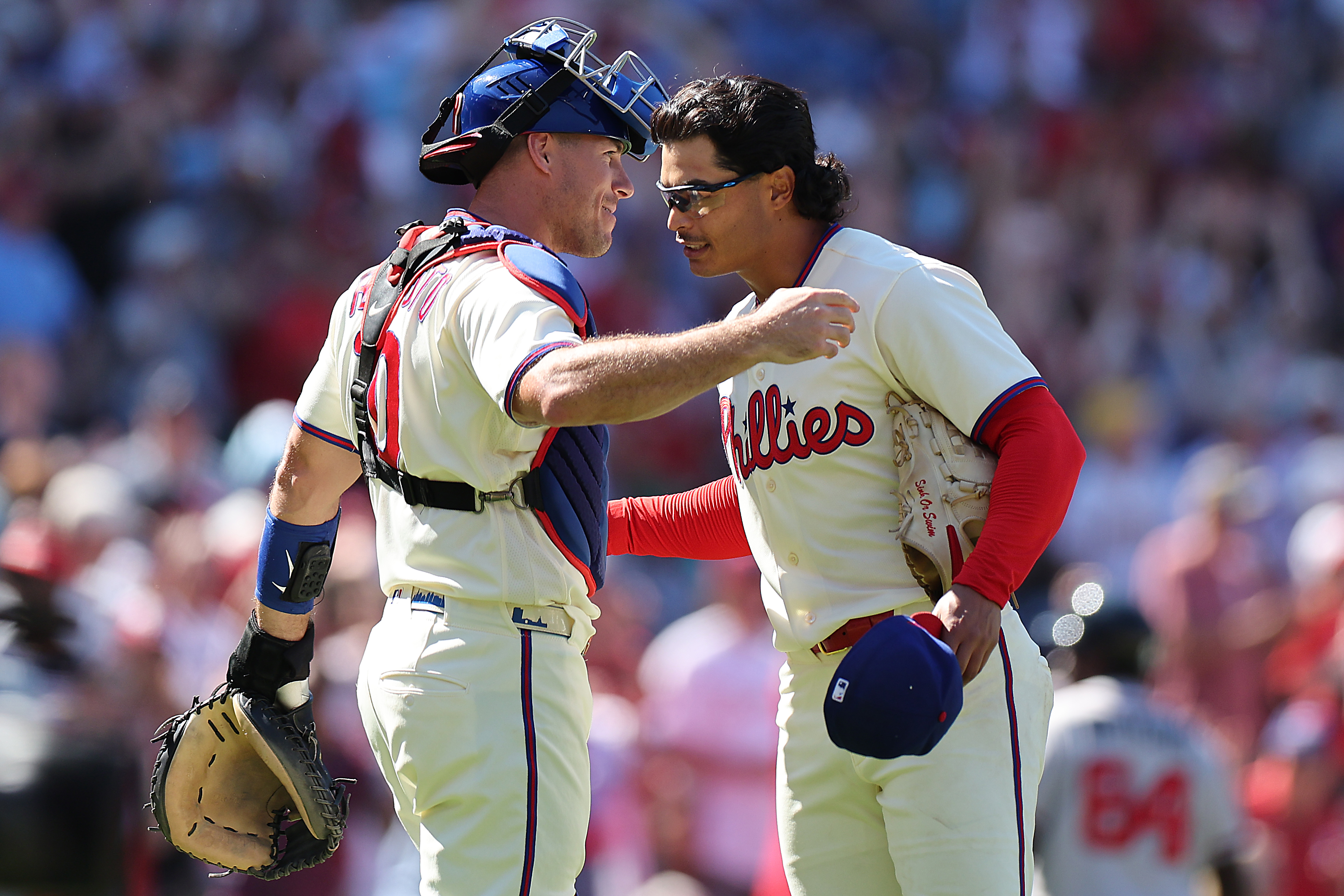
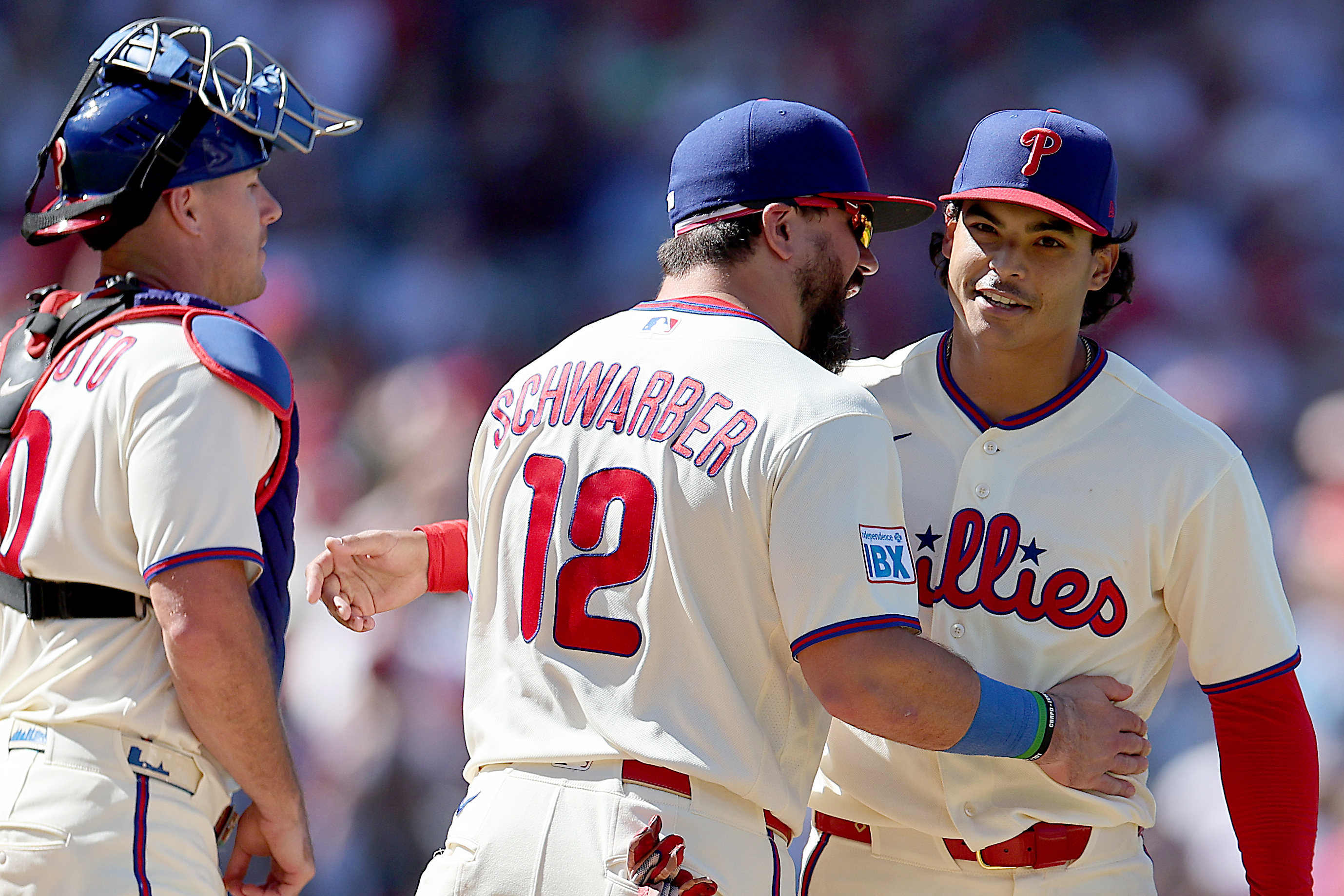
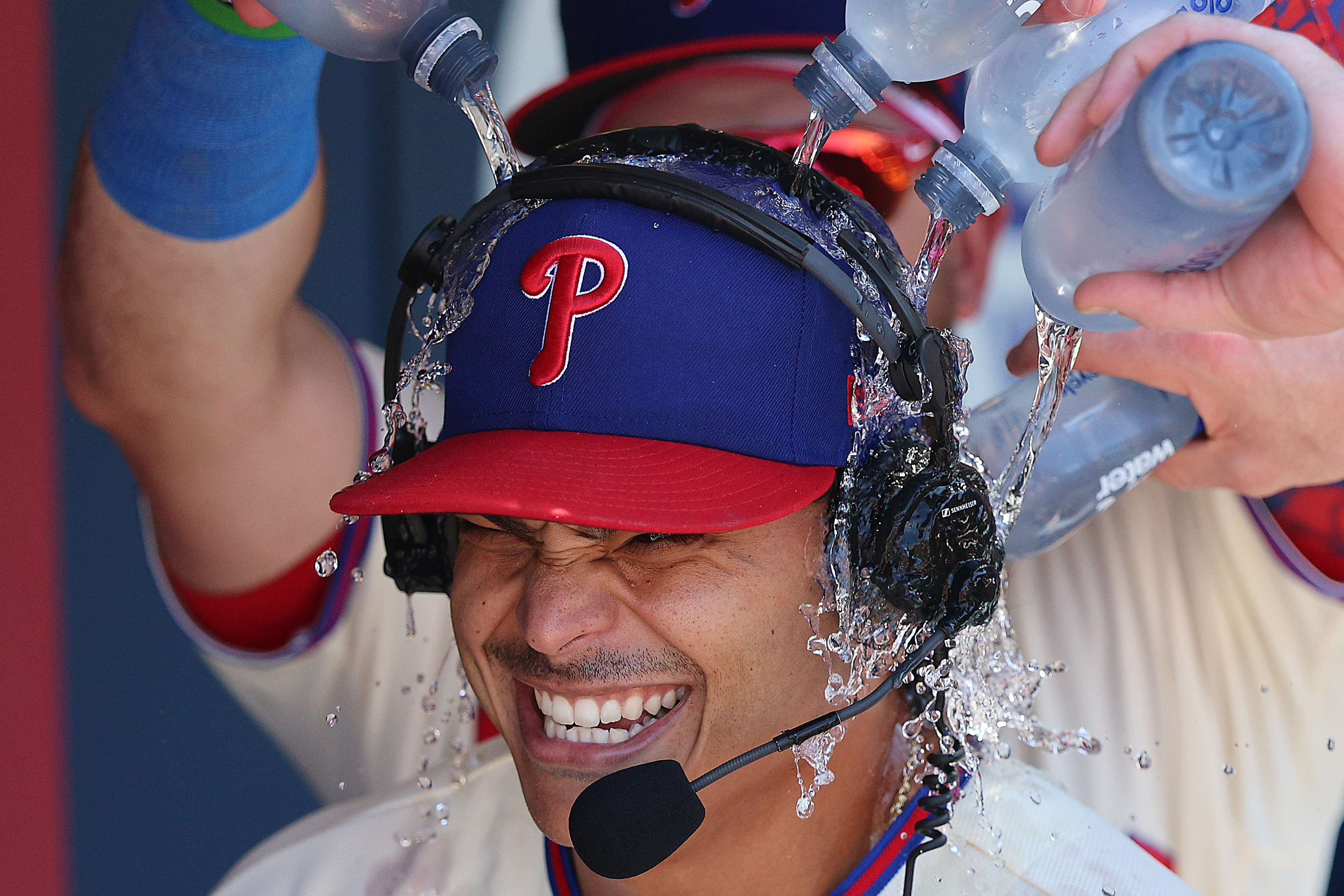
A fans tries to get the attention of Phillies Jonathan Bowlan before the game against the Atlanta Braves.David Maialetti / Staff PhotographerPhiladelphia Phillies starting pitcher Jesus Luzardo delivers a pitch in the first inning.David Maialetti / Staff PhotographerPhiladelphia Phillies Bryce Harper waits for a pitch against the Atlanta Braves.David Maialetti / Staff PhotographerPhiladelphia Phillies Luis Arraez reacts to flying out to end the sixth inning.David Maialetti / Staff PhotographerPhiladelphia Phillies starting pitcher Jesus Luzardo faces the Atlanta Braves.David Maialetti / Staff PhotographerPhiladelphia Phillies Kyle Schwarber hits a solo home run in the eighth inning.David Maialetti / Staff PhotographerPhiladelphia Phillies Kyle Schwarber watches his solo home run in the eighth inning.David Maialetti / Staff PhotographerPhiladelphia Phillies Kyle Schwarber flips his bat as he reacts to hitting a solo home run in the eighth inning.David Maialetti / Staff PhotographerPhiladelphia Phillies catcher J.T. Realmuto (left) and Philadelphia Phillies starting pitcher Jesus Luzardo (right) embrace after the game.David Maialetti / Staff PhotographerPhiladelphia Phillies Kyle Schwarber (center) and Philadelphia Phillies starting pitcher Jesus Luzardo (right) embrace after the game.David Maialetti / Staff PhotographerPhiladelphia Phillies starting pitcher Jesus Luzardo reacts as he is showered with water after finishing the game.David Maialetti / Staff Photographer
Yes.
Philly fans lost their minds Friday when Acuña flapped his arms as he rounded second base, assuming he was mocking their assumed Eagle fandom. Not so.
Most Braves players make that motion when they homer, just as most Phillies raise the index and pinky finger of their right hand as they round second during a home-run trot. Acuña also typically pantomimes a Euro-step basketball move near third base, and he did this, too — though in Philly this weekend, he performed the Euro less at Russell Westbrook speed than at Luka Dončić speed.
As for other historical villains in Phillies history, this sort of animosity is different from the hometown hatred directed at Scott Rolen, who declined a big contract extension and forced a trade to St. Louis, or Dick Allen, whose situation was complicated by racial tensions and his contrarian nature. J.D. Drew also is unique in that it was the Phillies’ hubris and obstinacy that cast him as spoiled and petulant in the late 1990s, when, in fact, he simply was greedy and anti-establishment.
Piazza, meanwhile, was a homegrown talent who represented the Dodgers’ and Mets’ superiority during a fallow Phillies era. His 44 home runs and 130 RBIs against the Phillies are the most he accrued against any team.
Similarly, Jones was the face of the best NL franchise for 20 years. He hit 49 homers against both the Phillies and the Mets, and his 1.036 OPS and .331 batting average are his best against any team that was in the NL his entire career (the Brewers switched in 1998).
For two decades, Jones was assaulted by chants of, “Laaaaaaa-ry,” his given name. For years, Piazza got straight-up boos. From now on, so will Acuña.
Before the Eagles won two Super Bowls, before they established themselves as a franchise that expects and is expected to compete for a championship every year, before they built the defense they have now — a defense that might be the best in the NFL this season — there was a moment that scarred everyone who cheered for or cared about them.
It has been 35 years since that fateful 1991 Week 1 game at Lambeau Field, since Randall Cunningham threw an incomplete pass on the first play of the second quarter, since a low and late hit from the Packers’ Bryce Paup crumpled Cunningham’s left knee and tore two ligaments in it. The Eagles won that day, 20-3, but everyone knew: Randall was done for the season, and so was his team.
The sadness and frustration in the aftermath of Cunningham’s injury weren’t just for him but for the hopes and dreams of a fan base that hadn’t celebrated a Super Bowl yet and believed it would. That’s how spectacular Cunningham could be. More importantly, that’s how good that Eagles’ defense — with Reggie White, Jerome Brown, Seth Joyner, Clyde Simmons, Wes Hopkins, et. al. — was. Sure enough, the next 15 games were one long exercise in what-might-have-been.
Coached by defensive coordinator Bud Carson, its members hand-picked by Buddy Ryan, that ‘91 unit remains mythological here. It led the NFL in rushing defense and passing defense. It turned every opposing quarterback into Napoleon Dynamite’s Uncle Rico. It ranked first in sacks, first in completion percentage (44.7%!), third in interceptions, and fifth in points allowed.
Now, will the 2026 Eagles’ defense be as great as the 1991 Eagles’?
No.
Will it have to be?
Probably not.
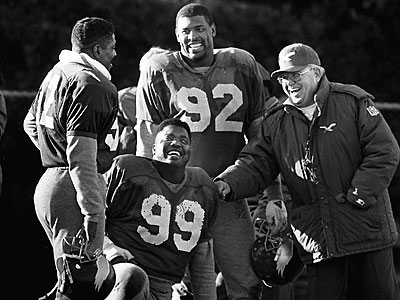
The Eagles’ 1991 defense led by Reggie White (92) and Jerome Brown (99) was forced to carry a team that trotted out a makeshift offense.
First things first: The comparison isn’t as crazy as it might first sound. Yes, that ‘91 defense had White, who was one of the five best defensive players in league history, and was overflowing with talent and ferocity at every level of its alignment: defensive line, linebackers, secondary. Plus, those guys could play with a brutality that, in the modern NFL, would result in most of them being suspended before halftime of the regular-season opener.
In Cunningham’s absence, Jim McMahon, Jeff Kemp, Pat Ryan, and Brad Goebel all were, at one time or another, the team’s No. 1 quarterback. The Eagles didn’t have a running back who rushed for more than 450 yards or a skill-position player with more than 950 receiving yards, and there could be no more compelling evidence for that defense’s dominance than the Eagles’ record that season. Somehow, they went 10-6.
Keep in mind, though: It was just two years ago, in Vic Fangio’s first season as their coordinator, that the Eagles had the league’s best defense for the first time since ‘91: first in total yardage, first in passing yardage, 10th in rushing yardage, second in points. That group saved its best performance of that season for the 40-22 romp over the Chiefs in Super Bowl LIX, when the Eagles intercepted Patrick Mahomes twice, sacked him six times, and didn’t allow Andy Reid’s offense to cross midfield until less than three minutes remained in the third quarter.
Zoom out, too, and consider the prime three years of that Ryan/Carson defense, 1990 through 1992, and these two seasons the Eagles have had under Fangio.
YEAR
POINTS
TOTAL YDS
PASS
RUSH
1990
12th
12th
25th
1st
1991
5th
1st
1st
1st
1992
6th
6th
12th
5th
2024
2nd
1st
1st
10th
2025
5th
13th
8th
22nd
Those comps aren’t far off, and they will be even closer if this season’s defense turns out to be better than 2024’s. It’s not a stretch to think it will be.
The secondary already has two All-Pros in Quinyon Mitchell and Cooper DeJean — both rookies in ‘24 — and now has an outside corner, in Riq Woolen, who has the size and talent to deliver the quality of coverage that Darius Slay provided. At linebacker, Zack Baun is also an All-Pro. Jihaad Campbell was a first-round pick. Based on those who have observed him during training camp, edge rusher Jalyx Hunt, who led the team in both sacks and interceptions last season, looks like the product of an experiment that spliced the genes of Hugh Douglas and Brian Dawkins. (An overstatement, to be sure, but Hunt is an intriguing and improving player.)
The defensive tackle rotation — Jalen Carter (with two healthy shoulders), Jordan Davis, and Moro Ojomo — is so deep and so good that it will create one-on-one matchups for anyone the Eagles line up on the outside. And if Jonathan Greenard and Nolan Smith Jr. are on the field, the Eagles should win those matchups most of the time.
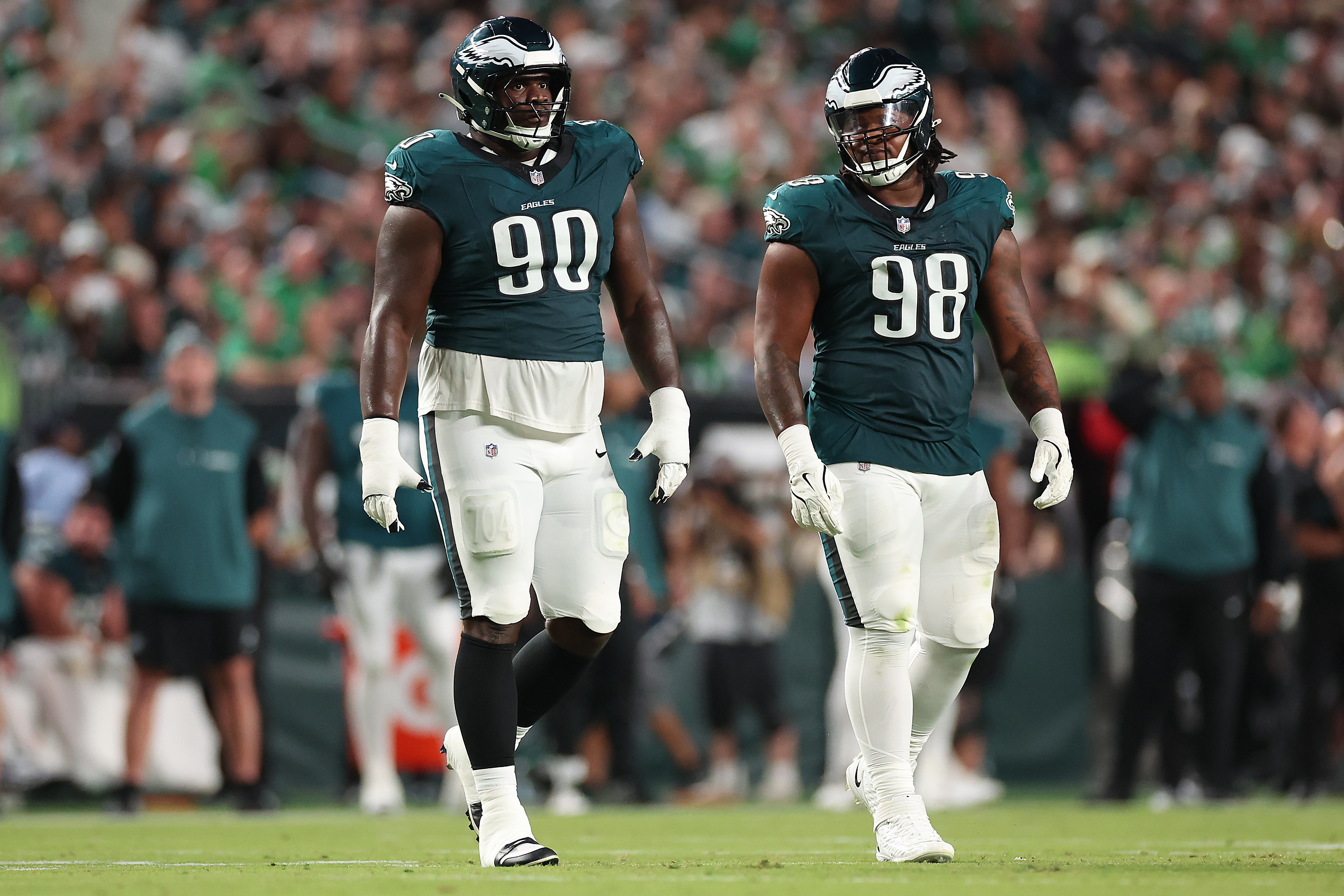
The greatness of this Eagles defense will begin in the trenches with Jordan Davis (90) and Jalen Carter (98). David Maialetti / Staff Photographer
The most important questions the Eagles have to answer this season don’t have much to do with their defense, if any of them have anything to do with the defense at all. They will have a new offensive coordinator, Sean Mannion, who will be calling plays in the NFL for the first time. Jalen Hurts will have to adjust to playing in a system with which he was completely unfamiliar, and there’s no way to know how he’ll fare in it. The offensive line should be better than it was last season, but it’s hard to see yet how the Eagles won’t be worse at wide receiver and tight end.
Again, questions, lots of them. And while we’re doing the then-vs-now thing, it is fitting that the quality of Hurts’ backups — Tanner McKee and Andy Dalton — have become a popular discussion topic and cause for concern. But none of those potential issues presents the same complications that arose all those years ago once Cunningham went down and stayed down.
Part of the reason that the ‘91 defense was so great was that it had to be just for that team to have a chance each week. Everyone remembers the “House of Pain” game, a 13-6 victory over the Houston Oilers on Monday Night Football in which Reggie & Co. pretty much left bodies strewn about the Astrodome, as if they’d fought off a zombie apocalypse. Not everyone remembers that the Eagles actually gained fewer yards that night (240) than the Oilers did (247). As awesome as that defense was, that offense was just about as bad.
This defense shouldn’t have to meet that same skyscraper-high standard. Barring a worst-case outcome, it will just have to be what it can be. It will just have to be great enough.
The worst thing the Phillies can possibly do is allow Sunday’s misfortune to impact their handling of Alex McFarlane.
They have 22 days until the NL wild-card round begins. They will play 19 games before then. They don’t have any other options.
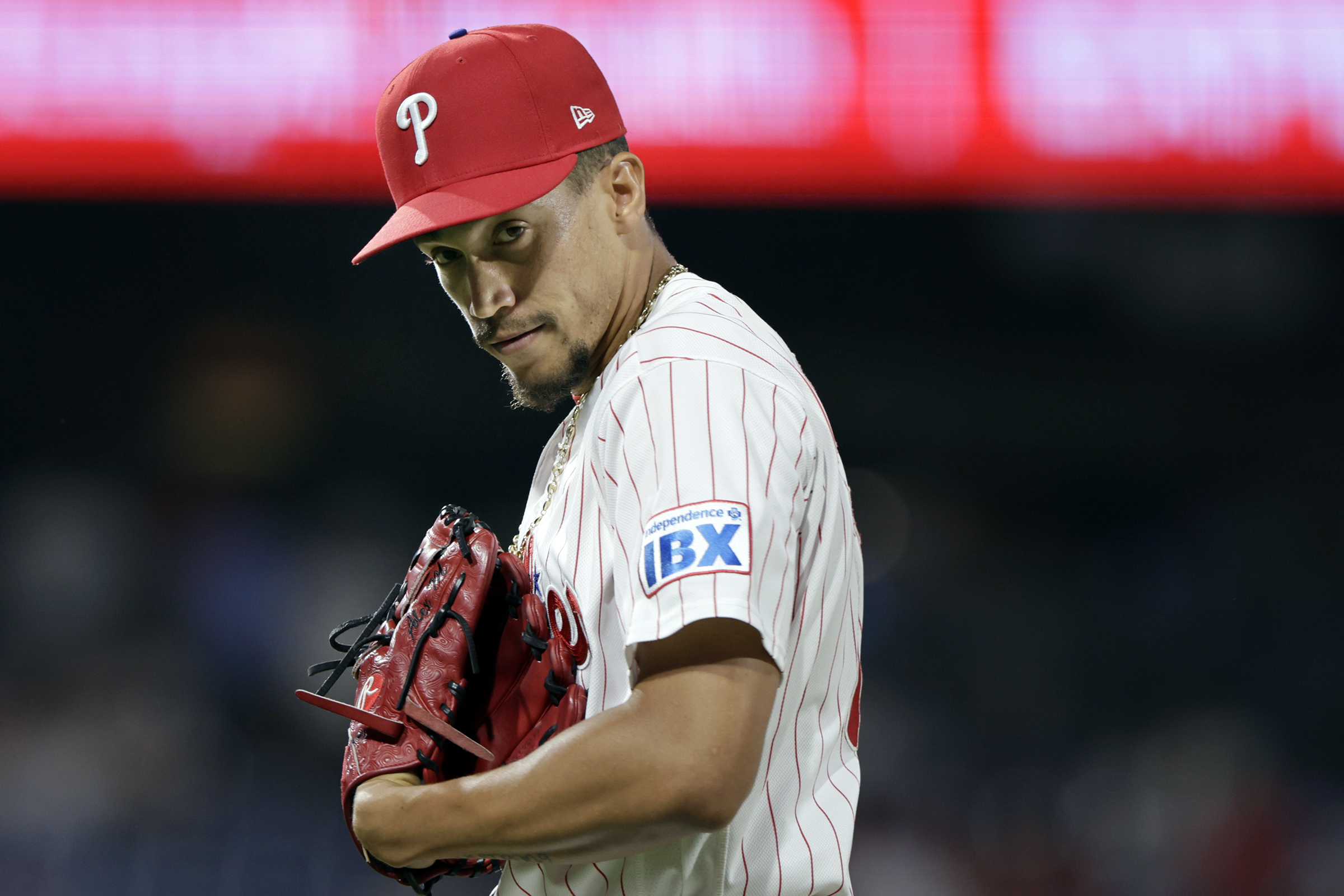
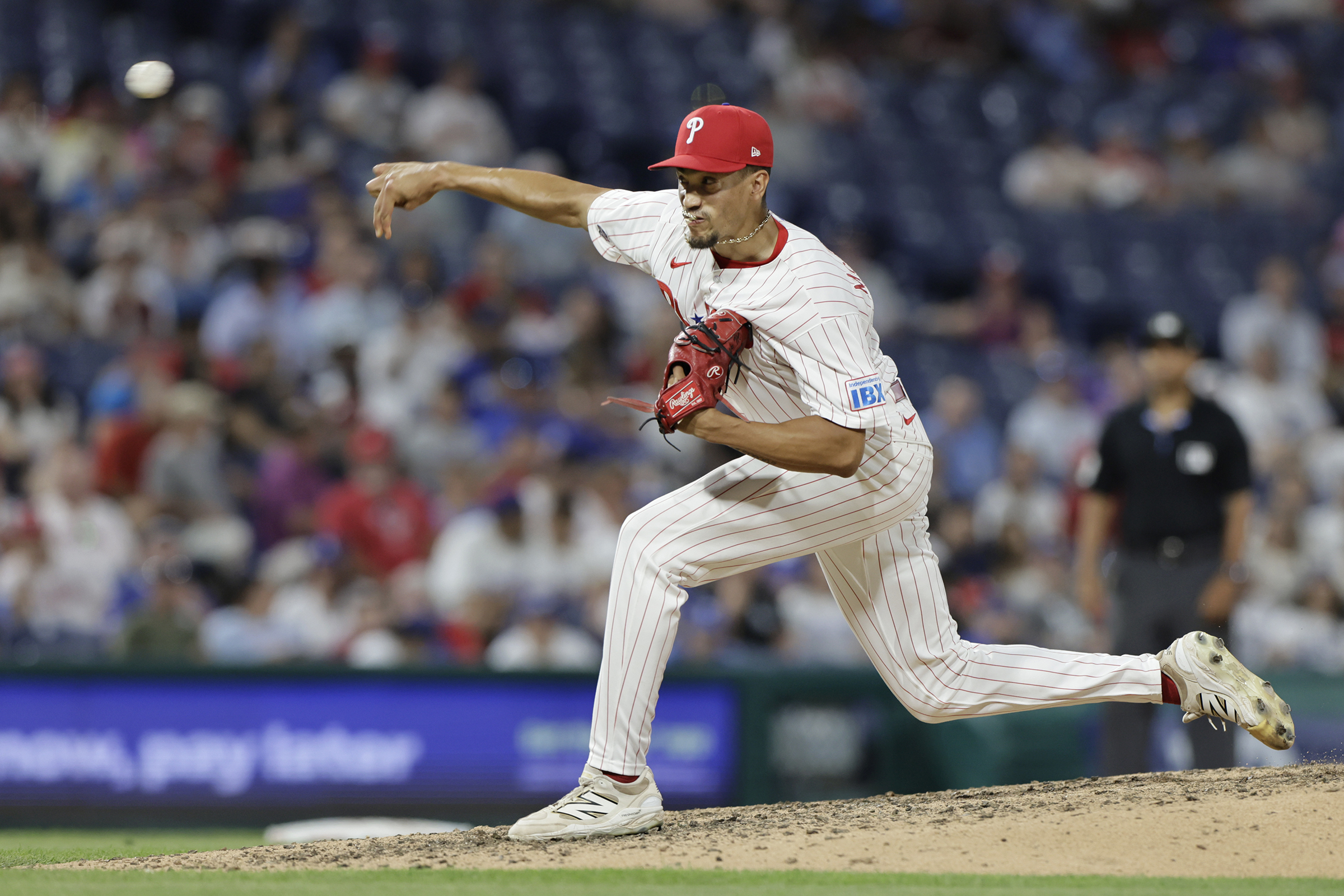
In a perfect world, McFarlane would not have been the guy standing on the mound in the eighth inning on Sunday afternoon. He would not have been the one watching his 100 mph, 1-2 fastball disappear over the outfield wall. He would not have suffered the indignity of seeing, feeling Ronald Acuña Jr. circle the bases, arms out like an airplane, dive bombing the Phillies’ division title hopes with a three-run home run that lifted the Braves to a 5-4 win.
It is not a perfect world. McFarlane was there for two reasons. One, he has the stuff to warrant it. Two, he is their best hope.
Nothing else matters at this point. With less than a month to go before the playoffs begin, the back of the Phillies bullpen consists of Jhoan Duran, Jonathan Bowlan, two guys who have shown that they can’t be trusted, and one guy who needs to show he can.
Interim manager Don Mattingly has no choice but to err on the side of the third guy. He needs to find out if McFarlane can handle the role.
There is a fun bit of trivia about McFarlane that is more quirky than significant but nevertheless provides an entry point to state the obvious: that the Phillies owe it to themselves, their clubhouse and their fans to spend the next month preparing McFarlane for a major postseason role.
Twelve games into his career, the 25-year-old reliever has already picked up four big-league wins. He ranks sixth on the team in that department — two behind Aaron Nola, one ahead of Andrew Painter — despite having yet to celebrate his first full month of major league service. McFarlane also has a page in the history books. Before him, no Phillies reliever had ever won four games in his first 11 appearances. In fact, over the last 60 years, only three had won two.
While McFarlane’s accomplishment is first and foremost a testament to the fluky nature of pitcher wins and their inadequacy as a measure of individual performance, deeper under the hood lies something real. It isn’t just his fastball that sits at 100 mph and has touched 102. By practically every measure of stuff and performance, McFarlane has been the second or third best arm in the Phillies bullpen since his promotion on Aug. 11. More importantly, those measures rank him among the upper tier of all big-league relievers, the realm in which legitimate postseason bullpens are constructed.
To get a sense of who a pitcher really is, you have to look at three different levels: the stuff itself, the hitters’ reaction to that stuff, and the end result. McFarlane has looked solid on all three levels.
Opposing hitters have swung and missed at 22% of Alex McFarlane’s pitches in the strike zone. Elizabeth Robertson / Staff Photographer
1. The stuff
You don’t need numbers to see true sizzle. But, good golly, McFarlane’s numbers are impressive. Only two relievers in the majors have bettered his 100.2 average fastball velocity since his promotion. One of those relievers is the Dodgers’ Edgardo Henriquez. The other is Jhoan Duran.
The spin rate on McFarlane’s fastball and slider both rank among the top 10 in the majors among relievers.
2. Hitters’ reactions
Herein lies the biggest reason to be excited about McFarlane. That paradox of pitching is that you have to avoid hard contact while also avoiding walks. Plenty of guys throw hard. The real question is whether a pitcher’s stuff is putting hitters at a disadvantage. Are they getting good swings? Are those swings producing good contact?
The pitchers who have the advantage are the ones who can throw their pitches in the strike zone and still miss a bat. McFarlane has done it better than almost everyone in the majors over the last month. Opposing hitters have swung and missed at 22% of his pitches in the strike zone. That ranks 12th among relievers, just ahead of the Astros’ Josh Hader.
Contact in the zone is an important metric for McFarlane, in particular. One legitimate question about his eventual bullpen ceiling is his lack of a pitch that hitters will consistently chase outside the zone. Take Duran, for example. This season, hitters have swung at 35% of his pitches outside the strike zone. Hader is at 41%. McFarlane’s chase rate is about 29%, which is middle of the pack among relievers. His slider has played quite well overall, generating a 50% whiff rate on swings. But hitters have been laying off roughly two of every three pitchers outside the zone. All of this is per Fangraphs’ pitch split data.
3. The results
You can get results without having stuff, and you can have stuff without getting results. But the most sustainable bullpen arms generally do both. That’s what McFarlane has done in his limited sample of big league innings. His strikeout rate is rather ordinary at 11 of 34 batters, considering his fastball. But he has yet to allow an extra-base hit, thanks in large part to his ability to keep the ball on the ground. His 56% ground ball percentage ranks 19th among 96 big league relievers who have thrown at least 10 innings over the last four weeks. Two of the six hits he’s allowed have been infield hits. In general, the quality of contact has been a big positive.
Likewise with his situational performance.
Before Alex McFarlane, no Phillies reliever had ever won four games in his first 11 appearances.Elizabeth Robertson / Staff Photographer
Toward the end of the Phillies’ recent West Coast trip, Mattingly and pitching coach Caleb Cotham decided to begin the McFarlane experiment in earnest. One night after they called on him to protect a one-run lead in the seventh inning against the Angels, the Phillies gave McFarlane his most significant opportunity yet. Leading the Diamondbacks 2-1 in the sixth inning, Aaron Nola allowed the first two batters he faced to reach base. That prompted a call to the bullpen. McFarlane was the choice.
Three batters later, the Phillies were onto the eighth. McFarlane gave up a long fly ball to Lars Nootbaar before striking out Nolan Arenado and getting Tim Tawa to ground out weakly to third base.
These are exactly the sorts of situations that Mattingly and Cotham should be seeking for McFarlane between now and the end of the regular season. They are the exact sort of situation they thrust him into on Sunday. Three-run lead. Must-win game.
It didn’t work out this time. McFarlane came on to face the 8-9-1 hitters. Austin Riley lined out, and then Mike Yastrzemski singled to center to bring the top of the order to the plate. Drake Baldwin doubled. Acuña did what he did. It happens. The key is finding out how McFarlane responds.
For most of the year, the biggest reason to doubt the Phillies has been their lack of a solution for Jose Alvarado’s regression and Orion Kerkering’s implosion. Kerkering may have rendered himself unplayable after a two-run eighth inning against the Braves in Friday’s 5-2 loss. In his last six appearances before Sunday, he’d allowed 12 of 30 batters to reach base with seven runs allowed and just four strikeouts.
At this point, Mattingly has little choice but to operate as if McFarlane will be the man who will fill the vacuum in the postseason. A lot will depend on his ability to continue to throw strikes. But for a team that has no other options, McFarlane is one that could break right in a big way.
Not that anyone was counting, but the Phillies went 130 days between series against the Braves. If that doesn’t seem like a long time, consider the circumstances when they last met on April 26 in Atlanta:
The outfield that Sunday against Braves ace Chris Sale consisted of Félix Reyes, Dylan Moore, and Adolis García.
After losing 6-2, the Phillies were 9-19, tied for last place, 10½ games behind the division-leading Braves.
It seemed improbable then — and unlikely even a month ago — that the National League East crown would hang in the balance when the rivals reunited over Labor Day weekend. Yet here are the Braves, toting a four-game lead into town after the Phillies went 21-7 in August, including a 15-3 roll since their Field of Dreams diversion.
“We’re all excited for the challenge,” Kyle Schwarber said.
It’s a taste of Red October one month early. But no matter what happens over the next two weekends against the Braves, the Phillies are in good position to play in the postseason for the fifth consecutive year, the second-longest active streak after the Dodgers.
With 22 games left, the Sons of Don Mattingly are on pace for 91 wins. A check of their playoff odds going into the weekend: 99.4% (Fangraphs); 99.5% (Baseball Reference); 99.8% (Baseball Prospectus). There’s no such thing as a lock, but based on predictive modeling, the Phillies are close.
In that case, September is more about gearing up for a run through the postseason than merely making it.
The competition is about to toughen. A team can play only against its schedule, but the Phillies played one game in August against a team that is holding a playoff spot. They’re 27-29 against clubs that are presently above .500. September is filled with those opponents, notably the Braves, Astros, Brewers, and Rays.
Here, then, are the biggest things to watch as the final month of the regular season unfolds.
Hard-throwing rookie righty Alex McFarlane could be a pivotal piece in the Phillies’ bridge to closer Jhoan Duran.Elizabeth Robertson / Staff Photographer
The bullpen bridge
Jhoan Duran threw seven pitches in the ninth inning last Saturday night in Anaheim, so he went back out for the 10th, the first time this season that he got more than three outs in a game.
He surely will be asked to do it in the playoffs.
But as a modern closer, Duran has gone more than one inning only seven times in the last three years, including the postseason. He won’t suddenly turn into 1980 Tug McGraw and rack up three-inning saves. And even if Mattingly pushes Duran for four, five, or even six outs, the Phillies will still need a bridge to get to him.
Consider: Cristopher Sánchez and Jesús Luzardo may finish in the top-five in the Cy Young race and are averaging 18 outs per start. Zack Wheeler is averaging 17.5, excluding a rain-shortened start last month in Baltimore. The difference, then, between winning and losing a series may come down to getting outs 19 through 22 or 23 in each game and still holding a lead.
That’s been the case in the last three postseasons.
Last year, in Game 1 of the division series, the Phillies led 3-2 with two out in the seventh inning (20 outs into the game) when the Dodgers’ Teoscar Hernández took Matt Strahm deep. In 2024, Game 1 against the Mets, they led 1-0 in the eighth (21 outs into the game) when Jeff Hoffman and Strahm gave up a total of five runs.
And in 2023, of course, Orion Kerkering blew a 1-0 lead 18 outs into Game 3 of the NL Championship Series against the Diamondbacks, one night before Craig Kimbrel coughed up a 5-3 lead 22 outs into Game 4.
So, who gets those outs this year?
Orion Kerkering has had mixed success as a high-leverage reliever in the Phillies’ bullpen since September 2023.Elizabeth Robertson / Staff Photographer
Jonathan Bowlan emerged as the main setup man after Brad Keller’s season-ending elbow surgery in July. Kerkering and lefty José Alvarado are experienced but inconsistent. Trade-deadline addition Brooks Raley has had success in his career against Dodgers lefty hitters Shohei Ohtani (1-for-7, three walks), Freddie Freeman (1-for-6), and Max Muncy (1-for-4, walk). Fellow lefty Tim Mayza hasn’t gotten many high-leverage chances lately.
Andrew Painter has a 3.12 ERA in seven starts since returning from triple A, and the Phillies won’t need five starters in the playoffs. But given his first-inning difficulties and lack of bullpen experience, it seems more likely that his postseason role would involve multiple-inning appearances or perhaps splitting a start with Aaron Nola, similar to Ranger Suárez in Game 4 at Dodger Stadium last year.
Drafted one round before Kerkering in 2022, the 100-mph-throwing 25-year-old has overcome Tommy John elbow surgery and moved to the bullpen. In 10 major league appearances, he has already retired Ohtani and Muncy and struck out Byron Buxton, JJ Wetherholt, Randy Arozarena, Mike Trout, and Nolan Arenado.
“[He] doesn’t really pitch like a rookie,” Nola said.
McFarlane has allowed one earned run in 10⅓ innings, but also walked the leadoff batter in four appearances. If he’s able to kick that habit, he will be an increasingly intriguing leverage option for Mattingly.
Open auditions will continue through September.
Zack Wheeler is scheduled to start at home Saturday night against the Braves.Yong Kim / Staff Photographer
Getting the Wheels back
Last week, after the worst start in his worst six-start stretch in seven seasons with the Phillies, even Wheeler conceded he was searching for answers.
And no theory was too conspiratorial.
“First, I’m going to check off the box of, hey, am I doing something to where other teams are seeing it, you know?” Wheeler said, thinking aloud that pitch-tipping may have been at the root of a four-homer, five-walk, eight-run thumping Aug. 24 in Seattle. “At this point, you’ve got to check off all the boxes.”
Two days later, after a biomechanical dive that went deeper than Jacques Cousteau, pitching coach Caleb Cotham said he believed Wheeler’s problems were “a sum of a couple of small things.” And in pitching, a small thing can go a long way.
Specifically, the Phillies discovered that Wheeler, when he came set in his delivery in the Seattle start, held his glove 2 inches lower than usual, the continuation of an insidious trend. It messed with his mechanics, causing him to over-rotate and drift toward the third-base on-deck circle rather than going directly to the plate.
After making the fix, Wheeler was better last Sunday in Anaheim. He gave up a run in a 19-pitch first inning, then threw up zeros for the next five against the Angels.
But he remained measured in his satisfaction.
“I’m still not out of it,” said Wheeler, who has a 7.12 ERA in his last seven starts after posting a 2.16 mark through his first 16. “Certain things, usually it just clicks once I get out there, and right now I’m just having to grind a little bit, which is normal. But I expect a standard out of myself and just haven’t been there.”
Saturday night against the Braves will be another test.
Trea Turner continued to struggle at the plate in August, even as the Phillies hit better as a team.Elizabeth Robertson / Staff Photographer
Searching for Trea Turner
The question arose again last week, as Trea Turner went through an 0-for-19 spell that represented the latest frustration in the worst season of his career.
How long will he remain in the No. 2 spot in the order?
“Where do you want me to put him?” Mattingly said, playfully. “And who do you want me to put there?”
Absent any solutions, Mattingly continued.
“I think we all know that Trea’s going to come out of this, and when he does, it’ll be hot,” Mattingly said. “We’ve seen it with Schwarb, we’ve seen it with [Bryce Harper], we’ve seen it with [Luis] Arraez. You’ve just got to hang in with guys over the course of the season.”
It’s reasonable to wait for Turner to show up because he’s a .291 career hitter and a two-time batting champion. He’s also the only sensible righty-swinging choice to hit near the top of the order and split up Schwarber, Harper, and Arraez, all left-handed hitters.
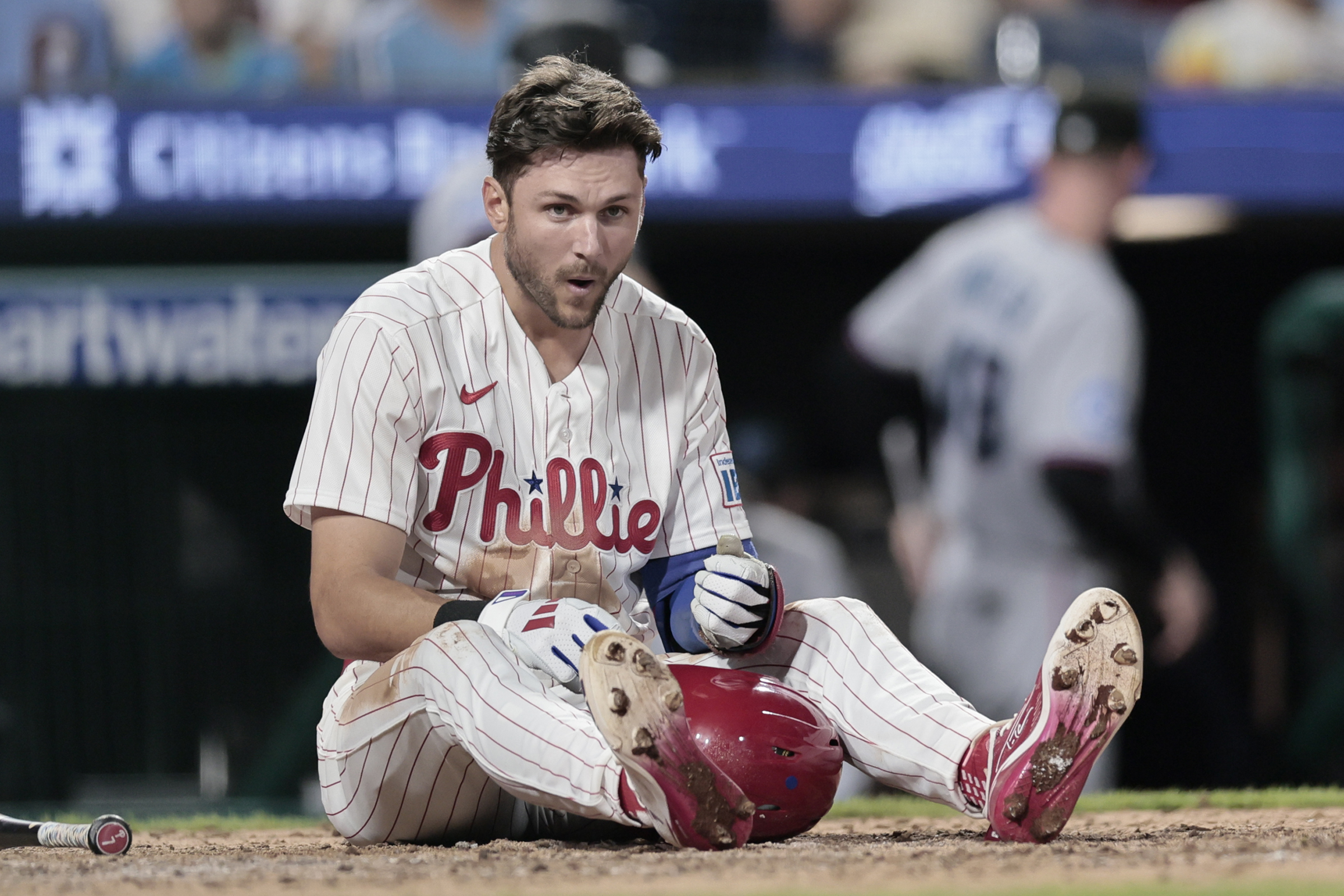
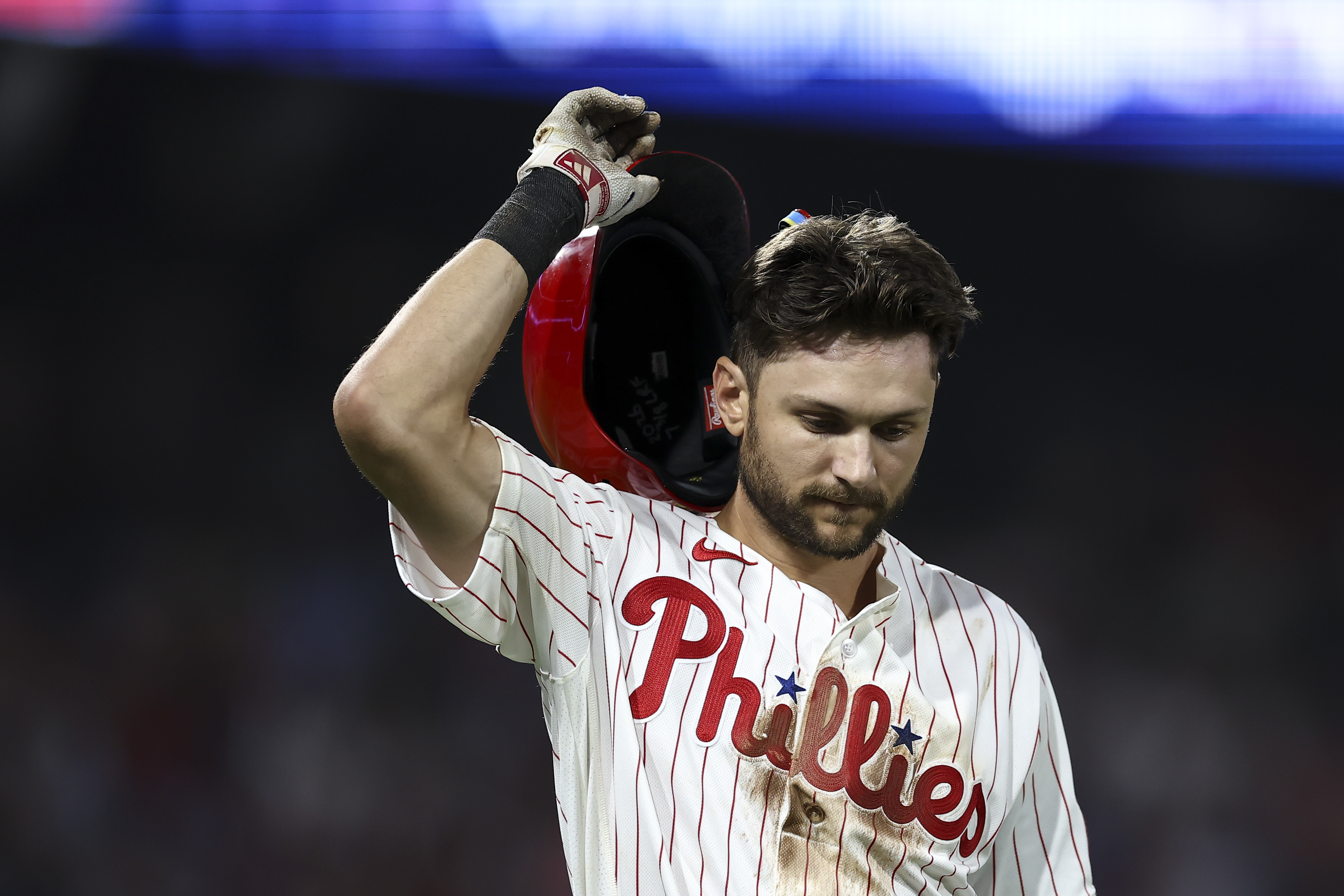
But Turner remains susceptible to spin — sliders and curveballs, in particular — and sometimes looks like he’s trying to pull everything to left field. While most of the lineup cooked in August, he batted .215 with a .292 on-base percentage and .572 OPS.
Overall, Turner is hitting .239 with a .668 OPS and a career-high 21.8% strikeout rate.
Turner is a thinker, sometimes to his detriment. He met Ichiro Suzuki in Seattle last week and asked a series of questions about using the opposite field, not flying open in his swing, and how he corrected his mistakes. Then, Turner made an adjustment and was happier with his process.
Trea Turner continues to hit in the No. 2 spot in the Phillies’ order.Monica Herndon / Staff Photographer
“Me and [hitting coach] Kevin [Long] were talking a lot,” Turner said. “He said he liked the swing a lot, but you want to see the results. Just keep competing, keep working, try to get hot, and end the year strong.”
Imagine if he’s able to do that.
Mattingly has.
“If there’s a point where it’s like, OK, this has got to go, then you get there,” Mattingly said of dropping Turner in the order. “But right now, I mean, for me, it feels to guys like it’s panic when you start making changes like that.”