Tag: UniversalPremium

  • After decades of fund growth, Vanguard pivots

    After decades of fund growth, Vanguard pivots

    “Trees don’t grow to the sky,” the late Vanguard Group founder John C. Bogle Jr. was fond of warning — meaning that it’s a mistake to think happy days and profitable trends will go on forever.

    Malvern-based Vanguard itself seemed to defy Bogle’s warning. Led by Vanguard’s index funds simulating the S&P 500 and other broad market benchmarks, founded 50 years ago on Aug. 31, Vanguard grew relentlessly, even accelerating after the dot-com bust and in the Great Recession, when rival Fidelity and other investment firms shrank and cut staff.

    But data posted by Morningstar Inc. and confirmed by other investment trackers show Vanguard’s share of the U.S. mutual fund and exchange-traded industry, a business that now totals $40 trillion, has plateaued in recent years and actually shrank to 27% from 28% over the past year.
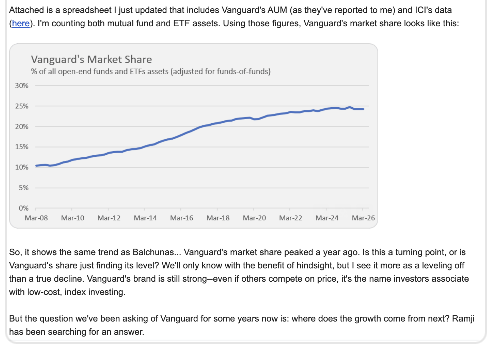
    Vanguard Group’s market share of U.S. mutual funds and exchange-traded funds (EPS), as measured by Jeff DeMaso, publisher of the Independent Vanguard Adviser, using data collected from the Investment Company Institute and other industry sources. The text also references similar findings by Eric Balchunas, a Bloomberg investments analyst and author of a book on Vanguard’s founder, “The Bogle Effect.”Jeff DeMaso

    “SHOCK: Vanguard’s market share of US fund assets has begun to DECLINE after rising for 50 years,” Eric Balchunas, a Bloomberg LP fund analyst and author of The Bogle Effect, posted earlier this month on social media.

    It’s not that Vanguard took its eye off the ball, Balchunas said in an interview. Like other fund groups, Vanguard has shifted some retirement-plan assets — it won’t say how much — into other accounts that don’t show up in the publicly traded fund listings.

    But the shift marks the end of an era, he said, not so much a loss for Vanguard but “a dream realized” as the legacy of founder Bogle, who died in 2019. Fidelity, BlackRock, Schwab, and other Vanguard rivals “lowered fees and increased value” to shareholders because Vanguard’s strategy forced them to compete with low prices and simple products.

    “Vanguard’s market share peaked a year ago,” said Jeff Del Maso, publisher of the Independent Adviser for Vanguard Funds, after reviewing industry data. “I see it more of a leveling off than a true decline. But where does the growth come from next?”

    More Vanguard effects?

    Salim Ramji, a former BlackRock fund executive tapped by Vanguard’s board in 2024 as the company’s first “outside” CEO, has outlined in public interviews some other areas where Vanguard hopes to transfer its energy. He declined to be interviewed for this article.

    Under Ramji, Vanguard has:

    • Added dozens of new bond funds and other debt investments, which tend to attract investors when interest rates go higher, economic expansion slows, and stock prices slow.
    • Emphasized a new generation of cash savings accounts, years after Vanguard did away with its old bank-style checking accounts. Under Ramji, Vanguard has expanded promotion of its FDIC-insured Vanguard Cash Plus Account, with yields comparable to bank certificates of deposit in an effort to keep Vanguard customers from moving short-term money to banks and outside firms and to lure in new investors.
    • Added investor advice. Ramji’s predecessors built advisory services since the 1990s with phone-based, digital, and hybrid systems. Seeing a big still-untapped market, Ramji in August agreed to pay $4.6 billion for Altruist, whose founder, self-described Bogle disciple Jason Wenk, developed Hazel, an “AI-forward” financial tech and custody platform popular with independent investment advisers who sell Vanguard funds. Wenk will run the business, separate from Vanguard’s Digital Advisor and Personal Advisor units, when the deal closes.
    • Partnered with Wellington Management and Blackstone to launch private investment funds, starting in July. The WVB funds expect to report their holdings after Sept. 30. WVB All Markets and a smaller WVB Blackstone All Privates fund are being sold for now through Bank of America and its Merrill Lynch affiliates.

    But Ramji has stopped short of following other investment houses into predictions markets and cryptocurrency investments.

    “We believe investments deliver cash flows or have prospects of cash flows,” which these speculative investments don’t, Ramji said last month in an interview with Peter Mallouk of $800 billion asset, Kansas-based financial adviser Creative Planning LLC. Ramji compared such products to “a slot machine where the house always wins. That does harm to the individual investor.”

    Avoiding activism

    Under Ramji, Vanguard has promised not to use its extra clout — its funds own around 8% of most U.S. stocks — to pressure companies to change policies.

    Vanguard has backed off “environmental, social and governance” commitments. In March‚ Vanguard agreed to pay $30 million to Texas and other Republican-run states to settle litigation alleging that Vanguard violated antitrust laws when it joined environmentally minded groups that sought to reduce U.S. reliance on coal and other carbon energy sources.

    The settlement with the states helped lower Vanguard’s profile in the fraught world of political investing. Ramji went further than other firms. BlackRock and others sued by the states have so far declined to settle similar lawsuits.

    Analyst Balchunas is bullish that Ramji has cleared the way to reach more customers, extending “the Vanguard effect,“ even if its fund business has plateaued for a time.

    “The Vanguard effect is bigger than Vanguard now,” Balchunas said.

    This story has been updated to delete an incorrect figure for the WVB All Markets Fund.
  • The Eagles need Jalen Hurts 2.0 now more than ever. His evolution and clutch gene are carrying a rough offense.

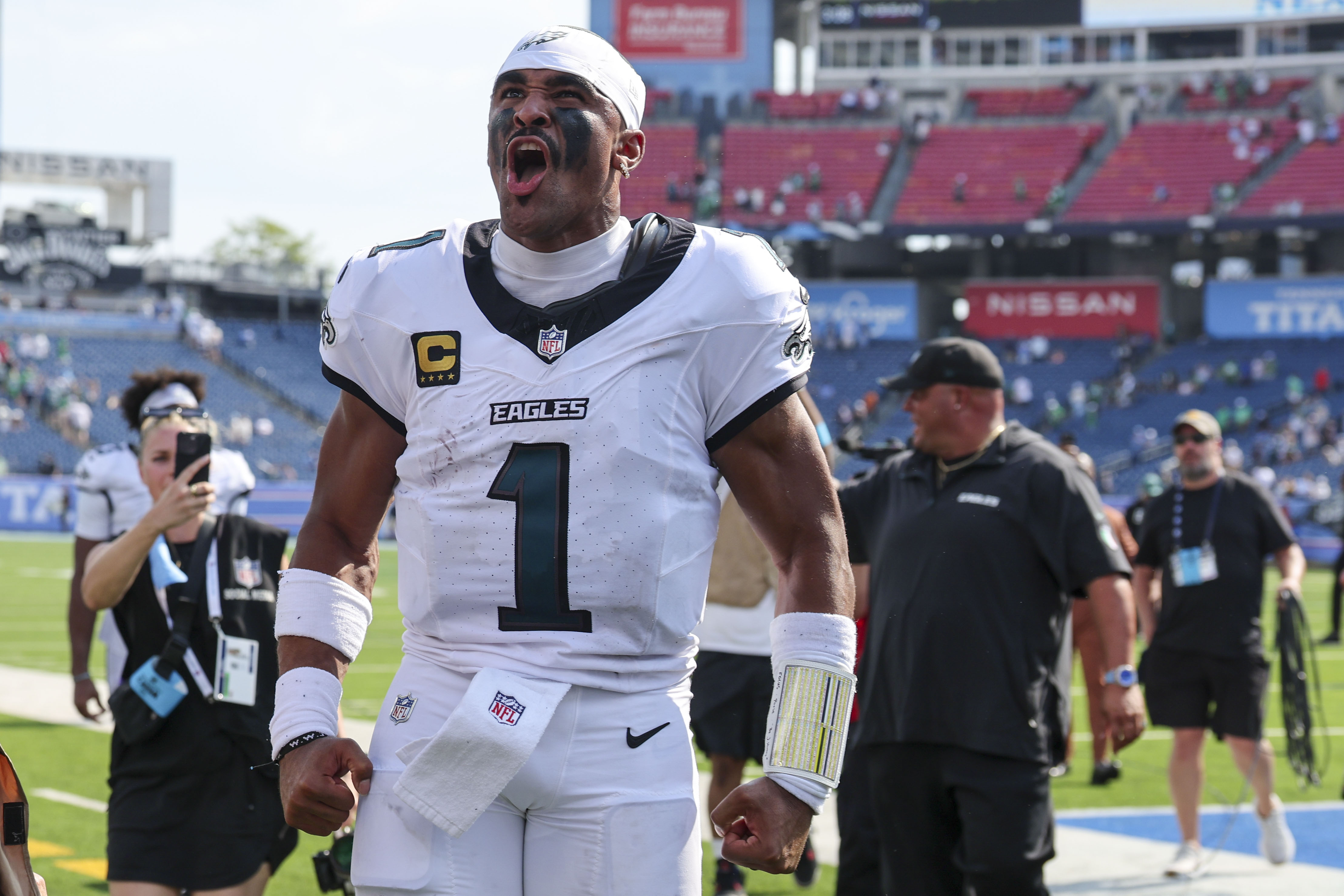
    The Eagles need Jalen Hurts 2.0 now more than ever. His evolution and clutch gene are carrying a rough offense.

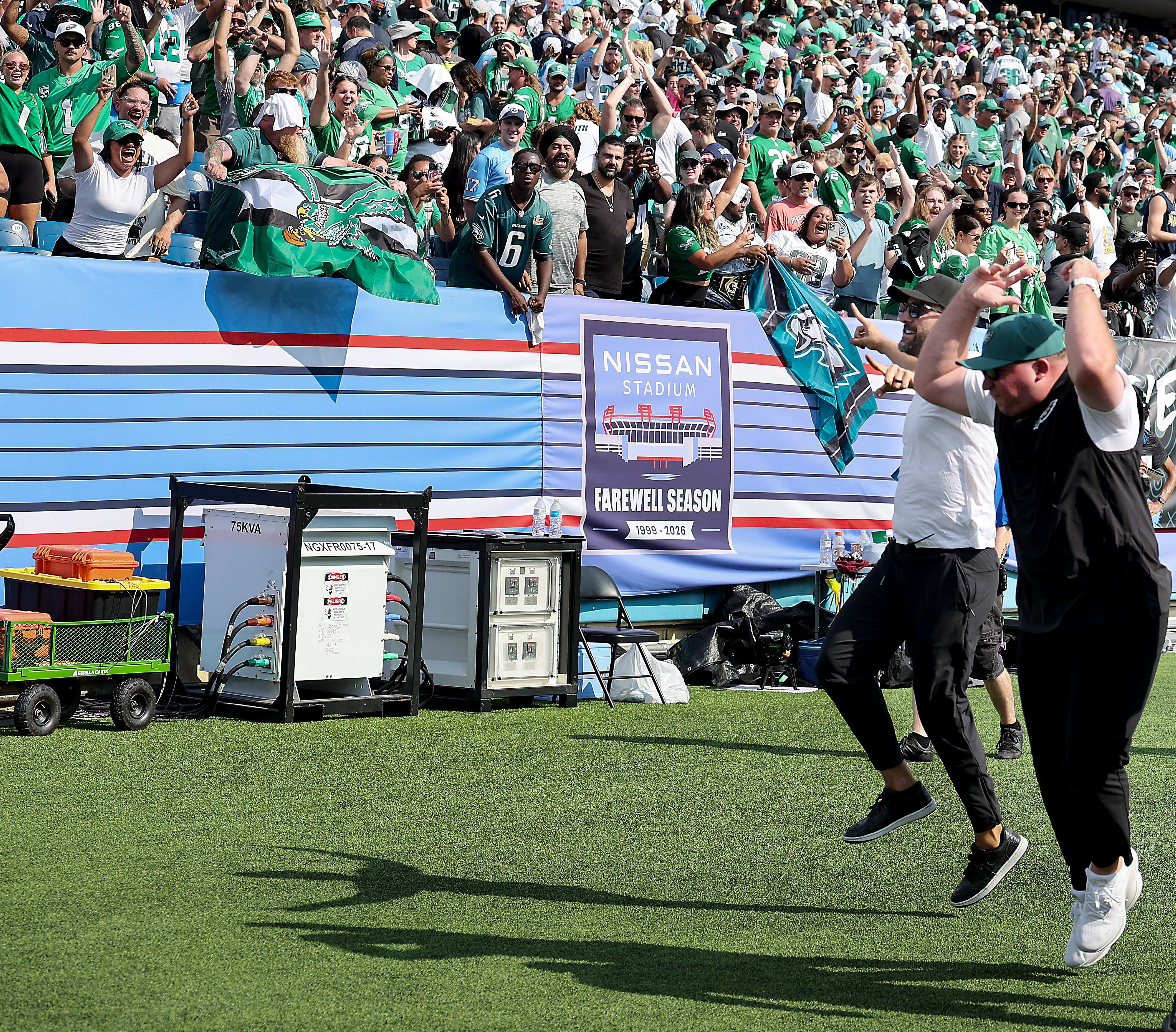
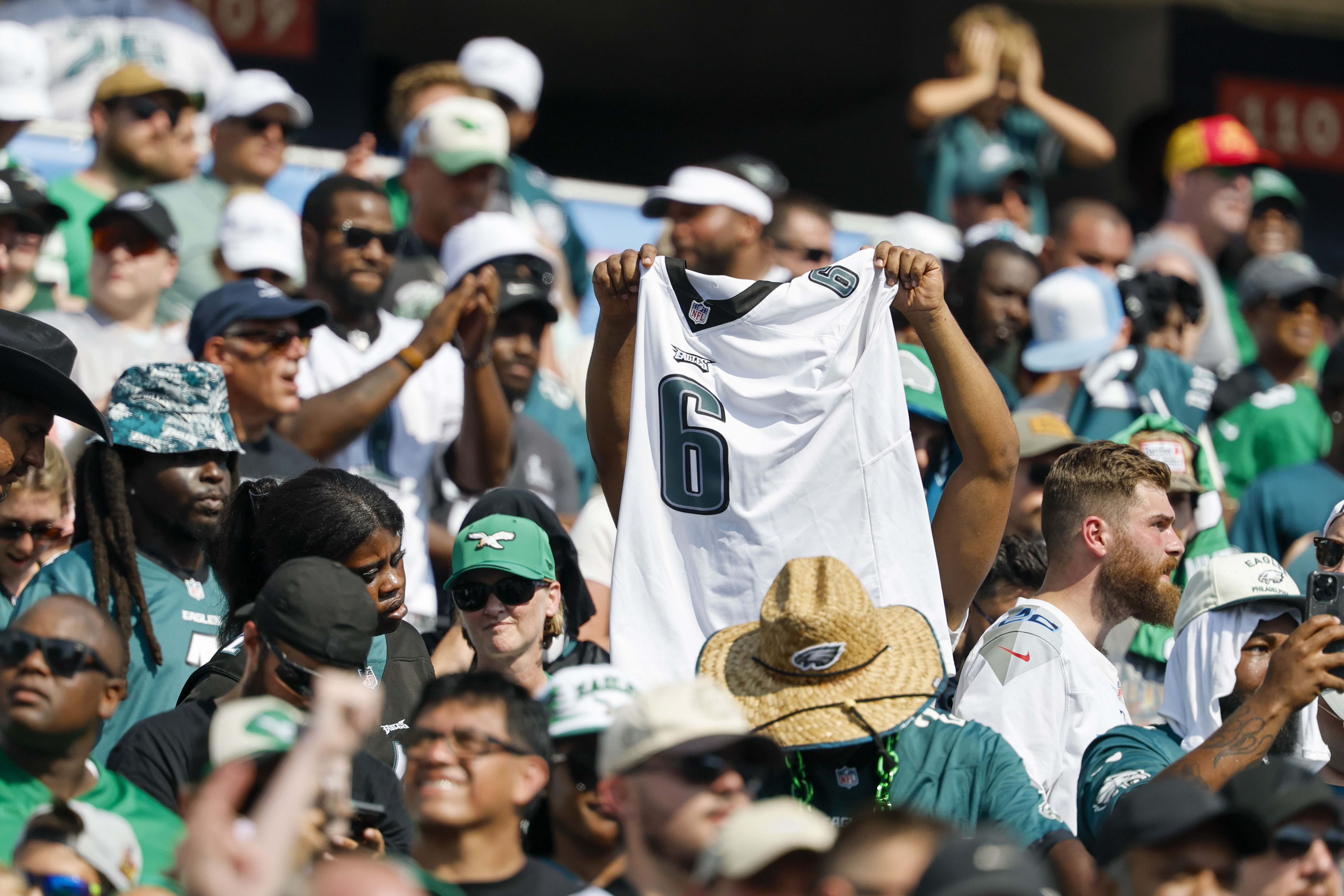
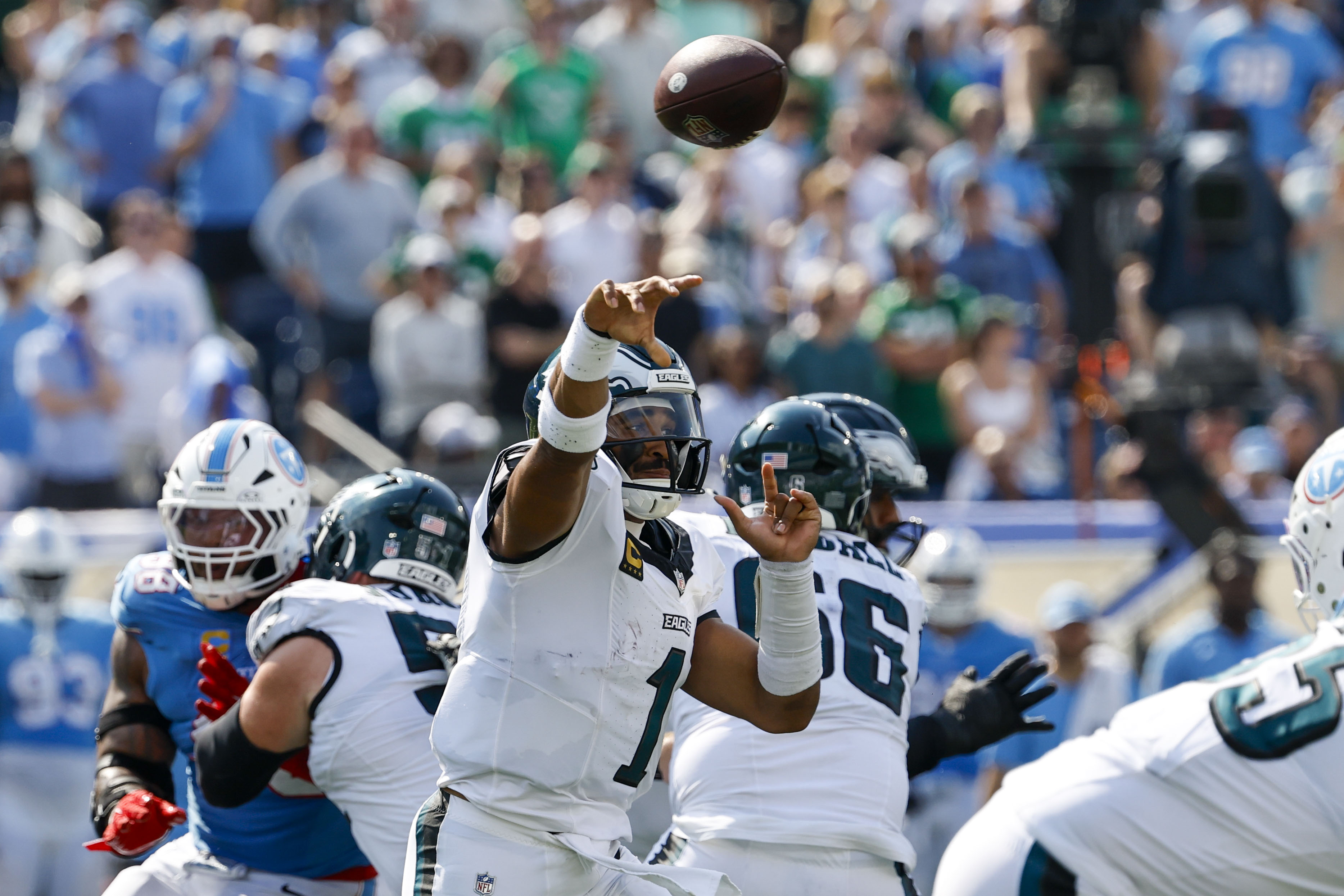
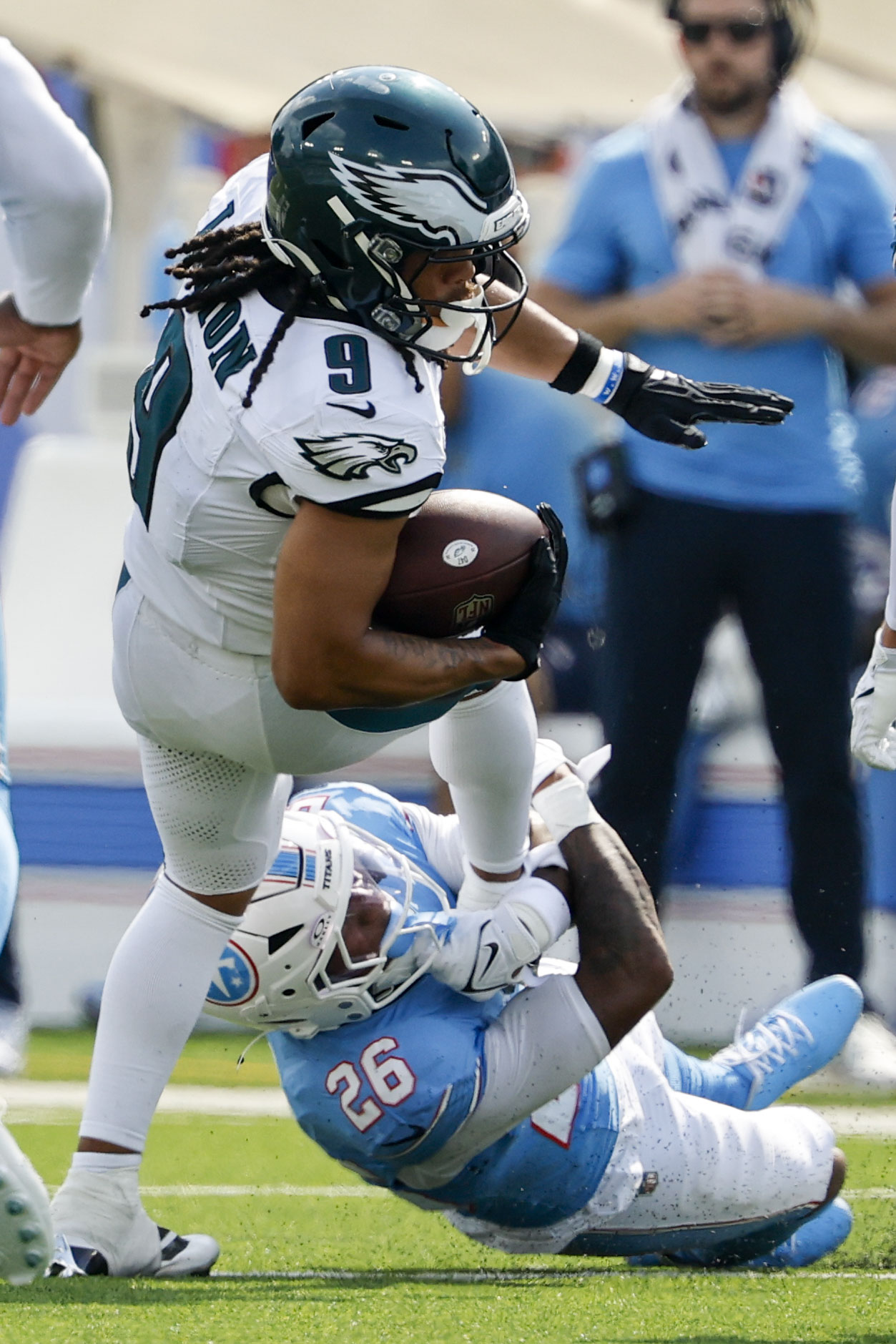
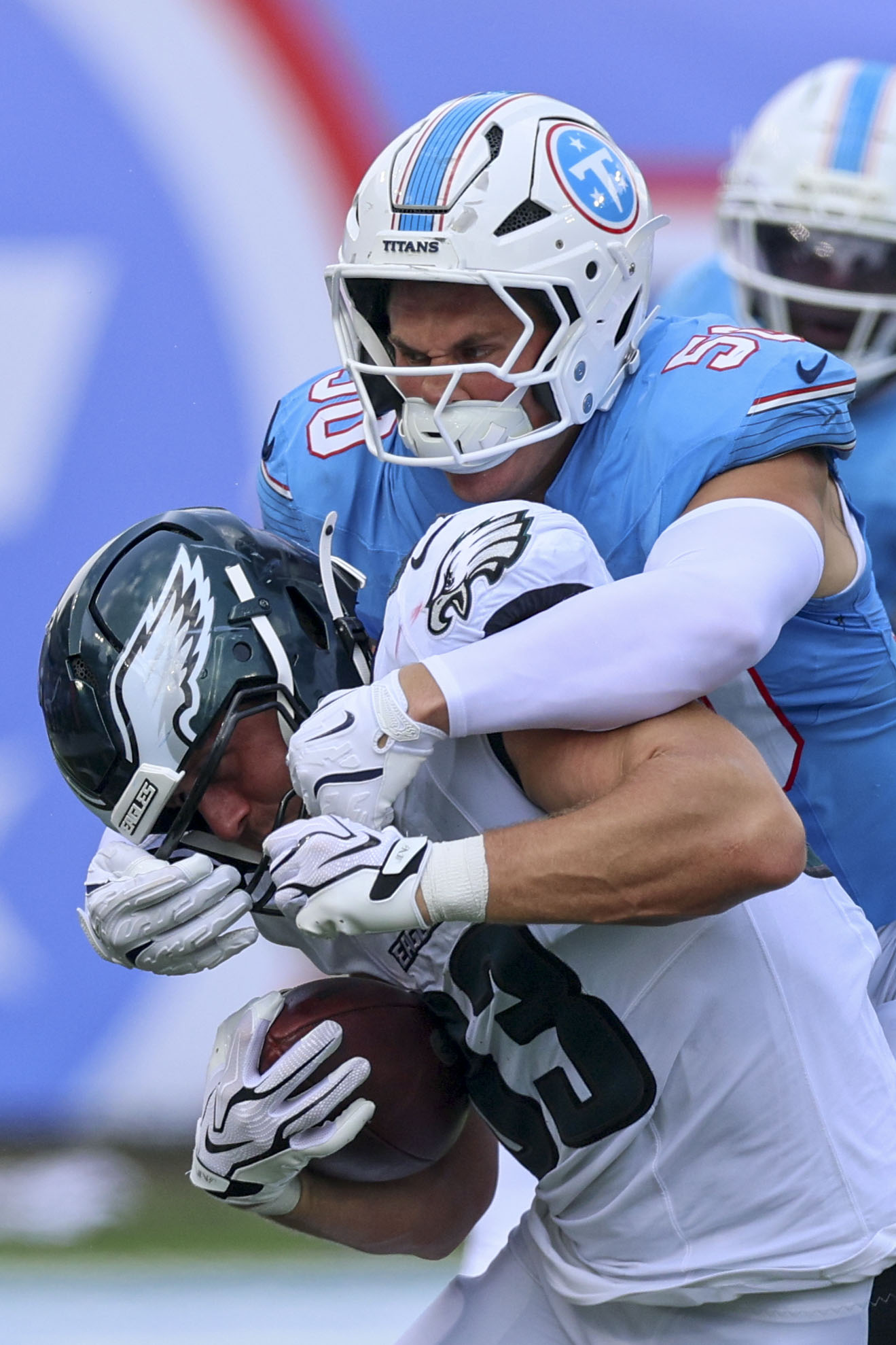
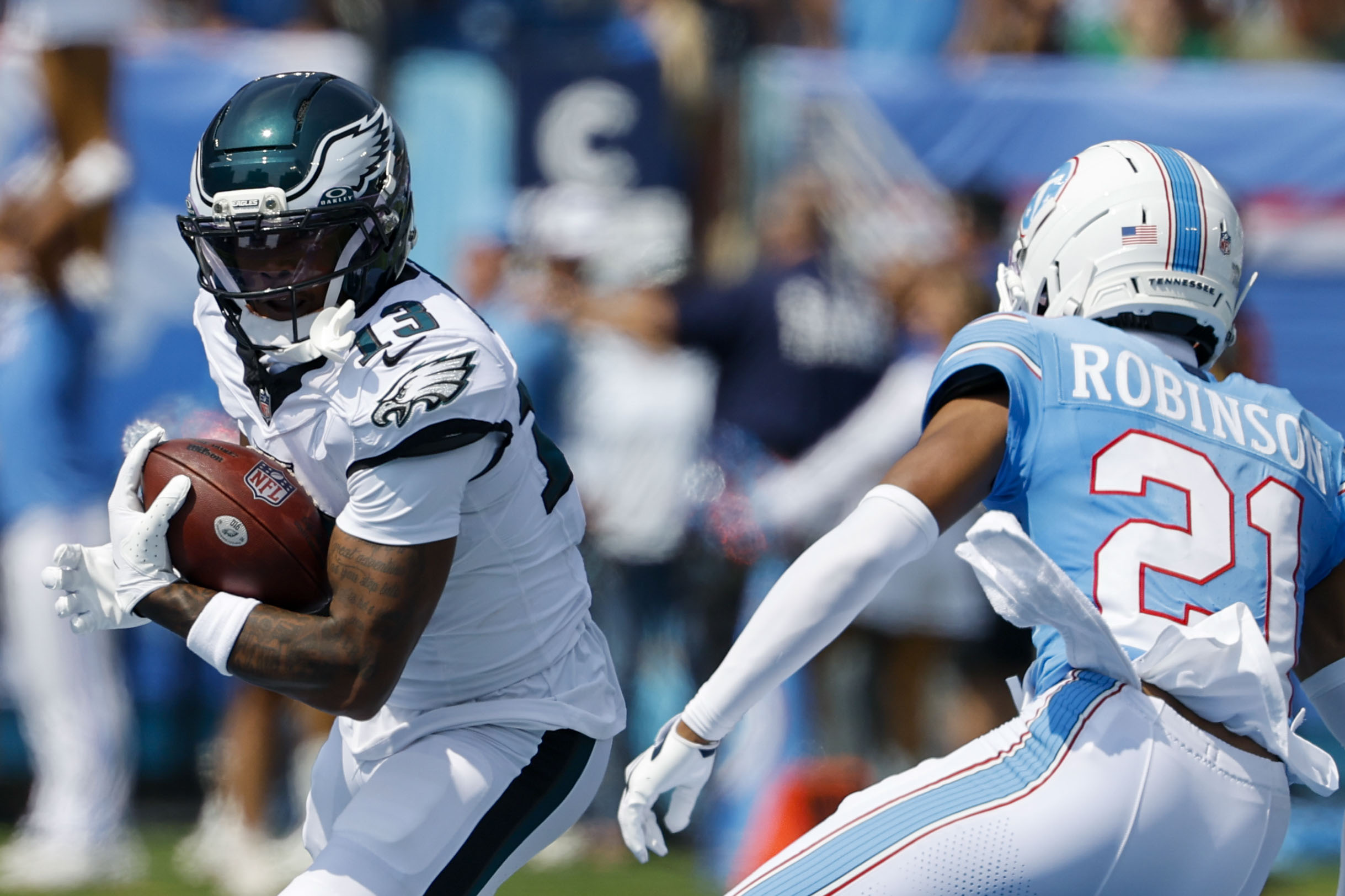
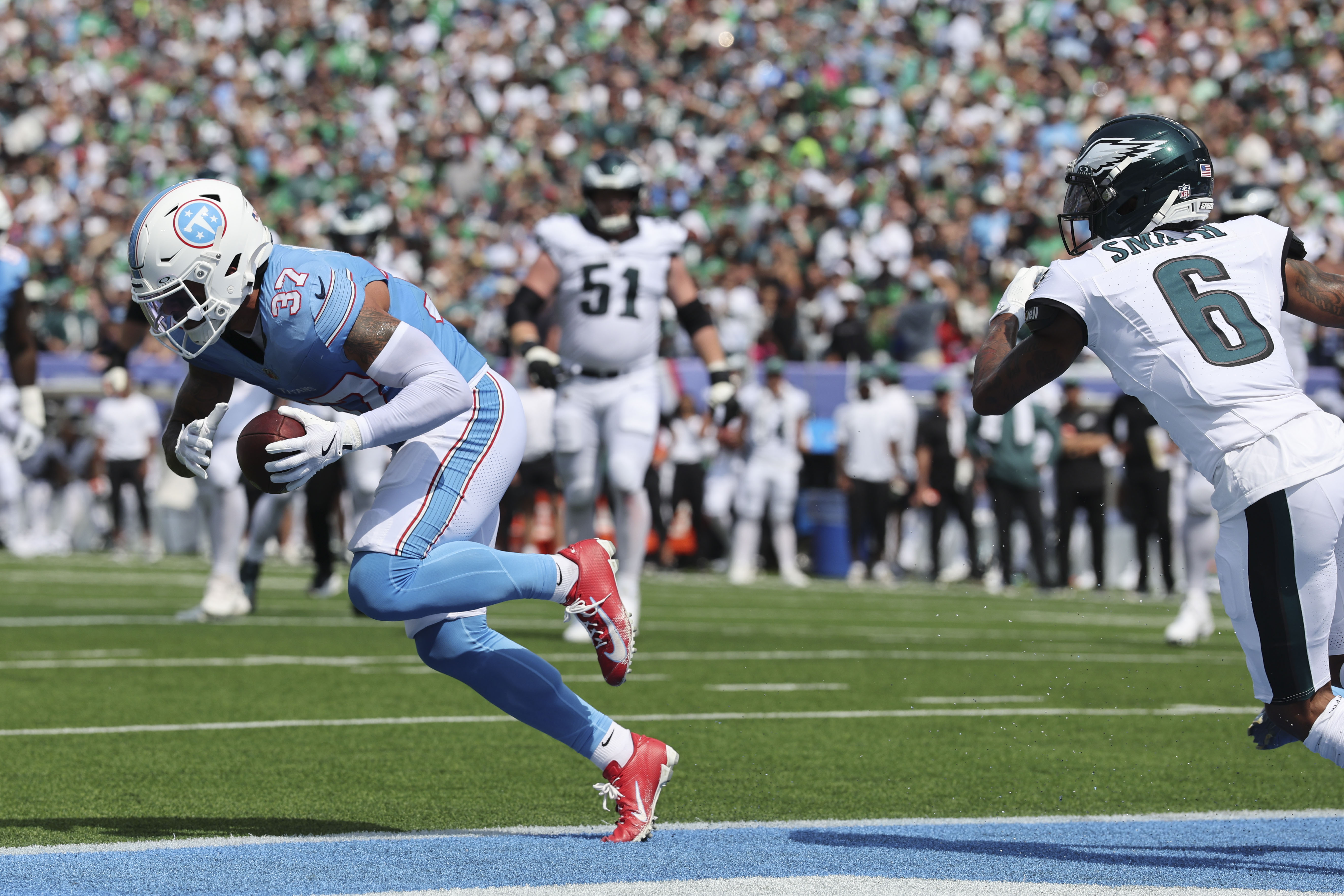
    NASHVILLE, Tenn. — Jalen Hurts tossed two costly interceptions. The first was returned 92 yards and converted into a touchdown, while the second came late in the fourth quarter and allowed the Titans to take a 20-17 lead.

    And yet, Hurts wasn’t asked a single question about the picks postgame. His performance in rallying the Eagles past Tennessee, 24-20, in nearly every other moment, including a masterful two-minute drive, far overshadowed his two throwing errors.

    But there was something unique about Hurts carrying the offense at the scorching Nissan Stadium on Sunday. He’s strapped the Eagles onto his back before. He’s had better games against better opponents when the stakes were much higher. He’s been clutch on many previous occasions.

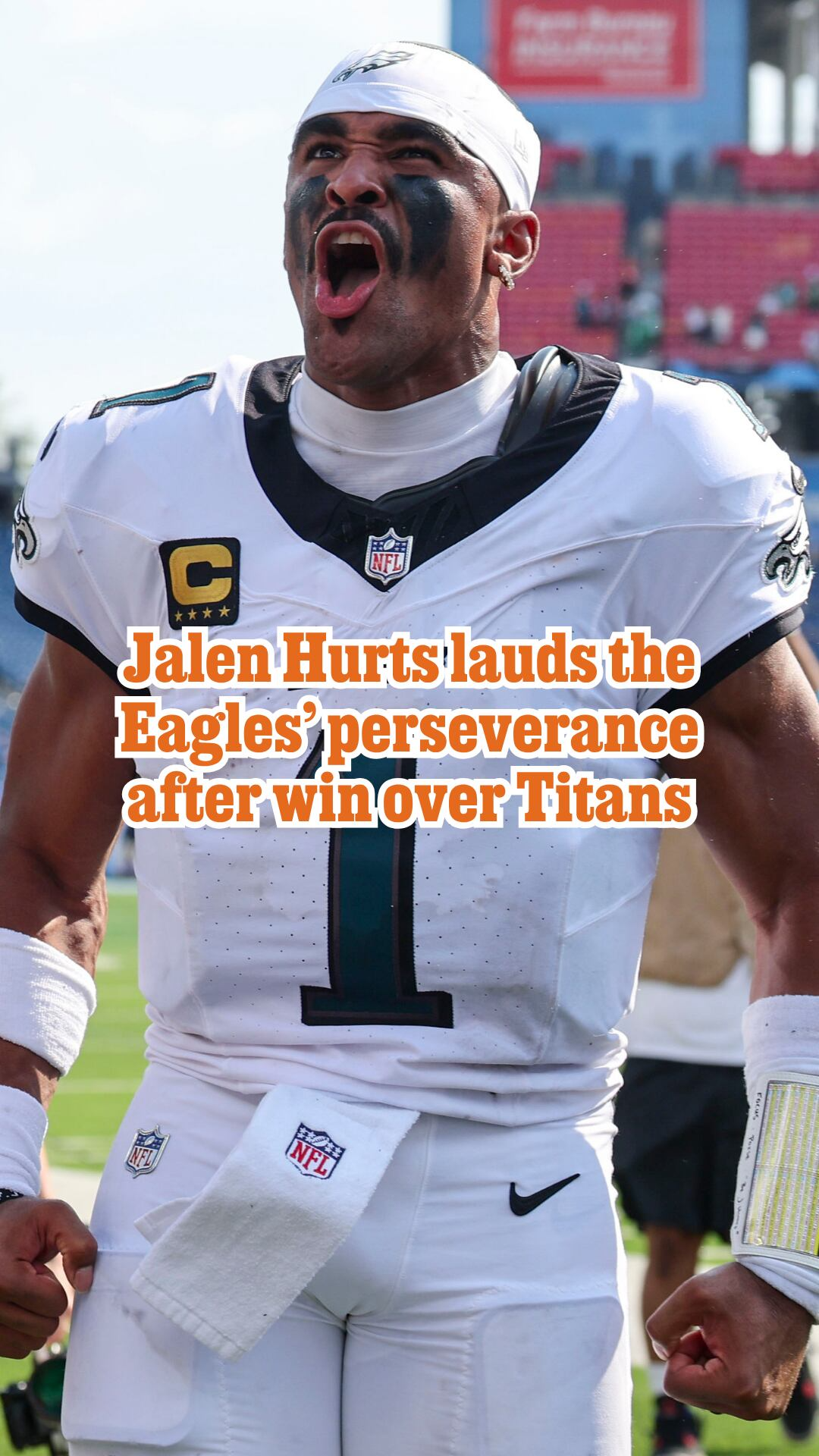
    Jalen Hurts lauds the Eagles' perseverance after win over Titans
    Video: Jalen Hurts lauds the Eagles’ perseverance after win over Titans

    No, this was a different Hurts. This was the 2.0 version. This was Hurts evolving as a quarterback in a new scheme that gives him more freedom as a passer. We saw glimpses of it in Week 1 vs. the Washington Commanders. He took another step in Week 2.

    If the narrative entering this season was that the 28-year-old faced a make-it-or-break-it tipping point, after another offensive coordinator change and a seemingly unresolved contract situation, Hurts has shown through two weeks that he’s making it.

    He’s been that instrumental in the Eagles’ 2-0 start despite the schematic hiccups and struggles on the offensive line.

    “I don’t even think words can describe how much you’ve got to manage as a quarterback in this league from a responsibility standpoint, and the weight that comes with the position and the responsibility,” Hurts said when asked about his calm amid an otherwise stormy offensive day.

    “Ultimately, you gotta keep the main thing the main thing throughout that. You gotta keep your poise and keep your focus.”

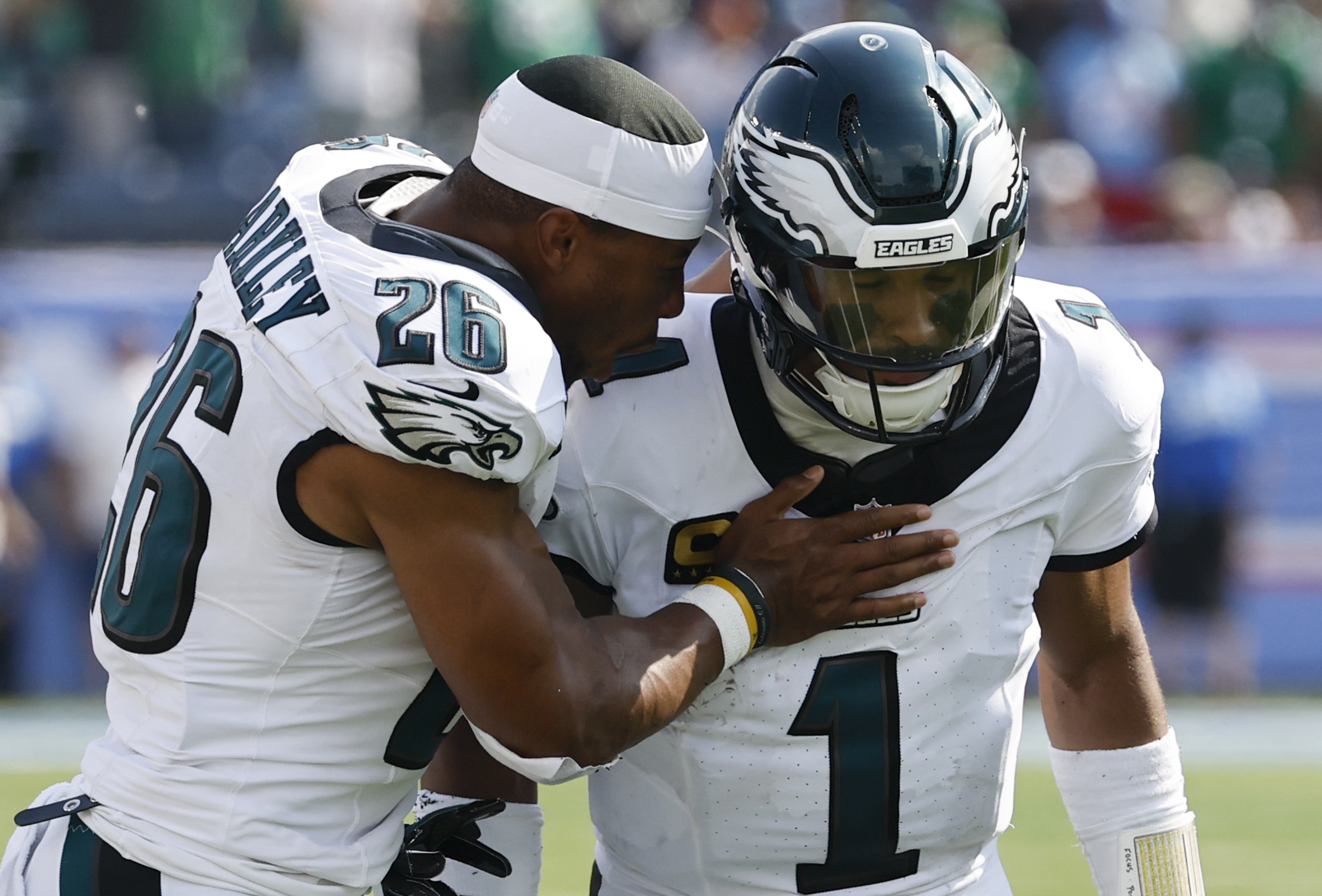
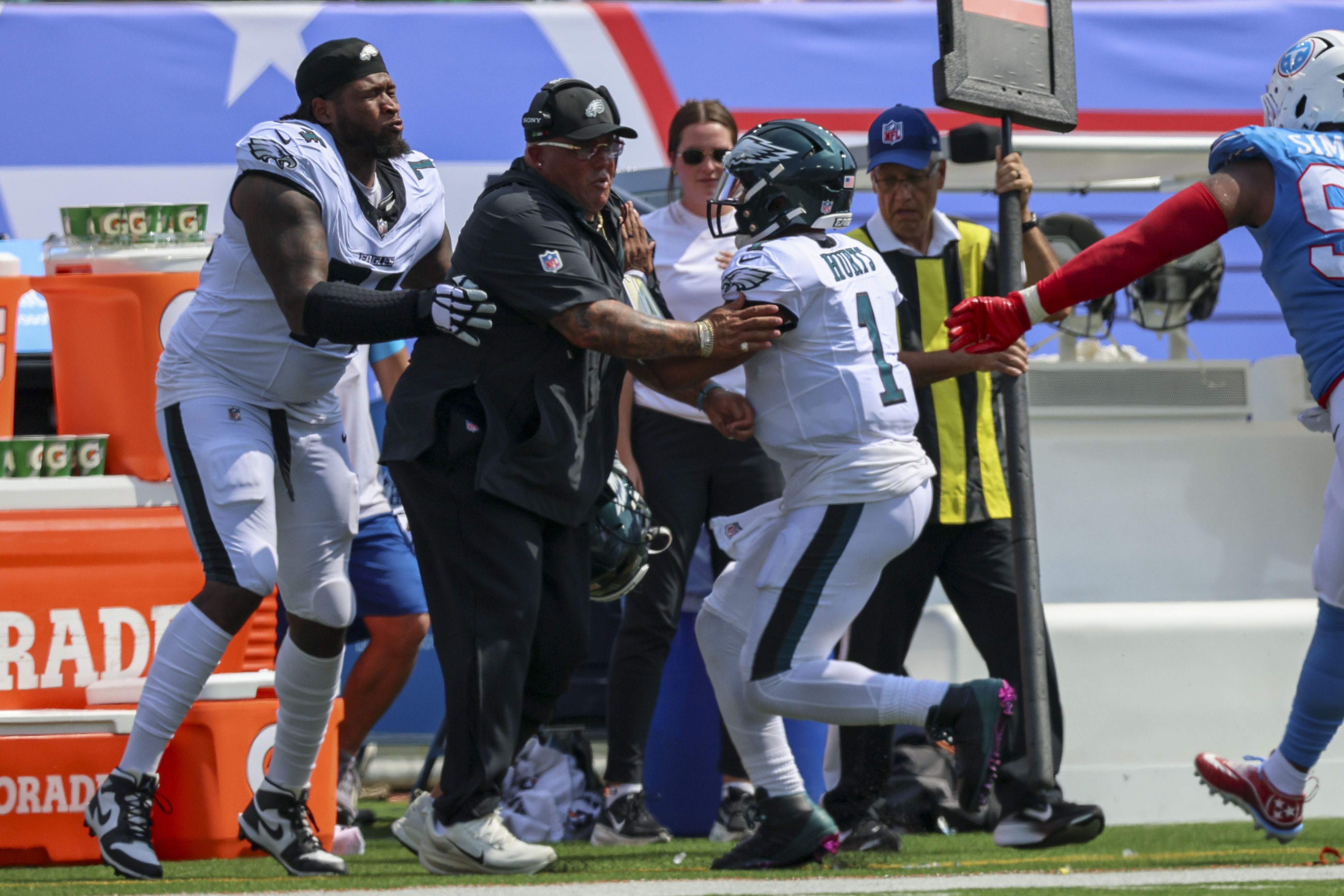
    An early injury to Saquon Barkley was one more thing Jalen Hurts was forced to overcome on Sunday. Yong Kim / Staff Photographer

    Third down after third down, Hurts and his receivers bailed out the early-down malaise. The Eagles have long needed an offense that establishes the run game. Hurts’ limitations as a dropback passer have partially made that necessary, but it’s also been a byproduct of coach Nick Sirianni’s conservatism.

    The Eagles just might not have the pieces to be a run-based unit this season. There were likely to be some early bumps with the new wide-zone blocking scheme. But for as much as Sean Mannion needs the outside-zone runs to set up play action, he can’t keep calling early-down runs or quasi-runs that are passes that fail.

    The Eagles have been wretched on first down. They averaged just 0.9 yards in the first game of the season. They were a little better in the second, but the running backs managed just 2.7 yards on 15 first-down rushes vs. the Titans.

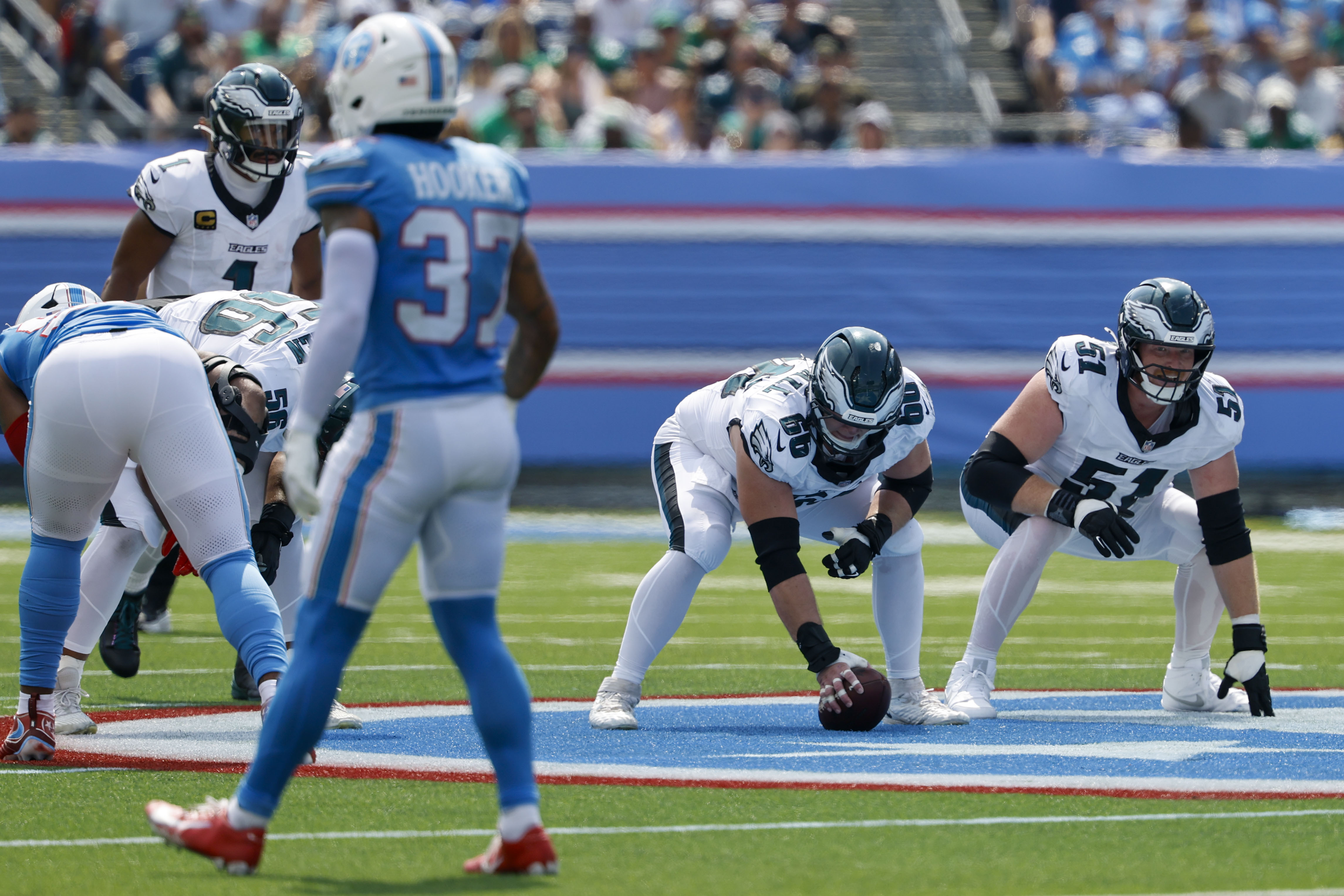
    The Eagles shuffled the O-line after Landon Dickerson went to injured reserve last week, moving Cam Jurgens to the vacant left guard spot and inserting Drew Kendall at center. There were going to be miscues with Jurgens having never played guard on that side, especially with Jeffery Simmons lining up over him.

    But Mannion kept calling runs even if they often were away from the All-Pro defensive tackle.

    “It’s more to do with execution, but then also you know the moving pieces that we had in,” tackle Jordan Mailata said about the run-blocking issues. “This is our first game together as the starting five for us. And I’ve always emphasized the continuity of having the same O-line guys.”

    Sirianni wouldn’t divulge whether he’ll stick with the same configuration, but keeping the same core for at least the next three games — or more, depending upon Dickerson’s health — seems likely.

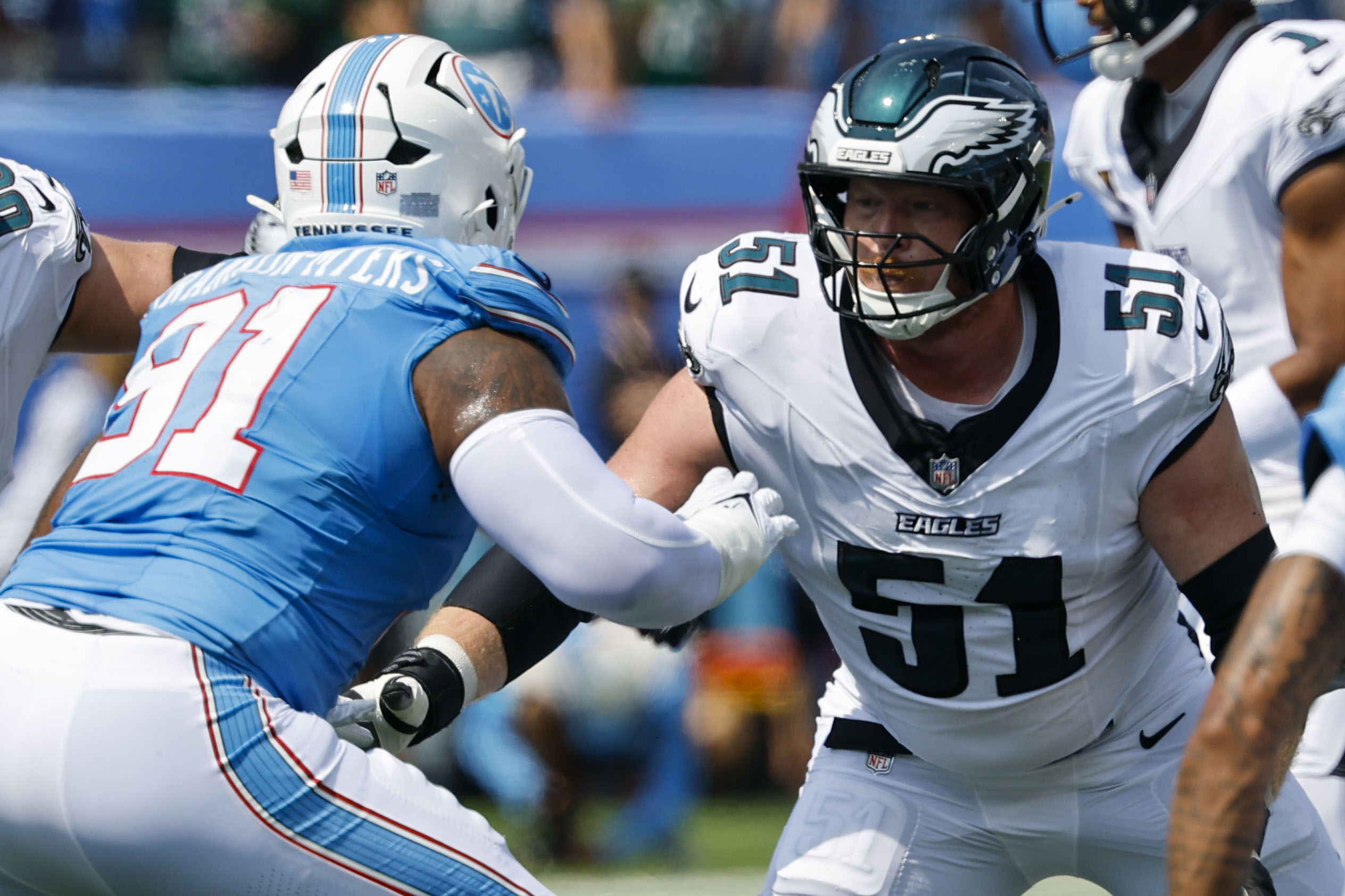
    Cam Jurgens (51) and the offensive line has been slow to adjust to the Sean Mannion scheme. Yong Kim / Staff Photographer

    “I’m a soldier,” Jurgens said. “I march to my orders, and whatever I’m asked to do, I’m going to do it to my best abilities.”

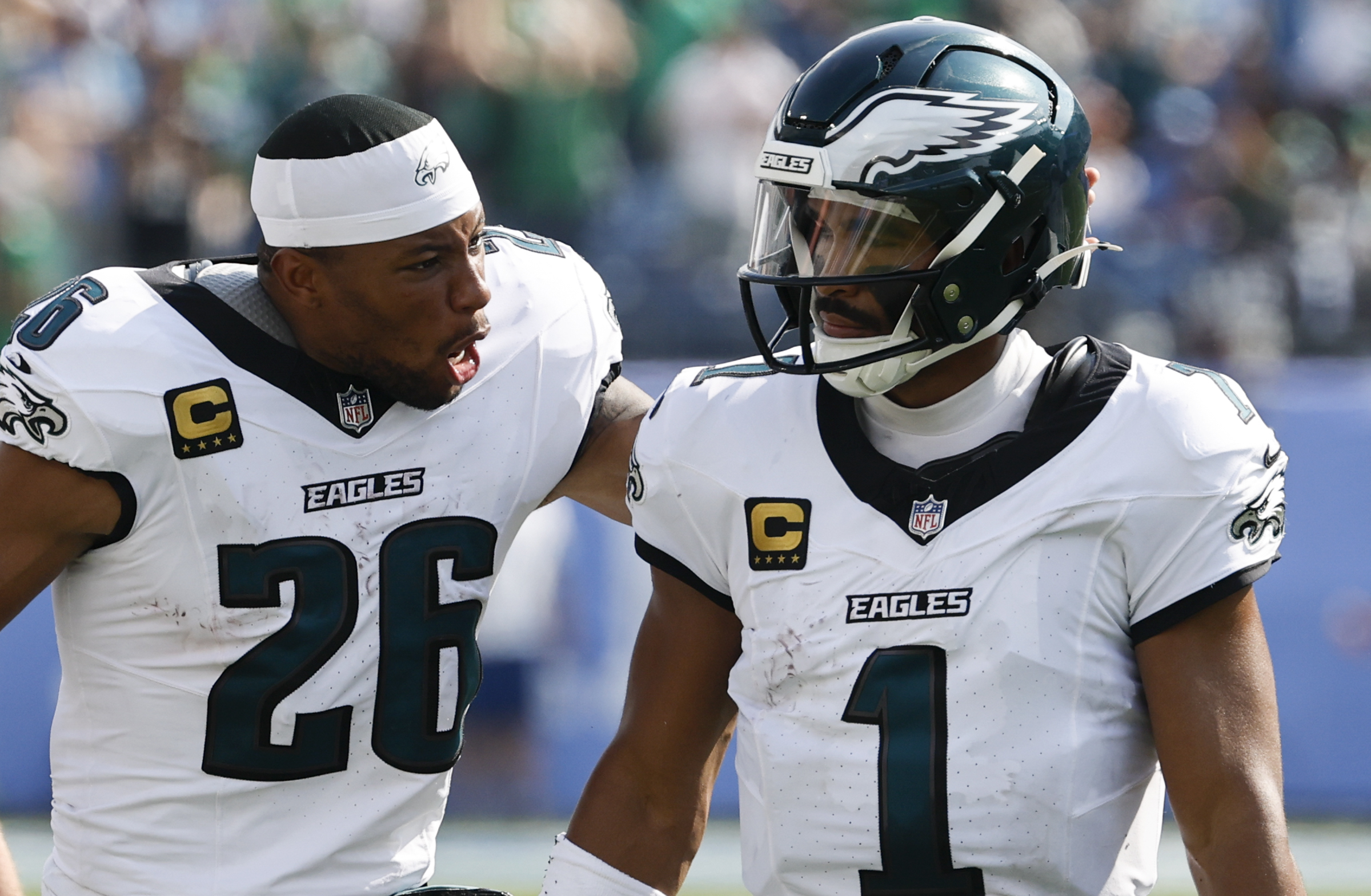
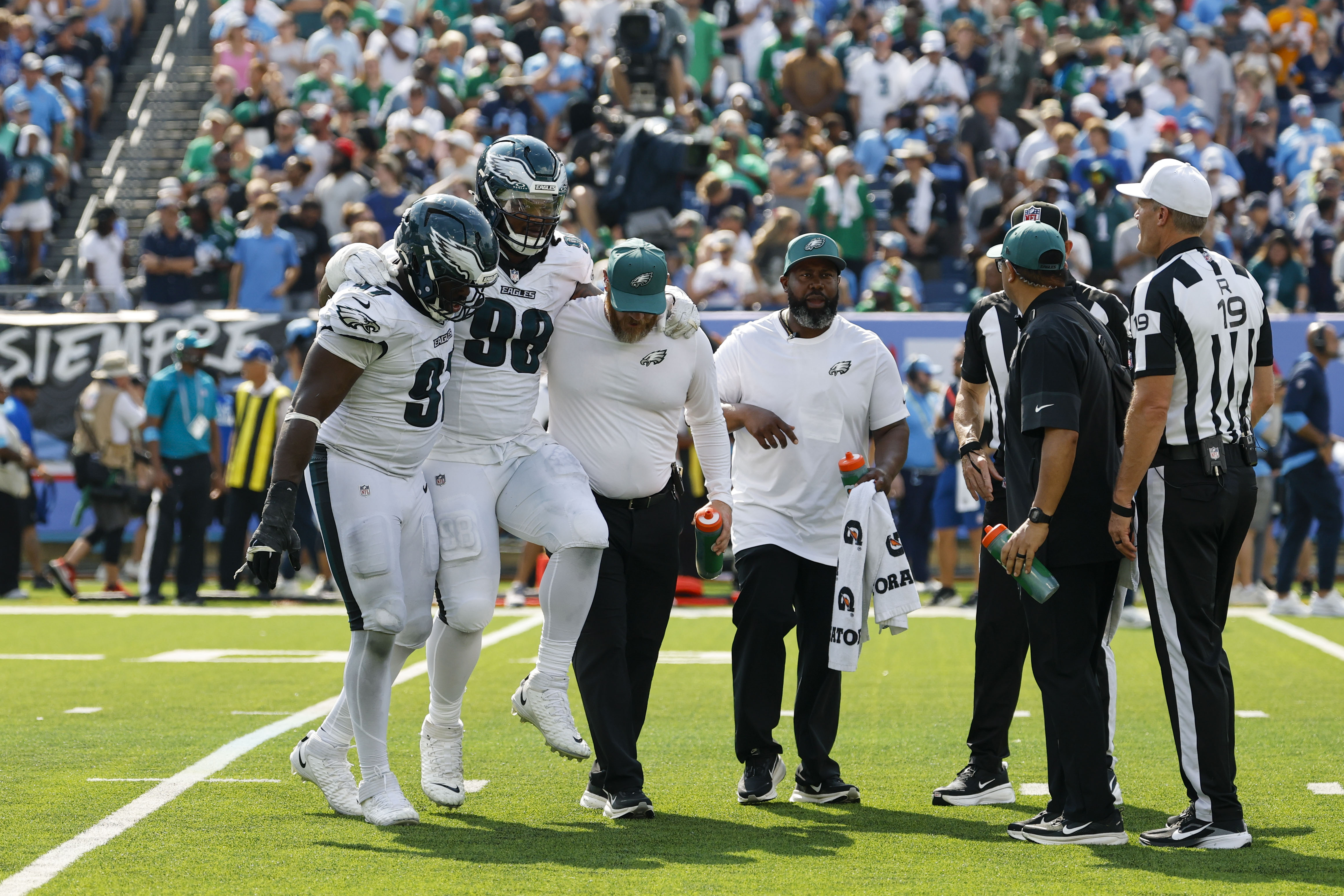
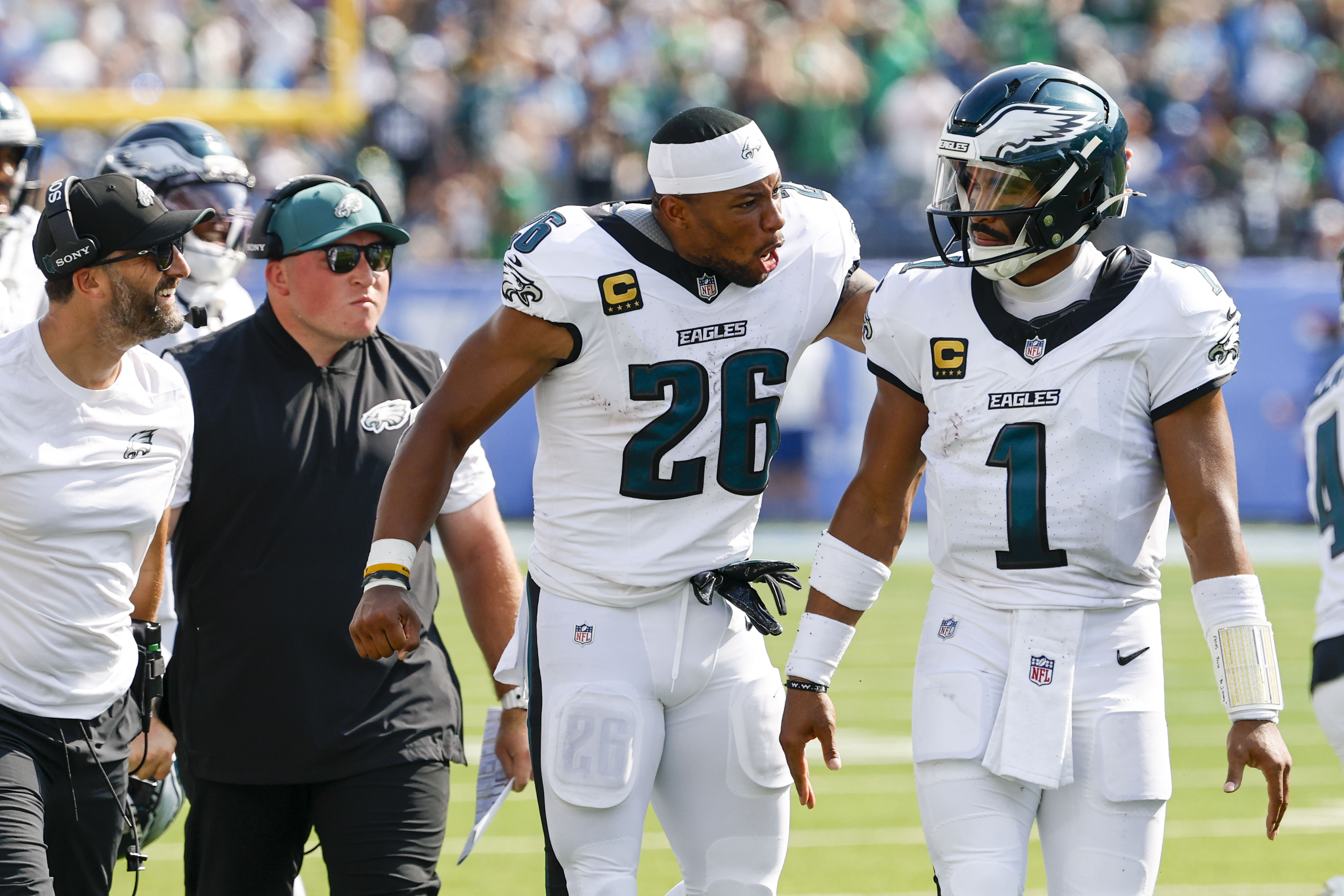
    There were other missing parts. Running back Saquon Barkley left early with a stinger (although he returned), while tight end Dallas Goedert was sidelined with a knee injury. Sirianni said he wouldn’t grade on a curve because of the new faces and scheme changes.

    “We want to be able to run it more efficiently,” Sirianni said. “I haven’t seen any of the numbers, but everything comes off of the run and the play action. And so, the guys battled though. That’s what you’re so proud of there. … But there’s definitely room for improvement, as we all know.

    “We all see that.”

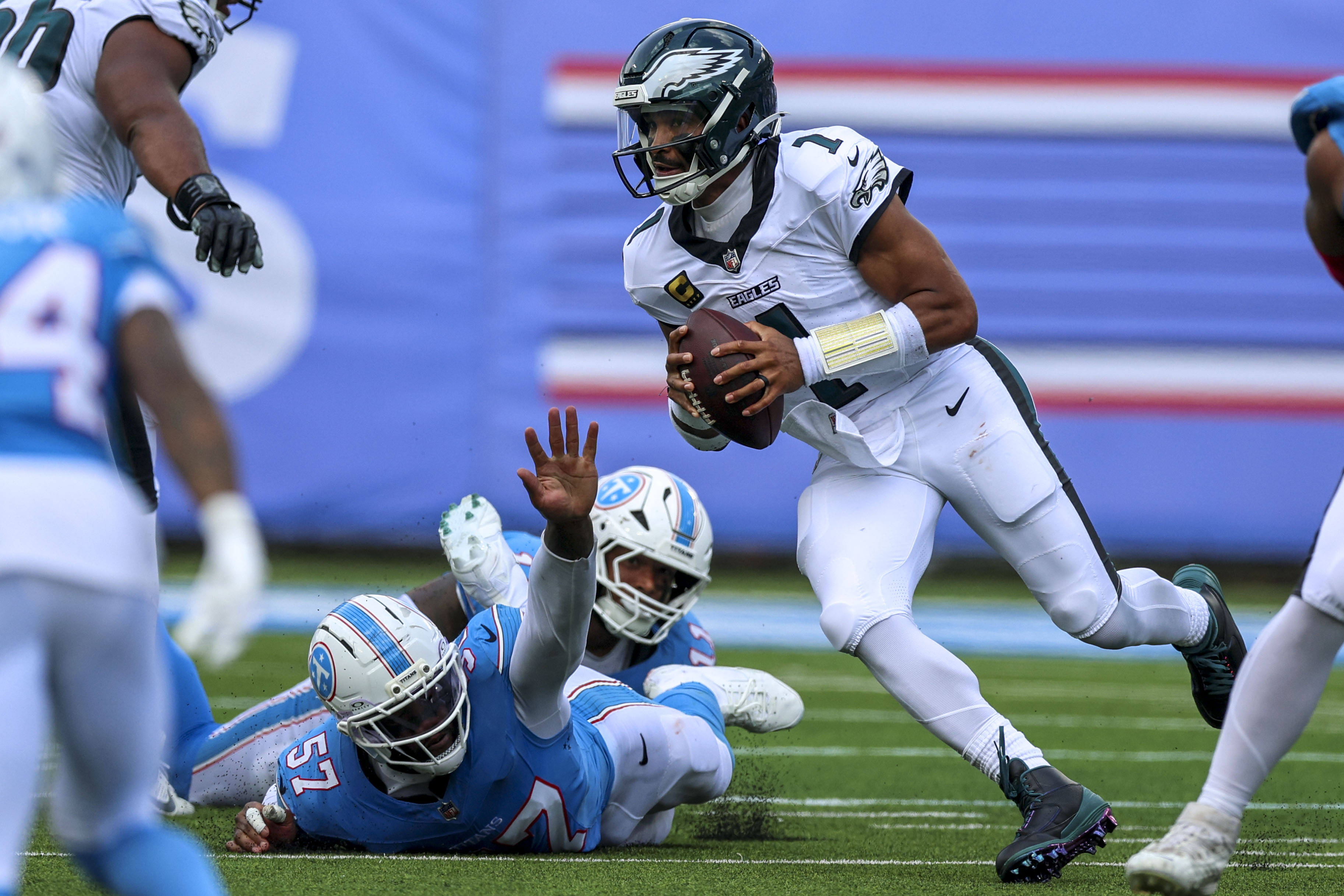
    The pass protection wasn’t much better, although when the O-line needed to stand tall on the last drive, Hurts mostly had enough time in the pocket. But getting sacked three times, hit an additional three times, and having to Houdini out of pressure isn’t likely sustainable.

    According to the advanced analytics site Sumer Sports, the Eagles have the largest difference in early-down offensive success rate vs. late-down offensive success rate to start a season since 2022, with an early-down success rate of 31.5% in the third percentile, and a late-down rate of 60.6% in the 96th percentile.

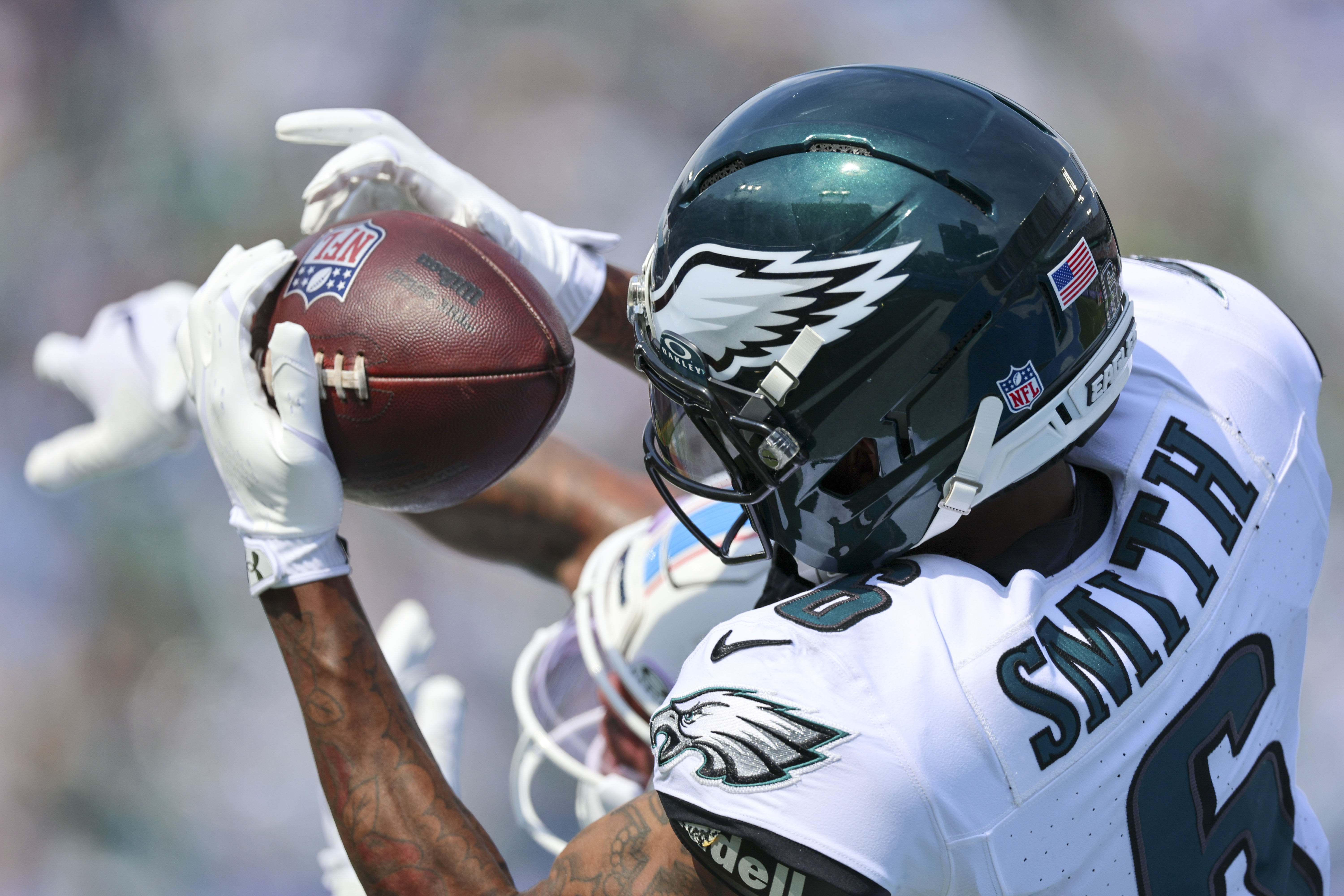
    Hurts kept facing long third downs and kept hitting receivers DeVonta Smith and Dontayvion Wicks downfield. He converted nine third downs of more than 4 yards, three of which were third-and-12.

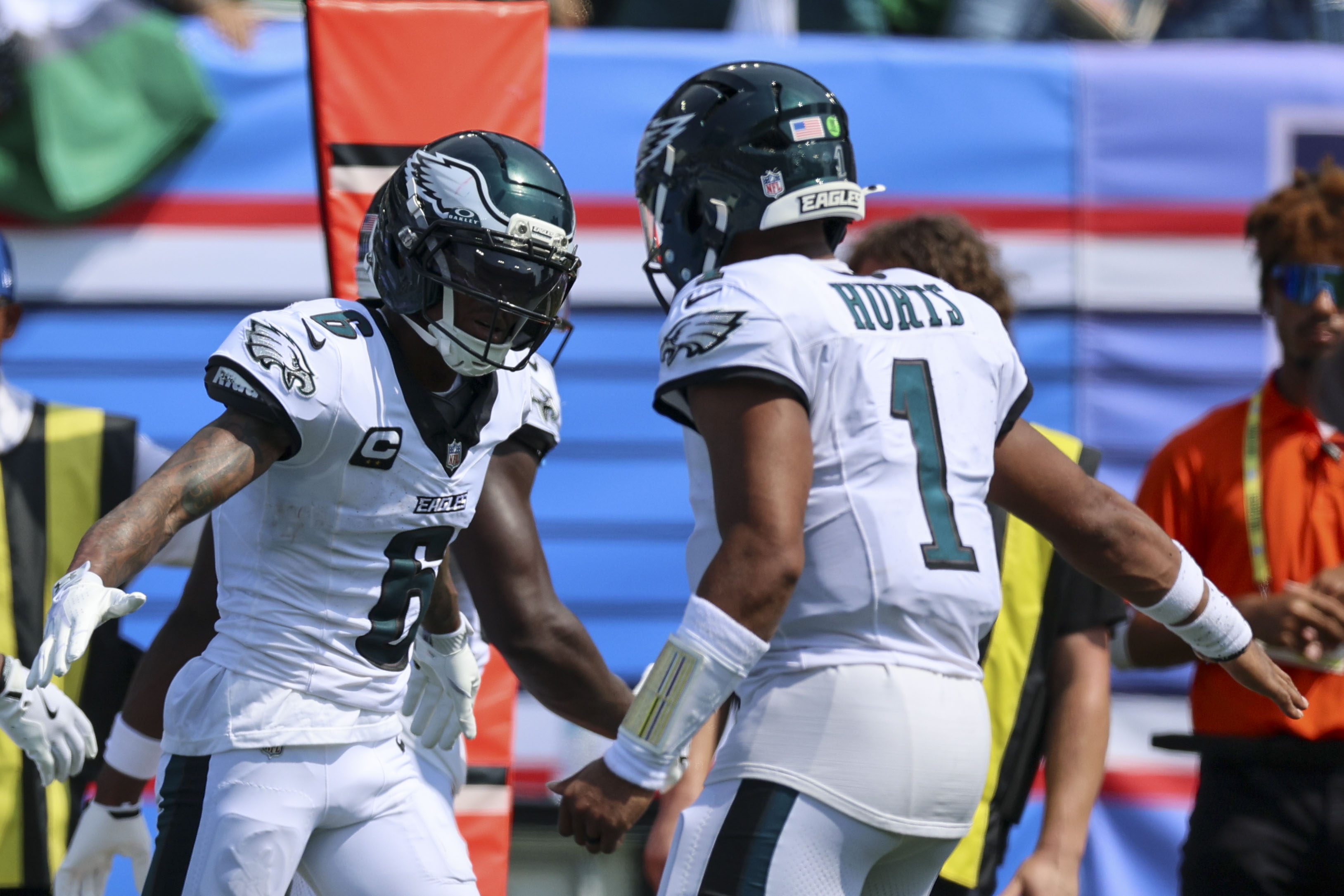
    Jalen Hurts helped facilitate a big day for DeVonta Smith (6) and completed passes to nine different targets on Sunday. David Maialetti / Staff Photographer

    But both his interceptions also came on third-and-longs. He kept bouncing back.

    “Jalen’s able to flush it and lead us down the field in a critical situation,” Sirianni said. “Just proud of the way he played and the way he had his resolve, but that’s who he is, right? That doesn’t surprise me. He’s that on a daily basis.”

    Whether it’s by design or not, Sirianni has had to entrust his 28-year-old quarterback with more responsibility, and that may require accepting a few more interceptions than either has become accustomed to.

    If the Kyle Shanahan-type parts of Mannion’s under center, play-action scheme haven’t yet taken hold, the implementation of more full progression reads has. Hurts completed passes to nine receivers for only the fourth time in his NFL career, and the first since 2022.

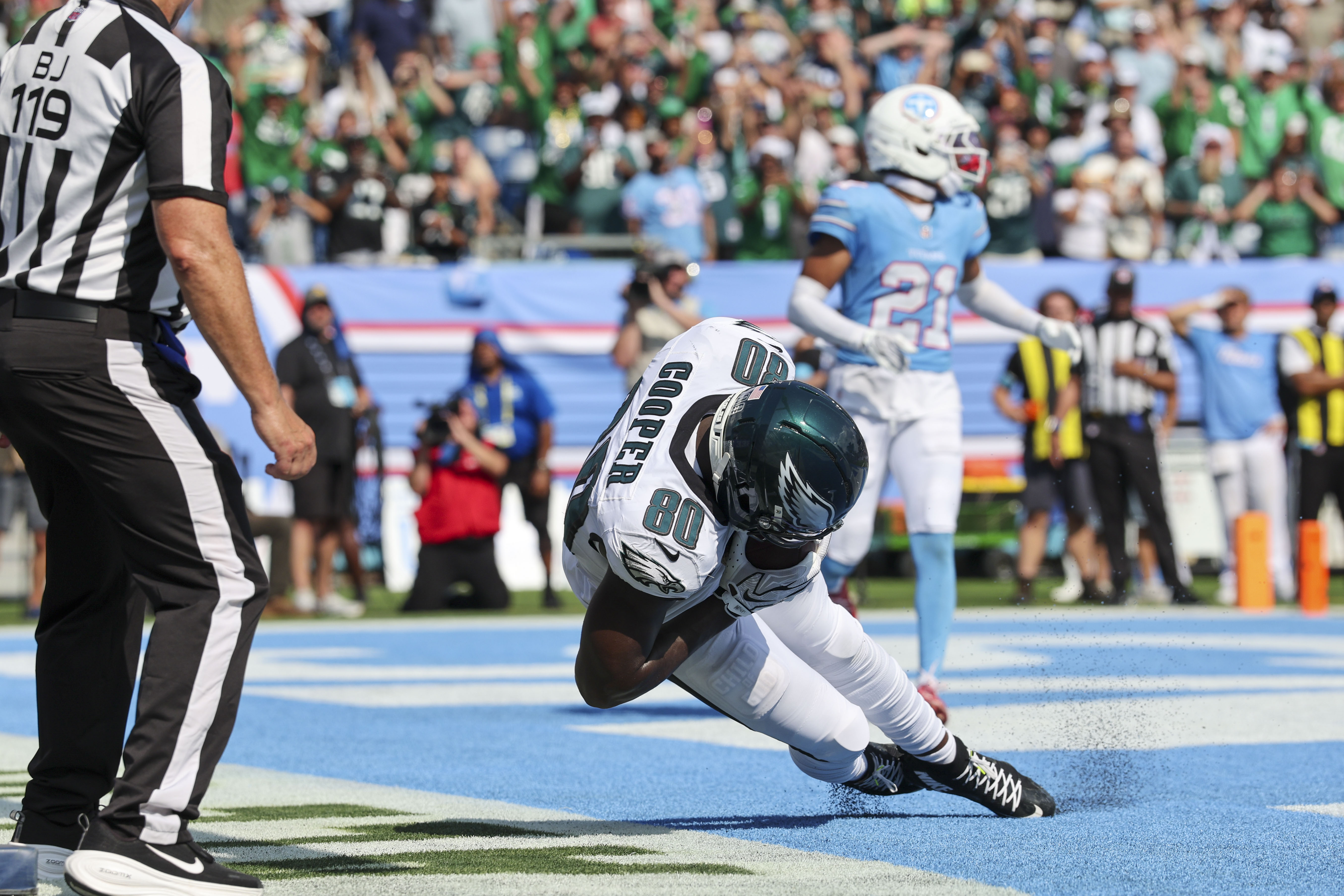
    He got late into his reads on several throws, including the game-winning 3-yard touchdown toss to Darius Cooper. Earlier, he found Cooper for a 23-yard gain when the receiver was beyond his first two reads.

    “I think it’s just a byproduct of our approach in our offense,” Hurts said. “I’ve really embraced and enjoyed the teaching progression and how things are taught.”

    Hurts has heard the noise about his not being able to diagnose defenses, dating back to his second season when the Tampa Bay Buccaneers said as much in an Eagles wild-card playoff loss. Simmons said the Titans wanted to make Hurts “play quarterback” in the lead-up to the game.

    “I heard it,” Hurts said.

    He let his play do the talking, though.

    “I’m happy we won,” Hurts said when asked for a response.

    Hurts can still do the athletic and mobile things that separate him from many other quarterbacks. He ran twice on designed runs, scrambled two times for 11 yards, and used his lower-body strength to convert on the return of the Tush Push.

    But he’s quieted some doubts about how he would adapt to the biggest scheme change of his NFL career, and about how last season ended. In Week 1, he hit Goedert for a touchdown on a four verticals concept similar to the fateful last play in the playoff loss to the San Francisco 49ers. In Week 2, he bested the opposing defensive coordinator in that game — Titans coach Robert Saleh.

    “Finally good to get him,” Hurts said.

    It’s early, of course. If the problems on Chris Kuper’s O-line are going to be waved away with the same reason, then Hurts’ strong start should be taken with a grain of salt. The same could be said about the climate — both teams had to suffer through it — even if Eagles players were melting through cleats.

    “Was like a NASCAR pit crew helping me get ready for the second half,” said Jurgens, who said he went through two pairs.

    It may be another Eagles victory, with agony and outside voices thrilled to complain about it. But Hurts knows better. The work was done. The task at hand remains.

    “We’re still progressing,” Hurts said. “Think there’s a lot for us to continue to improve on, to align toward. But you want to do that and find ways to win.”

    He’s done that as much as any quarterback over the last five seasons. But he may have to shoulder more than he ever has before.

  • The story of Jalen Hurts’ heroics in win over Titans starts with Robert Saleh, not Jeffery Simmons

    The story of Jalen Hurts’ heroics in win over Titans starts with Robert Saleh, not Jeffery Simmons

    NASHVILLE — The name on Jalen Hurts’ mind wasn’t the one you might’ve expected.

    An hour after the Eagles quarterback uploaded the latest clip to his resumé tape with a 3-yard game-winning touchdown pass to Darius Cooper to lead the Eagles to a 24-20 win over the Titans on Sunday, he settled into a chair in a cramped interview room and spoke like a man who felt like he’d proven something. Hurts had spent the previous several days aware that his quarterbacking abilities had once again become grist for the NFL’s talk show circuit. The genesis of the debate — this time, at least — was a comment by Titans star defensive tackle Jeffery Simmons, who said that the key to beating the Eagles was to “make Jalen Hurts be a quarterback.” Tennessee achieved that objective, limiting Hurts to 16 yards on five mostly inconsequential carries. The quarterbacking they wanted to force proved lethal.

    Yet it wasn’t Simmons who was at the forefront of Hurts’ mind. Though he admitted he’d heard the lineman’s comment, and though he strongly implied that he’d been motivated by the ostensible slight, it was Titans head coach Robert Saleh who drew a couple of unprompted mentions from Hurts in the wake of the wild win.

    “It felt good to get him,” Hurts said. “He’s posed some great challenges, but I kind of checked that off.”

    It was an interesting admission. One of the more undercovered story lines leading up to the game was the track record of success that Saleh’s defenses have had against the Eagles during Hurts’ tenure as QB1. Most notable was Saleh’s architecting of the 49ers’ wild-card win at Lincoln Financial Field last January, when his injury-ravaged unit limited Hurts to 168 yards on 20-of-35 passing. But Saleh was also at the scene of the crime in Week 6 of 2023, when the Jets picked Hurts off three times en route to a 20-14 upset win, a performance that prompted the Packers to enlist him as a consultant the following season as they were preparing to face the Eagles in the playoffs.

    “Coach Saleh is always known for having a really good front, and it starts with Jeffery Simmons in the middle, and the disruption he brings,” Hurts said. “He was definitely disruptive and I think for the most part we managed it well. A lot to learn from. A lot to build forward on.”

    Here, it seemed, was the actual window into Hurts’ competitive psyche on a Sunday afternoon that saw him overcome two interceptions and will the Eagles down the field on a masterful nine-play, 65-yard scoring drive after the Titans had taken a 20-17 lead with 1 minute, 56 seconds remaining. While everyone else focused on Simmons, and while Hurts happily played his part in that game, he drew a much deeper pregame motivation from the memory of his failures. Sure, Sunday’s game was a chance to stick it to Simmons and by extension to those who share his sentiments. But it was much more substantively an opportunity to deploy the lessons he’d learned in his previous go-rounds against a defensive scheme the Titans now featured under Saleh as their first-year head coach. As Hurts himself might say, there is no motivator as powerful as an opportunity to show growth.

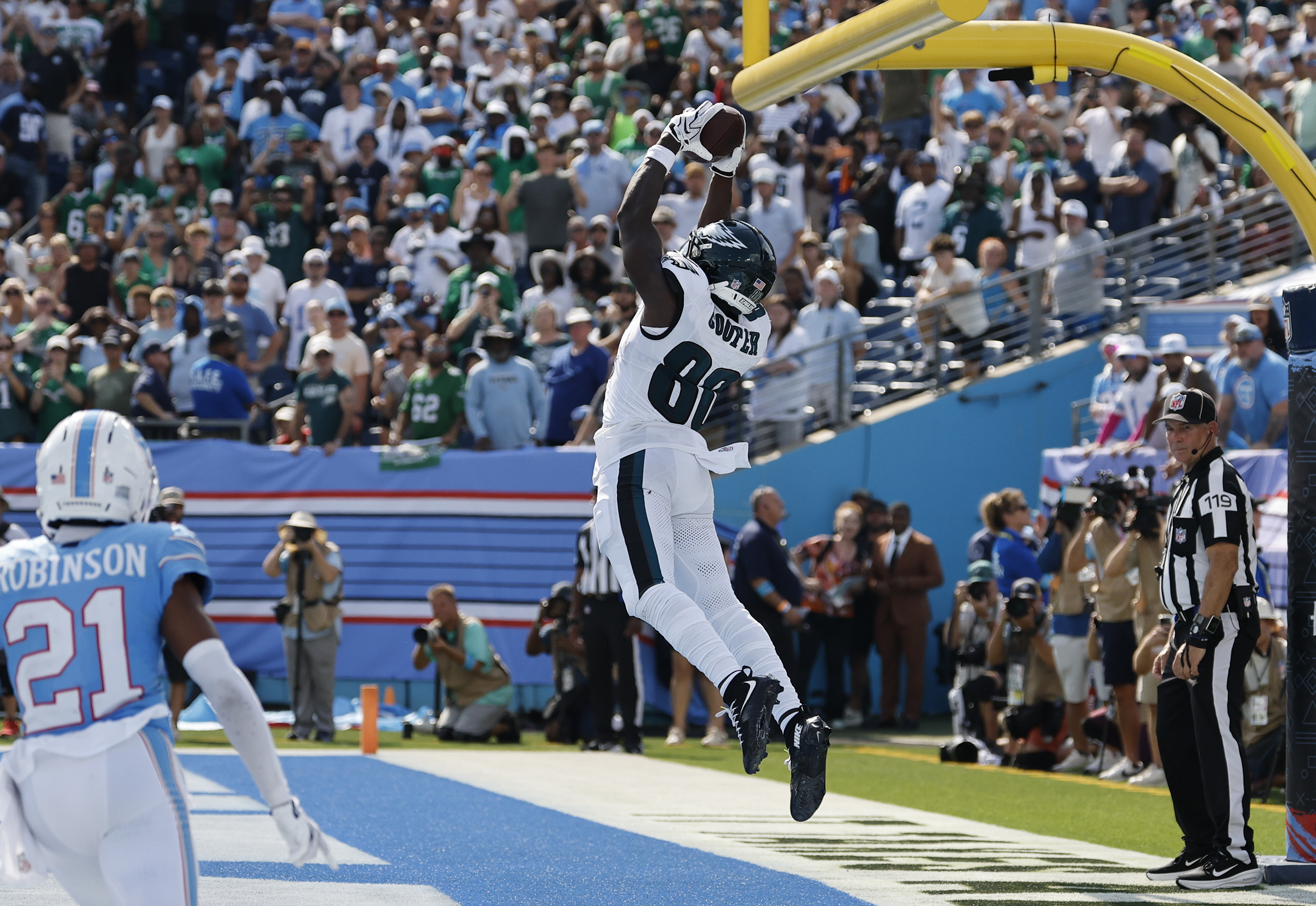
    Darius Cooper catches the game-winning touchdown late in the fourth quarter.Yong Kim / Staff Photographer

    Both he and the Eagles showed it on Sunday, albeit in an unconventional manner. They spent most of the first half looking every bit the superior team they were believed to be. Hurts was remarkably calm, poised and accurate with the football while dealing with a patchwork interior offensive line and dysfunctional running game amid a suffocating blanket of heat and humidity amplified by the artificial turf at Nissan Stadium. The Eagles entered halftime having run 40 plays: 15, 11 and 14 on three possessions covering 210 yards. That they led 14-10 rather than 21-3 was a function entirely of Hurts’ lone miscue: an end zone interception that Titans safety Amani Hooker returned 92 yards to set up a touchdown.

    It would be easy to focus on the Eagles’ second half struggles, when Hurts was off-target on a number of big throws and thus left the Eagles at the mercy of their ineffective running game and a startlingly vulnerable defense. Except, those things ultimately set the stage for two of the finest minutes of Hurts’ career.

    Rarely will you see a quarterback make a more consequential series of throws than the ones Hurts made while marching the Eagles 65 yards down the field. The headline, highlight, and game-ender was a 3-yard toss to Cooper in the back of the end zone with 9 seconds left. It was also a formality by that point. On the previous play, Hurts had hit DeVonta Smith with a 19-yard throw to convert a third-and-6. Two plays before that, he somehow managed to muscle himself outside of the tackle box and throw an incompletion while wrapped up by Titans defensive end Jacob Martin for what would have been a significant loss to push the Eagles back toward the fringe of field-goal territory.

    “Huge,” was how left tackle Jordan Mailata described that moment.

    Just as huge was Hurts’ 20-yard completion to Dontayvion Wicks on third-and-6 at the beginning of the drive.

    Take away any one of these moments, and the Eagles would have been trying to explain the inexplicable instead of shrugging off another flawed victory over a vastly inferior team.

    Instead, we can focus on that which is perfectly explicable.

    “He didn’t flinch,” Smith said.

    Nick Sirianni greets Eagles players outside of locker room after win vs. Titans
    Video: Nick Sirianni greets Eagles players outside of locker room after win vs. Titans

    The best thing you can say about Hurts, the highest compliment you can give him, is that he has shown us that we should expect everything that we saw in the closing minutes on Sunday. The calm, the rhythm, the blankness of mind. Apart from his self-evident physical gifts, his greatest competitive advantage has always been a near-total self belief that prevails regardless of circumstance. He has shown it time and again at every level of football, from Alabama to Oklahoma to the second round of the NFL draft to the questions that seem to swirl around his future on a weekly basis, with Simmons’ comment as the most recent example.

    “It’s a sense of belief,“ Mailata said. ”It’s more like a knowing. I know he’s going to go down and lead us, I know he’s going to make the right reads, I know he’s going to make the right throws.”

    More often than not, the talent prevails. The poise prevails. The unflinching self-belief prevails.

    You can say a lot of things about Hurts. The list starts with those three truths.

  • Eagles grades vs. Titans: Jalen Hurts steps up, O-line shaky, defense a mixed bag

    Eagles grades vs. Titans: Jalen Hurts steps up, O-line shaky, defense a mixed bag

    NASHVILLE — Instant grades on the Eagles’ performance in their 24-20 win over the Tennessee Titans:

    Quarterback – B+

    Jalen Hurts was excellent. Yeah, he tossed two bad interceptions. But good far outweighed the bad and Hurts ultimately drove the Eagles to victory with his two-minute, touchdown scoring drive. He threw for 264 yards and two touchdowns on 26 of 37 passing. Hurts also had some key moments on the ground. He did all of this despite the schematic and execution issues with the offensive line.
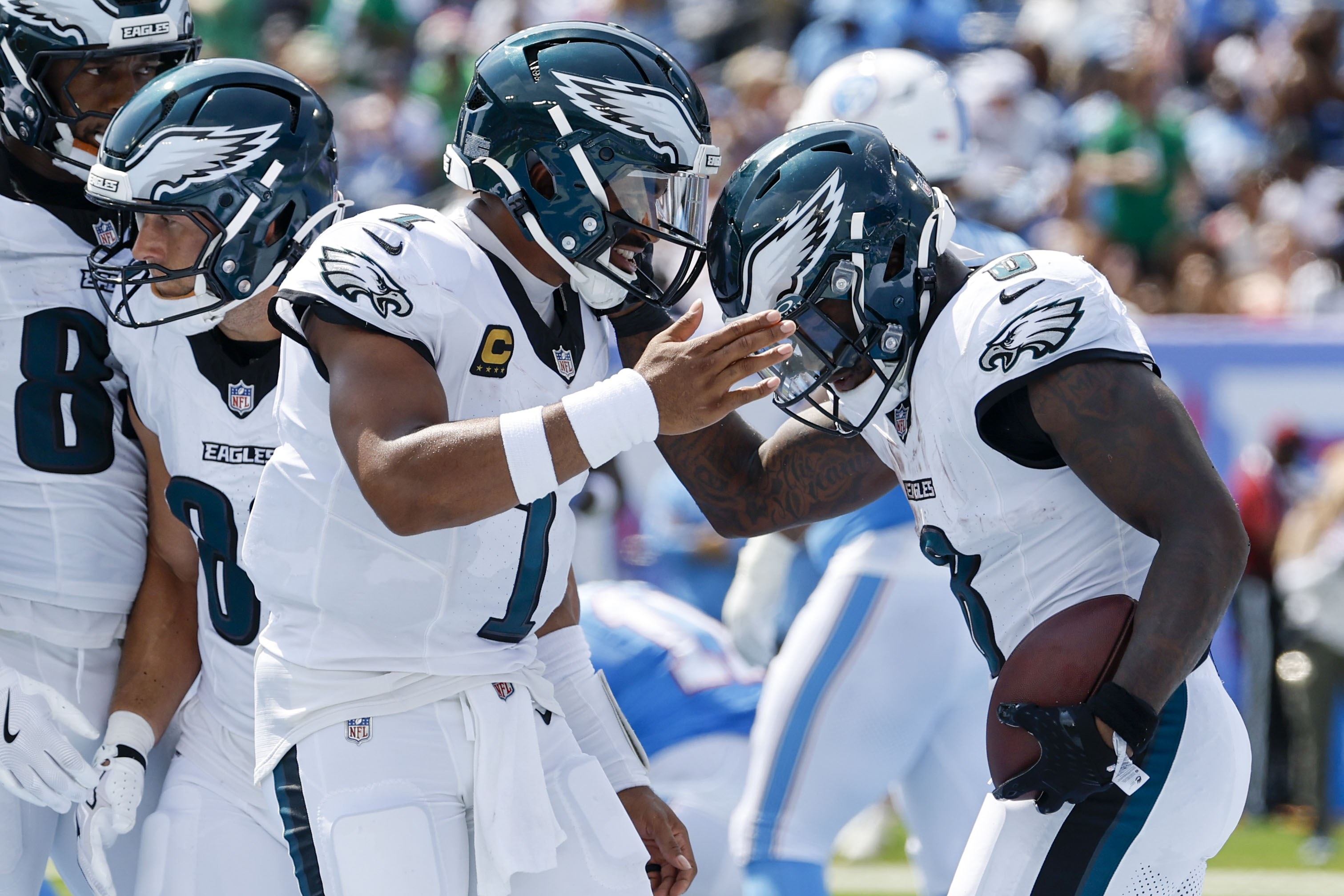
    Aside from the interception, Hurts was nearly flawless in the first half. He kept bailing the offense out on third-and-longs and converted five first-downs of four yards or more. He also did it with his legs once, running for a first down on third-and-4. Hurts has a 7-yard scramble that set up a fourth-and-2 he would subsequently convert with a throw to Wicks.

    Jalen Hurts lauds the Eagles' perseverance after win over Titans
    Video: Jalen Hurts lauds the Eagles’ perseverance after win over Titans

    Hurts looked comfortable in the pocket despite some pressure. He hooked up with Wicks for a 27-yard pass over the middle with a rusher in his face, and later got the ball out to Wicks for a 15-yard gain on third-and-12 — just before Simmons hit him. His 22-yard touchdown pass to Smith before the break came on second-and-19.

    There was the costly interception on third-and-goal, of course. The pass to Smith was undercut by safety Amani Hooker, who went 92 yards the other way. The Titans converted the turnover into a touchdown.

    Running back — C+

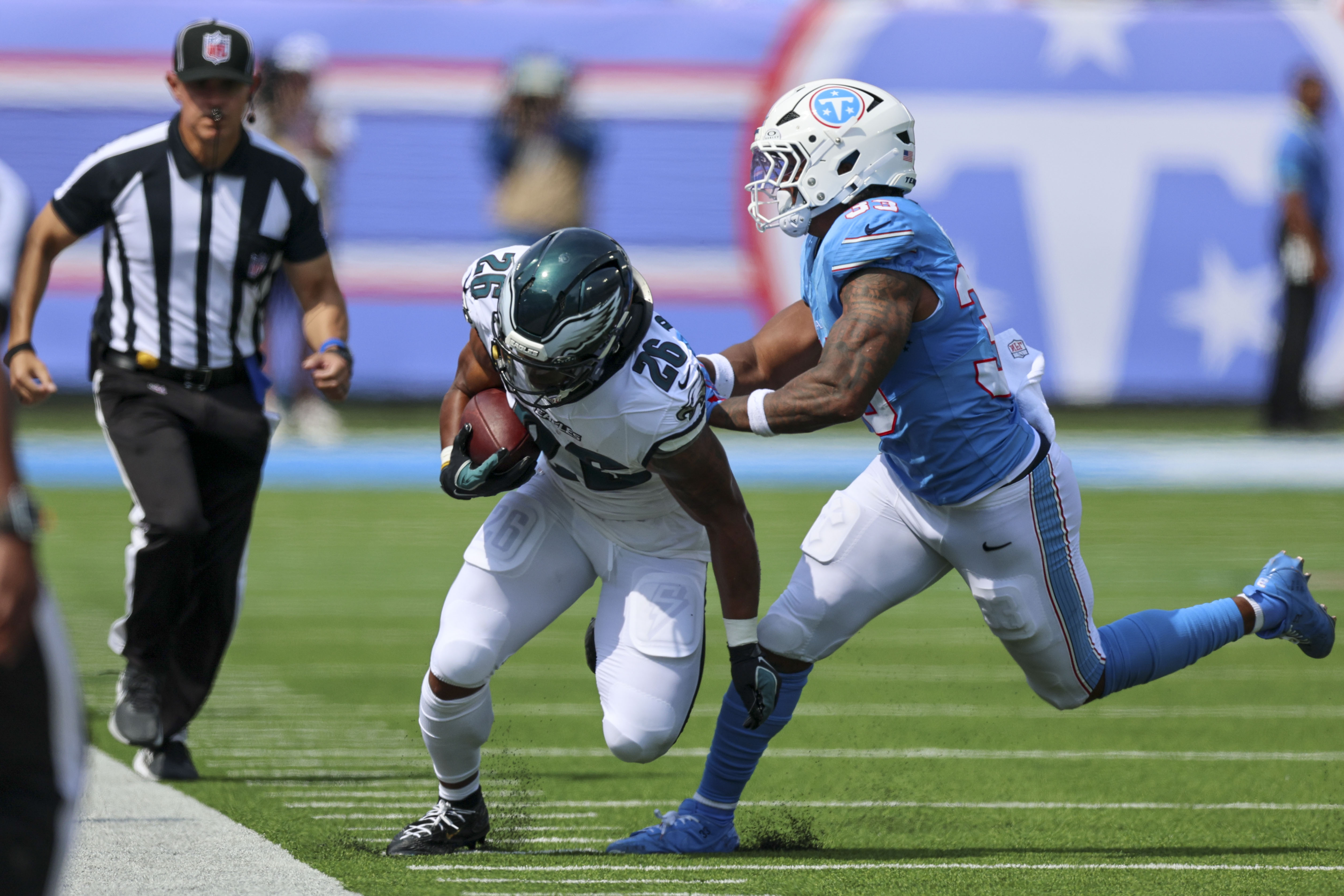
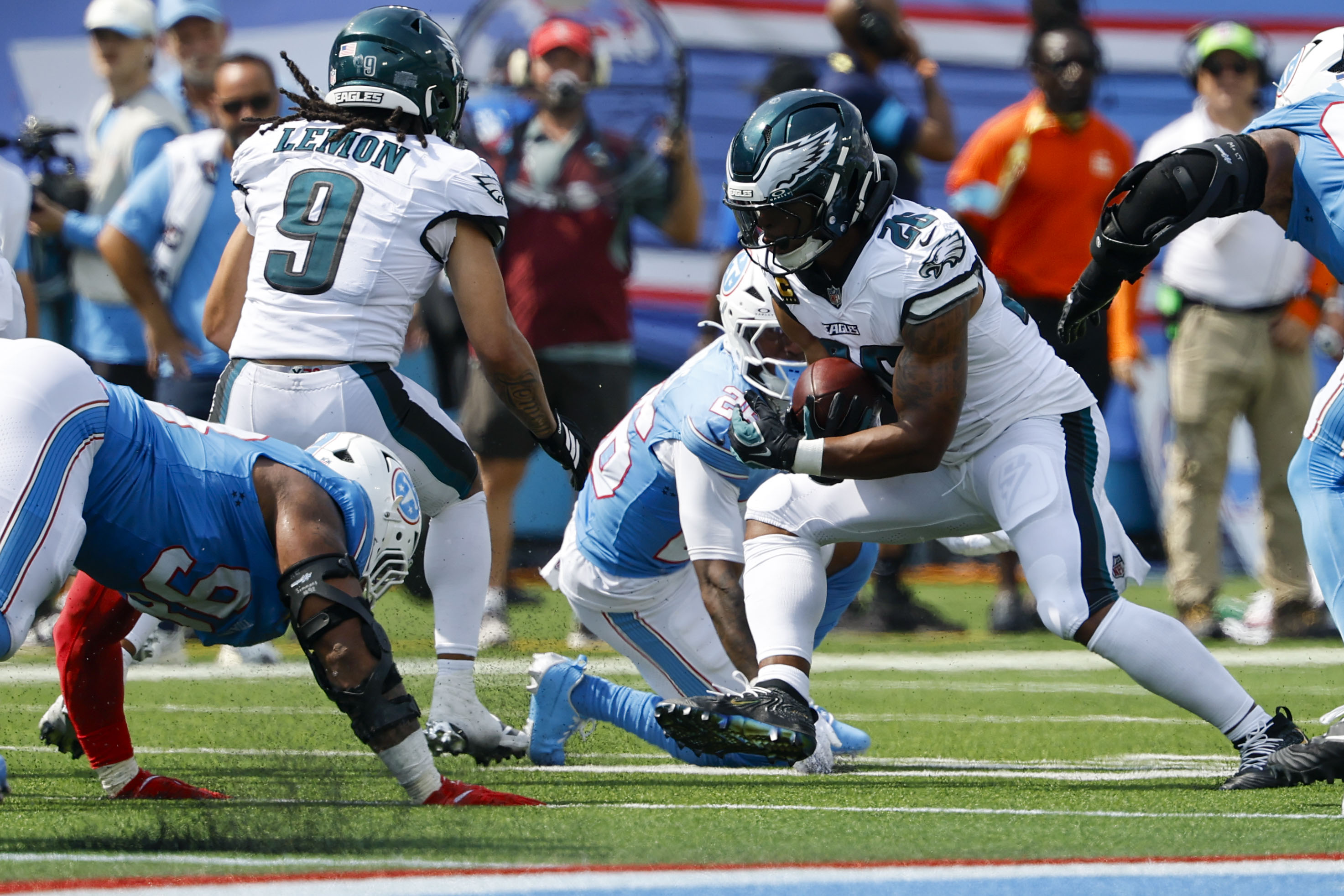
    Saquon Barkley left on the first play when he suffered a stinger. He returned to the sideline after a brief stay in the locker room, but didn’t play until the second half. Barkley caught an 11-yard swing pass on third-and-5. As a rusher, he finished with just nine yards on four carries.

    With Barkley out for most of the first half, Tank Bigsby and Will Shipley shouldered the load in the backfield. They ran hard and had some nice moments, but the blocking up front was mostly porous. The duo rushed 17 times for a combined 51 yards (3.0 average) before the break.

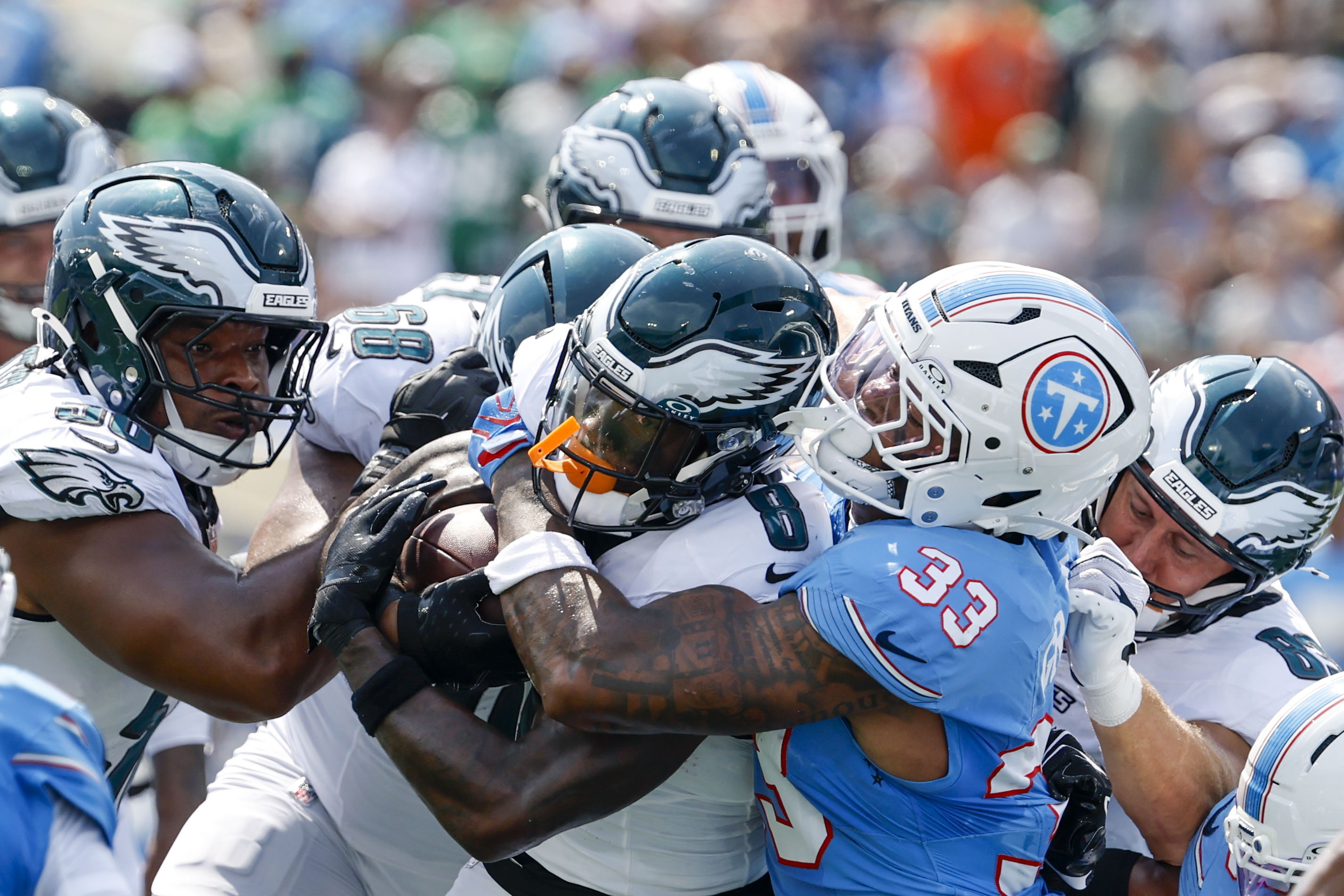
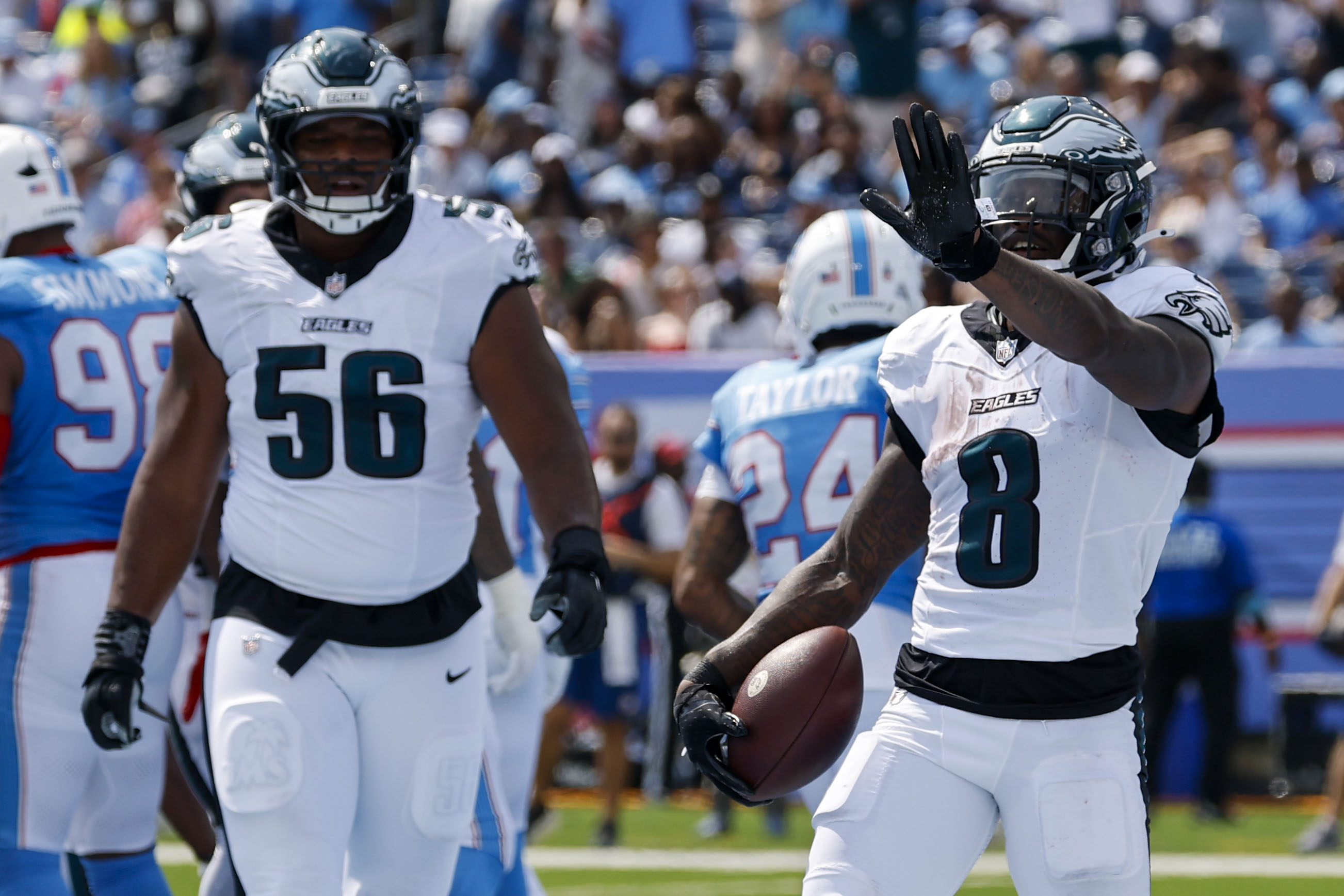
    Tank Bigsby (8) found the end zone in relief of an injured Saquon Barkley. Yong Kim / Staff Photographer

    Bigsby kept churning on a 9-yard carry down to the 2-yard line early in the second quarter, and went into the end zone on the next play for the Eagles’ first touchdown. He slipped and lost two yards on his first carry of the second half.

    Shipley got the nod on the Eagles’ last drive. He helped pick up the blitz on Hurts’ 20-yard throw to Wicks.

    Gameday Central: Initial reaction to the Eagles' comeback win vs. Titans
    Video: Gameday Central: Initial reaction to the Eagles’ comeback win vs. Titans

    Receiver / Tight end — A-

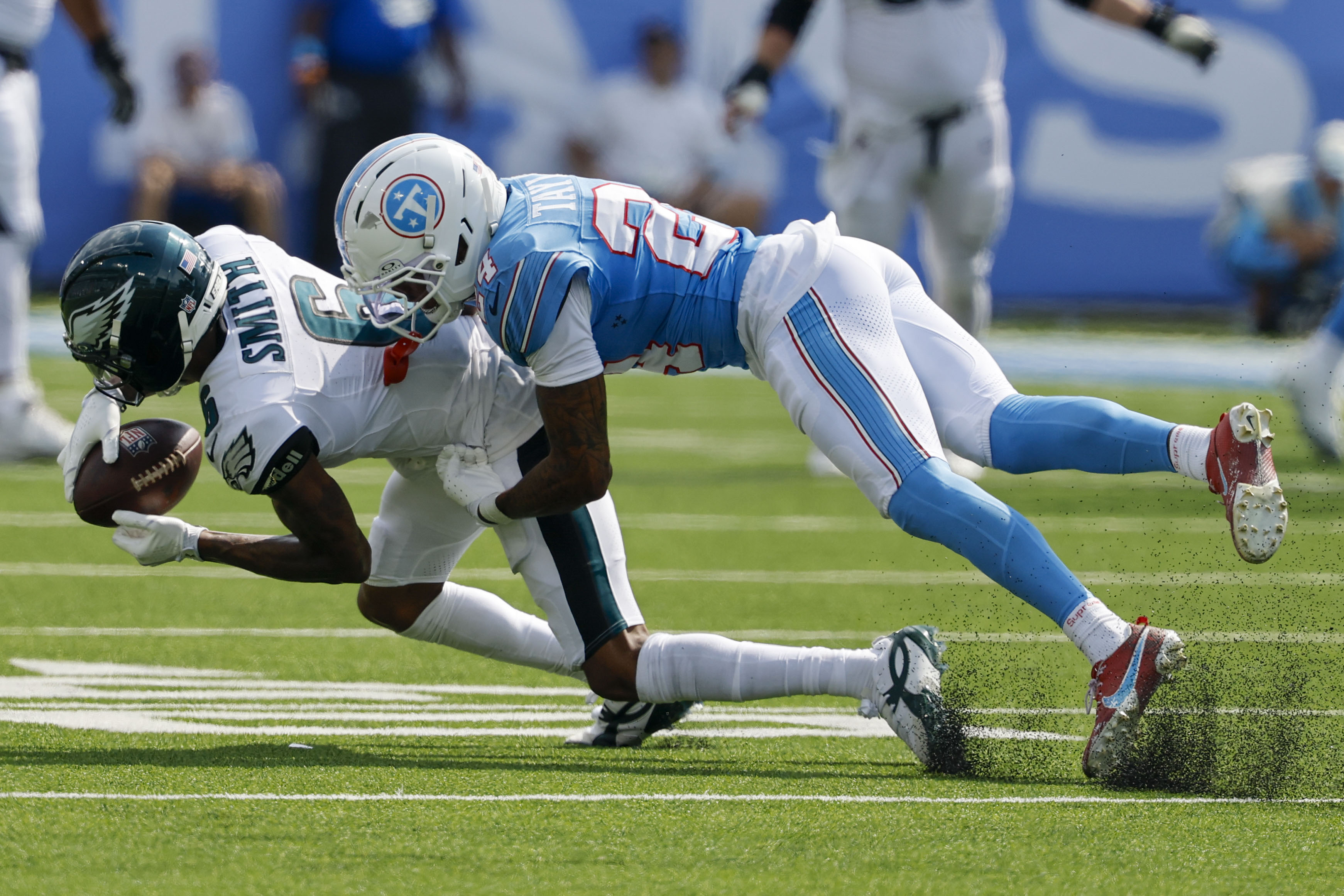
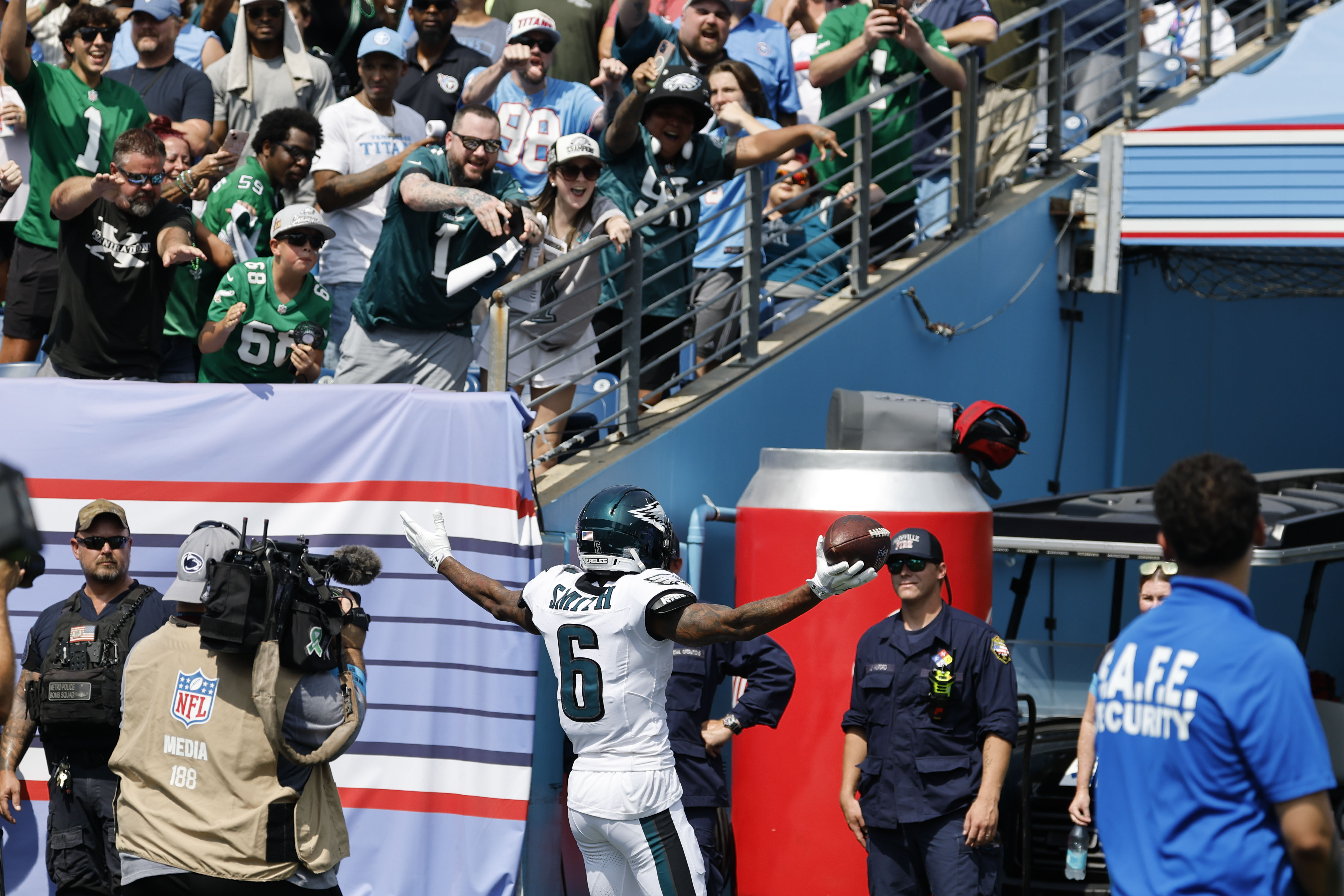
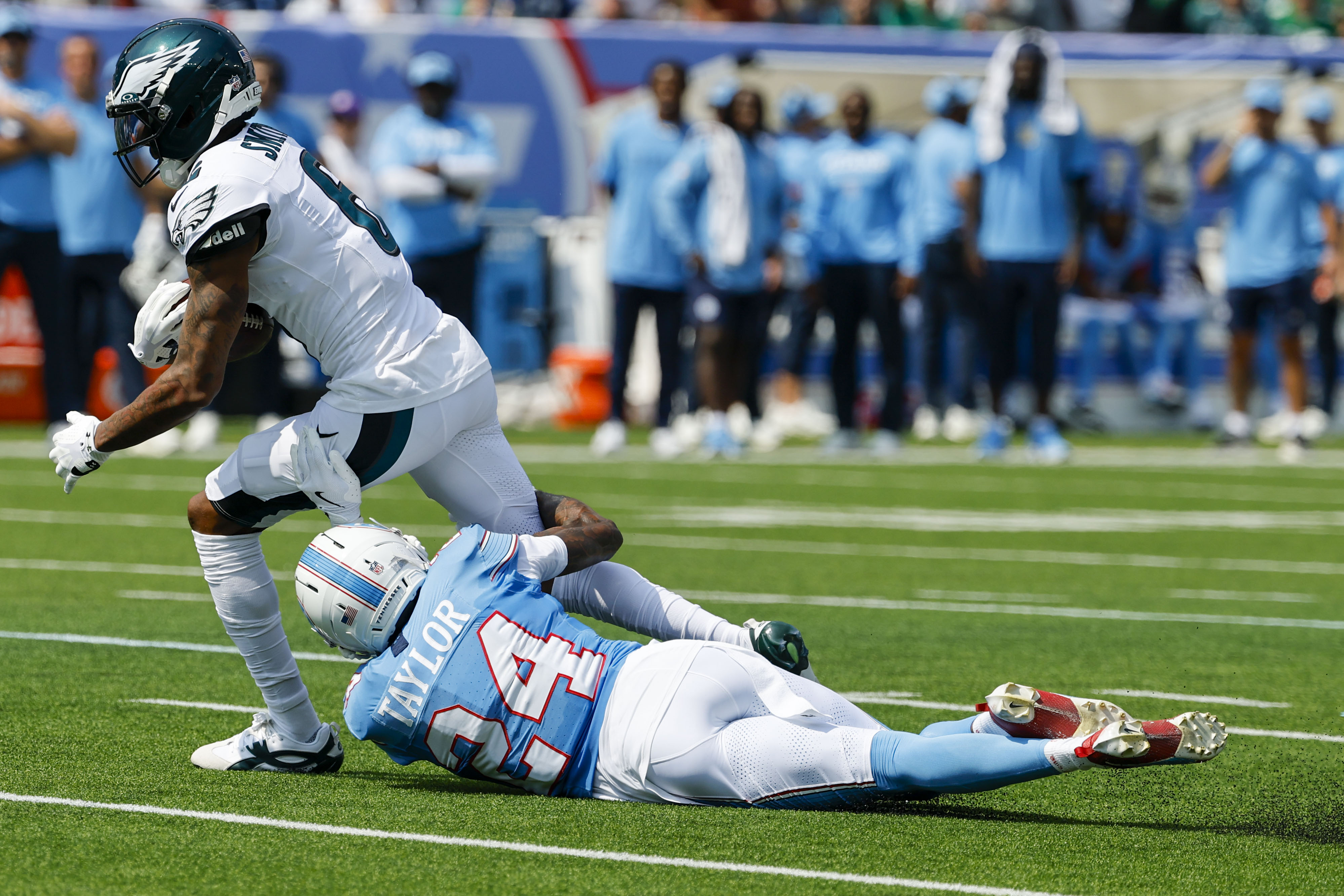
    Receiver DeVonta Smith did all could do. He made one tough catch after another and led the Eagles with 10 catches for 117 yards. He caught a 22-yard touchdown on a corner route in the second quarter. Smith converted an early third down on an 8-yard slant. He also had a key lead block on Hurts’ third-down conversion on the ground in the second quarter. He made a difficult toe-dragging grab near the sideline and then a 19-yard snag down to the 3-yard line on the final drive.

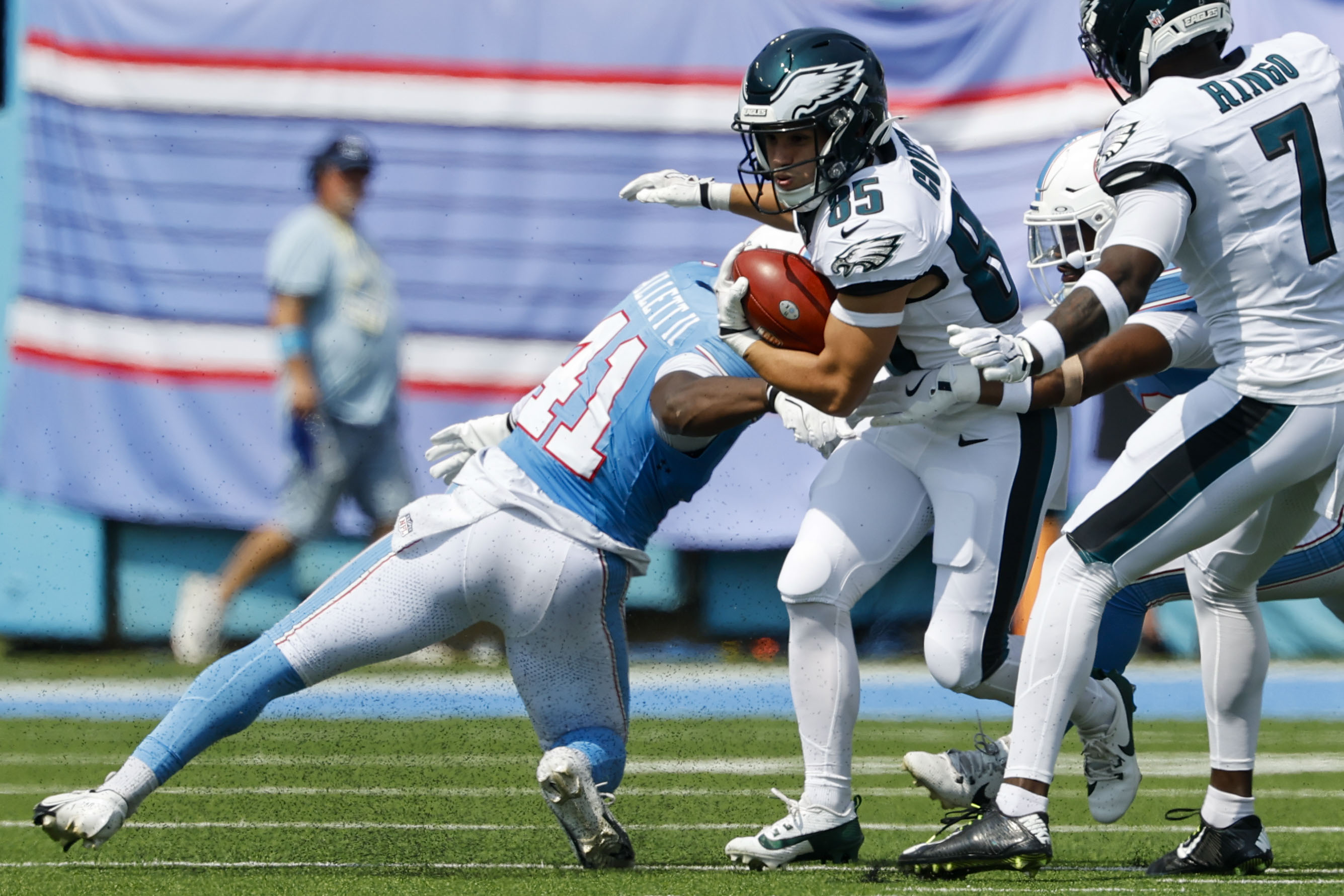
    Dontayvion Wicks was just as reliable when targeted. He caught a 27-yard pass over the middle on third and 12 on the Eagles’ first drive. Wicks converted fourth down with a 5-yard catch in the second quarter. He finished with five receptions for 74 yards, but left late with an injury. Rookie Makai Lemon is still finding his NFL legs. On his first career first down, he pulled in a 14-yard grab on third down late in the first quarter. Another screen pass, though, resulted in Lemon getting dropped for a loss in the second quarter. He had nowhere to go.

    Dontayvion Wicks continued to add value for the Eagles passing game. Yong Kim / Staff Photographer

    Darius Cooper made the game-winning touchdown catch when he went up for Hurts’ lob and kept both feet inbounds. Earlier in the fourth quarter, he got open and picked up 23 yards.

    Tight end Dallas Goedert got upended while run blocking in the second quarter and didn’t return because of the knee injury. Johnny Mundt had more receiving responsibility with Goedert out. He drew an illegal use of the hands penalty in the second quarter. Mundt seemed to miss his assignment on an outside zone run that netted few yards just before the half. He held on a Hollywood Brown end around in the fourth quarter.

    After not playing a snap in the first game, Brown was featured at times on offense. He ran nine yards on a sweep play in the second quarter.

    Offensive line — C-

    To some surprise, the Eagles made changes at two spots when they only needed to replace Landon Dickerson. They moved Cam Jurgens to left guard and started Drew Kendall at center. It was often ugly. But it was another shaky outing from new O-line coach Chris Kuper’s entire group. The run blocking just wasn’t sound. The pass protection was only a little better.
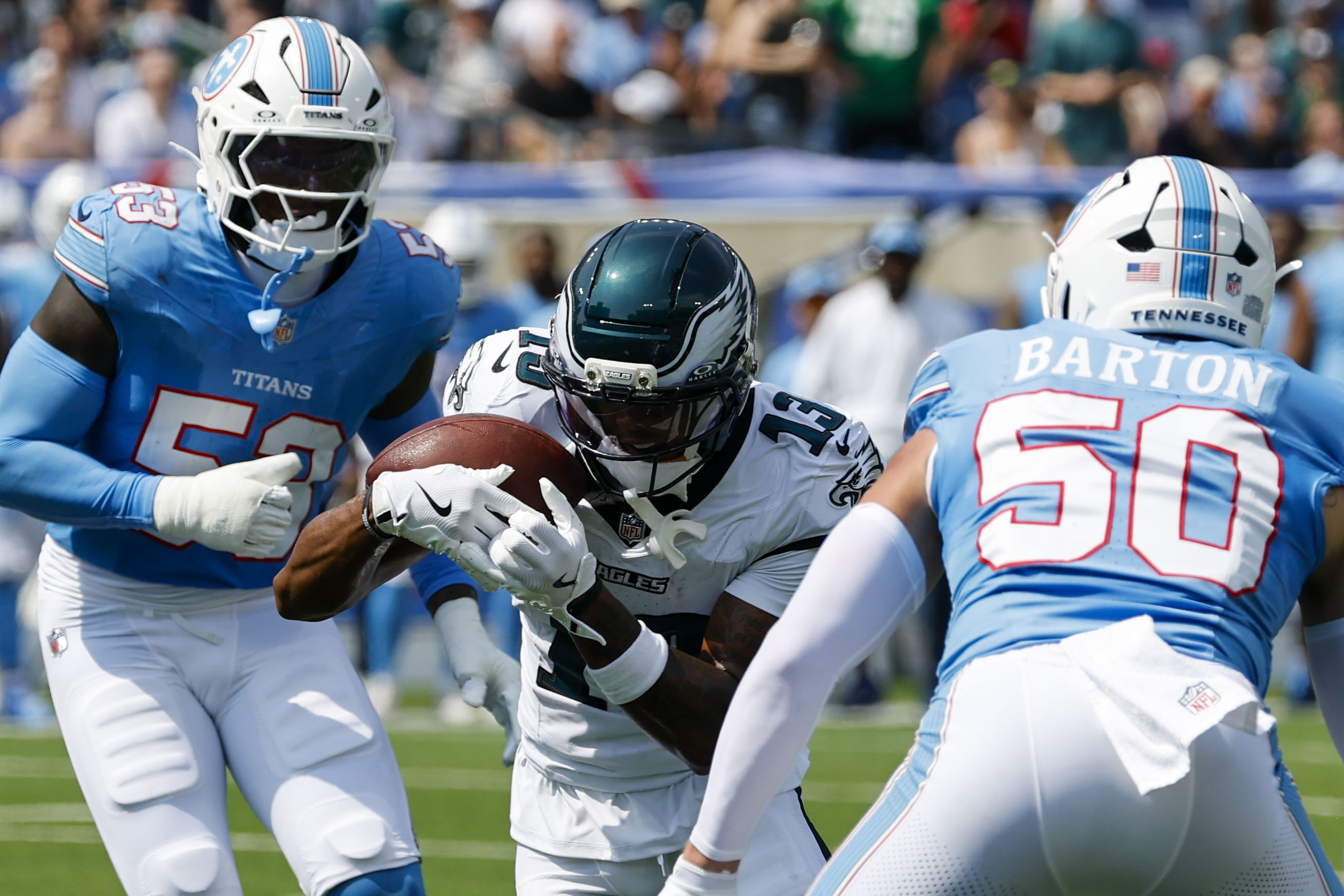
    There was the matter of containing Jeffery Simmons. The All pro defensive tackle owned Kendall on the Eagles’ opening drive and forced Hurts to burn a throw into the ground. Kendall appeared to miss a block. The second-year O-lineman had a tough assignment, but it was a grind.
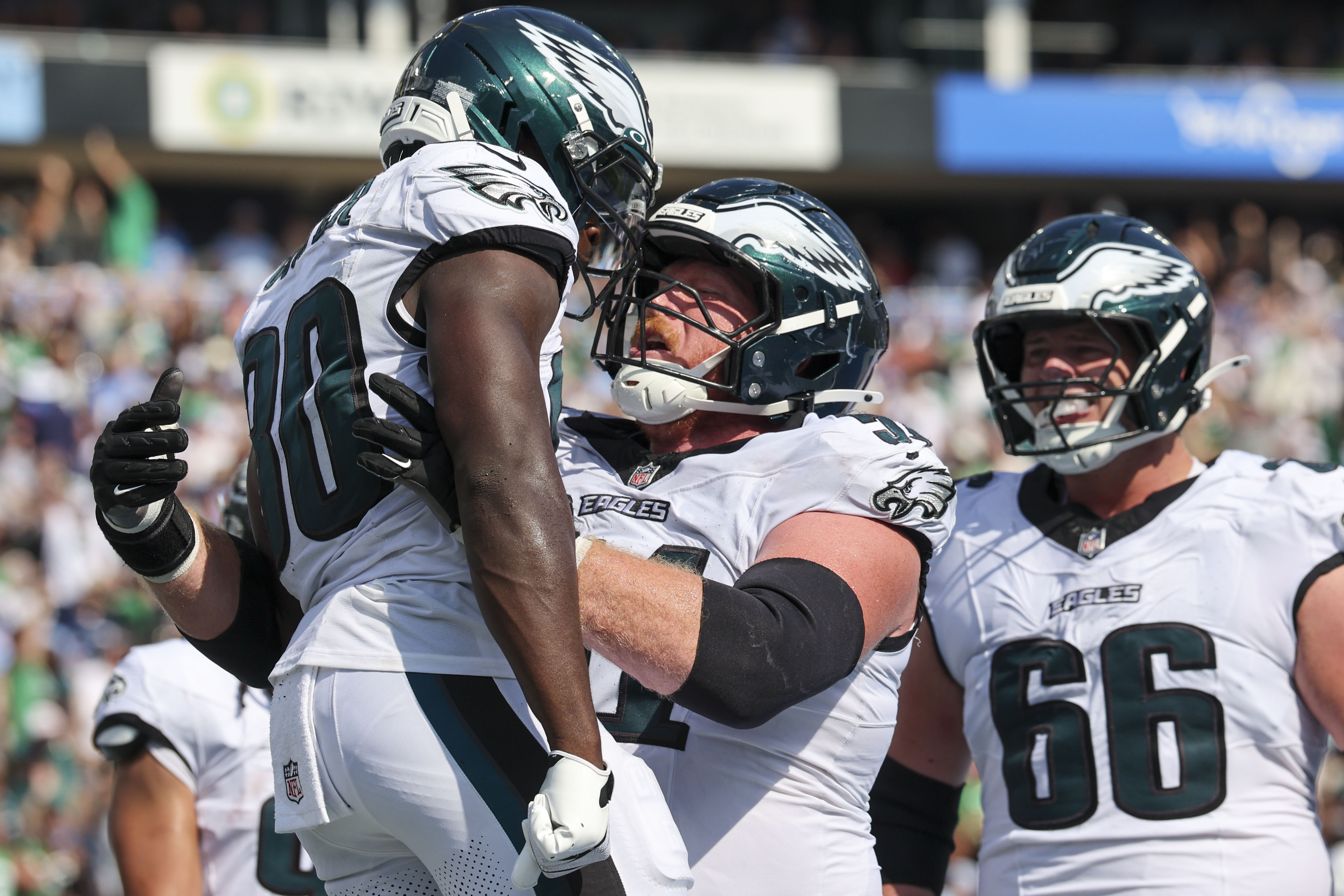
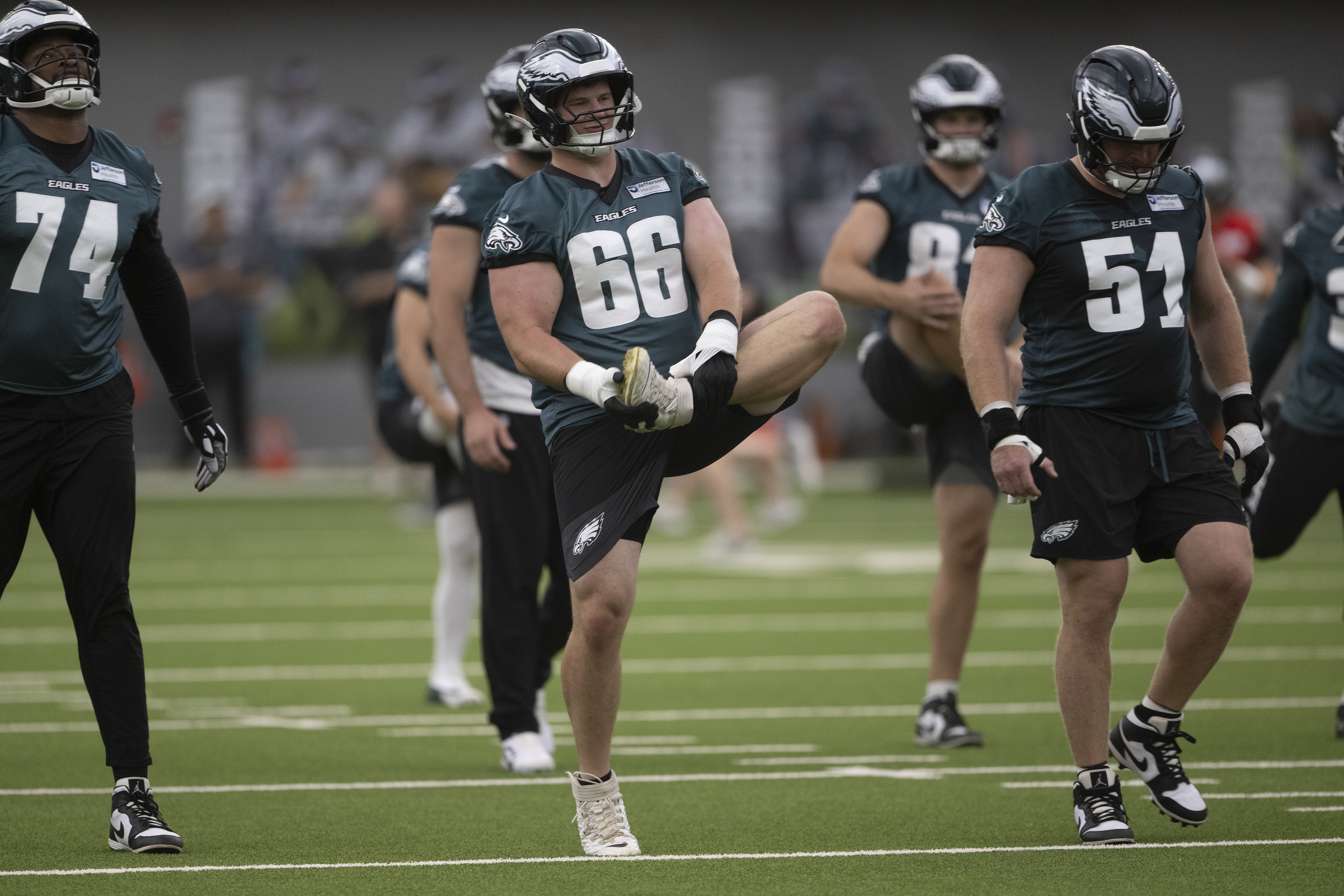
    Drew Kendall (66) and the Eagles offensive line had its struggles on Sunday. Yong Kim / Staff Photographer

    Jurgens struggled vs. Simmons and others. He got spun around by the defensive tackle on a run play in which Bigsby was stretched out for no gain. Jurgens also got knocked off balance by Titans D-tackle John Franklin-Myers in the second quarter. He was a turnstile on edge Jacob Martin’s third-down sack of Hurts in the third quarter.

    Right guard Tyler Steen didn’t hold up either. He got beat by D-tackle Nazir Stackhouse and later by Simmons on late second quarter runs that resulted in losses. He committed a holding penalty to open the second half. Steen got beat again on a third-down rush in the third quarter in which Hurts had to escape.

    Lane Johnson and Jordan Mailata were decent in pass protection, but they had breakdowns, too. Johnson struggled with his block on the play in which Barkley got hurt. He also lined up illegally early in the second half. Mailata got surprised by an outside twist by Simmons, and landed on his rear on Hurts’ touchdown throw to Smith.

    Defensive line — B-

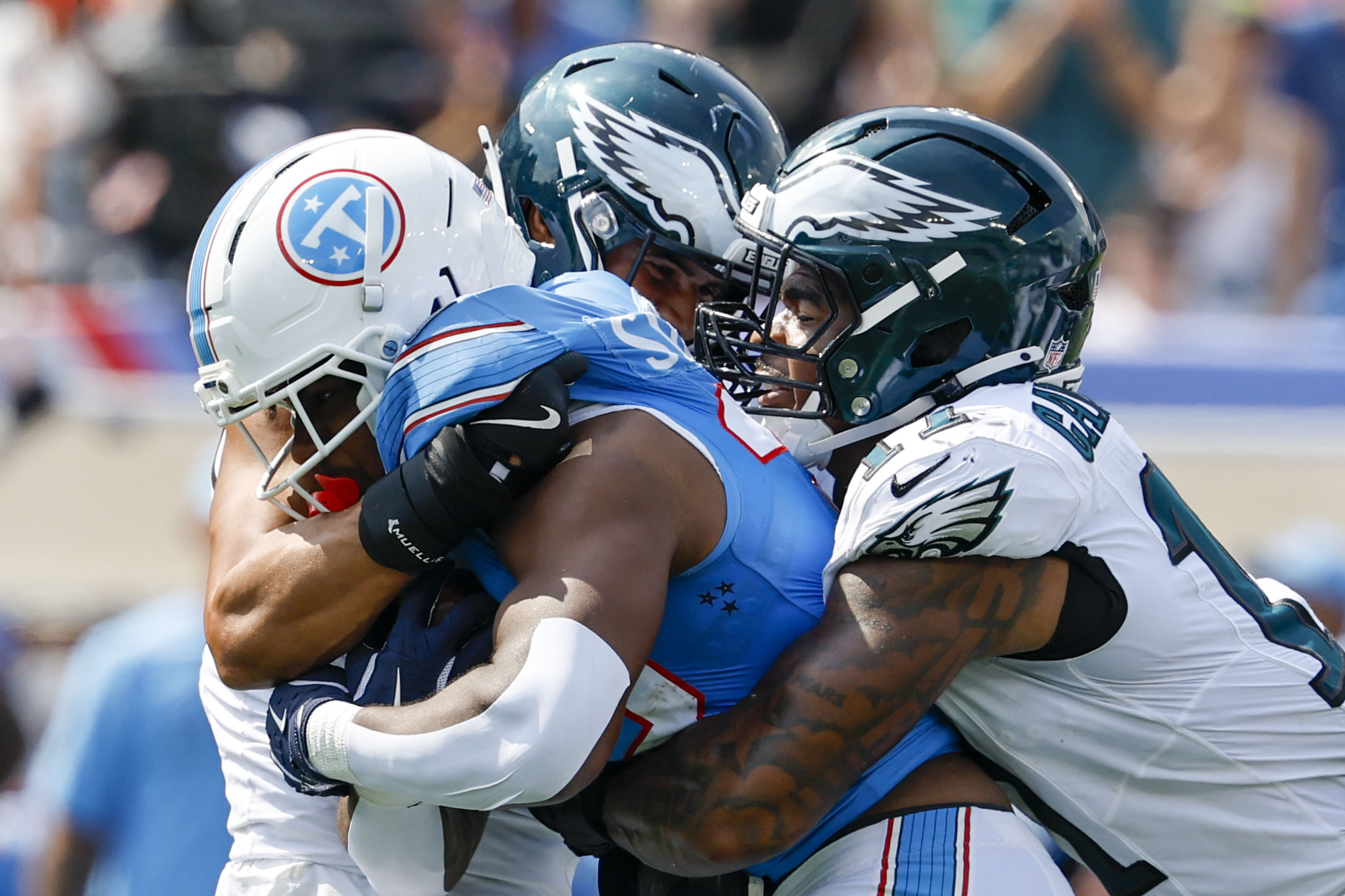
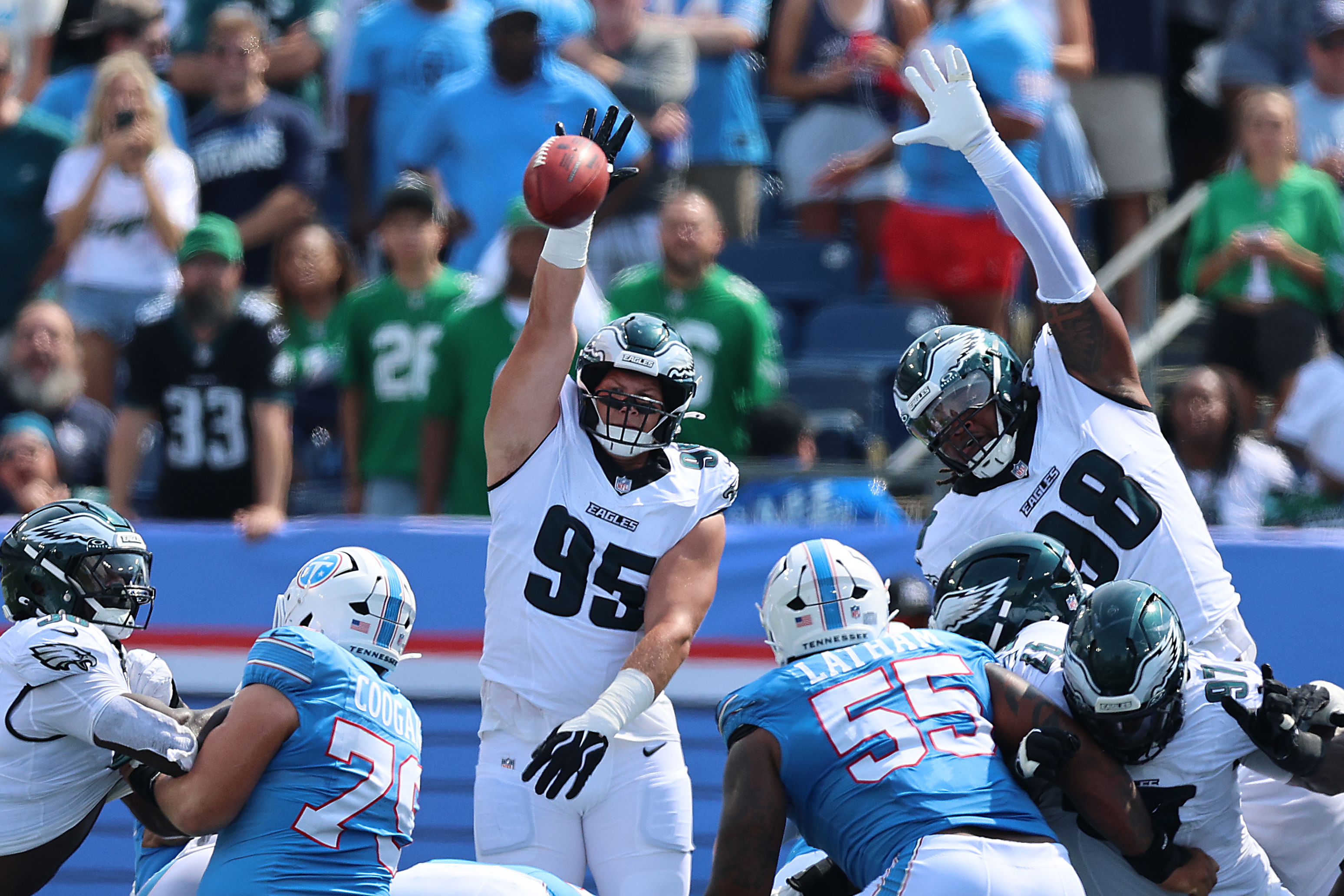
    The front looked gassed at times, and understandably so. It was hot. There were a lot of D-linemen with hands on their hips at the end of the Titans’ 12-play touchdown drive late in the third quarter. The run defense was leaky at times. There wasn’t enough pressure on the few times quarterback Cam Ward dropped on obvious pass downs. They did stand tall and force a field goal at the end.

    Jalen Carter, playing with a soft cast on his wrist, was relatively quiet for the first three quarters. He did bust through on a run play in the third quarter and sacked Ward late in the fourth. Jordan Davis didn’t dominate in the run game like he normally does. Moro Ojomo had a big tackle for loss in the fourth quarter.

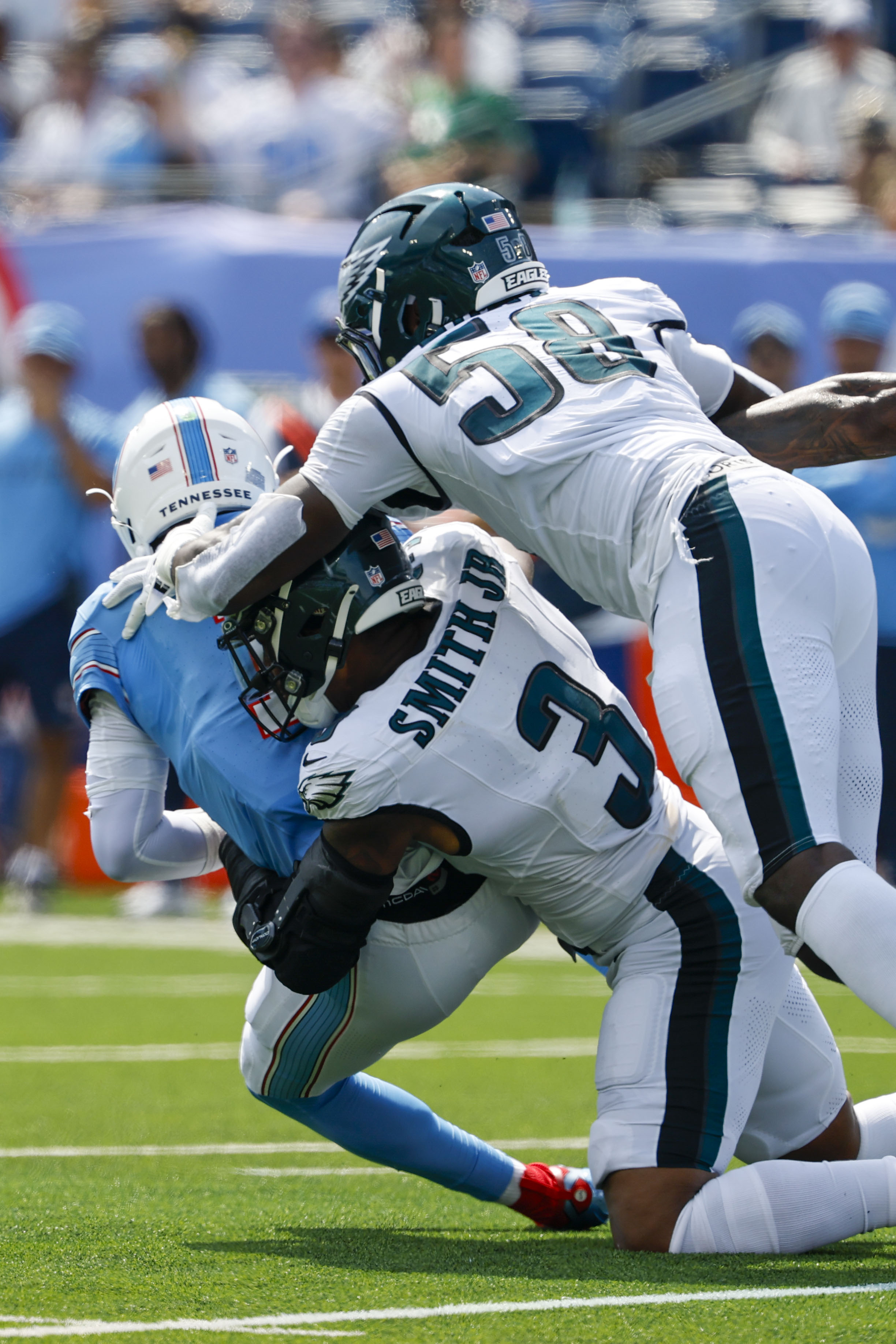
    Nolan Smith Jr. (3) had a sack of Cam Ward on Sunday. Yong Kim / Staff Photographer

    Edge Jonathan Greenard (pectoral) was out for a second straight week. Jalyx Hunt got things started with a tackle for loss on Pollard’s first carry. Hunt later squeezed into the backfield to force running back Tyjae Spears into Davis’ arms. As a pass rusher, he drew a face mask when he penetrated on an inside stunt in the second quarter.

    In the second half, his edge setting contributed to a Pollard run for no gain. Nolan Smith Jr. got home for a sack with an inside rush late in the second quarter. Smith also had a tackle for loss on a run in the fourth quarter.

    Defensive tackles Byron Young and Ty Robinson got some snaps in the heat.

    Linebacker — C+

    There was just too much leakage against a Titans offense that looked near-pathetic in the first week, and the off-ball linebackers were just as responsible. Zack Baun appeared to over-pursue on Pollard’s 13-yard run on third-and-1 in the second quarter. Baun also missed an open field tackle on a dump pass that sprung Spears for 27 yards just before the half. He did stop Titans running back Nick Singleton for a loss in the third quarter.

    Jihaad Campbell did well to shed a block and stop a screen for no gain on the Titans’ first possession. He was targeted through the air several times. Both linebackers bit on a play fake and Ward hit receiver Calvin Ridley for a 25-yard catch in the third quarter.

    Riq Woolen and the Eagles cornerbacks had their share of challenges against a nondescript Titans receiving corps. Yong Kim / Staff Photographer

    Cornerback — B

    Ward didn’t drop to throw much downfield, but when he did he was more efficient than he should have been. Quinyon Mitchell and Riq Woolen did keep Titans receivers from winning often on the outside. Receiver Calvin Ridley hauled in a first down on a slant in front of Mitchell. His run defense on Spears’ 27-yard run was not ideal.

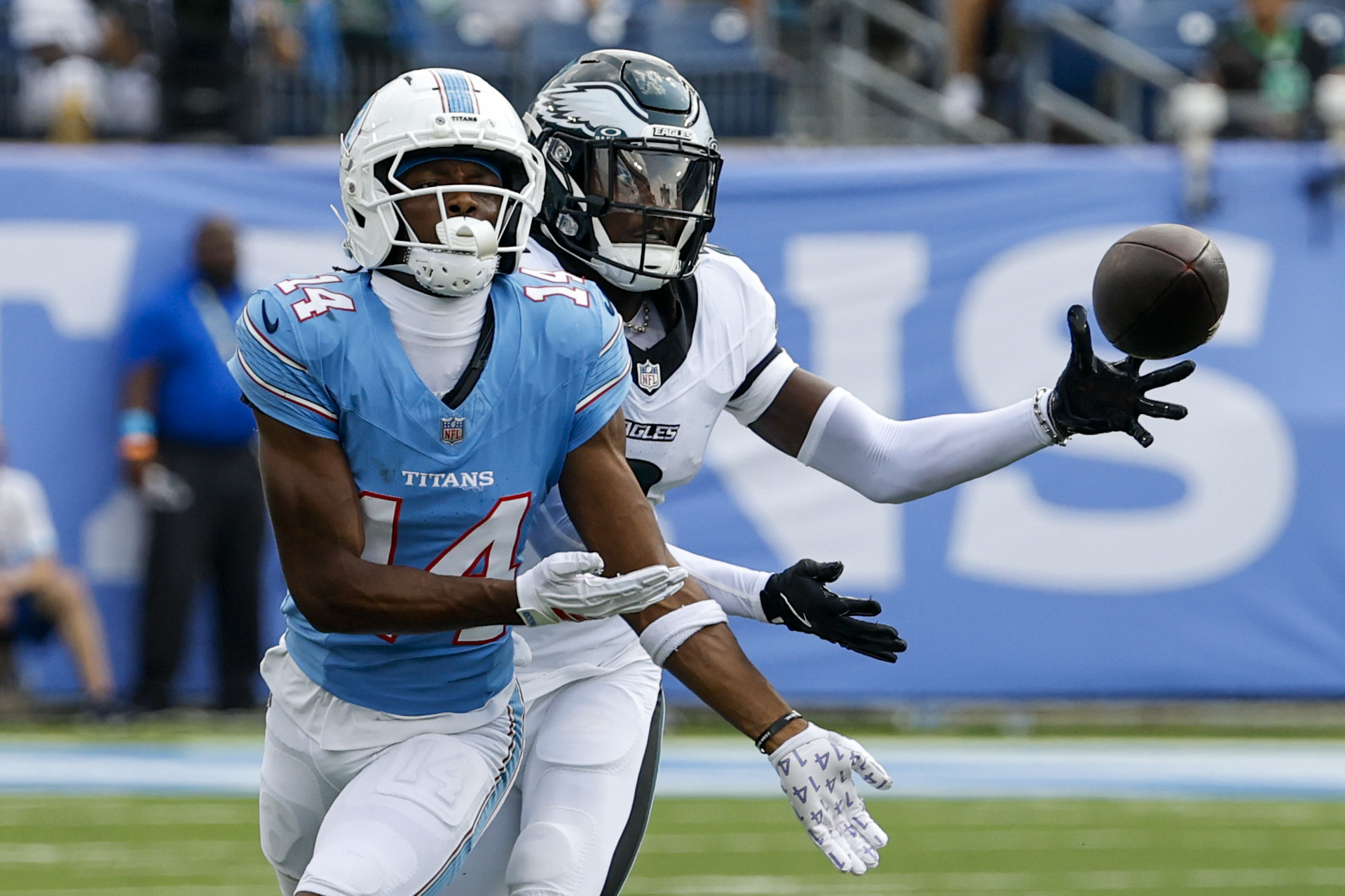
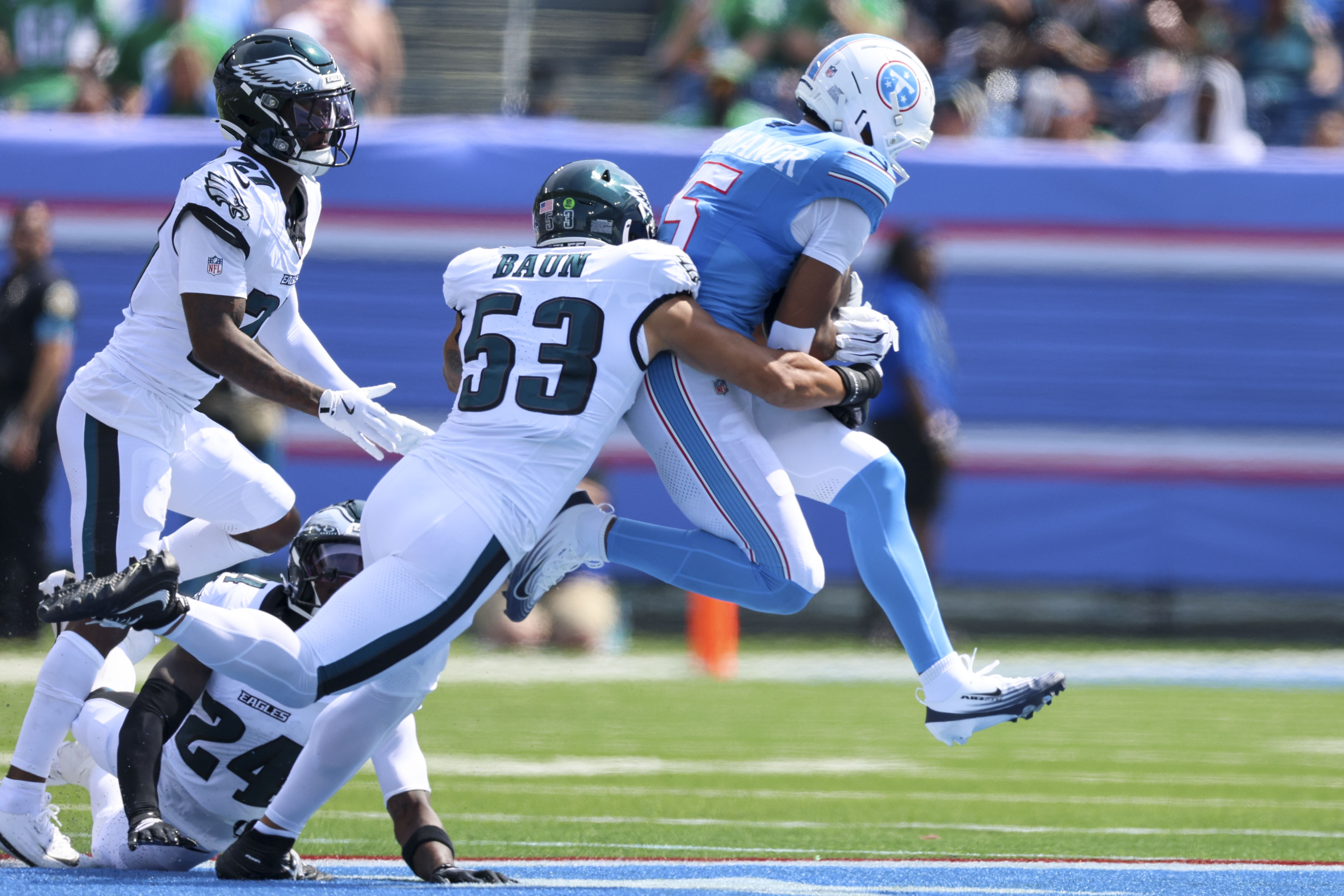
    Cooper DeJean rebounded from last week’s rough outing. He tackled rookie receiver Carnell Tate short of the sticks on third down in the third quarter. Mitchell and Cooper were victimized by a soft zone on third and 13 when Ward hit receiver Elic Ayomanor for 28 yards on a slant route.

    Safety — C-

    The tackling at the safety spot just wasn’t good enough. Andrew Mukuba played despite being questionable after suffering a knee injury in practice. He drilled Tate over the middle early on. Mukuba appeared to lose receiver Wan’Dale Robinson on a third-and-5 conversion in the third quarter. It came when DeJean blitzed off the edge.

    Mukuba made a strong run stop at the goal line in the third quarter. But he had a weak tackle tackle on a Pollard 18-yard bolt up the middle in the fourth quarter.

    Marcus Epps was in the vicinity over the top on Ayomanor’s 28-yard catch in the middle of the Eagles’ Bermuda Triangle. Epps got hurdled over in the fourth quarter. Later in the drive, he totally overran the play on Spears’ 27-run on third-and-22.

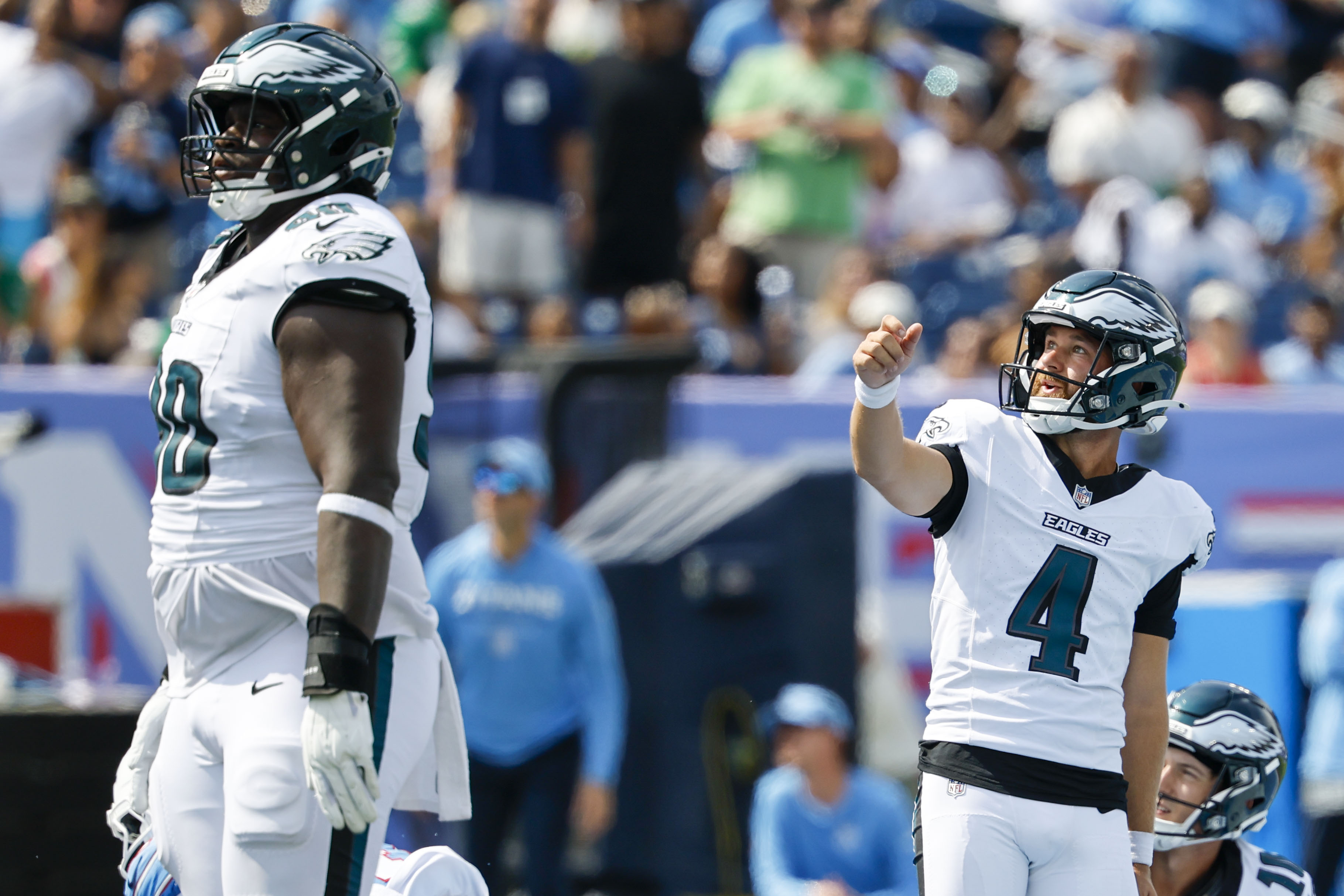
    Jake Elliott (4) nailed a 58-yarder in the Nashville heat. Yong Kim / Staff Photographer

    Special teams — A

    Kicker Jake Elliott nailed a 58-yard field goal in the third quarter. It tied the fourth-longest kick of his career.

    Braden Mann averaged 50.5 net yards on two punts. His first punt didn’t come until the third quarter when he booted a 57-yarder that was fair caught. Britain Covey averaged 15.5 yards on two punt returns and had a 23-yarder. He was also back on kickoffs, along with Shipley, given Titans kicker Joey Slye’s ability to hit knuckleballs. Alas, Slye never tried one.

    Coaching — B-

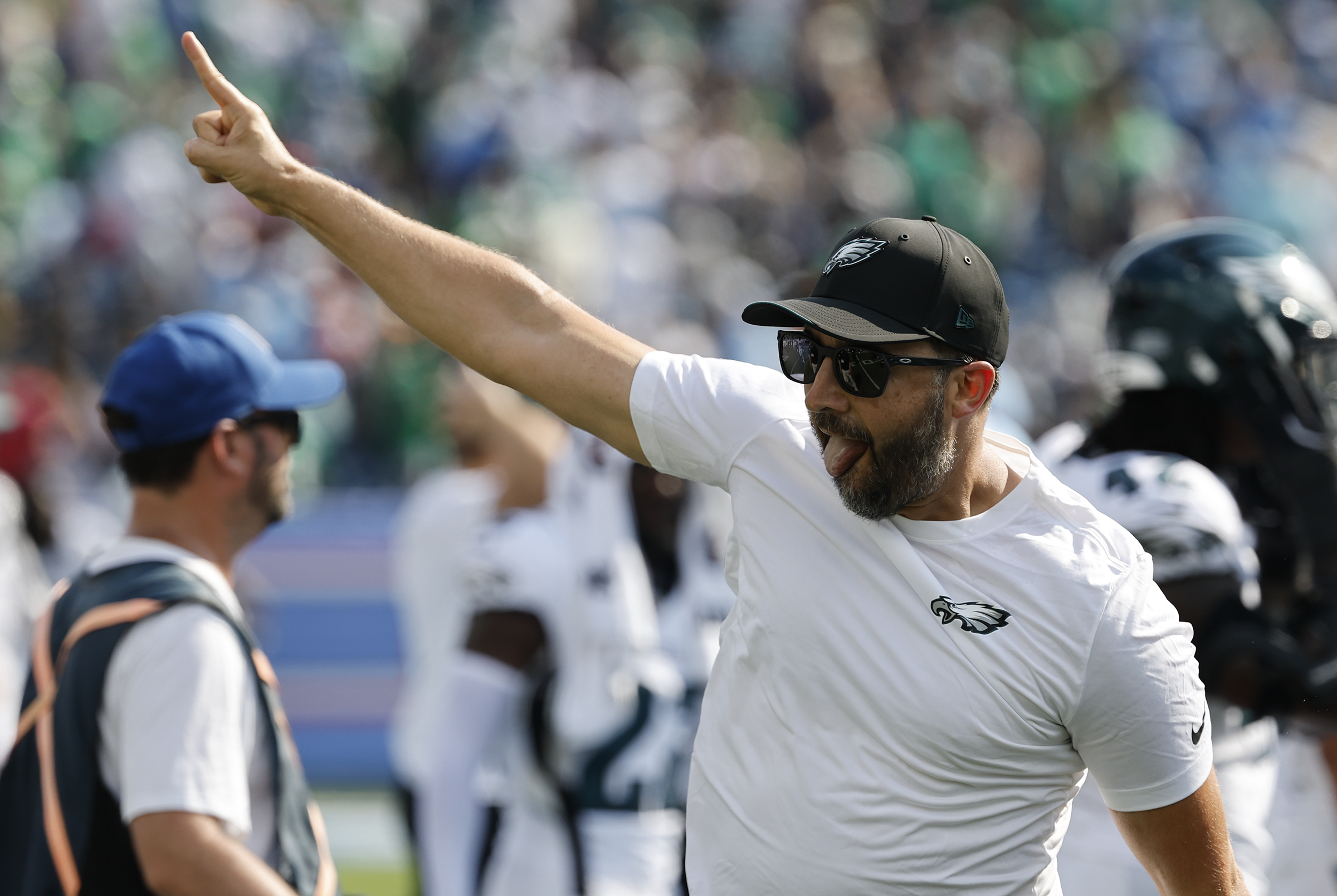
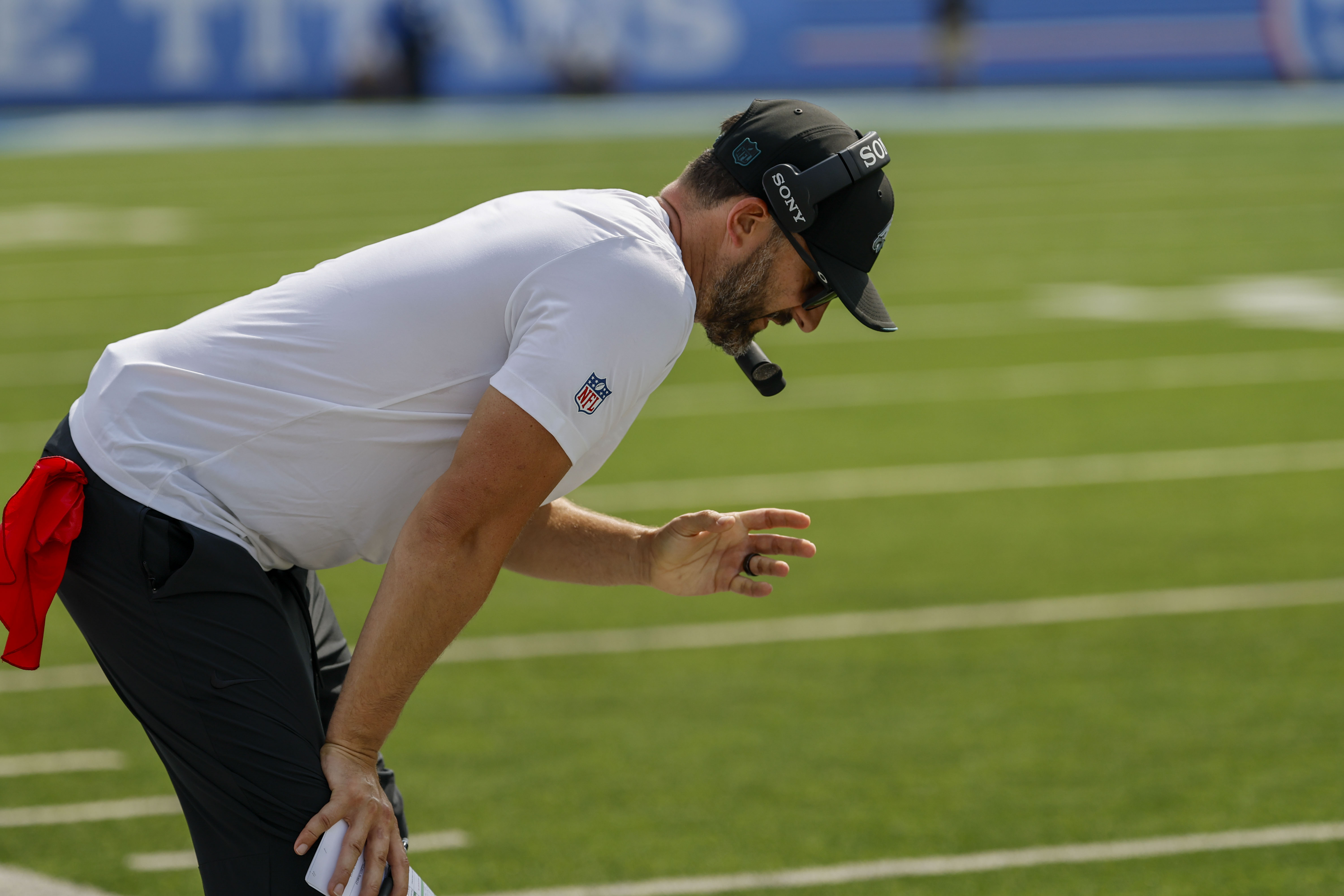
    Coach Nick Sirianni ended the Eagles’ streak of forgettable trips to the Music City. It looked like they might exit Tennessee with another nasty loss. But Hurts carried his team to victory and a 2-0 record despite the sloppy game against an inferior opponent. Real tests are forthcoming.

    We saw the return of the Tush Push for the first time this season. It led to a Titans offsides penalty on the first try and Hurts converted on the second.

    Nick Sirianni greets Eagles players outside of locker room after win vs. Titans
    Video: Nick Sirianni greets Eagles players outside of locker room after win vs. Titans

    Offensive coordinator Sean Mannion is still feeling his way in the new job. The new stuff he brought from the Kyle Shanahan scheme just hasn’t clicked enough. Hurts had more success when he was in shotgun on third downs. Mannion’s play-calling had more rhythm than it did in the first week, but the issues on early downs continued. There just wasn’t a good plan nor execution on first- and second-down run plays.

    Defensive coordinator Vic Fangio’s unit held the Titans to just 20 points, but it’s not like Ward and Co. were considered a top offense. Fangio had some suspect calls on third down and probably played it too passive on third-and-13 before the half.

  • The Zack Wheeler conversation: Why he expected to thrive after surgery, and how much longer he wants to play

    The Zack Wheeler conversation: Why he expected to thrive after surgery, and how much longer he wants to play

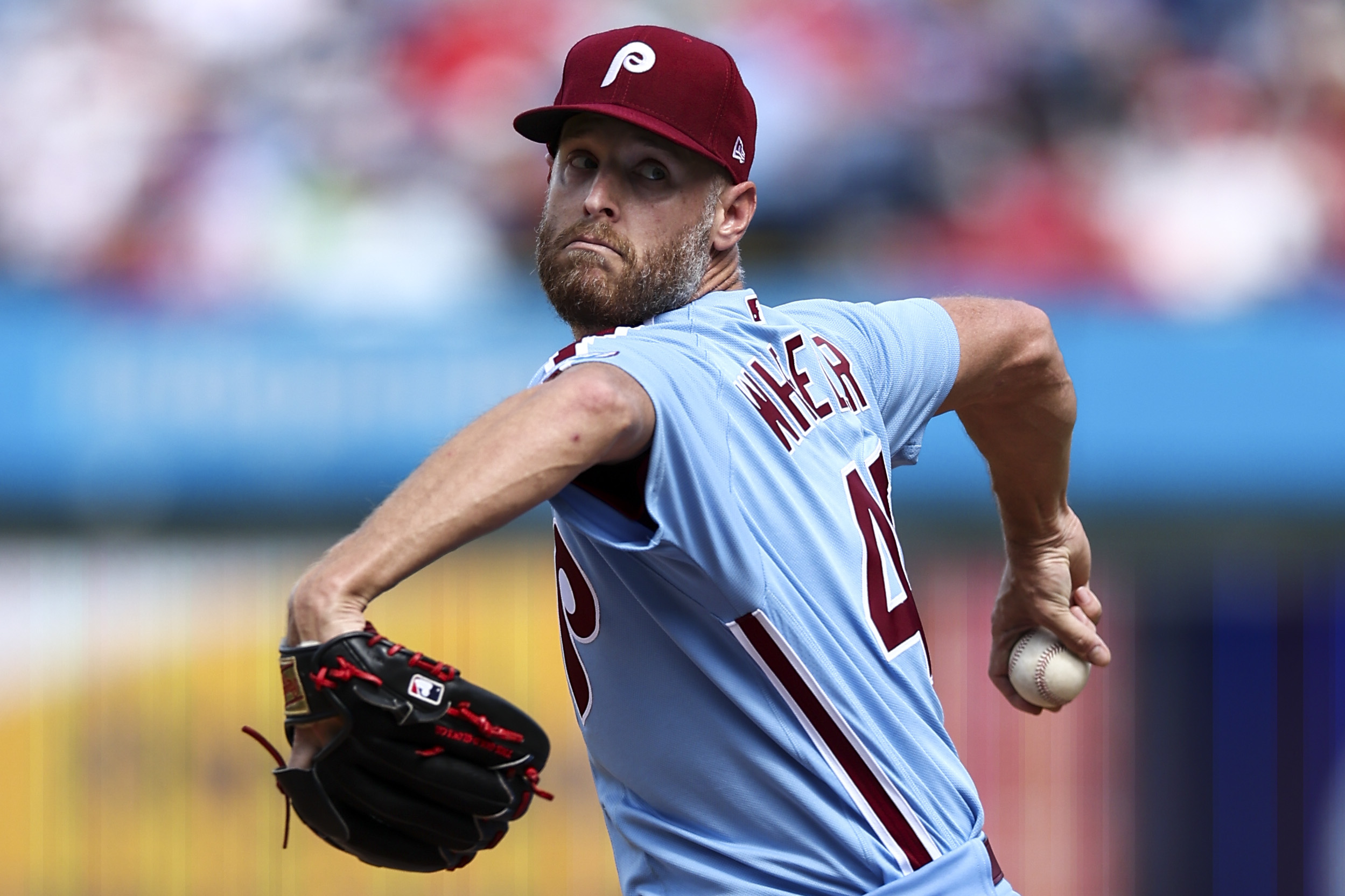
    NEW YORK — Zack Wheeler threw “about three strikes in the bullpen,” by his best recollection. But that wasn’t why he slowed his walk across the outfield before a May 12 start in Boston.

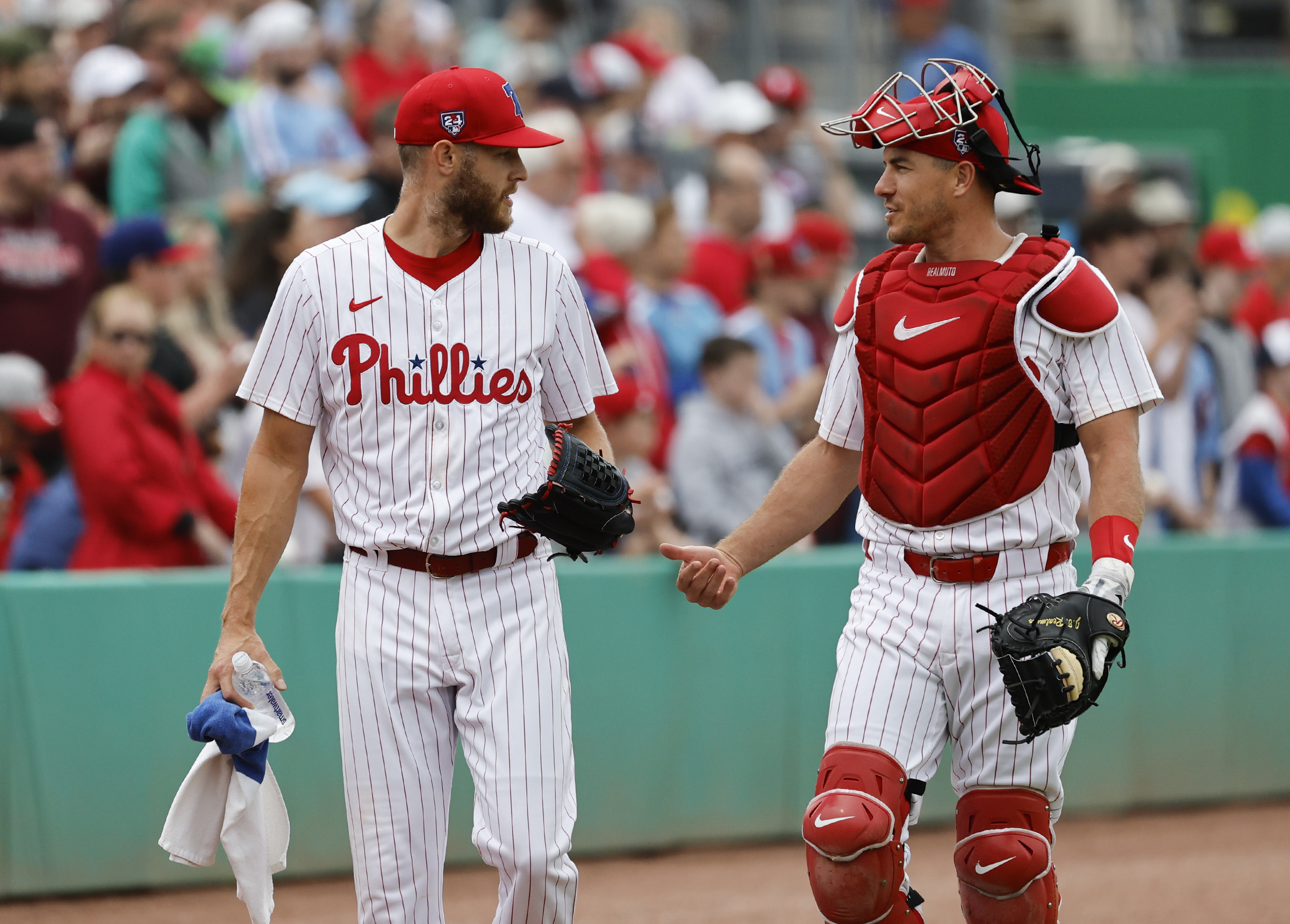
    “Man,” he exhaled to catcher/confidant J.T. Realmuto, “this is cool.”

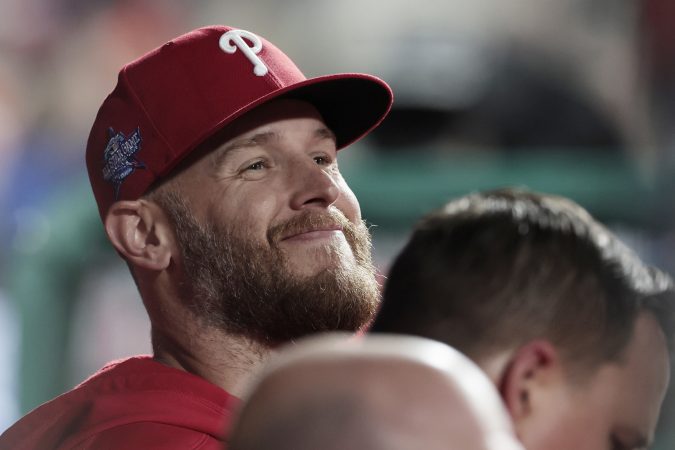
    Wheeler doesn’t usually do sentimental. Not publicly, at least. He’s 36, with gray wisps in his beard befitting a father of four small children. He’s still the Phillies’ ace, too, and baseball’s highest-paid pitcher (non-Shohei Ohtani division) at $42 million per year.

    And he has seen it all in 14 years in the majors.

    Wheeler would rather not waste time, then, on things that don’t matter or aren’t within his control. No-nonsense to his core (save for the occasional cameo on his wife’s TikToks), you have a better chance of getting the password to his email than getting him to go deep on overcoming venous thoracic outlet syndrome, the scary-sounding, career-threatening condition that befell him 13 months ago.

    So, why the pause for reflection four months ago on the grass in Fenway Park? It sure seemed like a break from his typical tunnel vision to appreciate something that was nearly taken away.

    “Part of that’s me probably winding down my career,” Wheeler said the other day after running sprints in the outfield here. “I’ve only got one more year on this contract. I don’t know if I’m going to play after that. But just going into those stadiums that maybe I won’t go back to — Anaheim, Detroit, Boston — we’re not going to play those teams there next year. So, kind of just soaking that in and enjoying it a little bit more this year than most years.”

    Phillies ace Zack Wheeler has one season left on a three-year, $126 million contract.Monica Herndon / Staff Photographer

    Wait, let’s pause. When Wheeler signed an extension in March 2024, he initially wanted only a two-year deal. The Phillies talked him into three, for a total of $126 million. And at a news conference in Clearwater, Fla., he hinted it might be his last contract.

    “I don’t want to play until I’m ‘old, old,’” he said then.

    OK, sure. But did anyone really believe him? Wheeler was at the peak of his powers, healthier and better in the first half of his 30s with the Phillies than in his late 20s with the Mets. Besides, 40 is the new 30 in pro sports.

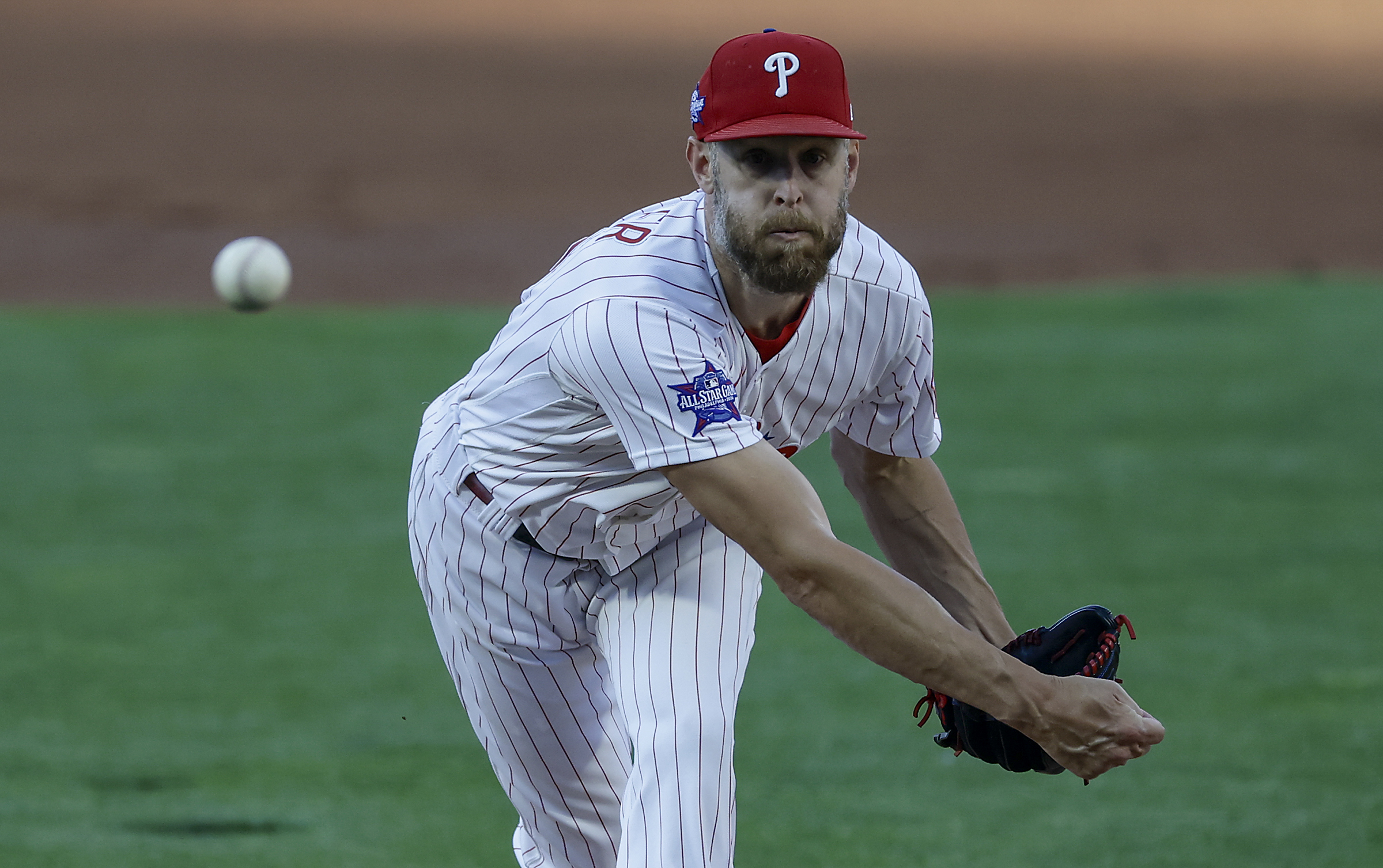
    And here’s Wheeler now, pitching as well as ever — 2.99 ERA and 177 strikeouts in 150⅓ innings — even after a procedure last Sept. 23 in which surgeons removed his top rib to relieve a compressed vein.

    Surely, he won’t walk away after only one more season. Will he?

    “Honestly, I mean, it’s just still up in the air,” Wheeler said. “I think a lot of things have to kind of play out for me just to be able to see.”

    Presumably, that includes the outcome of another Red October.

    The Phillies are closing in on a fifth consecutive playoff appearance, and their chances of making a deep run hinge on the starters, notably Wheeler, Cristopher Sánchez, and Jesús Luzardo, if he’s able to overcome an inflamed left shoulder. Aaron Nola, Wheeler’s close friend and longtime running mate atop the rotation, can help, too, if he continues his second-half revival.

    But there’s also baseball’s looming labor fight over a salary cap. With the collective bargaining agreement set to expire Dec. 1, the owners almost certainly will lock out the players.

    What if an agreement isn’t reached in time for a 162-game season in 2027? How would that affect Wheeler’s plans?

    “I don’t know,” he said, smiling. “I think it’s just going to be [a decision] at that point in time, whether it’s this or that, honestly.”

    Fair enough. Say this, though: A year ago, even some Phillies officials wondered if Wheeler’s retirement, whenever it happens, might not be entirely on his own terms. Wheeler insists he never had a doubt.

    Zack Wheeler (right) and Aaron Nola have been mainstays in the Phillies’ starting rotation since 2020.David Maialetti / Staff Photographer

    ‘To be expected’

    As Wheeler comes up on one year since his surgery, it was fitting that he pitched this week in Washington, where his injury odyssey began.

    Wheeler allowed two runs in five innings on Aug. 15, 2025, in Nationals Park and felt fine after coming out of the game. But when he developed a bubble in his armpit that looked like a lymph node, head athletic trainer Paul Buchheit recommended that they get it checked by the Nationals’ team physicians.

    It turned out to be a blood clot.

    Wheeler returned to Philadelphia for a venogram, a test to detect blood flow. The conclusion: The clot was caused by a vein that got compressed between the rib cage and collarbone.

    One month after the clot was removed, Wheeler had a second procedure to relieve the vein. Then came the hard part: weeks of physical therapy and rehab, including a strict diet, not easy for an unabashed fast-food and junk-food lover.

    It took time for Wheeler to put back the weight. He left spring training at about 195 pounds, roughly 10 pounds less than normal.

    And yet, after all that, Wheeler shut out the Nationals on four hits in seven innings Wednesday night in Washington. Among 52 pitchers with a minimum of 150 innings entering the weekend, Wheeler was 14th in ERA and tied for 10th in walks/hits per inning (1.06).

    “He’s made it look very easy,” pitching coach Caleb Cotham said of Wheeler’s comeback. “And it’s not.”

    If someone had told Wheeler, as he left the hospital last September, that he’d be pitching at this level a year later, what would he have said?

    “To be expected,” Wheeler said. “When you have surgery, or anything along those lines, you just have to stay positive and keep a strong mindset, you know? You believe that you’re going to come back and be the same guy, if not better, because you’ve had more time to strengthen and fine-tune everything.

    Zack Wheeler says he “expected” to be pitching this well a year after surgery.Yong Kim / Staff Photographer

    “For me, it was just, come back, hit the ground running, and just be the same guy as I was, if not better.”

    It did take time for Wheeler to regain the pre-surgery zip on his fastball. Even now, it isn’t completely back. He averaged 96.5 mph in July 2025, according to Statcast; he’s averaging 95.5 mph so far this month.

    But Wheeler leans on his secondary pitches more now. His splitter, in particular, is “as good as it’s ever been,” Cotham said. Wheeler has thrown it 15.7% of the time, according to Statcast, and held opponents to a .182 average and .303 slugging.

    If anything, Wheeler said the most unexpected part of the season was the depth of a six-start struggle after the All-Star break in which he posted an 8.51 ERA, bottoming out with an eight-run, five-walk, four-homer dud in Seattle on Aug. 24.

    The root of the problem was a glitch in his mechanics. Wheeler dropped his glove, causing him to over-rotate and follow through too far to the third-base side. He fixed the issue and has allowed three runs in his last 26 innings.

    “I feel like, since I’ve been [with the Phillies], I haven’t had more than two, maybe three starts in a row where it’s kind of gone bad,” Wheeler said. “I think I probably thought I was going to get out of it a little quicker than I did. And I didn’t. So, maybe I should have checked in a little bit earlier.”

    It probably cost him a chance for his elusive Cy Young Award, although Brewers sensation Jacob Misiorowski probably wrapped that up months ago. But there’s little doubt Wheeler will be the Comeback Player of the Year.

    Zack Wheeler and J.T. Realmuto have played together with the Phillies since 2020.Yong Kim / Staff Photographer

    ‘This is where you want to be’

    Eleven days after the removal of his rib, Wheeler was introduced with his teammates before Game 1 of the divisional round against the Dodgers.

    It was a helpless feeling.

    “Yeah, it was tough,” he said. “Maybe if it was like June or May, I would have been like, ‘All right.’ But being that close to the finish line and the playoffs where, that’s your goal every year is to make the playoffs and see what happens. It was tough.

    “But what are you going to do? I’m that type of person where, stuff’s going to happen in your life. Everyday stuff, normal person stuff, baseball-wise stuff, and sometimes you just can’t help. Injuries happen. Car wrecks happen. Stuff happens in life. You just have to learn how to deal with it and figure stuff out.”

    It helped that Wheeler overcame injuries early in his career.

    Drafted in the first round (sixth overall) by the Giants in 2009, traded to the Mets in a one-for-one deal for Carlos Beltrán, and hailed as a top prospect, he missed 2½ seasons after Tommy John elbow surgery and multiple setbacks during the recovery.

    By comparison, coming back from thoracic outlet syndrome was straightforward.

    “That was my first injury where I was missing time at any level, even high school, so I was honestly just nervous that I wouldn’t get back,” Wheeler said. “I was unsure, just hoping for the best. But this far into my career, at the level that I’ve been pitching at, I expect to be there and want to be there.”

    A year later, it’s like Wheeler was never gone.

    “This time of the season, it’s cool, it’s special,” Wheeler said. “This is where you want to be, and these games really, really matter. It’s fun competing in these types of games, these atmospheres, and getting that close to the finish line. You’ve got to really bear down, and I think everybody knows that.”

  • The reason reporters shouldn’t vote for halls of fame, a slim and trim Matvei Michkov, and other thoughts

    The reason reporters shouldn’t vote for halls of fame, a slim and trim Matvei Michkov, and other thoughts

    First and final thoughts …

    The Pro Football Hall of Fame announced Thursday that it had revamped its selection process, cutting the number of voters to 28 from 50. The decision inspired some disappointment among those selectors who were told their services were no longer required and among those football followers who pay close attention to such things. Mostly, though, it should have reaffirmed that, when it comes to picking who gets to be immortal and who doesn’t, those of us who cover major sports for a living should do our best to stay out of the way.

    Every columnist has at least one hobbyhorse, a burr that’s always under their saddle, a thorn that’s always stuck in their side. I have three: the overuse of cliches, irony, and Hall of Fame selection processes. The Hockey Hall of Fame has an 18-member committee that, at the moment, includes a couple of longtime writers. The Naismith Memorial Basketball Hall of Fame keeps its process and the identities of its selectors a secret, which presents its own set of questions and issues.

    But the National Baseball Hall of Fame and the Pro Football Hall of Fame rely primarily on writers and reporters, many if not most of whom are still actively covering those sports day to day, to select inductees, with football’s hall taking the additional step of having those media members actually lobby on behalf of particular candidates.

    Like I said, I’ve touched on this topic often enough over the years that I’m not going to repeat each of my arguments and objections here. It’s enough to say that, as my colleague David Murphy has also noted, the major problem with having writers as Hall of Fame voters is that they end up having to cover a story that they themselves have created.

    They were part of the cause, for instance, for the outrage that ensued last year when Bill Belichick wasn’t inducted in his first year on the ballot, and they are the reason for the annual debates about which alleged PED users should or should not be feted and celebrated at Cooperstown in late July. Those media members who don’t vote are still free to weigh in on the wisdom (or lack thereof) of the choices, but they can do it knowing — and allowing readers and news consumers to know — that they’re not stacking the deck in favor of their preferred candidate or outcome.

    I have, of course, plenty of friends and colleagues who do and did take part in these traditions, among them former Daily News and Inquirer writer Paul Domowitch, who was a conscientious Canton voter for 24 years, and Ray Didinger, whom I consider a mentor and who wrote a famous play based around his (eventually successful) attempts to have Tommy McDonald inducted.

    I don’t begrudge them or anyone else. I just disagree. The line between covering and/or commenting on the process and involving oneself in it is one I don’t feel comfortable crossing. The standard argument from the voters, generally speaking, is, It’s an honor, and if we don’t do it, who will? To which the correct response is, I don’t care. I just know it’s not my job.

    Aaron Nola has a 2.10 ERA in 60 innings over his last 10 starts.Monica Herndon / Staff Photographer

    Quick hitters

    Aaron Nola’s last 10 starts might just constitute the greatest and most surprising career comeback since Brendan Fraser won an Academy Award for The Whale. …

    Only someone as aggressively insincere as James Franklin could take the simple act of saying hello and turn it into another example of his own obnoxious self-importance. …

    Matvei Michkov said that he is 29 pounds lighter than he was at the start of last year’s training camp. Good on him for getting in better shape and losing a Denver Barkey’s worth of weight. …

    A couple of literary recommendations: You should read Pat Croce’s new book, Enjoy Your Self Now!, if you want to find a deeper sense of personal peace and satisfaction. You should read The Playbook: The Hidden Forces Shaping Winners and Losers in the Modern NFL, by Wall Street Journal editors Joshua Robinson and Jonathan Clegg, if you want a better understanding of how and why certain teams and executives within the league — the Eagles and Howie Roseman, in particular — are thriving. …

    Telltale game for the Eagles on Sunday. If they can’t beat the Titans — a franchise whose high-water mark was getting name-dropped by Tom Hanks and Helen Hunt in Cast Away a quarter-century ago — it’s definitely time to worry.

  • Jeff McLane’s keys to Eagles vs. Titans in Week 2 and a game prediction

    Jeff McLane’s keys to Eagles vs. Titans in Week 2 and a game prediction

    The Eagles travel to face the Tennessee Titans at 1 p.m. Sunday at Nissan Stadium. Here’s what you need to know about the matchup:

    When the Eagles have the ball: All eyes will be on Titans defensive tackle Jeffery Simmons when he lines up over whoever is charged with replacing the injured Landon Dickerson at left guard. All indications point to Drew Kendall being the guy, despite the Eagles’ attempt at subterfuge at open practice portions (see: having Fred Johnson take individual offensive line repetitions at the position). Kendall assuaged some of the interior O-line concerns heading into training camp, but facing Simmons in his first career start will be a challenge. The All-Pro lines up at multiple spots inside, but it’s likely Titans coach Robert Saleh will concentrate his efforts vs. Kendall.

    All eyes will be on Drew Kendall (66) Sunday … wherever he lines up. Jose F. Moreno / Staff Photographer

    The Eagles will likely counter by sliding protection to the left, but that will place additional pressure on right guard Tyler Steen. Simmons’ counterpart John Franklin-Myers can be a handful at times. Saleh and defensive coordinator Gus Bradley, upon their arrival, altered the defensive front from a 3-4 to a 4-3 “under” base. That led to the departure of run-stuffing nose tackle T’Vondre Sweat, now with the New York Jets. It’s early, but the Titans allowed 152 rushing yards and two touchdowns to the Jets in the opener, although Tennessee allowed only two total rushing yards over expected. It wasn’t as bad a performance as the numbers suggest.

    Nevertheless, the Eagles should have the opportunity to get the ground game going. Saquon Barkley’s 42-yard bolt vs. the Commanders did a lot of heavy lifting in the run game. He was hit at or behind the line of scrimmage on 7 of 15 carries with 78 of his 82 rushing yards coming after contact. Washington was aggressive and blitzed safeties off the edges, but Sean Mannion’s blocking scheme needs to come up with better answers vs. pressure, especially if he wants to establish outside zone runs. Kendall, who’s more athletic than Dickerson, could allow Mannion to lean more into wide-zone blocking concepts and counter runs.

    Aside from Simmons, the Titans aren’t especially imposing up front. Defensive end Jermaine Johnson was acquired in the offseason and he’s a good fit for wide sets. But he’s three years removed from the only season in which he truly delivered on being a first-round draft pick. Tennessee didn’t record a sack in the opener, but did generate pressure a third of the time. The Titans also allowed the Jets only two trips inside the red zone. Saleh doesn’t yet have the players he needs in the secondary to effectively employ the Pete Carroll-type base Cover-3 zone. The coverages looked uncomplicated in Week 1, and yet, there were multiple busted assignments.

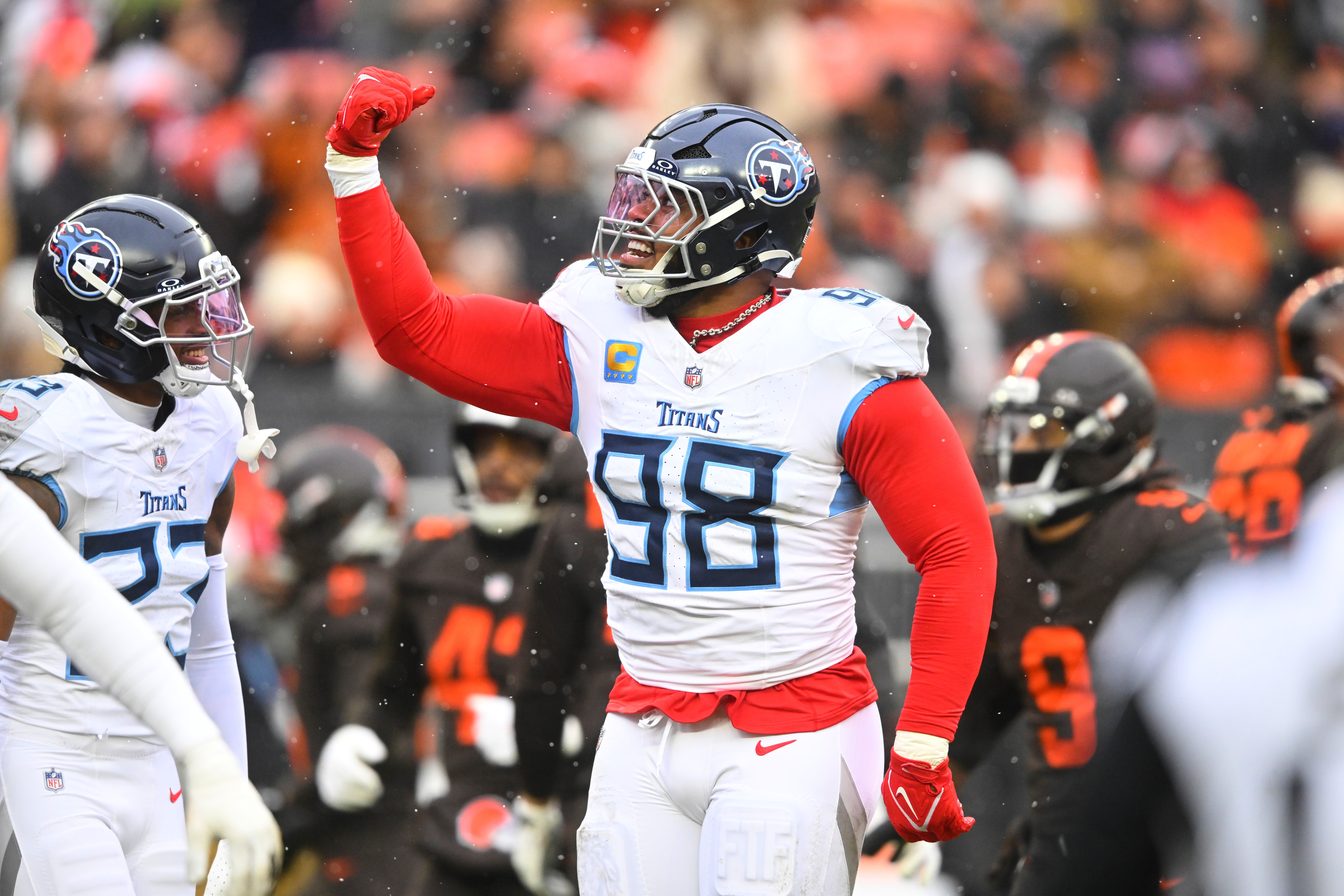
    Jeffery Simmons (98) is a handful but the Titans’ defense is otherwise nondescript. David Richard

    Mannion’s offense produced explosive plays in the opener. But it was terrible on first and 10 and averaged just 0.9 yards. The Eagles had four three-and-outs on 11 possessions and managed just 10 first downs. It was only a one-game sample, but the scheme was fairly static with little misdirection. Jalen Hurts, surprisingly, threw off play-action only twice. Some of that had to do with getting “behind schedule,” as Mannion noted. But there were still carryover issues from last season’s underwhelming offense — bleeding too much of the play clock down being one. Hurts bailed the offense out with his legs and deep-ball accuracy, but the scheme has to give him more time in the pocket. The Titans should be just what the doctor prescribed.

    When the Titans have the ball: Cam Ward appears to have carried over some of his rookie-season struggles as a passer. He holds the ball too long and doesn’t take advantage of opportunities to escape pressure. New offensive coordinator Brian Daboll took the Titans job after he interviewed with the Eagles, so maybe he saw something in Ward to develop. But the early signs weren’t promising. Vic Fangio and his defense should be able to get to a hesitant quarterback behind a suspect O-line. Tackles Dan Moore and JC Latham allowed a combined 16 sacks last season and a combined four pressures against the Jets. Center Austin Schlottmann and right guard Fernando Carmona, a fifth-round rookie, could also be exploited.

    The Eagles’ pass rush was solid, if not spectacular, last week. They played some containment against the elusive Jayden Daniels, but given the opportunity to pin their ears back with the lead late in the game, they struggled to get home. Edge Jonathan Greenard is out for a second straight week as he recovers from a pectoral injury. Jalyx Hunt and Nolan Smith Jr. were solid on the edge, but they’ll need to start finishing soon. Jalen Carter started strong, but finished meekly. He played 94% of the snaps and might have been gassed, but it was revealed during practice this week that he has a wrist injury. It looks like he’s going to wear a soft cast, which could affect him.

    Jalen Carter (right) looked gassed down the stretch against Washington and could be playing with a soft cast this Sunday. David Maialetti / Staff Photographer

    The Titans hardly ran the ball in Week 1. Tony Pollard, who is a capable running back, had just seven carries. But he averaged five yards on some nicely designed runs. You have to think Daboll will emphasize the ground game more to offset the load on Ward. The Eagles will make it tough, as defensive tackle Jordan Davis and Co. often do, but I could see Daboll attacking the outside and trying to make the Eagles’ edge defenders tackle in space. Still, when you have Zack Baun and Jihaad Campbell capable of reaching sideline to sideline, I don’t think Fangio is going to have to devote more bodies in the box.

    The Eagles are a little banged up in the secondary. Cooper DeJean has abdomen and calf injuries, while safety Andrew Mukuba tweaked his knee in practice. DeJean had one of his worst games last week. Was it just a blip or has the move to safety in base personnel affected his play in the slot? He’ll mostly see receiver Wan’Dale Robinson, but Calvin Ridley will also line up inside. No. 1 draft pick Carnell Tate has immense talent, but outside corners Quinyon Mitchell and Riq Woolen should keep him in check with Ward at the controls. Fangio doesn’t like to blitz more than necessary, but simulated pressures could work well against the Titans. Ward will take sacks, but he avoids turnovers. He’s tossed only eight interceptions in 18 games.

    Extra point: A lot would have to go wrong for the Eagles to lose. The Titans just don’t match up well on paper. Maybe there’s a special teams flaw the Titans can expose. Kicker Joey Slye has the knuckleball kickoff in his arsenal. Tank Bigsby lost one of the kick returner jobs last season when he struggled to handle the Rams’ unpredictable kicks. He’s back at the position alongside Will Shipley. Could the Titans target him?

    This is the second of the Titans’ two season-opening games at home. They’re used to the climate, of course, but having one game in immense heat under their belts could give them a slight edge. The Eagles traveled to Tennessee a day early to get acclimated. They did the same a year ago in Tampa and beat the Buccaneers. I don’t think it will matter much, but it can’t hurt. The Eagles have lost in each of their three previous trips to Nashville. The names Kenny Britt and Corey Graham probably conjure up bad memories for fans. But it’s likely to take more than just one notable performance for the Eagles to exit the Music City without a victory.

    Prediction: Eagles, 25-10.

  • Texas coach Steve Sarkisian, QB Arch Manning, and casual toxic masculinity; LIV Golf’s … losers?

    Texas coach Steve Sarkisian, QB Arch Manning, and casual toxic masculinity; LIV Golf’s … losers?

    There’s a generalization that rich white guys think it’s OK to laugh at violence against women. Most rich white guys say that’s not true.

    You know what would be a great way for rich white guys to dispute that generalization?

    Stop laughing at violence against women.

    I know it feels these days like we’re at crisis level on several fronts, whether it’s the economy, politics, the climate, or, for lack of a better term, social justice issues. More than anything else, though, it feels like we’re experiencing an overload of casual toxic masculinity.

    Two weeks after Good Good Golf ruined its brand by partnering with Callaway in a commercial in which a Good Good executive tackled and berated a woman who was preparing to touch his driver, the biggest Texas home win in 76 years, over No. 1 Ohio State, became a sidelight to the antics of the millionaire principals who made it possible.

    First, coach Steve Sarkisian, working under a roughly $76 million contract partially funded by TV rights, refused to participate in halftime and postgame TV interviews, to which he is contractually obligated. Sark tried to justify his actions by citing technical glitches. Please. These sorts of glitches are commonplace on the sidelines of a raucous stadium, and Sarkisian knows it. He was just being a jerk.

    He simply ditched Laura Rutledge after waiting all of 10 seconds at halftime. He was just getting warmed up.

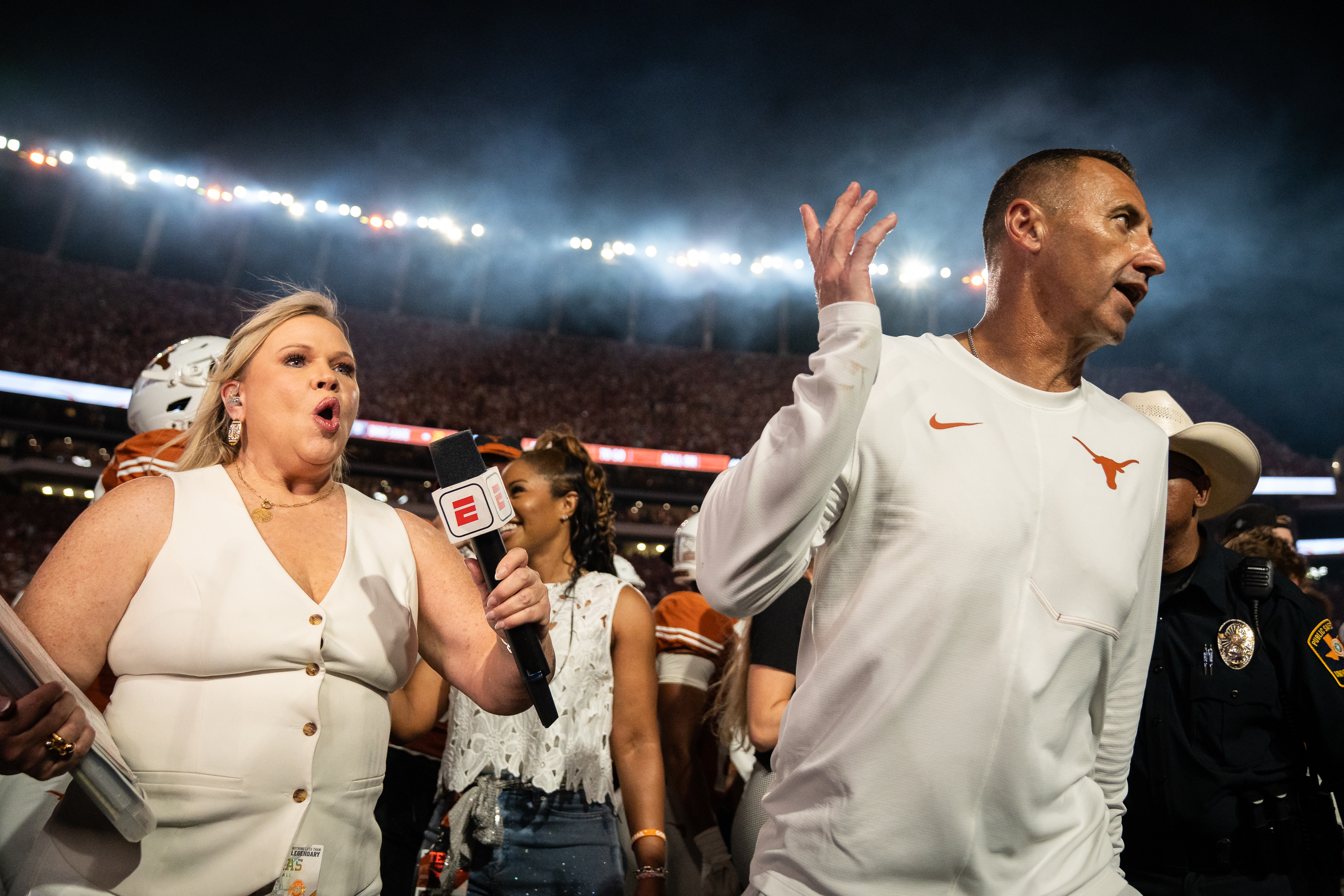
    After the game, as ESPN threw to respected sideline veteran Holly Rowe — a cancer victim who has worked the sidelines through debilitating treatments — Sarkisian ignored Rowe’s question, screamed, “That’s called Texas fight! That’s called Texas fight!” offered the Longhorns’ catchphrase, “hook ’em,” and ran off like an over-caffeinated teenage boy.

    Sarkisian should have been fined.

    He was not.

    He addressed the issue Thursday.

    “If hindsight’s twenty-twenty, if I could do it all over again, I would have exuded [he meant practiced] more patience in that moment and sat through and waited for the interview with Holly,” he said.

    He offered explanations that only painted him as even less professional, justifying his impetuousness by saying, basically, he didn‘t want to wait before halftime, and that, postgame, he couldn’t wait to celebrate with his team.

    Predictably, he failed to actually apologize, and worse, he failed to address the massive, vicious fallout that targeted Rowe all week on forums such as talk radio and social media. Sarkisian did manage to blame his quarterback’s reaction entirely on his quarterback and to paint himself and the precious program as blameless.

    Even more predictably, Sarkisian didn’t bother to address the incidents at all until Thursday. They should have been addressed no later than Monday night, as things further deteriorated.

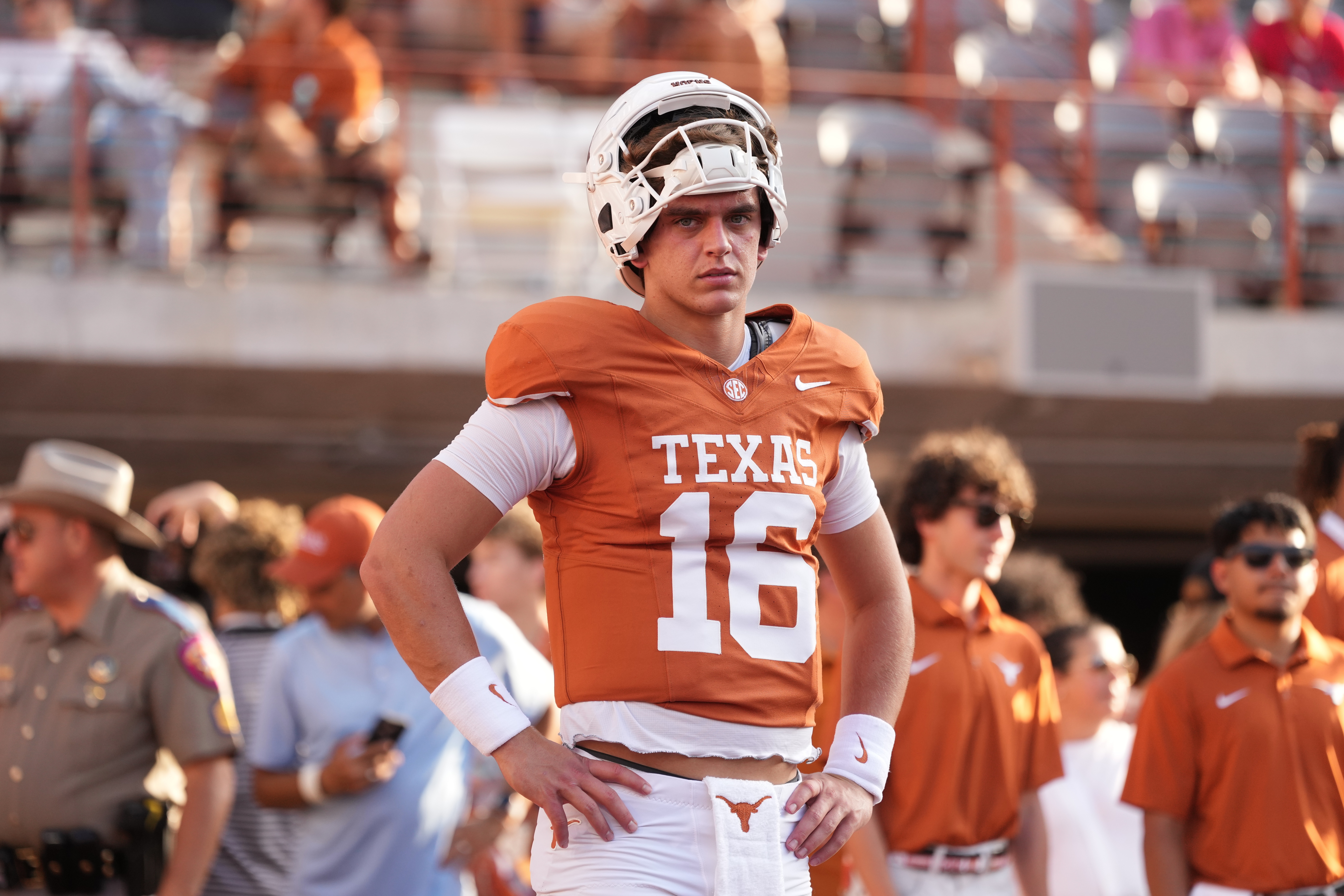
    By the time quarterback Arch Manning took to the podium Monday, an AI-generated internet meme that depicted Sarkisian slapping Rowe during their interaction had gone viral. Asked about the original video, Manning, a junior who has made an estimated $10 million in NIL money, said he considered the violent, fake one more entertaining.

    “I’ve seen a few AI edits and stuff, but that’s about it,” he said. “I saw an AI edit of Sark’s interview. Y’all seen that one? That’s a good one.”

    Which one?

    “Of him slapping Holly Rowe. It’s hilarious!”

    Again: Manning was asked about the original video, but instead blithely touted the AI imagery of a woman being beaten by his coach.

    Disgusting.

    Manning — who has sponsorship deals with Red Bull energy drink, Vuori clothing, and Warby Parker glasses — issued an apology Tuesday on Instagram to the millions he offended, for the shrapnel of online hate directed at Rowe following his misogyny, and promised he would be “more thoughtful” in the future.

    There was nothing remotely funny or entertaining about the Good Good ad.

    There is nothing remotely funny, much less “hilarious,” about the AI violence in the Sarkisian video, which Manning noted: “There is nothing funny about it.”

    Really?

    Seems like it was plenty funny when he was in front of a gaggle of adoring sportswriters, some of whom, astonishingly, laughed along with Manning … but not so funny when your sponsors are threatening to fire you.

    One of the reporters in the room posted the video of Manning’s response with the revealing caption, “ … his answer is gold.”

    You can’t make it up.

    The reporter has since apologized, but his initial processing of the situation is troubling, to say the least. He was not alone.

    Everywhere you looked there were people, mainly men, downplaying what the faces of the Texas program did. The same demographic downplayed the Good Good ad.

    In his statement Thursday, Sarkisian said, “Nowhere do we condone domestic violence or violence against women.”

    What he doesn’t realize, or what he conveniently ignores, is that there’s a big difference between expressly condoning it, which nobody does, and implicitly, tangentially seeding it by disrespecting and bullying female sideline reporters. There’s also a difference between expressly condoning it and expressing casual indifference by waiting more than half a week to address it while the real life victims endured merciless condemnation for doing nothing more than their jobs and being treated horribly by the coach and quarterback of the No. 1 team in the country.

    Texas quarterback Arch Manning — who has sponsorship deals with Red Bull energy drink, Vuori clothing, and Warby Parker glasses — issued an apology Tuesday for his comments about an AI video of coach Steve Sarkisian and ESPN sideline reporter Holly Rowe.Eric Gay

    LIV … victims?

    Nobody feels sorry for the professional golfers and their caddies who began accepting tens of millions of dollars in Saudi sportswash in the middle of 2022, when LIV Golf embarked on its obvious goal of tearing down the PGA Tour that had provided those golfers and caddies the means to the millions they’d already made. They were painted as traitors, often on these pages, and were accurately portrayed.

    Many now find themselves uncertain of their futures as LIV slogs through bankruptcy proceedings that will, at best, spawn a toothless replication of itself in 2027. So, yeah, screw those guys.

    However …

    Should we feel sorry for the folks who worked in LIV’s administration?

    Should we feel sympathy for vendors and contractors who are owed millions but will get paid little, if anything, for their efforts?

    After all, for moralists (like me), just like the golfers, these folks chose to work for a nation whose government was linked with terrorism against America, kidnapped and murdered a journalist residing in America, and practices a brutal and repressive theocracy. In recent weeks, as we commemorated the 9/11 attacks 25 years ago, it became even more difficult to empathize with even the commoner folk who chased inflated, oil-drenched paychecks.

    It’s a real question, and one I’m wrestling with.

    My answer: Maybe we should empathize.

    Maybe not.

    Aren’t the administrators, vendors, and contractors just as guilty as the golfers for feeding at such a rancid trough?

    Shouldn’t they have been just as leery of the Saudis, who are internationally notorious for welching on payments?

    LIV laid off more than 300 employees last month. Nobody likes to see folks out of work. I know some of the people who got laid off.

    LIV Golf, which features the likes of Bryson DeChambeau, is going through bankruptcy proceedings.Chris Trotman

    My dad was a union bricklayer, but he also had a small contracting business on the side, so I also know what it’s like to not get paid cash for hard work done.

    We had to accept two sheep once, 10 chickens another time, and, probably the best consolation prize, a balky, World War II Willys Jeep.

    I hope the 300 laid-off employees find work elsewhere (actually, I couldn’t care less if former CBS and NBC analyst David Feherty and former Premier League announcer Arlo White, as feckless a pair as ever held a microphone, ever work again).

    And I hope the contractors at least get a Jeep, because sheep are pretty useless, and those damned chickens, man, they were the worst.

  • The busiest ambulatory surgery centers in the Philadelphia region

    The busiest ambulatory surgery centers in the Philadelphia region

    The two busiest surgery centers in the Philadelphia region last year were operated by Penn Medicine in Radnor and Jefferson Health in Center City.

    Such facilities have grown increasingly popular as a cost-saving option for procedures that do not require intensive hospital resources or overnight stays.

    While they offer convenience, the facilities operated by Penn and Jefferson both count as hospital departments for billing purposes, which means they cost more than surgery centers operated by independent physicians or other companies.

    Penn Medicine Radnor Surgery Center operates within a large outpatient facility near the intersection of I-476 and Route 30. It logged 12,464 surgical visits in 2025, up from 8,961 the year before, according to data published last month by the Pennsylvania Department of Health.

    Penn attributed the growth to the addition of new gastroenterologists in Radnor to perform colonoscopies, upper endoscopies, and other procedures. Colonoscopies, in particular, account for a large portion of the overall volume in surgery centers outside hospitals.

    Jefferson Surgery Center was close behind, with 12,261 surgical visits, up from 2,639 in 2024. It sits within the Honickman Center, which opened in 2024 at 1101 Chestnut St. in Philadelphia. Jefferson has gradually expanded the array of surgical services offered there.

    “Growth has been driven by both increasing patient demand and the strategic transition of services from other Jefferson locations, allowing us to provide care in a state-of-the-art outpatient environment,” Jefferson said in an email.

    Other fast-growing surgery centers include two independently operated facilities focused on orthopedics, Premier at Exton Surgery Center in Exton and Restore Orthopaedic Surgical Institute in Chadds Ford.

    (function(){function e(){window.addEventListener(`message`,function(e){if(e.data[`datawrapper-height`]!==void 0){var t=document.querySelectorAll(`iframe`);for(var n in e.data[`datawrapper-height`])for(var r=0,i;i=t[r];r++)if(i.contentWindow===e.source){var a=e.data[`datawrapper-height`][n]+`px`;i.style.height=a}}})}e()})();

    Surgery center ownership matters

    Even though the Penn and Jefferson outpatient facilities are not in hospitals, their ownership by large hospital systems enables providers to get paid as if they were located inside the Hospital of the University of Pennsylvania or Thomas Jefferson University Hospital.

    Hospital outpatient department billing rates are sometimes twice as much as the rates paid to independent surgery centers.

    For example, surgery to remove torn cartilage from a knee can cost $7,190 when performed on an outpatient basis in a hospital, nearly three times the $2,477 cost in ambulatory surgery centers (ASCs), according to Philadelphia-area commercial insurance averages from Turquoise Health.

    Health insurers Independence Blue Cross and Highmark have implemented policies this year seeking to save money for employers and patients by moving care out of hospitals and into ambulatory surgery centers or ASCs. Both insurers say they will only pay for certain procedures if they are done in an ASC.

    But it’s not enough to move surgeries to a setting outside a hospital, given the hospital-like billing status of certain surgery centers.

    “The cost savings from an ASC depend on the facility’s ownership, licensing, and billing model,” Richard Snyder, IBX’s chief operating officer, said in a email to The Inquirer.

    IBX would like to see more ASCs in its Southeastern Pennsylvania market and is “prepared to help catalyze growth through continued value-based arrangements, strategic partnerships, and investments,” Snyder said.

    Litigation over ASCs and other policies

    In a July lawsuit against IBX, Jefferson claimed that the insurer’s ASC policy amounted to a change to the financial terms of their contract that needed to be negotiated.

    The lawsuit said that ASC mandate will cost the health system $35.4 million, but doesn’t specify over what time period.

    IBX filed a motion last week to dismiss the lawsuit, which was moved to U.S. District Court in Philadelphia from the Philadelphia Court of Common Pleas.

    The insurer says that the lawsuit was premature because Jefferson filed it before completing a contractual process designed to resolve such policy conflicts.

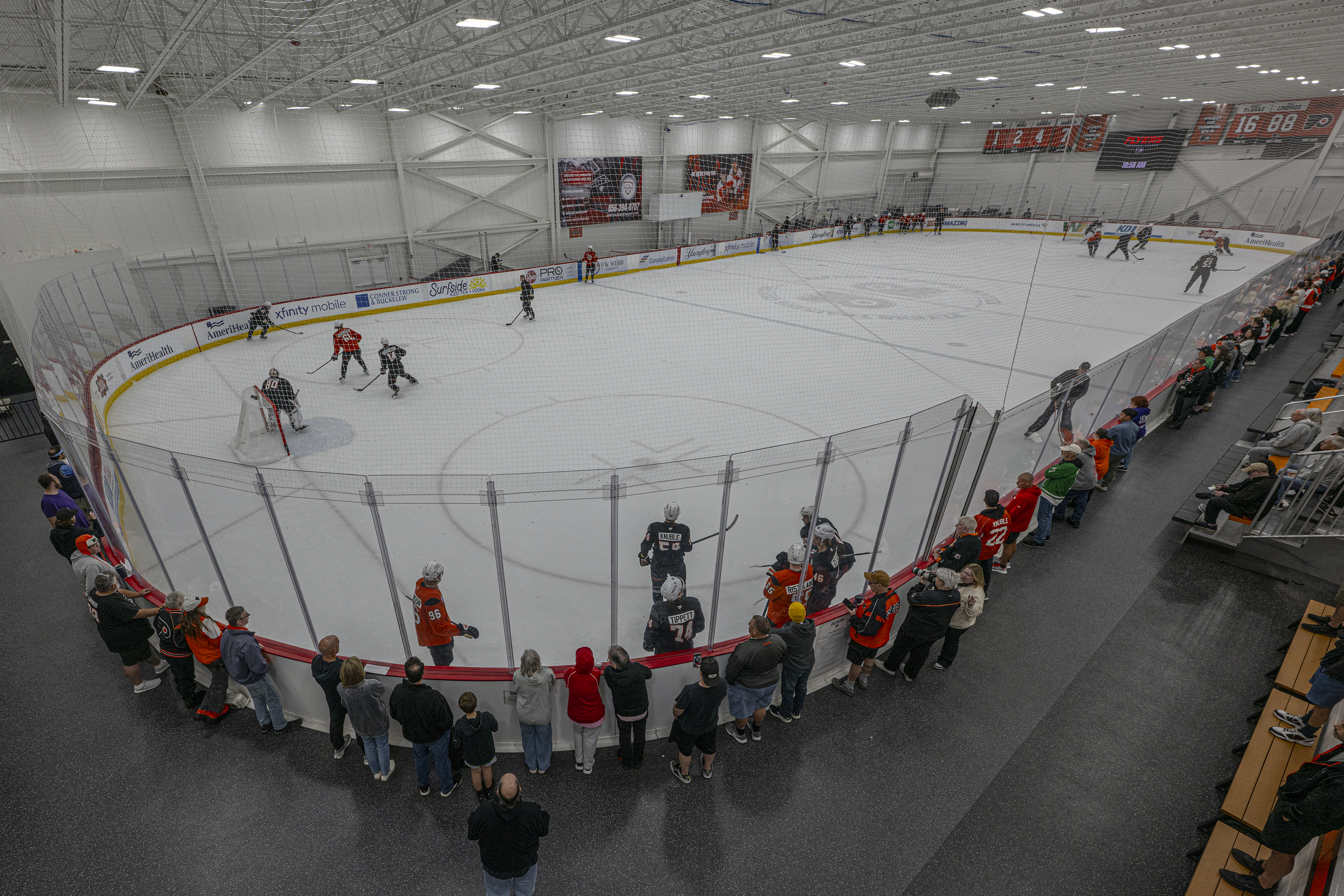
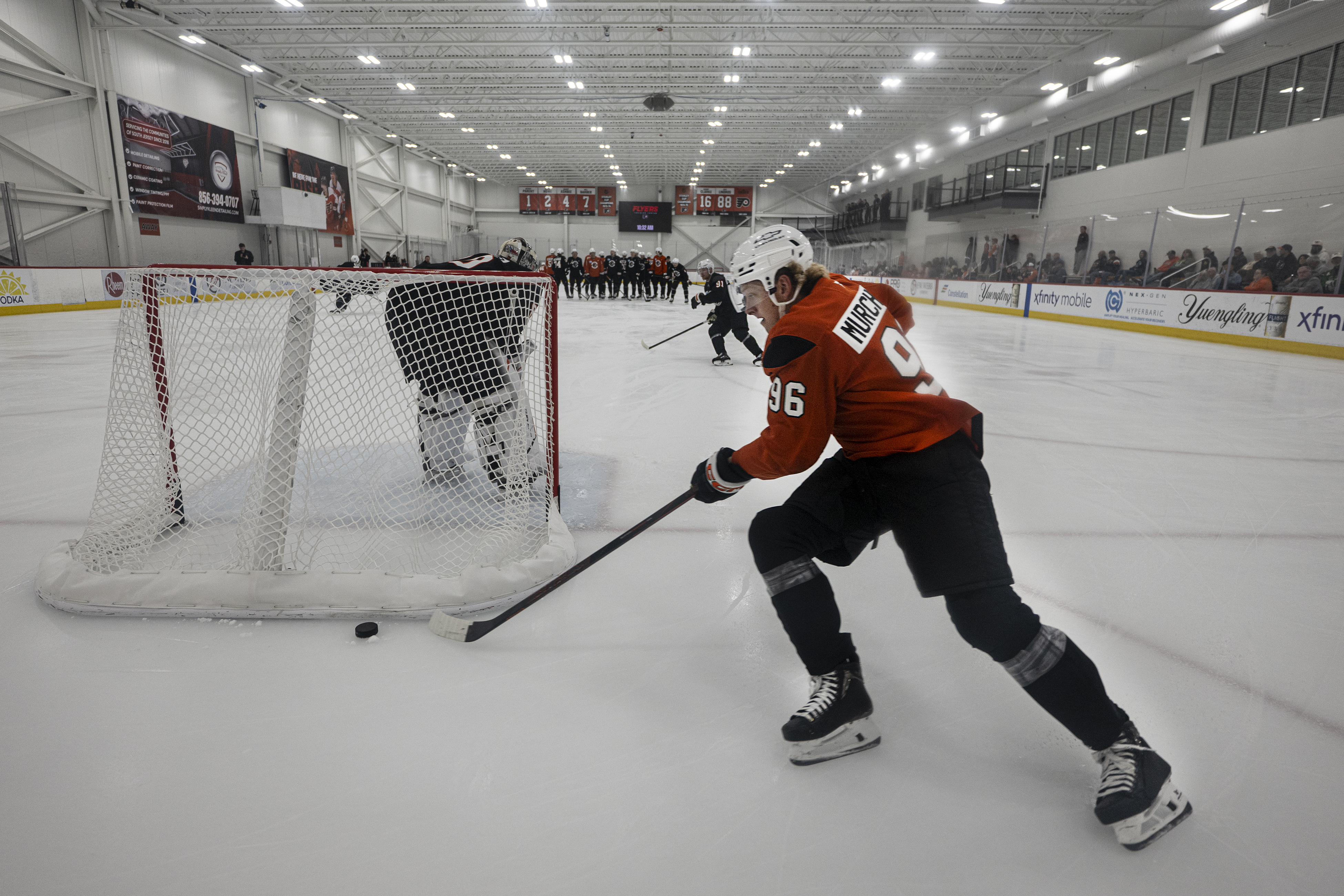
  • Danny Brière wants to swing big to turn the Flyers into contenders. He might face a happy problem.

    Danny Brière wants to swing big to turn the Flyers into contenders. He might face a happy problem.

    Here’s the funny part about the Flyers’ renaissance last season and their heightened expectations ahead of this season: There has been a pretty wide disparity between the team’s tangible achievements and the collective reaction to those achievements.

    Achievement 1: The Flyers, with a desperate charge late in the regular season, qualify for the playoffs — an accomplishment that was once taken for granted by the franchise and its fans — for the first time since 2020. They then beat the Pittsburgh Penguins, perhaps the only playoff team the Flyers were capable of beating, in six games.

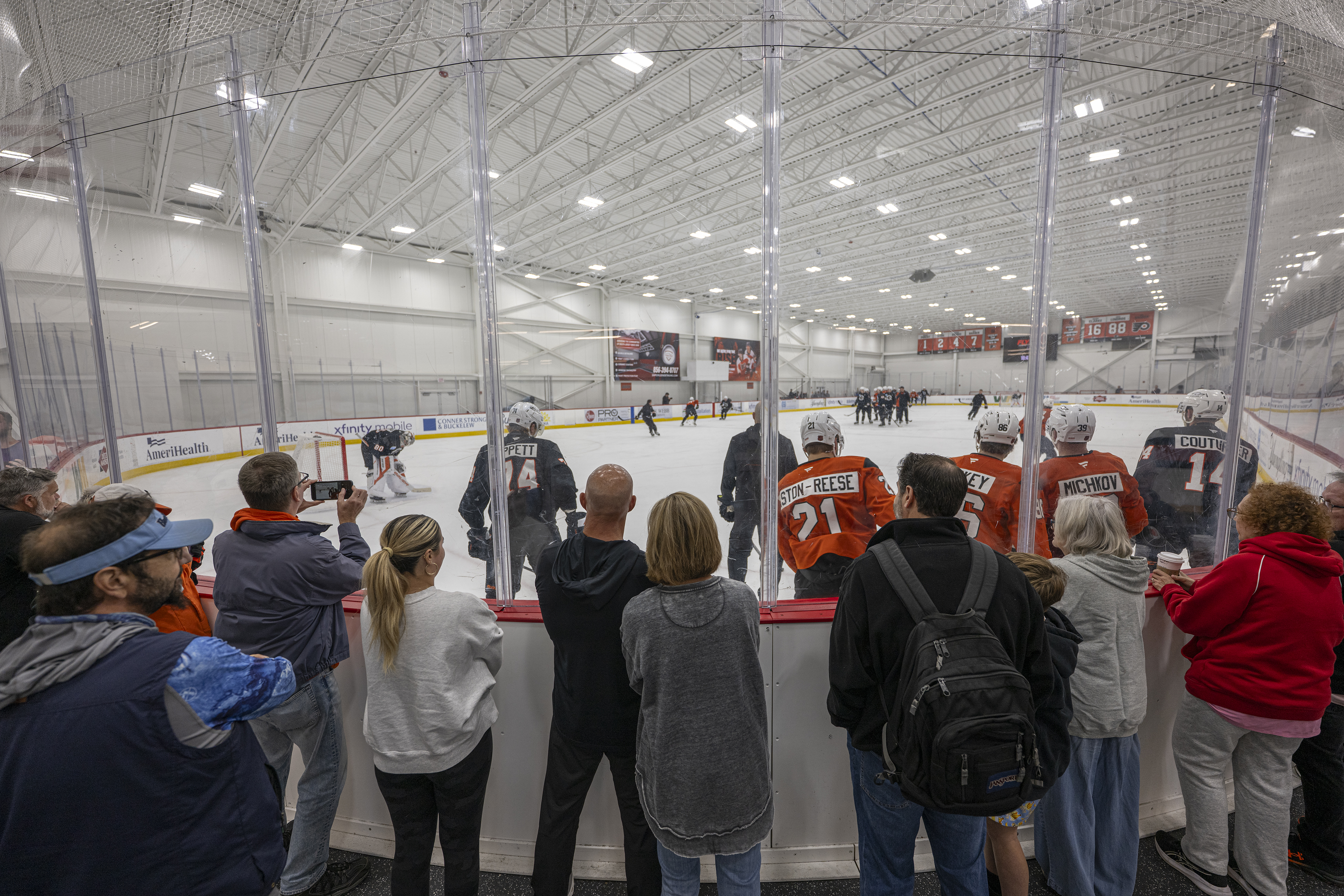
    Reaction to Achievement 1: The crowds inside the Xfinity Mobile Arena, especially for the team’s victories in Games 3 and 6 against the Penguins, are louder than they’ve been in more than a decade.

    Achievement 2: The Flyers are reasonably competitive against the eventual Stanley Cup champions, the Carolina Hurricanes, but nonetheless are swept in the second round, scoring just five goals in four games.

    Reaction to Achievement 2: A standing ovation, to thank the team, fills the Xfinity Mobile Arena in the immediate aftermath of the Flyers’ season-ending overtime loss in Game 4.

    Achievement 3: Danny Brière, the Flyers’ general manager, makes the daring decision to offer Anaheim Ducks up-and-comer Leo Carlsson a five-year, $90-million contract. But the move doesn’t actually work; the Ducks match the Flyers’ offer and keep Carlsson.

    Reaction to Achievement 3: The Flyers are showing they’re back! They’re taking big swings!

    This is not to denigrate the Flyers for their obvious improvement or to criticize their fans for being excited that their favorite team is relevant again. It is merely to remind everyone that the Flyers had a long way to go just to return to mediocrity, that they still have a long way to go to be a true Stanley Cup contender, and that any advancement, like the one they took last spring, would be greeted with unfettered joy. As Eddie Murphy said in a memorable stand-up bit years ago, if you’re starving and somebody throws you a cracker, you’re going to think that cracker is the best thing you’ve ever eaten in your life. That wasn’t a Saltine! That had to be a Ritz!

    Now, though, those fans, and to a large extent the franchise’s players and power people themselves, won’t be satisfied with another round of appetizers. Brière hinted recently that it’s possible the Flyers will take a step backward, that the roster’s collection of talented players in their early-to-mid 20s struggles to replicate or surpass last season’s performance and justify all this hope.

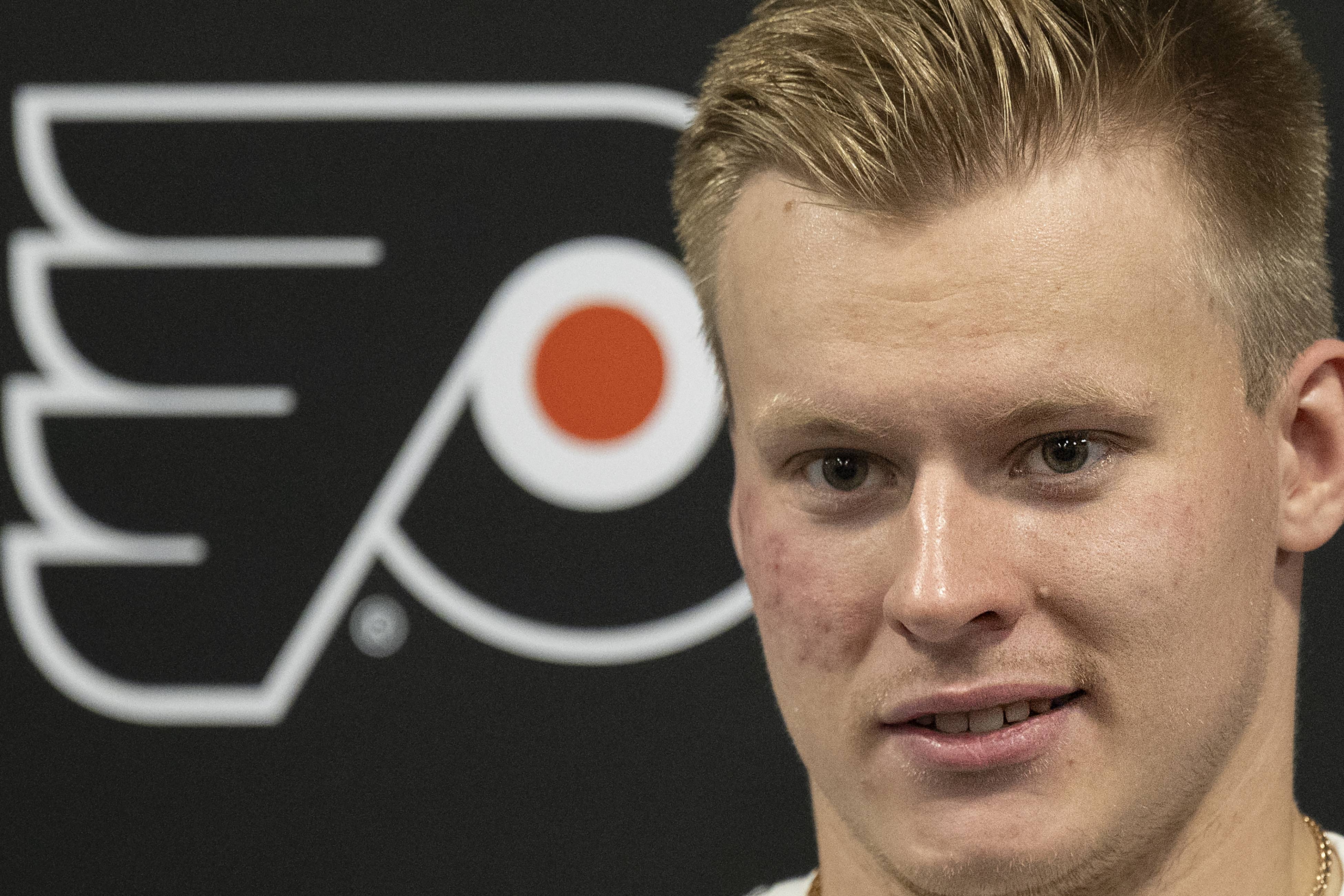
    “The part that keeps me up at night is having some of your players feel complacent, feel like they’ve made it,” Brière said. “Let’s face it, we’re still a young team. We’ve had guys who had success last year. You saw what happened with Matvei [Michkov]. Had a lot of success the first year. It’s tougher the second year. … They’re going to be a big part of our team, and if that happens, we’re going to have a setback.”

    The more interesting development, actually, would be if all those promising youngsters did reach their potential or exceed expectations. Then Brière will have a real conundrum on his hands. With the Carlsson offer sheet and his public comments, Brière has left no doubt that the Flyers are looking for ways to acquire a top-line center or top-pair defenseman — or both if possible.

    Cap space wouldn’t be the issue; they have more than enough to bring on a high-salaried star. Desire wouldn’t be the issue; at the moment, the Flyers know they need a premier player at one of those two premier positions. Timing wouldn’t necessarily be an issue, either; there’s no telling when a standout player who fits the Flyers — Dylan Larkin? Quinn Hughes? Someone no one is thinking of right now? — might become available.

    “We’ve positioned ourselves,” Brière said. “It took a while, and we took some licks to miss the playoffs and be a bad team for way too long in my mind to just throw away the cap space we’ve built and the freedom we’re able to have. … We’re not going to be reckless about it. It was so tough to get there, with that freedom, that we want to try to get the right guy and spend our money properly. That’s the way I see it. If something comes up that makes sense, yes, definitely, we won’t be afraid to swing again.”

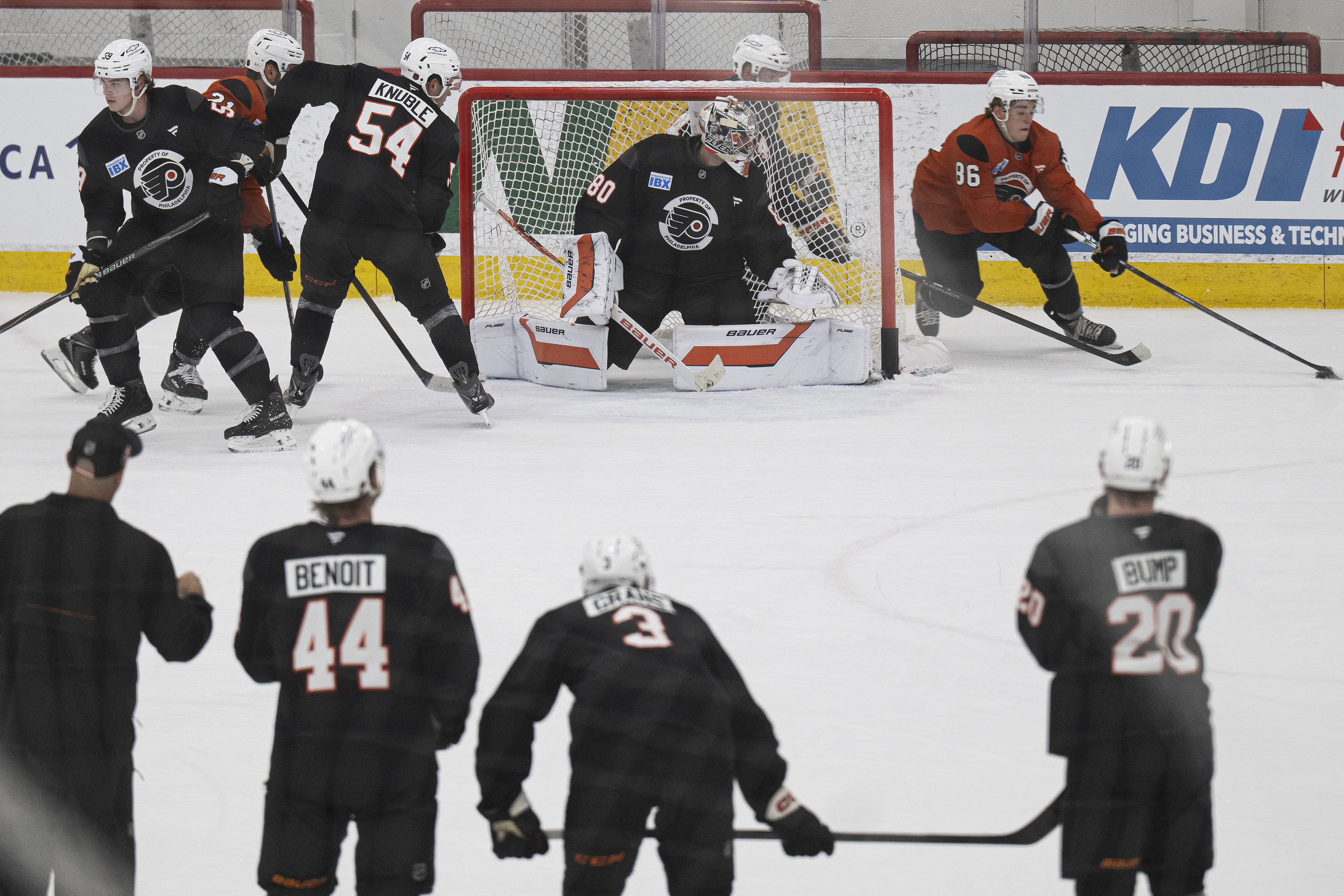
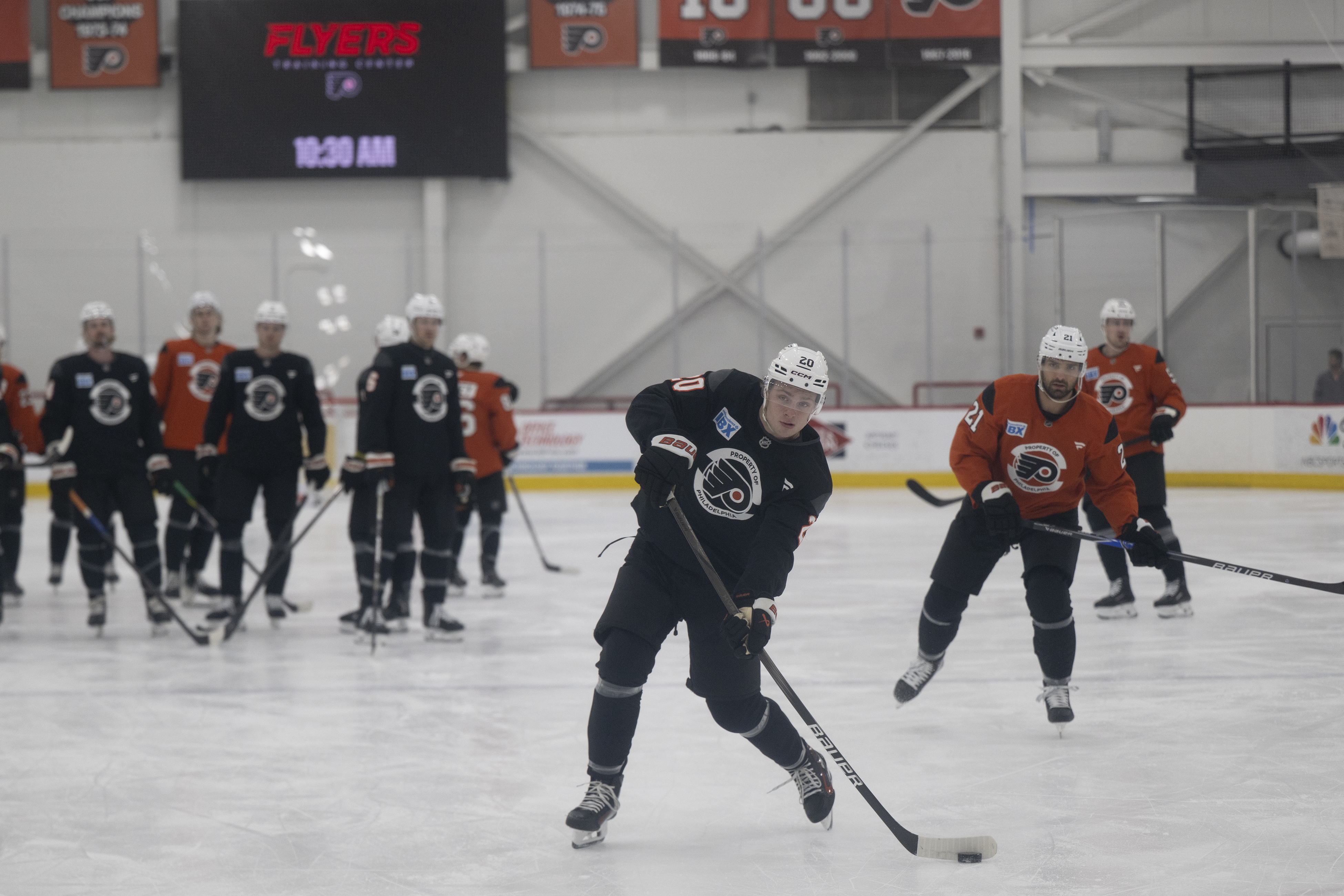
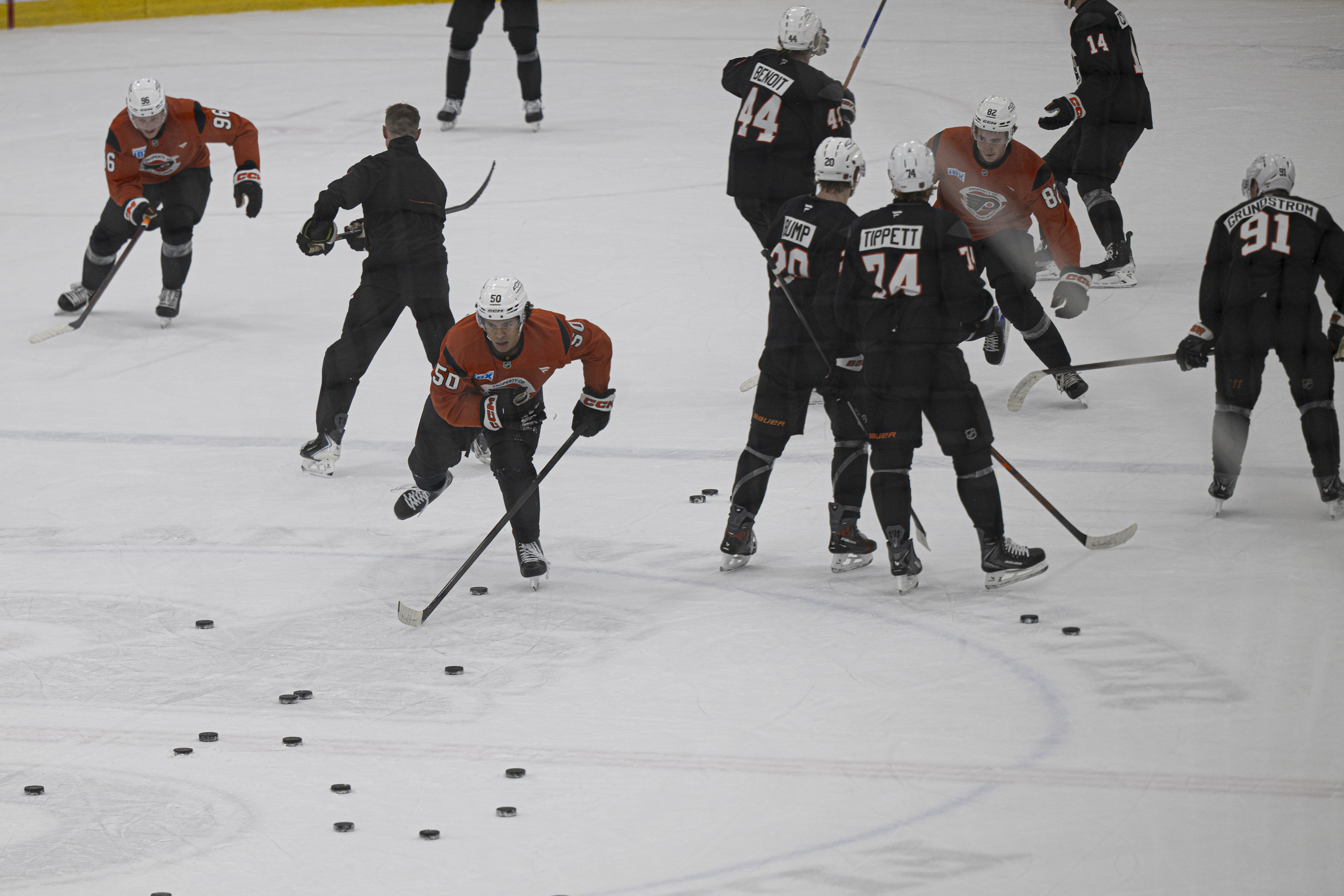
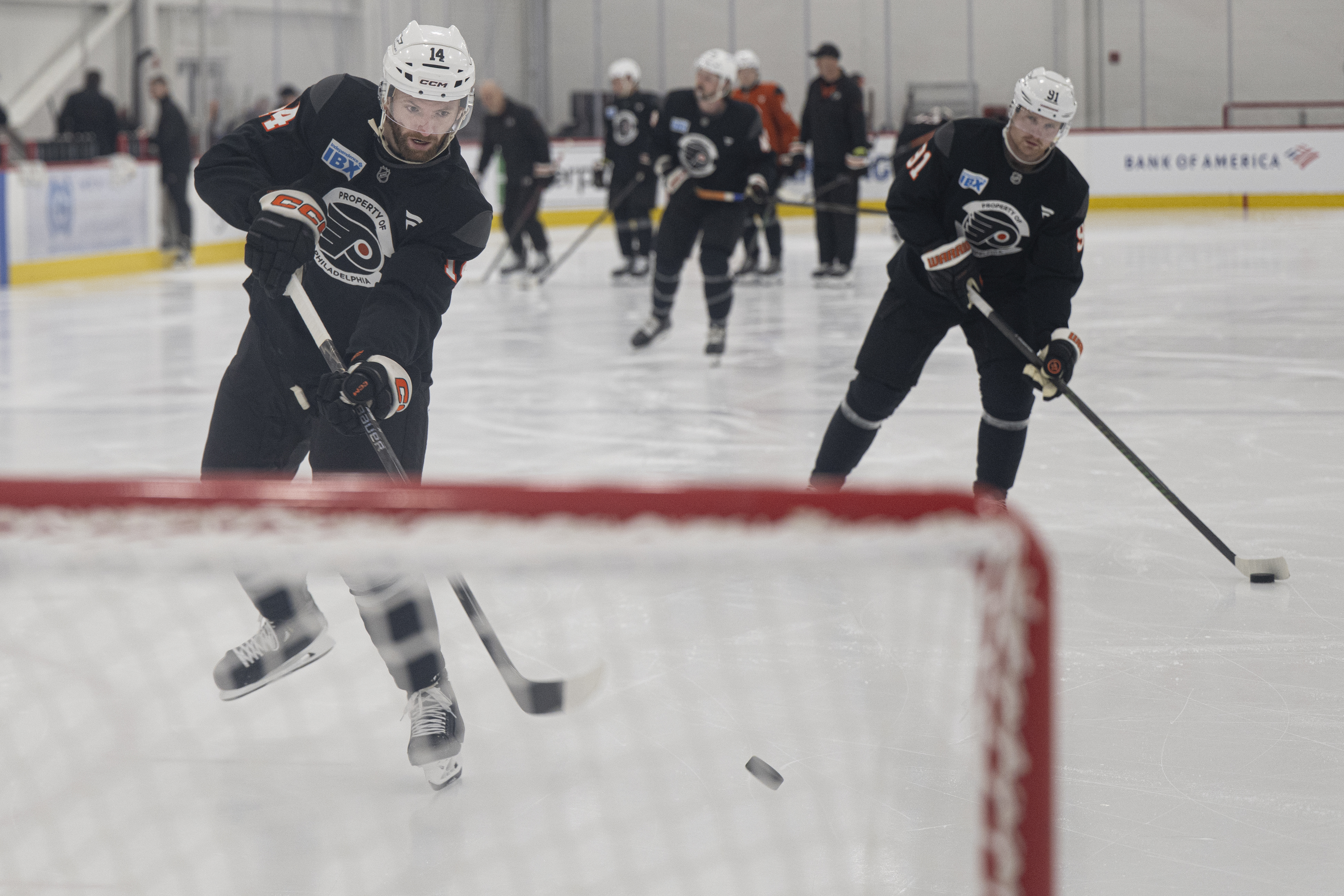
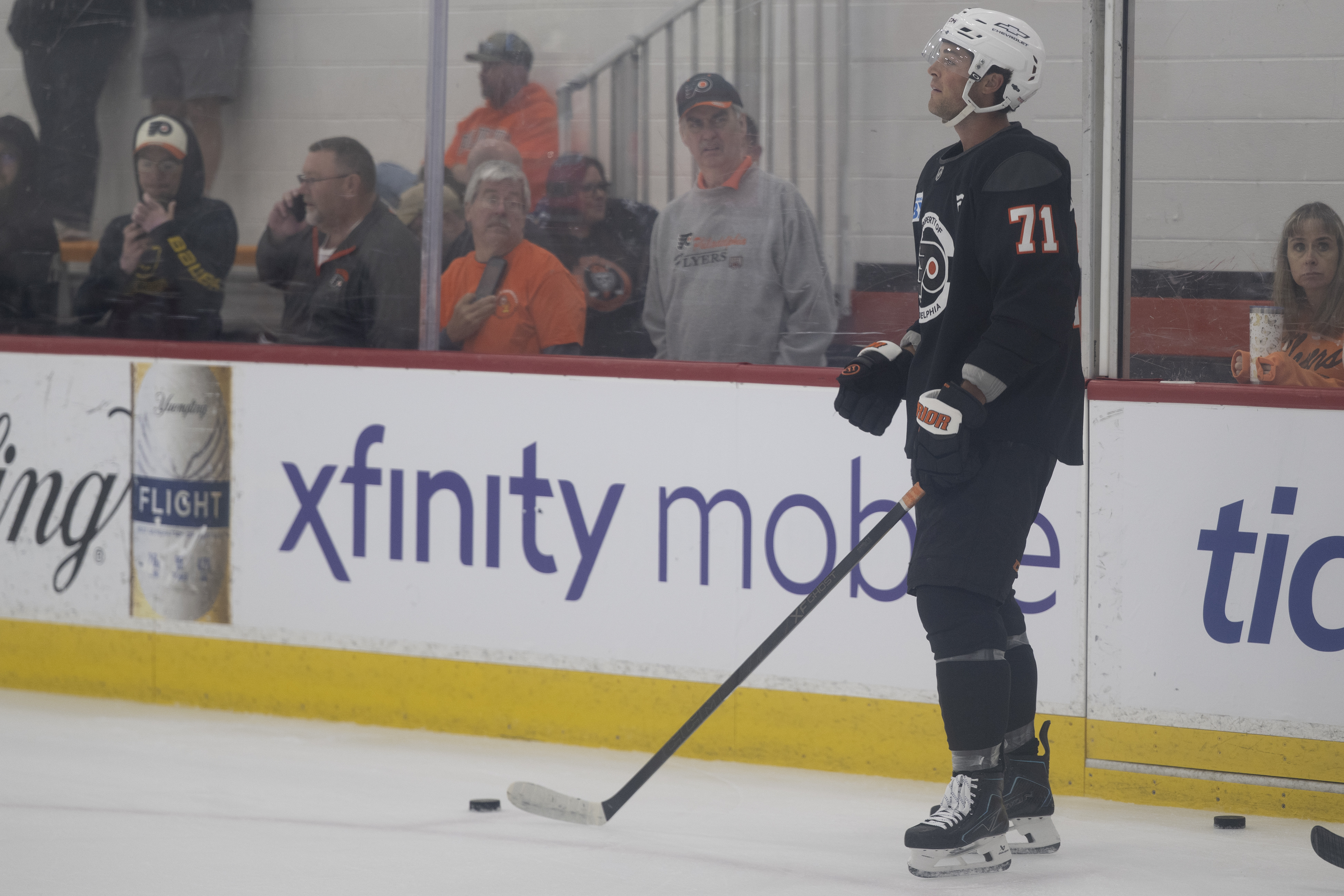
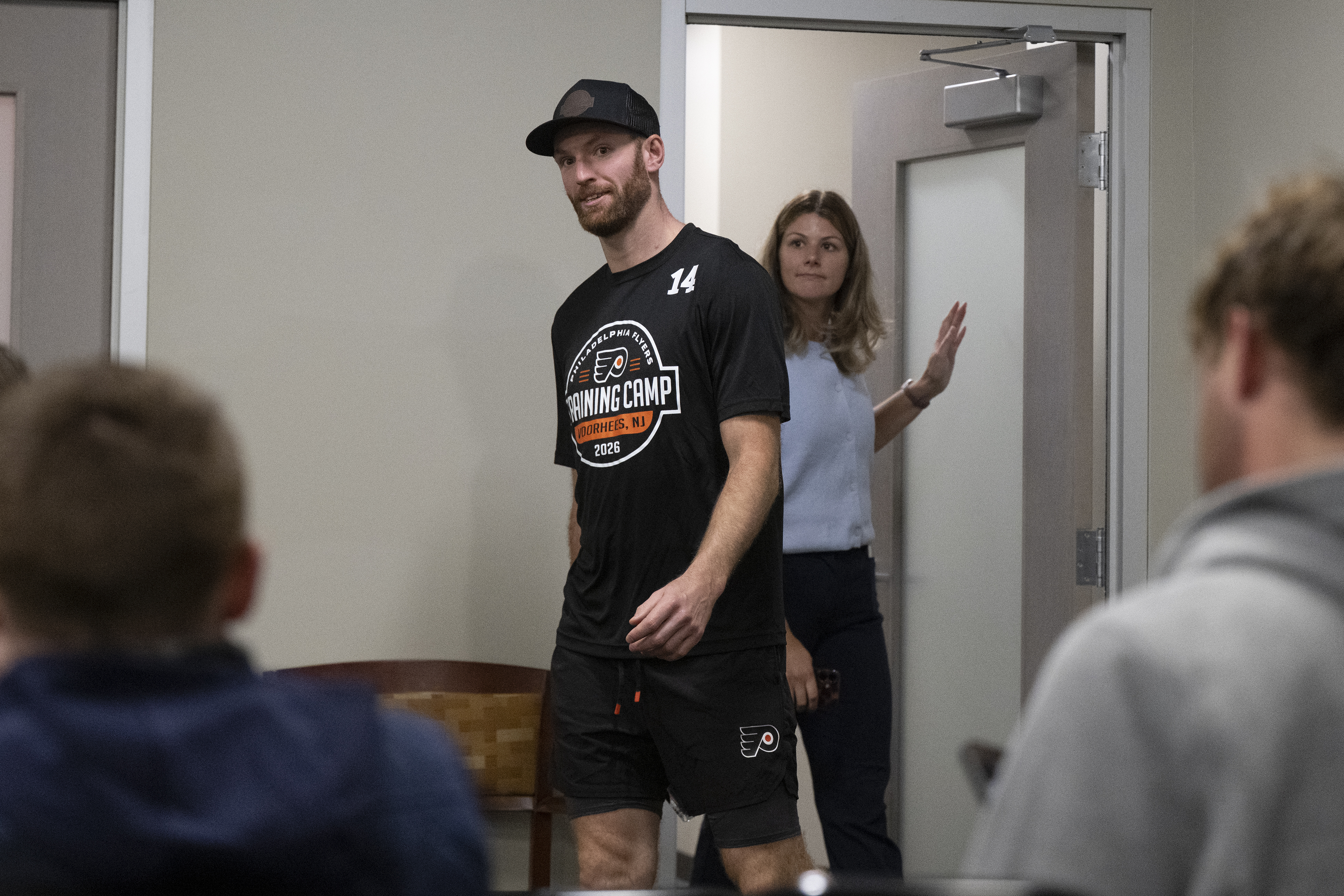
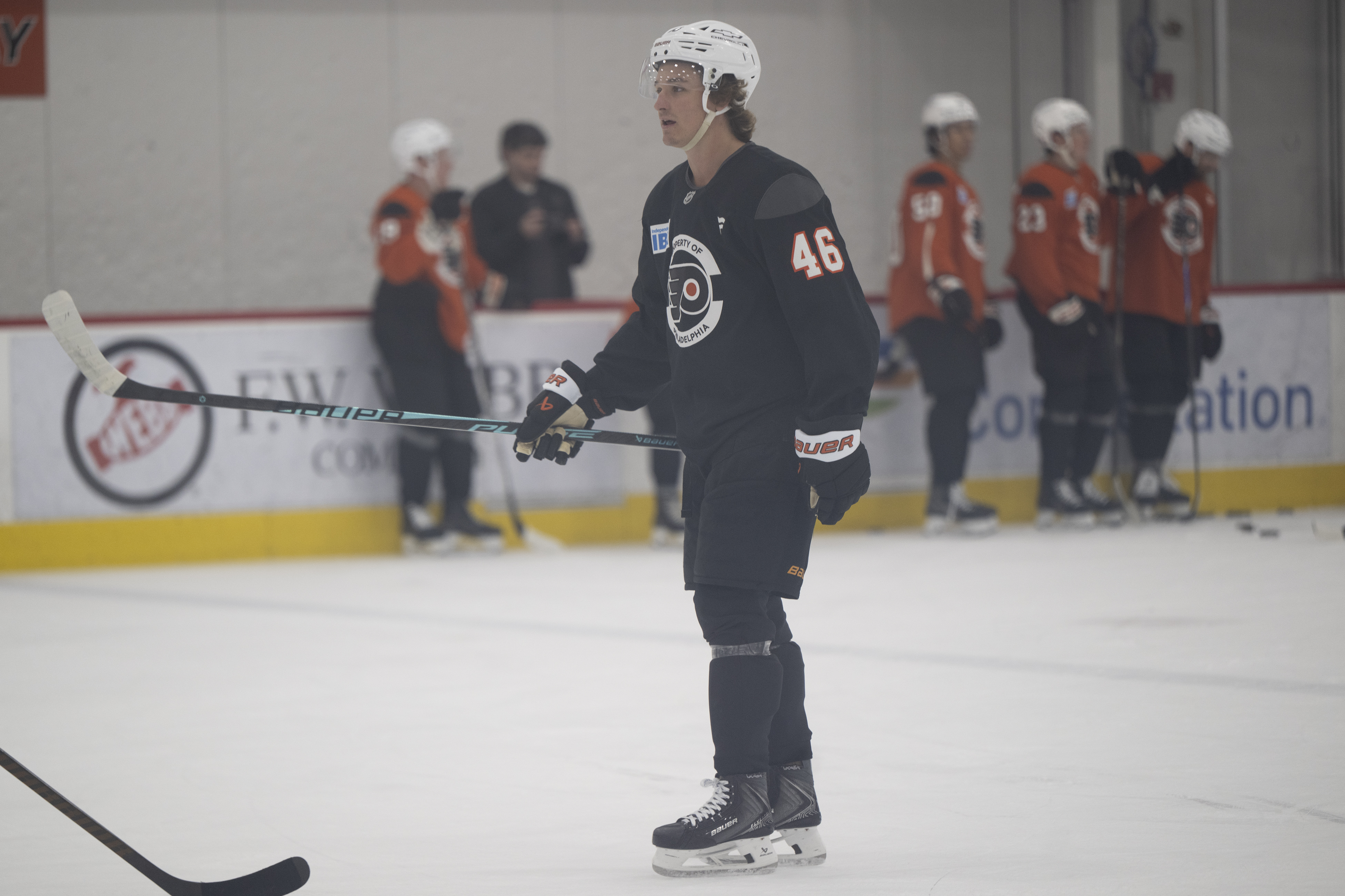
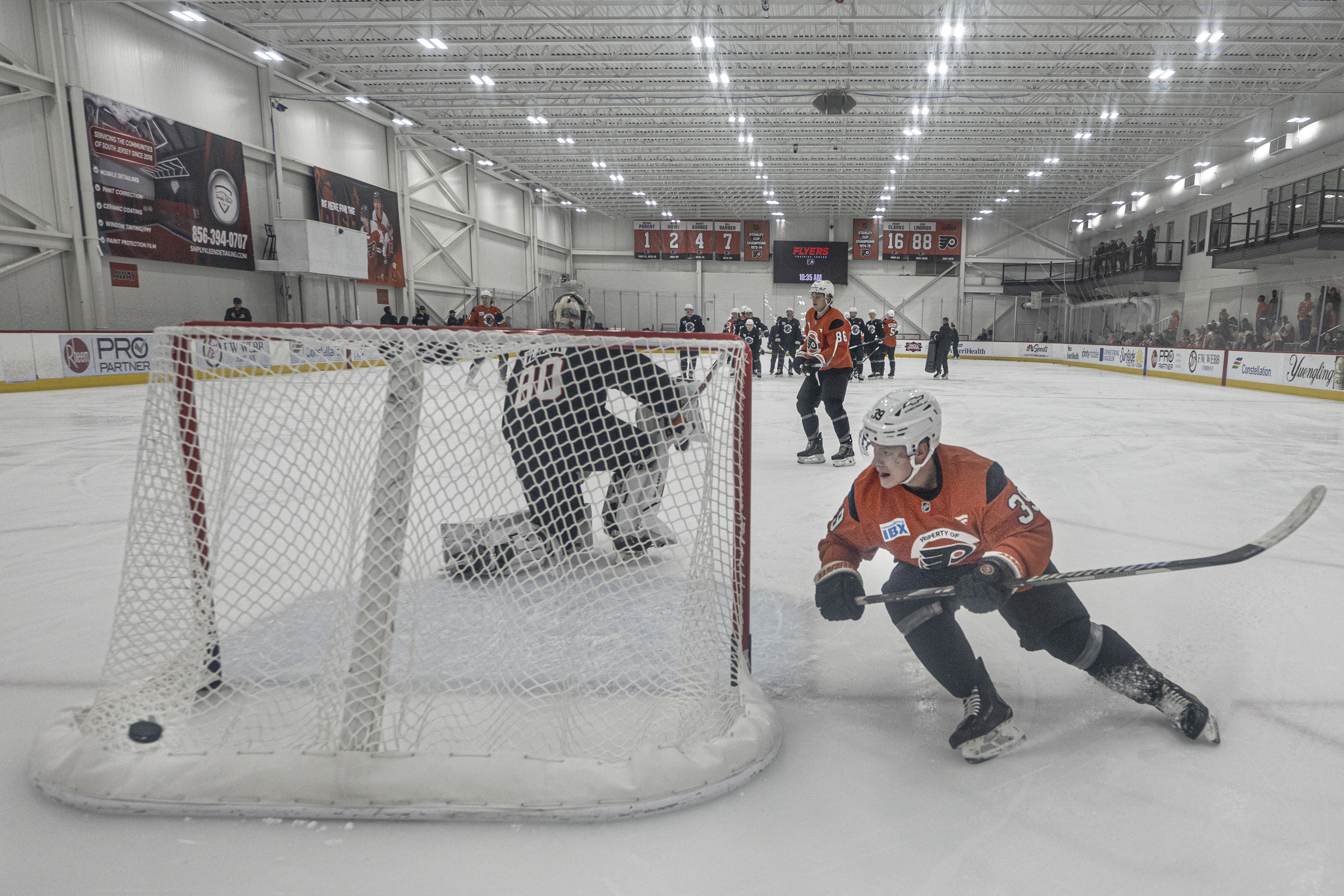
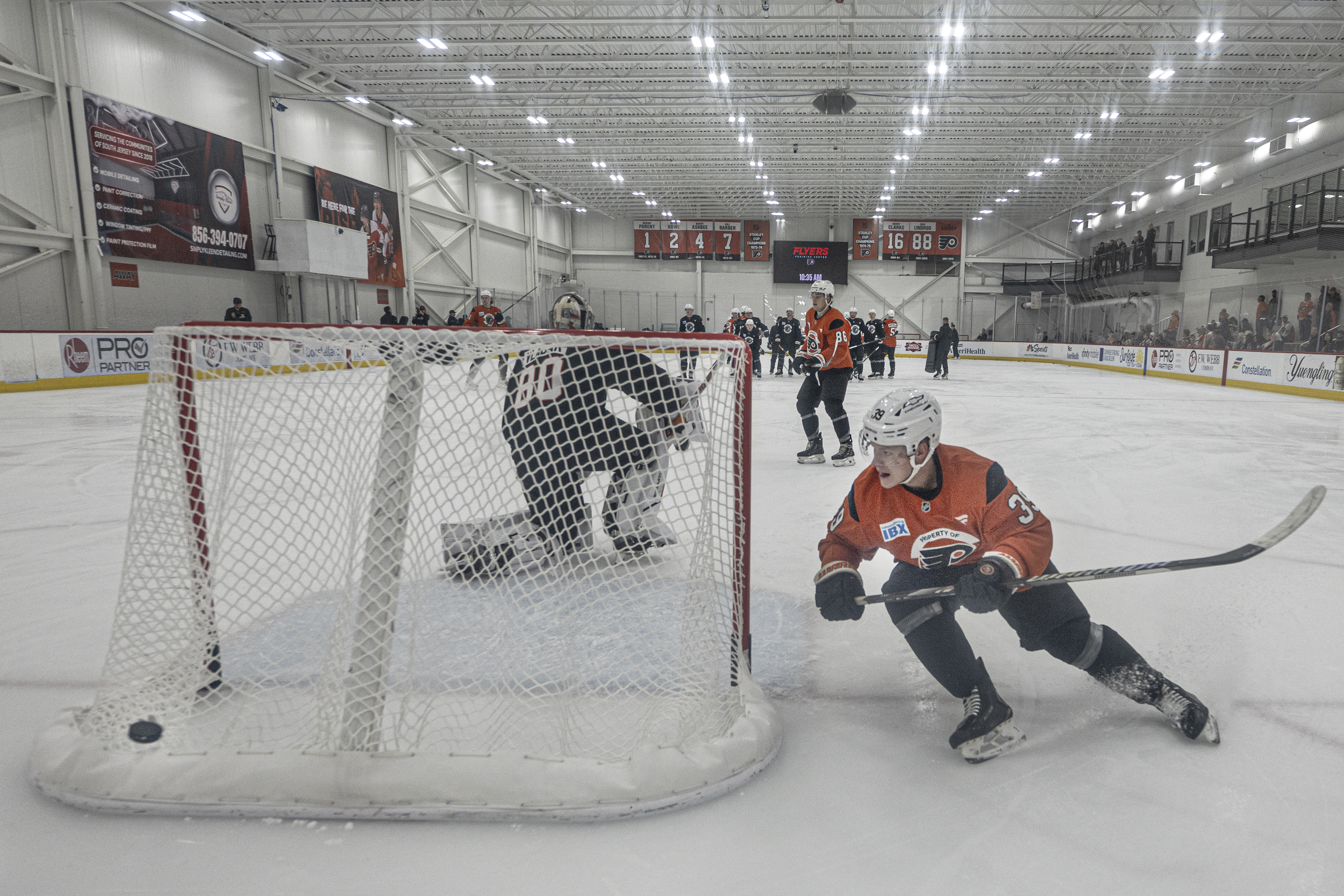
    Alex Bump will be among the young Flyers Danny Brière and the rest of the organization will be counting on to replicate last season’s success.Jose F. Moreno / Staff Photographer

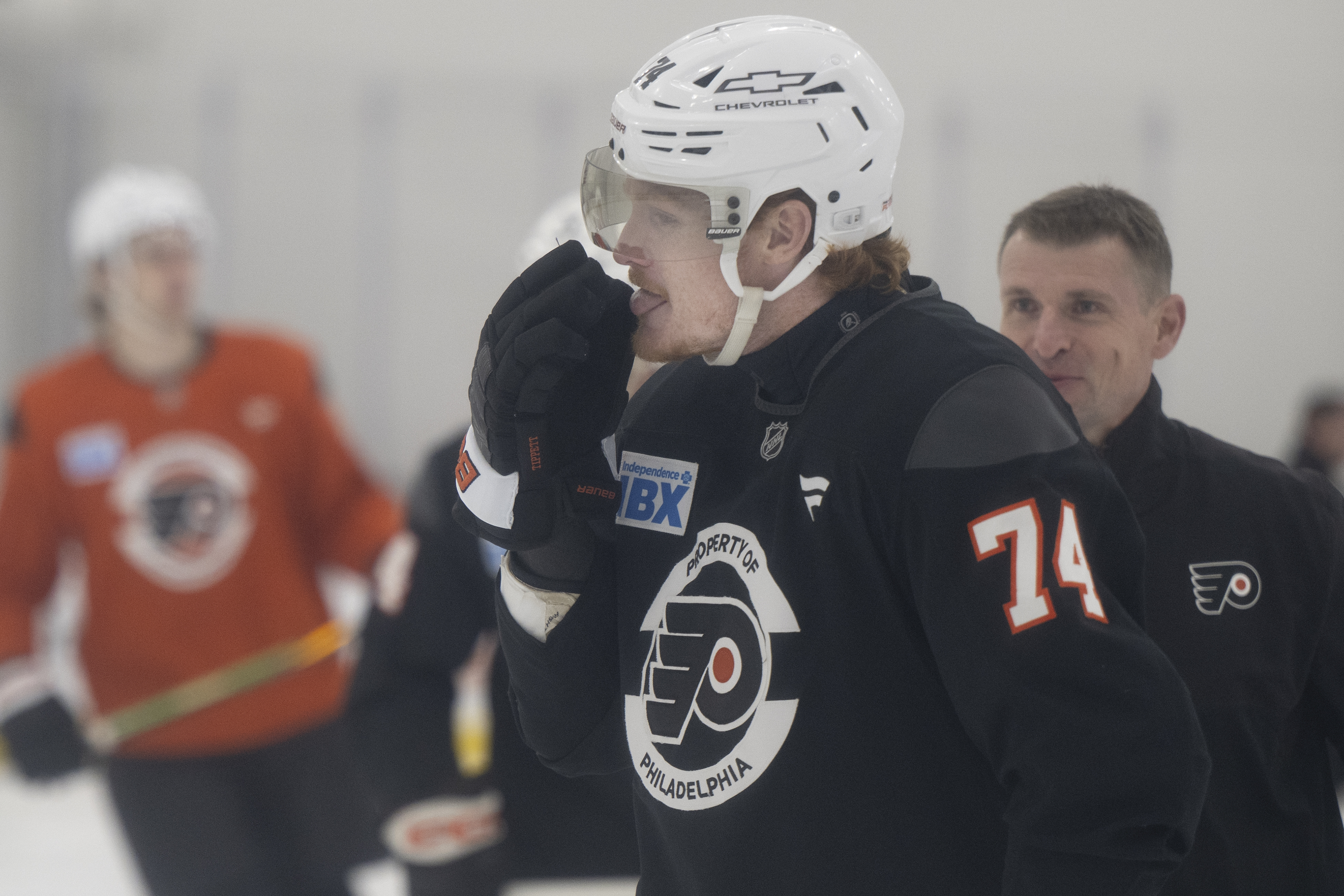
    No, the primary issue could be a happy problem: What if the Flyers do continue their upward climb, and what if they make that climb at a rate that exceeds their own expectations? What if Michkov and Porter Martone and Trevor Zegras and Tyson Foerster and Owen Tippett and Jamie Drysdale and who knows who else demonstrate that any of them, or all of them, is indispensable? Does Brière still take that big swing? If so, who and what would he have to give up to pull it off?

    That’s the potential risk. That’s the most important question he and the Flyers have to answer. Because if this team does manage to build on what it began last season, no one around here will settle for saltines anymore.