Tag: UniversalPremium

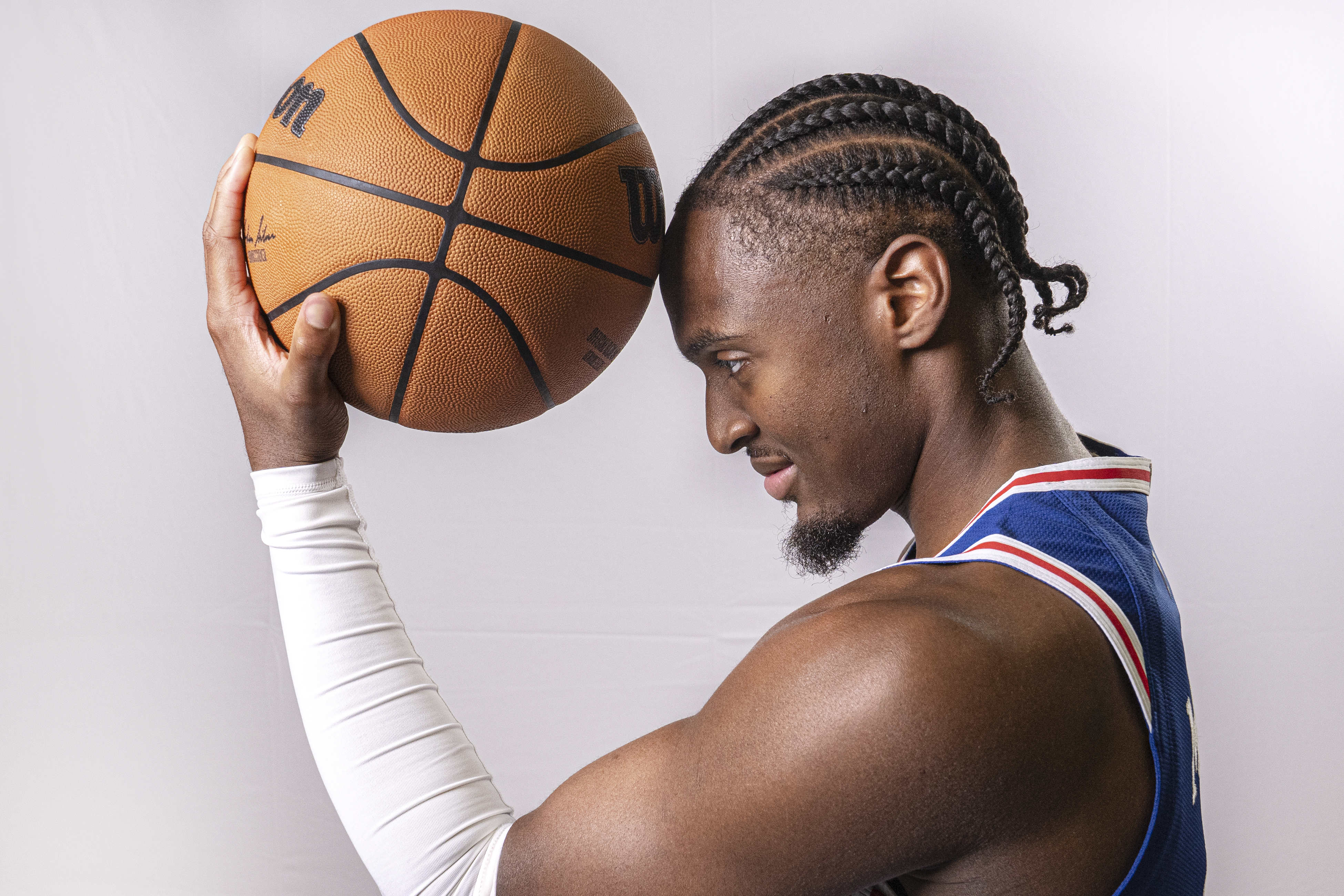
  • LeBron James is here because of Tyrese Maxey. That says something about both of them.

    LeBron James is here because of Tyrese Maxey. That says something about both of them.

    The three words that have long defined Tyrese Maxey were also the ones that landed LeBron James with the 76ers. They were spoken a little more than six years ago by Rajon Rondo, the longtime NBA point guard who’d starred at the University of Kentucky before embarking on a pro career that saw him win a championship and make four All-Star teams with the Celtics.

    This was the summer of 2020, and the world was on hiatus, and Rondo found himself sharing the court with a 19-year-old kid who was about to become the latest in a long line of first-round draft picks from his alma mater. Maxey liked waking up early, and he liked working late, and the kid could ball a little bit. Rondo was impressed enough that he mentioned Maxey to James, his then-teammate on a Lakers team that would go on to win the NBA title once play resumed that summer.

    “He works hard,” Rondo told James.

    In hindsight, maybe we shouldn’t have been so floored three months ago when James announced that he would be continuing his Hall of Fame career with the Sixers. Those of us who’d witnessed Maxey’s rise over the last seven years were well aware of his irrepressible good nature and earnest commitment to his craft. There may not be a more likable player in all of professional sports, let alone the NBA. It isn’t just his magnetism and work ethic, but also the genuineness with which these traits express themselves. What we didn’t know was the extent to which James, too, valued such things. Turns out, he values them a great deal.

    “Our relationship, when I broke a lot of the teams and franchises down I could possibly play for, he was one of the main deciding factors,” James said Monday in his first official public appearance as a Sixer.
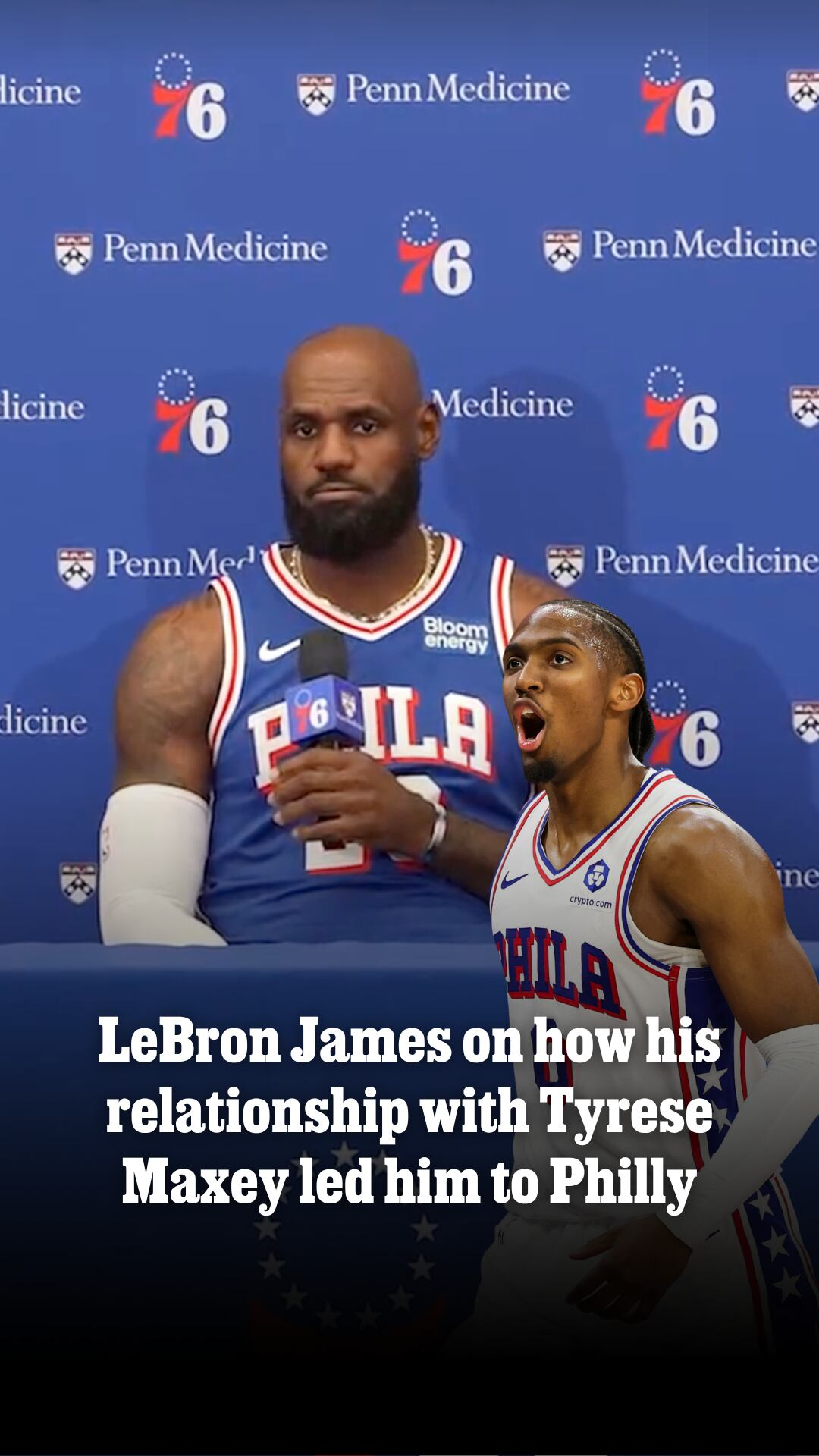
    LeBron James on how much Tyrese Maxey played a factor in his decision to choose Philly
    Video: LeBron James on how much Tyrese Maxey played a factor in his decision to choose Philly

    It’d be easy to interpret that solely as an endorsement of Maxey. But, in a funny way, James’ relationship with Maxey speaks as much to his own character as vice versa. Most of us here in Philadelphia know James only from afar, which means our impressions of him are inevitably shaped more by secondhand narratives than by firsthand witness.

    In the weeks leading up to his decision to sign with the Sixers, local airwaves and social-media feeds crackled with skepticism from a contingent of fans who not only doubted James’ intentions but also recoiled at the idea of seeing him in a Sixers uniform. However genuine some of those skeptics were, others were undoubtedly reacting to a heroes-and-villains caricature that develops with all superstars who reach a certain stature. James’ relationship with Maxey doesn’t necessarily square with that caricature.

    “He’s worked for everything he’s gotten,” Maxey said. “He was put on a pedestal where a lot of guys don’t succeed. And he probably surpassed expectations. For myself, I kind of had the opposite start of my career. I was put on a different pedestal, and I felt like I had to work my way up to where I am.

    “But still, at the end of the day, both of us had to work to get to where we were. I believe in the work, he believes in the work. Like I’ve been saying for years, we’ve got to get one percent better [every day], and not just on the court, but as a group, the camaraderie. It’s gonna be new. It’s gonna be different … But it’s gonna be good.”

    The most striking thing about James’ first news conference as a Sixer was both his maturity and the way in which it echoed Maxey’s.

    “You got to try to stay even-keeled, understand that the noise is gonna be noise, what happens outside of this building is gonna consistently happen, and it’s going to be doubled and tripled and quadrupled now that I’m here,” James said. “And it just comes with the territory, I understand it. So the work that we put in in this building, the work that we put in when we’re on the road, watching film, the work that we put in, will take care of itself. …

    “Guys will hold each other accountable. We put the work in, we have honest conversations, things of that nature. So, you know, just staying even-keeled and everything that’s going on out there does not matter. It does not matter at all, it’s about the results and the things that happen in this building for us. And if we do that, we’re a really talented team, but the talent will only get you so far.

    “But if you put the work in, and you continue to be better and better every day, and you have this championship approach every day to get one percent better, and then it definitely will work in our favor.”
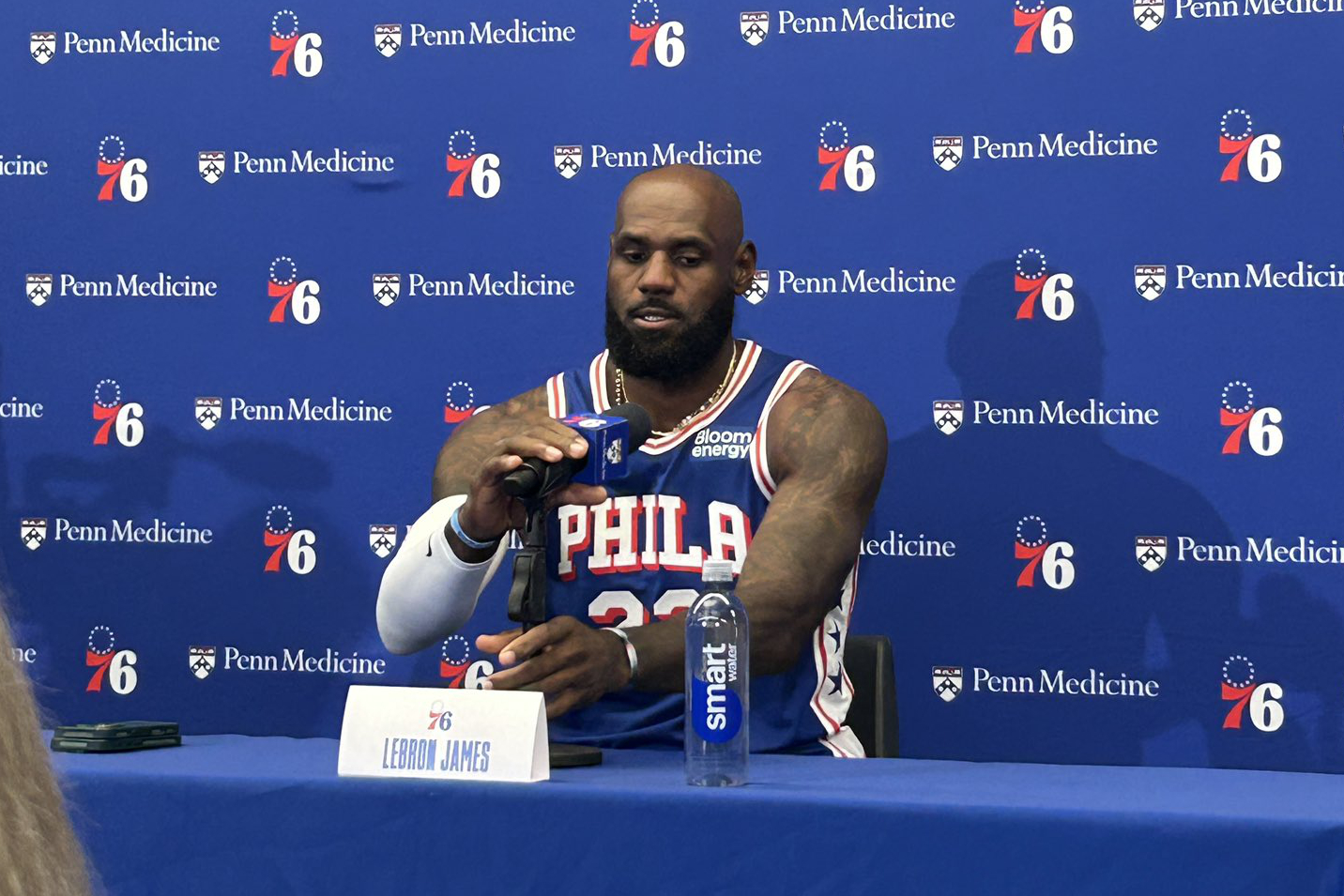
    LeBron James dons a Sixers jersey for the first time as he speaks to reporters on Monday in Camden, N.J.Gabriela Carroll /

    Whatever your preconceived notions about LeBron, he is clearly an athlete who treats his craft with the utmost sincerity. As Maxey said, plenty of athletes have begun their careers on pedestals similar to the one James occupied as a generational schoolboy star at Akron’s St. Vincent-St. Mary and the eventual No. 1 overall pick in the 2003 NBA draft. The dividing line between the greats and the coulda-been-greats is more often than not an internal will that manifests itself in both work ethic and competitive drive. Both are evident in the words James speaks and the manner in which he speaks them. One suspects his new teammates will have no choice but to listen.

    Maxey wasn’t blessed with the same raw physical gifts as James. He had the misfortune of entering college the year the world shut down, which limited his exposure and precipitated his fall to the Sixers at No. 21. But there is clearly something kindred between the two players. Listening to them talk, seeing them side-by-side wearing the same uniform, it suddenly seemed obvious why James ended up with the Sixers. That says something about Maxey. It says more about James.
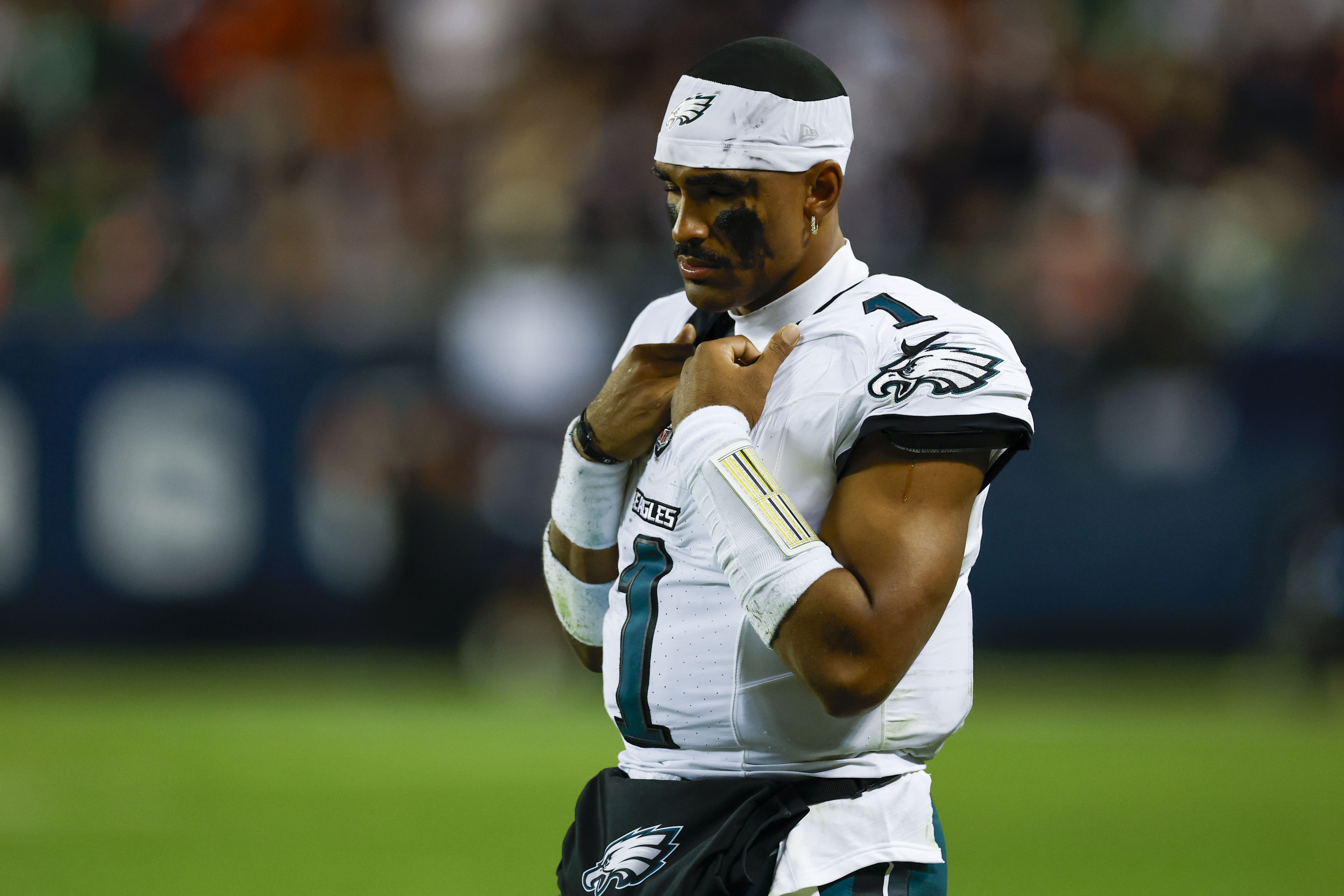
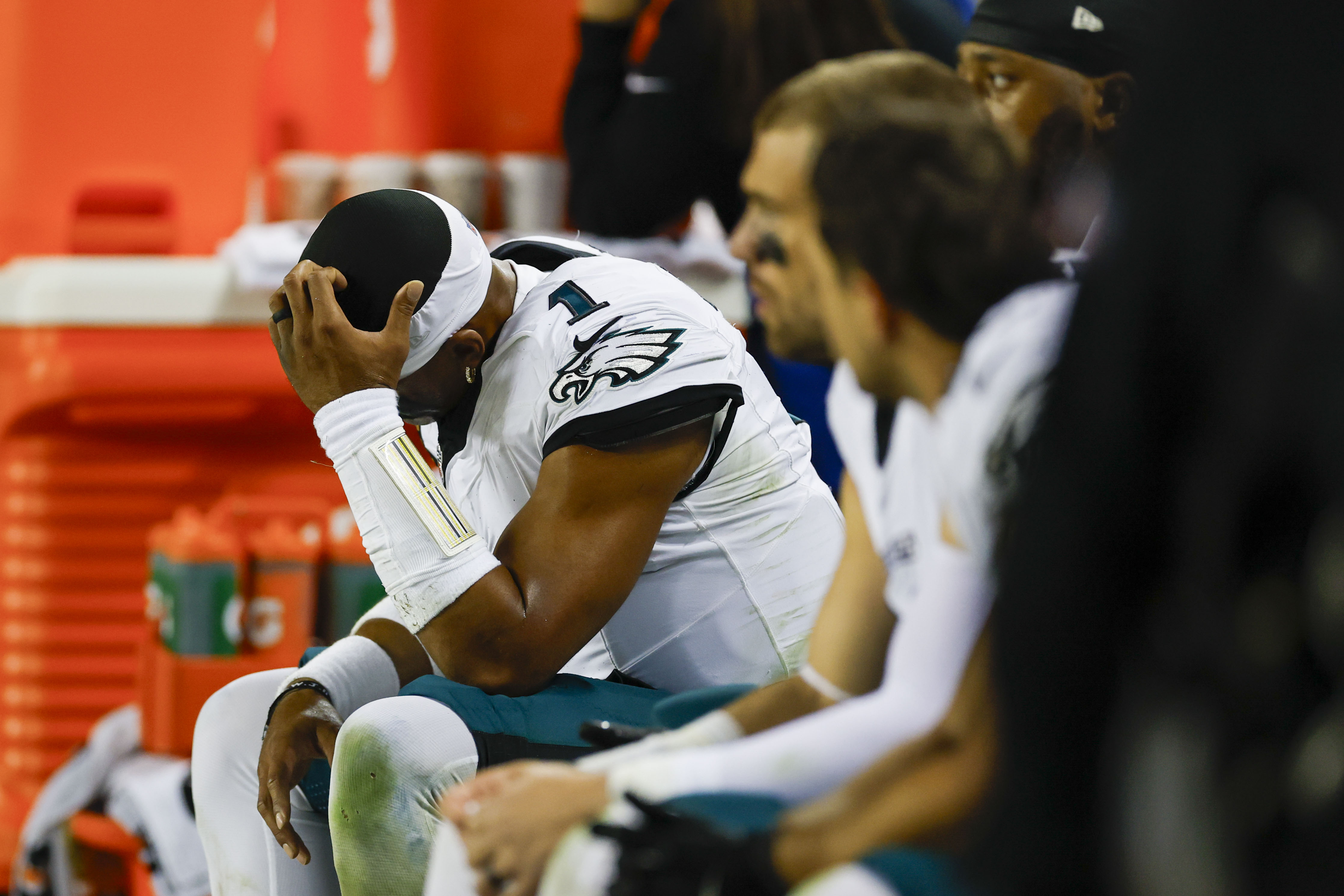
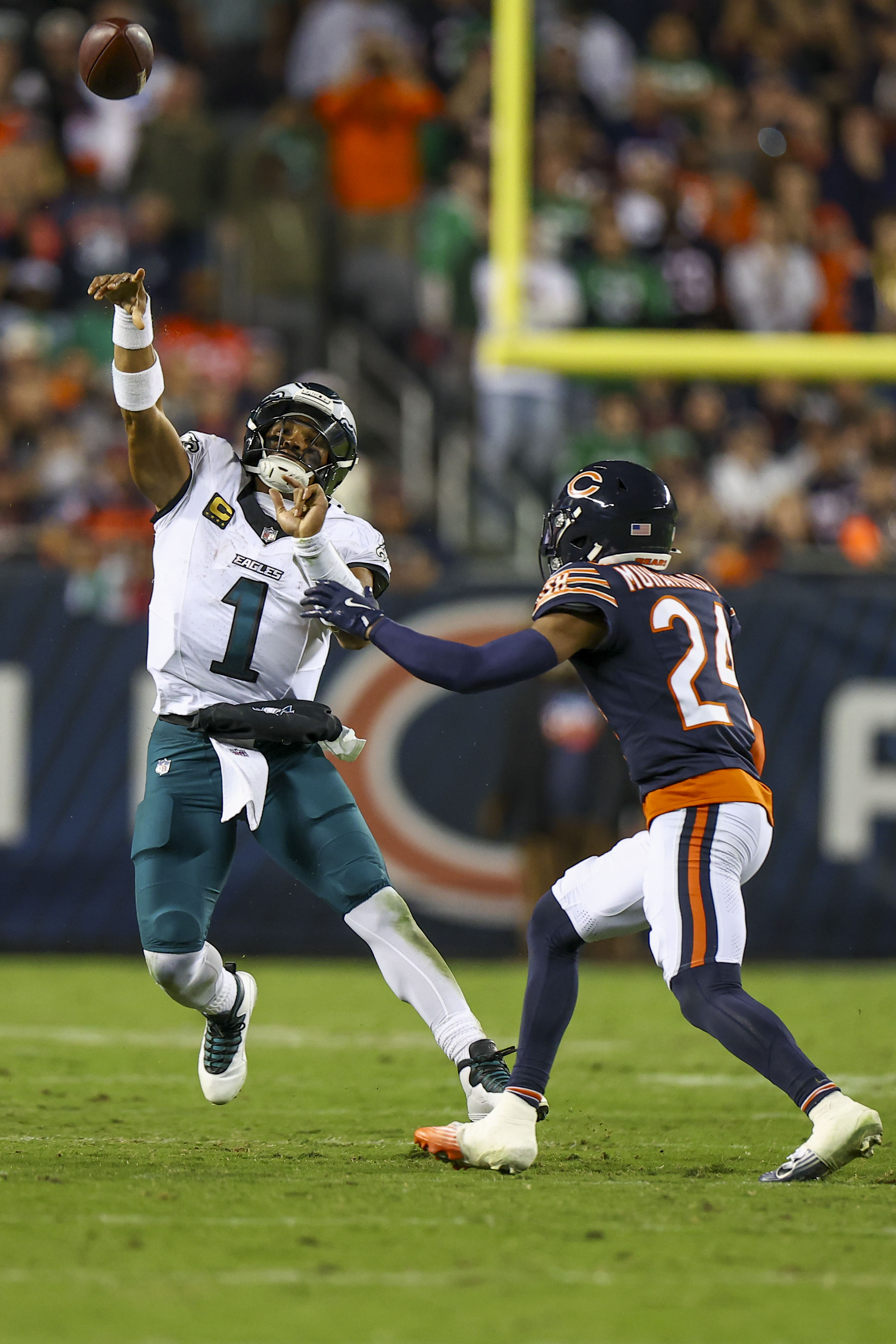
  • Jalen Hurts and the Eagles took a major hit against the Bears. They have to find a way to bounce back.

    Jalen Hurts and the Eagles took a major hit against the Bears. They have to find a way to bounce back.

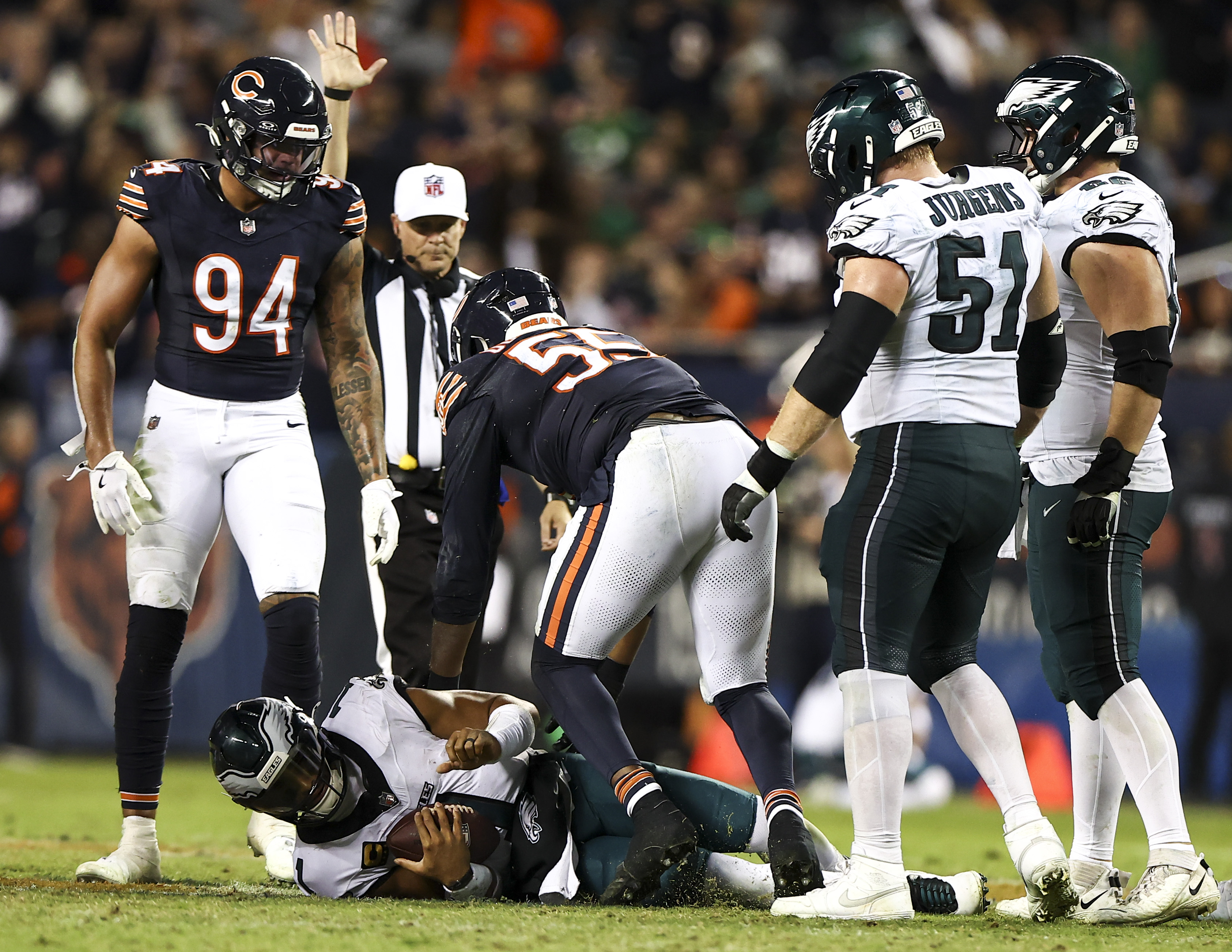
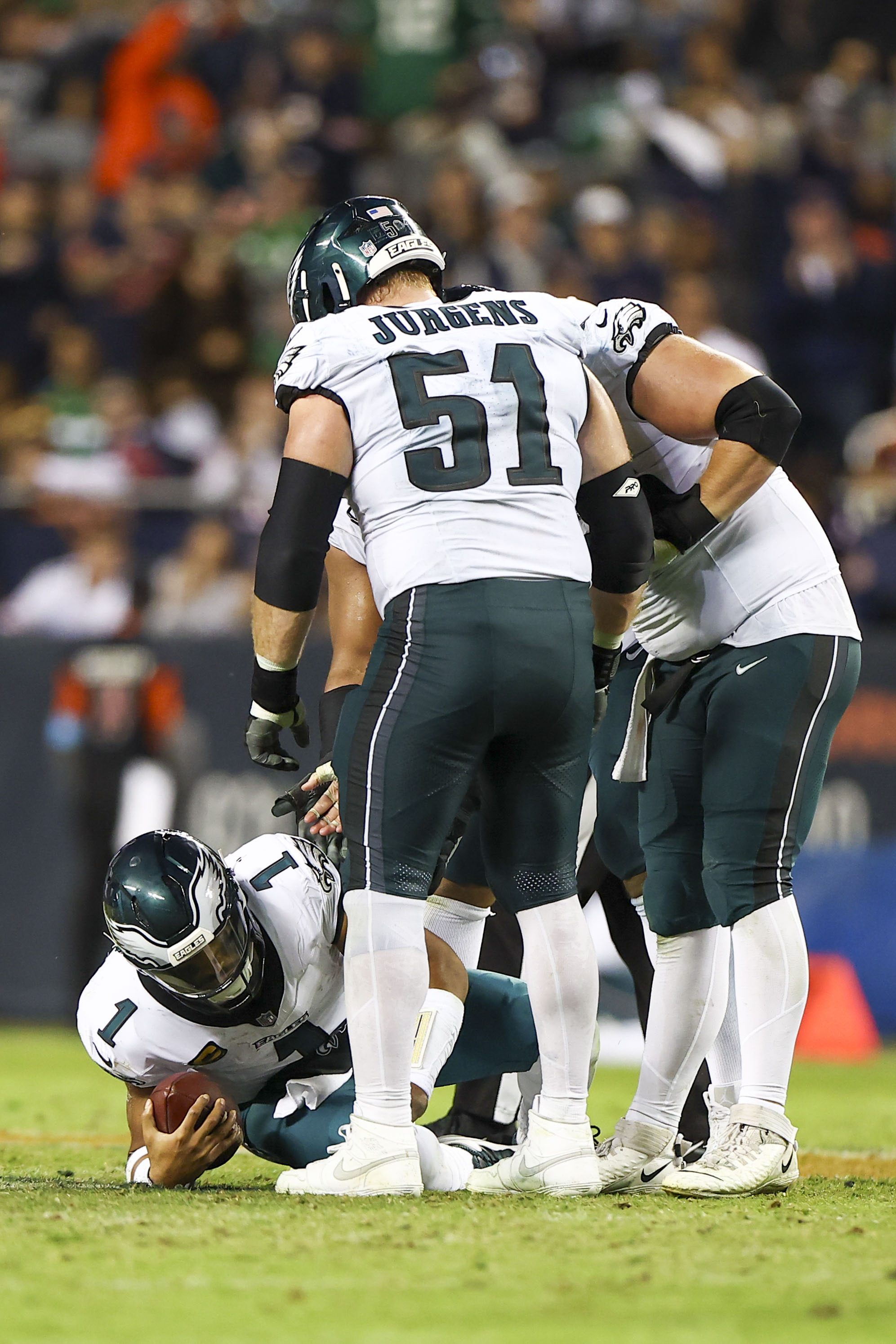
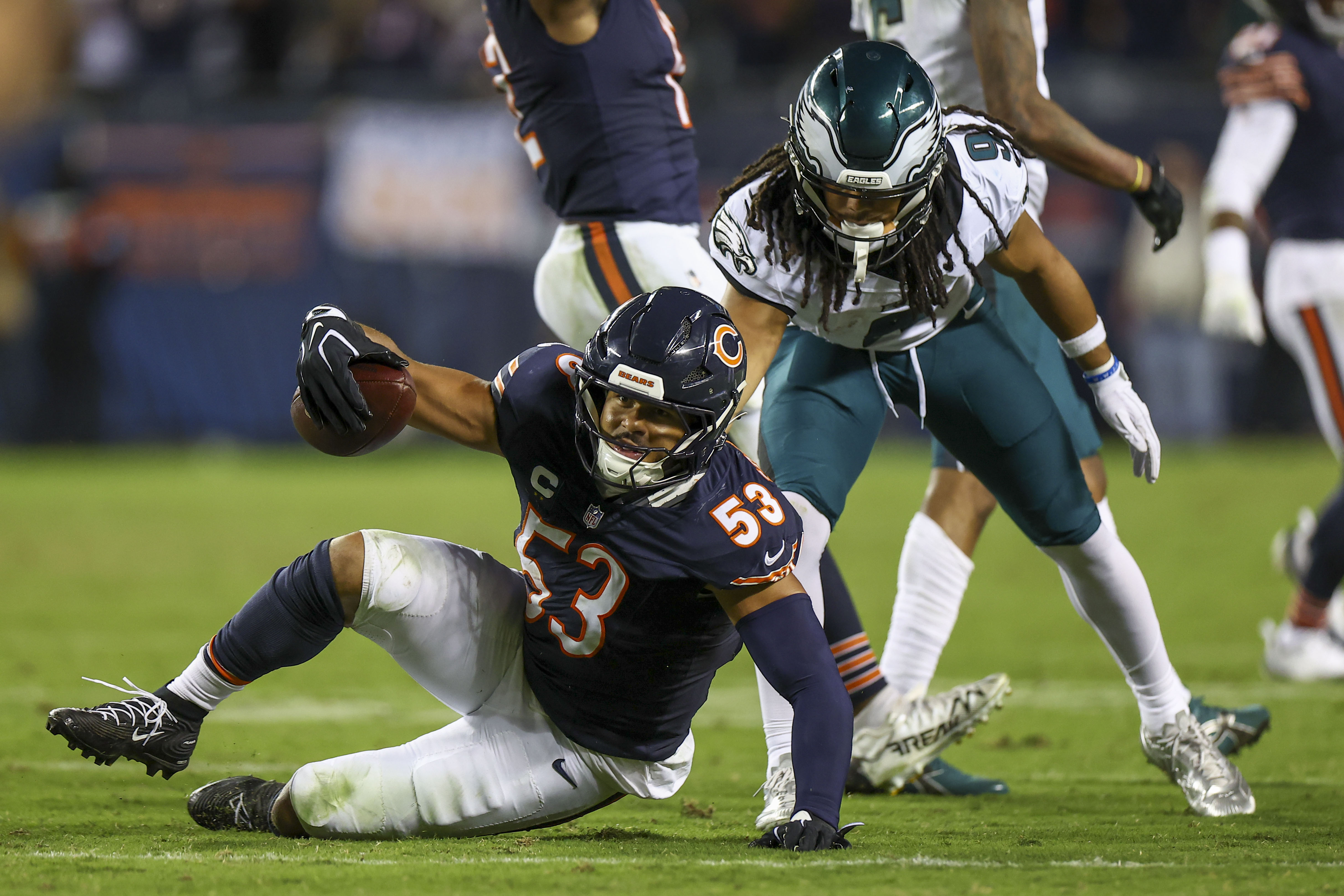
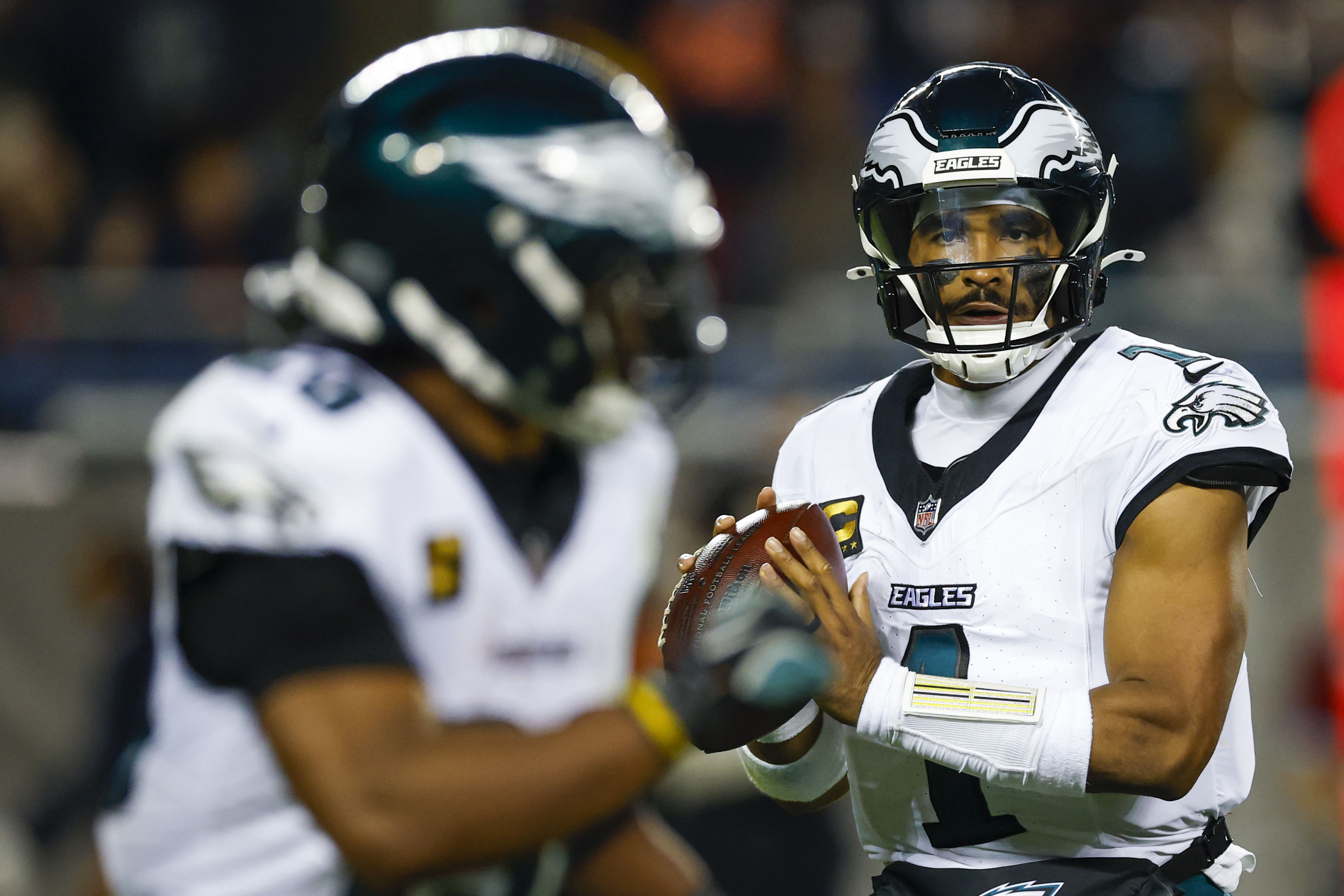
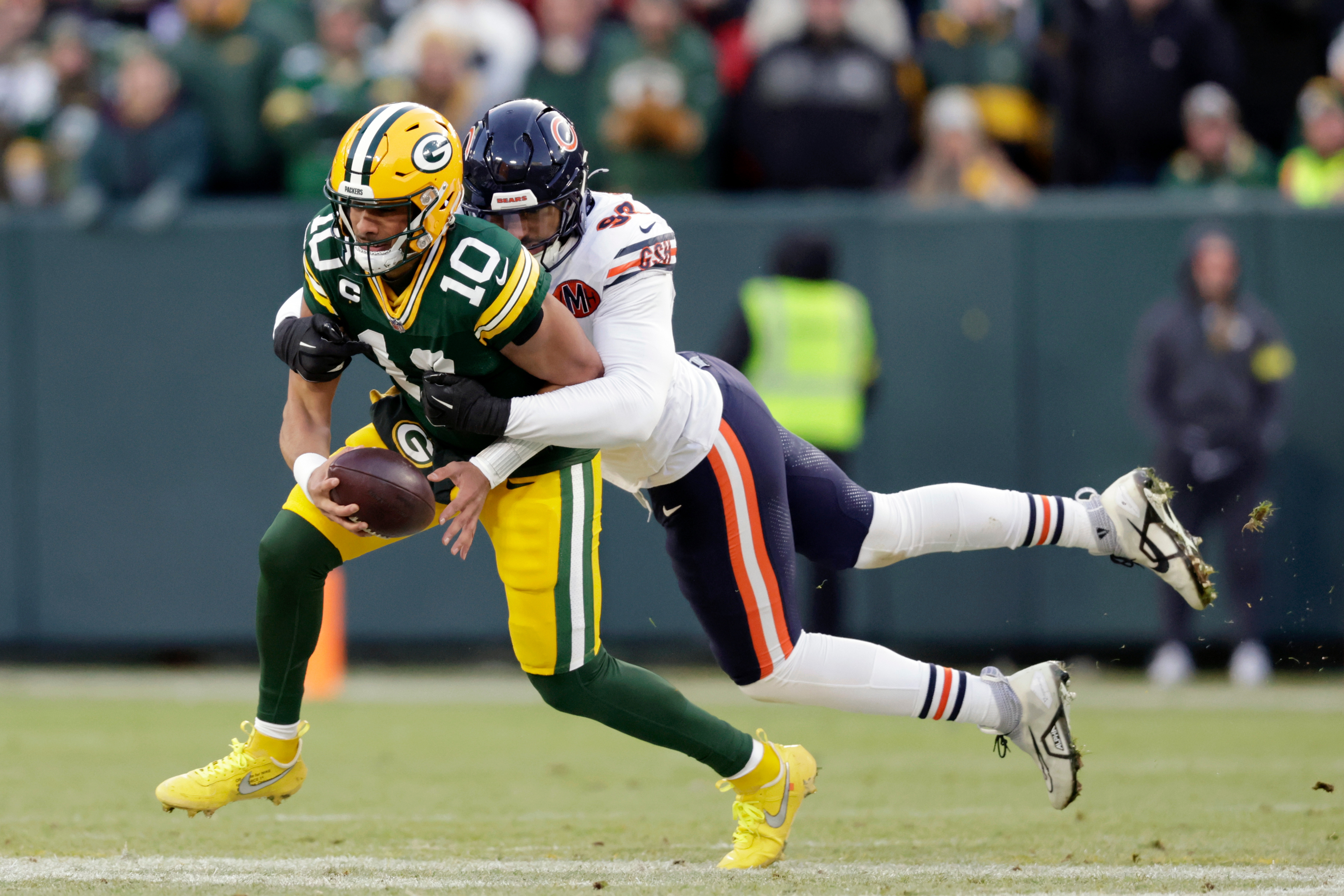
    CHICAGO — Jalen Hurts had scrambled to his right toward the sideline, had taken a step out of bounds, had taken a hellacious hit from Bears linebacker D’Marco Jackson, and there Hurts was now, sprinting back to the Eagles’ huddle, making sure the world knew that he believed he was good to go.

    The Eagles were moving, at the Bears’ 15-yard line midway through the second quarter, in striking distance of a tying touchdown. But the concussion spotter assigned to Monday night’s game at Soldier Field has a job to do, too, and it’s an important one, and he signaled to the officials that Hurts had to spend time getting his head checked in the medical tent.

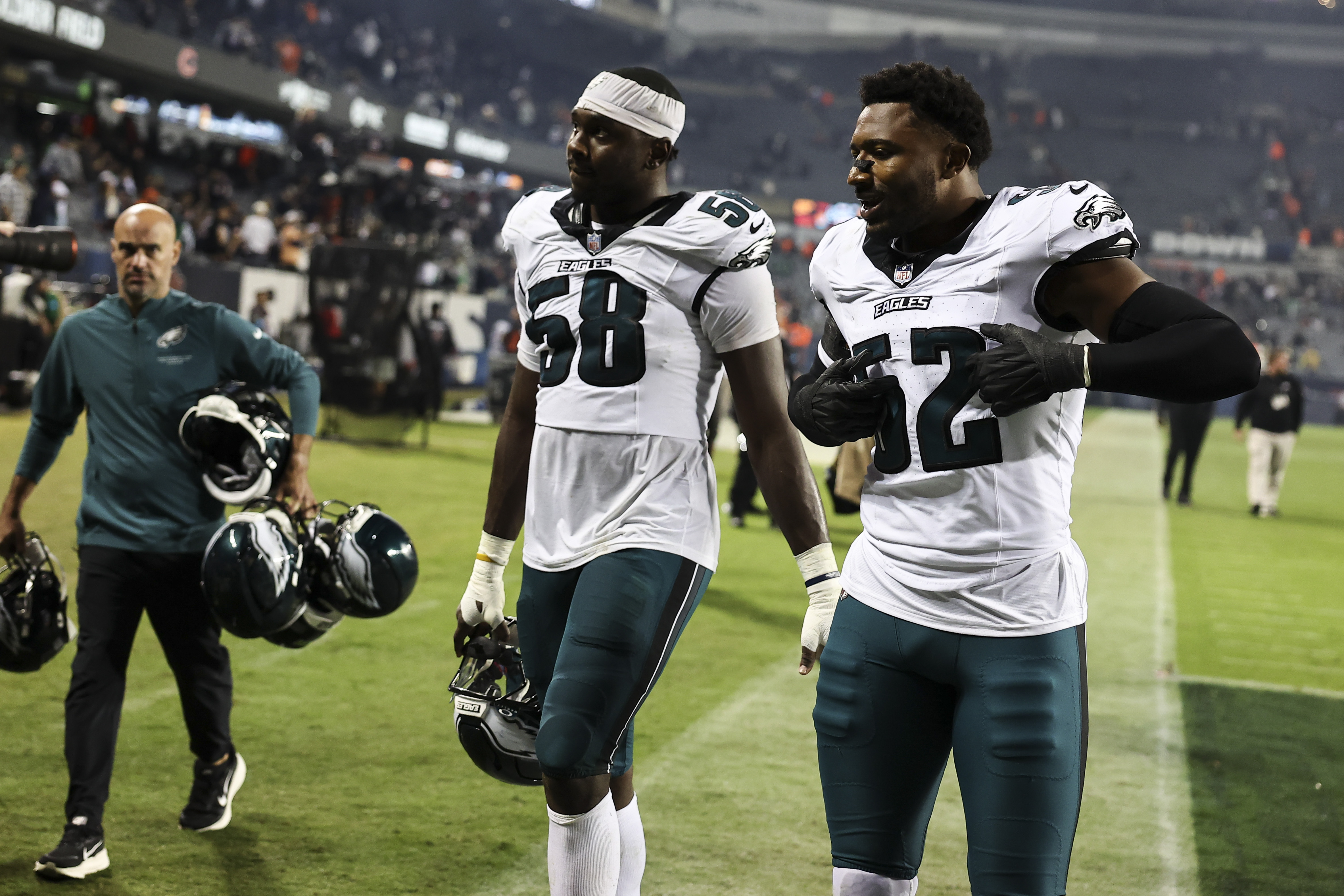
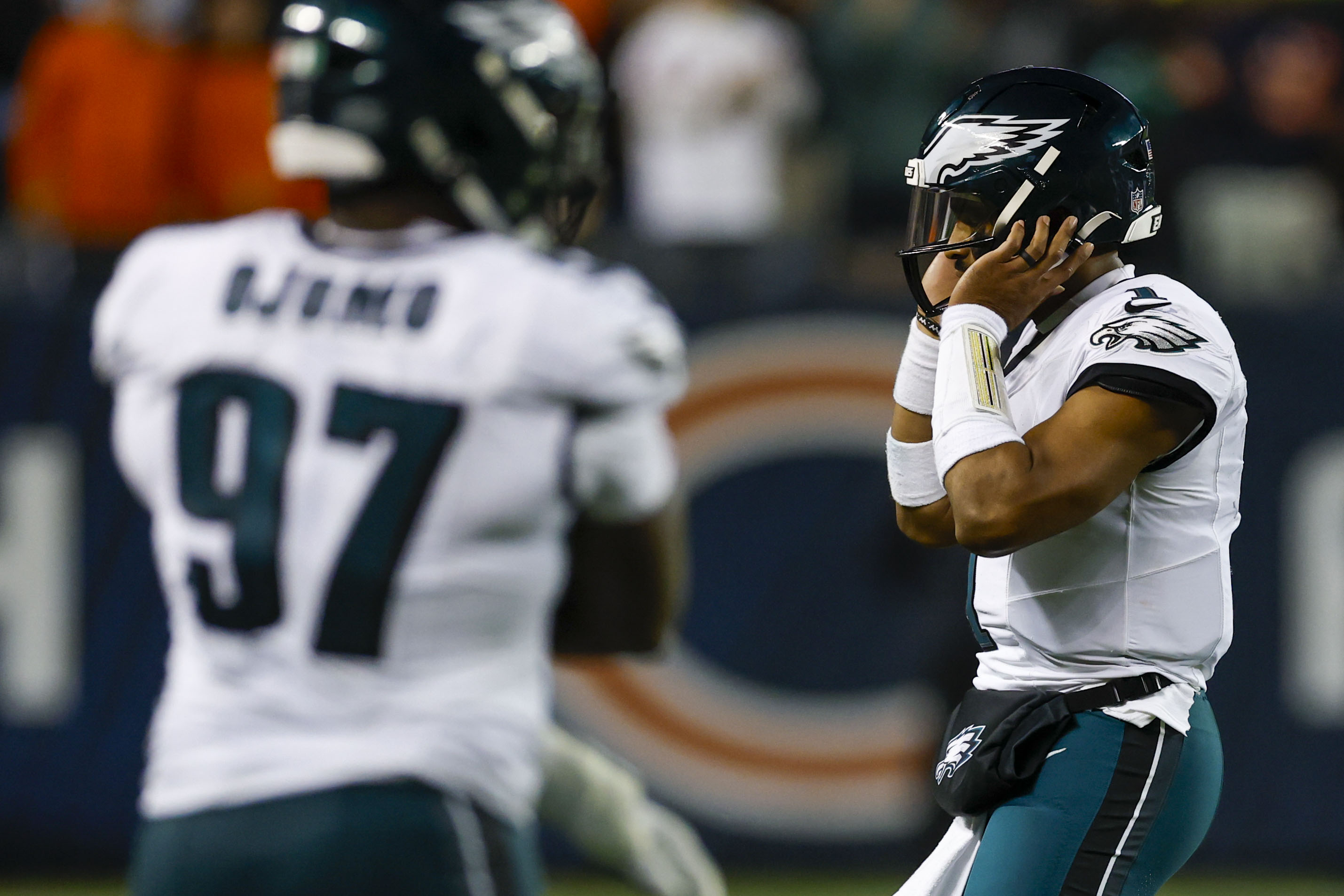
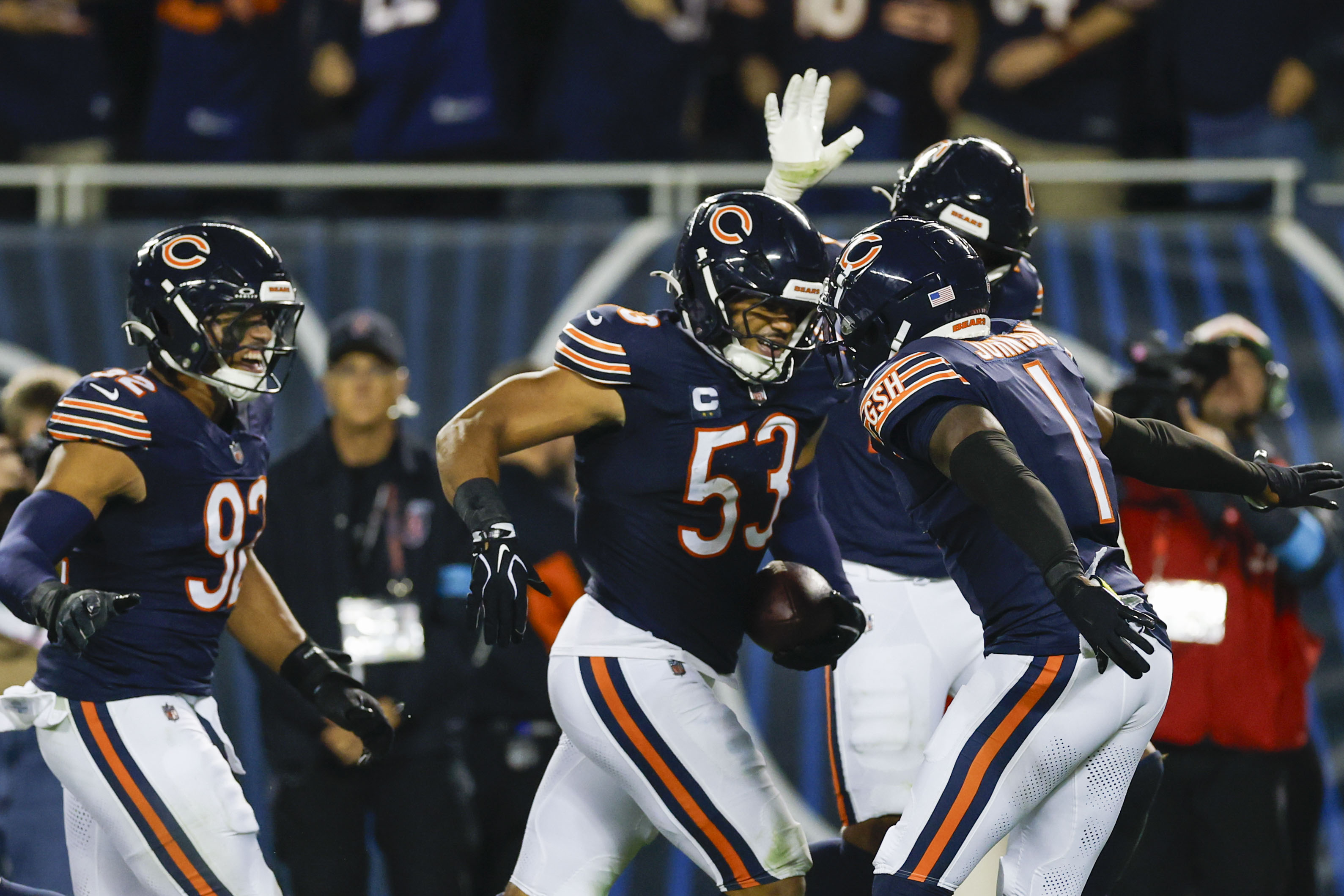
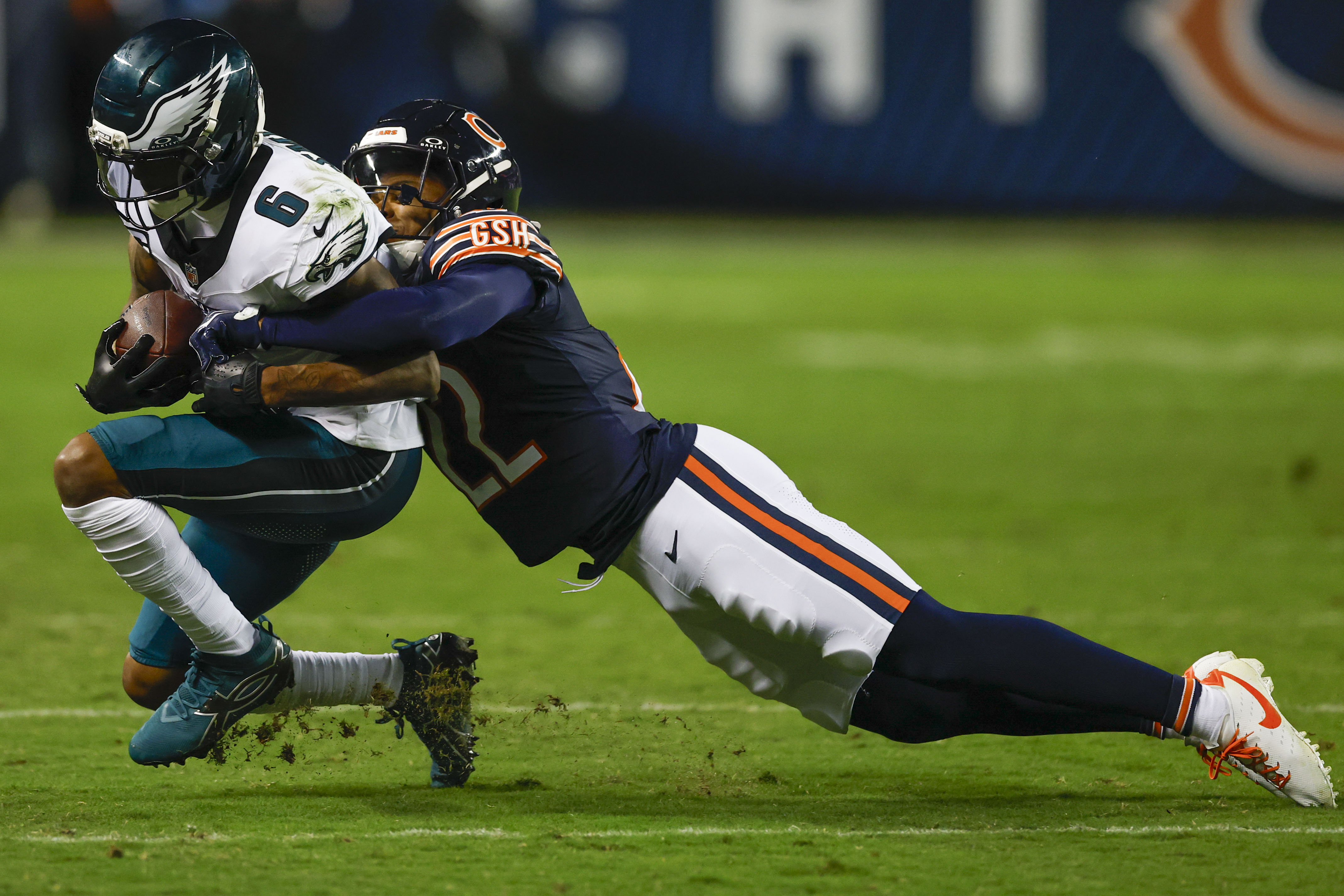
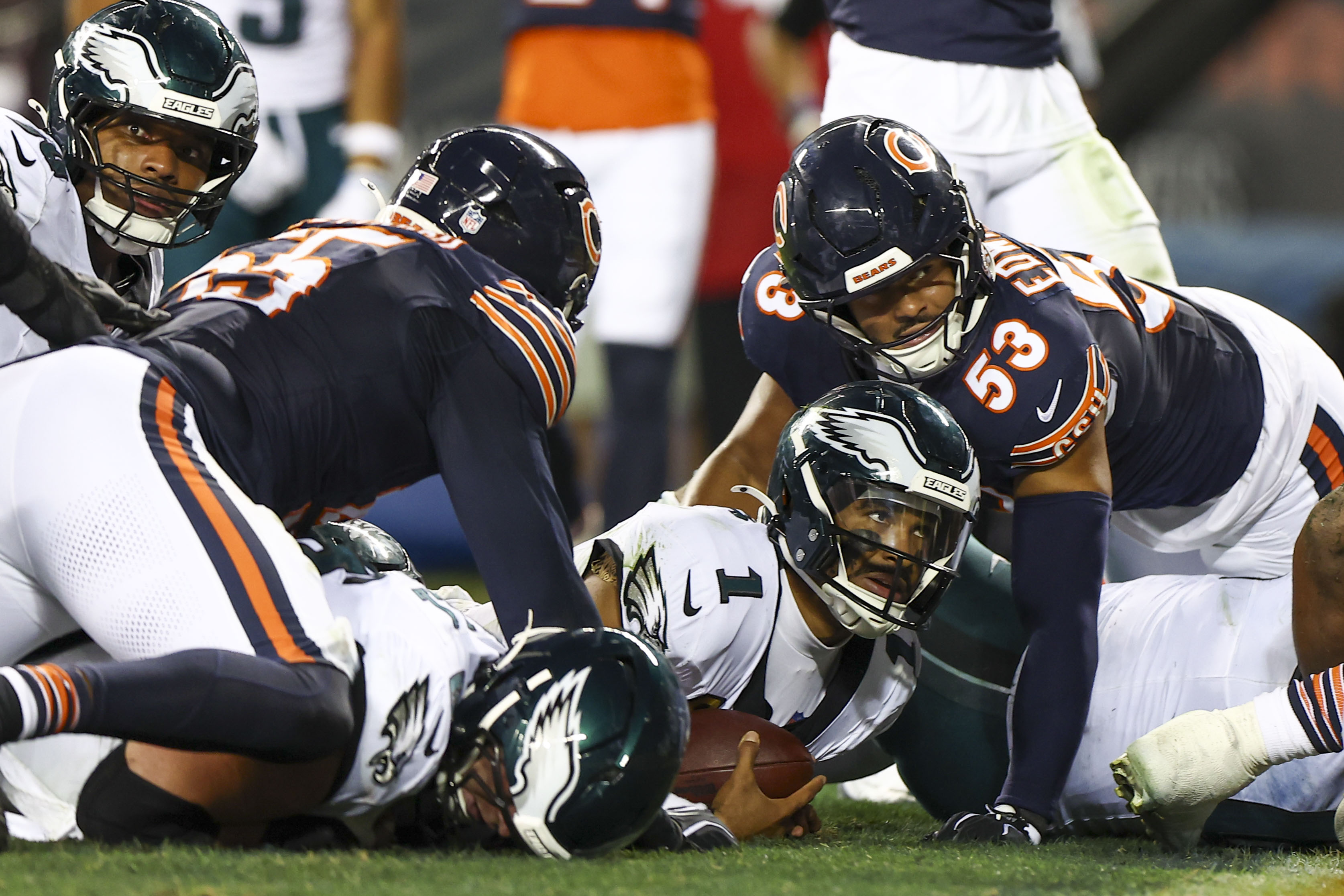
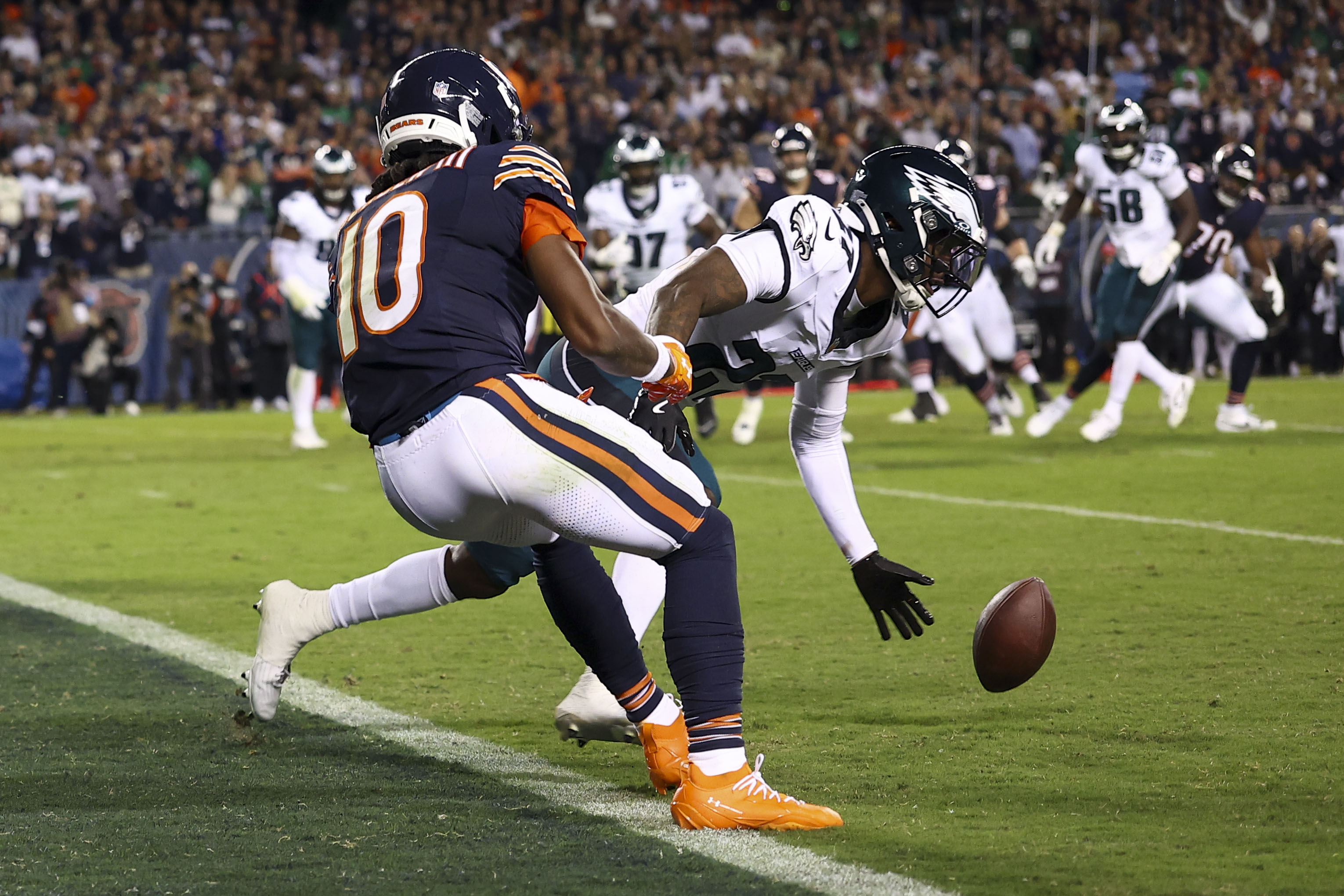
    What happened over the next four plays and several minutes wasn’t necessarily the turning point in the Eagles’ 27-7 loss, but it symbolized their night as perfectly as any sequence could. Throughout training camp and the preseason, the competition between Andy Dalton and Tanner McKee for the team’s No. 2 quarterback spot was nothing more than a battle between two bad choices. Then Dalton replaced Hurts and showed just how bad. After Saquon Barkley ripped off a 14-yard run to the Bears’ 1-yard-line, he was stuffed twice, and on third down from the shotgun, Dalton did the one thing he couldn’t do: He turned the ball over, throwing a horrible interception to the Bears’ Dillon Thieneman.

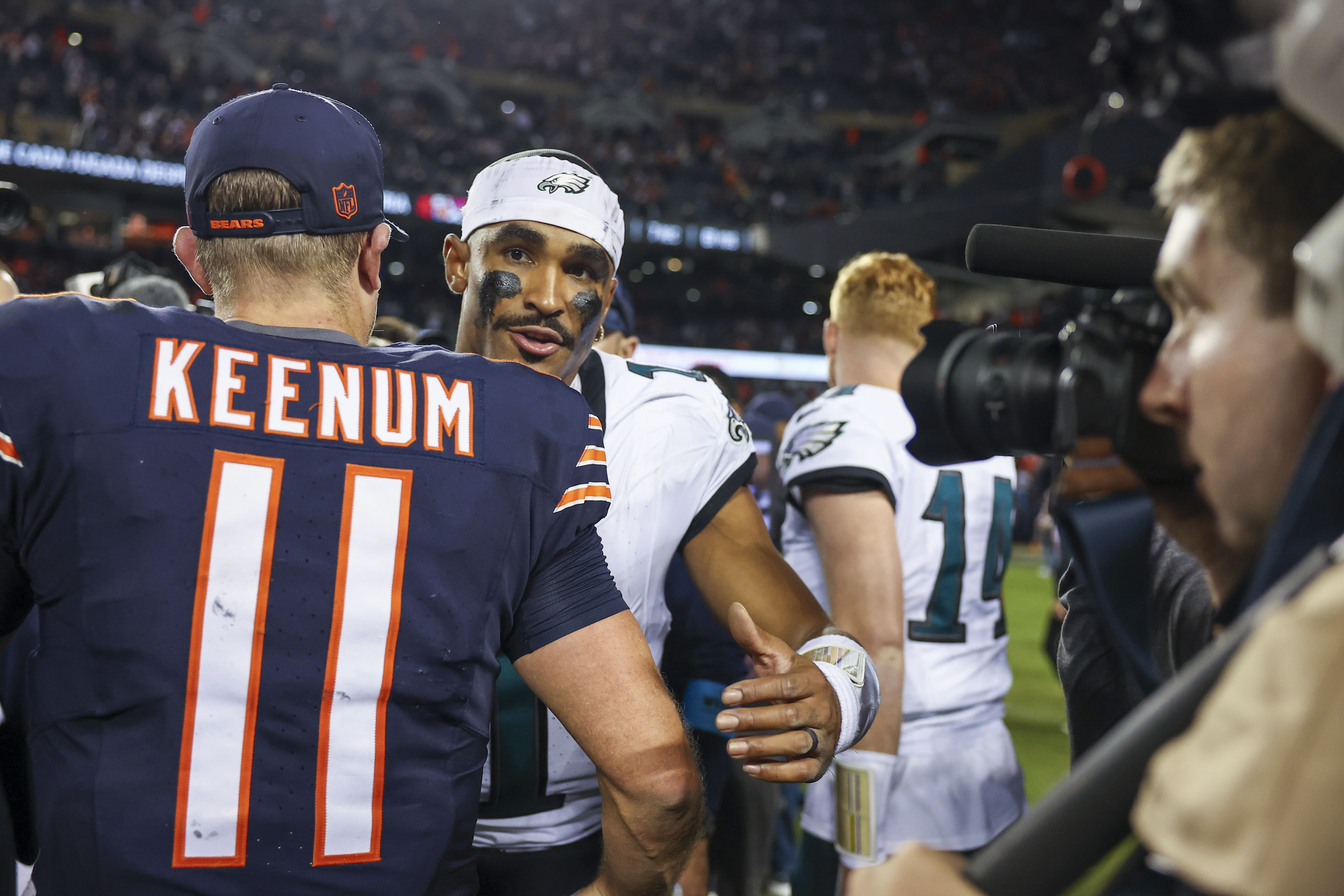
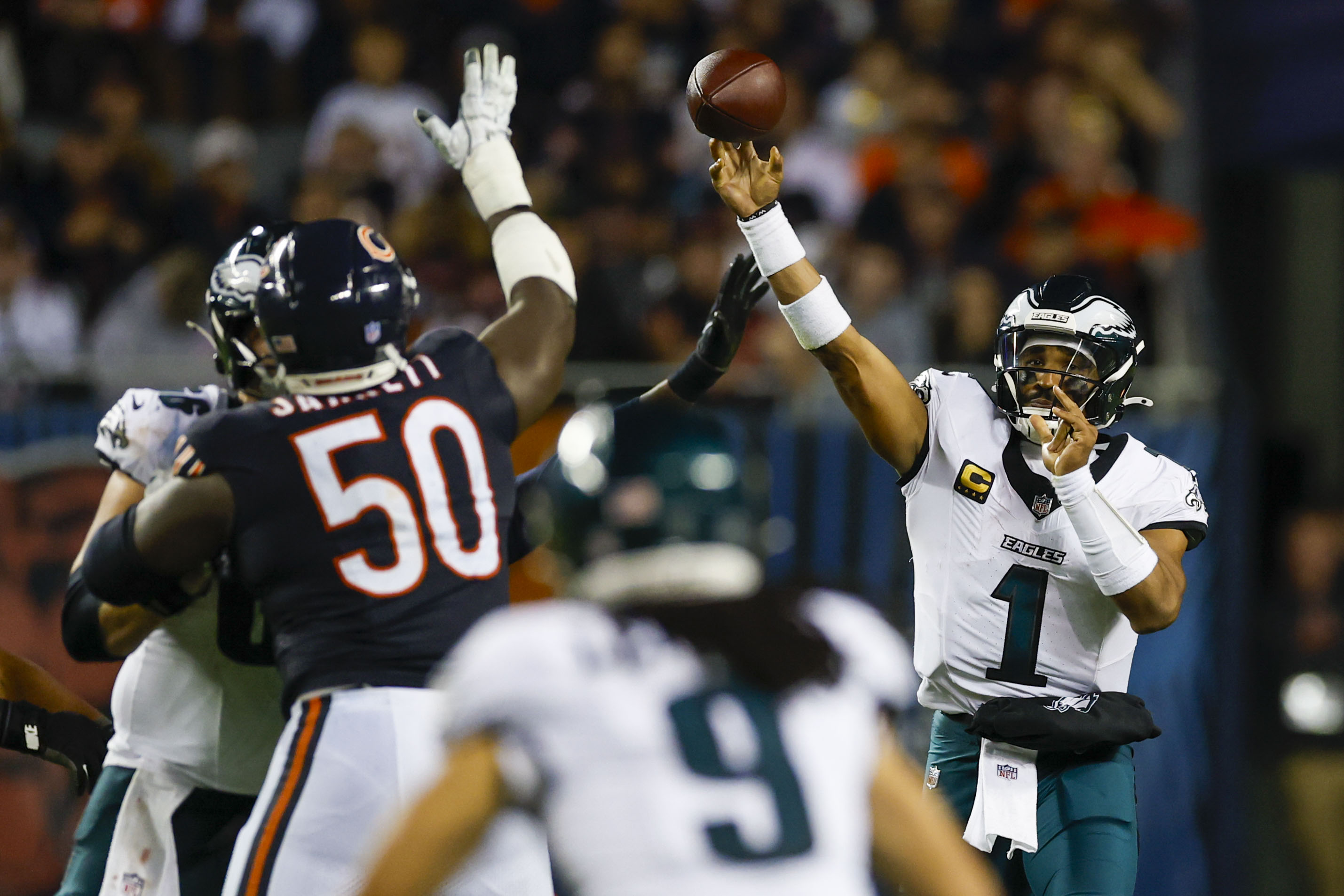
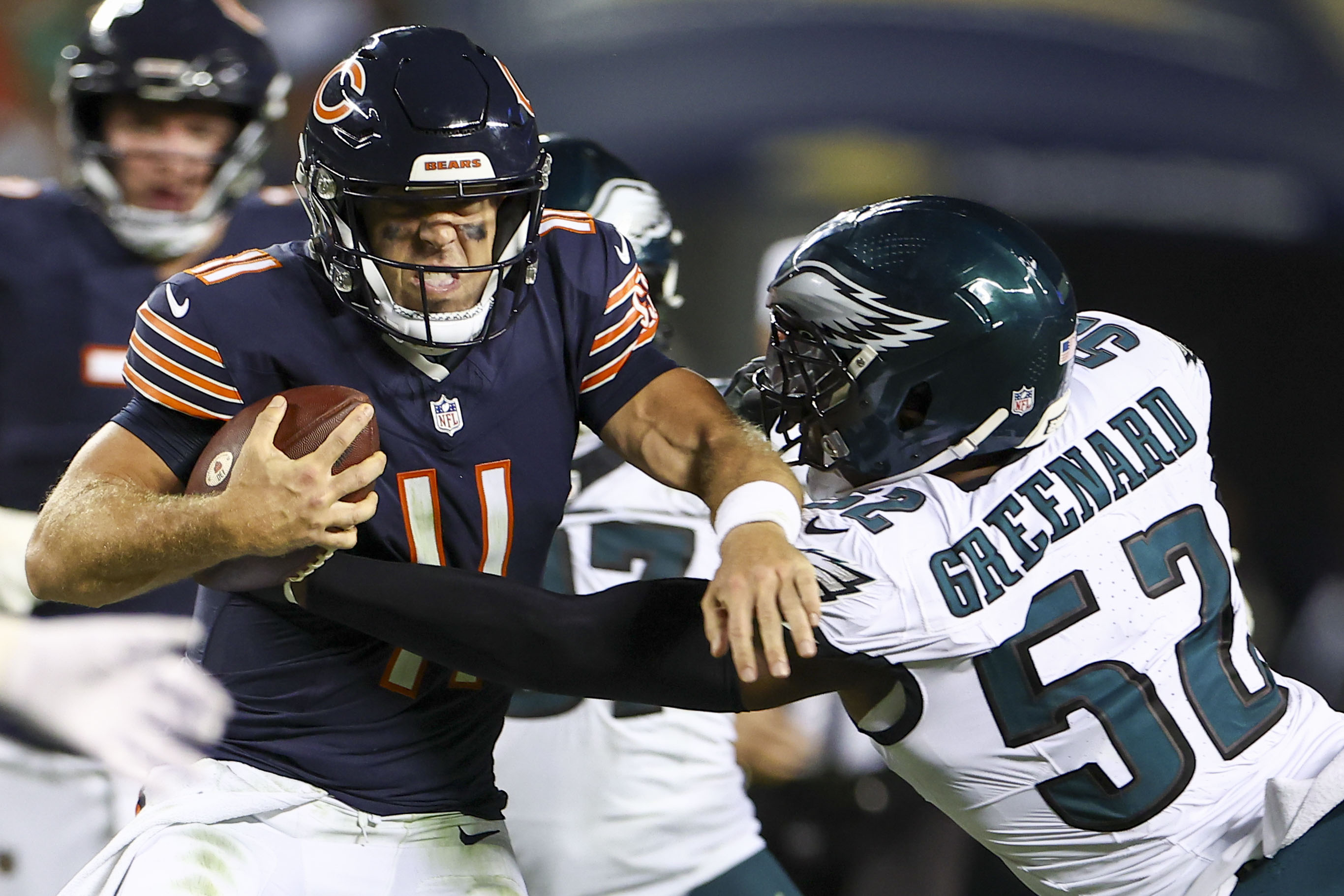
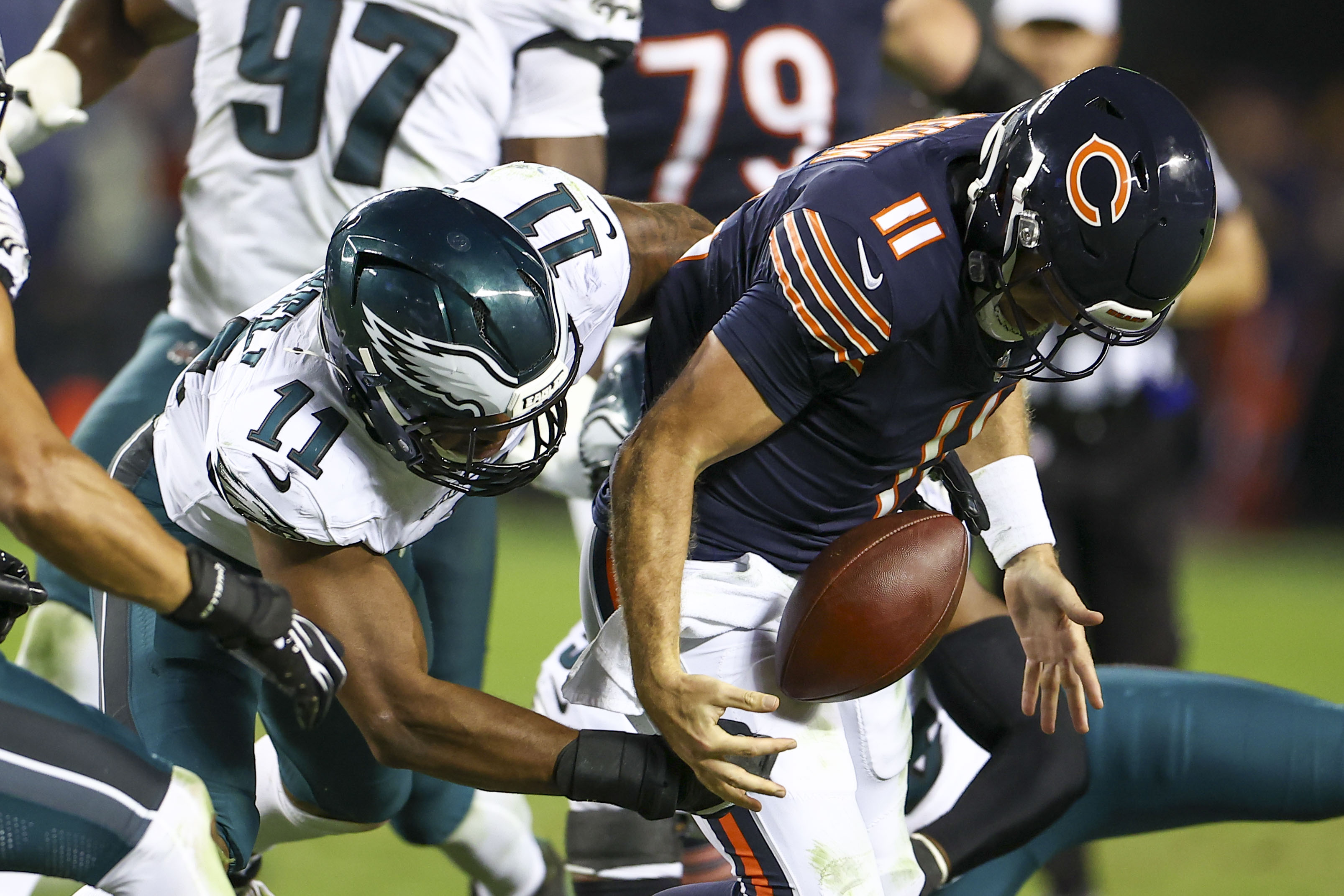
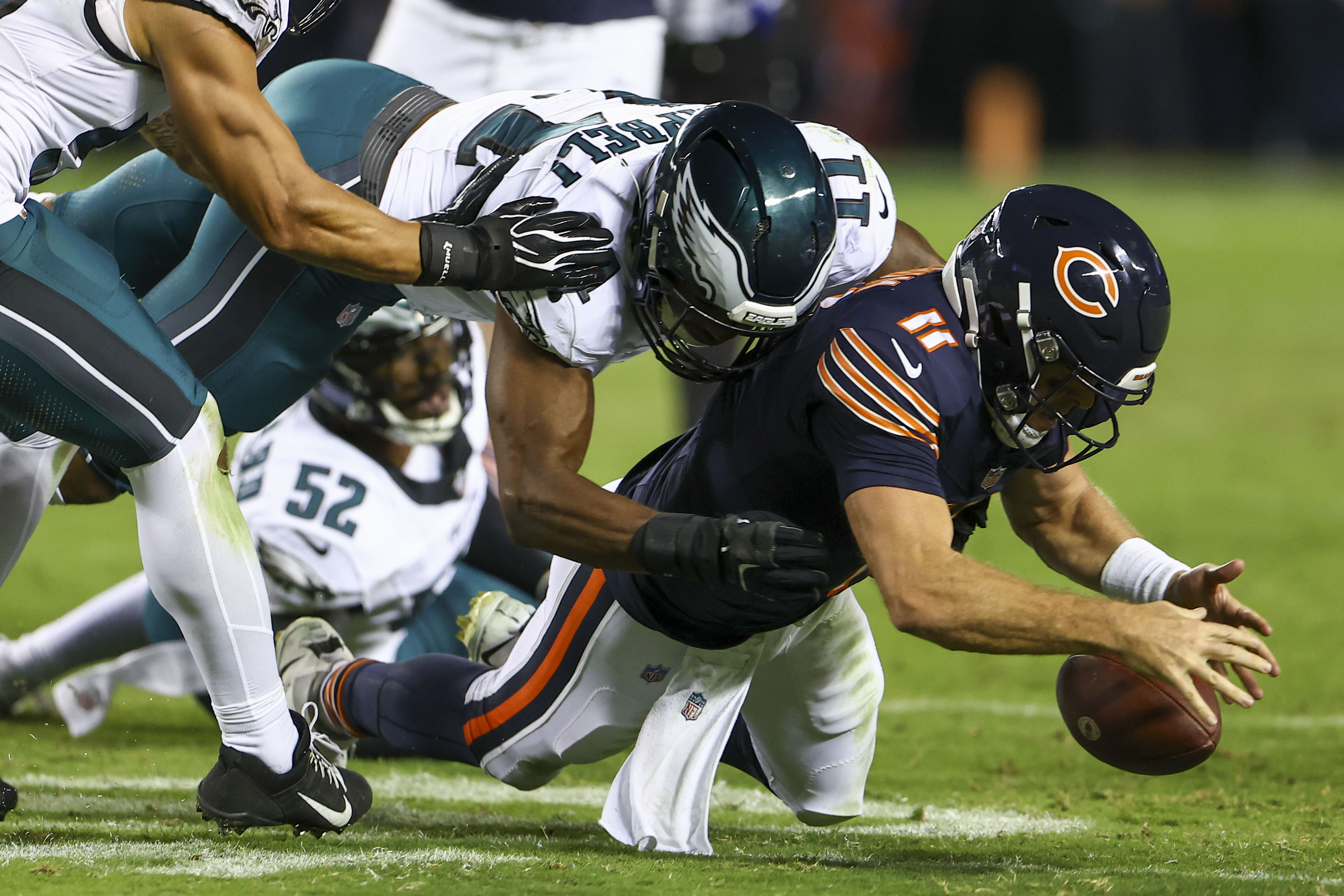
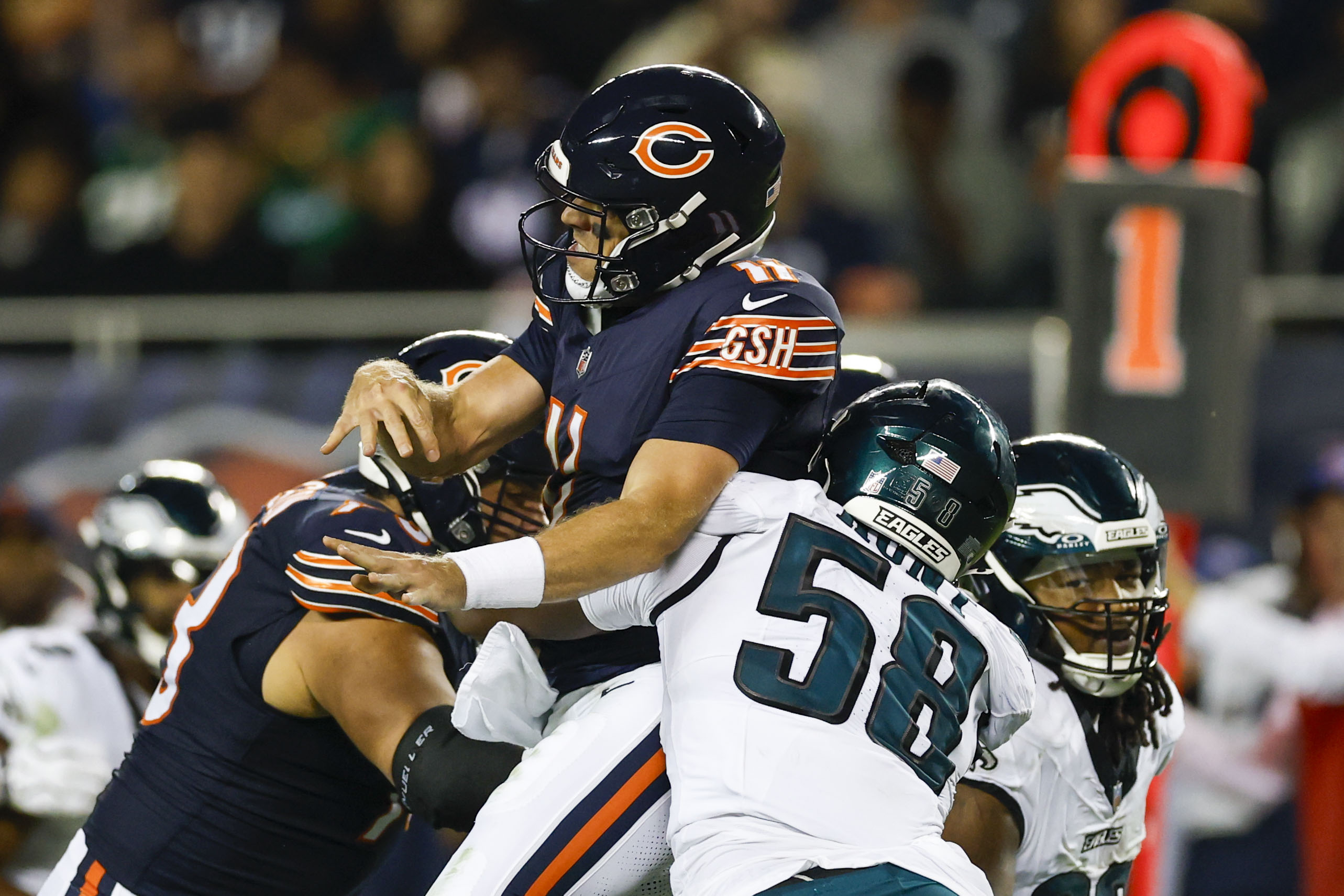
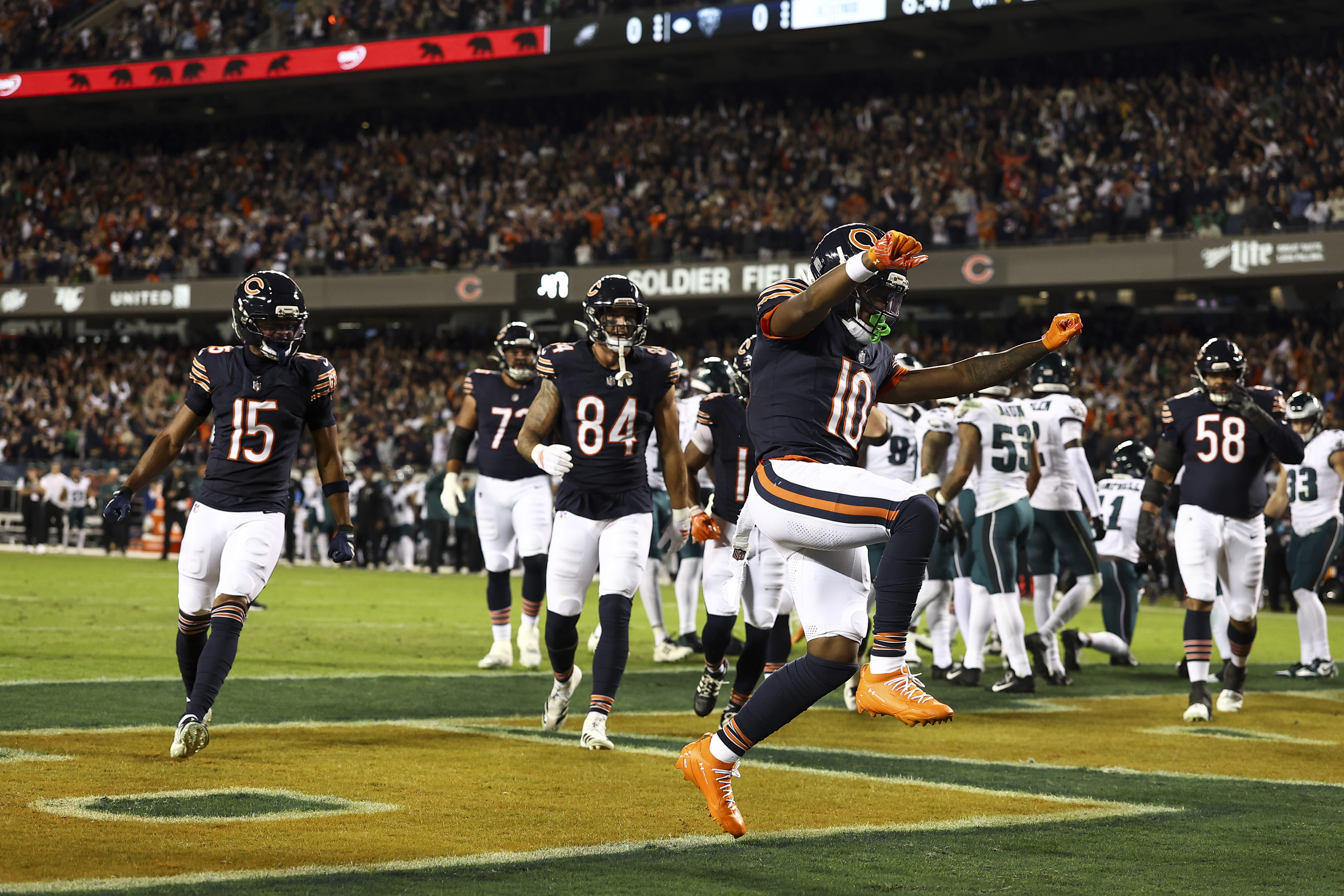
    Maybe, even if the Eagles get in the end zone or just settle for a field goal there, nothing else changes about a game that they never looked ready to play. Maybe Ben Johnson stays one step ahead of Vic Fangio. Maybe Case Keenum — 38-year-old Case Keenum, playing in his first NFL game in nearly three years — keeps carving up the Eagles’ defense. Maybe that defense keeps missing tackles and breaking down in coverage. Maybe Sean Mannion keeps calling screen passes that don’t work, that lose yardage, and stall drives. Maybe the rest of Monday night unfolds exactly as it did, with Hurts throwing his own awful interception late in the third quarter, with Johnson showing that he doesn’t need Caleb Williams at quarterback to outclass Fangio for the second time in 10 months.

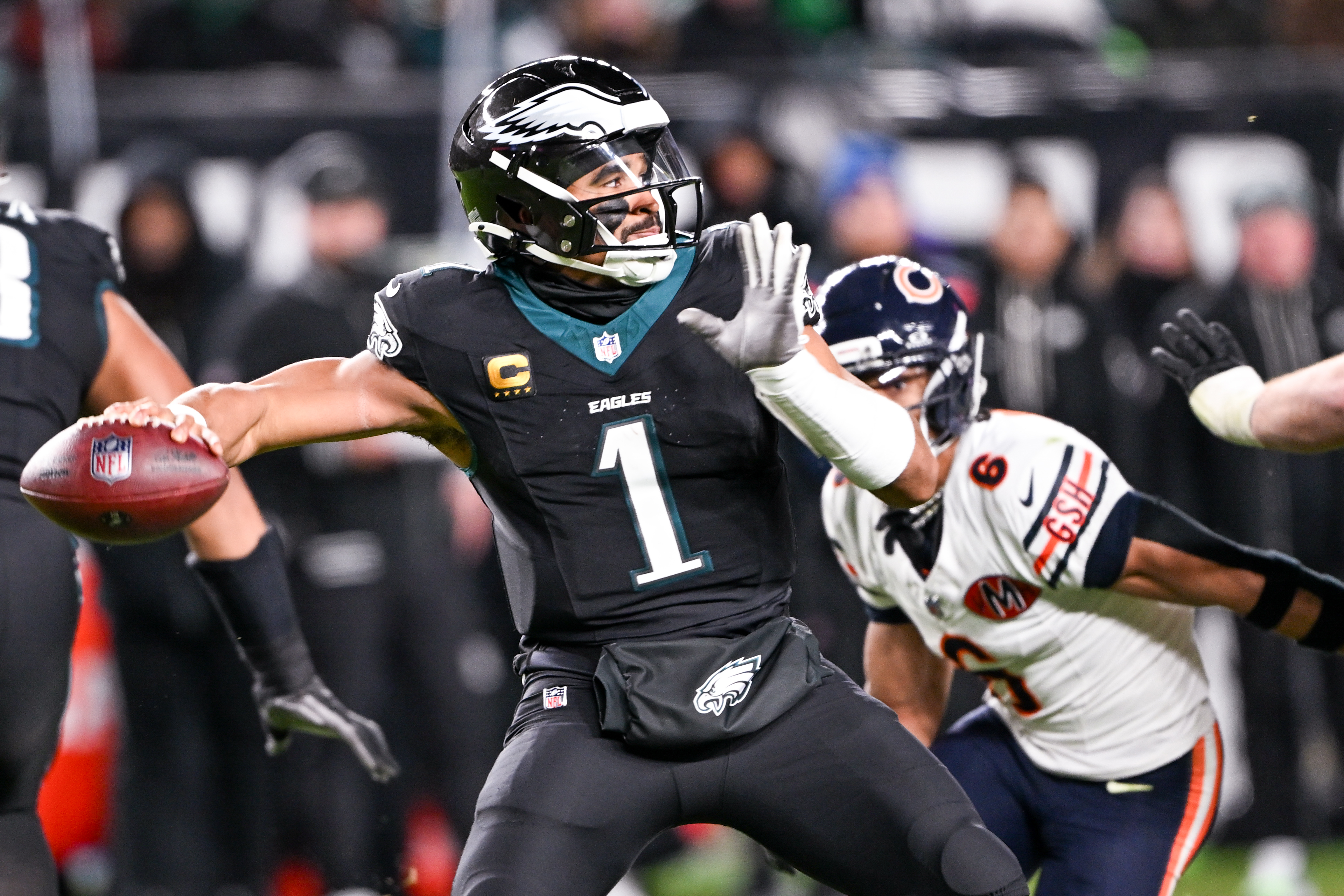
    It was a disastrous night for Jalen Hurts and the Eagles offense.Yong Kim / Staff Photographer

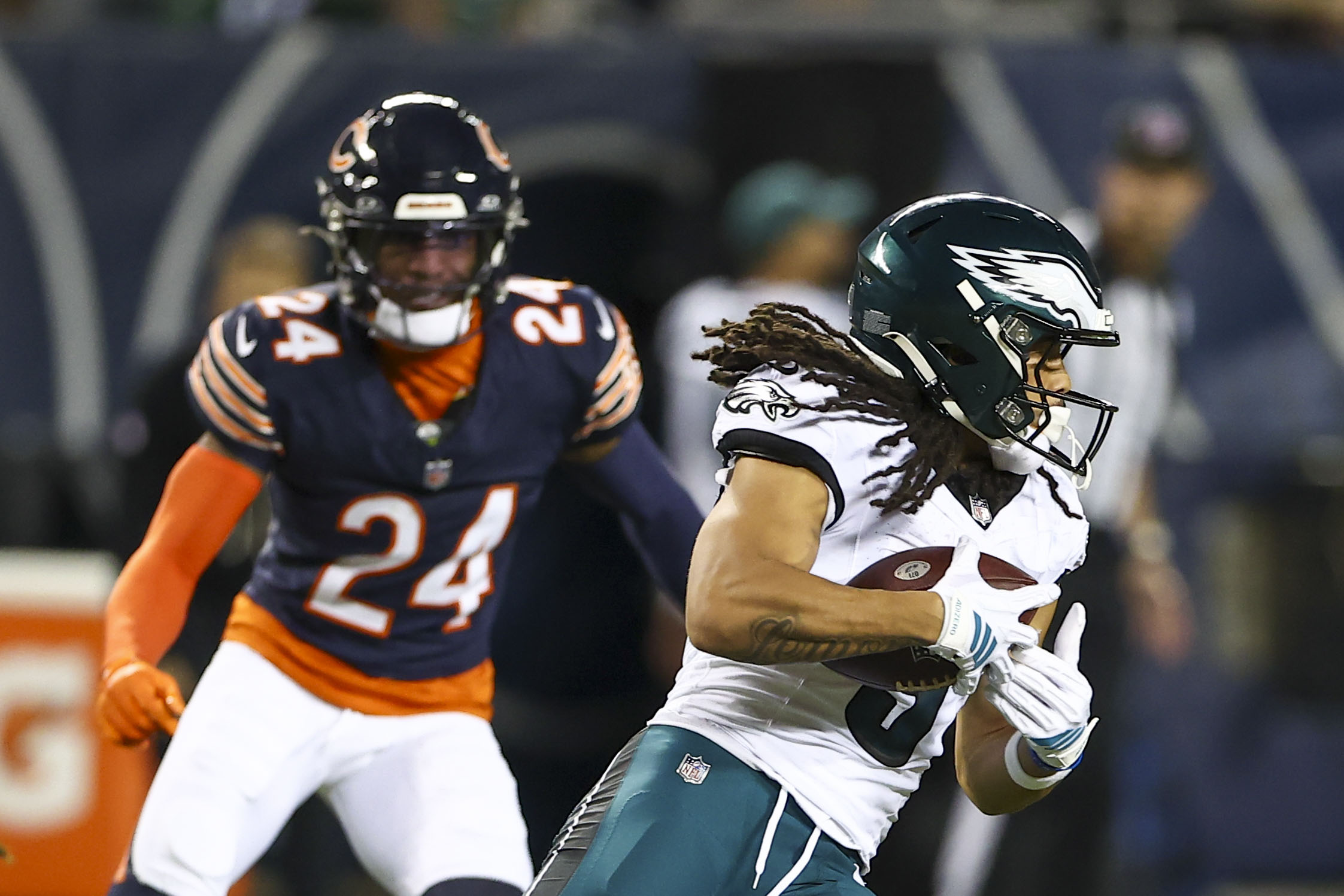
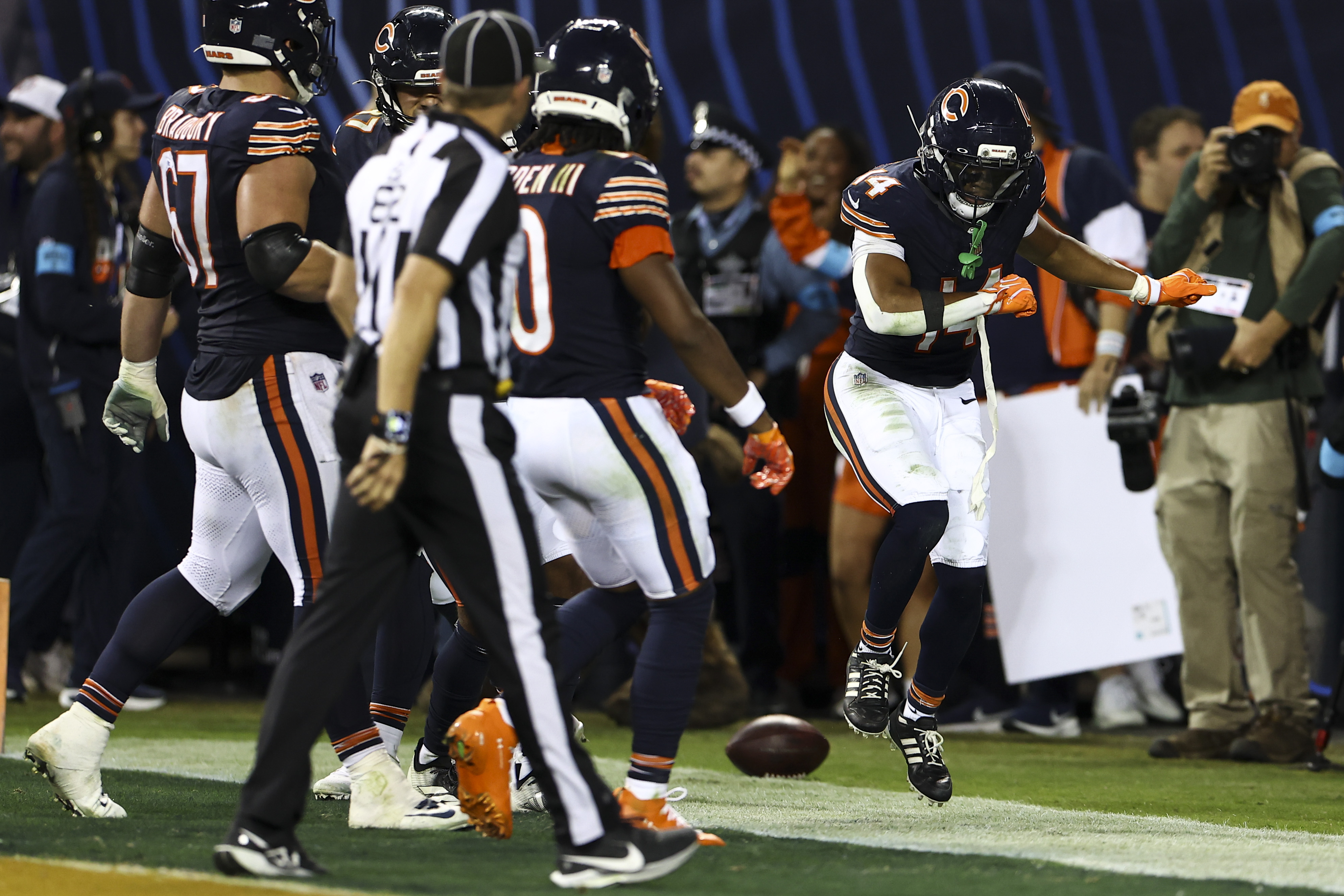
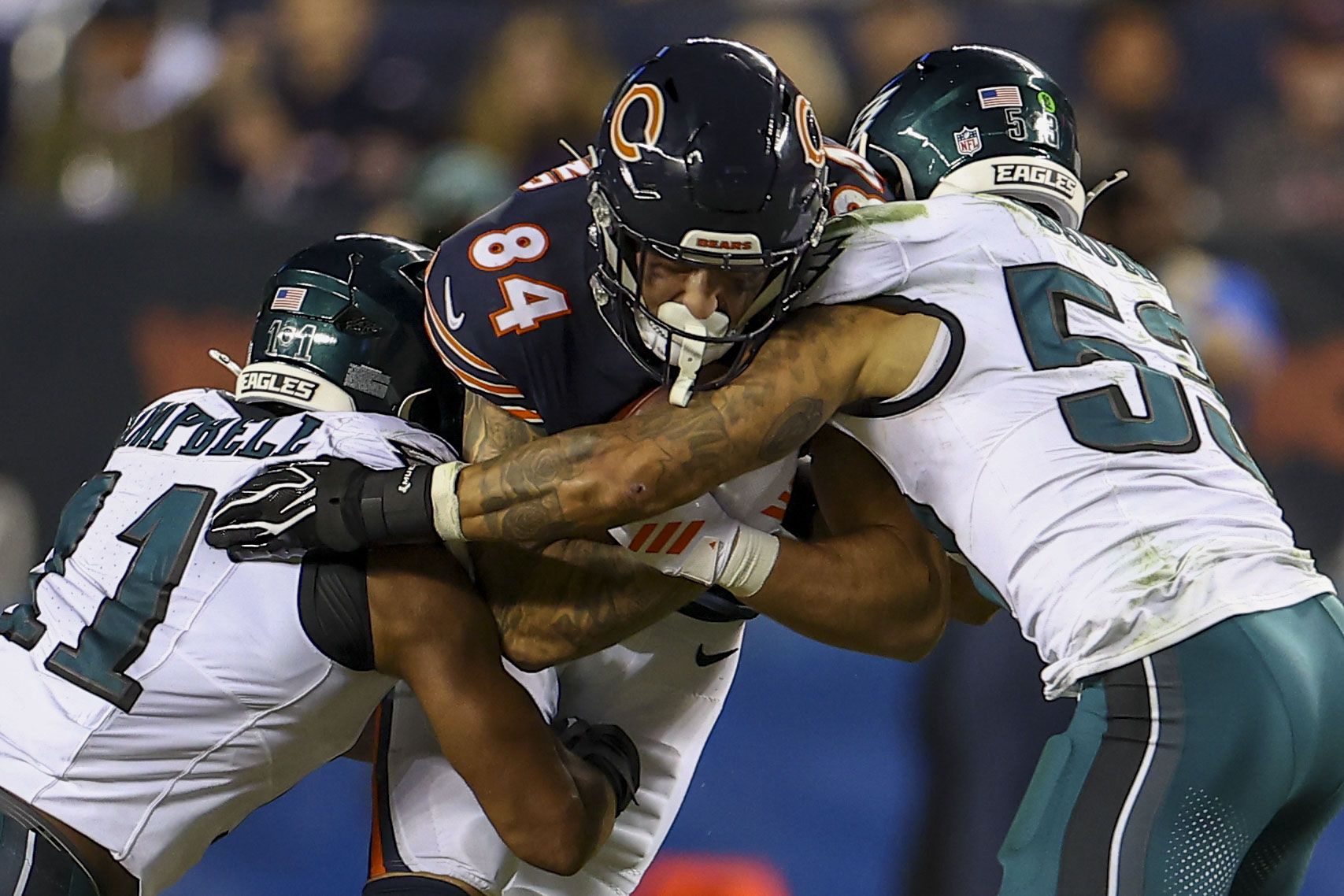
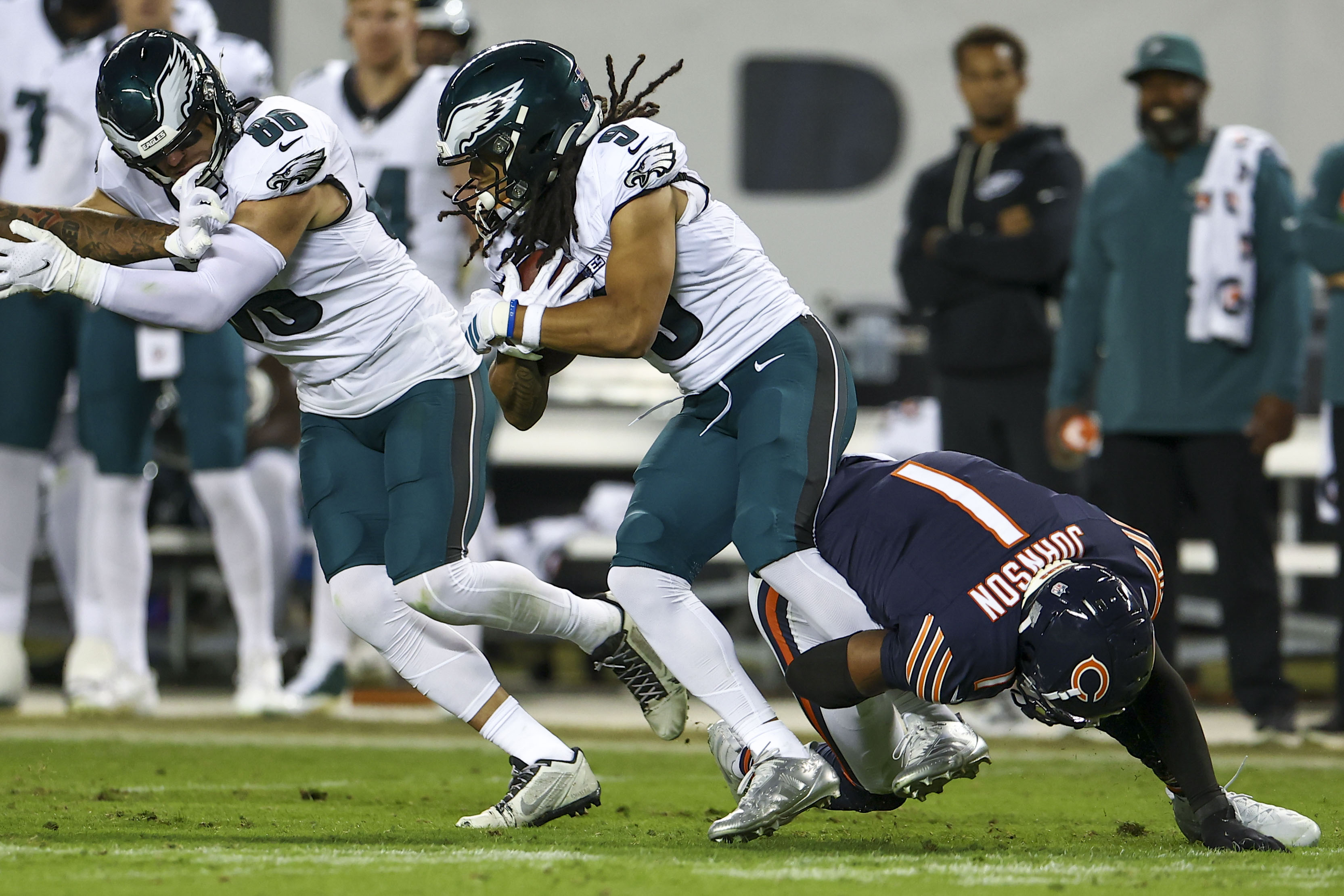
    But then, that’s the twisted game that you can play with a team like the one the Eagles have been through their first three games. You can what-if just about any moment, because there are so many moments in which they are making silly, inexcusable mistakes. They committed 10 penalties Monday. They left Bears wide receiver Kalif Raymond wide-open in the middle of the field and watched him dash for a 41-yard touchdown. They’re such a long way from the smart, buttoned-up team that head coach Nick Sirianni forever insists he expects them to be.
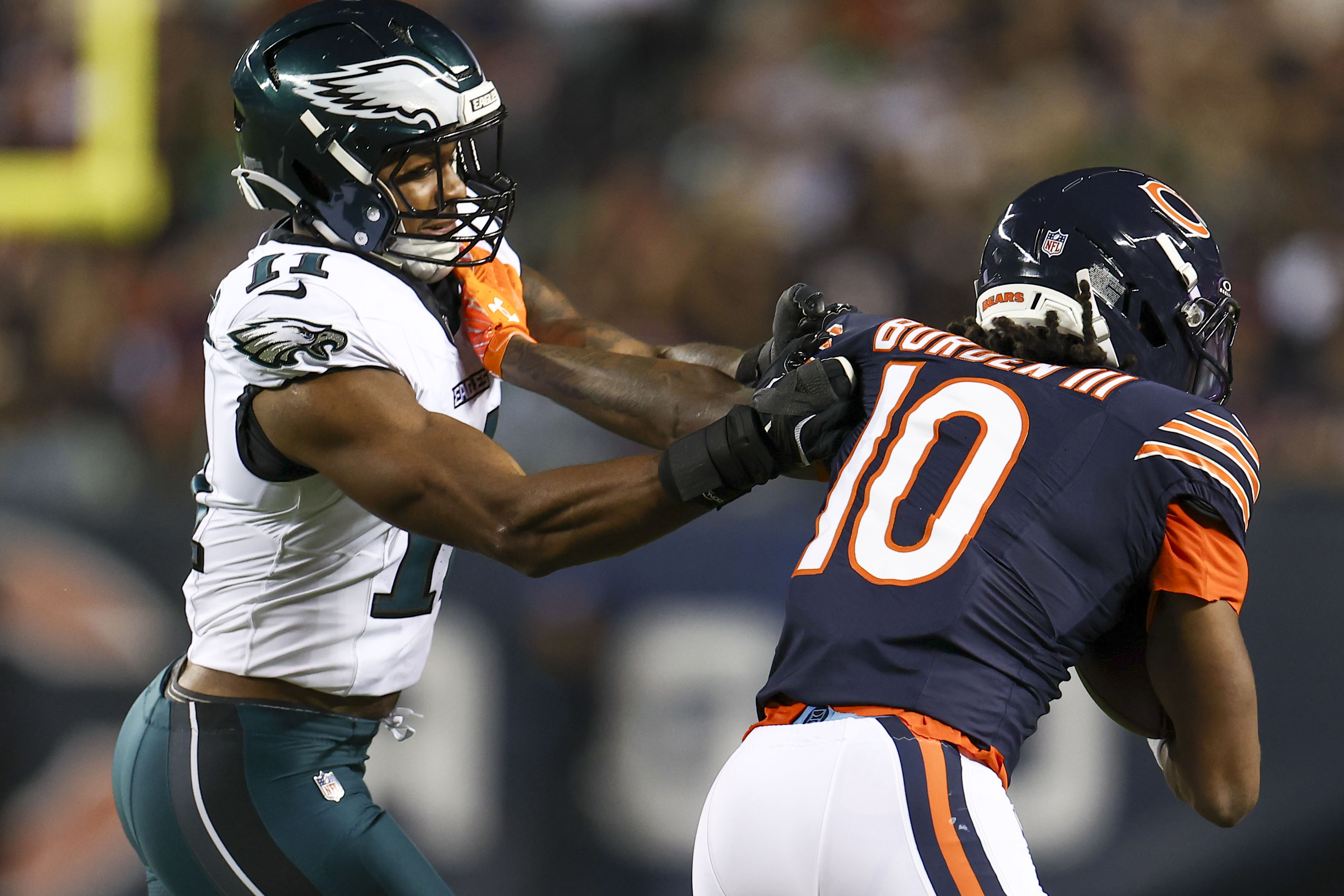
    Go back to that pivotal point when Hurts left the game, Dalton entered it, and everything went to hell. Surely thousands of Eagles fans started screaming at their television screens when they saw that the trainers and doctors were examining Hurts. Sorry, everyone: It was the right thing to do. It doesn’t matter that Hurts appeared to be fresh and fine not long after Jackson hit him and said after the game that he had suffered no ill effects. Most NFL players in the same situation would have reacted exactly the same way he did, assuming they could. They’d want to stay on the field, and they’d hide any symptoms, and concussion spotters can’t take the chance of having players fool them and try to play through head trauma.

    Per NFL rules as of 2015, a spotter can stop a game when a player “displays obvious signs of disorientation or is clearly unstable” and “is attempting to remain in the game and not be attended to by the club’s medical or athletic training staff.” Watch the play again. After Jackson levels him, Hurts remains prone on the ground for two full seconds, his legs and feet kicking slightly. It would be understandable if, based on the hit’s immediate aftermath, the spotter determined that Hurts was disoriented.

    Sirianni, in theory, could have called a timeout to stall, to buy time for Hurts to clear the concussion protocol, except he said he had no idea what Hurts’ condition was and when he might be ready to return, if he could return at all. “I think that’s the right way to go about it,” he said. “The health of the player is the most important thing.” Besides, the problem wasn’t that Hurts was no longer in the game. The problem was that the Eagles, Dalton specifically, screwed up without him.

    Dalton is 38, in his 16th NFL season. He is supposed to be experienced and savvy enough not to force a throw to a receiver, Dontayvion Wicks, who was blanketed in the back of the end zone. A coach should be able to count on a veteran backup to be smart in that situation, and the Eagles paid dearly for Dalton’s violation of that trust.

    “I can’t put the team in that situation,” Dalton said. “Costly decision.”

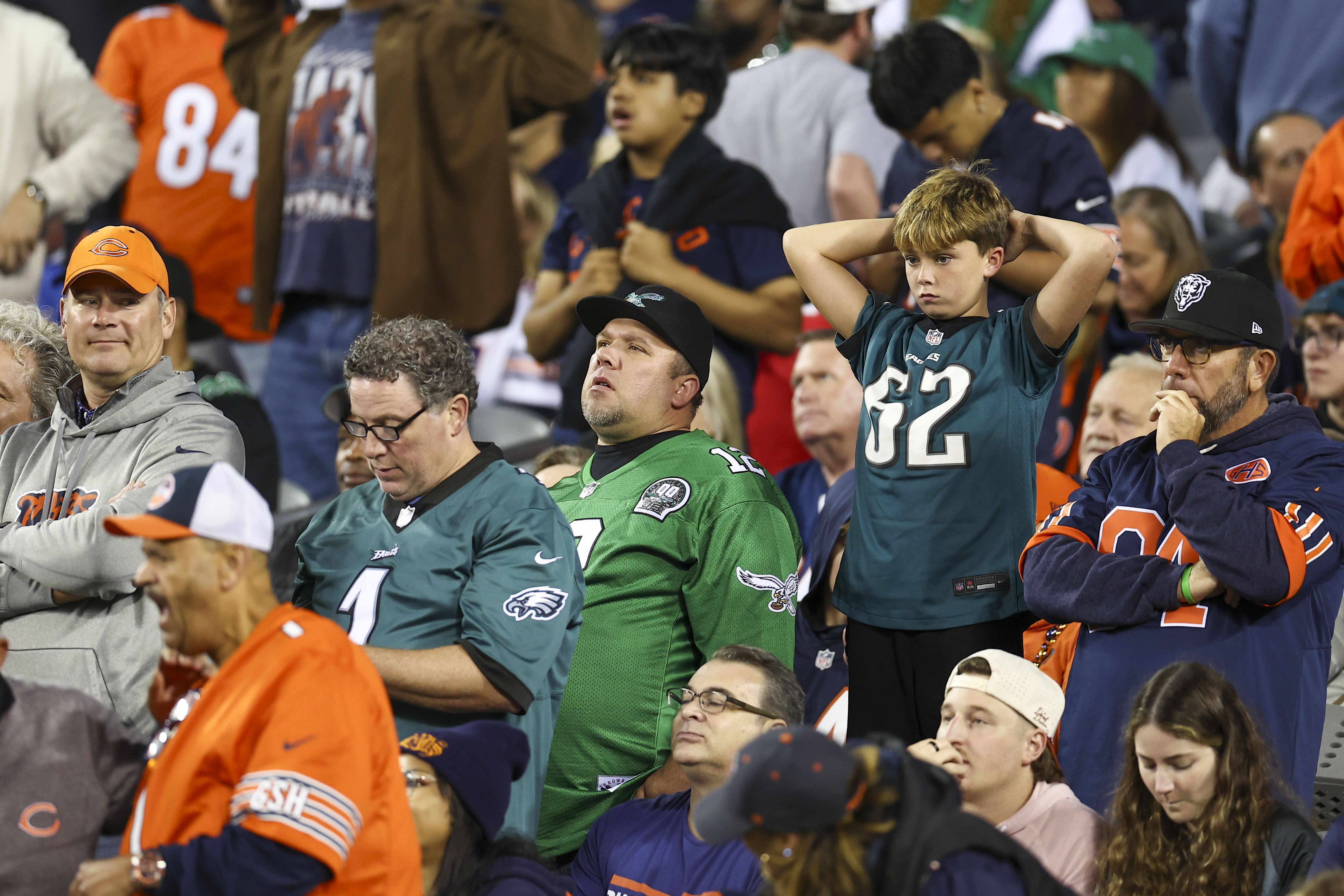
    The lasting price of that incompetence, just one example of so many Monday night, remains to be seen. The Eagles are 2-1, sure, but so far they haven’t been the team anyone expected them to be. They are asking so much of Hurts, perhaps too much. Their defense hasn’t been close to the shutdown unit it was presumed to be. And the Los Angeles Rams, 1-2 and dangerous, are ahead on Sunday. The Eagles had better wise up before then, because their leader and their self-image took some major hits Monday night, and right now, everyone is wondering what kind of team they really are.

  • The Phillies are forced to get creative with their pitching vs. the Braves. Will it work again?

    The Phillies are forced to get creative with their pitching vs. the Braves. Will it work again?

    ATLANTA — In 2023, the Phillies came here for a playoff series with their best two pitchers unavailable to start Game 1 against a record-setting offense.

    So, they got creative.

    It was difficult not to feel a twinge of déjà vu Monday, when Don Mattingly announced that Jesús Luzardo will start — “I should say open,” he clarified — Game 1 of a best-of-three wild-card series against the Braves.

    Luzardo should get down-ballot Cy Young votes for a 2.86 ERA and 221 strikeouts in 179⅔ innings. But he has thrown four pitches in a game over the last three weeks because of an inflamed left shoulder. And while catcher J.T. Realmuto said the Phillies “don’t think 10 days off is necessarily long enough to throw him out of whack,” the truth is … well, let’s let Mattingly tell it.

    “I don’t think we really know what to expect,” he said.

    The Phillies planned to have Zack Wheeler start Game 1 against Braves ace Chris Sale. But they needed him Sunday in a must-win regular-season finale. Cristopher Sánchez is lined up for Game 2 on regular rest. Aaron Nola? He’d have been an option, if not for a panicky gambit to start him on two days’ rest Saturday night.

    Maybe Luzardo will tap into postseason adrenaline and last six innings. Maybe he’ll go once through the Braves’ order. He threw four fastballs to get three outs in the eighth inning of a four-run game in the rain Sunday against the Rays, who had nothing to play for.

    It didn’t reveal much.

    Jesus Luzardo (right) threw a 109-pitch complete game against the Braves on Sept. 7. He hasn’t started a game since because of an inflamed left shoulder.David Maialetti / Staff Photographer

    “Once the third hitter came up, I wanted to call an 0-0 sweeper just to get one in there and see how it looked,” Realmuto said. “But I was like, ‘There’s no way this guy gets out in one pitch, too, so we’ll get ahead with a sinker and go ahead with the sweeper.’ And we ended up not needing the sweeper, which was unfortunate that he didn’t get to throw that pitch.”

    There’s always Tuesday against leadoff-hitting Braves star Ronald Acuña Jr.

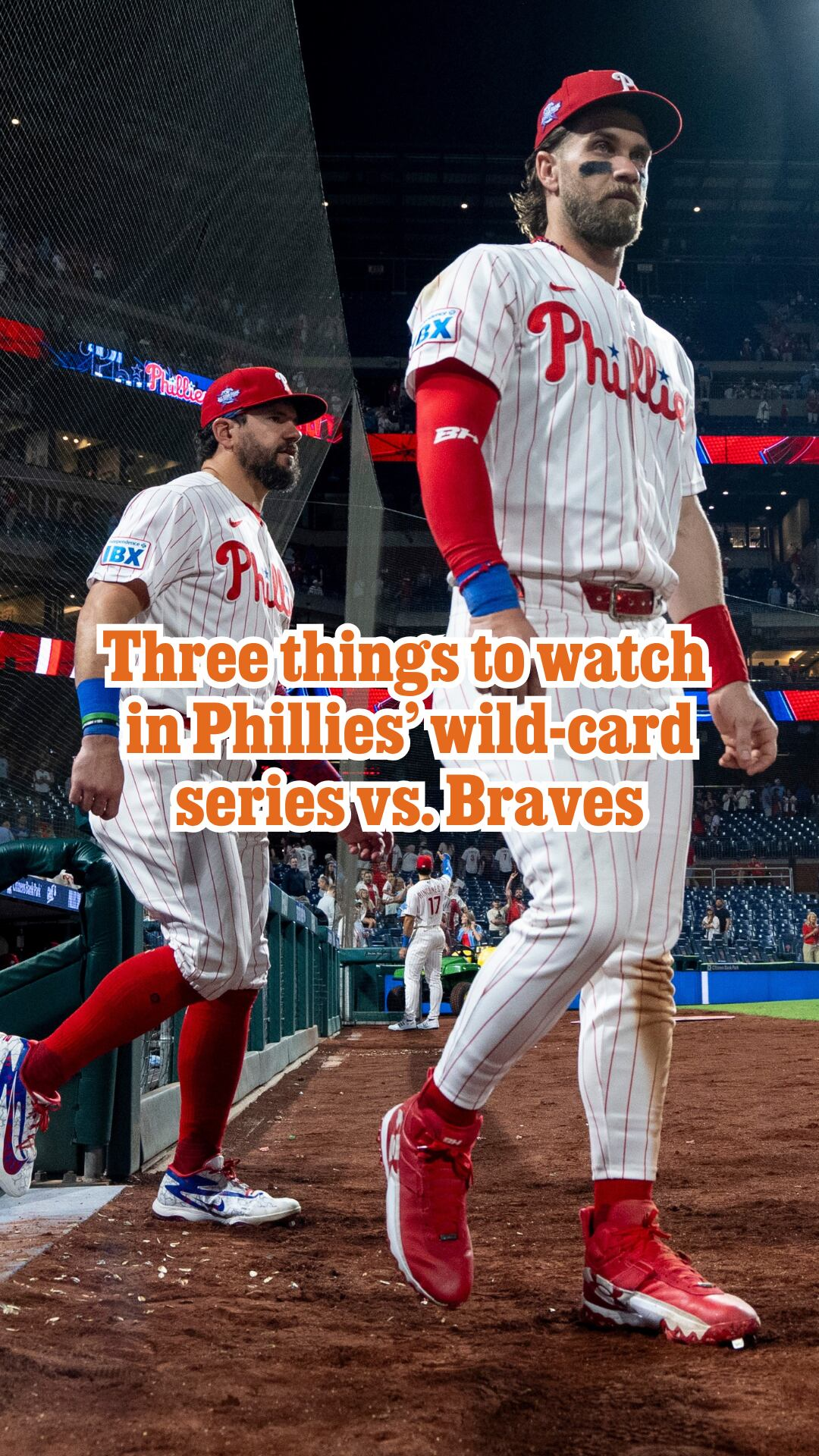
    Three things to watch in Phillies' wild-card series vs. Braves
    Video: Three things to watch in Phillies’ wild-card series vs. Braves

    Three years ago, the Phillies’ pitching conundrum was less about the options behind Wheeler and Nola than the matchup. The Braves tied the single-season major-league record with 307 homers, but were susceptible to high velocity, according to the Phillies’ scouting report.

    The plan called for finesse lefty Ranger Suárez to go through the order 1½ times before attacking the Braves with a parade of hard-throwing relievers. It worked in a series-opening 3-0 victory.

    Just as the Phillies came up with that Game 1 script, they will have one this time, too, although they surely will take as many outs as Luzardo can get. Andrew Painter is available out of the bullpen. If they could use only Luzardo, Painter, and rookie reliever Alex McFarlane to get to closer Jhoan Duran, they would be ecstatic.

    But while the Phillies’ pitching plan begins with Luzardo and crossed fingers, there’s immense pressure on Sale to deliver for the Braves, especially with fellow Cy Young candidate Sánchez looming for the Phillies in Game 2.

    Game 1 is important in any postseason series. In a best-of-three, it’s imperative. Since the wild-card miniseries was instituted in 2022, 11 of the 16 series ended in sweeps. Only one team has overcome a Game 1 loss to win the series, and the 2025 Yankees were playing at home against the Red Sox.

    A few other thoughts heading into the series:

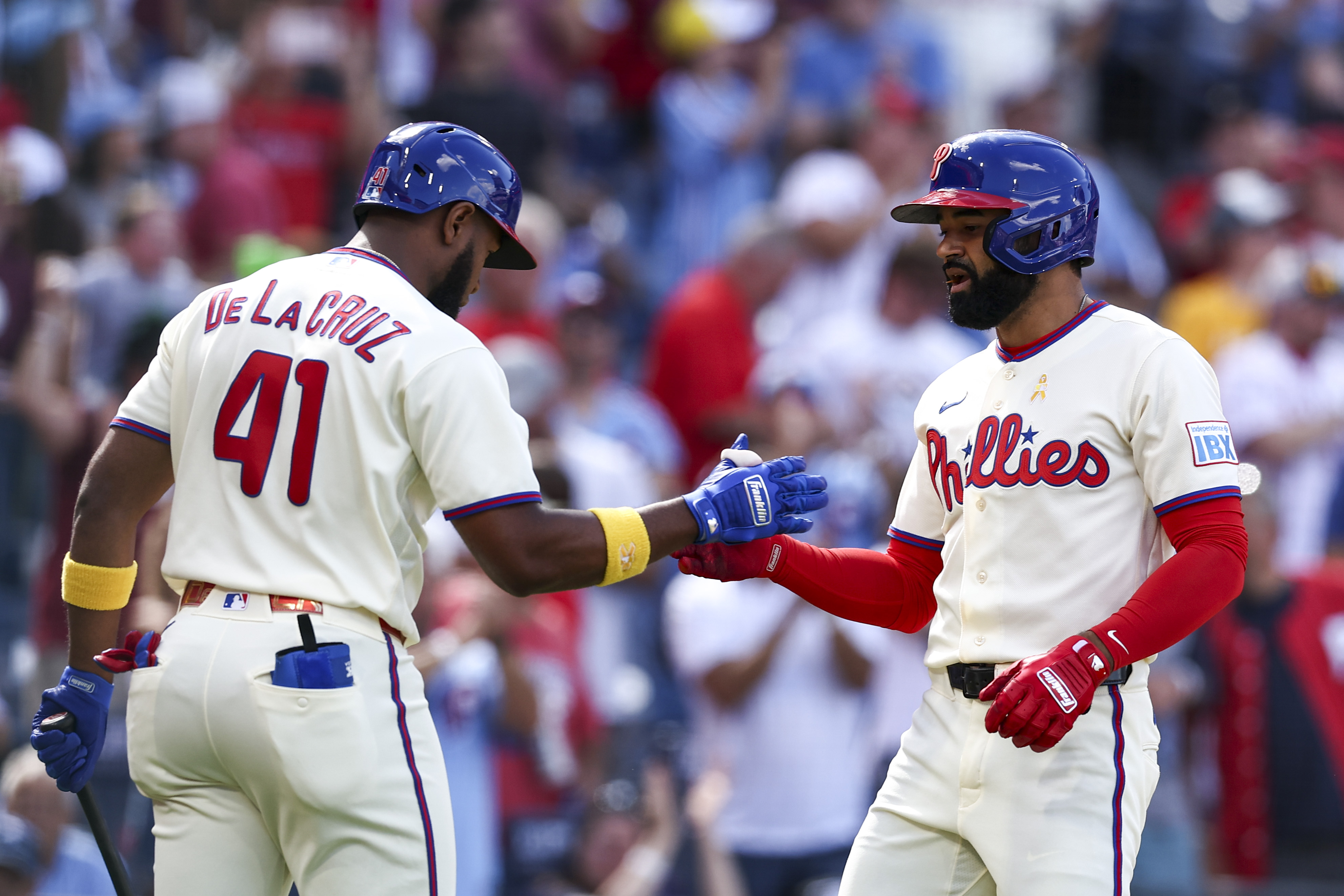
    Righty-hitting outfielders Derek Hill (right) and Bryan De La Cruz will have a big role for the Phillies in the wild-card series against the Braves.Monica Herndon / Staff Photographer

    Getting it right vs. left

    Mattingly is expected to stack the lineup with right-handed hitters, notably outfielders Derek Hill and Bryan De La Cruz. Maybe it won’t matter because Sale allowed only six runs on 15 hits in 26 innings in four starts against the Phillies.

    But Hill and De La Cruz will be factors beyond Game 1.

    Atlanta’s bullpen may feature as many as four lefties (Dylan Lee, Dylan Dodd, Ray Kerr, and Brent Suter), which could create opportunities for Hill and De La Cruz to stay in the game after Sale exits and come off the bench in Games 2 and 3.

    Hill, acquired in an early June trade with the White Sox, batted .261 with seven homers and a .783 OPS and played stellar defense in a center-field platoon with rookie Justin Crawford. De La Cruz, a veteran who came up from triple A in August, hit .280 with two homers and a .762 OPS.

    “D-Hill has been an incredible asset for us in the outfield and at the plate against lefties,” Bryce Harper said. “De La Cruz, same thing. These guys, making the moves that we have, can change a postseason for you. Big hit here, big hit there. It’s funny to look back on a lot of postseasons in baseball history. Not many of the superstar players play to their ability. It’s always that hush-hush guy down the lineup that just makes an impact and you win the game.”

    Said Mattingly: “We struggled with lefties earlier in the year, and they at least give us some options to put a better crew out there.”

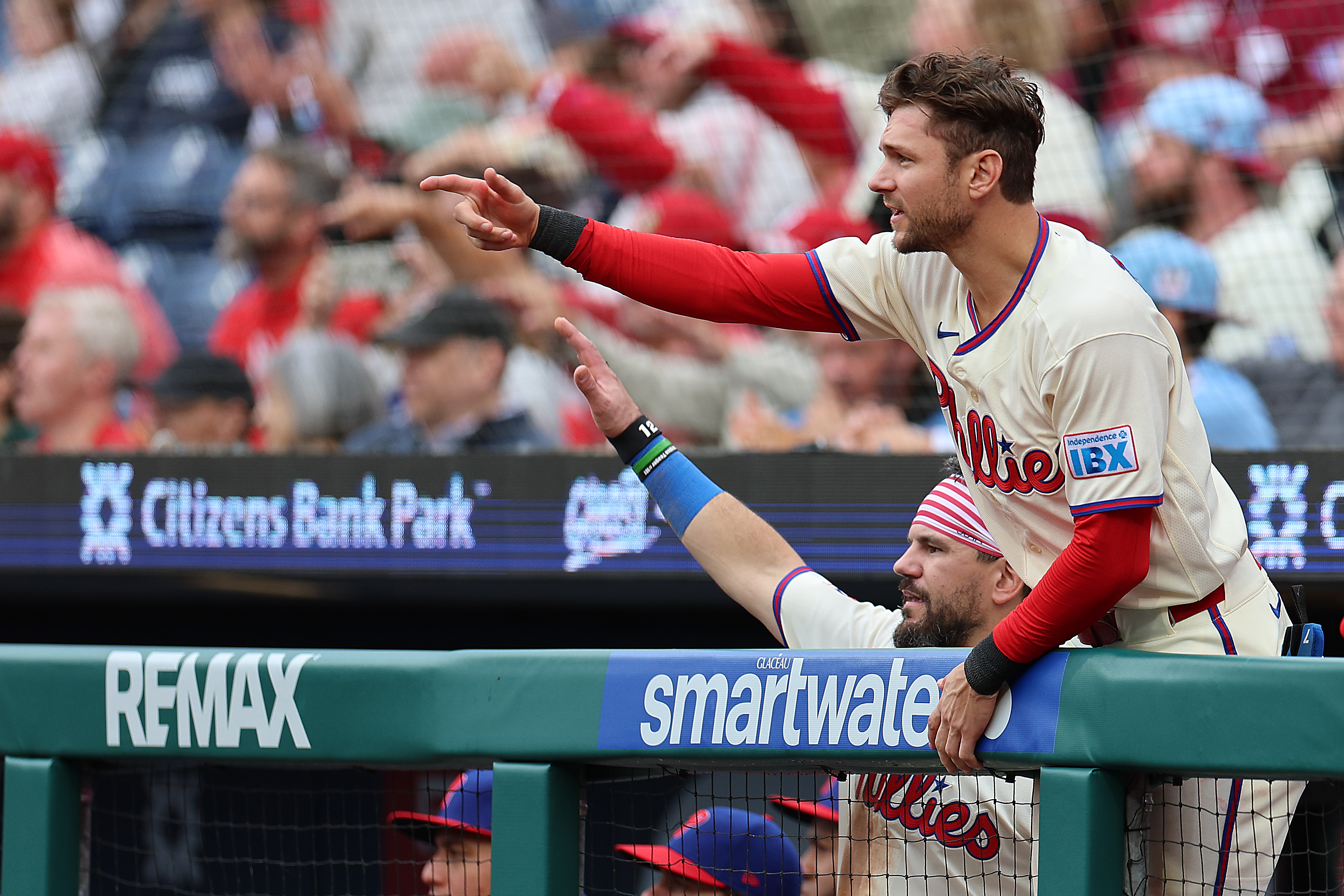
    Phillies shortstop Trea Turner is seeking to rebound in the playoffs after the worst season of his career.David Maialetti / Staff Photographer

    Turning the page

    Nobody will be happier to see his stats wiped from the scoreboard than Trea Turner.

    Turner endured the worst season of his career. One year after winning his second batting title and finishing fifth in the NL MVP race, the $300 million shortstop batted .242, reached base at a .297 clip, and had a .675 OPS, well below his career levels (.292, .343, .810).

    “I feel like when you’re going through the season, you’re looking up at the scoreboard, you see your numbers all the time, and now they kind of reset,” Turner said. “From that mentality standpoint, it’s kind of refreshing a little bit. But it doesn’t matter what the numbers look like. Even now, it’s just whether you win or lose.”

    Especially now. Turner returned to the leadoff spot over the weekend and had two hits in each of the last two games. He finished on a 10-for-33 (.303) roll with four walks and only seven strikeouts.
    Keeping it going is the best way to make everyone forget about the last six months.

    “In New York [two weeks ago], I feel like I swung the bat better a little bit,” Turner said. “I feel like I’m in a good position to see the ball better, make good decisions, and just feel good at the plate.”

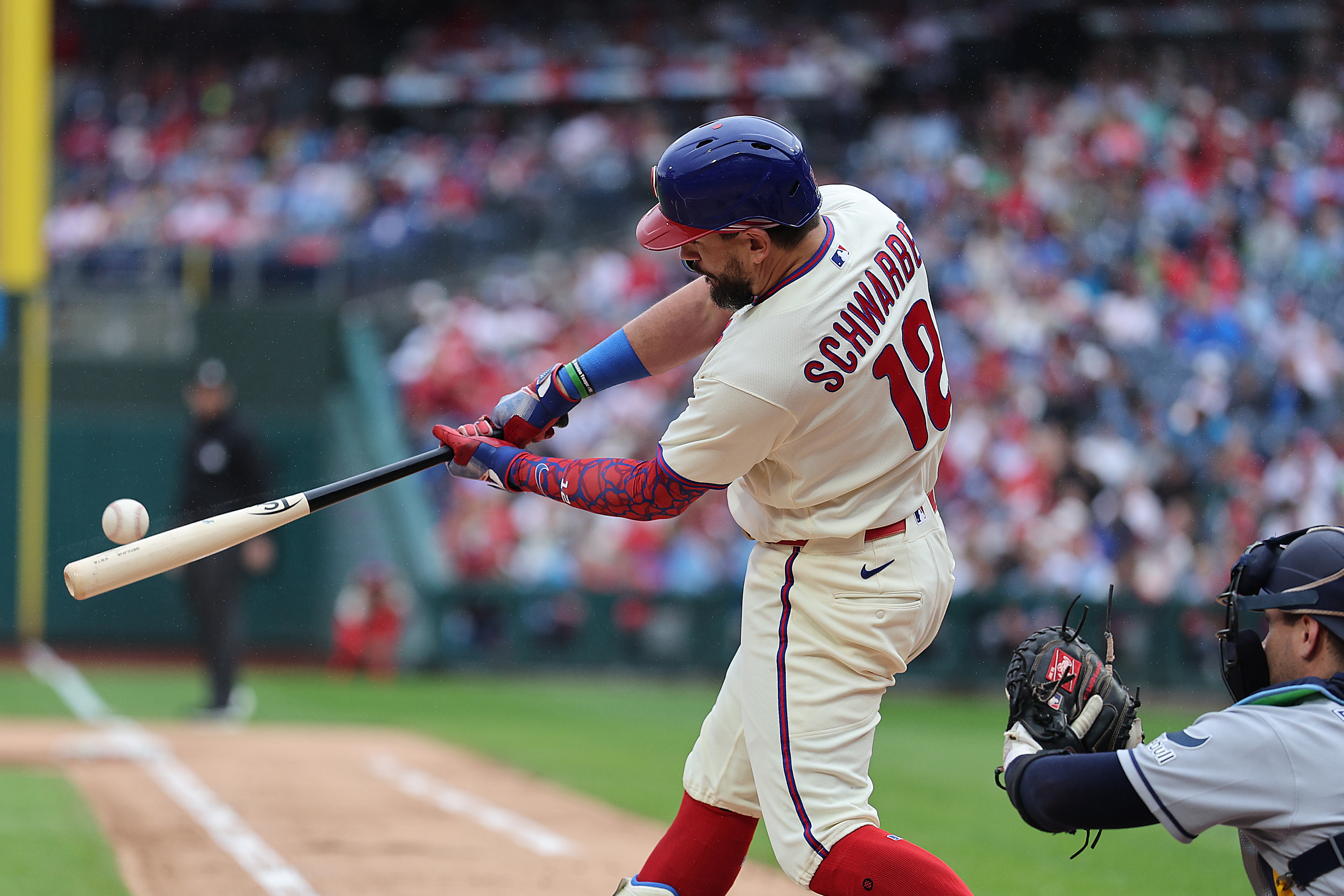
    Kyle Schwarber (middle) said the Phillies are confident being on the road.David Maialetti / Staff Photographer

    Hit the road

    Most teams prefer to open the playoffs at home. But after a week from hell, in which they lost four games in a row amid a chorus of boos and only narrowly avoided an epic collapse, maybe it’s best for the Phillies to get away.

    “I mean, we’re not afraid,” Kyle Schwarber said. “That’s the biggest thing is that we’re not fazed by where we’re playing.”

    In fact, the Phillies had a better record on the road (45-36) than at home (43-38). They’ve also lost five of their last six postseason games at home dating to Game 6 of the 2023 NL Championship Series.
  • ‘That’s why they gave us these contracts’: Wheeler, Harper, other Phillies millionaires (finally) produce

    ‘That’s why they gave us these contracts’: Wheeler, Harper, other Phillies millionaires (finally) produce

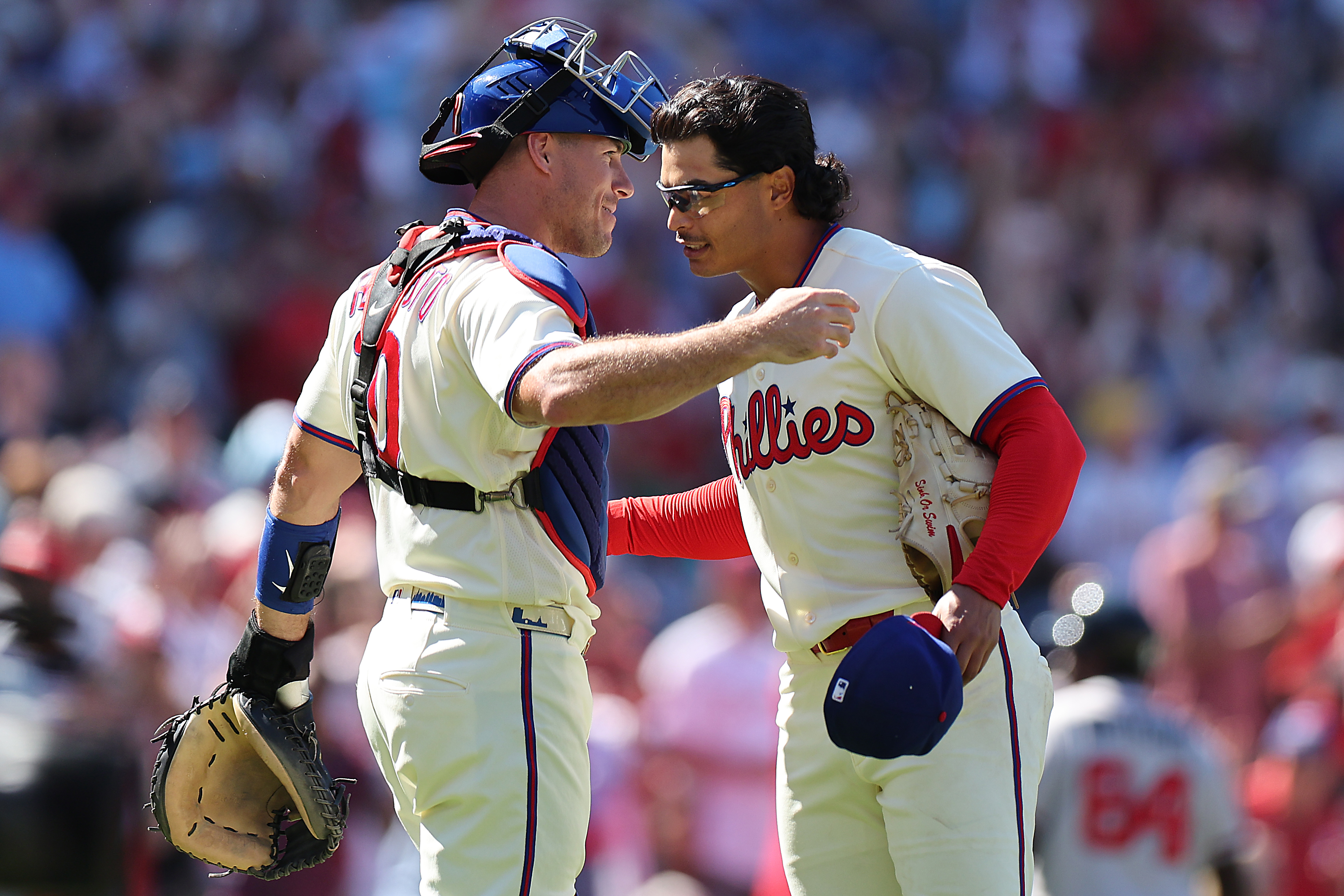
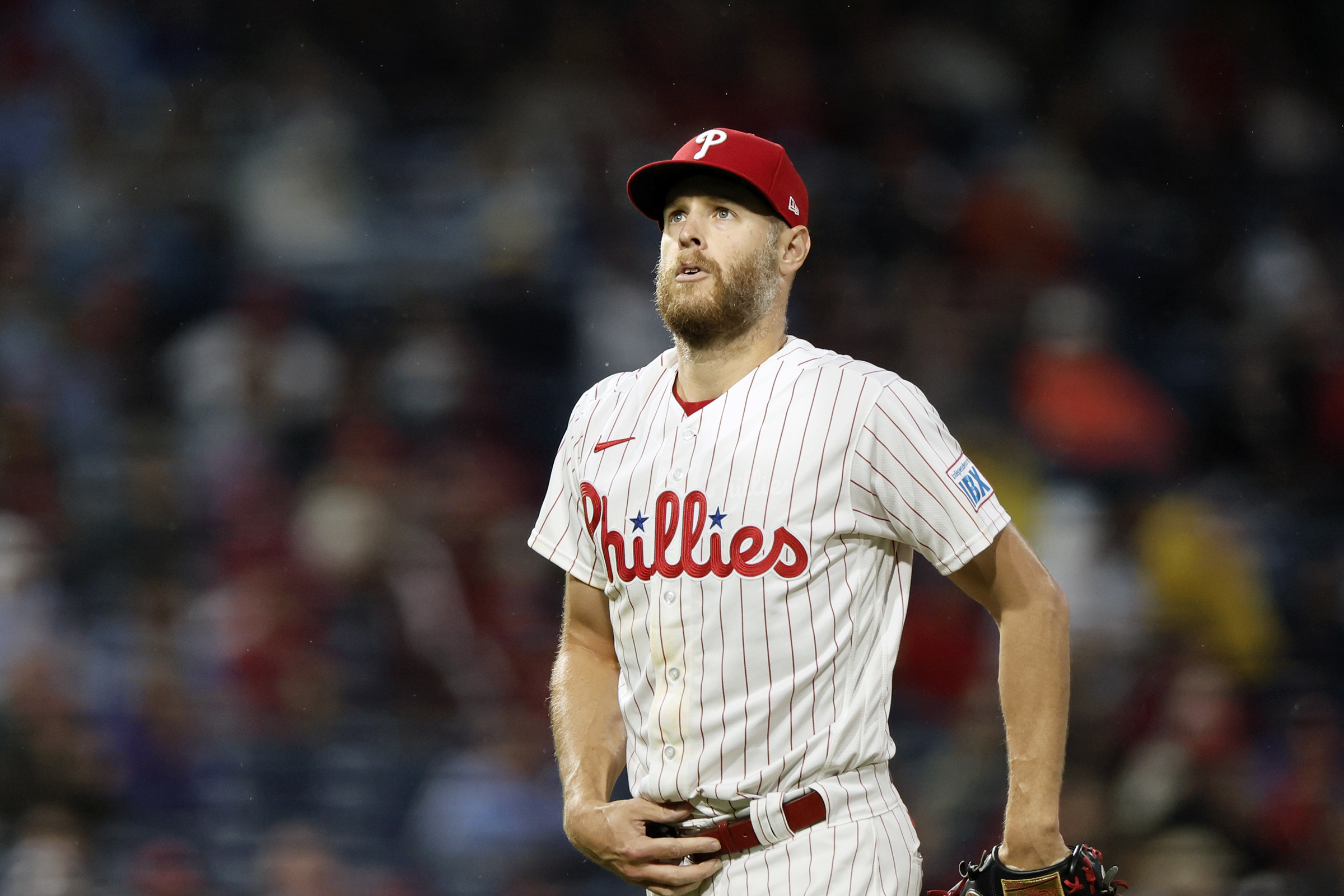
    Before Sunday, the last time the Phillies won a baseball game, Zack Wheeler started. He dominated early and they beat the first-place Brewers.
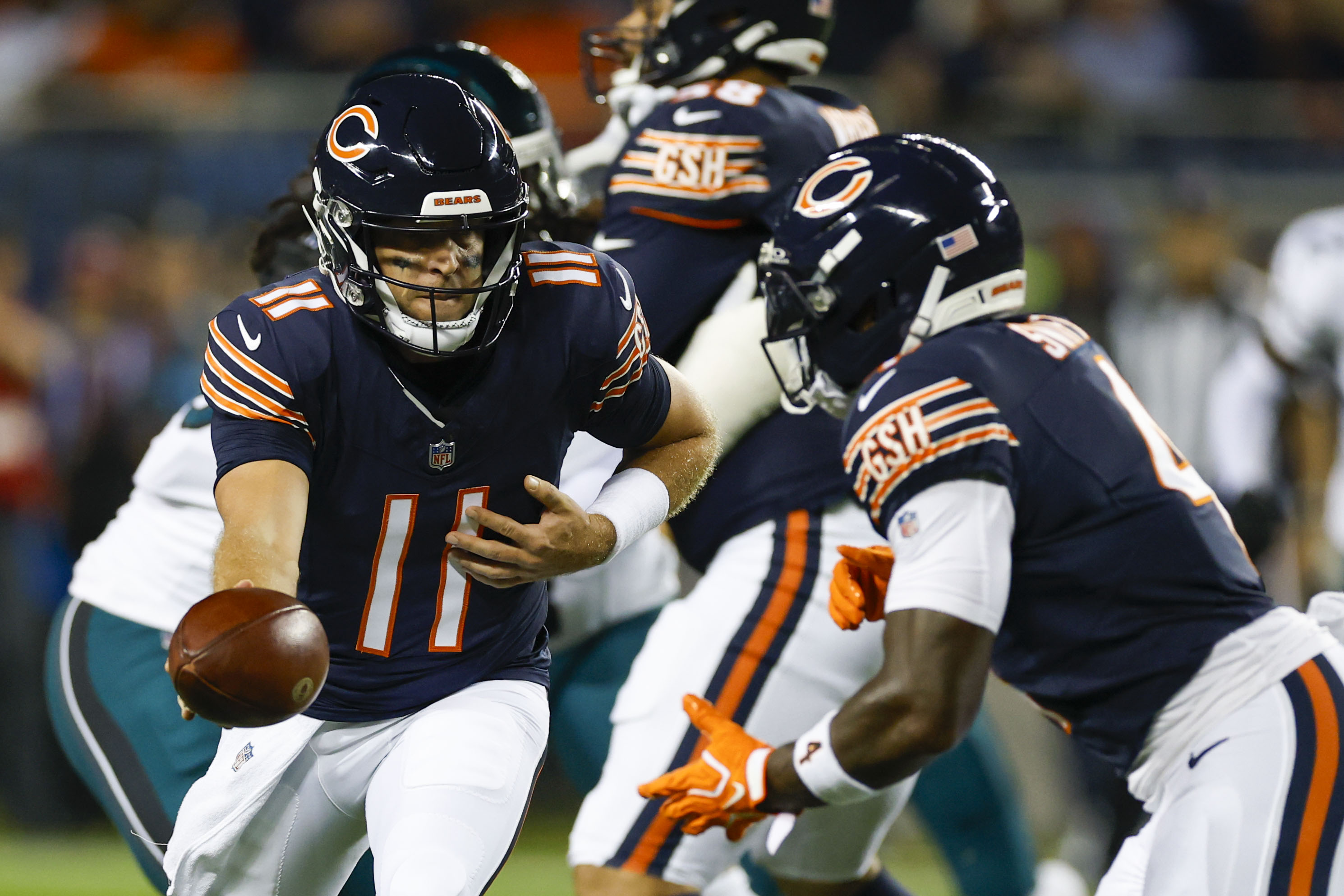
    The Phillies didn’t win again until Sunday, a game the Phillies had to win to ensure a fifth straight postseason berth. Wheeler started again. He dominated through his six innings.
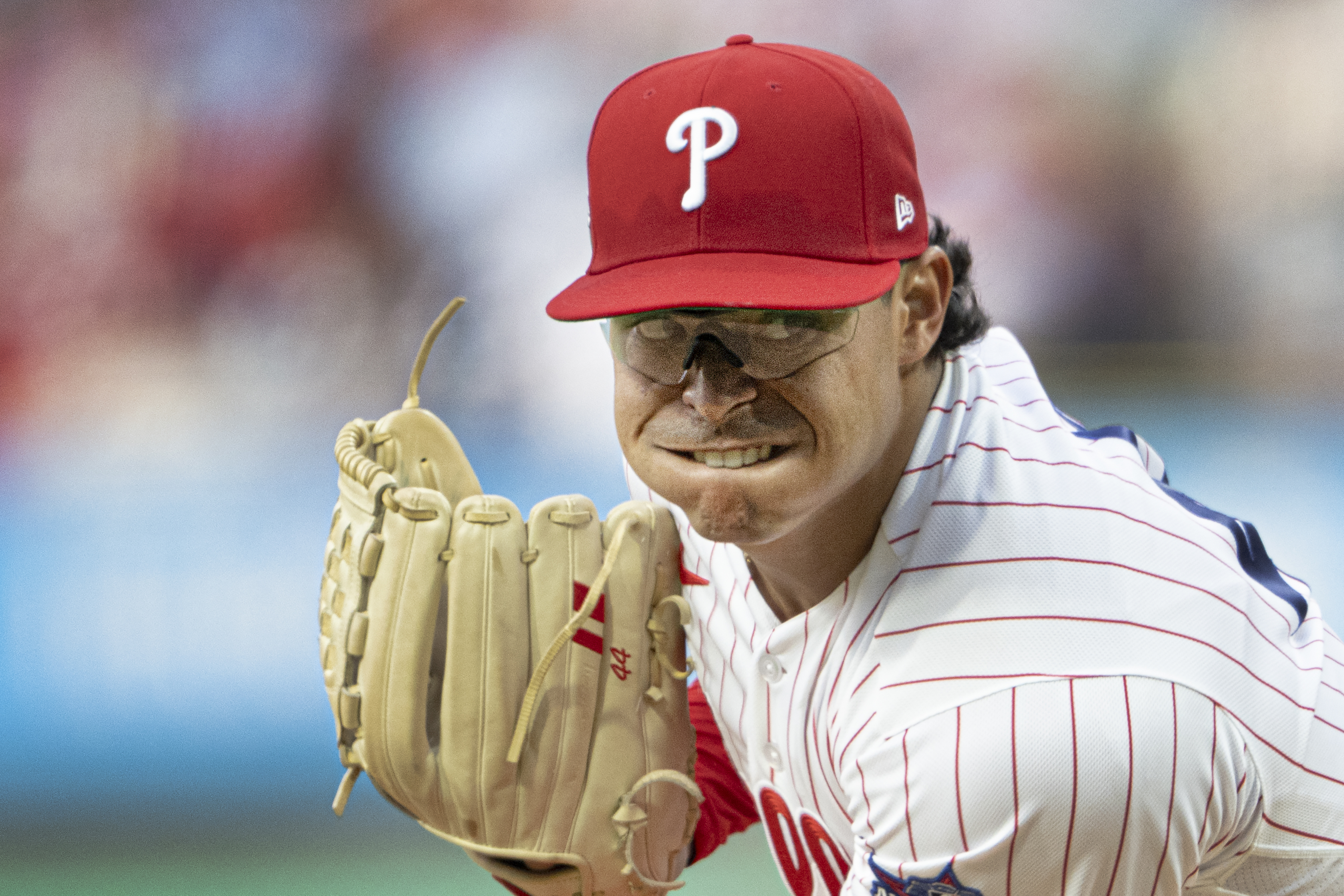
    Wheeler’s legend grew.

    He helped avert the greatest collapse in Philadelphia sports history, and carried the rest of the franchise-record $330 million payroll with him. Most of that money pays Wheeler and four cornerstones of the lineup: two-time MVP Bryce Harper, three-time home run champion Kyle Scwharber, two-time batting champion Trea Turner, and two-time Silver Slugger catcher J.T. Realmuto.

    Sunday, after a four-game slide recalled the horrors of the 1964 Phillies, all of the big names finally earned their money.

    “We know who we are. You know who’s got to step up in big moments,” Wheeler said. “I mean, that’s why they gave us the contracts that they did. We got to play like it.”

    After three straight years of dead bats in the playoffs, can they do this postseason what they did Sunday? We don’t know about the hitters.

    We know about Wheeler.

    Kyle Schwarber led the National League with 45 home runs and tied Pete Crow-Armstrong for the major league lead.David Maialetti / Staff Photographer

    It was Wheeler, more than anyone else, who earned the Phillies the third wild-card slot with a 7-3 win in the season finale over the visiting Rays. Surprise cleanup hitter Bryson Stott went 3-for-3 with a walk, but Wheels dealt six innings of one-run, five-hit, five-strikeout ball in the biggest game of the season.

    “You see a game that he has like or today — he goes out there, he knows what the task is at hand, and he was able to rise to that,” Schwarber said.

    The win earned the Phillies the No. 6 seed, lowest in the playoffs, which means a three-game, first-round series, all at No. 3 Atlanta. That begins Tuesday, with the winner headed to idle No. 2 seed Los Angeles over the weekend.

    The Phillies have lost 11 of their last 17 games against playoff-caliber teams. That’s the main reason why, after holding a five-game lead for the final wild-card spot with eight games to go, they needed a win in Game No. 162 to guarantee a playoff spot.

    Is there any real hope they make it to L.A.?

    “We got a chip and a chair,” said Realmuto, a poker enthusiast.

    Interim manager Don Mattingly was both more succinct and more vulgar:

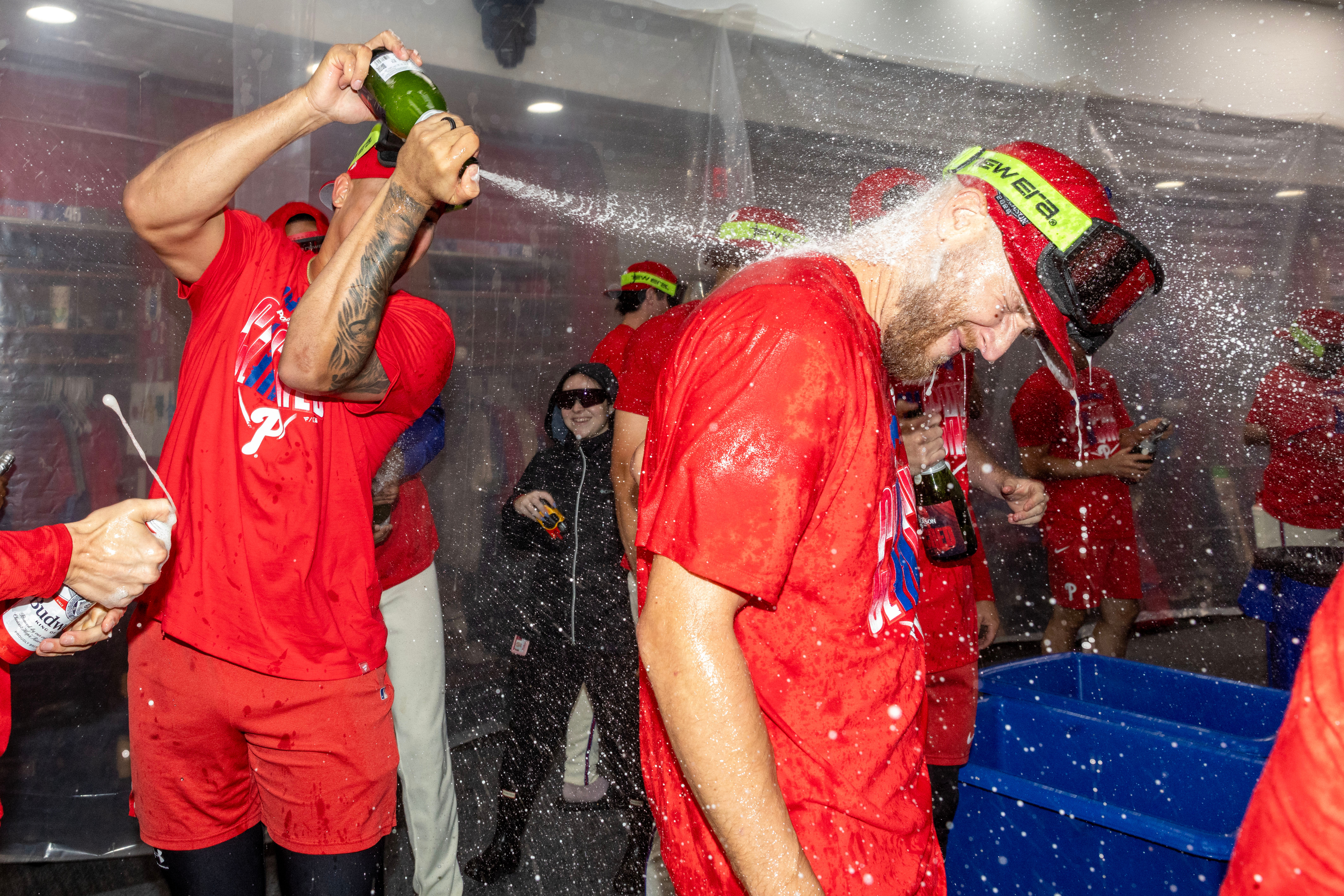
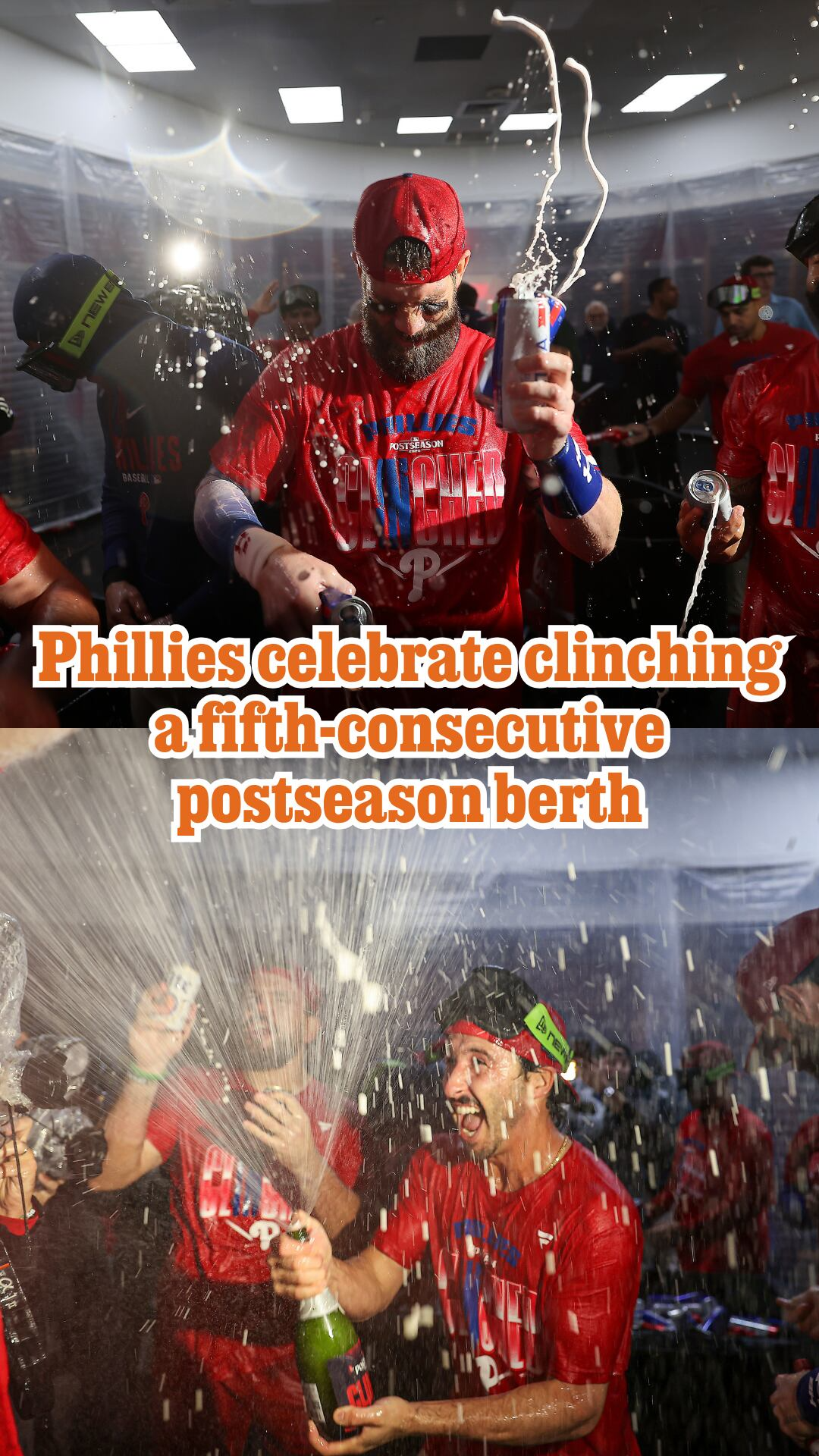
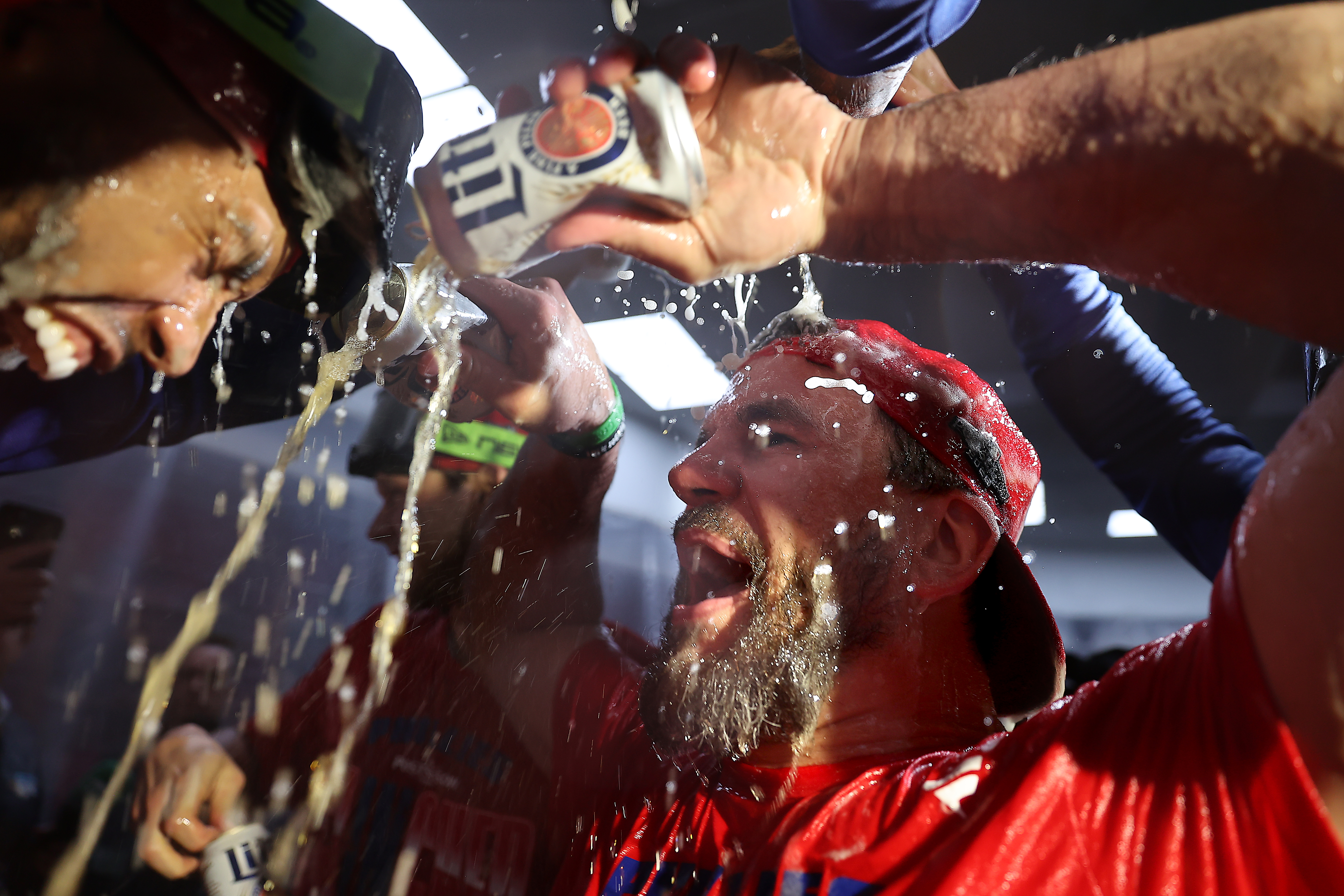
    “It doesn’t matter how you get in. You just gotta get in,” he told his team during their long-delayed, champagne-drenched clubhouse celebration. “And we’re [bleeping] in!”

    There’s recent reason for optimism. With largely the same roster, the Phillies were the No. 6 seed in 2022, when they beat Atlanta in the playoffs and won the National League pennant. Wheeler was magnificent during that run.

    He was just as magnificent Sunday.

    Wheeler long ago locked up Comeback Player of the Year after missing the end of last season and the beginning of this season recovering from thoracic outlet syndrome. Sunday was his final argument, ending a season in which he allowed two runs or fewer in 20 of his 28 starts.

    Wheeler is the highest-paid player in Phillies history, at $42 million per season. He earned his money Sunday, and has done so pretty much all season, especially down the stretch. Wheeler is 4-0 with a 1.67 ERA in his last six starts.

    He has played to his pay grade.

    His well-heeled teammates?

    Not so much.

    In the four straight losses that made Sunday so excruciating, Harper, Schwarber, Turner, and Realmuto were 10-for-59 with no home runs and two RBIs. None was great but Realmuto was brutal: 0-for-12 in those four games, part of an 0-for-33 stretch in his last 10 games.

    On Sunday, that quartet went 6-for-18 with a home run, two doubles, and four RBIs.

    Harper’s $330 million contract is the richest in franchise history. His homer Sunday, the 29th of his borderline elite season, stretched the lead to 5-1. Turner’s $300 million deal is No. 2. He batted leadoff and got two hits. Schwarber’s $30 million salary is second-highest in team history, and he singled, scored, and drove in two more runs with a double. Realmuto doubled and scored.

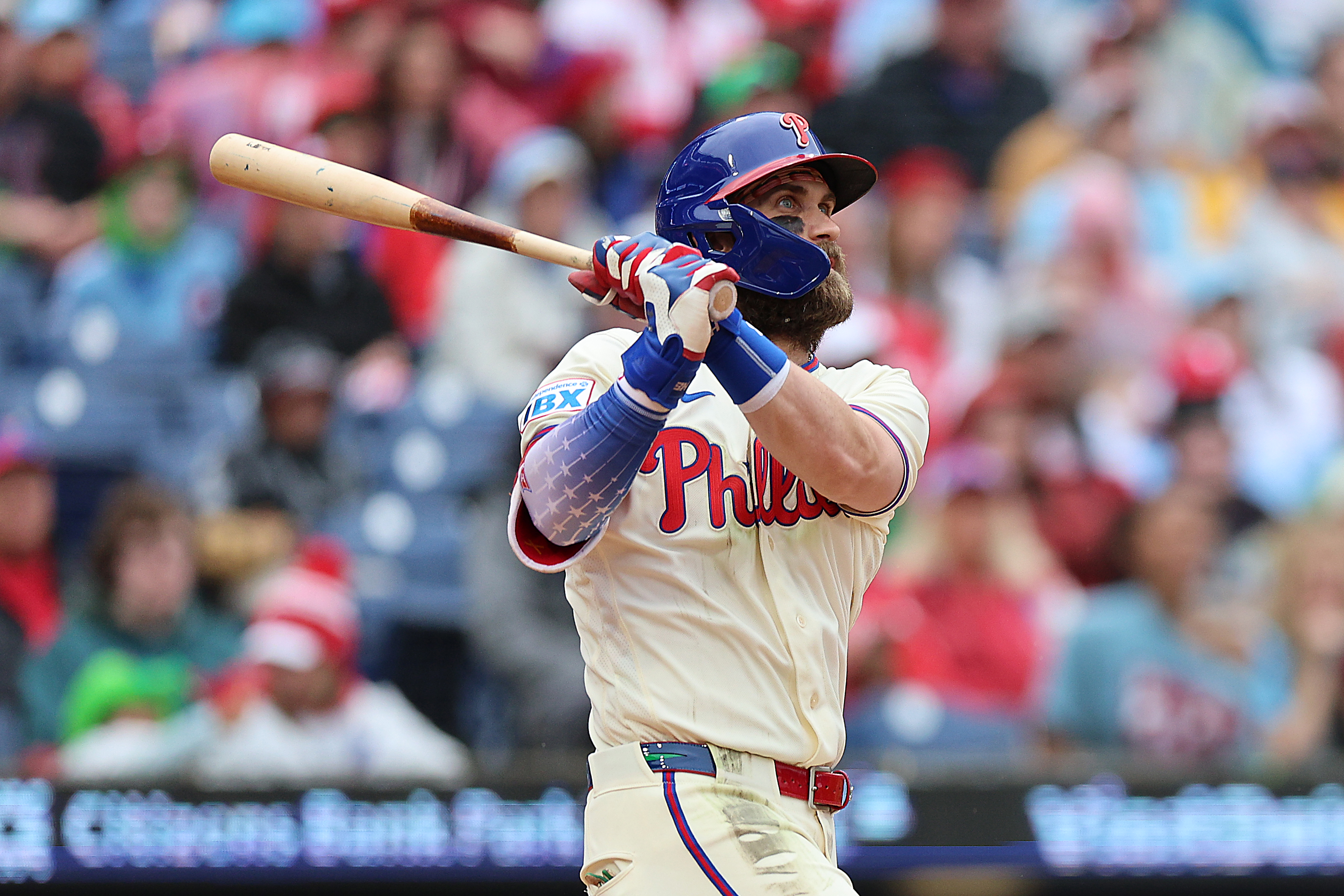
    Bryce Harper hit his 29th home run of the season in the fifth inning on Sunday.David Maialetti / Staff Photographer

    In the biggest of moments, this is what the top end of a $330 million payroll is supposed to do, said the man who signs the paychecks.

    “I think the best competitors, the best players, are great competitors. If you’re a great competitor, you have the ability to rise to the occasion,” Phillies owner John Middleton said. “You have the confidence, but you know you’ve done it before, so you know you can do it again.”

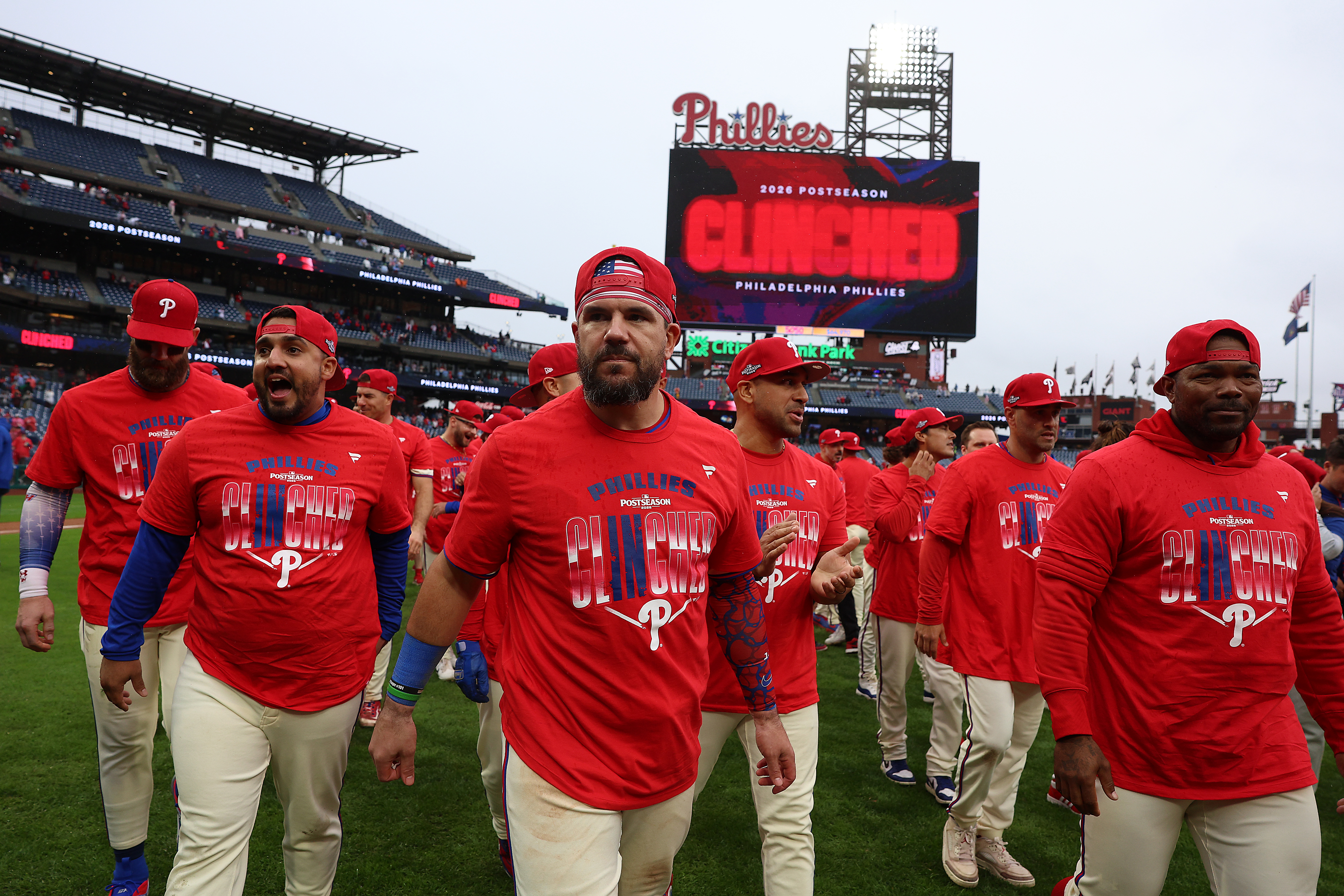
    Phillies celebrate clinching a fifth-consecutive postseason berth
    Video: Phillies celebrate clinching a fifth-consecutive postseason berth

    Middleton is right. For all of the failure that has marred the Phillies’ last three playoff runs, many of the current principals have produced in big moments, most recently Game 3 of the NLDS last year against the Dodgers.

    They did it again Sunday, and so now, for at least three more days and for two more games, the Phillies’ season will continue.

    Harper doesn’t much care.

    Simply making the playoffs has never been his goal. No, Harper wants to win a World Series. It is the only achievement lacking in his Hall of Fame career. It is the only accomplishment for this group that justifies the $1.4 billion Middleton has spent in the past five seasons.

    “Obviously, the job’s not finished, right?” Harper said. “We’ve never been able to win that big one. I think this group — we need to do that.”

  • The Phillies haven’t avoided disaster yet. They’ve merely postponed it … for now

    The Phillies haven’t avoided disaster yet. They’ve merely postponed it … for now

    They haven’t avoided disaster yet. For now, all they have done is postpone it.

    That’s a good thing, of course. Much better than the alternative. The Phillies arrived at Citizens Bank Park on Sunday with a chance to irrevocably damage their legacy by completing one of the must sudden and improbable late-season collapses in baseball history. In avoiding that fate, they looked a lot like the team that set a standard they’ve so consistently fallen short of. They scored early, and they scored often, with contributions up and down the lineup. The Phillies’ 7-3 win over the Rays was the kind of performance we once expected from this team in October. The confounding thing is that they needed it just to get there.

    All we can say right now is that their destiny is back in their hands. They will determine the final words that end up written about these last 10 days. Were they a harbinger? Or were they a rallying point? They will decide.

    It would be lovely to say that the Phillies are exactly where we thought they’d be. That, after all the drama, after the four straight losses, and the six in eight games, after the Aaron Nola start on two days’ rest, and the three runs scored in 36 innings, after all of that, all that really matters is that the Phillies are in the playoffs and that the calendar starts anew.

    It would be even lovelier to say that there could be some upside in the way they ended up earning their playoff spot. J.T. Realmuto was 0-for-34 before he yoked an RBI double to left field in the second inning to give the Phillies a 2-0 lead. Bryce Harper hadn’t homered in 12 games before crushing a solo shot to right field in the fifth to put the Phillies up 5-1. Every member of the lineup either reached base or had an RBI. In their final tuneup before the playoffs, everything worked the way it was supposed to. If it really does matter who the hottest team is this time of year, and if you are only as good as your last game, well, who is hotter than the Phillies right now?

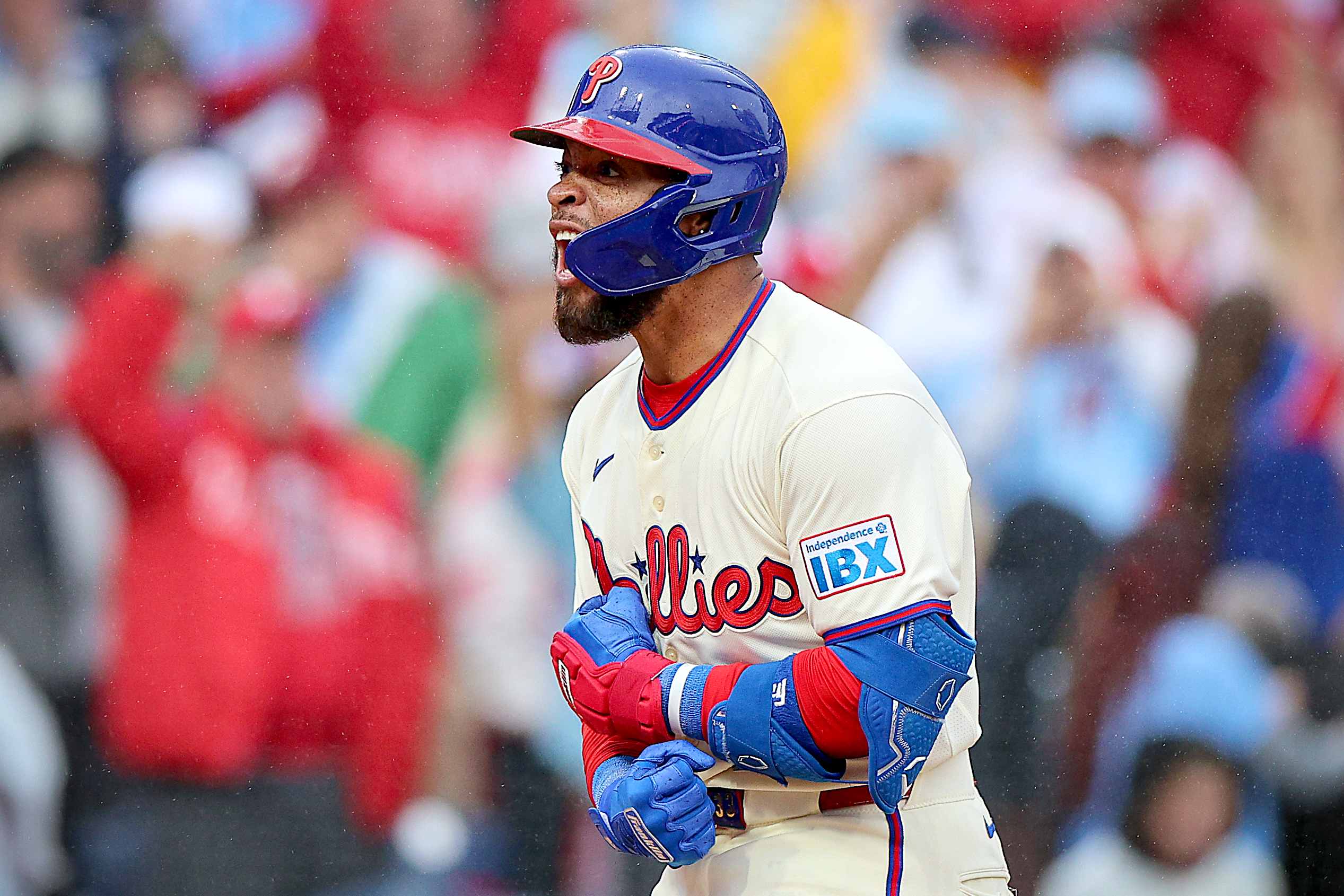
    The Phillies’ Edmundo Sosa celebrates his homer in the fifth inning.David Maialetti / Staff Photographer

    That’s not reality, of course.

    Not with Chris Sale looming.

    Not with Zack Wheeler unavailable to start a game against the Braves on normal rest.

    Not with Don Mattingly’s options to counter Sale in Game 1 limited to inconsistent rookie Andrew Painter and possibly a rusty Jesús Luzardo fresh off the injured list.

    The Phillies entered the final week of the regular season with a chance to set themselves up for success in October. They could have been where the Padres are, hosting a best-of-three wild-card series on their home turf. They could be playing a team whose No. 1 starter has not held them to seven runs in 32 innings over his last five starts. They could have Wheeler on the mound in Game 1 instead of some combination of inconsistent rookie Painter and fresh-off-the-injured-list Luzardo.

    The Phillies don’t have any of that. Which means they could still end up paying a steep price for the late-season swoon that saw them enter Sunday with a chance at completing the most (mathematically) dramatic collapse in the city’s history.

    Most consequential is the lack of Wheeler. Against the Rays on Sunday, the 35-year-old veteran was exactly the pitcher you should have expected. With the Phillies needing a win in Game 162 to clinch a playoff spot, Wheeler held Tampa Bay to one run in six innings with five strikeouts and a walk. He threw an efficient 97 pitches, 68 of them for strikes. It was the perfect performance in the perfect spot.

    Now, imagine if that spot had been Game 1 against the Braves instead of Game 162 against a Rays team with little to play for.

    It will be a shame if Sunday was the last we saw of Wheeler this season. If it is, the Phillies will have only themselves to blame.

    They need to win two more games in order to fully erase the disaster they’ve been over the last week-plus. With Game 1 in Atlanta slated for Tuesday, they still must win two more games just to get to the month of October.

  • Jeff McLane’s keys to Eagles vs. Bears in Week 3 and a game prediction

    Jeff McLane’s keys to Eagles vs. Bears in Week 3 and a game prediction

    The Eagles travel to face the Chicago Bears at 8:15 p.m. on Monday at Soldier Field. Here’s what you need to know about the matchup:

    When the Eagles have the ball: Sean Mannion has another chance to get the ground game going against a run defense that ranks 20th in the NFL in expected points added per rush. It’s been a grind through the first two weeks. Landon Dickerson’s injury — or injuries — didn’t help matters in Week 1, and the shuffling of Cam Jurgens and Drew Kendall at left guard and center didn’t help in Week 2. But the play-calling hasn’t been great, either, with runs on obvious downs and condensed sets that have invited stacked boxes and made it difficult for blockers.

    There likely would be a learning curve with the new wide-zone blocking scheme. Mannion has had to lean on some of the Eagles’ past staple runs — with mid-zone and duo blocking — to offset the struggles on outside zone runs. But one of the main reasons for hiring the offensive coordinator was to bring elements of the Shanahan scheme here — primarily the under-center, play-action game — and that’s yet to really happen. The Eagles rank 28th in under-center usage and play-action passes. It’s tough to commit to the latter when you’ve done virtually squat on first down (1.8 yards per rush). We’re still talking about a small sample of games. Still, we would like to see progress from the unit helmed by run game coordinator Ryan Mahaffey and offensive line coach Chris Kuper in the coming weeks.

    Montez Sweat (right) is the pass rusher the Eagles will most have to account for. Matt Ludtke

    Bears defensive coordinator Dennis Allen employs a traditional 4-3 front. Veteran defensive tackle Grady Jarrett once was one of the better run-stuffers in the league, but he’s fallen off. Edge Montez Sweat is his best pass rusher. Jurgens and Kendall should have an easier task than they had last week against Jeffery Simmons. Still, Allen probably learned a thing or two from how Vikings defensive coordinator Brian Flores kept the Bears’ similar run offense in check last week. I would expect aggressive five-man fronts to force the Eagles into one-on-one blocking. Mannion may need to spread his formations to keep tight ends Johnny Mundt and EJ Jenkins from having to win at the point of attack. It hasn’t been pretty thus far.

    All three of the Eagles’ running backs — Saquon Barkley (stinger), Tank Bigsby (abdomen) and Will Shipley (foot) — were on the injury list this week. But they’re cleared to play. If the blocking can get any of the three to the second level against linebackers Devin Bush and T.J. Edwards, I think there could be potential for a house call if Allen is going to sell out against the run. That aggressiveness extends to how he calls it vs. the pass. The Bears have the fourth-highest blitz rate in the NFL at 43.3%. They play Cover-1 (36.2%) at more than double the league rate (18%) and Cover-3 31% of the time. So there should be opportunities for quarterback Jalen Hurts and receivers DeVonta Smith and Dontayvion Wicks to exploit single-high safety coverages with the susceptible Tyrique Stevenson and Jaylon Johnson at outside cornerback. Stevenson has a hamstring injury. If he can’t go, the Bears may move rookie slot Malik Muhammad to the outside.

    Allen has another rookie in the secondary — safety Dillon Thieneman — but Chicago’s first-round safety looks legit. He may be tasked with covering the recently acquired Zach Ertz in man situations. Thieneman was the Bears’ primary defender over tight ends in the first two games. Ertz is expected to suit up. What’s unknown is how much he’ll play and how effective he’ll be just nine months removed from major knee surgery. But if he’s close to the player he was before the injury, he could be a valuable option for Hurts over the middle on third down and in the red zone.

    When the Bears have the ball: This is the more intriguing matchup, with two of the best play-callers on their respective sides of the ball facing off. Ben Johnson got the better of Vic Fangio last season, especially on the ground in Chicago’s win. The Bears rushed for 281 yards and made a good Eagles defense look like it couldn’t get off blocks or tackle in space. How did they do it, and why are they likely to present the same challenge again? Well, for one, they have two good running backs in D’Andre Swift and Kyle Monangai. They also have an above-average offensive line led by road-grader right tackle Darnell Wright. But it’s Johnson’s scheme and play-calling that often is the star of the show. It’s a heavy under-center, play-action offense that runs the outside zone as much as any team.

    Ben Johnson got the better of the Eagles on Black Friday last season. Scott Kinser

    Johnson doesn’t have to dress it up much because of the talent he has up front and the cutback lanes his blockers create. The Bears rushed for 291 yards in the shootout win over the Panthers in the opener, with Swift and Monangai each eclipsing 100 yards. But Minnesota held the running backs to just 3.5 yards per carry in Week 2 behind Flores’ ultra-aggressive defense. Fangio may be the polar opposite of Flores. He likes to win with the lightest boxes in the NFL. But he may have to situationally devote an extra body to force the Bears to the air.

    Chicago likely is down to its third quarterback with starter Caleb Williams (hamstring, ruled out for Monday) and backup Tyson Bagent (concussion) dealing with injuries. Case Keenum is expected to be under center. The 38-year-old hasn’t had a start in nearly three seasons. Johnson likely will call a fair amount of quasi-run passes to help his quarterback, especially if the Eagles keep the run game in check. But the Eagles have allowed 127 yards per game on the ground and are ranked 25th in expected points added per rush. They had nine missed run tackles vs. the Titans last week.

    They had eight missed tackles last season vs. the Bears. That was the game that forced Jalen Carter to address his shoulders with minor surgery. He’s now playing with a wrist injury, and Fangio said he was surprised the defensive tackle played as well as he did last week, considering the soft cast he’s had to wear. The wrist and how it impacts Carter bear monitoring. The same could be said of the play of the Eagles’ safeties. Marcus Epps struggled in Tennessee. Howie Roseman signed slot cornerback Kenny Moore II to the practice squad on Tuesday, but Fangio doesn’t seem intent on moving any pieces. He did concede that Michael Carter II could play more safety.

    Johnson likely will try to attack the middle of the field. His play designs attempt to stretch defenses to give his quarterbacks throwing lanes on intermediate routes. Receivers Rome Odunze and Luther Burden are young and promising. Veteran slot guy Kalif Raymond is small and shifty and could give Cooper DeJean fits. Tight ends Colston Loveland and Cole Kmet have only a combined three catches through two games, but both can be a handful. The Eagles’ pass rush has been underwhelming, considering the O-lines they’ve faced thus far. The Bears have a stronger unit, although center Garrett Bradbury has been a liability in pass protection. Left tackle Ozzy Trapilo could return after missing the first two games.

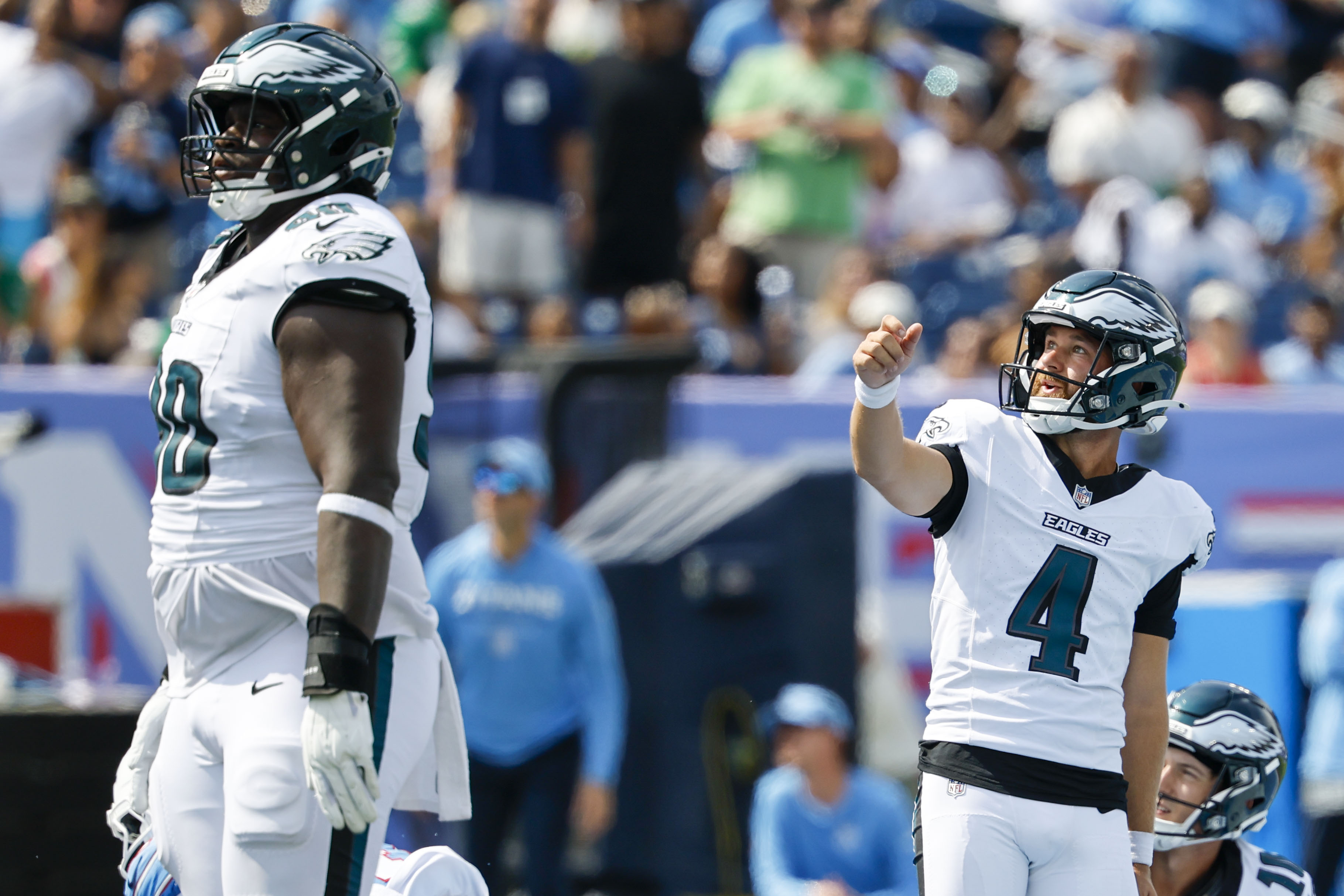
    Kicker Jake Elliott has been quietly solid for the Eagles thus far. Yong Kim / Staff Photographer

    Extra point: The Eagles have yet to force a turnover. Fangio’s unit has been among the best in taking the ball away over the previous two seasons, so it may be just a coincidence. But it’s tough to win in the NFL if you’re net-negative in turnover differential. The Bears have three takeaways and giveaways apiece. It looks like weather conditions will be relatively benign, especially for Chicago. Kicker Jake Elliott has gotten off to a solid start this season and should have some confidence after connecting from 58 yards out in Nashville. Bears kicker Cairo Santos has a right hip injury. The Bears didn’t add an emergency replacement, but will Santos be 100%?

    Shawn Hochuli is the head referee, which could be good news for the Eagles, who are 6-0 in games officiated by him in the last five seasons. Maybe that’ll have little impact on the outcome, but there seem to be several factors in the Birds’ favor entering this matchup. I don’t think we yet know the defining characteristics of this team. It had to scrape by opponents with low outside expectations. But we’ve seen this version of the Eagles before: stack imperfect wins early until finding an identity.

    I probably would have picked the Bears if Williams was healthy. I wouldn’t underestimate Keenum with Johnson at the controls. But I can’t see Fangio getting fooled in the rematch. And I think that a confident Hurts is a dangerous Hurts, especially with the advantages the Eagles receivers have against the Chicago secondary. So I like the Eagles in a relative squeaker, maybe with Elliott kicking the game-winner.

    Prediction: Eagles, 27-24.

  • The free-falling Phillies aren’t done yet: ‘We have hope.’ And it starts with Zack Wheeler on Sunday.

    The free-falling Phillies aren’t done yet: ‘We have hope.’ And it starts with Zack Wheeler on Sunday.

    The plastic sheets have been rolled up above the lockers in the Phillies’ clubhouse since Wednesday.

    It’s like they’re part of the decor.

    But they’ll stay there for one more day. Because a team that extends its season after the endurance test of 162 games in 185 days deserves to let loose. A playoff spot, no matter how it’s won, is worth celebrating.

    And somehow, someway the Phillies can still make the playoffs. Even after this Saturday Night Massacre — a 12-1 humiliation, in the rain, against the 98-win Rays — near the end of a week from hell in which a $320 million roster has gotten plenty of boos but not a drop of booze.

    Heck, they can make it even if they lose again Sunday.

    And wouldn’t that be fitting?

    “We’ll see,” said interim manager Don Mattingly, who appears more downcast by the day.

    OK, let’s get this out of the way: The Phillies will make the playoffs if they snap a four-game losing skid in the regular-season finale … with Zack Wheeler starting on regular rest … and Jesús Luzardo expected to be back from the injured list and available out of the bullpen.

    “To me, it just comes down to our offense,” said J.T. Realmuto, hitless in 34 at-bats, four shy of matching an unwanted franchise mark. “We need to be able to score.”

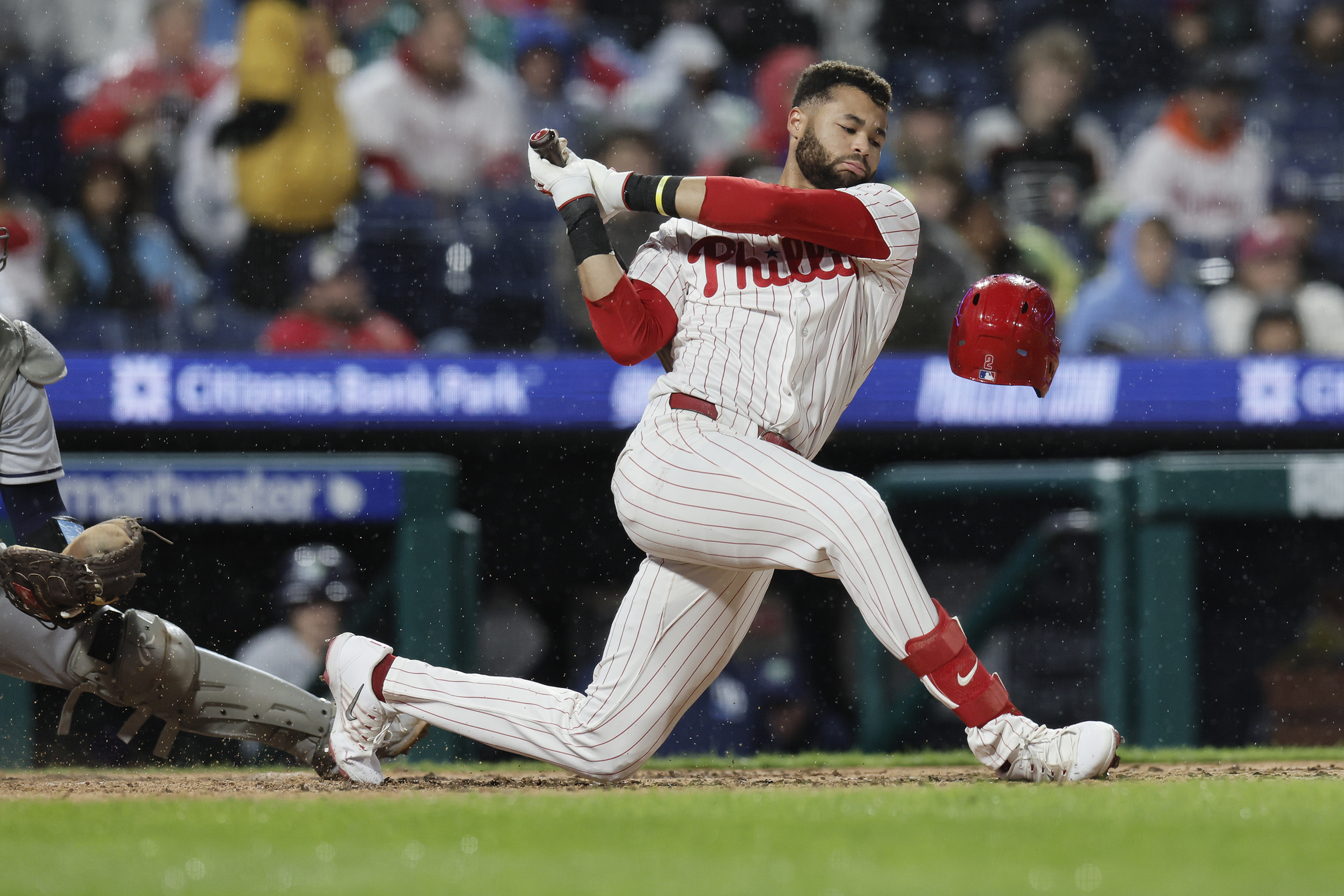
    The Phillies’ Justin Crawford loses his helmet while batting in the third inning on Saturday.Elizabeth Robertson / Staff Photographer

    Easy enough, right? Until Rays second baseman Richie Palacious bobbled a grounder in the seventh inning, the Phillies hadn’t scored in 21 innings, a season-high. They have scored three runs or less in 10 of the last 13 games.

    So, what if the bats don’t thaw against Rays starter Nick Martinez, a 15-game winner with a 2.94 ERA? Well, the Phillies can back into the playoffs — can’t you just hear the beep, beep, beep? — if the Diamondbacks lose in San Diego.

    But you have to wonder about the collective psyche of a team that has made this all much harder than it ever needed to be.

    “Two weeks ago,” Realmuto said, “I wouldn’t have guessed that we’d be in this situation.”

    Indeed, when the month began, the Phillies led the Diamondbacks by 6½ games with 23 remaining. At the start of this week, the lead was four games with six to play. The Phillies’ playoff odds were 99.1%, according to Fangraphs.

    No wonder Mattingly has looked shaken after the last few games. And although Kyle Schwarber, the Phillies’ de facto captain, often notes in times of trouble that the core of the roster has been through almost everything together over the last five seasons, they haven’t experienced anything like this.

    “Obviously we put ourselves in a tough situation where we have to win [Sunday’s] game to keep our season alive, most likely,” Realmuto said. “It’s definitely frustrating. But we have hope in this group, and we have a lot of confidence here that we can get it going.”

    There isn’t much else to say. And there weren’t many players left in the clubhouse to say it after getting throttled by the Rays.

    Aaron Nola was made to start the game on two days’ rest because the fourth-largest payroll in the sport somehow doesn’t include a No. 6 starter. He faced seven batters, got three outs, and gave up three runs on four extra-base hits, including a two-run homer to Rays star Junior Caminero.

    “I was actually really proud of him,” Mattingly said. “Taking the ball there on two days’ [rest], kind of just gutting it out.”

    But Nola shouldn’t have been in that position any more than the Phillies should be in their overall predicament. In that way, he was a symbol of everything that has gone awry.

    The season for interim manger Don Mattingly and the Phillies comes down to one game on Sunday.Elizabeth Robertson / Staff Photographer

    So, they turn their lonely eyes to Wheeler, less a stopper than firewall against missing the playoffs for the first time since 2021. The Phillies are 19-8 in his starts.

    “We’re always confident when that guy’s on the mound,” Realmuto said.

    Never mind that the Phillies will have to burn Wheeler in Game 162 instead of saving him for Tuesday night in Atlanta, when he would’ve been lined up to start Game 1 of a best-of-three wildcard miniseries.

    But the only thing more unexpected than the way things have unfolded is that the Phillies might actually live to tell about it. All of it.

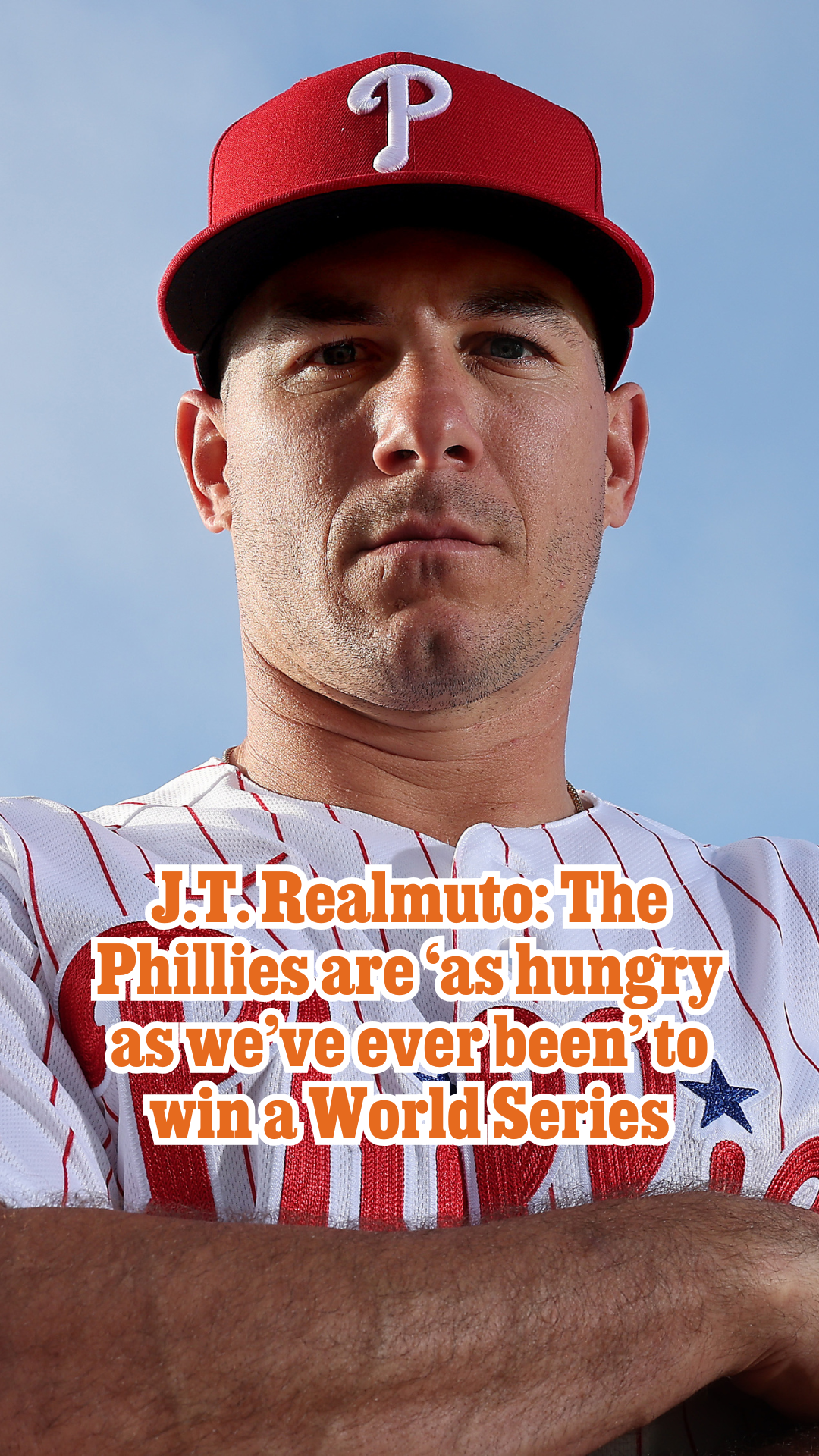
    J.T. Realmuto: The Phillies are 'as hungry as we've ever been' to win a World Series
    Video: J.T. Realmuto: The Phillies are ‘as hungry as we’ve ever been’ to win a World Series
    • The 9-19 start that resulted in the firing of manager Rob Thomson and the initial revival under Mattingly.
    • A skid after the All-Star break and a surge that began in an Iowa cornfield.
    • The 8-14 finish that put them on the brink of collapse.

    “I didn’t really picture this, like having to do this,” Mattingly said. “But you’ve got to do what you’ve got to do if that’s what it takes for us to get in. And then it’s all square. It’s all even.”

    Mattingly paused.

    “It’s been a year,” he said.

    And it comes down to one day.

  • The Phillies are on the verge of the worst collapse in the city’s sports history. That says something.

    The Phillies are on the verge of the worst collapse in the city’s sports history. That says something.

    The goal is no longer to make the playoffs.

    The goal is to avoid making history.

    The Phillies are on the verge of it. Know that. It can be difficult to recognize when you are living through it. Think of the worst you ever heard. Make it worse. This is it.

    For the vast majority of us whose sports consciousness had not yet dawned in 1964, the year has always been one that occupied the same narrative spaces as walking to school in the snow uphill both ways. As bad as things were when they were worse than we ever had it, we never had it that bad. The great Phillies Phold of ‘64 wasn’t an urban legend as much as it was an origin story.

    To watch sports is to suffer.

    Well, here we are. The 1964 Phillies had a 6½-game lead with 12 games to play. The 2026 Phillies had a five-game lead with eight games to play. It does not get worse than this.

    However it plays out, whatever happens on the final day of the regular season, whether the Phillies win, or see the Diamondbacks lose, or the inverse occurs, they have already accomplished something in the least sense of the word. They have forced us to consider what was long held to be the epitome of impossible.

    By the end of a 12-1 loss to the Rays on a cool, wet, desperate Saturday night in South Philadelphia, the current era of Phillies baseball had been reduced to the hollow sound of bat on ball that echoed through a near-empty stadium that had long before lost its will.

    Pitching on two days’ rest, Aaron Nola gave up three runs in his one inning on Saturday.Elizabeth Robertson / Staff Photographer

    Embarrassment is not nearly a strong enough word to describe the precipice upon which the Phillies currently stand. It may not even be an emotion they are collectively capable of feeling, given the lack of soul they’ve displayed over the last two-plus seasons. And maybe that’s what you get when you build a team full of players who are here primarily because you offered them more money than anybody else. Maybe that’s your soul.

    Maybe.

    There have been many instances over the last several years where the Phillies have appeared to be better than that. Much better, at times. They played the first two months of last season at a 106-win place. They played the eventual world champion Dodgers close to even before bowing out in a National League Divisional Series. Nobody can question the individual competitive integrities of guys like Bryce Harper and Zack Wheeler and Kyle Schwarber and J.T. Realmuto. And, yet, the totality of what we’ve seen since mid-October 2023 suggests there is something lacking in the collective. Whatever that thing is, isn’t there right now.


    window.addEventListener(“message”,function(a){if(void 0!==a.data[“datawrapper-height”]){var e=document.querySelectorAll(“iframe”);for(var t in a.data[“datawrapper-height”])for(var r,i=0;r=e[i];i++)if(r.contentWindow===a.source){var d=a.data[“datawrapper-height”][t]+”px”;r.style.height=d}}});


    The goal now is to avoid infamy. It is to preserve legacy. It is to summon the last shred of political capital they earned in 2022 and escape from Game 162 with a reason to believe. It will be one thing to make the playoffs. It will be another to do so and also offer a reason to believe that they’ve accomplished anything greater than delaying the start of their offseason by another few days.

    The biblical tone is warranted. The Phillies are on the precipice of a disaster that transcends even their own lengthy track record of misery. Barely more than a week ago, the math said they had a 99% chance at making the playoffs. With eight games to play, they had a five-game lead for the final NL wild-card spot. They entered Wednesday needing some combination of two wins and Diamondbacks losses to clinch a playoff berth. That number will still sit at one when they take the field Sunday for Game 162.

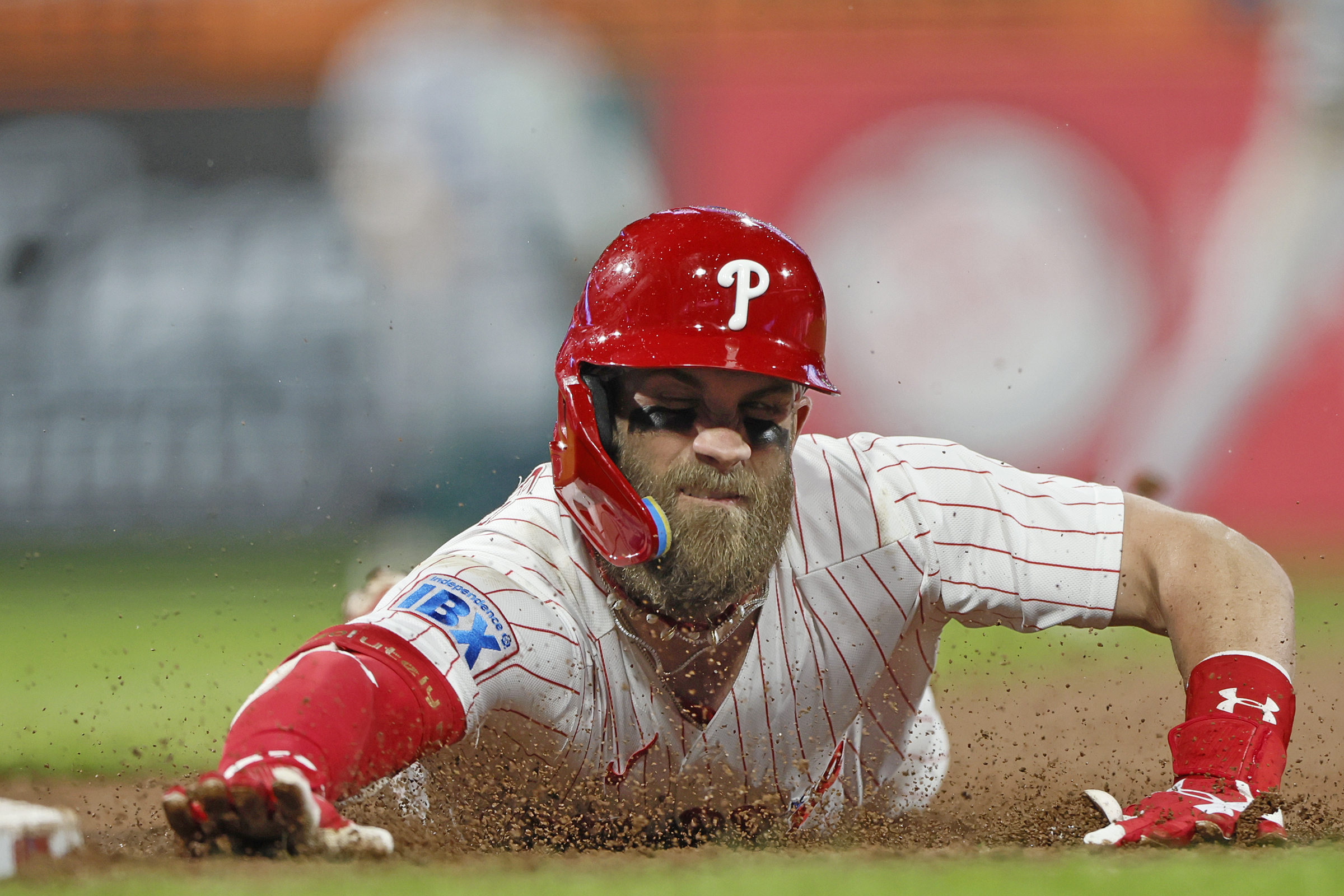
    The Phillies’ Bryce Harper dives safely back to first base after briefly trying to stretch a single into a double in the eighth inning.Elizabeth Robertson / Staff Photographer

    It will sit there in spite of — because of? — their understanding that Game 161 was one they needed to win. Interim manager Don Mattingly’s decision to start Aaron Nola on two days’ rest backfired in a manner as spectacular as it was predictable. By the time a lot of folks realized the Nor’easter-delayed game had started, the Rays were up 3-0, courtesy of a loud home run by Tampa Bay’s Junior Caminero. The conditions did not improve.

    By the start of the seventh inning, the Phillies needed a touchdown and an onside kick and a field goal just to tie the game. They had the bases loaded in the seventh and eighth. They ended up getting an extra point. Long before then, the focus had turned to Sunday, with an inch of rain predicted to fall.

    The metaphors write themselves. As do the hypotheticals. We needn’t dive into them now. They’ll be actualities soon enough. Even if the Phillies win on Sunday, how can we possibly believe in a team that failed to win a game in its most desperate moment? Worse still, what if they lose and still sneak into the playoffs because of a Diamondbacks loss? Does any of it matter now that Mattingly is treating his pitching staff like they are playing Game 7?

    Questions like these are what Monday is for.

    Mattingly, Gene Mauch, 2026, 1964 …

    The only thing to do right now is watch the story unfold.

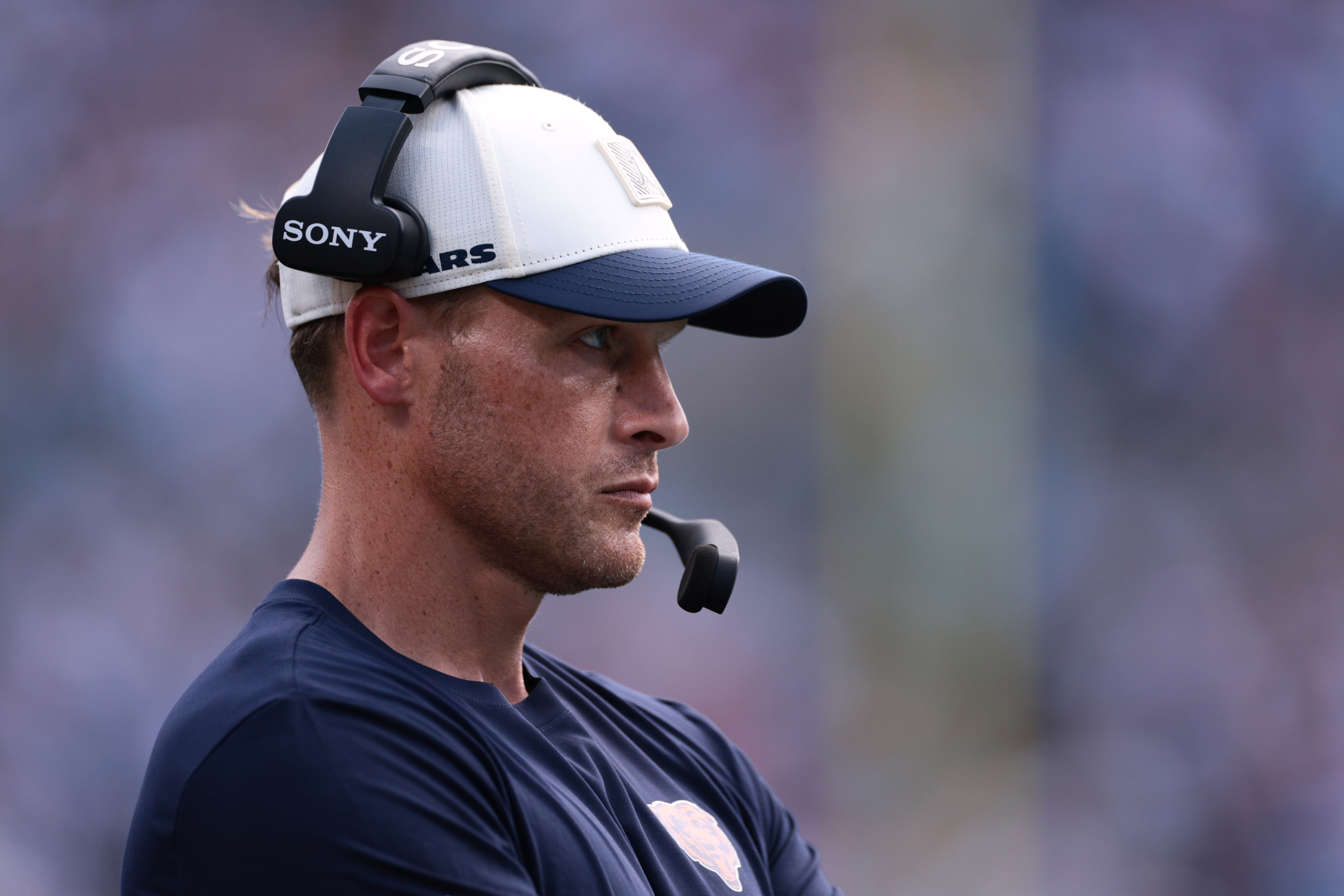
  • Bears coach Ben Johnson is bold, brash, and would love to go bare-chested after beating the Eagles (again).

    Bears coach Ben Johnson is bold, brash, and would love to go bare-chested after beating the Eagles (again).

    Yeah, John Bunting saw Ben Johnson rip his shirt off. He saw Johnson go full-Hulk Hogan after the Chicago Bears beat the Eagles last season, and he laughed about it, even though Bunting remains proud that the Eagles were the only team he played for during his terrific 11-year career as an NFL linebacker. Even though Dick Vermeil — Bunting’s head coach for seven of those years, a man Bunting considers a second father — could have drowned all the rats in Veterans Stadium with his postgame weep-fests but wouldn’t have been caught dead screaming and flexing in the locker room like a bro dad who had dipped into his kid’s Ritalin. Even though, as a walk-on scout-team quarterback for Bunting at the University of North Carolina, Johnson tended to remain fully clothed.

    “I never saw that,” Bunting, the Tar Heels’ head coach from 2001 to 2006, said by phone recently. “But I’ll bet you his players love him. He’s that kind of guy — a great leader.”

    Just ask Johnson himself about his leadership, his qualities as the Bears’ head coach, and he might say the same thing. If his 21 games in charge have done nothing else, they’ve shown that he might just be capable of building a team that can back up his boasts. And if he isn’t, at least his rise and fall will be a hell of a ride. An 11-6 record and a playoff victory last season, a 59-point mushroom cloud on the Carolina Panthers in Week 1, a three-point washout against the Minnesota Vikings in Week 2: Johnson and the Bears do nothing but go to extremes whenever they’re on the field, or he has a mic and camera in front of him.

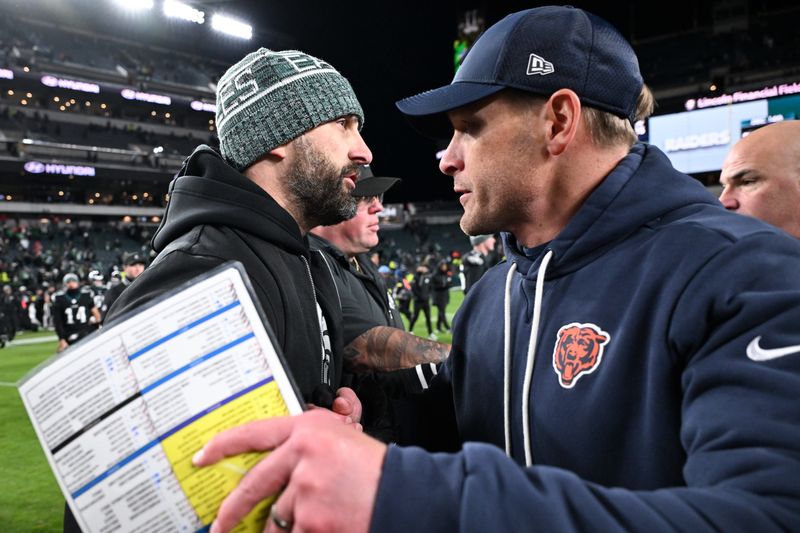
    The Eagles will head to Soldier Field on Monday night still smarting from the Bears’ 24-15 Mack-trucking of them on Black Friday. Caleb Williams’ tender hamstring could prevent him from playing, but Johnson could still cook up something to keep Vic Fangio and his defense off balance, and for the Eagles, the risk isn’t just in losing to the Bears again — and maybe to third-string QB Case Keenum. It’s in listening to Johnson remind the world of his own awesomeness … at their expense.

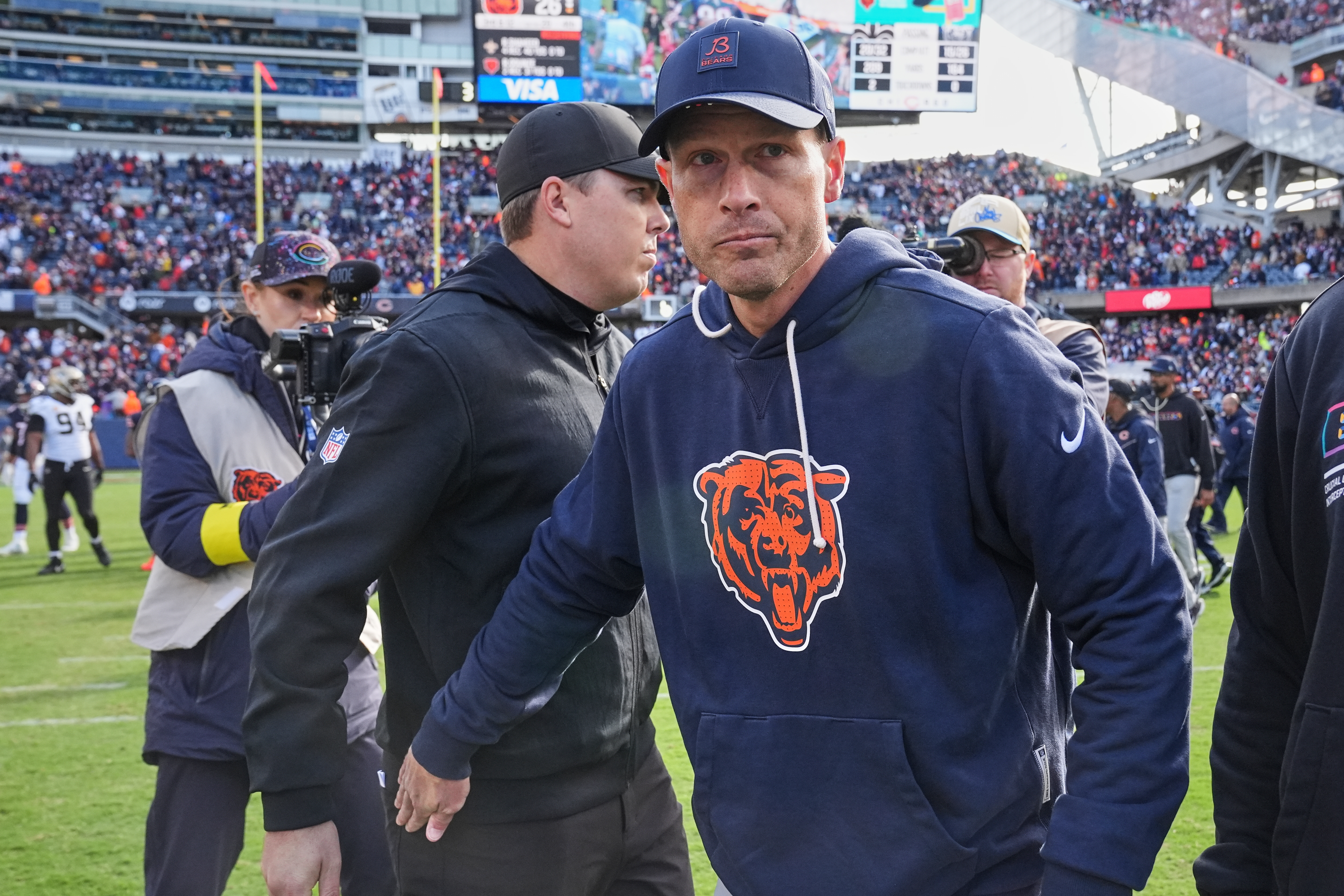
    Chicago Bears coach Ben Johnson doesn’t lack for confidence. He’s also not shy about telling you how he feels.Nam Huh

    Don’t believe he’d do such a thing? Please. This is a coach who, as a precocious offensive coordinator for the Detroit Lions, called several trick plays in a 47-9 rout of the Dallas Cowboys in 2024, including some after the Lions had taken a comfortable lead. This is a coach who told The Athletic in August that he was shooting for “more than” a Super Bowl, that he wanted the Bears to go unbeaten and be the highest-scoring team in league history, as if they played half their games in a dome or in Southern California and not amid Lake Michigan’s freezing winds and frequent snow.

    To beat the Eagles with a backup quarterback would be the sweetest treat that Johnson could hope to taste, and just because Keenum might have to suit up doesn’t mean Johnson will call nothing but basic, boring handoffs to D’Andre Swift and Kyle Monangai, though that strategy worked well enough last November.

    “He’s not fearful,” Bunting said. “There are a lot of coaches who are. He’s not that way at all. He is willing to take a chance, and he’s motivated to do that. That’s part of his thought process. ‘Hey, we’re going to take chances.’”

    A coach who, as a high school quarterback in Asheville, N.C., orchestrated a run-heavy I-formation offense and, as an undergraduate at Chapel Hill, earned degrees in computer science and mathematics doesn’t at first seem the sort to be so bold. That background suggests a certain set of principles — weigh the angles, crunch the numbers, stay conservative — that don’t apply to Johnson now and never have. He wasn’t always this brash, but he has never been shy about saying what he thought to be true, even during his first full-time coaching gig as a Boston College grad assistant under offensive coordinator Gary Tranquill.

    “I mean, he didn’t mince his words,” Tranquill, who had been Johnson’s offensive coordinator and quarterbacks coach at UNC before hiring him at BC in 2009, said in a phone interview. “He comes right to the point. When he said something, he was assured that that was the right thing to say and he would say it. He didn’t hem-haw around. When he was coaching with us, he did all the scouting. When he would tell you something about the other team, what they were doing, what coverages they were doing, he was very explicit and knew exactly what he was talking about.”

    Looks like little has changed over the subsequent 17 years. Johnson is still treading that fine line that his counterpart Monday, Nick Sirianni, has walked with the Eagles for the last six years — still raising and answering the same questions. Is it possible to be too emotional, too demonstrative, too arrogant if, above all, you are authentic?

    “The last thing that you can worry about as a head coach is trying to please anybody outside your building,” Sirianni said. “You’ve always got to be yourself. … Regardless of what you do, if you take your shirt off, if you don’t take your shirt off, if you’re emotional, if you’re not emotional, some of the people are going to say, ‘Man, I like that.’ Some are going to be like, ‘Man, I don’t like that.’

    “That’s leadership. That’s what it is. Your job is to be yourself and do everything you can do as a head coach to get your team ready to play and to get your team better on a daily basis. You can’t look outside to see how you can please [people] because it’s an impossible task. Just win games.”

    Sirianni-Johnson might be the most compelling comparison and matchup Monday night. There are no two more polarizing coaches in the NFL for their demeanors and personalities, and neither appears in any hurry to apologize for who he is. “That’s the other side of Ben Johnson,” Bunting said. “He’s still in many ways the kid from Asheville. He has great enthusiasm for the game itself and for his players and staff. He is emotional, and when there’s a time to celebrate, he’s going to do it.” It’s on the Eagles to deny the Bears and their bare-chested leader that opportunity.

  • Philadelphia Orchestra opens its season with a ‘new’ Bernstein piece that tries to do too much

    Philadelphia Orchestra opens its season with a ‘new’ Bernstein piece that tries to do too much

    Leonard Bernstein’s big, audacious, belief-shaking Mass has never slotted easily into the choral/symphonic repertoire, requiring Broadway and rock music resources as well as orchestral ones, with a confrontational message that echoes beyond its 1971 premiere.

    Bernstein himself once wondered if the populist, many-faceted Mass should be performed in a gymnasium.

    But the newly created suite heard Friday, played (and commissioned by) the Philadelphia Orchestra at the Kimmel Center, is a much more viable version. And it’s not a secondhand encapsulation but an entity unto itself.

    And not a day too soon.

    No single work has been more closely identified with the now-closed Kennedy Center: Its 1971 opening was the Bernstein Mass premiere. In preperformance comments, music and artistic director Yannick Nézet-Séguin made that connection, calling Mass a statement about “why arts and culture are worth fighting for.”

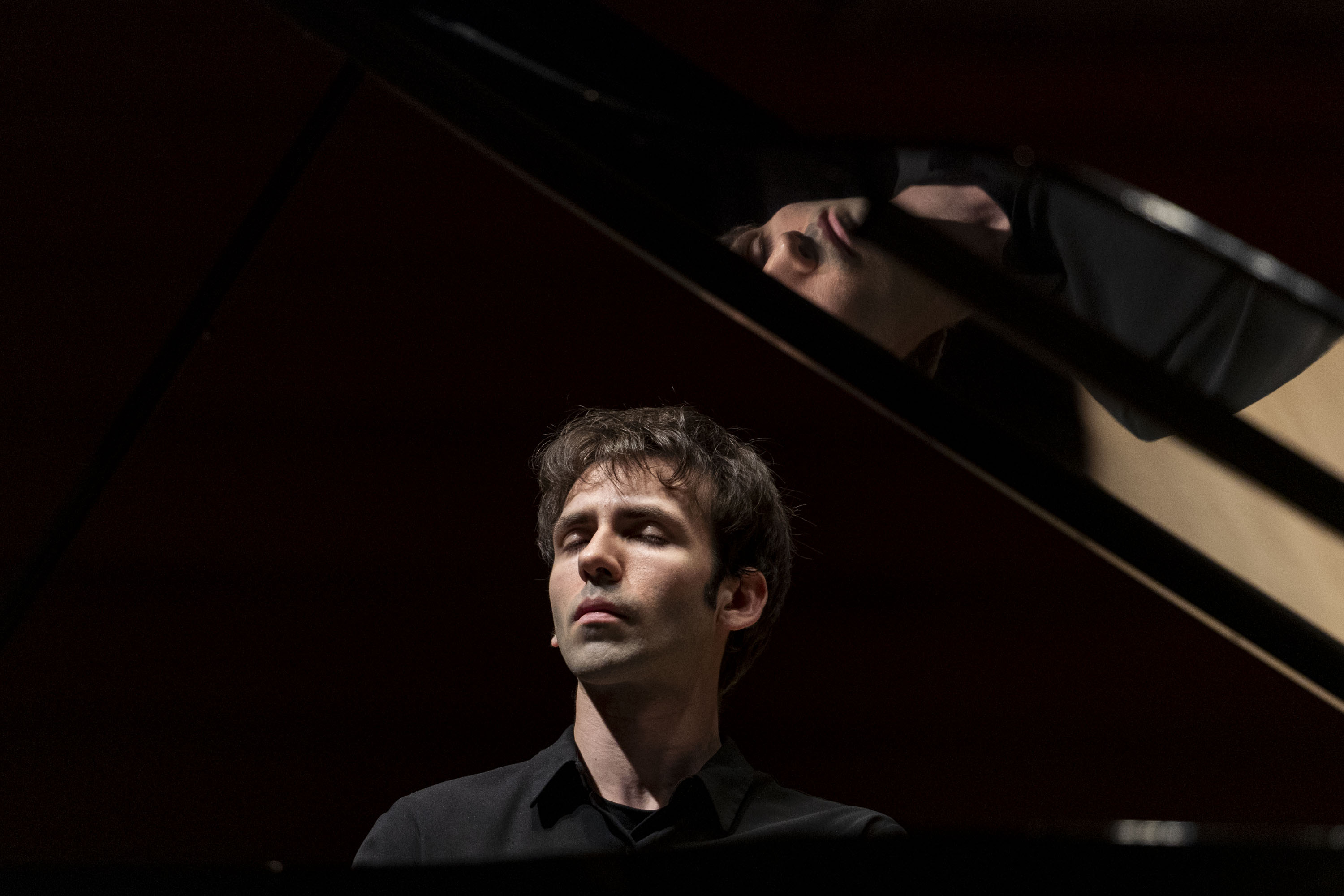
    Pianist Alexandre Kantorow performs with the Philadelphia Orchestra at Marian Anderson Hall on Friday, Sept. 25, 2026, in Philadelphia, Pa.Tyger Williams / Staff Photographer

    I agree in spirit. But among listeners, you either got the Bernstein Mass gene or not. I did not (and was most excited to hear Alexandre Kantorow play the Brahms Piano Concerto No. 1 that began the program).

    Though Mass’ individual songs are indeed lovable, the scrupulously unconventional whole (where the original Mass text is a distant point of reference) is puzzling to me. Why the counterfeit rock music? (Bernstein followed The Rolling Stones and knew better.) Why such glib philosophical conclusions? (Such as “I believe in God but does God believe in me?”)

    Nézet-Séguin has not been one to tone down any such element, fearlessly embracing the abrasive modernism lurking around the sides. Garth Edwin Sunderland, vice president for artistic projects at the Leonard Bernstein Office, refashions the piece into Four Symphonic Rituals from MASS, richly scored for orchestra (no singers) that’s a close cousin to Symphonic Dances from West Side Story, but with a harder-edge sound palette.

    “My solution was to focus each movement on one of the musical concepts, punctuated by interjections from the others,” wrote Sunderland in the program notes.

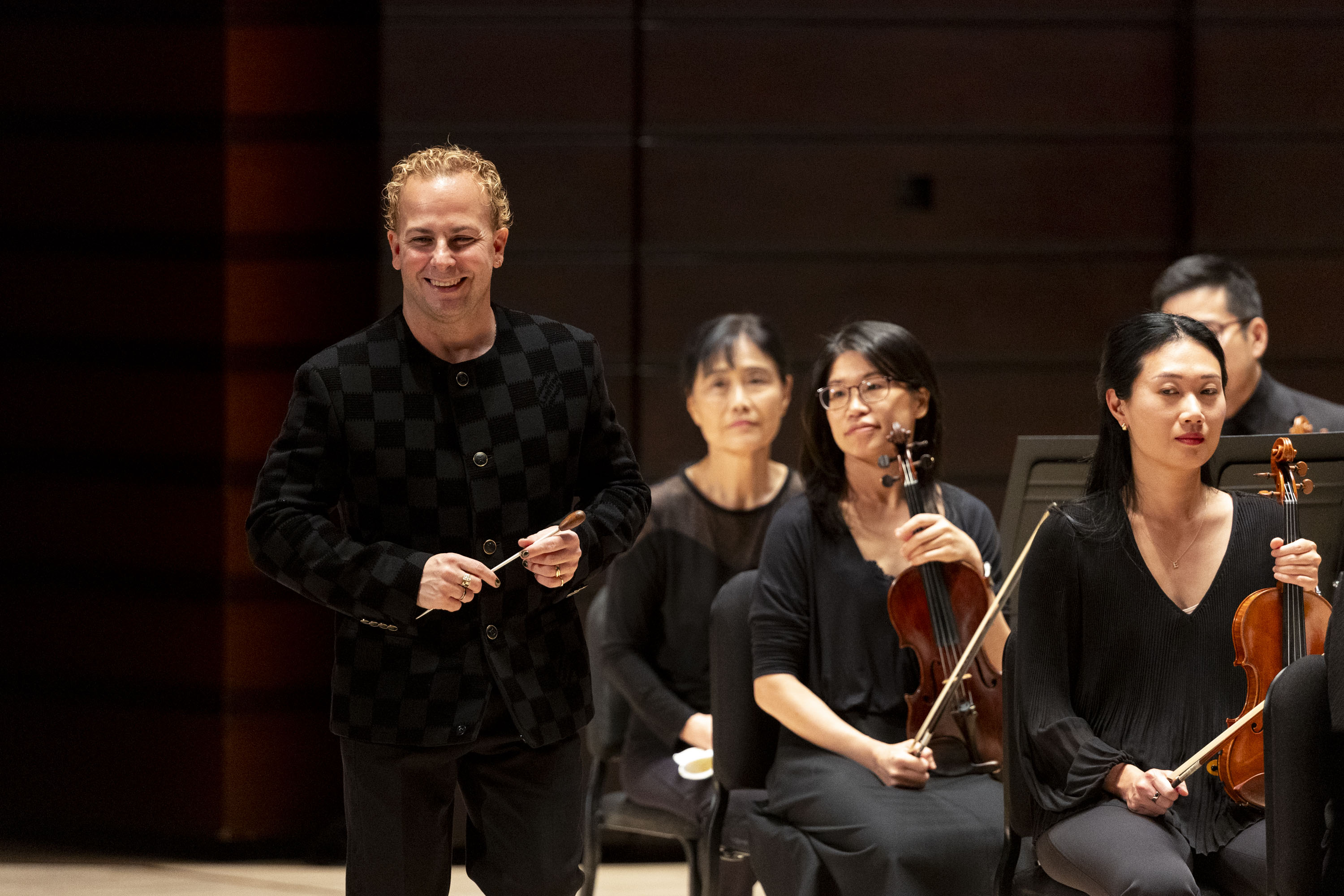
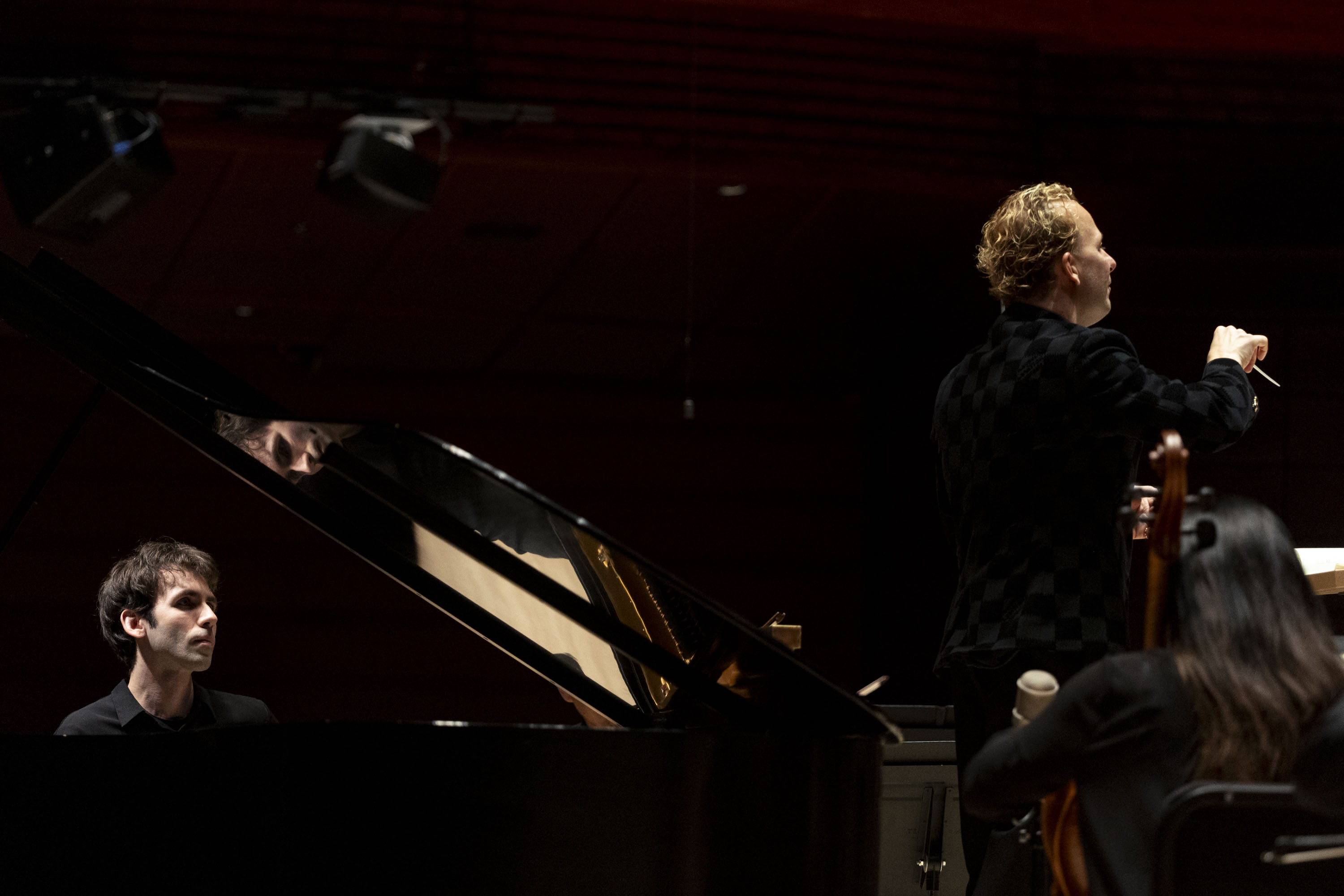
    Conductor Yannick Nézet-Séguin and pianist Alexandre Kantorow perform with the Philadelphia Orchestra at Marian Anderson Hall on Friday, Sept. 25, 2026, in Philadelphia, Pa.Tyger Williams / Staff Photographer

    With a bit of editing, these Rituals may well have longevity. The opening moments establish the lyrical but nervous character of the piece, bringing out the jazz that wasn’t so obvious in the original — and is very welcome since Bernstein spoke jazz as a first language.

    One could write a dissertation on Sunderland’s choices, but the total effect is that of a concerto for orchestra that touches as many bases as possible. Too many, in fact. The last 10 minutes are so splintered that the through line is intermittently lost.

    But one unexpected conclusion is that the sung words aren’t missed (except “I Go On” and “Simple Song”). In fact, much of the music seems liberated without words. Electric guitars are still there but blended in as part of the larger sound texture.

    What would Bernstein think? It’s worth asking.

    (Later tonight, I’ll be near his grave site in Brooklyn where Green-Wood Cemetery is hosting an event for the Missy Mazzoli opera Lincoln in the Bardo.)

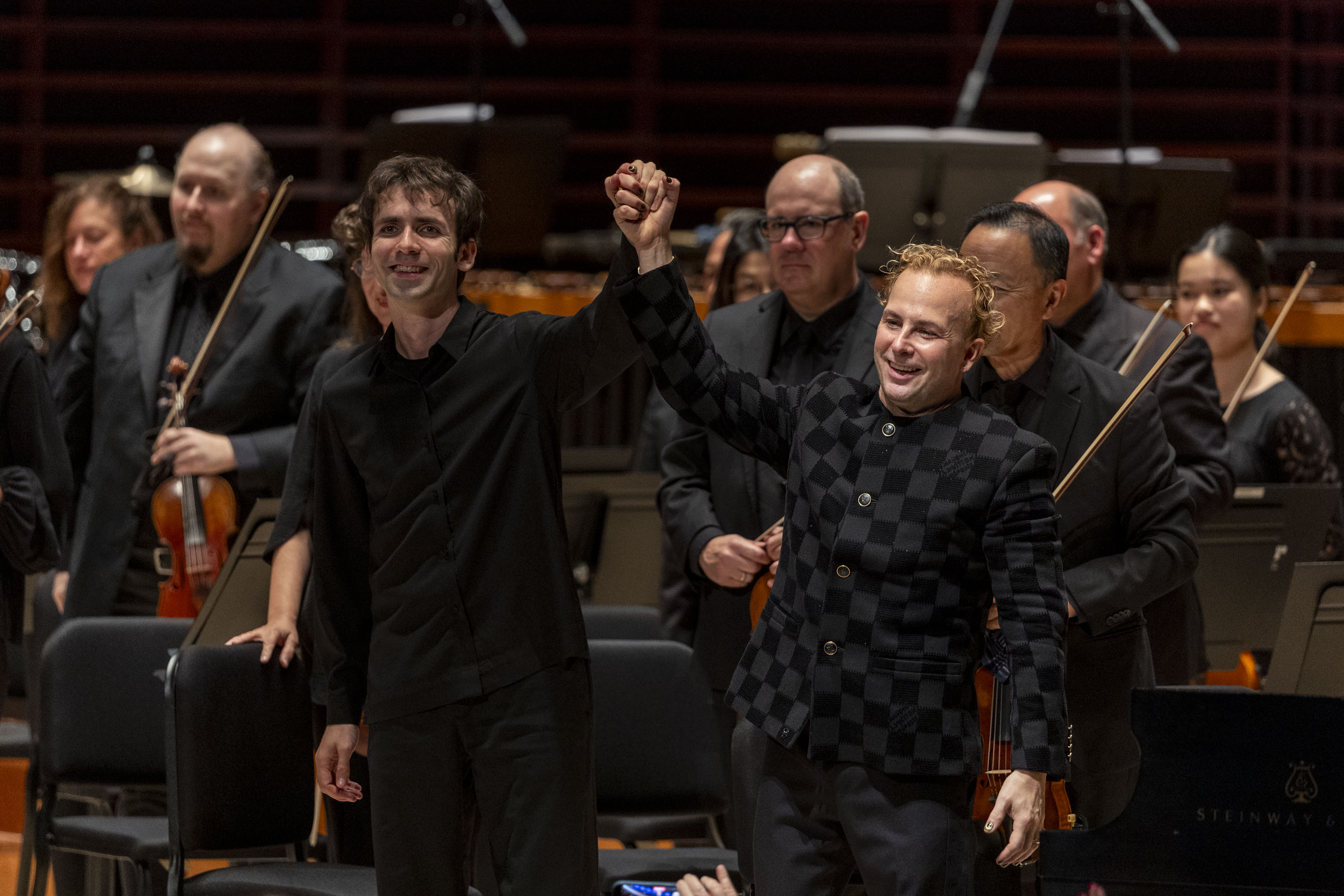
    Conductor Yannick Nézet-Séguin and pianist Alexandre Kantorow take a bow after their performance at Marian Anderson Hall on Friday, Sept. 25, 2026, in Philadelphia, Pa.Tyger Williams / Staff Photographer

    Brahms piano concerto soloist Kantorow has been called a fire-breathing virtuoso, and he has that quality, but the Gilmore Artist Award he received goes to pianists who have much more than that.

    Whether playing solo, chamber music or with orchestra, the 29-year-old French pianist (making his Philadelphia Orchestra debut in these concerts) is thoughtful, highly personal, but never eccentric. He brings an extra depth to Brahms’ early-period concerto from having spent much time with the composer’s three early piano sonatas, finding in them surprising maturity but also youthful rage that carried over into the more stentorian parts of the concerto.

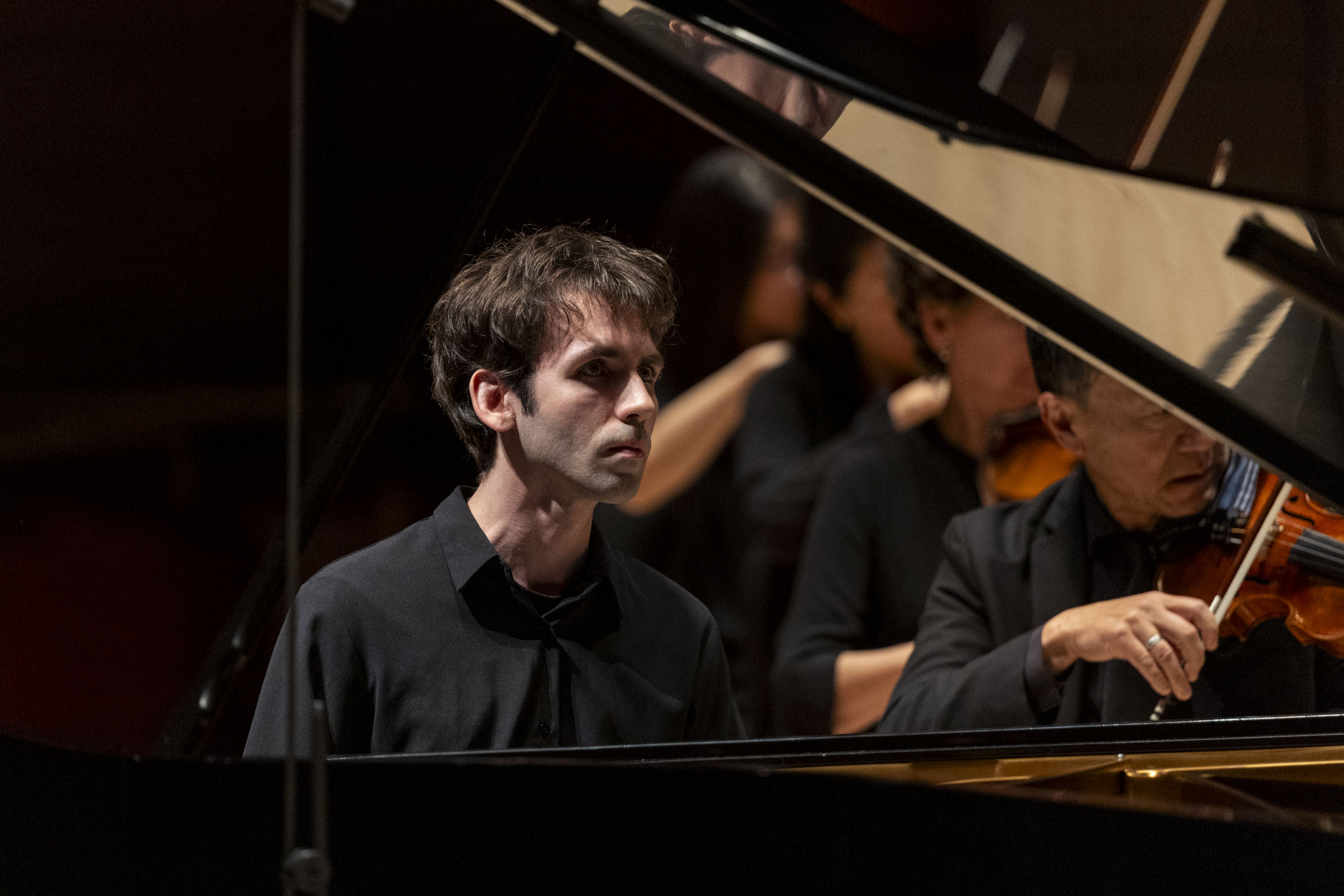
    Pianist Alexandre Kantorow performs with the Philadelphia Orchestra at Marian Anderson Hall on Friday, Sept. 25, 2026, in Philadelphia, Pa.Tyger Williams / Staff Photographer

    Throughout the first movement, one felt part of a searingly direct conversation with Brahms. The second movement lost me for a bit; Kantorow was too inward to be outwardly communicative. The final movement had reckless chemistry.

    When a Philadelphia Orchestra performance lacks complete coordination, you know musicians are deep in the moment and not falling back on remembered emotion.

    The program will be repeated at 8 p.m. Saturday and 2 p.m. Sunday at the Kimmel Center. Tickets: $29-$232, philorch.ensembleartsphilly.org or 215-893-1999.