Tag: UniversalPremium

  • Allentown’s gift to golf, Rich Lerner, and the book that reveals his ribald side, with Tiger, Phil, and Jack

    Allentown’s gift to golf, Rich Lerner, and the book that reveals his ribald side, with Tiger, Phil, and Jack

    The most pleasant surprise of the recent memoir from the most elegant studio host in sports is, deliciously, all of the boobs and balls and cussing.

    “Did you find it too racy?” Rich Lerner asks, bemused but earnest, as if the aristocracy at the exclusive, tennis-whites Philadelphia Cricket Club might look sideways at him during the party that is to follow. He uncrosses his legs, adjusts the perfect collar of his white shirt tucked just inside his slim, tailored blue blazer, and grins like a little boy proud of his mischief.

    No. I found it authentic. Him naked in a Scottish bathtub, him learning the ways of the world from the profane teaching pro at his dad’s pitch-and-putt in Dorneyville, Pa., him wisecracking with Tiger Woods in much, much happier times.

    Still, why push the envelope with “Aren’t you that Golf Guy?”? Why risk the 30-year reputation of the man who, as the voice of diplomacy and reason on The Golf Channel, has steered the game through the perilous waters of Tiger and LIV and Phil?

    “Because that was my experience, and I wanted to be authentic,” Lerner said. “This was not going to be ‘polished Rich’ at the desk. This was going to be Richie in the newsroom, Richie in the compound, Richie with his friends, Richie growing up — schticky, schticky Dicky.”

    Lerner has served in various roles at the Golf Channel, most recognizably in marathon sessions of Golf Central: Live From at golf’s biggest tournaments. On that set, analysts dissect each day’s topics with the finesse of a chainsaw, while Lerner more steadily guides them through the wilderness with nudges of stiletto wit.

    Lerner generously addresses Phil and LIV and, of course, Tiger, Tiger, Tiger. At 65 and still brimming with energy, he’d set out to write a Tiger book but there was so much more to his three decades on the set and his six decades in the game.

    Besides, who needs another Tiger book when you can write a book about the greatest broadcaster to come out of the Lehigh Valley? Perhaps — with apologies to Ernie Johnson, who babysits Shaq and Charles — the best sports studio host on television?

    That’s what Lerner ignores in the book, subtitled “Doglegs and Detours from a Life in the Game.” He affects complete avoidance of his colossal presence in the bigger picture of the game. His typical and innate humility serves only to amplify his significance. Jim Nantz and Mike Tirico deliver the live action with trademarked flair that may or may not be contrived, but neither has to act as referee to the two most brilliant and relevant analysts in sports, former pro golfers Brandel Chamblee and Paul McGinley.

    It’s hard to put down but easy to set aside and pick up again. It’s great for the beach, the bathroom, or the briefcase, if you travel for work. When it’s light, it’s as light as cotton candy, and he radiates the joy of the game both in the book and in the flesh.

    It isn’t all light; ever less so these days, it seems. The stickier subjects affect Lerner far differently. In speaking with The Inquirer at Cricket in the moments before the event, Lerner delighted in culinary discussions concerning Yocco’s hot dogs (IYKYK) or Dalessandro’s cheesesteaks, one of which he was gnawing, standing up, when I walked into the ballroom.
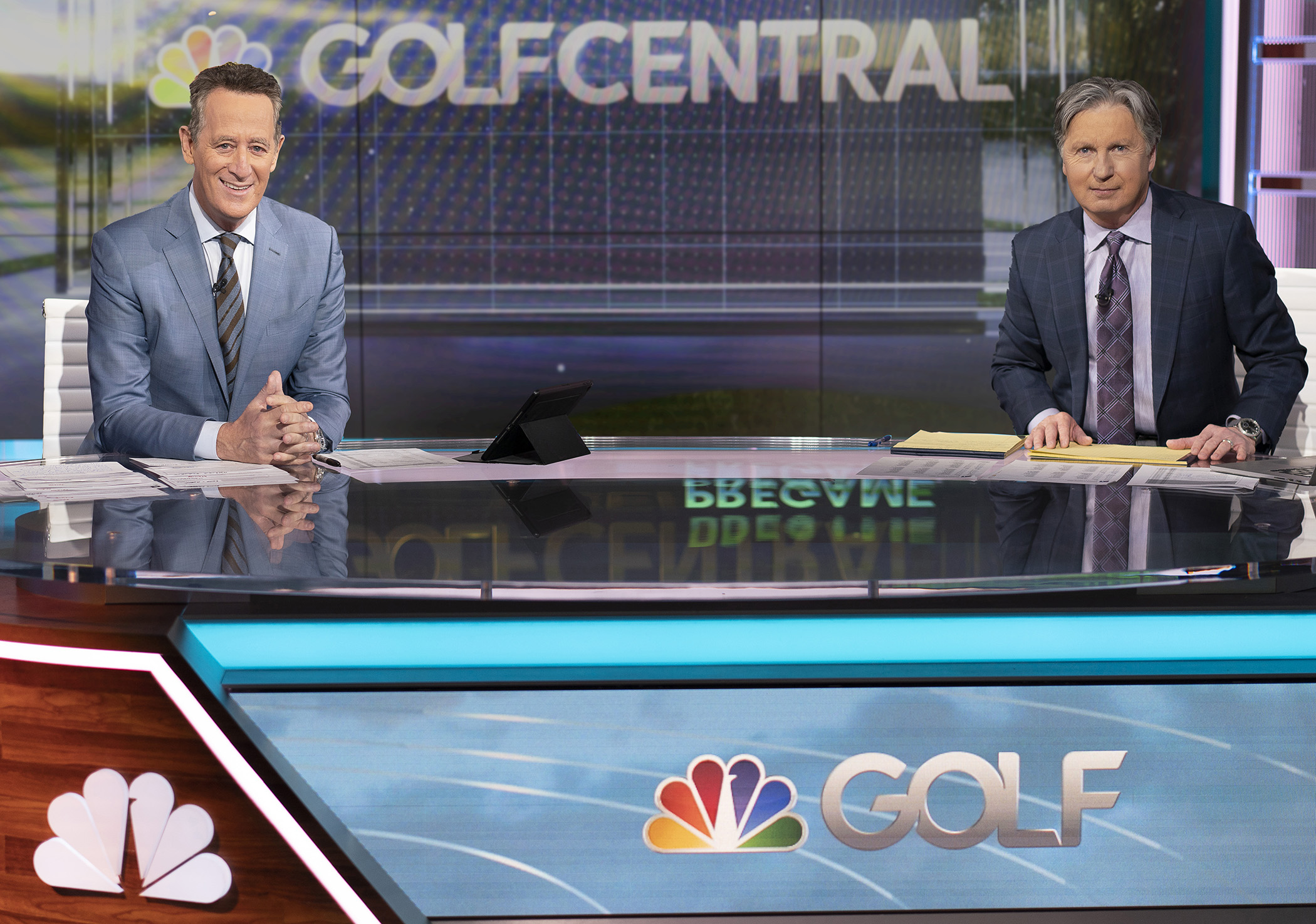
    Temple grad and Allentown native Rich Lerner (left) with The Golf Channel analyst Brandel Chamblee. NBC Sports

    But when the talk turned to Tiger, who just went through rehab again, and Phil, whose spiraling disgraces have attained a level of surreality, Lerner became subdued, like a man whose gifted children have lost their way.

    “I think it’s sad,” he said.

    He looked sad.

    He seems especially troubled about Mickelson’s issues and choices, clearly because Lerner, who adored Arnold Palmer (Golf Channel’s co-creator), knows the game needed its next Arnie, and, just as clearly, the next Arnie was Phil. But then came LIV, and now there are allegations of sexual misconduct, and it appears that Mickelson’s window is closed.

    “When he should have been embraced — he should have been the Ryder Cup captain, probably twice. You can just keep going,” Lerner said. “He would have had that Arnold Palmer ambassadorship — show up at a major when you’re 65 and hold court, reminisce about the shot you hit off the pine straw in 2010 — that was his.

    “America’s a forgiving country. You never say never, but at this point, he seems adrift.”

    Lerner offered that piece of poignancy off the cuff Monday night. He writes it even better in the book, especially in the chapter, “Impossible to F— Up.” Spoiler: Phil F—’s it up.

    Lerner is golf’s chief negotiator. He is a conciliator at his core. He loves the game as much for its inherent morality as for its incredible, rewarding difficulty. The difficulty remains even as the morality leeches away.

    This turmoil, for him, is torture.

    He grew up in the game, twice a champion at old Berkleigh Country Club out in Kutztown, a real-life Danny Noonan, 6-foot-4 and lean and complete with the thick, unruly hair. He began college at Lehigh, recalibrated to Temple, became a local TV legend young — well, I’ll let him tell that story. He’s so good at it; his video essays on The Golf Channel are masterpieces of depth and nuance, and his autobiographical descriptions of the people who made and make him are just as good.

    You’ll meet grateful firefighters and graceless pro-am hacks and a couple who fostered at least 80 children, which was my favorite part of the book.

    You’ll learn he loves basketball — Big 5 legend Fran Dunphy attended, as did celebrated Sports Illustrated hoops writer Jack McCallum — and, though he was on Broad Street in 1983 when Doc and Moses brought it home, Shaquille O’Neal and Penny Hardaway stole his heart when he moved to Orlando, where The Golf Channel began. Now he and it are both in Connecticut, where he never misses an Eagles game and catches the Phillies whenever he can.

    The book also talks about the lure of alcohol on the course and in the booth, and, between that and the boobs and balls and the cussing, you might think it’s not a worthy review for a man so austere.

    It is.
  • Feds award $43 million to Philly gene therapy research to advance treatments for rare diseases

    Feds award $43 million to Philly gene therapy research to advance treatments for rare diseases

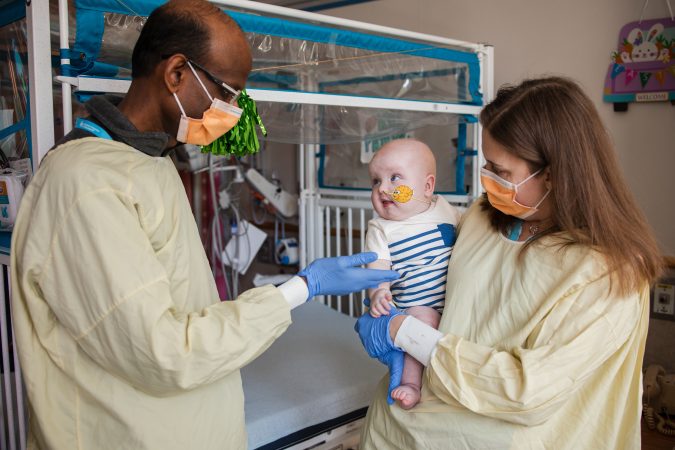
    The U.S. government has awarded Children’s Hospital of Philadelphia $39 million to develop a scalable platform for treating rare genetic, liver-related diseases in infants and children.

    The federal Advanced Research Projects Agency for Health (ARPA-H) also announced this week another $4 million for local gene therapy pioneer Jim Wilson to design gene therapies using AI at his University of Pennsylvania spinout, GEMMABio.

    The $43 million in funding earmarked for Philadelphia researchers comes through a new federal effort to advance gene therapies for rare diseases.

    CHOP’s team includes the duo behind last year’s first-of-its-kind, personalized gene-editing treatment involving a Philadelphia-area infant, known as Baby KJ. CHOP’s Rebecca Ahrens-Nicklas and Penn Medicine’s Kiran Musunuru together created a custom drug to correct the genetic mutation driving Baby KJ’s rare metabolic disease — dramatically improving his liver function.

    The funding will expand their work and bring in another CHOP researcher, Lindsey George, who develops gene therapies for bleeding disorders.

    “We’re trying to move beyond just one diagnosis or one gene,” Ahrens-Nicklas said.

    Philly-based scientists comprise two of seven research teams nationwide to receive funding through ARPA-H’s new $160 million effort.

    Called THRIVE, the program aims to help the roughly one in 10 people — most being newborns, infants, and children — with chronic genetic diseases. Ninety-five percent of rare diseases have no approved treatments.

    Leaders want to develop “precision genetic medicines through platforms that can test multiple treatments for multiple diseases in a single clinical trial,” ARPA-H director Alicia Jackson said in a Thursday news release.

    CHOP’s expanding focus

    The CHOP team will focus on building a scalable gene-editing platform that can be used to treat a variety of infants and children.

    Their initial focus is on liver-related genetic diseases, ranging from urea cycle disorders to blood clotting diseases.

    “Essentially it’s the same drug, whether or not you’re targeting a genetic variant that causes a rare metabolic disease or a genetic variant that causes a rare coagulation disorder,” Ahrens-Nicklas said.

    Their five-year plan includes launching preclinical and clinical trials testing the safety and efficacy of their individualized treatments.

    They will also pursue regulatory approvals, work with payors, and implement their therapies at community sites and remote hubs to expand access.

    “We are the three musketeers that already text 25,000 times a day, and will continue to do so,” Ahrens-Nicklas said.

    Wilson experimenting with AI

    Wilson founded academia’s first gene therapy program back in 1993 as a professor at Penn.

    He left in 2024 to spin out biotech start-ups dedicated to tackling rare diseases with genetic medicines.

    “The question is, can we find ways to scale this bespoke personalized medicine strategy, so that it is affordable and cost-effective?” he said.

    In partnership with a biotech called ProFluent, GEMMABio will use AI to design its base editors — the machinery that goes in and make edits to DNA.

    The tool could be rapidly adapted to different patients and diseases, theoretically making the process more affordable, scalable, and efficient, Wilson said.

    His $4 million award will fund preclinical studies of their technology.

    GEMMABio’s initial focus is on two rare liver diseases “for which there is significant unmet need,” he said, including Maple Syrup Urine Disease and homozygous familial hypercholesterolemia (HoFH).

  • The Sixers’ title hopes still hinge on Joel Embiid. Mike Gansey admitted as much.

    The Sixers’ title hopes still hinge on Joel Embiid. Mike Gansey admitted as much.

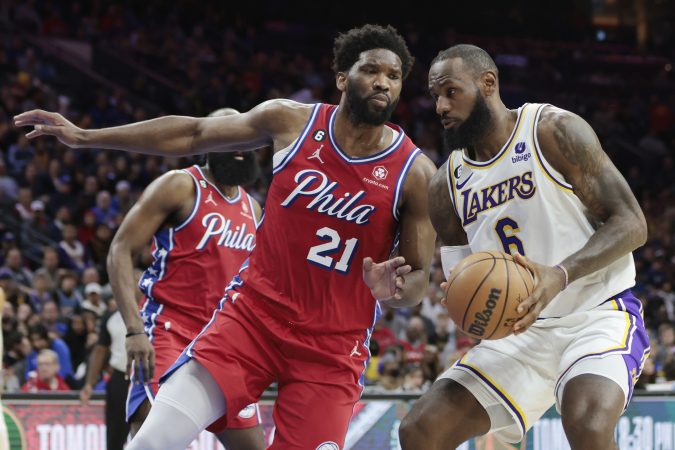
    With all due respect to LeBron James, the Sixers’ greatest and most impactful unknown is the same as it has always been.

    Mike Gansey acknowledged as much on Thursday.

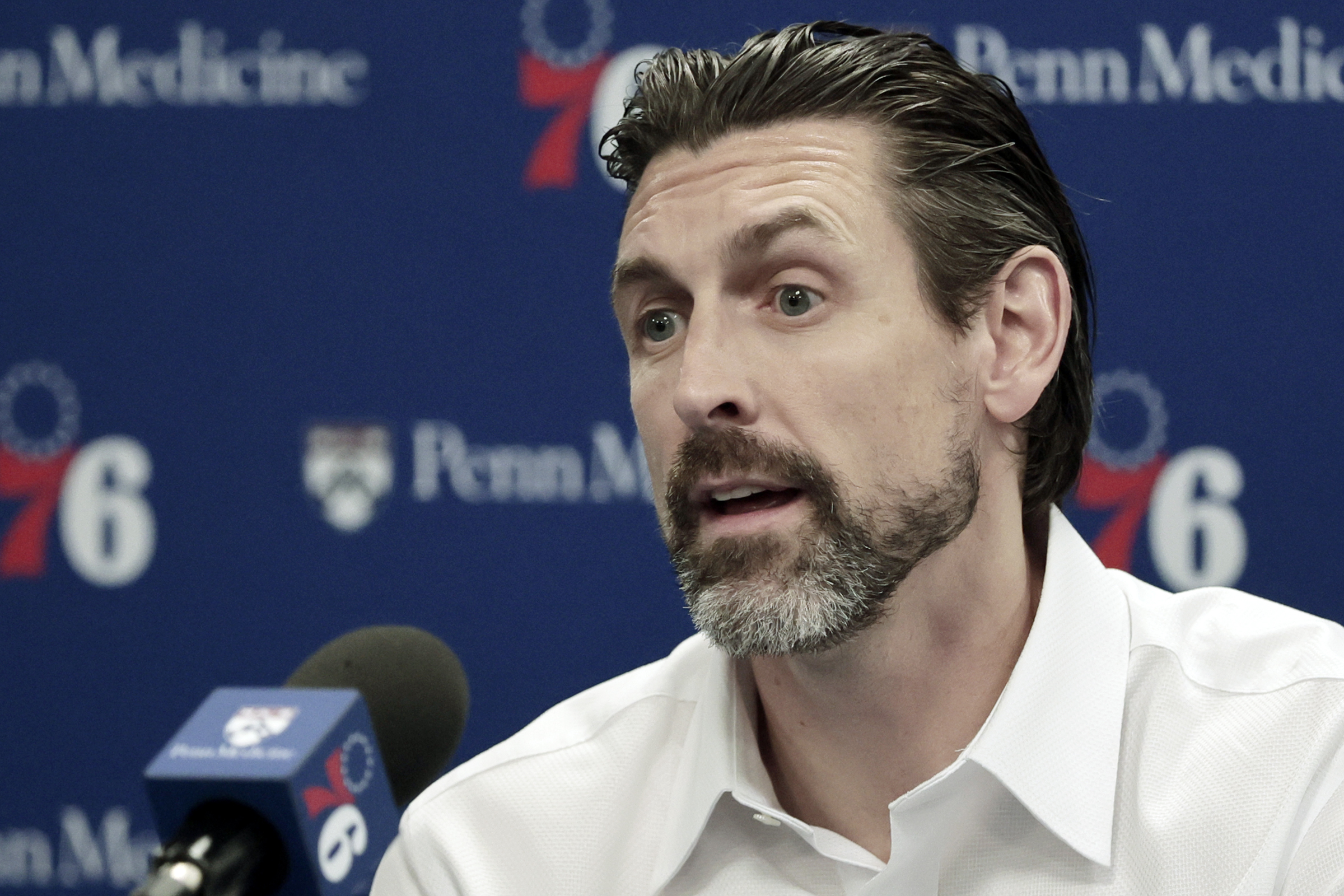
    “Obviously,” the Sixers new president of basketball operations said in a courtside interview during ESPN’s broadcast of the team’s summer league opener, “the big fella is the X-factor.”

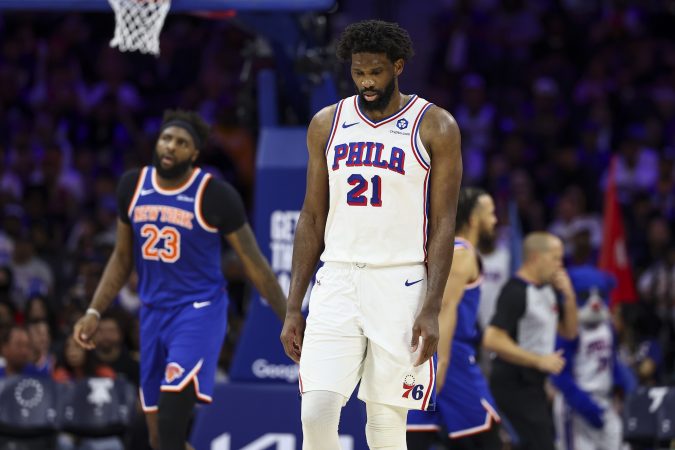
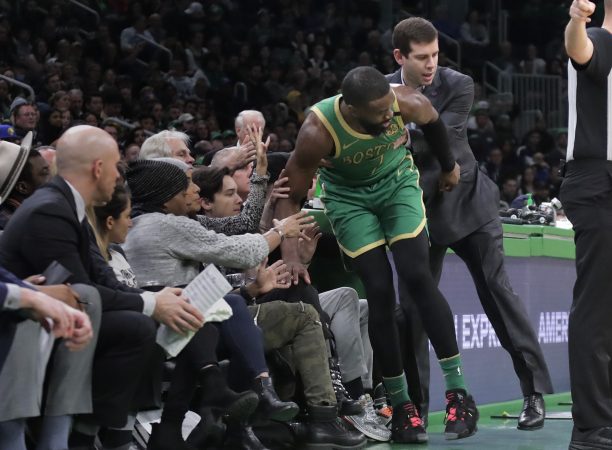
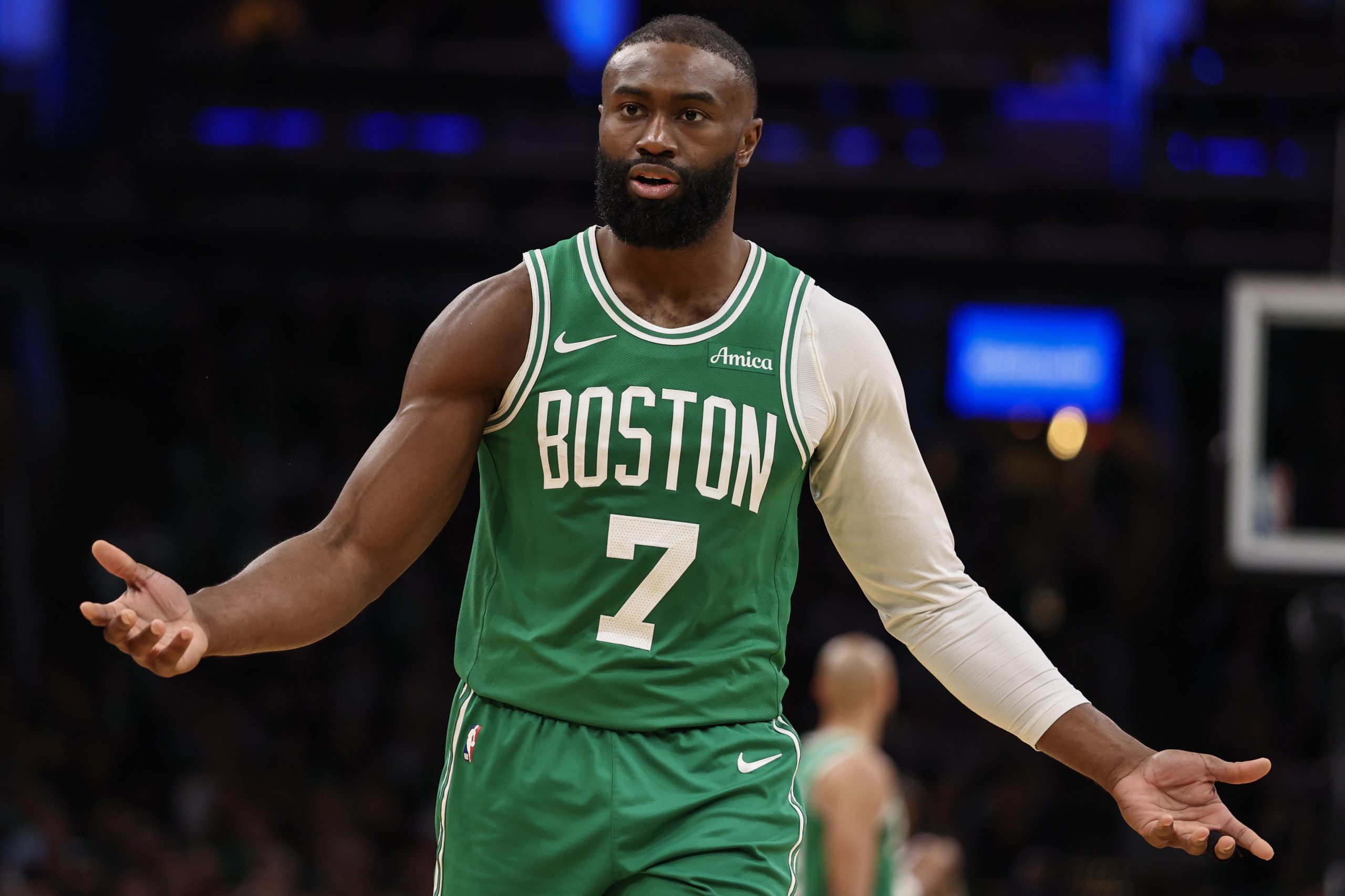
    It speaks to the magnitude of Joel Embiid that such a sentiment can be qualified as obvious. Nothing about the Sixers over the last two months has been obvious. From the firing of Daryl Morey to the hiring of Gansey as his replacement to the dramatic trade of Paul George and a couple of first- and second-round picks to the Celtics for some guy named Jaylen Brown to the front office’s attempt to woo James, the Sixers are in the midst of an overhaul more radical than any Embiid has seen in his decade with the team.

    For maybe the first summer of his career, everyone’s focus is elsewhere. Yet, everyone is fooling themselves if they think they can talk about the Sixers as a legitimate contender without factoring the big fella into the equation.

    The exact nature of the question has changed. There’s no doubt about that. It is no longer, “How far can Embiid carry the Sixers?” In Tyrese Maxey and VJ Edgecombe, they have young guards who carried them to a Game 2 playoff win over Brown and the Celtics without Embiid. In Brown, they have a player who was overwhelmingly responsible for Boston’s win over the Sixers in Game 1 of the same series. That trio is talented enough to pencil in the Sixers for a playoff spot and, potentially, a top-four seed even if Embiid were not to play a game. At no point prior in the Embiid era have we been able to say such a thing.

    That’s more than a good thing. It’s the reason that a jaded city can now deconstruct its emotional walls and allow itself to invest time and energy in the Sixers again. The potential outcomes are no longer as divergent as “championship contention” or “No. 3 overall draft pick.” The exhaustion that people feel with regard to Embiid is in large part a function of his inordinate importance over the years. With him, the Sixers could beat anybody. Without him, there was little point in watching.

    So, yeah, the question has changed. But it is still the one that matters most when it comes to handicapping the Sixers’ 2026-27 title odds.

    What do they expect out of Embiid?

    What will they get?

    The first part is more interesting. The organization’s public rhetoric regarding their big man has shifted since the change in regimes.

    For Morey, Embiid was something like a mission statement: any time the former president spoke publicly about his team, his comments were centered around the center. He took the job in 2020 with the idea that Embiid was the exact sort of front line, once-in-a-generation superstar that teams need to win a title. The goal was to get him whatever help he needed. Morey professed that belief to (virtually) the bitter end.

    Sixers president of basketball operations Mike Gansey says Joel Embiid was excited about the Jaylen Brown trade.Elizabeth Robertson / Staff Photographer

    Gansey and ownership proxy Bob Myers have been far less committed in their public sentiments about Embiid. In his introductory press conference a month ago, Gansey avoided talking with much specificity about the big man beyond including him in the framing of the Sixers’ existing roster structure as a “Big Four.”

    “They’re our four guys, they’re under contract. We got to do the best to get them to their best self,” Gansey said on his first day on the job, “because I think every night at 7 p.m., we got to get them to their best to help us win.”

    Barely a month later, George was en route to Boston and the Sixers “Big Four” was now a “Big Three.”

    Perhaps it is notable, then, that Gansey now feels comfortable speaking of Embiid in such terms as the ones he deployed in his ESPN interview on Thursday.

    “Joel’s in a good space,” Gansey said. “He’s finally healthy going into the offseason. He’s excited about this summer. He’s getting to work here shortly. He expects to have a good year, as we all do.”

    Embiid has been conspicuously silent since the Brown trade. His lone Twitter post in the wake of the deal was about the Tour de France. In an interview with the Sixers’ flagship radio station on Thursday, Gansey said that Embiid was excited and “fired up” when Gansey informed him of the trade.

    Whatever the case, the Sixers are well past the point of factoring Embiid’s feelings into their actions. The Brown trade was as much about the Sixers’ ability to compete without him as with him. At the same time, the only way they contend for a title this season is with him.

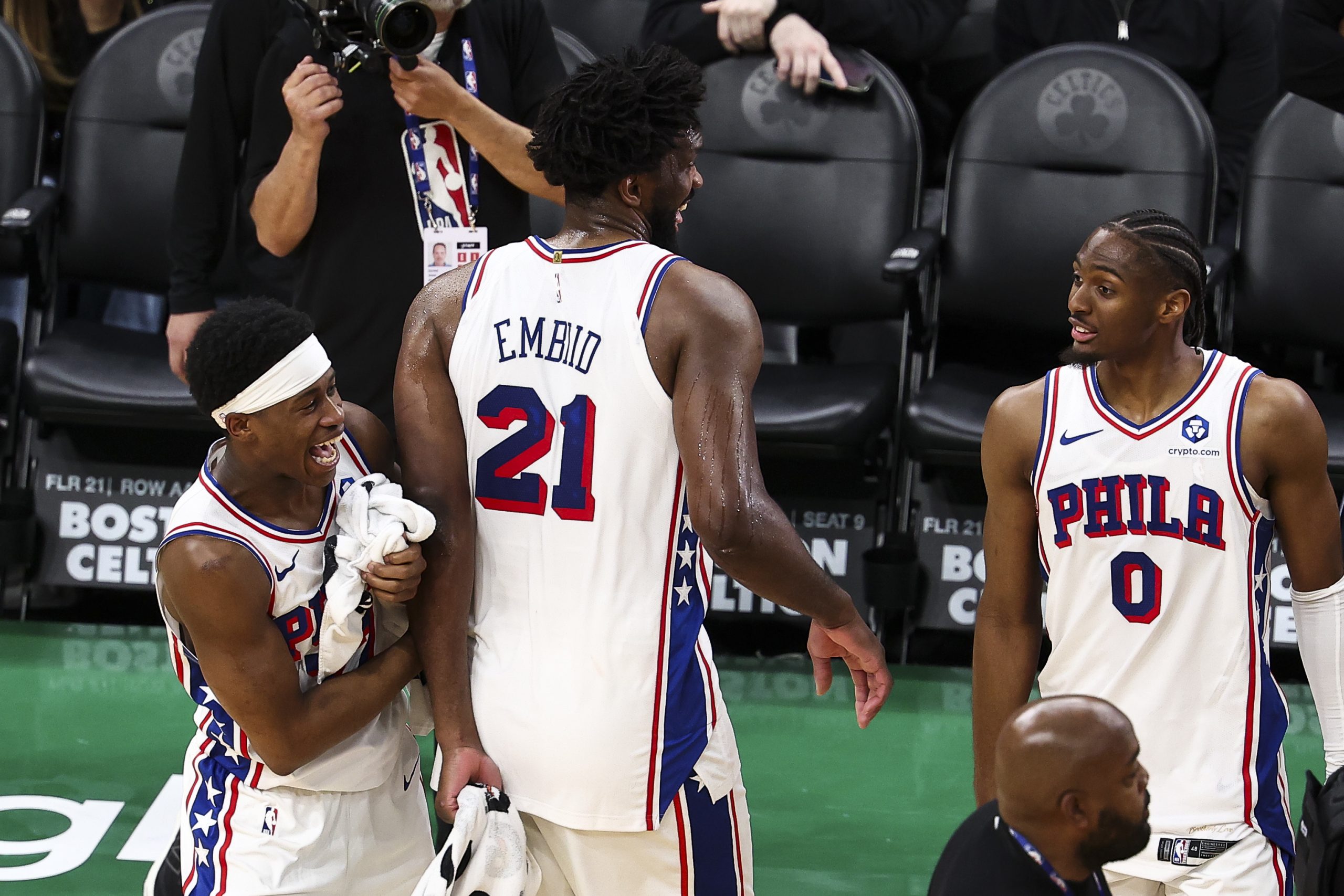
    VJ Edgecombe (left), Joel Embiid, and Tyrese Maxey celebrate after winning Game 7 against the Boston Celtics in May.Monica Herndon / Staff Photographer

    April’s playoff series against the Celtics offers a tidy encapsulation of where the Sixers are. As dominant as Brown was during various stretches, Boston still lost. As impressive as Maxey and Edgecombe were at times, the Sixers still needed to win a Game 7 against the Jayson Tatum-less Celtics just to earn the right of getting blown out of the playoffs by the Knicks. Celtics coach Joe Mazzulla offered the definitive sound byte after the Sixers finished off their series comeback.

    “What changed in this series was Joel Embiid came back and they’re a completely different team,” Mazzulla said.

    Embiid missed Game 2 of the next series. The Sixers were outscored by 57 points in the 88 minutes he played against the Knicks. Somewhere on that continuum, their immediate hopes lie.

  • One year of inspections at Jefferson Einstein Philadelphia Hospital: April 2025 — March 2026

    One year of inspections at Jefferson Einstein Philadelphia Hospital: April 2025 — March 2026

    Jefferson Einstein Philadelphia Hospital was cited by the Pennsylvania Department of Health for maintenance and sanitation issues in March.

    The incident was one of nine times inspectors visited the hospital, formerly known as Einstein Medical Center, to investigate potential safety problems.

    Here’s a look at the publicly available details:

    • April 15, 2025: Inspectors came to investigate a complaint but found the hospital was in compliance. Complaint details are not made public when inspectors determine it was unfounded.
    • June 3: Inspectors came to investigate a complaint but found the hospital was in compliance.
    • June 18: Inspectors came to investigate a complaint but found the hospital was in compliance.
    • July 30: Inspectors came to investigate a complaint but found the hospital was in compliance.
    • Sept. 30: Inspectors came to investigate a complaint but found the hospital was in compliance.
    • Nov. 19: Inspectors came to investigate a complaint but found the hospital was in compliance.
    • Jan. 23, 2026: Inspectors came to investigate a complaint but found the hospital was in compliance.
    • March 11: Inspectors visited for a mental health survey and found the hospital was in compliance.
    • March 11: Inspectors cited the hospital for sanitation issues in several rooms, including tacky floor stains, debris left in trash cans, and a dark substance in the corners of a shower stall. Inspectors also found the hospital had not installed sloped safety coverings for medical gas and vacuum valves on the wall above the bed in four patient rooms. Without the coverings, the exposed valves posed a ligature risk, meaning a patient could use the edges to harm themselves. Hospital administrators agreed to install valve covers and retrained staff on cleaning procedures.
  • What makes Bryce Harper and Kyle Schwarber such unique stars? We asked each about the other.

    What makes Bryce Harper and Kyle Schwarber such unique stars? We asked each about the other.

    Kyle Schwarber figures he was 15 years old, maybe 16, when he caught his first glimpse of Bryce Harper.

    They were at a travel ball tournament in Marietta, Ga., 30 miles north of Atlanta. Schwarber played for a team from Ohio, and Harper for, well, who can remember? He was a travel ball star, competing for more than a dozen teams across the country, often against older kids.

    “We all knew about him,” Schwarber said.

    And once word circulated around the eight fields at the East Cobb Baseball Complex that Harper was somewhere on site, Schwarber and his teammates set off in search of the teenage baseball prodigy.

    “I remember we were out, just walking around getting ready to go, and we heard and we’re like, ‘Oh, we’re running over there to go watch him play. Get on the fence,’” Schwarber recalled the other day. “It was fun. As a young kid, you’re like, ‘Oh, he’s on the cover of Sports Illustrated.’ So, it was really cool.”

    Schwarber chuckled.

    “It’s funny,” he said. “Look where we’re at now. We’re, what, 33? It’s a long time.”

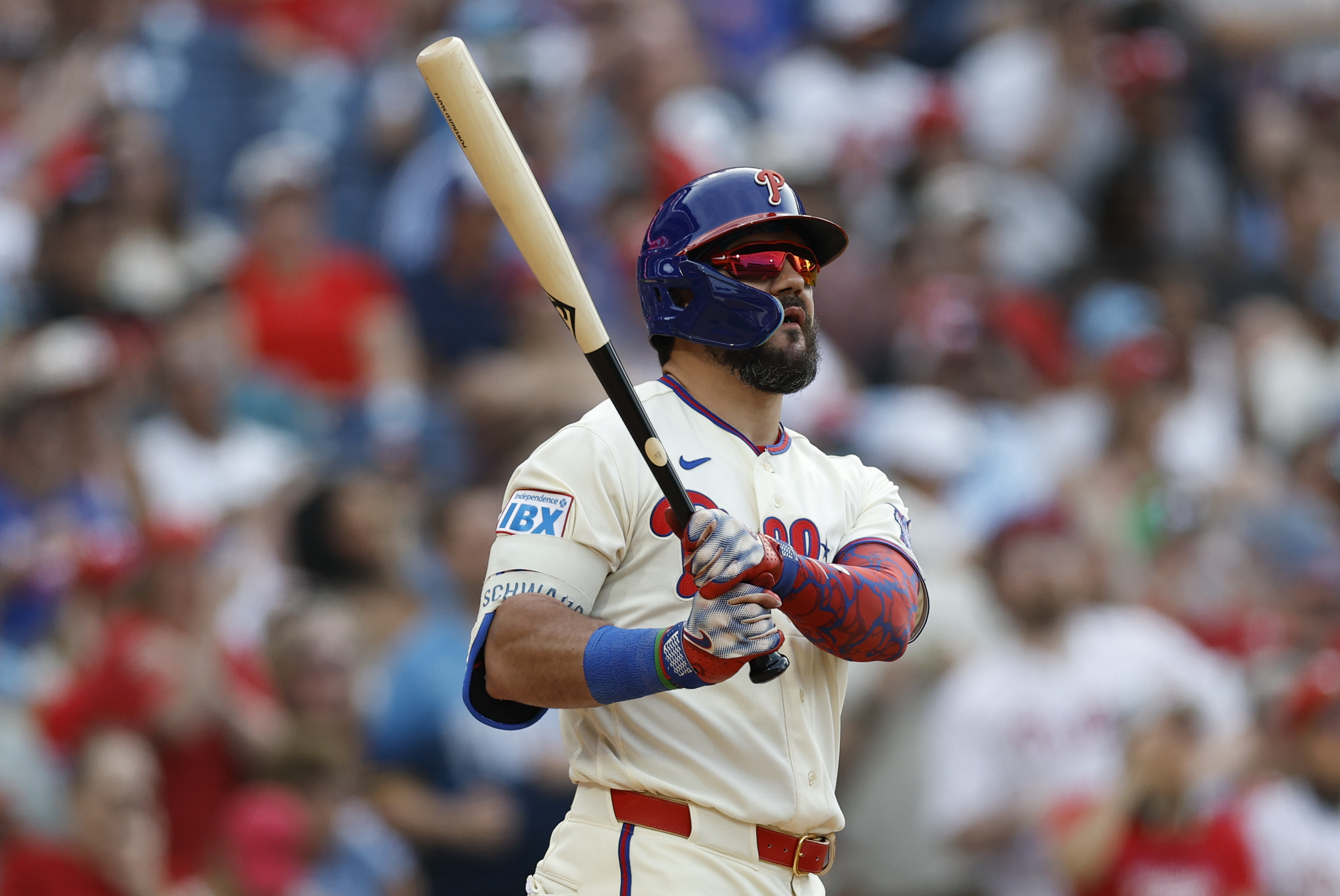
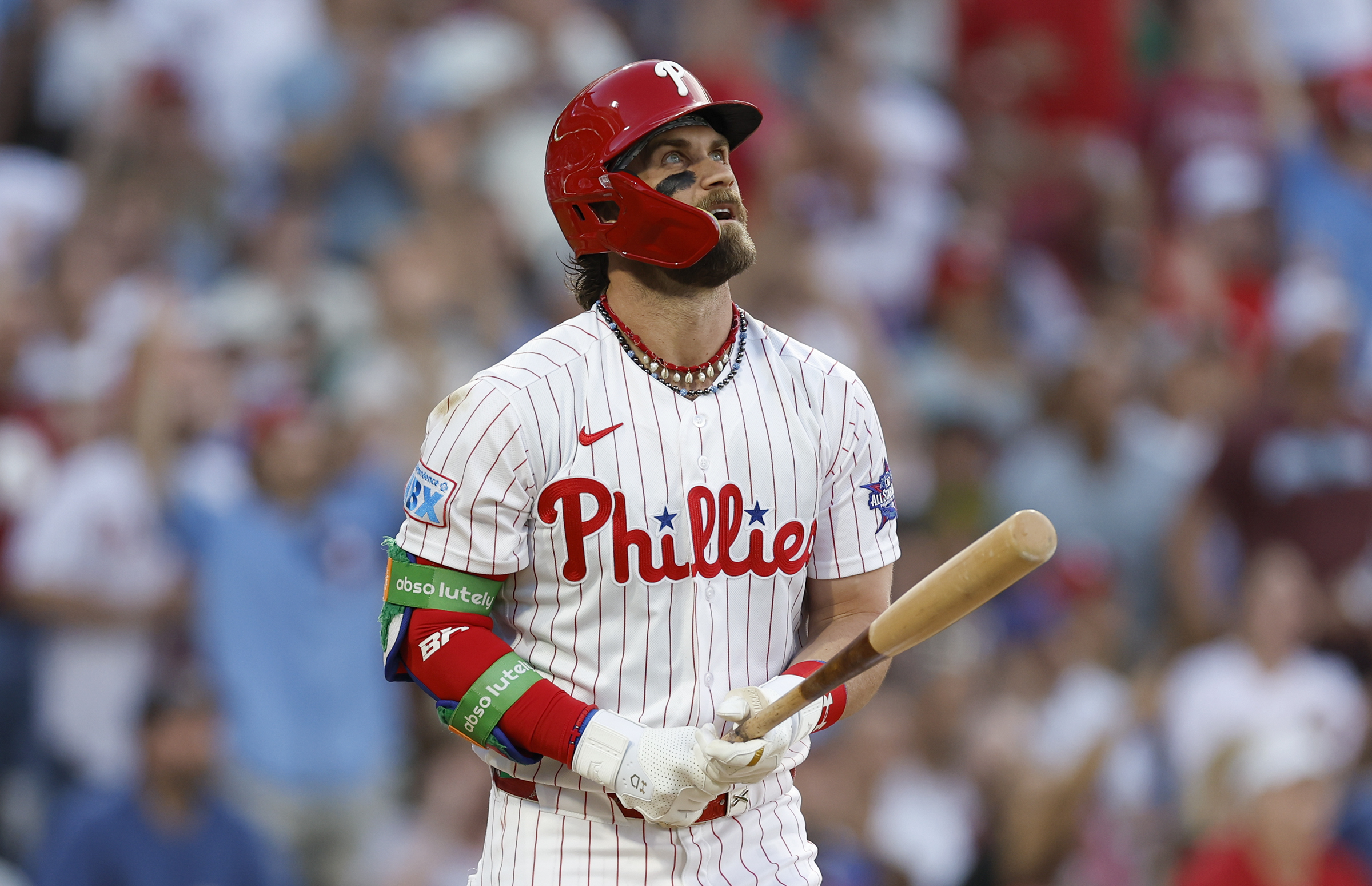
    Indeed, look at them now. Harper and Schwarber are not only in their fifth season as Phillies teammates. They’re also the main attractions as baseball gathers for Philly’s first All-Star Game in 30 years.

    Harper, the face of the Phillies and among the most marketable players in the sport, announced Thursday on Instagram that he will enter the Home Run Derby for the first time since 2018, when he won it in his then-home ballpark in Washington.

    Schwarber, the National League’s preeminent slugger and a consummate leader, a force with his personality as much as his Louisville Slugger, committed to the Derby on Friday, setting up a rematch from his runner-up finish to Harper eight years ago.

    Whatever the Showman and the Schwarbino have in store, it’ll be difficult to top what Philadelphians saw them do on June 20.

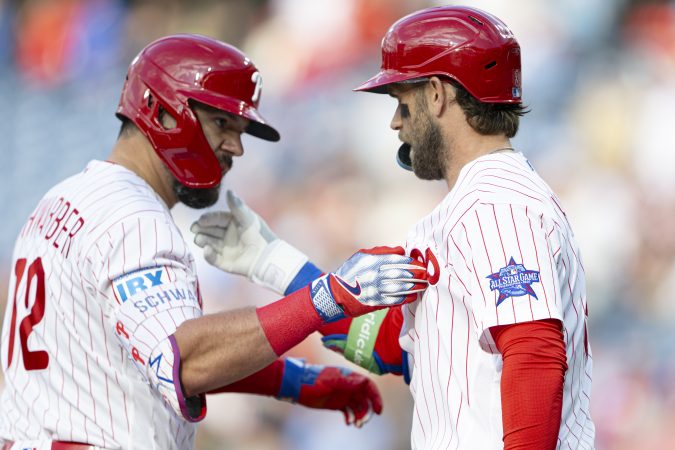
    Harper hit for the cycle for the first time as a major leaguer, while Schwarber blasted three home runs, two in one inning. They were the second teammates to achieve those feats in the same game, joining Lou Gehrig (four homers) and Tony Lazzeri (cycle), Hall of Fame Yankees, in 1932.

    And there’s more. Harper entered the weekend with 20 homers and 383 for his career, and was on pace to finish the season with 397; Schwarber was leading the majors with 32, giving him 372 overall and putting him on pace to finish with 395.

    The last teammates to chase down 400 homers in the same season: Mark Teixeira and Carlos Beltrán with the Yankees in 2016.

    “I think it’s cool,” Schwarber said. “The fact of having milestones, one, you’re celebrating for yourself. But then also to have someone else doing the same thing as well, it’s impressive, especially for a player of his caliber.”

    As their mutual milestone draws closer, and with the All-Star Game upon us, Harper and Schwarber talked recently about one another in separate conversations with The Inquirer.

    Kyle Schwarber has 219 homers since he signed with the Phillies in 2022. Only the Yankees’ Aaron Judge has more in that span.Yong Kim / Staff Photographer

    Harper on Schwarber

    Nobody can top Harper’s view of the Schwarber Show.

    “It’s a lot of fun to be on deck to watch him do what he does,” Harper said. “It’s impressive.”

    Two things stand out most to Harper: the simplicity of Schwarber’s short, left-handed swing and how often he’s able to repeat it.

    Harper is notorious for tinkering. When the hits aren’t falling, he alters his stance or switches batting gloves. Last month, the night he hit for the cycle, he dragged a 35-ounce bat — four ounces heavier than his usual model — to the plate.

    “You know how I am: I change crap all the time, or I’m doing something different,” Harper said. “Him being able to repeat each swing, understanding what he needs to do on each pitch, is very impressive. I would say it’s one thing that I would be a little bit jealous about, just because he can repeat it so well.”

    Schwarber is also the Benjamin Button of sluggers. He’s aging in reverse.

    In his first seven major league seasons, from 2015 to 2021, Schwarber hit 153 homers and was 19% more productive than league average, based on OPS+. Since signing with the Phillies in 2022, he has hit 219 homers and is 35% more productive than league average. His OPS has improved each year since 2023, from .817 to .851, .928, and .945 through Wednesday.

    “I think he’s just kind of bought into what he’s good at,” Harper said. “This isn’t anything bad, but I don’t know if he’s ever going to hit over .260, or whatever. But he’s bought into hitting homers and walking, and he’s very, very good at it. I mean, he’s on an elite level doing those things.”

    The homers come with high strikeout totals. Schwarber led the majors in strikeouts in 2022 and ‘23 and is on pace for a career-high 238 whiffs this season.

    Harper doesn’t mind the tradeoff.

    “I kind of throw the strikeouts out the window,” Harper said. “It’s like hitting a ground ball to second, right? You’re still out. I’m glad that he doesn’t take that too much into consideration. He kind of just plays along with it, and it’s like, whatever. And then he goes up there, hits a homer.

    “And it’s really cool to see his day-to-day work and why he does things. He’s bought into the DH role so well, and I think that’s helped him, too, over the years, not having to worry about defense. He’s just been able to maintain hitting. And it’s great for him because he can buy into what he’s good at.

    “It just makes me laugh because he’s such a good dude. It couldn’t happen to a better person, right? I love watching him play. I love watching him hit. I love guys that hit homers, you know?”

    But Schwarber’s career path hasn’t been linear.

    Drafted fourth overall by the Cubs in 2014, he reached the majors within 12 months and blasted 16 homers in 69 games. He tore a knee ligament two games into the 2016 season and beat every projection to play in the Cubs’ hex-breaking World Series. He got demoted to triple A in 2017, averaged 31 homers per year from 2017-19 despite lingering doubts that he could handle left-handed pitching, and got nontendered after the 2020 season.

    Harper believes Schwarber’s range of experiences contributes to his leadership by making him relatable to teammates at every stage of a career.

    “I think that’s why everybody gravitates to Schwarbs so much,” Harper said. “Obviously he’s a great human being, great teammate. But he can be a superstar player; he can also be the guy that got hurt; he can also be the guy that gets [nontendered] and they think he’s the worst player in the league.”

    Schwarber bounced from the Nationals to the Red Sox in 2021 and signed a four-year, $79 million contract with the Phillies the following spring. He has hit 46, 47, 38, and 56 homers over the last four years, a mid-career surge that reminds Phillies hitting coach Kevin Long of David Ortiz.

    “Yeah, I agree,” Harper said. “Obviously the last couple of years have been incredible. And I just see him doing that again. I just don’t see it going anywhere. And I say that because the swing is so repeatable. I’m impressed by him every day.”

    Bryce Harper is a nine-time All-Star in a 15-year major-league career.Yong Kim / Staff Photographer

    Schwarber on Harper

    It’s one thing to be 11 years old and tell your dad, “I’m gonna be the No. 1 pick.” Or to be 16 and labeled as “Baseball’s Chosen One” by Sports Illustrated. Or to leave high school after two years and enroll in junior college to play against older competition.

    “But this guy,” Schwarber said, “has been able to be that kid and do even more in the game.”

    As he predicted, Harper got drafted first overall in 2010, four months before his 18th birthday. At 19, he made his major league debut … and the All-Star team … and was crowned NL Rookie of the Year.

    Harper has spent almost half his life in the majors. This is his 15th season; he won’t turn 34 until October.

    It’s a running joke in the Phillies’ clubhouse.

    “We’re always like, ‘What were you doing when [Harper] came up?’ ” Schwarber said. “He made his debut in ‘12, I think. I’m like, ‘Well, I was a sophomore in college.’ You know what I mean?”

    There are times when Schwarber has to remind himself that he’s only six months younger than Harper.

    “No one really knows what it’s like to have expectations at such a young age,” Schwarber said. “There have been people who, when you talk about younger kids and they go, ‘Man, this kid’s going to be a prodigy’ or whatever, and then it doesn’t work out. To have that at such a young age and to be able to be fulfilling it and more, it’s pretty hard to do. Right?

    “Even I’m sure now there’s expectation for him. He’s handled it every single year the way he should. He goes out there and he produces, and he’s able to be the same guy on a daily basis, which is awesome.”

    It’s Harper’s consistency that stands out to Schwarber.

    With a strong first half, Harper quieted all the offseason chatter, fueled by Dave Dombrowski’s answer to a question last October, about whether he’s still “elite.” Was it ever really debatable? Harper has hit at least 20 homers in 10 of the last 11 full seasons. He’s a nine-time All-Star and two-time MVP. He’s eighth among active position players in wins above replacement, according to Fangraphs.

    “To be able to do it on a year-in and year-out basis,” Schwarber said, “to be consistent on a year-to-year deal, that’s what makes the greats the greats.“

    And what makes Harper a great hitter?

    “Not to be like the nerdy kid, but the way his hips move, the way his hands are able to get to the slot, and the way he’s able to stay inside the ball and hit the ball to left-center for power and still be able to turn on a 98-mph fastball and pull it out to right field,” Schwarber said. “I’ve seen many times where he’s taken the 90-whatever mph fastball on the inside corner and taken it out to left-center field.

    “I don’t do that. I wish I could. My body type is not his body type. I’m short and stocky. For him to be able to move the way he does, it’s controlled but also still fast. Those are like the really geeky things I think about. Those are the things that impress me.”

    And so, their march to 400 homers continues, with an All-Star detour — and maybe even a Home Run Derby rematch — in their home ballpark this week.

    “For the career that he’s had — and that he’s going to continue to have,” Schwarber said, “to be able to be in the same category in one thing with him, I think it would be pretty cool to celebrate together one day.”

  • Without Leo Carlsson, the Flyers’ hunt for their pot of gold just got harder and longer

    Without Leo Carlsson, the Flyers’ hunt for their pot of gold just got harder and longer

    Think of the Flyers as an explorer who landed on a deserted island. On this island, deep within miles of thick jungle, is treasure. The explorer knows the treasure is there somewhere, and he aims to find it.

    Leo Carlsson would have been a new machete: sharp, strong, capable of cutting through all those vines and branches and trunks to make the Flyers’ journey to those riches easier and faster. Now, the explorer won’t have that tool. Now that the Anaheim Ducks have matched the five-year, $90-million offer sheet that Carlsson signed with the Flyers last week, the Flyers won’t have the steel blade that Carlsson represented as a 6-foot-3, 21-year-old, clear-cut first-line center just entering his prime.

    So where does that leave them? It means that their trek to that treasure, to their first Stanley Cup since 1974-75, will likely be slower and less certain. They may get to it eventually, but it’s going to take more time and be more costly.

    Had the Ducks declined to match the Flyers’ audacious offer — and make no mistake, this gambit by Danny Brière was bold and creative, as close to a Now youse can’t leave move as an NHL general manager can make — Anaheim would have received four first-round picks from the Flyers. That price would have been steep. But the Flyers would have added Carlsson, who averaged nearly a point a game last season, is an excellent player now, and has shown every sign that he will get even better.

    They need a No. 1 center, not merely for the talent and scoring touch such a player would provide, but also so they can slot their other centers — Trevor Zegras, Christian Dvorak, and Sean Couturier — more appropriately. With Carlsson (or any center of similar caliber, for that matter), Zegras would have become the second-line guy. Dvorak would have become a terrific third-line guy. And Couturier would have remained in the role he played so well in last season’s playoffs, as an outstanding fourth-line checker, faceoff-taker, and leader.

    What’s more, the Flyers have a roster and a farm system with plenty of promising young players, and if this move had come to fruition, they wouldn’t have had to sacrifice any of them to fill one of their biggest holes. That’s perhaps the most disappointing aspect of this result for them: That luxury of gaining an emerging superstar without having to give up valuable players and/or prospects already within the organization likely is no longer available to them.

    With the Carlsson episode behind him, Flyers general manager Danny Brière must be practical about the team’s range of needs. Jose F. Moreno / Staff Photographer

    They’re interested in the Detroit Red Wings’ Dylan Larkin, for instance; though Larkin is 7½ years older than Carlsson, he still would fit the Flyers like a well-tailored suit. But assuming Larkin, who has a full no-movement clause, is even willing to join the Flyers, the trade package necessary to acquire him would probably have to include a player or two on their current roster. Would Larkin be worth the departure of, say, Owen Tippett and/or Denver Barkey?

    Just because Brière made such a huge play for Carlsson doesn’t mean he has to answer that question, immediately or ever. The smartest thing he and the Flyers’ leadership team have done in the three years since he took over as GM has been to give themselves flexibility in improving the team. They didn’t have to shock the NHL by presenting that offer sheet to Carlsson — a proposal for a contract that has now made him the league’s highest-paid player. But they did. After years of running in place, after qualifying for the postseason for the first time since 2020, they declared that they were ready to spend again, but they made that declaration on their terms.

    They have several choices for how they can proceed. They need not just a No. 1 center, but a top-pair defenseman, or at least one capable of quarterbacking a power play. They can act quickly to acquire one or both of those players, to find short-term and/or long-term answers to those lingering questions, or they can wait.

    Remember: Even if they had won their duel with the Ducks for Carlsson, the Flyers wouldn’t have been considered a true contender this season for the Stanley Cup. Porter Martone, Matvei Michkov, Tyson Foerster, Jamie Drysdale, Alex Bump, Zegras: All of them have growth and development ahead of them. Yes, the Flyers’ hunt will take longer now that Leo Carlsson, that oh-so useful tool, will remain on the West Coast, but they can still find that chest of gold. They just have to take care not to get lost along the way.

  • Rothman Orthopaedics is refocused on Philly region, opening three new surgery centers

    Rothman Orthopaedics is refocused on Philly region, opening three new surgery centers

    Rothman Orthopaedics plans to open three new surgery centers over the next year and keep adding doctors in its Philadelphia-area market, as the large physician-owned group refocuses growth efforts on its original territory.

    “Our biggest priority in the near term is strengthening our core business here, in Southeastern Pennsylvania and New Jersey,” Rothman CEO Christian Ellison said. “We’re not gonna ignore opportunities. We’ll be opportunistic around things that make strategic sense.”

    The new approach comes after a now abandoned effort to break into the New York market, first in a partnership with Northwell Health in 2017 and then with NYU Langone Health. That foray ended last year with the sale of Rothman Orthopaedics of Greater New York and its three locations to NYU Langone.

    Rothman has seen more success after following the lure of fast population growth to Florida, where it opened offices in the Orlando area in 2020 in partnership with AdventHealth.

    “Florida has been a big success, because we’ve had the partnership down there with Advent Health that’s been kind of mutually beneficial,” said Ellison, who became Rothman’s CEO last fall.

    The Philadelphia draw

    The practice headquartered in Center City already has 24 locations in the Greater Philadelphia market. That number includes facilities that Rothman operates in partnership with Jefferson Health, Main Line Health, AtlantiCare, and RWJ Barnabas.

    Rothman located its newest office in West Chester, an area where Rothman had little market share, according to Ellison. He also sees opportunity in other parts of the Philadelphia region and contiguous markets.

    To make that growth possible, Rothman is partway through an effort to hire 41 physicians by the end of this year. That represents a 20% increase and will bring Rothman’s total to 214 physicians, the company said.

    The need for ambulatory surgery centers

    Rothman is a partner in nine surgery centers in Pennsylvania and New Jersey and two surgical hospitals (Rothman Orthopaedic Specialty Hospital in Benslam and Physicians Care Surgical Hospital in Limerick).

    Those outpatient facilities account for nearly two-thirds of Rothman’s surgeries. Even the surgical hospitals function primarily as ambulatory centers, Ellison said. The remaining third of surgeries takes place in acute-care hospitals.

    “We are challenged for operating room capacity right now, both in the acute care hospitals, as well as in our ASCs, and so we feel like we need to bring more operating rooms online,” Ellison said.

    What’s more, Medicare and private insurers want more procedures done in lower-cost surgery centers. In the future, insurers will pay the same price for an outpatient knee replacement whether its done in a hospital of freestanding surgery center, Ellison predicted.

    Rothman hasn’t finalized locations for the new surgery centers, but Ellison said he expects two to be in Southeastern Pennsylvania and one in New Jersey. The centers will likely be in areas where Rothman has an established patient base.

    The physician group prefers to open the new centers independently, as opposed to going through partnerships like it has historically. “We think we’re uniquely positioned to manage that patient experience in the surgical environment,” Ellison said.

  • LeBron James signing with the Sixers could save Joel Embiid’s career

    LeBron James signing with the Sixers could save Joel Embiid’s career

    Biblical references seem to find a home with the Philadelphia 76ers.

    Moses Malone arrived in 1982 and immediately led the team to the promised land.

    Allen Iverson arrived in 1996 and, five years later, took the Sixers to the NBA Finals. For fans of gospel music, his nickname, “The Answer,” recalled a 1970s hit by Andraé Crouch and the Disciples: “Jesus is the Answer.”

    And, now, LeBron, who was nicknamed “King James” while still a princeling high school star in Akron, Ohio. His namesake, England’s James I, commissioned a translation of the Bible in the early 17th century, the one with all the “Thee’s” and “Ye’s” and my personal favorite, “believeth.”

    Of course, LeBron isn’t a Sixer. Not yet.

    But if, by some miracle, he does agree to a tiny free-agent contract this summer, LeBron surely would make the Sixers a favorite to win their first Larry O’Brien Trophy since Larry O’Brien actually was the NBA commissioner.

    This has not been the case largely because the sole benefit of “The Process,” the disastrous, failed rebuilding strategy that began in 2013, is Joel Embiid. He has MVP talent, and he won the award just three years ago, but his rank unprofessionalism — a refusal to commit to fitness, too much energy focused on extracurriculars, an obsession with personal milestones — has kept Embiid and the Sixers from reaching their potential.

    And, while King James might not save Embiid’s mortal soul, with his special brand of tough love, LeBron very well could save Embiid’s mortally afflicted career.

    Come on, man

    Before this goes any further, I don’t believe LeBron is interested in playing basketball for the Philadelphia 76ers. Yes, the Sixers somehow traded Paul George and picks for Jaylen Brown — Celtics president Brad Stevens must’ve lost either a bet or his mind — which instantly turned the Sixers into a viable Eastern Conference contender. Nevertheless, I think it’s likely that LeBron’s representatives are using this (feigned) interest as leverage to land the King elsewhere.

    I don’t think he wants to be in Philadelphia, which is a much tougher city than anywhere else he’s played. I don’t think he wants to deal with an organization with an absentee owner and a first-time top executive. I don’t think he wants to be associated or represent one of the most dysfunctional organizations in major league sports over the past 14 years, and with the NFL’s Jets, Raiders, and Browns in that mix, that’s quite an accomplishment. I don’t think he wants to play for the NBA veteran minimum, which is all he’d get at this point.

    There is a chance, though, that his desire to be worshipped will override his desire to give himself the best chance to win a fifth title, because nowhere would worship him the way Philadelphia fans would worship him, just as they worship Moses for leading them out of the wilderness.

    LeBron already did that in Cleveland and Miami. And, as my colleague David Murphy pointed out on Monday, his agent, Rich Paul, said the Knicks disqualified themselves from the LeBron sweepstakes when they won a championship. Murphy’s logic: He could not end their drought, and therefore could not be seen as their savior, so why bother?

    Now that Jalen Brunson did what Patrick Ewing failed to do, LeBron can’t do it. But he damn sure could help Embiid do what Embiid will be paid an average of $62.6 million a year to do over the next three seasons.

    The Answer

    Winning a title, even with James on board, requires getting the most of whatever’s left out of Embiid, who has bad knees and a bad attitude. Getting the most out of Embiid is something that championship-winning coaches Doc Rivers and Nick Nurse abjectly failed to do, and they had three years apiece.

    This is different.

    LeBron, who is 41 with the body of a 32-year-old, is entering his 24th season. He has gotten the best out of his teammates everywhere he’s gone, whether it’s fellow Hall of Fame-caliber players like Dwyane Wade, Chris Bosh, and Kyrie Irving or lesser lights such as Kevin Love and Mo Williams. He has won four championships because of it. You think Austin Reaves — an undrafted tweener guard who averaged 10.8 points in four years of college — would have been offered $185 million by the Lakers for the next four years if LeBron hadn’t been his teammate for the past five years?

    Injury issues have plagued Joel Embiid throughout his career.Yong Kim / Staff Photographer

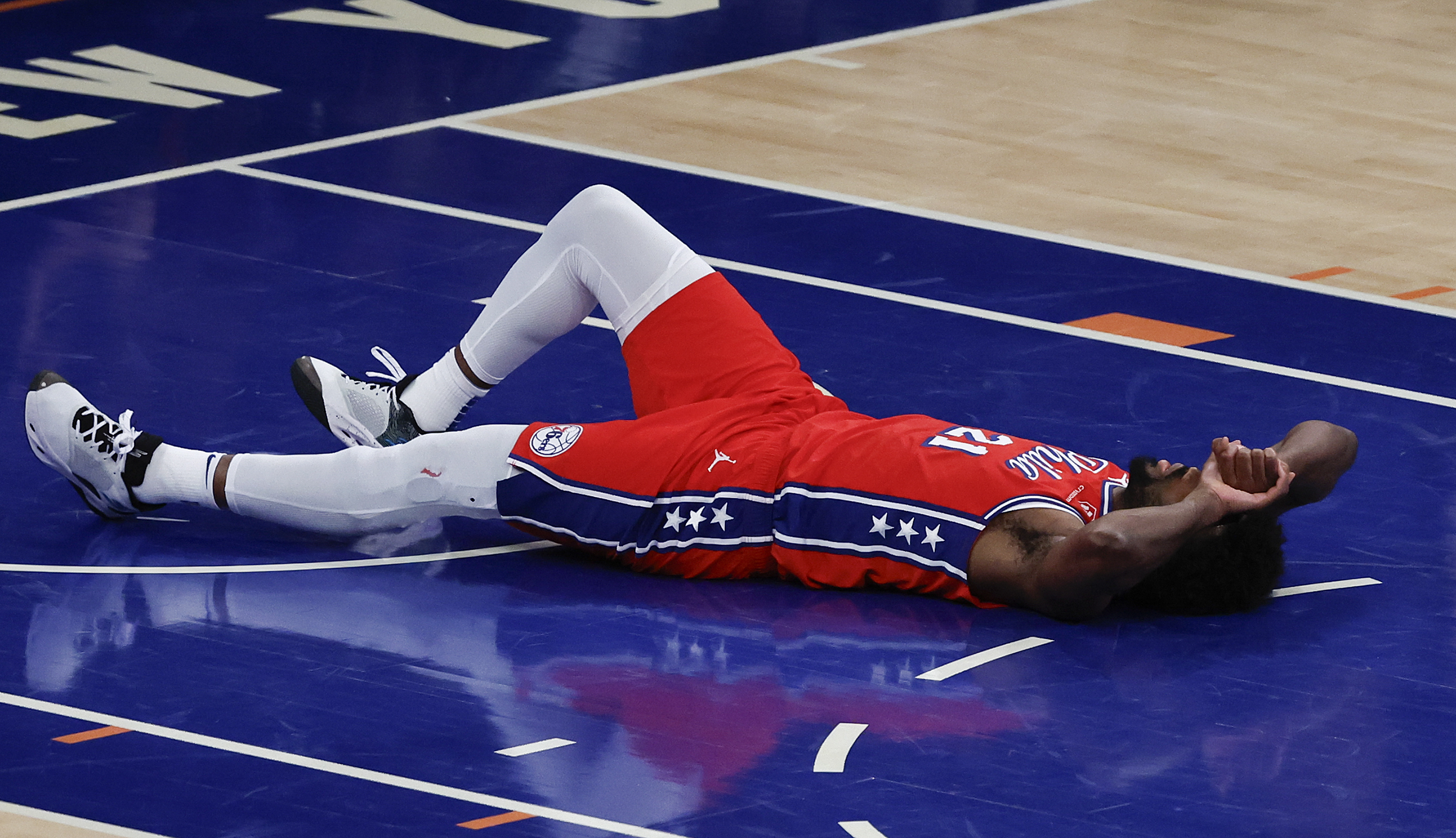
    Embiid, who is 32 with the body of a 42-year-old, is entering his 11th season since being drafted, though he missed the first two seasons with injuries. On the day the Sixers season ended in a playoff sweep (at the hands of those Knicks) he announced that the 2025-26 season had been a success for him. That’s because his left knee no longer impeded him to the degree it had him impeded him for the past several years.

    Embiid then swore that, at the end of this summer, when training camp begins, since his body feels better, he will be better prepared than in recent years to finally get the Sixers … past the second round of the playoffs?

    Talk about aiming low.

    At any rate, no Sixers since Moses himself is better equipped to make sure Embiid follows through on his latest promises. It worked on “big-boned” Charles Barkley.

    Filling a void

    Since trading cornerstone All-Stars Andre Iguodala in 2012 and Jrue Holiday in 2013, the closest the thing the Sixers have had to a real leader was Jimmy Butler, whose headstrong attitude and routine insubordination were less an example of leadership than a display of self-aggrandizement. Embiid was in his third year of actually playing NBA basketball during the Season of Jimmy, and he certainly got that message.

    Who’s the leader now?

    Embiid blew his chance years ago when it became clear that he was less interested in chasing championships than he was in seeking MVP trophies, Olympic gold medals, milkshakes, and Shirley Temples.

    Tyrese Maxey is an ebullient, well-spoken workaholic, but he lacks the gravitas to lead a championship-caliber team, especially when the roster includes more accomplished players like Embiid and Brown.

    As for Brown — well, he might find it hard to lead a bunch of dummies; last week, he called most pro athletes morons when compared to him after unnamed sources accused him of thinking he was the smartest person in the room: “Let’s keep it a buck [100] … The bar is f— low.”

    James might not be a budding chess master like Brown, but he’s smart enough to know how to win a title and how to run a team. After all, the bar is low.

    Do you think LeBron is going to let Joel make his teammates wait for 2½ hours to leave for the plane after road games? Do you think LeBron is going to sit around and wait for Embiid to come to meetings and shootarounds? No. The answer is, simply, no. If you’re James’s teammate, you will be professionalized or you will be marginalized.

    If LeBron James comes to Philly, you will see a fitter, tougher, more committed Joel Embiid.

    James’s habits aren’t contagious, they’re compulsory. It’s a trait he shares with Kobe Bryant. James is kinder than Kobe, and he’s more deferential, but compared to the typical laissez-faire NBA star, he’s neither kind nor deferential.

    He is desperate to win, and if you can’t help him do that, then he doesn’t have time for you.

    Again, I don’t think it’s a realistic outcome. But King James in Philly would be the best medicine for Embiid’s ailing legacy.

  • South Jersey track star Natalie Dumas proves it’s never too late to reach full stride

    South Jersey track star Natalie Dumas proves it’s never too late to reach full stride

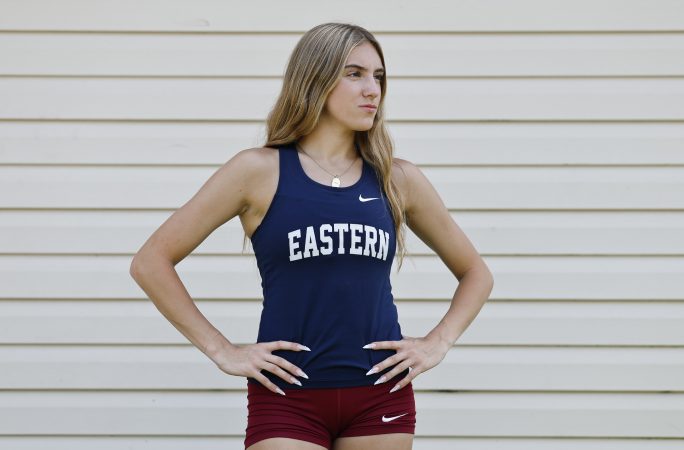
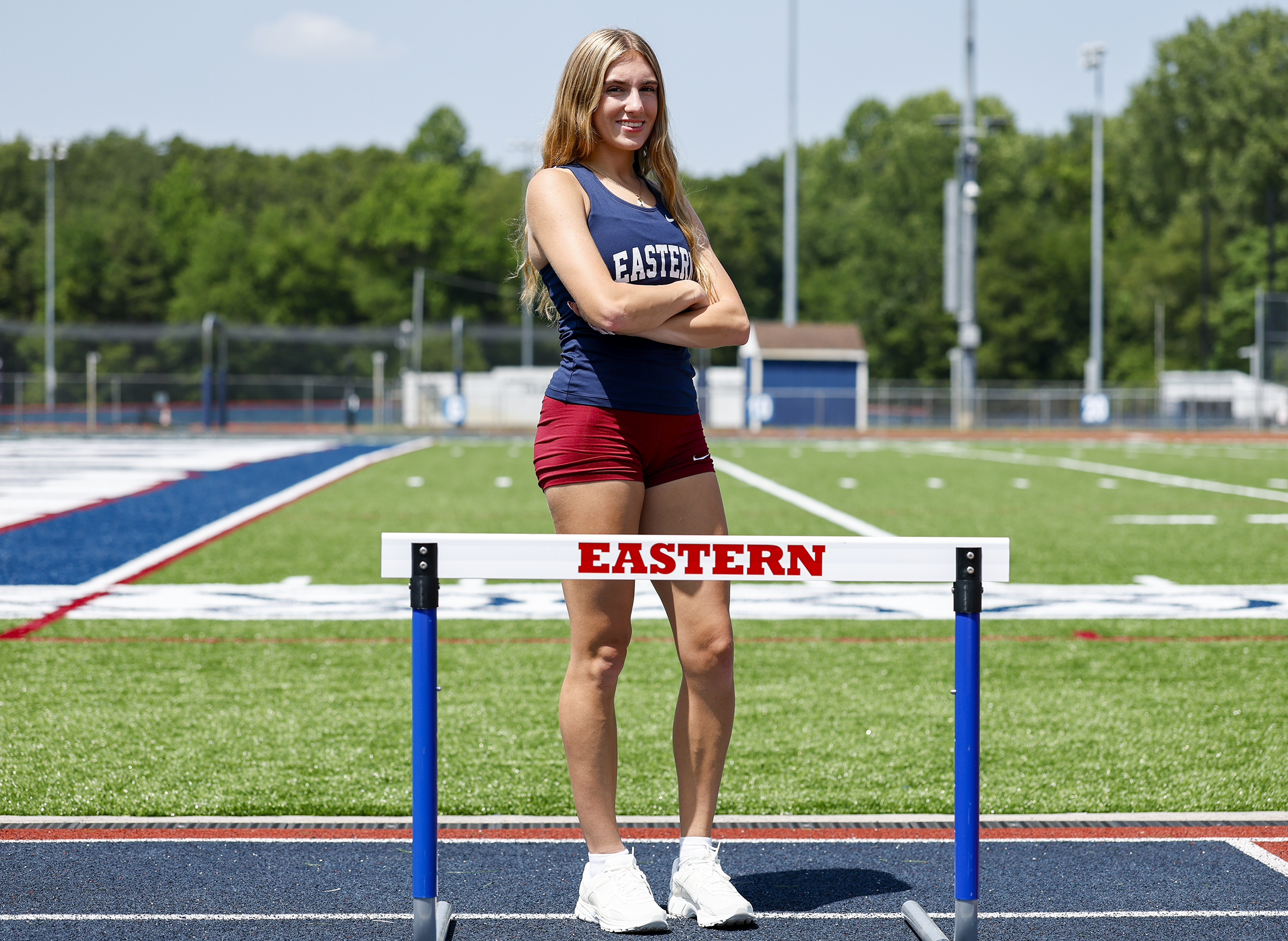
    When Eastern Regional’s track and field coach Mike Tangeman is asked about star senior runner Natalie Dumas, he will not call attention to the more than 20 program records she’s broken. Instead, he will mention that she does not own any of the program’s freshman records.

    Before becoming one of the most accomplished runners in New Jersey history, Dumas first got involved with the sport as a freshman to bond with her sister, Kadence, who was then a senior.

    As a junior, at the NJSIAA Meet of Champions, Natalie became the first girl in state history to place first in three events — the 400 meters, 400-meter hurdles, and 800 meters. A few weeks later, she placed first in the same three events at the New Balance Nationals held at Penn’s Franklin Field. Her accomplishment at both meets made Dumas a prominent name in national track circles and won the attention of the University of Arkansas, where she will be running next year.

    This past year was no different. At June’s Meet of Champions in Pennsauken, Dumas placed first again in three events to cap her outdoor scholastic season. She clocked in at 57.04 seconds in the 400-meter hurdles, 52.14 in the 400 meter, and 2 minutes, 03.46 seconds in the 800 meter.

    “With track, you have to trust the process because you work up into becoming better time wise,” Dumas said. “Obviously, you’re really out of shape at the beginning, and then you get better and better.

    “At the end of the day I’m not afraid to lose.”

    A ‘minor celebrity’

    Last month, Dumas flew to Eugene, Ore., to compete in the USATF U20s and the Nike Nationals. To combat potential jetlag and the difference in climate, she arrived on the West Coast a few days before she was slated to race at University of Oregon’s Hayward Field.

    In the U20s, she won a spot on the U.S. World team after a first-place finish in the 400-meter hurdles, running a season-best 56.13. The next day, she returned to the same track to compete in the 400-meter dash at the Nike Nationals and placed first at 52.21 to claim her eighth national title.

    “It was a lot of races,” Dumas said. “But honestly, I didn’t even mind racing that much.”

    Dumas’ participation in the Nike Nationals was possible because of the event’s intentional geography and calendar proximity to the U20s. It was also a sign of the ever-evolving nature of high school sports. Dumas is one of 20 female high school track and field athletes signed to Nike Elite. The program, which includes a coveted name, image, and likeness deal with the world’s largest supplier of athletic attire, has increased Dumas’ national appeal. It has also improved her performance on the track.

    Natalie Dumas started running track as a freshman at Eastern Regional.Yong Kim / Staff Photographer

    The partnership offers support from Nike’s team of trainers. Since signing with the company, Dumas has revamped her strength training regimen in line with Nike’s guidance and learned more about injury management. Through the program, she also connected with other Nike athletes and Nike Elite’s personal training staff.

    “It’s just great overall,” Dumas said. “I feel like high school athletes tend to be more on the lazy side than everyone else, because they kind of don’t have anyone like kicking their butt into gear.”

    “Sometimes being called out is embarrassing. [The Nike trainers] will say something like, ‘Hey, you didn’t finish this last set, go do it.’ But they definitely stay on top of you. … They all help us push to be our greatest.”

    NIL is not the only change in Dumas’ life. After coming onto the national scene last year, Dumas’ popularity in the track world skyrocketed. The 17-year old currently has nearly 14,000 followers on Instagram.

    “Coming into this year, she was a minor celebrity,” Tangeman said. “Dealing with all the attention and everyone knowing her. Other athletes from other schools saying hi to her, wanting to take pictures at meets and just all that other stuff. It was definitely a lot different.”

    Dumas had to get used to the constant noise around her — which she admits has been “hard to handle” at times.

    “At the end of the day, you shouldn’t worry about making sure everyone’s responded to and everyone’s answered to,” Dumas said. “If they’re closest to you and if they know you, they’ll kind of understand. [They will] be like, ‘Well, I know Natalie. I know the type of person she is, and she wouldn’t do that to me.’ It’s kind of just hard to keep up with it.”

    ‘Shape me into a better runner’

    As one of the top talents in the country, Dumas had her pick of the upper-echelon of college programs, which was a blessing and a curse.

    “It’s kind of like when you go to a restaurant and there’s a huge menu,” said Tangeman, laughing.

    Dumas spent most of this past year scheduling and taking recruitment visits. In order to woo her, she said several programs pulled out all the stops. One treated her to an outing at Topgolf. Another pitched their school to her on a boat. Ultimately, it was the last school she visited that won her over.

    Natalie Dumas runs the 400 meters, 800 meters, and 400-meter hurdles.Yong Kim / Staff Photographer

    “[Arkansas] just set my goals in front of me,” Dumas recalled. “They said, ‘These are your goals, this is what you want to do. If that’s what you want to do, we will make an attempt to reach them.’

    Arkansas has won three NCAA women’s outdoor track and field team titles since 2015, and another five in indoor track over that span.

    “There’s not too much to be said about Arkansas. You look at the program, you look at the athletes that they have produced, and you see what they have done. I put my trust in them. I’m not afraid to run the workouts that they’re running, lift the workouts that they’re lifting. I’m not afraid to go out there and try something new, and I’m definitely excited for them to kind of just shape me into a better runner.”

    While Dumas is looking forward to running at one of the best collegiate programs in the country, she is also mourning the end of her high school career. She graduated last month, cutting her Nike Nationals appearance a day early to make the ceremony. In the weeks since, she has found it “weird” to have a summer away from the track where she first learned to run.

    “She brought a lot of positive attention our way,” Tangeman said. “Going forward, the kids coming up throughout our school system will say, ‘Hey, you know this Natalie Dumas? She ran track and field at Eastern, maybe that’s something I want to do too.’”

  • Brad Stevens says he would rather have not traded Jaylen Brown to Philly, but the Celtics did what they had to do

    Brad Stevens says he would rather have not traded Jaylen Brown to Philly, but the Celtics did what they had to do

    It wasn’t the first time Brad Stevens had heard the question. His story piques a natural curiosity. A man widely regarded as one of the world’s finest basketball coaches walked away from one of the world’s finest basketball coaching jobs at 44 years old. He did so to become a suit. Over the last five years, plenty of people have wondered aloud to the Celtics’ president of basketball operations.

    So, do you miss coaching?

    “I did this week,” Stevens said on Monday, recounting a conversation he had with an interrogator last week. “This is not for the faint of heart.”

    Stevens’ news conference alongside Celtics majority owner Bill Chisholm earlier this week offered the world its first chance to inform its opinion on a trade that stunned the NBA like few before it. While the Sixers have yet to announce when they will field questions about their blockbuster acquisition of Boston superstar Jaylen Brown, the guys on the other side of the deal didn’t have the same luxury.

    Rarely does an NBA team encounter such a universal and vociferous disagreement with a trade as the Celtics did to their decision to trade Brown to the Sixers for Paul George and a couple of first- and second- round picks. Here in Philly, the jubilation surrounding such a no-brainer decision was further enhanced by the opportunity to watch Bostonians engage in a collective public meltdown unlike any it has staged since at least the Revolutionary War. One local radio host called it the worst trade in Celtics history. Another said he felt physically ill. Bill Simmons said he woke up from a colonoscopy and assumed he’d died.

    “I’m with you,” Stevens said. “That is a hard thing to trade a guy that you, first of all, care so much about and secondly have so much respect and admiration for, to a team that just beat you in the playoffs and that you’re literally going to play six times before the playoffs next year, with our two preseason games. But I do think that ultimately when you do a deal you need to think about you first and the optionality it creates for you. If I’m being honest, if that exact deal came from a team out west and you were comparing the two, then you’d probably take the team out west. But that’s not the way it was working.”

    Whatever the immediate local reaction to Stevens’ defense of the decision, he and Chisholm offered a master class in how to handle blowback. You do it directly, immediately, and humbly. It helps when you believe in your decision-making process, which the Celtics clearly did. And, look, they were right to feel that way. Because, chances are, this ends up being a good decision for them.

    That’s not the same as saying that the Sixers will regret their decision to trade for Brown. Nor is it the same as saying that the Celtics “won” the deal. None of those things are exclusive from one another. There is a scenario where the Celtics and Sixers both did what was best for them, and that the price was perfectly fair. Granted, things rarely align on all three of those fronts. But this is one of those deals where both sides made the most rational decision and where the market dictated the terms. A lot of the criticism currently being aimed at the Celtics would be better targeted at the 28 general managers who either couldn’t or wouldn’t beat the Sixers’ offer for Brown. If anything, the market was the irrational actor.

    Jaylen Brown spent 10 seasons in Boston after getting selected third overall by the organization in 2016.Monica Herndon / Staff Photographer

    From the Sixers’ perspective, the argument remains largely as it did in the immediate wake of the deal. More than practically any other player in the NBA, Brown at least renders believable the idea that the Sixers can contend for a championship over the next two years, given both their smallish backcourt of Tyrese Maxey and VJ Edgecombe and their preexisting financial condition. Brown’s size, athleticism, explosiveness and shotmaking are a much better fit at about $60 million over three years than George was for essentially the same AAV over two years. That, at the very least, means the Sixers will be doing something other than treading water and praying for a miracle for the duration of Joel Embiid’s contract, which is as immovable — and limiting — as any in the NBA.

    The Celtics were not bound by those constraints. Their desire to remain that way sits at the heart of the decision to trade Brown. Keeping his contract on their books could easily have led them to a fiscal and competitive cliff. A lot of the criticism of the Celtics seems to underestimate this reality.

    The criticism doesn’t account for the idea that Payton Pritchard is worth the entire amount of the four-year, $100 million extension he is eligible to sign. Over the last two seasons, seven guards in the NBA have a .600-plus true shooting percentage while attempting at least 20 shots per 100 possessions. Those seven are Shai Gilgeous-Alexander, Austin Reaves, Jamal Murray, Anthony Edwards, Luka Dončić, Desmond Bane, and … Pritchard.

    The criticism doesn’t account for the contract that former second-round pick Jordan Walsh could command as a free agent next summer. It doesn’t account for Hugo González potentially hitting his option year at the same time Pritchard’s current deal is expiring. The Celtics could have made it work for the next couple of years, sure. But they wouldn’t be able to do it the two years after that. The teams that lose sight of those years are the ones who end up where the Sixers were.

    The criticism of the Celtics also seems to under-assess the Celtics’ return. The 2028 draft pick they acquired is hugely valuable given the probability that it ends up as a maximum-odds lottery pick and the time-value aspect of its relative immediacy. The 2031 unprotected pick will be perfectly timed on a number of levels.

    I don’t have room to show you all of the work. But you should at least be able to accept that a basketball mind as astute as Stevens’ and an organization as accomplished as the Celtics have done the work. In a weird way, all of the factors that have generated such outrage are also evidence of how strongly the Celtics believed in their decision.

    Few teams have the stones to trade a player at the peak of his value. The Celtics’ skids were greased by Brown’s eligibility for a contract extension. More often than not, the word “No” is a first domino.

    “They convinced me this was the best way for us to win, and I got there, I did, but it was hard,” Chisholm said. “It was really hard. And I recognize this is a big, big move.”

    It is unquestionably a move that works in the Sixers’ favor. But that doesn’t mean it won’t work out for the Celtics, too.