AmeriHealth Caritas, a Medicaid insurer based in Delaware County, has agreed to invest $15 million in Deon Health, a Michigan start-up that works with states and insurers to improve care for people with intellectual and developmental disabilities, the two companies announced Friday.
Deon was founded in 2024 to work with local providers to help people with intellectual and developmental disabilities (I/DD) overcome the silos that make it hard to coordinate primary care, specialty services, behavioral health, and long-term supports needed to allow individuals to live in community settings.
“We built Deon Health to create a better way to organize care around people with I/DD, their families and the professionals who support them every day,” Sara Ratner, chief executive of Deon Health, said in a news release. “AmeriHealth Caritas brings deep Medicaid experience and shares our commitment to a model built around strong local relationships.”
Other investors in Deon include Town Hall Ventures, First Trust Capital Partners, and Difference Partners.
Independence Health Group, the parent company of Independence Blue Cross, is the majority owner of AmeriHealth Caritas. Independence’s partner in the business is Blue Cross Blue Shield of Michigan. Among the nation’s largest Medicaid insurers, AmeriHealth Caritas has contracts in 13 states and Washington D.C.
Three big questions for the Phillies as they look to do to the Cardinals what they just did to the Marlins …
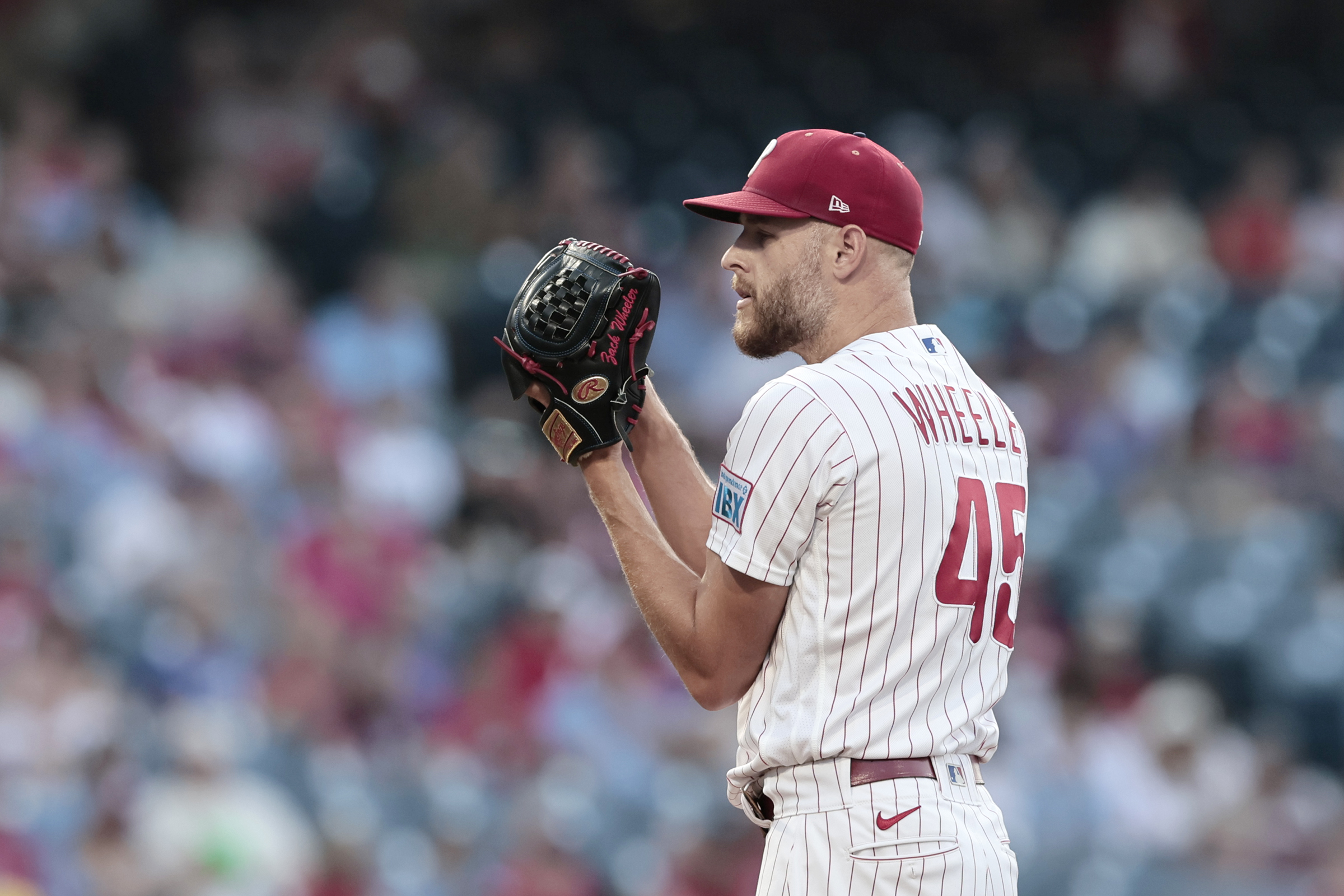
Zack Wheeler is going to be OK, right?
Only once in Wheeler’s seven years with the Phillies had he gone more than two consecutive starts without pitching at least 5⅔ innings. Never had he gone more than three. His current streak now stands at five, a career-high and by far the most important subplot of the Phillies’ stretch run.
The top-line key performance indicators suggest something more than bad luck is responsible. Wheeler’s ground ball ratio over his last five starts is half of what it was in the first two-plus months of this season. His soft contact percentage is down, while his hard contact percentage is up. His 10 walks over his last three starts are his most in a three-start span since 2019, his last season with the Mets. His strike percentage on Tuesday was his second lowest of the season.
The Phillies don’t sound too concerned. Wheeler’s pitch-level metrics don’t set off any health alarm bells.
His fastball velocity remains in line with his overall season average: 95.5 mph on the four-seamer and 95 on the sinker in his most recent start, per Statcast. Both are marginally above their season-long baseline. Wheeler’s spin rates haven’t changed much at all. He is simply struggling to locate.
Can Bryson Stott keep this up?
The Phillies don’t need Stott to be Albert Pujols, but it’s always a good thing when a player does something that nobody since Pujols had done. In Stott’s case, that something was walking 21 times with just four strikeouts in a 19-game on-base streak that ended earlier this week with an 0-for-4 outing against the Marlins.
The Phillies’ formula for a late-season surge has always required somebody in the bottom-third of the lineup to get hot. They are a completely different team when somebody at the bottom of the order is reaching base consistently. Few hitters have been hotter than Stott in recent weeks. Less than a month ago, his OPS was .692. As of Thursday, it was .755. That’s a remarkable jump this late in the season. The encouraging thing is what preceded it.
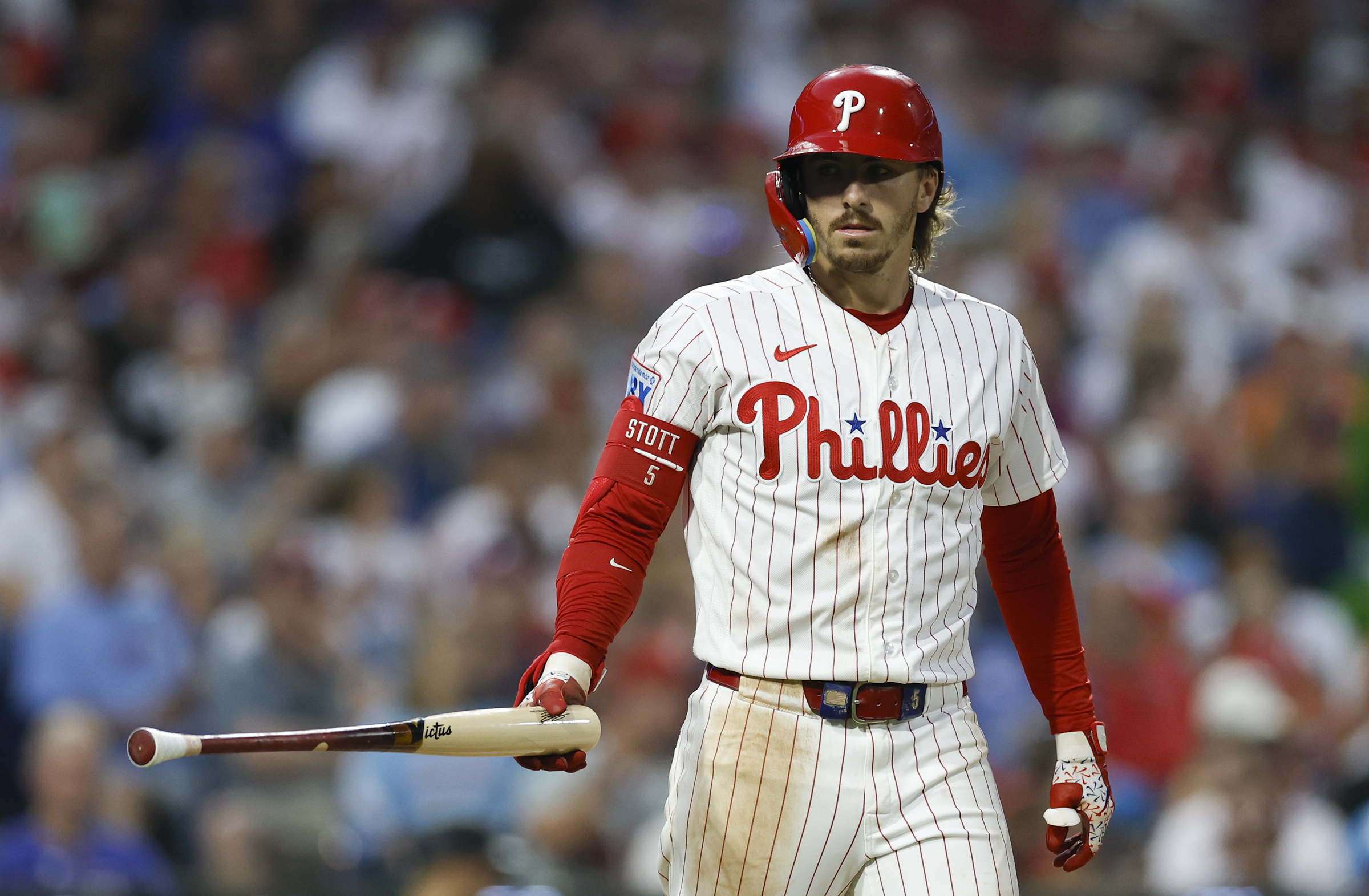
In his last 81 games, Bryson Stott is hitting .284 with a .375 OBP and a .429 slugging percentageYong Kim / Staff Photographer
Stott has been a well-above average big league hitter for half of a season now. In his last 81 games, he is hitting .284 with a .375 OBP and a .429 slugging percentage. That’s an .804 OPS, with 52 strikeouts and 41 walks in 326 plate appearances.
If Stott continues at this pace for the rest of the season, there is a conceivable world where Bryce Harper and Kyle Schwarber both get hot at the same time and the Phillies score runs with enough consistency to rattle off the kind of winning streak that can pressure the Braves.
Can the Phillies avoid overworking Jonathan Bowlan?
This is one of those questions that would have sounded like a foreign language at the start of the season. Not only has Bowlan worked his way to the back of the bullpen, the Phillies might not be able to survive without him. It’s worth noting, then, that the 29-year-old right-hander threw a combined 62 pitches in his last two outings with one day of rest between them.
Bowlan fits the profile of a guy who can handle the rigor of intensive bullpen action. With the Royals last season, he threw 63 pitches in a three-day stretch and 96 over four days and showed no ill effects. He was optioned to the minors but continued pitching regularly and returned to the big leagues later in the month, posting a 2.55 ERA in 17⅔ innings from late August through the end of last season.
All that said, the Phillies will need to exert some willpower with Bowlan, who has emerged as the most dependable arm in the bullpen this side of Jhoan Duran. He has walked just seven batters in 19⅓ innings since moving into a high-leverage seventh- or eighth-inning role on July 7. He has a 2.33 ERA during that stretch, even after allowing a couple of runs to the Marlins on Monday. Bowlan’s has been the kind of unforeseen emergence that a team needs to get where the Phillies want to go. Interim manager Don Mattingly and his athletic training staff are going to need to walk the perilous line that always exists when a manager trusts one reliever above all others.
The Philadelphia area, which is not exactly known for its voracious college football fan base, continues to produce high-end college football talent. Over the last decade, the area’s high school football programs have been a gateway for many players to reach the NFL.
Last year, the area featured a national-level player in La Salle College High’s Joey O’Brien, who’s now at Notre Dame. This year features two top-10 national players in their respective classes: Coatesville’s 6-foot-5, 305-pound offensive tackle Max Hiller, committed to Florida, and ranked No. 3 in the nation by ESPN and No. 1 offensive tackle for the Class of 2027; and Jett Harrison, the youngest son of Hall of Famer Marvin Harrison and younger brother of Marvin Harrison Jr., the former St. Joseph’s Prep star and Arizona Cardinal receiver who was the No. 4 overall pick in the 2024 NFL draft. Jett is ranked No. 6 in the Class of 2028 and the No. 2 ranked wide receiver in the nation.
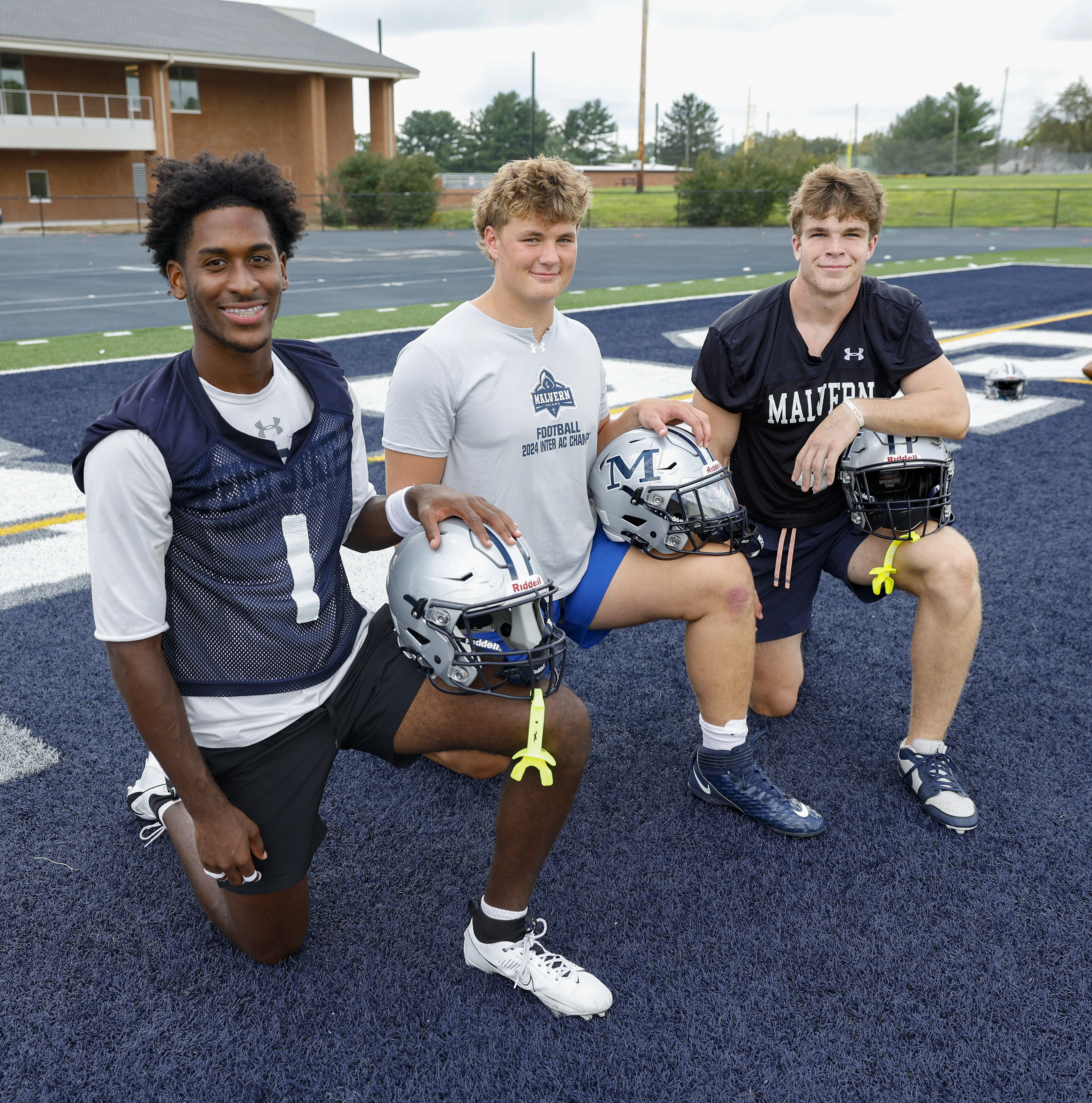
Here’s the area’s top 20 players, according to area coaches, college scouts, and recruiting services, to watch this season.
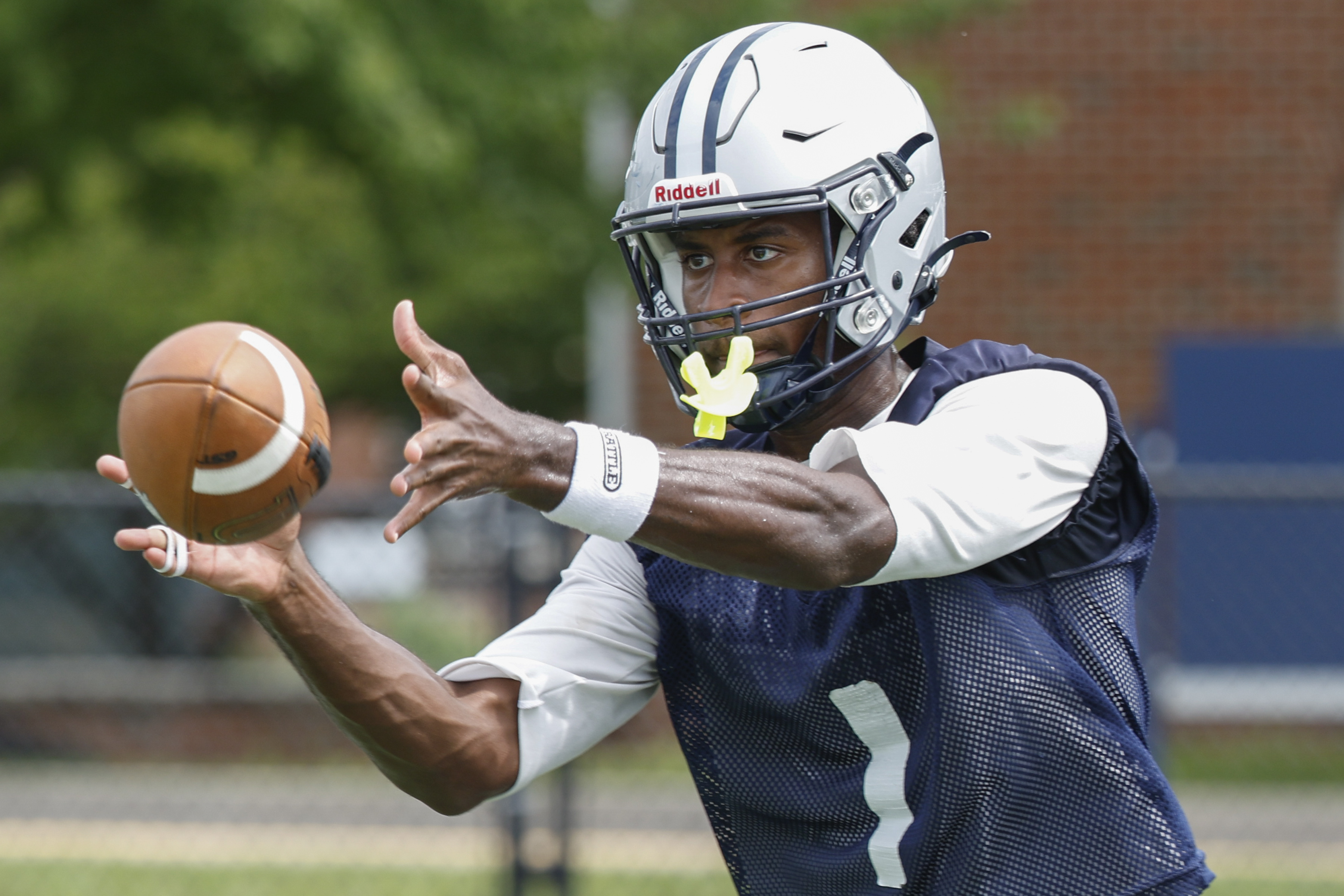
Cooper is committed to Louisiana State University after a junior season in which he caught 44 passes for 644 yards and six touchdowns. He is rangy, explosive, and impossible to cover one-on-one at the high school level, where his ability to high point the ball is nearly unstoppable. He’s an exceptional route runner and possesses a high-end work ethic.
Cade Cooper plans to play at Louisiana State University next fall.Steven M. Falk / For The Inquirer
Sammy Dantonka
Cardinal O’Hara, 6-2, 230 pounds, Edge, Sr.
Dantonka is one of the more underrated players in the area and really blossomed last season. He was the cornerstone of O’Hara winning its first District 12 Class 4A championship and first state playoff game in 2025. He committed to Wake Forest after a junior season in which he had 83 tackles (40 solo) as a defensive end. He had seven sacks and 15 tackles for loss. He may play both ways this season, possibly playing some tight end in addition to defensive end. He is projected to be an edge rusher at Wake Forest. Dantonka started playing football as a freshman at O’Hara.
Sammy Dantonka had 83 tackles as a defensive end with Cardinal O’Hara last season.Cardinal O'Hara Athletics
Tyrie Davis-Winn
Bonner-Prendergast, 6-8, 270 pounds, OT, Jr.
Davis-Winn is receiving interest from Notre Dame, Penn State, Ohio State, Virginia Tech, Georgia Tech, Florida, Florida State, and Texas, among others. Davis-Winn is a two-year starter and very good athlete. He has an 84-inch reach and will play both sides of the ball for the Friars at offensive tackle and as a rotational defensive tackle. He was on the Friars’ Class 5A state championship basketball team, but his college ticket will be in football.
Ezeukwu, a three-year starter, and is already committed to Oregon. He is a rangy athlete who can cover open ground and the scary part is, he’s still improving. Ezeukwu was a one-man wrecking crew for the PIAA Class 5A state champions, who will face a tougher task this season in its move up to 6A, where defending state champion La Salle and perennial powerhouse St. Joe’s Prep reside.
Victor Ezeukwu is a three-year starter for Roman Catholic.Jose F. Moreno / Staff Photographer
Mekhi Graham
Owen J. Roberts, 6-foot, 210 pounds, RB, Sr.
Graham, who’s bound for Maryland next fall, rushed for 1,732 yards and 15 touchdowns last season. He will be a key cog in OJ Roberts’ quest to win a Pioneer Athletic Conference championship, which the Wildcats last won in 2010 (shared with Boyertown). It last won the PAC outright in 1993.
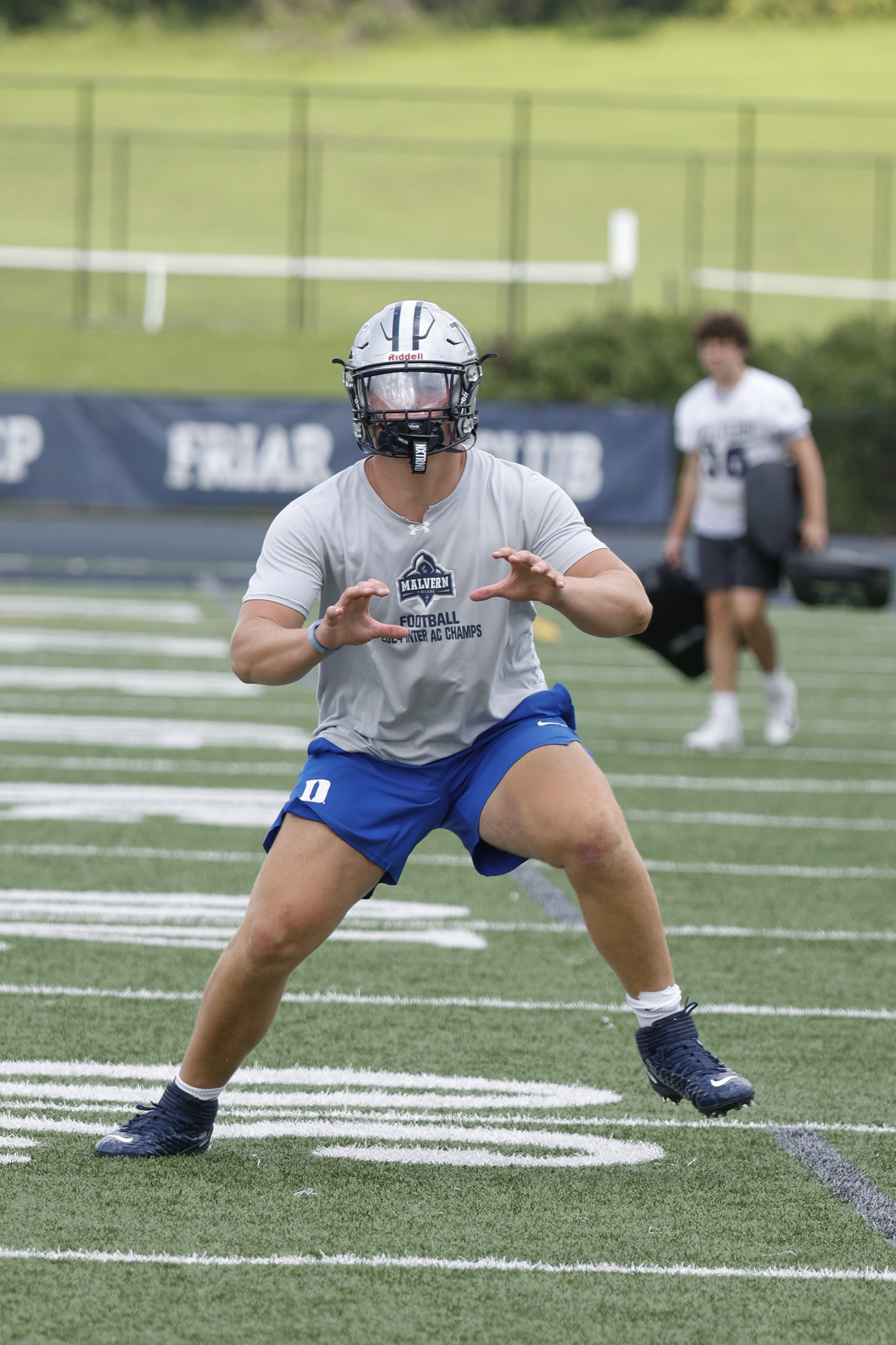
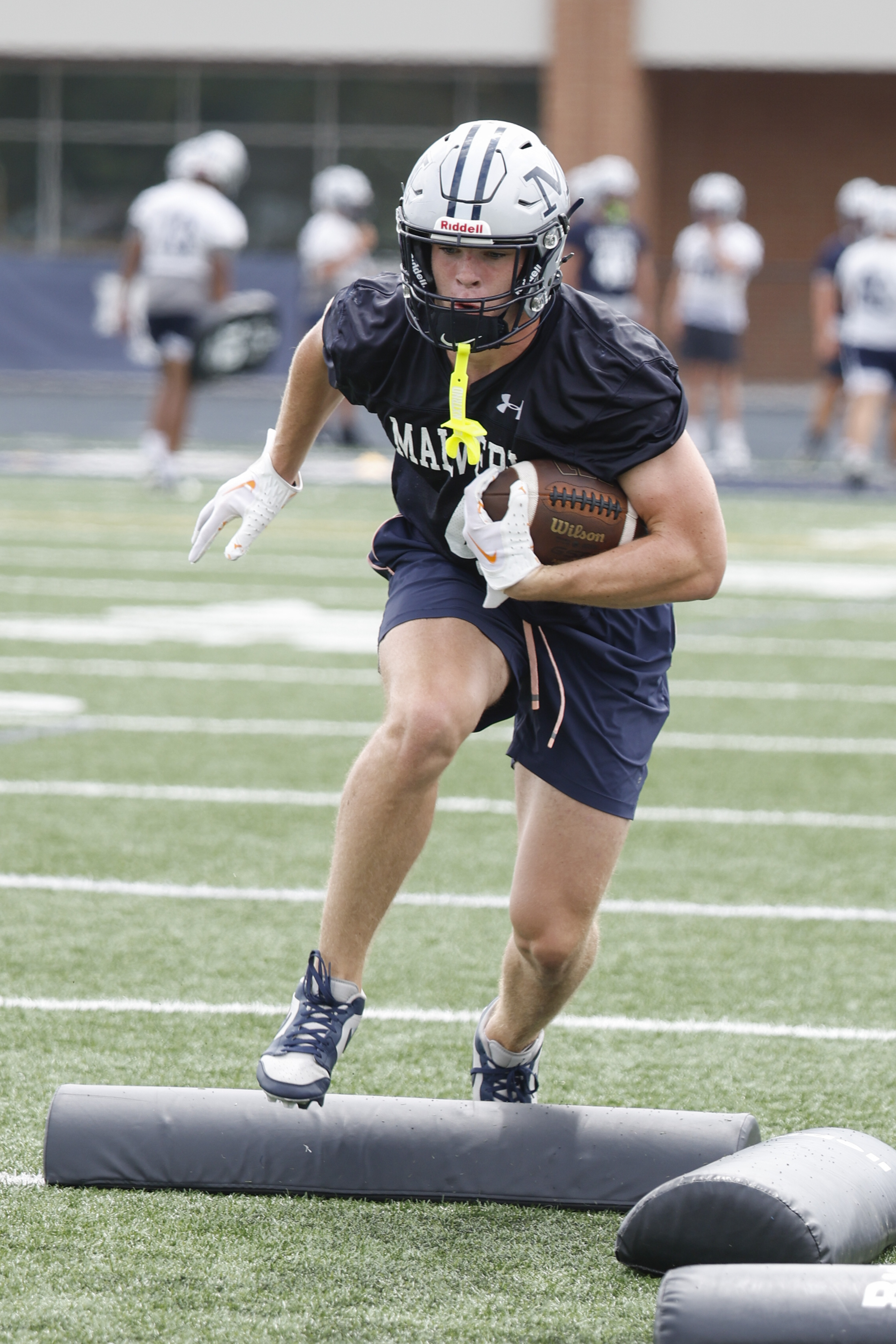
A two-year starter at right tackle, Graham is headed to Duke next year. The converted tight end has great balance and great coordination. He is a first-team All-Inter-Ac choice and will play some defensive tackle.
Malvern Prep’s Tyler Graham has been a two-year starter at right tackle.Steven M. Falk / For The Inquirer
Matthew Gregory
Owen J. Roberts, 6-1, 180 pounds, WR, Sr.
Gregory is a UCLA pledge and one of the fastest athletes in the state. He’s ranked as the No. 7 wide receiver nationally, after catching 58 passes for 911 yards and seven touchdowns as a junior. Something to think about: Gregory’s talent is so respected, UCLA came across the country to snare him over major programs like LSU, Notre Dame, and James Franklin’s Virginia Tech.
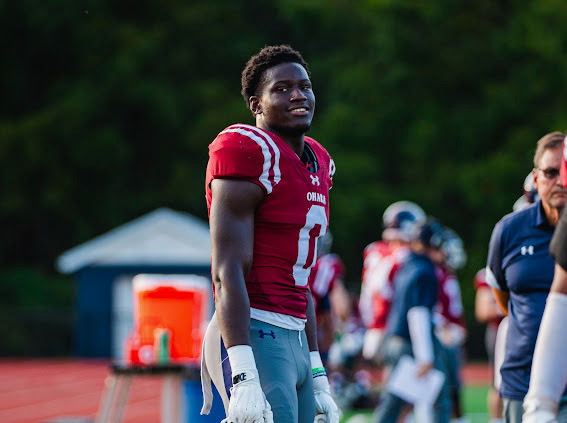
The youngest son of former Roman Catholic star and NFL Hall of Famer Marvin Harrison, Jett is already committed to Ohio State, where is older brother played. Jett is considered by many recruiters as the top 2028 prospect in the country. As a sophomore, Jett broke the Catholic League single-season touchdown record with 15 last season and will likely by double and sometimes triple teamed this season. He’s the No. 6-rated recruit in the nation for the Class of 2028 and recently signed a deal with New Balance.
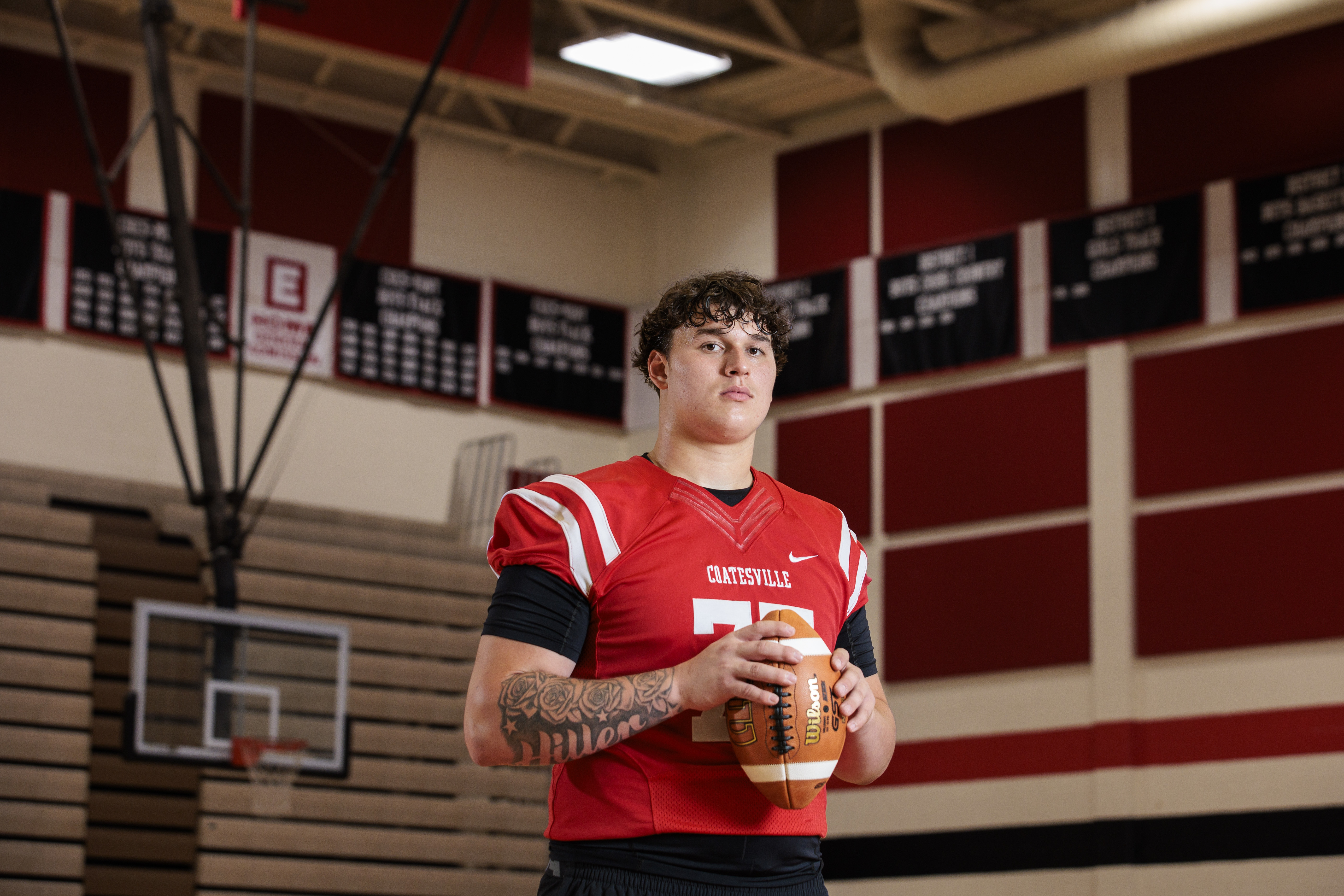
Hiller committed to Florida in April and signed with mega-agent Creative Artists Agency (CAA), which also signed his brother, basketball standout Colton Hiller. Max will play both ways this season, though he is projected to be an offensive tackle at Florida. What makes him unique is how quick and nimble his feet are for someone so large. The only thing missing from his resume is a PIAA District 1 Class 6A championship.
Maxwell Hiller is considered the best recruit in the state in the Class of 2027.Monica Herndon / Staff Photographer
Trey Hopkins
La Salle, 6-2, 195 pounds, CB, Sr.
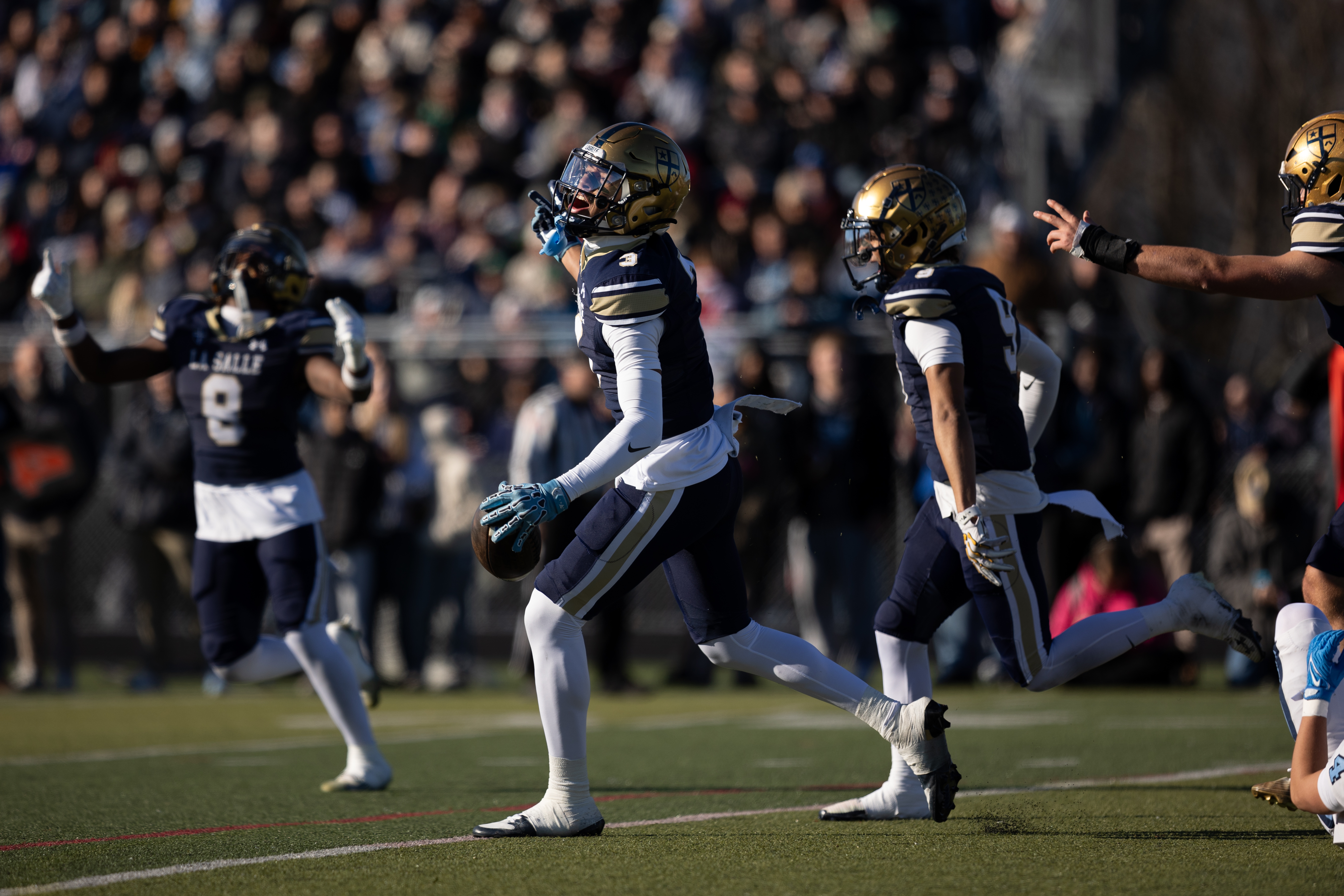
Committed to UCLA, Hopkins was a shutdown cornerback who had one interception last season. At 6-2, he is a rangy corner who uses his hands well, and is very good at playing the ball in the air. He can play both cornerback and safety, though he is projected to be a corner at UCLA. He will go both ways for the Explorers this season as a defensive back and wide receiver.
Trey Hopkins celebrates after intercepting the ball during the PIAA Class 6A football semifinal game on Nov. 29, 2025.Colleen Claggett / For The Inquirer
Walter Hudson
Roman Catholic, 6-1, 215 pounds, LB, Sr.
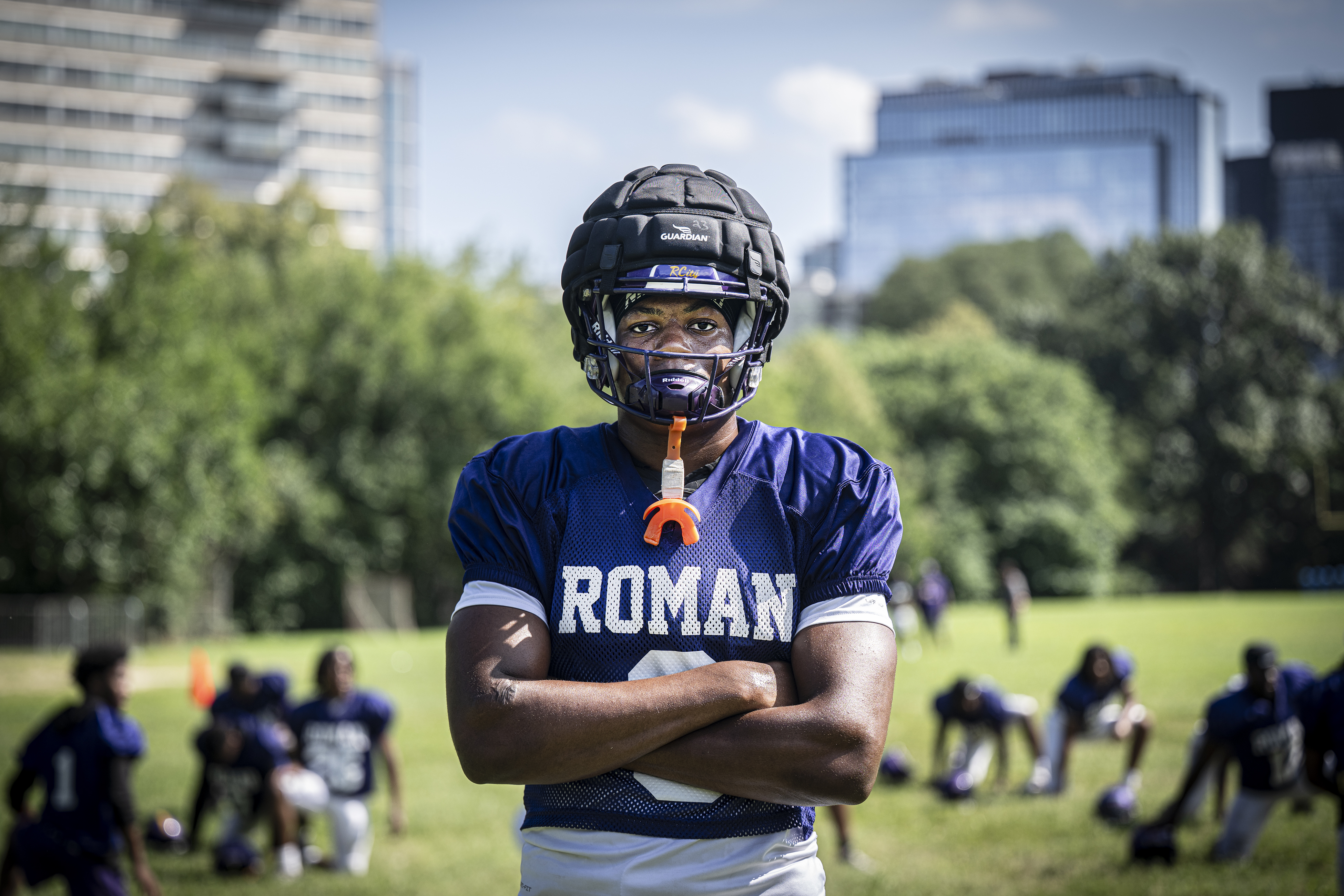
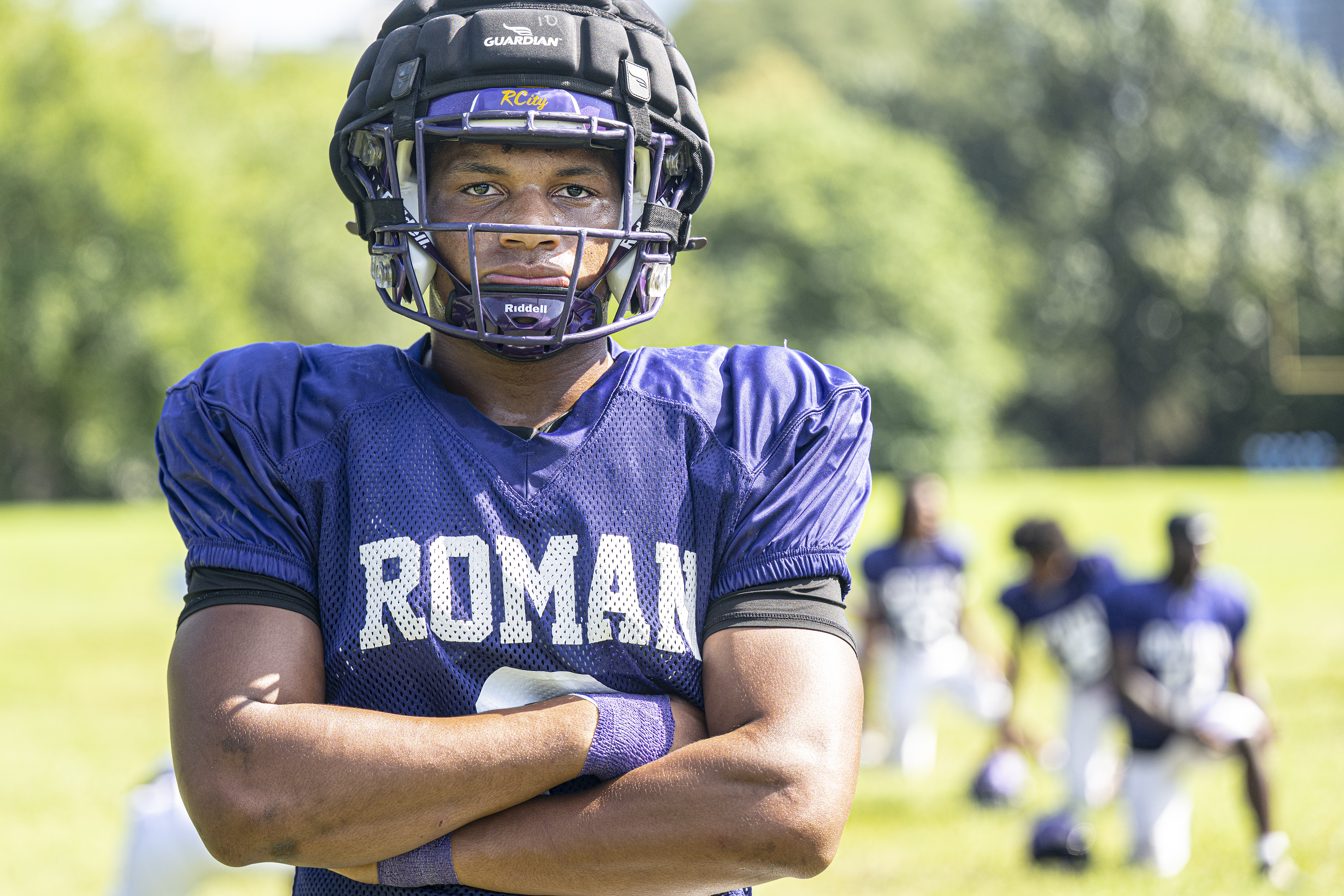
Hudson is bound for Pittsburgh next year, after a junior year in which he made 77 tackles (13 for loss). A three-year varsity starter, Hudson was a keystone of arguably the best team in the state last season, winners of Roman’s first-ever state football championship. The Cahillites and Hudson face a steeper test this season moving to Class 6A.
As a junior, Walter Hudson had 77 tackles and 13 tackles for loss.Jose F. Moreno / Staff Photographer
Owen Johnson
La Salle, 5-10, 190 pounds, WR, Jr.
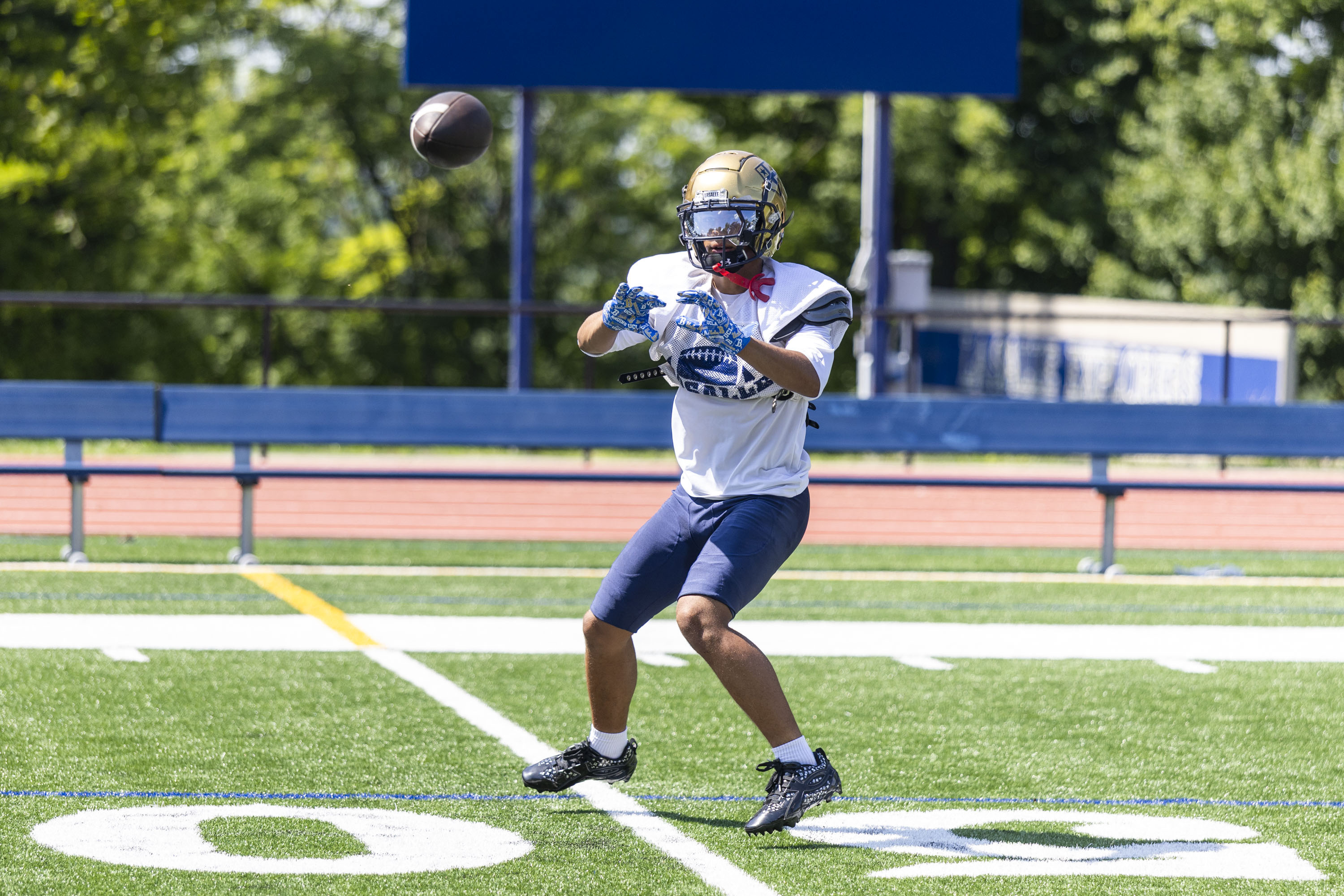
He has offers from Notre Dame, Penn State, Oregon, Alabama, Auburn, and Ole Miss, with more to follow. As a sophomore, Johnson performed well in significant games. He hauled in 73 catches for 1,000 yards and 11 touchdowns. He had a game-high nine catches for 96 yards and scored two of La Salle’s three touchdowns in a 24-14 victory over Prep in the PCL championship. He followed that with three touchdowns in the state title game. It helped getting single coverage with Notre Dame-bound O’Brien on the other side of the field. This year, Johnson will be the focal point of opposing defenses.
Owen Johnson caught 73 catches for 1,000 yards and 11 touchdowns as a sophomore.Tyger Williams / Staff Photographer
Marcus Jones
The Haverford School, 6-3, 190 pounds, S, Sr.
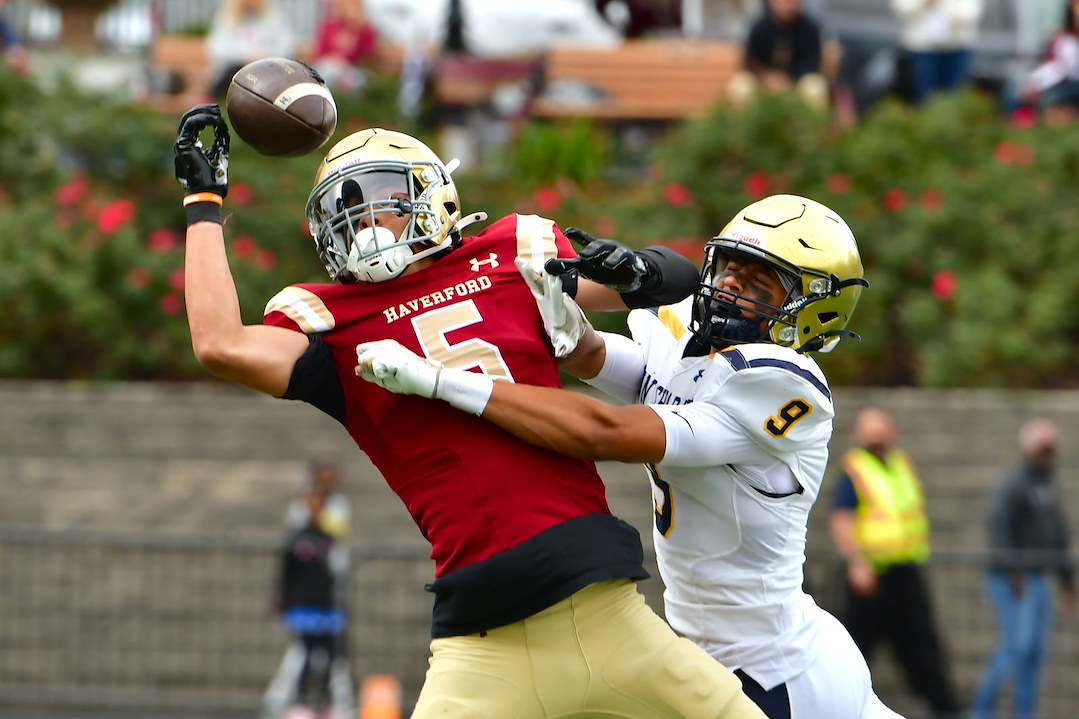
Jones is a four-year starter and committed to Tennessee, where his uncle Mark Jones played. Marcus is the son of former Strath Haven great and Purdue receiver Ike Jones, who caught passes from two Hall of Famers: Drew Brees and Peyton Manning. Marcus is projected to play safety at Tennessee. Marcus plays on both sides of the ball for the Fords, as a wide receiver and defensive back. He is coming off a junior season in which he caught 38 passes for 542 yards and four touchdowns. Defensively, he made 52 tackles (37 solo) and four tackles for loss.
Marcus Jones caught 38 passes for 542 yards and four touchdowns last season.Haverford School Athletics
Brandon Lockley
St. Joe’s Prep, 6-2, 216 pounds, LB, Sr.
Lockley may arguably be the best linebacker in the state. A physical, versatile defender, Lockley is a three-year starter bound for Oregon, after coming off a first-team, all-Catholic League junior season. He has the ability to play in space, support the run, and matchup in multiple offensive groupings. He won’t come off the field this season.
Brandon Lockley (right) of St. Joe’s Prep tackles Zah Pollard of Imhotep Charter on Nov. 16, 2024.Charles Fox / Staff Photographer
Stanley Montgomery
Archbishop Ryan, 6-3, 300 pounds, DL/OT, Sr.
Montgomery is rare in this age of specialization as a two-sport standout in football and wrestling, both of which he plans to do at Penn State. A three-year starter, Montgomery is coming off a junior season in which he tallied 45 tackles, 8½ sacks and 19 tackles for loss. He’s explosive, quick, and carries himself low. He’s projected to be a defensive tackle at Penn State. He’s unblockable at the high school level.
A long, strong, athletic edge rusher with a non-stop motor, he is getting attention from Penn State, Texas A&M, Tennessee, LSU, Oregon, and Ohio State after a sophomore year in which he had eight sacks, 35 tackles, nine tackles for loss, and 16 hurries. He runs a 4.6-second 40-yard dash and jumped 37 inches. He played primarily edge rusher. And will play some defensive tackle and linebacker. He is being recruited as an edge rusher.
George Parkinson IV had eight sacks, 35 tackles, 9 tackles for loss, and 16 hurries last season.Steven M. Falk / For The Inquirer
Ben Sakyiama
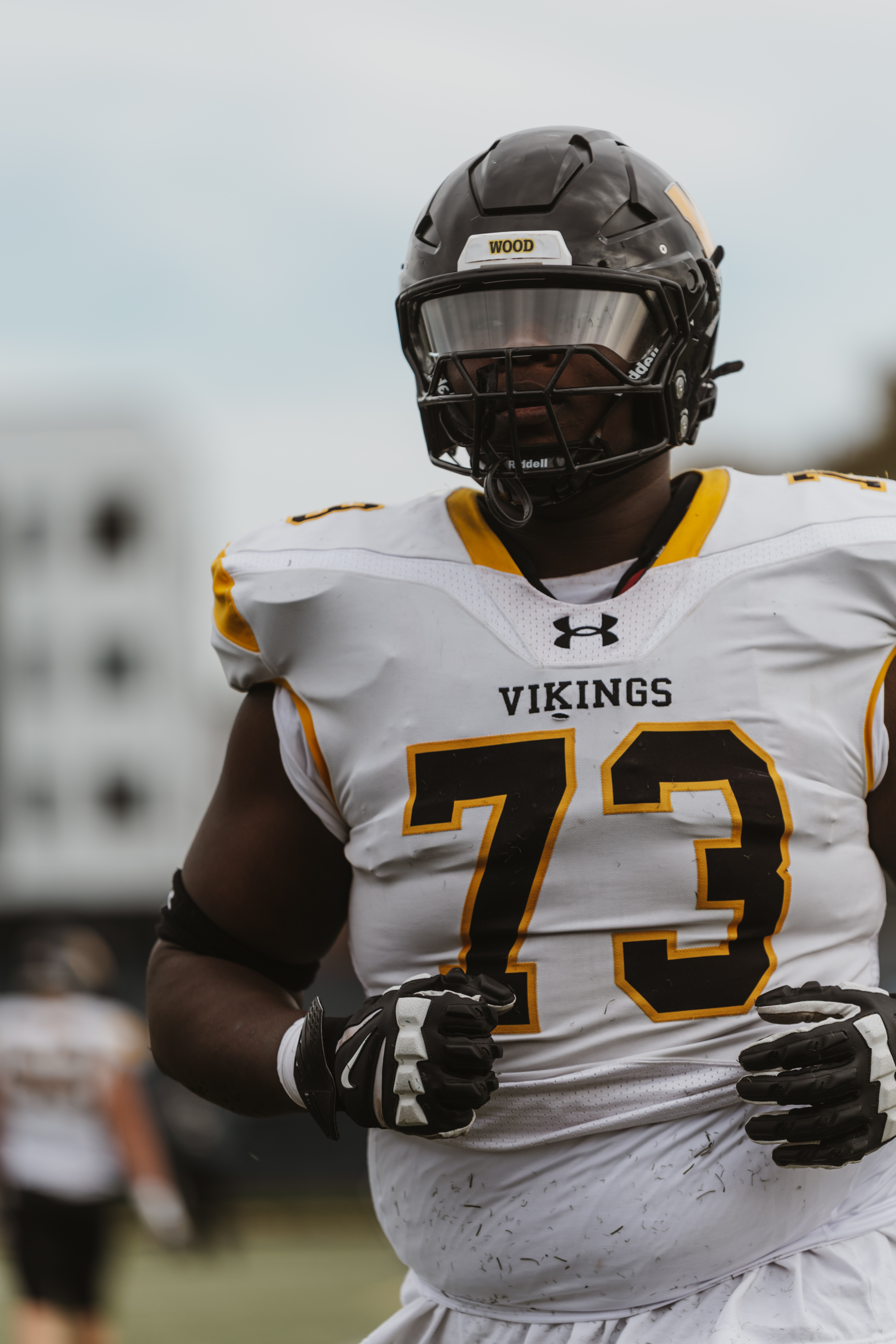
Archbishop Wood, 6-8, 320 pounds, OT, Sr.
A two-year starter, Sakyiama is a Syracuse pledge, where he is projected to be a left tackle. He will be a two-way starter as a left tackle and situational defensive tackle for coach Brian Goettner, who enters his second season as head coach. Sakyiama has grown an inch since last year and is down to around 320 pounds from playing at 345 last year. Sakyiama started playing football three years ago. He is still learning the game, with a tremendous upside.
Archbishop Wood’s Ben Sakyiama just started playing football three years ago.Francesca Rossillo / Archbishop Wood Athletics
Abraham Sesay
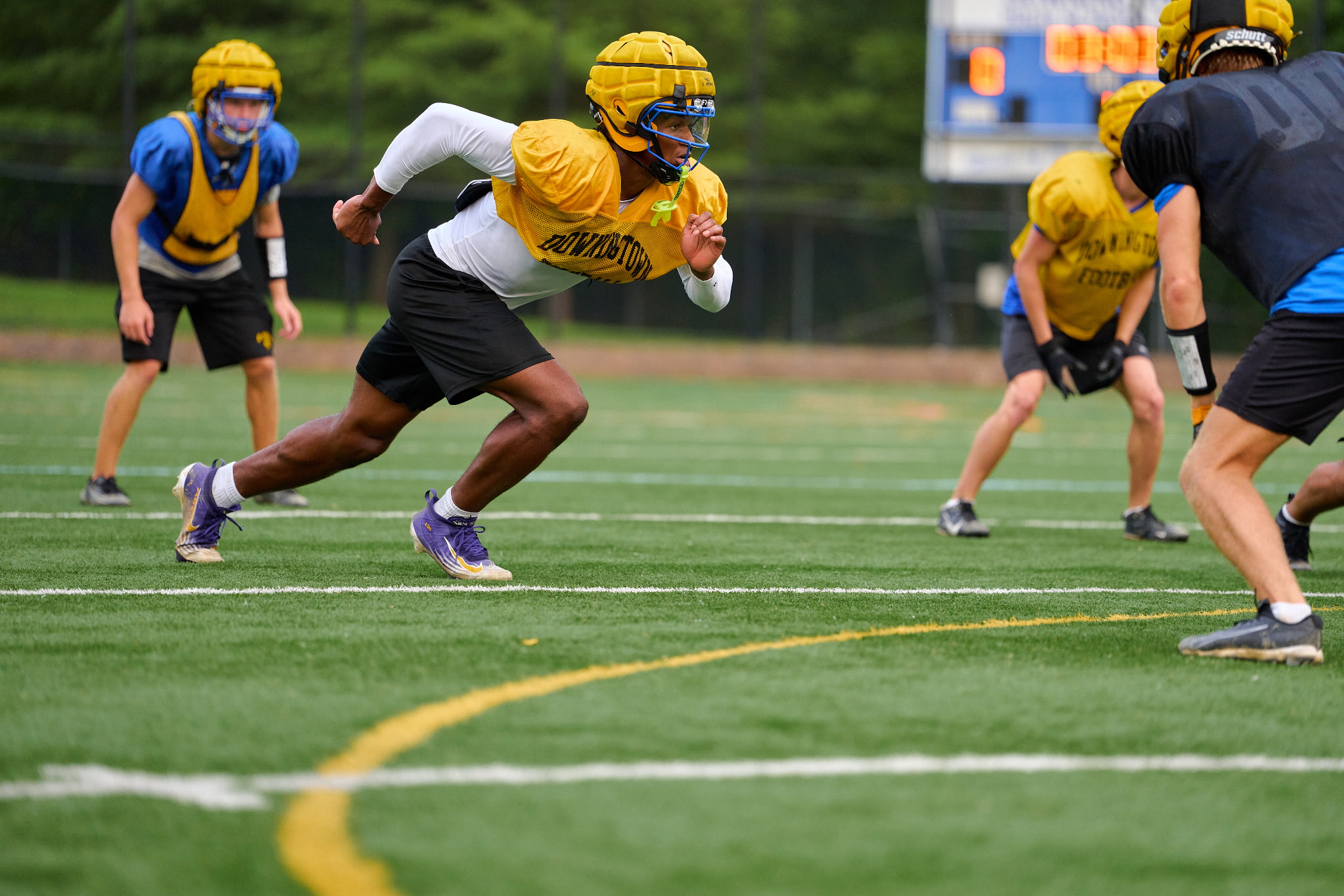
Downingtown East, 6-6, 230 pounds, Edge, Sr.
Sesay continues to blow up, even though he’s committed to Notre Dame. As a junior, he had 13 sacks and 89 tackles and will double up as a tight end. He is rated No. 90 overall in the country by ESPN for the Class of 2027 and is a three-year starter, projected to be an edge rusher at Notre Dame. He has been clocked at 4.5 seconds in the 40-yard dash and is an early admittance to Notre Dame. He has signed with the Octagon agency, which represents Steph Curry. He has grown an inch and gained 20 pounds since last season. Sesay’s East team plays Hiller at Coatesville on Oct. 23.
Abraham Sesay had 13 sacks and 89 tackles as a junior.Downingtown East Athletics
Terrance Smith
Lansdale Catholic, 6-7, 290 pounds, OT, Sr.
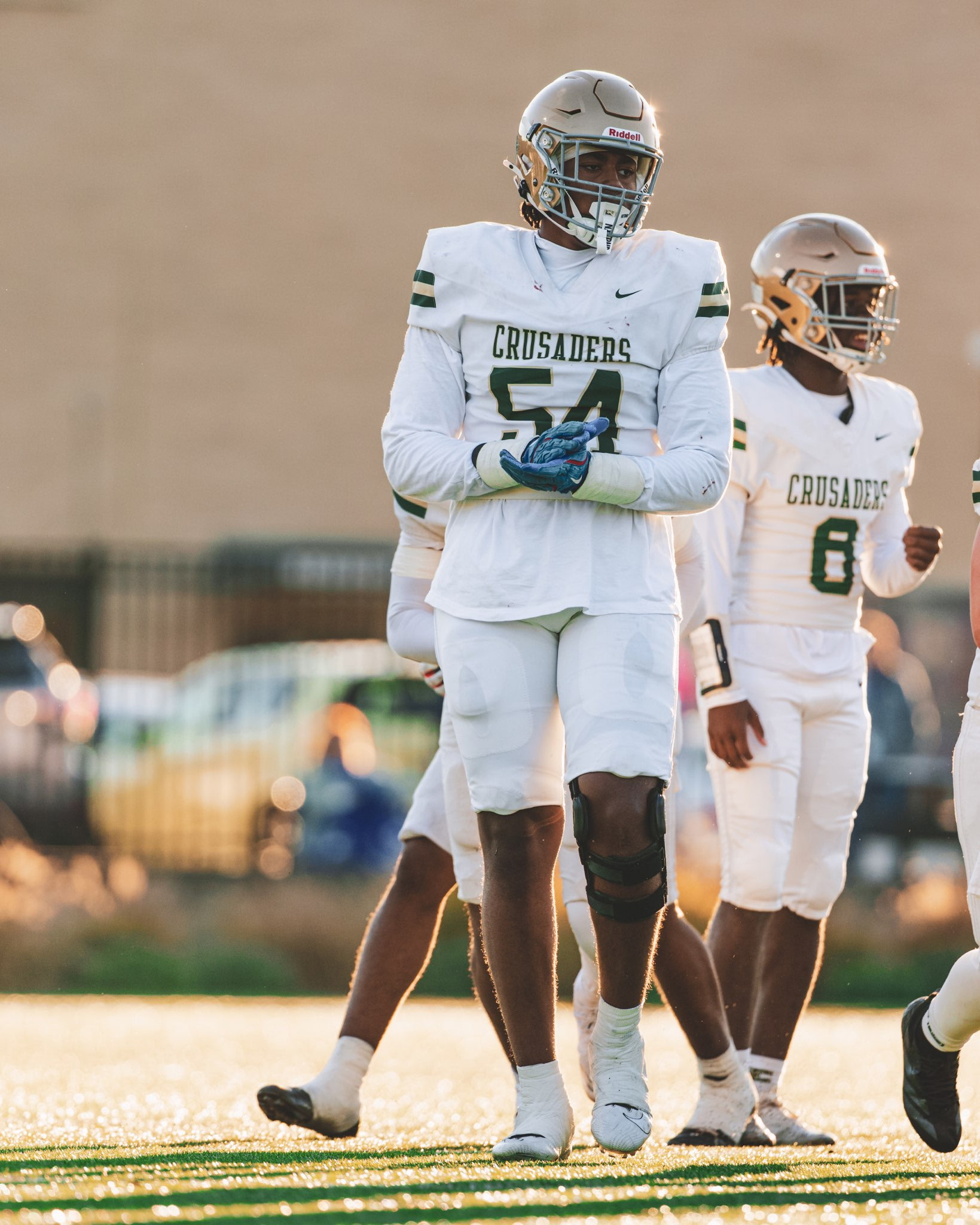
Smith is headed to LSU and projected to be an offensive tackle, though will be a defensive tackle and left tackle for the defending PIAA District 12 Class 2A champions. The Crusaders move up to Class 3A this season. Smith, a three-year starter, has a high football IQ, great feet, and played on both sides of the ball. He did not play until the last seven games, recovering from a torn ACL in his right knee during his sophomore season. He has since made a full recovery and is expected to play his entire senior season. He is related to former Sixer great and Hall of Famer Allen Iverson. He did not start playing football until seventh grade. Lansdale Catholic opens the season at Pope John Paul II on Aug. 28.
Terrance Smith will play defensive tackle and offensive tackle this season for Lansdale Catholic.Lansdale Catholic Athletics
Andrew Sorge
La Salle, 6-3, 290 pounds, OG, Sr.
Sorge was the cornerstone of an offensive line that won the Catholic League Red Division and PIAA Class 6A state title last season. Committed to Lafayette, Sorge will again be counted on to stabilize the Explorers’ front. He is a returning All-Catholic League selection, a league that produced two PIAA state champions, and is known for his strength as a pass blocker. La Salle coach Brett Gordon calls him the best interior lineman in Pennsylvania.
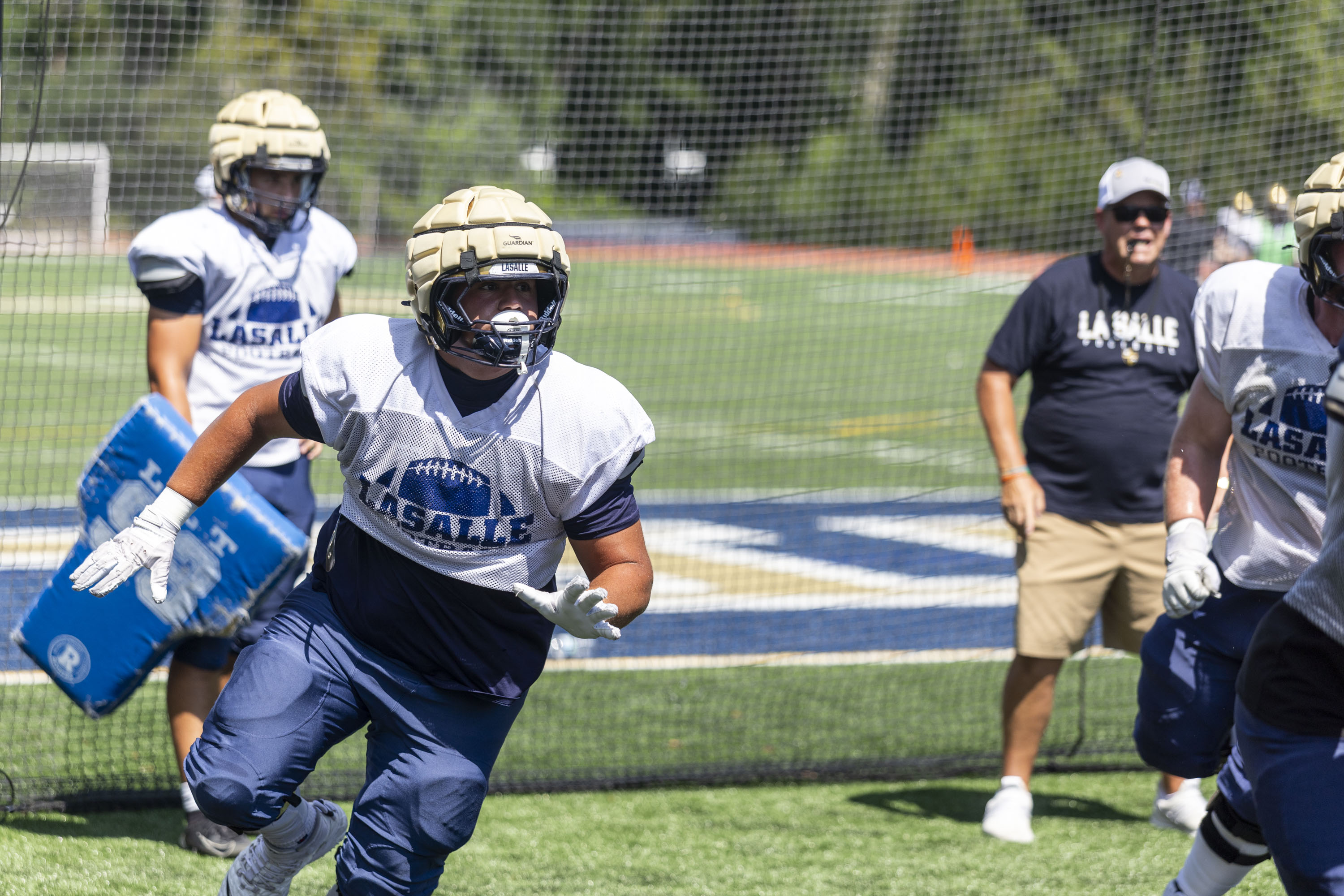
Offensive guard Andrew Sorge is one of La Salle’s leaders this season.Tyger Williams / Staff Photographer
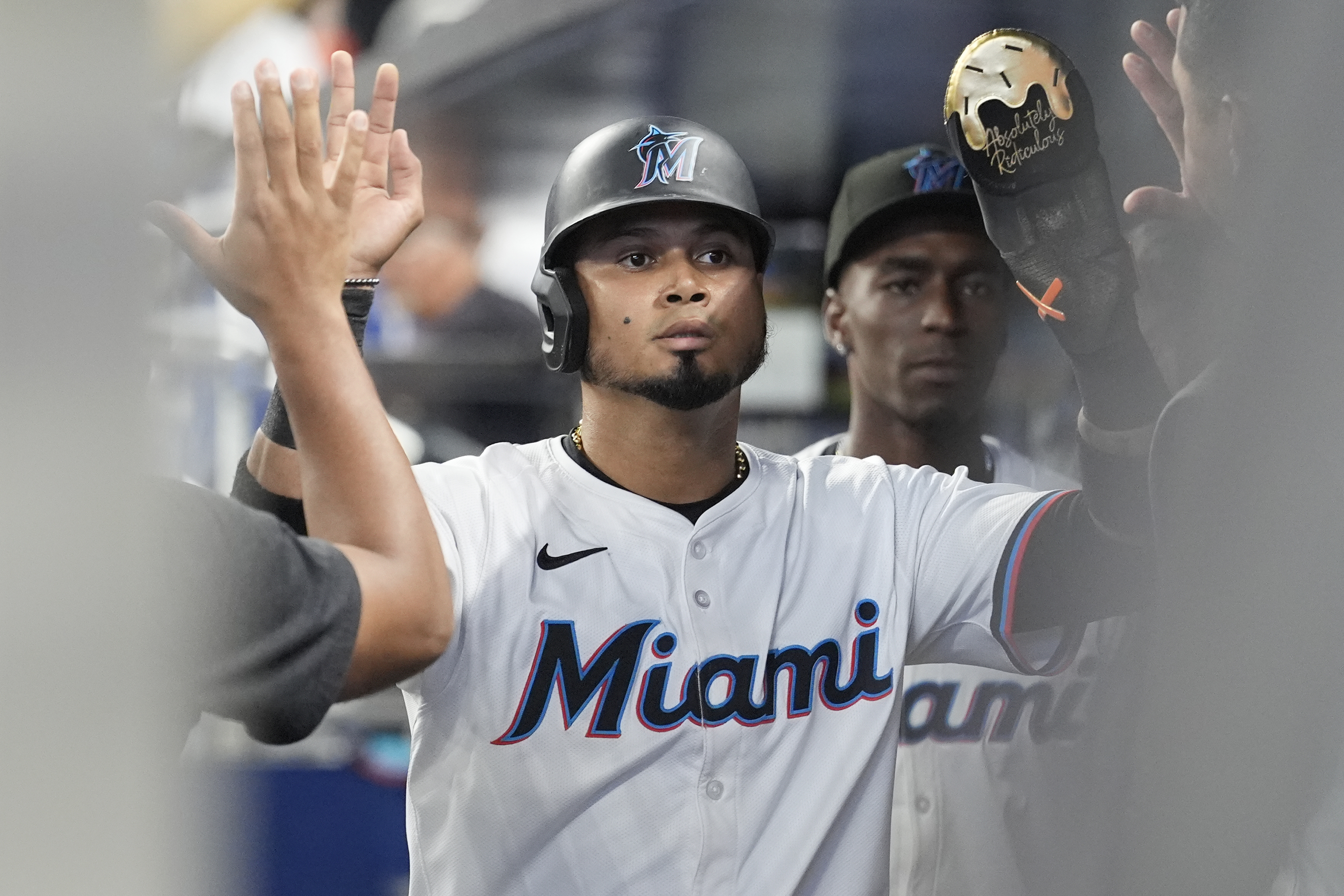
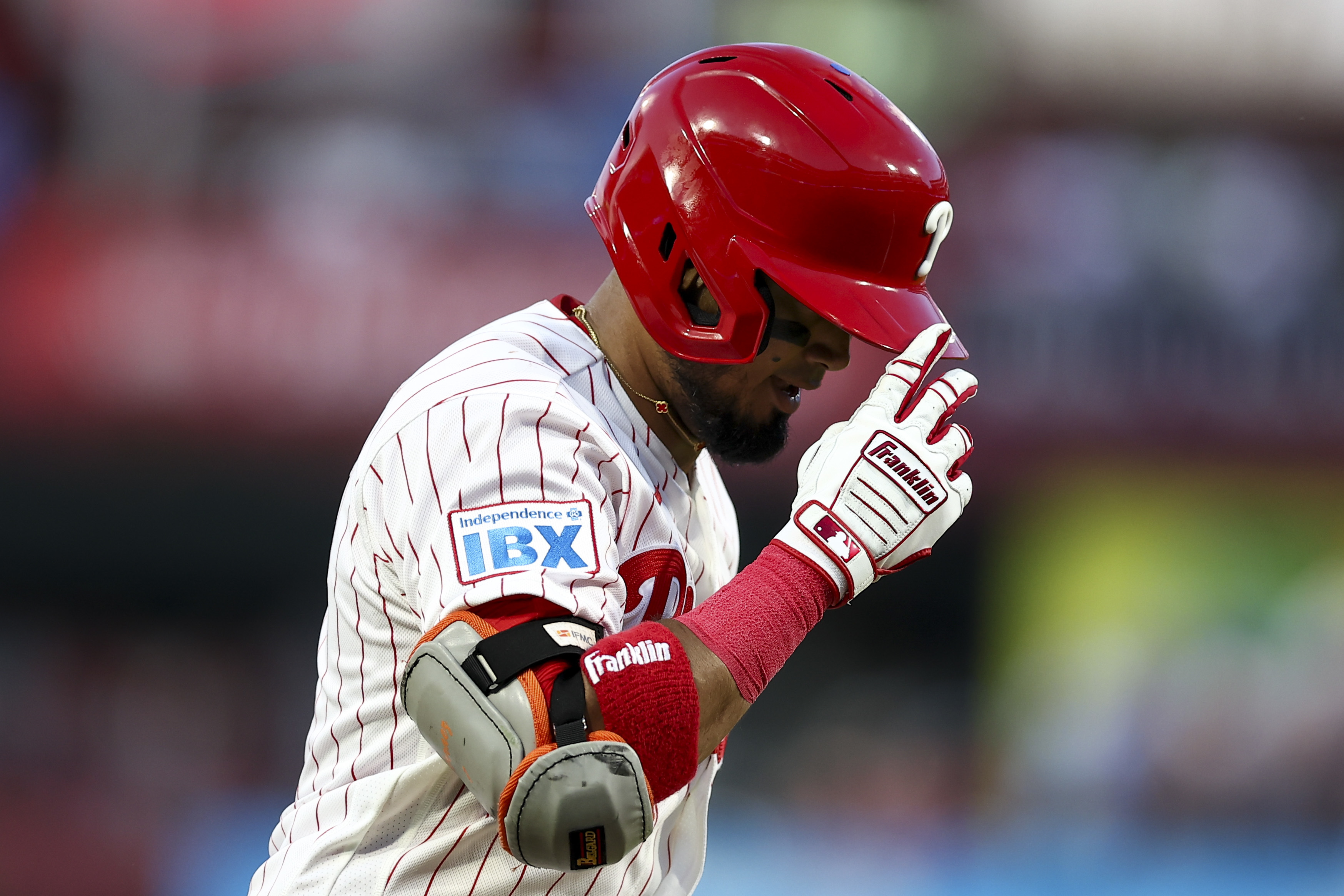
Luis Arraez opened the door and revealed the secret to winning three batting titles.
Not even Tony Gwynn Jr. could believe it.
“Listen,” said the son of the late Hall of Famer, “my dad was as much of a worker as possible. Never once did he have a tee and a net in his hotel room. I walked into the room and watched this man go to work. It was mind-blowing.”
In fact, since 2021, the new Phillies second baseman has traveled with a portable tee, a fold-up net, a short bat, and a small weight that fit neatly into his backpack. He sets it all up in his room, takes full or partial swings (without a ball) to perfect his compact stroke, and often sends the video to his personal hitting coach in Miami.
“Just a short move, point A to point B, and that’s all he was working on the whole time,” Gwynn said on The Inquirer’s Phillies Extra podcast. “And at that point I was like, ‘OK, this gentleman is a little bit different.’”
In 2026, he’s actually one of a kind.
Arraez, 29, ranks in the lowest percentile among major league batters in bat speed, hard-hit rate, and barrel percentage, which measures how frequently a hitter makes contact with the optimal combination of exit velocity and launch angle. And these days, baseball is obsessed with exit velocities and launch angles.
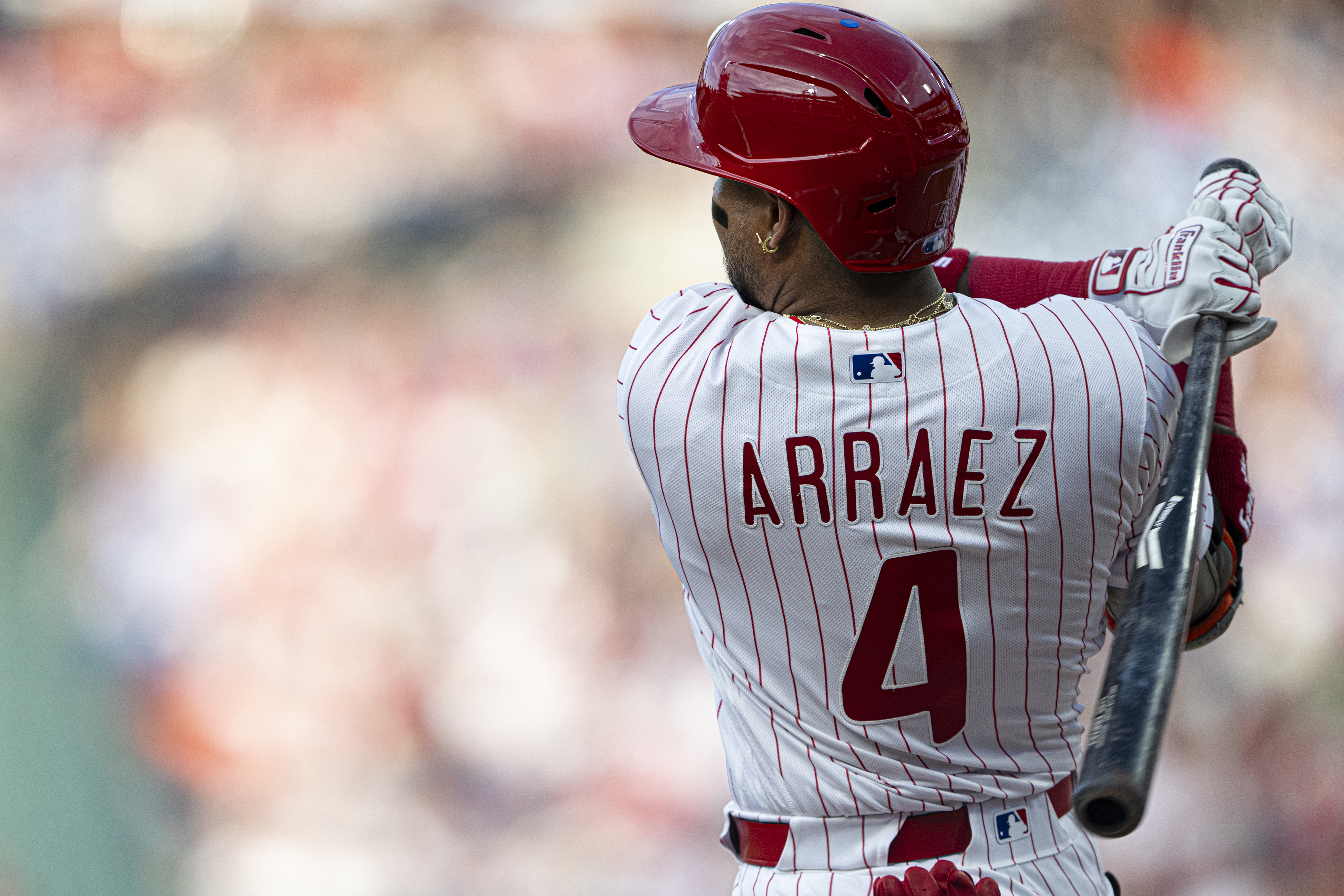
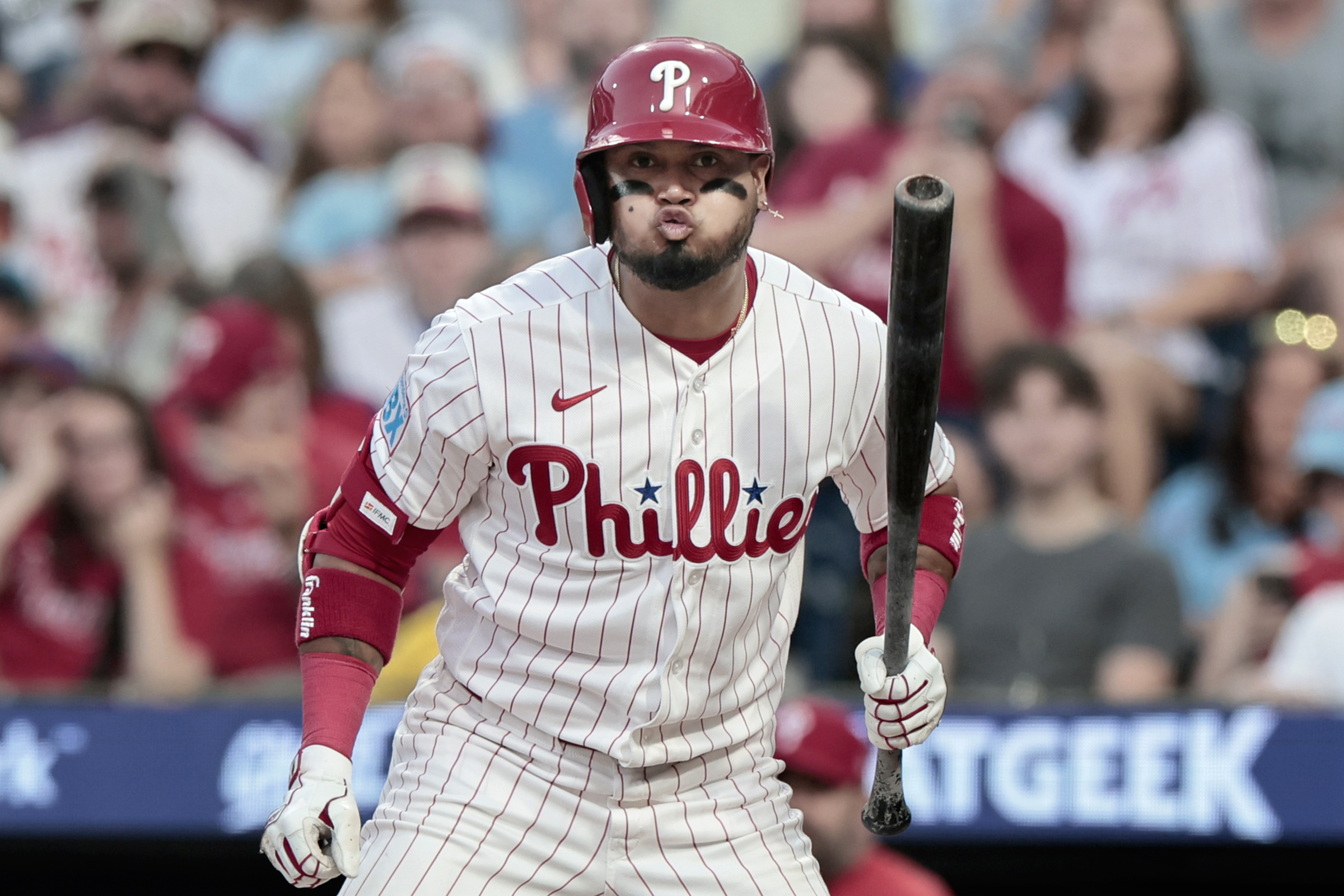
Phillies second baseman Luis Arraez has won three batting titles.Yong Kim / Staff Photographer
Here’s the thing, though: Arraez has more hits than any player since 2022. He has won batting titles in both leagues: 2022 with the Twins (.316), 2023 with the Marlins (.354), and 2024 with the Marlins and Padres (.314).
Oh, and did we mention he hardly ever strikes out?
Entering the weekend, Arraez made contact on 92.2% of his swings. The major league average was 76.4%. His career strikeout rate was 5.9%, including 4.5% this season. In the last 50 years, three players struck out less than 6% of the time while maintaining a .300 batting average: Arraez, Phillies interim manager Don Mattingly, and the late Tony Gwynn, a first-ballot Hall of Famer.
“The skills that he has, they are so different that I think players in a lot of ways consider it a novelty,” said former Marlins general manager Kim Ng, who traded for Arraez before the 2023 season. “It doesn’t have to be just shooting for pull-side fly balls in hopes they’ll go over the fence.”
Yet the industry no longer values a contact-hitting savant. Arraez has been traded three times in the last 3½ years. And he went unsigned as a free agent last winter until a few days before spring training when the Giants gave him a one-year, $12 million contract.
On Aug. 3, the Phillies made a deadline trade for Arraez, a lefty-hitting second baseman, because their search for a righty-hitting outfielder lacked appealing options. And they were able to fit him in only because Bryce Harper consented to move back to right field for the balance of the season, part of a realignment in which they displaced three-fourths of the infield.
But now that Arraez is here, his one-of-one skill set will be on display for a new audience. The Phillies will form their opinion about his value, especially to a lineup that tends to strike out frequently and struggles at times to score without hitting home runs.
Maybe they will try to re-sign Arraez in the offseason. Maybe he will pack up his travel batting cage and shuffle to his sixth major-league team in a nomadic career. Whatever the case, the Phillies will have baseball’s most unique hitter for the playoff push.
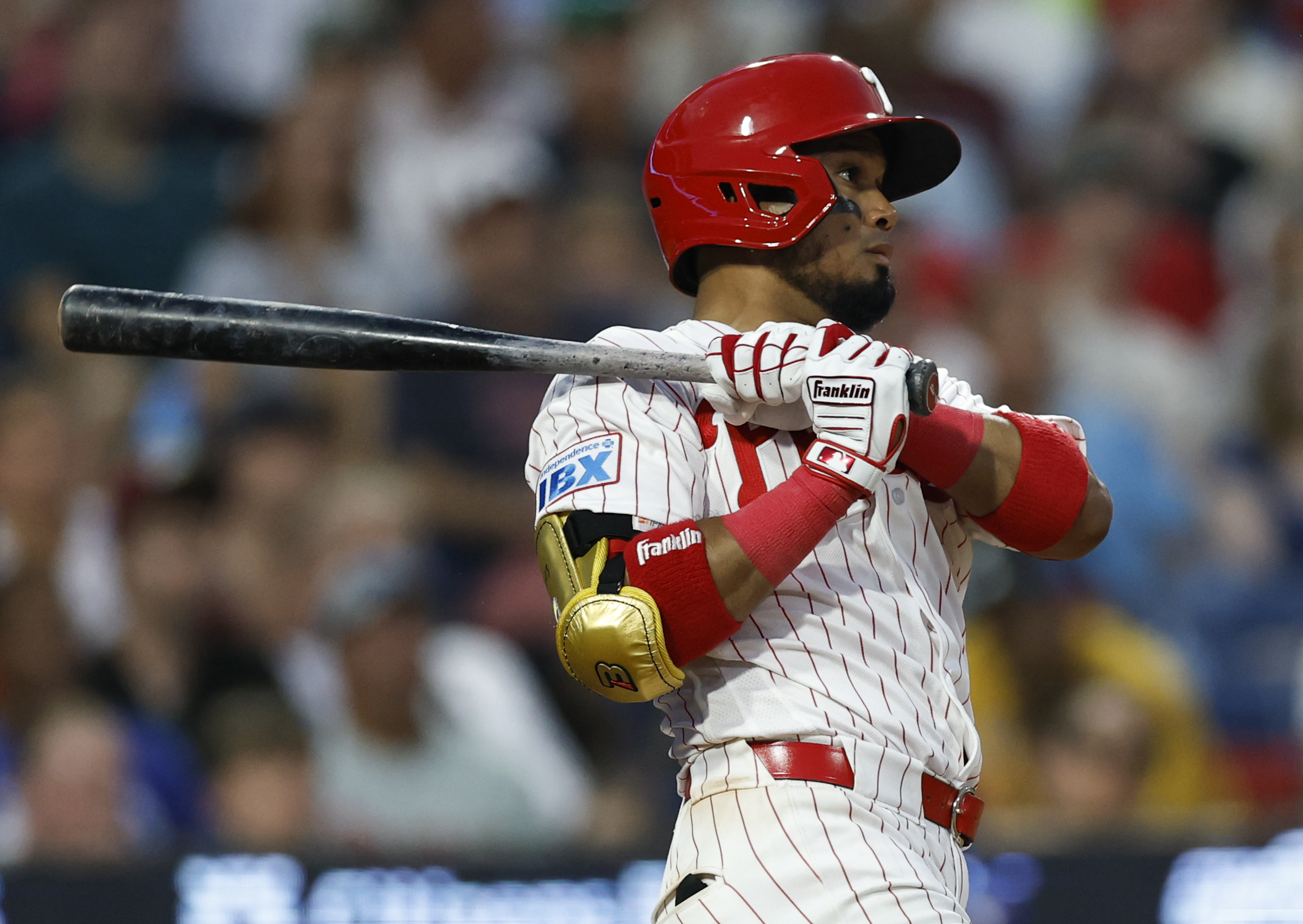
Luis Arraez had his best season with the Marlins in 2023.Marta Lavandier
‘Infectious’ style
The Phillies aren’t the first team to move chess pieces around the field to accommodate a trade for Arraez.
Jazz Chisholm Jr. was an All-Star second baseman for the Marlins in 2022. But after a 93-loss season, they swapped righty Pablo López and two minor leaguers to the Twins for Arraez and moved Chisholm to center field.
“We were just lacking bats,” Ng said by phone last week. “Jazz was really good at second, but we also felt like he could be put in the outfield. We felt like he would really grow into the position, and then, you’d have two premium bats in the middle of the field.”
Arraez held up his end. He mimicked Ted Williams for almost half the 2023 season, carrying a .401 average into the final week of June. He finished with 203 hits, a career-high, and won his second batting title.
But Ng recalled Arraez’s impact beyond the knocks.
“I think our players were in awe of him,” said Ng, the commissioner of the 2-year-old Athletes Unlimited Softball League. “He’d walk up to the plate and size up the field and take note of where players were positioned, and he’d just put it where they weren’t. And I think the players were just so awe-struck by him and this uncanny ability that he has, and we were hoping that that would rub off in some ways on others.
“And I’m not saying it was a direct correlation, but if you look at our one-run record in 2022 vs. our one-run record in ’23, vastly different. Is it all because of Luis? No. We tried to change the way we thought about the game across the board. But Luis was a huge instrument to that change.”
Indeed, the Marlins went from 69 wins to 84 and made the playoffs largely due to a 33-14 record in one-run games. Arraez finished eighth in the NL MVP voting.
Ng said teammates became aware of Arraez’s work habits, including hitting for 15 to 20 minutes each morning in a batting cage at his house, similar to his exercises in road hotels. Seven-time All-Star outfielder Nelson Cruz introduced him to the daily ritual when they were teammates with the Twins.
“I do my routine every day,” Arraez said. “I’ll bring my short bat and my regular bat and a little heavy weight to do my routine and then to prepare my body and especially my mind.
“It’s helped a lot. You can tell. I feel really good when I do my routine every day.”
And when Arraez got to the ballpark, the young Marlins would either pick his brain about his approach at the plate or absorb it like a sponge by watching.
“His personality and the effect that he had on the team, it really was infectious,” Ng said. “And I do think that he was one of the core pillars of that team.”
The Phillies are seeing similar benefits. Mattingly batted him cleanup to utilize his contact skills in front of Harper. And even as Arraez cooled after going 5-for-13 with four RBIs in his first three games, the Phillies’ collective strikeout rate plummeted from 23.6% before he arrived to 15.9% through his first 11 games.
Coincidence? Maybe.
Then again …
“I mean, I’ve definitely learned a lot from watching him,” Alec Bohm said. “It’s the modern-day Tony Gwynn. Like, it’s one of the best bat-to-ball [hitters] that any of us have ever seen. So, yeah, I think obviously bringing a guy like that in not only makes the lineup better, but it’s also just hitters watching other good hitters. I think there’s something to be said for that.”
Luis Arraez went 5-for-13 in his first three games with the Phillies.Monica Herndon / Staff Photographer
‘Know thyself’
Ng left the Marlins amid a reorganization of the front office after the 2023 season. In May 2024, Arraez got traded to the Padres.
Upon arriving in San Diego, he visited the 9½-foot tall statue of Tony Gwynn — titled “Mr. Padre” — outside Petco Park.
And he asked Gwynn’s son to accompany him.
“I was like, ‘Of course,’” said Gwynn Jr., an eight-year major-league outfielder and now a Padres radio broadcaster. “Because I had seen Luis play, and it was very apparent his style of hitting was different than everybody else in Major League Baseball and had some resemblance to my father.”
Arraez seems to appreciate baseball history, maybe because it often feels like he’s from a bygone era. With the Twins, he became close with Rod Carew, the Hall of Famer who mentored him about using the field and being satisfied with line drives and ground balls instead of trying to pull everything in the air to right field.
Even before the trade to San Diego, Arraez heard the comparisons to Gwynn. His nickname: “La Regadera” — “The Sprinkler,” in Spanish — because he sprays the ball around the field.
If he played 35 years ago, he would’ve fit right in alongside Gwynn, Carew, and Wade Boggs. As Phillies hitting coach Kevin Long said, Arraez “would’ve been elite.”
But the 21st century launch-angle craze has changed not only hitting styles but also how players are paid. In 1991, when hitting for average still mattered, 29 players batted at least .300. Last season, there were seven; Trea Turner was the only .300 hitter in the National League.
“When there’s economics involved, players aren’t dumb,” Gwynn said. “They’re going to shoot for the moon in terms of paydays.”
And it’s moonshot homers, not singles up the middle that pay the most. Arraez, signed by the Twins as a teenager out of Venezuela for $40,000, has never had a multiyear contract. His highest annual salary: $14 million in 2025, hardly a pittance but tied for only 63rd among position players last season.
But his approach at the plate hasn’t changed to amplify his bank account.
“I can’t change,” Arraez said. “If I change, I’ll be in my house watching the guys play baseball.”
Said Gwynn: “There is certainly space in this game, if you’re going to be as skilled as him, to make money that can set you up for the rest of your life. Maybe not in the 30s and 35 million [per year], but you can get in that 10- to 20-[million] range and do pretty well for yourself.
“And I think Luis is unique in that self-awareness. My dad used to say this all the time — and it was part joke but part serious — and that’s ‘know thyself.’ And Luis knows himself very well, and he has chosen to maximize the skill set that God has given him.”
So, Arraez packs up his backpack and moves right along, from hotel room to hotel room, playing the hits like they used to do.
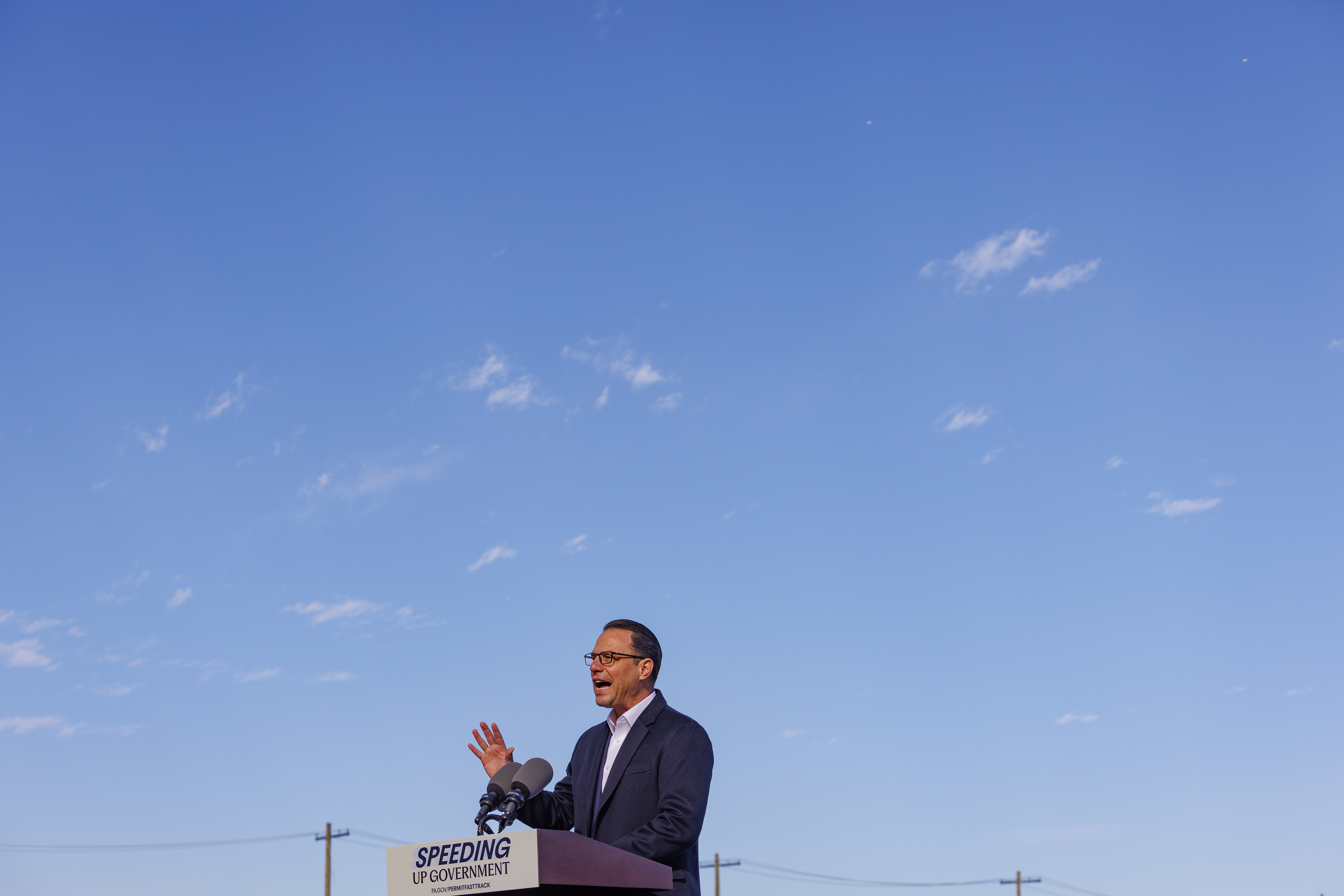
HARRISBURG — As part of his new, hard-line stance on regulating data centers in Pennsylvania, Democratic Gov. Josh Shapiro said during a news conference last week that his sweeping executive order has the “strictest guardrails in the nation” on data center development.
Fact check: That is technically true, if you exclude moratoriums, or the full-stop pauses on development that have been implemented in two other states.
States around the country have taken different approaches to data centers in the race for AI supremacy — and, subsequently, how to rein in the increasingly unpopular massive developments that some fear will disrupt their communities, drain resources, and increase energy costs.
Governors, including Shapiro, initially welcomed companies who had come knocking on their states’ doors offering billion-dollar investments to build there. And as the political tide has transformed data centers into widely unwelcome developments among most Americans, leaders have had to adapt — or even change their positions.
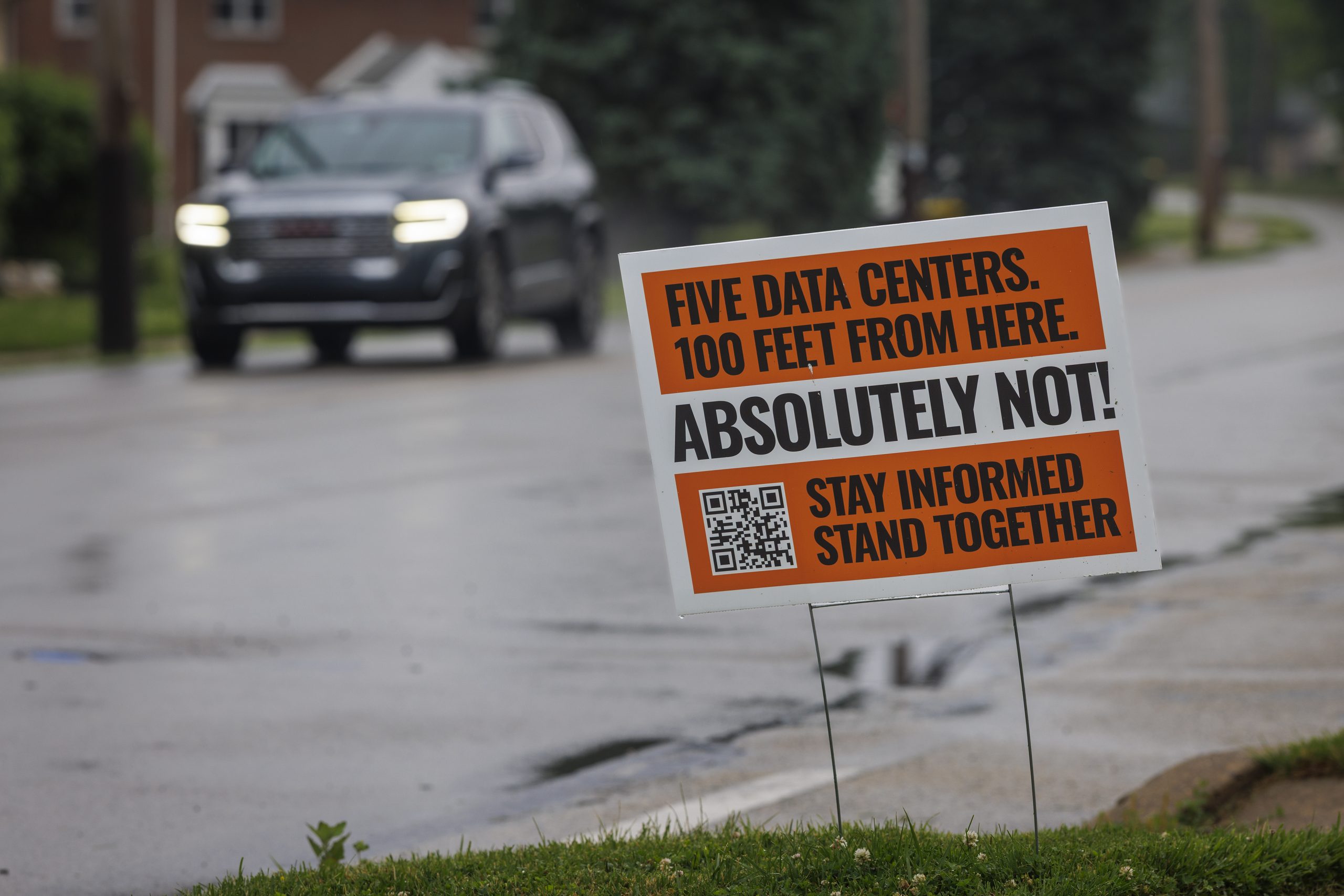
Lawn sign along Crooked Lane in King of Prussia, Wednesday, May 27, 2026. Some residents are standing in opposition to building a data center in their community.Alejandro A. Alvarez / Staff Photographer
To build a data center in Pennsylvania — where Shapiro just 14 months ago trumpeted a $20 billion commitment from Amazon to build at least two data center campuses in Bucks and Luzerne Counties — developers will now be required to sign a consent agreement detailing how it will follow new guidelines in four key areas: transparency, energy affordability, workforce development, and environmental protection.
Many top Pennsylvania Democratic leaders and environmental groups lauded Shapiro’s order, while some Republicans called it a disingenuous flip-flop in an election year. And some of the loudest data center opponents said it did not go far enough — and they still want a moratorium.
Thirty-eight states, including Pennsylvania, offer tax breaks for data centers. Many of these tax incentives were approved years ago, as the emerging artificial-intelligence industry began to come online. Pennsylvania’s legislature firstapproved its benefit in 2021.
Some states, like New York, have halted all data center development for periods of time, while others, like New Jersey, have singled out specific areas, such as consumer protections, in which lawmakers want to curb data centers’ impact.
Shapiro’s administration argues it is unfair to compare its multipronged requirements for developers to build in Pennsylvania to states with moratoriums. In other words, officials say, Pennsylvania has the toughest enforceable barriers for data center development, while moratoriums are a total stop.
Most state legislatures are weighing proposals to restrict data center development through moratoriums or energy generation requirements. Pennsylvania has near-unanimous support among lawmakers to end tax breaks for data center developers, but legislators in the politically split General Assembly failed to do so before leaving Harrisburg for the summer.
In absence of new state laws, a handful of governors, including Shapiro, have taken executive action to restrict data center development in their states. Here is a look at how several states, including Pennsylvania and its neighbors, are approaching data centers.
Pennsylvania
Moratorium: No
Tax credit available: Yes
Restrictions: After previously embracing data center development as a potential economic driver for Pennsylvania, Shapiro changed his position and signed a wide-ranging executive order last week requiring data centers to get local approval, bring their own power, hire and train local workers, and more. The order does not include a moratorium on data center development. However, its requirements for local approval may, in effect, block many from moving forward.
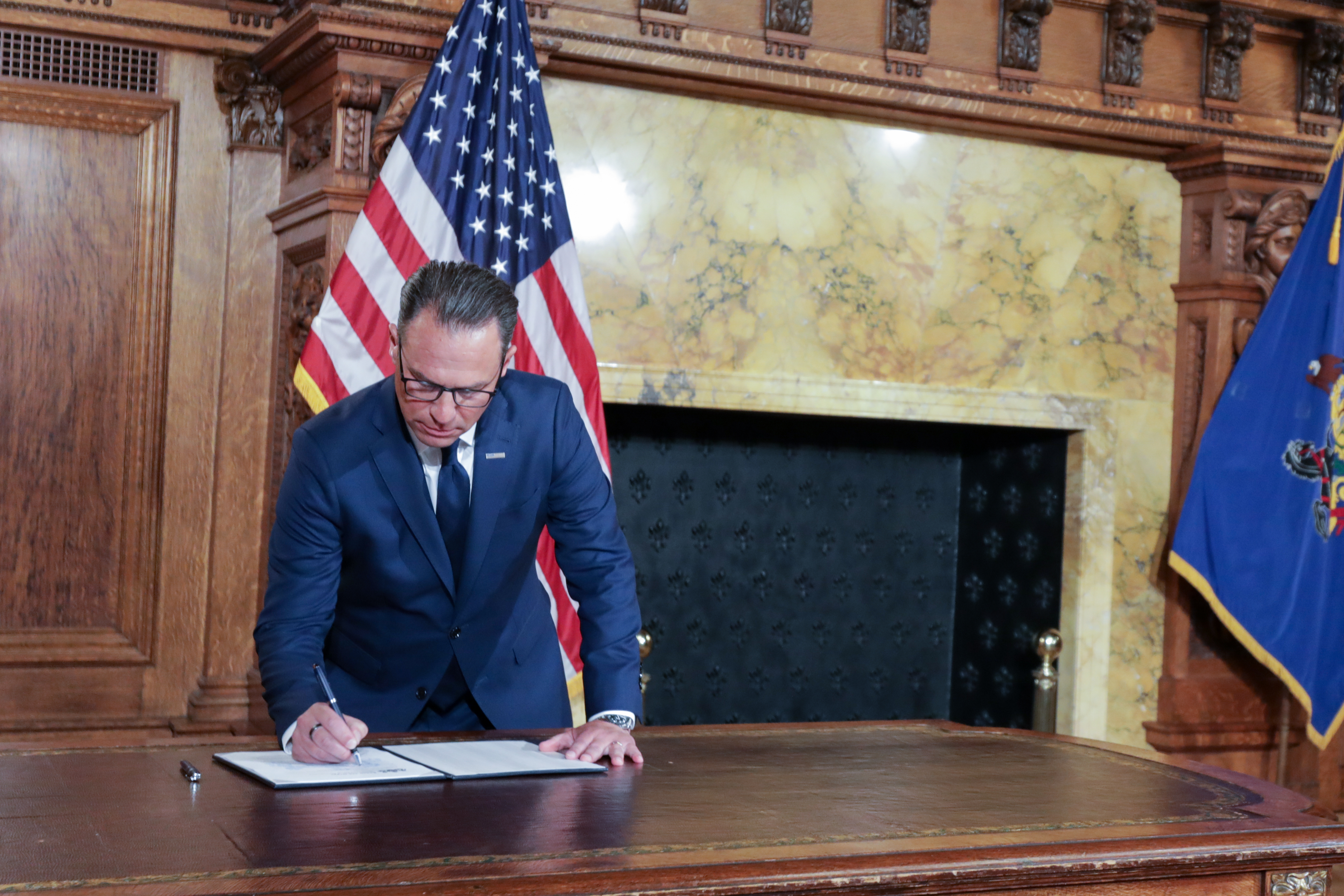
Gov. Josh Shapiro signs an executive order restricting data centers in Pennsylvania during a ceremony in the Capitol in Harrisburg, Pa., Tuesday August 18, 2026.Kalim A. Bhatti / For The Inquirer
Any developer looking to build a data center in Pennsylvania must sign a 33-page, legally binding consent agreement that follows Shapiro’s multifaceted and detailed requirements about the facility’s projected energy generation and water usage and a community benefits agreement in order to receive state-level permit approvals. If the developer does not agree to Shapiro’s rules, its project will be held up by the state indefinitely.
Current projects that have received state permits will be allowed to proceed, but developers will need to sign the agreements for any future approvals.
New Jersey
Moratorium: No
Tax credit available: Yes
Restrictions: In July, Gov. Mikie Sherrill signed several bills into law to protect consumers from increased costs associated with data center development, including the creation of a new tax and rate structure specific to data centers so that the projects pay for their own energy usage and grid updates.
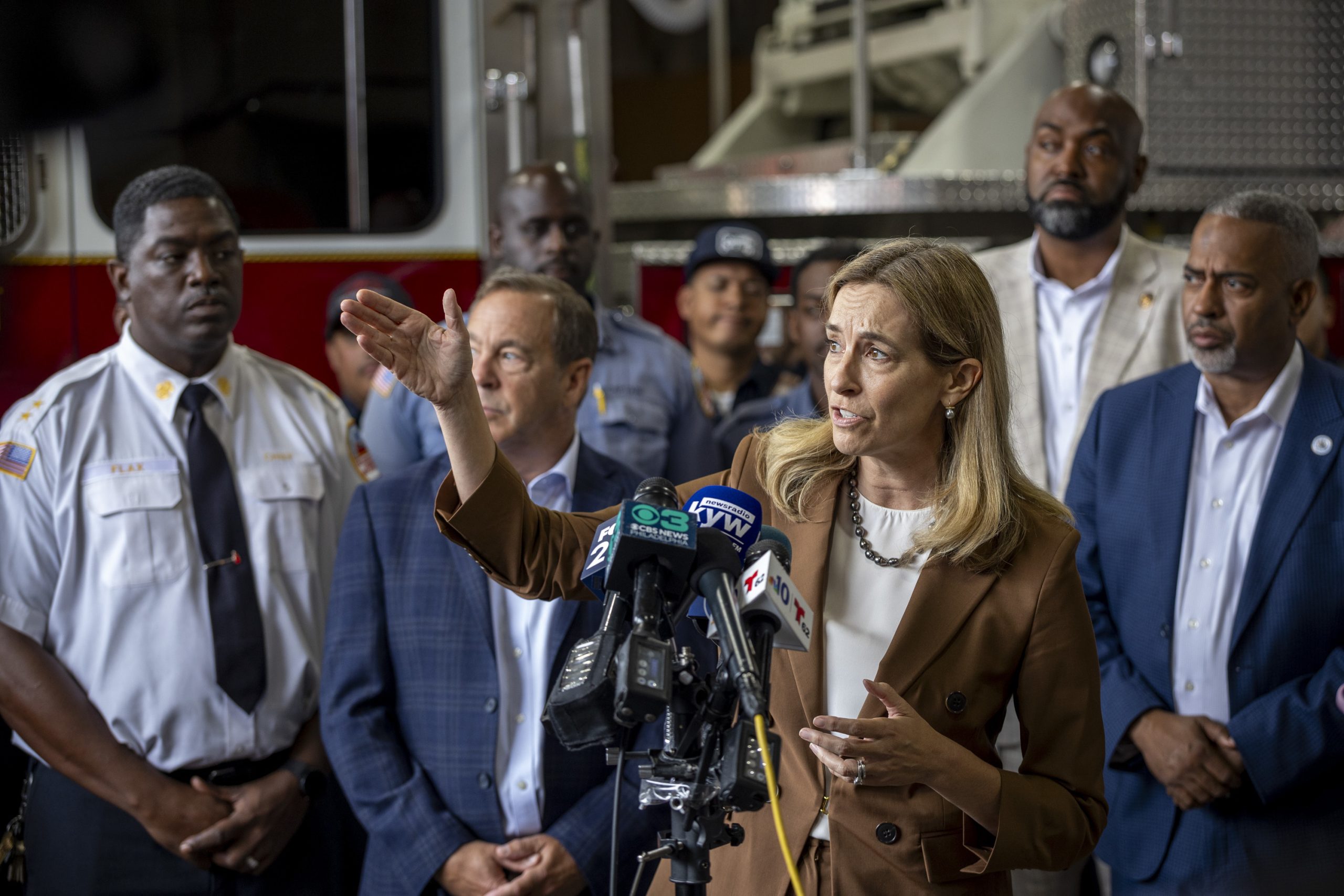
Gov. Mikie Sherrill answers questions from press about the recent rainfall and flooding in Camden at the Fire Administration Building in Camden, N.J., on Tuesday, July 7, 2026.Tyger Williams / Staff Photographer
Sherrill has released a plan with a framework similar to the regulations outlined in Shapiro’s executive order — including requirements for energy generation, community input, workforce development, and environmental protection — but unlike an executive order or legislation, it does not appear to be enforceable.
Restrictions: Gov. Kathy Hochul in July signed the first statewide data center ban in the nation, blocking new construction for any project using 50 megawatts or more of electricity for up to one year. Fewer projects were proposed in New York, one of the nation’s most populous states that relies heavily on surrounding regions to generate its energy consumption, than in its neighbors. Hochul said she will lift the order once her administration develops guardrails for future projects.
Hochul, a Democrat, took specific aim at hyperscale data center proposals, the main projects intended to power emerging AI technologies.
Maryland
Moratorium: No
Tax credit available: Yes
Restrictions: There has been no statewide action on data centers yet, as Maryland is limited on how much energy it can produce due to its size and dense population. Unlike in Pennsylvania, county and local governments in Maryland are allowed to pass their own moratoriums on data center development, which Baltimore and other densely populated counties near Washington have done.
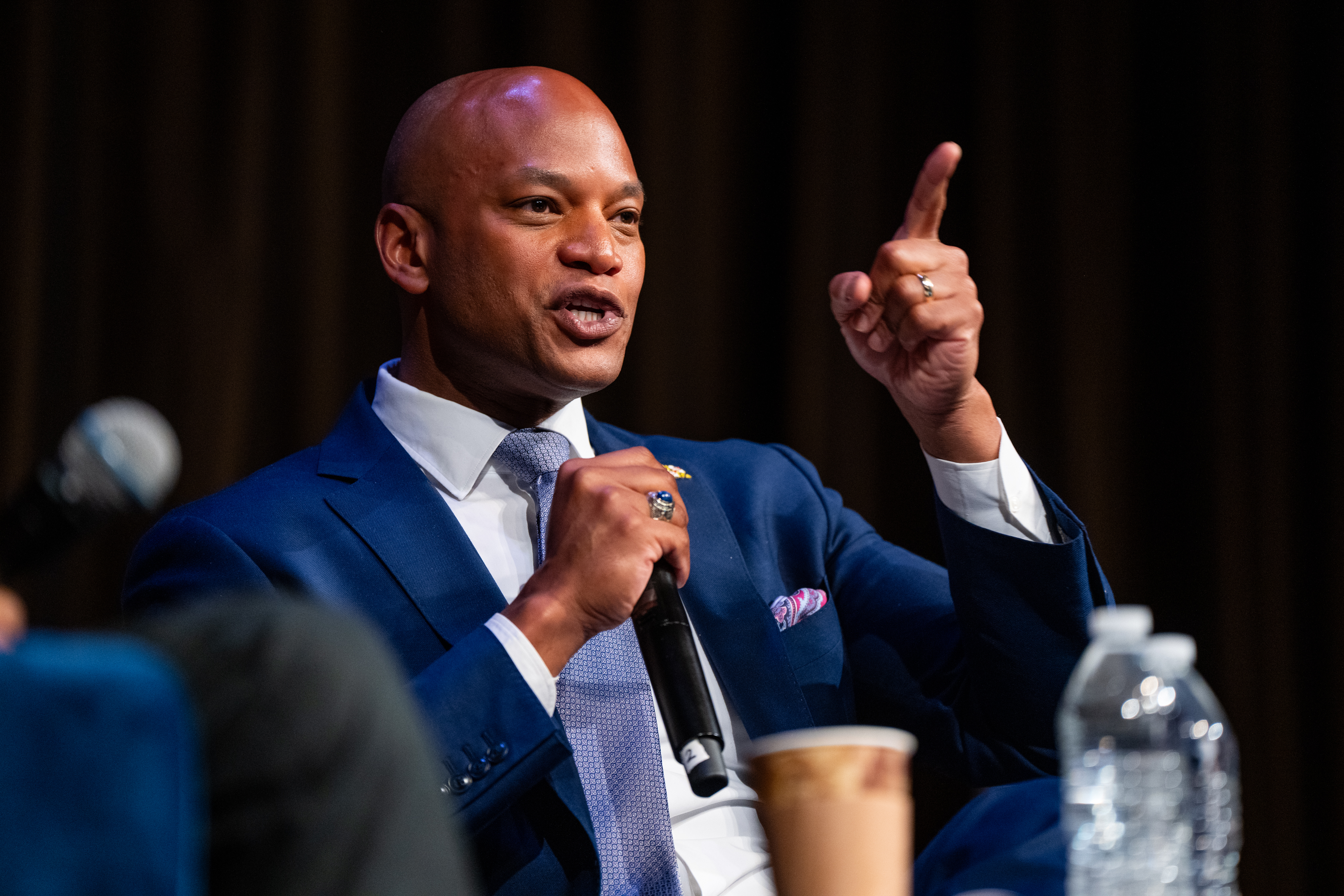
Wes Moore, Governor of Maryland, speaks during the National Action Network (NAN) Convention in New York, Thursday, April 9, 2026. (AP Photo/Angelina Katsanis)Angelina Katsanis
Gov. Wes Moore, a Democrat running for reelection, backs a number of legislative proposals in the Maryland statehouse that would require the centers to bring their own power and hire local union workers. But he has mostly demurred on a statewide moratorium, saying it is up to local governments to decide, online news outlet Maryland Matters reported.
Similar to Shapiro’s Republican opponent, Stacy Garrity, Moore’s GOP challenger, Dan Cox, has called for a statewide moratorium on the projects.
Virginia
Moratorium: No
Tax credit available: Yes
Restrictions: Virginia is among the hottest spots for data center development in the country, with more than 340 data centers in operation and hundreds more proposed. In July, the Virginia General Assembly imposed a new electricity-use tax set to run out in two years.
Virginia is also seeing massive tax revenues from its burgeoning data center industry. One wealthycounty just south of Washington is home to 250 data centers.The local government thereis expected to bring in $1.3 billion in additional tax revenue from data centers, allowing the county to reduce property taxes by 30%, the New York Post reported.
Restrictions: Ohio has the fifth-most data centers in the country, with more than 200 already operating, according to the state’s consumer protection office.
The GOP-controlled state broadly still welcomes data center development. But its utilities commission approved a tariff for large data centers,requiring them to pay for at least 85% of their electricity capacity.
It is also a top issue on the campaign trail in the state’s hotly contested U.S. Senate race that could decide control of the chamber: Top Republicans warned AI developers that they need to fix their public image or lose supportive candidates, Axios reported.
Texas
Moratorium: Yes, for future development
Tax credit available: Yes
Restrictions: In what was once the most welcoming state in the country for data center development, new developments in Texas are now indefinitely on hold.
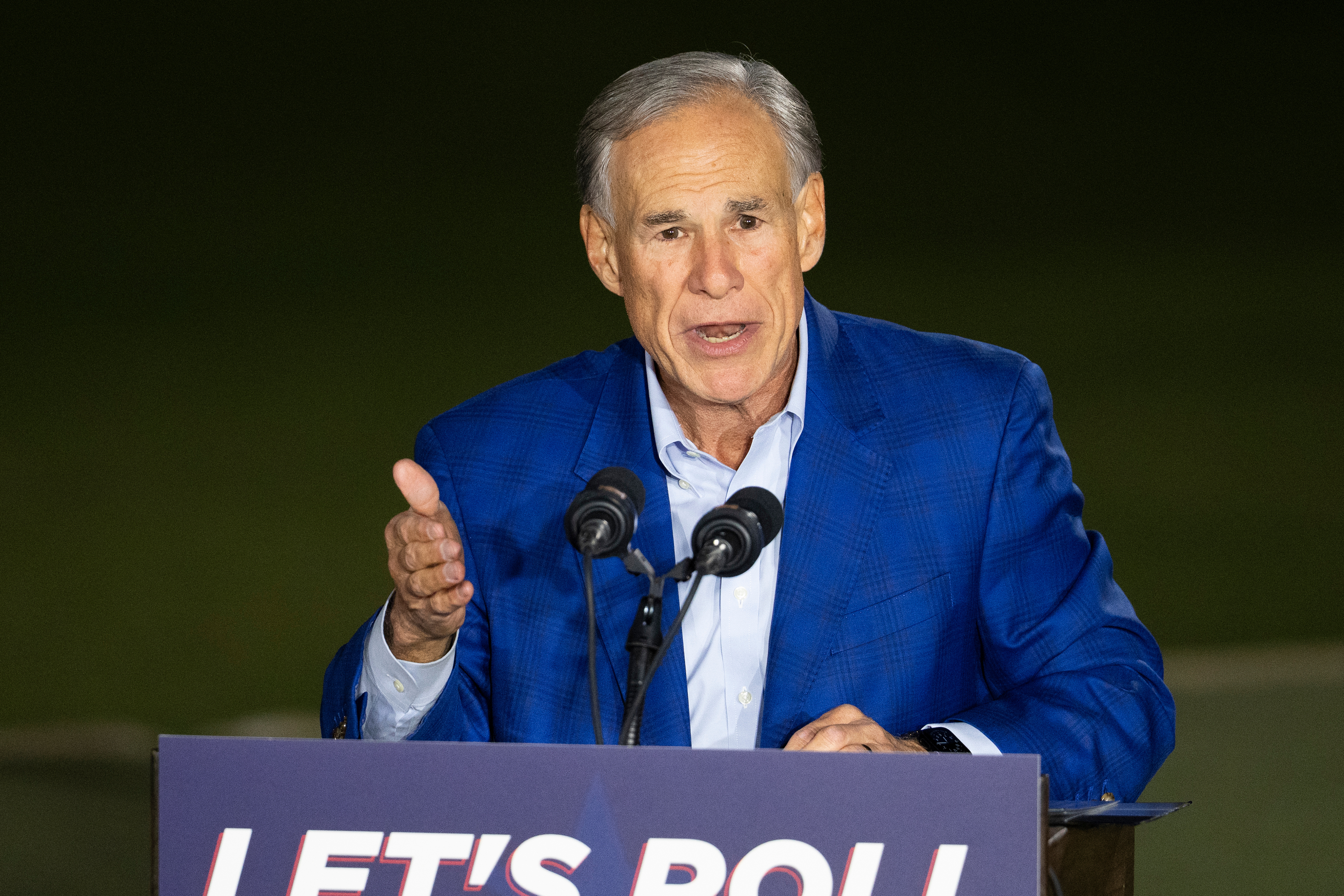
Gov. Greg Abbott announces his re-election campaign for Texas governor in Houston, Sunday, Nov. 9, 2025. (Jason Fochtman/Houston Chronicle via AP)Jason Fochtman
This month, Gov. Greg Abbott, a Republican, announced a moratorium on future data center projects while the state’s utility commission and electricity council audit the current projects’ power and water use, and more.
Kentucky
Moratorium: No
Tax credits available: Yes
Restrictions: Gov. Andy Beshear, like Shapiro an ambitious Democrat and a potential 2028 presidential contender, also signed an executive order earlier this month that requires data center developers to submit an energy plan that outlines that the project will not raise prices for ratepayers. He also directed the state’s utility commission to deny any rate increases to cover increased costs from data centers.
Beshear’s order was met with criticism from some experts who claim his order was not enforceable, particularly for its inclusion of a directive to an independent agency not under the governor’s discretion, the Kentucky Lantern reported.
Roxborough Memorial Hospital was cited by the Pennsylvania Department of Health for failing to properly dispose of medical waste and document patient treatment plans earlier this year.
The incidents were among 11 times inspectors visited the hospital, which is part of California-based Prime Healthcare Foundation, to investigate potential safety problems.
Here’s a look at the publicly available details:
July 17, 2025: Inspectors came to investigate a complaint but found the hospital was in compliance. Complaint details are not made public when inspectors determine it was unfounded.
July 22: Inspectors followed up on an April 2025 citation regarding failure to report suspected elder abuse and found the hospital was not in compliance. The hospital had been cited for failing to report suspected abuse of a patient at the behavioral health facility where they had been staying before arriving at Roxborough. In April, the hospital said it would update its policies to make clear suspected abuse should be reported as soon as possible and retrain staff. In July, inspectors found the hospital had reported the suspected abuse to the behavioral health facility, but not to the Pennsylvania Department of Health, as required. The hospital said it would clarify in its policies that all cases of suspected abuse should be reported to the health department.
Aug. 4: The hospital was cited for failing to properly transfer patients under federal EMTALA (Emergency Medical Treatment and Labor Act) protocol. In one of 11 patient records inspectors reviewed, staff transferred a patient to another facility without sending along their emergency records. The hospital was also cited for a staff member who had not completed mandatory annual EMTALA training since 2022. The hospital retrained staff on documenting patient transfers and agreed to hold monthly meetings on EMTALA compliance. Staff members who are not up-to-date on their EMTALA training will be removed from the schedule until they complete the required training.
Oct. 15: Inspectors followed up on the August EMTALA transfer complaint and found the hospital was in compliance.
Feb. 2, 2026: Inspectors followed up again on the April abuse reporting citation and found the hospital was in compliance.
Feb. 12: Inspectors came to investigate a complaint but found the hospital was in compliance.
March 4: Inspectors cited the hospital for improper medical waste disposal and unsafe equipment in behavioral health rooms. Inspectors found that a pharmaceutical disposal box was unlocked and lined with a black trash bag, which is not approved for pharmaceutical waste disposal containers. The hospital was also cited for cords attached to call bells on beds in the geriatric psychiatric unit, which could be dangerous for people at risk of self-harm. The hospital retrained staff on pharmaceutical waste disposal and replaced the corded call bells with wireless systems.
March 4: Inspectors visited for a mental health survey and cited the hospital for failing to complete written treatment plans for one of 12 patient files they reviewed. The hospital retrained staff on documentation and the importance of scanning any written documentation into patients’ electronic files.
March 25: Inspectors came to investigate a complaint but found the hospital was in compliance.
March 31: Inspectors visited for a mental health survey and found the hospital was in compliance.
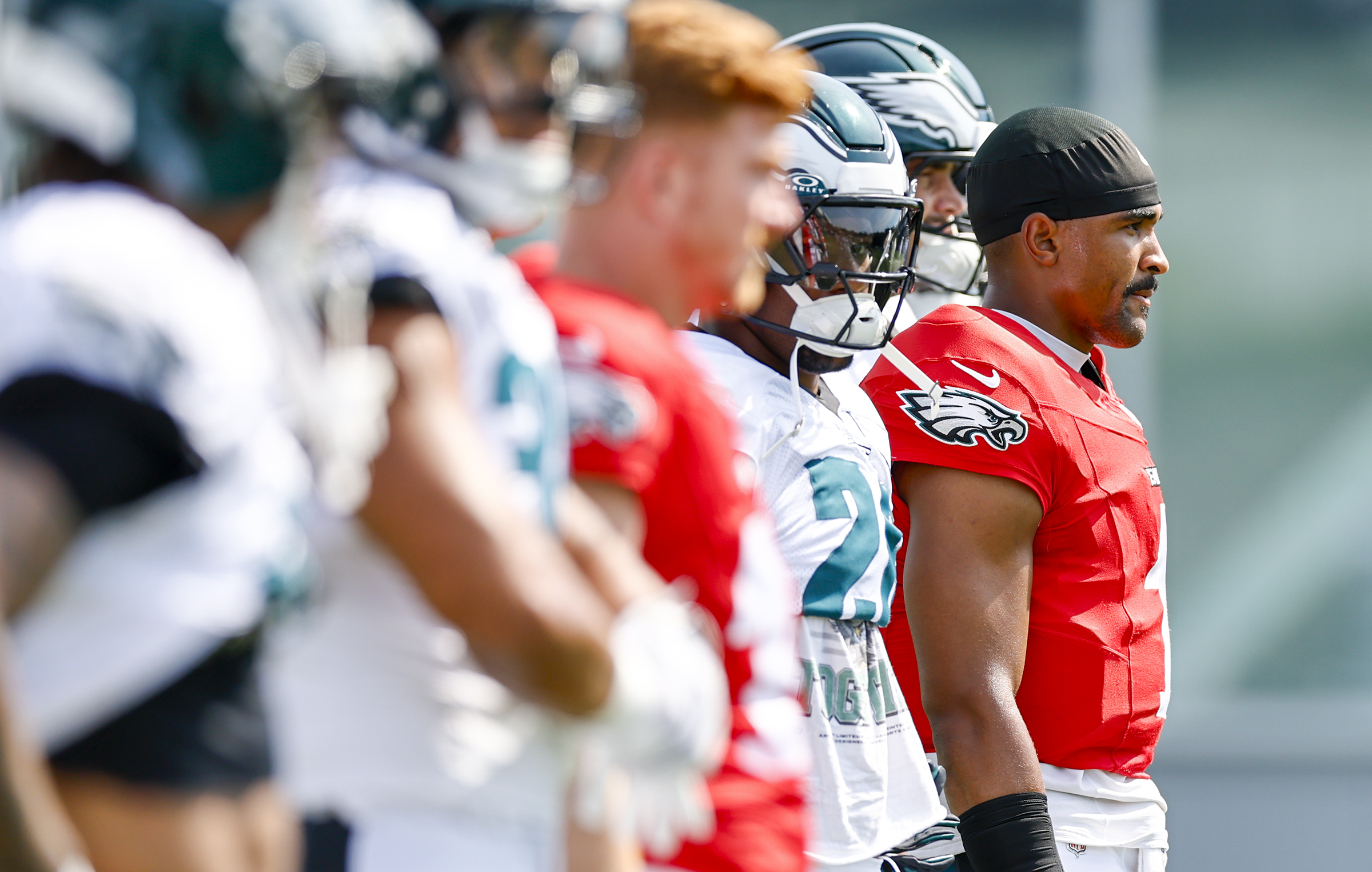
FOXBOROUGH, Mass. — The Eagles held the 14th open practice of their 2026 training camp — the second of two joint practices with the Patriots — on Thursday at the New Balance Athletics Center. Here were my observations from Day 14 (and links to Days 1, 2, 3, 4, 5, 6, 7, 8, 9, 10, 11, 12, and 13):
Lemon drop
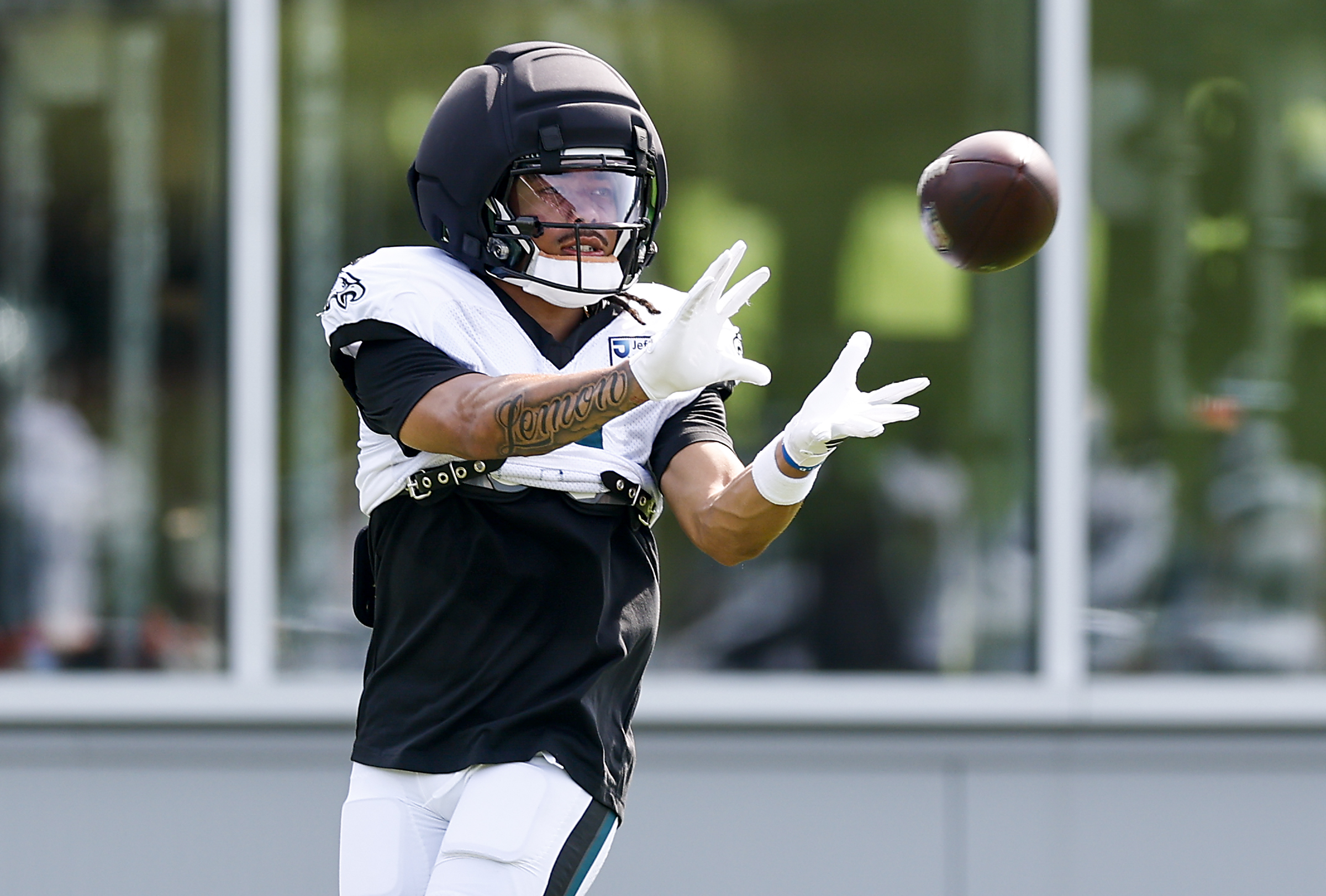
Makai Lemon made his official return to practice after missing more than two weeks with a hamstring injury. The Eagles listed him as limited the day before, but he wasn’t in pads and did almost nothing. The rookie wide receiver was fully suited up on Thursday, however, and participated in individual drills. It’s unlikely he plays Saturday against the Patriots in the second preseason game, but there’s a chance he can get some live repetitions in the preseason finale vs. the Bengals on Aug. 28.
Makai Lemon was back at practice for the Eagles on Thursday. Yong Kim / Staff Photographer
Receiver DeVonta Smith (hamstring) was limited for a third straight day. Receiver Elijah Moore was added to the injury list after suffering a neck injury on Wednesday. The following players continued to be sidelined: Defensive tackle Byron Young (shoulder), cornerback Jonathan Jones (shoulder), tight end Grant Calcaterra (back), cornerback Jakorian Bennett (knee), receiver Johnny Wilson (knee), running back Dameon Pierce (hamstring), tackle John Ojukwu (pectoral), and cornerback Tariq Castro-Fields (heel).
Defensive tackle Jalen Carter was excused for a personal reason. Outside linebacker Keyshawn James-Newby (ankle) and cornerback Shaun Wade (eye/shoulder) were also limited.
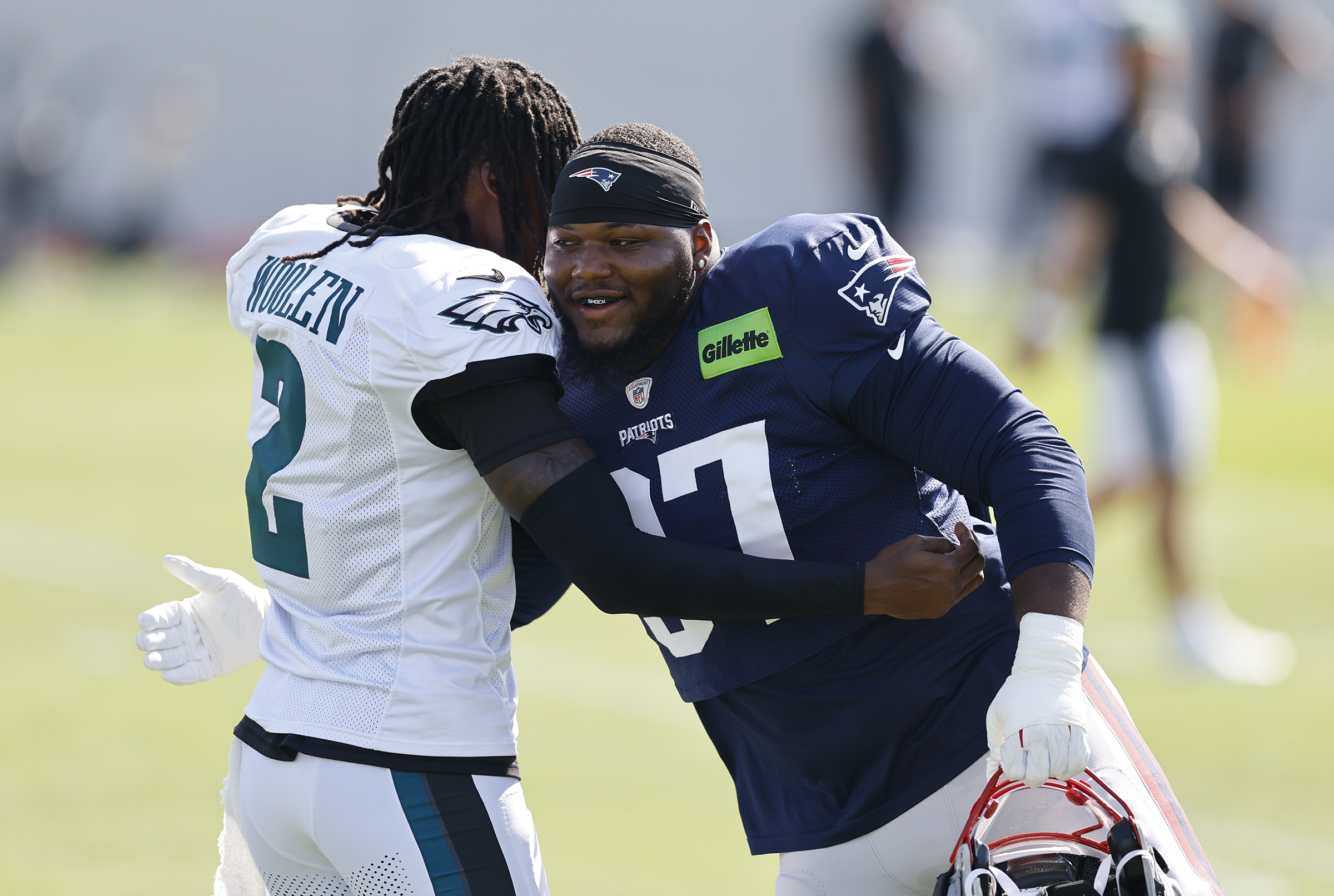
Riq Woolen (with ex-Eagle Milton Williams) had a stronger Day 2 against the Patriots. Yong Kim / Staff Photographer
Riq-ola
Riq Woolen had a tough first joint practice with the Pats, but he rebounded on Day 2. If there’s a position where you need to have a short memory, it’s cornerback. And Woolen showed it with his performance 24 hours later. He allowed some catches, but he prevented as many.
He was involved in maybe the two biggest plays of the day. With the Patriots near the goal line, Woolen lined up over A.J. Brown, who got the better of the corner several times the day before. Brown ran a quick out pattern and Woolen was in his hip pocket. Quarterback Drake Maye only had eyes for his No. 1 receiver. Woolen read them, jumped the route and raced the other way with the ball. He flopped into the end zone for a would-be 100-yard interception return for a touchdown.
Later in the final red zone period when both teams converged on one field, Maye again forced a throw to Brown. Woolen had tight man coverage on the short route and ripped the ball out into the air. Outside linebacker Jalyx Hunt dove and somehow caught the ball before it hit the ground. Hunt just has a sense for the ball. He’s had a great summer.
Woolen also notched a few pass breakups vs. Romeo Doubs, who gave him fits on Wednesday too. He lost the Patriots receiver in the final red zone period and didn’t have over-the-top help from safety Andrew Mukuba. Woolen slapped his hands in frustration, but he bounced back on the two-point conversion and made sure a juggling Brown didn’t secure the ball inbounds.
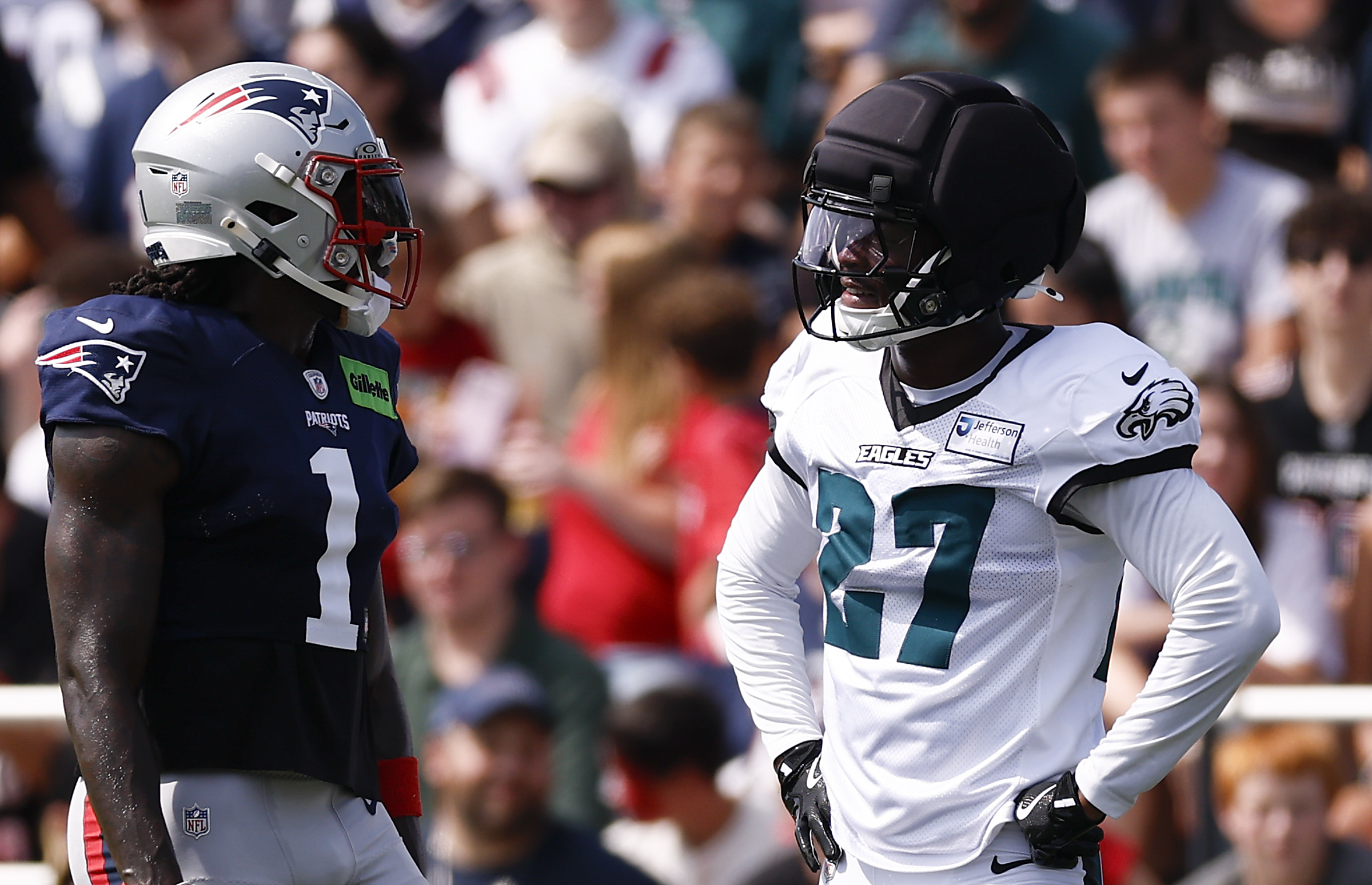
Eagles cornerback Quinyon Mitchell looks over at Patriots wide receiver A.J. Brown during a joint practice on Thursday. Yong Kim / Staff Photographer
Brown points
Brown might not have been as spectacular as he was in the first workout, but he had his moments. He once again faced cornerback Quinyon Mitchell in the first one-on-one. Brown made an acrobatic catch in which he tipped the ball to himself and dragged his feet in the back corner of the end zone. The nearby referee ruled him out, but I thought he was inbounds.
In two-on-two drills, Brown got Mitchell to slip after his break and scored. He flashed his strong hands on a contested ball over the middle a few reps later. Brown also caught a touchdown in 11-on-11 drills near the stands and celebrated with Patriots fans. Mitchell had a few strong reps as well. He locked up Brown on a deep route in which Maye’s aimless pass fell to the ground.
Quarterback Jalen Hurts and Co. had their successes in the one-on-one and two-on-two portions. Tight end Dallas Goedert used subtle movements to create enough separation for a catch in the end zone. Quarterback Andy Dalton fired a pass to Eli Stowers that sailed past the rookie tight end before he looked back. Dalton looked nonplussed.
There was a similar miscommunication between Hurts and Hollywood Brown in which the receiver didn’t turn his head in time. Hurts had a visual reaction and spoke to Brown afterward. They’ve had mix-ups in their first camp together, but have worked on improving their chemistry after practice. It eventually paid off (foreshadowing).
Sean Mannion’s offense was hot and cold again in the second joint practice with the Patriots. Yong Kim / Staff Photographer
Running up that hill
I spent most of practice watching the Eagles offense. Sean Mannion’s unit started slow and finished strong, unlike the day before when it got off to a hot start before petering out. With most of team drills worked inside the red zone, the condensed area made it more difficult for the pass offense.
The run offense didn’t have that excuse and it struggled after an impressive showing the day prior. Saquon Barkley had few holes, especially on outside zone runs. He was strung out on his first carry. Patriots edge Gabe Jacas broke through for a tackle for loss on Barkley’s next tote. Patriots defensive tackle Milton Williams was able to get inside tackle Lane Johnson and stop Barkley after a minimal gain.
New England’s defense pushed the envelop at times and would tackle to the ground. Johnson took exception at one point and there was a scrum. The Eagles’ frustration boiled over several more times. Barkley appeared to get into it with Patriots defensive tackle Christian Barmore even though neither was participating in the drills. Receiver Dontayvion Wicks was in the middle of a fracas that halted practice.
Tackle Jordan Mailata said afterward that the fights disrupted the flow of the run game. But it was tough sledding for both of the Eagles’ units. Running backs Tank Bigsby and Will Shipley —who shined on Wednesday — kept getting bottled up.
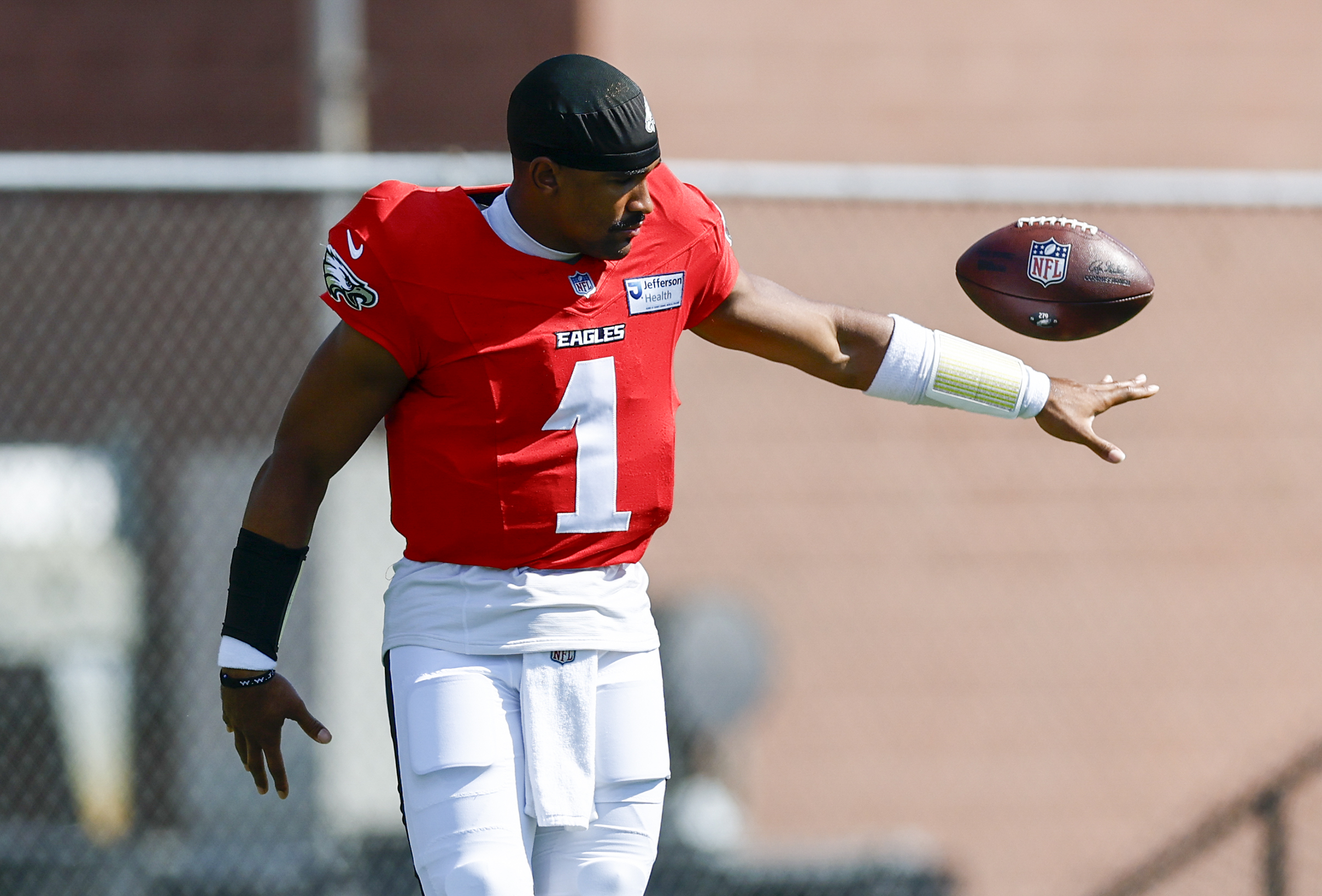
Jalen Hurts struggled at times on Thursday. Yong Kim / Staff Photographer
Tough enough
The lack of production on the ground made it even harder on the passing attack. On Hurts’ first drop, Williams beat his block and was in the quarterback’s face for a would-be sack. Hurts kept playing, but his pass was deflected to Patriots cornerback Marcus Jones for an interception and he ran the other way. A play later, the blitz was picked up, but Hurts rushed his throw to receiver Darius Cooper and it fell incomplete. The Eagles ended the set with a touchdown when Hurts found Goedert over the middle in the back of the end zone.
The first offense went back to being out of sorts, though, in the next stanza. Hurts picked up some yards on a draw play. But Wicks dropped a pass. And when Hurts had nothing, he held the ball and was pressured into taking a would-be loss. Later on, Patriots linebacker Christian Elliss wasn’t fooled by another Hurts draw. Safety Kevin Byard blitzed the “A” gap and was unblocked. Hurts again kept the play alive, but edge Elijah Ponder dropped and broke up the throw to Bigsby.
Dontayvion Wicks had a TD and was also the intended receiver on a Patriots interception. Yong Kim / Staff Photographer
Pick-le ball
Hurts rebounded with another touchdown in the post — this time to Wicks, who celebrated with Bigsby. But for every positive there were two or three negatives. Hurts was tackled for a loss by Patriots linebacker K.J. Britt on a busted designed run. Two plays later, Jones had his second pick of Hurts when he stepped in front of Wicks near the sideline.
The quarterback went back to Wicks over the middle on a quick timing play that had misdirection motion at the snap at the start of the next set. But center Cam Jurgens got beat when Patriots defensive tackle Cory Durden penetrated into the backfield and sacked Hurts.
Then the Eagles committed a false start. Hurts scrambled out of bounds for little or no gain. And when Bigsby finally broke outside for a long run, a holding penalty negated the first down. Mannion did manage to scheme tight end Johnny Mundt open for yards after the catch on a crosser. But the period ended without points.
Hollywood Brown (0) made up for a previous route blunder with a touchdown in the scrimmage portion of practice. Jose F. Moreno / Staff Photographer
Red-letter end
The Eagles first offense would save face in the final red zone “scrimmage.” Hurts was workmanlike. He hit Goedert on a quickie for six yards. He then went to Wicks, who turned his defender around the 5-yard line. On first and goal, Hurts was flushed to the right and he found Hollywood Brown in the back of the end zone. But the receiver couldn’t get both feet inbounds.
Hurts had good protection on the next down, though, and hurled a strike to a diving Brown for the touchdown. Cooper hauled in the ensuing two-pointer after Hurts bought time outside the pocket, but another holding penalty took the conversion off the board.
Jordan Davis (90) was disruptive on Thursday. Yong Kim / Staff Photographer
In the trenches
Even without Carter and Young, the Eagles’ interior defensive line won the run battle. Every time I glanced over to the other field, defensive tackles Jordan Davis and Moro Ojomo disrupted the Patriots’ ground assault. Vic Fangio can get away with the highest percentage of light boxes in the NFL because he has the horses up front.
I didn’t catch all of the one-on-ones between the Eagles’ pass rushers and the Patriots offensive line, but of the matchups I watched, they fared well. Hunt split his two reps vs. tackle Will Campbell, but edge Nolan Smith Jr. had victories over tackle Marcus Bryant. Defensive tackle Ty Robinson used his trusty old club/swim move to win his first turn, but guard Alijah Vera-Tucker took the rematch.
Linebacker Zack Baun took a rare pass rush and dusted tackle Caleb Lomu. Edge Arnold Ebiketie had a win and draw vs. tackle Dametrious Crownover. The education of rookie defensive tackle Uar Bernard continued. Guard JonDarius Morgan handled him with relative ease.
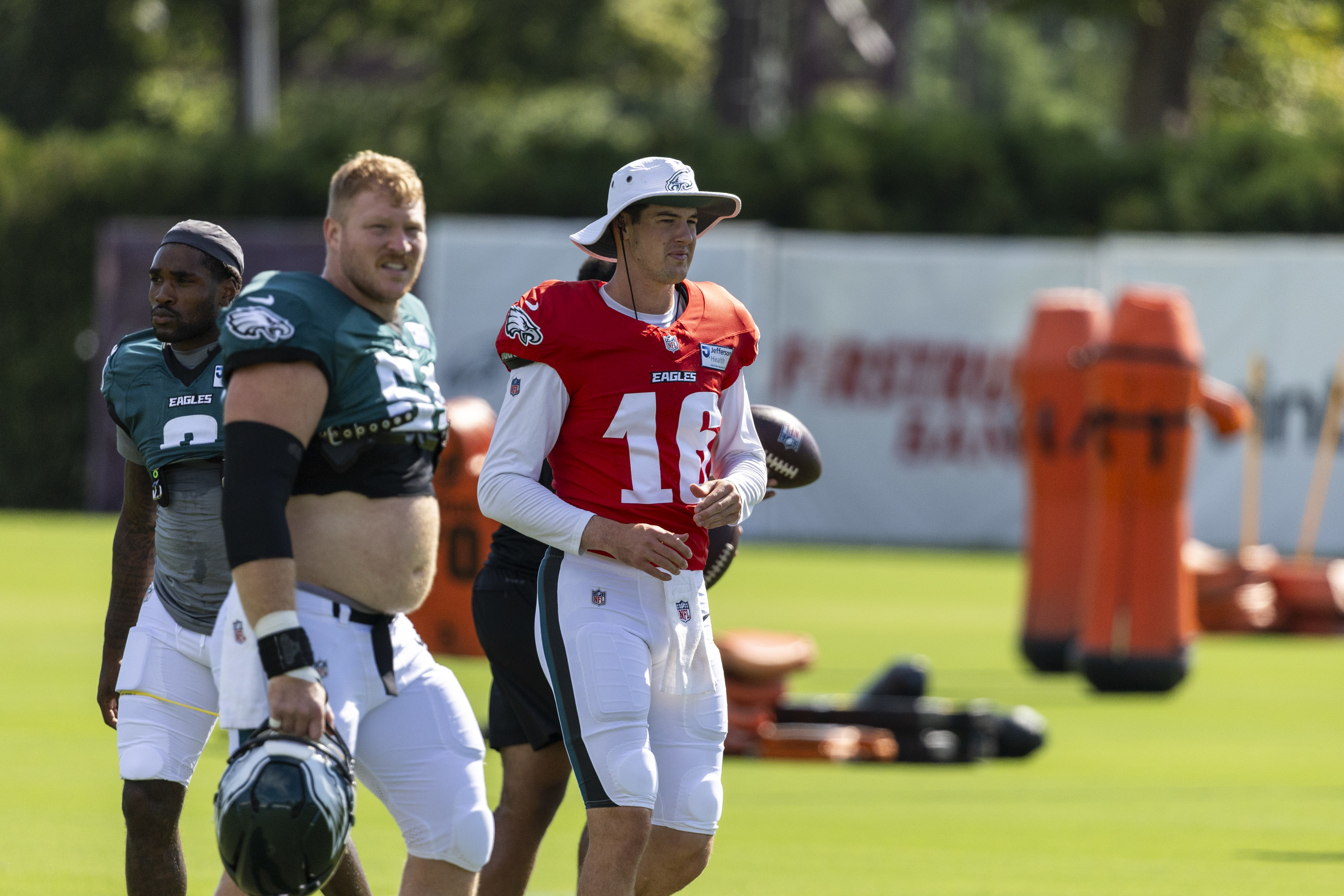
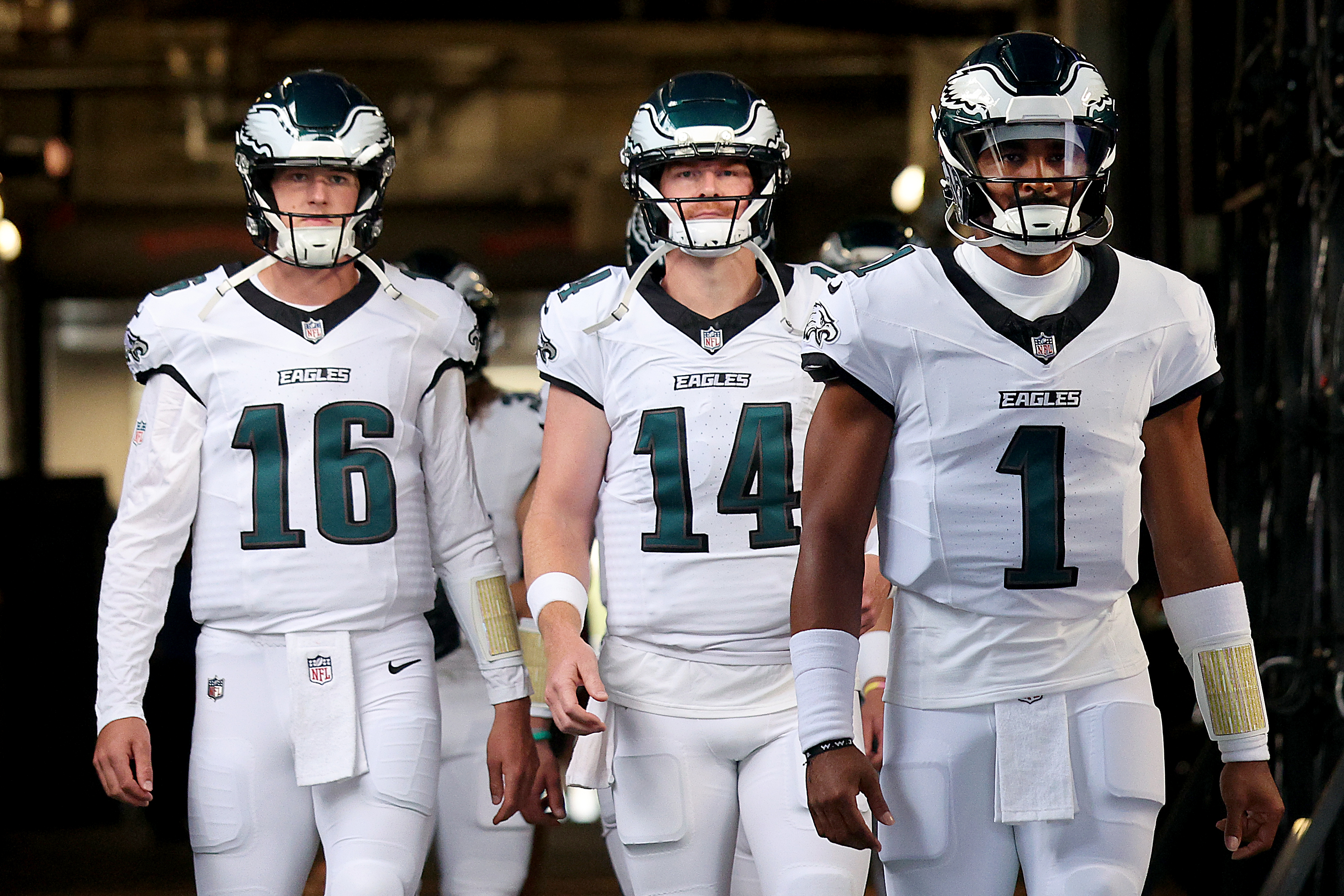
Tanner McKee (16) was the second quarterback up on Thursday. Tyger Williams / Staff Photographer
Second fiddle
Tanner McKee got the nod ahead of Dalton in the first set with the second offense. The quarterback connected with receiver Samori Toure on an out pattern and checked down to Stowers. Speaking of Stowers, he had a solid lead block on a Bigsby run to the perimeter. Another Eagles holding penalty brought back a later Bigsby run.
McKee tried for Quez Watkins on a corner fade into the end zone, but his pass was too high for the receiver to pull in. Speaking of penalties, the Eagles had an offensive pass interference on a screen. McKee was forced to scramble when a bubble screen to receiver Britain Covey was thwarted. He did hook up with tight end E.J. Jenkins in between the hashes.
Dalton was under center for the final red-zone period. He hit Watkins for a first down on his first drop. But the quarterback and receiver were out of sync on their next target. Dalton then threw out of bounds when Stowers was covered. And on fourth-and-goal, his pass to Toure was a touch late and broken up.
Extra points
Rookie quarterback Cole Payton got the day off — at least in team drills. … Shipley and Cooper were the first two returners during kickoff drills. … The Eagles will have a closed walkthrough ahead of Saturday’s preseason game with the Patriots. Few, if any of the starters are expected to play. Sunday will be an off day. Camp resumes back in Philly on Monday.
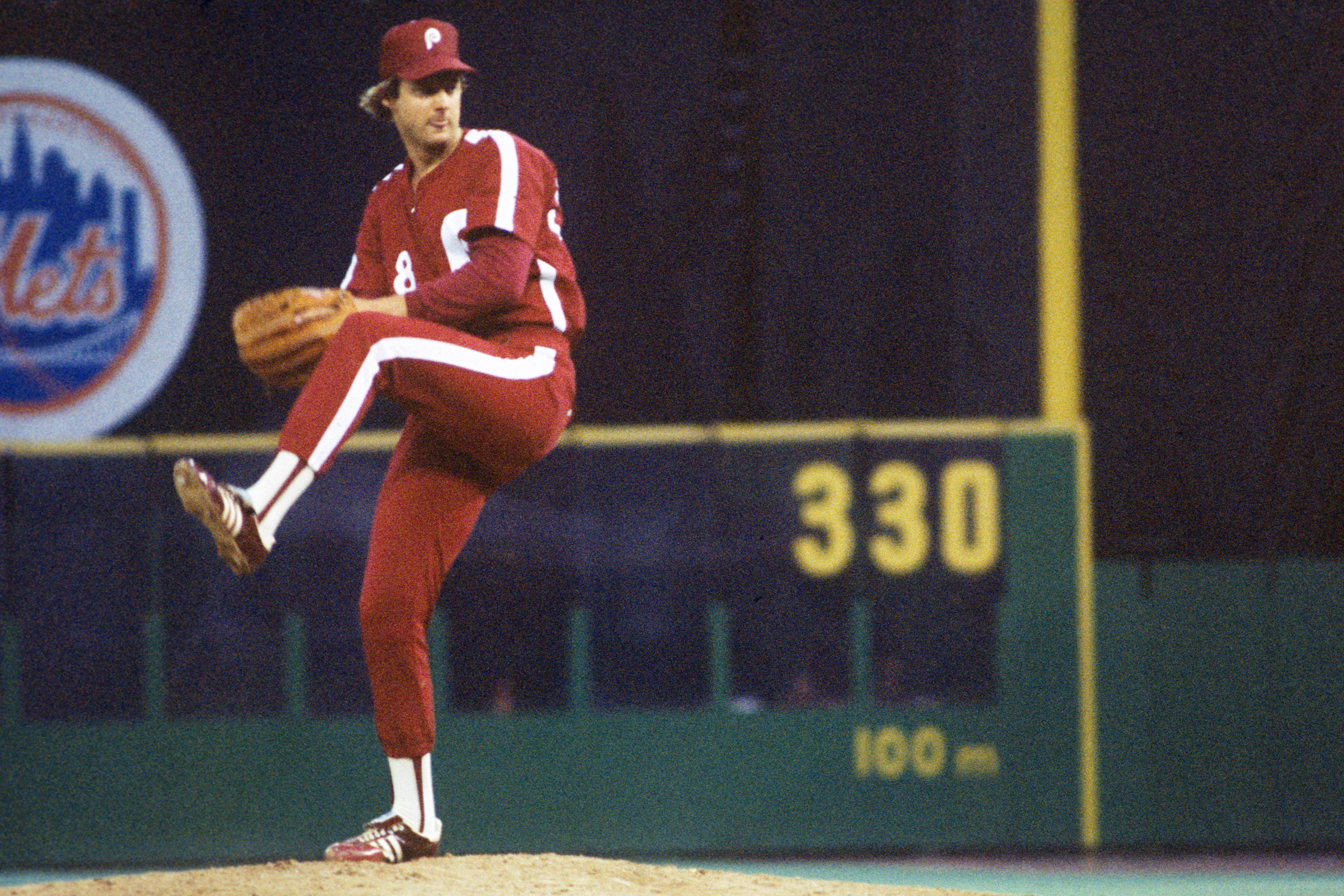
Steve Ontiveros was for once healthy, and had not yet joined the Phillies, when he and Tommy John became teammates, pitchers on the Oakland Athletics in 1985. Ontiveros was 24 years old, a right-hander having a terrific rookie season: a 1.93 earned run average, eight saves. John was already 42, still the same soft-throwing lefty he’d always been, more than a decade removed from undergoing the revolutionary surgical procedure that still bears his name. They did not know then the physiological connection they would come to share.
Over the 11 games that he pitched for the Phillies in 1989 and 1990, in an era full of forgettable baseball here, Ontiveros managed to complete a remarkable story — and to introduce Philadelphia to the future of sports medicine. He was the first Phillies pitcher to have Tommy John surgery and return to pitch for the team.
— Philly Sports By Number (@philly_number) March 12, 2026
After starting 2-0 and allowing just two earned runs in his first 20 innings in ‘89, after offering a glimpse of greatness to an awful Phillies team, Ontiveros needed some magical science and the steady hands of surgeon Frank Jobe just to take the mound in the majors again. When he caught the news reports that John had died at 83 late last Saturday night, Ontiveros couldn’t help but recall John’s daring and desperate decision back in 1974 — his willingness to have Jobe try replacing a torn ligament in John’s left elbow with a fresh tendon from somewhere on John’s body.
The procedure saved John’s career. It has saved hundreds of pitchers’ careers since. Steve Ontiveros’ star-crossed stretch in Major League Baseball was one of them.
“He was fantastic,” Ontiveros, 65, said by speakerphone as he and his wife, Cindy, drove near their Scottsdale, Ariz., home Tuesday morning. “Think about it: No one in the history of the game had had that done. It was so off the wall, out of outer space, to even think about that type of surgery. But when that’s your livelihood, you’ll do anything. You’ll take any chance because you want to play. You want to compete.”
He and John — who appeared in 760 games, won 288, threw 46 shutouts, and should have been inducted into the National Baseball Hall of Fame long ago — were different people, different pitchers, and at different stages of their lives when they met. The A’s picked Ontiveros in the second round of the 1982 draft. A standout at the University of Michigan, a fierce black goatee rimming his mouth, he had five pitches, each of which he could throw with exquisite control. “When I was healthy,” he said, “I got people out.”
John, with his granddad-bod physique and his slow-slower-slowest stuff, seemed a being from another time, another world. Ontiveros, for instance, would be baffled watching him slide himself into a scalding hot whirlpool before every start. The Centers for Disease Control recommends keeping the water in a Jacuzzi under 104 degrees Fahrenheit, but John would crank the temperature to 115 and spend 10 minutes practically poaching himself. When Ontiveros asked him about the strange ritual, John explained that the soak had been part of his pre-start preparation for years. It saps my energy, he told Ontiveros. When I come in, if I’m throwing 85, I get killed. But if I’m throwing 82, they can’t touch me.
John was in the midst of his 25th and next-to-last season in the majors, winning nine games and pitching 176⅔ innings for the Yankees in 1988, when Ontiveros first experienced the arm trouble that would dog him thereafter. The prospective third starter on an Oakland team that starred Jose Canseco, Mark McGwire, Dennis Eckersley, and Dave “Smoke” Stewart and would win the American League pennant, Ontiveros had pain flare up in his elbow during spring training. The A’s pushed him back in the rotation, to the No. 5 spot, to give him more rest, but it didn’t help.
Before Ontiveros’s June 6 start in Kansas City against the Royals, the A’s training staff tried to stabilize his elbow by wrapping it in tape as if it were an injured knee. Twenty pitches into his warmups, the tape fell off, and though Ontiveros allowed just one earned run in seven innings that night, he knew something was wrong.
Tommy John crossed paths with Steve Ontiveros on the A’s in 1985.
“I’m in the seventh inning, and I throw a pitch, get the ball from the catcher, and I’d have to walk around the mound until the pain went away,” he said. “When I’d climb back on the mound, I’d make another pitch. I did that through the entire inning. I said, ‘I can’t do this anymore.’”
He didn’t appear in another game for the A’s that season after early August, and in the offseason he underwent elbow surgery that wasn’t as radical as John’s but was close. A ligament in Ontiveros’ elbow had stretched so far that, he said, “it wasn’t performing as a ligament anymore.” So orthopedist Lewis Yocum shortened it, folding it over onto itself and suturing it.
The A’s released Ontiveros in December ‘88, and the Phillies signed him as a free agent in February ‘89. Pitchers like him were the Phillies’ currency back then: injured or aging long shots who had once been promising prospects or accomplished big-leaguers. Danny Cox, Dave LaPoint, David Palmer, later Fernando Valenzuela and Sid Fernandez: Each of them tried to complete a semi-miraculous comeback.
Despite being a nonroster invitee to spring training, Ontiveros cracked the rotation, then dominated the Cubs — eight innings, one earned run — on April 6 before throwing seven shutout innings to beat the Montreal Expos at Veterans Stadium five days later. The Phillies were 5-2 and in first place in the National League East. “This qualifies as a pleasant surprise in my book,” manager Nick Leyva said after the game.
But after his brilliant start against the Expos, Ontiveros felt the same twinge of pain that he had the season before. He lasted five innings, giving up just one run, in a loss to the New York Mets on April 19 before the Phillies put him on the injured list, with a “strained ligament,” for nearly two months. “I went down, and we lost two other pitchers,” he said. “We instantly sucked after that.” He returned in June and was hammered: three starts, 10⅔ innings, 19 hits, 11 earned runs.
“I wasn’t able to separate the pain from the pitch,” Ontiveros said. “It starts accumulating in your head, the pain that’s going to be coming. It takes away your focus from getting a hitter out. You focus on, ‘What am I feeling right now? Is my arm going to fall off on the next pitch?’ I could not overcome that amount of pain mentally. There may be some people who could. I was not one of them. I was so distracted by the amount of pain I was feeling and the amount of pain that was to come if I kept throwing.”
There was no avoiding the knife now, but the Phillies had little experience with Tommy John surgery. Larry Christenson was their first pitcher to have it, in 1983, in a last-ditch effort to end his lengthy succession of elbow injuries. He never pitched for them or anyone else again. The good news for Ontiveros and the Phillies was that Jobe himself would handle the operation. The bad news was that, even 15 years after John’s pioneering procedure, only so many advancements and improvements to it and a pitcher’s rehabilitation process had been made.
Before Jobe and his team performed the surgery, on July 20, 1989, they asked Ontiveros if he wanted them to take the healthy ligament from his right arm or his left. The left, of course, Ontiveros told them. Why weaken and damage his right arm further? Except the doctors screwed up, instead removing a six-inch tendon from Ontiveros’s right wrist and grafting it onto his elbow.
The mistake prolonged Ontiveros’ rehab, which was hardly the kind of comprehensive, reliable course of action that would reassure an elite athlete whose livelihood was hanging in the balance. Working with the Phillies’ medical and training staff and with Steve Kush, a trainer based in Arizona, Ontiveros tried to improve his right arm’s range of motion before strengthening the muscles around his elbow joint. But no one was completely certain what exercises he ought to be doing or how often he ought to be doing them. When he visited Jobe for a postsurgery consultation, Ontiveros asked the doctor for some direction.
“He literally handed me a copy of what they did with Tommy John,” Ontiveros said. “It was 10 pages of nothing. There was no structure to any of it. I gave it to Steve, and we just kind of winged it.”
Having read that another pitcher, John Tudor, had recovered from Tommy John surgery in just eight months, Ontiveros pushed himself to match that ambitious timeline. “I went out in the offseason, and I threw outside,” he said, “and it was cold, and I felt a little tug. I went, ‘Uh, oh.’ I pushed it too fast, and it set me back months.” Still, the makeshift rehab went well enough that in August 1990, he made a start for the Phillies’ single-A affiliate in Clearwater. He lasted one inning. His arm, he said afterward, felt like he had stuck his finger into an electrical socket, and he was certain his career was finished. It did not have to be. There was some inflammation in his elbow, but rest would heal it. He talked with Cindy. They decided he would not give up.
When he pitched again in the majors, for the Phillies, at Wrigley Field against the Cubs on Sept. 13, 1990, throwing two shutout innings in relief, his senses seemed sharper: the smell of the grass on the infield and the ivy on the outfield walls, the tingle of Lake Michigan’s breeze.
“I went through so much [stuff] with the Phillies, and I loved playing for them,” said Ontiveros, who after retiring ran a baseball academy for 20 years that produced 13 major-league players. “I absolutely loved the fan base. Yeah, they’re brutal, but they’re also amazing. You do well, and they’ll let you know about it. Just being able to know a fan base has passion — I played four years in Oakland before that, and you’d see them come in by the third inning and leave by the seventh inning, and these were World Series-caliber players on a World Series-caliber team. You went to Philly, and it was intense, and I loved that.”
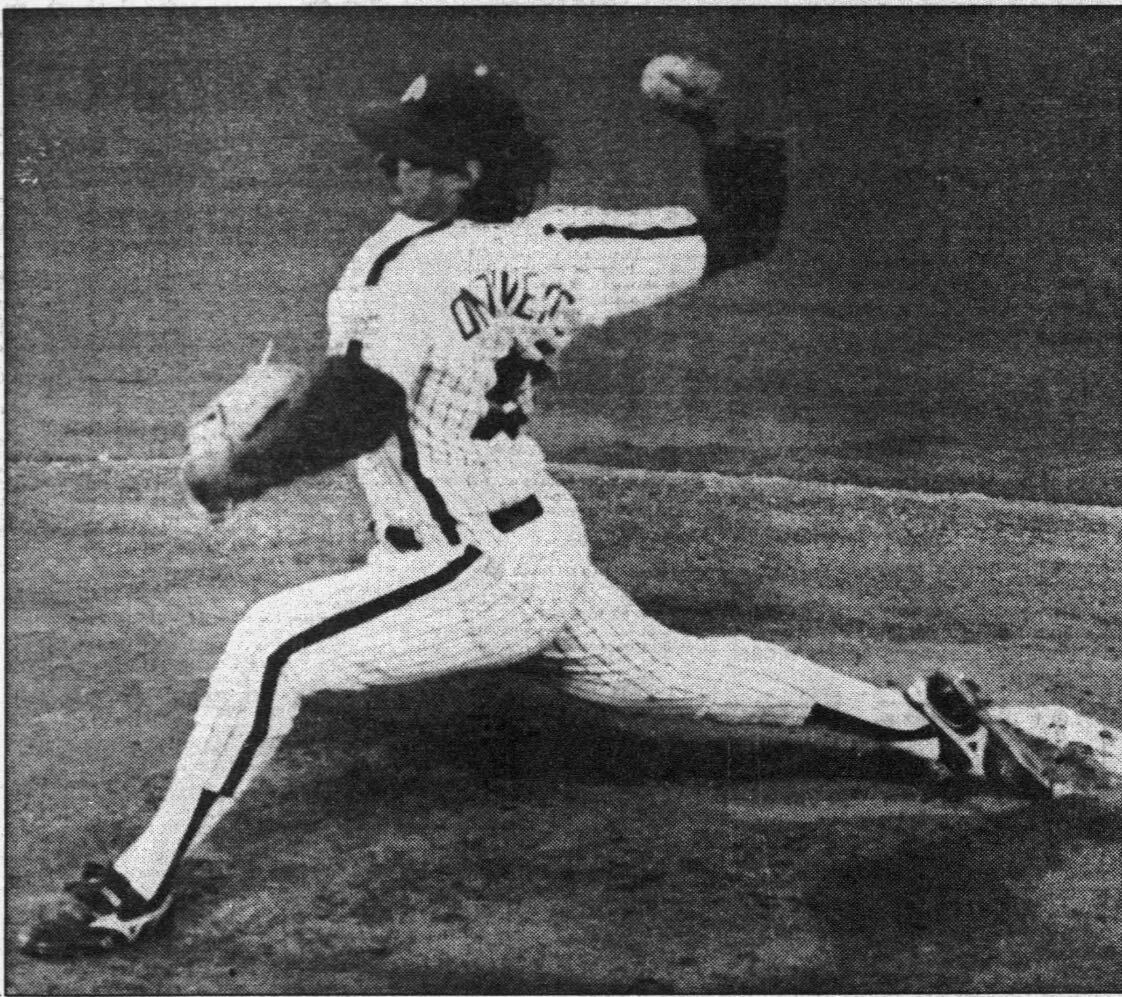
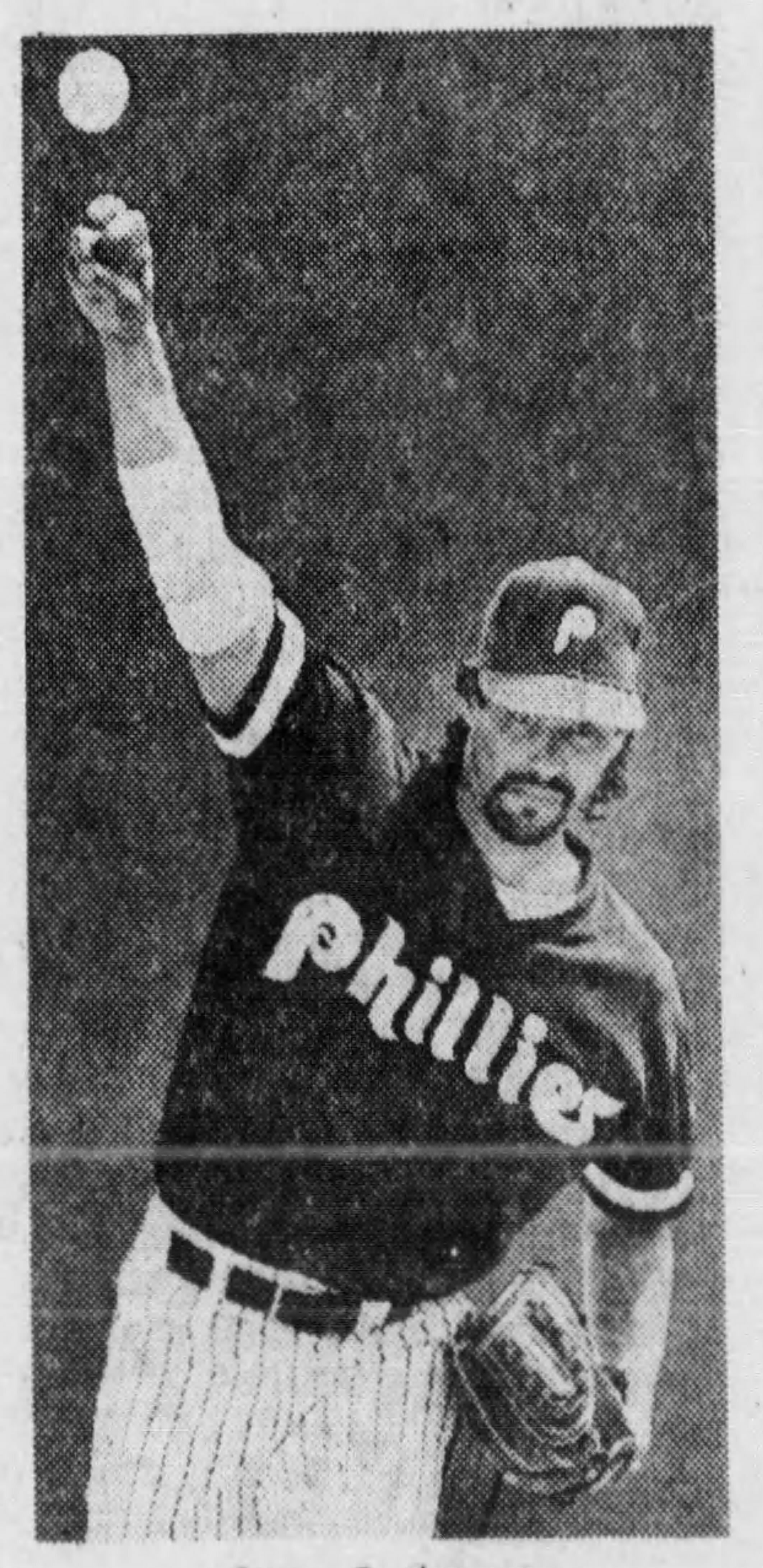
Steve Ontiveros pitched in 11 games for the Phillies over the 1989 and 1990 seasons.Daily News staff
Through a second Tommy John surgery, he somehow kept pitching, returning to the A’s, going 6-4 and leading the American League in ERA (2.65) in 1994, earning a spot on the AL All-Star Team in 1995, appearing in three games for the Boston Red Sox in 2000 when he was 39. When he was as close as he would get to being Tommy John himself, to having something else in common with the man whose name now lives forever.
“It gave me longevity,” he said. “That was good. That wouldn’t have happened otherwise. I’d have been done. It gave me an opportunity to continue my career. It’s just unfortunate that there weren’t that many people ahead of me.”
True, but there have been so many after him who could keep pitching, who could keep playing the game they loved. That legacy is Steve Ontiveros’, too, and as they continued on their morning drive, perhaps because she could hear the wistfulness and what-might-have-been in his voice, Cindy Ontiveros asked her husband a question.
Whether it’s Kobe Bryant mirroring Michael Jordan or Joel Embiid mastering Kobe’s footwork, imitation is the sincerest form of flattery (which actually is the case for that aphorism, since Oscar Wilde borrowed it from Charles Caleb Cotton).
The Phillies aren’t exactly mimicking deadline light-hitting addition Luis Arraez, but his arrival on Aug. 3 has meant everything to a team that had the most disappointing offense in baseball through two-thirds of the season.
The Phillies’ on-base percentage on Aug. 3 was .305, which was third-worst in baseball. The Phillies’ on-base percentage since Aug. 3, entering Wednesday night’s game, was .367, which was the best in baseball.
This makes sense — right? — since Arraez won league batting titles in 2022, 2023, and 2024, and he led the National League entering Wednesday, at .317.
However, since his arrival, Arraez has generally slumped. He was hitting .274 with a .292 on-base percentage since arriving from San Francisco. This might be because he’s batting fourth in the order after spending almost all of his career batting first or second. At any rate, it’s OK.
Because this has less to do with Arraez’s production than with Arraez’s presence and how it has affected the hitters around him.
Bryce Harper, the No. 3 batter in front of Arraez, was hitting .255 with an .862 OPS on Aug. 3. Since then, he’s hit .295 with a .939 OPS, fueled largely by his .530 on-base percentage, which includes 22 walks in 14 games.
Alec Bohm, hitting fifth behind Arraez, was hitting .226 on Aug. 3. Since then, he’s hit .396 with a 1.038 OPS and 11 RBIs in 14 games.
Bryson Stott, who bats sixth, was hitting .253 on Aug. 3. Since then, he’s hit .367, has a 10-game hitting streak, and, like Harper, his on-base percentage of .508 has as much to do with his eye as with his hands: Stott has 14 walks in those 14 games.
Harper has begged for protection for two seasons.
“I think it’s a huge impact in the 4 spot. It doesn’t matter if it’s me or Kyle. Because if Schwarbs is hitting there, the same thing is going to happen. So I think 4 spot is a huge impact. I think the numbers in the 4 spot weren’t very good last year, for our whole team. Whoever… pic.twitter.com/Gs1fPp5u7k
“As a lineup, any time you’re able to add somebody like that, obviously, it’s going to be really good for the team,” Harper said. “You know he’s [going] to put the bat on the ball.”
There might be other factors.
The Phillies held a hitters’ meeting just before Arraez arrived, and they talked a lot about being selective-aggressive, as hitting coach Kevin Long has preached since his arrival in 2022.
Long’s a superb hitting coach, but Long doesn’t hit. Long doesn’t set an example. Arraez does both, and his presence seems to have more obviously impacted production.
Between the meeting and Arraez’s arrival, the Phillies’ on-base percentage rose two points.
Between Arraez’s arrival and Wednesday night, the Phillies’ on-base percentage rose 62 points.
It’s not as if Arraez sets an example of selectivity. In fact, he’s seeing just 3.74 pitches per plate appearance this season, well below the big-league average of 4.13. And Arraez doesn’t walk much: he’s averaged 37.2 walks in his five full seasons, and he has 27 this season.
Luis Arraez doesn’t walk much, but he strikes out even less.Elizabeth Robertson / Staff Photographer
So, has he really affected the middle of the lineup?
“Yeah, for sure,” Stott said. “When you’re the guy behind him, you see him, when he swings the bat, it just feels like he’s going to get a hit.”
Bohm spoke after Tuesday’s win over the Marlins, in which the Phillies collected 10 hits. Nine of them were singles, but, really, Bohm’s double was a single, too, but the Marlins threw to the wrong man, so he stretched it into a double.
The core of the Phillies’ order is swinging at fewer tough strikes, waiting for their pitch, making balanced, controlled swings, keeping the bat in the strike zone longer, and not trying to hit home runs. Harper, Stott, and Bohm struck out just 17 times combined in the last 14 games.
On Tuesday, the Phillies scored at least six runs in a fifth straight game, the first time they’ve done that this season. They scored six on Monday, too, with 10 singles and a double.
They’ve become a fun team to watch by adding a fun player.
“He’s one of those infectious energy guys,” Bohm said. “And you see the ways he plays, the way he takes his at-bats, watching his at-bats — you spend time around good hitters, good hitters can make other hitters better.”
FOXBOROUGH, Mass. — The Eagles held the 13th practice of their 2026 training camp — and the first of two joint practices with the Patriots — on Wednesday at the New Balance Athletics Center. Here were my observations from Day 13 (and links to Days 1, 2, 3, 4, 5, 6, 7, 8, 9, 10, 11, and 12):
Roll call
The Eagles arrived in New England relatively healthy, especially their first units, and managed to exit the first day of scrimmages without any significant injuries. Receiver Dontayvion Wicks got dinged at one point, but he returned. Tackle Fred Johnson apparently got hurt and didn’t finish. But the Eagles did accomplish one of their goals on Day 1 and that was to avoid injury.
They were missing about a dozen players. Defensive tackle Byron Young (shoulder) was the latest to be sidelined. The following were also out: cornerback Jonathan Jones (shoulder), tight end Grant Calcaterra (back), wide receiver Johnny Wilson (knee), cornerback Jakorian Bennett (knee), tackle John Ojukwu (pectoral), running back Dameon Pierce (hamstring), and cornerback Shaun Wade (eye/shoulder).
DeVonta Smith (hamstring) was limited for a second straight practice. He didn’t participate in 11-on-11s or seven-on-sevens. The Eagles have been careful with their No. 1 receiver. Cornerback Tariq Castro-Fields (heel) and outside linebacker Keyshawn James-Newby (ankle) were also limited. The Eagles listed receiver Makai Lemon (hamstring) as limited, but he wasn’t in full uniform and did almost nothing.
A.J. Brown had a strong practice against his former team. Yong Kim / Staff Photographer
A.J.’s big day
While the Eagles seem to have their top receiver in bubble wrap, new Patriots receiver A.J. Brown was full-go in facing his old team. Brown had a strong performance and, quite frankly, looked rejuvenated. The first competitive play of the session pitted the receiver vs. cornerback Quinyon Mitchell in one-on-ones. Brown ran a go route and had a half step of separation, but he couldn’t reel in Patriots quarterback Drake Maye’s pass. He joked afterward that Mitchell held him and it sure looked like Mitchell grabbed the back of Brown’s pants just before the ball arrived.
Nevertheless, Brown’s burst off the line was impressive. Maybe he hasn’t lost a step. I spent most of the day focused on the Eagles offense, but every time I looked over to the far field, Brown seemed to be hauling in another pass. He beat cornerback Riq Woolen on a deep crosser in team drills and later got behind him on a fade into the end zone. Social media replays seemed to indicate that Brown didn’t get both feet in. Still, he gave the Eagles secondary fits — as did the Pats pass offense apparently on many occasions — and he caught all three targets in seven-on-sevens.
Afterward, Brown mostly dodged questions about last season and why he wanted out of Philly. It’s understandable why he didn’t want to look back, but he avoided media obligations for the last month of the season. “It’s love. I won a Super Bowl ring with them. … I love Philly and I will always love Philly,” Brown said. When I asked him if he had spoken to Jalen Hurts since the trade, he said no. Would he catch up with his so-called friend later this week? “I’m sure if our paths run across,” Brown said.
Saquon Barkley and the running game had an impact on Wednesday. Jose F. Moreno / Staff Photographer
Running it back
There is still a lot of uncertainly about the Eagles’ pass offense without Brown and if Sean Mannion’s new system can scheme open receivers consistently enough. And those questions remain after an inconsistent day through the air from Hurts and Co. The bigger issue may be how the Eagles handle blitzes and simulated pressures. But the run game came out firing and really set the tone in the first two periods.
Saquon Barkley ran inside and out on his first two carries and picked up modest gains. But he reached the second level on a rush up the middle, followed by a nice pickup off right tackle, and turned the corner into space on an outside zone run. Later on, Mannion added a few new wrinkles, once motioning Barkley into the backfield for a Hurts handoff from the shotgun. Center Cam Jurgens exploded into the second level and sealed off a lane for the running back.
It wasn’t just Barkley on the ground, and it wasn’t just the first unit that saw daylight. Tank Bigsby, who returned after missing one day with a toe injury, got north to south on back-to-back rushes. Will Shipley found a seam on a stretch run with the backups and then chugged through a huge hole opened by Jurgens and right guard Tyler Steen with the starters.
The Patriots’ run defense struggled last week in joint practices with the Colts according to some New England-area reporters I spoke to. On this day, New England was also without a few key pieces in defensive tackle Christian Barmore and linebacker Christian Elliss, who were limited to passing downs. But the Shanahan-style scheme needs early down run production to thrive and the Eagles had some positive signs of it in this outing.
Jalen Hurts hooked up with Elijah Moore and Hollywood Brown through the air, among others. Jose F. Moreno / Staff Photographer
Explosive devices
The early ground success set up some play-action throws downfield, in particular a bomb from Hurts to receiver Elijah Moore on a corner route. The pass arrived just before the post safety arrived and Moore made the grab just short of the goal line. Earlier, Hurts hooked up with receiver Hollywood Brown on a naked bootleg off outside zone action — one of the core base plays of the Shanahan offense.
He went back to Brown on a short hitch. There was also a nicely set up screen to Barkley in which left guard Landon Dickerson kicked out to seal the perimeter and sprung the running back. And then Hurts found Shipley wide-open on a mesh-wheel concept. The quarterback was “hot” vs. an “A” gap blitz, but he got the ball off for a big play down the sideline.
Hurts tossed an interception in the team period, but his pass clanked off Wicks’ hands to Patriots and former Eagles safety Kevin Byard. In seven-on-sevens, a throw intended for receiver Britain Covey went directly to a Patriots defensive back who went the other way for a pick-six. There had to be a miscommunication there. Hurts had another turnover, though, when he sailed a middle-field pass on a crossing route.
Former Eagle Milton Williams (right, with Riq Woolen) was part of the action on Wednesday. Yong Kim / Staff Photographer
Rushing roulette
The Eagles’ starting offensive line all scored wins in their one-on-ones by my count. Right tackle Lane Johnson stoned Patriots edge Elijah Ponder. Steen anchored well against a Barmore bull rush. Jurgens was all over defensive tackle Cory Durden. Dickerson held on vs. former Eagles defensive tackle Milton Williams. Patriots edge Dre’Mont Jones was able to get left tackle Jordan Mailata on his heels, but not enough to affect the pocket.
Key reserves stood out, as well. Tackle Markel Bell blocked edge Jesse Luketa to the ground. Guard Drew Kendall used a strong initial punch to ward off defensive tackle Joshua Farmer. Center Willie Lampkin briefly lost his balance against nose tackle Isaiah Iton. But Lampkin rebounded and brawled to victories vs. defensive tackle Casey Rogers and Eric Gregory. Bell and Kendall also had later wins.
Tackles Myles Hinton and Cam Williams got overwhelmed, especially the former. The second-year projects still seem far off from being ready. Hinton got completely dusted by edge Bradyn Swinson. He did better against Quintayvious Hutchins. But he got beat by a Ponder outside speed rush and was run over by Gabe Jacas and nearly knocked over simulated quarterback Connor Barwin. Williams did fine vs. end Amari Gainer, but he held Jacas and got knocked to the turf by Swinson.
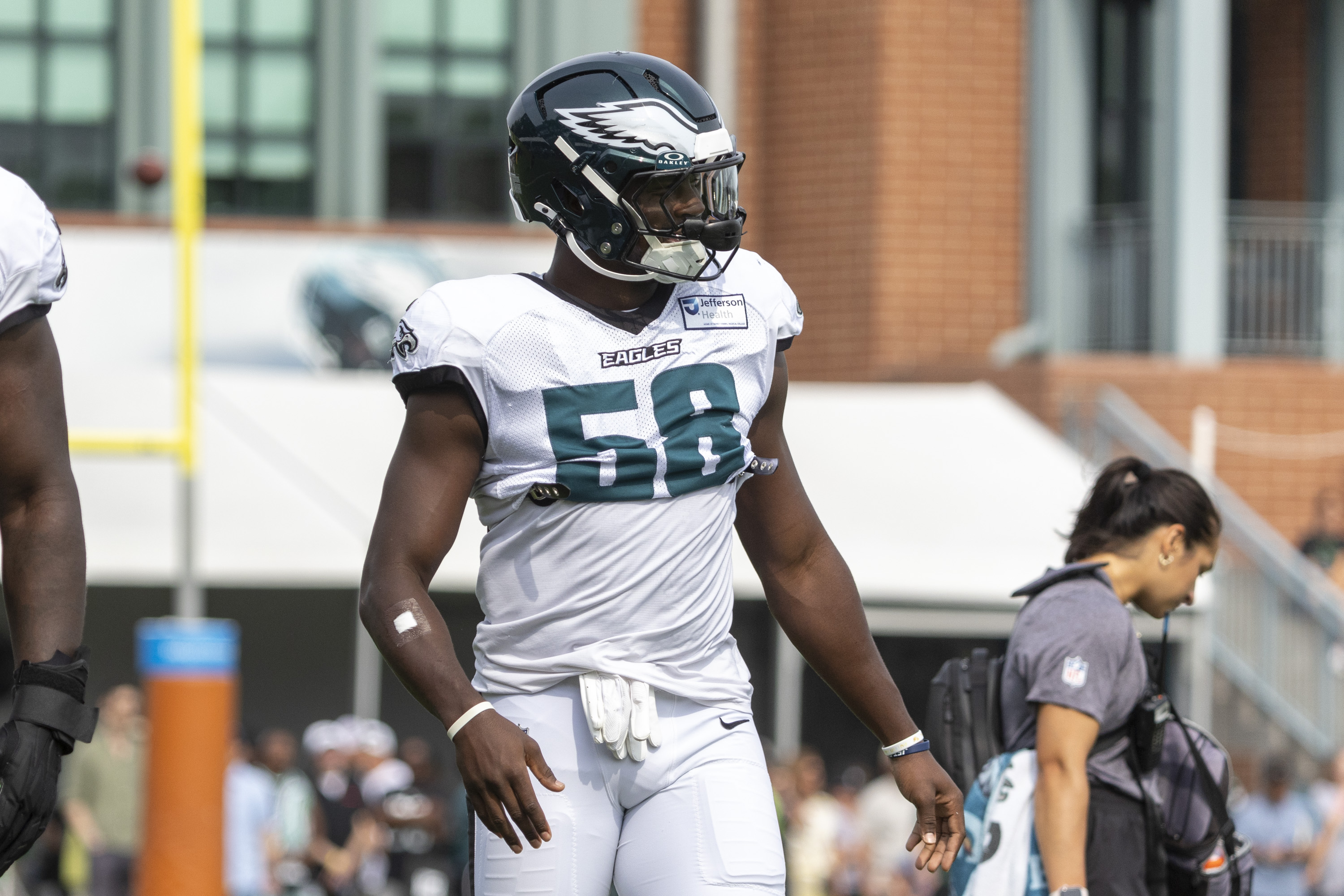
Jalyx Hunt (58) was solid for a defense that had its moments Wednesday. Tyger Williams / Staff Photographer
Full frontal
The Eagles’ defensive front had a solid showing in one-on-ones. Edges Jalyx Hunt and Nolan Smith Jr. were standouts. Tackles Morgan Moses and Marcus Bryant each lost to Smith — the first on outside speed. Hunt was able to get around tackle Dametrious Crownover, but Patriots tackle Will Campbell was able to lock him down. A.J. Epenesa and Arnold Ebiketie also had strong turns with their edge rushes.
Moro Ojomo had the most success of the Eagles’ interior starters. He beat guard Alijah Vera-Tucker in both of their matchups. Jalen Carter and Jordan Davis were kept in check by guard Mike Onwenu and center Jared Wilson. Ty Robinson continued his recent strong performances with two decisive wins over guard Mehki Butler. “He came to life,” Eagles defensive coordinator Vic Fangio said of Robinson, who had a sack in the preseason opener. “He’s been on life support since he’s been here.”
Colleague Jeff Neiburg reported that the Eagles’ defense kept the Patriots mostly contained on the ground in team drills. Hunt and linebacker Jihaad Campbell, who blitzed up the “A” gap, also recorded sacks. But this wasn’t the pure defensive domination we saw from Fangio’s unit vs. an overmatched Patriots offense two years ago here.
Cornerback Riq Woolen struggled at times against the Patriots on Wednesday. Monica Herndon / Staff Photographer
Woolen worth
Woolen was having a decent camp, but with Smith sidelined for most of the summer, he hasn’t faced anyone in Brown’s class. He also struggled against some of the other Patriots receivers. When the full teams came together for the final two-minute period, Woolen got beat in a zone by Romeo Doubs, who dropped a perfect strike. A few plays later, Pats receiver Mack Hollins caught a slant inside the cornerback.
Woolen is known for his man-press cover skills. But he likely won’t be asked to do it as much in the Eagles defense. He has to learn to master Fangio’s match-zone coverages. He did get up on the line on third down during two-minute, but he jumped offside and the penalty resulted in a first down. After tight end Hunter Henry caught a pass ahead of cornerback Cooper DeJean, the Patriots rushed to kick a 45-ish yard field goal.
Eagles cornerback Cooper DeJean with New England Patriots head coach Mike Vrabel before a joint practice on Wednesday. Yong Kim / Staff Photographer
Pressure packed
The Eagles’ run game fortunes turned during the third period. The Patriots adjusted to their stretch plays and Barkley and Shipley were met in the backfield. Hurts did gobble up some yards on a zone read keep with tight end E.J. Jenkins as his lead blocker. But Bigsby was run down from the backside on a carry. Someone then committed a false start. And Hurts was pressured into a throwaway on third down.
In two-minute, Hurts’ first pass was thrown slightly behind tight end Dallas Goedert. Byard sacked Hurts after blitzing from the slot. Barmore was somehow unblocked up the middle for another sack. Hurts made up some ground with a quick toss to receiver Darius Cooper. But there was another Eagles false start.
Hurts was then forced to take throws underneath to Wicks with the Patriots in prevent defense. And the Eagles never crossed midfield before time ran out.
Tanner McKee (16) and Andy Dalton (14) continued their pursuit of the QB2 job behind Jalen Hurts (1). David Maialetti / Staff Photographer
Back in the high life
Andy Dalton was first up with the twos at quarterback, but Tanner McKee got a number of snaps. They each looked sharper than they did in Baltimore. Dalton had to throw the ball beyond tight end Eli Stowers when he was double-covered deep. McKee hit an open Danny Gray on an intermediate route, but the receiver dropped the ball. Jacas had a sack after he toasted Williams from the edge.
McKee bounced back, though, and found Shipley for a long gain on a busted coverage. Receiver Samori Toure found a soft spot in the zone and McKee eventually got the ball there.
Dalton had one of his best periods and completed all five of his attempts late in the workout. He hit receiver Quez Watkins on a quick out. Covey made a contested catch. Dalton found Toure alone downfield. He ripped a seed to Gray over the middle. And with the pocket collapsing on him, Dalton hooked up with Toure near the sideline.
Extra points
Rookie quarterback Cole Payton got one set. He threw behind Covey and tossed another interception that went to Patriots safety John Saunders Jr. Eagles coach Nick Sirianni rushed over to Payton and seemingly had unkind words to say. … Kicker Jake Elliott had missed only one kick that I counted during the first two weeks of camp. But he struggled away from home and missed 2 of 5 field goal attempts wide right. … Day 2 of joint practices resume Thursday. The Eagles will have a closed walkthrough on Friday ahead of Saturday night’s preseason game at the Patriots.