Tag: UniversalPremium

  • The Eagles offense was not impressive in Sean Mannion’s debut. That’s not surprising … or all that concerning.

    The Eagles offense was not impressive in Sean Mannion’s debut. That’s not surprising … or all that concerning.

    BALTIMORE — If the Eagles hoped their rudimentary game plan wouldn’t reveal much about their new offensive scheme, then mission accomplished.

    It was difficult to identify Sean Mannion’s version of the Kyle Shanahan-Sean McVay system, let alone any functioning NFL offense in the Eagles’ 24-7 loss to the Ravens on Saturday night. That obviously wasn’t by design.

    But the combination of coach Nick Sirianni resting his starters once again in the preseason, a vanilla script for first-time play-caller Mannion, and some expected growing pains with a vastly different offense resulted in an inept offensive performance at M&T Bank Stadium.

    The Eagles managed just two first downs on their first nine possessions. They gained just 45 yards and scored zero points over that span. Only a late touchdown from the fourth unit — made up mostly of players who won’t make the 53-man roster — prevented a shutout.

    It was ugly.

    But does it matter? Probably not.

    The Eagles have been justified in their devaluing of the preseason over the last five years. Beyond their overall success, they’ve shown that rust hasn’t been a factor by going 5-0 in their regular-season openers, and that keeping key players out of harm’s way has helped make them among the healthiest teams in the league.

    Was there a case for letting Jalen Hurts and Co. take a series or two in a live setting, or for Mannion to get a few test runs with his actual offensive pieces? Sure. Maybe.

    It’s not like anything on offense can be taken for granted after last season’s regression.

    But Sirianni is sticking to the template.

    “We obviously think that when we got out to practice we have high, high intensity,” Sirianni said in explaining why most of his starters on both sides of the ball didn’t dress. “We got a big week this week coming up and the [starters] are going to get a lot of reps in New England for the joint practices.”

    It won’t be as easy to declare a winner and loser in Foxborough’s practices. And there won’t be film for future opponents to study. But the Eagles should dip a little more into Mannion’s playbook in facing the Patriots for two scrimmages planned for Wednesday and Thursday.

    We’ve already seen the hallmarks of the Shanahan-McVay scheme at training camp: more under center, more play action, more marrying the pass with the run, more motion, more middle-field throws, and a significantly different run- blocking scheme.
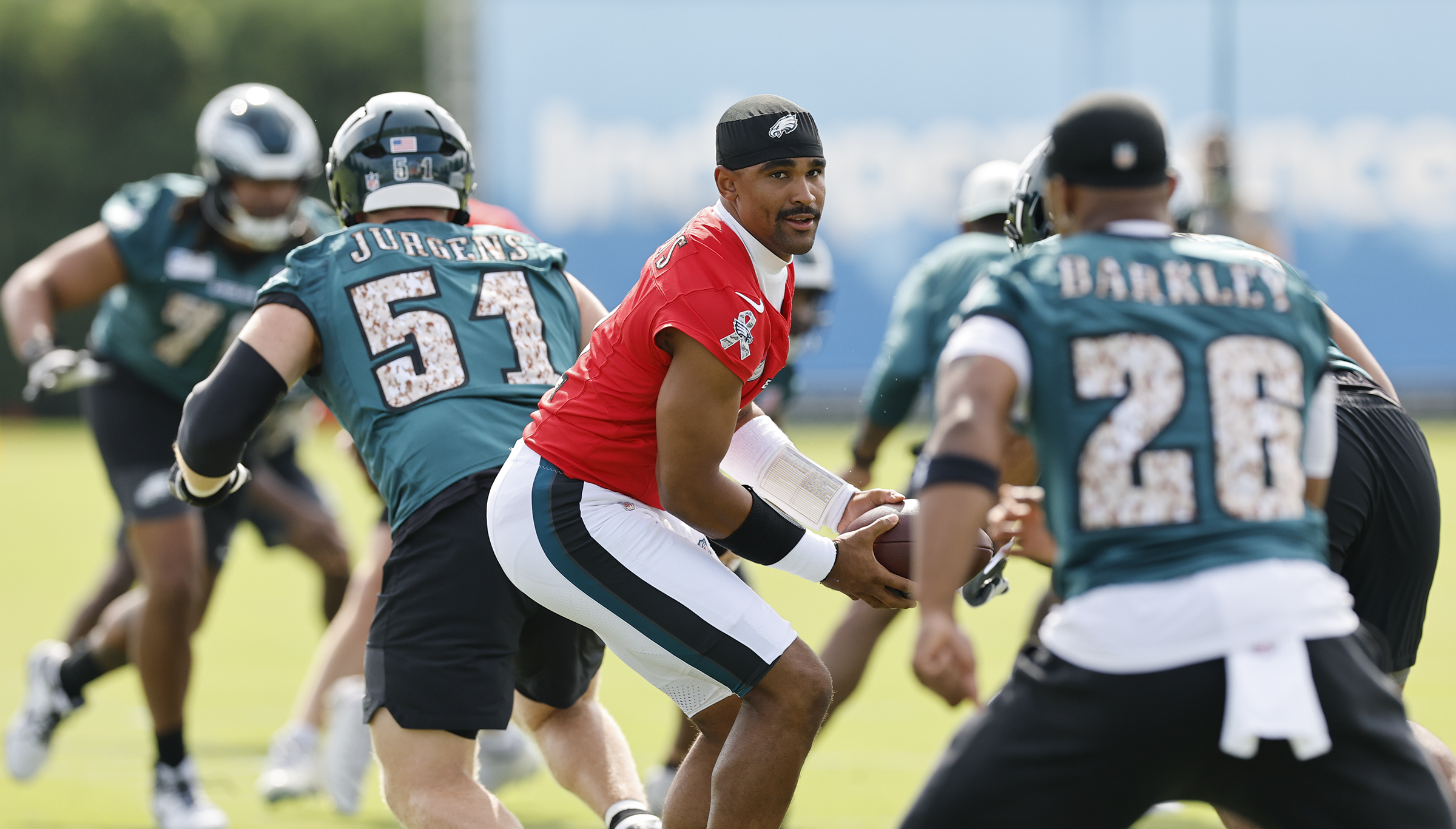
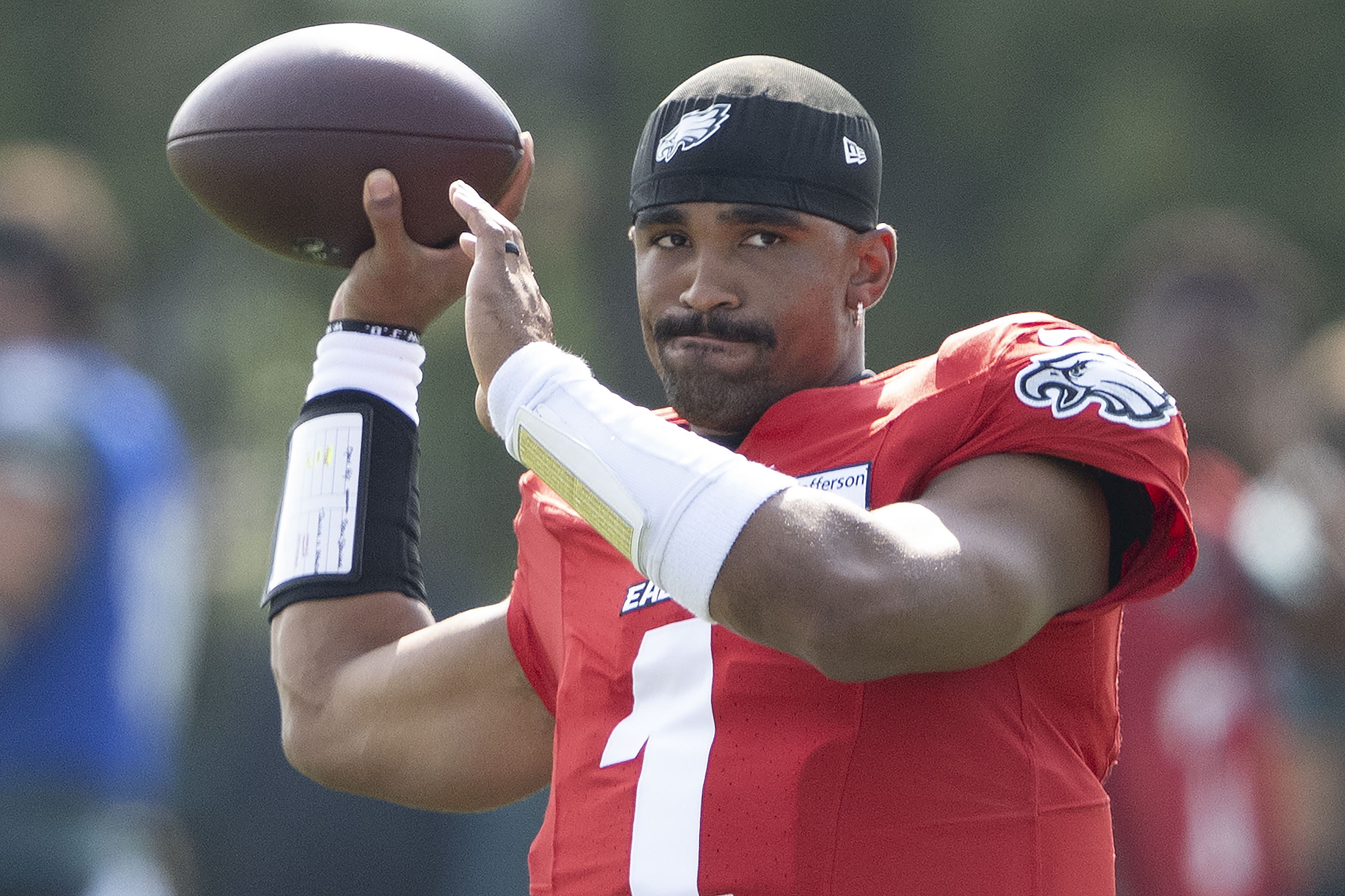
    The Eagles offense is making progress, even if it’s not always linear for Jalen Hurts, Saquon Barkley and Co. Yong Kim / Staff Photographer

    It hasn’t always been clean. Hurts has had his struggles. But he’s also had his moments. The same could be said of Saquon Barkley and the offensive line in the run game. But the scheme never looked more like a work in progress than it did on Saturday with quarterbacks Andy Dalton and Tanner McKee at the controls.

    “With the new offense and with so many things that are new, I think obviously mistakes are going to happen,” McKee said. “That many is unacceptable. But we’re going to learn from them and be better for it.”

    Dalton started and the offense went three-and-out on the first three drives. Two penalties set the Eagles back on their first series. Dalton nearly tossed an interception that was deflected on the second. On the third, wide receiver Darius Cooper, who has shone in camp, couldn’t haul in a third-down missile from his quarterback.

    “It’s the preseason so there’s a lot of vanilla looks,” Dalton said. “I think that played a little bit of a factor. Now we got ourselves into some tough situations with some penalties and negative plays. I know there was one third down I should have gone somewhere else with the ball.”

    Rhythm is important in every offense, but if there isn’t early-down success on the ground in this scheme, it can be difficult to move the ball. Will Shipley had a few positive runs with McKee under center, but another penalty put the offense behind the sticks and led to yet another punt.

    Two of the penalties were for holding. There was also a false start. But there were other miscues: imprecise routes, poor blocking technique and errant throws. Dalton has played in a similar scheme before. But he’s still trying to build chemistry with new faces.

    McKee has gone from being the bona fide No. 2 to a demotion. He may still end up beating out Dalton, but it’s unclear why the Eagles have seemingly soured on their 2023 sixth-round draft pick. A year ago, he completed 20 of 25 passes in the preseason opener and was being touted as a starting-caliber backup.
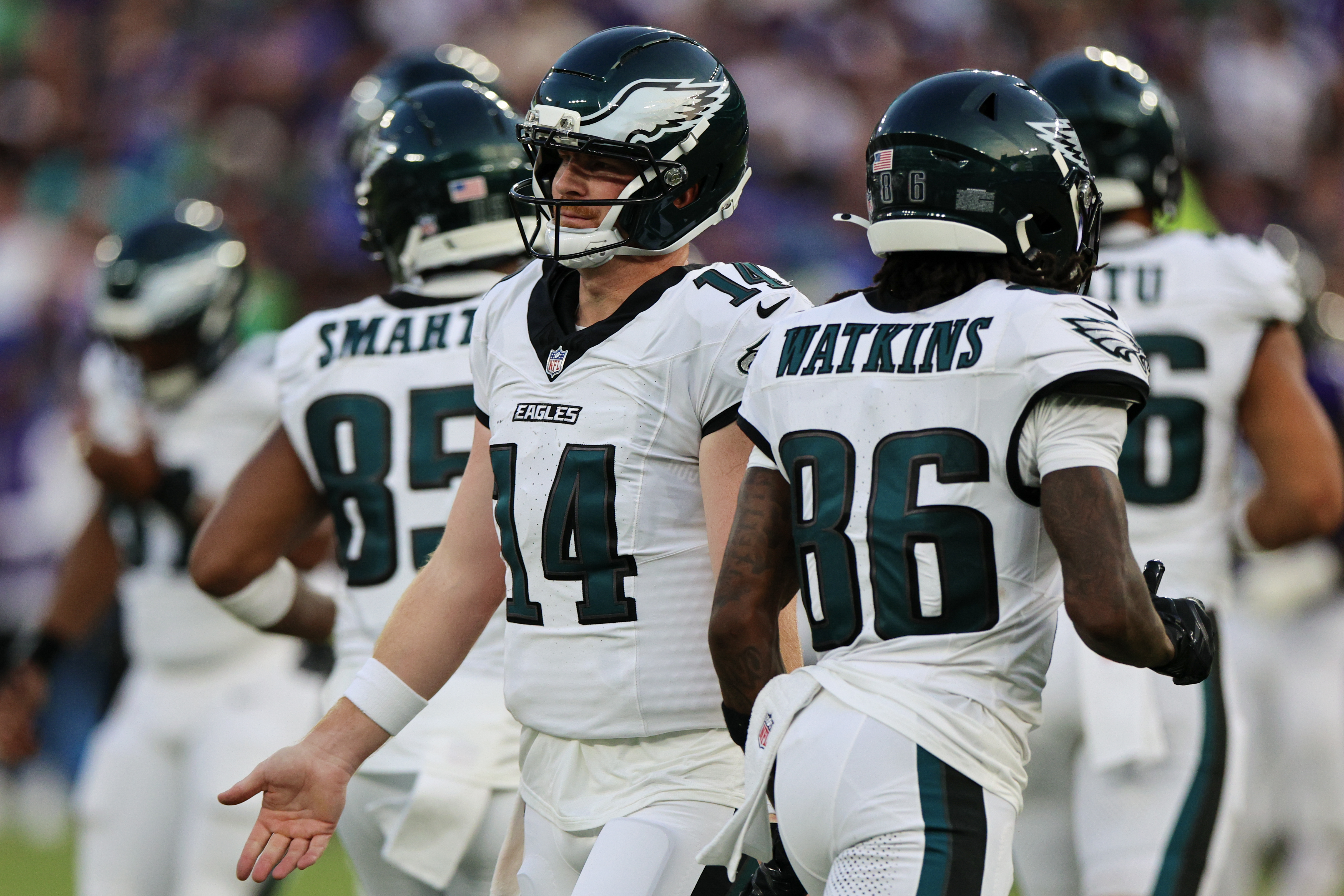
    Andy Dalton brings 169 games of NFL starting experience to the Eagles’ QB room. David Maialetti / Staff Photographer

    But the quarterback factory made room for Dalton, who came during the offseason via trade. Eagles general manager Howie Roseman surrendered just a seventh-rounder to poach the veteran. Maybe he can eventually flip Dalton to a backup-needy team, of which there are plenty.

    Neither looked particularly fetching against the Ravens, though. Of course, it’s been tough with the uncertainty over snap distribution in practice.

    “Nothing’s decided there as far as who’s the two, who’s the three,” Sirianni said. “Andy’s played a lot of football. I think he’s had 160-plus starts [169]. Tanner’s had two starts. Just wanted to make sure Tanner continues to be able to develop in live action.”

    McKee ended up with just one more drive than Dalton. They may not practice as much against the Patriots, but they’re more than likely to play the bulk of Saturday’s second preseason game. There’s still time to sort out the competition, or if either is expendable.
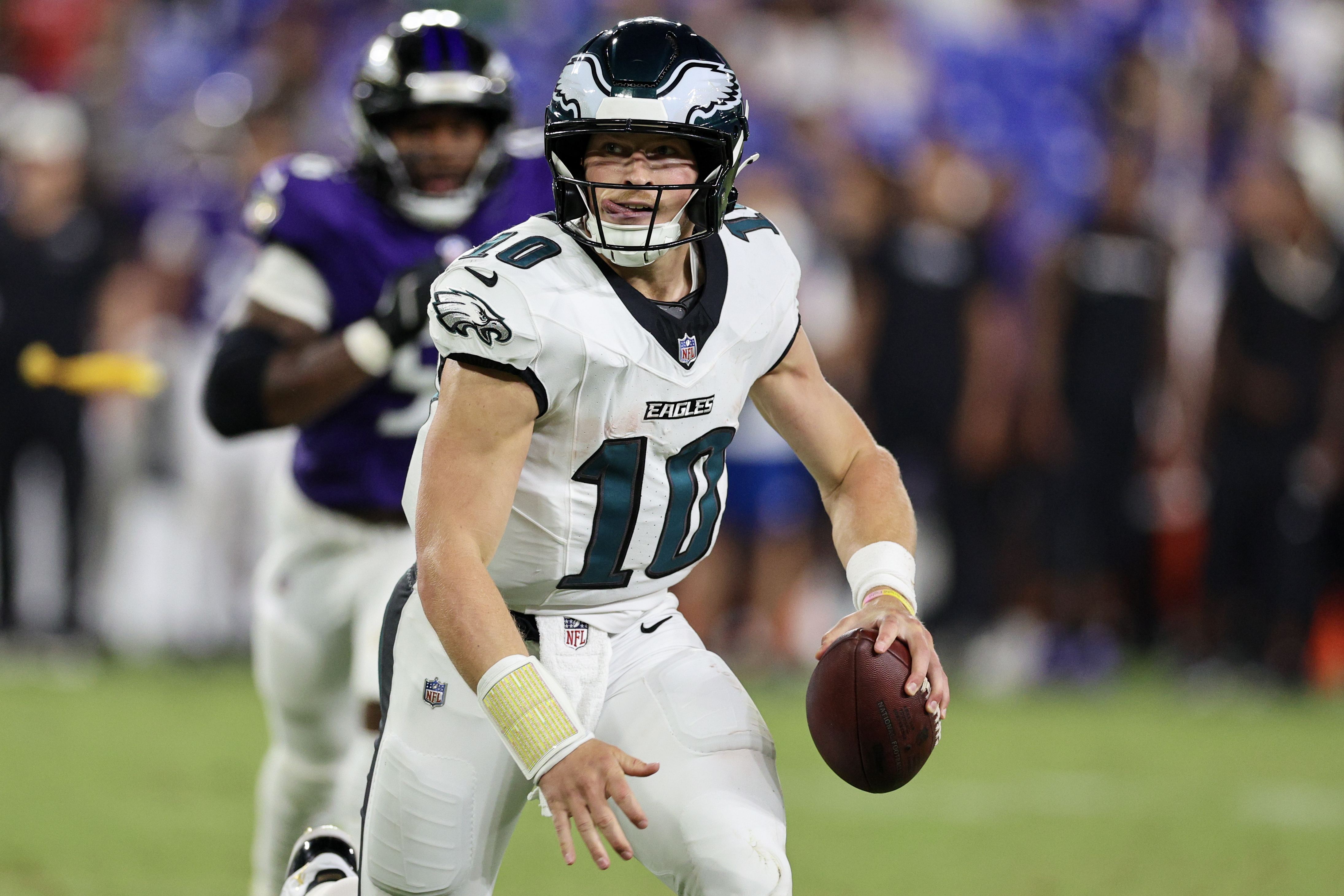
    Cole Payton led the Eagles’ only scoring drive on Saturday night. David Maialetti / Staff Photographer

    Rookie Cole Payton showed gumption in driving the Eagles to their lone score. He didn’t exactly play within structure, partly because the execution around him wasn’t sound. But also because the plays didn’t scheme receivers open.

    Maybe that, too, was part of the plan. There’s little to be gained in Mannion showing his full deck of cards. And yet, he’ll remain a mystery until the games really matter. He did reveal that he’ll call plays from the field rather than the booth.

    Dalton and McKee said the overall communication was smooth.

    “Sounded really good. Clear. Decisive. Was always early,” McKee said of Mannion’s play-calling. “There was never a time when he was trying to get a play call at the 15-second [mark] because he didn’t know what he was going to do.”

    Play-calling is one thing. Instruction is another. The Eagles’ offensive backups mostly didn’t execute on Saturday. There’s little reason to panic. But there will be a learning curve. And it will likely extend well into the season.

    “I think the whole season is a work in progress,” Sirianni said. “You’re continuing to try and get better each and every week to be playing your best football at the end of the year.”

    If there’s anything to be gained from the Eagles’ offensive dud in Mannion’s debut it’s that patience is a virtue. How long will that last?
  • Eagles preseason grades vs. Ravens: Offense struggles to move the ball, defensive line shows flashes

    Eagles preseason grades vs. Ravens: Offense struggles to move the ball, defensive line shows flashes

    BALTIMORE — Instant grades on the Eagles’ performance in their 24-7 loss to the Ravens:

    Quarterback — C-

    Jalen Hurts and the first offense, as expected, didn’t suit up. Andy Dalton got the start ahead of Tanner McKee. Dalton had a shaky first three drives as the Eagles didn’t pick up a first down. He completed 3 of 6 passes for 20 yards. He would have tossed a deflected interception had his dump to running back Tank Bigsby not hit the ground.

    McKee was next under center. He worked with mostly the third unit. He was just as unspectacular, although he didn’t have the benefit of working with the second offense. He hit Darius Cooper for 13 yards at one point. McKee was sacked when he failed to recognize a nickel dog blitz in the third quarter. He completed 6 of 10 passes for just 35 yards. Neither quarterback won the No. 2 spot on this night.

    Rookie Cole Payton drove the Eagles to their lone score — a 6-yard touchdown pass to receiver Erik Ezukanma in the back corner of the end zone. Payton didn’t do much within structure. But he extended plays, made throws and scrambled for 45 yards.

    Running back — C-

    Saquon Barkley was among the dozen or so players who didn’t participate in pregame warmups. The running back tweaked his ankle in camp on Thursday. Bigsby finished with just five yards on two carries. He didn’t appear to have much room on the run.

    Will Shipley was next up. He had more success running behind the third unit offensive line, and had two 8-yard rushes to the right. He ran seven times for 22 yards. Carson Steele was in the backfield for mop-up duty.

    Ja’Quinden Jackson had one catch for 11 yards.

    Receiver / Tight end — D+

    Dontayvion Wicks appears to have locked up the No. 2 job. He was the only uninjured wide receiver to be inactive. Hollywood Brown and Elijah Moore dressed and played. Brown caught one pass for four yards. Moore picked up a couple of yards on an end around. They were the first receivers to be pulled.

    Darius Cooper, despite his strong camp, played deep into the game. He had a Dalton heater glance off his hands. His 13-yard grab from McKee gave the Eagles their initial first down. Cooper caught just 2 of 5 targets.

    Tight ends Dallas Goedert and Johnny Mundt were given the night off. Rookie Eli Stowers has been working with the third unit during camp, but he started with Grant Calcaterra at tight end. Stowers was often McKee’s outlet and caught three passes for 12 yards. His blocking was up and down and he committed a holding penalty on Bigsby’s first carry. Calcaterra had a grab for eight yards.

    Cameron Latu couldn’t haul in a McKee pass in the third quarter. E.J. Jenkins won at the point of attack on a Shipley 8-yard tote to the right.

    Offensive line — D

    Rookie Markel Bell started at right tackle. He appeared to hold up in pass protection. He had a seal block that helped spring Shipley for eight yards. Fred Johnson started at left tackle. He had a false start on the opening series. Johnson played just the Eagles’ first three possessions.

    Drew Kendall and Willie Lampkin swapped positions — left guard and center — early on. They didn’t stand out on either side of the ledger. The fact both were among the first O-linemen pulled indicated they should make the final roster.

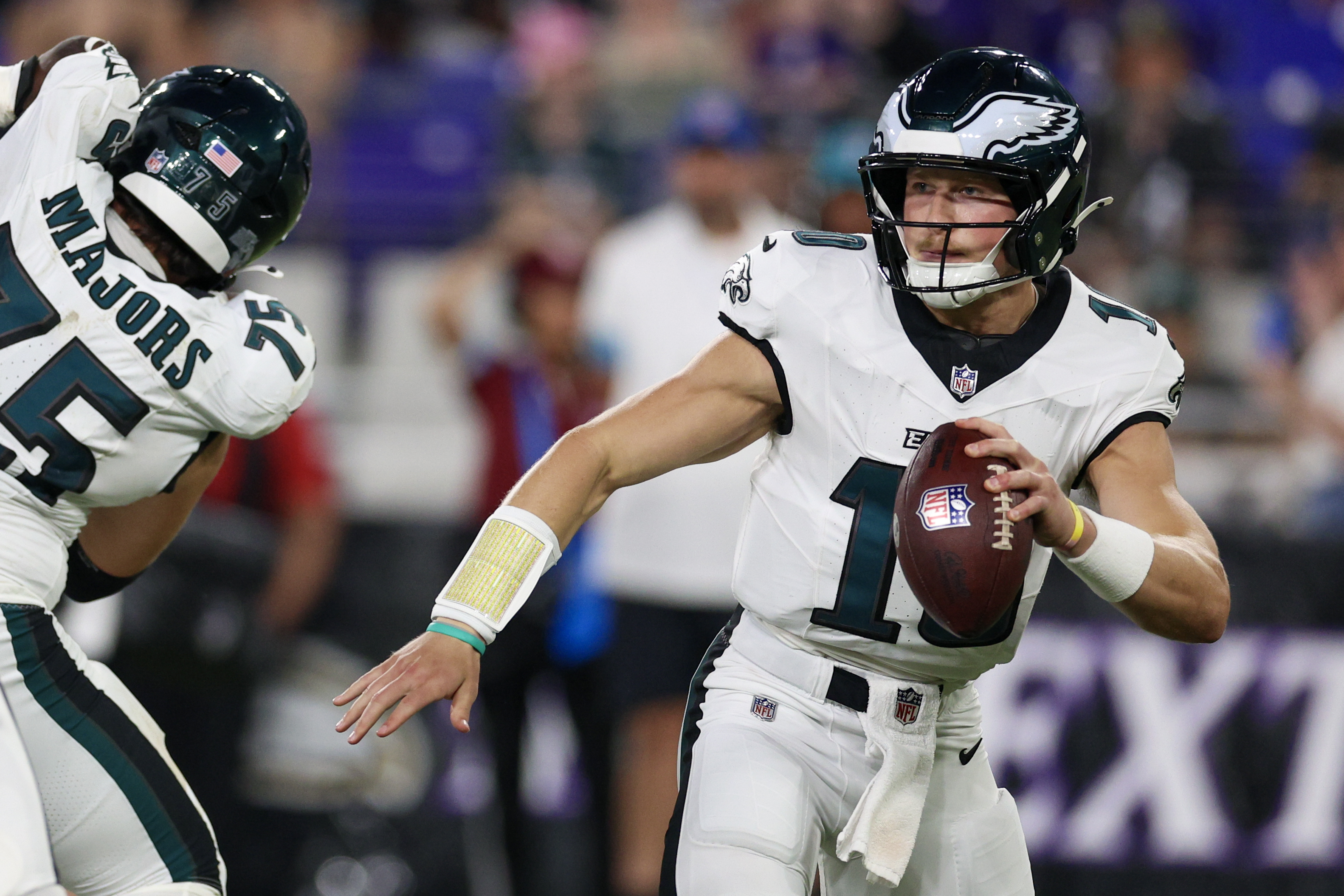
    Jake Majors took over at center with McKee at quarterback. He committed a holding penalty in the second quarter. Rookie Micah Morris and the rest of the third unit O-line didn’t get much push on the ground. Payton was also under pressure a lot. Morris had a late hold.

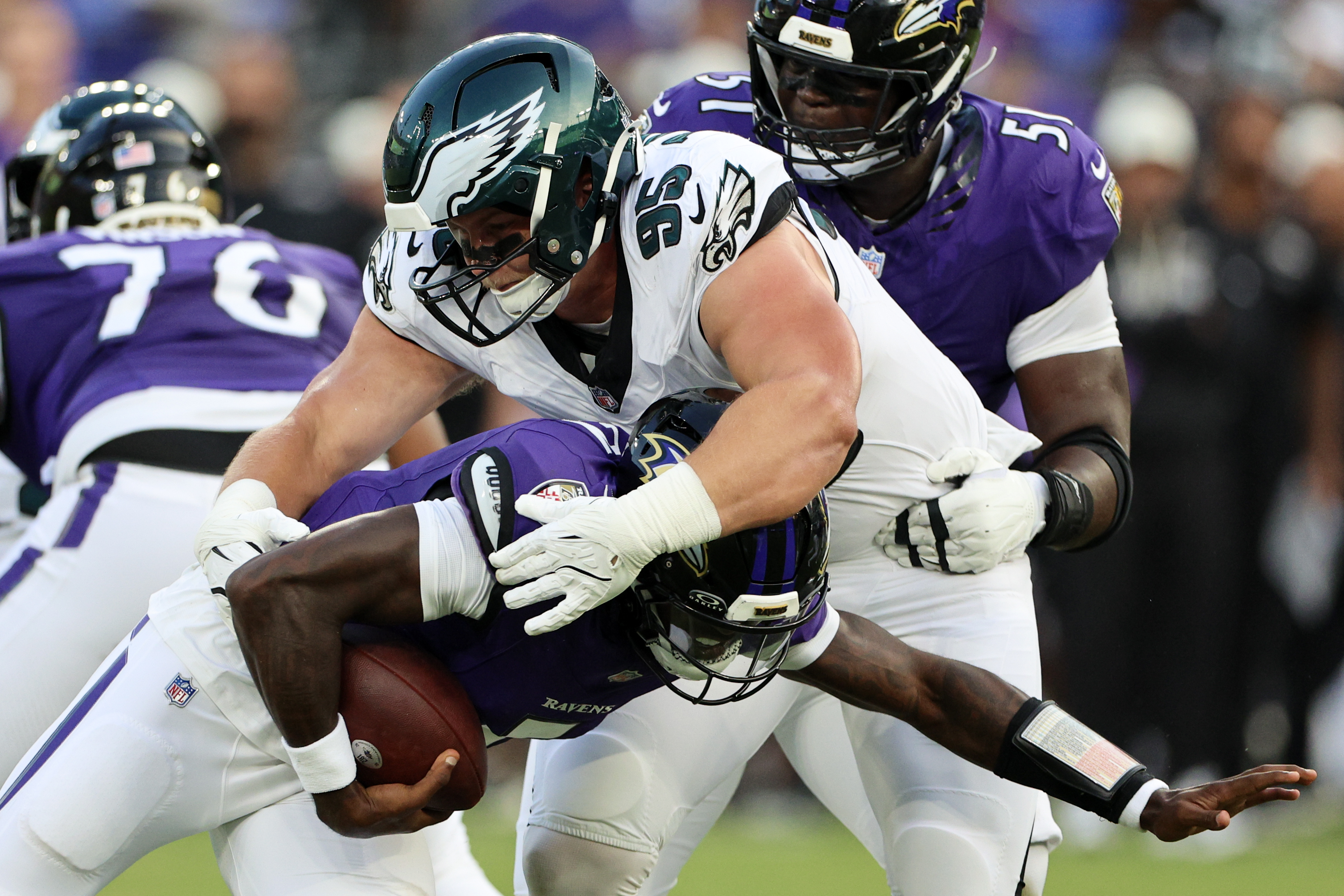
    Eagles defensive tackle Ty Robinson sacked Ravens quarterback Tyler Huntley in the first quarter.David Maialetti / Staff Photographer

    Defensive line — B-

    The Eagles, to some surprise, rested most of their defensive starters. Their backup interior group looked strong against the Ravens’ No. 2 offensive line. Defensive tackle Byron Young won often up front and got penetration as a run defender and pass rusher. Ty Robinson notched an early sack when he beat the left guard at the snap. The second-year defensive tackle’s name wasn’t called as much the rest of the way, at least until he roughed the passer in the fourth quarter. Gabe Hall played a bunch of snaps at D-tackle and mostly held up.

    Outside linebacker Arnold Ebiketie started on the edge with A.J. Epenesa. He set the edge on a first quarter Ravens run that netted a couple yards. Epenesa defeated a tight end to make an early run stop. The Ravens took advantage of Epenesa, who had never played in a 3-4 scheme, dropping into coverage with a 29-yard pass downfield. Epenesa nearly had a pick when he dropped the ball in the second quarter. Both edges were done before the half.

    Rookie defensive tackle Uar Bernard, who was playing in his first game at any level, looked like a novice, as expected. Joshua Weru was playing in his first game ever, too, but didn’t seem as raw. The undrafted rookie displayed his burst when he was unblocked off the edge and was credited with a quarterback hit. Outside linebacker Tarron Jackson picked up a late sack.

    Linebacker — C+

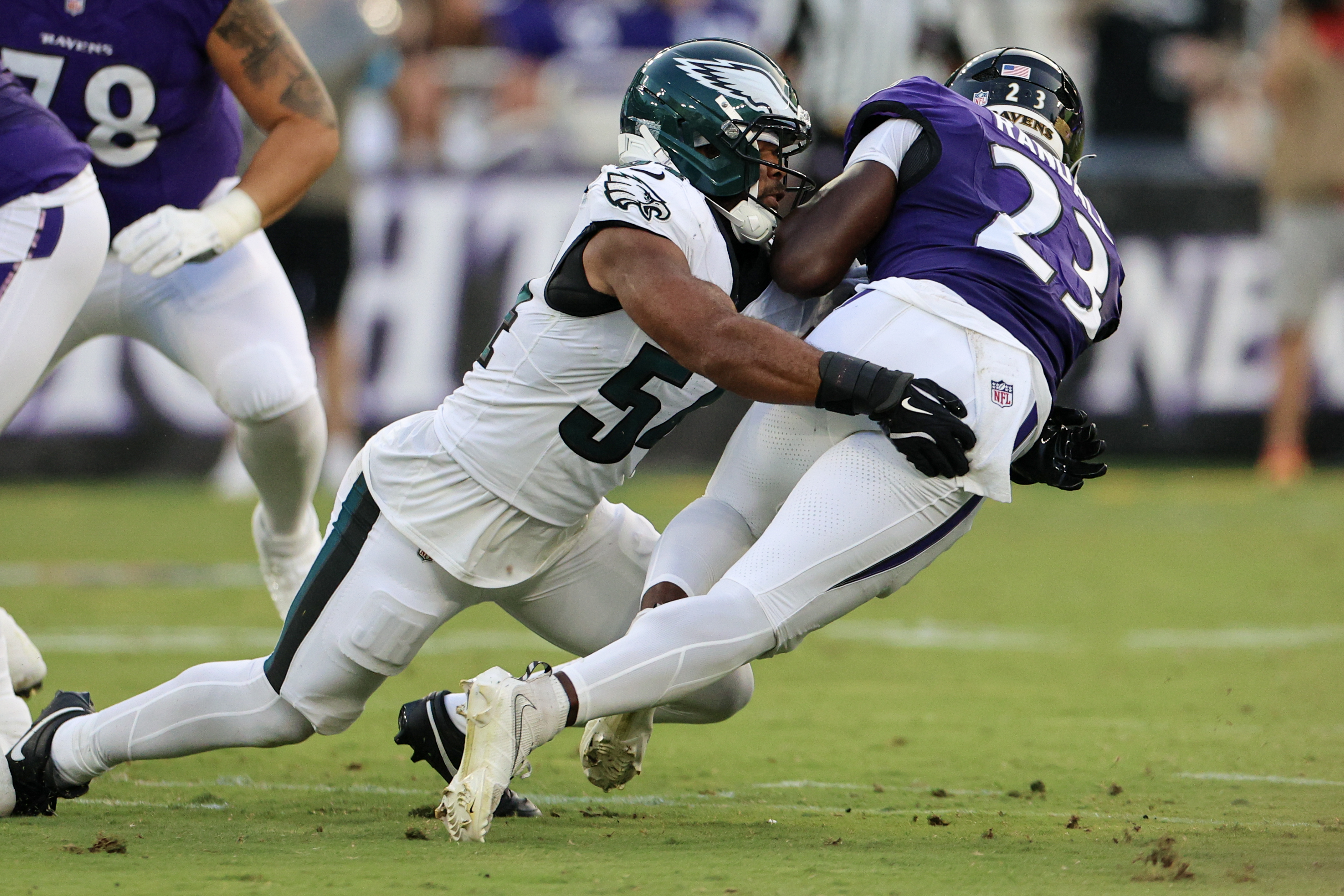
    Jihaad Campbell was the only projected starter on defense to play. He had three total tackles and was pulled after two series. Jeremiah Trotter Jr. started alongside Campbell. He had five tackles before the break, including a sack on a delayed blitz. Trotter didn’t play in the second half.

    Eagles linebacker Jeremiah Trotter Jr. (left) had five tackles in the first half.David Maialetti / Staff Photographer

    Smael Mondon took a few bad angles in the first half as a second level run defender. He had positives, though, and was effective when he blitzed. Mondon shed a block and made a run stop at the line on the last play of the third quarter.

    Cornerback — C-

    Starters Quinyon Mitchell (glute) and Cooper DeJean (groin) were recently added to the injury list, but they wouldn’t have played anyway. Riq Woolen, Mitchell’s counterpart on the outside, was also in street clothes.

    Jakorian Bennett started opposite Kelee Ringo at outside cornerback. He left with an injury during the Ravens’ first drive. Ambry Thomas took Bennett’s place. He did fine. Ringo had an interception in the end zone just before the half. His pass interference penalty a play earlier gave the Ravens first-and-goal at the 5-yard line. But he rebounded. Earlier, Ringo was in coverage when Ravens receiver Ja’Kobi Lane caught a 16-yard touchdown on a dig route.

    Mac McWilliams started in the slot. The second-year corner struggled some. He allowed a few catches in the first half including a 19-yard pass that set up the Ravens’ first points. He was called for holding in the second quarter. McWilliams led the Eagles with 10 tackles.

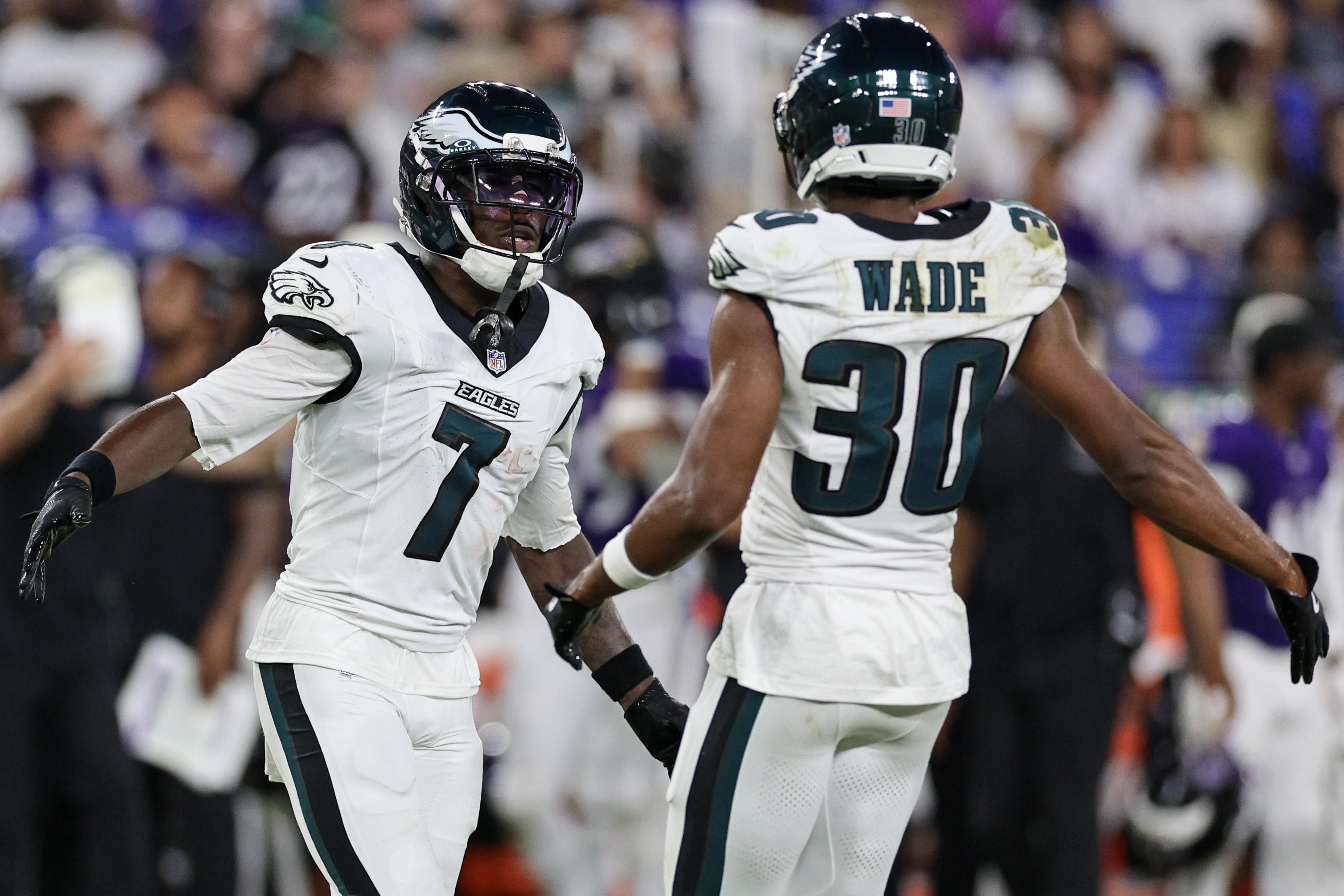
    Cornerback Shaun Wade got beat and slipped on a short pass in the third quarter. But he got up and punched the ball out for a forced fumble that Thomas recovered. Thomas also had seven stops.

    Eagles cornerback Kelee Ringo (left) celebrates after intercepting a pass in the end zone to stop a Ravens drive late during the second quarter.David Maialetti / Staff Photographer

    Safety — C+

    Marcus Epps didn’t dress, indicating that he all but has the nickel safety spot locked down. Starter Andrew Mukuba didn’t suit up, despite not playing in a game since he broke his leg last November.

    Michael Carter II and Andre’ Sam were the first pair of safeties. Carter had tight coverage early in the second quarter and forced a high throw from quarterback Joe Fagnano. He made an open field run stop later on. Sam was late to help Ringo on the Lane touchdown.

    Special teams — B

    The Eagles allowed a 19-yard punt return, but the cover units were mostly sound. Quez Watkins was first up to return kicks. Ezukanma averaged 25.7 yards on three kick returns. Britain Covey handled punt returns. He had a fair catch.

    Kicker Jake Elliott could have taken the night off, save for one kickoff and extra point. It would have been nice to see him try a few field goals in light of his recent down seasons. Punter Braden Mann was busier. He averaged 47.6 yards on eight punts. Rookie long snapper Rocco Underwood didn’t have any glaring snafus.

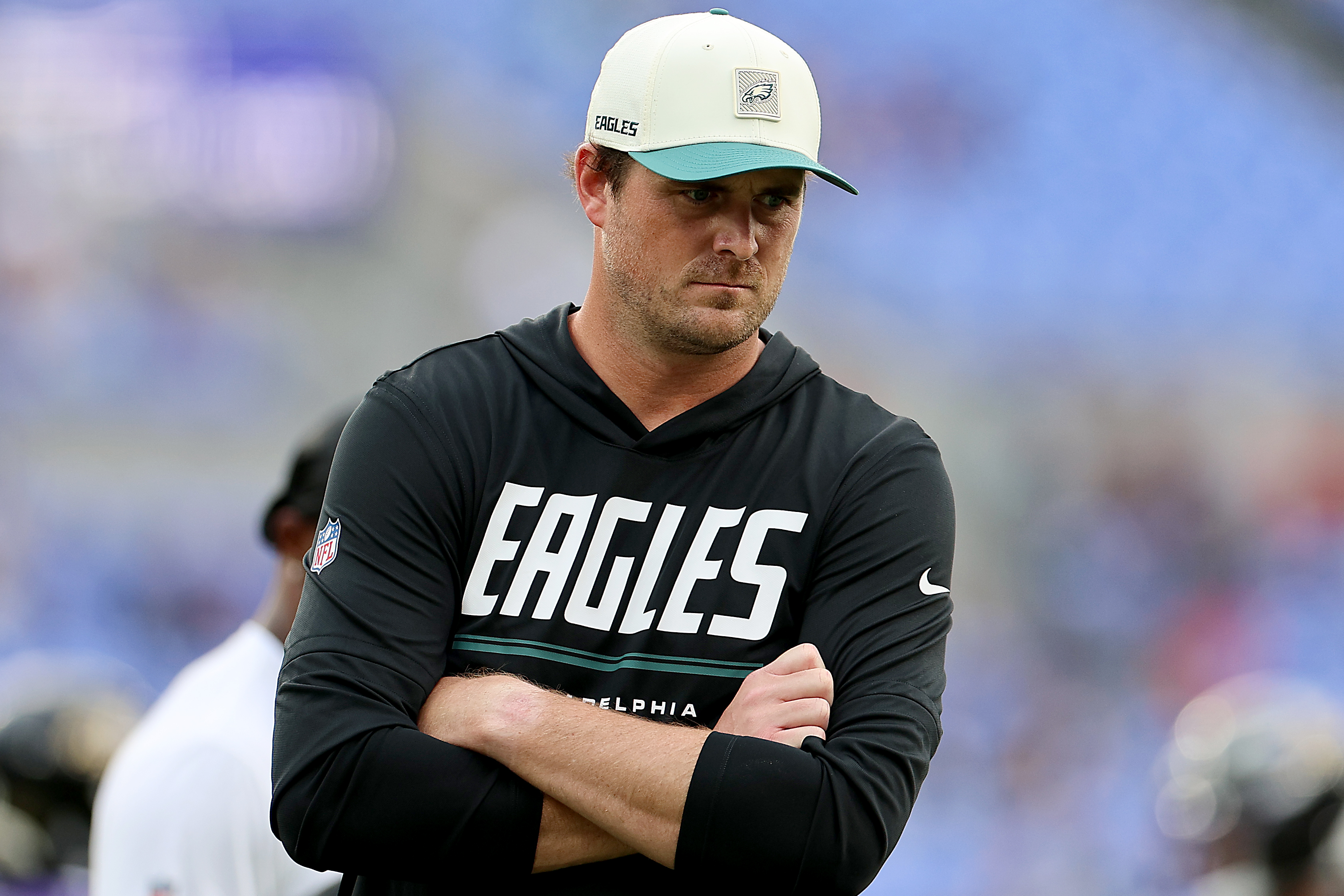
    Sean Mannion’s debut as the Eagles OC was unremarkable.David Maialetti / Staff Photographer

    Coaching — C-

    Nick Sirianni has historically placed little emphasis on the preseason, so it wasn’t a shock that he rested most of his starters. The Ravens didn’t suit up most of their top-liners either. But first-year coach Jesse Minter’s team looked better prepared. Nevertheless, keeping key guys healthy is of the utmost importance. The Eagles will get a better gauge of where they stand in joint practices with the Patriots this week.

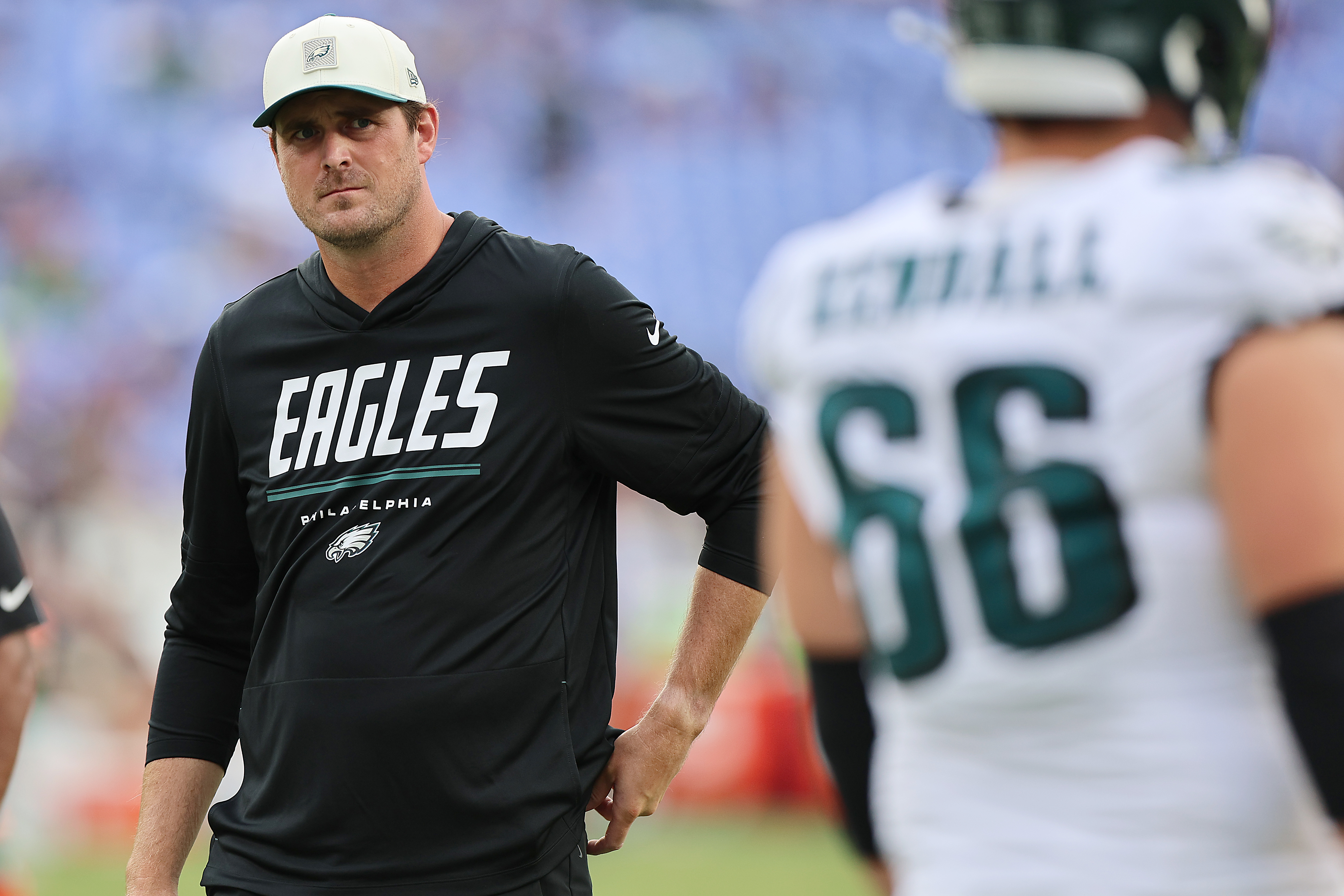
    Sean Mannion’s first game as an offensive coordinator was unremarkable. It’s difficult to place much stock in his performance with Hurts and Co resting. Sirianni was unlikely to allow Mannion to reveal much. Still, the play calling had little flow and the execution was sloppy. The second unit wasn’t sharp. The third and fourth groups weren’t much better. The offense gained just 76 yards on their first eight possessions. Of note: Mannion called plays from the sideline.

    Vic Fangio had convinced Sirianni to allow his starters to play in his first two preseasons as defensive coordinator. That wasn’t the case the third time around. The defense was more effective than the offense, particularly the second unit. It got uglier the more they were asked to shoulder the load.

  • Merion and Philly fans shine again with record-breaking crowds at the U.S. Amateur

    Merion and Philly fans shine again with record-breaking crowds at the U.S. Amateur

    Move over, Florida, California, and New York City. There’s a new golf mecca, same as the old golf mecca.

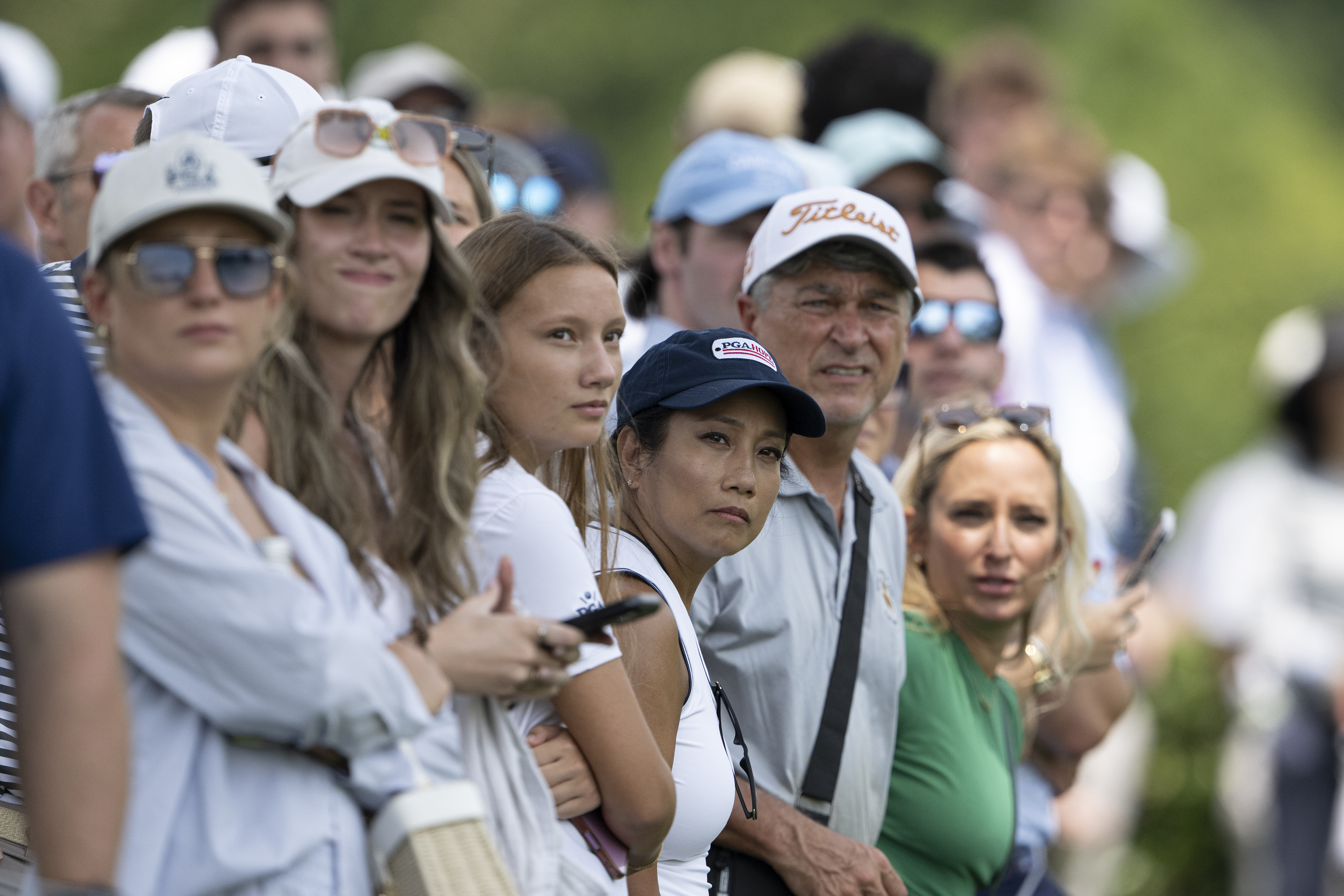
    More than 2,700 fans made their way to the lush fairways at Merion Golf Club on Friday, making it the best-attended single day in U.S. Amateur history, according to a United States Golf Association spokesperson. By the time the Am ends Sunday evening, as many as 20,000 fans are expected to have entered the main gate at the iconic, tiny par-3 13th hole, blowing away the record of 14,000 set last year at The Olympic Club in San Francisco.

    An hour after the final putt dropped, more than 200 fans waited in line to buy U.S. Am gear at the pro shop.

    Surprised? Don’t be.

    It’s Philly. It’s golf.

    It’s back.

    At the turn of the 20th century, Philadelphia was the epicenter of the golf explosion in the United States, where Donald Ross and A.W. Tillinghast and Merion architect Hugh Wilson carved masterpiece after masterpiece. As the PGA Tour migrated ever more south and west, the game’s biggest names and tournaments were absent, and fans’ attention turned to arenas, stadiums, and ballparks. The golf industry has seen the error of its ways, and now given the chances, Philly fans are representing again — especially when they get a chance to see how the other half lives.

    Throngs flooded Merion when Justin Rose beat Phil Mickelson at the waterlogged 2013 U.S. Open, and they surely will return for the U.S. Opens scheduled to be played here in 2030,2040, and 2050.

    Pine Valley in Camden County often is ranked No. 1 in the world, but you’ve got a better chance of seeing the Shroud of Turin than of walking Pine Valley’s fairways. Merion, meanwhile, consistently ranks among the world’s top 20 courses, and Philadelphians take advantage of rare opportunities to visit.

    It’s not just Merion.

    Legions came to see Keegan Bradley win the sodden 2018 BMW Championship at Aronimink Golf Club (Ross), and they returned to the ’Mink in May to watch Aaron Rai win the 2026 PGA Championship. Huge crowds toured The Philadelphia Cricket Club (Tillinghast) last year at the Truist Championship, where Sepp Straka won.

    Rosey and Phil and Captain Keegan aren’t at Merion this weekend, but the next Rosey or Phil or Keegan just might be.

    For most golf fans, when they hear “Merion” and “Aronimink” and “Cricket,” they equate these sites with places like the Taj Mahal, only far less accessible … unless there’s a tournament. It takes $70,000, some serious connections, and proper breeding (shirt tucked in, hat faced forward, and no loud swearing) to access membership at Merion. However, for less than 40 bucks and a SEPTA pass for the Paoli/Thorndale train, they can get off at the Haverford station and crash this billionaire’s haven for a day.

    Since play began Monday with 312 qualifiers, thousands have done just that. As play continued with quarterfinals on Friday, hundreds of those thousands had found a local Cinderella to support. Briefly.

    Michael Lugiano, a native of Jackson Township, Pa., roughly 40 miles southwest of Scranton, is ranked 335th among the world’s amateurs, but for four days he played the best golf of his life. He finished tied for 16th in stroke play to earn one of the 64 match-play spots, then won his first three matches.

    Day 6 was different, through no fault of Lugiano’s. His opponent, Logan Reilly, shot 6-under in the first 14 holes to advance, 6 and 4 (ahead by six holes with four to play). Lugiano didn’t play badly. Reilly was just too good. How good? Lugiano was 1-under after the first nine holes but two down in the match.

    He just finished his sophomore year in college. In the past few months, Reilly sank the putt that won his Auburn Tigers the NCAA title; he qualified for and played in the U.S. Open at Shinnecock Hills; and he finished top five in his last two tournaments.

    Those Philly fans appreciated Reilly, but they loved Lugiano. He’s a rising junior at Liberty, the first from his school to qualify for the NCAA Tournament, and he played in last year’s U.S. Am, but he still couldn’t believe all the love.

    “I found out I have a lot more supporters than I realized,” Lugiano said. “There were hundreds of people that came here, just for me.”

    Said Bobby, his older brother and, this week, his caddie:

    “It was massive.”

    Of course it was.

    It was Philly.

  • The Phillies know what’s needed to make the playoffs. Here’s how the race for the last two spots is shaping up.

    The Phillies know what’s needed to make the playoffs. Here’s how the race for the last two spots is shaping up.

    MINNEAPOLIS — John Middleton got up from his seat in the front row behind the visitor’s dugout at Wrigley Field when a Phillies fan approached.

    “You’ve got to believe!” the fan said.

    “Listen, I believe,” the owner replied. “But we’ve got to play better.”

    Middleton retells the story every so often because he knows now that it has a happy ending. But nobody foresaw a World Series run in the Phillies’ future on Sept. 29, 2022. Not after a sweep by the Cubs left them clutching a half-game lead for the last National League wild card with six games remaining.

    So if you’re down on the Phillies now, think about how you felt then. They hadn’t been to the postseason in a decade, a drought that weighed heavy and negated all benefit of the doubt. Things seemed bleak.

    Four years later, they’ve been through some stuff. And because the guts of the roster hasn’t changed, Kyle Schwarber believes they can lean on those experiences to guide them through the season’s final six weeks.

    But the Phillies also entered the weekend here against the Twins with four losses in seven games. They were 11-15 since the All-Star break, a skid that took them from two games behind the division-leading Braves to a tie with the Diamondbacks for the last NL wild card.

    Everything feels like it’s headed in the wrong direction.

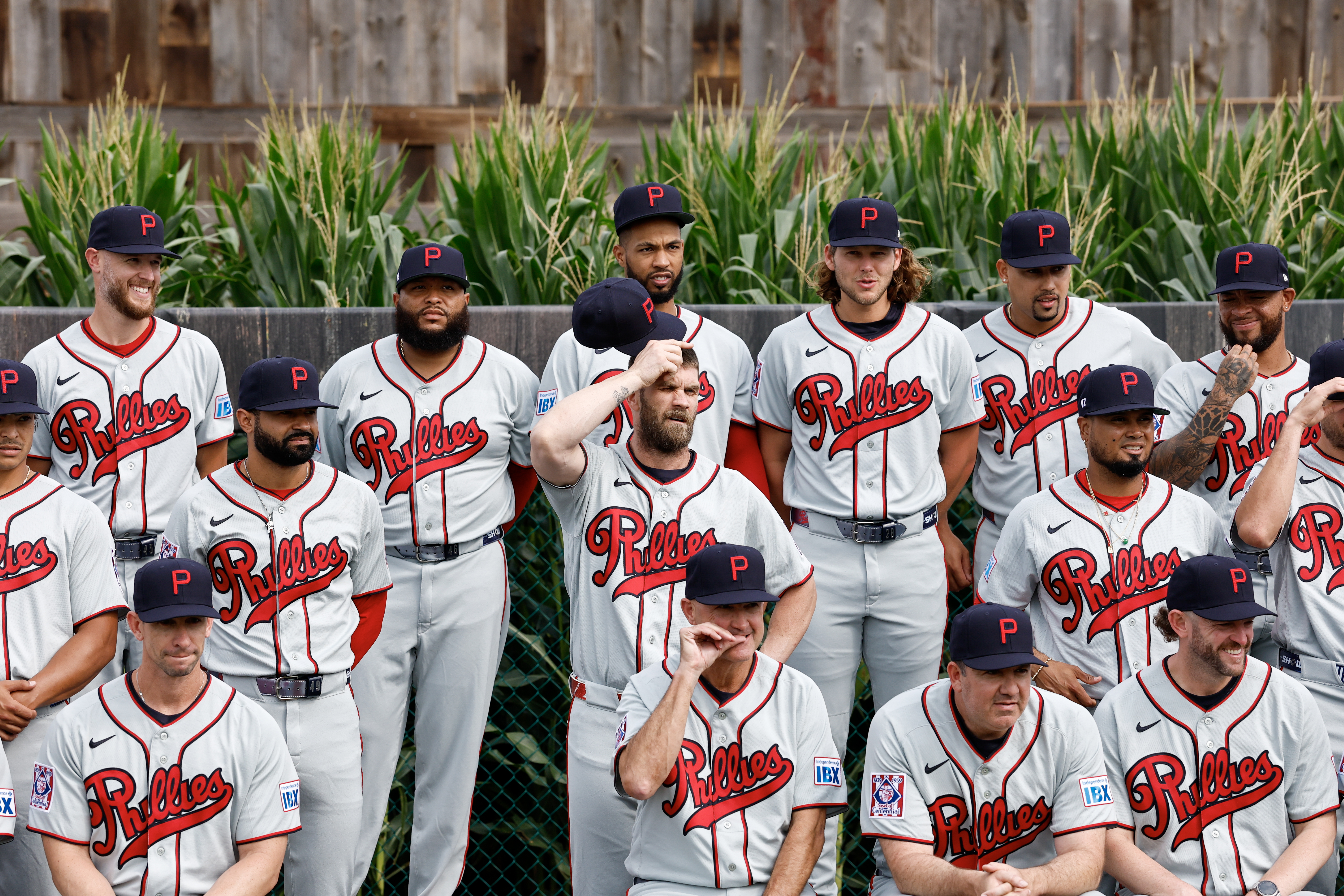
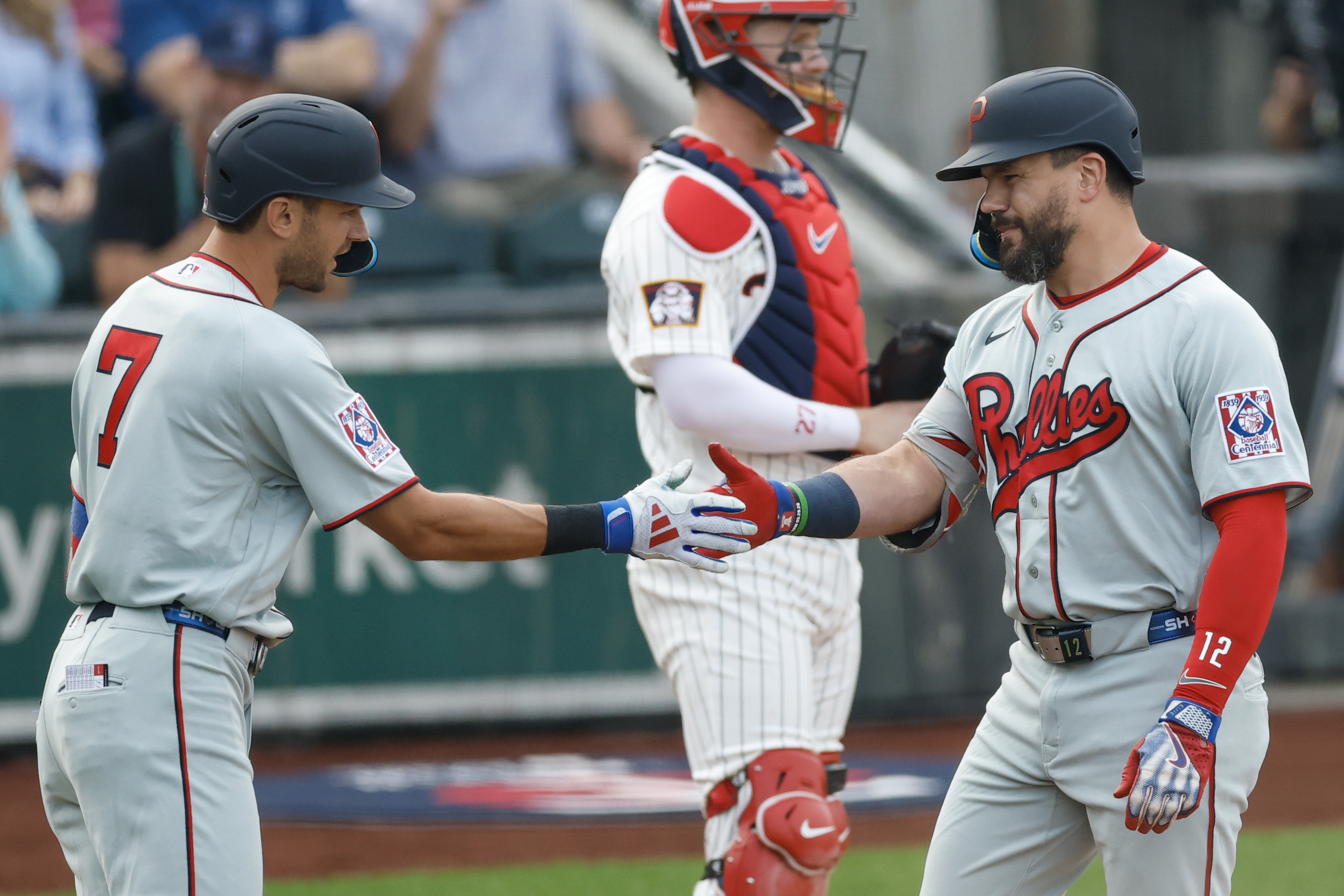
    The Phillies won Thursday, 7-1, over the Twins in the third iteration of MLB’s Field of Dreams Game in Dyersville, Iowa.Yong Kim / Staff Photographer

    And for the first time since 2022, it might come down to the final week of the regular season.

    “I think we know what’s at stake,” Schwarber said. “We all know the writing on the wall. We know that, for where we need to go, that we need to step up in a lot of different ways, in a lot of different areas. And I feel like our team is ready for that.”

    Ready or not, here they are.

    This week brought something different, a 10-hour detour to Iowa cornfields for a glimpse of the Field of Dreams movie site and a 7-1 victory over the Twins. It was a breath of fresh air, an 80-mph changeup amid a slew of triple-digit fastballs.

    But now, it’s a 39-game sprint to the finish. The Phillies started 9-19 and got their manager fired. They went on a 45-24 heater under Don Mattingly to climb back into the race. And the latest stumble has them in a five-team cluster for two wild-card spots.

    The Braves, Brewers, and Dodgers lead the NL East, Central, and West, respectively. The Cubs are comfortably atop the wild-card standings, with a seven-game lead through Friday.

    Behind them, the Padres are surging. The Phillies are trying to ward off challenges from the Diamondbacks, Marlins and Cardinals. It didn’t help that they lost two of three in St. Louis this week.

    Kyle Schwarber (right) got the Phillies started with a leadoff home run in the Field of Dreams Game on Thursday night in Iowa.Yong Kim / Staff Photographer

    Entering the weekend, the Phillies had an 87.9% chance to make the playoffs, based on Baseball Prospectus’ PECOTA projection model. Baseball Reference had them at 61.2%. Fangraphs split the difference, at 73.9%. A good week at home in back-to-back series against the Marlins and Cardinals would go a long way to boosting those odds.

    “We know the road ahead that we’re going to have, and we know that everyone’s going to be pulling on that same rope every single day and trying to find different ways to execute and win ballgames,” Schwarber said. “It doesn’t have to be one area every single day. I feel like that all different areas are going to be coming together at a really good time.”

    Said Bryson Stott: “We know we have to win games, especially now and coming down the stretch. We’re in a tight race right now.”

    It feels like the right time, then, to look closer at the race for the last two wild-card spots. Let’s dive in, with all numbers through Friday’s games.

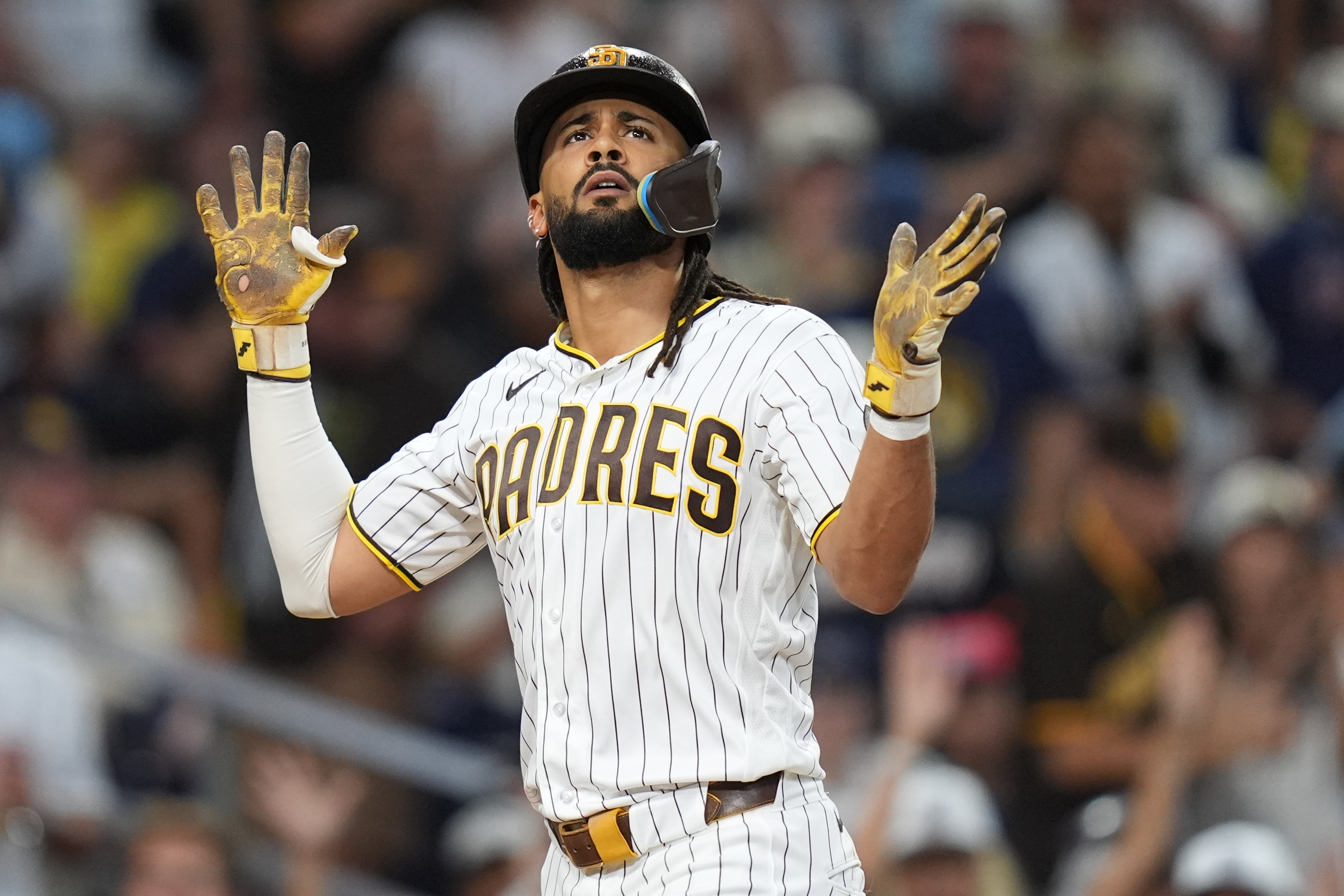
    Fernando Tatis Jr. has been hot since the All-Star break for the surging Padres.Gregory Bull

    Padres

    Record: 66-57, second place in NL West, second in wild card (one-game lead).

    Strength of remaining schedule: .496

    Playoff odds: 59% Fangraphs; 58% Baseball Prospectus; 51.1% Baseball Reference.

    Key series: Sept. 25-27 vs. the Diamondbacks.

    The big question: Will A.J. Preller’s go-for-it trade deadline spur San Diego’s third consecutive playoff berth and fourth in five years?

    Ten days before the deadline, officials from multiple teams were still guessing about Preller’s approach. But the Padres went 8-1 against the Marlins, Rockies, and Giants, and allowed Preller to be Preller. Not only did the hyperaggressive executive hold star closer Mason Miller and reliever Adrián Morejón, but he sacrificed two of the organization’s top four prospects for rental starters Robbie Ray and Casey Mize, who joined Michael King and soon-to-return Joe Musgrove in an experienced rotation. The Padres came into the weekend having won six games in a row and 16 of 20.

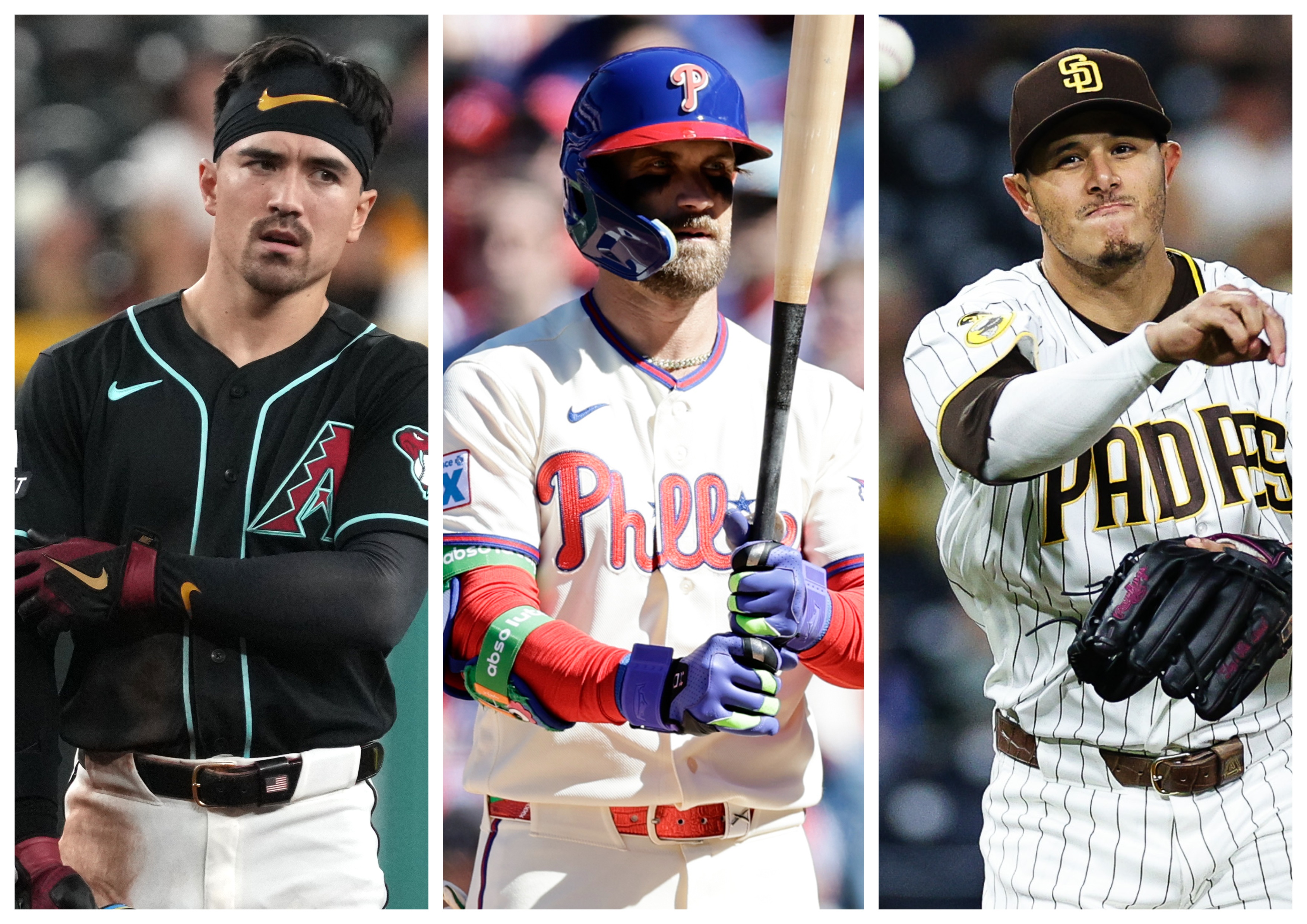
    Outlook: Remember the team that went 0-6 in a span of 11 days against the Phillies in late May and early June? Well, these aren’t your father’s Padres. For one thing, their stars have shined. Entering the weekend, Fernando Tatis Jr. had seven homers and a 1.002 OPS since the All-Star break; Jackson Merrill was batting .343 with a 1.032 OPS. Imagine if Manny Machado ever figures it out this season.

    Starting pitchers Cristopher Sánchez (left) and Jesús Luzardo (right) would make the Phillies a formidable postseason team in a short series. Elizabeth Robertson / Staff Photographer

    Phillies

    Record: 65-58, second place in NL East, tied for third in wild card.

    Strength of remaining schedule: .506

    Playoff odds: 73.9% Fangraphs; 87.9% Baseball Prospectus; 61.2% Baseball Reference.

    Key series: Aug. 31-Sept. 2, at Diamondbacks.

    The big question: Will they run out of major league-quality pitching?

    In the playoffs, with short series and frequent days off, the Phillies are a dangerous opponent because of their Three Aces — Cristopher Sánchez, Zack Wheeler, and Jesús Luzardo — and stud closer Jhoan Duran. That’s enough pitching to scare even the Dodgers. But it takes a stockpile of arms to make the playoffs. Dave Dombrowski came up empty at the deadline for a starter (from among a bountiful supply of available starters) and a setup reliever. And so, it’s hardly catastrophizing to wonder if Mattingly has enough trustworthy pitching at his disposal to navigate the next six weeks.

    Outlook: At various times, Bryce Harper has used four words that may as well serve as the Phillies’ rallying cry: “Just get us in.” Never mind the divisional-round disappointments of the last two Octobers. The Phillies are actually built for the postseason, with a Jenga-tower roster that’s top heavy with stars. But getting there requires layers of depth on the roster and in the farm system. One injury, especially in the pitching ranks, could cause the whole thing to unravel. Keep an eye, too, on Harper and Schwarber, who have dealt with a sore knee and lower back, respectively.

    Diamondbacks shortstop Geraldo Perdomo leads a high-powered offense in Arizona.Sue Ogrocki

    Diamondbacks

    Record: 65-58, third place in NL West, tied for third in the wild card.

    Strength of remaining schedule: .501

    Playoff odds: 42.4% Fangraphs; 33.6% Baseball Prospectus; 44.4% Baseball Reference

    Key series: Aug. 31-Sept. 2 vs. the Phillies

    The big question: Did they miss an opportunity at the trade deadline?

    The Diamondbacks were close to adding righty Clay Holmes to their rotation, but the Mets reportedly backed out over health concerns about one of the prospects in the deal. Arizona’s lone deadline move was for lefty-hitting outfielder Lars Nootbaar, and general manager Mike Hazen didn’t hide his frustration. “In the end, I could have kept adding,” he said in a radio interview. “I could have kept putting more in to get the deals done and it just didn’t happen.”

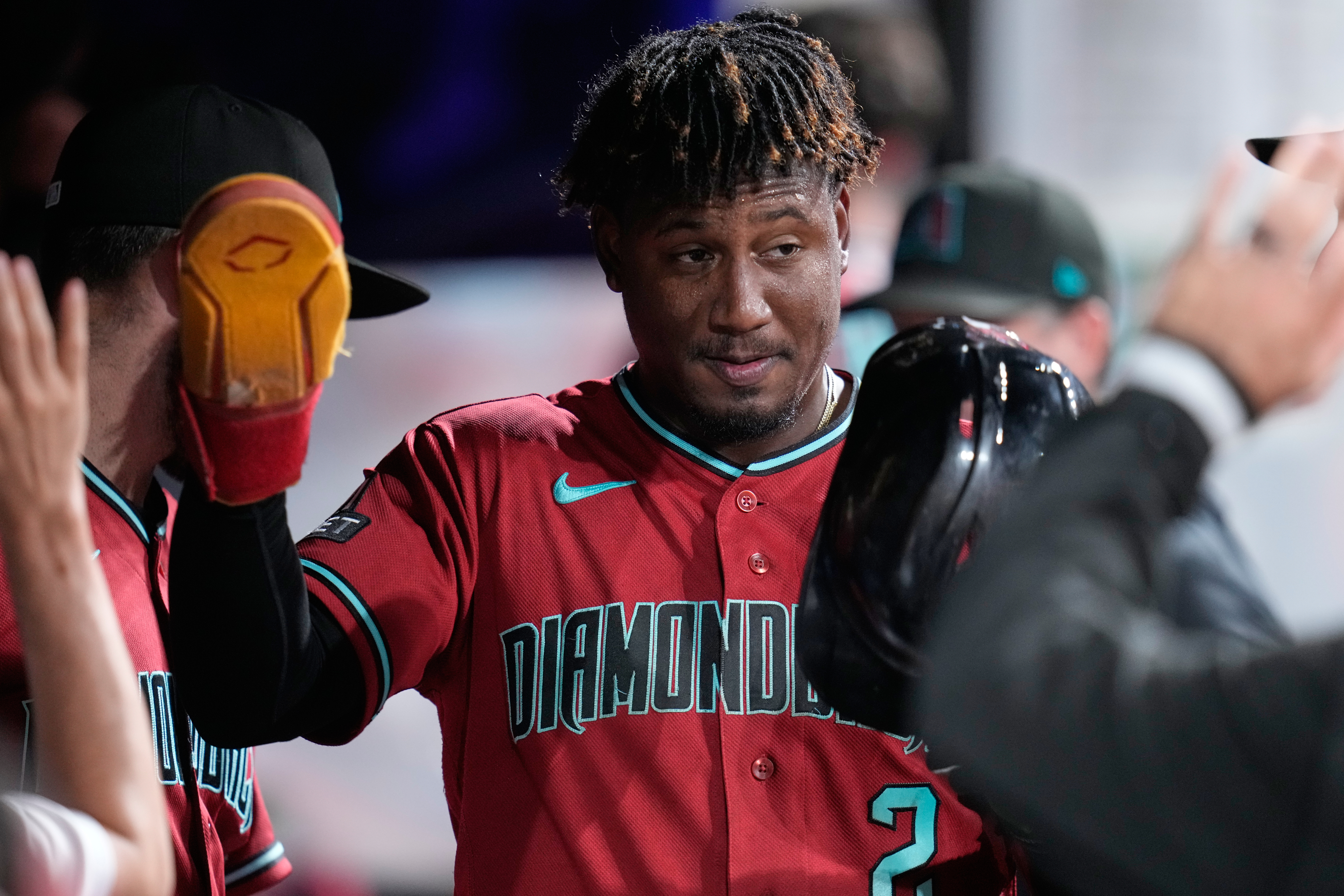
    Outlook: Unless these Phillies finally win it all, they will be haunted by the 2023 NL Championship Series, when they lost Game 6 and 7 at home. Three years later, the Diamondbacks present many of the same challenges, notably a pesky offense led by Corbin Carroll, Geraldo Perdomo, Ketel Marte, and Gabriel Moreno. They added Nolan Arenado this year, and he’s pushing 20 homers. But the lineup may have to carry them given the rotation depth behind Eduardo Rodríguez. Rookie lefty Brandyn Garcia recently took over as closer and has been dominant.

    Eury Pérez is one anchor of the Marlins’ starting rotation, along with veteran Sandy Alcantara.Marta Lavandier

    Marlins

    Record: 62-61, third place in the NL East, fifth in wild card (three games back)

    Strength of remaining schedule: .510

    Playoff odds: 11.4% Fangraphs; 10.8% Baseball Prospectus; 17.1% Baseball Reference.

    Key series: Sept. 14-16 at Diamondbacks

    The big question: Can they reel off another hot streak?

    Since June 17, the Marlins won 16 of 20 games, lost 12 in a row, won six out of seven, lost four straight, and won four straight before losing Thursday and Friday. If they were an amusement park ride, they would leave their patrons nauseous. It’s probably the sign of a young team that’s not quite ready for primetime. And the competition will harden, especially in September. The Marlins’ last 15 games are against the Dodgers, Diamondbacks, Padres, Cubs, and Braves. How’s that for a gauntlet?

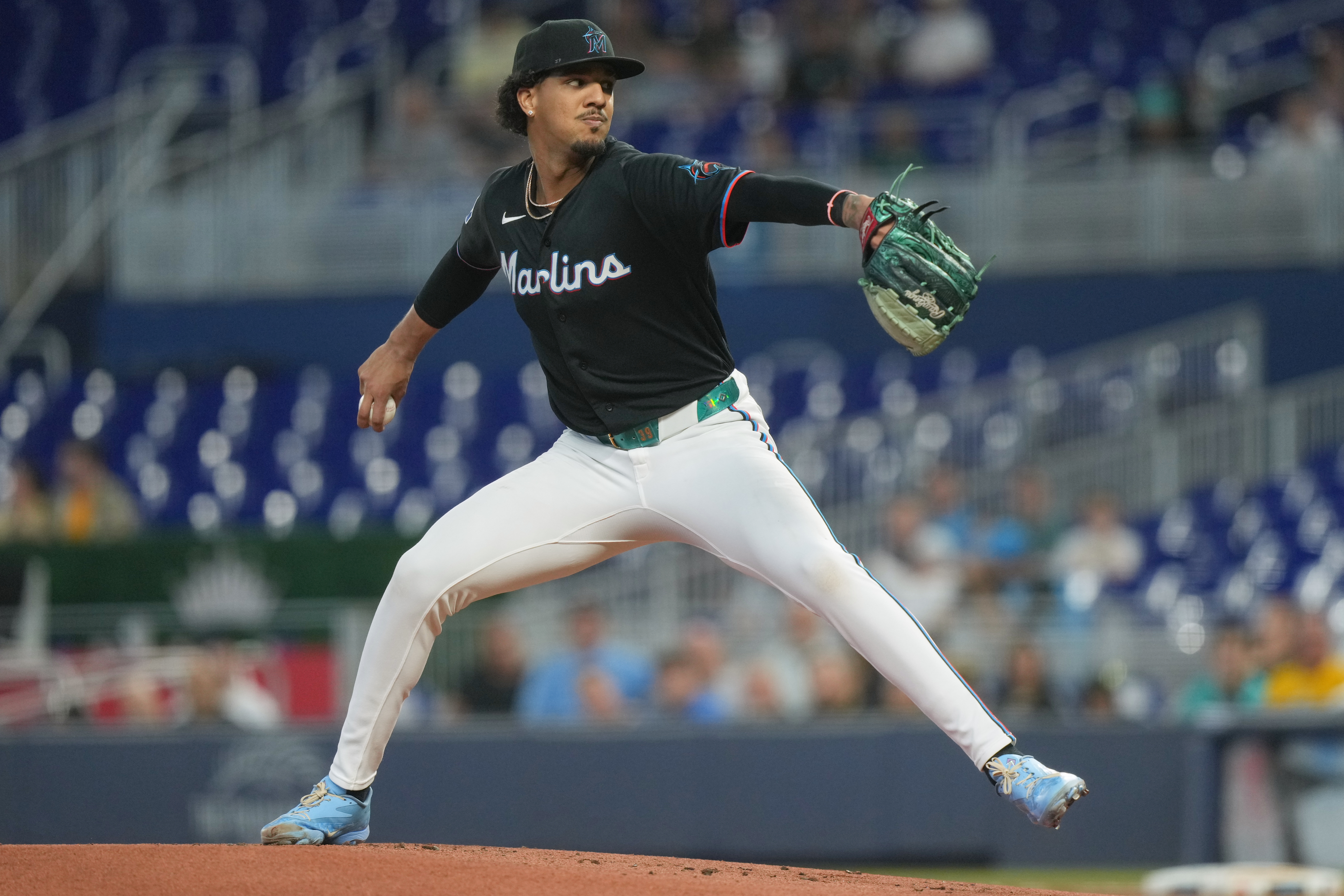
    Outlook: The 12-game losing streak turned the Marlins from potential deadline buyers to fence-sitters who leaned toward selling. If they get on a roll, it will be because of the starting pitching, led by Sandy Alcantara and Eury Pérez. Max Meyer, an All-Star and emerging ace, has been sidelined with a neck strain since July 19. It’s unclear whether he will return before the end of the season. The Marlins traded catcher Liam Hicks to the Rays but held on to Otto Lopez and Xavier Edwards, the most underrated middle infield in the sport.

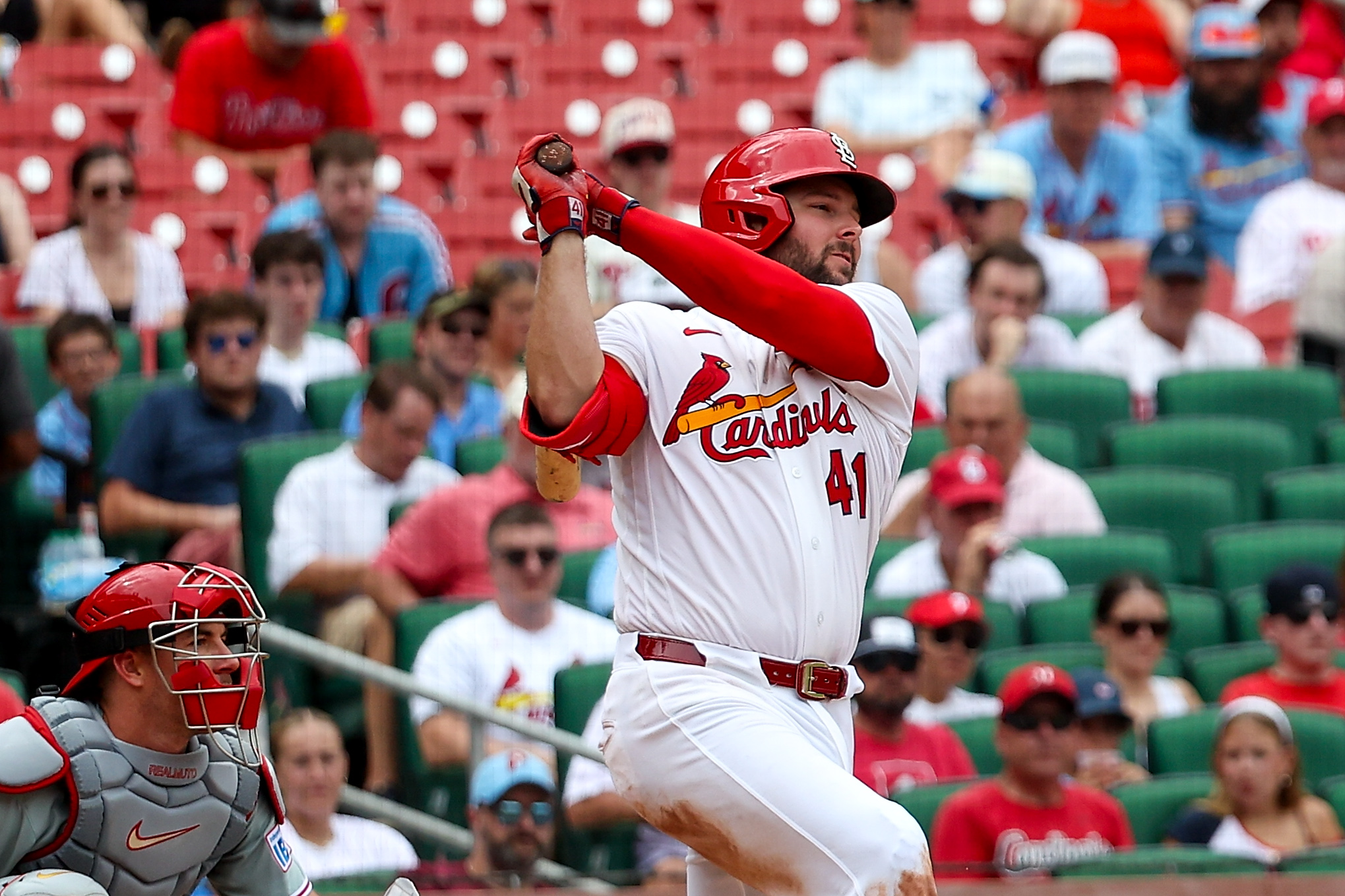
    Alec Burleson and the Cardinals won three series in a row after they were sellers at the trade deadline.Scott Kane

    Cardinals

    Record: 61-61, third place in the NL Central, sixth in wild card (3½ games back)

    Strength of remaining schedule: .499

    Playoff odds: 8.6% Fangraphs; 4.2% Baseball Prospectus; 15.8% Baseball Reference.

    Key series: Aug. 21-23 at Phillies

    The big question: Can an accidental contender keep contending?

    Not only didn’t the Cardinals plan on contending this season, but at the trade deadline, president of baseball operations Chaim Bloom acted as if they weren’t. In addition to sending Nootbaar to the Diamondbacks, Bloom packaged starter Dustin May and reliever JoJo Romero to the rival Brewers for prospects. Yet the Cardinals won three series in a row since the deadline, taking two of three from the Yankees, Rockies, and Phillies. If they’re still in the race after next weekend’s series in Philadelphia, maybe they will actually have staying power in September.

    Outlook: The Cardinals have balance in the top half of the lineup, with rookie sensation JJ Wetherholt and Alec Burleson from the left side of the plate and Home Run Derby champ Jordan Walker and Iván Herrera from the right. And they’re calling up outfield prospect Joshua Báez, who is bringing 34 homers from triple A to the majors this weekend. But an unexpected strength has been the young starting pitchers, chiefly Andre Pallante, Kyle Leahy, and Michael McGreevy. Never heard of them? If the Cardinals are able to hang in there, they will be big reasons why.

  • The Jalen Hurts hate online is dumb, ‘Field of Dreams’ is overrated, and other thoughts

    The Jalen Hurts hate online is dumb, ‘Field of Dreams’ is overrated, and other thoughts

    First and final thoughts …

    As of 2:15 p.m. Friday, a post from the Eagles’ official Twitter/X account showing a slow-motion replay of Quinyon Mitchell intercepting a Jalen Hurts pass during practice Wednesday had accumulated nearly 17 million views on the site. There are no typographical errors in that sentence. An interception at practice garnered 17 million views without Christopher Nolan or Abraham Zapruder having filmed the sequence.

    X users reposted the clip more than 3,000 times. Many of them included comments suggesting, or saying outright, that the interception was indicative of the quality of Hurts’ play or that the Eagles were disloyal or disrespectful to Hurts for posting the clip at all.

    Former Eagles linebacker Emmanuel Acho, now a professional podcaster and poo-stirrer, wrote that “given my experience with the lengths people go to protect Jalen, somebody getting cussed out for sure and then may get fired.” ESPN’s Mike Golic Jr. quipped: “guys, people can see this.” Ben DiNucci, whose NFL career comprised three games with the Cowboys in 2020, wrote: “Why would they post this lol These social teams have a direct impact on what fans think / believe / see.”

    A lot can be said about these people and those who responded similarly to the interception post. None of what can be said is kind. DiNucci at least tiptoed toward a reasonable and accurate point: That many fans, especially those so hungry for information and insights about their favorite teams that they spend hours scrolling through social media in the middle of the day, would blow such a play out of proportion. That’s fine. They’re fans. No one should expect them to be measured and reasonable.

    But if you’re going to hold yourself up as an expert and try to earn a living from that purported expertise — and that’s what these media members and influencers and former players are doing — then you ought to have enough knowledge and integrity to treat an interception in practice with the gravity it deserves. Which is to say, next to none. If training camp mattered that much, Paul Turner would be closing in on his 11th consecutive season with at least 1,500 receiving yards, and Sam Bradford would have been a Super Bowl MVP before Hurts or Nick Foles.

    Hurts has his strengths as a quarterback, and he has his shortcomings, and, yes, this will be an interesting and important season that could chart the course of his future with the Eagles. But no matter how sensitive Hurts and his camp might be, he has handled situations that were far more pressure-packed than a post intended to praise one of his teammates. And the notion that throwing a pick during training camp should serve as any kind of referendum on any NFL starting quarterback is so stupid that it could gain traction only on X.

    It was practice, people. Cue the Allen Iverson rant, and go freak out over another not-so-big deal.

    Leave Santa alone, Roger

    So the NFL has scheduled one game on the night before Thanksgiving, three on Thanksgiving itself, one on Black Friday, one on Christmas Eve (between the Eagles and Texans at 8:15 p.m.), and three on Christmas. Meanwhile, the NBA has nine games on Thanksgiving Eve, 11 on Black Friday, and five on Christmas.

    Sorry, count me out, or as out as I can be as someone who covers the Eagles and 76ers. These leagues are attempting to capitalize on the captive audience they believe they’ll have on these holidays, but having those days and the traditions within them consumed by a bunch of games is crass and greedy. The only benefit to this overstuffed sports schedule is that it might keep family members and friends from arguing about politics over the apps and turkey.

    Quick hitters

    For the Sixers’ sake, it’s good to see so many LeBron James murals popping up around the city. They should serve as a nice counterbalance to the one at 30th St. and Eighth Avenue, around the corner from Madison Square Garden, that depicts Mitchell Robinson — a key member of the New York Knicks’ 2025-26 championship team — dunking over Joel Embiid. …

    Based on their offensive output in their 7-1 win over the Twins on Thursday night in Iowa, the Phillies should play all their remaining home games this season at Shady Brook Farm. …

    Oh, and for the record, Field of Dreams is among the most overrated sports movies ever. Joe Jackson hit left-handed, not right-handed as the film depicts him. Kevin Costner’s Ray Kinsella was an unsympathetic jerk to his father. And James Earl Jones’s “People will come, Ray” speech is overwrought. Costner’s “Dad, wanna have a catch?” scene is touching, but it does a lot of heavy lifting in making the film watchable. Give me The Natural, Eight Men Out, and Bull Durham every time.

  • Aramark forged a partnership with Penn Medicine for more affordable employee health benefits

    Aramark and the University of Pennsylvania Health System launched a partnership this year to offer the food service giant’s Philadelphia-area employees healthcare in a test of a new model for reducing costs.

    Aramark employees who choose the benefit option, called the Penn Medicine Premier Plan, face no deductibles and lower copays when they and their dependents use Penn doctors and facilities.

    The move by Aramark into what is called direct contracting comes as employers are contending with years of surging healthcare costs. It’s an example of experimentation designed to slow spending growth in spending and perhaps improve quality, experts said.

    “We certainly would like to save money on the model, but its primary focus is to make benefits more affordable” by getting lower prices than it would get by going through an insurer, said James Startare, Aramark’s vice president for benefits.

    The model is called direct contracting because Aramark negotiated prices and other terms of the contract directly with Penn, instead of relying on an insurer to negotiate prices.

    It’s Penn’s first such contract and the first large-scale direct contract in the Philadelphia region. Aramark talked with other systems in the area, but Penn emerged as the partner willing to enter into the experimental contract. Penn described the deal as a multiyear contract ultimately expected to roll over from year to year.

    Aramark didn’t provide details on savings, but its goal was to negotiate prices that are lower than those it would pay though a benefits administrator, such as Aetna.

    By eliminating deductibles that function as a barrier to care, the plan is expected to encourage primary care visits. This could reduce long-term costs by catching patients’ health problems early.

    For health systems like Penn, such contracts offer a chance to increase market share, streamline payments, and hone their ability to manage the health of a population.

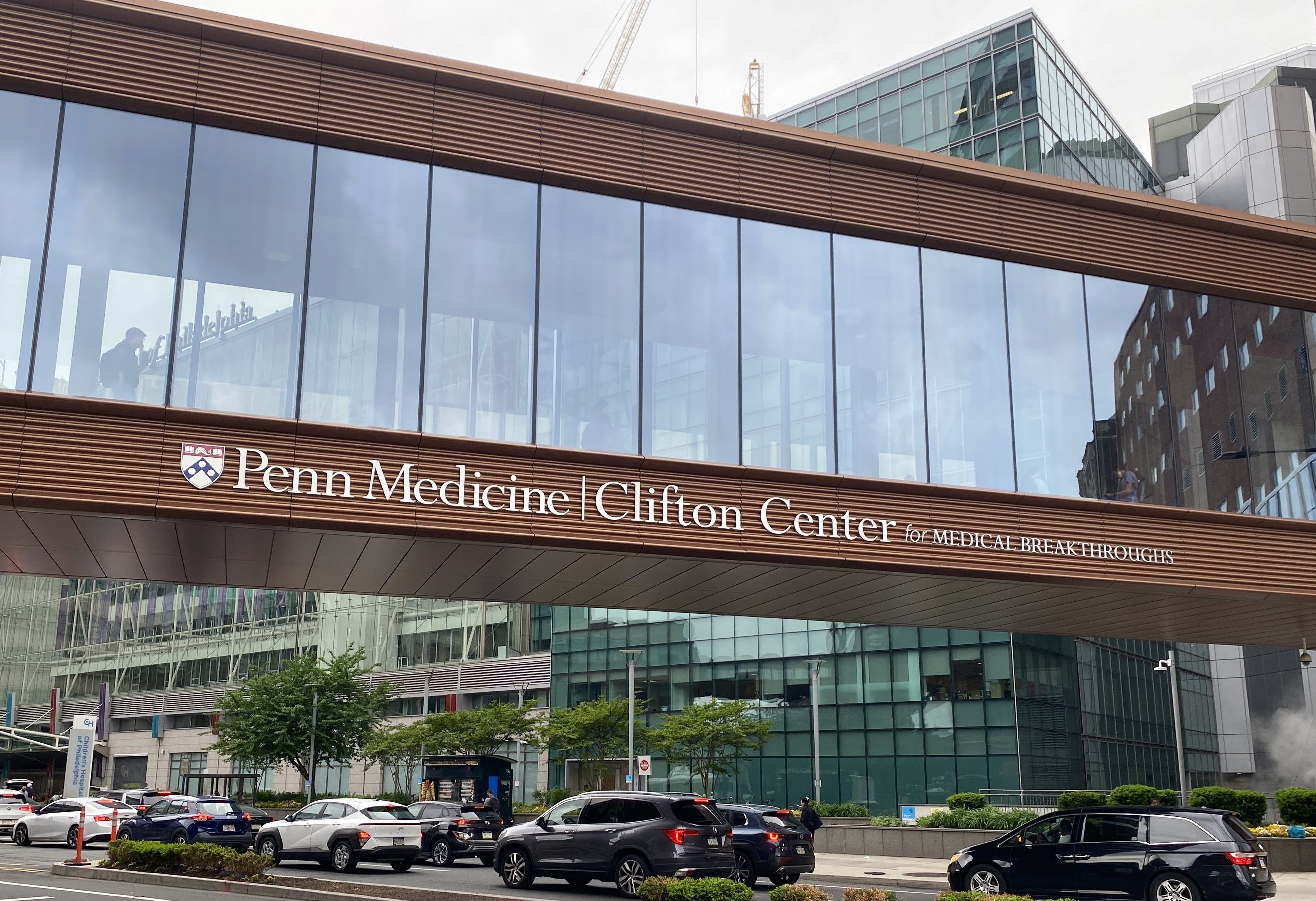
    The Penn Medicine Premier Plan features no deductibles and lower copays when Aramark employees and their dependents use Penn doctors and facilities. Harold Brubaker / Staff

    Aramark’s move into direct contracting

    Penn is Aramark’s third major direct contracting partner.

    Employers, even those like Aramark that are self-insured, typically rely on an insurer’s negotiated prices.

    With the new direct contract, an Aetna administrative unit still processes the claims for Aramark, and patients who go outside Penn for care use the Aetna network.

    Aramark launched its first such contract in 2024 in Dallas and expanded to Chicago last year, each time getting a strong employee enrollment, though it took two years in Chicago, Startare said.

    In the Philadelphia region, 35% of eligible employees (those who work 30-plus hours a week on average) have chosen the Penn plan, which took effect Jan. 1, Startare said. That amounts to 800 employees.

    Coincidentally, the health contract started at the same time as Aramark’s contract to manage food and other services at Penn Medicine facilities, but the two deals were not linked.

    Employees who were moving to Aramark with the food services contract were worried about losing their Penn benefits, said Megan Lieberman, a patient services manager at Chester County Hospital who was among those who became an Aramark employee.

    But the Penn Premier Plan was very similar to what they were used to. “It was definitely a huge relief to know that we got to hang on to those benefits,” Lieberman said.

    A separate contract covers pediatric services at Children’s Hospital of Philadelphia for Aramark employees and their families.

    Next year, Aramark plans to take direct contracting into central New Jersey, but did not name the system it’s using there.

    What’s in it for Penn

    The Aramark contract is an opportunity to focus on “chronic disease management, preventive care, cancer screenings, things like that” for a specific group of 1,400 patients who are motivated to stay within the Penn system, said Mark Angelo, Penn’s chief medical officer for population health.

    A key goal is to reduce the deductibles, copays, and prior authorizations that can slow access to preventive care. The model is designed to take care of people before they end up in high-cost places like the emergency department or hospital, Angelo said.

    Keeping more patients within Penn is expected to result in savings because of better care coordination and fewer repeated tests, Angelo said. Penn Premier plan members can seek care outside of Penn, but it will cost them more out-of-pocket.

    As it is, the typical Penn patient also uses other health systems for some services, said Roy Schwartz, Penn’s vice president for payer strategy.

    “Sometimes it’s the right choice, sometimes it can fragment their care,” Schwartz said. “There should be savings just simply coming from having integrated, coordinated care at a place like Penn.”

    Penn does not yet have much of its own data on Aramark employees, but indications from Aramark are that the plan’s members were using more Penn services in the first six months, Schwartz said. “It was not just patients who were using Penn anyway for pretty much everything.”

    Penn and Aramark officials plan to meet regularly to review results and consider modifications. “We’re hoping this works out well for everybody because we’d love to do some more of these,” Schwartz said.

    Momentum behind direct contracting

    Employers nationally have long contracted directly with doctors and health systems for specific procedures, like joint replacements, cancer care, and heart surgery. For years, they’ve also paid directly for primary care through on-site clinics.

    Aramark’s move to an all-encompassing healthcare plan with a single provider fits into a newer trend gaining momentum nationally. Investors have created platforms like Cost Plus Wellness, Mishe Health, Nomi, and Transcarent to help health systems implement direct contracts.

    Northwell Health, a major health system in New York and Connecticut, started a for-profit subsidiary called Northwell Direct and now has more than 70 contracts that cover more than 300,000 people.

    Northwell Direct’s biggest contract covers 100,000 building service workers in the New York area and their dependents. It took effect this year and is expected to save 20% in the first year.

    Big savings to start are not guaranteed.

    “They may not go into it with a lower cost, but they’re going to go into it with better access, better quality for their employees, and what they’re finding is eventually those lower costs will come,” said Jenny Goins, chief of staff at the National Alliance of Healthcare Purchaser Coalitions.

    The Washington nonprofit is putting together a direct contracting advisory council to help more employers to do what Aramark is doing, Goins said.

    The model is not expected to replace traditional coverage anytime soon in the Philadelphia region.

    “It is not for everyone, and it does take effort and coordination on the part of the employer,” said Tom Belmont, CEO of the Greater Philadelphia Business Coalition on Health. “Also, some health systems are ready for the discussion, while others are not.”

  • Jefferson Health reported a $181.5 million operating loss in fiscal 2026

    Jefferson Health reported a $181.5 million operating loss in fiscal 2026

    Thomas Jefferson University and Jefferson Health posted an operating loss of $181.5 million in the year that ended June 30, an improvement over last year’s $208 million loss. In both years, the loss was concentrated in Jefferson’s insurance business.

    The fiscal 2026 results, reported to bondholders Friday, included $112 million in costs for layoffs and other moves designed to put the Philadelphia region’s largest health system on firmer financial ground.

    Jefferson highlighted in its preliminary report to investors that results improved each quarter of fiscal 2026 — from an operating loss of $103.8 million in the first quarter to a $71.1 million operating profit in the fourth quarter.

    “We’ve made significant progress strengthening Jefferson’s financial performance, yet those gains are increasingly threatened by the actions of commercial insurers in Pennsylvania,” Jefferson’s chief financial officer, Michael Harrington, said in an email.

    Jefferson sued Independence Blue Cross last month over policy changes that the health system says amount to back-door price cuts.

    “Despite already paying some of the lowest reimbursement rates in the nation, certain payers are now attempting to unilaterally rewrite or reinterpret existing contract terms to further reduce payments and improve their own margins at the expense of providers and the patients they serve,” he said.

    Separately, Jefferson sued Aetna in April over a policy that reduces payments for hospital stays for Medicare Advantage patients that Aetna decides aren’t sick enough to qualify for full payment.

    Insurers are under pressure from employers to slow healthcare expense growth. Independence said in response to the lawsuit that it acts in the best interest of its customers. Aetna said its policies comply with federal laws and regulations.

    Here are more details on Jefferson’s results:

    Revenue: Jefferson’s revenue reached $17.7 billion, up from $15.8 billion the year before. Fiscal 2025 included just 11 months of Lehigh Valley Health Network results. Jefferson completed that acquisition on Aug. 1, 2024, expanding its reach into Northeastern Pennsylvania and giving the nonprofit more than 30 hospitals.

    Jefferson Health Plans: Jefferson’s insurance arm had a $130.3 million loss in fiscal 2026, an improvement over a $169.9 million loss the year before. The insurance arm had 415,172 members on June 30, up from 366,780 the year before. The plan is diversifying away from Medicaid as it increases enrollment in Medicare Advantage and the Affordable Care Act markets. The percentage of membership in Medicaid fell to 75% this year from 87% last year.

    Notable: The fourth quarter of fiscal 2026 was Jefferson’s first profitable quarter in at least four years, according to Inquirer calculations that exclude investment income. Unlike other local health systems, Jefferson follows accounting rules for higher education, allowing it to include a portion of investment income in revenue.

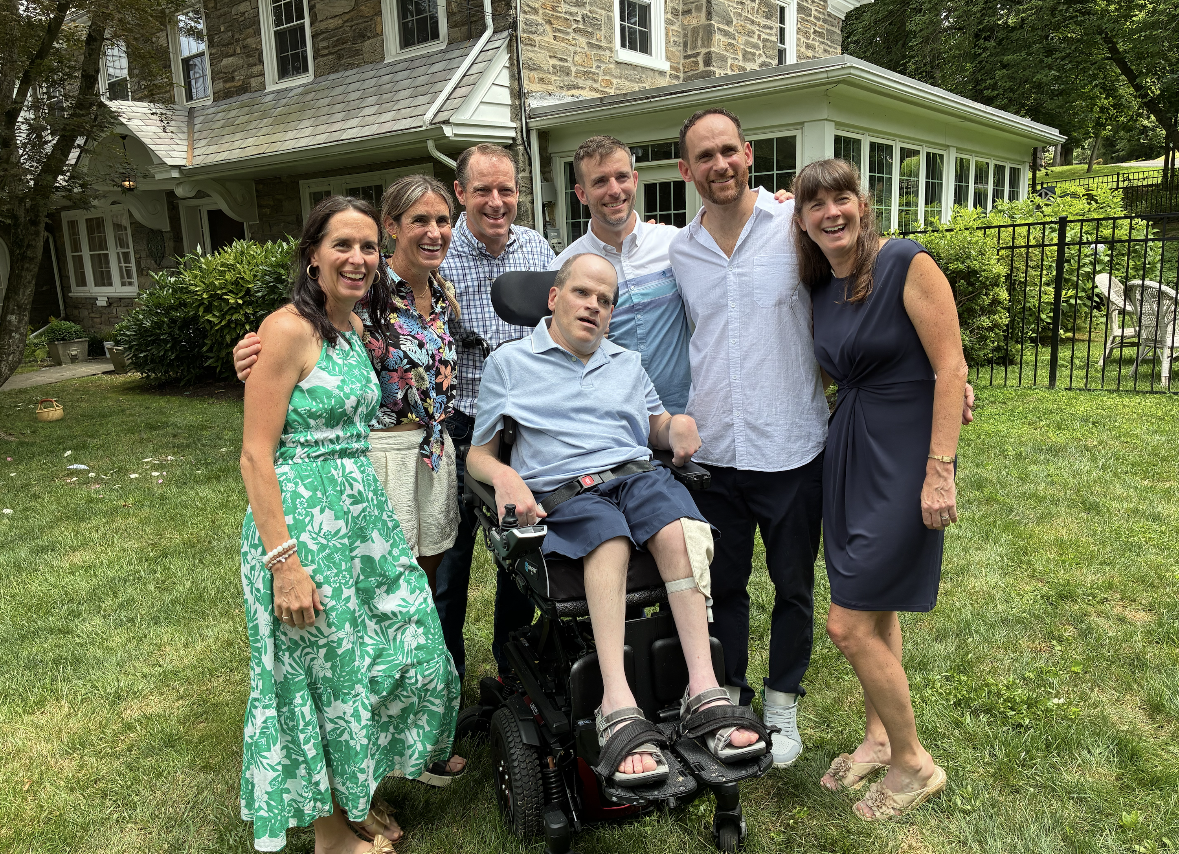
  • Chris DiJulia’s funeral celebrated an indomitable spirit … and Philadelphia’s amazing basketball family

    Chris DiJulia’s funeral celebrated an indomitable spirit … and Philadelphia’s amazing basketball family

    Chris DiJulia never played a minute and he never coached a game, but at 11 a.m. Wednesday, he was the king of Philadelphia basketball.

    More than 600 people crowded into St. Denis Catholic Church in Haverford for an 80-minute celebration of 56 years of life well-lived. DiJulia, a fixture at St. Joe’s basketball games, had cerebral palsy, and so spent his life in a wheelchair, and died July 27 of natural causes related to his condition. A few people have ever lived a fuller life; the DiJulias prayed Chris would live to be 5, much less 56.

    As was the case for so many of the Phillies games Chris attended, it was standing room only for his memorial service Wednesday; more than 100 folks leaning against the walls and watching from the knave. They came from Chicago, Atlanta, Buffalo. It was streamed online, and it got views from as far away as Alaska. There were more college basketball coaches at the funeral than there were at LeBron and Kobe’s high school games.

    The event was more than a home-going for a man of unequaled strength and unmatched faith. It was a testament to the close-knit family of Philly college hoops.

    There is nothing like it, not anywhere in the world. It is a club, a cult, and, as the kids say now, a vibe. It goes beyond just the Big Five, beyond just the City Six (hello, Drexel), beyond men’s basketball. It is D-I and D-II and D-III and junior college. It is all of it.

    It took his daddy’s breath away.

    “Chris was unique,” said Don DiJulia, the retired athletic director at St. Joseph’s University. “But having all this happen, to even think there would be 600 people at 11 o’clock on a Wednesday … couldn’t even think that.”

    Legendary Temple coach John Chaney would have been there too, but he predeceased Chris by five years. How can you be sure? Because Chaney famously once said that Chris was the only person from St. Joe’s that Chaney liked.

    St. Denis was the site on Wednesday, and Wednesday will be remembered as a quintessential Philly hoops moment, even though there were no refs and no clock.

    More than anything, Philly basketball is its sites and its moments. It is the Palestra, the best place to shoot on God’s green earth, and Lynn Greer leading Temple back from 16 down to beat St. Joe’s in double OT there in 2002.

    It also is the DAK at Drexel and Gola/Glaser at La Salle, and it has been the smoky Philadelphia Civic Center, where I covered La Salle’s men years ago, and, of course, St. Joe’s Alumni Fieldhouse/Hagan Arena, where the DiJulias watched their Hawks play and soar and crash. All of these places can be deafening and intimidating and, by city requirement, always over-warm.

    On Wednesday, it was a gray stone Catholic church. For once, Chris was the star.

    DiJulia was the son of retired St. Joseph’s University athletic director Don DiJulia, and, despite his disability, for more than five decades Chris was everywhere basketball was played, loud and critical and present. Family and friends overfilled the pews, crammed shoulder-to-shoulder with giants from the media and, more than anything else, with Big Five royalty.

    You’ve probably been to funerals where there wasn’t a dry eye in the place, but most of the tears shed at St. Denis were tears of laughter and of joy. Chris was known best for his wry wit. In their eulogies, Chris’ siblings and parents proved again and again that wit is genetic.

    Chris loved the local pro teams and he was nuts about golf, so more than half the assemblage, to honor his fandom, wore jerseys instead of mourning clothes. The best: A shamrock-green Tug McGraw No. 45 and a pinstriped Richie Ashburn No. 1. Chris suffered and celebrated the maddening Phillies, and he so adored baseball that the service began with the national anthem and included a seventh-inning stretch complete with God Bless America.

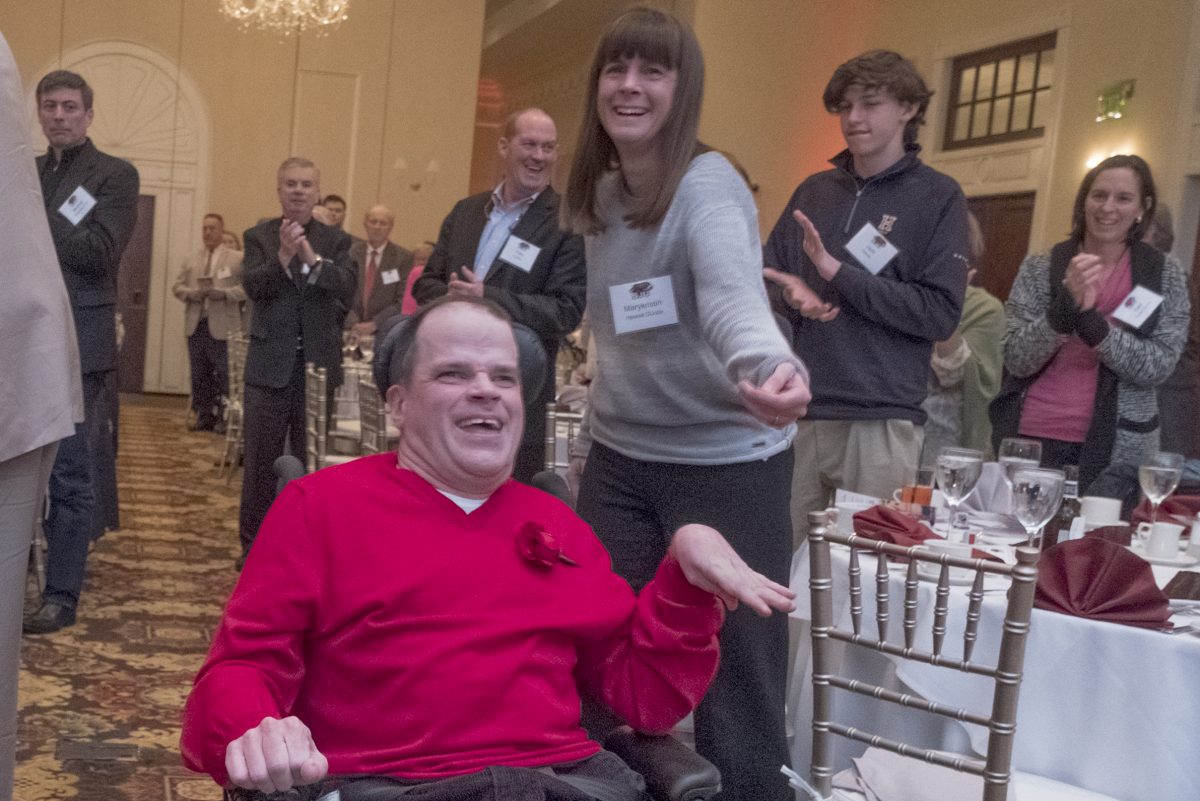
    Chris DiJulia, with his parents and siblings.provided by Kath DiJulia Cloran

    It was in his blood

    But as much as Chris loved the pros he was of college hoops, especially Philly college hoops. It was in his blood. Don played basketball (and baseball) at St. Joe’s, and he coached college basketball before he directed college programs.

    Don played for Jack Ramsey’s 26-1 team in 1965. He is a charter member of the Philadelphia basketball aristocracy. Chris is a legacy member.

    Membership can be earned.

    The first sporting event I attended after I arrived in Philly in February 1995 was a 30-point Penn men’s win over Brown at the Palestra, but that didn’t earn membership. It takes decades as a fan, years as a media member.

    I fast-tracked.

    I married in.

    My wife, Dr. Shelly Bowers Hayes, scored more than 1,100 points as Penn’s point guard until 1995. We met playing pickup on the Palestra floor that March, started dating a year later, and we’ve coached our kids the last six years (mostly, she coaches).

    I’ve done this job for 31 years. I’ve belonged to lots of clubs and organizations and associations. There’s no community like the community of Philly college hoops. Proved again for 80 minutes of joy, and a little pain, at St. Denis on Wednesday.

    This year Philly has hosted the NFL playoffs, the men’s NCAA Tournament, the NBA playoffs, the NHL playoffs, the Unrivaled women’s 3-on-3 league, the PGA Championship, the FIFA World Cup, and the Major League Baseball All-Star Game.

    Wednesday’s sellout was the most deserving of them all.

  • The hazing at Cheltenham follows a pattern seen at other schools. The district missed its chance to stop it.

    The hazing at Cheltenham follows a pattern seen at other schools. The district missed its chance to stop it.

    The connection was obvious for anyone who cared to see it.

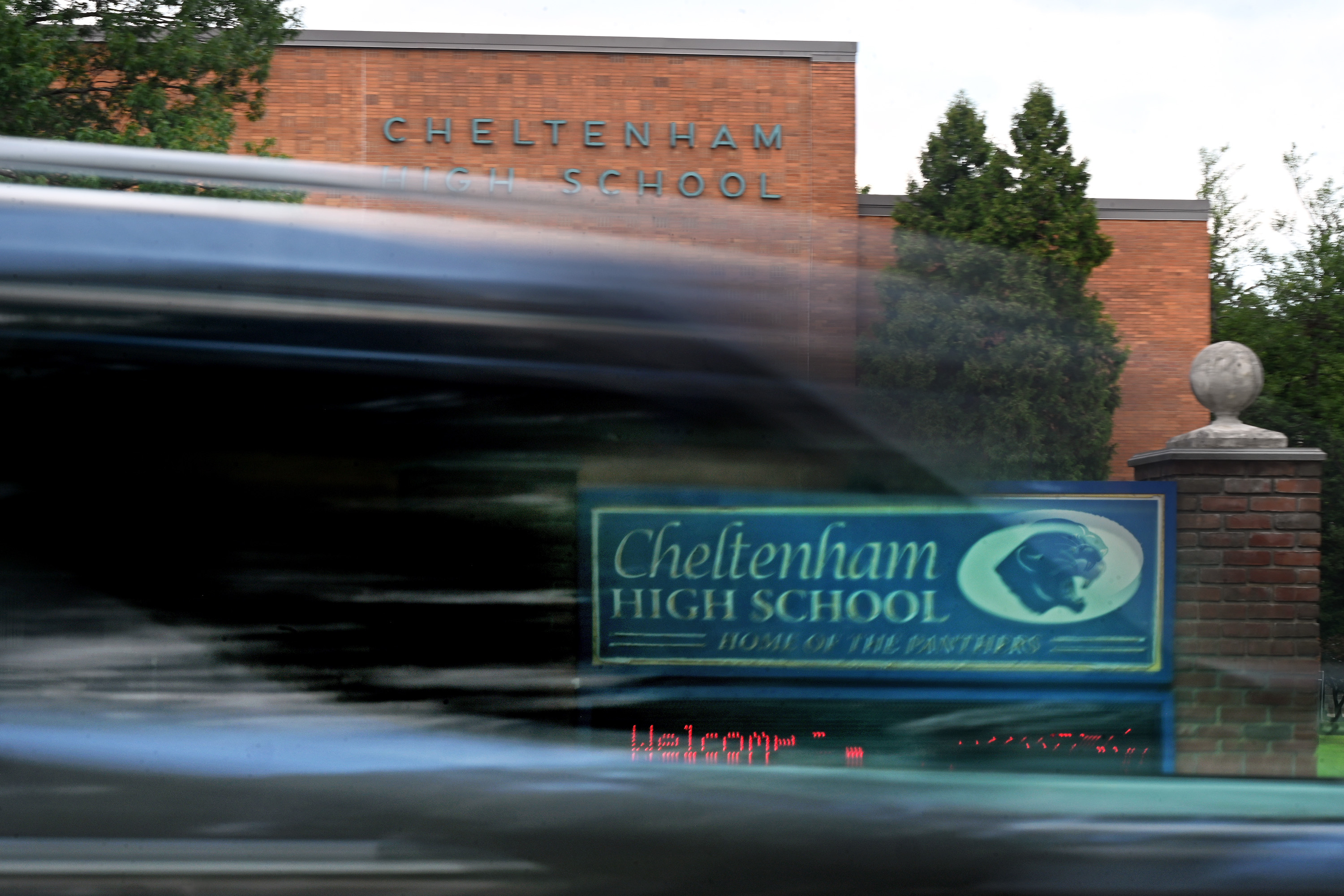
    One parent after another stepped to a lectern at a Cheltenham school board meeting Tuesday night, each of them bemoaning the district’s handling of either the recent hazing scandal within the high school’s football program or a string of student-on-student assaults at Cheltenham Elementary. The alleged hazing led to criminal charges against four coaches and six players and was brutal: teammates holding down a 15-year-old sophomore so they could step on him with football spikes and poke at his buttocks with a broomstick. The alleged assaults at the elementary school, involving children in kindergarten and second grade, involved conduct and comments that were sexual in nature.

    Leah Mulhearn, the board’s president, announced that the district would review its safety policies and that “football will not return until we address this,” only to duck behind the protective shield of the passive voice — “Mistakes were made” — when it came time to assign responsibility for the dual disasters. The anger among the meeting’s attendees was palpable and universal, and it was justified. These are not two crises on distinct, parallel tracks. They are linked, and there is no separating them.

    It was impossible, after listening to some of those parents describe the abuse accusations at Cheltenham Elementary, not to think, What kind of school leaders ignore these incidents? The kind likely to ignore a parent who reports a violent attack in the football locker room. The Cheltenham school district has a culture problem, and that problem isn’t new. Does that assertion seem outlandish? It isn’t. In youth and high school athletics, certain patterns, even the worst kind, tend to repeat and perpetuate themselves.

    “It seems some sort of disconnect,” the author Hank Nuwer, who for decades has been tracking hazing-related incidents and deaths, once told me. “You have to look at it from the outsider position and the insider position. The outsider sees it as sadistic. The people on the inside have the disconnect, particularly if they’ve gone through it themselves. ‘This needs to be done because it has been done to me. So we’re doing it to someone else.’”

    Go to 2002, to Central Catholic High School in Pittsburgh, where two football players were charged with sexual assault after allegedly holding down a 15-year-old teammate and slapping him in the face with their genitals.

    Go to West Chester’s Arrowhead Day Camp in 1966. The Roman Catholic High School football team was there for training camp. In a hazing prank, three players carried sophomore Lamonte Jenkins to a swimming pool sometime after the pool’s 8:30 p.m. closure, threw him in, then scurried back to their bunks. Jenkins drowned.

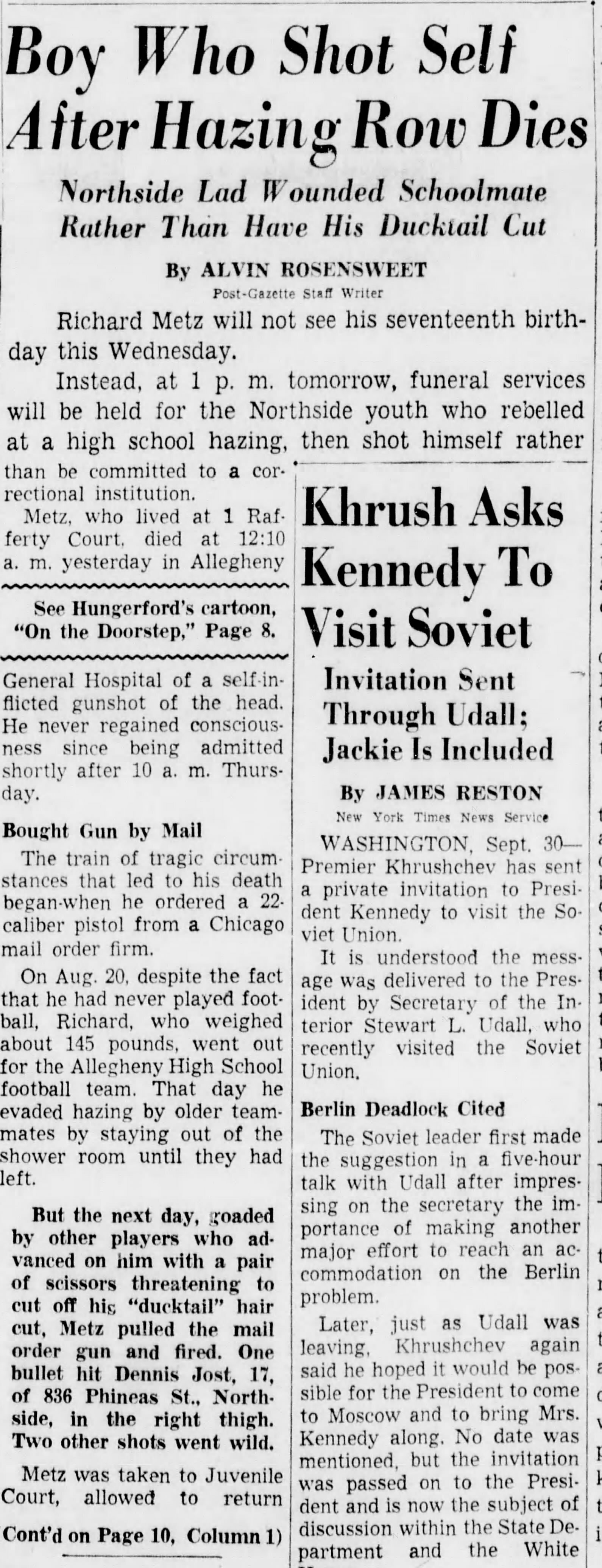
    Go back to Pittsburgh, in 1962, when Richard Metz, 16, tried out for the Allegheny High School football team and, after the first day of practice, stayed out of the locker room showers to avoid being hazed. The next day, when two players wielded a pair of scissors and threatened to cut his hair, Metz pulled out a .22-caliber pistol that he had ordered in the mail and fired three shots at the players, hitting one of them in the right thigh. Six weeks later, Metz shot himself.

    In 1962, Richard Metz shot a gun at two football players who attempted to haze him at Allegheny High School.Newspapers.com

    A “psychiatrist’s report showed that Richard had an inability to meet a crisis,” the Pittsburgh Post-Gazette’s Alvin Rosensweet wrote on Oct. 1, 1962, the day after Metz’s death. “He felt he was only defending himself when his teammates goaded him into shooting.”

    A young, troubled man who brings a gun to school … and turns it on other students … then dies by suicide. It doesn’t sound like something from the distant past. It sounds like the sort of atrocity too common in our time.

    Yes, these episodes are anecdotal. They’re also predictable without proper oversight from the adults who are supposed to be in charge, without awareness and understanding of the conditions that can create them. One would think the omnipresence of smartphones and social media and the possibility that such abhorrent acts would be captured on camera and blasted out to the world would serve as deterrents to hazing. They don’t, and the additional, necessary guardrails didn’t exist at Cheltenham and don’t in too many other locker rooms. Incidents like these seem rare, but there’s no telling how often they actually occur.

    “How likely,” Nuwer said, “are students to report this?”

    They’re not likely at all. The victims are often too humiliated to reveal the abuse, and you can be sure that the perpetrators won’t be quick to confess. Somehow those lasting lessons weren’t delivered to enough Cheltenham football coaches and players, and based on the abuse parents described Tuesday night, those responsible for the district’s youngest students need to learn them, too.

    There will be a review of the district from an outside attorney, and the high school football season has already been canceled, just as last season’s was. These are half-measures, and too late at that. Curtailing such cruelty comes down to stopping it before it starts, to cultivating an environment where everyone understands that there will be consequences for those who don’t meet the baseline for basic human decency.

    It takes elected leaders who actually lead. It takes educators and administrators who wield wisdom and compassion and discipline in the proper proportions. It takes parents and students with the willingness to speak up, and it takes parents who have the strength, the humility, and the self-awareness to recognize that their children might be causing the chaos — and who take the steps to stop it. It takes a lot of elements that right now seem in short supply in the Cheltenham school district.

    This column has been updated to reflect the outcome of one accusation of hazing.

  • The Sixers’ schedule release and the new challenge they face in a radically changing NBA

    The Sixers’ schedule release and the new challenge they face in a radically changing NBA

    The problem with most conspiracy theories is they assume a level of intelligence, cooperation, discretion, and selflessness that is completely at odds with the track record of large groups of humans. There may only be five people on planet Earth who possess the requisite skill set, let alone five who share a motivation to plot some nefarious deed.

    That being said …

    If you are the kind of person who tends to believe in dark, mysterious forces working in concert, you might want to give a little thought to the shifts in the NBA’s competitive environment over the last couple of years.

    The Luka Doncic and Jaylen Brown trades have plenty in common. Both were traded from teams less than two years removed from an NBA Finals appearance. Both for a pittance, and both to conference rivals. Of far greater significance is their dual place among the prime movers of a league that could be in the beginning stages of a renaissance.

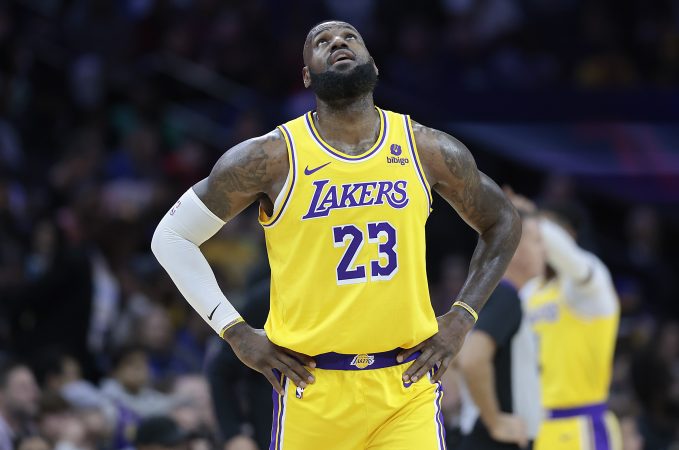
    The Lakers’ acquisition of Doncic two years ago not only positioned a marquee franchise for a seamless transition into life after LeBron James, it effectively, if improbably, positioned the Mavericks to land the No. 1 overall draft pick that they used to select a generational talent in Cooper Flagg. Meanwhile, the Sixers’ acquisition of Brown was effectively coupled with the acquisition of James, whose minimum contract free-agent deal with the Sixers completed the organization’s wild and near-instant transformation from borderline irrelevance to legitimate title contender.

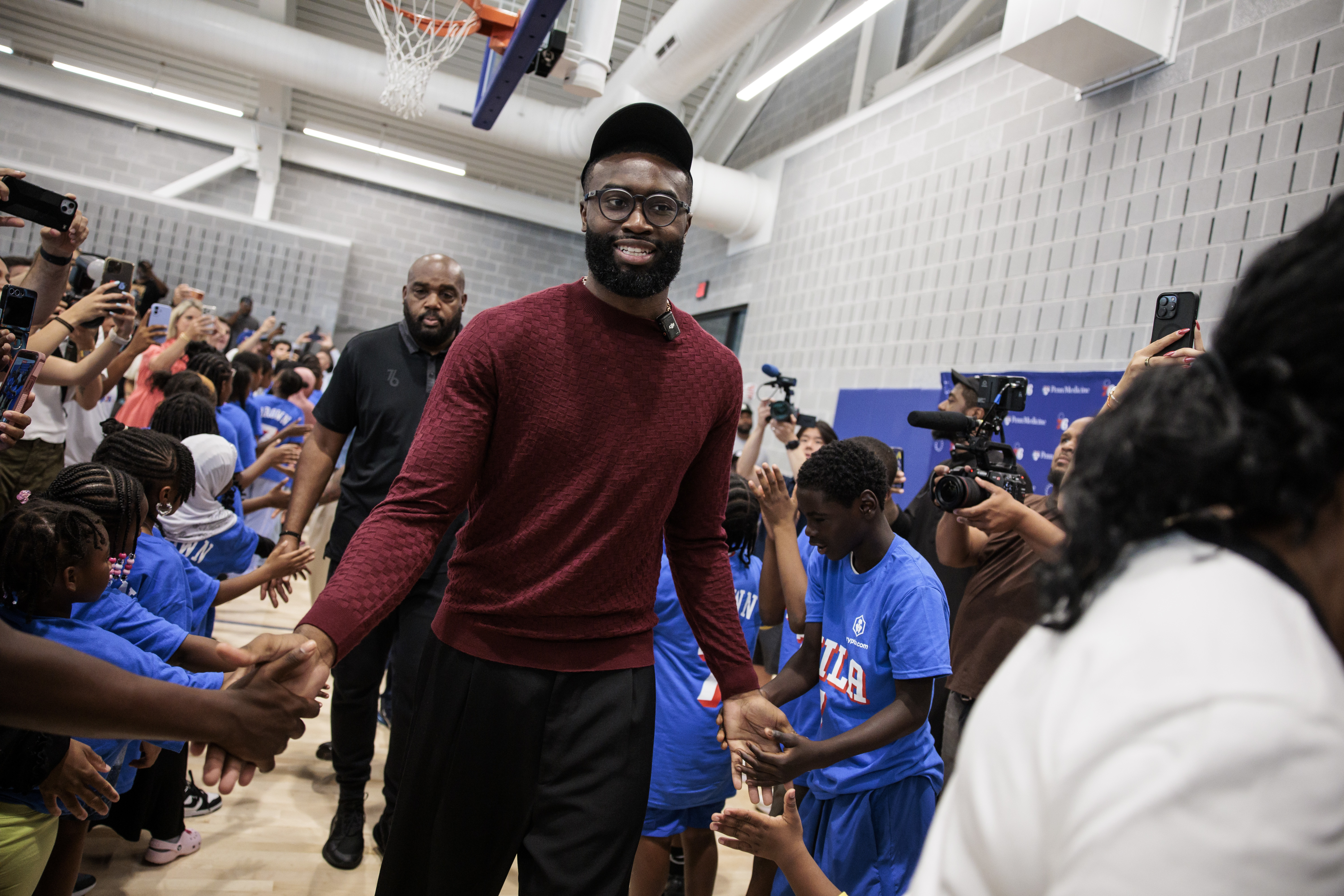
    New Sixer Jaylen Brown arrives for his introductory press conference at the Francis Myers Recreation Center on Aug. 6.Monica Herndon / Staff Photographer

    Doncic and Brown are just two of the deals that have dramatically flattened the NBA’s competitive landscape heading into the 2026-27 season. From perennial MVP finalist Giannis Antetokounmpo’s trade to the Heat to the Raptors acquisition of Kawhi Leonard to Flagg and Victor Wembanyama’s presence in the West, the league is suddenly chock full of potential counterweights to its behemoths in New York, Oklahoma City, and Boston. The league’s release of its schedule on Thursday crystalized this. It also crystalized the challenge that will confront the Sixers as they embark on a season unlike any they’ve experienced prior. In fact, one need only look at the first 10 days of the season.

    Five of the Sixers’ first six games will come against the Knicks (twice), Cavs, Pistons and Pacers. That group includes the last two teams to advance to the NBA Finals from the Eastern Conference, plus two teams who have won 60+ games in one of the last two regular seasons.

    The schedule is full of these sorts of stretches. A month into the season, the Sixers will have played just four games against teams that didn’t win a first-round playoff series in either of the last two seasons. Mid-January brings Anthony Edwards’ Timberwolves to Philadelphia before a home/road back-to-back against the Hawks and Pacers, followed by a trip to Boston two days later. Really, you can pick any two or three-week stretch and find a preponderance of must-see matchups. On paper, at least.

    This is a good thing. For the NBA. For its fans. For commissioner Adam Silver, who has grown increasingly proactive in both word and deed regarding the on-court product during the regular season. It’s not premature to say that we are already seeing the impact of the NBA’s second apron penalties and its soon-to-be-instituted lottery reforms. Both played a role in the Sixers’ acquisition of Brown, whom they acquired for a package of draft picks that included a 2028 Clippers first-rounder that gained immense value from the new draft odds.

    This is also a good thing for the Sixers. Not just from an entertainment standpoint. After a six-year stretch where every NBA Finals featured either the Heat against the Spurs or the Warriors against the Cavs, eight different teams have appeared in the last four Finals. The Celtics are the only team to appear in more than one NBA Finals since 2022. When the league released its schedule on Thursday afternoon, half its teams had a Vegas win total over/under of at least 44.5. A healthy percentage of those teams will enter the season with a valid argument as a title contender. The Sixers are one of those teams.

    Whether they reach those heights will depend on plenty of factors even beyond their obvious health and age-related concerns. Basketball is a sport where rhythm, synergy and on-court chemistry play a huge role in differentiating talented teams from each other. The gauntlet of Eastern Conference rivals the Sixers will face in their first week-and-a-half only underscores the time crunch they’ll face once all of the new faces are on the court together in training camp.

    One way or another, it will be fascinating to watch.