Tag: topic-link-auto

  • A Rittenhouse Square grocery store is behind on its rent. Neighbors are stepping in to help.

    A Rittenhouse Square grocery store is behind on its rent. Neighbors are stepping in to help.

    Mi Ja “Tina” Shin smiled at the man approaching the register at Sue’s Produce, her small food market on 18th Street, two blocks from Rittenhouse Square. They locked eyes. Silently, he pressed a $100 bill into her hand. Shin stared at it and gave him a hug.

    And so it has been going lately at Sue’s, one of the few small grocery stores in a retail district dominated by restaurants, boutiques, and big-name brands.

    While Di Bruno Bros. across the street offers scores of cheeses and elaborate charcuterie, Sue’s takes a more workaday approach to retail: Packaged Dietz & Watson cold cuts and everyday cheeses, plus dozens of varieties of produce, snacks, drinks, and pantry staples are jammed into the narrow storefront. Shin’s homemade Korean food at the counter is the house specialty.

    James Shin talks with customers while stocking shelves at Sue’s Produce Market.Elizabeth Robertson / Staff Photographer

    But Sue’s is behind on its rent, and neighbors have been stepping up since Shin’s son James launched a GoFundMe campaign last week.

    By early Friday, the fundraiser had exceeded $27,000 and was closing in on its current goal, $30,000.

    James Shin said his last understanding was that his mother owed about $38,000 in back rent, which is why the fundraiser was initially set at $40,000. Diaa Sawan, whose family owns the building at 114-116 S. 18th St., said Thursday that the current arrears are about $32,000.

    Sue’s has been struggling for some time, according to both Shin and Sawan.

    Mi Ja “Tina” Shin chats with a customer at Sue’s Produce Market.Elizabeth Robertson / Staff Photographer

    Sawan said the store has typically been three or four months behind, and has at times made partial payments. “We’ve been so patient,” he said. “My family and I are actually trying to give them a chance, and hopefully she can make it.”

    Asked whether eviction proceedings were possible, Sawan said it was. “After a couple of years, I have no choice,” he said. “We have a mortgage. We have to pay the bank.” He said well-funded national tenants could pay thousands more in rent.

    James Shin, who has been speaking publicly for his mother because she is not comfortable speaking in English, described the relationship with the Sawans as longstanding and accommodating. “They’ve always tried to help my mom out,” he said.
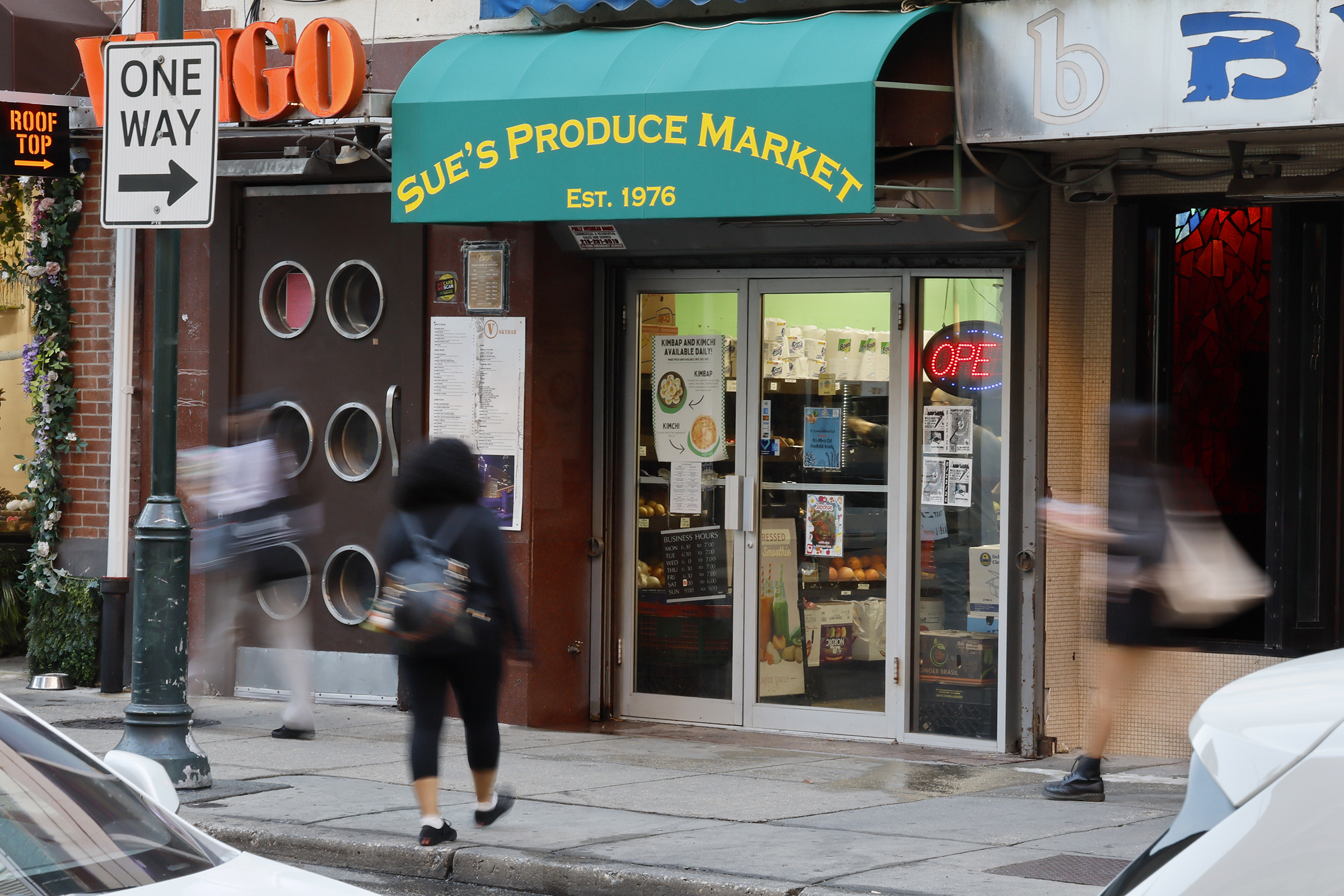
    Sue’s Produce Market, 114 S. 18th St.Elizabeth Robertson / Staff Photographer

    A neighborhood rallies

    So are the customers. The man who handed her $100 Thursday morning was Ron Schlesinger, a neighbor.

    “I don’t like GoFundMe because they take a fee,” Schlesinger said. “I’ll give her more money if she needs it. My whole family has been coming here for 50 years.”

    That history predates the current store. Tina Shin’s aunt Sue operated a produce business nearby before the family opened the 18th Street storefront in the early 2000s next to Byblos, the Mediterranean restaurant owned by the Sawan family. Vango, the Sawans’ club, is above both establishments.

    Support is also coming from Amanda Shulman, chef-owner of nearby Michelin-starred Her Place Supper Club, who announced this week that she would host a Korean-inspired benefit dinner Oct. 16, with snacks provided by Shin and proceeds donated to Sue’s.

    The dinner will have two family-style seatings, at 6 and 8:30 p.m., with 48 seats total at $275 per person, beverages included. Reservations will go online at 6 p.m. Sunday. The goal is to raise $10,000.

    Sue’s is “such an integral part of our little Rittenhouse neighborhood,” Shulman said. “Someone from our team visits Sue’s at least two times and sometimes up to four times a day for this or that or a pick-me-up snack or gorgeous herbs when we’re shorted.”

    ‘Having a hard time’

    James Shin, 37, who runs another market at Society Hill Towers, said the family’s problems built gradually. “My mom has a lot of business expenses, plus the slowdown of the economy and her trying to keep up,” he said. “Eventually, she fell behind on rent. I knew my mom was having a hard time. Business was slow.”

    Part of the problem, he said, is that Sue’s was built around a shopping habit that has faded.

    “We’ve always been a produce market, so people know us for produce,” Shin said. “But nowadays, no one really grocery-shops or buys produce as much as they used to.”

    Tina Shin, 63, has had decades of experience in the food trade. Her son said she came to the United States from South Korea in the late 1980s after marrying his father, Dong Shin. In the early 1990s, the couple took over a fruit cart from a relative at 18th and Walnut Streets, outside of what was then Urban Outfitters and is now Anthropologie.

    James remembers tagging along with his mother when he was young because the family had no babysitter. On rainy days, he said, he would crouch beneath the shelter of the building while she cut fruit inside the cart.

    The family later operated a series of stores in North Philadelphia that failed through fire or economic downturns. In 2012, they took over Sue’s from relatives. “At the time, business was still pretty good, but it was shifting,” Shin said.

    Rent then was about $5,000 a month, he said. Today it is $12,000, according to Sawan.

    A survival strategy

    As produce sales declined and costs rose, Tina Shin began leaning more heavily on prepared Korean food.

    After the pandemic, she started with kimchi, then kimbap. At first, James Shin said, she made only five or 10 rolls a day and would be disappointed if one or two remained unsold. Then demand grew.

    “She was selling 10, and next thing you know, she’s selling 20, 30, 40 a day,” he said.

    She expanded into banchan and other dishes, studying recipes and techniques online and adapting them.

    The cooking also extended an already-grueling workday. James Shin said his mother often wakes at 2 a.m. to prepare food, works at the store from 7 a.m. to 7 p.m., then goes home, preps again, sleeps a few hours, and starts over.

    But are the fundraisers just putting a bandage on a systemic problem? James Shin said he hopes that the attention will help in the long term.

    People who are not donating online, he said, have been coming into the Rittenhouse store to buy Korean dishes, smoothies, and groceries.

    “I feel like this is a good opportunity for us to catch back up and try to start — not fresh, exactly — but restart and get everything back together,” he said.

    For his mother, he said, the strongest encouragement remains the simplest kind.

    “What keeps my mom going is the customer who comes back and says, ‘Your food is the best. Your Korean food is really good,’” Shin said. “I feel like that’s the drive that’s been keeping her going.”

  • Should Larry Krasner still lead the Philadelphia District Attorney’s Office? | Editorial

    Should Larry Krasner still lead the Philadelphia District Attorney’s Office? | Editorial

    District Attorney Larry Krasner came into office promising to end mass incarceration, decriminalize minor offenses, eliminate cash bail, and free anyone who was wrongly convicted.

    On its face, those reforms seemed laudable given Philadelphia’s — and the nation’s — decades-long, tough-on-crime politics, policies, and policing that resulted in high incarceration rates and a justice system rooted in racial and economic disparities.

    But in Krasner’s zeal to right past wrongs, he has caused grave damage to himself and his office. A series of legal setbacks has cast doubt on Krasner’s ability to administer fair and impartial justice, let alone manage his office.

    As a result, crime victims and the accused are left to wonder if the city’s top law enforcement official can properly do his job.

    Krasner’s latest and most perilous legal trouble stems from a recent court case involving a man’s attempts to overturn his 2009 murder conviction.

    Following an evidentiary hearing that stretched for three days over the summer, U.S. District Judge Paul S. Diamond referred the matter to federal prosecutors to investigate Krasner and Matthew Stiegler — the former head of the district attorney’s office’s Conviction Integrity Unit — for potential crimes, including conspiracy, obstruction of justice, and perjury.

    Krasner and Stiegler have not been charged. It is unclear if the U.S. Attorney’s Office in Philadelphia will launch an investigation, though it appears very likely considering that amid the hearing that spurred the criminal referral, Diamond said that “potential wrongdoing abounds.”
    Even before Krasner’s latest legal morass, a disturbing pattern of lies and chicanery emerged involving the office’s handling of other post-conviction cases, mainly for murder.

    One supervisor was disbarred last year and another suspended in June for repeatedly lying in federal court while seeking to overturn the death sentence of a man convicted of killing a couple in their East Mount Airy home. The federal judge in that case found the DA’s office provided a “false account” of the events, and ordered Krasner to write a letter of apology to the victims’ family.
    In the very first exoneration of Krasner’s first term, a Common Pleas Court judge ruled his team unfairly accused two former prosecutors of misconduct and had “misplaced and/or destroyed” records and relevant evidence. The judge fined the district attorney’s office $120,000.

    In June, the state Supreme Court found the office had violated its duty of candor to the court and ordered the state attorney general’s office to review future attempts by the DA’s office to reduce a sentence or overturn a past conviction.

    The latest case before Judge Diamond featured stunning sworn testimony by four supervisors hired during Krasner’s tenure who remain on the job.

    Their accounts from the witness stand painted a disturbing picture of Krasner and Stiegler scrambling to contain any legal fallout involving the lazy and disingenuous handling of their decision to initially go along with defense attorneys seeking to overturn the 2009 second-degree murder conviction of Dennis Johnson.

    For years, Johnson’s post-conviction appeal efforts were repeatedly rejected. In 2022, then-Assistant District Attorney Jaclyn Mason filed a brief that agreed with Johnson’s lawyers that his trial counsel had been ineffective, and his conviction should be overturned.

    In May, Diamond ordered an evidentiary hearing to examine what new evidence emerged to prompt the DA’s change in position.

    That spurred a group of supervisors in the district attorney’s office to scrutinize Mason’s initial brief in which they found numerous “material misstatements.” The four supervisors — Katherine Ernst, Steven Wildberger, David Napiorski, and Peter Andrews — determined the office needed to withdraw the motion and apologize to the court.

    They asked Mason to sign the filing with them, but she said Stiegler should take responsibility since he drove the effort to concede after several meetings with Johnson’s defense attorneys at the Pennsylvania Innocence Project.

    Fearing she would get all the blame, Mason quit in June and testified the following month that Stiegler had “colluded” with Johnson’s defense team and told her, “If it is good enough for the Innocence Project, it was good enough for him.”

    After Mason quit, the supervisors said Stiegler lobbied his fellow supervisors to go through Mason’s other cases, find errors, and tell Diamond she was a rogue actor. Krasner endorsed the plan, calling it a “good idea,” according to the supervisors.

    The supervisors rejected that scheme and instead argued for the case to be turned over to the state attorney general. Krasner repeatedly opposed that plan, citing the need to “protect the office.” The four supervisors concluded the efforts by Stiegler and Krasner created a conflict of interest for them and the office.

    The supervisors testified that Krasner threatened “consequences” if they told Diamond about the internal discussions. But rather than go along with the ruse, the four supervisors withdrew from the case.

    Diamond found Krasner’s threat “could amount to obstruction of justice,” and the scheme with Stiegler to present a false narrative “might amount to criminal conspiracy.”

    Diamond credited Ernst, Wildberger, Napiorski, and Andrews for coming forward “at the risk of their jobs.” He wrote their testimony was “compelling and corroborated by contemporaneous documents.”

    The judge rejected Stiegler’s version of events, writing that he found his testimony “contradictory, evasive, or outright dishonest.” He said Stiegler was “responsible” for the errors in the concession brief and that Mason followed his orders. Diamond added that Stiegler’s testimony “may well amount to perjury.”

    Confirming Mason’s fears, Diamond found Krasner directed the four supervisors to implement Stiegler’s plan to blame her for errors in the brief.

    Sources told The Inquirer that Stiegler abruptly resigned from his position as head of the exonerations unit Thursday, but he will remain in the district attorney’s office.

    Krasner issued a statement that said he “respectfully and vigorously” disagreed with Diamond’s findings and planned to appeal. He said he couldn’t comment further because the case is pending.

    But even that is not entirely truthful. Diamond said Krasner could have defended himself at the hearing. The judge wrote that Krasner “chose not to testify” or even to submit an affidavit after the hearing.

    “[Krasner] apparently does not dispute — or does not address — much of the testimony presented,” Diamond wrote.

    Krasner’s handling of the Johnson matter is beyond troubling. Perhaps just as telling, before the judge’s ruling was released, Krasner’s take on events, detailed in a filing made by his office, underscored that he remains unbowed. Indeed, as the legal setbacks have mounted, Krasner has demonstrated a glaring blind spot regarding his failings as a leader.

    As a result, Krasner faces a legal peril of his own making.

    Krasner came into office with a long list of real and perceived detractors. But he has frittered away his credibility, and his actions have undermined the hard work and dedication of many of his rank-and-file attorneys.

    This Editorial Board has endorsed Krasner in previous elections, but now believes he has created an untenable situation that could impact the treatment of crime victims and wrongdoers.

    One significant challenge: Will judges and juries trust prosecutors from the DA’s office?

    There is no denying that innocent people who were wrongly convicted sit in prisons. Krasner was right to review past convictions. But the questionable handling of these cases that was described in court has sabotaged his own authority to right those wrongs.

    The DA’s office is now rife with turmoil, fear, and distrust. Krasner sent a chill through the office after he allegedly threatened jobs and called prosecutors in the state attorney general’s office “Nazis.” One assistant supervisor recently stepped down from his leadership post after losing faith in the office.

    Krasner, who spent decades as a defense attorney, entered public office with a list of grievances and a deep mistrust of law enforcement, which he called “systematically racist.”

    Before first getting elected district attorney in 2017, Krasner sued the Philadelphia Police Department 75 times. Days after taking office, he ousted more than two dozen staffers, including many experienced prosecutors.

    Krasner has expressed disdain for the state attorney general’s office. He often views judges who oppose him as hostile, according to people familiar with his thinking.

    His jaded and often huffish views inform how he administers justice, whom he indicts or doesn’t indict. Not to mention his fraught relationship with police. Lives hang in the balance, including the accused, victims, and the wrongly convicted.

    Krasner now faces a major challenge: Can he regain the trust of the public and the prosecutors in his office? He should start by installing experienced and respected leaders.

    Then Krasner needs to look in the mirror and determine if he can continue to run the district attorney’s office under the giant cloud he has created.

  • A deaf woman was crowned Miss America for the first time on this week in Philly history

    A deaf woman was crowned Miss America for the first time on this week in Philly history

    As Heather Whitestone’s dream veered toward reality, her hearing aid wasn’t working and she had lost sight of Regis Philbin’s lips.

    The 21-year-old Miss Alabama couldn’t hear the talk show host, or read his lips, when he announced the winner of the Miss America pageant on Sept. 17, 1994.

    Rebecca Blouin — Miss Mississippi — turned to her fellow Southerner and shared the news, which broke a barrier at what many consider the United States’ most-celebrated beauty contest.

    For the first time in the event’s history, which dates back to 1921 at the Jersey Shore, a deaf woman would wear Atlantic City’s most prestigious award: a rhinestone tiara.

    Unheard of

    Whitestone was not born deaf.

    At 18 months old, she contracted a serious bacterial infection that damaged the nerves in her ears and led to a total loss of hearing.

    Years of therapy taught her how to speak, and she utilized hearing aids, but Whitestone navigated her way through life primarily by reading lips.

    Former Miss America Kimberly Aiken, left, crowns Miss America 1995 Heather Whitestone, of Alabama, after Whitestone won the 74th annual pageant in the Atlantic City Convention Hall in September 1994.Charles Fox

    In media interviews during the pageant, she didn’t use an interpreter.

    “It’s a physical challenge, not a handicap,” she told The Inquirer in an interview prior to her win. “I really believe the most handicapped people are those who have a bad attitude.”

    Feeling the love

    Leading up to the main event, attendees showered the Birmingham, Ala., woman with standing ovations as she made it through the pageant’s three nights of preliminary competition.

    That affection carried over into the finals, when the ballet dancer dazzled judges Philbin and Kathie Lee Gifford with her talent and chutzpah.

    As Christian singer Sandy Patti performed the song “Via Dolorosa,” Whitestone glided along on her tippy toes — counting beats in her head to help keep pace.

    “She is an extraordinary human being,” Gifford told The Inquirer.

    Crowning achievement

    Whitestone was not the first deaf contestant, but she remains the only deaf woman to have won.

    A reporter would later ask Whitestone about the potential challenges she faced fulfilling such a public-facing role.

    “I think I’m doing just fine,” she said with a wry smile. “I mean, look at us now.”

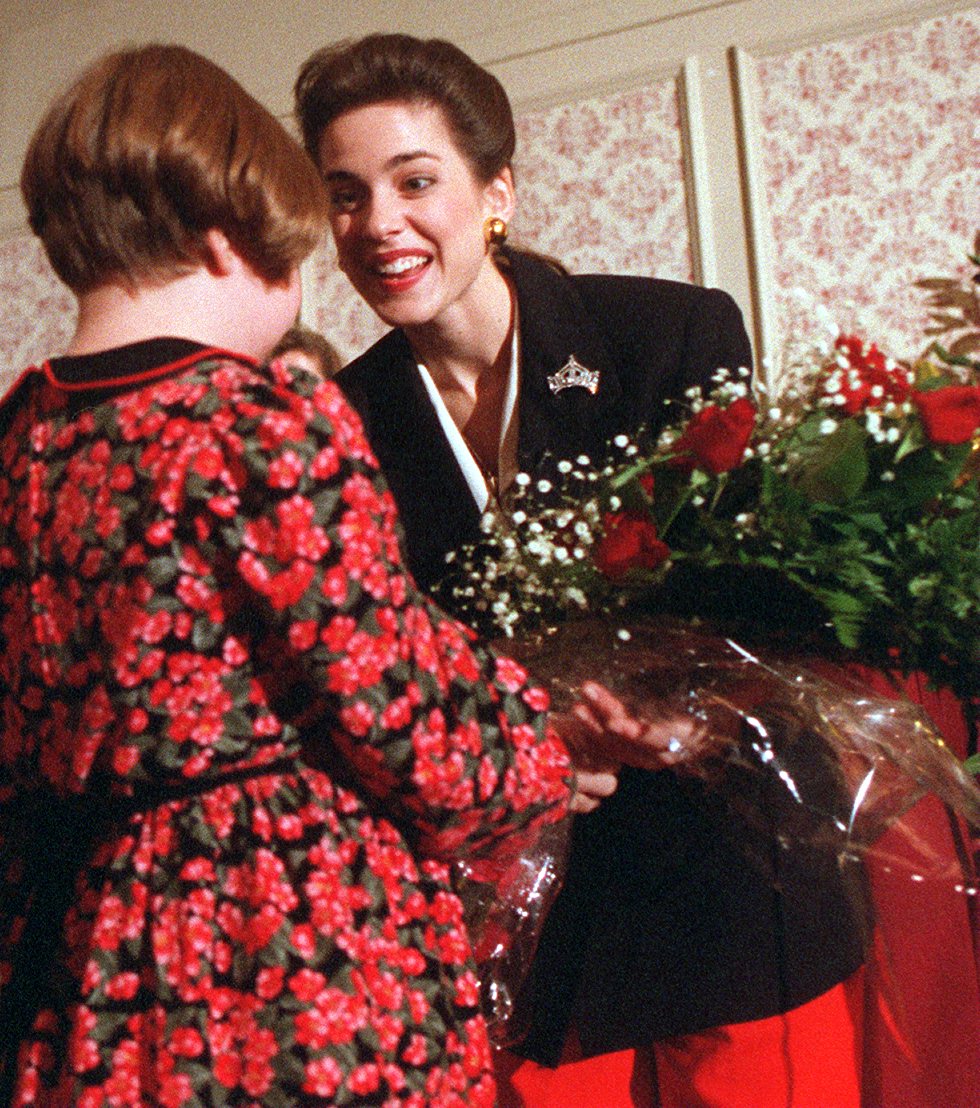
    Miss America Heather Whitestone receives flowers from Christina Simeone, age 9, from Wallingford Elementary School in January 1995.G. Loie Grossmann / Staff Photographer

    When Whitestone, as the newly crowned Miss America for the forthcoming 1995, took her victory walk down the runway, she raised her hand to the thousands in Convention Hall, signing “I love you.”

    Whitestone couldn’t hear their response — the hearing aid in her left ear was overwhelmed by the thunderous ovation and transmitted only static — but she didn’t need to.

    She could read the smiles on their lips.

  • What’s the deal with the surveillance camera on Washington Square? It’s in response to vandalism.

    What’s the deal with the surveillance camera on Washington Square? It’s in response to vandalism.

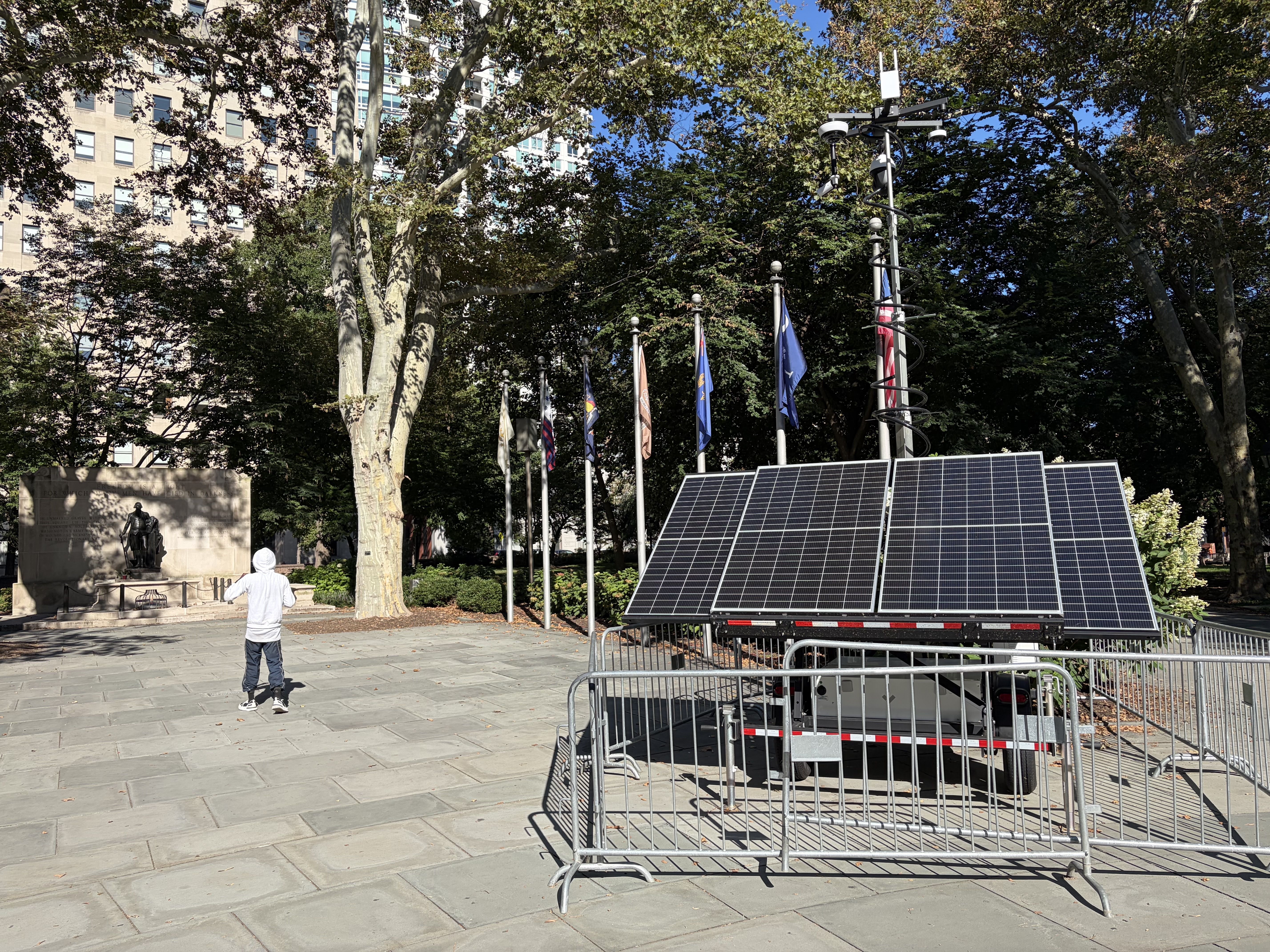
    A new fixture is on Washington Square next to the Tomb of the Unknown Revolutionary War Soldier and the flags of the 13 original colonies — a fenced-off, solar-powered security camera.

    The camera led some online to wonder whether it is a Flock camera, a type of surveillance device that automatically captures and stores license plate numbers and has generated privacy concerns.

    Here is what you need to know about the new camera, which is not a Flock device.

    Who installed the security camera?

    Washington Square is part of Independence National Historical Park, and the federal government has jurisdiction over the park.

    The camera was installed in July by the National Park Service in response to vandalism, according to City Councilmember Mark Squilla.

    “The National Park Service has the responsibility to keep America’s most cherished places safe and free from damage for the enjoyment of the American people,” a spokesperson for the park service said. “In the past year, vandals have damaged the Tomb of the Unknown Revolutionary War Soldier.”

    What do we know about vandalism in the park?

    A handful of vandalism incidents in the Washington Square area have been reported this year, according to Philadelphia Police Department data.

    One of the vandalism cases was in the early morning of July Fourth and was followed hours later by a separate incident.

    Later that day, five people who participated in a protest were arrested. During the event outside Washington Square, an unidentified woman attempted to burn an American flag.

    While the U.S. Supreme Court ruled burning an American flag is protected speech, it is a violation of city safety codes for public spaces.

    The arrests followed police orders to the crowd to disperse, and the five people allegedly did not comply.

    It is unclear if any specific incident led the National Park Service to install the additional surveillance measure.

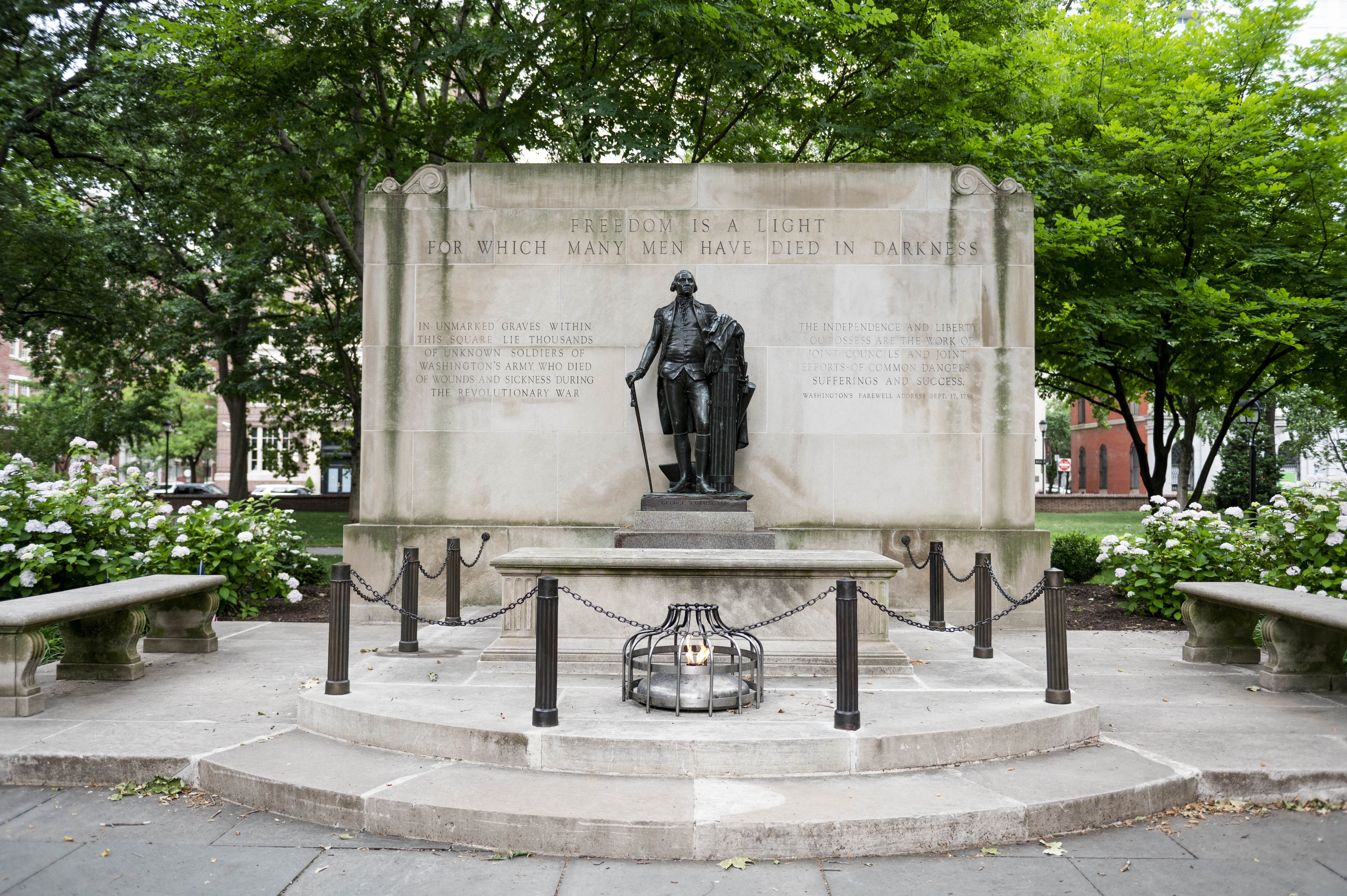
    The Tomb of the Unknown Revolutionary War Soldier, which includes a statue of George Washington, was defaced with spray paint in 2020. Vandals wrote “committed genocide” on the memorial’s granite wall.

    Tomb of the Unknown Soldier monument in Washington Square on Wednesday, June 14, 2023.Allie Ippolito / Staff Photographer

    Is it a Flock camera?

    The new surveillance equipment is not a Flock camera, the park service spokesperson said.

    “Independence National Historical Park does not use Flock cameras. The park’s camera network is operated solely by the National Park Service on a standalone network with no connections to local or other federal agencies,” the spokesperson said.

    The markings on the equipment suggest the park service installed a Verkada camera, the brand the federal government purchased in July for cameras surrounding the nearby President’s House Site. Three mobile surveillance trailers were installed at the site after President Donald Trump’s administration replaced the long-standing slavery exhibit with new and controversial panels.

  • This West Philly coffee shop has a bagel-themed fall drink that’s a must-try

    This West Philly coffee shop has a bagel-themed fall drink that’s a must-try

    Just in time for fall, the drink of the season has arrived — but its creators caution, there’s no pumpkin here.

    Little Bean, the West Philly coffee shop owned by the married couple behind Cleo Bagels, has debuted a pumpernickel syrup. It’s available in any coffee drink, but co-owner Alex Malamy says it’s best showcased in the form of a pumpernickel cortado.

    The flavor is the newest permanent fixture on the shop’s list of housemade syrups, alongside chocolate, vanilla, and lavender.

    “It’s not the ‘pump’ you were expecting,” Malamy, who runs the two shops alongside his wife, Ilana Silber, said. “It’s inspired by a beloved bagel that we don’t make.”

    Pumpernickel bagels are too often a vestige of the past. They were created by Jewish immigrants in New York who combined their bagel-making skills with the ingredients for German dark rye bread. Classic American pumpernickel bread and bagels include additives like molasses, cocoa, and sometimes brown sugar to help enhance the flavors and color. Traditional German pumpernickel, meanwhile, relies solely on rye for its flavor and hue.

    Because of their earthy, malty flavor and dark coloring, pumpernickel bagels are considered an acquired taste, and demand for them has dwindled over the years, despite bagel booms in Philadelphia and elsewhere.

    These bagels also require more labor and ingredients compared to other classic bagels, including a blend of flours that typical base flavors don’t call for. In Philly, Bart’s Bagels is one of the few shops that offers the deep brown treats (along with a pumpernickel everything version).

    Alex Malamy, owner of Little Bean, with his wife, Ilana Silber, and their dog Bean in their coffee shop in West Philadelphia in March.Tyger Williams / Staff Photographer

    At Little Bean, the pumpernickel syrup features a proprietary blend of the same ingredients that go into a classic pumpernickel bagel, ingredients Cleo and its sister shop already had on hand anyway: molasses, cocoa powder, coffee, and caraway seeds.

    “The toasted caraway really does pair so well with the coffee,” Malamy said. The syrup was a monthslong project, taking about six iterations to get just right. “It’s about getting the balance right of really bitter ingredients without being cloyingly sweet.” The end result is savory, warm, and cozy.

    As the six-month-old coffee shop gets into its groove, Malamy says more inventive, bagel-inspired syrups, cold foams, and little treats are on the way. “We’re going for bespoke Little Bean and Cleo things that feel traditional but playful,” he said. “It feels specific to us.”

    So, does a pumpernickel syrup mean pumpernickel bagels are also on the way? Not yet, Malamy says, citing Cleo’s modest floor plan, but it’s not entirely out of the question.

    “If we were to do a pumpernickel, we would definitely take our time with it,” he said. “We like baby-stepping into things.”

    Little Bean, 5015 Baltimore Ave., cleobagels.com/little-bean. Hours: 7:30 a.m. to 3 p.m. daily.

  • Gov. Josh Shapiro spent more than $2.4 million on ads this week. His GOP opponent, Stacy Garrity, spent $672.

    Gov. Josh Shapiro spent more than $2.4 million on ads this week. His GOP opponent, Stacy Garrity, spent $672.

    Gov. Josh Shapiro is dominating Pennsylvania’s media markets in his reelection campaign, spending more than $24 million with less than seven weeks left until the Nov. 3 election — and trouncing his GOP challenger, State Treasurer Stacy Garrity, who has spent a small fraction of that on ads.

    Shapiro, a Democrat seeking reelection and potentially a 2028 White House bid, has spent more than $2.4 million on advertisements per week since Aug. 25 from his campaign war chest of more than $50 million, according to media tracking firm AdImpact. One ad pitches Garrity as “Pennsylvania’s #1 fan of data centers,” and in another, Shapiro boasts about his efforts to cap energy costs. He has also released a number of audience-specific ads to reach Black and Latino voters, including a radio advertisement in Spanish in the Lehigh Valley.

    A clearer picture of Shapiro’s full campaign haul will become public this week, with updated campaign financial filings due Tuesday. The last filing deadline for state candidates was in June. But Shapiro’s multimillion-dollar flurry of ad buys offers early insight into his strategy heading into November in a race where he holds a double-digit polling lead — and where he is hoping to achieve downballot wins in the statehouse and critical congressional districts.

    Garrity has spent just $743,000 on ad buys so far, and paid out only $672 last week, according to AdImpact. No top GOP groups, such as the Republican Governors Association or the Jeffrey Yass-backed Commonwealth Leaders Fund, have purchased TV ads supporting Garrity, and she has struggled to fundraise to compete with Shapiro, a popular incumbent who has raised more money than any governor since at least 2010.

    State Treasurer and Republican candidate for governor Stacy Garrity is seen on a big screen as she speaks to supporters before the arrival of President Donald Trump at Mack Trucks in Macungie Tuesday, June 23, 2026. Tom Gralish / Staff Photographer

    Shapiro’s mass ad buys despite his commanding lead in the polls indicate the governor is a risk-averse politician, said Christopher Borick, a political science professor at Lehigh University.

    “He’s cautious. He wants to make sure nothing goes awry, and to do that, you buy insurance,” Borick said.

    “The governor has also been clear that the midterms run through Pennsylvania — and he is leading the fight to win critical races up and down the ballot in order to flip the House, put a check on Donald Trump’s chaos, cruelty, and corruption, and get even more stuff done,” said Manuel Bonder, a spokesperson for Shapiro’s campaign.

    Garrity, meanwhile, has spent the lion’s share of her ad buys on a digital social media video campaign called “Twilight Justice,” which promises the future release of bombshell details about Shapiro. She has also released an attack ad about Shapiro’s past support for data centers, but it has been seen by far fewer eyes than those Shapiro is reaching in his multimillion-dollar ad campaigns. Both Shapiro and Garrity initially embraced data centers, though both shifted their positions as the projects became increasingly unpopular among Democrats and Republicans.

    Matthew Beynon, a spokesperson for Garrity’s campaign, declined to comment on whether top GOP groups will get involved in the Pennsylvania governor’s race in the coming weeks. But he said any pro-Shapiro mailer or TV ad “is just another reminder to the people of Pennsylvania that Josh Shapiro sold them out.”

    “All the money in the world will not help Josh Shapiro paint over his administration’s failed economic record or erase his ethics scandals that have cost the taxpayers of Pennsylvania and embarrassed the entire commonwealth,” Beynon added.

    Data center power play

    The regulation of data centers and artificial intelligence have become key issues in midterm races nationwide, including in the Pennsylvania governor’s race, where Shapiro’s past support for the projects appeared to be the biggest test of his popularity.

    Shapiro changed his position last month and subsequently began running attack ads against Garrity for her past support of the unpopular centers. Garrity has also changed her position, from initially advocating for the rapid development of data centers around Pennsylvania to now calling for “a pause” on their development. Shapiro, in an executive order signed last month, will now require any prospective data center developers to meet a number of environmental and energy factors in order to build in Pennsylvania.

    “That’s why you’ve seen this enormous ad buy that she can’t even come close to matching, when, in reality, he’s as exposed as her on the issue, but she doesn’t have the resources,” Borick said.

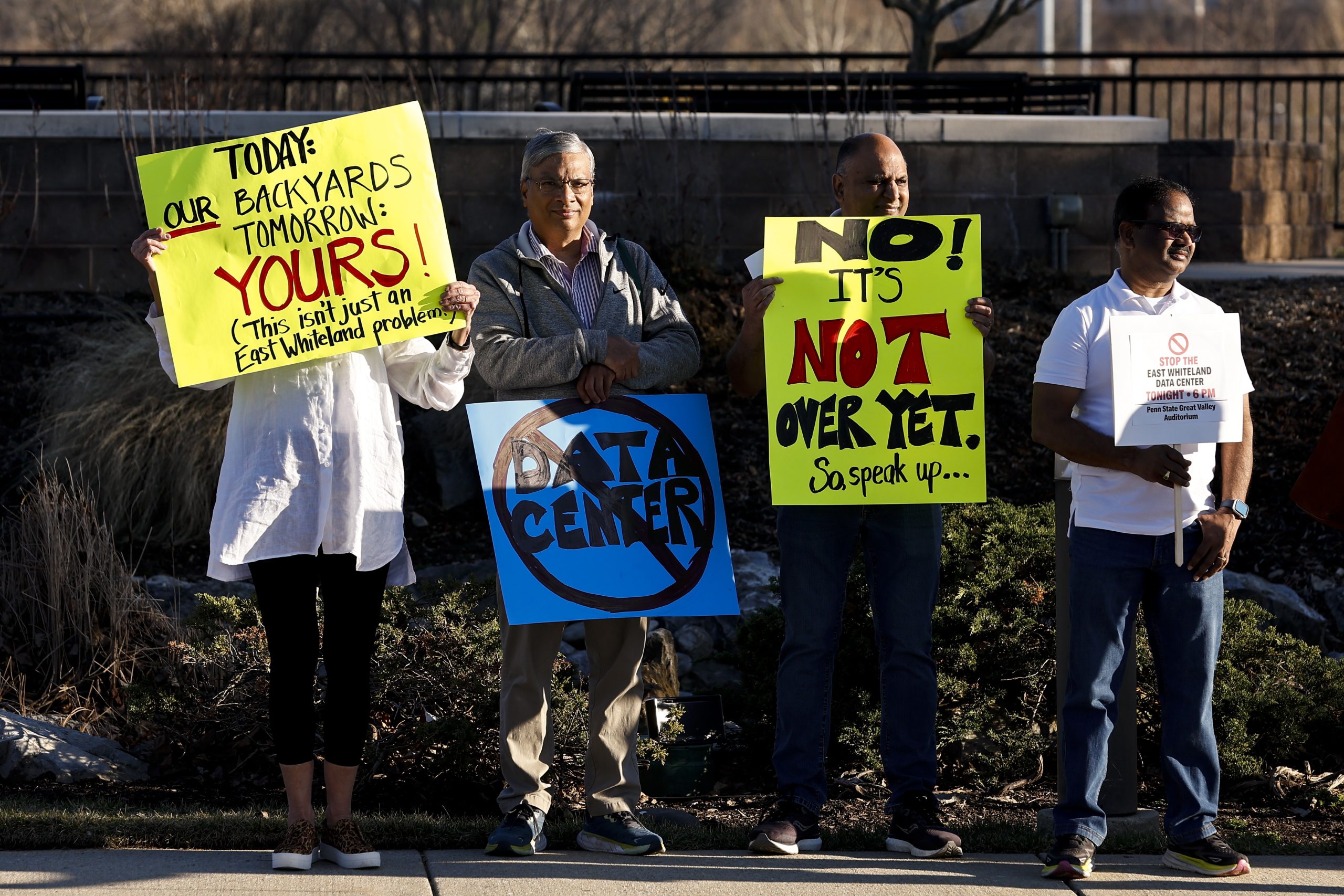
    People protest the expanded data center before the East Whiteland Planning Commission meeting held at Penn State Great Valley on Monday, March 9, 2026 in Malvern, Pa.Monica Herndon / Staff Photographer

    Pennsylvania Republicans endorsed Garrity in September 2025 — an unprecedented early nod that helped clear the field for her as the party’s nominee. President Donald Trump endorsed her in January, calling her an “America First Patriot.” She ran unopposed in the primary election, and top GOP leaders said they wanted to wage a stronger fight against Shapiro this time than in 2022, when far-right State Sen. Doug Mastriano (R., Franklin) won the endorsement in a crowded field and the state GOP largely did not financially support his candidacy.

    Despite all of the additional time to drum up support, Garrity has struggled to raise funds and has yet to be able to cash in on Trump’s backing. As of Thursday, she had spent just $300,000 more than Mastriano had at this point in the race. Shapiro, meanwhile, has spent less this election than he did at the same point in 2022, when he spent $28 million as of mid-September.

    “When you’re making comparisons to the amount of money Doug Mastriano raised, it’s a really troubling sign,” Borick added.

    Garrity and Shapiro will face off in a televised debate on Oct. 7 hosted by ABC27 in Harrisburg.

  • A South Jersey resident evicted from a council meeting will get a $15,000 settlement from the borough

    A South Jersey resident evicted from a council meeting will get a $15,000 settlement from the borough

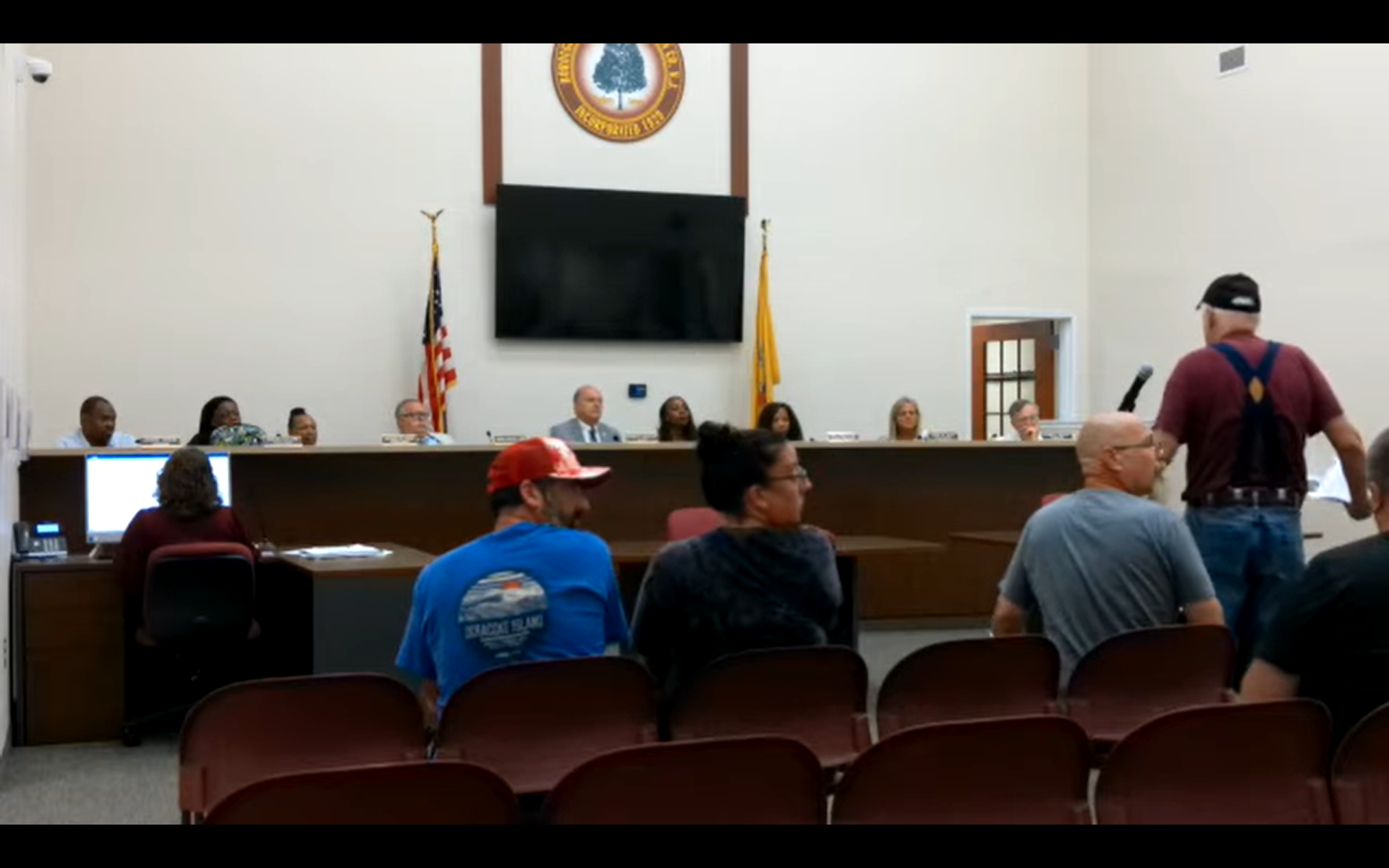
    Lindenwold will pay $15,000 to a resident who was removed from a council meeting for recording on his phone, settling a lawsuit over the Camden County borough’s video policy.

    The lawsuit pushed the seven-person council to rescind its policy last month, which limited public meetings to one camera, required attendees to give 30 minutes’ notice before they record, and demanded that residents provide a copy of the recording to Lindenwold officials within two days.

    The lawsuit follows years of calls by residents for the borough to record its own meetings and upload them to its website.

    Alfonso Penna, 24, filed the complaint on July 22 against Lindenwold, its mayor, the police chief, and the police officer who escorted Penna out of a June council meeting. He alleged the borough had infringed upon his constitutional right to freedom of expression, his right to record, and the state’s Open Public Meetings Act. Penna, who has lived in Lindenwold all his life, said it took only a few days for Lindenwold to reach out seeking to settle the dispute.

    “The residents ended up having to foot the bill of just some incompetence,” said Penna, who started attending all of Lindenwold’s public meetings between service calls in his job as a pool repairman two years ago. “That’s what it came down to.”

    Officers escorted Penna out of the June 10 council meeting after Richard Roach, Lindenwold’s longtime mayor, told Penna to leave as he recorded a resident speaking during the public comment period, according to the complaint and a recording of the June meeting.

    Roach cited the borough’s one-camera video policy. Trevor Shaw, founder of local community advocacy group Love Lindenwold, has recorded nearly every council meeting since 2018, and he was already recording that night.

    In Shaw’s recording, Penna can be heard arguing for his right to record under the Open Public Meetings Act before agreeing to leave after repeated pushback from Roach.

    Then, the complaint alleges, at another council meeting in July, Roach again demanded that Penna turn off his camera and asked an officer to escort Penna out. Police Chief Michael McCarthy allegedly told Penna that the meeting would not continue until Penna stopped recording.

    But this time, the complaint says, Penna did not leave. Rather than remove him, council members temporarily ended the public session to speak in private. They returned less than 10 minutes later to resume the meeting, and Penna kept recording.

    Alfonso Penna, 24, sued Lindenwold in July over the Camden County borough’s video recording policy.Alfonso Penna

    Lawyers for Penna and Lindenwold filed to dismiss the lawsuit Tuesday, after the borough voted unanimously on Sept. 9 to pay thousands of dollars for Penna’s legal fees. The agreement, provided to The Inquirer by Penna, requires that any future recording policies in Lindenwold follow “constitutional limitations” and be enacted by an ordinance, so residents can comment on the rules.

    The video policy that was revoked had been enacted by resolution in January at a council meeting, in a single vote approving 65 resolutions at once.

    Roach and his fellow council members have not commented on the rescinded policy or their decision to settle at recent meetings. Roach, the borough administrator, and several council members did not return requests for comment.

    Raymond Morrissey, who has served on Lindenwold’s council for four years, said he was not aware of any plans for council to create a new recording policy. But the old one will cost residents via the $15,000 payout.

    “That impacts all us taxpayers in town because one way or another, it’s an extra expense,” Morrissey said. “Whether it was budgeted or not, it was an extra expense.”

    ‘A petty power play’

    Until it was rescinded in August, Lindenwold’s policy limiting meetings to one camera had been approved by council every January for years. Morrissey said the policy is one of “a gazillion and one resolutions” passed with a single vote during the annual reorganization meeting.

    Shaw, a Lindenwold resident since 1998, said the policy has affected him for the last eight years, as he has recorded and posted meetings online.

    While Roach has never approached him over the one-camera rule, Shaw said, the mayor has demanded copies of his footage before he posts it to YouTube and criticized him for not giving proper notice.

    “To me, it’s always seemed like a petty power play just to exert some perceived level of control or power over the people who choose to attend the meetings,” Shaw said.

    It’s unclear exactly how long the policy has limited meetings to one camera, but its language is not very modern. The policy requires people recording to “advise the Council or Borough Clerk of the tape’s permanent location” and “make fair payment for the electricity used while operating the video recording device.”

    The now-rescinded policy says the one-camera rule was created to “prevent disruption of council meetings” and could be enforced at the discretion of borough officials.

    But Penna’s lawsuit claimed that his cell phone, “silent” and “self-contained,” posed no risk of distraction.

    “This was clearly written for a time before smartphones,” Penna said.

    At the June meeting, Shaw said, multiple people had taken their phones out to record during the induction of new borough police officers, about a half hour before Penna was removed from the room. Love Lindenwold’s recording shows at least one other person recording on a cell phone, without reproach.

    Penna’s complaint attributed that difference to local politics: Penna ran for Lindenwold Council during the June Democratic primary, just days before he was kicked out of the meeting.

    Penna lost that election to two incumbent council members.

    A vacuum of information

    Without the policy, residents can now record Lindenwold meetings regardless of whether Love Lindenwold or Penna is there to record, and no ordinances have been introduced to change that.

    But Shaw and Penna both said Lindenwold’s next step should be to start recording and posting its own meetings so the public doesn’t have to. Shaw, who has previously approached borough officials to offer his recordings for Lindenwold’s website, said council has not been receptive to those pitches.

    “There’s an enormous vacuum of information in this town,” Shaw said.

    Penna agrees. He said attending public meetings could bring more attention to issues important to him and other residents, such as public transit and installing benches at local bus stops, especially as nearby municipalities record and post their own meetings without issue.

    “It’s 2026,” Penna said. “I’ll keep holding Lindenwold accountable. There’s a lot of apathy in town. We need more people who want to show up and care because our town is worth caring about.”

  • Temple’s ‘FPC’ mantra has fueled the defense’s big leap in Year 2 under DC Brian L. Smith

    Temple’s ‘FPC’ mantra has fueled the defense’s big leap in Year 2 under DC Brian L. Smith

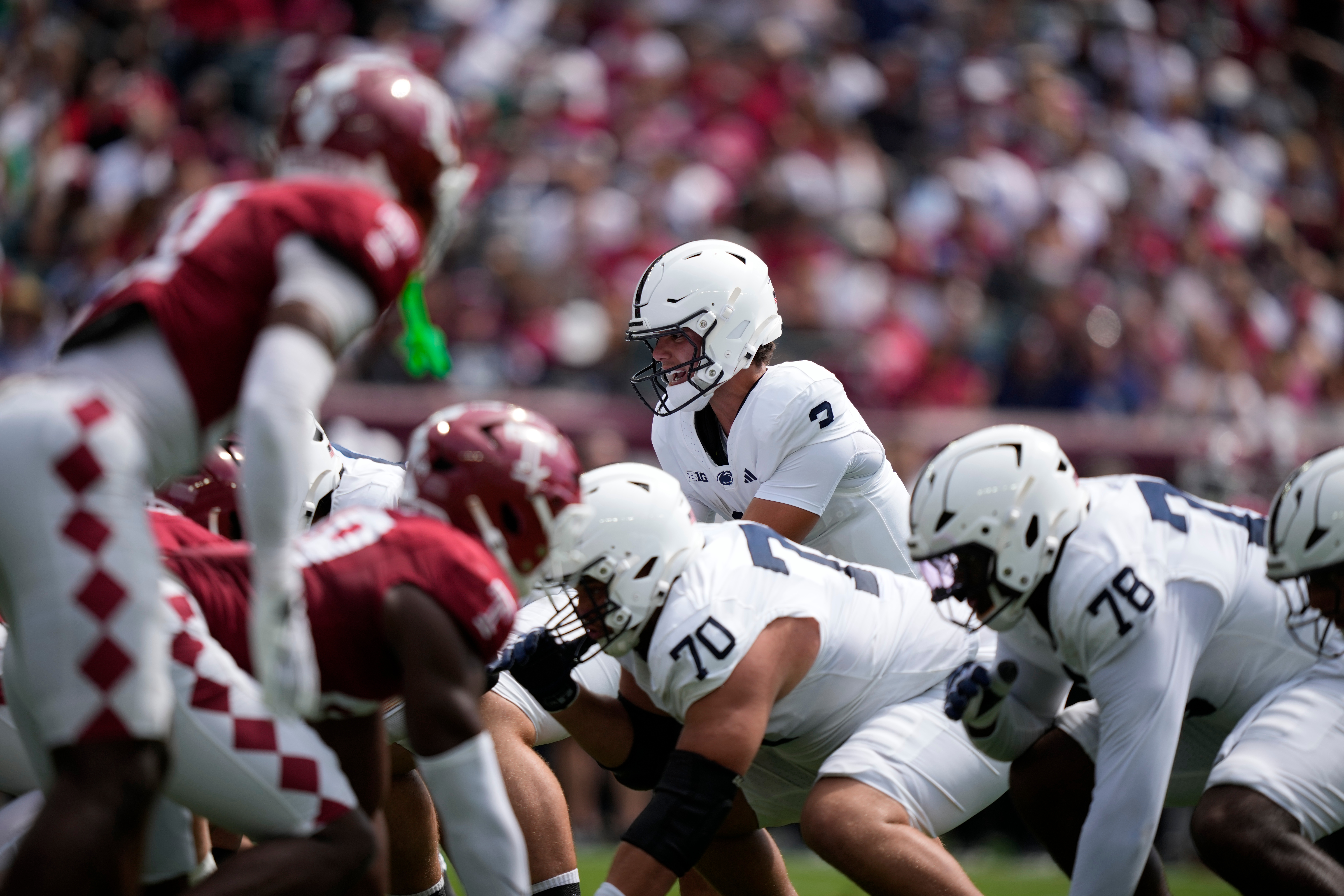
    After Penn State quarterback Rocco Becht’s pass whizzed past Andrew Rappleyea’s head and incomplete on fourth and goal from Temple’s 2-yard-line in the first quarter last Saturday, Owls safety Saboor Karriem pointed at the Nittany Lions tight end and gave him a piece of his mind on the way back to the sideline.

    Temple’s defense withstood a turnover deep in its own territory and forced a goal-line stand, adding yet another highlight to a strong start for a unit that ranked toward the bottom of Football Subdivision in points allowed, rushing yards, and total defense last season.

    Karriem, one of Temple’s single-digit players, awarded to the team’s toughest players on and off the field, is one of several new faces helping the Owls’ defense look much improved in Year 2 under coordinator Brian L. Smith. And it starts with Karriem’s energy on the field.

    “I like the mentality that we play with,” said Karriem, an Illinois transfer who grew up in North Jersey. “It’s different than what I had played [in] previously. I had played a lot more zone coverage, eyes on the quarterback when they drop back, catch and rally type of defense. But we [at Temple] are more aggressive in our mindset.

    “I really get more excited if my teammates make plays, but at the same time, energy is contagious. Guys feed off that, and when we make plays, we celebrate, but we got to focus. And I think that’s something that I tried to preach to them.”

    Temple’s Saboor Karriem against Penn State on Saturday.Matt Slocum

    Though the Owls could not keep pace with Penn State in the second half last weekend, Temple has another tough test, this time a road matchup against Toledo on Saturday (3 p.m., CBS Sports Network).

    With the quarterback battle continuing for another week, the defense will be relied on for another strong showing and is tasked with slowing down a Toledo offense that is averaging 41.5 points through two games.

    And it starts with a mentality Smith has instilled in the unit since he joined K.C. Keeler’s staff 20 months ago.

    “Our mantra is FPC: We want to play fast, physical, and clean, and not beat ourselves,” Smith said this week. “We want to eliminate the mental errors and try to prevent the big plays, but also get after the quarterback, stop the run, and create turnovers. And the guys are bought in to that philosophy.

    “We’re playing a lot of guys. We’re rotating a lot of guys in, and trying to keep guys fresh in the fourth quarter. The guys have done a good job buying in to the system.”

    Simplifying the defense

    Smith, a Wilmington native whose father taught in Chester, brought his NFL roots to the college level, first at Michigan from 2015-16, then at Rice for seven years before joining the Owls. His time in the New York Jets organization from 2007 to 2014 in various roles primarily under Rex Ryan, he said, helped shape his defensive philosophy.

    He also credits Don Brown, for whom he worked at Massachusetts, his alma mater, and Michigan, for developing a defensive system that he calls “multiple.”

    Temple defensive coordinator Brian L. Smith at practice in 2025.Isaiah Vazquez / For The Inquirer

    “We’re going to be aggressive. We’re going to attack as much as possible,” Smith said. “We can pressure blitz up front. We can have movement stunts up front, and again changing up the looks. … [We’re] trying to attack and be aggressive. We want to stop the run, try to make a team one-dimensional, and get them in the passing situations. And then on third down, we’re going to do multiple [things] and try to get after the quarterback.

    “[During] my time at Michigan and UMass, Don Brown … played a lot more man-to-man, so we adopted a little bit of that philosophy. We don’t play probably as much man in hand as he played, but we try to mix it in.”

    Last season, in his first year at Temple, Smith’s unit ranked 91st in total defense (396.8), 100th in points allowed (29.7), and 123rd in rushing yards allowed (197.3), but that rushing total was still down from the Owls’ 226.1 yards per game allowed in 2024.

    Through two games this year, Temple has improved in each category. It ranks 65th in points allowed (20.5), 76th in rushing yards allowed (122.5), and 86th in total defense (354 yards).

    Smith points to one key change he and his staff made this offseason.

    Quarterback Rocco Becht and Penn State beat Temple, 27-9, on Saturday.Matt Slocum

    “I think we simplified things this year for the players as much as possible,” Smith said. “That’s something that we do every year. You go back and evaluate what things work, what things didn’t work, and just with the players that we have, the amount of players that we’ve gotten from the transfer portal. … You’re better off trying to simplify things rather than trying to add a lot more because we’ve got the talent to play with a lot of people, and so we don’t want to beat ourselves.”

    ‘Grittiness’

    One of the few returning contributors to the defense is Curly Ordonez, who transferred to Temple before the 2025 season from Independence Community College. The linebacker, who leads the team with 20 tackles, has noticed fewer miscommunications with the unit this season.

    The reason? Ordonez said the defense made key strides in the spring and at captain’s practices this summer that is now showing up on the field.

    “We switched up a couple things [on defense], but really new guys coming into the new system, and actually get all those mistakes out, the misunderstandings, and really understand [the system] throughout the spring,” Ordonez said. “We just came out of [the] summer, and it was like, ‘Oh, everybody playing fast.’ … then we just continued to build from there. Summer was a great [starting] point where we just knew what our defense was [at] and we just had to show it.”

    Temple’s defensive improvement starts with the front four on the defensive line, Ordonez said. His reads from his linebacker spot have been cleaned up because “those guys up front are dominating, eating up two [blockers], taking on blocks.”

    On Saturday, it’ll be a homecoming for one of those defensive tackles. Kevin Hornbeak Jr. is a Toledo native who transferred to Temple from Division II Tiffin. One of his first varsity games at Whitmer High School in Toledo, Ohio, was at the Glass Bowl, and several family members will be in attendance, Hornbeak said.

    Rocco Becht looks to pass against Temple on Saturday.Matt Slocum

    Like Ordonez, Hornbeak said he appreciates Smith’s approach to “attacking the offense.”

    “I love the four down [front alignment]. Love how much we blitz. It’s [an] amazing defense,” said Hornbeak, who had a sack in Temple’s season-opening win over Rhode Island. “When you got a coach that believes in you and wanting us to go attack the offense, you can’t ask for nothing better.”

    While Smith acknowledges there is still a long way to go the rest of the season, he’s pleased with how his defense has “handled adversity well,” and agreed with Keeler’s sentiment earlier this week of the defense having a “more talented group.”

    The defense is playing with more confidence and an edge compared to last season. The defensive coordinator credits the “tough-minded” makeup of Temple’s players, especially on defense for the improvement year over year. They’ll need it to carry over once American Conference play opens up in a few weeks in the program’s quest for bowl eligibility for the first time in seven seasons.

    “This is home for me,” Smith said. “We got a different group of kids here. It was a lot of Texas kids and West Coast kids that I had at Rice. Here, we’re a little more gritty … [with players from] Philadelphia, New Jersey, Maryland. So I love the grittiness that our team has.”

    Added Karriem: “I was in just a different mental space being away for so long, and coming home and just allowed me to enjoy the game again. … I don’t feel like I’m coming to work every day. I know I’m going to work, but I’m having fun at work.”

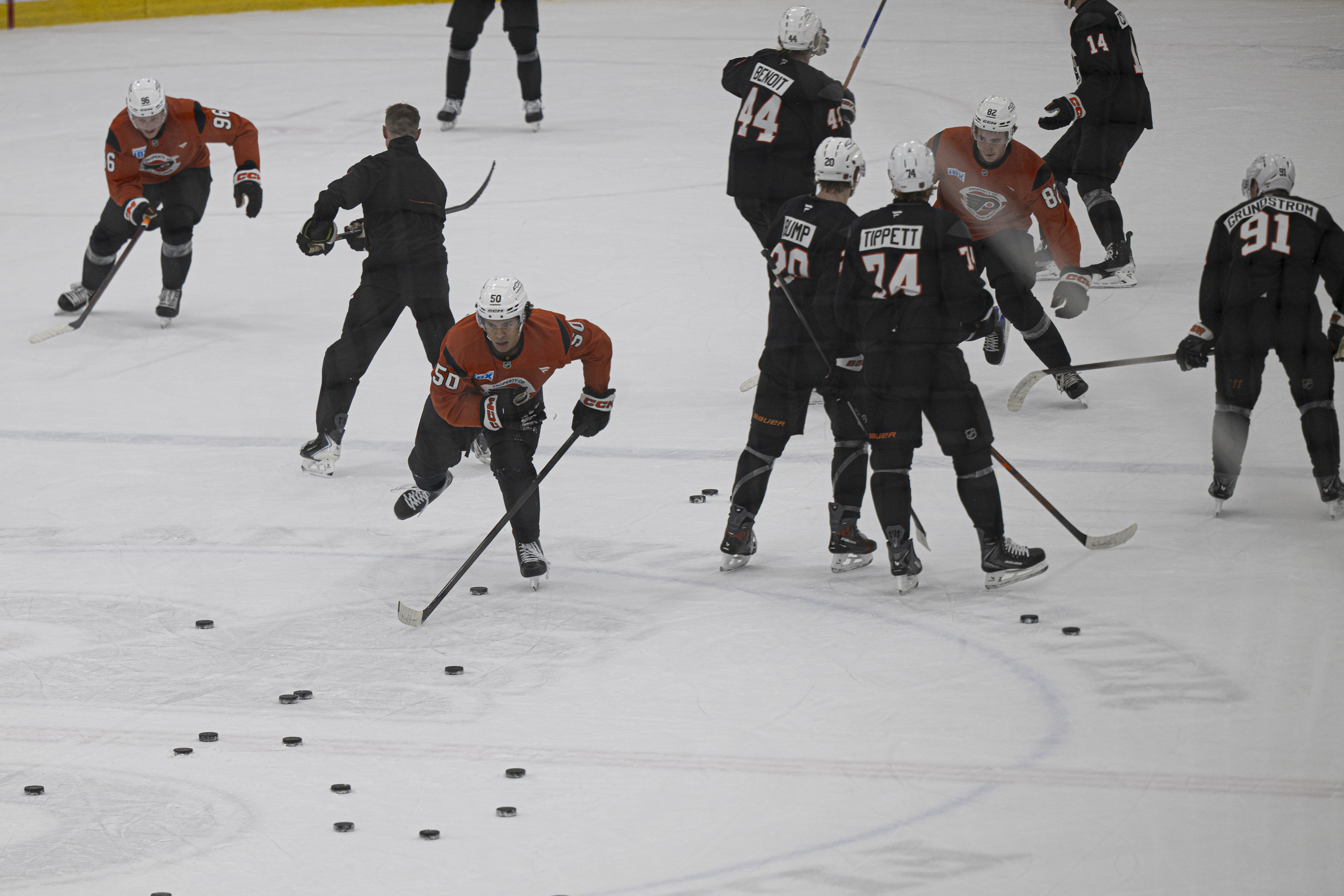
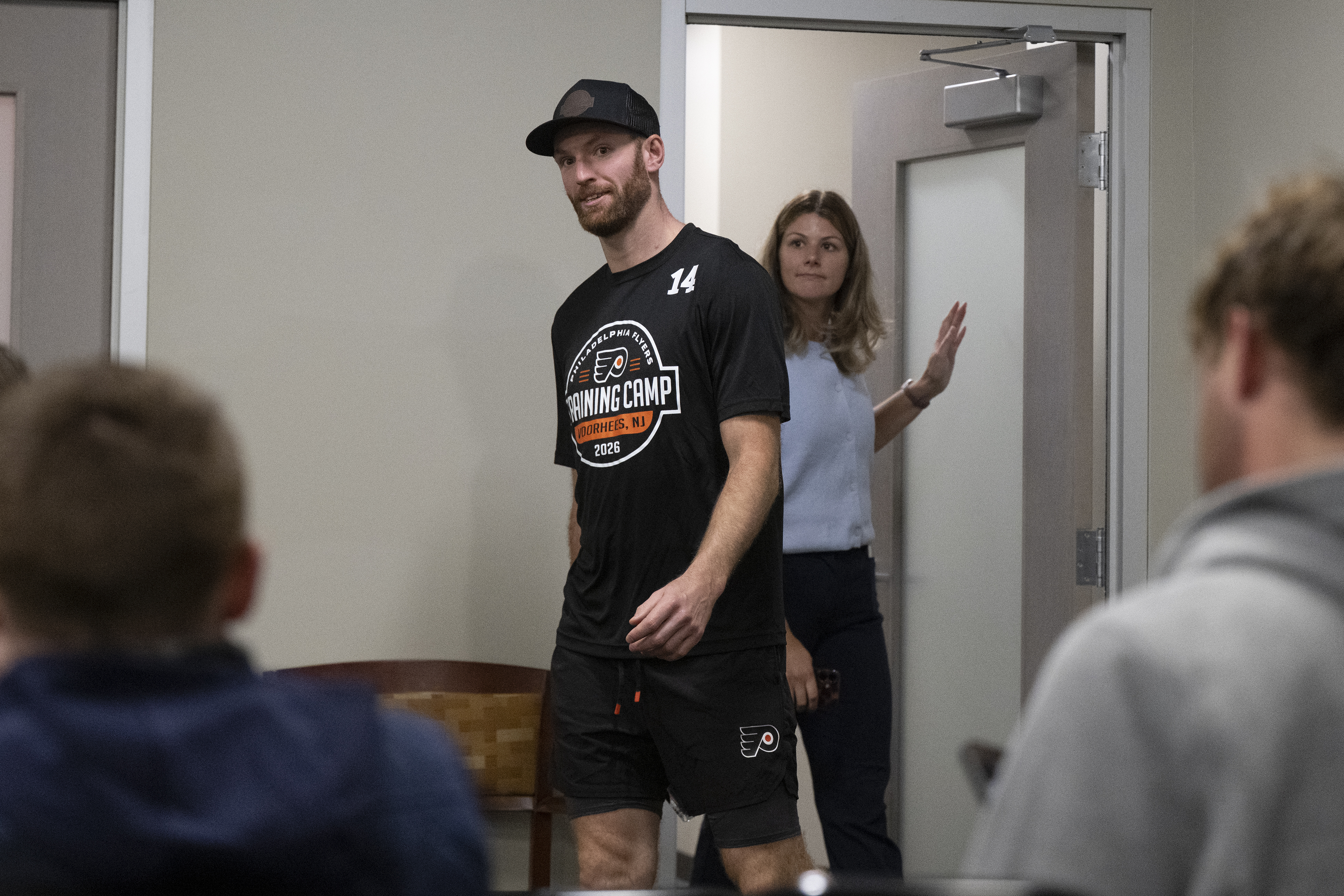
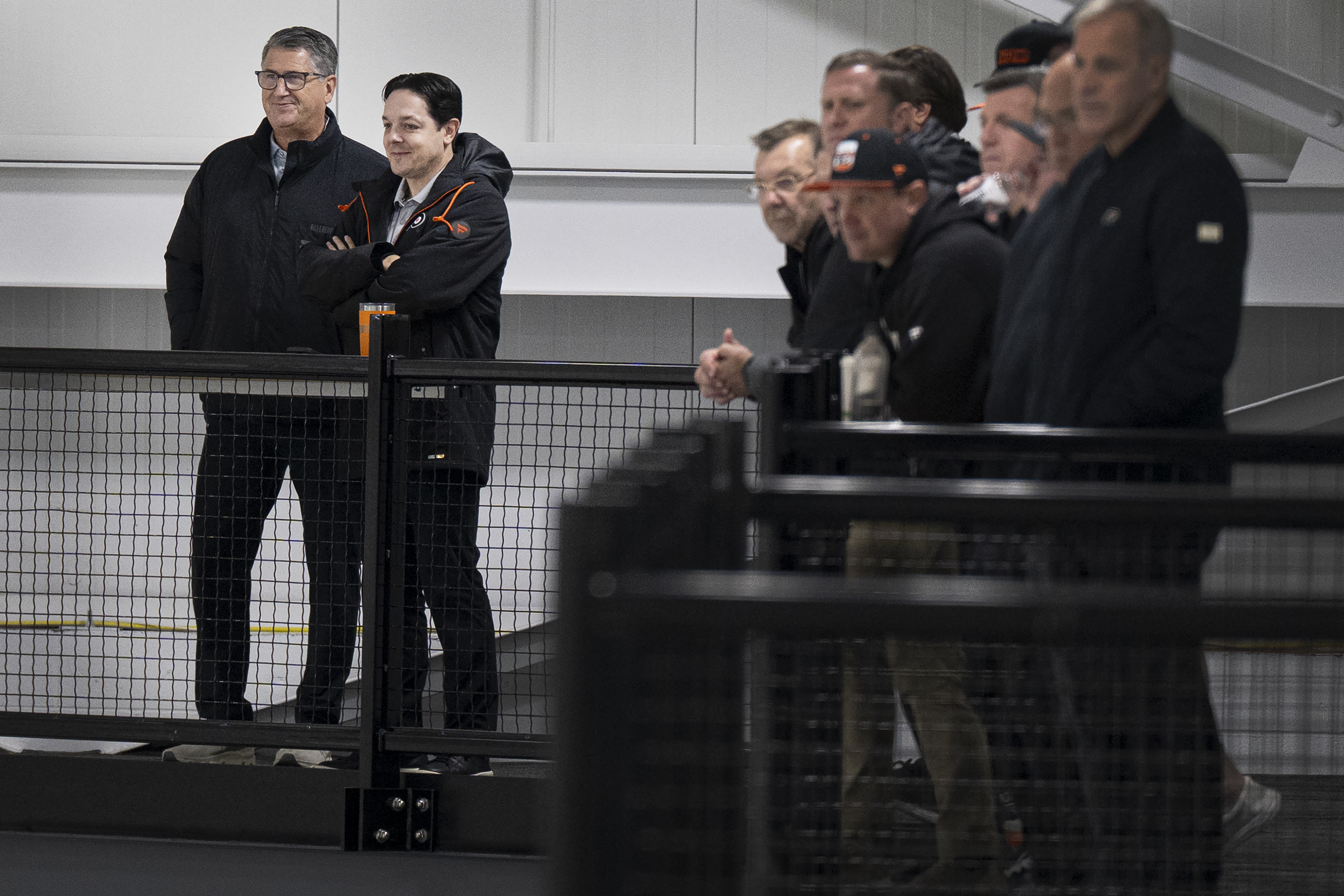
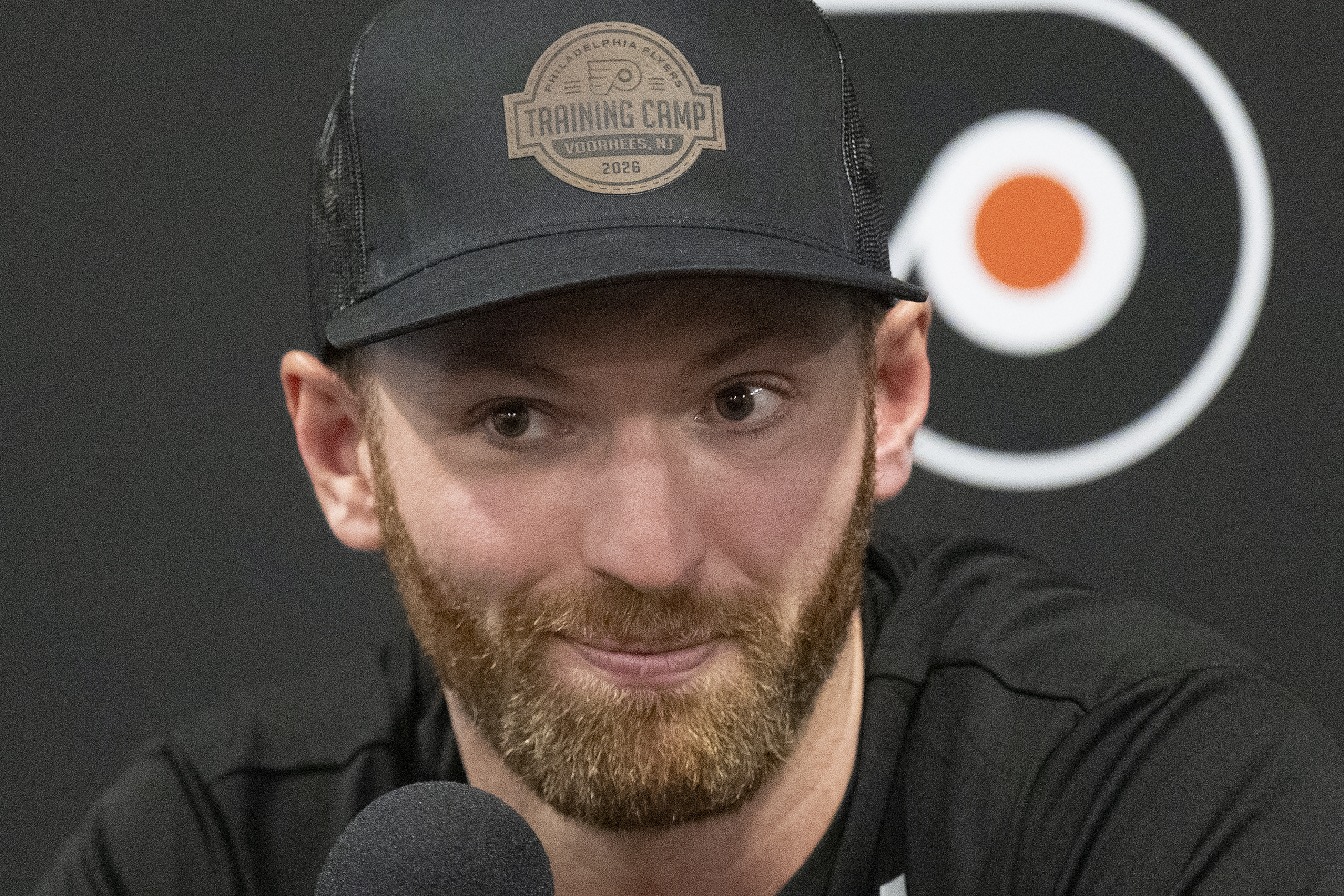
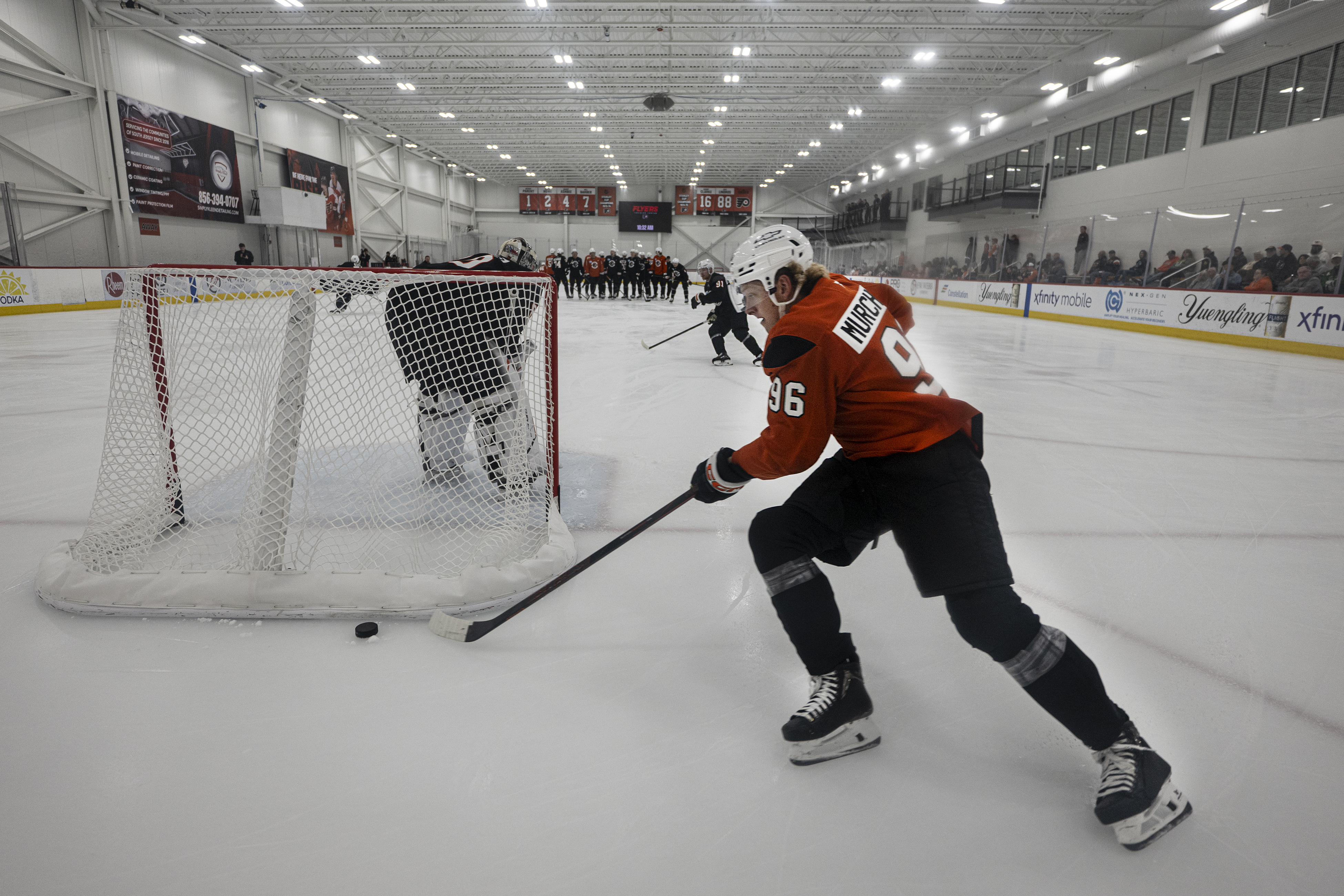
  • Danny Brière wants to swing big to turn the Flyers into contenders. He might face a happy problem.

    Danny Brière wants to swing big to turn the Flyers into contenders. He might face a happy problem.

    Here’s the funny part about the Flyers’ renaissance last season and their heightened expectations ahead of this season: There has been a pretty wide disparity between the team’s tangible achievements and the collective reaction to those achievements.

    Achievement 1: The Flyers, with a desperate charge late in the regular season, qualify for the playoffs — an accomplishment that was once taken for granted by the franchise and its fans — for the first time since 2020. They then beat the Pittsburgh Penguins, perhaps the only playoff team the Flyers were capable of beating, in six games.

    Reaction to Achievement 1: The crowds inside the Xfinity Mobile Arena, especially for the team’s victories in Games 3 and 6 against the Penguins, are louder than they’ve been in more than a decade.

    Achievement 2: The Flyers are reasonably competitive against the eventual Stanley Cup champions, the Carolina Hurricanes, but nonetheless are swept in the second round, scoring just five goals in four games.

    Reaction to Achievement 2: A standing ovation, to thank the team, fills the Xfinity Mobile Arena in the immediate aftermath of the Flyers’ season-ending overtime loss in Game 4.

    Achievement 3: Danny Brière, the Flyers’ general manager, makes the daring decision to offer Anaheim Ducks up-and-comer Leo Carlsson a five-year, $90-million contract. But the move doesn’t actually work; the Ducks match the Flyers’ offer and keep Carlsson.

    Reaction to Achievement 3: The Flyers are showing they’re back! They’re taking big swings!

    This is not to denigrate the Flyers for their obvious improvement or to criticize their fans for being excited that their favorite team is relevant again. It is merely to remind everyone that the Flyers had a long way to go just to return to mediocrity, that they still have a long way to go to be a true Stanley Cup contender, and that any advancement, like the one they took last spring, would be greeted with unfettered joy. As Eddie Murphy said in a memorable stand-up bit years ago, if you’re starving and somebody throws you a cracker, you’re going to think that cracker is the best thing you’ve ever eaten in your life. That wasn’t a Saltine! That had to be a Ritz!

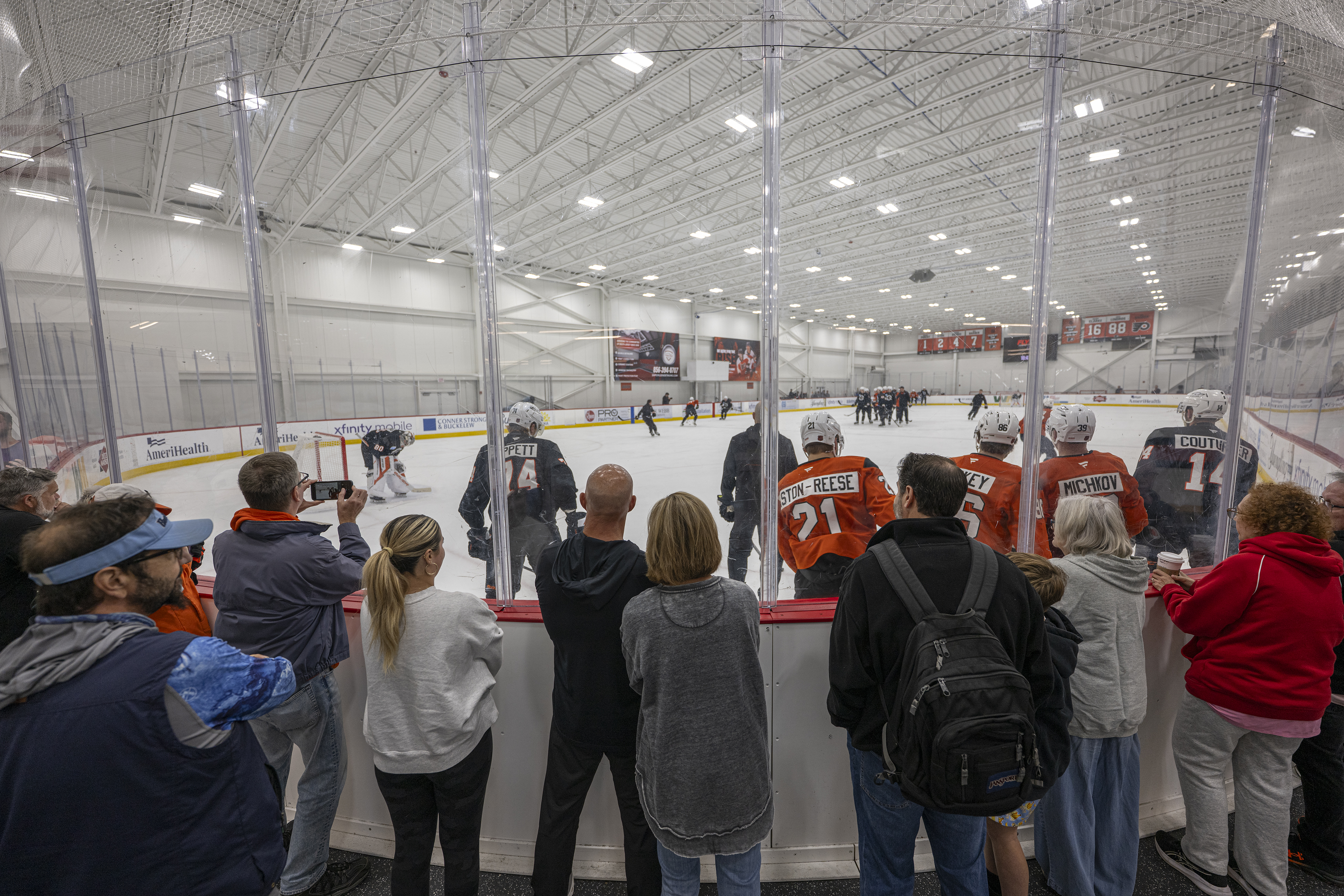
    Now, though, those fans, and to a large extent the franchise’s players and power people themselves, won’t be satisfied with another round of appetizers. Brière hinted recently that it’s possible the Flyers will take a step backward, that the roster’s collection of talented players in their early-to-mid 20s struggles to replicate or surpass last season’s performance and justify all this hope.

    “The part that keeps me up at night is having some of your players feel complacent, feel like they’ve made it,” Brière said. “Let’s face it, we’re still a young team. We’ve had guys who had success last year. You saw what happened with Matvei [Michkov]. Had a lot of success the first year. It’s tougher the second year. … They’re going to be a big part of our team, and if that happens, we’re going to have a setback.”

    The more interesting development, actually, would be if all those promising youngsters did reach their potential or exceed expectations. Then Brière will have a real conundrum on his hands. With the Carlsson offer sheet and his public comments, Brière has left no doubt that the Flyers are looking for ways to acquire a top-line center or top-pair defenseman — or both if possible.

    Cap space wouldn’t be the issue; they have more than enough to bring on a high-salaried star. Desire wouldn’t be the issue; at the moment, the Flyers know they need a premier player at one of those two premier positions. Timing wouldn’t necessarily be an issue, either; there’s no telling when a standout player who fits the Flyers — Dylan Larkin? Quinn Hughes? Someone no one is thinking of right now? — might become available.

    “We’ve positioned ourselves,” Brière said. “It took a while, and we took some licks to miss the playoffs and be a bad team for way too long in my mind to just throw away the cap space we’ve built and the freedom we’re able to have. … We’re not going to be reckless about it. It was so tough to get there, with that freedom, that we want to try to get the right guy and spend our money properly. That’s the way I see it. If something comes up that makes sense, yes, definitely, we won’t be afraid to swing again.”

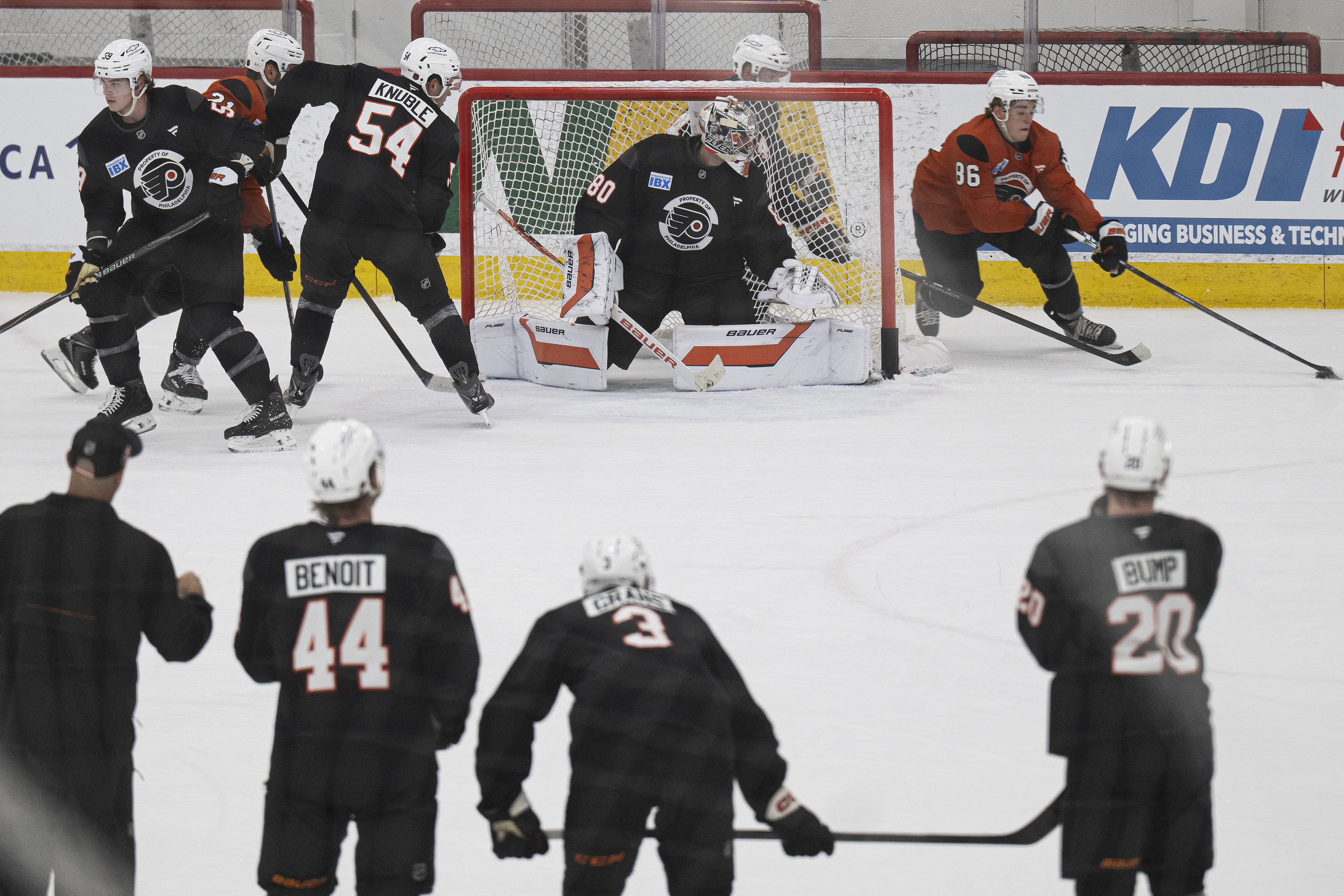
    Alex Bump will be among the young Flyers Danny Brière and the rest of the organization will be counting on to replicate last season’s success.Jose F. Moreno / Staff Photographer

    No, the primary issue could be a happy problem: What if the Flyers do continue their upward climb, and what if they make that climb at a rate that exceeds their own expectations? What if Michkov and Porter Martone and Trevor Zegras and Tyson Foerster and Owen Tippett and Jamie Drysdale and who knows who else demonstrate that any of them, or all of them, is indispensable? Does Brière still take that big swing? If so, who and what would he have to give up to pull it off?

    That’s the potential risk. That’s the most important question he and the Flyers have to answer. Because if this team does manage to build on what it began last season, no one around here will settle for saltines anymore.

  • An old-fashioned Eagles blowout would be good for the team’s soul. The terrible Titans present that opportunity.

    An old-fashioned Eagles blowout would be good for the team’s soul. The terrible Titans present that opportunity.

    Reasonable humans will enter Week 2 careful not to get carried away with the talent disparity between the Eagles and the Titans.

    They will remind themselves of the relatively thin margins that separate teams in the modern NFL.

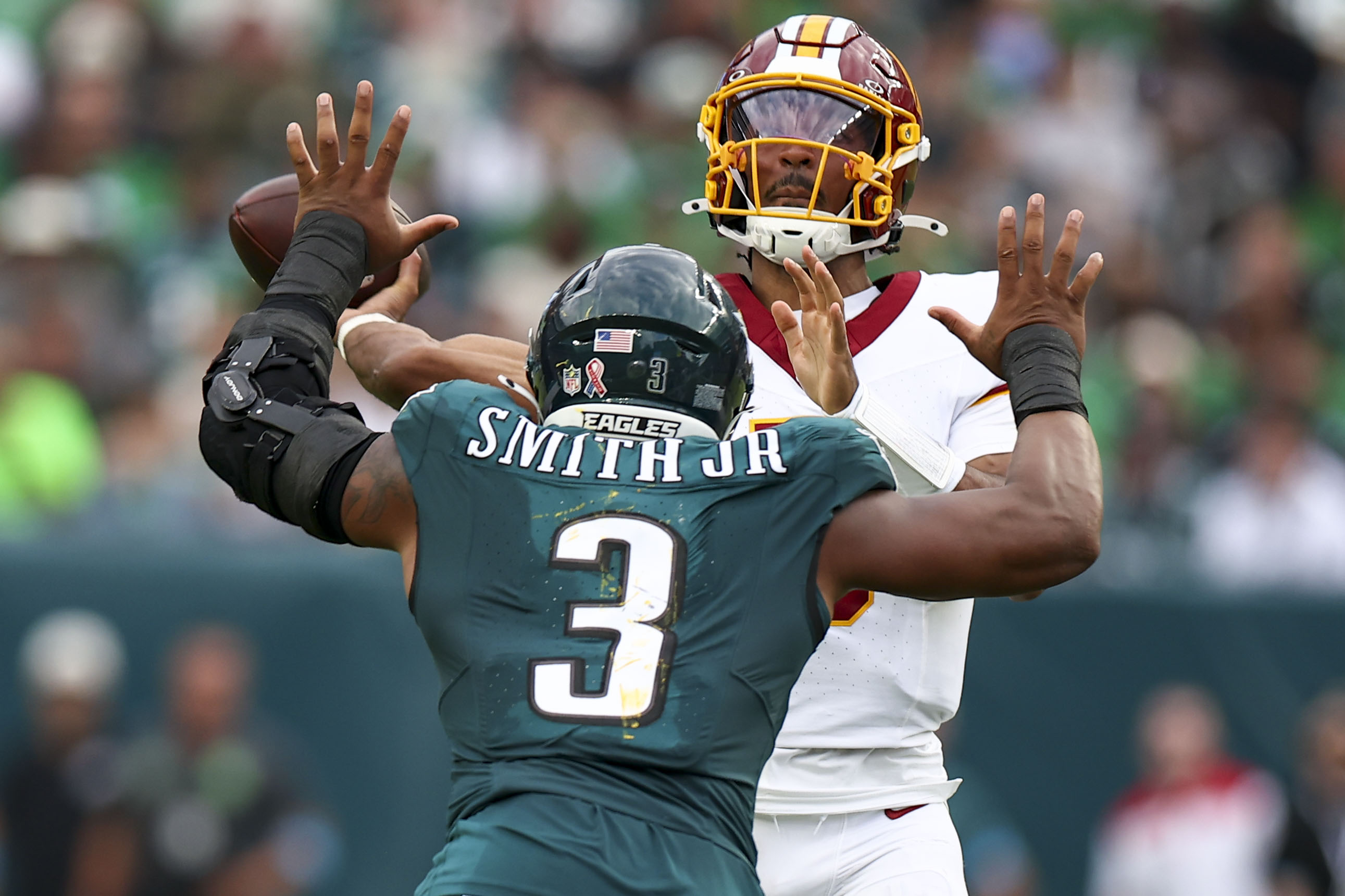
    They will note the Eagles’ struggles in their last two games against a Robert Saleh defense. They will remind themselves of the disruptive potential of Titans All-Pro defensive tackle Jeffery Simmons going against an Eagles interior offensive line that will be missing stud guard Landon Dickerson. They may even point to last year’s 34-17 Week 6 loss to a Giants team that featured play-caller Brian Daboll and wide receiver Wan’Dale Robinson, both now with Tennessee.

    All of which is great. If you happen to be a reasonable human.

    The rest of us will be over here expecting a 40-spot.

    Is that really too much to ask?

    There once was a time when watching an Eagles game didn’t leave you feeling the need to invest in one of those Guardian helmets. It was something you could do without completely dissociating from the world around you. You could watch an Eagles game and still do things that normal humans do: Laugh at jokes, eat potato chips at a reasonable pace, respond politely to innocent non-football-related questions from loved ones. The game would end and you would turn off the TV and you would say to yourself, “Hey, that was fun.”

    I’m sure there have been a few moments like that since the Eagles won the NFC championship and Super Bowl in 2025 by a combined score of 95-45. But you will have to remind me of them.

    Most of the Eagles games that I remember from the last year-plus involve fourth quarters like the one we endured last week. A two-possession game becomes a one-possession game and then a one-possession game becomes a potential loss. The false sense of security evaporates but doesn’t take with it the feeling that the Eagles are still the better team.

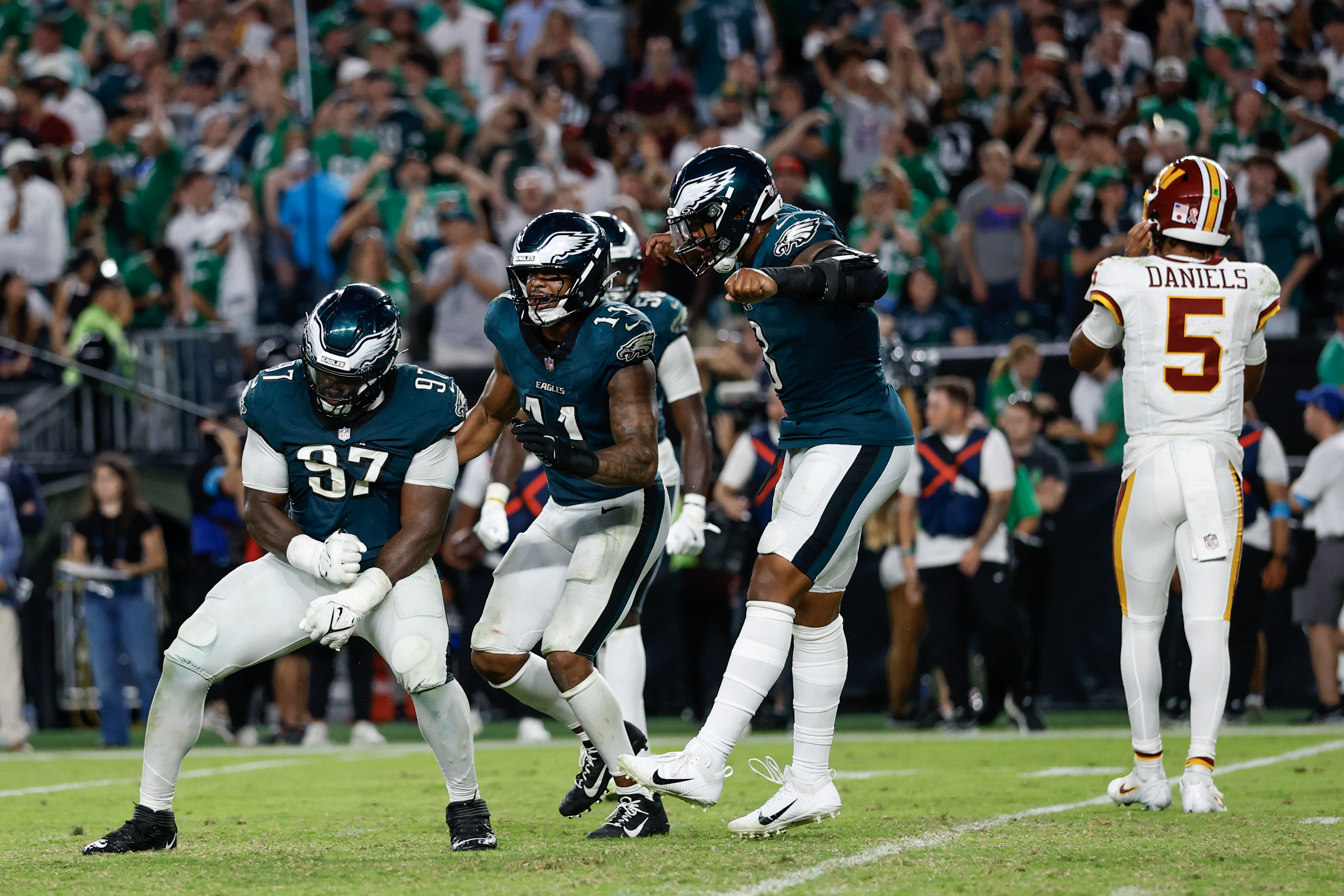
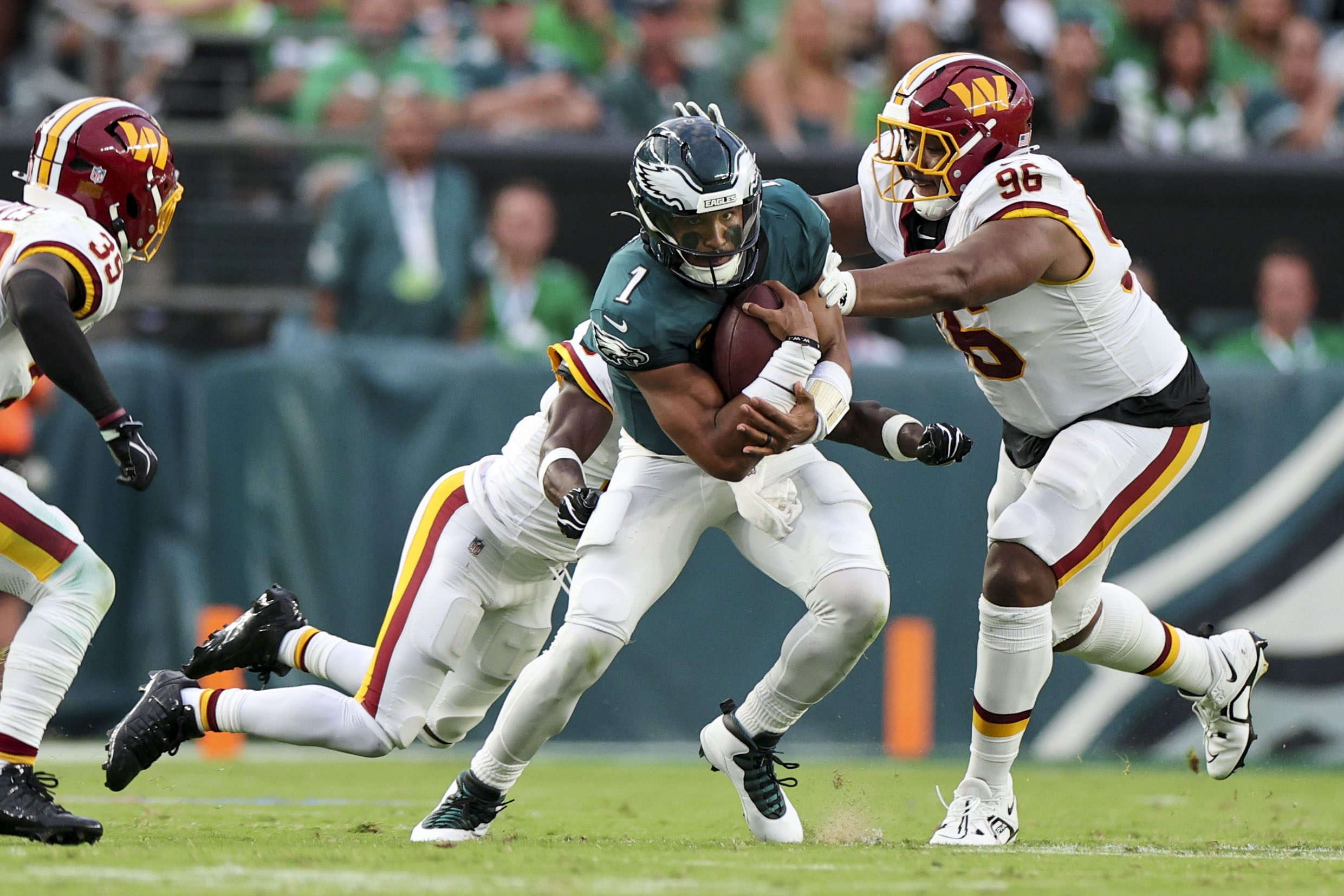
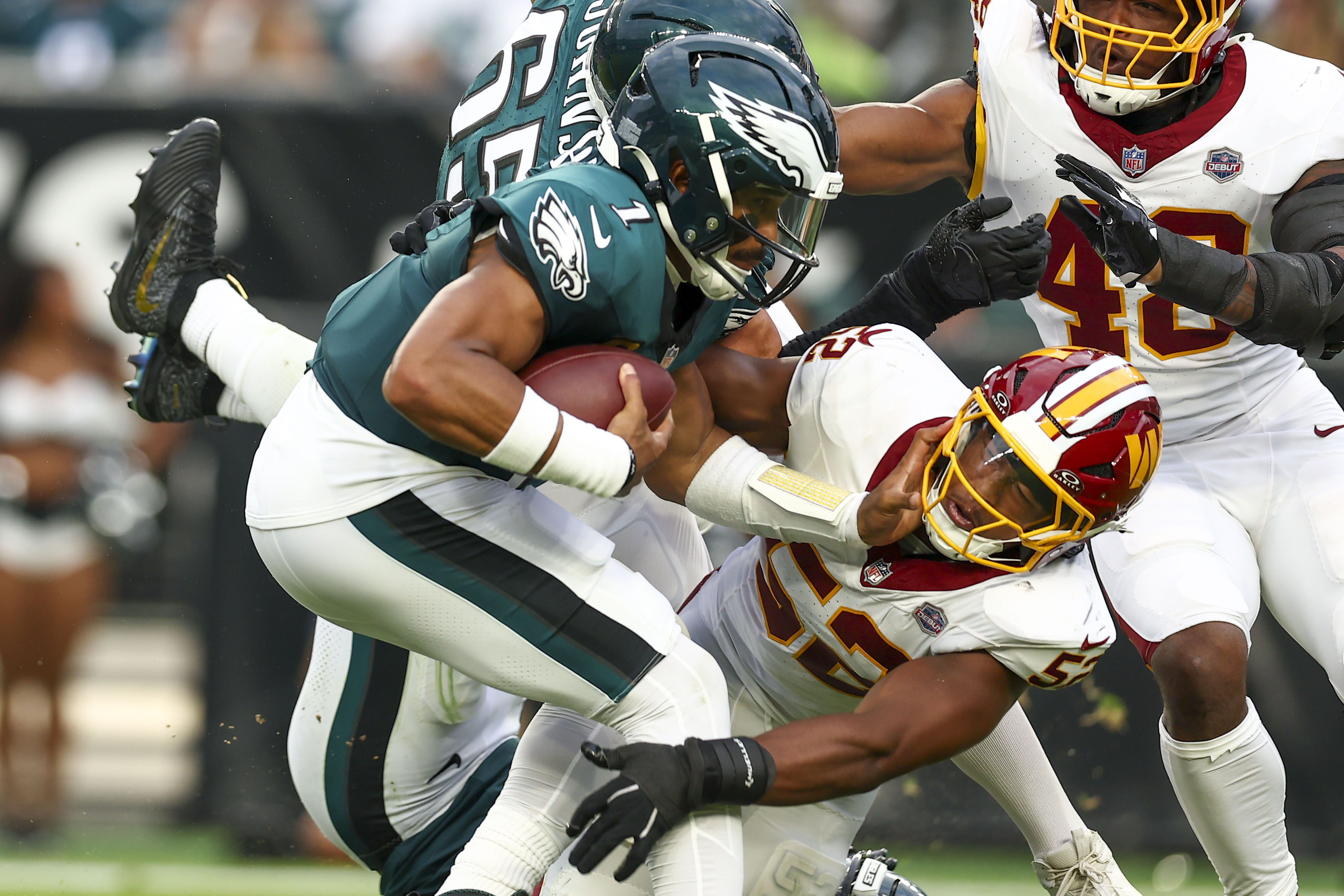
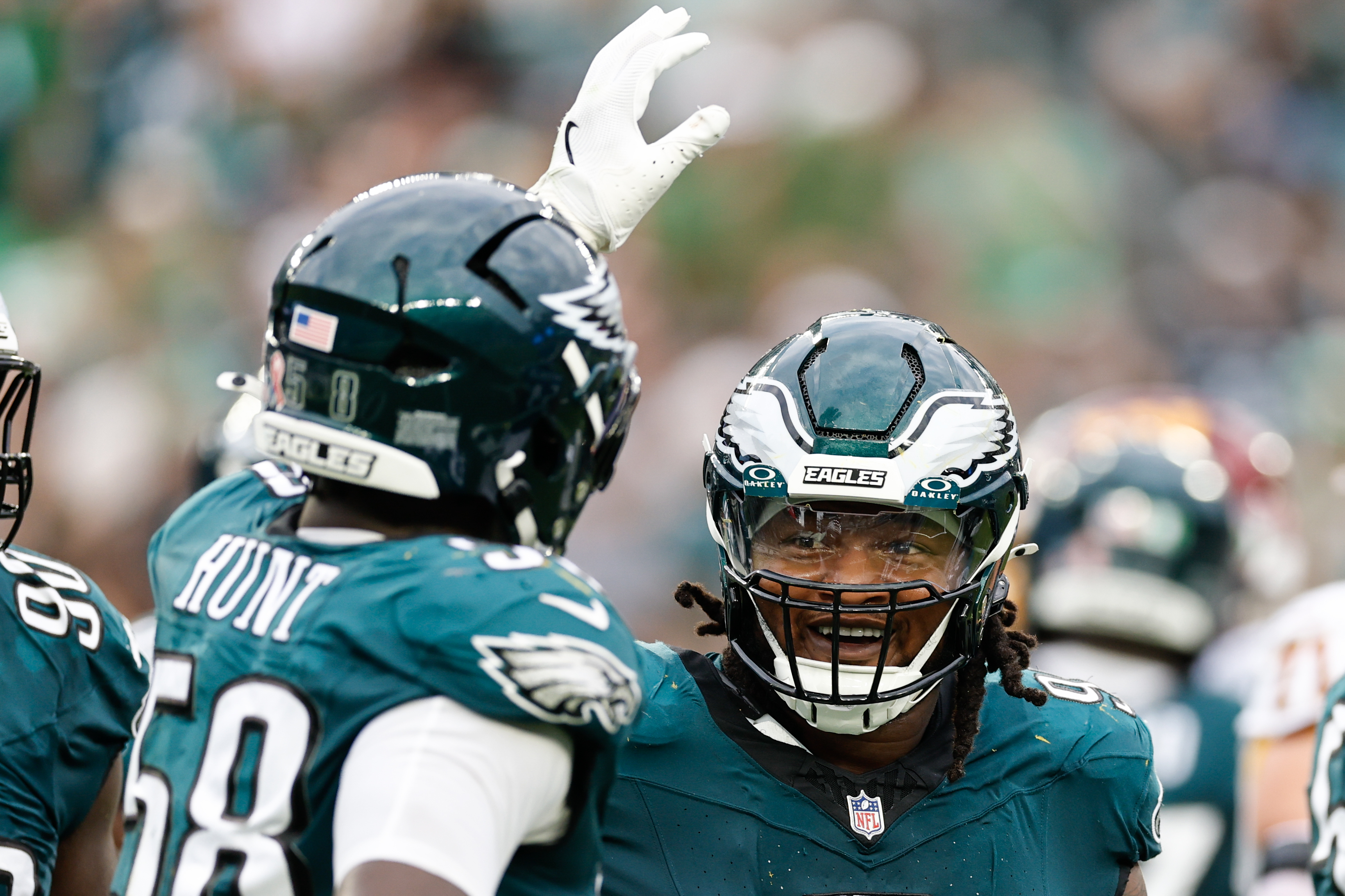
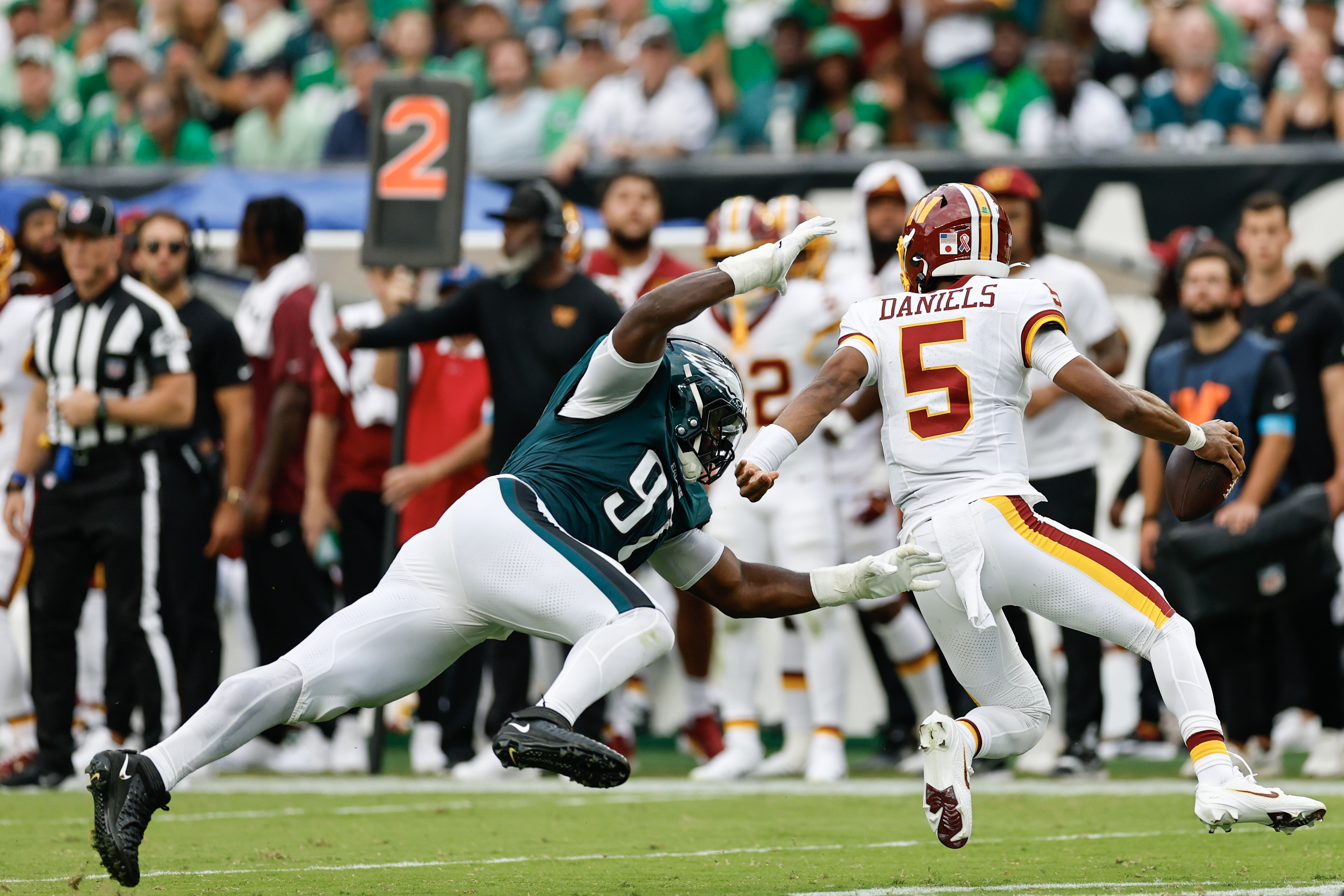
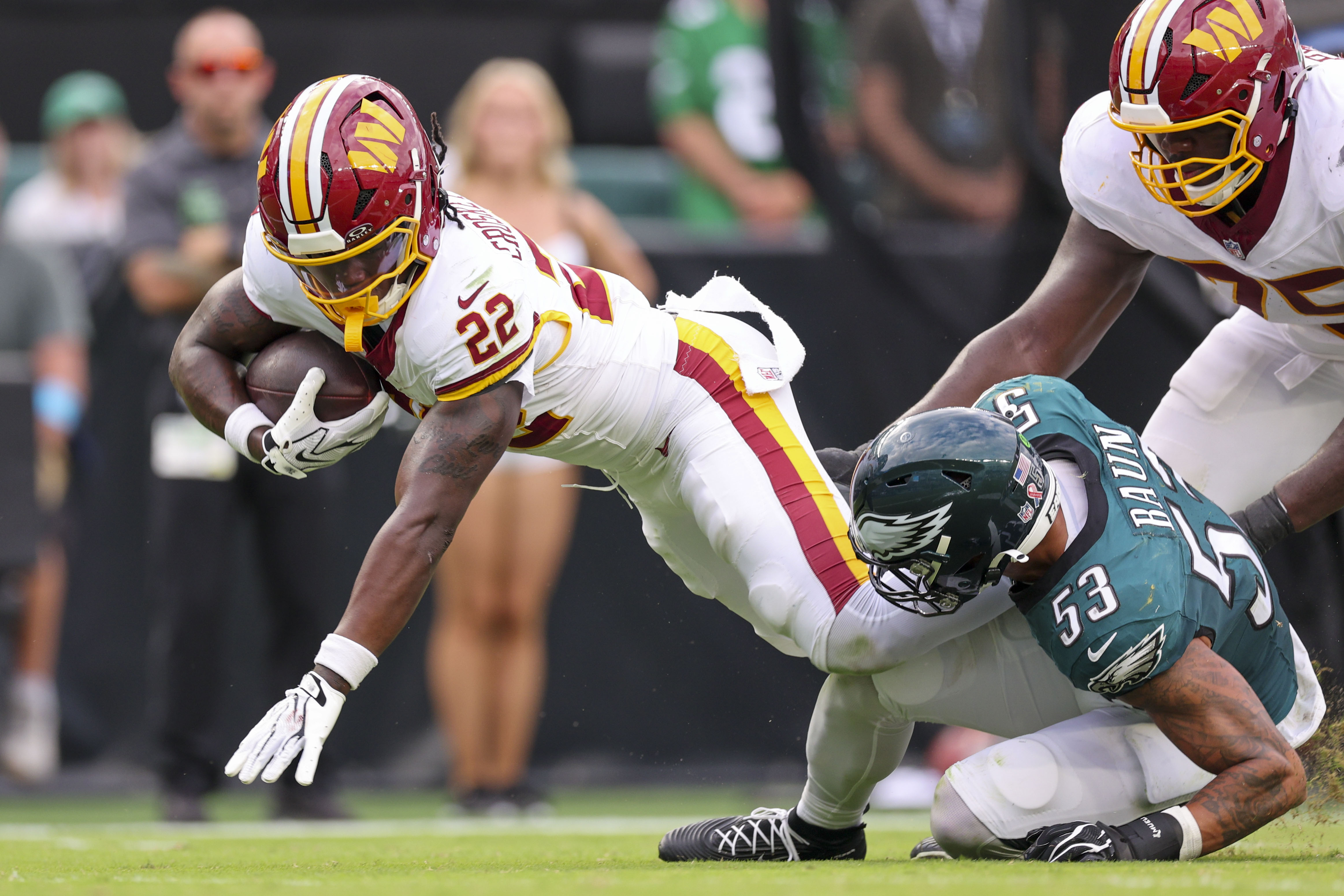
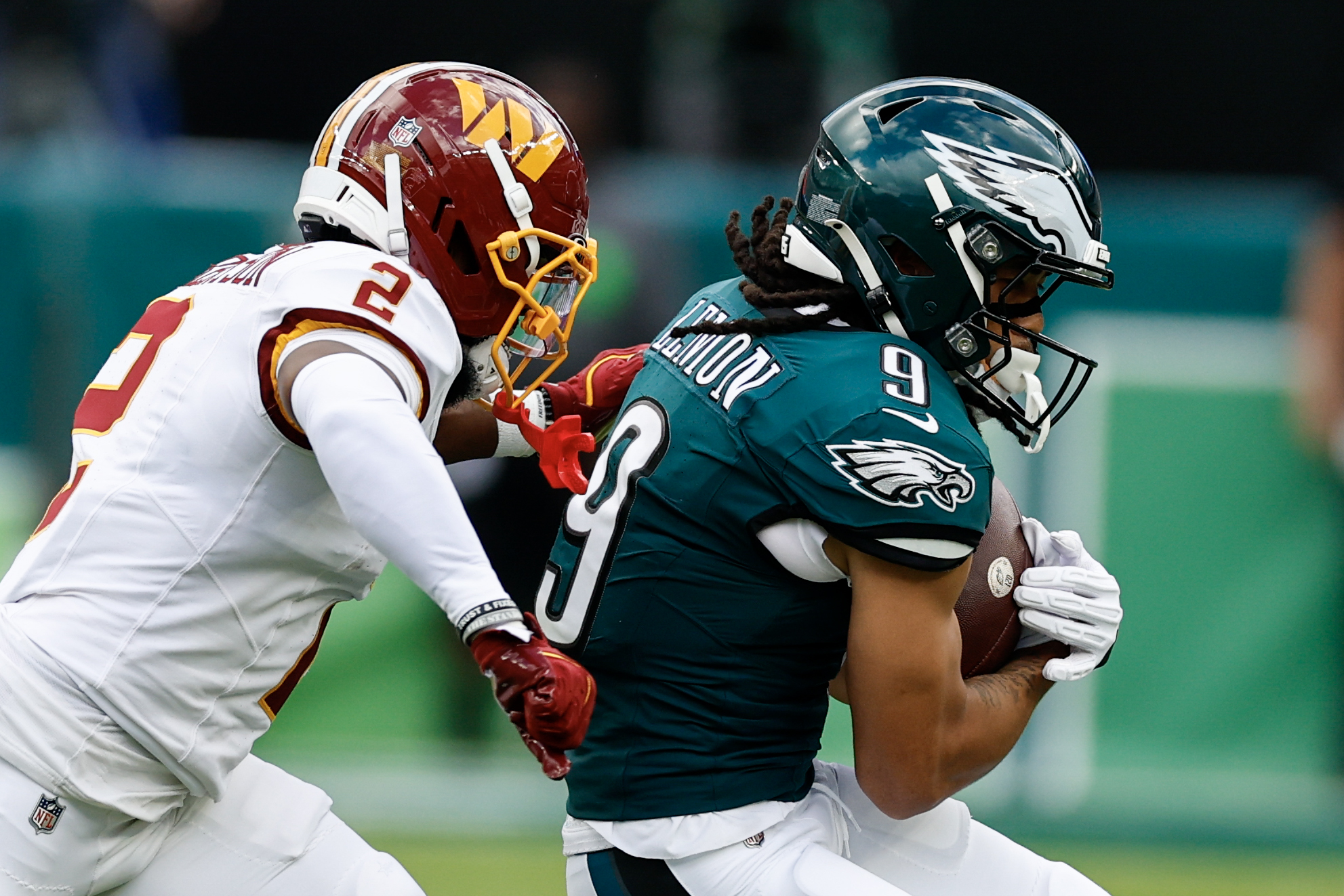
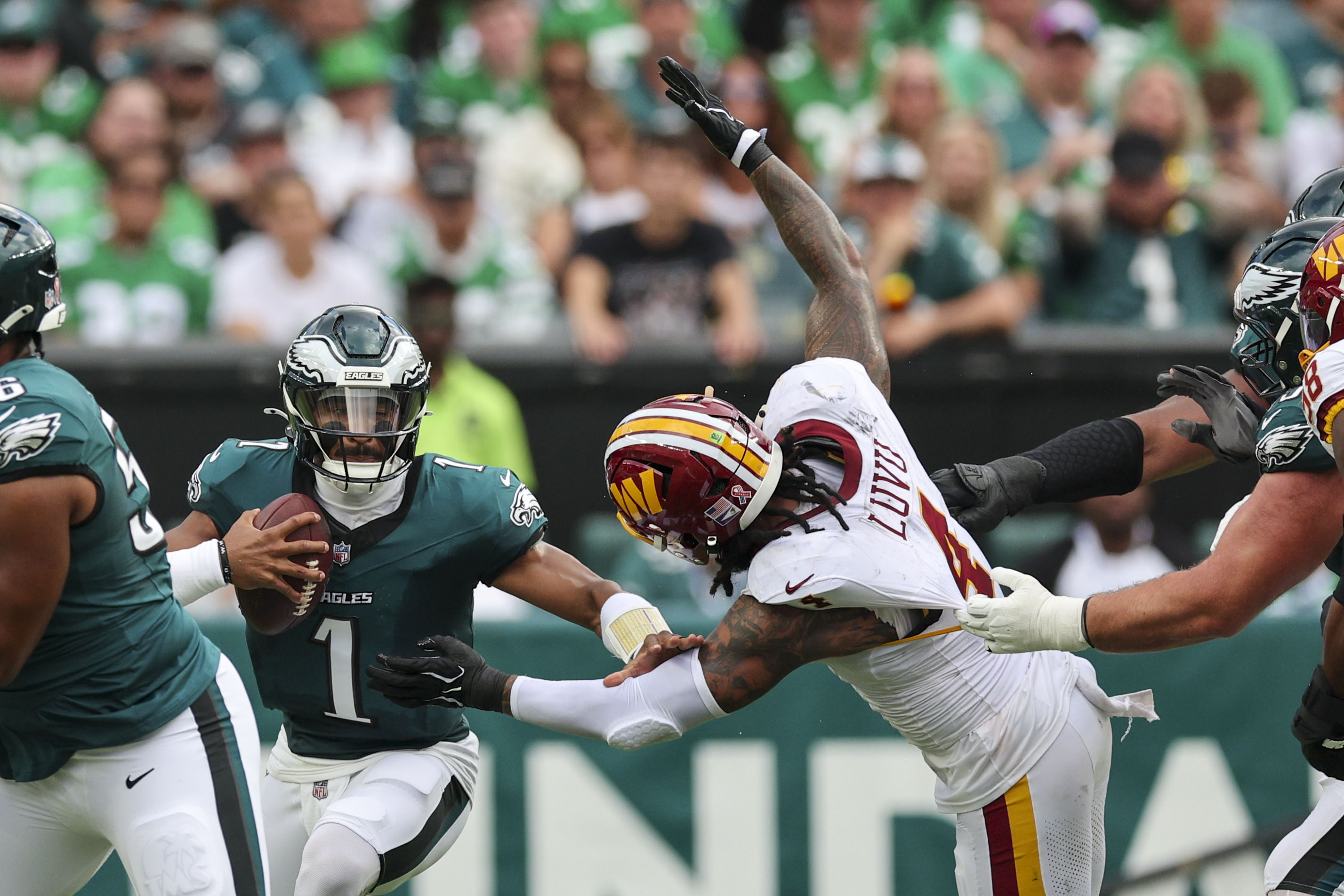
    Sunday’s win over the Commanders mirrored many Eagles games over the last year, which required Moro Ojomo (left) to make a stop on a Washington two-point conversion attempt.Yong Kim / Staff Photographer

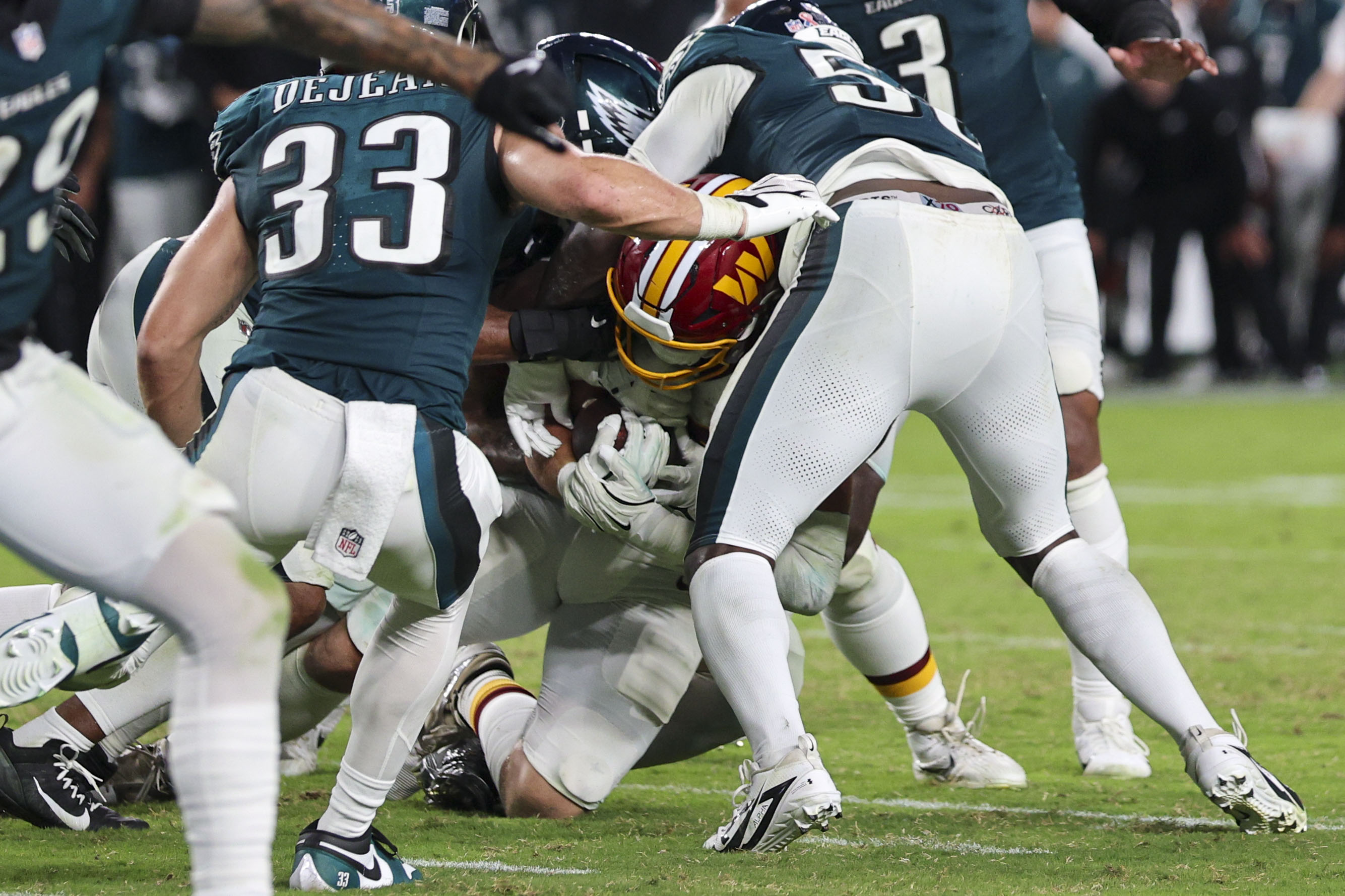
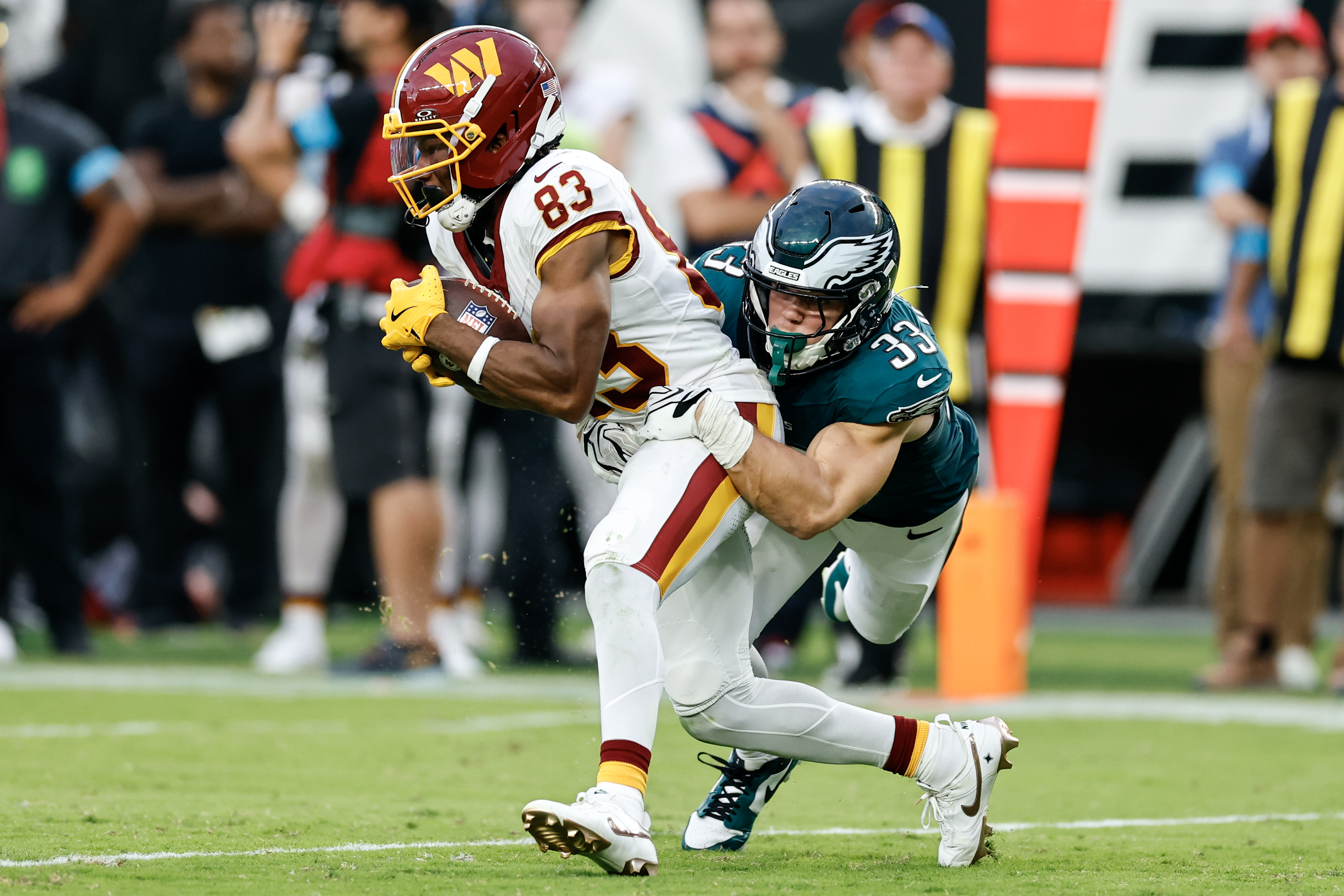
    This isn’t an illusion. I went back and looked. In each of the last four games the Eagles have played, including the playoffs, an opponent has scored a potential game-winning or game-tying touchdown in the last three minutes of regulation. Two of those games broke in the Eagles’ favor because of failed two-point conversions. Last week it was Moro Ojomo spinning into the path of an attempted shovel pass after Antonio Williams pulled the Washington Commanders to within two on a 1-yard touchdown pass from Jayden Daniels. In Week 17 of last season, it was Josh Allen plunging over right guard with eight seconds left and then throwing incomplete for Khalil Shakir on the two-point try as the Eagles pulled out a 13-12 win. In between those two wins came squandered late-fourth-quarter leads against the Commanders (in an irrelevant game) and the San Francisco 49ers (in the playoffs).

    Before the current stretch of squeakers, we saw:

    Week 10: A game the Eagles lead 10-0 with 10 minutes left is eventually decided by a failed fourth-and-1 play with 1 minute, 26 seconds remaining near midfield and the Packers driving down 10-7. Somehow, Green Bay still got a chance at a 64-yard field goal attempt with two seconds left.

    Week 11: Eagles lead 16-6 with 10 minutes left in the fourth quarter, but come dangerously close to giving the Detroit Lions the ball down 16-9 with 1:51 remaining (pass interference on a third-and-8 incompletion to A.J. Brown).

    Week 12: Eagles lead the Dallas Cowboys 21-0 early in the second quarter. They lose on a game-winning field goal by Brandon Aubrey with no time left.

    Week 14: Eagles were up 19-16 against the Los Angeles Chargers with 2:16 remaining. Cameron Dicker hits a game-tying FG with eight seconds left and then a game-winner in overtime.

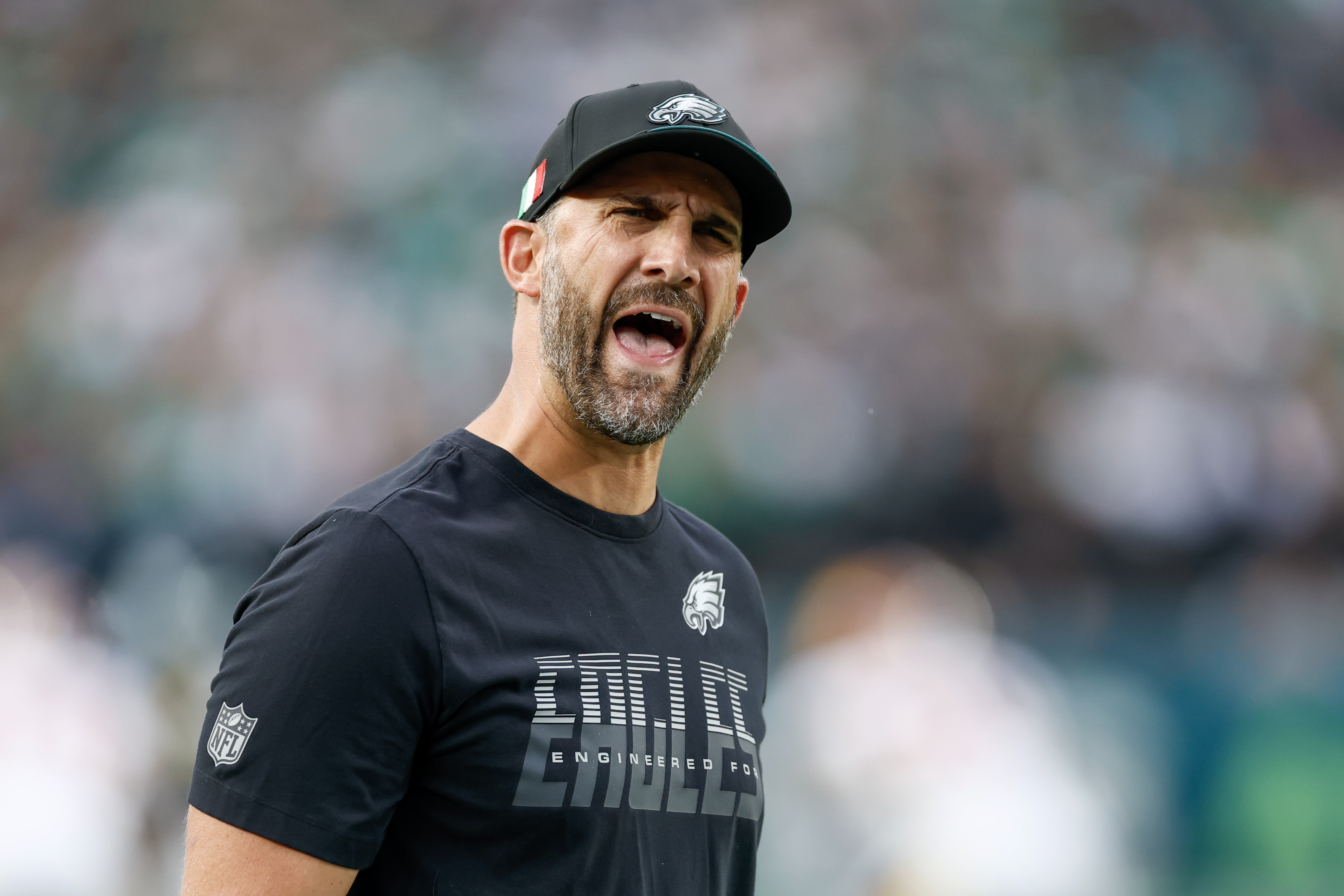
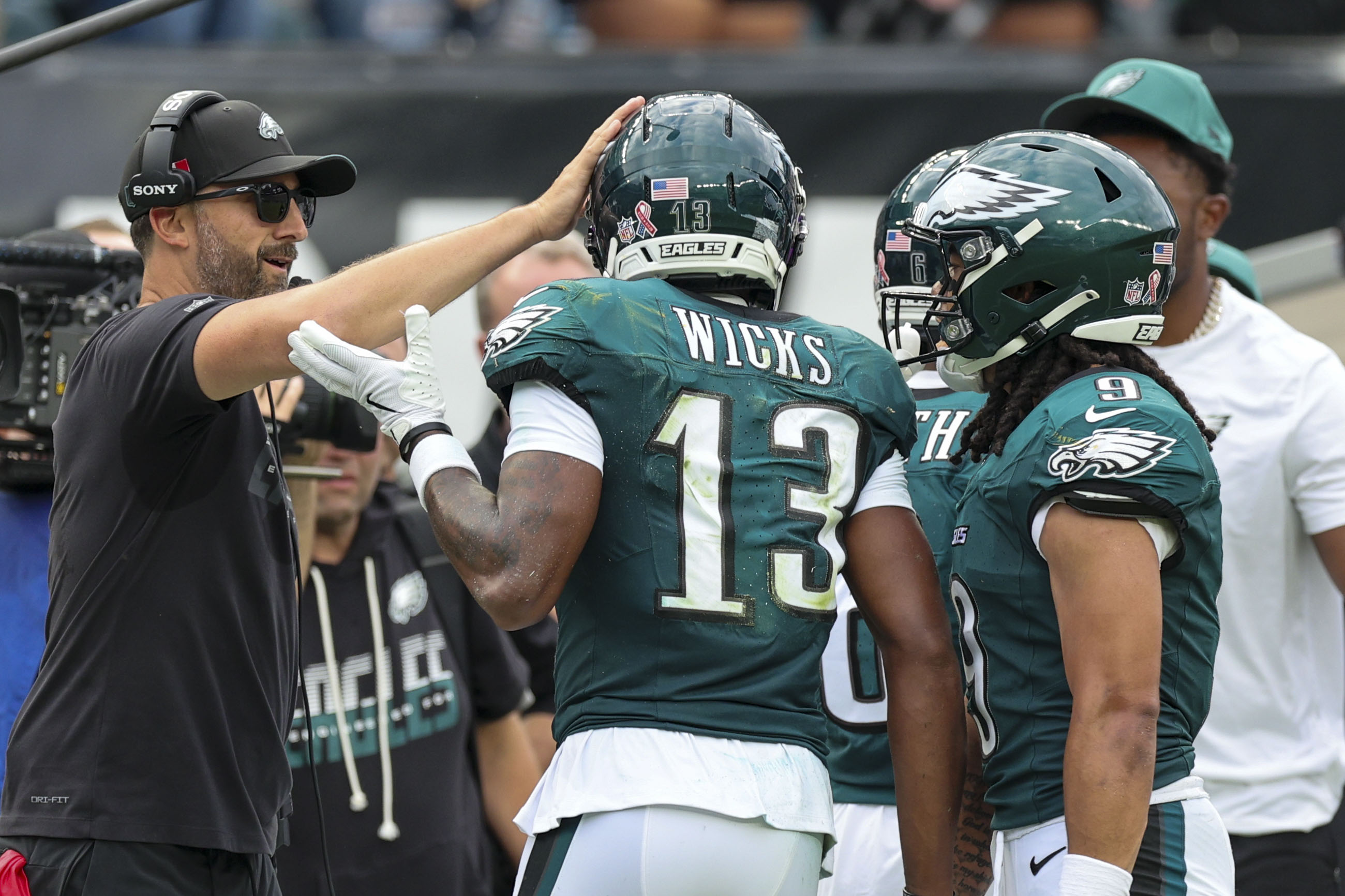
    Every week, Nick Sirianni reminds us that winning is hard in the National Football League. Every victory is like a delicate child, something to nurture and cherish. And, look, Sirianni is right. Few coaches in NFL history have won games as often as he does. No coach has a better record than Sirianni’s 6-0 mark in Week 1. It says something about the coach and his team that they are as unconvincing in losing as they often are in winning.

    But, please, convince us. Forget all of that mumbo jumbo about a win being a win on any given Sunday. Wins are great. They’re much better when you feel good about them. That’s not only true from an entertainment standpoint. Look at the energy flowing out of Chicago and Baltimore. Imagine how a locker room feels when its head coach says he wants to set the single-season scoring record and then the team backs him up by hanging 59 points on a playoff team on the road in Week 1? Whatever their faults, Ben Johnson’s Bears have a self-replicating swagger. Same goes for the Ravens under Johnson acolyte Declan Doyle. A very good way to build political capital as a 30-year-old first-time play-caller is to rack up 506 yards and 41 points in your debut. Wins matter most of all. But the manner of victory isn’t irrelevant.

    As somebody who has spent plenty of time in Eagles postgame locker rooms across a wide-ranging gamut of seasons, I will tell you I firmly believe the team would benefit greatly from one of those god-that-felt-good kind of victories. Not that they doubt themselves. Not that they lack confidence. It’s simply good for the soul to blow a team out of the building now and then.

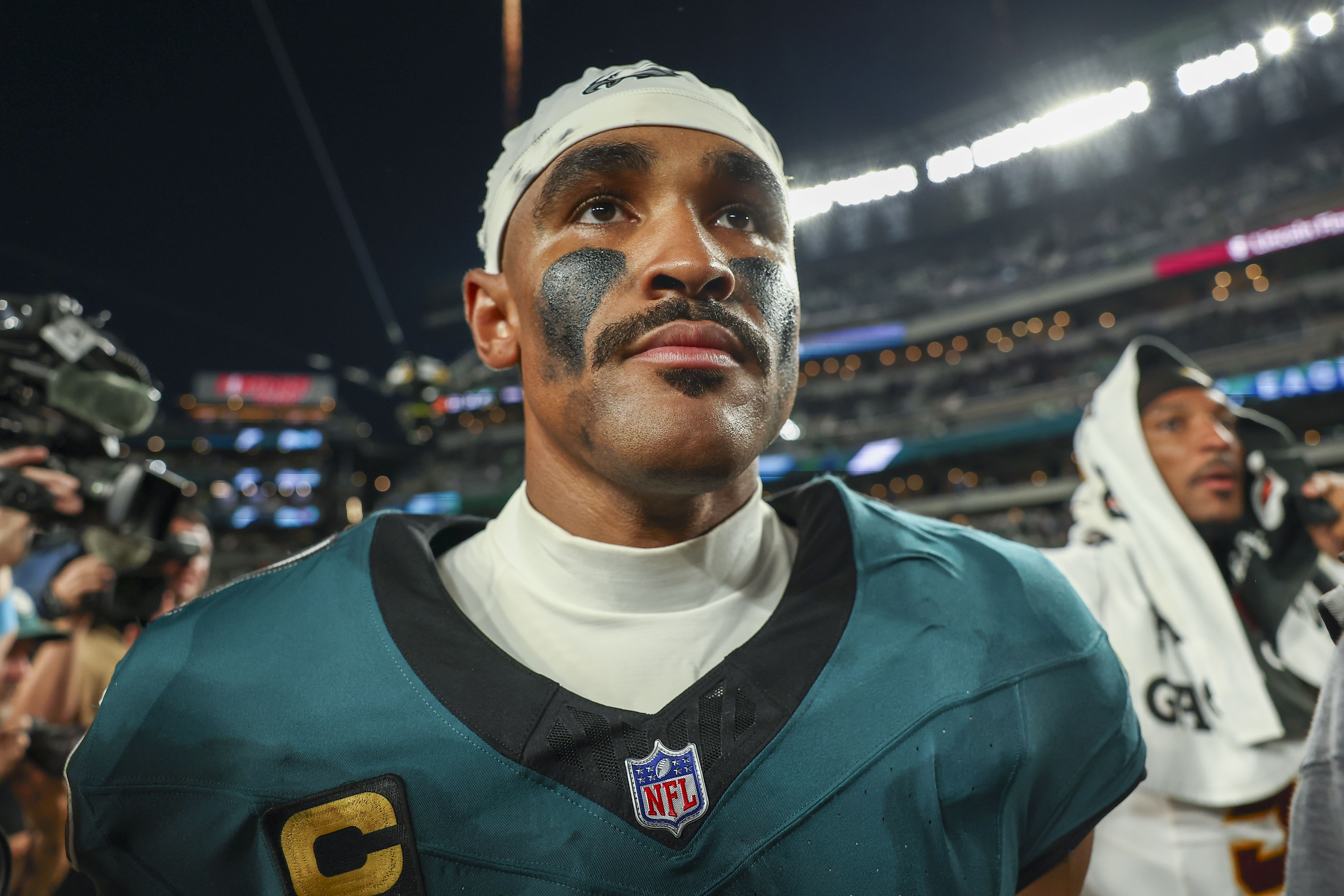
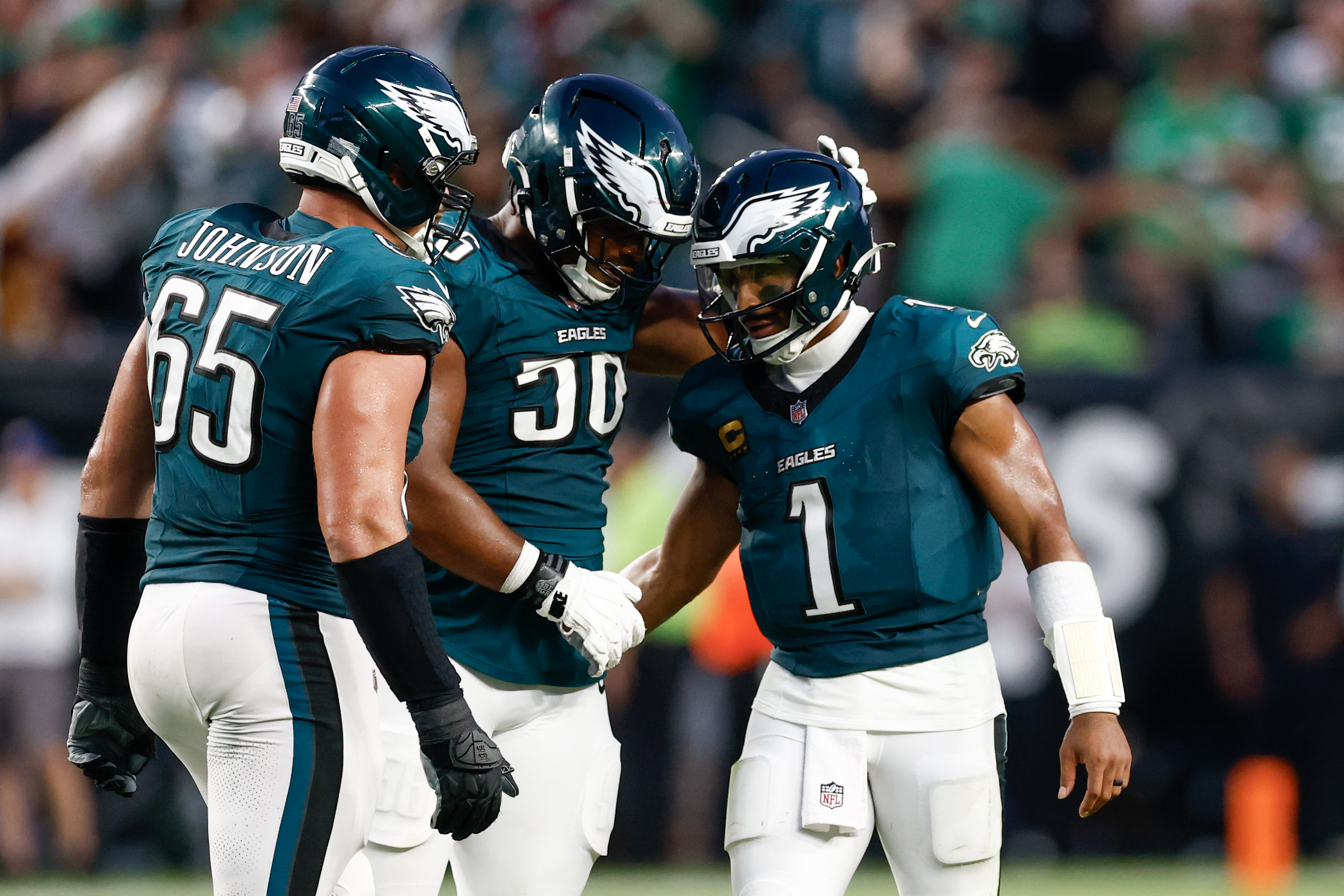
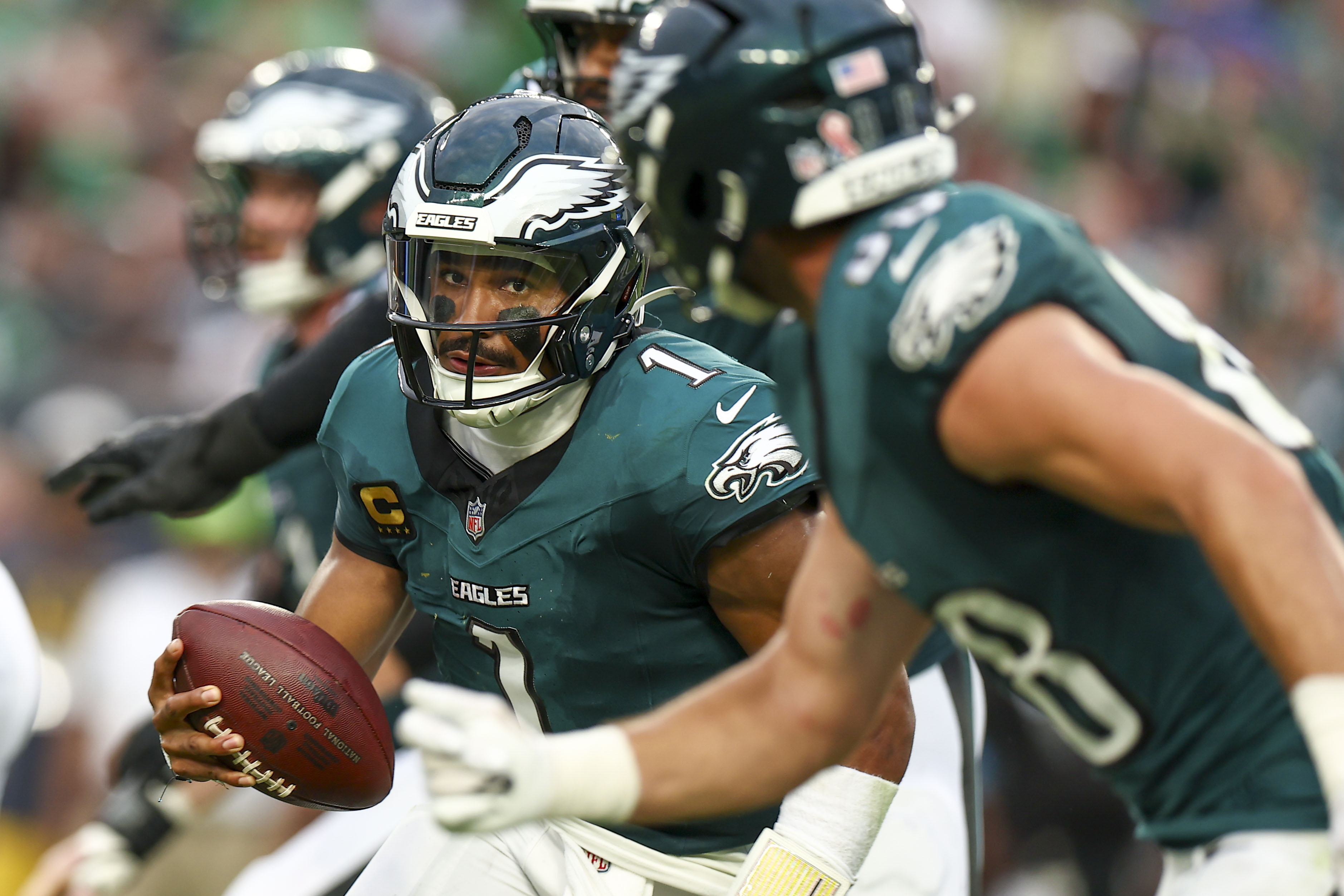
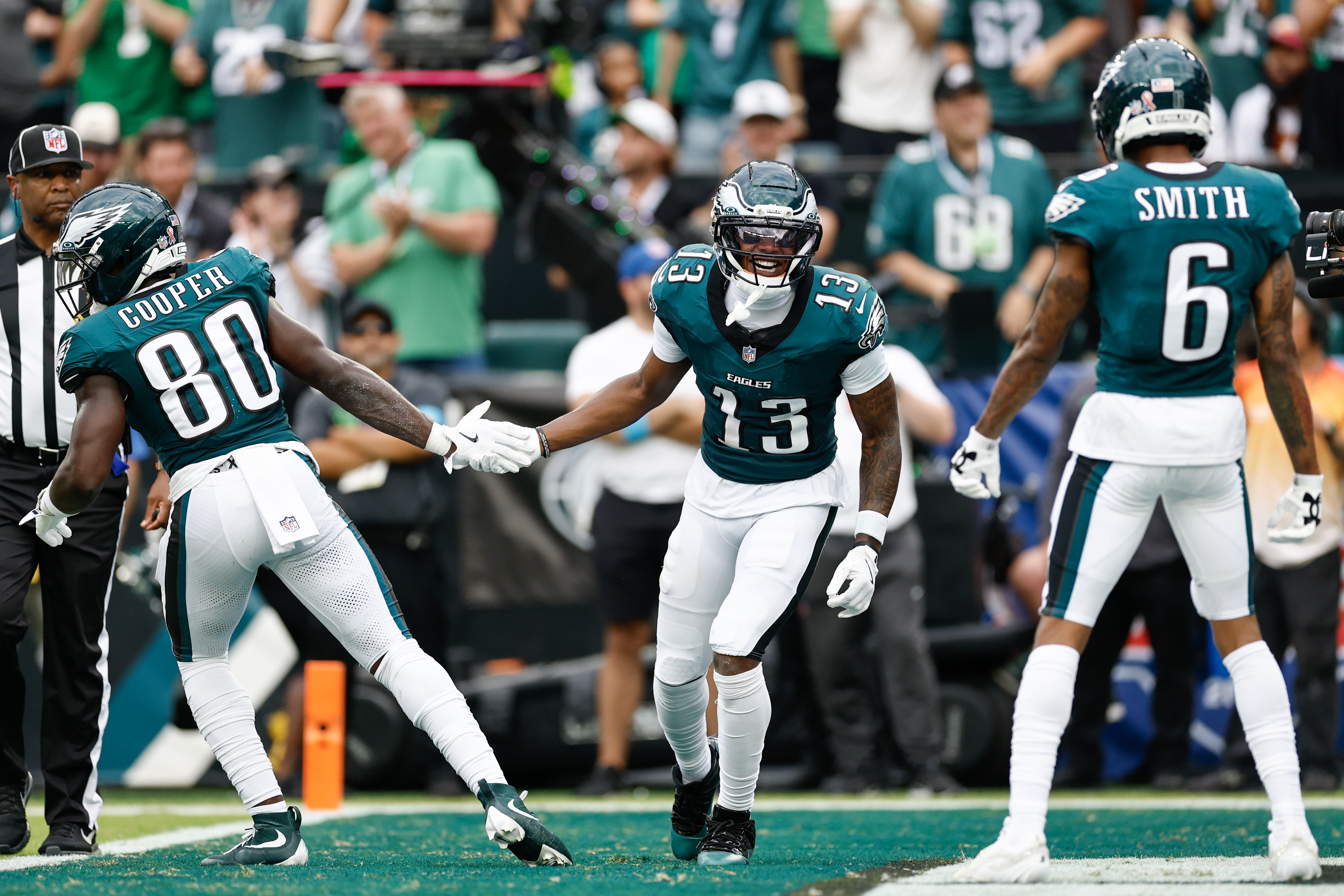
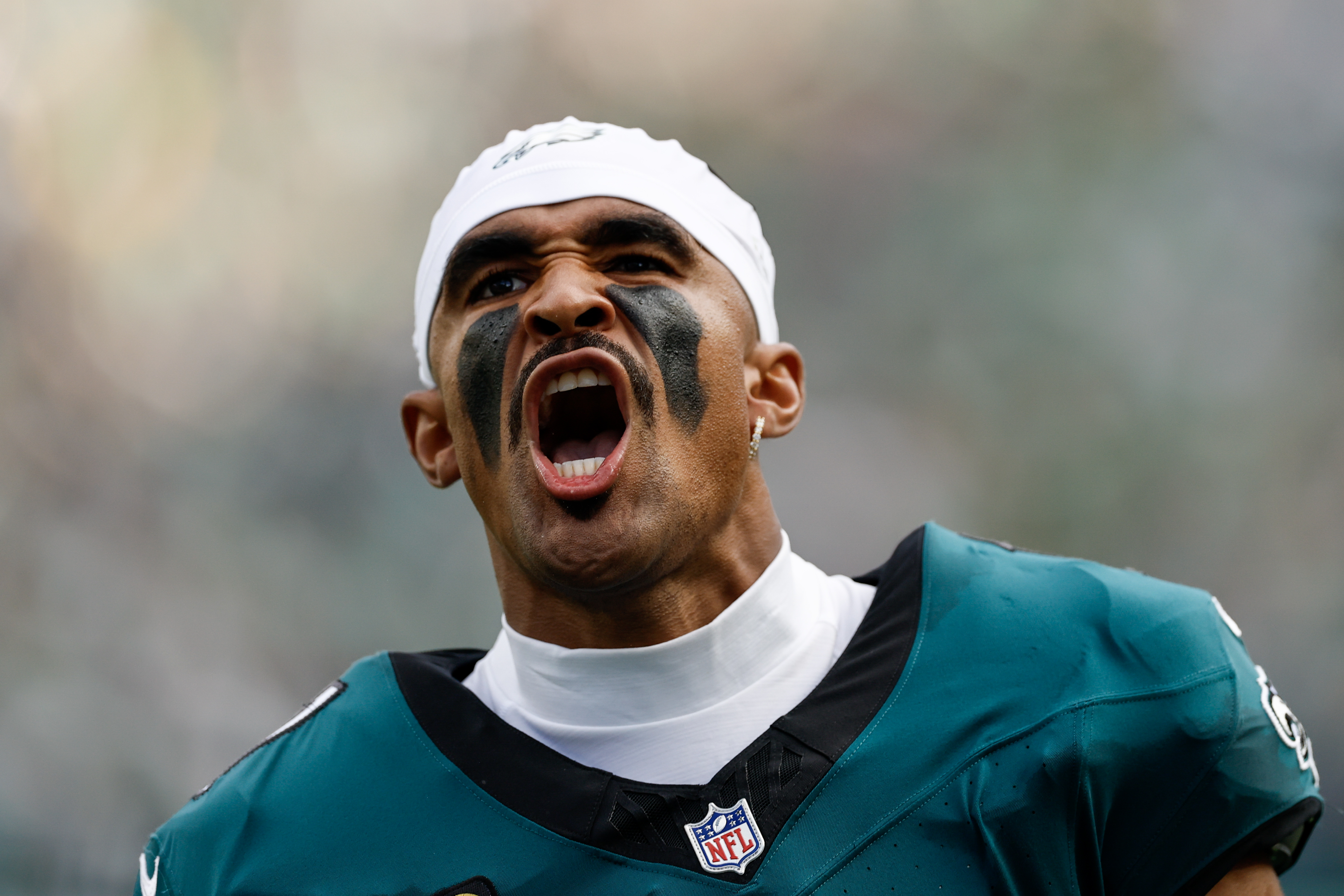
    The Titans are an opportunity. They allowed 30+ points in nearly half their games last season. Among the teams that scored 30 with 350+ total yards were the Seattle Seahawks, New England Patriots, Los Angeles Rams, and San Francisco 49ers. Good teams take advantage of these opportunities. It is an opportunity for DeVonta Smith to cook as WR1. It is an opportunity for Jalen Hurts to do as he pleases from the pocket. It is an opportunity for Sean Mannion to give everyone the peace of mind that Doyle instilled in Ravens fans last week.

    Sure, a win would be great. Signs of improvement would be nice. But what everybody really needs is a crooked number and a blowout.